EP3671441B1 - Anwendungsverwaltungsverfahren und -vorrichtung, speichermedium und elektronische vorrichtung - Google Patents
Anwendungsverwaltungsverfahren und -vorrichtung, speichermedium und elektronische vorrichtung Download PDFInfo
- Publication number
- EP3671441B1 EP3671441B1 EP18861678.3A EP18861678A EP3671441B1 EP 3671441 B1 EP3671441 B1 EP 3671441B1 EP 18861678 A EP18861678 A EP 18861678A EP 3671441 B1 EP3671441 B1 EP 3671441B1
- Authority
- EP
- European Patent Office
- Prior art keywords
- application
- characteristic
- characteristic coefficient
- self
- neural network
- Prior art date
- Legal status (The legal status is an assumption and is not a legal conclusion. Google has not performed a legal analysis and makes no representation as to the accuracy of the status listed.)
- Not-in-force
Links
Images


Classifications
-
- G—PHYSICS
- G06—COMPUTING OR CALCULATING; COUNTING
- G06N—COMPUTING ARRANGEMENTS BASED ON SPECIFIC COMPUTATIONAL MODELS
- G06N3/00—Computing arrangements based on biological models
- G06N3/02—Neural networks
- G06N3/08—Learning methods
- G06N3/088—Non-supervised learning, e.g. competitive learning
-
- G—PHYSICS
- G06—COMPUTING OR CALCULATING; COUNTING
- G06F—ELECTRIC DIGITAL DATA PROCESSING
- G06F3/00—Input arrangements for transferring data to be processed into a form capable of being handled by the computer; Output arrangements for transferring data from processing unit to output unit, e.g. interface arrangements
- G06F3/06—Digital input from, or digital output to, record carriers, e.g. RAID, emulated record carriers or networked record carriers
- G06F3/0601—Interfaces specially adapted for storage systems
- G06F3/0602—Interfaces specially adapted for storage systems specifically adapted to achieve a particular effect
- G06F3/0608—Saving storage space on storage systems
-
- G—PHYSICS
- G06—COMPUTING OR CALCULATING; COUNTING
- G06F—ELECTRIC DIGITAL DATA PROCESSING
- G06F17/00—Digital computing or data processing equipment or methods, specially adapted for specific functions
- G06F17/10—Complex mathematical operations
- G06F17/16—Matrix or vector computation, e.g. matrix-matrix or matrix-vector multiplication, matrix factorization
-
- G—PHYSICS
- G06—COMPUTING OR CALCULATING; COUNTING
- G06F—ELECTRIC DIGITAL DATA PROCESSING
- G06F3/00—Input arrangements for transferring data to be processed into a form capable of being handled by the computer; Output arrangements for transferring data from processing unit to output unit, e.g. interface arrangements
- G06F3/06—Digital input from, or digital output to, record carriers, e.g. RAID, emulated record carriers or networked record carriers
- G06F3/0601—Interfaces specially adapted for storage systems
- G06F3/0602—Interfaces specially adapted for storage systems specifically adapted to achieve a particular effect
- G06F3/0604—Improving or facilitating administration, e.g. storage management
-
- G—PHYSICS
- G06—COMPUTING OR CALCULATING; COUNTING
- G06F—ELECTRIC DIGITAL DATA PROCESSING
- G06F3/00—Input arrangements for transferring data to be processed into a form capable of being handled by the computer; Output arrangements for transferring data from processing unit to output unit, e.g. interface arrangements
- G06F3/06—Digital input from, or digital output to, record carriers, e.g. RAID, emulated record carriers or networked record carriers
- G06F3/0601—Interfaces specially adapted for storage systems
- G06F3/0668—Interfaces specially adapted for storage systems adopting a particular infrastructure
- G06F3/0671—In-line storage system
- G06F3/0673—Single storage device
-
- G—PHYSICS
- G06—COMPUTING OR CALCULATING; COUNTING
- G06F—ELECTRIC DIGITAL DATA PROCESSING
- G06F9/00—Arrangements for program control, e.g. control units
- G06F9/06—Arrangements for program control, e.g. control units using stored programs, i.e. using an internal store of processing equipment to receive or retain programs
- G06F9/44—Arrangements for executing specific programs
- G06F9/445—Program loading or initiating
- G06F9/44594—Unloading
-
- G—PHYSICS
- G06—COMPUTING OR CALCULATING; COUNTING
- G06F—ELECTRIC DIGITAL DATA PROCESSING
- G06F9/00—Arrangements for program control, e.g. control units
- G06F9/06—Arrangements for program control, e.g. control units using stored programs, i.e. using an internal store of processing equipment to receive or retain programs
- G06F9/46—Multiprogramming arrangements
- G06F9/50—Allocation of resources, e.g. of the central processing unit [CPU]
- G06F9/5005—Allocation of resources, e.g. of the central processing unit [CPU] to service a request
- G06F9/5011—Allocation of resources, e.g. of the central processing unit [CPU] to service a request the resources being hardware resources other than CPUs, Servers and Terminals
- G06F9/5016—Allocation of resources, e.g. of the central processing unit [CPU] to service a request the resources being hardware resources other than CPUs, Servers and Terminals the resource being the memory
-
- G—PHYSICS
- G06—COMPUTING OR CALCULATING; COUNTING
- G06F—ELECTRIC DIGITAL DATA PROCESSING
- G06F9/00—Arrangements for program control, e.g. control units
- G06F9/06—Arrangements for program control, e.g. control units using stored programs, i.e. using an internal store of processing equipment to receive or retain programs
- G06F9/46—Multiprogramming arrangements
- G06F9/50—Allocation of resources, e.g. of the central processing unit [CPU]
- G06F9/5005—Allocation of resources, e.g. of the central processing unit [CPU] to service a request
- G06F9/5011—Allocation of resources, e.g. of the central processing unit [CPU] to service a request the resources being hardware resources other than CPUs, Servers and Terminals
- G06F9/5022—Mechanisms to release resources
-
- G—PHYSICS
- G06—COMPUTING OR CALCULATING; COUNTING
- G06N—COMPUTING ARRANGEMENTS BASED ON SPECIFIC COMPUTATIONAL MODELS
- G06N3/00—Computing arrangements based on biological models
- G06N3/02—Neural networks
- G06N3/08—Learning methods
Definitions
- the present disclosure relates to the technical field of electronic apparatuses, particularly to an application management method, an application management device, a storage medium, and an electronic apparatus.
- an electronic apparatus including smart phones having an increasing number of functions. Users typically have the electronic apparatus installed with a plurality of applications. When a plurality of applications are opened in the electronic apparatus, the plurality of applications opened in the electronic apparatus will still run in the background of the electronic apparatus if the electronic apparatus returns to the home screen or stays in an application interface of an application.
- CN107133094A discloses an application management method.
- the method comprises the following steps: obtaining current application scene information, a pre-stored first application probability of each application program applied under each application scene, and a second application probability of each application program applied under each application scene during triggering cleaning of background application programs; inputting the current application scene information, all the first application probabilities and all the second application probabilities into a preset Bayesian network probability calculating model and calculating a third application probability of each background application program applied under the current application scene; and closing the background application programs with third application probabilities being smaller than a preset probability threshold value.
- the invention also discloses a mobile terminal and a computer-readable storage medium. Through the application management method, the accuracy of application management of the mobile terminal can be improved.
- Mehotra ET AL "Self-Organizing Maps (SOMs) @BULLET Resources-WEBSOM-Self-Organizing Maps for Internet Exploration", 1 January 1997 (1997-01-01), pages 187-202, XP055709600 " introduces technology relating to Self-Organizing Maps.
- a reference document D3 Dr Joschka Boedecker: "Self-Organizing Map (SOM) Machine Learning Summer 2015", 1 January 2015 (2015-01-01), XP055709594 ) also introduces technology relating to Self-Organizing Maps.
- COURAUD B ET AL "Use of neural networks as decision makers in strategic situations", MACHINE LEARNING AND CYBERNETICS, 2009 INTERNATIONAL CONFERENCE ON, IEEE, PISCATAWAY, NJ, USA, 12 July 2009 (2009-07-12), pages 1280-1285, XP031517905 introduces technology relating to use of neural networks in artificial intelligence.
- An embodiment of the present disclosure further provides a non-transitory storage medium storing a computer program, which, when running on a computer, causes the computer to execute the above application management method.
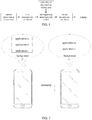
- FIG. 1 is a schematic systemic diagram of an application management device according to an embodiment of the present disclosure.
- the application management device is mainly used to: collect a plurality of characteristic information of an application according to an operation record of the application; learn the plurality of characteristic information through a self-organizing neural network to obtain a self-organizing neural network model of the application, the self-organizing neural network model including a characteristic coefficient matrix of the application; calculate a first characteristic coefficient of the application according to current characteristic information of the application, when the application runs in a background; determine a second characteristic coefficient from the characteristic coefficient matrix according to the first characteristic coefficient; and judge whether the application can be cleaned up according to the second characteristic coefficient.
- an electronic apparatus manages a plurality of applications running in the background. For example, an application a, an application b, and an application c are running in the background.
- the electronic apparatus respectively judges whether the application a, the application b, and the application c can be cleaned up. For example, if it is judged that the application a and the application c cannot be cleaned up and the application b can be cleaned up, the electronic apparatus may clean up the application b while keeping the application a and the application c running in the background. Accordingly, the electronic apparatus may close the application b to release memory occupied by the application b.
- An embodiment of the present disclosure provides an application management method, which includes: collecting a plurality of characteristic information of an application according to an operation record of the application; learning the plurality of characteristic information through a self-organizing neural network to obtain a self-organizing neural network model of the application, the self-organizing neural network model including a characteristic coefficient matrix of the application; calculating a first characteristic coefficient of the application according to current characteristic information of the application, when the application runs in a background; determining a second characteristic coefficient from the characteristic coefficient matrix according to the first characteristic coefficient; and judging whether the application can be cleaned up according to the second characteristic coefficient.
- the characteristic coefficient matrix includes a plurality of characteristic coefficients
- the operation of determining a second characteristic coefficient from the characteristic coefficient matrix according to the first characteristic coefficient includes: calculating absolute values of differences between the first characteristic coefficient and the plurality of characteristic coefficients, respectively; and determining, as the second characteristic coefficient, a characteristic coefficient corresponding to a difference with a minimum absolute value.
- the operation of judging whether the application can be cleaned up according to the second characteristic coefficient includes: acquiring a preset duration parameter; comparing the second characteristic coefficient with the preset duration parameter to obtain a comparison result; and judging whether the application can be cleaned up according to the comparison result.
- the operation of acquiring a preset duration parameter includes: determining time corresponding to the second characteristic coefficient according to the second characteristic coefficient; and acquiring the preset duration parameter according to a time period in which the time lies and a preset correspondence relationship, the preset correspondence relationship being a correspondence relationship between the time period and the preset duration parameter.
- the operation of judging whether the application can be cleaned up according to the comparison result includes: judging a result that the application cannot be cleaned up, when the second characteristic coefficient is smaller than or equal to the preset duration parameter; and judging a result that the application can be cleaned up, when the second characteristic coefficient is greater than the preset duration parameter.
- the operation of learning the plurality of characteristic information through a self-organizing neural network to obtain a self-organizing neural network model of the application includes: calculating a plurality of characteristic coefficients of the application according to the plurality of characteristic information collected and connection weights of individual nodes in the self-organizing neural network; and acquiring the self-organizing neural network model of the application according to the plurality of characteristic coefficients obtained.
- calculation is performed according to the following formula.
- W t W t ⁇ 1 + ⁇ t ⁇ 1 L t ⁇ 1 I t ⁇ 1 ⁇ W t ⁇ 1
- W(t) is a connection weight of a node at time t, and is also a characteristic coefficient calculated; t represents time at which the calculation is performed; W(t-1) is a connection weight of the node at time t-1; ⁇ ( t ⁇ 1) is a rate of change of domain radius at the time t-1; L ( t ⁇ 1) is a learning rate at the time t-1; and I (t-1) is characteristic information input to an input node of the self-organizing neural network at the time t-1.
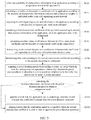
- FIG. 3 is a schematic flowchart diagram of an application management method according to an embodiment of the present disclosure.
- the application management method can be applied to an electronic apparatus.
- the electronic apparatus may be a smart phone, a tablet computer, or the like.
- the application management method may include the following operations.
- S 110 is collecting a plurality of characteristic information of an application according to an operation record of the application.
- the application may be any application installed in the electronic apparatus, such as a communication application, a multimedia application, a game application, an information application, a shopping application, or the like.
- the plurality of characteristic information of the application may include characteristic information inherent to the application itself, for example, an application type of the application.
- the plurality of characteristic information of the application may also include characteristic information generated during the running process of the application, such as a running duration of the application in the background, the number of times of entering the background a day, a previous running duration in the foreground, a manner of entering the background (such as being switched by the start key (i.e., the HOME key), being switched by a Back key, or being switched by other applications (APPs)) or the like.
- the plurality of characteristic information of the application may also include characteristic information generated during the running process of the electronic apparatus, such as a screen-off duration, a screen-on duration, and remaining battery capacity, a network status, a charging status or the like of the electronic apparatus.
- the electronic apparatus may record its own running conditions. For example, the electronic apparatus may record each time when the electronic apparatus turns off the screen, time when the screen is turned on, battery capacity information, the network status, the charging status and the like through a log file. After the above-mentioned application starts to run, the electronic apparatus may further record running conditions of the application. For example, the log file in the electronic apparatus may record time when the application starts to run, time when it runs in a background, a switching manner in which it enters the background, and the like.
- the electronic apparatus When the electronic apparatus receives an application management request, it is possible to obtain a plurality of characteristic information of the application according to the operation record of the application.
- the application management request may be an operation triggered by a user instruction, or triggered by the electronic apparatus on its own. For example, timing may be set in the electronic apparatus, and whenever time reaches the set timing, the electronic apparatus will trigger the application management operation on its own.
- S120 is learning the plurality of characteristic information through a self-organizing neural network to obtain a self-organizing neural network model of the application.
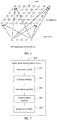
- FIG. 6 is a schematic diagram of an architecture of a self-organizing neural network according to an embodiment of the present disclosure.
- the self-organizing neural network is to change the network parameter and structure in a self-organizing and self-adaptive manner by automatically searching for inherent laws and essential attributes in the sample.
- the self-organizing neural network has an input layer and a calculation layer which each include a plurality of nodes.
- the electronic apparatus collects the plurality of characteristic information of the application
- the plurality of characteristic information of the application is input to the input layer of the self-organizing neural network.
- the self-organizing neural network learns the plurality of characteristic information to obtain a self-organizing neural network model of the application.
- the self-organizing neural network model includes a characteristic coefficient matrix of the application, which matrix includes a plurality of characteristic coefficients.
- the S120 of "learning the plurality of characteristic information through a self-organizing neural network to obtain a self-organizing neural network model of the application” includes the following operations.
- S121 is calculating a plurality of characteristic coefficients of the application according to the plurality of characteristic information collected and connection weights of individual nodes in the self-organizing neural network.
- S122 is acquiring the self-organizing neural network model of the application according to the plurality of characteristic coefficients obtained.
- DistFromInput represents a distance between the node (the calculation node) in the calculation layer best matching the node (the input node) in the input layer, and the input node;
- I represents characteristic information input to the node (the input node) in the input layer;
- W represents connection weights of all nodes within the domain radius; and
- n represents the plurality of characteristic information input to the node (the input node).
- connection weights W of all the nodes within the domain radius are calculated according to the following formula 2.
- W t W t ⁇ 1 + ⁇ t ⁇ 1 L t ⁇ 1 I t ⁇ 1 ⁇ W t ⁇ 1
- t represents time when the calculation is performed; W(t) is a connection weight calculated at the time t and is also a characteristic coefficient calculated; W(t-1) is a connection weight of the node at time (t-1); ⁇ (t-1) is a rate of change of the domain radius at the time (t-1); L(t-1) is a learning rate at the time (t-1); and I (t-1) is characteristic information input to the input node in the self-organizing neural network at the time (t-1). ⁇ (t-1) and L (t-1) are calculated according to the following formulae 3 and 4, respectively.
- ⁇ t ⁇ 1 e ⁇ DistFromInput 2 2 ⁇ 2 t ⁇ 1
- L t ⁇ 1 L 0 e ⁇ t ⁇ 1 ⁇ t ⁇ 1
- e is a natural constant (transcendental number), and is a fixed value approximately equal to 2.71828;
- L 0 is a fixed constant, which, for example, may be given a value of 0.3, 0.5, or the like.
- ⁇ ( t ⁇ 1) which represents domain radius at the time (t-1), is calculated according to the following formula 5.
- ⁇ t ⁇ 1 ⁇ 0 e ⁇ t ⁇ 1 ⁇ t ⁇ 1
- ⁇ 0 is an initial domain radius and is a fixed constant, which, for example, may be given a value 5, 10, or the like.
- ⁇ 0 is an initial iteration coefficient and is a fixed constant, which, for example, may be given a value of 1000.
- connection weights W(t) are also characteristic coefficients.
- the calculated connection weights W(t) constitute a characteristic coefficient matrix.
- the characteristic coefficient matrix includes a plurality of characteristic coefficients.
- the characteristic coefficient matrix and a corresponding relationship between the plurality of characteristic coefficients in the characteristic coefficient matrix and time constitute a self-organizing neural network model of the application.
- the electronic apparatus may perform a large number of operations according to the above formulae.
- S130 is calculating a first characteristic coefficient of the application according to current characteristic information of the application, when the application runs in the background.
- the electronic apparatus may perform a judgment operation on whether the application can be cleaned up.
- the electronic apparatus collects current characteristic information of the application.
- the current characteristic information may include characteristic information inherent to the application itself, for example, an application type of the application; the current characteristic information may also include characteristic information generated during the running process of the application, such as a running duration of the application in the background, the number of times of entering the background a day, a previous running duration in the foreground, or a manner of entering the background (such as being switched by the start key (i.e., the HOME key), being switched by the Back key, or being switched by other APPs); and the current characteristic information may also include characteristic information generated during the running process of the electronic apparatus, such as a screen-off duration, a screen-on duration, remaining battery capacity, a network status, a charging status or the like of the electronic apparatus.
- the electronic apparatus calculates the current characteristic information of the application according to the above formulae 1 to 6 to obtain a first characteristic coefficient of the application.
- S140 is determining a second characteristic coefficient from the characteristic coefficient matrix according to the first characteristic coefficient.
- a second characteristic coefficient of the application may be determined according to the first characteristic coefficient and the self-organizing neural network model of the application.
- the self-organizing neural network model of the application includes a characteristic coefficient matrix of the application.
- the characteristic coefficient matrix includes a plurality of characteristic coefficients.
- the electronic apparatus may compare the first characteristic coefficient with a plurality of characteristic coefficients in the characteristic coefficient matrix to determine a second characteristic coefficient from the plurality of characteristic coefficients in the characteristic coefficient matrix.
- first and second are only used to distinguish similar objects, and are not necessarily used to describe a particular order or sequence. It should be understood that, the objects described in such manner are interchangeable under appropriate circumstances.
- the operation S 140 of "determining a second characteristic coefficient from the characteristic coefficient matrix according to the first characteristic coefficient” includes the following operations.
- S141 is calculating absolute values of differences between the first characteristic coefficient and the plurality of characteristic coefficients, respectively.
- S142 is determining, as the second characteristic coefficient, a characteristic coefficient corresponding to a difference with a minimum absolute value.
- the first characteristic coefficient is compared with the plurality of characteristic coefficients in the characteristic coefficient matrix, respectively; differences between the first characteristic coefficient and the plurality of characteristic coefficients are calculated; and absolute values of the differences are calculated.
- a minimum absolute value is determined from the absolute values of the plurality of differences. Then, the characteristic coefficient corresponding to the difference with the minimum absolute value is determined as the second characteristic coefficient.
- S150 is judging whether the application can be cleaned up according to the second characteristic coefficient.
- the electronic apparatus calculates the second characteristic coefficient of the application, it is possible to make a judgment according to the second characteristic coefficient to determine whether the application can be cleaned up. If the application cannot be cleaned up, the application is kept running in the background, to allow the process of the application to reside in the system. If the application can be cleaned up, the process of the application may be ended to close the application, thereby releasing memory occupied by the application.
- the operation S150 of "judging whether the application can be cleaned up according to the second characteristic coefficient" includes the following operations.
- S151 is acquiring a preset duration parameter.
- S152 is comparing the second characteristic coefficient with the preset duration parameter to obtain a comparison result.
- S153 is judging whether the application can be cleaned up according to the comparison result.
- the preset duration parameter may be a duration value preset in the electronic apparatus.
- the preset duration parameter may be 10 minutes.
- the electronic apparatus calculates the second characteristic coefficient of the application, the preset duration parameter is retrieved from the electronic apparatus. Subsequently, the second characteristic coefficient is compared with the preset duration parameter to obtain a comparison result.
- the comparison result is a size relationship between the second characteristic coefficient and the preset duration parameter.
- the comparison result includes the following: the second characteristic coefficient is smaller than or equal to the preset duration parameter, or the second characteristic coefficient is greater than the preset duration parameter. Then, the electronic apparatus judges whether the application can be cleaned up according to the comparison result.
- the operation S151 of "acquiring a preset duration parameter" includes the following operations.
- S1511 is determining time corresponding to the second characteristic coefficient according to the second characteristic coefficient.
- S1512 is acquiring a preset duration parameter according to a time period in which the time lies and a preset correspondence relationship, wherein the preset correspondence relationship is a correspondence relationship between the time period and the preset duration parameter.
- the second characteristic coefficient is a characteristic coefficient determined from the self-organizing neural network model of the application.
- the second characteristic coefficient is a function with regard to time t.
- the electronic apparatus may determine time corresponding to the second characteristic coefficient according to the second characteristic coefficient.
- a correspondence relationship between time periods and preset duration parameters may be preset. For example, 24 hours of a day may be divided into four time periods: 0: 00 ⁇ 6: 00, 6: 00 ⁇ 12: 00, 12: 00 ⁇ 18: 00, 18: 00 ⁇ 24: 00. Each time period may be configured with a corresponding preset duration parameter.
- the preset duration parameter corresponding to 0: 00 ⁇ 6: 00 is 8 minutes
- the preset duration parameter corresponding to 6: 00 ⁇ 12: 00 is 10 minutes
- the preset duration parameter corresponding to 12: 00 ⁇ 18: 00 is 15 minutes
- the preset duration parameter corresponding to 18: 00 ⁇ 24: 00 is 20 minutes.
- the electronic apparatus determines time corresponding to the second characteristic coefficient, a time period in which the time lies is further determined. Subsequently, the preset duration parameter is acquired according to the time period and the correspondence relationship between the time period and the preset duration parameter.
- the operation S153 of "judging whether the application can be cleaned up according to the comparison result" includes the following operations.
- S1532 is judging a result that the application cannot be cleaned up, when the second characteristic coefficient is smaller than or equal to the preset duration parameter.
- S1531 is judging a result that the application can be cleaned up, when the second characteristic coefficient is greater than the preset duration parameter.
- the electronic apparatus After the electronic apparatus obtains the comparison result between the second characteristic coefficient and the preset duration parameter, it is judged whether the application can be cleaned up according to the comparison result.
- the application when the second characteristic coefficient is smaller than or equal to the preset duration parameter, it is shown that the application may be switched again to the foreground for running within the time period of the preset duration parameter, and in this case, a result is judged that the application cannot be cleaned up.
- the second characteristic coefficient is smaller than the preset duration parameter 10 minutes
- the application may be switched by the user again to the foreground for running in the next 10 minutes, and in this case, the application cannot be cleaned up.
- the application When the second characteristic coefficient is greater than the preset duration parameter, it is shown that the application will not be switched again to the foreground for running within the time period of the preset duration parameter, i.e., the user will not use the application again, and in this case, a result is judged that the application can be cleaned up. For example, when the second characteristic coefficient is greater than the preset duration parameter 15 minutes, it is shown that the application will not be run by the user again in the next 15 minutes, and in this case, the application can be cleaned up. Subsequently, the electronic apparatus may close the application.
- the present disclosure is not limited by the execution order of the various operations described, and in the case of no conflict, some operations may be further performed in other order or simultaneously.
- the application management method collects a plurality of characteristic information of the application according to an operation record of the application; learns the plurality of characteristic information through a self-organizing neural network to obtain a self-organizing neural network model of the application; calculates a first characteristic coefficient of the application according to current characteristic information of the application, when the application runs in the background; determines a second characteristic coefficient from a characteristic coefficient matrix according to the first characteristic coefficient; and judges whether the application can be cleaned up according to the second characteristic coefficient.
- This solution judges whether the application can be cleaned up according to the second characteristic coefficient of the application, thereby making it possible to accurately judge when the application can be cleaned up according to actual running circumstances of the application.
- the application is closed in time to release memory of the electronic apparatus, thereby making it possible to reduce memory occupancy of the electronic apparatus and to improve running consistency of the electronic apparatus.
- An embodiment of the present disclosure further provides an application management device which may be integrated in an electronic apparatus.
- the electronic equipment may be a smart phone, a tablet computer, or the like.
- An embodiment of the present disclosure provides an application management device which includes: a collection module, configured to collect a plurality of characteristic information of an application according to an operation record of the application; a learning module, configured to learn the plurality of characteristic information through a self-organizing neural network to obtain a self-organizing neural network model of the application, the self-organizing neural network model including a characteristic coefficient matrix of the application; a calculation module, configured to calculate a first characteristic coefficient of the application according to current characteristic information of the application, when the application runs in a background; a determination module, configured to determine a second characteristic coefficient from the characteristic coefficient matrix according to the first characteristic coefficient; and a judgment module, configured to judge whether the application can be cleaned up according to the second characteristic coefficient.
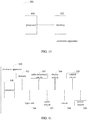
- the application management device 200 may include: a collection module 201, a learning module 202, a calculation module 203, a determination module 204, and a judgment module 205.
- the collection module 201 is configured to collect a plurality of characteristic information of an application according to an operation record of the application.
- the application may be any application installed in the electronic apparatus, such as a communication application, a multimedia application, a game application, an information application, a shopping application, or the like.
- the plurality of characteristic information of the application may include characteristic information inherent to the application itself, for example, an application type of the application; the plurality of characteristic information of the application may also include characteristic information generated during the running process of the application, such as a running duration of the application in the background, the number of times of entering the background a day, a previous running duration in the foreground, a manner of entering the background (such as being switched by the start key (i.e., the HOME key), being switched by the Back key, or being switched by other APPs), or the like; and the plurality of characteristic information of the application may also include characteristic information generated during the running process of the electronic apparatus, such as a screen-off duration, a screen-on duration, and remaining battery capacity, a network status, a charging status or the like of the electronic apparatus.
- characteristic information generated during the running process of the application such as a running duration of the application in the background, the number of times of entering the background a day, a previous running duration in the foreground, a manner of entering the background (such
- the application management device 200 may record running conditions of the electronic apparatus. For example, it is possible to record each time when the electronic apparatus turns off the screen, time when the screen is turned on, battery capacity information, a network status, and a charging status via a log file. After the above-mentioned application starts to run, the application management device 200 may further record running conditions of the application. For example, the log file in the electronic apparatus may record time when the application starts to run, time when the application runs in the background, a switching manner of entering the background, and the like.
- the collection module 201 may acquire the plurality of characteristic information of the application according to the operation record of the application.
- the application management request may be an operation triggered by a user instruction, or triggered by the electronic apparatus on its own. For example, timing may be set in the electronic apparatus, and whenever time reaches the set timing, the electronic apparatus will trigger the application management operation on its own.
- the learning module 202 is configured to learn the plurality of characteristic information through a self-organizing neural network to obtain a self-organizing neural network model of the application.
- the self-organizing neural network changes the network parameter and structure in a self-organizing and self-adaptive manner, by automatically searching for inherent laws and essential attributes in the sample.
- the self-organizing neural network has an input layer and a calculation layer which each include a plurality of nodes.
- the learning module 202 inputs the plurality of characteristic information of the application to the input layer of the self-organizing neural network. Subsequently, the self-organizing neural network learns the plurality of characteristic information to obtain a self-organizing neural network model of the application.
- the self-organizing neural network model includes a characteristic coefficient matrix of the application, which matrix includes a plurality of characteristic coefficients.
- the learning module 202 is configured to execute the following operations: calculating a plurality of characteristic coefficients of the application according to the plurality of characteristic information collected and connection weights of individual nodes in the self-organizing neural network; acquiring the self-organizing neural network model of the application according to the plurality of characteristic coefficients obtained.
- DistFromInput represents a distance between the node (the calculation node) in the calculation layer best matching the node (the input node) in the input layer, and the input node;
- I represents characteristic information input to the node (the input node) in the input layer;
- W represents connection weights of all nodes within the domain radius; and
- n represents the plurality of characteristic information input to the node (the input node).
- connection weights W of all the nodes in the domain radius are calculated according to the following formula 8.
- W t W t ⁇ 1 + ⁇ t ⁇ 1 L t ⁇ 1 I t ⁇ 1 ⁇ W t ⁇ 1
- t represents time when the calculation is performed; W(t) is a connection weight calculated at the time t and is also a characteristic coefficient calculated; W(t-1) is a connection weight of the node at time (t-1); ⁇ (t-1) is a rate of change of the domain radius at the time (t-1); L(t-1) is a learning rate at the time (t-1); and I(t-1) is characteristic information input into the input node in the self-organizing neural network at the time (t-1). ⁇ (t-1) and L (t-1) are calculated according to the following formulae 9 and 10, respectively.
- ⁇ t ⁇ 1 e ⁇ DistFormInput 2 2 ⁇ 2 t ⁇ 1
- L t ⁇ 1 L 0 e ⁇ t ⁇ 1 ⁇ t ⁇ 1
- e is a natural constant (transcendental number), and is a fixed value approximately equal to 2.71828; and L 0 is a fixed constant, which, for example, may be given a value of 0.3, 0.5, or the like.
- ⁇ 0 is an initial domain radius and is a fixed constant, which, for example, may be given a value 5, 10, or the like.
- ⁇ 0 is an initial iteration coefficient and is a fixed constant, which, for example, may be given a value of 1000.
- the learning module 202 After the collection module 201 collects the plurality of characteristic information of the application, the learning module 202 performs an iteration operation according to the formulae 7 to 12 to obtain a plurality of connection weights W(t) of the application.
- the connection weights W(t) are also characteristic coefficients.
- the calculated connection weights W(t) constitute a characteristic coefficient matrix.
- the characteristic coefficient matrix includes a plurality of characteristic coefficients.
- the characteristic coefficient matrix and a corresponding relationship between the plurality of characteristic coefficients in the characteristic coefficient matrix and time constitute a self-organizing neural network model of the application.
- the learning module 202 may perform a large number of operations according to the above formulae.
- the calculation module 203 is configured to calculate a first characteristic coefficient of the application according to current characteristic information of the application, when the application runs in the background.
- the application management device 200 may perform a judgment operation on whether the application can be cleaned up.
- the calculation module 203 collects current characteristic information of the application.
- the current characteristic information may include characteristic information inherent to the application itself, for example, an application type of the application; the current characteristic information may also include characteristic information generated during the running process of the application, such as a running duration of the application in the background, the number of times of entering the background a day, a previous running duration in the foreground, a manner of entering the background (such as being switched by the start key (i.e., the HOME key), being switched by the Back key, or being switched by other APPs), or the like; and the current characteristic information may also include characteristic information generated during the running process of the electronic apparatus, such as a screen-off duration, a screen-on duration, remaining battery capacity, a network status, a charging status, or the like of the electronic apparatus.
- the calculation module 203 calculates the current characteristic information of the application according to the above formulae 7 to 12 to obtain a first characteristic coefficient of the application.
- the determination module 204 is configured to determine a second characteristic coefficient from the characteristic coefficient matrix according to the first characteristic coefficient.
- the determination module 204 may determine the second characteristic coefficient of the application according to the first characteristic coefficient and a self-organizing neural network model of the application.
- the self-organizing neural network model of the application includes a characteristic coefficient matrix of the application, which matrix includes a plurality of characteristic coefficients.
- the determination module 204 may compare the first characteristic coefficient with a plurality of characteristic coefficients in the characteristic coefficient matrix, respectively, to determine the second characteristic coefficient from the plurality of characteristic coefficients in the characteristic coefficient matrix.
- the determination module 204 includes a calculation sub-module 2041 and a determination sub-module 2042.
- the calculation sub-module 2041 is configured to calculate absolute values of differences between the first characteristic coefficient and the plurality of characteristic coefficients, respectively.
- the determination sub-module 2042 is configured to determine, as a second characteristic coefficient, a characteristic coefficient corresponding to a difference with a minimum absolute value.
- the calculation sub-module 2041 compares the first characteristic coefficient with a plurality of characteristic coefficients in the characteristic coefficient matrix, respectively, calculates differences between the first characteristic coefficient and the plurality of characteristic coefficients, and calculates absolute values of the differences.
- the determination sub-module 2042 determines a minimum one from the absolute values of the plurality of differences. Subsequently, the characteristic coefficient corresponding to a difference with a minimum absolute value is determined as the second characteristic coefficient.
- the judgment module 205 is configured to judge whether the application can be cleaned up according to the second characteristic coefficient.
- the judgment module 205 may perform judgment according to the second characteristic coefficient to determine whether the application can be cleaned up. If the application cannot be cleaned up, the application is kept running in the background to allow the process of the application to reside in the system. If the application can be cleaned up, the process of the application may be ended to close the application, thereby releasing memory occupied by the application.
- the judgment module 205 includes: an acquisition sub-module 2051, a comparison sub-module 2052, and a judgment sub-module 2053.
- the acquisition sub-module 2051 is configured to acquire a preset duration parameter.
- the comparison sub-module 2052 is configured to compare the second characteristic coefficient with the preset duration parameter to obtain a comparison result.
- the judgment sub-module 2053 is configured to judge whether the application can be cleaned up according to the comparison result.
- the preset duration parameter may be a duration value preset in the electronic apparatus.
- the preset duration parameter may be 10 minutes.
- the acquisition sub-module 2051 retrieves the preset duration parameter from the electronic apparatus.
- the comparison sub-module 2052 compares the second characteristic coefficient with the preset duration parameter to obtain a comparison result.
- the comparison result is a size relationship between the second characteristic coefficient and the preset duration parameter.
- the comparison result includes the following: the second characteristic coefficient is smaller than or equal to the preset duration parameter, or the second characteristic coefficient is greater than the preset duration parameter.
- the judgment sub-module 2053 judges whether the application can be cleaned up according to the comparison result.
- the acquisition sub-module 2051 is configured to execute the following operations: determining time corresponding to the second characteristic coefficient according to the second characteristic coefficient; and acquiring a preset duration parameter according to a time period in which the time lies and a preset correspondence relationship, wherein the preset correspondence relationship is a correspondence relationship between the time period and the preset duration parameter.
- the second characteristic coefficient is a characteristic coefficient determined from the self-organizing neural network model of the application.
- the second characteristic coefficient is a function with regard to time t.
- the acquisition sub-module 2051 may determine time corresponding to the second characteristic coefficient according to the second characteristic coefficient.
- a correspondence relationship between time periods and preset duration parameters may be preset. For example, 24 hours of a day may be divided into four time periods: 0: 00 ⁇ 6: 00, 6: 00 ⁇ 12: 00, 12: 00 ⁇ 18: 00, 18: 00 ⁇ 24: 00. Each time period may be provided with a corresponding preset duration parameter.
- the preset duration parameter corresponding to 0: 00 ⁇ 6: 00 is 8 minutes
- the preset duration parameter corresponding to 6: 00 ⁇ 12: 00 is 10 minutes
- the preset duration parameter corresponding to 12: 00 ⁇ 18: 00 is 15 minutes
- the preset duration parameter corresponding to 18: 00 ⁇ 24: 00 is 20 minutes.
- the acquisition sub-module 2051 determines time corresponding to the second characteristic coefficient, a time period in which the time lies is further determined. Subsequently, the preset duration parameter is acquired according to the time period and the correspondence relationship between the time period and the preset duration parameter.
- the judgment sub-module 2053 is configured to execute the following operations: judging a result that the application cannot be cleaned up, when the second characteristic coefficient is smaller than or equal to the preset duration parameter; judging a result that the application can be cleaned up, when the second characteristic coefficient is greater than the preset duration parameter.
- the judgment sub-module 2053 judges whether the application can be cleaned up according to the comparison result.
- the application when the second characteristic coefficient is smaller than or equal to the preset duration parameter, it is shown that the application may be switched again to the foreground for running within the time period of the preset duration parameter, and in this case, a result is judged that the application cannot be cleaned up.
- the second characteristic coefficient is smaller than the preset duration parameter10 minutes, it is shown that the application may be switched by the user again to the foreground for running in the next 10 minutes, and in this case, the application cannot be cleaned up.
- the application management device 200 may close the application.
- modules described above may be implemented as independent entities; and may also be combined in an arbitrary manner to be implemented as a same entity or several entities.
- the collection module 201 collects a plurality of characteristic information of the application according to an operation record of the application; the learning module 202 learns the plurality of characteristic information through a self-organizing neural network to obtain a self-organizing neural network model of the application; the calculation module 203 calculates a first characteristic coefficient of the application according to current characteristic information of the application, when the application runs in the background; the determination module 204 determines a second characteristic coefficient from a characteristic coefficient matrix according to the first characteristic coefficient; and the judgment module 205 judges whether the application can be cleaned up according to the second characteristic coefficient.
- This solution judges whether the application can be cleaned up according to the second characteristic coefficient of the application, thereby making it possible to accurately judge when the application can be cleaned up according to actual running circumstances of the application.
- the application is closed in time to release memory of the electronic apparatus, thereby making it possible to reduce memory occupancy of the electronic apparatus and to improve running consistency of the electronic apparatus.
- An embodiment of the present application further provides an electronic apparatus.
- the electronic apparatus may be a smart phone, a tablet computer, or the like.
- the electronic apparatus 300 includes a processor 301 and a memory 302 which are electrically connected to each other.
- the processor 301 is a control center of the electronic apparatus 300. Various interfaces and lines are used to connect various parts of the entire electronic apparatus; and various functions and data processing of the electronic apparatus are performed by running or calling a computer program stored in the memory 302, and calling data stored in the memory 302, so as to monitor the electronic apparatus as a whole.
- the processor 301 in the electronic apparatus 300 loads instructions corresponding to the process of one or more computer programs into the memory 302 according to the following operations, and the processor 301 is configured to run the computer program stored in the memory 302 to implement the following various functions: collecting a plurality of characteristic information of an application according to an operation record of the application; learning the plurality of characteristic information through a self-organizing neural network to obtain a self-organizing neural network model of the application, the self-organizing neural network model including a characteristic coefficient matrix of the application; calculating a first characteristic coefficient of the application according to current characteristic information of the application, when the application runs in a background; determining a second characteristic coefficient from the characteristic coefficient matrix according to the first characteristic coefficient; and judging whether the application can be cleaned up according to the second characteristic coefficient.
- the characteristic coefficient matrix includes a plurality of characteristic coefficients.
- the processor 301 executes the following operations: calculating absolute values of differences between the first characteristic coefficient and the plurality of characteristic coefficients, respectively; and determining, as a second characteristic coefficient, a characteristic coefficient corresponding to a difference with a minimum absolute value.
- the processor 301 when judging whether the application can be cleaned up according to the second characteristic coefficient, executes the following operations: acquiring a preset duration parameter; comparing the second characteristic coefficient with the preset duration parameter to obtain a comparison result; and judging whether the application can be cleaned up according to the comparison result.
- the processor 301 when acquiring the preset duration parameter, executes the following operations: determining time corresponding to the second characteristic coefficient according to the second characteristic coefficient; and acquiring a preset duration parameter according to a time period in which the time lies and a preset correspondence relationship, wherein the preset correspondence relationship is a correspondence relationship between the time period and the preset duration parameter.
- the processor 301 executes the following operations: judging a result that the application cannot be cleaned up, when the second characteristic coefficient is smaller than or equal to the preset duration parameter; and judging a result that the application can be cleaned up, when the second characteristic coefficient is greater than the preset duration parameter.
- the processor 301 when learning the plurality of characteristic information through a self-organizing neural network to obtain a self-organizing neural network model of the application, the processor 301 executes the following operations: calculating a plurality of characteristic coefficients of the application according to the plurality of characteristic information collected and connection weights of individual nodes in the self-organizing neural network; and acquiring the self-organizing neural network model of the application according to the plurality of characteristic coefficients obtained.
- the processor 301 when calculating a plurality of characteristic coefficients of the application according to the plurality of characteristic information collected and the connection weights of the individual nodes in the self-organizing neural network, the processor 301 performs the calculation according to the following formula.
- W t W t ⁇ 1 + ⁇ t ⁇ 1 L t ⁇ 1 I t ⁇ 1 ⁇ W t ⁇ 1
- W(t) is a connection weight of a node at time t and is also a characteristic coefficient calculated at the time t; t represents time at which the calculation is performed; W(t-1) is a connection weight of the node at time t-1; ⁇ ( t ⁇ 1) is a rate of change of domain radius at the time t-1; L ( t ⁇ 1) is a learning rate at the time t-1; and I (t-1) is characteristic information input to an input node in the self-organizing neural network at the time t-1.
- the memory 302 may be configured to store computer programs and data.
- the computer programs stored in the memory 302 contain instructions executable in the processor.
- the computer programs may constitute various functional modules.
- the processor 301 calls the computer programs stored in the memory 302 to execute various functional applications and data processing.
- the electronic apparatus 300 further includes a radio frequency circuit 303, a display screen 304, a control circuit 305, an input unit 306, an audio circuit 307, a sensor 308, and a power source 309.
- the processor 301 is electrically connected to the radio frequency circuit 303, the display screen 304, the control circuit 305, the input unit 306, the audio circuit 307, the sensor 308, and the power source 309, respectively.
- the radio frequency circuit 303 is configured to receive and transmit radio frequency signals to communicate with network equipment or other electronic apparatus through wireless communication.
- the display screen 304 may be configured to display information input by the user or information provided to the user and various graphical user interfaces of the electronic apparatus. These graphical user interfaces may be composed of images, texts, icons, videos, and any combination thereof.
- the control circuit 305 which is electrically connected to the display screen 304, is configured to control the display screen 304 to display information.
- the input unit 306 may be configured to receive input numbers, character information, or user characteristic information (i.e., fingerprints), and to generate keyboard, mouse, joystick, optical or trackball signal inputs related to user settings and function control.
- the input unit 306 may include a fingerprint recognition module.
- the audio circuit 307 may provide an audio interface between the user and the electronic apparatus through a speaker or a microphone.
- the sensor 308 is configured to collect external environment information.
- the sensor 308 may include one or more of sensors such as an ambient brightness sensor, an acceleration sensor, and a gyroscope.
- the power source 309 is configured to supply power to various components of the electronic apparatus 300.
- the power source 309 may be logically connected to the processor 301 through a power management system, so as to implement functions such as management of charging and discharging and power consumption management through the power management system.
- the electronic apparatus 300 may further include a camera, a Bluetooth module, and the like, and details are not described herein again.
- an embodiment of the present disclosure provides an electronic apparatus, which is configured to: collect a plurality of characteristic information of the application according to an operation record of the application; learn the plurality of characteristic information through a self-organizing neural network to obtain a self-organizing neural network model of the application; calculate a first characteristic coefficient of the application according to current characteristic information of the application, when the application runs in the background; and determine a second characteristic coefficient from a characteristic coefficient matrix according to the first characteristic coefficient; and judge whether the application can be cleaned up according to the second characteristic coefficient.
- This solution judges whether the application can be cleaned up according to the second characteristic coefficient of the application, thereby making it possible to accurately judge when the application can be cleaned up according to actual running circumstances of the application.
- the application is closed in time to release memory of the electronic apparatus, thereby making it possible to reduce memory occupancy of the electronic apparatus and to improve running consistency of the electronic apparatus.
- An embodiment of the present disclosure further provides a storage medium having stored therein a computer program.
- the computer program runs on a computer, the computer executes the application management method according to any one of the foregoing embodiments.
- An embodiment of the present disclosure provides a storage medium storing a computer program, which, when running on a computer, causes the computer to execute the following operations: collecting a plurality of characteristic information of an application according to an operation record of the application; learning the plurality of characteristic information through a self-organizing neural network to obtain a self-organizing neural network model of the application, the self-organizing neural network model including a characteristic coefficient matrix of the application; calculating a first characteristic coefficient of the application according to current characteristic information of the application, when the application runs in a background; determining a second characteristic coefficient from the characteristic coefficient matrix according to the first characteristic coefficient; and judging whether the application can be cleaned up according to the second characteristic coefficient.
- the characteristic coefficient matrix includes a plurality of characteristic coefficients
- the operation of determining a second characteristic coefficient from the characteristic coefficient matrix according to the first characteristic coefficient includes: calculating absolute values of differences between the first characteristic coefficient and the plurality of characteristic coefficients, respectively; and determining, as the second characteristic coefficient, a characteristic coefficient corresponding to a difference with a minimum absolute value.
- the operation of judging whether the application can be cleaned up according to the second characteristic coefficient includes: acquiring a preset duration parameter; comparing the second characteristic coefficient with the preset duration parameter to obtain a comparison result; and judging whether the application can be cleaned up according to the comparison result.
- the operation of acquiring a preset duration parameter includes: determining time corresponding to the second characteristic coefficient according to the second characteristic coefficient; acquiring the preset duration parameter according to a time period in which the time lies and a preset correspondence relationship, the preset correspondence relationship being a correspondence relationship between the time period and the preset duration parameter.
- the operation of judging whether the application can be cleaned up according to the comparison result includes: judging a result that the application cannot be cleaned up, when the second characteristic coefficient is smaller than or equal to the preset duration parameter; and judging a result that the application can be cleaned up, when the second characteristic coefficient is greater than the preset duration parameter.
- the storage medium may include, but is not limited to, a read-only memory (ROM, Read Only Memory), a random access memory (RAM, Random Access Memory), a magnetic disk, an optical disk, or the like.
Landscapes
- Engineering & Computer Science (AREA)
- Theoretical Computer Science (AREA)
- Physics & Mathematics (AREA)
- Software Systems (AREA)
- General Physics & Mathematics (AREA)
- General Engineering & Computer Science (AREA)
- Mathematical Physics (AREA)
- Data Mining & Analysis (AREA)
- Computing Systems (AREA)
- Human Computer Interaction (AREA)
- Biophysics (AREA)
- Molecular Biology (AREA)
- General Health & Medical Sciences (AREA)
- Evolutionary Computation (AREA)
- Computational Linguistics (AREA)
- Biomedical Technology (AREA)
- Artificial Intelligence (AREA)
- Life Sciences & Earth Sciences (AREA)
- Health & Medical Sciences (AREA)
- Mathematical Analysis (AREA)
- Mathematical Optimization (AREA)
- Pure & Applied Mathematics (AREA)
- Computational Mathematics (AREA)
- Algebra (AREA)
- Databases & Information Systems (AREA)
- Telephone Function (AREA)
- Management, Administration, Business Operations System, And Electronic Commerce (AREA)
Claims (6)
- Ein Anwendungsverwaltungsverfahren, dadurch gekennzeichnet, dass es umfasst:Sammeln (S110) mehrerer charakteristischer Informationen einer Anwendung gemäß einem Operationsdatensatz der Anwendung;Lernen (S120) der mehreren charakteristischen Informationen durch ein selbstorganisierendes neuronales Netzwerk, um ein selbstorganisierendes neuronales Netzwerkmodell der Anwendung zu erhalten, umfassend:
Berechnen (S121) mehrerer charakteristischer Koeffizienten der Anwendung gemäß den mehreren gesammelten charakteristischen Informationen und Verbindungsgewichten einzelner Knoten in dem selbstorganisierenden neuronalen Netzwerk; wobei die mehreren charakteristischen Koeffizienten gemäß der folgenden Formel berechnet werden: wobei W(t) ein Verbindungsgewicht eines Knotens zum Zeitpunkt t ist und auch ein berechneter charakteristischer Koeffizient ist; t die Zeit repräsentiert, zu der die Berechnung durchgeführt wird;W(t-1) ein Verbindungsgewicht des Knotens zum Zeitpunkt t-1 ist; Θ(t-1) eine Änderungsrate des Domänenradius zum Zeitpunkt t-1 ist; L(t-1) eine Lernrate zum Zeitpunkt t-1 ist; I(t-1) eine charakteristische Information ist, die in einen Eingangsknoten des selbstorganisierenden neuronalen Netzwerks zum Zeitpunkt t-1 eingegeben wird;Θ(t-1) und L(t-1) jeweils nach den folgenden Formeln berechnet werden:

 wobei e eine natürliche Konstante und L0 eine feste Konstante ist; DistFromInput, σ(t―1) und λ(t-1) jeweils nach den folgenden Formeln berechnet werden:

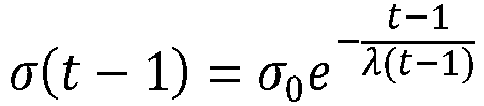
 wobei sowohl σ0 als auch λ 0 feste Konstanten sind;wobei das selbstorganisierende neuronale Netzwerkmodell eine charakteristische Koeffizientenmatrix der Anwendung umfasst, wobei die charakteristische Koeffizientenmatrix mehrere charakteristische Koeffizienten umfasst; Berechnen (S130), durch eine elektronische Vorrichtung, eines ersten charakteristischen Koeffizienten der Anwendung gemäß aktueller charakteristischer Information der Anwendung und der obigen Formeln, wenn die Anwendung in einem Hintergrund läuft;Bestimmen (S140), durch die elektronische Vorrichtung, eines zweiten charakteristischen Koeffizienten aus der charakteristischen Koeffizientenmatrix gemäß dem ersten charakteristischen Koeffizienten, umfassend:Berechnen (S141), durch die elektronische Vorrichtung, von Absolutwerten von Differenzen zwischen dem ersten charakteristischen Koeffizienten und den jeweiligen mehreren charakteristischen Koeffizienten; undBestimmen (S142), durch die elektronische Vorrichtung, als den zweiten charakteristischen Koeffizienten, eines charakteristischen Koeffizienten, der einer Differenz mit einem minimalen Absolutwert entspricht; undBeurteilen (S150), ob die Anwendung gemäß dem zweiten charakteristischen Koeffizienten bereinigt werden kann, umfassend:Erfassen (S151) eines voreingestellten Dauerparameters;Vergleichen (S152) des zweiten charakteristischen Koeffizienten mit dem voreingestellten Dauerparameter, um ein Vergleichsergebnis zu erhalten; undBeurteilung (S153), ob die Anwendung entsprechend dem Vergleichsergebnis bereinigt werden kann.
- Anwendungsverwaltungsverfahren nach Anspruch 1, wobei die Operation des Erfassens (S151) eines voreingestellten Dauerparameters umfasst:Bestimmen (S1511) der dem zweiten charakteristischen Koeffizienten entsprechenden Zeit gemäß dem zweiten charakteristischen Koeffizienten; undErfassen (S1512) des voreingestellten Dauerparameters gemäß einer Zeitspanne, in der die Zeit liegt, und einer voreingestellten Übereinstimmungsbeziehung, wobei die voreingestellte Übereinstimmungsbeziehung eine Übereinstimmungsbeziehung zwischen der Zeitspanne und dem voreingestellten Dauerparameter ist.
- Anwendungsverwaltungsverfahren nach Anspruch 2, wobei die Operation des Beurteilens (S153), ob die Anwendung gemäß dem Vergleichsergebnis bereinigt werden kann, umfasst:Beurteilen (S1532) eines Ergebnisses, dass die Anwendung nicht bereinigt werden kann, wenn der zweite charakteristische Koeffizient kleiner oder gleich dem voreingestellten Dauerparameter ist; undBeurteilen (S1531) eines Ergebnisses, dass die Anwendung bereinigt werden kann, wenn der zweite Kennwert größer als der voreingestellte Dauerparameter ist.
- Anwendungsverwaltungsverfahren nach Anspruch 1, wobei die Operation des Lernens (S120) der mehreren charakteristischen Informationen durch ein selbstorganisierendes neuronales Netzwerk, um ein selbstorganisierendes neuronales Netzwerkmodell der Anwendung zu erhalten, ferner umfasst:
Erfassen (S122) des selbstorganisierenden neuronalen Netzwerkmodells der Anwendung gemäß den mehreren erhaltenen charakteristischen Koeffizienten. - Anwendungsverwaltungsverfahren, dadurch gekennzeichnet, dass es umfasst:ein Sammelmodul (201), das dazu ausgelegt ist, mehrere charakteristische Informationen einer Anwendung gemäß einem Operationsdatensatz der Anwendung zu sammeln;ein Lernmodul (202), das dazu ausgelegt ist, die mehreren charakteristischen Informationen durch ein selbstorganisierendes neuronales Netzwerk zu lernen, um ein selbstorganisierendes neuronales Netzwerkmodell der Anwendung durch Durchführen der folgenden Operationen zu erhalten:
Berechnen mehrerer charakteristischer Koeffizienten der Anwendung gemäß den mehreren gesammelten charakteristischen Informationen und Verbindungsgewichten einzelner Knoten in dem selbstorganisierenden neuronalen Netzwerk; wobei die mehreren charakteristischen Koeffizienten gemäß der folgenden Formel berechnet werden: wobei W(t) ein Verbindungsgewicht eines Knotens zum Zeitpunkt t ist und auch ein berechneter charakteristischer Koeffizient ist; t die Zeit repräsentiert, zu der die Berechnung durchgeführt wird;W(t-1) ein Verbindungsgewicht des Knotens zum Zeitpunkt t-1 ist; Θ(t-1) eine Änderungsrate des Domänenradius zum Zeitpunkt t-1 ist; L(t-1) eine Lernrate zum Zeitpunkt t-1 ist; I(t-1) eine charakteristische Information ist, die in einen Eingangsknoten des selbstorganisierenden neuronalen Netzwerks zum Zeitpunkt t-1 eingegeben wird; Θ(t-1) und L (t-1) jeweils nach den folgenden Formeln berechnet werden:

 wobei e eine natürliche Konstante und L 0 eine feste Konstante ist; DistFromInput, σ(t-1) und λ(t-1) jeweils nach den folgenden Formeln berechnet werden:


 wobei sowohl σ 0 als auch λ 0 feste Konstanten sind;wobei das selbstorganisierende neuronale Netzwerkmodell eine charakteristische Koeffizientenmatrix der Anwendung umfasst, wobei die charakteristische Koeffizientenmatrix mehrere charakteristische Koeffizienten umfasst;ein Berechnungsmodul (203), das dazu ausgelegt ist, durch eine elektronische Vorrichtung einen ersten charakteristischen Koeffizienten der Anwendung gemäß der aktuellen charakteristischen Information der Anwendung und den obigen Formeln zu berechnen, wenn die Anwendung in einem Hintergrund läuft;ein Bestimmungsmodul (204), das dazu ausgelegt ist, durch die elektronische Vorrichtung einen zweiten charakteristischen Koeffizienten aus der charakteristischen Koeffizientenmatrix gemäß dem ersten charakteristischen Koeffizienten durch Durchführen der folgenden Operationen zu bestimmen:Berechnen, durch die elektronische Vorrichtung, von Absolutwerten von Differenzen zwischen dem ersten charakteristischen Koeffizienten und den jeweiligen mehreren charakteristischen Koeffizienten; undBestimmen, durch die elektronische Vorrichtung, als den zweiten charakteristischen Koeffizienten, eines charakteristischen Koeffizienten, der einer Differenz mit einem minimalen Absolutwert entspricht; undein Beurteilungsmodul (205), das dazu ausgelegt ist, zu beurteilen, ob die Anwendung gemäß dem zweiten charakteristischen Koeffizienten durch Durchführen der folgenden Operationen bereinigt werden kann:Erfassen eines voreingestellten Dauerparameters;Vergleichen des zweiten charakteristischen Koeffizienten mit dem voreingestellten Dauerparameter, um ein Vergleichsergebnis zu erhalten; undBeurteilung, ob die Anwendung entsprechend dem Vergleichsergebnis bereinigt werden kann.
- Nichtflüchtiges Speichermedium, das ein Computerprogramm speichert, das, wenn es auf einem Computer läuft, den Computer veranlasst, das Anwendungsverwaltungsverfahren nach einem der Ansprüche 1-4 auszuführen.
Applications Claiming Priority (2)
| Application Number | Priority Date | Filing Date | Title |
|---|---|---|---|
| CN201710940338.9A CN107729081B (zh) | 2017-09-30 | 2017-09-30 | 应用管理方法、装置、存储介质及电子设备 |
| PCT/CN2018/100684 WO2019062369A1 (zh) | 2017-09-30 | 2018-08-15 | 应用管理方法、装置、存储介质及电子设备 |
Publications (3)
| Publication Number | Publication Date |
|---|---|
| EP3671441A1 EP3671441A1 (de) | 2020-06-24 |
| EP3671441A4 EP3671441A4 (de) | 2020-08-12 |
| EP3671441B1 true EP3671441B1 (de) | 2021-10-27 |
Family
ID=61210234
Family Applications (1)
| Application Number | Title | Priority Date | Filing Date |
|---|---|---|---|
| EP18861678.3A Not-in-force EP3671441B1 (de) | 2017-09-30 | 2018-08-15 | Anwendungsverwaltungsverfahren und -vorrichtung, speichermedium und elektronische vorrichtung |
Country Status (4)
| Country | Link |
|---|---|
| US (1) | US11249645B2 (de) |
| EP (1) | EP3671441B1 (de) |
| CN (1) | CN107729081B (de) |
| WO (1) | WO2019062369A1 (de) |
Families Citing this family (7)
| Publication number | Priority date | Publication date | Assignee | Title |
|---|---|---|---|---|
| CN107729081B (zh) * | 2017-09-30 | 2020-07-07 | Oppo广东移动通信有限公司 | 应用管理方法、装置、存储介质及电子设备 |
| CN107870791B (zh) * | 2017-10-31 | 2019-07-16 | Oppo广东移动通信有限公司 | 应用管理方法、装置、存储介质及电子设备 |
| KR102438784B1 (ko) * | 2018-01-05 | 2022-09-02 | 삼성전자주식회사 | 데이터를 난독화 및 복호화 하는 전자 장치 및 그의 제어 방법 |
| CN110543333B (zh) * | 2018-05-29 | 2024-05-17 | 视联动力信息技术股份有限公司 | 针对处理器的休眠处理方法、装置、移动终端和存储介质 |
| CN110866589B (zh) * | 2018-08-10 | 2023-06-30 | 阿里巴巴(中国)有限公司 | 深度神经网络模型的运行方法、装置及框架 |
| CN111050385A (zh) * | 2018-10-15 | 2020-04-21 | 中兴通讯股份有限公司 | 一种应用清理方法、装置、设备及可读存储介质 |
| CN109731336B (zh) | 2018-12-27 | 2022-09-09 | 三星电子(中国)研发中心 | 一种游戏应用的控制方法和装置 |
Family Cites Families (18)
| Publication number | Priority date | Publication date | Assignee | Title |
|---|---|---|---|---|
| JP6236296B2 (ja) * | 2013-11-14 | 2017-11-22 | 株式会社デンソーアイティーラボラトリ | 学習装置、学習プログラム、及び学習方法 |
| CN103646086B (zh) * | 2013-12-13 | 2017-01-25 | 北京奇虎科技有限公司 | 一种垃圾文件的清理方法和装置 |
| CN105224408A (zh) | 2015-09-22 | 2016-01-06 | 小米科技有限责任公司 | 数据清理方法、装置及系统 |
| JP6679086B2 (ja) * | 2015-11-11 | 2020-04-15 | 国立研究開発法人情報通信研究機構 | 学習装置、予測装置、学習方法、予測方法、およびプログラム |
| CN105468416A (zh) | 2015-11-30 | 2016-04-06 | 魅族科技(中国)有限公司 | 一种应用程序清理的方法及终端 |
| CN106855826B (zh) * | 2015-12-08 | 2021-02-23 | 斑马智行网络(香港)有限公司 | 一种后台应用程序的控制方法及装置 |
| KR102500608B1 (ko) * | 2016-01-28 | 2023-02-16 | 삼성전자주식회사 | 어플리케이션을 제어하는 전자 장치와 이의 동작 방법 |
| CN107291549B (zh) * | 2016-03-31 | 2020-11-24 | 阿里巴巴集团控股有限公司 | 一种管理应用程序的方法及装置 |
| CN105912370B (zh) * | 2016-05-03 | 2020-02-14 | Oppo广东移动通信有限公司 | 移动终端的后台应用程序的控制方法、装置及移动终端 |
| CN106202166B (zh) * | 2016-06-24 | 2020-08-18 | 北京奇虎技术服务有限公司 | 文件的清理方法、装置及相应的客户端 |
| CN106155695A (zh) * | 2016-07-28 | 2016-11-23 | 努比亚技术有限公司 | 后台应用程序的清除控制装置及方法 |
| CN107145215B (zh) * | 2017-05-06 | 2019-09-27 | 维沃移动通信有限公司 | 一种后台应用程序清理方法及移动终端 |
| CN107133094B (zh) * | 2017-06-05 | 2021-11-02 | 努比亚技术有限公司 | 应用管理方法、移动终端及计算机可读存储介质 |
| US11106976B2 (en) * | 2017-08-19 | 2021-08-31 | Wave Computing, Inc. | Neural network output layer for machine learning |
| CN107729081B (zh) * | 2017-09-30 | 2020-07-07 | Oppo广东移动通信有限公司 | 应用管理方法、装置、存储介质及电子设备 |
| CN107870791B (zh) * | 2017-10-31 | 2019-07-16 | Oppo广东移动通信有限公司 | 应用管理方法、装置、存储介质及电子设备 |
| CN107832848B (zh) * | 2017-10-31 | 2019-09-24 | Oppo广东移动通信有限公司 | 应用管理方法、装置、存储介质及电子设备 |
| CN110830400B (zh) * | 2018-08-13 | 2022-08-02 | 上海澜至半导体有限公司 | 判决反馈均衡处理装置和方法 |
-
2017
- 2017-09-30 CN CN201710940338.9A patent/CN107729081B/zh not_active Expired - Fee Related
-
2018
- 2018-08-15 EP EP18861678.3A patent/EP3671441B1/de not_active Not-in-force
- 2018-08-15 WO PCT/CN2018/100684 patent/WO2019062369A1/zh not_active Ceased
-
2020
- 2020-03-19 US US16/824,512 patent/US11249645B2/en not_active Expired - Fee Related
Also Published As
| Publication number | Publication date |
|---|---|
| WO2019062369A1 (zh) | 2019-04-04 |
| US11249645B2 (en) | 2022-02-15 |
| US20200218456A1 (en) | 2020-07-09 |
| EP3671441A1 (de) | 2020-06-24 |
| CN107729081B (zh) | 2020-07-07 |
| EP3671441A4 (de) | 2020-08-12 |
| CN107729081A (zh) | 2018-02-23 |
Similar Documents
| Publication | Publication Date | Title |
|---|---|---|
| US11249645B2 (en) | Application management method, storage medium, and electronic apparatus | |
| CN110288978B (zh) | 一种语音识别模型训练方法及装置 | |
| US12210942B2 (en) | Method and device for data processing, and storage medium | |
| CN109829433B (zh) | 人脸图像识别方法、装置、电子设备及存储介质 | |
| EP3644219B1 (de) | Verfahren, vorrichtung, speichermedium und einrichtung zur verfolgung von merkmalspunkten eines menschlichen gesichts | |
| CN113724189B (zh) | 图像处理方法、装置、设备及存储介质 | |
| CN113284142A (zh) | 图像检测方法、装置、计算机可读存储介质及计算机设备 | |
| CN112052759B (zh) | 一种活体检测方法和装置 | |
| CN111046742B (zh) | 一种眼部行为检测方法、装置以及存储介质 | |
| CN112287994A (zh) | 伪标签处理方法、装置、设备及计算机可读存储介质 | |
| CN118018426B (zh) | 一种网络异常入侵检测模型训练方法、检测方法及装置 | |
| CN114722937B (zh) | 一种异常数据检测方法、装置、电子设备和存储介质 | |
| WO2019085749A1 (zh) | 应用程序管控方法、装置、介质及电子设备 | |
| CN113470629B (zh) | 音频识别模型训练方法,音色相似度检测方法 | |
| CN112948763A (zh) | 件量预测方法、装置、电子设备及存储介质 | |
| CN107832848B (zh) | 应用管理方法、装置、存储介质及电子设备 | |
| CN113766633A (zh) | 数据处理方法、装置、电子设备以及存储介质 | |
| CN112742026A (zh) | 游戏控制方法、装置、存储介质和电子设备 | |
| CN116959059A (zh) | 一种活体检测的方法、装置以及存储介质 | |
| CN118094233B (zh) | 内容处理模型集成方法以及相关设备 | |
| CN107870791B (zh) | 应用管理方法、装置、存储介质及电子设备 | |
| CN118365985A (zh) | 分类模型生成方法、装置、计算机设备及存储介质 | |
| CN117523632A (zh) | 一种面瘫等级分析方法和相关装置 | |
| HK40043503A (en) | Game control method and device, storage medium and electronic apparatus | |
| CN119337192A (zh) | 数据分类方法、装置及存储介质 |
Legal Events
| Date | Code | Title | Description |
|---|---|---|---|
| STAA | Information on the status of an ep patent application or granted ep patent |
Free format text: STATUS: THE INTERNATIONAL PUBLICATION HAS BEEN MADE |
|
| PUAI | Public reference made under article 153(3) epc to a published international application that has entered the european phase |
Free format text: ORIGINAL CODE: 0009012 |
|
| STAA | Information on the status of an ep patent application or granted ep patent |
Free format text: STATUS: REQUEST FOR EXAMINATION WAS MADE |
|
| 17P | Request for examination filed |
Effective date: 20200319 |
|
| AK | Designated contracting states |
Kind code of ref document: A1 Designated state(s): AL AT BE BG CH CY CZ DE DK EE ES FI FR GB GR HR HU IE IS IT LI LT LU LV MC MK MT NL NO PL PT RO RS SE SI SK SM TR |
|
| AX | Request for extension of the european patent |
Extension state: BA ME |
|
| A4 | Supplementary search report drawn up and despatched |
Effective date: 20200713 |
|
| RIC1 | Information provided on ipc code assigned before grant |
Ipc: G06F 9/445 20180101AFI20200707BHEP Ipc: G06F 9/50 20060101ALI20200707BHEP Ipc: G06N 3/08 20060101ALI20200707BHEP |
|
| DAV | Request for validation of the european patent (deleted) | ||
| DAX | Request for extension of the european patent (deleted) | ||
| GRAP | Despatch of communication of intention to grant a patent |
Free format text: ORIGINAL CODE: EPIDOSNIGR1 |
|
| STAA | Information on the status of an ep patent application or granted ep patent |
Free format text: STATUS: GRANT OF PATENT IS INTENDED |
|
| INTG | Intention to grant announced |
Effective date: 20210617 |
|
| GRAS | Grant fee paid |
Free format text: ORIGINAL CODE: EPIDOSNIGR3 |
|
| GRAA | (expected) grant |
Free format text: ORIGINAL CODE: 0009210 |
|
| STAA | Information on the status of an ep patent application or granted ep patent |
Free format text: STATUS: THE PATENT HAS BEEN GRANTED |
|
| AK | Designated contracting states |
Kind code of ref document: B1 Designated state(s): AL AT BE BG CH CY CZ DE DK EE ES FI FR GB GR HR HU IE IS IT LI LT LU LV MC MK MT NL NO PL PT RO RS SE SI SK SM TR |
|
| REG | Reference to a national code |
Ref country code: GB Ref legal event code: FG4D |
|
| REG | Reference to a national code |
Ref country code: CH Ref legal event code: EP |
|
| REG | Reference to a national code |
Ref country code: DE Ref legal event code: R096 Ref document number: 602018025901 Country of ref document: DE |
|
| REG | Reference to a national code |
Ref country code: AT Ref legal event code: REF Ref document number: 1442396 Country of ref document: AT Kind code of ref document: T Effective date: 20211115 |
|
| REG | Reference to a national code |
Ref country code: IE Ref legal event code: FG4D |
|
| REG | Reference to a national code |
Ref country code: LT Ref legal event code: MG9D |
|
| REG | Reference to a national code |
Ref country code: NL Ref legal event code: MP Effective date: 20211027 |
|
| REG | Reference to a national code |
Ref country code: AT Ref legal event code: MK05 Ref document number: 1442396 Country of ref document: AT Kind code of ref document: T Effective date: 20211027 |
|
| PG25 | Lapsed in a contracting state [announced via postgrant information from national office to epo] |
Ref country code: RS Free format text: LAPSE BECAUSE OF FAILURE TO SUBMIT A TRANSLATION OF THE DESCRIPTION OR TO PAY THE FEE WITHIN THE PRESCRIBED TIME-LIMIT Effective date: 20211027 Ref country code: LT Free format text: LAPSE BECAUSE OF FAILURE TO SUBMIT A TRANSLATION OF THE DESCRIPTION OR TO PAY THE FEE WITHIN THE PRESCRIBED TIME-LIMIT Effective date: 20211027 Ref country code: FI Free format text: LAPSE BECAUSE OF FAILURE TO SUBMIT A TRANSLATION OF THE DESCRIPTION OR TO PAY THE FEE WITHIN THE PRESCRIBED TIME-LIMIT Effective date: 20211027 Ref country code: BG Free format text: LAPSE BECAUSE OF FAILURE TO SUBMIT A TRANSLATION OF THE DESCRIPTION OR TO PAY THE FEE WITHIN THE PRESCRIBED TIME-LIMIT Effective date: 20220127 Ref country code: AT Free format text: LAPSE BECAUSE OF FAILURE TO SUBMIT A TRANSLATION OF THE DESCRIPTION OR TO PAY THE FEE WITHIN THE PRESCRIBED TIME-LIMIT Effective date: 20211027 |
|
| PG25 | Lapsed in a contracting state [announced via postgrant information from national office to epo] |
Ref country code: IS Free format text: LAPSE BECAUSE OF FAILURE TO SUBMIT A TRANSLATION OF THE DESCRIPTION OR TO PAY THE FEE WITHIN THE PRESCRIBED TIME-LIMIT Effective date: 20220227 Ref country code: SE Free format text: LAPSE BECAUSE OF FAILURE TO SUBMIT A TRANSLATION OF THE DESCRIPTION OR TO PAY THE FEE WITHIN THE PRESCRIBED TIME-LIMIT Effective date: 20211027 Ref country code: PT Free format text: LAPSE BECAUSE OF FAILURE TO SUBMIT A TRANSLATION OF THE DESCRIPTION OR TO PAY THE FEE WITHIN THE PRESCRIBED TIME-LIMIT Effective date: 20220228 Ref country code: PL Free format text: LAPSE BECAUSE OF FAILURE TO SUBMIT A TRANSLATION OF THE DESCRIPTION OR TO PAY THE FEE WITHIN THE PRESCRIBED TIME-LIMIT Effective date: 20211027 Ref country code: NO Free format text: LAPSE BECAUSE OF FAILURE TO SUBMIT A TRANSLATION OF THE DESCRIPTION OR TO PAY THE FEE WITHIN THE PRESCRIBED TIME-LIMIT Effective date: 20220127 Ref country code: NL Free format text: LAPSE BECAUSE OF FAILURE TO SUBMIT A TRANSLATION OF THE DESCRIPTION OR TO PAY THE FEE WITHIN THE PRESCRIBED TIME-LIMIT Effective date: 20211027 Ref country code: LV Free format text: LAPSE BECAUSE OF FAILURE TO SUBMIT A TRANSLATION OF THE DESCRIPTION OR TO PAY THE FEE WITHIN THE PRESCRIBED TIME-LIMIT Effective date: 20211027 Ref country code: HR Free format text: LAPSE BECAUSE OF FAILURE TO SUBMIT A TRANSLATION OF THE DESCRIPTION OR TO PAY THE FEE WITHIN THE PRESCRIBED TIME-LIMIT Effective date: 20211027 Ref country code: GR Free format text: LAPSE BECAUSE OF FAILURE TO SUBMIT A TRANSLATION OF THE DESCRIPTION OR TO PAY THE FEE WITHIN THE PRESCRIBED TIME-LIMIT Effective date: 20220128 Ref country code: ES Free format text: LAPSE BECAUSE OF FAILURE TO SUBMIT A TRANSLATION OF THE DESCRIPTION OR TO PAY THE FEE WITHIN THE PRESCRIBED TIME-LIMIT Effective date: 20211027 |
|
| REG | Reference to a national code |
Ref country code: DE Ref legal event code: R097 Ref document number: 602018025901 Country of ref document: DE |
|
| PG25 | Lapsed in a contracting state [announced via postgrant information from national office to epo] |
Ref country code: SM Free format text: LAPSE BECAUSE OF FAILURE TO SUBMIT A TRANSLATION OF THE DESCRIPTION OR TO PAY THE FEE WITHIN THE PRESCRIBED TIME-LIMIT Effective date: 20211027 Ref country code: SK Free format text: LAPSE BECAUSE OF FAILURE TO SUBMIT A TRANSLATION OF THE DESCRIPTION OR TO PAY THE FEE WITHIN THE PRESCRIBED TIME-LIMIT Effective date: 20211027 Ref country code: RO Free format text: LAPSE BECAUSE OF FAILURE TO SUBMIT A TRANSLATION OF THE DESCRIPTION OR TO PAY THE FEE WITHIN THE PRESCRIBED TIME-LIMIT Effective date: 20211027 Ref country code: EE Free format text: LAPSE BECAUSE OF FAILURE TO SUBMIT A TRANSLATION OF THE DESCRIPTION OR TO PAY THE FEE WITHIN THE PRESCRIBED TIME-LIMIT Effective date: 20211027 Ref country code: DK Free format text: LAPSE BECAUSE OF FAILURE TO SUBMIT A TRANSLATION OF THE DESCRIPTION OR TO PAY THE FEE WITHIN THE PRESCRIBED TIME-LIMIT Effective date: 20211027 Ref country code: CZ Free format text: LAPSE BECAUSE OF FAILURE TO SUBMIT A TRANSLATION OF THE DESCRIPTION OR TO PAY THE FEE WITHIN THE PRESCRIBED TIME-LIMIT Effective date: 20211027 |
|
| PLBE | No opposition filed within time limit |
Free format text: ORIGINAL CODE: 0009261 |
|
| STAA | Information on the status of an ep patent application or granted ep patent |
Free format text: STATUS: NO OPPOSITION FILED WITHIN TIME LIMIT |
|
| 26N | No opposition filed |
Effective date: 20220728 |
|
| PG25 | Lapsed in a contracting state [announced via postgrant information from national office to epo] |
Ref country code: AL Free format text: LAPSE BECAUSE OF FAILURE TO SUBMIT A TRANSLATION OF THE DESCRIPTION OR TO PAY THE FEE WITHIN THE PRESCRIBED TIME-LIMIT Effective date: 20211027 |
|
| PG25 | Lapsed in a contracting state [announced via postgrant information from national office to epo] |
Ref country code: SI Free format text: LAPSE BECAUSE OF FAILURE TO SUBMIT A TRANSLATION OF THE DESCRIPTION OR TO PAY THE FEE WITHIN THE PRESCRIBED TIME-LIMIT Effective date: 20211027 |
|
| PG25 | Lapsed in a contracting state [announced via postgrant information from national office to epo] |
Ref country code: MC Free format text: LAPSE BECAUSE OF FAILURE TO SUBMIT A TRANSLATION OF THE DESCRIPTION OR TO PAY THE FEE WITHIN THE PRESCRIBED TIME-LIMIT Effective date: 20211027 |
|
| REG | Reference to a national code |
Ref country code: CH Ref legal event code: PL |
|
| GBPC | Gb: european patent ceased through non-payment of renewal fee |
Effective date: 20220815 |
|
| PG25 | Lapsed in a contracting state [announced via postgrant information from national office to epo] |
Ref country code: LU Free format text: LAPSE BECAUSE OF NON-PAYMENT OF DUE FEES Effective date: 20220815 Ref country code: LI Free format text: LAPSE BECAUSE OF NON-PAYMENT OF DUE FEES Effective date: 20220831 Ref country code: CH Free format text: LAPSE BECAUSE OF NON-PAYMENT OF DUE FEES Effective date: 20220831 |
|
| REG | Reference to a national code |
Ref country code: BE Ref legal event code: MM Effective date: 20220831 |
|
| PG25 | Lapsed in a contracting state [announced via postgrant information from national office to epo] |
Ref country code: IT Free format text: LAPSE BECAUSE OF FAILURE TO SUBMIT A TRANSLATION OF THE DESCRIPTION OR TO PAY THE FEE WITHIN THE PRESCRIBED TIME-LIMIT Effective date: 20211027 |
|
| P01 | Opt-out of the competence of the unified patent court (upc) registered |
Effective date: 20230412 |
|
| PG25 | Lapsed in a contracting state [announced via postgrant information from national office to epo] |
Ref country code: IE Free format text: LAPSE BECAUSE OF NON-PAYMENT OF DUE FEES Effective date: 20220815 Ref country code: FR Free format text: LAPSE BECAUSE OF NON-PAYMENT OF DUE FEES Effective date: 20220831 |
|
| PG25 | Lapsed in a contracting state [announced via postgrant information from national office to epo] |
Ref country code: BE Free format text: LAPSE BECAUSE OF NON-PAYMENT OF DUE FEES Effective date: 20220831 |
|
| PG25 | Lapsed in a contracting state [announced via postgrant information from national office to epo] |
Ref country code: GB Free format text: LAPSE BECAUSE OF NON-PAYMENT OF DUE FEES Effective date: 20220815 |
|
| PGFP | Annual fee paid to national office [announced via postgrant information from national office to epo] |
Ref country code: DE Payment date: 20221222 Year of fee payment: 6 |
|
| PG25 | Lapsed in a contracting state [announced via postgrant information from national office to epo] |
Ref country code: CY Free format text: LAPSE BECAUSE OF FAILURE TO SUBMIT A TRANSLATION OF THE DESCRIPTION OR TO PAY THE FEE WITHIN THE PRESCRIBED TIME-LIMIT Effective date: 20211027 |
|
| PG25 | Lapsed in a contracting state [announced via postgrant information from national office to epo] |
Ref country code: MK Free format text: LAPSE BECAUSE OF FAILURE TO SUBMIT A TRANSLATION OF THE DESCRIPTION OR TO PAY THE FEE WITHIN THE PRESCRIBED TIME-LIMIT Effective date: 20211027 Ref country code: HU Free format text: LAPSE BECAUSE OF FAILURE TO SUBMIT A TRANSLATION OF THE DESCRIPTION OR TO PAY THE FEE WITHIN THE PRESCRIBED TIME-LIMIT; INVALID AB INITIO Effective date: 20180815 |
|
| PG25 | Lapsed in a contracting state [announced via postgrant information from national office to epo] |
Ref country code: TR Free format text: LAPSE BECAUSE OF FAILURE TO SUBMIT A TRANSLATION OF THE DESCRIPTION OR TO PAY THE FEE WITHIN THE PRESCRIBED TIME-LIMIT Effective date: 20211027 |
|
| PG25 | Lapsed in a contracting state [announced via postgrant information from national office to epo] |
Ref country code: MT Free format text: LAPSE BECAUSE OF FAILURE TO SUBMIT A TRANSLATION OF THE DESCRIPTION OR TO PAY THE FEE WITHIN THE PRESCRIBED TIME-LIMIT Effective date: 20211027 |
|
| REG | Reference to a national code |
Ref country code: DE Ref legal event code: R119 Ref document number: 602018025901 Country of ref document: DE |
|
| PG25 | Lapsed in a contracting state [announced via postgrant information from national office to epo] |
Ref country code: DE Free format text: LAPSE BECAUSE OF NON-PAYMENT OF DUE FEES Effective date: 20250301 |