EP3671287A1 - Medetomidine compositions having improved anti-fouling characteristics - Google Patents
Medetomidine compositions having improved anti-fouling characteristics Download PDFInfo
- Publication number
- EP3671287A1 EP3671287A1 EP19217617.0A EP19217617A EP3671287A1 EP 3671287 A1 EP3671287 A1 EP 3671287A1 EP 19217617 A EP19217617 A EP 19217617A EP 3671287 A1 EP3671287 A1 EP 3671287A1
- Authority
- EP
- European Patent Office
- Prior art keywords
- medetomidine
- compound
- streamer
- mixture
- outer layer
- Prior art date
- Legal status (The legal status is an assumption and is not a legal conclusion. Google has not performed a legal analysis and makes no representation as to the accuracy of the status listed.)
- Granted
Links
- CUHVIMMYOGQXCV-UHFFFAOYSA-N CC(c1c[nH]cn1)c1c(C)c(C)ccc1 Chemical compound CC(c1c[nH]cn1)c1c(C)c(C)ccc1 CUHVIMMYOGQXCV-UHFFFAOYSA-N 0.000 description 1
Images


Classifications
-
- G—PHYSICS
- G01—MEASURING; TESTING
- G01V—GEOPHYSICS; GRAVITATIONAL MEASUREMENTS; DETECTING MASSES OR OBJECTS; TAGS
- G01V1/00—Seismology; Seismic or acoustic prospecting or detecting
- G01V1/16—Receiving elements for seismic signals; Arrangements or adaptations of receiving elements
- G01V1/20—Arrangements of receiving elements, e.g. geophone pattern
- G01V1/201—Constructional details of seismic cables, e.g. streamers
-
- B—PERFORMING OPERATIONS; TRANSPORTING
- B05—SPRAYING OR ATOMISING IN GENERAL; APPLYING FLUENT MATERIALS TO SURFACES, IN GENERAL
- B05D—PROCESSES FOR APPLYING FLUENT MATERIALS TO SURFACES, IN GENERAL
- B05D1/00—Processes for applying liquids or other fluent materials
- B05D1/02—Processes for applying liquids or other fluent materials performed by spraying
-
- B—PERFORMING OPERATIONS; TRANSPORTING
- B05—SPRAYING OR ATOMISING IN GENERAL; APPLYING FLUENT MATERIALS TO SURFACES, IN GENERAL
- B05D—PROCESSES FOR APPLYING FLUENT MATERIALS TO SURFACES, IN GENERAL
- B05D1/00—Processes for applying liquids or other fluent materials
- B05D1/18—Processes for applying liquids or other fluent materials performed by dipping
-
- B—PERFORMING OPERATIONS; TRANSPORTING
- B05—SPRAYING OR ATOMISING IN GENERAL; APPLYING FLUENT MATERIALS TO SURFACES, IN GENERAL
- B05D—PROCESSES FOR APPLYING FLUENT MATERIALS TO SURFACES, IN GENERAL
- B05D1/00—Processes for applying liquids or other fluent materials
- B05D1/28—Processes for applying liquids or other fluent materials performed by transfer from the surfaces of elements carrying the liquid or other fluent material, e.g. brushes, pads, rollers
-
- C—CHEMISTRY; METALLURGY
- C09—DYES; PAINTS; POLISHES; NATURAL RESINS; ADHESIVES; COMPOSITIONS NOT OTHERWISE PROVIDED FOR; APPLICATIONS OF MATERIALS NOT OTHERWISE PROVIDED FOR
- C09D—COATING COMPOSITIONS, e.g. PAINTS, VARNISHES OR LACQUERS; FILLING PASTES; CHEMICAL PAINT OR INK REMOVERS; INKS; CORRECTING FLUIDS; WOODSTAINS; PASTES OR SOLIDS FOR COLOURING OR PRINTING; USE OF MATERIALS THEREFOR
- C09D175/00—Coating compositions based on polyureas or polyurethanes; Coating compositions based on derivatives of such polymers
- C09D175/04—Polyurethanes
-
- C—CHEMISTRY; METALLURGY
- C09—DYES; PAINTS; POLISHES; NATURAL RESINS; ADHESIVES; COMPOSITIONS NOT OTHERWISE PROVIDED FOR; APPLICATIONS OF MATERIALS NOT OTHERWISE PROVIDED FOR
- C09D—COATING COMPOSITIONS, e.g. PAINTS, VARNISHES OR LACQUERS; FILLING PASTES; CHEMICAL PAINT OR INK REMOVERS; INKS; CORRECTING FLUIDS; WOODSTAINS; PASTES OR SOLIDS FOR COLOURING OR PRINTING; USE OF MATERIALS THEREFOR
- C09D5/00—Coating compositions, e.g. paints, varnishes or lacquers, characterised by their physical nature or the effects produced; Filling pastes
- C09D5/16—Antifouling paints; Underwater paints
-
- C—CHEMISTRY; METALLURGY
- C09—DYES; PAINTS; POLISHES; NATURAL RESINS; ADHESIVES; COMPOSITIONS NOT OTHERWISE PROVIDED FOR; APPLICATIONS OF MATERIALS NOT OTHERWISE PROVIDED FOR
- C09D—COATING COMPOSITIONS, e.g. PAINTS, VARNISHES OR LACQUERS; FILLING PASTES; CHEMICAL PAINT OR INK REMOVERS; INKS; CORRECTING FLUIDS; WOODSTAINS; PASTES OR SOLIDS FOR COLOURING OR PRINTING; USE OF MATERIALS THEREFOR
- C09D5/00—Coating compositions, e.g. paints, varnishes or lacquers, characterised by their physical nature or the effects produced; Filling pastes
- C09D5/16—Antifouling paints; Underwater paints
- C09D5/1606—Antifouling paints; Underwater paints characterised by the anti-fouling agent
- C09D5/1612—Non-macromolecular compounds
- C09D5/1625—Non-macromolecular compounds organic
-
- C—CHEMISTRY; METALLURGY
- C09—DYES; PAINTS; POLISHES; NATURAL RESINS; ADHESIVES; COMPOSITIONS NOT OTHERWISE PROVIDED FOR; APPLICATIONS OF MATERIALS NOT OTHERWISE PROVIDED FOR
- C09D—COATING COMPOSITIONS, e.g. PAINTS, VARNISHES OR LACQUERS; FILLING PASTES; CHEMICAL PAINT OR INK REMOVERS; INKS; CORRECTING FLUIDS; WOODSTAINS; PASTES OR SOLIDS FOR COLOURING OR PRINTING; USE OF MATERIALS THEREFOR
- C09D7/00—Features of coating compositions, not provided for in group C09D5/00; Processes for incorporating ingredients in coating compositions
- C09D7/40—Additives
- C09D7/65—Additives macromolecular
-
- G—PHYSICS
- G01—MEASURING; TESTING
- G01V—GEOPHYSICS; GRAVITATIONAL MEASUREMENTS; DETECTING MASSES OR OBJECTS; TAGS
- G01V1/00—Seismology; Seismic or acoustic prospecting or detecting
- G01V1/38—Seismology; Seismic or acoustic prospecting or detecting specially adapted for water-covered areas
-
- B—PERFORMING OPERATIONS; TRANSPORTING
- B63—SHIPS OR OTHER WATERBORNE VESSELS; RELATED EQUIPMENT
- B63B—SHIPS OR OTHER WATERBORNE VESSELS; EQUIPMENT FOR SHIPPING
- B63B59/00—Hull protection specially adapted for vessels; Cleaning devices specially adapted for vessels
- B63B59/04—Preventing hull fouling
-
- C—CHEMISTRY; METALLURGY
- C08—ORGANIC MACROMOLECULAR COMPOUNDS; THEIR PREPARATION OR CHEMICAL WORKING-UP; COMPOSITIONS BASED THEREON
- C08L—COMPOSITIONS OF MACROMOLECULAR COMPOUNDS
- C08L91/00—Compositions of oils, fats or waxes; Compositions of derivatives thereof
- C08L91/06—Waxes
Definitions
- Techniques for marine geophysical surveying include seismic surveying and electromagnetic surveying, in which geophysical data may be collected from below the Earth's surface. Geophysical surveying has applications in mineral and energy exploration and production to help identify locations of hydrocarbon-bearing formations.
- Certain types of marine geophysical surveying, such as seismic or electromagnetic surveying may include towing an energy source at a selected depth-typically above the seafloor-in a body of water.
- One or more streamers also may be towed in the water at selected depths-typically above the seafloor-by the same or a different vessel.
- the streamers are typically cables that include a plurality of sensors disposed thereon at spaced apart locations along the length of the cable.
- Some geophysical surveys locate sensors on ocean bottom cables or nodes in addition to, or instead of, streamers.
- the energy sources may be configured to generate a signal that is related to a parameter being measured by the sensor.
- the energy source may be actuated to generate, for example, seismic or electromagnetic energy that travels downwardly into the subsurface rock.
- Energy that interacts with interfaces, generally at the boundaries between layers of rock formations, may be returned toward the surface and detected by the sensors on the streamers.
- the detected energy may be used to infer certain properties of the subsurface rock, such as structure, mineral composition, and fluid content, thereby providing information useful in the recovery of hydrocarbons.
- marine organisms may adhere to, and then grow on, nearly everything that is placed in water for extended periods of time, including marine geophysical sensor cables, such as towed streamers or ocean-bottom cables.
- any such marine geophysical sensor cable will be referred to herein as a "streamer.”
- Marine growth can also occur on other geophysical equipment, such as position control devices, covers, floats, and inserts, among other streamer accessories.
- Marine growth also known as biofouling
- This marine growth is particularly problematic with streamers as the marine growth can increase drag resistance of the streamer, leading to increased fuel costs and/or reduced production speed.
- An additional problem with marine growth includes reduced data quality due to increased noise.
- antifouling paints or coatings may be applied to the streamer.
- These antifouling paints may include biocides, heavy-metal compounds, or other materials that can inhibit marine growth.
- Marine growth can also be addressed by cleaning of the geophysical equipment at regular intervals, for example, to reduce noise in the collected data. However, the requisite cleaning to reduce marine growth can decrease survey time and increase time out of water, thus potentially increasing survey costs.
- the present disclosure generally relates to marine geophysical surveying. More particularly, the present disclosure relates to treatment of geophysical equipment with medetomidine compounds for reduction of marine growth.
- the term "medetomidine compound” refers to medetomidine, enantiomers of medetomidine, or salts thereof.
- Medetomidine is a compound that is also referred to as ⁇ 4-[(1-(2,3-dimethylphenyl)ethyl]-1H-imidazole.
- Medetomidine can have the following chemical structure: Enantiomers of medetomidine may also be used. Suitable enantiomers of medetomidine may include, but are not limited to, levomedetomidine and dexmedetomidine, which may be the levo- and dextro-rotary optical isomers of medetomidine, respectively.
- Suitable salts of medetomidine and its enantiomers may include, but are not limited to, addition salts and base addition salts.
- Medetomidine is commonly used as a drug in humans as well as for veterinary purposes.
- medetomidine can be used as both a surgical anesthetic and analgesic.
- medetomidine can also prevent marine growth.
- medetomidine can be effective in the prevention of biofouling, such as barnacle growth. Accordingly, embodiments use medetomidine compounds to prevent (or reduce) marine growth in geophysical surveying.
- Particular embodiments may include treatment of geophysical equipment with a medetomidine compound.
- treatment of the geophysical equipment with the medetomidine compound can provide geophysical equipment that is more resistant to marine growth, thus limiting problems with biofouling.
- geophysical surveys may be completed more efficiently and effectively, as problems associated with biofouling have been reduced, limiting downtime needed for cleaning, as well reducing noise problems due to biofouling.
- Suitable medetomidine treatment may include any suitable technique for applying the medetomidine compound to the geophysical equipment.
- the medetomidine compound may be integrated into the geophysical equipment and/or applied as an outer layer (e.g., a coating) on the geophysical equipment.
- the medetomidine compound may be used in the treatment of any of a variety of geophysical equipment, for example, where biofouling may be problematic.
- the medetomidine compound may be used in the treatment of streamers.
- the medetomidine compound may be integrated into a streamer skin and/or included in a coating (or outer layer) on the streamer skin.
- the medetomidine compound may also be used in the treatment of other geophysical equipment.
- a wide variety of geophysical equipment can be treated with the medetomidine compounds, including, but not limited to, position control devices (e.g., steering birds) or particular portions thereof, streamer adapters for acoustic positioning, modules, weight blocks, dummy weights, connectors, connector covers, floats, inserts, and other streamer accessories (e.g., retrievers, pingers, etc.), among others.
- Position control devices may be any number of devices suitable for positioning a streamer in the horizontal plane, the vertical plane, and/or both the horizontal and vertical planes, including "birds" having variable-incidence wings.
- the wings of a position control device may be treated with the medetomidine compound.
- the medetomidine compound may be integrated into the wings and/or included in a coating on the wings.
- Floats may include a buoy or other suitable flotation device from which other marine geophysical equipment (e.g., sound sources) may be suspended. Floats may or may not have the capability to control and/or adjust the depth of the suspended device.
- a medetomidine treatment may include integration of the medetomidine compound into geophysical equipment. Any suitable technique may be used for integration of the medetomidine compound into the geophysical equipment.
- the medetomidine compound may be combined with a base material for the geophysical equipment to form a mixture.
- the base material refers to one or more materials that form a major amount of the geophysical equipment in which the medetomidine compound is integrated.
- the medetomidine compound may be mixed with the base material to distribute the medetomidine compound in the base material. The mixture may then be formed into the geophysical equipment. In some embodiments, the mixture may be molded into a desired form.
- the mixture may be placed into a mold and allowed to set into the desired form.
- the mixture may be molded into a wing or other suitable shape for the geophysical equipment.
- the mixture may be injection molded.
- the mixture may be extruded into a desired form.
- the mixture may be extruded to form a streamer skin or other suitable shape for the geophysical equipment.
- the medetomidine compound may be combined with any suitable base material.
- suitable base materials for the geophysical equipment may include, but are not limited to, thermoplastic polymers, such as polyurethane, polypropylene, polyamides, and combinations thereof.
- the medetomidine compound may also be combined with the base material in any suitable amount.
- the medetomidine compound may be included in a mixture with the base material in an amount of about 0.01% to about 1% based on a total weight of the mixture.
- the medetomidine compound may be included in the base mixture in an amount of about 0.05% to about 0.5% or about 0.05% to about 0.1% or about 0.1% to about 0.5% based on a total weight of the mixture.
- the medetomidine compound may be included in the mixture in an amount of about 0.01%, about 0.05%, about 0.1%, about 0.2%, about 0.5%, about 0.7%, or about 1.0% based on a total weight of the mixture.
- One of ordinary skill in the art with the benefit of this disclosure should be able determine an appropriate base material and amount of medetomidine compound to use for a particular application.
- a medetomidine treatment may include an outer layer of the medetomidine compound on the geophysical equipment.
- the outer layer may be applied by a coating technique or other suitable process.
- the medetomidine may be included in a mixture with a carrier material that may be used in an outer layer of the geophysical equipment.
- the carrier material for example, may be the same material used in forming the geophysical equipment or may be a different material than used in forming the geophysical equipment.
- the outer layer may be applied to the geophysical equipment as a coating. Any suitable coating process may be used in applying the coating mixture of the carrier material and the medetomidine compound to the geophysical equipment.
- Suitable coating processes may include, but are not limited to, spray coating, dip coating, roller coating, and brush coating, among others.
- the outer layer may be a coating on a wing, streamer skin, or other suitable geophysical equipment.
- other suitable techniques may also be used for application of the outer layer.
- the mixture may be co-extruded with the base material to form geophysical equipment comprising the carrier material and having an outer layer of the carrier material and the medetomidine compound.
- the medetomidine compound may be combined in a mixture with any suitable carrier material.
- suitable carrier materials for the medetomidine may include, but are not limited to, thermoplastic polymers, such as polyurethane, polypropylene, polyamides, waxes, and combinations thereof.
- the carrier material may be a wax composition that includes wax and one or more additional materials, such as an oleaginous liquid and an alcohol.
- the wax composition may comprise lanolin wax and lanolin alcohol.
- suitable oleaginous liquids may include organic oils (e.g., vegetable oils) or synthetic oils.
- Suitable waxes may include, but are not limited to, animal waxes, plant waxes, petroleum waxes, polyethylene waxes, and combinations thereof.
- Animal waxes may include waxes synthesized by animals (including insects) as well as chemically modified versions thereof.
- Plant waxes may include waxes synthesized by plants as well as chemically modified versions thereof.
- Petroleum waxes may include waxes derived from petroleum.
- Polyethylene waxes may include waxes derived from polyethylene. Specific examples of suitable waxes may include, but are not limited to, cocoa butter, illipe butter, lanolin, cetyl palmitate, bayberry wax, lanolin alcohol, paraffin wax, silicone wax, and sumax wax, among others.
- the wax composition may be selected, for example, to have a melting point based on a predetermined water temperature in which the wax composition will be used.
- the geophysical equipment on the particular components and concentrations thereof in the wax composition may be selected to provide a melting pointed based on the predetermined water temperature.
- the wax composition may provide better adherence to the geophysical equipment when deployed in the water.
- the wax composition may have a melting point within about 2 °C, about 5 °C, or about 10 °C of a predetermined water temperature.
- One of ordinary skill in the art with the benefit of this disclosure should be able determine an appropriate carrier material to use for a particular application.
- the medetomidine compound may also be combined in the mixture with the carrier material in any suitable amount.
- the medetomidine compound may be included in the mixture with the carrier material in an amount of about 0.01% to about 1% based on a total weight of the mixture.
- the medetomidine compound may be included in the mixture in an amount of about 0.05% to about 0.5% or about 0.05% to about 0.1% or about 0.1% to about 0.5% based on a total weight of the mixture.
- the medetomidine compound may be included in the mixture in an amount of about 0.01%, about 0.05%, about 0.1%, about 0.2%, about 0.5%, about 0.7%, or about 1.0% based on a total weight of the mixture.
- One of ordinary skill in the art with the benefit of this disclosure should be able determine an appropriate amount of medetomidine compound to use for a particular application.
- the marine geophysical survey system 2 includes an energy source 4, a streamer 6, geophysical sensors 8, and position control devices 10.
- One or more of the energy source 4, streamer 6, geophysical sensors 8, and/or position control devices 10 may be treated with the medetomidine compound for reduction of marine growth.
- the marine geophysical survey system 2 may also include additional geophysical equipment, such as floats and inserts, among others, that can be treated with the medetomidine compound.
- the marine geophysical survey system 2 may further include a survey vessel 12.
- the survey vessel 12 may include thereon equipment, shown generally at 14 and collectively referred to herein as a "recording system.”
- the recording system 14 may include devices (none shown separately) for detecting and making a time indexed record of signals generated by each of geophysical sensors 8 (explained further below) and for actuating an energy source 4 at selected times.
- the recording system 14 may also include devices (none shown separately) for determining the geodetic position of the survey vessel 12 and the various geophysical sensors 8.
- the survey vessel 12 may tow the energy source 4 in the body of water 16.
- a source cable 17 may couple the energy source 4 to the survey vessel 12.
- the energy source 4 may be towed in the body of water 16 at any suitable depth, for example, a depth ranging from 0 meters to about 300 meters. While only a single energy source 4 is shown in FIG. 1 , it is contemplated that embodiments may include more than one energy source 4.
- the energy source 4 may be any selectively actuatable source suitable for subsurface geophysical surveying, including without limitation seismic air guns, water guns, vibrators or arrays of such devices, or one or more electromagnetic field transmitters.
- the survey vessel 12 or another vessel may tow one or more streamers 6 on which the geophysical sensors 8 may be disposed. As illustrated, the energy source 4 and streamer 6 may be towed above the water bottom 18.
- the streamer 6 may include a towed marine seismic streamer, a towed marine electromagnetic streamer, or a combination thereof. While not shown, some marine seismic surveys locate geophysical sensors 8 on ocean bottom cables or nodes in addition to, or instead of, a streamer 6. In some embodiments, more than one streamer 6 may be towed by the survey vessel 12 or another vessel, and the streamers 6 may be spaced apart laterally, vertically, or both laterally and vertically.
- the geophysical sensors 8 may be disposed at spaced apart locations on the streamer 6.
- the geophysical sensors 8 may be, without limitation, seismic sensors such as geophones, hydrophones, or accelerometers, or electromagnetic field sensors, such as electrodes or magnetometers.
- the geophysical sensors 8 may generate response signals, such as electrical or optical signals, in response to detecting energy emitted from the energy source 4 after the energy has interacted with formations 20 below the water bottom 18.
- the detected energy may be used to infer certain properties of the subsurface rock, such as structure, mineral composition, and fluid content, thereby providing information useful in the recovery of hydrocarbons.
- the streamer 6 further includes position control devices 10 for positioning the streamer 6 in the water.
- the position control devices 10 may be any number of devices suitable for positioning the streamer 35 in the horizontal plane, the vertical plane, and/or both the horizontal and vertical planes, including "birds" having variable-incidence wings.
- a geophysical data product indicative of certain properties of the one or more formations 20 may be produced from the detected energy.
- the geophysical data product may include acquired and/or processed geophysical data (e.g., seismic data, electromagnetic data) and may be stored on a non-transitory, tangible, computer-readable medium.
- the computer-readable medium may include any computer-readable medium that is tangible and non-transitory, including, but not limited to, volatile memory, such as random access memory (RAM) and non-volatile memory, such as read-only memory (ROM), flash memory, hard disc drives, optical disks, floppy discs, and magnetic tapes.
- the detected acoustic energy may be processed to generate a seismic image that may be stored on a non-transitory, tangible, computer-readable medium to form the geophysical data product.
- the geophysical data product may be produced offshore (e.g., by on a vessel) or onshore (e.g., at a facility on land) either within the United States and/or in another country.
- embodiments may include producing a geophysical data product from at least the measured acoustic energy and storing the geophysical data product on a non-transitory tangible computer-readable medium suitable for importing onshore. If the geophysical data product is produced offshore and/or in another country, it may be imported onshore to a facility in, for example, the United States or another country. Once onshore in, for example, the United States (or another country), further processing and/or geophysical analysis may be performed on the geophysical data product.
- FIGS. 2-4 illustrate examples of geophysical equipment that may be treated with the medetomidine compound.
- FIG. 2 illustrates a particular embodiment having an outer layer 22 comprising the medetomidine compound disposed on the streamer skin 24 of the streamer 6.
- FIG. 3 illustrates a particular embodiment having an outer layer 22 comprising the medetomidine compound disposed on position control devices 10.
- FIG. 4 illustrates a particular embodiment having the medetomidine compound integrated into the streamer skin 24.
- FIG. 2 illustrates a portion of streamer 6 in accordance with a particular embodiment.
- the streamer 6 may include geophysical equipment, such as position control devices 10. positioned on the streamer 6 at selected positions.
- Streamers, such as streamer 6, are typically made of multiple components, such as strength members, conductors (e.g., electrical, optical, etc.), and spacers (none shown) covered with a protective streamer skin 24 enclosing the internal components of the streamer 6.
- the streamer skin 24 may be treated with the medetomidine compound.
- an outer layer 22 comprising a medetomidine compound may be disposed on the streamer skin 24.
- the outer layer 22 may comprise a carrier material (e.g., polyurethane, wax, etc.) and the medetomidine compound.
- the medetomidine compound may protect the streamer skin 24, for example, by inhibition of marine growth.
- the previously described techniques may be used for application of the outer layer 22.
- the outer layer 22 may be coated on the streamer skin 24.
- the outer layer 22 may be coated on the streamer skin 24 (or other suitable geophysical equipment) on the survey vessel 12 (e.g., shown on FIG. 1 ), for example, while the streamer skin 24 is being deployed into the body of water 16 (e.g., shown on FIG. 1 ).
- the outer layer 22 may be co-extruded with the streamer skin 24.
- FIG. 3 illustrates a portion of streamer 6 in accordance with another embodiment.
- the streamer 6 may include geophysical equipment (e.g., position control devices 10), positioned on the streamer 6 at selected positions.
- the position control devices may be treated with the medetomidine compound.
- the position control devices 10 may include wings 26 treated with the medetomidine compound.
- the outer layer 22 comprising a medetomidine compound may be disposed on the position control devices 10, for example, on the wings 26.
- the outer layer 22 may comprise a carrier material (e.g., polyurethane, wax, etc.) and the medetomidine compound.
- the medetomidine compound may protect the position control devices 10, for example, by inhibition of marine growth. The previously described techniques may be used for application of the outer layer 22.
- the outer layer 22 may be coated on the position control devices 10.
- FIG. 4 illustrates an example of a streamer skin 24 of streamer 6 treated with a medetomidine compound.
- the streamer skin 24 may be elongated in that it may be longer than it is wide.
- the streamer skin 24 may have an inner surface 28 and an outer surface 30.
- the streamer skin 24 may also form an internal cavity 32 in which internal components of the sensor streamer may be disposed.
- the streamer skin 24 may formed of any suitable material, for example, that may serve to protect internal components from water intrusion.
- the outer layer 22 should be acoustically transparent.
- Suitable materials for the streamer skin 24 may include, but are not limited to, thermoplastics, such as polyurethane, polypropylene, or polyamides.
- the streamer skin 24 may have any suitable dimensions.
- the streamer skin 24 may have an outer diameter of about 40 millimeters to about 200 millimeters, about 50 millimeters to about 100 millimeters, or about 50 millimeters to about 75 millimeters.
- the streamer skin 24 may have a thickness of about 1 millimeter to about 10 millimeters, about 2 millimeters to about 5 millimeters, or about 3 millimeters to about 4 millimeters. It should be understood that these ranges for the outer diameter and thickness for the streamer skin 24 are merely exemplary and that embodiments may include a streamer skin 24 with an outer diameter and/or thickness.
- the streamer skin 24 may be treated with a medetomidine compound.
- the medetomidine compound may integrated with the medetomidine compound.
- particular embodiments may include combining the medetomidine compound with a base material for the streamer skin 24. The mixture of the base material and the medetomidine compound then be formed into the streamer skin 24 using any suitable technique, for example, molding or extrusion.
Landscapes
- Life Sciences & Earth Sciences (AREA)
- Chemical & Material Sciences (AREA)
- Engineering & Computer Science (AREA)
- Physics & Mathematics (AREA)
- Organic Chemistry (AREA)
- Wood Science & Technology (AREA)
- Materials Engineering (AREA)
- Acoustics & Sound (AREA)
- General Life Sciences & Earth Sciences (AREA)
- General Physics & Mathematics (AREA)
- Geophysics (AREA)
- Remote Sensing (AREA)
- Geology (AREA)
- Environmental & Geological Engineering (AREA)
- Oceanography (AREA)
- Geophysics And Detection Of Objects (AREA)
Abstract
Description
- The present application claims priority to
U.S. Provisional Application No. 62/782,169, filed on December 19, 2018 - Techniques for marine geophysical surveying include seismic surveying and electromagnetic surveying, in which geophysical data may be collected from below the Earth's surface. Geophysical surveying has applications in mineral and energy exploration and production to help identify locations of hydrocarbon-bearing formations. Certain types of marine geophysical surveying, such as seismic or electromagnetic surveying, may include towing an energy source at a selected depth-typically above the seafloor-in a body of water. One or more streamers also may be towed in the water at selected depths-typically above the seafloor-by the same or a different vessel. The streamers are typically cables that include a plurality of sensors disposed thereon at spaced apart locations along the length of the cable. Some geophysical surveys locate sensors on ocean bottom cables or nodes in addition to, or instead of, streamers. The energy sources may be configured to generate a signal that is related to a parameter being measured by the sensor. At selected times, the energy source may be actuated to generate, for example, seismic or electromagnetic energy that travels downwardly into the subsurface rock. Energy that interacts with interfaces, generally at the boundaries between layers of rock formations, may be returned toward the surface and detected by the sensors on the streamers. The detected energy may be used to infer certain properties of the subsurface rock, such as structure, mineral composition, and fluid content, thereby providing information useful in the recovery of hydrocarbons.
- Unfortunately, marine organisms may adhere to, and then grow on, nearly everything that is placed in water for extended periods of time, including marine geophysical sensor cables, such as towed streamers or ocean-bottom cables. For convenience, any such marine geophysical sensor cable will be referred to herein as a "streamer." Marine growth can also occur on other geophysical equipment, such as position control devices, covers, floats, and inserts, among other streamer accessories. Marine growth (also known as biofouling) often refers to barnacle growth but is intended to also include the growth of mussels, oysters, algae, bacteria, tubeworms, slime, and other marine organisms. This marine growth is particularly problematic with streamers as the marine growth can increase drag resistance of the streamer, leading to increased fuel costs and/or reduced production speed. An additional problem with marine growth includes reduced data quality due to increased noise.
- To address marine growth, antifouling paints or coatings may be applied to the streamer. These antifouling paints may include biocides, heavy-metal compounds, or other materials that can inhibit marine growth. Marine growth can also be addressed by cleaning of the geophysical equipment at regular intervals, for example, to reduce noise in the collected data. However, the requisite cleaning to reduce marine growth can decrease survey time and increase time out of water, thus potentially increasing survey costs.
- These drawings illustrate certain aspects of some of the embodiments of the present invention and should not be used to limit or define the invention.
-
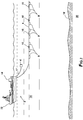
FIG. 1 illustrates a particular embodiment of a marine seismic survey system employing geophysical survey equipment that can be treated with medetomidine for reduction of marine growth. -
FIG. 2 illustrates a particular embodiment of a streamer treated with a medetomidine compound in an outer layer on the streamer skin for reduction of marine growth. -
FIG. 3 illustrates a particular embodiment of geophysical survey equipment treated with a medetomidine compound in an outer layer on geophysical equipment for reduction of marine growth. -
FIG. 4 illustrate a particular embodiment of a streamer skin that has been treated with a medetomidine compound by integration of the medetomidine compound into the streamer skin during manufacture. - It is to be understood that the present disclosure is not limited to particular devices or methods, which may, of course, vary. It is also to be understood that the terminology used herein is for the purpose of describing particular embodiments only and is not intended to be limiting. All numbers and ranges disclosed herein may vary by some amount. Whenever a numerical range with a lower limit and an upper limit is disclosed, any number and any included range falling within the range are specifically disclosed. Although individual embodiments are discussed herein, the invention covers all combinations of all those embodiments. As used herein, the singular forms "a", "an", and "the" include singular and plural referents unless the content clearly dictates otherwise. Furthermore, the word "may" is used throughout this application in a permissive sense (i.e., having the potential to, being able to), not in a mandatory sense (i.e., must). The term "include," and derivations thereof, mean "including, but not limited to." The term "coupled" means directly or indirectly connected. If there is any conflict in the usages of a word or term in this specification and one or more patent or other documents that may be incorporated herein by reference, the definitions that are consistent with this specification should be adopted for the purposes of understanding this invention.
- The present disclosure generally relates to marine geophysical surveying. More particularly, the present disclosure relates to treatment of geophysical equipment with medetomidine compounds for reduction of marine growth.
- As used herein, the term "medetomidine compound" refers to medetomidine, enantiomers of medetomidine, or salts thereof. Medetomidine is a compound that is also referred to as ±4-[(1-(2,3-dimethylphenyl)ethyl]-1H-imidazole. Medetomidine can have the following chemical structure:

- Medetomidine is commonly used as a drug in humans as well as for veterinary purposes. For example, medetomidine can be used as both a surgical anesthetic and analgesic. However, in addition to medicinal purposes, medetomidine can also prevent marine growth. For example, medetomidine can be effective in the prevention of biofouling, such as barnacle growth. Accordingly, embodiments use medetomidine compounds to prevent (or reduce) marine growth in geophysical surveying.
- Particular embodiments may include treatment of geophysical equipment with a medetomidine compound. Advantageously, treatment of the geophysical equipment with the medetomidine compound can provide geophysical equipment that is more resistant to marine growth, thus limiting problems with biofouling. Thus, with the medetomidine treatment geophysical surveys may be completed more efficiently and effectively, as problems associated with biofouling have been reduced, limiting downtime needed for cleaning, as well reducing noise problems due to biofouling.
- Suitable medetomidine treatment may include any suitable technique for applying the medetomidine compound to the geophysical equipment. For example, the medetomidine compound may be integrated into the geophysical equipment and/or applied as an outer layer (e.g., a coating) on the geophysical equipment. Suitable coatings may include, but are not limited to, polymeric coatings and wax coatings. Integration of the medetomidine compound into the geophysical equipment may include, but are not limited to, combining the medetomidine with a base material for the geophysical equipment to form a mixture and then forming the geophysical equipment from the mixture. The medetomidine compound may be used in the treatment of any of a variety of geophysical equipment, for example, where biofouling may be problematic. In some embodiments, the medetomidine compound may be used in the treatment of streamers. For example, the medetomidine compound may be integrated into a streamer skin and/or included in a coating (or outer layer) on the streamer skin. In addition, the medetomidine compound may also be used in the treatment of other geophysical equipment. A wide variety of geophysical equipment can be treated with the medetomidine compounds, including, but not limited to, position control devices (e.g., steering birds) or particular portions thereof, streamer adapters for acoustic positioning, modules, weight blocks, dummy weights, connectors, connector covers, floats, inserts, and other streamer accessories (e.g., retrievers, pingers, etc.), among others. Position control devices may be any number of devices suitable for positioning a streamer in the horizontal plane, the vertical plane, and/or both the horizontal and vertical planes, including "birds" having variable-incidence wings. In some embodiments, the wings of a position control device may be treated with the medetomidine compound. For example, the medetomidine compound may be integrated into the wings and/or included in a coating on the wings. Floats may include a buoy or other suitable flotation device from which other marine geophysical equipment (e.g., sound sources) may be suspended. Floats may or may not have the capability to control and/or adjust the depth of the suspended device.
- In some embodiments, a medetomidine treatment may include integration of the medetomidine compound into geophysical equipment. Any suitable technique may be used for integration of the medetomidine compound into the geophysical equipment. By way of example, the medetomidine compound may be combined with a base material for the geophysical equipment to form a mixture. As used herein, the base material refers to one or more materials that form a major amount of the geophysical equipment in which the medetomidine compound is integrated. By way of example, the medetomidine compound may be mixed with the base material to distribute the medetomidine compound in the base material. The mixture may then be formed into the geophysical equipment. In some embodiments, the mixture may be molded into a desired form. For example, the mixture may be placed into a mold and allowed to set into the desired form. By way of example, the mixture may be molded into a wing or other suitable shape for the geophysical equipment. In some embodiments, the mixture may be injection molded. In some embodiments, the mixture may be extruded into a desired form. For example, the mixture may be extruded to form a streamer skin or other suitable shape for the geophysical equipment.
- In forming of the geophysical equipment, the medetomidine compound may be combined with any suitable base material. Suitable base materials for the geophysical equipment, may include, but are not limited to, thermoplastic polymers, such as polyurethane, polypropylene, polyamides, and combinations thereof. The medetomidine compound may also be combined with the base material in any suitable amount. In some embodiments, the medetomidine compound may be included in a mixture with the base material in an amount of about 0.01% to about 1% based on a total weight of the mixture. For example, the medetomidine compound may be included in the base mixture in an amount of about 0.05% to about 0.5% or about 0.05% to about 0.1% or about 0.1% to about 0.5% based on a total weight of the mixture. In particular embodiments, the medetomidine compound may be included in the mixture in an amount of about 0.01%, about 0.05%, about 0.1%, about 0.2%, about 0.5%, about 0.7%, or about 1.0% based on a total weight of the mixture. One of ordinary skill in the art with the benefit of this disclosure should be able determine an appropriate base material and amount of medetomidine compound to use for a particular application.
- In some embodiments, a medetomidine treatment may include an outer layer of the medetomidine compound on the geophysical equipment. The outer layer may be applied by a coating technique or other suitable process. For example, the medetomidine may be included in a mixture with a carrier material that may be used in an outer layer of the geophysical equipment. The carrier material, for example, may be the same material used in forming the geophysical equipment or may be a different material than used in forming the geophysical equipment. In some embodiments, the outer layer may be applied to the geophysical equipment as a coating. Any suitable coating process may be used in applying the coating mixture of the carrier material and the medetomidine compound to the geophysical equipment. Suitable coating processes may include, but are not limited to, spray coating, dip coating, roller coating, and brush coating, among others. In some embodiments, the outer layer may be a coating on a wing, streamer skin, or other suitable geophysical equipment. In addition to coating, other suitable techniques may also be used for application of the outer layer. For example, the mixture may be co-extruded with the base material to form geophysical equipment comprising the carrier material and having an outer layer of the carrier material and the medetomidine compound.
- In forming of the outer layer of the geophysical equipment, the medetomidine compound may be combined in a mixture with any suitable carrier material. Suitable carrier materials for the medetomidine, may include, but are not limited to, thermoplastic polymers, such as polyurethane, polypropylene, polyamides, waxes, and combinations thereof. In some embodiments, the carrier material may be a wax composition that includes wax and one or more additional materials, such as an oleaginous liquid and an alcohol. By way of example, the wax composition may comprise lanolin wax and lanolin alcohol. Non-limiting examples of suitable oleaginous liquids may include organic oils (e.g., vegetable oils) or synthetic oils. Suitable waxes may include, but are not limited to, animal waxes, plant waxes, petroleum waxes, polyethylene waxes, and combinations thereof. Animal waxes may include waxes synthesized by animals (including insects) as well as chemically modified versions thereof. Plant waxes may include waxes synthesized by plants as well as chemically modified versions thereof. Petroleum waxes may include waxes derived from petroleum. Polyethylene waxes may include waxes derived from polyethylene. Specific examples of suitable waxes may include, but are not limited to, cocoa butter, illipe butter, lanolin, cetyl palmitate, bayberry wax, lanolin alcohol, paraffin wax, silicone wax, and sumax wax, among others. The wax composition may be selected, for example, to have a melting point based on a predetermined water temperature in which the wax composition will be used. For example, the geophysical equipment on the particular components and concentrations thereof in the wax composition may be selected to provide a melting pointed based on the predetermined water temperature. By selection of an appropriate melting point the wax composition may provide better adherence to the geophysical equipment when deployed in the water. In some embodiments, the wax composition may have a melting point within about 2 °C, about 5 °C, or about 10 °C of a predetermined water temperature. One of ordinary skill in the art with the benefit of this disclosure should be able determine an appropriate carrier material to use for a particular application.
- The medetomidine compound may also be combined in the mixture with the carrier material in any suitable amount. In some embodiments, the medetomidine compound may be included in the mixture with the carrier material in an amount of about 0.01% to about 1% based on a total weight of the mixture. For example, the medetomidine compound may be included in the mixture in an amount of about 0.05% to about 0.5% or about 0.05% to about 0.1% or about 0.1% to about 0.5% based on a total weight of the mixture. In particular embodiments, the medetomidine compound may be included in the mixture in an amount of about 0.01%, about 0.05%, about 0.1%, about 0.2%, about 0.5%, about 0.7%, or about 1.0% based on a total weight of the mixture. One of ordinary skill in the art with the benefit of this disclosure should be able determine an appropriate amount of medetomidine compound to use for a particular application.
- Referring now to
FIG. 1 , a marinegeophysical survey system 2 that employs geophysical equipment treated with a medetomidine compound is illustrated in accordance with particular embodiments. For example, the marinegeophysical survey system 2 includes an energy source 4, astreamer 6,geophysical sensors 8, andposition control devices 10. One or more of the energy source 4,streamer 6,geophysical sensors 8, and/orposition control devices 10 may be treated with the medetomidine compound for reduction of marine growth. While not shown, the marinegeophysical survey system 2 may also include additional geophysical equipment, such as floats and inserts, among others, that can be treated with the medetomidine compound. - In the illustrated embodiment, the marine
geophysical survey system 2 may further include asurvey vessel 12. Thesurvey vessel 12 may include thereon equipment, shown generally at 14 and collectively referred to herein as a "recording system." Therecording system 14 may include devices (none shown separately) for detecting and making a time indexed record of signals generated by each of geophysical sensors 8 (explained further below) and for actuating an energy source 4 at selected times. Therecording system 14 may also include devices (none shown separately) for determining the geodetic position of thesurvey vessel 12 and the variousgeophysical sensors 8. - In some embodiments, the survey vessel 12 (or a different vessel) may tow the energy source 4 in the body of
water 16. Asource cable 17 may couple the energy source 4 to thesurvey vessel 12. The energy source 4 may be towed in the body ofwater 16 at any suitable depth, for example, a depth ranging from 0 meters to about 300 meters. While only a single energy source 4 is shown inFIG. 1 , it is contemplated that embodiments may include more than one energy source 4. The energy source 4 may be any selectively actuatable source suitable for subsurface geophysical surveying, including without limitation seismic air guns, water guns, vibrators or arrays of such devices, or one or more electromagnetic field transmitters. - In some embodiments, the
survey vessel 12 or another vessel may tow one ormore streamers 6 on which thegeophysical sensors 8 may be disposed. As illustrated, the energy source 4 andstreamer 6 may be towed above thewater bottom 18. Thestreamer 6 may include a towed marine seismic streamer, a towed marine electromagnetic streamer, or a combination thereof. While not shown, some marine seismic surveys locategeophysical sensors 8 on ocean bottom cables or nodes in addition to, or instead of, astreamer 6. In some embodiments, more than onestreamer 6 may be towed by thesurvey vessel 12 or another vessel, and thestreamers 6 may be spaced apart laterally, vertically, or both laterally and vertically. - As illustrated, the
geophysical sensors 8 may be disposed at spaced apart locations on thestreamer 6. Thegeophysical sensors 8 may be, without limitation, seismic sensors such as geophones, hydrophones, or accelerometers, or electromagnetic field sensors, such as electrodes or magnetometers. Thegeophysical sensors 8 may generate response signals, such as electrical or optical signals, in response to detecting energy emitted from the energy source 4 after the energy has interacted withformations 20 below thewater bottom 18. The detected energy may be used to infer certain properties of the subsurface rock, such as structure, mineral composition, and fluid content, thereby providing information useful in the recovery of hydrocarbons. In the illustrated embodiment, thestreamer 6 further includesposition control devices 10 for positioning thestreamer 6 in the water. Theposition control devices 10 may be any number of devices suitable for positioning the streamer 35 in the horizontal plane, the vertical plane, and/or both the horizontal and vertical planes, including "birds" having variable-incidence wings. - In accordance with some embodiments, a geophysical data product indicative of certain properties of the one or
more formations 20 may be produced from the detected energy. The geophysical data product may include acquired and/or processed geophysical data (e.g., seismic data, electromagnetic data) and may be stored on a non-transitory, tangible, computer-readable medium. The computer-readable medium may include any computer-readable medium that is tangible and non-transitory, including, but not limited to, volatile memory, such as random access memory (RAM) and non-volatile memory, such as read-only memory (ROM), flash memory, hard disc drives, optical disks, floppy discs, and magnetic tapes. In some embodiments, the detected acoustic energy may be processed to generate a seismic image that may be stored on a non-transitory, tangible, computer-readable medium to form the geophysical data product. The geophysical data product may be produced offshore (e.g., by on a vessel) or onshore (e.g., at a facility on land) either within the United States and/or in another country. Specifically, embodiments may include producing a geophysical data product from at least the measured acoustic energy and storing the geophysical data product on a non-transitory tangible computer-readable medium suitable for importing onshore. If the geophysical data product is produced offshore and/or in another country, it may be imported onshore to a facility in, for example, the United States or another country. Once onshore in, for example, the United States (or another country), further processing and/or geophysical analysis may be performed on the geophysical data product. -
FIGS. 2-4 illustrate examples of geophysical equipment that may be treated with the medetomidine compound.FIG. 2 illustrates a particular embodiment having anouter layer 22 comprising the medetomidine compound disposed on thestreamer skin 24 of thestreamer 6.FIG. 3 illustrates a particular embodiment having anouter layer 22 comprising the medetomidine compound disposed onposition control devices 10.FIG. 4 illustrates a particular embodiment having the medetomidine compound integrated into thestreamer skin 24. -
FIG. 2 illustrates a portion ofstreamer 6 in accordance with a particular embodiment. As illustrated, thestreamer 6 may include geophysical equipment, such asposition control devices 10. positioned on thestreamer 6 at selected positions. Streamers, such asstreamer 6, are typically made of multiple components, such as strength members, conductors (e.g., electrical, optical, etc.), and spacers (none shown) covered with aprotective streamer skin 24 enclosing the internal components of thestreamer 6. In some embodiments, thestreamer skin 24 may be treated with the medetomidine compound. As illustrated, anouter layer 22 comprising a medetomidine compound may be disposed on thestreamer skin 24. Theouter layer 22 may comprise a carrier material (e.g., polyurethane, wax, etc.) and the medetomidine compound. As previously described, the medetomidine compound may protect thestreamer skin 24, for example, by inhibition of marine growth. The previously described techniques may be used for application of theouter layer 22. For example, theouter layer 22 may be coated on thestreamer skin 24. In some embodiments, theouter layer 22 may be coated on the streamer skin 24 (or other suitable geophysical equipment) on the survey vessel 12 (e.g., shown onFIG. 1 ), for example, while thestreamer skin 24 is being deployed into the body of water 16 (e.g., shown onFIG. 1 ). By way of further example, theouter layer 22 may be co-extruded with thestreamer skin 24. -
FIG. 3 illustrates a portion ofstreamer 6 in accordance with another embodiment. As illustrated, thestreamer 6 may include geophysical equipment (e.g., position control devices 10), positioned on thestreamer 6 at selected positions. In some embodiments, the position control devices may be treated with the medetomidine compound. As illustrated, theposition control devices 10 may includewings 26 treated with the medetomidine compound. In the illustrated embodiment, theouter layer 22 comprising a medetomidine compound may be disposed on theposition control devices 10, for example, on thewings 26. Theouter layer 22 may comprise a carrier material (e.g., polyurethane, wax, etc.) and the medetomidine compound. As previously described, the medetomidine compound may protect theposition control devices 10, for example, by inhibition of marine growth. The previously described techniques may be used for application of theouter layer 22. For example, theouter layer 22 may be coated on theposition control devices 10. -
FIG. 4 illustrates an example of astreamer skin 24 ofstreamer 6 treated with a medetomidine compound. Thestreamer skin 24 may be elongated in that it may be longer than it is wide. Thestreamer skin 24 may have aninner surface 28 and anouter surface 30. Thestreamer skin 24 may also form aninternal cavity 32 in which internal components of the sensor streamer may be disposed. Thestreamer skin 24 may formed of any suitable material, for example, that may serve to protect internal components from water intrusion. In some embodiments, theouter layer 22 should be acoustically transparent. Suitable materials for thestreamer skin 24 may include, but are not limited to, thermoplastics, such as polyurethane, polypropylene, or polyamides. Thestreamer skin 24 may have any suitable dimensions. For example, thestreamer skin 24 may have an outer diameter of about 40 millimeters to about 200 millimeters, about 50 millimeters to about 100 millimeters, or about 50 millimeters to about 75 millimeters. By way of further example, thestreamer skin 24 may have a thickness of about 1 millimeter to about 10 millimeters, about 2 millimeters to about 5 millimeters, or about 3 millimeters to about 4 millimeters. It should be understood that these ranges for the outer diameter and thickness for thestreamer skin 24 are merely exemplary and that embodiments may include astreamer skin 24 with an outer diameter and/or thickness. - In some embodiments, the
streamer skin 24 may be treated with a medetomidine compound. For example, the medetomidine compound may integrated with the medetomidine compound. As previously described, particular embodiments may include combining the medetomidine compound with a base material for thestreamer skin 24. The mixture of the base material and the medetomidine compound then be formed into thestreamer skin 24 using any suitable technique, for example, molding or extrusion. - Although specific embodiments have been described above, these embodiments are not intended to limit the scope of the present disclosure, even where only a single embodiment is described with respect to a particular feature. Examples of features provided in the disclosure are intended to be illustrative rather than restrictive unless states otherwise. The above description is intended to cover such alternatives, modifications, and equivalents as would be apparent to a person skilled in the art having the benefit of this disclosure.
- The scope of the present disclosure includes any feature of combination of features disclosed herein (either explicitly or implicitly), or any generalization thereof, whether or not it mitigates any or all of the problems addressed herein. Various advantages of the present disclosure have been described herein, but embodiments may provide some, all, or none of such advantages, or may provide other advantages.
Claims (17)
- A method comprising:combining at least a medetomidine compound and a wax to form a mixture; andforming an outer layer disposed on a marine geophysical equipment, wherein the outer layer comprises the mixture of the medetomidine compound and the wax.
- The method of claim 1, wherein the medetomidine compound is present in the mixture in an amount of about 0.01% to about 1% based on a total weight of the mixture.
- The method of claim 1 or claim 2, wherein the medetomidine compound comprises ±4-[(1-(2,3-dimethylphenyl)ethyl]-1H-imidazole.
- The method of any of the preceding claims, wherein the wax is selected from the group consisting of an animal wax, a petroleum wax, a plant wax, a polyethylene wax, and combinations thereof.
- The method of any of the preceding claims, wherein the wax comprises a lanolin wax, wherein the mixture further comprises a vegetable oil.
- The method of any of the preceding claims, wherein the forming the outer layer comprises one of spray coating the marine geophysical equipment, dip coating the marine geophysical equipment, and roller or brush coating the marine geophysical equipment.
- The method of any of the preceding claims, wherein the outer layer is formed on the marine geophysical equipment as the marine geophysical equipment is being deployed into a body of water.
- The method of any of the preceding claims, wherein the forming the outer layer comprises forming the outer layer on a streamer skin of a streamer, wherein the marine geophysical equipment comprises the streamer and the streamer skin.
- The method of any of claims 1 to 7, wherein the forming the outer layer comprises forming the outer layer on a wing, wherein the marine geophysical equipment comprises the wing.
- The method of any of the preceding claims, further comprising towing the marine geophysical equipment in a body of water.
- A method comprising:combining at least a medetomidine compound and a base material, for example polyurethane, to form a mixture; andforming a streamer skin of a streamer from the mixture.
- The method of claim 11, wherein the medetomidine compound is present in the mixture in an amount of about 0.01% to about 1% based on a total weight of the mixture.
- The method of claim 11 or claim 12, wherein the forming the streamer skin comprises extruding the mixture to form the streamer skin.
- A method comprising:combining at least a medetomidine compound and polyurethane to form a mixture; andforming an outer layer disposed on a streamer skin of a streamer, wherein the outer layer comprises the mixture of the medetomidine compound and the polyurethane.
- The method of claim 14, wherein the medetomidine compound is present in the mixture in an amount of about 0.01% to about 1% based on a total weight of the mixture.
- A system comprising:a streamer having a streamer skin and comprising sensors spaced along the streamer; andan outer layer disposed on the streamer skin, wherein the outer layer comprises wax and a medetomidine compound.
- The system of claim 16, wherein the wax comprises a lanolin wax, wherein the outer layer further comprises a vegetable oil.
Applications Claiming Priority (2)
| Application Number | Priority Date | Filing Date | Title |
|---|---|---|---|
| US201862782169P | 2018-12-19 | 2018-12-19 | |
| US16/713,289 US12050293B2 (en) | 2018-12-19 | 2019-12-13 | Medetomidine compositions having improved anti-fouling characteristics |
Publications (2)
| Publication Number | Publication Date |
|---|---|
| EP3671287A1 true EP3671287A1 (en) | 2020-06-24 |
| EP3671287B1 EP3671287B1 (en) | 2026-03-18 |
Family
ID=68965659
Family Applications (1)
| Application Number | Title | Priority Date | Filing Date |
|---|---|---|---|
| EP19217617.0A Active EP3671287B1 (en) | 2018-12-19 | 2019-12-18 | Medetomidine compositions having improved anti-fouling characteristics |
Country Status (2)
| Country | Link |
|---|---|
| US (1) | US12050293B2 (en) |
| EP (1) | EP3671287B1 (en) |
Families Citing this family (1)
| Publication number | Priority date | Publication date | Assignee | Title |
|---|---|---|---|---|
| KR100195167B1 (en) | 1994-12-29 | 1999-06-15 | 손욱 | Cathode heated directly and the manufacturing method thereof |
Citations (5)
| Publication number | Priority date | Publication date | Assignee | Title |
|---|---|---|---|---|
| US20140247690A1 (en) * | 2013-03-04 | 2014-09-04 | Cgg Services Sa | Antifouling protective skin section for seismic survey equipment and related methods |
| US20170298234A1 (en) * | 2014-09-05 | 2017-10-19 | Ekomarine Paint Inc. | Method for treating surfaces on marine objects with anti-fouling paint |
| WO2018003137A1 (en) * | 2016-07-01 | 2018-01-04 | 中国塗料株式会社 | Layered antifouling coating film, antifouling base material, and ship |
| WO2018074801A2 (en) * | 2016-10-20 | 2018-04-26 | 주식회사 에프알에스아이 | Environmentally-friendly antifouling coating composition, method for producing same, and environmentally-friendly antifouling coating film including same |
| EP3399351A1 (en) * | 2017-05-05 | 2018-11-07 | PGS Geophysical AS | Methods and systems for application of wax on geophysical streamers |
Family Cites Families (48)
| Publication number | Priority date | Publication date | Assignee | Title |
|---|---|---|---|---|
| JPS6360909U (en) | 1986-10-11 | 1988-04-22 | ||
| DE19537316A1 (en) * | 1995-10-06 | 1997-04-10 | Leinos Naturfarben Gmbh | Antifouling agents |
| GB9821277D0 (en) * | 1998-10-01 | 1998-11-25 | Geco As | Seismic data acquisition equipment control system |
| SE513474C2 (en) | 1999-01-25 | 2000-09-18 | Hans Elwing Instutionen Foer C | Method for preventing crustaceans, especially sea turtles, establishment on solid surfaces by a substance that disturbs nerve signals, the substance being medetomidine, ie (+) - 4- / 1- (2,3-dimethylphenyl) -ethyl / -IH- imidazole |
| US20060189686A1 (en) | 2005-01-27 | 2006-08-24 | Lena Martensson | Use of a combination of substances to prevent biofouling organisms |
| US7531581B2 (en) | 2005-03-11 | 2009-05-12 | I-Tech Ab | Method and use of acidified modified polymers to bind biocides in paints |
| US7311766B2 (en) | 2005-03-11 | 2007-12-25 | I-Tech Ab | Method and use of nanoparticles to bind biocides in paints |
| US7670416B2 (en) | 2005-08-04 | 2010-03-02 | I-Tech Ab | Use of a combination of substances to prevent biofouling organisms |
| TW200923036A (en) | 2007-11-19 | 2009-06-01 | Tech Ab I | Method and use of acidified modified polymers to bind biocides in paints |
| TW200923035A (en) | 2007-11-19 | 2009-06-01 | Tech Ab I | Method and use of nanoparticles to bind biocides in paints |
| JP5814796B2 (en) | 2009-02-06 | 2015-11-17 | ヘンペル エイ/エス | Self-polishing paint composition based on enzyme |
| WO2011070069A1 (en) | 2009-12-09 | 2011-06-16 | I-Tech Ab | Process for preparation of medetomidine |
| EP2502094A4 (en) * | 2009-12-10 | 2017-03-29 | Geco Technology B.V. | Systems and methods for marine anti-fouling |
| WO2011076856A1 (en) * | 2009-12-22 | 2011-06-30 | Hempel A/S | Novel fouling control coating compositions |
| ES2631529T3 (en) | 2010-03-23 | 2017-08-31 | Chugoku Marine Paints, Ltd. | Composition of antifouling coating and use thereof |
| WO2012006687A1 (en) * | 2010-07-15 | 2012-01-19 | Commonwealth Scientific And Industrial Research Organisation | Surface treatment |
| US9116253B2 (en) * | 2011-01-11 | 2015-08-25 | Pgs Geophysical As | System and method for using biocide coating to prevent marine growth on geophysical equipment |
| CA2766827A1 (en) * | 2011-01-31 | 2012-07-31 | Atlantic Coated Papers Ltd. | Slip resistant sheet material for roofing |
| US20120321809A1 (en) * | 2011-06-15 | 2012-12-20 | Westerngeco Llc | Systems and methods for marine anti-fouling |
| CN103732699B (en) | 2011-06-30 | 2017-07-28 | 汉伯公司 | Enzyme-containing polysiloxane‑based soil release coatings |
| KR101932206B1 (en) | 2011-07-22 | 2018-12-24 | 캠브렉스 칼스코가 아베 | New processes for preparing 4-substituted imidazoles |
| EP2753665A4 (en) | 2011-09-06 | 2015-05-20 | Hempel As | SELF-POLISHING ANTIFOULING PAINT COMPOSITION COMPRISING SOLID PARTICLES OF POTAPED OR ENCAPSULATED ROLLED COMPOUND |
| WO2013072769A1 (en) * | 2011-11-17 | 2013-05-23 | Celanese Emulsions Gmbh | Aqueous binder systems and their use in producing coating compositions |
| US9321513B2 (en) * | 2012-08-03 | 2016-04-26 | Cgg Services Sa | Streamer coating device and method |
| EP2770348A3 (en) | 2013-02-22 | 2017-12-13 | CGG Services SA | Methods and apparatuses for restoring low roughness of outer surface of a device used underwater for seismic surveys |
| DK2976394T3 (en) | 2013-03-20 | 2018-04-30 | Hempel As | NOVEL POLYSILOXANE-BASED FOULING CONTROL COATING SYSTEMS |
| CN105209557A (en) | 2013-05-03 | 2015-12-30 | 汉伯公司 | New polysiloxane-based soil release coating |
| US9465127B2 (en) * | 2013-05-07 | 2016-10-11 | Pgs Geophysical As | Disposable antifouling covers for geophysical survey equipment |
| WO2015011178A1 (en) | 2013-07-24 | 2015-01-29 | I-Tech Ab | Use of the enantiomer dexmedetomidine as inhibitor for marine biofouling of surfaces |
| WO2015011177A1 (en) * | 2013-07-24 | 2015-01-29 | I-Tech Ab | Use of the enantiomer levomedetomidine as inhibitor for marine biofouling of surfaces |
| DE102013218134A1 (en) * | 2013-09-11 | 2015-03-12 | Evonik Industries Ag | Coating compositions containing polysiloxane quats |
| US9751851B2 (en) * | 2013-09-20 | 2017-09-05 | The Trustees Of Princeton University | Molecules and compositions that inhibit gram negative bacteria and their uses |
| AU2014327420B2 (en) | 2013-09-26 | 2016-05-12 | Sercel Sas | Device and methods for low contact cable cleaning |
| US9709689B2 (en) | 2014-02-07 | 2017-07-18 | Pgs Geophysical As | Geophysical cable preparation for antifouling paint |
| JP2017525786A (en) | 2014-07-11 | 2017-09-07 | ヘンペル エイ/エス | Novel polysiloxane-based fouling release coat containing poly (oxyalkylene) -modified alcohol |
| CN107109082B (en) | 2014-11-18 | 2019-08-02 | 中国涂料株式会社 | Two-pack type antifouling coating composition, antifouling coating film, antifouling substrate, and method for producing an antifouling substrate |
| GB201501593D0 (en) | 2015-01-30 | 2015-03-18 | Cambrex Karlskoga Ab | New compounds and processes |
| WO2016177884A1 (en) | 2015-05-06 | 2016-11-10 | I-Tech Ab | Medetomidine for use in controlling parasitic crustaceans on fish |
| EP3299427B1 (en) | 2015-05-22 | 2020-06-17 | Chugoku Marine Paints, Ltd. | Antifouling coating material composition, antifouling coating film, antifouling base, method for producing antifouling base, and method for storing antifouling coating material composition |
| CN107406712B (en) | 2015-05-22 | 2019-05-21 | 中国涂料株式会社 | Antifouling coating composition, antifouling coating film, antifouling substrate, method for producing antifouling substrate, and storage method for antifouling coating composition |
| US10712470B2 (en) | 2016-02-11 | 2020-07-14 | Pgs Geophysical As | Streamer cleaning apparatus and associated systems and methods |
| KR102209168B1 (en) | 2016-07-01 | 2021-01-28 | 주고꾸 도료 가부시키가이샤 | Antifouling coating composition, antifouling coating film, base material with antifouling coating film, and manufacturing method thereof, and antifouling method |
| US20190256721A1 (en) | 2016-07-01 | 2019-08-22 | Chugoku Marine Paints, Ltd. | Antifouling coating composition, antifouling coating film, substrate provided with antifouling coating film, method for producing same, and antifouling method |
| WO2018087160A1 (en) | 2016-11-09 | 2018-05-17 | I-Tech Ab | Substituted heterocyclic compounds for use in controlling parasitic crustaceans on fish |
| CN109906256B (en) | 2016-11-09 | 2022-02-08 | 中国涂料株式会社 | Antifouling coating composition, antifouling coating film, substrate with antifouling coating film, method for producing substrate with antifouling coating film, and antifouling method |
| JP6887783B2 (en) | 2016-11-17 | 2021-06-16 | 中国塗料株式会社 | Antifouling paint compositions, antifouling coatings and their uses |
| CN110662808B (en) | 2017-03-29 | 2022-05-24 | I-技术有限公司 | Stain resistant articles |
| DE202018001813U1 (en) | 2018-04-09 | 2018-05-22 | I-Tech Ab | Soluble container for coating components |
-
2019
- 2019-12-13 US US16/713,289 patent/US12050293B2/en active Active
- 2019-12-18 EP EP19217617.0A patent/EP3671287B1/en active Active
Patent Citations (5)
| Publication number | Priority date | Publication date | Assignee | Title |
|---|---|---|---|---|
| US20140247690A1 (en) * | 2013-03-04 | 2014-09-04 | Cgg Services Sa | Antifouling protective skin section for seismic survey equipment and related methods |
| US20170298234A1 (en) * | 2014-09-05 | 2017-10-19 | Ekomarine Paint Inc. | Method for treating surfaces on marine objects with anti-fouling paint |
| WO2018003137A1 (en) * | 2016-07-01 | 2018-01-04 | 中国塗料株式会社 | Layered antifouling coating film, antifouling base material, and ship |
| WO2018074801A2 (en) * | 2016-10-20 | 2018-04-26 | 주식회사 에프알에스아이 | Environmentally-friendly antifouling coating composition, method for producing same, and environmentally-friendly antifouling coating film including same |
| EP3399351A1 (en) * | 2017-05-05 | 2018-11-07 | PGS Geophysical AS | Methods and systems for application of wax on geophysical streamers |
Also Published As
| Publication number | Publication date |
|---|---|
| EP3671287B1 (en) | 2026-03-18 |
| US12050293B2 (en) | 2024-07-30 |
| US20200200928A1 (en) | 2020-06-25 |
Similar Documents
| Publication | Publication Date | Title |
|---|---|---|
| US12287199B2 (en) | Methods and systems for application of wax on geophysical streamers | |
| Koch et al. | Water flow in tide-and wave-dominated beds of the seagrass Thalassia testudinum | |
| US8897094B2 (en) | Marine seismic data acquisition using designed non-uniform streamer spacing | |
| Nielsen et al. | Seismic expression of contourite depositional systems | |
| AU2012200118B2 (en) | System and method for using biocide coating to prevent marine growth on geophysical equipment | |
| EP3671287B1 (en) | Medetomidine compositions having improved anti-fouling characteristics | |
| AU2015200152B2 (en) | Geophysical cable preparation for antifouling paint | |
| DE3149162A1 (en) | DEVICE AND METHOD FOR LOCATING A STREAMER TOWED UNDER THE WATER SURFACE | |
| US20170059732A1 (en) | Method and system of inducing vibrations onto a sensor streamer | |
| Christiansen et al. | Nighttime swimming behavior of a mesopelagic fish | |
| Jones et al. | Beluga (Delphinapterus leucas) and narwhal (Monodon monoceros) echolocation click detection and differentiation from long-term Arctic acoustic recordings | |
| AU2014202577B2 (en) | Marine geophysical equipment cleaner | |
| US20140241120A1 (en) | Marine seismic apparatus with marine growth retardant and methods therefor | |
| US9377545B2 (en) | Streamer design for geophysical prospecting | |
| US11780535B2 (en) | Methods and systems for underwater application of streamer coating on geophysical streamers | |
| Patel et al. | Behaviour of herring (Clupea harengus L.) towards an approaching autonomous underwater vehicle | |
| Sato1 et al. | Seasonal and vertical variations in emergence behaviors of Neomysis americana | |
| AU2014201151B2 (en) | Streamer design for geophysical prospecting | |
| US20190120986A1 (en) | Determining depth of sensors in marine streamers | |
| Sprong et al. | Acoustic phenomena related to an enriched benthic zone in the North Sea | |
| Rigby et al. | Interpreting behavioural data from radio-acoustic positioning telemetry (RAPT) systems | |
| Hueston | Hydrodynamics of an Isothermal Lake, L. Neagh: With Particular Reference to the Effect of Waves | |
| Mienis et al. | Hydrodynamic controls on carbonate mound development: long term in situ seabed BOBO-lander observations and CTD-casts at the SW Rockall Trough Margin and in the Gulf of Cadiz | |
| Ona | Seasonal variability in cod target strength | |
| Huebscher et al. | An Integrated Marine Seismic Approach for Time Efficient High-Resolution Surveys |
Legal Events
| Date | Code | Title | Description |
|---|---|---|---|
| PUAI | Public reference made under article 153(3) epc to a published international application that has entered the european phase |
Free format text: ORIGINAL CODE: 0009012 |
|
| STAA | Information on the status of an ep patent application or granted ep patent |
Free format text: STATUS: THE APPLICATION HAS BEEN PUBLISHED |
|
| AK | Designated contracting states |
Kind code of ref document: A1 Designated state(s): AL AT BE BG CH CY CZ DE DK EE ES FI FR GB GR HR HU IE IS IT LI LT LU LV MC MK MT NL NO PL PT RO RS SE SI SK SM TR |
|
| AX | Request for extension of the european patent |
Extension state: BA ME |
|
| STAA | Information on the status of an ep patent application or granted ep patent |
Free format text: STATUS: REQUEST FOR EXAMINATION WAS MADE |
|
| 17P | Request for examination filed |
Effective date: 20201222 |
|
| RBV | Designated contracting states (corrected) |
Designated state(s): AL AT BE BG CH CY CZ DE DK EE ES FI FR GB GR HR HU IE IS IT LI LT LU LV MC MK MT NL NO PL PT RO RS SE SI SK SM TR |
|
| STAA | Information on the status of an ep patent application or granted ep patent |
Free format text: STATUS: EXAMINATION IS IN PROGRESS |
|
| 17Q | First examination report despatched |
Effective date: 20220829 |
|
| P01 | Opt-out of the competence of the unified patent court (upc) registered |
Effective date: 20230516 |
|
| GRAP | Despatch of communication of intention to grant a patent |
Free format text: ORIGINAL CODE: EPIDOSNIGR1 |
|
| STAA | Information on the status of an ep patent application or granted ep patent |
Free format text: STATUS: GRANT OF PATENT IS INTENDED |
|
| INTG | Intention to grant announced |
Effective date: 20251016 |
|
| GRAS | Grant fee paid |
Free format text: ORIGINAL CODE: EPIDOSNIGR3 |
|
| GRAA | (expected) grant |
Free format text: ORIGINAL CODE: 0009210 |
|
| STAA | Information on the status of an ep patent application or granted ep patent |
Free format text: STATUS: THE PATENT HAS BEEN GRANTED |
|
| AK | Designated contracting states |
Kind code of ref document: B1 Designated state(s): AL AT BE BG CH CY CZ DE DK EE ES FI FR GB GR HR HU IE IS IT LI LT LU LV MC MK MT NL NO PL PT RO RS SE SI SK SM TR |
|
| REG | Reference to a national code |
Ref country code: CH Ref legal event code: F10 Free format text: ST27 STATUS EVENT CODE: U-0-0-F10-F00 (AS PROVIDED BY THE NATIONAL OFFICE) Effective date: 20260318 Ref country code: GB Ref legal event code: FG4D |
|
| REG | Reference to a national code |
Ref country code: IE Ref legal event code: FG4D |
|
| REG | Reference to a national code |
Ref country code: DE Ref legal event code: R096 Ref document number: 602019082543 Country of ref document: DE |