EP3669583B1 - Cell-bar-verfahren und -vorrichtung - Google Patents
Cell-bar-verfahren und -vorrichtung Download PDFInfo
- Publication number
- EP3669583B1 EP3669583B1 EP17921477.0A EP17921477A EP3669583B1 EP 3669583 B1 EP3669583 B1 EP 3669583B1 EP 17921477 A EP17921477 A EP 17921477A EP 3669583 B1 EP3669583 B1 EP 3669583B1
- Authority
- EP
- European Patent Office
- Prior art keywords
- cell
- aerial
- bar
- threshold
- service
- Prior art date
- Legal status (The legal status is an assumption and is not a legal conclusion. Google has not performed a legal analysis and makes no representation as to the accuracy of the status listed.)
- Active
Links
Images
Classifications
-
- H—ELECTRICITY
- H04—ELECTRIC COMMUNICATION TECHNIQUE
- H04B—TRANSMISSION
- H04B17/00—Monitoring; Testing
- H04B17/30—Monitoring; Testing of propagation channels
- H04B17/309—Measuring or estimating channel quality parameters
- H04B17/318—Received signal strength
- H04B17/328—Reference signal received power [RSRP]; Reference signal received quality [RSRQ]
-
- H—ELECTRICITY
- H04—ELECTRIC COMMUNICATION TECHNIQUE
- H04L—TRANSMISSION OF DIGITAL INFORMATION, e.g. TELEGRAPHIC COMMUNICATION
- H04L1/00—Arrangements for detecting or preventing errors in the information received
- H04L1/12—Arrangements for detecting or preventing errors in the information received by using return channel
- H04L1/16—Arrangements for detecting or preventing errors in the information received by using return channel in which the return channel carries supervisory signals, e.g. repetition request signals
- H04L1/1607—Details of the supervisory signal
- H04L1/1614—Details of the supervisory signal using bitmaps
-
- H—ELECTRICITY
- H04—ELECTRIC COMMUNICATION TECHNIQUE
- H04W—WIRELESS COMMUNICATION NETWORKS
- H04W48/00—Access restriction; Network selection; Access point selection
- H04W48/02—Access restriction performed under specific conditions
- H04W48/04—Access restriction performed under specific conditions based on user or terminal location or mobility data, e.g. moving direction, speed
-
- H—ELECTRICITY
- H04—ELECTRIC COMMUNICATION TECHNIQUE
- H04W—WIRELESS COMMUNICATION NETWORKS
- H04W48/00—Access restriction; Network selection; Access point selection
- H04W48/16—Discovering, processing access restriction or access information
-
- H—ELECTRICITY
- H04—ELECTRIC COMMUNICATION TECHNIQUE
- H04W—WIRELESS COMMUNICATION NETWORKS
- H04W48/00—Access restriction; Network selection; Access point selection
- H04W48/08—Access restriction or access information delivery, e.g. discovery data delivery
- H04W48/12—Access restriction or access information delivery, e.g. discovery data delivery using downlink control channel
-
- H—ELECTRICITY
- H04—ELECTRIC COMMUNICATION TECHNIQUE
- H04W—WIRELESS COMMUNICATION NETWORKS
- H04W84/00—Network topologies
- H04W84/02—Hierarchically pre-organised networks, e.g. paging networks, cellular networks, WLAN [Wireless Local Area Network] or WLL [Wireless Local Loop]
- H04W84/04—Large scale networks; Deep hierarchical networks
- H04W84/06—Airborne or Satellite Networks
Definitions
- the present disclosure is directed to wireless communication technology, and more particularly relates to the cell bar technology in wireless communication.
- a method performed by a base station a method performed by a user equipment, a base station for wireless communication, a user equipment for wireless communication, and a processor for wireless communication.
- aerial vehicles such as drones are becoming more and more popular.
- more and more drones are commercially used in package delivery, search-and-rescue, monitoring of critical infrastructure, wildlife conservation, flying cameras, and surveillance.
- 3GPP 3rd Generation Partnership Project
- SI Study item
- LTE Long Term Evolution
- LTE-A Long Term Evolution-Advanced
- Networks may broadcast parameters associated with cell bar and UEs may evaluate whether the cell is barred according to these parameter and RRC connection purpose.
- the current cell bar scheme for conventional UEs i.e., terrestrial UEs
- the current cell bar scheme even cannot distinguish aerial UEs from terrestrial UEs, and thus cannot realize different cell bar strategies for aerial UEs and terrestrial UEs respectively.
- 3GPP TR 36.777 v0.0.1 is a 3GPP technical report titled "Study on Enhanced LTE Support for Aerial Vehicles" published in May 2017 and discusses the ability for aerial vehicles to be served using LTE network deployments with Base Station antennas targeting terrestrial coverage.
- WO 2011/100540 A1 describes a method for performing load balancing by a wireless transmit/receive unit, the method comprising evaluating a current cell load value, and on a condition that the current cell load value is greater than a predetermined threshold, performing load balancing by barring the current cell.
- Claim 1 defines a method performed by a base station
- claim 4 defines a method performed by a user equipment
- claim 5 defines a base station for wireless communication
- claim 9 defines a user equipment for wireless communication
- claim 15 defines a processor for wireless communication.
- One object of the disclosure is to provide a technical solution for the aerial cell bar for aerial UEs in a wireless network.
- a method includes: determining whether a cell supports aerial service; broadcasting conventional cell bar parameters associated with the cell; and broadcasting aerial cell bar parameters associated with the cell when the cell supports aerial service.
- the aerial cell bar parameters include at least one threshold for determining whether an aerial user equipment (UE) will be subjected to an aerial cell bar scheme.
- the at least one threshold includes a height threshold for determining an airborne state.
- the aerial cell bar parameters may further include a plurality of service types, a plurality of bar factors and a plurality of bar times, wherein each bar factor and each bar time are associated with each service type.
- the plurality of service types may be broadcasted in a bitmap.
- the method may further include broadcasting a neighbor cell list for airborne UEs, or further include broadcasting a neighbor cell list for airborne UEs and a neighbor cell list for conventional UEs.
- a method may include: receiving conventional cell bar parameters associated with a cell; receiving aerial cell bar parameters associated with the cell; and determining whether an aerial UE will be subjected to an aerial cell bar scheme supported by the cell.
- the at least one threshold includes a height threshold for determining an airborne state. When the height of the aerial UE is higher than the height threshold, the aerial UE will be subjected to the aerial cell bar scheme.
- the method may further include mapping a service type of the aerial UE to one of the plurality of service types and selecting the bar factor and bar time associated with the mapped service type.
- the method may further include evaluating a cell bar status.
- the method may include receiving a neighbor cell list for airborne UEs, or may include receiving a neighbor cell list for airborne UEs and a neighbor cell list for conventional UEs. The method may further include automatically acquiring CGI information cgi-info for a measured cell that is not in the received neighbor cell list for airborne UEs by the aerial UE.
- Embodiments of the disclosure also provide apparatuses, which can perform the above methods.
- an apparatus may include a processor that determines whether a cell supports aerial service and a transmitter coupled to the processor.
- the transmitter may broadcast conventional cell bar parameters associated with the cell; and broadcast aerial cell bar parameters associated with the cell when the cell supports aerial service.
- an apparatus may include a receiver and a processor coupled to the receiver.
- the receiver may receive conventional cell bar parameters associated with a cell; and receive aerial cell bar parameters associated with the cell.
- the processor may determine whether an aerial UE will be subjected to an aerial cell bar scheme supported by the cell.
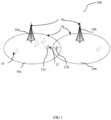
- FIG. 1 depicts a wireless communication system 100 with aerial UEs according to an embodiment of the disclosure.
- the cell 16 supporting aerial service may support aerial cell bar schemes and/or conventional cell bar schemes, while the cell 16 not supporting aerial service may only support conventional cell bar schemes.
- the plurality of aerial UEs 12 may be a plurality of drones or other aerial vehicles.
- the conventional UEs 14 may be computing devices, wearable devices, and mobile devices, etc. Specifically, as shown in FIG.1 , UEs 12a and 12b are aerial UEs 12, while the other UEs are conventional UEs 14. UEs 12a and 12b are both in cell 16a defined by base station 10a. At the same time, UE 12b is also in the edge of cell 16b defined by the base station 10b, that is, UE 12b is simultaneously in cell 16a and cell 16b.
- Persons skilled in the art should understand that as the 3GPP and electronic technology develop, the terminologies recited in the specification may change, which should not affect the principle of the disclosure.
- the wireless communication system 100 provides a separated aerial cell bar mechanism for the aerial UEs 12 different from conventional UEs 14.
- the network side for a cell 16 supporting aerial service, the network side, for example, the base station 10 or a control unit defining the cell 16, may broadcast aerial cell bar parameters, which may indicate service types, and bar factors and bar times associated with the service types etc.
- aerial cell bar parameters may indicate service types, and bar factors and bar times associated with the service types etc.
- the aerial UE 12 in an airborne state initiates or resumes a RRC connection with the base station 10 in the cell 16
- the aerial UE 12 may determine whether to subject itself to an aerial cell bar scheme based on the broadcasted aerial cell bar parameters.
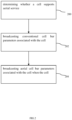
- FIG.2 is a flow chart illustrating a method of performing aerial cell bar according to an embodiment of the disclosure.
- the method of performing aerial cell bar may be performed by a base station 10 or a control unit controlling the base station 10.
- a cell 16 supports aerial service is determined.
- the base station 10a may determine whether cell 16a supports aerial service.
- conventional cell bar parameters associated with the cell 16, for example, cell 16a may be broadcasted in the wireless communication system 100.
- aerial cell bar parameters associated with the cell 16 may be broadcasted.
- the base station 10a may broadcast the aerial cell bar parameters to all aerial UEs 14 and all conventional UEs 16.
- the aerial cell bar parameters can be broadcasted in broadcasting information, such as a SIB (System Information Block), which may be a conventional SIB, for example, SIB2, or a newly defined SIB for aerial service.
- SIB System Information Block
- the aerial cell bar parameters may include at least one threshold for determining whether an aerial UE 12 may be subjected to an aerial cell bar scheme.
- the at least one threshold may include a height threshold for determining an airborne state. When an aerial UE 12 is in a height higher the height threshold, the aerial UE 12 may determine itself to be in an airborne state, and determine to subject itself to the aerial cell bar scheme.
- the at least one threshold may include a threshold of detected cell numbers and an RSRP threshold for detecting cells. When the RSRP of a cell 16 measured by an aerial UE 12 is higher than the RSRP threshold for detecting cells, the cell is detected by the aerial UE 12.
- an aerial UE 12 flying in the air it usually detects more cells than a conventional UE 14 due to the altitude.
- the aerial UE 12 may determine itself to be in an airborne state, and determine to subject itself to the aerial cell bar scheme.
- the aerial cell bar parameters may include a plurality of service types, a plurality of bar factors and a plurality of bar times, wherein each bar factor and each bar time are associated with each service type. That is, for each service type, a bar factor and bar time are defined.
- the plurality of service types may be broadcasted in a bitmap.
- Each service type is used to indicate a cell bar scheme associated with a service type of an aerial UE. For example, one service type may indicate a cell bar scheme used for command or control service, while another service type may indicate a cell bar used for video service.
- the bar factor indicates a value in a range from 0 to 1, which varies with the service type for barring cells according to different services of the aerial UEs.
- control and command services are essential to the aerial UEs, it does not consume much radio resources even if link quality is not so good because the traffic is not heavy. Accordingly, for control or command service of an aerial UE 12, the bar factor may be low, such as 0.1. However, for video service of an aerial UE 12, it may not be as essential as control and command services, but it may consume much radio resource due to large traffic. Accordingly, for video service of an aerial UE 12, the bar factor may be high, such as 0.8.
- the bar time indicates a value used for cell bar time calculation for a service of the aerial UE 12. For example, for a control service, the bar time may be 5 minutes. When the aerial UE 12 determines to subject itself to an aerial cell bar scheme, it will bar the cell 16 and then try to initiate a RRC connection with the cell 16 again after the time calculated based on 5 minutes. Detailed calculation manner will be illustrated in the following text.
- a neighbor cell list for airborne UEs i.e., the aerial UEs 12 in an airborne state is broadcasted, for example, by the base station 10.
- a neighbor cell list for conventional UEs is also broadcasted in addition to the neighbor cell list for airborne UEs.
- an aerial UE 12 when an aerial UE 12 tries to initiate or resume a RRC connection in a cell 16, it may determine whether the cell is barred through an exemplified method of performing aerial cell bar of the disclosure.
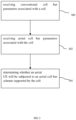
- FIG.3 is a flow chart illustrating a method of performing aerial cell bar according to an embodiment of the disclosure.
- each step of the method is numbered in sequence in FIG.3 , they should understand that does not mean the method is operated in the same sequence. The steps are numbered only for clearly illustrating the principle of the disclosure.
- UE 12a may determine whether to subject itself to an aerial cell bar scheme supported by cell 16a based on received aerial cell bar parameters associated with cell 16a. More details about the process of determining whether an aerial UE 12 may be subjected to an aerial cell bar scheme supported by the cell 16 may be recited as follows combining with various embodiments of the disclosure.
- an aerial UE 12 may determine whether to subject itself to an aerial cell bar scheme when it requests an establishment or resuming of an RRC connection while the aerial UE 12 is in RRC_IDLE.
- the aerial UE 12 may make the decision based on a stored state. For example, when UE 12a initiates a RRC connection with cell 16a and learns that its stored state is an airborne state, UE 12a may subject itself to an aerial cell bar scheme provided for cell 16a. Otherwise, UE 12a may subject itself to a conventional cell bar scheme.
- an aerial UE 12 determines whether to subject itself to an aerial cell bar scheme based on the at least one threshold.
- the at least one threshold includes a height threshold for determining an airborne state, and the height of the aerial UE 12 is higher than the height threshold
- the aerial UE 12 may subject itself to the aerial cell bar scheme.
- UE 12a when the height threshold is 40m and UE 12a is in the altitude of 50m, that is, the height of UE 12a is higher than the height threshold, UE 12a may determine to subject itself to the aerial cell bar scheme.
- the at least one threshold may include a threshold of detected cell number and an RSRP threshold for detecting cells.
- the RSRP associated with a cell is larger than the RSRP threshold for detecting cells, the cell is detected by the aerial UE.
- the aerial UE may be subjected to the aerial cell bar scheme.
- the received threshold of detected cell number may be 3 and the received RSRP threshold for detecting cells may be -100dbm.
- the RSRP of a cell 16 for example, cell 16a
- the RSRP of a cell 16 is -80dbm
- the cell 16 is regarded as being detected by UE 12a.
- the RSRP of a cell 16 is -110dbm
- the cell 16 is regarded as not being detected by UE 12a.
- UE 12a detects 5 cells in total UE 12a may subject itself to the aerial cell bar scheme. Otherwise, when UE 12a detects 2 cells in total, UE 12a may not subject itself to the aerial cell bar scheme and instead subject itself to the conventional cell bar scheme.
- the received aerial cell bar parameters may include a plurality of service types, and a plurality of bar factors and bar times associated with the plurality of service types.
- the method of performing aerial cell bar may further include mapping a service type of the aerial UE 12 to one of the plurality of service types and selecting the bar factor and bar time associated with the mapped service type.
- the received aerial cell bar parameters indicate that the bar factor associated with control and command service of an aerial UE 12 is 0.2 and the bar time associated with the control and command service is 2 minutes, while the bar factor associated with video service of an aerial UE 12 is 0.9 and the bar time associated with the video service is 30 minutes.
- UE 12a When an aerial UE 12, for example, UE 12a, initiates a RRC connection for control service with the cell 16, for example, cell 16a, UE 12a may map the control service to one of the plurality of service types of received aerial cell bar parameters, and select the bar factor and bar time of control service listed in the received aerial cell bar parameters.
- the method of performing aerial cell bar may further include evaluating an aerial cell bar status.
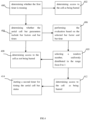
- An exemplified method of evaluating an aerial cell bar status is illustrated in FIG.4 .
- the aerial UE 12 may determine whether the first timer is running, which is initiated when the aerial UE 12 receives a signal that the cell 16 refuses a RRC connection requested by the aerial UE 12. When the first timer is running, the aerial UE 12 may determine access to the cell 16 as being barred in step 402. Otherwise, in step 404 the aerial UE 12 may perform the evaluation based on whether the aerial cell bar parameters include bar factors and bar times. When the aerial cell bar parameters include bar factors and bar times, the aerial UE 12 may perform the evaluation based on the selected bar factor and bar time in step 406. Otherwise, in step 408, the aerial UE 12 may determine access to the cell 16 as not being barred.
- the aerial UE 12 may start a second timer in step 414, which may be marked as "Tbarring.”
- the method of performing aerial cell bar further includes receiving the neighbor cell list for airborne UEs and the neighbor cell list for conventional UEs, for example, by the aerial UEs 12.
- the aerial UE 12 may automatically acquire CGI information cgi-info for the measured cell that is not in the received neighbor cell list for airborne UEs.
- the cgi-info includes cellGlobalId, trackingAreaCode and plmn-IdentityList, which are known for persons skilled in the art.
- the method of this disclosure can be implemented on a programmed processor.
- the controllers, flowcharts, and modules may also be implemented on a general purpose or special purpose computer, a programmed microprocessor or microcontroller and peripheral integrated circuit elements, an integrated circuit, a hardware electronic or logic circuit such as a discrete element circuit, a programmable logic device, or the like.
- any device on which resides a finite state machine capable of implementing the flowcharts shown in the figures may be used to implement the processor functions of this disclosure.
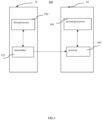
- FIG. 5 illustrates a block diagram of a system 500 of performing aerial cell bar according to an embodiment of the disclosure, which includes a first apparatus 52 of performing aerial cell bar in the network side and a second apparatus 54 of performing aerial cell bar in the terminal side.
- the first apparatus 52 may be a base station 10 or a control unit, or other apparatus that can execute the method of performing aerial cell bar in the network side, such as that illustrated in FIG.2 .
- the second apparatus 54 may be an aerial UE 12, or other apparatus that can execute the method of performing aerial cell bar in the terminal side, such as that illustrated in FIG.3 .
- the first apparatus 52 may include a first processor 520 that determines whether a cell 16 supports aerial service, and a transmitter 522 coupled to the first processor 520.
- the transmitter 522 may broadcast conventional cell bar parameters associated with the cell 16, and broadcast aerial cell bar parameters associated with the cell 16 when the cell 16 supports aerial service.
- the aerial cell bar parameters include at least one threshold for determining whether an aerial UE 12 may be subjected to an aerial cell bar scheme.
- the at least one threshold includes a height threshold for determining an airborne state according to an embodiment of the disclosure.
- the aerial cell bar parameters may include a plurality of service types, a plurality of bar factors and a plurality of bar times, wherein each bar factor and each bar time are associated with each service type. That is, for each service type, a bar factor and bar time are defined.
- the plurality of service types may be broadcasted in a bitmap.
- the transmitter 522 may broadcast a neighbor cell list for airborne UEs. In another embodiment of the disclosure, the transmitter 522 may further broadcast a neighbor cell list for conventional UEs in addition to the neighbor cell list for airborne UEs.
- the second apparatus 54 in an embodiment of the disclosure may receive the signal and/or information transmitted/broadcasted by the first apparatus 52.
- the second apparatus 54 may include a receiver 540 and a second processor 542 coupled to the receiver 540.
- the receiver 540 may receive conventional cell bar parameters associated with a cell 16 broadcasted by the transmitter 522 and receive aerial cell bar parameters associated with the cell 16 broadcasted by the transmitter 522.
- the second processor 544 determines whether the aerial UE 12 will be subjected to an aerial cell bar scheme supported by the cell 16.
- the second processor 544 in an example of the disclosure may determine whether an aerial UE 12 will be subjected to an aerial cell bar scheme based on a stored state, and when the stored state is an airborne state, the aerial UE 12 will be subjected to the aerial cell bar scheme.
- the aerial cell bar parameters received by the receiver 540 comprise at least one threshold, and the second processor 544 determines whether the aerial UE 12 will be subjected to an aerial cell bar scheme based on the at least one threshold.
- the at least one threshold includes a height threshold for determining an airborne state. When the height of the aerial UE 12 is higher than the height threshold, the second processor 544 may determine to subject the aerial UE 12 to the aerial cell bar scheme.
- the received at least one threshold may include a threshold of detected cell number and an RSRP threshold for detecting cells. When the RSRP associated with a cell is larger than the RSRP threshold for detecting cells, the cell is detected by the aerial UE 12.
- the second processor 544 may determine to subject the aerial UE 12 to the aerial cell bar scheme.
- the aerial cell bar parameters received by the receiver 540 include service types, and bar factors and bar times associated with the service types
- the second processor 544 in an embodiment of the disclosure may map a service type of the aerial UE 12 to one of the plurality of service types and select the bar factor and bar time associated with the mapped service type.
- the second processor 544 may further evaluate an aerial cell bar status. For example, when the first timer is running, which is initiated when the aerial UE 12 receives a signal that the cell 16 refuses a RRC connection requested by the aerial UE 12, the second processor 544 may determine access to the cell 16 as being barred. Otherwise, the second processor 544 may perform the evaluation based on whether the aerial cell bar parameters include bar factors and bar times. When the aerial cell bar parameters include bar factors and bar times, the second processor 544 may perform the evaluation based on the selected bar factor and bar time. Otherwise, the second processor 544 may determine access to the cell 16 as not being barred.
- an aerial cell bar status For example, when the first timer is running, which is initiated when the aerial UE 12 receives a signal that the cell 16 refuses a RRC connection requested by the aerial UE 12, the second processor 544 may determine access to the cell 16 as being barred. Otherwise, the second processor 544 may perform the evaluation based on whether the aerial cell bar parameters include bar factors and bar times. When the aerial cell bar parameters
- the second processor 544 may select a random number, which may be marked as 'rand', uniformly distributed in the range as the same as that of the bar factor, i.e., from 0 to 1.
- the second processor 544 may determine access to the cell 16 as not being barred. Otherwise, the second processor 544 may determine access to the cell 16 as being barred.
- the second processor 544 may start a second timer. The second processor 544 may select a new random number 'rand' uniformly distributed in the range from 0 to 1 and calculate the value of the second timer based on the selected random number and selected bar time.
- the receiver 540 may further receive the neighbor cell list for airborne UEs transmitted by the transmitter 522 or simultaneously receive the neighbor cell list for conventional UEs transmitted by the transmitter 522.
- the second processor 544 may automatically acquire CGI information cgi-info for a measured cell that is not in the received neighbor cell list for airborne UEs.
- Embodiments of the disclosure define aerial cell bar schemes and associated aerial cell bar parameters, so that the wireless network can use different cell bar strategies for aerial UEs and conventional UEs in view of different application scenarios.
- embodiments of the disclosure define aerial UEs' operation to determine aerial cell bar status according to received aerial cell bar parameters. More specifically, embodiments of the disclosure define an aerial UE determines the conditions in which the aerial UE subjects itself to an aerial cell bar scheme, how to use parameters associated with service types and how to evaluate aerial cell bar status.
- embodiments of the disclosure solve the technical problem of aerial cell bar, and can facilitate the development and application of wireless network covering aerial UEs.
Landscapes
- Engineering & Computer Science (AREA)
- Computer Networks & Wireless Communication (AREA)
- Signal Processing (AREA)
- Computer Security & Cryptography (AREA)
- Quality & Reliability (AREA)
- Physics & Mathematics (AREA)
- Electromagnetism (AREA)
- Mobile Radio Communication Systems (AREA)
Claims (15)
- Verfahren, das von einer Basisstation (10) durchgeführt wird, wobei die Basisstation (10) eine Zelle (16) definiert, wobei das Verfahren umfasst:Bestimmen (200), ob die Zelle (16) einen Luftdienst unterstützt, wobei der Luftdienst das Bereitstellen einer drahtlosen Kommunikation mit einer Luftbenutzerausrüstung, UE (12), umfasst;Senden (202) von mit der Zelle (16) verknüpften Sperrparametern für terrestrische Zellen;Senden (204) von mit der Zelle (16) verknüpften Sperrparametern für Luftzellen, wenn die Zelle (16) einen Luftdienst unterstützt;wobei die Sperrparameter für Luftzellen mindestens einen Schwellenwert umfassen, um zu bestimmen, ob die UE einem Sperrschema für Luftzellen unterzogen wird; undwobei der mindestens eine Schwellenwert einen Höhenschwellenwert zum Bestimmen eines luftgetragenen Zustands der UE umfasst.
- Verfahren nach Anspruch 1, wobei die Sperrparameter für Luftzellen eine Vielzahl von Diensttypen, eine Vielzahl von Sperrfaktoren und eine Vielzahl von Sperrzeiten umfassen, wobei jeder Sperrfaktor und jede Sperrzeit mit jedem Diensttyp verknüpft sind.
- Verfahren nach Anspruch 2, wobei die Zellsperrparameter jedes Diensttyps in einer Bitmap gesendet werden.
- Verfahren, das von einer Luft-Benutzerausrüstung, UE (12), durchgeführt wird, wobei das Verfahren umfasst:Empfangen (300) von Sperrparametern für terrestrische Zellen, die mit einer Zelle verknüpft sind;Empfangen (302) von Sperrparametern für Luftzellen, die mit der Zelle verknüpft sind; undBestimmen (304), ob die UE einem von der Zelle unterstützten Sperrschema für Luftzellen unterzogen wird;wobei die Sperrparameter für Luftzellen mindestens einen Schwellenwert umfassen, um zu bestimmen, ob die UE dem Sperrschema für Luftzellen unterzogen wird; undwobei der mindestens eine Schwellenwert einen Höhenschwellenwert zum Bestimmen eines luftgetragenen Zustands der UE umfasst.
- Basisstation (10) zur drahtlosen Kommunikation, wobei die Basisstation (10) eine Zelle (16) definiert und umfasst:
mindestens einen Speicher; und mindestens einen Prozessor, der mit dem mindestens einen Speicher gekoppelt ist und dazu konfiguriert ist, die Basisstation (10) zu veranlassen zum:Bestimmen, ob die Zelle einen Luftdienst unterstützt, wobei der Luftdienst das Bereitstellen einer drahtlosen Kommunikation mit einer Luft-Benutzerausrüstung, UE (12), umfasst,Senden von mit der Zelle (16) verknüpften Sperrparametern für terrestrische Zellen; undSenden von mit der Zelle verknüpften Sperrparametern für Luftzellen, wenn die Zelle einen Luftdienst unterstützt;wobei die Sperrparameter für Luftzellen mindestens einen Schwellenwert umfassen, um zu bestimmen, ob die UE einem Sperrschema für Luftzellen unterzogen wird; undwobei der mindestens eine Schwellenwert einen Höhenschwellenwert zum Bestimmen eines luftgetragenen Zustands der UE umfasst. - Basisstation (10) nach Anspruch 5, wobei die Sperrparameter für Luftzellen eine Vielzahl von Diensttypen, eine Vielzahl von Sperrfaktoren und eine Vielzahl von Sperrzeiten umfassen, wobei jeder Sperrfaktor und jede Sperrzeit mit jedem Diensttyp verknüpft sind.
- Basisstation (10) nach Anspruch 6, wobei die Zellsperrparameter jedes Diensttyps in einer Bitmap gesendet werden.
- Basisstation (10) nach Anspruch 5, wobei die Basisstation (10) ferner dazu veranlasst wird, mindestens eine von einer Nachbarzellenliste für luftgetragene UEs; und einer Nachbarzellenliste für luftgetragene UEs und eine Nachbarzellenliste für herkömmliche UEs zu senden.
- Luft-Benutzereinrichtung, UE (12),
für drahtlose Kommunikation, umfassend:
mindestens einen Speicher; und mindestens einen Prozessor, der mit dem mindestens einen Speicher gekoppelt ist und dazu konfiguriert ist, die UE zu veranlassen zum:Empfangen von Sperrparametern für terrestrische Zellen, die mit einer Zelle verknüpft sind;Empfangen von Sperrparametern für Luftzellen, die mit der Zelle verknüpft sind; undBestimmen, ob die UE einem von der Zelle unterstützten Sperrschema für Luftzellen unterzogen wird;wobei die Sperrparameter für Luftzellen mindestens einen Schwellenwert umfassen, um zu bestimmen, ob die UE dem Sperrschema für Luftzellen unterzogen wird; undwobei der mindestens eine Schwellenwert einen Höhenschwellenwert zum Bestimmen eines luftgetragenen Zustands der UE umfasst. - UE nach Anspruch 9, wobei die Sperrparameter für Luftzellen eine Vielzahl von Diensttypen, eine Vielzahl von Sperrfaktoren und eine Vielzahl von Sperrzeiten einschließen, wobei jeder Sperrfaktor und jede Sperrzeit mit jedem Diensttyp verknüpft sind.
- UE nach Anspruch 10, wobei die Zellsperrparameter jedes Diensttyps in einer Bitmap gesendet werden.
- UE nach Anspruch 9, wobei die UE ferner dazu veranlasst wird, eine Nachbarzellenliste für luftgetragene UEs zu empfangen.
- UE nach Anspruch 9, wobei die UE ferner dazu veranlasst wird, eine Nachbarzellenliste für luftgetragene UEs und eine Nachbarzellenliste für herkömmliche UEs zu empfangen.
- UE nach Anspruch 13, die ferner dazu veranlasst wird, automatisch Cell Global Identity-Informationen, CGI-Informationen, cgi-info, für eine gemessene Zelle zu erfassen, die sich nicht in der empfangenen Nachbarzellenliste für luftgetragene UEs befindet.
- Prozessor (544) für drahtlose Kommunikation, der so konfiguriert ist, dass er
eine Luft-Benutzerausrüstung, UE (12), veranlasst zum:Empfangen von Sperrparametern für terrestrische Zellen, die mit einer Zelle verknüpft sind;Empfangen von Sperrparametern für Luftzellen, die mit der Zelle verknüpft sind; undBestimmen, ob die UE einem von der Zelle unterstützten Sperrschema für Luftzellen unterzogen wird;wobei die Sperrparameter für Luftzellen mindestens einen Schwellenwert umfassen, um zu bestimmen, ob die UE dem Sperrschema für Luftzellen unterzogen wird; undwobei der mindestens eine Schwellenwert einen Höhenschwellenwert zum Bestimmen eines luftgetragenen Zustands der UE umfasst.
Applications Claiming Priority (1)
| Application Number | Priority Date | Filing Date | Title |
|---|---|---|---|
| PCT/CN2017/098164 WO2019033433A1 (en) | 2017-08-18 | 2017-08-18 | METHOD AND APPARATUS FOR CELL PROHIBITION |
Publications (4)
| Publication Number | Publication Date |
|---|---|
| EP3669583A1 EP3669583A1 (de) | 2020-06-24 |
| EP3669583A4 EP3669583A4 (de) | 2021-03-24 |
| EP3669583B1 true EP3669583B1 (de) | 2024-07-24 |
| EP3669583C0 EP3669583C0 (de) | 2024-07-24 |
Family
ID=65362055
Family Applications (1)
| Application Number | Title | Priority Date | Filing Date |
|---|---|---|---|
| EP17921477.0A Active EP3669583B1 (de) | 2017-08-18 | 2017-08-18 | Cell-bar-verfahren und -vorrichtung |
Country Status (4)
| Country | Link |
|---|---|
| US (1) | US11172432B2 (de) |
| EP (1) | EP3669583B1 (de) |
| CN (1) | CN111034271B (de) |
| WO (1) | WO2019033433A1 (de) |
Families Citing this family (6)
| Publication number | Priority date | Publication date | Assignee | Title |
|---|---|---|---|---|
| CN109548150A (zh) * | 2017-09-21 | 2019-03-29 | 索尼公司 | 无线通信系统中的电子设备、方法和计算机可读存储介质 |
| CN109561474A (zh) * | 2017-09-26 | 2019-04-02 | 株式会社Ntt都科摩 | 小区选择或接入方法、用户终端、维护方法和基站 |
| CN114521337B (zh) | 2019-09-24 | 2024-08-06 | 三星电子株式会社 | 用于在地面网络运营商之间共享空中资产的方法和系统 |
| EP4590028A3 (de) * | 2019-12-25 | 2025-10-15 | Huawei Technologies Co., Ltd. | Zellenneuauswahlverfahren, endgerätevorrichtung und netzwerkvorrichtung |
| US20240357474A1 (en) * | 2023-04-21 | 2024-10-24 | Qualcomm Incorporated | Aerial user equipment (ue) policy configuration based on aerial flight zones |
| KR20250029539A (ko) * | 2023-08-23 | 2025-03-05 | 주식회사 엘지유플러스 | 무선 통신 시스템에서 단말의 UAM(Urban Aerial Mobility) 전용 셀 접속을 제어하기 위한 방법 및 이를 위한 장치 |
Family Cites Families (38)
| Publication number | Priority date | Publication date | Assignee | Title |
|---|---|---|---|---|
| EP1041849A1 (de) | 1999-03-12 | 2000-10-04 | Sony International (Europe) GmbH | Schutz eines Gebietes gegen Störenden Gebrauch eines Mobiltelefons |
| AU1814201A (en) * | 1999-12-01 | 2001-06-12 | Sinex Aviation Technologies Corporation | Dynamic aircraft maintenance management system |
| US7379795B2 (en) * | 2003-06-26 | 2008-05-27 | Michael Arnouse | Apparatus, system and method for aircraft security and anti-hijacking intervention |
| FR2894365B1 (fr) * | 2005-12-02 | 2008-01-11 | Thales Sa | Dispositif et procede de changement des zones prohibees a un aeronef |
| US7907578B2 (en) * | 2006-05-03 | 2011-03-15 | Cellco Partnership | Frequency overlay technique for a pico cell system |
| KR100765892B1 (ko) * | 2006-08-30 | 2007-10-10 | 주식회사 팬택 | 이동통신 시스템의 셀간 간섭을 제어하는 방법 |
| CN101325787A (zh) | 2007-06-12 | 2008-12-17 | 上海华为技术有限公司 | 小区驻留方法及设备 |
| EP3211940A1 (de) * | 2010-02-12 | 2017-08-30 | Interdigital Patent Holdings, Inc. | Zugangskontrolle und kongestionskontrolle in maschine-zur-maschine kommunikation |
| US20120281530A1 (en) * | 2010-11-08 | 2012-11-08 | Qualcomm Incorporated | System and method for radio access network overload control |
| EP2695479A4 (de) * | 2011-04-08 | 2015-06-03 | Ericsson Telefon Ab L M | Minimierung von interferenzen durch einen atmosphärischen kanal in einem drahtlosen kommunikationssystem |
| KR101932107B1 (ko) | 2011-05-02 | 2018-12-24 | 삼성전자 주식회사 | 단말의 access 수행 및 제어 방법과 장치 |
| CN102892178B (zh) | 2011-07-21 | 2018-03-20 | 中兴通讯股份有限公司 | 一种执行接入控制的方法和用户设备 |
| CN103096425B (zh) | 2011-11-07 | 2017-03-15 | 上海贝尔股份有限公司 | 一种接入控制的方法和模块及用户设备 |
| US9392598B2 (en) * | 2012-03-09 | 2016-07-12 | Qualcomm Incorporated | Method and system for communicating between small cells using over-the-air transmissions |
| US9137675B2 (en) | 2012-06-13 | 2015-09-15 | All Purpose Networks LLC | Operational constraints in LTE TDD systems using RF agile beam forming techniques |
| US9621254B2 (en) * | 2012-09-21 | 2017-04-11 | Spatial Digital Systems, Inc. | Communications architectures via UAV |
| US9979789B2 (en) * | 2013-07-27 | 2018-05-22 | Michael Lu | Open wireless architecture (OWA) unified airborne and terrestrial communications architecture |
| KR101409188B1 (ko) | 2013-12-09 | 2014-07-02 | 뉴비전엔지니어링(주) | 디지털 항공촬영 정보의 대상물 편집을 3차원 도화이미지로 합성하는 공간영상 도화시스템 |
| US9913095B2 (en) * | 2014-11-19 | 2018-03-06 | Parallel Wireless, Inc. | Enhanced mobile base station |
| US9764838B2 (en) * | 2015-04-14 | 2017-09-19 | ETAK Systems, LLC | Unmanned aerial vehicle-based systems and methods associated with cell sites and cell towers with robotic arms for performing operations |
| FR3036015B1 (fr) * | 2015-05-06 | 2018-05-04 | Centre National De La Recherche Scientifique | Systeme de detection d'une cible contrastee |
| US9862488B2 (en) * | 2015-08-28 | 2018-01-09 | Mcafee, Llc | Location verification and secure no-fly logic for unmanned aerial vehicles |
| CN108352122B (zh) * | 2015-09-18 | 2021-07-16 | 莫戈公司 | 蜂窝飞行器交通控制系统和方法 |
| US9813969B2 (en) * | 2015-11-03 | 2017-11-07 | Telefonaktiebolaget Lm Ericsson (Publ) | In-flight cellular communications system coverage of mobile communications equipment located in aircraft |
| US10902734B2 (en) * | 2015-11-17 | 2021-01-26 | SZ DJI Technology Co., Ltd. | Systems and methods for managing flight-restriction regions |
| CN105355092B (zh) * | 2015-12-03 | 2017-12-22 | 上海民航华东空管工程技术有限公司 | 一种航班流量预控制方法 |
| WO2016190793A1 (en) * | 2015-12-14 | 2016-12-01 | Telefonaktiebolaget Lm Ericsson (Publ) | Adjustment of planned movement based on radio network conditions |
| CN105554857A (zh) | 2016-01-27 | 2016-05-04 | 宇龙计算机通信科技(深圳)有限公司 | 一种小区选择方法及终端 |
| WO2017177361A1 (en) * | 2016-04-11 | 2017-10-19 | Telefonaktiebolaget Lm Ericsson (Publ) | Flight path control based on cell broadcast messages |
| ES2919138T3 (es) * | 2016-06-21 | 2022-07-22 | Ericsson Telefon Ab L M | Métodos de dirección de ruta de vehículos aéreos no tripulados |
| CN106910376B (zh) | 2016-08-18 | 2020-04-28 | 温州云航信息科技有限公司 | 一种空中交通运行管制指令监控方法与系统 |
| CN107770854A (zh) * | 2016-08-19 | 2018-03-06 | 株式会社Ntt都科摩 | 用于控制发射功率的方法、移动台和基站 |
| US10710710B2 (en) * | 2016-10-27 | 2020-07-14 | International Business Machines Corporation | Unmanned aerial vehicle (UAV) compliance using standard protocol requirements and components to enable identifying and controlling rogue UAVS |
| US10304343B2 (en) * | 2017-02-24 | 2019-05-28 | At&T Mobility Ii Llc | Flight plan implementation, generation, and management for aerial devices |
| EP3601040B1 (de) * | 2017-03-31 | 2022-08-03 | Telefonaktiebolaget LM Ericsson (PUBL) | Übertragung von geolokalisierungsinformationen in einem von einem unbemannten luftfahrzeug übertragenen funkrahmen |
| WO2019028906A1 (en) * | 2017-08-11 | 2019-02-14 | Lenovo (Beijing) Limited | TRANSMISSION OF AIR VEHICLE POSITION INFORMATION |
| US10912059B2 (en) * | 2018-04-18 | 2021-02-02 | Battelle Energy Alliance, Llc | Systems, devices and methods for communicating data with unmanned aerial vehicles using underlay broadcast channel |
| US11153830B2 (en) * | 2019-08-15 | 2021-10-19 | Qualcomm Incorporated | Emission limit indication techniques for aerial wireless devices |
-
2017
- 2017-08-18 WO PCT/CN2017/098164 patent/WO2019033433A1/en not_active Ceased
- 2017-08-18 CN CN201780094043.2A patent/CN111034271B/zh active Active
- 2017-08-18 EP EP17921477.0A patent/EP3669583B1/de active Active
- 2017-08-18 US US16/639,908 patent/US11172432B2/en active Active
Also Published As
| Publication number | Publication date |
|---|---|
| CN111034271A (zh) | 2020-04-17 |
| US20210144626A1 (en) | 2021-05-13 |
| US11172432B2 (en) | 2021-11-09 |
| WO2019033433A1 (en) | 2019-02-21 |
| EP3669583A4 (de) | 2021-03-24 |
| EP3669583A1 (de) | 2020-06-24 |
| CN111034271B (zh) | 2022-06-24 |
| EP3669583C0 (de) | 2024-07-24 |
Similar Documents
| Publication | Publication Date | Title |
|---|---|---|
| EP3669583B1 (de) | Cell-bar-verfahren und -vorrichtung | |
| US11109252B2 (en) | Method and apparatus for adjusting network configuration based on channel busy ratio in wireless communication system | |
| US10841791B1 (en) | Dynamic firmware over-the-air system for IoT devices | |
| US10299146B2 (en) | Coverage adjustment in E-UTRA networks | |
| US10674380B2 (en) | On-demand system information for wireless terminal in connected state | |
| US11382012B2 (en) | Method and apparatus for deprioritizing access on unlicensed band based on UE preference in wireless communication system | |
| US10462725B2 (en) | Systems and methods for improved data speeds for wireless devices | |
| KR20180132886A (ko) | 시스템 정보 프로비저닝 및 경량 접속 시그널링 | |
| US11039336B2 (en) | Adaptive closed loop congestion avoidance and control | |
| WO2015115822A1 (ko) | 무선 통신 시스템에서 단말에 의해 수행되는 중계 기능 상태 보고 방법 및 상기 방법을 이용하는 단말 | |
| US20230276324A1 (en) | Cell Reselection-Related Information Associated with Network Slice or Closed Access Group For Wireless Networks | |
| WO2015170898A1 (ko) | 무선 통신 시스템에서 단말에 의해 수행되는 셀 커버리지 판단 방법 및 상기 방법을 이용하는 단말 | |
| WO2016076676A1 (ko) | 무선 통신 시스템에서 단말에 의해 수행되는 d2d 관련 정보 보고 방법 및 상기 방법을 이용하는 단말 | |
| US9479992B2 (en) | Method and apparatus for controlling interference based on carrier aggregation for small base station | |
| US20220070745A1 (en) | Cell reselection method and user equipment | |
| CN106134237A (zh) | 确定由终端在无线通信系统中执行的设备对设备(d2d)操作的小区覆盖范围的方法及使用该方法的终端 | |
| CN107736076B (zh) | 连接配置 | |
| US20200396619A1 (en) | Method and apparatus for enhancing measurement rule on unlicensed frequency in wireless communication system | |
| WO2015167306A1 (ko) | 무선 통신 시스템에서 단말에 의해 수행되는 셀 검색 방법 및 상기 방법을 이용하는 단말 | |
| WO2025060335A1 (en) | Methods, devices, and computer readable storage medium for switching between networks |
Legal Events
| Date | Code | Title | Description |
|---|---|---|---|
| STAA | Information on the status of an ep patent application or granted ep patent |
Free format text: STATUS: THE INTERNATIONAL PUBLICATION HAS BEEN MADE |
|
| PUAI | Public reference made under article 153(3) epc to a published international application that has entered the european phase |
Free format text: ORIGINAL CODE: 0009012 |
|
| STAA | Information on the status of an ep patent application or granted ep patent |
Free format text: STATUS: REQUEST FOR EXAMINATION WAS MADE |
|
| 17P | Request for examination filed |
Effective date: 20200303 |
|
| AK | Designated contracting states |
Kind code of ref document: A1 Designated state(s): AL AT BE BG CH CY CZ DE DK EE ES FI FR GB GR HR HU IE IS IT LI LT LU LV MC MK MT NL NO PL PT RO RS SE SI SK SM TR |
|
| AX | Request for extension of the european patent |
Extension state: BA ME |
|
| DAV | Request for validation of the european patent (deleted) | ||
| DAX | Request for extension of the european patent (deleted) | ||
| REG | Reference to a national code |
Ref legal event code: R079 Ipc: H04W0048040000 Ref country code: DE Ref legal event code: R079 Ref document number: 602017083610 Country of ref document: DE Free format text: PREVIOUS MAIN CLASS: H04W0048100000 Ipc: H04W0048040000 |
|
| A4 | Supplementary search report drawn up and despatched |
Effective date: 20210222 |
|
| RIC1 | Information provided on ipc code assigned before grant |
Ipc: H04W 48/10 20090101ALI20210216BHEP Ipc: H04W 48/04 20090101AFI20210216BHEP Ipc: H04W 48/12 20090101ALI20210216BHEP |
|
| STAA | Information on the status of an ep patent application or granted ep patent |
Free format text: STATUS: EXAMINATION IS IN PROGRESS |
|
| 17Q | First examination report despatched |
Effective date: 20230714 |
|
| GRAP | Despatch of communication of intention to grant a patent |
Free format text: ORIGINAL CODE: EPIDOSNIGR1 |
|
| STAA | Information on the status of an ep patent application or granted ep patent |
Free format text: STATUS: GRANT OF PATENT IS INTENDED |
|
| RIC1 | Information provided on ipc code assigned before grant |
Ipc: H04W 48/12 20090101ALN20240404BHEP Ipc: H04W 48/10 20090101ALI20240404BHEP Ipc: H04W 48/04 20090101AFI20240404BHEP |
|
| INTG | Intention to grant announced |
Effective date: 20240419 |
|
| RIC1 | Information provided on ipc code assigned before grant |
Ipc: H04W 48/12 20090101ALN20240408BHEP Ipc: H04W 48/10 20090101ALI20240408BHEP Ipc: H04W 48/04 20090101AFI20240408BHEP |
|
| GRAS | Grant fee paid |
Free format text: ORIGINAL CODE: EPIDOSNIGR3 |
|
| GRAA | (expected) grant |
Free format text: ORIGINAL CODE: 0009210 |
|
| STAA | Information on the status of an ep patent application or granted ep patent |
Free format text: STATUS: THE PATENT HAS BEEN GRANTED |
|
| AK | Designated contracting states |
Kind code of ref document: B1 Designated state(s): AL AT BE BG CH CY CZ DE DK EE ES FI FR GB GR HR HU IE IS IT LI LT LU LV MC MK MT NL NO PL PT RO RS SE SI SK SM TR |
|
| REG | Reference to a national code |
Ref country code: GB Ref legal event code: FG4D |
|
| REG | Reference to a national code |
Ref country code: CH Ref legal event code: EP |
|
| REG | Reference to a national code |
Ref country code: DE Ref legal event code: R096 Ref document number: 602017083610 Country of ref document: DE |
|
| REG | Reference to a national code |
Ref country code: IE Ref legal event code: FG4D |
|
| U01 | Request for unitary effect filed |
Effective date: 20240809 |
|
| U07 | Unitary effect registered |
Designated state(s): AT BE BG DE DK EE FI FR IT LT LU LV MT NL PT SE SI Effective date: 20240826 |
|
| U20 | Renewal fee for the european patent with unitary effect paid |
Year of fee payment: 8 Effective date: 20241025 |
|
| PG25 | Lapsed in a contracting state [announced via postgrant information from national office to epo] |
Ref country code: NO Free format text: LAPSE BECAUSE OF FAILURE TO SUBMIT A TRANSLATION OF THE DESCRIPTION OR TO PAY THE FEE WITHIN THE PRESCRIBED TIME-LIMIT Effective date: 20241024 |
|
| PG25 | Lapsed in a contracting state [announced via postgrant information from national office to epo] |
Ref country code: GR Free format text: LAPSE BECAUSE OF FAILURE TO SUBMIT A TRANSLATION OF THE DESCRIPTION OR TO PAY THE FEE WITHIN THE PRESCRIBED TIME-LIMIT Effective date: 20241025 Ref country code: PL Free format text: LAPSE BECAUSE OF FAILURE TO SUBMIT A TRANSLATION OF THE DESCRIPTION OR TO PAY THE FEE WITHIN THE PRESCRIBED TIME-LIMIT Effective date: 20240724 |
|
| PG25 | Lapsed in a contracting state [announced via postgrant information from national office to epo] |
Ref country code: IS Free format text: LAPSE BECAUSE OF FAILURE TO SUBMIT A TRANSLATION OF THE DESCRIPTION OR TO PAY THE FEE WITHIN THE PRESCRIBED TIME-LIMIT Effective date: 20241124 |
|
| PG25 | Lapsed in a contracting state [announced via postgrant information from national office to epo] |
Ref country code: HR Free format text: LAPSE BECAUSE OF FAILURE TO SUBMIT A TRANSLATION OF THE DESCRIPTION OR TO PAY THE FEE WITHIN THE PRESCRIBED TIME-LIMIT Effective date: 20240724 |
|
| PG25 | Lapsed in a contracting state [announced via postgrant information from national office to epo] |
Ref country code: ES Free format text: LAPSE BECAUSE OF FAILURE TO SUBMIT A TRANSLATION OF THE DESCRIPTION OR TO PAY THE FEE WITHIN THE PRESCRIBED TIME-LIMIT Effective date: 20240724 Ref country code: RS Free format text: LAPSE BECAUSE OF FAILURE TO SUBMIT A TRANSLATION OF THE DESCRIPTION OR TO PAY THE FEE WITHIN THE PRESCRIBED TIME-LIMIT Effective date: 20241024 |
|
| PG25 | Lapsed in a contracting state [announced via postgrant information from national office to epo] |
Ref country code: RS Free format text: LAPSE BECAUSE OF FAILURE TO SUBMIT A TRANSLATION OF THE DESCRIPTION OR TO PAY THE FEE WITHIN THE PRESCRIBED TIME-LIMIT Effective date: 20241024 Ref country code: PL Free format text: LAPSE BECAUSE OF FAILURE TO SUBMIT A TRANSLATION OF THE DESCRIPTION OR TO PAY THE FEE WITHIN THE PRESCRIBED TIME-LIMIT Effective date: 20240724 Ref country code: NO Free format text: LAPSE BECAUSE OF FAILURE TO SUBMIT A TRANSLATION OF THE DESCRIPTION OR TO PAY THE FEE WITHIN THE PRESCRIBED TIME-LIMIT Effective date: 20241024 Ref country code: IS Free format text: LAPSE BECAUSE OF FAILURE TO SUBMIT A TRANSLATION OF THE DESCRIPTION OR TO PAY THE FEE WITHIN THE PRESCRIBED TIME-LIMIT Effective date: 20241124 Ref country code: HR Free format text: LAPSE BECAUSE OF FAILURE TO SUBMIT A TRANSLATION OF THE DESCRIPTION OR TO PAY THE FEE WITHIN THE PRESCRIBED TIME-LIMIT Effective date: 20240724 Ref country code: GR Free format text: LAPSE BECAUSE OF FAILURE TO SUBMIT A TRANSLATION OF THE DESCRIPTION OR TO PAY THE FEE WITHIN THE PRESCRIBED TIME-LIMIT Effective date: 20241025 Ref country code: ES Free format text: LAPSE BECAUSE OF FAILURE TO SUBMIT A TRANSLATION OF THE DESCRIPTION OR TO PAY THE FEE WITHIN THE PRESCRIBED TIME-LIMIT Effective date: 20240724 |
|
| REG | Reference to a national code |
Ref country code: CH Ref legal event code: PL |
|
| PG25 | Lapsed in a contracting state [announced via postgrant information from national office to epo] |
Ref country code: SM Free format text: LAPSE BECAUSE OF FAILURE TO SUBMIT A TRANSLATION OF THE DESCRIPTION OR TO PAY THE FEE WITHIN THE PRESCRIBED TIME-LIMIT Effective date: 20240724 Ref country code: RO Free format text: LAPSE BECAUSE OF FAILURE TO SUBMIT A TRANSLATION OF THE DESCRIPTION OR TO PAY THE FEE WITHIN THE PRESCRIBED TIME-LIMIT Effective date: 20240724 |
|
| PG25 | Lapsed in a contracting state [announced via postgrant information from national office to epo] |
Ref country code: MC Free format text: LAPSE BECAUSE OF FAILURE TO SUBMIT A TRANSLATION OF THE DESCRIPTION OR TO PAY THE FEE WITHIN THE PRESCRIBED TIME-LIMIT Effective date: 20240724 Ref country code: CH Free format text: LAPSE BECAUSE OF NON-PAYMENT OF DUE FEES Effective date: 20240831 |
|
| PG25 | Lapsed in a contracting state [announced via postgrant information from national office to epo] |
Ref country code: CZ Free format text: LAPSE BECAUSE OF FAILURE TO SUBMIT A TRANSLATION OF THE DESCRIPTION OR TO PAY THE FEE WITHIN THE PRESCRIBED TIME-LIMIT Effective date: 20240724 |
|
| PG25 | Lapsed in a contracting state [announced via postgrant information from national office to epo] |
Ref country code: SK Free format text: LAPSE BECAUSE OF FAILURE TO SUBMIT A TRANSLATION OF THE DESCRIPTION OR TO PAY THE FEE WITHIN THE PRESCRIBED TIME-LIMIT Effective date: 20240724 |
|
| PLBE | No opposition filed within time limit |
Free format text: ORIGINAL CODE: 0009261 |
|
| STAA | Information on the status of an ep patent application or granted ep patent |
Free format text: STATUS: NO OPPOSITION FILED WITHIN TIME LIMIT |
|
| 26N | No opposition filed |
Effective date: 20250425 |
|
| PG25 | Lapsed in a contracting state [announced via postgrant information from national office to epo] |
Ref country code: IE Free format text: LAPSE BECAUSE OF NON-PAYMENT OF DUE FEES Effective date: 20240818 |
|
| U20 | Renewal fee for the european patent with unitary effect paid |
Year of fee payment: 9 Effective date: 20250825 |
|
| PGFP | Annual fee paid to national office [announced via postgrant information from national office to epo] |
Ref country code: GB Payment date: 20250826 Year of fee payment: 9 |