EP3668047B1 - Eröffnungsverfahren einer gesicherten session an einem it-endgerät - Google Patents
Eröffnungsverfahren einer gesicherten session an einem it-endgerät Download PDFInfo
- Publication number
- EP3668047B1 EP3668047B1 EP19215848.3A EP19215848A EP3668047B1 EP 3668047 B1 EP3668047 B1 EP 3668047B1 EP 19215848 A EP19215848 A EP 19215848A EP 3668047 B1 EP3668047 B1 EP 3668047B1
- Authority
- EP
- European Patent Office
- Prior art keywords
- notification
- server
- authentication
- authentication server
- key
- Prior art date
- Legal status (The legal status is an assumption and is not a legal conclusion. Google has not performed a legal analysis and makes no representation as to the accuracy of the status listed.)
- Active
Links
Images

Classifications
-
- G—PHYSICS
- G06—COMPUTING OR CALCULATING; COUNTING
- G06F—ELECTRIC DIGITAL DATA PROCESSING
- G06F21/00—Security arrangements for protecting computers, components thereof, programs or data against unauthorised activity
- G06F21/30—Authentication, i.e. establishing the identity or authorisation of security principals
- G06F21/31—User authentication
-
- H—ELECTRICITY
- H04—ELECTRIC COMMUNICATION TECHNIQUE
- H04L—TRANSMISSION OF DIGITAL INFORMATION, e.g. TELEGRAPHIC COMMUNICATION
- H04L63/00—Network architectures or network communication protocols for network security
- H04L63/04—Network architectures or network communication protocols for network security for providing a confidential data exchange among entities communicating through data packet networks
- H04L63/0428—Network architectures or network communication protocols for network security for providing a confidential data exchange among entities communicating through data packet networks wherein the data content is protected, e.g. by encrypting or encapsulating the payload
- H04L63/0435—Network architectures or network communication protocols for network security for providing a confidential data exchange among entities communicating through data packet networks wherein the data content is protected, e.g. by encrypting or encapsulating the payload wherein the sending and receiving network entities apply symmetric encryption, i.e. same key used for encryption and decryption
-
- H—ELECTRICITY
- H04—ELECTRIC COMMUNICATION TECHNIQUE
- H04L—TRANSMISSION OF DIGITAL INFORMATION, e.g. TELEGRAPHIC COMMUNICATION
- H04L63/00—Network architectures or network communication protocols for network security
- H04L63/04—Network architectures or network communication protocols for network security for providing a confidential data exchange among entities communicating through data packet networks
- H04L63/0428—Network architectures or network communication protocols for network security for providing a confidential data exchange among entities communicating through data packet networks wherein the data content is protected, e.g. by encrypting or encapsulating the payload
- H04L63/0442—Network architectures or network communication protocols for network security for providing a confidential data exchange among entities communicating through data packet networks wherein the data content is protected, e.g. by encrypting or encapsulating the payload wherein the sending and receiving network entities apply asymmetric encryption, i.e. different keys for encryption and decryption
-
- H—ELECTRICITY
- H04—ELECTRIC COMMUNICATION TECHNIQUE
- H04L—TRANSMISSION OF DIGITAL INFORMATION, e.g. TELEGRAPHIC COMMUNICATION
- H04L63/00—Network architectures or network communication protocols for network security
- H04L63/04—Network architectures or network communication protocols for network security for providing a confidential data exchange among entities communicating through data packet networks
- H04L63/0428—Network architectures or network communication protocols for network security for providing a confidential data exchange among entities communicating through data packet networks wherein the data content is protected, e.g. by encrypting or encapsulating the payload
- H04L63/045—Network architectures or network communication protocols for network security for providing a confidential data exchange among entities communicating through data packet networks wherein the data content is protected, e.g. by encrypting or encapsulating the payload wherein the sending and receiving network entities apply hybrid encryption, i.e. combination of symmetric and asymmetric encryption
-
- H—ELECTRICITY
- H04—ELECTRIC COMMUNICATION TECHNIQUE
- H04L—TRANSMISSION OF DIGITAL INFORMATION, e.g. TELEGRAPHIC COMMUNICATION
- H04L63/00—Network architectures or network communication protocols for network security
- H04L63/08—Network architectures or network communication protocols for network security for authentication of entities
- H04L63/083—Network architectures or network communication protocols for network security for authentication of entities using passwords
- H04L63/0838—Network architectures or network communication protocols for network security for authentication of entities using passwords using one-time-passwords
-
- H—ELECTRICITY
- H04—ELECTRIC COMMUNICATION TECHNIQUE
- H04L—TRANSMISSION OF DIGITAL INFORMATION, e.g. TELEGRAPHIC COMMUNICATION
- H04L63/00—Network architectures or network communication protocols for network security
- H04L63/08—Network architectures or network communication protocols for network security for authentication of entities
- H04L63/0853—Network architectures or network communication protocols for network security for authentication of entities using an additional device, e.g. smartcard, SIM or a different communication terminal
-
- H—ELECTRICITY
- H04—ELECTRIC COMMUNICATION TECHNIQUE
- H04L—TRANSMISSION OF DIGITAL INFORMATION, e.g. TELEGRAPHIC COMMUNICATION
- H04L63/00—Network architectures or network communication protocols for network security
- H04L63/08—Network architectures or network communication protocols for network security for authentication of entities
- H04L63/0876—Network architectures or network communication protocols for network security for authentication of entities based on the identity of the terminal or configuration, e.g. MAC address, hardware or software configuration or device fingerprint
-
- H—ELECTRICITY
- H04—ELECTRIC COMMUNICATION TECHNIQUE
- H04L—TRANSMISSION OF DIGITAL INFORMATION, e.g. TELEGRAPHIC COMMUNICATION
- H04L63/00—Network architectures or network communication protocols for network security
- H04L63/10—Network architectures or network communication protocols for network security for controlling access to devices or network resources
- H04L63/102—Entity profiles
-
- H—ELECTRICITY
- H04—ELECTRIC COMMUNICATION TECHNIQUE
- H04L—TRANSMISSION OF DIGITAL INFORMATION, e.g. TELEGRAPHIC COMMUNICATION
- H04L63/00—Network architectures or network communication protocols for network security
- H04L63/18—Network architectures or network communication protocols for network security using different networks or channels, e.g. using out of band channels
-
- H—ELECTRICITY
- H04—ELECTRIC COMMUNICATION TECHNIQUE
- H04L—TRANSMISSION OF DIGITAL INFORMATION, e.g. TELEGRAPHIC COMMUNICATION
- H04L63/00—Network architectures or network communication protocols for network security
- H04L63/20—Network architectures or network communication protocols for network security for managing network security; network security policies in general
-
- H—ELECTRICITY
- H04—ELECTRIC COMMUNICATION TECHNIQUE
- H04L—TRANSMISSION OF DIGITAL INFORMATION, e.g. TELEGRAPHIC COMMUNICATION
- H04L9/00—Cryptographic mechanisms or cryptographic arrangements for secret or secure communications; Network security protocols
- H04L9/08—Key distribution or management, e.g. generation, sharing or updating, of cryptographic keys or passwords
- H04L9/0816—Key establishment, i.e. cryptographic processes or cryptographic protocols whereby a shared secret becomes available to two or more parties, for subsequent use
- H04L9/0819—Key transport or distribution, i.e. key establishment techniques where one party creates or otherwise obtains a secret value, and securely transfers it to the other(s)
- H04L9/0825—Key transport or distribution, i.e. key establishment techniques where one party creates or otherwise obtains a secret value, and securely transfers it to the other(s) using asymmetric-key encryption or public key infrastructure [PKI], e.g. key signature or public key certificates
-
- H—ELECTRICITY
- H04—ELECTRIC COMMUNICATION TECHNIQUE
- H04L—TRANSMISSION OF DIGITAL INFORMATION, e.g. TELEGRAPHIC COMMUNICATION
- H04L9/00—Cryptographic mechanisms or cryptographic arrangements for secret or secure communications; Network security protocols
- H04L9/32—Cryptographic mechanisms or cryptographic arrangements for secret or secure communications; Network security protocols including means for verifying the identity or authority of a user of the system or for message authentication, e.g. authorization, entity authentication, data integrity or data verification, non-repudiation, key authentication or verification of credentials
- H04L9/3215—Cryptographic mechanisms or cryptographic arrangements for secret or secure communications; Network security protocols including means for verifying the identity or authority of a user of the system or for message authentication, e.g. authorization, entity authentication, data integrity or data verification, non-repudiation, key authentication or verification of credentials using a plurality of channels
-
- H—ELECTRICITY
- H04—ELECTRIC COMMUNICATION TECHNIQUE
- H04L—TRANSMISSION OF DIGITAL INFORMATION, e.g. TELEGRAPHIC COMMUNICATION
- H04L9/00—Cryptographic mechanisms or cryptographic arrangements for secret or secure communications; Network security protocols
- H04L9/32—Cryptographic mechanisms or cryptographic arrangements for secret or secure communications; Network security protocols including means for verifying the identity or authority of a user of the system or for message authentication, e.g. authorization, entity authentication, data integrity or data verification, non-repudiation, key authentication or verification of credentials
- H04L9/3234—Cryptographic mechanisms or cryptographic arrangements for secret or secure communications; Network security protocols including means for verifying the identity or authority of a user of the system or for message authentication, e.g. authorization, entity authentication, data integrity or data verification, non-repudiation, key authentication or verification of credentials involving additional secure or trusted devices, e.g. TPM, smartcard, USB or software token
-
- H—ELECTRICITY
- H04—ELECTRIC COMMUNICATION TECHNIQUE
- H04L—TRANSMISSION OF DIGITAL INFORMATION, e.g. TELEGRAPHIC COMMUNICATION
- H04L9/00—Cryptographic mechanisms or cryptographic arrangements for secret or secure communications; Network security protocols
- H04L9/32—Cryptographic mechanisms or cryptographic arrangements for secret or secure communications; Network security protocols including means for verifying the identity or authority of a user of the system or for message authentication, e.g. authorization, entity authentication, data integrity or data verification, non-repudiation, key authentication or verification of credentials
- H04L9/3271—Cryptographic mechanisms or cryptographic arrangements for secret or secure communications; Network security protocols including means for verifying the identity or authority of a user of the system or for message authentication, e.g. authorization, entity authentication, data integrity or data verification, non-repudiation, key authentication or verification of credentials using challenge-response
-
- H—ELECTRICITY
- H04—ELECTRIC COMMUNICATION TECHNIQUE
- H04W—WIRELESS COMMUNICATION NETWORKS
- H04W12/00—Security arrangements; Authentication; Protecting privacy or anonymity
- H04W12/06—Authentication
- H04W12/069—Authentication using certificates or pre-shared keys
-
- H—ELECTRICITY
- H04—ELECTRIC COMMUNICATION TECHNIQUE
- H04L—TRANSMISSION OF DIGITAL INFORMATION, e.g. TELEGRAPHIC COMMUNICATION
- H04L2463/00—Additional details relating to network architectures or network communication protocols for network security covered by H04L63/00
- H04L2463/062—Additional details relating to network architectures or network communication protocols for network security covered by H04L63/00 applying encryption of the keys
-
- H—ELECTRICITY
- H04—ELECTRIC COMMUNICATION TECHNIQUE
- H04L—TRANSMISSION OF DIGITAL INFORMATION, e.g. TELEGRAPHIC COMMUNICATION
- H04L2463/00—Additional details relating to network architectures or network communication protocols for network security covered by H04L63/00
- H04L2463/081—Additional details relating to network architectures or network communication protocols for network security covered by H04L63/00 applying self-generating credentials, e.g. instead of receiving credentials from an authority or from another peer, the credentials are generated at the entity itself
-
- H—ELECTRICITY
- H04—ELECTRIC COMMUNICATION TECHNIQUE
- H04L—TRANSMISSION OF DIGITAL INFORMATION, e.g. TELEGRAPHIC COMMUNICATION
- H04L2463/00—Additional details relating to network architectures or network communication protocols for network security covered by H04L63/00
- H04L2463/082—Additional details relating to network architectures or network communication protocols for network security covered by H04L63/00 applying multi-factor authentication
Definitions
- the invention relates to a method for opening a secure session on a computer terminal.
- the field of the invention is that of authentication for opening a session on computer terminals. More specifically, the field of the invention is that of so-called enhanced authentication.
- computer terminal will be understood to mean any computer device allowing a user to interact with network resources or resources local to the terminal.
- personal computers also called PCs, Macs, or workstations, whether fixed or portable, are targeted. The list is not exhaustive. Also targeted are computer tablets, hybrid devices between tablets and PCs, as well as smartphones (mobile phones including a pocket computer).
- mobile terminal we mean a smartphone.
- a smartphone can fulfill the role of computer terminal or the role of mobile terminal.
- the same physical device must not fulfill both roles.
- Authentication is necessary to access a computer terminal, that is to say to open a session on a computer, and / or to access an electronic mail or more generally an application.
- An application is local or accessible through an internet browser. This authentication consists of entering a username and password.
- This seizure is, or is not, secured through the use of an encrypted transmission protocol. We think for example of the use of the HTTPS protocol for so-called “online” applications.
- Authentication is therefore guaranteed by the knowledge of a first secret and reinforced by the possession of a device: the physical token.
- This mode of authentication in fact requires having a device dedicated to the production of the sequence of characters at all times. To reduce its bulk and ensure its durability, such a device is generally equipped with a very small and unlit screen. These characteristics make it difficult to read the sequence of characters. In addition, again for security reasons, the character sequence remains displayed for a limited time and is only valid for a limited time. It is therefore not easy to use such a physical token.
- the invention aims to remedy all or part of the problems of the state of the art identified above, and in particular to provide means for allowing enhanced authentication by the possession of a third-party device while eliminating the input steps. authentication information.
- the invention also proposes the use of public means to allow this authentication, while guaranteeing the non-compromise of the authentication data.
- public means is meant a means which is not on the same network as the resources to which the user who is authenticating himself wishes to access.
- the first of these resources is an authentication server.
- This notion of network can be understood here as a topological notion or a legal notion.
- two different networks are two networks which are not managed by the same legal entities.
- An authentication server manager talks about an external server.
- the figure 1 shows a technical infrastructure in which the invention can be implemented.
- the figure 1 shows a computer terminal 101 to which a user must connect to access resources of the computer terminal or via the computer terminal.
- hard disk denotes a means of mass storage. It can therefore be a local hard drive, a network hard drive, a cluster of disks, etc. The list is not exhaustive.
- the microprocessor of the computer terminal, the storage means of the computer terminal and the network interface of the computer terminal are interconnected by a bus 113.
- the computer terminal 101 is capable of receiving and transmitting messages via its network interface. It is the network interface 112 of the computer terminal 101 which allows its connection to the local network 201.
- the figure 1 also shows a mobile terminal 301 of the smartphone type.
- a smartphone is also called a smart phone. This also includes tablets.
- the microprocessor of the mobile terminal 301, the storage means of the mobile device, the camera of the mobile device and the network interface of the mobile device are interconnected by a bus 313.
- the authentication server 401, the proxy server 501 and the real-time notification server 601 are processing devices configured to perform actions. Only the means useful for understanding the invention will be described of their composition.
- a server is a device capable of receiving messages, via a communication protocol, and of transmitting a message in response to the received message.
- the servers are represented as devices in their own right. However, in practice, it is quite possible that the same physical device hosts several services and therefore can be designated as server of a first service and server of a second service.
- the figure 1 shows that the computer terminal 101, the authentication server 401 and the proxy server 501 are connected to the same local network 201. They can therefore communicate with each other.
- the figure 1 illustrates the fact that the public servers are the proxy server 501 and the real-time notification server 701: these two servers are directly accessible to any device connected to the public network 701.
- a real-time notification server is a server that allows notifications to be pushed to clients.
- the clients of such a server are at least the mobile terminal and the authentication server.
- the authentication server is a client through the proxy server.
- the proxy server is an intermediate server. The roles of such an intermediate server are multiple: protection, load management, transcoding, ...
- the proxy server is a so-called XMPP server which performs a transcoding between the real-time notification server for which it is the native protocol and the authentication server.
- the proxy server is an XMPP server and a load manager. It is thus possible to manage a large number of secure session opening requests.
- the “Google Cloud Messaging” (registered trademark) service, its successor “Firebase Cloud Messaging” (registered trademark) or “Apple Push Notification service” APNs can be used as a real-time notification server. (trademark).
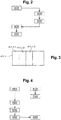
- the figure 2 shows a step 2000 for sending, by the authentication server 401, a downlink notification to the mobile terminal.
- This notification is a request for enhanced authentication.
- the mobile terminal is associated, in the user database of the authentication server, with a user. This association is made, for example, via the identifier 411.1.2 for a real-time notification service.
- the sending step is triggered by an action by the user on the computer terminal. This action is an attempt to log on.
- the session key is produced on demand and is associated with the user identifier, for example via the user database.
- the authentication server 401 encrypts them with the public key associated with the user and sends them to the mobile terminal 301, via the proxy server 501 and the notification server 601 real time. This is a downlink notification to the mobile terminal. It is also said that the real-time notification server pushes the notification to the mobile terminal.
- the destination address used for sending this notification is the user identifier for the notification server associated with the user in the user database of the authentication server.
- a downlink notification is received by a mobile terminal.
- An upstream notification is issued by a mobile terminal.
- the mobile terminal receives the authentication request notification sent by the authentication server.
- the mobile terminal uses the private key 311.2 to decrypt the content of the notification received.
- access to the private key and / or its use is subject to unlocking.
- unlocking is, for example, entering a PIN code, a fingerprint, a retinal print or facial recognition.
- Encryption is performed using a symmetric encryption algorithm.
- the key used to perform this encryption is the session key.
- the authentication notification also comprises, in clear, the user identifier. Once produced, the authentication notification is sent (2020) to the authentication server via the real-time notification server.
- the recipient of the authentication notification is the server identified by the “authentication server identifier” in the authentication data set. In practice, this results in the fact that the real-time notification server will send the notification to the proxy server.
- the proxy server formats the notification and passes it to the authentication server.
- the authentication server 501 receives a response to the notification sent in the step 2000 for issuing a reinforced authentication request.
- This response is the authentication notification sent by the mobile terminal.
- This response clearly comprises a user identifier which allows the authentication server to find a user record in the user database, or in a memory area dedicated to the management of this exchange of messages. Thanks to this recording, the authentication server finds the session key and decrypts the encrypted content of the response. The authentication server can then perform a verification operation by verifying whether the one-time password conforms, identical, to that which was issued in the notification of the enhanced authentication request.
- the authentication server issues a session opening authorization. It is then said that the verification operation was successful.
- a user of a computer terminal therefore begins his unlocking action as in the state of the art but, thanks to the invention, he continues it via his mobile telephone which behaves like a physical token and allows strong authentication.
- the invention also makes it possible to use a public infrastructure to open a session on a private domain without compromising the authentication data.
- QR code is displayed, for example, by a screen of the computer terminal following a request by a user of the computer terminal. Such a request is of the same nature as that already described.
- the QR code is displayed after unlocking the computer terminal. This unlocking is carried out according to a state of the art or according to the invention using a mobile terminal already enrolled.
- the figure 4 also shows a step 4010 in which the device displaying the QR code sends to the authentication server a pre-enrollment message comprising at least the user identifier for the authentication server and the enrollment key as contained in the QR code.
- This message is sent using a secure communication interface such as SSPIs.
- the figure 4 sets up a step 4020 in which the authentication server receives the pre-enrollment message and associates, for example in the user database, the user identifier and the enrollment key. This association can also be made in a temporary database dedicated to this use.
- the figure 4 shows a step 4030, following the acquisition step, in which the mobile terminal produces a key pair.
- a private key is said to be associated with a public key means that the two keys form a key pair for an asymmetric encryption algorithm.
- the mobile terminal stores the private key in zone 311.2.
- This private key is known only to the mobile terminal. That is to say that it is not intended to be transmitted or to be used by another device.
- This private key is ideally stored in a digital safe or a cryptographic component of the mobile terminal. In other words, the private key never leaves the mobile terminal.
- Encrypted content is encrypted with the enrollment key.
- the enrollment notification comprises, in clear, the user identifier for the authentication server.
- the enrollment notification is sent (4050) to the authentication server using the information contained in the QR code.
- the authentication server is able to use the mobile terminal as a physical token.
- the invention therefore uses the computer terminal as enrollment tools.
- a temporary user identifier for enrollment, is used.
- This is an identifier that is temporarily associated with a user in the user database. This makes it possible not to circulate in clear a real user identifier for the authentication server.
- This temporary identifier is managed as the enrollment key. It is therefore issued with the enrollment key.
- the mobile terminal can be used as a physical token in strong authentication.
- the server sends, once the enrollment has been carried out, a message allowing the computer terminal to display a return message relating to an enrollment. This message can also be sent to the mobile terminal via a notification.
- the enrollment relates to the user of the mobile terminal and / or to the mobile terminal itself.
- the element that is associated with the user of the authentication server is an identifier for the notification server, that is to say a identifier that allows the mobile terminal to receive real-time notifications. Such an identifier depends on the real-time notification service used. Enrollment, within the meaning of the invention therefore amounts to allowing the authentication server to send secure notifications to a mobile terminal of the user.
Landscapes
- Engineering & Computer Science (AREA)
- Computer Security & Cryptography (AREA)
- Signal Processing (AREA)
- Computer Networks & Wireless Communication (AREA)
- Computer Hardware Design (AREA)
- General Engineering & Computer Science (AREA)
- Computing Systems (AREA)
- Theoretical Computer Science (AREA)
- Power Engineering (AREA)
- Software Systems (AREA)
- Physics & Mathematics (AREA)
- General Physics & Mathematics (AREA)
- Telephonic Communication Services (AREA)
- Mobile Radio Communication Systems (AREA)
Claims (9)
- Eröffnungsverfahren einer gesicherten Session auf einem IT-Gerät (101), das mit einem Authentifizierungsserver (401) verbunden ist, wobei das Eröffnen der Session durch Umsetzen mindestens folgender Schritte erfolgt:- Senden (2000), durch den Authentifizierungsserver, einer Downlink-Benachrichtigung an ein mobiles Endgerät über einen Echtzeit-Benachrichtigungsserver (601), wobei die Downlink-Benachrichtigung einen Satz Authentifizierungsdaten einschließlich mindestens eines Session-Schlüssels umfasst, wobei die Authentifizierungsdaten mittels einer asymmetrischen Verschlüsselung verschlüsselt werden, wobei ein öffentlicher Schlüssel dem Authentifizierungsserver bekannt ist, ein privater Schlüssel nur dem mobilen Endgerät bekannt ist und der private Schlüssel mit dem öffentlichen Schlüssel verknüpft ist;- Senden (2020), durch das mobile Endgerät, einer Uplink-Benachrichtigung an den Authentifizierungsserver über den Echtzeit-Benachrichtigungsserver, wobei die Uplink-Benachrichtigung eine Teilmenge der Authentifizierungsdaten umfasst, wobei mindestens diese Teilmenge der Authentifizierungsdaten mittels einer symmetrischen Verschlüsselung verschlüsselt wird, die als Schlüssel mindestens den Session-Schlüssel verwendet;- Überprüfen (2030), durch den Authentifizierungsserver, der Übereinstimmung der in der Uplink-Benachrichtigung enthaltenen Authentifizierungsdaten mit den in der Downlink-Benachrichtigung enthaltenen gesendeten Authentifizierungsdaten;- Autorisieren (2040) des Eröffnens der Session bei erfolgreicher Verifizierung.
- Eröffnungsverfahren einer gesicherten Session nach Anspruch 1, wobei die an den Authentifizierungsserver gesendeten Benachrichtigungen einen Zwischenserver (501) durchlaufen.
- Eröffnungsverfahren einer gesicherten Session nach Anspruch 2, wobei der Zwischenserver ein XMPP-Server ist.
- Eröffnungsverfahren einer gesicherten Session nach einem der vorstehenden Ansprüche, wobei der Echtzeit-Benachrichtigungsserver öffentlich ist.
- Eröffnungsverfahren einer gesicherten Session nach einem der vorstehenden Ansprüche, wobei die Authentifizierungsdaten eine Benutzerkennung und ein Einmalpasswort umfassen.
- Eröffnungsverfahren einer gesicherten Session nach einem der vorstehenden Ansprüche, wobei der öffentliche Schlüssel und der private Schlüssel durch das mobile Endgerät während einer Registrierungsphase der mobilen Vorrichtung auf dem Authentifizierungsserver erzeugt werden.
- Eröffnungsverfahren einer gesicherten Session nach einem der vorstehenden Ansprüche, wobei die Registrierungsphase durch Umsetzen mindestens folgender Schritte erfolgt:- Erfassen (4000), durch das mobile Endgerät:- eines Registrierungsschlüssels;- einer Kennung des Authentifizierungsservers; und- einer Benutzerkennung; und- von Konfigurationsdaten zur Kommunikation mit dem Echtzeit-Benachrichtigungsserver;- Senden (4010), durch ein Registrierungstool, einer Nachricht an den Authentifizierungsserver, wobei die Nachricht umfasst:- die Benutzerkennung;- den Registrierungsschlüssel;- Erzeugen (4030), durch das mobile Endgerät, des öffentlichen Schlüssels und des privaten Schlüssels;- Senden, durch das mobile Endgerät, einer Uplink-Benachrichtigung an den Authentifizierungsserver, wobei die Uplink-Benachrichtigung mindestens umfasst:- die Benutzerkennung und den öffentlichen Schlüssel, die unter Verwendung des Registrierungsschlüssels verschlüsselt werden; sowie- die Benutzerkennung;- die Kennung des Authentifizierungsservers.- Registrierung durch den Authentifizierungsserver.
- Eröffnungsverfahren einer gesicherten Session nach Anspruch 7, wobei die Benutzerkennung eine temporäre Kennung ist, die einer permanenten Kennung zugeordnet ist.
- Eröffnungsverfahren einer gesicherten Session nach Anspruch 7, wobei der Schritt des Erfassens durch Lesen eines QR-Codes erfolgt.
Applications Claiming Priority (1)
| Application Number | Priority Date | Filing Date | Title |
|---|---|---|---|
| FR1872786A FR3090253B1 (fr) | 2018-12-12 | 2018-12-12 | Procédé d’ouverture d’une session sécurisée sur un terminal informatique |
Publications (2)
| Publication Number | Publication Date |
|---|---|
| EP3668047A1 EP3668047A1 (de) | 2020-06-17 |
| EP3668047B1 true EP3668047B1 (de) | 2021-11-10 |
Family
ID=66542362
Family Applications (1)
| Application Number | Title | Priority Date | Filing Date |
|---|---|---|---|
| EP19215848.3A Active EP3668047B1 (de) | 2018-12-12 | 2019-12-12 | Eröffnungsverfahren einer gesicherten session an einem it-endgerät |
Country Status (3)
| Country | Link |
|---|---|
| US (1) | US11303630B2 (de) |
| EP (1) | EP3668047B1 (de) |
| FR (1) | FR3090253B1 (de) |
Families Citing this family (4)
| Publication number | Priority date | Publication date | Assignee | Title |
|---|---|---|---|---|
| US11966907B2 (en) * | 2014-10-25 | 2024-04-23 | Yoongnet Inc. | System and method for mobile cross-authentication |
| US11558375B1 (en) * | 2019-12-16 | 2023-01-17 | Trend Micro Incorporated | Password protection with independent virtual keyboard |
| US11113678B2 (en) * | 2019-12-17 | 2021-09-07 | Capital One Services, Llc | Systems configured to manage user-related external party-activity software objects by using machine-readable indicia and methods of use thereof |
| US20220353263A1 (en) * | 2021-04-28 | 2022-11-03 | Verizon Patent And Licensing Inc. | Systems and methods for securing network function subscribe notification process |
Citations (1)
| Publication number | Priority date | Publication date | Assignee | Title |
|---|---|---|---|---|
| US20180331837A1 (en) * | 2016-01-05 | 2018-11-15 | Coinplug, Inc. | Secure information transmitting system and method for personal identity authentication |
Family Cites Families (6)
| Publication number | Priority date | Publication date | Assignee | Title |
|---|---|---|---|---|
| GB2414639A (en) * | 2004-05-28 | 2005-11-30 | Clink Systems Ltd | Method for naming and authentication |
| US9160739B2 (en) * | 2012-05-21 | 2015-10-13 | Invisible Text, LLC | Secure data transmission system |
| US10861009B2 (en) * | 2014-04-23 | 2020-12-08 | Minkasu, Inc. | Secure payments using a mobile wallet application |
| CA3172550C (en) * | 2014-05-26 | 2024-05-28 | The Toronto-Dominion Bank | On-boarding server for authorizing an entity to effect electronic payments |
| US9727715B2 (en) * | 2014-09-07 | 2017-08-08 | Michael Boodaei | Authentication method and system using password as the authentication key |
| US11066164B1 (en) * | 2018-09-25 | 2021-07-20 | Amazon Technologies, Inc. | Secure remote access to components of an unmanned aerial vehicle |
-
2018
- 2018-12-12 FR FR1872786A patent/FR3090253B1/fr not_active Expired - Fee Related
-
2019
- 2019-12-12 EP EP19215848.3A patent/EP3668047B1/de active Active
- 2019-12-12 US US16/712,064 patent/US11303630B2/en active Active
Patent Citations (1)
| Publication number | Priority date | Publication date | Assignee | Title |
|---|---|---|---|---|
| US20180331837A1 (en) * | 2016-01-05 | 2018-11-15 | Coinplug, Inc. | Secure information transmitting system and method for personal identity authentication |
Also Published As
| Publication number | Publication date |
|---|---|
| US20200220867A1 (en) | 2020-07-09 |
| US11303630B2 (en) | 2022-04-12 |
| EP3668047A1 (de) | 2020-06-17 |
| FR3090253B1 (fr) | 2021-07-02 |
| FR3090253A1 (fr) | 2020-06-19 |
Similar Documents
| Publication | Publication Date | Title |
|---|---|---|
| US20100316219A1 (en) | Systems and methods for simultaneous integrated multiencrypted rotating key communication | |
| US20080170689A1 (en) | Systems and methods for conducting secure wired and wireless networked telephony | |
| US9203826B1 (en) | Authentication based on peer attestation | |
| EP3668047A1 (de) | Eröffnungsverfahren einer gesicherten session an einem it-endgerät | |
| EP1549011A1 (de) | Kommunikationsverfahren und System zwischen einem Endgerät und mindestens einer Kommunikationsvorrichtung | |
| FR2930390A1 (fr) | Procede de diffusion securisee de donnees numeriques vers un tiers autorise. | |
| EP2820795A1 (de) | Verfahren zur überprüfung der identität eines kommunikationsendgeräts und zugehöriges system | |
| WO2012131268A1 (fr) | Authentification forte par presentation du numero | |
| WO2013021107A1 (fr) | Procede, serveur et systeme d'authentification d'une personne | |
| WO2017149453A1 (fr) | Systeme ouvert et securise de signature electronique et procede associe | |
| WO2018211026A1 (fr) | Procede de securisation d'une communication sans gestion d'etats | |
| EP2220812A2 (de) | Verfahren zur authentifizierung eines benutzers | |
| EP3673633B1 (de) | Verfahren zur authentifizierung eines benutzers mit einem authentifizierungsserver | |
| EP2710779A1 (de) | Verfahren zur sicherung einer authentifizierungsplattform sowie entsprechende hardware und software | |
| EP3231152B1 (de) | Dynamisches datenverschlüsselungsverfahren und zugehöriges verfahren zur kontrolle von entschlüsselungsrechten | |
| FR2844943A1 (fr) | Procede de production d'un premier identifiant isolant un utilisateur se connectant a un reseau telematique | |
| EP3674937B1 (de) | Eröffnungsverfahren einer gesicherten session auf einem it-endgerät | |
| FR2844942A1 (fr) | Procede de production, pour un fournisseur d'acces, d'un identifiant isolant multimedia | |
| EP2630746B1 (de) | Authentifikationsverfahren und -system | |
| FR3017730A1 (fr) | Procede d'ouverture de session securise | |
| FR3007929A1 (fr) | Procede d'authentification d'un utilisateur d'un terminal mobile | |
| EP1484895A1 (de) | Proze des Zuganges zu einem Netz oder zu einem Service durch das Verwenden eines Protokolls der Familie von PPPoX Protokollen und von Architektur, die solch einen Proze einführt | |
| WO2010090703A1 (en) | Systems and methods for simultaneous integrated multiencrypted rotating key communication | |
| FR3042362A1 (fr) | Moyens de gestion d'acces a des donnees | |
| FR2937816A1 (fr) | Procede et fonctionnement d'identification convergente d'utilisateur de reseau de communication |
Legal Events
| Date | Code | Title | Description |
|---|---|---|---|
| PUAI | Public reference made under article 153(3) epc to a published international application that has entered the european phase |
Free format text: ORIGINAL CODE: 0009012 |
|
| STAA | Information on the status of an ep patent application or granted ep patent |
Free format text: STATUS: THE APPLICATION HAS BEEN PUBLISHED |
|
| AK | Designated contracting states |
Kind code of ref document: A1 Designated state(s): AL AT BE BG CH CY CZ DE DK EE ES FI FR GB GR HR HU IE IS IT LI LT LU LV MC MK MT NL NO PL PT RO RS SE SI SK SM TR |
|
| AX | Request for extension of the european patent |
Extension state: BA ME |
|
| STAA | Information on the status of an ep patent application or granted ep patent |
Free format text: STATUS: REQUEST FOR EXAMINATION WAS MADE |
|
| 17P | Request for examination filed |
Effective date: 20201216 |
|
| RBV | Designated contracting states (corrected) |
Designated state(s): AL AT BE BG CH CY CZ DE DK EE ES FI FR GB GR HR HU IE IS IT LI LT LU LV MC MK MT NL NO PL PT RO RS SE SI SK SM TR |
|
| GRAP | Despatch of communication of intention to grant a patent |
Free format text: ORIGINAL CODE: EPIDOSNIGR1 |
|
| STAA | Information on the status of an ep patent application or granted ep patent |
Free format text: STATUS: GRANT OF PATENT IS INTENDED |
|
| RIC1 | Information provided on ipc code assigned before grant |
Ipc: H04L 29/06 20060101AFI20210518BHEP Ipc: H04W 12/06 20210101ALI20210518BHEP Ipc: G06F 21/31 20130101ALI20210518BHEP Ipc: H04L 9/32 20060101ALI20210518BHEP Ipc: H04L 9/08 20060101ALI20210518BHEP Ipc: H04W 12/069 20210101ALI20210518BHEP |
|
| INTG | Intention to grant announced |
Effective date: 20210602 |
|
| GRAS | Grant fee paid |
Free format text: ORIGINAL CODE: EPIDOSNIGR3 |
|
| GRAA | (expected) grant |
Free format text: ORIGINAL CODE: 0009210 |
|
| STAA | Information on the status of an ep patent application or granted ep patent |
Free format text: STATUS: THE PATENT HAS BEEN GRANTED |
|
| AK | Designated contracting states |
Kind code of ref document: B1 Designated state(s): AL AT BE BG CH CY CZ DE DK EE ES FI FR GB GR HR HU IE IS IT LI LT LU LV MC MK MT NL NO PL PT RO RS SE SI SK SM TR |
|
| REG | Reference to a national code |
Ref country code: GB Ref legal event code: FG4D Free format text: NOT ENGLISH |
|
| REG | Reference to a national code |
Ref country code: AT Ref legal event code: REF Ref document number: 1447122 Country of ref document: AT Kind code of ref document: T Effective date: 20211115 Ref country code: CH Ref legal event code: EP |
|
| REG | Reference to a national code |
Ref country code: DE Ref legal event code: R079 Ref document number: 602019009158 Country of ref document: DE Free format text: PREVIOUS MAIN CLASS: H04L0029060000 Ipc: H04L0065000000 |
|
| REG | Reference to a national code |
Ref country code: DE Ref legal event code: R096 Ref document number: 602019009158 Country of ref document: DE |
|
| REG | Reference to a national code |
Ref country code: IE Ref legal event code: FG4D Free format text: LANGUAGE OF EP DOCUMENT: FRENCH |
|
| REG | Reference to a national code |
Ref country code: LT Ref legal event code: MG9D |
|
| REG | Reference to a national code |
Ref country code: NL Ref legal event code: MP Effective date: 20211110 |
|
| REG | Reference to a national code |
Ref country code: AT Ref legal event code: MK05 Ref document number: 1447122 Country of ref document: AT Kind code of ref document: T Effective date: 20211110 |
|
| PG25 | Lapsed in a contracting state [announced via postgrant information from national office to epo] |
Ref country code: RS Free format text: LAPSE BECAUSE OF FAILURE TO SUBMIT A TRANSLATION OF THE DESCRIPTION OR TO PAY THE FEE WITHIN THE PRESCRIBED TIME-LIMIT Effective date: 20211110 Ref country code: LT Free format text: LAPSE BECAUSE OF FAILURE TO SUBMIT A TRANSLATION OF THE DESCRIPTION OR TO PAY THE FEE WITHIN THE PRESCRIBED TIME-LIMIT Effective date: 20211110 Ref country code: FI Free format text: LAPSE BECAUSE OF FAILURE TO SUBMIT A TRANSLATION OF THE DESCRIPTION OR TO PAY THE FEE WITHIN THE PRESCRIBED TIME-LIMIT Effective date: 20211110 Ref country code: BG Free format text: LAPSE BECAUSE OF FAILURE TO SUBMIT A TRANSLATION OF THE DESCRIPTION OR TO PAY THE FEE WITHIN THE PRESCRIBED TIME-LIMIT Effective date: 20220210 Ref country code: AT Free format text: LAPSE BECAUSE OF FAILURE TO SUBMIT A TRANSLATION OF THE DESCRIPTION OR TO PAY THE FEE WITHIN THE PRESCRIBED TIME-LIMIT Effective date: 20211110 |
|
| PG25 | Lapsed in a contracting state [announced via postgrant information from national office to epo] |
Ref country code: IS Free format text: LAPSE BECAUSE OF FAILURE TO SUBMIT A TRANSLATION OF THE DESCRIPTION OR TO PAY THE FEE WITHIN THE PRESCRIBED TIME-LIMIT Effective date: 20220310 Ref country code: SE Free format text: LAPSE BECAUSE OF FAILURE TO SUBMIT A TRANSLATION OF THE DESCRIPTION OR TO PAY THE FEE WITHIN THE PRESCRIBED TIME-LIMIT Effective date: 20211110 Ref country code: PT Free format text: LAPSE BECAUSE OF FAILURE TO SUBMIT A TRANSLATION OF THE DESCRIPTION OR TO PAY THE FEE WITHIN THE PRESCRIBED TIME-LIMIT Effective date: 20220310 Ref country code: PL Free format text: LAPSE BECAUSE OF FAILURE TO SUBMIT A TRANSLATION OF THE DESCRIPTION OR TO PAY THE FEE WITHIN THE PRESCRIBED TIME-LIMIT Effective date: 20211110 Ref country code: NO Free format text: LAPSE BECAUSE OF FAILURE TO SUBMIT A TRANSLATION OF THE DESCRIPTION OR TO PAY THE FEE WITHIN THE PRESCRIBED TIME-LIMIT Effective date: 20220210 Ref country code: NL Free format text: LAPSE BECAUSE OF FAILURE TO SUBMIT A TRANSLATION OF THE DESCRIPTION OR TO PAY THE FEE WITHIN THE PRESCRIBED TIME-LIMIT Effective date: 20211110 Ref country code: LV Free format text: LAPSE BECAUSE OF FAILURE TO SUBMIT A TRANSLATION OF THE DESCRIPTION OR TO PAY THE FEE WITHIN THE PRESCRIBED TIME-LIMIT Effective date: 20211110 Ref country code: HR Free format text: LAPSE BECAUSE OF FAILURE TO SUBMIT A TRANSLATION OF THE DESCRIPTION OR TO PAY THE FEE WITHIN THE PRESCRIBED TIME-LIMIT Effective date: 20211110 Ref country code: GR Free format text: LAPSE BECAUSE OF FAILURE TO SUBMIT A TRANSLATION OF THE DESCRIPTION OR TO PAY THE FEE WITHIN THE PRESCRIBED TIME-LIMIT Effective date: 20220211 Ref country code: ES Free format text: LAPSE BECAUSE OF FAILURE TO SUBMIT A TRANSLATION OF THE DESCRIPTION OR TO PAY THE FEE WITHIN THE PRESCRIBED TIME-LIMIT Effective date: 20211110 |
|
| PG25 | Lapsed in a contracting state [announced via postgrant information from national office to epo] |
Ref country code: SM Free format text: LAPSE BECAUSE OF FAILURE TO SUBMIT A TRANSLATION OF THE DESCRIPTION OR TO PAY THE FEE WITHIN THE PRESCRIBED TIME-LIMIT Effective date: 20211110 Ref country code: SK Free format text: LAPSE BECAUSE OF FAILURE TO SUBMIT A TRANSLATION OF THE DESCRIPTION OR TO PAY THE FEE WITHIN THE PRESCRIBED TIME-LIMIT Effective date: 20211110 Ref country code: RO Free format text: LAPSE BECAUSE OF FAILURE TO SUBMIT A TRANSLATION OF THE DESCRIPTION OR TO PAY THE FEE WITHIN THE PRESCRIBED TIME-LIMIT Effective date: 20211110 Ref country code: EE Free format text: LAPSE BECAUSE OF FAILURE TO SUBMIT A TRANSLATION OF THE DESCRIPTION OR TO PAY THE FEE WITHIN THE PRESCRIBED TIME-LIMIT Effective date: 20211110 Ref country code: DK Free format text: LAPSE BECAUSE OF FAILURE TO SUBMIT A TRANSLATION OF THE DESCRIPTION OR TO PAY THE FEE WITHIN THE PRESCRIBED TIME-LIMIT Effective date: 20211110 Ref country code: CZ Free format text: LAPSE BECAUSE OF FAILURE TO SUBMIT A TRANSLATION OF THE DESCRIPTION OR TO PAY THE FEE WITHIN THE PRESCRIBED TIME-LIMIT Effective date: 20211110 |
|
| REG | Reference to a national code |
Ref country code: DE Ref legal event code: R097 Ref document number: 602019009158 Country of ref document: DE |
|
| PG25 | Lapsed in a contracting state [announced via postgrant information from national office to epo] |
Ref country code: MC Free format text: LAPSE BECAUSE OF FAILURE TO SUBMIT A TRANSLATION OF THE DESCRIPTION OR TO PAY THE FEE WITHIN THE PRESCRIBED TIME-LIMIT Effective date: 20211110 |
|
| PLBE | No opposition filed within time limit |
Free format text: ORIGINAL CODE: 0009261 |
|
| STAA | Information on the status of an ep patent application or granted ep patent |
Free format text: STATUS: NO OPPOSITION FILED WITHIN TIME LIMIT |
|
| REG | Reference to a national code |
Ref country code: BE Ref legal event code: MM Effective date: 20211231 |
|
| 26N | No opposition filed |
Effective date: 20220811 |
|
| PG25 | Lapsed in a contracting state [announced via postgrant information from national office to epo] |
Ref country code: LU Free format text: LAPSE BECAUSE OF NON-PAYMENT OF DUE FEES Effective date: 20211212 Ref country code: IE Free format text: LAPSE BECAUSE OF NON-PAYMENT OF DUE FEES Effective date: 20211212 Ref country code: AL Free format text: LAPSE BECAUSE OF FAILURE TO SUBMIT A TRANSLATION OF THE DESCRIPTION OR TO PAY THE FEE WITHIN THE PRESCRIBED TIME-LIMIT Effective date: 20211110 |
|
| PG25 | Lapsed in a contracting state [announced via postgrant information from national office to epo] |
Ref country code: SI Free format text: LAPSE BECAUSE OF FAILURE TO SUBMIT A TRANSLATION OF THE DESCRIPTION OR TO PAY THE FEE WITHIN THE PRESCRIBED TIME-LIMIT Effective date: 20211110 Ref country code: BE Free format text: LAPSE BECAUSE OF NON-PAYMENT OF DUE FEES Effective date: 20211231 |
|
| PG25 | Lapsed in a contracting state [announced via postgrant information from national office to epo] |
Ref country code: IT Free format text: LAPSE BECAUSE OF FAILURE TO SUBMIT A TRANSLATION OF THE DESCRIPTION OR TO PAY THE FEE WITHIN THE PRESCRIBED TIME-LIMIT Effective date: 20211110 |
|
| P01 | Opt-out of the competence of the unified patent court (upc) registered |
Effective date: 20230330 |
|
| PG25 | Lapsed in a contracting state [announced via postgrant information from national office to epo] |
Ref country code: CY Free format text: LAPSE BECAUSE OF FAILURE TO SUBMIT A TRANSLATION OF THE DESCRIPTION OR TO PAY THE FEE WITHIN THE PRESCRIBED TIME-LIMIT Effective date: 20211110 |
|
| PG25 | Lapsed in a contracting state [announced via postgrant information from national office to epo] |
Ref country code: HU Free format text: LAPSE BECAUSE OF FAILURE TO SUBMIT A TRANSLATION OF THE DESCRIPTION OR TO PAY THE FEE WITHIN THE PRESCRIBED TIME-LIMIT; INVALID AB INITIO Effective date: 20191212 |
|
| REG | Reference to a national code |
Ref country code: CH Ref legal event code: PL |
|
| PG25 | Lapsed in a contracting state [announced via postgrant information from national office to epo] |
Ref country code: LI Free format text: LAPSE BECAUSE OF NON-PAYMENT OF DUE FEES Effective date: 20221231 Ref country code: CH Free format text: LAPSE BECAUSE OF NON-PAYMENT OF DUE FEES Effective date: 20221231 |
|
| PG25 | Lapsed in a contracting state [announced via postgrant information from national office to epo] |
Ref country code: MK Free format text: LAPSE BECAUSE OF FAILURE TO SUBMIT A TRANSLATION OF THE DESCRIPTION OR TO PAY THE FEE WITHIN THE PRESCRIBED TIME-LIMIT Effective date: 20211110 |
|
| PG25 | Lapsed in a contracting state [announced via postgrant information from national office to epo] |
Ref country code: MT Free format text: LAPSE BECAUSE OF FAILURE TO SUBMIT A TRANSLATION OF THE DESCRIPTION OR TO PAY THE FEE WITHIN THE PRESCRIBED TIME-LIMIT Effective date: 20211110 |
|
| PG25 | Lapsed in a contracting state [announced via postgrant information from national office to epo] |
Ref country code: TR Free format text: LAPSE BECAUSE OF FAILURE TO SUBMIT A TRANSLATION OF THE DESCRIPTION OR TO PAY THE FEE WITHIN THE PRESCRIBED TIME-LIMIT Effective date: 20211110 |
|
| PGFP | Annual fee paid to national office [announced via postgrant information from national office to epo] |
Ref country code: GB Payment date: 20251218 Year of fee payment: 7 |
|
| PGFP | Annual fee paid to national office [announced via postgrant information from national office to epo] |
Ref country code: FR Payment date: 20251218 Year of fee payment: 7 |
|
| PGFP | Annual fee paid to national office [announced via postgrant information from national office to epo] |
Ref country code: DE Payment date: 20251222 Year of fee payment: 7 |