EP3668047B1 - Procédé d'ouverture d'une session sécurisée sur un terminal informatique - Google Patents
Procédé d'ouverture d'une session sécurisée sur un terminal informatique Download PDFInfo
- Publication number
- EP3668047B1 EP3668047B1 EP19215848.3A EP19215848A EP3668047B1 EP 3668047 B1 EP3668047 B1 EP 3668047B1 EP 19215848 A EP19215848 A EP 19215848A EP 3668047 B1 EP3668047 B1 EP 3668047B1
- Authority
- EP
- European Patent Office
- Prior art keywords
- notification
- server
- authentication
- authentication server
- key
- Prior art date
- Legal status (The legal status is an assumption and is not a legal conclusion. Google has not performed a legal analysis and makes no representation as to the accuracy of the status listed.)
- Active
Links
Images

Classifications
-
- G—PHYSICS
- G06—COMPUTING OR CALCULATING; COUNTING
- G06F—ELECTRIC DIGITAL DATA PROCESSING
- G06F21/00—Security arrangements for protecting computers, components thereof, programs or data against unauthorised activity
- G06F21/30—Authentication, i.e. establishing the identity or authorisation of security principals
- G06F21/31—User authentication
-
- H—ELECTRICITY
- H04—ELECTRIC COMMUNICATION TECHNIQUE
- H04L—TRANSMISSION OF DIGITAL INFORMATION, e.g. TELEGRAPHIC COMMUNICATION
- H04L63/00—Network architectures or network communication protocols for network security
- H04L63/04—Network architectures or network communication protocols for network security for providing a confidential data exchange among entities communicating through data packet networks
- H04L63/0428—Network architectures or network communication protocols for network security for providing a confidential data exchange among entities communicating through data packet networks wherein the data content is protected, e.g. by encrypting or encapsulating the payload
- H04L63/0435—Network architectures or network communication protocols for network security for providing a confidential data exchange among entities communicating through data packet networks wherein the data content is protected, e.g. by encrypting or encapsulating the payload wherein the sending and receiving network entities apply symmetric encryption, i.e. same key used for encryption and decryption
-
- H—ELECTRICITY
- H04—ELECTRIC COMMUNICATION TECHNIQUE
- H04L—TRANSMISSION OF DIGITAL INFORMATION, e.g. TELEGRAPHIC COMMUNICATION
- H04L63/00—Network architectures or network communication protocols for network security
- H04L63/04—Network architectures or network communication protocols for network security for providing a confidential data exchange among entities communicating through data packet networks
- H04L63/0428—Network architectures or network communication protocols for network security for providing a confidential data exchange among entities communicating through data packet networks wherein the data content is protected, e.g. by encrypting or encapsulating the payload
- H04L63/0442—Network architectures or network communication protocols for network security for providing a confidential data exchange among entities communicating through data packet networks wherein the data content is protected, e.g. by encrypting or encapsulating the payload wherein the sending and receiving network entities apply asymmetric encryption, i.e. different keys for encryption and decryption
-
- H—ELECTRICITY
- H04—ELECTRIC COMMUNICATION TECHNIQUE
- H04L—TRANSMISSION OF DIGITAL INFORMATION, e.g. TELEGRAPHIC COMMUNICATION
- H04L63/00—Network architectures or network communication protocols for network security
- H04L63/04—Network architectures or network communication protocols for network security for providing a confidential data exchange among entities communicating through data packet networks
- H04L63/0428—Network architectures or network communication protocols for network security for providing a confidential data exchange among entities communicating through data packet networks wherein the data content is protected, e.g. by encrypting or encapsulating the payload
- H04L63/045—Network architectures or network communication protocols for network security for providing a confidential data exchange among entities communicating through data packet networks wherein the data content is protected, e.g. by encrypting or encapsulating the payload wherein the sending and receiving network entities apply hybrid encryption, i.e. combination of symmetric and asymmetric encryption
-
- H—ELECTRICITY
- H04—ELECTRIC COMMUNICATION TECHNIQUE
- H04L—TRANSMISSION OF DIGITAL INFORMATION, e.g. TELEGRAPHIC COMMUNICATION
- H04L63/00—Network architectures or network communication protocols for network security
- H04L63/08—Network architectures or network communication protocols for network security for authentication of entities
- H04L63/083—Network architectures or network communication protocols for network security for authentication of entities using passwords
- H04L63/0838—Network architectures or network communication protocols for network security for authentication of entities using passwords using one-time-passwords
-
- H—ELECTRICITY
- H04—ELECTRIC COMMUNICATION TECHNIQUE
- H04L—TRANSMISSION OF DIGITAL INFORMATION, e.g. TELEGRAPHIC COMMUNICATION
- H04L63/00—Network architectures or network communication protocols for network security
- H04L63/08—Network architectures or network communication protocols for network security for authentication of entities
- H04L63/0853—Network architectures or network communication protocols for network security for authentication of entities using an additional device, e.g. smartcard, SIM or a different communication terminal
-
- H—ELECTRICITY
- H04—ELECTRIC COMMUNICATION TECHNIQUE
- H04L—TRANSMISSION OF DIGITAL INFORMATION, e.g. TELEGRAPHIC COMMUNICATION
- H04L63/00—Network architectures or network communication protocols for network security
- H04L63/08—Network architectures or network communication protocols for network security for authentication of entities
- H04L63/0876—Network architectures or network communication protocols for network security for authentication of entities based on the identity of the terminal or configuration, e.g. MAC address, hardware or software configuration or device fingerprint
-
- H—ELECTRICITY
- H04—ELECTRIC COMMUNICATION TECHNIQUE
- H04L—TRANSMISSION OF DIGITAL INFORMATION, e.g. TELEGRAPHIC COMMUNICATION
- H04L63/00—Network architectures or network communication protocols for network security
- H04L63/10—Network architectures or network communication protocols for network security for controlling access to devices or network resources
- H04L63/102—Entity profiles
-
- H—ELECTRICITY
- H04—ELECTRIC COMMUNICATION TECHNIQUE
- H04L—TRANSMISSION OF DIGITAL INFORMATION, e.g. TELEGRAPHIC COMMUNICATION
- H04L63/00—Network architectures or network communication protocols for network security
- H04L63/18—Network architectures or network communication protocols for network security using different networks or channels, e.g. using out of band channels
-
- H—ELECTRICITY
- H04—ELECTRIC COMMUNICATION TECHNIQUE
- H04L—TRANSMISSION OF DIGITAL INFORMATION, e.g. TELEGRAPHIC COMMUNICATION
- H04L63/00—Network architectures or network communication protocols for network security
- H04L63/20—Network architectures or network communication protocols for network security for managing network security; network security policies in general
-
- H—ELECTRICITY
- H04—ELECTRIC COMMUNICATION TECHNIQUE
- H04L—TRANSMISSION OF DIGITAL INFORMATION, e.g. TELEGRAPHIC COMMUNICATION
- H04L9/00—Cryptographic mechanisms or cryptographic arrangements for secret or secure communications; Network security protocols
- H04L9/08—Key distribution or management, e.g. generation, sharing or updating, of cryptographic keys or passwords
- H04L9/0816—Key establishment, i.e. cryptographic processes or cryptographic protocols whereby a shared secret becomes available to two or more parties, for subsequent use
- H04L9/0819—Key transport or distribution, i.e. key establishment techniques where one party creates or otherwise obtains a secret value, and securely transfers it to the other(s)
- H04L9/0825—Key transport or distribution, i.e. key establishment techniques where one party creates or otherwise obtains a secret value, and securely transfers it to the other(s) using asymmetric-key encryption or public key infrastructure [PKI], e.g. key signature or public key certificates
-
- H—ELECTRICITY
- H04—ELECTRIC COMMUNICATION TECHNIQUE
- H04L—TRANSMISSION OF DIGITAL INFORMATION, e.g. TELEGRAPHIC COMMUNICATION
- H04L9/00—Cryptographic mechanisms or cryptographic arrangements for secret or secure communications; Network security protocols
- H04L9/32—Cryptographic mechanisms or cryptographic arrangements for secret or secure communications; Network security protocols including means for verifying the identity or authority of a user of the system or for message authentication, e.g. authorization, entity authentication, data integrity or data verification, non-repudiation, key authentication or verification of credentials
- H04L9/3215—Cryptographic mechanisms or cryptographic arrangements for secret or secure communications; Network security protocols including means for verifying the identity or authority of a user of the system or for message authentication, e.g. authorization, entity authentication, data integrity or data verification, non-repudiation, key authentication or verification of credentials using a plurality of channels
-
- H—ELECTRICITY
- H04—ELECTRIC COMMUNICATION TECHNIQUE
- H04L—TRANSMISSION OF DIGITAL INFORMATION, e.g. TELEGRAPHIC COMMUNICATION
- H04L9/00—Cryptographic mechanisms or cryptographic arrangements for secret or secure communications; Network security protocols
- H04L9/32—Cryptographic mechanisms or cryptographic arrangements for secret or secure communications; Network security protocols including means for verifying the identity or authority of a user of the system or for message authentication, e.g. authorization, entity authentication, data integrity or data verification, non-repudiation, key authentication or verification of credentials
- H04L9/3234—Cryptographic mechanisms or cryptographic arrangements for secret or secure communications; Network security protocols including means for verifying the identity or authority of a user of the system or for message authentication, e.g. authorization, entity authentication, data integrity or data verification, non-repudiation, key authentication or verification of credentials involving additional secure or trusted devices, e.g. TPM, smartcard, USB or software token
-
- H—ELECTRICITY
- H04—ELECTRIC COMMUNICATION TECHNIQUE
- H04L—TRANSMISSION OF DIGITAL INFORMATION, e.g. TELEGRAPHIC COMMUNICATION
- H04L9/00—Cryptographic mechanisms or cryptographic arrangements for secret or secure communications; Network security protocols
- H04L9/32—Cryptographic mechanisms or cryptographic arrangements for secret or secure communications; Network security protocols including means for verifying the identity or authority of a user of the system or for message authentication, e.g. authorization, entity authentication, data integrity or data verification, non-repudiation, key authentication or verification of credentials
- H04L9/3271—Cryptographic mechanisms or cryptographic arrangements for secret or secure communications; Network security protocols including means for verifying the identity or authority of a user of the system or for message authentication, e.g. authorization, entity authentication, data integrity or data verification, non-repudiation, key authentication or verification of credentials using challenge-response
-
- H—ELECTRICITY
- H04—ELECTRIC COMMUNICATION TECHNIQUE
- H04W—WIRELESS COMMUNICATION NETWORKS
- H04W12/00—Security arrangements; Authentication; Protecting privacy or anonymity
- H04W12/06—Authentication
- H04W12/069—Authentication using certificates or pre-shared keys
-
- H—ELECTRICITY
- H04—ELECTRIC COMMUNICATION TECHNIQUE
- H04L—TRANSMISSION OF DIGITAL INFORMATION, e.g. TELEGRAPHIC COMMUNICATION
- H04L2463/00—Additional details relating to network architectures or network communication protocols for network security covered by H04L63/00
- H04L2463/062—Additional details relating to network architectures or network communication protocols for network security covered by H04L63/00 applying encryption of the keys
-
- H—ELECTRICITY
- H04—ELECTRIC COMMUNICATION TECHNIQUE
- H04L—TRANSMISSION OF DIGITAL INFORMATION, e.g. TELEGRAPHIC COMMUNICATION
- H04L2463/00—Additional details relating to network architectures or network communication protocols for network security covered by H04L63/00
- H04L2463/081—Additional details relating to network architectures or network communication protocols for network security covered by H04L63/00 applying self-generating credentials, e.g. instead of receiving credentials from an authority or from another peer, the credentials are generated at the entity itself
-
- H—ELECTRICITY
- H04—ELECTRIC COMMUNICATION TECHNIQUE
- H04L—TRANSMISSION OF DIGITAL INFORMATION, e.g. TELEGRAPHIC COMMUNICATION
- H04L2463/00—Additional details relating to network architectures or network communication protocols for network security covered by H04L63/00
- H04L2463/082—Additional details relating to network architectures or network communication protocols for network security covered by H04L63/00 applying multi-factor authentication
Definitions
- the invention relates to a method for opening a secure session on a computer terminal.
- the field of the invention is that of authentication for opening a session on computer terminals. More specifically, the field of the invention is that of so-called enhanced authentication.
- computer terminal will be understood to mean any computer device allowing a user to interact with network resources or resources local to the terminal.
- personal computers also called PCs, Macs, or workstations, whether fixed or portable, are targeted. The list is not exhaustive. Also targeted are computer tablets, hybrid devices between tablets and PCs, as well as smartphones (mobile phones including a pocket computer).
- mobile terminal we mean a smartphone.
- a smartphone can fulfill the role of computer terminal or the role of mobile terminal.
- the same physical device must not fulfill both roles.
- Authentication is necessary to access a computer terminal, that is to say to open a session on a computer, and / or to access an electronic mail or more generally an application.
- An application is local or accessible through an internet browser. This authentication consists of entering a username and password.
- This seizure is, or is not, secured through the use of an encrypted transmission protocol. We think for example of the use of the HTTPS protocol for so-called “online” applications.
- Authentication is therefore guaranteed by the knowledge of a first secret and reinforced by the possession of a device: the physical token.
- This mode of authentication in fact requires having a device dedicated to the production of the sequence of characters at all times. To reduce its bulk and ensure its durability, such a device is generally equipped with a very small and unlit screen. These characteristics make it difficult to read the sequence of characters. In addition, again for security reasons, the character sequence remains displayed for a limited time and is only valid for a limited time. It is therefore not easy to use such a physical token.
- the invention aims to remedy all or part of the problems of the state of the art identified above, and in particular to provide means for allowing enhanced authentication by the possession of a third-party device while eliminating the input steps. authentication information.
- the invention also proposes the use of public means to allow this authentication, while guaranteeing the non-compromise of the authentication data.
- public means is meant a means which is not on the same network as the resources to which the user who is authenticating himself wishes to access.
- the first of these resources is an authentication server.
- This notion of network can be understood here as a topological notion or a legal notion.
- two different networks are two networks which are not managed by the same legal entities.
- An authentication server manager talks about an external server.
- the figure 1 shows a technical infrastructure in which the invention can be implemented.
- the figure 1 shows a computer terminal 101 to which a user must connect to access resources of the computer terminal or via the computer terminal.
- hard disk denotes a means of mass storage. It can therefore be a local hard drive, a network hard drive, a cluster of disks, etc. The list is not exhaustive.
- the microprocessor of the computer terminal, the storage means of the computer terminal and the network interface of the computer terminal are interconnected by a bus 113.
- the computer terminal 101 is capable of receiving and transmitting messages via its network interface. It is the network interface 112 of the computer terminal 101 which allows its connection to the local network 201.
- the figure 1 also shows a mobile terminal 301 of the smartphone type.
- a smartphone is also called a smart phone. This also includes tablets.
- the microprocessor of the mobile terminal 301, the storage means of the mobile device, the camera of the mobile device and the network interface of the mobile device are interconnected by a bus 313.
- the authentication server 401, the proxy server 501 and the real-time notification server 601 are processing devices configured to perform actions. Only the means useful for understanding the invention will be described of their composition.
- a server is a device capable of receiving messages, via a communication protocol, and of transmitting a message in response to the received message.
- the servers are represented as devices in their own right. However, in practice, it is quite possible that the same physical device hosts several services and therefore can be designated as server of a first service and server of a second service.
- the figure 1 shows that the computer terminal 101, the authentication server 401 and the proxy server 501 are connected to the same local network 201. They can therefore communicate with each other.
- the figure 1 illustrates the fact that the public servers are the proxy server 501 and the real-time notification server 701: these two servers are directly accessible to any device connected to the public network 701.
- a real-time notification server is a server that allows notifications to be pushed to clients.
- the clients of such a server are at least the mobile terminal and the authentication server.
- the authentication server is a client through the proxy server.
- the proxy server is an intermediate server. The roles of such an intermediate server are multiple: protection, load management, transcoding, ...
- the proxy server is a so-called XMPP server which performs a transcoding between the real-time notification server for which it is the native protocol and the authentication server.
- the proxy server is an XMPP server and a load manager. It is thus possible to manage a large number of secure session opening requests.
- the “Google Cloud Messaging” (registered trademark) service, its successor “Firebase Cloud Messaging” (registered trademark) or “Apple Push Notification service” APNs can be used as a real-time notification server. (trademark).
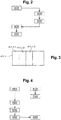
- the figure 2 shows a step 2000 for sending, by the authentication server 401, a downlink notification to the mobile terminal.
- This notification is a request for enhanced authentication.
- the mobile terminal is associated, in the user database of the authentication server, with a user. This association is made, for example, via the identifier 411.1.2 for a real-time notification service.
- the sending step is triggered by an action by the user on the computer terminal. This action is an attempt to log on.
- the session key is produced on demand and is associated with the user identifier, for example via the user database.
- the authentication server 401 encrypts them with the public key associated with the user and sends them to the mobile terminal 301, via the proxy server 501 and the notification server 601 real time. This is a downlink notification to the mobile terminal. It is also said that the real-time notification server pushes the notification to the mobile terminal.
- the destination address used for sending this notification is the user identifier for the notification server associated with the user in the user database of the authentication server.
- a downlink notification is received by a mobile terminal.
- An upstream notification is issued by a mobile terminal.
- the mobile terminal receives the authentication request notification sent by the authentication server.
- the mobile terminal uses the private key 311.2 to decrypt the content of the notification received.
- access to the private key and / or its use is subject to unlocking.
- unlocking is, for example, entering a PIN code, a fingerprint, a retinal print or facial recognition.
- Encryption is performed using a symmetric encryption algorithm.
- the key used to perform this encryption is the session key.
- the authentication notification also comprises, in clear, the user identifier. Once produced, the authentication notification is sent (2020) to the authentication server via the real-time notification server.
- the recipient of the authentication notification is the server identified by the “authentication server identifier” in the authentication data set. In practice, this results in the fact that the real-time notification server will send the notification to the proxy server.
- the proxy server formats the notification and passes it to the authentication server.
- the authentication server 501 receives a response to the notification sent in the step 2000 for issuing a reinforced authentication request.
- This response is the authentication notification sent by the mobile terminal.
- This response clearly comprises a user identifier which allows the authentication server to find a user record in the user database, or in a memory area dedicated to the management of this exchange of messages. Thanks to this recording, the authentication server finds the session key and decrypts the encrypted content of the response. The authentication server can then perform a verification operation by verifying whether the one-time password conforms, identical, to that which was issued in the notification of the enhanced authentication request.
- the authentication server issues a session opening authorization. It is then said that the verification operation was successful.
- a user of a computer terminal therefore begins his unlocking action as in the state of the art but, thanks to the invention, he continues it via his mobile telephone which behaves like a physical token and allows strong authentication.
- the invention also makes it possible to use a public infrastructure to open a session on a private domain without compromising the authentication data.
- QR code is displayed, for example, by a screen of the computer terminal following a request by a user of the computer terminal. Such a request is of the same nature as that already described.
- the QR code is displayed after unlocking the computer terminal. This unlocking is carried out according to a state of the art or according to the invention using a mobile terminal already enrolled.
- the figure 4 also shows a step 4010 in which the device displaying the QR code sends to the authentication server a pre-enrollment message comprising at least the user identifier for the authentication server and the enrollment key as contained in the QR code.
- This message is sent using a secure communication interface such as SSPIs.
- the figure 4 sets up a step 4020 in which the authentication server receives the pre-enrollment message and associates, for example in the user database, the user identifier and the enrollment key. This association can also be made in a temporary database dedicated to this use.
- the figure 4 shows a step 4030, following the acquisition step, in which the mobile terminal produces a key pair.
- a private key is said to be associated with a public key means that the two keys form a key pair for an asymmetric encryption algorithm.
- the mobile terminal stores the private key in zone 311.2.
- This private key is known only to the mobile terminal. That is to say that it is not intended to be transmitted or to be used by another device.
- This private key is ideally stored in a digital safe or a cryptographic component of the mobile terminal. In other words, the private key never leaves the mobile terminal.
- Encrypted content is encrypted with the enrollment key.
- the enrollment notification comprises, in clear, the user identifier for the authentication server.
- the enrollment notification is sent (4050) to the authentication server using the information contained in the QR code.
- the authentication server is able to use the mobile terminal as a physical token.
- the invention therefore uses the computer terminal as enrollment tools.
- a temporary user identifier for enrollment, is used.
- This is an identifier that is temporarily associated with a user in the user database. This makes it possible not to circulate in clear a real user identifier for the authentication server.
- This temporary identifier is managed as the enrollment key. It is therefore issued with the enrollment key.
- the mobile terminal can be used as a physical token in strong authentication.
- the server sends, once the enrollment has been carried out, a message allowing the computer terminal to display a return message relating to an enrollment. This message can also be sent to the mobile terminal via a notification.
- the enrollment relates to the user of the mobile terminal and / or to the mobile terminal itself.
- the element that is associated with the user of the authentication server is an identifier for the notification server, that is to say a identifier that allows the mobile terminal to receive real-time notifications. Such an identifier depends on the real-time notification service used. Enrollment, within the meaning of the invention therefore amounts to allowing the authentication server to send secure notifications to a mobile terminal of the user.
Landscapes
- Engineering & Computer Science (AREA)
- Computer Security & Cryptography (AREA)
- Signal Processing (AREA)
- Computer Networks & Wireless Communication (AREA)
- Computer Hardware Design (AREA)
- General Engineering & Computer Science (AREA)
- Computing Systems (AREA)
- Theoretical Computer Science (AREA)
- Power Engineering (AREA)
- Software Systems (AREA)
- Physics & Mathematics (AREA)
- General Physics & Mathematics (AREA)
- Telephonic Communication Services (AREA)
- Mobile Radio Communication Systems (AREA)
Description
- L'invention se rapporte à un procédé d'ouverture d'une session sécurisée sur un terminal informatique.
- Le domaine de l'invention est celui de l'authentification pour l'ouverture de session sur des terminaux informatiques. Plus spécifiquement, le domaine de l'invention est celui de l'authentification dite renforcée.
- On entendra par terminal informatique, dans le cadre du présent document, tout dispositif informatique permettant à un utilisateur d'interagir avec des ressources réseaux ou des ressources locales au terminal. Sont en particulier visés les ordinateurs personnels, aussi appelés PC, Mac, ou stations de travail, qu'ils soient fixes ou portables-. La liste n'est pas exhaustive. Sont également visés les tablettes informatiques, les dispositifs hybrides entre tablettes et PC, ainsi que les smartphones (téléphones mobiles incluant un ordinateur de poche).
- On entendra par terminal mobile un smartphone. Selon le rôle qui lui est attribué, un smartphone peut remplir le rôle de terminal informatique ou le rôle de terminal mobile. Cependant pour l'invention, le même dispositif physique ne doit pas tenir les deux rôles.
- Dans le domaine des activités professionnelles, et de plus en plus dans le domaine des activités domestiques, l'accès à une ressource informatique est précédé par une opération d'authentification.
- Il est nécessaire de s'authentifier pour accéder à un terminal informatique, c'est-à-dire pour ouvrir une session sur un ordinateur, et/ou pour accéder à une messagerie électronique ou plus généralement à une application. Une application est locale ou accessible à travers un navigateur internet. Cette authentification consiste en la saisie d'un identifiant et d'un mot de passe. Cette saisie est, ou n'est pas, sécurisée via l'utilisation d'un protocole de transmission chiffré. On pense par exemple à l'utilisation du protocole HTTPS pour les applications dîtes « en ligne ».
- Pour les terminaux informatiques, on connait des solutions d'authentification renforcées basées sur l'utilisation d'un token physique. Un token physique est un dispositif qui affiche, lorsqu'il est sollicité, une séquence de caractères. Un token physique est associé à un compte utilisateur. Lors de l'authentification un utilisateur saisit :
- son identifiant,
- son mot de passe,
- une séquence de caractères produite par le token physique.
- L'authentification est donc garantie par la connaissance d'un premier secret et renforcée par la possession d'un dispositif : le token physique.
- Cette authentification renforcée est une des plus sûre qui existe à l'heure actuelle. Elle n'est cependant pas sans présenter certains inconvénients.
- Ce mode d'authentification impose en effet d'avoir en permanence sur soi un dispositif dédié à la production de la séquence de caractères. Pour réduire son encombrement et garantir sa durabilité, un tel dispositif est en général équipé d'un écran très petit et non éclairé. Ces caractéristiques rendent difficile la lecture de la séquence de caractères. De plus, toujours pour des raisons de sécurité, la séquence de caractères reste affichée un temps limité et n'est valable que pendant un temps lui aussi limité. Il n'est donc pas aisé de se servir d'un tel token physique.
- Un autre problème majeur de ces tokens physiques est qu'ils doivent rester synchronisés avec un serveur dédié à la gestion des tokens. Ainsi, si par inadvertance le token est sollicité en dehors d'une tentative d'ouverture de session , le token peut être désynchronisé et rendre toute tentative de connexion ultérieure impossible.
- En outre, l'inconvénient le plus immédiat est qu'il faut saisir trois informations pour s'authentifier.
- Un autre problème pour permettre une authentification renforcée est qu'il faut que les moyens employés pour réaliser cette authentification ne soient pas compromis. Il ne faut donc pas que des informations suffisantes à l'authentification puissent être collectées ou interceptées. La publication de demande de brevet
-
US2018/331837 A1 décrit une méthode d'authentification présentant les inconvénients ici mentionnés. - L'invention vise à remédier à tout ou partie des problèmes de l'état de la technique identifiés ci-dessus, et notamment à proposer des moyens pour permettre une authentification renforcée par la détention d'un dispositif tiers tout en supprimant les étapes de saisie des informations d'authentification.
- L'invention propose aussi l'utilisation de moyens publics pour permettre cette authentification, tout en garantissant la non compromission des données d'authentification.
- Par moyen public on entend un moyen qui n'est pas sur le même réseau que les ressources auxquelles souhaite accéder l'utilisateur qui s'authentifie. La première de ces ressources est un serveur d'authentification. Cette notion de réseau peut ici s'entendre comme une notion topologique ou une notion juridique. Dans le cas de la notion juridique, deux réseaux différents sont deux réseaux qui ne sont pas gérés par les mêmes entités juridiques. Un gestionnaire du serveur d'authentification parle d'un serveur externe.
- Dans ce dessein, un aspect de l'invention se rapporte à un procédé d'ouverture d'une session sécurisée sur un terminal informatique connecté à un serveur d'authentification, caractérisé en ce que l'ouverture de session est réalisée par la mise en œuvre d'au moins les étapes suivantes :
- Emission, par le serveur d'authentification, d'une notification descendante à destination d'un terminal mobile , à travers un serveur de notification temps réel, la notification descendante comportant un ensemble de données d'authentification parmi lesquelles au moins une clé de session, les données d'authentification étant chiffrées en utilisant un chiffrement asymétrique, une clé publique étant connue du serveur d'authentification, une clé privée étant connue seulement du terminal mobile, la clé privée étant associée à la clé publique ;
- Emission, par le terminal mobile, d'une notification montante à destination du serveur d'authentification, à travers le serveur de notification temps réel, la notification montante comportant un sous-ensemble des données d'authentification, au moins ce sous-ensemble de données d'authentification étant chiffré en utilisant un chiffrement symétrique utilisant comme clé au moins la clé de session ;
- Vérification, par le serveur d'authentification, de la conformité des données d'authentification comprises dans la notification montante par rapport aux données d'authentification émises comprises dans la notification descendante ;
- Autorisation de l'ouverture de la session en cas de vérification aboutie
- Outre les caractéristiques principales qui viennent d'être mentionnées dans le paragraphe précédent, le procédé/dispositif selon l'invention peut présenter une ou plusieurs caractéristiques complémentaires parmi les suivantes, considérées individuellement ou selon les combinaisons techniquement possibles :
- les notifications émises vers le serveur d'authentification transitent par un serveur intermédiaire.
- le serveur intermédiaire est un serveur XMPP.
- le serveur de notification temps réel est public.
- les données d'authentification comportent un identifiant d'utilisateur et un mot de passe à usage unique.
- la clé publique et la clé privée sont produites par le terminal mobile au cours d'une phase d'enrôlement du dispositif mobile sur le serveur d'authentification.
- la phase d'enrôlement est réalisée par la mise en œuvre d'au moins les étapes suivantes :
- ∘ acquisition (4000), par le terminal mobile :
- ▪ d'une clé d'enrôlement ;
- ▪ d'un identifiant du serveur d'authentification ;
- ▪ d'un identifiant utilisateur, et ;
- ▪ de données de configuration de communication avec le serveur de notification temps réel ;
- ∘ emission (4010), par un outil d'enrôlement, d'un message vers le serveur d'authentification, ce message comportant :
- ▪ l'identifiant utilisateur ;
- ▪ la clé d'enrôlement ;
- ∘ production (4030), par le terminal mobile, de la clé publique et de la clé privée ;
- ∘ emission, par le terminal mobile, d'une notification montante à destination du serveur d'authentification, la notification montante comportant au moins :
- ▪ l'identifiant d'utilisateur et la clé publique chiffrés en utilisant la clé d'enrôlement ainsi que ;
- ▪ l'identifiant utilisateur ;
- ▪ l'identifiant du serveur d'authentification.
- ∘ enrôlement par le serveur d'authentification.
- ∘ acquisition (4000), par le terminal mobile :
- l'identifiant utilisateur est un identifiant temporaire associé à un identifiant permanent.
- l'étape d'acquisition est réalisée via la lecture d'un QR code.
- D'autres caractéristiques et avantages de l'invention ressortiront à la lecture de la description qui suit, en référence aux figures annexées, qui illustrent :
-
Figure 1 : une illustration de moyens techniques permettant la mise en œuvre du procédé selon l'invention ; -
Figure 2 : une illustration d'étape du procédé selon l'invention ; -
Figure 3 : une illustration d'un enrichissement d'une base de données utilisateurs d'un serveur d'authentification ; -
Figure 4 : une illustration d'étape du procédé selon l'invention pour l'enrôlement d'un dispositif mobile. - Pour plus de clarté, les éléments identiques ou similaires sont repérés par des signes de référence identiques sur l'ensemble des figures où ils apparaissent.
- L'invention sera mieux comprise la lecture de la description qui suit et à l'examen des figures qui l'accompagnent. Celles-ci sont présentées à titre indicatif et nullement limitatives de l'invention.
-
- [
Fig. 1 ] montre une illustration de moyens techniques permettant la mise en œuvre du procédé selon l'invention. - [
Fig. 2 ] montre une illustration d'étape du procédé selon l'invention. - [
Fig. 3 ] montre une illustration d'un enrichissement d'une base de données utilisateurs d'un serveur d'authentification. - [
Fig. 4 ] montre une illustration d'étape du procédé selon l'invention pour l'enrôlement d'un dispositif mobile. - La
figure 1 montre une infrastructure technique dans laquelle l'invention peut être mise en œuvre. Lafigure 1 montre un terminal 101 informatique auquel un utilisateur doit se connecter pour accéder à des ressources du terminal informatique ou via le terminal informatique. - Des ressources du terminal informatiques sont, par exemple :
- des ressources de stockages locales, disque dur ou autre,
- des capacités de traitements,
- des logiciels aussi appelés applications,
- une connexion réseau permettant d'accéder à des ressources à travers un réseau 201 local auquel le terminal informatique est connecté ;
- ... ; la liste n'est pas exhaustive.
- Les termes "disque dur" désignent un moyen de stockage de masse. Il peut donc s'agir d'un disque dur local, réseau, d'une grappe de disques, ... La liste n'est pas exhaustive
- La
figure 1 montre que le terminal 101 informatique comporte au moins - un microprocesseur 110,
- des moyens de stockages 111, par exemple un disque dur,
- une interface 112 réseau, par exemple une carte Ethernet.
- Le microprocesseur du terminal informatique, les moyens de stockage du terminal informatique et l'interface réseau du terminal informatique sont interconnectés par un bus 113.
- Lorsque l'on prête une action à un dispositif, celle-ci est en fait effectuée par un microprocesseur du dispositif commandé par des codes instructions enregistrés dans une mémoire du dispositif. Si l'on prête une action à une application, celle-ci est en fait effectuée par un microprocesseur du dispositif dans une mémoire duquel les codes instructions correspondant à l'application sont enregistrés. Ainsi toutes les étapes décrites sont mises en œuvre par un microprocesseur.
- Tel que décrit, le terminal 101 informatique est capable de recevoir et d'émettre des messages via son interface réseau. C'est l'interface réseau 112 du terminal 101 informatique qui permet sa connexion au réseau 201 local.
- La
figure 1 montre que les moyens 111 de stockage du terminal 101 informatique comportent au moins : - une zone 111.1 comportant des codes instructions correspondant à une partie de la mise en œuvre du procédé selon l'invention.
- La
figure 1 montre aussi un terminal 301 mobile de type Smartphone. Un Smartphone est aussi appelé téléphone intelligent. Cela englobe également les tablettes. - La
figure 1 montre que le terminal 301 mobile comporte au moins : - un microprocesseur 310 ;
- des moyens de stockage 311, par exemple une mémoire flash ;
- une caméra 314,
- au moins une interface 312 réseau, par exemple un module radio de type téléphonie mobile (GSM, GPRS, UMTS, LTE...), un module radio Wifi, et/ou un module radio Bluetooth, la liste n'étant pas exhaustive.
- Le microprocesseur du terminal 301 mobile, les moyens de stockage du dispositif mobile, la caméra du dispositif mobile et l'interface réseau du dispositif mobile sont interconnectés par un bus 313.
- La
figure 1 montre que les moyens de stockage du dispositif mobile comportent : - une zone 311.1 comportant des codes instructions correspondant à une partie de la mise en œuvre de l'invention ;
- une zone 311.2 pour configurer pour enregistrer une clé privée.
- La
figure 1 montre également : - un serveur 401 d'authentification ;
- un serveur 501 mandataire, on parle on parle aussi de serveur « proxy » ;
- un serveur 601 de notification temps réel.
- Le serveur 401 d'authentification, le serveur 501 mandataire et le serveur 601 de notification temps réel sont des dispositifs de traitement configurés pour réaliser des actions. On ne décrira de leur composition que les moyens utiles à la compréhension de l'invention.
- La
figure 1 montre que le serveur 401 d'authentification comporte des moyens 411 de stockage. Les moyens de stockage du serveur 401 d'authentification comportent une zone 411.1 base de données utilisateurs. Une telle base de données est, par exemple, un annuaire LDAP (protocole léger d'accès à un annuaire). Pour l'invention cette base de données est enrichie pour permettre d'associer à un utilisateur 411.1.1 référencé dans la base au moins les informations suivantes : - un identifiant 411.1.2 pour un service de notification temps réel. On parle aussi d'adresse de notification. Il s'agit d'un identifiant utilisateur pour le serveur de notification. Il peut aussi s'agir d'un identifiant d'appareil, un utilisateur donné pouvant posséder plusieurs appareils ;
- une clé publique 411.1.3.
- Un serveur est un dispositif apte à recevoir des messages, via un protocole de communication, et à émettre un message en réponse au message reçu. Pour la simplicité de la description on représente les serveurs comme des dispositifs à part entière. Mais, dans la pratique, il est tout à fait possible qu'un même dispositif physique héberge plusieurs services et donc puisse être désigné comme serveur d'un premier service et serveur d'un deuxième service.
- La
figure 1 montre que le terminal 101 informatique, le serveur 401 d'authentification et le serveur 501 mandataire sont connectés au même réseau 201 local. Ils peuvent donc communiquer entre eux. - La
figure 1 montre également que : - le serveur 501 mandataire est connecté à un réseau 701 public, par exemple, le réseau Internet ;
- le serveur 601 est connecté au réseau 701 public ;
- le terminal 301 mobile est connecté à un point 350 d'accès lui-même connecté au réseau 701 public. Le point 350 d'accès est, par exemple, une station de base d'un réseau de téléphonie mobile, ou un point d'accès Wifi.
- La
figure 1 illustre le fait que les serveurs publics sont le serveur 501 mandataire et le serveur 701 de notification temps réel : ces deux serveurs sont directement accessibles à tout dispositif connecté au réseau 701 public. - Un serveur de notification temps réel est un serveur qui permet de pousser des notifications vers des clients. Dans l'invention, les clients d'un tel serveur sont au moins le terminal mobile et le serveur d'authentification. Dans une variante de l'invention, le serveur d'authentification est client à travers le serveur mandataire. On dit aussi que le serveur mandataire est un serveur intermédiaire. Les rôles d'un tel serveur intermédiaire sont multiples : protection, gestion de charge, transcodage, ...
- Dans une variante de l'invention le serveur mandataire est un serveur dit XMPP qui effectue un transcodage entre le serveur de notification temps réel dont c'est le protocole natif et le serveur d'authentification. Ainsi on peut mettre en place la solution selon l'invention sans impact majeur dans une infrastructure existante.
- Dans une autre variante de l'invention, le serveur mandataire est un serveur XMPP et un gestionnaire de charge. Il est ainsi possible de gérer un grand nombre de demandes d'ouverture de session sécurisée.
- Dans une mise en œuvre de l'invention, on peut utiliser comme serveur de notification temps réel le service « Google Cloud Messaging » (marque déposée), son successeur « Firebase Cloud Messaging » (marque déposée) ou APNs « Apple Push Notification service » (marque déposée).
- La
figure 2 montre une étape 2000 d'émission, par le serveur 401 d'authentification, d'une notification descendante à destination du terminal mobile. Cette notification est une demande d'authentification renforcée. Le terminal mobile est associé, dans la base de données utilisateur du serveur d'authentification, à un utilisateur. Cette association se fait, par exemple, via l'identifiant 411.1.2 pour un service de notification temps réel. - Dans la pratique l'étape d'émission est déclenchée par une action de l'utilisateur sur le terminal informatique. Cette action est une tentative d'ouverture de session.
- Pour émettre cette demande d'authentification renforcée le serveur d'authentification produit un ensemble de données d'authentification. Ces données d'authentification comportent au moins une clé de session d'authentification. Dans une variante avantageuse de l'invention, l'ensemble de données d'authentification comporte également des données parmi les suivantes :
- un identifiant utilisateur pour le serveur d'authentification ;
- un mot de passe à usage unique ;
- un identifiant du serveur d'authentification.
- La clé de session est produite à la demande et est associée à l'identifiant d'utilisateur, par exemple via la base de données utilisateurs.
- Une fois ces données d'authentification produites, le serveur 401 d'authentification les chiffre avec la clé publique associée à l'utilisateur et les émet vers le terminal 301 mobile, via le serveur 501 mandataire et le serveur 601 de notification temps réel. Il s'agit d'une notification descendante à destination du terminal mobile. On dit aussi que le serveur de notification temps réel pousse la notification vers le terminal mobile. L'adresse de destination utilisée pour l'émission de cette notification est l'identifiant utilisateur pour le serveur de notification associé à l'utilisateur dans la base de données utilisateurs du serveur d'authentification.
- Usuellement, le sens de transit des notifications est considéré du point de vue des terminaux mobile. Une notification descendante est reçue par un terminal mobile. Une notification montante est émise par un terminal mobile. Pour une notification montante, on parle aussi de notification « upstream ».
- Dans une étape 2010 de réception de la notification montante, le terminal mobile reçoit la notification de demande d'authentification émise par le serveur d'authentification. Dans cette étape le terminal mobile utilise la clé 311.2 privée pour déchiffrer le contenu de la notification reçue.
- Dans une variante de l'invention l'accès à la clé privé et/ou son utilisation est soumise à un déverrouillage. Un tel déverrouillage est, par exemple, la saisie d'un code PIN, une empreinte digitale, une empreinte rétinienne ou une reconnaissance faciale.
- Après l'étape 2010 de réception de la notification, montante le terminal mobile produit une réponse, une notification d'authentification, en utilisant les données contenues dans l'ensemble de données d'authentification. Dans l'exemple de la description, le terminal mobile produit une notification dont le contenu chiffré est :
- L'identifiant utilisateur pour le serveur d'authentification ;
- Le mot de passe à usage unique.
- Le chiffrement est réalisé en utilisant un algorithme de chiffrement symétrique. La clé utilisée pour réaliser ce chiffrement est la clé de session. La notification d'authentification comporte aussi, en clair, l'identifiant d'utilisateur. Une fois produite la notification d'authentification est émise (2020) à destination du serveur d'authentification via le serveur de notification temps réel. Le destinataire de la notification d'authentification est le serveur identifié par l' « identifiant de serveur d'authentification » dans l'ensemble de données d'authentification. Dans la pratique cela se traduit par le fait que le serveur de notification temps réel va envoyer la notification au serveur mandataire. Le serveur mandataire met en forme la notification et la transmet au serveur d'authentification.
- Dans une étape 2030 le serveur 501 d'authentification reçoit une réponse à la notification émise à l'étape 2000 d'émission d'une demande d'authentification renforcée. Cette réponse est la notification d'authentification émise par le terminal mobile. Cette réponse comporte en clair un identifiant utilisateur qui permet au serveur d'authentification de retrouver un enregistrement utilisateur dans la base données utilisateur, ou dans une zone mémoire dédiée à la gestion de cet échange de messages. Grace à cet enregistrement, le serveur d'authentification retrouve la clé de session et déchiffre le contenu chiffré de la réponse. Le serveur d'authentification peut alors procéder à une opération de vérification en vérifiant si le mot de passe à usage unique est conforme, identique, à celui qui a été émis dans la notification de demande d'authentification renforcée.
- Si le mot de passe est conforme alors, dans une étape 2040, le serveur d'authentification émet une autorisation d'ouverture de session. On dit alors que l'opération de vérification a abouti.
- Dans la pratique, le serveur d'authentification émet une demande d'authentification à la suite d'une sollicitation. Une telle sollicitation est, par exemple, une action d'un utilisateur sur le terminal informatique. Une telle action est, par exemple :
- la saisie d'un identifiant en vue d'ouvrir une session ;
- la sortie d'un état de veille ;
- ... la liste n'est pas exhaustive.
- Un utilisateur d'un terminal informatique commence donc son action de déverrouillage comme dans l'état de la technique mais, grâce à l'invention, il la poursuit via son téléphone mobile qui se comporte comme un jeton physique et permet une authentification forte. L'invention permet aussi d'utiliser une infrastructure publique pour ouvrir une session sur un domaine privé sans compromettre les données d'authentification.
- La
figure 4 montre une étape 4000 d'acquisition, dans laquelle un le terminal mobile fait l'acquisition de données pour son enrôlement. Ces données sont : - une clé d'enrôlement ;
- un identifiant du serveur d'authentification ;
- un identifiant utilisateur pour le serveur d'authentification ;
- des données de configuration de communication avec le serveur de notification temps réel. Ces données sont les informations requises pour pouvoir utiliser le serveur de notification pour émettre et recevoir des notifications. Ces données sont :
- un identifiant du serveur de notification ;
- un identifiant d'application pour le serveur de notification.
- Ces donnes sont acquises, par exemple, en scannant un code QR. Le code QR est affiché, par exemple, par un écran du terminal informatique à la suite d'une sollicitation par un utilisateur du terminal informatique. Une telle sollicitation est de la même nature que celle déjà décrite. Dans une variante préféré le code QR est affiché après déverrouillage du terminal informatique. Ce déverrouillage est réalisé selon un état de la technique ou selon l'invention en utilisant un terminal mobile déjà enrôlé.
- La
figure 4 montre également une étape 4010 dans laquelle le dispositif affichant le code QR émet à destination du serveur d'authentification un message de pré-enrôlement comportant au moins l'identifiant utilisateur pour le serveur d'authentification et la clé d'enrôlement tels que contenus dans le code QR. Ce message est envoyé en utilisant une interface de communication sécurisée telle que les SSPI. - La
figure 4 monte une étape 4020 dans laquelle le serveur d'authentification reçoit le message de pré-enrôlement et associe, par exemple dans la base de données utilisateur, l'identifiant utilisateur et la clé d'enrôlement. Cette association peut aussi être réalisé dans une base de données temporaire dédiée à cet usage. - La
figure 4 montre une étape 4030, suivant l'étape d'acquisition, dans laquelle le terminal mobile produit une biclé. Le fait que l'on dise qu'une clé privée est associée à une clé publique signifie que les deux clés forment une biclé pour un algorithme de chiffrement asymétrique. - Une fois la biclé produite, le terminal mobile stocke la clé privée dans la zone 311.2. Cette clé privée est connue seulement du terminal mobile. C'est à dire qu'elle n'a pas vocation à être transmise ni à être utilisé par un autre dispositif. Cette clé privée est, idéalement, enregistrée dans un coffre-fort numérique ou un composant cryptographique du terminal mobile. En d'autres termes, la clé privée ne quitte jamais le terminal mobile.
- Une fois la biclé produite, le terminal mobile produit une notification d'enrôlement dont le contenu chiffré comporte :
- la clé publique ;
- l'identifiant d'utilisateur pour le serveur de notification temps réel.
- Le contenu chiffré est chiffré avec la clé d'enrôlement. La notification d'enrôlement comporte, en clair, l'identifiant d'utilisateur pour le serveur d'authentification.
- Une fois la notification d'enrôlement produite, elle est émise (4050) vers le serveur d'authentification en utilisant les informations contenues dans le code QR.
- Dans une étape 4060, le serveur d'authentification reçoit une notification d'enrôlement. Cette notification est associée à un utilisateur du serveur d'authentification. Le serveur d'authentification peut donc retrouver une clé d'enrôlement et l'utiliser pour déchiffrer le contenu chiffré de la notification d'enrôlement. Si le déchiffrement aboutit, alors le serveur d'authentification associe, à l'utilisateur dans la base de données utilisateurs :
- la clé publique contenu dans le message d'enrôlement ;
- l'identifiant pour le serveur de notification. Cet identifiant correspond à l'émetteur de la notification d'enrôlement.
- A partir de ce moment le serveur d'authentification est capable d'utiliser le terminal mobile comme jeton physique.
- L'invention utilise donc le terminal informatique comme outils d'enrôlement.
- Dans une variante de l'invention, pour l'enrôlement, on utilise un identifiant utilisateur temporaire, ou jeton d'enrôlement. Il s'agit d'un identifiant qui est temporairement associé à un utilisateur dans la base de données utilisateurs. Cela permet de ne pas faire circuler en clair un véritable identifiant utilisateur pour le serveur authentification. Cet identifiant temporaire est géré comme la clé d'enrôlement. Il est donc émis avec la clé d'enrôlement.
- Une fois l'enrôlement effectué, le terminal mobile peut être utilisé comme jeton physique dans une authentification renforcée. Dans une variante le serveur émet, une fois l'enrôlement effectué, un message permettant au terminal informatique d'afficher un message de retour relatif un enrôlement. Ce message peut également être envoyé au terminal mobile via une notification.
- On note que l'enrôlement porte sur l'utilisateur du terminal mobile et/ou sur le terminal mobile lui-même. L'élément qui est associé à l'utilisateur du serveur d'authentification est un identifiant pour le serveur de notification, c'est-à-dire un identifiant qui permet au terminal mobile de recevoir des notifications temps réel. Un tel identifiant dépend sur service de notification temps réel utilisé. Un enrôlement, au sens de l'invention revient donc à permettre au serveur d'authentification d'envoyer des notifications sécurisées à un terminal mobile de l'utilisateur.
- On remarque que, grâce à l'invention, aucune donnée sensible n'est accessible au serveur de notification temps réel. L'authentification est donc bien sécurisée et renforcée même si on utilise des serveurs de notifications temps réel publics.
Claims (9)
- Procédé d'ouverture d'une session sécurisée sur un terminal (101) informatique connecté à un serveur (401) d'authentification, dans lequel l'ouverture de session est réalisée par la mise en œuvre d'au moins les étapes suivantes :- Emission (2000), par le serveur d'authentification, d'une notification descendante à destination d'un terminal mobile, à travers un serveur (601) de notification temps réel, la notification descendante comportant un ensemble de données d'authentification parmi lesquelles au moins une clé de session, les données d'authentification étant chiffrées en utilisant un chiffrement asymétrique, une clé publique étant connue du serveur d'authentification, une clé privée étant connue seulement du terminal mobile, la clé privée étant associée à la clé publique ;- Emission (2020), par le terminal mobile, d'une notification montante à destination du serveur d'authentification, à travers le serveur de notification temps réel, la notification montante comportant un sous-ensemble des données d'authentification, au moins ce sous-ensemble de données d'authentification étant chiffré en utilisant un chiffrement symétrique utilisant comme clé au moins la clé de session ;- Vérification (2030), par le serveur d'authentification, de la conformité des données d'authentification comprises dans la notification montante par rapport aux données d'authentification émises comprises dans la notification descendante ;- Autorisation (2040) de l'ouverture de la session en cas de vérification aboutie.
- Procédé d'ouverture d'une session sécurisée selon la revendication 1 dans lequel les notifications émises vers le serveur d'authentification transitent par un serveur (501) intermédiaire.
- Procédé d'ouverture d'une session sécurisée selon la revendication 2 dans lequel le serveur intermédiaire est un serveur XMPP.
- Procédé d'ouverture d'une session sécurisée selon l'une des revendications précédentes, dans lequel le serveur de notification temps réel est public.
- Procédé d'ouverture d'une session sécurisée selon l'une des revendications précédentes dans lequel les données d'authentification comportent un identifiant d'utilisateur et un mot de passe à usage unique.
- Procédé d'ouverture d'une session sécurisée selon l'une des revendication précédentes, dans lequel la clé publique et la clé privée sont produites par le terminal mobile au cours d'une phase d'enrôlement du dispositif mobile sur le serveur d'authentification.
- Procédé d'ouverture d'une session sécurisée selon la revendication précédente dans lequel la phase d'enrôlement est réalisée par la mise en œuvre d'au moins les étapes suivantes :- Acquisition (4000), par le terminal mobile :- D'une clé d'enrôlement ;- D'un identifiant du serveur d'authentification ;- D'un identifiant utilisateur, et ;- De données de configuration de communication avec le serveur de notification temps réel ;- Emission (4010), par un outil d'enrôlement, d'un message vers le serveur d'authentification, ce message comportant :- L'identifiant utilisateur ;- La clé d'enrôlement ;- Production (4030), par le terminal mobile, de la clé publique et de la clé privée ;- Emission, par le terminal mobile, d'une notification montante à destination du serveur d'authentification, la notification montante comportant au moins :- L'identifiant d'utilisateur et la clé publique chiffrés en utilisant la clé d'enrôlement ainsi que ;- L'identifiant utilisateur ;- L'identifiant du serveur d'authentification.- Enrôlement par le serveur d'authentification.
- Procédé d'ouverture d'une session sécurisée selon la revendication 7 dans lequel l'identifiant utilisateur est un identifiant temporaire associé à un identifiant permanent.
- Procédé d'ouverture d'une session sécurisée selon la revendication 7 dans lequel l'étape d'acquisition est réalisée via la lecture d'un QR code.
Applications Claiming Priority (1)
| Application Number | Priority Date | Filing Date | Title |
|---|---|---|---|
| FR1872786A FR3090253B1 (fr) | 2018-12-12 | 2018-12-12 | Procédé d’ouverture d’une session sécurisée sur un terminal informatique |
Publications (2)
| Publication Number | Publication Date |
|---|---|
| EP3668047A1 EP3668047A1 (fr) | 2020-06-17 |
| EP3668047B1 true EP3668047B1 (fr) | 2021-11-10 |
Family
ID=66542362
Family Applications (1)
| Application Number | Title | Priority Date | Filing Date |
|---|---|---|---|
| EP19215848.3A Active EP3668047B1 (fr) | 2018-12-12 | 2019-12-12 | Procédé d'ouverture d'une session sécurisée sur un terminal informatique |
Country Status (3)
| Country | Link |
|---|---|
| US (1) | US11303630B2 (fr) |
| EP (1) | EP3668047B1 (fr) |
| FR (1) | FR3090253B1 (fr) |
Families Citing this family (4)
| Publication number | Priority date | Publication date | Assignee | Title |
|---|---|---|---|---|
| US11966907B2 (en) * | 2014-10-25 | 2024-04-23 | Yoongnet Inc. | System and method for mobile cross-authentication |
| US11558375B1 (en) * | 2019-12-16 | 2023-01-17 | Trend Micro Incorporated | Password protection with independent virtual keyboard |
| US11113678B2 (en) * | 2019-12-17 | 2021-09-07 | Capital One Services, Llc | Systems configured to manage user-related external party-activity software objects by using machine-readable indicia and methods of use thereof |
| US20220353263A1 (en) * | 2021-04-28 | 2022-11-03 | Verizon Patent And Licensing Inc. | Systems and methods for securing network function subscribe notification process |
Citations (1)
| Publication number | Priority date | Publication date | Assignee | Title |
|---|---|---|---|---|
| US20180331837A1 (en) * | 2016-01-05 | 2018-11-15 | Coinplug, Inc. | Secure information transmitting system and method for personal identity authentication |
Family Cites Families (6)
| Publication number | Priority date | Publication date | Assignee | Title |
|---|---|---|---|---|
| GB2414639A (en) * | 2004-05-28 | 2005-11-30 | Clink Systems Ltd | Method for naming and authentication |
| US9160739B2 (en) * | 2012-05-21 | 2015-10-13 | Invisible Text, LLC | Secure data transmission system |
| US10861009B2 (en) * | 2014-04-23 | 2020-12-08 | Minkasu, Inc. | Secure payments using a mobile wallet application |
| CA3172550C (fr) * | 2014-05-26 | 2024-05-28 | The Toronto-Dominion Bank | Serveur d'integration pour autoriser une entite a effectuer des paiements electroniques |
| US9727715B2 (en) * | 2014-09-07 | 2017-08-08 | Michael Boodaei | Authentication method and system using password as the authentication key |
| US11066164B1 (en) * | 2018-09-25 | 2021-07-20 | Amazon Technologies, Inc. | Secure remote access to components of an unmanned aerial vehicle |
-
2018
- 2018-12-12 FR FR1872786A patent/FR3090253B1/fr not_active Expired - Fee Related
-
2019
- 2019-12-12 EP EP19215848.3A patent/EP3668047B1/fr active Active
- 2019-12-12 US US16/712,064 patent/US11303630B2/en active Active
Patent Citations (1)
| Publication number | Priority date | Publication date | Assignee | Title |
|---|---|---|---|---|
| US20180331837A1 (en) * | 2016-01-05 | 2018-11-15 | Coinplug, Inc. | Secure information transmitting system and method for personal identity authentication |
Also Published As
| Publication number | Publication date |
|---|---|
| US20200220867A1 (en) | 2020-07-09 |
| US11303630B2 (en) | 2022-04-12 |
| EP3668047A1 (fr) | 2020-06-17 |
| FR3090253B1 (fr) | 2021-07-02 |
| FR3090253A1 (fr) | 2020-06-19 |
Similar Documents
| Publication | Publication Date | Title |
|---|---|---|
| US20100316219A1 (en) | Systems and methods for simultaneous integrated multiencrypted rotating key communication | |
| US20080170689A1 (en) | Systems and methods for conducting secure wired and wireless networked telephony | |
| US9203826B1 (en) | Authentication based on peer attestation | |
| EP3668047A1 (fr) | Procédé d'ouverture d'une session sécurisée sur un terminal informatique | |
| EP1549011A1 (fr) | Procédé et système de communication entre un terminal et au moins un équipment communicant | |
| FR2930390A1 (fr) | Procede de diffusion securisee de donnees numeriques vers un tiers autorise. | |
| EP2820795A1 (fr) | Procede de verification d'identite d'un utilisateur d'un terminal communiquant et systeme associe | |
| WO2012131268A1 (fr) | Authentification forte par presentation du numero | |
| WO2013021107A1 (fr) | Procede, serveur et systeme d'authentification d'une personne | |
| WO2017149453A1 (fr) | Systeme ouvert et securise de signature electronique et procede associe | |
| WO2018211026A1 (fr) | Procede de securisation d'une communication sans gestion d'etats | |
| EP2220812A2 (fr) | Procedé d'authentification d'un utilisateur | |
| EP3673633B1 (fr) | Procédé d'authentification d'un utilisateur auprès d'un serveur d'authentification | |
| EP2710779A1 (fr) | Procede de securisation d'une platforme d'authentification, dispositifs materiels et logiciels correspondants | |
| EP3231152B1 (fr) | Procédé de chiffrement dynamique de données, et procédé de contrôle de droits de déchiffrement associé | |
| FR2844943A1 (fr) | Procede de production d'un premier identifiant isolant un utilisateur se connectant a un reseau telematique | |
| EP3674937B1 (fr) | Procédé d'ouverture d'une session sécurisée sur un terminal informatique | |
| FR2844942A1 (fr) | Procede de production, pour un fournisseur d'acces, d'un identifiant isolant multimedia | |
| EP2630746B1 (fr) | Procede et systeme d'authentification | |
| FR3017730A1 (fr) | Procede d'ouverture de session securise | |
| FR3007929A1 (fr) | Procede d'authentification d'un utilisateur d'un terminal mobile | |
| EP1484895A1 (fr) | Procédé d'accès à un réseau ou à un service en utilisant un protocole de la famille de protocoles PPPoX, et architecture mettant en oeuvre une tel procédé | |
| WO2010090703A1 (fr) | Systèmes et procédés pour une communication à clés tournantes à encryptage multiple intégrées simultanées | |
| FR3042362A1 (fr) | Moyens de gestion d'acces a des donnees | |
| FR2937816A1 (fr) | Procede et fonctionnement d'identification convergente d'utilisateur de reseau de communication |
Legal Events
| Date | Code | Title | Description |
|---|---|---|---|
| PUAI | Public reference made under article 153(3) epc to a published international application that has entered the european phase |
Free format text: ORIGINAL CODE: 0009012 |
|
| STAA | Information on the status of an ep patent application or granted ep patent |
Free format text: STATUS: THE APPLICATION HAS BEEN PUBLISHED |
|
| AK | Designated contracting states |
Kind code of ref document: A1 Designated state(s): AL AT BE BG CH CY CZ DE DK EE ES FI FR GB GR HR HU IE IS IT LI LT LU LV MC MK MT NL NO PL PT RO RS SE SI SK SM TR |
|
| AX | Request for extension of the european patent |
Extension state: BA ME |
|
| STAA | Information on the status of an ep patent application or granted ep patent |
Free format text: STATUS: REQUEST FOR EXAMINATION WAS MADE |
|
| 17P | Request for examination filed |
Effective date: 20201216 |
|
| RBV | Designated contracting states (corrected) |
Designated state(s): AL AT BE BG CH CY CZ DE DK EE ES FI FR GB GR HR HU IE IS IT LI LT LU LV MC MK MT NL NO PL PT RO RS SE SI SK SM TR |
|
| GRAP | Despatch of communication of intention to grant a patent |
Free format text: ORIGINAL CODE: EPIDOSNIGR1 |
|
| STAA | Information on the status of an ep patent application or granted ep patent |
Free format text: STATUS: GRANT OF PATENT IS INTENDED |
|
| RIC1 | Information provided on ipc code assigned before grant |
Ipc: H04L 29/06 20060101AFI20210518BHEP Ipc: H04W 12/06 20210101ALI20210518BHEP Ipc: G06F 21/31 20130101ALI20210518BHEP Ipc: H04L 9/32 20060101ALI20210518BHEP Ipc: H04L 9/08 20060101ALI20210518BHEP Ipc: H04W 12/069 20210101ALI20210518BHEP |
|
| INTG | Intention to grant announced |
Effective date: 20210602 |
|
| GRAS | Grant fee paid |
Free format text: ORIGINAL CODE: EPIDOSNIGR3 |
|
| GRAA | (expected) grant |
Free format text: ORIGINAL CODE: 0009210 |
|
| STAA | Information on the status of an ep patent application or granted ep patent |
Free format text: STATUS: THE PATENT HAS BEEN GRANTED |
|
| AK | Designated contracting states |
Kind code of ref document: B1 Designated state(s): AL AT BE BG CH CY CZ DE DK EE ES FI FR GB GR HR HU IE IS IT LI LT LU LV MC MK MT NL NO PL PT RO RS SE SI SK SM TR |
|
| REG | Reference to a national code |
Ref country code: GB Ref legal event code: FG4D Free format text: NOT ENGLISH |
|
| REG | Reference to a national code |
Ref country code: AT Ref legal event code: REF Ref document number: 1447122 Country of ref document: AT Kind code of ref document: T Effective date: 20211115 Ref country code: CH Ref legal event code: EP |
|
| REG | Reference to a national code |
Ref country code: DE Ref legal event code: R079 Ref document number: 602019009158 Country of ref document: DE Free format text: PREVIOUS MAIN CLASS: H04L0029060000 Ipc: H04L0065000000 |
|
| REG | Reference to a national code |
Ref country code: DE Ref legal event code: R096 Ref document number: 602019009158 Country of ref document: DE |
|
| REG | Reference to a national code |
Ref country code: IE Ref legal event code: FG4D Free format text: LANGUAGE OF EP DOCUMENT: FRENCH |
|
| REG | Reference to a national code |
Ref country code: LT Ref legal event code: MG9D |
|
| REG | Reference to a national code |
Ref country code: NL Ref legal event code: MP Effective date: 20211110 |
|
| REG | Reference to a national code |
Ref country code: AT Ref legal event code: MK05 Ref document number: 1447122 Country of ref document: AT Kind code of ref document: T Effective date: 20211110 |
|
| PG25 | Lapsed in a contracting state [announced via postgrant information from national office to epo] |
Ref country code: RS Free format text: LAPSE BECAUSE OF FAILURE TO SUBMIT A TRANSLATION OF THE DESCRIPTION OR TO PAY THE FEE WITHIN THE PRESCRIBED TIME-LIMIT Effective date: 20211110 Ref country code: LT Free format text: LAPSE BECAUSE OF FAILURE TO SUBMIT A TRANSLATION OF THE DESCRIPTION OR TO PAY THE FEE WITHIN THE PRESCRIBED TIME-LIMIT Effective date: 20211110 Ref country code: FI Free format text: LAPSE BECAUSE OF FAILURE TO SUBMIT A TRANSLATION OF THE DESCRIPTION OR TO PAY THE FEE WITHIN THE PRESCRIBED TIME-LIMIT Effective date: 20211110 Ref country code: BG Free format text: LAPSE BECAUSE OF FAILURE TO SUBMIT A TRANSLATION OF THE DESCRIPTION OR TO PAY THE FEE WITHIN THE PRESCRIBED TIME-LIMIT Effective date: 20220210 Ref country code: AT Free format text: LAPSE BECAUSE OF FAILURE TO SUBMIT A TRANSLATION OF THE DESCRIPTION OR TO PAY THE FEE WITHIN THE PRESCRIBED TIME-LIMIT Effective date: 20211110 |
|
| PG25 | Lapsed in a contracting state [announced via postgrant information from national office to epo] |
Ref country code: IS Free format text: LAPSE BECAUSE OF FAILURE TO SUBMIT A TRANSLATION OF THE DESCRIPTION OR TO PAY THE FEE WITHIN THE PRESCRIBED TIME-LIMIT Effective date: 20220310 Ref country code: SE Free format text: LAPSE BECAUSE OF FAILURE TO SUBMIT A TRANSLATION OF THE DESCRIPTION OR TO PAY THE FEE WITHIN THE PRESCRIBED TIME-LIMIT Effective date: 20211110 Ref country code: PT Free format text: LAPSE BECAUSE OF FAILURE TO SUBMIT A TRANSLATION OF THE DESCRIPTION OR TO PAY THE FEE WITHIN THE PRESCRIBED TIME-LIMIT Effective date: 20220310 Ref country code: PL Free format text: LAPSE BECAUSE OF FAILURE TO SUBMIT A TRANSLATION OF THE DESCRIPTION OR TO PAY THE FEE WITHIN THE PRESCRIBED TIME-LIMIT Effective date: 20211110 Ref country code: NO Free format text: LAPSE BECAUSE OF FAILURE TO SUBMIT A TRANSLATION OF THE DESCRIPTION OR TO PAY THE FEE WITHIN THE PRESCRIBED TIME-LIMIT Effective date: 20220210 Ref country code: NL Free format text: LAPSE BECAUSE OF FAILURE TO SUBMIT A TRANSLATION OF THE DESCRIPTION OR TO PAY THE FEE WITHIN THE PRESCRIBED TIME-LIMIT Effective date: 20211110 Ref country code: LV Free format text: LAPSE BECAUSE OF FAILURE TO SUBMIT A TRANSLATION OF THE DESCRIPTION OR TO PAY THE FEE WITHIN THE PRESCRIBED TIME-LIMIT Effective date: 20211110 Ref country code: HR Free format text: LAPSE BECAUSE OF FAILURE TO SUBMIT A TRANSLATION OF THE DESCRIPTION OR TO PAY THE FEE WITHIN THE PRESCRIBED TIME-LIMIT Effective date: 20211110 Ref country code: GR Free format text: LAPSE BECAUSE OF FAILURE TO SUBMIT A TRANSLATION OF THE DESCRIPTION OR TO PAY THE FEE WITHIN THE PRESCRIBED TIME-LIMIT Effective date: 20220211 Ref country code: ES Free format text: LAPSE BECAUSE OF FAILURE TO SUBMIT A TRANSLATION OF THE DESCRIPTION OR TO PAY THE FEE WITHIN THE PRESCRIBED TIME-LIMIT Effective date: 20211110 |
|
| PG25 | Lapsed in a contracting state [announced via postgrant information from national office to epo] |
Ref country code: SM Free format text: LAPSE BECAUSE OF FAILURE TO SUBMIT A TRANSLATION OF THE DESCRIPTION OR TO PAY THE FEE WITHIN THE PRESCRIBED TIME-LIMIT Effective date: 20211110 Ref country code: SK Free format text: LAPSE BECAUSE OF FAILURE TO SUBMIT A TRANSLATION OF THE DESCRIPTION OR TO PAY THE FEE WITHIN THE PRESCRIBED TIME-LIMIT Effective date: 20211110 Ref country code: RO Free format text: LAPSE BECAUSE OF FAILURE TO SUBMIT A TRANSLATION OF THE DESCRIPTION OR TO PAY THE FEE WITHIN THE PRESCRIBED TIME-LIMIT Effective date: 20211110 Ref country code: EE Free format text: LAPSE BECAUSE OF FAILURE TO SUBMIT A TRANSLATION OF THE DESCRIPTION OR TO PAY THE FEE WITHIN THE PRESCRIBED TIME-LIMIT Effective date: 20211110 Ref country code: DK Free format text: LAPSE BECAUSE OF FAILURE TO SUBMIT A TRANSLATION OF THE DESCRIPTION OR TO PAY THE FEE WITHIN THE PRESCRIBED TIME-LIMIT Effective date: 20211110 Ref country code: CZ Free format text: LAPSE BECAUSE OF FAILURE TO SUBMIT A TRANSLATION OF THE DESCRIPTION OR TO PAY THE FEE WITHIN THE PRESCRIBED TIME-LIMIT Effective date: 20211110 |
|
| REG | Reference to a national code |
Ref country code: DE Ref legal event code: R097 Ref document number: 602019009158 Country of ref document: DE |
|
| PG25 | Lapsed in a contracting state [announced via postgrant information from national office to epo] |
Ref country code: MC Free format text: LAPSE BECAUSE OF FAILURE TO SUBMIT A TRANSLATION OF THE DESCRIPTION OR TO PAY THE FEE WITHIN THE PRESCRIBED TIME-LIMIT Effective date: 20211110 |
|
| PLBE | No opposition filed within time limit |
Free format text: ORIGINAL CODE: 0009261 |
|
| STAA | Information on the status of an ep patent application or granted ep patent |
Free format text: STATUS: NO OPPOSITION FILED WITHIN TIME LIMIT |
|
| REG | Reference to a national code |
Ref country code: BE Ref legal event code: MM Effective date: 20211231 |
|
| 26N | No opposition filed |
Effective date: 20220811 |
|
| PG25 | Lapsed in a contracting state [announced via postgrant information from national office to epo] |
Ref country code: LU Free format text: LAPSE BECAUSE OF NON-PAYMENT OF DUE FEES Effective date: 20211212 Ref country code: IE Free format text: LAPSE BECAUSE OF NON-PAYMENT OF DUE FEES Effective date: 20211212 Ref country code: AL Free format text: LAPSE BECAUSE OF FAILURE TO SUBMIT A TRANSLATION OF THE DESCRIPTION OR TO PAY THE FEE WITHIN THE PRESCRIBED TIME-LIMIT Effective date: 20211110 |
|
| PG25 | Lapsed in a contracting state [announced via postgrant information from national office to epo] |
Ref country code: SI Free format text: LAPSE BECAUSE OF FAILURE TO SUBMIT A TRANSLATION OF THE DESCRIPTION OR TO PAY THE FEE WITHIN THE PRESCRIBED TIME-LIMIT Effective date: 20211110 Ref country code: BE Free format text: LAPSE BECAUSE OF NON-PAYMENT OF DUE FEES Effective date: 20211231 |
|
| PG25 | Lapsed in a contracting state [announced via postgrant information from national office to epo] |
Ref country code: IT Free format text: LAPSE BECAUSE OF FAILURE TO SUBMIT A TRANSLATION OF THE DESCRIPTION OR TO PAY THE FEE WITHIN THE PRESCRIBED TIME-LIMIT Effective date: 20211110 |
|
| P01 | Opt-out of the competence of the unified patent court (upc) registered |
Effective date: 20230330 |
|
| PG25 | Lapsed in a contracting state [announced via postgrant information from national office to epo] |
Ref country code: CY Free format text: LAPSE BECAUSE OF FAILURE TO SUBMIT A TRANSLATION OF THE DESCRIPTION OR TO PAY THE FEE WITHIN THE PRESCRIBED TIME-LIMIT Effective date: 20211110 |
|
| PG25 | Lapsed in a contracting state [announced via postgrant information from national office to epo] |
Ref country code: HU Free format text: LAPSE BECAUSE OF FAILURE TO SUBMIT A TRANSLATION OF THE DESCRIPTION OR TO PAY THE FEE WITHIN THE PRESCRIBED TIME-LIMIT; INVALID AB INITIO Effective date: 20191212 |
|
| REG | Reference to a national code |
Ref country code: CH Ref legal event code: PL |
|
| PG25 | Lapsed in a contracting state [announced via postgrant information from national office to epo] |
Ref country code: LI Free format text: LAPSE BECAUSE OF NON-PAYMENT OF DUE FEES Effective date: 20221231 Ref country code: CH Free format text: LAPSE BECAUSE OF NON-PAYMENT OF DUE FEES Effective date: 20221231 |
|
| PG25 | Lapsed in a contracting state [announced via postgrant information from national office to epo] |
Ref country code: MK Free format text: LAPSE BECAUSE OF FAILURE TO SUBMIT A TRANSLATION OF THE DESCRIPTION OR TO PAY THE FEE WITHIN THE PRESCRIBED TIME-LIMIT Effective date: 20211110 |
|
| PG25 | Lapsed in a contracting state [announced via postgrant information from national office to epo] |
Ref country code: MT Free format text: LAPSE BECAUSE OF FAILURE TO SUBMIT A TRANSLATION OF THE DESCRIPTION OR TO PAY THE FEE WITHIN THE PRESCRIBED TIME-LIMIT Effective date: 20211110 |
|
| PG25 | Lapsed in a contracting state [announced via postgrant information from national office to epo] |
Ref country code: TR Free format text: LAPSE BECAUSE OF FAILURE TO SUBMIT A TRANSLATION OF THE DESCRIPTION OR TO PAY THE FEE WITHIN THE PRESCRIBED TIME-LIMIT Effective date: 20211110 |
|
| PGFP | Annual fee paid to national office [announced via postgrant information from national office to epo] |
Ref country code: GB Payment date: 20251218 Year of fee payment: 7 |
|
| PGFP | Annual fee paid to national office [announced via postgrant information from national office to epo] |
Ref country code: FR Payment date: 20251218 Year of fee payment: 7 |
|
| PGFP | Annual fee paid to national office [announced via postgrant information from national office to epo] |
Ref country code: DE Payment date: 20251222 Year of fee payment: 7 |