EP3666918A1 - Ferritic stainless steel excellent in corrosion resistance and impact resistance - Google Patents
Ferritic stainless steel excellent in corrosion resistance and impact resistance Download PDFInfo
- Publication number
- EP3666918A1 EP3666918A1 EP19191488.6A EP19191488A EP3666918A1 EP 3666918 A1 EP3666918 A1 EP 3666918A1 EP 19191488 A EP19191488 A EP 19191488A EP 3666918 A1 EP3666918 A1 EP 3666918A1
- Authority
- EP
- European Patent Office
- Prior art keywords
- stainless steel
- ferritic stainless
- amount
- less
- content
- Prior art date
- Legal status (The legal status is an assumption and is not a legal conclusion. Google has not performed a legal analysis and makes no representation as to the accuracy of the status listed.)
- Granted
Links
Images





Classifications
-
- C—CHEMISTRY; METALLURGY
- C22—METALLURGY; FERROUS OR NON-FERROUS ALLOYS; TREATMENT OF ALLOYS OR NON-FERROUS METALS
- C22C—ALLOYS
- C22C38/00—Ferrous alloys, e.g. steel alloys
-
- C—CHEMISTRY; METALLURGY
- C22—METALLURGY; FERROUS OR NON-FERROUS ALLOYS; TREATMENT OF ALLOYS OR NON-FERROUS METALS
- C22C—ALLOYS
- C22C38/00—Ferrous alloys, e.g. steel alloys
- C22C38/18—Ferrous alloys, e.g. steel alloys containing chromium
- C22C38/38—Ferrous alloys, e.g. steel alloys containing chromium with more than 1.5% by weight of manganese
-
- C—CHEMISTRY; METALLURGY
- C22—METALLURGY; FERROUS OR NON-FERROUS ALLOYS; TREATMENT OF ALLOYS OR NON-FERROUS METALS
- C22C—ALLOYS
- C22C38/00—Ferrous alloys, e.g. steel alloys
- C22C38/001—Ferrous alloys, e.g. steel alloys containing N
-
- C—CHEMISTRY; METALLURGY
- C22—METALLURGY; FERROUS OR NON-FERROUS ALLOYS; TREATMENT OF ALLOYS OR NON-FERROUS METALS
- C22C—ALLOYS
- C22C38/00—Ferrous alloys, e.g. steel alloys
- C22C38/02—Ferrous alloys, e.g. steel alloys containing silicon
-
- C—CHEMISTRY; METALLURGY
- C22—METALLURGY; FERROUS OR NON-FERROUS ALLOYS; TREATMENT OF ALLOYS OR NON-FERROUS METALS
- C22C—ALLOYS
- C22C38/00—Ferrous alloys, e.g. steel alloys
- C22C38/04—Ferrous alloys, e.g. steel alloys containing manganese
-
- C—CHEMISTRY; METALLURGY
- C22—METALLURGY; FERROUS OR NON-FERROUS ALLOYS; TREATMENT OF ALLOYS OR NON-FERROUS METALS
- C22C—ALLOYS
- C22C38/00—Ferrous alloys, e.g. steel alloys
- C22C38/06—Ferrous alloys, e.g. steel alloys containing aluminium
-
- C—CHEMISTRY; METALLURGY
- C22—METALLURGY; FERROUS OR NON-FERROUS ALLOYS; TREATMENT OF ALLOYS OR NON-FERROUS METALS
- C22C—ALLOYS
- C22C38/00—Ferrous alloys, e.g. steel alloys
- C22C38/18—Ferrous alloys, e.g. steel alloys containing chromium
-
- C—CHEMISTRY; METALLURGY
- C22—METALLURGY; FERROUS OR NON-FERROUS ALLOYS; TREATMENT OF ALLOYS OR NON-FERROUS METALS
- C22C—ALLOYS
- C22C38/00—Ferrous alloys, e.g. steel alloys
- C22C38/18—Ferrous alloys, e.g. steel alloys containing chromium
- C22C38/22—Ferrous alloys, e.g. steel alloys containing chromium with molybdenum or tungsten
-
- C—CHEMISTRY; METALLURGY
- C22—METALLURGY; FERROUS OR NON-FERROUS ALLOYS; TREATMENT OF ALLOYS OR NON-FERROUS METALS
- C22C—ALLOYS
- C22C38/00—Ferrous alloys, e.g. steel alloys
- C22C38/18—Ferrous alloys, e.g. steel alloys containing chromium
- C22C38/26—Ferrous alloys, e.g. steel alloys containing chromium with niobium or tantalum
-
- C—CHEMISTRY; METALLURGY
- C22—METALLURGY; FERROUS OR NON-FERROUS ALLOYS; TREATMENT OF ALLOYS OR NON-FERROUS METALS
- C22C—ALLOYS
- C22C38/00—Ferrous alloys, e.g. steel alloys
- C22C38/18—Ferrous alloys, e.g. steel alloys containing chromium
- C22C38/28—Ferrous alloys, e.g. steel alloys containing chromium with titanium or zirconium
-
- C—CHEMISTRY; METALLURGY
- C21—METALLURGY OF IRON
- C21D—MODIFYING THE PHYSICAL STRUCTURE OF FERROUS METALS; GENERAL DEVICES FOR HEAT TREATMENT OF FERROUS OR NON-FERROUS METALS OR ALLOYS; MAKING METAL MALLEABLE, e.g. BY DECARBURISATION OR TEMPERING
- C21D2211/00—Microstructure comprising significant phases
- C21D2211/005—Ferrite
-
- C—CHEMISTRY; METALLURGY
- C22—METALLURGY; FERROUS OR NON-FERROUS ALLOYS; TREATMENT OF ALLOYS OR NON-FERROUS METALS
- C22C—ALLOYS
- C22C38/00—Ferrous alloys, e.g. steel alloys
- C22C38/002—Ferrous alloys, e.g. steel alloys containing In, Mg, or other elements not provided for in one single group C22C38/001 - C22C38/60
Definitions
- the present invention relates to a ferritic stainless steel having improved impact resistance and corrosion resistance at high temperatures by suppressing formation of a sigma phase.
- Exhaust system components such as exhaust pipes, mufflers, and the like, of automobiles have been required to have thermal fatigue properties, high temperature fatigue properties and oxidation resistance.
- ferritic stainless steel having high corrosion resistance by including chromium (Cr) as an alloy component has been mainly used for exhaust system components.
- ferritic stainless steel for an exhaust system component contains about 15 to 20% of chromium (Cr) to maintain corrosion resistance at high temperatures.
- Cr chromium
- Mo molybdenum
- cost is increased due to an increase in the content of the high-priced alloy elements.
- a sigma phase may be formed, and as a fraction thereof may be increased, durability (impact resistance) may be deteriorated against expectations and corrosion resistance may also be deteriorated.
- formation of the sigma phase include Fe, Si, Mn, Mo and Cr can be suppressed.
- a conventional ferritic stainless steel may contain the sigma phase at a volume fraction of 5 to 20%.
- a technique for reducing the volume fraction of the sigma phase in ferritic stainless steels has continuously been researched.
- a ferritic stainless steel having improved in impact resistance and corrosion resistance at high temperatures so that the ferritic stainless steel may be used as an exhaust system component exposed to a high temperature environment.
- the ferritic stainless steel may be obtained by suppressing formation of a sigma phase s
- a ferritic stainless steel excellent in corrosion resistance and impact resistance which may include (e.g. consists of): an amount of about 0.015 wt% or less (excluding 0 wt%) of carbon (C), an amount of about 0.17 wt% or less (excluding 0 wt%) of silicon (Si), an amount of about 1.35 wt% or less (excluding 0 wt%) of manganese (Mn), an amount of about 17 to 20 wt% of chromium (Cr), an amount of about 0.5 wt% or less (excluding 0 wt%) of titanium (Ti), an amount of about 3 to 5 wt% of aluminum (Al), and iron (Fe) constituting the remaining balance of the ferritic stainless steel, all the wt% are based on the total weight of the ferritic stainless steel.
- contents of Si, Mn, and Al satisfy [Equation 1] below. 20 Si + Mn / Al ⁇ 0.7 wherein Si, Mn + Mn / Al
- the stainless steel may include an amount of about 0.1 to 0.5 wt% of Ti based on the total weight of the ferritic stainless steel.
- the stainless steel may further include (e.g. optionally further consists of) zirconium (Zr), calcium (Ca), and magnesium (Mg).
- Zr zirconium
- Ca calcium
- Mg magnesium
- the contents thereof may satisfy [Equation 2] below. 0.001 ⁇ Zr + Ca + Mg ⁇ 0.01 Zr, Ca, and Mg represent the content (wt%) of each component.
- the stainless steel may further include (e.g. optionally further consists of) an amount of about less than 0.001 wt% of oxygen (O) and less than 0.02 wt% of nitrogen (N) based on the total weight of the ferritic stainless steel.
- a volume fraction of a sigma phase formed in a temperature range of about 300 to 900 °C may be less than about 5 %.
- the term "sigma phase” as used herein refers to a non-magnetic stage or phase mainly including iron and calcium in stainless steels, e.g., ferritic and austenitic stainless steels.
- the sigma phase may form at ferrite/austenite interfaces or boundaries and such intermolecular stage or phase may cause metal alloy or stainless steel to lose ductility, toughness, stability and corrosion resistance.
- precipitation of the sigma phase can be often observed in various series of stainless steels and can be precipitated under an elevated temperature environment, for example, casting, rolling, welding, forging, and aging.
- the sigma phase occurs during metallic exposure to a temperature range from about 300 °C to 1000 °C, 300 to 900 °C, 400 to 900 °C or 500 to 900 °C.
- the volume fraction of the sigma phase formed in the temperature range of about 300 to 900 °C may suitably be about 0.5 % or less or may not be precipitated.
- the volume fraction of the sigma phase formed in the temperature range of about 300 to 900 °C may not be precipitated.
- a volume fraction of Cr 3 Si formed in the temperature range of about 300 to 900 °C may suitably be about 0.5% or less.
- a volume fraction of each of AlN and Al 2 O 3 formed in the temperature range of about 300 to 900 °C may suitably be about 0.0001 % or less.
- a volume fraction of M 23 C 6 formed in the temperature range of about 300 to 900 °C may suitably be less than about 0.2%.
- a volume fraction of a laves phase formed in the temperature range of about 300 to 900 °C may suitably be 0.2% or less.
- a pitting potential (Ept) of the stainless steel in about 3.5 % of sodium chloride (NaCl) at a temperature of 25 °C may suitably be about 300 mV SCE or greater.
- pitting potential refers to an electrochemical potential that corresponds to the least positive current and voltage at which pits develop or grow on a metallic surface and a corrosion pit initiates on a metallic surface.
- pitting for a stainless steel as used herein may be characterized electrochemically by the critical pitting potential (Ept).
- Ept critical pitting potential
- a time required for forming rust in a condition of about 5 % of sodium chloride (NaCl) after 3 % of salt water is sprayed may be about 250 days or greater.
- Impact resistance strength of the ferritic stainless steel measured by a Charpy keyhole-notch impact test may suitably be about 55 J or greater.
- the ferritic stainless steel may essentially consist of, consist essentially of, or consist of the alloy components described above.
- the ferritic stainless steel may essentially consist of, or consist essentially of: an amount of about 0.015 wt% or less (excluding 0 wt%) of carbon (C), an amount of about 0.17 wt% or less (excluding 0 wt%) of silicon (Si), an amount of about 1.35 wt% or less (excluding 0 wt%) of manganese (Mn), an amount of about 17 to 20 wt% of chromium (Cr), an amount of about 0.5 wt% or less (excluding 0 wt%) of titanium (Ti), an amount of about 3 to 5 wt% of aluminum (Al), and iron (Fe) constituting the remaining balance of the ferritic stainless steel, all the wt% based on the total weight of the ferritic stainless steel.
- the ferritic stainless steel may consist of: an amount of about 0.015 wt% or less (excluding 0 wt%) of carbon (C), an amount of about 0.17 wt% or less (excluding 0 wt%) of silicon (Si), an amount of about 1.35 wt% or less (excluding 0 wt%) of manganese (Mn), an amount of about 17 to 20 wt% of chromium (Cr), an amount of about 0.5 wt% or less (excluding 0 wt%) of titanium (Ti), an amount of about 3 to 5 wt% of aluminum (Al), and iron (Fe) constituting the remaining balance of the ferritic stainless steel, all the wt% based on the total weight of the ferritic stainless steel.
- an exhaust system component of a vehicle that includes the ferritic stainless steel as described herein.
- vehicle or “vehicular” or other similar term as used herein is inclusive of motor vehicles in general such as passenger automobiles including sports utility vehicles (SUV), buses, trucks, various commercial vehicles, watercraft including a variety of boats and ships, aircraft, and the like, and includes hybrid vehicles, electric vehicles, plug-in hybrid electric vehicles, hydrogen-powered vehicles and other alternative fuel vehicles (e.g. fuels derived from resources other than petroleum).
- a hybrid vehicle is a vehicle that has two or more sources of power, for example both gasoline-powered and electric-powered vehicles.
- FIG. 1 shows various exemplary steel compositions in Inventive Examples and Comparative Examples
- FIG. 2 shows phases generated in Inventive Examples and Comparative Examples.
- a ferritic stainless steel that may be be optimized in the content of major alloy components to suppress formation of a structure or intermetallic phase (e.g., a sigma phase) that negatively affects physical properties of stainless steel.
- the ferritic stainless steel may include an amount of about 0.015 wt % or less (excluding 0 wt%) of carbon (C), an amount of about 0.17 wt% or less (excluding 0 wt%) of silicon (Si), an amount of about 1.35 wt% or less (excluding 0 wt%) of manganese (Mn), an amount of about 17 to 20 wt% of chromium (Cr), an amount of about 0.5 wt% or less (excluding 0 wt%) of titanium, an amount of about 3 to 5% of aluminum (Al), and iron (Fe) constituting the remaining balance of the ferritic stainless steel. All the wt% are based on the total weight of the ferric stainless steel.
- the ferritic stainless steel may further contain oxygen (O), nitrogen (N), zirconium (Zr), calcium (Ca), and magnesium (Mg).
- Carbon (C) may be suitably contained in an amount of about 0.015 wt% or less based on the total weight of the ferric stainless steel.
- Carbon (C) as used herein may be an element effective for enhancing strength of stainless steel.
- Ti(C,N) may be formed to expect a precipitation strengthening effect and suppress high temperature structure growth (grain growth) such that an increased in creep strength and enhancement of tempering physical properties may be expected.
- M 23 C 6 carbide may be formed to deteriorate thermal impact characteristics.
- Silicon (Si) may be suitably contained in an amount of about 0.17 wt% or less based on the total weight of the ferric stainless steel. Silicon (Si) as used herein may be an element that acts as a deoxidizer and increases oxidation resistance and castability. However, when the content of silicon (Si) is greater than about 0.17%, a sigma phase may be formed to deteriorate impact resistance and corrosion resistance.
- Manganese (Mn) may be suitably contained in an amount of 1.35 wt% or less based on the total weight of the ferric stainless steel. Manganese (Mn) as used herein may improve hardenability and yield strength of steel. However, when the content of manganese (Mn) is greater than about 1.35 wt%, a sigma phase may be formed to deteriorate impact resistance and corrosion resistance.
- Chromium (Cr) may be suitably contained in an amount of about 17 to 20 wt% based on the total weight of the ferric stainless steel. Chromium (Cr) as used herein may be an important element to ensure corrosion resistance of stainless steel and to obtain solid solution strengthening effect and stabilize an austenite phase. However, when the content of chromium (Cr) is less than about 17 wt%, oxidation resistance may be deteriorated, and when the content of chromium (Cr) is greater than about 20 wt%, the austenite phase may be stabilized and a matrix structure may be changed to an austenitic system or duplex system.
- Aluminum (Al) may be suitably contained in an amount of about 3 to 5 wt% based on the total weight of the ferric stainless steel.
- Aluminum (Al) which is an element acting as a solubility enhancer, increases oxidation resistance and makes the structure finer and uniform. If the content of aluminum (Al) is less than 3%, a sigma phase may be formed to lower structure uniformity, and if the content of aluminum (Al) exceeds 5%, a negative phase such as Cr 3 Si may be formed.
- Titanium (Ti) may be suitably contained in an amount of about 0.5 wt% or less based on the total weight of the ferric stainless steel. Titanium (Ti) as used herein may form carbides to improve precipitation strengthening and high temperature strength. When the content of titanium (Ti) is greater than about 0.5%, a laves phase may be formed and impact resistance and corrosion resistance may be decreased. Preferably, the content of titanium (Ti) may be limited to a minimum value of about 0.1 wt%. When the content of titanium (Ti) is less than about 0.1 wt%, formation of AlN, which deteriorates strength and weldability at high temperatures, may be increased.
- the content of nitrogen (N) may be suitably less than about 0.02 wt% based on the total weight of the ferric stainless steel.
- Nitrogen (N) as used herein may induce formation of carbonitride, for example, Ti(C,N) may be formed to obtain a precipitation strengthening effect and suppress high temperature structure growth (grain growth). As such, creep strength may be increased and tempering physical properties may be improved.
- the content of nitrogen is greater than about 0.02 wt%, formation of AlN may be increased.
- Oxygen (O) may be suitably contained in an amount of less than about 0.001 wt% based on the total weight of the ferric stainless steel. Oxygen (O) may form inclusions to decrease impact resistance, and may be preferably controlled to be as low as possible. An upper limit value of oxygen (O) may be of about 0.001 wt% in consideration of a removing process.
- zirconium (Zr), calcium (Ca), and magnesium (Mg) may be suitably adjusted to about 0.001 wt% to 0.01 wt% based on the total weight of the ferric stainless steel.
- Zirconium (Zr), calcium (Ca), and magnesium (Mg) as used herein may serve as a deoxidizer.
- the total content of zirconium (Zr), calcium (Ca), and magnesium (Mg) is less than about 0.001 wt%, Al 2 O 3 may be generated, and when the total content of Al 2 O 3 is greater than about 0.01 wt%, castability may be deteriorated.
- the remainder other than the above-mentioned components includes Fe and inevitably contained impurities.
- molten steel having the composition described above may be continuously cast through a general method to produce a slab, the slab is re-heated, a post-treatment such as hot rolling, hot annealing, cold rolling, and cold annealing is subsequently performed thereon.
- a phase which negatively affects physical properties
- formation of a phase which negatively affects physical properties
- a sigma phase may be suppressed at a temperature of about 300 to 900 °C, where an exhaust system component is typically used, by controlling the amount of Si, Mn, and Al which may affect formation of a negative phase.
- the amount of Si, Mn, and Al may satisfy [Equation 1] below. 20 Si + Mn / Al ⁇ 0.7
- Si, Mn, and Al refer to the content (wt%) of each component.
- the content of Zr, Ca, and Mg may be further limited to suppress formation of AlN and Al 2 O 3 .
- the content of Zr, Ca, and Mg may satisfy [Equation 2] below. 0.001 ⁇ Zr + Ca + Mg ⁇ 0.01
- Equation 2 Zr, Ca and Mg refer to the content (wt%) of each component.
- each slab continuously cast using molten steel adjusted in composition may be re-heated and hot-rolled in a temperature range of about 1050 to 1100 °C and subsequently annealed at a continuous annealing line (CAL) for about 90 seconds in a temperature range of about 900 to 950°C.
- CAL continuous annealing line
- structures cold-rolled and cold-annealed samples were observed at a temperature of about 300 to 900 °C, which is a temperature range at which an exhaust system component is generally used. Results thereof are illustrated in FIGS. 2 and 3 .
- sample No. 18, which is Inventive Example satisfying the kind and content of the alloy components given in the present invention included Ti(C,N) and laves phase formed on the basis of ferrite as a matrix structure but a sigma phase was not formed.
- the laves phase which negatively affects physical properties, was formed, a maximum volume fraction thereof may be generated, for example, 0.13% of the laves phase was formed.
- Ti(C,N), sigma phase, laves phase, and G phase were formed on the basis of ferrite as a matrix structure.
- the sigma phase which negatively affects the physical properties, was formed by 5% or greater based on a volume fraction and that the laves phase was formed by 0.2% or greater based on the volume fraction.
- samples No. 5 and No. 6, which are Comparative Examples, did not satisfy the condition of [Equation 1] and the sigma phase was formed by about 17% and 18%, respectively.
- M 23 C 6 a negative phase, was formed in by about 0.2%.
- M denotes metallic elements which are Fe, Cr, Mn, and Ti in the present invention.
- Sample No. 8 is Comparative Example including the content of Si greater than the predetermined amount discussed above and the condition of [Equation 1] given in the present invention was not met
- Sample No. 9 is Comparative Example including the content of Mn greater than the predetermined amount discussed above in the present invention.
- the sigma phase was formed by about 10% and 8%, respectively.
- Sample No. 10 satisfied most of the contents of the alloy elements given in the present invention, and the sigma phase and the laves phase, which are negative phases, were not formed.
- the content of Ti in Sampel No. 10 was less than the predetermined content of Ti as discussed above in the present invention. Since the content of Ti is less than a limit range, AlN, which deteriorates strength and weldability at high temperatures, was formed by about 0.0002%.
- Sample No. 11 is Comparative Example including the content of Ti greater than the predetermined amount as discussed above in the present invention such that laves phase was formed by about 2.1%.
- Samples No. 12 and No 13 are Comparative Examples that did not satisfy the content of Al given in the present invention.
- Sample No 12 contained the sigma phase formed by about 7% when the content of Al was less than the predetermined range discussed above and sample No. 13 contained Cr 3 Si formed by about 0.8% as the content of Al is greater than the predetermined range discussed above.
- Sample No. 14 is Comparative Example that did not satisfy the content of N given in the present invention. When the content ofN is greater than the predetermined range discussed above, AlN was formed by 0.001%.
- Sample No. 15 is Comparative Example that did not satisfy the content of O given in the present invention, and when the content of O was greater than the predetermined range discussed above, Al 2 O 3 was formed by about 0.0002%.
- Sample No. 16 is Comparative Example that did not satisfy the condition of [Equation 1] and the sigma phase was formed by about 8%.
- Sample No. 17 is Comparative Example that did not satisfy the condition of [Equation 2] and the content of Zr, Ca and Mg was less than the condition of [Equation 2] so Al 2 O 3 was formed by about 0.0002%.
- pitting potential a pitting potential of 3.5% of sodium chloride (NaCl) at a temperature of about 25 °C was measured.
- the pitting potential was measured by a type of measurement instrument using saturated calomel electrode (SCE) as a reference point.
- SCE saturated calomel electrode
- Impact resistance was measured by a Charpy keyhole-notch impact test, and a corrosion amount was measured when exposed to the atmosphere at a temperature section of about 600 to 900°C in which the exhaust system component is generally used.
- the pitting potential (Ept) at 3.5% sodium chloride (NaCl) was measured as 300 mV SCE at a temperature of 25°C.
- all of samples No. 1 to No. 4 were measured to be less than 300 mV SCE .
- fitting resistance is excellent.
- the pitting potential was improved when the type and content of the alloy components of the present invention were satisfied.
- a time required for forming rust due to 5% of sodium chloride (NaCl) after 3% of salt water was sprayed was measured to be 294 days, greater than 250 days compared to Comparative Examples No. 1 to No. 4 where rust was formed earlier than 250 days.
- a precipitation temperature range of the sigma phase narrowed and the volume fraction decreased as the content of Al increased until the Al content reached about 3%.
- stability of the sigma phase was significantly reduced so as not to be formed.
- the content of Al is greater than 5 wt%, Cr 3 Si was produced.
- the sigma phase may be formed when the content of Si and Mn is large.
- the formation of the sigma phase may affect Si, Mn and Cr in this order in the alloy components, and the content of Si may have sensitivity of about 20 times as compared with the content of Mn.
- the formation of the sigma phase was suppressed when the relational expression described in [Equation 1] was satisfied. This phenomenon may also be confirmed with the results of samples No. 12 and 17.
- AlN was formed when the content of N was 0.03 wt% or greater.
- the content of N may be preferably limited to be less than about 0.02 wt%.
- Al 2 O 3 was formed when the total amount of Zr, Ca, and Mg was less than 0.001 wt% and that Al 2 O 3 was not formed when the total amount of Zr, Ca, and Mg was greater than 0.01 wt%.
- the ferritic stainless steel may have obtained excellent corrosion resistance and impact resistance at high temperatures at which the exhaust system component is generally used by suppressing formation of the sigma phase and by controlling the content of the alloy elements that affect formation of the sigma phase and the laves phase.
- the excellent corrosion resistance and impact resistance at high temperatures may be maintained without adding high-priced alloy elements, and thus, cost may be reduced as compared to other steel products that realize similar performance.
Landscapes
- Chemical & Material Sciences (AREA)
- Engineering & Computer Science (AREA)
- Materials Engineering (AREA)
- Mechanical Engineering (AREA)
- Metallurgy (AREA)
- Organic Chemistry (AREA)
- Heat Treatment Of Sheet Steel (AREA)
- Heat Treatment Of Steel (AREA)
- Exhaust Silencers (AREA)
Abstract
Description
- The present invention relates to a ferritic stainless steel having improved impact resistance and corrosion resistance at high temperatures by suppressing formation of a sigma phase.
- Exhaust system components such as exhaust pipes, mufflers, and the like, of automobiles have been required to have thermal fatigue properties, high temperature fatigue properties and oxidation resistance. Generally, in the related art, ferritic stainless steel having high corrosion resistance by including chromium (Cr) as an alloy component has been mainly used for exhaust system components.
- For instance, ferritic stainless steel for an exhaust system component contains about 15 to 20% of chromium (Cr) to maintain corrosion resistance at high temperatures. In order to improve corrosion resistance, the content of an alloy element enhancing corrosion resistance such as chromium (Cr) or molybdenum (Mo) may be added, but, in this case, cost is increased due to an increase in the content of the high-priced alloy elements. In particular, a sigma phase may be formed, and as a fraction thereof may be increased, durability (impact resistance) may be deteriorated against expectations and corrosion resistance may also be deteriorated. Thus, in order to maintain excellent corrosion resistance and impact resistance, which are in a trade-off relationship with each other, at the same time, formation of the sigma phase include Fe, Si, Mn, Mo and Cr can be suppressed.
- For instance, a conventional ferritic stainless steel may contain the sigma phase at a volume fraction of 5 to 20%. In this regard, a technique for reducing the volume fraction of the sigma phase in ferritic stainless steels has continuously been researched.
- In preferred aspects, provided is a ferritic stainless steel having improved in impact resistance and corrosion resistance at high temperatures so that the ferritic stainless steel may be used as an exhaust system component exposed to a high temperature environment. In certain aspect, the ferritic stainless steel may be obtained by suppressing formation of a sigma phase s
- In one aspect, provided is a ferritic stainless steel excellent in corrosion resistance and impact resistance, which may include (e.g. consists of): an amount of about 0.015 wt% or less (excluding 0 wt%) of carbon (C), an amount of about 0.17 wt% or less (excluding 0 wt%) of silicon (Si), an amount of about 1.35 wt% or less (excluding 0 wt%) of manganese (Mn), an amount of about 17 to 20 wt% of chromium (Cr), an amount of about 0.5 wt% or less (excluding 0 wt%) of titanium (Ti), an amount of about 3 to 5 wt% of aluminum (Al), and iron (Fe) constituting the remaining balance of the ferritic stainless steel, all the wt% are based on the total weight of the ferritic stainless steel. In particular, contents of Si, Mn, and Al satisfy [Equation 1] below.

- The stainless steel may include an amount of about 0.1 to 0.5 wt% of Ti based on the total weight of the ferritic stainless steel.
- The stainless steel may further include (e.g. optionally further consists of) zirconium (Zr), calcium (Ca), and magnesium (Mg). The contents thereof may satisfy [Equation 2] below.

- The stainless steel may further include (e.g. optionally further consists of) an amount of about less than 0.001 wt% of oxygen (O) and less than 0.02 wt% of nitrogen (N) based on the total weight of the ferritic stainless steel.
- Preferably, a volume fraction of a sigma phase formed in a temperature range of about 300 to 900 °C may be less than about 5 %.
- The term "sigma phase" as used herein refers to a non-magnetic stage or phase mainly including iron and calcium in stainless steels, e.g., ferritic and austenitic stainless steels. For instance, the sigma phase may form at ferrite/austenite interfaces or boundaries and such intermolecular stage or phase may cause metal alloy or stainless steel to lose ductility, toughness, stability and corrosion resistance. In typical ferritic and austenitic stainless steels, precipitation of the sigma phase can be often observed in various series of stainless steels and can be precipitated under an elevated temperature environment, for example, casting, rolling, welding, forging, and aging. In certain embodiments, the sigma phase occurs during metallic exposure to a temperature range from about 300 °C to 1000 °C, 300 to 900 °C, 400 to 900 °C or 500 to 900 °C.
- Preferably, the volume fraction of the sigma phase formed in the temperature range of about 300 to 900 °C may suitably be about 0.5 % or less or may not be precipitated.
- Preferably, the volume fraction of the sigma phase formed in the temperature range of about 300 to 900 °C may not be precipitated.
- Preferably, a volume fraction of Cr3Si formed in the temperature range of about 300 to 900 °C may suitably be about 0.5% or less.
- Preferably, a volume fraction of each of AlN and Al2O3 formed in the temperature range of about 300 to 900 °C may suitably be about 0.0001 % or less.
- Preferably, a volume fraction of M23C6 formed in the temperature range of about 300 to 900 °C may suitably be less than about 0.2%.
- Preferably, a volume fraction of a laves phase formed in the temperature range of about 300 to 900 °C may suitably be 0.2% or less.
- Preferably, a pitting potential (Ept) of the stainless steel in about 3.5 % of sodium chloride (NaCl) at a temperature of 25 °C may suitably be about 300 mVSCE or greater.
- The term "pitting potential" as used herein refers to an electrochemical potential that corresponds to the least positive current and voltage at which pits develop or grow on a metallic surface and a corrosion pit initiates on a metallic surface. Typically, pitting for a stainless steel as used herein may be characterized electrochemically by the critical pitting potential (Ept). A time required for forming rust in a condition of about 5 % of sodium chloride (NaCl) after 3 % of salt water is sprayed may be about 250 days or greater.
- Impact resistance strength of the ferritic stainless steel measured by a Charpy keyhole-notch impact test may suitably be about 55 J or greater.
- The ferritic stainless steel may essentially consist of, consist essentially of, or consist of the alloy components described above. For instance, the ferritic stainless steel may essentially consist of, or consist essentially of: an amount of about 0.015 wt% or less (excluding 0 wt%) of carbon (C), an amount of about 0.17 wt% or less (excluding 0 wt%) of silicon (Si), an amount of about 1.35 wt% or less (excluding 0 wt%) of manganese (Mn), an amount of about 17 to 20 wt% of chromium (Cr), an amount of about 0.5 wt% or less (excluding 0 wt%) of titanium (Ti), an amount of about 3 to 5 wt% of aluminum (Al), and iron (Fe) constituting the remaining balance of the ferritic stainless steel, all the wt% based on the total weight of the ferritic stainless steel. Moreover, the ferritic stainless steel may consist of: an amount of about 0.015 wt% or less (excluding 0 wt%) of carbon (C), an amount of about 0.17 wt% or less (excluding 0 wt%) of silicon (Si), an amount of about 1.35 wt% or less (excluding 0 wt%) of manganese (Mn), an amount of about 17 to 20 wt% of chromium (Cr), an amount of about 0.5 wt% or less (excluding 0 wt%) of titanium (Ti), an amount of about 3 to 5 wt% of aluminum (Al), and iron (Fe) constituting the remaining balance of the ferritic stainless steel, all the wt% based on the total weight of the ferritic stainless steel.
- Further provided is an exhaust system component of a vehicle that includes the ferritic stainless steel as described herein.
- Still further provided is a vehicle that include the exhaust system component as described herein.
- Other aspects of the invention are disclosed infra.
-
-
FIG. 1 is a table showing exemplary steel compositions in Inventive Examples and Comparative Examples; -
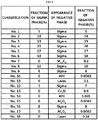
FIGS. 2 and3 are tables showing various phases generated in Inventive Examples and Comparative Examples; -
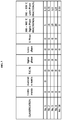
FIG. 4 is a table showing measured physical properties of exemplary stainless steel according to Inventive Examples and Comparative Examples; -
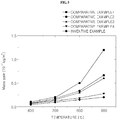
FIG. 5 is a graph showing results of measuring corrosion amounts in Inventive Examples and Comparative Examples; -
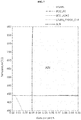
FIG. 6 is a graph showing results of calculating phase transformation for each temperature according to the content of aluminum (Al); -
FIG. 7 is a graph showing results of calculating phase transformation for each temperature according to the content of nitrogen (N); -
FIG. 8 is a graph showing results of calculating phase transformation for each temperature according to the total amount of zirconium (Zr), calcium (Ca), and magnesium (Mg); and -
FIG. 9 is a graph showing results of calculating phase transformation for each temperature according to the content of carbon (C). - Hereinafter, embodiments of the present invention will be described in detail with reference to the accompanying drawings. The present invention may be embodied in different forms and should not be construed as limited to the embodiments set forth herein. Rather, these embodiments are provided so that this invention will be thorough and complete, and will fully convey the scope of the present invention to those skilled in the art.
- The terminology used herein is for the purpose of describing particular exemplary embodiments only and is not intended to be limiting of the invention. As used herein, the singular forms "a", "an" and "the" are intended to include the plural forms as well, unless the context clearly indicates otherwise. It will be further understood that the terms "comprises" and/or "comprising," when used in this specification, specify the presence of stated features, integers, steps, operations, elements, and/or components, but do not preclude the presence or addition of one or more other features, integers, steps, operations, elements, components, and/or groups thereof. As used herein, the term "and/or" includes any and all combinations of one or more of the associated listed items.
- Unless specifically stated or obvious from context, as used herein, the term "about" is understood as within a range of normal tolerance in the art, for example within 2 standard deviations of the mean. "About" can be understood as within 10%, 9%, 8%, 7%, 6%, 5%, 4%, 3%, 2%, 1%, 0.5%, 0.1%, 0.05%, or 0.01% of the stated value. Unless otherwise clear from the context, all numerical values provided herein are modified by the term "about."
- It is understood that the term "vehicle" or "vehicular" or other similar term as used herein is inclusive of motor vehicles in general such as passenger automobiles including sports utility vehicles (SUV), buses, trucks, various commercial vehicles, watercraft including a variety of boats and ships, aircraft, and the like, and includes hybrid vehicles, electric vehicles, plug-in hybrid electric vehicles, hydrogen-powered vehicles and other alternative fuel vehicles (e.g. fuels derived from resources other than petroleum). As referred to herein, a hybrid vehicle is a vehicle that has two or more sources of power, for example both gasoline-powered and electric-powered vehicles.
-
FIG. 1 shows various exemplary steel compositions in Inventive Examples and Comparative Examples, andFIG. 2 shows phases generated in Inventive Examples and Comparative Examples. - In one aspect of the present invention, provided is a ferritic stainless steel that may be be optimized in the content of major alloy components to suppress formation of a structure or intermetallic phase (e.g., a sigma phase) that negatively affects physical properties of stainless steel. The ferritic stainless steel may include an amount of about 0.015 wt % or less (excluding 0 wt%) of carbon (C), an amount of about 0.17 wt% or less (excluding 0 wt%) of silicon (Si), an amount of about 1.35 wt% or less (excluding 0 wt%) of manganese (Mn), an amount of about 17 to 20 wt% of chromium (Cr), an amount of about 0.5 wt% or less (excluding 0 wt%) of titanium, an amount of about 3 to 5% of aluminum (Al), and iron (Fe) constituting the remaining balance of the ferritic stainless steel. All the wt% are based on the total weight of the ferric stainless steel. The ferritic stainless steel may further contain oxygen (O), nitrogen (N), zirconium (Zr), calcium (Ca), and magnesium (Mg).
- Carbon (C) may be suitably contained in an amount of about 0.015 wt% or less based on the total weight of the ferric stainless steel. Carbon (C) as used herein may be an element effective for enhancing strength of stainless steel. For instance, Ti(C,N) may be formed to expect a precipitation strengthening effect and suppress high temperature structure growth (grain growth) such that an increased in creep strength and enhancement of tempering physical properties may be expected. However, when the content of carbon (C) is greater than about 0.015 wt%, M23C6 carbide may be formed to deteriorate thermal impact characteristics.
- Silicon (Si) may be suitably contained in an amount of about 0.17 wt% or less based on the total weight of the ferric stainless steel. Silicon (Si) as used herein may be an element that acts as a deoxidizer and increases oxidation resistance and castability. However, when the content of silicon (Si) is greater than about 0.17%, a sigma phase may be formed to deteriorate impact resistance and corrosion resistance.
- Manganese (Mn) may be suitably contained in an amount of 1.35 wt% or less based on the total weight of the ferric stainless steel. Manganese (Mn) as used herein may improve hardenability and yield strength of steel. However, when the content of manganese (Mn) is greater than about 1.35 wt%, a sigma phase may be formed to deteriorate impact resistance and corrosion resistance.
- Chromium (Cr) may be suitably contained in an amount of about 17 to 20 wt% based on the total weight of the ferric stainless steel. Chromium (Cr) as used herein may be an important element to ensure corrosion resistance of stainless steel and to obtain solid solution strengthening effect and stabilize an austenite phase. However, when the content of chromium (Cr) is less than about 17 wt%, oxidation resistance may be deteriorated, and when the content of chromium (Cr) is greater than about 20 wt%, the austenite phase may be stabilized and a matrix structure may be changed to an austenitic system or duplex system.
- Aluminum (Al) may be suitably contained in an amount of about 3 to 5 wt% based on the total weight of the ferric stainless steel. Aluminum (Al), which is an element acting as a solubility enhancer, increases oxidation resistance and makes the structure finer and uniform. If the content of aluminum (Al) is less than 3%, a sigma phase may be formed to lower structure uniformity, and if the content of aluminum (Al) exceeds 5%, a negative phase such as Cr3Si may be formed.
- Titanium (Ti) may be suitably contained in an amount of about 0.5 wt% or less based on the total weight of the ferric stainless steel. Titanium (Ti) as used herein may form carbides to improve precipitation strengthening and high temperature strength. When the content of titanium (Ti) is greater than about 0.5%, a laves phase may be formed and impact resistance and corrosion resistance may be decreased. Preferably, the content of titanium (Ti) may be limited to a minimum value of about 0.1 wt%. When the content of titanium (Ti) is less than about 0.1 wt%, formation of AlN, which deteriorates strength and weldability at high temperatures, may be increased.
- The content of nitrogen (N) may be suitably less than about 0.02 wt% based on the total weight of the ferric stainless steel. Nitrogen (N) as used herein may induce formation of carbonitride, for example, Ti(C,N) may be formed to obtain a precipitation strengthening effect and suppress high temperature structure growth (grain growth). As such, creep strength may be increased and tempering physical properties may be improved. However, when the content of nitrogen is greater than about 0.02 wt%, formation of AlN may be increased.
- Oxygen (O) may be suitably contained in an amount of less than about 0.001 wt% based on the total weight of the ferric stainless steel. Oxygen (O) may form inclusions to decrease impact resistance, and may be preferably controlled to be as low as possible. An upper limit value of oxygen (O) may be of about 0.001 wt% in consideration of a removing process.
- The sum of the contents of zirconium (Zr), calcium (Ca), and magnesium (Mg) may be suitably adjusted to about 0.001 wt% to 0.01 wt% based on the total weight of the ferric stainless steel. Zirconium (Zr), calcium (Ca), and magnesium (Mg) as used herein may serve as a deoxidizer. When the total content of zirconium (Zr), calcium (Ca), and magnesium (Mg) is less than about 0.001 wt%, Al2O3 may be generated, and when the total content of Al2O3 is greater than about 0.01 wt%, castability may be deteriorated.
- Meanwhile, the remainder other than the above-mentioned components includes Fe and inevitably contained impurities.
- In another aspect, in order to manufacture ferritic stainless steel having excellent corrosion resistance and impact resistance, molten steel having the composition described above may be continuously cast through a general method to produce a slab, the slab is re-heated, a post-treatment such as hot rolling, hot annealing, cold rolling, and cold annealing is subsequently performed thereon.
- In one exemplary embodiment, by controlling the content of each component of the molten steel, formation of a phase, which negatively affects physical properties, may be suppressed. For instance, a sigma phase may be suppressed at a temperature of about 300 to 900 °C, where an exhaust system component is typically used, by controlling the amount of Si, Mn, and Al which may affect formation of a negative phase. For example, the amount of Si, Mn, and Al may satisfy [Equation 1] below.

- In [Equation 1], Si, Mn, and Al refer to the content (wt%) of each component.
- Furthermore, the content of Zr, Ca, and Mg may be further limited to suppress formation of AlN and Al2O3. For example, the content of Zr, Ca, and Mg may satisfy [Equation 2] below.

- In [Equation 2], Zr, Ca and Mg refer to the content (wt%) of each component.
- Hereinafter, exemplary embodiments of the present invention will be described using Inventive Examples and Comparative Examples.
- An experiment was conducted to produce final products according to the production conditions of commercially produced ferritic stainless steel, and a hot plate obtained by hot rolling a slab continuously cast using a molten steel produced while varying the content of each component underwent hot annealing, cold rolling, and cold annealing as illustrated in
FIG. 1 . - For instance, as illustrated in
FIG. 1 , each slab continuously cast using molten steel adjusted in composition may be re-heated and hot-rolled in a temperature range of about 1050 to 1100 °C and subsequently annealed at a continuous annealing line (CAL) for about 90 seconds in a temperature range of about 900 to 950°C. Thereafter, structures cold-rolled and cold-annealed samples were observed at a temperature of about 300 to 900 °C, which is a temperature range at which an exhaust system component is generally used. Results thereof are illustrated inFIGS. 2 and3 . - As shown in the results illustrated in
FIGS. 2 and3 , sample No. 18, which is Inventive Example satisfying the kind and content of the alloy components given in the present invention included Ti(C,N) and laves phase formed on the basis of ferrite as a matrix structure but a sigma phase was not formed. Although the laves phase, which negatively affects physical properties, was formed, a maximum volume fraction thereof may be generated, for example, 0.13% of the laves phase was formed. - Meanwhile, in the case of samples No. 1 to No. 4, Comparative Examples which did not satisfy the kind or the content of the alloy components given in the present invention, Ti(C,N), sigma phase, laves phase, and G phase were formed on the basis of ferrite as a matrix structure. In particular, the sigma phase, which negatively affects the physical properties, was formed by 5% or greater based on a volume fraction and that the laves phase was formed by 0.2% or greater based on the volume fraction.
- Further, samples No. 5 and No. 6, which are Comparative Examples, did not satisfy the condition of [Equation 1] and the sigma phase was formed by about 17% and 18%, respectively.
- In sample No. 7, which is Comparative Example exceeding the content of C given in the present invention, M23C6, a negative phase, was formed in by about 0.2%. Here, M denotes metallic elements which are Fe, Cr, Mn, and Ti in the present invention.
- Sample No. 8 is Comparative Example including the content of Si greater than the predetermined amount discussed above and the condition of [Equation 1] given in the present invention was not met, and Sample No. 9 is Comparative Example including the content of Mn greater than the predetermined amount discussed above in the present invention. In Sample Nos. 8 and 9, the sigma phase was formed by about 10% and 8%, respectively.
- Sample No. 10 satisfied most of the contents of the alloy elements given in the present invention, and the sigma phase and the laves phase, which are negative phases, were not formed. However, the content of Ti in Sampel No. 10 was less than the predetermined content of Ti as discussed above in the present invention. Since the content of Ti is less than a limit range, AlN, which deteriorates strength and weldability at high temperatures, was formed by about 0.0002%.
- Sample No. 11 is Comparative Example including the content of Ti greater than the predetermined amount as discussed above in the present invention such that laves phase was formed by about 2.1%.
- Samples No. 12 and No 13 are Comparative Examples that did not satisfy the content of Al given in the present invention. Sample No 12 contained the sigma phase formed by about 7% when the content of Al was less than the predetermined range discussed above and sample No. 13 contained Cr3Si formed by about 0.8% as the content of Al is greater than the predetermined range discussed above.
- Sample No. 14 is Comparative Example that did not satisfy the content of N given in the present invention. When the content ofN is greater than the predetermined range discussed above, AlN was formed by 0.001%. Sample No. 15 is Comparative Example that did not satisfy the content of O given in the present invention, and when the content of O was greater than the predetermined range discussed above, Al2O3 was formed by about 0.0002%.
- Sample No. 16 is Comparative Example that did not satisfy the condition of [Equation 1] and the sigma phase was formed by about 8%. Sample No. 17 is Comparative Example that did not satisfy the condition of [Equation 2] and the content of Zr, Ca and Mg was less than the condition of [Equation 2] so Al2O3 was formed by about 0.0002%.
- According to various exemplary embodiments, formation of Cr3Si AlN, Al2O3, and M23C6, including the sigma phase and the laves phase, which are negative phases, mnay be suppressed by controlling the kind and content of the alloy components to satisfy the contions discussed above
- Further, pitting potential, corrosion resistance, thermal expansion coefficient, and corrosion amount of the produced products were measured and evaluated, and results thereof are illustrated in
FIGS. 4 and5 . As for pitting potential, a pitting potential of 3.5% of sodium chloride (NaCl) at a temperature of about 25 °C was measured. The pitting potential was measured by a type of measurement instrument using saturated calomel electrode (SCE) as a reference point. - As for corrosion resistance, a time required for forming rust due to 5% of sodium chloride after 3% of salt water was sprayed.
- Impact resistance was measured by a Charpy keyhole-notch impact test, and a corrosion amount was measured when exposed to the atmosphere at a temperature section of about 600 to 900°C in which the exhaust system component is generally used.
- As shown in
FIG. 4 , in the case of sample No. 18, which is Inventive Example satisfying the kind and content of the alloy components given in the present invention, the pitting potential (Ept) at 3.5% sodium chloride (NaCl) was measured as 300 mVSCE at a temperature of 25°C. To the contrary, all of samples No. 1 to No. 4 were measured to be less than 300 mVSCE. As the value of the pitting potential is higher, fitting resistance is excellent. Thus, the pitting potential was improved when the type and content of the alloy components of the present invention were satisfied. - Further, in the case of sample No. 18, which is Inventive Example satisfying the kind and content of the alloy components given in the present invention, a time required for forming rust due to 5% of sodium chloride (NaCl) after 3% of salt water was sprayed was measured to be 294 days, greater than 250 days compared to Comparative Examples No. 1 to No. 4 where rust was formed earlier than 250 days.
- Further, in the case of sample No. 18, which is Inventive Example satisfying the kind and content of the alloy components given in the present invention, an impact resistance strength measurement value was measured as 62 J, and impact resistance strength measurement values of all of samples No. 1 to No. 4, which are Comparative Examples, were measured to be less than 55 J.
- Further, in the case of sample No. 18, Inventive Example satisfying the kind and content of the alloy components given in the present invention, a coefficient of thermal expansion was measured as 11.5X10⁻⁶, however, coefficients of thermal expansion of samples No. 1 to No. 4, which are Comparative Examples, were measured as 12.3X10⁻⁶, 12.1X10-6,12.0X10-6, and 11.6X10⁻⁶, respectively.
- As shown in
FIG. 5 , in the case of sample No. 18, which is Inventive Example satisfying the kind and content of the alloy components given in the present invention, the corrosion amount was remarkably reduced in the temperature range of 600 to 900°C, as compared with samples No. 1 to No. 4 of the Comparative Examples. - Further, in order to examine a phase formed according to a change in the content of Al at a temperature range of 300 to 900°C in which the exhaust system component is generally used, a phase formed in an alloy of 0.01C-0.1Si-0.1Mn-18Cr-0.2Ti-0.01N, while varying the content of Al, was examined, and results thereof are illustrated in
FIG. 6 . - As shown in
FIG. 6 , a precipitation temperature range of the sigma phase narrowed and the volume fraction decreased as the content of Al increased until the Al content reached about 3%. In particular, when 3% of Al was added, stability of the sigma phase was significantly reduced so as not to be formed. Also, when the content of Al is greater than 5 wt%, Cr3Si was produced. - Meanwhile, although Al is added by 3 wt% or greater, the sigma phase may be formed when the content of Si and Mn is large. In particular, the formation of the sigma phase may affect Si, Mn and Cr in this order in the alloy components, and the content of Si may have sensitivity of about 20 times as compared with the content of Mn. As a result, the formation of the sigma phase was suppressed when the relational expression described in [Equation 1] was satisfied. This phenomenon may also be confirmed with the results of samples No. 12 and 17.
- In order to examine a region in which AlN is formed according to a change in the content of N, the region in which A1N was formed was examined, while varying the N content in the alloy of 0.01C-0.1 Si-0.1Mn-4A1-18Cr-0.2Ti. Results thereof are shown in
FIG. 7 . - As shown in
FIG. 7 , AlN was formed when the content of N was 0.03 wt% or greater. Thus, the content of N may be preferably limited to be less than about 0.02 wt%. - In order to examine a region in which Al2O3 is formed according to a total amount of Zr, Ca, and Mg, a region in which Al2O3 was formed was examined, while varying a total amount of Zr, Ca, and Mg in an alloy of 0.01C-0.1Si-0.1Mn-4Al-18Cr-0.2Ti-0.01N-0.0005O. Results thereof are shown in
FIG. 8 . - As shown in
FIG. 8 , Al2O3 was formed when the total amount of Zr, Ca, and Mg was less than 0.001 wt% and that Al2O3 was not formed when the total amount of Zr, Ca, and Mg was greater than 0.01 wt%. - Further, in order to examine a region in which M23C6 is formed according to a change in the content of C, a region in which M23C6 was formed was examined, while varying the C content in an alloy of 18Cr-0.1Mn-0.1Si-0.2Ti-0.01N-4Al, and a phase transformation transition for each temperature as examined in a state in which the content of C was fixed to 0.02 wt%. Results thereof are shown in
FIG. 9 . As shown inFIG. 9 , M23C6 was formed when the content of C is greater than 0.017 wt%, and M23C6 was formed by about 0.2% when the content of C was 0.02 wt%. Therefore, it is advantageous that the content of C is 0.015 wt% or less to maintain the volume fraction of M23C6 at less than 0.2% to improve the physical properties of the stainless steel. - According to various exemplary embodiment of the present invention, the ferritic stainless steel may have obtained excellent corrosion resistance and impact resistance at high temperatures at which the exhaust system component is generally used by suppressing formation of the sigma phase and by controlling the content of the alloy elements that affect formation of the sigma phase and the laves phase.
- Further, the excellent corrosion resistance and impact resistance at high temperatures may be maintained without adding high-priced alloy elements, and thus, cost may be reduced as compared to other steel products that realize similar performance.
- Although the present invention has been shown and described with respect to exemplary embodiments, it will be apparent to those having ordinary skill in the art that the present invention may be variously modified and altered without departing from the spirit and scope of the present invention as defined by the following claims.
Claims (15)
- A ferritic stainless steel comprising:an amount of about 0.015 wt% or less (excluding 0 wt%) of carbon (C),an amount of about 0.17 wt% or less (excluding 0 wt%) of silicon (Si),an amount of about 1.35 wt% or less (excluding 0 wt%) of manganese (Mn),an amount of about 17 to 20 wt% of chromium (Cr),an amount of about 0.5 wt% or less (excluding 0 wt%) of titanium (Ti),an amount of about 3 to 5 wt% of aluminum (Al), andiron (Fe) constituting the remaining balance of the ferritic stainless steel,all the wt% based on the total weight of the ferritic stainless steel,wherein contents of Si, Mn, and Al satisfy [Equation 1],
 wherein Si, Mn, and Al in Equation 1 represent the content (wt%) of each component.
 - The ferritic stainless steel of claim 1, wherein
the stainless steel comprises an amount of about 0.1 to 0.5 wt% of Ti based on the total weight of the ferritic stainless steel. - The ferritic stainless steel of claim 1 or 2, further comprising:zirconium (Zr), calcium (Ca), and magnesium (Mg),wherein contents of Zr, Ca and Mg satisfy [Equation 2],

- The ferritic stainless steel of one of claims 1-3, further comprising:
an amount less than 0.001 wt% of oxygen (O) and an amount of about less than 0.02 wt% of nitrogen (N) based on the total weight of the ferritic stainless steel. - The ferritic stainless steel of one of claims 1-4, wherein a volume fraction of a sigma phase formed in a temperature range of about 300 to 900 °C is less than 5%.
- The ferritic stainless steel of claim 5, wherein the volume fraction of the sigma phase formed in the temperature range of about 300 to 900 °C is about 0.5 % or less or is not precipitated.
- The ferritic stainless steel of claim 6, wherein the volume fraction of the sigma phase formed in the temperature range of about 300 to 900 °C is not precipitated.
- The ferritic stainless steel of one of claims 1-7, wherein a volume fraction of Cr3Si formed in the temperature range of about 300 to 900 °C is about 0.5 % or less.
- The ferritic stainless steel of one of claims 1-8, wherein a volume fraction of each of AIN and Al2O3 formed in the temperature range of about 300 to 900 °C is about 0.0001 % or less.
- The ferritic stainless steel of one of claims 1-9, wherein a volume fraction of M23C6 formed in the temperature range of about 300 to 900 °C is less than about 0.2 %.
- The ferritic stainless steel of one of claims 1-10, wherein a volume fraction of a laves phase formed in the temperature range of about 300 to 900 °C is about 0.2% or less.
- The ferritic stainless steel of one of claims 1-11, wherein a pitting potential (Ept) of the ferritic stainless steel in about 3.5 % of sodium chloride (NaCl) at a temperature of about 25 °C is about 300 mVSCE or greater.
- The ferritic stainless steel of one of claims 1-12, wherein a time required for forming rust in a condition of about 5 % of sodium chloride (NaCl) after 3% of a salt water is sprayed is about 250 days or greater.
- The ferritic stainless steel of one of claims 1-13, wherein
impact resistance strength of the ferritic stainless steel measured by a Charpy keyhole-notch impact test is about 55 J or greater. - A ferritic stainless steel consisting of:an amount of about 0.015 wt% or less (excluding 0 wt%) of carbon (C),an amount of about 0.17 wt% or less (excluding 0 wt%) of silicon (Si),an amount of about 1.35 wt% or less (excluding 0 wt%) of manganese (Mn),an amount of about 17 to 20 wt% of chromium (Cr),an amount of about 0.5 wt% or less (excluding 0 wt%) of titanium (Ti),an amount of about 3 to 5 wt% of aluminum (Al), andiron (Fe) constituting the remaining balance of the ferritic stainless steel,all the wt% based on the total weight of the ferritic stainless steel,wherein contents of Si, Mn, and Al satisfy [Equation 1],
 wherein Si, Mn, and Al in Equation 1 represent the content (wt%) of each component.
Applications Claiming Priority (1)
| Application Number | Priority Date | Filing Date | Title |
|---|---|---|---|
| KR1020180159642A KR102602916B1 (en) | 2018-12-12 | 2018-12-12 | Ferritic stainless steel excellent in corrosion resistance and impact resistance |
Publications (2)
| Publication Number | Publication Date |
|---|---|
| EP3666918A1 true EP3666918A1 (en) | 2020-06-17 |
| EP3666918B1 EP3666918B1 (en) | 2022-02-23 |
Family
ID=67620328
Family Applications (1)
| Application Number | Title | Priority Date | Filing Date |
|---|---|---|---|
| EP19191488.6A Active EP3666918B1 (en) | 2018-12-12 | 2019-08-13 | Ferritic stainless steel excellent in corrosion resistance and impact resistance |
Country Status (4)
| Country | Link |
|---|---|
| US (1) | US20200190642A1 (en) |
| EP (1) | EP3666918B1 (en) |
| KR (1) | KR102602916B1 (en) |
| CN (1) | CN111304528B (en) |
Citations (4)
| Publication number | Priority date | Publication date | Assignee | Title |
|---|---|---|---|---|
| DE202011106778U1 (en) * | 2011-06-21 | 2011-12-05 | Thyssenkrupp Vdm Gmbh | Heat-resistant iron-chromium-aluminum alloy with low chromium evaporation rate and increased heat resistance |
| EP2723910A1 (en) * | 2011-06-21 | 2014-04-30 | Forschungszentrum Jülich GmbH | Heat-resistant iron-chromium-aluminium alloy with low chromium vaporization rate and elevated thermal stability |
| EP2995697A1 (en) * | 2013-05-10 | 2016-03-16 | Nippon Steel & Sumikin Stainless Steel Corporation | Stainless steel substrate for solar battery having excellent insulation properties and small thermal expansion coefficient, and process for producing same |
| EP3339460A1 (en) * | 2015-08-17 | 2018-06-27 | Nisshin Steel Co., Ltd. | VIBRATION-DAMPING FERRITIC STAINLESS STEEL MATERIAL HAVING HIGH Al CONTENT, AND PRODUCTION METHOD |
Family Cites Families (4)
| Publication number | Priority date | Publication date | Assignee | Title |
|---|---|---|---|---|
| JPH04362127A (en) * | 1991-06-10 | 1992-12-15 | Nisshin Steel Co Ltd | Production of ferritic stainless steel strip having high al content |
| JP3865452B2 (en) * | 1997-03-13 | 2007-01-10 | 日新製鋼株式会社 | Fe-Cr-Al ferrite stainless steel with excellent high-temperature oxidation resistance and high-temperature deformation resistance |
| JP5544106B2 (en) * | 2009-03-24 | 2014-07-09 | 新日鐵住金ステンレス株式会社 | Al-containing heat-resistant ferritic stainless steel for fuel cells and method for producing the same |
| KR20120108785A (en) | 2011-03-25 | 2012-10-05 | 주식회사 포스코 | Ferritic stainless steel having excellent high temperature strength |
-
2018
- 2018-12-12 KR KR1020180159642A patent/KR102602916B1/en active Active
-
2019
- 2019-08-12 US US16/538,358 patent/US20200190642A1/en not_active Abandoned
- 2019-08-13 EP EP19191488.6A patent/EP3666918B1/en active Active
- 2019-08-30 CN CN201910818194.9A patent/CN111304528B/en active Active
Patent Citations (4)
| Publication number | Priority date | Publication date | Assignee | Title |
|---|---|---|---|---|
| DE202011106778U1 (en) * | 2011-06-21 | 2011-12-05 | Thyssenkrupp Vdm Gmbh | Heat-resistant iron-chromium-aluminum alloy with low chromium evaporation rate and increased heat resistance |
| EP2723910A1 (en) * | 2011-06-21 | 2014-04-30 | Forschungszentrum Jülich GmbH | Heat-resistant iron-chromium-aluminium alloy with low chromium vaporization rate and elevated thermal stability |
| EP2995697A1 (en) * | 2013-05-10 | 2016-03-16 | Nippon Steel & Sumikin Stainless Steel Corporation | Stainless steel substrate for solar battery having excellent insulation properties and small thermal expansion coefficient, and process for producing same |
| EP3339460A1 (en) * | 2015-08-17 | 2018-06-27 | Nisshin Steel Co., Ltd. | VIBRATION-DAMPING FERRITIC STAINLESS STEEL MATERIAL HAVING HIGH Al CONTENT, AND PRODUCTION METHOD |
Also Published As
| Publication number | Publication date |
|---|---|
| EP3666918B1 (en) | 2022-02-23 |
| KR20200071980A (en) | 2020-06-22 |
| CN111304528B (en) | 2023-02-17 |
| CN111304528A (en) | 2020-06-19 |
| US20200190642A1 (en) | 2020-06-18 |
| KR102602916B1 (en) | 2023-11-15 |
Similar Documents
| Publication | Publication Date | Title |
|---|---|---|
| JP4958182B2 (en) | High manganese steel strip for plating, plating steel strip, method for producing high manganese hot rolled steel strip, method for producing high manganese cold rolled steel strip for plating, and method for producing high manganese plated steel strip | |
| AU2014294080B2 (en) | High-strength steel material for oil well and oil well pipes | |
| US7101446B2 (en) | Austenitic stainless steel | |
| CA2785318C (en) | Austenite steel material having superior ductility | |
| EP2824208B1 (en) | Ferritic stainless steel sheet | |
| CA2814293C (en) | Steel for steam turbine blade with excellent strength and toughness | |
| CA2657747A1 (en) | Austenitic stainless cast steel part, method for production and use thereof | |
| KR20180051679A (en) | Hot-rolled or cold-rolled steel plate, method for manufacturing same and use thereof in the automotive industry | |
| CN115698344B (en) | Cold rolled and double annealed steel sheets | |
| WO2008082144A1 (en) | Ferritic stainless steel having superior corrosion resistance and stretchability and method of manufacturing the same | |
| JP7422854B2 (en) | Steel parts manufacturing method and steel parts | |
| EP2578714B1 (en) | Hot-rolled high-strength steel sheet and process for production thereof | |
| JP2004149916A (en) | Ferritic steel sheet concurrently improved in formability, high-temperature strength, high-temperature oxidation resistance, and low-temperature toughness | |
| MXPA05000863A (en) | High-strength hot rolled steel sheet with excellent workability, fatigue characteristic, and surface characteristic. | |
| JP7598219B2 (en) | Austenitic stainless steel and method for producing same | |
| JP2011219809A (en) | High strength steel sheet | |
| CN109881082A (en) | A kind of automobile exhaust system cold end ferritic stainless steel and preparation method thereof | |
| KR100258128B1 (en) | Ferritic stainless steel for exhaust system equipment of vehicle | |
| EP3666918B1 (en) | Ferritic stainless steel excellent in corrosion resistance and impact resistance | |
| JP3804408B2 (en) | Method for producing heat-resistant and corrosion-resistant steel sheet containing Cr with excellent formability | |
| KR101593336B1 (en) | Austenitic Stainless Steel Having Excellent Corrosion Resistant And High Temperature Properties | |
| JP2946992B2 (en) | Method for producing duplex stainless steel excellent in strength, toughness and corrosion resistance | |
| US20230340630A1 (en) | Cold rolled and coated steel sheet and a method of manufacturing thereof | |
| CN110306121A (en) | Corrosion resistance and the excellent light steel of specific strength and its manufacturing method | |
| JPS6059981B2 (en) | High-strength stainless steel with excellent intergranular corrosion cracking properties and workability |
Legal Events
| Date | Code | Title | Description |
|---|---|---|---|
| PUAI | Public reference made under article 153(3) epc to a published international application that has entered the european phase |
Free format text: ORIGINAL CODE: 0009012 |
|
| STAA | Information on the status of an ep patent application or granted ep patent |
Free format text: STATUS: THE APPLICATION HAS BEEN PUBLISHED |
|
| AK | Designated contracting states |
Kind code of ref document: A1 Designated state(s): AL AT BE BG CH CY CZ DE DK EE ES FI FR GB GR HR HU IE IS IT LI LT LU LV MC MK MT NL NO PL PT RO RS SE SI SK SM TR |
|
| AX | Request for extension of the european patent |
Extension state: BA ME |
|
| STAA | Information on the status of an ep patent application or granted ep patent |
Free format text: STATUS: REQUEST FOR EXAMINATION WAS MADE |
|
| 17P | Request for examination filed |
Effective date: 20201216 |
|
| RBV | Designated contracting states (corrected) |
Designated state(s): AL AT BE BG CH CY CZ DE DK EE ES FI FR GB GR HR HU IE IS IT LI LT LU LV MC MK MT NL NO PL PT RO RS SE SI SK SM TR |
|
| STAA | Information on the status of an ep patent application or granted ep patent |
Free format text: STATUS: EXAMINATION IS IN PROGRESS |
|
| 17Q | First examination report despatched |
Effective date: 20210128 |
|
| RAP3 | Party data changed (applicant data changed or rights of an application transferred) |
Owner name: HYUNDAI MOTOR COMPANY Owner name: KIA CORPORATION |
|
| REG | Reference to a national code |
Ref country code: DE Ref legal event code: R079 Ref document number: 602019011808 Country of ref document: DE Free format text: PREVIOUS MAIN CLASS: C22C0038000000 Ipc: C22C0038060000 |
|
| GRAP | Despatch of communication of intention to grant a patent |
Free format text: ORIGINAL CODE: EPIDOSNIGR1 |
|
| STAA | Information on the status of an ep patent application or granted ep patent |
Free format text: STATUS: GRANT OF PATENT IS INTENDED |
|
| RIC1 | Information provided on ipc code assigned before grant |
Ipc: C22C 38/00 20060101ALN20210824BHEP Ipc: C22C 38/02 20060101ALN20210824BHEP Ipc: C22C 38/04 20060101ALN20210824BHEP Ipc: C22C 38/14 20060101ALI20210824BHEP Ipc: C22C 38/28 20060101ALI20210824BHEP Ipc: C22C 38/18 20060101ALI20210824BHEP Ipc: C22C 38/06 20060101AFI20210824BHEP |
|
| RIC1 | Information provided on ipc code assigned before grant |
Ipc: C22C 38/00 20060101ALN20210901BHEP Ipc: C22C 38/02 20060101ALN20210901BHEP Ipc: C22C 38/04 20060101ALN20210901BHEP Ipc: C22C 38/14 20060101ALI20210901BHEP Ipc: C22C 38/28 20060101ALI20210901BHEP Ipc: C22C 38/18 20060101ALI20210901BHEP Ipc: C22C 38/06 20060101AFI20210901BHEP |
|
| INTG | Intention to grant announced |
Effective date: 20210913 |
|
| RIN1 | Information on inventor provided before grant (corrected) |
Inventor name: KWON, SOON WOO Inventor name: HONG, SEUNG HYUN Inventor name: LEE, CHUNG AN Inventor name: KANG, MIN WOO |
|
| GRAS | Grant fee paid |
Free format text: ORIGINAL CODE: EPIDOSNIGR3 |
|
| GRAA | (expected) grant |
Free format text: ORIGINAL CODE: 0009210 |
|
| STAA | Information on the status of an ep patent application or granted ep patent |
Free format text: STATUS: THE PATENT HAS BEEN GRANTED |
|
| AK | Designated contracting states |
Kind code of ref document: B1 Designated state(s): AL AT BE BG CH CY CZ DE DK EE ES FI FR GB GR HR HU IE IS IT LI LT LU LV MC MK MT NL NO PL PT RO RS SE SI SK SM TR |
|
| REG | Reference to a national code |
Ref country code: GB Ref legal event code: FG4D |
|
| REG | Reference to a national code |
Ref country code: CH Ref legal event code: EP |
|
| REG | Reference to a national code |
Ref country code: DE Ref legal event code: R096 Ref document number: 602019011808 Country of ref document: DE |
|
| REG | Reference to a national code |
Ref country code: AT Ref legal event code: REF Ref document number: 1470527 Country of ref document: AT Kind code of ref document: T Effective date: 20220315 |
|
| REG | Reference to a national code |
Ref country code: IE Ref legal event code: FG4D |
|
| REG | Reference to a national code |
Ref country code: LT Ref legal event code: MG9D |
|
| REG | Reference to a national code |
Ref country code: NL Ref legal event code: MP Effective date: 20220223 |
|
| REG | Reference to a national code |
Ref country code: AT Ref legal event code: MK05 Ref document number: 1470527 Country of ref document: AT Kind code of ref document: T Effective date: 20220223 |
|
| PG25 | Lapsed in a contracting state [announced via postgrant information from national office to epo] |
Ref country code: SE Free format text: LAPSE BECAUSE OF FAILURE TO SUBMIT A TRANSLATION OF THE DESCRIPTION OR TO PAY THE FEE WITHIN THE PRESCRIBED TIME-LIMIT Effective date: 20220223 Ref country code: RS Free format text: LAPSE BECAUSE OF FAILURE TO SUBMIT A TRANSLATION OF THE DESCRIPTION OR TO PAY THE FEE WITHIN THE PRESCRIBED TIME-LIMIT Effective date: 20220223 Ref country code: PT Free format text: LAPSE BECAUSE OF FAILURE TO SUBMIT A TRANSLATION OF THE DESCRIPTION OR TO PAY THE FEE WITHIN THE PRESCRIBED TIME-LIMIT Effective date: 20220623 Ref country code: NO Free format text: LAPSE BECAUSE OF FAILURE TO SUBMIT A TRANSLATION OF THE DESCRIPTION OR TO PAY THE FEE WITHIN THE PRESCRIBED TIME-LIMIT Effective date: 20220523 Ref country code: NL Free format text: LAPSE BECAUSE OF FAILURE TO SUBMIT A TRANSLATION OF THE DESCRIPTION OR TO PAY THE FEE WITHIN THE PRESCRIBED TIME-LIMIT Effective date: 20220223 Ref country code: LT Free format text: LAPSE BECAUSE OF FAILURE TO SUBMIT A TRANSLATION OF THE DESCRIPTION OR TO PAY THE FEE WITHIN THE PRESCRIBED TIME-LIMIT Effective date: 20220223 Ref country code: HR Free format text: LAPSE BECAUSE OF FAILURE TO SUBMIT A TRANSLATION OF THE DESCRIPTION OR TO PAY THE FEE WITHIN THE PRESCRIBED TIME-LIMIT Effective date: 20220223 Ref country code: ES Free format text: LAPSE BECAUSE OF FAILURE TO SUBMIT A TRANSLATION OF THE DESCRIPTION OR TO PAY THE FEE WITHIN THE PRESCRIBED TIME-LIMIT Effective date: 20220223 Ref country code: BG Free format text: LAPSE BECAUSE OF FAILURE TO SUBMIT A TRANSLATION OF THE DESCRIPTION OR TO PAY THE FEE WITHIN THE PRESCRIBED TIME-LIMIT Effective date: 20220523 |
|
| PG25 | Lapsed in a contracting state [announced via postgrant information from national office to epo] |
Ref country code: PL Free format text: LAPSE BECAUSE OF FAILURE TO SUBMIT A TRANSLATION OF THE DESCRIPTION OR TO PAY THE FEE WITHIN THE PRESCRIBED TIME-LIMIT Effective date: 20220223 Ref country code: LV Free format text: LAPSE BECAUSE OF FAILURE TO SUBMIT A TRANSLATION OF THE DESCRIPTION OR TO PAY THE FEE WITHIN THE PRESCRIBED TIME-LIMIT Effective date: 20220223 Ref country code: GR Free format text: LAPSE BECAUSE OF FAILURE TO SUBMIT A TRANSLATION OF THE DESCRIPTION OR TO PAY THE FEE WITHIN THE PRESCRIBED TIME-LIMIT Effective date: 20220524 Ref country code: FI Free format text: LAPSE BECAUSE OF FAILURE TO SUBMIT A TRANSLATION OF THE DESCRIPTION OR TO PAY THE FEE WITHIN THE PRESCRIBED TIME-LIMIT Effective date: 20220223 Ref country code: AT Free format text: LAPSE BECAUSE OF FAILURE TO SUBMIT A TRANSLATION OF THE DESCRIPTION OR TO PAY THE FEE WITHIN THE PRESCRIBED TIME-LIMIT Effective date: 20220223 |
|
| PG25 | Lapsed in a contracting state [announced via postgrant information from national office to epo] |
Ref country code: IS Free format text: LAPSE BECAUSE OF FAILURE TO SUBMIT A TRANSLATION OF THE DESCRIPTION OR TO PAY THE FEE WITHIN THE PRESCRIBED TIME-LIMIT Effective date: 20220623 |
|
| PG25 | Lapsed in a contracting state [announced via postgrant information from national office to epo] |
Ref country code: SM Free format text: LAPSE BECAUSE OF FAILURE TO SUBMIT A TRANSLATION OF THE DESCRIPTION OR TO PAY THE FEE WITHIN THE PRESCRIBED TIME-LIMIT Effective date: 20220223 Ref country code: SK Free format text: LAPSE BECAUSE OF FAILURE TO SUBMIT A TRANSLATION OF THE DESCRIPTION OR TO PAY THE FEE WITHIN THE PRESCRIBED TIME-LIMIT Effective date: 20220223 Ref country code: RO Free format text: LAPSE BECAUSE OF FAILURE TO SUBMIT A TRANSLATION OF THE DESCRIPTION OR TO PAY THE FEE WITHIN THE PRESCRIBED TIME-LIMIT Effective date: 20220223 Ref country code: EE Free format text: LAPSE BECAUSE OF FAILURE TO SUBMIT A TRANSLATION OF THE DESCRIPTION OR TO PAY THE FEE WITHIN THE PRESCRIBED TIME-LIMIT Effective date: 20220223 Ref country code: DK Free format text: LAPSE BECAUSE OF FAILURE TO SUBMIT A TRANSLATION OF THE DESCRIPTION OR TO PAY THE FEE WITHIN THE PRESCRIBED TIME-LIMIT Effective date: 20220223 |
|
| REG | Reference to a national code |
Ref country code: DE Ref legal event code: R097 Ref document number: 602019011808 Country of ref document: DE |
|
| PG25 | Lapsed in a contracting state [announced via postgrant information from national office to epo] |
Ref country code: AL Free format text: LAPSE BECAUSE OF FAILURE TO SUBMIT A TRANSLATION OF THE DESCRIPTION OR TO PAY THE FEE WITHIN THE PRESCRIBED TIME-LIMIT Effective date: 20220223 |
|
| PLBE | No opposition filed within time limit |
Free format text: ORIGINAL CODE: 0009261 |
|
| STAA | Information on the status of an ep patent application or granted ep patent |
Free format text: STATUS: NO OPPOSITION FILED WITHIN TIME LIMIT |
|
| 26N | No opposition filed |
Effective date: 20221124 |
|
| PG25 | Lapsed in a contracting state [announced via postgrant information from national office to epo] |
Ref country code: SI Free format text: LAPSE BECAUSE OF FAILURE TO SUBMIT A TRANSLATION OF THE DESCRIPTION OR TO PAY THE FEE WITHIN THE PRESCRIBED TIME-LIMIT Effective date: 20220223 |
|
| PG25 | Lapsed in a contracting state [announced via postgrant information from national office to epo] |
Ref country code: MC Free format text: LAPSE BECAUSE OF FAILURE TO SUBMIT A TRANSLATION OF THE DESCRIPTION OR TO PAY THE FEE WITHIN THE PRESCRIBED TIME-LIMIT Effective date: 20220223 |
|
| REG | Reference to a national code |
Ref country code: CH Ref legal event code: PL |
|
| PG25 | Lapsed in a contracting state [announced via postgrant information from national office to epo] |
Ref country code: LU Free format text: LAPSE BECAUSE OF NON-PAYMENT OF DUE FEES Effective date: 20220813 Ref country code: LI Free format text: LAPSE BECAUSE OF NON-PAYMENT OF DUE FEES Effective date: 20220831 Ref country code: CH Free format text: LAPSE BECAUSE OF NON-PAYMENT OF DUE FEES Effective date: 20220831 |
|
| REG | Reference to a national code |
Ref country code: BE Ref legal event code: MM Effective date: 20220831 |
|
| P01 | Opt-out of the competence of the unified patent court (upc) registered |
Effective date: 20230504 |
|
| PG25 | Lapsed in a contracting state [announced via postgrant information from national office to epo] |
Ref country code: IT Free format text: LAPSE BECAUSE OF FAILURE TO SUBMIT A TRANSLATION OF THE DESCRIPTION OR TO PAY THE FEE WITHIN THE PRESCRIBED TIME-LIMIT Effective date: 20220223 Ref country code: IE Free format text: LAPSE BECAUSE OF NON-PAYMENT OF DUE FEES Effective date: 20220813 Ref country code: FR Free format text: LAPSE BECAUSE OF NON-PAYMENT OF DUE FEES Effective date: 20220831 |
|
| PG25 | Lapsed in a contracting state [announced via postgrant information from national office to epo] |
Ref country code: BE Free format text: LAPSE BECAUSE OF NON-PAYMENT OF DUE FEES Effective date: 20220831 |
|
| GBPC | Gb: european patent ceased through non-payment of renewal fee |
Effective date: 20230813 |
|
| PG25 | Lapsed in a contracting state [announced via postgrant information from national office to epo] |
Ref country code: CY Free format text: LAPSE BECAUSE OF FAILURE TO SUBMIT A TRANSLATION OF THE DESCRIPTION OR TO PAY THE FEE WITHIN THE PRESCRIBED TIME-LIMIT Effective date: 20220223 |
|
| PG25 | Lapsed in a contracting state [announced via postgrant information from national office to epo] |
Ref country code: MK Free format text: LAPSE BECAUSE OF FAILURE TO SUBMIT A TRANSLATION OF THE DESCRIPTION OR TO PAY THE FEE WITHIN THE PRESCRIBED TIME-LIMIT Effective date: 20220223 Ref country code: HU Free format text: LAPSE BECAUSE OF FAILURE TO SUBMIT A TRANSLATION OF THE DESCRIPTION OR TO PAY THE FEE WITHIN THE PRESCRIBED TIME-LIMIT; INVALID AB INITIO Effective date: 20190813 |
|
| PG25 | Lapsed in a contracting state [announced via postgrant information from national office to epo] |
Ref country code: GB Free format text: LAPSE BECAUSE OF NON-PAYMENT OF DUE FEES Effective date: 20230813 |
|
| PG25 | Lapsed in a contracting state [announced via postgrant information from national office to epo] |
Ref country code: GB Free format text: LAPSE BECAUSE OF NON-PAYMENT OF DUE FEES Effective date: 20230813 |
|
| PG25 | Lapsed in a contracting state [announced via postgrant information from national office to epo] |
Ref country code: MT Free format text: LAPSE BECAUSE OF FAILURE TO SUBMIT A TRANSLATION OF THE DESCRIPTION OR TO PAY THE FEE WITHIN THE PRESCRIBED TIME-LIMIT Effective date: 20220223 |
|
| PGFP | Annual fee paid to national office [announced via postgrant information from national office to epo] |
Ref country code: DE Payment date: 20240722 Year of fee payment: 6 |
|
| PGFP | Annual fee paid to national office [announced via postgrant information from national office to epo] |
Ref country code: CZ Payment date: 20240723 Year of fee payment: 6 |
|
| PGFP | Annual fee paid to national office [announced via postgrant information from national office to epo] |
Ref country code: TR Payment date: 20240726 Year of fee payment: 6 |
|
| REG | Reference to a national code |
Ref country code: DE Ref legal event code: R119 Ref document number: 602019011808 Country of ref document: DE |
|
| PG25 | Lapsed in a contracting state [announced via postgrant information from national office to epo] |
Ref country code: CZ Free format text: LAPSE BECAUSE OF NON-PAYMENT OF DUE FEES Effective date: 20250813 |