EP3666855A1 - Verfahren zur herstellung von ethylen - Google Patents
Verfahren zur herstellung von ethylen Download PDFInfo
- Publication number
- EP3666855A1 EP3666855A1 EP19853260.8A EP19853260A EP3666855A1 EP 3666855 A1 EP3666855 A1 EP 3666855A1 EP 19853260 A EP19853260 A EP 19853260A EP 3666855 A1 EP3666855 A1 EP 3666855A1
- Authority
- EP
- European Patent Office
- Prior art keywords
- distillation apparatus
- discharge stream
- stream
- fed
- overhead
- Prior art date
- Legal status (The legal status is an assumption and is not a legal conclusion. Google has not performed a legal analysis and makes no representation as to the accuracy of the status listed.)
- Granted
Links
Images

Classifications
-
- C—CHEMISTRY; METALLURGY
- C10—PETROLEUM, GAS OR COKE INDUSTRIES; TECHNICAL GASES CONTAINING CARBON MONOXIDE; FUELS; LUBRICANTS; PEAT
- C10G—CRACKING HYDROCARBON OILS; PRODUCTION OF LIQUID HYDROCARBON MIXTURES, e.g. BY DESTRUCTIVE HYDROGENATION, OLIGOMERISATION, POLYMERISATION; RECOVERY OF HYDROCARBON OILS FROM OIL-SHALE, OIL-SAND, OR GASES; REFINING MIXTURES MAINLY CONSISTING OF HYDROCARBONS; REFORMING OF NAPHTHA; MINERAL WAXES
- C10G51/00—Treatment of hydrocarbon oils, in the absence of hydrogen, by two or more cracking processes only
- C10G51/02—Treatment of hydrocarbon oils, in the absence of hydrogen, by two or more cracking processes only plural serial stages only
-
- C—CHEMISTRY; METALLURGY
- C10—PETROLEUM, GAS OR COKE INDUSTRIES; TECHNICAL GASES CONTAINING CARBON MONOXIDE; FUELS; LUBRICANTS; PEAT
- C10G—CRACKING HYDROCARBON OILS; PRODUCTION OF LIQUID HYDROCARBON MIXTURES, e.g. BY DESTRUCTIVE HYDROGENATION, OLIGOMERISATION, POLYMERISATION; RECOVERY OF HYDROCARBON OILS FROM OIL-SHALE, OIL-SAND, OR GASES; REFINING MIXTURES MAINLY CONSISTING OF HYDROCARBONS; REFORMING OF NAPHTHA; MINERAL WAXES
- C10G7/00—Distillation of hydrocarbon oils
- C10G7/12—Controlling or regulating
-
- B—PERFORMING OPERATIONS; TRANSPORTING
- B01—PHYSICAL OR CHEMICAL PROCESSES OR APPARATUS IN GENERAL
- B01D—SEPARATION
- B01D3/00—Distillation or related exchange processes in which liquids are contacted with gaseous media, e.g. stripping
- B01D3/14—Fractional distillation or use of a fractionation or rectification column
- B01D3/143—Fractional distillation or use of a fractionation or rectification column by two or more of a fractionation, separation or rectification step
-
- B—PERFORMING OPERATIONS; TRANSPORTING
- B01—PHYSICAL OR CHEMICAL PROCESSES OR APPARATUS IN GENERAL
- B01D—SEPARATION
- B01D5/00—Condensation of vapours; Recovering volatile solvents by condensation
- B01D5/0003—Condensation of vapours; Recovering volatile solvents by condensation by using heat-exchange surfaces for indirect contact between gases or vapours and the cooling medium
-
- B—PERFORMING OPERATIONS; TRANSPORTING
- B01—PHYSICAL OR CHEMICAL PROCESSES OR APPARATUS IN GENERAL
- B01D—SEPARATION
- B01D5/00—Condensation of vapours; Recovering volatile solvents by condensation
- B01D5/0057—Condensation of vapours; Recovering volatile solvents by condensation in combination with other processes
- B01D5/006—Condensation of vapours; Recovering volatile solvents by condensation in combination with other processes with evaporation or distillation
-
- C—CHEMISTRY; METALLURGY
- C07—ORGANIC CHEMISTRY
- C07C—ACYCLIC OR CARBOCYCLIC COMPOUNDS
- C07C7/00—Purification; Separation; Use of additives
- C07C7/005—Processes comprising at least two steps in series
-
- C—CHEMISTRY; METALLURGY
- C07—ORGANIC CHEMISTRY
- C07C—ACYCLIC OR CARBOCYCLIC COMPOUNDS
- C07C7/00—Purification; Separation; Use of additives
- C07C7/04—Purification; Separation; Use of additives by distillation
-
- C—CHEMISTRY; METALLURGY
- C07—ORGANIC CHEMISTRY
- C07C—ACYCLIC OR CARBOCYCLIC COMPOUNDS
- C07C7/00—Purification; Separation; Use of additives
- C07C7/09—Purification; Separation; Use of additives by fractional condensation
-
- C—CHEMISTRY; METALLURGY
- C10—PETROLEUM, GAS OR COKE INDUSTRIES; TECHNICAL GASES CONTAINING CARBON MONOXIDE; FUELS; LUBRICANTS; PEAT
- C10G—CRACKING HYDROCARBON OILS; PRODUCTION OF LIQUID HYDROCARBON MIXTURES, e.g. BY DESTRUCTIVE HYDROGENATION, OLIGOMERISATION, POLYMERISATION; RECOVERY OF HYDROCARBON OILS FROM OIL-SHALE, OIL-SAND, OR GASES; REFINING MIXTURES MAINLY CONSISTING OF HYDROCARBONS; REFORMING OF NAPHTHA; MINERAL WAXES
- C10G9/00—Thermal non-catalytic cracking, in the absence of hydrogen, of hydrocarbon oils
-
- C—CHEMISTRY; METALLURGY
- C10—PETROLEUM, GAS OR COKE INDUSTRIES; TECHNICAL GASES CONTAINING CARBON MONOXIDE; FUELS; LUBRICANTS; PEAT
- C10G—CRACKING HYDROCARBON OILS; PRODUCTION OF LIQUID HYDROCARBON MIXTURES, e.g. BY DESTRUCTIVE HYDROGENATION, OLIGOMERISATION, POLYMERISATION; RECOVERY OF HYDROCARBON OILS FROM OIL-SHALE, OIL-SAND, OR GASES; REFINING MIXTURES MAINLY CONSISTING OF HYDROCARBONS; REFORMING OF NAPHTHA; MINERAL WAXES
- C10G9/00—Thermal non-catalytic cracking, in the absence of hydrogen, of hydrocarbon oils
- C10G9/06—Thermal non-catalytic cracking, in the absence of hydrogen, of hydrocarbon oils by pressure distillation
- C10G9/08—Apparatus therefor
- C10G9/12—Removing incrustation
-
- C—CHEMISTRY; METALLURGY
- C10—PETROLEUM, GAS OR COKE INDUSTRIES; TECHNICAL GASES CONTAINING CARBON MONOXIDE; FUELS; LUBRICANTS; PEAT
- C10G—CRACKING HYDROCARBON OILS; PRODUCTION OF LIQUID HYDROCARBON MIXTURES, e.g. BY DESTRUCTIVE HYDROGENATION, OLIGOMERISATION, POLYMERISATION; RECOVERY OF HYDROCARBON OILS FROM OIL-SHALE, OIL-SAND, OR GASES; REFINING MIXTURES MAINLY CONSISTING OF HYDROCARBONS; REFORMING OF NAPHTHA; MINERAL WAXES
- C10G9/00—Thermal non-catalytic cracking, in the absence of hydrogen, of hydrocarbon oils
- C10G9/14—Thermal non-catalytic cracking, in the absence of hydrogen, of hydrocarbon oils in pipes or coils with or without auxiliary means, e.g. digesters, soaking drums, expansion means
-
- C—CHEMISTRY; METALLURGY
- C07—ORGANIC CHEMISTRY
- C07C—ACYCLIC OR CARBOCYCLIC COMPOUNDS
- C07C11/00—Aliphatic unsaturated hydrocarbons
- C07C11/02—Alkenes
- C07C11/04—Ethene
-
- C—CHEMISTRY; METALLURGY
- C10—PETROLEUM, GAS OR COKE INDUSTRIES; TECHNICAL GASES CONTAINING CARBON MONOXIDE; FUELS; LUBRICANTS; PEAT
- C10G—CRACKING HYDROCARBON OILS; PRODUCTION OF LIQUID HYDROCARBON MIXTURES, e.g. BY DESTRUCTIVE HYDROGENATION, OLIGOMERISATION, POLYMERISATION; RECOVERY OF HYDROCARBON OILS FROM OIL-SHALE, OIL-SAND, OR GASES; REFINING MIXTURES MAINLY CONSISTING OF HYDROCARBONS; REFORMING OF NAPHTHA; MINERAL WAXES
- C10G2300/00—Aspects relating to hydrocarbon processing covered by groups C10G1/00 - C10G99/00
- C10G2300/10—Feedstock materials
- C10G2300/1037—Hydrocarbon fractions
-
- C—CHEMISTRY; METALLURGY
- C10—PETROLEUM, GAS OR COKE INDUSTRIES; TECHNICAL GASES CONTAINING CARBON MONOXIDE; FUELS; LUBRICANTS; PEAT
- C10G—CRACKING HYDROCARBON OILS; PRODUCTION OF LIQUID HYDROCARBON MIXTURES, e.g. BY DESTRUCTIVE HYDROGENATION, OLIGOMERISATION, POLYMERISATION; RECOVERY OF HYDROCARBON OILS FROM OIL-SHALE, OIL-SAND, OR GASES; REFINING MIXTURES MAINLY CONSISTING OF HYDROCARBONS; REFORMING OF NAPHTHA; MINERAL WAXES
- C10G2300/00—Aspects relating to hydrocarbon processing covered by groups C10G1/00 - C10G99/00
- C10G2300/10—Feedstock materials
- C10G2300/1037—Hydrocarbon fractions
- C10G2300/104—Light gasoline having a boiling range of about 20 - 100 °C
-
- C—CHEMISTRY; METALLURGY
- C10—PETROLEUM, GAS OR COKE INDUSTRIES; TECHNICAL GASES CONTAINING CARBON MONOXIDE; FUELS; LUBRICANTS; PEAT
- C10G—CRACKING HYDROCARBON OILS; PRODUCTION OF LIQUID HYDROCARBON MIXTURES, e.g. BY DESTRUCTIVE HYDROGENATION, OLIGOMERISATION, POLYMERISATION; RECOVERY OF HYDROCARBON OILS FROM OIL-SHALE, OIL-SAND, OR GASES; REFINING MIXTURES MAINLY CONSISTING OF HYDROCARBONS; REFORMING OF NAPHTHA; MINERAL WAXES
- C10G2300/00—Aspects relating to hydrocarbon processing covered by groups C10G1/00 - C10G99/00
- C10G2300/10—Feedstock materials
- C10G2300/1037—Hydrocarbon fractions
- C10G2300/1044—Heavy gasoline or naphtha having a boiling range of about 100 - 180 °C
-
- C—CHEMISTRY; METALLURGY
- C10—PETROLEUM, GAS OR COKE INDUSTRIES; TECHNICAL GASES CONTAINING CARBON MONOXIDE; FUELS; LUBRICANTS; PEAT
- C10G—CRACKING HYDROCARBON OILS; PRODUCTION OF LIQUID HYDROCARBON MIXTURES, e.g. BY DESTRUCTIVE HYDROGENATION, OLIGOMERISATION, POLYMERISATION; RECOVERY OF HYDROCARBON OILS FROM OIL-SHALE, OIL-SAND, OR GASES; REFINING MIXTURES MAINLY CONSISTING OF HYDROCARBONS; REFORMING OF NAPHTHA; MINERAL WAXES
- C10G2300/00—Aspects relating to hydrocarbon processing covered by groups C10G1/00 - C10G99/00
- C10G2300/40—Characteristics of the process deviating from typical ways of processing
- C10G2300/4081—Recycling aspects
-
- C—CHEMISTRY; METALLURGY
- C10—PETROLEUM, GAS OR COKE INDUSTRIES; TECHNICAL GASES CONTAINING CARBON MONOXIDE; FUELS; LUBRICANTS; PEAT
- C10G—CRACKING HYDROCARBON OILS; PRODUCTION OF LIQUID HYDROCARBON MIXTURES, e.g. BY DESTRUCTIVE HYDROGENATION, OLIGOMERISATION, POLYMERISATION; RECOVERY OF HYDROCARBON OILS FROM OIL-SHALE, OIL-SAND, OR GASES; REFINING MIXTURES MAINLY CONSISTING OF HYDROCARBONS; REFORMING OF NAPHTHA; MINERAL WAXES
- C10G2400/00—Products obtained by processes covered by groups C10G9/00 - C10G69/14
- C10G2400/20—C2-C4 olefins
Definitions
- the present invention relates to an method for preparing ethylene, and more particularly, to an method for preparing ethylene capable of increasing yield of ethylene by preventing an overload due to an increase in production amount when ethylene is produced by a thermal cracking method.
- ethylene has been produced by various methods such as a method of thermal cracking naphtha, ethane, propane, and the like, a method of hydrogenating acetylene, a method of dehydrating alcohol, and the like.
- a hydrocarbon compound such as naphtha and the like as a feedstock are input to a furnace, the hydrocarbon compound is subjected to thermal cracking in the furnace, and the thermally cracked product is subjected to cooling, compression, and purification.
- propane in the thermally cracked product generated by cracking of naphtha, propane circulated after purification is used as a feedstock, or propane introduced from the outside is used as a feedstock.
- propane since propane is cheaper than other feedstocks, it may be easily obtained and the cost of production may be lowered.
- an object of the present invention is to provide an method for preparing ethylene capable of coping with a change in a cracking yield depending on a change in the type of feedstock when ethylene is produced by thermal cracking of naphtha.
- an object of the present invention is to provide an method for preparing ethylene capable of coping with a change in a cracking yield depending on a change in the type of feedstock when ethylene is produced by thermal cracking of naphtha so that an additional gas furnace in which a gas phase feedstock is used may be freely installed, and may be individually operated even in a case where the liquid phase decomposition step in which naphtha is used is interrupted due to maintenance of process equipment.
- another object of the present invention is to provide an method for preparing ethylene capable of producing ethylene with less energy consumption, even though a content of methane in the thermally cracked compressed stream is increased, by relatively reducing the amount of work increasing in proportion to a production amount while increasing yield of ethylene by addition of a feedstock, when ethylene is produced by thermal cracking of naphtha.
- an method for preparing ethylene includes: feeding a thermally cracked compressed stream to a first distillation apparatus selectively operated as a first deethanizer or a depropanizer; and feeding an overhead discharge stream of the first distillation apparatus to a second distillation apparatus, wherein in a case where the first distillation apparatus is operated as the first deethanizer, a bottom discharge stream of the second distillation apparatus is fed to a C2 separator, and in a case where the first distillation apparatus is operated as the depropanizer, the bottom discharge stream of the second distillation apparatus is passed through a third distillation apparatus and fed to the C2 separator.
- the term "stream” may mean a flow of a fluid in a process and may also mean a fluid itself flowing through a pipe. Specifically, the “stream” may mean both a fluid itself flowing through a pipe connecting respective apparatuses and a flow of the fluid.
- the fluid may mean gas or liquid.
- An method for preparing ethylene according to the present invention may include: a thermal cracking process of inputting naphtha, recycled C2 and C3 hydrocarbon compounds, and propane as a feedstock to respective furnaces and performing thermal cracking in the respective furnaces (S1, not illustrated); a cooling process of cooling thermally cracked gas which is obtained from the thermal cracking in the respective furnaces and contains hydrogen and C1, C2, and C3+ hydrocarbon compounds (S2, not illustrated); a compression process of compressing the cooled thermally cracked gas (S3, not illustrated); and a purification process of purifying a thermally cracked compressed stream containing hydrogen and C1, C2, and C3+ hydrocarbon compounds (S4, illustrated in FIG. 2 ).
- the thermal cracking process (S1) may include: a liquid phase decomposition step in which naphtha is used as a feedstock; a gas phase decomposition step in which recycled C2 and C3 hydrocarbon compounds such as ethane, propane, and the like are used as a feedstock; and a gas phase decomposition step in which propane is used as a feedstock.
- the cooling process (S2) may include a cooling step of cooling the thermally cracked gas generated in the respective furnaces in the thermal cracking process (S1) in a cooling tower.
- the compression process (S3) may include a compression step of compressing the cooled thermally cracked stream in the cooling process (S2) through multistage compression by two or more compressors to purify the cooled thermally cracked stream.
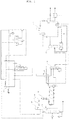
- the purification process (S4) includes: feeding a thermally cracked compressed stream to a first distillation apparatus 10 selectively operated as a first deethanizer or a depropanizer; and feeding an overhead discharge stream of the first distillation apparatus 10 to a second distillation apparatus 20, in which in a case where the first distillation apparatus 10 is operated as the first deethanizer, a bottom discharge stream of the second distillation apparatus 20 is fed to a C2 separator SP, and in a case where the first distillation apparatus 10 is operated as the depropanizer, the bottom discharge stream of the second distillation apparatus 20 is passed through a third distillation apparatus 30 and fed to the C2 separator SP.
- the purification process (S4) in a case where the third distillation apparatus 30 is additionally installed and the first distillation apparatus 10 is selectively operated, it is possible to sufficiently condense the overhead discharge stream of the first distillation apparatus 10 to be fed to the second distillation apparatus 20 in the heat exchanger HE.
- a content of methane circulated to the cold box CB is easily adjusted, which is effective in preventing an overload in the purification process. Therefore, since the amount of work increasing in proportion to a production amount is relatively reduced, it is possible to produce ethylene with less energy consumption even though a content of methane in the thermally cracked compressed stream is increased.
- the first distillation apparatus 10 may be an apparatus for distilling and separating the thermally cracked compressed stream.
- the first distillation apparatus 10 may be selectively operated as a first deethanizer or a depropanizer.
- the first distillation apparatus 10 may be selectively operated as the first deethanizer or the depropanizer depending on a component of the thermally cracked compressed stream.
- the first distillation apparatus 10 may be selectively operated depending on a content of a C1 hydrocarbon compound of the thermally cracked compressed stream to be fed to the first distillation apparatus 10 in order to sufficiently condense the overhead discharge stream of the first distillation apparatus 10 to be fed to the second distillation apparatus 20 in the heat exchanger HE.
- the first distillation apparatus 10 may be operated as the first deethanizer, and in a case where the content of the C1 hydrocarbon compound in the thermally cracked compressed stream is 20 mole% or more, the first distillation apparatus 10 may be operated as the depropanizer.
- the first distillation apparatus 10 may be selectively operated as the depropanizer, such that it is possible to increase a boiling point of the entire overhead discharge stream of the first distillation apparatus 10.
- the first distillation apparatus 10 may be selected as the first deethanizer or the depropanizer depending on an operation condition of the first distillation apparatus 10.
- an operation temperature of the first distillation apparatus 10 may be -80°C to 40°C, -70°C to 30°C, or -65°C to 20°C.
- an operation temperature of the first distillation apparatus 10 may be -50°C to 90°C, -40°C to 80°C, or -20°C to 60°C.
- the operation temperature of the first distillation apparatus 10 selectively operated as the first deethanizer or the depropanizer may be adjusted by a reboiler RB provided near a lower portion of the first distillation apparatus 10.
- the reboiler provided near the lower portion of the first distillation apparatus 10 may use a heat source, which is for adjusting the operation temperature of the first distillation apparatus 10, supplied from the outside, such as quench water, steam, or the like.
- the thermally cracked compressed stream to be fed to the first distillation apparatus 10 may contain hydrogen and C1, C2, and C3+ hydrocarbon compounds.
- the thermally cracked compressed stream fed to the first distillation apparatus 10 may be separated and purified differently depending on the selected first distillation apparatus 10.
- the first distillation apparatus 10 may separate and purify a C3+ hydrocarbon compound from the thermally cracked compressed stream.
- the overhead discharge stream of the first distillation apparatus 10 that is, an overhead discharge stream of the first deethanizer separated, purified, and discharged from the first deethanizer may contain hydrogen and C1 and C2 hydrocarbon compounds, and a bottom discharge stream of the first deethanizer may contain a C3+ hydrocarbon compound.
- the first distillation apparatus 10 may separate and purify a C4+ hydrocarbon compound from the thermally cracked compressed stream.
- an overhead discharge stream of the first distillation apparatus 10 that is, the overhead discharge stream of the depropanizer separated, purified, and discharged from the depropanizer may contain hydrogen and C1, C2, and C3 hydrocarbon compounds, and a bottom discharge stream of the depropanizer may contain a C4+ hydrocarbon compound.
- a component of the overhead discharge stream of the first distillation apparatus 10 may vary depending on the type of the first distillation apparatus 10 to be selectively operated, that is, the first deethanizer or the depropanizer. Therefore, even though the content of the C1 hydrocarbon compound in the thermally cracked compressed stream is increased while the first distillation apparatus 10 is selectively operated as the first deethanizer, when the operation of the first distillation apparatus 10 is converted into the depropanizer and the depropanizer is operated at a lower boiling point, it is possible to sufficiently condense the overhead discharge stream of the first distillation apparatus 10 in the same heat exchanger HE. As a result, it is possible to flexibly perform the purification process of the thermally cracked compressed stream depending on a change in the type of feedstock.
- the bottom discharge stream of the first deethanizer may be fed to a depropanizer (not illustrated), a bottom discharge stream of the depropanizer may be fed to a debutanizer (not illustrated), and thereafter, a process of purifying and separating a C3+ or C4+ hydrocarbon compound may be performed in each of the depropanizer (not illustrated) or the debutanizer (not illustrated).
- the method for preparing ethylene may further include: feeding the overhead discharge stream of the first distillation apparatus 10 to a second compressor P2 before the overhead discharge stream of the first distillation apparatus 10 is fed to the second distillation apparatus 20; feeding a compressed discharge stream of the second compressor P2 to an acetylene converter AC; and feeding a bottom discharge stream of the acetylene converter AC to the second distillation apparatus 20.
- the multistage compression in the compression process (S3) may be performed by four-stage compressors (a fourth compressor is represented by P3 in FIG. 2 and the first to third compressors positioned in the front of the fourth compressor are not illustrated).
- first-to third-stage compressions are performed, and the thermally cracked compressed stream including hydrogen and C1, C2, and C3+ hydrocarbon compounds which is compressed and discharged at the third-stage compressor may be fed to the first distillation apparatus 10 of the purification process (S4).
- the thermally cracked compressed stream fed to the first distillation apparatus 10 may be purified and separated into the overhead discharge stream and the bottom discharge stream of the first distillation apparatus 10, the overhead discharge stream of the first distillation apparatus 10 is fed to the second compressor P2 which is the fourth compressor among the four-stage compressors, and the four-stage compressions may be performed in the purification process (S4).
- the second compressor P2 which is the fourth compressor among the four-stage compressors
- the four-stage compressions may be performed in the purification process (S4).
- the thermally cracked compressed stream may be cooled by one or more heat exchangers before being fed to the first distillation apparatus 10
- the compressed discharge stream of the second compressor P2 may be cooled by one or more heat exchangers H1 and H2 before being fed to the acetylene converter AC
- the bottom discharge stream of the acetylene converter AC may be cooled by one or more heat exchangers H3, H4, H5, and H6, may be dried by one or more driers, and may be separated into a part of the stream by one or more gas-liquid separators, before being fed to the heat exchanger HE and the gas-liquid separator FT which are provided in the front of the second distillation apparatus 20.
- the heat exchanger HE and the gas-liquid separator FT may be provided in the front of the second distillation apparatus 20.
- the heat exchanger HE may cool the overhead discharge stream of the first distillation apparatus 10 or the bottom discharge stream of the acetylene converter AC.
- the overhead discharge stream of the first distillation apparatus 10 or the bottom discharge stream of the acetylene converter AC passing through the heat exchanger HE is cooled by the heat exchanger HE, and may be fed to the gas-liquid separator FT in a condensed state.
- the overhead discharge stream of the first distillation apparatus 10 or the bottom discharge stream of the acetylene converter AC passed through the heat exchanger HE and fed to the gas-liquid separator FT may be subjected to gas-liquid separation into an overhead discharge stream and a bottom discharge stream of the gas-liquid separator FT.
- the bottom discharge stream of the gas-liquid separator FT may be fed to the second distillation apparatus 20.
- the bottom discharge stream of the gas-liquid separator FT may contain hydrogen and C1 and C2 hydrocarbon compounds
- the bottom discharge stream of the gas-liquid separator FT may contain hydrogen and C1, C2, and C3 hydrocarbon compounds.
- the overhead discharge stream of the gas-liquid separator FT may be circulated to the cold box CB, and the overhead discharge stream of the gas-liquid separator FT may contain hydrogen and a C1 hydrocarbon compound.
- the overhead discharge stream of the gas-liquid separator FT may contain a part of a C2 or C3 hydrocarbon compound.
- the second distillation apparatus 20 may be a demethanizer and the third distillation apparatus 30 may be a second deethanizer.
- the second distillation apparatus 20 may purify and separate hydrogen, a C1 hydrocarbon compound, and a C2 hydrocarbon compound, and in the case where the first distillation apparatus 10 is operated as the depropanizer depending on the type of the first distillation apparatus 10, the second distillation apparatus 20 may purify and separate hydrogen, a C1 hydrocarbon compound, and C2 and C3 hydrocarbon compounds.
- the overhead discharge stream of the first distillation apparatus 10 fed to the second distillation apparatus 20 may be purified and separated into an overhead discharge stream and a bottom discharge stream of the second distillation apparatus 20 in the second distillation apparatus 20.
- the overhead discharge stream of the second distillation apparatus 20 may contain hydrogen and a C1 hydrocarbon compound, and the overhead discharge stream of the second distillation apparatus 20 may be circulated to the cold box CB.
- a part of the overhead discharge stream of the second distillation apparatus 20 circulated to the cold box CB is passed through the cold box CB, and may be discharged through a tail gas or may be circulated to the first distillation apparatus 10 from the cold box CB.
- the bottom discharge stream of the second distillation apparatus 20 may be fed to the C2 separator SP.
- the bottom discharge stream of the second distillation apparatus 20 may contain only a C2 hydrocarbon compound, and as a specific example, the bottom discharge stream of the second distillation apparatus 20 may contain ethane and ethylene.
- the part of the bottom discharge stream of the second distillation apparatus 20 is passed through the heat exchanger and may be fed to the C2 separator SP, and a residue of the bottom discharge stream of the second distillation apparatus 20 may be directly fed to the C2 separator SP.
- the bottom discharge stream of the second distillation apparatus 20 may be fed to the third distillation apparatus 30.
- the bottom discharge stream of the second distillation apparatus 20 may contain C2 and C3 hydrocarbon compounds.
- the bottom discharge stream of the second distillation apparatus 20 may be fed to the third distillation apparatus 30 by a pump NP.
- the third distillation apparatus 30 may purify and separate the C2 hydrocarbon compound and the C3 hydrocarbon compound from the bottom discharge stream of the second distillation apparatus 20.
- the bottom discharge stream of the second distillation apparatus 20 fed to the third distillation apparatus 30 may be purified and separated into an overhead discharge stream and a bottom discharge stream of the third distillation apparatus 30 in the third distillation apparatus 30.
- the overhead discharge stream of the third distillation apparatus 30 may be fed to the C2 separator SP.
- the overhead discharge stream of the third distillation apparatus 30 may be a mixture of C2 hydrocarbon compounds, as a specific example, the overhead discharge stream of the third distillation apparatus 30 may contain only a C2 hydrocarbon compound, and as a more specific example, the overhead discharge stream of the third distillation apparatus 30 may contain ethane and ethylene.
- the part of the overhead discharge stream of the third distillation apparatus 30 is passed through the heat exchanger and may be fed to the C2 separator SP, and a residue of the overhead discharge stream of the third distillation apparatus 30 may be directly fed to the C2 separator SP.
- the bottom discharge stream of the third distillation apparatus 30 may be fed to a C3 separator SP (not illustrated).
- the bottom discharge stream of the third distillation apparatus 30 may be a mixture of C3 hydrocarbon compounds, as a specific example, the bottom discharge stream of the third distillation apparatus 30 may contain only a C3 hydrocarbon compound, and as a more specific example, the bottom discharge stream of the third distillation apparatus 30 may contain propane, propylene, and propyne.
- the C3 hydrocarbon compound separated and purified in the C3 separator may be obtained as a product or circulated as a feedstock depending on the type and need.
- the C2 separator SP may purify and separate a C2 hydrocarbon compound.
- the bottom discharge stream of the second distillation apparatus 20 or the overhead discharge stream of the third distillation apparatus 30 fed to the C2 separator SP may be purified and separated into the overhead discharge stream and the bottom discharge stream of the C2 separator SP in the C2 separator SP.
- the overhead discharge stream of the C2 separator SP may contain ethylene, and the overhead discharge stream of the C2 separator SP may be fed to the first compressor P1.
- the bottom discharge stream of the C2 separator SP may contain ethane, and the bottom discharge stream of the C2 separator SP may be circulated as the feedstock in the thermal cracking process (S1).
- the first compressor P1 is used for producing ethylene from the overhead discharge stream of the C2 separator SP, and may be a so-called ethylene refrigerant compressor (ERC).
- the compressed discharge stream of the first compressor P1 may include a first circulation flow, a second circulation flow, and a third circulation flow.
- the first circulation flow may be a flow in which a part of the compressed discharge stream of the first compressor P1 is passed through the heat exchanger HE and fed to the first compressor P1.
- the second circulation flow may be a flow in which a part of the compressed discharge stream of the first compressor P1 is circulated to the C2 separator SP.
- the third circulation flow may be a flow in which a part of the compressed discharge stream of the first compressor P1 obtains ethylene as a product.
- the part of the compressed discharge stream of the first compressor P1 is the first circulation flow, and may be passed through the heat exchanger HE and fed to the first compressor P1.
- the first circulation flow may be used as a refrigerant stream of the heat exchanger HE while passing through the heat exchanger HE.
- the heat exchangers HEs are illustrated in the front of the gas-liquid separator FT and the front of the first compressor P1, respectively, for convenience of description and illustration, the heat exchanger HE provided in the front of the gas-liquid separator FT and the heat exchanger HE provided in the front of the first compressor P1 may be identical to each other.
- heat between the overhead discharge stream of the first distillation apparatus 10 or the bottom discharge stream of the acetylene converter AC passing through the heat exchanger HE and the first circulation flow may be exchanged in the heat exchanger HE by a counter-current flow, a co-current flow, or a cross flow.
- the first circulation flow is used as a refrigerant stream and may cool the overhead discharge stream of the first distillation apparatus 10 or the bottom discharge stream of the acetylene converter AC.
- a temperature of the part of the compressed discharge stream of the first compressor P1 forming the first circulation flow is required to be lowered to be used as the refrigerant stream before passing through the heat exchanger HE, and the temperature may be lowered by adjusting a pressure of the part of the compressed discharge stream of the first compressor P1 forming the first circulation flow.
- the first circulation flow after passing through the heat exchanger HE is joined to the overhead discharge stream of the C2 separator SP and may be fed to the first compressor P1.
- a feedstock of the thermal cracking process (S1) As a feedstock of the thermal cracking process (S1), a recycled C2 hydrocarbon compound with a flow rate of 31,606 kg/hr, a recycled C3 hydrocarbon compound with a flow rate of 6,102 kg/hr, and propane supplied from the outside with a flow rate of 18,506 kg/hr were used.
- the composition of the thermally cracked compressed stream is shown in Table 1, the temperatures and pressures of the respective streams in the purification process (S4) are shown in Table 2, and the composition of the overhead discharge stream and the flow rate of the gas-liquid separator FT are shown in Table 3.
- Example 1 as a feedstock of the thermal cracking process (S1), a recycled C2 hydrocarbon compound with a flow rate of 32,740 kg/hr, a recycled C3 hydrocarbon compound with a flow rate of 16,869 kg/hr, and propane supplied from the outside with a flow rate of 79,561 kg/hr were used.
- the composition of the thermally cracked compressed stream is shown in Table 4
- the temperatures and pressures of the respective streams in the purification process (S4) are shown in Table 5
- the composition of the overhead discharge stream and the flow rate of the gas-liquid separator FT are shown in Table 6.
- the temperature and the pressure of each of the stream shown in Table 7 correspond to a temperature and a pressure for performing the process simulation according to the process flow diagram illustrated in FIG. 1 .
- the process cannot be performed at -80.9°C. Accordingly, since the feed stream containing C1 and C2 hydrocarbon compounds to be fed to the gas-liquid separator FT after passing through the heat exchanger HE is not sufficiently condensed, the purification of the bottom discharge stream and the overhead discharge stream of the gas-liquid separator FT are also not performed at the above temperature and the pressure.
- the inventors of the present invention was found from the above results that in a case where ethylene is produced according to the present invention, it is possible to cope with a change in cracking yield depending on a change in feedstock, such that an additional gas furnace in which a gas phase feedstock is used may be freely installed, and may be individually operated even in a case where the liquid phase decomposition step in which naphtha is used is interrupted due to maintenance of process equipment.
- an additional gas furnace in which a gas phase feedstock is used may be freely installed, and may be individually operated even in a case where the liquid phase decomposition step in which naphtha is used is interrupted due to maintenance of process equipment.
- the amount of work increasing in proportion to a production amount was relatively reduced while increasing yield of ethylene by addition of a feedstock, it was possible to produce ethylene with less energy consumption even though a content of methane in the thermally compressed stream was increased.
Landscapes
- Chemical & Material Sciences (AREA)
- Organic Chemistry (AREA)
- Oil, Petroleum & Natural Gas (AREA)
- Engineering & Computer Science (AREA)
- Chemical Kinetics & Catalysis (AREA)
- General Chemical & Material Sciences (AREA)
- Physics & Mathematics (AREA)
- Thermal Sciences (AREA)
- Analytical Chemistry (AREA)
- Water Supply & Treatment (AREA)
- Organic Low-Molecular-Weight Compounds And Preparation Thereof (AREA)
Applications Claiming Priority (2)
| Application Number | Priority Date | Filing Date | Title |
|---|---|---|---|
| KR1020180105164A KR102416636B1 (ko) | 2018-09-04 | 2018-09-04 | 에틸렌 제조방법 |
| PCT/KR2019/008197 WO2020050484A1 (ko) | 2018-09-04 | 2019-07-04 | 에틸렌 제조방법 |
Publications (3)
| Publication Number | Publication Date |
|---|---|
| EP3666855A1 true EP3666855A1 (de) | 2020-06-17 |
| EP3666855A4 EP3666855A4 (de) | 2020-11-11 |
| EP3666855B1 EP3666855B1 (de) | 2022-01-05 |
Family
ID=69722594
Family Applications (1)
| Application Number | Title | Priority Date | Filing Date |
|---|---|---|---|
| EP19853260.8A Active EP3666855B1 (de) | 2018-09-04 | 2019-07-04 | Verfahren zur herstellung von ethylen |
Country Status (6)
| Country | Link |
|---|---|
| US (1) | US11485692B2 (de) |
| EP (1) | EP3666855B1 (de) |
| JP (1) | JP6894046B2 (de) |
| KR (1) | KR102416636B1 (de) |
| CN (1) | CN111148822B (de) |
| WO (1) | WO2020050484A1 (de) |
Families Citing this family (1)
| Publication number | Priority date | Publication date | Assignee | Title |
|---|---|---|---|---|
| KR102755274B1 (ko) | 2024-07-05 | 2025-01-22 | 최병렬 | 압축기와 반응기와 촉매제 기반 에틸렌과 프로판과 고분자 재료 혼합 복합 생산 시스템 및 그 운용방법 |
Family Cites Families (20)
| Publication number | Priority date | Publication date | Assignee | Title |
|---|---|---|---|---|
| CA1054509A (en) * | 1975-09-09 | 1979-05-15 | Union Carbide Corporation | Ethylene production with utilization of lng refrigeration |
| US5090977A (en) * | 1990-11-13 | 1992-02-25 | Exxon Chemical Patents Inc. | Sequence for separating propylene from cracked gases |
| US5326929A (en) | 1992-02-19 | 1994-07-05 | Advanced Extraction Technologies, Inc. | Absorption process for hydrogen and ethylene recovery |
| US5361589A (en) | 1994-02-04 | 1994-11-08 | Air Products And Chemicals, Inc. | Precooling for ethylene recovery in dual demethanizer fractionation systems |
| US5453559A (en) | 1994-04-01 | 1995-09-26 | The M. W. Kellogg Company | Hybrid condensation-absorption olefin recovery |
| US7311813B2 (en) * | 2003-03-20 | 2007-12-25 | Ineos Usa Llc | Distillation sequence for the purification and recovery of hydrocarbons |
| US7294749B2 (en) * | 2004-07-02 | 2007-11-13 | Kellogg Brown & Root Llc | Low pressure olefin recovery process |
| US7437891B2 (en) | 2004-12-20 | 2008-10-21 | Ineos Usa Llc | Recovery and purification of ethylene |
| EP1734027B1 (de) | 2005-06-14 | 2012-08-15 | Toyo Engineering Corporation | Verfahren und Vorrichtung zur Trennung von Kohlenwasserstoffen aus verflüssigtem Erdgas |
| WO2007018506A1 (en) * | 2005-07-28 | 2007-02-15 | Innovene Usa Llc | Low cost expansion of capacity for ethylene recovery |
| CN100551885C (zh) * | 2005-09-29 | 2009-10-21 | 中国石油化工集团公司 | 从制备烯烃的产品气中回收低碳烯烃的方法 |
| MY153923A (en) * | 2008-07-30 | 2015-04-15 | Lummus Technology Inc | High energy reduction in a propane dehydrogenation unit by utilizing a high pressure product splitter column |
| EP2336272A1 (de) * | 2009-12-15 | 2011-06-22 | Total Petrochemicals Research Feluy | Engstellenbeseitigung einer Dampfcrackeinheit zur Steigerung der Propylenproduktion |
| BR112014001901B1 (pt) * | 2011-07-28 | 2019-11-12 | Ifp Energies Now | processo para remover contaminantes oxigenados a partir de uma corrente de etileno |
| CN102965143B (zh) | 2011-09-01 | 2015-01-21 | 富德(北京)能源化工有限公司 | 低碳烯烃制备过程的裂解气的吸收分离方法 |
| US10465132B2 (en) * | 2013-11-14 | 2019-11-05 | Linde Aktiengesellschaft | Method for separating a hydrocarbon mixture, separating plant and steam cracking plant |
| US10927058B2 (en) * | 2015-05-15 | 2021-02-23 | Sabic Global Technologies B.V. | Systems and methods related to the syngas to olefin process |
| US9758446B2 (en) * | 2015-11-16 | 2017-09-12 | Chevron Phillips Chemical Company Lp | Selective hydrogenation using a flow index |
| KR102071591B1 (ko) | 2016-05-10 | 2020-01-30 | 주식회사 엘지화학 | 에너지 효율이 향상된 에틸렌 제조 방법 |
| KR102162297B1 (ko) * | 2017-06-08 | 2020-10-06 | 주식회사 엘지화학 | 에틸렌 분리공정 및 분리장치 |
-
2018
- 2018-09-04 KR KR1020180105164A patent/KR102416636B1/ko active Active
-
2019
- 2019-07-04 JP JP2020517201A patent/JP6894046B2/ja active Active
- 2019-07-04 EP EP19853260.8A patent/EP3666855B1/de active Active
- 2019-07-04 WO PCT/KR2019/008197 patent/WO2020050484A1/ko not_active Ceased
- 2019-07-04 CN CN201980004325.8A patent/CN111148822B/zh active Active
- 2019-07-04 US US16/647,828 patent/US11485692B2/en active Active
Also Published As
| Publication number | Publication date |
|---|---|
| CN111148822A (zh) | 2020-05-12 |
| KR20200027180A (ko) | 2020-03-12 |
| US20200216373A1 (en) | 2020-07-09 |
| CN111148822B (zh) | 2022-03-11 |
| WO2020050484A1 (ko) | 2020-03-12 |
| JP6894046B2 (ja) | 2021-06-23 |
| US11485692B2 (en) | 2022-11-01 |
| JP2020536053A (ja) | 2020-12-10 |
| KR102416636B1 (ko) | 2022-07-01 |
| EP3666855B1 (de) | 2022-01-05 |
| EP3666855A4 (de) | 2020-11-11 |
Similar Documents
| Publication | Publication Date | Title |
|---|---|---|
| EP0675190B1 (de) | Verfahren zur Rückgewinnung von Olefinen | |
| TWI660942B (zh) | Method and device for recovering refined propylene | |
| CN103827061B (zh) | 在温和热裂解中分离烃的顺序 | |
| EP3666856B1 (de) | Verfahren und vorrichtung zur herstellung von ethylen | |
| KR102579494B1 (ko) | 방향족 탄화수소 화합물 회수 방법 | |
| EP3666855B1 (de) | Verfahren zur herstellung von ethylen | |
| KR102358409B1 (ko) | 열분해 생성물의 냉각 방법 | |
| US10513477B2 (en) | Method for improving propylene recovery from fluid catalytic cracker unit | |
| CN103664460A (zh) | 一种制备间戊二烯和双环戊二烯的系统及方法 | |
| CN104650962B (zh) | 一种改进的催化裂化工艺方法 | |
| CN110937970B (zh) | 一种制备丙烯的方法和系统 | |
| US10889535B2 (en) | Process and apparatus for separating ethylene | |
| KR20220151452A (ko) | 이소프로필 알코올 제조방법 | |
| US10563140B2 (en) | Installation and process for jointly implementing compression of the acid gases from the hydroconversion or hydrotreatment unit and that of the gaseous effluents from the catalytic cracking unit | |
| KR102579492B1 (ko) | 방향족 탄화수소 화합물 회수 방법 | |
| CN216513610U (zh) | 一种烯烃回收用甲烷脱除系统 | |
| CN112920008A (zh) | 一种烃类裂解气分离及其生产乙苯的方法与装置 | |
| CN114685229A (zh) | 一种裂解气分离制取聚合级乙烯和聚合级丙烯的系统及方法 |
Legal Events
| Date | Code | Title | Description |
|---|---|---|---|
| STAA | Information on the status of an ep patent application or granted ep patent |
Free format text: STATUS: UNKNOWN |
|
| STAA | Information on the status of an ep patent application or granted ep patent |
Free format text: STATUS: THE INTERNATIONAL PUBLICATION HAS BEEN MADE |
|
| PUAI | Public reference made under article 153(3) epc to a published international application that has entered the european phase |
Free format text: ORIGINAL CODE: 0009012 |
|
| STAA | Information on the status of an ep patent application or granted ep patent |
Free format text: STATUS: REQUEST FOR EXAMINATION WAS MADE |
|
| 17P | Request for examination filed |
Effective date: 20200304 |
|
| AK | Designated contracting states |
Kind code of ref document: A1 Designated state(s): AL AT BE BG CH CY CZ DE DK EE ES FI FR GB GR HR HU IE IS IT LI LT LU LV MC MK MT NL NO PL PT RO RS SE SI SK SM TR |
|
| AX | Request for extension of the european patent |
Extension state: BA ME |
|
| A4 | Supplementary search report drawn up and despatched |
Effective date: 20201014 |
|
| RIC1 | Information provided on ipc code assigned before grant |
Ipc: C10G 9/00 20060101ALI20201008BHEP Ipc: C10G 9/12 20060101ALI20201008BHEP Ipc: C10G 9/14 20060101ALI20201008BHEP Ipc: C10G 51/02 20060101AFI20201008BHEP Ipc: C10G 7/12 20060101ALI20201008BHEP Ipc: C07C 7/00 20060101ALI20201008BHEP Ipc: C07C 7/04 20060101ALI20201008BHEP |
|
| GRAP | Despatch of communication of intention to grant a patent |
Free format text: ORIGINAL CODE: EPIDOSNIGR1 |
|
| STAA | Information on the status of an ep patent application or granted ep patent |
Free format text: STATUS: GRANT OF PATENT IS INTENDED |
|
| DAV | Request for validation of the european patent (deleted) | ||
| DAX | Request for extension of the european patent (deleted) | ||
| INTG | Intention to grant announced |
Effective date: 20211018 |
|
| GRAS | Grant fee paid |
Free format text: ORIGINAL CODE: EPIDOSNIGR3 |
|
| GRAA | (expected) grant |
Free format text: ORIGINAL CODE: 0009210 |
|
| STAA | Information on the status of an ep patent application or granted ep patent |
Free format text: STATUS: THE PATENT HAS BEEN GRANTED |
|
| AK | Designated contracting states |
Kind code of ref document: B1 Designated state(s): AL AT BE BG CH CY CZ DE DK EE ES FI FR GB GR HR HU IE IS IT LI LT LU LV MC MK MT NL NO PL PT RO RS SE SI SK SM TR |
|
| REG | Reference to a national code |
Ref country code: GB Ref legal event code: FG4D |
|
| REG | Reference to a national code |
Ref country code: CH Ref legal event code: EP |
|
| REG | Reference to a national code |
Ref country code: AT Ref legal event code: REF Ref document number: 1460594 Country of ref document: AT Kind code of ref document: T Effective date: 20220115 |
|
| REG | Reference to a national code |
Ref country code: DE Ref legal event code: R096 Ref document number: 602019010747 Country of ref document: DE |
|
| REG | Reference to a national code |
Ref country code: IE Ref legal event code: FG4D |
|
| REG | Reference to a national code |
Ref country code: LT Ref legal event code: MG9D |
|
| REG | Reference to a national code |
Ref country code: NL Ref legal event code: MP Effective date: 20220105 |
|
| REG | Reference to a national code |
Ref country code: AT Ref legal event code: MK05 Ref document number: 1460594 Country of ref document: AT Kind code of ref document: T Effective date: 20220105 |
|
| PG25 | Lapsed in a contracting state [announced via postgrant information from national office to epo] |
Ref country code: NL Free format text: LAPSE BECAUSE OF FAILURE TO SUBMIT A TRANSLATION OF THE DESCRIPTION OR TO PAY THE FEE WITHIN THE PRESCRIBED TIME-LIMIT Effective date: 20220105 |
|
| PG25 | Lapsed in a contracting state [announced via postgrant information from national office to epo] |
Ref country code: SE Free format text: LAPSE BECAUSE OF FAILURE TO SUBMIT A TRANSLATION OF THE DESCRIPTION OR TO PAY THE FEE WITHIN THE PRESCRIBED TIME-LIMIT Effective date: 20220105 Ref country code: RS Free format text: LAPSE BECAUSE OF FAILURE TO SUBMIT A TRANSLATION OF THE DESCRIPTION OR TO PAY THE FEE WITHIN THE PRESCRIBED TIME-LIMIT Effective date: 20220105 Ref country code: PT Free format text: LAPSE BECAUSE OF FAILURE TO SUBMIT A TRANSLATION OF THE DESCRIPTION OR TO PAY THE FEE WITHIN THE PRESCRIBED TIME-LIMIT Effective date: 20220505 Ref country code: NO Free format text: LAPSE BECAUSE OF FAILURE TO SUBMIT A TRANSLATION OF THE DESCRIPTION OR TO PAY THE FEE WITHIN THE PRESCRIBED TIME-LIMIT Effective date: 20220405 Ref country code: LT Free format text: LAPSE BECAUSE OF FAILURE TO SUBMIT A TRANSLATION OF THE DESCRIPTION OR TO PAY THE FEE WITHIN THE PRESCRIBED TIME-LIMIT Effective date: 20220105 Ref country code: HR Free format text: LAPSE BECAUSE OF FAILURE TO SUBMIT A TRANSLATION OF THE DESCRIPTION OR TO PAY THE FEE WITHIN THE PRESCRIBED TIME-LIMIT Effective date: 20220105 Ref country code: ES Free format text: LAPSE BECAUSE OF FAILURE TO SUBMIT A TRANSLATION OF THE DESCRIPTION OR TO PAY THE FEE WITHIN THE PRESCRIBED TIME-LIMIT Effective date: 20220105 Ref country code: BG Free format text: LAPSE BECAUSE OF FAILURE TO SUBMIT A TRANSLATION OF THE DESCRIPTION OR TO PAY THE FEE WITHIN THE PRESCRIBED TIME-LIMIT Effective date: 20220405 |
|
| PG25 | Lapsed in a contracting state [announced via postgrant information from national office to epo] |
Ref country code: PL Free format text: LAPSE BECAUSE OF FAILURE TO SUBMIT A TRANSLATION OF THE DESCRIPTION OR TO PAY THE FEE WITHIN THE PRESCRIBED TIME-LIMIT Effective date: 20220105 Ref country code: LV Free format text: LAPSE BECAUSE OF FAILURE TO SUBMIT A TRANSLATION OF THE DESCRIPTION OR TO PAY THE FEE WITHIN THE PRESCRIBED TIME-LIMIT Effective date: 20220105 Ref country code: GR Free format text: LAPSE BECAUSE OF FAILURE TO SUBMIT A TRANSLATION OF THE DESCRIPTION OR TO PAY THE FEE WITHIN THE PRESCRIBED TIME-LIMIT Effective date: 20220406 Ref country code: FI Free format text: LAPSE BECAUSE OF FAILURE TO SUBMIT A TRANSLATION OF THE DESCRIPTION OR TO PAY THE FEE WITHIN THE PRESCRIBED TIME-LIMIT Effective date: 20220105 Ref country code: AT Free format text: LAPSE BECAUSE OF FAILURE TO SUBMIT A TRANSLATION OF THE DESCRIPTION OR TO PAY THE FEE WITHIN THE PRESCRIBED TIME-LIMIT Effective date: 20220105 |
|
| PG25 | Lapsed in a contracting state [announced via postgrant information from national office to epo] |
Ref country code: IS Free format text: LAPSE BECAUSE OF FAILURE TO SUBMIT A TRANSLATION OF THE DESCRIPTION OR TO PAY THE FEE WITHIN THE PRESCRIBED TIME-LIMIT Effective date: 20220505 |
|
| REG | Reference to a national code |
Ref country code: DE Ref legal event code: R097 Ref document number: 602019010747 Country of ref document: DE |
|
| PG25 | Lapsed in a contracting state [announced via postgrant information from national office to epo] |
Ref country code: SM Free format text: LAPSE BECAUSE OF FAILURE TO SUBMIT A TRANSLATION OF THE DESCRIPTION OR TO PAY THE FEE WITHIN THE PRESCRIBED TIME-LIMIT Effective date: 20220105 Ref country code: SK Free format text: LAPSE BECAUSE OF FAILURE TO SUBMIT A TRANSLATION OF THE DESCRIPTION OR TO PAY THE FEE WITHIN THE PRESCRIBED TIME-LIMIT Effective date: 20220105 Ref country code: RO Free format text: LAPSE BECAUSE OF FAILURE TO SUBMIT A TRANSLATION OF THE DESCRIPTION OR TO PAY THE FEE WITHIN THE PRESCRIBED TIME-LIMIT Effective date: 20220105 Ref country code: EE Free format text: LAPSE BECAUSE OF FAILURE TO SUBMIT A TRANSLATION OF THE DESCRIPTION OR TO PAY THE FEE WITHIN THE PRESCRIBED TIME-LIMIT Effective date: 20220105 Ref country code: DK Free format text: LAPSE BECAUSE OF FAILURE TO SUBMIT A TRANSLATION OF THE DESCRIPTION OR TO PAY THE FEE WITHIN THE PRESCRIBED TIME-LIMIT Effective date: 20220105 Ref country code: CZ Free format text: LAPSE BECAUSE OF FAILURE TO SUBMIT A TRANSLATION OF THE DESCRIPTION OR TO PAY THE FEE WITHIN THE PRESCRIBED TIME-LIMIT Effective date: 20220105 |
|
| PLBE | No opposition filed within time limit |
Free format text: ORIGINAL CODE: 0009261 |
|
| STAA | Information on the status of an ep patent application or granted ep patent |
Free format text: STATUS: NO OPPOSITION FILED WITHIN TIME LIMIT |
|
| PG25 | Lapsed in a contracting state [announced via postgrant information from national office to epo] |
Ref country code: AL Free format text: LAPSE BECAUSE OF FAILURE TO SUBMIT A TRANSLATION OF THE DESCRIPTION OR TO PAY THE FEE WITHIN THE PRESCRIBED TIME-LIMIT Effective date: 20220105 |
|
| 26N | No opposition filed |
Effective date: 20221006 |
|
| PG25 | Lapsed in a contracting state [announced via postgrant information from national office to epo] |
Ref country code: SI Free format text: LAPSE BECAUSE OF FAILURE TO SUBMIT A TRANSLATION OF THE DESCRIPTION OR TO PAY THE FEE WITHIN THE PRESCRIBED TIME-LIMIT Effective date: 20220105 Ref country code: MC Free format text: LAPSE BECAUSE OF FAILURE TO SUBMIT A TRANSLATION OF THE DESCRIPTION OR TO PAY THE FEE WITHIN THE PRESCRIBED TIME-LIMIT Effective date: 20220105 |
|
| REG | Reference to a national code |
Ref country code: CH Ref legal event code: PL |
|
| REG | Reference to a national code |
Ref country code: BE Ref legal event code: MM Effective date: 20220731 |
|
| PG25 | Lapsed in a contracting state [announced via postgrant information from national office to epo] |
Ref country code: LU Free format text: LAPSE BECAUSE OF NON-PAYMENT OF DUE FEES Effective date: 20220704 Ref country code: LI Free format text: LAPSE BECAUSE OF NON-PAYMENT OF DUE FEES Effective date: 20220731 Ref country code: CH Free format text: LAPSE BECAUSE OF NON-PAYMENT OF DUE FEES Effective date: 20220731 |
|
| PG25 | Lapsed in a contracting state [announced via postgrant information from national office to epo] |
Ref country code: BE Free format text: LAPSE BECAUSE OF NON-PAYMENT OF DUE FEES Effective date: 20220731 |
|
| PG25 | Lapsed in a contracting state [announced via postgrant information from national office to epo] |
Ref country code: IT Free format text: LAPSE BECAUSE OF FAILURE TO SUBMIT A TRANSLATION OF THE DESCRIPTION OR TO PAY THE FEE WITHIN THE PRESCRIBED TIME-LIMIT Effective date: 20220105 Ref country code: IE Free format text: LAPSE BECAUSE OF NON-PAYMENT OF DUE FEES Effective date: 20220704 |
|
| PG25 | Lapsed in a contracting state [announced via postgrant information from national office to epo] |
Ref country code: MK Free format text: LAPSE BECAUSE OF FAILURE TO SUBMIT A TRANSLATION OF THE DESCRIPTION OR TO PAY THE FEE WITHIN THE PRESCRIBED TIME-LIMIT Effective date: 20220105 Ref country code: CY Free format text: LAPSE BECAUSE OF FAILURE TO SUBMIT A TRANSLATION OF THE DESCRIPTION OR TO PAY THE FEE WITHIN THE PRESCRIBED TIME-LIMIT Effective date: 20220105 |
|
| PG25 | Lapsed in a contracting state [announced via postgrant information from national office to epo] |
Ref country code: HU Free format text: LAPSE BECAUSE OF FAILURE TO SUBMIT A TRANSLATION OF THE DESCRIPTION OR TO PAY THE FEE WITHIN THE PRESCRIBED TIME-LIMIT; INVALID AB INITIO Effective date: 20190704 |
|
| PG25 | Lapsed in a contracting state [announced via postgrant information from national office to epo] |
Ref country code: MT Free format text: LAPSE BECAUSE OF FAILURE TO SUBMIT A TRANSLATION OF THE DESCRIPTION OR TO PAY THE FEE WITHIN THE PRESCRIBED TIME-LIMIT Effective date: 20220105 |
|
| PGFP | Annual fee paid to national office [announced via postgrant information from national office to epo] |
Ref country code: GB Payment date: 20250624 Year of fee payment: 7 |
|
| PGFP | Annual fee paid to national office [announced via postgrant information from national office to epo] |
Ref country code: FR Payment date: 20250624 Year of fee payment: 7 |
|
| PGFP | Annual fee paid to national office [announced via postgrant information from national office to epo] |
Ref country code: DE Payment date: 20250624 Year of fee payment: 7 |
|
| PG25 | Lapsed in a contracting state [announced via postgrant information from national office to epo] |
Ref country code: TR Free format text: LAPSE BECAUSE OF FAILURE TO SUBMIT A TRANSLATION OF THE DESCRIPTION OR TO PAY THE FEE WITHIN THE PRESCRIBED TIME-LIMIT Effective date: 20220105 |