EP3665979B1 - Forbidden network list management - Google Patents
Forbidden network list management Download PDFInfo
- Publication number
- EP3665979B1 EP3665979B1 EP18750288.5A EP18750288A EP3665979B1 EP 3665979 B1 EP3665979 B1 EP 3665979B1 EP 18750288 A EP18750288 A EP 18750288A EP 3665979 B1 EP3665979 B1 EP 3665979B1
- Authority
- EP
- European Patent Office
- Prior art keywords
- list
- visited network
- counter
- sim
- determining
- Prior art date
- Legal status (The legal status is an assumption and is not a legal conclusion. Google has not performed a legal analysis and makes no representation as to the accuracy of the status listed.)
- Active
Links
Images

Classifications
-
- H—ELECTRICITY
- H04—ELECTRIC COMMUNICATION TECHNIQUE
- H04L—TRANSMISSION OF DIGITAL INFORMATION, e.g. TELEGRAPHIC COMMUNICATION
- H04L63/00—Network architectures or network communication protocols for network security
- H04L63/14—Network architectures or network communication protocols for network security for detecting or protecting against malicious traffic
- H04L63/1441—Countermeasures against malicious traffic
- H04L63/1458—Denial of Service
-
- H—ELECTRICITY
- H04—ELECTRIC COMMUNICATION TECHNIQUE
- H04L—TRANSMISSION OF DIGITAL INFORMATION, e.g. TELEGRAPHIC COMMUNICATION
- H04L63/00—Network architectures or network communication protocols for network security
- H04L63/10—Network architectures or network communication protocols for network security for controlling access to devices or network resources
- H04L63/101—Access control lists [ACL]
-
- H—ELECTRICITY
- H04—ELECTRIC COMMUNICATION TECHNIQUE
- H04W—WIRELESS COMMUNICATION NETWORKS
- H04W12/00—Security arrangements; Authentication; Protecting privacy or anonymity
- H04W12/08—Access security
-
- H—ELECTRICITY
- H04—ELECTRIC COMMUNICATION TECHNIQUE
- H04W—WIRELESS COMMUNICATION NETWORKS
- H04W12/00—Security arrangements; Authentication; Protecting privacy or anonymity
- H04W12/10—Integrity
- H04W12/106—Packet or message integrity
-
- H—ELECTRICITY
- H04—ELECTRIC COMMUNICATION TECHNIQUE
- H04W—WIRELESS COMMUNICATION NETWORKS
- H04W12/00—Security arrangements; Authentication; Protecting privacy or anonymity
- H04W12/12—Detection or prevention of fraud
- H04W12/121—Wireless intrusion detection systems [WIDS]; Wireless intrusion prevention systems [WIPS]
- H04W12/122—Counter-measures against attacks; Protection against rogue devices
-
- H—ELECTRICITY
- H04—ELECTRIC COMMUNICATION TECHNIQUE
- H04W—WIRELESS COMMUNICATION NETWORKS
- H04W12/00—Security arrangements; Authentication; Protecting privacy or anonymity
- H04W12/30—Security of mobile devices; Security of mobile applications
- H04W12/37—Managing security policies for mobile devices or for controlling mobile applications
-
- H—ELECTRICITY
- H04—ELECTRIC COMMUNICATION TECHNIQUE
- H04W—WIRELESS COMMUNICATION NETWORKS
- H04W4/00—Services specially adapted for wireless communication networks; Facilities therefor
- H04W4/02—Services making use of location information
- H04W4/021—Services related to particular areas, e.g. point of interest [POI] services, venue services or geofences
-
- H—ELECTRICITY
- H04—ELECTRIC COMMUNICATION TECHNIQUE
- H04W—WIRELESS COMMUNICATION NETWORKS
- H04W48/00—Access restriction; Network selection; Access point selection
- H04W48/08—Access restriction or access information delivery, e.g. discovery data delivery
-
- H—ELECTRICITY
- H04—ELECTRIC COMMUNICATION TECHNIQUE
- H04W—WIRELESS COMMUNICATION NETWORKS
- H04W48/00—Access restriction; Network selection; Access point selection
- H04W48/16—Discovering, processing access restriction or access information
-
- H—ELECTRICITY
- H04—ELECTRIC COMMUNICATION TECHNIQUE
- H04W—WIRELESS COMMUNICATION NETWORKS
- H04W60/00—Affiliation to network, e.g. registration; Terminating affiliation with the network, e.g. de-registration
-
- H—ELECTRICITY
- H04—ELECTRIC COMMUNICATION TECHNIQUE
- H04W—WIRELESS COMMUNICATION NETWORKS
- H04W8/00—Network data management
- H04W8/18—Processing of user or subscriber data, e.g. subscribed services, user preferences or user profiles; Transfer of user or subscriber data
- H04W8/183—Processing at user equipment or user record carrier
-
- H—ELECTRICITY
- H04—ELECTRIC COMMUNICATION TECHNIQUE
- H04W—WIRELESS COMMUNICATION NETWORKS
- H04W12/00—Security arrangements; Authentication; Protecting privacy or anonymity
- H04W12/06—Authentication
-
- H—ELECTRICITY
- H04—ELECTRIC COMMUNICATION TECHNIQUE
- H04W—WIRELESS COMMUNICATION NETWORKS
- H04W48/00—Access restriction; Network selection; Access point selection
- H04W48/02—Access restriction performed under specific conditions
-
- H—ELECTRICITY
- H04—ELECTRIC COMMUNICATION TECHNIQUE
- H04W—WIRELESS COMMUNICATION NETWORKS
- H04W48/00—Access restriction; Network selection; Access point selection
- H04W48/02—Access restriction performed under specific conditions
- H04W48/04—Access restriction performed under specific conditions based on user or terminal location or mobility data, e.g. moving direction, speed
-
- H—ELECTRICITY
- H04—ELECTRIC COMMUNICATION TECHNIQUE
- H04W—WIRELESS COMMUNICATION NETWORKS
- H04W48/00—Access restriction; Network selection; Access point selection
- H04W48/18—Selecting a network or a communication service
-
- H—ELECTRICITY
- H04—ELECTRIC COMMUNICATION TECHNIQUE
- H04W—WIRELESS COMMUNICATION NETWORKS
- H04W8/00—Network data management
- H04W8/02—Processing of mobility data, e.g. registration information at HLR [Home Location Register] or VLR [Visitor Location Register]; Transfer of mobility data, e.g. between HLR, VLR or external networks
- H04W8/06—Registration at serving network Location Register, VLR or user mobility server
-
- H—ELECTRICITY
- H04—ELECTRIC COMMUNICATION TECHNIQUE
- H04W—WIRELESS COMMUNICATION NETWORKS
- H04W8/00—Network data management
- H04W8/18—Processing of user or subscriber data, e.g. subscribed services, user preferences or user profiles; Transfer of user or subscriber data
Definitions
- the following relates generally to wireless communication, and more specifically to management of a forbidden network list for a user equipment (UE).
- UE user equipment
- Wireless communications systems are widely deployed to provide various types of communication content such as voice, video, packet data, messaging, broadcast, and so on. These systems may be capable of supporting communication with multiple users by sharing the available system resources (e.g., time, frequency, and power).
- Examples of such multiple-access systems include fourth generation (4G) systems such as a Long Term Evolution (LTE) systems or LTE-Advanced (LTE-A) systems, and fifth generation (5G) systems which may be referred to as New Radio (NR) systems.
- 4G systems such as a Long Term Evolution (LTE) systems or LTE-Advanced (LTE-A) systems
- 5G systems which may be referred to as New Radio (NR) systems.
- a wireless multiple-access communications system may include a number of base stations or network access nodes, each simultaneously supporting communication for multiple communication devices, which may be otherwise known as user equipment (UE).
- UE user equipment
- a non-access stratum (NAS) layer is a set of protocols used to convey non-radio signaling between a UE and a mobility management entity (MME) for access to a network (such as a Long Term Evolution (LTE) network or an evolved universal mobile telephone system (UMTS) terrestrial radio access network (E-UTRAN)).
- MME mobility management entity
- the main functions of the protocols that are a part of the NAS may include the support of UE mobility, evolved packet system (EPS) bearer management, authentication, security control, and connection management.
- EPS evolved packet system
- a UE may communicate with the NAS via messages transmitted between the UE and the NAS.
- a first NAS message between a UE and an MME may be an attach request, though other message types may include a service request or a connectivity request message.
- MEDIATEK INC ET AL “Correction of handling NAS reject messages without integrity protection", 3GPP Draft; C1-161196-WAS0967, 22 February 2016 , relates to a UE starting a timer and act depending on a received EMM cause code value received in an ATTACH REJECT, TRACKING AREA UPDATE REJECT, SERVICE REJECT, or AUTHENTICATING REJECT messages.
- CN105530699A relates to a tracking area prohibited method for a user equipment.
- the initial messages sent between a UE and an MME may be unprotected.
- the unprotected NAS messages may be intercepted and exploited by attackers such as a rogue base station.
- the rogue base station may launch a denial of service (DoS) attack on the UE.
- DoS denial of service
- the described techniques relate to improved methods, computer readable medium or apparatuses that support management of a forbidden network list on a subscriber identity module (SIM) in a user equipment (UE) in accordance with various aspects of the present disclosure.
- SIM subscriber identity module
- UE user equipment
- a non-access stratum (NAS) layer is a set of protocols used to convey non-radio signaling between a UE and a mobility management entity (MME) for access to a network (such as a Long Term Evolution (LTE) network or an evolved universal mobile telephone system (UMTS) terrestrial radio access network (E-UTRAN)).
- MME mobility management entity
- the main functions of the protocols that are a part of the NAS may include the support of UE mobility, evolved packet-switched system (EPS) bearer management, authentication, security control, and connection management.
- EPS evolved packet-switched system
- a UE may communicate with the NAS via messages transmitted between the UE and the NAS.
- a first NAS message between a UE and an MME may be an attach request, though other message types may include a service request or a connectivity request message. If the UE is new to the network the MME may also ask for the UE's identity (e.g., an international mobile subscriber identify (IMSI)).
- a PLMN may be identified by a mobile country code (MCC) and a mobile network code (MNC).
- MCC mobile country code
- MNC mobile network code
- the particular PLMN to be contacted may be selected either automatically or manually.
- the UE looks for a suitable cell of the chosen PLMN and chooses that cell to provide available services and tunes to its control channel. This choosing, or selection, is known as "camping on the cell”.
- the term "cell” refers to a logical communication entity used for communication with a base station (e.g., over a carrier) and may be associated with an identifier for distinguishing neighboring cells (e.g., a physical cell identifier (PCID), a virtual cell identifier (VCID)) operating via the same or a different carrier.
- the UE may then register its presence in the registration area of the chosen cell if necessary, by means of a location registration (LR), general packet radio service (GPRS) attach, or IMSI attach procedure. If the UE loses coverage of a cell, or find a more suitable cell, it reselects onto the most suitable cell of the selected PLMN and camps on that cell.
- LR location registration
- GPRS general packet radio service
- an LR request is performed. If the UE loses coverage of a PLMN, either a new PLMN is selected automatically, or an indication of which PLMNs are available is given to the user, so that a manual selection can be made.
- the UE normally operates on its home PLMN (HPLMN) or equivalent home PLMN (EHPLMN).
- HPLMN home PLMN
- EHPLMN equivalent home PLMN
- a visited PLMN VPLMN
- VPLMN is a PLMN different from the HPLMN (if the EHPLMN list is not present or is empty) or different from an EHPLMN (if the EHPLMN list is present).
- LA local area
- TA tracking area
- cause value "PLMN not allowed” is also referred to as EPS mobility management (EMM) cause #11, which is sent to the UE if the UE requests service, or if the network initiates a detach request, in a PLMN where the UE, by subscription or due to operator determined barring, is not allowed to operate.
- EMM EPS mobility management
- That PLMN is removed from the "forbidden PLMNs" list if, after a subsequent manual selection of the PLMN, there is a successful LR. This list is retained when the UE is switched off or the SIM is removed.
- the HPLMN if the EHPLMN list is not present or is empty
- the EHPLMN if the EHPLMN list is present
- the initial messages sent between a UE and an MME may be unprotected.
- the unprotected NAS messages may be intercepted and exploited by attackers such as a rogue base station.
- the rogue base station may launch a denial of service (DoS) attack on the UE.
- DoS denial of service
- a rogue base station may receive a tracking area update (TAU) request message in message and the rogue base station may reject the TAU request from the UE in reject message which may cause the UE to consider a subscriber identity module (SIM) as invalid for EPS services and non-EPS services until the UE switches off or the card containing the SIM is removed.
- TAU tracking area update
- SIM subscriber identity module
- the UE may include procedures to mitigate such DoS attack by a rogue base station.
- UE may maintain a temporary forbidden network list, such as temporary forbidden PLMN (T-FPLMN) list, which resides outside the SIM, and update a forbidden network list, such as elementary file forbidden PLMN (EF-FPLMN) list, which resides on the SIM, only under certain conditions.
- T-FPLMN temporary forbidden PLMN
- EF-FPLMN elementary file forbidden PLMN
- aspects of the disclosure are initially described in the context of a wireless communications system. Specific examples are described for managing a forbidden network list on a subscriber identity module (SIM) in a user equipment (UE). Aspects of the disclosure are further illustrated by and described with reference to apparatus diagrams, system diagrams, and flowcharts that relate to management of a forbidden network list on a SIM in a UE.
- SIM subscriber identity module
- UE user equipment
- FIG. 1 illustrates an example of a wireless communications system 100 that supports management of a forbidden network list on a subscriber identity module (SIM) in a user equipment (UE) in accordance with various aspects of the present disclosure.
- the wireless communications system 100 includes base stations 105, UEs 115, and a core network 130.
- the wireless communications system 100 may be a Global System for Mobile (GSM) network, a Universal Mobile Telecommunications System (UMTS) network, a Long Term Evolution (LTE) network, an LTE-Advanced (LTE-A) network, or a New Radio (NR) network.
- GSM Global System for Mobile
- UMTS Universal Mobile Telecommunications System
- LTE Long Term Evolution
- LTE-A LTE-Advanced
- NR New Radio
- wireless communications system 100 may support enhanced broadband communications, ultra-reliable (e.g., mission critical) communications, low latency communications, or communications with low-cost and low-complexity devices.
- ultra-reliable e.g.,
- Base stations 105 may wirelessly communicate with UEs 115 via one or more base station antennas.
- Base stations 105 described herein may include or may be referred to by those skilled in the art as a base transceiver station, a radio base station, an access point, a radio transceiver, a NodeB, an eNodeB (eNB), a next-generation Node B or giga-nodeB (either of which may be referred to as a gNB), a Home NodeB, a Home eNodeB, or some other suitable terminology.
- Wireless communications system 100 may include base stations 105 of different types (e.g., macro or small cell base stations).
- the UEs 115 described herein may be able to communicate with various types of base stations 105 and network equipment including macro eNBs, small cell eNBs, gNBs, relay base stations, and the like.
- Each base station 105 may be associated with a particular geographic coverage area 110 in which communications with various UEs 115 is supported. Each base station 105 may provide communication coverage for a respective geographic coverage area 110 via communication links 125, and communication links 125 between a base station 105 and a UE 115 may utilize one or more carriers. Communication links 125 shown in wireless communications system 100 may include uplink transmissions from a UE 115 to a base station 105, or downlink transmissions, from a base station 105 to a UE 115. Downlink transmissions may also be called forward link transmissions while uplink transmissions may also be called reverse link transmissions.
- the geographic coverage area 110 for a base station 105 may be divided into sectors making up only a portion of the geographic coverage area 110, and each sector may be associated with a cell.
- each base station 105 may provide communication coverage for a macro cell, a small cell, a hot spot, or other types of cells, or various combinations thereof.
- a base station 105 may be movable and therefore provide communication coverage for a moving geographic coverage area 110.
- different geographic coverage areas 110 associated with different technologies may overlap, and overlapping geographic coverage areas 110 associated with different technologies may be supported by the same base station 105 or by different base stations 105.
- the wireless communications system 100 may include, for example, a heterogeneous LTE/LTE-A or NR network in which different types of base stations 105 provide coverage for various geographic coverage areas 110.
- UEs 115 may be dispersed throughout the wireless communications system 100, and each UE 115 may be stationary or mobile.
- a UE 115 may also be referred to as a mobile device, a wireless device, a remote device, a handheld device, or a subscriber device, or some other suitable terminology, where the "device” may also be referred to as a unit, a station, a terminal, or a client.
- a UE 115 may also be a personal electronic device such as a cellular phone, a personal digital assistant (PDA), a tablet computer, a laptop computer, or a personal computer.
- PDA personal digital assistant
- a UE 115 may also refer to a wireless local loop (WLL) station, an Internet of Things (IoT) device, an Internet of Everything (IoE) device, or a Machine-Type Communication (MTC) device, or the like, which may be implemented in various articles such as appliances, vehicles, meters, or the like.
- WLL wireless local loop
- IoT Internet of Things
- IoE Internet of Everything
- MTC Machine-Type Communication
- Base stations 105 may communicate with the core network 130 and with one another. For example, base stations 105 may interface with the core network 130 through backhaul links 132 (e.g., via an S1 or other interface). Base stations 105 may communicate with one another over backhaul links 134 (e.g., via an X2 or other interface) either directly (e.g., directly between base stations 105) or indirectly (e.g., via core network 130).
- backhaul links 132 e.g., via an S1 or other interface
- backhaul links 134 e.g., via an X2 or other interface
- the core network 130 may provide user authentication, access authorization, tracking, Internet Protocol (IP) connectivity, and other access, routing, or mobility functions.
- the core network 130 may be an evolved packet core (EPC), which may include at least one mobility management entity (MME), at least one serving gateway (S-GW), and at least one Packet Data Network (PDN) gateway (P-GW).
- the MME may manage non-access stratum (e.g., control plane) functions such as mobility, authentication, and bearer management for UEs 115 served by base stations 105 associated with the EPC.
- User IP packets may be transferred through the S-GW, which itself may be connected to the P-GW.
- the P-GW may provide IP address allocation as well as other functions.
- the P-GW may be connected to the network operators IP services.
- the operators IP services may include access to the Internet, Intranet(s), an IP Multimedia Subsystem (IMS), or a Packet-Switched (PS) Streaming Service.
- IMS IP Multimedia Subsystem
- Communications between a UE 115 and a core network 130 may include non-access stratum (NAS) communications.
- a NAS layer is a functional layer used in the protocol stacks between a UE 115 and a core network 130, and may be implemented by an MME located at the core network 130.
- a first NAS message between a UE 115 and an MME may be an attach request.
- the initial messages sent between a UE and an MME may be unprotected.
- the unprotected NAS messages may be intercepted and exploited by attackers such as a rogue base station.
- the rogue base station may launch a denial of service (DoS) attack on the UE.
- DoS denial of service
- a rogue base station may receive a tracking area update (TAU) request message in message and the rogue base station may reject the TAU request from the UE in reject message which may cause the UE to consider a subscriber identity module (SIM) as invalid for EPS services and non-EPS services until the UE switches off or the card containing the SIM is removed.
- TAU tracking area update
- SIM subscriber identity module
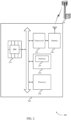
- FIG. 2 shows a block diagram 200 of a wireless device 205 that supports management of a forbidden network list on a subscriber identity module (SIM) in a user equipment (UE) in accordance with aspects of the present disclosure.
- Wireless device 205 may be an example of aspects of a UE 115 as described herein.
- Wireless device 205 may include memory 210, processor 220, transceiver 225, antenna 230 and SIM 235. Each of these modules may communicate, directly or indirectly, with one another (e.g., via one or more buses).
- the memory 210 may include random access memory (RAM) and read only memory (ROM).
- the memory 210 may store computer-readable, computer-executable software including instructions that, when executed, cause the processor to perform various functions described herein.
- the software 215 may not be directly executable by the processor but may cause a computer (e.g., when compiled and executed) to perform functions described herein.
- the transceiver 225 may communicate bi-directionally, via one or more antennas, wired, or wireless links, with one or more networks, as described above.
- the transceiver 225 may communicate bi-directionally with a base station 105 or a UE 115.
- the transceiver 225 may also include a modem to modulate the packets and provide the modulated packets to the antennas for transmission, and to demodulate packets received from the antennas.
- the processor 220 may include an intelligent hardware device (e.g., a general-purpose processor, a DSP, a central processing unit (CPU), a microcontroller, an ASIC, an FPGA, a programmable logic device, a discrete gate or transistor logic component, a discrete hardware component, or any combination thereof).
- processor 220 may be configured to operate a memory array using a memory controller.
- a memory controller may be integrated into processor 220.
- Processor 220 may be configured to execute computer-readable instructions stored in a memory to perform various functions (e.g., functions or tasks supporting management of a forbidden network list on a SIM in a UE in accordance with aspects of the present disclosure).
- the term processor is used herein in accordance with its meaning as structure.
- the software 215 may include code to implement aspects of the present disclosure, including code to support management of a forbidden network list on a SIM in a UE in accordance with aspects of the present disclosure.
- Software 215 may be stored in a non-transitory computer-readable medium such as system memory or other memory. In some cases, the software 215 may not be directly executable by the processor but may cause a computer (e.g., when compiled and executed) to perform functions described herein.
- the wireless device may include a single antenna 230. However, in some cases the device may have more than one antenna 230, which may be capable of concurrently transmitting or receiving multiple wireless transmissions.
- the SIM 235 may be an integrated circuit (IC) that securely stores an international mobile subscriber identify (IMSI) and the related key used to identify and authenticate a UE 115.
- SIM 235 may also contain a unique serial number, e.g., an integrated circuit card identification (ICCID), security authentication and ciphering information, temporary information related to the local network, a list of the services, a personal identification number (PIN), and a PIN unblocking key (PUK) for PIN unlocking.
- ICCID integrated circuit card identification
- PIN personal identification number
- PIN unblocking key PIN unblocking key
- SIM 235 may be a circuit embedded in a removable card or directly embedded on the UE.
- SIM may be also referred to as universal subscriber identity module (USIM) in LTE network.
- USIM universal subscriber identity module
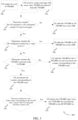
- FIG. 3 shows a flowchart illustrating a method 300 for management of a forbidden network list on a subscriber identity module (SIM) in a user equipment (UE) in accordance with aspects of the present disclosure.
- SIM subscriber identity module
- UE user equipment
- the operations of method 300 may be implemented by a UE 115 or its components as described herein.
- the operations of method 300 may be performed by a processor as described with reference to FIG. 2 .
- a UE 115 may execute a set of codes to control the functional elements of the device to perform the functions described below. Additionally or alternatively, the UE 115 may perform aspects of the functions described below using special-purpose hardware.
- the UE 115 may camp on a cell of a visited PLMN (VPLMN).
- VPLMN a visited PLMN
- camping on a cell of a VPLMN refers to the UE searching for a suitable cell of the VPLMN, choosing (or selecting) that cell to provide available services, and tuning to its control channel.
- the UE receives a reject message with cause value "PLMN not allowed" (also referred to as EMM cause #11), which indicates that the VPLMN is not allowed, from the VPLMN.
- the reject message may include Attach Reject, tracking area update (TAU) Reject, or Service Reject messages. Further, the reject message may be a non-integrity protected or plain reject message.
- the UE determines whether it maintains a UE-configured counter for reject messages.
- the UE-configured counter may be any PLNM-specific counter maintained by the UE.
- the UE adds the VPLMN to an elementary file forbidden PLMN (EF-FPLMN) list, which resides on the SIM of the UE. For example, the UE may electronically store or write the VPLMN identification in the EF-FPLMN list.
- EF-FPLMN elementary file forbidden PLMN
- the UE determines whether the UE-configured counter has a value of 0 or 1.
- the UE adds the VPLMN to the EF-FPLMN list, which resides on the SIM of the UE. For example, the UE may electronically store or write the VPLMN identification in the EF-FPLMN list on the SIM of the UE.
- the UE determines whether the VPLMN is present in the temporary forbidden PLMN (T-FPLMN) list in the UE's memory outside the SIM. For example, the UE may electronically search for the VPLMN identification in the T-FPLMN list in the UE's memory.
- T-FPLMN temporary forbidden PLMN
- the UE adds the VPLMN to the T-FPLMN list in the UE's memory and increments the counter corresponding to that VPLMN entry.
- the UE increments the counter corresponding to that VPLMN entry.
- the UE determines whether the value of the counter corresponding to the VPLMN entry is equal to the UE-configured maximum counter value. If the value of the counter corresponding to the VPLMN entry is not equal to the UE-configured maximum counter value, no action is further taken. At block 355, if the value of the counter corresponding to the VPLMN entry is equal to the UE-configured maximum counter value, the UE deletes the VPLMN entry from the T-FPLMN list in the UE's memory and adds the VPLMN to the EF-FPLMN list on the SIM.
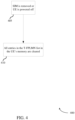
- FIG. 4 shows a flowchart illustrating a further method 400 for management of a forbidden network list on a subscriber identity module (SIM) in a user equipment (UE) in accordance with aspects of the present disclosure.
- SIM subscriber identity module
- UE user equipment
- the operations of method 400 may be implemented by a UE 115 or its components as described herein.
- the operations of method 400 may be performed by a processor as described with reference to FIG. 2 .
- a UE 115 may execute a set of codes to control the functional elements of the device to perform the functions described below. Additionally or alternatively, the UE 115 may perform aspects of the functions described below using special-purpose hardware.
- the SIM is removed or UE is powered off.
- all entries in the T-FPLMN list in the UE's memory are cleared, or deleted, when the SIM is removed or UE is powered off. Hence, the entries in the T-FPLMN list does not get stored on the SIM's EF-FPLMN list at the time of the removal or power off, or afterwards.
- CDMA code division multiple access
- TDMA time division multiple access
- FDMA frequency division multiple access
- OFDMA orthogonal frequency division multiple access
- SC-FDMA single carrier frequency division multiple access
- a CDMA system may implement a radio technology such as CDMA2000, Universal Terrestrial Radio Access (UTRA), etc.
- CDMA2000 covers IS-2000, IS-95, and IS-856 standards.
- IS-2000 Releases may be commonly referred to as CDMA2000 1X, 1X, etc.
- IS-856 TIA-856) is commonly referred to as CDMA2000 1xEV-DO, High Rate Packet Data (HRPD), etc.
- UTRA includes Wideband CDMA (WCDMA) and other variants of CDMA.
- a TDMA system may implement a radio technology such as Global System for Mobile Communications (GSM).
- GSM Global System for Mobile Communications
- An OFDMA system may implement a radio technology such as Ultra Mobile Broadband (UMB), Evolved UTRA (E-UTRA), Institute of Electrical and Electronics Engineers (IEEE) 802.11 (Wi-Fi), IEEE 802.16 (WiMAX), IEEE 802.20, Flash-OFDM, etc.
- UMB Ultra Mobile Broadband
- E-UTRA Evolved UTRA
- IEEE Institute of Electrical and Electronics Engineers
- Wi-Fi Wi-Fi
- WiMAX IEEE 802.16
- IEEE 802.20 Flash-OFDM
- UMB Ultra Mobile Broadband
- E-UTRA Evolved UTRA
- IEEE 802.11 Wi-Fi
- WiMAX IEEE 802.16
- Flash-OFDM Flash-OFDM
- UTRA and E-UTRA are part of Universal Mobile Telecommunications System (UMTS).
- LTE and LTE-A are releases of UMTS that use E-UTRA.
- LTE or NR may be described for purposes of example, and LTE or NR terminology may be used in much of the description, the techniques described herein are applicable beyond LTE or NR applications.
- Information and signals described herein may be represented using any of a variety of different technologies and techniques.
- data, instructions, commands, information, signals, bits, symbols, and chips that may be referenced throughout the above description may be represented by voltages, currents, electromagnetic waves, magnetic fields or particles, optical fields or particles, or any combination thereof.
- DSP digital signal processor
- ASIC application-specific integrated circuit
- FPGA field-programmable gate array
- PLD programmable logic device
- a general-purpose processor may be a microprocessor, but in the alternative, the processor may be any conventional processor, controller, microcontroller, or state machine.
- a processor may also be implemented as a combination of computing devices (e.g., a combination of a DSP and a microprocessor, multiple microprocessors, one or more microprocessors in conjunction with a DSP core, or any other such configuration).
- the functions described herein may be implemented in hardware, software executed by a processor, firmware, or any combination thereof. If implemented in software executed by a processor, the functions may be stored on or transmitted over as one or more instructions or code on a computer-readable medium. Other examples and implementations are within the scope of the disclosure and appended claims. For example, due to the nature of software, functions described above can be implemented using software executed by a processor, hardware, firmware, hardwiring, or combinations of any of these. Features implementing functions may also be physically located at various positions, including being distributed such that portions of functions are implemented at different physical locations.
- Computer-readable media includes both non-transitory computer storage media and communication media including any medium that facilitates transfer of a computer program from one place to another.
- a non-transitory storage medium may be any available medium that can be accessed by a general purpose or special purpose computer.
- non-transitory computer-readable media may comprise random-access memory (RAM), read-only memory (ROM), electrically erasable programmable read only memory (EEPROM), flash memory, compact disk (CD) ROM or other optical disk storage, magnetic disk storage or other magnetic storage devices, or any other non-transitory medium that can be used to carry or store desired program code means in the form of instructions or data structures and that can be accessed by a general-purpose or special-purpose computer, or a general-purpose or special-purpose processor.
- RAM random-access memory
- ROM read-only memory
- EEPROM electrically erasable programmable read only memory
- CD compact disk
- magnetic disk storage or other magnetic storage devices or any other non-transitory medium that can be used to carry
- any connection is properly termed a computer-readable medium.
- the software is transmitted from a website, server, or other remote source using a coaxial cable, fiber optic cable, twisted pair, digital subscriber line (DSL), or wireless technologies such as infrared, radio, and microwave
- the coaxial cable, fiber optic cable, twisted pair, DSL, or wireless technologies such as infrared, radio, and microwave are included in the definition of medium.
- Disk and disc include CD, laser disc, optical disc, digital versatile disc (DVD), floppy disk and Blu-ray disc where disks usually reproduce data magnetically, while discs reproduce data optically with lasers. Combinations of the above are also included within the scope of computer-readable media.
Landscapes
- Engineering & Computer Science (AREA)
- Computer Security & Cryptography (AREA)
- Computer Networks & Wireless Communication (AREA)
- Signal Processing (AREA)
- Computer Hardware Design (AREA)
- Computing Systems (AREA)
- General Engineering & Computer Science (AREA)
- Databases & Information Systems (AREA)
- Mobile Radio Communication Systems (AREA)
Applications Claiming Priority (3)
| Application Number | Priority Date | Filing Date | Title |
|---|---|---|---|
| US201762543473P | 2017-08-10 | 2017-08-10 | |
| US16/031,803 US10477400B2 (en) | 2017-08-10 | 2018-07-10 | Forbidden network list management |
| PCT/US2018/041815 WO2019032236A1 (en) | 2017-08-10 | 2018-07-12 | LIST MANAGEMENT OF FORBIDDEN NETWORKS |
Publications (3)
| Publication Number | Publication Date |
|---|---|
| EP3665979A1 EP3665979A1 (en) | 2020-06-17 |
| EP3665979B1 true EP3665979B1 (en) | 2024-06-19 |
| EP3665979C0 EP3665979C0 (en) | 2024-06-19 |
Family
ID=65272582
Family Applications (1)
| Application Number | Title | Priority Date | Filing Date |
|---|---|---|---|
| EP18750288.5A Active EP3665979B1 (en) | 2017-08-10 | 2018-07-12 | Forbidden network list management |
Country Status (8)
| Country | Link |
|---|---|
| US (2) | US10477400B2 (enExample) |
| EP (1) | EP3665979B1 (enExample) |
| JP (1) | JP7159287B2 (enExample) |
| KR (2) | KR20240130824A (enExample) |
| CN (1) | CN110999430B (enExample) |
| AU (1) | AU2018316148B2 (enExample) |
| TW (1) | TWI699139B (enExample) |
| WO (1) | WO2019032236A1 (enExample) |
Families Citing this family (19)
| Publication number | Priority date | Publication date | Assignee | Title |
|---|---|---|---|---|
| US10477400B2 (en) | 2017-08-10 | 2019-11-12 | Qualcomm Incorporated | Forbidden network list management |
| WO2019074344A1 (en) * | 2017-10-13 | 2019-04-18 | Samsung Electronics Co., Ltd. | METHOD AND SYSTEM FOR MAINTAINING SERVICE CONTINUITY BY USER EQUIPMENT (UE) IN A WIRELESS COMMUNICATION SYSTEM |
| EP3673678A4 (en) | 2017-10-13 | 2021-06-23 | Samsung Electronics Co., Ltd. | USER DEVICE (UE) AND CORE NETWORK FOR MANAGING THE OVERLOAD OF NETWORK SLICES IN WIRELESS COMMUNICATION SYSTEM |
| US11071043B2 (en) * | 2018-05-21 | 2021-07-20 | Mediatek Inc. | Enhanced handling on forbidden PLMN list |
| CN112312378B (zh) * | 2019-07-29 | 2022-12-09 | 中国移动通信集团山东有限公司 | 运营商网络的共享方法、装置和核心网设备 |
| CN119893511A (zh) * | 2019-08-14 | 2025-04-25 | 诺基亚技术有限公司 | 用于处理非公共网络中的未被完整性保护的拒绝消息的方法和装置 |
| BR112022003179A2 (pt) * | 2019-08-18 | 2022-05-17 | Huawei Tech Co Ltd | Método e aparelho de comunicação |
| US11638152B2 (en) * | 2019-11-28 | 2023-04-25 | Qualcomm Incorporated | Identifying an illegitimate base station based on improper response |
| WO2021207918A1 (en) * | 2020-04-14 | 2021-10-21 | Qualcomm Incorporated | Restoration of data connectivity after data call failure in non-standalone network |
| CN113810532B (zh) * | 2020-05-29 | 2023-01-13 | 华为技术有限公司 | 定位方法和相关装置 |
| CN111556485B (zh) * | 2020-05-29 | 2023-11-17 | 深圳市环球通科技有限公司 | 含iSIM和计数器的用于数据限制通信的移动无线通信设备 |
| CN114126006B (zh) * | 2020-08-27 | 2025-02-11 | 中兴通讯股份有限公司 | 转卡切片切换方法、设备及存储介质 |
| US12028710B2 (en) * | 2020-10-15 | 2024-07-02 | Mediatek Inc. | Stand-alone Non-Public Network as service provider |
| US11510061B1 (en) * | 2020-12-30 | 2022-11-22 | Trend Micro Incorporated | Mitigation of cyberattacks on cellular devices |
| JP7574655B2 (ja) * | 2021-01-18 | 2024-10-29 | トヨタ自動車株式会社 | 情報処理装置、情報処理方法、及び情報処理プログラム |
| CN114885320B (zh) * | 2021-02-05 | 2025-07-04 | 维沃移动通信有限公司 | 信息处理方法、装置、通信设备及可读存储介质 |
| WO2024031238A1 (zh) * | 2022-08-08 | 2024-02-15 | 哲库科技(北京)有限公司 | 管理禁止公共陆地移动网络plmn的方法和终端设备 |
| CN115942421A (zh) * | 2022-11-21 | 2023-04-07 | Oppo广东移动通信有限公司 | 小区禁用方法、装置、终端设备及计算机存储介质 |
| US12471051B1 (en) * | 2025-03-17 | 2025-11-11 | Mentats Co., Ltd. | Method and user equipment for deleting radio access technology utilization control information |
Citations (1)
| Publication number | Priority date | Publication date | Assignee | Title |
|---|---|---|---|---|
| CN105530699A (zh) * | 2016-01-15 | 2016-04-27 | 华为技术有限公司 | 跟踪区禁用方法和用户设备 |
Family Cites Families (18)
| Publication number | Priority date | Publication date | Assignee | Title |
|---|---|---|---|---|
| US124008A (en) * | 1872-02-27 | Improvement in window-stop attachments | ||
| GB2428540B (en) * | 2005-07-15 | 2007-07-11 | Nec Technologies | Mobile radio communications device and method of operation |
| US8433317B2 (en) * | 2008-11-27 | 2013-04-30 | Htc Corporation | Method of controlling home cell selection for a wireless communication system and related device |
| US8995989B2 (en) | 2012-05-22 | 2015-03-31 | Mediatek Inc. | UE enhancement for service recovery in mobile communications network |
| US10028174B2 (en) * | 2012-07-06 | 2018-07-17 | Mobileum, Inc. | Steering of roaming in LTE and legacy network environment |
| CN104041138B (zh) * | 2012-12-31 | 2018-08-21 | 展讯通信(上海)有限公司 | 移动终端及其选网方法 |
| US9642065B2 (en) * | 2013-03-27 | 2017-05-02 | Acer Incorporated | Method for managing tracking area identity list and user equipment using the same and communication system using the same |
| WO2015008282A1 (en) * | 2013-07-15 | 2015-01-22 | Cyberseal Ltd. | Network protection |
| US9380630B2 (en) * | 2013-10-25 | 2016-06-28 | Cellco Partnership | Management of access network retry across power cycle |
| CN105917706B (zh) * | 2014-12-19 | 2019-04-05 | 华为技术有限公司 | 一种恢复网络服务的方法和终端 |
| US9838860B2 (en) * | 2015-01-15 | 2017-12-05 | Mediatek Inc. | Methods for efficient wireless communications and communications apparatus utilizing the same |
| KR102510207B1 (ko) * | 2015-04-17 | 2023-03-16 | 삼성전자주식회사 | 사용자 단말에서 #14 원인을 가지는 attach 거절 메시지를 처리하기 위한 방법 |
| KR102468218B1 (ko) * | 2015-06-18 | 2022-11-18 | 삼성전자주식회사 | 사용자 장치에서 타이머를 제어하는 방법 및 장치 |
| US10251119B2 (en) * | 2016-01-27 | 2019-04-02 | Mediatek Singapore Pte. Ltd. | Method and apparatus for handling reject |
| US10855720B2 (en) * | 2016-02-02 | 2020-12-01 | Samsung Electronics Co., Ltd. | Method and apparatus for managing non-integrity protected message |
| CN105848255B (zh) * | 2016-05-31 | 2019-11-26 | 深圳市海思半导体有限公司 | 一种选择频点的方法及装置 |
| WO2018085427A1 (en) | 2016-11-04 | 2018-05-11 | Intel IP Corporation | Defense against non-access stratum denial-of-service attack |
| US10477400B2 (en) | 2017-08-10 | 2019-11-12 | Qualcomm Incorporated | Forbidden network list management |
-
2018
- 2018-07-10 US US16/031,803 patent/US10477400B2/en active Active
- 2018-07-11 TW TW107123953A patent/TWI699139B/zh active
- 2018-07-12 EP EP18750288.5A patent/EP3665979B1/en active Active
- 2018-07-12 KR KR1020247027731A patent/KR20240130824A/ko active Pending
- 2018-07-12 WO PCT/US2018/041815 patent/WO2019032236A1/en not_active Ceased
- 2018-07-12 JP JP2020503702A patent/JP7159287B2/ja active Active
- 2018-07-12 AU AU2018316148A patent/AU2018316148B2/en active Active
- 2018-07-12 CN CN201880051066.XA patent/CN110999430B/zh active Active
- 2018-07-12 KR KR1020207003182A patent/KR102698062B1/ko active Active
-
2019
- 2019-11-11 US US16/679,707 patent/US10791463B2/en active Active
Patent Citations (1)
| Publication number | Priority date | Publication date | Assignee | Title |
|---|---|---|---|---|
| CN105530699A (zh) * | 2016-01-15 | 2016-04-27 | 华为技术有限公司 | 跟踪区禁用方法和用户设备 |
Also Published As
| Publication number | Publication date |
|---|---|
| TWI699139B (zh) | 2020-07-11 |
| AU2018316148B2 (en) | 2022-12-15 |
| US20190053054A1 (en) | 2019-02-14 |
| KR20200033866A (ko) | 2020-03-30 |
| KR102698062B1 (ko) | 2024-08-22 |
| WO2019032236A1 (en) | 2019-02-14 |
| EP3665979A1 (en) | 2020-06-17 |
| CN110999430B (zh) | 2022-08-23 |
| JP7159287B2 (ja) | 2022-10-24 |
| US10791463B2 (en) | 2020-09-29 |
| US10477400B2 (en) | 2019-11-12 |
| CN110999430A (zh) | 2020-04-10 |
| BR112020002251A2 (pt) | 2020-08-04 |
| AU2018316148A1 (en) | 2020-01-30 |
| TW201911961A (zh) | 2019-03-16 |
| US20200077268A1 (en) | 2020-03-05 |
| KR20240130824A (ko) | 2024-08-29 |
| JP2020530222A (ja) | 2020-10-15 |
| EP3665979C0 (en) | 2024-06-19 |
Similar Documents
| Publication | Publication Date | Title |
|---|---|---|
| US10791463B2 (en) | Forbidden network list management | |
| CN111226472B (zh) | 实现网络切片与演进型分组核心连接之间的互通的机制 | |
| EP3984281B1 (en) | Method and system for handling of closed access group related procedure | |
| EP3577951B1 (en) | A mechanism to enable optimized user plane anchoring for minimization of user plane relocation due to user equipment mobility | |
| EP3152940B1 (en) | Managing ue subscription establishment | |
| KR20130021443A (ko) | 허용된 폐쇄 가입자 그룹 리스트의 금지 | |
| EP4156794B1 (en) | Ue-preferred network slice management | |
| WO2019109350A1 (en) | Improving voice over lte (volte) success rate in a dual sim dual standby (dsds) device | |
| BR112020002251B1 (pt) | Método e aparelho para comunicação sem fio e memória relacionada |
Legal Events
| Date | Code | Title | Description |
|---|---|---|---|
| STAA | Information on the status of an ep patent application or granted ep patent |
Free format text: STATUS: UNKNOWN |
|
| STAA | Information on the status of an ep patent application or granted ep patent |
Free format text: STATUS: THE INTERNATIONAL PUBLICATION HAS BEEN MADE |
|
| PUAI | Public reference made under article 153(3) epc to a published international application that has entered the european phase |
Free format text: ORIGINAL CODE: 0009012 |
|
| STAA | Information on the status of an ep patent application or granted ep patent |
Free format text: STATUS: REQUEST FOR EXAMINATION WAS MADE |
|
| 17P | Request for examination filed |
Effective date: 20200116 |
|
| AK | Designated contracting states |
Kind code of ref document: A1 Designated state(s): AL AT BE BG CH CY CZ DE DK EE ES FI FR GB GR HR HU IE IS IT LI LT LU LV MC MK MT NL NO PL PT RO RS SE SI SK SM TR |
|
| AX | Request for extension of the european patent |
Extension state: BA ME |
|
| DAV | Request for validation of the european patent (deleted) | ||
| DAX | Request for extension of the european patent (deleted) | ||
| STAA | Information on the status of an ep patent application or granted ep patent |
Free format text: STATUS: EXAMINATION IS IN PROGRESS |
|
| 17Q | First examination report despatched |
Effective date: 20220624 |
|
| REG | Reference to a national code |
Ref country code: DE Ref legal event code: R079 Free format text: PREVIOUS MAIN CLASS: H04W0060000000 Ipc: H04W0008180000 Ref document number: 602018070769 Country of ref document: DE |
|
| GRAP | Despatch of communication of intention to grant a patent |
Free format text: ORIGINAL CODE: EPIDOSNIGR1 |
|
| STAA | Information on the status of an ep patent application or granted ep patent |
Free format text: STATUS: GRANT OF PATENT IS INTENDED |
|
| RIC1 | Information provided on ipc code assigned before grant |
Ipc: H04W 12/06 20090101ALN20231205BHEP Ipc: H04W 60/00 20090101ALN20231205BHEP Ipc: H04W 8/18 20090101AFI20231205BHEP |
|
| RIC1 | Information provided on ipc code assigned before grant |
Ipc: H04W 12/06 20090101ALN20231208BHEP Ipc: H04W 60/00 20090101ALN20231208BHEP Ipc: H04W 8/18 20090101AFI20231208BHEP |
|
| INTG | Intention to grant announced |
Effective date: 20240109 |
|
| GRAS | Grant fee paid |
Free format text: ORIGINAL CODE: EPIDOSNIGR3 |
|
| GRAA | (expected) grant |
Free format text: ORIGINAL CODE: 0009210 |
|
| STAA | Information on the status of an ep patent application or granted ep patent |
Free format text: STATUS: THE PATENT HAS BEEN GRANTED |
|
| AK | Designated contracting states |
Kind code of ref document: B1 Designated state(s): AL AT BE BG CH CY CZ DE DK EE ES FI FR GB GR HR HU IE IS IT LI LT LU LV MC MK MT NL NO PL PT RO RS SE SI SK SM TR |
|
| REG | Reference to a national code |
Ref country code: GB Ref legal event code: FG4D |
|
| REG | Reference to a national code |
Ref country code: CH Ref legal event code: EP |
|
| REG | Reference to a national code |
Ref country code: DE Ref legal event code: R096 Ref document number: 602018070769 Country of ref document: DE |
|
| U01 | Request for unitary effect filed |
Effective date: 20240702 |
|
| U07 | Unitary effect registered |
Designated state(s): AT BE BG DE DK EE FI FR IT LT LU LV MT NL PT RO SE SI Effective date: 20240902 |
|
| PG25 | Lapsed in a contracting state [announced via postgrant information from national office to epo] |
Ref country code: HR Free format text: LAPSE BECAUSE OF FAILURE TO SUBMIT A TRANSLATION OF THE DESCRIPTION OR TO PAY THE FEE WITHIN THE PRESCRIBED TIME-LIMIT Effective date: 20240619 |
|
| PG25 | Lapsed in a contracting state [announced via postgrant information from national office to epo] |
Ref country code: GR Free format text: LAPSE BECAUSE OF FAILURE TO SUBMIT A TRANSLATION OF THE DESCRIPTION OR TO PAY THE FEE WITHIN THE PRESCRIBED TIME-LIMIT Effective date: 20240920 |
|
| PG25 | Lapsed in a contracting state [announced via postgrant information from national office to epo] |
Ref country code: NO Free format text: LAPSE BECAUSE OF FAILURE TO SUBMIT A TRANSLATION OF THE DESCRIPTION OR TO PAY THE FEE WITHIN THE PRESCRIBED TIME-LIMIT Effective date: 20240919 Ref country code: HR Free format text: LAPSE BECAUSE OF FAILURE TO SUBMIT A TRANSLATION OF THE DESCRIPTION OR TO PAY THE FEE WITHIN THE PRESCRIBED TIME-LIMIT Effective date: 20240619 Ref country code: GR Free format text: LAPSE BECAUSE OF FAILURE TO SUBMIT A TRANSLATION OF THE DESCRIPTION OR TO PAY THE FEE WITHIN THE PRESCRIBED TIME-LIMIT Effective date: 20240920 Ref country code: RS Free format text: LAPSE BECAUSE OF FAILURE TO SUBMIT A TRANSLATION OF THE DESCRIPTION OR TO PAY THE FEE WITHIN THE PRESCRIBED TIME-LIMIT Effective date: 20240919 |
|
| U20 | Renewal fee for the european patent with unitary effect paid |
Year of fee payment: 7 Effective date: 20241126 |
|
| PG25 | Lapsed in a contracting state [announced via postgrant information from national office to epo] |
Ref country code: PL Free format text: LAPSE BECAUSE OF FAILURE TO SUBMIT A TRANSLATION OF THE DESCRIPTION OR TO PAY THE FEE WITHIN THE PRESCRIBED TIME-LIMIT Effective date: 20240619 |
|
| PG25 | Lapsed in a contracting state [announced via postgrant information from national office to epo] |
Ref country code: IS Free format text: LAPSE BECAUSE OF FAILURE TO SUBMIT A TRANSLATION OF THE DESCRIPTION OR TO PAY THE FEE WITHIN THE PRESCRIBED TIME-LIMIT Effective date: 20241019 |
|
| PG25 | Lapsed in a contracting state [announced via postgrant information from national office to epo] |
Ref country code: CZ Free format text: LAPSE BECAUSE OF FAILURE TO SUBMIT A TRANSLATION OF THE DESCRIPTION OR TO PAY THE FEE WITHIN THE PRESCRIBED TIME-LIMIT Effective date: 20240619 |
|
| PG25 | Lapsed in a contracting state [announced via postgrant information from national office to epo] |
Ref country code: SK Free format text: LAPSE BECAUSE OF FAILURE TO SUBMIT A TRANSLATION OF THE DESCRIPTION OR TO PAY THE FEE WITHIN THE PRESCRIBED TIME-LIMIT Effective date: 20240619 |
|
| PG25 | Lapsed in a contracting state [announced via postgrant information from national office to epo] |
Ref country code: SM Free format text: LAPSE BECAUSE OF FAILURE TO SUBMIT A TRANSLATION OF THE DESCRIPTION OR TO PAY THE FEE WITHIN THE PRESCRIBED TIME-LIMIT Effective date: 20240619 Ref country code: ES Free format text: LAPSE BECAUSE OF FAILURE TO SUBMIT A TRANSLATION OF THE DESCRIPTION OR TO PAY THE FEE WITHIN THE PRESCRIBED TIME-LIMIT Effective date: 20240619 |
|
| PG25 | Lapsed in a contracting state [announced via postgrant information from national office to epo] |
Ref country code: SM Free format text: LAPSE BECAUSE OF FAILURE TO SUBMIT A TRANSLATION OF THE DESCRIPTION OR TO PAY THE FEE WITHIN THE PRESCRIBED TIME-LIMIT Effective date: 20240619 Ref country code: SK Free format text: LAPSE BECAUSE OF FAILURE TO SUBMIT A TRANSLATION OF THE DESCRIPTION OR TO PAY THE FEE WITHIN THE PRESCRIBED TIME-LIMIT Effective date: 20240619 Ref country code: PL Free format text: LAPSE BECAUSE OF FAILURE TO SUBMIT A TRANSLATION OF THE DESCRIPTION OR TO PAY THE FEE WITHIN THE PRESCRIBED TIME-LIMIT Effective date: 20240619 Ref country code: IS Free format text: LAPSE BECAUSE OF FAILURE TO SUBMIT A TRANSLATION OF THE DESCRIPTION OR TO PAY THE FEE WITHIN THE PRESCRIBED TIME-LIMIT Effective date: 20241019 Ref country code: ES Free format text: LAPSE BECAUSE OF FAILURE TO SUBMIT A TRANSLATION OF THE DESCRIPTION OR TO PAY THE FEE WITHIN THE PRESCRIBED TIME-LIMIT Effective date: 20240619 Ref country code: CZ Free format text: LAPSE BECAUSE OF FAILURE TO SUBMIT A TRANSLATION OF THE DESCRIPTION OR TO PAY THE FEE WITHIN THE PRESCRIBED TIME-LIMIT Effective date: 20240619 |
|
| REG | Reference to a national code |
Ref country code: CH Ref legal event code: PL |
|
| PG25 | Lapsed in a contracting state [announced via postgrant information from national office to epo] |
Ref country code: MC Free format text: LAPSE BECAUSE OF FAILURE TO SUBMIT A TRANSLATION OF THE DESCRIPTION OR TO PAY THE FEE WITHIN THE PRESCRIBED TIME-LIMIT Effective date: 20240619 |
|
| PG25 | Lapsed in a contracting state [announced via postgrant information from national office to epo] |
Ref country code: MC Free format text: LAPSE BECAUSE OF FAILURE TO SUBMIT A TRANSLATION OF THE DESCRIPTION OR TO PAY THE FEE WITHIN THE PRESCRIBED TIME-LIMIT Effective date: 20240619 |
|
| PG25 | Lapsed in a contracting state [announced via postgrant information from national office to epo] |
Ref country code: CH Free format text: LAPSE BECAUSE OF NON-PAYMENT OF DUE FEES Effective date: 20240731 |
|
| PLBE | No opposition filed within time limit |
Free format text: ORIGINAL CODE: 0009261 |
|
| STAA | Information on the status of an ep patent application or granted ep patent |
Free format text: STATUS: NO OPPOSITION FILED WITHIN TIME LIMIT |
|
| 26N | No opposition filed |
Effective date: 20250320 |
|
| PGFP | Annual fee paid to national office [announced via postgrant information from national office to epo] |
Ref country code: GB Payment date: 20250612 Year of fee payment: 8 |
|
| U20 | Renewal fee for the european patent with unitary effect paid |
Year of fee payment: 8 Effective date: 20250617 |
|
| PGFP | Annual fee paid to national office [announced via postgrant information from national office to epo] |
Ref country code: IE Payment date: 20250612 Year of fee payment: 8 |
|
| PG25 | Lapsed in a contracting state [announced via postgrant information from national office to epo] |
Ref country code: CY Free format text: LAPSE BECAUSE OF FAILURE TO SUBMIT A TRANSLATION OF THE DESCRIPTION OR TO PAY THE FEE WITHIN THE PRESCRIBED TIME-LIMIT; INVALID AB INITIO Effective date: 20180712 |