EP3664572A1 - Method for activating and deactivating data duplication, and terminal - Google Patents
Method for activating and deactivating data duplication, and terminal Download PDFInfo
- Publication number
- EP3664572A1 EP3664572A1 EP18841832.1A EP18841832A EP3664572A1 EP 3664572 A1 EP3664572 A1 EP 3664572A1 EP 18841832 A EP18841832 A EP 18841832A EP 3664572 A1 EP3664572 A1 EP 3664572A1
- Authority
- EP
- European Patent Office
- Prior art keywords
- entity
- bearer
- data duplication
- duplication function
- data
- Prior art date
- Legal status (The legal status is an assumption and is not a legal conclusion. Google has not performed a legal analysis and makes no representation as to the accuracy of the status listed.)
- Pending
Links
Images


Classifications
-
- H—ELECTRICITY
- H04—ELECTRIC COMMUNICATION TECHNIQUE
- H04L—TRANSMISSION OF DIGITAL INFORMATION, e.g. TELEGRAPHIC COMMUNICATION
- H04L69/00—Network arrangements, protocols or services independent of the application payload and not provided for in the other groups of this subclass
- H04L69/30—Definitions, standards or architectural aspects of layered protocol stacks
- H04L69/32—Architecture of open systems interconnection [OSI] 7-layer type protocol stacks, e.g. the interfaces between the data link level and the physical level
- H04L69/322—Intralayer communication protocols among peer entities or protocol data unit [PDU] definitions
-
- H—ELECTRICITY
- H04—ELECTRIC COMMUNICATION TECHNIQUE
- H04L—TRANSMISSION OF DIGITAL INFORMATION, e.g. TELEGRAPHIC COMMUNICATION
- H04L45/00—Routing or path finding of packets in data switching networks
- H04L45/24—Multipath
-
- H—ELECTRICITY
- H04—ELECTRIC COMMUNICATION TECHNIQUE
- H04L—TRANSMISSION OF DIGITAL INFORMATION, e.g. TELEGRAPHIC COMMUNICATION
- H04L1/00—Arrangements for detecting or preventing errors in the information received
- H04L1/08—Arrangements for detecting or preventing errors in the information received by repeating transmission, e.g. Verdan system
-
- H—ELECTRICITY
- H04—ELECTRIC COMMUNICATION TECHNIQUE
- H04L—TRANSMISSION OF DIGITAL INFORMATION, e.g. TELEGRAPHIC COMMUNICATION
- H04L67/00—Network arrangements or protocols for supporting network services or applications
- H04L67/01—Protocols
- H04L67/10—Protocols in which an application is distributed across nodes in the network
- H04L67/1095—Replication or mirroring of data, e.g. scheduling or transport for data synchronisation between network nodes
-
- H—ELECTRICITY
- H04—ELECTRIC COMMUNICATION TECHNIQUE
- H04W—WIRELESS COMMUNICATION NETWORKS
- H04W28/00—Network traffic management; Network resource management
- H04W28/02—Traffic management, e.g. flow control or congestion control
- H04W28/0252—Traffic management, e.g. flow control or congestion control per individual bearer or channel
-
- H—ELECTRICITY
- H04—ELECTRIC COMMUNICATION TECHNIQUE
- H04W—WIRELESS COMMUNICATION NETWORKS
- H04W76/00—Connection management
- H04W76/10—Connection setup
- H04W76/15—Setup of multiple wireless link connections
-
- H—ELECTRICITY
- H04—ELECTRIC COMMUNICATION TECHNIQUE
- H04W—WIRELESS COMMUNICATION NETWORKS
- H04W8/00—Network data management
- H04W8/22—Processing or transfer of terminal data, e.g. status or physical capabilities
- H04W8/24—Transfer of terminal data
- H04W8/245—Transfer of terminal data from a network towards a terminal
-
- H—ELECTRICITY
- H04—ELECTRIC COMMUNICATION TECHNIQUE
- H04L—TRANSMISSION OF DIGITAL INFORMATION, e.g. TELEGRAPHIC COMMUNICATION
- H04L1/00—Arrangements for detecting or preventing errors in the information received
- H04L1/22—Arrangements for detecting or preventing errors in the information received using redundant apparatus to increase reliability
-
- H—ELECTRICITY
- H04—ELECTRIC COMMUNICATION TECHNIQUE
- H04L—TRANSMISSION OF DIGITAL INFORMATION, e.g. TELEGRAPHIC COMMUNICATION
- H04L69/00—Network arrangements, protocols or services independent of the application payload and not provided for in the other groups of this subclass
- H04L69/30—Definitions, standards or architectural aspects of layered protocol stacks
- H04L69/32—Architecture of open systems interconnection [OSI] 7-layer type protocol stacks, e.g. the interfaces between the data link level and the physical level
- H04L69/322—Intralayer communication protocols among peer entities or protocol data unit [PDU] definitions
- H04L69/324—Intralayer communication protocols among peer entities or protocol data unit [PDU] definitions in the data link layer [OSI layer 2], e.g. HDLC
-
- H—ELECTRICITY
- H04—ELECTRIC COMMUNICATION TECHNIQUE
- H04W—WIRELESS COMMUNICATION NETWORKS
- H04W80/00—Wireless network protocols or protocol adaptations to wireless operation
- H04W80/02—Data link layer protocols
Definitions
- the present disclosure relates to field of communication technologies, and in particular, to a method of activating and deactivating a data duplication and a terminal thereof.
- Packet Data Convergence Protocol (PDCP) data duplication refers to that the network side configures whether the PDCP layer of the Radio Bearer (RB) of the User Equipment (UE), after duplicating the data of PDCP entity, send the duplicated data through two (or more) different paths (such as through two different Radio Link Control (RLC) entities), and different RLC entities correspond to different logical channels.
- PDCP Packet Data Convergence Protocol
- UE User Equipment
- RLC Radio Link Control
- the PDCP data duplication function may indicate through a Medium Access Control Element (MAC CE) whether to start (i.e., activate) or stop (i.e., deactivate).
- MAC CE Medium Access Control Control Element
- the network side may configure whether the function is enabled immediately after be configured, that is, the MAC CE signaling is not required to be activated.
- the bearer types of PDCP data duplication function include the two types shown in FIG. 1 and FIG.2 :
- Duplicate bearer shown in FIG.1 the PDCP entity, two (or more) RLC entities and one MAC entity corresponding to one duplicate bearer are in one cell group.
- the PDCP entity corresponding to the split bearer is in one cell group, and the two (or more) RLC entities and two (or more) MAC entities corresponding to the split bearer are in another cell group.
- the PDCP duplication When the PDCP duplication is activated or deactivated on the network side, if a protocol layer entity of the terminal receives the activating or deactivating command, the activating or deactivating command cannot be notified to other protocol layers. As a result, the other protocol layer entities may send unwanted data, resulting in a waste of data transmission.
- the present disclosure is to provide a method of activating and deactivating a data duplication and a terminal thereof, to notify other protocol layers of the activating or deactivating information received by a certain protocol layer entity of the terminal, thereby reducing the waster of data transmission.
- a method of activating and deactivating a data duplication is provided in the embodiments of the present disclosure, applied to a terminal, including:
- a terminal in the embodiments of the present disclosure, including a plurality of protocol layer entities, where the protocol layer entity is configured to: receive a command sent by a network side for deactivating or activating a data duplication of a bearer; and instruct other protocol layers of the terminal to deactivate or activate a data duplication function of the bearer.
- a terminal in the embodiments of the present disclosure, including: a memory, a processor and a computer program stored in the memory and executable on the processor, and the computer program is executed by the processor to perform the method of activating and deactivating data duplication hereinabove.
- a computer-readable storage medium in the embodiments of the present disclosure, where a computer program is stored in the computer-readable storage medium, and the computer program is executed by a processor to perform the method of activating and deactivating data duplication hereinabove.
- a method of activating and deactivating a data duplication and a terminal thereof are provided in the embodiments of the present disclosure, to notify other protocol layers of the activating or deactivating information received by a certain protocol layer entity of the terminal, thereby reducing the waster of data transmission.
- a method of activating and deactivating a data duplication is provided in the embodiments of the present disclosure, applied to a terminal. As shown in FIG.3 , the method includes:
- one of the protocol layer entities of the terminal needs to exchange information among different protocol layers of the terminal after receiving a command for activating or deactivating the data duplication, to make the functions of different protocol layers to be coincident with each other after the PDCP duplication functions of the different protocol layers are activated or deactivated and make the UE behaviors of different protocol layer entities to be coincident with each other after the duplication is deactivated or activated, thereby reducing the waster of data transmission.
- the command sent by the network side for deactivating or activating the data duplication of the bearer may be received by an MAC entity or a Radio Resource Control (RRC) entity of the terminal.
- RRC Radio Resource Control
- the MAC entity or RRC entity exchanges the signaling with other protocol layer entities so as to make the entity behaviors of different protocol layer entities to be coincident with each other after the PDCP duplication functions are activated or deactivated.
- the PDCP entity needs to discard the duplicated data, and the MAC entity also needs to discard the duplicated data, thereby saving the overhead of network resources and the transmission power overhead of the UE.
- the MAC entity of the terminal receives a command sent by the network side for deactivating a PDCP duplication of a bearer.
- the method of activating and deactivating PDCP duplication in this embodiment includes the following steps:
- the MAC entity of the UE instructs other protocol layer entities to deactivate the functions related to the PDCP duplication and exchange information among different protocol layers of the terminal, to make the functions of different protocol layers to be coincident with each other after the PDCP duplication functions are deactivated and make the behaviors of different protocol layer entities to be coincident with each other after the duplication is deactivated, thereby reducing the waste of data transmission.
- the instructing, by the MAC entity, other protocol layer entities of the terminal to deactivate the PDCP duplication function of the bearer includes:
- the RLC entity of which the PDCP duplication function is to be deactivated by the bearer is configured by the network side or agreed in a communication protocol.
- the method Prior to the instructing, by the MAC entity, the RLC entity of which the PDCP duplication function is to be deactivated by the bearer, to deactivate the PDCP duplication function, the method further includes: determining, by the MAC entity, according to a configuration of the network side, the RLC entity of which the data duplication function is to be deactivated by the bearer.
- the instructing information includes any one or any combination of:
- the discarding, by the PDCP entity of the bearer, the duplicated data packet not sent successfully includes:
- the instructing the other protocol layer entities to discard the duplicated data packet not sent successfully includes:
- the MAC entity After the MAC entity receives the command sent by the network side for deactivating the PDCP duplication of the bearer, or receives an indication sent by the PDCP entity that indicates the duplicated data packet has not been successfully sent, the MAC entity discards the data of the RLC entity of which the PDCP duplication function is to be deactivated by the bearer.
- the data of the above RLC entity includes any one or any combination of:
- the discarding by the MAC entity the data of the RLC entity of which the PDCP duplication function is to be deactivated by the bearer includes:
- the MAC entity of the terminal receives a command sent by the network side for activating a PDCP duplication of a bearer.
- the method of activating and deactivating PDCP duplication in this embodiment includes the following steps:
- the MAC entity of the UE instructs other protocol layer entities to activate the functions related to the PDCP duplication and exchange information among different protocol layers of the terminal, to make the functions of different protocol layers to be coincident with each other after the PDCP duplication functions are activated and make the behaviors of different protocol layer entities to be coincident with each other after the duplication is activated.
- the instructing, by the MAC entity, other protocol layer entities of the terminal to activate the PDCP duplication function of the bearer includes:
- the RLC entity of which the PDCP duplication function is to be activated by the bearer is configured by the network side or agreed in a communication protocol.
- the method Prior to the instructing, by the MAC entity, the RLC entity of which the PDCP duplication function is to be activated by the bearer, to activate the PDCP duplication function, the method further includes:
- the MAC entity determines, by the MAC entity, according to a configuration of the network side, the RLC entity of which the data duplication function is to be activated by the bearer.
- the network side configures the state of the PDCP duplication bearer to be deactivating, by sending an RRC message, and the RRC entity of the terminal receives the RRC message (i.e., a configuration command) sent by the network side.
- the method of activating and deactivating PDCP duplication in this embodiment includes the following steps: Step 401: receiving, by a RRC entity of the terminal, a configuration command sent by a network side, where the configuration command is configured to configure a state of a PDCP duplication of a bearer to be deactivating.
- the network side sends an RRC message to configure the state of the PDCP duplication of a certain bearer to be deactivating, and the RRC entity of the terminal receives the RRC message.
- Step 402 instructing, by the RRC entity, other protocol layer entities of the terminal to deactivate a PDCP duplication function of the bearer, where the other protocol layer entities include an MAC entity, a PDCP entity and an RLC entity.
- the RRC entity of the UE instructs other protocol layer entities to deactivate the functions related to the PDCP duplication and exchange information among different protocol layers of the terminal, to make the functions of different protocol layers to be coincident with each other after the PDCP duplication functions are deactivated and make the behaviors of different protocol layer entities to be coincident with each other after the duplication is deactivated.
- the instructing, by the RRC entity, the other protocol layer entities of the terminal to deactivate the PDCP duplication function of the bearer includes:
- the RLC entity of which the PDCP duplication function is to be deactivated by the bearer is configured by the network side or agreed in a communication protocol.
- the method Prior to the instructing, by the RRC entity, the RLC entity of which the PDCP duplication function is to be deactivated by the bearer, to deactivate the PDCP duplication function, the method further includes: determining, by the RRC entity, according to a configuration of the network side, the RLC entity of which the data duplication function is to be deactivated by the bearer.
- the instructing information includes any one or any combination of:
- the discarding, by the PDCP entity of the bearer, the duplicated data packet not sent successfully includes:
- the instructing the other protocol layer entities to discard the duplicated data packet not sent successfully includes:
- the MAC entity After the MAC entity receives the command sent by the RRC entity for deactivating the PDCP duplication of the bearer, or receives an indication sent by the PDCP entity that indicates the duplicated data packet has not been successfully sent, the MAC entity discards the data of the RLC entity of which the PDCP duplication function is to be deactivated by the bearer.
- the data of the above RLC entity includes any one or any combination of:
- the discarding by the MAC entity the data of the RLC entity of which the PDCP duplication function is to be deactivated by the bearer includes:
- the network side configures the state of the PDCP duplication bearer to be activating, by sending an RRC message, and the RRC entity of the terminal receives the RRC message (i.e., a configuration command) sent by the network side.
- the method of activating and deactivating PDCP duplication in this embodiment includes the following steps: Step 501: receiving, by a RRC entity of the terminal, a configuration command sent by a network side, where the configuration command is configured to configure a state of a PDCP duplication of a bearer to be activating.
- the network side sends an RRC message to configure the state of the PDCP duplication of a certain bearer to be activating, and the RRC entity of the terminal receives the RRC message.
- Step 502 instructing, by the RRC entity, other protocol layer entities of the terminal to activate a PDCP duplication function of the bearer, where the other protocol layer entities include an MAC entity, a PDCP entity and an RLC entity.
- the RRC entity of the UE instructs other protocol layer entities to deactivate the functions related to the PDCP duplication and exchange information among different protocol layers of the terminal, to make the functions of different protocol layers to be coincident with each other after the PDCP duplication functions are activated and make the behaviors of different protocol layer entities to be coincident with each other after the duplication is activated.
- the instructing, by the RRC entity, the other protocol layer entities of the terminal to activate the PDCP duplication function of the bearer includes:
- the RLC entity of which the PDCP duplication function is to be activated by the bearer is configured by the network side or agreed in a communication protocol.
- the method Prior to the instructing, by the RRC entity, the RLC entity of which the PDCP duplication function is to be activated by the bearer, to activate the PDCP duplication function, the method further includes: determining, by the RRC entity, according to a configuration of the network side, the RLC entity of which the data duplication function is to be activated by the bearer.
- a terminal is further provided in the embodiments of the present disclosure, including a plurality of protocol layer entities, where the protocol layer entity is configured to: receive a command sent by a network side for deactivating or activating a data duplication of a bearer; and instruct other protocol layers of the terminal to deactivate or activate a data duplication function of the bearer.
- the terminal includes a MAC entity 21, an RLC entity 2 and a PDCP entity 23.
- the network side activates or deactivates the PDCP data duplication function, after receiving a command for deactivating or activating a data duplication, one of the protocol layer entities of the terminal in this embodiment exchanges information among different protocol layers of the terminal after receiving a command for activating or deactivating the data duplication, to make the functions of different protocol layers to be coincident with each other after the PDCP duplication functions of the different protocol layers are activated or deactivated and make the behaviors of different protocol layer entities to be coincident with each other after the duplication is deactivated or activated, thereby reducing the waster of data transmission.
- the MAC entity 21 is configured to receive a deactivating command or an activating command sent by the network side, instruct the other protocol layer entities of the terminal to deactivate or activate the data duplication function of the bearer;
- the deactivating command is configured to instruct deactivating the data duplication function of the bearer;
- the activating command is configured to instruct activating the data duplication function of the bearer;
- the other protocol layer entities include a Packet Data Convergence Protocol (PDCP) entity 23 and an Radio Link Control (RLC) entity 22;
- PDCP Packet Data Convergence Protocol
- RLC Radio Link Control
- the MAC entity 21 is configured to perform at least one of:
- the MAC entity 22 is further configured to: determine, according to a configuration of the network side, the RLC entity 22 of which the data duplication function is to be deactivated or activated by the bearer.
- the PDCP entity 23 of the bearer is configured to perform at least one of:
- the MAC entity 21 is further configured to discard data of the RLC entity 22.
- the terminal includes a MAC entity 21, an RLC entity 2, a PDCP entity 23 and a RRC entity 24.
- the network side activates or deactivates the PDCP data duplication function, after receiving a command for deactivating or activating a data duplication, one of the protocol layer entities of the terminal in this embodiment exchanges information among different protocol layers of the terminal after receiving a command for activating or deactivating the data duplication, to make the functions of different protocol layers to be coincident with each other after the PDCP duplication functions of the different protocol layers are activated or deactivated and make the behaviors of different protocol layer entities to be coincident with each other after the duplication is deactivated or activated, thereby reducing the waster of data transmission.
- the RRC entity 24 is configured to receive a configuration command sent by a network side, where the configuration command is configured to configure a state of a data duplication of a bearer to be deactivating or activating, and instruct other protocol layer entities of the terminal to deactivate or activate the function of data duplication of the bearer, where the configuration command corresponds to an operation of deactivating or activating the data duplication function of the bearer, and the other protocol layer entities include a MAC entity 21, a PDCP entity 23, and an RLC entity 22.
- RRC entity 24 is configured to perform at least one of:
- the RRC entity 24 is further configured to: determine, according to a configuration of the network side, the RLC entity 21 of which the data duplication function is to be deactivated or activated by the bearer.
- the MAC entity 21 is further configured to discard data of the RLC entity 22.
- the PDCP entity 23 is configured to perform at least one of:
- the PDCP entity 23 when discarding a duplicated data packet not sent successfully, the PDCP entity 23 is configured to perform:
- the PDCP entity 23 when instructing the other protocol layer entities to discard the duplicated data packet not sent successfully, the PDCP entity 23 is configured to perform:
- the MAC entity 21 is further configured to perform at least one of:
- a terminal is further provided in the embodiments of the present disclosure, including: a memory, a processor and a computer program stored in the memory and executable on the processor, and the computer program is executed by the processor to perform the method of activating and deactivating data duplication hereinabove, which may achieve the same technical effect. To avoid repetition, details thereof are not described herein again.
- a computer-readable storage medium is provided in the embodiments of the present disclosure, where a computer program is stored in the computer-readable storage medium, and the computer program is executed by a processor to perform the method of activating and deactivating data duplication hereinabove, which can achieve the same technical effect. To avoid repetition, details thereof are not described herein again.
- the computer-readable storage medium includes a read-only memory (ROM), a random access memory (RAM), a magnetic disk or an optical disk.
- a terminal is further provided in the embodiment of the present disclosure.
- the terminal 300 shown in FIG.10 includes: at least one processor 301, memory 302, at least one network interface 304, and other user interfaces 303.
- the various components in the terminal 300 are coupled together through a bus system 305.
- the bus system 305 is configured to implement connection and communication between these components.
- the bus system 305 includes a power bus, a control bus, and a status signal bus in addition to the data bus.
- various buses are labeled as the bus system 305 in FIG.10 .
- the user interface 303 may include a display, a keyboard, or a pointing device (for example, a mouse, a trackball, a touch panel, or a touch screen).
- a pointing device for example, a mouse, a trackball, a touch panel, or a touch screen.
- the memory 302 in the embodiment of the present disclosure may be a volatile memory or a non-volatile memory, or may include both volatile and non-volatile memories.
- the non-volatile memory may be a read-only memory (ROM), a programmable read-only memory (PROM), an erasable programmable read-only memory (EROM), or Erase programmable EPROM (EEPROM) or flash memory.
- the volatile memory may be a Random Access Memory (RAM), which is used as an external cache.
- RAM Static Random Access Memory
- DRAM Dynamic Random Access Memory
- SDRAM Synchronous Dynamic Random Access Memory
- DDRSDRAM double data rate synchronous dynamic random access memory
- ESDRAM enhanced synchronous dynamic random access memory
- Synchlink DRAM SLDRAM
- DRRAM Direct memory bus random access memory
- the memory 302 stores the following elements, executable modules or data structures, or a subset of them, or their extended set: an operating system 3021 and an application program 3022.
- the operating system 3021 includes various system programs, such as a framework layer, a core library layer, and a driver layer, etc., and is configured to implement various basic services and process hardware-based tasks.
- the application program 3022 includes various application programs, such as a Media Player and a Browser, and is configured to implement various application services.
- a program for implementing the method of the embodiment of the present disclosure may be included in an application program 3022.
- the computer program is executed by the processor 301 to: enable a protocol layer entity of the terminal to instruct other protocol layers of the terminal to deactivate or activate a data duplication function of the bearer when receiving a command sent by a network side for deactivating or activating a data duplication of a bearer.
- the computer program is executed by the processor 301 to perform:
- the computer program is executed by the processor 301 to perform:
- the computer program is executed by the processor 301 to perform: determining, by the MAC entity, according to a configuration of the network side, the RLC entity of which the data duplication function is to be deactivated by the bearer.
- the computer program is executed by the processor 301 to perform:
- the computer program is executed by the processor 301 to perform:
- the computer program is executed by the processor 301 to perform:
- the computer program is executed by the processor 301 to perform: discarding, by the MAC entity, the data of the RLC entity of which the data duplication function is to be deactivated by the bearer.
- the computer program is executed by the processor 301 to perform:
- the computer program is executed by the processor 301 to perform:
- the computer program is executed by the processor 301 to perform:
- the computer program is executed by the processor 301 to perform: determining, by the MAC entity, according to a configuration of the network side, the RLC entity of which the data duplication function is to be activated by the bearer.
- the computer program is executed by the processor 301 to perform:
- the computer program is executed by the processor 301 to perform:
- the computer program is executed by the processor 301 to perform: determining, by the RRC entity, according to a configuration of the network side, the RLC entity of which the data duplication function is to be deactivated by the bearer.
- the computer program is executed by the processor 301 to perform:
- the computer program is executed by the processor 301 to perform:
- the computer program is executed by the processor 301 to perform:
- the computer program is executed by the processor 301 to perform: discarding, by the MAC entity, the data of the RLC entity of which the data duplication function is to be deactivated by the bearer.
- the computer program is executed by the processor 301 to perform:
- the computer program is executed by the processor 301 to perform:
- the computer program is executed by the processor 301 to perform:
- the computer program is executed by the processor 301 to perform: determining, by the RRC entity, according to a configuration of the network side, the RLC entity of which the data duplication function is to be activated by the bearer.
- one of the protocol layer entities of the terminal needs to exchange information among different protocol layers of the terminal after receiving a command for activating or deactivating the data duplication, to make the functions of different protocol layers to be coincident with each other after the PDCP duplication functions of the different protocol layers are activated or deactivated and make the UE behaviors of different protocol layer entities to be coincident with each other after the duplication is deactivated or activated, thereby reducing the waster of data transmission.
- the terminal of the present disclosure may be a terminal such as a mobile phone, a tablet computer, a Personal Digital Assistant (PDA), or a vehicle-mounted computer.
- a terminal such as a mobile phone, a tablet computer, a Personal Digital Assistant (PDA), or a vehicle-mounted computer.
- PDA Personal Digital Assistant
- the terminal 300 can implement the processes implemented by the terminal in the foregoing embodiments. To avoid repetition, details are not described herein again.
- the methods disclosed in the foregoing embodiments of the present disclosure may be applied to the processor 301, or implemented by the processor 301.
- the processor 301 may be an integrated circuit chip and has a signal processing capability. In the implementation process, each step of the above method may be completed by using an integrated logic circuit of hardware in the processor 301 or an instruction in the form of software.
- the above-mentioned processor 301 may be a general-purpose processor, a digital signal processor (DSP), an application specific integrated circuit (ASIC), a Field Programmable Gate Array (FPGA), or other Programming logic devices, discrete gate or transistor logic devices, discrete hardware components.
- DSP digital signal processor
- ASIC application specific integrated circuit
- FPGA Field Programmable Gate Array
- Various methods, steps, and logical block diagrams disclosed in the embodiments of the present disclosure may be implemented or executed.
- a general-purpose processor may be a microprocessor or the processor may be any conventional processor or the like.
- the steps of the method disclosed in combination with the embodiments of the present disclosure may be directly implemented by a hardware decoding processor, or may be performed by using a combination of hardware and software modules in the decoding processor.
- a software module may be located in a mature storage medium such as a random access memory, a flash memory, a read-only memory, a programmable read-only memory, or an electrically erasable programmable memory, a register, and the like.
- the storage medium is located in the memory 302, and the processor 301 reads the information in the memory 302 and completes the steps of the foregoing method in combination with its hardware.
- the embodiments described herein may be implemented by hardware, software, firmware, middleware, microcode, or a combination thereof.
- the processing unit can be implemented in one or more Application Specific Integrated Circuits (ASIC), Digital Signal Processing (DSP), Digital Signal Processing Equipment (DSPD), a programmable logic device (PLD), a Field-Programmable Gate Array (FPGA), general-purpose processor, controller, microcontroller, microprocessor, and other electronic units for performing the functions described in this application Or a combination thereof.
- ASIC Application Specific Integrated Circuits
- DSP Digital Signal Processing
- DSPD Digital Signal Processing Equipment
- PLD programmable logic device
- FPGA Field-Programmable Gate Array
- the techniques described herein can be implemented through modules (e.g., procedures, functions, etc.) that perform the functions described herein.
- Software codes may be stored in a memory and executed by a processor.
- the memory may be implemented in the processor or external to the processor.
- the embodiments of the embodiments of the present disclosure may be provided as a method, an apparatus, or a computer program product. Therefore, the embodiments of the present disclosure may take the form of an entirely hardware embodiment, an entirely software embodiment, or an embodiment combining software and hardware aspects. Moreover, the embodiments of the present disclosure may take the form of a computer program product implemented on one or more computer-usable storage media (including but not limited to disk storage, CD-ROM, optical storage, etc.) containing computer-usable program code.
- computer-usable storage media including but not limited to disk storage, CD-ROM, optical storage, etc.
- Embodiments of the present disclosure are described with reference to flowcharts and/or block diagrams of methods, terminal devices (systems), and computer program products according to embodiments of the present disclosure. It should be understood that each process and/or block in the flowcharts and/or block diagrams, and combinations of processes and/or blocks in the flowcharts and/or block diagrams can be implemented by computer program instructions. These computer program instructions may be provided to a processor of a general purpose computer, special purpose computer, embedded processor, or other programmable data processing terminal device to produce a machine, such that the instructions executed by the processor of the computer or other programmable data processing terminal device Means are generated for implementing the functions specified in one or more flowcharts and/or one or more blocks of the block diagrams.
- These computer program instructions may also be stored in a computer-readable memory capable of directing a computer or other programmable data processing terminal device to work in a specific manner, such that the instructions stored in the computer-readable memory produce a manufactured article including the instruction means, the instruction means implements the functions specified in one or more flowcharts and/or one or more blocks of the block diagram.
- These computer program instructions can also be loaded on a computer or other programmable data processing terminal device, so that a series of operation steps can be performed on the computer or other programmable terminal device to produce a computer-implemented process, so that the computer or other programmable terminal device can
- the instructions executed on the steps provide steps for implementing the functions specified in one or more of the flowcharts and/or one or more of the block diagrams.
Landscapes
- Engineering & Computer Science (AREA)
- Computer Networks & Wireless Communication (AREA)
- Signal Processing (AREA)
- Computer Security & Cryptography (AREA)
- Databases & Information Systems (AREA)
- Mobile Radio Communication Systems (AREA)
Abstract
Description
- This application claims a priority to Chinese Patent Application No.
201710653468.4 - The present disclosure relates to field of communication technologies, and in particular, to a method of activating and deactivating a data duplication and a terminal thereof.
- The function of Packet Data Convergence Protocol (PDCP) data duplication (PDCP duplication) refers to that the network side configures whether the PDCP layer of the Radio Bearer (RB) of the User Equipment (UE), after duplicating the data of PDCP entity, send the duplicated data through two (or more) different paths (such as through two different Radio Link Control (RLC) entities), and different RLC entities correspond to different logical channels.
- The PDCP data duplication function may indicate through a Medium Access Control Control Element (MAC CE) whether to start (i.e., activate) or stop (i.e., deactivate). When the network side configures the PDCP data duplication function of the RB, the network side may configure whether the function is enabled immediately after be configured, that is, the MAC CE signaling is not required to be activated.
- In the 5G system, due to the use of Dual Connectivity (DC) architecture (including a Master Cell Group (MCG) and a Secondary Cell Group (SCG)), the bearer types of PDCP data duplication function include the two types shown in
FIG. 1 and FIG.2 : - Duplicate bearer shown in
FIG.1 : the PDCP entity, two (or more) RLC entities and one MAC entity corresponding to one duplicate bearer are in one cell group. - Split bearer shown in
FIG.2 : the PDCP entity corresponding to the split bearer is in one cell group, and the two (or more) RLC entities and two (or more) MAC entities corresponding to the split bearer are in another cell group. - When the PDCP duplication is activated or deactivated on the network side, if a protocol layer entity of the terminal receives the activating or deactivating command, the activating or deactivating command cannot be notified to other protocol layers. As a result, the other protocol layer entities may send unwanted data, resulting in a waste of data transmission.
- The present disclosure is to provide a method of activating and deactivating a data duplication and a terminal thereof, to notify other protocol layers of the activating or deactivating information received by a certain protocol layer entity of the terminal, thereby reducing the waster of data transmission.
- To solve the above technical issue, the following technical solutions are provided in the present disclosure.
- In a first aspect, a method of activating and deactivating a data duplication is provided in the embodiments of the present disclosure, applied to a terminal, including:
- receiving, by a protocol layer entity of the terminal, a command sent by a network side for deactivating or activating a data duplication of a bearer; and
- instructing, by the protocol layer entity, other protocol layers of the terminal to deactivate or activate a data duplication function of the bearer.
- In a second aspect, a terminal is provided in the embodiments of the present disclosure, including a plurality of protocol layer entities, where the protocol layer entity is configured to: receive a command sent by a network side for deactivating or activating a data duplication of a bearer; and instruct other protocol layers of the terminal to deactivate or activate a data duplication function of the bearer.
- In a third aspect, a terminal is provided in the embodiments of the present disclosure, including: a memory, a processor and a computer program stored in the memory and executable on the processor, and the computer program is executed by the processor to perform the method of activating and deactivating data duplication hereinabove.
- In a fourth aspect, a computer-readable storage medium is provided in the embodiments of the present disclosure, where a computer program is stored in the computer-readable storage medium, and the computer program is executed by a processor to perform the method of activating and deactivating data duplication hereinabove.
-
-
FIG.1 is a schematic view of a duplicated bearer in a communication system in the related art; -
FIG.2 is a schematic view of a split bearer in a communication system in the related art. -
FIGs.3 to 7 are flowcharts of a method of activating and deactivating data duplication in the embodiments of the present disclosure; and -
FIGs.8 to 10 are schematic views of a terminal in the embodiments of the present disclosure. - In the following, the technical solutions in the embodiments of the present disclosure will be clearly and completely described with reference to the drawings in the embodiments of the present disclosure. Obviously, the described embodiments are only part of the embodiments of the present disclosure, but not all of the embodiments. Based on the embodiments of the present disclosure, all other embodiments obtained by a person of ordinary skill in the art without creative work shall fall within the scope of the present disclosure.
- In view of the technical issue in the related art that the behaviors of the protocol layers of the UE cannot be consistent with each other when PDCP duplication is activated or deactivated on the network side, resulting in a waste of data transmission, a method of activating and deactivating a data duplication and a terminal thereof are provided in the embodiments of the present disclosure, to notify other protocol layers of the activating or deactivating information received by a certain protocol layer entity of the terminal, thereby reducing the waster of data transmission.
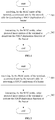
- A method of activating and deactivating a data duplication is provided in the embodiments of the present disclosure, applied to a terminal. As shown in
FIG.3 , the method includes: - Step 101: receiving, by a protocol layer entity of the terminal, a command sent by a network side for deactivating or activating a data duplication of a bearer; and
- Step 102: instructing, by the protocol layer entity, other protocol layers of the terminal to deactivate or activate a data duplication function of the bearer.
- According to the above embodiment, when the network side activates or deactivates the PDCP data duplication function, one of the protocol layer entities of the terminal needs to exchange information among different protocol layers of the terminal after receiving a command for activating or deactivating the data duplication, to make the functions of different protocol layers to be coincident with each other after the PDCP duplication functions of the different protocol layers are activated or deactivated and make the UE behaviors of different protocol layer entities to be coincident with each other after the duplication is deactivated or activated, thereby reducing the waster of data transmission.
- The command sent by the network side for deactivating or activating the data duplication of the bearer may be received by an MAC entity or a Radio Resource Control (RRC) entity of the terminal. After receiving the command sent by the network side for deactivating or activating the data duplication of the bearer, the MAC entity or RRC entity exchanges the signaling with other protocol layer entities so as to make the entity behaviors of different protocol layer entities to be coincident with each other after the PDCP duplication functions are activated or deactivated.
- Further, when the PDCP duplication is deactivated, the PDCP entity needs to discard the duplicated data, and the MAC entity also needs to discard the duplicated data, thereby saving the overhead of network resources and the transmission power overhead of the UE.
- The method of activating and deactivating data duplication of the present disclosure is further described in combination with the embodiments below:
- In this embodiment, the MAC entity of the terminal receives a command sent by the network side for deactivating a PDCP duplication of a bearer.
- As shown in
FIG.4 , the method of activating and deactivating PDCP duplication in this embodiment includes the following steps: - Step 201: receiving, by the MAC entity of the terminal, a command sent by the network side for deactivating a PDCP duplication of a bearer;
The network side sends a MAC CE to deactivate a PDCP duplication of a bearer. The MAC entity of the UE receives the MAC CE sent by the network side. - Step 202: instructing, by the MAC entity, other protocol layer entities of the terminal to deactivate the PDCP duplication function of the bearer, where the other protocol layer entities include a PDCP entity and an RLC entity.
- According to the above embodiment, after receiving the MAC CE command sent by the network side, the MAC entity of the UE instructs other protocol layer entities to deactivate the functions related to the PDCP duplication and exchange information among different protocol layers of the terminal, to make the functions of different protocol layers to be coincident with each other after the PDCP duplication functions are deactivated and make the behaviors of different protocol layer entities to be coincident with each other after the duplication is deactivated, thereby reducing the waste of data transmission. Specifically, the instructing, by the MAC entity, other protocol layer entities of the terminal to deactivate the PDCP duplication function of the bearer includes:
- instructing, by the MAC entity, the PDCP entity of the bearer to deactivate the PDCP duplication function; and/or
- instructing, by the MAC entity, the RLC entity of which the PDCP duplication function is to be deactivated by the bearer, to deactivate the PDCP duplication function.
- The RLC entity of which the PDCP duplication function is to be deactivated by the bearer is configured by the network side or agreed in a communication protocol.
- Prior to the instructing, by the MAC entity, the RLC entity of which the PDCP duplication function is to be deactivated by the bearer, to deactivate the PDCP duplication function, the method further includes:
determining, by the MAC entity, according to a configuration of the network side, the RLC entity of which the data duplication function is to be deactivated by the bearer. - Subsequent to the instructing by the MAC entity the PDCP entity of the bearer to deactivate the PDCP duplication function, the PDCP entity instructs discarding the duplicated data packet not sent successfully, the instructing information includes any one or any combination of:
- discarding, by the PDCP entity of the bearer, a duplicated data packet not sent successfully;
- instructing the other protocol layer entities to discard the duplicated data packet not sent successfully.
- The discarding, by the PDCP entity of the bearer, the duplicated data packet not sent successfully includes:
- discarding, by the PDCP entity of the bearer, any duplicated data packet that has not been successfully sent, for example, any one of 2 duplicated data packets 1 may be discarded; and/or
- discarding, by the PDCP entity, a data packet to be sent to the RLC entity of which the PDCP duplication function is to be deactivated by the bearer.
- The instructing the other protocol layer entities to discard the duplicated data packet not sent successfully includes:
- instructing, by the PDCP entity, the RLC entity of which the PDCP duplication function is to be deactivated by the bearer, to discard the duplicated data packet not sent successfully; and/or
- instructing, by the PDCP entity, the MAC entity to discard the duplicated data packet not sent successfully.
- Further, after the MAC entity receives the command sent by the network side for deactivating the PDCP duplication of the bearer, or receives an indication sent by the PDCP entity that indicates the duplicated data packet has not been successfully sent, the MAC entity discards the data of the RLC entity of which the PDCP duplication function is to be deactivated by the bearer.
- The data of the above RLC entity includes any one or any combination of:
- a RLC Protocol Data Unit (PDU) from the deactivated RLC entity of the bearer.
- an MAC control signaling (such as the corresponding MAC subheader) generated according to the RLC PDU from the deactivated RLC entity of the bearer.
- Therefore, the discarding by the MAC entity the data of the RLC entity of which the PDCP duplication function is to be deactivated by the bearer includes:
- discarding, by the MAC entity, an RLC protocol data unit from the RLC entity of which the PDCP duplication function is to be deactivated by the bearer; and/or
- discarding, by the MAC entity, an MAC control signaling generated according to the RLC protocol data unit.
- In this embodiment, the MAC entity of the terminal receives a command sent by the network side for activating a PDCP duplication of a bearer.
- As shown in
FIG.5 , the method of activating and deactivating PDCP duplication in this embodiment includes the following steps: - Step 301: receiving, by the MAC entity of the terminal, a command sent by the network side for activating a PDCP duplication of a bearer;
The network side sends a MAC CE to activate a PDCP duplication of a bearer. The MAC entity of the UE receives the MAC CE sent by the network side. - Step 202: instructing, by the MAC entity, other protocol layer entities of the terminal to activate the PDCP duplication function of the bearer, where the other protocol layer entities include a PDCP entity and an RLC entity.
- According to the above embodiment, after receiving the MAC CE command sent by the network side, the MAC entity of the UE instructs other protocol layer entities to activate the functions related to the PDCP duplication and exchange information among different protocol layers of the terminal, to make the functions of different protocol layers to be coincident with each other after the PDCP duplication functions are activated and make the behaviors of different protocol layer entities to be coincident with each other after the duplication is activated. Specifically, the instructing, by the MAC entity, other protocol layer entities of the terminal to activate the PDCP duplication function of the bearer includes:
- instructing, by the MAC entity, the PDCP entity of the bearer to activate the PDCP duplication function; and/or
- instructing, by the MAC entity, the RLC entity of which the PDCP duplication function is to be activated by the bearer, to activate the PDCP duplication function.
- The RLC entity of which the PDCP duplication function is to be activated by the bearer is configured by the network side or agreed in a communication protocol.
- Prior to the instructing, by the MAC entity, the RLC entity of which the PDCP duplication function is to be activated by the bearer, to activate the PDCP duplication function, the method further includes:
- determining, by the MAC entity, according to a configuration of the network side, the RLC entity of which the data duplication function is to be activated by the bearer.
- In this embodiment, the network side configures the state of the PDCP duplication bearer to be deactivating, by sending an RRC message, and the RRC entity of the terminal receives the RRC message (i.e., a configuration command) sent by the network side.
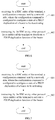
- As shown in
FIG.6 , the method of activating and deactivating PDCP duplication in this embodiment includes the following steps:
Step 401: receiving, by a RRC entity of the terminal, a configuration command sent by a network side, where the configuration command is configured to configure a state of a PDCP duplication of a bearer to be deactivating. - The network side sends an RRC message to configure the state of the PDCP duplication of a certain bearer to be deactivating, and the RRC entity of the terminal receives the RRC message.
- Step 402: instructing, by the RRC entity, other protocol layer entities of the terminal to deactivate a PDCP duplication function of the bearer, where the other protocol layer entities include an MAC entity, a PDCP entity and an RLC entity.
- According to the above embodiment, after receiving the RRC message for configuring the state of the PDCP duplication of a certain bearer to be deactivating, the RRC entity of the UE instructs other protocol layer entities to deactivate the functions related to the PDCP duplication and exchange information among different protocol layers of the terminal, to make the functions of different protocol layers to be coincident with each other after the PDCP duplication functions are deactivated and make the behaviors of different protocol layer entities to be coincident with each other after the duplication is deactivated. Specifically, the instructing, by the RRC entity, the other protocol layer entities of the terminal to deactivate the PDCP duplication function of the bearer includes:
- instructing, by the RRC entity, the PDCP entity of the bearer to deactivate the PDCP duplication function; and/or
- instructing, by the RRC entity, the RLC entity of which the PDCP duplication function is to be deactivated by the bearer, to deactivate the PDCP duplication function; and/or
- instructing, by the RRC entity, the MAC entity of the bearer to deactivate the PDCP duplication function of the bearer.
- The RLC entity of which the PDCP duplication function is to be deactivated by the bearer is configured by the network side or agreed in a communication protocol.
- Prior to the instructing, by the RRC entity, the RLC entity of which the PDCP duplication function is to be deactivated by the bearer, to deactivate the PDCP duplication function, the method further includes:
determining, by the RRC entity, according to a configuration of the network side, the RLC entity of which the data duplication function is to be deactivated by the bearer. - Subsequent to the instructing by the RRC entity the PDCP entity of the bearer to deactivate the PDCP duplication function, the PDCP entity instructs discarding the duplicated data packet not sent successfully, the instructing information includes any one or any combination of:
- discarding, by the PDCP entity of the bearer, a duplicated data packet not sent successfully; and/or
- instructing the other protocol layer entities to discard the duplicated data packet not sent successfully.
- The discarding, by the PDCP entity of the bearer, the duplicated data packet not sent successfully includes:
- discarding, by the PDCP entity of the bearer, any duplicated data packet that has not been successfully sent, for example, any one of 2 duplicated data packets 1 may be discarded; and/or
- discarding, by the PDCP entity, a data packet to be sent to the RLC entity of which the PDCP duplication function is to be deactivated by the bearer.
- The instructing the other protocol layer entities to discard the duplicated data packet not sent successfully includes:
- instructing, by the PDCP entity, the RLC entity of which the PDCP duplication function is to be deactivated by the bearer, to discard the duplicated data packet not sent successfully; and/or
- instructing, by the PDCP entity, the MAC entity to discard the duplicated data packet not sent successfully.
- Further, after the MAC entity receives the command sent by the RRC entity for deactivating the PDCP duplication of the bearer, or receives an indication sent by the PDCP entity that indicates the duplicated data packet has not been successfully sent, the MAC entity discards the data of the RLC entity of which the PDCP duplication function is to be deactivated by the bearer.
- The data of the above RLC entity includes any one or any combination of:
- a RLC Protocol Data Unit (PDU) from the deactivated RLC entity of the bearer.
- an MAC control signaling (such as the corresponding MAC subheader) generated according to the RLC PDU from the deactivated RLC entity of the bearer.
- Therefore, the discarding by the MAC entity the data of the RLC entity of which the PDCP duplication function is to be deactivated by the bearer includes:
- discarding, by the MAC entity, an RLC protocol data unit from the RLC entity of which the PDCP duplication function is to be deactivated by the bearer; and/or
- discarding, by the MAC entity, an MAC control signaling generated according to the RLC protocol data unit.
- In this embodiment, the network side configures the state of the PDCP duplication bearer to be activating, by sending an RRC message, and the RRC entity of the terminal receives the RRC message (i.e., a configuration command) sent by the network side.
- As shown in
FIG.7 , the method of activating and deactivating PDCP duplication in this embodiment includes the following steps:
Step 501: receiving, by a RRC entity of the terminal, a configuration command sent by a network side, where the configuration command is configured to configure a state of a PDCP duplication of a bearer to be activating. - The network side sends an RRC message to configure the state of the PDCP duplication of a certain bearer to be activating, and the RRC entity of the terminal receives the RRC message.
- Step 502: instructing, by the RRC entity, other protocol layer entities of the terminal to activate a PDCP duplication function of the bearer, where the other protocol layer entities include an MAC entity, a PDCP entity and an RLC entity.
- According to the above embodiment, after receiving the RRC message for configuring the state of the PDCP duplication of a certain bearer to be activating, the RRC entity of the UE instructs other protocol layer entities to deactivate the functions related to the PDCP duplication and exchange information among different protocol layers of the terminal, to make the functions of different protocol layers to be coincident with each other after the PDCP duplication functions are activated and make the behaviors of different protocol layer entities to be coincident with each other after the duplication is activated. Specifically, the instructing, by the RRC entity, the other protocol layer entities of the terminal to activate the PDCP duplication function of the bearer includes:
- instructing, by the RRC entity, the PDCP entity of the bearer to activate the PDCP duplication function; and/or
- instructing, by the RRC entity, the RLC entity of which the PDCP duplication function is to be activated by the bearer, to activate the PDCP duplication function; and/or
- instructing, by the RRC entity, the MAC entity of the bearer to activate the PDCP duplication function of the bearer.
- The RLC entity of which the PDCP duplication function is to be activated by the bearer is configured by the network side or agreed in a communication protocol.
- Prior to the instructing, by the RRC entity, the RLC entity of which the PDCP duplication function is to be activated by the bearer, to activate the PDCP duplication function, the method further includes:
determining, by the RRC entity, according to a configuration of the network side, the RLC entity of which the data duplication function is to be activated by the bearer. - A terminal is further provided in the embodiments of the present disclosure, including a plurality of protocol layer entities, where the protocol layer entity is configured to: receive a command sent by a network side for deactivating or activating a data duplication of a bearer; and instruct other protocol layers of the terminal to deactivate or activate a data duplication function of the bearer.
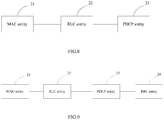
- As shown in
FIG.8 , the terminal includes aMAC entity 21, an RLC entity 2 and aPDCP entity 23. When the network side activates or deactivates the PDCP data duplication function, after receiving a command for deactivating or activating a data duplication, one of the protocol layer entities of the terminal in this embodiment exchanges information among different protocol layers of the terminal after receiving a command for activating or deactivating the data duplication, to make the functions of different protocol layers to be coincident with each other after the PDCP duplication functions of the different protocol layers are activated or deactivated and make the behaviors of different protocol layer entities to be coincident with each other after the duplication is deactivated or activated, thereby reducing the waster of data transmission. - In the embodiment of the present disclosure, the
MAC entity 21 is configured to receive a deactivating command or an activating command sent by the network side, instruct the other protocol layer entities of the terminal to deactivate or activate the data duplication function of the bearer; - where the deactivating command is configured to instruct deactivating the data duplication function of the bearer; the activating command is configured to instruct activating the data duplication function of the bearer; the other protocol layer entities include a Packet Data Convergence Protocol (PDCP)
entity 23 and an Radio Link Control (RLC)entity 22; the deactivating command corresponds to an operation of deactivating the data duplication function of the bearer; and the activating command corresponds to an operation of activating the data duplication function of the bearer. - Further, the
MAC entity 21 is configured to perform at least one of: - instructing the
PDCP entity 23 of the bearer to deactivate or activate the data duplication function; - instructing the
RLC entity 22 to deactivate or activate the data duplication function, where theRLC entity 22 is the one of which the data duplication function is to be deactivated or activated by the bearer. - Further, the
MAC entity 22 is further configured to: determine, according to a configuration of the network side, theRLC entity 22 of which the data duplication function is to be deactivated or activated by the bearer. - Further, when deactivating the bearer, the
PDCP entity 23 of the bearer is configured to perform at least one of: - discarding a duplicated data packet not sent successfully;
- instructing the other protocol layer entities to discard the duplicated data packet not sent successfully.
- Further, when deactivating the bearer, the
MAC entity 21 is further configured to discard data of theRLC entity 22. - As shown in
FIG.9 , the terminal includes aMAC entity 21, an RLC entity 2, aPDCP entity 23 and aRRC entity 24. When the network side activates or deactivates the PDCP data duplication function, after receiving a command for deactivating or activating a data duplication, one of the protocol layer entities of the terminal in this embodiment exchanges information among different protocol layers of the terminal after receiving a command for activating or deactivating the data duplication, to make the functions of different protocol layers to be coincident with each other after the PDCP duplication functions of the different protocol layers are activated or deactivated and make the behaviors of different protocol layer entities to be coincident with each other after the duplication is deactivated or activated, thereby reducing the waster of data transmission. - The
RRC entity 24 is configured to receive a configuration command sent by a network side, where the configuration command is configured to configure a state of a data duplication of a bearer to be deactivating or activating, and instruct other protocol layer entities of the terminal to deactivate or activate the function of data duplication of the bearer, where the configuration command corresponds to an operation of deactivating or activating the data duplication function of the bearer, and the other protocol layer entities include aMAC entity 21, aPDCP entity 23, and anRLC entity 22. - Further, the
RRC entity 24 is configured to perform at least one of: - instructing the
PDCP entity 23 of the bearer to deactivate or activate the data duplication function; - instructing the
RLC entity 22 to deactivate or activate the data duplication function, where theRLC entity 22 is the one of which the data duplication function is to be deactivated or activated by the bearer; - instructing the
MAC entity 21 to deactivate or activate the data duplication function of the bearer. - Further, the
RRC entity 24 is further configured to: determine, according to a configuration of the network side, theRLC entity 21 of which the data duplication function is to be deactivated or activated by the bearer. - Further, when deactivating the bearer, the
MAC entity 21 is further configured to discard data of theRLC entity 22. - Further, when deactivating the bearer, the
PDCP entity 23 is configured to perform at least one of: - discarding a duplicated data packet not sent successfully;
- instructing the other protocol layer entities to discard the duplicated data packet not sent successfully.
- Further, when discarding a duplicated data packet not sent successfully, the
PDCP entity 23 is configured to perform: - discarding the duplicated data packet not sent successfully;
- discarding a data packet to be sent to the
RLC entity 22. - Further, when instructing the other protocol layer entities to discard the duplicated data packet not sent successfully, the
PDCP entity 23 is configured to perform: - instructing the
RLC entity 22 to discard the duplicated data packet not sent successfully; - instructing the
MAC entity 21 to discard the duplicated data packet not sent successfully; - Further, when discarding the data packet of the
RLC entity 22, theMAC entity 21 is further configured to perform at least one of: - discarding an RLC protocol data unit from the
RLC entity 22; - discarding an MAC control signaling, where the MAC control signaling is generated according to the RLC protocol data unit.
- A terminal is further provided in the embodiments of the present disclosure, including: a memory, a processor and a computer program stored in the memory and executable on the processor, and the computer program is executed by the processor to perform the method of activating and deactivating data duplication hereinabove, which may achieve the same technical effect. To avoid repetition, details thereof are not described herein again.
- A computer-readable storage medium is provided in the embodiments of the present disclosure, where a computer program is stored in the computer-readable storage medium, and the computer program is executed by a processor to perform the method of activating and deactivating data duplication hereinabove, which can achieve the same technical effect. To avoid repetition, details thereof are not described herein again. The computer-readable storage medium includes a read-only memory (ROM), a random access memory (RAM), a magnetic disk or an optical disk.
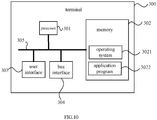
- As shown in
FIG.10 , a terminal is further provided in the embodiment of the present disclosure. The terminal 300 shown inFIG.10 includes: at least oneprocessor 301,memory 302, at least onenetwork interface 304, and other user interfaces 303. The various components in the terminal 300 are coupled together through abus system 305. It can be understood that thebus system 305 is configured to implement connection and communication between these components. Thebus system 305 includes a power bus, a control bus, and a status signal bus in addition to the data bus. However, for the sake of clarity, various buses are labeled as thebus system 305 inFIG.10 . - The user interface 303 may include a display, a keyboard, or a pointing device (for example, a mouse, a trackball, a touch panel, or a touch screen).
- It can be understood that the
memory 302 in the embodiment of the present disclosure may be a volatile memory or a non-volatile memory, or may include both volatile and non-volatile memories. The non-volatile memory may be a read-only memory (ROM), a programmable read-only memory (PROM), an erasable programmable read-only memory (EROM), or Erase programmable EPROM (EEPROM) or flash memory. The volatile memory may be a Random Access Memory (RAM), which is used as an external cache. By way of example, but not limitation, many forms of RAM are available, such as Static Random Access Memory (SRAM), Dynamic Random Access Memory (DRAM), Synchronous Dynamic Random Access Memory (SDRAM), double data rate synchronous dynamic random access memory (DDRSDRAM), enhanced synchronous dynamic random access memory (ESDRAM), synchronous connection dynamic random access memory (Synchlink DRAM, SLDRAM), and Direct memory bus random access memory (DRRAM). Thememory 302 of the systems and methods described herein is intended to include, but is not limited to, these and any other suitable types of memory. - In some embodiments, the
memory 302 stores the following elements, executable modules or data structures, or a subset of them, or their extended set: anoperating system 3021 and anapplication program 3022. - The
operating system 3021 includes various system programs, such as a framework layer, a core library layer, and a driver layer, etc., and is configured to implement various basic services and process hardware-based tasks. Theapplication program 3022 includes various application programs, such as a Media Player and a Browser, and is configured to implement various application services. A program for implementing the method of the embodiment of the present disclosure may be included in anapplication program 3022. - In an embodiment of the present disclosure, by calling a program or instruction stored in the
memory 302, specifically the program or instruction stored in theapplication program 3022 may be executed, the computer program is executed by theprocessor 301 to:
enable a protocol layer entity of the terminal to instruct other protocol layers of the terminal to deactivate or activate a data duplication function of the bearer when receiving a command sent by a network side for deactivating or activating a data duplication of a bearer. - Optionally, the computer program is executed by the
processor 301 to perform: - receiving, by the MAC entity of the terminal, a command sent by the network side for deactivating a data duplication of a bearer;
- instructing, by the MAC entity, other protocol layer entities of the terminal to deactivate the data duplication function of the bearer.
- Optionally, the computer program is executed by the
processor 301 to perform: - instructing, by the MAC entity, the PDCP entity of the bearer to deactivate the data duplication function; and/or
- instructing, by the MAC entity, the RLC entity of which the data duplication function is to be deactivated by the bearer, to deactivate the data duplication function.
- Optionally, the computer program is executed by the
processor 301 to perform:
determining, by the MAC entity, according to a configuration of the network side, the RLC entity of which the data duplication function is to be deactivated by the bearer. - Optionally, the computer program is executed by the
processor 301 to perform: - discarding, by the PDCP entity of the bearer, a duplicated data packet not sent successfully; and/or
- instructing the other protocol layer entities to discard the duplicated data packet not sent successfully.
- Optionally, the computer program is executed by the
processor 301 to perform: - discarding, by the PDCP entity of the bearer, any duplicated data packet that has not been successfully sent; and/or
- discarding, by the PDCP entity, a data packet to be sent to the RLC entity of which the PDCP duplication function is to be deactivated by the bearer.
- Optionally, the computer program is executed by the
processor 301 to perform: - instructing, by the PDCP entity, the RLC entity of which the data duplication function is to be deactivated by the bearer, to discard the duplicated data packet not sent successfully; and/or
- instructing, by the PDCP entity, the MAC entity to discard the duplicated data packet not sent successfully.
- Optionally, the computer program is executed by the
processor 301 to perform:
discarding, by the MAC entity, the data of the RLC entity of which the data duplication function is to be deactivated by the bearer. - Optionally, the computer program is executed by the
processor 301 to perform: - discarding, by the MAC entity, an RLC protocol data unit from the RLC entity of which the data duplication function is to be deactivated by the bearer; and/or
- discarding, by the MAC entity, an MAC control signaling generated according to the RLC protocol data unit.
- Optionally, the computer program is executed by the
processor 301 to perform: - receiving, by the MAC entity of the terminal, a command sent by the network side for activating a data duplication of a bearer;
- instructing, by the MAC entity, other protocol layer entities of the terminal to activate the data duplication function of the bearer, where the other protocol layer entities include a PDCP entity and an RLC entity.
- Optionally, the computer program is executed by the
processor 301 to perform: - instructing, by the MAC entity, the PDCP entity of the bearer to activate the data duplication function; and/or
- instructing, by the MAC entity, the RLC entity of which the data duplication function is to be activated by the bearer, to activate the PDCP duplication function.
- Optionally, the computer program is executed by the
processor 301 to perform:
determining, by the MAC entity, according to a configuration of the network side, the RLC entity of which the data duplication function is to be activated by the bearer. - Optionally, the computer program is executed by the
processor 301 to perform: - receiving, by a RRC entity of the terminal, a configuration command sent by a network side, where the configuration command is configured to configure a state of a data duplication of a bearer to be deactivating.
- instructing, by the RRC entity, other protocol layer entities of the terminal to deactivate a data duplication function of the bearer.
- Optionally, the computer program is executed by the
processor 301 to perform: - instructing, by the RRC entity, the PDCP entity of the bearer to deactivate the data duplication function; and/or
- instructing, by the RRC entity, the RLC entity of which the data duplication function is to be deactivated by the bearer, to deactivate the data duplication function; and/or
- instructing, by the RRC entity, the MAC entity of the bearer to deactivate the data duplication function of the bearer.
- Optionally, the computer program is executed by the
processor 301 to perform:
determining, by the RRC entity, according to a configuration of the network side, the RLC entity of which the data duplication function is to be deactivated by the bearer. - Optionally, the computer program is executed by the
processor 301 to perform: - discarding, by the PDCP entity of the bearer, a duplicated data packet not sent successfully; and/or
- instructing the other protocol layer entities to discard the duplicated data packet not sent successfully.
- Optionally, the computer program is executed by the
processor 301 to perform: - discarding, by the PDCP entity of the bearer, any duplicated data packet that has not been successfully sent; and/or
- discarding, by the PDCP entity, a data packet to be sent to the RLC entity of which the PDCP duplication function is to be deactivated by the bearer.
- Optionally, the computer program is executed by the
processor 301 to perform: - instructing, by the PDCP entity, the RLC entity of which the data duplication function is to be deactivated by the bearer, to discard the duplicated data packet not sent successfully; and/or
- instructing, by the PDCP entity, the MAC entity to discard the duplicated data packet not sent successfully.
- Optionally, the computer program is executed by the
processor 301 to perform:
discarding, by the MAC entity, the data of the RLC entity of which the data duplication function is to be deactivated by the bearer. - Optionally, the computer program is executed by the
processor 301 to perform: - discarding, by the MAC entity, an RLC protocol data unit from the RLC entity of which the PDCP duplication function is to be deactivated by the bearer; and/or
- discarding, by the MAC entity, an MAC control signaling generated according to the RLC protocol data unit.
- Optionally, the computer program is executed by the
processor 301 to perform: - receiving, by a RRC entity of the terminal, a configuration command sent by a network side, where the configuration command is configured to configure a state of a data duplication of a bearer to be activating;
- instructing, by the RRC entity, other protocol layer entities of the terminal to activate a data duplication function of the bearer.
- Optionally, the computer program is executed by the
processor 301 to perform: - instructing, by the RRC entity, the PDCP entity of the bearer to activate the data duplication function; and/or
- instructing, by the RRC entity, the RLC entity of which the data duplication function is to be activated by the bearer, to activate the data duplication function; and/or
- instructing, by the RRC entity, the MAC entity of the bearer to activate the data duplication function of the bearer.
- Optionally, the computer program is executed by the
processor 301 to perform:
determining, by the RRC entity, according to a configuration of the network side, the RLC entity of which the data duplication function is to be activated by the bearer. - According to the above embodiment, when the network side activates or deactivates the PDCP data duplication function, one of the protocol layer entities of the terminal needs to exchange information among different protocol layers of the terminal after receiving a command for activating or deactivating the data duplication, to make the functions of different protocol layers to be coincident with each other after the PDCP duplication functions of the different protocol layers are activated or deactivated and make the UE behaviors of different protocol layer entities to be coincident with each other after the duplication is deactivated or activated, thereby reducing the waster of data transmission.
- The terminal of the present disclosure may be a terminal such as a mobile phone, a tablet computer, a Personal Digital Assistant (PDA), or a vehicle-mounted computer.
- The terminal 300 can implement the processes implemented by the terminal in the foregoing embodiments. To avoid repetition, details are not described herein again.
- The methods disclosed in the foregoing embodiments of the present disclosure may be applied to the
processor 301, or implemented by theprocessor 301. Theprocessor 301 may be an integrated circuit chip and has a signal processing capability. In the implementation process, each step of the above method may be completed by using an integrated logic circuit of hardware in theprocessor 301 or an instruction in the form of software. The above-mentionedprocessor 301 may be a general-purpose processor, a digital signal processor (DSP), an application specific integrated circuit (ASIC), a Field Programmable Gate Array (FPGA), or other Programming logic devices, discrete gate or transistor logic devices, discrete hardware components. Various methods, steps, and logical block diagrams disclosed in the embodiments of the present disclosure may be implemented or executed. A general-purpose processor may be a microprocessor or the processor may be any conventional processor or the like. The steps of the method disclosed in combination with the embodiments of the present disclosure may be directly implemented by a hardware decoding processor, or may be performed by using a combination of hardware and software modules in the decoding processor. A software module may be located in a mature storage medium such as a random access memory, a flash memory, a read-only memory, a programmable read-only memory, or an electrically erasable programmable memory, a register, and the like. The storage medium is located in thememory 302, and theprocessor 301 reads the information in thememory 302 and completes the steps of the foregoing method in combination with its hardware. - It can be understood that the embodiments described herein may be implemented by hardware, software, firmware, middleware, microcode, or a combination thereof. For hardware implementation, the processing unit can be implemented in one or more Application Specific Integrated Circuits (ASIC), Digital Signal Processing (DSP), Digital Signal Processing Equipment (DSPD), a programmable logic device (PLD), a Field-Programmable Gate Array (FPGA), general-purpose processor, controller, microcontroller, microprocessor, and other electronic units for performing the functions described in this application Or a combination thereof.
- For software implementation, the techniques described herein can be implemented through modules (e.g., procedures, functions, etc.) that perform the functions described herein. Software codes may be stored in a memory and executed by a processor. The memory may be implemented in the processor or external to the processor.
- Each embodiment in this specification is described in a progressive manner. Each embodiment focuses on the differences from other embodiments, and the same or similar parts between the various embodiments may refer to each other.
- Those skilled in the art should understand that the embodiments of the embodiments of the present disclosure may be provided as a method, an apparatus, or a computer program product. Therefore, the embodiments of the present disclosure may take the form of an entirely hardware embodiment, an entirely software embodiment, or an embodiment combining software and hardware aspects. Moreover, the embodiments of the present disclosure may take the form of a computer program product implemented on one or more computer-usable storage media (including but not limited to disk storage, CD-ROM, optical storage, etc.) containing computer-usable program code.
- Embodiments of the present disclosure are described with reference to flowcharts and/or block diagrams of methods, terminal devices (systems), and computer program products according to embodiments of the present disclosure. It should be understood that each process and/or block in the flowcharts and/or block diagrams, and combinations of processes and/or blocks in the flowcharts and/or block diagrams can be implemented by computer program instructions. These computer program instructions may be provided to a processor of a general purpose computer, special purpose computer, embedded processor, or other programmable data processing terminal device to produce a machine, such that the instructions executed by the processor of the computer or other programmable data processing terminal device Means are generated for implementing the functions specified in one or more flowcharts and/or one or more blocks of the block diagrams.
- These computer program instructions may also be stored in a computer-readable memory capable of directing a computer or other programmable data processing terminal device to work in a specific manner, such that the instructions stored in the computer-readable memory produce a manufactured article including the instruction means, the instruction means implements the functions specified in one or more flowcharts and/or one or more blocks of the block diagram.
- These computer program instructions can also be loaded on a computer or other programmable data processing terminal device, so that a series of operation steps can be performed on the computer or other programmable terminal device to produce a computer-implemented process, so that the computer or other programmable terminal device can The instructions executed on the steps provide steps for implementing the functions specified in one or more of the flowcharts and/or one or more of the block diagrams.
- Although some embodiments of the present disclosure have been described, those skilled in the art can make other changes and modifications to these embodiments once they know the basic concepts. Therefore, the claims are intended to be construed to include the embodiments and all changes and modifications that fall within the scope of the embodiments of the disclosure.
- It should also be noted that in this article, relational terms such as first and second are used only to distinguish one entity or operation from another entity or operation, and do not necessarily require or imply these entities or operations There is any such actual relationship or order among them. Moreover, the terms "including", "comprising", or any other variation thereof are intended to encompass non-exclusive inclusion, such that a process, method, article, or terminal device that includes a series of elements includes not only those elements but also those that are not explicitly listed Other elements, or elements inherent to such a process, method, article, or terminal. Without more restrictions, the elements defined by the sentence "including a ..." do not exclude the existence of other identical elements in the process, method, article, or terminal device including the elements.
- The above are only some embodiments of the present disclosure, but the scope of the present disclosure is not limited thereto, and any person skilled in the art may easily think of changes or substitutions within the technical scope of the present disclosure. It should be covered by the scope of the present disclosure.
Claims (30)
- A method of activating and deactivating a data duplication, applied to a terminal, comprising:receiving, by a protocol layer entity of the terminal, a command sent by a network side for deactivating or activating a data duplication of a bearer; andinstructing, by the protocol layer entity, other protocol layers of the terminal to deactivate or activate a data duplication function of the bearer.
- The method according to claim 1, wherein the receiving by the protocol layer entity of the terminal the command sent by the network side for deactivating or activating the data duplication of the bearer comprises:receiving, by a Medium Access Control (MAC) entity of the terminal, a deactivating command or an activating command sent by the network side;the instructing by the protocol layer entity the other protocol layers of the terminal to deactivate or activate the data duplication function of the bearer comprises:instructing, by the MAC entity, the other protocol layer entities of the terminal to deactivate or activate the data duplication function of the bearer;wherein the deactivating command is configured to instruct deactivating the data duplication function of the bearer; the activating command is configured to instruct activating the data duplication function of the bearer; the other protocol layer entities comprise a Packet Data Convergence Protocol (PDCP) entity and an Radio Link Control (RLC) entity; the deactivating command corresponds to an operation of deactivating the data duplication function of the bearer; and the activating command corresponds to an operation of activating the data duplication function of the bearer.
- The method according to claim 2, wherein the instructing by the MAC entity the other protocol layer entities of the terminal to deactivate or activate the data duplication function of the bearer comprises at least one of:instructing, by the MAC entity, the PDCP entity of the bearer to deactivate or activate the data duplication function;instructing, by the MAC entity, the RLC entity to deactivate or activate the data duplication function, wherein the RLC entity is the one of which the data duplication function is to be deactivated or activated by the bearer.
- The method according to claim 3, wherein prior to the instructing by the MAC entity the RLC entity to deactivate or activate the data duplication function, the method further comprises:
determining, by the MAC entity, according to a configuration of the network side, the RLC entity of which the data duplication function is to be deactivated or activated by the bearer. - The method according to claim 3, wherein subsequent to the instructing by the MAC entity the PDCP entity of the bearer to deactivate or activate the data duplication function, the method further comprises at least one of:discarding, by the PDCP entity of the bearer, a duplicated data packet not sent successfully;instructing the other protocol layer entities to discard the duplicated data packet not sent successfully.
- The method according to claim 3, wherein prior to, subsequent to or meanwhile the instructing by the MAC entity the other protocol layer entities of the terminal to deactivate or activate the data duplication function of the bearer the method further comprises:
discarding, by the MAC entity, data of the RLC entity. - The method according to claim 1, wherein the receiving by the protocol layer entity of the terminal the command sent by the network side for deactivating or activating the data duplication of the bearer comprises:receiving, by a Radio Resource Control (RRC) entity of the terminal, a configuration command sent by the network side, wherein the configuration command is configured to configure a deactivating or activating state of the data duplication of the bearer;the instructing by the protocol layer entity the other protocol layers of the terminal to deactivate or activate the data duplication function of the bearer comprises:instructing, by the RRC entity, the other protocol layers of the terminal to deactivate or activate the data duplication function of the bearer;wherein the configuration command corresponds to an operation of deactivating or activating the data duplication function of the bearer, the other protocol layers comprise an MAC entity, a PDCP entity and an RLC entity.
- The method according to claim 7, wherein the instructing by the RRC entity the other protocol layers of the terminal to deactivate or activate the data duplication function of the bearer comprises at least one of:instructing, by the RRC entity, the PDCP entity of the bearer to deactivate or activate the data duplication function;instructing, by the RRC entity, the RLC entity to deactivate or activate the data duplication function, wherein the RLC entity is the one of which the data duplication function is to be deactivated or activated by the bearer;instructing, by the RRC entity, the MAC entity to deactivate or activate the data duplication function of the bearer.
- The method according to claim 7, wherein prior to the instructing by the RRC entity the other protocol layers of the terminal to deactivate or activate the data duplication function of the bearer, the method further comprises:
determining, by the RRC entity, according to a configuration of the network side, the RLC entity of which the data duplication function is to be deactivated or activated by the bearer. - The method according to claim 8, wherein subsequent to the instructing by the RRC entity the MAC entity of the bearer to deactivate or activate the data duplication function of the bearer, the method further comprises:
discarding, by the MAC entity, data of the RLC entity. - The method according to claim 8, wherein subsequent to the instructing by the RRC entity the PDCP entity of the bearer to deactivate or activate the data duplication function, the method further comprises at least one of:discarding, by the PDCP entity of the bearer, a duplicated data packet not sent successfully;instructing the other protocol layer entities to discard the duplicated data packet not sent successfully.
- The method according to claim 5 or 11, wherein the discarding by the PDCP entity of the bearer the duplicated data packet not sent successfully comprises at least one of:discarding, by the PDCP entity, the duplicated data packet not sent successfully;discarding, by the PDCP entity, a data packet to be sent to the RLC entity.
- The method according to claim 5 or 11, wherein instructing the other protocol layer entities to discard the duplicated data packet not sent successfully comprises at least one of:instructing, by the PDCP entity, the RLC entity to discard the duplicated data packet not sent successfully;instructing, by the PDCP entity, the MAC entity to discard the duplicated data packet not sent successfully.
- The method according to claim 6 or 10, wherein the discarding by the MAC entity the data of the RLC entity comprises at least one of:discarding, by the MAC entity, an RLC protocol data unit from the RLC entity;discarding, by the MAC entity, an MAC control signaling, wherein the MAC control signaling is generated according to the RLC protocol data unit.
- A terminal, comprising a plurality of protocol layer entities, wherein the protocol layer entity is configured to:receive a command sent by a network side for deactivating or activating a data duplication of a bearer; andinstruct other protocol layers of the terminal to deactivate or activate a data duplication function of the bearer.
- The terminal according to claim 15, further comprising:an Medium Access Control (MAC) entity, configured to receive a deactivating command or an activating command sent by the network side, instruct the other protocol layer entities of the terminal to deactivate or activate the data duplication function of the bearer;wherein the deactivating command is configured to instruct deactivating the data duplication function of the bearer; the activating command is configured to instruct activating the data duplication function of the bearer; the other protocol layer entities comprise a Packet Data Convergence Protocol (PDCP) entity and an Radio Link Control (RLC) entity; the deactivating command corresponds to an operation of deactivating the data duplication function of the bearer; and the activating command corresponds to an operation of activating the data duplication function of the bearer.
- The terminal according to claim 16, wherein the MAC entity is configured to perform at least one of:instructing the PDCP entity of the bearer to deactivate or activate the data duplication function;instructing the RLC entity to deactivate or activate the data duplication function, wherein the RLC entity is the one of which the data duplication function is to be deactivated or activated by the bearer.
- The terminal according to claim 17, wherein the MAC entity is further configured to:
determine, according to a configuration of the network side, the RLC entity of which the data duplication function is to be deactivated or activated by the bearer. - The terminal according to claim 18, further comprising the PDCP entity of the bearer configured to perform at least one of:discarding a duplicated data packet not sent successfully;instructing the other protocol layer entities to discard the duplicated data packet not sent successfully.
- The terminal according to claim 18, wherein the MAC entity is further configured to discard data of the RLC entity.
- The terminal according to claim 15, further comprising a Radio Resource Control (RRC) entity configured to:receive a configuration command sent by the network side, wherein the configuration command is configured to configure a deactivating or activating state of the data duplication of the bearer; andinstruct the other protocol layers of the terminal to deactivate or activate the data duplication function of the bearer;wherein the configuration command corresponds to an operation of deactivating or activating the data duplication function of the bearer, the other protocol layers comprise an MAC entity, a PDCP entity and an RLC entity.
- The terminal according to claim 21, wherein the RRC entity is configured to perform at least one of:instructing the PDCP entity of the bearer to deactivate or activate the data duplication function;instructing the RLC entity to deactivate or activate the data duplication function, wherein the RLC entity is the one of which the data duplication function is to be deactivated or activated by the bearer;instruct the MAC entity to deactivate or activate the data duplication function of the bearer.
- The terminal according to claim 21, wherein the RRC entity is further configured to determine, according to a configuration of the network side, the RLC entity of which the data duplication function is to be deactivated or activated by the bearer.
- The terminal according to claim 22, further comprising the MAC entity configured to discard data of the RLC entity.
- The terminal according to claim 22, further comprising the PDCP entity of the bearer configured to perform at least one of:discarding a duplicated data packet not sent successfully;instructing the other protocol layer entities to discard the duplicated data packet not sent successfully.
- The terminal according to claim 19 or 25, wherein the PDCP entity is further configured to perform at least one of:discarding the duplicated data packet not sent successfully;discarding a data packet to be sent to the RLC entity.
- The terminal according to claim 19 or 25, wherein the PDCP entity is further configured to perform at least one of:instructing the RLC entity to discard the duplicated data packet not sent successfully;instructing the MAC entity to discard the duplicated data packet not sent successfully.
- The terminal according to claim 20 or 24, wherein the MAC entity is further configured to perform at least one of:discarding an RLC protocol data unit from the RLC entity;discarding an MAC control signaling, wherein the MAC control signaling is generated according to the RLC protocol data unit.
- A terminal, comprising: a memory, a processor and a computer program stored in the memory and executable on the processor, and the computer program is executed by the processor to perform the method of activating and deactivating data duplication according to any one of claims 1 to 14.
- A computer-readable storage medium, wherein a computer program is stored in the computer-readable storage medium, and the computer program is executed by a processor to perform the method of activating and deactivating data duplication according to any one of claims 1 to 14.
Applications Claiming Priority (2)
| Application Number | Priority Date | Filing Date | Title |
|---|---|---|---|
| CN201710653468.4A CN109391639B (en) | 2017-08-02 | 2017-08-02 | A method and terminal for activating and deactivating data replication |
| PCT/CN2018/097493 WO2019024792A1 (en) | 2017-08-02 | 2018-07-27 | Method for activating and deactivating data duplication, and terminal |
Publications (2)
| Publication Number | Publication Date |
|---|---|
| EP3664572A1 true EP3664572A1 (en) | 2020-06-10 |
| EP3664572A4 EP3664572A4 (en) | 2020-07-01 |
Family
ID=65233436
Family Applications (1)
| Application Number | Title | Priority Date | Filing Date |
|---|---|---|---|
| EP18841832.1A Pending EP3664572A4 (en) | 2017-08-02 | 2018-07-27 | METHOD FOR ACTIVATING AND DEACTIVATING A DATA DUPLICATION AND TERMINAL |
Country Status (4)
| Country | Link |
|---|---|
| US (1) | US11343172B2 (en) |
| EP (1) | EP3664572A4 (en) |
| CN (1) | CN109391639B (en) |
| WO (1) | WO2019024792A1 (en) |
Cited By (1)
| Publication number | Priority date | Publication date | Assignee | Title |
|---|---|---|---|---|
| WO2022027558A1 (en) * | 2020-08-07 | 2022-02-10 | JRD Communication (Shenzhen) Ltd. | Method for controlling rlc entities of user equipment, network node and user equipment |
Families Citing this family (14)
| Publication number | Priority date | Publication date | Assignee | Title |
|---|---|---|---|---|
| US10805836B2 (en) * | 2017-05-05 | 2020-10-13 | Qualcomm Incorporated | Packet duplication at a packet data convergence protocol (PDCP) entity |
| ES2929734T3 (en) * | 2017-05-05 | 2022-12-01 | Asustek Comp Inc | Data duplication transmission method and apparatus in a wireless communication system |
| CN108810990B (en) * | 2017-05-05 | 2020-11-17 | 中兴通讯股份有限公司 | Control method and device for data packet replication function and communication equipment |
| CA3068640C (en) * | 2017-08-11 | 2022-05-03 | Guangdong Oppo Mobile Telecommunications Corp., Ltd. | Control method, node, and computer storage medium |
| WO2020156565A1 (en) * | 2019-02-03 | 2020-08-06 | FG Innovation Company Limited | Evolved packet data convergence protocol duplication |
| CN111465119B (en) * | 2019-03-28 | 2023-02-24 | 维沃移动通信有限公司 | Data sending method, information configuration method, terminal and network device |
| CN111757548B (en) * | 2019-03-29 | 2022-05-24 | 华为技术有限公司 | Communication method and communication device |
| CN111786747B (en) * | 2019-04-03 | 2023-01-03 | 中国移动通信有限公司研究院 | Receiving state feedback method, communication unit and terminal |
| CN110311751B (en) * | 2019-04-25 | 2021-11-30 | 维沃移动通信有限公司 | Data sending method and terminal |
| CN113498219B (en) * | 2020-03-18 | 2024-10-18 | 深圳传音控股股份有限公司 | Multi-connection management method and related products |
| EP4087365B1 (en) * | 2020-04-10 | 2025-06-18 | Guangdong Oppo Mobile Telecommunications Corp., Ltd. | Data transmission method and related devices |
| CN114095873B (en) * | 2020-08-24 | 2023-07-25 | 上海朗帛通信技术有限公司 | A method and device used in a node for wireless communication |
| WO2024212059A1 (en) * | 2023-04-10 | 2024-10-17 | Nec Corporation | Devices and methods for communication |
| WO2026036408A1 (en) * | 2024-08-16 | 2026-02-19 | Oppo广东移动通信有限公司 | Method for wireless transmission, terminal device, and network device |
Family Cites Families (24)
| Publication number | Priority date | Publication date | Assignee | Title |
|---|---|---|---|---|
| WO2009009532A2 (en) * | 2007-07-11 | 2009-01-15 | Interdigital Technology Corporation | Packet data convergence protocol operations |
| EP2301180B1 (en) * | 2008-05-22 | 2013-03-06 | Telefonaktiebolaget LM Ericsson (publ) | Enhanced recovery procedure |
| US9544779B2 (en) * | 2012-03-26 | 2017-01-10 | Nokia Technologies Oy | Method and apparatus for activating frequencies in white space |
| US10117224B2 (en) * | 2013-09-20 | 2018-10-30 | Qualcomm Incorporated | MAC subheader for D2D broadcast communication for public safety |
| CN107534846A (en) * | 2015-04-16 | 2018-01-02 | 瑞典爱立信有限公司 | For promoting mobility method and device in communication network |
| US20160308776A1 (en) * | 2015-04-20 | 2016-10-20 | Qualcomm Incorporated | Enhancements for pdcp layer |
| US20170041766A1 (en) * | 2015-08-05 | 2017-02-09 | Qualcomm Incorporated | Media access control segmentation and packet data convergence protocol delivery notification with enhanced component carriers |
| US10750410B2 (en) * | 2016-09-30 | 2020-08-18 | Huawei Technologies Co., Ltd. | Ultra reliable low latency connection support in radio access networks |
| US10448386B2 (en) * | 2017-01-06 | 2019-10-15 | Kt Corporation | Method and apparatus for controlling redundant data transmission |
| WO2018143600A1 (en) * | 2017-02-02 | 2018-08-09 | Lg Electronics Inc. | Method and device for transmitting data unit |
| CN108924871B (en) * | 2017-03-23 | 2022-09-20 | 夏普株式会社 | Wireless configuration method, user equipment and base station |
| US10716094B2 (en) * | 2017-03-23 | 2020-07-14 | Ofinno, Llc | Packet duplication in a wireless device and wireless network |
| US11343671B2 (en) * | 2017-03-24 | 2022-05-24 | Nokia Technologies Oy | Handling of PDCP duplication and data recovery in new radio access technology |
| US11005606B2 (en) * | 2017-03-24 | 2021-05-11 | Telefonaktiebolaget Lm Ericsson (Publ) | Systems and methods for removal of duplicated packets for transmission |
| US10405231B2 (en) * | 2017-04-24 | 2019-09-03 | Motorola Mobility Llc | Switching between packet duplication operating modes |
| BR112019022214A2 (en) * | 2017-04-24 | 2020-05-12 | Motorola Mobility Llc | DUPLICATION OF PDCP PDUS TO A RADIO CARRIER |
| ES2929734T3 (en) * | 2017-05-05 | 2022-12-01 | Asustek Comp Inc | Data duplication transmission method and apparatus in a wireless communication system |
| US10805836B2 (en) * | 2017-05-05 | 2020-10-13 | Qualcomm Incorporated | Packet duplication at a packet data convergence protocol (PDCP) entity |
| CN108810990B (en) * | 2017-05-05 | 2020-11-17 | 中兴通讯股份有限公司 | Control method and device for data packet replication function and communication equipment |
| CN109150415B (en) * | 2017-06-15 | 2022-01-21 | 夏普株式会社 | Base station, user equipment and related method |
| CN112616161B (en) * | 2017-06-15 | 2022-08-26 | 华为技术有限公司 | Communication processing method and communication device |
| WO2018232207A1 (en) * | 2017-06-16 | 2018-12-20 | Mediatek Singapore Pte. Ltd. | Method and apparatus for handling data duplication in mobile communications |
| US20180367288A1 (en) * | 2017-06-16 | 2018-12-20 | Huawei Technologies Co., Ltd. | Dynamic activation and deactivation of packet duplication |
| CN109429257B (en) * | 2017-06-22 | 2022-11-04 | 夏普株式会社 | User equipment and related methods |
-
2017
- 2017-08-02 CN CN201710653468.4A patent/CN109391639B/en active Active
-
2018
- 2018-07-27 US US16/635,498 patent/US11343172B2/en active Active
- 2018-07-27 EP EP18841832.1A patent/EP3664572A4/en active Pending
- 2018-07-27 WO PCT/CN2018/097493 patent/WO2019024792A1/en not_active Ceased
Cited By (1)
| Publication number | Priority date | Publication date | Assignee | Title |
|---|---|---|---|---|
| WO2022027558A1 (en) * | 2020-08-07 | 2022-02-10 | JRD Communication (Shenzhen) Ltd. | Method for controlling rlc entities of user equipment, network node and user equipment |
Also Published As
| Publication number | Publication date |
|---|---|
| CN109391639A (en) | 2019-02-26 |
| WO2019024792A1 (en) | 2019-02-07 |
| CN109391639B (en) | 2021-01-08 |
| US20200236033A1 (en) | 2020-07-23 |
| US11343172B2 (en) | 2022-05-24 |
| EP3664572A4 (en) | 2020-07-01 |
Similar Documents
| Publication | Publication Date | Title |
|---|---|---|
| US11343172B2 (en) | Method of activating and deactivating a data duplication and terminal thereof | |
| EP3972330B1 (en) | Network connection control method, terminal, and storage medium | |
| US11444678B2 (en) | Method for indicating beam failure recovery, device, and storage medium | |
| CN110798864A (en) | Method and terminal equipment for beam failure recovery | |
| WO2020015545A1 (en) | Beam failure recovery method, terminal device, and network side device | |
| US12069503B2 (en) | Wireless communication method and device | |
| CN106714305B (en) | Method and device for processing paging conflict of multi-card multi-standby mobile terminal | |
| US20210258911A1 (en) | Wireless communication method and device | |
| CN104680089B (en) | A kind of electronic equipment and system switching method | |
| WO2021244605A1 (en) | Network switching method and apparatus, and communication device and system | |
| US12133222B2 (en) | Method for semi-persistent granted uplink transmission, terminal device, and network side device | |
| JP2020537371A (en) | Information processing methods, upper layer functional entities and computer storage media | |
| US8412159B2 (en) | Method, apparatus and computer program product for security configuration coordination during a cell update procedure | |
| WO2020168880A1 (en) | Communication method and apparatus for random access, related devices, and storage medium | |
| US11968728B2 (en) | Method of configuring service data adaptation protocol entity and device | |
| EP2506614B1 (en) | Method, apparatus and computer program product for security configuration coordination during a cell update procedure | |
| CN111314272B (en) | Task processing method and device | |
| US20140031025A1 (en) | Method, apparatus and computer program product for security configuration coordination during a cell update procedure | |
| EP4572474A1 (en) | Link configuration method and apparatus, and remote user equipment, network device and storage medium | |
| AU2018403381A1 (en) | Information indication method and apparatus, and computer storage medium |
Legal Events
| Date | Code | Title | Description |
|---|---|---|---|
| STAA | Information on the status of an ep patent application or granted ep patent |
Free format text: STATUS: THE INTERNATIONAL PUBLICATION HAS BEEN MADE |
|
| PUAI | Public reference made under article 153(3) epc to a published international application that has entered the european phase |
Free format text: ORIGINAL CODE: 0009012 |
|
| STAA | Information on the status of an ep patent application or granted ep patent |
Free format text: STATUS: REQUEST FOR EXAMINATION WAS MADE |
|
| 17P | Request for examination filed |
Effective date: 20200220 |
|
| AK | Designated contracting states |
Kind code of ref document: A1 Designated state(s): AL AT BE BG CH CY CZ DE DK EE ES FI FR GB GR HR HU IE IS IT LI LT LU LV MC MK MT NL NO PL PT RO RS SE SI SK SM TR |
|
| AX | Request for extension of the european patent |
Extension state: BA ME |
|
| A4 | Supplementary search report drawn up and despatched |
Effective date: 20200529 |
|
| RIC1 | Information provided on ipc code assigned before grant |
Ipc: H04L 1/08 20060101ALI20200525BHEP Ipc: H04L 1/22 20060101ALN20200525BHEP Ipc: H04W 76/15 20180101ALI20200525BHEP Ipc: H04W 80/00 20090101AFI20200525BHEP Ipc: H04L 29/10 20060101ALN20200525BHEP Ipc: H04W 80/02 20090101ALI20200525BHEP Ipc: H04L 29/08 20060101ALI20200525BHEP |
|
| DAV | Request for validation of the european patent (deleted) | ||
| DAX | Request for extension of the european patent (deleted) | ||
| STAA | Information on the status of an ep patent application or granted ep patent |
Free format text: STATUS: EXAMINATION IS IN PROGRESS |
|
| 17Q | First examination report despatched |
Effective date: 20211213 |
|
| REG | Reference to a national code |
Ref country code: DE Ref legal event code: R079 Free format text: PREVIOUS MAIN CLASS: H04W0080000000 Ipc: H04L0001080000 |
|
| GRAP | Despatch of communication of intention to grant a patent |
Free format text: ORIGINAL CODE: EPIDOSNIGR1 |
|
| STAA | Information on the status of an ep patent application or granted ep patent |
Free format text: STATUS: GRANT OF PATENT IS INTENDED |
|
| RIC1 | Information provided on ipc code assigned before grant |
Ipc: H04L 1/08 20060101AFI20260226BHEP Ipc: H04W 76/15 20180101ALI20260226BHEP |
|
| INTG | Intention to grant announced |
Effective date: 20260310 |