EP3663778B1 - Kostengünstiger hochfrequenzsensor zur detektion von störlichtbögen - Google Patents
Kostengünstiger hochfrequenzsensor zur detektion von störlichtbögen Download PDFInfo
- Publication number
- EP3663778B1 EP3663778B1 EP19213929.3A EP19213929A EP3663778B1 EP 3663778 B1 EP3663778 B1 EP 3663778B1 EP 19213929 A EP19213929 A EP 19213929A EP 3663778 B1 EP3663778 B1 EP 3663778B1
- Authority
- EP
- European Patent Office
- Prior art keywords
- power wire
- bead body
- high frequency
- arc fault
- current signals
- Prior art date
- Legal status (The legal status is an assumption and is not a legal conclusion. Google has not performed a legal analysis and makes no representation as to the accuracy of the status listed.)
- Active
Links
Images




Classifications
-
- G—PHYSICS
- G01—MEASURING; TESTING
- G01R—MEASURING ELECTRIC VARIABLES; MEASURING MAGNETIC VARIABLES
- G01R19/00—Arrangements for measuring currents or voltages or for indicating presence or sign thereof
- G01R19/0007—Frequency selective voltage or current level measuring
-
- G—PHYSICS
- G01—MEASURING; TESTING
- G01R—MEASURING ELECTRIC VARIABLES; MEASURING MAGNETIC VARIABLES
- G01R31/00—Arrangements for testing electric properties; Arrangements for locating electric faults; Arrangements for electrical testing characterised by what is being tested not provided for elsewhere
- G01R31/08—Locating faults in cables, transmission lines, or networks
- G01R31/081—Locating faults in cables, transmission lines, or networks according to type of conductors
- G01R31/083—Locating faults in cables, transmission lines, or networks according to type of conductors in cables, e.g. underground
-
- G—PHYSICS
- G01—MEASURING; TESTING
- G01R—MEASURING ELECTRIC VARIABLES; MEASURING MAGNETIC VARIABLES
- G01R31/00—Arrangements for testing electric properties; Arrangements for locating electric faults; Arrangements for electrical testing characterised by what is being tested not provided for elsewhere
- G01R31/12—Testing dielectric strength or breakdown voltage ; Testing or monitoring effectiveness or level of insulation, e.g. of a cable or of an apparatus, for example using partial discharge measurements; Electrostatic testing
-
- G—PHYSICS
- G01—MEASURING; TESTING
- G01R—MEASURING ELECTRIC VARIABLES; MEASURING MAGNETIC VARIABLES
- G01R31/00—Arrangements for testing electric properties; Arrangements for locating electric faults; Arrangements for electrical testing characterised by what is being tested not provided for elsewhere
- G01R31/12—Testing dielectric strength or breakdown voltage ; Testing or monitoring effectiveness or level of insulation, e.g. of a cable or of an apparatus, for example using partial discharge measurements; Electrostatic testing
- G01R31/1227—Testing dielectric strength or breakdown voltage ; Testing or monitoring effectiveness or level of insulation, e.g. of a cable or of an apparatus, for example using partial discharge measurements; Electrostatic testing of components, parts or materials
- G01R31/1263—Testing dielectric strength or breakdown voltage ; Testing or monitoring effectiveness or level of insulation, e.g. of a cable or of an apparatus, for example using partial discharge measurements; Electrostatic testing of components, parts or materials of solid or fluid materials, e.g. insulation films, bulk material; of semiconductors or LV electronic components or parts; of cable, line or wire insulation
- G01R31/1272—Testing dielectric strength or breakdown voltage ; Testing or monitoring effectiveness or level of insulation, e.g. of a cable or of an apparatus, for example using partial discharge measurements; Electrostatic testing of components, parts or materials of solid or fluid materials, e.g. insulation films, bulk material; of semiconductors or LV electronic components or parts; of cable, line or wire insulation of cable, line or wire insulation, e.g. using partial discharge measurements
-
- H—ELECTRICITY
- H01—ELECTRIC ELEMENTS
- H01F—MAGNETS; INDUCTANCES; TRANSFORMERS; SELECTION OF MATERIALS FOR THEIR MAGNETIC PROPERTIES
- H01F17/00—Fixed inductances of the signal type
- H01F17/04—Fixed inductances of the signal type with magnetic core
-
- H—ELECTRICITY
- H02—GENERATION; CONVERSION OR DISTRIBUTION OF ELECTRIC POWER
- H02H—EMERGENCY PROTECTIVE CIRCUIT ARRANGEMENTS
- H02H1/00—Details of emergency protective circuit arrangements
- H02H1/0007—Details of emergency protective circuit arrangements concerning the detecting means
- H02H1/0015—Using arc detectors
-
- H—ELECTRICITY
- H02—GENERATION; CONVERSION OR DISTRIBUTION OF ELECTRIC POWER
- H02H—EMERGENCY PROTECTIVE CIRCUIT ARRANGEMENTS
- H02H3/00—Emergency protective circuit arrangements for automatic disconnection directly responsive to an undesired change from normal electric working condition with or without subsequent reconnection ; integrated protection
- H02H3/16—Emergency protective circuit arrangements for automatic disconnection directly responsive to an undesired change from normal electric working condition with or without subsequent reconnection ; integrated protection responsive to fault current to earth, frame or mass
-
- H—ELECTRICITY
- H03—ELECTRONIC CIRCUITRY
- H03H—IMPEDANCE NETWORKS, e.g. RESONANT CIRCUITS; RESONATORS
- H03H7/00—Multiple-port networks comprising only passive electrical elements as network components
- H03H7/38—Impedance-matching networks
-
- G—PHYSICS
- G01—MEASURING; TESTING
- G01R—MEASURING ELECTRIC VARIABLES; MEASURING MAGNETIC VARIABLES
- G01R15/00—Details of measuring arrangements of the types provided for in groups G01R17/00 - G01R29/00, G01R33/00 - G01R33/26 or G01R35/00
- G01R15/14—Adaptations providing voltage or current isolation, e.g. for high-voltage or high-current networks
- G01R15/18—Adaptations providing voltage or current isolation, e.g. for high-voltage or high-current networks using inductive devices, e.g. transformers
- G01R15/183—Adaptations providing voltage or current isolation, e.g. for high-voltage or high-current networks using inductive devices, e.g. transformers using transformers with a magnetic core
-
- G—PHYSICS
- G01—MEASURING; TESTING
- G01R—MEASURING ELECTRIC VARIABLES; MEASURING MAGNETIC VARIABLES
- G01R19/00—Arrangements for measuring currents or voltages or for indicating presence or sign thereof
- G01R19/0092—Measuring current only
-
- G—PHYSICS
- G01—MEASURING; TESTING
- G01R—MEASURING ELECTRIC VARIABLES; MEASURING MAGNETIC VARIABLES
- G01R19/00—Arrangements for measuring currents or voltages or for indicating presence or sign thereof
- G01R19/165—Indicating that current or voltage is either above or below a predetermined value or within or outside a predetermined range of values
-
- G—PHYSICS
- G01—MEASURING; TESTING
- G01R—MEASURING ELECTRIC VARIABLES; MEASURING MAGNETIC VARIABLES
- G01R31/00—Arrangements for testing electric properties; Arrangements for locating electric faults; Arrangements for electrical testing characterised by what is being tested not provided for elsewhere
- G01R31/12—Testing dielectric strength or breakdown voltage ; Testing or monitoring effectiveness or level of insulation, e.g. of a cable or of an apparatus, for example using partial discharge measurements; Electrostatic testing
- G01R31/1227—Testing dielectric strength or breakdown voltage ; Testing or monitoring effectiveness or level of insulation, e.g. of a cable or of an apparatus, for example using partial discharge measurements; Electrostatic testing of components, parts or materials
Definitions
- the present disclosure relates generally to fault detection in electrical circuits and more particularly to devices to sense high frequency arc faults in power lines.
- Arcing faults are commonly defined as current through ionized gas between two ends of a broken conductor in a wire supplying power to a load or at a faulty contact or connector, between two conductors supplying a load, or between a conductor and ground.
- Arc-faults have high frequency spectral components in the load current signature of an arcing load.
- Arc-fault circuit interrupter devices include components such as a microprocessor, memory, filters, analog-to-digital converters, and other supporting components to analyze the current and rise time signals to make a trip decision.
- US 2017/117699 A1 discloses an arc fault circuit interrupter that includes a sensor that is a current transformer wherein the circular core couples magnetic flux from the power conductors and induces sensor current in the separate coil that is connected to a sensor signal output.
- US 5 834 940 A discloses an apparatus for demonstrating and testing the operation of an arcing fault detector.
- the apparatus comprises an electrical circuit including line and neutral conductors connected between a power source and a load.
- a selector switch is movable between a first position and a second position in order to selectively route load current across either an arcing fault detector or standard circuit breaker.
- Related technical art is known from documents US 2015/219692 A1 and US 6 426 634 B1 .
- a low cost and small device is very advantageous for accurately detecting arc faults.
- a powdered core bead body such as a ferromagnetic bead
- a powdered core bead body is configured to become an inductive impedance to current signals with radio frequencies (RF) between 1MHz to 40MHz flowing through a power wire passing through the bead.
- RF radio frequencies
- These RF signals passing through this inductive impedance may be measured as a voltage drop between both terminals of the power wire.
- the impedance increases with the frequency and is proportional with the voltage drop across the terminals.
- This voltage may be filtered and amplified through an analog front end of an Arc Fault Circuit Interrupter (AFCI) device.
- AFCI Arc Fault Circuit Interrupter
- the resulting invention provides a smaller and simpler device for arc-fault detection.
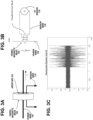
- FIGS 1A to 1C , and Figure 2 illustrate examples of the high frequency components of the sensor, configured to output high frequency voltage used for determining an arc fault and tripping indication, in accordance with the invention.
- a powdered core bead body 100 has a generally cylindrical shape with a centralized circular aperture 105 through the bead body 100.
- a power wire 102 has a first portion passing into a first end of the aperture 104 and through the bead body 100 and a second portion passing out of a second end of the aperture 105.
- Typical magnetic materials suitable for the powdered core bead body 100 include ferrites and magnetic oxides.
- the ferromagnetic bead 100 becomes an inductive impedance in response to current signals with high frequencies in a power wire 102 passing through the aperture of the bead 100. This may be used to provide an arc fault tripping indication in response to an occurrence of high frequency current signals in the power wire 102.
- a high frequency voltage sensor 110 ( Figure 2 ) has a first input terminal coupled to the first portion of the power wire 102 and a second input terminal coupled to the second portion of the power wire 102.
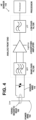
- High frequency current signal may be received by directly connecting to the power wire via isolation capacitors C1 and C2, a diode voltage clamp, and the analog front end (AFE).
- the analog front end (AFE) includes a band pass filter (BPF), a logarithmic amplifier, a low pass filter (LPF), and a processor for sampling and analyzing the signal using arc fault detection algorithms.
- An arc fault tripping circuit interrupter (AFCI) in the miniature circuit breaker 130 of Figure 6 may be configured to interrupt electrical current in the power wire 102, if an output from the high frequency voltage sensor 110 indicates that an arc-fault is detected in the power wire 102; the arc fault tripping circuit interrupter (AFCI) having an input coupled to the high frequency voltage sensor 110.
- AFCI arc fault tripping circuit interrupter
- a sensing wire 116 is positioned to pass once through the aperture 105 of the bead body 100.
- the sensing wire 116 is effectively a secondary coil for sensing the induced high frequency signals from the power wire 102.
- the sensing wire 116 is configured to sense an occurrence of high frequency current signals in the power wire 102 and to provide an arc fault tripping indication in response to an occurrence of high frequency current signals in the power wire 102.
- the high frequency current signal may be received by the sensor wire 116 serving as a single turn secondary loop connected to the analog front end (AFE).
- High frequency current signal may be received by directly connecting to the sensor wire 116 via a diode voltage clamp and the analog front end (AFE).
- the analog front end (AFE) includes a band pass filter (BPF), a logarithmic amplifier, a low pass filter (LPF), and a processor for sampling and analyzing the signal using arc fault detection algorithms.
- Figure 5A is a graph illustrating the demodulated output from high frequency primary current sensing in a frequency range of 1MHz to 40MHz.
- the abscissa is the primary current from 10 -7 to 10 -1 Amperes.
- the ordinate is the RSSI ADC value from 0 to 2000, based on a specific Logarithmic Amplifier and ADC resolution.
- RSSI stands for Received Signal Strength Indication and ADC stands for Analog to Digital Converter.
- the traces compare various core lengths and sensor types.
- a full length core is a relative length based on the inductance expected for the sensor to detect frequencies from 1MHz up to 40MHz and a certain output level for the logarithmic amplifier input impedance. The graph shows how changing just the length of the core, changes the sensitivity of the RF signal.
- Figure 5B is a graph comparing the transfer impedance of the sensor of Figure 1A with the transfer impedance of the sensor of Figure 3A that includes a sensing wire 116 passing once through the aperture 105 of the bead body 100.
- FIG. 6 illustrates an example implementation of the high frequency current sensor, in accordance with the invention.
- a miniature circuit breaker 130 includes the high frequency current sensor 104. RF signals passing through the inductive impedance of the sensor 104 may be measured as a voltage drop between both terminals of the power wire 102. The impedance increases with the frequency and is proportional with the voltage drop across the terminals. This voltage may be filtered and amplified through an analog front end of an Arc Fault Circuit Interrupter (AFCI) device. This high frequency current may be used by an Arc Fault detection algorithm in the AFCI to determine the trip time, for example based on Underwriters Laboratories Inc. (UL) and International Electrotechnical Commission (IEC) standards.
- the miniature circuit breaker 130 is shown in Figure 6 , including the high frequency current sensor 104, log amp, processor, load line, load neutral, power wire 102, trip unit, panel neutral terminal, panel line terminal, and AFCI device.
- the shape of the powdered core bead body 100 provides a compact and low cost solution for sensing high frequency arc faults.
- the high frequency current sensor 104 may be readily adapted for implementation in a monolithic solid-state design, which may be used, as an example, for fastening to a bus bar.
Landscapes
- Physics & Mathematics (AREA)
- General Physics & Mathematics (AREA)
- Engineering & Computer Science (AREA)
- Power Engineering (AREA)
- Microelectronics & Electronic Packaging (AREA)
- Testing Of Short-Circuits, Discontinuities, Leakage, Or Incorrect Line Connections (AREA)
- Measuring Instrument Details And Bridges, And Automatic Balancing Devices (AREA)
- Breakers (AREA)
Claims (13)
- Hochfrequenzsensor zur Erkennung von Lichtbogenfehlern, der umfasst:einen Pulverkern-Perlenkörper (100) mit einer magnetischen Permeabilität, der so konfiguriert ist, dass er als Reaktion auf Stromsignale mit hohen Frequenzen in einem durch den Perlenkörper (100) hindurch verlaufenden Stromdraht (102) zu einer induktiven Impedanz wird und als Reaktion auf das Auftreten von hochfrequenten Stromsignalen in dem Stromdraht (102) eine Lichtbogenfehler-Auslöseanzeige bereitstellt, wobei der Pulverkern-Perlenkörper (100) eine allgemein zylindrische Form mit einer zentralisierten kreisförmigen Öffnung (105) durch den Perlenkörper (100) hindurch aufweist, wobei ein erster Abschnitt des Stromdrahtes (102) in ein erstes Ende der Öffnung (105) hinein und durch den Perlenkörper (100) hindurchgeht und ein zweiter Abschnitt des Stromdrahtes (102) aus einem zweiten Ende der Öffnung herauskommt; undeinen Hochfrequenzspannungssensor (110), der einen ersten Eingangsanschluss aufweist, der direkt mit dem ersten Abschnitt des Stromdrahtes (102) verbunden ist, der in das erste Ende der Öffnung (105) hinein und durch den Perlenkörper (100) hindurch geht, und einen zweiten Eingangsanschluss aufweist, der direkt mit dem zweiten Abschnitt des Stromdrahtes (102) verbunden ist, der durch den Perlenkörper (100) hindurch aus dem zweiten Ende der Öffnung (105) herauskommt, und der so konfiguriert ist, dass er als Reaktion auf das Auftreten von hochfrequenten Stromsignalen in dem Stromdraht (102) die Lichtbogenfehler-Auslöseanzeige bereitstellt.
- Sensor zur Erkennung von Lichtbogenfehlern nach Anspruch 1, der außerdem umfasst:
eine mit dem Spannungssensor (110) gekoppelte Lichtbogenfehler-Auslöseschaltung, die so konfiguriert ist, dass sie einen elektrischen Strom in dem Stromdraht (102) unterbricht, wenn ein Ausgangssignal von dem Spannungssensor (110) empfangen wird, das anzeigt, dass ein Lichtbogenfehler erkannt wird. - Sensor zur Erkennung von Lichtbogenfehlern nach Anspruch 1 oder 2, wobei der Pulverkern-Perlenkörper (100) so konfiguriert ist, dass er für Stromsignale in dem Stromdraht (102) mit Frequenzen zwischen 1 MHz und 40 MHz zu einer induktiven Impedanz wird.
- Sensor zur Erkennung von Lichtbogenfehlern nach einem der Ansprüche 1 bis 3, wobei der Pulverkern-Perlenkörper (100) aus einem ferromagnetischen Material besteht.
- Hochfrequenzsensor zur Erkennung von Lichtbogenfehlern, der umfasst:einen Pulverkern-Perlenkörper (100) mit einer magnetischen Permeabilität, der so konfiguriert ist, dass er als Reaktion auf Stromsignale mit hohen Frequenzen in einem durch die Perle (100) hindurch verlaufenden Stromdraht (102) zu einer induktiven Impedanz wird und als Reaktion auf das Auftreten von hochfrequenten Stromsignalen in dem Stromdraht (102) eine Lichtbogenfehler-Auslöseanzeige bereitstellt, wobei der Pulverkern-Perlenkörper (102) eine allgemein zylindrische Form mit einer zentralisierten kreisförmigen Öffnung (105) durch den Perlenkörper (100) hindurch aufweist, wobei der Stromdraht (102) in ein erstes Ende der Öffnung (105) hinein und durch den Perlenkörper (100) hindurchgeht und aus einem zweiten Ende der Öffnung (105) herauskommt;einen Erfassungsdraht (116), der so positioniert ist, dass er einmal durch die Öffnung (105) des Perlenkörpers (100) hindurchgeht, wobei der Erfassungsdraht (116) einen ersten Abschnitt aufweist, der in das erste Ende der Öffnung (105) hinein und durch den Perlenkörper (100) hindurch verläuft, und einen zweiten Abschnitt aufweist, der aus dem zweiten Ende der Öffnung (105) herauskommt, wobei der Erfassungsdraht (116) so konfiguriert ist, dass er das Auftreten von hochfrequenten Stromsignalen in dem Stromdraht (102) erfasst und die Lichtbogenfehler-Auslöseanzeige als Reaktion auf ein Auftreten von Stromsignalen in dem Stromdraht (102) bereitstellt; undeinen Hochfrequenzspannungssensor (110) mit einem ersten Eingangsanschluss, der mit dem ersten Abschnitt des Erfassungsdrahtes (116) gekoppelt ist, und mit einem zweiten Eingangsanschluss, der mit dem zweiten Abschnitt des Erfassungsdrahtes (116) gekoppelt ist, der so konfiguriert ist, dass er das Auftreten von hochfrequenten Stromsignalen in dem Stromdraht (102) erfasst und die Lichtbogenfehler-Auslöseanzeige als Reaktion auf das Auftreten von hochfrequenten Stromsignalen in dem Stromdraht (102) bereitstellt;wobei die Empfindlichkeit des Spannungssensors (110) gegenüber den hochfrequenten Stromsignalen in dem Stromdraht (102) von der Länge des Perlenkörpers (100) mit zylindrischem Kern abhängt.
- Sensor zur Erkennung von Lichtbogenfehlern nach Anspruch 5, der außerdem umfasst:
eine mit dem Spannungssensor (110) gekoppelte Lichtbogenfehler-Auslöseschaltung, die so konfiguriert ist, dass sie einen elektrischen Strom in dem Stromdraht (102) unterbricht, wenn ein Ausgangssignal von dem Spannungssensor (110) empfangen wird, das anzeigt, dass ein Lichtbogenfehler erkannt wird. - Sensor zur Erkennung von Lichtbogenfehlern nach Anspruch 5 oder 6, wobei der Pulverkern-Perlenkörper (100) so konfiguriert ist, dass er für Stromsignale im Stromdraht (102) mit Frequenzen zwischen 1 MHz und 40 MHz zu einer induktiven Impedanz wird.
- Sensor zur Erkennung von Lichtbogenfehlern nach einem der Ansprüche 5 bis 7, wobei der Pulverkern-Perlenkörper (100) aus einem ferromagnetischen Material besteht.
- Miniatur-Leistungsschutzschalter (130), umfassend:einen Hochfrequenzspannungssensor (110), der einen ersten Eingangsanschluss aufweist, der direkt mit einem ersten Abschnitt eines Stromdrahtes (102) verbunden ist, der in ein erstes Ende einer Öffnung (105) durch einen Pulverkern-Perlenkörper (100) hineingeht, der eine magnetische Permeabilität aufweist, und einen zweiten Eingangsanschluss aufweist, der direkt mit einem zweiten Abschnitt des Stromdrahtes (102) verbunden ist, der aus einem zweiten Ende der Öffnung (105) durch den Pulverkern-Perlenkörper (100) hindurch herauskommt, und der so konfiguriert ist, dass er eine Lichtbogenfehler-Auslöseanzeige als Reaktion auf ein Auftreten von hochfrequenten Stromsignalen in dem Stromdraht (102) bereitstellt;wobei der Pulverkern-Perlenkörper (100) so konfiguriert ist, dass er als Reaktion auf die hochfrequenten Stromsignale in dem durch den Perlenkörper (100) hindurch verlaufenden Stromdraht (102) zu einer induktiven Impedanz wird und als Reaktion auf das Auftreten der hochfrequenten Stromsignale in dem Stromdraht (102) die Lichtbogenfehler-Auslöseanzeige bereitstellt, wobei der Pulverkern-Perlenkörper (100) eine allgemein zylindrische Form mit der zentralisierten kreisförmigen Öffnung (105) durch den Perlenkörper (100) hindurch aufweist; undeinen Lichtbogenfehler-Auslöse-Schaltkreisunterbrecher, der so konfiguriert ist, dass er einen elektrischen Strom in dem Stromdraht (102) als Reaktion auf die Lichtbogenfehler-Auslöseanzeige unterbricht.
- Miniatur-Leistungsschutzschalter nach Anspruch 9, wobei der Pulverkern-Perlenkörper (100) so konfiguriert ist, dass er für Stromsignale in dem Stromdraht (102) mit Frequenzen zwischen 1 MHz und 40 MHz zu einer induktiven Impedanz wird.
- Miniatur-Leistungsschutzschalter nach Anspruch 9, wobei der Pulverkern-Perlenkörper (100) aus einem ferromagnetischen Material besteht.
- Miniatur-Leistungsschutzschalter nach Anspruch 9, wobei die Empfindlichkeit des Spannungssensors (110) gegenüber den Stromsignalen in dem Stromdraht (102) von der Länge des Perlenkörpers (100) mit zylindrischem Kern abhängt.
- Sensor zur Erkennung von Lichtbogenfehlern nach Anspruch 1, wobei die Empfindlichkeit des Spannungssensors (110) gegenüber den Stromsignalen in dem Stromdraht (102) von der Länge des Perlenkörpers (100) mit zylindrischem Kern abhängt.
Applications Claiming Priority (1)
| Application Number | Priority Date | Filing Date | Title |
|---|---|---|---|
| US16/213,582 US11177642B2 (en) | 2018-12-07 | 2018-12-07 | Low cost high frequency sensor for arc-fault detection |
Publications (2)
| Publication Number | Publication Date |
|---|---|
| EP3663778A1 EP3663778A1 (de) | 2020-06-10 |
| EP3663778B1 true EP3663778B1 (de) | 2023-05-03 |
Family
ID=68808044
Family Applications (1)
| Application Number | Title | Priority Date | Filing Date |
|---|---|---|---|
| EP19213929.3A Active EP3663778B1 (de) | 2018-12-07 | 2019-12-05 | Kostengünstiger hochfrequenzsensor zur detektion von störlichtbögen |
Country Status (3)
| Country | Link |
|---|---|
| US (1) | US11177642B2 (de) |
| EP (1) | EP3663778B1 (de) |
| CN (1) | CN111308265B (de) |
Families Citing this family (4)
| Publication number | Priority date | Publication date | Assignee | Title |
|---|---|---|---|---|
| US11016133B2 (en) | 2018-12-12 | 2021-05-25 | Hamilton Sunstrand Corporation | Arc fault detection with sense wire monitoring |
| US11047899B2 (en) * | 2018-12-12 | 2021-06-29 | Hamilton Sunstrand Corporation | High frequency arc fault detection |
| FR3118185B1 (fr) * | 2020-12-21 | 2022-12-23 | Safran Electronics & Defense | Surveillance d’une ligne de transmission |
| FR3118184B1 (fr) * | 2020-12-21 | 2022-12-23 | Safran Electronics & Defense | Surveillance d’une ligne de transmission |
Family Cites Families (24)
| Publication number | Priority date | Publication date | Assignee | Title |
|---|---|---|---|---|
| US4858054A (en) | 1985-05-07 | 1989-08-15 | Franklin Frederick F | Protective circuits and devices for the prevention of fires |
| US5490030A (en) * | 1994-01-31 | 1996-02-06 | Taylor; Harold L. | Electromagnetic and radio frequency interference suppression for ground fault circuit interrupters |
| US6532424B1 (en) * | 1995-03-13 | 2003-03-11 | Square D Company | Electrical fault detection circuit with dual-mode power supply |
| US6452767B1 (en) * | 1995-03-13 | 2002-09-17 | Square D Company | Arcing fault detection system for a secondary line of a current transformer |
| US6313641B1 (en) * | 1995-03-13 | 2001-11-06 | Square D Company | Method and system for detecting arcing faults and testing such system |
| US5682101A (en) * | 1995-03-13 | 1997-10-28 | Square D Company | Arcing fault detection system |
| US5834940A (en) | 1996-09-24 | 1998-11-10 | Brooks; Stanley J. | Arcing fault detector testing and demonstration system |
| US5963406A (en) * | 1997-12-19 | 1999-10-05 | Leviton Manufacturing Co., Inc. | Arc fault detector with circuit interrupter |
| US6625550B1 (en) * | 1998-02-19 | 2003-09-23 | Square D Company | Arc fault detection for aircraft |
| US6229679B1 (en) * | 1998-12-15 | 2001-05-08 | Macbeth Bruce F. | Arc fault circuit interrupter without DC supply |
| US6426634B1 (en) | 1999-03-29 | 2002-07-30 | George A. Spencer | Circuit breaker with integrated self-test enhancements |
| US6876528B2 (en) * | 2000-03-04 | 2005-04-05 | Passi Seymour, Inc. | Two winding resonating arc fault sensor which boosts arc fault signals while rejecting arc mimicking noise |
| US7046124B2 (en) * | 2003-01-21 | 2006-05-16 | Current Technologies, Llc | Power line coupling device and method of using the same |
| WO2005045367A1 (ja) * | 2003-11-10 | 2005-05-19 | Murata Manufacturing Co., Ltd. | ノイズフィルタ及びセンサ回路 |
| US7180299B2 (en) | 2003-12-22 | 2007-02-20 | Leviton Manufacturing Co., Inc. | Arc fault detector |
| US7619861B2 (en) * | 2004-09-29 | 2009-11-17 | Pass & Seymour, Inc. | Protective device having a thin construction |
| US7319574B2 (en) * | 2005-05-23 | 2008-01-15 | Eaton Corporation | Arc fault detection apparatus, method and system for an underground electrical conductor |
| CN100468930C (zh) * | 2006-03-17 | 2009-03-11 | 鸿富锦精密工业(深圳)有限公司 | 抗电磁干扰电源滤波器的磁珠选择方法 |
| CN103563396B (zh) * | 2011-05-30 | 2016-12-28 | 索尼移动通信株式会社 | 用于减小对信号路径的干扰的方法、电路和设备 |
| US8599523B1 (en) | 2011-07-29 | 2013-12-03 | Leviton Manufacturing Company, Inc. | Arc fault circuit interrupter |
| CN103516397B (zh) * | 2013-09-17 | 2016-05-04 | 深圳市共进电子股份有限公司 | 一种基于电力线载波的电信号分离方法及系统 |
| CN203535099U (zh) * | 2013-10-14 | 2014-04-09 | 深圳市共进电子股份有限公司 | 一种工频用电设备的输出频谱测量装置 |
| DE102013225645A1 (de) | 2013-12-11 | 2015-06-11 | Deere & Company | Stromsensor und Regelschaltung |
| US9979178B2 (en) * | 2014-09-08 | 2018-05-22 | Pass & Seymour, Inc. | Arc fault circuit interrupter with surge suppression |
-
2018
- 2018-12-07 US US16/213,582 patent/US11177642B2/en active Active
-
2019
- 2019-12-05 EP EP19213929.3A patent/EP3663778B1/de active Active
- 2019-12-09 CN CN201911249416.6A patent/CN111308265B/zh active Active
Also Published As
| Publication number | Publication date |
|---|---|
| US20200185902A1 (en) | 2020-06-11 |
| CN111308265A (zh) | 2020-06-19 |
| US11177642B2 (en) | 2021-11-16 |
| EP3663778A1 (de) | 2020-06-10 |
| CN111308265B (zh) | 2024-05-14 |
Similar Documents
| Publication | Publication Date | Title |
|---|---|---|
| US11079424B2 (en) | Combined low frequency and high frequency current sensor | |
| EP3663778B1 (de) | Kostengünstiger hochfrequenzsensor zur detektion von störlichtbögen | |
| US6377427B1 (en) | Arc fault protected electrical receptacle | |
| US6567250B1 (en) | Arc fault protected device | |
| US6621669B1 (en) | Arc fault receptacle with a feed-through connection | |
| US11881703B2 (en) | Devices for detecting an arc fault and associated arc-fault-protection units | |
| US11300601B2 (en) | Arc fault detection using single current sensor and wideband analog frontend | |
| US10333290B2 (en) | Multi-winding ground fault sensor | |
| EP2710617B1 (de) | Wechselstrom-/gleichstromwandler | |
| US12451681B2 (en) | Multi-function electrical sensing | |
| US7359167B2 (en) | Corded leakage-current detection and interruption apparatus | |
| US4280093A (en) | Zero-current detector for high voltage DC transmission line | |
| EP2924447A1 (de) | Kombinierter stromsensor | |
| KR20250141073A (ko) | 전력 보호 장치 | |
| US11617269B2 (en) | Current measuring device for an electric power protection system | |
| AU2020289714B2 (en) | Devices for detecting an arc fault and associated arc-fault-protection units | |
| RU2819085C2 (ru) | Устройства для обнаружения дугового замыкания и ассоциированные блоки защиты от дугового замыкания | |
| CA1157095A (en) | Zero-current detector for high voltage dc transmission line | |
| WO2024097097A1 (en) | Compact current sensing for protection and wiring devices | |
| CN118191392A (zh) | 用于低压开关的附件设备 | |
| RU2020141048A (ru) | Устройства для обнаружения дугового замыкания и ассоциированные блоки защиты от дугового замыкания | |
| GB2152681A (en) | Device for detecting current flowing in a conductor | |
| JP2002034143A (ja) | 電圧入力変換器とディジタル保護継電装置 |
Legal Events
| Date | Code | Title | Description |
|---|---|---|---|
| PUAI | Public reference made under article 153(3) epc to a published international application that has entered the european phase |
Free format text: ORIGINAL CODE: 0009012 |
|
| STAA | Information on the status of an ep patent application or granted ep patent |
Free format text: STATUS: THE APPLICATION HAS BEEN PUBLISHED |
|
| AK | Designated contracting states |
Kind code of ref document: A1 Designated state(s): AL AT BE BG CH CY CZ DE DK EE ES FI FR GB GR HR HU IE IS IT LI LT LU LV MC MK MT NL NO PL PT RO RS SE SI SK SM TR |
|
| AX | Request for extension of the european patent |
Extension state: BA ME |
|
| STAA | Information on the status of an ep patent application or granted ep patent |
Free format text: STATUS: REQUEST FOR EXAMINATION WAS MADE |
|
| 17P | Request for examination filed |
Effective date: 20201210 |
|
| RBV | Designated contracting states (corrected) |
Designated state(s): AL AT BE BG CH CY CZ DE DK EE ES FI FR GB GR HR HU IE IS IT LI LT LU LV MC MK MT NL NO PL PT RO RS SE SI SK SM TR |
|
| GRAP | Despatch of communication of intention to grant a patent |
Free format text: ORIGINAL CODE: EPIDOSNIGR1 |
|
| STAA | Information on the status of an ep patent application or granted ep patent |
Free format text: STATUS: GRANT OF PATENT IS INTENDED |
|
| INTG | Intention to grant announced |
Effective date: 20230120 |
|
| GRAS | Grant fee paid |
Free format text: ORIGINAL CODE: EPIDOSNIGR3 |
|
| GRAA | (expected) grant |
Free format text: ORIGINAL CODE: 0009210 |
|
| STAA | Information on the status of an ep patent application or granted ep patent |
Free format text: STATUS: THE PATENT HAS BEEN GRANTED |
|
| AK | Designated contracting states |
Kind code of ref document: B1 Designated state(s): AL AT BE BG CH CY CZ DE DK EE ES FI FR GB GR HR HU IE IS IT LI LT LU LV MC MK MT NL NO PL PT RO RS SE SI SK SM TR |
|
| REG | Reference to a national code |
Ref country code: GB Ref legal event code: FG4D |
|
| REG | Reference to a national code |
Ref country code: DE Ref legal event code: R096 Ref document number: 602019028321 Country of ref document: DE |
|
| REG | Reference to a national code |
Ref country code: AT Ref legal event code: REF Ref document number: 1565053 Country of ref document: AT Kind code of ref document: T Effective date: 20230515 Ref country code: CH Ref legal event code: EP |
|
| REG | Reference to a national code |
Ref country code: IE Ref legal event code: FG4D |
|
| REG | Reference to a national code |
Ref country code: LT Ref legal event code: MG9D |
|
| REG | Reference to a national code |
Ref country code: NL Ref legal event code: MP Effective date: 20230503 |
|
| REG | Reference to a national code |
Ref country code: AT Ref legal event code: MK05 Ref document number: 1565053 Country of ref document: AT Kind code of ref document: T Effective date: 20230503 |
|
| PG25 | Lapsed in a contracting state [announced via postgrant information from national office to epo] |
Ref country code: SE Free format text: LAPSE BECAUSE OF FAILURE TO SUBMIT A TRANSLATION OF THE DESCRIPTION OR TO PAY THE FEE WITHIN THE PRESCRIBED TIME-LIMIT Effective date: 20230503 Ref country code: PT Free format text: LAPSE BECAUSE OF FAILURE TO SUBMIT A TRANSLATION OF THE DESCRIPTION OR TO PAY THE FEE WITHIN THE PRESCRIBED TIME-LIMIT Effective date: 20230904 Ref country code: NO Free format text: LAPSE BECAUSE OF FAILURE TO SUBMIT A TRANSLATION OF THE DESCRIPTION OR TO PAY THE FEE WITHIN THE PRESCRIBED TIME-LIMIT Effective date: 20230803 Ref country code: NL Free format text: LAPSE BECAUSE OF FAILURE TO SUBMIT A TRANSLATION OF THE DESCRIPTION OR TO PAY THE FEE WITHIN THE PRESCRIBED TIME-LIMIT Effective date: 20230503 Ref country code: ES Free format text: LAPSE BECAUSE OF FAILURE TO SUBMIT A TRANSLATION OF THE DESCRIPTION OR TO PAY THE FEE WITHIN THE PRESCRIBED TIME-LIMIT Effective date: 20230503 Ref country code: AT Free format text: LAPSE BECAUSE OF FAILURE TO SUBMIT A TRANSLATION OF THE DESCRIPTION OR TO PAY THE FEE WITHIN THE PRESCRIBED TIME-LIMIT Effective date: 20230503 |
|
| PG25 | Lapsed in a contracting state [announced via postgrant information from national office to epo] |
Ref country code: RS Free format text: LAPSE BECAUSE OF FAILURE TO SUBMIT A TRANSLATION OF THE DESCRIPTION OR TO PAY THE FEE WITHIN THE PRESCRIBED TIME-LIMIT Effective date: 20230503 Ref country code: PL Free format text: LAPSE BECAUSE OF FAILURE TO SUBMIT A TRANSLATION OF THE DESCRIPTION OR TO PAY THE FEE WITHIN THE PRESCRIBED TIME-LIMIT Effective date: 20230503 Ref country code: LV Free format text: LAPSE BECAUSE OF FAILURE TO SUBMIT A TRANSLATION OF THE DESCRIPTION OR TO PAY THE FEE WITHIN THE PRESCRIBED TIME-LIMIT Effective date: 20230503 Ref country code: LT Free format text: LAPSE BECAUSE OF FAILURE TO SUBMIT A TRANSLATION OF THE DESCRIPTION OR TO PAY THE FEE WITHIN THE PRESCRIBED TIME-LIMIT Effective date: 20230503 Ref country code: IS Free format text: LAPSE BECAUSE OF FAILURE TO SUBMIT A TRANSLATION OF THE DESCRIPTION OR TO PAY THE FEE WITHIN THE PRESCRIBED TIME-LIMIT Effective date: 20230903 Ref country code: HR Free format text: LAPSE BECAUSE OF FAILURE TO SUBMIT A TRANSLATION OF THE DESCRIPTION OR TO PAY THE FEE WITHIN THE PRESCRIBED TIME-LIMIT Effective date: 20230503 Ref country code: GR Free format text: LAPSE BECAUSE OF FAILURE TO SUBMIT A TRANSLATION OF THE DESCRIPTION OR TO PAY THE FEE WITHIN THE PRESCRIBED TIME-LIMIT Effective date: 20230804 |
|
| PG25 | Lapsed in a contracting state [announced via postgrant information from national office to epo] |
Ref country code: FI Free format text: LAPSE BECAUSE OF FAILURE TO SUBMIT A TRANSLATION OF THE DESCRIPTION OR TO PAY THE FEE WITHIN THE PRESCRIBED TIME-LIMIT Effective date: 20230503 |
|
| PG25 | Lapsed in a contracting state [announced via postgrant information from national office to epo] |
Ref country code: SK Free format text: LAPSE BECAUSE OF FAILURE TO SUBMIT A TRANSLATION OF THE DESCRIPTION OR TO PAY THE FEE WITHIN THE PRESCRIBED TIME-LIMIT Effective date: 20230503 |
|
| PG25 | Lapsed in a contracting state [announced via postgrant information from national office to epo] |
Ref country code: SM Free format text: LAPSE BECAUSE OF FAILURE TO SUBMIT A TRANSLATION OF THE DESCRIPTION OR TO PAY THE FEE WITHIN THE PRESCRIBED TIME-LIMIT Effective date: 20230503 Ref country code: SK Free format text: LAPSE BECAUSE OF FAILURE TO SUBMIT A TRANSLATION OF THE DESCRIPTION OR TO PAY THE FEE WITHIN THE PRESCRIBED TIME-LIMIT Effective date: 20230503 Ref country code: RO Free format text: LAPSE BECAUSE OF FAILURE TO SUBMIT A TRANSLATION OF THE DESCRIPTION OR TO PAY THE FEE WITHIN THE PRESCRIBED TIME-LIMIT Effective date: 20230503 Ref country code: EE Free format text: LAPSE BECAUSE OF FAILURE TO SUBMIT A TRANSLATION OF THE DESCRIPTION OR TO PAY THE FEE WITHIN THE PRESCRIBED TIME-LIMIT Effective date: 20230503 Ref country code: DK Free format text: LAPSE BECAUSE OF FAILURE TO SUBMIT A TRANSLATION OF THE DESCRIPTION OR TO PAY THE FEE WITHIN THE PRESCRIBED TIME-LIMIT Effective date: 20230503 Ref country code: CZ Free format text: LAPSE BECAUSE OF FAILURE TO SUBMIT A TRANSLATION OF THE DESCRIPTION OR TO PAY THE FEE WITHIN THE PRESCRIBED TIME-LIMIT Effective date: 20230503 |
|
| REG | Reference to a national code |
Ref country code: DE Ref legal event code: R097 Ref document number: 602019028321 Country of ref document: DE |
|
| PLBE | No opposition filed within time limit |
Free format text: ORIGINAL CODE: 0009261 |
|
| STAA | Information on the status of an ep patent application or granted ep patent |
Free format text: STATUS: NO OPPOSITION FILED WITHIN TIME LIMIT |
|
| 26N | No opposition filed |
Effective date: 20240206 |
|
| PG25 | Lapsed in a contracting state [announced via postgrant information from national office to epo] |
Ref country code: SI Free format text: LAPSE BECAUSE OF FAILURE TO SUBMIT A TRANSLATION OF THE DESCRIPTION OR TO PAY THE FEE WITHIN THE PRESCRIBED TIME-LIMIT Effective date: 20230503 |
|
| PG25 | Lapsed in a contracting state [announced via postgrant information from national office to epo] |
Ref country code: SI Free format text: LAPSE BECAUSE OF FAILURE TO SUBMIT A TRANSLATION OF THE DESCRIPTION OR TO PAY THE FEE WITHIN THE PRESCRIBED TIME-LIMIT Effective date: 20230503 Ref country code: IT Free format text: LAPSE BECAUSE OF FAILURE TO SUBMIT A TRANSLATION OF THE DESCRIPTION OR TO PAY THE FEE WITHIN THE PRESCRIBED TIME-LIMIT Effective date: 20230503 |
|
| REG | Reference to a national code |
Ref country code: CH Ref legal event code: PL |
|
| PG25 | Lapsed in a contracting state [announced via postgrant information from national office to epo] |
Ref country code: LU Free format text: LAPSE BECAUSE OF NON-PAYMENT OF DUE FEES Effective date: 20231205 |
|
| PG25 | Lapsed in a contracting state [announced via postgrant information from national office to epo] |
Ref country code: MC Free format text: LAPSE BECAUSE OF FAILURE TO SUBMIT A TRANSLATION OF THE DESCRIPTION OR TO PAY THE FEE WITHIN THE PRESCRIBED TIME-LIMIT Effective date: 20230503 |
|
| REG | Reference to a national code |
Ref country code: BE Ref legal event code: MM Effective date: 20231231 |
|
| PG25 | Lapsed in a contracting state [announced via postgrant information from national office to epo] |
Ref country code: MC Free format text: LAPSE BECAUSE OF FAILURE TO SUBMIT A TRANSLATION OF THE DESCRIPTION OR TO PAY THE FEE WITHIN THE PRESCRIBED TIME-LIMIT Effective date: 20230503 Ref country code: LU Free format text: LAPSE BECAUSE OF NON-PAYMENT OF DUE FEES Effective date: 20231205 |
|
| REG | Reference to a national code |
Ref country code: IE Ref legal event code: MM4A |
|
| PG25 | Lapsed in a contracting state [announced via postgrant information from national office to epo] |
Ref country code: IE Free format text: LAPSE BECAUSE OF NON-PAYMENT OF DUE FEES Effective date: 20231205 |
|
| PG25 | Lapsed in a contracting state [announced via postgrant information from national office to epo] |
Ref country code: BE Free format text: LAPSE BECAUSE OF NON-PAYMENT OF DUE FEES Effective date: 20231231 |
|
| PG25 | Lapsed in a contracting state [announced via postgrant information from national office to epo] |
Ref country code: CH Free format text: LAPSE BECAUSE OF NON-PAYMENT OF DUE FEES Effective date: 20231231 |
|
| PG25 | Lapsed in a contracting state [announced via postgrant information from national office to epo] |
Ref country code: IE Free format text: LAPSE BECAUSE OF NON-PAYMENT OF DUE FEES Effective date: 20231205 Ref country code: CH Free format text: LAPSE BECAUSE OF NON-PAYMENT OF DUE FEES Effective date: 20231231 Ref country code: BE Free format text: LAPSE BECAUSE OF NON-PAYMENT OF DUE FEES Effective date: 20231231 |
|
| PG25 | Lapsed in a contracting state [announced via postgrant information from national office to epo] |
Ref country code: BG Free format text: LAPSE BECAUSE OF FAILURE TO SUBMIT A TRANSLATION OF THE DESCRIPTION OR TO PAY THE FEE WITHIN THE PRESCRIBED TIME-LIMIT Effective date: 20230503 |
|
| PG25 | Lapsed in a contracting state [announced via postgrant information from national office to epo] |
Ref country code: BG Free format text: LAPSE BECAUSE OF FAILURE TO SUBMIT A TRANSLATION OF THE DESCRIPTION OR TO PAY THE FEE WITHIN THE PRESCRIBED TIME-LIMIT Effective date: 20230503 |
|
| PG25 | Lapsed in a contracting state [announced via postgrant information from national office to epo] |
Ref country code: CY Free format text: LAPSE BECAUSE OF FAILURE TO SUBMIT A TRANSLATION OF THE DESCRIPTION OR TO PAY THE FEE WITHIN THE PRESCRIBED TIME-LIMIT; INVALID AB INITIO Effective date: 20191205 |
|
| PG25 | Lapsed in a contracting state [announced via postgrant information from national office to epo] |
Ref country code: HU Free format text: LAPSE BECAUSE OF FAILURE TO SUBMIT A TRANSLATION OF THE DESCRIPTION OR TO PAY THE FEE WITHIN THE PRESCRIBED TIME-LIMIT; INVALID AB INITIO Effective date: 20191205 |
|
| PG25 | Lapsed in a contracting state [announced via postgrant information from national office to epo] |
Ref country code: TR Free format text: LAPSE BECAUSE OF FAILURE TO SUBMIT A TRANSLATION OF THE DESCRIPTION OR TO PAY THE FEE WITHIN THE PRESCRIBED TIME-LIMIT Effective date: 20230503 |
|
| PGFP | Annual fee paid to national office [announced via postgrant information from national office to epo] |
Ref country code: GB Payment date: 20251223 Year of fee payment: 7 |
|
| PGFP | Annual fee paid to national office [announced via postgrant information from national office to epo] |
Ref country code: FR Payment date: 20251230 Year of fee payment: 7 |
|
| PGFP | Annual fee paid to national office [announced via postgrant information from national office to epo] |
Ref country code: DE Payment date: 20251229 Year of fee payment: 7 |