EP3663462B1 - Siebvorrichtung und rotor - Google Patents
Siebvorrichtung und rotor Download PDFInfo
- Publication number
- EP3663462B1 EP3663462B1 EP19207143.9A EP19207143A EP3663462B1 EP 3663462 B1 EP3663462 B1 EP 3663462B1 EP 19207143 A EP19207143 A EP 19207143A EP 3663462 B1 EP3663462 B1 EP 3663462B1
- Authority
- EP
- European Patent Office
- Prior art keywords
- screening
- rotor
- foils
- cylinder
- screening device
- Prior art date
- Legal status (The legal status is an assumption and is not a legal conclusion. Google has not performed a legal analysis and makes no representation as to the accuracy of the status listed.)
- Active
Links
Images




Classifications
-
- D—TEXTILES; PAPER
- D21—PAPER-MAKING; PRODUCTION OF CELLULOSE
- D21D—TREATMENT OF THE MATERIALS BEFORE PASSING TO THE PAPER-MAKING MACHINE
- D21D5/00—Purification of the pulp suspension by mechanical means; Apparatus therefor
- D21D5/02—Straining or screening the pulp
- D21D5/023—Stationary screen-drums
- D21D5/026—Stationary screen-drums with rotating cleaning foils
-
- D—TEXTILES; PAPER
- D21—PAPER-MAKING; PRODUCTION OF CELLULOSE
- D21D—TREATMENT OF THE MATERIALS BEFORE PASSING TO THE PAPER-MAKING MACHINE
- D21D5/00—Purification of the pulp suspension by mechanical means; Apparatus therefor
- D21D5/02—Straining or screening the pulp
- D21D5/06—Rotary screen-drums
-
- B—PERFORMING OPERATIONS; TRANSPORTING
- B01—PHYSICAL OR CHEMICAL PROCESSES OR APPARATUS IN GENERAL
- B01D—SEPARATION
- B01D29/00—Filters with filtering elements stationary during filtration, e.g. pressure or suction filters, not covered by groups B01D24/00 - B01D27/00; Filtering elements therefor
- B01D29/11—Filters with filtering elements stationary during filtration, e.g. pressure or suction filters, not covered by groups B01D24/00 - B01D27/00; Filtering elements therefor with bag, cage, hose, tube, sleeve or like filtering elements
-
- B—PERFORMING OPERATIONS; TRANSPORTING
- B01—PHYSICAL OR CHEMICAL PROCESSES OR APPARATUS IN GENERAL
- B01D—SEPARATION
- B01D5/00—Condensation of vapours; Recovering volatile solvents by condensation
- B01D5/0003—Condensation of vapours; Recovering volatile solvents by condensation by using heat-exchange surfaces for indirect contact between gases or vapours and the cooling medium
- B01D5/0024—Rotating vessels or vessels containing movable parts
-
- D—TEXTILES; PAPER
- D21—PAPER-MAKING; PRODUCTION OF CELLULOSE
- D21C—PRODUCTION OF CELLULOSE BY REMOVING NON-CELLULOSE SUBSTANCES FROM CELLULOSE-CONTAINING MATERIALS; REGENERATION OF PULPING LIQUORS; APPARATUS THEREFOR
- D21C3/00—Pulping cellulose-containing materials
- D21C3/22—Other features of pulping processes
- D21C3/26—Multistage processes
-
- D—TEXTILES; PAPER
- D21—PAPER-MAKING; PRODUCTION OF CELLULOSE
- D21D—TREATMENT OF THE MATERIALS BEFORE PASSING TO THE PAPER-MAKING MACHINE
- D21D5/00—Purification of the pulp suspension by mechanical means; Apparatus therefor
- D21D5/02—Straining or screening the pulp
Definitions
- the invention relates generally to producing fiber webs. Particularly the invention relates to a screening device for screening pulp suspensions according to the preamble of claim 1 and to a rotor of a screening device for screening pulp suspensions according to the preamble of claim 3.
- a typical production and treatment line comprises a forming section comprising a head box and a forming unit and a press section as well as a subsequent drying section and a reel-up.
- the production and treatment line can further comprise other devices and sections for finishing the fiber web, for example, a size press, a calender, a coating section.
- the production and treatment line also comprises typically at least one winder for forming customer rolls as well as a roll packaging apparatus.
- a treatment system of the pulp suspensions for example comprises a pulping section, a coarse screening section, a centrifugal cleaning section, a fractionation section, a deashing system, a fine screening system, a fiber thickening system and fiber refining systems.
- Screening is used for removing stickies, dirt specks and other impurities from the pulp suspension and for maximizing accept pulp quality and for ensuring constant runnability of the fiber web production process and for minimizing fiber losses in the pulp suspension treatment before the forming section and for minimizing breakdown of impurities and for protecting following process stages in the fiber web production. Screening is used in connection with pulp suspension treatment for pulp suspension comprising recycled fiber and/or virgin fiber. In treatment of pulp suspensions comprising recycled fiber screening is used in OCC line screening processes, in DIP line screening processes and in stock preparation. In treatment of pulp suspensions comprising virgin fiber screening is used in chemical pulping, mechanical pulping and in stock preparation.
- impurities to be removed by screening are metals, sand, plastics, rubber, waxes, glass, stickies, ink, bark, pitch, shives, knots, rust, chemicals, robe and/or fiber bundles.
- Main types of screening devices can be divided to coarse screens, fine screens, machine screens.
- the screening device comprises as main components a screening cylinder and a rotor located and rotating inside the screening cylinder.
- a commonly used screen type comprises the screening cylinder provided with a cylindrical screening surface equipped with apertures for screening pulp.
- the apertures in the screening surface may be e.g. circular or elongated holes, or mutually parallel slots provided in the surface of the screening cylinder.
- a screen equipped with a screening cylinder typically further includes a rotor arranged inside the cylindrical screening surface for rotating the pulp in the screen and foils or blades supported against the frame of the rotor such that when the rotor rotates, the blades produce on the screening surface a pressure pulse on account of which reject pulp and fibers collected onto the screening surface become released from the screening surface and return to the pulp suspension.
- drum rotors for low consistencies of pulp suspensions, typically up to 3%
- foil arm rotors for high consistencies of pulp suspensions, typically up to 4,5%.
- the fibers and impurities of the pulp suspension tend to accumulate around the foil arms, which problem is called spinning.
- drum rotors consistency variations may cause overloading situations due to accumulation of the fibers and impurities on the screening surface, which may prevent the flow through the screening surface.
- the rotor is used to cause the pulp suspension to flow and to create the pressure pulse so that the pulp suspension is flown to the accept side of the screening surface of the screening cylinder and to keep the screening surface clean.
- a screening apparatus for screening pulp suspensions comprising a casing, in which casing a cylindrical screening member is arranged for dividing the pulp into accept and reject, an inlet for the pulp, an outlet for the accept, an outlet for the reject, a rotor comprising a rotor body and at least one pulsation member located on the inside of the screening member, so that a screening chamber is formed between the rotor and the screening member, in which the rotor is provided with a detachable pulsation member package comprising at least one attachment ring attached to the rotor body, at least one support ring attached to or supported by the rotor body and the at least one pulsation member attached to the at least one attachment ring and the at least one support ring.
- space between the outer surface of the rotor and the inner surface of the cylindrical screening member is small and thus, consistency of the pulp suspension to be screened is limited to low values, typically at 2 % consistency of the pulp suspension
- An object of the invention is to create a screening device and a rotor of a screening device, in which the disadvantages and problems of prior art are eliminated or at least minimized.
- an object of the invention is to provide a new type of screening device, in which energy savings and operational security are achieved.
- the screening device according to the invention is mainly characterized by the features of the characterizing clause of claim 1.
- the rotor of a screening device according to the invention in turn is mainly characterized by the features of the characterizing clause of claim 3.
- Advantageous embodiments and features are disclosed in the dependent claims.
- the screening device for screening pulp suspensions comprises a screening cylinder and a rotor located and rotating inside the screening cylinder, in which screening device the screening cylinder is cylindrical and its surface comprises apertures for passing through accept of the pulp suspension during screening, in which screening device the rotor for rotating the pulp suspension in a screening space located between an inner surface of the screening cylinder and an outer surface of the rotor comprises a cylindrical rotor body and a hub, in which screening device in the screening space foils are located, wherein the rotor of the screening device comprises circular elements welded or otherwise fixedly attached to the cylindrical rotor body on its outer surface and foil arms formed as low protrusions on the circular elements, the foils are detachably attached to the foil arms and distance between the outer surface of the rotor body and the inner surface of the screening of the screening device is 45-85 mm, preferably 55-75 mm.
- adjustable adjustment components are located, by which distance between the outer surface of the attachment surface of the foil arms and the inner surface of the screening cylinder of the screening device is adjustable.
- the screening device is for screening pulp suspensions with 0 - 5%, preferably 4 - 4,5% consistency.
- the rotor of a screening device for screening pulp suspensions comprises a cylindrical rotor body and a hub and foils, wherein the rotor further comprises circular elements welded or otherwise fixedly attached to the cylindrical rotor body on its outer surface and foil arms formed as low protrusions on the circular elements and the foils are detachably attached to the foil arms.
- adjustable adjustment components are located, by which distance of the foils from the outer surface of the rotor body is adjustable.
- the rotor of the screening device comprises a hollow cylindrical body, circular elements welded or otherwise fixedly attached to the cylindrical body on its outer surface, foil arms formed as low protrusions on the circular elements and detachably to the foil arms attached foils.
- adjustable adjustment components are located, by which distance between the outer surface of the rotor body and the inner surface of the screening cylinder of the screening device is adjustable.
- the distance is 45-85 mm, preferably 55-75 mm.
- the screening device comprises a cylindrical screening cylinder and a rotor provided with a hollow cylindrical body and the rotor further comprises detachable foils.
- the outer diameter of the hollow cylindrical body of the rotor is smaller than the inner diameter of the cylindrical screening cylinder.
- weight of the foil arms and the rotor is minimized by the inventive structure of the rotor and thus also energy savings are achieved. Additionally, operational security is provided in consistency variation situations.
- the detachable attachment of the foils to the foil arms provides the possibility of providing the screening cylinder with such foils that in each case provide for the most suitable screening effect and thus any operational problems can be avoided. Also, lower maintenance costs are achieved.
- the foil clearance being adjustable as well as the foils being detachably attached to the foil arms thus being changeable an increased capacity is achieved. This also provides the possibility of optimizing the screening effect.
- the screening device according to the invention and by the rotor according to the invention many advantages are achieved and especially a robust, low-energy consuming rotor for a screening device, in particular for a pressure screen is achieved. Thus, high energy savings are achieved. Additionally, the screen and the rotor according to the invention provide the possibility of also screening of pulp suspensions of high consistency, over 4 % consistency of the pulp suspension.
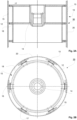
- FIG. 1A-1B is shown schematically an advantageous example of a screening device according to the invention.
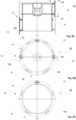
- FIG. 2A-2B is shown schematically an advantageous example of a screening device according to the invention.
- FIG. 4A-4C is shown schematically an advantageous example of a screening device according to the invention.
- FIG. 5A-5C is shown schematically an advantageous example of a screening device according to the invention.
- FIG. 6A-6C is shown schematically an advantageous example of a screening device according to the invention.
- FIGS. 1A-1B an example of a screening device 30 according to the invention is shown, which comprises a screening cylinder 20 and a rotor 10 located and rotating inside the screening cylinder 20.
- the rotor 10 comprises a hub 14 to be connected to a motor or like providing power for the rotational movement of the rotor 10.
- the screening cylinder 20 is cylindrical and its surface comprises apertures, for example circular or elongated holes, or mutually parallel slots provided in the surface of the screening cylinder 20 for passing through accept of the pulp suspension during screening.
- the rotor 10 arranged inside the cylindrical screening cylinder 20 is for rotating the pulp suspension in the screening device 30 in the screening space located between the inner surface of the screening cylinder and the outer surface of a rotor body 12 of the rotor 10.
- the foils 15 are located.
- the foils 15 of the rotor 10 when the rotor 10 rotates, produce on the screening cylinder 20 a suction pressure pulse on account of which reject pulp and fibers collected onto the screening surface become released from the screening surface and return to the pulp suspension and accept pulp is flown through the apertures of the screening cylinder 20.
- the rotor 10 of the screening device 30 comprises the cylindrical rotor body 12, circular elements 18 welded or otherwise fixedly attached to the cylindrical rotor body 12 on its outer surface, foil arms 16 formed as low protrusions on the circular elements 18 as part of the circular elements 18. The protrusions are thus formed as one unity with the circular elements 18 during manufacturing of the circular elements 18.
- the foils 15 are detachably attached to the foil arms 16.
- the height of the low protrusions i.e. the foil arms 16 is defined by the distance between the outer surface of the rotor body 12 and the inner surface of the screening cylinder 20 of the screening device 30.
- adjustable adjustment components 17 are located, by which distance between the outer surface of the attachment surface of the foil arms 16 and the inner surface of the screening cylinder 20 of the screening device 30 is adjustable.
- the distance is 45-85 mm, preferably 55 -75 mm thus providing a well-functioning screening space for screening high consistency pulp suspensions with 0-5%, preferably 4-4,5% consistency.
- the height of the foil arms 16 formed as low protrusions is advantageously 15-35% of the distance between the outer surface of the attachment surface of the foil arms 16 and the inner surface of the screening cylinder 20 of the screening device.
- the foils 15 extend in longitudinal direction substantially over the longitudinal length of the rotor body 12 and the screening cylinder 20.
- the detachable attachment of the foils 15 to the foil arms 16 provides replacing the foils 15 for the most suitable screening effect and thus any operational problems can be avoided. Also, lower maintenance costs are achieved as the foils 15 are easily replaceable, when needed. In this advantageous example there are three (3) foils 15 spaced apart in a 120 ° angle.
- FIG. 2A-2B an example of a screening device 30 according to the invention is shown, in which comprises a screening cylinder 20 and a rotor 10 located and rotating inside the screening cylinder 20.
- the rotor 10 comprises a hub 14 to be connected to a motor or like providing power for the rotational movement of the rotor 10.
- the screening cylinder 20 is cylindrical and its surface comprises apertures, for example circular or elongated holes, or mutually parallel slots provided in the surface of the screening cylinder 20 for passing through accept of the pulp suspension during screening.
- the rotor 10 arranged inside the cylindrical screening cylinder 20 is for rotating the pulp suspension in the screening device 30 in the screening space located between the inner surface of the screening basked and the outer surface of the rotor body 12. In the screening space foils 15 are located.
- the foils 15 of the rotor 10 when the rotor 10 rotates, produce on the screening cylinder 20 a suction pressure pulse on account of which reject pulp and fibers collected onto the screening surface become released from the screening surface and return to the pulp suspension and accept pulp is flown through the apertures of the screening cylinder 20.
- the rotor 10 of the screening device 30 comprises the cylindrical rotor body 12, circular elements 18 welded or otherwise fixedly attached to the cylindrical body 12 on its outer surface, foil arms 16 formed as low protrusions on the circular elements 18 as part of the circular elements 18. The protrusions are thus formed as one unity with the circular elements 18 during manufacturing of the circular elements 18.
- the foils 15 are detachably attached to the foil arms 16. The height of the low protrusions i.e.
- the foil arms 16 is defined by the distance between the outer surface of the rotor body 12 and the inner surface of the screening cylinder 20 of the screening device 30.
- adjustable adjustment components 17 are located, by which distance between the outer surface of the attachment surface of the foil arms 16 and the inner surface of the screening cylinder 20 of the screening device 30 is adjustable.
- the distance is 45-85 mm, preferably 55-75 mm thus providing a well-functioning screening space for screening high consistency pulp suspensions with 0-5%, preferably 4-4,5% consistency.
- the height of the foil arms 16 formed as low protrusions is advantageously 15-35% of the distance between the outer surface of the attachment surface of the foil arms 16 and the inner surface of the screening cylinder 20 of the screening device.
- the foils 15 extend in longitudinal direction substantially over the longitudinal length of the rotor 10 and the screening cylinder 20.
- the detachable attachment of the foils 15 to the foil arms 16 provides replacing the foils 15 for the most suitable screening effect and thus any operational problems can be avoided. Also, lower maintenance costs are achieved as the foils 15 are easily replaceable, when needed.
- FIG. 3A-3B an example of a screening device 30 according to the invention is shown, in which comprises a screening cylinder 20 and a rotor 10 located and rotating inside the screening cylinder 20.
- the rotor 10 comprises a hub 14 to be connected to a motor or like providing power for the rotational movement of the rotor 10.
- the screening cylinder 20 is cylindrical and its surface comprises apertures, for example circular or elongated holes, or mutually parallel slots provided in the surface of the screening cylinder 20 for passing through accept of the pulp suspension during screening.
- the rotor 10 arranged inside the cylindrical screening cylinder 20 is for rotating the pulp suspension in the screening device 30 in the screening space located between the inner surface of the screening basked and the outer surface of the rotor body 12. In the screening space foils 15 are located.
- the foils 15 of the rotor 10 when the rotor 10 rotates, produce on the screening cylinder 20 a suction pressure pulse on account of which reject pulp and fibers collected onto the screening surface become released from the screening surface and return to the pulp suspension and accept pulp is flown through the apertures of the screening cylinder 20.
- the rotor 10 of the screening device 30 comprises the cylindrical rotor body 12, circular elements 18 welded or otherwise fixedly attached to the cylindrical body 12 on its outer surface, foil arms 16 formed as low protrusions on the circular elements 18 as part of the circular elements 18. The protrusions are thus formed as one unity with the circular elements 18 during manufacturing of the circular elements 18.
- the foils 15 are detachably attached to the foil arms 16. The height of the low protrusions i.e.
- the foil arms 16 is defined by the distance between the outer surface of the rotor body 12 and the inner surface of the screening cylinder 20 of the screening device 30.
- adjustable adjustment components 17 are located, by which distance between the outer surface of the attachment surface of the foil arms 16 and the inner surface of the screening cylinder 20 of the screening device 30 is adjustable.
- the distance is 45-85 mm, preferably 55-75 mm thus providing a well-functioning screening space for screening high consistency pulp suspensions with 0-5%, preferably 4-4,5% consistency.
- the height of the foil arms 16 formed as low protrusions is advantageously 15-35% of the distance between the outer surface of the attachment surface of the foil arms 16 and the inner surface of the screening cylinder 20 of the screening device.
- the foils 15 are formed of two longitudinally extending parts 15A, 15B following each other in longitudinal direction substantially over the longitudinal length of the rotor 10 and the screening cylinder 20 in the same stage such that the two parts 15A, 15B of foils 15 are substantially in line with each other.
- the detachable attachment of the foils 15 to the foil arms 16 provides replacing the foils 15 for the most suitable screening effect and thus any operational problems can be avoided. Also, lower maintenance costs are achieved as the foils 15 are easily replaceable, when needed.
- FIG. 4A-4C an example of a screening device 30 according to the invention is shown, in which comprises a screening cylinder 20 and a rotor 10 located and rotating inside the screening cylinder 20.
- the rotor 10 comprises a hub 14 to be connected to a motor or like providing power for the rotational movement of the rotor 10.
- the screening cylinder 20 is cylindrical and its surface comprises apertures, for example circular or elongated holes, or mutually parallel slots provided in the surface of the screening cylinder 20 for passing through accept of the pulp suspension during screening.
- the rotor 10 arranged inside the cylindrical screening cylinder 20 is for rotating the pulp suspension in the screening device 30 in the screening space located between the inner surface of the screening basked and the outer surface of the rotor body 12. In the screening space foils 15 are located.
- the foils 15 of the rotor 10 when the rotor 10 rotates, produce on the screening cylinder 20 a suction pressure pulse on account of which reject pulp and fibers collected onto the screening surface become released from the screening surface and return to the pulp suspension and accept pulp is flown through the apertures of the screening cylinder 20.
- the rotor 10 of the screening device 30 comprises the cylindrical rotor body 12, circular elements 18 welded or otherwise fixedly attached to the cylindrical body 12 on its outer surface, foil arms 16 formed as low protrusions on the circular elements 18 as part of the circular elements 18. The protrusions are thus formed as one unity with the circular elements 18 during manufacturing of the circular elements 18.
- the foils 15 are detachably attached to the foil arms 16. The height of the low protrusions i.e.
- the foil arms 16 is defined by the distance between the outer surface of the rotor body 12 and the inner surface of the screening cylinder 20 of the screening device 30.
- adjustable adjustment components 17 are located, by which distance between the outer surface of the attachment surface of the foil arms 16 and the inner surface of the screening cylinder 20 of the screening device 30 is adjustable.
- the distance is 45-85 mm, preferably 55-75 mm thus providing a well-functioning screening space for screening high consistency pulp suspensions with 0-5%, preferably 4-4,5% consistency.
- the height of the foil arms 16 formed as low protrusions is advantageously 15-35% of the distance between the outer surface of the attachment surface of the foil arms 16 and the inner surface of the screening cylinder 20 of the screening device.
- the foils 15 are formed of two longitudinally extending parts 15A, 15B in longitudinal direction.
- the foils 15 of the upper part of the rotor 10 i.e. the parts 15A of the foils 15 and the foils 15 of the lower part of the rotor 10 i.e. the parts 15B of the foils 15 are in the different stage in the upper part and in the lower part.
- the detachable attachment of the foils 15 to the foil arms 16 provides replacing the foils 15 for the most suitable screening effect and thus any operational problems can be avoided. Also, lower maintenance costs are achieved as the foils 15 are easily replaceable, when needed.
- FIG. 5A-5C an example of a screening device 30 according to the invention is shown, in which comprises a screening cylinder 20 and a rotor 10 located and rotating inside the screening cylinder 20.
- the rotor 10 comprises a hub 14 to be connected to a motor or like providing power for the rotational movement of the rotor 10.
- the screening cylinder 20 is cylindrical and its surface comprises apertures, for example circular or elongated holes, or mutually parallel slots provided in the surface of the screening cylinder 20 for passing through accept of the pulp suspension during screening.
- the rotor 10 arranged inside the cylindrical screening cylinder 20 is for rotating the pulp suspension in the screening device 30 in the screening space located between the inner surface of the screening basked and the outer surface of the rotor body 12. In the screening space foils 15 are located.
- the foils 15 of the rotor 10 when the rotor 10 rotates, produce on the screening cylinder 20 a suction pressure pulse on account of which reject pulp and fibers collected onto the screening surface become released from the screening surface and return to the pulp suspension and accept pulp is flown through the apertures of the screening cylinder 20.
- the rotor 10 of the screening device 30 comprises the cylindrical rotor body 12, circular elements 18 welded or otherwise fixedly attached to the cylindrical body 12 on its outer surface, foil arms 16 formed as low protrusions on the circular elements 18 as part of the circular elements 18. The protrusions are thus formed as one unity with the circular elements 18 during manufacturing of the circular elements 18.
- the foils 15 are detachably attached to the foil arms 16. The height of the low protrusions i.e.
- the foil arms 16 is defined by the distance between the outer surface of the rotor body 12 and the inner surface of the screening cylinder 20 of the screening device 30.
- adjustable adjustment components 17 are located, by which distance between the outer surface of the attachment surface of the foil arms 16 and the inner surface of the screening cylinder 20 of the screening device 30 is adjustable.
- the distance is 45-85 mm, preferably 55-75 mm thus providing a well-functioning screening space for screening high consistency pulp suspensions with 0-5%, preferably 4-4,5% consistency
- the height of the foil arms 16 formed as low protrusions is advantageously 15-35% of the distance between the outer surface of the attachment surface of the foil arms 16 and the inner surface of the screening cylinder 20 of the screening device.
- the foils 15 are formed of two longitudinally extending parts 15A, 15B in longitudinal direction.
- the foils 15 of the upper part of the rotor 10 i.e. the parts 15A of the foils 15 and the foils 15 of the lower part of the rotor 10 i.e. the parts 15B of the foils 15 are in different frequency i.e.
- foils 15A, 15B of the foils 15 there is different number of parts 15A, 15B of the foils 15 in the upper part and in the lower part.
- the upper part there is six (6) foils 15 i.e. the parts 15A of the foils 15 spaced apart in a 60° angle and in the lower part there is five (5) foils 15 i.e. the parts 15B of the foils 15 spaced apart in a 72° angle.
- the detachable attachment of the foils 15 to the foil arms 16 provides replacing the foils 15 for the most suitable screening effect and thus any operational problems can be avoided. Also, lower maintenance costs are achieved as the foils 15 are easily replaceable, when needed.
- FIG. 6A-6C an example of a screening device 30 according to the invention is shown, in which comprises a screening cylinder 20 and a rotor 10 located and rotating inside the screening cylinder 20.
- the rotor 10 comprises a hub 14 to be connected to a motor or like providing power for the rotational movement of the rotor 10.
- the screening cylinder 20 is cylindrical and its surface comprises apertures, for example circular or elongated holes, or mutually parallel slots provided in the surface of the screening cylinder 20 for passing through accept of the pulp suspension during screening.
- the rotor 10 arranged inside the cylindrical screening cylinder 20 is for rotating the pulp suspension in the screening device 30 in the screening space located between the inner surface of the screening basked and the outer surface of the rotor body 12. In the screening space foils 15 are located.
- the foils 15 of the rotor 10 when the rotor 10 rotates, produce on the screening cylinder 20 a suction pressure pulse on account of which reject pulp and fibers collected onto the screening surface become released from the screening surface and return to the pulp suspension and accept pulp is flown through the apertures of the screening cylinder 20.
- the rotor 10 of the screening device 30 comprises the cylindrical rotor body 12, circular elements 18 welded or otherwise fixedly attached to the cylindrical body 12 on its outer surface, foil arms 16 formed as low protrusions on the circular elements 18 as part of the circular elements 18. The protrusions are thus formed as one unity with the circular elements 18 during manufacturing of the circular elements 18.
- the foils 15 are detachably attached to the foil arms 16. The height of the low protrusions i.e.
- the foil arms 16 is defined by the distance between the outer surface of the rotor body 12 and the inner surface of the screening cylinder 20 of the screening device 30.
- adjustable adjustment components 17 are located, by which distance between the outer surface of the attachment surface of the foil arms 16 and the inner surface of the screening cylinder 20 of the screening device 30 is adjustable.
- the distance is 45-85 mm, preferably 55-75 mm thus providing a well-functioning screening space for screening high consistency pulp suspensions with 0-5%, preferably 4-4,5% consistency.
- the height of the foil arms 16 formed as low protrusions is advantageously 15-35% of the distance between the outer surface of the attachment surface of the foil arms 16 and the inner surface of the screening cylinder 20 of the screening device.
- the foils 15 are formed of two longitudinally extending parts 15A, 15B in longitudinal direction.
- the foils 15 of the upper part of the rotor 10 i.e. the parts 15A of the foils 15 and the foils 15 of the lower part of the rotor 10 i.e. the parts 15B of the foils 15 are of different type of parts 15A, 15B of the foils 15 in the upper part and in the lower part.
- the detachable attachment of the foils 15 to the foil arms 16 provides replacing the foils 15 for the most suitable screening effect and thus any operational problems can be avoided. Also, lower maintenance costs are achieved as the foils 15 are easily replaceable, when needed.
- At least two foils 15 are located spaced apart, advantageously at equal angles.
- the foils 15 can extend in longitudinal direction of the rotor in the axial direction of the rotor hub 14 or in an angled direction in respect of the axial direction of the rotor hub 14.
Landscapes
- Engineering & Computer Science (AREA)
- Mechanical Engineering (AREA)
- Chemical & Material Sciences (AREA)
- Chemical Kinetics & Catalysis (AREA)
- Paper (AREA)
- Combined Means For Separation Of Solids (AREA)
Claims (2)
- Siebvorrichtung zum Sieben von Faserstoffsuspensionen, wobei die Siebvorrichtung (30) einen Siebzylinder (20) und einen im Siebzylinder (20) angeordneten und rotierenden Rotor (10) umfasst, wobei in der Siebvorrichtung (30) der Siebzylinder (20) zylindrisch ist und seine Oberfläche Öffnungen zum Durchlassen des Gutstoffs der Zellstoffsuspension während des Siebens aufweist, wobei in der Siebvorrichtung (30) der Rotor (10) zum Drehen der Faserstoffsuspension in einem Siebraum zwischen einer Innenfläche des Siebzylinders (20) und einer Außenfläche des Rotors (10) einen zylindrischen Rotorkörper (12) und eine Nabe (14) umfasst, wobei in der Siebvorrichtung sich im Abschirmraum Folien (15) befinden, wobei der Rotor (10) der Siebvorrichtung (20) kreisförmige Elemente (18), die an der Außenfläche des zylindrischen Rotorkörpers (12) angeschweißt oder anderweitig fest angebracht sind, sowie Folienarme (16) umfasst, wobei die Folien (15) lösbar an den Folienarmen (16) befestigt sind, dadurch gekennzeichnet, dass sich zwischen den Folien (15) und einer Befestigungsfläche der Folienarme (16) verstellbare Justierelemente (17) befinden, wobei der Abstand zwischen der Außenfläche der Befestigungsfläche der Folienarme (16) und der Innenfläche des Siebzylinders (20) der Siebvorrichtung (30) einstellbar ist und der Abstand zwischen der Außenfläche der Befestigungsfläche der Folienarme (16) und der Innenfläche des Siebzylinders (20) der Siebvorrichtung (30) 45-85 mm, vorzugsweise 55-75 mm beträgt, und dass die Folienarme an den kreisförmigen Elementen (18) als niedrige Vorsprünge ausgebildet sind, sodass die Höhe der Folienarme (16) 15-35 % des Abstands zwischen der Außenfläche der Befestigungsfläche der Folienarme (16) und der Innenfläche des Siebzylinders (20) der Siebvorrichtung (30) beträgt.
- Siebvorrichtung nach Anspruch 1, dadurch gekennzeichnet, dass die Siebvorrichtung (30) zum Sieben von Faserstoffsuspensionen mit 0-5 %, vorzugsweise 4-4,5 % Konsistenz geeignet ist.
Applications Claiming Priority (1)
| Application Number | Priority Date | Filing Date | Title |
|---|---|---|---|
| FI20186035A FI20186035A1 (en) | 2018-12-03 | 2018-12-03 | Sifting device and rotor |
Publications (2)
| Publication Number | Publication Date |
|---|---|
| EP3663462A1 EP3663462A1 (de) | 2020-06-10 |
| EP3663462B1 true EP3663462B1 (de) | 2025-05-28 |
Family
ID=68468629
Family Applications (1)
| Application Number | Title | Priority Date | Filing Date |
|---|---|---|---|
| EP19207143.9A Active EP3663462B1 (de) | 2018-12-03 | 2019-11-05 | Siebvorrichtung und rotor |
Country Status (2)
| Country | Link |
|---|---|
| EP (1) | EP3663462B1 (de) |
| FI (2) | FI20186035A1 (de) |
Family Cites Families (5)
| Publication number | Priority date | Publication date | Assignee | Title |
|---|---|---|---|---|
| US4663030A (en) * | 1985-02-08 | 1987-05-05 | The Black Clawson Company | Disk rotor for selectifier screen |
| US6029821A (en) * | 1995-09-25 | 2000-02-29 | Heinrich Fiedler Gmbh & Co. Kg | Screening device |
| ITVI20010039A1 (it) * | 2001-02-15 | 2002-08-16 | Comer Spa | Filtro rotante per sospensioni fibrose |
| ITVI20040208A1 (it) * | 2004-09-02 | 2004-12-02 | Comer Spa | Rotore perfezionato per epuratori di sospensioni fibrose |
| SE537379C2 (sv) | 2012-11-28 | 2015-04-14 | Valmet Oy | Silanordning, rotor, pulselementpaket och produktionsmetod |
-
2018
- 2018-12-03 FI FI20186035A patent/FI20186035A1/en not_active Application Discontinuation
-
2019
- 2019-11-05 FI FIEP19207143.9T patent/FI3663462T3/fi active
- 2019-11-05 EP EP19207143.9A patent/EP3663462B1/de active Active
Also Published As
| Publication number | Publication date |
|---|---|
| FI3663462T3 (fi) | 2025-08-06 |
| EP3663462A1 (de) | 2020-06-10 |
| FI20186035A1 (en) | 2020-06-04 |
Similar Documents
| Publication | Publication Date | Title |
|---|---|---|
| US4396502A (en) | Screening apparatus for a papermaking machine | |
| CN1697902A (zh) | 一种处理纸浆的方法 | |
| US8869989B2 (en) | Pulp screen rotor with slurry passages around and through the rotor | |
| EP3663462B1 (de) | Siebvorrichtung und rotor | |
| CN111501393B (zh) | 筛选设备 | |
| US6571957B1 (en) | Screening apparatus for fiber suspension | |
| EP0294832B1 (de) | Vorrichtung zum Sieben von Faserbrei | |
| US7597201B2 (en) | Device for cleaning fibrous suspensions for paper production | |
| US12129599B2 (en) | Pressure screen for a fiber web product process with removable cover | |
| US20060186235A1 (en) | Method for refining paper or cellulose fibers in an aqueous suspension | |
| US6241102B1 (en) | Screening device | |
| EP3260596B1 (de) | Entaschungssystem und entaschungsverfahren | |
| FI131238B1 (en) | Drum in a drum pulper and drum pulper | |
| EP4644605B1 (de) | Pulperrotor | |
| EP4575080A1 (de) | Dispergiervorrichtung mit verdünnungssystem | |
| US6193073B1 (en) | Paper stock screening apparatus and method | |
| EP0067912B1 (de) | Siebvorrichtung für Papierstoffaufschwemmungen und Verfahren zur Behandlung von Papierstoffaufschwemmungen | |
| EP4382186B1 (de) | Filtersektoranordnung eines scheibenfilters | |
| EP4484641A2 (de) | Horizontaler pulper | |
| US6942104B2 (en) | Rotor with multiple foils for screening apparatus for papermaking pulp | |
| WO2001049481A1 (en) | Apparatus for treating pulp and its use | |
| IT202300007326A1 (it) | Metodo ed impianto per la raffinazione in pasta densa di pulp per la produzione della carta | |
| CN1823195A (zh) | 磨碎水悬浮纸纤维或纸浆纤维的方法 | |
| WO2001049480A1 (en) | Apparatus for treating pulp and its use |
Legal Events
| Date | Code | Title | Description |
|---|---|---|---|
| PUAI | Public reference made under article 153(3) epc to a published international application that has entered the european phase |
Free format text: ORIGINAL CODE: 0009012 |
|
| STAA | Information on the status of an ep patent application or granted ep patent |
Free format text: STATUS: THE APPLICATION HAS BEEN PUBLISHED |
|
| STAA | Information on the status of an ep patent application or granted ep patent |
Free format text: STATUS: REQUEST FOR EXAMINATION WAS MADE |
|
| AK | Designated contracting states |
Kind code of ref document: A1 Designated state(s): AL AT BE BG CH CY CZ DE DK EE ES FI FR GB GR HR HU IE IS IT LI LT LU LV MC MK MT NL NO PL PT RO RS SE SI SK SM TR |
|
| AX | Request for extension of the european patent |
Extension state: BA ME |
|
| 17P | Request for examination filed |
Effective date: 20200522 |
|
| RBV | Designated contracting states (corrected) |
Designated state(s): AL AT BE BG CH CY CZ DE DK EE ES FI FR GB GR HR HU IE IS IT LI LT LU LV MC MK MT NL NO PL PT RO RS SE SI SK SM TR |
|
| STAA | Information on the status of an ep patent application or granted ep patent |
Free format text: STATUS: EXAMINATION IS IN PROGRESS |
|
| 17Q | First examination report despatched |
Effective date: 20230105 |
|
| GRAP | Despatch of communication of intention to grant a patent |
Free format text: ORIGINAL CODE: EPIDOSNIGR1 |
|
| STAA | Information on the status of an ep patent application or granted ep patent |
Free format text: STATUS: GRANT OF PATENT IS INTENDED |
|
| GRAS | Grant fee paid |
Free format text: ORIGINAL CODE: EPIDOSNIGR3 |
|
| GRAA | (expected) grant |
Free format text: ORIGINAL CODE: 0009210 |
|
| STAA | Information on the status of an ep patent application or granted ep patent |
Free format text: STATUS: THE PATENT HAS BEEN GRANTED |
|
| INTG | Intention to grant announced |
Effective date: 20250401 |
|
| AK | Designated contracting states |
Kind code of ref document: B1 Designated state(s): AL AT BE BG CH CY CZ DE DK EE ES FI FR GB GR HR HU IE IS IT LI LT LU LV MC MK MT NL NO PL PT RO RS SE SI SK SM TR |
|
| REG | Reference to a national code |
Ref country code: GB Ref legal event code: FG4D |
|
| REG | Reference to a national code |
Ref country code: CH Ref legal event code: EP |
|
| REG | Reference to a national code |
Ref country code: DE Ref legal event code: R096 Ref document number: 602019070494 Country of ref document: DE |
|
| REG | Reference to a national code |
Ref country code: IE Ref legal event code: FG4D |
|
| REG | Reference to a national code |
Ref country code: FI Ref legal event code: FGE |
|
| REG | Reference to a national code |
Ref country code: NL Ref legal event code: MP Effective date: 20250528 |
|
| PG25 | Lapsed in a contracting state [announced via postgrant information from national office to epo] |
Ref country code: ES Free format text: LAPSE BECAUSE OF FAILURE TO SUBMIT A TRANSLATION OF THE DESCRIPTION OR TO PAY THE FEE WITHIN THE PRESCRIBED TIME-LIMIT Effective date: 20250528 |
|
| REG | Reference to a national code |
Ref country code: LT Ref legal event code: MG9D |
|
| PG25 | Lapsed in a contracting state [announced via postgrant information from national office to epo] |
Ref country code: NO Free format text: LAPSE BECAUSE OF FAILURE TO SUBMIT A TRANSLATION OF THE DESCRIPTION OR TO PAY THE FEE WITHIN THE PRESCRIBED TIME-LIMIT Effective date: 20250828 Ref country code: GR Free format text: LAPSE BECAUSE OF FAILURE TO SUBMIT A TRANSLATION OF THE DESCRIPTION OR TO PAY THE FEE WITHIN THE PRESCRIBED TIME-LIMIT Effective date: 20250829 |
|
| PG25 | Lapsed in a contracting state [announced via postgrant information from national office to epo] |
Ref country code: NL Free format text: LAPSE BECAUSE OF FAILURE TO SUBMIT A TRANSLATION OF THE DESCRIPTION OR TO PAY THE FEE WITHIN THE PRESCRIBED TIME-LIMIT Effective date: 20250528 Ref country code: PL Free format text: LAPSE BECAUSE OF FAILURE TO SUBMIT A TRANSLATION OF THE DESCRIPTION OR TO PAY THE FEE WITHIN THE PRESCRIBED TIME-LIMIT Effective date: 20250528 |
|
| PG25 | Lapsed in a contracting state [announced via postgrant information from national office to epo] |
Ref country code: BG Free format text: LAPSE BECAUSE OF FAILURE TO SUBMIT A TRANSLATION OF THE DESCRIPTION OR TO PAY THE FEE WITHIN THE PRESCRIBED TIME-LIMIT Effective date: 20250528 |
|
| PG25 | Lapsed in a contracting state [announced via postgrant information from national office to epo] |
Ref country code: HR Free format text: LAPSE BECAUSE OF FAILURE TO SUBMIT A TRANSLATION OF THE DESCRIPTION OR TO PAY THE FEE WITHIN THE PRESCRIBED TIME-LIMIT Effective date: 20250528 |
|
| PG25 | Lapsed in a contracting state [announced via postgrant information from national office to epo] |
Ref country code: RS Free format text: LAPSE BECAUSE OF FAILURE TO SUBMIT A TRANSLATION OF THE DESCRIPTION OR TO PAY THE FEE WITHIN THE PRESCRIBED TIME-LIMIT Effective date: 20250828 |
|
| PG25 | Lapsed in a contracting state [announced via postgrant information from national office to epo] |
Ref country code: IS Free format text: LAPSE BECAUSE OF FAILURE TO SUBMIT A TRANSLATION OF THE DESCRIPTION OR TO PAY THE FEE WITHIN THE PRESCRIBED TIME-LIMIT Effective date: 20250928 |
|
| PG25 | Lapsed in a contracting state [announced via postgrant information from national office to epo] |
Ref country code: LV Free format text: LAPSE BECAUSE OF FAILURE TO SUBMIT A TRANSLATION OF THE DESCRIPTION OR TO PAY THE FEE WITHIN THE PRESCRIBED TIME-LIMIT Effective date: 20250528 |
|
| PGFP | Annual fee paid to national office [announced via postgrant information from national office to epo] |
Ref country code: DE Payment date: 20251119 Year of fee payment: 7 |
|
| PG25 | Lapsed in a contracting state [announced via postgrant information from national office to epo] |
Ref country code: SM Free format text: LAPSE BECAUSE OF FAILURE TO SUBMIT A TRANSLATION OF THE DESCRIPTION OR TO PAY THE FEE WITHIN THE PRESCRIBED TIME-LIMIT Effective date: 20250528 Ref country code: DK Free format text: LAPSE BECAUSE OF FAILURE TO SUBMIT A TRANSLATION OF THE DESCRIPTION OR TO PAY THE FEE WITHIN THE PRESCRIBED TIME-LIMIT Effective date: 20250528 |
|
| PGFP | Annual fee paid to national office [announced via postgrant information from national office to epo] |
Ref country code: AT Payment date: 20251120 Year of fee payment: 7 |
|
| PGFP | Annual fee paid to national office [announced via postgrant information from national office to epo] |
Ref country code: FI Payment date: 20251125 Year of fee payment: 7 |
|
| PG25 | Lapsed in a contracting state [announced via postgrant information from national office to epo] |
Ref country code: CZ Free format text: LAPSE BECAUSE OF FAILURE TO SUBMIT A TRANSLATION OF THE DESCRIPTION OR TO PAY THE FEE WITHIN THE PRESCRIBED TIME-LIMIT Effective date: 20250528 |
|
| PG25 | Lapsed in a contracting state [announced via postgrant information from national office to epo] |
Ref country code: EE Free format text: LAPSE BECAUSE OF FAILURE TO SUBMIT A TRANSLATION OF THE DESCRIPTION OR TO PAY THE FEE WITHIN THE PRESCRIBED TIME-LIMIT Effective date: 20250528 |
|
| PG25 | Lapsed in a contracting state [announced via postgrant information from national office to epo] |
Ref country code: SK Free format text: LAPSE BECAUSE OF FAILURE TO SUBMIT A TRANSLATION OF THE DESCRIPTION OR TO PAY THE FEE WITHIN THE PRESCRIBED TIME-LIMIT Effective date: 20250528 Ref country code: RO Free format text: LAPSE BECAUSE OF FAILURE TO SUBMIT A TRANSLATION OF THE DESCRIPTION OR TO PAY THE FEE WITHIN THE PRESCRIBED TIME-LIMIT Effective date: 20250528 |
|
| PG25 | Lapsed in a contracting state [announced via postgrant information from national office to epo] |
Ref country code: IT Free format text: LAPSE BECAUSE OF FAILURE TO SUBMIT A TRANSLATION OF THE DESCRIPTION OR TO PAY THE FEE WITHIN THE PRESCRIBED TIME-LIMIT Effective date: 20250528 |
|
| REG | Reference to a national code |
Ref country code: DE Ref legal event code: R097 Ref document number: 602019070494 Country of ref document: DE |
|
| PLBE | No opposition filed within time limit |
Free format text: ORIGINAL CODE: 0009261 |
|
| STAA | Information on the status of an ep patent application or granted ep patent |
Free format text: STATUS: NO OPPOSITION FILED WITHIN TIME LIMIT |
|
| REG | Reference to a national code |
Ref country code: CH Ref legal event code: L10 Free format text: ST27 STATUS EVENT CODE: U-0-0-L10-L00 (AS PROVIDED BY THE NATIONAL OFFICE) Effective date: 20260409 |