EP3662872B1 - Orthesenherstellungssystem, und orthesenherstellungsverfahren - Google Patents
Orthesenherstellungssystem, und orthesenherstellungsverfahren Download PDFInfo
- Publication number
- EP3662872B1 EP3662872B1 EP18841282.9A EP18841282A EP3662872B1 EP 3662872 B1 EP3662872 B1 EP 3662872B1 EP 18841282 A EP18841282 A EP 18841282A EP 3662872 B1 EP3662872 B1 EP 3662872B1
- Authority
- EP
- European Patent Office
- Prior art keywords
- orthosis
- molding
- data
- fabrication
- shape data
- Prior art date
- Legal status (The legal status is an assumption and is not a legal conclusion. Google has not performed a legal analysis and makes no representation as to the accuracy of the status listed.)
- Active
Links
Images



Classifications
-
- A—HUMAN NECESSITIES
- A61—MEDICAL OR VETERINARY SCIENCE; HYGIENE
- A61F—FILTERS IMPLANTABLE INTO BLOOD VESSELS; PROSTHESES; DEVICES PROVIDING PATENCY TO, OR PREVENTING COLLAPSING OF, TUBULAR STRUCTURES OF THE BODY, e.g. STENTS; ORTHOPAEDIC, NURSING OR CONTRACEPTIVE DEVICES; FOMENTATION; TREATMENT OR PROTECTION OF EYES OR EARS; BANDAGES, DRESSINGS OR ABSORBENT PADS; FIRST-AID KITS
- A61F5/00—Orthopaedic methods or devices for non-surgical treatment of bones or joints; Nursing devices ; Anti-rape devices
- A61F5/01—Orthopaedic devices, e.g. long-term immobilising or pressure directing devices for treating broken or deformed bones such as splints, casts or braces
- A61F5/0102—Orthopaedic devices, e.g. long-term immobilising or pressure directing devices for treating broken or deformed bones such as splints, casts or braces specially adapted for correcting deformities of the limbs or for supporting them; Ortheses, e.g. with articulations
- A61F5/0104—Orthopaedic devices, e.g. long-term immobilising or pressure directing devices for treating broken or deformed bones such as splints, casts or braces specially adapted for correcting deformities of the limbs or for supporting them; Ortheses, e.g. with articulations without articulation
- A61F5/0111—Orthopaedic devices, e.g. long-term immobilising or pressure directing devices for treating broken or deformed bones such as splints, casts or braces specially adapted for correcting deformities of the limbs or for supporting them; Ortheses, e.g. with articulations without articulation for the feet or ankles
-
- A—HUMAN NECESSITIES
- A61—MEDICAL OR VETERINARY SCIENCE; HYGIENE
- A61B—DIAGNOSIS; SURGERY; IDENTIFICATION
- A61B5/00—Measuring for diagnostic purposes; Identification of persons
- A61B5/103—Measuring devices for testing the shape, pattern, colour, size or movement of the body or parts thereof, for diagnostic purposes
- A61B5/107—Measuring physical dimensions, e.g. size of the entire body or parts thereof
-
- A—HUMAN NECESSITIES
- A61—MEDICAL OR VETERINARY SCIENCE; HYGIENE
- A61B—DIAGNOSIS; SURGERY; IDENTIFICATION
- A61B5/00—Measuring for diagnostic purposes; Identification of persons
- A61B5/103—Measuring devices for testing the shape, pattern, colour, size or movement of the body or parts thereof, for diagnostic purposes
- A61B5/107—Measuring physical dimensions, e.g. size of the entire body or parts thereof
- A61B5/1079—Measuring physical dimensions, e.g. size of the entire body or parts thereof using optical or photographic means
-
- A—HUMAN NECESSITIES
- A61—MEDICAL OR VETERINARY SCIENCE; HYGIENE
- A61B—DIAGNOSIS; SURGERY; IDENTIFICATION
- A61B5/00—Measuring for diagnostic purposes; Identification of persons
- A61B5/48—Other medical applications
- A61B5/4851—Prosthesis assessment or monitoring
-
- A—HUMAN NECESSITIES
- A61—MEDICAL OR VETERINARY SCIENCE; HYGIENE
- A61F—FILTERS IMPLANTABLE INTO BLOOD VESSELS; PROSTHESES; DEVICES PROVIDING PATENCY TO, OR PREVENTING COLLAPSING OF, TUBULAR STRUCTURES OF THE BODY, e.g. STENTS; ORTHOPAEDIC, NURSING OR CONTRACEPTIVE DEVICES; FOMENTATION; TREATMENT OR PROTECTION OF EYES OR EARS; BANDAGES, DRESSINGS OR ABSORBENT PADS; FIRST-AID KITS
- A61F5/00—Orthopaedic methods or devices for non-surgical treatment of bones or joints; Nursing devices ; Anti-rape devices
- A61F5/01—Orthopaedic devices, e.g. long-term immobilising or pressure directing devices for treating broken or deformed bones such as splints, casts or braces
-
- A—HUMAN NECESSITIES
- A61—MEDICAL OR VETERINARY SCIENCE; HYGIENE
- A61F—FILTERS IMPLANTABLE INTO BLOOD VESSELS; PROSTHESES; DEVICES PROVIDING PATENCY TO, OR PREVENTING COLLAPSING OF, TUBULAR STRUCTURES OF THE BODY, e.g. STENTS; ORTHOPAEDIC, NURSING OR CONTRACEPTIVE DEVICES; FOMENTATION; TREATMENT OR PROTECTION OF EYES OR EARS; BANDAGES, DRESSINGS OR ABSORBENT PADS; FIRST-AID KITS
- A61F5/00—Orthopaedic methods or devices for non-surgical treatment of bones or joints; Nursing devices ; Anti-rape devices
- A61F5/01—Orthopaedic devices, e.g. long-term immobilising or pressure directing devices for treating broken or deformed bones such as splints, casts or braces
- A61F5/0102—Orthopaedic devices, e.g. long-term immobilising or pressure directing devices for treating broken or deformed bones such as splints, casts or braces specially adapted for correcting deformities of the limbs or for supporting them; Ortheses, e.g. with articulations
- A61F5/0127—Orthopaedic devices, e.g. long-term immobilising or pressure directing devices for treating broken or deformed bones such as splints, casts or braces specially adapted for correcting deformities of the limbs or for supporting them; Ortheses, e.g. with articulations for the feet
-
- A—HUMAN NECESSITIES
- A61—MEDICAL OR VETERINARY SCIENCE; HYGIENE
- A61F—FILTERS IMPLANTABLE INTO BLOOD VESSELS; PROSTHESES; DEVICES PROVIDING PATENCY TO, OR PREVENTING COLLAPSING OF, TUBULAR STRUCTURES OF THE BODY, e.g. STENTS; ORTHOPAEDIC, NURSING OR CONTRACEPTIVE DEVICES; FOMENTATION; TREATMENT OR PROTECTION OF EYES OR EARS; BANDAGES, DRESSINGS OR ABSORBENT PADS; FIRST-AID KITS
- A61F5/00—Orthopaedic methods or devices for non-surgical treatment of bones or joints; Nursing devices ; Anti-rape devices
- A61F5/01—Orthopaedic devices, e.g. long-term immobilising or pressure directing devices for treating broken or deformed bones such as splints, casts or braces
- A61F5/02—Orthopaedic corsets
-
- B—PERFORMING OPERATIONS; TRANSPORTING
- B29—WORKING OF PLASTICS; WORKING OF SUBSTANCES IN A PLASTIC STATE IN GENERAL
- B29C—SHAPING OR JOINING OF PLASTICS; SHAPING OF MATERIAL IN A PLASTIC STATE, NOT OTHERWISE PROVIDED FOR; AFTER-TREATMENT OF THE SHAPED PRODUCTS, e.g. REPAIRING
- B29C64/00—Additive manufacturing, i.e. manufacturing of three-dimensional [3D] objects by additive deposition, additive agglomeration or additive layering, e.g. by 3D printing, stereolithography or selective laser sintering
- B29C64/10—Processes of additive manufacturing
- B29C64/141—Processes of additive manufacturing using only solid materials
- B29C64/153—Processes of additive manufacturing using only solid materials using layers of powder being selectively joined, e.g. by selective laser sintering or melting
-
- B—PERFORMING OPERATIONS; TRANSPORTING
- B29—WORKING OF PLASTICS; WORKING OF SUBSTANCES IN A PLASTIC STATE IN GENERAL
- B29C—SHAPING OR JOINING OF PLASTICS; SHAPING OF MATERIAL IN A PLASTIC STATE, NOT OTHERWISE PROVIDED FOR; AFTER-TREATMENT OF THE SHAPED PRODUCTS, e.g. REPAIRING
- B29C64/00—Additive manufacturing, i.e. manufacturing of three-dimensional [3D] objects by additive deposition, additive agglomeration or additive layering, e.g. by 3D printing, stereolithography or selective laser sintering
- B29C64/30—Auxiliary operations or equipment
- B29C64/386—Data acquisition or data processing for additive manufacturing
-
- B—PERFORMING OPERATIONS; TRANSPORTING
- B33—ADDITIVE MANUFACTURING TECHNOLOGY
- B33Y—ADDITIVE MANUFACTURING, i.e. MANUFACTURING OF THREE-DIMENSIONAL [3D] OBJECTS BY ADDITIVE DEPOSITION, ADDITIVE AGGLOMERATION OR ADDITIVE LAYERING, e.g. BY 3D PRINTING, STEREOLITHOGRAPHY OR SELECTIVE LASER SINTERING
- B33Y10/00—Processes of additive manufacturing
-
- B—PERFORMING OPERATIONS; TRANSPORTING
- B33—ADDITIVE MANUFACTURING TECHNOLOGY
- B33Y—ADDITIVE MANUFACTURING, i.e. MANUFACTURING OF THREE-DIMENSIONAL [3D] OBJECTS BY ADDITIVE DEPOSITION, ADDITIVE AGGLOMERATION OR ADDITIVE LAYERING, e.g. BY 3D PRINTING, STEREOLITHOGRAPHY OR SELECTIVE LASER SINTERING
- B33Y30/00—Apparatus for additive manufacturing; Details thereof or accessories therefor
-
- B—PERFORMING OPERATIONS; TRANSPORTING
- B33—ADDITIVE MANUFACTURING TECHNOLOGY
- B33Y—ADDITIVE MANUFACTURING, i.e. MANUFACTURING OF THREE-DIMENSIONAL [3D] OBJECTS BY ADDITIVE DEPOSITION, ADDITIVE AGGLOMERATION OR ADDITIVE LAYERING, e.g. BY 3D PRINTING, STEREOLITHOGRAPHY OR SELECTIVE LASER SINTERING
- B33Y40/00—Auxiliary operations or equipment, e.g. for material handling
- B33Y40/20—Post-treatment, e.g. curing, coating or polishing
-
- B—PERFORMING OPERATIONS; TRANSPORTING
- B33—ADDITIVE MANUFACTURING TECHNOLOGY
- B33Y—ADDITIVE MANUFACTURING, i.e. MANUFACTURING OF THREE-DIMENSIONAL [3D] OBJECTS BY ADDITIVE DEPOSITION, ADDITIVE AGGLOMERATION OR ADDITIVE LAYERING, e.g. BY 3D PRINTING, STEREOLITHOGRAPHY OR SELECTIVE LASER SINTERING
- B33Y50/00—Data acquisition or data processing for additive manufacturing
-
- B—PERFORMING OPERATIONS; TRANSPORTING
- B33—ADDITIVE MANUFACTURING TECHNOLOGY
- B33Y—ADDITIVE MANUFACTURING, i.e. MANUFACTURING OF THREE-DIMENSIONAL [3D] OBJECTS BY ADDITIVE DEPOSITION, ADDITIVE AGGLOMERATION OR ADDITIVE LAYERING, e.g. BY 3D PRINTING, STEREOLITHOGRAPHY OR SELECTIVE LASER SINTERING
- B33Y80/00—Products made by additive manufacturing
-
- G—PHYSICS
- G06—COMPUTING OR CALCULATING; COUNTING
- G06T—IMAGE DATA PROCESSING OR GENERATION, IN GENERAL
- G06T19/00—Manipulating three-dimensional [3D] models or images for computer graphics
- G06T19/20—Editing of three-dimensional [3D] images, e.g. changing shapes or colours, aligning objects or positioning parts
-
- G—PHYSICS
- G06—COMPUTING OR CALCULATING; COUNTING
- G06T—IMAGE DATA PROCESSING OR GENERATION, IN GENERAL
- G06T7/00—Image analysis
- G06T7/0002—Inspection of images, e.g. flaw detection
- G06T7/0012—Biomedical image inspection
- G06T7/0014—Biomedical image inspection using an image reference approach
-
- G—PHYSICS
- G06—COMPUTING OR CALCULATING; COUNTING
- G06T—IMAGE DATA PROCESSING OR GENERATION, IN GENERAL
- G06T7/00—Image analysis
- G06T7/60—Analysis of geometric attributes
-
- G—PHYSICS
- G16—INFORMATION AND COMMUNICATION TECHNOLOGY [ICT] SPECIALLY ADAPTED FOR SPECIFIC APPLICATION FIELDS
- G16H—HEALTHCARE INFORMATICS, i.e. INFORMATION AND COMMUNICATION TECHNOLOGY [ICT] SPECIALLY ADAPTED FOR THE HANDLING OR PROCESSING OF MEDICAL OR HEALTHCARE DATA
- G16H20/00—ICT specially adapted for therapies or health-improving plans, e.g. for handling prescriptions, for steering therapy or for monitoring patient compliance
- G16H20/30—ICT specially adapted for therapies or health-improving plans, e.g. for handling prescriptions, for steering therapy or for monitoring patient compliance relating to physical therapies or activities, e.g. physiotherapy, acupressure or exercising
-
- G—PHYSICS
- G16—INFORMATION AND COMMUNICATION TECHNOLOGY [ICT] SPECIALLY ADAPTED FOR SPECIFIC APPLICATION FIELDS
- G16H—HEALTHCARE INFORMATICS, i.e. INFORMATION AND COMMUNICATION TECHNOLOGY [ICT] SPECIALLY ADAPTED FOR THE HANDLING OR PROCESSING OF MEDICAL OR HEALTHCARE DATA
- G16H40/00—ICT specially adapted for the management or administration of healthcare resources or facilities; ICT specially adapted for the management or operation of medical equipment or devices
- G16H40/40—ICT specially adapted for the management or administration of healthcare resources or facilities; ICT specially adapted for the management or operation of medical equipment or devices for the management of medical equipment or devices, e.g. scheduling maintenance or upgrades
-
- B—PERFORMING OPERATIONS; TRANSPORTING
- B29—WORKING OF PLASTICS; WORKING OF SUBSTANCES IN A PLASTIC STATE IN GENERAL
- B29L—INDEXING SCHEME ASSOCIATED WITH SUBCLASS B29C, RELATING TO PARTICULAR ARTICLES
- B29L2031/00—Other particular articles
- B29L2031/753—Medical equipment; Accessories therefor
-
- G—PHYSICS
- G06—COMPUTING OR CALCULATING; COUNTING
- G06T—IMAGE DATA PROCESSING OR GENERATION, IN GENERAL
- G06T2207/00—Indexing scheme for image analysis or image enhancement
- G06T2207/10—Image acquisition modality
- G06T2207/10004—Still image; Photographic image
- G06T2207/10012—Stereo images
-
- G—PHYSICS
- G06—COMPUTING OR CALCULATING; COUNTING
- G06T—IMAGE DATA PROCESSING OR GENERATION, IN GENERAL
- G06T2207/00—Indexing scheme for image analysis or image enhancement
- G06T2207/30—Subject of image; Context of image processing
- G06T2207/30196—Human being; Person
-
- G—PHYSICS
- G06—COMPUTING OR CALCULATING; COUNTING
- G06T—IMAGE DATA PROCESSING OR GENERATION, IN GENERAL
- G06T2210/00—Indexing scheme for image generation or computer graphics
- G06T2210/41—Medical
-
- G—PHYSICS
- G06—COMPUTING OR CALCULATING; COUNTING
- G06T—IMAGE DATA PROCESSING OR GENERATION, IN GENERAL
- G06T2219/00—Indexing scheme for manipulating 3D models or images for computer graphics
- G06T2219/20—Indexing scheme for editing of 3D models
- G06T2219/2021—Shape modification
Definitions
- the present disclosure relates to an orthosis fabrication system, a correction data creation system for orthosis fabrication, and an orthosis fabrication method.
- An "orthosis" to be worn on a part of a human body for correcting, supporting, or fixing the part of the human body has been known.
- an orthosis is worn to limit the movement of a joint of the human body to thereby compensate the function or to protect and support the affected part.
- Such a type of an orthosis is generally fabricated to be fitted to the shape of the part of the human body (for example, foot, elbow, wrist, leg, or knee) on which the orthosis is to be worn (hereinafter referred to as "orthosis wearing part").
- orthosis wearing part Such a type of orthosis differs from a cast made of plaster or the like. It is required to allow the orthosis wearing part to freely move to a certain extent while limiting the movement of the joint of the human body.
- an orthosis of this type requires a highly adaptable condition with respect to the orthosis wearing part of the patient in the points of shape, elasticity, and the like. Moreover, an orthosis of this type is also required to have wearing comfortability and strength because it is worn on a daily basis.
- an orthosis wearing part of a patient, a physically disabled aspect (for example, fracture aspect) of a patient, or the like differs by each patient. Therefore, finished forms of respective orthoses have large individual differences.
- an orthosis is fabricated manually for each patient by a doctor or a professional engineer (hereinafter referred to as an "orthotist or the like").
- An orthosis is fabricated manually for each patient by a doctor or a professional engineer (hereinafter referred to as an "orthotist or the like").
- An orthosis is fabricated manually for each patient by a doctor or a professional engineer (hereinafter referred to as an "orthotist or the like").
- An orthotist or the like A conventional example of a specific method of fabricating a foot sole orthosis is a manual process as described below.
- PTL 1 Japanese Translation of a PCT application Laid-Open No. 2013-530757
- Computer implemented orthosis fabrication methods and systems according to the pre-characterizing parts of claims 1 and 2 are known from US 2015 165 690 A1 or US 2008 292 179 A1 . Further background state of the art is disclosed in US 2015 032 242 A1 .
- a manual fabrication method involves a problem that the molding accuracy in the shape or the like of a molded orthosis is low, and a burden for post-processing by an orthotist or the like is large.
- a technical difference is likely to be caused between orthotists who perform post-processing, so that wearing comfortability and rehabilitation period may be different between an orthosis fabricated by one orthotist and an orthosis fabricated by another orthotist.
- An object of the present disclosure is to provide an orthosis fabrication system, a correction data creation system for orthosis fabrication, and an orthosis fabrication method that enable molding of an orthosis that fits to a patient more suitably in the molding stage.
- Orthosis fabrication system A includes body shape measurement section 1, orthosis molding data generation section 2, orthosis molding section 3, processing amount measurement section 4, and management DB 5.
- Body shape measurement section 1 measures the shape of an orthosis wearing part of a human body using a measurement apparatus, and generates three-dimensional shape data D1 of the human body.
- Orthosis molding data generation section 2 generates molding shape data D4 of an orthosis on the basis of three-dimensional shape data D1 of the human body, model shape data D2 of the orthosis, and fabrication history data D3 of other orthoses fabricated in the past.
- Orthosis molding section 3 uses a three-dimensional molding apparatus to three-dimensionally mold an orthosis on the basis of molding shape data D4.
- Processing amount measurement section 4 measures the processing amount in a three-dimensional shape of an orthosis on which post-processing was performed, and stores the processing amount in management DB 5.
- Management DB 5 (corresponding to a "storage section" of the present invention) stores fabrication history data D3 of orthoses fabricated in the past.
- Management DB 5 acquires data related to the processing amount from processing amount measurement section 4, and stores it as fabrication history data D3 in association with three-dimensional shape data D1 or molding shape data D4 of the orthosis.
- each of body shape measurement section 1, orthosis molding data generation section 2, orthosis molding section 3, processing amount measurement section 4, and management DB 5 is a computer configured to include, for example, a central processing unit (CPU), a read only memory (ROM), a random access memory (RAM), an input port, and an output port. Respective functions of body shape measurement section 1, orthosis molding data generation section 2, orthosis molding section 3, and processing amount measurement section 4 are realized, for example, by referring to a control program or various types of data stored in the ROM, RAM, and the like by the CPU.
- a reference sign D1 denotes three-dimensional shape data of a human body
- a reference sign D2 denotes model shape data of an orthosis
- a reference sign D3 denotes fabrication history data of an orthosis fabricated in the past
- a reference sign D4 denotes molding shape data of an orthosis.
- reference signs D3a to D3c denote fabrication history data of orthosis M to be fabricated this time.
- the reference sign D3a denotes molding shape data or the like to be newly added to management DB 5
- the reference sign D3b denotes molding shape data to be transmitted to processing amount measurement section 4
- the reference sign D3c denotes post-processing data to be acquired from processing amount measurement section 4.
- arrows indicate a fabrication flow in the case of fabricating orthosis M.
- the fabrication flow of orthosis fabrication system A according to the present embodiment is configured to incorporate a step of performing post-processing of an orthosis by an orthotist or the like (indicated by a reference sign T in FIG. 1 ) in the steps performed by the respective sections.
- a process of measuring the shape of an orthosis wearing part of a human body by body shape measurement section 1, a process of generating molding shape data of an orthosis by orthosis molding data generation section 2, a process of molding the orthosis by orthosis molding section 3, a post-processing process of the orthosis by the orthotist or the like, a processing amount measurement process by processing amount measurement section 4, and a processing amount storing process by management DB 5, are performed sequentially.
- orthosis M is integrally formed of one material (for example, thermoplastic resin) is shown.
- one material for example, thermoplastic resin
- the configuration of orthosis M can be modified in various manners.
- orthosis M may be fabricated by connecting a plurality of parts.
- Orthosis M is not necessarily formed of uniform one material.
- Orthosis M may be configured such that components or the like of the material vary depending on the part of orthosis M.
- Orthosis M may have a pad or the like for flexibility of a protruding portion of a bone.
- Orthosis M may have a hole in a predetermined area in order to enhance air permeability and flexibility.
- thermoplastic resin As a material constituting orthosis M, it is more preferable to use thermoplastic resin.
- thermoplastic resin for example, polypropylene resin, polyethylene resin, polyvinyl chloride resin, polycarbonate resin, ABS resin, polyamide resin (particularly, nylon 6, nylon 11, nylon 12), methacrylic resin, or the like is particularly useful.
- Thermoplastic resin is light in weight and has high strength, and also has high biocompatibility. By using thermoplastic resin, it is possible to realize three-dimensional molding of powder sintered lamination type.
- UV-curing resin or thermosetting resin may be used instead of the thermoplastic resin.
- the UV-curing resin or thermosetting resin for example, polyurethane resin, epoxy resin, silicone resin, acrylic resin, or the like is useful.
- Body shape measurement section 1 measures the shape of an orthosis wearing part of a human body using a measurement apparatus, and generates three-dimensional shape data D1 of the human body.
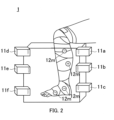
- FIG. 2 illustrates an example of a measurement apparatus.
- a measurement apparatus is configured to include a plurality of cameras 11a to 11f arranged to be able to image a target object from different directions, for example.
- Body shape measurement section 1 images an orthosis wearing part of a human body with use of a plurality of cameras 11a to 11f.
- Body shape measurement section 1 estimates a three-dimensional shape of the orthosis wearing part in accordance with the principle of triangulation (also referred to as photogrammetry), from a plurality of camera images generated by cameras 11a to 11f. Note that the method of estimating such a three-dimensional shape is the same as a well-known method. Therefore, the detailed description thereof is omitted herein.
- body shape measurement section 1 may use a 3D scanner or the like, instead of a plurality of cameras 11a to 11f.
- Orthosis molding data generation section 2 generates molding shape data D4 of orthosis M on the basis of three-dimensional shape data D1 of the human body, model shape data D2 of the orthosis, and fabrication history data D3 of other orthoses fabricated in the past.
- FIG. 3 illustrates exemplary data referred to by orthosis molding data generation section 2.
- Model shape data D2 is data that defines the base shape of orthosis M.
- Model shape data D2 defines the thickness and the shape of the material constituting the orthosis for each area (for example, a bone protruding area of a foot, a root area of a toe, or the like) of the orthosis wearing part of the human body, on the basis of an average human body, for example.
- Model shape data D2 is stored in management DB 5, for example.
- Molding shape data D4 is design data (for example, computer-aided design(CAD) data) that defines the shape and the thickness of each part of orthosis M. Molding shape data D4 is generated by orthosis molding data generation section 2. Note that molding shape data D4 is referred to when orthosis molding section 3 three-dimensionally molds orthosis M.
- CAD computer-aided design
- Orthosis molding data generation section 2 applies three-dimensional shape data D1 of the human body of the orthosis wearing target to model shape data D2 to thereby generate molding shape data D4 that matches the orthosis wearing part of the human body.
- Orthosis molding data generation section 2 uses, for example, publicly-known template matching or the like to recognize the shape of each area of the orthosis wearing part of the human body from three-dimensional shape data D1, and applies the shape of each area of the orthosis wearing part of the human body to model shape data D2 to thereby generate molding shape data D4 of orthosis M.
- orthosis molding data generation section 2 uses fabrication history data D3 of orthosis M fabricated in the past (hereinafter also referred to as "fabricated orthosis Ma") (for example, fabrication history data D3 of fabricated orthosis Ma similar to orthosis M to be fabricated) as reference information to thereby reflect post-processing aspects performed by an orthotist or the like on molding shape data D4.
- fabrication history data D3 of orthosis M fabricated in the past hereinafter also referred to as "fabricated orthosis Ma”
- fabrication history data D3 of fabricated orthosis Ma similar to orthosis M to be fabricated
- Fabrication history data D3 is data of fabrication history according to fabricated orthosis Ma accumulated in management DB 5.
- Fabrication history data D3 is, for example, stored data in which post-processing data showing the processing amount of post-processing performed on fabricated orthosis Ma to which identification number is assigned to each fabricated orthosis Ma, three-dimensional shape data of a person who wears fabricated orthosis Ma, molding shape data before correction of fabricated orthosis Ma (also referred to as "pre-correction molding shape data”), molding shape data after correction of fabricated orthosis Ma (correction process will be described below), and the like are associated with each other.
- Post-processing data of post-processing in fabrication history data D3 may include, for example, data of processed amount of each area performed on fabricated orthosis Ma (for example, in the case of a sole orthosis, for each of divided areas corresponding to the foot outer side, fibula head, lateral malleolus, fifth metatarsal bone head, fifth toe bone head, foot inner side medial malleolus, navicular bone head, first toe bone, and the like, the deformation amount in the thickness and the deformation amount in the shape), and a difference between shapes before and after post-processing performed on fabricated orthosis Ma.
- data of processed amount of each area performed on fabricated orthosis Ma for example, in the case of a sole orthosis, for each of divided areas corresponding to the foot outer side, fibula head, lateral malleolus, fifth metatarsal bone head, fifth toe bone head, foot inner side medial malleolus, navicular bone head, first toe bone, and the like, the deformation
- FIG. 4 is a flowchart illustrating an exemplary operation of orthosis molding data generation section 2.
- FIG. 4 is a process performed by orthosis molding data generation section 2 in accordance with a computer program, for example.
- orthosis molding data generation section 2 first acquires three-dimensional shape data D1 of a human body who wears an orthosis from body shape measurement section 1.
- orthosis molding data generation section 2 acquires model shape data D2 of orthosis M from management DB 5, and, for example, applies three-dimensional shape data D1 of the human body to model shape data D2 to thereby generate molding shape data D4 of orthosis M.
- orthosis molding data generation section 2 extracts fabrication history data D3 of fabricated orthosis Ma that is similar to orthosis M to be fabricated, from fabrication history data D3 stored in management DB 5. At that time, if there is fabrication history data D3 of fabricated orthosis Ma similar to orthosis M to be fabricated (S3: YES), after acquiring the data, orthosis molding data generation section 2 proceeds to step S4, while if there is no fabrication history data D3 of fabricated orthosis Ma similar to orthosis M to be fabricated (S3: NO), orthosis molding data generation section 2 ends the series of flow.
- extraction when extraction is performed with use of the similarity or the like, extraction may be performed using machine learning (deep learning or the like).
- orthosis molding data generation section 2 compares molding shape data D4 generated at step S2 with molding shape data before correction of fabricated orthosis Ma by, for example, a publicly-known method such as template matching, and extracts fabrication history data D3 of fabricated orthosis Ma having high shape similarity. More preferably, orthosis molding data generation section 2 extracts fabrication history data D3 of fabricated orthosis Ma having the highest similarity.
- orthosis molding data generation section 2 corrects molding shape data D4 of the fabrication target on the basis of post-processing data in fabrication history data D3 extracted at step S3.
- orthosis molding data generation section 2 performs addition or subtraction of the processing amount in the post-processing performed on the fabricated orthosis Ma, depending on the shape or thickness of respective areas of molding shape data D4 of the fabrication target (for example, in the case of a foot sole orthosis, parts corresponding to foot outer side, fibula head, lateral malleolus, fifth metatarsal bone head, fifth toe bone head, foot inner side medial malleolus, navicular bone head, first toe bone, and the like of molding shape data D4 of the fabrication target), for example.
- molding shape data D4 of a target to be three-dimensionally molded is generated.
- orthosis molding data generation section 2 transmits, to management DB 5, the fabrication history data (three-dimensional shape data D1 of the human body, molding shape data before correction, molding shape data D4 after correction) of orthosis M to be fabricated this time, and stores the data in management DB 5 with an identification number or the like of orthosis M.
- orthosis molding data generation section 2 may compare with three-dimensional shape data D1 of the human body and extract fabrication history data D3 of an orthosis having high shape similarity.
- orthosis molding data generation section 2 may refer to fabrication history data D3 selected arbitrarily by the user.
- orthosis molding data generation section 2 may reflect only information of partial post-processing such as a part similar to orthosis M to be fabricated, of the pre-processing performed on the fabricated orthosis Ma.
- orthosis molding data generation section 2 may refer to a plurality of pieces of fabrication history data D3, and refer to partial post-processing information from each of the pieces of fabrication history data D3 or use an average value of post-processing information of respective pieces of fabrication history data D3.
- orthosis molding data generation section 2 may constitute a program to generate molding shape data D4 reflecting fabrication history data D3 in one step, on the basis of three-dimensional shape data D1 of the human body, model shape data D2 of orthosis M, and fabrication history data D3 according to similar fabricated orthosis Ma.
- Orthosis molding section 3 uses a three-dimensional molding apparatus to three-dimensionally mold orthosis M on the basis of molding shape data D4.
- FIG. 5 illustrates an example of a three-dimensional molding apparatus.
- the three-dimensional molding apparatus illustrated in FIG. 5 is a three-dimensional molding apparatus of powder sintered lamination type.
- three-dimensional molding of thermoplastic resin is relatively easy.
- complicated shape can be easily formed. Therefore, it is preferable.
- a three-dimensional molding apparatus includes molding stage 31 provided in an opening, powder layer forming section 32 in which a powder layer is formed on molding stage 31, and laser radiation section 33 that irradiate the molding region of the powder layer with a laser beam to sinter or melt and solidify the powder material in the molding region to form a molding layer.
- FIG. 6 is a flowchart illustrating an exemplary operation of orthosis molding section 3 according to the present embodiment.
- orthosis molding section 3 creates slice data for setting a molding region formed in each powder layer from molding shape data D4.
- orthosis molding section 3 drives powder layer forming section 32 to form an n th powder layer (corresponding to n th layer defined by the slice data) on molding stage 31.
- orthosis molding section 3 drives laser radiation section 33 to sinter or melt and solidify the powder in the molding region with irradiation of a laser beam to form a molding layer.
- orthosis molding section 3 determines whether or not the formed molding layer is a final layer. Then, when the formed molding layer is not a final layer (step S14: NO), orthosis molding section 3 lowers molding stage 31 and performs a process of step S12, that is, forming a new powder layer on the molding layer again, and a process of step S13, that is, radiating a laser beam to further form a molding layer. Orthosis molding section 3 repeats such processes to shape a three-dimensional shaped object. Then, when the formed shaping layer is a final layer (step S14: YES), orthosis molding section 3 ends the series of processes in the flowchart.
- orthosis M is molded three-dimensionally.
- orthosis molding section 3 may use a three-dimensional molding apparatus of optical molding type in which liquid resin is irradiated with ultraviolet ray and cured and sequentially laminated, a three-dimensional molding apparatus of ink-jet type in which liquefied material is jetted and sequentially laminated, a three-dimensional molding apparatus of thermal dissolution lamination type in which thermoplastic resin is melted at a high temperature and sequentially laminated, a three-dimensional molding apparatus of sheet laminated type in which sheets are laminated to be shaped, or the like.
- a cutout method such as cutting processing may be used instead of lamination method.
- FIG. 7 illustrates an exemplary aspect of post-processing performed on orthosis M by an orthotist or the like.
- orthosis M three-dimensionally molded by orthosis molding section 3 is applied with post-processing by an orthotist or the like for fine adjustment.
- An orthotist or the like asks a patient to wear orthosis M as a trial, for example, and intuitively performs post-processing on orthosis M on the basis of past experience and knowledge.
- FIG. 7 illustrates an aspect of performing post-processing of the shape or thickness of orthosis M by an orthotist or the like by plastically deforming orthosis M with use of a heat gun. Note that as an aspect of performing post-processing on orthosis M, an aspect of forming a hole in a predetermined area of orthosis M or spreading a pad member is also acceptable, besides post-processing on shape or thickness of orthosis M.
- Processing amount measurement section 4 uses a measurement apparatus to measure the processing amount of post-processing performed by an orthotist or the like.
- FIG. 8 is a flowchart illustrating an exemplary operation of processing amount measurement section 4.
- processing amount measurement section 4 uses a measurement apparatus to measure the three-dimensional shape of orthosis M on which post-processing was performed.
- the measurement apparatus used by processing amount measurement section 4 may be a plurality of cameras 11a to 11f described with reference to FIG. 2 , or another measurement apparatus that can measure the three-dimensional shape.
- processing amount measurement section 4 acquires shape data of orthosis M before post-processing (here, molding shape data D3b after correction stored in fabrication history data D3) from management DB 5, on the basis of the identification number or the like of orthosis M, for example.
- processing amount measurement section 4 calculates the processing amount of each area in the post-processing by subtracting the data of the three-dimensional shape of orthosis M before the post-processing from the data of the three-dimensional shape of orthosis M after the post-processing.
- processing amount measurement section 4 transmits data D3c of the processing amount to management DB 5 along with the identification number of orthosis M, and stores it in management DB 5 as fabrication history data D3.
- orthosis fabrication system A of the present embodiment can sequentially accumulate the history of the processing amount taken when post-processing is performed on orthosis M by the orthotist or the like, as fabrication history data D3.
- orthosis fabrication system A of the present embodiment when fabricating orthosis M for a patient, it is possible to generate molding shape data D4 on the basis of fabrication history data D3 of fabricated orthosis Ma so as to reflect the aspect of post-processing performed on fabricated orthosis Ma in advance.
- molding shape data D4 for example, by using fabrication history data D3, when fabricating orthosis M similar to fabricated orthosis Ma, it is possible to correct molding shape data D4 in advance by subtracting the processing amount of the area on which post-processing was performed in fabricated orthosis M, for example.
- FIG. 9 illustrates exemplary data items stored in management DB 5.
- orthotist information for each orthosis, orthotist information, orthosis user information, processing frequency information, and reference frequency information are stored in association with fabrication history data D3.
- Orthosis user information is, for example, symptom information or rehabilitation information of a user who is wearing fabricated orthosis Ma. Orthosis user information is useful in the case where it is desired to refer to aspects of post-processing performed on fabricated orthosis Ma that was fabricated for a user having a specific symptom, or where it is desired to refer to aspects of post-processing of fabricated orthosis Ma used by a user who recovered earlier through rehabilitation, for example.
- Processing frequency information is information relating to frequency of post-processing performed on fabricated orthosis Ma during use of fabricated orthosis Ma, for example. Processing frequency information is useful in the case where it is desired to refer to aspects of post-processing of fabricated orthosis Ma having strength in which the frequency of post-processing is low, for example.
- Reference frequency information is information relating to the number of times of being referred to in the correction process by orthosis molding data generation section 2, for example. Reference history information is useful in the case of performing data analysis or the like of fabrication history data D3 that is frequently referred to, for example.
- orthosis fabrication system A according to Modification 1 by storing various types of data relating to orthosis M in management DB 5, it is possible to three-dimensionally mold orthosis M satisfying a wide variety of needs in the stage of molding.
- Orthosis molding data generation section 2 may generate molding shape data D4 of orthosis M after correcting three-dimensional shape data D1 of the human body.
- FIG. 10 is a flowchart illustrating an exemplary operation of orthosis molding data generation section 2 according to Modification 2.
- step S2a of performing correction on three-dimensional shape data D1 is added.
- step S2a may be performed in accordance with a correction rule previously set depending on the position of the injury or the like, or may be performed as appropriate by an operator or the like.
- step S2a may be performed in accordance with a correction rule previously set depending on the position of the injury or the like, or may be performed as appropriate by an operator or the like.
- orthosis fabrication system A is applicable to any other types of orthoses including a coxa orthosis, a long lower limb orthosis, a short lower limb orthosis, a knee orthosis, an orthosis for congenital dislocation of the hip joint, a shoulder orthosis, an elbow orthosis, a long opponency splint, a short opponency splint, a prehension orthosis, a hand dorsiflexion orthosis, an MP extension/flection orthosis, a finger orthosis, and the like.
- body shape measurement section 1, orthosis molding data generation section 2, orthosis molding section 3, processing amount measurement section 4, and management DB 5 are realized by different computers, respectively.
- programs and data to be read out by those computers and data to be written by those computers may be distributively stored in a plurality of computers.
- an orthosis that fits to a patient more suitably can be three-dimensionally molded.
Landscapes
- Engineering & Computer Science (AREA)
- Health & Medical Sciences (AREA)
- Life Sciences & Earth Sciences (AREA)
- Chemical & Material Sciences (AREA)
- Materials Engineering (AREA)
- General Health & Medical Sciences (AREA)
- Manufacturing & Machinery (AREA)
- Physics & Mathematics (AREA)
- Public Health (AREA)
- Biomedical Technology (AREA)
- Heart & Thoracic Surgery (AREA)
- Animal Behavior & Ethology (AREA)
- Veterinary Medicine (AREA)
- Medical Informatics (AREA)
- Nursing (AREA)
- Orthopedic Medicine & Surgery (AREA)
- Vascular Medicine (AREA)
- Biophysics (AREA)
- General Physics & Mathematics (AREA)
- Theoretical Computer Science (AREA)
- Optics & Photonics (AREA)
- Molecular Biology (AREA)
- Surgery (AREA)
- Pathology (AREA)
- General Business, Economics & Management (AREA)
- Primary Health Care (AREA)
- Computer Vision & Pattern Recognition (AREA)
- Epidemiology (AREA)
- Business, Economics & Management (AREA)
- Mechanical Engineering (AREA)
- Oral & Maxillofacial Surgery (AREA)
- Dentistry (AREA)
- Physical Education & Sports Medicine (AREA)
- Nuclear Medicine, Radiotherapy & Molecular Imaging (AREA)
- Radiology & Medical Imaging (AREA)
- Quality & Reliability (AREA)
- Geometry (AREA)
- Architecture (AREA)
- Computer Graphics (AREA)
- Computer Hardware Design (AREA)
Claims (19)
- Ein computerimplementiertes Orthesenherstellungsverfahren zur Herstellung einer Orthese, die von einem menschlichen Körper getragen werden soll, wobei das Verfahren folgendes umfasst:Messen der Form eines Orthesenträgerteils des menschlichen Körpers und Erzeugen dreidimensionaler Formdaten des menschlichen Körpers;Erzeugen von Formdaten der Orthese auf der Basis von dreidimensionalen Formdaten, Modellformdaten der Orthese und Herstellungsdaten einer anderen, in der Vergangenheit hergestellten Orthese;dreidimensionales Formen der Orthese auf der Basis von Formdaten; undSpeicherung eines Bearbeitungsbetrags, der bei der Nachbearbeitung der Orthese nach dem dreidimensionalen Formen ausgeführt wird, als Daten über den Verlauf der Herstellung in Verbindung mit den Daten über die dreidimensionale Form oder den Daten über die geformte Form;dadurch gekennzeichnet, dass das Erzeugen von Formdaten das Erzeugen von Vor-Korrektur-Formdaten auf der Basis von dreidimensionalen Formdaten und Modellformdaten umfasst, und das Korrigieren der Formdaten auf der Basis eines Verarbeitungsbetrags der Nachbearbeitung, die an einer anderen Orthese in den Daten der Herstellungsgeschichte ausgeführt wurde, oder eines Korrekturbetrags, der für eine Differenz zwischen den Vor-Korrektur-Formdaten, die in der Vergangenheit gespeichert wurden, und den Formdaten korrigiert wurde.
- Ein computerimplementiertes Orthesenherstellungssystem zur Herstellung einer Orthese, die von einem menschlichen Körper getragen werden soll, wobei das System konfiguriert ist, um das Verfahren gemäß Anspruch 1 zu verwenden, wobei das System Folgendes umfasst:einen Abschnitt (2) zum Erzeugen von Formdaten der Orthese, der konfiguriert ist, um Formdaten der Orthese auf der Basis von dreidimensionalen Formdaten des menschlichen Körpers, die durch eine Formmessung eines Orthesenträgerteils des menschlichen Körpers erzeugt wurden, Modellformdaten der Orthese und Daten der Herstellungsgeschichte einer anderen in der Vergangenheit hergestellten Orthese zu erzeugen; undeinen Orthesenformungsabschnitt (3), der konfiguriert ist, um die Orthese auf der Basis von Formdaten dreidimensional zu formen, dadurch gekennzeichnet, dassder Abschnitt (2) zur Erzeugung von Formdaten der Orthese ferner konfiguriert ist, um Vor-Korrektur-Formdaten auf der Basis von dreidimensionalen Formdaten und Modellformdaten zu erzeugen und die Formdaten basierend auf einem Verarbeitungsbetrag der Nachbearbeitung, die an einer anderen Orthese in den Daten der Herstellungshistorie ausgeführt wurde, oder einem Korrekturbetrag, der für eine Differenz zwischen den Vor-Korrektur-Formdaten, die in der Vergangenheit gespeichert wurden, und den Formdaten korrigiert wurde, zu korrigieren.
- Das Orthesenherstellungssystem gemäß 2, wobei
die Daten der Herstellungsgeschichte ein Verarbeitungsbetrag sind, der bei der Nachbearbeitung der Orthese nach dem dreidimensionalen Formen aufgenommen wird, oder ein Korrekturbetrag, der um eine Differenz zwischen den Formdaten vor der Korrektur und den Formdaten korrigiert wird. - Das Orthesenherstellungssystem gemäß 2 oder 3, ferner mit umfasst:
einen Speicherabschnitt (5), der konfiguriert ist, um in Verbindung mit mindestens einem der dreidimensionalen Formdaten und der Formdaten Daten wie die Fertigungsverlaufsdaten, einen Verarbeitungsbetrag, der genommen wird, wenn eine Nachbearbeitung an der Orthese nach dem dreidimensionalen Formen ausgeführt wird, oder einen Korrekturbetrag, der für eine Differenz zwischen den Vorkorrektur-Formdaten und den Formdaten korrigiert wird, zu speichern. - Das Orthesenherstellungssystem gemäß 3 oder 4, ferner mit umfasst:
einen Verarbeitungsbetragsmessabschnitt (4), der konfiguriert ist, um den Verarbeitungsbetrag nach dem Nachbearbeiten durch Formvergleich zwischen einer dreidimensionalen Form der Orthese zu einem Zeitpunkt des dreidimensionalen Formens, die in den Formdaten angegeben ist, und einer dreidimensionalen Form der Orthese, die gemessen wird, nachdem der Nachbearbeitungsvorgang ausgeführt ist, zu berechnen. - Das Orthesenherstellungssystem gemäß einem der Ansprüche 2 bis 5, wobei
ein Vorgang der Nachbearbeitung, der als Fertigungsverlaufsdaten gespeichert wird, umfasst einen Trimmvorgang für jedes Teil der Orthese. - Das Orthesenherstellungssystem gemäß einem der Ansprüche 2 bis 6, wobei
der Abschnitt (2) zum Erzeugen von Orthesenformdaten konfiguriert ist, um die Daten der Herstellungsgeschichte der Orthese, die eine ähnliche Form hat, aus einer Mehrzahl von Stücken der Daten der Herstellungsgeschichte auf der Basis von dreidimensionalen Formdaten oder den Daten der Form der Orthese zu extrahieren. - Das Orthesenherstellungssystem gemäß einem der Ansprüche 2 bis 7, wobei
der Abschnitt (2) zum Erzeugen von Formdaten der Orthese die Daten der Herstellungsgeschichte sind, die sich auf einen Verformungsbetrag oder einen Dickenbetrag an einer Position des äußeren Fußknochenkopfes, des lateralen Knöchelknochens, des fünften Mittelfußknochenkopfes, des fünften Zehenknochenkopfes, des inneren Fußknöchelknochens, des Kahnbeinkopfes oder des ersten Zehenknochens beziehen. - Das Orthesenherstellungssystem gemäß einem der Ansprüche 2 bis 8, wobei
der Abschnitt (2) zur Erzeugung von Formdaten der Orthese konfiguriert ist, um Daten zu extrahieren, indem er maschinelles Lernen ausführt, wenn er die Daten der Herstellungsgeschichte der Orthese extrahiert. - Das Orthesenherstellungssystem gemäß 9, wobei
wenn das maschinelle Lernen durchgeführt wird, ist der Abschnitt (2) zur Erzeugung von Formdaten der Orthese konfiguriert, um das Lernen auszuführen, indem der Verformungsbetrag oder der Dickenbetrag als Gewichtung verwendet wird. - Das Orthesenherstellungssystem gemäß 7, wobei
der Abschnitt (2) zur Erzeugung von Formdaten der Orthese konfiguriert ist, um die Daten der Herstellungsgeschichte der Orthese mit einer ähnlichen Form auf der Basis von mindestens einem Teil der Oberflächenform oder -größe, die in den dreidimensionalen Formdaten oder den Formdaten angegeben sind, zu extrahieren. - Das Orthesenherstellungssystem gemäß einem der Ansprüche 2 bis 11, ferner umfassend
einen Körperformmessabschnitt (1), der konfiguriert ist, um eine Form des Orthesenträgerteils des menschlichen Körpers zu messen, indem ein 3D-Scanner oder eine Mehrzahl von Kameras verwendet wird. - Das Orthesenherstellungssystem gemäß einem der Ansprüche 2 bis 12, wobei
der Orthesenformabschnitt (3) konfiguriert ist, um ein dreidimensionales Formgerät eines pulvergesinterten Laminierungstyps zu verwenden, um die Orthese dreidimensional zu formen. - Das Orthesenherstellungssystem gemäß einem der Ansprüche 2 bis 13, wobei
Das Material der Orthese einen thermoplastischen Kunststoff umfasst. - Das Orthesenherstellungssystem gemäß einem der Ansprüche 2 bis 14, wobei
die Orthese eine Fußsohlenorthese ist. - Das Orthesenherstellungssystem gemäß 4, wobei
der Speicherabschnitt die Orthopädietechniker-Informationen eines Orthopädietechnikers speichert, der den Vorgang ausgeführt hat, in Zuordnung zu den Daten der Herstellungsgeschichte. - Das Orthesenherstellungssystem gemäß 4, wobei
der Speicherabschnitt (5) konfiguriert ist, um Benutzerinformationen eines Benutzers, der die Orthese verwendet, in Verbindung mit den Herstellungsdaten zu speichern. - Das Orthesenherstellungssystem gemäß 4, wobei
der Speicherabschnitt (5) konfiguriert ist, um Frequenzinformationen der Nachbearbeitung zu speichern, die an der verwendeten Orthese ausgeführt wurde, und zwar in Verbindung mit den Daten der Herstellungsgeschichte. - Das Orthesenherstellungssystem gemäß 4, wobei
der Speicherabschnitt (5) konfiguriert ist, um Frequenzinformationen zu speichern, auf die sich der Abschnitt zur Erzeugung von Formdaten der Orthese bezieht, und zwar in Verbindung mit den Daten der Herstellungsgeschichte.
Applications Claiming Priority (2)
| Application Number | Priority Date | Filing Date | Title |
|---|---|---|---|
| JP2017147909 | 2017-07-31 | ||
| PCT/JP2018/022061 WO2019026424A1 (ja) | 2017-07-31 | 2018-06-08 | 装具製造システム、装具製造の補正データ作成システム及び装具製造方法 |
Publications (3)
| Publication Number | Publication Date |
|---|---|
| EP3662872A1 EP3662872A1 (de) | 2020-06-10 |
| EP3662872A4 EP3662872A4 (de) | 2020-09-30 |
| EP3662872B1 true EP3662872B1 (de) | 2025-04-02 |
Family
ID=65233628
Family Applications (1)
| Application Number | Title | Priority Date | Filing Date |
|---|---|---|---|
| EP18841282.9A Active EP3662872B1 (de) | 2017-07-31 | 2018-06-08 | Orthesenherstellungssystem, und orthesenherstellungsverfahren |
Country Status (5)
| Country | Link |
|---|---|
| US (1) | US11793659B2 (de) |
| EP (1) | EP3662872B1 (de) |
| JP (1) | JP7111101B2 (de) |
| CN (1) | CN110996860B (de) |
| WO (1) | WO2019026424A1 (de) |
Families Citing this family (8)
| Publication number | Priority date | Publication date | Assignee | Title |
|---|---|---|---|---|
| EP3483755B1 (de) * | 2017-11-09 | 2022-07-13 | Dassault Systèmes | Generative fertigung eines 3d-teils |
| US11783102B2 (en) * | 2019-04-30 | 2023-10-10 | BabySteps Orthopedics Inc. | Predictive modeling platform for serial casting to correct orthopedic deformities |
| KR20220047249A (ko) * | 2019-08-14 | 2022-04-15 | 머큐리스 게엠베하 | 기능적 형태를 생성하기 위한 컴퓨터 구현 방법, 데이터 처리 시스템 및 컴퓨터 판독 가능 매체 |
| DE102020108877A1 (de) * | 2020-03-31 | 2021-09-30 | Ottobock Se & Co. Kgaa | Verfahren zum Herstellen eines Verbindungselementes |
| CN115302777B (zh) * | 2022-07-22 | 2024-12-13 | 安徽工程大学 | 一种个性定制耳廓矫形器3d打印制造方法 |
| PL442486A1 (pl) * | 2022-10-10 | 2024-04-15 | Wimba Poland Spółka Z Ograniczoną Odpowiedzialnością | Wspomagany komputerowo sposób wytwarzania urządzenia protetycznego, zwłaszcza dla zwierząt |
| EP4413959A1 (de) | 2023-02-09 | 2024-08-14 | Medirpintic Spolka Z Organiczona Odpowiedzialnoscia | Vorrichtung zur reduzierung von unterarmfrakturen und satz von vorrichtungen zur behandlung von unterarmfrakturen |
| AT528258A1 (de) * | 2024-05-13 | 2025-11-15 | Turn Motion Flexco | 3D-gedruckte Orthese und Herstellungsverfahren hierfür |
Family Cites Families (20)
| Publication number | Priority date | Publication date | Assignee | Title |
|---|---|---|---|---|
| EP1980224A3 (de) * | 2007-04-11 | 2009-12-09 | Hanger Orthopedic Group, Inc. | System und Verfahren zur Ermittlung der Bedürfnisse einer Person und Herstellung einer daran angepassten Orthesevorrichtung |
| EP2585007B1 (de) | 2010-06-22 | 2016-08-10 | 3D Systems, Inc. | Verfahren zur herstellung einer modularen bandage |
| US20150165690A1 (en) * | 2012-07-18 | 2015-06-18 | Adam P. Tow | Systems and methods for manufacturing of multi-property anatomically customized devices |
| CN108741393B (zh) * | 2012-12-19 | 2021-06-11 | 新平衡运动公司 | 定制鞋类以及用于设计且制造其的方法 |
| US9760674B2 (en) * | 2013-07-26 | 2017-09-12 | Aetrex Worldwide, Inc. | Systems and methods for generating orthotic device models from user-based data capture |
| JP2015181791A (ja) * | 2014-03-25 | 2015-10-22 | 大日本印刷株式会社 | 製作システムおよび製作方法 |
| JP2016077853A (ja) * | 2014-10-17 | 2016-05-16 | 明伸興産株式会社 | 義肢および義肢作成方法 |
| CN104665970A (zh) * | 2015-02-09 | 2015-06-03 | 杭州电子科技大学 | 一种矫形器的三维打印制备方法 |
| JP6222496B2 (ja) | 2016-02-19 | 2017-11-01 | 横河電機株式会社 | サージ防護装置およびサージ防護装置を搭載したフィールド機器 |
| CN106294949B (zh) * | 2016-08-01 | 2019-06-21 | 大连交通大学 | 一种脊柱矫形器的快速成型设计方法 |
| CN106308992A (zh) * | 2016-08-21 | 2017-01-11 | 上海欧牡健康管理咨询有限公司 | 一种基于3d打印的颈椎矫形器的制造工艺 |
| CN106983230B (zh) * | 2017-03-22 | 2022-11-29 | 青岛一小步科技有限公司 | 一种矫形鞋的制作方法及系统 |
| KR20200045479A (ko) * | 2017-07-21 | 2020-05-04 | 나이키 이노베이트 씨.브이. | 커스텀 교정구 및 개인화된 풋웨어 |
| DE102017131323A1 (de) * | 2017-12-27 | 2019-06-27 | Mecuris GmbH | Computerimplementiertes Verfahren und System zur Herstellung einer orthopädischen Versorgung |
| US20210322200A1 (en) * | 2018-03-20 | 2021-10-21 | Headstart Medical Ltd. | System and method for preparing hollow core cranial remodeling orthoses |
| US11918085B2 (en) * | 2018-08-30 | 2024-03-05 | Digital Foot Spa | Method for design of insoles |
| US20200329815A1 (en) * | 2019-04-19 | 2020-10-22 | Michael John Schmid | Footwear and apparatus and method for making same |
| CA3096589A1 (en) * | 2019-10-16 | 2021-04-16 | Align Orthotics Inc. | Orthotic sole and insole devices, systems, methods, and computer readable media for use with high heel footwear |
| JP7699915B2 (ja) * | 2020-09-04 | 2025-06-30 | 株式会社アシックス | データ生成装置、靴作製システム、およびデータ生成方法 |
| US20220206460A1 (en) * | 2020-12-24 | 2022-06-30 | Asics Corporation | Shoe form manufacturing assistance apparatus and shoe form manufacturing system |
-
2018
- 2018-06-08 EP EP18841282.9A patent/EP3662872B1/de active Active
- 2018-06-08 US US16/631,362 patent/US11793659B2/en active Active
- 2018-06-08 JP JP2019533936A patent/JP7111101B2/ja not_active Expired - Fee Related
- 2018-06-08 CN CN201880050064.9A patent/CN110996860B/zh not_active Expired - Fee Related
- 2018-06-08 WO PCT/JP2018/022061 patent/WO2019026424A1/ja not_active Ceased
Also Published As
| Publication number | Publication date |
|---|---|
| EP3662872A4 (de) | 2020-09-30 |
| WO2019026424A1 (ja) | 2019-02-07 |
| US20200214870A1 (en) | 2020-07-09 |
| JPWO2019026424A1 (ja) | 2020-05-28 |
| CN110996860A (zh) | 2020-04-10 |
| CN110996860B (zh) | 2022-05-24 |
| EP3662872A1 (de) | 2020-06-10 |
| US11793659B2 (en) | 2023-10-24 |
| JP7111101B2 (ja) | 2022-08-02 |
Similar Documents
| Publication | Publication Date | Title |
|---|---|---|
| US11793659B2 (en) | Orthosis manufacturing system, system for generating correction data for manufacturing orthosis, and orthosis manufacturing method | |
| KR101595144B1 (ko) | 맞춤형 보조기, 캐스트, 및 이를 디자인하고 제작하기 위한 디바이스 및 방법 | |
| JP5723380B2 (ja) | 補てつ肢又は装具用の取り換え可能なフェアリング | |
| US8613716B2 (en) | Custom braces, casts and devices having limited flexibility and methods for designing and fabricating | |
| CN103118641B (zh) | 具有开窗、有限柔性和模块化构造的定制支架、石膏和装置及其设计和制造方法 | |
| US11007070B2 (en) | Modular custom braces, casts and devices and methods for designing and fabricating | |
| EP3294237B1 (de) | Verfahren und system zur herstellung von orthese | |
| US20210069984A1 (en) | Computer-implemented method and system for producing an orthopedic device | |
| US20100268135A1 (en) | Modular custom braces, casts and devices and methods for designing and fabricating | |
| KR20160002534A (ko) | 3차원 프린팅을 이용한 분할조립형 깁스 제조방법 및 그 장치 | |
| WO2021221672A1 (en) | Customized parametric models to manufacture devices | |
| US11986415B2 (en) | Production of a custom medical splint or brace for immobilization of a selected region of a patient's body part | |
| JPWO2020070952A1 (ja) | 装具、装具製造装置、装具表面処理装置、および装具製造システム | |
| WO2018148039A1 (en) | Methods and systems for designing and customizing wearable and/or implantable devices | |
| Kudus et al. | Modeling and fabrication of protective mask with high complexity pattern using low-cost additive manufacturing design tool and systems | |
| Meisel et al. | Digital technologies for splints manufacturing |
Legal Events
| Date | Code | Title | Description |
|---|---|---|---|
| STAA | Information on the status of an ep patent application or granted ep patent |
Free format text: STATUS: THE INTERNATIONAL PUBLICATION HAS BEEN MADE |
|
| PUAI | Public reference made under article 153(3) epc to a published international application that has entered the european phase |
Free format text: ORIGINAL CODE: 0009012 |
|
| STAA | Information on the status of an ep patent application or granted ep patent |
Free format text: STATUS: REQUEST FOR EXAMINATION WAS MADE |
|
| 17P | Request for examination filed |
Effective date: 20200128 |
|
| AK | Designated contracting states |
Kind code of ref document: A1 Designated state(s): AL AT BE BG CH CY CZ DE DK EE ES FI FR GB GR HR HU IE IS IT LI LT LU LV MC MK MT NL NO PL PT RO RS SE SI SK SM TR |
|
| AX | Request for extension of the european patent |
Extension state: BA ME |
|
| RIC1 | Information provided on ipc code assigned before grant |
Ipc: A61F 5/02 20060101AFI20200518BHEP Ipc: B33Y 80/00 20150101ALI20200518BHEP Ipc: A61F 5/01 20060101ALI20200518BHEP Ipc: A61B 5/107 20060101ALI20200518BHEP |
|
| A4 | Supplementary search report drawn up and despatched |
Effective date: 20200827 |
|
| RIC1 | Information provided on ipc code assigned before grant |
Ipc: A61F 5/01 20060101ALI20200821BHEP Ipc: A61F 5/02 20060101AFI20200821BHEP Ipc: B33Y 80/00 20150101ALI20200821BHEP Ipc: A61B 5/107 20060101ALI20200821BHEP |
|
| DAV | Request for validation of the european patent (deleted) | ||
| DAX | Request for extension of the european patent (deleted) | ||
| STAA | Information on the status of an ep patent application or granted ep patent |
Free format text: STATUS: EXAMINATION IS IN PROGRESS |
|
| 17Q | First examination report despatched |
Effective date: 20220826 |
|
| P01 | Opt-out of the competence of the unified patent court (upc) registered |
Effective date: 20230510 |
|
| REG | Reference to a national code |
Ref country code: DE Free format text: PREVIOUS MAIN CLASS: A61F0005020000 Ref country code: DE Ref legal event code: R079 Ref document number: 602018080776 Country of ref document: DE Free format text: PREVIOUS MAIN CLASS: A61F0005020000 Ipc: A61F0005010000 |
|
| GRAP | Despatch of communication of intention to grant a patent |
Free format text: ORIGINAL CODE: EPIDOSNIGR1 |
|
| STAA | Information on the status of an ep patent application or granted ep patent |
Free format text: STATUS: GRANT OF PATENT IS INTENDED |
|
| RIC1 | Information provided on ipc code assigned before grant |
Ipc: B33Y 30/00 20150101ALI20241010BHEP Ipc: B33Y 10/00 20150101ALI20241010BHEP Ipc: B29C 64/153 20170101ALI20241010BHEP Ipc: A61B 5/00 20060101ALI20241010BHEP Ipc: B33Y 80/00 20150101ALI20241010BHEP Ipc: A61B 5/107 20060101ALI20241010BHEP Ipc: A61F 5/01 20060101AFI20241010BHEP |
|
| INTG | Intention to grant announced |
Effective date: 20241024 |
|
| GRAS | Grant fee paid |
Free format text: ORIGINAL CODE: EPIDOSNIGR3 |
|
| GRAA | (expected) grant |
Free format text: ORIGINAL CODE: 0009210 |
|
| STAA | Information on the status of an ep patent application or granted ep patent |
Free format text: STATUS: THE PATENT HAS BEEN GRANTED |
|
| AK | Designated contracting states |
Kind code of ref document: B1 Designated state(s): AL AT BE BG CH CY CZ DE DK EE ES FI FR GB GR HR HU IE IS IT LI LT LU LV MC MK MT NL NO PL PT RO RS SE SI SK SM TR |
|
| REG | Reference to a national code |
Ref country code: GB Ref legal event code: FG4D |
|
| REG | Reference to a national code |
Ref country code: CH Ref legal event code: EP |
|
| REG | Reference to a national code |
Ref country code: IE Ref legal event code: FG4D |
|
| REG | Reference to a national code |
Ref country code: DE Ref legal event code: R096 Ref document number: 602018080776 Country of ref document: DE |
|
| REG | Reference to a national code |
Ref country code: NL Ref legal event code: MP Effective date: 20250402 |
|
| PG25 | Lapsed in a contracting state [announced via postgrant information from national office to epo] |
Ref country code: NL Free format text: LAPSE BECAUSE OF FAILURE TO SUBMIT A TRANSLATION OF THE DESCRIPTION OR TO PAY THE FEE WITHIN THE PRESCRIBED TIME-LIMIT Effective date: 20250402 |
|
| REG | Reference to a national code |
Ref country code: AT Ref legal event code: MK05 Ref document number: 1780567 Country of ref document: AT Kind code of ref document: T Effective date: 20250402 |
|
| PG25 | Lapsed in a contracting state [announced via postgrant information from national office to epo] |
Ref country code: PT Free format text: LAPSE BECAUSE OF FAILURE TO SUBMIT A TRANSLATION OF THE DESCRIPTION OR TO PAY THE FEE WITHIN THE PRESCRIBED TIME-LIMIT Effective date: 20250804 Ref country code: FI Free format text: LAPSE BECAUSE OF FAILURE TO SUBMIT A TRANSLATION OF THE DESCRIPTION OR TO PAY THE FEE WITHIN THE PRESCRIBED TIME-LIMIT Effective date: 20250402 Ref country code: ES Free format text: LAPSE BECAUSE OF FAILURE TO SUBMIT A TRANSLATION OF THE DESCRIPTION OR TO PAY THE FEE WITHIN THE PRESCRIBED TIME-LIMIT Effective date: 20250402 |
|
| REG | Reference to a national code |
Ref country code: LT Ref legal event code: MG9D |
|
| PG25 | Lapsed in a contracting state [announced via postgrant information from national office to epo] |
Ref country code: GR Free format text: LAPSE BECAUSE OF FAILURE TO SUBMIT A TRANSLATION OF THE DESCRIPTION OR TO PAY THE FEE WITHIN THE PRESCRIBED TIME-LIMIT Effective date: 20250703 Ref country code: NO Free format text: LAPSE BECAUSE OF FAILURE TO SUBMIT A TRANSLATION OF THE DESCRIPTION OR TO PAY THE FEE WITHIN THE PRESCRIBED TIME-LIMIT Effective date: 20250702 |
|
| PG25 | Lapsed in a contracting state [announced via postgrant information from national office to epo] |
Ref country code: PL Free format text: LAPSE BECAUSE OF FAILURE TO SUBMIT A TRANSLATION OF THE DESCRIPTION OR TO PAY THE FEE WITHIN THE PRESCRIBED TIME-LIMIT Effective date: 20250402 |
|
| PG25 | Lapsed in a contracting state [announced via postgrant information from national office to epo] |
Ref country code: BG Free format text: LAPSE BECAUSE OF FAILURE TO SUBMIT A TRANSLATION OF THE DESCRIPTION OR TO PAY THE FEE WITHIN THE PRESCRIBED TIME-LIMIT Effective date: 20250402 |
|
| PG25 | Lapsed in a contracting state [announced via postgrant information from national office to epo] |
Ref country code: HR Free format text: LAPSE BECAUSE OF FAILURE TO SUBMIT A TRANSLATION OF THE DESCRIPTION OR TO PAY THE FEE WITHIN THE PRESCRIBED TIME-LIMIT Effective date: 20250402 |
|
| PG25 | Lapsed in a contracting state [announced via postgrant information from national office to epo] |
Ref country code: AT Free format text: LAPSE BECAUSE OF FAILURE TO SUBMIT A TRANSLATION OF THE DESCRIPTION OR TO PAY THE FEE WITHIN THE PRESCRIBED TIME-LIMIT Effective date: 20250402 |
|
| PG25 | Lapsed in a contracting state [announced via postgrant information from national office to epo] |
Ref country code: RS Free format text: LAPSE BECAUSE OF FAILURE TO SUBMIT A TRANSLATION OF THE DESCRIPTION OR TO PAY THE FEE WITHIN THE PRESCRIBED TIME-LIMIT Effective date: 20250702 |
|
| PG25 | Lapsed in a contracting state [announced via postgrant information from national office to epo] |
Ref country code: IS Free format text: LAPSE BECAUSE OF FAILURE TO SUBMIT A TRANSLATION OF THE DESCRIPTION OR TO PAY THE FEE WITHIN THE PRESCRIBED TIME-LIMIT Effective date: 20250802 |
|
| PG25 | Lapsed in a contracting state [announced via postgrant information from national office to epo] |
Ref country code: LV Free format text: LAPSE BECAUSE OF FAILURE TO SUBMIT A TRANSLATION OF THE DESCRIPTION OR TO PAY THE FEE WITHIN THE PRESCRIBED TIME-LIMIT Effective date: 20250402 |
|
| REG | Reference to a national code |
Ref country code: DE Ref legal event code: R119 Ref document number: 602018080776 Country of ref document: DE |
|
| PG25 | Lapsed in a contracting state [announced via postgrant information from national office to epo] |
Ref country code: DK Free format text: LAPSE BECAUSE OF FAILURE TO SUBMIT A TRANSLATION OF THE DESCRIPTION OR TO PAY THE FEE WITHIN THE PRESCRIBED TIME-LIMIT Effective date: 20250402 Ref country code: SM Free format text: LAPSE BECAUSE OF FAILURE TO SUBMIT A TRANSLATION OF THE DESCRIPTION OR TO PAY THE FEE WITHIN THE PRESCRIBED TIME-LIMIT Effective date: 20250402 |
|
| PG25 | Lapsed in a contracting state [announced via postgrant information from national office to epo] |
Ref country code: CZ Free format text: LAPSE BECAUSE OF FAILURE TO SUBMIT A TRANSLATION OF THE DESCRIPTION OR TO PAY THE FEE WITHIN THE PRESCRIBED TIME-LIMIT Effective date: 20250402 |
|
| PG25 | Lapsed in a contracting state [announced via postgrant information from national office to epo] |
Ref country code: EE Free format text: LAPSE BECAUSE OF FAILURE TO SUBMIT A TRANSLATION OF THE DESCRIPTION OR TO PAY THE FEE WITHIN THE PRESCRIBED TIME-LIMIT Effective date: 20250402 |
|
| PG25 | Lapsed in a contracting state [announced via postgrant information from national office to epo] |
Ref country code: SK Free format text: LAPSE BECAUSE OF FAILURE TO SUBMIT A TRANSLATION OF THE DESCRIPTION OR TO PAY THE FEE WITHIN THE PRESCRIBED TIME-LIMIT Effective date: 20250402 Ref country code: RO Free format text: LAPSE BECAUSE OF FAILURE TO SUBMIT A TRANSLATION OF THE DESCRIPTION OR TO PAY THE FEE WITHIN THE PRESCRIBED TIME-LIMIT Effective date: 20250402 |
|
| REG | Reference to a national code |
Ref country code: CH Ref legal event code: H13 Free format text: ST27 STATUS EVENT CODE: U-0-0-H10-H13 (AS PROVIDED BY THE NATIONAL OFFICE) Effective date: 20260127 |
|
| PG25 | Lapsed in a contracting state [announced via postgrant information from national office to epo] |
Ref country code: IT Free format text: LAPSE BECAUSE OF FAILURE TO SUBMIT A TRANSLATION OF THE DESCRIPTION OR TO PAY THE FEE WITHIN THE PRESCRIBED TIME-LIMIT Effective date: 20250402 |
|
| PG25 | Lapsed in a contracting state [announced via postgrant information from national office to epo] |
Ref country code: MC Free format text: LAPSE BECAUSE OF FAILURE TO SUBMIT A TRANSLATION OF THE DESCRIPTION OR TO PAY THE FEE WITHIN THE PRESCRIBED TIME-LIMIT Effective date: 20250402 |
|
| PLBE | No opposition filed within time limit |
Free format text: ORIGINAL CODE: 0009261 |
|
| STAA | Information on the status of an ep patent application or granted ep patent |
Free format text: STATUS: NO OPPOSITION FILED WITHIN TIME LIMIT |
|
| REG | Reference to a national code |
Ref country code: CH Ref legal event code: L10 Free format text: ST27 STATUS EVENT CODE: U-0-0-L10-L00 (AS PROVIDED BY THE NATIONAL OFFICE) Effective date: 20260211 |
|
| PG25 | Lapsed in a contracting state [announced via postgrant information from national office to epo] |
Ref country code: LU Free format text: LAPSE BECAUSE OF NON-PAYMENT OF DUE FEES Effective date: 20250608 |
|
| REG | Reference to a national code |
Ref country code: BE Ref legal event code: MM Effective date: 20250630 |
|
| 26N | No opposition filed |
Effective date: 20260105 |
|
| GBPC | Gb: european patent ceased through non-payment of renewal fee |
Effective date: 20250702 |
|
| PG25 | Lapsed in a contracting state [announced via postgrant information from national office to epo] |
Ref country code: GB Free format text: LAPSE BECAUSE OF NON-PAYMENT OF DUE FEES Effective date: 20250702 |
|
| PG25 | Lapsed in a contracting state [announced via postgrant information from national office to epo] |
Ref country code: IE Free format text: LAPSE BECAUSE OF NON-PAYMENT OF DUE FEES Effective date: 20250608 Ref country code: DE Free format text: LAPSE BECAUSE OF NON-PAYMENT OF DUE FEES Effective date: 20260101 |
|
| PG25 | Lapsed in a contracting state [announced via postgrant information from national office to epo] |
Ref country code: BE Free format text: LAPSE BECAUSE OF NON-PAYMENT OF DUE FEES Effective date: 20250630 |
|
| PG25 | Lapsed in a contracting state [announced via postgrant information from national office to epo] |
Ref country code: FR Free format text: LAPSE BECAUSE OF NON-PAYMENT OF DUE FEES Effective date: 20250630 |
|
| PG25 | Lapsed in a contracting state [announced via postgrant information from national office to epo] |
Ref country code: CH Free format text: LAPSE BECAUSE OF NON-PAYMENT OF DUE FEES Effective date: 20250630 |
|
| PG25 | Lapsed in a contracting state [announced via postgrant information from national office to epo] |
Ref country code: LT Free format text: LAPSE BECAUSE OF FAILURE TO SUBMIT A TRANSLATION OF THE DESCRIPTION OR TO PAY THE FEE WITHIN THE PRESCRIBED TIME-LIMIT Effective date: 20250402 |
|
| PG25 | Lapsed in a contracting state [announced via postgrant information from national office to epo] |
Ref country code: SE Free format text: LAPSE BECAUSE OF FAILURE TO SUBMIT A TRANSLATION OF THE DESCRIPTION OR TO PAY THE FEE WITHIN THE PRESCRIBED TIME-LIMIT Effective date: 20250402 Ref country code: CY Free format text: LAPSE BECAUSE OF FAILURE TO SUBMIT A TRANSLATION OF THE DESCRIPTION OR TO PAY THE FEE WITHIN THE PRESCRIBED TIME-LIMIT Effective date: 20250402 |