EP3662401B1 - Detektion von böswilligen konfigurationsänderungen für webanwendungen - Google Patents
Detektion von böswilligen konfigurationsänderungen für webanwendungen Download PDFInfo
- Publication number
- EP3662401B1 EP3662401B1 EP18743562.3A EP18743562A EP3662401B1 EP 3662401 B1 EP3662401 B1 EP 3662401B1 EP 18743562 A EP18743562 A EP 18743562A EP 3662401 B1 EP3662401 B1 EP 3662401B1
- Authority
- EP
- European Patent Office
- Prior art keywords
- web application
- htm
- web
- records
- training
- Prior art date
- Legal status (The legal status is an assumption and is not a legal conclusion. Google has not performed a legal analysis and makes no representation as to the accuracy of the status listed.)
- Active
Links
Images

Classifications
-
- G—PHYSICS
- G06—COMPUTING OR CALCULATING; COUNTING
- G06F—ELECTRIC DIGITAL DATA PROCESSING
- G06F21/00—Security arrangements for protecting computers, components thereof, programs or data against unauthorised activity
- G06F21/50—Monitoring users, programs or devices to maintain the integrity of platforms, e.g. of processors, firmware or operating systems
- G06F21/55—Detecting local intrusion or implementing counter-measures
- G06F21/552—Detecting local intrusion or implementing counter-measures involving long-term monitoring or reporting
-
- G—PHYSICS
- G06—COMPUTING OR CALCULATING; COUNTING
- G06F—ELECTRIC DIGITAL DATA PROCESSING
- G06F18/00—Pattern recognition
- G06F18/20—Analysing
- G06F18/21—Design or setup of recognition systems or techniques; Extraction of features in feature space; Blind source separation
- G06F18/214—Generating training patterns; Bootstrap methods, e.g. bagging or boosting
-
- G—PHYSICS
- G06—COMPUTING OR CALCULATING; COUNTING
- G06F—ELECTRIC DIGITAL DATA PROCESSING
- G06F18/00—Pattern recognition
- G06F18/20—Analysing
- G06F18/21—Design or setup of recognition systems or techniques; Extraction of features in feature space; Blind source separation
- G06F18/217—Validation; Performance evaluation; Active pattern learning techniques
-
- G—PHYSICS
- G06—COMPUTING OR CALCULATING; COUNTING
- G06F—ELECTRIC DIGITAL DATA PROCESSING
- G06F21/00—Security arrangements for protecting computers, components thereof, programs or data against unauthorised activity
- G06F21/50—Monitoring users, programs or devices to maintain the integrity of platforms, e.g. of processors, firmware or operating systems
- G06F21/57—Certifying or maintaining trusted computer platforms, e.g. secure boots or power-downs, version controls, system software checks, secure updates or assessing vulnerabilities
-
- H—ELECTRICITY
- H04—ELECTRIC COMMUNICATION TECHNIQUE
- H04L—TRANSMISSION OF DIGITAL INFORMATION, e.g. TELEGRAPHIC COMMUNICATION
- H04L63/00—Network architectures or network communication protocols for network security
- H04L63/14—Network architectures or network communication protocols for network security for detecting or protecting against malicious traffic
- H04L63/1433—Vulnerability analysis
-
- H—ELECTRICITY
- H04—ELECTRIC COMMUNICATION TECHNIQUE
- H04L—TRANSMISSION OF DIGITAL INFORMATION, e.g. TELEGRAPHIC COMMUNICATION
- H04L63/00—Network architectures or network communication protocols for network security
- H04L63/14—Network architectures or network communication protocols for network security for detecting or protecting against malicious traffic
- H04L63/1441—Countermeasures against malicious traffic
-
- H—ELECTRICITY
- H04—ELECTRIC COMMUNICATION TECHNIQUE
- H04L—TRANSMISSION OF DIGITAL INFORMATION, e.g. TELEGRAPHIC COMMUNICATION
- H04L63/00—Network architectures or network communication protocols for network security
- H04L63/14—Network architectures or network communication protocols for network security for detecting or protecting against malicious traffic
- H04L63/1441—Countermeasures against malicious traffic
- H04L63/1466—Active attacks involving interception, injection, modification, spoofing of data unit addresses, e.g. hijacking, packet injection or TCP sequence number attacks
-
- H—ELECTRICITY
- H04—ELECTRIC COMMUNICATION TECHNIQUE
- H04L—TRANSMISSION OF DIGITAL INFORMATION, e.g. TELEGRAPHIC COMMUNICATION
- H04L63/00—Network architectures or network communication protocols for network security
- H04L63/14—Network architectures or network communication protocols for network security for detecting or protecting against malicious traffic
- H04L63/1408—Network architectures or network communication protocols for network security for detecting or protecting against malicious traffic by monitoring network traffic
- H04L63/1425—Traffic logging, e.g. anomaly detection
-
- H—ELECTRICITY
- H04—ELECTRIC COMMUNICATION TECHNIQUE
- H04L—TRANSMISSION OF DIGITAL INFORMATION, e.g. TELEGRAPHIC COMMUNICATION
- H04L63/00—Network architectures or network communication protocols for network security
- H04L63/14—Network architectures or network communication protocols for network security for detecting or protecting against malicious traffic
- H04L63/1441—Countermeasures against malicious traffic
- H04L63/1483—Countermeasures against malicious traffic service impersonation, e.g. phishing, pharming or web spoofing
Definitions
- the present invention relates to the detection of configuration changes for web applications.
- Patent publication US 2012/047581 A1 describes an event-driven auto-restoration mechanism for websites.
- the present invention accordingly provides, in a second aspect, a computer system including a processor and memory storing computer program code for performing the steps of the method set out above.
- the present invention accordingly provides, in a third aspect, a computer program element comprising computer program code to, when loaded into a computer system and executed thereon, cause the computer to perform the steps of the method set out above.
- Embodiments of the present invention seek to detect anomalous changes to a web application configuration or changes to a web application itself being indicative of malicious intervention.
- the web server 296 includes a configuration comprised of a plurality of features of the web server 296 including, for example, inter alia: a web server type such as a particular web server software component characterised by its vendor, model, version or the like; web technology support characteristics such as which version of one or more web or other protocols are supported by the web server 296; a configuration of the web server 296 in relation to one or more other components operating in, with or in communication with the computer system 200 such as middleware components, data storage components like databases, enterprise software components and other components as will be apparent to those skilled in the art; one or more configurations of how the web server 296 undertakes traffic management including how web server messages, content and the like are divided or split between network communications; the nature of the web server header format for HTTP message headers; the parameters of the web server to be included in web server response messages; the particular web pages for the web application 298 including templates, cascading style sheet (CSS) definitions, scripts, libraries and the like; server-side scripting such as PHP scripts and runtime;
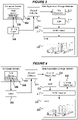
- FIG. 3 is a component diagram illustrating the operation of a web application change detector component 202 to train a hierarchical temporal memory (HTM) 320 in accordance with embodiments of the present invention.
- a training client 306 is provided which is a network connected software, hardware, firmware or combination component suitable for communication with the computer system 200 to operate as a client of the web application 298.
- the client 306 includes a web browser suitable for accessing static, dynamic and/or rich internet web pages constituting a client portion and/or interface to or for the web application 298.
- the training mode of operation is a mode in which a model of typical characteristics of the web application 298, the web server 296, the computer system 200 and/or one or more web pages provided by the web server 296 for the application 298 are modelled for subsequent use in anomaly detection.
- the training client 306 operates to access and/or use the web application 298 by accessing static and/or dynamic web pages of the application 298 in a normal usage absent malicious encumbrances.
- such normal usage by the training client 306 is arranged to cover at least a minimum proportion of a range of features, facilities, web pages, services or other aspects of the web application 298 in order that characteristics for the web application 298 are broadly modelled.
- a record collector component 201 as a hardware, software, firmware or combination component can be arranged to access, obtain, measure or otherwise determine the characteristics and collect the characteristics as a series of records constituting a first record set 310.
- the record collector 201 is configured to receive HTTP messages from and/or via the training client 306 from which characteristics can be determined, derived, measured or inferred.
- the record collector 201 can additionally and/or alternatively receive information such as HTTP messages from the web server directly, such as by way of a proxy for the training client 306 or the web server 296.
- the record collector 201 can be communicatively connected to the web server 296 such as via a network.
- the record collector 201 can be provided with and/or on either the training client 306 or the computer system 200 such as a software component of the training client 306 or computer system 200.
- the record collector 201 is a multi-part component being at least partly provided as a software component installed on one or more of: the computer system 200; the training client 306; and/or another computer system or component.
- the web application change detector 202 receives a first record set 310 from the record collector 201 in respect of operation of the training client 306 in the training mode of operation.
- the first record set 310 is a set of records for characteristics of the web application 298 in relation to operation of the web application 298 with the training client 306 for a defined period of time - known as a training time period.
- the change detector 202 uses the records in the record set 310 to constitute training data inputs for training a hierarchical temporal machine (HTM) 320.
- HTM 320 is a machine learning construct based on principles first described by Jeff Hawkins in “On Intelligence” (2004, Times Books, ISBN 0-8050-7456-2 ) and described in detail by Numenta in “Hierarchical Temporal Memory including HTM Cortical Learning Algorithms" (Numenta, 12 September 2011 ).
- HTM 320 The principles of, implementation of and operation of HTM 320 are beyond the scope of this description and are nonetheless available to the skilled person through existing publications including the papers and books below, each and/or all of which are usable by a skilled person to implement the HTM 320 and other associated features for embodiments of the present invention:
- HTM 320 has been described, by way of overview, structurally here, it will be appreciated that its implementation can be a logical representation or approximation of such a structure including a mathematical implementation employing, for example, linear algebra and/or parallel processing means for implementation.
- SDR is described in “ Sparse Distributed Representations” (Numenta, available from github.com/numenta/nupic/wiki/Sparse-Distributed-Representations and accessed on 29th March 2017 ). Further, the principles underlying SDR are also described in “ Sparse coding with an overcomplete basis set: A strategy employed by V1?" (Olshausen, B.A., Field, D.J., 1997, Vision Research, 37:3311-3325 ). Accordingly, the records in the first record set 310 are initially encoded to a SDR by a suitable encoder.
- the encoder is configured to set bits in a SDR 312 for a record based on a semantic meaning of the bits and thus the encoder is specifically configured to encode each record in to a SDR 312 based on semantic meaning of some aspect of the record including, for example, one or more of: a content of the record; characteristics of the record such as its length, origin, when it was received, how it was created, what created it etc.; what the record means, what it indicates, what consequence may ensue as a result of an occurrence recorded by the record etc.; and other aspects as will be apparent to those skilled in the art.
- the HTM 320 is adapted to provide an anomaly score for records in the first record set 310 reflective of a degree of recognition and it is the anomaly score meeting a predetermined threshold that determines when training should cease or reduce.
- the web application change detector 202 receives a second record set 410 from the record collector 201 relating to the operational time period. Subsequently, an SDR 412 of the records of the second log is generated by an encoder substantially as previously described with respect to the first record set 310.
- a HTM executer 414 then executes the HTM 320 (now trained by way of the arrangement of Figure 3 ) in an inference or recognition mode of operation. In this mode of operation, the HTM 320 determines a degree of recognition of each SDR data item input to it based on its learned model of the use of the web application 298 during the training time period. Based on this degree of recognition the HTM 320 also identifies anomalies as SDR inputs that are not recognised by the trained HTM 320.
- Responsive measures can include one or more of, for example, inter alia: interrupting operation of the web application 298 such as by terminating the application 298, pausing the application 298, preventing new connections to the application 298 or disconnecting existing connections; identifying client components in communication with the web application as potentially compromised by malicious software and/or communications or by disclosure of data; executing an intrusion detection, malware detection, virus removal and/or malware removal process for the web application 298; and effecting a redeployment, reinstallation and/or reconfiguration of the web application 298 which can include software constituting the web application 298 including the web server 296 and/or other software on the computer system 200.
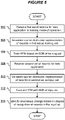
- Figure 5 is a flowchart of a method to detect an anomalous change to a web application 298 executing with a web server 296 in accordance with embodiments of the present invention.
- the change detector 202 receives the first record set 310 as a first set of records for characteristics of the web application 298 operating in a training mode of operation.
- an SDR 312 is generated for each of the records in the first record set 410 to form a training set for the HTM 320.
- the HTM 320 is trained based on the training set such that the trained HTM 320 provides a model of the operation of the computer system during the training time period.
- the web application change detector 202 receives a second set of records for the computer system 200 as a second record set 410.
- Each record in the second record set 410 relates to characteristics of the web application 298 during an operational time period in use with a client 206.
- an SDR is generated for each of the records in the second record set 410 to form an input set for the trained HTM 320.
- the trained HTM 320 is executed based on the input set to determine a degree of recognition of the records of the input set by the HTM 320.
- Web application communication traffic from a web server contains characteristics for a web application.
- Each response message contains a list of attributes and their values. Characteristics include: the order of attributes; the number of attributes; and values of attributes. For example, in the above table, two HTTP response headers from two different web servers are given as examples.
- An HTM model of web application configuration characteristics can be learned for a web application and the model can be used to detect changes in such characteristics indicative of a configuration change for the web application.
- malware may use the web server as a vehicle to spread infection via responses to client web requests, such as by sending the malware or a link to the malware, or malware infection code, to a client web browser. Additionally or alternatively, malware may send commands to infected systems such as bots in a botnet listening on an infected system.
- the web page may include additional ⁇ script>, ⁇ onload> or similar HTML tags that provide for the execution of scripts followed by a binary representation of malware code, such as code to infect a receiving system once executed.
- Some malware can be distributed stealthily by splitting the actual code into smaller parts and spreading these parts across multiple sections of a HTML document or, indeed, multiple documents. This is an effort to evade detection since malicious code in a single place within an HTML file may trigger conventional intrusion detection or virus detection rules. However, where the code is split within an HTML file then such rules may be evaded and the code may pass without detection. Thus the use of additional tags is commonplace in the distribution of such code.
- an attacker may seek to compromise a web server to access sensitive information or to inject malicious JavaScript that will run on client web browsers to reveal confidential information from the customer, steal access cookies to web servers, or redirect the user to phishing web site to steal credentials (for example, redirect a user to a fake bank login web site to steal his credentials).
- An example the XSS attack or defacing attack where an attacker will inject malicious JavaScript into one or more web pages of a vulnerable web application in order to redirect a user to another malicious web server or run the JavaScript into the user's browser to steal their confidential cookies to access other web servers.
- Such an approach also involves the use of additional tags in HTML web pages.
- a user new to the content of the page will possibly click the link and navigate to the phishing page.
- the link could be set to invisible in the web browser such that it is provided to command infected software already resident on a client browser machine, such as a bot in a botnet. Such an invisible tag will not appear to a user.
- Another example of an attack based on hello.html involves by injecting code into an existing tag is shown below, causing a redirect of the web page to a phishing site once it is loaded:
Landscapes
- Engineering & Computer Science (AREA)
- Computer Security & Cryptography (AREA)
- Theoretical Computer Science (AREA)
- General Engineering & Computer Science (AREA)
- Computer Hardware Design (AREA)
- Software Systems (AREA)
- Physics & Mathematics (AREA)
- General Physics & Mathematics (AREA)
- Data Mining & Analysis (AREA)
- Signal Processing (AREA)
- Computer Networks & Wireless Communication (AREA)
- Computing Systems (AREA)
- Life Sciences & Earth Sciences (AREA)
- Artificial Intelligence (AREA)
- Bioinformatics & Cheminformatics (AREA)
- Bioinformatics & Computational Biology (AREA)
- Computer Vision & Pattern Recognition (AREA)
- Evolutionary Biology (AREA)
- Evolutionary Computation (AREA)
- Debugging And Monitoring (AREA)
- Computer And Data Communications (AREA)
Claims (7)
- Computerimplementiertes Verfahren zum Detektieren einer anomalen Änderung an einer Konfiguration einer Webanwendung (298), wobei die Webanwendung auf einem Webserver (296) ausgeführt wird, wobei das Verfahren Folgendes umfasst:Empfangen einer ersten Menge von Datensätzen (310) für die Webanwendung, die in einem Trainingsbetriebsmodus arbeitet, wobei jeder Datensatz Charakteristika der Webanwendung beinhaltet, und wobei die Charakteristika Merkmale einer Antwortnachricht, die durch den Webserver erzeugt wird, beinhalten;Erzeugen einer spärlichen verteilten Repräsentation (312) der Menge von Datensätzen, um eine Trainingsmenge für ein hierarchisches zeitliches Gedächtnis, HTM, zu bilden;Trainieren des HTM auf der Grundlage der Trainingsmenge, damit das trainierte HTM ein Modell des Betriebs der Webanwendung in dem Trainingsbetriebsmodus liefert;Empfangen einer zweiten Menge von Datensätzen (410) für die Webanwendung, wobei jeder Datensatz Charakteristika der Webanwendung beinhaltet, und wobei die Charakteristika Merkmale einer Antwortnachricht, die durch den Webserver erzeugt wird, beinhalten;Erzeugen einer spärlichen verteilten Repräsentation (412) der zweiten Menge von Datensätzen, um eine Eingabemenge für das trainierte HTM zu bilden;Ausführen des trainierten HTM auf der Grundlage der Eingabemenge, um einen Erkennungsgrad der Datensätze der Eingabemenge zu bestimmen; undals Reaktion auf eine Bestimmung, dass der Erkennungsgrad von einem oder mehreren Datensätzen der Eingabemenge unter einem Schwellengrad liegt, Identifizieren einer anomalen Änderung an der Webanwendungskonfiguration.
- Verfahren nach einem der vorhergehenden Ansprüche, wobei, als Reaktion auf die Identifikation der anomalen Änderung an der Webanwendungskonfiguration, Implementieren einer Antwortmaßnahme auf die anomale Änderung.
- Verfahren nach einem der vorhergehenden Ansprüche, wobei die Antwortmaßnahme eine oder mehrere der Folgenden beinhaltet: Unterbrechen des Betriebs der Webanwendung; Identifizieren von Client-Komponenten in Kommunikation mit der Webanwendung als potenziell gefährdet; Ausführen eines Eindringdetektions-, Malware-Detektions-, Virusentfernungs- und/oder Malware-Entfernungsprozesses für die Webanwendung; und Bewirken eines Neueinsatzes, einer Neuinstallation und/oder einer Neukonfiguration der Webanwendung.
- Verfahren nach einem der vorhergehenden Ansprüche, wobei, in dem Trainingsbetriebsmodus, das HTM eine Anomalieeinstufung für Datensätze in der ersten Menge von Datensätzen bewertet, und das HTM trainiert wird bis die Anomalieeinstufung eine vorbestimmte Anomaliegradschwelle erfüllt.
- Verfahren nach einem der vorhergehenden Ansprüche, wobei die Charakteristika der Webanwendung ein oder mehrere der Folgenden beinhalten: Webserverantwortparameter; Inhalt von Headern, erzeugt durch den Webserver; Charakteristika von Verkehrsmanagement des Webservers; und einen Mechanismus zum Schließen einer Kommunikationsverbindung zwischen dem Webserver und einer Client-Komponente, die kommunizierend mit dem Webserver verbunden ist.
- Computersystem, beinhaltend einen Prozessor und einen Speicher, der Computerprogrammcode speichert, der bei Ausführung auf dem Prozessor den Prozessor veranlasst zum Durchführen der Schritte nach einem vorhergehenden Anspruch.
- Computerprogrammelement, umfassend Computerprogrammcode zum, wenn in ein Computersystem geladen und darauf ausgeführt, den Computer zum Durchführen der Schritte eines Verfahrens nach einem der Ansprüche 1 bis 5 veranlasst.
Applications Claiming Priority (2)
| Application Number | Priority Date | Filing Date | Title |
|---|---|---|---|
| EP17184580 | 2017-08-02 | ||
| PCT/EP2018/070631 WO2019025385A1 (en) | 2017-08-02 | 2018-07-30 | DETECTION OF MALWARE CONFIGURATION CHANGE FOR WEB APPLICATIONS |
Publications (2)
| Publication Number | Publication Date |
|---|---|
| EP3662401A1 EP3662401A1 (de) | 2020-06-10 |
| EP3662401B1 true EP3662401B1 (de) | 2022-05-18 |
Family
ID=59558219
Family Applications (1)
| Application Number | Title | Priority Date | Filing Date |
|---|---|---|---|
| EP18743562.3A Active EP3662401B1 (de) | 2017-08-02 | 2018-07-30 | Detektion von böswilligen konfigurationsänderungen für webanwendungen |
Country Status (3)
| Country | Link |
|---|---|
| US (1) | US20210168164A1 (de) |
| EP (1) | EP3662401B1 (de) |
| WO (1) | WO2019025385A1 (de) |
Families Citing this family (7)
| Publication number | Priority date | Publication date | Assignee | Title |
|---|---|---|---|---|
| EP3662626B1 (de) * | 2017-08-02 | 2022-05-11 | British Telecommunications public limited company | Erkennung von schädlichen hosts |
| US20200372183A1 (en) * | 2019-05-21 | 2020-11-26 | Hewlett Packard Enterprise Development Lp | Digitally Signing Software Packages With Hash Values |
| CN111447217A (zh) * | 2020-03-25 | 2020-07-24 | 西南大学 | 一种稀疏编码下的基于htm的流数据异常检测方法及系统 |
| US11765188B2 (en) * | 2020-12-28 | 2023-09-19 | Mellanox Technologies, Ltd. | Real-time detection of network attacks |
| US11641366B2 (en) * | 2021-01-11 | 2023-05-02 | Bank Of America Corporation | Centralized tool for identifying and blocking malicious communications transmitted within a network |
| CN114386601B (zh) * | 2022-01-13 | 2024-08-20 | 江苏瑞祥科技集团有限公司 | 一种面向服务器负载数据的htm高效异常检测方法 |
| US12580950B2 (en) * | 2024-06-24 | 2026-03-17 | Stripe, LLC | Dynamically recalibrating machine learning model parameters |
Family Cites Families (7)
| Publication number | Priority date | Publication date | Assignee | Title |
|---|---|---|---|---|
| US8407166B2 (en) * | 2008-06-12 | 2013-03-26 | Numenta, Inc. | Hierarchical temporal memory system with higher-order temporal pooling capability |
| US20120047581A1 (en) * | 2010-08-12 | 2012-02-23 | Anirban Banerjee | Event-driven auto-restoration of websites |
| CN102411687B (zh) * | 2011-11-22 | 2014-04-23 | 华北电力大学 | 未知恶意代码的深度学习检测方法 |
| US9412067B2 (en) * | 2012-09-05 | 2016-08-09 | Numenta, Inc. | Anomaly detection in spatial and temporal memory system |
| US10885089B2 (en) * | 2015-08-21 | 2021-01-05 | Cortical.Io Ag | Methods and systems for identifying a level of similarity between a filtering criterion and a data item within a set of streamed documents |
| US9838409B2 (en) * | 2015-10-08 | 2017-12-05 | Cisco Technology, Inc. | Cold start mechanism to prevent compromise of automatic anomaly detection systems |
| US20180124080A1 (en) * | 2016-11-02 | 2018-05-03 | Qualcomm Incorporated | Methods and Systems for Anomaly Detection Using Functional Specifications Derived from Server Input/Output (I/O) Behavior |
-
2018
- 2018-07-30 US US16/636,280 patent/US20210168164A1/en not_active Abandoned
- 2018-07-30 WO PCT/EP2018/070631 patent/WO2019025385A1/en not_active Ceased
- 2018-07-30 EP EP18743562.3A patent/EP3662401B1/de active Active
Also Published As
| Publication number | Publication date |
|---|---|
| US20210168164A1 (en) | 2021-06-03 |
| WO2019025385A1 (en) | 2019-02-07 |
| EP3662401A1 (de) | 2020-06-10 |
Similar Documents
| Publication | Publication Date | Title |
|---|---|---|
| EP3662627B1 (de) | Erkennen von veränderungen von web-seiten charakteristika unter verwendung von maschinellem lernen | |
| US20210168164A1 (en) | Detecting malicious configuration change for web applications | |
| Shaheed et al. | Web application firewall using machine learning and features engineering | |
| KR102046789B1 (ko) | 웹 어플리케이션에 대한 딥러닝 기반의 침입탐지 방법, 시스템 및 컴퓨터 프로그램 | |
| Kaur et al. | Hybrid intrusion detection and signature generation using deep recurrent neural networks | |
| Vinayakumar et al. | Scalable framework for cyber threat situational awareness based on domain name systems data analysis | |
| EP3721342B1 (de) | Software-behälterapplikationssicherheit | |
| Cho et al. | SAD: web session anomaly detection based on parameter estimation | |
| Krishnan et al. | IoT network attack detection using supervised machine learning | |
| EP3631666B1 (de) | Computerimplementiertes verfahren, system und computerprogramm zur erkennung bösartiger uri-datenelemente | |
| Du et al. | Digital Forensics as Advanced Ransomware Pre‐Attack Detection Algorithm for Endpoint Data Protection | |
| CN112703496A (zh) | 关于恶意浏览器插件对应用用户的基于内容策略的通知 | |
| Salunkhe et al. | Security enrichment in intrusion detection system using classifier ensemble | |
| Sangeetha et al. | Signature based semantic intrusion detection system on cloud | |
| Radivilova et al. | Statistical and signature analysis methods of intrusion detection | |
| Lee et al. | Sequence-order-independent network profiling for detecting application layer DDoS attacks | |
| Sefati et al. | SSLA: a semi-supervised framework for real-time injection detection and anomaly monitoring in cloud-based web applications with real-world implementation and evaluation | |
| Wu et al. | Improving convolutional neural network-based webshell detection through reinforcement learning | |
| Sahingoz et al. | Internet of Things (IoTs) security: Intrusion detection using deep learning | |
| Saeed et al. | A novel adaptive hybrid intrusion detection system with lightweight optimization for enhanced security in internet of medical things | |
| Meegammana et al. | AI‐driven adaptive security for sensor networks: Next‐generation firewalls for attack detection | |
| Sriramya et al. | Anomaly based detection of cross site scripting attack in web applications using gradient boosting classifier | |
| Zhang et al. | A new approach to security analysis of wireless sensor networks for smart home systems | |
| GB2568965A (en) | Software container application security | |
| Zhou et al. | Characterizing Network Anomaly Traffic with Euclidean Distance‐Based Multiscale Fuzzy Entropy |
Legal Events
| Date | Code | Title | Description |
|---|---|---|---|
| STAA | Information on the status of an ep patent application or granted ep patent |
Free format text: STATUS: UNKNOWN |
|
| STAA | Information on the status of an ep patent application or granted ep patent |
Free format text: STATUS: THE INTERNATIONAL PUBLICATION HAS BEEN MADE |
|
| PUAI | Public reference made under article 153(3) epc to a published international application that has entered the european phase |
Free format text: ORIGINAL CODE: 0009012 |
|
| STAA | Information on the status of an ep patent application or granted ep patent |
Free format text: STATUS: REQUEST FOR EXAMINATION WAS MADE |
|
| 17P | Request for examination filed |
Effective date: 20200129 |
|
| AK | Designated contracting states |
Kind code of ref document: A1 Designated state(s): AL AT BE BG CH CY CZ DE DK EE ES FI FR GB GR HR HU IE IS IT LI LT LU LV MC MK MT NL NO PL PT RO RS SE SI SK SM TR |
|
| AX | Request for extension of the european patent |
Extension state: BA ME |
|
| DAV | Request for validation of the european patent (deleted) | ||
| DAX | Request for extension of the european patent (deleted) | ||
| GRAP | Despatch of communication of intention to grant a patent |
Free format text: ORIGINAL CODE: EPIDOSNIGR1 |
|
| STAA | Information on the status of an ep patent application or granted ep patent |
Free format text: STATUS: GRANT OF PATENT IS INTENDED |
|
| RIC1 | Information provided on ipc code assigned before grant |
Ipc: G06F 21/57 20130101ALI20211118BHEP Ipc: G06F 21/56 20130101ALI20211118BHEP Ipc: H04L 29/06 20060101ALI20211118BHEP Ipc: G06F 21/55 20130101AFI20211118BHEP |
|
| INTG | Intention to grant announced |
Effective date: 20211213 |
|
| RAP3 | Party data changed (applicant data changed or rights of an application transferred) |
Owner name: BRITISH TELECOMMUNICATIONS PUBLIC LIMITED COMPANY |
|
| GRAS | Grant fee paid |
Free format text: ORIGINAL CODE: EPIDOSNIGR3 |
|
| GRAA | (expected) grant |
Free format text: ORIGINAL CODE: 0009210 |
|
| STAA | Information on the status of an ep patent application or granted ep patent |
Free format text: STATUS: THE PATENT HAS BEEN GRANTED |
|
| AK | Designated contracting states |
Kind code of ref document: B1 Designated state(s): AL AT BE BG CH CY CZ DE DK EE ES FI FR GB GR HR HU IE IS IT LI LT LU LV MC MK MT NL NO PL PT RO RS SE SI SK SM TR |
|
| REG | Reference to a national code |
Ref country code: GB Ref legal event code: FG4D |
|
| REG | Reference to a national code |
Ref country code: CH Ref legal event code: EP |
|
| REG | Reference to a national code |
Ref country code: IE Ref legal event code: FG4D |
|
| REG | Reference to a national code |
Ref country code: DE Ref legal event code: R096 Ref document number: 602018035768 Country of ref document: DE |
|
| REG | Reference to a national code |
Ref country code: AT Ref legal event code: REF Ref document number: 1493576 Country of ref document: AT Kind code of ref document: T Effective date: 20220615 |
|
| REG | Reference to a national code |
Ref country code: LT Ref legal event code: MG9D |
|
| REG | Reference to a national code |
Ref country code: NL Ref legal event code: MP Effective date: 20220518 |
|
| REG | Reference to a national code |
Ref country code: AT Ref legal event code: MK05 Ref document number: 1493576 Country of ref document: AT Kind code of ref document: T Effective date: 20220518 |
|
| PG25 | Lapsed in a contracting state [announced via postgrant information from national office to epo] |
Ref country code: SE Free format text: LAPSE BECAUSE OF FAILURE TO SUBMIT A TRANSLATION OF THE DESCRIPTION OR TO PAY THE FEE WITHIN THE PRESCRIBED TIME-LIMIT Effective date: 20220518 Ref country code: PT Free format text: LAPSE BECAUSE OF FAILURE TO SUBMIT A TRANSLATION OF THE DESCRIPTION OR TO PAY THE FEE WITHIN THE PRESCRIBED TIME-LIMIT Effective date: 20220919 Ref country code: NO Free format text: LAPSE BECAUSE OF FAILURE TO SUBMIT A TRANSLATION OF THE DESCRIPTION OR TO PAY THE FEE WITHIN THE PRESCRIBED TIME-LIMIT Effective date: 20220818 Ref country code: NL Free format text: LAPSE BECAUSE OF FAILURE TO SUBMIT A TRANSLATION OF THE DESCRIPTION OR TO PAY THE FEE WITHIN THE PRESCRIBED TIME-LIMIT Effective date: 20220518 Ref country code: LT Free format text: LAPSE BECAUSE OF FAILURE TO SUBMIT A TRANSLATION OF THE DESCRIPTION OR TO PAY THE FEE WITHIN THE PRESCRIBED TIME-LIMIT Effective date: 20220518 Ref country code: HR Free format text: LAPSE BECAUSE OF FAILURE TO SUBMIT A TRANSLATION OF THE DESCRIPTION OR TO PAY THE FEE WITHIN THE PRESCRIBED TIME-LIMIT Effective date: 20220518 Ref country code: GR Free format text: LAPSE BECAUSE OF FAILURE TO SUBMIT A TRANSLATION OF THE DESCRIPTION OR TO PAY THE FEE WITHIN THE PRESCRIBED TIME-LIMIT Effective date: 20220819 Ref country code: FI Free format text: LAPSE BECAUSE OF FAILURE TO SUBMIT A TRANSLATION OF THE DESCRIPTION OR TO PAY THE FEE WITHIN THE PRESCRIBED TIME-LIMIT Effective date: 20220518 Ref country code: ES Free format text: LAPSE BECAUSE OF FAILURE TO SUBMIT A TRANSLATION OF THE DESCRIPTION OR TO PAY THE FEE WITHIN THE PRESCRIBED TIME-LIMIT Effective date: 20220518 Ref country code: BG Free format text: LAPSE BECAUSE OF FAILURE TO SUBMIT A TRANSLATION OF THE DESCRIPTION OR TO PAY THE FEE WITHIN THE PRESCRIBED TIME-LIMIT Effective date: 20220818 Ref country code: AT Free format text: LAPSE BECAUSE OF FAILURE TO SUBMIT A TRANSLATION OF THE DESCRIPTION OR TO PAY THE FEE WITHIN THE PRESCRIBED TIME-LIMIT Effective date: 20220518 |
|
| PG25 | Lapsed in a contracting state [announced via postgrant information from national office to epo] |
Ref country code: RS Free format text: LAPSE BECAUSE OF FAILURE TO SUBMIT A TRANSLATION OF THE DESCRIPTION OR TO PAY THE FEE WITHIN THE PRESCRIBED TIME-LIMIT Effective date: 20220518 Ref country code: PL Free format text: LAPSE BECAUSE OF FAILURE TO SUBMIT A TRANSLATION OF THE DESCRIPTION OR TO PAY THE FEE WITHIN THE PRESCRIBED TIME-LIMIT Effective date: 20220518 Ref country code: LV Free format text: LAPSE BECAUSE OF FAILURE TO SUBMIT A TRANSLATION OF THE DESCRIPTION OR TO PAY THE FEE WITHIN THE PRESCRIBED TIME-LIMIT Effective date: 20220518 Ref country code: IS Free format text: LAPSE BECAUSE OF FAILURE TO SUBMIT A TRANSLATION OF THE DESCRIPTION OR TO PAY THE FEE WITHIN THE PRESCRIBED TIME-LIMIT Effective date: 20220918 |
|
| PG25 | Lapsed in a contracting state [announced via postgrant information from national office to epo] |
Ref country code: SM Free format text: LAPSE BECAUSE OF FAILURE TO SUBMIT A TRANSLATION OF THE DESCRIPTION OR TO PAY THE FEE WITHIN THE PRESCRIBED TIME-LIMIT Effective date: 20220518 Ref country code: SK Free format text: LAPSE BECAUSE OF FAILURE TO SUBMIT A TRANSLATION OF THE DESCRIPTION OR TO PAY THE FEE WITHIN THE PRESCRIBED TIME-LIMIT Effective date: 20220518 Ref country code: RO Free format text: LAPSE BECAUSE OF FAILURE TO SUBMIT A TRANSLATION OF THE DESCRIPTION OR TO PAY THE FEE WITHIN THE PRESCRIBED TIME-LIMIT Effective date: 20220518 Ref country code: EE Free format text: LAPSE BECAUSE OF FAILURE TO SUBMIT A TRANSLATION OF THE DESCRIPTION OR TO PAY THE FEE WITHIN THE PRESCRIBED TIME-LIMIT Effective date: 20220518 Ref country code: DK Free format text: LAPSE BECAUSE OF FAILURE TO SUBMIT A TRANSLATION OF THE DESCRIPTION OR TO PAY THE FEE WITHIN THE PRESCRIBED TIME-LIMIT Effective date: 20220518 Ref country code: CZ Free format text: LAPSE BECAUSE OF FAILURE TO SUBMIT A TRANSLATION OF THE DESCRIPTION OR TO PAY THE FEE WITHIN THE PRESCRIBED TIME-LIMIT Effective date: 20220518 |
|
| REG | Reference to a national code |
Ref country code: DE Ref legal event code: R097 Ref document number: 602018035768 Country of ref document: DE |
|
| PG25 | Lapsed in a contracting state [announced via postgrant information from national office to epo] |
Ref country code: MC Free format text: LAPSE BECAUSE OF FAILURE TO SUBMIT A TRANSLATION OF THE DESCRIPTION OR TO PAY THE FEE WITHIN THE PRESCRIBED TIME-LIMIT Effective date: 20220518 |
|
| REG | Reference to a national code |
Ref country code: CH Ref legal event code: PL |
|
| PLBE | No opposition filed within time limit |
Free format text: ORIGINAL CODE: 0009261 |
|
| STAA | Information on the status of an ep patent application or granted ep patent |
Free format text: STATUS: NO OPPOSITION FILED WITHIN TIME LIMIT |
|
| REG | Reference to a national code |
Ref country code: BE Ref legal event code: MM Effective date: 20220731 |
|
| PG25 | Lapsed in a contracting state [announced via postgrant information from national office to epo] |
Ref country code: AL Free format text: LAPSE BECAUSE OF FAILURE TO SUBMIT A TRANSLATION OF THE DESCRIPTION OR TO PAY THE FEE WITHIN THE PRESCRIBED TIME-LIMIT Effective date: 20220518 |
|
| 26N | No opposition filed |
Effective date: 20230221 |
|
| PG25 | Lapsed in a contracting state [announced via postgrant information from national office to epo] |
Ref country code: LU Free format text: LAPSE BECAUSE OF NON-PAYMENT OF DUE FEES Effective date: 20220730 Ref country code: LI Free format text: LAPSE BECAUSE OF NON-PAYMENT OF DUE FEES Effective date: 20220731 Ref country code: CH Free format text: LAPSE BECAUSE OF NON-PAYMENT OF DUE FEES Effective date: 20220731 |
|
| PG25 | Lapsed in a contracting state [announced via postgrant information from national office to epo] |
Ref country code: SI Free format text: LAPSE BECAUSE OF FAILURE TO SUBMIT A TRANSLATION OF THE DESCRIPTION OR TO PAY THE FEE WITHIN THE PRESCRIBED TIME-LIMIT Effective date: 20220518 Ref country code: BE Free format text: LAPSE BECAUSE OF NON-PAYMENT OF DUE FEES Effective date: 20220731 |
|
| PG25 | Lapsed in a contracting state [announced via postgrant information from national office to epo] |
Ref country code: IE Free format text: LAPSE BECAUSE OF NON-PAYMENT OF DUE FEES Effective date: 20220730 |
|
| P01 | Opt-out of the competence of the unified patent court (upc) registered |
Effective date: 20230623 |
|
| PG25 | Lapsed in a contracting state [announced via postgrant information from national office to epo] |
Ref country code: IT Free format text: LAPSE BECAUSE OF FAILURE TO SUBMIT A TRANSLATION OF THE DESCRIPTION OR TO PAY THE FEE WITHIN THE PRESCRIBED TIME-LIMIT Effective date: 20220518 |
|
| PG25 | Lapsed in a contracting state [announced via postgrant information from national office to epo] |
Ref country code: MK Free format text: LAPSE BECAUSE OF FAILURE TO SUBMIT A TRANSLATION OF THE DESCRIPTION OR TO PAY THE FEE WITHIN THE PRESCRIBED TIME-LIMIT Effective date: 20220511 Ref country code: CY Free format text: LAPSE BECAUSE OF FAILURE TO SUBMIT A TRANSLATION OF THE DESCRIPTION OR TO PAY THE FEE WITHIN THE PRESCRIBED TIME-LIMIT Effective date: 20220511 |
|
| PG25 | Lapsed in a contracting state [announced via postgrant information from national office to epo] |
Ref country code: HU Free format text: LAPSE BECAUSE OF FAILURE TO SUBMIT A TRANSLATION OF THE DESCRIPTION OR TO PAY THE FEE WITHIN THE PRESCRIBED TIME-LIMIT; INVALID AB INITIO Effective date: 20180730 |
|
| PG25 | Lapsed in a contracting state [announced via postgrant information from national office to epo] |
Ref country code: MT Free format text: LAPSE BECAUSE OF FAILURE TO SUBMIT A TRANSLATION OF THE DESCRIPTION OR TO PAY THE FEE WITHIN THE PRESCRIBED TIME-LIMIT Effective date: 20220511 |
|
| PG25 | Lapsed in a contracting state [announced via postgrant information from national office to epo] |
Ref country code: BG Free format text: LAPSE BECAUSE OF FAILURE TO SUBMIT A TRANSLATION OF THE DESCRIPTION OR TO PAY THE FEE WITHIN THE PRESCRIBED TIME-LIMIT Effective date: 20220518 |
|
| PG25 | Lapsed in a contracting state [announced via postgrant information from national office to epo] |
Ref country code: BG Free format text: LAPSE BECAUSE OF FAILURE TO SUBMIT A TRANSLATION OF THE DESCRIPTION OR TO PAY THE FEE WITHIN THE PRESCRIBED TIME-LIMIT Effective date: 20220518 |
|
| PGFP | Annual fee paid to national office [announced via postgrant information from national office to epo] |
Ref country code: DE Payment date: 20250620 Year of fee payment: 8 |
|
| PG25 | Lapsed in a contracting state [announced via postgrant information from national office to epo] |
Ref country code: TR Free format text: LAPSE BECAUSE OF FAILURE TO SUBMIT A TRANSLATION OF THE DESCRIPTION OR TO PAY THE FEE WITHIN THE PRESCRIBED TIME-LIMIT Effective date: 20220518 |
|
| PGFP | Annual fee paid to national office [announced via postgrant information from national office to epo] |
Ref country code: GB Payment date: 20260618 Year of fee payment: 9 |
|
| PGFP | Annual fee paid to national office [announced via postgrant information from national office to epo] |
Ref country code: FR Payment date: 20260618 Year of fee payment: 9 |