EP3661702B1 - Verfahren zur unterstützung von mindestens einer bewegung eines benutzers und entsprechende vorrichtung - Google Patents
Verfahren zur unterstützung von mindestens einer bewegung eines benutzers und entsprechende vorrichtung Download PDFInfo
- Publication number
- EP3661702B1 EP3661702B1 EP18742527.7A EP18742527A EP3661702B1 EP 3661702 B1 EP3661702 B1 EP 3661702B1 EP 18742527 A EP18742527 A EP 18742527A EP 3661702 B1 EP3661702 B1 EP 3661702B1
- Authority
- EP
- European Patent Office
- Prior art keywords
- robotic device
- computer
- force
- servocontrol
- user
- Prior art date
- Legal status (The legal status is an assumption and is not a legal conclusion. Google has not performed a legal analysis and makes no representation as to the accuracy of the status listed.)
- Active
Links
Images
Classifications
-
- B—PERFORMING OPERATIONS; TRANSPORTING
- B25—HAND TOOLS; PORTABLE POWER-DRIVEN TOOLS; MANIPULATORS
- B25J—MANIPULATORS; CHAMBERS PROVIDED WITH MANIPULATION DEVICES
- B25J9/00—Program-controlled manipulators
- B25J9/16—Program controls
- B25J9/1628—Program controls characterised by the control loop
- B25J9/1633—Program controls characterised by the control loop compliant, force, torque control, e.g. combined with position control
-
- B—PERFORMING OPERATIONS; TRANSPORTING
- B25—HAND TOOLS; PORTABLE POWER-DRIVEN TOOLS; MANIPULATORS
- B25J—MANIPULATORS; CHAMBERS PROVIDED WITH MANIPULATION DEVICES
- B25J9/00—Program-controlled manipulators
- B25J9/0006—Exoskeletons, i.e. resembling a human figure
-
- B—PERFORMING OPERATIONS; TRANSPORTING
- B25—HAND TOOLS; PORTABLE POWER-DRIVEN TOOLS; MANIPULATORS
- B25J—MANIPULATORS; CHAMBERS PROVIDED WITH MANIPULATION DEVICES
- B25J9/00—Program-controlled manipulators
- B25J9/16—Program controls
- B25J9/1628—Program controls characterised by the control loop
- B25J9/163—Program controls characterised by the control loop learning, adaptive, model based, rule based expert control
-
- B—PERFORMING OPERATIONS; TRANSPORTING
- B25—HAND TOOLS; PORTABLE POWER-DRIVEN TOOLS; MANIPULATORS
- B25J—MANIPULATORS; CHAMBERS PROVIDED WITH MANIPULATION DEVICES
- B25J9/00—Program-controlled manipulators
- B25J9/16—Program controls
- B25J9/1656—Program controls characterised by programming, planning systems for manipulators
- B25J9/1664—Program controls characterised by programming, planning systems for manipulators characterised by motion, path, trajectory planning
Definitions
- the invention relates to a method for assisting at least one movement of a user.
- the invention also relates to a corresponding device.
- Robotic devices can now make it possible to assist the movement of a user in many fields such as medical, national security, etc. We thus know exoskeletons worn by the user and participating in his movements to facilitate his movement. carrying out tasks such as carrying an object, pushing or pulling an object, etc. An exoskeleton can artificially increase the user's forces tenfold and thus limit fatigue.
- the external forces are estimated via additional indicator elements arranged in the environment or on the exoskeleton (camera, radio-identification technology better known by the English acronym RFID, strain gauges, etc.) but also linked to the user (myoelectric technology, user-environment interface, etc.).
- additional indicator elements arranged in the environment or on the exoskeleton (camera, radio-identification technology better known by the English acronym RFID, strain gauges, etc.) but also linked to the user (myoelectric technology, user-environment interface, etc.).
- exoskeleton is confined to less complex applications such as for example a static application in the factory allowing a easier placement of markers, typically to automatically inform the mass and physical properties of an object to be carried.
- An object of the invention is to propose a method for assisting at least one movement of the user which is more ergonomic for the user.
- An object of the invention is also to provide a corresponding device.
- the invention makes it possible to switch regularly between a trajectory servo-control and a force servo-control, the trajectory servo-control thus temporarily making it possible to inform the computer about the external force(s) applied to the robotic device and the force control making it possible to assist the user in his movement. This therefore makes it possible to participate in the correct operation of the robotic device.
- the invention thus makes it possible to limit the number of indicator elements carried directly by the user or with which he must interact.
- the inventors were thus able to develop a robotic device operating without a sensor worn directly by the user, in particular without a biometric sensor, and also without a user/environment interface through which the user traditionally identified the level of assistance that the device robotics had to bring him.
- the invention therefore makes the movement assistance more ergonomic for the user.
- the invention can be used for relatively complex applications. It may thus be envisaged to use the invention in an unknown environment.
- the computer performs automatic learning of at least one movement performed by the robotic device and the automatic learning is performed during the default mode and/or the automatic learning is performed during a dedicated preliminary phase.
- the computer could also integrate a database integrating a predetermined list of models of movements carried out by the robotic device in force control.
- the trajectory servo-control is a series of position servo-controls.
- the trajectory servo-control is a speed servo-control.
- the robotic device is an exoskeleton.
- the invention also relates to a robotic device comprising a computer configured to force-slave the robotic device, the computer being arranged to, upon recognition of a movement performed by the robotic device, servo-slave the robotic device in trajectory while recording at least one force exerted by an external environment on the robotic device, in order, during a return to force control, to use this recording to ensure force control.
- the method can be implemented in any type of robotic device, such as for example a comanipulation robot, an aircraft guidance system or any other means of transport, etc. device may also be a sighting system with tracking of a target.
- said system will thus be able to use the forces applied by the user to a guide member (such as a handle, a joystick, etc.) to ensure the monitoring of target.
- a guide member such as a handle, a joystick, etc.
- the robotic device (or robot) can thus be shaped to provide an additional effort to the user in order to compensate for the efforts required to interact with objects and/or perform tiring and/or painful muscular efforts.
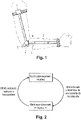
- the actuators 3 are for example motors.
- the exoskeleton 1 further comprises at least one trajectory sensor 5 (to estimate the position and/or the speed of movement of the mechanical structure 2).
- the trajectory sensor 5 is for example an angular position sensor.
- the trajectory sensor 5 is here arranged at the level of the pivot connection between two articulated elements of the mechanical structure 2 in order to measure the relative angular position of one of the elements with respect to the other.
- the exoskeleton 1 also includes at least one force sensor 6 (to estimate one or more forces (torque and/or force) applied to the mechanical structure 2).
- Said sensor 6 is for example a torque sensor. It is here located between the actuator 3 allowing pivoting between the two articulated elements of the mechanical structure 2 and the mechanical structure 2 itself.
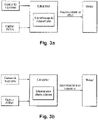
- the exoskeleton 1 is configured to be able to operate in two different modes, a default mode and a measurement mode.
- the computer 4 ensures force control of the exoskeleton 1.
- force is meant that the control is just as much a force control as a torque control.
- the computer 4 simultaneously performs automatic learning of the movement(s) performed by the exoskeleton 1, which are therefore linked to those of the user.
- the computer 4 records in a database models of movements performed by the exoskeleton 1 during force control (for example when the torque applied to the user by the exoskeleton 1 is equal to zero).
- the computer 4 slaves the exoskeleton 1 in trajectory.
- trajectory is meant that the servo-control is just as much a series of position servo-controls (angular or not) as a speed servo-control (for example by following a speed curve). It is preferred here to enslave the exoskeleton 1 in a series of position enslavements.
- the computer 4 records the force(s) exerted on the exoskeleton 1 by the environment external to the exoskeleton 1 in order to subsequently reinject this data into the force control when switching to default mode .
- the computer 4 predicts the movement of the user and slaves the exoskeleton 1 in position correspondingly. This makes it possible to reduce as much as possible the direct impact of the user on the measurement of the forces exerted on the exoskeleton 1 by the environment external to the exoskeleton 1.
- the computer 4 records at least one force exerted on the exoskeleton 1 by an environment external to said exoskeleton 1 if the direction of said force is known and at least two forces to determine this direction if we don't know it.
- said at least two forces result from the action of the same object on the exoskeleton 1 but measured at different times: the exoskeleton 1 having moved between these two times, the force will have evolved in the meantime, hence the concept of “two efforts”.
- the computer 4 can thus estimate the resultant and the direction of the action exerted by the object on the exoskeleton 1.
- the exoskeleton 1 In the initial state, the exoskeleton 1 is in its default mode.
- the exoskeleton 1 thus assists the user in the performance of his tasks by virtue of his effort control.
- the computer 4 automatically learns the movements performed by the exoskeleton 1 and saves them in its database.
- the computer 4 determines that a movement performed by the exoskeleton 1 corresponds to a movement that the computer 4 has already learned and recorded, the computer 4 causes the switch to measurement mode.
- the signals supplied by the trajectory sensor 5 are processed by the computer 4: when one of the signals corresponds to a signal known to the computer 4, said computer 4 switches the exoskeleton 1 to measurement mode.
- the computer 4 also continuously extrapolates the sequence of the signal received, thanks to one or more movement models contained in its database, to estimate the movement that the exoskeleton 1 is supposed to perform. From this presumed movement of the exoskeleton 1, the computer 4 ensures a trajectory servo-control of the exoskeleton 1.
- the exoskeleton 1 When switching to the measurement mode, it is therefore the exoskeleton 1 which causes the movement and no longer the user. Consequently, the exoskeleton 1 alone supports the force(s) applied to the exoskeleton 1 by the external environment. As indicated above, it is considered that the forces directly exerted by the user on the exoskeleton 1 in the measurement mode are negligible (thanks to automatic learning, the trajectory servo-control in fact compensates for the muscular effort of the 'user).
- the data then provided by the force sensor 6 are thus significant of the force(s) that the exoskeleton 1 must apply alone to the environment in order to be able to follow the trajectory imposed by the computer 4. From the data provided by the sensor d force 6, the computer 4 thus deduces the force or forces exerted by the external environment on the exoskeleton 1 and that the exoskeleton 1 must compensate.
- the computer 4 causes the switch to the default mode.
- the effort of the user is again added to that of the exoskeleton 1.
- the computer 4 uses the determination of the effort(s) exerted by the external environment on the exoskeleton 1 determined during the operation in the measurement mode to ensure force control and compensate if necessary for the force(s) exerted by the external environment on the exoskeleton 1. More specifically, if the force measured during the measurement mode is different from that estimated in the default mode, increases the forces exerted by the actuator(s) 3 (by adjusting their powers) to approach the force measured in the measurement mode. When switching on the exoskeleton 1, it is considered for the default mode that no force is exerted by the external environment on the exoskeleton 1.
- the exoskeleton 1 then operates in its default mode until detection of a known movement by the computer 4.
- An example of operation is the porting of an object.
- the computer 4 When the computer 4 recognizes the movement of the user signifying that he is about to grasp an object or that he grasps an object, the computer 4 switches to measurement mode.
- the computer 4 measures the effort that the exoskeleton 1 must exert alone to carry the object (since thanks to automatic learning the servo-control in trajectory compensates for the muscular effort of the user) and deduces therefrom the mass of the object.
- the computer 4 can cause the switch to the measurement mode for other movements such as for example pushing or pulling an object.
- the computer 4 will then seek to measure the force and the direction of this force exerted by the object on the exoskeleton 1.
- the computer 4 thus regularly causes the transition from one mode of operation to another providing assistance to the movements of the user in a precise, dynamic and adapted manner over time.
- computer 4 is configured to switch to measurement mode each time computer 4 recognizes a movement learned by said computer 4.
- operation in the measurement mode lasts only a short time, typically between 0.3 and 3.5 seconds, and preferably between 0.5 and 3 seconds, just the time for determining the external forces exerted.
- This makes it possible to make operation in measurement mode little, or even not, perceptible to the user.
- This makes the exoskeleton 1 more ergonomic for the user. In addition, this makes it possible not to have to predict the movement of the user during too large a phase.
- exoskeleton 1 thus described comprises only two sensors, one for the movement and the other for the forces.
- the exoskeleton 1 thus described operates without a user interface/environment through which the user identifies the level of assistance that the exoskeleton 1 must provide him.
- the exoskeleton 1 thus described operates without a sensor worn directly by the user, especially without a biometric sensor.
- the exoskeleton 1 thus described therefore proves to be particularly ergonomic.
- the exoskeleton 1 can operate even if the user progresses in an unknown environment. For example, the mass of the objects to be worn does not need to be predetermined for the exoskeleton 1 to be able to operate.
- the computer performs automatic learning of at least one movement performed by the robotic device during operation of the robotic device
- the computer can perform automatic learning at least one movement performed by the robotic device during a dedicated learning phase (the robotic device then being used only for learning the computer and not to assist a user in his tasks).
- the computer could also integrate a database integrating a predetermined list of models of movements carried out by the robotic device in force control.
- the device may include or be associated with a greater number of force sensors and/or trajectories than has been indicated.
- some of the elements may be remote from the device.
- the device is capable of operating without a sensor worn directly by the user, the user may wear sensors for example for questions of redundancy in the event of failure of the device.
Landscapes
- Engineering & Computer Science (AREA)
- Robotics (AREA)
- Mechanical Engineering (AREA)
- Manipulator (AREA)
- Rehabilitation Tools (AREA)
Claims (5)
- Verfahren zur Unterstützung von mindestens einer Bewegung eines Benutzers mittels einer Robotervorrichtung (1), wobei die Robotervorrichtung ohne einen Sensor funktioniert, der direkt von dem Benutzer getragen wird, wie z. B. ein biometrischer Sensor, oder ohne eine Schnittstelle Benutzer/Umgebung, durch die der Benutzer eine Höhe der Unterstützung, die er erhalten soll, identifiziert, wobei das Verfahren ermöglicht, die Robotervorrichtung mindestens in den beiden folgenden Modi zu betreiben:- Standardmodus: Kraftregelung der Robotervorrichtung über einen Rechner (4) der Robotervorrichtung,- Messmodus: Bahnregelung der Robotervorrichtung über den Rechner und Speicherung mindestens einer Kraft, die auf die Robotervorrichtung von einer Umgebung außerhalb der Robotervorrichtung ausgeübt wird, in dem Rechner,wobei das Verfahren definiert ist, umwährend einer Wiedererkennung einer von der Robotervorrichtung ausgeführten Bewegung, die bereits gelernt und vom Rechner gespeichert wurde, durch den Rechner von dem Standardmodus in den Messmodus umzuschalten, um mindestens eine Kraft zu speichern, die auf die Robotervorrichtung von einer Umgebung außerhalb der Robotervorrichtung ausgeübt wird, und dannin den Standardmodus zurückzukehren, während die gespeicherte Kraft genutzt wird, um die Kraftregelung des Standardmodus durchzuführen, wobei• der Rechner (4) ein automatisches Lernen mindestens einer Bewegung durchführt, die von der Robotervorrichtung ausgeführt wird, wobei das automatische Lernen während des Standardmodus erfolgt und/oder wobei das automatische Lernen während einer dafür vorgesehenen vorbereitenden Phase erfolgt;
und/oder• wobei der Rechner eine Datenbank integriert, die eine vorbestimmte Liste von Bewegungsmodellen integriert, die von der Robotervorrichtung bei Kraftregelung ausgeführt werden. - Verfahren nach Anspruch 1, bei dem die Bahnregelung eine Abfolge von Positionsregelungen ist.
- Verfahren nach einem der Ansprüche 1 bis 2, bei dem die Bahnregelung eine Geschwindigkeitsregelung ist.
- Verfahren nach einem der vorhergehenden Ansprüche, bei dem die Robotervorrichtung ein Exoskelett ist.
- Robotervorrichtung (1), umfassend einen Rechner (4), der konfiguriert ist, um eine Kraftregelung der Robotervorrichtung durchzuführen, wobei der Rechner ausgebildet ist, um während einer Wiedererkennung einer von der Robotervorrichtung ausgeführten Bewegung, die bereits gelernt und von dem Rechner gespeichert wurde, eine Bahnregelung der Robotervorrichtung durchzuführen, während mindestens eine Kraft gespeichert wird, die von einer äußeren Umgebung auf die Robotervorrichtung ausgeübt wird, um während einer Rückkehr zur Kraftregelung diese Speicherung zu nutzen, um die Kraftregelung sicherzustellen, wobei die Robotervorrichtung ohne einen Sensor funktioniert, der direkt von einem Benutzer getragen wird, wie z. B. ein biometrischer Sensor, oder ohne eine Schnittstelle Benutzer/Umgebung, durch die der Benutzer eine Höhe der Unterstützung, die er erhalten soll, identifiziert, wobei:• der Rechner (4) konfiguriert ist, um ein automatisches Lernen mindestens einer von der Robotervorrichtung ausgeführten Bewegung durchzuführen, wobei das automatische Lernen während des Standardmodus erfolgt und/oder wobei das automatische Lernen während einer dafür vorgesehenen vorbereitenden Phase erfolgt;
und /oder• wobei der Rechner eine Datenbank integriert, die eine vorbestimmte Liste von Bewegungsmodellen integriert, die von der Robotervorrichtung bei Kraftregelung ausgeführt werden.
Applications Claiming Priority (2)
| Application Number | Priority Date | Filing Date | Title |
|---|---|---|---|
| FR1757280A FR3069664B1 (fr) | 2017-07-31 | 2017-07-31 | Procede d’assistance d’au moins un mouvement d’un utilisateur et dispositif correspondant |
| PCT/EP2018/070225 WO2019025266A1 (fr) | 2017-07-31 | 2018-07-25 | Procede d'assistance d'au moins un mouvement d'un utilisateur et dispositif correspondant |
Publications (2)
| Publication Number | Publication Date |
|---|---|
| EP3661702A1 EP3661702A1 (de) | 2020-06-10 |
| EP3661702B1 true EP3661702B1 (de) | 2022-10-19 |
Family
ID=61027803
Family Applications (1)
| Application Number | Title | Priority Date | Filing Date |
|---|---|---|---|
| EP18742527.7A Active EP3661702B1 (de) | 2017-07-31 | 2018-07-25 | Verfahren zur unterstützung von mindestens einer bewegung eines benutzers und entsprechende vorrichtung |
Country Status (10)
| Country | Link |
|---|---|
| US (1) | US10913153B2 (de) |
| EP (1) | EP3661702B1 (de) |
| JP (1) | JP6947908B2 (de) |
| KR (1) | KR102243052B1 (de) |
| CN (1) | CN110944807B (de) |
| AU (1) | AU2018312611B2 (de) |
| CA (1) | CA3071547C (de) |
| FR (1) | FR3069664B1 (de) |
| IL (1) | IL272026B (de) |
| WO (1) | WO2019025266A1 (de) |
Families Citing this family (1)
| Publication number | Priority date | Publication date | Assignee | Title |
|---|---|---|---|---|
| FR3085495B1 (fr) * | 2018-08-30 | 2021-03-05 | Commissariat Energie Atomique | Procede de compensation automatique de charge pour un cobot ou un exosquelette de membre superieur |
Citations (1)
| Publication number | Priority date | Publication date | Assignee | Title |
|---|---|---|---|---|
| US20170165833A1 (en) * | 2015-12-14 | 2017-06-15 | Hyundai Motor Company | Wearable robot device and method of controlling the wearable robot device |
Family Cites Families (19)
| Publication number | Priority date | Publication date | Assignee | Title |
|---|---|---|---|---|
| JP3504507B2 (ja) * | 1998-09-17 | 2004-03-08 | トヨタ自動車株式会社 | 適切反力付与型作業補助装置 |
| US7774177B2 (en) * | 2001-06-29 | 2010-08-10 | Honda Motor Co., Ltd. | Exoskeleton controller for a human-exoskeleton system |
| JP3788920B2 (ja) * | 2001-09-14 | 2006-06-21 | 株式会社ジェイテクト | パワーアシスト装置 |
| US9155592B2 (en) * | 2009-06-16 | 2015-10-13 | Intuitive Surgical Operations, Inc. | Virtual measurement tool for minimally invasive surgery |
| JP5479875B2 (ja) * | 2009-12-11 | 2014-04-23 | トヨタ自動車株式会社 | 動作補助装置 |
| FR2960467B1 (fr) * | 2010-06-01 | 2012-07-27 | Robotiques 3 Dimensions | Equipement de robotique collaborative |
| KR20130090585A (ko) * | 2012-02-06 | 2013-08-14 | 삼성전자주식회사 | 착용형 로봇과 이를 이용한 모션 학습 방법 |
| US20130253385A1 (en) * | 2012-03-21 | 2013-09-26 | Amit Goffer | Motorized exoskeleton unit |
| KR101435514B1 (ko) * | 2012-04-05 | 2014-09-02 | 주식회사 엔티리서치 | 회전조인트에서의 토크를 측정하여 사용자의 동작의도를 추정하는 근력증강로봇 및 그 제어방법 |
| JP6118961B2 (ja) * | 2012-09-14 | 2017-04-26 | 株式会社国際電気通信基礎技術研究所 | パワーアシストロボット |
| KR101438970B1 (ko) * | 2012-12-27 | 2014-09-15 | 현대자동차주식회사 | 로봇의 보행제어방법 |
| JP6150337B2 (ja) * | 2013-08-27 | 2017-06-21 | 国立大学法人信州大学 | ロボティックスーツの制御方法 |
| KR102172954B1 (ko) * | 2013-11-08 | 2020-11-02 | 삼성전자주식회사 | 보행 보조 로봇 및 보행 보조 로봇의 제어 방법 |
| US9381642B2 (en) * | 2014-01-13 | 2016-07-05 | Massachusetts Institute Of Technology | Wearable robot assisting manual tasks |
| US9403273B2 (en) * | 2014-05-23 | 2016-08-02 | GM Global Technology Operations LLC | Rapid robotic imitation learning of force-torque tasks |
| CN118252727A (zh) * | 2014-09-19 | 2024-06-28 | 哈佛大学校长及研究员协会 | 辅助使用者的关节运动的方法和可穿戴式机器人系统 |
| CN105150211B (zh) * | 2015-09-08 | 2017-04-26 | 中国科学院合肥物质科学研究院 | 一种负重型下肢外骨骼机器人的控制系统 |
| RU2598124C1 (ru) * | 2015-10-19 | 2016-09-20 | Общество С Ограниченной Ответственностью "Экзоатлет" | Способ задания желаемых траекторий движения экзоскелета для передвижения пользователя с нарушением функций опорно-двигательного аппарата, устройство содействия ходьбе этого пользователя и способ управления этим устройством |
| CN106112985B (zh) * | 2016-08-11 | 2020-05-22 | 上海交通大学 | 下肢助行机器的外骨骼混合控制系统及方法 |
-
2017
- 2017-07-31 FR FR1757280A patent/FR3069664B1/fr active Active
-
2018
- 2018-07-25 WO PCT/EP2018/070225 patent/WO2019025266A1/fr not_active Ceased
- 2018-07-25 CA CA3071547A patent/CA3071547C/fr active Active
- 2018-07-25 EP EP18742527.7A patent/EP3661702B1/de active Active
- 2018-07-25 CN CN201880049184.7A patent/CN110944807B/zh active Active
- 2018-07-25 US US16/635,462 patent/US10913153B2/en active Active
- 2018-07-25 KR KR1020207003120A patent/KR102243052B1/ko active Active
- 2018-07-25 JP JP2020504692A patent/JP6947908B2/ja active Active
- 2018-07-25 AU AU2018312611A patent/AU2018312611B2/en active Active
-
2020
- 2020-01-14 IL IL272026A patent/IL272026B/en active IP Right Grant
Patent Citations (1)
| Publication number | Priority date | Publication date | Assignee | Title |
|---|---|---|---|---|
| US20170165833A1 (en) * | 2015-12-14 | 2017-06-15 | Hyundai Motor Company | Wearable robot device and method of controlling the wearable robot device |
Also Published As
| Publication number | Publication date |
|---|---|
| IL272026A (en) | 2020-03-31 |
| FR3069664B1 (fr) | 2019-08-30 |
| JP6947908B2 (ja) | 2021-10-13 |
| WO2019025266A1 (fr) | 2019-02-07 |
| AU2018312611B2 (en) | 2020-07-02 |
| CA3071547A1 (fr) | 2019-02-07 |
| AU2018312611A1 (en) | 2020-02-27 |
| CA3071547C (fr) | 2021-09-21 |
| FR3069664A1 (fr) | 2019-02-01 |
| IL272026B (en) | 2021-02-28 |
| US10913153B2 (en) | 2021-02-09 |
| KR102243052B1 (ko) | 2021-04-21 |
| US20200376658A1 (en) | 2020-12-03 |
| KR20200016395A (ko) | 2020-02-14 |
| JP2020526408A (ja) | 2020-08-31 |
| EP3661702A1 (de) | 2020-06-10 |
| CN110944807B (zh) | 2021-01-22 |
| CN110944807A (zh) | 2020-03-31 |
Similar Documents
| Publication | Publication Date | Title |
|---|---|---|
| EP2400460B1 (de) | Bewertungsverfahren der horizontalen Geschwindigkeit einer Drohne, insbesondere einer Drohne mit über den Autopiloten gesteuertem stationärem Flug | |
| EP2956276B1 (de) | Verfahren zur verbesserten erkennung der kollision eines roboters mit seiner umgebung, system und computerprogrammprodukt zur durchführung dieses verfahrens | |
| EP3316068B1 (de) | Autonomes aufnahmesystem von animierten bildern durch eine drohne mit zielverfolgung und aufrechterhaltung des aufnahmewinkels des ziels | |
| EP4256412A1 (de) | System und verfahren zur steuerung von auf maschinenlernen basierenden fahrzeugen | |
| FR3057966A1 (fr) | Drone pilote dans un repere spherique par une gestuelle a plusieurs segments de membres, procede de pilotage et programme d'ordinateur associes | |
| FR2976686A1 (fr) | Procede et systeme de commande de changement d'attitude et support d'enregistrement de programme. | |
| EP3276591A1 (de) | Drohne mit einem hindernisausweichsystem | |
| EP2788151A1 (de) | Steuerungsverfahren zur steuerung eines roboters und steuerungssystem unter anwendung dieses verfahrens | |
| WO2014023591A1 (fr) | Procede et systeme d'assistance au pilotage d'un robot a fonction de detection d'intention d'un operateur | |
| WO2015132281A1 (fr) | Procédé de contrôle d'un système de détection et de suivi d'une cible | |
| CA3071547C (fr) | Procede d'assistance d'au moins un mouvement d'un utilisateur et dispositif correspondant | |
| EP3034394A1 (de) | Verfahren zur handhabung von diskontinuitäten in einer fahrzeugsteuerung infolge einer umschaltung der steuerung, und entsprechendes fahrzeug | |
| EP3435329A1 (de) | Elektronische vorrichtung und verfahren zum schätzen einer szenenverschiebung, die von einer drohne beobachtet wird, elektronisches gerät zur berechnung der bodengeschwindigkeit der drohne, entsprechende drohne und entsprechendes computerprogramm | |
| EP2576157B1 (de) | Verfahren zur erkennung von reibung bei einem drehgelenk eines roboterarms oder manipulatorarms sowie seine verwendung für ein drehmomentausgleichsverfahren | |
| WO2022106545A1 (fr) | Dispositif apprenant pour système cyber-physique mobile | |
| EP4263150A1 (de) | Roboter mit co-handhabung mit mischkraftsteuerungsgesetz mit hoher effektorempfindlichkeit und aktivierung der interaktion mit dem körper des roboters | |
| FR3045171A1 (fr) | Procede de surveillance d'un systeme d'actionnement electromecanique | |
| FR2864225A1 (fr) | Procede de mesure du mouvement d'un solide, utilisant une mesure absolue associee a une mesure par double integration | |
| EP3289438B1 (de) | Verfahren zur steuerung einer berechnungsvorrichtung über ein mobiles element und steuersystem zur implementierung dieses verfahrens | |
| EP4341789A1 (de) | Verfahren zur übertragung eines digitalen signals mit einem steuermittel | |
| WO2026032836A1 (fr) | Vehicule a guidage par navigation proportionnelle sous contrainte | |
| EP3480120A1 (de) | Bordrechner zum lenken einer trägerrakete entlang einer flugbahn |
Legal Events
| Date | Code | Title | Description |
|---|---|---|---|
| STAA | Information on the status of an ep patent application or granted ep patent |
Free format text: STATUS: UNKNOWN |
|
| STAA | Information on the status of an ep patent application or granted ep patent |
Free format text: STATUS: THE INTERNATIONAL PUBLICATION HAS BEEN MADE |
|
| PUAI | Public reference made under article 153(3) epc to a published international application that has entered the european phase |
Free format text: ORIGINAL CODE: 0009012 |
|
| STAA | Information on the status of an ep patent application or granted ep patent |
Free format text: STATUS: REQUEST FOR EXAMINATION WAS MADE |
|
| 17P | Request for examination filed |
Effective date: 20200110 |
|
| AK | Designated contracting states |
Kind code of ref document: A1 Designated state(s): AL AT BE BG CH CY CZ DE DK EE ES FI FR GB GR HR HU IE IS IT LI LT LU LV MC MK MT NL NO PL PT RO RS SE SI SK SM TR |
|
| AX | Request for extension of the european patent |
Extension state: BA ME |
|
| DAV | Request for validation of the european patent (deleted) | ||
| DAX | Request for extension of the european patent (deleted) | ||
| STAA | Information on the status of an ep patent application or granted ep patent |
Free format text: STATUS: EXAMINATION IS IN PROGRESS |
|
| 17Q | First examination report despatched |
Effective date: 20210315 |
|
| GRAP | Despatch of communication of intention to grant a patent |
Free format text: ORIGINAL CODE: EPIDOSNIGR1 |
|
| STAA | Information on the status of an ep patent application or granted ep patent |
Free format text: STATUS: GRANT OF PATENT IS INTENDED |
|
| INTG | Intention to grant announced |
Effective date: 20220513 |
|
| GRAS | Grant fee paid |
Free format text: ORIGINAL CODE: EPIDOSNIGR3 |
|
| GRAA | (expected) grant |
Free format text: ORIGINAL CODE: 0009210 |
|
| STAA | Information on the status of an ep patent application or granted ep patent |
Free format text: STATUS: THE PATENT HAS BEEN GRANTED |
|
| RIN1 | Information on inventor provided before grant (corrected) |
Inventor name: GRENIER, JORDANE Inventor name: THIEFFRY, ROLAND Inventor name: ATTAL, HUGO |
|
| AK | Designated contracting states |
Kind code of ref document: B1 Designated state(s): AL AT BE BG CH CY CZ DE DK EE ES FI FR GB GR HR HU IE IS IT LI LT LU LV MC MK MT NL NO PL PT RO RS SE SI SK SM TR |
|
| REG | Reference to a national code |
Ref country code: GB Ref legal event code: FG4D Free format text: NOT ENGLISH |
|
| REG | Reference to a national code |
Ref country code: CH Ref legal event code: EP |
|
| REG | Reference to a national code |
Ref country code: IE Ref legal event code: FG4D Free format text: LANGUAGE OF EP DOCUMENT: FRENCH |
|
| REG | Reference to a national code |
Ref country code: DE Ref legal event code: R096 Ref document number: 602018041980 Country of ref document: DE |
|
| REG | Reference to a national code |
Ref country code: AT Ref legal event code: REF Ref document number: 1525282 Country of ref document: AT Kind code of ref document: T Effective date: 20221115 |
|
| REG | Reference to a national code |
Ref country code: LT Ref legal event code: MG9D |
|
| REG | Reference to a national code |
Ref country code: NL Ref legal event code: MP Effective date: 20221019 |
|
| REG | Reference to a national code |
Ref country code: AT Ref legal event code: MK05 Ref document number: 1525282 Country of ref document: AT Kind code of ref document: T Effective date: 20221019 |
|
| PG25 | Lapsed in a contracting state [announced via postgrant information from national office to epo] |
Ref country code: NL Free format text: LAPSE BECAUSE OF FAILURE TO SUBMIT A TRANSLATION OF THE DESCRIPTION OR TO PAY THE FEE WITHIN THE PRESCRIBED TIME-LIMIT Effective date: 20221019 |
|
| PG25 | Lapsed in a contracting state [announced via postgrant information from national office to epo] |
Ref country code: SE Free format text: LAPSE BECAUSE OF FAILURE TO SUBMIT A TRANSLATION OF THE DESCRIPTION OR TO PAY THE FEE WITHIN THE PRESCRIBED TIME-LIMIT Effective date: 20221019 Ref country code: PT Free format text: LAPSE BECAUSE OF FAILURE TO SUBMIT A TRANSLATION OF THE DESCRIPTION OR TO PAY THE FEE WITHIN THE PRESCRIBED TIME-LIMIT Effective date: 20230220 Ref country code: NO Free format text: LAPSE BECAUSE OF FAILURE TO SUBMIT A TRANSLATION OF THE DESCRIPTION OR TO PAY THE FEE WITHIN THE PRESCRIBED TIME-LIMIT Effective date: 20230119 Ref country code: LT Free format text: LAPSE BECAUSE OF FAILURE TO SUBMIT A TRANSLATION OF THE DESCRIPTION OR TO PAY THE FEE WITHIN THE PRESCRIBED TIME-LIMIT Effective date: 20221019 Ref country code: FI Free format text: LAPSE BECAUSE OF FAILURE TO SUBMIT A TRANSLATION OF THE DESCRIPTION OR TO PAY THE FEE WITHIN THE PRESCRIBED TIME-LIMIT Effective date: 20221019 Ref country code: ES Free format text: LAPSE BECAUSE OF FAILURE TO SUBMIT A TRANSLATION OF THE DESCRIPTION OR TO PAY THE FEE WITHIN THE PRESCRIBED TIME-LIMIT Effective date: 20221019 Ref country code: AT Free format text: LAPSE BECAUSE OF FAILURE TO SUBMIT A TRANSLATION OF THE DESCRIPTION OR TO PAY THE FEE WITHIN THE PRESCRIBED TIME-LIMIT Effective date: 20221019 |
|
| PG25 | Lapsed in a contracting state [announced via postgrant information from national office to epo] |
Ref country code: RS Free format text: LAPSE BECAUSE OF FAILURE TO SUBMIT A TRANSLATION OF THE DESCRIPTION OR TO PAY THE FEE WITHIN THE PRESCRIBED TIME-LIMIT Effective date: 20221019 Ref country code: PL Free format text: LAPSE BECAUSE OF FAILURE TO SUBMIT A TRANSLATION OF THE DESCRIPTION OR TO PAY THE FEE WITHIN THE PRESCRIBED TIME-LIMIT Effective date: 20221019 Ref country code: LV Free format text: LAPSE BECAUSE OF FAILURE TO SUBMIT A TRANSLATION OF THE DESCRIPTION OR TO PAY THE FEE WITHIN THE PRESCRIBED TIME-LIMIT Effective date: 20221019 Ref country code: IS Free format text: LAPSE BECAUSE OF FAILURE TO SUBMIT A TRANSLATION OF THE DESCRIPTION OR TO PAY THE FEE WITHIN THE PRESCRIBED TIME-LIMIT Effective date: 20230219 Ref country code: HR Free format text: LAPSE BECAUSE OF FAILURE TO SUBMIT A TRANSLATION OF THE DESCRIPTION OR TO PAY THE FEE WITHIN THE PRESCRIBED TIME-LIMIT Effective date: 20221019 Ref country code: GR Free format text: LAPSE BECAUSE OF FAILURE TO SUBMIT A TRANSLATION OF THE DESCRIPTION OR TO PAY THE FEE WITHIN THE PRESCRIBED TIME-LIMIT Effective date: 20230120 |
|
| REG | Reference to a national code |
Ref country code: DE Ref legal event code: R097 Ref document number: 602018041980 Country of ref document: DE |
|
| PG25 | Lapsed in a contracting state [announced via postgrant information from national office to epo] |
Ref country code: SM Free format text: LAPSE BECAUSE OF FAILURE TO SUBMIT A TRANSLATION OF THE DESCRIPTION OR TO PAY THE FEE WITHIN THE PRESCRIBED TIME-LIMIT Effective date: 20221019 Ref country code: RO Free format text: LAPSE BECAUSE OF FAILURE TO SUBMIT A TRANSLATION OF THE DESCRIPTION OR TO PAY THE FEE WITHIN THE PRESCRIBED TIME-LIMIT Effective date: 20221019 Ref country code: EE Free format text: LAPSE BECAUSE OF FAILURE TO SUBMIT A TRANSLATION OF THE DESCRIPTION OR TO PAY THE FEE WITHIN THE PRESCRIBED TIME-LIMIT Effective date: 20221019 Ref country code: DK Free format text: LAPSE BECAUSE OF FAILURE TO SUBMIT A TRANSLATION OF THE DESCRIPTION OR TO PAY THE FEE WITHIN THE PRESCRIBED TIME-LIMIT Effective date: 20221019 Ref country code: CZ Free format text: LAPSE BECAUSE OF FAILURE TO SUBMIT A TRANSLATION OF THE DESCRIPTION OR TO PAY THE FEE WITHIN THE PRESCRIBED TIME-LIMIT Effective date: 20221019 |
|
| PLBE | No opposition filed within time limit |
Free format text: ORIGINAL CODE: 0009261 |
|
| STAA | Information on the status of an ep patent application or granted ep patent |
Free format text: STATUS: NO OPPOSITION FILED WITHIN TIME LIMIT |
|
| PG25 | Lapsed in a contracting state [announced via postgrant information from national office to epo] |
Ref country code: SK Free format text: LAPSE BECAUSE OF FAILURE TO SUBMIT A TRANSLATION OF THE DESCRIPTION OR TO PAY THE FEE WITHIN THE PRESCRIBED TIME-LIMIT Effective date: 20221019 Ref country code: AL Free format text: LAPSE BECAUSE OF FAILURE TO SUBMIT A TRANSLATION OF THE DESCRIPTION OR TO PAY THE FEE WITHIN THE PRESCRIBED TIME-LIMIT Effective date: 20221019 |
|
| 26N | No opposition filed |
Effective date: 20230720 |
|
| PG25 | Lapsed in a contracting state [announced via postgrant information from national office to epo] |
Ref country code: SI Free format text: LAPSE BECAUSE OF FAILURE TO SUBMIT A TRANSLATION OF THE DESCRIPTION OR TO PAY THE FEE WITHIN THE PRESCRIBED TIME-LIMIT Effective date: 20221019 |
|
| PG25 | Lapsed in a contracting state [announced via postgrant information from national office to epo] |
Ref country code: MC Free format text: LAPSE BECAUSE OF FAILURE TO SUBMIT A TRANSLATION OF THE DESCRIPTION OR TO PAY THE FEE WITHIN THE PRESCRIBED TIME-LIMIT Effective date: 20221019 |
|
| PG25 | Lapsed in a contracting state [announced via postgrant information from national office to epo] |
Ref country code: MC Free format text: LAPSE BECAUSE OF FAILURE TO SUBMIT A TRANSLATION OF THE DESCRIPTION OR TO PAY THE FEE WITHIN THE PRESCRIBED TIME-LIMIT Effective date: 20221019 |
|
| REG | Reference to a national code |
Ref country code: CH Ref legal event code: PL |
|
| REG | Reference to a national code |
Ref country code: BE Ref legal event code: MM Effective date: 20230731 |
|
| PG25 | Lapsed in a contracting state [announced via postgrant information from national office to epo] |
Ref country code: LU Free format text: LAPSE BECAUSE OF NON-PAYMENT OF DUE FEES Effective date: 20230725 |
|
| PG25 | Lapsed in a contracting state [announced via postgrant information from national office to epo] |
Ref country code: LU Free format text: LAPSE BECAUSE OF NON-PAYMENT OF DUE FEES Effective date: 20230725 |
|
| REG | Reference to a national code |
Ref country code: IE Ref legal event code: MM4A |
|
| PG25 | Lapsed in a contracting state [announced via postgrant information from national office to epo] |
Ref country code: CH Free format text: LAPSE BECAUSE OF NON-PAYMENT OF DUE FEES Effective date: 20230731 |
|
| PG25 | Lapsed in a contracting state [announced via postgrant information from national office to epo] |
Ref country code: IT Free format text: LAPSE BECAUSE OF FAILURE TO SUBMIT A TRANSLATION OF THE DESCRIPTION OR TO PAY THE FEE WITHIN THE PRESCRIBED TIME-LIMIT Effective date: 20221019 Ref country code: BE Free format text: LAPSE BECAUSE OF NON-PAYMENT OF DUE FEES Effective date: 20230731 |
|
| PG25 | Lapsed in a contracting state [announced via postgrant information from national office to epo] |
Ref country code: IE Free format text: LAPSE BECAUSE OF NON-PAYMENT OF DUE FEES Effective date: 20230725 |
|
| PG25 | Lapsed in a contracting state [announced via postgrant information from national office to epo] |
Ref country code: IE Free format text: LAPSE BECAUSE OF NON-PAYMENT OF DUE FEES Effective date: 20230725 |
|
| PG25 | Lapsed in a contracting state [announced via postgrant information from national office to epo] |
Ref country code: BG Free format text: LAPSE BECAUSE OF FAILURE TO SUBMIT A TRANSLATION OF THE DESCRIPTION OR TO PAY THE FEE WITHIN THE PRESCRIBED TIME-LIMIT Effective date: 20221019 |
|
| PG25 | Lapsed in a contracting state [announced via postgrant information from national office to epo] |
Ref country code: BG Free format text: LAPSE BECAUSE OF FAILURE TO SUBMIT A TRANSLATION OF THE DESCRIPTION OR TO PAY THE FEE WITHIN THE PRESCRIBED TIME-LIMIT Effective date: 20221019 |
|
| PG25 | Lapsed in a contracting state [announced via postgrant information from national office to epo] |
Ref country code: CY Free format text: LAPSE BECAUSE OF FAILURE TO SUBMIT A TRANSLATION OF THE DESCRIPTION OR TO PAY THE FEE WITHIN THE PRESCRIBED TIME-LIMIT; INVALID AB INITIO Effective date: 20180725 |
|
| PG25 | Lapsed in a contracting state [announced via postgrant information from national office to epo] |
Ref country code: HU Free format text: LAPSE BECAUSE OF FAILURE TO SUBMIT A TRANSLATION OF THE DESCRIPTION OR TO PAY THE FEE WITHIN THE PRESCRIBED TIME-LIMIT; INVALID AB INITIO Effective date: 20180725 |
|
| PGFP | Annual fee paid to national office [announced via postgrant information from national office to epo] |
Ref country code: DE Payment date: 20250722 Year of fee payment: 8 |
|
| PGFP | Annual fee paid to national office [announced via postgrant information from national office to epo] |
Ref country code: GB Payment date: 20250724 Year of fee payment: 8 |
|
| PGFP | Annual fee paid to national office [announced via postgrant information from national office to epo] |
Ref country code: FR Payment date: 20250722 Year of fee payment: 8 |
|
| PG25 | Lapsed in a contracting state [announced via postgrant information from national office to epo] |
Ref country code: TR Free format text: LAPSE BECAUSE OF FAILURE TO SUBMIT A TRANSLATION OF THE DESCRIPTION OR TO PAY THE FEE WITHIN THE PRESCRIBED TIME-LIMIT Effective date: 20221019 |