EP3661560B1 - Combination of atr kinase inhibitors and pd-1/pd-l1 inhibitors - Google Patents
Combination of atr kinase inhibitors and pd-1/pd-l1 inhibitors Download PDFInfo
- Publication number
- EP3661560B1 EP3661560B1 EP18745636.3A EP18745636A EP3661560B1 EP 3661560 B1 EP3661560 B1 EP 3661560B1 EP 18745636 A EP18745636 A EP 18745636A EP 3661560 B1 EP3661560 B1 EP 3661560B1
- Authority
- EP
- European Patent Office
- Prior art keywords
- compound
- component
- tumor
- treatment
- combination
- Prior art date
- Legal status (The legal status is an assumption and is not a legal conclusion. Google has not performed a legal analysis and makes no representation as to the accuracy of the status listed.)
- Active
Links
Images


Classifications
-
- A—HUMAN NECESSITIES
- A61—MEDICAL OR VETERINARY SCIENCE; HYGIENE
- A61K—PREPARATIONS FOR MEDICAL, DENTAL OR TOILETRY PURPOSES
- A61K45/00—Medicinal preparations containing active ingredients not provided for in groups A61K31/00 - A61K41/00
- A61K45/06—Mixtures of active ingredients without chemical characterisation, e.g. antiphlogistics and cardiaca
-
- A—HUMAN NECESSITIES
- A61—MEDICAL OR VETERINARY SCIENCE; HYGIENE
- A61K—PREPARATIONS FOR MEDICAL, DENTAL OR TOILETRY PURPOSES
- A61K39/00—Medicinal preparations containing antigens or antibodies
- A61K39/395—Antibodies; Immunoglobulins; Immune serum, e.g. antilymphocytic serum
- A61K39/39533—Antibodies; Immunoglobulins; Immune serum, e.g. antilymphocytic serum against materials from animals
- A61K39/3955—Antibodies; Immunoglobulins; Immune serum, e.g. antilymphocytic serum against materials from animals against proteinaceous materials, e.g. enzymes, hormones, lymphokines
-
- A—HUMAN NECESSITIES
- A61—MEDICAL OR VETERINARY SCIENCE; HYGIENE
- A61K—PREPARATIONS FOR MEDICAL, DENTAL OR TOILETRY PURPOSES
- A61K31/00—Medicinal preparations containing organic active ingredients
- A61K31/33—Heterocyclic compounds
- A61K31/395—Heterocyclic compounds having nitrogen as a ring hetero atom, e.g. guanethidine or rifamycins
- A61K31/495—Heterocyclic compounds having nitrogen as a ring hetero atom, e.g. guanethidine or rifamycins having six-membered rings with two or more nitrogen atoms as the only ring heteroatoms, e.g. piperazine or tetrazines
- A61K31/4965—Non-condensed pyrazines
- A61K31/497—Non-condensed pyrazines containing further heterocyclic rings
-
- A—HUMAN NECESSITIES
- A61—MEDICAL OR VETERINARY SCIENCE; HYGIENE
- A61K—PREPARATIONS FOR MEDICAL, DENTAL OR TOILETRY PURPOSES
- A61K31/00—Medicinal preparations containing organic active ingredients
- A61K31/33—Heterocyclic compounds
- A61K31/395—Heterocyclic compounds having nitrogen as a ring hetero atom, e.g. guanethidine or rifamycins
- A61K31/495—Heterocyclic compounds having nitrogen as a ring hetero atom, e.g. guanethidine or rifamycins having six-membered rings with two or more nitrogen atoms as the only ring heteroatoms, e.g. piperazine or tetrazines
- A61K31/505—Pyrimidines; Hydrogenated pyrimidines, e.g. trimethoprim
- A61K31/519—Pyrimidines; Hydrogenated pyrimidines, e.g. trimethoprim ortho- or peri-condensed with heterocyclic rings
-
- A—HUMAN NECESSITIES
- A61—MEDICAL OR VETERINARY SCIENCE; HYGIENE
- A61K—PREPARATIONS FOR MEDICAL, DENTAL OR TOILETRY PURPOSES
- A61K31/00—Medicinal preparations containing organic active ingredients
- A61K31/33—Heterocyclic compounds
- A61K31/395—Heterocyclic compounds having nitrogen as a ring hetero atom, e.g. guanethidine or rifamycins
- A61K31/535—Heterocyclic compounds having nitrogen as a ring hetero atom, e.g. guanethidine or rifamycins having six-membered rings with at least one nitrogen and one oxygen as the ring hetero atoms, e.g. 1,2-oxazines
- A61K31/5375—1,4-Oxazines, e.g. morpholine
- A61K31/5377—1,4-Oxazines, e.g. morpholine not condensed and containing further heterocyclic rings, e.g. timolol
-
- A—HUMAN NECESSITIES
- A61—MEDICAL OR VETERINARY SCIENCE; HYGIENE
- A61P—SPECIFIC THERAPEUTIC ACTIVITY OF CHEMICAL COMPOUNDS OR MEDICINAL PREPARATIONS
- A61P35/00—Antineoplastic agents
-
- C—CHEMISTRY; METALLURGY
- C07—ORGANIC CHEMISTRY
- C07D—HETEROCYCLIC COMPOUNDS
- C07D471/00—Heterocyclic compounds containing nitrogen atoms as the only ring hetero atoms in the condensed system, at least one ring being a six-membered ring with one nitrogen atom, not provided for by groups C07D451/00 - C07D463/00
- C07D471/02—Heterocyclic compounds containing nitrogen atoms as the only ring hetero atoms in the condensed system, at least one ring being a six-membered ring with one nitrogen atom, not provided for by groups C07D451/00 - C07D463/00 in which the condensed system contains two hetero rings
- C07D471/04—Ortho-condensed systems
-
- A—HUMAN NECESSITIES
- A61—MEDICAL OR VETERINARY SCIENCE; HYGIENE
- A61K—PREPARATIONS FOR MEDICAL, DENTAL OR TOILETRY PURPOSES
- A61K39/00—Medicinal preparations containing antigens or antibodies
- A61K2039/505—Medicinal preparations containing antigens or antibodies comprising antibodies
Definitions
- the present invention covers combinations of at least two components, component A and component B, comprising a component A being an inhibitor of ATR kinase and component B being a PD-1 inhibitor or a PD-L1 inhibitor, in which said component A has the formula:
- Cancer is the second most prevalent cause of death in the United States, causing 450,000 deaths per year. While substantial progress has been made in identifying some of the likely environmental and hereditary causes of cancer, there is a need for additional therapeutic modalities that target cancer and related diseases. In particular there is a need for therapeutic methods for treating diseases associated with dysregulated growth / proliferation.
- Cancer is a complex disease arising after a selection process for cells with acquired functional capabilities like enhanced survival / resistance towards apoptosis and a limitless proliferative potential. Thus, it is preferred to develop drugs for cancer therapy addressing distinct features of established tumors.
- DDR DNA damage response
- Proteins that directly recognize aberrant DNA structures such as the MRE11-Rad50-Nbs1 complex recognizing DNA double strand breaks by binding to double-stranded DNA ends, or RPA (replication protein A) binding to single stranded DNA, recruit and activate the most upstream kinases of the DDR pathway, ATM (ataxia-telangiectasia mutated), ATR (ATM-and Rad3-related, UniProtKB/Swiss-Prot Q13535), and DNA-PKcs (DNA-dependent protein kinase).
- oncogene-driven tumor cells e.g. Ras mutation/upregulation, Myc upregulation, CyclinE overexpression
- ATR suppression in Ras oncogene driven cells was reported to result in substantial tumor cell killing [ O. Gilad, BY Nabet, et al.: Combining ATR suppression with oncogenic Ras synergistically increases genomic instability, causing synthetic lethality or tumorigenesis in a dosage-dependent manner. Cancer Res. 70, 9693-9702, 2010 ].
- a healthy normal cell which has ATM and ATR pathways in parallel, arrests in G1 phase of the cell cycle upon induced DNA damage even in presence of an ATR inhibitor.
- a tumor cell which most often deficient in ATM and/or p53 signaling relies on the ATR pathway and undergoes cell death in presence of an ATR inhibitor. This suggests that ATR inhibitors may be used for the treatment of tumors with deficient ATM signaling and/or p53 function.
- PD-1/PD-L1 signalling pathway has emerged as important regulator of the activity of the immune system.
- tumor cells express PD-L1, the ligand of PD-1, by which they can evade their killing by the host immune system.
- Inhibitors against PD-1 and its ligands PD-L1 and PD-L2 have recently been developed which interfere with this immune-suppressive mechanism and have shown amazing clinical efficacy, by extension of the overall survival of patients with various types of cancer.
- Some of these inhibitors have been approved for various cancer indications such as melanoma, NSCLC, HNSCC, RCC, bladder cancer and NHL.
- PD-1 (also known as CD279) is a receptor protein which is expressed as monomer on the surface of various immune cells mainly on activated CD4+ and CD8+ T cells, on macrophages and on activated B cells , but was also found on natural killer (NK) cells and antigen presenting cells (APC).
- NK natural killer
- APC antigen presenting cells
- the extracellular domain of this type I membrane protein consists of a single IgV-like domain, followed by a transmembrane domain and a cytoplasmic region, which contains an immunoreceptor tyrosine-based inhibitory and switch motifs (ITIM and ITSM).
- the phosphatase SHP-2 Upon binding to its ligand PD-L1 or PD-L2, the phosphatase SHP-2 is recruited which dephosphorylates the kinase ZAP70, a major component of the T cell receptor (TCR) signaling complex. This shuts down TCR signaling and inhibits the cytotoxic activity of the T cells, their interferon gamma production and proliferation.
- TCR T cell receptor
- PD-1 ligation up-regulates E3-ubiquitin ligases CBL-b and c-CBL that trigger T cell receptor down-modulation.
- PD-L1 inhibitors are biologics, primarily immunoglobulins of the G subclass, which bind to the ligand of PD-1 and block its activity.
- Known PD-L1 inhibitors are atezolizumab (Tecentriq, MPDL3280A), durvalumab (MEDI4736), avelumab (MSB0010718C), BMS-936559 (MDX1105) and LY3300054.
- PD-L1 (also known as B7-H1, CD274) is one of the ligands of PD-1.
- PD-L1 is broadly expressed on the cell surface of many different immune cell populations (e.g. T- , B- NK-cells, DC, monocytes, macrophages), on activated vascular endothelial cells, but also epithelial cells including tumor cells of various entities such as melanoma, lung, ovarian and colon cancers.
- the expression of PD-L1 is enhanced by proinflammatory cytokines such as interferon gamma, interferon Type I and gamma chain cytokines (IL-2, -4, -7, -9, -15, -21).
- proinflammatory cytokines such as interferon gamma, interferon Type I and gamma chain cytokines (IL-2, -4, -7, -9, -15, -21).
- T cell activation is inhibited upon interaction with PD-1 and thereby the immune response is dampened ( Park et al., Arch. Pharm. Res. (2016) 39, 1577-1587 ; Menon et al., Cancers (2016) 8, 106, 1-21 ).
- PCT patent application published as WO 2017/121684 A1 (Bayer Pharma AG) discloses compounds which are ATR inhibitors for the treatment of proliferative disease. It also discloses their combination with other substances for the treatment of cancer (which might be sequentially administered) for instance nivolumab or pembrolizumab (PD-1/PD-L1 inhibitors).
- the ATR inhibitors of the combinations of the present invention as defined in the claims herein are different to those of said PCT patent application on account of the hydrogen atom in position 5 of the naphthyridine ring.
- PCT patent application published as WO 2016/020320 A1 (Bayer Pharma AG) discloses 2-(morpholin-4-yl)-1,7-naphthyridine compounds for the treatment of hyperproliferative diseases and combinations or kits thereof with other antihyperproliferative agents including nivolumab or pembrolizumab.
- component A of the combinations of the present invention as defined in the claims herein is disclosed in said PCT patent application, but the specific combination of both ingredients of the combinations of the present invention as defined in the claims herein is not disclosed in said PCT patent application.
- PCT patent application published as WO 2017/106556 A1 discloses a method of treating a proliferative disorder wherein the subject was previously treated with a PD-1/PDL-1 inhibitor and wherein the treatment comprises the combination with an ATR kinase inhibitor, e.g. AZD6738 and VX-970.
- an ATR kinase inhibitor e.g. AZD6738 and VX-970.
- Component A of the combinations of the present invention as defined in the claims herein is not disclosed in said PCT patent application.
- the present invention provides combinations of at least two components, component A and component B, comprising a component A being an inhibitor of ATR kinase and component B being a PD-1 inhibitor or a PD-L1 inhibitor, in which said component A has the formula:
- kit as defined in the claims, comprising:
- the components may be administered independently of one another by the oral, intravenous, topical, local installations, intraperitoneal or nasal route.
- compositions defined in the claims, comprising combinations, as defined in the claims.
- inhibitor of ATR kinase or the term “ATR kinase inhibitor” as used herein means any compound that inhibits ATR kinase. Examples of such compounds are described infra ("COMPONENT A OF THE COMBINATION").
- Preferred compounds of component A are those which produce the more desirable biological activity, most preferred is Compound A.
- Separated, pure or partially purified isomers and stereoisomers or racemic or diastereomeric mixtures of the compound of component A are also included within the scope of the present invention. The purification and the separation of such materials can be accomplished by standard techniques known in the art.
- the optical isomers can be obtained by resolution of the racemic mixtures according to conventional processes, for example, by the formation of diastereoisomeric salts using an optically active acid or base or formation of covalent diastereomers.
- appropriate acids are tartaric, diacetyltartaric, ditoluoyltartaric and camphorsulfonic acid.
- Mixtures of diastereoisomers can be separated into their individual diastereomers on the basis of their physical and/or chemical differences by methods known in the art, for example, by chromatography or fractional crystallisation.
- the optically active bases or acids are then liberated from the separated diastereomeric salts.
- a different process for separation of optical isomers involves the use of chiral chromatography (e.g., chiral HPLC columns), with or without conventional derivatisation, optimally chosen to maximise the separation of the enantiomers.
- Suitable chiral HPLC columns are manufactured by Daicel, e.g., Chiracel OD and Chiracel OJ among many others, all routinely selectable.
- Enzymatic separations, with or without derivatisation are also useful.
- the optically active compound of the combination of this invention can likewise be obtained by chiral syntheses utilizing optically active starting materials.
- component A may exist as tautomers.
- component A which contains a pyrazole moiety as a heteroaryl group, can exist as a 1H tautomer, or a 2H tautomer, or even a mixture in any amount of the two tautomers, namely:
- component A can exist as N-oxides, which are defined in that at least one nitrogen of component A of the combinations of the present invention is oxidised.
- Component A of the combinations of the present invention can exist as a hydrate, or as a solvate, wherein the compounds of the present combination contain polar solvents, in particular water, methanol or ethanol for example as structural element of the crystal lattice of the compounds.
- the amount of polar solvents, in particular water may exist in a stoichiometric or non-stoichiometric ratio.
- stoichiometric solvates e.g. a hydrate, hemi-, (semi-), mono-, sesqui-, di-, tri-, tetra-, penta- etc. solvates or hydrates, respectively, are possible.
- component A of the present combination can exist in free form, e.g. as a free base, or as a free acid, or as a zwitterion, or can exist in the form of a salt.
- Said salt may be any salt, either an organic or inorganic addition salt, particularly any pharmaceutically acceptable organic or inorganic addition salt, customarily used in pharmacy.
- treatment includes inhibition, retardation, checking, alleviating, attenuating, restricting, reducing, suppressing, repelling or healing of a disease or the development, the course or the progression of such states and/or the symptoms of such states.
- disease includes but is not limited a condition, a disorder, an injury or a health problem.
- therapy is understood here to be synonymous with the term “treatment”.
- Component A of the combination of the present invention is 2-[(3R)-3-methylmorpholin-4-yl]-4-(1-methyl-1H-pyrazol-5-yl)-8-(1H-pyrazol-5-yl)-1,7-naphthyridine ("compound A”), or a stereoisomer, a tautomer, an N-oxide, a hydrate, a solvate, or a pharmaceutically acceptable salt thereof.
- Component A of the combination of the present invention is compound A of structure
- pharmaceutically acceptable salt refers to a relatively non-toxic, inorganic or organic acid addition salt of a compound of the present invention.
- pharmaceutically acceptable salts include those obtained by reacting the main compound, functioning as a base, with an inorganic or organic acid to form a salt, for example, salts of hydrochloric acid, sulfuric acid, phosphoric acid, methane sulfonic acid, camphor sulfonic acid, oxalic acid, maleic acid, succinic acid and citric acid.
- Pharmaceutically acceptable salts also include those in which the main compound functions as an acid and is reacted with an appropriate base to form, e.g., sodium, potassium, calcium, magnesium, ammonium, and chorine salts.
- an appropriate base e.g., sodium, potassium, calcium, magnesium, ammonium, and chorine salts.
- acid addition salts of the claimed compounds may be prepared by reaction of the compounds with the appropriate inorganic or organic acid via any of a number of known methods.
- alkali and alkaline earth metal salts of acidic compounds of the invention are prepared by reacting the compounds of the invention with the appropriate base via a variety of known methods.
- Representative salts of component A of this invention include the conventional non-toxic salts and the quaternary ammonium salts which are formed, for example, from inorganic or organic acids or bases by means well known in the art.
- acid addition salts include acetate, adipate, alginate, ascorbate, aspartate, benzoate, benzenesulfonate, bisulfate, butyrate, citrate, camphorate, camphorsulfonate, cinnamate, cyclopentanepropionate, digluconate, dodecylsulfate, ethane sulfonate, fumarate, glucoheptanoate, glycerophosphate, hemisulfate, heptanoate, hexanoate, chloride, bromide, iodide, 2-hydroxyethanesulfonate, itaconate, lactate, maleate, mandelate, methanesulfonate, 2-n
- Base salts include alkali metal salts such as potassium and sodium salts, alkaline earth metal salts such as calcium and magnesium salts, and ammonium salts with organic bases such as dicyclohexylamine and N-methyl-D-glucamine. Additionally, basic nitrogen containing groups may be quaternized with such agents as lower alkyl halides such as methyl, ethyl, propyl, or butyl chlorides, bromides and iodides; dialkyl sulfates like dimethyl, diethyl, dibutyl sulfate, or diamyl sulfates, long chain halides such as decyl, lauryl, myristyl and strearyl chlorides, bromides and iodides, aralkyl halides like benzyl and phenethyl bromides and others.
- lower alkyl halides such as methyl, ethyl, propyl, or butyl chlorides,
- Component A may be administered by the oral, intravenous, topical, local installations, intraperitoneal or nasal route.
- Atezolizumab is also indicated for the treatment of patients with metastatic non-small cell lung cancer who have disease progression during or following platinum-containing chemotherapy. Patients with EGFR or ALK genomic tumor aberrations should have disease progression on FDA-approved therapy for these aberrations prior to receiving Atezolizumab.
- p.o. means peroral
- i.v. means intravenous
Landscapes
- Health & Medical Sciences (AREA)
- Chemical & Material Sciences (AREA)
- Medicinal Chemistry (AREA)
- Life Sciences & Earth Sciences (AREA)
- Public Health (AREA)
- Veterinary Medicine (AREA)
- Pharmacology & Pharmacy (AREA)
- Animal Behavior & Ethology (AREA)
- General Health & Medical Sciences (AREA)
- Epidemiology (AREA)
- Organic Chemistry (AREA)
- Chemical Kinetics & Catalysis (AREA)
- General Chemical & Material Sciences (AREA)
- Nuclear Medicine, Radiotherapy & Molecular Imaging (AREA)
- Endocrinology (AREA)
- Engineering & Computer Science (AREA)
- Bioinformatics & Cheminformatics (AREA)
- Immunology (AREA)
- Microbiology (AREA)
- Mycology (AREA)
- Pharmaceuticals Containing Other Organic And Inorganic Compounds (AREA)
- Nitrogen Condensed Heterocyclic Rings (AREA)
Description
- The present invention covers combinations of at least two components, component A and component B, comprising a component A being an inhibitor of ATR kinase and component B being a PD-1 inhibitor or a PD-L1 inhibitor, in which said component A has the formula:

- or a stereoisomer, a tautomer, an N-oxide, a hydrate, a solvate, or a pharmaceutically acceptable salt thereof, and in which said component B is pembrolizumab as PD-1 inhibitor, or atezolizumab as PD-L1 inhibitor,
- said combination being for use in the treatment of a hyper-proliferative disease,
- said hyper-proliferative disease being lymphoma, lung carcinoma or colon carcinoma,
- wherein said component B is to be administered prior to the first administration of component A.
- Cancer is the second most prevalent cause of death in the United States, causing 450,000 deaths per year. While substantial progress has been made in identifying some of the likely environmental and hereditary causes of cancer, there is a need for additional therapeutic modalities that target cancer and related diseases. In particular there is a need for therapeutic methods for treating diseases associated with dysregulated growth / proliferation.
- Cancer is a complex disease arising after a selection process for cells with acquired functional capabilities like enhanced survival / resistance towards apoptosis and a limitless proliferative potential. Thus, it is preferred to develop drugs for cancer therapy addressing distinct features of established tumors.
- The integrity of the genome of eukaryotic cells is secured by complex signaling pathways, referred to as the DNA damage response (DDR), and multiple DNA repair mechanisms. Upon recognizing DNA damage activation of the DDR pathways results in cell cycle arrest, suppression of general translation, induction of DNA repair, and, finally, in cell survival or cell death. Proteins that directly recognize aberrant DNA structures, such as the MRE11-Rad50-Nbs1 complex recognizing DNA double strand breaks by binding to double-stranded DNA ends, or RPA (replication protein A) binding to single stranded DNA, recruit and activate the most upstream kinases of the DDR pathway, ATM (ataxia-telangiectasia mutated), ATR (ATM-and Rad3-related, UniProtKB/Swiss-Prot Q13535), and DNA-PKcs (DNA-dependent protein kinase). Whereas ATM is primarily activated by DNA double strand breaks, and DNA-PKcs is mainly involved in non-homologous end joining process of DNA repair, ATR responds to a broad spectrum of DNA damage, including double-strand breaks and lesions derived from interference with DNA replication. Major components of downstream signaling of ATM include Chk2 and p53, whereas ATR signaling involves Chk1 and cdc25. Knockout of the ATR gene in mice is embryonically lethal and ATR knockout cells develop chromosome breaks and undergo apoptosis [E.J. Brown, D. Baltimore: ATR disruption leads to chromosomal fragmentation and early embryonic lethality. Genes Dev. 14, 397-402, 2000]. In contrast, ATM is not essential for cell survival although ATM knockout cells are hypersensitive to ionizing radiation and agents which cause DNA double-strand breaks.
- ATR, which forms a complex with ATRIP (ATR-interacting protein, UniProtKB/Swiss-Prot Q8WXE1) is mainly activated by long stretches of single-stranded DNA which are generated by the continuing DNA unwinding activity of helicases upon stalled replication. This replication stress with stalled replication forks may be induced by ultraviolet light, certain chemotherapeutic drugs, hydroxyurea, or aberrant oncogenic signaling resulting in increased replication initiation or origin firing. Activation of ATR results in inhibition of the cell cycle in S or G2 phase via the Chk1-cdc25 pathway and in suppression of late origin firing. The cell gains time to resolve the replication stress and, eventually, to restart replication after the source of stress has been removed. As the ATR pathway ensures cell survival after replication stress it potentially contributes to resistance to chemotherapy. Thus inhibition of ATR kinase activity could be useful for cancer treatment.
- In oncogene-driven tumor cells (e.g. Ras mutation/upregulation, Myc upregulation, CyclinE overexpression) increased replication stress has been observed as compared to healthy normal cells. ATR suppression in Ras oncogene driven cells was reported to result in substantial tumor cell killing [O. Gilad, BY Nabet, et al.: Combining ATR suppression with oncogenic Ras synergistically increases genomic instability, causing synthetic lethality or tumorigenesis in a dosage-dependent manner. Cancer Res. 70, 9693-9702, 2010].
- Although ATM and ATR are principally activated by different types of DNA damage their signaling includes some cross-talk thus that they can, at least partially, substitute for each other's function. This finding suggests some tumor-cell selectivity of pharmaceutical inhibition of ATR.
- A healthy normal cell, which has ATM and ATR pathways in parallel, arrests in G1 phase of the cell cycle upon induced DNA damage even in presence of an ATR inhibitor. In contrast, a tumor cell which most often deficient in ATM and/or p53 signaling relies on the ATR pathway and undergoes cell death in presence of an ATR inhibitor. This suggests that ATR inhibitors may be used for the treatment of tumors with deficient ATM signaling and/or p53 function.
- Details of DDR signaling and the functional role of ATM and ATR were recently reviewed in: E. Fokas, R. Prevo et al.: Targeting ATR in DNA damage response and cancer therapeutics. Cancer Treatment Rev 40, 109-117, 2014. J.M. Wagner & S.H. Kaufmann: Prospects for the use of ATR inhibitors to treat cancer. Pharmaceuticals 3, 1311-1334, 2010. D. Woods & J.J. Tuchi: Chemotherapy induced DNA damage response. Cancer Biol. Thera. 14, 379-389, 2013. A. Marechal & L. Zou: DNA damage sensing by the ATM and ATR kinases. Cold Spring Harb. Perspect. Biol. 5, a012716, 2013. M.K. Zeman & K.A. Cimprich: Causes and consequences of replication stress. Nat. Cell Biol. 16, 2-9, 2014. S. Llona-Minguez, A. Höglund et al.: Chemical strategies for development of ATR inhibitors. Exp. Rev. Mol. Med. 16, e10, 2014.
- Thus inhibitors of ATR kinase represent valuable compounds that should complement therapeutic options not only as single agents but also in combination with other drugs, which are used in the treatment of hyperproliferative diseases. There is an acute medical need for additional therapeutic options for the treatment of hyper-proliferative diseases.
- Recently, the PD-1/PD-L1 signalling pathway has emerged as important regulator of the activity of the immune system. In cancer, tumor cells express PD-L1, the ligand of PD-1, by which they can evade their killing by the host immune system. Inhibitors against PD-1 and its ligands PD-L1 and PD-L2 have recently been developed which interfere with this immune-suppressive mechanism and have shown amazing clinical efficacy, by extension of the overall survival of patients with various types of cancer. Some of these inhibitors have been approved for various cancer indications such as melanoma, NSCLC, HNSCC, RCC, bladder cancer and NHL. A large number of additional clinical trials are in progress in other indications and/or in combination with a variety of other antitumor agents in order to improve the therapeutic activity (Iwai et al, J. Biomedical Sci. (2017) 24:26, 1-11; Sweis and Luke, Pharm. Res.(2017) 120, 1-9; Bersanelle and Buti, World Journal of Clinical Oncology, (2017) 8(1), 37-53; Park et al., Arch. Pharm. Res. (2016) 39, 1577-1587).
- PD-1 inhibitors are biologics, primarily immunoglobulins of the G subclass, which bind to programmed
cell death protein 1 also known as PD-1 and block its activity. Known PD-1 inhibitors are nivolumab (Opdivo, BMS-936558, MDX1106), pembrolizumab (Keytruda, MK-3475, lambrolizumab), PDR-001, JS001 and STI-A1110. - PD-1 (also known as CD279) is a receptor protein which is expressed as monomer on the surface of various immune cells mainly on activated CD4+ and CD8+ T cells, on macrophages and on activated B cells , but was also found on natural killer (NK) cells and antigen presenting cells (APC). The extracellular domain of this type I membrane protein consists of a single IgV-like domain, followed by a transmembrane domain and a cytoplasmic region, which contains an immunoreceptor tyrosine-based inhibitory and switch motifs (ITIM and ITSM). Upon binding to its ligand PD-L1 or PD-L2, the phosphatase SHP-2 is recruited which dephosphorylates the kinase ZAP70, a major component of the T cell receptor (TCR) signaling complex. This shuts down TCR signaling and inhibits the cytotoxic activity of the T cells, their interferon gamma production and proliferation. In addition, PD-1 ligation up-regulates E3-ubiquitin ligases CBL-b and c-CBL that trigger T cell receptor down-modulation. PD-1 is encoded by the Pdcd1 gene in humans and is transcriptionally activated by transcription factors NFATc1, IRF9 and FoxO1, which are activated upon TCR activation and by T cell exhaustion signals such as transforming growth factor ß and eomesodermin. The activation induced expression of PD-1 suggests that this receptor regulates rather the later phase of the immune response in the peripheral tissue (effector phase, memory response and chronic infection). This is in contrast to CTLA-4, another immune check point protein, which is more active in the earlier priming phase of the immune response and inhibitors of CTLA-4 (e.g. ipilimumab) appear to be less well tolerated in patients. (Iwai et al, J. Biomedical Sci. (2017) 24:26, 1-11; Sweis and Luke, Pharm. Res. (2017) 120, 1-9; Park et al., Arch. Pharm. Res. (2016) 39, 1577-1587).
- PD-L1 inhibitors are biologics, primarily immunoglobulins of the G subclass, which bind to the ligand of PD-1 and block its activity. Known PD-L1 inhibitors are atezolizumab (Tecentriq, MPDL3280A), durvalumab (MEDI4736), avelumab (MSB0010718C), BMS-936559 (MDX1105) and LY3300054.
- PD-L1 (also known as B7-H1, CD274) is one of the ligands of PD-1. PD-L1 is broadly expressed on the cell surface of many different immune cell populations (e.g. T- , B- NK-cells, DC, monocytes, macrophages), on activated vascular endothelial cells, but also epithelial cells including tumor cells of various entities such as melanoma, lung, ovarian and colon cancers. The expression of PD-L1 is enhanced by proinflammatory cytokines such as interferon gamma, interferon Type I and gamma chain cytokines (IL-2, -4, -7, -9, -15, -21). As described above, T cell activation is inhibited upon interaction with PD-1 and thereby the immune response is dampened (Park et al., Arch. Pharm. Res. (2016) 39, 1577-1587; Menon et al., Cancers (2016) 8, 106, 1-21).
- Yap et al. (European Journal of Cancer, Volume 69, ) describe the results of a phase I modular study of AZD6738, a novel oral, potent and selective ataxia telangiectasia Rad3-related (ATR) inhibitor in combination with carboplatin, olaparib or durvalumab (a PD-L1 inhibitor) in patients with advanced cancers. AZD6738 was given as 80 mg twice per day at days 1-14 monotherapy run-in. After this run-in combination treatment started. 1500 mg durvalumab was given once per day at
day 1 and atday 28 and 80 mg of AZD6738 was given twice per day atdays 22 to 28. Two RECIST (= Response Evaluation Criteria In Solid Tumors) PRs (= Partial Response) were observed after this combination treatment. However, Yap et al. do not demonstrate any synergistic effect for the combination of AZD6738 with durvalumab. Further, the state of the art does not disclose a combination of an ATR inhibitor with a PD-1 inhibitor. -
PCT patent application published as WO 2017/121684 A1 (Bayer Pharma AG) discloses compounds which are ATR inhibitors for the treatment of proliferative disease. It also discloses their combination with other substances for the treatment of cancer (which might be sequentially administered) for instance nivolumab or pembrolizumab (PD-1/PD-L1 inhibitors). The ATR inhibitors of the combinations of the present invention as defined in the claims herein are different to those of said PCT patent application on account of the hydrogen atom inposition 5 of the naphthyridine ring. -
PCT patent application published as WO 2016/020320 A1 (Bayer Pharma AG) discloses 2-(morpholin-4-yl)-1,7-naphthyridine compounds for the treatment of hyperproliferative diseases and combinations or kits thereof with other antihyperproliferative agents including nivolumab or pembrolizumab. Specifically, the component A of the combinations of the present invention as defined in the claims herein is disclosed in said PCT patent application, but the specific combination of both ingredients of the combinations of the present invention as defined in the claims herein is not disclosed in said PCT patent application. -
PCT patent application published as WO 2017/106556 A1 (Gilead Sciences Inc.) discloses a method of treating a proliferative disorder wherein the subject was previously treated with a PD-1/PDL-1 inhibitor and wherein the treatment comprises the combination with an ATR kinase inhibitor, e.g. AZD6738 and VX-970. Component A of the combinations of the present invention as defined in the claims herein is not disclosed in said PCT patent application. - Surprising effects in an in vivo tumor model were observed when administering Compound A (as defined infra), an ATR kinase inhibitor, in combination with a PD-1/PD-L1 inhibitor. The therapeutic efficacy of the combination described in the present invention has shown superiority to the efficacy achieved by maximum effective/tolerated doses of a PD-1/PD-L1 inhibitor or ATR kinase inhibitor alone.
- Therefore, in accordance with a first aspect, the present invention provides combinations of at least two components, component A and component B, comprising a component A being an inhibitor of ATR kinase and component B being a PD-1 inhibitor or a PD-L1 inhibitor, in which said component A has the formula:

- or a stereoisomer, a tautomer, an N-oxide, a hydrate, a solvate, or a pharmaceutically acceptable salt thereof, and in which said component B is pembrolizumab as PD-1 inhibitor, or atezolizumab as PD-L1 inhibitor,
- said combination being for use in the treatment of a hyper-proliferative disease,
- said hyper-proliferative disease being lymphoma, lung carcinoma or colon carcinoma,
- wherein said component B is to be administered prior to the first administration of component A.
- The combinations comprising at least two components A and B, particularly two components, as described herein, are also referred to as "combinations of the present invention".
- Further, the present invention covers a kit, as defined in the claims, comprising:
- component A as defined in the claims;
- component B as defined in the claims; and, optionally,
- component C, which is one or more further pharmaceutical agents.
- The components may be administered independently of one another by the oral, intravenous, topical, local installations, intraperitoneal or nasal route.
- Further, the present invention covers pharmaceutical compositions, defined in the claims, comprising combinations, as defined in the claims.
- The term "inhibitor of ATR kinase" or the term "ATR kinase inhibitor" as used herein means any compound that inhibits ATR kinase. Examples of such compounds are described infra ("COMPONENT A OF THE COMBINATION").
- The term "comprising" when used in the specification includes "consisting of".
- Where the plural form of the word compounds, salts, hydrates, solvates and the like, is used herein, this is taken to mean also a single compound, salt, hydrate, solvate or the like.
- Preferred compounds of component A are those which produce the more desirable biological activity, most preferred is Compound A. Separated, pure or partially purified isomers and stereoisomers or racemic or diastereomeric mixtures of the compound of component A are also included within the scope of the present invention. The purification and the separation of such materials can be accomplished by standard techniques known in the art.
- The optical isomers can be obtained by resolution of the racemic mixtures according to conventional processes, for example, by the formation of diastereoisomeric salts using an optically active acid or base or formation of covalent diastereomers. Examples of appropriate acids are tartaric, diacetyltartaric, ditoluoyltartaric and camphorsulfonic acid. Mixtures of diastereoisomers can be separated into their individual diastereomers on the basis of their physical and/or chemical differences by methods known in the art, for example, by chromatography or fractional crystallisation. The optically active bases or acids are then liberated from the separated diastereomeric salts. A different process for separation of optical isomers involves the use of chiral chromatography (e.g., chiral HPLC columns), with or without conventional derivatisation, optimally chosen to maximise the separation of the enantiomers. Suitable chiral HPLC columns are manufactured by Daicel, e.g., Chiracel OD and Chiracel OJ among many others, all routinely selectable. Enzymatic separations, with or without derivatisation, are also useful. The optically active compound of the combination of this invention can likewise be obtained by chiral syntheses utilizing optically active starting materials.
- In order to limit different types of isomers from each other reference is made to IUPAC Rules Section E (
Pure Appl Chem 45, 11-30, 1976 - Further, component A may exist as tautomers. For example, in component A, which contains a pyrazole moiety as a heteroaryl group, can exist as a 1H tautomer, or a 2H tautomer, or even a mixture in any amount of the two tautomers, namely:

- Further, component A can exist as N-oxides, which are defined in that at least one nitrogen of component A of the combinations of the present invention is oxidised.
- Component A of the combinations of the present invention can exist as a hydrate, or as a solvate, wherein the compounds of the present combination contain polar solvents, in particular water, methanol or ethanol for example as structural element of the crystal lattice of the compounds. The amount of polar solvents, in particular water, may exist in a stoichiometric or non-stoichiometric ratio. In the case of stoichiometric solvates, e.g. a hydrate, hemi-, (semi-), mono-, sesqui-, di-, tri-, tetra-, penta- etc. solvates or hydrates, respectively, are possible.
- Further, component A of the present combination can exist in free form, e.g. as a free base, or as a free acid, or as a zwitterion, or can exist in the form of a salt. Said salt may be any salt, either an organic or inorganic addition salt, particularly any pharmaceutically acceptable organic or inorganic addition salt, customarily used in pharmacy.
- In the context of the present invention, the term "treatment" or "treating" includes inhibition, retardation, checking, alleviating, attenuating, restricting, reducing, suppressing, repelling or healing of a disease or the development, the course or the progression of such states and/or the symptoms of such states. The term "disease" includes but is not limited a condition, a disorder, an injury or a health problem. The term "therapy" is understood here to be synonymous with the term "treatment".
- Component A of the combination of the present invention is 2-[(3R)-3-methylmorpholin-4-yl]-4-(1-methyl-1H-pyrazol-5-yl)-8-(1H-pyrazol-5-yl)-1,7-naphthyridine ("compound A"), or a stereoisomer, a tautomer, an N-oxide, a hydrate, a solvate, or a pharmaceutically acceptable salt thereof.
- Component A of the combination of the present invention is compound A of structure

- The synthesis of compound A is described in Example 111 of
WO2016020320 (A1 ). - The term "pharmaceutically acceptable salt" of component A refers to a relatively non-toxic, inorganic or organic acid addition salt of a compound of the present invention. For example, see S. M. Berge, et al. "Pharmaceutical Salts," J. Pharm. Sci. 1977, 66, 1-19. Pharmaceutically acceptable salts include those obtained by reacting the main compound, functioning as a base, with an inorganic or organic acid to form a salt, for example, salts of hydrochloric acid, sulfuric acid, phosphoric acid, methane sulfonic acid, camphor sulfonic acid, oxalic acid, maleic acid, succinic acid and citric acid. Pharmaceutically acceptable salts also include those in which the main compound functions as an acid and is reacted with an appropriate base to form, e.g., sodium, potassium, calcium, magnesium, ammonium, and chorine salts. Those skilled in the art will further recognize that acid addition salts of the claimed compounds may be prepared by reaction of the compounds with the appropriate inorganic or organic acid via any of a number of known methods. Alternatively, alkali and alkaline earth metal salts of acidic compounds of the invention are prepared by reacting the compounds of the invention with the appropriate base via a variety of known methods.
- Representative salts of component A of this invention include the conventional non-toxic salts and the quaternary ammonium salts which are formed, for example, from inorganic or organic acids or bases by means well known in the art. For example, such acid addition salts include acetate, adipate, alginate, ascorbate, aspartate, benzoate, benzenesulfonate, bisulfate, butyrate, citrate, camphorate, camphorsulfonate, cinnamate, cyclopentanepropionate, digluconate, dodecylsulfate, ethane sulfonate, fumarate, glucoheptanoate, glycerophosphate, hemisulfate, heptanoate, hexanoate, chloride, bromide, iodide, 2-hydroxyethanesulfonate, itaconate, lactate, maleate, mandelate, methanesulfonate, 2-naphthalenesulfonate, nicotinate, nitrate, oxalate, pamoate, pectinate, persulfate, 3-phenylpropionate, picrate, pivalate, propionate, succinate, sulfonate, sulfate, tartrate, thiocyanate, tosylate, and undecanoate.
- Base salts include alkali metal salts such as potassium and sodium salts, alkaline earth metal salts such as calcium and magnesium salts, and ammonium salts with organic bases such as dicyclohexylamine and N-methyl-D-glucamine. Additionally, basic nitrogen containing groups may be quaternized with such agents as lower alkyl halides such as methyl, ethyl, propyl, or butyl chlorides, bromides and iodides; dialkyl sulfates like dimethyl, diethyl, dibutyl sulfate, or diamyl sulfates, long chain halides such as decyl, lauryl, myristyl and strearyl chlorides, bromides and iodides, aralkyl halides like benzyl and phenethyl bromides and others.
- Component A may be administered by the oral, intravenous, topical, local installations, intraperitoneal or nasal route.
- Component B of the combination of the present invention is a PD-1 inhibitor, which is an anti-PD-1 antibody, and which is pembrolizumab (Keytruda, MK-3475, lambrolizumab), or a PD-L1 inhibitor, which is an anti-PD-L1 antibody, and which is atezolizumab (Tecentriq, MPDL3280A).
- Pembrolizumab is a humanized antibody which is for example indicated
- for the treatment of patients with unresectable or metastatic melanoma,
- as a single agent for the first-line treatment of patients with metastatic NSCLC whose tumors have high PD-L1 expression [(Tumor Proportion Score (TPS) ≥50%)] as determined by an FDA-approved test, with no EGFR or ALK genomic tumor aberrations,
- for the treatment of patients with recurrent or metastatic HNSCC with disease progression on or after platinum-containing chemotherapy.
- Atezolizumab is a programmed death-ligand 1 (PD-L1) blocking antibody indicated for the treatment of patients with locally advanced or metastatic urothelial carcinoma who
- have disease progression during or following platinum-containing chemotherapy.
- have disease progression within 12 months of neoadjuvant or adjuvant treatment with platinum-containing chemotherapy.
- Atezolizumab is also indicated for the treatment of patients with metastatic non-small cell lung cancer who have disease progression during or following platinum-containing chemotherapy. Patients with EGFR or ALK genomic tumor aberrations should have disease progression on FDA-approved therapy for these aberrations prior to receiving Atezolizumab.
- Component B may be administered by the oral, intravenous, topical, local installations, intraperitoneal or nasal route.
- The surprising behavior of a combination of the present invention is demonstrated herein with one of the ATR kinase inhibitors ("Compound A") specifically disclosed in the Examples section.
- Further, the present invention covers a kit as defined in the claims herein.
- The term "component C" being at least one pharmaceutical agent includes the effective compound itself as well as its pharmaceutically acceptable salts, solvates, hydrates or stereoisomers as well as any pharmaceutical composition comprising such effective compound or its pharmaceutically acceptable salts, solvates, hydrates or stereoisomers. A list of such pharmaceutical agents of component C is being provided further below.
- The combinations of component A and component B of this invention can be administered as the sole pharmaceutical agent or in combination with one or more further pharmaceutical agents C where the resulting combination of components A, B and C causes no unacceptable adverse effects. For example, the combinations of components A and B of this invention can be combined with component C, i.e. one or more further pharmaceutical agents, such as known anti-angiogenesis, anti-hyper-proliferative, antiinflammatory, analgesic, immunoregulatory, diuretic, antiarrhytmic, anti-hypercholsterolemia, anti-dyslipidemia, anti-diabetic or antiviral agents, and the like, as well as with admixtures and combinations thereof.
- Optional pharmaceutical agents which can be added as component C to the combination of components A and B can be one or more pharmaceutical agents such as 1311-chTNT, abarelix, abiraterone, aclarubicin, adalimumab, ado-trastuzumab emtansine, afatinib, aflibercept, aldesleukin, alectinib, alemtuzumab, alendronic acid, alitretinoin, altretamine, amifostine, aminoglutethimide, hexyl aminolevulinate, amrubicin, amsacrine, anastrozole, ancestim, anethole dithiolethione, anetumab ravtansine, angiotensin II, antithrombin III, aprepitant, arcitumomab, arglabin, arsenic trioxide, asparaginase, atezolizumab, axitinib, azacitidine, basiliximab, belotecan, bendamustine, besilesomab, belinostat, bevacizumab, bexarotene, bicalutamide, bisantrene, bleomycin, blinatumomab, bortezomib, buserelin, bosutinib, brentuximab vedotin, busulfan, cabazitaxel, cabozantinib, calcitonine, calcium folinate, calcium levofolinate, capecitabine, capromab, carbamazepine carboplatin, carboquone, carfilzomib, carmofur, carmustine, catumaxomab, celecoxib, celmoleukin, ceritinib, cetuximab, chlorambucil, chlormadinone, chlormethine, cidofovir, cinacalcet, cisplatin, cladribine, clodronic acid, clofarabine, cobimetinib, copanlisib, crisantaspase, crizotinib, cyclophosphamide, cyproterone, cytarabine, dacarbazine, dactinomycin, daratumumab, darbepoetin alfa, dabrafenib, dasatinib, daunorubicin, decitabine, degarelix, denileukin diftitox, denosumab, depreotide, deslorelin, dianhydrogalactitol, dexrazoxane, dibrospidium chloride, dianhydrogalactitol, diclofenac, dinutuximab, docetaxel, dolasetron, doxifluridine, doxorubicin, doxorubicin + estrone, dronabinol, eculizumab, edrecolomab, elliptinium acetate, elotuzumab, eltrombopag, endostatin, enocitabine, enzalutamide, epirubicin, epitiostanol, epoetin alfa, epoetin beta, epoetin zeta, eptaplatin, eribulin, erlotinib, esomeprazole, estradiol, estramustine, ethinylestradiol, etoposide, everolimus, exemestane, fadrozole, fentanyl, filgrastim, fluoxymesterone, floxuridine, fludarabine, fluorouracil, flutamide, folinic acid, formestane, fosaprepitant, fotemustine, fulvestrant, gadobutrol, gadoteridol, gadoteric acid meglumine, gadoversetamide, gadoxetic acid, gallium nitrate, ganirelix, gefitinib, gemcitabine, gemtuzumab, Glucarpidase, glutoxim, GM-CSF, goserelin, granisetron, granulocyte colony stimulating factor, histamine dihydrochloride, histrelin, hydroxycarbamide, I-125 seeds, lansoprazole, ibandronic acid, ibritumomab tiuxetan, ibrutinib, idarubicin, ifosfamide, imatinib, imiquimod, improsulfan, indisetron, incadronic acid, ingenol mebutate, interferon alfa, interferon beta, interferon gamma, iobitridol, iobenguane (123I), iomeprol, ipilimumab, irinotecan, Itraconazole, ixabepilone, ixazomib, lanreotide, lansoprazole, lapatinib, Iasocholine, lenalidomide, lenvatinib, lenograstim, lentinan, letrozole, leuprorelin, levamisole, levonorgestrel, levothyroxine sodium, lisuride, lobaplatin, lomustine, lonidamine, masoprocol, medroxyprogesterone, megestrol, melarsoprol, melphalan, mepitiostane, mercaptopurine, mesna, methadone, methotrexate, methoxsalen, methylaminolevulinate, methylprednisolone, methyltestosterone, metirosine, mifamurtide, miltefosine, miriplatin, mitobronitol, mitoguazone, mitolactol, mitomycin, mitotane, mitoxantrone, mogamulizumab, molgramostim, mopidamol, morphine hydrochloride, morphine sulfate, nabilone, nabiximols, nafarelin, naloxone + pentazocine, naltrexone, nartograstim, necitumumab, nedaplatin, nelarabine, neridronic acid, netupitant/palonosetron, nivolumab, pentetreotide, nilotinib, nilutamide, nimorazole, nimotuzumab, nimustine, nintedanib, nitracrine, nivolumab, obinutuzumab, octreotide, ofatumumab, olaparib, olaratumab, omacetaxine mepesuccinate, omeprazole, ondansetron, oprelvekin, orgotein, orilotimod, osimertinib, oxaliplatin, oxycodone, oxymetholone, ozogamicine, p53 gene therapy, paclitaxel, palbociclib, palifermin, palladium-103 seed, palonosetron, pamidronic acid, panitumumab, panobinostat, pantoprazole, pazopanib, pegaspargase, PEG-epoetin beta (methoxy PEG-epoetin beta), pembrolizumab, pegfilgrastim, peginterferon alfa-2b, pembrolizumab, pemetrexed, pentazocine, pentostatin, peplomycin, perflubutane, perfosfamide, pertuzumab, picibanil, pilocarpine, pirarubicin, pixantrone, plerixafor, plicamycin, poliglusam, polyestradiol phosphate, polyvinylpyrrolidone + sodium hyaluronate, polysaccharide-K, pomalidomide, ponatinib, porfimer sodium, pralatrexate, prednimustine, prednisone, procarbazine, procodazole, propranolol, quinagolide, rabeprazole, racotumomab, radium-223 chloride, radotinib, raloxifene, raltitrexed, ramosetron, ramucirumab, ranimustine, rasburicase, razoxane, refametinib, regorafenib, risedronic acid, rhenium-186 etidronate, rituximab, rolapitant, romidepsin, romiplostim, romurtide, rucaparib, samarium (153Sm) lexidronam, sargramostim, satumomab, secretin, siltuximab, sipuleucel-T, sizofiran, sobuzoxane, sodium glycididazole, sonidegib, sorafenib, stanozolol, streptozocin, sunitinib, talaporfin, talimogene laherparepvec, tamibarotene, tamoxifen, tapentadol, tasonermin, teceleukin, technetium (99mTc) nofetumomab merpentan, 99mTc-HYNIC-[Tyr3]-octreotide, tegafur, tegafur + gimeracil + oteracil, temoporfin, temozolomide, temsirolimus, teniposide, testosterone, tetrofosmin, thalidomide, thiotepa, thymalfasin, thyrotropin alfa, tioguanine, tocilizumab, topotecan, toremifene, tositumomab, trabectedin, trametinib, tramadol, trastuzumab, trastuzumab emtansine, treosulfan, tretinoin, trifluridine + tipiracil, trilostane, triptorelin, trametinib, trofosfamide, thrombopoietin, tryptophan, ubenimex, valatinib, valrubicin, vandetanib, vapreotide, vemurafenib, vinblastine, vincristine, vindesine, vinflunine, vinorelbine, vismodegib, vorinostat, vorozole, yttrium-90 glass microspheres, zinostatin, zinostatin stimalamer, zoledronic acid, zorubicin.
- Generally, the use of pharmaceutical agents as component C in combination with a combination of components A and B of the present invention will serve to:
- (1) yield better efficacy in reducing the growth of a tumor and/or metastasis or even eliminate the tumor and/ or metastasis as compared to administration of either agent alone,
- (2) provide for the administration of lesser amounts of the administered chemotherapeutic agents,
- (3) provide for a chemotherapeutic treatment that is well tolerated in the patient with fewer deleterious pharmacological complications than observed with single agent chemotherapies and certain other combined therapies,
- (4) provide for treating a broader spectrum of different cancer types in mammals, especially humans,
- (5) provide for a higher response rate among treated patients,
- (6) provide for a longer survival time among treated patients compared to standard chemotherapy treatments,
- (7) provide a longer time for tumor progression, and/or
- (8) yield efficacy and tolerability results at least as good as those of the agents used alone, compared to known instances where other cancer agent combinations produce antagonistic effects.
- Further, the present invention covers a pharmaceutical composition comprising a combination of the present invention as described herein together with one or more pharmaceutically acceptable excipients.
- In an embodiment, the components A and B, and optionally component C, are present in separate formulations. If present in separate formulations, component B is administered prior to the first administration of component A.
- In an embodiment, the components A and B are present in a joint formulation.
- Pharmaceutically acceptable excipients are non-toxic, preferably they are non-toxic and inert.
- Pharmaceutically acceptable excipients include, inter alia,
- fillers and excipients (for example cellulose, microcrystalline cellulose, such as, for example, Avicel®, lactose, mannitol, starch, calcium phosphate such as, for example, Di-Cafos®),
- ointment bases (for example petroleum jelly, paraffins, triglycerides, waxes, wool wax, wool wax alcohols, lanolin, hydrophilic ointment, polyethylene glycols),
- bases for suppositories (for example polyethylene glycols, cacao butter, hard fat)
- solvents (for example water, ethanol, Isopropanol, glycerol, propylene glycol, medium chain-length triglycerides fatty oils, liquid polyethylene glycols, paraffins),
- surfactants, emulsifiers, dispersants or wetters (for example sodium dodecyle sulphate, lecithin, phospholipids, fatty alcohols such as, for example, Lanette®, sorbitan fatty acid esters such as, for example, Span®, polyoxyethylene sorbitan fatty acid esters such as, for example, Tween®, polyoxyethylene fatty acid glycerides such as, for example, Cremophor®, polyoxethylene fatty acid esters, polyoxyethylene fatty alcohol ethers, glycerol fatty acid esters, poloxamers such as, for example, Pluronic®),
- buffers and also acids and bases (for example phosphates, carbonates, citric acid, acetic acid, hydrochloric acid, sodium hydroxide solution, ammonium carbonate, trometamol, triethanolamine)
- isotonicity agents (for example glucose, sodium chloride),
- adsorbents (for example highly-disperse silicas)
- viscosity-increasing agents, gel formers, thickeners and/or binders (for example polyvinylpyrrolidon, methylcellulose, hydroxypropylmethylcellulose, hydroxypropylcellulose, carboxymethylcellulose-sodium, starch, carbomers, polyacrylic acids such as, for example, Carbopol®, alginates, gelatine),
- disintegrants (for example modified starch, carboxymethylcellulose-sodium, sodium starch glycolate such as, for example, Explotab®, cross- linked polyvinylpyrrolidon, croscarmellose-sodium such as, for example, AcDiSol®),
- flow regulators, lubricants, glidant and mould release agents (for example magnesium stearate, stearic acid, talc, highly-disperse silicas such as, for example, Aerosil®),
- coating materials (for example sugar, shellac) and film formers for films or diffusion membranes which dissolve rapidly or in a modified manner (for example polyvinylpyrrolidones such as, for example, Kollidon®, polyvinyl alcohol, hydroxypropylmethylcellulose, hydroxypropylcellulose, ethylcellulose, hydroxypropylmethylcellulose phthalate, cellulose acetate, cellulose acetate phthalate, polyacrylates, polymethacrylates such as, for example, Eudragit®),
- capsule materials (for example gelatine, hydroxypropylmethylcellulose),
- synthetic polymers (for example polylactides, polyglycolides, polyacrylates, polymethacrylates such as, for example, Eudragit®, polyvinylpyrrolidones such as, for example, Kollidon®, polyvinyl alcohols, polyvinyl acetates, polyethylene oxides, polyethylene glycols and their copolymers and blockcopolymers),
- plasticizers (for example polyethylene glycols, propylene glycol, glycerol, triacetine, triacetyl citrate, dibutyl phthalate),
- penetration enhancers,
- stabilisers (for example antioxidants such as, for example, ascorbic acid, ascorbyl palmitate, sodium ascorbate, butylhydroxyanisole, butylhydroxytoluene, propyl gallate),
- preservatives (for example parabens, sorbic acid, thiomersal, benzalkonium chloride, chlorhexidine acetate, sodium benzoate),
- colourants (for example inorganic pigments such as, for example, iron oxides, titanium dioxide),
- flavourings, sweeteners, flavour- and/or odour-masking agents.
- Further excipients and procedures are described in the following references: Powell, M.F. et al., "Compendium of Excipients for Parenteral Formulations" PDA Journal of Pharmaceutical Science & Technology 1998, 52(5), 238-311 ; Strickley, R.G "Parenteral Formulations of Small Molecule Therapeutics Marketed in the United States (1999)-Part-1" PDA Journal of Pharmaceutical Science & Technology 1999, 53(6), 324-349 ; and Nema, S. et al., "Excipients and Their Use in Injectable Products" PDA Journal of Pharmaceutical Science & Technology 1997, 51(4), 166-171.
- The components A, B and C may be administered independently of one another by the oral, intravenous, topical, local installations, intraperitoneal or nasal route.
- Components A, B and C are preferably administered orally.
- The pharmaceutical composition (formulation) varies by the route of administration. Components of this invention can be tableted with conventional tablet bases such as lactose, sucrose and cornstarch in combination with binders such as acacia, corn starch or gelatin, disintegrating agents intended to assist the break-up and dissolution of the tablet following administration such as potato starch, alginic acid, corn starch, and guar gum, gum tragacanth, acacia, lubricants intended to improve the flow of tablet granulation and to prevent the adhesion of tablet material to the surfaces of the tablet dies and punches, for example talc, stearic acid, or magnesium, calcium or zinc stearate, dyes, coloring agents, and flavoring agents such as peppermint, oil of wintergreen, or cherry flavoring, intended to enhance the aesthetic qualities of the tablets and make them more acceptable to the patient. Suitable excipients for use in oral liquid dosage forms include dicalcium phosphate and diluents such as water and alcohols, for example, ethanol, benzyl alcohol, and polyethylene alcohols, either with or without the addition of a pharmaceutically acceptable surfactant, suspending agent or emulsifying agent. Various other materials may be present as coatings or to otherwise modify the physical form of the dosage unit. For instance tablets, pills or capsules may be coated with shellac, sugar or both.
- Dispersible powders and granules are suitable for the preparation of an aqueous suspension. They provide the active ingredient in admixture with a dispersing or wetting agent, a suspending agent and one or more preservatives. Suitable dispersing or wetting agents and suspending agents are exemplified by those already mentioned above. Additional excipients, for example those sweetening, flavoring and coloring agents described above, may also be present.
- Components of this invention can also be in the form of oil-in-water emulsions. The oily phase may be a vegetable oil such as liquid paraffin or a mixture of vegetable oils. Suitable emulsifying agents may be (1) naturally occurring gums such as gum acacia and gum tragacanth, (2) naturally occurring phosphatides such as soy bean and lecithin, (3) esters or partial esters derived from fatty acids and hexitol anhydrides, for example, sorbitan monooleate, (4) condensation products of said partial esters with ethylene oxide, for example, polyoxyethylene sorbitan monooleate. The emulsions may also contain sweetening and flavoring agents.
- Oily suspensions can be formulated by suspending the active ingredient in a vegetable oil such as, for example, arachis oil, olive oil, sesame oil or coconut oil, or in a mineral oil such as liquid paraffin. The oily suspensions may contain a thickening agent such as, for example, beeswax, hard paraffin, or cetyl alcohol. The suspensions may also contain one or more preservatives, for example, ethyl or n-propyl p-hydroxybenzoate; one or more coloring agents; one or more flavoring agents; and one or more sweetening agents such as sucrose or saccharin.
- Syrups and elixirs can be formulated with sweetening agents such as, for example, glycerol, propylene glycol, sorbitol or sucrose. Such formulations may also contain a demulcent, and preservative, such as methyl and propyl parabens and flavoring and coloring agents.
- Components of this invention can also be administered parenterally, that is, subcutaneously, intravenously, intraocularly, intrasynovially, intramuscularly, or interperitoneally, as injectable dosages of the compound in preferably a pharmaceutically acceptable diluent with a pharmaceutical carrier which can be a sterile liquid or mixture of liquids such as water, saline, aqueous dextrose and related sugar solutions, an alcohol such as ethanol, isopropanol, or hexadecyl alcohol, glycols such as propylene glycol or polyethylene glycol, glycerol ketals such as 2,2-dimethyl-1,1-dioxolane-4-methanol, ethers such as polyethylene glycol) 400, an oil, a fatty acid, a fatty acid ester or, a fatty acid glyceride, or an acetylated fatty acid glyceride, with or without the addition of a pharmaceutically acceptable surfactant such as a soap or a detergent, suspending agent such as pectin, carbomers, methycellulose, hydroxypropylmethylcellulose, or carboxymethylcellulose, or emulsifying agent and other pharmaceutical adjuvants.
- Illustrative of oils which can be used in the parenteral formulations of this invention are those of petroleum, animal, vegetable, or synthetic origin, for example, peanut oil, soybean oil, sesame oil, cottonseed oil, corn oil, olive oil, petrolatum and mineral oil. Suitable fatty acids include oleic acid, stearic acid, isostearic acid and myristic acid. Suitable fatty acid esters are, for example, ethyl oleate and isopropyl myristate. Suitable soaps include fatty acid alkali metal, ammonium, and triethanolamine salts and suitable detergents include cationic detergents, for example dimethyl dialkyl ammonium halides, alkyl pyridinium halides, and alkylamine acetates; anionic detergents, for example, alkyl, aryl, and olefin sulfonates, alkyl, olefin, ether, and monoglyceride sulfates, and sulfosuccinates; non-ionic detergents, for example, fatty amine oxides, fatty acid alkanolamides, and poly(oxyethylene-oxypropylene)s or ethylene oxide or propylene oxide copolymers; and amphoteric detergents, for example, alkyl-beta-aminopropionates, and 2-alkylimidazoline quarternary ammonium salts, as well as mixtures.
- The parenteral compositions of this invention will typically contain from about 0.5% to about 25% by weight of the active ingredient in solution. Preservatives and buffers may also be used advantageously. In order to minimize or eliminate irritation at the site of injection, such compositions may contain a non-ionic surfactant having a hydrophile-lipophile balance (HLB) preferably of from about 12 to about 17. The quantity of surfactant in such formulation preferably ranges from about 5% to about 15% by weight. The surfactant can be a single component having the above HLB or can be a mixture of two or more components having the desired HLB.
- Illustrative of surfactants used in parenteral formulations are the class of polyethylene sorbitan fatty acid esters, for example, sorbitan monooleate and the high molecular weight adducts of ethylene oxide with a hydrophobic base, formed by the condensation of propylene oxide with propylene glycol.
- The pharmaceutical compositions of the present invention can be in the form of sterile injectable aqueous suspensions. Such suspensions may be formulated according to known methods using suitable dispersing or wetting agents and suspending agents such as, for example, sodium carboxymethylcellulose, methylcellulose, hydroxypropylmethyl-cellulose, sodium alginate, polyvinylpyrrolidone, gum tragacanth and gum acacia; dispersing or wetting agents which may be a naturally occurring phosphatide such as lecithin, a condensation product of an alkylene oxide with a fatty acid, for example, polyoxyethylene stearate, a condensation product of ethylene oxide with a long chain aliphatic alcohol, for example, heptadeca-ethyleneoxycetanol, a condensation product of ethylene oxide with a partial ester derived form a fatty acid and a hexitol such as polyoxyethylene sorbitol monooleate, or a condensation product of an ethylene oxide with a partial ester derived from a fatty acid and a hexitol anhydride, for example polyoxyethylene sorbitan monooleate.
- The sterile injectable preparation can also be a sterile injectable solution or suspension in a non-toxic parenterally acceptable diluent or solvent. Diluents and solvents that may be employed are, for example, water, Ringer's solution, isotonic sodium chloride solutions and isotonic glucose solutions. In addition, sterile fixed oils are conventionally employed as solvents or suspending media. For this purpose, any bland, fixed oil may be employed including synthetic mono- or diglycerides. In addition, fatty acids such as oleic acid can be used in the preparation of injectables.
- Components of the invention can also be administered in the form of suppositories for rectal administration of the drug. These components can be prepared by mixing the drug with a suitable non-irritation excipient which is solid at ordinary temperatures but liquid at the rectal temperature and will therefore melt in the rectum to release the drug. Such materials are, for example, cocoa butter and polyethylene glycol.
- Another formulation employed in the methods of the present invention employs transdermal delivery devices ("patches"). Such transdermal patches may be used to provide continuous or discontinuous infusion of the compounds of the present invention in controlled amounts. The construction and use of transdermal patches for the delivery of pharmaceutical agents is well known in the art (see, e.g.,
US Patent No. 5,023,252, issued June 11, 1991 ). Such patches may be constructed for continuous, pulsatile, or on demand delivery of pharmaceutical agents. - Controlled release formulations for parenteral administration include liposomal, polymeric microsphere and polymeric gel formulations that are known in the art.
- It can be desirable or necessary to introduce a component of the present invention to the patient via a mechanical delivery device. The construction and use of mechanical delivery devices for the delivery of pharmaceutical agents is well known in the art. Direct techniques for, for example, administering a drug directly to the brain usually involve placement of a drug delivery catheter into the patient's ventricular system to bypass the blood-brain barrier. One such implantable delivery system, used for the transport of agents to specific anatomical regions of the body, is described in
US Patent No. 5,011,472, issued April 30, 1991 . - The combinations, kits or pharmaceutical compositions of the present invention are for use in the treatment of a hyper-proliferative disease, which is lymphoma, lung carcinoma or colon carcinoma.
- Based upon standard laboratory techniques known to evaluate compounds useful for the treatment of hyper-proliferative diseases and angiogenic diseases, by standard toxicity tests and by standard pharmacological assays for the determination of treatment of the conditions identified above in mammals, and by comparison of these results with the results of known medicaments that are used to treat these conditions, the effective dosage of the compounds of this invention can readily be determined for treatment of each desired indication. The amount of the active ingredients to be administered in the treatment of one of these conditions can vary widely according to such considerations as the particular component and dosage unit employed, the mode of administration, the period of treatment, the age and sex of the patient treated, and the nature and extent of the condition treated.
- The total amount of the active ingredients to be administered will generally range from about 0.001 mg/kg to about 200 mg/kg body weight per day, and preferably from about 0.01 mg/kg to about 50 mg/kg body weight per day. Clinically useful dosing schedules of a compound will range from one to three times a day dosing to once every four weeks dosing. In addition, "drug holidays" in which a patient is not dosed with a drug for a certain period of time, may be beneficial to the overall balance between pharmacological effect and tolerability. A unit dosage may contain from about 0.5 mg to about 1500 mg of active ingredient, and can be administered one or more times per day or less than once a day. The average daily dosage for administration by injection, including intravenous, intramuscular, subcutaneous and parenteral injections, and use of infusion techniques will preferably be from 0.01 to 200 mg/kg of total body weight. The average daily rectal dosage regimen will preferably be from 0.01 to 200 mg/kg of total body weight. The average daily vaginal dosage regimen will preferably be from 0.01 to 200 mg/kg of total body weight. The average daily topical dosage regimen will preferably be from 0.1 to 200 mg administered between one to four times daily. The transdermal concentration will preferably be that required to maintain a daily dose of from 0.01 to 200 mg/kg. The average daily inhalation dosage regimen will preferably be from 0.01 to 100 mg/kg of total body weight.
- Component B being a PD-1/PD-L1 inhibitor, as described supra, can be administered to a patient at a dosage which can range from about 1 to about 2000 mg per day. Particularly, the PD-1/PD-L1 inhibitor can be administered at a dosage of 0.005 to 10 mg/kg, preferably at a dosage of 1 to 10 mg/kg by weight of patient.
- Also, the agents can be administered in conventional amounts routinely used in cancer chemotherapy. Typically, the following treatments are used:
Pembrolizumab: - Melanoma: 2 mg/kg every 3 weeks.
- NSCLC (= non small cell lung carcinoma): 200 mg every 3 weeks.
- HNSCC (= head and neck Squamous cell carcinoma): 200 mg every 3 weeks.
- cHL (= classical Hodgkin lymphoma): 200 mg every 3 weeks for adults; 2 mg/kg (up to 200 mg) every 3 weeks for pediatrics.
- Atezolizumab: Administer 1200 mg as an intravenous infusion over 60 minutes every 3 weeks.
- Of course the specific initial and continuing dosage regimen for each patient will vary according to the nature and severity of the condition as determined by the attending diagnostician, the activity of the specific compounds employed, the age and general condition of the patient, time of administration, route of administration, rate of excretion of the drug, drug combinations, and the like. The desired mode of treatment and number of doses of a compound of the present invention or a pharmaceutically acceptable salt or ester or composition thereof can be ascertained by those skilled in the art using conventional treatment tests.
- Suitable dose(s), administration regime(s) and administration route(s) for component B being a PD-1/PD-L1 inhibitor include those described in the NCCN Clinical Practice Guidelines in Oncology (NCCN guidelines), in particular in the NCCN Guidelines in Oncology, Version 1.2017.
- Further, suitable dose(s), administration regime(s) and administration route(s) for component B may be readily determined by standard techniques known to the skilled person.
- The dose(s), administration regime(s) and administration route(s) may have to be adapted according to, inter alia, the indication, the indication stage, the patient age and/or the patient gender, among other factors. Such adaptations can be readily determined by standard techniques known to the skilled person. For both, for the ATR kinase inhibitor, Compound A, and for the PD-1/PD-L1 inhibitor, the administered dosage of the compound(s) may be modified depending on any superior or unexpected results which may be obtained as routinely determined with this invention.
-
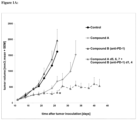
Figure 1A shows tumor growth of the murine syngeneic lymphoma model A20 in female BALB/c mice after treatment with Compound A in combination with Compound B (= PD-1 antibody RMP1-14 = "anti-PD-1") (Schedule (2)) in comparison to the respective monotherapies and Control. - Tumor growth murine B cell lymphoma A20 in BALB/c mice; * P < 0.05, combination treatment compared to Control, one way ANOVA (analysis of variance), Dunn's method, on tumor volumes.
-
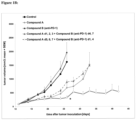
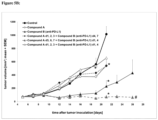
Figure 1B shows tumor growth of the murine syngeneic lymphoma model A20 in female BALB/c mice after treatment with Compound A in combination with Compound B (= PD-1 antibody RMP1-14 = "anti-PD-1") upon different schedules in comparison to the respective monotherapies and Control. - Tumor growth murine B cell lymphoma A20 in BALB/c mice; * P < 0.05, combination treatment compared to Control, one way ANOVA (analysis of variance), Dunn's method, on tumor volumes.
-
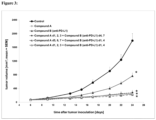
Figure 2 shows tumor growth of the murine syngeneic lung carcinoma model KLN205 in male DBA/2 mice after treatment with Compound A in combination with Compound B (= PD-1 antibody RMP1-14 = "anti-PD-1") upon different schedules in comparison to the respective monotherapies and Control. - Tumor growth murine lung carcinoma model KLN205 in male DBA/2 mice; * P < 0.05, treatment compared to Control, one way ANOVA (analysis of variance), Dunn's method, on tumor volumes.
-
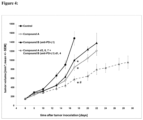
Figure 3 shows tumor growth of the murine syngeneic colon carcinoma model MC38 in female C57BL/6N mice after treatment with Compound A in combination with Compound B (=PD-L1 antibody PPB-6721= "anti-PD-L1") upon different schedules in comparison to the respective monotherapies and Control (study 1). - Tumor growth MC38 murine CRC model in C57BL/6N mice; * P < 0.05, treatment compared to Control, one way ANOVA (analysis of variance), Dunn's method, on tumor volumes.
-
Figure 4 shows tumor growth of the murine syngeneic colon carcinoma model MC38 in female C57BL/6N mice after treatment with Compound A in combination with Compound B (=PD-L1 antibody PPB-6721= "anti-PD-L1") upon different schedules in comparison to the respective monotherapies and Control (study 2). - Tumor growth MC38 murine CRC model in C57BL/6N mice; * P < 0.05, treatment compared to Control, one way ANOVA (analysis of variance), Dunn's method, on tumor volumes.
-
Figure 5A shows tumor growth of the murine syngeneic colon carcinoma model CT26 in female BALB/c mice after treatment with Compound A in combination with Compound B (=PD-L1 antibody PPB-6721= "anti-PD-L1") (Schedule (2)) in comparison to the respective monotherapies and Control. - Tumor growth CT26 murine CRC model in BALB/c mice; * P < 0.05, treatment compared to Control, # P < 0.05, combination treatment compared to Compound B, one way ANOVA (analysis of variance), Dunn's method, on tumor volumes.
-
Figure 5B shows tumor growth of the murine syngeneic colon carcinoma model CT26 in female BALB/c mice after treatment with Compound A in combination with Compound B (=PD-L1 antibody PPB-6721= "anti-PD-L1") upon different schedules in comparison to the respective monotherapies and control. - Tumor growth CT26 murine CRC model in BALB/c mice; * P < 0.05, treatment compared to Control, # P < 0.05, combination treatment compared to Compound B, one way ANOVA (analysis of variance), Dunn's method, on tumor volumes.
- In this Experimental Section, the term "Compound A" is component A. Compound A is described in Example 111 of
International Patent Application WO2016020320 (A1). As shown herein Compound A is 2-[(3R)-3-methylmorpholin-4-yl]-4-(1-methyl-1H-pyrazol-5-yl)-8-(1H-pyrazol-5-yl)-1,7-naphthyridine, of structure:
- Compound B used in the Examples below is either anti-mouse PD-1 antibody (RMP1-14; BioXcell, USA; Yamazaki et al., J Immunol, (2005) 175(3), 1586-1592) or anti-mouse PD-L1 antibody (PPB-6721, Bayer AG).
- Anti-mouse PD-L1 antibody PPB-6721 was prepared as follows:
HEK293-6E cells were maintained in F17 medium (Invitrogen) supplemented with 4 mM GlutaMAX (Invitrogen), 0.1% Pluronic F-68 (Sigma) and 25 µg/ml G418 (Invitrogen). Genes encoding the antibody heavy and light chains were subcloned separately in expression vector pTT5 and co-transfected into HEK293-6E cells (Dyson and Durocher 2007). After 5-8 days of transient expression, the cleared supernatant was used to affinity purify the antibody on an Akta System (Amersham Pharmacia Biotech) using a 10-ml HiTrap MabSelect Sure protein A column (GE Healthcare). Antibodies were eluted in two steps with 50 mM sodium acetate and 500 mM NaCl at pH 3.5 and pH 3.0. Combined elution fractions were neutralized using appropriate volumes of 2.5 M Tris base (pH >11). Aggregation products were removed by preparative size exclusion chromatography (SEC) on an Akta Purifier System (GE Halthcare) using a custom-madeSuperdexTM 200 50/600 column (GE Healthcare), with a mobile phase of PBS (pH 7.4) at a flow rate of 6.0 ml/min. - Further information concerning methods for cloning, expression, and purification of anti-mouse PD-L1 antibody PPB-6721 are described in Hristodorov et al., Molecular biotechnology 53(3), (2013), 326-335.
-
Cell line Tumor entity Mutation Source A20 Lymphoma (mouse) MSH2A733S Crown Bioscience Inc., USA KLN205 Lung Carcinoma (mouse) MSH2G247fs, MSH6T1100fs Crown Bioscience Inc., USA CT26 Colon Carcinoma (mouse) BRCA2R2066K, KRASG12D ATCC CRL-2638 MC38 Colon Carcinoma (mouse) ATMA2346S, MSH6T1100fs, BRAFW487C, CDKN2Adel, TRP53G242V, S258I Bayer AG (Westhaven) ATCC = American Type Culture Collection - The anti-tumor activity of combination treatment of Compound A and Compound B (=anti-mouse PD-1 antibody or anti-mouse PD-L1 antibody) was evaluated in the murine syngeneic tumor models A20 (lymphoma), KLN205 (lung carcinoma), CT26 and MC38 (both colon carcinoma). For this purpose, female BALB/c mice from Shanghai Lingchang Bio-Technology Co. Ltd., China (A20) or from Charles River Sulzfeld, Germany (CT26) were implanted subcutaneously with A20 or CT26, male DBA/2 mice from Beijing Vital River Laboratory Animal Technology Co., Ltd. with KLN205 and female C57BL/6N mice from Charles River Sulzfeld, Germany with MC38 murine tumor cells, At a mean tumor volume of 100 mm3 (A20), 117 mm3 (KLN205), 70 mm3 (CT26 and MC38 study 1) or 150 mm3 (MC38 study 2) animals were randomized into treatment and control groups (n=8-10 animals/group) and treatment started with Compound A monotherapy (formulation: 60% PEG400, 10% Ethanol, 30% Water; application route: p.o./peroral; dose/schedule: 50 mg/kg twice daily for 3 days on/ 4 days off each week), Compound B monotherapy (formulation: PBS; application route: i.v./intravenous; dose/schedule: 10 mg/kg once per day twice weekly), and combination of Compound A and Compound B at the same doses/schedules as in the respective monotherapies. Two (A20 and KLN205) or three (CT26 and MC38 study 1) or only one (MC38 study 2) different combination schedules were tested:
- Schedule (1): Compound A applied on
days 1, 2 and 3 each week, Compound B applied ondays 4 and 7 each week; - Schedule (2): Compound A applied on
days days - Schedule (3): Compound A applied on
days 1, 2 and 3 each week, Compound B applied ondays - The oral application volume was 10 ml/kg and the
intravenous application volume 5 ml/kg. The time interval between two applications per day was 6-7h. The tumor size and the body weight were determined three times weekly. Changes in the body weight were a measure of treatment-related toxicity (> 10% = critical, stop of treatment until recovery, > 20% = toxic, termination). The tumor volume was detected by means of an electronic caliper gauge [0.5 x length in mm x (width in mm)2]. Animals for which the tumor volume exceeded 2000 mm3 (or for which the mean tumor volume of the group exceeds 2000 mm3) were euthanized. In vivo anti-tumor efficacy is presented as T/C ratio (Treatment/Control) calculated with tumor volumes at day of control group termination by the formula [(tumor volume of treatment group at day x) - (tumor volume of treatment group at day before first treatment)] / [(tumor volume control group at day x) - (tumor volume of control group at day before first treatment)]. Compounds having a T/C ratio below 0.5 are defined as active (effective). Statistical analysis was assessed using SigmaStat software. A one-way analysis of variance was performed and differences to the control were compared by a pair-wise comparison procedure (Dunn's method). To evaluate the cooperativity of the combination of Compound A with Compound B expected additivity was calculated according to the Bliss model (C=A+B-A*B; wherein C is the expected T/C of the combination of drug A and drug B if they act additive, A is T/C of drug A, B is T/C of drug B). Excess >10% over the expected additive effect is assumed to indicate synergism of the two drugs, less than 10% of the expected additive effect is assumed to indicate antagonism (Bliss, C.I., The toxicity of poisons applied jointly. Ann. Appl. Biol. 26, 585-615, 1939). - In the murine syngeneic lymphoma model A20 treatment started at day 11 after tumor inoculation. Monotherapy of Compound A showed moderate anti-tumor efficacy determined at
day 26 after tumor inoculation when control group was terminated due to maximal tumor size. Monotherapy of Compound B (anti-PD-1 = RMP1-14) showed no anti-tumor efficacy. Combination of Compound A with Compound B in schedule (1), when Compound A was applied before Compound B, showed no effect of tumor growth inhibition. Combination treatment in schedule (2), when Compound B was applied before Compound A, showed synergistic anti-tumor efficacy atday 26 and statistically significant improvement of tumor growth inhibition in comparison to control. Treatments with Compound A alone and the two combination groups (schedules (1) and (2), respectively) of Compound A with Compound B were continued afterday 26. Compound A monotherapy group as well as combination treatment group in schedule (1) were terminated on day 33 after tumor inoculation because tumors reached maximal size. Combination treatment with Compound A and Compound B in schedule (2) was further continued until day 42 after tumor inoculation, demonstrating clear tumor growth delay in comparison to respective monotherapies and control (Table 2,Figures 1A and1B ). Treatments were well tolerated.Table 2: Anti-tumor activity of Compound A and Compound B (anti-PD-1) in monotherapy and in combination in the murine syngeneic lymphoma model A20 in female BALB/c mice. Substance Dosage T/Ca Excess over Bliss additivism [%] based on tumor size Max. weight lossb (%) Control - 1.00 - - Compound A 50 mg/kg, p.o., twice daily, 3 days on/ 4 days off, days 1, 2, 3 each week0.38 - -2 Compound B (anti-PD-1) 10 mg/kg, i.v., once daily, twice weekly, days 1.23 - - Schedule (1): Compound A + Compound B (anti-PD-1) 50 mg/kg, p.o., twice daily, 3 days on/ 4 days off, days 1, 2, 3 each week + 10 mg/kg, i.v., once daily, twice weekly,days 4, 7 each week0.52 - -4 Schedule (2): Compound A + Compound B (anti-PD-1) 50 mg/kg, p.o., twice daily, 3 days on/ 4 days off, days days 0.15* 60 -4 * P < 0.05 (compared to control at day 26 after tumor inoculation)
a) T/C = ratio of the tumor volume of treatment versus control at day of control termination [(tumor volume of treatment group at day x) - (tumor volume of treatment group at day before first treatment)] / [(tumor volume control group at day x) - (tumor volume of control group at day before first treatment)].
b) Loss of body weight: Changes in body weight compared to the initial body weight at the start of treatment (> 10% = critical, stoppage in treatment until recovery, > 20% = toxic, termination). - The abbreviation p.o. means peroral, i.v. means intravenous
- In the murine syngeneic lung carcinoma model KLN205 treatment started at
day 4 after tumor inoculation. Monotherapy of Compound A showed moderate anti-tumor efficacy determined atday 30 after tumor inoculation when control group was terminated due to maximal tumor size. Monotherapy of Compound B (anti-PD-1 = RMP1-14) showed no anti-tumor efficacy. Combination of Compound A with Compound B did not improve anti-tumor efficacy achieved by Compound A alone in the tested combination treatment schedules (1) and (2). Due to critical body weight loss in groups treated with Compound A alone or in combination with Compound B, Compound A has been applied upon reduced dose (40 mg/kg) fromday 18 after tumor inoculation (Table 3,Figure 2 ).Table 3: Anti-tumor activity of Compound A and Compound B (anti-PD-1) in monotherapy and in combination in the murine syngeneic lung carcinoma model KLN205 in male DBA/2 mice. Substance Dosage T/Ca Excess over Bliss additivism [%] based on tumor size Max. weight lossb (%) Control - 1.00 - -7 Compound A 50/40(d18) mg/kg, p.o., twice daily, 3 days on/ 4 days off, days 1, 2, 3 each week0.36* - -19 (d9) Compound B (anti-PD-1) 10 mg/kg, i.v., once daily, twice weekly, days 1.18 - -5 Schedule (1); Compound A + Compound B (anti-PD-1) 50/40(d18) mg/kg, p.o., twice daily, 3 days on/ 4 days off, days 1, 2, 3 each week + 10 mg/kg, i.v., once daily, twice weekly,days 4, 7 each week0.42* - -20 (d9) Schedule (2): Compound A + Compound B (anti-PD-1) 50/40(d18) mg/kg, p.o., twice daily, 3 days on/ 4 days off, days days 0.38* - -20 (d13) * P < 0.05 (compared to Control at day 30 after tumor inoculation)
a) T/C = ratio of the tumor volume of treatment versus control at day of control termination [(tumor volume of treatment group at day x) - (tumor volume of treatment group at day before first treatment)] / [(tumor volume control group at day x) - (tumor volume of control group at day before first treatment)].
b) Loss of body weight: Changes in body weight compared to the initial body weight at the start of treatment (> 10% = critical, stoppage in treatment until recovery, > 20% = toxic, termination). - The abbreviation d means day (after tumor inoculation), p.o. means peroral, i.v. means intravenous
- In the murine syngeneic colorectal carcinoma model MC38 two studies have been performed. In
MC38 study 1, treatment started atday 6 after tumor inoculation at a tumor size of 70 mm3. Monotherapy of Compound A showed good anti-tumor efficacy and statistically significant improvement of tumor growth inhibition compared to control atday 24 after tumor inoculation, when control treatment group was terminated due to maximal tumor size. Monotherapy of Compound B (anti-PD-L1 = PPB-6721) showed moderate anti-tumor efficacy atday 24 with statistically significant improvement of tumor growth inhibition in comparison to control. Combination of Compound A with Compound B did not enhance anti-tumor efficacy achieved by Compound A monotherapy in all tested schedules (1), (2) and (3) in this study. Treatments were well tolerated (Table 4,Figure 3 ).Table 4: Anti-tumor activity of Compound A and Compound B (anti-PD-L1) in monotherapy and in combination in the murine syngeneic colon carcinoma model MC38 in female C57BL/6N mice (MC38 study 1). Substance Dosage T/Ca Excess over Bliss additivism [%] based on tumor size Max. weight lossb (%) Control - 1.00 - - Compound A 50 mg/kg, p.o., twice daily, 3 days on/ 4 days off, days 1, 2, 3 each week 0.10* - -3 Compound B (anti-PD-L1) 10 mg/kg, i.v., once daily, twice weekly, days 1, 4 each week 0.41* - -4 Schedule (1) Compound A + Compound B (anti-PD-L1) 50 mg/kg, p.o., twice daily, 3 days on/ 4 days off, days 1, 2, 3 each week + 10 mg/kg, i.v., once daily, twice weekly, days 4, 7 each week 0.12* - -4 Schedule (2) Compound A + Compound B (anti-PD-L1) 50 mg/kg, p.o., twice daily, 3 days on/ 4 days off, days 5, 6, 7 each week + 10 mg/kg, i.v., once daily, twice weekly, days 1, 4 each week 0.09* - -6 Schedule (3) Compound A + Compound B (anti-PD-L1) 50 mg/kg, p.o., twice daily, 3 days on/ 4 days off, days 1, 2, 3 each week + 10 mg/kg, i.v., once daily, twice weekly, days 1, 4 each week 0.10* - -6 * P < 0.05 (compared to Control at day 24 after tumor inoculation)
a) T/C = ratio of the tumor volume of treatment versus control at day of control termination [(tumor volume of treatment group at day x) - (tumor volume of treatment group at day before first treatment)] / [(tumor volume control group at day x) - (tumor volume of control group at day before first treatment)].
b) Loss of body weight: Changes in body weight compared to the initial body weight at the start of treatment (> 10% = critical, stoppage in treatment until recovery, > 20% = toxic, termination). - The abbreviation p.o. means peroral, i.v. means intravenous.
- In MC38 study 2, treatment started also at
day 6 after tumor inoculation but at a tumor size of 150 mm3. Monotherapy of Compound A showed moderate anti-tumor efficacy and statistically significant improvement of tumor growth inhibition compared to control at day 17 after tumor inoculation, when control treatment group was terminated due to maximal tumor size. Monotherapy of Compound B (anti-PD-L1 = PPB-6721) showed moderate to weak anti-tumor efficacy at day 17 with statistically significant improvement of tumor growth inhibition in comparison to control. Remarkably, in contrast toMC38 study 1, in this study combination of Compound A with Compound B in schedule (2) did significantly enhance anti-tumor efficacy achieved by Compound A or Compound B monotherapy, which is probably due to treatment start at larger tumor size. Treatments were well tolerated (Table 5,Figure 4 ).Table 5: Anti-tumor activity of Compound A and Compound B (anti-PD-L1) in monotherapy and in combination in the murine syngeneic colon carcinoma model MC38 in female C57BL/6N mice (MC38 study 2). Substance Dosage T/Ca Excess over Bliss additivism [%] based on tumor size Max. weight lossb (%) Control - 1.00 - -3 Compound A 50 mg/kg, p.o., twice daily, 3 days on/ 4 days off, days 1, 2, 3 each week0.46* - -5 Compound B (anti-PD-L1) 10 mg/kg, i.v., once daily, twice weekly, days 0.78* - -3 Schedule (2) Compound A + Compound B (anti-PD-L1) 50 mg/kg, p.o., twice daily, 3 days on/ 4 days off, days days 0.33* 4 -4 * P < 0.05 (compared to Control at day 17 after tumor inoculation)
a) T/C = ratio of the tumor volume of treatment versus control at day of control termination [(tumor volume of treatment group at day x) - (tumor volume of treatment group at day before first treatment)] / [(tumor volume control group at day x) - (tumor volume of control group at day before first treatment)].
b) Loss of body weight: Changes in body weight compared to the initial body weight at the start of treatment (> 10% = critical, stoppage in treatment until recovery, > 20% = toxic, termination). - The abbreviation p.o. means peroral, i.v. means intravenous.
- In the murine syngeneic colorectal carcinoma model CT26 monotherapy of Compound A showed moderate anti-tumor efficacy but statistically significant improvement of tumor growth inhibition compared to control at day 21 after tumor inoculation, when control and Compound A treatment group were terminated due to maximal tumor size. Monotherapy of Compound B (anti-PD-L1 = PPB-6721) showed good anti-tumor efficacy at day 21 with statistically significant improvement of tumor growth inhibition in comparison to control. Combination of Compound A with Compound B in schedule (2), when Compound B was applied before Compound A, enhanced anti-tumor efficacy of Compound B monotherapy at day 21, demonstrating synergistic anti-tumor activity of Compound A and Compound B in this combination schedule. Treatments of groups with Compound B alone and the combination of Compound A with Compound B in schedule (2) were continued until study termination at
day 26 after tumor inoculation. Prolonged combination treatment of Compound A with Compound B in schedule (2) achieved strong and continuous tumor growth inhibition, as shown by statistically significant improvement of anti-tumor efficacy in comparison to Compound B alone, determined atday 26 after tumor inoculation (Table 6). In contrast, combination of Compound A with Compound B in schedules (1) and (3), when Compound A was applied before Compound B (schedule (1)) or when Compound A and Compound B were applied at the same time (schedule (3)), did not show any synergy, but rather a reduction of anti-tumor activity that is achieved by Compound B alone (Figures 5A and5B ). Both groups (schedules (1) and (3), respectively) were terminated at day 21 after tumor inoculation, due to maximal tumor size. Treatments were well tolerated.Table 6: Anti-tumor activity of Compound A and Compound B (anti-PD-L1) in monotherapy and in combination in the murine syngeneic colon carcinoma model CT26 in female BALB/c mice. Substance Dosage T/Ca Excess over Bliss additivism [%] based on tumor size Max. weight lossb (%) Control - 1.00 - - Compound A 50 mg/kg, p.o., twice daily, 3 days on/ 4 days off, days 1, 2, 3 each week 0.50* - -1 Compound B (anti-PD-L1) 10 mg/kg, i.v., once daily, twice weekly, days 1, 4 each week 0.17* - Schedule (1) Compound A + Compound B (anti-PD-L1) 50 mg/kg, p.o., twice daily, 3 days on/ 4 days off, days 1, 2, 3 each week + 10 mg/kg, i.v., once daily, twice weekly, days 4, 7 each week 0.49 - -1 Schedule (2) Compound A + Compound B (anti-PD-L1) 50 mg/kg, p.o., twice daily, 3 days on/ 4 days off, days 5, 6, 7 each week + 10 mg/kg, i.v., once daily, twice weekly, days 1, 4 each week 0.00*# 9 -1 Schedule (3) Compound A + Compound B (anti-PD-L1) 50 mg/kg, p.o., twice daily, 3 days on/ 4 days off, days 1, 2, 3 each week + 10 mg/kg, i.v., once daily, twice weekly, days 1, 4 each week 0.62 - -1 * P < 0.05 (compared to Control at day 21 after tumor inoculation)
# P < 0.05 (compared to Compound B monotherapy attermination day 26 after tumor inoculation)
a) T/C = ratio of the tumor volume of treatment versus control at day of control termination [(tumor volume of treatment group at day x) - (tumor volume of treatment group at day before first treatment)] / [(tumor volume control group at day x) - (tumor volume of control group at day before first treatment)].
b) Loss of body weight: Changes in body weight compared to the initial body weight at the start of treatment (> 10% = critical, stoppage in treatment until recovery, > 20% = toxic, termination). - The abbreviation p.o. means peroral, i.v. means intravenous.
Claims (7)
- A combination of at least two components, component A and component B, comprising a component A being an inhibitor of ATR kinase and component B being a PD-1 inhibitor or a PD-L1 inhibitor, in which said component A has the formula:
 or a stereoisomer, a tautomer, an N-oxide, a hydrate, a solvate, or a pharmaceutically acceptable salt thereof, and in which said component B is pembrolizumab as PD-1 inhibitor, or atezolizumab as PD-Ll inhibitor,said combination being for use in the treatment of a hyper-proliferative disease,said hyper-proliferative disease being lymphoma, lung carcinoma or colon carcinoma,wherein said component B is to be administered prior to the first administration of component A.
 - The combination of at least two components, component A and component B, according to claim 1, in which said component B is pembrolizumab.
- The combination of at least two components, component A and component B, according to claim 1, in which said component B is atezolizumab.
- A kit comprising- component A as defined in any one of claims 1 to 3;- component B as defined in any one of claims 1 to 3; and, optionally,- component C being one or more further pharmaceutical agents.
- A pharmaceutical composition comprising a combination as defined in any one of claims 1 to 3 together with one or more pharmaceutically acceptable excipients.
- A pharmaceutical composition according to claim 5, in which the components A and B are present in a joint formulation.
- A pharmaceutical composition according to claim 5, in which the components A and B are present in separate formulations.
Applications Claiming Priority (2)
| Application Number | Priority Date | Filing Date | Title |
|---|---|---|---|
| EP17184950 | 2017-08-04 | ||
| PCT/EP2018/070729 WO2019025440A1 (en) | 2017-08-04 | 2018-07-31 | Combination of atr kinase inhibitors and pd-1/pd-l1 inhibitors |
Publications (2)
| Publication Number | Publication Date |
|---|---|
| EP3661560A1 EP3661560A1 (en) | 2020-06-10 |
| EP3661560B1 true EP3661560B1 (en) | 2025-02-26 |
Family
ID=59558283
Family Applications (1)
| Application Number | Title | Priority Date | Filing Date |
|---|---|---|---|
| EP18745636.3A Active EP3661560B1 (en) | 2017-08-04 | 2018-07-31 | Combination of atr kinase inhibitors and pd-1/pd-l1 inhibitors |
Country Status (4)
| Country | Link |
|---|---|
| US (2) | US11690911B2 (en) |
| EP (1) | EP3661560B1 (en) |
| CA (1) | CA3071760A1 (en) |
| WO (1) | WO2019025440A1 (en) |
Families Citing this family (16)
| Publication number | Priority date | Publication date | Assignee | Title |
|---|---|---|---|---|
| TWI700283B (en) | 2014-08-04 | 2020-08-01 | 德商拜耳製藥公司 | 2-(morpholin-4-yl)-1,7-naphthyridines |
| CA3011189C (en) | 2016-01-14 | 2024-02-20 | Bayer Pharma Aktiengesellschaft | 5-substituted 2-(morpholin-4-yl)-1,7-naphthyridines |
| WO2019025440A1 (en) | 2017-08-04 | 2019-02-07 | Bayer Pharma Aktiengesellschaft | Combination of atr kinase inhibitors and pd-1/pd-l1 inhibitors |
| CA3130747A1 (en) * | 2019-02-21 | 2020-08-27 | Bayer Aktiengesellschaft | Combination of pd-1/pd-l1 inhibitors and targeted thorium conjugates |
| WO2020198066A1 (en) * | 2019-03-22 | 2020-10-01 | Duke University | Compositions and methods for enhancing cancer immune checkpoint therapy |
| CN112142744A (en) | 2019-06-28 | 2020-12-29 | 上海瑛派药业有限公司 | Substituted fused heteroaromatic bicyclic compounds as kinase inhibitors and their applications |
| TW202216701A (en) * | 2020-07-03 | 2022-05-01 | 香港商德琪研發有限公司 | Atr inhibitors and uses thereof |
| BR112023002912A2 (en) * | 2020-08-27 | 2023-03-21 | Shanghai Junshi Biosciences Co Ltd | USE OF ANTI-PD-1 ANTIBODY IN THE TREATMENT OF NASOPHARYNGEAL CARCINOMA |
| EP4304653A4 (en) * | 2021-03-10 | 2024-12-18 | Astrazeneca AB | METHODS OF TREATMENT OF SMALL CELL LUNG CANCER AND OTHER NEUROENDOCRINE CANCER |
| JP2024512410A (en) * | 2021-03-12 | 2024-03-19 | ザ ボード オブ リージェンツ オブ ザ ユニバーシティー オブ テキサス システム | Method for applying a tumor treatment electric field in conjunction with cancer treatment therapy |
| CN116731011A (en) * | 2022-03-01 | 2023-09-12 | 武汉众诚康健生物医药科技有限公司 | A naphthyridine derivative and its application |
| CN119173302A (en) | 2022-04-01 | 2024-12-20 | 得克萨斯大学体系董事会 | Methods and apparatus for applying a tumor treatment electric field in combination with personalized supersplit stereotactic adaptive radiotherapy |
| CN115300512B (en) * | 2022-08-05 | 2024-01-12 | 华中科技大学同济医学院附属协和医院 | Use of ATR inhibitor VE-822 in the treatment of lung adenocarcinoma |
| CN120435302A (en) * | 2023-01-09 | 2025-08-05 | 普罗塔拉治疗公司 | Combination therapy of non-viable Streptococcus pyogenes cells with immune checkpoint inhibitors for triple-negative breast cancer and non-muscle-invasive bladder cancer |
| WO2025176733A1 (en) * | 2024-02-19 | 2025-08-28 | Université De Genève | Antibody-drug conjugates involving small molecule atr/chk1 inhibitors |
| US12551514B1 (en) | 2025-07-25 | 2026-02-17 | Protara Therapeutics, Inc. | Combination of non-viable cells of Streptococcus pyogenes and immune checkpoint inhibitor for the treatment of triple negative breast cancer and non-muscle invasive bladder cancer |
Family Cites Families (45)
| Publication number | Priority date | Publication date | Assignee | Title |
|---|---|---|---|---|
| US5023252A (en) | 1985-12-04 | 1991-06-11 | Conrex Pharmaceutical Corporation | Transdermal and trans-membrane delivery of drugs |
| US5011472A (en) | 1988-09-06 | 1991-04-30 | Brown University Research Foundation | Implantable delivery system for biological factors |
| JP5702293B2 (en) | 2008-11-10 | 2015-04-15 | バーテックス ファーマシューティカルズ インコーポレイテッドVertex Pharmaceuticals Incorporated | Compounds useful as inhibitors of ATR kinase |
| BRPI0924084B1 (en) | 2008-12-19 | 2021-12-21 | Vertex Pharmaceuticals Incorporated | PYRAZINE DERIVATIVES AND PHARMACEUTICAL COMPOSITION INCLUDING THEM |
| US20110053923A1 (en) | 2008-12-22 | 2011-03-03 | Astrazeneca | Chemical compounds 610 |
| WO2011143422A1 (en) | 2010-05-12 | 2011-11-17 | Vertex Pharmaceuticals Incorporated | 2 -aminopyridine derivatives useful as inhibitors of atr kinase |
| US8962631B2 (en) | 2010-05-12 | 2015-02-24 | Vertex Pharmaceuticals Incorporated | Compounds useful as inhibitors of ATR kinase |
| AU2011253025A1 (en) | 2010-05-12 | 2012-11-29 | Vertex Pharmaceuticals Incorporated | Compounds useful as inhibitors of ATR kinase |
| JP2013526538A (en) | 2010-05-12 | 2013-06-24 | バーテックス ファーマシューティカルズ インコーポレイテッド | Compounds useful as ATR kinase inhibitors |
| EP2569287B1 (en) | 2010-05-12 | 2014-07-09 | Vertex Pharmaceuticals Inc. | Compounds useful as inhibitors of atr kinase |
| US9062008B2 (en) | 2010-05-12 | 2015-06-23 | Vertex Pharmaceuticals Incorporated | Compounds useful as inhibitors of ATR kinase |
| SA111320519B1 (en) | 2010-06-11 | 2014-07-02 | Astrazeneca Ab | Pyrimidinyl compounds for use as ATR inhibitors |
| WO2011163527A1 (en) | 2010-06-23 | 2011-12-29 | Vertex Pharmaceuticals Incorporated | Pyrrolo- pyrazine derivatives useful as inhibitors of atr kinase |
| WO2012138938A1 (en) | 2011-04-05 | 2012-10-11 | Vertex Pharmaceuticals Incorporated | Aminopyrazine compounds useful as inhibitors of tra kinase |
| EP2723745A1 (en) | 2011-06-22 | 2014-04-30 | Vertex Pharmaceuticals Inc. | Compounds useful as inhibitors of atr kinase |
| JP2014522818A (en) | 2011-06-22 | 2014-09-08 | バーテックス ファーマシューティカルズ インコーポレイテッド | Compounds useful as ATR kinase inhibitors |
| JP2014517079A (en) | 2011-06-22 | 2014-07-17 | バーテックス ファーマシューティカルズ インコーポレイテッド | Compounds useful as ATR kinase inhibitors |
| WO2013049719A1 (en) | 2011-09-30 | 2013-04-04 | Vertex Pharmaceuticals Incorporated | Compounds useful as inhibitors of atr kinase |
| IN2014CN02501A (en) | 2011-09-30 | 2015-06-26 | Vertex Pharma | |
| MX2014003796A (en) | 2011-09-30 | 2015-01-16 | Vertex Pharma | Compounds useful as inhibitors of atr kinase. |
| WO2013049720A1 (en) | 2011-09-30 | 2013-04-04 | Vertex Pharmaceuticals Incorporated | Compounds useful as inhibitors of atr kinase |
| EP2776422A1 (en) | 2011-11-09 | 2014-09-17 | Vertex Pharmaceuticals Incorporated | Compounds useful as inhibitors of atr kinase |
| WO2013071093A1 (en) | 2011-11-09 | 2013-05-16 | Vertex Pharmaceuticals Incorporated | Pyrazine compounds useful as inhibitors of atr kinase |
| US8841449B2 (en) | 2011-11-09 | 2014-09-23 | Vertex Pharmaceuticals Incorporated | Compounds useful as inhibitors of ATR kinase |
| EP2776421A1 (en) | 2011-11-09 | 2014-09-17 | Vertex Pharmaceuticals Incorporated | Compounds useful as inhibitors of atr kinase |
| EP2776429A1 (en) | 2011-11-09 | 2014-09-17 | Vertex Pharmaceuticals Incorporated | Compounds useful as inhibitors of atr kinase |
| US20140044802A1 (en) | 2012-04-05 | 2014-02-13 | Vertex Pharmaceuticals Incorporated | Compounds useful as inhibitors of atr kinase and combination therapies thereof |
| US8912198B2 (en) | 2012-10-16 | 2014-12-16 | Vertex Pharmaceuticals Incorporated | Compounds useful as inhibitors of ATR kinase |
| SMT202000713T1 (en) | 2012-12-07 | 2021-03-15 | Vertex Pharma | Pyrazolo[1,5-a]pyrimidines useful as inhibitors of atr kinase for the treatment of cancer diseases |
| JP2016512815A (en) | 2013-03-15 | 2016-05-09 | バーテックス ファーマシューティカルズ インコーポレイテッドVertex Pharmaceuticals Incorporated | Condensed pyrazolopyrimidine derivatives useful as inhibitors of ATR kinase |
| EP2970288A1 (en) | 2013-03-15 | 2016-01-20 | Vertex Pharmaceuticals Incorporated | Compounds useful as inhibitors of atr kinase |
| WO2014143241A1 (en) | 2013-03-15 | 2014-09-18 | Vertex Pharmaceuticals Incorporated | Compounds useful as inhibitors of atr kinase |
| HUE046727T2 (en) | 2013-12-06 | 2020-03-30 | Vertex Pharma | 2-amino-6-fluoro-n-[5-fluoro-pyridin-3-yl]pyrazolo[1,5-a]pyrimidin-3-carboxamide compound useful as atr kinase inhibitor, its preparation, different solid forms and radiolabelled derivatives thereof |
| CN107074863B (en) | 2014-06-05 | 2019-12-03 | 沃泰克斯药物股份有限公司 | Methods of making ATR kinase inhibitors and their different solid forms |
| TWI700283B (en) | 2014-08-04 | 2020-08-01 | 德商拜耳製藥公司 | 2-(morpholin-4-yl)-1,7-naphthyridines |
| EP3394044A1 (en) * | 2015-12-17 | 2018-10-31 | Gilead Sciences, Inc. | Tank-binding kinase inhibitor compounds |
| CA3011189C (en) | 2016-01-14 | 2024-02-20 | Bayer Pharma Aktiengesellschaft | 5-substituted 2-(morpholin-4-yl)-1,7-naphthyridines |
| CA3054248A1 (en) | 2017-02-24 | 2018-08-30 | Bayer As | Combination therapy comprising a radiopharmaceutical and a dna-repair inhibitor |
| JOP20190197A1 (en) | 2017-02-24 | 2019-08-22 | Bayer Pharma AG | ATR kinase inhibitor for use in a method to treat hyperproliferative disease |
| EP3585365B1 (en) | 2017-02-24 | 2021-08-25 | Bayer Pharma Aktiengesellschaft | Combination of atr kinase inhibitors with parp inhibitors |
| WO2019025440A1 (en) | 2017-08-04 | 2019-02-07 | Bayer Pharma Aktiengesellschaft | Combination of atr kinase inhibitors and pd-1/pd-l1 inhibitors |
| CA3084863A1 (en) | 2017-12-08 | 2019-06-13 | Bayer Aktiengesellschaft | Predictive markers for atr kinase inhibitors |
| SG11202101011RA (en) | 2018-08-24 | 2021-02-25 | Bayer Ag | Method for preparing 2-[(3r)-3-methylmorpholin-4-yl]-4-[1-methyl-1h-pyrazol-5-yl)-8-(1h-pyrazol-5-yl)-1,7-naphthyridine |
| EP3866805A1 (en) | 2018-10-16 | 2021-08-25 | Bayer Aktiengesellschaft | Combination of atr kinase inhibitors with 2,3-dihydroimidazo[1,2-c]quinazoline compounds |
| JP7677897B2 (en) | 2019-02-11 | 2025-05-15 | バイエル アクチェンゲゼルシャフト | ATR KINASE INHIBITOR BAY1895344 FOR USE IN THE TREATMENT OF HYPERPROLIFERATIVE DISEASES - Patent application |
-
2018
- 2018-07-31 WO PCT/EP2018/070729 patent/WO2019025440A1/en not_active Ceased
- 2018-07-31 CA CA3071760A patent/CA3071760A1/en active Pending
- 2018-07-31 EP EP18745636.3A patent/EP3661560B1/en active Active
- 2018-07-31 US US16/635,812 patent/US11690911B2/en active Active
-
2023
- 2023-05-25 US US18/323,652 patent/US20230346927A1/en active Pending
Also Published As
| Publication number | Publication date |
|---|---|
| US20210128723A1 (en) | 2021-05-06 |
| CA3071760A1 (en) | 2019-02-07 |
| WO2019025440A1 (en) | 2019-02-07 |
| US20230346927A1 (en) | 2023-11-02 |
| EP3661560A1 (en) | 2020-06-10 |
| US11690911B2 (en) | 2023-07-04 |
Similar Documents
| Publication | Publication Date | Title |
|---|---|---|
| US20230346927A1 (en) | COMBINATION of ATR KINASE INHIBITORS and PD-1/PD-L1 INHIBITORS | |
| EP3268490B1 (en) | Substituted 2,3-dihydroimidazo[1,2-c]quinazoline-containing combinations | |
| EP3585365B1 (en) | Combination of atr kinase inhibitors with parp inhibitors | |
| CA3012890A1 (en) | Copanlisib biomarkers | |
| CA3012951A1 (en) | Copanlisib biomarkers | |
| EP3678644B1 (en) | Formulations of copanlisib | |
| WO2019197269A1 (en) | Combinations of copanlisib with triazolone derivatives and their use in the treatment of cancer | |
| WO2024188937A1 (en) | Combinations of atr kinase inhibitors and parp inhibitors to treat hyper-proliferative conditions e.g. cancer | |
| US20230084899A1 (en) | Combination of an ahr-inhibitor and an pd1-inhibitor antibody and its use in the treatment of cancer | |
| US20210369724A1 (en) | Combination of atr kinase inhibitors with 2,3-dihydroimidazo[1,2-c]quinazoline compounds | |
| EP4661869A1 (en) | Combinations of dgk (diacylglycerol kinase) inhibitors and immune checkpoint inhibitors and modulators | |
| EP3585437B1 (en) | Combinations of copanlisib with anti-pd-1 antibody | |
| EP3498266A1 (en) | Formulations of copanlisib | |
| WO2018215282A1 (en) | Combination of bub1 and pi3k inhibitors | |
| WO2018158175A1 (en) | Combination of bub1 inhibitors | |
| JP2021514386A (en) | 5-Fluoro-4- (4-fluoro-2-methoxyphenyl) -N- {4-[(S-methylsulfonimideyl) methyl] pyridin-2- for the treatment of diffuse large B-cell lymphoma Use of yl} pyridin-2-amine | |
| US20240382495A1 (en) | Combinations of copanlisib with anti-pd-1 antibody | |
| US11185549B2 (en) | Combination of a PI3K-inhibitor with an androgen receptor antagonist | |
| WO2019105835A1 (en) | Combinations of copanlisib and anetumab ravtansine | |
| WO2021260443A1 (en) | Combinations of 2,3-dihydroimidazo[1,2-c]quinazolines | |
| WO2020234114A1 (en) | A novel stable high concentration formulation for anetumab ravtansine | |
| WO2020164997A1 (en) | Combination of pi3k-inhibitors |
Legal Events
| Date | Code | Title | Description |
|---|---|---|---|
| STAA | Information on the status of an ep patent application or granted ep patent |
Free format text: STATUS: UNKNOWN |
|
| STAA | Information on the status of an ep patent application or granted ep patent |
Free format text: STATUS: THE INTERNATIONAL PUBLICATION HAS BEEN MADE |
|
| PUAI | Public reference made under article 153(3) epc to a published international application that has entered the european phase |
Free format text: ORIGINAL CODE: 0009012 |
|
| STAA | Information on the status of an ep patent application or granted ep patent |
Free format text: STATUS: REQUEST FOR EXAMINATION WAS MADE |
|
| 17P | Request for examination filed |
Effective date: 20200304 |
|
| AK | Designated contracting states |
Kind code of ref document: A1 Designated state(s): AL AT BE BG CH CY CZ DE DK EE ES FI FR GB GR HR HU IE IS IT LI LT LU LV MC MK MT NL NO PL PT RO RS SE SI SK SM TR |
|
| AX | Request for extension of the european patent |
Extension state: BA ME |
|
| DAV | Request for validation of the european patent (deleted) | ||
| DAX | Request for extension of the european patent (deleted) | ||
| STAA | Information on the status of an ep patent application or granted ep patent |
Free format text: STATUS: EXAMINATION IS IN PROGRESS |
|
| 17Q | First examination report despatched |
Effective date: 20210511 |
|
| GRAP | Despatch of communication of intention to grant a patent |
Free format text: ORIGINAL CODE: EPIDOSNIGR1 |
|
| STAA | Information on the status of an ep patent application or granted ep patent |
Free format text: STATUS: GRANT OF PATENT IS INTENDED |
|
| INTG | Intention to grant announced |
Effective date: 20240920 |
|
| GRAS | Grant fee paid |
Free format text: ORIGINAL CODE: EPIDOSNIGR3 |
|
| GRAA | (expected) grant |
Free format text: ORIGINAL CODE: 0009210 |
|
| STAA | Information on the status of an ep patent application or granted ep patent |
Free format text: STATUS: THE PATENT HAS BEEN GRANTED |
|
| AK | Designated contracting states |
Kind code of ref document: B1 Designated state(s): AL AT BE BG CH CY CZ DE DK EE ES FI FR GB GR HR HU IE IS IT LI LT LU LV MC MK MT NL NO PL PT RO RS SE SI SK SM TR |
|
| REG | Reference to a national code |
Ref country code: GB Ref legal event code: FG4D |
|
| REG | Reference to a national code |
Ref country code: CH Ref legal event code: EP |
|
| REG | Reference to a national code |
Ref country code: DE Ref legal event code: R096 Ref document number: 602018079585 Country of ref document: DE |
|
| REG | Reference to a national code |
Ref country code: IE Ref legal event code: FG4D |
|
| REG | Reference to a national code |
Ref country code: NL Ref legal event code: MP Effective date: 20250226 |
|
| PG25 | Lapsed in a contracting state [announced via postgrant information from national office to epo] |
Ref country code: RS Free format text: LAPSE BECAUSE OF FAILURE TO SUBMIT A TRANSLATION OF THE DESCRIPTION OR TO PAY THE FEE WITHIN THE PRESCRIBED TIME-LIMIT Effective date: 20250526 |
|
| PG25 | Lapsed in a contracting state [announced via postgrant information from national office to epo] |
Ref country code: FI Free format text: LAPSE BECAUSE OF FAILURE TO SUBMIT A TRANSLATION OF THE DESCRIPTION OR TO PAY THE FEE WITHIN THE PRESCRIBED TIME-LIMIT Effective date: 20250226 |
|
| PG25 | Lapsed in a contracting state [announced via postgrant information from national office to epo] |
Ref country code: PL Free format text: LAPSE BECAUSE OF FAILURE TO SUBMIT A TRANSLATION OF THE DESCRIPTION OR TO PAY THE FEE WITHIN THE PRESCRIBED TIME-LIMIT Effective date: 20250226 |
|
| PG25 | Lapsed in a contracting state [announced via postgrant information from national office to epo] |
Ref country code: ES Free format text: LAPSE BECAUSE OF FAILURE TO SUBMIT A TRANSLATION OF THE DESCRIPTION OR TO PAY THE FEE WITHIN THE PRESCRIBED TIME-LIMIT Effective date: 20250226 |
|
| REG | Reference to a national code |
Ref country code: LT Ref legal event code: MG9D |
|
| PG25 | Lapsed in a contracting state [announced via postgrant information from national office to epo] |
Ref country code: IS Free format text: LAPSE BECAUSE OF FAILURE TO SUBMIT A TRANSLATION OF THE DESCRIPTION OR TO PAY THE FEE WITHIN THE PRESCRIBED TIME-LIMIT Effective date: 20250626 Ref country code: NO Free format text: LAPSE BECAUSE OF FAILURE TO SUBMIT A TRANSLATION OF THE DESCRIPTION OR TO PAY THE FEE WITHIN THE PRESCRIBED TIME-LIMIT Effective date: 20250526 |
|
| PG25 | Lapsed in a contracting state [announced via postgrant information from national office to epo] |
Ref country code: NL Free format text: LAPSE BECAUSE OF FAILURE TO SUBMIT A TRANSLATION OF THE DESCRIPTION OR TO PAY THE FEE WITHIN THE PRESCRIBED TIME-LIMIT Effective date: 20250226 |
|
| PG25 | Lapsed in a contracting state [announced via postgrant information from national office to epo] |
Ref country code: HR Free format text: LAPSE BECAUSE OF FAILURE TO SUBMIT A TRANSLATION OF THE DESCRIPTION OR TO PAY THE FEE WITHIN THE PRESCRIBED TIME-LIMIT Effective date: 20250226 |
|
| PG25 | Lapsed in a contracting state [announced via postgrant information from national office to epo] |
Ref country code: LV Free format text: LAPSE BECAUSE OF FAILURE TO SUBMIT A TRANSLATION OF THE DESCRIPTION OR TO PAY THE FEE WITHIN THE PRESCRIBED TIME-LIMIT Effective date: 20250226 Ref country code: PT Free format text: LAPSE BECAUSE OF FAILURE TO SUBMIT A TRANSLATION OF THE DESCRIPTION OR TO PAY THE FEE WITHIN THE PRESCRIBED TIME-LIMIT Effective date: 20250626 |
|
| PG25 | Lapsed in a contracting state [announced via postgrant information from national office to epo] |
Ref country code: GR Free format text: LAPSE BECAUSE OF FAILURE TO SUBMIT A TRANSLATION OF THE DESCRIPTION OR TO PAY THE FEE WITHIN THE PRESCRIBED TIME-LIMIT Effective date: 20250527 Ref country code: BG Free format text: LAPSE BECAUSE OF FAILURE TO SUBMIT A TRANSLATION OF THE DESCRIPTION OR TO PAY THE FEE WITHIN THE PRESCRIBED TIME-LIMIT Effective date: 20250226 |
|
| REG | Reference to a national code |
Ref country code: AT Ref legal event code: MK05 Ref document number: 1770017 Country of ref document: AT Kind code of ref document: T Effective date: 20250226 |
|
| PG25 | Lapsed in a contracting state [announced via postgrant information from national office to epo] |
Ref country code: SE Free format text: LAPSE BECAUSE OF FAILURE TO SUBMIT A TRANSLATION OF THE DESCRIPTION OR TO PAY THE FEE WITHIN THE PRESCRIBED TIME-LIMIT Effective date: 20250226 |
|
| PG25 | Lapsed in a contracting state [announced via postgrant information from national office to epo] |
Ref country code: SM Free format text: LAPSE BECAUSE OF FAILURE TO SUBMIT A TRANSLATION OF THE DESCRIPTION OR TO PAY THE FEE WITHIN THE PRESCRIBED TIME-LIMIT Effective date: 20250226 |
|
| PG25 | Lapsed in a contracting state [announced via postgrant information from national office to epo] |
Ref country code: DK Free format text: LAPSE BECAUSE OF FAILURE TO SUBMIT A TRANSLATION OF THE DESCRIPTION OR TO PAY THE FEE WITHIN THE PRESCRIBED TIME-LIMIT Effective date: 20250226 |
|
| PG25 | Lapsed in a contracting state [announced via postgrant information from national office to epo] |
Ref country code: IT Free format text: LAPSE BECAUSE OF FAILURE TO SUBMIT A TRANSLATION OF THE DESCRIPTION OR TO PAY THE FEE WITHIN THE PRESCRIBED TIME-LIMIT Effective date: 20250226 |
|
| PG25 | Lapsed in a contracting state [announced via postgrant information from national office to epo] |
Ref country code: AT Free format text: LAPSE BECAUSE OF FAILURE TO SUBMIT A TRANSLATION OF THE DESCRIPTION OR TO PAY THE FEE WITHIN THE PRESCRIBED TIME-LIMIT Effective date: 20250226 |
|
| PG25 | Lapsed in a contracting state [announced via postgrant information from national office to epo] |
Ref country code: EE Free format text: LAPSE BECAUSE OF FAILURE TO SUBMIT A TRANSLATION OF THE DESCRIPTION OR TO PAY THE FEE WITHIN THE PRESCRIBED TIME-LIMIT Effective date: 20250226 Ref country code: CZ Free format text: LAPSE BECAUSE OF FAILURE TO SUBMIT A TRANSLATION OF THE DESCRIPTION OR TO PAY THE FEE WITHIN THE PRESCRIBED TIME-LIMIT Effective date: 20250226 |
|
| PG25 | Lapsed in a contracting state [announced via postgrant information from national office to epo] |
Ref country code: RO Free format text: LAPSE BECAUSE OF FAILURE TO SUBMIT A TRANSLATION OF THE DESCRIPTION OR TO PAY THE FEE WITHIN THE PRESCRIBED TIME-LIMIT Effective date: 20250226 |
|
| PG25 | Lapsed in a contracting state [announced via postgrant information from national office to epo] |
Ref country code: SK Free format text: LAPSE BECAUSE OF FAILURE TO SUBMIT A TRANSLATION OF THE DESCRIPTION OR TO PAY THE FEE WITHIN THE PRESCRIBED TIME-LIMIT Effective date: 20250226 |
|
| REG | Reference to a national code |
Ref country code: DE Ref legal event code: R097 Ref document number: 602018079585 Country of ref document: DE |
|
| PLBE | No opposition filed within time limit |
Free format text: ORIGINAL CODE: 0009261 |
|
| STAA | Information on the status of an ep patent application or granted ep patent |
Free format text: STATUS: NO OPPOSITION FILED WITHIN TIME LIMIT |
|
| REG | Reference to a national code |
Ref country code: CH Ref legal event code: L10 Free format text: ST27 STATUS EVENT CODE: U-0-0-L10-L00 (AS PROVIDED BY THE NATIONAL OFFICE) Effective date: 20260107 |
|
| REG | Reference to a national code |
Ref country code: DE Ref legal event code: R119 Ref document number: 602018079585 Country of ref document: DE |
|
| 26N | No opposition filed |
Effective date: 20251127 |
|
| REG | Reference to a national code |
Ref country code: CH Ref legal event code: H13 Free format text: ST27 STATUS EVENT CODE: U-0-0-H10-H13 (AS PROVIDED BY THE NATIONAL OFFICE) Effective date: 20260224 |
|
| PG25 | Lapsed in a contracting state [announced via postgrant information from national office to epo] |
Ref country code: LU Free format text: LAPSE BECAUSE OF NON-PAYMENT OF DUE FEES Effective date: 20250731 |
|
| GBPC | Gb: european patent ceased through non-payment of renewal fee |
Effective date: 20250731 |
|
| REG | Reference to a national code |
Ref country code: BE Ref legal event code: MM Effective date: 20250731 |
|
| PG25 | Lapsed in a contracting state [announced via postgrant information from national office to epo] |
Ref country code: GB Free format text: LAPSE BECAUSE OF NON-PAYMENT OF DUE FEES Effective date: 20250731 |
|
| PG25 | Lapsed in a contracting state [announced via postgrant information from national office to epo] |
Ref country code: DE Free format text: LAPSE BECAUSE OF NON-PAYMENT OF DUE FEES Effective date: 20260203 |
|
| PG25 | Lapsed in a contracting state [announced via postgrant information from national office to epo] |
Ref country code: BE Free format text: LAPSE BECAUSE OF NON-PAYMENT OF DUE FEES Effective date: 20250731 |
|
| PG25 | Lapsed in a contracting state [announced via postgrant information from national office to epo] |
Ref country code: FR Free format text: LAPSE BECAUSE OF NON-PAYMENT OF DUE FEES Effective date: 20250731 |
|
| PG25 | Lapsed in a contracting state [announced via postgrant information from national office to epo] |
Ref country code: CH Free format text: LAPSE BECAUSE OF NON-PAYMENT OF DUE FEES Effective date: 20250731 |