EP3661448B1 - Systems for wound debridement - Google Patents
Systems for wound debridement Download PDFInfo
- Publication number
- EP3661448B1 EP3661448B1 EP18755379.7A EP18755379A EP3661448B1 EP 3661448 B1 EP3661448 B1 EP 3661448B1 EP 18755379 A EP18755379 A EP 18755379A EP 3661448 B1 EP3661448 B1 EP 3661448B1
- Authority
- EP
- European Patent Office
- Prior art keywords
- wound
- debridement material
- foam
- wound debridement
- tissue
- Prior art date
- Legal status (The legal status is an assumption and is not a legal conclusion. Google has not performed a legal analysis and makes no representation as to the accuracy of the status listed.)
- Revoked
Links
Images



Classifications
-
- A—HUMAN NECESSITIES
- A61—MEDICAL OR VETERINARY SCIENCE; HYGIENE
- A61F—FILTERS IMPLANTABLE INTO BLOOD VESSELS; PROSTHESES; DEVICES PROVIDING PATENCY TO, OR PREVENTING COLLAPSING OF, TUBULAR STRUCTURES OF THE BODY, e.g. STENTS; ORTHOPAEDIC, NURSING OR CONTRACEPTIVE DEVICES; FOMENTATION; TREATMENT OR PROTECTION OF EYES OR EARS; BANDAGES, DRESSINGS OR ABSORBENT PADS; FIRST-AID KITS
- A61F13/00—Bandages or dressings; Absorbent pads
- A61F13/15—Absorbent pads, e.g. sanitary towels, swabs or tampons for external or internal application to the body; Supporting or fastening means therefor; Tampon applicators
-
- A—HUMAN NECESSITIES
- A61—MEDICAL OR VETERINARY SCIENCE; HYGIENE
- A61B—DIAGNOSIS; SURGERY; IDENTIFICATION
- A61B50/00—Containers, covers, furniture or holders specially adapted for surgical or diagnostic appliances or instruments, e.g. sterile covers
- A61B50/30—Containers specially adapted for packaging, protecting, dispensing, collecting or disposing of surgical or diagnostic appliances or instruments
-
- A—HUMAN NECESSITIES
- A61—MEDICAL OR VETERINARY SCIENCE; HYGIENE
- A61F—FILTERS IMPLANTABLE INTO BLOOD VESSELS; PROSTHESES; DEVICES PROVIDING PATENCY TO, OR PREVENTING COLLAPSING OF, TUBULAR STRUCTURES OF THE BODY, e.g. STENTS; ORTHOPAEDIC, NURSING OR CONTRACEPTIVE DEVICES; FOMENTATION; TREATMENT OR PROTECTION OF EYES OR EARS; BANDAGES, DRESSINGS OR ABSORBENT PADS; FIRST-AID KITS
- A61F13/00—Bandages or dressings; Absorbent pads
- A61F13/15—Absorbent pads, e.g. sanitary towels, swabs or tampons for external or internal application to the body; Supporting or fastening means therefor; Tampon applicators
- A61F13/36—Surgical swabs, e.g. for absorbency or packing body cavities during surgery
-
- A—HUMAN NECESSITIES
- A61—MEDICAL OR VETERINARY SCIENCE; HYGIENE
- A61L—METHODS OR APPARATUS FOR STERILISING MATERIALS OR OBJECTS IN GENERAL; DISINFECTION, STERILISATION OR DEODORISATION OF AIR; CHEMICAL ASPECTS OF BANDAGES, DRESSINGS, ABSORBENT PADS OR SURGICAL ARTICLES; MATERIALS FOR BANDAGES, DRESSINGS, ABSORBENT PADS OR SURGICAL ARTICLES
- A61L15/00—Chemical aspects of, or use of materials for, bandages, dressings or absorbent pads
- A61L15/16—Bandages, dressings or absorbent pads for physiological fluids such as urine or blood, e.g. sanitary towels, tampons
- A61L15/22—Bandages, dressings or absorbent pads for physiological fluids such as urine or blood, e.g. sanitary towels, tampons containing macromolecular materials
- A61L15/24—Macromolecular compounds obtained by reactions only involving carbon-to-carbon unsaturated bonds; Derivatives thereof
-
- A—HUMAN NECESSITIES
- A61—MEDICAL OR VETERINARY SCIENCE; HYGIENE
- A61L—METHODS OR APPARATUS FOR STERILISING MATERIALS OR OBJECTS IN GENERAL; DISINFECTION, STERILISATION OR DEODORISATION OF AIR; CHEMICAL ASPECTS OF BANDAGES, DRESSINGS, ABSORBENT PADS OR SURGICAL ARTICLES; MATERIALS FOR BANDAGES, DRESSINGS, ABSORBENT PADS OR SURGICAL ARTICLES
- A61L15/00—Chemical aspects of, or use of materials for, bandages, dressings or absorbent pads
- A61L15/16—Bandages, dressings or absorbent pads for physiological fluids such as urine or blood, e.g. sanitary towels, tampons
- A61L15/22—Bandages, dressings or absorbent pads for physiological fluids such as urine or blood, e.g. sanitary towels, tampons containing macromolecular materials
- A61L15/26—Macromolecular compounds obtained otherwise than by reactions only involving carbon-to-carbon unsaturated bonds; Derivatives thereof
-
- A—HUMAN NECESSITIES
- A61—MEDICAL OR VETERINARY SCIENCE; HYGIENE
- A61L—METHODS OR APPARATUS FOR STERILISING MATERIALS OR OBJECTS IN GENERAL; DISINFECTION, STERILISATION OR DEODORISATION OF AIR; CHEMICAL ASPECTS OF BANDAGES, DRESSINGS, ABSORBENT PADS OR SURGICAL ARTICLES; MATERIALS FOR BANDAGES, DRESSINGS, ABSORBENT PADS OR SURGICAL ARTICLES
- A61L15/00—Chemical aspects of, or use of materials for, bandages, dressings or absorbent pads
- A61L15/16—Bandages, dressings or absorbent pads for physiological fluids such as urine or blood, e.g. sanitary towels, tampons
- A61L15/42—Use of materials characterised by their function or physical properties
- A61L15/425—Porous materials, e.g. foams or sponges
-
- A—HUMAN NECESSITIES
- A61—MEDICAL OR VETERINARY SCIENCE; HYGIENE
- A61L—METHODS OR APPARATUS FOR STERILISING MATERIALS OR OBJECTS IN GENERAL; DISINFECTION, STERILISATION OR DEODORISATION OF AIR; CHEMICAL ASPECTS OF BANDAGES, DRESSINGS, ABSORBENT PADS OR SURGICAL ARTICLES; MATERIALS FOR BANDAGES, DRESSINGS, ABSORBENT PADS OR SURGICAL ARTICLES
- A61L15/00—Chemical aspects of, or use of materials for, bandages, dressings or absorbent pads
- A61L15/16—Bandages, dressings or absorbent pads for physiological fluids such as urine or blood, e.g. sanitary towels, tampons
- A61L15/42—Use of materials characterised by their function or physical properties
- A61L15/44—Medicaments
-
- A—HUMAN NECESSITIES
- A61—MEDICAL OR VETERINARY SCIENCE; HYGIENE
- A61L—METHODS OR APPARATUS FOR STERILISING MATERIALS OR OBJECTS IN GENERAL; DISINFECTION, STERILISATION OR DEODORISATION OF AIR; CHEMICAL ASPECTS OF BANDAGES, DRESSINGS, ABSORBENT PADS OR SURGICAL ARTICLES; MATERIALS FOR BANDAGES, DRESSINGS, ABSORBENT PADS OR SURGICAL ARTICLES
- A61L15/00—Chemical aspects of, or use of materials for, bandages, dressings or absorbent pads
- A61L15/16—Bandages, dressings or absorbent pads for physiological fluids such as urine or blood, e.g. sanitary towels, tampons
- A61L15/42—Use of materials characterised by their function or physical properties
- A61L15/58—Adhesives
-
- A—HUMAN NECESSITIES
- A61—MEDICAL OR VETERINARY SCIENCE; HYGIENE
- A61F—FILTERS IMPLANTABLE INTO BLOOD VESSELS; PROSTHESES; DEVICES PROVIDING PATENCY TO, OR PREVENTING COLLAPSING OF, TUBULAR STRUCTURES OF THE BODY, e.g. STENTS; ORTHOPAEDIC, NURSING OR CONTRACEPTIVE DEVICES; FOMENTATION; TREATMENT OR PROTECTION OF EYES OR EARS; BANDAGES, DRESSINGS OR ABSORBENT PADS; FIRST-AID KITS
- A61F13/00—Bandages or dressings; Absorbent pads
- A61F13/15—Absorbent pads, e.g. sanitary towels, swabs or tampons for external or internal application to the body; Supporting or fastening means therefor; Tampon applicators
- A61F2013/15008—Absorbent pads, e.g. sanitary towels, swabs or tampons for external or internal application to the body; Supporting or fastening means therefor; Tampon applicators characterized by the use
-
- A—HUMAN NECESSITIES
- A61—MEDICAL OR VETERINARY SCIENCE; HYGIENE
- A61F—FILTERS IMPLANTABLE INTO BLOOD VESSELS; PROSTHESES; DEVICES PROVIDING PATENCY TO, OR PREVENTING COLLAPSING OF, TUBULAR STRUCTURES OF THE BODY, e.g. STENTS; ORTHOPAEDIC, NURSING OR CONTRACEPTIVE DEVICES; FOMENTATION; TREATMENT OR PROTECTION OF EYES OR EARS; BANDAGES, DRESSINGS OR ABSORBENT PADS; FIRST-AID KITS
- A61F13/00—Bandages or dressings; Absorbent pads
- A61F13/15—Absorbent pads, e.g. sanitary towels, swabs or tampons for external or internal application to the body; Supporting or fastening means therefor; Tampon applicators
- A61F13/51—Absorbent pads, e.g. sanitary towels, swabs or tampons for external or internal application to the body; Supporting or fastening means therefor; Tampon applicators characterised by the outer layers of the pads
- A61F2013/51002—Absorbent pads, e.g. sanitary towels, swabs or tampons for external or internal application to the body; Supporting or fastening means therefor; Tampon applicators characterised by the outer layers of the pads with special fibres
- A61F2013/51023—Absorbent pads, e.g. sanitary towels, swabs or tampons for external or internal application to the body; Supporting or fastening means therefor; Tampon applicators characterised by the outer layers of the pads with special fibres being polymeric fibres
-
- A—HUMAN NECESSITIES
- A61—MEDICAL OR VETERINARY SCIENCE; HYGIENE
- A61F—FILTERS IMPLANTABLE INTO BLOOD VESSELS; PROSTHESES; DEVICES PROVIDING PATENCY TO, OR PREVENTING COLLAPSING OF, TUBULAR STRUCTURES OF THE BODY, e.g. STENTS; ORTHOPAEDIC, NURSING OR CONTRACEPTIVE DEVICES; FOMENTATION; TREATMENT OR PROTECTION OF EYES OR EARS; BANDAGES, DRESSINGS OR ABSORBENT PADS; FIRST-AID KITS
- A61F13/00—Bandages or dressings; Absorbent pads
- A61F13/15—Absorbent pads, e.g. sanitary towels, swabs or tampons for external or internal application to the body; Supporting or fastening means therefor; Tampon applicators
- A61F13/53—Absorbent pads, e.g. sanitary towels, swabs or tampons for external or internal application to the body; Supporting or fastening means therefor; Tampon applicators characterised by the absorbing medium
- A61F2013/530481—Absorbent pads, e.g. sanitary towels, swabs or tampons for external or internal application to the body; Supporting or fastening means therefor; Tampon applicators characterised by the absorbing medium having superabsorbent materials, i.e. highly absorbent polymer gel materials
- A61F2013/530583—Absorbent pads, e.g. sanitary towels, swabs or tampons for external or internal application to the body; Supporting or fastening means therefor; Tampon applicators characterised by the absorbing medium having superabsorbent materials, i.e. highly absorbent polymer gel materials characterized by the form
- A61F2013/530649—Absorbent pads, e.g. sanitary towels, swabs or tampons for external or internal application to the body; Supporting or fastening means therefor; Tampon applicators characterised by the absorbing medium having superabsorbent materials, i.e. highly absorbent polymer gel materials characterized by the form in sponge or foam
Definitions
- This disclosure relates generally to treatment of wounds and, in particular, to materials for debriding a wound.
- Debridement is a well-known and important procedure of removing undesired (e.g., dead, damaged, infected, or the like) tissue from a wound to promote the healing of healthy tissue in and around the wound. While surgical (e.g., scalpel, laser, etc.) and mechanical (e.g., irrigation, suction, hand tools, etc.) debridement are most commonly employed, it is not uncommon for fabric-based wound cleaning materials (e.g., pads, cloths, etc.) to be used for manual cleaning and debridement of a wound when surgical or mechanical debridement is not practical.
- surgical e.g., scalpel, laser, etc.
- mechanical e.g., irrigation, suction, hand tools, etc.
- Fabric-based wound cleaning materials are advantageous in that they are low cost and reasonably effective to manually debride a wound.
- a major challenge presented by such fabric-based wound debriding materials is that they are prone to either partially disintegrating or otherwise leaving some of its material (e.g., fibers) in the wound during debridement, especially when they are used to debride tough (e.g., necrotic) tissues.
- US2010/0030171 discloses a composite article having a fluid transport layer, a fluid retentive layer, and a moisture vapor permeable film for use as a wound dressing.
- US2016/0331860 discloses a wet wound dressing formed from hydrophilic polyurethane foam.
- WO95/04510 discloses a device for wound treatment of stage II - IV wounds comprising a surgical dressing of a polyvinyl acetal having a pore diameter ranging from about 0.3 mm to about 1.0 mm.
- WO2013/180832 discloses an absorbent article having a polymeric foam with an average cell size of at least 100 microns, and an indentation force of less than 75 N at 50%.
- a method of debriding a wound of a patient includes applying a wound debridement material in frictional contact across at least a portion of a wound surface of the patient.
- the wound surface includes tissue to be removed and the wound debridement material includes a solid porous foam soaked by a fluid.
- the method further includes removing, at least a portion of the tissue from the wound surface via adherence of the at least the portion of the tissue to the wound debridement material without leaving solid debris of the foam on the wound surface after the applying step.
- the tissue is removed from the surface of the wound as a result of friction between the surface of the wound debridement material and the surface of the wound that contains tissue to be removed and/or due to the wetness of the wound debridement material that facilitates the adherence of at least some of the tissue to the wound debridement material and/or via absorption of at least some of the tissue, exudate, or the like from the wound surface into the surface of the wound debridement material.
- a method of facilitating debridement of a wound of a patient includes: providing a package including a wound debridement material comprising a solid porous foam soaked by a fluid such that the moisture content of the foam is between about 20 wt. % and about 60 wt. %; and providing instructions, on the package, instructing a user to apply the wound debridement material across at least a portion of a wound surface of the patient in order to remove tissue from the wound surface via adherence of the tissue to the wound debridement material.
- a method of making a packaged wound debridement material for debriding a wound of a patient includes: providing a wound debridement material comprising a solid porous foam; soaking the foam in a fluid such that the moisture content of the foam is between about 20 wt. % and about 60 wt. %; inserting the soaked foam into a package; and sealing the package.
- the present invention concerns a wound debridement material as claimed in claim 1. Preferred embodiments are claimed in dependent claims 2-5.
- FIG. 1 illustrates an exemplary wound debridement material 100 that may be used to debride a wound of a patient and remove tissue from the surface and around the wound of the patient via adherence of the tissue to the wound debridement material 100 and without leaving solid debris of the wound debridement material 100 on or around the wound surface.
- the terms "debride,” “debriding,” and “debridement,” refer to removal of undesirable (e.g., eschar, necrotic, damaged, infected, or the like) tissue or a foreign material from a wound of a patient.
- patient will be understood to include both a human patient and an animal patient.
- the wound debridement material 100 illustrated in FIG. 1 is a solid porous foam.
- the wound debridement material 100 is an open-celled foam, for example a reticulated open-celled foam or a non-reticulated open-celled foam.
- the term "cells" refer to interconnecting compartments within a foam to form a structural network and the term “open-celled foam” refers to a foam having interconnected cells or a net-like microstructure with few, if any, closed cells such that the cells are substantially continuous between the opposing external surfaces of the foam and have openings at the external surfaces.
- the term "closed-celled foam” generally refers to foams that do not have interconnected cells and that do not have openings at the external surfaces of the foam.
- the wound debridement material 100 is WhiteFoam® (available from Kinetic Concepts, Inc. of San Antonio, Texas), which is a white, open-celled, non-reticulated polyvinyl alcohol-based solid foam having a hydrophilic (i.e., moisture-retaining) structure and pores having a diameter from about 200 to about 1000 microns.
- WhiteFoam® available from Kinetic Concepts, Inc. of San Antonio, Texas
- a white, open-celled, non-reticulated polyvinyl alcohol-based solid foam having a hydrophilic (i.e., moisture-retaining) structure and pores having a diameter from about 200 to about 1000 microns.
- the wound debridement material 100 is formed of a material including but not limited to: polyvinyl alcohol (PVA); polyurethanes (e.g., polyurethane-polyester, polyurethane-polyether, or the like); polyolefins (e.g., polypropylenes (PP), polyethylenes (PE), or the like), silicone elastomers and copolymers; polyvinylchloride (PVC); polyamides; polyesters; acrylics; thermoplastic elastomers (e.g., styrene-butene-styrene (SBS), styrene-ethylene-butene-styrene (SEBS), or the like); polyether-amide block copolymers (PEBAX); elastomers (e.g., styrene butadiene rubber (SBR); ethylene propylene rubber (EPR); ethylene propylene diene modified rubber (EPDM); natural rubber
- PVA
- the wound debridement material 100 of FIG. 1 is dimensioned such that it has a length of about 10 centimeters, a width of about 7.5 centimeters, and a height or thickness of about 1 centimeter. It will be appreciated that these dimensions are provided by way of example only, and that the wound debridement material 100 of FIG. 1 may have various dimensions depending on the size of the wound being debrided. For example, in some aspects, the wound debridement material may have a length from about 5 to about 20 centimeters, a width from about 3 to about 15 centimeters, and a thickness of about 0.5 to about 2 centimeters.
- the porosity of the solid foam of FIG. 1 can range from about 95% to about 98%, but it will be appreciated that less porous (e.g., from about 80% to about 95%) or more porous (e.g., from about 98% to about 100%) solid foams may be used.
- the wound debridement material 100 is formed from a plurality of fibers each having a diameter from about 1 micron to about 100 microns, and in some aspects, from about 5 microns to about 50 microns.
- the wound debridement material 100 has a density from 145 kg/m 3 to 270 kg/m 3 .
- the wound debridement material 100 has a stiffness of 30 Shore A durometer to 70 Shore A durometer.
- the wound debridement material 100 is mechanically compressed to increase its density at ambient pressure.
- the compression stiffness of the would debridement material 100 is from 4.0 kPa at 25% compression to 9.0 kPa at 50% compression.
- a compressed foam may be characterized by a firmness factor (FF) that is defined as a ratio of the density of a foam in a compressed state to the density of the foam in an uncompressed state.
- FF firmness factor
- a firmness factor (FF) of 5 may refer to a compressed foam having a density that is five times greater than a density of the same foam in an uncompressed state.
- Mechanically or chemically compressing a foam may reduce a thickness of the foam at ambient pressure when compared to the same foam that has not been compressed. Reducing a thickness of a foam by mechanical or chemical compression may increase a density of the foam, which may increase the firmness factor (FF) of the foam.
- the wound debridement material 100 is configured to absorb moisture (e.g., exudate, pus, blood, etc.) and/or remove up dry tissue from a wound of a patient by drawing or wicking such moisture and/or lifting (e.g., by adherence to the moist surface(s) of the wound debridement material 100) the dry tissue up from the surface of the wound and/or around the wound.
- moisture e.g., exudate, pus, blood, etc.
- lifting e.g., by adherence to the moist surface(s) of the wound debridement material 100
- the wound debridement material 100 is a foam having a moisture content from 20 wt. % to 60 wt. %.
- the moisture content of the foam in such embodiments provides the foam with a texture that permits the wound debridement material, applied in frictional contact (e.g., rubbing) across at least a portion of surface of a wound of a patient, to remove tissue from the surface of the wound and/or around the wound via friction between the surface of the wound debridement material 100 and the surface of the wound and/or due to the wetness of the wound debridement material 100 that facilitates the adherence of at least some of the dry and/or wet tissue to the wound debridement material 100 and/or via absorption of at least some of the tissue from the wound surface into the surface of the wound debridement material 100.
- the fluid that provides the wound debridement material 100 with its moisture content is a liquid that includes but is not limited to: water, saline, polyhydric alcohol, mixtures thereof, or the like.
- the liquid is sterile.
- the wound debridement material 100 may be pre-moistened and retained in sealed packaging (e.g., package 500 of FIG. 5 , which will be described in more detail below), such that a user would only be required to open the packaging before applying (e.g., by rubbing) the wound debridement material 100 across a portion of a wound (as will be discussed in more detail below).
- sealed packaging e.g., package 500 of FIG. 5 , which will be described in more detail below
- the moisture content of the wound debridement material 100 may be adjusted depending on the nature of the wound to be debrided.
- a wound debridement material 100 selected to debride a wound having a greater amount of harder tissue (e.g., eschar) to be removed would be adjusted to have a lower moisture content (e.g., from about 20 wt. % to about 40 wt. %).
- a wound debridement material 100 selected to debride a wound having a comparatively lesser amount of harder tissue to be removed would be adjusted to have a higher moisture content (e.g., from about 40 wt. % to about 60 wt. %).
- a wound debridement material 100 having a lower moisture percentage is likely to be more effective in debriding a wound having more dry, harder tissue than a wound debridement material 100 having a comparatively higher moisture percentage.
- the surface of the wound 202 includes tissue 204 to be removed. It will be appreciated that at least some of the tissue 204 to be removed via the method 200 is located around the surface of the wound 202.
- the wound debridement material 100 comprises a solid porous foam (e.g., a polyvinyl alcohol foam) soaked by a fluid. As discussed above, in some embodiments, the fluid provides the wound debridement material 100 with a moisture content of about 20 wt. % to about 60 wt. %.
- one step of the method 200 includes a user (e.g., a nurse, doctor, or the like) grasping the wound debridement material 100 and bringing the wound debridement material 100 in a direction toward the wound 202 of the patient.
- one step of the method 200 includes applying (e.g., rubbing) the wound debridement material 100 in frictional contact across at least a portion of the surface of the wound 202 of the patient.
- FIG. 6 which shows a diagrammatic representation of the method illustrated in FIGS.
- the method 600 includes a step 610 of applying a wound debridement material 100 in frictional contact across at least a portion of a surface of a wound 202 of the patient, the wound surface including tissue 204 to be removed, the wound debridement material 100 comprising a solid porous foam soaked by a fluid.
- FIG. 3 illustrates another step of the method 200 and, more specifically, the removing of at least a portion of the tissue 204 from the surface of the wound 202 of the patient via the wound debridement material 100.
- the method 600 includes a step 620 of removing, at least a portion of the tissue 204 from the surface of the wound 202 via adherence of the at least the portion of the tissue 204 to the wound debridement material 100 without leaving solid debris of the foam on the surface of the wound 204 after the applying step.
- the wound debridement material 100 is configured (e.g., by having a moisture level within a predetermined range and by having a suitable texture as a result having such a moisture level) to remove tissue from the surface of the wound 202 and/or around the wound 2020 via frictional contact (e.g., achieved by a user rubbing the wound debridement material 100 across the surface of the wound 202) between the surface of the wound debridement material 100 and the surface of the wound and/or due to the wetness of the wound debridement material 100 that facilitates the adherence of at least some of the dry and/or wet tissue to the wound debridement material 100 and/or via absorption of at least some of the tissue from the wound surface into the surface of the wound debridement material 100.
- the tissue 204 e.g., dry eschar, exudate, etc.
- the tissue 204 is removed from the surface of the wound 202 as a result of friction between the surface of the wound debridement material 100 and the surface of the wound 202, as well as via adherence (e.g., by sticking and/or absorption) of at least some of the tissue 204 to the wound debridement material 100.
- FIGS. 3-4 illustrates the tissue 204
- 3 and 4 show the staining 206 (i.e., depicted by darker regions) of the wound debridement material 100 caused by adherence of the tissue 204 to the wound debridement material 100 and/or absorption of at least a portion of the tissue 204 into the surface of the wound debridement material 100.
- FIG. 4 also illustrates that as a result of the wound debridement material 100 being applied to (e.g., rubbed on) the surface of the wound 202 to debride the wound 202 as described above, no solid debris of the wound debridement material 100 are left on or around the surface of the wound 202.
- the wound debridement material 100 advantageously has a construction that does not fall apart and does not have pieces (e.g., fibers) of it break off as a result of frictional contact and movement of the wound debridement material 100 relative to the (often dry, hard) tissue 204 that is debrided on and around a wound 202.
- a method of facilitating debridement of a wound of a patient includes providing a package 500 including wound debridement material 100 comprising a solid porous foam soaked by a fluid such that the moisture content of the foam is between about 20 wt. % and about 60 wt. %.
- the method includes providing wound debridement instructions to a user on the package.
- the debridement instructions are included on the package 500 in the form of a label 530 affixed to the package 500 and including written instructions 540 to a user. It will be appreciated that the use of the label 530 is shown in FIG.
- the user instructions may be printed directly on the material (e.g., polymer film) that forms the package 530.
- the location of the label and instructions are shown by way of example only in FIG. 5 , and may be provided in a different location or on an opposite face of the package 500.
- the method includes instructing a user to apply (e.g., rub) the wound debridement material 100 in frictional contact across at least a portion of a surface of a wound 202 of the patient in order to remove tissue 204 from the surface of the wound 202 via adherence of the tissue 204 to the wound debridement material 100.
- the package 500 includes a notification that the application of the wound debridement material 100 to at least a portion of the surface of the wound 202 of the patient to remove at least a portion of the tissue 204 from the surface of the wound 202 via adherence of the tissue 204 to the wound debridement material 100 will not leave solid debris of the wound debridement material 100 on or around the surface of the wound 202.
- the package 500 containing the wound debridement material 100 is hermetically sealed such that the wound debridement material 100 is sealed and soaked by a fluid as described above and retains its initial moisture content due to being sealed and not exposed to ambient air while in the package 500.
- the method of debriding the wound 202 of the patient prior to the application of the wound debridement material 100 across at least a portion of the surface of the wound 202, the method of debriding the wound 202 of the patient further includes removing the wound debridement material 100 from a sealed package 500 containing the wound debridement material 100 soaked by the fluid.
- the wound debridement material 100 is soaked with the fluid in the sealed package 500 such that the wound debridement material 100 has a moisture content of about 20 % to about 60 % by total weight of the wound debridement material 100.
- the next step of the method of debriding the wound 202 would include applying (e.g., by rubbing) the wound debridement material 100 removed from the package 500 in frictional contact across at least a portion of the surface of the wound 202 of the patient, as described above, to remove at least a portion of the tissue 204 from the surface of the wound 202 via adherence of the tissue 204 to the wound debridement material 100 and without leaving solid debris of the wound debridement material 100 on or around the surface of the wound 202.
- the wound debridement material 100 is soaked with the fluid in the package 500 such that the wound debridement material 100 has a moisture content of above 60 wt. % (e.g., from about 60 wt. % to about 100 wt. %). Since the wound debridement material 100, when soaked with a fluid such that it has a moisture above 60 wt.
- the next step of the method of debriding the wound 202 would include removing at least a portion of the fluid absorbed in the wound debridement material 100 until the wound debridement material 100 has a moisture content between about 20 wt. % and about 60 wt. %.
- the fluid may be removed from the wound debridement material 100 simply by squeezing (or otherwise applying pressure to) the wound debridement material 100 such that the fluid is ejected therefrom.
- the next step of the method of debriding the wound 202 would include applying (e.g., rubbing) the wound debridement material 100 removed from the package 500 (and having its moisture content decreased to a moisture content between about 20 wt. % and about 60 wt.
- the wound debridement material 100 is provided in the package 500 such that the wound debridement material 100 has a moisture content of 0, i.e., the wound debridement material 100 is completely dry.
- the wound debridement material 100 when completely dry, has a hard texture and thus a friction coefficient that may lead to irritation of the surface of the wound 202 of the patient, in such embodiments, after the removal of the wound debridement material 100 from the package 500, the next step of the method of debriding the wound 202 would include applying a fluid (e.g., water, saline, polyhydric alcohol, or the like) to at least a portion of the wound debridement material 100 until the wound debridement material 100 has a moisture content between about 20 % and about 60 % based on total weight of the wound debridement material 100.
- a fluid e.g., water, saline, polyhydric alcohol, or the like
- the fluid is applied onto the wound debridement material 100 by pouring the fluid from a suitable container (e.g., bottle) or device. In other aspects, the fluid is applied onto the wound debridement material 100 by soaking the wound debridement material 100 in the fluid contained in a suitable receptacle (e.g., tub).
- a suitable container e.g., bottle
- a suitable receptacle e.g., tub
- the next step of such a method would be applying (e.g., rubbing) the wound debridement material 100 removed from the package 500 (and having its moisture content increased to a moisture content between about 20 wt. % and about 60 wt. %) in frictional contact across at least a portion of the surface of the wound 202 of the patient, as described above, to remove at least a portion of the tissue 204 from the surface of the wound via adherence of the tissue 204 to the wound debridement material 100 and without leaving solid debris of the wound debridement material 100 on surface of the wound 202.
- applying e.g., rubbing
- the wound debridement material 100 removed from the package 500 and having its moisture content increased to a moisture content between about 20 wt. % and about 60 wt. % in frictional contact across at least a portion of the surface of the wound 202 of the patient, as described above, to remove at least a portion of the tissue 204 from the surface of the wound via adherence of the tissue 204 to
- the wound debridement material 100 is applied (e.g., placed into direct contact and rubbed) across at least a portion of the wound surface of the patient at a pressure of about 100 kPa to about 150 kPa.
- the pressure at which the wound debridement material 100 is applied to the surface of the wound 202 can be adjusted based on the moisture content of the wound debridement material 100.
- a wound debridement material 100 having a higher moisture content e.g., from about 40 wt. % to about 60 wt. %) would be applied to the surface of the wound 202 at a higher pressure (e.g., from about 125 kPa to about 150 kPa).
- a wound debridement material 100 having a moisture content that is lower e.g., from about 20 wt. % to about 40 wt. %) would be applied to the surface of the wound 202 at a lower pressure (e.g., from about 100 kPa to about 125 kPa).
- a method of making a packaged wound debridement material 100 for debriding a wound of a patient includes providing a wound debridement material 100 comprising a solid porous foam.
- the wound debridement material 100 may be a solid polyvinyl alcohol open-celled foam.
- the next step of such an exemplary method includes soaking the solid foam in a fluid such that the foam absorbs the fluid and achieves a moisture content of between about 20 % and about 60 % by total weight of the solid foam.
- the method then includes inserting the soaked solid foam into a package 500 and sealing the package 500. In some aspects, the soaked solid foam is hermetically sealed in the package 500.
- the method of making a packaged wound debridement material 100 for debriding a wound of a patient further includes providing instructions 530, on the package 500, in order to instruct a user to apply (e.g., rub) the wound debridement material 100 in frictional contact across at least a portion of and/or around a surface of a wound 202 of the patient in order to remove tissue 204 from the surface of the wound 202 via adherence of the tissue 204 to the wound debridement material 100.
- a user e.g., rub
- the package 500 includes a notification (e.g., label) 530 that the application of the wound debridement material 100 to at least a portion of the surface of the wound 202 of the patient to remove at least a portion of the tissue 204 from the surface of the wound 202 via adherence of the tissue 204 to the wound debridement material 100 will not leave solid debris of the wound debridement material 100 on or around the surface of the wound 202.
- a notification e.g., label
- the methods and materials described herein facilitate debridement of wounds of patients without leaving solid pieces of the wound debridement materials in or on the wound. This advantageously reduces infections following surgical procedures and obviates the need for medical personnel to take extra steps in washing a wound surface following a surgical procedure.
Landscapes
- Health & Medical Sciences (AREA)
- Life Sciences & Earth Sciences (AREA)
- Chemical & Material Sciences (AREA)
- General Health & Medical Sciences (AREA)
- Veterinary Medicine (AREA)
- Public Health (AREA)
- Engineering & Computer Science (AREA)
- Animal Behavior & Ethology (AREA)
- Epidemiology (AREA)
- Materials Engineering (AREA)
- Hematology (AREA)
- Biomedical Technology (AREA)
- Heart & Thoracic Surgery (AREA)
- Surgery (AREA)
- Chemical Kinetics & Catalysis (AREA)
- Vascular Medicine (AREA)
- Nuclear Medicine, Radiotherapy & Molecular Imaging (AREA)
- Dispersion Chemistry (AREA)
- Medical Informatics (AREA)
- Molecular Biology (AREA)
- Materials For Medical Uses (AREA)
- Surgical Instruments (AREA)
Description
- This disclosure relates generally to treatment of wounds and, in particular, to materials for debriding a wound.
- Debridement is a well-known and important procedure of removing undesired (e.g., dead, damaged, infected, or the like) tissue from a wound to promote the healing of healthy tissue in and around the wound. While surgical (e.g., scalpel, laser, etc.) and mechanical (e.g., irrigation, suction, hand tools, etc.) debridement are most commonly employed, it is not uncommon for fabric-based wound cleaning materials (e.g., pads, cloths, etc.) to be used for manual cleaning and debridement of a wound when surgical or mechanical debridement is not practical.
- Fabric-based wound cleaning materials are advantageous in that they are low cost and reasonably effective to manually debride a wound. A major challenge presented by such fabric-based wound debriding materials is that they are prone to either partially disintegrating or otherwise leaving some of its material (e.g., fibers) in the wound during debridement, especially when they are used to debride tough (e.g., necrotic) tissues. This requires the caregiver (e.g., a nurse, a doctor, or the like) to incorporate an additional step of flushing the wound (e.g., with water, saline, or the like) with the hope that the flushing would wash away any fibers or polymeric material left in the wound. However, flushing the wound is not always effective to wash away all of the small fabric and/or polymer materials from the surface of the wound and/or around the wound. As a result, some fibers of the debriding material may be undesirably left in the wound, potentially impeding the healing of the wound and/or leading to an infection.
US5,203,764 discloses an open-cell foam pad impregnated with water curable, isocyanate functional, polyurethane prepolymer resin.
US 5,843,060 discloses nasal, sinus, and otic packings having a less adherent surface to be less traumatic on removal.
US2010/0030171 discloses a composite article having a fluid transport layer, a fluid retentive layer, and a moisture vapor permeable film for use as a wound dressing.US2016/0331860 discloses a wet wound dressing formed from hydrophilic polyurethane foam.WO95/04510
WO2013/180832 discloses an absorbent article having a polymeric foam with an average cell size of at least 100 microns, and an indentation force of less than 75 N at 50%. - Disclosed herein are embodiments of systems, apparatuses, methods, and systems pertaining to wound debridement using wound debridement materials. This description includes drawings, wherein:
-
FIG. 1 is a perspective view of a wound debriding material in accordance with some embodiments; -
FIG. 2 illustrates a step of an exemplary embodiment of a process of debriding a wound surface of a patient, depicting the debriding material ofFIG. 1 being grasped by a user and brought by the user in a direction toward the wound surface to be debrided; -
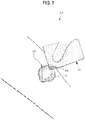
FIG. 3 illustrates a step of an exemplary embodiment of a process of debriding a wound surface of a patient, depicting the user holding the debriding material ofFIG. 1 and applying the debriding material across at least a portion of the wound surface; -
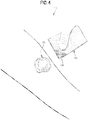
FIG. 4 illustrates the wound surface of the patient and the debriding material ofFIG. 1 after the wound surface has been debrided as shown inFIG. 4 , depicting the debriding material being stained by tissue picked up from the wound surface during the debriding and the wound surface after the debridement and being free of debris from the debriding material; and -
FIG. 5 illustrates a perspective view of a package containing the wound debriding material ofFIG. 1 in accordance with some embodiments; and -
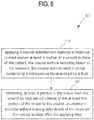
FIG. 6 illustrates a flow diagram of a method of facilitating debridement of a wound of a patient in accordance with some embodiments. - Elements in the figures are illustrated for simplicity and clarity and have not been drawn to scale. For example, the dimensions and/or relative positioning of some of the elements in the figures may be exaggerated relative to other elements to help to improve understanding of various embodiments of the present invention. Also, common but well-understood elements that are useful or necessary in a commercially feasible embodiment are often not depicted in order to facilitate a less obstructed view of these various embodiments of the present invention. Certain actions and/or steps may be described or depicted in a particular order of occurrence while those skilled in the art will understand that such specificity with respect to sequence is not actually required. The terms and expressions used herein have the ordinary technical meaning as is accorded to such terms and expressions by persons skilled in the technical field as set forth above except where different specific meanings have otherwise been set forth herein.
- The following description is not to be taken in a limiting sense, but is made merely for the purpose of describing the general principles of exemplary embodiments. Reference throughout this specification to "one embodiment," "an embodiment," or similar language means that a particular feature, structure, or characteristic described in connection with the embodiment is included in at least one embodiment of the present invention. Thus, appearances of the phrases "in one embodiment," "in an embodiment," and similar language throughout this specification may, but do not necessarily, all refer to the same embodiment.
- Generally, pursuant to various embodiments, materials are provided for wound debridement. In some embodiments not according to the invention, a method of debriding a wound of a patient includes applying a wound debridement material in frictional contact across at least a portion of a wound surface of the patient. The wound surface includes tissue to be removed and the wound debridement material includes a solid porous foam soaked by a fluid. The method further includes removing, at least a portion of the tissue from the wound surface via adherence of the at least the portion of the tissue to the wound debridement material without leaving solid debris of the foam on the wound surface after the applying step. Without wishing to be limited by theory, the tissue is removed from the surface of the wound as a result of friction between the surface of the wound debridement material and the surface of the wound that contains tissue to be removed and/or due to the wetness of the wound debridement material that facilitates the adherence of at least some of the tissue to the wound debridement material and/or via absorption of at least some of the tissue, exudate, or the like from the wound surface into the surface of the wound debridement material.
- In some embodiments not according to the invention, a method of facilitating debridement of a wound of a patient includes: providing a package including a wound debridement material comprising a solid porous foam soaked by a fluid such that the moisture content of the foam is between about 20 wt. % and about 60 wt. %; and providing instructions, on the package, instructing a user to apply the wound debridement material across at least a portion of a wound surface of the patient in order to remove tissue from the wound surface via adherence of the tissue to the wound debridement material.
- In some embodiments not according to the invention, a method of making a packaged wound debridement material for debriding a wound of a patient includes: providing a wound debridement material comprising a solid porous foam; soaking the foam in a fluid such that the moisture content of the foam is between about 20 wt. % and about 60 wt. %; inserting the soaked foam into a package; and sealing the package. The present invention concerns a wound debridement material as claimed in claim 1. Preferred embodiments are claimed in dependent claims 2-5.
-
FIG. 1 illustrates an exemplarywound debridement material 100 that may be used to debride a wound of a patient and remove tissue from the surface and around the wound of the patient via adherence of the tissue to thewound debridement material 100 and without leaving solid debris of thewound debridement material 100 on or around the wound surface. As used herein, the terms "debride," "debriding," and "debridement," refer to removal of undesirable (e.g., eschar, necrotic, damaged, infected, or the like) tissue or a foreign material from a wound of a patient. The term patient will be understood to include both a human patient and an animal patient. - The
wound debridement material 100 illustrated inFIG. 1 is a solid porous foam. In some aspects, thewound debridement material 100 is an open-celled foam, for example a reticulated open-celled foam or a non-reticulated open-celled foam. Generally, the term "cells" refer to interconnecting compartments within a foam to form a structural network and the term "open-celled foam" refers to a foam having interconnected cells or a net-like microstructure with few, if any, closed cells such that the cells are substantially continuous between the opposing external surfaces of the foam and have openings at the external surfaces. Conversely, the term "closed-celled foam" generally refers to foams that do not have interconnected cells and that do not have openings at the external surfaces of the foam. - In some embodiments, the
wound debridement material 100 is WhiteFoam® (available from Kinetic Concepts, Inc. of San Antonio, Texas), which is a white, open-celled, non-reticulated polyvinyl alcohol-based solid foam having a hydrophilic (i.e., moisture-retaining) structure and pores having a diameter from about 200 to about 1000 microns. In certain embodiments, thewound debridement material 100 is formed of a material including but not limited to: polyvinyl alcohol (PVA); polyurethanes (e.g., polyurethane-polyester, polyurethane-polyether, or the like); polyolefins (e.g., polypropylenes (PP), polyethylenes (PE), or the like), silicone elastomers and copolymers; polyvinylchloride (PVC); polyamides; polyesters; acrylics; thermoplastic elastomers (e.g., styrene-butene-styrene (SBS), styrene-ethylene-butene-styrene (SEBS), or the like); polyether-amide block copolymers (PEBAX); elastomers (e.g., styrene butadiene rubber (SBR); ethylene propylene rubber (EPR); ethylene propylene diene modified rubber (EPDM); natural rubber (NR); vinyl acetate, ethylene vinyl acetate (EVA); polyvinyl acetal; polyvinyl butyral (PVB), or the like). - In some aspects, the
wound debridement material 100 ofFIG. 1 is dimensioned such that it has a length of about 10 centimeters, a width of about 7.5 centimeters, and a height or thickness of about 1 centimeter. It will be appreciated that these dimensions are provided by way of example only, and that thewound debridement material 100 ofFIG. 1 may have various dimensions depending on the size of the wound being debrided. For example, in some aspects, the wound debridement material may have a length from about 5 to about 20 centimeters, a width from about 3 to about 15 centimeters, and a thickness of about 0.5 to about 2 centimeters. - In certain aspects, the porosity of the solid foam of
FIG. 1 can range from about 95% to about 98%, but it will be appreciated that less porous (e.g., from about 80% to about 95%) or more porous (e.g., from about 98% to about 100%) solid foams may be used. In some embodiments, thewound debridement material 100 is formed from a plurality of fibers each having a diameter from about 1 micron to about 100 microns, and in some aspects, from about 5 microns to about 50 microns. - The
wound debridement material 100 has a density from 145 kg/m3 to 270 kg/m3. Thewound debridement material 100 has a stiffness of 30 Shore A durometer to 70 Shore A durometer. In some aspects, thewound debridement material 100 is mechanically compressed to increase its density at ambient pressure. The compression stiffness of the woulddebridement material 100 is from 4.0 kPa at 25% compression to 9.0 kPa at 50% compression. - Generally, a compressed foam may be characterized by a firmness factor (FF) that is defined as a ratio of the density of a foam in a compressed state to the density of the foam in an uncompressed state. For example, a firmness factor (FF) of 5 may refer to a compressed foam having a density that is five times greater than a density of the same foam in an uncompressed state. Mechanically or chemically compressing a foam may reduce a thickness of the foam at ambient pressure when compared to the same foam that has not been compressed. Reducing a thickness of a foam by mechanical or chemical compression may increase a density of the foam, which may increase the firmness factor (FF) of the foam. In some embodiments, the
wound debridement material 100 is configured to absorb moisture (e.g., exudate, pus, blood, etc.) and/or remove up dry tissue from a wound of a patient by drawing or wicking such moisture and/or lifting (e.g., by adherence to the moist surface(s) of the wound debridement material 100) the dry tissue up from the surface of the wound and/or around the wound. - The
wound debridement material 100 is a foam having a moisture content from 20 wt. % to 60 wt. %. Without wishing to be limited by theory, the moisture content of the foam in such embodiments provides the foam with a texture that permits the wound debridement material, applied in frictional contact (e.g., rubbing) across at least a portion of surface of a wound of a patient, to remove tissue from the surface of the wound and/or around the wound via friction between the surface of thewound debridement material 100 and the surface of the wound and/or due to the wetness of thewound debridement material 100 that facilitates the adherence of at least some of the dry and/or wet tissue to thewound debridement material 100 and/or via absorption of at least some of the tissue from the wound surface into the surface of thewound debridement material 100. - In some aspects, the fluid that provides the
wound debridement material 100 with its moisture content is a liquid that includes but is not limited to: water, saline, polyhydric alcohol, mixtures thereof, or the like. Given that thewound debridement material 100 is configured for application to a wound of a patient in a medical setting, the liquid is sterile. - In some configurations, the
wound debridement material 100 may be pre-moistened and retained in sealed packaging (e.g.,package 500 ofFIG. 5 , which will be described in more detail below), such that a user would only be required to open the packaging before applying (e.g., by rubbing) thewound debridement material 100 across a portion of a wound (as will be discussed in more detail below). In certain aspects, the moisture content of thewound debridement material 100 may be adjusted depending on the nature of the wound to be debrided. - For example, a
wound debridement material 100 selected to debride a wound having a greater amount of harder tissue (e.g., eschar) to be removed would be adjusted to have a lower moisture content (e.g., from about 20 wt. % to about 40 wt. %).Conversely, awound debridement material 100 selected to debride a wound having a comparatively lesser amount of harder tissue to be removed would be adjusted to have a higher moisture content (e.g., from about 40 wt. % to about 60 wt. %). In other words, awound debridement material 100 having a lower moisture percentage is likely to be more effective in debriding a wound having more dry, harder tissue than awound debridement material 100 having a comparatively higher moisture percentage. - With reference to
FIGS. 2-4 , anexemplary method 200 of debriding awound 202 of a patient is illustrated. As can be seen inFIG. 2 , the surface of thewound 202 includestissue 204 to be removed. It will be appreciated that at least some of thetissue 204 to be removed via themethod 200 is located around the surface of thewound 202. As described above, thewound debridement material 100 comprises a solid porous foam (e.g., a polyvinyl alcohol foam) soaked by a fluid. As discussed above, in some embodiments, the fluid provides thewound debridement material 100 with a moisture content of about 20 wt. % to about 60 wt. %. - As can be seen in
FIG. 2 , one step of themethod 200 includes a user (e.g., a nurse, doctor, or the like) grasping thewound debridement material 100 and bringing thewound debridement material 100 in a direction toward thewound 202 of the patient. With reference toFIG. 3 , one step of themethod 200 includes applying (e.g., rubbing) thewound debridement material 100 in frictional contact across at least a portion of the surface of thewound 202 of the patient. As can be seen inFIG. 6 , which shows a diagrammatic representation of the method illustrated inFIGS. 2-4 , themethod 600 includes astep 610 of applying awound debridement material 100 in frictional contact across at least a portion of a surface of awound 202 of the patient, the woundsurface including tissue 204 to be removed, thewound debridement material 100 comprising a solid porous foam soaked by a fluid. -
FIG. 3 illustrates another step of themethod 200 and, more specifically, the removing of at least a portion of thetissue 204 from the surface of thewound 202 of the patient via thewound debridement material 100. As can be seen inFIG. 6 , which shows a diagrammatic representation of the method shown inFIGS. 2-4 , themethod 600 includes astep 620 of removing, at least a portion of thetissue 204 from the surface of thewound 202 via adherence of the at least the portion of thetissue 204 to thewound debridement material 100 without leaving solid debris of the foam on the surface of thewound 204 after the applying step. - As mentioned above, the
wound debridement material 100 is configured (e.g., by having a moisture level within a predetermined range and by having a suitable texture as a result having such a moisture level) to remove tissue from the surface of thewound 202 and/or around the wound 2020 via frictional contact (e.g., achieved by a user rubbing thewound debridement material 100 across the surface of the wound 202) between the surface of thewound debridement material 100 and the surface of the wound and/or due to the wetness of thewound debridement material 100 that facilitates the adherence of at least some of the dry and/or wet tissue to thewound debridement material 100 and/or via absorption of at least some of the tissue from the wound surface into the surface of thewound debridement material 100. - In the exemplary embodiment illustrated in
FIGS. 3-4 , the tissue 204 (e.g., dry eschar, exudate, etc.) is removed from the surface of thewound 202 as a result of friction between the surface of thewound debridement material 100 and the surface of thewound 202, as well as via adherence (e.g., by sticking and/or absorption) of at least some of thetissue 204 to thewound debridement material 100. For example,FIGS. 3 and4 show the staining 206 (i.e., depicted by darker regions) of thewound debridement material 100 caused by adherence of thetissue 204 to thewound debridement material 100 and/or absorption of at least a portion of thetissue 204 into the surface of thewound debridement material 100. -
FIG. 4 also illustrates that as a result of thewound debridement material 100 being applied to (e.g., rubbed on) the surface of thewound 202 to debride thewound 202 as described above, no solid debris of thewound debridement material 100 are left on or around the surface of thewound 202. In other words, thewound debridement material 100 advantageously has a construction that does not fall apart and does not have pieces (e.g., fibers) of it break off as a result of frictional contact and movement of thewound debridement material 100 relative to the (often dry, hard)tissue 204 that is debrided on and around awound 202. - With reference to
FIG. 5 , in certain embodiments, a method of facilitating debridement of a wound of a patient includes providing apackage 500 includingwound debridement material 100 comprising a solid porous foam soaked by a fluid such that the moisture content of the foam is between about 20 wt. % and about 60 wt. %. In some aspects, the method includes providing wound debridement instructions to a user on the package. In the embodiment ofFIG. 5 , the debridement instructions are included on thepackage 500 in the form of a label 530 affixed to thepackage 500 and including writteninstructions 540 to a user. It will be appreciated that the use of the label 530 is shown inFIG. 5 by way of example only, and that the user instructions may be printed directly on the material (e.g., polymer film) that forms the package 530. Similarly, the location of the label and instructions are shown by way of example only inFIG. 5 , and may be provided in a different location or on an opposite face of thepackage 500. - In one approach, the method includes instructing a user to apply (e.g., rub) the
wound debridement material 100 in frictional contact across at least a portion of a surface of awound 202 of the patient in order to removetissue 204 from the surface of thewound 202 via adherence of thetissue 204 to thewound debridement material 100. In some aspects, thepackage 500 includes a notification that the application of thewound debridement material 100 to at least a portion of the surface of thewound 202 of the patient to remove at least a portion of thetissue 204 from the surface of thewound 202 via adherence of thetissue 204 to thewound debridement material 100 will not leave solid debris of thewound debridement material 100 on or around the surface of thewound 202. - In some embodiments, the
package 500 containing thewound debridement material 100 is hermetically sealed such that thewound debridement material 100 is sealed and soaked by a fluid as described above and retains its initial moisture content due to being sealed and not exposed to ambient air while in thepackage 500. In such embodiments, prior to the application of thewound debridement material 100 across at least a portion of the surface of thewound 202, the method of debriding thewound 202 of the patient further includes removing thewound debridement material 100 from a sealedpackage 500 containing thewound debridement material 100 soaked by the fluid. - In some embodiments, the
wound debridement material 100 is soaked with the fluid in the sealedpackage 500 such that thewound debridement material 100 has a moisture content of about 20 % to about 60 % by total weight of thewound debridement material 100. In such embodiments, after the opening of the package 500 (e.g., by tearing away a portion of the package 500) and the removal of thewound debridement material 100 from thepackage 500, the next step of the method of debriding thewound 202 would include applying (e.g., by rubbing) thewound debridement material 100 removed from thepackage 500 in frictional contact across at least a portion of the surface of thewound 202 of the patient, as described above, to remove at least a portion of thetissue 204 from the surface of thewound 202 via adherence of thetissue 204 to thewound debridement material 100 and without leaving solid debris of thewound debridement material 100 on or around the surface of thewound 202. - In some embodiments, the
wound debridement material 100 is soaked with the fluid in thepackage 500 such that thewound debridement material 100 has a moisture content of above 60 wt. % (e.g., from about 60 wt. % to about 100 wt. %). Since thewound debridement material 100, when soaked with a fluid such that it has a moisture above 60 wt. % does not possess optimal surface friction coefficient for debriding thetissue 204 from the surface of thewound 202, in such embodiments, after the removal of thewound debridement material 100 from thepackage 500, the next step of the method of debriding thewound 202 would include removing at least a portion of the fluid absorbed in thewound debridement material 100 until thewound debridement material 100 has a moisture content between about 20 wt. % and about 60 wt. %. In some aspects, the fluid may be removed from thewound debridement material 100 simply by squeezing (or otherwise applying pressure to) thewound debridement material 100 such that the fluid is ejected therefrom. - In some embodiments, after fluid is removed from the
wound debridement material 100 to bring the moisture level of the wound debridement material to a moisture percentage with the range of about 20 wt. % to about 60 wt. %, the next step of the method of debriding thewound 202 would include applying (e.g., rubbing) thewound debridement material 100 removed from the package 500 (and having its moisture content decreased to a moisture content between about 20 wt. % and about 60 wt. %) in frictional contact across at least a portion of the surface of thewound 202 of the patient, as described above, thereby removing at least a portion of thetissue 204 from the surface of the wound via adherence of thetissue 204 to thewound debridement material 100 and without leaving solid debris of thewound debridement material 100 on or around the surface of thewound 202. - In some embodiments, the
wound debridement material 100 is provided in thepackage 500 such that thewound debridement material 100 has a moisture content of 0, i.e., thewound debridement material 100 is completely dry. Given that thewound debridement material 100, when completely dry, has a hard texture and thus a friction coefficient that may lead to irritation of the surface of thewound 202 of the patient, in such embodiments, after the removal of thewound debridement material 100 from thepackage 500, the next step of the method of debriding thewound 202 would include applying a fluid (e.g., water, saline, polyhydric alcohol, or the like) to at least a portion of thewound debridement material 100 until thewound debridement material 100 has a moisture content between about 20 % and about 60 % based on total weight of thewound debridement material 100. In some aspects, the fluid is applied onto thewound debridement material 100 by pouring the fluid from a suitable container (e.g., bottle) or device. In other aspects, the fluid is applied onto thewound debridement material 100 by soaking thewound debridement material 100 in the fluid contained in a suitable receptacle (e.g., tub). - The next step of such a method would be applying (e.g., rubbing) the
wound debridement material 100 removed from the package 500 (and having its moisture content increased to a moisture content between about 20 wt. % and about 60 wt. %) in frictional contact across at least a portion of the surface of thewound 202 of the patient, as described above, to remove at least a portion of thetissue 204 from the surface of the wound via adherence of thetissue 204 to thewound debridement material 100 and without leaving solid debris of thewound debridement material 100 on surface of thewound 202. - In some embodiments, the
wound debridement material 100 is applied (e.g., placed into direct contact and rubbed) across at least a portion of the wound surface of the patient at a pressure of about 100 kPa to about 150 kPa. Generally, the pressure at which thewound debridement material 100 is applied to the surface of thewound 202 can be adjusted based on the moisture content of thewound debridement material 100. In other words, in some aspects, awound debridement material 100 having a higher moisture content (e.g., from about 40 wt. % to about 60 wt. %) would be applied to the surface of thewound 202 at a higher pressure (e.g., from about 125 kPa to about 150 kPa). Conversely, awound debridement material 100 having a moisture content that is lower (e.g., from about 20 wt. % to about 40 wt. %) would be applied to the surface of thewound 202 at a lower pressure (e.g., from about 100 kPa to about 125 kPa). - In certain embodiments, a method of making a packaged
wound debridement material 100 for debriding a wound of a patient is also provided. The exemplary method includes providing awound debridement material 100 comprising a solid porous foam. As discussed above, thewound debridement material 100 may be a solid polyvinyl alcohol open-celled foam. The next step of such an exemplary method includes soaking the solid foam in a fluid such that the foam absorbs the fluid and achieves a moisture content of between about 20 % and about 60 % by total weight of the solid foam. The method then includes inserting the soaked solid foam into apackage 500 and sealing thepackage 500. In some aspects, the soaked solid foam is hermetically sealed in thepackage 500. - In some aspects and with reference to
FIG. 5 , after the soakedwound debridement material 100 is sealed in apackage 500, the method of making a packagedwound debridement material 100 for debriding a wound of a patient further includes providing instructions 530, on thepackage 500, in order to instruct a user to apply (e.g., rub) thewound debridement material 100 in frictional contact across at least a portion of and/or around a surface of awound 202 of the patient in order to removetissue 204 from the surface of thewound 202 via adherence of thetissue 204 to thewound debridement material 100. As described above and shown inFIG. 5 , in some aspects, thepackage 500 includes a notification (e.g., label) 530 that the application of thewound debridement material 100 to at least a portion of the surface of thewound 202 of the patient to remove at least a portion of thetissue 204 from the surface of thewound 202 via adherence of thetissue 204 to thewound debridement material 100 will not leave solid debris of thewound debridement material 100 on or around the surface of thewound 202. - The methods and materials described herein facilitate debridement of wounds of patients without leaving solid pieces of the wound debridement materials in or on the wound. This advantageously reduces infections following surgical procedures and obviates the need for medical personnel to take extra steps in washing a wound surface following a surgical procedure.
Claims (5)
- A wound debridement material comprising:a solid open-cell hydrophilic porous foam (100) soaked by a liquid such that the foam has a moisture content from 20 wt. % to 60 wt. %;wherein the solid porous foam (100) has a texture that permits the wound debridement material, when applied in frictional contact across at least a portion of a wound surface of a patient including tissue to be removed, to remove the tissue from the wound surface via adherence of the tissue to the wound debridement material without leaving solid debris of the foam on the wound surface; characterised in thatthe foam has a stiffness of 30 Shore A durometer to 70 Shore A durometer;a compression stiffness of the foam is from 4.0 kPa at 25% compression to 9.0 kPa at 50% compression; anda density from 145kg/m3 to 270 kg/m3.
- The wound debridement material of claim 1, wherein the foam is a polymer selected from the group consisting of polyvinyl alcohol, polyurethane, polyolefin, vinyl acetate, silicone elastomers, and their copolymers.
- The wound debridement material of claim 1, wherein the foam comprises a plurality of fibers each having a diameter from 5 microns to 50 microns.
- The wound debridement material of claim 1, wherein the liquid is selected from the group consisting of water, saline, and a polyhydric alcohol, and mixtures thereof.
- The wound debridement material of claim 1, wherein the liquid is sterile.
Applications Claiming Priority (2)
| Application Number | Priority Date | Filing Date | Title |
|---|---|---|---|
| US201762540423P | 2017-08-02 | 2017-08-02 | |
| PCT/US2018/044661 WO2019028057A1 (en) | 2017-08-02 | 2018-07-31 | Systems and methods for wound debridement |
Publications (2)
| Publication Number | Publication Date |
|---|---|
| EP3661448A1 EP3661448A1 (en) | 2020-06-10 |
| EP3661448B1 true EP3661448B1 (en) | 2021-02-17 |
Family
ID=63207899
Family Applications (1)
| Application Number | Title | Priority Date | Filing Date |
|---|---|---|---|
| EP18755379.7A Revoked EP3661448B1 (en) | 2017-08-02 | 2018-07-31 | Systems for wound debridement |
Country Status (5)
| Country | Link |
|---|---|
| US (1) | US20200246195A1 (en) |
| EP (1) | EP3661448B1 (en) |
| JP (1) | JP2020529246A (en) |
| CN (1) | CN111031956A (en) |
| WO (1) | WO2019028057A1 (en) |
Families Citing this family (21)
| Publication number | Priority date | Publication date | Assignee | Title |
|---|---|---|---|---|
| GB0808376D0 (en) | 2008-05-08 | 2008-06-18 | Bristol Myers Squibb Co | Wound dressing |
| GB0817796D0 (en) | 2008-09-29 | 2008-11-05 | Convatec Inc | wound dressing |
| GB201020236D0 (en) | 2010-11-30 | 2011-01-12 | Convatec Technologies Inc | A composition for detecting biofilms on viable tissues |
| EP2648795B1 (en) | 2010-12-08 | 2023-01-25 | ConvaTec Technologies Inc. | System for removing exudates from a wound site |
| EP2648793B1 (en) | 2010-12-08 | 2020-03-11 | ConvaTec Technologies Inc. | Integrated system for assessing wound exudates |
| US9526816B2 (en) | 2010-12-08 | 2016-12-27 | Convatec Technologies Inc. | Wound exudate monitor accessory |
| GB201115182D0 (en) | 2011-09-02 | 2011-10-19 | Trio Healthcare Ltd | Skin contact material |
| GB2497406A (en) | 2011-11-29 | 2013-06-12 | Webtec Converting Llc | Dressing with a perforated binder layer |
| WO2014096843A2 (en) | 2012-12-20 | 2014-06-26 | Convatec Technologies Inc. | Processing of chemically modified cellulosic fibres |
| GB2543544A (en) | 2015-10-21 | 2017-04-26 | Brightwake Ltd | Wound dressing |
| WO2017168249A2 (en) | 2016-03-30 | 2017-10-05 | Qualizyme Diagnostics Gmbh & Co Kg | Detecting microbial infection in wounds |
| UY37178A (en) | 2016-03-30 | 2017-10-31 | Convatec Technologies Inc | DETECTION OF MICROBIAL INFECTION IN WOUNDS |
| GB201608099D0 (en) | 2016-05-09 | 2016-06-22 | Convatec Technologies Inc | Negative pressure wound dressing |
| EP3481360B1 (en) | 2016-07-08 | 2022-03-09 | ConvaTec Technologies Inc. | Fluid flow sensing |
| BR112019000301A2 (en) | 2016-07-08 | 2019-04-16 | Convatec Technologies Inc. | flexible negative pressure system |
| BR112019000284A2 (en) | 2016-07-08 | 2019-04-16 | Convatec Technologies Inc. | fluid collection apparatus |
| EP4360666A3 (en) | 2017-11-16 | 2024-05-08 | ConvaTec Limited | Fluid collection apparatus |
| US12076215B2 (en) | 2019-06-03 | 2024-09-03 | Convatec Limited | Methods and devices to disrupt and contain pathogens |
| DE102019120712A1 (en) | 2019-07-31 | 2021-02-04 | Carl Freudenberg Kg | Wound cleansing articles |
| US11771819B2 (en) | 2019-12-27 | 2023-10-03 | Convatec Limited | Low profile filter devices suitable for use in negative pressure wound therapy systems |
| US11331221B2 (en) | 2019-12-27 | 2022-05-17 | Convatec Limited | Negative pressure wound dressing |
Citations (7)
| Publication number | Priority date | Publication date | Assignee | Title |
|---|---|---|---|---|
| WO1995004510A1 (en) | 1993-08-04 | 1995-02-16 | Merocel Corporation | Wound treatment |
| US20040092895A1 (en) | 2002-11-07 | 2004-05-13 | Harmon Kim R. | Soft contact tip for use with a hand-held debridement device |
| US20060030632A1 (en) | 2003-12-05 | 2006-02-09 | Krueger Jeffrey J | Low-density, open-cell, soft, flexible, thermoplastic, absorbent foam and method of making foam |
| DE102012100842A1 (en) | 2012-02-01 | 2013-08-14 | Birgit Riesinger | Wound care article useful e.g. for treating bleeding wounds, comprises surface having abrasive properties, which is designed such that wound care article is suitable for breaking bio-films in a wound, and/or for controlling wound exudation |
| WO2013180832A1 (en) | 2012-05-29 | 2013-12-05 | 3M Innovative Properties Company | Absorbent article comprising polymeric foam and intermediates |
| WO2016053829A1 (en) | 2014-10-01 | 2016-04-07 | 3M Innovative Properties Company | Porous devices, kits, and methods for debridement |
| CN105536038A (en) | 2015-12-25 | 2016-05-04 | 厦门百美特生物材料科技有限公司 | Foam substrate dressing and preparation method thereof |
Family Cites Families (7)
| Publication number | Priority date | Publication date | Assignee | Title |
|---|---|---|---|---|
| GB8419745D0 (en) * | 1984-08-02 | 1984-09-05 | Smith & Nephew Ass | Wound dressing |
| US5203764A (en) * | 1985-10-04 | 1993-04-20 | Minnesota Mining And Manufacturing Company | Foam pads useful in wound management |
| US5843060A (en) * | 1997-01-02 | 1998-12-01 | Xomed Surgical Products, Inc. | Non-adherent nasal, sinus and otic packing and method for processing sponge materials in fabrication of packings |
| WO2005062896A2 (en) * | 2003-12-23 | 2005-07-14 | Hemcon, Inc. | Tissue dressing assemblies, systems, and methods formed from hydrophilic polymer sponge structures such as chistosan |
| US7398883B2 (en) * | 2005-05-23 | 2008-07-15 | Tucker Kenneth H | Blister kit and method of using same |
| US8454990B2 (en) * | 2008-08-01 | 2013-06-04 | Milliken & Company | Composite article suitable for use as a wound dressing |
| US20160331860A1 (en) * | 2015-05-12 | 2016-11-17 | Taicend Technology Co., Ltd | Wet wound dressing |
-
2018
- 2018-07-31 US US16/635,039 patent/US20200246195A1/en not_active Abandoned
- 2018-07-31 JP JP2020505193A patent/JP2020529246A/en active Pending
- 2018-07-31 EP EP18755379.7A patent/EP3661448B1/en not_active Revoked
- 2018-07-31 CN CN201880055686.0A patent/CN111031956A/en active Pending
- 2018-07-31 WO PCT/US2018/044661 patent/WO2019028057A1/en not_active Ceased
Patent Citations (7)
| Publication number | Priority date | Publication date | Assignee | Title |
|---|---|---|---|---|
| WO1995004510A1 (en) | 1993-08-04 | 1995-02-16 | Merocel Corporation | Wound treatment |
| US20040092895A1 (en) | 2002-11-07 | 2004-05-13 | Harmon Kim R. | Soft contact tip for use with a hand-held debridement device |
| US20060030632A1 (en) | 2003-12-05 | 2006-02-09 | Krueger Jeffrey J | Low-density, open-cell, soft, flexible, thermoplastic, absorbent foam and method of making foam |
| DE102012100842A1 (en) | 2012-02-01 | 2013-08-14 | Birgit Riesinger | Wound care article useful e.g. for treating bleeding wounds, comprises surface having abrasive properties, which is designed such that wound care article is suitable for breaking bio-films in a wound, and/or for controlling wound exudation |
| WO2013180832A1 (en) | 2012-05-29 | 2013-12-05 | 3M Innovative Properties Company | Absorbent article comprising polymeric foam and intermediates |
| WO2016053829A1 (en) | 2014-10-01 | 2016-04-07 | 3M Innovative Properties Company | Porous devices, kits, and methods for debridement |
| CN105536038A (en) | 2015-12-25 | 2016-05-04 | 厦门百美特生物材料科技有限公司 | Foam substrate dressing and preparation method thereof |
Non-Patent Citations (3)
| Title |
|---|
| KCI: "VAC Dressings, Canisters and Disposables", V.A.C. THERAPY CLINICAL GUIDELINES. A REFERENCE SOURCE FOR CLINICIANS, 1 November 2015 (2015-11-01), pages 1 - 4, XP055854059 |
| NIKUNJ3121994: "Shore durometer", WIKIPEDIA, 3 October 2017 (2017-10-03), XP055636163, Retrieved from the Internet <URL:https://en.wikipedia.org/w/index.php?title=Shore_durometer&oldid=803646827> [retrieved on 20191028] |
| SAMBAVISAM M, WHITE R. CUTTING K.: "Chapter 12. Exploring the role of polyurethane and polyvinyl alcohol foams in wound care", WOUND HEALING BIOMATERIALS, vol. 2, 1 January 2016 (2016-01-01), pages 251 - 260, XP055854053 |
Also Published As
| Publication number | Publication date |
|---|---|
| WO2019028057A1 (en) | 2019-02-07 |
| EP3661448A1 (en) | 2020-06-10 |
| JP2020529246A (en) | 2020-10-08 |
| US20200246195A1 (en) | 2020-08-06 |
| CN111031956A (en) | 2020-04-17 |
Similar Documents
| Publication | Publication Date | Title |
|---|---|---|
| EP3661448B1 (en) | Systems for wound debridement | |
| US5466231A (en) | Laminated sponge device | |
| US4664662A (en) | Wound dressing | |
| JP7023075B2 (en) | Sealing systems and methods with switchable drapes | |
| JP6867337B2 (en) | Wound dressing | |
| JP2022506831A (en) | Wound dressing with semi-rigid support for enhanced destruction using perforated dressings and negative pressure wound therapy | |
| US5115801A (en) | Hydrogel burn dressing product | |
| EP2552371B1 (en) | A wound care dressing, a method and a production line for manufacturing the wound care dressing | |
| US5476443A (en) | Wound dressing product containing a porous layer | |
| US5899871A (en) | Wound packing | |
| JP6347950B2 (en) | Bandages and methods for treating a tissue site in a patient | |
| CN103124543B (en) | wound protection | |
| US20060020234A1 (en) | Absorbent sac wound dressing | |
| CN103841935A (en) | Tissue healing | |
| WO1995004510A1 (en) | Wound treatment | |
| US5531999A (en) | Rope-shaped wound dressing | |
| GB2376632A (en) | Removable cavity wound dressings | |
| US20190183695A1 (en) | Surgical bandage with stabilizing elements | |
| CN106456826B (en) | Articles comprising cellular elastomeric materials with incorporated elastomeric materials and methods of making the same | |
| JP2009273669A (en) | Sheet body for instrument for wound, and instrument for wound and device for wound using this sheet body | |
| JP4026011B2 (en) | Wound dressing | |
| KR20050076805A (en) | Adhere bandage for wound |
Legal Events
| Date | Code | Title | Description |
|---|---|---|---|
| STAA | Information on the status of an ep patent application or granted ep patent |
Free format text: STATUS: UNKNOWN |
|
| STAA | Information on the status of an ep patent application or granted ep patent |
Free format text: STATUS: THE INTERNATIONAL PUBLICATION HAS BEEN MADE |
|
| PUAI | Public reference made under article 153(3) epc to a published international application that has entered the european phase |
Free format text: ORIGINAL CODE: 0009012 |
|
| STAA | Information on the status of an ep patent application or granted ep patent |
Free format text: STATUS: REQUEST FOR EXAMINATION WAS MADE |
|
| 17P | Request for examination filed |
Effective date: 20200224 |
|
| AK | Designated contracting states |
Kind code of ref document: A1 Designated state(s): AL AT BE BG CH CY CZ DE DK EE ES FI FR GB GR HR HU IE IS IT LI LT LU LV MC MK MT NL NO PL PT RO RS SE SI SK SM TR |
|
| AX | Request for extension of the european patent |
Extension state: BA ME |
|
| REG | Reference to a national code |
Ref country code: DE Ref legal event code: R079 Ref document number: 602018012765 Country of ref document: DE Free format text: PREVIOUS MAIN CLASS: A61B0050300000 Ipc: A61L0015580000 |
|
| GRAP | Despatch of communication of intention to grant a patent |
Free format text: ORIGINAL CODE: EPIDOSNIGR1 |
|
| STAA | Information on the status of an ep patent application or granted ep patent |
Free format text: STATUS: GRANT OF PATENT IS INTENDED |
|
| RIC1 | Information provided on ipc code assigned before grant |
Ipc: A61F 13/36 20060101ALI20200820BHEP Ipc: A61L 15/58 20060101AFI20200820BHEP Ipc: A61B 50/30 20160101ALI20200820BHEP |
|
| DAV | Request for validation of the european patent (deleted) | ||
| DAX | Request for extension of the european patent (deleted) | ||
| INTG | Intention to grant announced |
Effective date: 20200909 |
|
| RAP1 | Party data changed (applicant data changed or rights of an application transferred) |
Owner name: 3M INNOVATIVE PROPERTIES COMPANY |
|
| GRAS | Grant fee paid |
Free format text: ORIGINAL CODE: EPIDOSNIGR3 |
|
| GRAA | (expected) grant |
Free format text: ORIGINAL CODE: 0009210 |
|
| STAA | Information on the status of an ep patent application or granted ep patent |
Free format text: STATUS: THE PATENT HAS BEEN GRANTED |
|
| AK | Designated contracting states |
Kind code of ref document: B1 Designated state(s): AL AT BE BG CH CY CZ DE DK EE ES FI FR GB GR HR HU IE IS IT LI LT LU LV MC MK MT NL NO PL PT RO RS SE SI SK SM TR |
|
| REG | Reference to a national code |
Ref country code: GB Ref legal event code: FG4D |
|
| REG | Reference to a national code |
Ref country code: CH Ref legal event code: EP |
|
| REG | Reference to a national code |
Ref country code: DE Ref legal event code: R096 Ref document number: 602018012765 Country of ref document: DE |
|
| REG | Reference to a national code |
Ref country code: AT Ref legal event code: REF Ref document number: 1360608 Country of ref document: AT Kind code of ref document: T Effective date: 20210315 |
|
| REG | Reference to a national code |
Ref country code: IE Ref legal event code: FG4D |
|
| REG | Reference to a national code |
Ref country code: LT Ref legal event code: MG9D |
|
| REG | Reference to a national code |
Ref country code: NL Ref legal event code: MP Effective date: 20210217 |
|
| PG25 | Lapsed in a contracting state [announced via postgrant information from national office to epo] |
Ref country code: PT Free format text: LAPSE BECAUSE OF FAILURE TO SUBMIT A TRANSLATION OF THE DESCRIPTION OR TO PAY THE FEE WITHIN THE PRESCRIBED TIME-LIMIT Effective date: 20210617 Ref country code: NO Free format text: LAPSE BECAUSE OF FAILURE TO SUBMIT A TRANSLATION OF THE DESCRIPTION OR TO PAY THE FEE WITHIN THE PRESCRIBED TIME-LIMIT Effective date: 20210517 Ref country code: LT Free format text: LAPSE BECAUSE OF FAILURE TO SUBMIT A TRANSLATION OF THE DESCRIPTION OR TO PAY THE FEE WITHIN THE PRESCRIBED TIME-LIMIT Effective date: 20210217 Ref country code: GR Free format text: LAPSE BECAUSE OF FAILURE TO SUBMIT A TRANSLATION OF THE DESCRIPTION OR TO PAY THE FEE WITHIN THE PRESCRIBED TIME-LIMIT Effective date: 20210518 Ref country code: FI Free format text: LAPSE BECAUSE OF FAILURE TO SUBMIT A TRANSLATION OF THE DESCRIPTION OR TO PAY THE FEE WITHIN THE PRESCRIBED TIME-LIMIT Effective date: 20210217 Ref country code: HR Free format text: LAPSE BECAUSE OF FAILURE TO SUBMIT A TRANSLATION OF THE DESCRIPTION OR TO PAY THE FEE WITHIN THE PRESCRIBED TIME-LIMIT Effective date: 20210217 Ref country code: BG Free format text: LAPSE BECAUSE OF FAILURE TO SUBMIT A TRANSLATION OF THE DESCRIPTION OR TO PAY THE FEE WITHIN THE PRESCRIBED TIME-LIMIT Effective date: 20210517 |
|
| REG | Reference to a national code |
Ref country code: AT Ref legal event code: MK05 Ref document number: 1360608 Country of ref document: AT Kind code of ref document: T Effective date: 20210217 |
|
| PG25 | Lapsed in a contracting state [announced via postgrant information from national office to epo] |
Ref country code: NL Free format text: LAPSE BECAUSE OF FAILURE TO SUBMIT A TRANSLATION OF THE DESCRIPTION OR TO PAY THE FEE WITHIN THE PRESCRIBED TIME-LIMIT Effective date: 20210217 Ref country code: LV Free format text: LAPSE BECAUSE OF FAILURE TO SUBMIT A TRANSLATION OF THE DESCRIPTION OR TO PAY THE FEE WITHIN THE PRESCRIBED TIME-LIMIT Effective date: 20210217 Ref country code: RS Free format text: LAPSE BECAUSE OF FAILURE TO SUBMIT A TRANSLATION OF THE DESCRIPTION OR TO PAY THE FEE WITHIN THE PRESCRIBED TIME-LIMIT Effective date: 20210217 Ref country code: PL Free format text: LAPSE BECAUSE OF FAILURE TO SUBMIT A TRANSLATION OF THE DESCRIPTION OR TO PAY THE FEE WITHIN THE PRESCRIBED TIME-LIMIT Effective date: 20210217 Ref country code: SE Free format text: LAPSE BECAUSE OF FAILURE TO SUBMIT A TRANSLATION OF THE DESCRIPTION OR TO PAY THE FEE WITHIN THE PRESCRIBED TIME-LIMIT Effective date: 20210217 |
|
| PG25 | Lapsed in a contracting state [announced via postgrant information from national office to epo] |
Ref country code: IS Free format text: LAPSE BECAUSE OF FAILURE TO SUBMIT A TRANSLATION OF THE DESCRIPTION OR TO PAY THE FEE WITHIN THE PRESCRIBED TIME-LIMIT Effective date: 20210617 |
|
| REG | Reference to a national code |
Ref country code: DE Ref legal event code: R026 Ref document number: 602018012765 Country of ref document: DE |
|
| PLBI | Opposition filed |
Free format text: ORIGINAL CODE: 0009260 |
|
| PG25 | Lapsed in a contracting state [announced via postgrant information from national office to epo] |
Ref country code: EE Free format text: LAPSE BECAUSE OF FAILURE TO SUBMIT A TRANSLATION OF THE DESCRIPTION OR TO PAY THE FEE WITHIN THE PRESCRIBED TIME-LIMIT Effective date: 20210217 Ref country code: CZ Free format text: LAPSE BECAUSE OF FAILURE TO SUBMIT A TRANSLATION OF THE DESCRIPTION OR TO PAY THE FEE WITHIN THE PRESCRIBED TIME-LIMIT Effective date: 20210217 Ref country code: SM Free format text: LAPSE BECAUSE OF FAILURE TO SUBMIT A TRANSLATION OF THE DESCRIPTION OR TO PAY THE FEE WITHIN THE PRESCRIBED TIME-LIMIT Effective date: 20210217 Ref country code: AT Free format text: LAPSE BECAUSE OF FAILURE TO SUBMIT A TRANSLATION OF THE DESCRIPTION OR TO PAY THE FEE WITHIN THE PRESCRIBED TIME-LIMIT Effective date: 20210217 |
|
| 26 | Opposition filed |
Opponent name: CARL FREUDENBERG KG Effective date: 20211008 |
|
| PG25 | Lapsed in a contracting state [announced via postgrant information from national office to epo] |
Ref country code: DK Free format text: LAPSE BECAUSE OF FAILURE TO SUBMIT A TRANSLATION OF THE DESCRIPTION OR TO PAY THE FEE WITHIN THE PRESCRIBED TIME-LIMIT Effective date: 20210217 Ref country code: RO Free format text: LAPSE BECAUSE OF FAILURE TO SUBMIT A TRANSLATION OF THE DESCRIPTION OR TO PAY THE FEE WITHIN THE PRESCRIBED TIME-LIMIT Effective date: 20210217 Ref country code: SK Free format text: LAPSE BECAUSE OF FAILURE TO SUBMIT A TRANSLATION OF THE DESCRIPTION OR TO PAY THE FEE WITHIN THE PRESCRIBED TIME-LIMIT Effective date: 20210217 |
|
| PLAX | Notice of opposition and request to file observation + time limit sent |
Free format text: ORIGINAL CODE: EPIDOSNOBS2 |
|
| PG25 | Lapsed in a contracting state [announced via postgrant information from national office to epo] |
Ref country code: ES Free format text: LAPSE BECAUSE OF FAILURE TO SUBMIT A TRANSLATION OF THE DESCRIPTION OR TO PAY THE FEE WITHIN THE PRESCRIBED TIME-LIMIT Effective date: 20210217 Ref country code: AL Free format text: LAPSE BECAUSE OF FAILURE TO SUBMIT A TRANSLATION OF THE DESCRIPTION OR TO PAY THE FEE WITHIN THE PRESCRIBED TIME-LIMIT Effective date: 20210217 |
|
| REG | Reference to a national code |
Ref country code: CH Ref legal event code: PL |
|
| PLBB | Reply of patent proprietor to notice(s) of opposition received |
Free format text: ORIGINAL CODE: EPIDOSNOBS3 |
|
| PG25 | Lapsed in a contracting state [announced via postgrant information from national office to epo] |
Ref country code: MC Free format text: LAPSE BECAUSE OF FAILURE TO SUBMIT A TRANSLATION OF THE DESCRIPTION OR TO PAY THE FEE WITHIN THE PRESCRIBED TIME-LIMIT Effective date: 20210217 |
|
| REG | Reference to a national code |
Ref country code: BE Ref legal event code: MM Effective date: 20210731 |
|
| PG25 | Lapsed in a contracting state [announced via postgrant information from national office to epo] |
Ref country code: LI Free format text: LAPSE BECAUSE OF NON-PAYMENT OF DUE FEES Effective date: 20210731 Ref country code: IT Free format text: LAPSE BECAUSE OF FAILURE TO SUBMIT A TRANSLATION OF THE DESCRIPTION OR TO PAY THE FEE WITHIN THE PRESCRIBED TIME-LIMIT Effective date: 20210217 Ref country code: CH Free format text: LAPSE BECAUSE OF NON-PAYMENT OF DUE FEES Effective date: 20210731 |
|
| PG25 | Lapsed in a contracting state [announced via postgrant information from national office to epo] |
Ref country code: IS Free format text: LAPSE BECAUSE OF FAILURE TO SUBMIT A TRANSLATION OF THE DESCRIPTION OR TO PAY THE FEE WITHIN THE PRESCRIBED TIME-LIMIT Effective date: 20210617 Ref country code: LU Free format text: LAPSE BECAUSE OF NON-PAYMENT OF DUE FEES Effective date: 20210731 Ref country code: FR Free format text: LAPSE BECAUSE OF NON-PAYMENT OF DUE FEES Effective date: 20210731 |
|
| PG25 | Lapsed in a contracting state [announced via postgrant information from national office to epo] |
Ref country code: IE Free format text: LAPSE BECAUSE OF NON-PAYMENT OF DUE FEES Effective date: 20210731 Ref country code: BE Free format text: LAPSE BECAUSE OF NON-PAYMENT OF DUE FEES Effective date: 20210731 |
|
| PGFP | Annual fee paid to national office [announced via postgrant information from national office to epo] |
Ref country code: GB Payment date: 20220621 Year of fee payment: 5 |
|
| PGFP | Annual fee paid to national office [announced via postgrant information from national office to epo] |
Ref country code: DE Payment date: 20220621 Year of fee payment: 5 |
|
| RDAF | Communication despatched that patent is revoked |
Free format text: ORIGINAL CODE: EPIDOSNREV1 |
|
| REG | Reference to a national code |
Ref country code: DE Ref legal event code: R103 Ref document number: 602018012765 Country of ref document: DE Ref country code: DE Ref legal event code: R064 Ref document number: 602018012765 Country of ref document: DE |
|
| RDAG | Patent revoked |
Free format text: ORIGINAL CODE: 0009271 |
|
| STAA | Information on the status of an ep patent application or granted ep patent |
Free format text: STATUS: PATENT REVOKED |
|
| REG | Reference to a national code |
Ref country code: CH Ref legal event code: PL |
|
| PG25 | Lapsed in a contracting state [announced via postgrant information from national office to epo] |
Ref country code: CY Free format text: LAPSE BECAUSE OF FAILURE TO SUBMIT A TRANSLATION OF THE DESCRIPTION OR TO PAY THE FEE WITHIN THE PRESCRIBED TIME-LIMIT Effective date: 20210217 |
|
| 27W | Patent revoked |
Effective date: 20230226 |
|
| GBPR | Gb: patent revoked under art. 102 of the ep convention designating the uk as contracting state |
Effective date: 20230226 |
|
| PG25 | Lapsed in a contracting state [announced via postgrant information from national office to epo] |
Ref country code: HU Free format text: LAPSE BECAUSE OF FAILURE TO SUBMIT A TRANSLATION OF THE DESCRIPTION OR TO PAY THE FEE WITHIN THE PRESCRIBED TIME-LIMIT; INVALID AB INITIO Effective date: 20180731 |
|
| PG25 | Lapsed in a contracting state [announced via postgrant information from national office to epo] |
Ref country code: SI Free format text: LAPSE BECAUSE OF FAILURE TO SUBMIT A TRANSLATION OF THE DESCRIPTION OR TO PAY THE FEE WITHIN THE PRESCRIBED TIME-LIMIT Effective date: 20210217 |
|
| PG25 | Lapsed in a contracting state [announced via postgrant information from national office to epo] |
Ref country code: MK Free format text: LAPSE BECAUSE OF FAILURE TO SUBMIT A TRANSLATION OF THE DESCRIPTION OR TO PAY THE FEE WITHIN THE PRESCRIBED TIME-LIMIT Effective date: 20210217 |
|
| PG25 | Lapsed in a contracting state [announced via postgrant information from national office to epo] |
Ref country code: MT Free format text: LAPSE BECAUSE OF FAILURE TO SUBMIT A TRANSLATION OF THE DESCRIPTION OR TO PAY THE FEE WITHIN THE PRESCRIBED TIME-LIMIT Effective date: 20210217 |
|
| PG25 | Lapsed in a contracting state [announced via postgrant information from national office to epo] |
Ref country code: TR Free format text: LAPSE BECAUSE OF FAILURE TO SUBMIT A TRANSLATION OF THE DESCRIPTION OR TO PAY THE FEE WITHIN THE PRESCRIBED TIME-LIMIT Effective date: 20210217 |