EP3659444A1 - Gluten-free grain-concentrate substitute for fermented wheat germ food product and method of preparation - Google Patents
Gluten-free grain-concentrate substitute for fermented wheat germ food product and method of preparation Download PDFInfo
- Publication number
- EP3659444A1 EP3659444A1 EP18000921.9A EP18000921A EP3659444A1 EP 3659444 A1 EP3659444 A1 EP 3659444A1 EP 18000921 A EP18000921 A EP 18000921A EP 3659444 A1 EP3659444 A1 EP 3659444A1
- Authority
- EP
- European Patent Office
- Prior art keywords
- gluten
- ethyl acetate
- wheat germ
- product
- broth
- Prior art date
- Legal status (The legal status is an assumption and is not a legal conclusion. Google has not performed a legal analysis and makes no representation as to the accuracy of the status listed.)
- Granted
Links
Images


Classifications
-
- A—HUMAN NECESSITIES
- A23—FOODS OR FOODSTUFFS; TREATMENT THEREOF, NOT COVERED BY OTHER CLASSES
- A23L—FOODS, FOODSTUFFS OR NON-ALCOHOLIC BEVERAGES, NOT OTHERWISE PROVIDED FOR; PREPARATION OR TREATMENT THEREOF
- A23L7/00—Cereal-derived products; Malt products; Preparation or treatment thereof
- A23L7/10—Cereal-derived products
- A23L7/104—Fermentation of farinaceous cereal or cereal material; Addition of enzymes or microorganisms
Definitions
- the subject matter of the invention is a method for producing gluten-free grain concentrate, said method comprising the following steps:
- the subject matter of the invention is furthermore a gluten-free grain concentrate substitute for fermented wheat germ food product, produced using the method disclosed above.
- the present disclosure relates to the field of food made from wheat and a method of making a gluten-free wheat based food. More particularly, the present invention involves wheat which is subjected to yeast fermentation, and becomes a food which is the source biologically active substances. Most particularly, the present invention uses a solvent extraction, which is also known as partitioning fermented wheat germ extract method to produce a fermented wheat germ food product.
- the present invention differs from its closest prior art, a publication by Mate Hidvegi described below, even after the Hidvegi fraction was stripped of gluten by ethyl acetate extraction.
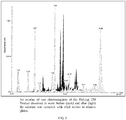
- a comparison between FIG. 2 (chromatogram of Hidvegi 250 Product after treatment with ethyl acetate to remove gluten) and FIG. 3 (the product of the present invention) are evidence of chemical differences between the two products.
- FIG. 4(A) (chromatogram of the Hidvegi 250 Product prior to gluten removal) and FIG. 4(B) (the product of the present invention) are evidence of chemical differences between the two products.
- FIG. 1 demonstrates that the product produced by the present invention differs from the Hidvegi A250 Product in every quantifiable, physical characteristic other than taste: including gluten content, color, density, pH, appearance, and odor.
- Gluten is a protein composite which may be found in foods processed from wheat. Gluten constitutes more than 80% of the protein contained in wheat. About one percent of the people in developed countries have some intolerance to gluten, some of which can be severe enough to be life-threatening.
- a gluten-free diet is medically accepted treatment for celiac disease, an autoimmune digestive ailment. Some people suffer from gluten intolerance, which is different from celiac in that it is not an immune mediated response. More commonplace is gluten sensitivity, which affects nearly 20 million people in the United States and is essentially a less severe form of gluten intolerance.
- gluten free is regulated to mean food products to those with less than 20 parts per million of gluten.
- Gluten intolerance is an organism's inability to absorb gluten, a protein found in wheat, barley, oats and rye. Gliadins and glutenins are the two main components of the gluten fraction of the wheat seed.
- the production of anti-gliadin antibodies by an intolerant individual after the consumption of food containing gluten flattens out or damages the villi of the small intestine, responsible for the absorption of nutrients, vitamins and trace elements. The result is that food particles leak into the bloodstream, and the body's natural defense system sees these particles as "foreign invaders.”
- the problem becomes two-fold: the body cannot absorb important nutrients and the body seems to attack itself at the same time.
- the intolerance manifests in various forms in different individuals, including celiac disease, non- celiac gluten intolerance, dermatitis herpetiformis, migraines, and wheat allergy.
- the prevalence of disease associated gluten sensitivity has increased over the past 50 years and affects approximately 1% of the population [Rubio-Tapia et al. 2009; Fasano et al. 2003; Mustalahti et al. 2010].
- Celiac disease is a type of more commonly manifested form of gluten intolerance.
- the symptoms and manifestations of celiac disease differ, very often, from case to case and depending on age of the affected individuals. Infants present gastrointestinal discomfort, diarrhea, often, bulky and particularly fetid defecation and immobility or loss of weight. Children, besides the symptoms described above, may present nausea, vomiting, anorexia, anemia, dermatitis and mouth aphtha. They may present irritability as well.
- Adults, at the initial stage of the disease present a general feeling of sickness and fatigue, even when gastrointestinal disturbances are limited. Further, because of the limited absorption of vitamins, trace elements and nutrients, anemia, osteopenia, as well as neural and hormonal disorders are noted.
- gluten intolerance-related diseases such as celiac disease
- celiac disease are serious and often chronic diseases, they can be treated quite effectively, without medication or medical intervention. It is recommended amongst other things in the treatment of celiac disease, non- celiac gluten intolerance, dermatitis herpetiformis, migraines, and wheat allergy.
- the treatment is a strict life-long gluten-free diet, which results in the restoration of the small intestine wall in a normal condition and the control of the disease. Special attention should be given even to least gluten quantities because the degree of the lesion caused to the small intestine and the time of restoration are disproportional. This means eliminating virtually all foods made from these grains (e. g., food starch when it is prepared from wheat, and malt when it comes from barley).
- the gluten-free diet is a lifetime requirement. As such, a need exists for new gluten-free products.
- Celiac disease also known as gluten enteropathy or celiac sprue
- celiac sprue is a disease in which inflammatory responses to the ingestion of gluten damage the proximal small intestinal mucosa and result in malabsorption of most nutrients.
- Gluten is hypothesized to stimulate an inappropriate T cell-mediated immune response in the intestinal submucosa that destroys mucosa! enterocytes.
- Characteristic symptoms of celiac disease include diarrhea, weight loss, abdominal distention, weakness, muscle wasting, growth retardation, and malnutrition.
- Theprevalence of celiac disease in the United States is estimated to be 1:150 ( M. Michael (2003), Recognizing and managing celiac disease in primary care, J. Am. Acad. Nurse Pract., 15(3): 108-114 .), although whites of Northern European ancestry are afflicted at a higher rate than are those with African and Asian ancestry. ( L. M. Tierney, Jr., S. J. McPhee, and M.A. Papadakis, eds. (2003), Current Medical Diagnosis & Treatment: 585-587 ).
- the present invention allows the production of a gluten-free grain concentrate (GFGC), a substance suitable for use in foods, dietary supplements or medicaments.
- GFGC is more concentrated and easier to produce than incorporated in existing fermented wheat germ extract (FWGE), and providing a preferable substitute or alternative.
- FWGE is made in several ways and said ways are described in previous patents. Research exists suggesting that FWGE supplements have anti-cancer and other medicinal benefits.
- FWGE is a polymolecular compound composed of thousands of molecules, and it can be shown that most of the material that makes up FWGE, and the majority of chemical entities do not contribute to anti-cancer effects.
- Several technologies can isolate fractions which appear to account for all of the anti-cancer benefits of FWGE, and separate out the non-active constituents.
- the present invention discloses the simplest method with the least complicated and fewest number of steps, utilizing inexpensive technologies approved for use in the manufacture of food to create a substantially more concentrated, potent extract, with the highest concentration of active, anti-cancer constituents and least inactive constituents, compared with extracts which are made through existing technologies.
- the first FWGE food supplement was taught by U.S. Patent no. 8,563,050 B2 (Hidvegi ) (the '050 patent).
- A250 the most advanced FWGE food supplement, commonly known as A250.
- A250 requires the expensive freeze-dried FWGE as a starting point, and also requires multiple steps, including expensive solid-phase extraction technology.
- A250 is about 30 times more concentrated than FWGE made under the '050 patent.
- the method of the present invention produces GFGC, a food supplement which is about 70 times more concentrated than FWGE made by teaching of the '050 patent, and does so with fewer and less expensive steps.
- GFGC is a substance which is gluten free, dramatically more concentrated, and may be delivered in an equivalently bioactive dosage of approximately 80 to 500 mg formulated in accordance with the product of the present invention.
- the conventional daily dose of FWGE is 5,500 mg per day.
- the present invention discloses a product which tastes slightly sweet, and pleasant.
- the GFGC produced by the method of this disclosure thus overcomes the need for flavoring and additives to make existing FWGE food supplements palatable.
- GFGC is stable at temperatures likely to be encountered during shipment via land and air-based delivery services, such as United Parcel Service (UPS) during warm-weather periods.
- UPS United Parcel Service
- FWGE food supplements require the use of ice packs to maintain product integrity when the temperature of packages is liable to exceed 80 degrees Fahrenheit.
- FWGE food supplements are extremely hygroscopic, so that they absorb moisture readily. Absorption of moisture may spoil the product or require expensive handling and packaging to prevent said spoilage.
- the GFGC of the present invention is not hygroscopic, thus surmounting the shortcomings of the existing FWGE food supplements' hygroscopic propensities.
- the present invention discloses a method producing a GFGC product which overcomes these difficulties and allows the extract to be incorporated into beverages, bars and other foods.
- the methods of producing existing FWGE food supplements taught in the prior art differ from the method of producing GFGC food supplements as disclosed by the present invention.
- the prior art also teaches a ten to twenty-four hour fermentation time, whereas GFGC according to the present invention optimally ferments in eight hours.
- Claim 1 of the '474 patent differs from the disclosure of the present invention because the present invention neither uses ground wheat germ nor does it boil off water and dry the fermented liquid.
- claim 2 of the '474 patent differs from the present invention in that the fermentation mixture is not subject to "continuous aerating."
- Claim 3 of the '4 74 patent differs from the present invention because the present invention does not use maltodextrin.
- Claim 4 of the'474patent differs from the present invention because the present invention does not use auxiliary drying materials.
- Claim 5 of the '474 patent differs in that the present invention does not use boiling.
- Claim 6 of the '474 patent differs from GFGC, because the present invention does not use drying.
- the '050 patent differs from the present invention in that the present invention does not add sweeteners or flavors, surfactants, auxiliary materials, does not lyophilize (see '050 patent, claim 1), nor does it add surface stabilizing, dispersing or emulsifying agents ('050 patent, claim2); nor adds the surfactants listed ('050 patent, claim 3); nor adds lecithin ('050 patent, claim 4); nor does it add sweeteners or flavors ('050 patent, claims 5, 6 and 7).
- the current invention is favorably disposed to the use of liquid-filled capsules, suspensions and syrups as delivery mechanisms.
- Claim 9 of the '050 patent teaches the use of a strain of Saccharomyces cerevisice (baker's yeast).
- the present invention discloses the use of other organisms also, particularly, the bacteria used in sourdough bread.
- WO2010100515 includes a reference to a biologically active fraction obtained from processed wheat germ, which fraction is similar to the biologically active fraction disclosed in the present invention.
- the present invention treats the fraction differently from WO2010100515 .
- the product is obtained from A2, E, ES and L
- the UV chromatogram shows that the present invention's products differ from WO2010100515 's A2, E, ES and L.
- WO20101005 1 5 uses gel-filtration after the ethyl acetate extraction, but GFGC does not require it.
- Fermented wheat germ has been shown to have beneficial properties. More particularly, a printed publication, by Yusuf, Oluwatosin K. and Justine T. Ekanem, "Studies of phytochemical constituents and anti-trypanosomal properties of fermented wheat germ and garlic bulbs extract on Trypanosoma brucei-infected rats.” Journal of Medicinal Plants Research (4 Oct. 2010): 2016-2020 (hereinafter, "Rl” or”Yusuf). Fermented wheat germ as used in Rl is not gluten free. In fact, page 2016 of Rl states “Fermented wheat germ Extract called creamyer [sic] was chosen for this work because it has been reported to ... ". "Avemer” is a misspelling of Avemar (for example see AVEMAR Miss Spelling Domains site http://www.ipgeni.com/miss-spell/avemar (last visited 25-APR-2015).
- Avemar it "contains gluten” (see http://www.avemar.com.au/avemarinfo.news (last visited 25-APR-2015).
- the present invention does not contain gluten.
- the rule defining that a gluten free product must contain less than 20 mg/kg (see https://www.federalregister.gov/documents/2013/08/20172013 -18813/food-labeling-gluten-free-labeling-of-foods (last visited 25-OCT-2018).
- the present disclosure is gluten free. In particular, it has been measured to contain less than 5 mg/kg gluten, whereas Avemar has been measured to contain 121,000 mg/kg gluten.
- Food products containing gluten are significantly different from gluten-free products. Some people are exceedingly sensitive to gluten, and must avoid gluten at all costs to avoid physical harm. Gluten sensitivity occurs in people who are intolerant to gluten, a protein found in wheat, barley, oats and rye. When ingesting foods containing gluten, they will develop gastrointestinal disorders including diarrhea, nausea, vomiting, bloating, nervous disorders such as headaches and fatigue, and hormone-system maladies leading to anemia, vitamin D deficiency and osteoporosis.
- a diagnosis of Celiac disease is made when sufferers of gluten-sensitivity have measurable levels of antibodies to gliadin, a protein in gluten. It is theorized that anti-gliadin antibodies damage the villi present in the small intestine (responsible for the absorption of vitamins, trace minerals and nutrients), leading to malabsorption. Damage to villi can also allow food particles to leak into the bloodstream, a phenomenon referred to as "leaky gut syndrome.” These particles can provoke the production of other anti-bodies and inflammatory immune response. Over the last fifty years the prevalence of disease associated gluten sensitivity has been increasing and affects approximately 1% of the population [Rubio-Tapia et al. 2009; Fasano et al. 2003; Mustalahti et al. 2010.]
- Yusuf discloses the use of powdered wheat germ, whereas the current disclosure teaches the use of unground wheat germ.
- the present invention limits fermentation to eight hours or the product diminishes the active ingredient. Yusuf ferments the Rl product for six times longer (48 hours), a period which would render the present invention inactive.
- R1 further discloses the extraction of paste as the product and discards all else.
- the present invention discards the paste product and uses what Rl discards.
- Yusuf discloses that Rl users had to filter the extract before the evaporation.
- the fermentation broth used in the present invention contains different components of the wheat germ than disclosed by Rl.
- the present invention discloses that the product contains only the water-soluble part of the wheat germ concentrate.
- Rl further discloses a method which does not include a requirement for separation of the phases, which is a requirement of the present invention.
- the present invention teaches phase separation via centrifuge.
- the present invention teaches liquid-liquid extraction
- RI discloses an organic solvent extraction of the solids of the fermentation.
- the present invention is more effective at removing gluten.
- the present invention has been compared to a fermented wheat germ concentrate taught by Mate Hidvegi in U.S. Pat. Publ. no. 2012/0164132 A1 (the "A250 Disclosure), the resulting product is referred to hereafter as "Hidvegi A250 product".
- Hidvegi A250 product the resulting product is referred to hereafter as "Hidvegi A250 product”.
- the present invention produces a compound which is both physically and chemically distinct from the Hidvegi A250 product.
- the present invention uses the same starting material as the Hidvegi A250 Disclosure, which is fermented wheat germ but said starting material is processed differently. As a result, the present invention does not contain gluten.
- the Hidvegi A250 Disclosure does not have any data about gluten content.
- the presence (or conversely the absence) of gluten may result in markedly difference biological behavior.
- the present invention is WGA free (Wheat germ agglutinin - a protein that protects the wheat from insects). (See FIG. 1 , first column.) Agglutinin and Gluten are not similar, and also have different biological effects.
- the Hidvegi A250 Disclosure teaches how to produce the Hidvegi A25 Product, a material which contains glycosides of different flavonoids, while these components are completely missing from the gluten free product of the present invention.
- the method taught in the Hidvegi A250 Disclosure requires freeze-dried powder as starting material. This process denatures wheat proteins in many of the more than 20,000 types of proteins in the hexaploid species of plant of which wheat is one.
- the present invention does not employ freeze-drying, thus no protein denaturing.
- the freeze-drying requirement disclosed by Hidvegi prevents it from being used for, thus teaches away from using either the un- concentrated or concentrated broth as required by the present invention.
- methanol and chloroform are highly efficient gluten removal techniques.
- methanol is a highly toxic solvent
- chloroform is a carcinogen (https://www.ncbi.nlm.nih.gov/pmc/articles/PMC1637645/)
- the use of methanol is very limited in food production.
- diethyl ether is an extremely flammable hazardous solvent.
- Ethyl acetate is a much safer solvent which is used for gluten removal, so the Ethyl acetate method is used in industrial scale production for gluten removal. Ethyl acetate is allowed to be used in food production.
- FIG. 1 is a table distinguishing the product produced by the present invention from the Hidvegi A250 Product with gluten and without gluten.
- the present invention has particular quantifiable, physical characteristics including gluten content, color, density, pH, appearance, odor and taste. Said characteristics are enumerated on lines 1 and 2 of FIG. 1 .
- Line 1 details the present invention with inert elements.
- Line 2 details the present invention with inert elements removed.
- FIG. 3 displays said characteristics of the present invention in the form of a chromatogram.
- the Hidvegi A250 Product also has particular quantifiable, physical characteristics including gluten content, color, density, pH, appearance, odor and taste. Said characteristics appear on Line 3 of FIG. 1 . Line 4 depicts these characteristics following removal of gluten from the Hidvegi A250 Product.
- FIG. 4 compares the chemical characteristics of the Hidvegi A250 Product; 4(A) is a chromatogram depicting the Hidvegi A250 Product before the gluten is removed; 4B is the product of the present invention.
- FIG. 5 is a chromatogram depicting the Hidvegi A250 Product dissolved in distilled water and the solution extracted with ethyl acetate to remove gluten.
- the chromatogram of FIG. 5 overlays the two resulting subfractions. The darker peaks or patterns evidence chemical characteristics of the Hidvegi A250 Product. The lighter peaks evidence the gluten-free result after ethyl acetate extraction, and are the same as shown in FIG. 2 .
- the chromatogram shows the Hidvegi A250 Product after treatment with ethyl acetate to remove gluten executed on the same machinery as the FIG. 3 chromatogram of the product of the current invention.
- FIG. 2 chromatogram of Hidvegi 250 Product after treatment with ethyl acetate to remove gluten
- FIG. 3 the product of the present invention
- FIG. 4(A) chromatogram of the Hidvegi 250 Product prior to gluten removal
- FIG. 4(B) the product of the present invention
- FIG. 1 demonstrates that the product produced by the present invention differs from the Hidvegi A250 Product in every quantifiable, physical characteristic other than taste: including gluten content, color, density, pH, appearance, and odor.
- the Yusuf publication also teaches the use of ethyl acetate to remove gluten from wheat germ products.
- the application of said Yusuf ethyl acetate gluten removal technique to the material produced using the Hidvegi A250 Disclosure produces a very different product than the product associated with the present invention.
- Evidence of said difference can be seen by comparing the chromatograms of the present invention with the chromatograms of Yusuf ethyl acetate gluten removal technique to Hidvegi A250 Product.
- Row et al. (Biores. Technol. 2006. 97: 790-793 ) (the "Row publication”) also teaches the use of ethyl acetate to remove gluten from wheat germ products.
- the application of said Row ethyl acetate gluten removal technique to the Hidvegi A250 Product also products a very different product than the product associated with the pres ent invention. Evidence of said difference can be seen by comparing the chromatograms of the present invention with the chromatograms of Row ethyl acetate gluten removal technique to the Hidvegi A250 Product.
- the Hidvegi A250 Disclosure teaches how to produce a material but does not eliminate gluten from said material because to do so which denature the proteins which were identified as the active ingredient.
- the Hidvegi A250 Product was treated with the most common method of removing gluten and the result was an inactive product.
- the regular way of making gluten free flour was used on the Hidvegi A250 Product. More particularly, the regular way of making gluten free flour, is to boil the suspension at high temperature and dissolve the starch with cold water. It was found that boiling the Hidvegi A250 Product significantly reduces its activity. Thus, it may be concluded that the method can't be used to eliminate or reduce the gluten from the Hidvegi A250 Product.
- Yusuf's paper describes a method in which the wheat germ was fermented with Baker's yeast and the paste was extracted with ethyl acetate. Although the meaning of the paste is not properly described, based on the properties of the different stages of FWGE production the mixture of wheat germ, yeast and water is most likely the paste that is mentioned in the paper.
- Sample 0217-1 was prepared by diluting 15mg of FWGE-SCP in 300uL Methanol. The sample was homogenized and suspended with vortex and sonication. The sample was separated from the excipients with centrifuge at 12,000 rpm. 200uL of the supernatant was transferred into a separate PCR tube and was dried under vacuum at SOC. The dry sample was dissolved with DMSO and diluted with distilled water to lmL. 20uL was injected into a HPLC system. The diode array detector was set to 200-400nm detecting range, and the chromatograms were exported at 280nm.
- Extracting the very crude paste results in a much more complex compound.
- the presence of yeast cells and especially the different lipid components of wheat germ in the unprocessed paste significantly changes the composition of the final product, reducing the abundance of the UV active components of the extract.
- the present invention is a gluten-free, fermented wheat germ food product and method of preparation necessary to make said fermented wheat germ food product.
- the product of this invention can be formulated in to capsules, tablets, granules, sachets, suspensions, emulsions, sprays, suppositories, ointments, or patches with the addition of auxiliary materials and procedures commonly used in dietary supplement and pharmaceutical technology, and formulated in to fortified beverages, food bars and foods, with the addition of auxiliary materials and procedures commonly used in beverage, health bar and food technology.
- FIG. 2 chromatogram of Hidvegi 250 Product after treatment with ethyl acetate to remove gluten
- FIG. 3 the product of the present invention
- FIG. 4(A) chromatogram of the Hidvegi 250 Product prior to gluten removal
- FIG. 4(8) the product of the present invention
- GFGC may be formulated by a number of different methods.
- the preferred method is a function of the form of the GFGC desired.
- the GFGC forms include a solid, a liquid and suspension of solid and liquid.
- the first method of preparing GFGC is described as follows: The invention is the product of the method used to make our gluten free fermented wheat germ extract disclosed on the 1-2 pages of the present specification.
- the order of combining the clarified broth and ethyl acetate is very important. If the clarified broth is added to the ethyl acetate in accordance with the method, the process will proceed. However, if the ethyl acetate is poured into the clarified broth not in accordance with the method, then a substance with a mayonnaise-like appearance could form, rendering the result unusable.
- An alternate method is to create GFGC broth by combining one part baker's yeast, three parts of raw wheat germ and thirty-two parts water.
- Filter broth first with a 5 micron filter or larger, and second with a .2 micron filter.
- the standardizing agent is phosphoric or hydrochloric acid.
- ethyl acetate - a mixture of not less than 80% ethanol and not more than 20% glycerol is added.
- the volume of said mixture should be about 1:1 with the volume of the remaining ethyl acetate, then mixed thoroughly. With further distillation the rest of the ethyl acetate and ethanol is removed and leaving the glycerol.
- the distillate temperature should not exceed 50 °C, preferably 40 °C.
- immiscible liquids such as propylene glycol, heptane or hexane, may be used in place of the solid methylcellulose and silica agents.
- the recovered dark powder will be 2% of the concentrated broth. If a liquid final product is desired, as the ethyl acetate is reduced, when approx. 80% is removed, add propylene glycol or glycerin, and continue boiling off ethyl acetate. Either of these GFGC products are known as GFGC-1.
- the above steps are followed through instead of adding a mixture of not less than 80% ethanol and not more than 20% glycerol.
- a mixture of not less than 80% ethanol and not more than 20% glycerol is added in lieu of ethanol/glycerol and subsequent steps.
- most but not all of the ethyl acetate is evaporated off with heat, leaving a residue of GFGC in solution with ethyl acetate, water and acids (GFGCS).
- the acid or acids are those produced as a result of the fermentation process and may vary depending upon the initial wheat germ raw material.
- the GFGC and GFGCS are present in a ratio of between approximately 1:20 and 1:50. To prevent deactivation of GFGC the GFGCS should not be exposed to temperatures in excess of 50 °C, and preferably 40 °C.
- the remaining GFGC solids must be estimated.
- the preferred estimating method includes taking 10 grams of GFGCS and heating the sample to not more than 50 °C, and optimally 40 °C, under a vacuum until only solid material remains. Then the solid materials are weighed to determine a ratio of GFGC to GFGCS. The weight of the GFGCS is multiplied by the ratio to determine the mass of the GFGC. For example, if the GFGCS weighs 100 grams and a 10-gram sample was removed, and the 10-gram sample yielded one gram of GFGC, then the GFGC would be calculated by dividing the one gram resultant by the 10 gram example and multiplying it by the remaining 90 grams of GFGCS, giving 9 grams of GFGC. The 9 gram result is used to calculate the volume of excipients in the next step.
- the GFGCS is then combined with excipients in a ratio of approximately 1:9 of the estimated solids to the excipient (GFGCSE).
- GFGCSE the excipient
- the preferable excipients are hydroxypropyl methylcellulose (a/k/a hypromellose, HPMC) and microcrystalline cellulose (MCC) in a preferred ratio of 6.1 HPMC to 4.0 MCC, or approximately 3:2.
- a salt preferably a food-grade inorganic salt such as MgS0 4 is added to the GFGCS in a proportion of up to 10% of the mass of GFGCS to facilitate reduction of water in the solution.
- the mixture is stirred for approximately five minutes and left to settle to the bottom.
- the liquid is decanted after two to eight hours.
- the excipients are added to the dewatered mixture resulting in a GFGCSE with reduced clumping of the excipients in order to produce a more uniform end product.
- the GFGCSE is then transferred to a paddle dryer.
- the paddle dryer is run, under a vacuum preferably starting at 241 ⁇ 2 inches mercury, at product temperatures of preferably 40 °C, not higher than 50°C. During the approximately 21 ⁇ 2 treatment time the vacuum is gradually increased to 291 ⁇ 2 inches of mercury.
- GFGCP The product of this step is termed GFGCP.
- the GFGCP is milled into a fine powder (GFGCFP) using a Hammer Mill or similar apparatus.
- the GFGCFP is transferred to a paddle dryer or a fluid-bed dryer to remove trace ethyl acetate, residual water and acids at temperatures of preferably 40 °C but not higher than 50°C, for approximately two hours or until the moisture is reduced to 3% to 13% water content by weight.
- this step may be accelerated by using warm nitrogen gas at no more than 50°C, or a partial vacuum of between 241 ⁇ 2 and 291 ⁇ 2 inches of mercury.
- the result of this step is GFGC-2.
- the GFGC-2 product resulting from the option method can be utilized at a dosage at least 10 times lower than whole FWGE.
- the product from this method has no unpleasant flavor, unlike whole FWGE, is not hygroscopic, like whole FWGE, is not sensitive to degrade in temperatures above, like whole FWGE, and can be administered orally, and by IV, unlike whole FWGE which can only be administered orally.
- the GFGC resulting from said method of production has the following characteristics, including:
- an amount of organic solvent- for example ethyl-acetate - equal to the amount of concentrate is added to the concentrate. Stir them gently for 15-30 minutes. Use a centrifuge to separate the two phases. After separating the organic, less dense layer - which should be about 50% of the total volume - remove the organic layer and place the organic layer in a dryer or reaction vessel. Heat at no more than 40°C until all of the liquid is removed.
- organic solvent for example ethyl-acetate - equal to the amount of concentrate is added to the concentrate. Stir them gently for 15-30 minutes. Use a centrifuge to separate the two phases. After separating the organic, less dense layer - which should be about 50% of the total volume - remove the organic layer and place the organic layer in a dryer or reaction vessel. Heat at no more than 40°C until all of the liquid is removed.
- the purification process steps (prior to vacuum evaporation), starting with completed (whole) fermentation broth, are as follows:
Landscapes
- Life Sciences & Earth Sciences (AREA)
- Engineering & Computer Science (AREA)
- Biotechnology (AREA)
- Microbiology (AREA)
- Health & Medical Sciences (AREA)
- Nutrition Science (AREA)
- Chemical & Material Sciences (AREA)
- Food Science & Technology (AREA)
- Polymers & Plastics (AREA)
- Coloring Foods And Improving Nutritive Qualities (AREA)
Abstract
Description
- The subject matter of the invention is a method for producing gluten-free grain concentrate, said method comprising the following steps:
- a) heating 400 gallons of filtered water to a temperature of 25 °C;
- b) adding said water to a vessel containing 100 lbs of crumbled baker's yeast (Saccharomyces cerevisiae);
- c) mixing said yeast water mix constantly for 1 hour;
- d) adding 1000 lbs of raw wheat germ to said yeast water mix;
- e) mixing said wheat germ yeast water mix for 8 to 24 hours allowing temperature to raise to a temperature of not more than 46 °C,
- f) decanting said wheat germ yeast water mix through a liquid-solid separator with a 100 to 150 micron screen into a stacked disc centrifuge;
- g) operating said stacked disc centrifuge to remove at least 75% of the yeast from said low wheat germ liquid forming a low yeast liquid;
- h) transferring said low yeast liquid to a plate and frame filtration device with 5 to 42 micron filter plates;
- i) operating said plate and frame filtration device to produce clarified broth no more than 7% dissolved solids;
- j) transferring said broth to a vacuum evaporator;
- k) operating said vacuum evaporator to remove water from said broth producing a concentrated broth which has no less than 28% dissolved solids;
- l) transferring said concentrated broth to a second centrifuge;
- m) operating said second centrifuge to remove remaining suspended solids forming a clarified broth, or
- n) optionally the suspended solids can be removed by letting them to settle, and the clarified broth is decanted;
- o) transferring said clarified broth solid to a third vessel containing sufficient ethyl acetate to remove at least most of gluten from said clarified broth forming an ethyl acetate liquid layer and a water layer;
- p) decanting said ethyl acetate liquid layer from said third vessel into a fourth vessel;
- q) evaporating said ethyl acetate liquid in said forth vessel forming concentrated ethyl acetate liquid which contain at least 6% solids;
- r) mixing excipients, preferably microcrystalline cellulose and hydroxypropylmethylcellulose in sufficient quantities forming a cellulose mix which has a volume of 3-6 times, preferably four times the volume of said concentrated ethyl acetate liquid;
- s) adding said cellulose mix to said concentrated ethyl acetate liquid in said fourth vessel forming final mix;
- t) transferring said final mix into a vacuum paddle dryer, or
- u) optional way for loading the paddle dryer, if sufficient amount of cellulose mixture is loaded first, then the concentrated ethyl acetate liquid is filled onto the excipients;
- v) setting said vacuum paddle dryer to operate with a vacuum of 24 inches to 28 inches of mercury, a temperature of 30 °C - 60 °C and a 3-60 rpm drum rotation speed;
- w) operating said vacuum paddle dryer for up to 24 hours using said vacuum, heat and drum rotation speed setting forming stable dry powder.
- The subject matter of the invention is furthermore a gluten-free grain concentrate substitute for fermented wheat germ food product, produced using the method disclosed above.
- The present disclosure relates to the field of food made from wheat and a method of making a gluten-free wheat based food. More particularly, the present invention involves wheat which is subjected to yeast fermentation, and becomes a food which is the source biologically active substances. Most particularly, the present invention uses a solvent extraction, which is also known as partitioning fermented wheat germ extract method to produce a fermented wheat germ food product.
- The present invention differs from its closest prior art, a publication by Mate Hidvegi described below, even after the Hidvegi fraction was stripped of gluten by ethyl acetate extraction. A comparison between
FIG. 2 (chromatogram of Hidvegi 250 Product after treatment with ethyl acetate to remove gluten) andFIG. 3 (the product of the present invention) are evidence of chemical differences between the two products. Similarly, a comparison betweenFIG. 4(A) (chromatogram of the Hidvegi 250 Product prior to gluten removal) andFIG. 4(B) (the product of the present invention) are evidence of chemical differences between the two products. Additionally,FIG. 1 demonstrates that the product produced by the present invention differs from the Hidvegi A250 Product in every quantifiable, physical characteristic other than taste: including gluten content, color, density, pH, appearance, and odor. - Gluten is a protein composite which may be found in foods processed from wheat. Gluten constitutes more than 80% of the protein contained in wheat. About one percent of the people in developed nations have some intolerance to gluten, some of which can be severe enough to be life-threatening.
- A gluten-free diet is medically accepted treatment for celiac disease, an autoimmune digestive ailment. Some people suffer from gluten intolerance, which is different from celiac in that it is not an immune mediated response. More commonplace is gluten sensitivity, which affects nearly 20 million people in the United States and is essentially a less severe form of gluten intolerance.
- In accordance with Section 206 of the Food Allergen Labeling and Consumer Protection Act of 2004, Title II of Pub.L. 108-282, 118 Stat. 891, enacted August 2, 2004 and 72 F.R. 2795-2817 the term gluten free is regulated to mean food products to those with less than 20 parts per million of gluten.
- Gluten intolerance is an organism's inability to absorb gluten, a protein found in wheat, barley, oats and rye. Gliadins and glutenins are the two main components of the gluten fraction of the wheat seed. The production of anti-gliadin antibodies by an intolerant individual after the consumption of food containing gluten flattens out or damages the villi of the small intestine, responsible for the absorption of nutrients, vitamins and trace elements. The result is that food particles leak into the bloodstream, and the body's natural defense system sees these particles as "foreign invaders." The problem becomes two-fold: the body cannot absorb important nutrients and the body seems to attack itself at the same time. In humans, the intolerance manifests in various forms in different individuals, including celiac disease, non- celiac gluten intolerance, dermatitis herpetiformis, migraines, and wheat allergy. The prevalence of disease associated gluten sensitivity has increased over the past 50 years and affects approximately 1% of the population [Rubio-Tapia et al. 2009; Fasano et al. 2003; Mustalahti et al. 2010].
- Celiac disease is a type of more commonly manifested form of gluten intolerance. The symptoms and manifestations of celiac disease differ, very often, from case to case and depending on age of the affected individuals. Infants present gastrointestinal discomfort, diarrhea, often, bulky and particularly fetid defecation and immobility or loss of weight. Children, besides the symptoms described above, may present nausea, vomiting, anorexia, anemia, dermatitis and mouth aphtha. They may present irritability as well. Adults, at the initial stage of the disease present a general feeling of sickness and fatigue, even when gastrointestinal disturbances are limited. Further, because of the limited absorption of vitamins, trace elements and nutrients, anemia, osteopenia, as well as neural and hormonal disorders are noted. Details about celiac disease can be found Fasano et al., 2003, "Prevalence of Celiac Disease in At-Risk and Not-At-Risk Groups in the United States: A Large Multicenter Study," Arch Intern Med.163:286-292; Maki et al., 2003, "Prevalence of Celiac Disease among Children in Finland," The New England Journal of Medicine, 348:2517-2524; Sollid et al., 1989, "Evidence for a primary association of celiac disease to a particular HLA-DQ alpha/beta heterodimer," The Journal of Experimental Medicine, 169(1): 345; Suanderline 1994, "Celiac Disease: a Review," Gastroenterology Nursing 17(3), 100-105; and Reifa and Lerner, 2004, "Tissue transglutaminase--the Key Player in Celiac Disease: a Review," Autoinununity Reviews, 3(1):40-45; each of which is hereby incorporated by reference in its entirety.
- Although gluten intolerance-related diseases, such as celiac disease, are serious and often chronic diseases, they can be treated quite effectively, without medication or medical intervention. It is recommended amongst other things in the treatment of celiac disease, non- celiac gluten intolerance, dermatitis herpetiformis, migraines, and wheat allergy. The treatment is a strict life-long gluten-free diet, which results in the restoration of the small intestine wall in a normal condition and the control of the disease. Special attention should be given even to least gluten quantities because the degree of the lesion caused to the small intestine and the time of restoration are disproportional. This means eliminating virtually all foods made from these grains (e. g., food starch when it is prepared from wheat, and malt when it comes from barley). The gluten-free diet is a lifetime requirement. As such, a need exists for new gluten-free products.
- Celiac disease (also known as gluten enteropathy or celiac sprue) is a disease in which inflammatory responses to the ingestion of gluten damage the proximal small intestinal mucosa and result in malabsorption of most nutrients. Gluten is hypothesized to stimulate an inappropriate T cell-mediated immune response in the intestinal submucosa that destroys mucosa! enterocytes. (L. M. Tierney, Jr., S. J. McPhee, and M.A. Papadakis, eds. (2003), Current Medical Diagnosis & Treatment: 585-587). Characteristic symptoms of celiac disease include diarrhea, weight loss, abdominal distention, weakness, muscle wasting, growth retardation, and malnutrition. (L. M. Tierney, Jr., S. J. McPhee, and M.A. Papadakis, eds. (2003), Current Medical Diagnosis & Treatment: 585-587). Other symptoms that may occur even in the absence of the above symptoms, include fatigue, short statute, osteoporosis, dental enamel hypoplasia, and iron deficiency anemia. (L. M. Tierney, Jr., S. J. McPhee, and M.A. Papadakis, eds. (2003), Current Medical Diagnosis & Treatment: 585-587). Approximately 10% of celiac disease patients suffer neurological complications including ataxia and peripheral neuropathy. R. L. Chin, H. W. Sander, T. H. Brannagan, P.H. Green, A. P. Hays, A. Alaedini, N. Latov (2003), Celiac Neuropathy, Neurology, 60(10): 1581-1585). In addition, a cutaneous variant of celiac disease, dermatitis herpetiformis, exists. In this manifestation, patients suffer from a skin rash of pruritic papulovesicles over the extensor surfaces of the extremities, trunk, scalp, and neck. (L. M. Tierney, Jr., S. J. McPhee, and M.A. Papadakis, eds. (2003), Current Medical Diagnosis & Treatment: 585-587).
- Theprevalence of celiac disease in the United States is estimated to be 1:150 (M. Michael (2003), Recognizing and managing celiac disease in primary care, J. Am. Acad. Nurse Pract., 15(3): 108-114.), although whites of Northern European ancestry are afflicted at a higher rate than are those with African and Asian ancestry. (L. M. Tierney, Jr., S. J. McPhee, and M.A. Papadakis, eds. (2003), Current Medical Diagnosis & Treatment: 585-587).
- To date, no medical treatment exists to eliminate the physiological response and consequent damage to intestinal mucosa following gluten ingestion. Thus, gluten sensitivities cannot be cured. Elimination of all gluten from the diet is essential. L. M. Tierney, Jr., S. J. McPhee, and M.A. Papadakis, eds. (2003), Current Medical Diagnosis & Treatment: 585-587). Thus, the only treatment available is compliance with a life-long gluten-free diet, which alleviates the symptoms of the disease and allows the intestinal mucosa to heal. (A. S. Abdulkarim and J. A. Murray (2003), The diagnosis of coeliac disease, Aliment. Pharmacol. Ther., 17(8): 987-95). Non-compliance with a gluten-free diet can result in recurrence of gastrointestinal symptoms, neuropathic symptoms, and/or other potentially life-threatening consequences.
- The present invention allows the production of a gluten-free grain concentrate (GFGC), a substance suitable for use in foods, dietary supplements or medicaments. GFGC is more concentrated and easier to produce than incorporated in existing fermented wheat germ extract (FWGE), and providing a preferable substitute or alternative.
- FWGE is made in several ways and said ways are described in previous patents. Research exists suggesting that FWGE supplements have anti-cancer and other medicinal benefits.
- Analysis shows that FWGE is a polymolecular compound composed of thousands of molecules, and it can be shown that most of the material that makes up FWGE, and the majority of chemical entities do not contribute to anti-cancer effects. Several technologies can isolate fractions which appear to account for all of the anti-cancer benefits of FWGE, and separate out the non-active constituents.
- The present invention discloses the simplest method with the least complicated and fewest number of steps, utilizing inexpensive technologies approved for use in the manufacture of food to create a substantially more concentrated, potent extract, with the highest concentration of active, anti-cancer constituents and least inactive constituents, compared with extracts which are made through existing technologies.
- In particular, the first FWGE food supplement was taught by
U.S. Patent no. 8,563,050 B2 (Hidvegi ) (the '050 patent). Currently, the most advanced FWGE food supplement, commonly known as A250. A250 requires the expensive freeze-dried FWGE as a starting point, and also requires multiple steps, including expensive solid-phase extraction technology. A250 is about 30 times more concentrated than FWGE made under the '050 patent. The method of the present invention produces GFGC, a food supplement which is about 70 times more concentrated than FWGE made by teaching of the '050 patent, and does so with fewer and less expensive steps. - Compared with FWGE food supplements taught by the '050 patent, and by
U.S. Patent no. 6,355,474 to Hidvegi et al. (the '474 patent), GFGC is a substance which is gluten free, dramatically more concentrated, and may be delivered in an equivalently bioactive dosage of approximately 80 to 500 mg formulated in accordance with the product of the present invention. By comparison, the conventional daily dose of FWGE is 5,500 mg per day. - The present invention discloses a product which tastes slightly sweet, and pleasant. The GFGC produced by the method of this disclosure thus overcomes the need for flavoring and additives to make existing FWGE food supplements palatable.
- GFGC, according to the present invention, is stable at temperatures likely to be encountered during shipment via land and air-based delivery services, such as United Parcel Service (UPS) during warm-weather periods. Existing FWGE food supplements require the use of ice packs to maintain product integrity when the temperature of packages is liable to exceed 80 degrees Fahrenheit.
- Existing FWGE food supplements are extremely hygroscopic, so that they absorb moisture readily. Absorption of moisture may spoil the product or require expensive handling and packaging to prevent said spoilage. The GFGC of the present invention is not hygroscopic, thus surmounting the shortcomings of the existing FWGE food supplements' hygroscopic propensities.
- Due to the high necessary dosage, the unpleasant taste, hygroscopic and heat- liable nature of existing FWGE substances, it has not been possible to blend them with other ingredients in a cost-effective manner to make beverages, health bars or fortified foods. The present invention discloses a method producing a GFGC product which overcomes these difficulties and allows the extract to be incorporated into beverages, bars and other foods.
- The methods of producing existing FWGE food supplements taught in the prior art differ from the method of producing GFGC food supplements as disclosed by the present invention. The prior art also teaches a ten to twenty-four hour fermentation time, whereas GFGC according to the present invention optimally ferments in eight hours.
- In particular, the '474patent includes several claims that do not apply to the present invention.
Claim 1 of the '474 patent differs from the disclosure of the present invention because the present invention neither uses ground wheat germ nor does it boil off water and dry the fermented liquid. - Additionally,
claim 2 of the '474 patent differs from the present invention in that the fermentation mixture is not subject to "continuous aerating." Claim 3 of the '4 74 patent differs from the present invention because the present invention does not use maltodextrin.Claim 4 of the'474patent differs from the present invention because the present invention does not use auxiliary drying materials. Claim 5 of the '474 patent differs in that the present invention does not use boiling. Claim 6 of the '474 patent differs from GFGC, because the present invention does not use drying. - The '050 patent differs from the present invention in that the present invention does not add sweeteners or flavors, surfactants, auxiliary materials, does not lyophilize (see '050 patent, claim 1), nor does it add surface stabilizing, dispersing or emulsifying agents ('050 patent, claim2); nor adds the surfactants listed ('050 patent, claim 3); nor adds lecithin ('050 patent, claim 4); nor does it add sweeteners or flavors ('050 patent, claims 5, 6 and 7).
- The dose forms disclosed by '050 patent,
claim 8, do not teach the liquid filled capsule form disclosed by the present invention. The current invention is favorably disposed to the use of liquid-filled capsules, suspensions and syrups as delivery mechanisms. - Claim 9 of the '050 patent teaches the use of a strain of Saccharomyces cerevisice (baker's yeast). The present invention discloses the use of other organisms also, particularly, the bacteria used in sourdough bread.
- The teaching associated with
WO2010100515 (Hidvegi et al. ) includes a reference to a biologically active fraction obtained from processed wheat germ, which fraction is similar to the biologically active fraction disclosed in the present invention. However, the present invention treats the fraction differently fromWO2010100515 . In particular, inWO2010100515 the product is obtained from A2, E, ES and L, whereas the UV chromatogram shows that the present invention's products differ fromWO2010100515 's A2, E, ES and
L. While both the present invention andWO2010100515 use ethyl acetate as a solvent for their respective methods,WO20101005 1 5 - Fermented wheat germ has been shown to have beneficial properties. More particularly, a printed publication, by Yusuf, Oluwatosin K. and Justine T. Ekanem, "Studies of phytochemical constituents and anti-trypanosomal properties of fermented wheat germ and garlic bulbs extract on Trypanosoma brucei-infected rats." Journal of Medicinal Plants Research (4 Oct. 2010): 2016-2020 (hereinafter, "Rl" or"Yusuf). Fermented wheat germ as used in Rl is not gluten free. In fact, page 2016 of Rl states "Fermented wheat germ Extract called avemer [sic] was chosen for this work because it has been reported to ... ". "Avemer" is a misspelling of Avemar (for example see AVEMAR Miss Spelling Domains site http://www.ipgeni.com/miss-spell/avemar (last visited 25-APR-2015).
- According to the manufacture of Avemar, it "contains gluten" (see http://www.avemar.com.au/avemarinfo.news (last visited 25-APR-2015). The present invention does not contain gluten. In particular, the rule defining that a gluten free product must contain less than 20 mg/kg (see https://www.federalregister.gov/documents/2013/08/05/2013 -18813/food-labeling-gluten-free-labeling-of-foods (last visited 25-OCT-2018). The present disclosure is gluten free. In particular, it has been measured to contain less than 5 mg/kg gluten, whereas Avemar has been measured to contain 121,000 mg/kg gluten.
- Food products containing gluten are significantly different from gluten-free products. Some people are exceedingly sensitive to gluten, and must avoid gluten at all costs to avoid physical harm. Gluten sensitivity occurs in people who are intolerant to gluten, a protein found in wheat, barley, oats and rye. When ingesting foods containing gluten, they will develop gastrointestinal disorders including diarrhea, nausea, vomiting, bloating, nervous disorders such as headaches and fatigue, and hormone-system maladies leading to anemia, vitamin D deficiency and osteoporosis.
- A diagnosis of Celiac disease is made when sufferers of gluten-sensitivity have measurable levels of antibodies to gliadin, a protein in gluten. It is theorized that anti-gliadin antibodies damage the villi present in the small intestine (responsible for the absorption of vitamins, trace minerals and nutrients), leading to malabsorption. Damage to villi can also allow food particles to leak into the bloodstream, a phenomenon referred to as "leaky gut syndrome." These particles can provoke the production of other anti-bodies and inflammatory immune response. Over the last fifty years the prevalence of disease associated gluten sensitivity has been increasing and affects approximately 1% of the population [Rubio-Tapia et al. 2009; Fasano et al. 2003; Mustalahti et al. 2010.]
- Additional details about gluten sensitivity, Celiac and non-Celiac disease can be found at Molina-Infante J, et al., 2015, "Systematic review: noncoeliac gluten sensitivity" Aliment Pharmacol Ther.,(9):807-20, Tovoli F, et al., 2014," Clinical and diagnostic aspects of gluten related disorders," World J Clin Cases, I6;3(3):275-84, Mansueto P, et al., 2014 "Non- celiac gluten sensitivity: literature review," J Am Coll Nutr. 2014;33(1):39-54, Fasano et al., 2003, "Prevalence of Celiac Disease in At-Risk and Not-At-Risk Groups in the United States: A Large Multicenter Study," Arch Intern Med. 163:286-292; Maki et al., 2003, "Prevalence of Celiac Disease among Children in Finland," The New England Journal of Medicine, 348:2517- 2524; Sollid et al., 1989, "Evidence for a primary association of celiac disease to a particular HLA-DQ alpha/beta heterodimer," The Journal of Experimental Medicine, 169(1): 345; Suanderline 1994, "Celiac Disease: a Review," Gastroenterology Nursing 17(3), 100-105; and Reifa and Lerner, 2004, "Tissue transglutaminase - the Key Player in Celiac Disease: a Review," Autoimmunity Reviews, 3(1):40-45.
- Diseases associated with gluten sensitivity are chronic and serious, and can be treated effectively by eliminating gluten containing foods from the diet. Adopting a strict, life time gluten-free diet can result in restoration of the small intestine cell wall and amelioration or reversal of other symptoms. The growing incidence of health problems associated with gluten ingestion, and the demonstrated success of maintaining a gluten-free diet in such patient, establishes the need for new gluten-free products.
- Turning to other differences between the reference Rl and the present invention, Yusuf discloses the use of powdered wheat germ, whereas the current disclosure teaches the use of unground wheat germ. The present invention limits fermentation to eight hours or the product diminishes the active ingredient. Yusuf ferments the Rl product for six times longer (48 hours), a period which would render the present invention inactive.
- R1 further discloses the extraction of paste as the product and discards all else. The present invention discards the paste product and uses what Rl discards. As evidence, Yusuf discloses that Rl users had to filter the extract before the evaporation. Additionally, the fermentation broth used in the present invention contains different components of the wheat germ than disclosed by Rl. In particular, the present invention discloses that the product contains only the water-soluble part of the wheat germ concentrate.
- Rl further discloses a method which does not include a requirement for separation of the phases, which is a requirement of the present invention. The present invention teaches phase separation via centrifuge. Thus, the present invention teaches liquid-liquid extraction, whereas RI discloses an organic solvent extraction of the solids of the fermentation.
- Consequently, the present invention is more effective at removing gluten.
- The present invention has been compared to a fermented wheat germ concentrate taught by Mate Hidvegi in
U.S. Pat. Publ. no. 2012/0164132 A1 (the "A250 Disclosure), the resulting product is referred to hereafter as "Hidvegi A250 product". However, the present invention produces a compound which is both physically and chemically distinct from the Hidvegi A250 product. - The present invention uses the same starting material as the Hidvegi A250 Disclosure, which is fermented wheat germ but said starting material is processed differently. As a result, the present invention does not contain gluten. The Hidvegi A250 Disclosure does not have any data about gluten content. However, tests of the Hidvegi A250 Product, a fermented wheat germ concentrate, show it does contain gluten. (See
FIG. 1 , first column.) - The presence (or conversely the absence) of gluten may result in markedly difference biological behavior. The present invention is WGA free (Wheat germ agglutinin - a protein that protects the wheat from insects). (See
FIG. 1 , first column.) Agglutinin and Gluten are not similar, and also have different biological effects. - The Hidvegi A250 Disclosure teaches how to produce the Hidvegi A25 Product, a material which contains glycosides of different flavonoids, while these components are completely missing from the gluten free product of the present invention.
- The physical and chemical differences between the Hidvegi A250 Product, a material produced in accordance with the Hidvegi A250 Disclosure, and the material produced as a result of the present invention is due to the different processes taught by the two patents.
- The method taught in the Hidvegi A250 Disclosure requires freeze-dried powder as starting material. This process denatures wheat proteins in many of the more than 20,000 types of proteins in the hexaploid species of plant of which wheat is one. The present invention does not employ freeze-drying, thus no protein denaturing. The freeze-drying requirement disclosed by Hidvegi prevents it from being used for, thus teaches away from using either the un- concentrated or concentrated broth as required by the present invention.
- It has been suggested that if the Hidvegi A250 Disclosure teaches how to produce the Hidvegi A250 Product, a material that only differs from the present invention in that the Hidvegi A250 Disclosure teaches how to produce a material with gluten and the present invention does not. Consequently, to produce the product taught by the present invention, the suggestion is that one need only apply well known gluten removal techniques to the Hidvegi A250 Product, however this is not correct (compare
Figure 2 which is a chromatogram of the product of Hidvegi A250 Product after a well know gluten removal techniques was apply to the Hidvegi A250 Product withFigure 3 a chromatogram of the product of the current invention). - The use of methanol and chloroform is one highly efficient gluten removal techniques. However, methanol is a highly toxic solvent, and chloroform is a carcinogen (https://www.ncbi.nlm.nih.gov/pmc/articles/PMC1637645/) The use of methanol is very limited in food production.
- A similar effective removal techniques is the use of diethyl ether. But diethyl ether is an extremely flammable hazardous solvent.
- Ethyl acetate is a much safer solvent which is used for gluten removal, so the Ethyl acetate method is used in industrial scale production for gluten removal. Ethyl acetate is allowed to be used in food production.
- Thus, it has been suggested that if the Hidvegi A250 Product were treated with an ethyl acetate gluten removal technique, the result would be similar to or perhaps identical to the product resulting from the present invention.
-
FIG. 1 is a table distinguishing the product produced by the present invention from the Hidvegi A250 Product with gluten and without gluten. The present invention has particular quantifiable, physical characteristics including gluten content, color, density, pH, appearance, odor and taste. Said characteristics are enumerated onlines FIG. 1 .Line 1 details the present invention with inert elements.Line 2 details the present invention with inert elements removed. - The present invention has quantifiable chemical characteristics.
FIG. 3 displays said characteristics of the present invention in the form of a chromatogram. - Returning to
FIG. 1 , the Hidvegi A250 Product also has particular quantifiable, physical characteristics including gluten content, color, density, pH, appearance, odor and taste. Said characteristics appear on Line 3 ofFIG. 1 .Line 4 depicts these characteristics following removal of gluten from the Hidvegi A250 Product. - The Hidvegi A250 Product has quantifiable chemical characteristics.
FIG. 4 compares the chemical characteristics of the Hidvegi A250 Product; 4(A) is a chromatogram depicting the Hidvegi A250 Product before the gluten is removed; 4B is the product of the present invention. -
FIG. 5 is a chromatogram depicting the Hidvegi A250 Product dissolved in distilled water and the solution extracted with ethyl acetate to remove gluten. The chromatogram ofFIG. 5 overlays the two resulting subfractions. The darker peaks or patterns evidence chemical characteristics of the Hidvegi A250 Product. The lighter peaks evidence the gluten-free result after ethyl acetate extraction, and are the same as shown inFIG. 2 . - Referring to
FIG. 2 , the chromatogram shows the Hidvegi A250 Product after treatment with ethyl acetate to remove gluten executed on the same machinery as theFIG. 3 chromatogram of the product of the current invention. - In sum, a comparison between
FIG. 2 (chromatogram ofHidvegi 250 Product after treatment with ethyl acetate to remove gluten) andFIG. 3 (the product of the present invention) are evidence of chemical differences between the two products. Similarly, a comparison betweenFIG. 4(A) (chromatogram of theHidvegi 250 Product prior to gluten removal) andFIG. 4(B) (the product of the present invention) are evidence of chemical differences between the two products. - Additionally,
FIG. 1 demonstrates that the product produced by the present invention differs from the Hidvegi A250 Product in every quantifiable, physical characteristic other than taste: including gluten content, color, density, pH, appearance, and odor. - The Yusuf publication also teaches the use of ethyl acetate to remove gluten from wheat germ products. The application of said Yusuf ethyl acetate gluten removal technique to the material produced using the Hidvegi A250 Disclosure produces a very different product than the product associated with the present invention. Evidence of said difference can be seen by comparing the chromatograms of the present invention with the chromatograms of Yusuf ethyl acetate gluten removal technique to Hidvegi A250 Product.
- Row et al. (Biores. Technol. 2006. 97: 790-793) (the "Row publication") also teaches the use of ethyl acetate to remove gluten from wheat germ products. The application of said Row ethyl acetate gluten removal technique to the Hidvegi A250 Product also products a very different product than the product associated with the pres ent invention. Evidence of said difference can be seen by comparing the chromatograms of the present invention with the chromatograms of Row ethyl acetate gluten removal technique to the Hidvegi A250 Product.
- While both Yusuf and Row teach the use of ethyl acetate to remove gluten from wheat germ products, they do not teach the use of ethyl acetate extraction to remove gluten from fermented wheat germ extract. The use of ethyl acetate extraction to remove gluten from fermented wheat germ extract is not taught because it denatures some of the proteins in fermented wheat germ extract.
- The Hidvegi A250 Disclosure teaches how to produce a material but does not eliminate gluten from said material because to do so which denature the proteins which were identified as the active ingredient. In particular, the Hidvegi A250 Product was treated with the most common method of removing gluten and the result was an inactive product. In particular, the regular way of making gluten free flour was used on the Hidvegi A250 Product. More particularly, the regular way of making gluten free flour, is to boil the suspension at high temperature and dissolve the starch with cold water. It was found that boiling the Hidvegi A250 Product significantly reduces its activity. Thus, it may be concluded that the method can't be used to eliminate or reduce the gluten from the Hidvegi A250 Product.
- It was hypothesized that the extract described by Yusuf in 2010 is similar to our gluten free extract made from the clarified fermentation broth, and to test this hypothesis a High Performance Liquid Chromatography (HPLC) test was prepared to disprove that the two extracts are different.
- Yusuf's paper describes a method in which the wheat germ was fermented with Baker's yeast and the paste was extracted with ethyl acetate. Although the meaning of the paste is not properly described, based on the properties of the different stages of FWGE production the mixture of wheat germ, yeast and water is most likely the paste that is mentioned in the paper.
- Wheat germ was fermented with Baker's yeast overnight and the paste was extracted with organic solvent in 1:1 ratio, as it was described by Yusuf in 2010. The mixture was vortexed and the phases were separated at 12,000 rpm. The upper phase was dried under vacuum at SOC overnight. The sample was mostly oil, with reddish color (Sample PI).
- 20mg of the dried sample was dissolved in 500uL of methanol, and 25uL of the solution was further diluted with distilled water. The final concentration of the sample was lmg/mL, and 20uL was injected into a HPLC system. The diode array detector was set to 200-400nm detecting range, and the chromatogram was exported at 280nm.
- Sample 0217-1 was prepared by diluting 15mg of FWGE-SCP in 300uL Methanol. The sample was homogenized and suspended with vortex and sonication. The sample was separated from the excipients with centrifuge at 12,000 rpm. 200uL of the supernatant was transferred into a separate PCR tube and was dried under vacuum at SOC. The dry sample was dissolved with DMSO and diluted with distilled water to lmL. 20uL was injected into a HPLC system. The diode array detector was set to 200-400nm detecting range, and the chromatograms were exported at 280nm.
- Both of the samples were injected in the same concentration into the HPL system. The chromatograms appear to be very different. While Sample 0217-1 has many UV active components between 2min and 16min retention, the paste extract has only some UV active components, and mostly after 16min. (
FIG. 4 ). - Extracting the very crude paste results in a much more complex compound. The presence of yeast cells and especially the different lipid components of wheat germ in the unprocessed paste significantly changes the composition of the final product, reducing the abundance of the UV active components of the extract.
- The test failed to disprove that the two extracts are different, so that the claim that FWGE-SCP is different from the extract published by Yusuf et al. in 2010, is still presumed to be correct.
- The present invention is a gluten-free, fermented wheat germ food product and method of preparation necessary to make said fermented wheat germ food product.
- The product of this invention can be formulated in to capsules, tablets, granules, sachets, suspensions, emulsions, sprays, suppositories, ointments, or patches with the addition of auxiliary materials and procedures commonly used in dietary supplement and pharmaceutical technology, and formulated in to fortified beverages, food bars and foods, with the addition of auxiliary materials and procedures commonly used in beverage, health bar and food technology.
-
-
FIG. 1 is a table highlighting the quantifiable physical differences in the characteristics between and among the present invention, the Hidvegi A250 Product, and the Hidvegi A250 Product treated with ethyl acetate to remove gluten. -
FIG. 2 is a chromatogram of the Hidvegi A250 Product after treatment with ethyl acetate to remove gluten. -
FIG. 3 is a chromatogram of the product of the present invention. -
FIG. 4 are chromatograms of the paste extract of the Hidvegi A250 Product prior to removing gluten (graph "A"), and of the current invention (graph "B"), placed together inFIG. 4 to facilitate comparison. -
FIG. 5 is an overlay of two chromatograms of theHidvegi 250 Product dissolved in distilled water before and after the solution was extracted with ethyl acetate to remove gluten. The darker pattern is theHidvegi 250 Product containing gluten. The lighter pattern is theHidvegi 250 Product dissolved after gluten was removed with ethyl acetate; the lighter peaks correspond to the chromatograph of theHidvegi 250 Product shown inFIG. 2 . - It is helpful to note that a comparison between
FIG. 2 (chromatogram ofHidvegi 250 Product after treatment with ethyl acetate to remove gluten) andFIG. 3 (the product of the present invention) are evidence of chemical differences between the two products. - It is also helpful to note that the comparison between
FIG. 4(A) (chromatogram of theHidvegi 250 Product prior to gluten removal) andFIG. 4(8) (the product of the present invention) are evidence of chemical differences between the two products. - GFGC may be formulated by a number of different methods. The preferred method is a function of the form of the GFGC desired. In particular, the GFGC forms include a solid, a liquid and suspension of solid and liquid. The first method of preparing GFGC is described as follows:
The invention is the product of the method used to make our gluten free fermented wheat germ extract disclosed on the 1-2 pages of the present specification. - It should be noted that the order of combining the clarified broth and ethyl acetate is very important. If the clarified broth is added to the ethyl acetate in accordance with the method, the process will proceed. However, if the ethyl acetate is poured into the clarified broth not in accordance with the method, then a substance with a mayonnaise-like appearance could form, rendering the result unusable.
- An alternate method is to create GFGC broth by combining one part baker's yeast, three parts of raw wheat germ and thirty-two parts water.
- Mix slowly for eight to 18 hours at 30°C to 40°C, decant and separate wheat germ and yeast (or bacteria) from broth with a centrifuge.
- Filter broth, first with a 5 micron filter or larger, and second with a .2 micron filter.
- Concentrate broth with a falling film evaporator or similar method to 10%-20% solids.
- Standardize the pH of the broth at 2. In the preferred method and embodiment the standardizing agent is phosphoric or hydrochloric acid.
- Wash with a food grade volatile non-polar liquid. Ethyl acetate is preferred.
- Combine a volume of concentrated broth with half as much ethyl acetate, mix and separate with centrifuge, will result in "Upper Layer" (clear dark reddish, ethyl acetate), a thin "Solid Layer" (light brown), "Bottom Layer (clear, dark brown, water), and pellet.
- Optionally, instead of producing a solvent-free state, after removing approximately between 90% and 95% of ethyl acetate - a mixture of not less than 80% ethanol and not more than 20% glycerol is added. The volume of said mixture should be about 1:1 with the volume of the remaining ethyl acetate, then mixed thoroughly. With further distillation the rest of the ethyl acetate and ethanol is removed and leaving the glycerol. The distillate temperature should not exceed 50 °C, preferably 40 °C.
- Recover Upper Layer (this has the active ingredient we are looking to recover) avoiding thin Solid Layer as much as possible, draw off Bottom Layer (avoiding thin Solid Layer), add an amount of ethyl acetate equal to half the volume of the Bottom Layer.
- Repeat separation. Repeat as necessary, but it is believed that 50% of material is recovered in the first wash, 30% is recovered in the second wash, 15% in the third wash, and so on, so depending to the cost of the process, we may choose to stop this procedure at 2 or 5 washes.
- Combine recovered "Upper Layer" portions from each wash, filter if necessary to achieve clear liquid. Reduce (boil off) ethyl acetate and recover, until a solvent free state is reached. A dark solid will remain, the active ingredient. To prevent the solid extract from adhering to the bottom of the evaporation vessel, when approx. 80% of the solvent is removed, add methylcellulose and silica in equal proportion, in an amount equal to the estimate amount of recovered solid.
- It is estimated that 1% of solids will be recovered from a volume of concentrated broth, with inert ingredients, preferably equal amounts of methylcellulose and silica.
- Additionally, immiscible liquids such as propylene glycol, heptane or hexane, may be used in place of the solid methylcellulose and silica agents. The recovered dark powder will be 2% of the concentrated broth. If a liquid final product is desired, as the ethyl acetate is reduced, when approx. 80% is removed, add propylene glycol or glycerin, and continue boiling off ethyl acetate. Either of these GFGC products are known as GFGC-1.
- In a preferred method, the above steps are followed through instead of adding a mixture of not less than 80% ethanol and not more than 20% glycerol. In lieu of ethanol/glycerol and subsequent steps, most but not all of the ethyl acetate is evaporated off with heat, leaving a residue of GFGC in solution with ethyl acetate, water and acids (GFGCS). The acid or acids are those produced as a result of the fermentation process and may vary depending upon the initial wheat germ raw material. The GFGC and GFGCS are present in a ratio of between approximately 1:20 and 1:50. To prevent deactivation of GFGC the GFGCS should not be exposed to temperatures in excess of 50 °C, and preferably 40 °C.
- The remaining GFGC solids must be estimated. The preferred estimating method includes taking 10 grams of GFGCS and heating the sample to not more than 50 °C, and optimally 40 °C, under a vacuum until only solid material remains. Then the solid materials are weighed to determine a ratio of GFGC to GFGCS. The weight of the GFGCS is multiplied by the ratio to determine the mass of the GFGC. For example, if the GFGCS weighs 100 grams and a 10-gram sample was removed, and the 10-gram sample yielded one gram of GFGC, then the GFGC would be calculated by dividing the one gram resultant by the 10 gram example and multiplying it by the remaining 90 grams of GFGCS, giving 9 grams of GFGC. The 9 gram result is used to calculate the volume of excipients in the next step.
- The GFGCS is then combined with excipients in a ratio of approximately 1:9 of the estimated solids to the excipient (GFGCSE). The foregoing example of 9 grams of GFGC solids, would dictate 81 grams of excipients. The preferable excipients are hydroxypropyl methylcellulose (a/k/a hypromellose, HPMC) and microcrystalline cellulose (MCC) in a preferred ratio of 6.1 HPMC to 4.0 MCC, or approximately 3:2.
- Optionally, prior to combining the GFGCS with excipients, a salt, preferably a food-grade inorganic salt such as
MgS0 4 is added to the GFGCS in a proportion of up to 10% of the mass of GFGCS to facilitate reduction of water in the solution. The mixture is stirred for approximately five minutes and left to settle to the bottom. The liquid is decanted after two to eight hours. At this time the excipients are added to the dewatered mixture resulting in a GFGCSE with reduced clumping of the excipients in order to produce a more uniform end product. - The GFGCSE is then transferred to a paddle dryer. The paddle dryer is run, under a vacuum preferably starting at 24½ inches mercury, at product temperatures of preferably 40 °C, not higher than 50°C. During the approximately 2½ treatment time the vacuum is gradually increased to 29½ inches of mercury. The product of this step is termed GFGCP.
- The GFGCP is milled into a fine powder (GFGCFP) using a Hammer Mill or similar apparatus. The GFGCFP is transferred to a paddle dryer or a fluid-bed dryer to remove trace ethyl acetate, residual water and acids at temperatures of preferably 40 °C but not higher than 50°C, for approximately two hours or until the moisture is reduced to 3% to 13% water content by weight. Optionally this step may be accelerated by using warm nitrogen gas at no more than 50°C, or a partial vacuum of between 24½ and 29½ inches of mercury. The result of this step is GFGC-2.
- Confirm the identity of GFGC with High Performance Liquid Chromatography (HPLC). The liquid GFGC-1 product which results from the first method utilizing ethanol/glycerol solution, proportionately has the same biological effect as the whole FWGE from which it was recovered, but the product of that method can be utilized at a dosage which can be as much as 50 times lower than the dosage required for whole FWGE. The GFGC-2 product resulting from the option method can be utilized at a dosage at least 10 times lower than whole FWGE. The product from this method has no unpleasant flavor, unlike whole FWGE, is not hygroscopic, like whole FWGE, is not sensitive to degrade in temperatures above, like whole FWGE, and can be administered orally, and by IV, unlike whole FWGE which can only be administered orally.
- The GFGC resulting from said method of production has the following characteristics, including:
- 1. Soluble in water,
- 2. Soluble in dimethyl sulfoxide (DMSO),
- 3. Soluble in ethyl acetate,
- 4. Essentially free of lectins,
- 5. Essentially free of glycosides of flavonoids,
- 6. Characteristic high-performance liquid chromatography (HPLC, sometimes referred to as "high pressure liquid chromatography) signature,
- 7. Not hygroscopic,
- 8. Easily compounded with other compounds,
- 9. Chemically stable from 0°C to 50°C (for long shelf life).
- For laboratory purposes, the following procedure is the preferred embodiment of GFGC.
- In an opened vessel add 75-150 grams of unground wheat germ to 700-800 milliliters of filtered water. Within an hour add 15-30 grams of Saccharomyces cerevisice - commonly known as baker's yeast or, alternatively, a sourdough yeast such as Saccharomyces exiguous, Kazachstania exigua or a Candida variety. The mixture of wheat germ, yeast and water is continuously stirred without any additional aeration at 25°-40°C, optimally for 8-10 hours. After the fermentation is completed the insoluble part of the starting materials are separated with 5-15 micron filtration. The filtered water solution is concentrated by distillation at 40°C to 20-30% mass-to-volume.
- Following the completion of the concentration process an amount of organic solvent- for example ethyl-acetate - equal to the amount of concentrate is added to the concentrate. Stir them gently for 15-30 minutes. Use a centrifuge to separate the two phases. After separating the organic, less dense layer - which should be about 50% of the total volume - remove the organic layer and place the organic layer in a dryer or reaction vessel. Heat at no more than 40°C until all of the liquid is removed.
- For industrial purposes, the following method is preferred. The purification process steps (prior to vacuum evaporation), starting with completed (whole) fermentation broth, are as follows:
- 1. Whole/final broth is fed to a vibrating sieve (80-mesh screen) to remove the bulk of the wheat germ grains. The overflow is directed to a screw press containing 2 additional screens to further dewater the waste solids and perhaps permit recycle of pressed broth for possible increased actives yield.
- 2. The sieved broth is fed to a stacked-disk centrifuge to further remove insoluble solids and the majority of the yeast. The clarified broth (a/k/a supernatant) is prepared for the next filtration step.
- 3. The filter press, consisting of fifty (50) 30" x30" plates and frames, is prepared by installing individual filter paper between each plate and frame after which the plates/frame/paper are hydraulically compressed. Other filtration technology could be used here such as a pressure-leaf filter or a basket centrifuge. Approximately 200 liters of water and 50 lbs. of filter aid (Celite or Celatom) of a grade range (e.g., Celatom's FP-4) are mixed/slurried for a pre-coat and fed to the filter press to establish an initial filter cake bed.
- 4. Filter aid is also added (as a body feed) and mixed with the centrifuged supernatant broth at a dosage of 0.5-1.5% by weight. The slurried mixture is fed to the pre-coated filter press to remove the majority of insoluble solids.
- 5. The filter press filtrate is polished-filtered using a 1.0-micron filter cartridge(s) and a 0.22- or 0.45-micron filter cartridge(s) to significantly reduce the bio- burden prior to vacuum evaporation.
Claims (3)
- A method for producing gluten-free grain concentrate, said method comprising the following steps:a) heating 400 gallons of filtered water to a temperature of 25 °C;b) adding said water to a vessel containing 100 lbs of crumbled baker's yeast (Saccharomyces cerevisiae);c) mixing said yeast water mix constantly for 1 hour;d) adding 1000 lbs of raw wheat germ to said yeast water mix;e) mixing said wheat germ yeast water mix for 8 to 24 hours allowing temperature to raise to a temperature of not more than 46 °C,f) decanting said wheat germ yeast water mix through a liquid-solid separator with a 100 to 150 micron screen into a stacked disc centrifuge;g) operating said stacked disc centrifuge to remove at least 75% of the yeast from said low wheat germ liquid forming a low yeast liquid;h) transferring said low yeast liquid to a plate and frame filtration device with 5 to .42 micron filter plates;i) operating said plate and frame filtration device to produce clarified broth no more than 7% dissolved solids;j) transferring said broth to a vacuum evaporator;k) operating said vacuum evaporator to remove water from said broth producing a concentrated broth which has no less than 28% dissolved solids;l) transferring said concentrated broth to a second centrifuge;m) operating said second centrifuge to remove remaining suspended solids forming a clarified broth, orn) optionally the suspended solids can be removed by letting them to settle, and the clarified broth is decanted;o) transferring said clarified broth solid to a third vessel containing sufficient ethyl acetate to remove most of gluten from said clarified broth forming an ethyl acetate liquid layer and a water layer;p) decanting said ethyl acetate liquid layer from said third vessel into a fourth vessel;q) evaporating said ethyl acetate liquid in said forth vessel forming concentrated ethyl acetate liquid which contain at least 6% solids;r) mixing excipients, preferably microcrystalline cellulose and hydroxypropylmethylcellulose in sufficient quantities forming a cellulose mix which has a volume of 3-6 times the volume of said concentrated ethyl acetate liquid;s) adding said cellulose mix to said concentrated ethyl acetate liquid in said fourth vessel forming final mix;t) transferring said final mix into a vacuum paddle dryer, oru) optional way for loading the paddle dryer, if sufficient amount of cellulose mixture is loaded first, then the concentrated ethyl acetate liquid is filled onto the excipients;v) setting said vacuum paddle dryer to operate with a vacuum of 24 inches to 28 inches of mercury, a temperature of 30 °C - 60 °C and a 3-60 rpm drum rotation speed;w) operating said vacuum paddle dryer for up to 24 hours using said vacuum, heat and drum rotation speed setting forming stable dry powder.
- A method for producing gluten-free grain concentrate according to claim 1, characterized by that the cellulose mix has a volume of four times the volume of said concentrated ethyl acetate liquid.
- A gluten-free grain concentrate substitute for fermented wheat germ food product, produced using the method of Claim 1.
Priority Applications (3)
| Application Number | Priority Date | Filing Date | Title |
|---|---|---|---|
| HUE18000921A HUE065477T2 (en) | 2018-11-27 | 2018-11-27 | Gluten-free grain-concentrate substitute for fermented wheat germ food product and method of preparation |
| EP18000921.9A EP3659444B1 (en) | 2018-11-27 | 2018-11-27 | Gluten-free grain-concentrate substitute for fermented wheat germ food product and method of preparation |
| PCT/HU2019/000037 WO2020109830A1 (en) | 2018-11-27 | 2019-11-26 | Gluten-free grain-concentrate substitute for fermented wheat germ food product and method of preparation |
Applications Claiming Priority (1)
| Application Number | Priority Date | Filing Date | Title |
|---|---|---|---|
| EP18000921.9A EP3659444B1 (en) | 2018-11-27 | 2018-11-27 | Gluten-free grain-concentrate substitute for fermented wheat germ food product and method of preparation |
Publications (3)
| Publication Number | Publication Date |
|---|---|
| EP3659444A1 true EP3659444A1 (en) | 2020-06-03 |
| EP3659444B1 EP3659444B1 (en) | 2023-12-06 |
| EP3659444C0 EP3659444C0 (en) | 2023-12-06 |
Family
ID=64870280
Family Applications (1)
| Application Number | Title | Priority Date | Filing Date |
|---|---|---|---|
| EP18000921.9A Active EP3659444B1 (en) | 2018-11-27 | 2018-11-27 | Gluten-free grain-concentrate substitute for fermented wheat germ food product and method of preparation |
Country Status (3)
| Country | Link |
|---|---|
| EP (1) | EP3659444B1 (en) |
| HU (1) | HUE065477T2 (en) |
| WO (1) | WO2020109830A1 (en) |
Cited By (1)
| Publication number | Priority date | Publication date | Assignee | Title |
|---|---|---|---|---|
| RU2821546C1 (en) * | 2023-10-16 | 2024-06-25 | Андрей Викторович Квитченко | Hypoallergenic gluten-free mixture for bakery, confectionary and meat industry |
Citations (4)
| Publication number | Priority date | Publication date | Assignee | Title |
|---|---|---|---|---|
| US6355474B1 (en) | 1997-08-13 | 2002-03-12 | Mate Hidvegi | Immunostimulatory and metastasis inhibiting fermented vegetal material |
| WO2010100515A2 (en) | 2009-03-06 | 2010-09-10 | Hidvegi Mate | Fractions of wheat germ ferment |
| US20120164132A1 (en) | 2010-08-02 | 2012-06-28 | Mate Hidvegi | Anticancer and immunomodulating molecules and fractions containing said molecules, and process for preparing said fractions and said molecules from fermented vegetal material, and their uses |
| US8563050B2 (en) | 2009-03-03 | 2013-10-22 | Máté Hidvégi | Pharmaceutical composition containing a fermented, dehydrated material with amorphous crystalline structure |
-
2018
- 2018-11-27 HU HUE18000921A patent/HUE065477T2/en unknown
- 2018-11-27 EP EP18000921.9A patent/EP3659444B1/en active Active
-
2019
- 2019-11-26 WO PCT/HU2019/000037 patent/WO2020109830A1/en not_active Ceased
Patent Citations (4)
| Publication number | Priority date | Publication date | Assignee | Title |
|---|---|---|---|---|
| US6355474B1 (en) | 1997-08-13 | 2002-03-12 | Mate Hidvegi | Immunostimulatory and metastasis inhibiting fermented vegetal material |
| US8563050B2 (en) | 2009-03-03 | 2013-10-22 | Máté Hidvégi | Pharmaceutical composition containing a fermented, dehydrated material with amorphous crystalline structure |
| WO2010100515A2 (en) | 2009-03-06 | 2010-09-10 | Hidvegi Mate | Fractions of wheat germ ferment |
| US20120164132A1 (en) | 2010-08-02 | 2012-06-28 | Mate Hidvegi | Anticancer and immunomodulating molecules and fractions containing said molecules, and process for preparing said fractions and said molecules from fermented vegetal material, and their uses |
Non-Patent Citations (17)
| Title |
|---|
| "Current Medical Diagnosis & Treatment", 2003, pages: 585 - 587 |
| A. S. ABDULKARIM; J. A. MURRAY: "The diagnosis of coeliac disease", ALIMENT. PHARMACOL. THER., vol. 17, no. 8, 2003, pages 987 - 95 |
| FASANO ET AL.: "Prevalence of Celiac Disease in At-Risk and Not-At-Risk Groups in the United States: A Large Multicenter Study", ARCH INTERN MED, vol. 163, 2003, pages 286 - 292 |
| FASANO ET AL.: "Prevalence of Celiac Disease in At-Risk and Not-At-Risk Groups in the United States: A Large Multicenter Study", ARCH INTERN MED., vol. 163, 2003, pages 286 - 292 |
| M. MICHAEL: "Recognizing and managing celiac disease in primary care", J. AM. ACAD. NURSE PRACT., vol. 15, no. 3, 2003, pages 108 - 114 |
| MAKI ET AL.: "Prevalence of Celiac Disease among Children in Finland", THE NEW ENGLAND JOURNAL OF MEDICINE, vol. 348, 2003, pages 2517 - 2524 |
| MANSUETO P ET AL.: "Non- celiac gluten sensitivity: literature review", J AM COLL NUTR., vol. 33, no. l, 2014, pages 39 - 54 |
| MOLINA-INFANTE J ET AL.: "Systematic review: noncoeliac gluten sensitivity", ALIMENT PHARMACOL THER., vol. 9, 2015, pages 807 - 20 |
| R. L. CHIN; H. W. SANDER; T. H. BRANNAGAN; P.H. GREEN; A. P. HAYS; A. ALAEDINI; N. LATOV, CELIAC NEUROPATHY, NEUROLOGY, vol. 60, no. 10, 2003, pages 1581 - 1585 |
| REIFA; LERNER: "Tissue transglutaminase - the Key Player in Celiac Disease: a Review", AUTOIMMUNITY REVIEWS, vol. 3, no. l, 2004, pages 40 - 45 |
| REIFA; LERNER: "Tissue transglutaminase--the Key Player in Celiac Disease: a Review", AUTOINUNUNITY REVIEWS, vol. 3, no. 1, 2004, pages 40 - 45 |
| ROW ET AL., BIORES. TECHNOL., vol. 97, 2006, pages 790 - 793 |
| SOLLID ET AL.: "Evidence for a primary association of celiac disease to a particular HLA-DQ alpha/beta heterodimer", THE JOURNAL OF EXPERIMENTAL MEDICINE, vol. 169, no. 1, 1989, pages 345 |
| SUANDERLINE: "Celiac Disease: a Review", GASTROENTEROLOGY NURSING, vol. 17, no. 3, 1994, pages 100 - 105 |
| TOVOLI F ET AL.: "Clinical and diagnostic aspects of gluten related disorders", WORLD J CLIN CASES, vol. 3, no. 3, 2014, pages 275 - 84 |
| YUSUF O K ET AL: "Studies of phytochemical constituents and antitrypanosomal properties of fermented wheat germ and garlic bulbs extract on Trypanosoma brucei - infected", JOURNAL OF MEDICINAL PLANTS RESEARCH,, vol. 4, no. 19, 1 January 2010 (2010-01-01), pages 2016 - 2020, XP009188629, ISSN: 1996-0875 * |
| YUSUF, OJUWATOSIN K.; JUSTINE T. EKANEM: "Studies of phytochemical constituents and anti-trypanosomal properties of fermented wheat germ and garlic bulbs extract on Trypanosoma brucei-mfected rats", JOURNAL OF MEDICINAL PLANTS RESEARCH, vol. 20, 4 October 2010 (2010-10-04), pages 16 - 2020 |
Cited By (1)
| Publication number | Priority date | Publication date | Assignee | Title |
|---|---|---|---|---|
| RU2821546C1 (en) * | 2023-10-16 | 2024-06-25 | Андрей Викторович Квитченко | Hypoallergenic gluten-free mixture for bakery, confectionary and meat industry |
Also Published As
| Publication number | Publication date |
|---|---|
| WO2020109830A1 (en) | 2020-06-04 |
| EP3659444B1 (en) | 2023-12-06 |
| HUE065477T2 (en) | 2024-05-28 |
| EP3659444C0 (en) | 2023-12-06 |
Similar Documents
| Publication | Publication Date | Title |
|---|---|---|
| US9895400B2 (en) | Composition and use of Lactobacillus reuteri GMNL-263 in decreasing blood lipid levels | |
| JP2002512197A (en) | Rose seed formulation as a natural anti-inflammatory drug to alleviate and alleviate symptoms associated with inflammation and arthritis | |
| EP2144621A2 (en) | Guava extract | |
| RU2557408C2 (en) | Unpurified caffeine complex, improved food products with usage of unpurified caffeine complex and such products application methods | |
| CN102281888B (en) | Gip-increase inhibitor | |
| US20090176000A1 (en) | Dietary compositions for promoting weight loss | |
| JP5064652B2 (en) | Diabetes prevention and treatment composition and health food containing active ingredients thereof | |
| KR100828069B1 (en) | A composition for prevention or treatment of fatty liver comprising fucosantoin or a seaweed extract containing the same | |
| US11129389B2 (en) | Gluten-free grain-concentrate substitute for fermented wheat germ food product and method of preparation | |
| EP3659444B1 (en) | Gluten-free grain-concentrate substitute for fermented wheat germ food product and method of preparation | |
| CN100496536C (en) | Alpha-glucosidase activity inhibitor | |
| US11090353B2 (en) | Gluten-free grain-concentrate substitute for fermented wheat germ drug product and method preparation | |
| JP5044643B2 (en) | Serum uric acid level-lowering agent and food / beverage products with a label to reduce serum uric acid level | |
| US9737583B2 (en) | Composition for prevention or treatment of acute renal failure including herbal extract or fraction thereof as active ingredient | |
| JP7513390B2 (en) | Composition for improving obesity and composition for improving type II diabetes | |
| KR101369060B1 (en) | Antiobesity composition containing component originating in the bark of tree belonging to the genus acacia | |
| WO2015033898A1 (en) | Composition for improving blood sugar metabolism | |
| JP7409798B2 (en) | Intestinal flora regulator | |
| WO2010116866A1 (en) | Agent for ameliorating or preventing metabolic syndrome | |
| JP2004161644A (en) | Pancreatic lipase inhibitor and food product containing the inhibitor | |
| JP2004238349A (en) | Anti-obesity agent and / or arteriosclerosis preventive agent containing momotamana as active ingredient | |
| GB2535177A (en) | Composition and use of lactobacillus reuteri GMNL-263 in decreasing blood lipid levels | |
| KR20180000136A (en) | Health food for man climacterium improvement comprising garlic, scallion, wild chive, ginger, chive and pharmaceutical composition for preventing and treating man climacterium | |
| TWI864668B (en) | Anti-metabolism plant peptides and their uses | |
| WO2020256017A1 (en) | Milky plasma improving agent |
Legal Events
| Date | Code | Title | Description |
|---|---|---|---|
| STAA | Information on the status of an ep patent application or granted ep patent |
Free format text: STATUS: UNKNOWN |
|
| PUAI | Public reference made under article 153(3) epc to a published international application that has entered the european phase |
Free format text: ORIGINAL CODE: 0009012 |
|
| STAA | Information on the status of an ep patent application or granted ep patent |
Free format text: STATUS: REQUEST FOR EXAMINATION WAS MADE |
|
| 17P | Request for examination filed |
Effective date: 20191104 |
|
| AK | Designated contracting states |
Kind code of ref document: A1 Designated state(s): AL AT BE BG CH CY CZ DE DK EE ES FI FR GB GR HR HU IE IS IT LI LT LU LV MC MK MT NL NO PL PT RO RS SE SI SK SM TR |
|
| AX | Request for extension of the european patent |
Extension state: BA ME |
|
| RIN1 | Information on inventor provided before grant (corrected) |
Inventor name: WALES, DAVID Inventor name: BENCZE, GYULA Inventor name: JAVES, MICHAEL F. |
|
| RAP3 | Party data changed (applicant data changed or rights of an application transferred) |
Owner name: BENCZE, GYULA |
|
| GRAP | Despatch of communication of intention to grant a patent |
Free format text: ORIGINAL CODE: EPIDOSNIGR1 |
|
| STAA | Information on the status of an ep patent application or granted ep patent |
Free format text: STATUS: GRANT OF PATENT IS INTENDED |
|
| INTG | Intention to grant announced |
Effective date: 20230526 |
|
| GRAS | Grant fee paid |
Free format text: ORIGINAL CODE: EPIDOSNIGR3 |
|
| GRAA | (expected) grant |
Free format text: ORIGINAL CODE: 0009210 |
|
| STAA | Information on the status of an ep patent application or granted ep patent |
Free format text: STATUS: THE PATENT HAS BEEN GRANTED |
|
| AK | Designated contracting states |
Kind code of ref document: B1 Designated state(s): AL AT BE BG CH CY CZ DE DK EE ES FI FR GB GR HR HU IE IS IT LI LT LU LV MC MK MT NL NO PL PT RO RS SE SI SK SM TR |
|
| REG | Reference to a national code |
Ref country code: GB Ref legal event code: FG4D |
|
| REG | Reference to a national code |
Ref country code: CH Ref legal event code: EP |
|
| REG | Reference to a national code |
Ref country code: DE Ref legal event code: R096 Ref document number: 602018062093 Country of ref document: DE |
|
| REG | Reference to a national code |
Ref country code: IE Ref legal event code: FG4D |
|
| U01 | Request for unitary effect filed |
Effective date: 20240103 |
|
| U07 | Unitary effect registered |
Designated state(s): AT BE BG DE DK EE FI FR IT LT LU LV MT NL PT SE SI Effective date: 20240112 |
|
| PG25 | Lapsed in a contracting state [announced via postgrant information from national office to epo] |
Ref country code: GR Free format text: LAPSE BECAUSE OF FAILURE TO SUBMIT A TRANSLATION OF THE DESCRIPTION OR TO PAY THE FEE WITHIN THE PRESCRIBED TIME-LIMIT Effective date: 20240307 |
|
| PG25 | Lapsed in a contracting state [announced via postgrant information from national office to epo] |
Ref country code: ES Free format text: LAPSE BECAUSE OF FAILURE TO SUBMIT A TRANSLATION OF THE DESCRIPTION OR TO PAY THE FEE WITHIN THE PRESCRIBED TIME-LIMIT Effective date: 20231206 |
|
| PG25 | Lapsed in a contracting state [announced via postgrant information from national office to epo] |
Ref country code: GR Free format text: LAPSE BECAUSE OF FAILURE TO SUBMIT A TRANSLATION OF THE DESCRIPTION OR TO PAY THE FEE WITHIN THE PRESCRIBED TIME-LIMIT Effective date: 20240307 Ref country code: ES Free format text: LAPSE BECAUSE OF FAILURE TO SUBMIT A TRANSLATION OF THE DESCRIPTION OR TO PAY THE FEE WITHIN THE PRESCRIBED TIME-LIMIT Effective date: 20231206 |
|
| REG | Reference to a national code |
Ref country code: HU Ref legal event code: AG4A Ref document number: E065477 Country of ref document: HU |
|
| U1N | Appointed representative for the unitary patent procedure changed after the registration of the unitary effect |
Representative=s name: JAMBOR, ESZTER; HU |
|
| PG25 | Lapsed in a contracting state [announced via postgrant information from national office to epo] |
Ref country code: RS Free format text: LAPSE BECAUSE OF FAILURE TO SUBMIT A TRANSLATION OF THE DESCRIPTION OR TO PAY THE FEE WITHIN THE PRESCRIBED TIME-LIMIT Effective date: 20231206 Ref country code: NO Free format text: LAPSE BECAUSE OF FAILURE TO SUBMIT A TRANSLATION OF THE DESCRIPTION OR TO PAY THE FEE WITHIN THE PRESCRIBED TIME-LIMIT Effective date: 20240306 Ref country code: HR Free format text: LAPSE BECAUSE OF FAILURE TO SUBMIT A TRANSLATION OF THE DESCRIPTION OR TO PAY THE FEE WITHIN THE PRESCRIBED TIME-LIMIT Effective date: 20231206 |
|
| PG25 | Lapsed in a contracting state [announced via postgrant information from national office to epo] |
Ref country code: IS Free format text: LAPSE BECAUSE OF FAILURE TO SUBMIT A TRANSLATION OF THE DESCRIPTION OR TO PAY THE FEE WITHIN THE PRESCRIBED TIME-LIMIT Effective date: 20240406 |
|
| PG25 | Lapsed in a contracting state [announced via postgrant information from national office to epo] |
Ref country code: CZ Free format text: LAPSE BECAUSE OF FAILURE TO SUBMIT A TRANSLATION OF THE DESCRIPTION OR TO PAY THE FEE WITHIN THE PRESCRIBED TIME-LIMIT Effective date: 20231206 |
|
| PG25 | Lapsed in a contracting state [announced via postgrant information from national office to epo] |
Ref country code: SK Free format text: LAPSE BECAUSE OF FAILURE TO SUBMIT A TRANSLATION OF THE DESCRIPTION OR TO PAY THE FEE WITHIN THE PRESCRIBED TIME-LIMIT Effective date: 20231206 |
|
| PG25 | Lapsed in a contracting state [announced via postgrant information from national office to epo] |
Ref country code: SM Free format text: LAPSE BECAUSE OF FAILURE TO SUBMIT A TRANSLATION OF THE DESCRIPTION OR TO PAY THE FEE WITHIN THE PRESCRIBED TIME-LIMIT Effective date: 20231206 Ref country code: SK Free format text: LAPSE BECAUSE OF FAILURE TO SUBMIT A TRANSLATION OF THE DESCRIPTION OR TO PAY THE FEE WITHIN THE PRESCRIBED TIME-LIMIT Effective date: 20231206 Ref country code: RO Free format text: LAPSE BECAUSE OF FAILURE TO SUBMIT A TRANSLATION OF THE DESCRIPTION OR TO PAY THE FEE WITHIN THE PRESCRIBED TIME-LIMIT Effective date: 20231206 Ref country code: IS Free format text: LAPSE BECAUSE OF FAILURE TO SUBMIT A TRANSLATION OF THE DESCRIPTION OR TO PAY THE FEE WITHIN THE PRESCRIBED TIME-LIMIT Effective date: 20240406 Ref country code: CZ Free format text: LAPSE BECAUSE OF FAILURE TO SUBMIT A TRANSLATION OF THE DESCRIPTION OR TO PAY THE FEE WITHIN THE PRESCRIBED TIME-LIMIT Effective date: 20231206 |
|
| PG25 | Lapsed in a contracting state [announced via postgrant information from national office to epo] |
Ref country code: PL Free format text: LAPSE BECAUSE OF FAILURE TO SUBMIT A TRANSLATION OF THE DESCRIPTION OR TO PAY THE FEE WITHIN THE PRESCRIBED TIME-LIMIT Effective date: 20231206 |
|
| PG25 | Lapsed in a contracting state [announced via postgrant information from national office to epo] |
Ref country code: PL Free format text: LAPSE BECAUSE OF FAILURE TO SUBMIT A TRANSLATION OF THE DESCRIPTION OR TO PAY THE FEE WITHIN THE PRESCRIBED TIME-LIMIT Effective date: 20231206 |
|
| REG | Reference to a national code |
Ref country code: DE Ref legal event code: R097 Ref document number: 602018062093 Country of ref document: DE |
|
| PLBE | No opposition filed within time limit |
Free format text: ORIGINAL CODE: 0009261 |
|
| STAA | Information on the status of an ep patent application or granted ep patent |
Free format text: STATUS: NO OPPOSITION FILED WITHIN TIME LIMIT |
|
| 26N | No opposition filed |
Effective date: 20240909 |
|
| U20 | Renewal fee for the european patent with unitary effect paid |
Year of fee payment: 7 Effective date: 20241114 |
|
| REG | Reference to a national code |
Ref country code: CH Ref legal event code: PL |
|
| PG25 | Lapsed in a contracting state [announced via postgrant information from national office to epo] |
Ref country code: MC Free format text: LAPSE BECAUSE OF FAILURE TO SUBMIT A TRANSLATION OF THE DESCRIPTION OR TO PAY THE FEE WITHIN THE PRESCRIBED TIME-LIMIT Effective date: 20231206 |
|
| REG | Reference to a national code |
Ref country code: CH Ref legal event code: PL |
|
| GBPC | Gb: european patent ceased through non-payment of renewal fee |
Effective date: 20241127 |
|
| PG25 | Lapsed in a contracting state [announced via postgrant information from national office to epo] |
Ref country code: CH Free format text: LAPSE BECAUSE OF NON-PAYMENT OF DUE FEES Effective date: 20241130 |
|
| PG25 | Lapsed in a contracting state [announced via postgrant information from national office to epo] |
Ref country code: GB Free format text: LAPSE BECAUSE OF NON-PAYMENT OF DUE FEES Effective date: 20241127 |
|
| PG25 | Lapsed in a contracting state [announced via postgrant information from national office to epo] |
Ref country code: IE Free format text: LAPSE BECAUSE OF NON-PAYMENT OF DUE FEES Effective date: 20241127 |
|
| U20 | Renewal fee for the european patent with unitary effect paid |
Year of fee payment: 8 Effective date: 20251031 |
|
| PG25 | Lapsed in a contracting state [announced via postgrant information from national office to epo] |
Ref country code: CY Free format text: LAPSE BECAUSE OF FAILURE TO SUBMIT A TRANSLATION OF THE DESCRIPTION OR TO PAY THE FEE WITHIN THE PRESCRIBED TIME-LIMIT; INVALID AB INITIO Effective date: 20181127 |
|
| PG25 | Lapsed in a contracting state [announced via postgrant information from national office to epo] |
Ref country code: TR Free format text: LAPSE BECAUSE OF FAILURE TO SUBMIT A TRANSLATION OF THE DESCRIPTION OR TO PAY THE FEE WITHIN THE PRESCRIBED TIME-LIMIT Effective date: 20231206 |
|
| PGFP | Annual fee paid to national office [announced via postgrant information from national office to epo] |
Ref country code: HU Payment date: 20260428 Year of fee payment: 8 |