EP3655955B1 - Systems and methods for analyzing mixed cell populations - Google Patents
Systems and methods for analyzing mixed cell populations Download PDFInfo
- Publication number
- EP3655955B1 EP3655955B1 EP18835466.6A EP18835466A EP3655955B1 EP 3655955 B1 EP3655955 B1 EP 3655955B1 EP 18835466 A EP18835466 A EP 18835466A EP 3655955 B1 EP3655955 B1 EP 3655955B1
- Authority
- EP
- European Patent Office
- Prior art keywords
- cell
- cells
- expression
- sample
- profiles
- Prior art date
- Legal status (The legal status is an assumption and is not a legal conclusion. Google has not performed a legal analysis and makes no representation as to the accuracy of the status listed.)
- Active
Links
Images




































Classifications
-
- C—CHEMISTRY; METALLURGY
- C12—BIOCHEMISTRY; BEER; SPIRITS; WINE; VINEGAR; MICROBIOLOGY; ENZYMOLOGY; MUTATION OR GENETIC ENGINEERING
- C12Q—MEASURING OR TESTING PROCESSES INVOLVING ENZYMES, NUCLEIC ACIDS OR MICROORGANISMS; COMPOSITIONS OR TEST PAPERS THEREFOR; PROCESSES OF PREPARING SUCH COMPOSITIONS; CONDITION-RESPONSIVE CONTROL IN MICROBIOLOGICAL OR ENZYMOLOGICAL PROCESSES
- C12Q1/00—Measuring or testing processes involving enzymes, nucleic acids or microorganisms; Compositions therefor; Processes of preparing such compositions
- C12Q1/68—Measuring or testing processes involving enzymes, nucleic acids or microorganisms; Compositions therefor; Processes of preparing such compositions involving nucleic acids
- C12Q1/6876—Nucleic acid products used in the analysis of nucleic acids, e.g. primers or probes
- C12Q1/6881—Nucleic acid products used in the analysis of nucleic acids, e.g. primers or probes for tissue or cell typing, e.g. human leukocyte antigen [HLA] probes
-
- G—PHYSICS
- G01—MEASURING; TESTING
- G01N—INVESTIGATING OR ANALYSING MATERIALS BY DETERMINING THEIR CHEMICAL OR PHYSICAL PROPERTIES
- G01N33/00—Investigating or analysing materials by specific methods not covered by groups G01N1/00 - G01N31/00
- G01N33/48—Biological material, e.g. blood, urine; Haemocytometers
- G01N33/50—Chemical analysis of biological material, e.g. blood, urine; Testing involving biospecific ligand binding methods; Immunological testing
- G01N33/5005—Chemical analysis of biological material, e.g. blood, urine; Testing involving biospecific ligand binding methods; Immunological testing involving human or animal cells
- G01N33/5091—Chemical analysis of biological material, e.g. blood, urine; Testing involving biospecific ligand binding methods; Immunological testing involving human or animal cells for testing the pathological state of an organism
-
- G—PHYSICS
- G16—INFORMATION AND COMMUNICATION TECHNOLOGY [ICT] SPECIALLY ADAPTED FOR SPECIFIC APPLICATION FIELDS
- G16B—BIOINFORMATICS, i.e. INFORMATION AND COMMUNICATION TECHNOLOGY [ICT] SPECIALLY ADAPTED FOR GENETIC OR PROTEIN-RELATED DATA PROCESSING IN COMPUTATIONAL MOLECULAR BIOLOGY
- G16B20/00—ICT specially adapted for functional genomics or proteomics, e.g. genotype-phenotype associations
-
- G—PHYSICS
- G16—INFORMATION AND COMMUNICATION TECHNOLOGY [ICT] SPECIALLY ADAPTED FOR SPECIFIC APPLICATION FIELDS
- G16B—BIOINFORMATICS, i.e. INFORMATION AND COMMUNICATION TECHNOLOGY [ICT] SPECIALLY ADAPTED FOR GENETIC OR PROTEIN-RELATED DATA PROCESSING IN COMPUTATIONAL MOLECULAR BIOLOGY
- G16B30/00—ICT specially adapted for sequence analysis involving nucleotides or amino acids
-
- G—PHYSICS
- G16—INFORMATION AND COMMUNICATION TECHNOLOGY [ICT] SPECIALLY ADAPTED FOR SPECIFIC APPLICATION FIELDS
- G16B—BIOINFORMATICS, i.e. INFORMATION AND COMMUNICATION TECHNOLOGY [ICT] SPECIALLY ADAPTED FOR GENETIC OR PROTEIN-RELATED DATA PROCESSING IN COMPUTATIONAL MOLECULAR BIOLOGY
- G16B40/00—ICT specially adapted for biostatistics; ICT specially adapted for bioinformatics-related machine learning or data mining, e.g. knowledge discovery or pattern finding
- G16B40/10—Signal processing, e.g. from mass spectrometry [MS] or from PCR
-
- G—PHYSICS
- G16—INFORMATION AND COMMUNICATION TECHNOLOGY [ICT] SPECIALLY ADAPTED FOR SPECIFIC APPLICATION FIELDS
- G16B—BIOINFORMATICS, i.e. INFORMATION AND COMMUNICATION TECHNOLOGY [ICT] SPECIALLY ADAPTED FOR GENETIC OR PROTEIN-RELATED DATA PROCESSING IN COMPUTATIONAL MOLECULAR BIOLOGY
- G16B40/00—ICT specially adapted for biostatistics; ICT specially adapted for bioinformatics-related machine learning or data mining, e.g. knowledge discovery or pattern finding
- G16B40/20—Supervised data analysis
-
- G—PHYSICS
- G16—INFORMATION AND COMMUNICATION TECHNOLOGY [ICT] SPECIALLY ADAPTED FOR SPECIFIC APPLICATION FIELDS
- G16B—BIOINFORMATICS, i.e. INFORMATION AND COMMUNICATION TECHNOLOGY [ICT] SPECIALLY ADAPTED FOR GENETIC OR PROTEIN-RELATED DATA PROCESSING IN COMPUTATIONAL MOLECULAR BIOLOGY
- G16B50/00—ICT programming tools or database systems specially adapted for bioinformatics
- G16B50/10—Ontologies; Annotations
-
- G—PHYSICS
- G01—MEASURING; TESTING
- G01N—INVESTIGATING OR ANALYSING MATERIALS BY DETERMINING THEIR CHEMICAL OR PHYSICAL PROPERTIES
- G01N2570/00—Omics, e.g. proteomics, glycomics or lipidomics; Methods of analysis focusing on the entire complement of classes of biological molecules or subsets thereof, i.e. focusing on proteomes, glycomes or lipidomes
Definitions
- Tissues can be complex ecosystems comprised of diverse cell types that can be distinguished by their distinct developmental origins and functional states. While strategies for studying tissue composition can provide significant insights into basic biology and medicine, comprehensive assessment of cellular heterogeneity can be challenging.
- US2016/217253 discloses a method for determining proportions of distinct cell subsets.
- the present invention is defined by the scope of the appended claims and relates to a computational framework for performing in silico tissue dissection to accurately infer cell type abundance and cell type (e.g., cell type-specific) gene expression from RNA profiles of intact tissues.
- systems and methods of the present disclosure can provide comprehensive portraits of tissue composition without physical dissociation, antibodies, or living material.
- Such approaches may include, for example, a method for enumerating cell composition from tissue gene expression profiles (GEPs) with techniques for cross-platform data normalization and in silico cell purification.
- GEPs tissue gene expression profiles
- the latter can allow the transcriptomes of individual cell types of interest to be digitally "purified" from bulk RNA admixtures without physical isolation.
- changes in cell type gene expression can be inferred without cell separation or prior knowledge.
- CIBERSORTx may be used to (1) profile bulk tissue composition with single-cell expression data, (2) purify GEPs of malignant and tumor-associated cell types without dissociation, and (3) explore cell type (e.g., cell type-specific) signatures with relevance to anti-cancer therapies.
- cell type e.g., cell type-specific
- CIBERSORTx can include an integrated framework for cell type enumeration and gene expression purification, dedicated normalization schemes to suppress cross-platform variation, and improved approaches for separating RNA admixtures into cell type (e.g., cell-type specific) expression profiles. These results illustrate that CIBERSORTx can deliver accurate portraits of tissue heterogeneity using expression profiles derived from disparate sources.
- the subject-matter of claim 1 relates to a method for digital cytometry of a biological sample from a subject, the method comprising: (a) obtaining a biological sample comprising biological macromolecules from a plurality of distinct cell types; (b) processing said biological sample to generate a feature profile of said biological macromolecules, wherein said feature profile comprises features associated with said plurality of distinct cell types; and (c) processing said feature profile, using a deconvolution module, to quantify the relative abundance of at least one of said plurality of distinct cell types in said biological sample, wherein quantifying said abundance comprises applying a batch correction procedure to remove technical variation in said quantification.
- obtaining said biological sample does not comprise physical isolation of cells (e.g., single cells) from said biological sample.
- said feature profile comprises a plurality of gene expression profiles (GEPs), each of said plurality of GEPs corresponding to a distinct cell type among said plurality of distinct cell types.
- said plurality of GEPs is generated from single-cell gene expression measurements of a plurality of cells of each of said plurality of distinct cell types.
- said single-cell gene expression measurements are generated by single-cell RNA sequencing (scRNA-Seq).
- said abundance is the fractional abundance of said at least one of said plurality of distinct cell types in said biological sample.
- quantifying said abundance comprises optimizing a regression between said feature profile and a reference matrix of feature signatures for a second plurality of distinct cell types, wherein said feature profile is modeled as a linear combination of said reference matrix.
- optimizing said regression comprises solving for a set of regression coefficients of said regression, wherein said solution minimizes a linear loss function and an L 2 -norm penalty function.
- said linear loss function is a linear ⁇ -insensitive loss function.
- said optimizing comprises using a support vector regression (SVR) or a non-negative matrix factorization (NMF).
- SVR support vector regression
- NMF non-negative matrix factorization
- said SVR is ⁇ -SVR or v(nu)-SVR.
- said biological sample comprises bulk tissue.
- said biological sample comprises a formalin-fixed, paraffin-embedded (FFPE) tissue or a frozen tissue.
- said biological sample comprises a blood sample or is derived from a solid tissue sample.
- said solid tissue sample comprises a tumor sample.
- said biological macromolecules comprise nucleic acids, proteins, metabolites, carbohydrates, sugars, lipids, or a combination thereof.
- said biological macromolecules comprise nucleic acids.
- said nucleic acids are RNA molecules.
- said nucleic acids are DNA molecules.
- said batch correction procedure is applied in a single cell reference mode (S-mode). In some embodiments, said batch correction procedure is applied in a bulk reference mode (B-mode).
- said single-cell gene expression measurements are generated by single-cell RNA sequencing (scRNA-Seq).
- said abundance is the fractional abundance of said at least one of said plurality of distinct cell types in said biological sample.
- quantifying said abundance comprises optimizing a regression between said feature profile and a reference matrix of feature signatures for a second plurality of distinct cell types, wherein said feature profile is modeled as a linear combination of said reference matrix.
- optimizing said regression comprises solving for a set of regression coefficients of said regression, wherein said solution minimizes a linear loss function and an L 2 -norm penalty function.
- said linear loss function is a linear ⁇ -insensitive loss function.
- said optimizing comprises using a support vector regression (SVR) or a non-negative matrix factorization (NMF).
- SVR is ⁇ -SVR or v(nu)-SVR.
- said biological sample comprises bulk tissue.
- said biological sample comprises a formalin-fixed, paraffin-embedded (FFPE) tissue or a frozen tissue.
- FFPE formalin-fixed, paraffin-embedded
- said biological sample comprises a blood sample or is derived from a solid tissue sample.
- said solid tissue sample comprises a tumor sample.
- said biological macromolecules comprise nucleic acids, proteins, metabolites, carbohydrates, sugars, lipids, or a combination thereof.
- the method further comprises processing said feature profile, using said deconvolution module, to quantify the abundance of each of said second plurality of distinct cell types in said biological sample.
- said abundance is the fractional abundance of said at least one of said plurality of distinct cell types in said biological sample.
- obtaining said biological sample does not comprise physical isolation of cells (e.g., single cells) from said biological sample.
- said first plurality of feature profiles and said second plurality of feature profiles comprise gene expression profiles (GEPs), each of said GEPs corresponding to a distinct cell type among said plurality of distinct cell types.
- said plurality of GEPs is generated from single-cell gene expression measurements of a plurality of cells of each of said plurality of distinct cell types.
- said single-cell gene expression measurements are generated by single-cell RNA sequencing (scRNA-Seq).
- quantifying said abundance comprises optimizing a regression between said feature profile and a reference matrix of feature signatures for a second plurality of distinct cell types, wherein said feature profile is modeled as a linear combination of said reference matrix.
- optimizing said regression comprises solving for a set of regression coefficients of said regression, wherein said solution minimizes a linear loss function and an L 2 -norm penalty function.
- said linear loss function is a linear ⁇ -insensitive loss function.
- said optimizing comprises using a support vector regression (SVR) or a non-negative matrix factorization (NMF).
- SVR support vector regression
- NMF non-negative matrix factorization
- said SVR is ⁇ -SVR or v(nu)-SVR.
- said biological sample comprises bulk tissue.
- said biological sample comprises a formalin-fixed, paraffin-embedded (FFPE) tissue or a frozen tissue.
- said biological sample comprises a blood sample or is derived from a solid tissue sample.
- said solid tissue sample comprises a tumor sample.
- a method for digital cytometry of a biological sample from a subject comprising: (a) obtaining a biological sample comprising biological macromolecules from a first plurality of distinct cell types; (b) processing said biological sample to generate a feature profile m of said biological macromolecules, wherein said feature profile comprises features associated with said first plurality of distinct cell types; (c) optimizing a regression between said feature profile m and a reference matrix B of feature signatures for a second plurality of distinct cell types, wherein said feature profile m is modeled as a linear combination of B, and wherein said optimizing comprises solving for f comprising a set of regression coefficients of said regression; and (d) quantifying in said biological sample the abundance of a distinct cell type selected from among said second plurality of distinct cell types based at least on said set of regression coefficients, wherein said feature profile comprises a plurality of gene expression profiles (GEPs), each of said plurality of GEPs corresponding to a distinct cell type among said first plurality
- GEPs gene expression profiles
- a method for digital cytometry of a biological sample from a subject comprising: (a) obtaining a biological sample comprising biological macromolecules from a first plurality of distinct cell types; (b) processing said biological sample to generate a feature profile m of said biological macromolecules, wherein said feature profile comprises features associated with said first plurality of distinct cell types; (c) optimizing a regression between said feature profile m and a reference matrix B of feature signatures for a second plurality of distinct cell types, wherein said feature profile m is modeled as a linear combination of B, and wherein said optimizing comprises solving for f comprising a set of regression coefficients of said regression; and (d) using a batch correction procedure, quantifying in said biological sample the abundance of a distinct cell type selected from among said second plurality of distinct cell types based at least on said set of regression coefficients, wherein said batch correction procedure removes technical variation between said reference matrix B and said biological sample.
- said feature profile comprises a plurality of gene expression profiles (GEPs), each of said plurality of GEPs corresponding to a distinct cell type among said first plurality of distinct cell types.
- said plurality of GEPs is generated from single-cell gene expression measurements of a plurality of cells of each of said first plurality of distinct cell types.
- said single-cell gene expression measurements are generated by single-cell RNA sequencing (scRNA-Seq).
- scRNA-Seq single-cell RNA sequencing
- said batch correction procedure is applied in a single cell reference mode (S-mode).
- said batch correction procedure is applied in a bulk reference mode (B-mode).
- a method for digital analysis of a biological sample from a subject comprising: (a) obtaining, for each of a plurality of biological samples M comprising biological macromolecules from a first plurality of distinct cell types, a feature profile m of said biological macromolecules, wherein each of said feature profiles m comprises features associated with said first plurality of distinct cell types; (b) obtaining a matrix comprising a plurality of sets of coefficients F; and (c) using a noise thresholding procedure, determining from said plurality of biological samples M a plurality of representative features G of a second plurality of distinct cell types selected from among said first plurality of distinct cell types based at least on said plurality of sets of coefficients F, wherein said noise thresholding procedure reduces noise in said feature determination of said plurality of representative features G.
- (b) comprises optimizing a regression between each of said feature profiles m and a reference matrix B of feature signatures for said second plurality of distinct cell types, wherein said feature profile m is modeled as a linear combination of B, and wherein said optimizing comprises solving for f comprising a set of regression coefficients of said regression, thereby providing said plurality of sets of coefficients F.
- said feature determination comprises unreliable cell-type specific gene expression determination.
- each of said biological samples comprises bulk tissue.
- (a) does not comprise physical isolation of cells (e.g., single cells) from said biological samples.
- each of said biological samples comprises an archived tissue.
- each of said biological samples comprises a formalin-fixed, paraffin-embedded (FFPE) tissue or a frozen tissue.
- each of said biological samples comprises a blood sample or is derived from a solid tissue sample.
- said solid tissue sample comprises a tumor sample.
- said biological macromolecules comprise nucleic acids, proteins, metabolites, carbohydrates, sugars, lipids, or a combination thereof.
- said biological macromolecules comprise nucleic acids.
- said nucleic acids are RNA molecules.
- said nucleic acids are DNA molecules.
- said feature profile comprises a plurality of gene expression profiles (GEPs), each of said plurality of GEPs corresponding to a distinct cell type among said first plurality of distinct cell types.
- said plurality of gene expression profiles is generated from single-cell gene expression measurements of a plurality of cells of each of said first plurality of distinct cell types.
- said single-cell gene expression measurements are generated by single-cell RNA sequencing (scRNA-Seq).
- a method for digital analysis of a biological sample from a subject comprising: (a) obtaining, for each of a plurality of biological samples M comprising biological macromolecules from a first plurality of distinct cell types, a feature profile m of said biological macromolecules, wherein each of said feature profiles m comprises features associated with said first plurality of distinct cell types; (b) obtaining a matrix comprising a plurality of sets of coefficients F; and (c) for each of said plurality of biological samples M, performing a non-negative matrix factorization (NMF) to determine a plurality of feature profiles G of a second plurality of distinct cell types selected from among said first plurality of distinct cell types based at least on said plurality of sets of coefficients F, thereby deconvolving said plurality of biological samples M into said G given said F and said M.
- NMF non-negative matrix factorization
- (b) comprises optimizing a regression between each of said feature profiles m and a reference matrix B of feature signatures for said second plurality of distinct cell types, wherein each of said feature profiles m is modeled as a linear combination of B, and wherein said optimizing comprises solving for f comprising a set of regression coefficients of said regression, thereby providing said plurality of sets of coefficients F.
- (b) comprises optimizing a regression between each of said feature profiles m and a reference matrix B of feature signatures for said second plurality of distinct cell types, wherein each of said feature profiles m is modeled as a linear combination of B, and wherein said optimizing comprises solving for f comprising a set of regression coefficients of said regression, thereby providing said plurality of sets of coefficients F.
- said NMF model comprises partial observations.
- said biological sample comprises bulk tissue.
- (a) does not comprise physical isolation of cells (e.g., single cells) from said biological sample.
- said biological sample comprises an archived tissue.
- said biological sample comprises a formalin-fixed, paraffin-embedded (FFPE) tissue or a frozen tissue.
- said biological sample comprises a blood sample or is derived from a solid tissue sample.
- said solid tissue sample comprises a tumor sample.
- said biological macromolecules comprise nucleic acids, proteins, or a combination thereof.
- said biological macromolecules comprise nucleic acids.
- said nucleic acids are RNA molecules.
- said nucleic acids are DNA molecules.
- said feature profile comprises a plurality of gene expression profiles (GEPs), each of said plurality of GEPs corresponding to a distinct cell type among said plurality of distinct cell types.
- the subject-matter of claim 15 relates to a system comprising one or more processors; and a memory storing one or more programs, said one or more programs comprising instructions that, when executed by one or more processors of a computer system, cause said one or more processors to perform a method as claimed.
- a method for evaluating a disease in an individual comprising: (a) obtaining a biological sample from an individual having or suspected of having a disease; (b) quantifying the abundance of a distinct cell type in said biological sample by performing a method disclosed herein; and (c) comparing said estimated abundance of said distinct cell type in said biological sample to a reference abundance of said distinct cell type in a reference biological sample, wherein said reference biological sample is derived from a cohort of individuals having said disease, and wherein said estimated abundance of said distinct cell type is indicative of a diagnosis or prognosis of said disease.
- a method for evaluating a disease in an individual comprising: (a) obtaining a biological sample from an individual having or suspected of having a disease; (b) determining a feature of a distinct cell type in said biological sample by performing a method disclosed herein; and (c) comparing said determined feature of said distinct cell type in said biological sample to a reference feature of said distinct cell type in a reference biological sample, wherein said reference biological sample is derived from a cohort of individuals having said disease, and wherein said feature of said distinct cell type is indicative of a diagnosis or prognosis of said disease.
- said reference feature is determined by performing a method disclosed herein.
- a method for monitoring the progression of a disease in a subject comprising performing a method disclosed herein at a first time point and at a second time point, said second time point occurring at a later time than said first time point.
- said first time point is before treating said subject for said disease and said second time point is after treating said subject for said disease.
- a method for predicting a clinical outcome of a disease therapy comprising: (a) quantifying the abundance of a distinct cell type among a plurality of distinct cell types present in a sample obtained from a subject, wherein said subject has received a therapy for a disease, by performing a method disclosed herein; (b) comparing said quantified abundance of said distinct cell type in said sample and a predetermined association of said distinct cell type with clinical outcomes for said therapy; and (c) predicting said clinical outcome of said therapy based at least on said comparison.
- a method for digital cytometry of a biological sample from a subject comprising: (a) obtaining a biological sample comprising biological macromolecules from a plurality of distinct cell types; (b) processing said biological sample to generate a feature profile of said biological macromolecules; (c) processing said feature profile to identify at least one of said plurality of distinct cell types in said biological sample; and (d) processing said feature profile, using a deconvolution module, to generate a cell-type state for said identified at least one of said plurality of distinct cell types.
- the method further comprises quanfitying the abundance of said identified at least one of said plurality of distinct cell types in said biological sample.
- obtaining said biological sample does not comprise physical isolation of cells (e.g., single cells) from said biological sample.
- said feature profile comprises a plurality of gene expression profiles (GEPs), each of said plurality of GEPs corresponding to a distinct cell type among said plurality of distinct cell types; and said cell-type state comprises a cell-type GEP.
- said plurality of GEPs is generated from single-cell gene expression measurements of a plurality of cells of each of said plurality of distinct cell types.
- said single-cell gene expression measurements are generated by single-cell RNA sequencing (scRNA-Seq).
- said abundance is the fractional abundance of said at least one of said plurality of distinct cell types in said biological sample.
- quantifying said abundance comprises optimizing a regression between said feature profile and a reference matrix of feature signatures for a second plurality of distinct cell types, wherein said feature profile is modeled as a linear combination of said reference matrix.
- optimizing said regression comprises solving for a set of regression coefficients of said regression, wherein said solution minimizes a linear loss function and an L 2 -norm penalty function.
- said linear loss function is a linear ⁇ -insensitive loss function.
- said optimizing comprises using a support vector regression (SVR) or a non-negative matrix factorization (NMF).
- SVR is ⁇ -SVR or v(nu)-SVR.
- said biological sample comprises bulk tissue.
- said biological sample comprises a formalin-fixed, paraffin-embedded (FFPE) tissue or a frozen tissue.
- FFPE formalin-fixed, paraffin-embedded
- said biological sample comprises a blood sample or is derived from a solid tissue sample.
- said solid tissue sample comprises a tumor sample.
- said biological macromolecules comprise nucleic acids, proteins, metabolites, carbohydrates, sugars, lipids, or a combination thereof.
- said biological macromolecules comprise nucleic acids.
- said nucleic acids are RNA molecules.
- said nucleic acids are DNA molecules.
- quantifying said abundance comprises applying a batch correction procedure to remove technical variation in said quantification.
- said batch correction procedure is applied in a single cell reference mode (S-mode).
- said batch correction procedure is applied in a bulk reference mode (B-mode).
- said cell-type state is a high resolution cell-type state.
- said cell-type state is a group-level cell-type state.
- a "plurality” contains at least 2 members. In certain cases, a plurality may have at least 10, at least 100, at least 1000, at least 10,000, at least 100,000, at least 10 6 , at least 10 7 , at least 10 8 or at least 10 9 or more members.
- distinct component may refer to any form of matter (e.g., molecule, compound, protein, nucleic acid, cell, etc.), or a collection thereof, that is categorized into a group based on one or more empirically determined properties and/or functional relationships. Each distinct component may have one or more members that share one or more empirically determined properties and/or functional relationships among.
- cell subset may refer to any group of cells in a biological sample whose presence is characterized by one or more features, such as gene expression on the RNA level, protein expression, genomic mutations, biomarkers, and so forth.
- a cell subset may be, for example, a cell type or cell sub-type.
- feature may refer to any empirically determined property of a physical sample or a physical system (e.g., a physical sample, a biological sample, etc.).
- the abundance (e.g., value) of a feature may be indicative of the abundance of a distinct component in the sample or the physical system (e.g., indicative of the abundance of one or more cell subsets in a biological sample).
- features include gene expression on the mRNA, protein expression, specific genotypes, biomarkers, or a combination thereof.
- States may be cell-type specific, tissue-type specific, or cell-stage specific. States may correspond to, for example, gene expression profiles, protein expression profiles, genotype profiles, biomarker profiles, or DNA methylation profiles of a specific cell type, tissue type, or cell stage. States may be group-level states or high resolution states, as described elsewhere herein. For example, DNA methylation profiles may be cell-specific, tissue-specific, and/or cell stage-specific; therefore, feature profiles may include DNA methylation profiles across cell types, tissue types, etc.
- feature signature may refer to a feature profile that is characteristic of (or representative of) a substantially pure or highly enriched collection of members of a distinct component.
- a group of feature signatures for a plurality of distinct elements may be represented by a matrix B.
- One distinct element in the matrix may or may not have the same set of features in the feature signature than another distinct element.
- cell subset reference profile or “cell subset feature profile,” as used herein, may refer to the feature profile (e.g., values of features) associated with a specific cell subset. Reference profiles may be obtained by measuring features of purified or enriched cell subsets. In some cases, the term “reference matrix of cell subset feature signatures,” as used herein refers to a matrix of expected feature values for multiple cell subsets. Some reference profiles exhibit "multicollinearity,” a phenomenon in which reference profiles of different cell subsets are highly correlated, which can prevent reliable deconvolution.
- deconvolution may refer to the process of identifying (e.g., estimating) the relative proportions or the abundance (e.g., an absolute or fractional abundance) of cell subsets or cell populations in a mixture of cell subsets or cell populations.
- fractional representation may be used interchangeably to refer to the portion of the measured value of a feature that is attributable to a distinct component relative to the total value of the feature attributable to all the distinct components included in a reference matrix of feature signatures.
- subset may refer to a matrix or vector (e.g., a feature profile) obtained by reducing one or more dimensions (e.g., number of features) of an initial matrix of vector (e.g., an initial feature profile).
- Superset may refer to a matrix or vector obtained by increasing one or more dimensions of an initial matrix or vector.
- a “parent matrix” or “parent vector” may refer to a superset of the matrix or vector (e.g., "child” matrix or vector). In some cases, a parent feature profile differs from a feature profile of which the parent is a superset by having more features.
- reconstituted feature profile may refer to a feature profile calculated based on estimated relative proportions (or fractional representation) of distinct components (e.g., cell subsets) and a known reference matrix. Specifically, a reconstituted feature profile may be calculated from the product of the estimated relative proportions of distinct components, e.g., cell subsets (or “vector of relative proportions of cell subsets”) and a reference matrix.
- support vector regression may refer to an instance of support vector machine (SVM), a class of optimization methods for binary classification problems, in which a hyperplane is discovered that maximally separates both classes.
- SVM support vector machine
- the support vectors are a subset of the input data that determine hyperplane boundaries.
- SVR fits a hyperplane to the input data points, thus performing a regression, and does so within a margin of error e, and a unique linear error penalty (e.g., an ⁇ -insensitive loss function), rendering it relatively robust to outliers and overfitting.
- v-SVR nu-support vector regression
- ⁇ -SVR epsilon-support vector regression
- Monitoring Carlo sampling may refer to repeated random sampling to obtain a distribution over an unknown probabilistic entity.
- difference measurement may refer to any measurement of the relationship (e.g., difference, correlation, deviation, etc.) between two values or vectors.
- correlation coefficient may refer to a measure of linear fit.
- a “Pearson product-moment correlation coefficient” or “Pearson's R” is a measure of the strength and direction of the linear relationship between two variables and is defined as the covariance of the variables divided by the product of their standard deviations.
- RNA transcriptome may refer to the aggregate RNA expression levels of cells in a biological sample.
- the term "subject,” as used herein, may refer to a human or an animal (e.g., a non-human mammal, ape, monkey, chimpanzee, reptile, amphibian, or bird).
- the subject may be a person with a disease or disorder, or a person that is suspected of having the disease or disorder, or a person that does not have or is not suspected of having the disease or disorder.
- the disease or disorder may be an infectious disease, an immune disorder or disease, a cancer, a genetic disease, a degenerative disease, a lifestyle disease, an injury, a rare disease or an age related disease.
- the infectious disease may be caused by bacteria, viruses, fungi, and/or parasites.
- a physical system of interest may include any physical system, where multiple components are present within a physical system and contribute (e.g., contribute in a manner that can be approximated by a linear model) to a feature profile of the physical system.
- the physical system may or may not include a component of interest.
- the physical system may include any number of components. In some cases, the physical system includes 5 or more, e.g., 10 or more, 20 or more, including 100 or more, e.g., 10 3 or more, 10 4 or more (such as 15,000; 20,000 or 25,000 or more), distinct (e.g., different) components, that differ from each other in terms an empirically determined property.
- the physical system is a physical sample containing a plurality of distinct components, as descried further below.
- the physical system is a collection of cells in vivo or ex vivo (e.g., a collection of cells in a tissue sample), a collection of tissues in an organism, a collection of organisms in an ecosystem or a society, etc.
- the physical system is a collection of electrical circuits in a device, a collection of devices in a room, a collection of computers on a network, a collection of appliances in a building, a collection of buildings in a city or portion thereof, a collection vehicles on a road or highway system, etc.
- a physical sample may be any suitable sample that contains a mix of distinct components, where multiple distinct components contribute (e.g., contribute in a manner that can be approximated by a linear model) to a feature profile of the physical sample.
- the physical sample is a biological sample, as described further below.
- solid tissue sample or "bulk tissue sample,” as used herein, may refer to a sample obtained from solid tissue, such as a lymph node, harvested organ, biopsy (e.g., tumor biopsy), and so forth.
- the sample itself may be reconstituted and suspended.
- Biological samples may comprise bulk tissue. Bulk tissue may be collected from freshly resected surgical tumor samples of subjects (e.g., cancer patients). Biological samples may be processed into single-cell suspensions by dissociation.
- the cellular signaling pathways of interest include any suitable signaling pathway, such as, without limitation, cytokine signaling, death factor signaling, growth factor signaling, survival factor signaling, hormone signaling, Wnt signaling, Hedgehog signaling, Notch signaling, extracellular matrix signaling, insulin signaling, calcium signaling, G-protein coupled receptor signaling, neurotransmitter signaling, and combinations thereof.
- the metabolic pathway may include any suitable metabolic pathway, such as, without limitation, glycolysis, gluconeogenesis, citric acid cycle, fermentation, urea cycle, fatty acid metabolism, pyrimidine biosynthesis, glutamate amino acid group synthesis, porphyrin metabolism, aspartate amino acid group synthesis, aromatic amino acid synthesis, histidine metabolism, branched amino acid synthesis, pentose phosphate pathway, purine biosynthesis, glucoronate metabolism, inositol metabolism, cellulose metabolism, sucrose metabolism, starch and glycogen metabolism, and combinations thereof.
- suitable metabolic pathway such as, without limitation, glycolysis, gluconeogenesis, citric acid cycle, fermentation, urea cycle, fatty acid metabolism, pyrimidine biosynthesis, glutamate amino acid group synthesis, porphyrin metabolism, aspartate amino acid group synthesis, aromatic amino acid synthesis, histidine metabolism, branched amino acid synthesis, pentose phosphate pathway, purine biosynthesis, glucoronate metabolism, inosi
- a cell subset may be any group of cells in a biological sample whose presence is characterized by one or more features (such as gene expression on the RNA level, protein expression, genomic mutations, biomarkers, and so forth).
- a cell subset may be, for example, a cell type or cell sub-type.
- one or more cell subsets may be leukocytes (e.g., white blood cells or WBCs).
- leukocyte cell subsets include monocytes, dendritic cells, neutrophils, eosinophils, basophils, and lymphocytes. These leukocyte subsets can be further subdivided, for example, lymphocyte cell subsets include natural killer cells (NK cells), T-cells (e.g., CD8 T cells, CD4 naive T cells, CD4 memory RO unactivated T cells, CD4 memory RO activated T cells, follicular helper T cells, regulatory T cells, and so forth) and B-cells (na ⁇ ve B cells, memory B cells, Plasma cells). Immune cells subsets may be further separated based on activation (or stimulation) state.
- NK cells natural killer cells
- T-cells e.g., CD8 T cells, CD4 naive T cells, CD4 memory RO unactivated T cells, CD4 memory RO activated T cells,
- leukocytes may be from an individual with a leukocyte disorder, such as a blood cancer, an autoimmune disease, mycleodysplastic syndrome, and so forth.
- a blood disease include Acute lymphoblastic leukemia (ALL), Acute myelogenous leukemia (AML), Chronic lymphocytic leukemia (CLL), Chronic myelogenous leukemia (CML), Acute monocytic leukemia (AMoL), Hodgkin's lymphoma, Non-Hodgkin's lymphoma, and myeloma.
- autoimmune disease examples include alopecia areata, autoimmune hemolytic anemia, autoimmune hepatitis, dermatomyositis, diabetes (type 1), glomerulonephritis, Graves' disease, Guillain-Barré syndrome, idiopathic thrombocytopenic purpura, myasthenia gravis, some forms of myocarditis, multiple sclerosis, pemphigus/pemphigoid, pernicious anemia, polyarteritis nodosa, polymyositis, primary biliary cirrhosis, psoriasis, rheumatoid arthritis, scleroderma/systemic sclerosis, Sjögren's syndrome, and systemic lupus erythematosus.
- one or more cell subsets may include tumor infiltrating leukocytes (TILs).
- TILs tumor infiltrating leukocytes
- Tumor infiltrating leukocytes may be in mixture with cancer cells in the biological sample, or may be enriched by any methods described above or known in the art.
- one or more cell subsets may include cancer cells, such as blood cancer, breast cancer, colon cancer, lung cancer, prostate cancer, hepatocellular cancer, gastric cancer, pancreatic cancer, cervical cancer, ovarian cancer, liver cancer, bladder cancer, cancer of the urinary tract, thyroid cancer, renal cancer, carcinoma, melanoma, and brain cancer.
- cancer cells such as blood cancer, breast cancer, colon cancer, lung cancer, prostate cancer, hepatocellular cancer, gastric cancer, pancreatic cancer, cervical cancer, ovarian cancer, liver cancer, bladder cancer, cancer of the urinary tract, thyroid cancer, renal cancer, carcinoma, melanoma, and brain cancer.
- Cell subsets of interest may include brain cells, including neuronal cells, astrocytes, oligodendrocytes, and microglia, and progenitor cells thereof.
- Other cell subsets of interest include stem cells, pluripotent stem cells, and progenitor cells of any biological tissue, including blood, solid tissue from brain, lymph node, thymus, bone marrow, spleen, skeletal muscle, heart, colon, stomach, small intestine, kidney, liver, lung, and so forth.
- genes and/or cell genotype may be of interest.
- cell types and/or states may be differentiated by gene expression.
- cancer cells may be differentiated based on genetic heterogeneity resulting from mutation.
- Such features may be measured by any means known in the art, including polymerase chain reaction (PCR) methods (e.g., quantitative PCR of complementary DNA (cDNA) synthesized from RNA), RNA-Seq, DNA-seq, DNA microarray, tiling array, NanoString ® nCounter ® , northern blot, serial analysis of gene expression (SAGE) and so forth.
- PCR polymerase chain reaction
- a feature may be the intensity of a peak observed on a chromatograph or a mass spectrum.
- feature signatures for a distinct component that is a signaling pathway is obtained by measuring the features in a functional cell-free system that includes components of the signaling pathway, by selectively activating the signaling pathway pharmacologically or inducibly in a cellular environment, etc.
- feature signatures for a distinct component that is a chemical compound is obtained by measuring the features in substantially pure or enriched sample of the chemical compound.
- a signature matrix includes levels of specific mRNA, protein, genotypes, and/or biomarkers for any of the cell subsets described above.
- Signature matrices are often termed 'base or basis matrices' in prior studies, and can be obtained, for example by differential expression analysis of purified or enriched cell populations.
- Gene signature matrices can be made more robust by minimizing an inherent matrix property called the condition number, which measures the stability of the linear system to input variation or noise.
- signature matrix stability may be measured via the 2-norm condition number, calculated with the kappa function, e.g., in R.
- Some reference profiles in the same signature matrix may exhibit "multicollinearity," a phenomenon in which reference profiles of multiple distinct components, e.g., cell types, are highly correlated. Multicollinearity may prevent deconvolution, or reduce confidence in deconvolution of the relative amounts of distinct components, e.g., cell subsets, in a physical sample, e.g., biological sample, as could be reported by a significance value in the subject methods.
- the severity of multicollinearity between two reference profiles in a signature matrix as measured by the variance inflation factor (VIF), may be 1 or greater, e.g., 2 or more, 5 or more, 10 or more, 15 or more, including 20 or more, and in some cases may be 50 or less, e.g., 40 or less, 30 or less, 20 or less, 15 or less, including 10 or less.
- the reference matrix has a 2-norm condition number in the range of 1 to 5, e.g., 5 to 8, 8 to 10, 8 to 15, 10 to 15, 15 to 20, 20 to 30, 20 to 50, 50 to 100, 100 to 150, 100 to 200, 100 to 250, 100 to 500, 500 to 1,000, including 1,000 to 10,000.
- Immunophenotyping approaches such as flow cytometry and immunohistochemistry (IHC) can rely on small combinations of preselected marker genes, which can limit the number of cell types that can be simultaneously interrogated.
- single-cell mRNA sequencing scRNA-Seq
- scRNA-Seq single-cell mRNA sequencing
- analyses of large sample cohorts may not be practical, and many fixed clinical specimens (e.g., formalin-fixed, paraffin embedded (FFPE) samples) may not be dissociated into single-cell suspensions.
- FFPE formalin-fixed, paraffin embedded
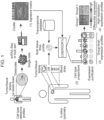
- the present disclosure provides a computational framework to accurately infer cell type abundance and cell type-specific gene expression from RNA profiles of intact tissues ( FIG. 1 ).
- systems and methods of the present disclosure can provide comprehensive portraits of tissue composition without physical dissociation, antibodies, or living material.
- Such approaches may include, for example, a method for enumerating cell composition from tissue GEPs with techniques for cross-platform data normalization and in silico cell purification. The latter can allow the transcriptomes of individual cell types of interest to be digitally "purified" from bulk RNA admixtures without physical isolation. As a result, changes in cell type-specific gene expression can be inferred without cell separation or prior knowledge.
- CIBERSORTx may be used to (1) profile bulk tissue composition with single-cell expression data, (2) purify GEPs of malignant and tumor-associated cell types without dissociation, and (3) explore cell type-specific signatures with relevance to anti-cancer therapies. These results illustrate that CIBERSORTx may be a useful tool for deciphering complex tissues, with implications for high-resolution cell phenotyping in research and clinical settings.
- the CIBERSORTx platform may be used for in silico tissue dissection.
- Features of the platform can include an integrated framework for cell type enumeration and gene expression purification, dedicated normalization schemes to suppress cross-platform variation, and improved approaches for separating RNA admixtures into cell-type specific expression profiles.
- CIBERSORTx may be used for analysis of peripheral blood, pancreatic islet specimens, and malignant tumors (for example, 350 of which are profiled). The results illustrate that CIBERSORTx can deliver accurate portraits of tissue heterogeneity using expression profiles derived from disparate sources.
- the systems and methods described herein can be used to define a comprehensive human cell atlas. Given a rapid pace of data generation coupled with emerging techniques to combine scRNA-Seq datasets, methods to broadly apply single-cell reference maps can be important, especially in settings where tissue is limited, fixed, or challenging to disaggregate. In studies of neoplastic and healthy tissues, single-cell reference profiles can be used to perform detailed interrogation of tissue composition, and inter-subject heterogeneity is not a major factor influencing deconvolution results. CIBERSORTx may outperform current approaches to enable robust molecular profiling of cell subset GEPs from complex tissues, independent of platform or preservation state.
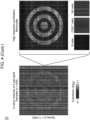
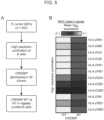
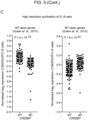
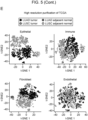
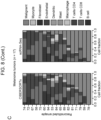
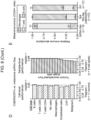
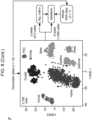
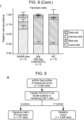
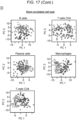
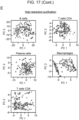
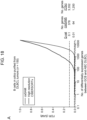
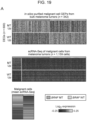
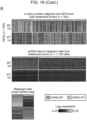
- CIBERSORTx can facilitate rapid assessment of cell type GEPs when phenotypic categories are known ( FIG. 1 , step 3; FIGs. 3a -g), and high-resolution profiling of expression variation when additional detail is desired ( FIG. 1 , step 4; FIGs. 4a -e).
- CIBERSORTx analysis may provide an improved understanding of heterotypic interactions within tumor microenvironments, with implications for informing diagnostic and therapeutic approaches that rely on targeting specific cell types.
- CIBERSORTx can be used to decode cellular heterogeneity in complex tissues. This strategy can be used to "digitally gate" cell subsets of interest from single-cell transcriptomes, profile the identities and expression patterns of these cells in cohorts of bulk tissue GEPs (e.g., fixed specimens from clinical trials), and systemically determine their associations with diverse metadata, including genomic features and clinical outcomes. CIBERSORTx can therefore have utility for increasing the statistical power for biological discovery, thereby promoting reproducible research. Given the generality of the CIBERSORTx approaches and its ability to seamlessly integrate with other techniques, in silico cytometry can enhance the analysis of multicellular systems in humans, mice, and other metazoans.
- single-cell libraries can be prepared from PBMC single-cell suspensions (e.g., from cancer patients) using Chromium with v2 chemistry (10x Genomics). Such single-cell libraries can be sequenced (e.g., a NextSeq 500 (Illumina)). Sequencing reads may be processed, for example, by alignment, filtration, de-duplication, and/or conversion into a digital count matrix using Cell Ranger 1.2 (10x Genomics).
- Outlier cells may be identified and filtered based on (1) anomalously high/low mitochondrial gene expression (e.g., cells with >10% or ⁇ 1% mitochondrial content may be removed) and/or (2) potential doublets/multiplets, as identified by comparing the number of expressed genes detected by per cell versus the number of unique molecular identifiers (UMIs) detected per cell (e.g., cells with greater than 3,500 and less than 500 expressed genes may be removed).
- UMIs unique molecular identifiers
- Clusters may be identified (e.g., using Seurat v.1.4.0.16) by (1) regressing out the dependence of gene expression on the number of UMIs and the percentage of mitochondrial content, and (2) by running "FindClusters" on a suitable number (e.g., 1, 2, 3, 4, 5, 6, 7, 8, 9, 10, or more than 10) of principal components of the data.
- MS4A1 high B cells
- CD8A high and GNLY low CD8 T cells
- CD3E high, CD8A low, and GNLY low CD4 T cells
- GNLY high and CD3E low NK cells
- GNLY high and CD3E high NKT cells
- CD14 high monocytes.
- RNA-Seq libraries may be multiplexed together and sequenced using, e.g., a single HiSeq 4000 lane (Illumina) using 2 ⁇ 150bp reads.
- total RNA may be isolated from PBMC samples (e.g., from NSCLC cancer patients) using TRIzol (Invitrogen) per the manufacturer's recommendations.
- RNA molecules may be quantitated and quality assessed, e.g., using a 2100 Bioanalyzer (Agilent) with a RNA 6000 Pico chip (Agilent).
- RNA-Seq libraries may be sequenced on a suitable sequencing instrument (e.g., a NextSeq 500 (Illumina) using 2 ⁇ 150 base-pair (bp) reads).
- a suitable sequencing instrument e.g., a NextSeq 500 (Illumina) using 2 ⁇ 150 base-pair (bp) reads.
- total RNA may be extracted from bulk tumors (e.g., NSCLC) and sorted cell populations (e.g., in a range of about 100, about 200, about 300, about 400, about 500, about 1,000, about 5,000, about 10,000, about 15,000, about 20,000, about 25,000, or more than 25,000 cells), e.g., using an AllPrep DNA/RNA Micro kit (Qiagen).
- An amount of total RNA e.g., about 10 nanograms (ng), about 20 ng, about 30 ng, about 40 ng, about 50 ng, or more than 50 ng
- ng nanograms
- NuGEN Ovation RNA-Seq System V2
- 2f and 8f -i may be trained on sample IDs HP1508501T2D and HP1504901 using the previously assigned cell phenotypes.
- Mast cells and major histocompatibility complex (MHC) II cells may be omitted from the islet signature matrix if they have insufficient single cells in the training cohort (e.g., fewer than 3 cells).
- Glucagon a highly expressed marker gene in alpha cells, may be omitted since it may adversely affect deconvolution performance on pancreatic islet training data.
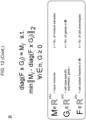
- Equation 2 may be extended within a method for "high-resolution" in silico cell purification (e.g., CIBERSORTx).
- Such an approach may comprise decomposing a matrix of bulk tissue GEPs (e.g., M) into k gene expression matrices of equal size, one for each cell subset in F.
- M bulk tissue GEPs
- This method may be agnostic to phenotypic class structure and can be formulated as a non-negative matrix factorization (NMF) problem with partial observations.
- NMF non-negative matrix factorization
- M and F be defined as above ( n ⁇ c and c ⁇ k matrices, respectively), and assume the latter is estimated by CIBERSORT.
- an expression matrix G i defined here as a c ⁇ k expression matrix of c mixture samples by k cell types, can be determined.
- Equations 1 and 2 there may be no closed-form solutions for G, which may be a 3-dimentional (3D) n ⁇ c ⁇ k matrix, and existing techniques for non-negative matrix factorization (NMF) may be unlikely to yield biologically plausible estimates, especially without additional constraints (e.g., regularization). Therefore, a heuristic algorithm can be used to estimate G, depicted schematically in FIG. 14 .
- G may be a 3-dimentional (3D) n ⁇ c ⁇ k matrix
- NMF non-negative matrix factorization
- An approach for inferring G may make two distinct assumptions that may improve the tractability of the problem while generating biologically plausible solutions.
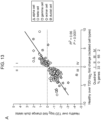
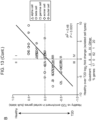
- First, an assumption may be made that each gene can be analyzed independently. Although ignoring gene-gene covariance relationships may impact the resolving power for some genes, this assumption may be found effective in practice ( FIGs. 4a -e, 5, 6a-b, and 13).
- DEGs may be previously defined as those genes exhibiting >1.2-fold-change when considering expression within pancreatic endocrine islet cell types (e.g., 5 cell types) (where each cell type comprises about 5% to about 44% median fractional abundance within whole endocrine pancreatic islets), and comparing differential expression levels between non-diabetic normal subjects (e.g., 6 subjects) and patients with type 2 diabetes mellitus (T2D) (e.g., 4 patients).
- T2D type 2 diabetes mellitus
- the bulk-reference mode batch correction approach may comprise creating a series of estimated mixture samples M*, where the latter comprises a linear combination of imputed cell type proportions in M and the corresponding signature matrix profiles (in non-log linear space).
- the strategy may be general and can flexibly accommodate different deconvolution and batch correction methods ( FIGs. 7f -h)
- ComBat an empirical Bayesian method
- cell proportions may be re-estimated using the adjusted mixture samples in non-log linear space ( FIGs. 7f -g).
- this approach can also be applied to cell type-specific gene expression purification, thereby allowing for down-weighting of genes whose expression levels are low or absent from the collection of cell types in the signature matrix ( FIG. 7h ).
- This technique may require a minimum of about 3-5 mixture samples to perform the batch correction procedure.
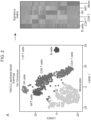
- deconvolution may perform poorly or even fail when excessive cross-platform technical variation is present (e.g., when cell types that are expected to be present are observed to drop out in bulk GEP samples). For example, this phenomenon may be observed using signature matrices derived from 10x Chromium ( FIGs. 2b and 7e ). Such a discrepancy may be unsurprising given the major differences in transcriptome representation between UMI-based and 3'/5'-biased methods, such as 10x, and those that capture full transcripts without UMIs, such as SMART-Seq2.
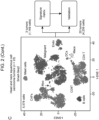
- a single cell reference mode batch correction may be applied to deconvolution methods involving signature matrices derived from 10x Chromium and other droplet-based or UMI-based techniques ( FIG. 7b ).
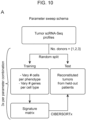
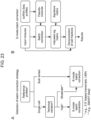
- a single cell reference mode (e.g., S-mode) batch correction may be performed as follows (as illustrated by the schematic representation in FIG. 24 ).
- an objective of S-mode may be to obtain cell frequencies F from a set of mixture GEPs M containing c samples, while minimizing technical variation.
- this approach may comprise a serial application of at least two procedures: an initial cell frequency estimation phase (phase 1), and a refinement phase in which the signature matrix, rather than the mixture matrix, is adjusted (phase 2).
- phase 1 a goal may be to obtain initial estimates of cell frequencies F* within a set of mixture samples M given (1) a signature matrix B and (2) the set of single cell reference profiles R from which B was derived ( FIG. 7b ).
- a series may be created of c artificial mixture profiles M* reconstituted from single cell GEPs within R.
- Mixing coefficients may be determined according to a Normal distribution N( ⁇ , ⁇ ), where ⁇ is set to the fractional abundance of each cell type from B in R ⁇ 1 , ⁇ 2 , ..., ⁇ n ⁇ and ⁇ is set to ⁇ 2 ⁇ 1 , 2 ⁇ 2 , ..., 2 ⁇ n ⁇ .
- Single cell transcriptomes from each cell subset may be then randomly sampled according to this distribution and aggregated into c bulk expression profiles in TPM space.
- ComBat may be subsequently applied to M and M* in log 2 space, yielding adjusted mixtures M adj and M adj *, respectively, and estimated cell frequencies (F*) may be imputed from M adj (in log-space) using the original signature matrix (B).
- the cell proportion estimates may be further refined by (1) performing batch correction on the signature matrix B, and by (2) applying the adjusted signature matrix to the original set of mixtures M. Similar to phase 1, the process may start by sampling single cells to create c artificial mixtures from R. However, in this case, cell types may be sampled according to their estimated frequencies F* obtained from phase 1, resulting in a new matrix of estimated mixtures M **. ComBat may be then applied to M and M ** in log 2 space, yielding adjusted mixtures M adj and M adj **, respectively. After converting M adj ** to non-log linear space, both M adj ** and F* may be used as inputs to NNLS in order to reconstruct cell type expression coefficients for each gene in B (see equation 2), yielding an adjusted signature matrix B adj .
- this use of NNLS in S-mode may not require adaptive noise filtration.
- the cell mixing proportions of each artificial mixture in M adj ** may be derived from F* and thus known with 100% certainty, and (2) ComBat may only apply a linear transformation to each gene's log 2 expression profile, thereby preserving the relative ordering of bulk expression values. Therefore, the conditions for applying NNLS to propagate the adjustments in M adj ** to B may be ideal.
- B adj Once B adj is obtained, cell frequencies may be estimated from the original mixtures M.
- a minimum of about 3-5 mixture samples may be required for applying ComBat within S-mode.
- CIBERSORTx may be developed within a web framework with its back-end based on R and PHP (as described, for example, by http://cibersortx.stanford.edu). This web framework may minimize inherent dependencies on specific hardware, software packages and libraries, and file-system attributes. Users may be presented with a detailed guide employing several step-by-step tutorials, which may allow the recreation of results described herein, including for each step in FIG. 1 . Through this interface, CIBERSORTx may allow users to process gene expression data representing a bulk admixture of different cell types, along with (1) a signature gene file that enumerates the genes defining the expression profile for each cell type of interest.
- users can either use existing/curated signature matrices for reference cell types, or can create custom signature gene files by providing the reference gene expression profiles of pure cell populations.
- users can provide single-cell RNA sequencing data or data from bulk sorted samples, along with the phenotypic identities of single cell types or cell populations of interest.
- CIBERSORTx may allow (2) imputation of the fractional representations of each cell type present in the mixture, similar to its predecessor.
- CIBERSORTx also supports deconvolution from bulk RNA-Seq data in implementing the critical batch-correction methods described above.
- CIBERSORTx also allows imputation of GEPs for individual in silico purified cell-types in two distinct modes as described above (e.g., Group-Level and High-Resolution). The resulting imputed fractions and imputed GEPs then may be rendered as heat maps, tables, and stacked bar plots for visualization and downloading.
- the interactive CIBERSORTx user interface may be implemented using a jQuery JavaScript library and open source libraries (including phpMailer, idiorm, blueimp jQuery-File-Upload, DataTables, phpExcel and mPDF), with the graphical user interface (GUI) of the website implementing using Twitter Bootstrap 2.3.2.
- the site may run on an Apache server on a virtual machine and store user and job data in a MySQL database. However, users may have complete control over their data and can delete them as desired.
- Each user's environment includes example datasets used for benchmarking, tutorials for the use of CIBERSORTx and preparation of input data, and other example files.
- rRNA ribosomal RNA
- GEPs of epithelial (EpCAM + ), hematopoietic (CD45 + ), endothelial (CD31 + ), and stromal (CD10 + ) cells were analyzed, each of which was FACS-sorted from primary NSCLC tumor biopsies obtained from donors.
- Signature matrix parameters may be identical to those described for signature matrix construction elsewhere herein, but without the preprocessing steps employed for scRNA-Seq.
- Ground truth cell type GEPs may be derived by taking the geometric mean of replicate RNA-Seq profiles of EpCAM + , CD45 + , CD31 + , and CD10 + cells FACS-sorted from the second set of donors.
- the analysis may be restricted to 1,000 randomly selected genes from the transcriptome, along with all 547 genes from the LM22 signature matrix.
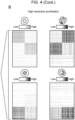
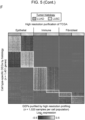
- DEGs may be added to each cell type, such that the first 200 and second 200 samples are stratified into two classes. Overlapping DEG patterns may be inserted into monocyte, B cell, CD8 T cell, and NK cell GEPs, as depicted by orange cells, green cells, blue cells, and purple cells, respectively, in FIG. 4a (left panel). DEGs may be created to reflect a five-fold higher level of expression.
- an m ⁇ k matrix may be generated of mixture coefficients randomly drawn from a normal distribution with N(1 / k, 1 / (2k)). Coefficients for each mixture may be normalized to sum to 1. Prior to mixing, synthetic cell type GEPs may be converted to non-log linear space.
- up-regulated DEGs may be embedded in the shape of a 'bullseye' target (three concentric circles) into monocyte GEPs.
- a high-resolution CIBERSORTx method may be applied as described above to recover the embedded bullseye.
- the approach used for FIG. 4d may be repeated, with the exception that the analysis is restricted to a random selection of 3,000 genes along with all genes in LM22.
- two upregulated DEG patterns may be embedded: a target into monocyte GEPs (as shown in FIG. 4d , but inserted every other gene), and a set of 10 diagonally aligned squares into CD8 T cell GEPs (added to every gene).
- downregulated DEGs may inserted into B cells and NK cells in a reciprocal manner that complements the respective patterns.
- High-resolution CIBERSORTx may be applied as described above.
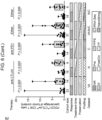
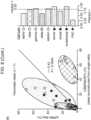
- Synthetic tumors with five cell types may be analyzed as follows. Simulated mixtures may be created as described elsewhere herein, except in this case, k may be set to 50 mixtures, m may be set to 3,000 genes (containing LM22), and DEGs may be exclusively inserted into CD8 T cell profiles (samples 26-50; all DEGs were over-expressed relative to baseline levels). To assess performance across a range of realistic settings, a distinct set of 50 mixtures may be evaluated for different combinations of (1) DEG fold changes (1.5 to 5-fold) and (2) average fractional abundances of CD8 T cells (1% to 25 %) ( FIG. 4e ).
- the analysis may be repeated by adding an average of 50% HCT116, a colon cancer cell line, to each mixture dataset and by applying high-resolution CIBERSORTx with batch correction.
- the same strategy may be applied for simulating mixing coefficients, as described elsewhere herein, except the mean proportions of CD8 T cells and HCT116 may be set to their target abundances.
- the same HCT116 GEP dataset and expression normalization steps as described previously may be used.
- the area under the curve may be assessed by calculating gene-level fold changes in log 2 space between known DEG classes (25 samples each), and by comparing the resulting quantities between known DE genes (positives) and remaining genes (negatives). To evaluate specificity, this process may be repeated for each imputed cell type GEP.
- Simulated melanoma tumors with eight cell types may be analyzed as follows.
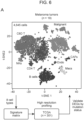
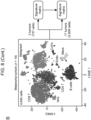
- Single-cell RNA-Seq profiles from melanoma patients may be obtained, as described elsewhere herein, and labeled according to seven previously annotated cell phenotypes: B cells, T cells, NK cells, macrophages, endothelial cells, cancer-associated fibroblasts, and malignant cells.
- an approach that mirrors the distribution of cell type frequencies across dissociated tumors may be used. Specifically, to build each synthetic tumor, each cell type may be iterated through, one at time, and all single cells corresponding to that cell type may be selected from a randomly chosen tumor in the original cohort.
- This process may be iterated to create cohorts of multiple tumors (e.g., 50 , 100, or 200).
- multiple tumors e.g., 50 , 100, or 200.
- single-cell GEPs in non-log linear space may be aggregated by summation and normalized by TPM.
- TPM normalized by TPM.
- DEGs may be filtered as described above for NSCLC.
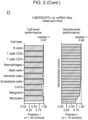
- Linear concordance between known and predicted cell-type features may be determined by Pearson correlation ( r ) or Spearman correlation ( rho ) , as indicated.
- a concordance correlation coefficient may be determined by comparing predicted and expected log 2 -adjusted expression profiles using, e.g., the CCC function from the R package, DescTools. When data are normally distributed, group comparisons may be determined using a two-sided t test with unequal variance or a paired t test, as appropriate; otherwise, a two-sided Wilcoxon test may be applied. Multiple hypothesis testing may performed using, e.g., the Benjamini and Hochberg method. Results with P ⁇ 0.05 may be considered significant.
- Statistical analyses may be performed with R and Prism v7 (GraphPad Software, Inc.). Sample-size estimates may not be performed to ensure adequate power to detect a pre-specified effect size.
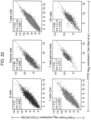
- FIG. 22 shows a computer system 2201 that is programmed or otherwise configured to, for example, generate feature profiles from biological samples, optimize regressions between feature profiles and reference matrices of feature signatures for distinct cell types, and quantify in biological samples the abundance of distinct cell types.
- the computer system 2201 can regulate various aspects of analysis, calculation, and generation of the present disclosure, such as, for example, generating feature profiles from biological samples, optimizing regressions between feature profiles and reference matrices of feature signatures for distinct cell types, and quantifying in biological samples the abundance of distinct cell types.
- the computer system 2201 can be an electronic device of a user or a computer system that is remotely located with respect to the electronic device.
- the electronic device can be a mobile electronic device.
- the computer system 2201 includes a central processing unit (CPU, also "processor” and “computer processor” herein) 2205, which can be a single core or multi core processor, or a plurality of processors for parallel processing.
- the computer system 2201 also includes memory or memory location 2210 (e.g., random-access memory, read-only memory, flash memory), electronic storage unit 2215 (e.g., hard disk), communication interface 2220 (e.g., network adapter) for communicating with one or more other systems, and peripheral devices 2225, such as cache, other memory, data storage and/or electronic display adapters.
- the memory 2210, storage unit 2215, interface 2220 and peripheral devices 2225 are in communication with the CPU 2205 through a communication bus (solid lines), such as a motherboard.
- the storage unit 2215 can be a data storage unit (or data repository) for storing data.
- the computer system 2201 can be operatively coupled to a computer network ("network") 2250 with the aid of the communication interface 2220.
- the network 2230 can be the Internet, an internet and/or extranet, or an intranet and/or extranet that is in communication with the Internet.
- the network 2230 in some cases is a telecommunication and/or data network.
- the network 2230 can include one or more computer servers, which can enable distributed computing, such as cloud computing.
- one or more computer servers may enable cloud computing over the network 2230 ("the cloud") to perform various aspects of analysis, calculation, and generation of the present disclosure, such as, for example, generating feature profiles from biological samples, optimizing regressions between feature profiles and reference matrices of feature signatures for distinct cell types, and quantifying in biological samples the abundance of distinct cell types.
- cloud computing may be provided by cloud computing platforms such as, for example, Amazon Web Services (AWS), Microsoft Azure, Google Cloud Platform, and IBM cloud.
- the network 2230 in some cases with the aid of the computer system 2201, can implement a peer-to-peer network, which may enable devices coupled to the computer system 2201 to behave as a client or a server.
- the CPU 2205 may comprise one or more computer processors and/or one or more graphics processing units (GPUs).
- the CPU 2205 can execute a sequence of machine-readable instructions, which can be embodied in a program or software.
- the instructions may be stored in a memory location, such as the memory 2210.
- the instructions can be directed to the CPU 2205, which can subsequently program or otherwise configure the CPU 2205 to implement methods of the present disclosure. Examples of operations performed by the CPU 2205 can include fetch, decode, execute, and writeback.
- the CPU 2205 can be part of a circuit, such as an integrated circuit.
- a circuit such as an integrated circuit.
- One or more other components of the system 2201 can be included in the circuit.
- the circuit is an application specific integrated circuit (ASIC).
- the storage unit 2215 can store files, such as drivers, libraries and saved programs.
- the storage unit 2215 can store user data, e.g., user preferences and user programs.
- the computer system 2201 in some cases can include one or more additional data storage units that are external to the computer system 2201, such as located on a remote server that is in communication with the computer system 2201 through an intranet or the Internet.
- the computer system 2201 can communicate with one or more remote computer systems through the network 2230.
- the computer system 2201 can communicate with a remote computer system of a user.
- remote computer systems include personal computers (e.g., portable PC), slate or tablet PC's (e.g., Apple ® iPad, Samsung ® Galaxy Tab), telephones, Smart phones (e.g., Apple ® iPhone, Android-enabled device, Blackberry ® ), or personal digital assistants.
- the user can access the computer system 2201 via the network 2230.
- Methods as described herein can be implemented by way of machine (e.g., computer processor) executable code stored on an electronic storage location of the computer system 2201, such as, for example, on the memory 2210 or electronic storage unit 2215.
- the machine executable or machine readable code can be provided in the form of software.
- the code can be executed by the processor 2205.
- the code can be retrieved from the storage unit 2215 and stored on the memory 2210 for ready access by the processor 2205.
- the electronic storage unit 2215 can be precluded, and machine-executable instructions are stored on memory 2210.
- the code can be pre-compiled and configured for use with a machine having a processer adapted to execute the code, or can be compiled during runtime.
- the code can be supplied in a programming language that can be selected to enable the code to execute in a pre-compiled or as-compiled fashion.
- aspects of the systems and methods provided herein can be embodied in programming.
- Various aspects of the technology may be thought of as “products” or “articles of manufacture” typically in the form of machine (or processor) executable code and/or associated data that is carried on or embodied in a type of machine readable medium.
- Machine-executable code can be stored on an electronic storage unit, such as memory (e.g., read-only memory, random-access memory, flash memory) or a hard disk.
- “Storage” type media can include any or all of the tangible memory of the computers, processors or the like, or associated modules thereof, such as various semiconductor memories, tape drives, disk drives and the like, which may provide non-transitory storage at any time for the software programming.
- a machine readable medium such as computer-executable code
- a tangible storage medium such as computer-executable code
- Non-volatile storage media include, for example, optical or magnetic disks, such as any of the storage devices in any computer(s) or the like, such as may be used to implement the databases, etc. shown in the drawings.
- Volatile storage media include dynamic memory, such as main memory of such a computer platform.
- Tangible transmission media include coaxial cables; copper wire and fiber optics, including the wires that comprise a bus within a computer system.
- Carrier-wave transmission media may take the form of electric or electromagnetic signals, or acoustic or light waves such as those generated during radio frequency (RF) and infrared (IR) data communications.
- RF radio frequency
- IR infrared
- Common forms of computer-readable media therefore include for example: a floppy disk, a flexible disk, hard disk, magnetic tape, any other magnetic medium, a CD-ROM, DVD or DVD-ROM, any other optical medium, punch cards paper tape, any other physical storage medium with patterns of holes, a RAM, a ROM, a PROM and EPROM, a FLASH-EPROM, any other memory chip or cartridge, a carrier wave transporting data or instructions, cables or links transporting such a carrier wave, or any other medium from which a computer may read programming code and/or data.
- Many of these forms of computer readable media may be involved in carrying one or more sequences of one or more instructions to a processor for execution.
- the computer system 2201 can include or be in communication with an electronic display 2235 that comprises a user interface (UI) 2240 for providing, for example, a visual display indicative of feature profiles from biological samples, solutions of regressions between feature profiles and reference matrices of feature signatures for distinct cell types, and abundances of distinct cell types in biological samples.
- UI user interface
- Examples of UI's include, without limitation, a graphical user interface (GUI) and web-based user interface.
- Methods and systems of the present disclosure can be implemented by way of one or more algorithms.
- An algorithm can be implemented by way of software upon execution by the central processing unit 2205.
- the algorithm can, for example, generate feature profiles from biological samples, optimize regressions between feature profiles and reference matrices of feature signatures for distinct cell types, and quantify in biological samples the abundance of distinct cell types.
- a deconvolution module may comprise one or more deconvolution applications, e.g., a support vector regression (SVR) application or a non-negative matrix factorization (NMF) application, which may include one or more programs stored in the memory, and comprise instructions to perform methods according to one or more embodiments of the present disclosure.
- the deconvolution application e.g., SVR application or NMF application
- the CIBERSORTx method can use, as a framework, a machine learning technique for robust assessment of cell composition from genomic profiles of bulk tissues.
- the CIBERSORTx method may extend the concept of in silico dissection to fluorescence activated cell sorting (FACS) and to leverage emerging single-cell sequencing efforts, thereby providing a framework for cell type enumeration and cell type-specific gene expression purification (as shown in FIG. 1 ).
- FACS fluorescence activated cell sorting
- Equation 5 a goal of Equation 5 is to impute F (which may be a k ⁇ c matrix consisting of the fractional abundances of k cell subsets for each sample in M).
- a goal of Equation 6 is to impute H (which may be an n ⁇ k matrix of representative cell type-specific expression signatures) given F and M.
- a goal of Equations 7 and 8 is to impute G (which may be an n ⁇ c ⁇ k matrix consisting of n genes, c samples, and k cell types) given F and M.
- An algorithm for imputation of high-resolution cell type-specific expression profiles may be performed using the following major steps, which parallel the corresponding schema presented in FIG. 12c .
- Equation 6 Equation 6 was solved twice: once for mixture samples in M * i spanning indices 1 to t, and once for mixture samples in M * i with indices ( t + 1) to c .
- this process yields two vectors of representative cell type-specific gene expression coefficients, g 1 and g 2 , respectively (note that the index i is omitted here for simplicity; FIG. 12c , step ii).
- G t i be a c ⁇ k matrix consisting of t rows of g 1 followed by c-t rows of g 2 . Since G t i captures cell type-specific expression estimates with two degrees of freedom (two possible values per gene), it is a rough approximation of G i ,•,• (hereafter, denoted G i ). To assess the goodness of fit between the reconstituted mixture derived from G t i and F* and the original sorted mixture M * i , the residual sum of squares was calculated, and the value of t that minimizes the following equation was determined: min ⁇ t ⁇ diag F ⁇ ⁇ G i t ⁇ M i ⁇ 2
- p 1 and p 2 are combined into a meta-score p deg using Fisher's method.
- the output of Fisher's method is referred to as a meta-score, and not a p-value, since the input p-values are not formally independent.
- a series of steps is then performed to further refine g' 1 , g ' 2 based on the meta-score vector p deg .
- the difference between paired expression coefficients in g' 1 , g ' 2 is reduced in a manner that reflects the estimated statistical confidence in the differential expression of each cell type ( FIG. 12c , step v-ii).
- the correlations (and corresponding -log 10 p-values, denoted p cor ) between the fractions of each cell subset j and the expression vector M i are calculated after regressing out the remaining cell subsets in the signature matrix.
- l is set equal to the -log 10 p-value of p deg (described above); alternatively, if no cell subsets are significant at a p-value threshold of 0.05, l is set equal to p cor . Since l is in -log 10 space, it is then divided by its maximum value l max (if significant at a threshold of -log 10 (0.05)), and the maximum value is calculated separately for cell subsets with higher expression in g ' 1 than in g ' 2 , and vice versa.
- expression coefficients in Q i are adjusted based on the final values of g ' 1 and g ' 2 within G t ' i ( FIG. 12c , step v-iii). Specifically, for each cell type j, the expression coefficients in Q i,j ,• are individually fit to G t' i,j ,• using ordinary least squares regression.
- g ' 1 and g ' 2 serve as anchor points and to ensure that the directionality of cell type-specific expression differences (e.g., high to low, or low to high) across the ordered mixture is maintained.
- RLR is employed since it allows for some flexibility in fitting rigid vectors with at most 2 distinct values (as compared to linear least squares), though other approaches may be used.
- the resulting matrix is denoted Q' i .
- the adjusted 3' cell type reference profiles are more closely aligned with their corresponding reference profiles from the 5' kit, as demonstrated by heat maps ( FIG. 23h ) and Pearson correlation ( FIG. 23i ).
- FIG. 23j a similar result as in FIG. 23g was observed, when the 5' PBMC single cell dataset was replaced with sorted leukocyte subsets profiled by microarray.
- RNA-Seq was performed using microarrays as follows. Total RNA was extracted from bulk FL specimens and sorted B cells, and assessed for yield and quality. cRNA was prepared from 100ng of total RNA following linear amplification (3' IVT Express, Affymetrix) and then hybridized to HGU133 Plus 2.0 microarrays (Affymetrix) according to the manufacturer's protocol. All CEL files were pooled with a publicly available Affymetrix dataset containing CD4 and CD8 TILs FACS-sorted from FL lymph nodes (GSE27928).
- CAPP-Seq Cancer Personalized Profiling by Deep Sequencing
- CREBBP hotspot mutations may occur within the lysine acetyltransferase (KAT) domain, only non-silent variants (single nucleotide variants and insertions/deletions) within the KAT domain were considered "mutant".
- KAT lysine acetyltransferase
- FIG. 10a To systematically evaluate the impact of key signature matrix parameters on deconvolution performance, a parameter sweep was performed to assess: (1) the number of cells per phenotype (3, 5, 10, 20 and 40), (2) the number of signature genes per cell type (ranges of 50-150, 150-300, and 300-500), and (3) the number of donor samples (1, 2, or 3) ( FIG. 10a ).
- HNSCC malignant cells
- HNSCC CD8 and CD4 T cells
- B cells melanoma
- fibroblasts HNSCC
- Donors were sampled from a set of samples that had at least 20 cells per cell phenotype (donor IDs HN16_T, HN17_T, HN25_LN, HN25_T, HN18_T for HNSCC tumors; donor IDs 79, 80, 88, 89 for melanoma tumors).
- HNSCC samples HN10_T, HN13_T, HN24_LN, and HN7_T were excluded since they each contained ⁇ 50 cells total across the evaluated phenotypes.
- melanoma donor 88 was also excluded owing to insufficient cells ( ⁇ 50).
- 126 signature matrices were tested per dataset. Performance was quantified as the median cell-level correlation against ground truth cell proportions from reconstituted tumor samples held out from signature matrix construction ( FIG. 10b ).
- LM22 deconvolution results were collapsed by summation into the major phenotypic groups indicated in FIG. 25 , with corresponding Figures indicated in column B.
- gd T cells were merged with CD8 T cells owing to high CD8 expression levels in both subsets and the absence of gd T cell depletion in publicly available CD8 T cell ground truth profiles derived from FACS-sorted cell populations (GSE28491, GSE27928).
Landscapes
- Life Sciences & Earth Sciences (AREA)
- Health & Medical Sciences (AREA)
- Engineering & Computer Science (AREA)
- Physics & Mathematics (AREA)
- Chemical & Material Sciences (AREA)
- Bioinformatics & Cheminformatics (AREA)
- Proteomics, Peptides & Aminoacids (AREA)
- General Health & Medical Sciences (AREA)
- Biotechnology (AREA)
- Biophysics (AREA)
- Medical Informatics (AREA)
- Analytical Chemistry (AREA)
- Spectroscopy & Molecular Physics (AREA)
- Bioinformatics & Computational Biology (AREA)
- Theoretical Computer Science (AREA)
- Evolutionary Biology (AREA)
- Molecular Biology (AREA)
- Immunology (AREA)
- Organic Chemistry (AREA)
- Zoology (AREA)
- Wood Science & Technology (AREA)
- Genetics & Genomics (AREA)
- Databases & Information Systems (AREA)
- Bioethics (AREA)
- Data Mining & Analysis (AREA)
- Biochemistry (AREA)
- Cell Biology (AREA)
- Microbiology (AREA)
- General Engineering & Computer Science (AREA)
- Public Health (AREA)
- Software Systems (AREA)
- Evolutionary Computation (AREA)
- Epidemiology (AREA)
- Computer Vision & Pattern Recognition (AREA)
- Artificial Intelligence (AREA)
- Biomedical Technology (AREA)
- Hematology (AREA)
- Urology & Nephrology (AREA)
- Physiology (AREA)
- Tropical Medicine & Parasitology (AREA)
Priority Applications (1)
| Application Number | Priority Date | Filing Date | Title |
|---|---|---|---|
| EP24223064.7A EP4546353A3 (en) | 2017-07-21 | 2018-07-19 | Systems and methods for analyzing mixed cell populations |
Applications Claiming Priority (2)
| Application Number | Priority Date | Filing Date | Title |
|---|---|---|---|
| US201762535645P | 2017-07-21 | 2017-07-21 | |
| PCT/US2018/042949 WO2019018684A1 (en) | 2017-07-21 | 2018-07-19 | SYSTEMS AND METHODS FOR ANALYZING MIXED CELL POPULATIONS |
Related Child Applications (2)
| Application Number | Title | Priority Date | Filing Date |
|---|---|---|---|
| EP24223064.7A Division EP4546353A3 (en) | 2017-07-21 | 2018-07-19 | Systems and methods for analyzing mixed cell populations |
| EP24223064.7A Division-Into EP4546353A3 (en) | 2017-07-21 | 2018-07-19 | Systems and methods for analyzing mixed cell populations |
Publications (3)
| Publication Number | Publication Date |
|---|---|
| EP3655955A1 EP3655955A1 (en) | 2020-05-27 |
| EP3655955A4 EP3655955A4 (en) | 2021-04-21 |
| EP3655955B1 true EP3655955B1 (en) | 2025-04-09 |
Family
ID=65015538
Family Applications (2)
| Application Number | Title | Priority Date | Filing Date |
|---|---|---|---|
| EP18835466.6A Active EP3655955B1 (en) | 2017-07-21 | 2018-07-19 | Systems and methods for analyzing mixed cell populations |
| EP24223064.7A Pending EP4546353A3 (en) | 2017-07-21 | 2018-07-19 | Systems and methods for analyzing mixed cell populations |
Family Applications After (1)
| Application Number | Title | Priority Date | Filing Date |
|---|---|---|---|
| EP24223064.7A Pending EP4546353A3 (en) | 2017-07-21 | 2018-07-19 | Systems and methods for analyzing mixed cell populations |
Country Status (5)
| Country | Link |
|---|---|
| US (2) | US12249401B2 (https=) |
| EP (2) | EP3655955B1 (https=) |
| JP (1) | JP7545891B2 (https=) |
| AU (1) | AU2018304381A1 (https=) |
| WO (1) | WO2019018684A1 (https=) |
Families Citing this family (40)
| Publication number | Priority date | Publication date | Assignee | Title |
|---|---|---|---|---|
| CA2971129A1 (en) * | 2015-01-22 | 2016-07-28 | The Board Of Trustees Of The Leland Stanford Junior University | Methods and systems for determining proportions of distinct cell subsets |
| EP3655955B1 (en) * | 2017-07-21 | 2025-04-09 | The Board of Trustees of the Leland Stanford Junior University | Systems and methods for analyzing mixed cell populations |
| US11994512B2 (en) * | 2018-01-04 | 2024-05-28 | Massachusetts Institute Of Technology | Single-cell genomic methods to generate ex vivo cell systems that recapitulate in vivo biology with improved fidelity |
| US11348661B2 (en) | 2018-05-14 | 2022-05-31 | Tempus Labs, Inc. | Predicting total nucleic acid yield and dissection boundaries for histology slides |
| US10957041B2 (en) | 2018-05-14 | 2021-03-23 | Tempus Labs, Inc. | Determining biomarkers from histopathology slide images |
| US20200020419A1 (en) | 2018-07-16 | 2020-01-16 | Flagship Pioneering Innovations Vi, Llc. | Methods of analyzing cells |
| WO2020061123A1 (en) * | 2018-09-18 | 2020-03-26 | California Institute Of Technology | Systems and methods for dissecting heterogeneous cell populations |
| WO2020142563A1 (en) * | 2018-12-31 | 2020-07-09 | Tempus Labs, Inc. | Transcriptome deconvolution of metastatic tissue samples |
| US12205675B2 (en) * | 2019-07-03 | 2025-01-21 | Bostongene Corporation | Techniques for bias correction in sequence data |
| CN114424287A (zh) * | 2019-09-25 | 2022-04-29 | 瑞泽恩制药公司 | 单细胞rna-seq数据处理 |
| CN114746559A (zh) * | 2019-10-18 | 2022-07-12 | 华盛顿大学 | 用于测量细胞状态的方法和系统 |
| US20230027353A1 (en) * | 2019-11-05 | 2023-01-26 | The Board Of Trustees Of The Leland Stanford Junior University | Systems and Methods for Deconvoluting Tumor Ecosystems for Personalized Cancer Therapy |
| CN115136242A (zh) * | 2019-11-08 | 2022-09-30 | 雷杰纳荣制药公司 | 来自大量组织转录组的准确稳健的信息反卷积 |
| US20230049525A1 (en) * | 2019-11-26 | 2023-02-16 | The United states of American, as Representative by the Secretary, Dept.of Health and Human Services | Methods of identifying cell-type-specific gene expression levels by deconvolving bulk gene expression |
| US20230026559A1 (en) * | 2019-12-10 | 2023-01-26 | Novigenix Sa | Analysis of cell signatures for disease detection |
| CN111243677B (zh) * | 2020-01-07 | 2023-04-14 | 北京唐颐惠康生物医学技术有限公司 | 一种基于细胞质量保证的时间控制方法及系统 |
| WO2021148283A1 (en) * | 2020-01-20 | 2021-07-29 | Koninklijke Philips N.V. | Guided analysis of single cell sequencing data using bulk sequencing data |
| EP4101933A4 (en) * | 2020-02-06 | 2024-02-28 | Karydo Therapeutix, Inc. | CORRECTION METHODS FOR SINGLE-CELL RNA-SEQ ANALYSIS DATA SETS, ANALYZING METHODS FOR SINGLE-CELL RNA-SEQ, ANALYZING METHODS FOR CELL TYPE RATIO, AND DEVICES AND COMPUTER PROGRAMS FOR PERFORMING THESE METHODS |
| JP7541585B2 (ja) * | 2020-03-12 | 2024-08-28 | ボストンジーン コーポレイション | 発現データのデコンボリューションのためのシステム及び方法 |
| US20220223227A1 (en) * | 2020-12-16 | 2022-07-14 | Bostongene Corporation | Machine learning techniques for identifying malignant b- and t-cell populations |
| WO2022152672A1 (en) * | 2021-01-12 | 2022-07-21 | Astrazeneca Ab | Graph construction and visualization of multiplex immunofluorescence images |
| EP4278364A1 (en) * | 2021-01-15 | 2023-11-22 | Sanofi | Sensing of biological cells in a sample for cell type identification |
| CN115083617B (zh) * | 2021-03-15 | 2025-02-14 | 复旦大学 | 流行性疾病检测装置及方法 |
| CN113257354B (zh) * | 2021-05-12 | 2022-03-11 | 广州万德基因医学科技有限公司 | 基于高通量实验数据挖掘进行关键rna功能挖掘的方法 |
| CN113593640B (zh) * | 2021-08-03 | 2023-07-28 | 哈尔滨市米杰生物科技有限公司 | 一种鳞癌组织功能状态与细胞组分评估方法及系统 |
| WO2023053702A1 (ja) * | 2021-09-29 | 2023-04-06 | 富士フイルム株式会社 | データ処理方法、データ処理装置、及びデータ処理プログラム |
| WO2023064632A1 (en) * | 2021-10-15 | 2023-04-20 | La Jolla Institute For Immunology | Tissue resident memory cell profiles, and uses thereof in inflammatory and autoimmune diseases |
| CN114038505B (zh) * | 2021-10-19 | 2024-06-14 | 清华大学 | 一种在线整合多来源单细胞数据的方法和系统 |
| WO2023178319A2 (en) * | 2022-03-17 | 2023-09-21 | Washington University | Methods and systems for measuring multiple cell states |
| CN115440303B (zh) * | 2022-11-03 | 2023-02-10 | 杭州联川生物技术股份有限公司 | 一种单细胞转录组低质量细胞过滤方法、介质和设备 |
| US20240177803A1 (en) * | 2022-11-17 | 2024-05-30 | Bostongene Corporation | Comprehensive immunoprofiling of peripheral blood |
| CN120239886A (zh) * | 2022-12-30 | 2025-07-01 | 深圳华大生命科学研究院 | 一种组织切片数据异质性的评估方法以及相关设备 |
| CN116218972A (zh) * | 2023-01-18 | 2023-06-06 | 四川大学华西医院 | 一种肌腱细胞图谱体系及其构建方法与应用 |
| EP4695425A1 (en) | 2023-04-13 | 2026-02-18 | BostonGene Corporation | Pan-cancer tumor microenvironment classification based on immune escape mechanisms and immune infiltration |
| CN116779043A (zh) * | 2023-06-30 | 2023-09-19 | 京东方科技集团股份有限公司 | 细胞比例预测方法、模型生成方法、设备及介质 |
| WO2025064862A1 (en) * | 2023-09-22 | 2025-03-27 | Verily Life Sciences Llc | Modules for single-cell data conversion to transformed bulk-cell data and methods of using the same |
| TW202540631A (zh) * | 2023-12-07 | 2025-10-16 | 美商先勁智醫公司 | 處理來自多個測試之細胞計數資料的方法及系統 |
| CN118675616B (zh) * | 2024-06-11 | 2025-07-15 | 深圳湾实验室 | 一种单细胞测序数据分析方法、设备、介质和程序产品 |
| CN119517178A (zh) * | 2024-11-20 | 2025-02-25 | 泰州赛奥生物有限公司 | 一种在线整合多来源单细胞数据的方法及系统 |
| CN119580839B (zh) * | 2025-02-10 | 2025-07-04 | 深圳大学总医院 | 动脉粥样硬化中内皮细胞异质性智能分析方法及系统 |
Family Cites Families (14)
| Publication number | Priority date | Publication date | Assignee | Title |
|---|---|---|---|---|
| WO2001063555A2 (en) | 2000-02-24 | 2001-08-30 | Massachusetts Institute Of Technology | Image deconvolution techniques for probe scanning apparatus |
| US7505948B2 (en) | 2003-11-18 | 2009-03-17 | Aureon Laboratories, Inc. | Support vector regression for censored data |
| US20110010099A1 (en) | 2005-09-19 | 2011-01-13 | Aram S Adourian | Correlation Analysis of Biological Systems |
| US20120269418A1 (en) | 2011-04-22 | 2012-10-25 | Ge Global Research | Analyzing the expression of biomarkers in cells with clusters |
| US9020874B2 (en) | 2011-10-31 | 2015-04-28 | Siemens Aktiengesellschaft | Short-term load forecast using support vector regression and feature learning |
| CN103217411B (zh) | 2013-04-15 | 2015-03-25 | 浙江大学 | 基于拉曼光谱的食用植物油中油酸、亚油酸和饱和脂肪酸含量检测方法 |
| US10364469B2 (en) * | 2014-01-16 | 2019-07-30 | Illumina, Inc | Gene expression panel for prognosis of prostate cancer recurrence |
| CA2971129A1 (en) * | 2015-01-22 | 2016-07-28 | The Board Of Trustees Of The Leland Stanford Junior University | Methods and systems for determining proportions of distinct cell subsets |
| US9984199B2 (en) * | 2015-05-21 | 2018-05-29 | Ge Healthcare Bio-Sciences Corp. | Method and system for classification and quantitative analysis of cell types in microscopy images |
| US11225689B2 (en) * | 2016-08-17 | 2022-01-18 | The Broad Institute, Inc. | Method for determination and identification of cell signatures and cell markers |
| US12590288B2 (en) * | 2017-04-12 | 2026-03-31 | The Broad Institute, Inc. | Method of treating an inflammatory disease by administering an agent which binds a surface receptor on a tuft cell that induces an ILC class 2 inflammatory response |
| EP3655955B1 (en) * | 2017-07-21 | 2025-04-09 | The Board of Trustees of the Leland Stanford Junior University | Systems and methods for analyzing mixed cell populations |
| US11756651B2 (en) | 2018-01-04 | 2023-09-12 | Nantomics Llc | Method of treating a tumor in a patient based on an immune gene expression |
| AU2019317440B2 (en) | 2018-08-06 | 2026-01-22 | Tempus Ai, Inc. | A multi-modal approach to predicting immune infiltration based on integrated RNA expression and imaging features |
-
2018
- 2018-07-19 EP EP18835466.6A patent/EP3655955B1/en active Active
- 2018-07-19 WO PCT/US2018/042949 patent/WO2019018684A1/en not_active Ceased
- 2018-07-19 AU AU2018304381A patent/AU2018304381A1/en not_active Abandoned
- 2018-07-19 JP JP2020502329A patent/JP7545891B2/ja active Active
- 2018-07-19 EP EP24223064.7A patent/EP4546353A3/en active Pending
- 2018-07-19 US US16/631,778 patent/US12249401B2/en active Active
-
2025
- 2025-02-19 US US19/057,786 patent/US12562239B2/en active Active
Also Published As
| Publication number | Publication date |
|---|---|
| WO2019018684A1 (en) | 2019-01-24 |
| US20200176080A1 (en) | 2020-06-04 |
| AU2018304381A1 (en) | 2020-02-06 |
| US20250322909A1 (en) | 2025-10-16 |
| EP4546353A3 (en) | 2025-07-23 |
| US12249401B2 (en) | 2025-03-11 |
| JP7545891B2 (ja) | 2024-09-05 |
| US12562239B2 (en) | 2026-02-24 |
| JP2020527946A (ja) | 2020-09-17 |
| EP4546353A2 (en) | 2025-04-30 |
| EP3655955A1 (en) | 2020-05-27 |
| EP3655955A4 (en) | 2021-04-21 |
Similar Documents
| Publication | Publication Date | Title |
|---|---|---|
| US12562239B2 (en) | Systems and methods for analyzing mixed cell populations | |
| Newman et al. | Determining cell type abundance and expression from bulk tissues with digital cytometry | |
| US12584180B2 (en) | Methods and systems for determining proportions of distinct cell subsets | |
| Combes et al. | Discovering dominant tumor immune archetypes in a pan-cancer census | |
| Leader et al. | Single-cell analysis of human non-small cell lung cancer lesions refines tumor classification and patient stratification | |
| Huang et al. | Bioinformatics analysis for circulating cell-free DNA in cancer | |
| Gong et al. | Optimal deconvolution of transcriptional profiling data using quadratic programming with application to complex clinical blood samples | |
| Zhang et al. | Deep single-cell RNA sequencing data of individual T cells from treatment-naïve colorectal cancer patients | |
| Louhimo et al. | Comparative analysis of algorithms for integration of copy number and expression data | |
| Haile et al. | Evaluation of protocols for rRNA depletion-based RNA sequencing of nanogram inputs of mammalian total RNA | |
| Bhattacharya et al. | DeCompress: tissue compartment deconvolution of targeted mRNA expression panels using compressed sensing | |
| Zawistowski et al. | Unifying genomics and transcriptomics in single cells with ResolveOME amplification chemistry to illuminate oncogenic and drug resistance mechanisms | |
| Yasumizu et al. | Neural-net-based cell deconvolution from DNA methylation reveals tumor microenvironment associated with cancer prognosis | |
| Frangieh et al. | Single-cell and spatial profiling in cancer biology and clinical oncology | |
| Wang et al. | Single cell genome and epigenome co-profiling reveals hardwiring and plasticity in breast cancer | |
| Sheibani-Tezerji et al. | Identification of Biomarkers and Trajectories of Prostate Cancer Progression: A Bioinformatics Fusion of Weighted Correlation Network Analysis and Machine Learning | |
| Montierth et al. | Deconvolution of Sparse-count RNA Sequencing Data for Tumor Cells Using Embedded Negative Binomial Distributions | |
| Granja | Dissection of Cancer-Specific CIS and Trans-Regulatory Elements | |
| Dalle Nogare et al. | PitNET tissue deconvolution: tracing normal tissue residues and immune dynamics | |
| Lesurf | Stratified Informatics Analysis for Breast Cancer: Types, Subtypes, and Models of the Disease | |
| HK1246881A1 (en) | Methods and systems for determining proportions of distinct cell subsets | |
| HK1246881B (en) | Methods and systems for determining proportions of distinct cell subsets |
Legal Events
| Date | Code | Title | Description |
|---|---|---|---|
| STAA | Information on the status of an ep patent application or granted ep patent |
Free format text: STATUS: THE INTERNATIONAL PUBLICATION HAS BEEN MADE |
|
| PUAI | Public reference made under article 153(3) epc to a published international application that has entered the european phase |
Free format text: ORIGINAL CODE: 0009012 |
|
| STAA | Information on the status of an ep patent application or granted ep patent |
Free format text: STATUS: REQUEST FOR EXAMINATION WAS MADE |
|
| 17P | Request for examination filed |
Effective date: 20200123 |
|
| AK | Designated contracting states |
Kind code of ref document: A1 Designated state(s): AL AT BE BG CH CY CZ DE DK EE ES FI FR GB GR HR HU IE IS IT LI LT LU LV MC MK MT NL NO PL PT RO RS SE SI SK SM TR |
|
| AX | Request for extension of the european patent |
Extension state: BA ME |
|
| DAV | Request for validation of the european patent (deleted) | ||
| DAX | Request for extension of the european patent (deleted) | ||
| REG | Reference to a national code |
Ref country code: DE Ref legal event code: R079 Free format text: PREVIOUS MAIN CLASS: G16B0015000000 Ipc: C12Q0001688100 Ref country code: DE Ref legal event code: R079 Ref document number: 602018081014 Country of ref document: DE Free format text: PREVIOUS MAIN CLASS: G16B0015000000 Ipc: C12Q0001688100 |
|
| A4 | Supplementary search report drawn up and despatched |
Effective date: 20210318 |
|
| RIC1 | Information provided on ipc code assigned before grant |
Ipc: C12Q 1/6881 20180101AFI20210312BHEP Ipc: G01N 33/50 20060101ALI20210312BHEP Ipc: G16B 40/10 20190101ALI20210312BHEP Ipc: G16B 20/00 20190101ALI20210312BHEP Ipc: G16B 30/00 20190101ALI20210312BHEP |
|
| STAA | Information on the status of an ep patent application or granted ep patent |
Free format text: STATUS: EXAMINATION IS IN PROGRESS |
|
| 17Q | First examination report despatched |
Effective date: 20220323 |
|
| GRAP | Despatch of communication of intention to grant a patent |
Free format text: ORIGINAL CODE: EPIDOSNIGR1 |
|
| STAA | Information on the status of an ep patent application or granted ep patent |
Free format text: STATUS: GRANT OF PATENT IS INTENDED |
|
| INTG | Intention to grant announced |
Effective date: 20240430 |
|
| GRAS | Grant fee paid |
Free format text: ORIGINAL CODE: EPIDOSNIGR3 |
|
| GRAA | (expected) grant |
Free format text: ORIGINAL CODE: 0009210 |
|
| STAA | Information on the status of an ep patent application or granted ep patent |
Free format text: STATUS: THE PATENT HAS BEEN GRANTED |
|
| AK | Designated contracting states |
Kind code of ref document: B1 Designated state(s): AL AT BE BG CH CY CZ DE DK EE ES FI FR GB GR HR HU IE IS IT LI LT LU LV MC MK MT NL NO PL PT RO RS SE SI SK SM TR |
|
| REG | Reference to a national code |
Ref country code: GB Ref legal event code: FG4D |
|
| REG | Reference to a national code |
Ref country code: CH Ref legal event code: EP |
|
| REG | Reference to a national code |
Ref country code: DE Ref legal event code: R096 Ref document number: 602018081014 Country of ref document: DE |
|
| REG | Reference to a national code |
Ref country code: IE Ref legal event code: FG4D |
|
| P01 | Opt-out of the competence of the unified patent court (upc) registered |
Free format text: CASE NUMBER: APP_21730/2025 Effective date: 20250507 |
|
| REG | Reference to a national code |
Ref country code: NL Ref legal event code: MP Effective date: 20250409 |
|
| PG25 | Lapsed in a contracting state [announced via postgrant information from national office to epo] |
Ref country code: NL Free format text: LAPSE BECAUSE OF FAILURE TO SUBMIT A TRANSLATION OF THE DESCRIPTION OR TO PAY THE FEE WITHIN THE PRESCRIBED TIME-LIMIT Effective date: 20250409 |
|
| REG | Reference to a national code |
Ref country code: AT Ref legal event code: MK05 Ref document number: 1783572 Country of ref document: AT Kind code of ref document: T Effective date: 20250409 |
|
| PG25 | Lapsed in a contracting state [announced via postgrant information from national office to epo] |
Ref country code: PT Free format text: LAPSE BECAUSE OF FAILURE TO SUBMIT A TRANSLATION OF THE DESCRIPTION OR TO PAY THE FEE WITHIN THE PRESCRIBED TIME-LIMIT Effective date: 20250811 Ref country code: FI Free format text: LAPSE BECAUSE OF FAILURE TO SUBMIT A TRANSLATION OF THE DESCRIPTION OR TO PAY THE FEE WITHIN THE PRESCRIBED TIME-LIMIT Effective date: 20250409 Ref country code: ES Free format text: LAPSE BECAUSE OF FAILURE TO SUBMIT A TRANSLATION OF THE DESCRIPTION OR TO PAY THE FEE WITHIN THE PRESCRIBED TIME-LIMIT Effective date: 20250409 |
|
| PGFP | Annual fee paid to national office [announced via postgrant information from national office to epo] |
Ref country code: DE Payment date: 20250904 Year of fee payment: 8 |
|
| REG | Reference to a national code |
Ref country code: LT Ref legal event code: MG9D |
|
| PG25 | Lapsed in a contracting state [announced via postgrant information from national office to epo] |
Ref country code: GR Free format text: LAPSE BECAUSE OF FAILURE TO SUBMIT A TRANSLATION OF THE DESCRIPTION OR TO PAY THE FEE WITHIN THE PRESCRIBED TIME-LIMIT Effective date: 20250710 Ref country code: NO Free format text: LAPSE BECAUSE OF FAILURE TO SUBMIT A TRANSLATION OF THE DESCRIPTION OR TO PAY THE FEE WITHIN THE PRESCRIBED TIME-LIMIT Effective date: 20250709 |
|
| PG25 | Lapsed in a contracting state [announced via postgrant information from national office to epo] |
Ref country code: PL Free format text: LAPSE BECAUSE OF FAILURE TO SUBMIT A TRANSLATION OF THE DESCRIPTION OR TO PAY THE FEE WITHIN THE PRESCRIBED TIME-LIMIT Effective date: 20250409 |
|
| PG25 | Lapsed in a contracting state [announced via postgrant information from national office to epo] |
Ref country code: BG Free format text: LAPSE BECAUSE OF FAILURE TO SUBMIT A TRANSLATION OF THE DESCRIPTION OR TO PAY THE FEE WITHIN THE PRESCRIBED TIME-LIMIT Effective date: 20250409 |
|
| PGFP | Annual fee paid to national office [announced via postgrant information from national office to epo] |
Ref country code: GB Payment date: 20250716 Year of fee payment: 8 |
|
| PG25 | Lapsed in a contracting state [announced via postgrant information from national office to epo] |
Ref country code: HR Free format text: LAPSE BECAUSE OF FAILURE TO SUBMIT A TRANSLATION OF THE DESCRIPTION OR TO PAY THE FEE WITHIN THE PRESCRIBED TIME-LIMIT Effective date: 20250409 |
|
| PG25 | Lapsed in a contracting state [announced via postgrant information from national office to epo] |
Ref country code: AT Free format text: LAPSE BECAUSE OF FAILURE TO SUBMIT A TRANSLATION OF THE DESCRIPTION OR TO PAY THE FEE WITHIN THE PRESCRIBED TIME-LIMIT Effective date: 20250409 |
|
| PGFP | Annual fee paid to national office [announced via postgrant information from national office to epo] |
Ref country code: FR Payment date: 20250917 Year of fee payment: 8 |
|
| PG25 | Lapsed in a contracting state [announced via postgrant information from national office to epo] |
Ref country code: RS Free format text: LAPSE BECAUSE OF FAILURE TO SUBMIT A TRANSLATION OF THE DESCRIPTION OR TO PAY THE FEE WITHIN THE PRESCRIBED TIME-LIMIT Effective date: 20250709 |
|
| PG25 | Lapsed in a contracting state [announced via postgrant information from national office to epo] |
Ref country code: IS Free format text: LAPSE BECAUSE OF FAILURE TO SUBMIT A TRANSLATION OF THE DESCRIPTION OR TO PAY THE FEE WITHIN THE PRESCRIBED TIME-LIMIT Effective date: 20250809 |
|
| PG25 | Lapsed in a contracting state [announced via postgrant information from national office to epo] |
Ref country code: LV Free format text: LAPSE BECAUSE OF FAILURE TO SUBMIT A TRANSLATION OF THE DESCRIPTION OR TO PAY THE FEE WITHIN THE PRESCRIBED TIME-LIMIT Effective date: 20250409 |
|
| REG | Reference to a national code |
Ref country code: DE Ref legal event code: R097 Ref document number: 602018081014 Country of ref document: DE |
|
| PG25 | Lapsed in a contracting state [announced via postgrant information from national office to epo] |
Ref country code: DK Free format text: LAPSE BECAUSE OF FAILURE TO SUBMIT A TRANSLATION OF THE DESCRIPTION OR TO PAY THE FEE WITHIN THE PRESCRIBED TIME-LIMIT Effective date: 20250409 Ref country code: SM Free format text: LAPSE BECAUSE OF FAILURE TO SUBMIT A TRANSLATION OF THE DESCRIPTION OR TO PAY THE FEE WITHIN THE PRESCRIBED TIME-LIMIT Effective date: 20250409 |
|
| PG25 | Lapsed in a contracting state [announced via postgrant information from national office to epo] |
Ref country code: CZ Free format text: LAPSE BECAUSE OF FAILURE TO SUBMIT A TRANSLATION OF THE DESCRIPTION OR TO PAY THE FEE WITHIN THE PRESCRIBED TIME-LIMIT Effective date: 20250409 |
|
| PG25 | Lapsed in a contracting state [announced via postgrant information from national office to epo] |
Ref country code: EE Free format text: LAPSE BECAUSE OF FAILURE TO SUBMIT A TRANSLATION OF THE DESCRIPTION OR TO PAY THE FEE WITHIN THE PRESCRIBED TIME-LIMIT Effective date: 20250409 |
|
| PG25 | Lapsed in a contracting state [announced via postgrant information from national office to epo] |
Ref country code: SK Free format text: LAPSE BECAUSE OF FAILURE TO SUBMIT A TRANSLATION OF THE DESCRIPTION OR TO PAY THE FEE WITHIN THE PRESCRIBED TIME-LIMIT Effective date: 20250409 Ref country code: RO Free format text: LAPSE BECAUSE OF FAILURE TO SUBMIT A TRANSLATION OF THE DESCRIPTION OR TO PAY THE FEE WITHIN THE PRESCRIBED TIME-LIMIT Effective date: 20250409 |
|
| PG25 | Lapsed in a contracting state [announced via postgrant information from national office to epo] |
Ref country code: IT Free format text: LAPSE BECAUSE OF FAILURE TO SUBMIT A TRANSLATION OF THE DESCRIPTION OR TO PAY THE FEE WITHIN THE PRESCRIBED TIME-LIMIT Effective date: 20250409 |
|
| PLBE | No opposition filed within time limit |
Free format text: ORIGINAL CODE: 0009261 |
|
| STAA | Information on the status of an ep patent application or granted ep patent |
Free format text: STATUS: NO OPPOSITION FILED WITHIN TIME LIMIT |
|
| REG | Reference to a national code |
Ref country code: CH Ref legal event code: L10 Free format text: ST27 STATUS EVENT CODE: U-0-0-L10-L00 (AS PROVIDED BY THE NATIONAL OFFICE) Effective date: 20260218 |
|
| REG | Reference to a national code |
Ref country code: CH Ref legal event code: H13 Free format text: ST27 STATUS EVENT CODE: U-0-0-H10-H13 (AS PROVIDED BY THE NATIONAL OFFICE) Effective date: 20260224 |
|
| PG25 | Lapsed in a contracting state [announced via postgrant information from national office to epo] |
Ref country code: LU Free format text: LAPSE BECAUSE OF NON-PAYMENT OF DUE FEES Effective date: 20250719 |
|
| 26N | No opposition filed |
Effective date: 20260112 |
|
| REG | Reference to a national code |
Ref country code: BE Ref legal event code: MM Effective date: 20250731 |
|
| PG25 | Lapsed in a contracting state [announced via postgrant information from national office to epo] |
Ref country code: BE Free format text: LAPSE BECAUSE OF NON-PAYMENT OF DUE FEES Effective date: 20250731 |
|
| PG25 | Lapsed in a contracting state [announced via postgrant information from national office to epo] |
Ref country code: CH Free format text: LAPSE BECAUSE OF NON-PAYMENT OF DUE FEES Effective date: 20250731 |