EP3652704B1 - Systems and methods for creating and displaying interactive 3d representations of real objects - Google Patents
Systems and methods for creating and displaying interactive 3d representations of real objects Download PDFInfo
- Publication number
- EP3652704B1 EP3652704B1 EP18749929.8A EP18749929A EP3652704B1 EP 3652704 B1 EP3652704 B1 EP 3652704B1 EP 18749929 A EP18749929 A EP 18749929A EP 3652704 B1 EP3652704 B1 EP 3652704B1
- Authority
- EP
- European Patent Office
- Prior art keywords
- images
- dataset
- view
- data
- image
- Prior art date
- Legal status (The legal status is an assumption and is not a legal conclusion. Google has not performed a legal analysis and makes no representation as to the accuracy of the status listed.)
- Active
Links
Images



Classifications
-
- G—PHYSICS
- G06—COMPUTING OR CALCULATING; COUNTING
- G06T—IMAGE DATA PROCESSING OR GENERATION, IN GENERAL
- G06T15/00—Three-dimensional [3D] image rendering
- G06T15/10—Geometric effects
-
- G—PHYSICS
- G06—COMPUTING OR CALCULATING; COUNTING
- G06T—IMAGE DATA PROCESSING OR GENERATION, IN GENERAL
- G06T7/00—Image analysis
- G06T7/50—Depth or shape recovery
- G06T7/55—Depth or shape recovery from multiple images
-
- G—PHYSICS
- G06—COMPUTING OR CALCULATING; COUNTING
- G06F—ELECTRIC DIGITAL DATA PROCESSING
- G06F16/00—Information retrieval; Database structures therefor; File system structures therefor
- G06F16/50—Information retrieval; Database structures therefor; File system structures therefor of still image data
- G06F16/58—Retrieval characterised by using metadata, e.g. metadata not derived from the content or metadata generated manually
- G06F16/583—Retrieval characterised by using metadata, e.g. metadata not derived from the content or metadata generated manually using metadata automatically derived from the content
-
- G—PHYSICS
- G06—COMPUTING OR CALCULATING; COUNTING
- G06T—IMAGE DATA PROCESSING OR GENERATION, IN GENERAL
- G06T19/00—Manipulating three-dimensional [3D] models or images for computer graphics
- G06T19/003—Navigation within 3D models or images
-
- G—PHYSICS
- G06—COMPUTING OR CALCULATING; COUNTING
- G06T—IMAGE DATA PROCESSING OR GENERATION, IN GENERAL
- G06T3/00—Geometric image transformations in the plane of the image
- G06T3/40—Scaling of whole images or parts thereof, e.g. expanding or contracting
-
- G—PHYSICS
- G06—COMPUTING OR CALCULATING; COUNTING
- G06V—IMAGE OR VIDEO RECOGNITION OR UNDERSTANDING
- G06V20/00—Scenes; Scene-specific elements
- G06V20/60—Type of objects
- G06V20/64—Three-dimensional [3D] objects
Definitions
- the disclosure generally relates to a method and system for generating a 3D view of an object.
- US2015/0130799 A1 discloses a system for analyzing and manipulating images and video. According to particular embodiments, the spatial relationship between multiple images and video is analyzed together with location information data, for purposes of creating a representation referred to herein as a surround view. In particular embodiments, the surround view reduces redundancy in the image and location data, and presents a user with an interactive and immersive viewing experience.
- US2014/0198178 A1 discloses a system for creating swivel views from handheld video. A handheld device can receive or capture a video of a target object and the video may include a plurality of frames and content of the target object from a plurality of viewpoints.
- the device may determine one or more approximately corresponding frames of the video including content of the target object from a substantially matching viewpoint and may align the approximately corresponding frames of the video based on one or more feature points of the target object to generate an aligned video.
- US201 7/0148223 A1 discloses a system for generating AR/VR content and generating a three-dimensional (3D) projection of an object.
- a sequence of images along a camera translation may be obtained using a single lens camera.
- Each image contains at least a portion of overlapping subject matter, which includes the object.
- the object is semantically segmented from the sequence of images using a trained neural network to form a sequence of segmented object images, which are then refined using fine-grained segmentation.
- On-the-fly interpolation parameters are computed and stereoscopic pairs are generated for points along the camera translation from the refined sequence of segmented object images for displaying the object as a 3D projection in a virtual reality or augmented reality environment. Segmented image indices are then mapped to a rotation range for display in the virtual reality or augmented reality environment.
- the present invention relates to a method for generating a 3D view of an object according to claim 1. Different aspects of this method for generating a 3D view of an object are specified in claims 2-9.
- Cameras can take 2D images of objects, such as people, clothing, and the like. In many cases, it can be more desirable to present the object in 3D so that the object can be rotated and seen from different angles.
- Specialized 3D depth scanning systems can scan and analyze the depth of the objects to generate a 3D model, but these specialized 3D depth scanning systems can require expensive equipment and technical expertise beyond the resources of many people.
- a full 3D model that includes details about the 3D structure, 3D mesh frame, and 3D geometric model may be unnecessary for displaying 3D representations of models in some situations. For example, sharing 3D views to show objects to friends, presenting 3D views of objects online for sale, and using displaying 3D views in virtual reality or augmented reality can be performed without generating a mesh frame or 3D geometric model.
- Systems and methods are disclosed herein for creating digital representations of objects that appear as 3D views that can be rotated and seen from different angles.
- the 3D views can look similar to full-fledged 3D content without including mesh frame or 3D geometric model data.
- a video and/or sequence of pictures of the object can be captured by a camera as the object is rotated.
- the video and/or pictures can be processed to generate an interactive visualization where the object can be rotated and viewed from different angles.
- the interactive visualization can be saved in a first format that includes the video and/or pictures and/or other data.
- the interactive visualization can also be saved separately and formatted for embedding on other platforms.
- users view the interactive visualization users can rotate the object to see it from various angles, and a server can track analytics associated with the user behavior, such as viewing patterns of users to determine which viewing angles are popular.
- Figure 1 shows an example system 100 for generating a 3D view of an object using a static camera by rotating the object.
- the system includes an object 101 on a turntable 103 that can rotate 104.
- a camera 105 is placed in a static position, and one or more lights 107, 109 can be used to illuminate the object 101.
- the object 101 can be any object for which a 3D view is to be generated. Examples include clothing, tools, furniture, mannequins or models, cars, jewelry, crafts, accessories, and the like.
- the camera 105 can be configured to record a video or a sequence of images as the object 101 is rotated.
- the camera 105 can be a smartphone camera, photo camera, video camera, or any similar device for capturing images or videos.
- the turntable 103 can be any platform that can rotate as indicated by the arrows 104.
- Motorized turntables 103 can be used to rotate the object 101 at a constant motorized speed.
- Turntables 103 can be implemented using any rotating surface, such as a sheet of paper. The sheet of paper, along with any object 101 resting on the sheet of paper, can be rotated as indicated by the arrows 104.
- Speed variations such as non-uniformities in rotation speed when manually rotating a paper, can be detected and adjusted during processing.
- the lights 107, 109 can be used to illuminate the object 101 to provide clearly lit pictures or videos.
- the lights 107, 109 can provide uniform lighting of the object from different angles.
- the camera 105 can be configured to take a video or sequence of pictures as the object 101 rotates.
- the turntable 104 can be used to rotate the object 101.
- other techniques can be used to rotate the object 101, such as using thin, nearly invisible strings to rotate the object.
- the object 101 can be rotated at least one full turn or 360 degrees to provide image data for all angles.
- the object 101 can be rotated more than one turn, such as 1.5 turns, 2 turns, or more to provide more image data for processing. If more than one image of an angle is provided, such as when the object is rotated two full turns, then for any angle, a better (such as sharper, clearer, better lit, more focused, and the like) image can be selected for use.
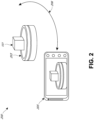
- Figure 2 shows an example system 200 for generating a 3D view of a static object using a moving camera.
- the system includes an object 101 on a surface 203 that can be a static surface.
- a camera 205 orbits the object 101 to take pictures or video of the object.
- the object 101 can be any object for which a 3D view is to be generated. Examples include clothing, tools, furniture, models, and the like.
- the object can be illuminated by lights (not shown in Figure 2 ).
- the camera 205 is be configured to record a video or a sequence of images as the camera 205 rotates or orbits around the object 101.
- the camera 205 can be moved, for example, by a person holding the camera 205 or along a track.
- the camera can orbit the object 101 for at least one full turn (360 degrees) or more to provide image data for all angles.
- the camera 205 is shown as a smartphone camera, but the camera 205 can also be a photo camera, video camera, or any similar device for capturing images or videos.
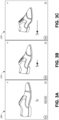
- Figure 3A, Figure 3B, and Figure 3C show example 3D views for a shoe 301.
- Figure 3A shows a first 3D view 300 of the shoe 301.
- a user can interact with the 3D view of the shoe using a cursor or other input device such as a touchpad, keyboard, controller, voice commands, and the like.
- the user can click the 3D view 300 and drag to the left, causing the 3D view 300 to rotate clockwise.
- Figure 3B shows a second view 310 where the shoe is rotated counter clockwise by a first angle in response to dragging of the cursor to the left by a first amount.
- Figure 3C shows a second view 320 where the shoe is rotated counter clockwise by a second angle in response to dragging of the cursor to the left by a first amount.
- the view of the object can rotate in response to, such as proportionally with, a movement of a cursor.
- the view of the object can also rotate, for example, continuously or incrementally in response to inputs, such as pressing of the left or right button on a keyboard.
- the 3D view 300, 310, or 320 can stop rotating.
- the user can also select to zoom in on the shoe object 301 from any of the presented angles.
- the user can provide a command to zoom, for example, by pressing a zoom button (not shown), pressing buttons on the keyboard such as "+” or "-", dragging the mouse up or down, and the like.
- the 3D view 300, 310, or 320 can be rotated to show how the object looks from the plurality of viewpoints that orbit around the object. These views of the object can correspond to the pictures or video frames taken by the camera at each respective position about the object described with respect to Figure 1 and Figure 2 .
- the 3D views can provide for a contiguous 360-degree rotation of the object such that the object can be rotated between any two viewing angles (for example, from 27 degrees to 245 degrees in a clockwise or counterclockwise direction).
- the 3D view can be generated without data about the 3D structure, 3D mesh frame, and/or 3D geometric model.
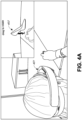
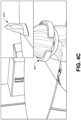
- Figure 4A , Figure 4B , and Figure 4C show example 3D views through an augmented reality (AR) headset.
- AR augmented reality
- a user wears an AR headset 401 that displays a 3D view 403 of a shoe in the AR headset 401 such that the user's view of reality is augmented with the 3D view 403.
- the user can use hand gestures and/or move a controller to rotate the 3D view 403 of the shoe.
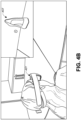
- Figure 4B shows the 3D view 403 that appears in the AR headset 401 to the user in response to the user moving the headset 401 to the left.
- Figure 4C shows the 3D view 403 that appears in the AR headset 401 to the user in response to the user moving the headset 401 to the right.
- the 3D view 403 can be rotated in the AR headset to change the angle of the 3D view based on the relative viewing position of the AR headset.
- the AR techniques can be similarly implemented with virtual reality (VR) headsets.
- VR virtual reality
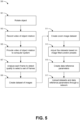
- Figure 5 shows a flowchart 500 of an example process for generating a 3D view of an object by using a static camera and rotating the object.
- the process 500 can be implemented, in whole or in part, by a computer system, a mobile computing device, or a camera, among others.
- an object can be rotated.
- the object can rest on a rotating turntable or other rotating surface such as a rotating sheet of paper.
- the object can be manually rotated, suspended by a thin string and rotated in the air, and the like.
- the object can be rotated at least one full turn (at least 360 degrees), and in some embodiments more than a full turn, such as between 360 to 480 degrees.
- a camera can record a video of the object rotation.
- the camera can record the object rotating for at least one full turn such that the video includes a plurality of image frames showing the object from a plurality of angles around the object.
- a set of photos showing the object from a plurality of angles around the object can be used in place of the video.
- the video of the object rotation can be provided to a computer system.
- the computer system can receive the video.
- a computer system can include, for example, a desktop, laptop, smart phone, remote server, and the like.
- the frames of the video can be analyzed to detect the quality of frames in order to select a set of frames.
- the frames can be analyzed to detect blurriness, artifacts, or other characteristics of low quality frames.
- the low quality frames can be omitted from the selected set of frames.
- the better quality frame can be selected for inclusion in the set of frames, such as when the video includes more than one rotation.
- the selected set of frames can include at least one frame within a threshold angle of rotation about the object, such as 0.5 degrees, 1 degree, 2 degrees or any other defined threshold angle.
- a dataset of images can be created.
- the dataset can be based on or include the selected set of frames such that the dataset includes at least one view of the object per threshold angle (such as at least one frame per 1 degree of rotation about the object).
- the dataset can include data indicating a position or angle between the frames and the object.
- the dataset of images can be used to show how the object looks from each angle as a user rotates the object in a 3D view.
- a zoom image dataset can be created.
- the zoom image dataset can include high resolution versions of the dataset of images.
- the zoom images dataset can be used to show details when users zoom in on the 3D views.
- one or more image filters or presets can be applied to the zoom image dataset and/or the zoom image dataset.
- the filters can include filters for brightness, contrast, color balance, white balance, sharpness, and the like.
- data reference parameters can be created or extracted.
- the data reference parameters can be used to help generate the 3D view on a variety of platforms and devices.
- the reference parameters can indicate, for example, which frame should be used as a default or front of a 3D view.
- the reference parameters can also include data about the equipment used for recording the video or taking the pictures, the recording parameters, frame masks, object dimensions, and information about the geometric shape of the object.
- the dataset of images, the zoom image dataset, and/or the reference parameters can be uploaded through a network to a remote computer system.
- the remote computer system can be configured to store the data.
- the remote computer system is configured to generate one or more 3D views of the object based at least in part on the dataset of images, and the reference parameters.
- the remote computer system is configured to generate one or more 3D views of the object based at least in part on the dataset of images, the zoom image dataset and the reference parameters.
- Figure 6 shows a flowchart of an example process 600 for generating a 3D view of a static object using a moving camera.
- the process 600 can be implemented, in whole or in part, by a computer system, a mobile computing device, or a camera, among others.
- a camera is used to record an object while the camera is moved around the object.
- the camera can be moved in an orbit of at least one full rotation, and in some embodiments, the camera can be rotated 360 to 480 degrees or more.
- the camera can be manually carried around the object, moved along a track, or otherwise moved.
- the recorded video includes a plurality of image frames showing the object from a plurality of angles around the object. In some embodiments, a set of photos showing the object from a plurality of angles around the object can be used in place of the video.
- the video of the object rotation can be provided to a computer system.
- the computer system can receive the video.
- a computer system can include, for example, a desktop, laptop, smart phone, remote server, and the like.
- non-constant camera rotation can be identified and compensated for.
- Non-constant camera rotation can be identified manually or automatically based on the rotation of fixed reference markers.
- the fixed reference markers (such as a grid) can be displayed on the surface or background while the object was recorded in block 601.
- frames from parts of the video showing slower rotation can be removed to speed up those parts of the video.
- Block 605 can optionally be performed during the process 500 discussed with respect to Figure 5 , such as before or after block 507, especially if the object was manually rotated at block 501.
- the scaling of the object can be normalized and focus can be adjusted.
- the appearance of the object in the recorded frames may vary in size due to radial movement of the camera during block 601. Frames where the object appears smaller can be enlarged, and frames where the object appears larger can be reduced in size. Accordingly, the scaling of the object can be normalized.
- the size of the object indicates the radial distance between the object and the camera, and any focus variations caused by changes in the radial distance can also be compensated for.
- a dataset of images can be created.
- the dataset can be based on or include the selected set of frames such that the dataset includes at least one view of the object per threshold angle (such as at least one frame per 1 degree of rotation about the object).
- the dataset can include data indicating a position or angle between the frames and the object.
- the dataset of images can be used to show how the object looks from each angle as a user rotates the object in a 3D view.
- a zoom image dataset can be created.
- the zoom image dataset can include high resolution versions of the dataset of images.
- the zoom images dataset can be used to show details when users zoom in on the 3D views.
- one or more image filters or presets can be applied to the zoom image dataset and/or the zoom image dataset.
- the filters can include filters for brightness, contrast, color balance, white balance, sharpness, and the like.
- data reference parameters can be created or extracted.
- the data reference parameters can be used to help generate the 3D view on a variety of platforms and devices.
- the reference parameters can indicate, for example, which frame should be used as a default or front of a 3D view.
- the reference parameters can also include data about the equipment used for recording the video or taking the pictures, the recording parameters, frame masks, object dimensions, and information about the geometric shape of the object.
- the dataset of images, the zoom image dataset, and/or the reference parameters can be uploaded through a network to a remote computer system.
- the remote computer system can be configured to store the data and generate on or more 3D views of the object based at least in part on the dataset of images, the zoom image dataset, and/or the reference parameters.
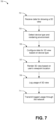
- Figure 7 shows a flowchart of an example process for displaying a 3D view of an object.
- the process 700 can be implemented, in whole or in part, by a computer system, a mobile computing device, or a camera, among others.
- data for showing a 3D view can be received.
- the data for showing a 3D view can be downloaded from a server through a network connection such as the internet.
- a type of device and rendering environment can be detected. For example, it can be detected if the device is a computer with a monitor, a laptop with a screen, a smartphone, an AR headset, a VR headset, and the like.
- the rendering environment can include, for example, rendering as part of a website in an internet browser, rendering through a VR app, rendering in an AR environment, rendering in a mixed reality environment, and the like.
- the data for showing the 3D view can be configured based on the detected type of device and/or rendering environment.
- the 3D view is configured by downloading or streaming supplemental data for displaying the 3D view on the detected type of device in the rendering environment. Different types of supplemental data can be downloaded or streamed based on the detected type of device and/or rendering environment.
- the data for showing a 3D view can include data for showing the 3D view on a plurality of different types of devices in a plurality of different rendering environments, and a subset of the data for showing the 3D view is selected for showing the 3D view on the detected type of device in the detected rendering environment.
- the 3D view in response to detecting a type of device and/or rendering environment, is configured to rotate in response to a respective type of user input.
- the 3D view is rendered based at least in part on a user's viewpoint.
- an image of the object can be displayed.
- the image can change as the user's viewpoint changes such that object can be observed from a ring of viewpoint that orbits the object.
- the user can interact with the 3D view to change the user's viewpoint with respect to the object.
- head tracking can be used to determine the user's viewpoint, and the 3D view can update in response to head movements.
- the user's interactions with the 3D view can be logged. This can include, for example, from which angles the object is viewed, the duration of viewing the object at various angles, how the user changes angles for viewing the object, the duration of viewing the 3D view, and the like.
- the log of the user's interactions with the 3D view can be transmitted through the network, such as to the server hosting the 3D view.
- This can allow the server to analyze the 3D view to determine which views are the most popular.
- the server can, in some cases, set a default view based on popular angles and/or set a 3D view to rotate through popular angles.
- the server can also analyze which parts of the object are the most interesting to see.
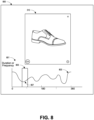
- Figure 8 shows an example user interface 800 for reviewing log data.
- the user interface 800 includes a graph 801 showing a duration or frequency that a 3D view 310 is viewed from a range of angles from 0 to 360 degrees.
- a selection box 805 can be moved left or right along the graph, and the 3D view rotates clockwise or counter clockwise in response.
- the curve 803 shows an aggregate amount of time that the range of neighboring viewpoints included in the selection box 805 were viewed by one or more users.
- the duration indicated at point 807 would include the duration that users viewed the object from about 65 degrees to 95 degrees.
- the graph can include data for one user or aggregate (such as average) data for a plurality of users. Other graphs, such as histograms for each angle or range of angles, can also be shown.
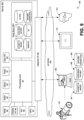
- FIG. 9 shows an example system 900 for displaying a 3D view.
- the system 900 includes a server 901, a network 903, a camera 105, a computer 905 storing datasets of images 907 and a zoom image dataset 908 and data reference parameters 909, a first user device such as a tablet 911 and a second user device such as an AR or VR headset 913.
- the server 901 includes a processing unit 20, user inputs/outputs 34, flash 52, a clock 50, read only memory 46, random access memory 48, a display input/output 36, audio/video interface 56, and storage 903.
- the data store 903 can include a transmitted copy of the dataset of images, a transmitted copy of the zoom image dataset, a transmitted copy of the data reference parameters, a 3D view file generated for the object, supplemental 3D view data for websites, and supplemental 3D view data for VR.
- the camera 105 can record a video or pictures of an object from at least 360 degrees.
- the video or pictures can be transferred to a computer 905.
- the computer 905 can process the images and generate a dataset of images 907, a zoom image dataset 908, and data reference parameters 909.
- the computer 905 can transfer a dataset of images 907, a zoom image dataset 908, and data reference parameters 909 through a network 903 to the server 901.
- the server 901 can receive and store the dataset of images, the zoom image dataset, and the data reference parameters.
- the server 901 is configured to generate the 3D view based on the dataset of images and the data reference parameters.
- the server 901 is configured to generate the 3D view further based on the zoom image dataset.
- the server 901 can also generate supplemental data for showing the 3D view on websites and in VR environments based on the dataset of images, the zoom image dataset, and the data reference parameters.
- the server When the server receives a first request to show the 3D view through a website from a first computing device such as the tablet 911, the server can transfer the 3D view file to the tablet 911 and also transfer the supplemental data for showing the 3D view through a website.
- the server receives a second request to show the 3D view in a VR environment from a second computing device such as the VR headset 913, the server can transfer the 3D view file to the VR headset 913 and also transfer the supplemental data for showing the 3D view in a VR environment.
- the server 901 can stream and/or transfer images from the zoom image dataset and/or the dataset of images as requested for showing the 3D view of the object.
- the server 901 includes a processing unit 20 that interacts with other components of the server 901 and also components external to the server 901.
- the server 901 may include a separate graphics processor 24.
- the graphics processor 24 may be built into the processing unit 20, such as with an APU.
- the graphics processor 24 may share Random Access Memory (RAM) with the processing unit 20.
- the server 901 may include a discrete graphics processor 24 that is separate from the processing unit 20.
- the graphics processor 24 may have separate RAM from the processing unit 20.
- the graphics processor 24 may work in conjunction with one or more additional graphics processors and/or with an embedded or non-discrete graphics processing unit, which may be embedded into a motherboard and which is sometimes referred to as an on-board graphics chip or device.
- the server 901 also includes various components for enabling input/output, such as a user I/O 34, a display I/O 36, and a network I/O 38.
- the input/output components may, in some cases, including touch-enabled devices.
- Data store 903 can include internal or removable storage for the server 901.
- the data store 903 can store the datasets and data reference parameters received from the computer 905.
- the data store 903 can also be configured to store a 3D view generated based on the datasets and data reference parameters and also store any supplemental data for displaying the 3D view on different types of devices and/or in different rendering environments.
- the server 901 is also shown including ROM (Read-Only Memory) 46 and RAM 48.
- RAM 48 may be used for data that is accessed frequently, such as when a game is being played, or for all data that is accessed by the processing unit 20 and/or the graphics processor 24.
- User I/O 34 is used to send and receive commands between processing unit 20 and user devices.
- the user I/O 34 can include touchscreen inputs.
- the touchscreen can be a capacitive touchscreen, a resistive touchscreen, or other type of touchscreen technology that is configured to receive user input through tactile inputs from the user.
- Display I/O 36 provides input/output functions that are used to display images such as to a monitor.
- Network I/O 38 is used for input/output functions for a network. Network I/O 38 may be used to transfer the 3D view, datasets, data reference parameters, and/or supplemental data for showing the 3D view.
- Display output signals may be produced by the display I/O 36 and can include signals for displaying visual content produced by the server 901 on a display device, such as graphics, user interfaces, video, and/or other visual content.
- the server 901 can also include other features, such as a clock 50, flash memory 52, and other components.
- An audio/video player 56 might also be used to show the 3D view. It should be understood that other components may be provided in the server 901 and that a person skilled in the art will appreciate other variations of the server 901.
- Program code can be stored in ROM 46, RAM 48, or storage 40 (which might comprise hard disk, other magnetic storage, optical storage, solid state drives, and/or other non-volatile storage, or a combination or variation of these). At least part of the program code can be stored in ROM that is programmable (ROM, PROM, EPROM, EEPROM, and so forth), in the data store 903, and/or on removable media such, or obtained over a network or other electronic channel as needed). In general, program code can be found embodied in a tangible non-transitory computer-readable medium.
- Random access memory (RAM) 48 (and possibly other storage) is usable to store variables and processor data as needed. RAM is used and holds data that is generated during the play of the game and portions thereof might also be reserved for frame buffers, game state and/or other data needed or usable for interpreting user input and generating game displays. Generally, RAM 48 is volatile storage and data stored within RAM 48 may be lost when the server 901 is turned off or loses power.
- Figure 10 shows a flowchart 1000 of an example process for hosting a 3D view of an object.
- the process 1000 can be implemented, in whole or in part, by a computer system or a mobile computing device, among others.
- datasets and/or data reference parameters can be received.
- the datasets can be received, for example, from a computer system uploading the datasets and/or data reference parameters at block 517 of Figure 5 or 617 of Figure 6 .
- a 3D view of an object can be generated based at least in part on the datasets and the data reference parameters.
- supplemental data for the 3D view can be generated for showing the 3D view on different types of devices and/or rendering environment.
- a request an be received for showing a 3D view of the object For example, clients can request the 3D view of the object to be displayed embedded in a website, as part of a game, in a virtual or augmented reality environment, and the like. Some clients may use an API to request that the 3D view of the object be shown. Some clients may request, through code on a website, that the 3D view be shown. For example, a website may use an iframe in HTML5 to request that the 3D view of the object be shown. As another example, a website can use a plugin, such as the PrestaShop plugin (available at http://cappasity.com/prestashop) , to embed the 3D view of the object in a webpage. The client may identify which 3D view to see using a unique identifier associated with each 3D view.
- the PrestaShop plugin available at http://cappasity.com/prestashop
- the 3D view can be transferred to the client.
- the data can be streamed as needed.
- image data of a selected viewpoint and/or neighboring viewpoints can be streamed and/or buffered as a user selects viewpoints.
- the zoom dataset can be transferred to allow a user to zoom in, or individual images from the zoom dataset can be transferred in response to a user selecting a zoom from an individual viewpoint.
- supplemental data for rendering on the client device can be transferred based on the type and/or rendering environment of the client device.
- All of the processes described herein may be embodied in, and fully automated via, software code modules executed by a computing system that includes one or more computers or processors.
- the code modules may be stored in any type of non-transitory computer-readable medium or other computer storage device. Some or all the methods may be embodied in specialized computer hardware.
- a processor can be a microprocessor, but in the alternative, the processor can be a controller, microcontroller, or state machine, combinations of the same, or the like.
- a processor can include electrical circuitry configured to process computer-executable instructions.
- a processor includes an FPGA or other programmable device that performs logic operations without processing computer-executable instructions.
- a processor can also be implemented as a combination of computing devices, for example, a combination of a DSP and a microprocessor, a plurality of microprocessors, one or more microprocessors in conjunction with a DSP core, or any other such configuration. Although described herein primarily with respect to digital technology, a processor may also include primarily analog components.
- a computing environment can include any type of computer system, including, but not limited to, a computer system based on a microprocessor, a mainframe computer, a digital signal processor, a portable computing device, a device controller, or a computational engine within an appliance, to name a few.
- Disjunctive language such as the phrase "at least one of X, Y, or Z," unless specifically stated otherwise, is otherwise understood with the context as used in general to present that an item, term, and the like, may be either X, Y, or Z, or any combination thereof (for example, X, Y, and/or Z). Thus, such disjunctive language is not generally intended to, and should not, imply that certain embodiments require at least one of X, at least one of Y, or at least one of Z to each be present.
- a device configured to are intended to include one or more recited devices. Such one or more recited devices can also be collectively configured to carry out the stated recitations.
- a processor configured to carry out recitations A, B and C can include a first processor configured to carry out recitation A working in conjunction with a second processor configured to carry out recitations B and C.
Landscapes
- Engineering & Computer Science (AREA)
- Physics & Mathematics (AREA)
- Theoretical Computer Science (AREA)
- General Physics & Mathematics (AREA)
- Software Systems (AREA)
- Computer Graphics (AREA)
- General Engineering & Computer Science (AREA)
- Library & Information Science (AREA)
- Computer Vision & Pattern Recognition (AREA)
- Computer Hardware Design (AREA)
- Geometry (AREA)
- Remote Sensing (AREA)
- Radar, Positioning & Navigation (AREA)
- Data Mining & Analysis (AREA)
- Databases & Information Systems (AREA)
- Multimedia (AREA)
- Processing Or Creating Images (AREA)
- User Interface Of Digital Computer (AREA)
- Image Generation (AREA)
- Image Analysis (AREA)
- Testing, Inspecting, Measuring Of Stereoscopic Televisions And Televisions (AREA)
Applications Claiming Priority (2)
| Application Number | Priority Date | Filing Date | Title |
|---|---|---|---|
| US201762532900P | 2017-07-14 | 2017-07-14 | |
| PCT/US2018/041899 WO2019014497A2 (en) | 2017-07-14 | 2018-07-12 | SYSTEMS AND METHODS FOR CREATING AND DISPLAYING INTERACTIVE 3D REPRESENTATIONS OF REAL OBJECTS |
Publications (2)
| Publication Number | Publication Date |
|---|---|
| EP3652704A2 EP3652704A2 (en) | 2020-05-20 |
| EP3652704B1 true EP3652704B1 (en) | 2023-10-04 |
Family
ID=63104023
Family Applications (1)
| Application Number | Title | Priority Date | Filing Date |
|---|---|---|---|
| EP18749929.8A Active EP3652704B1 (en) | 2017-07-14 | 2018-07-12 | Systems and methods for creating and displaying interactive 3d representations of real objects |
Country Status (8)
| Country | Link |
|---|---|
| US (2) | US10733790B2 (https=) |
| EP (1) | EP3652704B1 (https=) |
| JP (1) | JP7125983B2 (https=) |
| KR (1) | KR102367640B1 (https=) |
| AU (1) | AU2018301461A1 (https=) |
| CA (1) | CA3069183A1 (https=) |
| RU (1) | RU2020107056A (https=) |
| WO (1) | WO2019014497A2 (https=) |
Families Citing this family (6)
| Publication number | Priority date | Publication date | Assignee | Title |
|---|---|---|---|---|
| GB2582917B (en) * | 2019-04-05 | 2021-05-12 | Holome Tech Limited | Method and apparatus for generating three dimensional images |
| US20230069018A1 (en) * | 2020-02-26 | 2023-03-02 | Nec Corporation | Image processing apparatus, imaging apparatus, image processing system, image processing method, and non-transitory computer readable medium |
| CN116868557A (zh) * | 2020-12-15 | 2023-10-10 | 弗劳恩霍夫应用研究促进协会 | 用于流传输视觉内容的客户端-服务器通信 |
| US12337730B2 (en) * | 2021-10-15 | 2025-06-24 | Hyundai Mobis Co., Ltd. | System for controlling vehicle based on occupant's intent |
| US12608879B2 (en) * | 2022-12-12 | 2026-04-21 | Adobe Inc. | Generation of a 360-degree object view by leveraging available images on an online platform |
| TWI906033B (zh) * | 2024-11-14 | 2025-11-21 | 財團法人工業技術研究院 | 影像收集方法及影像擷取裝置 |
Family Cites Families (15)
| Publication number | Priority date | Publication date | Assignee | Title |
|---|---|---|---|---|
| JP4574770B2 (ja) * | 1999-11-29 | 2010-11-04 | 株式会社東芝 | 医用三次元画像表示装置 |
| JP2001325297A (ja) * | 2000-05-17 | 2001-11-22 | Nec Software Hokuriku Ltd | 商品画像表示システム、商品画像閲覧方法および記録媒体 |
| JP2002042169A (ja) * | 2000-07-06 | 2002-02-08 | Infiniteface.Com Inc | 三次元画像提供システム及び方法並びにモーフィング画像提供システム及び方法 |
| US6455835B1 (en) * | 2001-04-04 | 2002-09-24 | International Business Machines Corporation | System, method, and program product for acquiring accurate object silhouettes for shape recovery |
| US10163261B2 (en) * | 2014-03-19 | 2018-12-25 | Matterport, Inc. | Selecting two-dimensional imagery data for display within a three-dimensional model |
| US9514570B2 (en) * | 2012-07-26 | 2016-12-06 | Qualcomm Incorporated | Augmentation of tangible objects as user interface controller |
| US9118843B2 (en) * | 2013-01-17 | 2015-08-25 | Google Inc. | Methods and systems for creating swivel views from a handheld device |
| US20150134651A1 (en) * | 2013-11-12 | 2015-05-14 | Fyusion, Inc. | Multi-dimensional surround view based search |
| US9779508B2 (en) * | 2014-03-26 | 2017-10-03 | Microsoft Technology Licensing, Llc | Real-time three-dimensional reconstruction of a scene from a single camera |
| EP4206870A1 (en) * | 2014-06-14 | 2023-07-05 | Magic Leap, Inc. | Method for updating a virtual world |
| US10719939B2 (en) * | 2014-10-31 | 2020-07-21 | Fyusion, Inc. | Real-time mobile device capture and generation of AR/VR content |
| GB2532075A (en) * | 2014-11-10 | 2016-05-11 | Lego As | System and method for toy recognition and detection based on convolutional neural networks |
| US10154246B2 (en) * | 2014-11-20 | 2018-12-11 | Cappasity Inc. | Systems and methods for 3D capturing of objects and motion sequences using multiple range and RGB cameras |
| WO2017083723A1 (en) * | 2015-11-11 | 2017-05-18 | Kyntec Corporation | Hydraulic energy absorption device with a displaceable accumulator |
| US11103773B2 (en) * | 2018-07-27 | 2021-08-31 | Yogesh Rathod | Displaying virtual objects based on recognition of real world object and identification of real world object associated location or geofence |
-
2018
- 2018-07-12 WO PCT/US2018/041899 patent/WO2019014497A2/en not_active Ceased
- 2018-07-12 JP JP2020523230A patent/JP7125983B2/ja active Active
- 2018-07-12 KR KR1020207004414A patent/KR102367640B1/ko active Active
- 2018-07-12 CA CA3069183A patent/CA3069183A1/en active Pending
- 2018-07-12 RU RU2020107056A patent/RU2020107056A/ru unknown
- 2018-07-12 AU AU2018301461A patent/AU2018301461A1/en not_active Abandoned
- 2018-07-12 EP EP18749929.8A patent/EP3652704B1/en active Active
- 2018-07-13 US US16/035,417 patent/US10733790B2/en active Active
-
2020
- 2020-07-31 US US16/945,479 patent/US11836847B2/en active Active
Also Published As
| Publication number | Publication date |
|---|---|
| US11836847B2 (en) | 2023-12-05 |
| WO2019014497A3 (en) | 2019-02-21 |
| RU2020107056A3 (https=) | 2022-04-11 |
| CA3069183A1 (en) | 2019-01-17 |
| US20200364923A1 (en) | 2020-11-19 |
| RU2020107056A (ru) | 2021-08-16 |
| US20190019327A1 (en) | 2019-01-17 |
| US10733790B2 (en) | 2020-08-04 |
| JP7125983B2 (ja) | 2022-08-25 |
| KR20200028010A (ko) | 2020-03-13 |
| EP3652704A2 (en) | 2020-05-20 |
| AU2018301461A1 (en) | 2020-01-30 |
| JP2020527814A (ja) | 2020-09-10 |
| WO2019014497A2 (en) | 2019-01-17 |
| KR102367640B1 (ko) | 2022-02-24 |
Similar Documents
| Publication | Publication Date | Title |
|---|---|---|
| EP3652704B1 (en) | Systems and methods for creating and displaying interactive 3d representations of real objects | |
| KR102697772B1 (ko) | 메시징 시스템 내의 3d 데이터를 포함하는 증강 현실 콘텐츠 생성기들 | |
| US8644467B2 (en) | Video conferencing system, method, and computer program storage device | |
| US9240070B2 (en) | Methods and systems for viewing dynamic high-resolution 3D imagery over a network | |
| US8456467B1 (en) | Embeddable three-dimensional (3D) image viewer | |
| AU2015231761B2 (en) | Object tracking in zoomed video | |
| US9519999B1 (en) | Methods and systems for providing a preloader animation for image viewers | |
| US10049490B2 (en) | Generating virtual shadows for displayable elements | |
| CN108876934B (zh) | 关键点标注方法、装置和系统及存储介质 | |
| US20150185825A1 (en) | Assigning a virtual user interface to a physical object | |
| WO2019089097A1 (en) | Systems and methods for generating a summary storyboard from a plurality of image frames | |
| CN113487742A (zh) | 用于生成三维模型的方法和系统 | |
| US20190311548A1 (en) | Apparatus for sharing objects of interest and associated methods | |
| CN109154862B (zh) | 用于处理虚拟现实内容的装置、方法和计算机可读介质 | |
| US20240094886A1 (en) | Applying visual modifiers to objects of interest selected by a pointer from a video feed in a frame buffer via processing circuitry | |
| CN106447756B (zh) | 用于生成用户定制的计算机生成动画的方法和系统 | |
| US9349204B1 (en) | Systems and methods for generating videos using animation and motion capture scene information | |
| GB2487039A (en) | Visualizing Illustrated Books And Comics On Digital Devices | |
| US11475636B2 (en) | Augmented reality and virtual reality engine for virtual desktop infrastucture | |
| US20230334792A1 (en) | Interactive reality computing experience using optical lenticular multi-perspective simulation | |
| US10586366B2 (en) | System and method for display object bitmap caching | |
| US20230326095A1 (en) | Overlaying displayed digital content with regional transparency and regional lossless compression transmitted over a communication network via processing circuitry | |
| AU2015264917A1 (en) | Methods for video annotation |
Legal Events
| Date | Code | Title | Description |
|---|---|---|---|
| STAA | Information on the status of an ep patent application or granted ep patent |
Free format text: STATUS: UNKNOWN |
|
| STAA | Information on the status of an ep patent application or granted ep patent |
Free format text: STATUS: THE INTERNATIONAL PUBLICATION HAS BEEN MADE |
|
| PUAI | Public reference made under article 153(3) epc to a published international application that has entered the european phase |
Free format text: ORIGINAL CODE: 0009012 |
|
| STAA | Information on the status of an ep patent application or granted ep patent |
Free format text: STATUS: REQUEST FOR EXAMINATION WAS MADE |
|
| 17P | Request for examination filed |
Effective date: 20200207 |
|
| AK | Designated contracting states |
Kind code of ref document: A2 Designated state(s): AL AT BE BG CH CY CZ DE DK EE ES FI FR GB GR HR HU IE IS IT LI LT LU LV MC MK MT NL NO PL PT RO RS SE SI SK SM TR |
|
| AX | Request for extension of the european patent |
Extension state: BA ME |
|
| DAV | Request for validation of the european patent (deleted) | ||
| DAX | Request for extension of the european patent (deleted) | ||
| STAA | Information on the status of an ep patent application or granted ep patent |
Free format text: STATUS: EXAMINATION IS IN PROGRESS |
|
| 17Q | First examination report despatched |
Effective date: 20220105 |
|
| GRAP | Despatch of communication of intention to grant a patent |
Free format text: ORIGINAL CODE: EPIDOSNIGR1 |
|
| STAA | Information on the status of an ep patent application or granted ep patent |
Free format text: STATUS: GRANT OF PATENT IS INTENDED |
|
| INTG | Intention to grant announced |
Effective date: 20230515 |
|
| P01 | Opt-out of the competence of the unified patent court (upc) registered |
Effective date: 20230601 |
|
| GRAS | Grant fee paid |
Free format text: ORIGINAL CODE: EPIDOSNIGR3 |
|
| GRAA | (expected) grant |
Free format text: ORIGINAL CODE: 0009210 |
|
| STAA | Information on the status of an ep patent application or granted ep patent |
Free format text: STATUS: THE PATENT HAS BEEN GRANTED |
|
| AK | Designated contracting states |
Kind code of ref document: B1 Designated state(s): AL AT BE BG CH CY CZ DE DK EE ES FI FR GB GR HR HU IE IS IT LI LT LU LV MC MK MT NL NO PL PT RO RS SE SI SK SM TR |
|
| REG | Reference to a national code |
Ref country code: GB Ref legal event code: FG4D |
|
| REG | Reference to a national code |
Ref country code: CH Ref legal event code: EP |
|
| REG | Reference to a national code |
Ref country code: IE Ref legal event code: FG4D |
|
| REG | Reference to a national code |
Ref country code: DE Ref legal event code: R096 Ref document number: 602018058673 Country of ref document: DE |
|
| REG | Reference to a national code |
Ref country code: LT Ref legal event code: MG9D |
|
| REG | Reference to a national code |
Ref country code: NL Ref legal event code: MP Effective date: 20231004 |
|
| REG | Reference to a national code |
Ref country code: AT Ref legal event code: MK05 Ref document number: 1618536 Country of ref document: AT Kind code of ref document: T Effective date: 20231004 |
|
| PG25 | Lapsed in a contracting state [announced via postgrant information from national office to epo] |
Ref country code: NL Free format text: LAPSE BECAUSE OF FAILURE TO SUBMIT A TRANSLATION OF THE DESCRIPTION OR TO PAY THE FEE WITHIN THE PRESCRIBED TIME-LIMIT Effective date: 20231004 |
|
| PG25 | Lapsed in a contracting state [announced via postgrant information from national office to epo] |
Ref country code: GR Free format text: LAPSE BECAUSE OF FAILURE TO SUBMIT A TRANSLATION OF THE DESCRIPTION OR TO PAY THE FEE WITHIN THE PRESCRIBED TIME-LIMIT Effective date: 20240105 |
|
| PG25 | Lapsed in a contracting state [announced via postgrant information from national office to epo] |
Ref country code: IS Free format text: LAPSE BECAUSE OF FAILURE TO SUBMIT A TRANSLATION OF THE DESCRIPTION OR TO PAY THE FEE WITHIN THE PRESCRIBED TIME-LIMIT Effective date: 20240204 |
|
| PG25 | Lapsed in a contracting state [announced via postgrant information from national office to epo] |
Ref country code: LT Free format text: LAPSE BECAUSE OF FAILURE TO SUBMIT A TRANSLATION OF THE DESCRIPTION OR TO PAY THE FEE WITHIN THE PRESCRIBED TIME-LIMIT Effective date: 20231004 |
|
| PG25 | Lapsed in a contracting state [announced via postgrant information from national office to epo] |
Ref country code: AT Free format text: LAPSE BECAUSE OF FAILURE TO SUBMIT A TRANSLATION OF THE DESCRIPTION OR TO PAY THE FEE WITHIN THE PRESCRIBED TIME-LIMIT Effective date: 20231004 |
|
| PG25 | Lapsed in a contracting state [announced via postgrant information from national office to epo] |
Ref country code: ES Free format text: LAPSE BECAUSE OF FAILURE TO SUBMIT A TRANSLATION OF THE DESCRIPTION OR TO PAY THE FEE WITHIN THE PRESCRIBED TIME-LIMIT Effective date: 20231004 |
|
| PG25 | Lapsed in a contracting state [announced via postgrant information from national office to epo] |
Ref country code: LT Free format text: LAPSE BECAUSE OF FAILURE TO SUBMIT A TRANSLATION OF THE DESCRIPTION OR TO PAY THE FEE WITHIN THE PRESCRIBED TIME-LIMIT Effective date: 20231004 Ref country code: IS Free format text: LAPSE BECAUSE OF FAILURE TO SUBMIT A TRANSLATION OF THE DESCRIPTION OR TO PAY THE FEE WITHIN THE PRESCRIBED TIME-LIMIT Effective date: 20240204 Ref country code: GR Free format text: LAPSE BECAUSE OF FAILURE TO SUBMIT A TRANSLATION OF THE DESCRIPTION OR TO PAY THE FEE WITHIN THE PRESCRIBED TIME-LIMIT Effective date: 20240105 Ref country code: ES Free format text: LAPSE BECAUSE OF FAILURE TO SUBMIT A TRANSLATION OF THE DESCRIPTION OR TO PAY THE FEE WITHIN THE PRESCRIBED TIME-LIMIT Effective date: 20231004 Ref country code: BG Free format text: LAPSE BECAUSE OF FAILURE TO SUBMIT A TRANSLATION OF THE DESCRIPTION OR TO PAY THE FEE WITHIN THE PRESCRIBED TIME-LIMIT Effective date: 20240104 Ref country code: AT Free format text: LAPSE BECAUSE OF FAILURE TO SUBMIT A TRANSLATION OF THE DESCRIPTION OR TO PAY THE FEE WITHIN THE PRESCRIBED TIME-LIMIT Effective date: 20231004 Ref country code: PT Free format text: LAPSE BECAUSE OF FAILURE TO SUBMIT A TRANSLATION OF THE DESCRIPTION OR TO PAY THE FEE WITHIN THE PRESCRIBED TIME-LIMIT Effective date: 20240205 |
|
| PG25 | Lapsed in a contracting state [announced via postgrant information from national office to epo] |
Ref country code: SE Free format text: LAPSE BECAUSE OF FAILURE TO SUBMIT A TRANSLATION OF THE DESCRIPTION OR TO PAY THE FEE WITHIN THE PRESCRIBED TIME-LIMIT Effective date: 20231004 Ref country code: RS Free format text: LAPSE BECAUSE OF FAILURE TO SUBMIT A TRANSLATION OF THE DESCRIPTION OR TO PAY THE FEE WITHIN THE PRESCRIBED TIME-LIMIT Effective date: 20231004 Ref country code: PL Free format text: LAPSE BECAUSE OF FAILURE TO SUBMIT A TRANSLATION OF THE DESCRIPTION OR TO PAY THE FEE WITHIN THE PRESCRIBED TIME-LIMIT Effective date: 20231004 Ref country code: NO Free format text: LAPSE BECAUSE OF FAILURE TO SUBMIT A TRANSLATION OF THE DESCRIPTION OR TO PAY THE FEE WITHIN THE PRESCRIBED TIME-LIMIT Effective date: 20240104 Ref country code: LV Free format text: LAPSE BECAUSE OF FAILURE TO SUBMIT A TRANSLATION OF THE DESCRIPTION OR TO PAY THE FEE WITHIN THE PRESCRIBED TIME-LIMIT Effective date: 20231004 Ref country code: HR Free format text: LAPSE BECAUSE OF FAILURE TO SUBMIT A TRANSLATION OF THE DESCRIPTION OR TO PAY THE FEE WITHIN THE PRESCRIBED TIME-LIMIT Effective date: 20231004 |
|
| REG | Reference to a national code |
Ref country code: DE Ref legal event code: R097 Ref document number: 602018058673 Country of ref document: DE |
|
| PG25 | Lapsed in a contracting state [announced via postgrant information from national office to epo] |
Ref country code: DK Free format text: LAPSE BECAUSE OF FAILURE TO SUBMIT A TRANSLATION OF THE DESCRIPTION OR TO PAY THE FEE WITHIN THE PRESCRIBED TIME-LIMIT Effective date: 20231004 |
|
| PG25 | Lapsed in a contracting state [announced via postgrant information from national office to epo] |
Ref country code: CZ Free format text: LAPSE BECAUSE OF FAILURE TO SUBMIT A TRANSLATION OF THE DESCRIPTION OR TO PAY THE FEE WITHIN THE PRESCRIBED TIME-LIMIT Effective date: 20231004 |
|
| PG25 | Lapsed in a contracting state [announced via postgrant information from national office to epo] |
Ref country code: SK Free format text: LAPSE BECAUSE OF FAILURE TO SUBMIT A TRANSLATION OF THE DESCRIPTION OR TO PAY THE FEE WITHIN THE PRESCRIBED TIME-LIMIT Effective date: 20231004 |
|
| PG25 | Lapsed in a contracting state [announced via postgrant information from national office to epo] |
Ref country code: SM Free format text: LAPSE BECAUSE OF FAILURE TO SUBMIT A TRANSLATION OF THE DESCRIPTION OR TO PAY THE FEE WITHIN THE PRESCRIBED TIME-LIMIT Effective date: 20231004 Ref country code: SK Free format text: LAPSE BECAUSE OF FAILURE TO SUBMIT A TRANSLATION OF THE DESCRIPTION OR TO PAY THE FEE WITHIN THE PRESCRIBED TIME-LIMIT Effective date: 20231004 Ref country code: RO Free format text: LAPSE BECAUSE OF FAILURE TO SUBMIT A TRANSLATION OF THE DESCRIPTION OR TO PAY THE FEE WITHIN THE PRESCRIBED TIME-LIMIT Effective date: 20231004 Ref country code: IT Free format text: LAPSE BECAUSE OF FAILURE TO SUBMIT A TRANSLATION OF THE DESCRIPTION OR TO PAY THE FEE WITHIN THE PRESCRIBED TIME-LIMIT Effective date: 20231004 Ref country code: EE Free format text: LAPSE BECAUSE OF FAILURE TO SUBMIT A TRANSLATION OF THE DESCRIPTION OR TO PAY THE FEE WITHIN THE PRESCRIBED TIME-LIMIT Effective date: 20231004 Ref country code: DK Free format text: LAPSE BECAUSE OF FAILURE TO SUBMIT A TRANSLATION OF THE DESCRIPTION OR TO PAY THE FEE WITHIN THE PRESCRIBED TIME-LIMIT Effective date: 20231004 Ref country code: CZ Free format text: LAPSE BECAUSE OF FAILURE TO SUBMIT A TRANSLATION OF THE DESCRIPTION OR TO PAY THE FEE WITHIN THE PRESCRIBED TIME-LIMIT Effective date: 20231004 |
|
| PLBE | No opposition filed within time limit |
Free format text: ORIGINAL CODE: 0009261 |
|
| STAA | Information on the status of an ep patent application or granted ep patent |
Free format text: STATUS: NO OPPOSITION FILED WITHIN TIME LIMIT |
|
| 26N | No opposition filed |
Effective date: 20240705 |
|
| PG25 | Lapsed in a contracting state [announced via postgrant information from national office to epo] |
Ref country code: SI Free format text: LAPSE BECAUSE OF FAILURE TO SUBMIT A TRANSLATION OF THE DESCRIPTION OR TO PAY THE FEE WITHIN THE PRESCRIBED TIME-LIMIT Effective date: 20231004 |
|
| PG25 | Lapsed in a contracting state [announced via postgrant information from national office to epo] |
Ref country code: SI Free format text: LAPSE BECAUSE OF FAILURE TO SUBMIT A TRANSLATION OF THE DESCRIPTION OR TO PAY THE FEE WITHIN THE PRESCRIBED TIME-LIMIT Effective date: 20231004 |
|
| REG | Reference to a national code |
Ref country code: DE Ref legal event code: R082 Ref document number: 602018058673 Country of ref document: DE Representative=s name: KOELLNER, MALTE, DR., DE Ref country code: DE Ref legal event code: R082 Ref document number: 602018058673 Country of ref document: DE Representative=s name: KOELLNER, MALTE, DIPL.-PHYS. DR.RER.NAT., DE |
|
| PG25 | Lapsed in a contracting state [announced via postgrant information from national office to epo] |
Ref country code: MC Free format text: LAPSE BECAUSE OF FAILURE TO SUBMIT A TRANSLATION OF THE DESCRIPTION OR TO PAY THE FEE WITHIN THE PRESCRIBED TIME-LIMIT Effective date: 20231004 |
|
| REG | Reference to a national code |
Ref country code: CH Ref legal event code: PL |
|
| PG25 | Lapsed in a contracting state [announced via postgrant information from national office to epo] |
Ref country code: LU Free format text: LAPSE BECAUSE OF NON-PAYMENT OF DUE FEES Effective date: 20240712 |
|
| GBPC | Gb: european patent ceased through non-payment of renewal fee |
Effective date: 20240712 |
|
| PG25 | Lapsed in a contracting state [announced via postgrant information from national office to epo] |
Ref country code: LU Free format text: LAPSE BECAUSE OF NON-PAYMENT OF DUE FEES Effective date: 20240712 |
|
| PG25 | Lapsed in a contracting state [announced via postgrant information from national office to epo] |
Ref country code: CH Free format text: LAPSE BECAUSE OF NON-PAYMENT OF DUE FEES Effective date: 20240731 Ref country code: BE Free format text: LAPSE BECAUSE OF NON-PAYMENT OF DUE FEES Effective date: 20240731 |
|
| PG25 | Lapsed in a contracting state [announced via postgrant information from national office to epo] |
Ref country code: GB Free format text: LAPSE BECAUSE OF NON-PAYMENT OF DUE FEES Effective date: 20240712 |
|
| REG | Reference to a national code |
Ref country code: BE Ref legal event code: MM Effective date: 20240731 |
|
| PGFP | Annual fee paid to national office [announced via postgrant information from national office to epo] |
Ref country code: FR Payment date: 20250617 Year of fee payment: 8 |
|
| PG25 | Lapsed in a contracting state [announced via postgrant information from national office to epo] |
Ref country code: IE Free format text: LAPSE BECAUSE OF NON-PAYMENT OF DUE FEES Effective date: 20240712 |
|
| PG25 | Lapsed in a contracting state [announced via postgrant information from national office to epo] |
Ref country code: FI Free format text: LAPSE BECAUSE OF FAILURE TO SUBMIT A TRANSLATION OF THE DESCRIPTION OR TO PAY THE FEE WITHIN THE PRESCRIBED TIME-LIMIT Effective date: 20231004 |
|
| PGFP | Annual fee paid to national office [announced via postgrant information from national office to epo] |
Ref country code: DE Payment date: 20250624 Year of fee payment: 8 |
|
| PG25 | Lapsed in a contracting state [announced via postgrant information from national office to epo] |
Ref country code: CY Free format text: LAPSE BECAUSE OF FAILURE TO SUBMIT A TRANSLATION OF THE DESCRIPTION OR TO PAY THE FEE WITHIN THE PRESCRIBED TIME-LIMIT; INVALID AB INITIO Effective date: 20180712 |
|
| PG25 | Lapsed in a contracting state [announced via postgrant information from national office to epo] |
Ref country code: HU Free format text: LAPSE BECAUSE OF FAILURE TO SUBMIT A TRANSLATION OF THE DESCRIPTION OR TO PAY THE FEE WITHIN THE PRESCRIBED TIME-LIMIT; INVALID AB INITIO Effective date: 20180712 |