EP3650036A1 - Synthetic peptides inducing immunogenic cell death - Google Patents
Synthetic peptides inducing immunogenic cell death Download PDFInfo
- Publication number
- EP3650036A1 EP3650036A1 EP18306454.2A EP18306454A EP3650036A1 EP 3650036 A1 EP3650036 A1 EP 3650036A1 EP 18306454 A EP18306454 A EP 18306454A EP 3650036 A1 EP3650036 A1 EP 3650036A1
- Authority
- EP
- European Patent Office
- Prior art keywords
- cancer
- substituted
- unsubstituted
- cells
- tyrosine
- Prior art date
- Legal status (The legal status is an assumption and is not a legal conclusion. Google has not performed a legal analysis and makes no representation as to the accuracy of the status listed.)
- Withdrawn
Links
- 108090000765 processed proteins & peptides Proteins 0.000 title claims abstract description 75
- 230000037449 immunogenic cell death Effects 0.000 title claims abstract description 32
- 230000001939 inductive effect Effects 0.000 title claims abstract description 7
- 102000004196 processed proteins & peptides Human genes 0.000 title abstract description 21
- 206010028980 Neoplasm Diseases 0.000 claims abstract description 76
- 201000011510 cancer Diseases 0.000 claims abstract description 20
- 239000008194 pharmaceutical composition Substances 0.000 claims abstract description 11
- 210000004027 cell Anatomy 0.000 claims description 114
- 150000001413 amino acids Chemical class 0.000 claims description 93
- 229940024606 amino acid Drugs 0.000 claims description 80
- 235000001014 amino acid Nutrition 0.000 claims description 80
- 150000001875 compounds Chemical class 0.000 claims description 50
- 150000003839 salts Chemical class 0.000 claims description 49
- LRQKBLKVPFOOQJ-YFKPBYRVSA-N L-norleucine Chemical compound CCCC[C@H]([NH3+])C([O-])=O LRQKBLKVPFOOQJ-YFKPBYRVSA-N 0.000 claims description 44
- COLNVLDHVKWLRT-UHFFFAOYSA-N phenylalanine Natural products OC(=O)C(N)CC1=CC=CC=C1 COLNVLDHVKWLRT-UHFFFAOYSA-N 0.000 claims description 44
- ROHFNLRQFUQHCH-UHFFFAOYSA-N Leucine Natural products CC(C)CC(N)C(O)=O ROHFNLRQFUQHCH-UHFFFAOYSA-N 0.000 claims description 41
- 229960000310 isoleucine Drugs 0.000 claims description 40
- AGPKZVBTJJNPAG-UHFFFAOYSA-N isoleucine Natural products CCC(C)C(N)C(O)=O AGPKZVBTJJNPAG-UHFFFAOYSA-N 0.000 claims description 40
- 239000004472 Lysine Substances 0.000 claims description 38
- ROHFNLRQFUQHCH-YFKPBYRVSA-N L-leucine Chemical compound CC(C)C[C@H](N)C(O)=O ROHFNLRQFUQHCH-YFKPBYRVSA-N 0.000 claims description 37
- KDXKERNSBIXSRK-UHFFFAOYSA-N Lysine Natural products NCCCCC(N)C(O)=O KDXKERNSBIXSRK-UHFFFAOYSA-N 0.000 claims description 37
- AGPKZVBTJJNPAG-WHFBIAKZSA-N L-isoleucine Chemical compound CC[C@H](C)[C@H](N)C(O)=O AGPKZVBTJJNPAG-WHFBIAKZSA-N 0.000 claims description 36
- KZSNJWFQEVHDMF-UHFFFAOYSA-N Valine Natural products CC(C)C(N)C(O)=O KZSNJWFQEVHDMF-UHFFFAOYSA-N 0.000 claims description 35
- 238000011282 treatment Methods 0.000 claims description 35
- 239000004474 valine Substances 0.000 claims description 35
- 210000004881 tumor cell Anatomy 0.000 claims description 26
- KDXKERNSBIXSRK-YFKPBYRVSA-N L-lysine Chemical compound NCCCC[C@H](N)C(O)=O KDXKERNSBIXSRK-YFKPBYRVSA-N 0.000 claims description 15
- 235000004279 alanine Nutrition 0.000 claims description 15
- QIVBCDIJIAJPQS-UHFFFAOYSA-N Tryptophan Natural products C1=CC=C2C(CC(N)C(O)=O)=CNC2=C1 QIVBCDIJIAJPQS-UHFFFAOYSA-N 0.000 claims description 14
- KZSNJWFQEVHDMF-BYPYZUCNSA-N L-valine Chemical compound CC(C)[C@H](N)C(O)=O KZSNJWFQEVHDMF-BYPYZUCNSA-N 0.000 claims description 13
- OUYCCCASQSFEME-UHFFFAOYSA-N tyrosine Natural products OC(=O)C(N)CC1=CC=C(O)C=C1 OUYCCCASQSFEME-UHFFFAOYSA-N 0.000 claims description 13
- JTTHKOPSMAVJFE-VIFPVBQESA-N L-homophenylalanine Chemical class OC(=O)[C@@H](N)CCC1=CC=CC=C1 JTTHKOPSMAVJFE-VIFPVBQESA-N 0.000 claims description 10
- 210000004899 c-terminal region Anatomy 0.000 claims description 10
- 229930182817 methionine Natural products 0.000 claims description 9
- 208000032839 leukemia Diseases 0.000 claims description 8
- 238000000034 method Methods 0.000 claims description 8
- WRFPVMFCRNYQNR-UHFFFAOYSA-N 2-hydroxyphenylalanine Chemical class OC(=O)C(N)CC1=CC=CC=C1O WRFPVMFCRNYQNR-UHFFFAOYSA-N 0.000 claims description 7
- JZKXXXDKRQWDET-QMMMGPOBSA-N L-m-tyrosine Chemical class OC(=O)[C@@H](N)CC1=CC=CC(O)=C1 JZKXXXDKRQWDET-QMMMGPOBSA-N 0.000 claims description 7
- 238000000338 in vitro Methods 0.000 claims description 6
- JZKXXXDKRQWDET-UHFFFAOYSA-N meta-tyrosine Natural products OC(=O)C(N)CC1=CC=CC(O)=C1 JZKXXXDKRQWDET-UHFFFAOYSA-N 0.000 claims description 6
- 150000001294 alanine derivatives Chemical class 0.000 claims description 4
- 150000002519 isoleucine derivatives Chemical class 0.000 claims description 4
- 150000002614 leucines Chemical class 0.000 claims description 4
- 201000001441 melanoma Diseases 0.000 claims description 4
- 238000002360 preparation method Methods 0.000 claims description 4
- 150000003680 valines Chemical class 0.000 claims description 4
- IYKLZBIWFXPUCS-VIFPVBQESA-N (2s)-2-(naphthalen-1-ylamino)propanoic acid Chemical class C1=CC=C2C(N[C@@H](C)C(O)=O)=CC=CC2=C1 IYKLZBIWFXPUCS-VIFPVBQESA-N 0.000 claims description 3
- 206010006187 Breast cancer Diseases 0.000 claims description 3
- 208000026310 Breast neoplasm Diseases 0.000 claims description 3
- 206010009944 Colon cancer Diseases 0.000 claims description 3
- QIVBCDIJIAJPQS-VIFPVBQESA-N L-tryptophane Chemical class C1=CC=C2C(C[C@H](N)C(O)=O)=CNC2=C1 QIVBCDIJIAJPQS-VIFPVBQESA-N 0.000 claims description 3
- 239000003937 drug carrier Substances 0.000 claims description 3
- 230000008569 process Effects 0.000 claims description 3
- 206010061424 Anal cancer Diseases 0.000 claims description 2
- 208000007860 Anus Neoplasms Diseases 0.000 claims description 2
- 206010004593 Bile duct cancer Diseases 0.000 claims description 2
- 206010005003 Bladder cancer Diseases 0.000 claims description 2
- 206010005949 Bone cancer Diseases 0.000 claims description 2
- 208000018084 Bone neoplasm Diseases 0.000 claims description 2
- 206010007279 Carcinoid tumour of the gastrointestinal tract Diseases 0.000 claims description 2
- 208000005024 Castleman disease Diseases 0.000 claims description 2
- 206010008342 Cervix carcinoma Diseases 0.000 claims description 2
- 208000001333 Colorectal Neoplasms Diseases 0.000 claims description 2
- 206010014733 Endometrial cancer Diseases 0.000 claims description 2
- 206010014759 Endometrial neoplasm Diseases 0.000 claims description 2
- 208000000461 Esophageal Neoplasms Diseases 0.000 claims description 2
- 208000022072 Gallbladder Neoplasms Diseases 0.000 claims description 2
- 208000017604 Hodgkin disease Diseases 0.000 claims description 2
- 208000010747 Hodgkins lymphoma Diseases 0.000 claims description 2
- 206010021042 Hypopharyngeal cancer Diseases 0.000 claims description 2
- 206010056305 Hypopharyngeal neoplasm Diseases 0.000 claims description 2
- 208000007766 Kaposi sarcoma Diseases 0.000 claims description 2
- 208000008839 Kidney Neoplasms Diseases 0.000 claims description 2
- FFFHZYDWPBMWHY-VKHMYHEASA-N L-homocysteine Chemical class OC(=O)[C@@H](N)CCS FFFHZYDWPBMWHY-VKHMYHEASA-N 0.000 claims description 2
- 206010023825 Laryngeal cancer Diseases 0.000 claims description 2
- 206010058467 Lung neoplasm malignant Diseases 0.000 claims description 2
- 208000032271 Malignant tumor of penis Diseases 0.000 claims description 2
- 206010027406 Mesothelioma Diseases 0.000 claims description 2
- 208000034578 Multiple myelomas Diseases 0.000 claims description 2
- 208000001894 Nasopharyngeal Neoplasms Diseases 0.000 claims description 2
- 206010061306 Nasopharyngeal cancer Diseases 0.000 claims description 2
- 206010029260 Neuroblastoma Diseases 0.000 claims description 2
- 208000015914 Non-Hodgkin lymphomas Diseases 0.000 claims description 2
- 206010031096 Oropharyngeal cancer Diseases 0.000 claims description 2
- 206010057444 Oropharyngeal neoplasm Diseases 0.000 claims description 2
- 206010033128 Ovarian cancer Diseases 0.000 claims description 2
- 206010061535 Ovarian neoplasm Diseases 0.000 claims description 2
- 206010061902 Pancreatic neoplasm Diseases 0.000 claims description 2
- 208000002471 Penile Neoplasms Diseases 0.000 claims description 2
- 206010034299 Penile cancer Diseases 0.000 claims description 2
- 208000007913 Pituitary Neoplasms Diseases 0.000 claims description 2
- 206010035226 Plasma cell myeloma Diseases 0.000 claims description 2
- 208000007452 Plasmacytoma Diseases 0.000 claims description 2
- 206010060862 Prostate cancer Diseases 0.000 claims description 2
- 208000000236 Prostatic Neoplasms Diseases 0.000 claims description 2
- 206010038389 Renal cancer Diseases 0.000 claims description 2
- 201000000582 Retinoblastoma Diseases 0.000 claims description 2
- 208000004337 Salivary Gland Neoplasms Diseases 0.000 claims description 2
- 206010061934 Salivary gland cancer Diseases 0.000 claims description 2
- 208000000453 Skin Neoplasms Diseases 0.000 claims description 2
- 208000005718 Stomach Neoplasms Diseases 0.000 claims description 2
- 208000024313 Testicular Neoplasms Diseases 0.000 claims description 2
- 206010057644 Testis cancer Diseases 0.000 claims description 2
- 208000000728 Thymus Neoplasms Diseases 0.000 claims description 2
- 208000024770 Thyroid neoplasm Diseases 0.000 claims description 2
- 208000007097 Urinary Bladder Neoplasms Diseases 0.000 claims description 2
- 208000006105 Uterine Cervical Neoplasms Diseases 0.000 claims description 2
- 208000002495 Uterine Neoplasms Diseases 0.000 claims description 2
- 206010047741 Vulval cancer Diseases 0.000 claims description 2
- 208000004354 Vulvar Neoplasms Diseases 0.000 claims description 2
- 230000001919 adrenal effect Effects 0.000 claims description 2
- 201000011165 anus cancer Diseases 0.000 claims description 2
- 208000026900 bile duct neoplasm Diseases 0.000 claims description 2
- 201000000220 brain stem cancer Diseases 0.000 claims description 2
- 201000007455 central nervous system cancer Diseases 0.000 claims description 2
- 201000010881 cervical cancer Diseases 0.000 claims description 2
- 208000006990 cholangiocarcinoma Diseases 0.000 claims description 2
- 230000001054 cortical effect Effects 0.000 claims description 2
- 201000004101 esophageal cancer Diseases 0.000 claims description 2
- 201000010175 gallbladder cancer Diseases 0.000 claims description 2
- 206010017758 gastric cancer Diseases 0.000 claims description 2
- 201000006866 hypopharynx cancer Diseases 0.000 claims description 2
- 201000010982 kidney cancer Diseases 0.000 claims description 2
- 206010023841 laryngeal neoplasm Diseases 0.000 claims description 2
- 201000007270 liver cancer Diseases 0.000 claims description 2
- 208000014018 liver neoplasm Diseases 0.000 claims description 2
- 201000005202 lung cancer Diseases 0.000 claims description 2
- 208000020816 lung neoplasm Diseases 0.000 claims description 2
- 208000015486 malignant pancreatic neoplasm Diseases 0.000 claims description 2
- 210000000214 mouth Anatomy 0.000 claims description 2
- 208000018795 nasal cavity and paranasal sinus carcinoma Diseases 0.000 claims description 2
- 201000005443 oral cavity cancer Diseases 0.000 claims description 2
- 201000006958 oropharynx cancer Diseases 0.000 claims description 2
- 201000002528 pancreatic cancer Diseases 0.000 claims description 2
- 208000008443 pancreatic carcinoma Diseases 0.000 claims description 2
- 201000002511 pituitary cancer Diseases 0.000 claims description 2
- 201000009410 rhabdomyosarcoma Diseases 0.000 claims description 2
- 201000000849 skin cancer Diseases 0.000 claims description 2
- 201000011549 stomach cancer Diseases 0.000 claims description 2
- 201000003120 testicular cancer Diseases 0.000 claims description 2
- 201000009377 thymus cancer Diseases 0.000 claims description 2
- 201000002510 thyroid cancer Diseases 0.000 claims description 2
- 201000005112 urinary bladder cancer Diseases 0.000 claims description 2
- 206010046766 uterine cancer Diseases 0.000 claims description 2
- 206010046885 vaginal cancer Diseases 0.000 claims description 2
- 208000013139 vaginal neoplasm Diseases 0.000 claims description 2
- 201000005102 vulva cancer Diseases 0.000 claims description 2
- 150000002993 phenylalanine derivatives Chemical class 0.000 claims 3
- 150000002742 methionines Chemical class 0.000 claims 1
- 230000002163 immunogen Effects 0.000 abstract description 7
- 238000002560 therapeutic procedure Methods 0.000 abstract description 4
- 230000004611 cancer cell death Effects 0.000 abstract description 3
- 241000699670 Mus sp. Species 0.000 description 45
- COLNVLDHVKWLRT-QMMMGPOBSA-N phenylalanine group Chemical group N[C@@H](CC1=CC=CC=C1)C(=O)O COLNVLDHVKWLRT-QMMMGPOBSA-N 0.000 description 33
- 108010046722 Thrombospondin 1 Proteins 0.000 description 31
- 102100036034 Thrombospondin-1 Human genes 0.000 description 31
- 230000030833 cell death Effects 0.000 description 27
- 125000003588 lysine group Chemical group [H]N([H])C([H])([H])C([H])([H])C([H])([H])C([H])([H])C([H])(N([H])[H])C(*)=O 0.000 description 24
- 102000004082 Calreticulin Human genes 0.000 description 18
- 108090000549 Calreticulin Proteins 0.000 description 18
- 125000002987 valine group Chemical group [H]N([H])C([H])(C(*)=O)C([H])(C([H])([H])[H])C([H])([H])[H] 0.000 description 18
- 102100037907 High mobility group protein B1 Human genes 0.000 description 16
- 101001025337 Homo sapiens High mobility group protein B1 Proteins 0.000 description 16
- 229960005486 vaccine Drugs 0.000 description 15
- 208000029052 T-cell acute lymphoblastic leukemia Diseases 0.000 description 14
- 125000000539 amino acid group Chemical group 0.000 description 14
- 229960004799 tryptophan Drugs 0.000 description 14
- 208000009052 Precursor T-Cell Lymphoblastic Leukemia-Lymphoma Diseases 0.000 description 13
- 208000017414 Precursor T-cell acute lymphoblastic leukemia Diseases 0.000 description 13
- 239000004475 Arginine Substances 0.000 description 11
- 102000001189 Cyclic Peptides Human genes 0.000 description 11
- 108010069514 Cyclic Peptides Proteins 0.000 description 11
- QNAYBMKLOCPYGJ-REOHCLBHSA-N L-alanine Chemical compound C[C@H](N)C(O)=O QNAYBMKLOCPYGJ-REOHCLBHSA-N 0.000 description 11
- ODKSFYDXXFIFQN-UHFFFAOYSA-N arginine Natural products OC(=O)C(N)CCCNC(N)=N ODKSFYDXXFIFQN-UHFFFAOYSA-N 0.000 description 11
- 235000018102 proteins Nutrition 0.000 description 11
- 102000004169 proteins and genes Human genes 0.000 description 11
- 108090000623 proteins and genes Proteins 0.000 description 11
- 125000003118 aryl group Chemical group 0.000 description 10
- KDXKERNSBIXSRK-RXMQYKEDSA-N D-lysine Chemical compound NCCCC[C@@H](N)C(O)=O KDXKERNSBIXSRK-RXMQYKEDSA-N 0.000 description 9
- 238000006467 substitution reaction Methods 0.000 description 9
- OYPRJOBELJOOCE-UHFFFAOYSA-N Calcium Chemical compound [Ca] OYPRJOBELJOOCE-UHFFFAOYSA-N 0.000 description 8
- DHMQDGOQFOQNFH-UHFFFAOYSA-N Glycine Chemical compound NCC(O)=O DHMQDGOQFOQNFH-UHFFFAOYSA-N 0.000 description 8
- 241001529936 Murinae Species 0.000 description 8
- -1 biaryl amino acids Chemical class 0.000 description 8
- 229910052791 calcium Inorganic materials 0.000 description 8
- 239000011575 calcium Substances 0.000 description 8
- 210000000265 leukocyte Anatomy 0.000 description 8
- 210000003819 peripheral blood mononuclear cell Anatomy 0.000 description 8
- 150000002994 phenylalanines Chemical class 0.000 description 8
- 239000006228 supernatant Substances 0.000 description 8
- 125000000430 tryptophan group Chemical group [H]N([H])C(C(=O)O*)C([H])([H])C1=C([H])N([H])C2=C([H])C([H])=C([H])C([H])=C12 0.000 description 8
- 125000001493 tyrosinyl group Chemical group [H]OC1=C([H])C([H])=C(C([H])=C1[H])C([H])([H])C([H])(N([H])[H])C(*)=O 0.000 description 8
- MTCFGRXMJLQNBG-REOHCLBHSA-N (2S)-2-Amino-3-hydroxypropansäure Chemical compound OC[C@H](N)C(O)=O MTCFGRXMJLQNBG-REOHCLBHSA-N 0.000 description 7
- 101710113864 Heat shock protein 90 Proteins 0.000 description 7
- 101000868279 Homo sapiens Leukocyte surface antigen CD47 Proteins 0.000 description 7
- ODKSFYDXXFIFQN-BYPYZUCNSA-P L-argininium(2+) Chemical compound NC(=[NH2+])NCCC[C@H]([NH3+])C(O)=O ODKSFYDXXFIFQN-BYPYZUCNSA-P 0.000 description 7
- FFEARJCKVFRZRR-BYPYZUCNSA-N L-methionine Chemical compound CSCC[C@H](N)C(O)=O FFEARJCKVFRZRR-BYPYZUCNSA-N 0.000 description 7
- 102100032913 Leukocyte surface antigen CD47 Human genes 0.000 description 7
- MTCFGRXMJLQNBG-UHFFFAOYSA-N Serine Natural products OCC(N)C(O)=O MTCFGRXMJLQNBG-UHFFFAOYSA-N 0.000 description 7
- 239000008280 blood Substances 0.000 description 7
- 239000012634 fragment Substances 0.000 description 7
- 238000001727 in vivo Methods 0.000 description 7
- 238000002347 injection Methods 0.000 description 7
- 239000007924 injection Substances 0.000 description 7
- 239000000203 mixture Substances 0.000 description 7
- 238000010186 staining Methods 0.000 description 7
- 239000000126 substance Substances 0.000 description 7
- 125000004169 (C1-C6) alkyl group Chemical group 0.000 description 6
- OFYAYGJCPXRNBL-UHFFFAOYSA-N 2-azaniumyl-3-naphthalen-1-ylpropanoate Chemical compound C1=CC=C2C(CC(N)C(O)=O)=CC=CC2=C1 OFYAYGJCPXRNBL-UHFFFAOYSA-N 0.000 description 6
- 102000011727 Caspases Human genes 0.000 description 6
- 108010076667 Caspases Proteins 0.000 description 6
- 101710163595 Chaperone protein DnaK Proteins 0.000 description 6
- 101710178376 Heat shock 70 kDa protein Proteins 0.000 description 6
- 101710152018 Heat shock cognate 70 kDa protein Proteins 0.000 description 6
- 102100034051 Heat shock protein HSP 90-alpha Human genes 0.000 description 6
- HNDVDQJCIGZPNO-YFKPBYRVSA-N L-histidine Chemical compound OC(=O)[C@@H](N)CC1=CN=CN1 HNDVDQJCIGZPNO-YFKPBYRVSA-N 0.000 description 6
- 102000002938 Thrombospondin Human genes 0.000 description 6
- 108060008245 Thrombospondin Proteins 0.000 description 6
- 238000003556 assay Methods 0.000 description 6
- 210000004369 blood Anatomy 0.000 description 6
- HNDVDQJCIGZPNO-UHFFFAOYSA-N histidine Natural products OC(=O)C(N)CC1=CN=CN1 HNDVDQJCIGZPNO-UHFFFAOYSA-N 0.000 description 6
- 125000004435 hydrogen atom Chemical class [H]* 0.000 description 6
- 230000007774 longterm Effects 0.000 description 6
- 229960002429 proline Drugs 0.000 description 6
- 230000004083 survival effect Effects 0.000 description 6
- 230000004614 tumor growth Effects 0.000 description 6
- 238000002255 vaccination Methods 0.000 description 6
- QUOGESRFPZDMMT-UHFFFAOYSA-N L-Homoarginine Natural products OC(=O)C(N)CCCCNC(N)=N QUOGESRFPZDMMT-UHFFFAOYSA-N 0.000 description 5
- AHLPHDHHMVZTML-BYPYZUCNSA-N L-Ornithine Chemical compound NCCC[C@H](N)C(O)=O AHLPHDHHMVZTML-BYPYZUCNSA-N 0.000 description 5
- QUOGESRFPZDMMT-YFKPBYRVSA-N L-homoarginine Chemical compound OC(=O)[C@@H](N)CCCCNC(N)=N QUOGESRFPZDMMT-YFKPBYRVSA-N 0.000 description 5
- AHLPHDHHMVZTML-UHFFFAOYSA-N Orn-delta-NH2 Natural products NCCCC(N)C(O)=O AHLPHDHHMVZTML-UHFFFAOYSA-N 0.000 description 5
- UTJLXEIPEHZYQJ-UHFFFAOYSA-N Ornithine Natural products OC(=O)C(C)CCCN UTJLXEIPEHZYQJ-UHFFFAOYSA-N 0.000 description 5
- ONIBWKKTOPOVIA-UHFFFAOYSA-N Proline Natural products OC(=O)C1CCCN1 ONIBWKKTOPOVIA-UHFFFAOYSA-N 0.000 description 5
- 125000003277 amino group Chemical group 0.000 description 5
- 238000004624 confocal microscopy Methods 0.000 description 5
- 238000000684 flow cytometry Methods 0.000 description 5
- 125000002496 methyl group Chemical group [H]C([H])([H])* 0.000 description 5
- 229960003104 ornithine Drugs 0.000 description 5
- 230000000069 prophylactic effect Effects 0.000 description 5
- 210000000952 spleen Anatomy 0.000 description 5
- 210000001541 thymus gland Anatomy 0.000 description 5
- GTVVZTAFGPQSPC-QMMMGPOBSA-N (2s)-2-azaniumyl-3-(4-nitrophenyl)propanoate Chemical compound OC(=O)[C@@H](N)CC1=CC=C([N+]([O-])=O)C=C1 GTVVZTAFGPQSPC-QMMMGPOBSA-N 0.000 description 4
- CMUHFUGDYMFHEI-QMMMGPOBSA-N 4-amino-L-phenylalanine Chemical compound OC(=O)[C@@H](N)CC1=CC=C(N)C=C1 CMUHFUGDYMFHEI-QMMMGPOBSA-N 0.000 description 4
- 238000011725 BALB/c mouse Methods 0.000 description 4
- 210000001266 CD8-positive T-lymphocyte Anatomy 0.000 description 4
- AOJJSUZBOXZQNB-TZSSRYMLSA-N Doxorubicin Chemical compound O([C@H]1C[C@@](O)(CC=2C(O)=C3C(=O)C=4C=CC=C(C=4C(=O)C3=C(O)C=21)OC)C(=O)CO)[C@H]1C[C@H](N)[C@H](O)[C@H](C)O1 AOJJSUZBOXZQNB-TZSSRYMLSA-N 0.000 description 4
- 239000004471 Glycine Substances 0.000 description 4
- ONIBWKKTOPOVIA-BYPYZUCNSA-N L-Proline Chemical compound OC(=O)[C@@H]1CCCN1 ONIBWKKTOPOVIA-BYPYZUCNSA-N 0.000 description 4
- ZDXPYRJPNDTMRX-VKHMYHEASA-N L-glutamine Chemical compound OC(=O)[C@@H](N)CCC(N)=O ZDXPYRJPNDTMRX-VKHMYHEASA-N 0.000 description 4
- NTWVQPHTOUKMDI-YFKPBYRVSA-N N-Methyl-arginine Chemical compound CN[C@H](C(O)=O)CCCN=C(N)N NTWVQPHTOUKMDI-YFKPBYRVSA-N 0.000 description 4
- GLNADSQYFUSGOU-GPTZEZBUSA-J Trypan blue Chemical compound [Na+].[Na+].[Na+].[Na+].C1=C(S([O-])(=O)=O)C=C2C=C(S([O-])(=O)=O)C(/N=N/C3=CC=C(C=C3C)C=3C=C(C(=CC=3)\N=N\C=3C(=CC4=CC(=CC(N)=C4C=3O)S([O-])(=O)=O)S([O-])(=O)=O)C)=C(O)C2=C1N GLNADSQYFUSGOU-GPTZEZBUSA-J 0.000 description 4
- 125000000637 arginyl group Chemical group N[C@@H](CCCNC(N)=N)C(=O)* 0.000 description 4
- 210000001185 bone marrow Anatomy 0.000 description 4
- 230000001413 cellular effect Effects 0.000 description 4
- 230000034994 death Effects 0.000 description 4
- 230000001419 dependent effect Effects 0.000 description 4
- 238000002474 experimental method Methods 0.000 description 4
- 230000006870 function Effects 0.000 description 4
- 210000000987 immune system Anatomy 0.000 description 4
- 230000006698 induction Effects 0.000 description 4
- 230000005764 inhibitory process Effects 0.000 description 4
- 239000007788 liquid Substances 0.000 description 4
- 210000001165 lymph node Anatomy 0.000 description 4
- 230000003278 mimic effect Effects 0.000 description 4
- 210000001700 mitochondrial membrane Anatomy 0.000 description 4
- 108010077112 prolyl-proline Proteins 0.000 description 4
- 238000001262 western blot Methods 0.000 description 4
- 108010017447 4N1K peptide Proteins 0.000 description 3
- DCXYFEDJOCDNAF-UHFFFAOYSA-N Asparagine Natural products OC(=O)C(N)CC(N)=O DCXYFEDJOCDNAF-UHFFFAOYSA-N 0.000 description 3
- FTEDXVNDVHYDQW-UHFFFAOYSA-N BAPTA Chemical compound OC(=O)CN(CC(O)=O)C1=CC=CC=C1OCCOC1=CC=CC=C1N(CC(O)=O)CC(O)=O FTEDXVNDVHYDQW-UHFFFAOYSA-N 0.000 description 3
- ODKSFYDXXFIFQN-BYPYZUCNSA-N L-arginine Chemical compound OC(=O)[C@@H](N)CCCN=C(N)N ODKSFYDXXFIFQN-BYPYZUCNSA-N 0.000 description 3
- DCXYFEDJOCDNAF-REOHCLBHSA-N L-asparagine Chemical compound OC(=O)[C@@H](N)CC(N)=O DCXYFEDJOCDNAF-REOHCLBHSA-N 0.000 description 3
- OUYCCCASQSFEME-QMMMGPOBSA-N L-tyrosine Chemical compound OC(=O)[C@@H](N)CC1=CC=C(O)C=C1 OUYCCCASQSFEME-QMMMGPOBSA-N 0.000 description 3
- 241001465754 Metazoa Species 0.000 description 3
- OKKJLVBELUTLKV-UHFFFAOYSA-N Methanol Chemical compound OC OKKJLVBELUTLKV-UHFFFAOYSA-N 0.000 description 3
- 241000699666 Mus <mouse, genus> Species 0.000 description 3
- 239000004698 Polyethylene Substances 0.000 description 3
- 210000001744 T-lymphocyte Anatomy 0.000 description 3
- 239000006035 Tryptophane Substances 0.000 description 3
- 230000000259 anti-tumor effect Effects 0.000 description 3
- 239000000427 antigen Substances 0.000 description 3
- 210000000612 antigen-presenting cell Anatomy 0.000 description 3
- 102000036639 antigens Human genes 0.000 description 3
- 108091007433 antigens Proteins 0.000 description 3
- 238000003782 apoptosis assay Methods 0.000 description 3
- 229960001230 asparagine Drugs 0.000 description 3
- 235000009582 asparagine Nutrition 0.000 description 3
- 239000000872 buffer Substances 0.000 description 3
- 230000003833 cell viability Effects 0.000 description 3
- 239000002738 chelating agent Substances 0.000 description 3
- 125000006317 cyclopropyl amino group Chemical class 0.000 description 3
- 210000003414 extremity Anatomy 0.000 description 3
- 238000001943 fluorescence-activated cell sorting Methods 0.000 description 3
- ZDXPYRJPNDTMRX-UHFFFAOYSA-N glutamine Natural products OC(=O)C(N)CCC(N)=O ZDXPYRJPNDTMRX-UHFFFAOYSA-N 0.000 description 3
- 230000005847 immunogenicity Effects 0.000 description 3
- 238000003364 immunohistochemistry Methods 0.000 description 3
- 230000001965 increasing effect Effects 0.000 description 3
- 230000008595 infiltration Effects 0.000 description 3
- 238000001764 infiltration Methods 0.000 description 3
- 238000001990 intravenous administration Methods 0.000 description 3
- 210000004698 lymphocyte Anatomy 0.000 description 3
- 210000005210 lymphoid organ Anatomy 0.000 description 3
- 239000006166 lysate Substances 0.000 description 3
- 125000000250 methylamino group Chemical class [H]N(*)C([H])([H])[H] 0.000 description 3
- 210000000056 organ Anatomy 0.000 description 3
- 125000002924 primary amino group Chemical group [H]N([H])* 0.000 description 3
- 230000005522 programmed cell death Effects 0.000 description 3
- 230000004044 response Effects 0.000 description 3
- 210000001519 tissue Anatomy 0.000 description 3
- 150000003654 tryptophanes Chemical class 0.000 description 3
- XSZKVTREHGSCSV-QMMMGPOBSA-N (2S)-azasilolidine-2-carboxylic acid Chemical compound OC(=O)[Si@@H]1CCCN1 XSZKVTREHGSCSV-QMMMGPOBSA-N 0.000 description 2
- 125000004191 (C1-C6) alkoxy group Chemical group 0.000 description 2
- XJLSEXAGTJCILF-RXMQYKEDSA-N (R)-nipecotic acid zwitterion Chemical compound OC(=O)[C@@H]1CCCNC1 XJLSEXAGTJCILF-RXMQYKEDSA-N 0.000 description 2
- TZCPCKNHXULUIY-RGULYWFUSA-N 1,2-distearoyl-sn-glycero-3-phosphoserine Chemical compound CCCCCCCCCCCCCCCCCC(=O)OC[C@H](COP(O)(=O)OC[C@H](N)C(O)=O)OC(=O)CCCCCCCCCCCCCCCCC TZCPCKNHXULUIY-RGULYWFUSA-N 0.000 description 2
- DNUTZBZXLPWRJG-UHFFFAOYSA-N 1-Piperidine carboxylic acid Chemical compound OC(=O)N1CCCCC1 DNUTZBZXLPWRJG-UHFFFAOYSA-N 0.000 description 2
- 208000024893 Acute lymphoblastic leukemia Diseases 0.000 description 2
- 108010016626 Dipeptides Proteins 0.000 description 2
- 238000008157 ELISA kit Methods 0.000 description 2
- WSFSSNUMVMOOMR-UHFFFAOYSA-N Formaldehyde Chemical compound O=C WSFSSNUMVMOOMR-UHFFFAOYSA-N 0.000 description 2
- ZWZWYGMENQVNFU-UHFFFAOYSA-N Glycerophosphorylserin Natural products OC(=O)C(N)COP(O)(=O)OCC(O)CO ZWZWYGMENQVNFU-UHFFFAOYSA-N 0.000 description 2
- DZLNHFMRPBPULJ-VKHMYHEASA-N L-thioproline Chemical compound OC(=O)[C@@H]1CSCN1 DZLNHFMRPBPULJ-VKHMYHEASA-N 0.000 description 2
- 102000007079 Peptide Fragments Human genes 0.000 description 2
- 108010033276 Peptide Fragments Proteins 0.000 description 2
- FAPWRFPIFSIZLT-UHFFFAOYSA-M Sodium chloride Chemical compound [Na+].[Cl-] FAPWRFPIFSIZLT-UHFFFAOYSA-M 0.000 description 2
- 230000002378 acidificating effect Effects 0.000 description 2
- 230000004913 activation Effects 0.000 description 2
- 230000033289 adaptive immune response Effects 0.000 description 2
- 239000000556 agonist Substances 0.000 description 2
- 229940100198 alkylating agent Drugs 0.000 description 2
- 239000002168 alkylating agent Substances 0.000 description 2
- 238000004458 analytical method Methods 0.000 description 2
- 229940045799 anthracyclines and related substance Drugs 0.000 description 2
- 230000001093 anti-cancer Effects 0.000 description 2
- 238000011230 antibody-based therapy Methods 0.000 description 2
- 230000005904 anticancer immunity Effects 0.000 description 2
- 239000002246 antineoplastic agent Substances 0.000 description 2
- 230000005975 antitumor immune response Effects 0.000 description 2
- 125000004104 aryloxy group Chemical group 0.000 description 2
- 230000029918 bioluminescence Effects 0.000 description 2
- 238000005415 bioluminescence Methods 0.000 description 2
- 210000002798 bone marrow cell Anatomy 0.000 description 2
- 125000001246 bromo group Chemical group Br* 0.000 description 2
- YKPUWZUDDOIDPM-SOFGYWHQSA-N capsaicin Chemical compound COC1=CC(CNC(=O)CCCC\C=C\C(C)C)=CC=C1O YKPUWZUDDOIDPM-SOFGYWHQSA-N 0.000 description 2
- 239000003795 chemical substances by application Substances 0.000 description 2
- 208000032852 chronic lymphocytic leukemia Diseases 0.000 description 2
- 230000001472 cytotoxic effect Effects 0.000 description 2
- 230000006378 damage Effects 0.000 description 2
- 238000012217 deletion Methods 0.000 description 2
- 230000037430 deletion Effects 0.000 description 2
- 229960004679 doxorubicin Drugs 0.000 description 2
- 239000003814 drug Substances 0.000 description 2
- 229940079593 drug Drugs 0.000 description 2
- 239000003995 emulsifying agent Substances 0.000 description 2
- 210000002472 endoplasmic reticulum Anatomy 0.000 description 2
- 210000000887 face Anatomy 0.000 description 2
- 239000000194 fatty acid Substances 0.000 description 2
- 125000001153 fluoro group Chemical group F* 0.000 description 2
- 125000000623 heterocyclic group Chemical group 0.000 description 2
- 229910052739 hydrogen Inorganic materials 0.000 description 2
- 239000001257 hydrogen Substances 0.000 description 2
- 230000002209 hydrophobic effect Effects 0.000 description 2
- 230000028993 immune response Effects 0.000 description 2
- 230000006054 immunological memory Effects 0.000 description 2
- 230000003308 immunostimulating effect Effects 0.000 description 2
- 238000009169 immunotherapy Methods 0.000 description 2
- 239000000411 inducer Substances 0.000 description 2
- 238000011081 inoculation Methods 0.000 description 2
- 238000003780 insertion Methods 0.000 description 2
- 230000037431 insertion Effects 0.000 description 2
- 230000002601 intratumoral effect Effects 0.000 description 2
- 238000002955 isolation Methods 0.000 description 2
- SRJOCJYGOFTFLH-UHFFFAOYSA-N isonipecotic acid Chemical compound OC(=O)C1CCNCC1 SRJOCJYGOFTFLH-UHFFFAOYSA-N 0.000 description 2
- 210000002414 leg Anatomy 0.000 description 2
- 230000001926 lymphatic effect Effects 0.000 description 2
- HQKMJHAJHXVSDF-UHFFFAOYSA-L magnesium stearate Chemical compound [Mg+2].CCCCCCCCCCCCCCCCCC([O-])=O.CCCCCCCCCCCCCCCCCC([O-])=O HQKMJHAJHXVSDF-UHFFFAOYSA-L 0.000 description 2
- 230000003211 malignant effect Effects 0.000 description 2
- 230000001404 mediated effect Effects 0.000 description 2
- 229960001924 melphalan Drugs 0.000 description 2
- SGDBTWWWUNNDEQ-LBPRGKRZSA-N melphalan Chemical compound OC(=O)[C@@H](N)CC1=CC=C(N(CCCl)CCCl)C=C1 SGDBTWWWUNNDEQ-LBPRGKRZSA-N 0.000 description 2
- 125000000896 monocarboxylic acid group Chemical group 0.000 description 2
- 229940127255 pan-caspase inhibitor Drugs 0.000 description 2
- 239000012188 paraffin wax Substances 0.000 description 2
- 239000000825 pharmaceutical preparation Substances 0.000 description 2
- 125000001997 phenyl group Chemical group [H]C1=C([H])C([H])=C(*)C([H])=C1[H] 0.000 description 2
- 230000002265 prevention Effects 0.000 description 2
- 150000003147 proline derivatives Chemical class 0.000 description 2
- 230000001681 protective effect Effects 0.000 description 2
- 238000001959 radiotherapy Methods 0.000 description 2
- 239000007787 solid Substances 0.000 description 2
- 239000000243 solution Substances 0.000 description 2
- 238000001356 surgical procedure Methods 0.000 description 2
- 230000001225 therapeutic effect Effects 0.000 description 2
- XLYOFNOQVPJJNP-UHFFFAOYSA-N water Substances O XLYOFNOQVPJJNP-UHFFFAOYSA-N 0.000 description 2
- 239000000080 wetting agent Substances 0.000 description 2
- KNIVTEXSYFWKQG-UONOGXRCSA-N (2R)-1-[[(1S)-1-carboxy-2-(1H-indol-3-yl)ethyl]amino]pyrrolidine-2-carboxylic acid Chemical compound N1([C@@H](C(=O)O)CCC1)N[C@@H](CC1=CNC2=CC=CC=C12)C(=O)O KNIVTEXSYFWKQG-UONOGXRCSA-N 0.000 description 1
- BJLVECLCGHWSES-LSDHHAIUSA-N (2R)-1-[[(1S)-1-carboxy-3-(1H-indol-3-yl)propyl]amino]pyrrolidine-2-carboxylic acid Chemical compound N1([C@@H](C(=O)O)CCC1)N[C@@H](CCC1=CNC2=CC=CC=C12)C(=O)O BJLVECLCGHWSES-LSDHHAIUSA-N 0.000 description 1
- OOBJCYKITXPCNS-REWPJTCUSA-N (3s)-5-(2,6-difluorophenoxy)-3-[[(2s)-3-methyl-2-(quinoline-2-carbonylamino)butanoyl]amino]-4-oxopentanoic acid Chemical compound O=C([C@H](CC(O)=O)NC(=O)[C@@H](NC(=O)C=1N=C2C=CC=CC2=CC=1)C(C)C)COC1=C(F)C=CC=C1F OOBJCYKITXPCNS-REWPJTCUSA-N 0.000 description 1
- UKAUYVFTDYCKQA-UHFFFAOYSA-N -2-Amino-4-hydroxybutanoic acid Natural products OC(=O)C(N)CCO UKAUYVFTDYCKQA-UHFFFAOYSA-N 0.000 description 1
- PRDFBSVERLRRMY-UHFFFAOYSA-N 2'-(4-ethoxyphenyl)-5-(4-methylpiperazin-1-yl)-2,5'-bibenzimidazole Chemical compound C1=CC(OCC)=CC=C1C1=NC2=CC=C(C=3NC4=CC(=CC=C4N=3)N3CCN(C)CC3)C=C2N1 PRDFBSVERLRRMY-UHFFFAOYSA-N 0.000 description 1
- NHBKXEKEPDILRR-UHFFFAOYSA-N 2,3-bis(butanoylsulfanyl)propyl butanoate Chemical compound CCCC(=O)OCC(SC(=O)CCC)CSC(=O)CCC NHBKXEKEPDILRR-UHFFFAOYSA-N 0.000 description 1
- BRMWTNUJHUMWMS-UHFFFAOYSA-N 3-Methylhistidine Natural products CN1C=NC(CC(N)C(O)=O)=C1 BRMWTNUJHUMWMS-UHFFFAOYSA-N 0.000 description 1
- 229940117976 5-hydroxylysine Drugs 0.000 description 1
- 244000215068 Acacia senegal Species 0.000 description 1
- 102100022900 Actin, cytoplasmic 1 Human genes 0.000 description 1
- 108010085238 Actins Proteins 0.000 description 1
- 208000014697 Acute lymphocytic leukaemia Diseases 0.000 description 1
- NEZONWMXZKDMKF-JTQLQIEISA-N Alkannin Chemical compound C1=CC(O)=C2C(=O)C([C@@H](O)CC=C(C)C)=CC(=O)C2=C1O NEZONWMXZKDMKF-JTQLQIEISA-N 0.000 description 1
- 229920000856 Amylose Polymers 0.000 description 1
- 208000010839 B-cell chronic lymphocytic leukemia Diseases 0.000 description 1
- 108091003079 Bovine Serum Albumin Proteins 0.000 description 1
- 238000011740 C57BL/6 mouse Methods 0.000 description 1
- 241000332382 Ceiba Species 0.000 description 1
- 208000005443 Circulating Neoplastic Cells Diseases 0.000 description 1
- CMSMOCZEIVJLDB-UHFFFAOYSA-N Cyclophosphamide Chemical compound ClCCN(CCCl)P1(=O)NCCCO1 CMSMOCZEIVJLDB-UHFFFAOYSA-N 0.000 description 1
- ONIBWKKTOPOVIA-SCSAIBSYSA-N D-Proline Chemical compound OC(=O)[C@H]1CCCN1 ONIBWKKTOPOVIA-SCSAIBSYSA-N 0.000 description 1
- 229930182820 D-proline Natural products 0.000 description 1
- KCXVZYZYPLLWCC-UHFFFAOYSA-N EDTA Chemical compound OC(=O)CN(CC(O)=O)CCN(CC(O)=O)CC(O)=O KCXVZYZYPLLWCC-UHFFFAOYSA-N 0.000 description 1
- 238000002965 ELISA Methods 0.000 description 1
- 238000012286 ELISA Assay Methods 0.000 description 1
- 108010010803 Gelatin Proteins 0.000 description 1
- WHUUTDBJXJRKMK-UHFFFAOYSA-N Glutamic acid Natural products OC(=O)C(N)CCC(O)=O WHUUTDBJXJRKMK-UHFFFAOYSA-N 0.000 description 1
- 229920000084 Gum arabic Polymers 0.000 description 1
- 108700010013 HMGB1 Proteins 0.000 description 1
- 102000055207 HMGB1 Human genes 0.000 description 1
- 102000018932 HSP70 Heat-Shock Proteins Human genes 0.000 description 1
- 108010027992 HSP70 Heat-Shock Proteins Proteins 0.000 description 1
- 102000002812 Heat-Shock Proteins Human genes 0.000 description 1
- 108010004889 Heat-Shock Proteins Proteins 0.000 description 1
- 208000002250 Hematologic Neoplasms Diseases 0.000 description 1
- 108010033040 Histones Proteins 0.000 description 1
- 241000282412 Homo Species 0.000 description 1
- 101100005713 Homo sapiens CD4 gene Proteins 0.000 description 1
- PMMYEEVYMWASQN-DMTCNVIQSA-N Hydroxyproline Chemical compound O[C@H]1CN[C@H](C(O)=O)C1 PMMYEEVYMWASQN-DMTCNVIQSA-N 0.000 description 1
- CKLJMWTZIZZHCS-REOHCLBHSA-N L-aspartic acid Chemical compound OC(=O)[C@@H](N)CC(O)=O CKLJMWTZIZZHCS-REOHCLBHSA-N 0.000 description 1
- WHUUTDBJXJRKMK-VKHMYHEASA-N L-glutamic acid Chemical compound OC(=O)[C@@H](N)CCC(O)=O WHUUTDBJXJRKMK-VKHMYHEASA-N 0.000 description 1
- 229930182816 L-glutamine Natural products 0.000 description 1
- UKAUYVFTDYCKQA-VKHMYHEASA-N L-homoserine Chemical compound OC(=O)[C@@H](N)CCO UKAUYVFTDYCKQA-VKHMYHEASA-N 0.000 description 1
- 229930182821 L-proline Natural products 0.000 description 1
- AYFVYJQAPQTCCC-GBXIJSLDSA-N L-threonine Chemical compound C[C@@H](O)[C@H](N)C(O)=O AYFVYJQAPQTCCC-GBXIJSLDSA-N 0.000 description 1
- GUBGYTABKSRVRQ-QKKXKWKRSA-N Lactose Natural products OC[C@H]1O[C@@H](O[C@H]2[C@H](O)[C@@H](O)C(O)O[C@@H]2CO)[C@H](O)[C@@H](O)[C@H]1O GUBGYTABKSRVRQ-QKKXKWKRSA-N 0.000 description 1
- 241001071917 Lithospermum Species 0.000 description 1
- 108010015340 Low Density Lipoprotein Receptor-Related Protein-1 Proteins 0.000 description 1
- 208000031422 Lymphocytic Chronic B-Cell Leukemia Diseases 0.000 description 1
- 231100000002 MTT assay Toxicity 0.000 description 1
- 238000000134 MTT assay Methods 0.000 description 1
- 206010027476 Metastases Diseases 0.000 description 1
- 206010027480 Metastatic malignant melanoma Diseases 0.000 description 1
- JDHILDINMRGULE-LURJTMIESA-N N(pros)-methyl-L-histidine Chemical compound CN1C=NC=C1C[C@H](N)C(O)=O JDHILDINMRGULE-LURJTMIESA-N 0.000 description 1
- 239000000020 Nitrocellulose Substances 0.000 description 1
- 108700036941 PKHB1 peptide Proteins 0.000 description 1
- 208000006664 Precursor Cell Lymphoblastic Leukemia-Lymphoma Diseases 0.000 description 1
- 102100021923 Prolow-density lipoprotein receptor-related protein 1 Human genes 0.000 description 1
- 229940079156 Proteasome inhibitor Drugs 0.000 description 1
- 239000012980 RPMI-1640 medium Substances 0.000 description 1
- 241000283984 Rodentia Species 0.000 description 1
- 229920002472 Starch Polymers 0.000 description 1
- 230000006044 T cell activation Effects 0.000 description 1
- 201000011176 T-cell adult acute lymphocytic leukemia Diseases 0.000 description 1
- AYFVYJQAPQTCCC-UHFFFAOYSA-N Threonine Natural products CC(O)C(N)C(O)=O AYFVYJQAPQTCCC-UHFFFAOYSA-N 0.000 description 1
- 239000004473 Threonine Substances 0.000 description 1
- YXFVVABEGXRONW-UHFFFAOYSA-N Toluene Chemical compound CC1=CC=CC=C1 YXFVVABEGXRONW-UHFFFAOYSA-N 0.000 description 1
- 239000007983 Tris buffer Substances 0.000 description 1
- 208000027418 Wounds and injury Diseases 0.000 description 1
- GELXFVQAWNTGPQ-UHFFFAOYSA-N [N].C1=CNC=N1 Chemical compound [N].C1=CNC=N1 GELXFVQAWNTGPQ-UHFFFAOYSA-N 0.000 description 1
- 238000002835 absorbance Methods 0.000 description 1
- 239000000205 acacia gum Substances 0.000 description 1
- 235000010489 acacia gum Nutrition 0.000 description 1
- 125000000218 acetic acid group Chemical group C(C)(=O)* 0.000 description 1
- 239000002253 acid Substances 0.000 description 1
- YJVBLROMQZEFPA-UHFFFAOYSA-L acid red 26 Chemical compound [Na+].[Na+].CC1=CC(C)=CC=C1N=NC1=C(O)C(S([O-])(=O)=O)=CC2=CC(S([O-])(=O)=O)=CC=C12 YJVBLROMQZEFPA-UHFFFAOYSA-L 0.000 description 1
- 150000007513 acids Chemical class 0.000 description 1
- 230000003213 activating effect Effects 0.000 description 1
- 150000001298 alcohols Chemical class 0.000 description 1
- UNNKKUDWEASWDN-UHFFFAOYSA-N alkannin Natural products CC(=CCC(O)c1cc(O)c2C(=O)C=CC(=O)c2c1O)C UNNKKUDWEASWDN-UHFFFAOYSA-N 0.000 description 1
- 230000004075 alteration Effects 0.000 description 1
- 150000003862 amino acid derivatives Chemical class 0.000 description 1
- 239000004037 angiogenesis inhibitor Substances 0.000 description 1
- 230000006023 anti-tumor response Effects 0.000 description 1
- 239000012062 aqueous buffer Substances 0.000 description 1
- 235000003704 aspartic acid Nutrition 0.000 description 1
- 239000012298 atmosphere Substances 0.000 description 1
- 230000003190 augmentative effect Effects 0.000 description 1
- 230000004900 autophagic degradation Effects 0.000 description 1
- 239000012752 auxiliary agent Substances 0.000 description 1
- 235000019445 benzyl alcohol Nutrition 0.000 description 1
- 150000003938 benzyl alcohols Chemical class 0.000 description 1
- 125000001584 benzyloxycarbonyl group Chemical group C(=O)(OCC1=CC=CC=C1)* 0.000 description 1
- 150000001576 beta-amino acids Chemical class 0.000 description 1
- OQFSQFPPLPISGP-UHFFFAOYSA-N beta-carboxyaspartic acid Natural products OC(=O)C(N)C(C(O)=O)C(O)=O OQFSQFPPLPISGP-UHFFFAOYSA-N 0.000 description 1
- 238000004166 bioassay Methods 0.000 description 1
- 230000004071 biological effect Effects 0.000 description 1
- 230000033228 biological regulation Effects 0.000 description 1
- 238000003390 bioluminescence detection Methods 0.000 description 1
- 230000015572 biosynthetic process Effects 0.000 description 1
- 210000000601 blood cell Anatomy 0.000 description 1
- 238000004820 blood count Methods 0.000 description 1
- 210000000988 bone and bone Anatomy 0.000 description 1
- GXJABQQUPOEUTA-RDJZCZTQSA-N bortezomib Chemical compound C([C@@H](C(=O)N[C@@H](CC(C)C)B(O)O)NC(=O)C=1N=CC=NC=1)C1=CC=CC=C1 GXJABQQUPOEUTA-RDJZCZTQSA-N 0.000 description 1
- 229960001467 bortezomib Drugs 0.000 description 1
- 230000009460 calcium influx Effects 0.000 description 1
- 229960002504 capsaicin Drugs 0.000 description 1
- 235000017663 capsaicin Nutrition 0.000 description 1
- 235000014633 carbohydrates Nutrition 0.000 description 1
- 150000001720 carbohydrates Chemical class 0.000 description 1
- 125000002915 carbonyl group Chemical group [*:2]C([*:1])=O 0.000 description 1
- 125000003178 carboxy group Chemical group [H]OC(*)=O 0.000 description 1
- 150000001732 carboxylic acid derivatives Chemical group 0.000 description 1
- 238000012754 cardiac puncture Methods 0.000 description 1
- 230000021164 cell adhesion Effects 0.000 description 1
- 238000004113 cell culture Methods 0.000 description 1
- 230000006727 cell loss Effects 0.000 description 1
- 210000000170 cell membrane Anatomy 0.000 description 1
- 238000003570 cell viability assay Methods 0.000 description 1
- 238000012512 characterization method Methods 0.000 description 1
- 230000009920 chelation Effects 0.000 description 1
- 238000006243 chemical reaction Methods 0.000 description 1
- 238000002512 chemotherapy Methods 0.000 description 1
- 229940044683 chemotherapy drug Drugs 0.000 description 1
- 125000002668 chloroacetyl group Chemical group ClCC(=O)* 0.000 description 1
- 108091006090 chromatin-associated proteins Proteins 0.000 description 1
- 238000004040 coloring Methods 0.000 description 1
- 238000012258 culturing Methods 0.000 description 1
- 208000030381 cutaneous melanoma Diseases 0.000 description 1
- 229960004397 cyclophosphamide Drugs 0.000 description 1
- 231100000433 cytotoxic Toxicity 0.000 description 1
- 210000001151 cytotoxic T lymphocyte Anatomy 0.000 description 1
- 229940127089 cytotoxic agent Drugs 0.000 description 1
- 230000007547 defect Effects 0.000 description 1
- YSMODUONRAFBET-UHFFFAOYSA-N delta-DL-hydroxylysine Natural products NCC(O)CCC(N)C(O)=O YSMODUONRAFBET-UHFFFAOYSA-N 0.000 description 1
- 210000004443 dendritic cell Anatomy 0.000 description 1
- 238000000326 densiometry Methods 0.000 description 1
- 238000000432 density-gradient centrifugation Methods 0.000 description 1
- 238000001514 detection method Methods 0.000 description 1
- 238000011161 development Methods 0.000 description 1
- 230000018109 developmental process Effects 0.000 description 1
- 235000005911 diet Nutrition 0.000 description 1
- 230000037213 diet Effects 0.000 description 1
- 235000014113 dietary fatty acids Nutrition 0.000 description 1
- 201000010099 disease Diseases 0.000 description 1
- 208000037265 diseases, disorders, signs and symptoms Diseases 0.000 description 1
- PMMYEEVYMWASQN-UHFFFAOYSA-N dl-hydroxyproline Natural products OC1C[NH2+]C(C([O-])=O)C1 PMMYEEVYMWASQN-UHFFFAOYSA-N 0.000 description 1
- 230000000694 effects Effects 0.000 description 1
- 239000000839 emulsion Substances 0.000 description 1
- 238000005516 engineering process Methods 0.000 description 1
- 230000002708 enhancing effect Effects 0.000 description 1
- 230000007613 environmental effect Effects 0.000 description 1
- 210000003979 eosinophil Anatomy 0.000 description 1
- YSMODUONRAFBET-UHNVWZDZSA-N erythro-5-hydroxy-L-lysine Chemical compound NC[C@H](O)CC[C@H](N)C(O)=O YSMODUONRAFBET-UHNVWZDZSA-N 0.000 description 1
- 150000002148 esters Chemical class 0.000 description 1
- 235000019441 ethanol Nutrition 0.000 description 1
- 125000004494 ethyl ester group Chemical group 0.000 description 1
- 238000000605 extraction Methods 0.000 description 1
- 229930195729 fatty acid Natural products 0.000 description 1
- 239000012091 fetal bovine serum Substances 0.000 description 1
- 235000013305 food Nutrition 0.000 description 1
- 238000009472 formulation Methods 0.000 description 1
- 125000002485 formyl group Chemical group [H]C(*)=O 0.000 description 1
- 239000000499 gel Substances 0.000 description 1
- 239000008273 gelatin Substances 0.000 description 1
- 229920000159 gelatin Polymers 0.000 description 1
- 235000019322 gelatine Nutrition 0.000 description 1
- 235000011852 gelatine desserts Nutrition 0.000 description 1
- 235000013922 glutamic acid Nutrition 0.000 description 1
- 239000004220 glutamic acid Substances 0.000 description 1
- 230000012010 growth Effects 0.000 description 1
- 238000007489 histopathology method Methods 0.000 description 1
- 210000005260 human cell Anatomy 0.000 description 1
- 229940042795 hydrazides for tuberculosis treatment Drugs 0.000 description 1
- 125000002887 hydroxy group Chemical group [H]O* 0.000 description 1
- 229920003063 hydroxymethyl cellulose Polymers 0.000 description 1
- 229940031574 hydroxymethyl cellulose Drugs 0.000 description 1
- 229960002591 hydroxyproline Drugs 0.000 description 1
- 210000002865 immune cell Anatomy 0.000 description 1
- 230000007124 immune defense Effects 0.000 description 1
- 238000011532 immunohistochemical staining Methods 0.000 description 1
- 230000001976 improved effect Effects 0.000 description 1
- 238000005462 in vivo assay Methods 0.000 description 1
- 238000011534 incubation Methods 0.000 description 1
- 208000014674 injury Diseases 0.000 description 1
- 230000003993 interaction Effects 0.000 description 1
- 238000007918 intramuscular administration Methods 0.000 description 1
- 238000007913 intrathecal administration Methods 0.000 description 1
- 238000011835 investigation Methods 0.000 description 1
- 125000000741 isoleucyl group Chemical group [H]N([H])C(C(C([H])([H])[H])C([H])([H])C([H])([H])[H])C(=O)O* 0.000 description 1
- 229940043355 kinase inhibitor Drugs 0.000 description 1
- 238000002372 labelling Methods 0.000 description 1
- 239000008101 lactose Substances 0.000 description 1
- 230000000503 lectinlike effect Effects 0.000 description 1
- 150000002632 lipids Chemical class 0.000 description 1
- 239000006193 liquid solution Substances 0.000 description 1
- 238000011068 loading method Methods 0.000 description 1
- 230000007787 long-term memory Effects 0.000 description 1
- 239000000314 lubricant Substances 0.000 description 1
- 238000003670 luciferase enzyme activity assay Methods 0.000 description 1
- 239000012931 lyophilized formulation Substances 0.000 description 1
- 239000012139 lysis buffer Substances 0.000 description 1
- 238000002803 maceration Methods 0.000 description 1
- 235000019359 magnesium stearate Nutrition 0.000 description 1
- 230000036210 malignancy Effects 0.000 description 1
- 239000000463 material Substances 0.000 description 1
- 230000035800 maturation Effects 0.000 description 1
- 238000005259 measurement Methods 0.000 description 1
- 239000002609 medium Substances 0.000 description 1
- 230000015654 memory Effects 0.000 description 1
- 208000021039 metastatic melanoma Diseases 0.000 description 1
- 150000002741 methionine derivatives Chemical class 0.000 description 1
- 238000000386 microscopy Methods 0.000 description 1
- 230000002438 mitochondrial effect Effects 0.000 description 1
- 230000011278 mitosis Effects 0.000 description 1
- 230000000394 mitotic effect Effects 0.000 description 1
- 229960001156 mitoxantrone Drugs 0.000 description 1
- KKZJGLLVHKMTCM-UHFFFAOYSA-N mitoxantrone Chemical compound O=C1C2=C(O)C=CC(O)=C2C(=O)C2=C1C(NCCNCCO)=CC=C2NCCNCCO KKZJGLLVHKMTCM-UHFFFAOYSA-N 0.000 description 1
- 230000000877 morphologic effect Effects 0.000 description 1
- 238000010172 mouse model Methods 0.000 description 1
- 230000017074 necrotic cell death Effects 0.000 description 1
- 239000013642 negative control Substances 0.000 description 1
- 210000005170 neoplastic cell Anatomy 0.000 description 1
- 230000009826 neoplastic cell growth Effects 0.000 description 1
- 230000007935 neutral effect Effects 0.000 description 1
- 229920001220 nitrocellulos Polymers 0.000 description 1
- 210000004940 nucleus Anatomy 0.000 description 1
- 239000003921 oil Substances 0.000 description 1
- 235000019198 oils Nutrition 0.000 description 1
- 244000309459 oncolytic virus Species 0.000 description 1
- 230000003204 osmotic effect Effects 0.000 description 1
- 229960001756 oxaliplatin Drugs 0.000 description 1
- DWAFYCQODLXJNR-BNTLRKBRSA-L oxaliplatin Chemical compound O1C(=O)C(=O)O[Pt]11N[C@@H]2CCCC[C@H]2N1 DWAFYCQODLXJNR-BNTLRKBRSA-L 0.000 description 1
- 239000006179 pH buffering agent Substances 0.000 description 1
- 238000009931 pascalization Methods 0.000 description 1
- 239000002304 perfume Substances 0.000 description 1
- 230000010412 perfusion Effects 0.000 description 1
- 210000005259 peripheral blood Anatomy 0.000 description 1
- 239000011886 peripheral blood Substances 0.000 description 1
- 230000008823 permeabilization Effects 0.000 description 1
- 150000003904 phospholipids Chemical class 0.000 description 1
- 229910052698 phosphorus Inorganic materials 0.000 description 1
- 239000003757 phosphotransferase inhibitor Substances 0.000 description 1
- 238000002428 photodynamic therapy Methods 0.000 description 1
- 230000004962 physiological condition Effects 0.000 description 1
- 235000017807 phytochemicals Nutrition 0.000 description 1
- 229930000223 plant secondary metabolite Natural products 0.000 description 1
- 150000003057 platinum Chemical class 0.000 description 1
- 229920001223 polyethylene glycol Polymers 0.000 description 1
- 229920000656 polylysine Polymers 0.000 description 1
- 230000003389 potentiating effect Effects 0.000 description 1
- 239000003755 preservative agent Substances 0.000 description 1
- 210000005211 primary lymphoid organ Anatomy 0.000 description 1
- 238000012545 processing Methods 0.000 description 1
- 229940021993 prophylactic vaccine Drugs 0.000 description 1
- XJMOSONTPMZWPB-UHFFFAOYSA-M propidium iodide Chemical compound [I-].[I-].C12=CC(N)=CC=C2C2=CC=C(N)C=C2[N+](CCC[N+](C)(CC)CC)=C1C1=CC=CC=C1 XJMOSONTPMZWPB-UHFFFAOYSA-M 0.000 description 1
- 239000003207 proteasome inhibitor Substances 0.000 description 1
- 238000002731 protein assay Methods 0.000 description 1
- 230000002685 pulmonary effect Effects 0.000 description 1
- 238000011002 quantification Methods 0.000 description 1
- 108020003175 receptors Proteins 0.000 description 1
- 102000005962 receptors Human genes 0.000 description 1
- 230000001105 regulatory effect Effects 0.000 description 1
- 239000011347 resin Substances 0.000 description 1
- 229920005989 resin Polymers 0.000 description 1
- 239000012266 salt solution Substances 0.000 description 1
- 230000028327 secretion Effects 0.000 description 1
- 230000035945 sensitivity Effects 0.000 description 1
- 239000004017 serum-free culture medium Substances 0.000 description 1
- RMAQACBXLXPBSY-UHFFFAOYSA-N silicic acid Chemical compound O[Si](O)(O)O RMAQACBXLXPBSY-UHFFFAOYSA-N 0.000 description 1
- 235000012239 silicon dioxide Nutrition 0.000 description 1
- 201000003708 skin melanoma Diseases 0.000 description 1
- 239000011780 sodium chloride Substances 0.000 description 1
- 238000002415 sodium dodecyl sulfate polyacrylamide gel electrophoresis Methods 0.000 description 1
- 210000004989 spleen cell Anatomy 0.000 description 1
- 239000003381 stabilizer Substances 0.000 description 1
- 239000008107 starch Substances 0.000 description 1
- 235000019698 starch Nutrition 0.000 description 1
- 238000007619 statistical method Methods 0.000 description 1
- 229960005322 streptomycin Drugs 0.000 description 1
- 230000035882 stress Effects 0.000 description 1
- 238000007920 subcutaneous administration Methods 0.000 description 1
- 238000010254 subcutaneous injection Methods 0.000 description 1
- 239000007929 subcutaneous injection Substances 0.000 description 1
- 239000000758 substrate Substances 0.000 description 1
- 239000000725 suspension Substances 0.000 description 1
- 230000002459 sustained effect Effects 0.000 description 1
- 208000024891 symptom Diseases 0.000 description 1
- 238000003786 synthesis reaction Methods 0.000 description 1
- 239000000454 talc Substances 0.000 description 1
- 229910052623 talc Inorganic materials 0.000 description 1
- 235000012222 talc Nutrition 0.000 description 1
- 238000012360 testing method Methods 0.000 description 1
- NBAOBNBFGNQAEJ-UHFFFAOYSA-M tetramethylrhodamine ethyl ester perchlorate Chemical compound [O-]Cl(=O)(=O)=O.CCOC(=O)C1=CC=CC=C1C1=C2C=CC(=[N+](C)C)C=C2OC2=CC(N(C)C)=CC=C21 NBAOBNBFGNQAEJ-UHFFFAOYSA-M 0.000 description 1
- 210000002303 tibia Anatomy 0.000 description 1
- 230000001960 triggered effect Effects 0.000 description 1
- LENZDBCJOHFCAS-UHFFFAOYSA-N tris Chemical compound OCC(N)(CO)CO LENZDBCJOHFCAS-UHFFFAOYSA-N 0.000 description 1
- 238000012762 unpaired Student’s t-test Methods 0.000 description 1
- 210000000689 upper leg Anatomy 0.000 description 1
- 235000015112 vegetable and seed oil Nutrition 0.000 description 1
- 239000008158 vegetable oil Substances 0.000 description 1
- 229920002554 vinyl polymer Polymers 0.000 description 1
- 238000012800 visualization Methods 0.000 description 1
- 230000003442 weekly effect Effects 0.000 description 1
- 238000009736 wetting Methods 0.000 description 1
Images






Classifications
-
- A—HUMAN NECESSITIES
- A61—MEDICAL OR VETERINARY SCIENCE; HYGIENE
- A61K—PREPARATIONS FOR MEDICAL, DENTAL OR TOILETRY PURPOSES
- A61K38/00—Medicinal preparations containing peptides
- A61K38/04—Peptides having up to 20 amino acids in a fully defined sequence; Derivatives thereof
- A61K38/08—Peptides having 5 to 11 amino acids
-
- A—HUMAN NECESSITIES
- A61—MEDICAL OR VETERINARY SCIENCE; HYGIENE
- A61P—SPECIFIC THERAPEUTIC ACTIVITY OF CHEMICAL COMPOUNDS OR MEDICINAL PREPARATIONS
- A61P35/00—Antineoplastic agents
-
- A—HUMAN NECESSITIES
- A61—MEDICAL OR VETERINARY SCIENCE; HYGIENE
- A61P—SPECIFIC THERAPEUTIC ACTIVITY OF CHEMICAL COMPOUNDS OR MEDICINAL PREPARATIONS
- A61P35/00—Antineoplastic agents
- A61P35/02—Antineoplastic agents specific for leukemia
Definitions
- the invention relates to TSP-1-derived peptides capable of inducing immunogenic cell death, in particular immunogenic cancer cell death. It further relates to uses of such peptides, in particular to prepare a pharmaceutical composition to allow or improve the efficiency of a therapy of cancer in a subject in need thereof.
- Immunogenic cell death is a type of regulated cell death that activates an adaptive immune response against dead-cell-associated antigens, inducing tumor cell immunogenicity (1,2).
- ICD is characterized by the exposure or release of endogenous immunogenic biomolecules, namely damage-associated molecular patterns (DAMPs) (3).
- DAMPs damage-associated molecular patterns
- DAMPs are inside the cells, but when exposed or released, in case of stress, injury, or cell death, they bind receptors on immune cells (4,5).
- the main DAMPs related to ICD exposed at the cell surface and/or released to the extracellular media are calreticulin (CRT) (6-8) and other endoplasmic reticulum (ER) proteins like heatshock protein 70 and 90 (HSP70 and HSP90) (9,10), and secretion of ATP (11-13) and the non-histone chromatin protein high-mobility group box 1 (HMGB1) (14,15).
- CRT calreticulin
- ER endoplasmic reticulum
- HSP70 and HSP90 heatshock protein 70 and 90
- ATP secretion of ATP
- HMGB1 non-histone chromatin protein high-mobility group box 1
- chemotherapeutic agents including doxorubicin, mitoxantrone, oxaliplatin, bortezomib, cyclophosphamide, and anthracycline has the ability to trigger ICD (18,21), hence activating anticancer immune responses (1).
- doxorubicin doxorubicin, mitoxantrone, oxaliplatin, bortezomib, cyclophosphamide, and anthracycline has the ability to trigger ICD (18,21), hence activating anticancer immune responses (1).
- These drugs are used to treat different types of cancer including hematological malignancies like acute lymphoblastic leukemia (ALL).
- ALL acute lymphoblastic leukemia
- Immunotherapy is a promising treatment option against cancer (54), using host immune defenses against cancer and seeking to endow cancer cells with immunogenicity (55).
- the increased immunogenicity of tumor cells triggers the antitumor immune responses which could offer long-term therapeutic effects (1).
- Anthracyclines, platinum derivatives, alkylating agents, and proteasome inhibitors are some chemotherapeutic drugs with vast evidence on triggering ICD (57).
- ICD induction Other therapeutic modalities that display ICD induction are photodynamic therapy (58), radiotherapy (59), oncolytic viruses (60,61), high hydrostatic pressure (62) and other phytochemical agents such as shikonin (63,64) and capsaicin (65,66).
- Said synthetic peptides have been previously described as CD-47 agonists able to trigger Programmed Cell Death (PCD) and thus treat diseases associated with defects in PCD ( WO2017194634 , WO2017194627 ).
- PKHB1 induces caspase-independent and calcium-dependent cell death in leukemic cells while sparing non-tumor murine and human cells. Moreover, these results show that PKHB1 can induce ICD in leukemic cells as it induces CRT exposure and DAMPs release, in vitro, and prophylactic vaccinations inhibit tumor establishment in vivo.
- the present invention thus relates to synthetic TSP-1-derived peptide for its use to induce immunogenic cell death in the treatment of cancer.
- the present invention also relates to the use of synthetic TSP-1-derived peptide for the preparation of a pharmaceutical composition for inducing immunogenic cell death in the treatment of cancer.
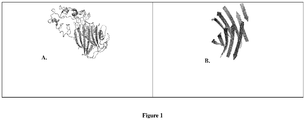
- synthetic TSP-1-derived peptides are selected amongst those mimicking the beta strand number 7 of TSP-1 or the beta-sheet formed by the association of beta strands number 7 and number 8 of TSP-1, as depicted on Figure 1 .
- synthetic TSP-1-derived peptide is a compound or a pharmaceutical acceptable salt thereof comprising a hexapeptide sequence of formula (I): -X 1 -X 2 -X 3 -X 4 -X 5 -X 6 - (I) wherein:
- the hexapeptide sequence of formula (I) comprises at least one substituted or unsubstituted para-tyrosine, substituted or unsubstituted ortho-tyrosine, substituted or unsubstituted meta-tyrosine residue.
- synthetic TSP-1-derived peptide is as described in WO2013/182650 , that is to say a peptide comprising the amino acids sequence: KRFYVVMWKK (SEQ ID NO: 1).
- the peptide according to the invention may differ from 1, 2 or 3 amino acids to the SEQ ID NO: 1.
- the peptide according to the invention may differ from 4 or 5 amino acids to the SEQ ID NO: 1.
- the peptide of the invention comprises at least 75% identity over said the SEQ ID NO: 1, even more preferably at least 80%, at least 85%, at least 90%), at least 95%, at least 97% and is still able to induce ICD in tumor cell.
- the peptide of the invention consists in the amino acid sequence as set forth in SEQ ID NO: 1 or a variant thereof comprising at least 75%, preferably at least 80%, 85%, 90%, 95%, 96%, 97%, 98%, 99%, 99.5% or 99.9% identity with SEQ ID NO: 1 and is still able to induce ICD in tumor cells.
- said peptide is an amino acid sequence of less than 45 amino acids long that comprises the amino acid sequence SEQ ID NO: 1 as defined here above.
- said peptide is an amino acid sequence of less than 40 amino acids long that comprises the amino acid sequence SEQ ID NO: 1 as defined here above.
- said peptide is an amino acid sequence of less than 30 amino acids long that comprises the amino acid sequence SEQ ID NO: 1 as defined here above.
- said peptide is an amino acid sequence of less than 20 amino acids long that comprises the amino acid sequence SEQ ID NO: 1 as defined here above.
- said peptide is an amino acid sequence of less than 15 amino acids long that comprises the amino acid sequence SEQ ID NO: 1 as defined here above.
- synthetic TSP-1-derived peptide is as described in WO2017/194627 , that is to say that it corresponds to a peptide comprising the sequence of formula (II): -A-B-X 1 -X 2 -X 3 -X 4 -X 5 -X 6 - (II) wherein
- A is a (D)-Lysine and B is an Arginine.
- A such as (D)-Lysine
- B such as (L)-Arginine
- a and B are linked to each other by the bond -CO-NMe-.
- X 1 -X 2 -X 3 -X 4 -X 5 -X 6 is FYVVXW, FYVVIW, FYVVKW or FYVVLW, wherein X is norleucine.
- X 1 -X 2 -X 3 -X 4 -X 5 -X 6 is FFVVXW, FFVVIW, FFVVKW or FFVVLW, wherein X is norleucine.
- the compound of formula (I) is a peptide comprising the sequence of formula (III): -A-B-X 1 -X 2 -X 3 -X 4 -X 5 -X 6 -C-D- (III) wherein
- A is a (D)-Lysine and B is an Arginine; preferably C is an (L)-Lysine and D is a (D)-Lysine.
- A such as (D)-Lysine
- B such as (L)-Arginine
- a pseudopeptide bond such as (-CO-NMe-).
- X 1 -X 2 -X 3 -X 4 -X 5 -X 6 is FYVVXW, FYVVIW, FYVVKW or FYVVLW, wherein X is norleucine.
- X 1 -X 2 -X 3 -X 4 -X 5 -X 6 is FFVVXW, FFVVIW, FFVVKW or FFVVLW, wherein X is norleucine.
- the compound of formula (I) is a peptide comprising the sequence X 1 -X 2 -X 3 -X 4 -X 5 -X 6 (formula (I)) and to sustain the solubility of the peptide of formula (I), the nature and the size of the structure is comprised between a peptide of 6 and 20 amino acids, more preferably between 7 and 15 amino acids, yet more preferably 8 and 12 amino acids, most preferably 10 amino acids.
- the compound of formula (I) is a decapeptide (10 amino acids) with a dipeptide linked to the N-terminal extremity of the sequence X 1 -X 2 -X 3 -X 4 -X 5 -X 6 (formula (I)) via a peptide or pseudopeptide bond, and a dipeptide linked to the C-terminal extremity of the sequence X 1 -X 2 -X 3 -X 4 -X 5 -X 6 via a peptide or pseudopeptide bond on the N-terminal giving a formula (IV): Y-A-B-X 1 -X 2 -X 3 -X 4 -X 5 -X 6 -C-D-Z (IV) wherein
- all the amino residues on either sides of the peptide sequence X 1 -X 2 -X 3 -X 4 -X 5 -X 6 are natural of (D) or (L) configuration and/or synthetic of (D) or (L) configuration amino acid residues as defined above.
- the side chains and/or backbone of the compound of formula (I) are chemically protected according to the above definitions.
- A is a (D)-Lysine and B is an Arginine.
- C is an (L)-Lysine and D is a (D)-Lysine.
- A such as (D)-Lysine
- B such as (L)-Arginine
- A is linked to each other by a pseudopeptide bond, such as (-CO-NMe-).
- Y is preferably in formula (IV) a hydrogen atom or an acetyl whilst Z is an NH 2 .
- X 1 -X 2 -X 3 -X 4 -X 5 -X 6 is FYVVXW, FYVVIW, FYVVKW or FYVVLW, wherein X is norleucine.
- X 1 -X 2 -X 3 -X 4 -X 5 -X 6 is FFVVXW, FFVVIW, FFVVKW or FFVVLW, wherein X is norleucine.
- the present invention concerns a compound or the pharmaceutical acceptable salt thereof as presently disclosed, characterized in that X 1 , X 2 , X 5 and/or X 6 are non-ionic charged amino acid residues, such as X 5 is a norleucine, leucine or isoleucine residue, preferably a norleucine residue.
- the present invention concerns a compound or the pharmaceutical acceptable salt thereof as presently disclosed, characterized in that the at least one pseudopeptide bond is an N-methyl peptide bond, preferably in a fragment linked to X 1 on the N-terminal side of the compound of formula (I) and/or in a fragment linked to X 6 on the C-terminal side of the compound of formula (I).
- the present invention concerns a compound or the pharmaceutical acceptable salt thereof as presently disclosed, characterized in that a hydrogen atom, an amino acid residue or a peptide fragment is linked on the N-terminal amine of hexapeptide of formula (I).
- the present invention concerns a compound or the pharmaceutical acceptable salt thereof as presently disclosed, characterized in that an -OH group, a -NH 2 group, an amino acid residue or a peptide fragment is linked to the C-terminal carbonyl of the hexapeptide of formula (I).
- the present invention concerns a compound or the pharmaceutical acceptable salt thereof as presently disclosed, characterized in that the N-terminal amine of compound (I) or a pharmaceutical salt thereof is capped by a non-ionic charged group preferably chosen from the list consisting of a C 1 -C 6 alkyl group, a C 5 -C 8 aryl group, a fragment R 1 -CO- wherein R 1 is:
- the present invention concerns a compound or the pharmaceutical acceptable salt thereof as presently disclosed, characterized in that the C-terminal carboxylic acid has been replaced by a non-ionic charged group such as COR 2 wherein R 2 is a C 1 -C 6 alkyl group, a C 5 -C 8 aryl group, a NH 2 group, a C 1 -C 6 alkoxy group or a C 5 -C 8 aryloxy group.
- a non-ionic charged group such as COR 2 wherein R 2 is a C 1 -C 6 alkyl group, a C 5 -C 8 aryl group, a NH 2 group, a C 1 -C 6 alkoxy group or a C 5 -C 8 aryloxy group.
- the present invention concerns a compound or the pharmaceutical acceptable salt thereof as presently disclosed, characterized in that said compound or the pharmaceutical acceptable salt thereof comprises the sequence YVV, preferably in position X 2 -X 3 -X 4 .
- the present invention concerns a compound or the pharmaceutical acceptable salt thereof as presently disclosed, characterized in that X 5 is a lysine, norleucine, leucine or isoleucine.
- the present invention concerns a compound or the pharmaceutical acceptable salt thereof as presently disclosed, characterized in that X 5 is a lysine, norleucine, leucine or isoleucine and X 1 is a phenylalanine.
- the present invention concerns a compound or the pharmaceutical acceptable salt thereof as presently disclosed, characterized in that X 5 is a lysine, norleucine, leucine or isoleucine and X 2 is a tyrosine.
- the present invention concerns a compound or the pharmaceutical acceptable salt thereof as presently disclosed, characterized in that X 5 is a lysine, norleucine, leucine or isoleucine and X 2 is a phenylalanine.
- the present invention concerns a compound or the pharmaceutical acceptable salt thereof as presently disclosed, characterized in that X 5 is a lysine, norleucine, leucine or isoleucine and X 3 is a valine.
- the present invention concerns a compound or the pharmaceutical acceptable salt thereof as presently disclosed, characterized in that X 5 is a lysine, norleucine, leucine or isoleucine and X 4 is a valine.
- the present invention concerns a compound or the pharmaceutical acceptable salt thereof as presently disclosed, characterized in that X 5 is a lysine, norleucine, leucine or isoleucine and X 6 is a tryptophan.
- the present invention concerns a compound or the pharmaceutical acceptable salt thereof as presently disclosed, characterized in that X 5 is a lysine, norleucine, leucine or isoleucine, X 1 is a phenylalanine and X 2 is a tyrosine.
- the present invention concerns a compound or the pharmaceutical acceptable salt thereof as presently disclosed, characterized in that X 5 is a lysine, norleucine, leucine or isoleucine, X 1 is a phenylalanine and X 2 is a phenylalanine.
- the present invention concerns a compound or the pharmaceutical acceptable salt thereof as presently disclosed, characterized in that X 5 is a lysine, norleucine, leucine or isoleucine, X 1 is a phenylalanine and X 3 is a valine.
- the present invention concerns a compound or the pharmaceutical acceptable salt thereof as presently disclosed, characterized in that X 5 is a lysine, norleucine, leucine or isoleucine, X 1 is a phenylalanine and X 4 is a valine.
- the present invention concerns a compound or the pharmaceutical acceptable salt thereof as presently disclosed, characterized in that X 5 is a lysine, norleucine, leucine or isoleucine, X 1 is a phenylalanine and X 6 is a tryptophan.
- the present invention concerns a compound or the pharmaceutical acceptable salt thereof as presently disclosed, characterized in that X 5 is a lysine, norleucine, leucine or isoleucine, X 1 is a phenylalanine, X 2 is a tyrosine and X 3 is a valine.
- the present invention concerns a compound or the pharmaceutical acceptable salt thereof as presently disclosed, characterized in that X 5 is a lysine, norleucine, leucine or isoleucine, X 1 is a phenylalanine, X 2 is a phenylalanine and X 3 is a valine.
- the present invention concerns a compound or the pharmaceutical acceptable salt thereof as presently disclosed, characterized in that X 5 is a lysine, norleucine, leucine or isoleucine, X 1 is a phenylalanine, X 2 is a tyrosine and X 4 is a valine.
- the present invention concerns a compound or the pharmaceutical acceptable salt thereof as presently disclosed, characterized in that X 5 is a lysine, norleucine, leucine or isoleucine, X 1 is a phenylalanine, X 2 is a phenylalanine and X 4 is a valine.
- the present invention concerns a compound or the pharmaceutical acceptable salt thereof as presently disclosed, characterized in that X 5 is a lysine, norleucine, leucine or isoleucine, X 1 is a phenylalanine, X 2 is a tyrosine and X 6 is a tryptophan.
- the present invention concerns a compound or the pharmaceutical acceptable salt thereof as presently disclosed, characterized in that X 5 is a lysine, norleucine, leucine or isoleucine, X 1 is a phenylalanine, X 2 is a phenylalanine and X 6 is a tryptophan.
- the present invention concerns a compound or the pharmaceutical acceptable salt thereof as presently disclosed, characterized in that X 5 is a lysine, norleucine, leucine or isoleucine, X 1 is a phenylalanine, X 2 is a tyrosine, X 3 is a valine and X 4 is a valine.
- the present invention concerns a compound or the pharmaceutical acceptable salt thereof as presently disclosed, characterized in that X 5 is a lysine, norleucine, leucine or isoleucine, X 1 is a phenylalanine, X 2 is a phenylalanine, X 3 is a valine and X 4 is a valine.
- the present invention concerns a compound or the pharmaceutical acceptable salt thereof as presently disclosed, characterized in that X 5 is a lysine, norleucine, leucine or isoleucine, X 1 is a phenylalanine, X 2 is a tyrosine, X 3 is a valine and X 6 is a tryptophan.
- the present invention concerns a compound or the pharmaceutical acceptable salt thereof as presently disclosed, characterized in that X 5 is a lysine, norleucine, leucine or isoleucine, X 1 is a phenylalanine, X 2 is a phenylalanine, X 3 is a valine and X 6 is a tryptophan.
- the present invention concerns a compound or the pharmaceutical acceptable salt thereof as presently disclosed, characterized in that X 5 is a lysine, norleucine, leucine or isoleucine, X 1 is a phenylalanine, X 2 is a tyrosine, X 3 is a valine X 4 is a valine and X 6 is a tryptophan.
- the present invention concerns a compound or the pharmaceutical acceptable salt thereof as presently disclosed, characterized in that X 5 is a lysine, norleucine, leucine or isoleucine, X 1 is a phenylalanine, X 2 is a phenylalanine, X 3 is a valine X 4 is a valine and X 6 is a tryptophan.
- the present invention concerns a compound or the pharmaceutical acceptable salt thereof as presently disclosed, characterized in that said compound or the pharmaceutical acceptable salt thereof comprises the sequence YVV-norleucine (SEQ ID 5), preferably in position X 2 -X 3 -X 4 -X 5 .
- the present invention concerns a compound or the pharmaceutical acceptable salt thereof as presently disclosed, characterized in that X 1 , X 2 , and/or X 6 is a para-fluoro-phenylalanine, para-amino-phenylalanine or para-nitro-phenylalanine.
- the present invention concerns a compound or the pharmaceutical acceptable salt thereof as presently disclosed, characterized in that X 1 is a substitutes or unsubstituted phenylalanine, X 2 is a substituted or unsubstituted paratyrosine, and X 6 is a substituted or unsubstituted tryptophane.
- the present invention concerns a compound or the pharmaceutical acceptable salt thereof as presently disclosed, characterized in that X 1 is a substitutes or unsubstituted phenylalanine, X 2 is a substituted or unsubstituted phenylalanine, and X 6 is a substituted or unsubstituted tryptophane.
- the present invention concerns a compound or the pharmaceutical acceptable salt thereof as presently disclosed, characterized in that X 1 is a substitutes or unsubstituted phenylalanine, X 2 is a unsubstituted phenylalanine, and X 6 is a substituted or unsubstituted tryptophane.
- the present invention concerns a compound or the pharmaceutical acceptable salt thereof as presently disclosed, characterized in that the hexapeptide of formula (I) is comprised between two amino acid residues of the (D) configuration, such as two (D)-lysines.
- synthetic TSP-1-derived peptides according to the invention are isolated cyclic peptide of general formula (V) as described in WO 2017/194634 : or a pharmacologically acceptable salt or a biologically active derivative thereof, wherein:
- the isolated cyclic peptide of general formula (V) of the invention yet comprises at least parts of the beta-sheet N°7 or of the beta-sheets N°7 and 8 of the C-terminal domain of the TSP-1 but cannot be the entire sequence of the C-terminal domain of the TSP-1 (as described by Kosfeld MD, Frazier WA (1993) Identification of a new cell adhesion motif in two homologous peptides from the COOH-terminal cell binding domain of human thrombospondin. J Biol Chem 268: 8806-8814 ), because this domain has not the same biologic activity as cyclic peptides of the invention.
- the present invention thus encompasses cyclic peptides of formula B 1 -B 2 , Z 1 -B 1 -B 2 , B 1 -Z 2 -B 1 , B 1 -B 1 (each B 1 being identical or different) and B 1 -Z 2 -B 1 (each B 1 being identical or different).
- isolated cyclic peptide comprises an even number of amino acids (that is to say B 1 and B n have the same number of amino acids and both consist in a fragment of 6, 7, 8, 9 or 10 amino acids) and wherein said isolated cyclic peptide comprises between 8 and 26 amino acids, preferably between 12 and 22 amino acids; more preferably, isolated cyclic peptides of the invention consist in 12, 14, 16, 18, 20 or 22 amino acids.
- B 1 and B 2 are arranged so that X 5 of B 1 faces X 16 of B 2 and X 8 of B 1 faces X 15 of B 2 as illustrated below:
- both Z 1 and Z 2 can be nothing; if Z 1 consists in two amino acids then Z 2 is nothing and if Z 2 consists in two amino acids then Z 1 is nothing.
- Examples of isolated cyclic peptide according to the present invention are as described in Table I: Table I PEPTIDES STRUCTURE / AMINO ACID SEQUENCE (linear representation) FORMULA AND MW PKD10 (SEQ. ID. N°21) -F-Y-V-V-K-W-p-P-L-S-V-K-V-V- PKDIOFF (SEQ. ID. N°22) -F-F-V-V-K-W-p-P-L-S-V-K-V-V-PKTDi2 (SEQ. ID.
- the present invention also relates to the use of variants of the above-defined peptides; said variants include protein having amino acid alterations such as deletions, insertions and/or substitutions.
- a “deletion” refers to the absence of one or more amino acids in the protein.
- An “insertion” refers to the addition of one or more of amino acids in the protein.
- substitution refers to the replacement of one or more amino acids by another amino acid residue in the protein.
- a given amino acid is replaced by an amino acid having similar properties (such as, for example, polarity, hydrogen bonding potential, acidic, basic, hydrophobic, aromatic, and the like).
- This given amino acid can be a natural amino acid or a non natural amino acid.
- Amino acids other than those indicated as conserved may differ in a protein so that the percent protein or amino acid sequence similarity between any two proteins of similar function may vary and may be, for example, from 70 % to 99 % as determined according to an alignment scheme such as by the Cluster Method, wherein similarity is based on the MEGALIGN algorithm.
- the invention encompasses peptides substantially identical to the above-defined peptides in which one or more residues have been conservatively substituted with a functionally similar residue and which displays the functional aspects of the synthetic TSP-1 derived peptides as described here above, i.e. being still able to induce ICD in substantially the same way as a peptide consisting of the given amino acid sequence.
- conservative substitutions include the substitution of one non-polar (hydrophobic) residue such as isoleucine, valine, leucine or methionine for another, the substitution of one polar (hydrophilic) residue for another such as between arginine and lysine, between glutamine and asparagine, between glycine and serine, the substitution of one basic residue such as lysine, arginine or histidine for another, or the substitution of one acidic residue, such as aspartic acid or glutamic acid or another.
- “Chemical derivative” refers to a subject peptide having one or more residues chemically derivatized by reaction of a functional side group.
- Examples of such derivatized molecules include for example, those molecules in which free amino groups have been derivatized to form amine hydrochlorides, p-toluene sulfonyl groups, carbobenzoxy groups, t-butyloxycarbonyl groups, chloroacetyl groups or formyl groups.
- Free carboxyl groups may be derivatized to form salts, methyl and ethyl esters or other types of esters or hydrazides.
- Free hydroxyl groups may be derivatized to form O-acyl or O-alkyl derivatives.
- the imidazole nitrogen of histidine may be derivatized to form N-im- benzylhistidine.
- Chemical derivatives also include peptides that contain one or more naturally-occurring amino acid derivatives of the twenty standard amino acids.
- 4-hydroxyproline may be substituted for proline
- 5-hydroxylysine may be substituted for lysine
- 3-methylhistidine may be substituted for histidine
- homoserine may be substituted for serine
- ornithine may be substituted for lysine.
- conservative substitution also includes the use of non natural amino acids aimed to control and stabilize peptides or proteins secondary structures.
- non natural amino acids are chemically modified amino acids such as prolinoamino acids, beta-amino acids, N-methylamino acids, cyclopropylamino acids, alpha,alpha-substituted amino acids as describe here below.
- These non natural amino acids may include also fluorinated, chlorinated, brominated- or iodinated modified amino acids.
- the synthetic TSP-1-derived peptide are selected amongst PKHB1 (SEQ. ID. N°2), PKT16 (SEQ. ID. N°17) and PKD10 (SEQ. ID. N°43).
- the synthetic TSP-1-derived peptide are used to induce immunogenic cancer cell death for treating any cancers or neoplasia; for example, cancer is selected form the group consisting of adrenal cortical cancer, anal cancer, bile duct cancer, multiple myeloma, bladder cancer, bone cancer, brain and central nervous system cancer, breast cancer, Castleman disease, cervical cancer, colorectal cancer, endometrial cancer, esophagus cancer, gallbladder cancer, gastrointestinal carcinoid tumors, Hodgkin's disease, non-Hodgkin's lymphoma, Kaposi's sarcoma, kidney cancer, laryngeal and hypopharyngeal cancer, leukemia, liver cancer, lung cancer, mesothelioma, plasmacytoma, nasal cavity and paranasal sinus cancer, nasopharyngeal cancer, neuroblastoma, oral cavity and oropharyngeal cancer, ovarian cancer, pancreatic cancer, penile cancer, pit
- the present invention relates to the in vitro use of synthetic TSP-1-derived peptide for inducing immunogenic cell death in tumour cell.
- tumour cell mentioned in the present invention is a cell obtained from a tumor of a subject suffering from a cancer, in particular from at least one of the previously identified cancers. It is to be understood that the expression "tumour cells” used to identify cells obtained from a tumor of a subject, is also used, in the present description, to identify circulating tumor cells (in the case of leukaemia for example), cells obtained from a tumor bed, or cells obtained from a metastase.
- the present invention also relates to a tumour cell treated with a synthetic TSP-1-derived peptide, also designated by "vaccine used for immunostimulation", for its use to induce immunogenic cell death for the treatment of cancer.
- the vaccine used for immunostimulation is obtained by culturing said tumour cell and then treating the obtained culture of tumour cells with a synthetic TSP-1-derived peptide.
- the "tumour cell treated with a synthetic TSP-1-derived peptide” consists in death tumour cells.
- the present invention also relates to the use of a synthetic TSP-1-derived peptide for the preparation of tumour cell usable according to the present invention and to process for preparation of such tumour cell comprising a step of treating said cells with a synthetic TSP-1-derived peptide.
- the present invention further relates to pharmaceutical composition, preferably injectable, comprising a tumour cell treated with a synthetic TSP-1-derived peptide and a pharmaceutically acceptable carrier.
- the pharmaceutical preparation that will be injected is obtained by treatment of the tumor (solid or liquid) with synthetic TSP-1-derived peptide, after collecting blood sample from patients for liquid tumors (leukemia) or after surgery for solid tumors to obtained at least 10 6 cells that will be cultured at then treated with synthetic TSP-1-derived peptide.
- the administration (injection) of the pharmaceutical preparation may occur before, simultaneously and/or after a "conventional treatment of cancer" that may be selected from a chemotherapy, a radiotherapy, an hormonotherapy, an immunotherapy, a specific kinase inhibitor-based therapy, an antiangiogenic agent based-therapy, an antibody-based therapy, in particular a monoclonal antibody-based therapy, for liquid tumors and after surgery for the solid tumor.
- a "conventional treatment of cancer” may be selected from a chemotherapy, a radiotherapy, an hormonotherapy, an immunotherapy, a specific kinase inhibitor-based therapy, an antiangiogenic agent based-therapy, an antibody-based therapy, in particular a monoclonal antibody-based therapy, for liquid tumors and after surgery for the solid tumor.
- suitable pharmaceutically acceptable carriers include, but are not limited to: water, salt solutions (e.g., NaCI), alcohols, gum arabic, vegetable oils, benzyl alcohols, polyethylene glycols, gelatin, carbohydrates such as lactose, amylose or starch, magnesium stearate, talc, silicic acid, viscous paraffin, perfume oil, fatty acid esters, hydroxymethylcellulose, and polyvinyl pyrolidone, lipids such as but not limited to :phospholipids, sphinglipids, glycerol-fatty acid esters...
- the pharmaceutical composition of the invention can be sterilized and if desired, mixed with auxiliary agents, e. g., lubricants, preservatives, stabilizers, wetting agents, emulsifiers, salts for influencing osmotic pressure, buffers, coloring, flavoring and/or aromatic substances and the like which do not deleteriously react with the active compounds.
- auxiliary agents e. g., lubricants, preservatives, stabilizers, wetting agents, emulsifiers, salts for influencing osmotic pressure, buffers, coloring, flavoring and/or aromatic substances and the like which do not deleteriously react with the active compounds.
- auxiliary agents e. g., lubricants, preservatives, stabilizers, wetting agents, emulsifiers, salts for influencing osmotic pressure, buffers, coloring, flavoring and/or aromatic substances and the like which do not deleteriously react with the active compounds.
- the pharmaceutical composition of the invention can be a liquid solution, suspension, emulsion,.
- Some appropriate precise formulations are described, for example, in Remington, The Science and Practice of Pharmacy, 19th edition, 1995, Mack Publishing Company .
- compositions for intravenous administration are solutions in sterile isotonic aqueous buffer or a sterile lyophilized formulation to be reconstituted prior injection, such injection can be intravenous, intramuscular, subcutaneous, intrathecal, such pharmaceutical composition can also be inhaled through nasal and/or pulmonary delivery.
- the pharmaceutical composition of the invention is a liquid composition that is dedicated to be administered by injection, and for example, by intratumoral injection. Said intratumoral injection can be obtained for example by using stereotactic neurosurgery.
- This administration can be performed prior to or after a surgical operation intended to remove the tumor.
- the composition enables to inhibit the growth of the tumor and avoid dissemination of the tumor cells and the occurrence of dramatic symptoms on the subject; in the second case, the composition can be used to destroy all the tumor cells that have not be removed during the surgical operation.
- the effective dose of the synthetic TSP-1-derived peptide or of the "tumour cell treated with a synthetic TSP-1-derived peptide” varies in function of numerous parameters such as, for example, the chosen administration method, the weight, age, sex, and the sensitivity of the individual to be treated. Consequently, the optimal dose must be determined individually, in function of the relevant parameters, by a medical specialist. In order to predict the expected active doses in human from the first animal studies presented hereunder, one can also use the fc 2 and C T values as described by Rocchetti et al (2007).
- the present invention relates to a method of treatment of cancer comprising a step of administration to a subject in need thereof a synthetic TSP-1-derived peptide and/or tumour cell treated with a synthetic TSP-1-derived peptide to a patient in a amount sufficient to induce ICD.
- Peripheral blood was collected from 10 healthy volunteers after obtaining written informed consent. This study was approved by the Institutional Ethics Committee at the Universidad Autonoma de Nuevo Leon, College of Biological Sciences. The animal study was approved by the Animal Ethical Committee (CEIBA), Number: 01/2015. All experiments were conducted according to Mexican regulation NOM-062-ZOO-1999.
- mice The blood from sacrificed mice was obtained by cardiac puncture, while human blood was collected by venipuncture.
- Spleen, thymus, lymphatic node, and bone marrow cells were obtained from female BALB/c mice post-sacrifice. Spleen cells were obtained through perfusion, thymocytes and lymphatic node cells were obtained by maceration, and bone morrow cells (from one femur and tibia per mouse) were flushed with PBS. Cells washed and counted using trypan blue staining.
- CEM, MOLT-4 (T-acute lymphoblastic leukemia, T-ALL), and L5178Y-R (murine lymphoblastic T cell line) were obtained from ATCC.
- Human and murine PBMCs, human CD4+ and CD8+ T cells, and primary lymphoid organ's cells were obtained from healthy individuals.
- Cells were maintained in RPMI-1640 medium supplemented with 10% of fetal bovine serum, 2mM L-glutamine, 100 U/mL penicillin-streptomycin (GIBCO by Life Technologies, Grand Island, NY, USA), and incubated at 37oC in a controlled humidified atmosphere with 5% CO 2 .
- Cell count was performed using trypan blue (0.4% Sigma-Aldrich), a Neubauer chamber and an optic microscope (Zeiss Primo Star) as proposed by the ATCC's standard protocols.
- Annexin-V-allophycocyanin (Ann-V-APC 0.1 ⁇ g/ml; BD Pharingen, San Jose CA, USA), propidium iodide (PI, 0.5 ⁇ g/ml Sigma-Aldrich), and tetramethylrhodamine ethyl ester (TMRE, 20nM, Sigma-Aldrich) were used for phosphatidylserine exposure, cell viability, and mitochondrial transmembrane potential (U ⁇ m) quantification, respectively, in a BD AccuryC6 flow cytometer (BD Biosciences) (total population 10,000 cells). Data were analyzed using FlowJo software.
- PKHB1 1x10 6 cells/mL were treated for 2h with PKHB1 (as indicated).
- calcium chelator BAPTA (5mM, CalbioChem, Merck, Billerica MA, USA); or the pancaspase inhibitor Q-VD-OPh (QVD, 10 ⁇ M, BioVision, Milpitas CA, USA); were added 30 min before PKHB1.
- mice The heparinized blood acquired from mice, was assessed using the Automatic Hematology Analyzer KontroLab. Blood smears were performed and fixed with methanol, stained with Wright's, and observed under the microscope to perform differential blood white cells counts.
- Protein concentration was measured using the DC Protein Assay kit (Bio-Rad, Hercules, CA, USA) and 50 ⁇ g of protein were loaded into SDS-PAGE gels. After blotting, nitrocellulose filters were probed with primary antibodies (1:1000) against HMGB1 (HAP46.5: sc-56698), HSP70 (C92F3A-5: sc-66048), HSP90 (F-8: SC-13119) and Calreticulin (F-4: sc373863). Anti-mouse or anti-rabbit -HRP served as secondary antibodies (Santa Cruz Biotechnology, CA, USA). Visualization was performed with ECL substrate system (Thermo Scientific, Waltham, MA, USA).
- PKHB1 CC50 and CC100 for each cell lines
- Supernatants were used to assess extracellular ATP by a luciferase assay (ENLITEN kit, Promega, Madison WI, USA) following the manufacturer's instructions. Bioluminescence was assessed in a microplate reader (Synergy HT, BioTek, Software Gen5, Winooski, VT, USA) at 560nm.
- HMGB1 ELISA kit for CEM, MOLT-4 or L5178Y-R cells (BioAssay ELISA kit Human or mouse respectively, US biological Life Science Salem, MA, USA), following the manufacturer instructions. Absorbance was assessed at 450nm.
- mice Six-to-eight-week-old BALB/c female mice were maintained in controlled environmental conditions (25°C and 12h light/dark cycle) and were supplied with rodent food (Science diet) and water ad libitum.
- Tissues and organs were obtained and fixed in 10% neutral formalin, embedded in paraffin, sectioned (5 ⁇ m thickness) and stained with H&E (Sigma-Aldrich, St Louis, MO, USA).
- mice were randomly assigned to different groups for all in vivo studies. Experiments were repeated three independent times. Mann-Whitney test and two-tailed unpaired Student's t test were performed using GraphPad Prism Software (San Diego CA, USA) and presented as mean values ⁇ SD. The p values were considered significant as follows: p ⁇ 0.05; p ⁇ 0.01 and p ⁇ 0.001.
- CD47 agonist peptide PKHB1 induces cell death in human and murine tumor lymphoblastic T-cell lines.
- PKHB1 induces cell death in a concentration-dependent manner, since the cells incubated for 2h with crescent concentrations (100, 200 and 300 ⁇ M) of PKHB1 show an increase in the number of Ann-V-APC/PI positive CEM ( Figure 2A ), MOLT-4 ( Figure 2B ) and L5178Y-R ( Figure 2C ) cells.
- the cytotoxic concentration that induces around 50% of cell death (CC50) in CEM is 200 ⁇ M
- MOLT-4 is 300 ⁇ M
- L5178Y-R is 200 ⁇ M.
- PKHB1 prompts caspase-independent but calcium-dependent cell death with loss of mitochondrial membrane potential in CEM, MOLT-4 and L5178Y-R cells.
- PKHB1-induced cell death in T-ALL cells shared the principal biochemical features previously described for CD47-mediated cell death; these include caspase independence (43), a sustained calcium influx and mitochondrial membrane potential (U ⁇ m) loss (33,44).
- the cells were pre-incubated with a pan-caspase inhibitor (Q-VD-OPH) or an extracellular Ca2+ chelator (BAPTA) and cell death was tested.
- Caspase inhibition did not prevent PKHB1-induced killing of CEM (51% ⁇ 4 to 48% ⁇ 5), MOLT-4 (57% ⁇ 4 to 51% ⁇ 6), and L5178Y-R (52% ⁇ 5 to 49% ⁇ 3) cells.
- T-ALL Treatment with the PKHB1 CC50 also showed that it induces loss of U ⁇ m in T-ALL ( Figure 3B ) being of 49% ⁇ 5 in CEM, 61% ⁇ 4 in MOLT-4, and of 51% ⁇ 8 in L5178Y-R.
- PKHB1-treatment spares non-cancerous primary leucocytes derived from human and mice.
- PKHB1 selectivity has been tested in murine PBMCs ( Figure 4D ) and primary cultures of bone marrow (BM), spleen, thymus and lymph nodes of healthy (without tumor nor treatment) BALB/c mice through indirect cell viability analysis ( Figure 4E ).
- PKHB1 treatment did not significantly affected cell viability of human- nor murine- non-cancerous cells ( Figure 4 ), even though all organs express CD47 in a similar level to the neoplastic cells (SF2). These results denoted the selectivity of PKHB1 to induce cell death just in malignant cells.
- mice L5178Y-R tumor-bearing mice treated with PKHB1 show leukocyte infiltration to the tumor site and improved leukocyte-cell number.
- PKHB1-treated mice were used to bear L5178Y-R tumor cells, and mice were treated weekly with 200 ⁇ g of PKHB1 intraperitoneally. After 18 days all controls had to be sacrificed, and some PKHB1-treated mice were randomly selected to be sacrificed for comparison. Tumors were dissected, and their morphological and cellular differences were analyzed ( Figure 5A ). The control group presented undifferentiated lymphoid cells, presumably L5178Y-R cells, some of them performing mitosis ( Figure 5A left). Conversely, tumors in PKHB1-treated mice contained a mixture of lymphocytes and polymorphonuclear cells (PMN) ( Figure 5A middle).
- PMN polymorphonuclear cells
- PKHB1-treated mice have been performed cell counts from lymphoid organs that belonged to control, PKHB1-treated or healthy mice. Noticeably, in PKHB1-treated mice, a significant increase in cell number of BM, spleen and thymus cells, and significant decrease in cell number of lymph nodes were observed ( Figure 5C ). Moreover, cell number of the same organs in PKHB1-treated mice was similar to that of healthy mice. Additionally, the WBC differential was performed, and showed no significant difference between healthy and PKHB1-treated mice, whereas untreated tumor-bearing mice presented a significant difference from the other two groups in all leukocyte types ( Figure 5D ). Altogether, the above suggests that PKHB1 improves the anti-tumor immune system of tumor-bearing mice and indicates the possible participation of the immune system in complete tumor regression.
- PKHB1 treatment induces DAMPs' exposure and release in T-ALL cells.
- HSP90, HSP70, CRT and HMGB1 were measured.
- the presence of these DAMPs was determined by Western blot in cellular lysates and supernatant of untreated cells and PKHB1-treated cells at CC50 and CC100 for each cell line tested.
- Figure 7A displays the decrease in the expression of HSP90, HSP70, CRT, and HMGB1 in cellular lysates of cells treated with PKHB1.
- the expression of these DAMPs increased in PKHB1-treated supernatants compared with the untreated cells ( Figure 7B ).
- HMGB1 release varied depending on the cell line studied, and the concentration of PKHB1 used.
- PKHB1 CC100 in CEM, MOLT-4 and L5178Y-R cell lines, HMGB1 release was of 6-fold, 4-fold and 2-fold, respectively, compared to the untreated control, while using PKHB1 CC50, MOLT-4 cells HMGB1 release was of 8-fold with respect to the control ( Figure 8A ).
- Another important indicator that immunogenic death is taking place is ATP-release.
- PKHB1-treated cells as prophylactic vaccine prevented the tumor establishment of L5178Y-R cells
- mice where used, i. control group without vaccine, ii. 1.5M vaccine group, with 1.5x10 6 PKHB1-treated cells, iii. 3M vaccine group, with 3x10⁶ PKHB1-treated cells and iv. 5M vaccine group with 5x10⁶ PKHB1-treated cells.
- PKHB1-treatment induced long-term prevention of tumor establishment.
- the present assays assessed the ability of PKHB1 peptide, i) to induce selectively cell death in T-ALL cells with the conserved characteristics of CD47-mediated cell death, and ii) to determine if this type of cell death is immunogenic.
- PKHB1-induced death in CEM, MOLT-4, and L5178Y-R cells is a fast caspase-independent process that implicates phosphatidylserine exposure together with plasma membrane permeabilization, and loss of mitochondrial membrane potential ( Figure 3 ) that is selective to malignant cells ( Figure 4 ).
- calcium dependence for cell death induced by PKHB1 was conserved in T-ALL cells, as previously observed in CLL cells (33).
- HSP70 and HSP90, HMGB1 and ATP were released by PKHB1 treatment on CEM, MOLT-4 and L5178Y-R cell lines ( Figure 7 & 8 ).
- the release of these molecules is involved in the activation of immune system and induction of potent anticancer immunity (17,49,50).
- DAMPs release is not sufficient to ensure ICD induction, and the in vivo vaccination is considered the gold-standard (1,18,21).
- the in vivo assays showed that PKHB1 activates short and long-term immunological memory and induces a protective anti-cancer response in an immunocompetent murine model, since tumor growth was prevented in most cases ( Figure 10 ).
- Increasing the number of PKHB1-treated cells in the vaccine improves its protective anti-tumor response ( Figure 9 ).
Landscapes
- Health & Medical Sciences (AREA)
- Life Sciences & Earth Sciences (AREA)
- General Health & Medical Sciences (AREA)
- Pharmacology & Pharmacy (AREA)
- Animal Behavior & Ethology (AREA)
- Public Health (AREA)
- Medicinal Chemistry (AREA)
- Chemical & Material Sciences (AREA)
- Veterinary Medicine (AREA)
- Organic Chemistry (AREA)
- General Chemical & Material Sciences (AREA)
- Chemical Kinetics & Catalysis (AREA)
- Nuclear Medicine, Radiotherapy & Molecular Imaging (AREA)
- Engineering & Computer Science (AREA)
- Gastroenterology & Hepatology (AREA)
- Bioinformatics & Cheminformatics (AREA)
- Immunology (AREA)
- Proteomics, Peptides & Aminoacids (AREA)
- Epidemiology (AREA)
- Hematology (AREA)
- Oncology (AREA)
- Medicines That Contain Protein Lipid Enzymes And Other Medicines (AREA)
- Peptides Or Proteins (AREA)
- Micro-Organisms Or Cultivation Processes Thereof (AREA)
Abstract
The invention relates to TSP-1-derived peptides capable of inducing immunogenic cell death, in particular immunogenic cancer cell death. It further relates to uses of such peptides, in particular to prepare a pharmaceutical composition to allow or improve the efficiency of a therapy of cancer in a subject in need thereof.
Description
- The invention relates to TSP-1-derived peptides capable of inducing immunogenic cell death, in particular immunogenic cancer cell death. It further relates to uses of such peptides, in particular to prepare a pharmaceutical composition to allow or improve the efficiency of a therapy of cancer in a subject in need thereof.
- Immunogenic cell death (ICD) is a type of regulated cell death that activates an adaptive immune response against dead-cell-associated antigens, inducing tumor cell immunogenicity (1,2). ICD is characterized by the exposure or release of endogenous immunogenic biomolecules, namely damage-associated molecular patterns (DAMPs) (3). In physiological conditions, DAMPs are inside the cells, but when exposed or released, in case of stress, injury, or cell death, they bind receptors on immune cells (4,5). The main DAMPs related to ICD exposed at the cell surface and/or released to the extracellular media are calreticulin (CRT) (6-8) and other endoplasmic reticulum (ER) proteins like heatshock protein 70 and 90 (HSP70 and HSP90) (9,10), and secretion of ATP (11-13) and the non-histone chromatin protein high-mobility group box 1 (HMGB1) (14,15). Collectively, these DAMPs recruit antigen-presenting cells (APCs) to ICD sites and stimulate the uptake, processing, and presentation of dead-cell-associated antigens, resulting in an adaptive immune response (1,16-18).
- A subset of chemotherapeutic agents including doxorubicin, mitoxantrone, oxaliplatin, bortezomib, cyclophosphamide, and anthracycline has the ability to trigger ICD (18,21), hence activating anticancer immune responses (1). These drugs are used to treat different types of cancer including hematological malignancies like acute lymphoblastic leukemia (ALL).
- Previous reports using other ICD inducers also prevented tumor growth: such is the case of melphalan, alkylating agent, used in melanoma treatment, where C57BL6 mice were injected with melphalan killed murine B78 melanoma cells and re-challenged 10 days later with B78 viable cells obtaining 40% of mice without tumor (51). Similar results were obtained using doxorubicin in mouse colon carcinoma (CT26) cell line (42). The use of this vaccine helps to stimulate anti-cancer immunity through the maturation of DCs and cytotoxic T cell activation (52) as well as enhancing NK cytotoxic activity (53).
- Immunotherapy is a promising treatment option against cancer (54), using host immune defenses against cancer and seeking to endow cancer cells with immunogenicity (55). The increased immunogenicity of tumor cells triggers the antitumor immune responses which could offer long-term therapeutic effects (1). The finding that certain drugs are able to induce the awakening of the immune response by releasing DAMPs and generating ICD, triggered the investigations that look for these type of agents (1,42,53,56). Anthracyclines, platinum derivatives, alkylating agents, and proteasome inhibitors are some chemotherapeutic drugs with vast evidence on triggering ICD (57). Other therapeutic modalities that display ICD induction are photodynamic therapy (58), radiotherapy (59), oncolytic viruses (60,61), high hydrostatic pressure (62) and other phytochemical agents such as shikonin (63,64) and capsaicin (65,66).
- The development of new treatments able to stimulate the immune system, such as ICD-inducers, remains important to fight chemoresistant malignancies.
- Inventors have now evidenced that a known family of synthetic peptides is able to induce a selective immunogenic cell death (ICD) in cancer cell lines.
- Said synthetic peptides have been previously described as CD-47 agonists able to trigger Programmed Cell Death (PCD) and thus treat diseases associated with defects in PCD (
WO2017194634 ,WO2017194627 ). - Inventors have indeed obtained data that indicate that PKHB1 induces caspase-independent and calcium-dependent cell death in leukemic cells while sparing non-tumor murine and human cells. Moreover, these results show that PKHB1 can induce ICD in leukemic cells as it induces CRT exposure and DAMPs release, in vitro, and prophylactic vaccinations inhibit tumor establishment in vivo.
- The present invention thus relates to synthetic TSP-1-derived peptide for its use to induce immunogenic cell death in the treatment of cancer.
- The present invention also relates to the use of synthetic TSP-1-derived peptide for the preparation of a pharmaceutical composition for inducing immunogenic cell death in the treatment of cancer.
- According to the present invention, synthetic TSP-1-derived peptides are selected amongst those mimicking the
beta strand number 7 of TSP-1 or the beta-sheet formed by the association ofbeta strands number 7 andnumber 8 of TSP-1, as depicted onFigure 1 . - According to one embodiment, synthetic TSP-1-derived peptide is a compound or a pharmaceutical acceptable salt thereof comprising a hexapeptide sequence of formula (I):
-X1-X2-X3-X4-X5-X6- (I)
wherein: - X1, X2, X3, X4, X5, X6 are independently linked to each other according to formula (I) via peptide bonds or at least one pseudopeptide bond;
- X1 is a residue chosen in the list consisting of substituted or unsubstituted phenylalanine, substituted or unsubstituted para-tyrosine, substituted or unsubstituted ortho-tyrosine, substituted or unsubstituted meta-tyrosine, or substituted or unsubstituted homo-phenylalanine;
- X2 is a residue chosen in the list consisting of substituted or unsubstituted para- tyrosine, substituted or unsubstituted ortho-tyrosine, substituted or unsubstituted meta- tyrosine, substituted or unsubstituted phenylalanine, homo-phenylalanine, homo-meta- tyrosine, homo-para-tyrosine or homo-ortho-tyrosine;
- X3 is a residue chosen in the list consisting of substituted or unsubstituted valine, substituted or unsubstituted alanine, substituted or unsubstituted leucine, substituted or unsubstituted isoleucine, preferably valine;
- X4 is a residue chosen in the list consisting of substituted or unsubstituted valine, substituted or unsubstituted alanine, substituted or unsubstituted leucine, substituted or unsubstituted isoleucine, preferably valine;
- X5 is a residue chosen in the list consisting of substituted or unsubstituted methionine or any amino acid with similar properties such as a methylated homo-cysteine, lysine, norleucine, leucine or isoleucine;
- X6 is a residue chosen in the list consisting of substituted or unsubstituted tryptophan, substituted or unsubstituted hetero-tryptophan, substituted or unsubstituted para-tyrosine, substituted or unsubstituted ortho-tyrosine, substituted or unsubstituted meta-tyrosine, substituted or unsubstituted phenylalanine, or substituted or unsubstituted naphthyl-alanine;
- X1 is the N-terminal side of the molecule of formula (I), X6 is the C-terminal side of the molecule of formula (I).
- Preferably, the hexapeptide sequence of formula (I) comprises at least one substituted or unsubstituted para-tyrosine, substituted or unsubstituted ortho-tyrosine, substituted or unsubstituted meta-tyrosine residue.
- According to a specific embodiment, synthetic TSP-1-derived peptide is as described in
WO2013/182650 , that is to say a peptide comprising the amino acids sequence: KRFYVVMWKK (SEQ ID NO: 1). - In one embodiment, the peptide according to the invention may differ from 1, 2 or 3 amino acids to the SEQ ID NO: 1.
- In another embodiment, the peptide according to the invention may differ from 4 or 5 amino acids to the SEQ ID NO: 1.
- In one embodiment, the peptide of the invention comprises at least 75% identity over said the SEQ ID NO: 1, even more preferably at least 80%, at least 85%, at least 90%), at least 95%, at least 97% and is still able to induce ICD in tumor cell.
- In one embodiment, the peptide of the invention consists in the amino acid sequence as set forth in SEQ ID NO: 1 or a variant thereof comprising at least 75%, preferably at least 80%, 85%, 90%, 95%, 96%, 97%, 98%, 99%, 99.5% or 99.9% identity with SEQ ID NO: 1 and is still able to induce ICD in tumor cells.
- In another embodiment of the invention, said peptide is an amino acid sequence of less than 45 amino acids long that comprises the amino acid sequence SEQ ID NO: 1 as defined here above.
- In another embodiment of the invention, said peptide is an amino acid sequence of less than 40 amino acids long that comprises the amino acid sequence SEQ ID NO: 1 as defined here above.
- In another embodiment of the invention, said peptide is an amino acid sequence of less than 30 amino acids long that comprises the amino acid sequence SEQ ID NO: 1 as defined here above.
- In another embodiment of the invention, said peptide is an amino acid sequence of less than 20 amino acids long that comprises the amino acid sequence SEQ ID NO: 1 as defined here above.
- In another embodiment of the invention, said peptide is an amino acid sequence of less than 15 amino acids long that comprises the amino acid sequence SEQ ID NO: 1 as defined here above.
- According to a specific embodiment, synthetic TSP-1-derived peptide is as described in
WO2017/194627 , that is to say that it corresponds to a peptide comprising the sequence of formula (II):
-A-B-X1-X2-X3-X4-X5-X6- (II)
wherein - A and B are amino acid residues, preferably natural or synthetic amino acid residues as defined above;
- X1, X2, X3, X4, X5 and X6 are as defined presently;
- Preferably in formula (II), A is a (D)-Lysine and B is an Arginine.
- Preferably in formula (II), A (such as (D)-Lysine) and B (such as (L)-Arginine) are linked to each other by a pseudopeptide bond, such as (-CO-NMe-); more preferably, B is an Arginine and A and B are linked to each other by the bond -CO-NMe-.
- Preferably in formula (II), X1-X2-X3-X4-X5-X6 is FYVVXW, FYVVIW, FYVVKW or FYVVLW, wherein X is norleucine.
- Alternatively, in formula (II) X1-X2-X3-X4-X5-X6 is FFVVXW, FFVVIW, FFVVKW or FFVVLW, wherein X is norleucine.
- In a particular embodiment, the compound of formula (I) is a peptide comprising the sequence of formula (III):
-A-B-X1-X2-X3-X4-X5-X6-C-D- (III)
wherein - A, B, C and D are amino acid residues, preferably natural or synthetic amino acid residues as defined above;
- X1, X2, X3, X4, X5 and X6 are as defined presently;
- Preferably in formula (III), A is a (D)-Lysine and B is an Arginine; preferably C is an (L)-Lysine and D is a (D)-Lysine.
- Preferably in formula (III), A (such as (D)-Lysine) and B (such as (L)-Arginine) are linked to each other by a pseudopeptide bond, such as (-CO-NMe-).
- Preferably in formula (III), X1-X2-X3-X4-X5-X6 is FYVVXW, FYVVIW, FYVVKW or FYVVLW, wherein X is norleucine.
- Alternatively, in formula (III) X1-X2-X3-X4-X5-X6 is FFVVXW, FFVVIW, FFVVKW or FFVVLW, wherein X is norleucine.
- Advantageously, the compound of formula (I) is a peptide comprising the sequence X1-X2-X3-X4-X5-X6 (formula (I)) and to sustain the solubility of the peptide of formula (I), the nature and the size of the structure is comprised between a peptide of 6 and 20 amino acids, more preferably between 7 and 15 amino acids, yet more preferably 8 and 12 amino acids, most preferably 10 amino acids.
- More preferably, the compound of formula (I) is a decapeptide (10 amino acids) with a dipeptide linked to the N-terminal extremity of the sequence X1-X2-X3-X4-X5-X6 (formula (I)) via a peptide or pseudopeptide bond, and a dipeptide linked to the C-terminal extremity of the sequence X1-X2-X3-X4-X5-X6 via a peptide or pseudopeptide bond on the N-terminal giving a formula (IV):
Y-A-B-X1-X2-X3-X4-X5-X6-C-D-Z (IV)
wherein - A, B, C and D are amino acid residues, preferably natural or synthetic amino acid residues as defined above;
- Y is a hydrogen, a C1-C6 alkyl group, a C5-C8 aryl group, a fragment R1-CO- wherein R1 is a hydrogen atom, a C1-C6 alkyl group, preferably a methyl, or a C5-C8 aryl group, preferably a phenyl;
- Z is a -OH, C1-C6 alkyl group, a C5-C8 aryl group, a NH2 group, a C1-C6 alkoxy group or a C5-C8 aryloxy group;
- Preferably in formula (IV), all the amino residues on either sides of the peptide sequence X1-X2-X3-X4-X5-X6 are natural of (D) or (L) configuration and/or synthetic of (D) or (L) configuration amino acid residues as defined above.
- In a specific embodiment, the side chains and/or backbone of the compound of formula (I) are chemically protected according to the above definitions.
- Preferably in formula (IV), A is a (D)-Lysine and B is an Arginine.
- Preferably C is an (L)-Lysine and D is a (D)-Lysine.
- Preferably in formula (IV), A (such as (D)-Lysine) and B (such as (L)-Arginine) are linked to each other by a pseudopeptide bond, such as (-CO-NMe-).
- Y is preferably in formula (IV) a hydrogen atom or an acetyl whilst Z is an NH2.
- Preferably in formula (IV), X1-X2-X3-X4-X5-X6 is FYVVXW, FYVVIW, FYVVKW or FYVVLW, wherein X is norleucine.
- Alternatively in formula (IV), X1-X2-X3-X4-X5-X6 is FFVVXW, FFVVIW, FFVVKW or FFVVLW, wherein X is norleucine.
- The present invention concerns a compound or the pharmaceutical acceptable salt thereof as presently disclosed, characterized in that X1, X2, X5 and/or X6 are non-ionic charged amino acid residues, such as X5 is a norleucine, leucine or isoleucine residue, preferably a norleucine residue.
- The present invention concerns a compound or the pharmaceutical acceptable salt thereof as presently disclosed, characterized in that the at least one pseudopeptide bond is an N-methyl peptide bond, preferably in a fragment linked to X1 on the N-terminal side of the compound of formula (I) and/or in a fragment linked to X6 on the C-terminal side of the compound of formula (I).
- The present invention concerns a compound or the pharmaceutical acceptable salt thereof as presently disclosed, characterized in that a hydrogen atom, an amino acid residue or a peptide fragment is linked on the N-terminal amine of hexapeptide of formula (I).
- The present invention concerns a compound or the pharmaceutical acceptable salt thereof as presently disclosed, characterized in that an -OH group, a -NH2 group, an amino acid residue or a peptide fragment is linked to the C-terminal carbonyl of the hexapeptide of formula (I).
- The present invention concerns a compound or the pharmaceutical acceptable salt thereof as presently disclosed, characterized in that the N-terminal amine of compound (I) or a pharmaceutical salt thereof is capped by a non-ionic charged group preferably chosen from the list consisting of a C1-C6 alkyl group, a C5-C8 aryl group, a fragment R1-CO- wherein R1 is:
- a hydrogen atom,
- a C1-C6 alkyl group, preferably a methyl or
- a C5-C8 aryl group, preferably a phenyl.
- The present invention concerns a compound or the pharmaceutical acceptable salt thereof as presently disclosed, characterized in that the C-terminal carboxylic acid has been replaced by a non-ionic charged group such as COR2 wherein R2 is a C1-C6 alkyl group, a C5-C8 aryl group, a NH2 group, a C1-C6 alkoxy group or a C5-C8 aryloxy group.
- The present invention concerns a compound or the pharmaceutical acceptable salt thereof as presently disclosed, characterized in that said compound or the pharmaceutical acceptable salt thereof comprises the sequence YVV, preferably in position X2-X3-X4.
- The present invention concerns a compound or the pharmaceutical acceptable salt thereof as presently disclosed, characterized in that X5 is a lysine, norleucine, leucine or isoleucine.
- The present invention concerns a compound or the pharmaceutical acceptable salt thereof as presently disclosed, characterized in that X5 is a lysine, norleucine, leucine or isoleucine and X1 is a phenylalanine.
- The present invention concerns a compound or the pharmaceutical acceptable salt thereof as presently disclosed, characterized in that X5 is a lysine, norleucine, leucine or isoleucine and X2 is a tyrosine. The present invention concerns a compound or the pharmaceutical acceptable salt thereof as presently disclosed, characterized in that X5 is a lysine, norleucine, leucine or isoleucine and X2 is a phenylalanine.
- The present invention concerns a compound or the pharmaceutical acceptable salt thereof as presently disclosed, characterized in that X5 is a lysine, norleucine, leucine or isoleucine and X3 is a valine.
- The present invention concerns a compound or the pharmaceutical acceptable salt thereof as presently disclosed, characterized in that X5 is a lysine, norleucine, leucine or isoleucine and X4 is a valine.
- The present invention concerns a compound or the pharmaceutical acceptable salt thereof as presently disclosed, characterized in that X5 is a lysine, norleucine, leucine or isoleucine and X6 is a tryptophan.
- The present invention concerns a compound or the pharmaceutical acceptable salt thereof as presently disclosed, characterized in that X5 is a lysine, norleucine, leucine or isoleucine, X1 is a phenylalanine and X2 is a tyrosine. The present invention concerns a compound or the pharmaceutical acceptable salt thereof as presently disclosed, characterized in that X5 is a lysine, norleucine, leucine or isoleucine, X1 is a phenylalanine and X2 is a phenylalanine.
- The present invention concerns a compound or the pharmaceutical acceptable salt thereof as presently disclosed, characterized in that X5 is a lysine, norleucine, leucine or isoleucine, X1 is a phenylalanine and X3 is a valine.
- The present invention concerns a compound or the pharmaceutical acceptable salt thereof as presently disclosed, characterized in that X5 is a lysine, norleucine, leucine or isoleucine, X1 is a phenylalanine and X4 is a valine.
- The present invention concerns a compound or the pharmaceutical acceptable salt thereof as presently disclosed, characterized in that X5 is a lysine, norleucine, leucine or isoleucine, X1 is a phenylalanine and X6 is a tryptophan.
- The present invention concerns a compound or the pharmaceutical acceptable salt thereof as presently disclosed, characterized in that X5 is a lysine, norleucine, leucine or isoleucine, X1 is a phenylalanine, X2 is a tyrosine and X3 is a valine. The present invention concerns a compound or the pharmaceutical acceptable salt thereof as presently disclosed, characterized in that X5 is a lysine, norleucine, leucine or isoleucine, X1 is a phenylalanine, X2 is a phenylalanine and X3 is a valine.
- The present invention concerns a compound or the pharmaceutical acceptable salt thereof as presently disclosed, characterized in that X5 is a lysine, norleucine, leucine or isoleucine, X1 is a phenylalanine, X2 is a tyrosine and X4 is a valine. The present invention concerns a compound or the pharmaceutical acceptable salt thereof as presently disclosed, characterized in that X5 is a lysine, norleucine, leucine or isoleucine, X1 is a phenylalanine, X2 is a phenylalanine and X4 is a valine.
- The present invention concerns a compound or the pharmaceutical acceptable salt thereof as presently disclosed, characterized in that X5 is a lysine, norleucine, leucine or isoleucine, X1 is a phenylalanine, X2 is a tyrosine and X6 is a tryptophan. The present invention concerns a compound or the pharmaceutical acceptable salt thereof as presently disclosed, characterized in that X5 is a lysine, norleucine, leucine or isoleucine, X1 is a phenylalanine, X2 is a phenylalanine and X6 is a tryptophan.
- The present invention concerns a compound or the pharmaceutical acceptable salt thereof as presently disclosed, characterized in that X5 is a lysine, norleucine, leucine or isoleucine, X1 is a phenylalanine, X2 is a tyrosine, X3 is a valine and X4 is a valine. The present invention concerns a compound or the pharmaceutical acceptable salt thereof as presently disclosed, characterized in that X5 is a lysine, norleucine, leucine or isoleucine, X1 is a phenylalanine, X2 is a phenylalanine, X3 is a valine and X4 is a valine.
- The present invention concerns a compound or the pharmaceutical acceptable salt thereof as presently disclosed, characterized in that X5 is a lysine, norleucine, leucine or isoleucine, X1 is a phenylalanine, X2 is a tyrosine, X3 is a valine and X6 is a tryptophan. The present invention concerns a compound or the pharmaceutical acceptable salt thereof as presently disclosed, characterized in that X5 is a lysine, norleucine, leucine or isoleucine, X1 is a phenylalanine, X2 is a phenylalanine, X3 is a valine and X6 is a tryptophan.
- The present invention concerns a compound or the pharmaceutical acceptable salt thereof as presently disclosed, characterized in that X5 is a lysine, norleucine, leucine or isoleucine, X1 is a phenylalanine, X2 is a tyrosine, X3 is a valine X4 is a valine and X6 is a tryptophan. The present invention concerns a compound or the pharmaceutical acceptable salt thereof as presently disclosed, characterized in that X5 is a lysine, norleucine, leucine or isoleucine, X1 is a phenylalanine, X2 is a phenylalanine, X3 is a valine X4 is a valine and X6 is a tryptophan.
- The present invention concerns a compound or the pharmaceutical acceptable salt thereof as presently disclosed, characterized in that said compound or the pharmaceutical acceptable salt thereof comprises the sequence YVV-norleucine (SEQ ID 5), preferably in position X2-X3-X4-X5.
- The present invention concerns a compound or the pharmaceutical acceptable salt thereof as presently disclosed, characterized in that X1, X2, and/or X6 is a para-fluoro-phenylalanine, para-amino-phenylalanine or para-nitro-phenylalanine.
- The present invention concerns a compound or the pharmaceutical acceptable salt thereof as presently disclosed, characterized in that X1 is a substitutes or unsubstituted phenylalanine, X2 is a substituted or unsubstituted paratyrosine, and X6 is a substituted or unsubstituted tryptophane.
- The present invention concerns a compound or the pharmaceutical acceptable salt thereof as presently disclosed, characterized in that X1 is a substitutes or unsubstituted phenylalanine, X2 is a substituted or unsubstituted phenylalanine, and X6 is a substituted or unsubstituted tryptophane.
- The present invention concerns a compound or the pharmaceutical acceptable salt thereof as presently disclosed, characterized in that X1 is a substitutes or unsubstituted phenylalanine, X2 is a unsubstituted phenylalanine, and X6 is a substituted or unsubstituted tryptophane.
- The present invention concerns a compound or the pharmaceutical acceptable salt thereof as presently disclosed, characterized in that the hexapeptide of formula (I) is comprised between two amino acid residues of the (D) configuration, such as two (D)-lysines.
- Example of peptides of the invention are listed below:
- KRFYVVMWKK (4N1K, SEQ. ID. N°1, cf. chemical structure below)
- (D)K-R-F-Y-V-V-M-K-(D)K (PKHB1, SEQ. ID. N°2, cf. chemical structure below)
- H-(D)K ψ(CONMe)R F Y V V X W K (D)K-OH (PKT16, SEQ. ID. N°17, cf. chemical structure below)
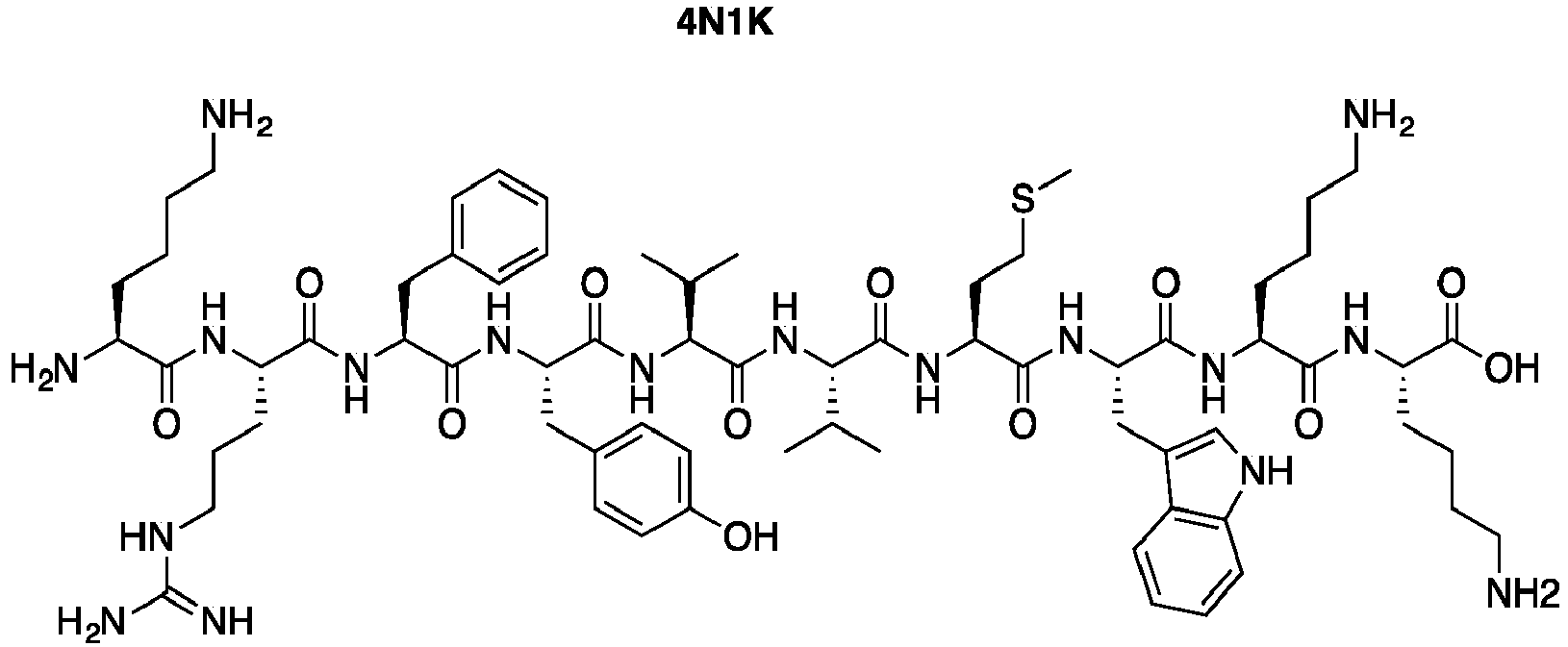
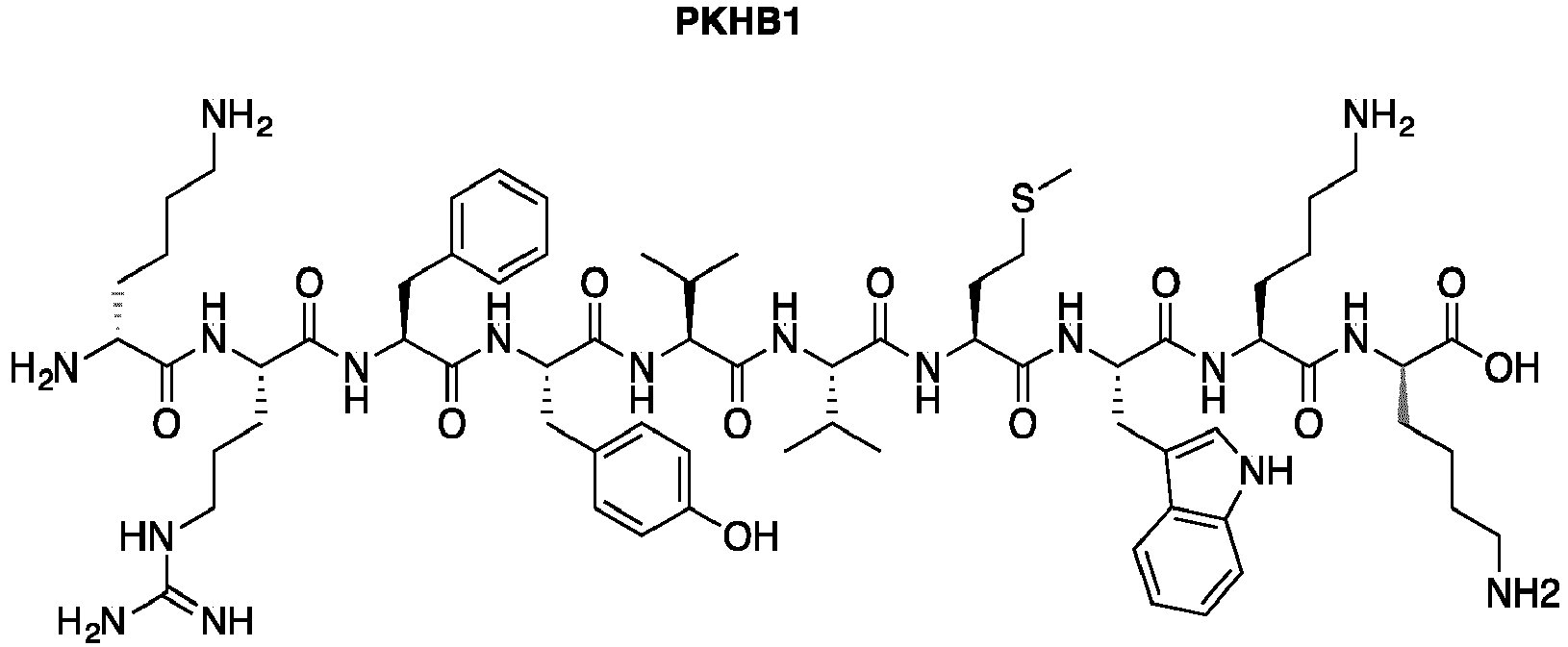

- Other examples of compounds or of pharmaceutical acceptable salt thereof are:
Ac-RFYVVMWK-NH2 (SEQ. ID. N°3) Ac-KRFYVVMWKK-NH2 (SEQ. ID. N°4) H-(D)KAFYVVMWK(D)K-OH (SEQ. ID. N°5) H-(D)KRFYVV(Nle)WK(D)K-OH (SEQ. ID. N°6) H-FYVVXW-OH (SEQ. ID. N°7) H-FYVVXW-NH2 (SEQ. ID. N°8) Ac-FYVVXW-OH (SEQ. ID. N°9) Ac-FYVVXW-NH2 (SEQ. ID. N°10) H-(D)KFYVVXW(D)K-OH (SEQ. ID. N°11) H-FYVVKW-OH (SEQ. ID. N°12) H-FYVVKW-NH2 (SEQ. ID. N°13) H-(D)K ψ(CONMe)RFYVVMWK(D)K-OH (SEQ. ID. N°14) H-(D)KRFYVVMWψ(CONMe)K (D)K-OH (SEQ. ID. N°15) H-(D)Kψ(CONMe)RFYVVMWψ(CONMe)K (D)K-OH (SEQ. ID. N°16) H-(D)K ψ(CONMe)RFYVVLWK(D)K-OH (SEQ. ID. N°18) H-(D)K ψ(CONMe)RFYVVIWK(D)K-OH (SEQ. ID. N°19) H-(D)K ψ(CONMe)RFFVVXWK(D)K-OH (SEQ. ID. N°20) - in the above peptides:
- the "H" on the left hand side of the structures represents a hydrogen atom,
- the term "Ac" means that the N-terminal amine is acetylated,
- the "OH" on the right hand side of the structures represents the OH of the C-terminal COOH,
- the "X" represents norleucine residue,
- the "NH2" on the right hand side of the structures means that the OH of the C-terminal COOH has been replaced by NH2,
- the (D) means that the following amino acid residue is of the (D) configuration, the terms "hR" and "hK" represent homo-arginine and homo-lysine respectfully,
- "ψ(CONMe)" represent the pseudopeptide bond linking the two amino acid residues on either side of this term, and
- Nle represents a norleucine residue.
- According to another embodiment, synthetic TSP-1-derived peptides according to the invention are isolated cyclic peptide of general formula (V) as described in
WO 2017/194634 :
- Z1 is nothing or an heterochiral sequence D-Pro-L-Pro (also designated p-P, p being a D-proline and P a L-proline) or any sequence of two amino acids or analogs of amino acid able to mimic said heterochiral sequence or mimic a beta turn, example of amino acids or analogs of amino acid of said sequence are nipecotic acid, isonipecotic acid, piperidine carboxylic acid, silaproline, thioproline and any other substituted derivative thereof (fluoro, methyl, bromo etc), pseudo proline, substituted proline, N-methyl amino acids, cyclopropyl amino acids (see Karoyan et al. Target in heterocyclic system, 2004 and Karoyan et al. ChemBioChem (2011), 12(7), 1039-1042 and Larregola et al. Journal of Peptide Science (2011), 17(9), 632-643) or biaryl amino acids templates; in a preferred embodiment, Z1 is D-Pro-L-Pro;
- B1 represents the peptidic sequence X7-X8-X9-X10-X11-X12-X13-X14-X15-X16 derived from the beta-strand N°7 of TSP-1 (of sequence RFYVVMWK) wherein:
- X7 refers to nothing or serine or any amino acid with similar properties such as glycine or alanine or threonine;
- X8 refers to nothing or arginine or any amino acid with similar properties such as homoarginine, lysine, ornithine, phenylalanine, naphtylalanine, N-methyl arginine or homophenylalanine or any other ring substituted analogues in ortho, meta or para position; for example for arginine, derivatives include any other side chain involving a guanido function and/or one or more than one amine function;
- X9 refers to phenylalanine or any amino acid with similar properties including naphtylalanine, homophenylalanine or any other ring substituted analogues in ortho, meta or para position such as para-fluoro-phenylalanine, para-amino-phenylalanine or para-nitro-phenylalanine; tyrosine or any amino acid with aromatic side chains;
- X10 refers to tyrosine or any amino acid with aromatic side chains, phenylalanine or any amino acid with similar properties including naphtylalanine, homophenylalanine or any other ring substituted analogues in ortho, meta or para position such as para-fluoro-phenylalanine, para-amino-phenylalanine or para-nitro-phenylalanine;
- X11 refers to valine or any amino acid with similar properties including leucine, isoleucine, terleucine, methionine;
- X12 refers to valine or any amino acid with similar properties including leucine, isoleucine, terleucine, methionine;
- X13 refers to methionine or lysine or any amino acid with similar properties including valine, methionine, norleucine, leucine or isoleucine or terleucine;
- X14 refers to tryptophan, tyrosine, phenylalanine, naphthyl-alanine, para-fluoro-phenylalanine, para-amino-phenylalanine, para-nitro-phenylalanine, D-prolino-tryptophane or D-prolino-homotryptophane;
- X15 refers to nothing or lysine or any amino acid with similar properties including arginine, homoarginine, ornithine, phenylalanine, naphtylalanine, N-methyl arginine or homophenylalanine or any other ring substituted analogues in ortho, meta or para position or histidine;
- X16 refers to nothing or glutamine or alanine or any amino acid with similar properties including asparagine;
- Z2 is nothing or an heterochiral sequence D-Pro-L-Pro (also designated p-P) or any sequence of two amino acids or analogs of amino acid able to mimic said heterochiral sequence or mimic a beta turn, example of amino acids or analogs of amino acid of said sequence are nipecotic acid, isonipecotic acid, piperidine carboxylic acid, silaproline, thioproline and any other substituted derivative thereof (fluoro, methyl, bromo etc), pseudo proline, substituted proline, N-methyl amino acids, cyclopropyl amino acids (Karoyan et al. Target in heterocyclic system, 2004 and Karoyan et al. ChemBioChem (2011), 12(7), 1039-1042 and Larregola et al. Journal of Peptide Science (2011), 17(9), 632-643) or biaryl amino acids templates; in a preferred embodiment, Z2 is D-Pro-L-Pro;
- Bn represents B1 or B2;
- B2 is nothing or a peptidic sequence comprising between 6 and 10 amino acids derived from the beta-strand N°8 of TSP-1 (of sequence GLSVKVVNS) ; in an embodiment, B2 comprises the following sequence: -X22-X17-X18-X23-X24-X19-X25-X26-X20-X21-; preferably, B2 comprises the following sequence -X22-X17-X18-S-V-X19-V-V-X20-X21- wherein:
- X17 is nothing or glycine or alanine or any amino acid with similar properties including serine;
- X18 is isoleucine or leucine or alanine or any amino acid with similar properties including terleucine, valine, methionine;
- X19 is lysine or alanine or any amino acid with similar properties including arginine, homoarginine, lysine, ornithine, phenylalanine, naphtylalanine, N-methyl arginine or homophenylalanine or any other ring substituted analogues (ortho, meta, para), histidine, or methionine or any amino acid with similar properties including valine, leucine, isoleucine, terleucine;
- X20 is nothing or asparagine or alanine or any amino acid with similar properties including glutamine or lysine or any amino acid with similar properties including arginine, homoarginine, lysine, ornithine, phenylalanine, naphtylalanine, N-methyl arginine or homophenylalanine or any other ring substituted analogues (ortho, meta, para), histidine;
- X21 is nothing, serine or glycine or any amino acid with similar properties;
- X22 is nothing or serine or alanine or any amino acid with similar properties;
- X23 is serine or alanine or any amino acid with similar properties including leucine, isoleucine, terleucine;
- X24 is valine or alanine or any amino acid with similar properties including leucine, isoleucine, terleucine;
- X25 is valine or alanine or any amino acid with similar properties including leucine, isoleucine, terleucine; and
- X26 is valine or alanine or any amino acid with similar properties including leucine, isoleucine, terleucine;
- The isolated cyclic peptide of general formula (V) of the invention yet comprises at least parts of the beta-sheet N°7 or of the beta-sheets N°7 and 8 of the C-terminal domain of the TSP-1 but cannot be the entire sequence of the C-terminal domain of the TSP-1 (as described by Kosfeld MD, Frazier WA (1993) Identification of a new cell adhesion motif in two homologous peptides from the COOH-terminal cell binding domain of human thrombospondin. J Biol Chem 268: 8806-8814), because this domain has not the same biologic activity as cyclic peptides of the invention.
- Except when explicitly mentioned, all amino acids are indifferently of the (D) or (L) configuration.
- The present invention thus encompasses cyclic peptides of formula B1-B2, Z1-B1-B2, B1-Z2-B1, B1-B1 (each B1 being identical or different) and B1-Z2-B1 (each B1 being identical or different).
- Preferably, isolated cyclic peptide comprises an even number of amino acids (that is to say B1 and Bn have the same number of amino acids and both consist in a fragment of 6, 7, 8, 9 or 10 amino acids) and wherein said isolated cyclic peptide comprises between 8 and 26 amino acids, preferably between 12 and 22 amino acids; more preferably, isolated cyclic peptides of the invention consist in 12, 14, 16, 18, 20 or 22 amino acids.
- In a preferred embodiment, B1 and B2 are arranged so that X5 of B1 faces X16 of B2 and X8 of B1 faces X15 of B2 as illustrated below:

- According to a particular embodiment, both Z1 and Z2 can be nothing; if Z1 consists in two amino acids then Z2 is nothing and if Z2 consists in two amino acids then Z1 is nothing.
- Synthesis of said cyclic peptides is described on
WO 2017/194634 . - Examples of isolated cyclic peptide according to the present invention are as described in Table I:
Table I PEPTIDES STRUCTURE / AMINO ACID SEQUENCE (linear representation) FORMULA AND MW PKD10 (SEQ. ID. N°21) 
-F-Y-V-V-K-W-p-P-L-S-V-K-V-V- PKDIOFF (SEQ. ID. N°22) 
-F-F-V-V-K-W-p-P-L-S-V-K-V-V- PKTDi2 (SEQ. ID. N°23) 
-p-P-R-F-Y-V-V-M-W-K-G-L-S-V-K-V-V-N- PKTD1 (SEQ. ID. N°24) 
-S-R-F-Y-V-V-M-W-K-p-P-G-I-S-V-K-V-V-K-S- PKTD10 (SEQ. ID. N°25) 
-S-R-F-Y-V-V-M-W-K-p-P-G-L-S-V-K-V-V-N-S- PKTD10-RNMe (SEQ. ID. N°26) 
-S-R*-F-Y-V-V-M-W-K-p-P-G-L-S-V-K-V-V-N-S-
R* = RNMePKTD10-X-RNMe (SEQ. ID. N°27) 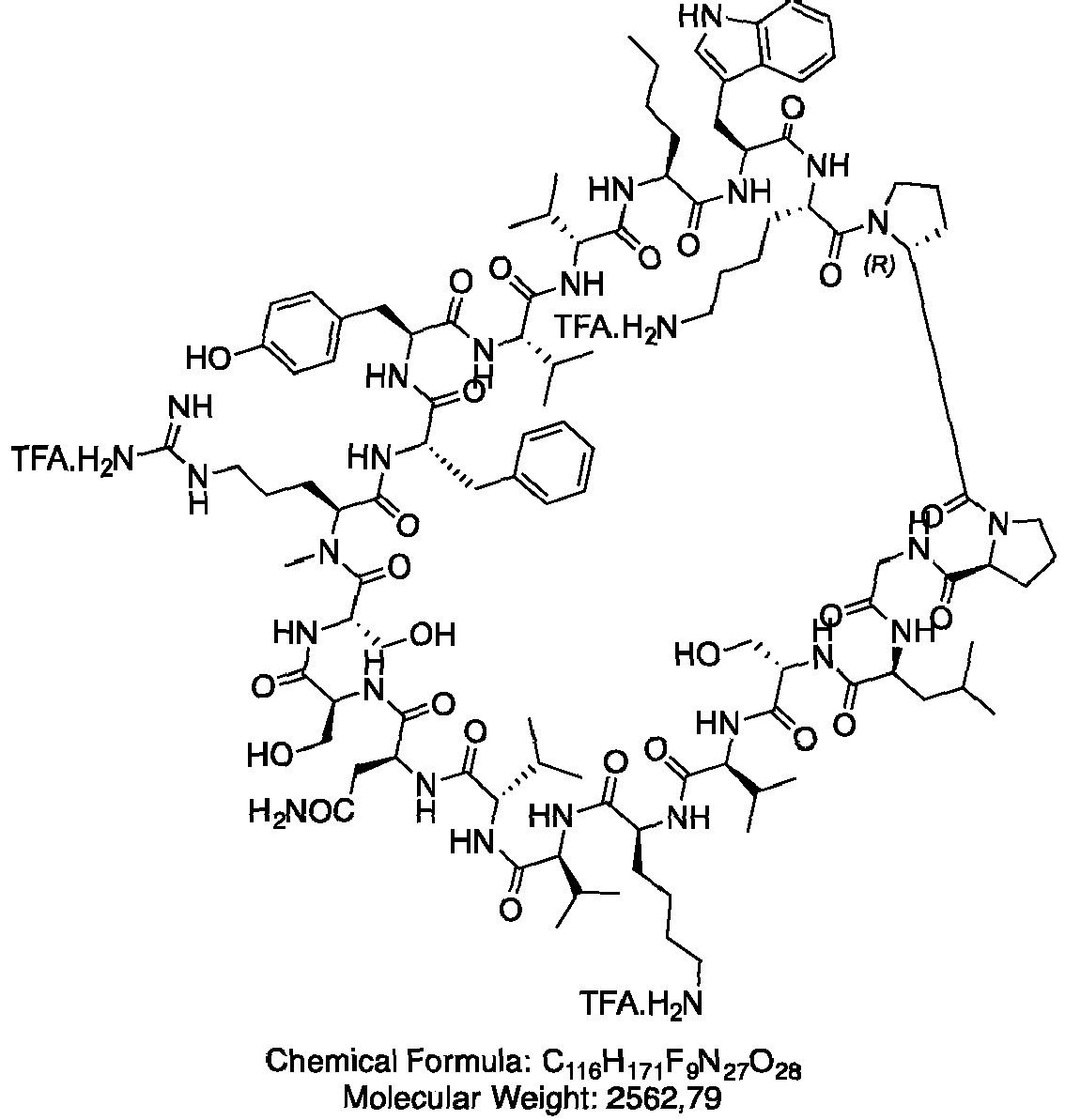
-S-R*-F-Y-V-V-X-W-K-p-P-G-L-S-V-K-V-V-N-S-
R* = RNMe and X = NLePKTD10-3-X-RNMe (SEQ. ID. N°28) 
-S-R*-F-Y-V-V-X-W-K-p-P-G-L-A-V-K-V-V-N-S-
R* = RNMe and X =N LePKTD16 (SEQ. ID. N°29) -S-R-F-Y-V-V-M-W-K-p-P-S-R-F-Y-V-V-M-W-K- PKTD18 (SEQ. ID. N°30) 
-S-R-F-Y-V-V-M-W-K-p-P-G-L-S-V-K-V-V-N-G- PKTD11 (SEQ. ID. N°31) 
Chemical Formula: C115H180N29O30S34 Molecular Weight: 2480,94 -S-R-F-Y-V-V-M-W-K-Q-p-P-S-G-L-S-V-K-V-V-N-S- PKTD11-RNMe (SEQ. ID. N°32) 
-S-R*-F-Y-V-V-M-W-K-Q-p-P-S-G-L-S-V-K-V-V-N-S-
R* = RNMePKTD11-X-RNMe (SEQ. ID. N°33) 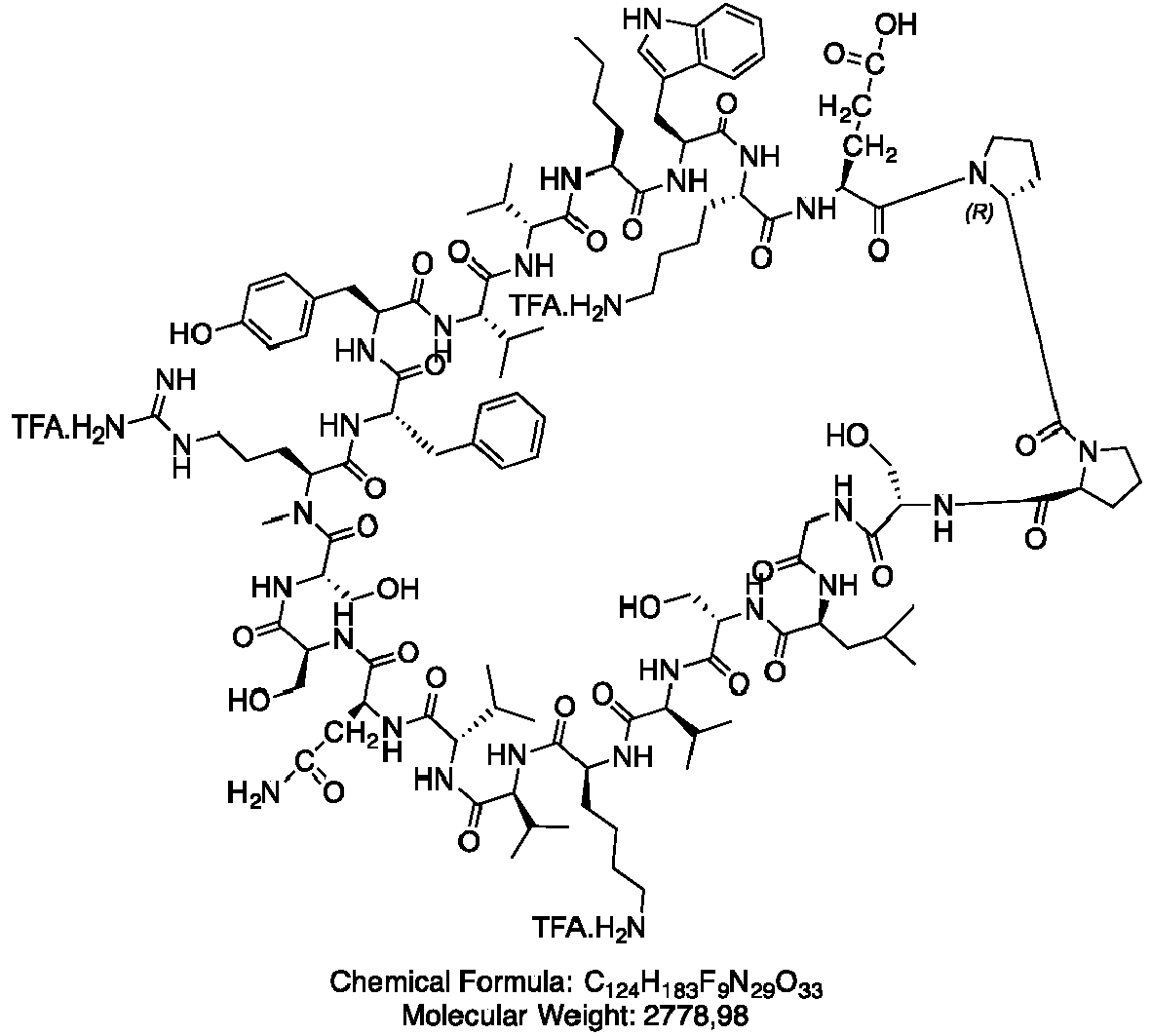
-S-R*-F-Y-V-V-X-W-K-Q-p-P-S-G-L-S-V-K-V-V-N-S-
R* = RNMe and X = NLe - The present invention also relates to the use of variants of the above-defined peptides; said variants include protein having amino acid alterations such as deletions, insertions and/or substitutions.
- A "deletion" refers to the absence of one or more amino acids in the protein.
- An "insertion" refers to the addition of one or more of amino acids in the protein.
- A "substitution" refers to the replacement of one or more amino acids by another amino acid residue in the protein.
- Typically, a given amino acid is replaced by an amino acid having similar properties (such as, for example, polarity, hydrogen bonding potential, acidic, basic, hydrophobic, aromatic, and the like). This given amino acid can be a natural amino acid or a non natural amino acid. Amino acids other than those indicated as conserved may differ in a protein so that the percent protein or amino acid sequence similarity between any two proteins of similar function may vary and may be, for example, from 70 % to 99 % as determined according to an alignment scheme such as by the Cluster Method, wherein similarity is based on the MEGALIGN algorithm.
- Typically, the invention encompasses peptides substantially identical to the above-defined peptides in which one or more residues have been conservatively substituted with a functionally similar residue and which displays the functional aspects of the synthetic TSP-1 derived peptides as described here above, i.e. being still able to induce ICD in substantially the same way as a peptide consisting of the given amino acid sequence.
- Examples of conservative substitutions include the substitution of one non-polar (hydrophobic) residue such as isoleucine, valine, leucine or methionine for another, the substitution of one polar (hydrophilic) residue for another such as between arginine and lysine, between glutamine and asparagine, between glycine and serine, the substitution of one basic residue such as lysine, arginine or histidine for another, or the substitution of one acidic residue, such as aspartic acid or glutamic acid or another.
- The term "conservative substitution" also includes the use of a chemically derivatized residue in place of a non-derivatized residue.
- "Chemical derivative" refers to a subject peptide having one or more residues chemically derivatized by reaction of a functional side group.
- Examples of such derivatized molecules include for example, those molecules in which free amino groups have been derivatized to form amine hydrochlorides, p-toluene sulfonyl groups, carbobenzoxy groups, t-butyloxycarbonyl groups, chloroacetyl groups or formyl groups. Free carboxyl groups may be derivatized to form salts, methyl and ethyl esters or other types of esters or hydrazides. Free hydroxyl groups may be derivatized to form O-acyl or O-alkyl derivatives. The imidazole nitrogen of histidine may be derivatized to form N-im- benzylhistidine. Chemical derivatives also include peptides that contain one or more naturally-occurring amino acid derivatives of the twenty standard amino acids. For examples: 4-hydroxyproline may be substituted for proline; 5-hydroxylysine may be substituted for lysine; 3-methylhistidine may be substituted for histidine; homoserine may be substituted for serine; and ornithine may be substituted for lysine. The term "conservative substitution" also includes the use of non natural amino acids aimed to control and stabilize peptides or proteins secondary structures. These non natural amino acids are chemically modified amino acids such as prolinoamino acids, beta-amino acids, N-methylamino acids, cyclopropylamino acids, alpha,alpha-substituted amino acids as describe here below. These non natural amino acids may include also fluorinated, chlorinated, brominated- or iodinated modified amino acids.
- Preferably, the synthetic TSP-1-derived peptide are selected amongst PKHB1 (SEQ. ID. N°2), PKT16 (SEQ. ID. N°17) and PKD10 (SEQ. ID. N°43).
- The synthetic TSP-1-derived peptide are used to induce immunogenic cancer cell death for treating any cancers or neoplasia; for example, cancer is selected form the group consisting of adrenal cortical cancer, anal cancer, bile duct cancer, multiple myeloma, bladder cancer, bone cancer, brain and central nervous system cancer, breast cancer, Castleman disease, cervical cancer, colorectal cancer, endometrial cancer, esophagus cancer, gallbladder cancer, gastrointestinal carcinoid tumors, Hodgkin's disease, non-Hodgkin's lymphoma, Kaposi's sarcoma, kidney cancer, laryngeal and hypopharyngeal cancer, leukemia, liver cancer, lung cancer, mesothelioma, plasmacytoma, nasal cavity and paranasal sinus cancer, nasopharyngeal cancer, neuroblastoma, oral cavity and oropharyngeal cancer, ovarian cancer, pancreatic cancer, penile cancer, pituitary cancer, prostate cancer, retinoblastoma, rhabdomyosarcoma, salivary gland cancer, skin cancer, melanoma and metastatic melanoma, stomach cancer, testicular cancer, thymus cancer, thyroid cancer, vaginal cancer, vulvar cancer, and uterine cancer, preferably leukemia like chronic lymphocytic leukemia, acute lymphoblastic leukemia.
- According to another embodiment, the present invention relates to the in vitro use of synthetic TSP-1-derived peptide for inducing immunogenic cell death in tumour cell.
- The tumour cell mentioned in the present invention is a cell obtained from a tumor of a subject suffering from a cancer, in particular from at least one of the previously identified cancers. It is to be understood that the expression "tumour cells" used to identify cells obtained from a tumor of a subject, is also used, in the present description, to identify circulating tumor cells (in the case of leukaemia for example), cells obtained from a tumor bed, or cells obtained from a metastase.
- The present invention also relates to a tumour cell treated with a synthetic TSP-1-derived peptide, also designated by "vaccine used for immunostimulation", for its use to induce immunogenic cell death for the treatment of cancer.
- The vaccine used for immunostimulation is obtained by culturing said tumour cell and then treating the obtained culture of tumour cells with a synthetic TSP-1-derived peptide.
- An example of such a treatment is described in the experimental part.
- Preferably the "tumour cell treated with a synthetic TSP-1-derived peptide" consists in death tumour cells.
- The present invention also relates to the use of a synthetic TSP-1-derived peptide for the preparation of tumour cell usable according to the present invention and to process for preparation of such tumour cell comprising a step of treating said cells with a synthetic TSP-1-derived peptide.
- The present invention further relates to pharmaceutical composition, preferably injectable, comprising a tumour cell treated with a synthetic TSP-1-derived peptide and a pharmaceutically acceptable carrier.
- In a particular embodiment, the pharmaceutical preparation that will be injected is obtained by treatment of the tumor (solid or liquid) with synthetic TSP-1-derived peptide, after collecting blood sample from patients for liquid tumors (leukemia) or after surgery for solid tumors to obtained at least 106 cells that will be cultured at then treated with synthetic TSP-1-derived peptide. The administration (injection) of the pharmaceutical preparation may occur before, simultaneously and/or after a "conventional treatment of cancer" that may be selected from a chemotherapy, a radiotherapy, an hormonotherapy, an immunotherapy, a specific kinase inhibitor-based therapy, an antiangiogenic agent based-therapy, an antibody-based therapy, in particular a monoclonal antibody-based therapy, for liquid tumors and after surgery for the solid tumor.
- For the purpose of the invention, suitable pharmaceutically acceptable carriers include, but are not limited to: water, salt solutions (e.g., NaCI), alcohols, gum arabic, vegetable oils, benzyl alcohols, polyethylene glycols, gelatin, carbohydrates such as lactose, amylose or starch, magnesium stearate, talc, silicic acid, viscous paraffin, perfume oil, fatty acid esters, hydroxymethylcellulose, and polyvinyl pyrolidone, lipids such as but not limited to :phospholipids, sphinglipids, glycerol-fatty acid esters...
- The pharmaceutical composition of the invention can be sterilized and if desired, mixed with auxiliary agents, e. g., lubricants, preservatives, stabilizers, wetting agents, emulsifiers, salts for influencing osmotic pressure, buffers, coloring, flavoring and/or aromatic substances and the like which do not deleteriously react with the active compounds. The pharmaceutical composition of the invention, if desired, can also contain minor amounts of wetting or emulsifying agents, or pH buffering agents.
- The pharmaceutical composition of the invention can be a liquid solution, suspension, emulsion,. Some appropriate precise formulations are described, for example, in Remington, The Science and Practice of Pharmacy, 19th edition, 1995, Mack Publishing Company.
- The pharmaceutical composition of the invention can be formulated in accordance with the routine procedures as a composition adapted for intravenous administration to an individual. Typically, compositions for intravenous administration are solutions in sterile isotonic aqueous buffer or a sterile lyophilized formulation to be reconstituted prior injection, such injection can be intravenous, intramuscular, subcutaneous, intrathecal, such pharmaceutical composition can also be inhaled through nasal and/or pulmonary delivery. In a preferred embodiment the pharmaceutical composition of the invention is a liquid composition that is dedicated to be administered by injection, and for example, by intratumoral injection. Said intratumoral injection can be obtained for example by using stereotactic neurosurgery. This administration can be performed prior to or after a surgical operation intended to remove the tumor. In the first case, the composition enables to inhibit the growth of the tumor and avoid dissemination of the tumor cells and the occurrence of dramatic symptoms on the subject; in the second case, the composition can be used to destroy all the tumor cells that have not be removed during the surgical operation.
- The effective dose of the synthetic TSP-1-derived peptide or of the "tumour cell treated with a synthetic TSP-1-derived peptide" varies in function of numerous parameters such as, for example, the chosen administration method, the weight, age, sex, and the sensitivity of the individual to be treated. Consequently, the optimal dose must be determined individually, in function of the relevant parameters, by a medical specialist. In order to predict the expected active doses in human from the first animal studies presented hereunder, one can also use the fc2 and CT values as described by Rocchetti et al (2007).
- According to another embodiment, the present invention relates to a method of treatment of cancer comprising a step of administration to a subject in need thereof a synthetic TSP-1-derived peptide and/or tumour cell treated with a synthetic TSP-1-derived peptide to a patient in a amount sufficient to induce ICD.
-
-
Figure 1 . CTD of TSP-1 from pdb 1ux6. A. The T35-7-CTD C974S/N1049K double mutant crystallised in the presence of 5 mM calcium (resolution 1.9 Å) from Ala813 to Pro1151 composed of 15 β-strands. B. Representation of 10 β-strands from the lectin-like - β-sandwich. The β-
strands strand 7, RFYVVMWK) and blue (strand 8, GLSKVVK) highlighting the antiparallel β-sheets formed by association of strands [7,8]. -
Figure 2 . PKHB1 induces cell death in T-ALL leukemia cell lines. Cell death was measured by Annexin-V-APC and PI staining and graphed A. CEM, B. MOLT-4 human leukemia cells, and C. L5178Y murine cell line, without treatment (Control) and treated with 100, 200 and 300µM PKHB1 for 2h. -
Figure 3 . PKHB1 induces caspase-independent but calcium-dependent cell death and loss of mitochondrial membrane on leukemia cell lines. A. Graph represents cell death percentage of T-ALL cells without treatment (Control) or treated with PKHB1 (200µM, 2h) and left alone (-) or pre-incubated for 30min with QVD or Ca2+ chelator BAPTA in the different cell lines tested. B. The loss of UΨm induced by PKHB1 (200µM, 2h) was measured in T-ALL cells. Representative cytofluorometric plots are shown. -
Figure 4 . PKHB1 spares non-cancerous primary leucocytes from mice and humans in vitro. A. Cell death of PBMCs treated with PKHB1 was measured by Annexine-V/PI staining (n=10 donors). B. Percentage of CD4+, and CD8+ T cells from each donor, left untreated or treated with PKHB1 C. Cell death was measured by Annexin-V-APC and graphed. D. Cell death of murine PBMCs treated with PKHB1 was measured by Ann/PI staining (n=10). E. Cell viability of bone marrow, spleen, thymus and lymph nodes from healthy mice measured by MTT assays n=9 mice. -
Figure 5 . PKHB1-treatment of L5178Y-R tumor-bearing mice induces leukocyte infiltration to the tumor site and improves leukocyte-cell number. A. Histology from tumors from control and PKHB1-treated mice (day 18), stained with H&E. Mitotic cells (red-arrow), lymphocytes (blue-arrow), eosinophils (yellow-arrow), giant cells (blackarrow), necrosis (brown-arrow) and, normal tissue (green-arrow). B. For immunohistochemical staining, CD4+ and CD8+ cells were labeled in tumor tissue of control and PKHB1-treated mice. Arrows point cells with positive labeling. C. Cell count of lymphoid organs coming from mice with tumor without treatment (Control), mice with tumor treated with PKHB1 or mice without tumor nor treatment (healthy) was performed using trypan blue staining (n=6). D. Different types of leukocytes from control, PKHB1-treated and healthy mice are displayed in the graph, obtained using hematic biometry analysis. -
Figure 6 . PKHB1 induces calreticulin exposure. A. Left charts are representative of surface CRT detection in CEM (upper), MOLT-4 (middle) and L5178Y-R (bottom) cells using FACS. Negative controls, with IgG isotype antibodies, are shown in dotted (IgG-C) and solid (IgG-PK) lines, while Gray (control) is the basal CRT and black are cells treated (PKHB1). B. ECTO-CRT was observed in the cells treated with PKHB1 by CRT-PE staining and nucleus was stained with Hoechst 33342 and visualized by confocal microscopy 40x. -
Figure 7 . HSP90, HSP70, CRT and HMGB1 proteins expression and release in response to treatment with PKHB1. Western blot and densitometry analyses were performed using cellular lysates (A) or supernatants (B) of CEM, MOLT-4 and L5178Y-R cells untreated and treated with PKHB1. Loading control was β-actin, and Ponceau red. -
Figure 8 . PKHB1 induce HMGB1 and ATP release in CEM, MOLT-4 and L5178Y-R cell lines. Cells were treated with PKHB1 at CC50 and CC100 for 2h, then 100µL of supernatant of each sample was taken to measure the HMGB1 release by ELISA (A) or ATP release through bioluminescence detection (B). The charts shown are representative of triplicates of three similar experiments. -
Figure 9 . PKHB1 induces short- and long-term immunological memory, through prophylactic vaccination or prior exposure to the tumor and treatment. A. Graphs indicate tumor growth in unvaccinated mice (Control; n=6) or vaccinated with h 1.5x10⁶ (1.5M; n=4), 3x10⁶ (3M; n=8) or 5x10⁶ (5M; n=6) CC100 PKHB1-treated L5178Y-R cells and re-challenged with living L5178Y-R cells. B. Survival in vaccinated mice over time. C. Long-term anti-tumor memory of mice in remission re-challenged with 2 million L5178YR cells (control n=6, PKHB1-treated n=6). D. Survival in re-challenged mice over time. Survival is represented by the Kaplan-Meier graph. -
Figure 10 . Schematic representation of CD47-medited ICD. PKHB1, induces fast immunogenic cell death in T-ALL cells, leading to DAMP release. The administration of a prophylactic antitumor vaccine, of tumor cells previously treated with PKHB1, prevented tumor establishment in vivo. - Peripheral blood was collected from 10 healthy volunteers after obtaining written informed consent. This study was approved by the Institutional Ethics Committee at the Universidad Autonoma de Nuevo Leon, College of Biological Sciences. The animal study was approved by the Animal Ethical Committee (CEIBA), Number: 01/2015. All experiments were conducted according to Mexican regulation NOM-062-ZOO-1999.
- The blood from sacrificed mice was obtained by cardiac puncture, while human blood was collected by venipuncture. Peripheral blood mononuclear cells (PBMCs) isolation was performed by density gradient centrifugation using Ficoll-Hypaque-1119 (Sigma-Aldrich, St Louis, MO, USA). 4x10⁵ white blood cells were washed and seeded. CD4+/CD8+ characterization was done using primary antibodies (CD4; MT310 sc-19641 and CD8; 32-M4 sc-1177, Santa Cruz, CA, USA).
- Spleen, thymus, lymphatic node, and bone marrow cells were obtained from female BALB/c mice post-sacrifice. Spleen cells were obtained through perfusion, thymocytes and lymphatic node cells were obtained by maceration, and bone morrow cells (from one femur and tibia per mouse) were flushed with PBS. Cells washed and counted using trypan blue staining.
- CEM, MOLT-4 (T-acute lymphoblastic leukemia, T-ALL), and L5178Y-R (murine lymphoblastic T cell line) were obtained from ATCC. Human and murine PBMCs, human CD4+ and CD8+ T cells, and primary lymphoid organ's cells were obtained from healthy individuals. Cells were maintained in RPMI-1640 medium supplemented with 10% of fetal bovine serum, 2mM L-glutamine, 100 U/mL penicillin-streptomycin (GIBCO by Life Technologies, Grand Island, NY, USA), and incubated at 37oC in a controlled humidified atmosphere with 5% CO2. Cell count was performed using trypan blue (0.4% Sigma-Aldrich), a Neubauer chamber and an optic microscope (Zeiss Primo Star) as proposed by the ATCC's standard protocols.
- Annexin-V-allophycocyanin (Ann-V-APC 0.1µg/ml; BD Pharingen, San Jose CA, USA), propidium iodide (PI, 0.5µg/ml Sigma-Aldrich), and tetramethylrhodamine ethyl ester (TMRE, 20nM, Sigma-Aldrich) were used for phosphatidylserine exposure, cell viability, and mitochondrial transmembrane potential (UΨm) quantification, respectively, in a BD AccuryC6 flow cytometer (BD Biosciences) (total population 10,000 cells). Data were analyzed using FlowJo software.
- 1x10⁶ cells/mL were treated for 2h with PKHB1 (as indicated). For the inhibition assays, calcium chelator, BAPTA (5mM, CalbioChem, Merck, Billerica MA, USA); or the pancaspase inhibitor Q-VD-OPh (QVD, 10µM, BioVision, Milpitas CA, USA); were added 30 min before PKHB1.
- The heparinized blood acquired from mice, was assessed using the Automatic Hematology Analyzer KontroLab. Blood smears were performed and fixed with methanol, stained with Wright's, and observed under the microscope to perform differential blood white cells counts.
- 1x10⁶ cells/mL were plated, treated with PKHB1, and incubated for 2h. Cells were harvested, washed, and stained with Calreticulin-PE (FMC-75, Enzo Life Science, Farmingdale, NY, USA) antibody (1:1000) in FACS buffer. After 1h of incubation in darkness at room temperature, cells were washed and resuspended in 100µL of FACS buffer to be assessed by flow cytometry. For confocal microscopy (OlympusX70), poly-Llysine was added 24h to sterile coverslips and 1x10⁶ cells/mL were seeded. PKHB1 was added and incubated for 2h. Then, the cells were stained with Calreticulin-PE antibody (1:500) and Hoechst, incubated 1h, and assessed by confocal microscopy.
- 1x10⁶ cells/mL were seeded in a serum-free culture medium and treated with PKHB1 (CC50 and CC100 for each cell line) or left alone (Control) for 2h. Supernatants was recovered and lysed with lysis buffer (20mM Tris pH 6.8, 2mM EDTA, 300mM NaCl and
SDS 2%). - Protein concentration was measured using the DC Protein Assay kit (Bio-Rad, Hercules, CA, USA) and 50µg of protein were loaded into SDS-PAGE gels. After blotting, nitrocellulose filters were probed with primary antibodies (1:1000) against HMGB1 (HAP46.5: sc-56698), HSP70 (C92F3A-5: sc-66048), HSP90 (F-8: SC-13119) and Calreticulin (F-4: sc373863). Anti-mouse or anti-rabbit -HRP served as secondary antibodies (Santa Cruz Biotechnology, CA, USA). Visualization was performed with ECL substrate system (Thermo Scientific, Waltham, MA, USA).
- 1x10⁶ cells/mL were treated with PKHB1 (CC50 and CC100 for each cell lines) for 2h. Supernatants were used to assess extracellular ATP by a luciferase assay (ENLITEN kit, Promega, Madison WI, USA) following the manufacturer's instructions. Bioluminescence was assessed in a microplate reader (Synergy HT, BioTek, Software Gen5, Winooski, VT, USA) at 560nm.
- Supernatants of untreated and treated (PKHB1 CC50 and CC100 for each cell line) leukemic cells (1x10⁶ cells/mL) were used to measure extracellular HMGB1 using the HMGB1 ELISA kit for CEM, MOLT-4 or L5178Y-R cells (BioAssay ELISA kit Human or mouse respectively, US biological Life Science Salem, MA, USA), following the manufacturer instructions. Absorbance was assessed at 450nm.
- Six-to-eight-week-old BALB/c female mice were maintained in controlled environmental conditions (25°C and 12h light/dark cycle) and were supplied with rodent food (Science diet) and water ad libitum.
- Prophylactic vaccinations: L5178Y-R cells (1.5, 3, 5x10⁶) were treated with 300µM of PKHB1 (CC100) for 2h. Cell death was confirmed using trypan blue staining and flow cytometry. Treated cells were inoculated subcutaneously in 100µl PBS into the left hind of the leg, whereas 2x10⁶ untreated control cells were inoculated into the
right hind 7 days later (42). - Tumor establishment and measurement: Tumor was established by the subcutaneous injection of 1x10⁶ L5178Y-R cells in 100µL PBS, into the left hind of the leg. Tumor volume and weight were measured three times per week using a caliper (Digimatic Caliper Mitutoyo Corporation, Japan) and a digital scale (American Weigh Scale-600-BLK, USA). When the tumor reached 100mm3 the first PKHB1 injection (200µg) was applied (day 0). Tumor volume was determined with the formula: tumor volume (mm3) = 4π/3*A*B*C. Long-term memory assay: Mice in complete remission after PKHB1 treatment, were rechallenged with 2x10⁶ cells in 100µL of PBS, into the opposite limb, and tumor volume was measured like described above.
- Tissues and organs were obtained and fixed in 10% neutral formalin, embedded in paraffin, sectioned (5µm thickness) and stained with H&E (Sigma-Aldrich, St Louis, MO, USA).
- Histopathological analysis was done by an external veterinarian pathologist (National professional certificate 2593012). Immunohistochemistry was done using the appropriate primary antibody (CD4/CD8) and adding the biotinylated secondary antibody. Finally, hematoxylin-counterstained slides are coverslipped using resin as mounting solution and observed under microscopy.
- Mice were randomly assigned to different groups for all in vivo studies. Experiments were repeated three independent times. Mann-Whitney test and two-tailed unpaired Student's t test were performed using GraphPad Prism Software (San Diego CA, USA) and presented as mean values}SD. The p values were considered significant as follows: p<0.05; p<0.01 and p<0.001.
- PKHB1 induces cell death in a concentration-dependent manner, since the cells incubated for 2h with crescent concentrations (100, 200 and 300µM) of PKHB1 show an increase in the number of Ann-V-APC/PI positive CEM (
Figure 2A ), MOLT-4 (Figure 2B ) and L5178Y-R (Figure 2C ) cells. The cytotoxic concentration that induces around 50% of cell death (CC50) in CEM is 200µM, in MOLT-4 is 300µM, and in L5178Y-R is 200µM. - It has next been assessed whether PKHB1-induced cell death in T-ALL cells shared the principal biochemical features previously described for CD47-mediated cell death; these include caspase independence (43), a sustained calcium influx and mitochondrial membrane potential (UΨm) loss (33,44). Thus, the cells were pre-incubated with a pan-caspase inhibitor (Q-VD-OPH) or an extracellular Ca2+ chelator (BAPTA) and cell death was tested. Caspase inhibition did not prevent PKHB1-induced killing of CEM (51% ±4 to 48% ±5), MOLT-4 (57% ±4 to 51% ±6), and L5178Y-R (52% ±5 to 49%±3) cells. Nevertheless, extracellular calcium chelation significantly reduced PKHB1-induced cell death in all cases: CEM (51% ±4 to 18% ±11), MOLT-4 (57% ±4 to 38% ±3), and L5178Y-R (52% ±5 to 21% ±8) (
Figure 3A ). Calcium dependence for death induced by an immobilized anti-CD47 (B6H12) was also corroborated in CEM cells (SF1). - Treatment with the PKHB1 CC50 also showed that it induces loss of UΨm in T-ALL (
Figure 3B ) being of 49%±5 in CEM, 61%±4 in MOLT-4, and of 51%±8 in L5178Y-R. - The selectivity of PKHB1 in human PBMCs and CD4+ and CD8+ human T cells from healthy donors has been tested (see
Figure 4A,B,C respectively) . - Additionally, PKHB1 selectivity has been tested in murine PBMCs (
Figure 4D ) and primary cultures of bone marrow (BM), spleen, thymus and lymph nodes of healthy (without tumor nor treatment) BALB/c mice through indirect cell viability analysis (Figure 4E ). PKHB1 treatment did not significantly affected cell viability of human- nor murine- non-cancerous cells (Figure 4 ), even though all organs express CD47 in a similar level to the neoplastic cells (SF2). These results denoted the selectivity of PKHB1 to induce cell death just in malignant cells. - After verifying that PKHB1 treatment did not affect healthy leukocytes in vitro, these effects in vivo have been assessed. Immunocompetent female BALB/c mice were used to bear L5178Y-R tumor cells, and mice were treated weekly with 200µg of PKHB1 intraperitoneally. After 18 days all controls had to be sacrificed, and some PKHB1-treated mice were randomly selected to be sacrificed for comparison. Tumors were dissected, and their morphological and cellular differences were analyzed (
Figure 5A ). The control group presented undifferentiated lymphoid cells, presumably L5178Y-R cells, some of them performing mitosis (Figure 5A left). Conversely, tumors in PKHB1-treated mice contained a mixture of lymphocytes and polymorphonuclear cells (PMN) (Figure 5A middle). - Moreover, complete tumor regression in most of the mice was observed at
day 30, where histological slides show what seems to be an anti-tumor immune response in the inoculation site (Figure 5A right). Thus, it has been decided to carry out an immunohistochemistry of tumor sections, which indicated the presence of CD4+ and CD8+ cells in PKHB1-treated mice (Figure 5B ). - In addition, it has been performed cell counts from lymphoid organs that belonged to control, PKHB1-treated or healthy mice. Noticeably, in PKHB1-treated mice, a significant increase in cell number of BM, spleen and thymus cells, and significant decrease in cell number of lymph nodes were observed (
Figure 5C ). Moreover, cell number of the same organs in PKHB1-treated mice was similar to that of healthy mice. Additionally, the WBC differential was performed, and showed no significant difference between healthy and PKHB1-treated mice, whereas untreated tumor-bearing mice presented a significant difference from the other two groups in all leukocyte types (Figure 5D ). Altogether, the above suggests that PKHB1 improves the anti-tumor immune system of tumor-bearing mice and indicates the possible participation of the immune system in complete tumor regression. - The assessment of the exposure and release of several DAMPs in T-ALL cells has been conducted. In
Figure 6 it can be observed that CEM, MOLT-4, and L5178Y-R cells incubated with the CC50 of PKHB1, presented a significant increase in CRT exposure, analyzed by flow cytometry (Figure 6A ), and confocal microscopy (Figure 6B ). - Then, the expression and release of HSP90, HSP70, CRT and HMGB1 were measured. The presence of these DAMPs was determined by Western blot in cellular lysates and supernatant of untreated cells and PKHB1-treated cells at CC50 and CC100 for each cell line tested.
Figure 7A displays the decrease in the expression of HSP90, HSP70, CRT, and HMGB1 in cellular lysates of cells treated with PKHB1. Conversely, the expression of these DAMPs increased in PKHB1-treated supernatants compared with the untreated cells (Figure 7B ). These results indicate that PKHB1-treatment prompts the release of heat shock proteins, CRT, and HMGB1 to the extracellular medium. - As HMGB1 release was barely detected by Western Blot, an ELISA assay was performed.
- HMGB1 release varied depending on the cell line studied, and the concentration of PKHB1 used. Using PKHB1 CC100, in CEM, MOLT-4 and L5178Y-R cell lines, HMGB1 release was of 6-fold, 4-fold and 2-fold, respectively, compared to the untreated control, while using PKHB1 CC50, MOLT-4 cells HMGB1 release was of 8-fold with respect to the control (
Figure 8A ). - Another important indicator that immunogenic death is taking place is ATP-release.
- Therefore, a bioluminescence assay was performed, finding that in supernatants of PKHB1-treated cells at CC50 and CC100, the presence of ATP significantly augmented (
Figure 8B ). - Considering the previous data, pointing that PKHB1-treatment induces ICD, the next step was to perform a prophylactic vaccination, which is the gold-standard to confirm whether PKHB1-treatment induced ICD in vivo. The vaccine is based in the use of L5178Y-R cells treated in vitro with PKHB1 CC100. Four groups of mice where used, i. control group without vaccine, ii. 1.5M vaccine group, with 1.5x10⁶ PKHB1-treated cells, iii. 3M vaccine group, with 3x10⁶ PKHB1-treated cells and iv. 5M vaccine group with 5x10⁶ PKHB1-treated cells. The results demonstrated that vaccination containing PKHB1-treated cells prevented the establishment of L5178Y-R tumor, and a greater number of dead cells due to the peptide, depicted better response against tumor cells inoculated 7 days after the vaccine administration (
Figure 9 ). In control group, 6 out of 6 mice (100%) developed the tumor after the inoculation with viable cells (Figure 9A top-left), while 3 out of 4 mice (75%) developed tumor in the 1.5M vaccine group (Figure 7A top-right), 7 out of 14 mice (50%) developed tumor in the 3M vaccine group (Figure 7A down-left), and none of the mice (0%) in the 5M vaccine group developed the tumor (Figure 7A downright). The 60-days survival rates of mice in each group was consistent with tumor growth, being of 100% in the 5M vaccine group (Figure 9B ). - Additionally, the long-term tumor prevention in mice that presented complete tumor regression after PKHB1-treatment has been assessed. In these
experiments 1 out of 6 mice (≈17%) rechallenged with 2x10⁶ L5178Y-R viable cells developed the tumor, while in thenaive control group 6 out of 6 (100%) presented tumor growth (Figure 9C ). The survival percentage was graphed using Kaplan-Meier curve, where re-challenged mice presented 90% of survival (Figure 9D ). - The present assays assessed the ability of PKHB1 peptide, i) to induce selectively cell death in T-ALL cells with the conserved characteristics of CD47-mediated cell death, and ii) to determine if this type of cell death is immunogenic.
- It has been observed that PKHB1-induced death in CEM, MOLT-4, and L5178Y-R cells (
Figure 2 ), is a fast caspase-independent process that implicates phosphatidylserine exposure together with plasma membrane permeabilization, and loss of mitochondrial membrane potential (Figure 3 ) that is selective to malignant cells (Figure 4 ). In addition, it has been observed that calcium dependence for cell death induced by PKHB1 was conserved in T-ALL cells, as previously observed in CLL cells (33). - These results showed that treatment with PKHB1 into tumor-bearing mice induces leukocyte infiltration to the tumor site and improves leukocyte-cell number in different lymphoid organs (
Figure 5 ). Indeed, PKHB1 was capable to prompt DAMPs exposure and release on T-ALL cells. As CRT is one of the principal molecules shown to be necessary to determine that the cell death is immunogenic (6,18). It is demonstrated its exposure, by flow cytometry and confocal microscopy, on T-ALL after the PKHB1 treatment (Figure 6 ). Diverse studies in the immunology field highlight the importance of CRT exposure as an "eat me" signal (6,15,46,47) that helps antigen up-take by APCs by binding to low density lipoprotein receptor-related protein 1 (LRP1) (7). There is a tight correlation between CRT and CD47 expression in cancer cells (47). Indeed, recently it was determined that treatment of breast cancer cell lines with thrombospondin (TSP) promoted interaction of TSP with CRT and CD47 and induced cell autophagy and tumor growth inhibition in xenograft mice (48). These results support the idea that TSP or peptides derived from TSP can induce cell death through CD47 activation and its correlation with CRT exposure. Also, HSP70 and HSP90, HMGB1 and ATP were released by PKHB1 treatment on CEM, MOLT-4 and L5178Y-R cell lines (Figure 7 &8 ). The release of these molecules is involved in the activation of immune system and induction of potent anticancer immunity (17,49,50). However, DAMPs release is not sufficient to ensure ICD induction, and the in vivo vaccination is considered the gold-standard (1,18,21). The in vivo assays showed that PKHB1 activates short and long-term immunological memory and induces a protective anti-cancer response in an immunocompetent murine model, since tumor growth was prevented in most cases (Figure 10 ). Increasing the number of PKHB1-treated cells in the vaccine improves its protective anti-tumor response (Figure 9 ). -
- 1. Kroemer G, Galluzzi L, Kepp O, Zitvogel L. Immunogenic cell death in cancer therapy. Annu Rev Immunol. 2013; 31:51-72.
- 2. Galluzzi L, Vitale I, Aaronson SA, Abrams JM, Adam D, Agostinis P, Alnemri ES, Altucci L, Amelio I, Andrews DW, Annicchiarico-Petruzzelli M. Molecular mechanisms of cell death: recommendations of the Nomenclature Committee on Cell Death 2018. Cell Death Differ. 2018; 25(3):486-541.
- 3. Land WG. The role of damage-associated molecular patterns (DAMPs) in human diseases: part II: DAMPs as diagnostics, prognostics and therapeutics in clinical medicine. Sultan Qaboos University Medical Journal. 2015;15(2): e157.
- 4. Rubartelli A, Lotze MT. Inside, outside, upside down: damage-associated molecular-pattern molecules (DAMPs) and redox. Trends Immunol. 2007;28(10):429-36.
- 5. Garg AD, Dudek AM, Agostinis P. Cancer immunogenicity, danger signals, and DAMPs: what, when, and how?. Biofactors. 2013;39(4):355-67.
- 6. Obeid M, Tesniere A, Ghiringhelli F, Fimia GM, Apetoh L, Perfettini JL, Castedo M, Mignot G, Panaretakis T, Casares N, Metivier D. Calreticulin exposure dictates the immunogenicity of cancer cell death. Nat Med. 2007;13(1):54-61.
- 7. Garg AD, Krysko DV, Verfaillie T, Kaczmarek A, Ferreira GB, Marysael T, et al. A novel pathway combining calreticulin exposure and ATP secretion in immunogenic cancer cell death. EMBO J. 2012;31(5):1062-79.
- 8. Fucikova J, Kasikova L, Truxova I, Laco J, Skapa P, Ryska A, et al. Relevance of the chaperone-like protein calreticulin for the biological behavior and clinical outcome of cancer. Immunol Lett. 2018; 193:25-34.
- 9. Spisek R, Charalambous A, Mazumder A, Vesole DH, Jagannath S, Dhodapkar MV. Bortezomib enhances dendritic cell (DC)-mediated induction of immunity to human myeloma via exposure of cell surface heat shock protein 90 on dying tumor cells: therapeutic implications. Blood. 2007;109(11):4839-45.
- 10. Garg AD, Galluzzi L, Apetoh L, Baert T, Birge RB, Pedro BS, et al. Molecular and translational classifications of DAMPs in immunogenic cell death. Front Immunol. 2015;6:588.
- 11. Elliott MR, Chekeni FB, Trampont PC, Lazarowski ER, Kadl A, Walk SF, et al. Nucleotides released by apoptotic cells act as a find-me signal to promote phagocytic clearance. Nature. 2009;461(7261):282.
- 12. Aymeric L, Apetoh L, Ghiringhelli F, Tesniere A, Martins I, Kroemer G, et al. Tumor cell death and ATP release prime dendritic cells and efficient anticancer immunity. Cancer Res. 2010;70(3):855-8.
- 13. Martins I, Wang Y, Michaud M, Ma Y, Sukkurwala AQ, Shen S, et al. Molecular mechanisms of ATP secretion during immunogenic cell death. Cell Death Differ 2014;21(1):79-9175.
- 14. Scaffidi P, Misteli T, Bianchi ME. Release of chromatin protein HMGB1 by necrotic cells triggers inflammation. Nature. 2002;418(6894):191-5.
- 15. Inoue H, Tani K. Multimodal immunogenic cancer cell death as a consequence of anticancer cytotoxic treatments. Cell death and differentiation. 2014;21(1):39-49.
- 16. Tesniere A, Panaretakis T, Kepp O, Apetoh L, Ghiringhelli F, Zitvogel L, et al. Molecular characteristics of immunogenic cancer cell death. Cell death and Differ. 2008;15(1):3-12.
- 17. Krysko DV, Garg AD, Kaczmarek A, Krysko O, Agostinis P, Vandenabeele P. Immunogenic cell death and DAMPs in cancer therapy. Nature Reviews Cancer. 2012;12(12):860.
- 18. Bezu L, Gomes-da-Silva LC, Dewitte H, Breckpot K, Fucikova J, Spisek R, et al. Combinatorial strategies for the induction of immunogenic cell death. Front Immunol. 2015;6:187.
- 19. Kepp O, Senovilla L, Vitale I, Vacchelli E, Adjemian S, Agostinis P, et al. Consensus guidelines for the detection of immunogenic cell death. Oncoimmunology. 2014;3(9):e955691.
- 20. Garg AD, More S, Rufo N, Mece O, Sassano ML, Agostinis P, et al. Trial Watch: Immunogenic cell death induction by anticancer chemotherapeutics. OncoImmunology. 2017;6(12):e1386829.
- 21. Galluzzi L, Buque A, Kepp O, Zitvogel L, Kroemer G. Immunogenic cell death in cancer and infectious disease. Nat Rev Immunol. 2017;17(2):97-111
- 22. Jabbour E, O'brien S, Konopleva M, Kantarjian H. New insights into the pathophysiology and therapy of adult acute lymphoblastic leukemia. Cancer. 2015;121(15):2517-28.
- 23. Terwilliger T, Abdul-Hay M. Acute lymphoblastic leukemia: a comprehensive review and 2017 update. Blood Cancer J. 2017;7(6):e577.
- 24. National Cancer Institute. SEER cancer statistics review, 1975-2015. Leukemia, annual incidence rates (acute lymphocytic leukemia). https://seer.cancer.gov/statfacts/html/alyl.html
- 25. McNeer J.L., Bleyer A., Conter V., Stock W. Acute Lymphoblastic Leukemia. In: Bleyer A., Barr R., Ries L., Whelan J., Ferrari A. (eds) Cancer in Adolescents and Young Adults. Pediatric Oncology. Springer, Cham. 2017; 151-175
- 26. McNeer JL, Bleyer A. Acute lymphoblastic leukemia and lymphoblastic lymphoma in adolescents and young adults. Pediatric Blood & Cancer. 2018;65(6):e26989.
- 27. Jaime-Perez JC, Fernandez LT, Jimenez-Castillo RA, Gomez-De Leon A, Cantu-Rodriguez OG, Gutierrez-Aguirre CH, et al. Age Acts as an Adverse Independent Variable for Survival in Acute Lymphoblastic Leukemia: Data From a Cohort in Northeast Mexico. Clin Lymphoma, Myeloma Leuk. 2017;17(9):590-4.
- 28. Li Y, Buijs-Gladdines JG, Cante-Barrett K, Stubbs AP, Vroegindeweij EM, Smits WK, et al. IL-7 receptor mutations and steroid resistance in pediatric t cell acute lymphoblastic leukemia: A Genome Sequencing Study. PLoS medicine. 2016;13(12):e1002200.
- 29. Locatelli F, Schrappe M, Bernardo ME, Rutella S. How I treat relapsed childhood acute lymphoblastic leukemia. Blood. 2012;120(14):2807-16.
- 30. Pogorzala M, Kubicka M, Rafinska B, Wysocki M, Styczynski J. Drug-resistance profile in multiple-relapsed childhood acute lymphoblastic leukemia. Anticancer Res. 2015;35(10):5667-70.
- 31. Thompson PA, Tam CS, O'Brien SM, Wierda WG, Stingo F, Plunkett W, et al. Fludarabine, cyclophosphamide, and rituximab treatment achieves long-term disease-free survival in IGHV-mutated chronic lymphocytic leukemia. Blood. 2016;127(3):303-9.
- 32. Majeti R, Chao MP, Alizadeh AA, Pang WW, Jaiswal S, Gibbs Jr KD, et al. CD47 is an adverse prognostic factor and therapeutic antibody target on human acute myeloid leukemia stem cells. Cell. 2009;138(2):286-99.
- 33. Martinez-Torres AC, Quiney C, Attout T, Boullet H, Herbi L, Vela L, et al. CD47 agonist peptides induce programmed cell death in refractory chronic lymphocytic leukemia B cells via PLCγ1 activation: evidence from mice and humans. PLoS medicine. 2015;12(3):e1001796.
- 34. Denefle T, Boullet H, Herbi L, Newton C, Martinez-Torres AC, Guez A, et al. Thrombospondin-1 Mimetic Agonist Peptides Induce Selective Death in Tumor Cells: Design, Synthesis, and Structure-Activity Relationship Studies. J. Med Chem. 2016;59(18):8412-21.
- 35. Chao MP, Alizadeh AA, Tang C, Jan M, Weissman-Tsukamoto R, Zhao F, et al. Therapeutic antibody targeting of CD47 eliminates human acute lymphoblastic leukemia. Cancer Res. 2011 .
- 36. Barclay AN, van den Berg TK. The interaction between signal regulatory protein alpha (SIRPα) and CD47: structure, function, and therapeutic target. Annu Rev Immunol. 2014;32:25-50.
- 37. Soto-Pantoja DR, Kaur S, Roberts DD. CD47 signaling pathways controlling cellular differentiation and responses to stress. Critical Rev Biochem Mol Biol. 2015;50(3):212-30.
- 38. Liu X, Pu Y, Cron K, Deng L, Kline J, Frazier WA, et al. CD47 blockade triggers T cell-mediated destruction of immunogenic tumors. Nat Med. 2015;21(10):1209-15.
- 39. Leclair P, Liu CC, Monajemi M, Reid GS, Sly LM, Lim CJ. CD47-ligation induced cell death in T-acute lymphoblastic leukemia. Cell death Dis. 2018;9(5).
- 40. Mateo V, Lagneaux L, Bron D, Biron G, Armant M, Delespesse G, et al. CD47 ligation induces caspase-independent cell death in chronic lymphocytic leukemia. Nat Med. 1999;5(11):1277-84.
- 41. Sick E, Jeanne A, Schneider C, Dedieu S, Takeda K, Martiny L. CD47 update: a multifaceted actor in the tumour microenvironment of potential therapeutic interest. Br J Pharmacol. 2012;167(7):1415-30.
- 42. Casares N, Pequignot MO, Tesniere A, Ghiringhelli F, Roux S, Chaput N, et al. Caspase-dependent immunogenicity of doxorubicin-induced tumor cell death. J Exp Med. 2005;202(12):1691-701.
- 43. Oldenborg PA. CD47: a cell surface glycoprotein which regulates multiple functions of hematopoietic cells in health and disease. ISRN Hematol. 2013;2013:1-19.
- 44. Manna PP, Frazier WA. The mechanism of CD47-dependent killing of T cells: heterotrimeric Gi-dependent inhibition of protein kinase A. J Immunol. 2003;170(7):3544-53.
- 45. Zhou H, Forveille S, Sauvat A, Yamazaki T, Senovilla L, Ma Y, et al. The oncolytic peptide LTX-315 triggers immunogenic cell death. Cell Death Dis. 2016;7(3):e2134.
- 46. Gardai SJ, McPhillips KA, Frasch SC, Janssen WJ, Starefeldt A, Murphy-Ullrich JE, et al. Cell-surface calreticulin initiates clearance of viable or apoptotic cells through transactivation of LRP on the phagocyte. Cell. 2005;123(2):321-34.
- 47. Chao MP, Jaiswal S, Weissman-Tsukamoto R, Alizadeh AA, Gentles AJ, Volkmer J. et al. Calreticulin is the dominant pro-phagocytic signal on multiple human cancers and is counterbalanced by CD47. Sci Transl Med. 2010;2(63):63-94
- 48. Chen Q, Fang X, Jiang C, Yao N, Fang X. Thrombospondin promoted anti-tumor of adenovirus-mediated calreticulin in breast cancer: Relationship with anti-CD47. Biomed Pharmacother. 2015;73:109-15.
- 49. Fucikova J, Kralikova P, Fialova A, Brtnicky T, Rob L, Bartunkova J, et al. Human tumor cells killed by anthracyclines induce a tumor-specific immune response. Cancer Res. 2011;71(14):4821-33.
- 50. Rodriguez-Salazar MD, Franco-Molina MA, Mendoza-Gamboa E, Martinez-Torres AC, Zapata-Benavides P, Lopez-Gonzalez JS, et al. The novel immunomodulatory IMMUNEPOTENT CRP combined with chemotherapy agent increased the rate of immunogenic cell death and prevented melanoma growth. Oncol Lett. 2017;14(1):844-52.
- 51. Dudek-Perić AM, Ferreira GB, Muchowicz A, Wouters J, Prada N, Martin S, et al. Antitumor immunity triggered by melphalan is potentiated by melanoma cell surface-associated calreticulin. Cancer Res. 2015;75(8):1603-14.
- 52. Guo C, Manjili MH, Subjeck JR, Sarkar D, Fisher PB, Wang XY. Therapeutic cancer vaccines: past, present, and future. Adv Cancer Res 2013;119:421-75).
- 53. Showalter A, Limaye A, Oyer JL, Igarashi R, Kittipatarin C, Copik AJ, et al. Cytokines in immunogenic cell death: Applications for cancer immunotherapy. Cytokine. 2017;97:123-32.
- 54. Papaioannou NE, Beniata OV, Vitsos P, Tsitsilonis O, Samara P. Harnessing the immune system to improve cancer therapy. Ann Transl Med. 2016;4(14) :261-261.
- 55. Li X. The inducers of immunogenic cell death for tumor immunotherapy. Tumori J 2018;104(1): 1-8.
- 56. Pol J, Vacchelli E, Aranda F, Castoldi F, Eggermont A, Cremer I, et al. Trial Watch: Immunogenic cell death inducers for anticancer chemotherapy. Oncoimmunology. 2015;4(4):e1008866.
- 57. Vacchelli E, Aranda F, Eggermont A, Galon J, Sautes-Fridman C, Zitvogel L, et al. Trial Watch: Tumor-targeting monoclonal antibodies in cancer therapy. Oncoimmunology. 2014;3(1):e27048.
- 58. Tanaka M, Kataoka H, Yano S, Sawada T, Akashi H, Inoue M, et al. Immunogenic cell death due to a new photodynamic therapy (PDT) with glycoconjugated chlorin (G-chlorin). Oncotarget. 2016;7(30):47242-51.
- 59. Golden EB, Apetoh L. Radiotherapy and immunogenic cell death. Semin Radiat Oncol. 2015;25(1):11-7
- 60. Diaconu I, Cerullo V, Hirvinen ML, Escutenaire S, Ugolini M, Pesonen SK, et al. Immune response is an important aspect of the antitumor effect produced by a CD40L-encoding oncolytic adenovirus. Cancer Res. 2012;72(9):2327-38.
- 61. Yamano T, Kubo S, Fukumoto M, Yano A, Mawatari-Furukawa Y, Okamura H, et al. Whole cell vaccination using immunogenic cell death by an oncolytic adenovirus is effective against a colorectal cancer model. Mol Ther-Oncolytics. 2016;3:16031.
- 62. Fucikova J, Moserova I, Truxova I, Hermanova I, Vancurova I, Partlova S, et al. High hydrostatic pressure induces immunogenic cell death in human tumor cells. Int J Cancer. 2014;135(5):1165-77.
- 63. Lin TJ, Lin HT, Chang WT, Hsiao PW, Yin SY, et al. Shikonin-enhanced cell immunogenicity of tumor vaccine is mediated by the differential effects of DAMP components. Mol Cancer. 2015;14(1):174.
- 64. Yin S, Yang NS, Lin TJ. Molecular basis of shikonin-induced immunogenic cell death: insights for developing cancer therapeutics. Recept Clin Investig. 2016;3:1-5.
- 65. D'Eliseo D, Manzi L, Velotti F. Capsaicin as an inducer of damage-associated molecular patterns (DAMPs) of immunogenic cell death (ICD) in human bladder cancer cells. Cell Stress and Chaperones. 2013;18(6):801-8.
- 66. Jin T, Wu H, Wang Y, Peng H. Capsaicin induces immunogenic cell death in human osteosarcoma cells. Exp Ther Med. 2016;12(2):765-70.
-
- KRFYVVMWKK (SEQ ID NO: 1).
- PKHB1: (D)K-R-F-Y-V-V-M-K-(D)K; (SEQ. ID. N°2)
- Ac-RFYVVMWK-NH2 (SEQ. ID. N°3)
- Ac-KRFYVVMWKK-NH2 (SEQ. ID. N°4)
- H-(D)KAFYVVMWK(D)K-OH (SEQ. ID. N°5)
- H-(D)KRFYVV(Nle)WK(D)K-OH (SEQ. ID. N°6)
- H-FYVVXW-OH (SEQ. ID. N°7)
- H-FYVVXW-NH2 (SEQ. ID. N°8)
- Ac-FYVVXW-OH (SEQ. ID. N°9)
- Ac-FYVVXW-NH2 (SEQ. ID. N°10)
- H-(D)KFYVVXW(D)K-OH (SEQ. ID. N°11)
- H-FYVVKW-OH (SEQ. ID. N°12)
- H-FYVVKW-NH2 (SEQ. ID. N°13)
- H-(D)K ψ(CONMe)R F Y V V M W K (D)K-OH (SEQ. ID. N°14)
- H-(D)K R F Y V V M W ψ(CONMe)K (D)K-OH (SEQ. ID. N°15)
- H-(D)K ψ(CONMe)R F Y V V M W ψ(CONMe)K (D)K-OH (SEQ. ID. N°16)
- H-(D)K ψ(CONMe)R F Y V V X W K (D)K-OH (SEQ. ID. N°17, PKT16)
- H-(D)K ψ(CONMe)R F Y V V L W K (D)K-OH (SEQ. ID. N°18)
- H-(D)K ψ(CONMe)R F Y VV I W K (D)K-OH (SEQ. ID. N°19)
- H-(D)K ψ(CONMe)R F F V V X W K (D)K-OH (SEQ. ID. N°20)
| PEPTIDES | AMINO ACID SEQUENCE (linear representation) |
| PKD10 (SEQ. ID. N°21) | -F-Y-V-V-K-W-p-P-L-S-V-K-V-V- |
| PKD10FF (SEQ. ID. N°22) | -F-F-V-V-K-W-p-P-L-S-V-K-V-V- |
| PKTDi2 (SEQ. ID. N°23) | -p-P-R-F-Y-V-V-M-W-K-G-L-S-V-K-V-V-N- |
| PKTD1 (SEQ. ID. N°24) | -S-R-F-Y-V-V-M-W-K-p-P-G-I-S-V-K-V-V-K-S- |
| PKTD10 (SEQ. ID. N°25) | -S-R-F-Y-V-V-M-W-K-p-P-G-L-S-V-K-V-V-N-S- |
| PKTD10-RNMe (SEQ. ID. N°26) | -S-R*-F-Y-V-V-M-W-K-p-P-G-L-S-V-K-V-V-N-S- R* = RNMe |
| PKTD10-X-RNMe (SEQ. ID. N°27) | -S-R*-F-Y-V-V-X-W-K-p-P-G-L-S-V-K-V-V-N-S- R* = RNMe and X = NLe |
| PKTD10-3-X-RNMe (SEQ. ID. N°28) | -S-R*-F-Y-V-V-X-W-K-p-P-G-L-A-V-K-V-V-N-S- R* = RNMe and X =N Le |
| PKTD16 (SEQ. ID. N°29) | -S-R-F-Y-V-V-M-W-K-p-P-S-R-F-Y-V-V-M-W-K- |
| PKTD18 (SEQ. ID. N°30) | -S-R-F-Y-V-V-M-W-K-p-P-G-L-S-V-K-V-V-N-G- |
| PKTD11 (SEQ. ID. N°31) | -S-R-F-Y-V-V-M-W-K-Q-p-P-S-G-L-S-V-K-V-V-N-S- |
| PKTD11-RNMe (SEQ. ID. N°32) | -S-R*-F-Y-V-V-M-W-K-Q-p-P-S-G-L-S-V-K-V-V-N-S- R* = RNMe |
| PKTD11-X-RNMe (SEQ. ID. N°33) | -S-R*-F-Y-V-V-X-W-K-Q-p-P-S-G-L-S-V-K-V-V-N-S- R* = RNMe and X = NLe |
Claims (8)
- Synthetic TSP-1-derived peptide for its use to induce immunogenic cell death in the treatment of cancer.
- Synthetic TSP-1-derived peptide for its use according to claim 1, wherein said synthetic TSP-1-derived peptide is a compound or a pharmaceutical acceptable salt thereof comprising a hexapeptide sequence of formula (I):
-X1-X2-X3-X4-X5-X6- (I)
wherein:- X1, X2, X3, X4, X5, X6 are independently linked to each other according to formula (I) via peptide bonds or at least one pseudopeptide bond;- X1 is a residue chosen in the list consisting of substituted or unsubstituted phenylalanine, substituted or unsubstituted para-tyrosine, substituted or unsubstituted ortho-tyrosine, substituted or unsubstituted meta-tyrosine, or substituted or unsubstituted homo-phenylalanine;- X2 is a residue chosen in the list consisting of substituted or unsubstituted para- tyrosine, substituted or unsubstituted ortho-tyrosine, substituted or unsubstituted meta- tyrosine, substituted or unsubstituted phenylalanine, homo-phenylalanine, homo-meta- tyrosine, homo-para-tyrosine or homo-ortho-tyrosine;- X3 is a residue chosen in the list consisting of substituted or unsubstituted valine, substituted or unsubstituted alanine, substituted or unsubstituted leucine, substituted or unsubstituted isoleucine, preferably valine;- X4 is a residue chosen in the list consisting of substituted or unsubstituted valine, substituted or unsubstituted alanine, substituted or unsubstituted leucine, substituted or unsubstituted isoleucine, preferably valine;- X5 is a residue chosen in the list consisting of substituted or unsubstituted methionine or any amino acid with similar properties such as a methylated homo-cysteine, lysine, norleucine, leucine or isoleucine;- X6 is a residue chosen in the list consisting of substituted or unsubstituted tryptophan, substituted or unsubstituted hetero-tryptophan, substituted or unsubstituted para-tyrosine, substituted or unsubstituted ortho-tyrosine, substituted or unsubstituted meta-tyrosine, substituted or unsubstituted phenylalanine, or substituted or unsubstituted naphthyl-alanine;- X1 is the N-terminal side of the molecule of formula (I), X6 is the C-terminal side of the molecule of formula (I). - Synthetic TSP-1-derived peptide for its use according to claim 1 or claim 2, wherein said peptide is selected amongst PKHB1 (SEQ. ID. N°2), PKT16 (SEQ. ID. N°17) and PKTD10 (SEQ. ID. N°43).
- Synthetic TSP-1-derived peptide for its use according to anyone of claim 1 to 3, wherein cancer is selected form the group consisting of adrenal cortical cancer, anal cancer, bile duct cancer, multiple myeloma, bladder cancer, bone cancer, brain and central nervous system cancer, breast cancer, Castleman disease, cervical cancer, colorectal cancer, endometrial cancer, esophagus cancer, gallbladder cancer, gastrointestinal carcinoid tumors, Hodgkin's disease, non-Hodgkin's lymphoma, Kaposi's sarcoma, kidney cancer, laryngeal and hypopharyngeal cancer, leukemia, liver cancer, lung cancer, mesothelioma, plasmacytoma, nasal cavity and paranasal sinus cancer, nasopharyngeal cancer, neuroblastoma, oral cavity and oropharyngeal cancer, ovarian cancer, pancreatic cancer, penile cancer, pituitary cancer, prostate cancer, retinoblastoma, rhabdomyosarcoma, salivary gland cancer, skin cancer, melanoma, stomach cancer, testicular cancer, thymus cancer, thyroid cancer, vaginal cancer, vulvar cancer, and uterine cancer.
- In vitro use of synthetic TSP-1-derived peptide for inducing immunogenic cell death in tumour cell.
- Process for preparation of such tumour cell comprising a step of treating said cells with a synthetic TSP-1-derived peptide.
- Tumour cell treated with a synthetic TSP-1-derived peptide for its use to induce immunogenic cell death for the treatment of cancer.
- Injectable pharmaceutical composition comprising a tumour cell treated with a synthetic TSP-1-derived peptide and a pharmaceutically acceptable carrier.
Priority Applications (6)
| Application Number | Priority Date | Filing Date | Title |
|---|---|---|---|
| EP18306454.2A EP3650036A1 (en) | 2018-11-06 | 2018-11-06 | Synthetic peptides inducing immunogenic cell death |
| PCT/EP2019/080366 WO2020094701A1 (en) | 2018-11-06 | 2019-11-06 | Synthetic peptides inducing immunogenic cell death |
| CA3117591A CA3117591A1 (en) | 2018-11-06 | 2019-11-06 | Synthetic peptides inducing immunogenic cell death |
| JP2021522985A JP2022505900A (en) | 2018-11-06 | 2019-11-06 | Synthetic peptide that induces immunogenic cell death |
| US17/288,879 US20220000967A1 (en) | 2018-11-06 | 2019-11-06 | Synthetic peptides inducing immunogenic cell death |
| EP19808701.7A EP3876972A1 (en) | 2018-11-06 | 2019-11-06 | Synthetic peptides inducing immunogenic cell death |
Applications Claiming Priority (1)
| Application Number | Priority Date | Filing Date | Title |
|---|---|---|---|
| EP18306454.2A EP3650036A1 (en) | 2018-11-06 | 2018-11-06 | Synthetic peptides inducing immunogenic cell death |
Publications (1)
| Publication Number | Publication Date |
|---|---|
| EP3650036A1 true EP3650036A1 (en) | 2020-05-13 |
Family
ID=64270786
Family Applications (2)
| Application Number | Title | Priority Date | Filing Date |
|---|---|---|---|
| EP18306454.2A Withdrawn EP3650036A1 (en) | 2018-11-06 | 2018-11-06 | Synthetic peptides inducing immunogenic cell death |
| EP19808701.7A Pending EP3876972A1 (en) | 2018-11-06 | 2019-11-06 | Synthetic peptides inducing immunogenic cell death |
Family Applications After (1)
| Application Number | Title | Priority Date | Filing Date |
|---|---|---|---|
| EP19808701.7A Pending EP3876972A1 (en) | 2018-11-06 | 2019-11-06 | Synthetic peptides inducing immunogenic cell death |
Country Status (5)
| Country | Link |
|---|---|
| US (1) | US20220000967A1 (en) |
| EP (2) | EP3650036A1 (en) |
| JP (1) | JP2022505900A (en) |
| CA (1) | CA3117591A1 (en) |
| WO (1) | WO2020094701A1 (en) |
Citations (3)
| Publication number | Priority date | Publication date | Assignee | Title |
|---|---|---|---|---|
| WO2013182650A1 (en) | 2012-06-06 | 2013-12-12 | INSERM (Institut National de la Santé et de la Recherche Médicale) | Method and pharmaceutical composition for use in the treatment of cancer |
| WO2017194627A1 (en) | 2016-05-10 | 2017-11-16 | INSERM (Institut National de la Santé et de la Recherche Médicale) | New compounds and pharmaceutical use thereof in the treatment of cancer |
| WO2017194634A1 (en) | 2016-05-10 | 2017-11-16 | Universite Pierre Et Marie Curie (Paris 6) | Agonist agents of cd47 inducing programmed cell death and their use in the treatments of diseases associated with defects in programmed cell death |
-
2018
- 2018-11-06 EP EP18306454.2A patent/EP3650036A1/en not_active Withdrawn
-
2019
- 2019-11-06 EP EP19808701.7A patent/EP3876972A1/en active Pending
- 2019-11-06 CA CA3117591A patent/CA3117591A1/en active Pending
- 2019-11-06 US US17/288,879 patent/US20220000967A1/en active Pending
- 2019-11-06 JP JP2021522985A patent/JP2022505900A/en active Pending
- 2019-11-06 WO PCT/EP2019/080366 patent/WO2020094701A1/en not_active Ceased
Patent Citations (3)
| Publication number | Priority date | Publication date | Assignee | Title |
|---|---|---|---|---|
| WO2013182650A1 (en) | 2012-06-06 | 2013-12-12 | INSERM (Institut National de la Santé et de la Recherche Médicale) | Method and pharmaceutical composition for use in the treatment of cancer |
| WO2017194627A1 (en) | 2016-05-10 | 2017-11-16 | INSERM (Institut National de la Santé et de la Recherche Médicale) | New compounds and pharmaceutical use thereof in the treatment of cancer |
| WO2017194634A1 (en) | 2016-05-10 | 2017-11-16 | Universite Pierre Et Marie Curie (Paris 6) | Agonist agents of cd47 inducing programmed cell death and their use in the treatments of diseases associated with defects in programmed cell death |
Non-Patent Citations (72)
| Title |
|---|
| "Leukemia, annual incidence rates (acute lymphocytic leukemia", 1975, NATIONAL CANCER INSTITUTE, article "SEER cancer statistics review" |
| "Oldenborg PA. CD47: a cell surface glycoprotein which regulates multiple functions of hematopoietic cells in health and disease", ISRN HEMATOL., vol. 2013, 2013, pages 1 - 19 |
| "Remington, The Science and Practice of Pharmacy", 1995, MACK PUBLISHING COMPANY |
| ANA-CAROLINA MARTINEZ-TORRES ET AL: "CD47 Agonist Peptides Induce Programmed Cell Death in Refractory Chronic Lymphocytic Leukemia B Cells via PLC[gamma]1 Activation: Evidence from Mice and Humans", PLOS MEDICINE, vol. 12, no. 3, 3 March 2015 (2015-03-03), pages e1001796, XP055318218, DOI: 10.1371/journal.pmed.1001796 * |
| AYMERIC L; APETOH L; GHIRINGHELLI F; TESNIERE A; MARTINS I; KROEMER G ET AL.: "Tumor cell death and ATP release prime dendritic cells and efficient anticancer immunity", CANCER RES., vol. 70, no. 3, 2010, pages 855 - 8 |
| BARCLAY AN; VAN DEN BERG TK: "The interaction between signal regulatory protein alpha (SIRPa) and CD47: structure, function, and therapeutic target", ANNU REV IMMUNOL., vol. 32, 2014, pages 25 - 50 |
| BEZU L; GOMES-DA-SILVA LC; DEWITTE H; BRECKPOT K; FUCIKOVA J; SPISEK R ET AL.: "Combinatorial strategies for the induction of immunogenic cell death", FRONT IMMUNOL., vol. 6, 2015, pages 187 |
| CASARES N; PEQUIGNOT MO; TESNIERE A; GHIRINGHELLI F; ROUX S; CHAPUT N ET AL.: "Caspase-dependent immunogenicity of doxorubicin-induced tumor cell death", J EXP MED., vol. 202, no. 12, 2005, pages 1691 - 701, XP002440491, DOI: doi:10.1084/jem.20050915 |
| CHAO MP; ALIZADEH AA; TANG C; JAN M; WEISSMAN-TSUKAMOTO R; ZHAO F ET AL.: "Therapeutic antibody targeting of CD47 eliminates human acute lymphoblastic leukemia", CANCER RES., vol. 71, no. 4, 15 February 2011 (2011-02-15), pages 1374 - 84, XP055029988, DOI: doi:10.1158/0008-5472.CAN-10-2238 |
| CHAO MP; JAISWAL S; WEISSMAN-TSUKAMOTO R; ALIZADEH AA; GENTLES AJ; VOLKMER J. ET AL.: "Calreticulin is the dominant pro-phagocytic signal on multiple human cancers and is counterbalanced by CD47", SCI TRANSL MED., vol. 2, no. 63, 2010, pages 63 - 94, XP009160298, DOI: doi:10.1126/scitranslmed.3001375 |
| CHEN Q; FANG X; JIANG C; YAO N; FANG X: "Thrombospondin promoted anti-tumor of adenovirus-mediated calreticulin in breast cancer: Relationship with anti-CD47", BIOMED PHARMACOTHER., vol. 73, 2015, pages 109 - 15 |
| D'ELISEO D; MANZI L; VELOTTI F: "Capsaicin as an inducer of damage-associated molecular patterns (DAMPs) of immunogenic cell death (ICD) in human bladder cancer cells", CELL STRESS AND CHAPERONES, vol. 18, no. 6, 2013, pages 801 - 8 |
| DENEFLE T; BOULLET H; HERBI L; NEWTON C; MARTINEZ-TORRES AC; GUEZ A ET AL.: "Thrombospondin-1 Mimetic Agonist Peptides Induce Selective Death in Tumor Cells: Design, Synthesis, and Structure-Activity Relationship Studies", J. MED CHEM., vol. 59, no. 18, 2016, pages 8412 - 21, XP055318278, DOI: doi:10.1021/acs.jmedchem.6b00781 |
| DIACONU I; CERULLO V; HIRVINEN ML; ESCUTENAIRE S; UGOLINI M; PESONEN SK ET AL.: "Immune response is an important aspect of the antitumor effect produced by a CD40L-encoding oncolytic adenovirus", CANCER RES., vol. 72, no. 9, 2012, pages 2327 - 38, XP055203058, DOI: doi:10.1158/0008-5472.CAN-11-2975 |
| DUDEK-PERIC AM; FERREIRA GB; MUCHOWICZ A; WOUTERS J; PRADA N; MARTIN S ET AL.: "Antitumor immunity triggered by melphalan is potentiated by melanoma cell surface-associated calreticulin", CANCER RES., vol. 75, no. 8, 2015, pages 1603 - 14 |
| ELLIOTT MR; CHEKENI FB; TRAMPONT PC; LAZAROWSKI ER; KADL A; WALK SF ET AL.: "Nucleotides released by apoptotic cells act as a find-me signal to promote phagocytic clearance", NATURE, vol. 461, no. 7261, 2009, pages 282, XP055091346, DOI: doi:10.1038/nature08296 |
| FUCIKOVA J; KASIKOVA L; TRUXOVA I; LACO J; SKAPA P; RYSKA A ET AL.: "Relevance of the chaperone-like protein calreticulin for the biological behavior and clinical outcome of cancer", IMMUNOL LETT., vol. 193, 2018, pages 25 - 34, XP085306376, DOI: doi:10.1016/j.imlet.2017.11.006 |
| FUCIKOVA J; KRALIKOVA P; FIALOVA A; BRTNICKY T; ROB L; BARTUNKOVA J ET AL.: "Human tumor cells killed by anthracyclines induce a tumor-specific immune respons", CANCER RES., vol. 71, no. 14, 2011, pages 4821 - 33 |
| FUCIKOVA J; MOSEROVA I; TRUXOVA I; HERMANOVA I; VANCUROVA I; PARTLOVA S ET AL.: "High hydrostatic pressure induces immunogenic cell death in human tumor cells", INT J CANCER, vol. 135, no. 5, 2014, pages 1165 - 77 |
| GALLUZZI L; BUQUE A; KEPP O; ZITVOGEL L; KROEMER G: "Immunogenic cell death in cancer and infectious disease", NAT REV IMMUNOL., vol. 17, no. 2, 2017, pages 97 - 111 |
| GALLUZZI L; VITALE I; AARONSON SA; ABRAMS JM; ADAM D; AGOSTINIS P; ALNEMRI ES; ALTUCCI L; AMELIO I; ANDREWS DW: "Annicchiarico-Petruzzelli M. Molecular mechanisms of cell death: recommendations of the Nomenclature Committee on Cell Death 2018", CELL DEATH DIFFER., vol. 25, no. 3, 2018, pages 486 - 541 |
| GARDAI SJ; MCPHILLIPS KA; FRASCH SC; JANSSEN WJ; STAREFELDT A; MURPHY-ULLRICH JE ET AL.: "Cell-surface calreticulin initiates clearance of viable or apoptotic cells through transactivation of LRP on the phagocyte", CELL, vol. 123, no. 2, 2005, pages 321 - 34, XP002432361, DOI: doi:10.1016/j.cell.2005.08.032 |
| GARG AD; DUDEK AM; AGOSTINIS P: "Cancer immunogenicity, danger signals, and DAMPs: what, when, and how?", BIOFACTORS, vol. 39, no. 4, 2013, pages 355 - 67 |
| GARG AD; GALLUZZI L; APETOH L; BAERT T; BIRGE RB; PEDRO BS ET AL.: "Molecular and translational classifications of DAMPs in immunogenic cell death", FRONT IMMUNOL., vol. 6, 2015, pages 588 |
| GARG AD; KRYSKO DV; VERFAILLIE T; KACZMAREK A; FERREIRA GB; MARYSAEL T ET AL.: "A novel pathway combining calreticulin exposure and ATP secretion in immunogenic cancer cell death", EMBO J., vol. 31, no. 5, 2012, pages 1062 - 79 |
| GARG AD; MORE S; RUFO N; MECE O; SASSANO ML; AGOSTINIS P ET AL.: "Trial Watch: Immunogenic cell death induction by anticancer chemotherapeutics", ONCOIMMUNOLOGY, vol. 6, no. 12, 2017, pages el386829 |
| GOLDEN EB; APETOH L: "Radiotherapy and immunogenic cell death", SEMIN RADIAT ONCOL., vol. 25, no. 1, 2015, pages 11 - 7 |
| GUO C; MANJILI MH; SUBJECK JR; SARKAR D; FISHER PB; WANG XY: "Therapeutic cancer vaccines: past, present, and future", ADV CANCER RES, vol. 119, 2013, pages 421 - 75 |
| INOUE H; TANI K: "Multimodal immunogenic cancer cell death as a consequence of anticancer cytotoxic treatments", CELL DEATH AND DIFFERENTIATION, vol. 21, no. 1, 2014, pages 39 - 49 |
| JABBOUR E; O'BRIEN S; KONOPLEVA M; KANTARJIAN H: "New insights into the pathophysiology and therapy of adult acute lymphoblastic leukemia", CANCER, vol. 121, no. 15, 2015, pages 2517 - 28 |
| JAIME-PEREZ JC; FERNANDEZ LT; JIMENEZ-CASTILLO RA; GOMEZ-DE LEON A; CANTU-RODRIGUEZ OG; GUTIERREZ-AGUIRRE CH ET AL.: "Age Acts as an Adverse Independent Variable for Survival in Acute Lymphoblastic Leukemia: Data From a Cohort in Northeast Mexico", CLIN LYMPHOMA, MYELOMA LEUK., vol. 17, no. 9, 2017, pages 590 - 4 |
| JIN T; WU H; WANG Y; PENG H: "Capsaicin induces immunogenic cell death in human osteosarcoma cells", EXP THER MED., vol. 12, no. 2, 2016, pages 765 - 70 |
| KAROYAN ET AL., CHEMBIOCHEM, vol. 12, no. 7, 2011, pages 1039 - 1042 |
| KAROYAN ET AL., TARGET IN HETEROCYCLIC SYSTEM, 2004 |
| KEPP O; SENOVILLA L; VITALE I; VACCHELLI E; ADJEMIAN S; AGOSTINIS P ET AL.: "Consensus guidelines for the detection of immunogenic cell death", ONCOIMMUNOLOGY, vol. 3, no. 9, 2014, pages e955691, XP055496111, DOI: doi:10.4161/21624011.2014.955691 |
| KOSFELD MD; FRAZIER WA: "Identification of a new cell adhesion motif in two homologous peptides from the COOH-terminal cell binding domain of human thrombospondin", J BIOL CHEM, vol. 268, 1993, pages 8806 - 8814 |
| KROEMER G; GALLUZZI L; KEPP O; ZITVOGEL L: "Immunogenic cell death in cancer therapy", ANNU REV IMMUNOL., vol. 31, 2013, pages 51 - 72, XP055082224, DOI: doi:10.1146/annurev-immunol-032712-100008 |
| KRYSKO DV; GARG AD; KACZMAREK A; KRYSKO 0; AGOSTINIS P; VANDENABEELE P: "Immunogenic cell death and DAMPs in cancer therapy", NATURE REVIEWS CANCER, vol. 12, no. 12, 2012, pages 860 |
| LAND WG: "The role of damage-associated molecular patterns (DAMPs) in human diseases: part II: DAMPs as diagnostics, prognostics and therapeutics in clinical medicine", SULTAN QABOOS UNIVERSITY MEDICAL JOURNAL, vol. 15, no. 2, 2015, pages e157 |
| LARREGOLA ET AL., JOURNAL OF PEPTIDE SCIENCE, vol. 17, no. 9, 2011, pages 632 - 643 |
| LECLAIR P; LIU CC; MONAJEMI M; REID GS; SLY LM; LIM CJ: "CD47-ligation induced cell death in T-acute lymphoblastic leukemia", CELL DEATH DIS., vol. 9, no. 5, 2018, XP055505884, DOI: doi:10.1038/s41419-018-0601-2 |
| LI X: "The inducers of immunogenic cell death for tumor immunotherapy", TUMORI J, vol. 104, no. 1, 2018, pages 1 - 8 |
| LI Y; BUIJS-GLADDINES JG; CANTE-BARRETT K; STUBBS AP; VROEGINDEWEIJ EM; SMITS WK ET AL.: "IL-7 receptor mutations and steroid resistance in pediatric t cell acute lymphoblastic leukemia: A Genome Sequencing Study", PLOS MEDICINE, vol. 13, no. 12, 2016, pages el002200 |
| LIN TJ; LIN HT; CHANG WT; HSIAO PW; YIN SY ET AL.: "Shikonin-enhanced cell immunogenicity of tumor vaccine is mediated by the differential effects of DAMP components", MOL CANCER, vol. 14, no. 1, 2015, pages 174 |
| LIU X; PU Y; CRON K; DENG L; KLINE J; FRAZIER WA ET AL.: "CD47 blockade triggers T cell-mediated destruction of immunogenic tumors", NAT MED., vol. 21, no. 10, 2015, pages 1209 - 15, XP055478072, DOI: doi:10.1038/nm.3931 |
| LOCATELLI F; SCHRAPPE M; BERNARDO ME; RUTELLA S: "How I treat relapsed childhood acute lymphoblastic leukemia", BLOOD, vol. 120, no. 14, 2012, pages 2807 - 16, XP055202710, DOI: doi:10.1182/blood-2012-02-265884 |
| MAJETI R; CHAO MP; ALIZADEH AA; PANG WW; JAISWAL S; GIBBS JR KD ET AL.: "CD47 is an adverse prognostic factor and therapeutic antibody target on human acute myeloid leukemia stem cells", CELL, vol. 138, no. 2, 2009, pages 286 - 99, XP055277135, DOI: doi:10.1016/j.cell.2009.05.045 |
| MANNA PP; FRAZIER WA: "The mechanism of CD47-dependent killing of T cells: heterotrimeric Gi-dependent inhibition of protein kinase A", J IMMUNOL., vol. 170, no. 7, 2003, pages 3544 - 53, XP055116597, DOI: doi:10.4049/jimmunol.170.7.3544 |
| MARTINEZ-TORRES AC; QUINEY C; ATTOUT T; BOULLET H; HERBI L; VELA L ET AL.: "CD47 agonist peptides induce programmed cell death in refractory chronic lymphocytic leukemia B cells via PLCyl activation: evidence from mice and humans", PLOS MEDICINE, vol. 12, no. 3, 2015, pages el001796, XP055318218, DOI: doi:10.1371/journal.pmed.1001796 |
| MARTINS I; WANG Y; MICHAUD M; MA Y; SUKKURWALA AQ; SHEN S ET AL.: "Molecular mechanisms of ATP secretion during immunogenic cell death", CELL DEATH DIFFER, vol. 21, no. 1, 2014, pages 79 - 9175 |
| MATEO V; LAGNEAUX L; BRON D; BIRON G; ARMANT M; DELESPESSE G ET AL.: "CD47 ligation induces caspase-independent cell death in chronic lymphocytic leukemia", NAT MED., vol. 5, no. 11, 1999, pages 1277 - 84, XP002942112, DOI: doi:10.1038/15233 |
| MCNEER J.L.; BLEYER A.; CONTER V.; STOCK W.: "Cancer in Adolescents and Young Adults. Pediatric Oncology", 2017, SPRINGER, article "Acute Lymphoblastic Leukemia", pages: 151 - 175 |
| MCNEER JL; BLEYER A: "Acute lymphoblastic leukemia and lymphoblastic lymphoma in adolescents and young adults", PEDIATRIC BLOOD & CANCER, vol. 65, no. 6, 2018, pages e26989 |
| OBEID M; TESNIERE A; GHIRINGHELLI F; FIMIA GM; APETOH L; PERFETTINI JL; CASTEDO M; MIGNOT G; PANARETAKIS T; CASARES N: "Calreticulin exposure dictates the immunogenicity of cancer cell death", NAT MED., vol. 13, no. 1, 2007, pages 54 - 61, XP002440487, DOI: doi:10.1038/nm1523 |
| PAPAIOANNOU NE; BENIATA OV; VITSOS P; TSITSILONIS O; SAMARA P: "Harnessing the immune system to improve cancer therapy", ANN TRANSL MED., vol. 4, no. 14, 2016, pages 261 - 261 |
| POGORZALA M; KUBICKA M; RAFINSKA B; WYSOCKI M; STYCZYNSKI J: "Drug-resistance profile in multiple-relapsed childhood acute lymphoblastic leukemia", ANTICANCER RES., vol. 35, no. 10, 2015, pages 5667 - 70 |
| POL J; VACCHELLI E; ARANDA F; CASTOLDI F; EGGERMONT A; CREMER I ET AL.: "Trial Watch: Immunogenic cell death inducers for anticancer chemotherapy", ONCOIMMUNOLOGY, vol. 4, no. 4, 2015, pages e1008866 |
| RODRIGUEZ-SALAZAR MD; FRANCO-MOLINA MA; MENDOZA-GAMBOA E; MARTINEZ-TORRES AC; ZAPATA-BENAVIDES P; LOPEZ-GONZALEZ JS ET AL.: "The novel immunomodulatory IMMUNEPOTENT CRP combined with chemotherapy agent increased the rate of immunogenic cell death and prevented melanoma growth", ONCOL LETT., vol. 14, no. 1, 2017, pages 844 - 52 |
| RUBARTELLI A; LOTZE MT: "Inside, outside, upside down: damage-associated molecular-pattern molecules (DAMPs) and redox", TRENDS IMMUNOL., vol. 28, no. 10, 2007, pages 429 - 36, XP022266062, DOI: doi:10.1016/j.it.2007.08.004 |
| SCAFFIDI P; MISTELI T; BIANCHI ME: "Release of chromatin protein HMGB1 by necrotic cells triggers inflammation", NATURE, vol. 418, no. 6894, 2002, pages 191 - 5, XP002261326, DOI: doi:10.1038/nature00858 |
| SHOWALTER A; LIMAYE A; OYER JL; IGARASHI R; KITTIPATARIN C; COPIK AJ ET AL.: "Cytokines in immunogenic cell death: Applications for cancer immunotherapy", CYTOKINE, vol. 97, 2017, pages 123 - 32, XP085123395, DOI: doi:10.1016/j.cyto.2017.05.024 |
| SICK E; JEANNE A; SCHNEIDER C; DEDIEU S; TAKEDA K; MARTINY L: "CD47 update: a multifaceted actor in the tumour microenvironment of potential therapeutic interest", BR J PHARMACOL., vol. 167, no. 7, 2012, pages 1415 - 30, XP055247122, DOI: doi:10.1111/j.1476-5381.2012.02099.x |
| SOTO-PANTOJA DR; KAUR S; ROBERTS DD: "CD47 signaling pathways controlling cellular differentiation and responses to stress", CRITICAL REV BIOCHEM MOL BIOL., vol. 50, no. 3, 2015, pages 212 - 30, XP055436935, DOI: doi:10.3109/10409238.2015.1014024 |
| SPISEK R; CHARALAMBOUS A; MAZUMDER A; VESOLE DH; JAGANNATH S; DHODAPKAR MV: "Bortezomib enhances dendritic cell (DC)-mediated induction of immunity to human myeloma via exposure of cell surface heat shock protein 90 on dying tumor cells: therapeutic implications", BLOOD, vol. 109, no. 11, 2007, pages 4839 - 45 |
| TANAKA M; KATAOKA H; YANO S; SAWADA T; AKASHI H; INOUE M ET AL.: "Immunogenic cell death due to a new photodynamic therapy (PDT) with glycoconjugated chlorin (G-chlorin", ONCOTARGET, vol. 7, no. 30, 2016, pages 47242 - 51 |
| TERWILLIGER T; ABDUL-HAY M: "Acute lymphoblastic leukemia: a comprehensive review and 2017 update", BLOOD CANCER J., vol. 7, no. 6, 2017, pages e577 |
| TESNIERE A; PANARETAKIS T; KEPP O; APETOH L; GHIRINGHELLI F; ZITVOGEL L ET AL.: "Molecular characteristics of immunogenic cancer cell death", CELL DEATH AND DIFFER, vol. 15, no. 1, 2008, pages 3 - 12 |
| THOMPSON PA; TAM CS; O'BRIEN SM; WIERDA WG; STINGO F; PLUNKETT W ET AL.: "Fludarabine, cyclophosphamide, and rituximab treatment achieves long-term disease-free survival in IGHV-mutated chronic lymphocytic leukemia", BLOOD, vol. 127, no. 3, 2016, pages 303 - 9 |
| VACCHELLI E; ARANDA F; EGGERMONT A; GALON J; SAUTES-FRIDMAN C; ZITVOGEL L ET AL.: "Trial Watch: Tumor-targeting monoclonal antibodies in cancer therapy", ONCOIMMUNOLOGY, vol. 3, no. 1, 2014, pages e27048 |
| YAMANO T; KUBO S; FUKUMOTO M; YANO A; MAWATARI-FURUKAWA Y; OKAMURA H ET AL.: "Whole cell vaccination using immunogenic cell death by an oncolytic adenovirus is effective against a colorectal cancer model", MOL THER-ONCOLYTICS, vol. 3, 2016, pages 16031 |
| YIN S; YANG NS; LIN TJ: "Molecular basis of shikonin-induced immunogenic cell death: insights for developing cancer therapeutics", RECEPT CLIN INVESTIG., vol. 3, 2016, pages 1 - 5 |
| ZHOU H; FORVEILLE S; SAUVAT A; YAMAZAKI T; SENOVILLA L; MA Y ET AL.: "The oncolytic peptide LTX-315 triggers immunogenic cell death", CELL DEATH DIS., vol. 7, no. 3, 2016, pages e2134, XP055426753, DOI: doi:10.1038/cddis.2016.47 |
Also Published As
| Publication number | Publication date |
|---|---|
| JP2022505900A (en) | 2022-01-14 |
| EP3876972A1 (en) | 2021-09-15 |
| CA3117591A1 (en) | 2020-05-14 |
| US20220000967A1 (en) | 2022-01-06 |
| WO2020094701A1 (en) | 2020-05-14 |
Similar Documents
| Publication | Publication Date | Title |
|---|---|---|
| Uscanga‐Palomeque et al. | CD 47 agonist peptide PKHB 1 induces immunogenic cell death in T‐cell acute lymphoblastic leukemia cells | |
| ES2926386T3 (en) | Composition for cancer treatment | |
| JP6560261B2 (en) | Novel immunotherapy for several blood tumors, especially chronic lymphocytic leukemia (CLL) | |
| US9539299B2 (en) | Combination therapy with WT1 peptide vaccine and temozolomide | |
| US20230000960A1 (en) | Neoantigen compositions and uses thereof | |
| TW201414480A (en) | Anti-tumor T cell immunity induced by high dose radiation | |
| US20250235519A1 (en) | Novel peptides and combination of peptides for use in immunotherapy against pancreatic cancer and other cancers | |
| JP2022130585A (en) | Cancer vaccine targeting cancer stem cells | |
| JP2015504071A (en) | Native and agonist CTL epitopes of MUC1 tumor antigen | |
| AU2018265534A1 (en) | Anti-EGFR/high affinity NK-cells compositions and methods for chordoma treatment | |
| EP2178548A1 (en) | Survivin peptides as cancer vaccines | |
| CA3115240A1 (en) | Composition for preventing or treating benign tumor | |
| US20030224036A1 (en) | Hla class I a2 tumor associated antigen peptides and vaccine compositions | |
| US20030053995A1 (en) | Methods and compositions for inhibiting EGF receptor activity | |
| US20160220651A1 (en) | Immunogenic tumor associated stromal cell antigen peptides and methods of their use | |
| US20250302976A1 (en) | New vaccinal strategy | |
| US20220000967A1 (en) | Synthetic peptides inducing immunogenic cell death | |
| TWI567088B (en) | Peptide capable of binding with a human leukocyte antigen (hla) molecule, cancer vaccine derived from said peptide, and use thereof | |
| CN108834402A (en) | Methods of generating tumor infiltrating T cell populations | |
| RU2827874C2 (en) | Multivalent immunotherapeutic combination and methods of use for treating wt1-positive cancers | |
| JP2025106246A (en) | Multivalent immunotherapeutic compositions, uses and methods for treating wt1 positive cancers | |
| CN121772920A (en) | Treatment of high-grade serous carcinoma | |
| US20220313817A1 (en) | Methods and compositions for treating cancer | |
| US20060127409A1 (en) | Bcr-abl vaccines and methods of use thereof | |
| BR112022008776B1 (en) | COMPOSITIONS COMPRISING ASC PARTICLES AND THEIR USES IN CANCER IMMUNOTHERAPY |
Legal Events
| Date | Code | Title | Description |
|---|---|---|---|
| PUAI | Public reference made under article 153(3) epc to a published international application that has entered the european phase |
Free format text: ORIGINAL CODE: 0009012 |
|
| STAA | Information on the status of an ep patent application or granted ep patent |
Free format text: STATUS: THE APPLICATION HAS BEEN PUBLISHED |
|
| AK | Designated contracting states |
Kind code of ref document: A1 Designated state(s): AL AT BE BG CH CY CZ DE DK EE ES FI FR GB GR HR HU IE IS IT LI LT LU LV MC MK MT NL NO PL PT RO RS SE SI SK SM TR |
|
| AX | Request for extension of the european patent |
Extension state: BA ME |
|
| STAA | Information on the status of an ep patent application or granted ep patent |
Free format text: STATUS: THE APPLICATION IS DEEMED TO BE WITHDRAWN |
|
| 18D | Application deemed to be withdrawn |
Effective date: 20201114 |