EP3648435A1 - Tiefenlernbasiertes zwischenspeichersystem und verfahren für ein selbstfahrendes auto in einer mehrfachzugriffskantenberechnung - Google Patents
Tiefenlernbasiertes zwischenspeichersystem und verfahren für ein selbstfahrendes auto in einer mehrfachzugriffskantenberechnung Download PDFInfo
- Publication number
- EP3648435A1 EP3648435A1 EP18206202.6A EP18206202A EP3648435A1 EP 3648435 A1 EP3648435 A1 EP 3648435A1 EP 18206202 A EP18206202 A EP 18206202A EP 3648435 A1 EP3648435 A1 EP 3648435A1
- Authority
- EP
- European Patent Office
- Prior art keywords
- caching
- content
- prediction value
- mec
- prediction
- Prior art date
- Legal status (The legal status is an assumption and is not a legal conclusion. Google has not performed a legal analysis and makes no representation as to the accuracy of the status listed.)
- Granted
Links
Images

Classifications
-
- H—ELECTRICITY
- H04—ELECTRIC COMMUNICATION TECHNIQUE
- H04N—PICTORIAL COMMUNICATION, e.g. TELEVISION
- H04N21/00—Selective content distribution, e.g. interactive television or video on demand [VOD]
- H04N21/20—Servers specifically adapted for the distribution of content, e.g. VOD servers; Operations thereof
- H04N21/21—Server components or server architectures
- H04N21/218—Source of audio or video content, e.g. local disk arrays
- H04N21/2183—Cache memory
-
- H—ELECTRICITY
- H04—ELECTRIC COMMUNICATION TECHNIQUE
- H04L—TRANSMISSION OF DIGITAL INFORMATION, e.g. TELEGRAPHIC COMMUNICATION
- H04L67/00—Network arrangements or protocols for supporting network services or applications
- H04L67/2866—Architectures; Arrangements
- H04L67/30—Profiles
- H04L67/306—User profiles
-
- H—ELECTRICITY
- H04—ELECTRIC COMMUNICATION TECHNIQUE
- H04N—PICTORIAL COMMUNICATION, e.g. TELEVISION
- H04N21/00—Selective content distribution, e.g. interactive television or video on demand [VOD]
- H04N21/40—Client devices specifically adapted for the reception of or interaction with content, e.g. set-top-box [STB]; Operations thereof
- H04N21/43—Processing of content or additional data, e.g. demultiplexing additional data from a digital video stream; Elementary client operations, e.g. monitoring of home network or synchronising decoder's clock; Client middleware
- H04N21/433—Content storage operation, e.g. storage operation in response to a pause request, caching operations
- H04N21/4331—Caching operations, e.g. of an advertisement for later insertion during playback
-
- G—PHYSICS
- G06—COMPUTING OR CALCULATING; COUNTING
- G06N—COMPUTING ARRANGEMENTS BASED ON SPECIFIC COMPUTATIONAL MODELS
- G06N20/00—Machine learning
-
- G—PHYSICS
- G06—COMPUTING OR CALCULATING; COUNTING
- G06N—COMPUTING ARRANGEMENTS BASED ON SPECIFIC COMPUTATIONAL MODELS
- G06N3/00—Computing arrangements based on biological models
- G06N3/02—Neural networks
- G06N3/08—Learning methods
-
- G—PHYSICS
- G06—COMPUTING OR CALCULATING; COUNTING
- G06N—COMPUTING ARRANGEMENTS BASED ON SPECIFIC COMPUTATIONAL MODELS
- G06N5/00—Computing arrangements using knowledge-based models
- G06N5/04—Inference or reasoning models
- G06N5/046—Forward inferencing; Production systems
-
- G—PHYSICS
- G06—COMPUTING OR CALCULATING; COUNTING
- G06Q—INFORMATION AND COMMUNICATION TECHNOLOGY [ICT] SPECIALLY ADAPTED FOR ADMINISTRATIVE, COMMERCIAL, FINANCIAL, MANAGERIAL OR SUPERVISORY PURPOSES; SYSTEMS OR METHODS SPECIALLY ADAPTED FOR ADMINISTRATIVE, COMMERCIAL, FINANCIAL, MANAGERIAL OR SUPERVISORY PURPOSES, NOT OTHERWISE PROVIDED FOR
- G06Q30/00—Commerce
- G06Q30/02—Marketing; Price estimation or determination; Fundraising
- G06Q30/0241—Advertisements
- G06Q30/0251—Targeted advertisements
- G06Q30/0269—Targeted advertisements based on user profile or attribute
-
- G—PHYSICS
- G06—COMPUTING OR CALCULATING; COUNTING
- G06Q—INFORMATION AND COMMUNICATION TECHNOLOGY [ICT] SPECIALLY ADAPTED FOR ADMINISTRATIVE, COMMERCIAL, FINANCIAL, MANAGERIAL OR SUPERVISORY PURPOSES; SYSTEMS OR METHODS SPECIALLY ADAPTED FOR ADMINISTRATIVE, COMMERCIAL, FINANCIAL, MANAGERIAL OR SUPERVISORY PURPOSES, NOT OTHERWISE PROVIDED FOR
- G06Q50/00—Information and communication technology [ICT] specially adapted for implementation of business processes of specific business sectors, e.g. utilities or tourism
- G06Q50/10—Services
-
- H—ELECTRICITY
- H04—ELECTRIC COMMUNICATION TECHNIQUE
- H04L—TRANSMISSION OF DIGITAL INFORMATION, e.g. TELEGRAPHIC COMMUNICATION
- H04L67/00—Network arrangements or protocols for supporting network services or applications
- H04L67/50—Network services
- H04L67/56—Provisioning of proxy services
- H04L67/568—Storing data temporarily at an intermediate stage, e.g. caching
- H04L67/5681—Pre-fetching or pre-delivering data based on network characteristics
-
- H—ELECTRICITY
- H04—ELECTRIC COMMUNICATION TECHNIQUE
- H04N—PICTORIAL COMMUNICATION, e.g. TELEVISION
- H04N21/00—Selective content distribution, e.g. interactive television or video on demand [VOD]
- H04N21/20—Servers specifically adapted for the distribution of content, e.g. VOD servers; Operations thereof
- H04N21/25—Management operations performed by the server for facilitating the content distribution or administrating data related to end-users or client devices, e.g. end-user or client device authentication, learning user preferences for recommending movies
- H04N21/251—Learning process for intelligent management, e.g. learning user preferences for recommending movies
-
- H—ELECTRICITY
- H04—ELECTRIC COMMUNICATION TECHNIQUE
- H04N—PICTORIAL COMMUNICATION, e.g. TELEVISION
- H04N21/00—Selective content distribution, e.g. interactive television or video on demand [VOD]
- H04N21/20—Servers specifically adapted for the distribution of content, e.g. VOD servers; Operations thereof
- H04N21/25—Management operations performed by the server for facilitating the content distribution or administrating data related to end-users or client devices, e.g. end-user or client device authentication, learning user preferences for recommending movies
- H04N21/258—Client or end-user data management, e.g. managing client capabilities, user preferences or demographics, processing of multiple end-users preferences to derive collaborative data
- H04N21/25808—Management of client data
- H04N21/25841—Management of client data involving the geographical location of the client
-
- H—ELECTRICITY
- H04—ELECTRIC COMMUNICATION TECHNIQUE
- H04N—PICTORIAL COMMUNICATION, e.g. TELEVISION
- H04N21/00—Selective content distribution, e.g. interactive television or video on demand [VOD]
- H04N21/40—Client devices specifically adapted for the reception of or interaction with content, e.g. set-top-box [STB]; Operations thereof
- H04N21/41—Structure of client; Structure of client peripherals
- H04N21/414—Specialised client platforms, e.g. receiver in car or embedded in a mobile appliance
- H04N21/41422—Specialised client platforms, e.g. receiver in car or embedded in a mobile appliance located in transportation means, e.g. personal vehicle
-
- H—ELECTRICITY
- H04—ELECTRIC COMMUNICATION TECHNIQUE
- H04N—PICTORIAL COMMUNICATION, e.g. TELEVISION
- H04N21/00—Selective content distribution, e.g. interactive television or video on demand [VOD]
- H04N21/40—Client devices specifically adapted for the reception of or interaction with content, e.g. set-top-box [STB]; Operations thereof
- H04N21/45—Management operations performed by the client for facilitating the reception of or the interaction with the content or administrating data related to the end-user or to the client device itself, e.g. learning user preferences for recommending movies, resolving scheduling conflicts
- H04N21/466—Learning process for intelligent management, e.g. learning user preferences for recommending movies
- H04N21/4662—Learning process for intelligent management, e.g. learning user preferences for recommending movies characterized by learning algorithms
- H04N21/4666—Learning process for intelligent management, e.g. learning user preferences for recommending movies characterized by learning algorithms using neural networks, e.g. processing the feedback provided by the user
-
- H—ELECTRICITY
- H04—ELECTRIC COMMUNICATION TECHNIQUE
- H04N—PICTORIAL COMMUNICATION, e.g. TELEVISION
- H04N21/00—Selective content distribution, e.g. interactive television or video on demand [VOD]
- H04N21/40—Client devices specifically adapted for the reception of or interaction with content, e.g. set-top-box [STB]; Operations thereof
- H04N21/45—Management operations performed by the client for facilitating the reception of or the interaction with the content or administrating data related to the end-user or to the client device itself, e.g. learning user preferences for recommending movies, resolving scheduling conflicts
- H04N21/466—Learning process for intelligent management, e.g. learning user preferences for recommending movies
- H04N21/4668—Learning process for intelligent management, e.g. learning user preferences for recommending movies for recommending content, e.g. movies
-
- H—ELECTRICITY
- H04—ELECTRIC COMMUNICATION TECHNIQUE
- H04L—TRANSMISSION OF DIGITAL INFORMATION, e.g. TELEGRAPHIC COMMUNICATION
- H04L67/00—Network arrangements or protocols for supporting network services or applications
- H04L67/50—Network services
- H04L67/56—Provisioning of proxy services
- H04L67/568—Storing data temporarily at an intermediate stage, e.g. caching
- H04L67/5682—Policies or rules for updating, deleting or replacing the stored data
Definitions
- the present invention relates to a deep learning based caching system and method, more particularly to a deep learning based caching system and method for autonomous driving in a multi-access edge computing environment.
- the self-driving car was introduced to save lives by preventing accidents resulting from human error and improper behavior and can relieve the user of the stress of controlling a car and driving while keeping watch of the surrounding environment. It is anticipated that the self-driving car will gradually be introduced to public transportation. When the time comes at which a driver operating a car no longer needs to worry about the self-driving car, the self-driving car will become a new cultural space in which to enjoy various contents. Accordingly, there is a need for providing entertainment contents to the self-driving car.
- infotainment contents from existing data centers may entail prolonged communication delays between the car and the data center and may incur undesirable effects to the provision of contents.
- An objective of the present invention is to provide a deep learning based caching system and method that can minimize delays in downloading contents for passengers of a self-driving car and is supported by MEC (multi-access edge computing) and data centers to provide contents matching the requirements of the passengers.
- MEC multi-access edge computing
- a caching system can include an object requiring a provision of a content, and an MEC (multi-access edge computing) server that is configured to determine caching contents based on a first prediction value, which may include the probability of the content being requested by the object within an allotted area and a prediction rating of the content, and is configured to download and cache the determined caching contents from a content provider, where the object can include a recommendation module configured to identify and recommend a recommended content from among the caching contents by applying a k-means algorithm and binary classification to the first prediction value and a second prediction value, the second prediction value comprising a prediction value associated with a characteristic of a user of the object, and a deep learning based caching module configured to search available MEC servers on a movement path of the object, select an optimal MEC server for downloading the recommenced content from among the available MEC servers, and download and cache the recommended content from the optimal MEC server.
- a first prediction value which may include the probability of the content being requested by the object within an allotted area and
- An embodiment of the present invention can minimize the download delay of contents for passengers of a self-driving car and can provide contents that fit the demands of the passengers.
- an embodiment of the present invention can provide real-time low latency contents for mobile users during high-traffic time periods in the city.
- FIG. 1 illustrates a caching system according to an embodiment of the present invention.
- a caching system 1 may include a data center 100, an MEC server 200, and an object 300.
- a caching system 1 can be applied to an MEC (multi-access edge computing) environment.
- MEC refers to a network environment in which computing is performed at each network edge instead of at a centralized cloud, so as to reduce cloud load and shorten data processing time.
- MEC can include at least one or more MEC servers 200 corresponding to network edges and can exchange data with an object 300 located within an area allocated to such MEC servers 200.
- object 300 in the present specification can be used to mean any apparatus or device that can receive contents from a data center 100 or MEC servers 200 and provide the contents to the user using the object 300. While the following is described for cases in which the "object 300" is a self-driving car, the “object 300” can include any apparatus or device that can provide the function described above, without being limited to a self-driving car.
- the data center 100 may collect a dataset of content viewers, i.e. a set of various users using contents, may use the collected dataset to generate a prediction value (hereinafter referred to as a first prediction value) that includes a probability of a content being requested from an object 300 within the area allocated to the MEC server 200 as well as a prediction rating of the content, and may transmit the generated first prediction value to the MEC server 200.
- a prediction value hereinafter referred to as a first prediction value
- the dataset can include at least one of an age, gender, and location of the content viewer, a content rating, and a content type, and can be collected from dataset providers.
- the data center 100 may include a dataset collection module 110, a dataset storage module 120, a preprocessing module 130, a training module 140, a model storage module 150, a prediction module 160, a prediction transmission module 170, and a prediction storage module.
- the dataset collection module 110 may collect datasets regarding content viewers from a dataset provider. As described above, the datasets may include information on contents or content viewers. The dataset collection module 110 may store the collected datasets in the dataset storage module 120.
- the preprocessing module 130 may perform a preprocessing procedure, for processing missing values and outliers, on the datasets collected by the dataset collection module 110. If missing values or outliers are detected in a dataset, preprocessing may be performed for the dataset to process the missing values or outliers by procedures such as inserting, removing, replacing, etc., a corresponding value.
- the training module 140 may train an MLP (multilayer perceptron) model, using as input the collected datasets or with the datasets preprocessed by way of the preprocessing module 130.
- the MLP can be composed of three or more nodes, including an input layer, a hidden layer, and an output layer, and can use a nonlinear activation function to identify data that cannot be separated with a linear model.
- the training module may train the MLP model with the datasets referred to above as input, in order to perform predictions regarding contents that will be required in the area of the MEC server 200, and may store the trained MLP model in the model storage module 150.
- the prediction module 160 may use the MLP model trained by way of the training module 140 to generate first prediction values (i.e. MLP result values) and may classify the contents based on the locations of the MEC server 200.
- first prediction values i.e. MLP result values
- the first prediction values may be generated as the MLP result values obtained when the datasets for the content viewers within the area of the MEC server 200 are used as input for the trained MLP model.
- the prediction transmission module 170 may store the first prediction values generated by way of the prediction module 160 in the prediction storage module or may transmit the first prediction values to the MEC server 200. As the first prediction values may have different values according to the position in which the MEC server 200 is located and according to the allocated area, the prediction transmission module 170 may transmit the first prediction values for each of the MEC servers 200.
- the MEC server 200 may determine caching contents based on the first prediction values transmitted from the data center 100 and may download and cache the determined caching contents from the content provider. At least one or more MEC servers 200 may be arranged at a macro base station, WiFi access point, or road side unit on a network edge close to the object 300, i.e. the self-driving car, to cache contents that match the characteristics of the user of the object 300.
- the MEC server 200 may include a prediction collection module 210, an MEC prediction storage module 220, a location-based caching module 230, and an MEC caching storage module 240.
- the prediction collection module 210 may download the first prediction values from the prediction transmission module 170 of the data center 100.
- the prediction collection module 210 may store the downloaded first prediction values in the MEC prediction storage module 220.
- the location-based caching module 230 may determine caching contents as those contents of which the first prediction values received from the data center 100 are greater than or equal to a preset threshold value from among the contents, may download the determined caching contents from the content provider, and cache the caching contents in the MEC caching storage module 240.
- the preset threshold value can be set for each of the probability of the content being requested by the object 300 within the area allocated to the MEC server 200 and the prediction rating of the content included in the first prediction value.
- the object 300 may identify a content matching the requirements of the user using the object 300 and may download and cache the identified content from the MEC server 200. For example, in cases where the object 300 is a self-driving car, the object 300 may identify the content matching the requirements of a passenger in consideration of the characteristics of the passenger riding the self-driving car. By caching the identified content, the download delay of the content can be minimized.
- the object 300 may include an object prediction collection module 310, an object prediction storage module 320, a profiling module 330, a recommendation module 340, a deep learning based caching module 350, and an object caching storage module 360.
- the object prediction collection module 310 may, based on the location of the object 300, download the first prediction values from the MEC server 200 located at the nearest distance from the object 300 and may store the first prediction values in the object prediction storage module 320. For example, in the case of a self-driving car, the first prediction values may be collected from the MEC server 200 located closest to the current position of the self-driving car.
- the profiling module 330 may use a CNN (convolutional neural network) to generate a prediction value (hereinafter referred to as a second prediction value) regarding the characteristic of the user of the object 300.
- the CNN may include at least one or more convolutional layers, where a convolutional layer may include a filter for extracting features and an activation function for converting the values of the filter into nonlinear values.
- the CNN may extract features from the input data by using the convolutional layers above and identify the class scores (such as age, gender, or emotion classes) that the user of the object 300 could potential belongs to by using at least one or more fully connected layers.
- the input data for generating a second prediction value can be, for example, a facial image of the user.
- an image of a passenger's face captured by a camera included in the self-driving car can be used as input data for the CNN
- an image of the user's face captured by a camera included in the mobile terminal can be used input data for the CNN.
- a second prediction value generated by way of the profiling module 330 may be a value predicting a characteristic of the user such as the age, gender, or emotion of the object's user.
- the profiling module 330 may transmit the generated second prediction values to the recommendation module 340.
- the recommendation module 340 may identify and recommend a recommended content from among the caching contents determined at the MEC server 200, by applying a k-means algorithm and binary classification on the first prediction values downloaded from the MEC server 200 and the second prediction values representing values predicting the characteristics of the user of the object 300.
- the k-means algorithm applied to the first prediction values and second prediction values for identifying a recommended content may be an algorithm for lumping inputted data into a k number of clusters, being an algorithm for grouping the data such that the variance of distance difference between clusters is minimized, while binary classification may be an algorithm for grouping input data into two groups according to a particular classification rule.
- the recommendation module 340 can apply the algorithms above differently according to the characteristic of the user to group the content viewers, users, and contents according to characteristics and can match the grouped results to identify a recommended content fitting the requirements of the user. A more detailed description of the operation of the recommendation module 340 will be provided later on.
- the deep learning based caching module 350 may search for available MEC servers 200 on the movement path of the object 300 from among the at least one or more MEC servers 200 included in the caching system 1, select an optimal MEC server 200 for downloading the recommended content from among the available MEC servers 200, and download and cache the recommended content from the optimal MEC server 200.
- the optimal MEC server 200 can be selected in consideration of the time required for the object 300 to arrive at the area of the MEC server 200, the time required for leaving the area of the MEC server 200, and the time needed for downloading the recommended content from the MEC server 200.
- the deep learning based caching module 350 may select the optimal MEC server 200 from among the available MEC servers 200 on the movement path of the object 300 in consideration of the factors described above, may download the recommended content from the optimal MEC server 200, and may store the recommended content in the object caching storage module 360. A more detailed description of the operation of the deep learning based caching module 350 will be provided later on.
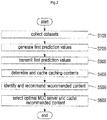
- FIG. 2 is a flowchart of a caching method according to an embodiment of the present invention. In the following, certain detailed descriptions that are redundant over the descriptions provided above are omitted.
- a caching method may be performed by a caching system and may include collecting datasets (S100), generating first prediction values (S200), transmitting first prediction values (S300), determining and caching the caching contents (S400), identifying and recommending the recommended content (S500), and selecting an optimal MEC server and caching the recommended content (S600).
- Steps S100 to S300 may be performed by a data center included in the caching system. More specifically, step S100 may include collecting datasets regarding content viewers from a dataset provider.
- Step S200 may include generating first prediction values by using an MLP with the datasets collected from step S100 as the input. That is, the probability of a content being requested from an object within the area allocated to the MEC server and the rating of the content may be predicted by using the MLP, and the MLP result values may be generated as the first prediction values.
- Step S300 may include transmitting the first prediction values generated via step S200 to the MEC server.
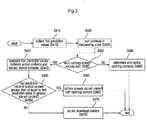
- Step S400 may be performed by an MEC server included in the caching system. More specifically, step S400 may be a step of determining caching contents based on the first prediction values, which may include the probability of a content being requested by an object in the allocated area of the MEC server and a prediction rating of the content, and downloading and caching the determined caching contents from the content provider. A more detailed description of step S400 is provided below with reference to FIG. 3 .
- the MEC server may receive the first prediction values generated from the data center.
- step S420 the contents may be sorted according to the first prediction values in descending order.
- step S430 it may be determined whether or not the storage space of the MEC caching storage module is full.
- step S440 the first prediction value for a content already stored in the MEC caching storage module may be compared with the first prediction value for a caching content.
- step S450 it may be determined whether or not the result of the comparison is that the first prediction value for the caching content is greater than or equal to the first prediction value for the content already stored in the MEC caching storage module.
- step S450 if the first prediction value for the caching content is greater than or equal to the first prediction value for the content already stored in the MEC caching storage module, then in step S460, the already stored content may be replaced by the caching content.
- step S450 If the result of the determining of step S450 is that the first prediction value for the caching content is smaller than the first prediction value for the content already stored in the MEC caching storage module, then in step S470, the content may not be downloaded.
- step S480 the contents having first prediction values that are greater than or equal to the preset threshold, from among the contents sorted in descending order via step S420, may be determined as the caching contents, and the caching contents thus determined may be cached.
- Steps S500 to S600 may be performed by an included in the caching system. More specifically, step S500 may be a step of identifying and recommending a recommended content from among the caching contents determined in step S400, by applying a k-means algorithm and binary classification on the first prediction values and on the second prediction values, which may be prediction values that represent the characteristics of the object's users.
- Step S600 may include searching available MEC servers on the movement path of the object and selecting an optimal MEC server for downloading the recommended content identified via step S500 from among the available MEC servers.
- the recommended content may be downloaded from the selected optimal MEC server and cached.
- steps S500 and S600 are provided below with reference to FIG. 4 and FIG. 5 .
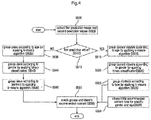
- FIG. 4 is a flowchart illustrating a process of identifying and recommending a recommended content.
- step S505 may include acquiring first prediction values, which may be MLP output values, and second prediction values, which may be CNN output values.
- Step S510 may include determining whether or not the values obtained via step S505 are first prediction values or second prediction values.
- step S55 first viewer groups may be generated by applying a k-means algorithm may to the first prediction values to group the content viewers according to age.
- step S520 second viewer groups may be generated by applying binary classification on the first prediction values to group the content viewers, belonging to the first viewer groups generated via step S515, according to gender.
- step S525 content type groups may be generated by applying a k-means algorithm to the first prediction values to group the contents used by the content viewers belonging to the second viewer groups generated via step S520 according to content type.
- step S535 first user groups may be generated by applying a k-means algorithm to the second prediction values to group the users according to age.
- step S540 second user groups may be generated by applying binary classification to the second prediction values to group the users, belonging to the first user groups generated via step S535, according to gender.
- step S545 third user groups may be generated by applying a k-means algorithm to the second prediction values to group the users belonging to the second user groups generated via step S540 according to gender.
- grouping may be performed in regard to the content viewers and the contents, whereas when the data is for second prediction values, grouping may be performed for the users of the object.
- step S550 the first content viewer groups and second content viewer groups obtained via steps S505 to S545 may be matched with the first user groups and second user groups, and recommended contents may be identified and recommended based on age, gender, and emotion.
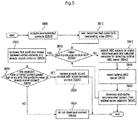
- FIG. 5 is a flowchart illustrating a process of selecting an optimal MEC server.
- step S605 recommended contents may be obtained.
- step S610 the recommended contents obtained via step S605 may be sorted in descending order of first prediction values.
- step S615 it may be determined whether or not the storage space of the object caching storage module is full.
- step S615 If the result of the determining in step S615 is that the storage space of the object caching storage module is full, then in step S620, the first prediction values for the contents already stored in the object caching storage module may be compared with the first prediction values for the recommended contents.
- step S625 it may be determined whether or not the result of the comparison is that the first prediction value for a recommended content is greater than or equal to the first prediction values for a content already stored in the object caching storage module.
- step S630 if the first prediction value for the recommended content is greater than or equal to the first prediction value for a content already stored in the object caching storage module, then in step S630, the already stored content may be replaced by the recommended content.
- step S625 If the result of the determining of step S625 is that the first prediction value for the recommended content is smaller than the first prediction value for the content already stored in the object caching storage module, then in step S635, the content may not be downloaded.
- step S640 the time required for the object to arrive at the area of the MEC server, the time required for leaving the area of the MEC server, and the time needed for downloading the recommended content may be calculated.
- an optimal MEC server may be selected by using the values calculated by way of step S640.
- the MEC server with which it takes the longest for the object to move out of the area allocated to the MEC server can be selected as the optimal MEC server.
- step S650 the recommended contents having first prediction values that are greater than or equal to the preset threshold value, from among the recommended contents sorted in descending order by way of step S610, may be downloaded and cached from the optimal MEC server.
Landscapes
- Engineering & Computer Science (AREA)
- Databases & Information Systems (AREA)
- Signal Processing (AREA)
- Multimedia (AREA)
- Theoretical Computer Science (AREA)
- Physics & Mathematics (AREA)
- Business, Economics & Management (AREA)
- General Physics & Mathematics (AREA)
- Evolutionary Computation (AREA)
- Artificial Intelligence (AREA)
- Computing Systems (AREA)
- Software Systems (AREA)
- Data Mining & Analysis (AREA)
- General Engineering & Computer Science (AREA)
- Mathematical Physics (AREA)
- Strategic Management (AREA)
- Health & Medical Sciences (AREA)
- Computational Linguistics (AREA)
- General Health & Medical Sciences (AREA)
- Tourism & Hospitality (AREA)
- Computer Graphics (AREA)
- General Business, Economics & Management (AREA)
- Marketing (AREA)
- Economics (AREA)
- Finance (AREA)
- Computer Networks & Wireless Communication (AREA)
- Accounting & Taxation (AREA)
- Development Economics (AREA)
- Life Sciences & Earth Sciences (AREA)
- Human Resources & Organizations (AREA)
- Primary Health Care (AREA)
- Biomedical Technology (AREA)
- Biophysics (AREA)
- Molecular Biology (AREA)
- Medical Informatics (AREA)
- Computer Vision & Pattern Recognition (AREA)
- Entrepreneurship & Innovation (AREA)
- Game Theory and Decision Science (AREA)
- Information Retrieval, Db Structures And Fs Structures Therefor (AREA)
- Information Transfer Between Computers (AREA)
Applications Claiming Priority (1)
| Application Number | Priority Date | Filing Date | Title |
|---|---|---|---|
| KR1020180133873A KR102148704B1 (ko) | 2018-11-02 | 2018-11-02 | Mec 환경에서 자율 주행을 위한 딥러닝 기반 캐싱 시스템 및 방법 |
Publications (2)
| Publication Number | Publication Date |
|---|---|
| EP3648435A1 true EP3648435A1 (de) | 2020-05-06 |
| EP3648435B1 EP3648435B1 (de) | 2020-10-28 |
Family
ID=64331679
Family Applications (1)
| Application Number | Title | Priority Date | Filing Date |
|---|---|---|---|
| EP18206202.6A Active EP3648435B1 (de) | 2018-11-02 | 2018-11-14 | Tiefenlernbasiertes zwischenspeichersystem und verfahren für ein selbstfahrendes auto in einer mehrfachzugriffskantenberechnung |
Country Status (4)
| Country | Link |
|---|---|
| US (1) | US10623782B1 (de) |
| EP (1) | EP3648435B1 (de) |
| KR (1) | KR102148704B1 (de) |
| ES (1) | ES2834314T3 (de) |
Families Citing this family (9)
| Publication number | Priority date | Publication date | Assignee | Title |
|---|---|---|---|---|
| US10897493B2 (en) * | 2019-02-11 | 2021-01-19 | Verizon Patent And Licensing Inc. | Systems and methods for predictive user location and content replication |
| US11070514B2 (en) * | 2019-09-11 | 2021-07-20 | Verizon Patent And Licensing Inc. | System and method for domain name system (DNS) service selection |
| KR102796677B1 (ko) * | 2019-10-10 | 2025-04-16 | 삼성전자주식회사 | 엣지 컴퓨팅 서비스를 위한 방법 및 장치 |
| US11558928B2 (en) * | 2020-05-18 | 2023-01-17 | At&T Intellectual Property I, L.P. | Proactive content placement for low latency mobile access |
| KR102367568B1 (ko) * | 2020-12-14 | 2022-02-24 | 숙명여자대학교산학협력단 | 사용자 유사도 기반 컨텐츠 분배 시스템 및 그 방법 |
| KR102479404B1 (ko) * | 2020-12-30 | 2022-12-21 | 한국과학기술원 | 모바일 엣지 컴퓨팅 환경에서 효율적인 서비스 마이그레이션을 위한 서비스 소비 계획을 제공하는 컴퓨터 시스템 및 그의 방법 |
| CN113469704A (zh) * | 2021-06-10 | 2021-10-01 | 云南电网有限责任公司 | 一种自动推荐客户服务策略的系统和方法 |
| KR102721333B1 (ko) | 2022-03-29 | 2024-10-23 | 윤우노 | 인공지능 지도학습 기반 라이딩 코스 추천을 위한 시스템 및 방법 |
| JP2025144312A (ja) * | 2024-03-19 | 2025-10-02 | 本田技研工業株式会社 | 車両用コミュニケーション装置 |
Citations (3)
| Publication number | Priority date | Publication date | Assignee | Title |
|---|---|---|---|---|
| US20170289593A1 (en) * | 2014-09-24 | 2017-10-05 | Interdigital Patent Holdings, Inc. | Method and system for creating a pre-fetching list for managed caching in small cell networks |
| US20170374580A1 (en) * | 2016-06-23 | 2017-12-28 | Telefonaktiebolaget Lm Ericsson (Publ) | Allocation of content to mobile edge node caches |
| WO2018049563A1 (en) * | 2016-09-13 | 2018-03-22 | Huawei Technologies Co., Ltd. | Systems and methods for caching |
Family Cites Families (8)
| Publication number | Priority date | Publication date | Assignee | Title |
|---|---|---|---|---|
| JP6627289B2 (ja) * | 2015-07-06 | 2020-01-08 | 日本電気株式会社 | 無線アクセスネットワークノード、エッジサーバ、ポリシ管理ノード、及びこれらの方法 |
| US20170132510A1 (en) | 2015-11-05 | 2017-05-11 | Facebook, Inc. | Identifying Content Items Using a Deep-Learning Model |
| GB2565656B (en) * | 2016-02-25 | 2020-04-15 | Intel Corp | Platform for computing at the mobile edge |
| US10323952B2 (en) | 2016-04-26 | 2019-06-18 | Baidu Usa Llc | System and method for presenting media contents in autonomous vehicles |
| KR20180069616A (ko) * | 2016-12-15 | 2018-06-25 | 주식회사 유니파이 | 사용자 환경 정보를 기반으로 사용자 맞춤형 멀티미디어 컨텐츠를 제공하는 방법 및 장치 |
| KR102065359B1 (ko) | 2017-02-28 | 2020-01-13 | 한국전자통신연구원 | 무선 통신 시스템에서 콘텐츠 전달을 위한 네트워크 구성 방법 및 네트워크 시스템 |
| US10037231B1 (en) * | 2017-06-07 | 2018-07-31 | Hong Kong Applied Science and Technology Research Institute Company Limited | Method and system for jointly determining computational offloading and content prefetching in a cellular communication system |
| CN108549719A (zh) * | 2018-04-23 | 2018-09-18 | 西安交通大学 | 一种移动边缘计算网络中基于聚类的自适应缓存方法 |
-
2018
- 2018-11-02 KR KR1020180133873A patent/KR102148704B1/ko active Active
- 2018-11-13 US US16/189,773 patent/US10623782B1/en active Active
- 2018-11-14 ES ES18206202T patent/ES2834314T3/es active Active
- 2018-11-14 EP EP18206202.6A patent/EP3648435B1/de active Active
Patent Citations (3)
| Publication number | Priority date | Publication date | Assignee | Title |
|---|---|---|---|---|
| US20170289593A1 (en) * | 2014-09-24 | 2017-10-05 | Interdigital Patent Holdings, Inc. | Method and system for creating a pre-fetching list for managed caching in small cell networks |
| US20170374580A1 (en) * | 2016-06-23 | 2017-12-28 | Telefonaktiebolaget Lm Ericsson (Publ) | Allocation of content to mobile edge node caches |
| WO2018049563A1 (en) * | 2016-09-13 | 2018-03-22 | Huawei Technologies Co., Ltd. | Systems and methods for caching |
Non-Patent Citations (1)
| Title |
|---|
| ZHAO ZHONGLIANG ET AL: "Mobility Prediction-Assisted Over-the-Top Edge Prefetching for Hierarchical VANETs", IEEE JOURNAL ON SELECTED AREAS IN COMMUNICATIONS, IEEE SERVICE CENTER, PISCATAWAY, US, vol. 36, no. 8, 1 August 2018 (2018-08-01), pages 1786 - 1801, XP011693866, ISSN: 0733-8716, [retrieved on 20181031], DOI: 10.1109/JSAC.2018.2844681 * |
Also Published As
| Publication number | Publication date |
|---|---|
| KR102148704B1 (ko) | 2020-08-27 |
| US20200145699A1 (en) | 2020-05-07 |
| ES2834314T3 (es) | 2021-06-17 |
| KR20200054356A (ko) | 2020-05-20 |
| US10623782B1 (en) | 2020-04-14 |
| EP3648435B1 (de) | 2020-10-28 |
Similar Documents
| Publication | Publication Date | Title |
|---|---|---|
| EP3648435A1 (de) | Tiefenlernbasiertes zwischenspeichersystem und verfahren für ein selbstfahrendes auto in einer mehrfachzugriffskantenberechnung | |
| CN113705299B (zh) | 一种视频识别的方法、装置及存储介质 | |
| CN110308995B (zh) | 一种边缘云计算服务系统边缘云节点部署装置 | |
| US9535897B2 (en) | Content recommendation system using a neural network language model | |
| US11792251B2 (en) | Media stream network action decisions | |
| US20170212911A1 (en) | Visual localization method | |
| CN108363811A (zh) | 设备识别方法及装置、电子设备、存储介质 | |
| CN111881358B (zh) | 一种对象推荐系统、方法、装置、电子设备和存储介质 | |
| CN113315836B (zh) | 文件访问请求的调度方法、装置、电子设备、存储介质 | |
| US20220358171A1 (en) | Efficient freshness crawl scheduling | |
| US20140139690A1 (en) | Information processing apparatus, camera having communication function, and information processing method | |
| US20210034996A1 (en) | Information processing apparatus and recommendation control method | |
| JP2018045369A (ja) | 認識装置、認識システム、認識方法およびプログラム | |
| CN111554292A (zh) | 在移动终端中进行人机交互的方法及其装置 | |
| KR20120033597A (ko) | 사용자 상황 예측 장치 및 방법 | |
| Khan | A framework for meta-learning in dynamic adaptive streaming over http | |
| US20230281221A1 (en) | Method for content synchronization and replacement | |
| CN113377743A (zh) | 车辆终端服务迁移方法及系统 | |
| CN112995287B (zh) | 一种面向边缘计算的关键词检测任务调度方法 | |
| CN120469646A (zh) | 数据存储的方法、装置、设备、存储介质及程序产品 | |
| CN113204654A (zh) | 数据推荐方法、装置、服务器及存储介质 | |
| JP6990060B2 (ja) | データ処理システム、データ処理方法およびプログラム | |
| Ren et al. | Joint vehicular social semantic extraction, transmission and cache for high QoE digital twin | |
| CN117909067A (zh) | Epg请求的处理方法、设备及可读存储介质 | |
| JP7155927B2 (ja) | 情報処理システム、プログラム、及び情報処理方法 |
Legal Events
| Date | Code | Title | Description |
|---|---|---|---|
| PUAI | Public reference made under article 153(3) epc to a published international application that has entered the european phase |
Free format text: ORIGINAL CODE: 0009012 |
|
| STAA | Information on the status of an ep patent application or granted ep patent |
Free format text: STATUS: REQUEST FOR EXAMINATION WAS MADE |
|
| 17P | Request for examination filed |
Effective date: 20191021 |
|
| AK | Designated contracting states |
Kind code of ref document: A1 Designated state(s): AL AT BE BG CH CY CZ DE DK EE ES FI FR GB GR HR HU IE IS IT LI LT LU LV MC MK MT NL NO PL PT RO RS SE SI SK SM TR |
|
| AX | Request for extension of the european patent |
Extension state: BA ME |
|
| GRAP | Despatch of communication of intention to grant a patent |
Free format text: ORIGINAL CODE: EPIDOSNIGR1 |
|
| STAA | Information on the status of an ep patent application or granted ep patent |
Free format text: STATUS: GRANT OF PATENT IS INTENDED |
|
| RIC1 | Information provided on ipc code assigned before grant |
Ipc: H04L 29/08 20060101AFI20200505BHEP Ipc: H04N 21/231 20110101ALI20200505BHEP Ipc: G06Q 30/02 20120101ALI20200505BHEP |
|
| INTG | Intention to grant announced |
Effective date: 20200602 |
|
| GRAS | Grant fee paid |
Free format text: ORIGINAL CODE: EPIDOSNIGR3 |
|
| GRAA | (expected) grant |
Free format text: ORIGINAL CODE: 0009210 |
|
| STAA | Information on the status of an ep patent application or granted ep patent |
Free format text: STATUS: THE PATENT HAS BEEN GRANTED |
|
| REG | Reference to a national code |
Ref country code: DE Ref legal event code: R082 Ref document number: 602018009113 Country of ref document: DE Representative=s name: WUESTHOFF & WUESTHOFF, PATENTANWAELTE PARTG MB, DE |
|
| AK | Designated contracting states |
Kind code of ref document: B1 Designated state(s): AL AT BE BG CH CY CZ DE DK EE ES FI FR GB GR HR HU IE IS IT LI LT LU LV MC MK MT NL NO PL PT RO RS SE SI SK SM TR |
|
| REG | Reference to a national code |
Ref country code: GB Ref legal event code: FG4D |
|
| REG | Reference to a national code |
Ref country code: CH Ref legal event code: EP |
|
| REG | Reference to a national code |
Ref country code: AT Ref legal event code: REF Ref document number: 1329401 Country of ref document: AT Kind code of ref document: T Effective date: 20201115 |
|
| REG | Reference to a national code |
Ref country code: DE Ref legal event code: R096 Ref document number: 602018009113 Country of ref document: DE |
|
| REG | Reference to a national code |
Ref country code: IE Ref legal event code: FG4D Ref country code: FI Ref legal event code: FGE |
|
| REG | Reference to a national code |
Ref country code: AT Ref legal event code: MK05 Ref document number: 1329401 Country of ref document: AT Kind code of ref document: T Effective date: 20201028 |
|
| REG | Reference to a national code |
Ref country code: NL Ref legal event code: MP Effective date: 20201028 |
|
| PG25 | Lapsed in a contracting state [announced via postgrant information from national office to epo] |
Ref country code: GR Free format text: LAPSE BECAUSE OF FAILURE TO SUBMIT A TRANSLATION OF THE DESCRIPTION OR TO PAY THE FEE WITHIN THE PRESCRIBED TIME-LIMIT Effective date: 20210129 Ref country code: NO Free format text: LAPSE BECAUSE OF FAILURE TO SUBMIT A TRANSLATION OF THE DESCRIPTION OR TO PAY THE FEE WITHIN THE PRESCRIBED TIME-LIMIT Effective date: 20210128 Ref country code: PT Free format text: LAPSE BECAUSE OF FAILURE TO SUBMIT A TRANSLATION OF THE DESCRIPTION OR TO PAY THE FEE WITHIN THE PRESCRIBED TIME-LIMIT Effective date: 20210301 Ref country code: RS Free format text: LAPSE BECAUSE OF FAILURE TO SUBMIT A TRANSLATION OF THE DESCRIPTION OR TO PAY THE FEE WITHIN THE PRESCRIBED TIME-LIMIT Effective date: 20201028 |
|
| REG | Reference to a national code |
Ref country code: LT Ref legal event code: MG4D |
|
| PG25 | Lapsed in a contracting state [announced via postgrant information from national office to epo] |
Ref country code: BG Free format text: LAPSE BECAUSE OF FAILURE TO SUBMIT A TRANSLATION OF THE DESCRIPTION OR TO PAY THE FEE WITHIN THE PRESCRIBED TIME-LIMIT Effective date: 20210128 Ref country code: SE Free format text: LAPSE BECAUSE OF FAILURE TO SUBMIT A TRANSLATION OF THE DESCRIPTION OR TO PAY THE FEE WITHIN THE PRESCRIBED TIME-LIMIT Effective date: 20201028 Ref country code: PL Free format text: LAPSE BECAUSE OF FAILURE TO SUBMIT A TRANSLATION OF THE DESCRIPTION OR TO PAY THE FEE WITHIN THE PRESCRIBED TIME-LIMIT Effective date: 20201028 Ref country code: IS Free format text: LAPSE BECAUSE OF FAILURE TO SUBMIT A TRANSLATION OF THE DESCRIPTION OR TO PAY THE FEE WITHIN THE PRESCRIBED TIME-LIMIT Effective date: 20210228 Ref country code: LV Free format text: LAPSE BECAUSE OF FAILURE TO SUBMIT A TRANSLATION OF THE DESCRIPTION OR TO PAY THE FEE WITHIN THE PRESCRIBED TIME-LIMIT Effective date: 20201028 Ref country code: AT Free format text: LAPSE BECAUSE OF FAILURE TO SUBMIT A TRANSLATION OF THE DESCRIPTION OR TO PAY THE FEE WITHIN THE PRESCRIBED TIME-LIMIT Effective date: 20201028 |
|
| REG | Reference to a national code |
Ref country code: ES Ref legal event code: FG2A Ref document number: 2834314 Country of ref document: ES Kind code of ref document: T3 Effective date: 20210617 |
|
| PG25 | Lapsed in a contracting state [announced via postgrant information from national office to epo] |
Ref country code: HR Free format text: LAPSE BECAUSE OF FAILURE TO SUBMIT A TRANSLATION OF THE DESCRIPTION OR TO PAY THE FEE WITHIN THE PRESCRIBED TIME-LIMIT Effective date: 20201028 Ref country code: NL Free format text: LAPSE BECAUSE OF FAILURE TO SUBMIT A TRANSLATION OF THE DESCRIPTION OR TO PAY THE FEE WITHIN THE PRESCRIBED TIME-LIMIT Effective date: 20201028 |
|
| REG | Reference to a national code |
Ref country code: DE Ref legal event code: R097 Ref document number: 602018009113 Country of ref document: DE |
|
| PG25 | Lapsed in a contracting state [announced via postgrant information from national office to epo] |
Ref country code: RO Free format text: LAPSE BECAUSE OF FAILURE TO SUBMIT A TRANSLATION OF THE DESCRIPTION OR TO PAY THE FEE WITHIN THE PRESCRIBED TIME-LIMIT Effective date: 20201028 Ref country code: LT Free format text: LAPSE BECAUSE OF FAILURE TO SUBMIT A TRANSLATION OF THE DESCRIPTION OR TO PAY THE FEE WITHIN THE PRESCRIBED TIME-LIMIT Effective date: 20201028 Ref country code: LU Free format text: LAPSE BECAUSE OF NON-PAYMENT OF DUE FEES Effective date: 20201114 Ref country code: MC Free format text: LAPSE BECAUSE OF FAILURE TO SUBMIT A TRANSLATION OF THE DESCRIPTION OR TO PAY THE FEE WITHIN THE PRESCRIBED TIME-LIMIT Effective date: 20201028 Ref country code: CZ Free format text: LAPSE BECAUSE OF FAILURE TO SUBMIT A TRANSLATION OF THE DESCRIPTION OR TO PAY THE FEE WITHIN THE PRESCRIBED TIME-LIMIT Effective date: 20201028 Ref country code: EE Free format text: LAPSE BECAUSE OF FAILURE TO SUBMIT A TRANSLATION OF THE DESCRIPTION OR TO PAY THE FEE WITHIN THE PRESCRIBED TIME-LIMIT Effective date: 20201028 Ref country code: SM Free format text: LAPSE BECAUSE OF FAILURE TO SUBMIT A TRANSLATION OF THE DESCRIPTION OR TO PAY THE FEE WITHIN THE PRESCRIBED TIME-LIMIT Effective date: 20201028 Ref country code: SK Free format text: LAPSE BECAUSE OF FAILURE TO SUBMIT A TRANSLATION OF THE DESCRIPTION OR TO PAY THE FEE WITHIN THE PRESCRIBED TIME-LIMIT Effective date: 20201028 |
|
| REG | Reference to a national code |
Ref country code: BE Ref legal event code: MM Effective date: 20201130 |
|
| PG25 | Lapsed in a contracting state [announced via postgrant information from national office to epo] |
Ref country code: DK Free format text: LAPSE BECAUSE OF FAILURE TO SUBMIT A TRANSLATION OF THE DESCRIPTION OR TO PAY THE FEE WITHIN THE PRESCRIBED TIME-LIMIT Effective date: 20201028 |
|
| PLBE | No opposition filed within time limit |
Free format text: ORIGINAL CODE: 0009261 |
|
| STAA | Information on the status of an ep patent application or granted ep patent |
Free format text: STATUS: NO OPPOSITION FILED WITHIN TIME LIMIT |
|
| 26N | No opposition filed |
Effective date: 20210729 |
|
| PG25 | Lapsed in a contracting state [announced via postgrant information from national office to epo] |
Ref country code: IE Free format text: LAPSE BECAUSE OF NON-PAYMENT OF DUE FEES Effective date: 20201114 Ref country code: IT Free format text: LAPSE BECAUSE OF FAILURE TO SUBMIT A TRANSLATION OF THE DESCRIPTION OR TO PAY THE FEE WITHIN THE PRESCRIBED TIME-LIMIT Effective date: 20201028 Ref country code: AL Free format text: LAPSE BECAUSE OF FAILURE TO SUBMIT A TRANSLATION OF THE DESCRIPTION OR TO PAY THE FEE WITHIN THE PRESCRIBED TIME-LIMIT Effective date: 20201028 |
|
| REG | Reference to a national code |
Ref country code: DE Ref legal event code: R079 Ref document number: 602018009113 Country of ref document: DE Free format text: PREVIOUS MAIN CLASS: H04L0029080000 Ipc: H04L0065000000 |
|
| PG25 | Lapsed in a contracting state [announced via postgrant information from national office to epo] |
Ref country code: SI Free format text: LAPSE BECAUSE OF FAILURE TO SUBMIT A TRANSLATION OF THE DESCRIPTION OR TO PAY THE FEE WITHIN THE PRESCRIBED TIME-LIMIT Effective date: 20201028 |
|
| PG25 | Lapsed in a contracting state [announced via postgrant information from national office to epo] |
Ref country code: IS Free format text: LAPSE BECAUSE OF FAILURE TO SUBMIT A TRANSLATION OF THE DESCRIPTION OR TO PAY THE FEE WITHIN THE PRESCRIBED TIME-LIMIT Effective date: 20210228 Ref country code: TR Free format text: LAPSE BECAUSE OF FAILURE TO SUBMIT A TRANSLATION OF THE DESCRIPTION OR TO PAY THE FEE WITHIN THE PRESCRIBED TIME-LIMIT Effective date: 20201028 Ref country code: MT Free format text: LAPSE BECAUSE OF FAILURE TO SUBMIT A TRANSLATION OF THE DESCRIPTION OR TO PAY THE FEE WITHIN THE PRESCRIBED TIME-LIMIT Effective date: 20201028 Ref country code: CY Free format text: LAPSE BECAUSE OF FAILURE TO SUBMIT A TRANSLATION OF THE DESCRIPTION OR TO PAY THE FEE WITHIN THE PRESCRIBED TIME-LIMIT Effective date: 20201028 |
|
| PG25 | Lapsed in a contracting state [announced via postgrant information from national office to epo] |
Ref country code: MK Free format text: LAPSE BECAUSE OF FAILURE TO SUBMIT A TRANSLATION OF THE DESCRIPTION OR TO PAY THE FEE WITHIN THE PRESCRIBED TIME-LIMIT Effective date: 20201028 |
|
| REG | Reference to a national code |
Ref country code: CH Ref legal event code: PL |
|
| PG25 | Lapsed in a contracting state [announced via postgrant information from national office to epo] |
Ref country code: BE Free format text: LAPSE BECAUSE OF NON-PAYMENT OF DUE FEES Effective date: 20201130 |
|
| PG25 | Lapsed in a contracting state [announced via postgrant information from national office to epo] |
Ref country code: LI Free format text: LAPSE BECAUSE OF NON-PAYMENT OF DUE FEES Effective date: 20220701 Ref country code: CH Free format text: LAPSE BECAUSE OF NON-PAYMENT OF DUE FEES Effective date: 20220701 |
|
| PGFP | Annual fee paid to national office [announced via postgrant information from national office to epo] |
Ref country code: DE Payment date: 20251002 Year of fee payment: 8 |
|
| PGFP | Annual fee paid to national office [announced via postgrant information from national office to epo] |
Ref country code: GB Payment date: 20251001 Year of fee payment: 8 |
|
| PGFP | Annual fee paid to national office [announced via postgrant information from national office to epo] |
Ref country code: FI Payment date: 20251020 Year of fee payment: 8 |
|
| PGFP | Annual fee paid to national office [announced via postgrant information from national office to epo] |
Ref country code: FR Payment date: 20251001 Year of fee payment: 8 |
|
| PGFP | Annual fee paid to national office [announced via postgrant information from national office to epo] |
Ref country code: ES Payment date: 20251215 Year of fee payment: 8 |