EP3647177A1 - A towing system for vessels and an unmanned tugboat for use in it - Google Patents
A towing system for vessels and an unmanned tugboat for use in it Download PDFInfo
- Publication number
- EP3647177A1 EP3647177A1 EP19177595.6A EP19177595A EP3647177A1 EP 3647177 A1 EP3647177 A1 EP 3647177A1 EP 19177595 A EP19177595 A EP 19177595A EP 3647177 A1 EP3647177 A1 EP 3647177A1
- Authority
- EP
- European Patent Office
- Prior art keywords
- unmanned
- tugboat
- port
- vessel
- towed vessel
- Prior art date
- Legal status (The legal status is an assumption and is not a legal conclusion. Google has not performed a legal analysis and makes no representation as to the accuracy of the status listed.)
- Granted
Links
Images



Classifications
-
- B—PERFORMING OPERATIONS; TRANSPORTING
- B63—SHIPS OR OTHER WATERBORNE VESSELS; RELATED EQUIPMENT
- B63B—SHIPS OR OTHER WATERBORNE VESSELS; EQUIPMENT FOR SHIPPING
- B63B35/00—Vessels or similar floating structures specially adapted for specific purposes and not otherwise provided for
- B63B35/66—Tugs
-
- B—PERFORMING OPERATIONS; TRANSPORTING
- B63—SHIPS OR OTHER WATERBORNE VESSELS; RELATED EQUIPMENT
- B63B—SHIPS OR OTHER WATERBORNE VESSELS; EQUIPMENT FOR SHIPPING
- B63B35/00—Vessels or similar floating structures specially adapted for specific purposes and not otherwise provided for
- B63B2035/006—Unmanned surface vessels, e.g. remotely controlled
- B63B2035/008—Unmanned surface vessels, e.g. remotely controlled remotely controlled
Definitions
- a towing system for vessels comprising at least one unmanned tugboat, wherein each unmanned tugboat, that is at least one, comprises at least one attachment member and at least one radio navigation beacon provided on each said unmanned tugboat, at least one radio navigation beacon provided on a towed vessel, and plurality of radio navigation beacons provided in determinate locations of the port, a control unit provided in the port for controlling the unmanned tugboats and the towed vessel during towing operation, such that at least one unmanned tugboat is detachably attached to a hull of the towed vessel by means of said attachment member, characterized in that the radio navigation beacons provided in the unmanned tugboat, in the towed vessel and in the port are all of them integrated in an electronic navigation infrastructure controlled by the control unit, in order to assist the unmanned tugboat in its manoeuvres outside the port and inside the port, with and without the towed vessel duly attached.
- Korean patent KR20160034642 "UNMMANED TUGGING SYSTEM AND TUGGING METHOD USING THE SAME", of 2014, in the name of DAEWOO SHIPBUILDING & MARINE which relates to the ship tugging method comprising step of determination the number of tugboats which have remote control function, a step of setting a tugging path using the position information and tugging position of the ship, a step of moving the tugboats adjacent to the ship and a step of moving the ship to the tugging position through wireless remote control of the tugboats.
- the objective of the invention is to reduce tugging time by precisely controlling the arrangement position and conditions of the tugboat.
- the present invention provides a towing system for vessels using unmanned tugboats, the system is cost effective and environmentally friendly, what is called “green technology”.
- the invention of the closest document provides a solution that reduces the problem of operational costs (at least tugboat crew) by providing the land-based controller which is in control of a plurality of autonomous tugboats from berthing position to mobilized position.
- the system is configured such that when the tugboat is in mobilized position, the control of tugboat is taken over by a mobile remote controller located in the vessel. Therefore, all responsibility and control of the manoeuvre of tugboats that are towing the vessel to the port is on human pilot operating and the navigation system of the vessel, including the collision prevention system controlled by land-based or remote-control systems.
- Said invention has the problem that the tugboats do not communicate directly with land-based controller after entering into the mobilized position. Therefore, the drawback of controlling the manoeuvre of the vessel assisted by tugboats is that it does not comprise the whole integrated control system, rather than there are two control systems involved: "land-based controller - tugboats" and "remote controller - tugboats”.
- the object of the invention is to overcome the drawback of the prior art, providing an integrated towing system for vessels that are assisted by unmanned tugboats detachably attached to a hull of the towed vessel, controlled directly by the control unit located in the port.
- control unit that is the one that has all the information, can manage directly the manoeuvres of the vessel, even, if it was necessary, adding new tugboats or removing them on time.
- a first object of this invention is a towing system for vessels, comprising at least one unmanned tugboat, wherein each unmanned tugboat, that is at least one, comprises at least one attachment member and at least one radio navigation beacon provided on each said unmanned tugboat, at least one radio navigation beacon provided on a towed vessel, and plurality of radio navigation beacons provided in determinate locations of the port, a control unit provided in the port for controlling the unmanned tugboats and the towed vessel during towing operation, such that at least one unmanned tugboat is detachably attached to a hull of the towed vessel by means of said attachment member, characterized in that the radio navigation beacons provided in the unmanned tugboat, in the towed vessel and in the port are all of them integrated in an electronic navigation infrastructure controlled by the control unit, in order to assist the unmanned tugboat in its manoeuvres outside the port and inside the port, with and without the towed vessel duly attached.
- a further object of the present invention is an unmanned tugboat for use in a towing system for vessel that comprises at least one attachment member provided in the unmanned tugboat to be detachably attached to the hull of the towed vessel; power means and driving means that provide autonomous movement of the unmanned tugboat; remotely controlled navigation means configured to transmit and receive radio signal, such as a radio navigation beacon, characterized in that the said attachment members are arranged in both port and starboard side of the unmanned tugboat.
- Still another object of the present invention is an electronic navigation infrastructure for use in towing system for vessels, wherein it comprises the radio navigation beacons provided in the unmanned tugboat, in the towed vessel and in the port controlled by the control unit in order to assist the unmanned tugboat in its manoeuvres outside the port and inside the port, with and without the towed vessel duly attached.
- Figure 1 shows a conventional tugboat 11 that belongs to the state of the art.
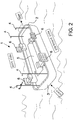
- Figure 2 represents an unmanned tugboat 1 with a radio navigation beacon 4, a frame structure 2, a hull 3, driving means 5 and attachment means 6.
- Figure 3 illustrates the unmanned tugboat 1 with its radio navigation beacon 4 and a towed vessel 100 with its radio navigation beacon 104.
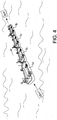
- Figure 4 shows the unmanned tugboats 1a, 1b, 1c and 1d.
- Figure 5 represents the unmanned tugboat 1, the towed vessel 100 and its radio navigation beacon 104, a port 200 with its radio navigation beacon 204, chargers 207, a control unit 201, a berth 202, an entrance 203 and inoperative unnamed tugboats 205.
- radio navigation beacon means a radio transmitter emitting/receiving signals to guide vessels.
- towed vessel means a vessel/boat that is being towed and/or pushed by a tugboat.
- the towing system for vessels comprises at least one unmanned tugboat 1. Depending the size of the towed vessel 100 it can be necessary to use more than one, as it can be seen in the different drawings.
- the unmanned tugboat 1 comprises at least one attachment member 6. Depending on the construction of the unmanned tugboat 1 the number can be increased by two or more, as it can be seen in the drawings.
- the port 200 also comprises a plurality of radio navigation beacons 204 in specific locations of the port 200, that allow always the interconnection with the other radio navigation beacons 4,104 located respectively at each unmanned tugboat 1 and the towed vessel 100.
- control unit 201 in the port 200 that controls the unmanned tugboats 1 and the towed vessel 100 during towing operation, outside the port as well as inside the port 200.
- the unmanned tugboat 1 is detachably attached to the hull 103 of the towed vessel 100 by means of said attachment member 6, allowing the unmanned tugboat 1 to fix to the towed vessel 100 and control its movements through the control unit 201.
- the unmanned tugboats 1 are detachably attached at the port side and at the starboard side of the towed vessel 100 in its operative mode.
- the number of unmanned tugboats 1 may depend on the size and the maneuverability of the towed vessel 100. It could be at least two, for example in figs. 3 and 5 are four.
- the place to attach to the side of the vessel 100 also depends on the size and maneuverability, being possible to attach the unmanned tugboats 1 in one side of the vessel 100 or in both sides.
- the tugboats 1a, 1b, 1c, 1d in its operative mode are delivered to the towed vessel 100 in column and connected to each other. This would make easier to control long groups and at the same time save energy, due to the fact that it would be necessary that only the ones that are in the ends 1a and 1d are operatives.
- the radio navigation beacons 4, 104, 204 provided in the unmanned tugboat 1, in the towed vessel 100 and in the port 200 respectively, are all of them integrated in an electronic navigation infrastructure controlled by the control unit 201, in order to assist the unmanned tugboat 1 in its maneuvers outside the port and inside the port 200, with and without the towed vessel 100 duly attached.
- the radio navigation beacons 4,104,204 manage the movements of the vessel 100 and unmanned tugboats 1 in the port area 200, under the surveillance of the control unit 201.
- At least one unmanned tugboat 1 in inoperative mode 205 in a predetermined location of the port 200, in case that while performing the operations inside or outside the port 200 there is a need to have a better performance of the control or maneuver of the towed vessel 200, that this unmanned tugboat in inoperative mode 205 could help.
- the unmanned tugboat 1 for use in the towing system comprises at least one attachment member 6 provided in the unmanned tugboat 1 to be detachably attached to the hull 103 of the towed vessel 100, in order to take the control of the maneuvers to enter the vessel 100 in the port 200 or to leave the port 200.
- the control unit 201 comprises power means (not shown) and driving means 5 that provide autonomous movement of the unmanned tugboat 1, always controlled by the control unit 201.
- remotely controlled navigation means configured to transmit and receive radio signals as explained before, such as the radio navigation beacon 4.
- the attachment members 6 are arranged in both port and starboard side of the unmanned tugboat 1, which allow that the unmanned tugboat 1 can be connected to the vessel 200 for both sides.
- the attachment members 6 comprise a plurality of magnets to connect to the boat, taking the benefit that the hull 103 of the vessel 200 is made of metal.
- the plurality of magnets could be permanent magnets or electromagnets or combination thereof.
- the attachment members 6 comprise a vacuum cup, that will connect the tugboat 1 to the vessel 200 by suction.
- One of the possible power means are batteries or other perspective power supply unit. Batteries have the advantage that is green technology and chargers can be placed in several parts of the port, where the unmanned tugboat 1 can moor, with very low cost for installation, because electricity is almost at all parts of the port. If the power means use fuel, the inconvenience is that is a technology that contaminates and at the same time the refueling stations cannot be placed anywhere, because laws are very strict about the place to install them.
- the tugboat 1 comprises means for connecting one tugboat with the one immediate and/or previous, as it can be seen in Fig. 4 .
- figure 1 illustrates a conventional tugboat 11 which is suitable for towing or pushing large ships or vessels which are indispensable in berthing large vessels.
- FIG 2 represents an example embodiment of an unmanned tugboat 1 for use in towing system for vessels of the present invention.
- the tugboat 1 comprises a tugboat frame structure 2 without a conventional bridge or superstructure with hull 3 extending from the stern to the bow of the tugboat 1.
- the tugboat frame structure 2 houses power and driving means 5 which can be, for example, the electrical prime movers with suitable containerised type batteries or other perspective power supply unit.
- Two radio navigation beacons 4 can be located in the stern and in the bow of tugboat 1.
- the frame structure 2 also provides the support for attachment means 6, that can be two magnets located in both sides, port side and starboard side of the tugboat.
- the hull 3 can be provided with a safety fender or buffer (not shown).
- Figure 3 shows a towed vessel 100 and a plurality of tugboats 1 which are attached with its starboard side to the hull 103 of the vessel, in this embodiment to the port side of the towed vessel 100.
- the number of the tugboats 1 can vary.
- At least one radio navigation beacon 104 is provided on the towed vessel 100, that when necessary the vessel is ready to be controlled by shore-based control unit 201.
- the type of vessel to be towed can be different: container ships, barges, general cargo ships, etc.
- Figure 4 depicts four tugboats 1a, 1b. 1c, 1d which are lined up in column, ready to operate and are in the way that the vessel to be towed.
- the tugboats 1b, 1c, 1d are connected by its bow to the stern of the one forward.
- the number of tugboats can be different depending on the type and size of towed vessel 100, to which, this group of unmanned tugboats 1a, 1b, 1c, 1d in column, is assigned.
- Figure 5 refers to one of the embodiments of the electronic navigation infrastructure of the port 200 designed for the system of the present invention.
- the following elements are illustrated: a control unit 201 able to receive and process the signal of the radio navigation beacons 4, 104, 204, a plurality of radio navigation beacons 204 located in different locations of the port, preferably marking some defined points of the port like entrance 203, berth 202, chargers 207, etc.., the towed vessel 100 with the unmanned tugboats 1 attached entering in the port 200, and the unmanned tugboats in inoperative mode 205.
- control unit 201 assigns the predeterminate number of unmanned tugboats 1 for the towing operation to a vessel 100, which tugboats 1 are equipped with a predeterminate number of attachment means 6 each one, suitable to stack directly to the hull 103 of the towed vessel 100.
- an unmanned tugboat 1 can be provided with four magnets: two in the port side and two in the starboard side of the tugboat.
- the mathematical model of the port 200 can be designed for processing the information of the variables like the position of the vessel and unmanned tugboats and other required information (including but not limiting to weather conditions, vessel parameters, etc%) and operating of the electronic navigation infrastructure without or with minimum human intervention. This allows to increase reliability of the towing system and minimize the human factor errors and reducing the staff costs.
- the control unit 201 can provide special instructions to move and form the column for unmanned tugboats 1 assigned for towing operation which are found into inoperative mode in the port, to facilitate the group of assigned unmanned tugboats 1 for towing operation to get the operational position.
- unmanned tugboats 1 When the assigned group of unmanned tugboats 1 reach the towed vessel 100, they can be distributed in to both sides of the hull 103 of the towed vessel. In this embodiment, at least two unmanned tugboats 1 are detachably attached at the port side of the vessel 100 and at least two unmanned tugboats 1 are detachably attached to the starboard side of the towed vessel 100 in its operative mode.
- the actions like the detection and replacement of assigned unmanned tugboats by one inoperative tugboat 205 are foreseen in situ in the case of any irregular situation like the unmanned tugboat 1 failure or in a situation of emergency or changing the batteries.
- the towing system and the unmanned tugboat 1 for use in it of the present invention enables cost saving in the towing operations, like crew cost, cost of fuel because of use the electrical power, which can be recharged when the unmanned tugboat 1 is found in the inoperative mode, unmanned tugboat maintenance and CO2 emissions in comparison with the conventional tugboats 11 used at the present.
- This patent describes a towing system for vessels, a method for controlling the towed vessel with tugboats and an unmanned tugboat for use in towing system for vessel.
- the examples mentioned herein are non-limiting of this invention, therefore it could have different applications and/or adaptations, all within the scope of the following claims.
Landscapes
- Chemical & Material Sciences (AREA)
- Engineering & Computer Science (AREA)
- Combustion & Propulsion (AREA)
- Mechanical Engineering (AREA)
- Ocean & Marine Engineering (AREA)
- Traffic Control Systems (AREA)
- Control Of Position, Course, Altitude, Or Attitude Of Moving Bodies (AREA)
Abstract
Description
- A towing system for vessels, comprising at least one unmanned tugboat, wherein each unmanned tugboat, that is at least one, comprises at least one attachment member and at least one radio navigation beacon provided on each said unmanned tugboat, at least one radio navigation beacon provided on a towed vessel, and plurality of radio navigation beacons provided in determinate locations of the port, a control unit provided in the port for controlling the unmanned tugboats and the towed vessel during towing operation, such that at least one unmanned tugboat is detachably attached to a hull of the towed vessel by means of said attachment member, characterized in that the radio navigation beacons provided in the unmanned tugboat, in the towed vessel and in the port are all of them integrated in an electronic navigation infrastructure controlled by the control unit, in order to assist the unmanned tugboat in its manoeuvres outside the port and inside the port, with and without the towed vessel duly attached.
- It is known in the state of the art different patents that comprise drifting ships called "tugs" especially designed for towed vessels, which connect to a towed vessel. Also, different systems for tugboat controls were developed.
- It is a part of the state of the art the
PCT application WO2017/167884 "A METHOD AND SYSTEM FOR OPERATION ONE OR MORE TUGBOATS", of 2017, in the name of A.P.MOLLER-MERSK A/S which discloses a system comprising a control center for wirelessly remote controlling the tugboats. The system is primarily arranged such that when the tugboat reaches the target position, the control is taking from the land-based control system to human operating mobile control system located on the assisted vessel. - Korean patent
KR20160034642 - It is also an important document to mention
PCT application No. 2018/021917 - The present invention provides a towing system for vessels using unmanned tugboats, the system is cost effective and environmentally friendly, what is called "green technology".
- The closest prior art is the
PCT application WO2017/167884 . - As it was indicated in the closest document, one of the big problems is the elevated expenses for operating tugboats which need to be operated by crew. Operational costs for tugboats which assist the towed vessel are elevated due to the costs of the crew and/or the costs of the fuel which the tugboats consume. All these costs are normally included in the towing operation and increase the costs of the stop in the port of call.
- The invention of the closest document provides a solution that reduces the problem of operational costs (at least tugboat crew) by providing the land-based controller which is in control of a plurality of autonomous tugboats from berthing position to mobilized position.
- The system is configured such that when the tugboat is in mobilized position, the control of tugboat is taken over by a mobile remote controller located in the vessel. Therefore, all responsibility and control of the manoeuvre of tugboats that are towing the vessel to the port is on human pilot operating and the navigation system of the vessel, including the collision prevention system controlled by land-based or remote-control systems.
- Said invention has the problem that the tugboats do not communicate directly with land-based controller after entering into the mobilized position. Therefore, the drawback of controlling the manoeuvre of the vessel assisted by tugboats is that it does not comprise the whole integrated control system, rather than there are two control systems involved: "land-based controller - tugboats" and "remote controller - tugboats".
- The object of the invention is to overcome the drawback of the prior art, providing an integrated towing system for vessels that are assisted by unmanned tugboats detachably attached to a hull of the towed vessel, controlled directly by the control unit located in the port.
- Then, the control unit that is the one that has all the information, can manage directly the manoeuvres of the vessel, even, if it was necessary, adding new tugboats or removing them on time.
- A first object of this invention is a towing system for vessels, comprising at least one unmanned tugboat, wherein each unmanned tugboat, that is at least one, comprises at least one attachment member and at least one radio navigation beacon provided on each said unmanned tugboat, at least one radio navigation beacon provided on a towed vessel, and plurality of radio navigation beacons provided in determinate locations of the port, a control unit provided in the port for controlling the unmanned tugboats and the towed vessel during towing operation, such that at least one unmanned tugboat is detachably attached to a hull of the towed vessel by means of said attachment member, characterized in that the radio navigation beacons provided in the unmanned tugboat, in the towed vessel and in the port are all of them integrated in an electronic navigation infrastructure controlled by the control unit, in order to assist the unmanned tugboat in its manoeuvres outside the port and inside the port, with and without the towed vessel duly attached.
- A further object of the present invention is an unmanned tugboat for use in a towing system for vessel that comprises at least one attachment member provided in the unmanned tugboat to be detachably attached to the hull of the towed vessel; power means and driving means that provide autonomous movement of the unmanned tugboat; remotely controlled navigation means configured to transmit and receive radio signal, such as a radio navigation beacon, characterized in that the said attachment members are arranged in both port and starboard side of the unmanned tugboat.
- Still another object of the present invention is an electronic navigation infrastructure for use in towing system for vessels, wherein it comprises the radio navigation beacons provided in the unmanned tugboat, in the towed vessel and in the port controlled by the control unit in order to assist the unmanned tugboat in its manoeuvres outside the port and inside the port, with and without the towed vessel duly attached.
- In order to facilitate the explanation of this specification there are five sheets of drawings accompanying this specification, representing the practical embodiments, which are provided as non-limiting examples of the scope of this invention:
-
Figure 1 is a view of a conventional tugboat, -
Figure 2 is a view of an example tugboat of the present invention, -
Figure 3 is a view of towed vessel with tugboats of the present invention which are attached to the towed vessel -
Figure 4 is a view of the plurality of tugboats in column formation -
Figure 5 is a schematic illustration of the port and the towed vessel entering to it. -
Figure 1 shows aconventional tugboat 11 that belongs to the state of the art. -
Figure 2 represents anunmanned tugboat 1 with aradio navigation beacon 4, aframe structure 2, a hull 3, driving means 5 and attachment means 6. -
Figure 3 illustrates theunmanned tugboat 1 with itsradio navigation beacon 4 and atowed vessel 100 with itsradio navigation beacon 104. -
Figure 4 shows theunmanned tugboats - Finally,
Figure 5 represents theunmanned tugboat 1, thetowed vessel 100 and itsradio navigation beacon 104, aport 200 with itsradio navigation beacon 204,chargers 207, acontrol unit 201, aberth 202, anentrance 203 and inoperativeunnamed tugboats 205. - As a preliminary note, when referred to a "radio navigation beacon" means a radio transmitter emitting/receiving signals to guide vessels.
- Also, when referred to a "towed vessel" means a vessel/boat that is being towed and/or pushed by a tugboat.
- The towing system for vessels comprises at least one
unmanned tugboat 1. Depending the size of thetowed vessel 100 it can be necessary to use more than one, as it can be seen in the different drawings. - The
unmanned tugboat 1 comprises at least oneattachment member 6. Depending on the construction of theunmanned tugboat 1 the number can be increased by two or more, as it can be seen in the drawings. - Also comprises at least one
radio navigation beacon 4 provided on eachunmanned tugboat 1 and also at least oneradio navigation beacon 104 provided on atowed vessel 100. - The
port 200 also comprises a plurality ofradio navigation beacons 204 in specific locations of theport 200, that allow always the interconnection with the other radio navigation beacons 4,104 located respectively at eachunmanned tugboat 1 and thetowed vessel 100. - There is a
control unit 201 in theport 200 that controls theunmanned tugboats 1 and thetowed vessel 100 during towing operation, outside the port as well as inside theport 200. - The
unmanned tugboat 1 is detachably attached to thehull 103 of thetowed vessel 100 by means of saidattachment member 6, allowing theunmanned tugboat 1 to fix to thetowed vessel 100 and control its movements through thecontrol unit 201. - Optionally, the
unmanned tugboats 1 are detachably attached at the port side and at the starboard side of thetowed vessel 100 in its operative mode. The number ofunmanned tugboats 1 may depend on the size and the maneuverability of thetowed vessel 100. It could be at least two, for example infigs. 3 and5 are four. The place to attach to the side of thevessel 100 also depends on the size and maneuverability, being possible to attach theunmanned tugboats 1 in one side of thevessel 100 or in both sides. - Also, optionally, the
tugboats Fig. 4 ) in its operative mode are delivered to thetowed vessel 100 in column and connected to each other. This would make easier to control long groups and at the same time save energy, due to the fact that it would be necessary that only the ones that are in theends 1a and 1d are operatives. - The
radio navigation beacons unmanned tugboat 1, in thetowed vessel 100 and in theport 200 respectively, are all of them integrated in an electronic navigation infrastructure controlled by thecontrol unit 201, in order to assist theunmanned tugboat 1 in its maneuvers outside the port and inside theport 200, with and without thetowed vessel 100 duly attached. - Then, the radio navigation beacons 4,104,204 manage the movements of the
vessel 100 and unmannedtugboats 1 in theport area 200, under the surveillance of thecontrol unit 201. - Optionally, it is possible to keep at least one
unmanned tugboat 1 ininoperative mode 205 in a predetermined location of theport 200, in case that while performing the operations inside or outside theport 200 there is a need to have a better performance of the control or maneuver of thetowed vessel 200, that this unmanned tugboat ininoperative mode 205 could help. - The
unmanned tugboat 1 for use in the towing system comprises at least oneattachment member 6 provided in theunmanned tugboat 1 to be detachably attached to thehull 103 of thetowed vessel 100, in order to take the control of the maneuvers to enter thevessel 100 in theport 200 or to leave theport 200. - Also, it comprises power means (not shown) and driving means 5 that provide autonomous movement of the
unmanned tugboat 1, always controlled by thecontrol unit 201. - There are remotely controlled navigation means configured to transmit and receive radio signals as explained before, such as the
radio navigation beacon 4. - The
attachment members 6 are arranged in both port and starboard side of theunmanned tugboat 1, which allow that theunmanned tugboat 1 can be connected to thevessel 200 for both sides. - Optionally, the
attachment members 6 comprise a plurality of magnets to connect to the boat, taking the benefit that thehull 103 of thevessel 200 is made of metal. The plurality of magnets could be permanent magnets or electromagnets or combination thereof. - Optionally and an alternative or used in combination with the magnets the
attachment members 6 comprise a vacuum cup, that will connect thetugboat 1 to thevessel 200 by suction. - One of the possible power means are batteries or other perspective power supply unit. Batteries have the advantage that is green technology and chargers can be placed in several parts of the port, where the
unmanned tugboat 1 can moor, with very low cost for installation, because electricity is almost at all parts of the port. If the power means use fuel, the inconvenience is that is a technology that contaminates and at the same time the refueling stations cannot be placed anywhere, because laws are very strict about the place to install them. - Also, optionally, the
tugboat 1 comprises means for connecting one tugboat with the one immediate and/or previous, as it can be seen inFig. 4 . This would help to moveseveral tugboats last tugboat 1d should have the power means connected and would move the rest of the tugboats. - So,
figure 1 illustrates aconventional tugboat 11 which is suitable for towing or pushing large ships or vessels which are indispensable in berthing large vessels. -
Figure 2 represents an example embodiment of anunmanned tugboat 1 for use in towing system for vessels of the present invention. Thetugboat 1 comprises atugboat frame structure 2 without a conventional bridge or superstructure with hull 3 extending from the stern to the bow of thetugboat 1. Thetugboat frame structure 2 houses power and driving means 5 which can be, for example, the electrical prime movers with suitable containerised type batteries or other perspective power supply unit. Tworadio navigation beacons 4 can be located in the stern and in the bow oftugboat 1. Theframe structure 2 also provides the support for attachment means 6, that can be two magnets located in both sides, port side and starboard side of the tugboat. Optionally the hull 3 can be provided with a safety fender or buffer (not shown). -
Figure 3 shows a towedvessel 100 and a plurality oftugboats 1 which are attached with its starboard side to thehull 103 of the vessel, in this embodiment to the port side of the towedvessel 100. Depending on the size of the vessel, the number of thetugboats 1 can vary. At least oneradio navigation beacon 104 is provided on the towedvessel 100, that when necessary the vessel is ready to be controlled by shore-basedcontrol unit 201. The type of vessel to be towed can be different: container ships, barges, general cargo ships, etc. -
Figure 4 depicts fourtugboats 1a, 1b. 1c, 1d which are lined up in column, ready to operate and are in the way that the vessel to be towed. Thetugboats vessel 100, to which, this group ofunmanned tugboats -
Figure 5 refers to one of the embodiments of the electronic navigation infrastructure of theport 200 designed for the system of the present invention. The following elements are illustrated: acontrol unit 201 able to receive and process the signal of theradio navigation beacons radio navigation beacons 204 located in different locations of the port, preferably marking some defined points of the port likeentrance 203,berth 202,chargers 207, etc.., the towedvessel 100 with theunmanned tugboats 1 attached entering in theport 200, and the unmanned tugboats ininoperative mode 205. - So, in a specific embodiment the
control unit 201 assigns the predeterminate number ofunmanned tugboats 1 for the towing operation to avessel 100, which tugboats 1 are equipped with a predeterminate number of attachment means 6 each one, suitable to stack directly to thehull 103 of the towedvessel 100. As an example, anunmanned tugboat 1 can be provided with four magnets: two in the port side and two in the starboard side of the tugboat. - The mathematical model of the
port 200 can be designed for processing the information of the variables like the position of the vessel and unmanned tugboats and other required information (including but not limiting to weather conditions, vessel parameters, etc...) and operating of the electronic navigation infrastructure without or with minimum human intervention. This allows to increase reliability of the towing system and minimize the human factor errors and reducing the staff costs. - The
control unit 201 can provide special instructions to move and form the column forunmanned tugboats 1 assigned for towing operation which are found into inoperative mode in the port, to facilitate the group of assignedunmanned tugboats 1 for towing operation to get the operational position. - When the assigned group of
unmanned tugboats 1 reach the towedvessel 100, they can be distributed in to both sides of thehull 103 of the towed vessel. In this embodiment, at least twounmanned tugboats 1 are detachably attached at the port side of thevessel 100 and at least twounmanned tugboats 1 are detachably attached to the starboard side of the towedvessel 100 in its operative mode. - Further, in the mathematical model the actions like the detection and replacement of assigned unmanned tugboats by one
inoperative tugboat 205 are foreseen in situ in the case of any irregular situation like theunmanned tugboat 1 failure or in a situation of emergency or changing the batteries. - The towing system and the
unmanned tugboat 1 for use in it of the present invention enables cost saving in the towing operations, like crew cost, cost of fuel because of use the electrical power, which can be recharged when theunmanned tugboat 1 is found in the inoperative mode, unmanned tugboat maintenance and CO2 emissions in comparison with theconventional tugboats 11 used at the present. - This patent describes a towing system for vessels, a method for controlling the towed vessel with tugboats and an unmanned tugboat for use in towing system for vessel. The examples mentioned herein are non-limiting of this invention, therefore it could have different applications and/or adaptations, all within the scope of the following claims.
Claims (13)
- A towing system for vessels, comprising:- At least one unmanned tugboat (1), wherein each unmanned tugboat (1), that is at least one, comprises at least one attachment member (6) and at least one radio navigation beacon (4) provided on each said unmanned tugboat,- at least one radio navigation beacon (4) provided on a towed vessel (100),- and plurality of radio navigation beacons (204) provided in determinate locations of the port (200),- a control unit (201) provided in the port (200) for controlling the unmanned tugboats (1) and the towed vessel (100) during towing operation,such that at least one unmanned tugboat (1) is detachably attached to a hull (103) of the towed vessel by means of said attachment member (6), characterized in that
the radio navigation beacons (4, 104, 204) provided in the unmanned tugboat (1), in the towed vessel (100) and in the port (200) are all of them integrated in an electronic navigation infrastructure controlled by the control unit (201), in order to assist the unmanned tugboat (1) in its manoeuvres outside the port and inside the port (200), with and without the towed vessel (100) duly attached. - A system, in accordance with claim 1, wherein at least one unmanned tugboat (1) is remained in inoperative mode (205) in predeterminate location of the port (200).
- A system, in accordance with claim 1, wherein at least two unmanned tugboats (1) are detachably attached at the port side and at least two unmanned tugboats (1) are detachably attached to the starboard side of the towed vessel (100) in its operative mode.
- A system, in accordance with claim 3, wherein the tugboats (1a, 1b, 1c, 1d) in its operative mode are delivered to the towed vessel (100) in column and connected to each other.
- A system, in accordance with claim 1 wherein the plurality of radio navigation beacons (204) placed in specific locations of the port are interconnected with the radio navigation beacon (4) of each unnamed tugboat and with the radio navigation beacon (104) of the towed vessel (100).
- An unmanned tugboat (1) for use in towing system for vessels of claim 1, an unmanned tugboat (1) comprising:- at least one attachment member (6) provided in the unmanned tugboat (1) to be detachably attached to the hull (103) of the towed vessel (100);- power means and driving means (5) that provide autonomous movement of the unmanned tugboat (1);- remotely controlled navigation means configured to transmit and receive radio signal, such as a radio navigation beacon (4),characterized in that the said attachment members (6) are arranged in both port and starboard side of the unmanned tugboat (1).
- An unmanned tugboat, according to claim 6 wherein the attachment member (6) comprises a plurality of magnets.
- An unmanned tugboat, according to claim 6 wherein the plurality of magnets are permanent magnets or electromagnets or combination thereof.
- An unmanned tugboat, according to claim 6 wherein the attachment member (6) comprises a vacuum cup.
- An unmanned tugboat, according to claim 6 wherein power means are containerized type batteries or other perspective power supply unit.
- An unmanned tugboat, according to claim 6, wherein it comprises means for connecting one tugboat with the one immediate and/or previous.
- An electronic navigation infrastructure for use in towing system for vessels of claim 1, wherein it comprises the radio navigation beacons (4, 104, 204) provided in the unmanned tugboat (1), in the towed vessel (100) and in the port (200) controlled by the control unit (201) in order to assist the unmanned tugboat (1) in its manoeuvres outside the port and inside the port (200), with and without the towed vessel (100) duly attached.
- An electronic navigation infrastructure in accordance with claim 12 wherein it is operated by the mathematical model designed for processing the information of the variables like the position of the vessel and unmanned tugboats and other required information.
Applications Claiming Priority (1)
| Application Number | Priority Date | Filing Date | Title |
|---|---|---|---|
| EP18203197 | 2018-10-29 |
Publications (3)
| Publication Number | Publication Date |
|---|---|
| EP3647177A1 true EP3647177A1 (en) | 2020-05-06 |
| EP3647177C0 EP3647177C0 (en) | 2023-06-28 |
| EP3647177B1 EP3647177B1 (en) | 2023-06-28 |
Family
ID=64082995
Family Applications (1)
| Application Number | Title | Priority Date | Filing Date |
|---|---|---|---|
| EP19177595.6A Active EP3647177B1 (en) | 2018-10-29 | 2019-05-31 | A towing system for vessels and an unmanned tugboat for use in it |
Country Status (1)
| Country | Link |
|---|---|
| EP (1) | EP3647177B1 (en) |
Cited By (4)
| Publication number | Priority date | Publication date | Assignee | Title |
|---|---|---|---|---|
| CN114044089A (en) * | 2021-11-27 | 2022-02-15 | 中国舰船研究设计中心 | Intelligent ship mooring and separation device |
| CN114655358A (en) * | 2022-04-12 | 2022-06-24 | 潍坊新力蒙水产技术有限公司 | Green electric traction port berthing and sailing system |
| CN121590701A (en) * | 2026-01-29 | 2026-03-03 | 连云港港口集团有限公司 | A smart tugboat and synchronous control method for a smart port |
| JP7898228B1 (en) * | 2026-03-09 | 2026-07-31 | 株式会社Umiaile | Autonomous navigation system, navigation control method, and autonomous navigation program |
Citations (6)
| Publication number | Priority date | Publication date | Assignee | Title |
|---|---|---|---|---|
| US6354235B1 (en) * | 1999-07-30 | 2002-03-12 | Robert C. Davies | Convoy of towed ocean going cargo vessels and method for shipping across an ocean |
| WO2016023080A1 (en) * | 2014-08-12 | 2016-02-18 | Frozen Motion Pte Ltd | Marine craft for performing surface operations |
| KR20160034642A (en) | 2014-09-22 | 2016-03-30 | 대우조선해양 주식회사 | Unmanned tugging system and tugging method using the same |
| WO2017167884A1 (en) | 2016-03-31 | 2017-10-05 | A.P. Møller - Mærsk A/S | A method and system for operating one or more tugboats |
| WO2018021917A1 (en) | 2016-07-25 | 2018-02-01 | Stormlinker As | Apparatus for connecting a drifting object to a towing vessel and method for using said apparatus |
| US20180158340A1 (en) * | 2016-12-02 | 2018-06-07 | Veniam, Inc. | Systems and methods for port management in a network of moving things, for example including autonomous vehicles |
-
2019
- 2019-05-31 EP EP19177595.6A patent/EP3647177B1/en active Active
Patent Citations (6)
| Publication number | Priority date | Publication date | Assignee | Title |
|---|---|---|---|---|
| US6354235B1 (en) * | 1999-07-30 | 2002-03-12 | Robert C. Davies | Convoy of towed ocean going cargo vessels and method for shipping across an ocean |
| WO2016023080A1 (en) * | 2014-08-12 | 2016-02-18 | Frozen Motion Pte Ltd | Marine craft for performing surface operations |
| KR20160034642A (en) | 2014-09-22 | 2016-03-30 | 대우조선해양 주식회사 | Unmanned tugging system and tugging method using the same |
| WO2017167884A1 (en) | 2016-03-31 | 2017-10-05 | A.P. Møller - Mærsk A/S | A method and system for operating one or more tugboats |
| WO2018021917A1 (en) | 2016-07-25 | 2018-02-01 | Stormlinker As | Apparatus for connecting a drifting object to a towing vessel and method for using said apparatus |
| US20180158340A1 (en) * | 2016-12-02 | 2018-06-07 | Veniam, Inc. | Systems and methods for port management in a network of moving things, for example including autonomous vehicles |
Cited By (4)
| Publication number | Priority date | Publication date | Assignee | Title |
|---|---|---|---|---|
| CN114044089A (en) * | 2021-11-27 | 2022-02-15 | 中国舰船研究设计中心 | Intelligent ship mooring and separation device |
| CN114655358A (en) * | 2022-04-12 | 2022-06-24 | 潍坊新力蒙水产技术有限公司 | Green electric traction port berthing and sailing system |
| CN121590701A (en) * | 2026-01-29 | 2026-03-03 | 连云港港口集团有限公司 | A smart tugboat and synchronous control method for a smart port |
| JP7898228B1 (en) * | 2026-03-09 | 2026-07-31 | 株式会社Umiaile | Autonomous navigation system, navigation control method, and autonomous navigation program |
Also Published As
| Publication number | Publication date |
|---|---|
| EP3647177C0 (en) | 2023-06-28 |
| EP3647177B1 (en) | 2023-06-28 |
Similar Documents
| Publication | Publication Date | Title |
|---|---|---|
| EP3647177B1 (en) | A towing system for vessels and an unmanned tugboat for use in it | |
| DK180271B1 (en) | A method and system for operating one or more tugboats | |
| JP7090240B2 (en) | How and system to operate one or more tugs | |
| JP6986027B2 (en) | Tugboat with capsizing and sinking prevention system | |
| CN106232470A (en) | The interim apparatus and method connected are set up between two loose impediments | |
| WO2017167905A1 (en) | A boat or ship with a collision prevention system | |
| KR200499019Y1 (en) | Power system for waterborne vessel | |
| US10604218B2 (en) | Manoeuvring device and method therof | |
| NO347397B1 (en) | Intermediate docking station for underwater vehicles | |
| EP3494040B1 (en) | Unmanned vehicle for rope transfer | |
| WO2017167892A1 (en) | A tugboat with a crane for handling a towing line | |
| WO2017167893A1 (en) | Boat with connection to shore | |
| WO2017167888A1 (en) | A tugboat | |
| US20230294798A1 (en) | Autonomous underwater vehicle and system for recovering such an underwater vehicle | |
| DK179117B1 (en) | Tugboat with crane or robot arm | |
| KR102643642B1 (en) | Towing Swarm Robots for a Large Vessel | |
| US11945553B2 (en) | System for launch and recovery of a surface vehicle | |
| KR20180042772A (en) | A system for wharf towing |
Legal Events
| Date | Code | Title | Description |
|---|---|---|---|
| PUAI | Public reference made under article 153(3) epc to a published international application that has entered the european phase |
Free format text: ORIGINAL CODE: 0009012 |
|
| STAA | Information on the status of an ep patent application or granted ep patent |
Free format text: STATUS: THE APPLICATION HAS BEEN PUBLISHED |
|
| AK | Designated contracting states |
Kind code of ref document: A1 Designated state(s): AL AT BE BG CH CY CZ DE DK EE ES FI FR GB GR HR HU IE IS IT LI LT LU LV MC MK MT NL NO PL PT RO RS SE SI SK SM TR |
|
| AX | Request for extension of the european patent |
Extension state: BA ME |
|
| STAA | Information on the status of an ep patent application or granted ep patent |
Free format text: STATUS: REQUEST FOR EXAMINATION WAS MADE |
|
| 17P | Request for examination filed |
Effective date: 20201106 |
|
| RBV | Designated contracting states (corrected) |
Designated state(s): AL AT BE BG CH CY CZ DE DK EE ES FI FR GB GR HR HU IE IS IT LI LT LU LV MC MK MT NL NO PL PT RO RS SE SI SK SM TR |
|
| GRAP | Despatch of communication of intention to grant a patent |
Free format text: ORIGINAL CODE: EPIDOSNIGR1 |
|
| STAA | Information on the status of an ep patent application or granted ep patent |
Free format text: STATUS: GRANT OF PATENT IS INTENDED |
|
| INTG | Intention to grant announced |
Effective date: 20230116 |
|
| GRAS | Grant fee paid |
Free format text: ORIGINAL CODE: EPIDOSNIGR3 |
|
| GRAA | (expected) grant |
Free format text: ORIGINAL CODE: 0009210 |
|
| STAA | Information on the status of an ep patent application or granted ep patent |
Free format text: STATUS: THE PATENT HAS BEEN GRANTED |
|
| AK | Designated contracting states |
Kind code of ref document: B1 Designated state(s): AL AT BE BG CH CY CZ DE DK EE ES FI FR GB GR HR HU IE IS IT LI LT LU LV MC MK MT NL NO PL PT RO RS SE SI SK SM TR |
|
| REG | Reference to a national code |
Ref country code: CH Ref legal event code: EP |
|
| REG | Reference to a national code |
Ref country code: AT Ref legal event code: REF Ref document number: 1582483 Country of ref document: AT Kind code of ref document: T Effective date: 20230715 |
|
| REG | Reference to a national code |
Ref country code: IE Ref legal event code: FG4D |
|
| REG | Reference to a national code |
Ref country code: DE Ref legal event code: R096 Ref document number: 602019031580 Country of ref document: DE |
|
| U01 | Request for unitary effect filed |
Effective date: 20230726 |
|
| U07 | Unitary effect registered |
Designated state(s): AT BE BG DE DK EE FI FR IT LT LU LV MT NL PT SE SI Effective date: 20230905 |
|
| REG | Reference to a national code |
Ref country code: LT Ref legal event code: MG9D |
|
| PG25 | Lapsed in a contracting state [announced via postgrant information from national office to epo] |
Ref country code: NO Free format text: LAPSE BECAUSE OF FAILURE TO SUBMIT A TRANSLATION OF THE DESCRIPTION OR TO PAY THE FEE WITHIN THE PRESCRIBED TIME-LIMIT Effective date: 20230928 |
|
| PG25 | Lapsed in a contracting state [announced via postgrant information from national office to epo] |
Ref country code: RS Free format text: LAPSE BECAUSE OF FAILURE TO SUBMIT A TRANSLATION OF THE DESCRIPTION OR TO PAY THE FEE WITHIN THE PRESCRIBED TIME-LIMIT Effective date: 20230628 Ref country code: HR Free format text: LAPSE BECAUSE OF FAILURE TO SUBMIT A TRANSLATION OF THE DESCRIPTION OR TO PAY THE FEE WITHIN THE PRESCRIBED TIME-LIMIT Effective date: 20230628 Ref country code: GR Free format text: LAPSE BECAUSE OF FAILURE TO SUBMIT A TRANSLATION OF THE DESCRIPTION OR TO PAY THE FEE WITHIN THE PRESCRIBED TIME-LIMIT Effective date: 20230929 |
|
| PG25 | Lapsed in a contracting state [announced via postgrant information from national office to epo] |
Ref country code: SK Free format text: LAPSE BECAUSE OF FAILURE TO SUBMIT A TRANSLATION OF THE DESCRIPTION OR TO PAY THE FEE WITHIN THE PRESCRIBED TIME-LIMIT Effective date: 20230628 |
|
| PG25 | Lapsed in a contracting state [announced via postgrant information from national office to epo] |
Ref country code: ES Free format text: LAPSE BECAUSE OF FAILURE TO SUBMIT A TRANSLATION OF THE DESCRIPTION OR TO PAY THE FEE WITHIN THE PRESCRIBED TIME-LIMIT Effective date: 20230628 |
|
| PG25 | Lapsed in a contracting state [announced via postgrant information from national office to epo] |
Ref country code: IS Free format text: LAPSE BECAUSE OF FAILURE TO SUBMIT A TRANSLATION OF THE DESCRIPTION OR TO PAY THE FEE WITHIN THE PRESCRIBED TIME-LIMIT Effective date: 20231028 |
|
| PG25 | Lapsed in a contracting state [announced via postgrant information from national office to epo] |
Ref country code: SM Free format text: LAPSE BECAUSE OF FAILURE TO SUBMIT A TRANSLATION OF THE DESCRIPTION OR TO PAY THE FEE WITHIN THE PRESCRIBED TIME-LIMIT Effective date: 20230628 Ref country code: SK Free format text: LAPSE BECAUSE OF FAILURE TO SUBMIT A TRANSLATION OF THE DESCRIPTION OR TO PAY THE FEE WITHIN THE PRESCRIBED TIME-LIMIT Effective date: 20230628 Ref country code: RO Free format text: LAPSE BECAUSE OF FAILURE TO SUBMIT A TRANSLATION OF THE DESCRIPTION OR TO PAY THE FEE WITHIN THE PRESCRIBED TIME-LIMIT Effective date: 20230628 Ref country code: IS Free format text: LAPSE BECAUSE OF FAILURE TO SUBMIT A TRANSLATION OF THE DESCRIPTION OR TO PAY THE FEE WITHIN THE PRESCRIBED TIME-LIMIT Effective date: 20231028 Ref country code: ES Free format text: LAPSE BECAUSE OF FAILURE TO SUBMIT A TRANSLATION OF THE DESCRIPTION OR TO PAY THE FEE WITHIN THE PRESCRIBED TIME-LIMIT Effective date: 20230628 Ref country code: CZ Free format text: LAPSE BECAUSE OF FAILURE TO SUBMIT A TRANSLATION OF THE DESCRIPTION OR TO PAY THE FEE WITHIN THE PRESCRIBED TIME-LIMIT Effective date: 20230628 |
|
| PG25 | Lapsed in a contracting state [announced via postgrant information from national office to epo] |
Ref country code: PL Free format text: LAPSE BECAUSE OF FAILURE TO SUBMIT A TRANSLATION OF THE DESCRIPTION OR TO PAY THE FEE WITHIN THE PRESCRIBED TIME-LIMIT Effective date: 20230628 |
|
| REG | Reference to a national code |
Ref country code: DE Ref legal event code: R097 Ref document number: 602019031580 Country of ref document: DE |
|
| PLBE | No opposition filed within time limit |
Free format text: ORIGINAL CODE: 0009261 |
|
| STAA | Information on the status of an ep patent application or granted ep patent |
Free format text: STATUS: NO OPPOSITION FILED WITHIN TIME LIMIT |
|
| 26N | No opposition filed |
Effective date: 20240402 |
|
| U20 | Renewal fee for the european patent with unitary effect paid |
Year of fee payment: 6 Effective date: 20240529 |
|
| REG | Reference to a national code |
Ref country code: CH Ref legal event code: PL |
|
| PG25 | Lapsed in a contracting state [announced via postgrant information from national office to epo] |
Ref country code: MC Free format text: LAPSE BECAUSE OF FAILURE TO SUBMIT A TRANSLATION OF THE DESCRIPTION OR TO PAY THE FEE WITHIN THE PRESCRIBED TIME-LIMIT Effective date: 20230628 |
|
| GBPC | Gb: european patent ceased through non-payment of renewal fee |
Effective date: 20240531 |
|
| PG25 | Lapsed in a contracting state [announced via postgrant information from national office to epo] |
Ref country code: MC Free format text: LAPSE BECAUSE OF FAILURE TO SUBMIT A TRANSLATION OF THE DESCRIPTION OR TO PAY THE FEE WITHIN THE PRESCRIBED TIME-LIMIT Effective date: 20230628 Ref country code: CH Free format text: LAPSE BECAUSE OF NON-PAYMENT OF DUE FEES Effective date: 20240531 |
|
| PG25 | Lapsed in a contracting state [announced via postgrant information from national office to epo] |
Ref country code: IE Free format text: LAPSE BECAUSE OF NON-PAYMENT OF DUE FEES Effective date: 20240531 |
|
| PG25 | Lapsed in a contracting state [announced via postgrant information from national office to epo] |
Ref country code: GB Free format text: LAPSE BECAUSE OF NON-PAYMENT OF DUE FEES Effective date: 20240531 |
|
| U20 | Renewal fee for the european patent with unitary effect paid |
Year of fee payment: 7 Effective date: 20250528 |
|
| PG25 | Lapsed in a contracting state [announced via postgrant information from national office to epo] |
Ref country code: CY Free format text: LAPSE BECAUSE OF FAILURE TO SUBMIT A TRANSLATION OF THE DESCRIPTION OR TO PAY THE FEE WITHIN THE PRESCRIBED TIME-LIMIT; INVALID AB INITIO Effective date: 20190531 |
|
| PG25 | Lapsed in a contracting state [announced via postgrant information from national office to epo] |
Ref country code: HU Free format text: LAPSE BECAUSE OF FAILURE TO SUBMIT A TRANSLATION OF THE DESCRIPTION OR TO PAY THE FEE WITHIN THE PRESCRIBED TIME-LIMIT; INVALID AB INITIO Effective date: 20190531 |
|
| PG25 | Lapsed in a contracting state [announced via postgrant information from national office to epo] |
Ref country code: TR Free format text: LAPSE BECAUSE OF FAILURE TO SUBMIT A TRANSLATION OF THE DESCRIPTION OR TO PAY THE FEE WITHIN THE PRESCRIBED TIME-LIMIT Effective date: 20230628 |
|
| U20 | Renewal fee for the european patent with unitary effect paid |
Year of fee payment: 8 Effective date: 20260525 |