EP3646144B1 - Mixed reality world integration of holographic buttons in a mixed reality device - Google Patents
Mixed reality world integration of holographic buttons in a mixed reality device Download PDFInfo
- Publication number
- EP3646144B1 EP3646144B1 EP18732199.7A EP18732199A EP3646144B1 EP 3646144 B1 EP3646144 B1 EP 3646144B1 EP 18732199 A EP18732199 A EP 18732199A EP 3646144 B1 EP3646144 B1 EP 3646144B1
- Authority
- EP
- European Patent Office
- Prior art keywords
- user
- item
- holographic
- holographic button
- mixed reality
- Prior art date
- Legal status (The legal status is an assumption and is not a legal conclusion. Google has not performed a legal analysis and makes no representation as to the accuracy of the status listed.)
- Active
Links
Images


Classifications
-
- G—PHYSICS
- G06—COMPUTING OR CALCULATING; COUNTING
- G06Q—INFORMATION AND COMMUNICATION TECHNOLOGY [ICT] SPECIALLY ADAPTED FOR ADMINISTRATIVE, COMMERCIAL, FINANCIAL, MANAGERIAL OR SUPERVISORY PURPOSES; SYSTEMS OR METHODS SPECIALLY ADAPTED FOR ADMINISTRATIVE, COMMERCIAL, FINANCIAL, MANAGERIAL OR SUPERVISORY PURPOSES, NOT OTHERWISE PROVIDED FOR
- G06Q30/00—Commerce
- G06Q30/06—Buying, selling or leasing transactions
- G06Q30/0601—Electronic shopping [e-shopping]
- G06Q30/0641—Electronic shopping [e-shopping] utilising user interfaces specially adapted for shopping
-
- G—PHYSICS
- G06—COMPUTING OR CALCULATING; COUNTING
- G06F—ELECTRIC DIGITAL DATA PROCESSING
- G06F3/00—Input arrangements for transferring data to be processed into a form capable of being handled by the computer; Output arrangements for transferring data from processing unit to output unit, e.g. interface arrangements
- G06F3/01—Input arrangements or combined input and output arrangements for interaction between user and computer
- G06F3/011—Arrangements for interaction with the human body, e.g. for user immersion in virtual reality
-
- G—PHYSICS
- G06—COMPUTING OR CALCULATING; COUNTING
- G06F—ELECTRIC DIGITAL DATA PROCESSING
- G06F3/00—Input arrangements for transferring data to be processed into a form capable of being handled by the computer; Output arrangements for transferring data from processing unit to output unit, e.g. interface arrangements
- G06F3/01—Input arrangements or combined input and output arrangements for interaction between user and computer
- G06F3/017—Gesture based interaction, e.g. based on a set of recognized hand gestures
-
- G—PHYSICS
- G06—COMPUTING OR CALCULATING; COUNTING
- G06F—ELECTRIC DIGITAL DATA PROCESSING
- G06F3/00—Input arrangements for transferring data to be processed into a form capable of being handled by the computer; Output arrangements for transferring data from processing unit to output unit, e.g. interface arrangements
- G06F3/01—Input arrangements or combined input and output arrangements for interaction between user and computer
- G06F3/048—Interaction techniques based on graphical user interfaces [GUI]
- G06F3/0481—Interaction techniques based on graphical user interfaces [GUI] based on specific properties of the displayed interaction object or a metaphor-based environment, e.g. interaction with desktop elements like windows or icons, or assisted by a cursor's changing behaviour or appearance
- G06F3/04815—Interaction with a metaphor-based environment or interaction object displayed as three-dimensional [3D], e.g. changing the user viewpoint with respect to the environment or object
-
- G—PHYSICS
- G06—COMPUTING OR CALCULATING; COUNTING
- G06Q—INFORMATION AND COMMUNICATION TECHNOLOGY [ICT] SPECIALLY ADAPTED FOR ADMINISTRATIVE, COMMERCIAL, FINANCIAL, MANAGERIAL OR SUPERVISORY PURPOSES; SYSTEMS OR METHODS SPECIALLY ADAPTED FOR ADMINISTRATIVE, COMMERCIAL, FINANCIAL, MANAGERIAL OR SUPERVISORY PURPOSES, NOT OTHERWISE PROVIDED FOR
- G06Q20/00—Payment architectures, schemes or protocols
- G06Q20/08—Payment architectures
- G06Q20/12—Payment architectures specially adapted for electronic shopping systems
-
- G—PHYSICS
- G06—COMPUTING OR CALCULATING; COUNTING
- G06Q—INFORMATION AND COMMUNICATION TECHNOLOGY [ICT] SPECIALLY ADAPTED FOR ADMINISTRATIVE, COMMERCIAL, FINANCIAL, MANAGERIAL OR SUPERVISORY PURPOSES; SYSTEMS OR METHODS SPECIALLY ADAPTED FOR ADMINISTRATIVE, COMMERCIAL, FINANCIAL, MANAGERIAL OR SUPERVISORY PURPOSES, NOT OTHERWISE PROVIDED FOR
- G06Q30/00—Commerce
- G06Q30/06—Buying, selling or leasing transactions
- G06Q30/0601—Electronic shopping [e-shopping]
- G06Q30/0633—Managing shopping lists, e.g. compiling or processing purchase lists
- G06Q30/0635—Managing shopping lists, e.g. compiling or processing purchase lists replenishment orders; recurring orders
-
- G—PHYSICS
- G06—COMPUTING OR CALCULATING; COUNTING
- G06Q—INFORMATION AND COMMUNICATION TECHNOLOGY [ICT] SPECIALLY ADAPTED FOR ADMINISTRATIVE, COMMERCIAL, FINANCIAL, MANAGERIAL OR SUPERVISORY PURPOSES; SYSTEMS OR METHODS SPECIALLY ADAPTED FOR ADMINISTRATIVE, COMMERCIAL, FINANCIAL, MANAGERIAL OR SUPERVISORY PURPOSES, NOT OTHERWISE PROVIDED FOR
- G06Q30/00—Commerce
- G06Q30/06—Buying, selling or leasing transactions
- G06Q30/0601—Electronic shopping [e-shopping]
- G06Q30/0641—Electronic shopping [e-shopping] utilising user interfaces specially adapted for shopping
- G06Q30/0643—Electronic shopping [e-shopping] utilising user interfaces specially adapted for shopping graphically representing goods, e.g. 3D product representation
-
- G—PHYSICS
- G06—COMPUTING OR CALCULATING; COUNTING
- G06T—IMAGE DATA PROCESSING OR GENERATION, IN GENERAL
- G06T19/00—Manipulating three-dimensional [3D] models or images for computer graphics
- G06T19/006—Mixed reality
-
- G—PHYSICS
- G02—OPTICS
- G02B—OPTICAL ELEMENTS, SYSTEMS OR APPARATUS
- G02B27/00—Optical systems or apparatus not provided for by any of the groups G02B1/00 - G02B26/00, G02B30/00
- G02B27/01—Head-up displays
- G02B27/017—Head mounted
- G02B27/0172—Head mounted characterised by optical features
- G02B2027/0174—Head mounted characterised by optical features holographic
-
- G—PHYSICS
- G02—OPTICS
- G02B—OPTICAL ELEMENTS, SYSTEMS OR APPARATUS
- G02B27/00—Optical systems or apparatus not provided for by any of the groups G02B1/00 - G02B26/00, G02B30/00
- G02B27/01—Head-up displays
- G02B27/017—Head mounted
- G02B27/0172—Head mounted characterised by optical features
Definitions
- a mixed reality world integrates virtual objects (holograms) with a user's view of the real world.
- Mixed reality devices augment the real world with virtual objects that aim to look as if they are really placed within that world.
- a mixed reality device allows the user to view their real-world surrounding through a semi-transparent display in the case of a wearable device, or a live video feed in the case of a laptop device, a smartphone, or other handheld computer. Virtual objects can then be presented on the display, which appear superimposed on the user's view of their real-world surrounding, thus merging virtual reality with physical reality.
- a mixed reality devices can lock the position of a virtual object relative to real-world objects (referred to as "world locking" a virtual object).
- a virtual flower pot can be placed onto a real-world table and appear as if it is on the surface of the real-world table.
- the virtual flower pot is spatially locked with respect to the surface of the real-world table, and may leave the user's field of view as the user moves about in their real-world surrounding. If the virtual object is world locked to a moving real-world object, the virtual object may move with the moving real-world object.
- mixed reality devices can also show notifications and other forms of information in a way that is locked to the display of the mixed reality device, rather than to real-world objects.
- This viewing mode can be useful for invoking applications such as a web browser, an email client, and so on.
- the virtual object merely overlays the user's field of view independently of real-world objects in their field of view.
- US 2014/100994 A1 relates to features for supporting an augmented reality shopping experience on a consumer user's mobile device.
- Information is received from a mobile device over a data connection.
- the information includes identification data relating to a shopping display to which a mobile device is proximate.
- an augmented reality three dimensional model of the shopping display is identified from a plurality of augmented reality three dimensional models of shopping displays stored at or accessible by a backend server.
- Augmented reality data are provided to the mobile device over the data connection to enable the mobile device to present an augmented reality view of the shopping display on a screen of the mobile device.
- the augmented reality view includes a two dimensional image of the shopping display captured by a camera associated with the mobile device presented concurrently with a two dimensional overlay such that an augmented reality marker in the two dimensional overlay is associated with a physical item in the shopping display.
- Selection data indicating selection of the augmented reality marker are received from the mobile device over the data connection and data necessary to present an item page corresponding to the physical item are provided to the mobile device over the data connection in response to the received selection.
- WO 2016/175412 A1 describes a mobile terminal that includes a camera for sequentially acquiring a first image for augmented reality (AR), which include at least one object, a display unit for outputting the first image, and a controller for, if an input for selecting a specific object among the at least one object included in the first image is received, storing information related to the selected specific object. If a virtual reality (VR) mode corresponding to the first image is executed, the controller forms and outputs a second image corresponding to the VR mode, based on the stored information.
- AR augmented reality
- VR virtual reality
- EP 3 062 281 A1 relates to an online shopping system utilizing a virtual reality and augmented reality technology.
- a user can select an augmented reality mode switching option to activate the AR mode.
- Virtual images of commodities can be combined with a real scene taken by a camera device of an electronic display device.
- the real scene is the environment where the user stays.
- the system loads images of the table according to the identification data thereto under the AR mode.
- the electronic display device is used to capture the real scene, such as a living room, where the table is projected.
- WO 2014/176138 A2 relates to an augmented reality auction platform.
- An augmented reality submission includes a hologram to virtually augment a world space object and a compensation offer for presenting the hologram to a viewer of the world space object.
- the augmented reality submission is selected as a winning submission if the submission satisfies a selection criteria.
- a mixed reality device in accordance with the present disclosure can include a display, one or more computer processors, and a computer-readable storage medium comprising instructions for controlling the one or more computer processors. Processing performed by the one or more computer processor can include instantiating a holographic button (virtual 3-dimensional object) associated with an item of interest to a user of the mixed reality device. Item-related data associated with the item can be received from the website of a provider of the item. The item-related data can include holographic data to display the holographic button on a display of the mixed reality device. The holographic button can be world-locked to a fixed spatial location in a real-world surrounding relative to the mixed reality device.
- the user of the mixed reality device can be provided with access to the holographic button, thus allowing the user to obtain the item by interacting with the holographic button.
- the holographic button can be presented on the display to superimpose the holographic button onto a view of the user's real-world surrounding.
- the mixed reality device can detect a user-made gesture directed to the holographic button, and in response generate and send an order request for the item to the provider.
- navigating the Internet in a mixed reality world can be taxing to the user, requiring gestures and textual input to access various websites.
- User interaction performance and reliability can be enhanced by the use of holographic buttons in accordance with the present disclosure. Since the holographic button is already associated with information for obtaining the item, the amount of user interaction to obtain the item over the Internet using the holographic button is significantly reduced.
- holographic buttons in accordance with the present disclosure to obtain goods or services can reduce bandwidth usage by the mixed reality device. Since the holographic button already provides the information needed by the user to initiate a request to order the item, the user can skip steps that require network resources such as accessing the provider's website, navigating to the particular web page that contains the item, and interacting with the web page to initiate an order.
- holographic buttons in accordance with the present disclosure can reduce storage requirements in the mixed reality device for storing browser history.
- the browser history can become cluttered from those search efforts repeated over time.
- Associating such items with holographic buttons in accordance with the present invention obviates the need for repeated searches of those items and thus can reduce the amount of browser history that is accumulated in the memory of the mixed reality device.
- the item 22 is supplied by a provider 12.
- the provider 12 supports a website 14 which the user 10 can visit to access the item 22.
- the item 22 can be a good or service that can be ordered over the Internet.
- the item 22 can be data content that can be downloaded over the Internet, and so on.
- the item 22 can be a paid for subscription for content or a service that the user 10 can request on demand. In other cases, the user 10 pays for the item 22, but that is not a necessary component in the present disclosure.
- the configuration shown in FIG. 1 includes a mixed reality device 100 that can provide a mixed reality experience to the user 10 by immersing the user 10 in a mixed reality world.
- the mixed reality device 100 can include any number of applications that can execute on the device.
- the mixed reality device 100 can include a 3D viewer 112, a web browser 114, and so on.
- the web browser 114 can provide access to the provider's website 14, where the user 10 can instantiate a holographic button 102 associated with the item 22 of interest.
- the 3D viewer 112 can be used to interact with the user 10 to obtain the item 22 using the holographic button 102.
- the 3D viewer 112 can be implemented as a platform-level application, where its functionality can be provided as services accessed via suitable application programming interfaces (APIs).
- APIs application programming interfaces
- the provider 12 may provide services via site API 16 that allow the 3D viewer 112 to submit order requests to the provider 12.
- the 3D viewer 112 can incorporate users' payment instruments into the order requests via a payment module 122.
- the site API 16 can include services to support the provider's website 14.
- the site API 16 can include functionality for receiving, storing, and otherwise managing item-related data 22a for items maintained on the website 14.
- Item-related data 22a can include ordering information 24 that relate to pricing of the item 22 (e.g., price, monetary exchange rates, etc.), descriptions and attributes of the item 22 (e.g., dimensions, color, size, etc.), and other information that may be needed to fulfill orders for the item 22.
- the item-related data 22a can also include holographic data 26 for the holographic button 102.
- the payment module 122 can receive, store, and otherwise manage users' payment instruments.
- the payment module 124 can employ a repository 124 to store the users' payment instruments.
- the repository 124 can include a payment API 124a to provide secure access to the payment instruments and to conduct payment transactions.
- FIG. 2 illustrates a mixed reality device 100 in accordance with some embodiments of the present disclosure.
- the mixed reality device 100 that can take the form of a wearable device, such as shown in FIG. 2 .
- Different wearable form factors include goggles, glasses, and the like.
- An example is the HOLOLENS ® wearable mixed reality device developed, manufactured, and sold by the assignee of the present disclosure. It will be appreciated that the mixed reality device 100 can be implemented in other formats such as, for example, in a computer tablet, smartphone, or other handheld computing device.
- the mixed reality device 100 can include a headband 202 for wearing the device.
- the headband 202 can be adjustable to provide a suitable fit for the user 10.
- the headband 202 can house or support various components comprising the mixed reality device 100.
- the mixed reality device 100 can include a computing system 204, which among other things, can display virtual objects (holograms) to the user 10 on a display 206.
- the display 206 can be partially transparent so that the user 10 can view their real-world surrounding through the display.
- the display 206 can comprise a left display panel 206a and a right display panel 206b.
- the left and right display panels 206a, 206b can be implemented using any suitable technology; e.g., using transparent organic light emitting diodes (OLED), edge-mounted light modulators, and so on.
- the mixed reality device 100 is a handheld device (e.g., computer tablet, smartphone, etc.) the display 206 can be the display of the handheld device.
- Virtual objects displayed or presented on the display 206 are visually superimposed onto the user's field of view such that the virtual objects appear with the real-world objects.
- the left and right display panels 206a, 206b can provide a stereoscopic effect so as to visually place the virtual object at a desired depth by presenting separate images of the virtual object in the left and right display panels 206a, 206b.
- the mixed reality device 100 can include left and right microphones 208a, 208b for receiving voice input from the user 10; e.g., for voice commands.
- Left and right speakers 210a, 210b can provide stereo audio to the user 10.
- the mixed reality device 100 can include optical sensors such as an infra-red (IR) camera 212a and an outward facing optical wavelength RGB camera 212b to capture video and still images.
- the cameras 212a, 212b can capture the user's real-world surrounding.
- Additional sensors such as accelerometers, gyroscopes, etc. (not shown) can provide position and orientation information of the mixed reality device 100.
- the optical sensor information and the position sensor information can be used to perform analysis of the three dimensional real-world surrounding, such as depth analysis and surface reconstruction, to compute or otherwise determine the spatial location of the mixed reality device 100 in the user's real-world surrounding.
- the optical and position sensor information can also be used to create spatial mapping data that is a virtual representation of the real-world surrounding.
- the spatial mapping data may define a three dimensional coordinate space that corresponds to the three dimensional coordinate space of the real-world surrounding.
- the mixed reality device 100 can automatically track where the user is looking so that the device can determine where in the user's field of view to insert virtual objects, thus creating a mixed reality world experience for the user 10.
- the user 10 can interact with virtual objects and real-world objects appearing within their field of view.
- the term "interact” encompasses both physical interaction and verbal interaction.
- Physical interaction includes the user 10 performing predefined gestures using their fingers, hand, head and so on that can be recognized by the mixed reality device 100 as a user request for the device to perform a predefined action on the virtual or real-world object.
- predefined gestures can include, but are not limited to, pointing at, grabbing, and pushing virtual objects, hand waving motions, and the like.
- gestures can include an "air tap” on the virtual or real-world object, in which the user 10 gazes at the object and forms an "L” with their thumb and forefinger, and making a pinching motion by touching the tip of one to the tip of the other.
- An interaction can simply consist of the user 10 gazing in the direction of the virtual or real-world object.
- the user 10 can interact with virtual and real-world objects using verbal gestures such as speaking a word or phrase that is recognized by the mixed reality device 100 as a user request for the device to perform a predefined action.
- Verbal gestures can be used in conjunction with physical gestures to interact with virtual and real-world objects in the mixed reality world.
- a virtual object may be "world-locked”; in other words, the virtual object is spatially locked with respect to the user's real-world surrounding.
- the virtual object can remain anchored and stationary in the mixed reality world so that the user 10 can move around the world-locked virtual object and see it from different perspectives and distances, as if the virtual object physically existed in the user's real-world surrounding (hence “mixed reality”).
- FIG. 3 depicts a simplified block diagram of an example of computing system 204 according to certain embodiments.
- computing system 204 includes one or more processors 302 that communicate with a number of peripheral devices via a bus subsystem 304.
- peripheral devices include a storage subsystem 306 (comprising a memory subsystem 308 and a file storage subsystem 310), input devices 312, output devices 314, and network access 316.
- Bus subsystem 304 can provide a mechanism for enabling the various components and subsystems of computing system 204 to communicate with each other as intended. Although bus subsystem 304 is shown schematically as a single bus, alternative embodiments of the bus subsystem can utilize multiple busses.
- Network access 316 can include a wireless interface that can implement wireless standards such as WiFi and Bluetooth, in various embodiments. In other embodiments, network access 316 may support wired communications. Network access 316 can serve as an interface for communicating data between computing system 204 and other computer systems or networks; e.g., to access website 14 ( FIG. 1 ).
- Input devices 312 include microphones 208a, 208b and cameras 212a, 212b, shown in FIG. 2 .
- Output devices 314 include display 206 and speakers 210a, 210b.
- Storage subsystem 306 includes a memory subsystem 308 and a file/data storage subsystem 310.
- Subsystems 308 and 310 represent non-transitory computer-readable storage media that can store program code (e.g., 3D viewer 112, web browser 114) and/or data (e.g., holographic button 102, item-related data 22a) that provide and support the functionality of embodiments in accordance with the present disclosure.
- program code e.g., 3D viewer 112, web browser 11
- data e.g., holographic button 102, item-related data 22a
- Memory subsystem 308 includes a number of memories including a main random access memory (RAM) 318 for storage of instructions and data during program execution and a read-only memory (ROM) 320 in which fixed instructions are stored.
- File storage subsystem 310 can provide persistent (i.e., non-volatile) storage for program and data files, and can include a solid-state drive.
- computing system 204 is illustrative and many other configurations having more or fewer components are possible.
- FIG. 4 illustrates a high level process for a holographic button 102 in a mixed reality world in accordance with the present disclosure.
- the holographic button 102 facilitates the user 10 in obtaining an item 22 that the holographic button 102 is associated with.
- a user 10 can identify or otherwise become interested in an item 22.
- the item is laundry detergent (a good).
- the user 10 using a mixed reality device (e.g., 100), can obtain a holographic button 102 from the provider 12 of the item 22.
- a mixed reality device e.g., 100
- the user can navigate to the grocer's website and download a holographic button corresponding to the laundry detergent from the grocer's website.
- the holographic button can be any image defined by the grocer; for example, the image may be a box of detergent.
- the user 10 can virtually place the downloaded holographic button 102 on or near a real-world object (call it the trigger object).
- the trigger object might be a washing machine for the laundry detergent example.
- the holographic button for the laundry detergent can be placed somewhere on the washing machine, or near (e.g., on a wall) the washing machine.
- the holographic button 102 has been obtained from the provider's website 14 and placed in the user's mixed reality world.
- the user 10 can exit their mixed reality world and at a later time return to the mixed reality world to obtain the item 22 using the holographic button 106.
- the user 10 may realize they are low on laundry detergent.
- the user 10 may order additional laundry detergent using the holographic button 102 in their mixed reality world.
- the user 10 can re-enter their mixed reality world and interact with the washing machine (e.g., gaze toward the washing machine).
- the washing machine e.g., gaze toward the washing machine.
- the holographic button 102 can become visible to the user 10.
- Interaction with the trigger object may include the user 10 physically touching the trigger object, or in some embodiments, simply directing their gaze toward the trigger object.
- gaze direction as an interaction can be useful if it is inconvenient for the user 10 to be physically near the trigger object. For example, if the user 10 is far away from the washing machine, they need simply to gaze in the direction of the washing machine in their mixed reality world, and in response the mixed reality device can make visible the holographic button 102 for laundry detergent.
- the user 10 can interact with it to initiate an action with the provider to obtain the item 22.
- the interaction may involve the user making suitable gestures directed to the holographic button 102 to initiate the action.
- the mixed reality device may interact with the user 10 to obtain or authorize a payment instrument.
- the item can be subsequently re-ordered simply by accessing the holographic button.
- Placement of the holographic button on or near a relevant object provides contextual cues that allow the user to locate the holographic button.
- the user need not maintain a list of holographic buttons; instead holographic buttons simply show up in the user's mixed reality world in the proper context (e.g., a laundry detergent button on the washing machine, a cleaning service button on the broom closet door, etc.).
- holographic buttons in accordance with the present disclosure can reduce bandwidth usage in the mixed reality device. Since the holographic button already provides the information needed by the user to initiate a request to order the item, the user can skip steps that require network resources such as accessing the provider's website and navigating through to the particular web page that contains the item.
- holographic buttons in accordance with the present disclosure can reduce storage requirements for storing browser history.
- the browser history can become cluttered from those search efforts.
- Associating such items with holographic buttons in accordance with the present invention obviates the need for repeated searches for those items and thus can reduce the amount of browser history that is stored in memory.
- navigating the Internet in a mixed reality world can be taxing to the user, requiring gestures and textual input to access various websites.
- User interaction performance and reliability can be markedly enhanced by the use of the holographic button of the present disclosure, which can reduce the amount of user interaction to achieve the same goal of obtaining items from the Internet.
- the mixed reality device 100 can include computer executable program code, which when executed by a computing system (e.g., 204, FIG. 3 ), can cause the computing system to perform processing in accordance with FIG. 5 .
- a computing system e.g., 204, FIG. 3
- the flow of operations performed by the computing system is not necessarily limited to the order of operations shown.
- the holographic button 102 can be more generally referred to as a 3-dimensional (3D) object.
- the mixed reality device 100 can authenticate the user 10 when they enter their mixed reality world.
- authentication may include displaying a virtual keyboard in the user's field of view and receiving or otherwise detecting gestures made by the user 10 that correspond to key taps on the virtual keyboard to enter an authorization code.
- the user 10 can speak with the mixed reality device 100 to become authorized. When the user 10 is authorized, the mixed reality device 100 can then access the user's user profiles or other similar information.
- the mixed reality device 100 can receive gestures from the user to launch a web browser 114.
- the mixed reality device 100 can superimpose a browser window onto the user's field of view of their real-world surrounding.
- the browser window can be displayed in mixed world view mode.
- the web browser 114 appears on top of the user's field of view, along with any other application window the user 10 may have open.
- the mixed reality device 100 can receive input from the user 10 to navigate the Internet on the web browser 114.
- the input can include any combination of gestures, keyboard inputs, voice inputs, and the like made by the user 10.
- the user 10 can navigate to the website 14 of the provider 12 for an item 22 of interest to the user 10; e.g., laundry detergent, referring to the illustrative examples mentioned above.
- the user 10 can further navigate the provider's website 14 to get to a web page that contains a link 14a ( FIG. 1 ) to the item 22.
- the link 14a can be associated with a holographic button 102 of the item 22.
- the mixed reality device 100 can receive user gestures for generating and placing the holographic button 102.
- the user 10 can walk around in their real-world surrounding to determine a relevant real-world object to place the holographic button 102.
- the user 10 may walk over to their washing machine.
- the item 22 might be copier paper in which case the user 10 may want to place the holographic button 102 on or near the copying machine, and so on.
- the user 10 can make suitable gestures that direct the placement of the holographic button 102 on the real-world object.
- the user 10 can make gestures to access the link 14a. For instance, the user 10 can direct their gaze at the link 14a and use an air tap gesture to select the link 14a and cause the holographic button 102 to be generated.
- the mixed reality device 100 can download item-related data 22a associated with the item 22 from the provider's website 14 used to generate the holographic button 102; e.g., the item-related data 22a can include holographic data 26 that defines the holographic button 102.
- the mixed reality device 100 can use the holographic data 26 to create a data object for the holographic button 102 that can be stored in a memory (e.g., 308, FIG.
- the user 10 can gesture to place the generated holographic button 102 onto the relevant real-world object, for example, by moving their hand to drag the generated holographic button 102 toward and releasing the generated holographic button 102 to drop it on or near the relevant real-world object.
- the user 10 can use a drag-and-drop gesture.
- the user 10 can drag-and-drop the link 14a onto the relevant real-world object.
- the user 10 can direct their gaze at the link 14a and use an air tap gesture to select and hold the link 14a, and move their hand to drag the link 14a to the relevant real-world object and release (drop) the link 14a.
- the mixed reality device 100 can use the holographic data 26 to generate the holographic button 102.
- the mixed reality device 100 can receive and store the item-related data 22a associated with the item 22 from the provider's website 14, in response to the user's placement action of the holographic button 102.
- the item-related data 22a can include ordering information 24 associated with the item 22, which can be used to create an order request to obtain the item 22.
- the downloaded item-related data 22a can be stored in a memory (e.g., 308, FIG. 3 ) of the mixed reality device 100 or in remote storage (e.g., cloud-based storage).
- the mixed reality device 100 can receive or otherwise obtain a fixed spatial location corresponding to the drop location of the placement action. For example, when the user 10 makes a gesture to drop the holographic button 102, the user's direction of gaze at that moment can be used to determine the drop location. Sensors on the mixed reality device 100 can be used to determine the fixed spatial location in the real-world surrounding that corresponds to that drop location.
- the mixed reality device 100 can world-lock the holographic button 102 to the fixed spatial location determined above.
- the mixed reality device 100 can generate spatial mapping data that represents the real-world surrounding, or can access previously generated spatial mapping data.
- the mixed reality device 100 tracks the movement of the holographic button 102 using the spatial mapping data.
- the mixed reality device 100 can associate the holographic button 102 with spatial mapping data that corresponds to the fixed spatial location of the surface of that real-world object, thus world-locking the holographic button 102 to that real-world object.
- the holographic button 102 is world-locked in the sense that the holographic button 102 maintains its location with respect to the fixed spatial location in the real-world surrounding. When the user 10 moves away from that fixed location (e.g., into another room or if they turn their head away), the holographic button 102 will remain fixed to that location and eventually disappear from the user's field of view as would any other real-world object.
- the holographic button 102 is deemed to be instantiated at this point, having been downloaded to the mixed reality device 100 and world-locked to a real-world object (vis-à-vis its spatial location in the real-world surrounding).
- the holographic button 102 and its drop location can be stored on the mixed reality device 100, so that even if the user 10 walks away from the drop location or exits their mixed reality world (e.g., log out of the mixed reality device 100), the holographic button 102 and its drop location persists.
- the mixed reality device 100 can include computer executable program code, which when executed by a computing system (e.g., 204, FIG. 3 ), can cause the computing system to perform processing in accordance with FIG. 6 .
- a computing system e.g., 204, FIG. 3
- the flow of operations performed by the computing system is not necessarily limited to the order of operations shown.
- the mixed reality device 100 can detect gestures made by the user 10 and directed to the holographic button 102 to initiate an action to obtain the item 22 that is associated with the holographic button 102.
- the user 10 can direct their gaze on the holographic button 102 and perform an air tap gesture.
- the user 10 will have selected the item 22 and initiated activity to obtain the item 22 simply by looking at a real-world object (e.g., washing machine) and making an appropriate gesture (e.g., air tap), without having to invoke a web browser, navigate to the provider's website 14, navigate to the web page to get to the item 22, and perform interactions on the web page to order the item 22.
- a real-world object e.g., washing machine
- an appropriate gesture e.g., air tap
- the mixed reality device 100 can access the ordering information 24 associated with the item 22.
- the ordering information can be previously stored in the mixed reality device 100, for example, when the user 10 downloaded the holographic button 102 from the provider's website 14.
- the mixed reality device 100 can access the ordering information 24 from the provider's website 14 on an as needed basis (e.g., using the provider's site API 16).
- the mixed reality device 100 can access the user's payment information, such as name, billing address, mailing address, credit card no., CVV, etc.
- the payment instrument can be a credit/debit card, a token associated with the credit/debit card, a PayPal ® account, a bank account, a physical check (e.g., the mixed reality device 100 can read such a check and use it), and so on.
- the user's payment information can be linked to their user profile or otherwise stored locally; e.g., in a discreet secure micro-controller or a secure memory partition in memory.
- the user's payment information can be stored on a cloud server.
- the mixed reality device 100 can capture the payment information from the user 10 at the time the user 10 initiates the action (via the holographic button 102) to obtain the item 22.
- the mixed reality device 100 may instruct the user 10 to input their payment information, hold up their credit card so an image of it can be taken, present a check, and the like.
- the mixed reality device 100 can generate an order request to order the item 22.
- the order request can include ordering information 24 for the item 22 and a payment component.
- the payment component can be an API call to the payment API 124a.
- the API call can be a concatenation of the data related to the item as well as user authentication data that would be used to conduct a payment transaction.
- Ordering goods or services (items) using a holographic button in accordance with aspects of the present disclosure can reduce processing resources required by the mixed reality device 100. Bandwidth requirements can be reduced because the user need only navigate to the provider's website once to download a holographic button associated with the item. Once the holographic button has been previously placed in the user's mixed reality world, the user need only look for the holographic button and make a gesture (e.g., air tap) to invoke a series of actions to order the item, without having to re-visit the providers' website.
- a gesture e.g., air tap
- the user can instantiate as many holographic buttons for ordering items as they want and populate them around in their mixed world reality.
- the user's view of their real-world surrounding through the mixed reality device can remain uncluttered because a holographic button only appears in the user's field of view when the user is interacting with a real-world object that is associated with a holographic button.
- Embodiments in accordance with the present disclosure provide a path for the natural evolution of mixed reality e-commerce. Just as markets appeared for traditional trade (e.g., large department stores arose for mass commercialization of goods), online merchants (e.g., Amazon) appeared for e-commerce. Solutions represented by embodiments in accordance with the present disclosure are beginning to appear for mixed reality e-commerce. Traditional "flat" e-commerce is not ideal for interacting in a shoppable mixed world. Embodiments in accordance with the present disclosure can provide accessibility, breadth of goods and services, and convenience of e-commerce with the ease of interaction of physical shopping to enable and facilitate the adoption of mixed reality e-commerce.
Landscapes
- Engineering & Computer Science (AREA)
- Business, Economics & Management (AREA)
- Theoretical Computer Science (AREA)
- Accounting & Taxation (AREA)
- Physics & Mathematics (AREA)
- General Physics & Mathematics (AREA)
- Finance (AREA)
- General Engineering & Computer Science (AREA)
- Strategic Management (AREA)
- General Business, Economics & Management (AREA)
- Economics (AREA)
- Marketing (AREA)
- Development Economics (AREA)
- Human Computer Interaction (AREA)
- Computer Graphics (AREA)
- Computer Hardware Design (AREA)
- Software Systems (AREA)
- User Interface Of Digital Computer (AREA)
Description
- A mixed reality world integrates virtual objects (holograms) with a user's view of the real world. Mixed reality devices augment the real world with virtual objects that aim to look as if they are really placed within that world. A mixed reality device allows the user to view their real-world surrounding through a semi-transparent display in the case of a wearable device, or a live video feed in the case of a laptop device, a smartphone, or other handheld computer. Virtual objects can then be presented on the display, which appear superimposed on the user's view of their real-world surrounding, thus merging virtual reality with physical reality.
- A mixed reality devices can lock the position of a virtual object relative to real-world objects (referred to as "world locking" a virtual object). For example, a virtual flower pot can be placed onto a real-world table and appear as if it is on the surface of the real-world table. The virtual flower pot is spatially locked with respect to the surface of the real-world table, and may leave the user's field of view as the user moves about in their real-world surrounding. If the virtual object is world locked to a moving real-world object, the virtual object may move with the moving real-world object.
- Additionally, mixed reality devices can also show notifications and other forms of information in a way that is locked to the display of the mixed reality device, rather than to real-world objects. This viewing mode can be useful for invoking applications such as a web browser, an email client, and so on. In this viewing mode, the virtual object merely overlays the user's field of view independently of real-world objects in their field of view.
US 2014/100994 A1 relates to features for supporting an augmented reality shopping experience on a consumer user's mobile device. Information is received from a mobile device over a data connection. The information includes identification data relating to a shopping display to which a mobile device is proximate. Based on the received information, an augmented reality three dimensional model of the shopping display is identified from a plurality of augmented reality three dimensional models of shopping displays stored at or accessible by a backend server. Augmented reality data are provided to the mobile device over the data connection to enable the mobile device to present an augmented reality view of the shopping display on a screen of the mobile device. The augmented reality view includes a two dimensional image of the shopping display captured by a camera associated with the mobile device presented concurrently with a two dimensional overlay such that an augmented reality marker in the two dimensional overlay is associated with a physical item in the shopping display. Selection data indicating selection of the augmented reality marker are received from the mobile device over the data connection and data necessary to present an item page corresponding to the physical item are provided to the mobile device over the data connection in response to the received selection.
WO 2016/175412 A1 describes a mobile terminal that includes a camera for sequentially acquiring a first image for augmented reality (AR), which include at least one object, a display unit for outputting the first image, and a controller for, if an input for selecting a specific object among the at least one object included in the first image is received, storing information related to the selected specific object. If a virtual reality (VR) mode corresponding to the first image is executed, the controller forms and outputs a second image corresponding to the VR mode, based on the stored information. If update information related to the selected specific object is received from an external server, the controller controls a mark change corresponding to the received update information to be marked on the second image.
EP 3 062 281 A1 relates to an online shopping system utilizing a virtual reality and augmented reality technology. A user can select an augmented reality mode switching option to activate the AR mode. Virtual images of commodities can be combined with a real scene taken by a camera device of an electronic display device. The real scene is the environment where the user stays. When the user clicks a table at a shopping website, the system loads images of the table according to the identification data thereto under the AR mode. Then, the electronic display device is used to capture the real scene, such as a living room, where the table is projected. The image of the table can be combined with the image of the living room in this AR mode. The AR mode allows the user to look at and feel the decorations in the real scene, for example, the user can try to move the commodity to a favorite position in the living room.
WO 2014/176138 A2 relates to an augmented reality auction platform. An augmented reality submission includes a hologram to virtually augment a world space object and a compensation offer for presenting the hologram to a viewer of the world space object. The augmented reality submission is selected as a winning submission if the submission satisfies a selection criteria. - It is the object of the present invention to improve prior art systems. This object is solved by the subject matter of the independent claims. Preferred embodiments are defined by the dependent claims.
- A mixed reality device in accordance with the present disclosure can include a display, one or more computer processors, and a computer-readable storage medium comprising instructions for controlling the one or more computer processors. Processing performed by the one or more computer processor can include instantiating a holographic button (virtual 3-dimensional object) associated with an item of interest to a user of the mixed reality device. Item-related data associated with the item can be received from the website of a provider of the item. The item-related data can include holographic data to display the holographic button on a display of the mixed reality device. The holographic button can be world-locked to a fixed spatial location in a real-world surrounding relative to the mixed reality device.
- The user of the mixed reality device can be provided with access to the holographic button, thus allowing the user to obtain the item by interacting with the holographic button. For example, the holographic button can be presented on the display to superimpose the holographic button onto a view of the user's real-world surrounding. The mixed reality device can detect a user-made gesture directed to the holographic button, and in response generate and send an order request for the item to the provider.
- The following detailed description and accompanying drawings provide further understanding of the nature and advantages of the present disclosure.
- With respect to the discussion to follow and in particular to the drawings, it is stressed that the particulars shown represent examples for purposes of illustrative discussion, and are presented in the cause of providing a description of principles and conceptual aspects of the present disclosure. In this regard, no attempt is made to show implementation details beyond what is needed for a fundamental understanding of the present disclosure. The discussion to follow, in conjunction with the drawings, makes apparent to those of skill in the art how embodiments in accordance with the present disclosure can be practiced. Similar or same reference numbers may be used to identify or otherwise refer to similar or same elements in the various drawings and supporting descriptions. In the accompanying drawings:
-
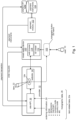
FIG. 1 depicts a simplified block diagram of a system environment according to certain embodiments. -
FIG. 2 shows an example of a mixed reality device. -
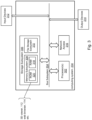
FIG. 3 depicts a simplified block diagram of an example computing system according to various embodiments. -
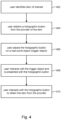
FIG. 4 is a high level flow of operations in accordance with various operations. -
FIG. 5 is a high level flow of operations for instantiating a holographic button in accordance with various embodiments. -
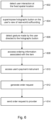
FIG. 6 is a high level flow of operations for using an instantiated holographic button in accordance with various embodiments. - The present disclosure relates generally to mixed reality environments. A user in a mixed reality world can drag an image or link from a website to generate/download a 3D model that represents a holographic button, and then drop or place it on a relevant real-world object as perceived in their mixed reality world. The holographic button is associated with an item (goods, data content, services, and the like), and includes item-related data that allows the user to order the item simply by interacting (e.g., air tapping) with the holographic button. The user can instantiate several holographic buttons in their mixed reality world. The user need only interact with a holographic button to initiate an action to order the item associated with that holographic button, without having to navigate to a website to order the item.
- It can be appreciated that navigating the Internet in a mixed reality world can be taxing to the user, requiring gestures and textual input to access various websites. User interaction performance and reliability can be enhanced by the use of holographic buttons in accordance with the present disclosure. Since the holographic button is already associated with information for obtaining the item, the amount of user interaction to obtain the item over the Internet using the holographic button is significantly reduced.
- It will become clear that the use of holographic buttons in accordance with the present disclosure to obtain goods or services can reduce bandwidth usage by the mixed reality device. Since the holographic button already provides the information needed by the user to initiate a request to order the item, the user can skip steps that require network resources such as accessing the provider's website, navigating to the particular web page that contains the item, and interacting with the web page to initiate an order.
- In addition to reducing bandwidth usage, the use of holographic buttons in accordance with the present disclosure can reduce storage requirements in the mixed reality device for storing browser history. When a user is required to search the Internet for items of interest, especially consumable items that require re-ordering, the browser history can become cluttered from those search efforts repeated over time. Associating such items with holographic buttons in accordance with the present invention obviates the need for repeated searches of those items and thus can reduce the amount of browser history that is accumulated in the memory of the mixed reality device.
- In the following description, for purposes of explanation, numerous examples and specific details are set forth in order to provide a thorough understanding of the present disclosure. It will be evident, however, to one skilled in the art that the present disclosure as expressed in the claims may include some or all of the features in these examples, alone or in combination with other features described below, and may further include modifications and equivalents of the features and concepts described herein.
-
FIG. 1 illustrates the use of aholographic button 102 in a mixed reality experience in accordance with the present disclosure. More particularly, the user 10 can interact with theholographic button 102 to obtain anitem 22 of interest to the user 10. Since theholographic button 102 is virtual, it can visually appear as any image. In some instances, theholographic button 102 can appear as some form of a button. In other instances, theholographic button 102 can appear as some other image; e.g., the image may be representative of theitem 22 or may be completely arbitrary. - In the particular use case depicted in
FIG. 1 , theitem 22 is supplied by aprovider 12. Theprovider 12 supports awebsite 14 which the user 10 can visit to access theitem 22. Theitem 22 can be a good or service that can be ordered over the Internet. Theitem 22 can be data content that can be downloaded over the Internet, and so on. In some cases, theitem 22 can be a paid for subscription for content or a service that the user 10 can request on demand. In other cases, the user 10 pays for theitem 22, but that is not a necessary component in the present disclosure. - The configuration shown in
FIG. 1 includes amixed reality device 100 that can provide a mixed reality experience to the user 10 by immersing the user 10 in a mixed reality world. Themixed reality device 100 can include any number of applications that can execute on the device. In various embodiments, for example, themixed reality device 100 can include a3D viewer 112, aweb browser 114, and so on. As explained in more detail below, theweb browser 114 can provide access to the provider'swebsite 14, where the user 10 can instantiate aholographic button 102 associated with theitem 22 of interest. The3D viewer 112 can be used to interact with the user 10 to obtain theitem 22 using theholographic button 102. - In some embodiments, the
3D viewer 112 can be implemented as a platform-level application, where its functionality can be provided as services accessed via suitable application programming interfaces (APIs). InFIG. 1 , for example, theprovider 12 may provide services viasite API 16 that allow the3D viewer 112 to submit order requests to theprovider 12. The3D viewer 112 can incorporate users' payment instruments into the order requests via apayment module 122. - The
site API 16 can include services to support the provider'swebsite 14. For example, thesite API 16 can include functionality for receiving, storing, and otherwise managing item-relateddata 22a for items maintained on thewebsite 14. Item-relateddata 22a can include orderinginformation 24 that relate to pricing of the item 22 (e.g., price, monetary exchange rates, etc.), descriptions and attributes of the item 22 (e.g., dimensions, color, size, etc.), and other information that may be needed to fulfill orders for theitem 22. In accordance with the present disclosure, the item-relateddata 22a can also includeholographic data 26 for theholographic button 102. - The
payment module 122 can receive, store, and otherwise manage users' payment instruments. Thepayment module 124 can employ arepository 124 to store the users' payment instruments. Therepository 124 can include apayment API 124a to provide secure access to the payment instruments and to conduct payment transactions. -
FIG. 2 illustrates amixed reality device 100 in accordance with some embodiments of the present disclosure. Themixed reality device 100 that can take the form of a wearable device, such as shown inFIG. 2 . Different wearable form factors include goggles, glasses, and the like. An example is the HOLOLENS® wearable mixed reality device developed, manufactured, and sold by the assignee of the present disclosure. It will be appreciated that themixed reality device 100 can be implemented in other formats such as, for example, in a computer tablet, smartphone, or other handheld computing device. - The
mixed reality device 100 can include aheadband 202 for wearing the device. Theheadband 202 can be adjustable to provide a suitable fit for the user 10. Theheadband 202 can house or support various components comprising themixed reality device 100. - The
mixed reality device 100 can include acomputing system 204, which among other things, can display virtual objects (holograms) to the user 10 on adisplay 206. In some embodiments, thedisplay 206 can be partially transparent so that the user 10 can view their real-world surrounding through the display. Thedisplay 206 can comprise aleft display panel 206a and aright display panel 206b. The left andright display panels mixed reality device 100 is a handheld device (e.g., computer tablet, smartphone, etc.) thedisplay 206 can be the display of the handheld device. - Virtual objects displayed or presented on the
display 206 are visually superimposed onto the user's field of view such that the virtual objects appear with the real-world objects. The left andright display panels right display panels - In some embodiments where the
mixed reality device 100 is a handheld device (e.g., computer tablet, smartphone, etc.) thedisplay 206 can be the display of the handheld device. The real-world surrounding can be presented as a live feed on the display 206 (e.g., captured by acamera 212b), and virtual objects can be superimposed on the live feed. - The
mixed reality device 100 can include left andright microphones right speakers - The
mixed reality device 100 can include optical sensors such as an infra-red (IR)camera 212a and an outward facing opticalwavelength RGB camera 212b to capture video and still images. Thecameras mixed reality device 100. The optical sensor information and the position sensor information can be used to perform analysis of the three dimensional real-world surrounding, such as depth analysis and surface reconstruction, to compute or otherwise determine the spatial location of themixed reality device 100 in the user's real-world surrounding. - The optical and position sensor information can also be used to create spatial mapping data that is a virtual representation of the real-world surrounding. In some embodiments, the spatial mapping data may define a three dimensional coordinate space that corresponds to the three dimensional coordinate space of the real-world surrounding. Using the spatial mapping data, the
mixed reality device 100 can automatically track where the user is looking so that the device can determine where in the user's field of view to insert virtual objects, thus creating a mixed reality world experience for the user 10. - The user 10 can interact with virtual objects and real-world objects appearing within their field of view. As used herein, the term "interact" encompasses both physical interaction and verbal interaction. Physical interaction includes the user 10 performing predefined gestures using their fingers, hand, head and so on that can be recognized by the
mixed reality device 100 as a user request for the device to perform a predefined action on the virtual or real-world object. Such predefined gestures can include, but are not limited to, pointing at, grabbing, and pushing virtual objects, hand waving motions, and the like. Other gestures can include an "air tap" on the virtual or real-world object, in which the user 10 gazes at the object and forms an "L" with their thumb and forefinger, and making a pinching motion by touching the tip of one to the tip of the other. An interaction can simply consist of the user 10 gazing in the direction of the virtual or real-world object. - The user 10 can interact with virtual and real-world objects using verbal gestures such as speaking a word or phrase that is recognized by the
mixed reality device 100 as a user request for the device to perform a predefined action. Verbal gestures can be used in conjunction with physical gestures to interact with virtual and real-world objects in the mixed reality world. - As the user 10 moves around within their mixed reality world, a virtual object may be "world-locked"; in other words, the virtual object is spatially locked with respect to the user's real-world surrounding. The virtual object can remain anchored and stationary in the mixed reality world so that the user 10 can move around the world-locked virtual object and see it from different perspectives and distances, as if the virtual object physically existed in the user's real-world surrounding (hence "mixed reality").
-
FIG. 3 depicts a simplified block diagram of an example ofcomputing system 204 according to certain embodiments. As shown inFIG. 3 ,computing system 204 includes one ormore processors 302 that communicate with a number of peripheral devices via a bus subsystem 304. These peripheral devices include a storage subsystem 306 (comprising a memory subsystem 308 and a file storage subsystem 310),input devices 312,output devices 314, andnetwork access 316. - Bus subsystem 304 can provide a mechanism for enabling the various components and subsystems of
computing system 204 to communicate with each other as intended. Although bus subsystem 304 is shown schematically as a single bus, alternative embodiments of the bus subsystem can utilize multiple busses. -
Network access 316 can include a wireless interface that can implement wireless standards such as WiFi and Bluetooth, in various embodiments. In other embodiments,network access 316 may support wired communications.Network access 316 can serve as an interface for communicating data betweencomputing system 204 and other computer systems or networks; e.g., to access website 14 (FIG. 1 ). -
Input devices 312 includemicrophones cameras FIG. 2 .Output devices 314 includedisplay 206 andspeakers -
Storage subsystem 306 includes a memory subsystem 308 and a file/data storage subsystem 310.Subsystems 308 and 310 represent non-transitory computer-readable storage media that can store program code (e.g.,3D viewer 112, web browser 114) and/or data (e.g.,holographic button 102, item-relateddata 22a) that provide and support the functionality of embodiments in accordance with the present disclosure. - Memory subsystem 308 includes a number of memories including a main random access memory (RAM) 318 for storage of instructions and data during program execution and a read-only memory (ROM) 320 in which fixed instructions are stored.
File storage subsystem 310 can provide persistent (i.e., non-volatile) storage for program and data files, and can include a solid-state drive. - It should be appreciated that
computing system 204 is illustrative and many other configurations having more or fewer components are possible. -
FIG. 4 illustrates a high level process for aholographic button 102 in a mixed reality world in accordance with the present disclosure. Generally, theholographic button 102 facilitates the user 10 in obtaining anitem 22 that theholographic button 102 is associated with. - At
block 402, a user 10 can identify or otherwise become interested in anitem 22. Merely as an illustrative example suppose in one example the item is laundry detergent (a good). - At
block 404, the user 10, using a mixed reality device (e.g., 100), can obtain aholographic button 102 from theprovider 12 of theitem 22. For example, if the laundry detergent is sold at a grocery store, the user can navigate to the grocer's website and download a holographic button corresponding to the laundry detergent from the grocer's website. The holographic button can be any image defined by the grocer; for example, the image may be a box of detergent. - At
block 406, the user 10 can virtually place the downloadedholographic button 102 on or near a real-world object (call it the trigger object). For example, the trigger object might be a washing machine for the laundry detergent example. The holographic button for the laundry detergent can be placed somewhere on the washing machine, or near (e.g., on a wall) the washing machine. - At this point, the
holographic button 102 has been obtained from the provider'swebsite 14 and placed in the user's mixed reality world. The user 10 can exit their mixed reality world and at a later time return to the mixed reality world to obtain theitem 22 using the holographic button 106. For example, if the user 10 is doing laundry, they may realize they are low on laundry detergent. The user 10 may order additional laundry detergent using theholographic button 102 in their mixed reality world. - At
block 408, for example, the user 10 can re-enter their mixed reality world and interact with the washing machine (e.g., gaze toward the washing machine). - when the user 10 interacts with the trigger object the
holographic button 102 can become visible to the user 10. Interaction with the trigger object may include the user 10 physically touching the trigger object, or in some embodiments, simply directing their gaze toward the trigger object. Using gaze direction as an interaction can be useful if it is inconvenient for the user 10 to be physically near the trigger object. For example, if the user 10 is far away from the washing machine, they need simply to gaze in the direction of the washing machine in their mixed reality world, and in response the mixed reality device can make visible theholographic button 102 for laundry detergent. - At
block 410, when theholographic button 102 becomes available to the user 10, the user 10 can interact with it to initiate an action with the provider to obtain theitem 22. In some embodiments, the interaction may involve the user making suitable gestures directed to theholographic button 102 to initiate the action. In some embodiments, the mixed reality device may interact with the user 10 to obtain or authorize a payment instrument. - Thus, once the holographic button for an item has been downloaded and placed, the item can be subsequently re-ordered simply by accessing the holographic button. Placement of the holographic button on or near a relevant object provides contextual cues that allow the user to locate the holographic button. The user need not maintain a list of holographic buttons; instead holographic buttons simply show up in the user's mixed reality world in the proper context (e.g., a laundry detergent button on the washing machine, a cleaning service button on the broom closet door, etc.).
- It can be appreciated from the foregoing illustrative description that the use of holographic buttons in accordance with the present disclosure to obtain goods or services can reduce bandwidth usage in the mixed reality device. Since the holographic button already provides the information needed by the user to initiate a request to order the item, the user can skip steps that require network resources such as accessing the provider's website and navigating through to the particular web page that contains the item.
- In addition to reducing bandwidth usage, the use of holographic buttons in accordance with the present disclosure can reduce storage requirements for storing browser history. When a user is required to search the Internet for items of interest, especially consumable items that require re-ordering, the browser history can become cluttered from those search efforts. Associating such items with holographic buttons in accordance with the present invention obviates the need for repeated searches for those items and thus can reduce the amount of browser history that is stored in memory.
- It can be appreciated that navigating the Internet in a mixed reality world can be taxing to the user, requiring gestures and textual input to access various websites. User interaction performance and reliability can be markedly enhanced by the use of the holographic button of the present disclosure, which can reduce the amount of user interaction to achieve the same goal of obtaining items from the Internet.
- Referring to
FIG. 5 , the discussion will now turn to a description of processing in themixed reality device 100 for instantiating aholographic button 102 in accordance with the present disclosure. In some embodiments, for example, themixed reality device 100 can include computer executable program code, which when executed by a computing system (e.g., 204,FIG. 3 ), can cause the computing system to perform processing in accordance withFIG. 5 . The flow of operations performed by the computing system is not necessarily limited to the order of operations shown. Theholographic button 102 can be more generally referred to as a 3-dimensional (3D) object. - At
block 502, themixed reality device 100 can authenticate the user 10 when they enter their mixed reality world. In some embodiments, for example, authentication may include displaying a virtual keyboard in the user's field of view and receiving or otherwise detecting gestures made by the user 10 that correspond to key taps on the virtual keyboard to enter an authorization code. In other embodiments, the user 10 can speak with themixed reality device 100 to become authorized. When the user 10 is authorized, themixed reality device 100 can then access the user's user profiles or other similar information. - At
block 504, themixed reality device 100 can receive gestures from the user to launch aweb browser 114. In response, themixed reality device 100 can superimpose a browser window onto the user's field of view of their real-world surrounding. In some embodiments, the browser window can be displayed in mixed world view mode. In mixed world view, theweb browser 114 appears on top of the user's field of view, along with any other application window the user 10 may have open. - At
block 506, themixed reality device 100 can receive input from the user 10 to navigate the Internet on theweb browser 114. The input can include any combination of gestures, keyboard inputs, voice inputs, and the like made by the user 10. In the context of the present disclosure, the user 10 can navigate to thewebsite 14 of theprovider 12 for anitem 22 of interest to the user 10; e.g., laundry detergent, referring to the illustrative examples mentioned above. The user 10 can further navigate the provider'swebsite 14 to get to a web page that contains alink 14a (FIG. 1 ) to theitem 22. In accordance with the present disclosure, thelink 14a can be associated with aholographic button 102 of theitem 22. - At
block 508, themixed reality device 100 can receive user gestures for generating and placing theholographic button 102. For example, the user 10 can walk around in their real-world surrounding to determine a relevant real-world object to place theholographic button 102. In the laundry detergent example above, the user 10 may walk over to their washing machine. In an office setting example, theitem 22 might be copier paper in which case the user 10 may want to place theholographic button 102 on or near the copying machine, and so on. The user 10 can make suitable gestures that direct the placement of theholographic button 102 on the real-world object. - In some embodiments, for example, the user 10 can make gestures to access the
link 14a. For instance, the user 10 can direct their gaze at thelink 14a and use an air tap gesture to select thelink 14a and cause theholographic button 102 to be generated. In response, themixed reality device 100 can download item-relateddata 22a associated with theitem 22 from the provider'swebsite 14 used to generate theholographic button 102; e.g., the item-relateddata 22a can includeholographic data 26 that defines theholographic button 102. In accordance with the present disclosure, themixed reality device 100 can use theholographic data 26 to create a data object for theholographic button 102 that can be stored in a memory (e.g., 308,FIG. 3 ) of themixed reality device 100. The user 10 can gesture to place the generatedholographic button 102 onto the relevant real-world object, for example, by moving their hand to drag the generatedholographic button 102 toward and releasing the generatedholographic button 102 to drop it on or near the relevant real-world object. - In other embodiments, the user 10 can use a drag-and-drop gesture. For example, the user 10 can drag-and-drop the
link 14a onto the relevant real-world object. The user 10 can direct their gaze at thelink 14a and use an air tap gesture to select and hold thelink 14a, and move their hand to drag thelink 14a to the relevant real-world object and release (drop) thelink 14a. Themixed reality device 100 can use theholographic data 26 to generate theholographic button 102. - At
block 510, themixed reality device 100 can receive and store the item-relateddata 22a associated with theitem 22 from the provider'swebsite 14, in response to the user's placement action of theholographic button 102. In accordance with the present disclosure, the item-relateddata 22a can include orderinginformation 24 associated with theitem 22, which can be used to create an order request to obtain theitem 22. In some embodiments, the downloaded item-relateddata 22a can be stored in a memory (e.g., 308,FIG. 3 ) of themixed reality device 100 or in remote storage (e.g., cloud-based storage). - At
block 512, themixed reality device 100 can receive or otherwise obtain a fixed spatial location corresponding to the drop location of the placement action. For example, when the user 10 makes a gesture to drop theholographic button 102, the user's direction of gaze at that moment can be used to determine the drop location. Sensors on themixed reality device 100 can be used to determine the fixed spatial location in the real-world surrounding that corresponds to that drop location. - At
block 514, themixed reality device 100 can world-lock theholographic button 102 to the fixed spatial location determined above. In some embodiments, for example, themixed reality device 100 can generate spatial mapping data that represents the real-world surrounding, or can access previously generated spatial mapping data. As the user 10 manipulates theholographic button 102 relative to the real-world surrounding in their field of view, themixed reality device 100 tracks the movement of theholographic button 102 using the spatial mapping data. For example, when the user 10 drops theholographic button 102 on the surface of a real-world object, themixed reality device 100 can associate theholographic button 102 with spatial mapping data that corresponds to the fixed spatial location of the surface of that real-world object, thus world-locking theholographic button 102 to that real-world object. - The
holographic button 102 is world-locked in the sense that theholographic button 102 maintains its location with respect to the fixed spatial location in the real-world surrounding. When the user 10 moves away from that fixed location (e.g., into another room or if they turn their head away), theholographic button 102 will remain fixed to that location and eventually disappear from the user's field of view as would any other real-world object. - The
holographic button 102 is deemed to be instantiated at this point, having been downloaded to themixed reality device 100 and world-locked to a real-world object (vis-à-vis its spatial location in the real-world surrounding). Theholographic button 102 and its drop location can be stored on themixed reality device 100, so that even if the user 10 walks away from the drop location or exits their mixed reality world (e.g., log out of the mixed reality device 100), theholographic button 102 and its drop location persists. - Referring to
FIG. 6 , the discussion will now turn to a description of processing in themixed reality device 100 for using an instantiatedholographic button 102 in accordance with the present disclosure to order theitem 22 associated with theholographic button 102. In some embodiments, for example, themixed reality device 100 can include computer executable program code, which when executed by a computing system (e.g., 204,FIG. 3 ), can cause the computing system to perform processing in accordance withFIG. 6 . The flow of operations performed by the computing system is not necessarily limited to the order of operations shown. - At
block 602, themixed reality device 100 can detect user interaction at a fixed spatial location that is associated (tagged) with a previously instantiatedholographic button 102. For example, when the user 10 enters their mixed reality world, they may approach the real-world object (e.g., washing machine) that was previously tagged with aholographic button 102. Using the spatial mapping data of the real-world environment to track the user 10, themixed reality device 100 can detect when the user 10 is interacting with that real-world object. - At
block 604, themixed reality device 100 can display theholographic button 102 in the user's field of view in response to detecting that the user 10 is interacting with a real-world object that was previously tagged with aholographic button 102. For example, themixed reality device 100 can display theholographic button 102 on thedisplay 206, thus superimposing theholographic button 102 onto the user's perception of their real-world surrounding. - At
block 606, themixed reality device 100 can detect gestures made by the user 10 and directed to theholographic button 102 to initiate an action to obtain theitem 22 that is associated with theholographic button 102. For example, the user 10 can direct their gaze on theholographic button 102 and perform an air tap gesture. The user 10 will have selected theitem 22 and initiated activity to obtain theitem 22 simply by looking at a real-world object (e.g., washing machine) and making an appropriate gesture (e.g., air tap), without having to invoke a web browser, navigate to the provider'swebsite 14, navigate to the web page to get to theitem 22, and perform interactions on the web page to order theitem 22. - At
block 608, themixed reality device 100 can access the orderinginformation 24 associated with theitem 22. In some embodiments, the ordering information can be previously stored in themixed reality device 100, for example, when the user 10 downloaded theholographic button 102 from the provider'swebsite 14. In other embodiments, themixed reality device 100 can access the orderinginformation 24 from the provider'swebsite 14 on an as needed basis (e.g., using the provider's site API 16). - At
block 610, themixed reality device 100 can access the user's payment information, such as name, billing address, mailing address, credit card no., CVV, etc. The payment instrument can be a credit/debit card, a token associated with the credit/debit card, a PayPal® account, a bank account, a physical check (e.g., themixed reality device 100 can read such a check and use it), and so on. In some embodiments, the user's payment information can be linked to their user profile or otherwise stored locally; e.g., in a discreet secure micro-controller or a secure memory partition in memory. In other embodiments, the user's payment information can be stored on a cloud server. - In some embodiments, the user's payment may not be stored anywhere. In those cases, the
mixed reality device 100 can capture the payment information from the user 10 at the time the user 10 initiates the action (via the holographic button 102) to obtain theitem 22. For example, themixed reality device 100 may instruct the user 10 to input their payment information, hold up their credit card so an image of it can be taken, present a check, and the like. - At
block 612, themixed reality device 100 can generate an order request to order theitem 22. In some embodiments, for example, the order request can include orderinginformation 24 for theitem 22 and a payment component. The payment component can be an API call to thepayment API 124a. For example, the API call can be a concatenation of the data related to the item as well as user authentication data that would be used to conduct a payment transaction. - At
block 614, themixed reality device 100 can send the order request to theprovider 12 of theitem 22 to fulfill the order. For example, theprovider 12 can invoke the API call to conduct a payment transaction for theitem 22 and then fulfill the order. In some cases, the API call can create a payment experience in order for the user 10 to confirm their payment information prior to fulfillment of the order. This would be useful, for example, if there are multiple payment instruments associated with the user's account or multiple billing/shipping addresses. The user authentication data could result from the user 10 having entered their credentials, or having been authenticated by a PIN or any biometric gesture such as voice recognition or iris scan. - Ordering goods or services (items) using a holographic button in accordance with aspects of the present disclosure can reduce processing resources required by the
mixed reality device 100. Bandwidth requirements can be reduced because the user need only navigate to the provider's website once to download a holographic button associated with the item. Once the holographic button has been previously placed in the user's mixed reality world, the user need only look for the holographic button and make a gesture (e.g., air tap) to invoke a series of actions to order the item, without having to re-visit the providers' website. - The use of holographic buttons to order items that require frequent re-ordering can improve user efficiency because the use of holographic buttons obviate the need to navigate the Internet, which can be time consuming and error prone. The increased user efficiency means less transmission time over the wireless communication channel between the mixed reality device and an Internet access point, which can reduce consumption of the device's power source (e.g., battery).
- The user can instantiate as many holographic buttons for ordering items as they want and populate them around in their mixed world reality. The user's view of their real-world surrounding through the mixed reality device can remain uncluttered because a holographic button only appears in the user's field of view when the user is interacting with a real-world object that is associated with a holographic button.
- Embodiments in accordance with the present disclosure provide a path for the natural evolution of mixed reality e-commerce. Just as markets appeared for traditional trade (e.g., large department stores arose for mass commercialization of goods), online merchants (e.g., Amazon) appeared for e-commerce. Solutions represented by embodiments in accordance with the present disclosure are beginning to appear for mixed reality e-commerce. Traditional "flat" e-commerce is not ideal for interacting in a shoppable mixed world. Embodiments in accordance with the present disclosure can provide accessibility, breadth of goods and services, and convenience of e-commerce with the ease of interaction of physical shopping to enable and facilitate the adoption of mixed reality e-commerce.
- The above description illustrates various embodiments of the present disclosure along with examples of how aspects of these embodiments may be implemented. The above examples and embodiments should not be deemed to be the only embodiments, and are presented to illustrate the flexibility and advantages of the present disclosure as defined by the following claims. For example, although certain embodiments have been described with respect to particular process flows and steps, it should be apparent to those skilled in the art that the scope of the present disclosure is not strictly limited to the described flows and steps. Steps described as sequential may be executed in parallel, order of steps may be varied, and steps may be modified, combined, added, or omitted. As another example, although certain embodiments have been described using a particular combination of hardware and software, it should be recognized that other combinations of hardware and software are possible, and that specific operations described as being implemented in software can also be implemented in hardware and vice versa.
- The specification and drawings are, accordingly, to be regarded in an illustrative rather than restrictive sense. Other arrangements, embodiments, implementations and equivalents will be evident to those skilled in the art and may be employed without departing from the scope of the present disclosure as set forth in the following claims.
Claims (12)
- A mixed reality device comprising:a display;one or more computer processors; anda computer-readable storage medium comprising instructions for controlling the one or more computer processors to:instantiate a holographic button associated with an item from a provider, the holographic button being a 3D virtual object, including:navigating (506) by a user a website of the provider to get to a web page that contains a link to the item;drag-and-dropping (508) the link onto a real-world object;receiving (510) item-related data associated with the item from the website of the provider, the item-related data comprising holographic data to display the holographic button on a display of the mixed reality device; andworld-locking (514) the holographic button to a fixed spatial location in a real-world surrounding relative to the mixed reality device using spatial mapping data representative of the real-world surrounding, the fixed spatial location corresponding to the drop location;provide the e user of the mixed reality device with access to the holographic button to obtain the item using the holographic button, including detecting (602) interactions by the user with the real-world object at the fixed spatial location in the real-world surrounding associated with the holographic button and in response to the detecting the interaction, displaying the holographic button on the display to superimpose (604) the holographic button onto a view of the user's real-world surrounding, wherein the interactions with the real-world object comprise the user physically touching the real-world object;detect (606) a gesture directed to the holographic button made by the user of the mixed reality device; andin response to detecting a gesture directed to the holographic button:accessing (608) ordering information that describes the item to be obtained;accessing (610) a payment instrument associated with the user; andsending (614) to the provider an order request for the item comprising the ordering information and the payment instrument.
- The mixed reality device of claim 1, further comprising a payment instrument repository, wherein accessing a payment instrument associated with the user includes accessing the payment instrument repository.
- The mixed reality device of claim 1, wherein accessing a payment instrument associated with the user includes interacting with the user of the mixed reality device to obtain payment information from the user.
- The mixed reality device of claim 1, wherein instantiating the holographic button further includes:downloading information using the link on the provider's website that is associated with the item;generating the holographic button using the downloaded information; andworld-locking the holographic button by associating the holographic button with spatial mapping data that corresponds to a location of the user's direction of gaze.
- The mixed reality device of claim 1, wherein the ordering information that describes the item is included with the item-related data received from the provider's website,wherein instantiating the holographic button further includes associating the holographic button with the ordering information, andin response to detecting a gesture directed to the holographic button, generating the order request using the ordering information that is associated with the holographic button.
- The mixed reality device of claim 1, wherein the computer-readable storage medium further comprises instructions for controlling the one or more computer processors to respond to detecting a gesture directed to the holographic button by:accessing from the provider's website the ordering information that describes the item; andgenerating the order request using the accessed ordering information.
- The mixed reality device of claim 1, wherein the mixed reality device is a wearable device.
- A method in a mixed reality device, the method comprising:instantiating a holographic button associated with an item from a provider, the holographic button being a 3D virtual object, including:navigating (506) by a user a website of the provider to get to a web page that contains a link to the item;drag-and-dropping (508) the link onto a real-world object;receiving (510) item-related data associated with the item from the website of the provider, the item-related data comprising holographic data to display the holographic button on a display of the mixed reality device; andworld-locking (514) the holographic button to a fixed spatial location in a real-world surrounding relative to the mixed reality device using spatial mapping data representative of the real-world surrounding, the fixed spatial location corresponding to the drop location;providing the user of the mixed reality device with access to the holographic button to obtain the item using the holographic button, including detecting (602) interactions by the user with the real-world object at the fixed spatial location in the real-world surrounding associated with the holographic button and in response to the detecting the interaction, displaying the holographic button on the display to superimpose the holographic button onto a view of the user's real-world surrounding, wherein the interactions with the real-world object comprise the user physically touching the real-world object;detecting (606) a gesture directed to the holographic button made by the user of the mixed reality device; andin response to detecting a gesture directed to the holographic button:accessing (608) ordering information that describes the item to be obtained;accessing (610) a payment instrument associated with the user; andsending (614) to the provider an order request for the item comprising the ordering information and the payment instrument.
- The method of claim 8, wherein instantiating the holographic button further includes:downloading information using the link on the provider's website that is associated with the item;generating the holographic button using the downloaded information; andworld-locking the holographic button by associating the holographic button with spatial mapping data that corresponds to a location of the user's direction of gaze.
- The method of claim 8, wherein the ordering information that describes the item is included with the item-related data received from the provider's website,wherein instantiating the holographic button further includes associating the holographic button with the ordering information, andin response to detecting a gesture directed to the holographic button, generating the order request using the ordering information that is associated with the holographic button.
- A computer-readable storage medium having stored thereon computer executable instructions, which when executed by a computer device, cause the computer device to:instantiate a holographic button associated with an item from a provider, the holographic button being a 3D virtual object, including:navigating (506) by a user a website of the provider to get to a web page that contains a link to the item;drag-and-dropping (508) the link onto a real-world object;receiving (510) item-related data associated with the item from the website of the provider, the item-related data comprising holographic data to display the holographic button on a display of the mixed reality device; andworld-locking (514) the holographic button to a fixed spatial location in a real-world surrounding relative to the mixed reality device using spatial mapping data representative of the real-world surrounding, the fixed spatial location corresponding to the drop location;providing the user of the mixed reality device with access to the holographic button to obtain the item using the holographic button, including detecting (602) interactions by the user with the real-world object at the fixed spatial location in the real-world surrounding associated with the holographic button and in response to the detecting the interaction, displaying the holographic button on the display to superimpose the holographic button onto a view of the user's real-world surrounding, wherein the interactions with the real-world object comprise the user physically touching the real-world object;detect (606) a gesture directed to the holographic button made by the user of the mixed reality device; andin response to detecting a gesture directed to the holographic button:accessing (608) ordering information that describes the item to be obtained;accessing (610) a payment instrument associated with the user; andsending (614) to the provider an order request for the item comprising the ordering information and the payment instrument.
- The computer-readable storage medium of claim 11, wherein instantiating the holographic button further includes:downloading information using the link on the provider's website that is associated with the item;generating the holographic button using the downloaded information; andworld-locking the holographic button by associating the holographic button with spatial mapping data that corresponds to a location of the user's direction of gaze.
Applications Claiming Priority (2)
| Application Number | Priority Date | Filing Date | Title |
|---|---|---|---|
| US15/635,105 US10719870B2 (en) | 2017-06-27 | 2017-06-27 | Mixed reality world integration of holographic buttons in a mixed reality device |
| PCT/US2018/033766 WO2019005322A1 (en) | 2017-06-27 | 2018-05-22 | Mixed reality world integration of holographic buttons in a mixed reality device |
Publications (2)
| Publication Number | Publication Date |
|---|---|
| EP3646144A1 EP3646144A1 (en) | 2020-05-06 |
| EP3646144B1 true EP3646144B1 (en) | 2025-07-02 |
Family
ID=62636278
Family Applications (1)
| Application Number | Title | Priority Date | Filing Date |
|---|---|---|---|
| EP18732199.7A Active EP3646144B1 (en) | 2017-06-27 | 2018-05-22 | Mixed reality world integration of holographic buttons in a mixed reality device |
Country Status (3)
| Country | Link |
|---|---|
| US (1) | US10719870B2 (en) |
| EP (1) | EP3646144B1 (en) |
| WO (1) | WO2019005322A1 (en) |
Families Citing this family (21)
| Publication number | Priority date | Publication date | Assignee | Title |
|---|---|---|---|---|
| AU2018261328B2 (en) | 2017-05-01 | 2022-08-25 | Magic Leap, Inc. | Matching content to a spatial 3D environment |
| US12094614B2 (en) | 2017-08-15 | 2024-09-17 | Koko Home, Inc. | Radar apparatus with natural convection |
| CN111684495B (en) | 2017-12-22 | 2025-01-21 | 奇跃公司 | Method and system for managing and displaying virtual content in a mixed reality system |
| WO2019165055A1 (en) | 2018-02-22 | 2019-08-29 | Magic Leap, Inc. | Browser for mixed reality systems |
| AU2019225931A1 (en) | 2018-02-22 | 2020-08-20 | Magic Leap, Inc. | Object creation with physical manipulation |
| US11087136B2 (en) * | 2018-04-13 | 2021-08-10 | Apple Inc. | Scene classification |
| US11188154B2 (en) * | 2018-05-30 | 2021-11-30 | International Business Machines Corporation | Context dependent projection of holographic objects |
| US10770035B2 (en) | 2018-08-22 | 2020-09-08 | Google Llc | Smartphone-based radar system for facilitating awareness of user presence and orientation |
| US10890653B2 (en) | 2018-08-22 | 2021-01-12 | Google Llc | Radar-based gesture enhancement for voice interfaces |
| US10698603B2 (en) * | 2018-08-24 | 2020-06-30 | Google Llc | Smartphone-based radar system facilitating ease and accuracy of user interactions with displayed objects in an augmented-reality interface |
| US10788880B2 (en) | 2018-10-22 | 2020-09-29 | Google Llc | Smartphone-based radar system for determining user intention in a lower-power mode |
| US10761611B2 (en) | 2018-11-13 | 2020-09-01 | Google Llc | Radar-image shaper for radar-based applications |
| US10885715B2 (en) * | 2019-01-14 | 2021-01-05 | Microsoft Technology Licensing, Llc | Interactive carry |
| US11997455B2 (en) | 2019-02-11 | 2024-05-28 | Koko Home, Inc. | System and method for processing multi-directional signals and feedback to a user to improve sleep |
| US10810850B2 (en) | 2019-02-19 | 2020-10-20 | Koko Home, Inc. | System and method for state identity of a user and initiating feedback using multiple sources |
| US11971503B2 (en) | 2019-02-19 | 2024-04-30 | Koko Home, Inc. | System and method for determining user activities using multiple sources |
| US10983662B2 (en) | 2019-04-01 | 2021-04-20 | Wormhole Labs, Inc. | Distally shared, augmented reality space |
| CN113711174A (en) | 2019-04-03 | 2021-11-26 | 奇跃公司 | Managing and displaying web pages in virtual three-dimensional space with mixed reality systems |
| US11719804B2 (en) | 2019-09-30 | 2023-08-08 | Koko Home, Inc. | System and method for determining user activities using artificial intelligence processing |
| US11240635B1 (en) * | 2020-04-03 | 2022-02-01 | Koko Home, Inc. | System and method for processing using multi-core processors, signals, and AI processors from multiple sources to create a spatial map of selected region |
| US11842445B1 (en) | 2020-10-28 | 2023-12-12 | Wells Fargo Bank, N.A. | Digital representation of transfer of monetary assets |
Citations (3)
| Publication number | Priority date | Publication date | Assignee | Title |
|---|---|---|---|---|
| WO2014176138A2 (en) * | 2013-04-23 | 2014-10-30 | Microsoft Corporation | Augmented reality auction platform |
| US20170097676A1 (en) * | 2015-10-01 | 2017-04-06 | Disney Enterprises, Inc. | Augmented Reality Controls for User Interactions with a Virtual World |
| US20170103582A1 (en) * | 2011-08-24 | 2017-04-13 | Microsoft Technology Licensing, Llc | Touch and social cues as inputs into a computer |
Family Cites Families (18)
| Publication number | Priority date | Publication date | Assignee | Title |
|---|---|---|---|---|
| EP1191869A2 (en) * | 1999-06-16 | 2002-04-03 | Reinhold Holtkamp | Network connected delivery box using access codes and methods for providing same |
| EP1261906A2 (en) | 2000-03-10 | 2002-12-04 | Richfx Ltd. | Natural user interface for virtual reality shopping systems |
| CN101273368A (en) * | 2005-08-29 | 2008-09-24 | 埃韦里克斯技术股份有限公司 | Interaction via moving image recognition |
| US20080243788A1 (en) * | 2007-03-29 | 2008-10-02 | Reztlaff James R | Search of Multiple Content Sources on a User Device |
| US20090113349A1 (en) | 2007-09-24 | 2009-04-30 | Mark Zohar | Facilitating electronic commerce via a 3d virtual environment |
| KR101629865B1 (en) * | 2008-11-24 | 2016-06-14 | 코닌클리케 필립스 엔.브이. | Extending 2d graphics in a 3d gui |
| US20100208033A1 (en) * | 2009-02-13 | 2010-08-19 | Microsoft Corporation | Personal Media Landscapes in Mixed Reality |
| US20140201029A9 (en) | 2010-09-03 | 2014-07-17 | Joseph Anthony Plattsmier | 3D Click to Buy |
| US20130293580A1 (en) * | 2012-05-01 | 2013-11-07 | Zambala Lllp | System and method for selecting targets in an augmented reality environment |
| US9412121B2 (en) | 2012-10-05 | 2016-08-09 | Sap Se | Backend support for augmented reality window shopping |
| US20140168261A1 (en) * | 2012-12-13 | 2014-06-19 | Jeffrey N. Margolis | Direct interaction system mixed reality environments |
| US9230368B2 (en) | 2013-05-23 | 2016-01-05 | Microsoft Technology Licensing, Llc | Hologram anchoring and dynamic positioning |
| US10102565B2 (en) * | 2014-11-21 | 2018-10-16 | Paypal, Inc. | System and method for content integrated product purchasing |
| TWI540522B (en) | 2015-02-26 | 2016-07-01 | 宅妝股份有限公司 | Virtual shopping system and method utilizing virtual reality and augmented reality technology |
| KR20160128119A (en) | 2015-04-28 | 2016-11-07 | 엘지전자 주식회사 | Mobile terminal and controlling metohd thereof |
| US20160378887A1 (en) | 2015-06-24 | 2016-12-29 | Juan Elias Maldonado | Augmented Reality for Architectural Interior Placement |
| US20180276895A1 (en) * | 2017-03-27 | 2018-09-27 | Global Tel*Link Corporation | Personalized augmented reality in a controlled environment |
| US10880086B2 (en) * | 2017-05-02 | 2020-12-29 | PracticalVR Inc. | Systems and methods for authenticating a user on an augmented, mixed and/or virtual reality platform to deploy experiences |
-
2017
- 2017-06-27 US US15/635,105 patent/US10719870B2/en active Active
-
2018
- 2018-05-22 EP EP18732199.7A patent/EP3646144B1/en active Active
- 2018-05-22 WO PCT/US2018/033766 patent/WO2019005322A1/en not_active Ceased
Patent Citations (3)
| Publication number | Priority date | Publication date | Assignee | Title |
|---|---|---|---|---|
| US20170103582A1 (en) * | 2011-08-24 | 2017-04-13 | Microsoft Technology Licensing, Llc | Touch and social cues as inputs into a computer |
| WO2014176138A2 (en) * | 2013-04-23 | 2014-10-30 | Microsoft Corporation | Augmented reality auction platform |
| US20170097676A1 (en) * | 2015-10-01 | 2017-04-06 | Disney Enterprises, Inc. | Augmented Reality Controls for User Interactions with a Virtual World |
Also Published As
| Publication number | Publication date |
|---|---|
| US20180374143A1 (en) | 2018-12-27 |
| EP3646144A1 (en) | 2020-05-06 |
| WO2019005322A1 (en) | 2019-01-03 |
| US10719870B2 (en) | 2020-07-21 |
Similar Documents
| Publication | Publication Date | Title |
|---|---|---|
| US10719870B2 (en) | Mixed reality world integration of holographic buttons in a mixed reality device | |
| US11175791B1 (en) | Augmented reality system for control boundary modification | |
| CN113039584B (en) | Method, medium and system for displaying data in a multidimensional dashboard | |
| US11151641B2 (en) | Virtual display device for an interactive merchant sales environment | |
| US10423303B1 (en) | Progressive information panels in a graphical user interface | |
| US12039689B2 (en) | Methods and systems for displaying virtual objects from an augmented reality environment on a multimedia device | |
| US10043317B2 (en) | Virtual trial of products and appearance guidance in display device | |
| US10482664B1 (en) | Augmented and virtual reality system and method for conducting transactions | |
| US9324065B2 (en) | Determining languages for a multilingual interface | |
| US9304646B2 (en) | Multi-user content interactions | |
| TWI717523B (en) | Method for providing customized information through advertising in simulation environment, and associated simulation system | |
| US20150095228A1 (en) | Capturing images for financial transactions | |
| US9373025B2 (en) | Structured lighting-based content interactions in multiple environments | |
| CN109643527A (en) | Virtual Reality Platform for retail environment emulation | |
| US10579980B2 (en) | Method and apparatus for displaying transaction information | |
| US11687228B1 (en) | Drag and drop functions to start the process of applying for financial services | |
| US20230410190A1 (en) | User interface experience with different representations of banking functions | |
| US20190018554A1 (en) | Virtual reality system and process for remote interaction with a performance event | |
| CN112700586B (en) | Information Presentation Method and Device | |
| EP4402560A1 (en) | Systems and methods for responsive user interface based on gaze depth | |
| WO2018033954A1 (en) | Shopping assistance system and shopping assistance method | |
| GB2495280A (en) | Weighting of catalogue content in user interface | |
| JP2021086355A (en) | Information processing method, program, and information processing device | |
| JP7792775B2 (en) | Program and information processing method | |
| CN111386543A (en) | Use Augmented Reality for Safe Transactions |
Legal Events
| Date | Code | Title | Description |
|---|---|---|---|
| STAA | Information on the status of an ep patent application or granted ep patent |
Free format text: STATUS: UNKNOWN |
|
| STAA | Information on the status of an ep patent application or granted ep patent |
Free format text: STATUS: THE INTERNATIONAL PUBLICATION HAS BEEN MADE |
|
| PUAI | Public reference made under article 153(3) epc to a published international application that has entered the european phase |
Free format text: ORIGINAL CODE: 0009012 |
|
| STAA | Information on the status of an ep patent application or granted ep patent |
Free format text: STATUS: REQUEST FOR EXAMINATION WAS MADE |
|
| 17P | Request for examination filed |
Effective date: 20191211 |
|
| AK | Designated contracting states |
Kind code of ref document: A1 Designated state(s): AL AT BE BG CH CY CZ DE DK EE ES FI FR GB GR HR HU IE IS IT LI LT LU LV MC MK MT NL NO PL PT RO RS SE SI SK SM TR |
|
| AX | Request for extension of the european patent |
Extension state: BA ME |
|
| DAV | Request for validation of the european patent (deleted) | ||
| DAX | Request for extension of the european patent (deleted) | ||
| STAA | Information on the status of an ep patent application or granted ep patent |
Free format text: STATUS: EXAMINATION IS IN PROGRESS |
|
| 17Q | First examination report despatched |
Effective date: 20210322 |
|
| RAP3 | Party data changed (applicant data changed or rights of an application transferred) |
Owner name: MICROSOFT TECHNOLOGY LICENSING, LLC |
|
| GRAP | Despatch of communication of intention to grant a patent |
Free format text: ORIGINAL CODE: EPIDOSNIGR1 |
|
| STAA | Information on the status of an ep patent application or granted ep patent |
Free format text: STATUS: GRANT OF PATENT IS INTENDED |
|
| INTG | Intention to grant announced |
Effective date: 20250204 |
|
| P01 | Opt-out of the competence of the unified patent court (upc) registered |
Free format text: CASE NUMBER: APP_10911/2025 Effective date: 20250305 |
|
| GRAS | Grant fee paid |
Free format text: ORIGINAL CODE: EPIDOSNIGR3 |
|
| GRAA | (expected) grant |
Free format text: ORIGINAL CODE: 0009210 |
|
| STAA | Information on the status of an ep patent application or granted ep patent |
Free format text: STATUS: THE PATENT HAS BEEN GRANTED |
|
| AK | Designated contracting states |
Kind code of ref document: B1 Designated state(s): AL AT BE BG CH CY CZ DE DK EE ES FI FR GB GR HR HU IE IS IT LI LT LU LV MC MK MT NL NO PL PT RO RS SE SI SK SM TR |
|
| REG | Reference to a national code |
Ref country code: GB Ref legal event code: FG4D |
|
| REG | Reference to a national code |
Ref country code: CH Ref legal event code: EP |
|
| REG | Reference to a national code |
Ref country code: DE Ref legal event code: R096 Ref document number: 602018083184 Country of ref document: DE |
|
| REG | Reference to a national code |
Ref country code: IE Ref legal event code: FG4D |
|
| REG | Reference to a national code |
Ref country code: NL Ref legal event code: MP Effective date: 20250702 |
|
| PG25 | Lapsed in a contracting state [announced via postgrant information from national office to epo] |
Ref country code: PT Free format text: LAPSE BECAUSE OF FAILURE TO SUBMIT A TRANSLATION OF THE DESCRIPTION OR TO PAY THE FEE WITHIN THE PRESCRIBED TIME-LIMIT Effective date: 20251103 |
|
| PG25 | Lapsed in a contracting state [announced via postgrant information from national office to epo] |
Ref country code: NL Free format text: LAPSE BECAUSE OF FAILURE TO SUBMIT A TRANSLATION OF THE DESCRIPTION OR TO PAY THE FEE WITHIN THE PRESCRIBED TIME-LIMIT Effective date: 20250702 |
|
| REG | Reference to a national code |
Ref country code: AT Ref legal event code: MK05 Ref document number: 1809958 Country of ref document: AT Kind code of ref document: T Effective date: 20250702 |
|
| PG25 | Lapsed in a contracting state [announced via postgrant information from national office to epo] |
Ref country code: IS Free format text: LAPSE BECAUSE OF FAILURE TO SUBMIT A TRANSLATION OF THE DESCRIPTION OR TO PAY THE FEE WITHIN THE PRESCRIBED TIME-LIMIT Effective date: 20251102 |
|
| PG25 | Lapsed in a contracting state [announced via postgrant information from national office to epo] |
Ref country code: NO Free format text: LAPSE BECAUSE OF FAILURE TO SUBMIT A TRANSLATION OF THE DESCRIPTION OR TO PAY THE FEE WITHIN THE PRESCRIBED TIME-LIMIT Effective date: 20251002 |
|
| REG | Reference to a national code |
Ref country code: LT Ref legal event code: MG9D |
|
| PG25 | Lapsed in a contracting state [announced via postgrant information from national office to epo] |
Ref country code: AT Free format text: LAPSE BECAUSE OF FAILURE TO SUBMIT A TRANSLATION OF THE DESCRIPTION OR TO PAY THE FEE WITHIN THE PRESCRIBED TIME-LIMIT Effective date: 20250702 |
|
| PG25 | Lapsed in a contracting state [announced via postgrant information from national office to epo] |
Ref country code: FI Free format text: LAPSE BECAUSE OF FAILURE TO SUBMIT A TRANSLATION OF THE DESCRIPTION OR TO PAY THE FEE WITHIN THE PRESCRIBED TIME-LIMIT Effective date: 20250702 |
|
| PG25 | Lapsed in a contracting state [announced via postgrant information from national office to epo] |
Ref country code: HR Free format text: LAPSE BECAUSE OF FAILURE TO SUBMIT A TRANSLATION OF THE DESCRIPTION OR TO PAY THE FEE WITHIN THE PRESCRIBED TIME-LIMIT Effective date: 20250702 |
|
| PG25 | Lapsed in a contracting state [announced via postgrant information from national office to epo] |
Ref country code: GR Free format text: LAPSE BECAUSE OF FAILURE TO SUBMIT A TRANSLATION OF THE DESCRIPTION OR TO PAY THE FEE WITHIN THE PRESCRIBED TIME-LIMIT Effective date: 20251003 |
|
| PG25 | Lapsed in a contracting state [announced via postgrant information from national office to epo] |
Ref country code: SE Free format text: LAPSE BECAUSE OF FAILURE TO SUBMIT A TRANSLATION OF THE DESCRIPTION OR TO PAY THE FEE WITHIN THE PRESCRIBED TIME-LIMIT Effective date: 20250702 Ref country code: CZ Free format text: LAPSE BECAUSE OF FAILURE TO SUBMIT A TRANSLATION OF THE DESCRIPTION OR TO PAY THE FEE WITHIN THE PRESCRIBED TIME-LIMIT Effective date: 20250702 |
|
| PG25 | Lapsed in a contracting state [announced via postgrant information from national office to epo] |
Ref country code: LV Free format text: LAPSE BECAUSE OF FAILURE TO SUBMIT A TRANSLATION OF THE DESCRIPTION OR TO PAY THE FEE WITHIN THE PRESCRIBED TIME-LIMIT Effective date: 20250702 |
|
| PG25 | Lapsed in a contracting state [announced via postgrant information from national office to epo] |
Ref country code: PL Free format text: LAPSE BECAUSE OF FAILURE TO SUBMIT A TRANSLATION OF THE DESCRIPTION OR TO PAY THE FEE WITHIN THE PRESCRIBED TIME-LIMIT Effective date: 20250702 Ref country code: BG Free format text: LAPSE BECAUSE OF FAILURE TO SUBMIT A TRANSLATION OF THE DESCRIPTION OR TO PAY THE FEE WITHIN THE PRESCRIBED TIME-LIMIT Effective date: 20250702 |
|
| PG25 | Lapsed in a contracting state [announced via postgrant information from national office to epo] |
Ref country code: RS Free format text: LAPSE BECAUSE OF FAILURE TO SUBMIT A TRANSLATION OF THE DESCRIPTION OR TO PAY THE FEE WITHIN THE PRESCRIBED TIME-LIMIT Effective date: 20251002 |
|
| PG25 | Lapsed in a contracting state [announced via postgrant information from national office to epo] |
Ref country code: ES Free format text: LAPSE BECAUSE OF FAILURE TO SUBMIT A TRANSLATION OF THE DESCRIPTION OR TO PAY THE FEE WITHIN THE PRESCRIBED TIME-LIMIT Effective date: 20250702 |
|
| PG25 | Lapsed in a contracting state [announced via postgrant information from national office to epo] |
Ref country code: SM Free format text: LAPSE BECAUSE OF FAILURE TO SUBMIT A TRANSLATION OF THE DESCRIPTION OR TO PAY THE FEE WITHIN THE PRESCRIBED TIME-LIMIT Effective date: 20250702 |
|
| REG | Reference to a national code |
Ref country code: DE Ref legal event code: R097 Ref document number: 602018083184 Country of ref document: DE |
|
| PG25 | Lapsed in a contracting state [announced via postgrant information from national office to epo] |
Ref country code: DK Free format text: LAPSE BECAUSE OF FAILURE TO SUBMIT A TRANSLATION OF THE DESCRIPTION OR TO PAY THE FEE WITHIN THE PRESCRIBED TIME-LIMIT Effective date: 20250702 |
|
| PG25 | Lapsed in a contracting state [announced via postgrant information from national office to epo] |
Ref country code: IT Free format text: LAPSE BECAUSE OF FAILURE TO SUBMIT A TRANSLATION OF THE DESCRIPTION OR TO PAY THE FEE WITHIN THE PRESCRIBED TIME-LIMIT Effective date: 20250702 |
|
| PG25 | Lapsed in a contracting state [announced via postgrant information from national office to epo] |
Ref country code: SK Free format text: LAPSE BECAUSE OF FAILURE TO SUBMIT A TRANSLATION OF THE DESCRIPTION OR TO PAY THE FEE WITHIN THE PRESCRIBED TIME-LIMIT Effective date: 20250702 Ref country code: EE Free format text: LAPSE BECAUSE OF FAILURE TO SUBMIT A TRANSLATION OF THE DESCRIPTION OR TO PAY THE FEE WITHIN THE PRESCRIBED TIME-LIMIT Effective date: 20250702 |
|
| PLBE | No opposition filed within time limit |
Free format text: ORIGINAL CODE: 0009261 |
|
| STAA | Information on the status of an ep patent application or granted ep patent |
Free format text: STATUS: NO OPPOSITION FILED WITHIN TIME LIMIT |
|
| REG | Reference to a national code |
Ref country code: CH Ref legal event code: L10 Free format text: ST27 STATUS EVENT CODE: U-0-0-L10-L00 (AS PROVIDED BY THE NATIONAL OFFICE) Effective date: 20260518 |
|
| 26N | No opposition filed |
Effective date: 20260407 |
|
| PG25 | Lapsed in a contracting state [announced via postgrant information from national office to epo] |
Ref country code: LT Free format text: LAPSE BECAUSE OF FAILURE TO SUBMIT A TRANSLATION OF THE DESCRIPTION OR TO PAY THE FEE WITHIN THE PRESCRIBED TIME-LIMIT Effective date: 20250702 |
|
| PGFP | Annual fee paid to national office [announced via postgrant information from national office to epo] |
Ref country code: GB Payment date: 20260421 Year of fee payment: 9 |
|
| PGFP | Annual fee paid to national office [announced via postgrant information from national office to epo] |
Ref country code: DE Payment date: 20260421 Year of fee payment: 9 |