EP3644329A1 - Oil leakage repair material, method for repairing oil leakage, and piping - Google Patents
Oil leakage repair material, method for repairing oil leakage, and piping Download PDFInfo
- Publication number
- EP3644329A1 EP3644329A1 EP19807030.2A EP19807030A EP3644329A1 EP 3644329 A1 EP3644329 A1 EP 3644329A1 EP 19807030 A EP19807030 A EP 19807030A EP 3644329 A1 EP3644329 A1 EP 3644329A1
- Authority
- EP
- European Patent Office
- Prior art keywords
- oil leakage
- oil
- repairing material
- leakage repairing
- acrylate
- Prior art date
- Legal status (The legal status is an assumption and is not a legal conclusion. Google has not performed a legal analysis and makes no representation as to the accuracy of the status listed.)
- Granted
Links
Images
Classifications
-
- F—MECHANICAL ENGINEERING; LIGHTING; HEATING; WEAPONS; BLASTING
- F16—ENGINEERING ELEMENTS AND UNITS; GENERAL MEASURES FOR PRODUCING AND MAINTAINING EFFECTIVE FUNCTIONING OF MACHINES OR INSTALLATIONS; THERMAL INSULATION IN GENERAL
- F16L—PIPES; JOINTS OR FITTINGS FOR PIPES; SUPPORTS FOR PIPES, CABLES OR PROTECTIVE TUBING; MEANS FOR THERMAL INSULATION IN GENERAL
- F16L55/00—Devices or appurtenances for use in, or in connection with, pipes or pipe systems
- F16L55/16—Devices for covering leaks in pipes or hoses, e.g. hose-menders
- F16L55/168—Devices for covering leaks in pipes or hoses, e.g. hose-menders from outside the pipe
- F16L55/175—Devices for covering leaks in pipes or hoses, e.g. hose-menders from outside the pipe by using materials which fill a space around the pipe before hardening
-
- C—CHEMISTRY; METALLURGY
- C08—ORGANIC MACROMOLECULAR COMPOUNDS; THEIR PREPARATION OR CHEMICAL WORKING-UP; COMPOSITIONS BASED THEREON
- C08F—MACROMOLECULAR COMPOUNDS OBTAINED BY REACTIONS ONLY INVOLVING CARBON-TO-CARBON UNSATURATED BONDS
- C08F287/00—Macromolecular compounds obtained by polymerising monomers on to block polymers
-
- C—CHEMISTRY; METALLURGY
- C08—ORGANIC MACROMOLECULAR COMPOUNDS; THEIR PREPARATION OR CHEMICAL WORKING-UP; COMPOSITIONS BASED THEREON
- C08F—MACROMOLECULAR COMPOUNDS OBTAINED BY REACTIONS ONLY INVOLVING CARBON-TO-CARBON UNSATURATED BONDS
- C08F220/00—Copolymers of compounds having one or more unsaturated aliphatic radicals, each having only one carbon-to-carbon double bond, and only one being terminated by only one carboxyl radical or a salt, anhydride ester, amide, imide or nitrile thereof
- C08F220/02—Monocarboxylic acids having less than ten carbon atoms; Derivatives thereof
- C08F220/10—Esters
- C08F220/12—Esters of monohydric alcohols or phenols
- C08F220/16—Esters of monohydric alcohols or phenols of phenols or of alcohols containing two or more carbon atoms
- C08F220/18—Esters of monohydric alcohols or phenols of phenols or of alcohols containing two or more carbon atoms with acrylic or methacrylic acids
-
- C—CHEMISTRY; METALLURGY
- C08—ORGANIC MACROMOLECULAR COMPOUNDS; THEIR PREPARATION OR CHEMICAL WORKING-UP; COMPOSITIONS BASED THEREON
- C08F—MACROMOLECULAR COMPOUNDS OBTAINED BY REACTIONS ONLY INVOLVING CARBON-TO-CARBON UNSATURATED BONDS
- C08F220/00—Copolymers of compounds having one or more unsaturated aliphatic radicals, each having only one carbon-to-carbon double bond, and only one being terminated by only one carboxyl radical or a salt, anhydride ester, amide, imide or nitrile thereof
- C08F220/02—Monocarboxylic acids having less than ten carbon atoms; Derivatives thereof
- C08F220/10—Esters
- C08F220/26—Esters containing oxygen in addition to the carboxy oxygen
- C08F220/28—Esters containing oxygen in addition to the carboxy oxygen containing no aromatic rings in the alcohol moiety
-
- C—CHEMISTRY; METALLURGY
- C08—ORGANIC MACROMOLECULAR COMPOUNDS; THEIR PREPARATION OR CHEMICAL WORKING-UP; COMPOSITIONS BASED THEREON
- C08F—MACROMOLECULAR COMPOUNDS OBTAINED BY REACTIONS ONLY INVOLVING CARBON-TO-CARBON UNSATURATED BONDS
- C08F236/00—Copolymers of compounds having one or more unsaturated aliphatic radicals, at least one having two or more carbon-to-carbon double bonds
- C08F236/02—Copolymers of compounds having one or more unsaturated aliphatic radicals, at least one having two or more carbon-to-carbon double bonds the radical having only two carbon-to-carbon double bonds
-
- C—CHEMISTRY; METALLURGY
- C08—ORGANIC MACROMOLECULAR COMPOUNDS; THEIR PREPARATION OR CHEMICAL WORKING-UP; COMPOSITIONS BASED THEREON
- C08L—COMPOSITIONS OF MACROMOLECULAR COMPOUNDS
- C08L25/00—Compositions of, homopolymers or copolymers of compounds having one or more unsaturated aliphatic radicals, each having only one carbon-to-carbon double bond, and at least one being terminated by an aromatic carbocyclic ring; Compositions of derivatives of such polymers
- C08L25/02—Homopolymers or copolymers of hydrocarbons
- C08L25/04—Homopolymers or copolymers of styrene
- C08L25/08—Copolymers of styrene
-
- C—CHEMISTRY; METALLURGY
- C09—DYES; PAINTS; POLISHES; NATURAL RESINS; ADHESIVES; COMPOSITIONS NOT OTHERWISE PROVIDED FOR; APPLICATIONS OF MATERIALS NOT OTHERWISE PROVIDED FOR
- C09K—MATERIALS FOR MISCELLANEOUS APPLICATIONS, NOT PROVIDED FOR ELSEWHERE
- C09K3/00—Materials not provided for elsewhere
- C09K3/10—Materials in mouldable or extrudable form for sealing or packing joints or covers
-
- C—CHEMISTRY; METALLURGY
- C09—DYES; PAINTS; POLISHES; NATURAL RESINS; ADHESIVES; COMPOSITIONS NOT OTHERWISE PROVIDED FOR; APPLICATIONS OF MATERIALS NOT OTHERWISE PROVIDED FOR
- C09K—MATERIALS FOR MISCELLANEOUS APPLICATIONS, NOT PROVIDED FOR ELSEWHERE
- C09K3/00—Materials not provided for elsewhere
- C09K3/12—Materials for stopping leaks, e.g. in radiators, in tanks
-
- H—ELECTRICITY
- H01—ELECTRIC ELEMENTS
- H01F—MAGNETS; INDUCTANCES; TRANSFORMERS; SELECTION OF MATERIALS FOR THEIR MAGNETIC PROPERTIES
- H01F27/00—Details of transformers or inductances, in general
-
- C—CHEMISTRY; METALLURGY
- C08—ORGANIC MACROMOLECULAR COMPOUNDS; THEIR PREPARATION OR CHEMICAL WORKING-UP; COMPOSITIONS BASED THEREON
- C08F—MACROMOLECULAR COMPOUNDS OBTAINED BY REACTIONS ONLY INVOLVING CARBON-TO-CARBON UNSATURATED BONDS
- C08F220/00—Copolymers of compounds having one or more unsaturated aliphatic radicals, each having only one carbon-to-carbon double bond, and only one being terminated by only one carboxyl radical or a salt, anhydride ester, amide, imide or nitrile thereof
- C08F220/02—Monocarboxylic acids having less than ten carbon atoms; Derivatives thereof
- C08F220/10—Esters
- C08F220/12—Esters of monohydric alcohols or phenols
- C08F220/16—Esters of monohydric alcohols or phenols of phenols or of alcohols containing two or more carbon atoms
- C08F220/18—Esters of monohydric alcohols or phenols of phenols or of alcohols containing two or more carbon atoms with acrylic or methacrylic acids
- C08F220/1806—C6-(meth)acrylate, e.g. (cyclo)hexyl (meth)acrylate or phenyl (meth)acrylate
-
- C—CHEMISTRY; METALLURGY
- C08—ORGANIC MACROMOLECULAR COMPOUNDS; THEIR PREPARATION OR CHEMICAL WORKING-UP; COMPOSITIONS BASED THEREON
- C08F—MACROMOLECULAR COMPOUNDS OBTAINED BY REACTIONS ONLY INVOLVING CARBON-TO-CARBON UNSATURATED BONDS
- C08F220/00—Copolymers of compounds having one or more unsaturated aliphatic radicals, each having only one carbon-to-carbon double bond, and only one being terminated by only one carboxyl radical or a salt, anhydride ester, amide, imide or nitrile thereof
- C08F220/02—Monocarboxylic acids having less than ten carbon atoms; Derivatives thereof
- C08F220/10—Esters
- C08F220/12—Esters of monohydric alcohols or phenols
- C08F220/16—Esters of monohydric alcohols or phenols of phenols or of alcohols containing two or more carbon atoms
- C08F220/18—Esters of monohydric alcohols or phenols of phenols or of alcohols containing two or more carbon atoms with acrylic or methacrylic acids
- C08F220/1812—C12-(meth)acrylate, e.g. lauryl (meth)acrylate
-
- C—CHEMISTRY; METALLURGY
- C08—ORGANIC MACROMOLECULAR COMPOUNDS; THEIR PREPARATION OR CHEMICAL WORKING-UP; COMPOSITIONS BASED THEREON
- C08F—MACROMOLECULAR COMPOUNDS OBTAINED BY REACTIONS ONLY INVOLVING CARBON-TO-CARBON UNSATURATED BONDS
- C08F220/00—Copolymers of compounds having one or more unsaturated aliphatic radicals, each having only one carbon-to-carbon double bond, and only one being terminated by only one carboxyl radical or a salt, anhydride ester, amide, imide or nitrile thereof
- C08F220/02—Monocarboxylic acids having less than ten carbon atoms; Derivatives thereof
- C08F220/10—Esters
- C08F220/12—Esters of monohydric alcohols or phenols
- C08F220/16—Esters of monohydric alcohols or phenols of phenols or of alcohols containing two or more carbon atoms
- C08F220/18—Esters of monohydric alcohols or phenols of phenols or of alcohols containing two or more carbon atoms with acrylic or methacrylic acids
- C08F220/1818—C13or longer chain (meth)acrylate, e.g. stearyl (meth)acrylate
-
- C—CHEMISTRY; METALLURGY
- C08—ORGANIC MACROMOLECULAR COMPOUNDS; THEIR PREPARATION OR CHEMICAL WORKING-UP; COMPOSITIONS BASED THEREON
- C08F—MACROMOLECULAR COMPOUNDS OBTAINED BY REACTIONS ONLY INVOLVING CARBON-TO-CARBON UNSATURATED BONDS
- C08F220/00—Copolymers of compounds having one or more unsaturated aliphatic radicals, each having only one carbon-to-carbon double bond, and only one being terminated by only one carboxyl radical or a salt, anhydride ester, amide, imide or nitrile thereof
- C08F220/02—Monocarboxylic acids having less than ten carbon atoms; Derivatives thereof
- C08F220/10—Esters
- C08F220/26—Esters containing oxygen in addition to the carboxy oxygen
- C08F220/28—Esters containing oxygen in addition to the carboxy oxygen containing no aromatic rings in the alcohol moiety
- C08F220/281—Esters containing oxygen in addition to the carboxy oxygen containing no aromatic rings in the alcohol moiety and containing only one oxygen, e.g. furfuryl (meth)acrylate or 2-methoxyethyl (meth)acrylate
-
- C—CHEMISTRY; METALLURGY
- C08—ORGANIC MACROMOLECULAR COMPOUNDS; THEIR PREPARATION OR CHEMICAL WORKING-UP; COMPOSITIONS BASED THEREON
- C08L—COMPOSITIONS OF MACROMOLECULAR COMPOUNDS
- C08L2203/00—Applications
- C08L2203/18—Applications used for pipes
-
- C—CHEMISTRY; METALLURGY
- C08—ORGANIC MACROMOLECULAR COMPOUNDS; THEIR PREPARATION OR CHEMICAL WORKING-UP; COMPOSITIONS BASED THEREON
- C08L—COMPOSITIONS OF MACROMOLECULAR COMPOUNDS
- C08L2312/00—Crosslinking
- C08L2312/06—Crosslinking by radiation
Definitions
- the present invention relates to an oil leakage repairing material suitable for a repair of a pipe when oil is leaked from the pipe through which the oil is passed, an oil leakage repairing method using the oil leakage repairing material, and a pipe repaired with the oil leakage repairing material.
- a transformer equipped with a radiator is installed in, for example, power plants or substations.
- a main body of the transformer and the radiator are connected with an oil feeding pipe, and the main body of the transformer is cooled by circulating oil (e.g., insulating oil), which has been cooled in the radiator, between the main body of the transformer and the radiator.
- oil e.g., insulating oil
- oil may be leaked from a flange section of the oil feeding pipe.
- a hole such as a pin hole, may be formed in the oil feeding pipe and oil may be leaked from the hole.
- insulating oil of an old-type oil cooler sometimes includes polybiphenyl chloride, which is environmental hormone. Considering possible influence to living bodies and the environment, it is necessary to strictly handle oil leakage.
- a cover for preventing discharge of oil of a transformer where an outer circumference of a linked flange is covered with an oil-resistant coating material, and an outlet of cooled oil open at the bottom end of the coating material is connected to a recovery container of the cooled oil (see, for example, PTL 1).
- This method however has a problem that oil discharge cannot be prevented when oil is leaked from an area other than a flange section. Moreover, it is necessary to dispose a coating material and a recovery container in this method, and therefore the method lacks convenience.
- an area from which oil is leaked may be blocked with a rug (cloth).
- the present invention relates to an oil leakage repairing material that can easily block oil leakage with high reliability when oil is leaked from a pipe through which oil is passed, an oil leakage repairing method using the oil leakage repairing material, and a pipe repaired with the oil leakage repairing material.
- the present invention can provide an oil leakage repairing material that can easily block oil leakage with high reliability when oil is leaked from a pipe through which oil is passed, an oil leakage repairing method using the oil leakage repairing material, and a pipe repaired with the oil leakage repairing material.
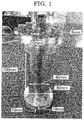
- FIG. 1 is a photograph depicting a pressure vessel used for an oil leakage sealing test.
- the oil leakage repairing material of the present invention is a curable composition.
- Oil absorption of the oil leakage repairing material before curing is 100% or greater.
- Oil absorption of the oil leakage repairing material after curing is 50% or less.
- the oil leakage repairing material is a curable composition, the oil leakage repairing material can be easily applied to areas to be repaired, and can easily block oil leakage.
- the oil leakage repairing material Since the oil absorption of the oil leakage repairing material before curing is 100% or greater, moreover, oil is appropriately absorbed by the oil leakage repairing material when the oil leakage repairing material is applied to an area from which oil is leaked. Therefore, the oil leakage repairing material has excellent adhesion to the oil leakage area. In addition, since the oil absorption of the oil leakage repairing material after curing is 50% or less, oil absorption is low after curing, and the oil leakage repairing material has high sealing capability for oil leakage. Therefore, the oil leakage repairing material can block oil leakage with high reliability.
- the oil absorption after curing is not particularly limited and may be appropriately selected depending on the intended purpose, as long as the oil absorption after curing is 50% or less.
- the oil absorption after curing may be greater than 0% but 50% or less, or 5% or greater but 50% or less.
- the oil absorption before curing can be determined by the following method.
- the oil leakage repairing material before curing and high pressure insulating oil A available from JXTG Nippon Oil & Energy Corporation (insulating oil A of JIS C2320, type: Type 1) are placed in a glass bottle at a mass ratio of 1:1.
- the resultant mixture is subjected to planetary agitation (e.g., device: AR-250 available from THINKY CORPORATION, rotational speed: 2,000 rpm, agitation time: 5 minutes). After leaving the resultant for 30 minutes at room temperature (25°C), whether separation is observed or not is confirmed. When the separation is not observed, oil absorption is determined as 100% or greater. When the separation is observed, oil absorption is determined as less than 100%.
- the state where no separation is observed is not typically changed even when the amount of the oil is further increased in the mass ratio.
- the fact that the oil absorption before curing is 100% or greater is equivalent to the oil absorption being infinite.
- the oil absorption after curing can be determined by the following method.
- the oil leakage repairing material is placed in a mold formed of a silicone resin and having a width of 10 mm, a length of 10 mm, and a depth of 5 mm.
- the oil leakage repairing material is irradiated using a metal halide lamp in a manner that an integrated light dose at 365 nm is to be 6 J/cm 2 , to thereby produce a cured product.
- a weight of the cured product taken out from the mold is measured, and the result is determined as a weight before oil absorption.
- the cured product is placed in a glass bottle. Moreover, a sufficient amount of oil to soak the entire cured product is placed in the glass bottle. After leaving to stand for 24 hours at room temperature (25°C), a weight of the cured product by which oil is absorbed is measured, and the result is determined as a weight after oil absorption.
- high pressure insulating oil A available from JXTG Nippon Oil & Energy Corporation (insulating oil A of JIS C2320, type: Type 1) is used as oil.
- Oil absorption % 100 ⁇ weight after oil absorption ⁇ weight before oil absorption / weight before oil absorption
- the oil leakage repairing material is preferably a putty.
- the putty has characteristics that a viscosity thereof is 100 Pa • s or greater but 200,000 Pa • s or less, and the putty does not become stringy as the putty is pulled away.
- the viscosity can be measured by means of a rheometer. Specifically, a viscosity is measured by means of AR-G2 available from TA Instruments Japan Inc. The measurement is performed at a shear rate of 0.1 s -1 in an environment having a temperature of 25°C using a cone plate having a diameter of 20 mm and an angle of 2°.
- the characteristics that the oil leakage repairing material does not become stringy as pulled away can be confirmed by whether the oil leakage repairing material becomes stringy when a surface of the oil leakage repairing material is brought into contact with a spatula formed of stainless steel for 0.5 seconds, followed by pulling the oil leakage repairing material away from the spatula.
- a glass transition temperature of the oil leakage repairing material after curing is not particularly limited and may be appropriately selected depending on the intended purpose.
- the glass transition temperature thereof is preferably 150°C or lower in view of impact resistance, vibration resistance, and repairing performance.
- the lower limit of the glass transition temperature is not particularly limited and may be appropriately selected depending on the intended purpose.
- the glass transition temperature may be -40°C or higher.
- the glass transition temperature of the cured product may be determined from a peak value of tan 8 (loss tangent) obtained by viscoelasticity measurement. Specifically, temperature dispersion measurement is performed by means of RSAIII available from TA Instruments Japan Inc. with a tensile mode, at frequency of 10 Hz and heating rate of 10 °C/min in the range of from -20°C to 200°C, and the glass transition temperature thereof is determined from a peak value of tan ⁇ (loss tangent).
- a strip test piece having a length of 40 mm, a width of 5 mm, and a thickness of 0.5 mm obtained and cured by performing irradiation using a metal halide lamp in a manner that an integrated light dose at 365 nm is to be 6 J/cm 2 .
- the oil leakage repairing material is preferably transparent after curing. Since a state of an area from which oil is leaked can be visually observed after repairing because the oil leakage repairing material is transparent after curing, a change of the oil leakage area can be observed even after repairing.
- the oil leakage repairing material preferably includes an elastomer.
- the oil leakage repairing material includes the elastomer, the oil leakage repairing material can be made in the state of a putty. Therefore, the oil leakage repairing material having excellent workability and enhanced convenience is obtained because the oil leakage repairing material can be easily applied to an area to be repaired.
- the elastomer is not particularly limited and may be appropriately selected depending on the intended purpose.
- the elastomer is preferably a styrene-based elastomer.
- the elastomer preferably includes an aromatic vinyl compound as a constitutional component, and more preferably includes styrene as a constitutional component.
- the styrene-based elastomer is an elastomer which includes an aromatic vinyl compound in a molecule thereof as a constitutional component.
- styrene-based elastomer examples include a block copolymer and a random copolymer between a conjugated diene compound and an aromatic vinyl compound, and hydrogenated products thereof.
- aromatic vinyl compound as the constitutional component in the polymer examples include constitutional components, such as styrene, p-(tert-butyl)styrene, ⁇ -methylstyrene, p-methylstyrene, divinyl benzene, 1,1-diphenylstyrene, N,N-diethyl-p-aminoethylstyrene, and vinyl toluene.
- a styrene constitutional component is preferable.
- the aromatic vinyl compound constitutional components may be used alone or in combination.
- conjugated diene compound as the constitutional component in the polymer examples include constitutional components, such as butadiene, isoprene, 1,3-pentadiene, and 2,3-dimethyl-1,3-butadiene.
- a butadiene constitutional component is preferable.
- the above-listed conjugated diene compound constitutional components may be used alone or in combination.
- styrene-based elastomer moreover, an elastomer that does not include a styrene component but includes an aromatic vinyl compound other than styrene formed by a similar method may be used.
- the styrene-based elastomer preferably includes the styrene constitutional component in an amount of 30% or greater.
- styrene-based elastomer examples include a styrene-butadienestyrene block copolymer (SBS), a styrene-ethylene-butylene-styrene block copolymer (SEBS), a styrene-isoprene-styrene block copolymer (SIS), hydrogenated SBS, a styrene-ethylene-ethylene-propylene-styrene block copolymer (SEEPS), a styrene-ethylene-propylene-styrene block copolymer (SEPS), hydrogenated SIS, hydrogenated styrene • butadiene rubber (HSBR), and hydrogenated acrylonitrile-butadiene rubber (HNBR).
- SBS styrene-butadienestyrene block copolymer
- SEBS styrene-ethylene-butylene-styrene block copo
- a commercial product can be used for the styrene-based elastomer.
- SEPTON 4033, 4077, SEPTON 4055, and SEPTON 8105 all product names, available from KURARAY CO., LTD.
- DYNARON 1320P, DYNARON 4600P, 6200P, 8601P, and 9901P all product names, JSR Corporation, etc.
- An amount of the elastomer in the oil leakage repairing material is not particularly limited and may be appropriately selected depending on the intended purpose.
- the amount thereof is preferably greater than 0% by mass but 35% by mass or less, and more preferably 15% by mass or greater but 35% by mass or less.
- the curable composition may be a heat-curable composition, an active energy ray-curable composition, or a heat and active energy ray-curable composition.
- the curable composition is preferably an active energy ray-curable composition because the curable composition is promptly cured and excellent convenience of repairing can be obtained.
- the active energy ray-curable composition preferably includes monofunctional (meth)acrylate free from a hydroxyl group, polyfunctional (meth)acrylate, and a photo-radical initiator.
- (meth)acrylate means acrylate and methacrylate.
- the active energy-curable composition that is the oil leakage repairing material preferably includes monofunctional (meth)acrylate including a hydroxyl group in an amount of 50% by mass or less, and is preferably free from monofunctional (meth)acrylate including a hydroxyl group.
- the active energy ray-curable composition includes a large amount of the monofunctional (meth)acrylate including a hydroxyl group, the monofunctional (meth)acrylate including a hydroxyl group is not easily compatible to the elastomer, and therefore it is difficult to obtain the oil leakage repairing material including the elastomer.
- the monofunctional (meth)acrylate free from a hydroxyl group is not particularly limited and may be appropriately selected depending on the intended purpose, as long as the monofunctional (meth)acrylate is monofunctional (meth)acrylate and is free from a hydroxyl group.
- Examples thereof include aliphatic monofunctional (meth)acrylate, alicyclic monofunctional (meth)acrylate, and aromatic monofunctional (meth)acrylate.
- the number of carbon atoms in the monofunctional (meth)acrylate free from a hydroxyl group is not particularly limited and may be appropriately selected depending on the intended purpose.
- the number of carbon atoms is preferably from 4 to 25, and more preferably from 10 to 30.
- the number of carbon atoms in the aliphatic monofunctional (meth)acrylate is not particularly limited and may be appropriately selected depending on the intended purpose.
- the number of carbon atoms is preferably from 4 to 35, and more preferably from 10 to 30.
- Examples of the aliphatic monofunctional (meth)acrylate include methyl (meth)acrylate, ethyl (meth)acrylate, propyl (meth)acrylate, isopropyl (meth)acrylate, butyl (meth)acrylate, isobutyl (meth)acrylate, 2-ethylhexyl (meth)acrylate, octyl (meth)acrylate, isooctyl (meth)acrylate, decyl (meth)acrylate, isodecyl (meth)acrylate, lauryl (meth)acrylate, stearyl (meth)acrylate, and isostearyl (meth)acrylate.
- the number of the alicyclic monofunctional (meth)acrylate is not particularly limited and may be appropriately selected depending on the intended purpose.
- the number of carbon atoms is preferably from 9 to 15.
- Examples of the alicyclic monofunctional (meth)acrylate include cyclohexyl (meth)acrylate, isobornyl (meth)acrylate, dicyclopentenyl (meth)acrylate, and tricyclodecanyl (meth)acrylate.
- aromatic monofunctional (meth)acrylate examples include benzyl (meth)acrylate, (meth)acrylate of p-cumylphenol alkylene oxide adduct, (meth)acrylate of o-phenylphenol alkylene oxide adduct, (meth)acrylate of phenol alkylene oxide adduct, and (meth)acrylate of nonylphenyl alkylene oxide adduct.
- alkylene oxide include ethylene oxide (EO), and propylene oxide (PO).
- An amount of the monofunctional (meth)acrylate free from a hydroxyl group in the active energy-curable composition that is the oil leakage repairing material is not particularly limited and may be appropriately selected depending on the intended purpose.
- the amount thereof is preferably 30% by mass or greater but 90% by mass or less, more preferably 50% by mass or greater but 85% by mass or less, and particularly preferably 60% by mass or greater but 80% by mass or less.
- the polyfunctional (meth)acrylate is not particularly limited and may be appropriately selected depending on the intended purpose, as long as the polyfunctional (meth)acrylate is bifunctional or higher (meth)acrylate. Examples thereof include bifunctional (meth)acrylate, trifunctional (meth)acrylate, and tetrafunctional (meth)acrylate.
- bifunctional (meth)acrylate examples include ethylene glycol di(meth)acrylate, diethylene glycol di(meth)acrylate, tetraethylene glycol di(meth)acrylate, polyethylene glycol di(meth)acrylate, propylene glycol di(meth)acrylate, dipropylene glycol di(meth)acrylate, polypropylene glycol di(meth)acrylate, butylene glycol di(meth)acrylate, neopentyl glycol di(meth)acrylate, ethylene oxide-modified bisphenol A di(meth)acrylate, propylene oxide-modified bisphenol A di(meth)acrylate, 1,6-hexanediol di(meth)acrylate, glycerin di(meth)acrylate, pentaerythritol di(meth)acrylate, ethylene glycol diglycidyl ether di(meth)acrylate, diethylene glycol diglycidyl ether di(meth)acrylate,
- trifunctional (meth)acrylate examples include trimethylol propane tri(meth)acrylate, pentaerythritol tri(meth)acrylate, and tri(meth)acryloyloxyethoxytrimethylol propane.
- tetra(meth)acrylate examples include pentaerythritol tetra(meth)acrylate.
- pentafunctional or higher (meth)acrylate examples include dipentaerythritol penta(meth)acrylate, and dipentaerythritol hexa(meth)acrylate.
- An amount of the polyfunctional (meth)acrylate in the active energy-curable composition that is the oil leakage repairing material is not particularly limited and may be appropriately selected depending on the intended purpose.
- the amount thereof is preferably greater than 0% by mass but 20% by mass or less, more preferably 0.1% by mass or greater but 15% by mass or less, and particularly preferably 0.2% by mass or greater but 10% by mass or less.
- photo-radical initiator examples include benzophenones, benzyl ketals, dialkoxyacetophenones, hydroxyalkylacetophenones, aminoalkylphenones, and acylphosphine oxides. Specific examples thereof include benzophenone, methyl benzophenone, 4-phenylbenzophenone, 4,4'-bis(dimethylamino)benzophenone, 4,4'-bis(diethylamino)benzophenone, benzyl, 2,2-dimethoxy-2-phenylacetophenone, dimethoxyacetophenone, diethoxyacetophenone, 2-hydroxy-2-methyl-1-phenylpropan-1-one, 2-benzyl-2-dimethylamino-1-(4-morpholinophenyl)-butan-1-one, 2-methyl-1-[4-(methoxythio)-phenyl]-2-morpholinopropan-2-one, 1-hydroxycyclohexyl-phenylketone, diphenyl
- An amount of the photo-radical initiator in the active energy-curable composition that is the oil leakage repairing material is not particularly limited and may be appropriately selected depending on the intended purpose.
- the amount thereof is preferably 0.1% by mass or greater but 20% by mass or less, more preferably 0.5% by mass or greater but 10% by mass or less, and particularly preferably 1% by mass or greater but 5% by mass or less.
- a method for curing the curable composition is not particularly limited and may be appropriately selected depending on the intended purpose.
- Preferred is a method where the curable composition is an active energy ray-curable composition, and active energy rays are applied to the active energy ray-curable composition to cure the active energy ray-curable composition.
- the active energy rays are not particularly limited and may be appropriately selected depending on the intended purpose. Examples thereof include electron beams, ultraviolet rays, infrared rays, laser light, visible light, ionizing radiation (e.g., X rays, ⁇ rays, ⁇ rays, and ⁇ rays), microwaves, and high frequency waves.
- the oil leakage repairing method of the present invention includes at least a curing step, and may further include other steps according to the necessity.
- the curing step is not particularly limited and may be appropriately selected depending on the intended purpose, as long as the curing step is a step including applying the oil leakage repairing material of the present invention, which is an active energy ray-curable composition, to an area of a pipe from which oil is leaked, and applying active energy rays to the oil leakage repairing material to cure the oil leakage repairing material.
- the oil leakage repairing material of the present invention which is an active energy ray-curable composition
- the pipe is not particularly limited and may be appropriately selected depending on the intended purpose, as long as the pipe is a pipe configured to feed insulating oil between a radiator and a transformer.
- a material of the pipe is not particularly limited and may be appropriately selected depending on the intended purpose, as long as the material thereof is metal.
- Examples of the pipe include a pipe formed of stainless steel.
- a size and length of the pipe are not particularly limited and may be appropriately selected depending on the intended purpose.
- a surface of the pipe may be treated with anticorrosion coating etc. as long as such coating does not adversely affect functions of the present invention.
- the area of the pipe from which oil is leaked is not particularly limited and may be appropriately selected depending on the intended purpose. Examples of the area thereof include a hole (e.g., a pin hole) formed in the pipe, and a joint section (e.g., a flange section) of the pipe.
- a hole e.g., a pin hole
- a joint section e.g., a flange section
- a method for applying the oil leakage repairing material to the area from which oil is leaked is not particularly limited and may be appropriately selected depending on the intended purpose. Examples thereof include brush coating, spatula coating, roller coating, and spray coating.
- the active energy rays are not particularly limited and may be appropriately selected depending on the intended purpose. Examples thereof include electron beams, ultraviolet rays, infrared rays, laser light, visible light, ionizing radiation (e.g., X rays, ⁇ rays, ⁇ rays, and ⁇ rays), microwaves, and high frequency waves.
- electron beams ultraviolet rays, infrared rays, laser light, visible light, ionizing radiation (e.g., X rays, ⁇ rays, ⁇ rays, and ⁇ rays), microwaves, and high frequency waves.
- the radiation dose of the active energy rays to the oil leakage repairing material is not particularly limited and may be appropriately selected depending on the intended purpose.
- the pipe of the present invention is a pipe including an area from which oil is leaked, and includes a cured product of the oil leakage repairing material of the present invention on the area from which oil is leaked.
- the pipe is not particularly limited and may be appropriately selected depending on the intended purpose, as long as the pipe is a pipe configured to feed insulating oil between a radiator and a transformer.
- a material of the pipe is not particularly limited and may be appropriately selected depending on the intended purpose, as long as the material thereof is metal.
- Examples of the pipe include a pipe formed of stainless steel.
- a size and length of the pipe are not particularly limited and may be appropriately selected depending on the intended purpose.
- a surface of the pipe may be treated with anticorrosion coating etc. as long as such coating does not adversely affect functions of the present invention.
- the area of the pipe from which oil is leaked is not particularly limited and may be appropriately selected depending on the intended purpose. Examples of the area thereof include a hole (e.g., a pin hole) formed in the pipe, and a joint section (e.g., a flange section) of the pipe.
- a hole e.g., a pin hole
- a joint section e.g., a flange section
- a curing method of the oil leakage repairing material is not particularly limited and may be appropriately selected depending on the intended purpose. Examples thereof include the curing step of the oil leakage repairing method of the present invention.
- the components (A), (B), (C), and (D) were mixed at a blending ratio presented in Table 1-1.
- the component (E) was added at the blending ratio presented in Table 1-1.
- the resultant mixture was subjected to planetary agitation at the rotational speed of 2,000 rpm by means of a planetary centrifugal mixer (AR-250, available from THINKY CORPORATION) until undissolved substances disappeared.
- AR-250 available from THINKY CORPORATION
- An active energy ray-curable composition that was an oil leakage repairing material was produced in the manner as in Example 1, except that the composition was changed to a composition of each of Examples 2 to 13 and Comparative Examples 1 to 2 presented in Tables 1-1 to 1-3.
- Viscosity was measured by means of a rheometer. Specifically, the viscosity was measured by means of AR-G2 available from TA Instruments Japan Inc. The measurement was performed at a shear rate of 0.1 s -1 in an environment having a temperature of 25°C using a cone plate having a diameter of 20 mm and an angle of 2°.
- Desirable Did not become stringy. Undesirable: Became stringy.
- the oil leakage repairing material before curing and high pressure insulating oil A available from JXTG Nippon Oil & Energy Corporation (insulating oil A of JIS C2320, type: Type 1) were placed in a glass bottle at a mass ratio of 1:1.
- the resultant mixture was subjected to planetary agitation (device: AR-250 available from THINKY CORPORATION, rotational speed: 2,000 rpm, agitation time: 5 minutes). After leaving the resultant for 30 minutes at room temperature (25°C), whether separation was observed or not was confirmed. When the separation was not observed, oil absorption was determined as 100% or greater. When the separation was observed, oil absorption was determined as less than 100%.
- the oil leakage repairing material was placed in a mold formed of a silicone resin and having a width of 10 mm, a length of 10 mm, and a depth of 5 mm. With the surface of the oil leakage repairing material covered with releasable PET having a thickness of 50 pm, the oil leakage repairing material was irradiated using a metal halide lamp in a manner that an integrated light dose at 365 nm was to be 6 J/cm 2 , to thereby produce a cured product. A weight of the cured product taken out from the mold was measured, and the result was determined as a weight before oil absorption.
- the cured product was placed in a glass bottle. Moreover, a sufficient amount of insulating oil to soak the entire cured product was placed in the glass bottle. After leaving to stand for 24 hours at room temperature (25°C), a weight of the cured product by which insulating oil was absorbed was measured, and the result was determined as a weight after oil absorption.
- high pressure insulating oil A available from JXTG Nippon Oil & Energy Corporation (insulating oil A of JIS C2320, type: Type 1) was used as insulating oil.
- Oil absorption % 100 ⁇ weight after oil absorption ⁇ weight before oil absorption / weight before oil absortpion
- a glass transition temperature of a cured product was determined from a peak value of tan 8 (loss tangent) obtained by viscoelasticity measurement. Specifically, temperature dispersion measurement was performed by means of RSAIII available from TA Instruments Japan Inc. with a tensile mode, at frequency of 10 Hz and heating rate of 10 °C/min in the range of from -20°C to 200°C, and the glass transition temperature thereof was determined from a peak value of tan ⁇ (loss tangent).
- a strip test piece having a length of 40 mm, a width of 5 mm, and a thickness of 0.5 mm obtained and cured by performing irradiation using a metal halide lamp in a manner that an integrated light dose at 365 nm was to be 6 J/cm 2 .
- Total light transmittance of the oil leakage repairing material after curing was measured by means of a haze meter (HM-150, manufactured by MURAKAMI COLOR RESEARCH LABORATORY) according to JIS K 7136.
- a measurement sample was produced by nipping the oil leakage repairing material with 2 sheets of S9213 available from Matsunami Glass Ind., Ltd. in a manner that a resultant was to have a side of 25 mm or greater and a thickness of 1 mm. Thereafter, the resultant was irradiated by means of a metal halide lamp in a manner that an integrated light dose at 365 nm was to be 6 J/cm 2 to cure.
- a circular mold formed of a silicone resin and having a diameter of 6 mm and a thickness of 2 mm was placed on a plate of SUS304.
- the mold was filled with the oil leakage repairing material including high pressure insulating oil A available from JXTG Nippon Oil & Energy Corporation (insulating oil A of JIS C2320, type: Type 1) in an amount of 10% by mass.
- the oil leakage repairing material was cured by irradiating using a metal halide lamp in a manner that an integrated light dose at 365 nm was to be 6 J/cm 2 . Thereafter, the cured product was taken out from the silicone resin mold to thereby produce a test piece (diameter: 6 mm, thickness: 2 mm) applied to the SUS304.
- a stainless steel wire having a diameter of 0.5 mm was nipped with inner seals of the flange section of the pressure vessel illustrated in FIG. 1 to produce a test device which leaked about 0.1 cc of oil for 1 minute as pressure was applied by air of 0.2 MPa.
- An oil leakage sealing test was performed using the test device as prepared.
- High pressure insulating oil A available from JXTG Nippon Oil & Energy Corporation (insulating oil A of JIS C2320, type: Type 1) was used as oil.
- the oil leakage repairing material was irradiated by a metal halide lamp in a manner that an integrated light dose at 365 nm was to be 6 J/cm 2 , to thereby cure the oil leakage repairing material.
- an integrated light dose at 365 nm was to be 6 J/cm 2 , to thereby cure the oil leakage repairing material.
- Desirable Oil leakage did not occur. Undesirable: Oil leakage occurred.
- the oil leakage repairing materials of Examples 1 to 13 had oil absorption of 100% or greater before curing, and oil absorption of 50% or less after curing. Therefore, the excellent results were obtained in the oil leakage sealing test, and it was confirmed that oil leakage was easily blocked with high reliability.
- Comparative Example 1 Since the oil leakage repairing material of Comparative Example 1 did not include polyfunctional (meth)acrylate, oil absorption after curing was greater than 50% and oil leakage was confirmed in the oil leakage sealing test.
- the oil leakage repairing material of the present invention can be suitably used for a repair of oil leakage of a pipe because the oil leakage repairing material can easily block oil leakage with high reliability when oil is leaked from a pipe through which the oil is passed.
Landscapes
- Chemical & Material Sciences (AREA)
- Engineering & Computer Science (AREA)
- Organic Chemistry (AREA)
- Medicinal Chemistry (AREA)
- Health & Medical Sciences (AREA)
- Chemical Kinetics & Catalysis (AREA)
- Polymers & Plastics (AREA)
- General Engineering & Computer Science (AREA)
- Mechanical Engineering (AREA)
- Power Engineering (AREA)
- Materials Engineering (AREA)
- Sealing Material Composition (AREA)
- Pipe Accessories (AREA)
- Housings And Mounting Of Transformers (AREA)
- Application Of Or Painting With Fluid Materials (AREA)
Abstract
Description
- The present invention relates to an oil leakage repairing material suitable for a repair of a pipe when oil is leaked from the pipe through which the oil is passed, an oil leakage repairing method using the oil leakage repairing material, and a pipe repaired with the oil leakage repairing material.
- A transformer equipped with a radiator is installed in, for example, power plants or substations. A main body of the transformer and the radiator are connected with an oil feeding pipe, and the main body of the transformer is cooled by circulating oil (e.g., insulating oil), which has been cooled in the radiator, between the main body of the transformer and the radiator.
- As a result of usage of an oil feeding pipe over many years, oil may be leaked from a flange section of the oil feeding pipe. After using an oil feeding pipe for many years, moreover, a hole, such as a pin hole, may be formed in the oil feeding pipe and oil may be leaked from the hole.
- When oil is leaked, it is feared that oil penetrates into the ground and may become a remote cause of pollution of soils or water. Particularly, insulating oil of an old-type oil cooler sometimes includes polybiphenyl chloride, which is environmental hormone. Considering possible influence to living bodies and the environment, it is necessary to strictly handle oil leakage.
- In order to prevent oil from flowing out when the oil is leaked from a flange section, therefore, proposed is a cover for preventing discharge of oil of a transformer, where an outer circumference of a linked flange is covered with an oil-resistant coating material, and an outlet of cooled oil open at the bottom end of the coating material is connected to a recovery container of the cooled oil (see, for example, PTL 1).
- This method however has a problem that oil discharge cannot be prevented when oil is leaked from an area other than a flange section. Moreover, it is necessary to dispose a coating material and a recovery container in this method, and therefore the method lacks convenience.
- As a simple discharge prevention measure when oil is leaked from an area other than a flange section, an area from which oil is leaked may be blocked with a rug (cloth).
- However, this is merely an emergency measure. Once the rug absorbs oil as much as it can, further oil leakage cannot be prevented. Therefore, the discharge prevention measure above lacks reliability.
- Therefore, there is currently a need for a method that can easily block oil leakage easily with high reliability when oil is leaked from a pipe through which the oil is passed.
- PTL 1: Japanese Patent Application Laid-Open (
JP-A) No. 2001-338814 - The present invention relates to an oil leakage repairing material that can easily block oil leakage with high reliability when oil is leaked from a pipe through which oil is passed, an oil leakage repairing method using the oil leakage repairing material, and a pipe repaired with the oil leakage repairing material.
- Means for solving the above-described problems are as follows.
- <1> An oil leakage repairing material, wherein:
- the oil leakage repairing material is a curable composition;
- oil absorption of the oil leakage repairing material before curing is 100% or greater; and
- oil absorption of the oil leakage repairing material after curing is 50% or less.
- <2> The oil leakage repairing material according to <1>,
wherein the oil leakage repairing material is a putty. - <3> The oil leakage repairing material according to <1> or <2>,
wherein the oil leakage repairing material includes an elastomer. - <4> The oil leakage repairing material according to <3>,
wherein the elastomer includes styrene as a constitutional component. - <5> The oil leakage repairing material according to <3> or <4>,
wherein an amount of the elastomer is greater than 0% by mass but 35% by mass or less. - <6> The oil leakage repairing material according to any one of <1> to <5>,
wherein the curable composition is an active energy ray-curable composition. - <7> The oil leakage repairing material according to <6>,
wherein the oil leakage repairing material includes monofunctional (meth)acrylate free from a hydroxyl group, polyfunctional (meth)acrylate, and a photo-radical initiator. - <8> The oil leakage repairing material according to <7>,
wherein an amount of the polyfunctional (meth)acrylate is greater than 0% by mass but 20% by mass or less. - <9> The oil leakage repairing material according to any one of <1> to <8>,
wherein a glass transition temperature of the oil leakage repairing material after curing is 150°C or lower. - <10> An oil leakage repairing method, including:
- applying the oil leakage repairing material according to any one of <1> to <9>,
- which is an active energy ray-curable composition, to an area of a pipe from which oil is leaked, and applying active energy rays to the oil leakage repairing material to cure the oil leakage repairing material.
- <11> A pipe including:
- an area from which oil is leaked; and
- a cured product of the oil leakage repairing material according to any one of <1> to <9> on the area from which the oil is leaked.
- The present invention can provide an oil leakage repairing material that can easily block oil leakage with high reliability when oil is leaked from a pipe through which oil is passed, an oil leakage repairing method using the oil leakage repairing material, and a pipe repaired with the oil leakage repairing material.
-
FIG. 1 is a photograph depicting a pressure vessel used for an oil leakage sealing test. - The oil leakage repairing material of the present invention is a curable composition.
- Oil absorption of the oil leakage repairing material before curing is 100% or greater.
- Oil absorption of the oil leakage repairing material after curing is 50% or less.
- Since the oil leakage repairing material is a curable composition, the oil leakage repairing material can be easily applied to areas to be repaired, and can easily block oil leakage.
- Since the oil absorption of the oil leakage repairing material before curing is 100% or greater, moreover, oil is appropriately absorbed by the oil leakage repairing material when the oil leakage repairing material is applied to an area from which oil is leaked. Therefore, the oil leakage repairing material has excellent adhesion to the oil leakage area. In addition, since the oil absorption of the oil leakage repairing material after curing is 50% or less, oil absorption is low after curing, and the oil leakage repairing material has high sealing capability for oil leakage. Therefore, the oil leakage repairing material can block oil leakage with high reliability.
- The oil absorption after curing is not particularly limited and may be appropriately selected depending on the intended purpose, as long as the oil absorption after curing is 50% or less. For example, the oil absorption after curing may be greater than 0% but 50% or less, or 5% or greater but 50% or less.
- For example, the oil absorption before curing can be determined by the following method.
- The oil leakage repairing material before curing and high pressure insulating oil A available from JXTG Nippon Oil & Energy Corporation (insulating oil A of JIS C2320, type: Type 1) are placed in a glass bottle at a mass ratio of 1:1. The resultant mixture is subjected to planetary agitation (e.g., device: AR-250 available from THINKY CORPORATION, rotational speed: 2,000 rpm, agitation time: 5 minutes). After leaving the resultant for 30 minutes at room temperature (25°C), whether separation is observed or not is confirmed. When the separation is not observed, oil absorption is determined as 100% or greater. When the separation is observed, oil absorption is determined as less than 100%.
- In the case where separation is not observed by the method described above, the state where no separation is observed is not typically changed even when the amount of the oil is further increased in the mass ratio. Specifically, in the measurement above, the fact that the oil absorption before curing is 100% or greater is equivalent to the oil absorption being infinite. In this point of view, it is not necessary to set the upper limit of the oil absorption of the oil leakage repairing material before curing as long as the oil absorption thereof before curing is 100% or greater.
- For example, the oil absorption after curing can be determined by the following method.
- The oil leakage repairing material is placed in a mold formed of a silicone resin and having a width of 10 mm, a length of 10 mm, and a depth of 5 mm. With the surface of the oil leakage repairing material covered with releasable PET having a thickness of 50 µm, the oil leakage repairing material is irradiated using a metal halide lamp in a manner that an integrated light dose at 365 nm is to be 6 J/cm2, to thereby produce a cured product. A weight of the cured product taken out from the mold is measured, and the result is determined as a weight before oil absorption.
- The cured product is placed in a glass bottle. Moreover, a sufficient amount of oil to soak the entire cured product is placed in the glass bottle. After leaving to stand for 24 hours at room temperature (25°C), a weight of the cured product by which oil is absorbed is measured, and the result is determined as a weight after oil absorption. For example, high pressure insulating oil A available from JXTG Nippon Oil & Energy Corporation (insulating oil A of JIS C2320, type: Type 1) is used as oil.
- Then, the oil absorption is determined using the following formula.

- Moreover, the oil leakage repairing material is preferably a putty.
- In the present invention, for example, the putty has characteristics that a viscosity thereof is 100 Pa • s or greater but 200,000 Pa • s or less, and the putty does not become stringy as the putty is pulled away.
- For example, the viscosity can be measured by means of a rheometer. Specifically, a viscosity is measured by means of AR-G2 available from TA Instruments Japan Inc. The measurement is performed at a shear rate of 0.1 s-1 in an environment having a temperature of 25°C using a cone plate having a diameter of 20 mm and an angle of 2°.
- Moreover, the characteristics that the oil leakage repairing material does not become stringy as pulled away can be confirmed by whether the oil leakage repairing material becomes stringy when a surface of the oil leakage repairing material is brought into contact with a spatula formed of stainless steel for 0.5 seconds, followed by pulling the oil leakage repairing material away from the spatula.
- A glass transition temperature of the oil leakage repairing material after curing is not particularly limited and may be appropriately selected depending on the intended purpose. The glass transition temperature thereof is preferably 150°C or lower in view of impact resistance, vibration resistance, and repairing performance. The lower limit of the glass transition temperature is not particularly limited and may be appropriately selected depending on the intended purpose. For example, the glass transition temperature may be -40°C or higher.
- For example, the glass transition temperature of the cured product may be determined from a peak value of tan 8 (loss tangent) obtained by viscoelasticity measurement. Specifically, temperature dispersion measurement is performed by means of RSAIII available from TA Instruments Japan Inc. with a tensile mode, at frequency of 10 Hz and heating rate of 10 °C/min in the range of from -20°C to 200°C, and the glass transition temperature thereof is determined from a peak value of tan δ (loss tangent). As a measurement sample, used is a strip test piece having a length of 40 mm, a width of 5 mm, and a thickness of 0.5 mm obtained and cured by performing irradiation using a metal halide lamp in a manner that an integrated light dose at 365 nm is to be 6 J/cm2.
- The oil leakage repairing material is preferably transparent after curing. Since a state of an area from which oil is leaked can be visually observed after repairing because the oil leakage repairing material is transparent after curing, a change of the oil leakage area can be observed even after repairing.
- The oil leakage repairing material preferably includes an elastomer.
- Since the oil leakage repairing material includes the elastomer, the oil leakage repairing material can be made in the state of a putty. Therefore, the oil leakage repairing material having excellent workability and enhanced convenience is obtained because the oil leakage repairing material can be easily applied to an area to be repaired.
- The elastomer is not particularly limited and may be appropriately selected depending on the intended purpose. The elastomer is preferably a styrene-based elastomer.
- The elastomer preferably includes an aromatic vinyl compound as a constitutional component, and more preferably includes styrene as a constitutional component.
- The styrene-based elastomer is an elastomer which includes an aromatic vinyl compound in a molecule thereof as a constitutional component.
- Examples of the styrene-based elastomer include a block copolymer and a random copolymer between a conjugated diene compound and an aromatic vinyl compound, and hydrogenated products thereof.
- Examples of the aromatic vinyl compound as the constitutional component in the polymer include constitutional components, such as styrene, p-(tert-butyl)styrene, α-methylstyrene, p-methylstyrene, divinyl benzene, 1,1-diphenylstyrene, N,N-diethyl-p-aminoethylstyrene, and vinyl toluene. Among the above-listed examples, a styrene constitutional component is preferable. The aromatic vinyl compound constitutional components may be used alone or in combination.
- Examples of the conjugated diene compound as the constitutional component in the polymer include constitutional components, such as butadiene, isoprene, 1,3-pentadiene, and 2,3-dimethyl-1,3-butadiene. Among the above-listed examples, a butadiene constitutional component is preferable. The above-listed conjugated diene compound constitutional components may be used alone or in combination.
- As the styrene-based elastomer, moreover, an elastomer that does not include a styrene component but includes an aromatic vinyl compound other than styrene formed by a similar method may be used.
- The styrene-based elastomer preferably includes the styrene constitutional component in an amount of 30% or greater.
- Examples of the styrene-based elastomer include a styrene-butadienestyrene block copolymer (SBS), a styrene-ethylene-butylene-styrene block copolymer (SEBS), a styrene-isoprene-styrene block copolymer (SIS), hydrogenated SBS, a styrene-ethylene-ethylene-propylene-styrene block copolymer (SEEPS), a styrene-ethylene-propylene-styrene block copolymer (SEPS), hydrogenated SIS, hydrogenated styrene • butadiene rubber (HSBR), and hydrogenated acrylonitrile-butadiene rubber (HNBR).
- The above-listed examples may be used alone or in combination.
- A commercial product can be used for the styrene-based elastomer. For example, SEPTON 4033, 4077, SEPTON 4055, and SEPTON 8105 (all product names, available from KURARAY CO., LTD.), and DYNARON 1320P, DYNARON 4600P, 6200P, 8601P, and 9901P (all product names, JSR Corporation), etc. can be used.
- An amount of the elastomer in the oil leakage repairing material is not particularly limited and may be appropriately selected depending on the intended purpose. The amount thereof is preferably greater than 0% by mass but 35% by mass or less, and more preferably 15% by mass or greater but 35% by mass or less.
- The curable composition may be a heat-curable composition, an active energy ray-curable composition, or a heat and active energy ray-curable composition. The curable composition is preferably an active energy ray-curable composition because the curable composition is promptly cured and excellent convenience of repairing can be obtained.
- The active energy ray-curable composition preferably includes monofunctional (meth)acrylate free from a hydroxyl group, polyfunctional (meth)acrylate, and a photo-radical initiator.
- In the present specification, the term (meth)acrylate means acrylate and methacrylate.
- Moreover, the active energy-curable composition that is the oil leakage repairing material preferably includes monofunctional (meth)acrylate including a hydroxyl group in an amount of 50% by mass or less, and is preferably free from monofunctional (meth)acrylate including a hydroxyl group. When the active energy ray-curable composition includes a large amount of the monofunctional (meth)acrylate including a hydroxyl group, the monofunctional (meth)acrylate including a hydroxyl group is not easily compatible to the elastomer, and therefore it is difficult to obtain the oil leakage repairing material including the elastomer.
- The monofunctional (meth)acrylate free from a hydroxyl group is not particularly limited and may be appropriately selected depending on the intended purpose, as long as the monofunctional (meth)acrylate is monofunctional (meth)acrylate and is free from a hydroxyl group. Examples thereof include aliphatic monofunctional (meth)acrylate, alicyclic monofunctional (meth)acrylate, and aromatic monofunctional (meth)acrylate.
- The number of carbon atoms in the monofunctional (meth)acrylate free from a hydroxyl group is not particularly limited and may be appropriately selected depending on the intended purpose. The number of carbon atoms is preferably from 4 to 25, and more preferably from 10 to 30.
- The number of carbon atoms in the aliphatic monofunctional (meth)acrylate is not particularly limited and may be appropriately selected depending on the intended purpose. The number of carbon atoms is preferably from 4 to 35, and more preferably from 10 to 30.
- Examples of the aliphatic monofunctional (meth)acrylate include methyl (meth)acrylate, ethyl (meth)acrylate, propyl (meth)acrylate, isopropyl (meth)acrylate, butyl (meth)acrylate, isobutyl (meth)acrylate, 2-ethylhexyl (meth)acrylate, octyl (meth)acrylate, isooctyl (meth)acrylate, decyl (meth)acrylate, isodecyl (meth)acrylate, lauryl (meth)acrylate, stearyl (meth)acrylate, and isostearyl (meth)acrylate.
- The above-listed examples may be used alone or in combination.
- The number of the alicyclic monofunctional (meth)acrylate is not particularly limited and may be appropriately selected depending on the intended purpose. The number of carbon atoms is preferably from 9 to 15.
- Examples of the alicyclic monofunctional (meth)acrylate include cyclohexyl (meth)acrylate, isobornyl (meth)acrylate, dicyclopentenyl (meth)acrylate, and tricyclodecanyl (meth)acrylate.
- The above-listed examples may be used alone or in combination.
- Examples of the aromatic monofunctional (meth)acrylate include benzyl (meth)acrylate, (meth)acrylate of p-cumylphenol alkylene oxide adduct, (meth)acrylate of o-phenylphenol alkylene oxide adduct, (meth)acrylate of phenol alkylene oxide adduct, and (meth)acrylate of nonylphenyl alkylene oxide adduct. Examples of the alkylene oxide include ethylene oxide (EO), and propylene oxide (PO).
- The above-listed examples may be used alone or in combination.
- An amount of the monofunctional (meth)acrylate free from a hydroxyl group in the active energy-curable composition that is the oil leakage repairing material is not particularly limited and may be appropriately selected depending on the intended purpose. The amount thereof is preferably 30% by mass or greater but 90% by mass or less, more preferably 50% by mass or greater but 85% by mass or less, and particularly preferably 60% by mass or greater but 80% by mass or less.
- The polyfunctional (meth)acrylate is not particularly limited and may be appropriately selected depending on the intended purpose, as long as the polyfunctional (meth)acrylate is bifunctional or higher (meth)acrylate. Examples thereof include bifunctional (meth)acrylate, trifunctional (meth)acrylate, and tetrafunctional (meth)acrylate.
- The above-listed examples may be used alone or in combination.
- Examples of the bifunctional (meth)acrylate include ethylene glycol di(meth)acrylate, diethylene glycol di(meth)acrylate, tetraethylene glycol di(meth)acrylate, polyethylene glycol di(meth)acrylate, propylene glycol di(meth)acrylate, dipropylene glycol di(meth)acrylate, polypropylene glycol di(meth)acrylate, butylene glycol di(meth)acrylate, neopentyl glycol di(meth)acrylate, ethylene oxide-modified bisphenol A di(meth)acrylate, propylene oxide-modified bisphenol A di(meth)acrylate, 1,6-hexanediol di(meth)acrylate, glycerin di(meth)acrylate, pentaerythritol di(meth)acrylate, ethylene glycol diglycidyl ether di(meth)acrylate, diethylene glycol diglycidyl ether di(meth)acrylate, diglycidyl phthalate di(meth)acrylate, and hydroxypivalic acid-modified neopentyl glycol di(meth)acrylate.
- The above-listed examples may be used alone or in combination.
- Examples of the trifunctional (meth)acrylate include trimethylol propane tri(meth)acrylate, pentaerythritol tri(meth)acrylate, and tri(meth)acryloyloxyethoxytrimethylol propane.
- The above-listed examples may be used alone or in combination.
- Examples of the tetra(meth)acrylate include pentaerythritol tetra(meth)acrylate.
- The above-listed examples may be used alone or in combination.
- Examples of pentafunctional or higher (meth)acrylate include dipentaerythritol penta(meth)acrylate, and dipentaerythritol hexa(meth)acrylate.
- The above-listed examples may be used alone or in combination.
- An amount of the polyfunctional (meth)acrylate in the active energy-curable composition that is the oil leakage repairing material is not particularly limited and may be appropriately selected depending on the intended purpose. The amount thereof is preferably greater than 0% by mass but 20% by mass or less, more preferably 0.1% by mass or greater but 15% by mass or less, and particularly preferably 0.2% by mass or greater but 10% by mass or less.
- Examples of the photo-radical initiator include benzophenones, benzyl ketals, dialkoxyacetophenones, hydroxyalkylacetophenones, aminoalkylphenones, and acylphosphine oxides. Specific examples thereof include benzophenone, methyl benzophenone, 4-phenylbenzophenone, 4,4'-bis(dimethylamino)benzophenone, 4,4'-bis(diethylamino)benzophenone, benzyl, 2,2-dimethoxy-2-phenylacetophenone, dimethoxyacetophenone, diethoxyacetophenone, 2-hydroxy-2-methyl-1-phenylpropan-1-one, 2-benzyl-2-dimethylamino-1-(4-morpholinophenyl)-butan-1-one, 2-methyl-1-[4-(methoxythio)-phenyl]-2-morpholinopropan-2-one, 1-hydroxycyclohexyl-phenylketone, diphenylacylphenylphosphine oxide, diphenyl(2,4,6-trimethylbenzoyl)phosphine oxide, 2,4,6-trimethylbenzoylethoxyphenylphosphine oxide, and bis(2,4,6-trimethylbenzoyl)phenylphosphine oxide.
- The above-listed examples may be used alone or in combination.
- An amount of the photo-radical initiator in the active energy-curable composition that is the oil leakage repairing material is not particularly limited and may be appropriately selected depending on the intended purpose. The amount thereof is preferably 0.1% by mass or greater but 20% by mass or less, more preferably 0.5% by mass or greater but 10% by mass or less, and particularly preferably 1% by mass or greater but 5% by mass or less.
- A method for curing the curable composition is not particularly limited and may be appropriately selected depending on the intended purpose. Preferred is a method where the curable composition is an active energy ray-curable composition, and active energy rays are applied to the active energy ray-curable composition to cure the active energy ray-curable composition. The active energy rays are not particularly limited and may be appropriately selected depending on the intended purpose. Examples thereof include electron beams, ultraviolet rays, infrared rays, laser light, visible light, ionizing radiation (e.g., X rays, α rays, β rays, and γ rays), microwaves, and high frequency waves.
- The oil leakage repairing method of the present invention includes at least a curing step, and may further include other steps according to the necessity.
- The curing step is not particularly limited and may be appropriately selected depending on the intended purpose, as long as the curing step is a step including applying the oil leakage repairing material of the present invention, which is an active energy ray-curable composition, to an area of a pipe from which oil is leaked, and applying active energy rays to the oil leakage repairing material to cure the oil leakage repairing material.
- The pipe is not particularly limited and may be appropriately selected depending on the intended purpose, as long as the pipe is a pipe configured to feed insulating oil between a radiator and a transformer.
- A material of the pipe is not particularly limited and may be appropriately selected depending on the intended purpose, as long as the material thereof is metal. Examples of the pipe include a pipe formed of stainless steel.
- A size and length of the pipe are not particularly limited and may be appropriately selected depending on the intended purpose.
- Note that, a surface of the pipe may be treated with anticorrosion coating etc. as long as such coating does not adversely affect functions of the present invention.
- The area of the pipe from which oil is leaked is not particularly limited and may be appropriately selected depending on the intended purpose. Examples of the area thereof include a hole (e.g., a pin hole) formed in the pipe, and a joint section (e.g., a flange section) of the pipe.
- A method for applying the oil leakage repairing material to the area from which oil is leaked is not particularly limited and may be appropriately selected depending on the intended purpose. Examples thereof include brush coating, spatula coating, roller coating, and spray coating.
- The active energy rays are not particularly limited and may be appropriately selected depending on the intended purpose. Examples thereof include electron beams, ultraviolet rays, infrared rays, laser light, visible light, ionizing radiation (e.g., X rays, α rays, β rays, and γ rays), microwaves, and high frequency waves.
- The radiation dose of the active energy rays to the oil leakage repairing material is not particularly limited and may be appropriately selected depending on the intended purpose.
- The pipe of the present invention is a pipe including an area from which oil is leaked, and includes a cured product of the oil leakage repairing material of the present invention on the area from which oil is leaked.
- The pipe is not particularly limited and may be appropriately selected depending on the intended purpose, as long as the pipe is a pipe configured to feed insulating oil between a radiator and a transformer.
- A material of the pipe is not particularly limited and may be appropriately selected depending on the intended purpose, as long as the material thereof is metal. Examples of the pipe include a pipe formed of stainless steel.
- A size and length of the pipe are not particularly limited and may be appropriately selected depending on the intended purpose.
- Note that, a surface of the pipe may be treated with anticorrosion coating etc. as long as such coating does not adversely affect functions of the present invention.
- The area of the pipe from which oil is leaked is not particularly limited and may be appropriately selected depending on the intended purpose. Examples of the area thereof include a hole (e.g., a pin hole) formed in the pipe, and a joint section (e.g., a flange section) of the pipe.
- A curing method of the oil leakage repairing material is not particularly limited and may be appropriately selected depending on the intended purpose. Examples thereof include the curing step of the oil leakage repairing method of the present invention.
- Examples of the present invention will be described hereinafter but the present invention is not limited to Examples below in any way.
- Among the components presented in Table 1-1, the components (A), (B), (C), and (D) were mixed at a blending ratio presented in Table 1-1. To the obtained mixture, the component (E) was added at the blending ratio presented in Table 1-1. The resultant mixture was subjected to planetary agitation at the rotational speed of 2,000 rpm by means of a planetary centrifugal mixer (AR-250, available from THINKY CORPORATION) until undissolved substances disappeared. In the manner as described above, an active energy ray-curable composition that was an oil leakage repairing material was produced.
- An active energy ray-curable composition that was an oil leakage repairing material was produced in the manner as in Example 1, except that the composition was changed to a composition of each of Examples 2 to 13 and Comparative Examples 1 to 2 presented in Tables 1-1 to 1-3.
- The obtained active energy ray-curable compositions were subjected to measurement and evaluations below. The results are presented in Tables 1-1 to 1-3.
- Viscosity was measured by means of a rheometer. Specifically, the viscosity was measured by means of AR-G2 available from TA Instruments Japan Inc. The measurement was performed at a shear rate of 0.1 s-1 in an environment having a temperature of 25°C using a cone plate having a diameter of 20 mm and an angle of 2°.
- After bringing a surface of the oil leakage repairing material into contact with a spatula formed of stainless steel for 0.5 seconds, the oil leakage repairing material was pulled away from the spatula. At this time, whether the oil leakage repairing material became stringy or not was visually confirmed and the result was evaluated based on the following evaluation criteria.
- Desirable: Did not become stringy.
Undesirable: Became stringy. - The oil leakage repairing material before curing and high pressure insulating oil A available from JXTG Nippon Oil & Energy Corporation (insulating oil A of JIS C2320, type: Type 1) were placed in a glass bottle at a mass ratio of 1:1. The resultant mixture was subjected to planetary agitation (device: AR-250 available from THINKY CORPORATION, rotational speed: 2,000 rpm, agitation time: 5 minutes). After leaving the resultant for 30 minutes at room temperature (25°C), whether separation was observed or not was confirmed. When the separation was not observed, oil absorption was determined as 100% or greater. When the separation was observed, oil absorption was determined as less than 100%.
- The oil leakage repairing material was placed in a mold formed of a silicone resin and having a width of 10 mm, a length of 10 mm, and a depth of 5 mm. With the surface of the oil leakage repairing material covered with releasable PET having a thickness of 50 pm, the oil leakage repairing material was irradiated using a metal halide lamp in a manner that an integrated light dose at 365 nm was to be 6 J/cm2, to thereby produce a cured product. A weight of the cured product taken out from the mold was measured, and the result was determined as a weight before oil absorption.
- The cured product was placed in a glass bottle. Moreover, a sufficient amount of insulating oil to soak the entire cured product was placed in the glass bottle. After leaving to stand for 24 hours at room temperature (25°C), a weight of the cured product by which insulating oil was absorbed was measured, and the result was determined as a weight after oil absorption. For example, high pressure insulating oil A available from JXTG Nippon Oil & Energy Corporation (insulating oil A of JIS C2320, type: Type 1) was used as insulating oil.
- Then, the oil absorption was determined using the following formula.

- A glass transition temperature of a cured product was determined from a peak value of tan 8 (loss tangent) obtained by viscoelasticity measurement. Specifically, temperature dispersion measurement was performed by means of RSAIII available from TA Instruments Japan Inc. with a tensile mode, at frequency of 10 Hz and heating rate of 10 °C/min in the range of from -20°C to 200°C, and the glass transition temperature thereof was determined from a peak value of tan δ (loss tangent). As a measurement sample, used was a strip test piece having a length of 40 mm, a width of 5 mm, and a thickness of 0.5 mm obtained and cured by performing irradiation using a metal halide lamp in a manner that an integrated light dose at 365 nm was to be 6 J/cm2.
- Total light transmittance of the oil leakage repairing material after curing was measured by means of a haze meter (HM-150, manufactured by MURAKAMI COLOR RESEARCH LABORATORY) according to JIS K 7136.
- A measurement sample was produced by nipping the oil leakage repairing material with 2 sheets of S9213 available from Matsunami Glass Ind., Ltd. in a manner that a resultant was to have a side of 25 mm or greater and a thickness of 1 mm. Thereafter, the resultant was irradiated by means of a metal halide lamp in a manner that an integrated light dose at 365 nm was to be 6 J/cm2 to cure.
- When the transparency was 50% or greater, the sample was determined as transparent.
- A circular mold formed of a silicone resin and having a diameter of 6 mm and a thickness of 2 mm was placed on a plate of SUS304. The mold was filled with the oil leakage repairing material including high pressure insulating oil A available from JXTG Nippon Oil & Energy Corporation (insulating oil A of JIS C2320, type: Type 1) in an amount of 10% by mass. The oil leakage repairing material was cured by irradiating using a metal halide lamp in a manner that an integrated light dose at 365 nm was to be 6 J/cm2. Thereafter, the cured product was taken out from the silicone resin mold to thereby produce a test piece (diameter: 6 mm, thickness: 2 mm) applied to the SUS304.
- An adhesion test was performed according to JIS K 5600-5-7: mechanical characteristics of a coating film-Section 7: adhesion (pull off method). For adhesion between the test piece and a test cylinder, Aronalpha 201 available from TOAGOSEI CO., LTD. and an accelerator were used to completely cure and adhere. Measurement of adhesion was performed at a tensile speed of 10 mm/min by means of a desktop precision universal tester Autograph AGS-X available from Shimadzu Corporation.
- A stainless steel wire having a diameter of 0.5 mm was nipped with inner seals of the flange section of the pressure vessel illustrated in
FIG. 1 to produce a test device which leaked about 0.1 cc of oil for 1 minute as pressure was applied by air of 0.2 MPa. An oil leakage sealing test was performed using the test device as prepared. - High pressure insulating oil A available from JXTG Nippon Oil & Energy Corporation (insulating oil A of JIS C2320, type: Type 1) was used as oil.
- To the area from which oil was leaked at the above-mentioned rate, 20 g of the oil leakage repairing material was applied to sufficiently cover the area. The oil leakage repairing material was irradiated by a metal halide lamp in a manner that an integrated light dose at 365 nm was to be 6 J/cm2, to thereby cure the oil leakage repairing material. One hour later, the state of oil leakage was visually observed, and the result was evaluated based on the following evaluation criteria.
- Desirable: Oil leakage did not occur.
Undesirable: Oil leakage occurred.


- In Tables 1-1 to 1-3, ">0.5" in the column of the adhesion means that the adhesion is greater than 0.5 MPa. Note that, in the sample having the evaluation result of ">0.5," no peeling between the plate of SUS304 and the oil leakage repairing material was observed, and peeling between the jig and the adhesive, the adhesion of which was 0.5 MPa, was observed.
- The external appearance before curing was visually evaluated.
- The details of the materials used in Examples and Comparative Examples are as follows.
- 2EHA: 2-ethylhexyl acrylate (available from NIPPON SHOKUBAI CO., LTD.)
- SA: stearyl acrylate (available from KYOEISHA CHEMICAL Co., Ltd.)
- SMA: stearyl methacrylate (available from KYOEISHA CHEMICAL Co., Ltd.)
- LA: lauryl acrylate (available from KYOEISHA CHEMICAL Co., Ltd.)
- ISTA: isostearyl acrylate (available from OSAKA ORGANIC CHEMICAL INDUSTRY LTD.)
- IBXA: isobornyl acrylate (available from OSAKA ORGANIC CHEMICAL INDUSTRY LTD.)
- A-DCP: tricyclodecane dimethanol diacrylate (available from SHIN-NAKAMURA CHEMICAL CO., LTD.)
- 4HBA: 4-hydroxybutyl acrylate (available from OSAKA ORGANIC CHEMICAL INDUSTRY LTD.)
- IRG 1173: 2-hydroxy-2-methyl-1-phenylpropan-1-one (available from BASF)
- SBS: JSR TR2250 (available from JSR Corporation)
- SEBS: SEPTON8006 (available from KURARAY CO., LTD.)
- SIS: JSR SIS5250 (available from JSR Corporation)
- SEEPS: SEPTON4033 (available from KURARAY CO., LTD.)
- With the composition of Comparative Example 2, the elastomer and the monofunctional acryl including OH did not mix and therefore a repairing material could not be prepared.
- When the elastomer was not added, moreover, a putty that was transparent and could be photocured could not be obtained. When the elastomer was added, on the other hand, the oil absorption before curing was 100% or greater. Therefore, a putty that had oil absorption of less than 100% before curing and could be photocured could not be prepared.
- The oil leakage repairing materials of Examples 1 to 13 had oil absorption of 100% or greater before curing, and oil absorption of 50% or less after curing. Therefore, the excellent results were obtained in the oil leakage sealing test, and it was confirmed that oil leakage was easily blocked with high reliability.
- Since the oil leakage repairing material of Comparative Example 1 did not include polyfunctional (meth)acrylate, oil absorption after curing was greater than 50% and oil leakage was confirmed in the oil leakage sealing test.
- The oil leakage repairing material of the present invention can be suitably used for a repair of oil leakage of a pipe because the oil leakage repairing material can easily block oil leakage with high reliability when oil is leaked from a pipe through which the oil is passed.
Claims (11)
- An oil leakage repairing material, wherein:the oil leakage repairing material is a curable composition;oil absorption of the oil leakage repairing material before curing is 100% or greater; andoil absorption of the oil leakage repairing material after curing is 50% or less.
- The oil leakage repairing material according to claim 1,
wherein the oil leakage repairing material is a putty. - The oil leakage repairing material according to claim 1 or 2,
wherein the oil leakage repairing material includes an elastomer. - The oil leakage repairing material according to claim 3,
wherein the elastomer includes styrene as a constitutional component. - The oil leakage repairing material according to claim 3 or 4,
wherein an amount of the elastomer is greater than 0% by mass but 35% by mass or less. - The oil leakage repairing material according to any one of claims 1 to 5,
wherein the curable composition is an active energy ray-curable composition. - The oil leakage repairing material according to claim 6,
wherein the oil leakage repairing material includes monofunctional (meth)acrylate free from a hydroxyl group, polyfunctional (meth)acrylate, and a photo-radical initiator. - The oil leakage repairing material according to claim 7,
wherein an amount of the polyfunctional (meth)acrylate is greater than 0% by mass but 20% by mass or less. - The oil leakage repairing material according to any one of claims 1 to 8,
wherein a glass transition temperature of the oil leakage repairing material after curing is 150°C or lower. - An oil leakage repairing method, comprising:
applying the oil leakage repairing material according to any one of claims 1 to 9, which is an active energy ray-curable composition, to an area of a pipe from which oil is leaked, and applying active energy rays to the oil leakage repairing material to cure the oil leakage repairing material. - A pipe comprising:an area from which oil is leaked; anda cured product of the oil leakage repairing material according to any one of claims 1 to 9 on the area from which the oil is leaked.
Applications Claiming Priority (2)
| Application Number | Priority Date | Filing Date | Title |
|---|---|---|---|
| JP2018098009A JP6431999B1 (en) | 2018-05-22 | 2018-05-22 | Oil spill repair material, oil spill repair method, and piping |
| PCT/JP2019/017554 WO2019225283A1 (en) | 2018-05-22 | 2019-04-25 | Oil leakage repair material, method for repairing oil leakage, and piping |
Publications (3)
| Publication Number | Publication Date |
|---|---|
| EP3644329A1 true EP3644329A1 (en) | 2020-04-29 |
| EP3644329A4 EP3644329A4 (en) | 2021-09-01 |
| EP3644329B1 EP3644329B1 (en) | 2025-06-18 |
Family
ID=64480624
Family Applications (1)
| Application Number | Title | Priority Date | Filing Date |
|---|---|---|---|
| EP19807030.2A Active EP3644329B1 (en) | 2018-05-22 | 2019-04-25 | Oil leakage repair material, method for repairing oil leakage, and piping |
Country Status (6)
| Country | Link |
|---|---|
| US (1) | US11976769B2 (en) |
| EP (1) | EP3644329B1 (en) |
| JP (1) | JP6431999B1 (en) |
| CN (1) | CN112204684B (en) |
| TW (1) | TWI776052B (en) |
| WO (1) | WO2019225283A1 (en) |
Families Citing this family (8)
| Publication number | Priority date | Publication date | Assignee | Title |
|---|---|---|---|---|
| TWI879902B (en) * | 2020-03-27 | 2025-04-11 | 日商迪睿合股份有限公司 | Gas leakage point identification material, method for identification gas leakage point, gas leakage repair material, method for repair gas leakage point and repair device for gas leakage point |
| JP7492868B2 (en) * | 2020-03-27 | 2024-05-30 | デクセリアルズ株式会社 | Air leak location identifying material and method, air leak location repair material and method, and air leak location repair device |
| CN112524388A (en) * | 2020-09-30 | 2021-03-19 | 郑州新锐石油工程技术有限公司 | Method for repairing oil field storage tank by cold welding process without fire |
| TWI834245B (en) * | 2021-08-13 | 2024-03-01 | 日商力森諾科股份有限公司 | Pipe repair methods |
| JP2024073707A (en) * | 2022-11-18 | 2024-05-30 | デクセリアルズ株式会社 | Leak repair composition and leak repair method |
| JP2024083749A (en) * | 2022-12-12 | 2024-06-24 | デクセリアルズ株式会社 | How to repair a leak |
| JP2024088156A (en) * | 2022-12-20 | 2024-07-02 | デクセリアルズ株式会社 | Leak repair composition and leak repair method |
| CN117601582A (en) * | 2023-11-27 | 2024-02-27 | 河南大唐制版有限公司 | A plate roller and its oil leakage repair method |
Family Cites Families (36)
| Publication number | Priority date | Publication date | Assignee | Title |
|---|---|---|---|---|
| US3850651A (en) * | 1972-04-13 | 1974-11-26 | Ici Ltd | Cementing compositions and concretes and mortars derived therefrom |
| US3970725A (en) * | 1972-09-26 | 1976-07-20 | Dai Nippon Toryo Co., Ltd. | Powdery coating composition and process for preparing the same |
| JPS52131722A (en) * | 1975-07-28 | 1977-11-04 | Japan Synthetic Rubber Co Ltd | Method of manufacturing electrostatic recording medium |
| JPH06166725A (en) * | 1992-12-01 | 1994-06-14 | Showa Denko Kk | Oil absorbent |
| JPH06248184A (en) * | 1993-02-24 | 1994-09-06 | Toshiba Silicone Co Ltd | Room temperature curable polyorganosiloxane composition |
| JPH08328248A (en) * | 1995-06-02 | 1996-12-13 | Nippon Paint Co Ltd | Water-developable photosensitive resin composition |
| JP3199215B2 (en) * | 1995-09-14 | 2001-08-13 | シャープ株式会社 | Liquid crystal display device and method of manufacturing the same |
| US5786299A (en) * | 1997-06-19 | 1998-07-28 | Eastman Kodak Company | Thermal dye transfer assemblage with low Tg polymeric receiver mixture |
| JP3487194B2 (en) * | 1998-09-25 | 2004-01-13 | 信越化学工業株式会社 | How to repair oil leaks |
| JP2001338814A (en) | 2000-05-29 | 2001-12-07 | Kabe Denki Seisakusho:Kk | Oil spill prevention cover of transformer |
| US6869981B2 (en) * | 2001-09-21 | 2005-03-22 | Corning Incorporated | Optical fiber coatings with pressure sensitive adhesive characteristics |
| JP3886003B2 (en) * | 2002-04-17 | 2007-02-28 | 西日本電設株式会社 | Sealing agent for oil spill repair and repair method for oil spill |
| EP1405872A1 (en) * | 2002-10-03 | 2004-04-07 | Atofina | Use of a film based on PVDF, PMMA or mixtures thereof for covering thermosetting materials |
| FR2852601B1 (en) | 2003-03-18 | 2005-05-20 | INJECTION SUBSTANCE FOR LEAKAGE FILLING, ITS USE AND METHOD OF SHUTTERING | |
| TW200710571A (en) * | 2005-05-31 | 2007-03-16 | Taiyo Ink Mfg Co Ltd | Curable resin composition and cured object obtained therefrom |
| CN1990515A (en) * | 2005-12-30 | 2007-07-04 | 易会安 | Starch-(methyl) acrylic ester grafted copolymer, oil suction swelling rubber comprising same and oil well packer |
| JP4628416B2 (en) * | 2007-11-30 | 2011-02-09 | 日東電工株式会社 | Viscoelastic member having an unevenly distributed elastomer layer |
| JP5252395B2 (en) * | 2008-06-06 | 2013-07-31 | 関西電力株式会社 | Oil leakage prevention method for oil-filled equipment |
| CN102131879A (en) * | 2008-08-25 | 2011-07-20 | 日本瑞翁株式会社 | Thermally conductive pressure-sensitive adhesive composition, thermally conductive pressure-sensitive adhesive sheet, and electronic component |
| JP2011040519A (en) * | 2009-08-10 | 2011-02-24 | Tokyo Electric Power Co Inc:The | Construction method for insulating-oil sealing of oil-immersed electrical equipment |
| KR102092287B1 (en) * | 2011-04-27 | 2020-03-23 | 헨켈 아이피 앤드 홀딩 게엠베하 | Curable elastomer compositions with low temperature sealing capability |
| JP5444420B2 (en) * | 2012-06-26 | 2014-03-19 | 株式会社リケン | Seal member |
| EP2850147A1 (en) * | 2012-05-18 | 2015-03-25 | ND Industries, Inc. | Sealant and fastener including same |
| EP2682444A1 (en) * | 2012-07-06 | 2014-01-08 | Bostik SA | Use of an adhesive composition to provide a bonding in a wet environment |
| JP2014077454A (en) * | 2012-10-09 | 2014-05-01 | Hokkaido Electric Power Co Inc:The | Liquid leakage prevention method |
| KR102101873B1 (en) * | 2012-12-17 | 2020-04-17 | 닛테츠 케미컬 앤드 머티리얼 가부시키가이샤 | bis ether compounds having fluorene backbone and resin composition |
| CN103320106B (en) * | 2013-07-08 | 2015-12-23 | 饶帮玉 | Petroleum drilling fluid leak sealing temporary plugging agent and preparation method thereof |
| JP2015083656A (en) * | 2013-09-17 | 2015-04-30 | 株式会社リコー | Active energy ray-curable ink, ink cartridge containing ink, method for forming image or cured product, and apparatus for forming image or cured product |
| JP5744158B2 (en) * | 2013-10-30 | 2015-07-01 | 西日本電設株式会社 | Oil leakage prevention sealing material, oil leakage prevention structure, and method for repairing oil leakage points |
| US9676922B2 (en) * | 2014-06-11 | 2017-06-13 | IPS, Corporation—Weld-On Division | Heat and moisture resistant acrylic adhesive composition |
| JP2018070661A (en) * | 2015-02-25 | 2018-05-10 | 日本製紙株式会社 | Rubber composition for oil sealing |
| KR101917640B1 (en) * | 2016-03-05 | 2018-11-12 | 미쯔비시 케미컬 주식회사 | Adhesive film and method 0f preparing same |
| JP6842661B2 (en) * | 2016-03-11 | 2021-03-17 | 日本エクスラン工業株式会社 | Organic solvent absorbers containing water-soluble amphoteric polymers, oil-absorbing materials and materials to be printed |
| CN106051374A (en) * | 2016-05-27 | 2016-10-26 | 郭作阳 | Under-pressure non-production-stop blocking device for leakage of insulated joint |
| JP6797591B2 (en) | 2016-08-02 | 2020-12-09 | 積水化学工業株式会社 | How to reinforce or repair structures |
| CN206075989U (en) * | 2016-08-31 | 2017-04-05 | 全球能源互联网研究院 | A kind of transformator oil leak repair layer |
-
2018
- 2018-05-22 JP JP2018098009A patent/JP6431999B1/en active Active
-
2019
- 2019-04-25 US US16/628,774 patent/US11976769B2/en active Active
- 2019-04-25 EP EP19807030.2A patent/EP3644329B1/en active Active
- 2019-04-25 WO PCT/JP2019/017554 patent/WO2019225283A1/en not_active Ceased
- 2019-04-25 CN CN201980034126.1A patent/CN112204684B/en active Active
- 2019-04-29 TW TW108114890A patent/TWI776052B/en active
Also Published As
| Publication number | Publication date |
|---|---|
| EP3644329A4 (en) | 2021-09-01 |
| TW202004071A (en) | 2020-01-16 |
| WO2019225283A1 (en) | 2019-11-28 |
| TWI776052B (en) | 2022-09-01 |
| CN112204684B (en) | 2024-07-12 |
| JP2019204849A (en) | 2019-11-28 |
| US11976769B2 (en) | 2024-05-07 |
| CN112204684A (en) | 2021-01-08 |
| US20200124224A1 (en) | 2020-04-23 |
| EP3644329B1 (en) | 2025-06-18 |
| JP6431999B1 (en) | 2018-11-28 |
Similar Documents
| Publication | Publication Date | Title |
|---|---|---|
| US11976769B2 (en) | Oil leakage repairing material, oil leakage repairing method, and pipe | |
| CN104968690B (en) | Photo-curable elastic composition, encapsulant, hard disk drive pad, hard disk drive and device | |
| CN112805350B (en) | Liquid leakage repair material, liquid leakage repair method and piping | |
| WO2014061267A1 (en) | Photo-curable elastomer composition, sealing material, and device | |
| JP2014148650A (en) | Photocurable elastomer composition, sealing material, gasket for hard disk drive and device | |
| WO2023153337A1 (en) | Composition for repairing liquid leakage and method for repairing liquid leakage | |
| JP6545886B1 (en) | Oil leakage repair material, oil leakage repair method, and piping | |
| JP2018199796A (en) | SEALING MATERIAL COMPOSITION AND SEALING MATERIAL | |
| CN104968697B (en) | Photo-curable elastic composition, hard disk drive pad and hard disk drive | |
| JP5695102B2 (en) | Photocurable elastomer composition, gasket for hard disk drive and hard disk drive | |
| JP6892803B2 (en) | Adhesive composition | |
| JP2021183705A (en) | Acrylic adhesive composition | |
| JP2017203173A (en) | Adhesive composition | |
| JP7209002B2 (en) | Laminate manufacturing method | |
| HK40036939A (en) | Oil leakage repair material, method for repairing oil leakage, and piping | |
| JP5695101B2 (en) | Photocurable elastomer composition, gasket for hard disk drive and hard disk drive | |
| WO2014061265A1 (en) | Photo-curable elastomer composition, sealing material, and device | |
| HK40036939B (en) | Oil leakage repair material, method for repairing oil leakage, and piping | |
| JP2014148643A (en) | Photocurable elastomer composition, sealing material, and device | |
| WO2015129711A1 (en) | Curable resin composition | |
| JP2015151534A (en) | Photocurable resin composition and seal material | |
| JP2014148645A (en) | Photocurable elastomer composition, gasket for hard disk drive and hard disk drive | |
| JP5695100B2 (en) | Photocurable elastomer composition, gasket for hard disk drive and hard disk drive | |
| WO2025151972A1 (en) | Adhesive and tape including bio-based components and related processes | |
| TW201245319A (en) | Resin composition and adhesive |
Legal Events
| Date | Code | Title | Description |
|---|---|---|---|
| STAA | Information on the status of an ep patent application or granted ep patent |
Free format text: STATUS: THE INTERNATIONAL PUBLICATION HAS BEEN MADE |
|
| PUAI | Public reference made under article 153(3) epc to a published international application that has entered the european phase |
Free format text: ORIGINAL CODE: 0009012 |
|
| STAA | Information on the status of an ep patent application or granted ep patent |
Free format text: STATUS: REQUEST FOR EXAMINATION WAS MADE |
|
| 17P | Request for examination filed |
Effective date: 20200123 |
|
| AK | Designated contracting states |
Kind code of ref document: A1 Designated state(s): AL AT BE BG CH CY CZ DE DK EE ES FI FR GB GR HR HU IE IS IT LI LT LU LV MC MK MT NL NO PL PT RO RS SE SI SK SM TR |
|
| AX | Request for extension of the european patent |
Extension state: BA ME |
|
| DAV | Request for validation of the european patent (deleted) | ||
| DAX | Request for extension of the european patent (deleted) | ||
| A4 | Supplementary search report drawn up and despatched |
Effective date: 20210804 |
|
| RIC1 | Information provided on ipc code assigned before grant |
Ipc: H01F 27/00 20060101AFI20210729BHEP Ipc: C09K 3/12 20060101ALI20210729BHEP Ipc: F16L 55/175 20060101ALI20210729BHEP Ipc: C08F 287/00 20060101ALI20210729BHEP |
|
| STAA | Information on the status of an ep patent application or granted ep patent |
Free format text: STATUS: EXAMINATION IS IN PROGRESS |
|
| 17Q | First examination report despatched |
Effective date: 20230515 |
|
| GRAP | Despatch of communication of intention to grant a patent |
Free format text: ORIGINAL CODE: EPIDOSNIGR1 |
|
| STAA | Information on the status of an ep patent application or granted ep patent |
Free format text: STATUS: GRANT OF PATENT IS INTENDED |
|
| INTG | Intention to grant announced |
Effective date: 20241128 |
|
| GRAJ | Information related to disapproval of communication of intention to grant by the applicant or resumption of examination proceedings by the epo deleted |
Free format text: ORIGINAL CODE: EPIDOSDIGR1 |
|
| STAA | Information on the status of an ep patent application or granted ep patent |
Free format text: STATUS: EXAMINATION IS IN PROGRESS |
|
| GRAP | Despatch of communication of intention to grant a patent |
Free format text: ORIGINAL CODE: EPIDOSNIGR1 |
|
| STAA | Information on the status of an ep patent application or granted ep patent |
Free format text: STATUS: GRANT OF PATENT IS INTENDED |
|
| INTC | Intention to grant announced (deleted) | ||
| INTG | Intention to grant announced |
Effective date: 20250404 |
|
| GRAS | Grant fee paid |
Free format text: ORIGINAL CODE: EPIDOSNIGR3 |
|
| GRAA | (expected) grant |
Free format text: ORIGINAL CODE: 0009210 |
|
| STAA | Information on the status of an ep patent application or granted ep patent |
Free format text: STATUS: THE PATENT HAS BEEN GRANTED |
|
| AK | Designated contracting states |
Kind code of ref document: B1 Designated state(s): AL AT BE BG CH CY CZ DE DK EE ES FI FR GB GR HR HU IE IS IT LI LT LU LV MC MK MT NL NO PL PT RO RS SE SI SK SM TR |
|
| REG | Reference to a national code |
Ref country code: GB Ref legal event code: FG4D |
|
| REG | Reference to a national code |
Ref country code: CH Ref legal event code: EP |
|
| REG | Reference to a national code |
Ref country code: DE Ref legal event code: R096 Ref document number: 602019071325 Country of ref document: DE |
|
| REG | Reference to a national code |
Ref country code: CH Ref legal event code: EP |
|
| REG | Reference to a national code |
Ref country code: IE Ref legal event code: FG4D Ref country code: NL Ref legal event code: FP |
|
| PG25 | Lapsed in a contracting state [announced via postgrant information from national office to epo] |
Ref country code: FI Free format text: LAPSE BECAUSE OF FAILURE TO SUBMIT A TRANSLATION OF THE DESCRIPTION OR TO PAY THE FEE WITHIN THE PRESCRIBED TIME-LIMIT Effective date: 20250618 |
|
| REG | Reference to a national code |
Ref country code: LT Ref legal event code: MG9D |
|
| PG25 | Lapsed in a contracting state [announced via postgrant information from national office to epo] |
Ref country code: NO Free format text: LAPSE BECAUSE OF FAILURE TO SUBMIT A TRANSLATION OF THE DESCRIPTION OR TO PAY THE FEE WITHIN THE PRESCRIBED TIME-LIMIT Effective date: 20250918 Ref country code: GR Free format text: LAPSE BECAUSE OF FAILURE TO SUBMIT A TRANSLATION OF THE DESCRIPTION OR TO PAY THE FEE WITHIN THE PRESCRIBED TIME-LIMIT Effective date: 20250919 |
|
| PG25 | Lapsed in a contracting state [announced via postgrant information from national office to epo] |
Ref country code: BG Free format text: LAPSE BECAUSE OF FAILURE TO SUBMIT A TRANSLATION OF THE DESCRIPTION OR TO PAY THE FEE WITHIN THE PRESCRIBED TIME-LIMIT Effective date: 20250618 |
|
| PG25 | Lapsed in a contracting state [announced via postgrant information from national office to epo] |
Ref country code: HR Free format text: LAPSE BECAUSE OF FAILURE TO SUBMIT A TRANSLATION OF THE DESCRIPTION OR TO PAY THE FEE WITHIN THE PRESCRIBED TIME-LIMIT Effective date: 20250618 |
|
| PG25 | Lapsed in a contracting state [announced via postgrant information from national office to epo] |
Ref country code: RS Free format text: LAPSE BECAUSE OF FAILURE TO SUBMIT A TRANSLATION OF THE DESCRIPTION OR TO PAY THE FEE WITHIN THE PRESCRIBED TIME-LIMIT Effective date: 20250918 |
|
| PG25 | Lapsed in a contracting state [announced via postgrant information from national office to epo] |
Ref country code: LV Free format text: LAPSE BECAUSE OF FAILURE TO SUBMIT A TRANSLATION OF THE DESCRIPTION OR TO PAY THE FEE WITHIN THE PRESCRIBED TIME-LIMIT Effective date: 20250618 |
|
| PG25 | Lapsed in a contracting state [announced via postgrant information from national office to epo] |
Ref country code: PT Free format text: LAPSE BECAUSE OF FAILURE TO SUBMIT A TRANSLATION OF THE DESCRIPTION OR TO PAY THE FEE WITHIN THE PRESCRIBED TIME-LIMIT Effective date: 20251020 |
|
| REG | Reference to a national code |
Ref country code: AT Ref legal event code: MK05 Ref document number: 1805023 Country of ref document: AT Kind code of ref document: T Effective date: 20250618 |
|
| PG25 | Lapsed in a contracting state [announced via postgrant information from national office to epo] |
Ref country code: IS Free format text: LAPSE BECAUSE OF FAILURE TO SUBMIT A TRANSLATION OF THE DESCRIPTION OR TO PAY THE FEE WITHIN THE PRESCRIBED TIME-LIMIT Effective date: 20251018 |
|
| PG25 | Lapsed in a contracting state [announced via postgrant information from national office to epo] |
Ref country code: AT Free format text: LAPSE BECAUSE OF FAILURE TO SUBMIT A TRANSLATION OF THE DESCRIPTION OR TO PAY THE FEE WITHIN THE PRESCRIBED TIME-LIMIT Effective date: 20250618 Ref country code: SM Free format text: LAPSE BECAUSE OF FAILURE TO SUBMIT A TRANSLATION OF THE DESCRIPTION OR TO PAY THE FEE WITHIN THE PRESCRIBED TIME-LIMIT Effective date: 20250618 |
|
| PG25 | Lapsed in a contracting state [announced via postgrant information from national office to epo] |
Ref country code: CZ Free format text: LAPSE BECAUSE OF FAILURE TO SUBMIT A TRANSLATION OF THE DESCRIPTION OR TO PAY THE FEE WITHIN THE PRESCRIBED TIME-LIMIT Effective date: 20250618 |
|
| PG25 | Lapsed in a contracting state [announced via postgrant information from national office to epo] |
Ref country code: PL Free format text: LAPSE BECAUSE OF FAILURE TO SUBMIT A TRANSLATION OF THE DESCRIPTION OR TO PAY THE FEE WITHIN THE PRESCRIBED TIME-LIMIT Effective date: 20250618 |
|
| PG25 | Lapsed in a contracting state [announced via postgrant information from national office to epo] |
Ref country code: EE Free format text: LAPSE BECAUSE OF FAILURE TO SUBMIT A TRANSLATION OF THE DESCRIPTION OR TO PAY THE FEE WITHIN THE PRESCRIBED TIME-LIMIT Effective date: 20250618 |
|
| PG25 | Lapsed in a contracting state [announced via postgrant information from national office to epo] |
Ref country code: RO Free format text: LAPSE BECAUSE OF FAILURE TO SUBMIT A TRANSLATION OF THE DESCRIPTION OR TO PAY THE FEE WITHIN THE PRESCRIBED TIME-LIMIT Effective date: 20250618 Ref country code: SK Free format text: LAPSE BECAUSE OF FAILURE TO SUBMIT A TRANSLATION OF THE DESCRIPTION OR TO PAY THE FEE WITHIN THE PRESCRIBED TIME-LIMIT Effective date: 20250618 |
|
| PG25 | Lapsed in a contracting state [announced via postgrant information from national office to epo] |
Ref country code: ES Free format text: LAPSE BECAUSE OF FAILURE TO SUBMIT A TRANSLATION OF THE DESCRIPTION OR TO PAY THE FEE WITHIN THE PRESCRIBED TIME-LIMIT Effective date: 20250618 |
|
| REG | Reference to a national code |
Ref country code: DE Ref legal event code: R097 Ref document number: 602019071325 Country of ref document: DE |
|
| PGFP | Annual fee paid to national office [announced via postgrant information from national office to epo] |
Ref country code: GB Payment date: 20260310 Year of fee payment: 8 |
|
| PG25 | Lapsed in a contracting state [announced via postgrant information from national office to epo] |
Ref country code: DK Free format text: LAPSE BECAUSE OF FAILURE TO SUBMIT A TRANSLATION OF THE DESCRIPTION OR TO PAY THE FEE WITHIN THE PRESCRIBED TIME-LIMIT Effective date: 20250618 |
|
| PG25 | Lapsed in a contracting state [announced via postgrant information from national office to epo] |
Ref country code: IT Free format text: LAPSE BECAUSE OF FAILURE TO SUBMIT A TRANSLATION OF THE DESCRIPTION OR TO PAY THE FEE WITHIN THE PRESCRIBED TIME-LIMIT Effective date: 20250618 |
|
| PGFP | Annual fee paid to national office [announced via postgrant information from national office to epo] |
Ref country code: NL Payment date: 20260317 Year of fee payment: 8 |
|
| PGFP | Annual fee paid to national office [announced via postgrant information from national office to epo] |
Ref country code: FR Payment date: 20260309 Year of fee payment: 8 |
|
| PLBE | No opposition filed within time limit |
Free format text: ORIGINAL CODE: 0009261 |
|
| STAA | Information on the status of an ep patent application or granted ep patent |
Free format text: STATUS: NO OPPOSITION FILED WITHIN TIME LIMIT |
|
| REG | Reference to a national code |
Ref country code: CH Ref legal event code: L10 Free format text: ST27 STATUS EVENT CODE: U-0-0-L10-L00 (AS PROVIDED BY THE NATIONAL OFFICE) Effective date: 20260430 |
|
| 26N | No opposition filed |
Effective date: 20260319 |
|
| PG25 | Lapsed in a contracting state [announced via postgrant information from national office to epo] |
Ref country code: LT Free format text: LAPSE BECAUSE OF FAILURE TO SUBMIT A TRANSLATION OF THE DESCRIPTION OR TO PAY THE FEE WITHIN THE PRESCRIBED TIME-LIMIT Effective date: 20250618 |
|
| PGFP | Annual fee paid to national office [announced via postgrant information from national office to epo] |
Ref country code: DE Payment date: 20260305 Year of fee payment: 8 |
|
| PG25 | Lapsed in a contracting state [announced via postgrant information from national office to epo] |
Ref country code: SE Free format text: LAPSE BECAUSE OF FAILURE TO SUBMIT A TRANSLATION OF THE DESCRIPTION OR TO PAY THE FEE WITHIN THE PRESCRIBED TIME-LIMIT Effective date: 20250618 |