EP3643426A1 - Wet molding sand reutilizing method and device - Google Patents
Wet molding sand reutilizing method and device Download PDFInfo
- Publication number
- EP3643426A1 EP3643426A1 EP18820760.9A EP18820760A EP3643426A1 EP 3643426 A1 EP3643426 A1 EP 3643426A1 EP 18820760 A EP18820760 A EP 18820760A EP 3643426 A1 EP3643426 A1 EP 3643426A1
- Authority
- EP
- European Patent Office
- Prior art keywords
- suspension
- sand
- green sand
- concentration
- green
- Prior art date
- Legal status (The legal status is an assumption and is not a legal conclusion. Google has not performed a legal analysis and makes no representation as to the accuracy of the status listed.)
- Withdrawn
Links
- 238000000034 method Methods 0.000 title claims abstract description 19
- 239000003110 molding sand Substances 0.000 title 1
- 239000004576 sand Substances 0.000 claims abstract description 105
- 239000000725 suspension Substances 0.000 claims abstract description 57
- 239000002245 particle Substances 0.000 claims abstract description 21
- XLYOFNOQVPJJNP-UHFFFAOYSA-N water Substances O XLYOFNOQVPJJNP-UHFFFAOYSA-N 0.000 claims abstract description 19
- 239000000203 mixture Substances 0.000 claims abstract description 7
- 238000000465 moulding Methods 0.000 abstract description 8
- 239000004927 clay Substances 0.000 description 25
- 239000000463 material Substances 0.000 description 11
- 239000011248 coating agent Substances 0.000 description 10
- 238000000576 coating method Methods 0.000 description 10
- 239000000428 dust Substances 0.000 description 5
- 238000009210 therapy by ultrasound Methods 0.000 description 5
- 239000000654 additive Substances 0.000 description 3
- 238000013019 agitation Methods 0.000 description 3
- 239000011230 binding agent Substances 0.000 description 3
- 239000002270 dispersing agent Substances 0.000 description 3
- 239000012153 distilled water Substances 0.000 description 3
- 239000007788 liquid Substances 0.000 description 3
- FQENQNTWSFEDLI-UHFFFAOYSA-J sodium diphosphate Chemical compound [Na+].[Na+].[Na+].[Na+].[O-]P([O-])(=O)OP([O-])([O-])=O FQENQNTWSFEDLI-UHFFFAOYSA-J 0.000 description 3
- 229940048086 sodium pyrophosphate Drugs 0.000 description 3
- 239000006228 supernatant Substances 0.000 description 3
- 235000019818 tetrasodium diphosphate Nutrition 0.000 description 3
- 239000001577 tetrasodium phosphonato phosphate Substances 0.000 description 3
- 239000003795 chemical substances by application Substances 0.000 description 2
- 238000004898 kneading Methods 0.000 description 2
- 238000012986 modification Methods 0.000 description 2
- 230000004048 modification Effects 0.000 description 2
- 239000000843 powder Substances 0.000 description 2
- RBTBFTRPCNLSDE-UHFFFAOYSA-N 3,7-bis(dimethylamino)phenothiazin-5-ium Chemical compound C1=CC(N(C)C)=CC2=[S+]C3=CC(N(C)C)=CC=C3N=C21 RBTBFTRPCNLSDE-UHFFFAOYSA-N 0.000 description 1
- 229910000278 bentonite Inorganic materials 0.000 description 1
- 239000000440 bentonite Substances 0.000 description 1
- SVPXDRXYRYOSEX-UHFFFAOYSA-N bentoquatam Chemical compound O.O=[Si]=O.O=[Al]O[Al]=O SVPXDRXYRYOSEX-UHFFFAOYSA-N 0.000 description 1
- 238000007599 discharging Methods 0.000 description 1
- 239000006185 dispersion Substances 0.000 description 1
- 238000001035 drying Methods 0.000 description 1
- 238000002474 experimental method Methods 0.000 description 1
- 230000006870 function Effects 0.000 description 1
- 229910052751 metal Inorganic materials 0.000 description 1
- 239000002184 metal Substances 0.000 description 1
- 229960000907 methylthioninium chloride Drugs 0.000 description 1
- 230000003287 optical effect Effects 0.000 description 1
- 239000011368 organic material Substances 0.000 description 1
- 239000003566 sealing material Substances 0.000 description 1
- 239000002002 slurry Substances 0.000 description 1
- 238000003756 stirring Methods 0.000 description 1
- 230000001988 toxicity Effects 0.000 description 1
- 231100000419 toxicity Toxicity 0.000 description 1
- 238000005406 washing Methods 0.000 description 1
Images
Classifications
-
- B—PERFORMING OPERATIONS; TRANSPORTING
- B22—CASTING; POWDER METALLURGY
- B22C—FOUNDRY MOULDING
- B22C5/00—Machines or devices specially designed for dressing or handling the mould material so far as specially adapted for that purpose
- B22C5/18—Plants for preparing mould materials
- B22C5/185—Plants for preparing mould materials comprising a wet reclamation step
-
- B—PERFORMING OPERATIONS; TRANSPORTING
- B22—CASTING; POWDER METALLURGY
- B22C—FOUNDRY MOULDING
- B22C5/00—Machines or devices specially designed for dressing or handling the mould material so far as specially adapted for that purpose
- B22C5/14—Equipment for storing or handling the dressed mould material, forming part of a plant for preparing such material
-
- B—PERFORMING OPERATIONS; TRANSPORTING
- B22—CASTING; POWDER METALLURGY
- B22C—FOUNDRY MOULDING
- B22C5/00—Machines or devices specially designed for dressing or handling the mould material so far as specially adapted for that purpose
- B22C5/04—Machines or devices specially designed for dressing or handling the mould material so far as specially adapted for that purpose by grinding, blending, mixing, kneading, or stirring
- B22C5/0409—Blending, mixing, kneading or stirring; Methods therefor
- B22C5/0481—Blending, mixing, kneading or stirring; Methods therefor using vibrations
Definitions
- the present invention relates to a method and an apparatus to efficiently reuse green sand after molding.
- the coating materials that have been stripped and separated include crushed sand as fine powder and clay that has been denatured by heat from poured molten metal.
- active clay which is an effective binder, it is difficult to separate it from the coating materials that have been stripped and separated.
- water is added to dust that has been collected and that includes the coating materials that have been stripped and separated to be reused as a paste-like sealing material for molds. But most of the dust is usually disposed of.
- Patent Literature 2 a method for collecting active clay, which is an effective binder, from the coating materials that have been stripped and separated, is disclosed.
- active clay which is an effective binder
- collected dust that includes the coating materials that have been stripped and separated is agitated and suspended in water.
- a supernatant liquid that includes bentonite and organic materials is separated.
- the supernatant liquid is used in a line for molding.
- the present invention aims to provide a method and an apparatus for effectively reusing green sand that would otherwise be disposed of because of overflow, even though it is usable.
- a method for reusing green sand of the present invention comprises the step of treating the green sand with ultrasonic waves in water. It also comprises the step of separating to separate a mixture that is obtained by the step of treating the green sand with ultrasonic waves to form a suspension and to form residual particles of the sand. It also comprises the step of circulating to circulate the suspension to then proceed to the step of treating the green sand with ultrasonic waves so that the suspension is concentrated. It also comprises the step of storing to store the concentrated suspension. It also comprises the step of feeding to feed the stored suspension to green sand by a predetermined amount when green sand is mulled.
- active clay By treating green sand with ultrasonic waves, active clay can be efficiently separated from it to obtain a suspension that includes the active clay.
- the suspension By circulating the suspension as water for treating green sand with ultrasonic waves, the suspension can be concentrated. Thus the clay of the green sand can be efficiently reused.
- the method for reusing the green sand of the present invention preferably includes the step of removing an Oolitic layer from the residual particles of the sand that have been separated in the step of separating.
- An apparatus for reusing green sand of the present invention comprises an ultrasonic washer for treating green sand with ultrasonic waves in water, the green sand having been used. It also comprises a separator for separating a mixture that is obtained by the ultrasonic washer to form a suspension and to form residual particles of the sand. It also comprises an apparatus for circulating and making the suspension thicker, which apparatus measures a degree of concentration of the separated suspension, which apparatus returns the suspension to the ultrasonic washer if the degree of concentration that is measured equals, or is below, a predetermined degree of concentration, and which apparatus feeds the suspension to a storage tank for storing the suspension if the degree of concentration that is measured is over the predetermined degree of concentration. It also comprises the storage tank that stores the suspension of which the degree of concentration is over the predetermined degree of concentration. It also comprises a volumetric feeder that feeds the stored suspension by a predetermined amount when the green sand is mulled.
- the suspension By treating the green sand with ultrasonic waves, active clay is efficiently removed from the green sand to cause the suspension to contain the active clay.
- the suspension By using such a suspension as water for the ultrasonic treatment, the suspension can be concentrated so that the clay can be efficiently used as the clay content of the green sand.
- the apparatus for reusing the green sand of the present invention preferably comprises a system for mechanically reclaiming the green sand that removes an Oolitic layer from the residual particles of the sand that have been separated in the separator.
- the present invention provides a method for effectively reusing the green sand that would otherwise overflow from the line for molding to be disposed of, even though it is fully usable.
- the degrees of separating active clay from the green sand by means of ultrasonic waves and by means of mechanical agitation are tested for comparison.
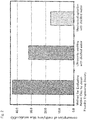
- the results are shown in Fig. 2 .
- the results were evaluated by The Method for Evaluating Active Clay (TJFS-205), issued by Tokai Branch, Japan Foundry Engineering Society.
- the content of the active clay is measured as below. 50 cm 3 of a 2% solution of sodium pyrophosphate is added to 5 g of green sand, and then is subjected to ultrasonic washing for 10 minutes.
- the sodium pyrophosphate has abilities to strip the coating materials on the surfaces of the particles of the sand and to disperse them.
- the supernatant liquid is titrated by a methylene blue solution of 1/100 concentration.
- the content of the active clay is determined by the consumption of the solution.
- sodium pyrophosphate which has a function for causing a dispersion
- no dispersing agent is added.
- distilled water which contains no dispersing agent, is used to compare possible collections of the active clay by means of ultrasonic waves and by means of mechanical agitation.
- the green sand is subjected to the ultrasonic treatment by using distilled water, which contains no dispersing agent, so that 74% of the active clay in the green sand is included in the suspension to be collected. Thirty-eight percent of the active clay is separated and collected by means of mechanical agitation.
Landscapes
- Engineering & Computer Science (AREA)
- Mechanical Engineering (AREA)
- Separation Of Solids By Using Liquids Or Pneumatic Power (AREA)
- Mold Materials And Core Materials (AREA)
- Molds, Cores, And Manufacturing Methods Thereof (AREA)
Abstract
Description
- The present invention relates to a method and an apparatus to efficiently reuse green sand after molding.
- In green sand molding, since a core is used, an organic binder that has been used for forming the core dissipates so that a part of the core sand become single grains to be mixed in the green sand. Thus the total amount of the green sand in the line for molding gradually increases, to overflow. Thus the part of the green sand that is used in the line for molding must be disposed of. Further, the clay content is reduced because of the increase of the amount of the green sand. Thus clay must be added. This increases costs.
- In this situation, materials that adhere to the surfaces of the sand are stripped, separated, and removed by mechanical means. Then the sand is reclaimed to be used for molds. The coating materials that have been stripped and separated are collected by a dust collector in the same way as for dust.
- The coating materials that have been stripped and separated include crushed sand as fine powder and clay that has been denatured by heat from poured molten metal. However, regarding active clay, which is an effective binder, it is difficult to separate it from the coating materials that have been stripped and separated. Thus, as in
Patent Literature 1, water is added to dust that has been collected and that includes the coating materials that have been stripped and separated to be reused as a paste-like sealing material for molds. But most of the dust is usually disposed of. - For example, in
Patent Literature 2, a method for collecting active clay, which is an effective binder, from the coating materials that have been stripped and separated, is disclosed. In that method collected dust that includes the coating materials that have been stripped and separated is agitated and suspended in water. Then a supernatant liquid that includes bentonite and organic materials is separated. The supernatant liquid is used in a line for molding. - However, these methods are insufficient to reuse green sand that is to be disposed of because of overflow, by efficiently separating active clay, which can be reused.
- The present invention aims to provide a method and an apparatus for effectively reusing green sand that would otherwise be disposed of because of overflow, even though it is usable.
-
- [Patent Literature 1]
Japanese Patent Laid-open Publication No.2003-290872 - [Patent Literature 2]
Published PCT Japanese Translation No.2004-532129 - A method for reusing green sand of the present invention comprises the step of treating the green sand with ultrasonic waves in water. It also comprises the step of separating to separate a mixture that is obtained by the step of treating the green sand with ultrasonic waves to form a suspension and to form residual particles of the sand. It also comprises the step of circulating to circulate the suspension to then proceed to the step of treating the green sand with ultrasonic waves so that the suspension is concentrated. It also comprises the step of storing to store the concentrated suspension. It also comprises the step of feeding to feed the stored suspension to green sand by a predetermined amount when green sand is mulled.
- By treating green sand with ultrasonic waves, active clay can be efficiently separated from it to obtain a suspension that includes the active clay. By circulating the suspension as water for treating green sand with ultrasonic waves, the suspension can be concentrated. Thus the clay of the green sand can be efficiently reused.
- The method for reusing the green sand of the present invention preferably includes the step of removing an Oolitic layer from the residual particles of the sand that have been separated in the step of separating.
- By removing the Oolitic layer from the residual particles of the sand, they can be reused as core sand, etc.
- An apparatus for reusing green sand of the present invention comprises an ultrasonic washer for treating green sand with ultrasonic waves in water, the green sand having been used. It also comprises a separator for separating a mixture that is obtained by the ultrasonic washer to form a suspension and to form residual particles of the sand. It also comprises an apparatus for circulating and making the suspension thicker, which apparatus measures a degree of concentration of the separated suspension, which apparatus returns the suspension to the ultrasonic washer if the degree of concentration that is measured equals, or is below, a predetermined degree of concentration, and which apparatus feeds the suspension to a storage tank for storing the suspension if the degree of concentration that is measured is over the predetermined degree of concentration. It also comprises the storage tank that stores the suspension of which the degree of concentration is over the predetermined degree of concentration. It also comprises a volumetric feeder that feeds the stored suspension by a predetermined amount when the green sand is mulled.
- By treating the green sand with ultrasonic waves, active clay is efficiently removed from the green sand to cause the suspension to contain the active clay. By using such a suspension as water for the ultrasonic treatment, the suspension can be concentrated so that the clay can be efficiently used as the clay content of the green sand.
- The apparatus for reusing the green sand of the present invention preferably comprises a system for mechanically reclaiming the green sand that removes an Oolitic layer from the residual particles of the sand that have been separated in the separator.
- By removing the Oolitic layer from the residual particles of the sand, they can be reused as core sand, etc.
- As discussed above, the present invention provides a method for effectively reusing the green sand that would otherwise overflow from the line for molding to be disposed of, even though it is fully usable.
- The basic Japanese patent application, No.
2017-120202, filed June 20, 2017 - The present invention will become more fully understood from the detailed description given below. However, the detailed description and the specific embodiments are only illustrations of the desired embodiments of the present invention, and so are given only for an explanation. Various possible changes and modifications will be apparent to those of ordinary skill in the art on the basis of the detailed description.
- The applicant has no intention to dedicate to the public any disclosed embodiment. Among the disclosed changes and modifications, those which may not literally fall within the scope of the present claims constitute, therefore, a part of the present invention in the sense of the doctrine of equivalents.
- The use of the articles "a," "an," and "the" and similar referents in the specification and claims are to be construed to cover both the singular and the plural form of a noun, unless otherwise indicated herein or clearly contradicted by the context. The use of any and all examples, or exemplary language (e.g., "such as") provided herein is intended merely to better illuminate the invention, and so does not limit the scope of the invention, unless otherwise stated.
-
- [
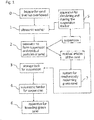
Fig. 1] Figure 1 is a system flowchart that illustrates the process for carrying out the work. - [
Fig. 2] Figure 2 is a graph that shows rates of collecting active clay from green sand by an ultrasonic treatment. - Below the present invention is discussed with reference to
Fig. 1 . - (1) Excess green sand that is generated in a line for molding is transported to a
hopper 0 for sand that has overflowed. It is temporarily stored there. - (2) The green sand that has been stored in the hopper for the sand that has overflowed is fed to the
ultrasonic washer 1 by means of a device for discharging a fixed amount of the sand. Water that contains no additives, such as a parting agent, is also fed there when the weight of the water is three to ten times the weight of the sand. The reason the water that contains no additives, such as a parting agent, is so fed is based on the cost and toxicity of the additives. If the degree of concentration of the suspension, which is discussed in No. (4) below, is equal to, or below, a reference value, the suspension is supplied to theultrasonic washer 1. By theultrasonic washer 1 ultrasonic waves generated at 20 - 400 kHz are applied to the mixture of the green sand and the water for a period that is appropriate for the output of ultrasonic waves by an ultrasonic generator (the step of treating the green sand with ultrasonic waves). The coating materials that adhere to the surfaces of the green sand are stripped by that ultrasonic treatment. Thus the suspension wherein the coating materials that have been stripped are suspended in the water and the residual particles of the sand from which the coating materials have been stripped are obtained. - (3) The mixture of the green sand and the water that has been subjected to the step of treating the green sand with ultrasonic waves is fed to the
separator 2 to be separated into the suspension and the residual particles of the sand (the step of separating). Theseparator 2 may be a separator of a settling-type or of a filtering-type. - (4) The degree of concentration of the suspension is measured. If it is equal to, or below, the reference value, then the suspension is circulated to an
apparatus 5 for circulating and making the suspension thicker and fed into theultrasonic washer 1 so that the suspension is made thicker (the step of circulation). The degree of concentration of the suspension is measured by any known densitometer, such as an optical densitometer that uses reflected light or transmitted light. A fixed amount of the green sand that has been stored in thehopper 0 for the sand that has overflowed is fed to the ultrasonic washer 1., The degree of concentration of the suspension is again measured after the step of treating the green sand with ultrasonic waves and the step of separating. If it is still equal to, or below, the reference value, the process of (4) is repeated so that the suspension is made thicker. As an example, the reference value for the degree of concentration of the suspension is about 20 wt%. If the degree of concentration of the suspension is low, a problem occurs, since too much water is added when a required amount of the active clay that is contained in the suspension is added to the green sand. - (5) A suspension that has a degree of concentration over the reference value is stored in the storage tank 3 (the step of storing). The
storage tank 3 is preferably equipped with a stirring device to prevent settling. - (6) The suspension in the storage tank is fed to an apparatus 6 for kneading the green sand by a fixed amount by means of a volumetric feeder 4 (the step of feeding) when the green sand is kneaded. The
volumetric feeder 4 may be a slurry pump. The active clay that is contained in the suspension is reused through the steps (1) to (6). In this way about 50% of the active clay that is to be supplied can be saved. - (7) The residual particles of the sand that have been generated in the process to separate the suspension from the residual particles of the sand are reclaimed by removing the Oolitic layer by means of the
system 7 for mechanically reclaiming the green sand (the step of removing the layer). The Oolitic layer that strongly adheres to the surfaces of the residual particles of the sand can be removed by thesystem 7 for mechanically reclaiming the green sand. Thissystem 7 preferably performs a drying process. It may be any known system. For example, a system for applying force from friction to the sand may be used, wherein the residual particles of the sand are supplied to a cup-like rotor that rotates and wherein blades are provided above the wall of the rotor. When the rotor rotates, the residual particles of the sand scrub each other or collide with the blades so that the Oolitic layer is cracked and stripped from the surfaces of the particles of the sand. Incidentally, the Oolitic layer is a layer of fine powder that has low resistance to heat. This layer is strongly burned on the surfaces of the particles of the sand. The reclaimed sand can be reused as core sand, etc. - The degrees of separating active clay from the green sand by means of ultrasonic waves and by means of mechanical agitation are tested for comparison. The results are shown in
Fig. 2 . The results were evaluated by The Method for Evaluating Active Clay (TJFS-205), issued by Tokai Branch, Japan Foundry Engineering Society. The content of the active clay is measured as below. 50 cm3 of a 2% solution of sodium pyrophosphate is added to 5 g of green sand, and then is subjected to ultrasonic washing for 10 minutes. The sodium pyrophosphate has abilities to strip the coating materials on the surfaces of the particles of the sand and to disperse them. The supernatant liquid is titrated by a methylene blue solution of 1/100 concentration. The content of the active clay is determined by the consumption of the solution. - By this method, sodium pyrophosphate, which has a function for causing a dispersion, is added. However, in the present invention no dispersing agent is added. Thus distilled water, which contains no dispersing agent, is used to compare possible collections of the active clay by means of ultrasonic waves and by means of mechanical agitation.
- The green sand is subjected to the ultrasonic treatment by using distilled water, which contains no dispersing agent, so that 74% of the active clay in the green sand is included in the suspension to be collected. Thirty-eight percent of the active clay is separated and collected by means of mechanical agitation.
- From the above experiments, it is seen that 70% or more of the active clay has been collected by the ultrasonic treatment by using distilled water. This method is found to be very industrially useful.
- The reference signs used in the present specification and the drawings are as follows:
- 0
- the hopper for the sand that has overflowed
- 1
- the ultrasonic washer
- 2
- the separator
- 3
- the storage tank
- 4
- the volumetric feeder
- 5
- the apparatus for circulating and making the suspension thicker
- 6
- the apparatus for kneading the green sand
- 7
- the system for mechanically reclaiming the green sand
Claims (4)
- A method for reusing green sand comprising the steps of:treating the green sand with ultrasonic waves in water;separating a mixture that is obtained by the step of treating the green sand with ultrasonic waves to form a suspension and to form residual particles of the sand;circulating the suspension to then proceed to the step of treating the green sand with ultrasonic waves so that the suspension is concentrated;storing the concentrated suspension; andfeeding the stored suspension to green sand by a predetermined amount when green sand is mulled.
- The method for reusing the green sand of claim 1, further comprising:
a step of removing an Oolitic layer from the residual particles of the sand that have been separated in the step of separating. - An apparatus for reusing green sand comprising:an ultrasonic washer for treating green sand with ultrasonic waves in water, the green sand having been used;a separator for separating a mixture that is obtained by the ultrasonic washer to form a suspension and to form residual particles of the sand;an apparatus for circulating and making the suspension thicker, which apparatus measures a degree of concentration of the separated suspension, which apparatus returns the suspension to the ultrasonic washer if the degree of concentration that is measured equals, or is below, a predetermined degree of concentration, and which apparatus feeds the suspension to a storage tank for storing the suspension if the degree of concentration that is measured is over the predetermined degree of concentration;the storage tank that stores the suspension of which the degree of concentration is over the predetermined degree of concentration; anda volumetric feeder that feeds the stored suspension by a predetermined amount when the green sand is mulled.
- The apparatus for reusing the green sand of claim 3, further comprising:
a system for mechanically reclaiming the green sand that removes an Oolitic layer from the residual particles of the sand that have been separated in the separator.
Applications Claiming Priority (2)
| Application Number | Priority Date | Filing Date | Title |
|---|---|---|---|
| JP2017120202 | 2017-06-20 | ||
| PCT/JP2018/002613 WO2018235324A1 (en) | 2017-06-20 | 2018-01-29 | Wet molding sand reutilizing method and device |
Publications (2)
| Publication Number | Publication Date |
|---|---|
| EP3643426A1 true EP3643426A1 (en) | 2020-04-29 |
| EP3643426A4 EP3643426A4 (en) | 2020-10-28 |
Family
ID=64737524
Family Applications (1)
| Application Number | Title | Priority Date | Filing Date |
|---|---|---|---|
| EP18820760.9A Withdrawn EP3643426A4 (en) | 2017-06-20 | 2018-01-29 | Wet molding sand reutilizing method and device |
Country Status (8)
| Country | Link |
|---|---|
| US (1) | US20200101524A1 (en) |
| EP (1) | EP3643426A4 (en) |
| JP (1) | JPWO2018235324A1 (en) |
| CN (1) | CN110366458A (en) |
| BR (1) | BR112019018075A2 (en) |
| MX (1) | MX2019010407A (en) |
| TW (1) | TW201904688A (en) |
| WO (1) | WO2018235324A1 (en) |
Families Citing this family (4)
| Publication number | Priority date | Publication date | Assignee | Title |
|---|---|---|---|---|
| JP7276178B2 (en) * | 2020-01-28 | 2023-05-18 | トヨタ自動車株式会社 | Core manufacturing method |
| CN111702126A (en) * | 2020-07-08 | 2020-09-25 | 南阳仁创砂业科技有限公司 | Inorganic binder used sand mechanical wet regeneration device and method |
| JP7450900B1 (en) | 2023-01-19 | 2024-03-18 | クニミネ工業株式会社 | Method for testing green mold sand for casting |
| TWI898327B (en) * | 2023-11-21 | 2025-09-21 | 國立屏東科技大學 | Treatment method for extracting chemicals from waste casting sand |
Family Cites Families (6)
| Publication number | Priority date | Publication date | Assignee | Title |
|---|---|---|---|---|
| FR2708873B1 (en) * | 1993-08-11 | 1995-12-08 | Transbiotech | Method for washing granular and / or particulate materials. |
| US6554049B2 (en) * | 2001-05-15 | 2003-04-29 | Foundry Advanced Clay Technologies, L.L.C. | Process for recovering sand and bentonite clay used in a foundry |
| JP2003290872A (en) | 2002-04-05 | 2003-10-14 | Sintokogio Ltd | Method for producing mold seal material and mold seal material |
| JP3994957B2 (en) * | 2003-11-06 | 2007-10-24 | トヨタ自動車株式会社 | Method and apparatus for recycling foundry sand and water-soluble inorganic salt binder |
| KR101173053B1 (en) * | 2010-06-30 | 2012-08-13 | 현대자동차주식회사 | Separation system for binder of waste molding sand using ultrasonic |
| JP6618354B2 (en) | 2015-12-28 | 2019-12-11 | 国立研究開発法人産業技術総合研究所 | Defect inspection method and defect inspection apparatus |
-
2018
- 2018-01-18 TW TW107101784A patent/TW201904688A/en unknown
- 2018-01-29 BR BR112019018075-3A patent/BR112019018075A2/en not_active Application Discontinuation
- 2018-01-29 MX MX2019010407A patent/MX2019010407A/en unknown
- 2018-01-29 CN CN201880014555.8A patent/CN110366458A/en active Pending
- 2018-01-29 EP EP18820760.9A patent/EP3643426A4/en not_active Withdrawn
- 2018-01-29 US US16/490,067 patent/US20200101524A1/en not_active Abandoned
- 2018-01-29 JP JP2019525059A patent/JPWO2018235324A1/en active Pending
- 2018-01-29 WO PCT/JP2018/002613 patent/WO2018235324A1/en not_active Ceased
Also Published As
| Publication number | Publication date |
|---|---|
| US20200101524A1 (en) | 2020-04-02 |
| MX2019010407A (en) | 2019-10-22 |
| TW201904688A (en) | 2019-02-01 |
| BR112019018075A2 (en) | 2020-03-24 |
| CN110366458A (en) | 2019-10-22 |
| WO2018235324A1 (en) | 2018-12-27 |
| JPWO2018235324A1 (en) | 2020-04-23 |
| EP3643426A4 (en) | 2020-10-28 |
Similar Documents
| Publication | Publication Date | Title |
|---|---|---|
| US20200101524A1 (en) | Method and apparatus for reusing green sand | |
| DD143561A5 (en) | METHOD AND DEVICE FOR REGENERATING FOUNDRY-ALTSAND | |
| EP0041774B1 (en) | Sand reclamation | |
| JP2013215919A (en) | Resin recycling method | |
| WO2018038977A1 (en) | Processes for recovering sand and active clay from foundry waste | |
| CN104759584A (en) | Water glass waste sand regeneration optimizing treatment method and water glass waste sand regeneration optimizing treatment system | |
| JPH08119697A (en) | How to recycle aggregate | |
| KR102755848B1 (en) | Recovery of sand, bentonite and organics from foundry sand waste | |
| JP6857120B2 (en) | How to process uncured concrete | |
| CN1263565C (en) | Method for producing bentonite-coated sand and method for using the same | |
| CN108580798B (en) | A kind of recoverying and utilizing method of the inorganic overlay film hygrometric state antiquated sand of silicates | |
| CA2098980A1 (en) | Method and apparatus for reclaiming foundry sand | |
| CN105643793A (en) | Plastering dry-mixed mortar regenerated from rock powder waste and manufacturing assembly of plastering dry-mixed mortar regenerated from rock powder waste | |
| SE507091C2 (en) | Procedure for regeneration treatment of predominantly clay bound foundry return sand | |
| JP4480021B2 (en) | Pressurized classifier for wastewater treatment and wastewater treatment method using the same | |
| JP2001340839A (en) | Industrial waste treatment apparatus and industrial waste treatment method | |
| JP3914627B2 (en) | Waste plastic recycling method and apparatus | |
| JP2005330713A (en) | Method of manufacturing recycled asphalt concrete aggregate | |
| JP2003094146A (en) | Recycling method for foundry sand | |
| JP2000120103A (en) | Waste soil fluidization treatment method and equipment | |
| CN100574931C (en) | The renovation process of moulding sand | |
| KR200218201Y1 (en) | Reproduction processing apparatus for ascon and cement block and interlocking block and remicon | |
| CN211965333U (en) | A slag treatment system based on waste incineration power generation | |
| CN214107067U (en) | Concrete leftover bits processing apparatus | |
| JPH02171693A (en) | Treatment of washing waste water of cement kneader |
Legal Events
| Date | Code | Title | Description |
|---|---|---|---|
| STAA | Information on the status of an ep patent application or granted ep patent |
Free format text: STATUS: THE INTERNATIONAL PUBLICATION HAS BEEN MADE |
|
| PUAI | Public reference made under article 153(3) epc to a published international application that has entered the european phase |
Free format text: ORIGINAL CODE: 0009012 |
|
| STAA | Information on the status of an ep patent application or granted ep patent |
Free format text: STATUS: REQUEST FOR EXAMINATION WAS MADE |
|
| 17P | Request for examination filed |
Effective date: 20190819 |
|
| AK | Designated contracting states |
Kind code of ref document: A1 Designated state(s): AL AT BE BG CH CY CZ DE DK EE ES FI FR GB GR HR HU IE IS IT LI LT LU LV MC MK MT NL NO PL PT RO RS SE SI SK SM TR |
|
| AX | Request for extension of the european patent |
Extension state: BA ME |
|
| DAV | Request for validation of the european patent (deleted) | ||
| DAX | Request for extension of the european patent (deleted) | ||
| A4 | Supplementary search report drawn up and despatched |
Effective date: 20200924 |
|
| RIC1 | Information provided on ipc code assigned before grant |
Ipc: B22C 5/04 20060101ALI20200918BHEP Ipc: B22C 5/18 20060101AFI20200918BHEP |
|
| STAA | Information on the status of an ep patent application or granted ep patent |
Free format text: STATUS: THE APPLICATION IS DEEMED TO BE WITHDRAWN |
|
| 18D | Application deemed to be withdrawn |
Effective date: 20210424 |