EP3641176A1 - Channel encoding method and device - Google Patents
Channel encoding method and device Download PDFInfo
- Publication number
- EP3641176A1 EP3641176A1 EP18818388.3A EP18818388A EP3641176A1 EP 3641176 A1 EP3641176 A1 EP 3641176A1 EP 18818388 A EP18818388 A EP 18818388A EP 3641176 A1 EP3641176 A1 EP 3641176A1
- Authority
- EP
- European Patent Office
- Prior art keywords
- length
- encoded data
- channel
- ofdm symbols
- mother code
- Prior art date
- Legal status (The legal status is an assumption and is not a legal conclusion. Google has not performed a legal analysis and makes no representation as to the accuracy of the status listed.)
- Granted
Links
Images


Classifications
-
- H—ELECTRICITY
- H04—ELECTRIC COMMUNICATION TECHNIQUE
- H04L—TRANSMISSION OF DIGITAL INFORMATION, e.g. TELEGRAPHIC COMMUNICATION
- H04L1/00—Arrangements for detecting or preventing errors in the information received
- H04L1/0001—Systems modifying transmission characteristics according to link quality, e.g. power backoff
- H04L1/0009—Systems modifying transmission characteristics according to link quality, e.g. power backoff by adapting the channel coding
- H04L1/0013—Rate matching, e.g. puncturing or repetition of code symbols
-
- H—ELECTRICITY
- H04—ELECTRIC COMMUNICATION TECHNIQUE
- H04L—TRANSMISSION OF DIGITAL INFORMATION, e.g. TELEGRAPHIC COMMUNICATION
- H04L1/00—Arrangements for detecting or preventing errors in the information received
- H04L1/004—Arrangements for detecting or preventing errors in the information received by using forward error control
- H04L1/0056—Systems characterized by the type of code used
- H04L1/0057—Block codes
-
- H—ELECTRICITY
- H04—ELECTRIC COMMUNICATION TECHNIQUE
- H04L—TRANSMISSION OF DIGITAL INFORMATION, e.g. TELEGRAPHIC COMMUNICATION
- H04L1/00—Arrangements for detecting or preventing errors in the information received
- H04L1/0001—Systems modifying transmission characteristics according to link quality, e.g. power backoff
- H04L1/0009—Systems modifying transmission characteristics according to link quality, e.g. power backoff by adapting the channel coding
-
- H—ELECTRICITY
- H04—ELECTRIC COMMUNICATION TECHNIQUE
- H04L—TRANSMISSION OF DIGITAL INFORMATION, e.g. TELEGRAPHIC COMMUNICATION
- H04L1/00—Arrangements for detecting or preventing errors in the information received
- H04L1/004—Arrangements for detecting or preventing errors in the information received by using forward error control
- H04L1/0056—Systems characterized by the type of code used
-
- H—ELECTRICITY
- H04—ELECTRIC COMMUNICATION TECHNIQUE
- H04L—TRANSMISSION OF DIGITAL INFORMATION, e.g. TELEGRAPHIC COMMUNICATION
- H04L1/00—Arrangements for detecting or preventing errors in the information received
- H04L1/004—Arrangements for detecting or preventing errors in the information received by using forward error control
- H04L1/0056—Systems characterized by the type of code used
- H04L1/0067—Rate matching
- H04L1/0068—Rate matching by puncturing
-
- H—ELECTRICITY
- H04—ELECTRIC COMMUNICATION TECHNIQUE
- H04L—TRANSMISSION OF DIGITAL INFORMATION, e.g. TELEGRAPHIC COMMUNICATION
- H04L27/00—Modulated-carrier systems
- H04L27/26—Systems using multi-frequency codes
- H04L27/2601—Multicarrier modulation systems
-
- H—ELECTRICITY
- H04—ELECTRIC COMMUNICATION TECHNIQUE
- H04L—TRANSMISSION OF DIGITAL INFORMATION, e.g. TELEGRAPHIC COMMUNICATION
- H04L5/00—Arrangements affording multiple use of the transmission path
- H04L5/0001—Arrangements for dividing the transmission path
- H04L5/0003—Two-dimensional division
- H04L5/0005—Time-frequency
- H04L5/0007—Time-frequency the frequencies being orthogonal, e.g. OFDM(A) or DMT
-
- H—ELECTRICITY
- H04—ELECTRIC COMMUNICATION TECHNIQUE
- H04W—WIRELESS COMMUNICATION NETWORKS
- H04W72/00—Local resource management
- H04W72/30—Resource management for broadcast services
-
- H—ELECTRICITY
- H04—ELECTRIC COMMUNICATION TECHNIQUE
- H04W—WIRELESS COMMUNICATION NETWORKS
- H04W84/00—Network topologies
- H04W84/02—Hierarchically pre-organised networks, e.g. paging networks, cellular networks, WLAN [Wireless Local Area Network] or WLL [Wireless Local Loop]
- H04W84/04—Large scale networks; Deep hierarchical networks
- H04W84/042—Public Land Mobile systems, e.g. cellular systems
Definitions
- the present application relates to the field of wireless communication technologies and particularly to a channel encoding method and device.
- the channel encoding is the most basic wireless access technology, and plays an important role in ensuring the reliable transmission of the data.
- the turbo code Low Density Parity Check (LDPC) code and polar code are generally used for the channel encoding.
- the turbo code cannot support the information transmission at too low or too high code rate.
- the turbo code and the LDPC code have the higher computation complexity in the process of the encoding and decoding.
- the polar code is theoretically proven as the good code which can obtain the Shannon capacity and have the relatively simple encoding and decoding complexity, and thus has been used more and more widely.
- 5G 5th Generation
- eMBB Enhance Mobile Broadband
- mMTC Massive Machine Type Communication
- URLLC Ultra Reliable Low Latency Communication
- the polar encoding scheme can only encode the encoding bits of which the length is the integer power of 2, but the encoding bits may have arbitrary length in the actual application.
- the polar encoding is still in the theoretical research stage, and there is no polar encoding method for the physical broadcast channel.
- the present application provides a channel encoding method and device so as to solve the problem in the prior art that there is no polar encoding method of the physical broadcast channel in the 5G scenarios at present.
- an embodiment of the present application provides a channel encoding method, which includes:
- the determining the polar mother code length according to transmission resource of the channel includes:
- the processing the target encoded data according to the actual bearer length of the transmission resource includes:
- the determining encoded data to be transmitted on the channel according to the processed target encoded data includes: taking the processed target encoded data as encoded data transmitted on the part of OFDM symbols, and copying the encoded data transmitted on the part of OFDM symbols onto other OFDM symbols of the channel.
- the part of OFDM symbols is one OFDM symbol of the channel.
- the processing the target encoded data according to the actual bearer length of the transmission resource includes:
- the determining encoded data to be transmitted on the channel according to the processed target encoded data includes: taking the processed target encoded data as the encoded data to be transmitted on the channel.
- the payloads with different lengths in the channel use the same polar mother code length.
- the polar mother code lengths used by the payloads with different lengths in the channel are same or different.
- an embodiment of the present application provides a channel encoding device, which includes:
- the determining module is configured to: select one from a set of polar mother code lengths according to the actual bearer length of the transmission resource; wherein the actual bearer length of the transmission resource is an actual bearer length of a part of or all OFDM symbols of the channel.
- the processing module is configured to:
- the transmission module is configured to: take the processed target encoded data as encoded data transmitted on the part of OFDM symbols, and copy the encoded data transmitted on the part of OFDM symbols onto other OFDM symbols of the channel.
- the part of OFDM symbols is one OFDM symbol of the channel.
- the processing module is configured to:
- the transmission module is configured to: take the processed target encoded data as the encoded data to be transmitted on the channel.
- the payloads with different lengths in the channel use the same polar mother code length.
- the polar mother code lengths used by the payloads with different lengths in the channel are same or different.
- an embodiment of the present application provides another channel encoding device, which includes:
- an embodiment of the present application provides a computer storage medium storing the computer executable instructions which are configured to cause the computer to perform any method described above.
- an appropriate polar mother code length is determined according to the transmission resource of the channel, and the determined polar mother code length is used to encode the data; and the encoded data is processed according to the actual bearer length of the transmission resource, to thereby determine the encoded data according to the actual transmission resource length of the channel and ensure that the encoded data after being processed can be transmitted accurately on the channel.
- a channel encoding method includes the following steps.
- Step 101 determine the polar mother code length according to the transmission resource of the channel.
- Step 102 perform the polar encoding on the data to be transmitted on the channel according to the polar mother code length, to obtain the target encoded data.
- Step 103 process the target encoded data according to the actual bearer length of the transmission resource.
- Step 104 determine the encoded data to be transmitted on the channel according to the processed target encoded data.
- the appropriate polar mother code length is determined according to the transmission resource of the channel, and the data is encoded using the determined polar mother code length.
- the encoded data is processed according to the actual bearer length of the transmission resource, to thereby determine the encoded data according to the actual transmission resource length of the channel and ensure that the encoded data after being processed can be transmitted accurately on the channel.
- the channel encoding method provided by the embodiment of the present application can be applied to the physical broadcast channel, but not limited to the physical broadcast channel, and can also be applied to other channels.
- the following is illustrated by taking the method of encoding the physical broadcast channel as an example.
- the polar mother code length is the integer power of 2.
- the polar mother code length can be 2, 4, 8, ising 256, 512, 1024 and so on.
- the actual bearer length of the transmission resources is the number of the bits of the bearer, actually used to transmit the data, in the transmission resource, and is the number of the bits of bearer after the Demodulation Reference Signal (DMRS) overhead of the transmission resources is removed.
- DMRS Demodulation Reference Signal
- OFDM Orthogonal Frequency Division Multiplex
- one polar mother code length is selected from a set of polar mother code lengths according to the actual bearer length of the transmission resource; wherein the actual bearer length of the transmission resource is the actual bearer length of a part of or all OFDM symbols of the physical broadcast channel.
- the encoded data is also processed according to the actual bearer length of the part of OFDM symbols when the encoded data is processed; when the polar mother code length is determined according to the actual bearer length of all the OFDM symbols of the physical broadcast channel, the encoded data is also processed according to the actual bearer length of all the OFDM symbols when the encoded data is processed.
- the polar mother code length is determined according to the actual bearer length of a part of OFDM symbols of the physical broadcast channel.
- the physical broadcast channel uses a plurality of OFDM symbols for transmission.
- the polar mother code length is determined according to the actual bearer length of one OFDM symbol of the physical broadcast channel.
- one is selected from a set of polar mother code lengths as the polar mother code length according to the actual bearer length of a part of OFDM symbols of the physical broadcast channel.
- any one can be selected as the polar mother code length.
- a length close to the actual bearer length of the part of OFDM symbols can also be selected from the set of polar mother code lengths as the polar mother code length.
- the length larger than and closest to the actual bearer length of the part of OFDM symbols can be selected from the set of polar mother code lengths as the polar mother code length; or the length smaller than and closest to the actual bearer length of the part of OFDM symbols can be selected from the set of polar mother code lengths as the polar mother code length.
- the polar mother code length is determined according to the actual bearer length of one OFDM symbol.
- the selectable lengths contained in the set of polar mother code lengths are the integer power of 2. During determining of the polar mother code length, 256 bits or 512 bits can be selected as the polar mother code length.
- the payloads with different lengths in the physical broadcast channel use the same polar mother code length.
- the payload includes the information bits and the Cyclic Redundancy Check (CRC) part.
- CRC Cyclic Redundancy Check
- the determined polar mother code length is 512 bits. Then for the physical broadcast channel, the polar mother code of 512 bits is still used when the payload length is 40 bits.
- the polar encoding is performed on the data to be transmitted on the physical broadcast channel according to the polar mother code length, to obtain the target encoded data.
- the process of performing the polar encoding on the data to be transmitted on the physical broadcast channel according to the polar mother code length employs the method in the prior art, and will not be described here in details.
- the length of the target encoded data, obtained after performing the polar encoding on the data to be transmitted on the physical broadcast channel using the polar mother code length is equal to the polar mother code length.
- the punching or shortening operation is performed on the target encoded data according to the actual bearer length of the part of OFDM symbols; or when the actual bearer length of the part of OFDM symbols is larger than the polar mother code length, the repeating operation is performed on the target encoded data according to the actual bearer length of the part of OFDM symbols.
- the length of the processed target encoded data obtained after performing the repeating operation on the target encoded data is the actual bearer length of the part of OFDM symbols.
- the difference value between the actual bearer length of one OFDM symbol and the polar mother code length is determined, and the encoded data of N bits is selected from the target encoded data for repeating; wherein N is the difference value between the actual bearer length of one OFDM symbol and the polar mother code length.
- the polar mother code length is determined according to the actual bearer length of one OFDM symbol.
- the selectable lengths contained in the set of polar mother code lengths are the integer power of 2.
- 256 bits can be selected as the polar mother code length.
- the data is encoded by using 256 bits and the length of the obtained target encoded data is 256 bits, but the actual bearer length of one OFDM symbol is 384 bits, so there is a need to perform the repeating operation on the target encoded data.
- the encoded data of 128 bits is selected from the target encoded data of which the length is 256 bits, and the target encoded data with a length of 256 bits and the selected encoded data of 128 bits serve as the processed target encoded data, so the length of the target encoded data after the repeating operation is 384 bits.
- the polar mother code length is determined according to the actual bearer length of one OFDM symbol.
- the selectable lengths contained in the set of polar mother code lengths are the integer power of 2.
- 128 bits can be selected as the polar mother code length.
- the data is encoded by using 128 bits and the length of the obtained target encoded data is 128 bits, but the actual bearer length of one OFDM symbol is 384 bits, so there is a need to perform the repeating operation on the target encoded data. Since the difference value between the actual bearer length of one OFDM symbol and the polar mother code length is 256 bits, the target encoded data with a length of 128 bits is repeated twice to obtain the processed target encoded data with a length of 384 bits when repeating.
- the encoded data to be transmitted over the channel is determined by: taking the processed target encoded data as the encoded data transmitted on the part of OFDM symbols, and copying the encoded data transmitted on the part of OFDM symbols onto other OFDM symbols of the channel.
- the physical broadcast channel uses two OFDM symbols for transmission. It is assumed that the polar mother code length is determined according to the actual bearer length of one OFDM symbol of the physical broadcast channel; and after the target encoded data is processed according to the actual bearer length of one OFDM symbol, the processed target encoded data is taken as the encoded data transmitted on the first OFDM symbol, and the encoded data transmitted on the first OFDM symbol is copied onto the second OFDM symbol directly.
- the physical broadcast channel uses four OFDM symbols for transmission. It is assumed that the polar mother code length is determined according to the actual bearer length of one OFDM symbol of the physical broadcast channel; and after the target encoded data is processed according to the actual bearer length of one OFDM symbol, the processed target encoded data is taken as the encoded data transmitted on the first OFDM symbol, and the encoded data transmitted on the first OFDM symbol is copied onto the other three OFDM symbols of this physical broadcast channel directly.
- the polar mother code length is determined according to the actual bearer length of two OFDM symbols of the physical broadcast channel; and after the target encoded data is processed according to the actual bearer length of two OFDM symbols, the processed target encoded data is taken as the encoded data transmitted on the first two OFDM symbols, and the encoded data transmitted on the first two OFDM symbols is copied onto the last two OFDM symbols of this physical broadcast channel directly.
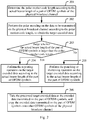
- the overall flow chart of the channel encoding method of an embodiment of the present application is as shown in Fig.2 .
- Step 201 determine the polar mother code length according to the actual bearer length of a part of OFDM symbols of the physical broadcast channel.
- Step 202 perform the polar encoding on the data to be transmitted on the physical broadcast channel according to the polar mother code length, to obtain the target encoded data.
- Step 203 judge whether the actual bearer length of the part of OFDM symbols is larger than the polar mother code length, if so, perform step 204; if not, perform step 205.
- Step 204 perform the repeating operation on the target encoded data according to the actual bearer length of the part of OFDM symbols; and perform step 206.
- Step 205 perform the punching or shortening operation on the target encoded data according to the actual bearer length of the part of OFDM symbols.
- Step 206 take the processed target encoded data as the encoded data transmitted on the part of OFDM symbols, and copy the encoded data transmitted on the part of OFDM symbols onto other OFDM symbols of the physical broadcast channel.
- the polar mother code length is determined according to the actual bearer length of one OFDM symbol.
- the punching operation is performed on the target encoded data to obtain the target encoded data with a length of 384 bits.
- the target encoded data with the length of 384 bits is taken as the encoded data transmitted on the first OFDM symbol, and the target encoded data of 384 bits is copied onto the second OFDM symbol directly.
- N 512 and the code rate is lower, which can effectively improve the quality of received signal of the physical broadcast channel in the fading channel.
- the punching operation is performed on the target encoded data to obtain the target encoded data with a length of 384 bits.
- the target encoded data with a length of 384 bits is taken as the encoded data to be transmitted on the first OFDM symbol, and the target encoded data of 384 bits is copied onto the second OFDM symbol directly.
- the polar mother code length is determined according to the actual bearer length of all OFDM symbols of the physical broadcast channel.
- the physical broadcast channel uses a plurality of OFDM symbols for transmission.
- the polar mother code length is determined according to the actual bearer length of all OFDM symbols of the physical broadcast channel.
- one is selected from a set of polar mother code lengths as the polar mother code length according to the actual bearer length of all OFDM symbols of the physical broadcast channel.
- any one can be selected as the polar mother code length.
- the length close to the actual bearer length of all OFDM symbols of the physical broadcast channel can be selected from a set of polar mother code lengths as the polar mother code length.
- the length larger than and closest to the actual bearer length of all the OFDM symbols can be selected as the polar mother code length; or the length smaller than and closest to the actual bearing length of all the OFDM symbols can be selected as the polar mother code length.
- the selectable lengths contained in the set of polar mother code lengths are the integer power of 2. During determining of the polar mother code length, 512 bits or 1024 bits can be selected as the polar mother code length.
- the payloads with different lengths in the physical broadcast channel use the same or different polar mother code lengths.
- the payload includes the information bits and the CRC part.
- the same polar mother code length is used for the payloads with different lengths in the physical broadcast channel.
- the determined polar mother code length is 512 bits. Then for the physical broadcast channel, the polar mother code of 512 bits is still used when the payload length is 40 bits.
- the different polar mother code lengths are used for the payloads with different lengths in the physical broadcast channel.
- the determined polar mother code length is 1024 bits. Then for the physical broadcast channel, when the payload length is 50 bits, the determined polar mother code length is 512 bits; when the payload length is 40 bits, the determined polar mother code length is 256 bits.
- some payloads with different lengths use the same polar mother code length.
- the payload length is 40-72 bits.
- two polar mother code lengths can be determined, for example, the first and second polar mother code lengths are determined.
- the first polar mother code length is selected when the payload length is 40-55 bits; and the second polar mother code length is selected when the payload length is 56-72 bits.
- the polar encoding is performed on the data to be transmitted on the physical broadcast channel according to the polar mother code length, to obtain the target encoded data.
- the process of performing the polar encoding on the data to be transmitted on the physical broadcast channel according to the polar mother code length employs the method in the prior art, and will not be described here in details.
- the length of the target encoded data, obtained after performing the polar encoding on the data to be transmitted on the physical broadcast channel using the polar mother code length is equal to the polar mother code length.
- the punching or shortening operation is performed on the target encoded data according to the actual bearer length of all the OFDM symbols; or when the actual bearer length of all the OFDM symbols is larger than the polar mother code length, the repeating operation is performed on the target encoded data according to the actual bearing length of all the OFDM symbols.
- the length of the processed target encoded data obtained after performing the repeating operation on the target encoded data is the actual bearer length of all the OFDM symbols.
- the difference value between the actual bearer length of all the OFDM symbols and the polar mother code length is determined, and the encoded data of N bits is selected from the target encoded data for repeating; wherein N is the difference value between the actual bearer length of all the OFDM symbols and the polar mother code length.
- the selectable lengths contained in the set of polar mother code lengths are the integer power of 2. During determining of the polar mother code length, 512 bits can be selected as the polar mother code length.
- the data is encoded by using 512 bits and the length of the obtained target encoded data is 512 bits, but the actual bearer length of two OFDM symbols is 768 bits, so there is a need to perform the repeating operation on the target encoded data.
- the encoded data of 256 bits is selected from the target encoded data with a length of 512 bits, and the target encoded data with the length of 512 bits and the selected encoded data of 256 bits serve as the processed target encoded data, so the length of the target encoded data after the repeating operation is 768 bits.
- the selectable lengths contained in the set of polar mother code lengths are the integer power of 2.
- 256 bits can be selected as the polar mother code length.
- the data is encoded by using 256 bits and the length of the obtained target encoded data is 256 bits, but the actual bearer length of two OFDM symbols is 768 bits, so there is a need to perform the repeating operation on the target encoded data. Since the difference value between the actual bearer length of two OFDM symbols and the polar mother code length is 512 bits, the target encoded data with a length of 256 bits is repeated twice to obtain the processed target encoded data with a length of 768 bits when repeating.
- the encoded data to be transmitted on the channel is determined by: taking the processed target encoded data as the encoded data to be transmitted on the channel.
- the processed target encoded data is taken as the encoded data transmitted on all the OFDM symbols.
- the overall flow chart of the channel encoding method of an embodiment of the present application is as shown in Fig.3 .
- Step 301 determine the polar mother code length according to the actual bearer length of all the OFDM symbols of the physical broadcast channel.
- Step 302 perform the polar encoding on the data to be transmitted on the physical broadcast channel according to the polar mother code length, to obtain the target encoded data.
- Step 303 judge whether the actual bearer length of all the OFDM symbols is larger than the polar mother code length, if so, perform step 304; if not, perform step 305.
- Step 304 perform the repeating operation on the target encoded data according to the actual bearer length of all the OFDM symbols, and perform step 306.
- Step 305 perform the punching or shortening operation on the target encoded data according to the actual bearer length of all the OFDM symbols.
- Step 306 take the processed target encoded data as the encoded data to be transmitted on the physical broadcast channel directly.
- the polar mother code length is determined according to the actual bearer length of all the OFDM symbols; and the payloads with different lengths in the physical broadcast channel use the same polar mother code length.
- the repeating operation is performed on the target encoded data to obtain the target encoded data with a length of 768 bits.
- the target encoded data with the length of 768 bits is taken as the encoded data to be transmitted on the physical broadcast channel directly.
- the target encoded data with the length of 768 bits is taken as the encoded data to be transmitted on the physical broadcast channel directly.
- the polar mother code length is determined according to the actual bearer length of all the OFDM symbols; and the payloads with different lengths in the physical broadcast channel use different polar mother code lengths.
- the punching operation is performed on the target encoded data to obtain the target encoded data with a length of 768 bits.
- the target encoded data with a length of 768 bits is taken as the encoded data to be transmitted on the physical broadcast channel directly.
- the target encoded data with a length of 768 bits is taken as the encoded data to be transmitted on the physical broadcast channel directly.
- an embodiment of the present application further provides a channel encoding device. Since the principle solving the problem of this device is similar to this method, the implementations of this device can refer to the implementations of the method, and the repeated description thereof will be omitted here.
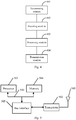
- the first channel encoding device of an embodiment of the present application includes:
- the determining module 401 is configured to: select one from a set of polar mother code lengths according to the actual bearer length of the transmission resource; wherein the actual bearer length of the transmission resource is the actual bearer length of a part of or all OFDM symbols of the channel.
- the processing module 403 is configured to: perform the punching or shortening operation on the target encoded data according to the actual bearer length of the part of OFDM symbols when the actual bearer length of the part of OFDM symbols is no larger than the polar mother code length; or perform the repeating operation on the target encoded data according to the actual bearer length of the part of OFDM symbols when the actual bearer length of the part of OFDM symbols is larger than the polar mother code length.
- the transmission module 404 is configured to: take the processed target encoded data as the encoded data transmitted on the part of OFDM symbols, and copy the encoded data transmitted on the part of OFDM symbols onto other OFDM symbols of the channel.
- the part of OFDM symbols is one OFDM symbol of the channel.
- the processing module 403 is configured to: perform the punching or shortening operation on the target encoded data according to the actual bearer length of all the OFDM symbols when the actual bearer length of all the OFDM symbols is no larger than the polar mother code length; or perform the repeating operation on the target encoded data according to the actual bearer length of all the OFDM symbols when the actual bearer length of all the OFDM symbols is larger than the polar mother code length.
- the transmission module 404 is configured to: take the processed target encoded data as the encoded data to be transmitted on the channel.
- the payloads with different lengths in the channel use the same polar mother code length.
- the polar mother code lengths used by the payloads with different lengths in the channel are same or different.
- the above modules can be implemented by the processor or other entity devices.
- the second channel encoding device of an embodiment of the present application includes: a processor 501 configured to transmit and receive the data via a transceiver 502, and read the programs in a memory 504 to perform the process of: determining the polar mother code length according to the transmission resource of the channel; performing the polar encoding on the data to be transmitted on the channel according to the polar mother code length, to obtain the target encoded data; processing the target encoded data according to the actual bearer length of the transmission resource; and determining the encoded data to be transmitted on the channel according to the processed target encoded data; the transceiver 502 configured to receive and transmit the data under the control of the processor 501.
- the processor 501 is configured to: select one from a set of polar mother code lengths according to the actual bearer length of the transmission resource; wherein the actual bearer length of the transmission resource is the actual bearer length of a part of or all OFDM symbols of the channel.
- the processor 501 determines the polar mother code length according to the actual bearer length of the part of OFDM symbols of the channel; the processor 501 is configured to: perform the punching or shortening operation on the target encoded data according to the actual bearer length of the part of OFDM symbols when the actual bearer length of the part of OFDM symbols is no larger than the polar mother code length; or perform the repeating operation on the target encoded data according to the actual bearer length of the part of OFDM symbols when the actual bearer length of the part of OFDM symbols is larger than the polar mother code length.
- the processor 501 is configured to: take the processed target encoded data as the encoded data transmitted on the part of OFDM symbols, and copy the encoded data transmitted on the part of OFDM symbols onto other OFDM symbols of the channel.
- the part of OFDM symbols is one OFDM symbol of the channel.
- the processor 501 determines the polar mother code length according to the actual bearer length of all the OFDM symbols of the channel; the processor 501 is configured to: perform the punching or shortening operation on the target encoded data according to the actual bearer length of all the OFDM symbols when the actual bearer length of all the OFDM symbols is no larger than the polar mother code length; or perform the repeating operation on the target encoded data according to the actual bearer length of all the OFDM symbols when the actual bearer length of all the OFDM symbols is larger than the polar mother code length.
- the processor 501 is configured to: take the processed target encoded data as the encoded data to be transmitted on the channel.
- the payloads with different lengths in the channel use the same polar mother code length.
- the payloads with different lengths in the channel use same or different the polar mother code lengths.
- the bus architecture is represented by the bus 500.
- the bus 500 can include any numbers of interconnected buses and bridges, and the bus 500 links various circuits including one or more processors represented by the processor 501 and the memory represented by the memory 504.
- the bus 500 can further link various other circuits such as peripheral device, voltage regulator and power management circuit, which are all well known in the art and thus will not be further described again herein.
- the bus interface 503 provides an interface between the bus 500 and the transceiver 502.
- the transceiver 502 can be one element or can be a plurality of elements, i.e., a plurality of receiver and transmitter, and provide the units for communicating with various other devices over the transmission media.
- the data processed by the processor 501 is transmitted over the wireless medium via the antenna 505, and further, the antenna 505 also receives the data and transfers the data to the processor 501.
- the processor 501 is responsible for managing the bus 500 and the general processing, and can further provide various functions including timing, peripheral interface, voltage regulation, power management and other control functions.
- the memory 504 can be configured to store the data used by the processor 501 when performing the operations.
- the processor 501 can be Central Processing Unit (CPU), Application Specific Integrated Circuit (ASIC), Field-Programmable Gate Array (FPGA) or Complex Programmable Logic Device (CPLD).
- CPU Central Processing Unit
- ASIC Application Specific Integrated Circuit
- FPGA Field-Programmable Gate Array
- CPLD Complex Programmable Logic Device
- the network device can be a base station (e.g., access point), which means the device in the access network communicating with the wireless terminal via one or more sectors over the air interface.
- the base station can be configured to perform the interconversion between the received air frame and the IP packet, and used as the router between the wireless terminal and the rest of the access network, wherein the rest of the access network may include Internet Protocol (IP) networks.
- IP Internet Protocol
- the base station can further coordinate the attribute management of the air interface.
- the base station can be the Base Transceiver Station (BTS) in the Global System for Mobile Communication (GSM) or Code Division Multiple Access (CDMA), or can be the NodeB in the Wideband Code Division Multiple Access (WCDMA), or can be the evolutional Node B (NodeB or eNB or e-NodeB) in the Long Time Evolution (LTE), which is not limited in the embodiments of the present application.
- BTS Base Transceiver Station
- GSM Global System for Mobile Communication
- CDMA Code Division Multiple Access
- WCDMA Wideband Code Division Multiple Access
- NodeB or eNB or e-NodeB evolutional Node B in the Long Time Evolution (LTE), which is not limited in the embodiments of the present application.
- An embodiment of the present application further provides a computer storage medium, which can be any available media or data storage device accessible to the computer, including but not limited to magnetic memory (e.g., floppy disk, hard disk, magnetic tape, Magnetic Optical disc (MO) or the like), optical memory (e.g., CD, DVD, BD, HVD or the like), semiconductor memory (e.g., ROM, EPROM, EEPROM, nonvolatile memory (NAND FLASH), Solid State Disk (SSD)) or the like.
- the computer storage medium can be nonvolatile, i.e., have no content loss after power failure.
- the computer storage medium stores the software program which can, when read and executed by one or more processors, implement the solution of any channel encoding method described above in the embodiments of the present application.
- the present application can also be implemented by the hardware and/or software (including the firmware, resident software, microcode and the like). Further, the present application can adopt the form of computer program products on the computer usable or computer readable storage medium, which has the computer usable or computer readable program codes implemented in the medium, to be used by the instruction execution system or used in combination with the instruction execution system.
- the computer usable or computer readable storage medium can be any medium, which can contain, store, communicate with, transmit or transfer the programs, to be used by the instruction execution system, apparatus or device, or used in combination with the instruction execution system, apparatus or device.
Landscapes
- Engineering & Computer Science (AREA)
- Signal Processing (AREA)
- Computer Networks & Wireless Communication (AREA)
- Quality & Reliability (AREA)
- Mobile Radio Communication Systems (AREA)
- Error Detection And Correction (AREA)
Abstract
Description
- The present application claims priority to Chinese Patent Application No.
201710459080.0 - The present application relates to the field of wireless communication technologies and particularly to a channel encoding method and device.
- The channel encoding is the most basic wireless access technology, and plays an important role in ensuring the reliable transmission of the data. In the existing wireless communication systems, the turbo code, Low Density Parity Check (LDPC) code and polar code are generally used for the channel encoding. The turbo code cannot support the information transmission at too low or too high code rate. However, for the medium and short packet transmission, it is also difficult for the turbo code and the LDPC code to achieve the ideal performance with the limited code length due to their own encoding and decoding characteristics. In terms of implementation, the turbo code and the LDPC code have the higher computation complexity in the process of the encoding and decoding. The polar code is theoretically proven as the good code which can obtain the Shannon capacity and have the relatively simple encoding and decoding complexity, and thus has been used more and more widely.
- With the rapid evolution of the wireless communication systems, the future communication systems such as 5th Generation (5G) communication system will have some new characteristics. For example, three typical communication scenarios include the Enhance Mobile Broadband (eMBB), Massive Machine Type Communication (mMTC) and Ultra Reliable Low Latency Communication (URLLC). These communication scenarios put forward the higher requirements on the encoding and decoding performance of the polar code. For the Physical Broadcast Channel (PBCH), its transmission resources are fixed, and the load transmitted over the physical broadcast channel is very important, so the polar encoding scheme used on the physical broadcast channel is a better choice.
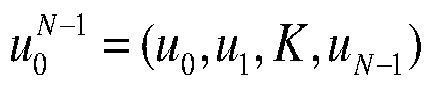
- The polar code is a linear block code of which the encoding matrix is GN and the encoding process is


- To sum up, there is no polar encoding method of the physical broadcast channel in the 5G scenarios at present.
- The present application provides a channel encoding method and device so as to solve the problem in the prior art that there is no polar encoding method of the physical broadcast channel in the 5G scenarios at present.
- Based on the above problem, an embodiment of the present application provides a channel encoding method, which includes:
- determining a polar mother code length according to a transmission resource of a channel;
- performing polar encoding on data to be transmitted on the channel according to the polar mother code length, to obtain target encoded data;
- processing the target encoded data according to an actual bearer length of the transmission resource; and
- determining encoded data to be transmitted on the channel according to the processed target encoded data.
- Optionally, the determining the polar mother code length according to transmission resource of the channel, includes:
- selecting one from a set of polar mother code lengths according to the actual bearer length of the transmission resource;
- wherein the actual bearer length of the transmission resource is an actual bearer length of a part of or all Orthogonal Frequency Division Multiplexing (OFDM) symbols of the channel.
- Optionally, when the polar mother code length is determined according to the actual bearer length of the part of OFDM symbols of the channel;
the processing the target encoded data according to the actual bearer length of the transmission resource, includes: - performing a punching or shortening operation on the target encoded data according to the actual bearer length of the part of OFDM symbols when the actual bearer length of the part of OFDM symbols is no larger than the polar mother code length; or
- performing a repeating operation on the target encoded data according to the actual bearer length of the part of OFDM symbols when the actual bearer length of the part of OFDM symbols is larger than the polar mother code length.
- Optionally, the determining encoded data to be transmitted on the channel according to the processed target encoded data, includes:
taking the processed target encoded data as encoded data transmitted on the part of OFDM symbols, and copying the encoded data transmitted on the part of OFDM symbols onto other OFDM symbols of the channel. - Optionally, the part of OFDM symbols is one OFDM symbol of the channel.
- Optionally, when the polar mother code length is determined according to the actual bearer length of all the OFDM symbols of the channel;
the processing the target encoded data according to the actual bearer length of the transmission resource, includes: - performing a punching or shortening operation on the target encoded data according to the actual bearer length of all the OFDM symbols when the actual bearer length of all the OFDM symbols is no larger than the polar mother code length; or
- performing a repeating operation on the target encoded data according to the actual bearer length of all the OFDM symbols when the actual bearer length of all the OFDM symbols is larger than the polar mother code length.
- Optionally, the determining encoded data to be transmitted on the channel according to the processed target encoded data, includes:
taking the processed target encoded data as the encoded data to be transmitted on the channel. - Optionally, the payloads with different lengths in the channel use the same polar mother code length.
- Optionally, the polar mother code lengths used by the payloads with different lengths in the channel are same or different.
- In another aspect, an embodiment of the present application provides a channel encoding device, which includes:
- a determining module configured to determine a polar mother code length according to a transmission resource of a channel;
- an encoding module configured to perform polar encoding on data to be transmitted on the channel according to the polar mother code length, to obtain target encoded data;
- a processing module configured to process the target encoded data according to an actual bearer length of the transmission resource;
- a transmission module configured to determine encoded data to be transmitted on the channel according to the processed target encoded data.
- Optionally, the determining module is configured to:
select one from a set of polar mother code lengths according to the actual bearer length of the transmission resource; wherein the actual bearer length of the transmission resource is an actual bearer length of a part of or all OFDM symbols of the channel. - Optionally, when the determining module determines the polar mother code length according to the actual bearer length of the part of OFDM symbols of the channel;
the processing module is configured to: - perform a punching or shortening operation on the target encoded data according to the actual bearer length of the part of OFDM symbols when the actual bearer length of the part of OFDM symbols is no larger than the polar mother code length; or
- perform a repeating operation on the target encoded data according to the actual bearer length of the part of OFDM symbols when the actual bearer length of the part of OFDM symbols is larger than the polar mother code length.
- Optionally, the transmission module is configured to:
take the processed target encoded data as encoded data transmitted on the part of OFDM symbols, and copy the encoded data transmitted on the part of OFDM symbols onto other OFDM symbols of the channel. - Optionally, the part of OFDM symbols is one OFDM symbol of the channel.
- Optionally, when the determining module determines the polar mother code length according to the actual bearer length of all the OFDM symbols of the channel;
the processing module is configured to: - perform a punching or shortening operation on the target encoded data according to the actual bearer length of all the OFDM symbols when the actual bearer length of all the OFDM symbols is no larger than the polar mother code length; or
- perform a repeating operation on the target encoded data according to the actual bearer length of all the OFDM symbols when the actual bearer length of all the OFDM symbols is larger than the polar mother code length.
- Optionally, the transmission module is configured to:
take the processed target encoded data as the encoded data to be transmitted on the channel. - Optionally, the payloads with different lengths in the channel use the same polar mother code length.
- Optionally, the polar mother code lengths used by the payloads with different lengths in the channel are same or different.
- In another aspect, an embodiment of the present application provides another channel encoding device, which includes:
- a memory configured to store program instructions;
- a processor configured to invoke the program instructions stored in the memory to perform the process of:
- determining a polar mother code length according to a transmission resource of a channel;
- performing polar encoding on data to be transmitted on the channel according to the polar mother code length, to obtain target encoded data;
- processing the target encoded data according to an actual bearer length of the transmission resource;
- determining encoded data to be transmitted on the channel according to the processed target encoded data.
- In another aspect, an embodiment of the present application provides a computer storage medium storing the computer executable instructions which are configured to cause the computer to perform any method described above.
- In the embodiments of the present application, an appropriate polar mother code length is determined according to the transmission resource of the channel, and the determined polar mother code length is used to encode the data; and the encoded data is processed according to the actual bearer length of the transmission resource, to thereby determine the encoded data according to the actual transmission resource length of the channel and ensure that the encoded data after being processed can be transmitted accurately on the channel.
- In order to illustrate the technical solutions in the embodiments of the present application more clearly, the accompanying figures which need to be used in describing the embodiments will be introduced below briefly. Obviously the accompanying figures described below are only some embodiments of the present application, and other accompanying figures can also be obtained by those ordinary skilled in the art according to these accompanying figures without creative effort.
-
Fig.1 is a flow chart of a channel encoding method in accordance with an embodiment of the present application; -
Fig.2 is an overall flow chart of a first channel encoding method in accordance with an embodiment of the present application; -
Fig.3 is an overall flow chart of a second channel encoding method in accordance with an embodiment of the present application; -
Fig.4 is a schematic structural diagram of a first channel encoding device in accordance with an embodiment of the present application; and -
Fig.5 is a schematic structural diagram of a second channel encoding device in accordance with an embodiment of the present application. - In order to make the objects, technical solutions and advantages of the present application clearer, the present application will be further illustrated below in details with reference to the accompanying drawings. Obviously the described embodiments are merely a part of the embodiments of the present application but not all the embodiments. Based upon the embodiments of the present application, all of other embodiments obtained by those ordinary skilled in the art without creative work pertain to the protection scope of the present application.
- As shown in
Fig.1 , a channel encoding method according to an embodiment of the present application includes the following steps. - Step 101: determine the polar mother code length according to the transmission resource of the channel.
- Step 102: perform the polar encoding on the data to be transmitted on the channel according to the polar mother code length, to obtain the target encoded data.
- Step 103: process the target encoded data according to the actual bearer length of the transmission resource.
- Step 104: determine the encoded data to be transmitted on the channel according to the processed target encoded data.
- In the embodiments of the present application, the appropriate polar mother code length is determined according to the transmission resource of the channel, and the data is encoded using the determined polar mother code length. The encoded data is processed according to the actual bearer length of the transmission resource, to thereby determine the encoded data according to the actual transmission resource length of the channel and ensure that the encoded data after being processed can be transmitted accurately on the channel.
- It should be noted that the channel encoding method provided by the embodiment of the present application can be applied to the physical broadcast channel, but not limited to the physical broadcast channel, and can also be applied to other channels.
- The following is illustrated by taking the method of encoding the physical broadcast channel as an example.
- The polar mother code length is the integer power of 2. For example, the polar mother code length can be 2, 4, 8, ...... 256, 512, 1024 and so on.
- The actual bearer length of the transmission resources is the number of the bits of the bearer, actually used to transmit the data, in the transmission resource, and is the number of the bits of bearer after the Demodulation Reference Signal (DMRS) overhead of the transmission resources is removed.
- For example, the actual bearer length of the transmission resource is the actual bearer length of one Orthogonal Frequency Division Multiplex (OFDM) symbol, and one OFDM symbol occupies 288 carriers. It is assumed that the DMRS overhead is 1/3, then the actual bearer length of the transmission resource is 288∗2∗2/3=384 bits.
- Optionally, in the
step 101, one polar mother code length is selected from a set of polar mother code lengths according to the actual bearer length of the transmission resource; wherein the actual bearer length of the transmission resource is the actual bearer length of a part of or all OFDM symbols of the physical broadcast channel. - It should be noted that when the polar mother code length is determined according to the actual bearer length of the part of OFDM symbols of the physical broadcast channel, the encoded data is also processed according to the actual bearer length of the part of OFDM symbols when the encoded data is processed; when the polar mother code length is determined according to the actual bearer length of all the OFDM symbols of the physical broadcast channel, the encoded data is also processed according to the actual bearer length of all the OFDM symbols when the encoded data is processed.
- The methods of encoding the physical broadcast channel will be illustrated below respectively for different schemes of determining the polar mother code length.
- First scheme: the polar mother code length is determined according to the actual bearer length of a part of OFDM symbols of the physical broadcast channel.
- Here, the physical broadcast channel uses a plurality of OFDM symbols for transmission.
- Optionally, in the first scheme, the polar mother code length is determined according to the actual bearer length of one OFDM symbol of the physical broadcast channel.
- Specifically, one is selected from a set of polar mother code lengths as the polar mother code length according to the actual bearer length of a part of OFDM symbols of the physical broadcast channel.
- When selecting one from a set of polar mother code lengths as the polar mother code length, any one can be selected as the polar mother code length.
- Preferably, a length close to the actual bearer length of the part of OFDM symbols can also be selected from the set of polar mother code lengths as the polar mother code length.
- Specifically, the length larger than and closest to the actual bearer length of the part of OFDM symbols can be selected from the set of polar mother code lengths as the polar mother code length; or the length smaller than and closest to the actual bearer length of the part of OFDM symbols can be selected from the set of polar mother code lengths as the polar mother code length.
- For example, the polar mother code length is determined according to the actual bearer length of one OFDM symbol. One OFDM symbol occupies 288 carriers, and it is assumed that the DMRS overhead is 1/3, then the actual bearer length of one OFDM symbol is 288∗2∗2/3=384 bits. The selectable lengths contained in the set of polar mother code lengths are the integer power of 2. During determining of the polar mother code length, 256 bits or 512 bits can be selected as the polar mother code length.
- Optionally, the payloads with different lengths in the physical broadcast channel use the same polar mother code length.
- Here, the payload includes the information bits and the Cyclic Redundancy Check (CRC) part.
- For example, when the payload length is 70 bits, the determined polar mother code length is 512 bits. Then for the physical broadcast channel, the polar mother code of 512 bits is still used when the payload length is 40 bits.
- After the target encoded data is determined, the polar encoding is performed on the data to be transmitted on the physical broadcast channel according to the polar mother code length, to obtain the target encoded data. In the embodiment of the present application, the process of performing the polar encoding on the data to be transmitted on the physical broadcast channel according to the polar mother code length employs the method in the prior art, and will not be described here in details.
- It should be noted that the length of the target encoded data, obtained after performing the polar encoding on the data to be transmitted on the physical broadcast channel using the polar mother code length, is equal to the polar mother code length.
- In the
step 103, optionally, when the actual bearer length of the part of OFDM symbols is no larger than the polar mother code length, the punching or shortening operation is performed on the target encoded data according to the actual bearer length of the part of OFDM symbols; or
when the actual bearer length of the part of OFDM symbols is larger than the polar mother code length, the repeating operation is performed on the target encoded data according to the actual bearer length of the part of OFDM symbols. - These cases will be illustrated below respectively.
- 1. When the actual bearer length of the part of OFDM symbols is no larger than the polar mother code length, the punching or shortening operation is performed on the target encoded data.
It should be noted that the length of the processed target encoded data obtained after performing the punching or shortening operation on the target encoded data is the actual bearer length of the part of OFDM symbols.
Here, the punching and shortening operations employ the methods in the prior art, and will not be described here in details.
For example, the polar mother code length is determined according to the actual bearer length of one OFDM symbol. One OFDM symbol occupies 288 carriers, and it is assumed that the DMRS overhead is 1/3, then the actual bearer length of one OFDM symbol is 288∗2∗2/3=384 bits. The selectable lengths contained in the set of polar mother code lengths are the integer power of 2. During determining of the polar mother code length, 512 bits can be selected as the polar mother code length. The data is encoded by using 512 bits and the length of the obtained target encoded data is 512 bits, but the actual bearer length of one OFDM symbol is 384 bits, so there is a need to perform the punching or shortening operation on the target encoded data. The length of the target encoded data after the punching or shortening operation is 384 bits.
It should be noted that when the actual bearer length of one OFDM symbol is equal to the polar mother code length, it can be understood that the punched length is 0 bits when performing the punching operation on the target encoded data; or the shortened length is 0 bits when performing the shortening operation on the target encoded data. - 2. When the actual bearer length of the part of OFDM symbols is larger than the polar mother code length, the repeating operation is performed on the target encoded data.
- It should be noted that the length of the processed target encoded data obtained after performing the repeating operation on the target encoded data is the actual bearer length of the part of OFDM symbols.
- Specifically, the difference value between the actual bearer length of one OFDM symbol and the polar mother code length is determined, and the encoded data of N bits is selected from the target encoded data for repeating; wherein N is the difference value between the actual bearer length of one OFDM symbol and the polar mother code length.
- For example, the polar mother code length is determined according to the actual bearer length of one OFDM symbol. One OFDM symbol occupies 288 carriers, and it is assumed that the DMRS overhead is 1/3, then the actual bearer length of one OFDM symbol is 288∗2∗2/3=384 bits. The selectable lengths contained in the set of polar mother code lengths are the integer power of 2. During determining of the polar mother code length, 256 bits can be selected as the polar mother code length. The data is encoded by using 256 bits and the length of the obtained target encoded data is 256 bits, but the actual bearer length of one OFDM symbol is 384 bits, so there is a need to perform the repeating operation on the target encoded data. That is, the encoded data of 128 bits is selected from the target encoded data of which the length is 256 bits, and the target encoded data with a length of 256 bits and the selected encoded data of 128 bits serve as the processed target encoded data, so the length of the target encoded data after the repeating operation is 384 bits.
- In another example, the polar mother code length is determined according to the actual bearer length of one OFDM symbol. One OFDM symbol occupies 288 carriers, and it is assumed that the DMRS overhead is 1/3, then the actual bearer length of one OFDM symbol is 288∗2∗2/3=384 bits. The selectable lengths contained in the set of polar mother code lengths are the integer power of 2. During determining of the polar mother code length, 128 bits can be selected as the polar mother code length. The data is encoded by using 128 bits and the length of the obtained target encoded data is 128 bits, but the actual bearer length of one OFDM symbol is 384 bits, so there is a need to perform the repeating operation on the target encoded data. Since the difference value between the actual bearer length of one OFDM symbol and the polar mother code length is 256 bits, the target encoded data with a length of 128 bits is repeated twice to obtain the processed target encoded data with a length of 384 bits when repeating.
- Optionally, in an embodiment of the present application, after obtaining the processed target encoded data, the encoded data to be transmitted over the channel is determined by: taking the processed target encoded data as the encoded data transmitted on the part of OFDM symbols, and copying the encoded data transmitted on the part of OFDM symbols onto other OFDM symbols of the channel.
- Specifically, the physical broadcast channel uses two OFDM symbols for transmission. It is assumed that the polar mother code length is determined according to the actual bearer length of one OFDM symbol of the physical broadcast channel; and after the target encoded data is processed according to the actual bearer length of one OFDM symbol, the processed target encoded data is taken as the encoded data transmitted on the first OFDM symbol, and the encoded data transmitted on the first OFDM symbol is copied onto the second OFDM symbol directly.
- The physical broadcast channel uses four OFDM symbols for transmission. It is assumed that the polar mother code length is determined according to the actual bearer length of one OFDM symbol of the physical broadcast channel; and after the target encoded data is processed according to the actual bearer length of one OFDM symbol, the processed target encoded data is taken as the encoded data transmitted on the first OFDM symbol, and the encoded data transmitted on the first OFDM symbol is copied onto the other three OFDM symbols of this physical broadcast channel directly.
- Alternatively, it is assumed that the polar mother code length is determined according to the actual bearer length of two OFDM symbols of the physical broadcast channel; and after the target encoded data is processed according to the actual bearer length of two OFDM symbols, the processed target encoded data is taken as the encoded data transmitted on the first two OFDM symbols, and the encoded data transmitted on the first two OFDM symbols is copied onto the last two OFDM symbols of this physical broadcast channel directly.
- When the polar mother code length is determined according to the actual bearer length of the partial OFDM symbols, the overall flow chart of the channel encoding method of an embodiment of the present application is as shown in
Fig.2 . - Step 201: determine the polar mother code length according to the actual bearer length of a part of OFDM symbols of the physical broadcast channel.
- Step 202: perform the polar encoding on the data to be transmitted on the physical broadcast channel according to the polar mother code length, to obtain the target encoded data.
- Step 203: judge whether the actual bearer length of the part of OFDM symbols is larger than the polar mother code length, if so, perform
step 204; if not, performstep 205. - Step 204: perform the repeating operation on the target encoded data according to the actual bearer length of the part of OFDM symbols; and perform
step 206. - Step 205: perform the punching or shortening operation on the target encoded data according to the actual bearer length of the part of OFDM symbols.
- Step 206: take the processed target encoded data as the encoded data transmitted on the part of OFDM symbols, and copy the encoded data transmitted on the part of OFDM symbols onto other OFDM symbols of the physical broadcast channel.
- The method of encoding the physical broadcast channel of the embodiment of the present application will be illustrated below by a specific embodiment.
- The polar mother code length is determined according to the actual bearer length of one OFDM symbol.
- It is assumed that the physical broadcast channel uses two OFDM symbols for transmission; and it is assumed that the DMRS overhead is 1/3 and one OFDM symbol occupies 288 carriers, then the actual bearer length of one OFDM symbol is 288∗2∗2/3=384 bits. When the payload length is K=70 bits, the effective code rate is R_eff_max=70/384≈1/5.4. Due to the higher code rate, the length of 512 bits can be selected from the set of polar mother code lengths as the polar mother code length, and the data of the physical broadcast channel of which the payload length is K=70 bits is encoded by using the polar mother code length of 512 bits, to obtain the target encoded data. Since the actual bearer length of one OFDM symbol is smaller than the polar mother code length, the punching operation is performed on the target encoded data to obtain the target encoded data with a length of 384 bits. The target encoded data with the length of 384 bits is taken as the encoded data transmitted on the first OFDM symbol, and the target encoded data of 384 bits is copied onto the second OFDM symbol directly.
- When the payload length is K=40 bits, the effective code rate is R_eff_min1=40/384≈ 1/9.5 when using the mother code length of 512 bits determined according to the actual bearer length of one OFDM symbol, and the effective code rate is R_eff_min2=40/256≈ 1/6.4 when using the mother code length of 256 bits. For the short information bit length, N=512 and the code rate is lower, which can effectively improve the quality of received signal of the physical broadcast channel in the fading channel. The data of the physical broadcast channel of which the payload length is K=40 bits is encoded by using the polar mother code length of 512 bits, to obtain the target encoded data. Since the actual bearer length of one OFDM symbol is smaller than the polar mother code length, the punching operation is performed on the target encoded data to obtain the target encoded data with a length of 384 bits. The target encoded data with a length of 384 bits is taken as the encoded data to be transmitted on the first OFDM symbol, and the target encoded data of 384 bits is copied onto the second OFDM symbol directly.
- Second scheme: the polar mother code length is determined according to the actual bearer length of all OFDM symbols of the physical broadcast channel.
- Here, the physical broadcast channel uses a plurality of OFDM symbols for transmission.
- Optionally, in the second scheme, the polar mother code length is determined according to the actual bearer length of all OFDM symbols of the physical broadcast channel.
- Specifically, one is selected from a set of polar mother code lengths as the polar mother code length according to the actual bearer length of all OFDM symbols of the physical broadcast channel.
- When selecting one from a set of polar mother code lengths as the polar mother code length, any one can be selected as the polar mother code length.
- Preferably, the length close to the actual bearer length of all OFDM symbols of the physical broadcast channel can be selected from a set of polar mother code lengths as the polar mother code length.
- Specifically, the length larger than and closest to the actual bearer length of all the OFDM symbols can be selected as the polar mother code length; or the length smaller than and closest to the actual bearing length of all the OFDM symbols can be selected as the polar mother code length.
- For example, the physical broadcast channel uses two OFDM symbols for transmission, and the two OFDM symbols occupy 288∗2=576 carriers, and it is assumed that the DMRS overhead is 1/3, then the actual bearer length of two OFDM symbols is 576∗2∗2/3=768 bits. The selectable lengths contained in the set of polar mother code lengths are the integer power of 2. During determining of the polar mother code length, 512 bits or 1024 bits can be selected as the polar mother code length.
- Optionally, the payloads with different lengths in the physical broadcast channel use the same or different polar mother code lengths.
- Here, the payload includes the information bits and the CRC part.
- In an implementation, the same polar mother code length is used for the payloads with different lengths in the physical broadcast channel.
- For example, when the payload length is 70 bits, the determined polar mother code length is 512 bits. Then for the physical broadcast channel, the polar mother code of 512 bits is still used when the payload length is 40 bits.
- Alternatively, the different polar mother code lengths are used for the payloads with different lengths in the physical broadcast channel.
- For example, when the payload length is 70 bits, the determined polar mother code length is 1024 bits. Then for the physical broadcast channel, when the payload length is 50 bits, the determined polar mother code length is 512 bits; when the payload length is 40 bits, the determined polar mother code length is 256 bits.
- Alternatively, for a plurality of payloads with different lengths in the physical broadcast channel, some payloads with different lengths use the same polar mother code length.
- For example, it is assumed that the payload length is 40-72 bits. In an implementation, two polar mother code lengths can be determined, for example, the first and second polar mother code lengths are determined. The first polar mother code length is selected when the payload length is 40-55 bits; and the second polar mother code length is selected when the payload length is 56-72 bits.
- After the target encoded data is determined, the polar encoding is performed on the data to be transmitted on the physical broadcast channel according to the polar mother code length, to obtain the target encoded data. In the embodiment of the present application, the process of performing the polar encoding on the data to be transmitted on the physical broadcast channel according to the polar mother code length employs the method in the prior art, and will not be described here in details.
- It should be noted that the length of the target encoded data, obtained after performing the polar encoding on the data to be transmitted on the physical broadcast channel using the polar mother code length, is equal to the polar mother code length.
- In the
step 103, optionally, when the actual bearer length of all the OFDM symbols is no larger than the polar mother code length, the punching or shortening operation is performed on the target encoded data according to the actual bearer length of all the OFDM symbols; or
when the actual bearer length of all the OFDM symbols is larger than the polar mother code length, the repeating operation is performed on the target encoded data according to the actual bearing length of all the OFDM symbols. - These cases will be illustrated below respectively.
- 1. When the actual bearer length of all the OFDM symbols is no larger than the polar mother code length, the punching or shortening operation is performed on the target encoded data.
It should be noted that the length of the processed target encoded data obtained after performing the punching or shortening operation on the target encoded data is the actual bearer length of all the OFDM symbols.
Here, the punching and shortening operations are methods in the prior art, and will not be described here in details.
For example, it is assumed that the physical broadcast channel uses two OFDM symbols for transmission, and the two OFDM symbols occupy 288∗2=576 carriers. It is assumed that the DMRS overhead is 1/3, then the actual bearer length of one OFDM symbol is 576∗2∗2/3=768 bits. The selectable lengths contained in the set of polar mother code lengths are the integer power of 2. During determining of the polar mother code length, 1024 bits can be selected as the polar mother code length. The data is encoded by using 1024 bits and the length of the obtained target encoded data is 1024 bits, but the actual bearer length of one OFDM symbol is 768 bits, so there is a need to perform the punching or shortening operation on the target encoded data. The length of the target encoded data after the punching or shortening operation is 768 bits.
It should be noted that when the actual bearer length of a plurality of OFDM symbols is equal to the polar mother code length, it can be understood that the punched length is 0 bits when performing the punching operation on the target encoded data; or the shortened length is 0 bits when performing the shortening operation on the target encoded data. - 2. When the actual bearer length of all the OFDM symbols is larger than the polar mother code length, the repeating operation is performed on the target encoded data.
- It should be noted that the length of the processed target encoded data obtained after performing the repeating operation on the target encoded data is the actual bearer length of all the OFDM symbols.
- Specifically, the difference value between the actual bearer length of all the OFDM symbols and the polar mother code length is determined, and the encoded data of N bits is selected from the target encoded data for repeating; wherein N is the difference value between the actual bearer length of all the OFDM symbols and the polar mother code length.
- For example, it is assumed that the physical broadcast channel uses two OFDM symbols for transmission, and the two OFDM symbols occupy 288∗2=576 carriers. It is assumed that the DMRS overhead is 1/3, then the actual bearer length of two OFDM symbols is 576∗2∗2/3=768 bits. The selectable lengths contained in the set of polar mother code lengths are the integer power of 2. During determining of the polar mother code length, 512 bits can be selected as the polar mother code length. The data is encoded by using 512 bits and the length of the obtained target encoded data is 512 bits, but the actual bearer length of two OFDM symbols is 768 bits, so there is a need to perform the repeating operation on the target encoded data. That is, the encoded data of 256 bits is selected from the target encoded data with a length of 512 bits, and the target encoded data with the length of 512 bits and the selected encoded data of 256 bits serve as the processed target encoded data, so the length of the target encoded data after the repeating operation is 768 bits.
- In another example, it is assumed that the physical broadcast channel uses two OFDM symbols for transmission, and the two OFDM symbols occupy 288∗2=576 carriers. It is assumed that the DMRS overhead is 1/3, then the actual bearing length of two OFDM symbols is 576∗2∗2/3=768 bits. The selectable lengths contained in the set of polar mother code lengths are the integer power of 2. During determining of the polar mother code length, 256 bits can be selected as the polar mother code length. The data is encoded by using 256 bits and the length of the obtained target encoded data is 256 bits, but the actual bearer length of two OFDM symbols is 768 bits, so there is a need to perform the repeating operation on the target encoded data. Since the difference value between the actual bearer length of two OFDM symbols and the polar mother code length is 512 bits, the target encoded data with a length of 256 bits is repeated twice to obtain the processed target encoded data with a length of 768 bits when repeating.
- Optionally, in an embodiment of the present application, after obtaining the processed target encoded data, the encoded data to be transmitted on the channel is determined by:
taking the processed target encoded data as the encoded data to be transmitted on the channel. - Specifically, the processed target encoded data is taken as the encoded data transmitted on all the OFDM symbols.
- When the polar mother code length is determined according to the actual bearer length of all the OFDM symbols, the overall flow chart of the channel encoding method of an embodiment of the present application is as shown in
Fig.3 . - Step 301: determine the polar mother code length according to the actual bearer length of all the OFDM symbols of the physical broadcast channel.
- Step 302: perform the polar encoding on the data to be transmitted on the physical broadcast channel according to the polar mother code length, to obtain the target encoded data.
- Step 303: judge whether the actual bearer length of all the OFDM symbols is larger than the polar mother code length, if so, perform
step 304; if not, performstep 305. - Step 304: perform the repeating operation on the target encoded data according to the actual bearer length of all the OFDM symbols, and perform
step 306. - Step 305: perform the punching or shortening operation on the target encoded data according to the actual bearer length of all the OFDM symbols.
- Step 306: take the processed target encoded data as the encoded data to be transmitted on the physical broadcast channel directly.
- The method of encoding the physical broadcast channel of the embodiment of the present application will be illustrated below by a specific embodiment.
- The polar mother code length is determined according to the actual bearer length of all the OFDM symbols; and the payloads with different lengths in the physical broadcast channel use the same polar mother code length.
- It is assumed that the physical broadcast channel uses two OFDM symbols for transmission; and it is assumed that the DMRS overhead is 1/3 and two OFDM symbols occupy 288∗2=576 carriers, then the actual bearer length of two OFDM symbols is 576∗2∗2/3=768 bits. When the payload length is K=70 bits, a length of 512 bits can be selected from the set of polar mother code lengths as the polar mother code length, and the effective code rate is R_eff_min=70/512≈1/7.3. The data of the physical broadcast channel of which the payload length is K=70 bits is encoded by using the polar mother code length of 512 bits, to obtain the target encoded data. Since the actual bearer length of two OFDM symbols is larger than the polar mother code length, the repeating operation is performed on the target encoded data to obtain the target encoded data with a length of 768 bits. The target encoded data with the length of 768 bits is taken as the encoded data to be transmitted on the physical broadcast channel directly.
- When the payload length is K=40 bits, the effective code rate is R_eff_min=40/512≈ 1/13 when using the mother code length of 512 bits determined according to the actual bearer length of two OFDM symbols, facilitating the increase in the performance of the physical broadcast channel at the low signal to noise ratio. The data of the physical broadcast channel of which the payload length is K=40 bits is encoded by using the polar mother code length of 512 bits, to obtain the target encoded data. Since the actual bearer length of two OFDM symbols is larger than the polar mother code length, the repeating operation is performed on the target encoded data to obtain the target encoded data with a length of 768 bits. The target encoded data with the length of 768 bits is taken as the encoded data to be transmitted on the physical broadcast channel directly.
- The polar mother code length is determined according to the actual bearer length of all the OFDM symbols; and the payloads with different lengths in the physical broadcast channel use different polar mother code lengths.
- It is assumed that the physical broadcast channel uses two OFDM symbols for transmission; and it is assumed that the DMRS overhead is 1/3 and two OFDM symbols occupy 288∗2=576 carriers, then the actual bearer length of two OFDM symbols is 576∗2∗2/3=768 bits. When the payload length is K=70 bits, a length of 1024 bits can be selected from the set of polar mother code lengths as the polar mother code length, and the effective code rate is R_eff_min=70/1024≈1/14.6. The data of the physical broadcast channel of which the payload length is K=70 bits is encoded by using the polar mother code length of 1024 bits, to obtain the target encoded data. Since the actual bearer length of two OFDM symbols is smaller than the polar mother code length, the punching operation is performed on the target encoded data to obtain the target encoded data with a length of 768 bits. The target encoded data with a length of 768 bits is taken as the encoded data to be transmitted on the physical broadcast channel directly.
- When the payload length is K=40 bits, a length of 512 bits can be selected from the set of polar mother code lengths as the polar mother code length, and the effective code rate is R_eff_min=40/512≈1/13. The data of the physical broadcast channel of which the payload length is K=40 bits is encoded by using the polar mother code length of 512 bits, to obtain the target encoded data. Since the actual bearer length of two OFDM symbols is larger than the polar mother code length, the repeating operation is performed on the target encoded data to obtain the target encoded data with a length of 768 bits. The target encoded data with a length of 768 bits is taken as the encoded data to be transmitted on the physical broadcast channel directly.
- Based upon the same inventive concept, an embodiment of the present application further provides a channel encoding device. Since the principle solving the problem of this device is similar to this method, the implementations of this device can refer to the implementations of the method, and the repeated description thereof will be omitted here.
- As shown in
Fig.4 , the first channel encoding device of an embodiment of the present application includes: - a determining
module 401 configured to determine the polar mother code length according to the transmission resource of the channel; - an
encoding module 402 configured to perform the polar encoding on the data to be transmitted on the channel according to the polar mother code length, to obtain the target encoded data; - a
processing module 403 configured to process the target encoded data according to the actual bearer length of the transmission resource; - a
transmission module 404 configured to determine the encoded data to be transmitted on the channel according to the processed target encoded data. - Optionally, the determining
module 401 is configured to: select one from a set of polar mother code lengths according to the actual bearer length of the transmission resource; wherein the actual bearer length of the transmission resource is the actual bearer length of a part of or all OFDM symbols of the channel. - Optionally, when the determining
module 401 determines the polar mother code length according to the actual bearer length of the part of OFDM symbols of the channel; theprocessing module 403 is configured to: perform the punching or shortening operation on the target encoded data according to the actual bearer length of the part of OFDM symbols when the actual bearer length of the part of OFDM symbols is no larger than the polar mother code length; or perform the repeating operation on the target encoded data according to the actual bearer length of the part of OFDM symbols when the actual bearer length of the part of OFDM symbols is larger than the polar mother code length. - Optionally, the
transmission module 404 is configured to: take the processed target encoded data as the encoded data transmitted on the part of OFDM symbols, and copy the encoded data transmitted on the part of OFDM symbols onto other OFDM symbols of the channel. - Optionally, the part of OFDM symbols is one OFDM symbol of the channel.
- Optionally, when the determining
module 401 determines the polar mother code length according to the actual bearer length of all the OFDM symbols of the channel; theprocessing module 403 is configured to: perform the punching or shortening operation on the target encoded data according to the actual bearer length of all the OFDM symbols when the actual bearer length of all the OFDM symbols is no larger than the polar mother code length; or perform the repeating operation on the target encoded data according to the actual bearer length of all the OFDM symbols when the actual bearer length of all the OFDM symbols is larger than the polar mother code length. - Optionally, the
transmission module 404 is configured to: take the processed target encoded data as the encoded data to be transmitted on the channel. - Optionally, the payloads with different lengths in the channel use the same polar mother code length.
- Optionally, the polar mother code lengths used by the payloads with different lengths in the channel are same or different.
- In the embodiments of the present application, the above modules can be implemented by the processor or other entity devices.
- As shown in
Fig.5 , the second channel encoding device of an embodiment of the present application includes: aprocessor 501 configured to transmit and receive the data via atransceiver 502, and read the programs in amemory 504 to perform the process of: determining the polar mother code length according to the transmission resource of the channel; performing the polar encoding on the data to be transmitted on the channel according to the polar mother code length, to obtain the target encoded data; processing the target encoded data according to the actual bearer length of the transmission resource; and determining the encoded data to be transmitted on the channel according to the processed target encoded data; thetransceiver 502 configured to receive and transmit the data under the control of theprocessor 501. - Optionally, the
processor 501 is configured to: select one from a set of polar mother code lengths according to the actual bearer length of the transmission resource; wherein the actual bearer length of the transmission resource is the actual bearer length of a part of or all OFDM symbols of the channel. - Optionally, when the
processor 501 determines the polar mother code length according to the actual bearer length of the part of OFDM symbols of the channel; theprocessor 501 is configured to: perform the punching or shortening operation on the target encoded data according to the actual bearer length of the part of OFDM symbols when the actual bearer length of the part of OFDM symbols is no larger than the polar mother code length; or perform the repeating operation on the target encoded data according to the actual bearer length of the part of OFDM symbols when the actual bearer length of the part of OFDM symbols is larger than the polar mother code length. - Optionally, the
processor 501 is configured to: take the processed target encoded data as the encoded data transmitted on the part of OFDM symbols, and copy the encoded data transmitted on the part of OFDM symbols onto other OFDM symbols of the channel. - Optionally, the part of OFDM symbols is one OFDM symbol of the channel.
- Optionally, when the
processor 501 determines the polar mother code length according to the actual bearer length of all the OFDM symbols of the channel; theprocessor 501 is configured to: perform the punching or shortening operation on the target encoded data according to the actual bearer length of all the OFDM symbols when the actual bearer length of all the OFDM symbols is no larger than the polar mother code length; or perform the repeating operation on the target encoded data according to the actual bearer length of all the OFDM symbols when the actual bearer length of all the OFDM symbols is larger than the polar mother code length. - Optionally, the
processor 501 is configured to: take the processed target encoded data as the encoded data to be transmitted on the channel. - Optionally, the payloads with different lengths in the channel use the same polar mother code length.
- Optionally, the payloads with different lengths in the channel use same or different the polar mother code lengths.
- In
Fig.5 , the bus architecture is represented by thebus 500. Thebus 500 can include any numbers of interconnected buses and bridges, and thebus 500 links various circuits including one or more processors represented by theprocessor 501 and the memory represented by thememory 504. Thebus 500 can further link various other circuits such as peripheral device, voltage regulator and power management circuit, which are all well known in the art and thus will not be further described again herein. Thebus interface 503 provides an interface between thebus 500 and thetransceiver 502. Thetransceiver 502 can be one element or can be a plurality of elements, i.e., a plurality of receiver and transmitter, and provide the units for communicating with various other devices over the transmission media. The data processed by theprocessor 501 is transmitted over the wireless medium via theantenna 505, and further, theantenna 505 also receives the data and transfers the data to theprocessor 501. - The
processor 501 is responsible for managing thebus 500 and the general processing, and can further provide various functions including timing, peripheral interface, voltage regulation, power management and other control functions. Thememory 504 can be configured to store the data used by theprocessor 501 when performing the operations. - Optionally, the
processor 501 can be Central Processing Unit (CPU), Application Specific Integrated Circuit (ASIC), Field-Programmable Gate Array (FPGA) or Complex Programmable Logic Device (CPLD). - The channel encoding method provided by the embodiments of the present application can be applied to the network device. Here, the network device can be a base station (e.g., access point), which means the device in the access network communicating with the wireless terminal via one or more sectors over the air interface. The base station can be configured to perform the interconversion between the received air frame and the IP packet, and used as the router between the wireless terminal and the rest of the access network, wherein the rest of the access network may include Internet Protocol (IP) networks. The base station can further coordinate the attribute management of the air interface. For example, the base station can be the Base Transceiver Station (BTS) in the Global System for Mobile Communication (GSM) or Code Division Multiple Access (CDMA), or can be the NodeB in the Wideband Code Division Multiple Access (WCDMA), or can be the evolutional Node B (NodeB or eNB or e-NodeB) in the Long Time Evolution (LTE), which is not limited in the embodiments of the present application.
- An embodiment of the present application further provides a computer storage medium, which can be any available media or data storage device accessible to the computer, including but not limited to magnetic memory (e.g., floppy disk, hard disk, magnetic tape, Magnetic Optical disc (MO) or the like), optical memory (e.g., CD, DVD, BD, HVD or the like), semiconductor memory (e.g., ROM, EPROM, EEPROM, nonvolatile memory (NAND FLASH), Solid State Disk (SSD)) or the like. For example, the computer storage medium can be nonvolatile, i.e., have no content loss after power failure.
- Also, the computer storage medium stores the software program which can, when read and executed by one or more processors, implement the solution of any channel encoding method described above in the embodiments of the present application.
- The present application has been described above by reference to the block diagrams and/or flow charts showing the methods, devices (systems) and/or computer program products according to the embodiments of the present application. It should be understood that one block shown in the block diagrams and/or flow charts and a combination of the blocks shown in the block diagrams and/or flow charts can be implemented by the computer program instructions. These computer program instructions can be provided to a general-purpose computer, a processor of a dedicated computer and/or another programmable data processing unit to produce a machine, so that the instructions executed by the computer processor and/or another programmable data processing unit create the methods for implementing the functions and/or actions specified in the blocks of the block diagrams and/or flow charts.
- Accordingly, the present application can also be implemented by the hardware and/or software (including the firmware, resident software, microcode and the like). Further, the present application can adopt the form of computer program products on the computer usable or computer readable storage medium, which has the computer usable or computer readable program codes implemented in the medium, to be used by the instruction execution system or used in combination with the instruction execution system. In the context of the present application, the computer usable or computer readable storage medium can be any medium, which can contain, store, communicate with, transmit or transfer the programs, to be used by the instruction execution system, apparatus or device, or used in combination with the instruction execution system, apparatus or device.
- Evidently those skilled in the art can make various modifications and variations to the present application without departing from the spirit and scope of the present application. Thus the present application is also intended to encompass these modifications and variations therein as long as these modifications and variations to the present application come into the scope of the claims of the present application and their equivalents.
Claims (20)
- A channel encoding method, comprising:determining a polar mother code length according to a transmission resource of a channel;performing polar encoding on data to be transmitted on the channel according to the polar mother code length, to obtain target encoded data;processing the target encoded data according to an actual bearer length of the transmission resource; anddetermining encoded data to be transmitted on the channel according to the processed target encoded data.
- The method of claim 1, wherein determining the polar mother code length according to the transmission resource of the channel, comprises:selecting one from a set of polar mother code lengths according to the actual bearer length of the transmission resource;wherein the actual bearer length of the transmission resource is an actual bearer length of a part of or all Orthogonal Frequency Division Multiplexing, OFDM, symbols of the channel.
- The method of claim 2, wherein when the polar mother code length is determined according to the actual bearer length of the part of OFDM symbols of the channel;
the processing the target encoded data according to the actual bearer length of the transmission resource, comprises:performing a punching or shortening operation on the target encoded data according to the actual bearer length of the part of OFDM symbols when the actual bearer length of the part of OFDM symbols is no larger than the polar mother code length; orperforming a repeating operation on the target encoded data according to the actual bearer length of the part of OFDM symbols when the actual bearer length of the part of OFDM symbols is larger than the polar mother code length. - The method of claim 3, wherein the determining encoded data to be transmitted on the channel according to the processed target encoded data, comprises:
taking the processed target encoded data as encoded data transmitted on the part of OFDM symbols, and copying the encoded data transmitted on the partial OFDM symbols onto other OFDM symbols of the channel. - The method of claim 3 or 4, wherein the part of OFDM symbols is one OFDM symbol of the channel.
- The method of claim 5, wherein payloads with different lengths in the channel use a same polar mother code length.
- The method of claim 2, wherein when the polar mother code length is determined according to the actual bearer length of all the OFDM symbols of the channel;
the processing the target encoded data according to an actual bearer length of the transmission resources, comprises:performing a punching or shortening operation on the target encoded data according to the actual bearer length of all the OFDM symbols when the actual bearer length of all the OFDM symbols is no larger than the polar mother code length; orperforming a repeating operation on the target encoded data according to the actual bearer length of all the OFDM symbols when the actual bearer length of all the OFDM symbols is larger than the polar mother code length. - The method of claim 7, wherein the determining encoded data to be transmitted on the channel according to the processed target encoded data, comprises:
taking the processed target encoded data as the encoded data to be transmitted on the channel. - The method of claim 7 or 8, wherein polar mother code lengths used by payloads with different lengths in the channel are same or different.
- A channel encoding device, comprising:a determining module configured to determine a polar mother code length according to a transmission resource of a channel;an encoding module configured to perform polar encoding on data to be transmitted on the channel according to the polar mother code length, to obtain target encoded data;a processing module configured to process the target encoded data according to an actual bearer length of the transmission resource;a transmission module configured to determine encoded data to be transmitted on the channel according to the processed target encoded data.
- The device of claim 10, wherein the determining module is configured to:
select one from a set of polar mother code lengths according to the actual bearer length of the transmission resource; wherein the actual bearer length of the transmission resource is an actual bearer length of a part of or all OFDM symbols of the channel. - The device of claim 11, wherein when the determining module determines the polar mother code length according to the actual bearer length of the part of OFDM symbols of the channel;
the processing module is configured to:perform a punching or shortening operation on the target encoded data according to the actual bearer length of the part of OFDM symbols when the actual bearer length of the part of OFDM symbols is no larger than the polar mother code length; orperform a repeating operation on the target encoded data according to the actual bearer length of the part of OFDM symbols when the actual bearer length of the part of OFDM symbols is larger than the polar mother code length. - The device of claim 12, wherein the transmission module is configured to:
take the processed target encoded data as encoded data transmitted on the part of OFDM symbols, and copy the encoded data transmitted on the part of OFDM symbols onto other OFDM symbols of the channel. - The device of claim 12 or 13, wherein the part of OFDM symbols is one OFDM symbol of the channel.
- The device of claim 14, wherein payloads with different lengths in the channel use a same polar mother code length.
- The device of claim 11, wherein when the determining module determines the polar mother code length according to the actual bearer length of all the OFDM symbols of the channel;
the processing module is configured to:perform a punching or shortening operation on the target encoded data according to the actual bearer length of all the OFDM symbols when the actual bearer length of all the OFDM symbols is no larger than the polar mother code length; orperform a repeating operation on the target encoded data according to the actual bearer length of all the OFDM symbols when the actual bearer length of all the OFDM symbols is larger than the polar mother code length. - The device of claim 16, wherein the transmission module is configured to:
take the processed target encoded data as the encoded data to be transmitted on the channel. - The device of claim 16 or 17, wherein polar mother code lengths used by payloads with different lengths in the channel are same or different.
- A channel encoding device, comprising:a memory configured to store program instructions;a processor configured to invoke the program instructions stored in the memory to perform the process of:determining a polar mother code length according to a transmission resource of a channel;performing polar encoding on data to be transmitted on the channel according to the polar mother code length, to obtain target encoded data;processing the target encoded data according to an actual bearer length of the transmission resource;determining encoded data to be transmitted on the channel according to the processed target encoded data.
- A computer storage medium, storing computer executable instructions which are configured to cause the computer to perform the method of any one of claims 1-9.
Applications Claiming Priority (2)
| Application Number | Priority Date | Filing Date | Title |
|---|---|---|---|
| CN201710459080.0A CN109150376B (en) | 2017-06-16 | 2017-06-16 | Channel coding method and equipment |
| PCT/CN2018/083959 WO2018228052A1 (en) | 2017-06-16 | 2018-04-20 | Channel encoding method and device |
Publications (3)
| Publication Number | Publication Date |
|---|---|
| EP3641176A1 true EP3641176A1 (en) | 2020-04-22 |
| EP3641176A4 EP3641176A4 (en) | 2020-06-17 |
| EP3641176B1 EP3641176B1 (en) | 2025-06-04 |
Family
ID=64658998
Family Applications (1)
| Application Number | Title | Priority Date | Filing Date |
|---|---|---|---|
| EP18818388.3A Active EP3641176B1 (en) | 2017-06-16 | 2018-04-20 | Channel encoding method and device |
Country Status (7)
| Country | Link |
|---|---|
| US (1) | US11218248B2 (en) |
| EP (1) | EP3641176B1 (en) |
| JP (1) | JP7027461B2 (en) |
| KR (1) | KR102342600B1 (en) |
| CN (1) | CN109150376B (en) |
| TW (1) | TWI707566B (en) |
| WO (1) | WO2018228052A1 (en) |
Families Citing this family (1)
| Publication number | Priority date | Publication date | Assignee | Title |
|---|---|---|---|---|
| CN109150376B (en) * | 2017-06-16 | 2022-02-15 | 大唐移动通信设备有限公司 | Channel coding method and equipment |
Family Cites Families (27)
| Publication number | Priority date | Publication date | Assignee | Title |
|---|---|---|---|---|
| US20130039291A1 (en) | 2011-08-12 | 2013-02-14 | Research In Motion Limited | Design on Enhanced Control Channel for Wireless System |
| US9176927B2 (en) * | 2011-11-08 | 2015-11-03 | The Royal Institution For The Advancement Of Learning/Mcgill University | Methods and systems for decoding polar codes |
| US9398573B2 (en) * | 2012-03-08 | 2016-07-19 | Samsung Electronics Co., Ltd. | Transmission of uplink control information for coordinated multi-point reception |
| JP6184603B2 (en) * | 2013-12-24 | 2017-08-23 | 華為技術有限公司Huawei Technologies Co.,Ltd. | POLAR code decoding method and decoding apparatus |
| AU2014383811B2 (en) * | 2014-02-21 | 2017-09-28 | Huawei Technologies Co., Ltd. | Rate matching method and apparatus for polar code |
| CA2972922C (en) * | 2014-03-31 | 2019-11-05 | Huawei Technologies Co., Ltd. | Polar code hybrid automatic repeat request method and apparatus, and wireless communications apparatus |
| US9628114B2 (en) | 2015-03-31 | 2017-04-18 | Macronix International Co., Ltd. | Length-compatible extended polar codes |
| CN106817195B (en) * | 2015-12-02 | 2020-04-21 | 华为技术有限公司 | Method and apparatus for rate matching of polar codes |
| US10361717B2 (en) * | 2016-06-17 | 2019-07-23 | Huawei Technologies Co., Ltd. | Apparatus and methods for error detection coding |
| EP3273602B1 (en) * | 2016-07-19 | 2022-01-26 | MediaTek Inc. | Low complexity rate matching design for polar codes |
| WO2018027669A1 (en) * | 2016-08-10 | 2018-02-15 | Qualcomm Incorporated | Rate matching for block encoder |
| CN118054823A (en) * | 2016-09-28 | 2024-05-17 | 交互数字专利控股公司 | Effective broadcast channels in beamforming systems for NR |
| US20190373589A1 (en) * | 2016-12-15 | 2019-12-05 | Lg Electronics Inc. | Method and terminal for decoding downlink control information according to multi-aggregation level |
| US11206044B2 (en) * | 2017-01-05 | 2021-12-21 | Lg Electronics Inc. | Method and terminal for channel encoding using polar code |
| CN118282576A (en) * | 2017-01-06 | 2024-07-02 | 交互数字专利控股公司 | Error detection based synchronization and broadcast channel |
| US20190387550A1 (en) * | 2017-01-06 | 2019-12-19 | Idac Holdings, Inc. | Physical broadcast channel, initial uplink transmission and system acquisition associated with new radio |
| US11251908B2 (en) * | 2017-01-06 | 2022-02-15 | Idac Holdings, Inc. | Advanced coding on retransmission of data and control |
| WO2018126476A1 (en) * | 2017-01-09 | 2018-07-12 | Qualcomm Incorporated | Rate-matching scheme for control channels using polar codes |
| US10805939B2 (en) * | 2017-01-11 | 2020-10-13 | Qualcomm Incorporated | Control channel code rate selection |
| ES2932829T3 (en) * | 2017-02-03 | 2023-01-26 | Idac Holdings Inc | Transmission and demodulation of a broadcast channel |
| CN110249563B (en) * | 2017-02-03 | 2022-12-20 | Idac控股公司 | Method and apparatus for two-stage downlink control information for polar decoding |
| KR102613326B1 (en) * | 2017-03-24 | 2023-12-14 | 텔레호낙티에볼라게트 엘엠 에릭슨(피유비엘) | Adaptation of CRC code length for 3GPP NR |
| WO2018205282A1 (en) * | 2017-05-12 | 2018-11-15 | Huawei Technologies Co., Ltd. | Methods and apparatus for transmission and reception with polar codes |
| US20180331697A1 (en) * | 2017-05-15 | 2018-11-15 | Qualcomm Incorporated | Nominal complexity and weighted combinations for polar code construction |
| US10784991B2 (en) * | 2017-06-01 | 2020-09-22 | Qualcomm Incorporated | Polar code construction for low-latency decoding and reduced false alarm rate with multiple formats |
| FI3639423T3 (en) * | 2017-06-14 | 2025-11-11 | Interdigital Patent Holdings Inc | TWO-PHASE ENCRYPTION FOR POLARLY ENCODED PDCCH TRANSMISSION |
| CN109150376B (en) * | 2017-06-16 | 2022-02-15 | 大唐移动通信设备有限公司 | Channel coding method and equipment |
-
2017
- 2017-06-16 CN CN201710459080.0A patent/CN109150376B/en active Active
-
2018
- 2018-04-20 JP JP2019569731A patent/JP7027461B2/en active Active
- 2018-04-20 WO PCT/CN2018/083959 patent/WO2018228052A1/en not_active Ceased
- 2018-04-20 US US16/623,380 patent/US11218248B2/en active Active
- 2018-04-20 EP EP18818388.3A patent/EP3641176B1/en active Active
- 2018-04-20 KR KR1020207001293A patent/KR102342600B1/en active Active
- 2018-06-11 TW TW107119985A patent/TWI707566B/en active
Also Published As
| Publication number | Publication date |
|---|---|
| EP3641176A4 (en) | 2020-06-17 |
| CN109150376B (en) | 2022-02-15 |
| US11218248B2 (en) | 2022-01-04 |
| US20200177310A1 (en) | 2020-06-04 |
| WO2018228052A1 (en) | 2018-12-20 |
| TWI707566B (en) | 2020-10-11 |
| EP3641176B1 (en) | 2025-06-04 |
| JP2020523929A (en) | 2020-08-06 |
| KR20200015768A (en) | 2020-02-12 |
| KR102342600B1 (en) | 2021-12-22 |
| JP7027461B2 (en) | 2022-03-01 |
| TW201906379A (en) | 2019-02-01 |
| CN109150376A (en) | 2019-01-04 |
Similar Documents
| Publication | Publication Date | Title |
|---|---|---|
| JP7471357B2 (en) | Encoding method, decoding method, and device | |
| CN109245857B (en) | Information transmission method, sender device and receiver device | |
| CN108462554B (en) | A kind of polar code transmission method and device | |
| CN108365848B (en) | Polar code decoding method and device | |
| US10594439B2 (en) | Channel encoding method and apparatus in wireless communications to output a polar encoded bit sequence | |
| JP7050785B2 (en) | Nested structure for polar code construction using density evolution | |
| EP3633858A1 (en) | Method and device for determining check matrix, and computer storage medium | |
| JP7102437B2 (en) | Efficient interleaver design for polar cords | |
| BR112019022474A2 (en) | POLAR CODE RATE MATCHING METHOD AND APPLIANCE | |
| US11057055B2 (en) | Encoding and decoding using Golay-based block codes | |
| TWI791023B (en) | Method and apparatus for encoding input data as polar code, decoding method and apparatus for decoding code word | |
| WO2018233635A1 (en) | Channel encoding method, data receiving method and associated device | |
| US9954696B2 (en) | Method and apparatus for encoding uplink control information | |
| WO2018228457A1 (en) | Method and apparatus for sending and receiving feedback information | |
| WO2025167165A1 (en) | Data transmission method, apparatus, and storage medium | |
| CN116848793A (en) | A configuration method of TCI status in multi-TRP system | |
| US12500800B2 (en) | Real time physical layer processing in distributed units | |
| US11218248B2 (en) | Channel encoding method and device | |
| US10999009B2 (en) | Channel encoding method and apparatus in wireless communications | |
| CN108631977B (en) | Method and equipment for sending broadcast information indication | |
| CN111786680B (en) | Method and device for determining generator matrix | |
| CN120223242A (en) | Communication method, communication device, storage medium and program product |
Legal Events
| Date | Code | Title | Description |
|---|---|---|---|
| STAA | Information on the status of an ep patent application or granted ep patent |
Free format text: STATUS: THE INTERNATIONAL PUBLICATION HAS BEEN MADE |
|
| PUAI | Public reference made under article 153(3) epc to a published international application that has entered the european phase |
Free format text: ORIGINAL CODE: 0009012 |
|
| STAA | Information on the status of an ep patent application or granted ep patent |
Free format text: STATUS: REQUEST FOR EXAMINATION WAS MADE |
|
| 17P | Request for examination filed |
Effective date: 20200108 |
|
| AK | Designated contracting states |
Kind code of ref document: A1 Designated state(s): AL AT BE BG CH CY CZ DE DK EE ES FI FR GB GR HR HU IE IS IT LI LT LU LV MC MK MT NL NO PL PT RO RS SE SI SK SM TR |
|
| AX | Request for extension of the european patent |
Extension state: BA ME |
|
| A4 | Supplementary search report drawn up and despatched |
Effective date: 20200520 |
|
| RIC1 | Information provided on ipc code assigned before grant |
Ipc: H04L 1/00 20060101AFI20200514BHEP |
|
| DAV | Request for validation of the european patent (deleted) | ||
| DAX | Request for extension of the european patent (deleted) | ||
| RAP1 | Party data changed (applicant data changed or rights of an application transferred) |
Owner name: DATANG MOBILE COMMUNICATIONS EQUIPMENT CO., LTD. |
|
| STAA | Information on the status of an ep patent application or granted ep patent |
Free format text: STATUS: EXAMINATION IS IN PROGRESS |
|
| 17Q | First examination report despatched |
Effective date: 20211215 |
|
| GRAP | Despatch of communication of intention to grant a patent |
Free format text: ORIGINAL CODE: EPIDOSNIGR1 |
|
| STAA | Information on the status of an ep patent application or granted ep patent |
Free format text: STATUS: GRANT OF PATENT IS INTENDED |
|
| INTG | Intention to grant announced |
Effective date: 20241118 |
|
| GRAS | Grant fee paid |
Free format text: ORIGINAL CODE: EPIDOSNIGR3 |
|
| GRAA | (expected) grant |
Free format text: ORIGINAL CODE: 0009210 |
|
| STAA | Information on the status of an ep patent application or granted ep patent |
Free format text: STATUS: THE PATENT HAS BEEN GRANTED |
|
| AK | Designated contracting states |
Kind code of ref document: B1 Designated state(s): AL AT BE BG CH CY CZ DE DK EE ES FI FR GB GR HR HU IE IS IT LI LT LU LV MC MK MT NL NO PL PT RO RS SE SI SK SM TR |
|
| REG | Reference to a national code |
Ref country code: GB Ref legal event code: FG4D |
|
| REG | Reference to a national code |
Ref country code: CH Ref legal event code: EP |
|
| REG | Reference to a national code |
Ref country code: DE Ref legal event code: R096 Ref document number: 602018082439 Country of ref document: DE |
|
| REG | Reference to a national code |
Ref country code: IE Ref legal event code: FG4D |
|
| REG | Reference to a national code |
Ref country code: NL Ref legal event code: MP Effective date: 20250604 |
|
| PG25 | Lapsed in a contracting state [announced via postgrant information from national office to epo] |
Ref country code: FI Free format text: LAPSE BECAUSE OF FAILURE TO SUBMIT A TRANSLATION OF THE DESCRIPTION OR TO PAY THE FEE WITHIN THE PRESCRIBED TIME-LIMIT Effective date: 20250604 Ref country code: ES Free format text: LAPSE BECAUSE OF FAILURE TO SUBMIT A TRANSLATION OF THE DESCRIPTION OR TO PAY THE FEE WITHIN THE PRESCRIBED TIME-LIMIT Effective date: 20250604 |
|
| REG | Reference to a national code |
Ref country code: LT Ref legal event code: MG9D |
|
| PG25 | Lapsed in a contracting state [announced via postgrant information from national office to epo] |
Ref country code: NO Free format text: LAPSE BECAUSE OF FAILURE TO SUBMIT A TRANSLATION OF THE DESCRIPTION OR TO PAY THE FEE WITHIN THE PRESCRIBED TIME-LIMIT Effective date: 20250904 Ref country code: GR Free format text: LAPSE BECAUSE OF FAILURE TO SUBMIT A TRANSLATION OF THE DESCRIPTION OR TO PAY THE FEE WITHIN THE PRESCRIBED TIME-LIMIT Effective date: 20250905 |
|
| PG25 | Lapsed in a contracting state [announced via postgrant information from national office to epo] |
Ref country code: PL Free format text: LAPSE BECAUSE OF FAILURE TO SUBMIT A TRANSLATION OF THE DESCRIPTION OR TO PAY THE FEE WITHIN THE PRESCRIBED TIME-LIMIT Effective date: 20250604 |
|
| PG25 | Lapsed in a contracting state [announced via postgrant information from national office to epo] |
Ref country code: BG Free format text: LAPSE BECAUSE OF FAILURE TO SUBMIT A TRANSLATION OF THE DESCRIPTION OR TO PAY THE FEE WITHIN THE PRESCRIBED TIME-LIMIT Effective date: 20250604 |
|
| PG25 | Lapsed in a contracting state [announced via postgrant information from national office to epo] |
Ref country code: HR Free format text: LAPSE BECAUSE OF FAILURE TO SUBMIT A TRANSLATION OF THE DESCRIPTION OR TO PAY THE FEE WITHIN THE PRESCRIBED TIME-LIMIT Effective date: 20250604 |
|
| PG25 | Lapsed in a contracting state [announced via postgrant information from national office to epo] |
Ref country code: RS Free format text: LAPSE BECAUSE OF FAILURE TO SUBMIT A TRANSLATION OF THE DESCRIPTION OR TO PAY THE FEE WITHIN THE PRESCRIBED TIME-LIMIT Effective date: 20250904 |
|
| PG25 | Lapsed in a contracting state [announced via postgrant information from national office to epo] |
Ref country code: LV Free format text: LAPSE BECAUSE OF FAILURE TO SUBMIT A TRANSLATION OF THE DESCRIPTION OR TO PAY THE FEE WITHIN THE PRESCRIBED TIME-LIMIT Effective date: 20250604 |
|
| PG25 | Lapsed in a contracting state [announced via postgrant information from national office to epo] |
Ref country code: NL Free format text: LAPSE BECAUSE OF FAILURE TO SUBMIT A TRANSLATION OF THE DESCRIPTION OR TO PAY THE FEE WITHIN THE PRESCRIBED TIME-LIMIT Effective date: 20250604 |
|
| PG25 | Lapsed in a contracting state [announced via postgrant information from national office to epo] |
Ref country code: PT Free format text: LAPSE BECAUSE OF FAILURE TO SUBMIT A TRANSLATION OF THE DESCRIPTION OR TO PAY THE FEE WITHIN THE PRESCRIBED TIME-LIMIT Effective date: 20251006 |
|
| REG | Reference to a national code |
Ref country code: AT Ref legal event code: MK05 Ref document number: 1801399 Country of ref document: AT Kind code of ref document: T Effective date: 20250604 |
|
| PG25 | Lapsed in a contracting state [announced via postgrant information from national office to epo] |
Ref country code: IS Free format text: LAPSE BECAUSE OF FAILURE TO SUBMIT A TRANSLATION OF THE DESCRIPTION OR TO PAY THE FEE WITHIN THE PRESCRIBED TIME-LIMIT Effective date: 20251004 |
|
| PG25 | Lapsed in a contracting state [announced via postgrant information from national office to epo] |
Ref country code: SM Free format text: LAPSE BECAUSE OF FAILURE TO SUBMIT A TRANSLATION OF THE DESCRIPTION OR TO PAY THE FEE WITHIN THE PRESCRIBED TIME-LIMIT Effective date: 20250604 Ref country code: AT Free format text: LAPSE BECAUSE OF FAILURE TO SUBMIT A TRANSLATION OF THE DESCRIPTION OR TO PAY THE FEE WITHIN THE PRESCRIBED TIME-LIMIT Effective date: 20250604 |
|
| PG25 | Lapsed in a contracting state [announced via postgrant information from national office to epo] |
Ref country code: CZ Free format text: LAPSE BECAUSE OF FAILURE TO SUBMIT A TRANSLATION OF THE DESCRIPTION OR TO PAY THE FEE WITHIN THE PRESCRIBED TIME-LIMIT Effective date: 20250604 |
|
| PG25 | Lapsed in a contracting state [announced via postgrant information from national office to epo] |
Ref country code: EE Free format text: LAPSE BECAUSE OF FAILURE TO SUBMIT A TRANSLATION OF THE DESCRIPTION OR TO PAY THE FEE WITHIN THE PRESCRIBED TIME-LIMIT Effective date: 20250604 |
|
| PG25 | Lapsed in a contracting state [announced via postgrant information from national office to epo] |
Ref country code: SK Free format text: LAPSE BECAUSE OF FAILURE TO SUBMIT A TRANSLATION OF THE DESCRIPTION OR TO PAY THE FEE WITHIN THE PRESCRIBED TIME-LIMIT Effective date: 20250604 Ref country code: RO Free format text: LAPSE BECAUSE OF FAILURE TO SUBMIT A TRANSLATION OF THE DESCRIPTION OR TO PAY THE FEE WITHIN THE PRESCRIBED TIME-LIMIT Effective date: 20250604 |
|
| PG25 | Lapsed in a contracting state [announced via postgrant information from national office to epo] |
Ref country code: IT Free format text: LAPSE BECAUSE OF FAILURE TO SUBMIT A TRANSLATION OF THE DESCRIPTION OR TO PAY THE FEE WITHIN THE PRESCRIBED TIME-LIMIT Effective date: 20250604 |
|
| REG | Reference to a national code |
Ref country code: DE Ref legal event code: R097 Ref document number: 602018082439 Country of ref document: DE |
|
| PLBE | No opposition filed within time limit |
Free format text: ORIGINAL CODE: 0009261 |
|
| STAA | Information on the status of an ep patent application or granted ep patent |
Free format text: STATUS: NO OPPOSITION FILED WITHIN TIME LIMIT |
|
| PG25 | Lapsed in a contracting state [announced via postgrant information from national office to epo] |
Ref country code: DK Free format text: LAPSE BECAUSE OF FAILURE TO SUBMIT A TRANSLATION OF THE DESCRIPTION OR TO PAY THE FEE WITHIN THE PRESCRIBED TIME-LIMIT Effective date: 20250604 |
|
| REG | Reference to a national code |
Ref country code: CH Ref legal event code: L10 Free format text: ST27 STATUS EVENT CODE: U-0-0-L10-L00 (AS PROVIDED BY THE NATIONAL OFFICE) Effective date: 20260416 |
|
| 26N | No opposition filed |
Effective date: 20260305 |