EP3640223A1 - Graphenic nanomaterials for the improvement of cementitious materials - Google Patents
Graphenic nanomaterials for the improvement of cementitious materials Download PDFInfo
- Publication number
- EP3640223A1 EP3640223A1 EP18382738.5A EP18382738A EP3640223A1 EP 3640223 A1 EP3640223 A1 EP 3640223A1 EP 18382738 A EP18382738 A EP 18382738A EP 3640223 A1 EP3640223 A1 EP 3640223A1
- Authority
- EP
- European Patent Office
- Prior art keywords
- graphene
- cement
- additive
- weight
- nanofibers
- Prior art date
- Legal status (The legal status is an assumption and is not a legal conclusion. Google has not performed a legal analysis and makes no representation as to the accuracy of the status listed.)
- Withdrawn
Links
- 239000000463 material Substances 0.000 title abstract description 24
- 230000006872 improvement Effects 0.000 title description 3
- 239000002086 nanomaterial Substances 0.000 title description 3
- OKTJSMMVPCPJKN-UHFFFAOYSA-N Carbon Chemical compound [C] OKTJSMMVPCPJKN-UHFFFAOYSA-N 0.000 claims abstract description 147
- 229910021389 graphene Inorganic materials 0.000 claims abstract description 140
- 239000004568 cement Substances 0.000 claims abstract description 128
- 239000000203 mixture Substances 0.000 claims abstract description 71
- 238000000034 method Methods 0.000 claims abstract description 19
- 230000008569 process Effects 0.000 claims abstract description 10
- 239000000654 additive Substances 0.000 claims description 113
- 239000002121 nanofiber Substances 0.000 claims description 113
- 230000000996 additive effect Effects 0.000 claims description 110
- 239000011150 reinforced concrete Substances 0.000 claims description 24
- XLYOFNOQVPJJNP-UHFFFAOYSA-N water Substances O XLYOFNOQVPJJNP-UHFFFAOYSA-N 0.000 claims description 24
- 239000008030 superplasticizer Substances 0.000 claims description 20
- 239000004576 sand Substances 0.000 claims description 16
- 239000002904 solvent Substances 0.000 claims description 13
- NIXOWILDQLNWCW-UHFFFAOYSA-N acrylic acid group Chemical group C(C=C)(=O)O NIXOWILDQLNWCW-UHFFFAOYSA-N 0.000 claims description 12
- RTZKZFJDLAIYFH-UHFFFAOYSA-N Diethyl ether Chemical compound CCOCC RTZKZFJDLAIYFH-UHFFFAOYSA-N 0.000 claims description 11
- 239000006185 dispersion Substances 0.000 claims description 11
- 238000002156 mixing Methods 0.000 claims description 11
- 238000004519 manufacturing process Methods 0.000 claims description 5
- 229920005646 polycarboxylate Polymers 0.000 claims description 4
- 239000000843 powder Substances 0.000 claims description 3
- 239000004567 concrete Substances 0.000 abstract description 99
- 230000003014 reinforcing effect Effects 0.000 abstract description 4
- VYPSYNLAJGMNEJ-UHFFFAOYSA-N Silicium dioxide Chemical compound O=[Si]=O VYPSYNLAJGMNEJ-UHFFFAOYSA-N 0.000 description 17
- 239000006072 paste Substances 0.000 description 17
- -1 polypropylene Polymers 0.000 description 17
- 239000013074 reference sample Substances 0.000 description 16
- 229920000642 polymer Polymers 0.000 description 13
- 239000000835 fiber Substances 0.000 description 12
- 239000002131 composite material Substances 0.000 description 10
- 238000012360 testing method Methods 0.000 description 10
- XEEYBQQBJWHFJM-UHFFFAOYSA-N Iron Chemical compound [Fe] XEEYBQQBJWHFJM-UHFFFAOYSA-N 0.000 description 7
- 239000002041 carbon nanotube Substances 0.000 description 7
- 239000000523 sample Substances 0.000 description 7
- 239000002134 carbon nanofiber Substances 0.000 description 6
- 239000010410 layer Substances 0.000 description 6
- VNWKTOKETHGBQD-UHFFFAOYSA-N methane Chemical class C VNWKTOKETHGBQD-UHFFFAOYSA-N 0.000 description 6
- 239000002245 particle Substances 0.000 description 6
- 230000002787 reinforcement Effects 0.000 description 6
- 229910021393 carbon nanotube Inorganic materials 0.000 description 5
- 239000003054 catalyst Substances 0.000 description 5
- 239000003795 chemical substances by application Substances 0.000 description 5
- 229920002239 polyacrylonitrile Polymers 0.000 description 5
- 239000011148 porous material Substances 0.000 description 5
- 238000002604 ultrasonography Methods 0.000 description 5
- 239000011398 Portland cement Substances 0.000 description 4
- 238000010521 absorption reaction Methods 0.000 description 4
- 239000011230 binding agent Substances 0.000 description 4
- 230000008859 change Effects 0.000 description 4
- 238000005229 chemical vapour deposition Methods 0.000 description 4
- 150000003841 chloride salts Chemical class 0.000 description 4
- 238000001523 electrospinning Methods 0.000 description 4
- 229910052742 iron Inorganic materials 0.000 description 4
- 239000004570 mortar (masonry) Substances 0.000 description 4
- 229920003229 poly(methyl methacrylate) Polymers 0.000 description 4
- 239000004926 polymethyl methacrylate Substances 0.000 description 4
- 239000004094 surface-active agent Substances 0.000 description 4
- VTYYLEPIZMXCLO-UHFFFAOYSA-L Calcium carbonate Chemical compound [Ca+2].[O-]C([O-])=O VTYYLEPIZMXCLO-UHFFFAOYSA-L 0.000 description 3
- WSFSSNUMVMOOMR-UHFFFAOYSA-N Formaldehyde Chemical compound O=C WSFSSNUMVMOOMR-UHFFFAOYSA-N 0.000 description 3
- PXHVJJICTQNCMI-UHFFFAOYSA-N Nickel Chemical compound [Ni] PXHVJJICTQNCMI-UHFFFAOYSA-N 0.000 description 3
- 229910000831 Steel Inorganic materials 0.000 description 3
- 238000006243 chemical reaction Methods 0.000 description 3
- 239000004927 clay Substances 0.000 description 3
- 238000010276 construction Methods 0.000 description 3
- 230000036571 hydration Effects 0.000 description 3
- 238000006703 hydration reaction Methods 0.000 description 3
- 239000011159 matrix material Substances 0.000 description 3
- 239000002105 nanoparticle Substances 0.000 description 3
- 239000007787 solid Substances 0.000 description 3
- 239000010959 steel Substances 0.000 description 3
- 239000000126 substance Substances 0.000 description 3
- NIXOWILDQLNWCW-UHFFFAOYSA-M Acrylate Chemical compound [O-]C(=O)C=C NIXOWILDQLNWCW-UHFFFAOYSA-M 0.000 description 2
- SOGAXMICEFXMKE-UHFFFAOYSA-N Butylmethacrylate Chemical compound CCCCOC(=O)C(C)=C SOGAXMICEFXMKE-UHFFFAOYSA-N 0.000 description 2
- CURLTUGMZLYLDI-UHFFFAOYSA-N Carbon dioxide Chemical compound O=C=O CURLTUGMZLYLDI-UHFFFAOYSA-N 0.000 description 2
- 235000008733 Citrus aurantifolia Nutrition 0.000 description 2
- 235000019738 Limestone Nutrition 0.000 description 2
- 229920001410 Microfiber Polymers 0.000 description 2
- QAOWNCQODCNURD-UHFFFAOYSA-N Sulfuric acid Chemical compound OS(O)(=O)=O QAOWNCQODCNURD-UHFFFAOYSA-N 0.000 description 2
- 235000011941 Tilia x europaea Nutrition 0.000 description 2
- DAKWPKUUDNSNPN-UHFFFAOYSA-N Trimethylolpropane triacrylate Chemical compound C=CC(=O)OCC(CC)(COC(=O)C=C)COC(=O)C=C DAKWPKUUDNSNPN-UHFFFAOYSA-N 0.000 description 2
- 239000002280 amphoteric surfactant Substances 0.000 description 2
- 239000003945 anionic surfactant Substances 0.000 description 2
- QVGXLLKOCUKJST-UHFFFAOYSA-N atomic oxygen Chemical group [O] QVGXLLKOCUKJST-UHFFFAOYSA-N 0.000 description 2
- 230000015572 biosynthetic process Effects 0.000 description 2
- 125000004432 carbon atom Chemical group C* 0.000 description 2
- 239000002717 carbon nanostructure Substances 0.000 description 2
- 238000003763 carbonization Methods 0.000 description 2
- 150000001732 carboxylic acid derivatives Chemical class 0.000 description 2
- 230000003197 catalytic effect Effects 0.000 description 2
- 239000003093 cationic surfactant Substances 0.000 description 2
- 239000001913 cellulose Substances 0.000 description 2
- 229920002678 cellulose Polymers 0.000 description 2
- 239000000919 ceramic Substances 0.000 description 2
- 230000000052 comparative effect Effects 0.000 description 2
- 239000004020 conductor Substances 0.000 description 2
- 230000007797 corrosion Effects 0.000 description 2
- 238000005260 corrosion Methods 0.000 description 2
- 238000011161 development Methods 0.000 description 2
- 235000014113 dietary fatty acids Nutrition 0.000 description 2
- 239000000194 fatty acid Substances 0.000 description 2
- 229930195729 fatty acid Natural products 0.000 description 2
- 239000010881 fly ash Substances 0.000 description 2
- AMWRITDGCCNYAT-UHFFFAOYSA-L hydroxy(oxo)manganese;manganese Chemical compound [Mn].O[Mn]=O.O[Mn]=O AMWRITDGCCNYAT-UHFFFAOYSA-L 0.000 description 2
- 230000003993 interaction Effects 0.000 description 2
- 239000004571 lime Substances 0.000 description 2
- 239000006028 limestone Substances 0.000 description 2
- KWGKDLIKAYFUFQ-UHFFFAOYSA-M lithium chloride Chemical compound [Li+].[Cl-] KWGKDLIKAYFUFQ-UHFFFAOYSA-M 0.000 description 2
- 229910052751 metal Inorganic materials 0.000 description 2
- 239000002184 metal Substances 0.000 description 2
- 239000003658 microfiber Substances 0.000 description 2
- 239000000178 monomer Substances 0.000 description 2
- 229910052759 nickel Inorganic materials 0.000 description 2
- 239000002736 nonionic surfactant Substances 0.000 description 2
- 239000008188 pellet Substances 0.000 description 2
- 238000005191 phase separation Methods 0.000 description 2
- 229920000058 polyacrylate Polymers 0.000 description 2
- 239000002243 precursor Substances 0.000 description 2
- 239000002356 single layer Substances 0.000 description 2
- 239000002893 slag Substances 0.000 description 2
- VWDWKYIASSYTQR-UHFFFAOYSA-N sodium nitrate Chemical compound [Na+].[O-][N+]([O-])=O VWDWKYIASSYTQR-UHFFFAOYSA-N 0.000 description 2
- 230000035882 stress Effects 0.000 description 2
- 238000012546 transfer Methods 0.000 description 2
- 239000011800 void material Substances 0.000 description 2
- 229920002818 (Hydroxyethyl)methacrylate Polymers 0.000 description 1
- PSBDWGZCVUAZQS-UHFFFAOYSA-N (dimethylsulfonio)acetate Chemical compound C[S+](C)CC([O-])=O PSBDWGZCVUAZQS-UHFFFAOYSA-N 0.000 description 1
- AEQDJSLRWYMAQI-UHFFFAOYSA-N 2,3,9,10-tetramethoxy-6,8,13,13a-tetrahydro-5H-isoquinolino[2,1-b]isoquinoline Chemical compound C1CN2CC(C(=C(OC)C=C3)OC)=C3CC2C2=C1C=C(OC)C(OC)=C2 AEQDJSLRWYMAQI-UHFFFAOYSA-N 0.000 description 1
- GOXQRTZXKQZDDN-UHFFFAOYSA-N 2-Ethylhexyl acrylate Chemical compound CCCCC(CC)COC(=O)C=C GOXQRTZXKQZDDN-UHFFFAOYSA-N 0.000 description 1
- REEBWSYYNPPSKV-UHFFFAOYSA-N 3-[(4-formylphenoxy)methyl]thiophene-2-carbonitrile Chemical compound C1=CC(C=O)=CC=C1OCC1=C(C#N)SC=C1 REEBWSYYNPPSKV-UHFFFAOYSA-N 0.000 description 1
- LSNNMFCWUKXFEE-UHFFFAOYSA-M Bisulfite Chemical compound OS([O-])=O LSNNMFCWUKXFEE-UHFFFAOYSA-M 0.000 description 1
- UXVMQQNJUSDDNG-UHFFFAOYSA-L Calcium chloride Chemical compound [Cl-].[Cl-].[Ca+2] UXVMQQNJUSDDNG-UHFFFAOYSA-L 0.000 description 1
- CBOCVOKPQGJKKJ-UHFFFAOYSA-L Calcium formate Chemical compound [Ca+2].[O-]C=O.[O-]C=O CBOCVOKPQGJKKJ-UHFFFAOYSA-L 0.000 description 1
- 229920000049 Carbon (fiber) Polymers 0.000 description 1
- UGFAIRIUMAVXCW-UHFFFAOYSA-N Carbon monoxide Chemical compound [O+]#[C-] UGFAIRIUMAVXCW-UHFFFAOYSA-N 0.000 description 1
- RYGMFSIKBFXOCR-UHFFFAOYSA-N Copper Chemical compound [Cu] RYGMFSIKBFXOCR-UHFFFAOYSA-N 0.000 description 1
- LFQSCWFLJHTTHZ-UHFFFAOYSA-N Ethanol Chemical compound CCO LFQSCWFLJHTTHZ-UHFFFAOYSA-N 0.000 description 1
- JIGUQPWFLRLWPJ-UHFFFAOYSA-N Ethyl acrylate Chemical class CCOC(=O)C=C JIGUQPWFLRLWPJ-UHFFFAOYSA-N 0.000 description 1
- WOBHKFSMXKNTIM-UHFFFAOYSA-N Hydroxyethyl methacrylate Chemical compound CC(=C)C(=O)OCCO WOBHKFSMXKNTIM-UHFFFAOYSA-N 0.000 description 1
- DGAQECJNVWCQMB-PUAWFVPOSA-M Ilexoside XXIX Chemical compound C[C@@H]1CC[C@@]2(CC[C@@]3(C(=CC[C@H]4[C@]3(CC[C@@H]5[C@@]4(CC[C@@H](C5(C)C)OS(=O)(=O)[O-])C)C)[C@@H]2[C@]1(C)O)C)C(=O)O[C@H]6[C@@H]([C@H]([C@@H]([C@H](O6)CO)O)O)O.[Na+] DGAQECJNVWCQMB-PUAWFVPOSA-M 0.000 description 1
- 229920001732 Lignosulfonate Polymers 0.000 description 1
- 229920000877 Melamine resin Polymers 0.000 description 1
- BAPJBEWLBFYGME-UHFFFAOYSA-N Methyl acrylate Chemical class COC(=O)C=C BAPJBEWLBFYGME-UHFFFAOYSA-N 0.000 description 1
- 229920003171 Poly (ethylene oxide) Polymers 0.000 description 1
- 239000004952 Polyamide Substances 0.000 description 1
- 239000004698 Polyethylene Substances 0.000 description 1
- 239000002202 Polyethylene glycol Substances 0.000 description 1
- 239000004743 Polypropylene Substances 0.000 description 1
- 239000004372 Polyvinyl alcohol Substances 0.000 description 1
- 229910001294 Reinforcing steel Inorganic materials 0.000 description 1
- GWEVSGVZZGPLCZ-UHFFFAOYSA-N Titan oxide Chemical compound O=[Ti]=O GWEVSGVZZGPLCZ-UHFFFAOYSA-N 0.000 description 1
- 238000005299 abrasion Methods 0.000 description 1
- 239000011149 active material Substances 0.000 description 1
- 150000001413 amino acids Chemical class 0.000 description 1
- 238000002048 anodisation reaction Methods 0.000 description 1
- 238000003556 assay Methods 0.000 description 1
- 238000000231 atomic layer deposition Methods 0.000 description 1
- 239000011324 bead Substances 0.000 description 1
- 239000011400 blast furnace cement Substances 0.000 description 1
- 239000011449 brick Substances 0.000 description 1
- 239000004566 building material Substances 0.000 description 1
- CQEYYJKEWSMYFG-UHFFFAOYSA-N butyl acrylate Chemical compound CCCCOC(=O)C=C CQEYYJKEWSMYFG-UHFFFAOYSA-N 0.000 description 1
- UHYPYGJEEGLRJD-UHFFFAOYSA-N cadmium(2+);selenium(2-) Chemical compound [Se-2].[Cd+2] UHYPYGJEEGLRJD-UHFFFAOYSA-N 0.000 description 1
- 238000001354 calcination Methods 0.000 description 1
- 229910000019 calcium carbonate Inorganic materials 0.000 description 1
- 239000001110 calcium chloride Substances 0.000 description 1
- 229910001628 calcium chloride Inorganic materials 0.000 description 1
- AXCZMVOFGPJBDE-UHFFFAOYSA-L calcium dihydroxide Chemical compound [OH-].[OH-].[Ca+2] AXCZMVOFGPJBDE-UHFFFAOYSA-L 0.000 description 1
- 239000004281 calcium formate Substances 0.000 description 1
- 229940044172 calcium formate Drugs 0.000 description 1
- 235000019255 calcium formate Nutrition 0.000 description 1
- 239000000920 calcium hydroxide Substances 0.000 description 1
- 229910001861 calcium hydroxide Inorganic materials 0.000 description 1
- 239000000378 calcium silicate Substances 0.000 description 1
- 229910052918 calcium silicate Inorganic materials 0.000 description 1
- OYACROKNLOSFPA-UHFFFAOYSA-N calcium;dioxido(oxo)silane Chemical compound [Ca+2].[O-][Si]([O-])=O OYACROKNLOSFPA-UHFFFAOYSA-N 0.000 description 1
- 229910052799 carbon Inorganic materials 0.000 description 1
- 239000001569 carbon dioxide Substances 0.000 description 1
- 229910002092 carbon dioxide Inorganic materials 0.000 description 1
- 239000004917 carbon fiber Substances 0.000 description 1
- 229910002091 carbon monoxide Inorganic materials 0.000 description 1
- 238000010000 carbonizing Methods 0.000 description 1
- 125000002915 carbonyl group Chemical group [*:2]C([*:1])=O 0.000 description 1
- 238000003421 catalytic decomposition reaction Methods 0.000 description 1
- 229920002301 cellulose acetate Polymers 0.000 description 1
- 238000005253 cladding Methods 0.000 description 1
- 238000004581 coalescence Methods 0.000 description 1
- 229910017052 cobalt Inorganic materials 0.000 description 1
- 239000010941 cobalt Substances 0.000 description 1
- GUTLYIVDDKVIGB-UHFFFAOYSA-N cobalt atom Chemical compound [Co] GUTLYIVDDKVIGB-UHFFFAOYSA-N 0.000 description 1
- 238000010835 comparative analysis Methods 0.000 description 1
- 230000006835 compression Effects 0.000 description 1
- 238000007906 compression Methods 0.000 description 1
- 239000004035 construction material Substances 0.000 description 1
- 229910052802 copper Inorganic materials 0.000 description 1
- 239000010949 copper Substances 0.000 description 1
- 239000013530 defoamer Substances 0.000 description 1
- 230000006866 deterioration Effects 0.000 description 1
- 238000004090 dissolution Methods 0.000 description 1
- 238000001035 drying Methods 0.000 description 1
- 239000000428 dust Substances 0.000 description 1
- 230000000694 effects Effects 0.000 description 1
- 238000010891 electric arc Methods 0.000 description 1
- 150000002148 esters Chemical class 0.000 description 1
- 238000005530 etching Methods 0.000 description 1
- 235000019441 ethanol Nutrition 0.000 description 1
- 238000004299 exfoliation Methods 0.000 description 1
- 238000000605 extraction Methods 0.000 description 1
- 150000004665 fatty acids Chemical class 0.000 description 1
- 238000011049 filling Methods 0.000 description 1
- 239000010419 fine particle Substances 0.000 description 1
- 238000007667 floating Methods 0.000 description 1
- 238000004108 freeze drying Methods 0.000 description 1
- 239000011521 glass Substances 0.000 description 1
- 229910052737 gold Inorganic materials 0.000 description 1
- 229910002804 graphite Inorganic materials 0.000 description 1
- 239000010439 graphite Substances 0.000 description 1
- 239000011372 high-strength concrete Substances 0.000 description 1
- 238000003837 high-temperature calcination Methods 0.000 description 1
- 229930195733 hydrocarbon Natural products 0.000 description 1
- 150000002430 hydrocarbons Chemical group 0.000 description 1
- 125000002887 hydroxy group Chemical group [H]O* 0.000 description 1
- 239000012535 impurity Substances 0.000 description 1
- 238000010348 incorporation Methods 0.000 description 1
- 230000006698 induction Effects 0.000 description 1
- 230000000977 initiatory effect Effects 0.000 description 1
- 230000001788 irregular Effects 0.000 description 1
- 238000011068 loading method Methods 0.000 description 1
- 239000011404 masonry cement Substances 0.000 description 1
- 238000005259 measurement Methods 0.000 description 1
- JDSHMPZPIAZGSV-UHFFFAOYSA-N melamine Chemical compound NC1=NC(N)=NC(N)=N1 JDSHMPZPIAZGSV-UHFFFAOYSA-N 0.000 description 1
- 150000002734 metacrylic acid derivatives Chemical class 0.000 description 1
- 239000002082 metal nanoparticle Substances 0.000 description 1
- 150000002739 metals Chemical class 0.000 description 1
- 229920003145 methacrylic acid copolymer Polymers 0.000 description 1
- 229940117841 methacrylic acid copolymer Drugs 0.000 description 1
- 239000011859 microparticle Substances 0.000 description 1
- 239000002480 mineral oil Substances 0.000 description 1
- 235000010446 mineral oil Nutrition 0.000 description 1
- 239000011412 natural cement Substances 0.000 description 1
- 229910000480 nickel oxide Inorganic materials 0.000 description 1
- 239000003129 oil well Substances 0.000 description 1
- 239000005416 organic matter Substances 0.000 description 1
- 230000001590 oxidative effect Effects 0.000 description 1
- GNRSAWUEBMWBQH-UHFFFAOYSA-N oxonickel Chemical compound [Ni]=O GNRSAWUEBMWBQH-UHFFFAOYSA-N 0.000 description 1
- 125000005702 oxyalkylene group Chemical group 0.000 description 1
- 239000006174 pH buffer Substances 0.000 description 1
- 229910052763 palladium Inorganic materials 0.000 description 1
- 239000010451 perlite Substances 0.000 description 1
- 235000019362 perlite Nutrition 0.000 description 1
- 229920001568 phenolic resin Polymers 0.000 description 1
- 239000005011 phenolic resin Substances 0.000 description 1
- 150000003014 phosphoric acid esters Chemical class 0.000 description 1
- 229910052697 platinum Inorganic materials 0.000 description 1
- 229920001432 poly(L-lactide) Polymers 0.000 description 1
- 229920002401 polyacrylamide Polymers 0.000 description 1
- 229920002647 polyamide Polymers 0.000 description 1
- 229920002480 polybenzimidazole Polymers 0.000 description 1
- 229920000573 polyethylene Polymers 0.000 description 1
- 229920001223 polyethylene glycol Polymers 0.000 description 1
- 229920001155 polypropylene Polymers 0.000 description 1
- 229920001296 polysiloxane Polymers 0.000 description 1
- 229920002451 polyvinyl alcohol Polymers 0.000 description 1
- 239000002133 porous carbon nanofiber Substances 0.000 description 1
- 239000012286 potassium permanganate Substances 0.000 description 1
- 238000007639 printing Methods 0.000 description 1
- 230000001681 protective effect Effects 0.000 description 1
- 238000000197 pyrolysis Methods 0.000 description 1
- 230000009467 reduction Effects 0.000 description 1
- 238000009877 rendering Methods 0.000 description 1
- 238000011160 research Methods 0.000 description 1
- 238000012552 review Methods 0.000 description 1
- 238000000518 rheometry Methods 0.000 description 1
- 239000011435 rock Substances 0.000 description 1
- 150000003839 salts Chemical class 0.000 description 1
- 238000005204 segregation Methods 0.000 description 1
- 238000001338 self-assembly Methods 0.000 description 1
- 229910021487 silica fume Inorganic materials 0.000 description 1
- 239000000377 silicon dioxide Substances 0.000 description 1
- 229910052709 silver Inorganic materials 0.000 description 1
- 239000010454 slate Substances 0.000 description 1
- 239000011734 sodium Substances 0.000 description 1
- 229910052708 sodium Inorganic materials 0.000 description 1
- 239000001509 sodium citrate Substances 0.000 description 1
- NLJMYIDDQXHKNR-UHFFFAOYSA-K sodium citrate Chemical compound O.O.[Na+].[Na+].[Na+].[O-]C(=O)CC(O)(CC([O-])=O)C([O-])=O NLJMYIDDQXHKNR-UHFFFAOYSA-K 0.000 description 1
- 239000000176 sodium gluconate Substances 0.000 description 1
- 229940005574 sodium gluconate Drugs 0.000 description 1
- 235000012207 sodium gluconate Nutrition 0.000 description 1
- 239000004317 sodium nitrate Substances 0.000 description 1
- 235000010344 sodium nitrate Nutrition 0.000 description 1
- 238000000638 solvent extraction Methods 0.000 description 1
- 238000001179 sorption measurement Methods 0.000 description 1
- 230000006641 stabilisation Effects 0.000 description 1
- 238000011105 stabilization Methods 0.000 description 1
- 238000007655 standard test method Methods 0.000 description 1
- 239000004575 stone Substances 0.000 description 1
- 239000000758 substrate Substances 0.000 description 1
- 229940117986 sulfobetaine Drugs 0.000 description 1
- BDHFUVZGWQCTTF-UHFFFAOYSA-M sulfonate Chemical compound [O-]S(=O)=O BDHFUVZGWQCTTF-UHFFFAOYSA-M 0.000 description 1
- 239000001117 sulphuric acid Substances 0.000 description 1
- 235000011149 sulphuric acid Nutrition 0.000 description 1
- 239000000725 suspension Substances 0.000 description 1
- 230000008646 thermal stress Effects 0.000 description 1
- 229910052718 tin Inorganic materials 0.000 description 1
- XOLBLPGZBRYERU-UHFFFAOYSA-N tin dioxide Chemical compound O=[Sn]=O XOLBLPGZBRYERU-UHFFFAOYSA-N 0.000 description 1
- 229910001887 tin oxide Inorganic materials 0.000 description 1
- OGIDPMRJRNCKJF-UHFFFAOYSA-N titanium oxide Inorganic materials [Ti]=O OGIDPMRJRNCKJF-UHFFFAOYSA-N 0.000 description 1
- 229910052723 transition metal Inorganic materials 0.000 description 1
- 150000003624 transition metals Chemical class 0.000 description 1
- 238000004627 transmission electron microscopy Methods 0.000 description 1
- 238000009827 uniform distribution Methods 0.000 description 1
- 238000009834 vaporization Methods 0.000 description 1
- 230000008016 vaporization Effects 0.000 description 1
- 239000010455 vermiculite Substances 0.000 description 1
- 229910052902 vermiculite Inorganic materials 0.000 description 1
- 235000019354 vermiculite Nutrition 0.000 description 1
- 125000000391 vinyl group Chemical group [H]C([*])=C([H])[H] 0.000 description 1
Images


Classifications
-
- B—PERFORMING OPERATIONS; TRANSPORTING
- B82—NANOTECHNOLOGY
- B82Y—SPECIFIC USES OR APPLICATIONS OF NANOSTRUCTURES; MEASUREMENT OR ANALYSIS OF NANOSTRUCTURES; MANUFACTURE OR TREATMENT OF NANOSTRUCTURES
- B82Y30/00—Nanotechnology for materials or surface science, e.g. nanocomposites
-
- C—CHEMISTRY; METALLURGY
- C04—CEMENTS; CONCRETE; ARTIFICIAL STONE; CERAMICS; REFRACTORIES
- C04B—LIME, MAGNESIA; SLAG; CEMENTS; COMPOSITIONS THEREOF, e.g. MORTARS, CONCRETE OR LIKE BUILDING MATERIALS; ARTIFICIAL STONE; CERAMICS; REFRACTORIES; TREATMENT OF NATURAL STONE
- C04B40/00—Processes, in general, for influencing or modifying the properties of mortars, concrete or artificial stone compositions, e.g. their setting or hardening ability
- C04B40/0028—Aspects relating to the mixing step of the mortar preparation
- C04B40/0039—Premixtures of ingredients
-
- C—CHEMISTRY; METALLURGY
- C04—CEMENTS; CONCRETE; ARTIFICIAL STONE; CERAMICS; REFRACTORIES
- C04B—LIME, MAGNESIA; SLAG; CEMENTS; COMPOSITIONS THEREOF, e.g. MORTARS, CONCRETE OR LIKE BUILDING MATERIALS; ARTIFICIAL STONE; CERAMICS; REFRACTORIES; TREATMENT OF NATURAL STONE
- C04B14/00—Use of inorganic materials as fillers, e.g. pigments, for mortars, concrete or artificial stone; Treatment of inorganic materials specially adapted to enhance their filling properties in mortars, concrete or artificial stone
- C04B14/02—Granular materials, e.g. microballoons
- C04B14/022—Carbon
- C04B14/026—Carbon of particular shape, e.g. nanotubes
-
- B—PERFORMING OPERATIONS; TRANSPORTING
- B82—NANOTECHNOLOGY
- B82Y—SPECIFIC USES OR APPLICATIONS OF NANOSTRUCTURES; MEASUREMENT OR ANALYSIS OF NANOSTRUCTURES; MANUFACTURE OR TREATMENT OF NANOSTRUCTURES
- B82Y40/00—Manufacture or treatment of nanostructures
-
- C—CHEMISTRY; METALLURGY
- C04—CEMENTS; CONCRETE; ARTIFICIAL STONE; CERAMICS; REFRACTORIES
- C04B—LIME, MAGNESIA; SLAG; CEMENTS; COMPOSITIONS THEREOF, e.g. MORTARS, CONCRETE OR LIKE BUILDING MATERIALS; ARTIFICIAL STONE; CERAMICS; REFRACTORIES; TREATMENT OF NATURAL STONE
- C04B14/00—Use of inorganic materials as fillers, e.g. pigments, for mortars, concrete or artificial stone; Treatment of inorganic materials specially adapted to enhance their filling properties in mortars, concrete or artificial stone
- C04B14/38—Fibrous materials; Whiskers
-
- C—CHEMISTRY; METALLURGY
- C04—CEMENTS; CONCRETE; ARTIFICIAL STONE; CERAMICS; REFRACTORIES
- C04B—LIME, MAGNESIA; SLAG; CEMENTS; COMPOSITIONS THEREOF, e.g. MORTARS, CONCRETE OR LIKE BUILDING MATERIALS; ARTIFICIAL STONE; CERAMICS; REFRACTORIES; TREATMENT OF NATURAL STONE
- C04B14/00—Use of inorganic materials as fillers, e.g. pigments, for mortars, concrete or artificial stone; Treatment of inorganic materials specially adapted to enhance their filling properties in mortars, concrete or artificial stone
- C04B14/38—Fibrous materials; Whiskers
- C04B14/386—Carbon
-
- C—CHEMISTRY; METALLURGY
- C04—CEMENTS; CONCRETE; ARTIFICIAL STONE; CERAMICS; REFRACTORIES
- C04B—LIME, MAGNESIA; SLAG; CEMENTS; COMPOSITIONS THEREOF, e.g. MORTARS, CONCRETE OR LIKE BUILDING MATERIALS; ARTIFICIAL STONE; CERAMICS; REFRACTORIES; TREATMENT OF NATURAL STONE
- C04B28/00—Compositions of mortars, concrete or artificial stone, containing inorganic binders or the reaction product of an inorganic and an organic binder, e.g. polycarboxylate cements
- C04B28/02—Compositions of mortars, concrete or artificial stone, containing inorganic binders or the reaction product of an inorganic and an organic binder, e.g. polycarboxylate cements containing hydraulic cements other than calcium sulfates
-
- C—CHEMISTRY; METALLURGY
- C04—CEMENTS; CONCRETE; ARTIFICIAL STONE; CERAMICS; REFRACTORIES
- C04B—LIME, MAGNESIA; SLAG; CEMENTS; COMPOSITIONS THEREOF, e.g. MORTARS, CONCRETE OR LIKE BUILDING MATERIALS; ARTIFICIAL STONE; CERAMICS; REFRACTORIES; TREATMENT OF NATURAL STONE
- C04B40/00—Processes, in general, for influencing or modifying the properties of mortars, concrete or artificial stone compositions, e.g. their setting or hardening ability
-
- C—CHEMISTRY; METALLURGY
- C04—CEMENTS; CONCRETE; ARTIFICIAL STONE; CERAMICS; REFRACTORIES
- C04B—LIME, MAGNESIA; SLAG; CEMENTS; COMPOSITIONS THEREOF, e.g. MORTARS, CONCRETE OR LIKE BUILDING MATERIALS; ARTIFICIAL STONE; CERAMICS; REFRACTORIES; TREATMENT OF NATURAL STONE
- C04B2111/00—Mortars, concrete or artificial stone or mixtures to prepare them, characterised by specific function, property or use
- C04B2111/00474—Uses not provided for elsewhere in C04B2111/00
- C04B2111/0075—Uses not provided for elsewhere in C04B2111/00 for road construction
-
- C—CHEMISTRY; METALLURGY
- C04—CEMENTS; CONCRETE; ARTIFICIAL STONE; CERAMICS; REFRACTORIES
- C04B—LIME, MAGNESIA; SLAG; CEMENTS; COMPOSITIONS THEREOF, e.g. MORTARS, CONCRETE OR LIKE BUILDING MATERIALS; ARTIFICIAL STONE; CERAMICS; REFRACTORIES; TREATMENT OF NATURAL STONE
- C04B2111/00—Mortars, concrete or artificial stone or mixtures to prepare them, characterised by specific function, property or use
- C04B2111/20—Resistance against chemical, physical or biological attack
- C04B2111/26—Corrosion of reinforcement resistance
-
- C—CHEMISTRY; METALLURGY
- C04—CEMENTS; CONCRETE; ARTIFICIAL STONE; CERAMICS; REFRACTORIES
- C04B—LIME, MAGNESIA; SLAG; CEMENTS; COMPOSITIONS THEREOF, e.g. MORTARS, CONCRETE OR LIKE BUILDING MATERIALS; ARTIFICIAL STONE; CERAMICS; REFRACTORIES; TREATMENT OF NATURAL STONE
- C04B2111/00—Mortars, concrete or artificial stone or mixtures to prepare them, characterised by specific function, property or use
- C04B2111/20—Resistance against chemical, physical or biological attack
- C04B2111/28—Fire resistance, i.e. materials resistant to accidental fires or high temperatures
-
- C—CHEMISTRY; METALLURGY
- C04—CEMENTS; CONCRETE; ARTIFICIAL STONE; CERAMICS; REFRACTORIES
- C04B—LIME, MAGNESIA; SLAG; CEMENTS; COMPOSITIONS THEREOF, e.g. MORTARS, CONCRETE OR LIKE BUILDING MATERIALS; ARTIFICIAL STONE; CERAMICS; REFRACTORIES; TREATMENT OF NATURAL STONE
- C04B2111/00—Mortars, concrete or artificial stone or mixtures to prepare them, characterised by specific function, property or use
- C04B2111/34—Non-shrinking or non-cracking materials
-
- Y—GENERAL TAGGING OF NEW TECHNOLOGICAL DEVELOPMENTS; GENERAL TAGGING OF CROSS-SECTIONAL TECHNOLOGIES SPANNING OVER SEVERAL SECTIONS OF THE IPC; TECHNICAL SUBJECTS COVERED BY FORMER USPC CROSS-REFERENCE ART COLLECTIONS [XRACs] AND DIGESTS
- Y02—TECHNOLOGIES OR APPLICATIONS FOR MITIGATION OR ADAPTATION AGAINST CLIMATE CHANGE
- Y02W—CLIMATE CHANGE MITIGATION TECHNOLOGIES RELATED TO WASTEWATER TREATMENT OR WASTE MANAGEMENT
- Y02W30/00—Technologies for solid waste management
- Y02W30/50—Reuse, recycling or recovery technologies
- Y02W30/91—Use of waste materials as fillers for mortars or concrete
Definitions
- the present invention relates to cement composites, preferably concrete, reinforced with materials comprising graphene.
- Concrete is a composite material of aggregates and binders, where binders are primarily a combination of cement, pozzolanic materials and water.
- Nano-reinforcements in cementitious composite materials are considered more effective than conventional steel bar/fiber reinforcements to hinder the formation and propagation of microcracks at the outset because they can control nano-sized cracks (at the initiation stage) before they develop into micro-size cracks.
- the incorporation of nanomaterials in cement composites is a complex task and sometimes yields contrasting results.
- CNTs carbon nanotubes
- CNFs carbon nanofibers
- graphene have attracted the attention of researchers because of their exceptional mechanical, chemical, thermal, and electrical properties, and their good performance as polymeric reinforcement materials.
- CNTs results in little changes in the strength or results even in the deterioration of cement composites.
- CNTs tend to form agglomerates or bundles difficult to separate ( Groert, Materials Today 2007, 10, 28-35 ).
- a Sobolkina et al. [Cement and concrete composites, 34(2012) 1104-1113 ] reports that CNTs tend to agglomerate when they are dispersed in a cement matrix so that their uniform distribution in the matrix is impeded.
- non-uniformly distributed CNTs cannot form a network within a matrix to support load transfer or mitigate the development of cracks.
- the purpose of the present invention is to provide an additive for a cement composition that improves the properties of the cement composition, not only its mechanical properties, but also its conductivity, fire-resistance and durability.
- the invention relates to an additive for a cement composition
- a cement composition comprising a dispersion of graphene nanofibers, graphene oxide and a superplasticizer, in an acrylic solvent, wherein the graphene nanofibers have an average diameter comprised between 2 nm and 200 nm.
- the dispersion of the additive of the invention in a cement composition enhances the mechanical properties of the cement composite and improves material durability by delaying crack formation.
- the present invention relates to a cement composition
- a cement composition comprising cement and the additive of the invention.
- the invention in another aspect relates to a cement paste comprising the cement composition of the invention.
- the invention in another aspect relates to a process for preparing a reinforced concrete comprising mixing the cement paste of the invention with water, sand and gravel.
- the invention relates to a reinforced concrete obtainable by the process of the invention.
- the reinforced concrete according to the invention will find wide applications in highway structures, bridges, pavements, runways for airports, continuous slab-type sleepers for high speed trains and in general in all applications of conventional and high strength cement composites.
- one final aspect of the invention relates to the use of the reinforced concrete for highway structures, bridges, pavements, runways for airports, continuous slab-type sleepers for high speed trains, covers of crates, and in manufactured precast elements for residential and commercial buildings.
- the present invention relates to an additive for a cement composition
- a cement composition comprising a dispersion of graphene nanofibers, graphene oxide and a superplasticizer, in an acrylic solvent, wherein the graphene nanofibers have an average diameter comprised between 2 nm and 200 nm.
- the graphene nanofibers of the invention are preferably characterized by a length of between 20 nm and 200 ⁇ m.
- the graphene nanofibers used in the additive of the present invention are preferably selected from the group consisting of graphene nanofibers of low specific surface area (70 to 249 m 2 /g) and length 0.02 to 2 ⁇ m, (GNF LS); graphene nanofibers of high specific surface area (250 to 400 m 2 /g) and length 0.02 to 2 ⁇ m (GNF HS); and long-length graphene nanofibers with a specific surface area of 30 to 100 m 2 /g and length 5 ⁇ m to 200 ⁇ m (GNF LL); and mixtures thereof.
- the long-length graphene nanofibers help in improving the mechanical properties of the cement composition by acting as a binder of cement microparticles while the low specific surface area and high specific surface area graphene nanofibers help with the durability and fire-resistance properties of the cement composition.
- the additive can be fine-tuned to produce a cement of particular properties suitable for different applications.
- cement is well known in the art and refers to a fine, soft, dry, powdery-type binder substance that when mixed with water can cure in a hard, solid mass.
- a cement is a substance used for construction that sets, hardens, and adheres to other materials to bind them together.
- Cement is usually used to bind sand and gravel (aggregate) together.
- Cement mixed with fine aggregate produces mortar for masonry, or with sand and gravel, produces concrete.
- Cements used in construction are usually inorganic, often lime or calcium silicate based.
- cement is understood to include any cement which has the characteristic of hardening under water e.g., portland cement, blends of portland cement and natural cement, pozzolanic cements, slag cement, masonry cement, oil well cement, white portland cement, mixtures of portland cement and blast-furnace slag cement and like materials.
- cement composition refers to a mixture of elements such as limestone, clay, sand, and/or shale, among others.
- the additive of the invention for a cement composition comprises a dispersion of graphene nanofibers.
- Graphene nanofibers suitable for the additive of the invention contain interconnected graphene sheets wherein the long range covalent crystalline nature of the graphene eliminates the grain boundaries between the crystallites forming the structure.
- graphene nanofibers are cylindrical nanostructures with graphene layers arranged as stacked cones, cups or plates.
- graphene nanofibers suitable for the additive of the invention can be classified depending on the angle of the graphene layers that compose the fiber with respect to the fiber axis, thus for example in stacked graphene nanofibers the graphene layers are stacked perpendicular to the fiber axis, whereas in herringbone and cup-stacked graphene nanofibers, the graphene layers are stacked at an angle between parallel and perpendicular to the fiber axis.
- the graphene nanofibers may have voids in their structure, such as micropores in the stem of the graphene nanofibers.
- the graphene nanofibers have internal micropores in their structure, preferably the graphene nanofibers used in the compositions of the invention present a pore volume comprised between 0.3 and 1.6 cm 3 /g, preferably between 0.5 and 1.5 cm 3 /g, even more preferably between 0.8 and 1.2 cm 3 /g.
- the specific surface area of the micropores of the low specific surface area graphene nanofibers of the additive of the invention is comprised between 2 and 50 m 2 /g, preferably between 2 and 20 m 2 /g with respect to the total surface of the graphene nanofiber.
- the graphene nanofibers of the additive of the invention are not tubular and thus, lack an internal cavity throughout the length of their structure which includes openings at both ends.
- the graphene nanofibers of the additive of the invention have at least one internal void, preferably the internal void is open in only one of the two ends of the graphene nanofiber.
- graphene nanofibers present a crystalline structure wherein the carbon atoms are arranged in an ordered way.
- Graphene nanofibers are very effective reinforcements in cement composites. This is because they possess excellent material properties such as high stiffness, tensile strength, excellent electrical, and thermal conductivities and corrosion resistance. Moreover, the physical configuration of GNFs presents a number of exposed edges along the surface, which may establish p areas of interactions with hydration products of cements. In addition, they are more economical than Carbon nanotubes (CNTs) at industrial level.
- CNTs Carbon nanotubes
- Graphene nanofibers suitable for the additive of the invention can be acquired from commercial providers (Pyrograph Products, Graphenano S.L., Polytech & Net GmbH, Suzhou Tanfeng Graphene Technology Co. LTD, NXTGEN Nanofiber). Moreover, graphene nanofibers suitable for the additive of the invention can be prepared by methods well-known in the art, such as by arc discharge, laser vaporization and high pressure carbon monoxide process. Preferably, graphene nanofibers suitable for the present invention are prepared by growing from the catalytic decomposition of hydrocarbons over metal catalyst by Chemical Vapor Deposition (CVD).
- CVD Chemical Vapor Deposition
- the Chemical Vapor Deposition method for carbon nanofiber is a catalytic method in which a carbonaceous source is decomposed in the presence of a catalyst to grown GNFs. Transition metal catalytic particles such as iron, nickel, cobalt, and copper are used as catalyst. CVD process takes place at temperatures ranging between 500 to 1200°C [ Martin-Gullon, I., et al., Differences between carbon nanofibers produced using Fe and Ni catalysts in a floating catalyst reactor. Carbon, 2006. 44(8): p. 1572-1580 ].
- Other suitable techniques for producing graphene nanofibers include electrochemical anodization, freeze drying, sol-gel chemistry, self-assembly, three-dimensional (3-D) printing, and atomic layer deposition. Most of these methods are based upon templating and phase separation, typically combined with dissolution/extraction, etching, and high-temperature calcination or pyrolysis to generate pores via selective removal of the sacrificial component(s).
- Electrospinning is an alternative production method of GNFs. Electrospinning is a simple and known process for fabricating graphene nanofibers suitable for reinforced concrete of the invention [ Yaodong Liu & Satish Kumar (2012), Polymer Reviews, 52:3-4, 234-258 ].
- a typical electrospinning setup consists of a metallic spinneret, a syringe pump, a high-voltage power supply, and a grounded collector in a humidity controlled chamber.
- a polymer solution, polymer melt or a sol-gel solution is continuously pumped through the spinneret at a constant rate, while a high-voltage gradient is applied between the spinneret tip and the collector substrate.
- Graphene nanofibers are fabricated by subjecting electrospun nanofibers of an appropriate polymer precursor to stabilization and carbonization processes.
- Cellulose, phenolic resins, polyacrylonitrile (PAN), polybenzimidazol, and pitch-based materials may be used as a polymer precursor to produce graphene nanofibers.
- the reported graphene nanofibers present irregular thin long interior pores and a specific surface area of 359 m 2 /g. Zhang and Hsieh [ L. Zhang et al., European Polymer Journal 45 (2009) 47-56 ] electrospun binary solutions of PAN with three different sacrificial polymers, poly(ethylene oxide), cellulose acetate, and poly(methylmethacrylate) (PMMA). Upon removal of the second polymer and subsequent carbonization, different features such as grooved, hollow, U-shaped, or collapsed fibers were observed. Similarly, Kim et al. reported porous CNFs with hollow cores obtained by electrospinning PAN and PMMA [ C. Kim et al., Small, 3 (2007) 91-95 ; Wahab, Izzati Fatimah, et al., Advances in Carbon Nanostructures. InTech, 2016 ].
- the graphene nanofibers of the additive of the invention have an average diameter comprised between 2 nm and 200 nm, preferably between 5 nm and 160 nm.
- the graphene nanofibers have a diameter comprised between 7 and 155 nm, preferably between 10 and 150 nm, more preferably between 20 and 140 nm, more preferably between 30 and 130 nm, more preferably between 40 and 120 nm, more preferably between 50 and 110 nm, more preferably between 60 and 100 nm, more preferably between 70 and 90 nm, more preferably about 80 nm.
- the average diameters and lengths of the material comprising graphene are measured by Transmission Electron Microscopy (TEM).
- the graphene nanofibers of the additive of the invention having a diameter comprised between 2 nm and 200 nm further have a length of between 20 nm and 200 ⁇ m, preferably between 20 nm and 1 ⁇ m, preferably between 30 nm and 500 nm, preferably between 50 nm and 300 nm, preferably between 75 nm and 200 nm, preferably between 100 and 150 nm.
- between 50 and 75% by weight of the graphene nanofibers of the additive of the invention have a length of between 5 ⁇ m and 200 ⁇ m, preferably between 10 and 100 ⁇ m, more preferably between 15 and 85 ⁇ m, more preferably between 20 and 75 ⁇ m, more preferably between 30 and 65 ⁇ m, more preferably between 35 and 60 ⁇ m, more preferably between 40 and 55 ⁇ m, even more preferably between 45 and 50 ⁇ m.
- between 55 and 70% of the graphene nanofibers of the cement composition have a length of between 5 and 200 ⁇ m, even more preferably between 60 and 65% of the graphene nanofibers.
- the additive of the invention contains graphene nanofibers having a length between 5 and 200 ⁇ m and a diameter between 10 and 100 nm, preferably between 20 and 75 nm, even more preferably about 50 nm.
- graphene nanofibers having a length of between 5 ⁇ m and 200 ⁇ m have a specific surface area of between 30 and 100 m 2 /g.
- the inventors have found that the additive of the invention containing graphene nanofibers having a length between 5 and 200 ⁇ m is more prone to interact with the cement composition, so that the overall properties of the cement result improved.
- SSA specific surface area
- cement compositions containing the additive of the invention wherein between 10 and 50 % by weight of graphene nanofibers have an average specific surface area of between 70 and 249 m 2 /g, have an increased compressive strength.
- compression strength in the context of the invention refers to the capacity of a material or structure to withstand loads tending to reduce size.
- between 10 and 75 % by weight of the graphene nanofibers of the additive of the invention have an average specific surface area of between 70 and 249 m 2 /g, preferably between 80 m 2 /g and 200 m 2 /g, more preferably between 90 and 150 m 2 /g, even more preferably between 100 and 125 m 2 /g, even more preferably about 115 m 2 /g.
- between 10% and 50%, more preferably between 10% and 35%, even more preferably between 15% and 35% by weight of the graphene nanofibers of the additive have an average specific surface area of between 70 and 249 m 2 /g.
- between 30 and 45% by weight of the graphene nanofibers of the additive have an average specific surface area of between 70 and 249 m 2 /g, more preferably between 35% and 40% by weight of the graphene nanofibers.
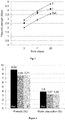
- Figure 1 of the present application shows the resulting change of the compressive strength of concretes reinforced with an additive of the invention with time, measured according to UNE-EN 12350-2:2009.
- concrete 1 containing 25 % by weight of graphene nanofibers of the additive of the invention having an average specific surface area of between 70 and 250 m 2 /g exhibits higher compressive strength than the mixtures containing the additive with graphene fibers of higher specific surface area.
- the exemplary concrete 1 presents a compressive strength of 25.1 MPa after 3 days and 36.6 MPa after 28 days
- the reference sample without additive present a compressive strength of 16.4 MPa after three days and 27.5 MPa after 28 days.
- the exemplary concrete 2 wherein the cement contains an additive having a higher specific surface presents a compressive strength of 21.2 MPa after 3 days and 33.4 MPa after 28 days, thus lower than the exemplary mixture 1 containing graphene nanofibers with lower specific surface area.
- between 10% and 75% by weight of the graphene nanofibers of the additive of the invention have an average specific surface area of between 250 and 450 m 2 /g, preferably between 260 m 2 /g and 400 m 2 /g, preferably between 270 and 350 m 2 /g, even more preferably between 290 and 325 m 2 /g, even more preferably about 300 m 2 /g.
- between 10% and 50%, more preferably between 10% and 35%, even more preferably between 15% and 35% by weight of the graphene nanofibers of the additive have an average specific surface area of between 250 and 450 m 2 /g.
- between 30 and 45% by weight of the graphene nanofibers of the additive have an average specific surface area of between 250 and 450 m 2 /g, more preferably between 35% and 40% by weight of the graphene nanofibers.
- the additive of the invention when containing between 10 and 50 % by weight graphene nanofibers having an average specific surface area of between 250 and 450 m 2 /g confer to the cement wherein it is incorporated an increase in the indirect tensile strength.
- Figure 2 of the present invention shows the indirect tensile strength of two concretes reinforced with an additive of the invention (1 and 2) and of a reference sample without additive (Ref.).
- a comparative analysis between the reference sample and concretes 1 and 2 is performed, wherein the only difference lies in the composition of the samples.
- the assay is performed using cylindrical test pieces of 150 x 300 mm according to UNE-EN 12390-6:2000 and consists in measuring the maximum load after which the cylindrical test piece breaks.
- the figure shows that concrete 2 containing the additive wherein 25% of the graphene nanofibers are fibers with specific surface area of between 250 and 450 m 2 /g present an indirect tensile strength higher than the reference sample without additive (Ref.) and higher than a cement composition containing the additive of the invention wherein 25% of the graphene nanofibers present a lower specific surface area (concrete 1).
- figure 3 shows the behavior of the three samples (Ref., mixture 1 and mixture 2) under a flexural test. This test measures the force required to bend the material under three point loading conditions.
- the figure shows that concrete 2 containing the additive wherein 25% of the graphene nanofibers are fibers with specific surface area of between 250 and 450 m 2 /g, present a higher flexural strength than mixture 1 and higher than the reference sample without additive.
- mixture 2 presents a flexural strength of 2.9 MPa after 3 days and of 4.76 MPa after 28 days
- the reference sample presents a flexural strength of 2.01 MPa after 3 days and of 3.6 MPa after 28 days.
- the additive for a cement composition of the invention has between 50% and 90%, preferably between 70% and 80%, by weight of long length graphene nanofibers having a length of between 5 and 200 ⁇ m and a diameter between 10 nm and 100 nm.
- said long length graphene nanofibers have an average specific surface area of between 30 and 100 m 2 /g.
- the additive for a cement composition of the invention has between 10% and 75%, preferably between 10% and 50%, by weight of the graphene nanofibers having an average specific surface area of between 70 and 249 m 2 /g and a length of between 20 and 2000 nm and between 50% and 90%, preferably between 70% and 80%, by weight of the graphene nanofibers having an average specific surface area of between 30 and 100 m 2 /g and a length of between 5 and 200 ⁇ m under the condition that the sum of the percentage weights of the graphene nanofibers is not greater than 100%.
- the additive for a cement composition of the invention has between 10% and 75%, preferably between 10% and 50%, by weight of the graphene nanofibers having an average specific surface area of between 250 and 450 m 2 /g and a length of between 20 nm and 2000 nm and between 50% and 90%, preferably between 70% and 80%, by weight of the graphene nanofibers having an average specific surface area of between 30 and 100 m 2 /g and a length of between 5 and 200 ⁇ m under the condition that the sum of the percentage weights of the graphene nanofibers is not greater than 100%.
- the additive for a cement composition of the invention has between 10% and 50% by weight of the graphene nanofibers having an average specific surface area of between 70 and 249 m 2 /g and a length of between 20 and 2000 nm, between 10% and 50 % by weight of the graphene nanofibers having an average specific surface area of between 250 and 450 m 2 /g and a length of between 20 nm and 2000 nm, and between 50% and 90% by weight of the graphene nanofibers having an average specific surface area of between 30 and 100 m 2 /g and a length of between 5 and 200 ⁇ m under the condition that the sum of the percentage weights of the graphene nanofibers is not greater than 100%.
- the additive for a cement composition of the invention has between 20% and 30% by weight of the graphene nanofibers having an average specific surface area of between 70 and 249 m 2 /g and a length of between 20 and 2000 nm, between 20% and 30 % by weight of the graphene nanofibers having an average specific surface area of between 250 and 450 m 2 /g and a length of between 20 nm and 2000 nm, and between 70% and 80% by weight of the graphene nanofibers having an average specific surface area of between 30 and 100 m 2 /g and a length of between 5 and 200 ⁇ m under the condition that the sum of the percentage weights of the graphene nanofibers is not greater than 100%.
- the additive for the cement composition according to the invention further contains graphene oxide.
- graphene oxide or "GO” refers to a mono-layer of sp 2 -hybridized carbon atoms with oxygen functional groups that may be attached to one or both sides of the monolayer.
- oxygen functional groups attached on the basal planes and edges of graphene sheets, significantly change the Van der Waals interactions between the sheets, thus improving their dispersion in water.
- the graphene oxide in the additive of the invention improves the dispersion of the additive in the cement composition and enhances the hydration of the cement. It is known in the art that concrete is produced by mixing cement with sand, gravel and water. However, the high amount of water required may result in an increase of the porosity of the concrete, thereby reducing the mechanical properties. In this sense, the presence of graphene oxide in the cement reduces the amount of water required in the production of concrete. Moreover, a reduction of the water-to-cement (w/c) ratio increases the workability of the fresh mixtures and the performances of the hardened pastes, mortars or concretes.
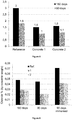
- Figure 4 shows the porosity and water adsorption of concretes reinforced with the additive of the invention containing graphene oxide (Concrete 1 and Concrete 2) and of a non-reinforced reference concrete. The figure shows that the porosity and the absorption of water are lower in the concretes reinforced with the additive of the invention.
- GO suitable for the additive of the invention can be easily obtained from methods known in the art such as by treating graphite under strong oxidative conditions, such as in a mixture of sulphuric acid, sodium nitrate and potassium permanganate, and subsequent exfoliation [ Zhu et al., Adv. Mater., 22(35)(2010)3906-3924 ]. Moreover, GO suitable for the additive of the invention can be also acquired in the market.
- the graphene oxide of the additive of the present invention is in the form of powder or flakes having an average diameter of between 10 and 1000 ⁇ m, preferably between 15 and 800 ⁇ m, preferably between 20 and 600 ⁇ m, preferably between 30 and 500 ⁇ m, preferably between 50 and 200 ⁇ m, preferably between 80 and 150 ⁇ m, even more preferably between 100 and 120 ⁇ m.
- 90% of the particles forming the graphene oxide have an average diameter comprised between 30 and 500 ⁇ m, 50% between 30 and 200 ⁇ m, and 10% of the particles have an average diameter comprised between 30 and 50 ⁇ m.
- the GO has a an average specific surface area of between 200 and 600 m 2 /g, preferably between 300 m 2 /g and 500 m 2 /g, preferably between 350 and 450 m 2 /g, even more preferably between 390 and 425 m 2 /g, even more preferably about 400 m 2 /g.
- the relative amounts of the graphene nanofibers and GO is preferably in the range of mass ratios of GO to GNFs of 0.1-0.5.
- GNFs and GO allows the appearance of excellent reinforcing capabilities in terms of both compressive strength and flexural strength.
- the GNFs/GO mass ratio plays a role in the efficiency of filling the pores of the cement material because of their small size, resulting in a lower porosity of the final material.
- the additive of the present invention further contains a superplasticizer.
- superplasticizer refers to polymers having dispersing properties to avoid particle segregation (gravel, coarse and fine sands), and to improve the flow characteristics (rheology) of suspensions in concrete.
- the superplasticizers have the facility of reducing the water content of a cement composition considerably.
- the additive of the present invention comprising the superplasticizer significantly reduces the necessary content of water in the cement composition to 40%.
- the superplasticizer is a polycarboxylate ether-based superplasticizer (PCEs) or a sulfonated superplasticizer.
- PCEs are composed by a methoxy-polyethylene glycol copolymer (side chain) grafted with methacrylic acid copolymer (main chain).
- sulfonated superplasticizers suitable for the additive of the present invention include lignosulfonates, naphtalensulfonates and melamine sulfonate formaldehyde condensates.
- the inventors have found that the hydroxyl or carbonyl groups of the lateral chains of the superplasticizer molecules act as binding points interacting with the graphene nanofibers and with the cement.
- Acrylic solvents suitable for the additive of the invention include polymers formed by acrylate monomers having a vinyl group and a carboxylic acid terminus.
- the acrylate monomers forming the acrylic polymers are selected from methacrylates, methyl acrylates, ethyl acrylates, 2-chloroethyl vinyl ether, 2-ethylhexyl acrylate, hydroxyethyl methacrylate, butyl acrylate, butyl methacrylate and trimethylolpropane triacrylate (TMPTA) and mixtures thereof.
- Suitable acrylic polymers in the context of the present invention include polymethyl methacrylate, sodium polyacrilate and polyacrylamide.
- Ultrasonic energy may be used to disperse the material comprising graphene nanofibers and graphene oxide in the acrylic solvent of the additive of the invention.
- ultrasounds are applied to the dispersion for a time comprised between 1 and 4 hours.
- one cycle of ultrasounds is applied with amplitude of 30%.
- an ultrasounds bath is next applied to the resulting dispersion for a time comprised between 2 and 24 h., preferably for a time comprised between 8 and 12 h. More preferably, an ultrasounds bath is applied to the resulting dispersion for a time of about 8 h.
- the present invention provides a cement composition comprising cement and the additive of the invention.
- the additive of the invention confers to the cement composition advantageous properties, such as improved mechanical properties of tensile strength and compression as well as of the resistance to fire.
- figures 1-3 evidence the improvement of the mechanical properties of two cement samples reinforced with the additive of the invention with respect to a reference sample without additive.
- figure 5 evidences the improvement in the resistance to fire of the cements reinforced with the additive of the invention.
- FIG 5 shows that the carbonation depth of a cement composition reinforced with an additive of the invention (concrete 1 and 2) is lower than the carbonation depth of a reference sample without additive.
- carbonation refers to the reaction of carbon dioxide in the environment with the calcium hydroxide in the cement paste. This reaction produces calcium carbonate and lowers the pH to around 9. At this value the protective oxide layer surrounding the reinforcing steel breaks down and corrosion becomes possible.
- a cement composition can also include ground granulated blast furnace slag (GGBFS), some forms of fly ash, such as class C fly ash, ground limestone and silica fume.
- GGBFS ground granulated blast furnace slag
- fly ash such as class C fly ash
- ground limestone such as class C fly ash
- silica fume such cementitious agents may be used in compositions of the invention either individually or in combination.
- the cement composition may further comprise silica nanoparticles and/or cellulose.
- the cement composition further comprises one or more aggregates.
- aggregates are mostly chemically inert, solid bodies held together by the cement or hardened cement paste or hardened mortar. Aggregates come in various shapes, sizes, and materials ranging from fine particles, such as sand, to large particles, such coarse rocks.
- Other aggregates include river gravel, land gravel, pit gravel, crushed stone, vermiculite, ceramic spheres, perlite, expanded clay, shale, slate, crushed brick, crushed limestone, sand, river gravel, crushed recycled concrete, steel shot, iron shot, steel pellets, and iron pellets.
- the selection of an aggregate is determined, in part, by the desired characteristics of the cement mix.
- the density of concrete is influenced by the density of the aggregate.
- Soft, porous aggregates can result in weak concrete with low wear resistance, while using hard aggregates can make strong concrete with a high resistance to abrasion.
- the aggregates are usually washed to remove any dust, silt, clay, organic matter, or other impurities that would interfere with the bonding reaction with the cement paste.
- an air entraining admixture may be added, if necessary, for gaining an appropriate content of air for rendering the concrete durable.
- Suitable admixtures include anionic surfactants, cationic surfactants, nonionic surfactants, and amphoteric surfactants.
- anionic surfactant are carboxylic acid, sulfuric acid ester, sulfonic acid, and phosphoric acid ester type surfactants.
- cationic surfactant are amine salt, primary amine salt, secondary amine salt, tertiary amine salt, and quaternary amine salt type surfactants.
- Exemplary of the nonionic surfactant are ester, ester-ether, and ether type surfactants.
- Exemplary of the amphoteric surfactant are amino acid and sulfo-betaine type surfactants.
- a defoamer may be used, if necessary, for preventing an excessive amount of air entrained upon mixing from acting to reduce strength.
- Suitable defoamers include oxyalkylene, silicone, alcohol, mineral oil, fatty acid, and fatty acid ester base defoamers.
- a set accelerator such as calcium chloride, lithium chloride or calcium formate, or a set retarder such as sodium citrate or sodium gluconate may be added to the concrete composition.
- an expanding agent may be added to the concrete composition, if necessary, for preventing shrinkage crazing on curing and drying, and for preventing crazing concomitant with thermal stresses by the hydration heat of cement.
- Suitable expanding agents include lime base agents.
- agents that may be added to the concrete composition include solid particles or powders, such as of electrically conductive material such as manganese oxide, tin oxide, titanium oxide and/or nickel oxide, or semi-conductive material including semiconducting nanoparticles such as CdS, PdS, CdSe, or resistive material, magnetically active material, ceramics, metals including metal nanoparticles such as. Pt, Pd, Au, Ag, Sn, glass beads or fibers, pH buffers, salts, and any mixture of one or more of these.
- the cement composition contains the additive of the invention wherein the total amount of graphene nanofibers and graphene oxide is between 0.002% and 0.01% by weight with respect to the cement weight. In a preferred embodiment the total amount of graphene nanofibers and graphene oxide is between 0.005% and 0.007% by weight, preferably 0.006% by weight with respect to the cement weight.
- the cement composition contains about 0.001% of graphene nanofibers of specific surface area of between 250 and 400 m 2 /g and a length of between 0.02 and 2 ⁇ m, about 0.003% of graphene nanofibers having a length of between 5 and 200 ⁇ m and a specific surface area of between 30 and 100 m 2 /g, about 0.001% of graphene oxide, about 1% of superplasticizer and about 1% of an acrylic solvent, by weight with respect to the cement weight.
- the cement paste is prepared by blending the cement composition of the invention comprising cement and the additive with an agglomerate and water.
- the invention in another aspect relates to a process for preparing a reinforced concrete comprising mixing the cement paste of the invention with water, sand and gravel.
- the reinforced concrete is produced by curing the resulting mixture comprising the cement paste, sand, gravel and water over time, at room temperature.
- other aspect of the invention refers to the reinforced concrete obtainable by the former process comprising mixing the cement paste of the invention with water, sand and gravel.
- the reinforced concrete pursuant to the invention will find wide application for highway structures, bridges, pavements, runways for airports, continuous slab type sleepers for high speed trains, dam walls, retaining walls, railway sleepers, pipes, precast elements such as for commercial and residential buildings, cladding, mortar, render, marine and aquatic structures and the like and in general in all applications of conventional and high strength concrete, as well as in manufactured precast elements for residential and commercial buildings.
- precast elements such as for commercial and residential buildings, cladding, mortar, render, marine and aquatic structures and the like and in general in all applications of conventional and high strength concrete, as well as in manufactured precast elements for residential and commercial buildings.
- concrete slabs according to the invention can have a wide range of applications, such as induction material to allow electric charge of transport vehicles.
- one aspect of the invention refers to the use of the reinforced concrete for highway structures, bridges, pavements, runways for airports, continuous slab-type sleepers for high speed trains, covers of crates, and in manufactured precast elements for residential and commercial buildings.
- a first solution was prepared by mixing 0.5 g of graphene nanofibers of low specific surface area ( ⁇ 115 m 2 /g, with a length of from 20 to 2000 nm and of a diameter comprised between 5-160 nm, GNF LS), with 1.5 g of graphene nanofibers having a length between 20 ⁇ m and 200 ⁇ m (30 to 100 m 2 /g and diameter comprised between 2-200 nm, GNF LL) and 0.020 g of superplasticizer PEC (Alcolperse 747) in 2.5 L of acrylic solvent (polycarboxylate ether-based superplasticizer). The resulting dispersion was sonicated for 2 hours in a resonation cycle having 30% amplitude.
- a second solution was prepared by dispersing 0.5 g of graphene oxide in 2.5 L of an acrylic solvent (polycarboxylate ether-based superplasticizer). The solution was then sonicated for 2 hours under a resonation cycle having 30% amplitude.
- an acrylic solvent polycarboxylate ether-based superplasticizer
- the first and the second solution were mixed and the resulting solution placed in an ultrasound bath for 24 hours to form additive 1.
- the weight ratios of the components of the additive in the cement are the following:
- a mixed cement sample (2 m 3 ) was prepared.
- the additive 1 (5 L) was mixed with 250 kg of cement, 167.5 L of water, 880 kg of gravel and 1104 kg of sand following the steps of:
- a sample for measurement was extracted from the 2 m 3 mix by first removing and discarding 1 m 3 . This assures the sample is representative of the whole mix.
- the resultant cement paste was cast in molds and cured. Curing was accomplished by allowing the cement paste specimens to moist cure over time, at 23 ⁇ 2 °C, to produce Concrete 1.
- Additive 2 was prepared following the same procedure as for additive 1 but replacing the graphene nanofibers of low specific surface area (GNF LS) by graphene nanofibers of high specific surface area ( ⁇ 400 m 2 /g, with a length of from 20 to 2000 nm and of a diameter comprised between 5-160 nm, GNF HS).
- GNF LS graphene nanofibers of low specific surface area
- ⁇ 400 m 2 /g graphene nanofibers of high specific surface area
- the weight ratios of the components of the additive in the cement are the following:
- the additive 2 (5 L) was mixed with 250 kg of cement, 167.5 I of water, 880 kg of gravel and 1104 kg of sand following the same steps as for additive 1.
- the resultant cement paste was cast in molds and cured. Curing was accomplished by allowing the cement paste specimens to moist cure over time, at 23 ⁇ 2 °C, to produce Concrete 2.
- a comparative mixture was prepared by mixing 250 kg of cement, 190 L of water, 880 kg of gravel and 1104 kg of sand following the same steps as for additive 1 but in this case, no additive was added to this mixture.
- the resultant cement paste was cast in molds and cured. Curing was accomplished by allowing the cement paste specimens to moist cure over time, at 23 ⁇ 2 °C, to produce a reference concrete without additive.
- the compressive strength of concrete 1, concrete 2 and reference concrete was measured on cylindrical test pieces of 150 x 300 mm in a compacting machine C.M.E. 2500 KN according to UNE-EN 12350-2:2009 applying 25 strokes per layer.
- the results were collected in Figure 1 .
- the collected results show that the compressive strength of reinforced concretes 1 and 2 is higher than that of the reference concrete without additive. Moreover, the compressive strength is higher for concrete 1 having graphene nanofibers of low specific surface.
- the indirect tensile strength of concretes 1, 2 and reference concrete was measured on cylindrical test pieces of 150 x 300 mm according to UNE-EN 12390-6:2000. The results are collected in figure 2 .
- the collected data show that the reference concrete exhibit lower indirect tensile strength than concrete 1 and concrete 2.
- concrete 2 showed higher indirect tensile strength than concrete 1.
- the flexural strength of concrete 1, concrete 2 and reference concrete was measured with a prismatic indentor having a probe of 100x100x400 mm according to UNE-EN 12390-5.
- the porosity of the reinforced concrete obtained was measured on cylindrical test pieces of 150 x 300 mm according to S/ASTM C 642.
- Figure 4 collects the results from concrete 1, concrete 2 and the reference concrete.
- the porosity of concretes 1 and 2 improves 15% in comparison with the reference concrete without additive. Water absorption percentages provide further evidence of the effect the additives of the invention have on concrete samples.
- Carbonation of the reinforced concrete obtained was measured on cylindrical test pieces of 100 x 150 mm according to S/UNE 112011:2011.
- Figure 5 shows the results of the carbonation test under air conditions.
- the carbonation depth of the reference concrete without additive is higher than that for Concrete 1 and Concrete 2, evidencing the high resistance of the concretes of the invention to carbonation.
- the concretes of the invention present a higher resistance to chlorides than the reference sample without additives.
Landscapes
- Chemical & Material Sciences (AREA)
- Engineering & Computer Science (AREA)
- Ceramic Engineering (AREA)
- Materials Engineering (AREA)
- Organic Chemistry (AREA)
- Structural Engineering (AREA)
- Nanotechnology (AREA)
- Chemical Kinetics & Catalysis (AREA)
- Inorganic Chemistry (AREA)
- Civil Engineering (AREA)
- Crystallography & Structural Chemistry (AREA)
- General Physics & Mathematics (AREA)
- Condensed Matter Physics & Semiconductors (AREA)
- Physics & Mathematics (AREA)
- Composite Materials (AREA)
- Manufacturing & Machinery (AREA)
- Curing Cements, Concrete, And Artificial Stone (AREA)
Abstract
The present invention relates to cement compositions comprising graphene. The invention also relates to a process for reinforcing concrete with materials comprising graphene. The cement compositions, and concrete reinforced therewith, of the present invention are particularly useful in pavements, runways for airports, continuous slab-type sleepers for high speed trains, covers of crates, and in manufactured precast elements for residential and commercial buildings.
Description
- The present invention relates to cement composites, preferably concrete, reinforced with materials comprising graphene.
- Concrete is a composite material of aggregates and binders, where binders are primarily a combination of cement, pozzolanic materials and water.
- The relatively low tensile strength and ductility of the concrete are counteracted by the inclusion of reinforcements having higher tensile strength and/or ductility. In this sense, a typical reinforcement of concrete is provided using reinforcing bars and macrofibers, both of which reinforce concrete at the millimeter scale. Moreover, Sanchez and Sobolev discloses the use of polymers such as polyvinyl alcohol, polypropylene, polyethylene and polyamide to reinforce concrete [Construction and building materials, 24 (2010) 2060-2071].
- Nano-reinforcements in cementitious composite materials are considered more effective than conventional steel bar/fiber reinforcements to hinder the formation and propagation of microcracks at the outset because they can control nano-sized cracks (at the initiation stage) before they develop into micro-size cracks. However, the incorporation of nanomaterials in cement composites is a complex task and sometimes yields contrasting results.
- Recently, carbon nanostructures such as carbon nanotubes (CNTs), carbon nanofibers (CNFs), and graphene have attracted the attention of researchers because of their exceptional mechanical, chemical, thermal, and electrical properties, and their good performance as polymeric reinforcement materials. However, the addition of CNTs results in little changes in the strength or results even in the deterioration of cement composites. Moreover, CNTs tend to form agglomerates or bundles difficult to separate (Groert, ). A Sobolkina et al. [Cement and concrete composites, 34(2012) 1104-1113] reports that CNTs tend to agglomerate when they are dispersed in a cement matrix so that their uniform distribution in the matrix is impeded. Moreover, non-uniformly distributed CNTs cannot form a network within a matrix to support load transfer or mitigate the development of cracks.
- Despite the efforts to date, there is still a need in the art concerning additives suitable for cement compositions, particularly to improve the mechanical properties of reinforced cement composites.
- The purpose of the present invention is to provide an additive for a cement composition that improves the properties of the cement composition, not only its mechanical properties, but also its conductivity, fire-resistance and durability.
- The invention is defined in the claims.
- Thus, in a first aspect the invention relates to an additive for a cement composition comprising a dispersion of graphene nanofibers, graphene oxide and a superplasticizer, in an acrylic solvent, wherein the graphene nanofibers have an average diameter comprised between 2 nm and 200 nm.
- Particularly, the dispersion of the additive of the invention in a cement composition enhances the mechanical properties of the cement composite and improves material durability by delaying crack formation.
- Thus, in another aspect the present invention relates to a cement composition comprising cement and the additive of the invention.
- In another aspect the invention relates to a cement paste comprising the cement composition of the invention.
- In another aspect the invention relates to a process for preparing a reinforced concrete comprising mixing the cement paste of the invention with water, sand and gravel.
- In another aspect the invention relates to a reinforced concrete obtainable by the process of the invention.
- The reinforced concrete according to the invention will find wide applications in highway structures, bridges, pavements, runways for airports, continuous slab-type sleepers for high speed trains and in general in all applications of conventional and high strength cement composites. Thus, one final aspect of the invention relates to the use of the reinforced concrete for highway structures, bridges, pavements, runways for airports, continuous slab-type sleepers for high speed trains, covers of crates, and in manufactured precast elements for residential and commercial buildings.
- The accompanying drawings, which are incorporated herein and constitute a part of this specification, illustrate exemplary and non-limiting embodiments of the invention and, together with the written description, serve to explain the principles of the invention. In the drawings:
-
Figure 1 shows the compressive strength variation with time for two reinforced concretes containing an additive of the invention (1 and 2) and for a reference sample without the additive (Ref.). -
Figure 2 shows the change of the indirect tensile strength with time of two reinforced concretes containing an additive of the invention (1 and 2) and of a reference sample without the additive (Ref.). -
Figure 3 shows the change of the flexural strength with time of two reinforced concretes containing an additive of the invention (1 and 2) and of a reference sample without the additive (Ref.). -
Figure 4 shows the porosity and water absorption of two reinforced concretes containing an additive of the invention (1 and 2) and of a reference sample without the additive (Ref.). -
Figure 5 shows the carbonation depth of two reinforced concretes containing an additive of the invention (Cement 1 and Cement 2) and of a reference sample without the additive (Reference). -
Figure 6 shows the resistance to chlorides of two reinforced concretes containing an additive of the invention and of a reference sample without the additive. -
Figure 7 shows the maximum stress (σ) and Maximum strain (ε) values for two reinforced concretes containing an additive of the invention (Concrete 1 and 2) and for a reference sample without the additive (Reference concrete) without (A) and with (B) exposure to fire. - The present invention relates to an additive for a cement composition comprising a dispersion of graphene nanofibers, graphene oxide and a superplasticizer, in an acrylic solvent, wherein the graphene nanofibers have an average diameter comprised between 2 nm and 200 nm.
- The graphene nanofibers of the invention are preferably characterized by a length of between 20 nm and 200 µm.
- The graphene nanofibers used in the additive of the present invention are preferably selected from the group consisting of graphene nanofibers of low specific surface area (70 to 249 m2/g) and length 0.02 to 2 µm, (GNF LS); graphene nanofibers of high specific surface area (250 to 400 m2/g) and length 0.02 to 2 µm (GNF HS); and long-length graphene nanofibers with a specific surface area of 30 to 100 m2/g and
length 5 µm to 200 µm (GNF LL); and mixtures thereof. - Without wishing to be bound by any particular theory, it is believed that the long-length graphene nanofibers help in improving the mechanical properties of the cement composition by acting as a binder of cement microparticles while the low specific surface area and high specific surface area graphene nanofibers help with the durability and fire-resistance properties of the cement composition. Thus, by varying the proportion of each type of graphene nanofiber, the additive can be fine-tuned to produce a cement of particular properties suitable for different applications. These graphene nanofibers, when combined with the graphene oxide, superplasticizer and the acrylic base, result in an additive which surprisingly improves the properties of cement.
- The term "cement" is well known in the art and refers to a fine, soft, dry, powdery-type binder substance that when mixed with water can cure in a hard, solid mass. A cement is a substance used for construction that sets, hardens, and adheres to other materials to bind them together. Cement is usually used to bind sand and gravel (aggregate) together. Cement mixed with fine aggregate produces mortar for masonry, or with sand and gravel, produces concrete. Cements used in construction are usually inorganic, often lime or calcium silicate based. As used herein, the term "cement", is understood to include any cement which has the characteristic of hardening under water e.g., portland cement, blends of portland cement and natural cement, pozzolanic cements, slag cement, masonry cement, oil well cement, white portland cement, mixtures of portland cement and blast-furnace slag cement and like materials. In particular, the term "cement composition" refers to a mixture of elements such as limestone, clay, sand, and/or shale, among others.
- The additive of the invention for a cement composition comprises a dispersion of graphene nanofibers. Graphene nanofibers suitable for the additive of the invention contain interconnected graphene sheets wherein the long range covalent crystalline nature of the graphene eliminates the grain boundaries between the crystallites forming the structure. In the context of the present invention, graphene nanofibers are cylindrical nanostructures with graphene layers arranged as stacked cones, cups or plates.
- In particular graphene nanofibers suitable for the additive of the invention can be classified depending on the angle of the graphene layers that compose the fiber with respect to the fiber axis, thus for example in stacked graphene nanofibers the graphene layers are stacked perpendicular to the fiber axis, whereas in herringbone and cup-stacked graphene nanofibers, the graphene layers are stacked at an angle between parallel and perpendicular to the fiber axis.
- Moreover, the graphene nanofibers may have voids in their structure, such as micropores in the stem of the graphene nanofibers. In a particular embodiment, the graphene nanofibers have internal micropores in their structure, preferably the graphene nanofibers used in the compositions of the invention present a pore volume comprised between 0.3 and 1.6 cm3/g, preferably between 0.5 and 1.5 cm3/g, even more preferably between 0.8 and 1.2 cm3/g.
- In particular, the specific surface area of the micropores of the low specific surface area graphene nanofibers of the additive of the invention is comprised between 2 and 50 m2/g, preferably between 2 and 20 m2/g with respect to the total surface of the graphene nanofiber.
- However, unlike carbon nanotubes the graphene nanofibers of the additive of the invention are not tubular and thus, lack an internal cavity throughout the length of their structure which includes openings at both ends. In a particular embodiment, the graphene nanofibers of the additive of the invention have at least one internal void, preferably the internal void is open in only one of the two ends of the graphene nanofiber. Moreover, unlike carbon nanofibers which have a disordered crystalline structure, graphene nanofibers present a crystalline structure wherein the carbon atoms are arranged in an ordered way.
- Failure in cement based materials is a gradual multi-scale process. When loaded, initially short and discontinuous microcracks are created in a distributed manner. These microcracks coalesce to form large macroscopic cracks, known as macrocracks. Carbon fibers bridge cracks and transfer the load, delaying the coalescence of cracks. Due to the multi-scale nature of fracture, the influence of fibers in reinforcing cement based materials, mainly depends on the scale of reinforcement. Macrofibers can improve post-peak toughness by bridging macrocracks. Fine microfibers, on the other hand, bridge the microcracks which delay the process by which the microcracks coalesce to form macrocracks. However, cracks in cement based materials initiate from the nanoscale where microfibers are not effective. Thus, the development of fibers at the nanoscale has opened a new field of research within concrete.
- Graphene nanofibers are very effective reinforcements in cement composites. This is because they possess excellent material properties such as high stiffness, tensile strength, excellent electrical, and thermal conductivities and corrosion resistance. Moreover, the physical configuration of GNFs presents a number of exposed edges along the surface, which may establish p areas of interactions with hydration products of cements. In addition, they are more economical than Carbon nanotubes (CNTs) at industrial level.
- Graphene nanofibers suitable for the additive of the invention can be acquired from commercial providers (Pyrograph Products, Graphenano S.L., Polytech & Net GmbH, Suzhou Tanfeng Graphene Technology Co. LTD, NXTGEN Nanofiber). Moreover, graphene nanofibers suitable for the additive of the invention can be prepared by methods well-known in the art, such as by arc discharge, laser vaporization and high pressure carbon monoxide process. Preferably, graphene nanofibers suitable for the present invention are prepared by growing from the catalytic decomposition of hydrocarbons over metal catalyst by Chemical Vapor Deposition (CVD).
- The Chemical Vapor Deposition method for carbon nanofiber is a catalytic method in which a carbonaceous source is decomposed in the presence of a catalyst to grown GNFs. Transition metal catalytic particles such as iron, nickel, cobalt, and copper are used as catalyst. CVD process takes place at temperatures ranging between 500 to 1200°C [Martin-Gullon, I., et al., Differences between carbon nanofibers produced using Fe and Ni catalysts in a floating catalyst reactor. Carbon, 2006. 44(8): p. 1572-1580]. Other suitable techniques for producing graphene nanofibers include electrochemical anodization, freeze drying, sol-gel chemistry, self-assembly, three-dimensional (3-D) printing, and atomic layer deposition. Most of these methods are based upon templating and phase separation, typically combined with dissolution/extraction, etching, and high-temperature calcination or pyrolysis to generate pores via selective removal of the sacrificial component(s).
- Electrospinning is an alternative production method of GNFs. Electrospinning is a simple and known process for fabricating graphene nanofibers suitable for reinforced concrete of the invention [Yaodong Liu & Satish Kumar (2012), Polymer Reviews, 52:3-4, 234-258]. A typical electrospinning setup consists of a metallic spinneret, a syringe pump, a high-voltage power supply, and a grounded collector in a humidity controlled chamber. A polymer solution, polymer melt or a sol-gel solution is continuously pumped through the spinneret at a constant rate, while a high-voltage gradient is applied between the spinneret tip and the collector substrate. The solvent continuously and rapidly evaporates while the jet stream is whipped and stretched by electrostatic repulsion forming solidified continuous nanofibers (diameters 20-500 nm) on the grounded collector. Graphene nanofibers are fabricated by subjecting electrospun nanofibers of an appropriate polymer precursor to stabilization and carbonization processes. Cellulose, phenolic resins, polyacrylonitrile (PAN), polybenzimidazol, and pitch-based materials may be used as a polymer precursor to produce graphene nanofibers. A number of methods have been developed for generating pores in individual electrospun nanofibers, and they can be broadly divided into two strategies: i) employment of a proper post treatment (e.g., solvent extraction and calcination) and ii) manipulation of polymer-solvent phase separation. In general, the method based upon selective removal of a sacrificial component is the most straightforward and versatile route to generating porous nanofibers. Ji et al. [Journal of Polymer Science Part B: Polymer Phys. 47 (2009) 493-503] report porous carbon nanofibers prepared by carbonizing electrospun PAN/poly(L-lactide) nanofibers. The reported graphene nanofibers present irregular thin long interior pores and a specific surface area of 359 m2/g. Zhang and Hsieh [L. Zhang et al., European Polymer Journal 45 (2009) 47-56] electrospun binary solutions of PAN with three different sacrificial polymers, poly(ethylene oxide), cellulose acetate, and poly(methylmethacrylate) (PMMA). Upon removal of the second polymer and subsequent carbonization, different features such as grooved, hollow, U-shaped, or collapsed fibers were observed. Similarly, Kim et al. reported porous CNFs with hollow cores obtained by electrospinning PAN and PMMA [C. Kim et al., Small, 3 (2007) 91-95; Wahab, Izzati Fatimah, et al., Advances in Carbon Nanostructures. InTech, 2016].
- The graphene nanofibers of the additive of the invention have an average diameter comprised between 2 nm and 200 nm, preferably between 5 nm and 160 nm. In a preferred embodiment, the graphene nanofibers have a diameter comprised between 7 and 155 nm, preferably between 10 and 150 nm, more preferably between 20 and 140 nm, more preferably between 30 and 130 nm, more preferably between 40 and 120 nm, more preferably between 50 and 110 nm, more preferably between 60 and 100 nm, more preferably between 70 and 90 nm, more preferably about 80 nm.
- The average diameters and lengths of the material comprising graphene are measured by Transmission Electron Microscopy (TEM).
- In a particular embodiment the graphene nanofibers of the additive of the invention having a diameter comprised between 2 nm and 200 nm, further have a length of between 20 nm and 200 µm, preferably between 20 nm and 1 µm, preferably between 30 nm and 500 nm, preferably between 50 nm and 300 nm, preferably between 75 nm and 200 nm, preferably between 100 and 150 nm.
- In a particular embodiment, between 50 and 75% by weight of the graphene nanofibers of the additive of the invention have a length of between 5 µm and 200 µm, preferably between 10 and 100 µm, more preferably between 15 and 85 µm, more preferably between 20 and 75 µm, more preferably between 30 and 65 µm, more preferably between 35 and 60 µm, more preferably between 40 and 55 µm, even more preferably between 45 and 50 µm.
- In a preferred embodiment, between 55 and 70% of the graphene nanofibers of the cement composition have a length of between 5 and 200 µm, even more preferably between 60 and 65% of the graphene nanofibers.
- In a preferred embodiment the additive of the invention contains graphene nanofibers having a length between 5 and 200 µm and a diameter between 10 and 100 nm, preferably between 20 and 75 nm, even more preferably about 50 nm. Typically these graphene nanofibers having a length of between 5 µm and 200 µm have a specific surface area of between 30 and 100 m2/g.
- The inventors have found that the additive of the invention containing graphene nanofibers having a length between 5 and 200 µm is more prone to interact with the cement composition, so that the overall properties of the cement result improved.
- In the context of the present invention, the term "specific surface area (SSA)" refers to the total surface area of a material per unit of mass.
- The inventors have seen that the cement compositions containing the additive of the invention wherein between 10 and 50 % by weight of graphene nanofibers have an average specific surface area of between 70 and 249 m2/g, have an increased compressive strength.
- The expression "compressive strength" in the context of the invention refers to the capacity of a material or structure to withstand loads tending to reduce size.
- Thus, in a particular embodiment between 10 and 75 % by weight of the graphene nanofibers of the additive of the invention have an average specific surface area of between 70 and 249 m2/g, preferably between 80 m2/g and 200 m2/g, more preferably between 90 and 150 m2/g, even more preferably between 100 and 125 m2/g, even more preferably about 115 m2/g. In a preferred embodiment of the latter, between 10% and 50%, more preferably between 10% and 35%, even more preferably between 15% and 35% by weight of the graphene nanofibers of the additive have an average specific surface area of between 70 and 249 m2/g. In yet another embodiment, between 30 and 45% by weight of the graphene nanofibers of the additive have an average specific surface area of between 70 and 249 m2/g, more preferably between 35% and 40% by weight of the graphene nanofibers.
-
Figure 1 of the present application shows the resulting change of the compressive strength of concretes reinforced with an additive of the invention with time, measured according to UNE-EN 12350-2:2009. Inparticular concrete 1 containing 25 % by weight of graphene nanofibers of the additive of the invention having an average specific surface area of between 70 and 250 m2/g, exhibits higher compressive strength than the mixtures containing the additive with graphene fibers of higher specific surface area. Thus, while theexemplary concrete 1 presents a compressive strength of 25.1 MPa after 3 days and 36.6 MPa after 28 days, the reference sample without additive present a compressive strength of 16.4 MPa after three days and 27.5 MPa after 28 days. Further, theexemplary concrete 2 wherein the cement contains an additive having a higher specific surface, presents a compressive strength of 21.2 MPa after 3 days and 33.4 MPa after 28 days, thus lower than theexemplary mixture 1 containing graphene nanofibers with lower specific surface area. - In another particular embodiment between 10% and 75% by weight of the graphene nanofibers of the additive of the invention have an average specific surface area of between 250 and 450 m2/g, preferably between 260 m2/g and 400 m2/g, preferably between 270 and 350 m2/g, even more preferably between 290 and 325 m2/g, even more preferably about 300 m2/g. In a preferred embodiment of the latter, between 10% and 50%, more preferably between 10% and 35%, even more preferably between 15% and 35% by weight of the graphene nanofibers of the additive have an average specific surface area of between 250 and 450 m2/g. In yet another embodiment, between 30 and 45% by weight of the graphene nanofibers of the additive have an average specific surface area of between 250 and 450 m2/g, more preferably between 35% and 40% by weight of the graphene nanofibers. Moreover, the additive of the invention when containing between 10 and 50 % by weight graphene nanofibers having an average specific surface area of between 250 and 450 m2/g confer to the cement wherein it is incorporated an increase in the indirect tensile strength.
-
Figure 2 of the present invention shows the indirect tensile strength of two concretes reinforced with an additive of the invention (1 and 2) and of a reference sample without additive (Ref.). In brief, a comparative analysis between the reference sample and concretes 1 and 2 is performed, wherein the only difference lies in the composition of the samples. The assay is performed using cylindrical test pieces of 150 x 300 mm according to UNE-EN 12390-6:2000 and consists in measuring the maximum load after which the cylindrical test piece breaks. The figure shows thatconcrete 2 containing the additive wherein 25% of the graphene nanofibers are fibers with specific surface area of between 250 and 450 m2/g present an indirect tensile strength higher than the reference sample without additive (Ref.) and higher than a cement composition containing the additive of the invention wherein 25% of the graphene nanofibers present a lower specific surface area (concrete 1). - Likewise,
figure 3 shows the behavior of the three samples (Ref.,mixture 1 and mixture 2) under a flexural test. This test measures the force required to bend the material under three point loading conditions. The figure shows thatconcrete 2 containing the additive wherein 25% of the graphene nanofibers are fibers with specific surface area of between 250 and 450 m2/g, present a higher flexural strength thanmixture 1 and higher than the reference sample without additive. Inparticular mixture 2 presents a flexural strength of 2.9 MPa after 3 days and of 4.76 MPa after 28 days, while the reference sample presents a flexural strength of 2.01 MPa after 3 days and of 3.6 MPa after 28 days. - In another particular embodiment the additive for a cement composition of the invention has between 50% and 90%, preferably between 70% and 80%, by weight of long length graphene nanofibers having a length of between 5 and 200 µm and a diameter between 10 nm and 100 nm. Preferably, said long length graphene nanofibers have an average specific surface area of between 30 and 100 m2/g.
- In another particular embodiment, the additive for a cement composition of the invention has between 10% and 75%, preferably between 10% and 50%, by weight of the graphene nanofibers having an average specific surface area of between 70 and 249 m2/g and a length of between 20 and 2000 nm and between 50% and 90%, preferably between 70% and 80%, by weight of the graphene nanofibers having an average specific surface area of between 30 and 100 m2/g and a length of between 5 and 200 µm under the condition that the sum of the percentage weights of the graphene nanofibers is not greater than 100%.
- In another particular embodiment, the additive for a cement composition of the invention has between 10% and 75%, preferably between 10% and 50%, by weight of the graphene nanofibers having an average specific surface area of between 250 and 450 m2/g and a length of between 20 nm and 2000 nm and between 50% and 90%, preferably between 70% and 80%, by weight of the graphene nanofibers having an average specific surface area of between 30 and 100 m2/g and a length of between 5 and 200 µm under the condition that the sum of the percentage weights of the graphene nanofibers is not greater than 100%.
- In yet another particular embodiment, the additive for a cement composition of the invention has between 10% and 50% by weight of the graphene nanofibers having an average specific surface area of between 70 and 249 m2/g and a length of between 20 and 2000 nm, between 10% and 50 % by weight of the graphene nanofibers having an average specific surface area of between 250 and 450 m2/g and a length of between 20 nm and 2000 nm, and between 50% and 90% by weight of the graphene nanofibers having an average specific surface area of between 30 and 100 m2/g and a length of between 5 and 200 µm under the condition that the sum of the percentage weights of the graphene nanofibers is not greater than 100%.
- In a preferred embodiment, the additive for a cement composition of the invention has between 20% and 30% by weight of the graphene nanofibers having an average specific surface area of between 70 and 249 m2/g and a length of between 20 and 2000 nm, between 20% and 30 % by weight of the graphene nanofibers having an average specific surface area of between 250 and 450 m2/g and a length of between 20 nm and 2000 nm, and between 70% and 80% by weight of the graphene nanofibers having an average specific surface area of between 30 and 100 m2/g and a length of between 5 and 200 µm under the condition that the sum of the percentage weights of the graphene nanofibers is not greater than 100%.
- The additive for the cement composition according to the invention further contains graphene oxide. The term "graphene oxide" or "GO" refers to a mono-layer of sp2-hybridized carbon atoms with oxygen functional groups that may be attached to one or both sides of the monolayer. The oxygen functional groups, attached on the basal planes and edges of graphene sheets, significantly change the Van der Waals interactions between the sheets, thus improving their dispersion in water.
- The inventors have found that the graphene oxide in the additive of the invention improves the dispersion of the additive in the cement composition and enhances the hydration of the cement. It is known in the art that concrete is produced by mixing cement with sand, gravel and water. However, the high amount of water required may result in an increase of the porosity of the concrete, thereby reducing the mechanical properties. In this sense, the presence of graphene oxide in the cement reduces the amount of water required in the production of concrete. Moreover, a reduction of the water-to-cement (w/c) ratio increases the workability of the fresh mixtures and the performances of the hardened pastes, mortars or concretes.
-
Figure 4 shows the porosity and water adsorption of concretes reinforced with the additive of the invention containing graphene oxide (Concrete 1 and Concrete 2) and of a non-reinforced reference concrete. The figure shows that the porosity and the absorption of water are lower in the concretes reinforced with the additive of the invention. - GO suitable for the additive of the invention can be easily obtained from methods known in the art such as by treating graphite under strong oxidative conditions, such as in a mixture of sulphuric acid, sodium nitrate and potassium permanganate, and subsequent exfoliation [Zhu et al., Adv. Mater., 22(35)(2010)3906-3924]. Moreover, GO suitable for the additive of the invention can be also acquired in the market.
- In a preferred embodiment the graphene oxide of the additive of the present invention is in the form of powder or flakes having an average diameter of between 10 and 1000 µm, preferably between 15 and 800 µm, preferably between 20 and 600 µm, preferably between 30 and 500 µm, preferably between 50 and 200 µm, preferably between 80 and 150 µm, even more preferably between 100 and 120 µm. In another preferred embodiment, 90% of the particles forming the graphene oxide have an average diameter comprised between 30 and 500 µm, 50% between 30 and 200 µm, and 10% of the particles have an average diameter comprised between 30 and 50 µm.
- In an embodiment of the invention the GO has a an average specific surface area of between 200 and 600 m2/g, preferably between 300 m2/g and 500 m2/g, preferably between 350 and 450 m2/g, even more preferably between 390 and 425 m2/g, even more preferably about 400 m2/g.
- The relative amounts of the graphene nanofibers and GO is preferably in the range of mass ratios of GO to GNFs of 0.1-0.5.
- The presence of GNFs and GO allows the appearance of excellent reinforcing capabilities in terms of both compressive strength and flexural strength. The GNFs/GO mass ratio plays a role in the efficiency of filling the pores of the cement material because of their small size, resulting in a lower porosity of the final material.
- The additive of the present invention further contains a superplasticizer. In the context of the present invention the term "superplasticizer" refers to polymers having dispersing properties to avoid particle segregation (gravel, coarse and fine sands), and to improve the flow characteristics (rheology) of suspensions in concrete. Moreover, the superplasticizers have the facility of reducing the water content of a cement composition considerably.
- The inventors have found that the additive of the present invention comprising the superplasticizer significantly reduces the necessary content of water in the cement composition to 40%.
- In a preferred embodiment the superplasticizer is a polycarboxylate ether-based superplasticizer (PCEs) or a sulfonated superplasticizer. PCEs are composed by a methoxy-polyethylene glycol copolymer (side chain) grafted with methacrylic acid copolymer (main chain).
- Examples of sulfonated superplasticizers suitable for the additive of the present invention include lignosulfonates, naphtalensulfonates and melamine sulfonate formaldehyde condensates.
- The inventors have found that the hydroxyl or carbonyl groups of the lateral chains of the superplasticizer molecules act as binding points interacting with the graphene nanofibers and with the cement.
- Acrylic solvents suitable for the additive of the invention include polymers formed by acrylate monomers having a vinyl group and a carboxylic acid terminus. Preferably, the acrylate monomers forming the acrylic polymers are selected from methacrylates, methyl acrylates, ethyl acrylates, 2-chloroethyl vinyl ether, 2-ethylhexyl acrylate, hydroxyethyl methacrylate, butyl acrylate, butyl methacrylate and trimethylolpropane triacrylate (TMPTA) and mixtures thereof. Suitable acrylic polymers in the context of the present invention include polymethyl methacrylate, sodium polyacrilate and polyacrylamide.
- Ultrasonic energy may be used to disperse the material comprising graphene nanofibers and graphene oxide in the acrylic solvent of the additive of the invention. In a preferred embodiment, ultrasounds are applied to the dispersion for a time comprised between 1 and 4 hours. Preferably, one cycle of ultrasounds is applied with amplitude of 30%.
- In a preferred embodiment, an ultrasounds bath is next applied to the resulting dispersion for a time comprised between 2 and 24 h., preferably for a time comprised between 8 and 12 h. More preferably, an ultrasounds bath is applied to the resulting dispersion for a time of about 8 h.
- In one aspect the present invention provides a cement composition comprising cement and the additive of the invention. The additive of the invention confers to the cement composition advantageous properties, such as improved mechanical properties of tensile strength and compression as well as of the resistance to fire. In this sense
figures 1-3 evidence the improvement of the mechanical properties of two cement samples reinforced with the additive of the invention with respect to a reference sample without additive. Moreover,figure 5 evidences the improvement in the resistance to fire of the cements reinforced with the additive of the invention. - In addition
figure 5 shows that the carbonation depth of a cement composition reinforced with an additive of the invention (concrete 1 and 2) is lower than the carbonation depth of a reference sample without additive. - The term "carbonation" refers to the reaction of carbon dioxide in the environment with the calcium hydroxide in the cement paste. This reaction produces calcium carbonate and lowers the pH to around 9. At this value the protective oxide layer surrounding the reinforcing steel breaks down and corrosion becomes possible.
- A cement composition can also include ground granulated blast furnace slag (GGBFS), some forms of fly ash, such as class C fly ash, ground limestone and silica fume. Such cementitious agents may be used in compositions of the invention either individually or in combination. Moreover, the cement composition may further comprise silica nanoparticles and/or cellulose.
- In some embodiments, the cement composition further comprises one or more aggregates. Aggregates are mostly chemically inert, solid bodies held together by the cement or hardened cement paste or hardened mortar. Aggregates come in various shapes, sizes, and materials ranging from fine particles, such as sand, to large particles, such coarse rocks. Other aggregates include river gravel, land gravel, pit gravel, crushed stone, vermiculite, ceramic spheres, perlite, expanded clay, shale, slate, crushed brick, crushed limestone, sand, river gravel, crushed recycled concrete, steel shot, iron shot, steel pellets, and iron pellets.
- The selection of an aggregate is determined, in part, by the desired characteristics of the cement mix. For example, the density of concrete is influenced by the density of the aggregate. Soft, porous aggregates can result in weak concrete with low wear resistance, while using hard aggregates can make strong concrete with a high resistance to abrasion. The aggregates are usually washed to remove any dust, silt, clay, organic matter, or other impurities that would interfere with the bonding reaction with the cement paste.
- In the concrete composition, an air entraining admixture may be added, if necessary, for gaining an appropriate content of air for rendering the concrete durable. Suitable admixtures include anionic surfactants, cationic surfactants, nonionic surfactants, and amphoteric surfactants. Exemplary of the anionic surfactant are carboxylic acid, sulfuric acid ester, sulfonic acid, and phosphoric acid ester type surfactants. Exemplary of the cationic surfactant are amine salt, primary amine salt, secondary amine salt, tertiary amine salt, and quaternary amine salt type surfactants. Exemplary of the nonionic surfactant are ester, ester-ether, and ether type surfactants. Exemplary of the amphoteric surfactant are amino acid and sulfo-betaine type surfactants.
- In the concrete composition, a defoamer may be used, if necessary, for preventing an excessive amount of air entrained upon mixing from acting to reduce strength. Suitable defoamers include oxyalkylene, silicone, alcohol, mineral oil, fatty acid, and fatty acid ester base defoamers.
- In the concrete composition, a set accelerator such as calcium chloride, lithium chloride or calcium formate, or a set retarder such as sodium citrate or sodium gluconate may be added to the concrete composition.
- Also, an expanding agent may be added to the concrete composition, if necessary, for preventing shrinkage crazing on curing and drying, and for preventing crazing concomitant with thermal stresses by the hydration heat of cement. Suitable expanding agents include lime base agents.
- Other agents that may be added to the concrete composition include solid particles or powders, such as of electrically conductive material such as manganese oxide, tin oxide, titanium oxide and/or nickel oxide, or semi-conductive material including semiconducting nanoparticles such as CdS, PdS, CdSe, or resistive material, magnetically active material, ceramics, metals including metal nanoparticles such as. Pt, Pd, Au, Ag, Sn, glass beads or fibers, pH buffers, salts, and any mixture of one or more of these.
- In a particular embodiment the cement composition contains the additive of the invention wherein the total amount of graphene nanofibers and graphene oxide is between 0.002% and 0.01% by weight with respect to the cement weight. In a preferred embodiment the total amount of graphene nanofibers and graphene oxide is between 0.005% and 0.007% by weight, preferably 0.006% by weight with respect to the cement weight.
- In another particular embodiment the cement composition contains about 0.001% of graphene nanofibers of specific surface area of between 250 and 400 m2/g and a length of between 0.02 and 2 µm, about 0.003% of graphene nanofibers having a length of between 5 and 200 µm and a specific surface area of between 30 and 100 m2/g, about 0.001% of graphene oxide, about 1% of superplasticizer and about 1% of an acrylic solvent, by weight with respect to the cement weight.
- Other aspect of the invention refers to a cement paste comprising the cement composition of the invention. The cement paste is prepared by blending the cement composition of the invention comprising cement and the additive with an agglomerate and water.
- In another aspect the invention relates to a process for preparing a reinforced concrete comprising mixing the cement paste of the invention with water, sand and gravel. As it is known by the person skilled in the art the reinforced concrete is produced by curing the resulting mixture comprising the cement paste, sand, gravel and water over time, at room temperature. Thus, other aspect of the invention refers to the reinforced concrete obtainable by the former process comprising mixing the cement paste of the invention with water, sand and gravel.
- The reinforced concrete pursuant to the invention will find wide application for highway structures, bridges, pavements, runways for airports, continuous slab type sleepers for high speed trains, dam walls, retaining walls, railway sleepers, pipes, precast elements such as for commercial and residential buildings, cladding, mortar, render, marine and aquatic structures and the like and in general in all applications of conventional and high strength concrete, as well as in manufactured precast elements for residential and commercial buildings. Due to its conductive properties, concrete slabs according to the invention can have a wide range of applications, such as induction material to allow electric charge of transport vehicles. Thus, one aspect of the invention refers to the use of the reinforced concrete for highway structures, bridges, pavements, runways for airports, continuous slab-type sleepers for high speed trains, covers of crates, and in manufactured precast elements for residential and commercial buildings.
- A first solution was prepared by mixing 0.5 g of graphene nanofibers of low specific surface area (≈115 m2/g, with a length of from 20 to 2000 nm and of a diameter comprised between 5-160 nm, GNF LS), with 1.5 g of graphene nanofibers having a length between 20 µm and 200 µm (30 to 100 m2/g and diameter comprised between 2-200 nm, GNF LL) and 0.020 g of superplasticizer PEC (Alcolperse 747) in 2.5 L of acrylic solvent (polycarboxylate ether-based superplasticizer). The resulting dispersion was sonicated for 2 hours in a resonation cycle having 30% amplitude.
- A second solution (GO) was prepared by dispersing 0.5 g of graphene oxide in 2.5 L of an acrylic solvent (polycarboxylate ether-based superplasticizer). The solution was then sonicated for 2 hours under a resonation cycle having 30% amplitude.
- The first and the second solution were mixed and the resulting solution placed in an ultrasound bath for 24 hours to form
additive 1. - The weight ratios of the components of the additive in the cement are the following:
- GNF LS: 0.001% by weight of cement
- GNF LL: 0.003% by weight of cement
- GO: 0.001% by weight of cement
- Alcolperse 747: 1% by weight of the total sum of graphene nanofibers
- Acrylic solvent: 1% by weight of cement
- A mixed cement sample (2 m3) was prepared. The additive 1 (5 L) was mixed with 250 kg of cement, 167.5 L of water, 880 kg of gravel and 1104 kg of sand following the steps of:
- Mixing 1 m3 of cement with water, gravel and sand;
- Adding the additive to the mixed sample; and
- Adding and mixing for further 15 minutes 1 m3 of additional cement with water, gravel and sand.
- A sample for measurement was extracted from the 2 m3 mix by first removing and discarding 1 m3. This assures the sample is representative of the whole mix.
- The resultant cement paste was cast in molds and cured. Curing was accomplished by allowing the cement paste specimens to moist cure over time, at 23 ± 2 °C, to produce
Concrete 1. -
Additive 2 was prepared following the same procedure as foradditive 1 but replacing the graphene nanofibers of low specific surface area (GNF LS) by graphene nanofibers of high specific surface area (≈400 m2/g, with a length of from 20 to 2000 nm and of a diameter comprised between 5-160 nm, GNF HS). - The weight ratios of the components of the additive in the cement are the following:
- GNF HS: 0.001% by weight of cement
- GNF LL: 0.003% by weight of cement
- GO: 0.001% by weight of cement
- Alcolperse 747: 1% by weight of the total sum of graphene nanofibers
- Acrylic solvent: 1% by weight of cement
- The additive 2 (5 L) was mixed with 250 kg of cement, 167.5 I of water, 880 kg of gravel and 1104 kg of sand following the same steps as for
additive 1. - The resultant cement paste was cast in molds and cured. Curing was accomplished by allowing the cement paste specimens to moist cure over time, at 23 ± 2 °C, to produce
Concrete 2. - A comparative mixture was prepared by mixing 250 kg of cement, 190 L of water, 880 kg of gravel and 1104 kg of sand following the same steps as for
additive 1 but in this case, no additive was added to this mixture. - The resultant cement paste was cast in molds and cured. Curing was accomplished by allowing the cement paste specimens to moist cure over time, at 23 ± 2 °C, to produce a reference concrete without additive.
- The mechanical properties of
concrete 1,concrete 2 and reference concrete were tested. - The compressive strength of
concrete 1,concrete 2 and reference concrete was measured on cylindrical test pieces of 150 x 300 mm in a compacting machine C.M.E. 2500 KN according to UNE-EN 12350-2:2009 applying 25 strokes per layer. The results were collected inFigure 1 . The collected results show that the compressive strength of reinforcedconcretes concrete 1 having graphene nanofibers of low specific surface. - The indirect tensile strength of
concretes figure 2 . The collected data show that the reference concrete exhibit lower indirect tensile strength thanconcrete 1 andconcrete 2. Moreover, concrete 2 showed higher indirect tensile strength thanconcrete 1. - The flexural strength of
concrete 1,concrete 2 and reference concrete was measured with a prismatic indentor having a probe of 100x100x400 mm according to UNE-EN 12390-5. - The results are collected in
figure 3 . The figure shows thatconcrete 2 presents a higher flexural strength thanconcrete 1 and higher than the reference concrete. - The porosity of the reinforced concrete obtained was measured on cylindrical test pieces of 150 x 300 mm according to S/ASTM C 642.
Figure 4 collects the results fromconcrete 1,concrete 2 and the reference concrete. The porosity ofconcretes - The table below shows the density values obtained according to the Active Standard ASTM C6452 Standard Test Method for Density, Absorption, and Voids in Hardened Concrete for the Reference concrete and concrete 1 and 2 samples.
Ref. without additive Concrete 1 Concrete 2Real density (Kg/m3) 2550 2531 2531 Apparent density (Kg/m3) 2322 2336 2336 - Carbonation of the reinforced concrete obtained was measured on cylindrical test pieces of 100 x 150 mm according to S/UNE 112011:2011.
Figure 5 shows the results of the carbonation test under air conditions. - The carbonation depth of the reference concrete without additive is higher than that for
Concrete 1 andConcrete 2, evidencing the high resistance of the concretes of the invention to carbonation. - The resistance of
concretes figure 6 .% Chlorides (by concrete weight) 180 days 90 days 90 days immersed Ref. concrete 0,048 0,045 0,071 Concrete 10,029 0,021 0,042 Concrete 20,028 0,021 0,041 - The concretes of the invention present a higher resistance to chlorides than the reference sample without additives.
- The fire resistance of
concretes Sample Maximun stress (σ) (N/mm2) Maximun strain (ε) (N/mm2) Without fire Reference concrete 14,372 10,063 Concrete 119,982 4,875 Concrete 214,943 6,382 Exposed to fire Reference concrete 19,556 12,938 Concrete 125,187 7,523 Concrete 218,63 8,889 -
Figure 7A (not exposed to fire) and B (exposed to fire) shows the above values.
Claims (15)
- An additive for a cement composition comprising a dispersion of graphene nanofibers, graphene oxide and a superplasticizer, in an acrylic solvent, wherein the graphene nanofibers have an average diameter comprised between 2 nm and 200 nm.
- The additive according to claim 1, wherein between 50% and 90% by weight of the graphene nanofibers have a length of between 5 and 200 µm, preferably between 10 and 100 µm, and an average specific surface area of between 30 and 100 m2/g.
- The additive according to claim 1 or 2, wherein between 10% and 50% by weight of the graphene nanofibers have an average specific surface area of between 70 and 249 m2/g and a length of between 20 and 2000 nm, under the condition that the sum of the percentage weights of the graphene nanofibers is not greater than 100%.
- The additive according to claim 1 or 2, wherein between 10% and 50% by weight of the graphene nanofibers have an average specific surface area of between 250 and 450 m2/g and a length of between 20 and 2000 nm, under the condition that the sum of the percentage weights of the graphene nanofibers is not greater than 100%.
- The additive according to claim 1 or 2, wherein- between 10% and 50% by weight of the graphene nanofibers have an average specific surface area of between 70 and 249 m2/g and a length of between 20 and 2000 nm;- between 10% and 50% by weight of the graphene nanofibers have an average specific surface area of between 250 and 450 m2/g and a length of between 20 nm and 2000 nm; and- between 50% and 90% by weight of the graphene nanofibers have an average specific surface area of between 30 and 100 m2/g and a length of between 5 and 200 µm;under the condition that the sum of the percentage weights of the graphene nanofibers is not greater than 100%.
- The additive according to anyone of claims 1 to 5, wherein the graphene oxide is in the form of powder or flakes having an average diameter of between 10 and 1000 µm, preferably between 15 and 800 µm.
- The additive according to anyone of claims 1 to 6, wherein the superplasticizer is a polycarboxylate ether-based superplasticizer (PCEs) or a sulfonated superplasticizer.
- The additive according to anyone of claims 1 to 7, wherein the superplasticizer is present in an amount of between 1% and 2% by weight with respect to the weight of the graphene nanofibers.
- A cement composition comprising cement and the additive according to anyone of claims 1 to 8.
- The cement composition according to claim 9, wherein the additive contains a total amount of graphene nanofibers and graphene oxide of between 0.002% and 0.01% by weight with respect to the cement weight.
- The cement composition according to claim 9 or 10, containing by weight with respect to the cement weight, about 0.001% of graphene nanofibers of specific surface area of between 250 and 400 m2/g and a length of between 0.02 and 2 µm, about 0.003% of graphene nanofibers having a length of between 5 and 200 µm and a specific surface area of between 30 and 100 m2/g, about 0.001% of graphene oxide, about 1% of superplasticizer and about 1% of an acrylic solvent.
- A cement paste comprising the cement composition according to claim 10 or 11.
- A process for preparing a reinforced concrete comprising mixing the cement paste according to claim 10, with water, sand and gravel.
- The reinforced concrete obtainable by the process according to claim 13.
- Use of the reinforced concrete according to claim 14 for highway structures, bridges, pavements, runways for airports, continuous slab-type sleepers for high speed trains, covers of crates, and in manufactured precast elements for residential and commercial buildings.
Priority Applications (12)
| Application Number | Priority Date | Filing Date | Title |
|---|---|---|---|
| EP18382738.5A EP3640223A1 (en) | 2018-10-16 | 2018-10-16 | Graphenic nanomaterials for the improvement of cementitious materials |
| MX2021004293A MX2021004293A (en) | 2018-10-16 | 2019-10-16 | Additives of graphene nanomaterials for the improvement of cementitious compositions, cementitious composition, a process for preparing a reinforced concrete, a reinforced concrete and its use. |
| BR112021007280-2A BR112021007280B1 (en) | 2018-10-16 | 2019-10-16 | GRAPHENE NANOMATERIAL ADDITIVES FOR IMPROVING CEMENT COMPOSITIONS, CEMENT COMPOSITION, PROCESS FOR PREPARING REINFORCED CONCRETE, REINFORCED CONCRETE AND ITS USE |
| US17/285,931 US12215056B2 (en) | 2018-10-16 | 2019-10-16 | Additives of graphene nanomaterials for the improvement of cementitious compositions, cementitious composition, a process for preparing a reinforced concrete, a reinforced concrete and its use |
| RU2021112451A RU2768920C1 (en) | 2018-10-16 | 2019-10-16 | Additives based on graphene nanomaterials for improving cementitious compositions, cementing composition, method for producing reinforced concrete, reinforced concrete and its application |
| PCT/EP2019/000295 WO2020078578A1 (en) | 2018-10-16 | 2019-10-16 | Additives of graphene nanomaterials for the improvement of cementitious compositions, cementitious composition, a process for preparing a reinforced concrete, a reinforced concrete and its use |
| CN201980076640.1A CN113272266B (en) | 2018-10-16 | 2019-10-16 | Graphene nanomaterial additive, cement composition, reinforced concrete, and preparation method and use thereof |
| EP19795447.2A EP3867210A1 (en) | 2018-10-16 | 2019-10-16 | Additives of graphene nanomaterials for the improvement of cementitious compositions, cementitious composition, a process for preparing a reinforced concrete, a reinforced concrete and its use |
| MA053910A MA53910A (en) | 2018-10-16 | 2019-10-16 | GRAPHENE NANOMATERIALS ADDITIVES FOR IMPROVING CEMENTITIOUS COMPOSITIONS, CEMENTITIOUS COMPOSITION, METHOD FOR PREPARING REINFORCED CONCRETE, REINFORCED CONCRETE AND USE THEREOF |
| CA3116796A CA3116796C (en) | 2018-10-16 | 2019-10-16 | Additives of graphene nanomaterials for the improvement of cementitious compositions, cementitious composition, a process for preparing a reinforced concrete, a reinforced concrete and its use |
| SA521421774A SA521421774B1 (en) | 2018-10-16 | 2021-04-15 | Graphene nanomaterials additives for the improvement of cementitious compositions |
| CL2021000967A CL2021000967A1 (en) | 2018-10-16 | 2021-04-16 | Graphene nanomaterial additives for the improvement of cementitious compositions, cementitious composition, a process for preparing reinforced concrete, reinforced concrete and its use |
Applications Claiming Priority (1)
| Application Number | Priority Date | Filing Date | Title |
|---|---|---|---|
| EP18382738.5A EP3640223A1 (en) | 2018-10-16 | 2018-10-16 | Graphenic nanomaterials for the improvement of cementitious materials |
Publications (1)
| Publication Number | Publication Date |
|---|---|
| EP3640223A1 true EP3640223A1 (en) | 2020-04-22 |
Family
ID=64049040
Family Applications (2)
| Application Number | Title | Priority Date | Filing Date |
|---|---|---|---|
| EP18382738.5A Withdrawn EP3640223A1 (en) | 2018-10-16 | 2018-10-16 | Graphenic nanomaterials for the improvement of cementitious materials |
| EP19795447.2A Pending EP3867210A1 (en) | 2018-10-16 | 2019-10-16 | Additives of graphene nanomaterials for the improvement of cementitious compositions, cementitious composition, a process for preparing a reinforced concrete, a reinforced concrete and its use |
Family Applications After (1)
| Application Number | Title | Priority Date | Filing Date |
|---|---|---|---|
| EP19795447.2A Pending EP3867210A1 (en) | 2018-10-16 | 2019-10-16 | Additives of graphene nanomaterials for the improvement of cementitious compositions, cementitious composition, a process for preparing a reinforced concrete, a reinforced concrete and its use |
Country Status (10)
| Country | Link |
|---|---|
| US (1) | US12215056B2 (en) |
| EP (2) | EP3640223A1 (en) |
| CN (1) | CN113272266B (en) |
| CA (1) | CA3116796C (en) |
| CL (1) | CL2021000967A1 (en) |
| MA (1) | MA53910A (en) |
| MX (1) | MX2021004293A (en) |
| RU (1) | RU2768920C1 (en) |
| SA (1) | SA521421774B1 (en) |
| WO (1) | WO2020078578A1 (en) |
Cited By (12)
| Publication number | Priority date | Publication date | Assignee | Title |
|---|---|---|---|---|
| CN112607735A (en) * | 2020-11-30 | 2021-04-06 | 河北大学 | Nitrogen/sulfur co-doped porous carbon material and preparation method and application thereof |
| CN113416016A (en) * | 2021-06-29 | 2021-09-21 | 武汉理工大学 | Concrete anti-shrinkage carbon-based nano reinforcing agent and preparation method thereof |
| CN113979707A (en) * | 2021-11-17 | 2022-01-28 | 海南大学 | A kind of graphene oxide modified high corrosion resistance concrete and preparation method thereof |
| WO2022057067A1 (en) * | 2020-09-15 | 2022-03-24 | 科之杰新材料集团有限公司 | Modified polyol acrylate, shrinkage-reducing polycarboxylic acid water reducer and preparation method therefor |
| US20220371960A1 (en) * | 2020-07-10 | 2022-11-24 | Qingdao university of technology | Anti-corrosive concrete grouting material for coastal structure connection and method for preparing the same |
| WO2023089185A1 (en) * | 2021-11-19 | 2023-05-25 | First Graphene (UK) Limited | Improvements relating to graphene nanomaterial suspensions |
| RU2808259C1 (en) * | 2023-06-08 | 2023-11-28 | Николай Михайлович Калинин | Raw mix for production of foam concrete |
| CN117209192A (en) * | 2023-11-07 | 2023-12-12 | 中石化西南石油工程有限公司 | Early-strength toughening type polycarboxylic acid dispersing agent and preparation method thereof |
| CN117658561A (en) * | 2023-12-06 | 2024-03-08 | 上海锦深建设工程有限公司 | A kind of MGO-CNT modified low-shrinkage cement slurry and its preparation process |
| CN117819864A (en) * | 2024-03-04 | 2024-04-05 | 四川蜀道建筑科技有限公司 | Polycarboxylic acid high-performance water reducer |
| CN118026719A (en) * | 2023-12-27 | 2024-05-14 | 浙江省建材集团建筑产业化有限公司 | A method for preparing low-cost foamed concrete for roofs |
| DE202025100513U1 (en) | 2025-02-03 | 2025-02-17 | 2D Innovation Gmbh | Concrete element on hydraulic binder with the function of energy storage |
Families Citing this family (10)
| Publication number | Priority date | Publication date | Assignee | Title |
|---|---|---|---|---|
| CN112573865A (en) * | 2020-12-07 | 2021-03-30 | 燕山大学 | High-strength high-impermeability few-layer graphene concrete and preparation method thereof |
| WO2022221754A1 (en) * | 2021-04-16 | 2022-10-20 | Washington State University | Graphene oxide fine aggregate in cement composites |
| US20220363599A1 (en) * | 2021-05-14 | 2022-11-17 | S3 Concrete Technologies, Inc. | Concrete Product and Methods of Preparing the Same |
| CN113800807B (en) * | 2021-10-09 | 2023-01-03 | 山西宝路加交通科技有限公司 | Green environment-friendly concrete water reducing agent and preparation method thereof |
| MX2024010498A (en) * | 2022-03-04 | 2024-09-05 | Lyten Inc | Cement compositions with 3d graphene carbons. |
| CN115043395B (en) * | 2022-07-19 | 2023-08-01 | 黑龙江省华升石墨集团股份有限公司 | Preparation device and method for producing prefabricated part additive by using graphene material |
| CN116102307B (en) * | 2022-12-01 | 2024-12-10 | 中南大学 | A mortar for airport prefabricated runway mortaring technology |
| PL443206A1 (en) * | 2022-12-20 | 2024-06-24 | Instytut Podstawowych Problemów Techniki Polskiej Akademii Nauk | Nanofiller for cement slurries and concrete based on multi-dimensional carbon nanostructures, method of its production, nanocomposite, construction, slurry composition containing nanofiller and methods of their production and use |
| US20250214893A1 (en) * | 2024-01-02 | 2025-07-03 | NZT Group Inc. | High-performance concrete and admixtures |
| SE547856C2 (en) * | 2024-04-03 | 2025-12-09 | Grafoam Ab | Nanomaterial for strength and durability improvment of cementitious materials |
Citations (4)
| Publication number | Priority date | Publication date | Assignee | Title |
|---|---|---|---|---|
| CN102924020A (en) * | 2012-10-26 | 2013-02-13 | 青岛理工大学 | Piezoresistive/piezoelectric composite material and manufacturing method thereof, sensor adopting piezoresistive/piezoelectric composite material and manufacturing method thereof |
| CN103359997B (en) * | 2013-02-04 | 2014-12-10 | 青岛理工大学 | Nano foam concrete, reinforced thermal insulation wallboard and preparation method of wallboard |
| US8951343B2 (en) * | 2012-08-31 | 2015-02-10 | Metna Co. | Ultra high performance concrete reinforced with low-cost graphite nanomaterials and microfibers, and method for production thereof |
| US20150240047A1 (en) * | 2012-11-26 | 2015-08-27 | Arkema France | Method for producing a master mixture based on carbonaceous nanofillers and superplasticiser, and the use thereof in hardenable inorganic systems |
Family Cites Families (6)
| Publication number | Priority date | Publication date | Assignee | Title |
|---|---|---|---|---|
| RU2573468C2 (en) * | 2014-04-30 | 2016-01-20 | Сергей Константинович Есаулов | Thermostable compositional material and method for obtaining thereof |
| WO2016028844A1 (en) * | 2014-08-19 | 2016-02-25 | University Of Houston System | Multifunctional compositions and material laminates with graphitic or other nanomaterials |
| RU2651720C2 (en) * | 2015-07-16 | 2018-04-23 | Федеральное государственное бюджетное образовательное учреждение высшего профессионального образования Тамбовский государственный технический университет (ФГБОУ ВПО ТГТУ) | Method of producing nanomodified additive for construction purpose |
| CN105294027B (en) * | 2015-12-04 | 2017-03-22 | 武汉理工大学 | Graphene oxide modified cement-based composite material and preparation method thereof |
| CN105693153A (en) * | 2016-01-27 | 2016-06-22 | 同济大学 | Graphene oxide modified fireproof antiseptic dual-functional coating and method for non-expanding steel structure |
| CN106116362A (en) * | 2016-06-28 | 2016-11-16 | 西京学院 | A kind of carbon fiber composite graphite alkene strengthens the preparation method of regeneration concrete |
-
2018
- 2018-10-16 EP EP18382738.5A patent/EP3640223A1/en not_active Withdrawn
-
2019
- 2019-10-16 CA CA3116796A patent/CA3116796C/en active Active
- 2019-10-16 RU RU2021112451A patent/RU2768920C1/en active
- 2019-10-16 CN CN201980076640.1A patent/CN113272266B/en active Active
- 2019-10-16 MA MA053910A patent/MA53910A/en unknown
- 2019-10-16 WO PCT/EP2019/000295 patent/WO2020078578A1/en not_active Ceased
- 2019-10-16 US US17/285,931 patent/US12215056B2/en active Active
- 2019-10-16 EP EP19795447.2A patent/EP3867210A1/en active Pending
- 2019-10-16 MX MX2021004293A patent/MX2021004293A/en unknown
-
2021
- 2021-04-15 SA SA521421774A patent/SA521421774B1/en unknown
- 2021-04-16 CL CL2021000967A patent/CL2021000967A1/en unknown
Patent Citations (4)
| Publication number | Priority date | Publication date | Assignee | Title |
|---|---|---|---|---|
| US8951343B2 (en) * | 2012-08-31 | 2015-02-10 | Metna Co. | Ultra high performance concrete reinforced with low-cost graphite nanomaterials and microfibers, and method for production thereof |
| CN102924020A (en) * | 2012-10-26 | 2013-02-13 | 青岛理工大学 | Piezoresistive/piezoelectric composite material and manufacturing method thereof, sensor adopting piezoresistive/piezoelectric composite material and manufacturing method thereof |
| US20150240047A1 (en) * | 2012-11-26 | 2015-08-27 | Arkema France | Method for producing a master mixture based on carbonaceous nanofillers and superplasticiser, and the use thereof in hardenable inorganic systems |
| CN103359997B (en) * | 2013-02-04 | 2014-12-10 | 青岛理工大学 | Nano foam concrete, reinforced thermal insulation wallboard and preparation method of wallboard |
Non-Patent Citations (10)
| Title |
|---|
| A SOBOLKINA ET AL., CEMENT AND CONCRETE COMPOSITES, vol. 34, 2012, pages 1104 - 1113 |
| C. KIM ET AL., SMALL, vol. 3, 2007, pages 91 - 95 |
| CONSTRUCTION AND BUILDING MATERIALS, vol. 24, 2010, pages 2060 - 2071 |
| GROERT, MATERIALS TODAY, vol. 10, 2007, pages 28 - 35 |
| JI ET AL.: "Polymer Phys.", JOURNAL OF POLYMER SCIENCE, vol. 47, 2009, pages 493 - 503 |
| L. ZHANG ET AL., EUROPEAN POLYMER JOURNAL, vol. 45, 2009, pages 47 - 56 |
| MARTIN-GULLON, I. ET AL.: "Differences between carbon nanofibers produced using Fe and Ni catalysts in a floating catalyst reactor", CARBON, vol. 44, no. 8, 2006, pages 1572 - 1580, XP025010855, DOI: doi:10.1016/j.carbon.2005.12.027 |
| WAHAB; IZZATI; FATIMAH ET AL.: "Advances in Carbon Nanostructures", INTECH, 2016 |
| YAODONG LIU; SATISH KUMAR, POLYMER REVIEWS, vol. 52, 2012, pages 3 - 4,234-258 |
| ZHU ET AL., ADV. MATER., vol. 22, no. 35, 2010, pages 3906 - 3924 |
Cited By (14)
| Publication number | Priority date | Publication date | Assignee | Title |
|---|---|---|---|---|
| US12319618B2 (en) * | 2020-07-10 | 2025-06-03 | Qingdao university of technology | Anti-corrosive concrete grouting material for coastal structure connection and method for preparing the same |
| US20220371960A1 (en) * | 2020-07-10 | 2022-11-24 | Qingdao university of technology | Anti-corrosive concrete grouting material for coastal structure connection and method for preparing the same |
| WO2022057067A1 (en) * | 2020-09-15 | 2022-03-24 | 科之杰新材料集团有限公司 | Modified polyol acrylate, shrinkage-reducing polycarboxylic acid water reducer and preparation method therefor |
| CN112607735A (en) * | 2020-11-30 | 2021-04-06 | 河北大学 | Nitrogen/sulfur co-doped porous carbon material and preparation method and application thereof |
| CN113416016A (en) * | 2021-06-29 | 2021-09-21 | 武汉理工大学 | Concrete anti-shrinkage carbon-based nano reinforcing agent and preparation method thereof |
| CN113979707A (en) * | 2021-11-17 | 2022-01-28 | 海南大学 | A kind of graphene oxide modified high corrosion resistance concrete and preparation method thereof |
| WO2023089185A1 (en) * | 2021-11-19 | 2023-05-25 | First Graphene (UK) Limited | Improvements relating to graphene nanomaterial suspensions |
| RU2808259C1 (en) * | 2023-06-08 | 2023-11-28 | Николай Михайлович Калинин | Raw mix for production of foam concrete |
| CN117209192A (en) * | 2023-11-07 | 2023-12-12 | 中石化西南石油工程有限公司 | Early-strength toughening type polycarboxylic acid dispersing agent and preparation method thereof |
| CN117658561A (en) * | 2023-12-06 | 2024-03-08 | 上海锦深建设工程有限公司 | A kind of MGO-CNT modified low-shrinkage cement slurry and its preparation process |
| CN118026719A (en) * | 2023-12-27 | 2024-05-14 | 浙江省建材集团建筑产业化有限公司 | A method for preparing low-cost foamed concrete for roofs |
| CN117819864A (en) * | 2024-03-04 | 2024-04-05 | 四川蜀道建筑科技有限公司 | Polycarboxylic acid high-performance water reducer |
| CN117819864B (en) * | 2024-03-04 | 2024-05-14 | 四川蜀道建筑科技有限公司 | Polycarboxylic acid high-performance water reducer |
| DE202025100513U1 (en) | 2025-02-03 | 2025-02-17 | 2D Innovation Gmbh | Concrete element on hydraulic binder with the function of energy storage |
Also Published As
| Publication number | Publication date |
|---|---|
| WO2020078578A4 (en) | 2020-06-11 |
| CA3116796A1 (en) | 2020-04-23 |
| MA53910A (en) | 2022-01-19 |
| RU2768920C1 (en) | 2022-03-25 |
| BR112021007280A2 (en) | 2021-07-20 |
| MX2021004293A (en) | 2021-09-08 |
| WO2020078578A8 (en) | 2020-12-30 |
| CN113272266B (en) | 2022-11-08 |
| CA3116796C (en) | 2023-04-25 |
| SA521421774B1 (en) | 2023-11-27 |
| CN113272266A (en) | 2021-08-17 |
| WO2020078578A1 (en) | 2020-04-23 |
| US12215056B2 (en) | 2025-02-04 |
| EP3867210A1 (en) | 2021-08-25 |
| US20210347693A1 (en) | 2021-11-11 |
| CL2021000967A1 (en) | 2021-11-19 |
Similar Documents
| Publication | Publication Date | Title |
|---|---|---|
| CA3116796C (en) | Additives of graphene nanomaterials for the improvement of cementitious compositions, cementitious composition, a process for preparing a reinforced concrete, a reinforced concrete and its use | |
| Niu et al. | Experimental study on mechanical properties and durability of basalt fiber reinforced coral aggregate concrete | |
| EP0010777B2 (en) | Shaped article and composite material and method for producing same | |
| Yazdi et al. | To study the effect of adding Fe2O3 nanoparticles on the morphology properties and microstructure of cement mortar | |
| Salemi et al. | Effect of nano-particles on durability of fiber-reinforced concrete pavement | |
| US5234754A (en) | Shaped article and composite material and method for producing same | |
| CN113816696A (en) | A kind of ultra-high performance concrete based on internal curing of recycled fine aggregate and preparation method thereof | |
| JP2004507431A (en) | Fiber-containing concrete with high strength and ductility | |
| Cheng et al. | Experimental investigation on flexural and compressive toughness of mortar and concrete with hybrid toughening materials | |
| Arefi et al. | To study the effect of adding Al2O3 nanoparticles on the mechanical properties and microstructure of cement mortar | |
| RU2447036C1 (en) | Composition for producing construction materials | |
| Ding et al. | Effect of pre-wetting lightweight aggregates on the mechanical performances and microstructure of cement pastes | |
| Srinivas | Nanomaterials for concrete technology | |
| WO2022251722A1 (en) | Compositions and processes for ultra-high performance microfiber concrete with carbon nanotubes including voltage heating | |
| Shah et al. | Enhancing concrete properties with graphene and graphene-based additives: A comprehensive analysis of their effect on microstructure and macrostructure of concrete | |
| CN113003995B (en) | A kind of graphene modified concrete material and preparation method thereof | |
| CN120887680A (en) | A polyoxymethylene fiber-reinforced concrete based on the stud zone of a steel box girder | |
| El-Hawary et al. | Behaviour and durability of graphene concrete composite against acid and sulphate attacks | |
| CN115636647B (en) | Concrete based on micro-nano components and preparation method thereof | |
| BR112021007280B1 (en) | GRAPHENE NANOMATERIAL ADDITIVES FOR IMPROVING CEMENT COMPOSITIONS, CEMENT COMPOSITION, PROCESS FOR PREPARING REINFORCED CONCRETE, REINFORCED CONCRETE AND ITS USE | |
| Sureshkumar et al. | Experimental investigation on applications of nanomaterials in concrete | |
| DurgaDevi et al. | Mechanical and durability properties of waste foundry sand concrete with carbon fibres | |
| Ashwini et al. | Effect of multiwall carbon nano tube incorporation on mechanical properties of concrete with partial replacement of cement with fly ash | |
| Shukla et al. | Comparative Analysis of Pre and Post Mix Methods for Nano Silica Incorporation in Concrete: A Study on Mechanical Property Enhancement | |
| Kumar et al. | An experimental investigation on the influence of nano silica on the strength and durability characteristics of self-compacting concrete |
Legal Events
| Date | Code | Title | Description |
|---|---|---|---|
| PUAI | Public reference made under article 153(3) epc to a published international application that has entered the european phase |
Free format text: ORIGINAL CODE: 0009012 |
|
| STAA | Information on the status of an ep patent application or granted ep patent |
Free format text: STATUS: THE APPLICATION HAS BEEN PUBLISHED |
|
| AK | Designated contracting states |
Kind code of ref document: A1 Designated state(s): AL AT BE BG CH CY CZ DE DK EE ES FI FR GB GR HR HU IE IS IT LI LT LU LV MC MK MT NL NO PL PT RO RS SE SI SK SM TR |
|
| AX | Request for extension of the european patent |
Extension state: BA ME |
|
| STAA | Information on the status of an ep patent application or granted ep patent |
Free format text: STATUS: THE APPLICATION IS DEEMED TO BE WITHDRAWN |
|
| 18D | Application deemed to be withdrawn |
Effective date: 20201023 |