EP3640102A1 - Route-based selections of vehicle parameter sets - Google Patents
Route-based selections of vehicle parameter sets Download PDFInfo
- Publication number
- EP3640102A1 EP3640102A1 EP18306363.5A EP18306363A EP3640102A1 EP 3640102 A1 EP3640102 A1 EP 3640102A1 EP 18306363 A EP18306363 A EP 18306363A EP 3640102 A1 EP3640102 A1 EP 3640102A1
- Authority
- EP
- European Patent Office
- Prior art keywords
- vehicle
- route
- parameter set
- controller
- parameter
- Prior art date
- Legal status (The legal status is an assumption and is not a legal conclusion. Google has not performed a legal analysis and makes no representation as to the accuracy of the status listed.)
- Granted
Links
Images

Classifications
-
- B—PERFORMING OPERATIONS; TRANSPORTING
- B60—VEHICLES IN GENERAL
- B60W—CONJOINT CONTROL OF VEHICLE SUB-UNITS OF DIFFERENT TYPE OR DIFFERENT FUNCTION; CONTROL SYSTEMS SPECIALLY ADAPTED FOR HYBRID VEHICLES; ROAD VEHICLE DRIVE CONTROL SYSTEMS FOR PURPOSES NOT RELATED TO THE CONTROL OF A PARTICULAR SUB-UNIT
- B60W10/00—Conjoint control of vehicle sub-units of different type or different function
- B60W10/04—Conjoint control of vehicle sub-units of different type or different function including control of propulsion units
-
- B—PERFORMING OPERATIONS; TRANSPORTING
- B60—VEHICLES IN GENERAL
- B60W—CONJOINT CONTROL OF VEHICLE SUB-UNITS OF DIFFERENT TYPE OR DIFFERENT FUNCTION; CONTROL SYSTEMS SPECIALLY ADAPTED FOR HYBRID VEHICLES; ROAD VEHICLE DRIVE CONTROL SYSTEMS FOR PURPOSES NOT RELATED TO THE CONTROL OF A PARTICULAR SUB-UNIT
- B60W50/00—Details of control systems for road vehicle drive control not related to the control of a particular sub-unit, e.g. process diagnostic or vehicle driver interfaces
-
- B—PERFORMING OPERATIONS; TRANSPORTING
- B60—VEHICLES IN GENERAL
- B60W—CONJOINT CONTROL OF VEHICLE SUB-UNITS OF DIFFERENT TYPE OR DIFFERENT FUNCTION; CONTROL SYSTEMS SPECIALLY ADAPTED FOR HYBRID VEHICLES; ROAD VEHICLE DRIVE CONTROL SYSTEMS FOR PURPOSES NOT RELATED TO THE CONTROL OF A PARTICULAR SUB-UNIT
- B60W10/00—Conjoint control of vehicle sub-units of different type or different function
- B60W10/10—Conjoint control of vehicle sub-units of different type or different function including control of change-speed gearings
-
- B—PERFORMING OPERATIONS; TRANSPORTING
- B60—VEHICLES IN GENERAL
- B60W—CONJOINT CONTROL OF VEHICLE SUB-UNITS OF DIFFERENT TYPE OR DIFFERENT FUNCTION; CONTROL SYSTEMS SPECIALLY ADAPTED FOR HYBRID VEHICLES; ROAD VEHICLE DRIVE CONTROL SYSTEMS FOR PURPOSES NOT RELATED TO THE CONTROL OF A PARTICULAR SUB-UNIT
- B60W10/00—Conjoint control of vehicle sub-units of different type or different function
- B60W10/18—Conjoint control of vehicle sub-units of different type or different function including control of braking systems
-
- B—PERFORMING OPERATIONS; TRANSPORTING
- B60—VEHICLES IN GENERAL
- B60W—CONJOINT CONTROL OF VEHICLE SUB-UNITS OF DIFFERENT TYPE OR DIFFERENT FUNCTION; CONTROL SYSTEMS SPECIALLY ADAPTED FOR HYBRID VEHICLES; ROAD VEHICLE DRIVE CONTROL SYSTEMS FOR PURPOSES NOT RELATED TO THE CONTROL OF A PARTICULAR SUB-UNIT
- B60W10/00—Conjoint control of vehicle sub-units of different type or different function
- B60W10/22—Conjoint control of vehicle sub-units of different type or different function including control of suspension systems
-
- B—PERFORMING OPERATIONS; TRANSPORTING
- B60—VEHICLES IN GENERAL
- B60W—CONJOINT CONTROL OF VEHICLE SUB-UNITS OF DIFFERENT TYPE OR DIFFERENT FUNCTION; CONTROL SYSTEMS SPECIALLY ADAPTED FOR HYBRID VEHICLES; ROAD VEHICLE DRIVE CONTROL SYSTEMS FOR PURPOSES NOT RELATED TO THE CONTROL OF A PARTICULAR SUB-UNIT
- B60W10/00—Conjoint control of vehicle sub-units of different type or different function
- B60W10/30—Conjoint control of vehicle sub-units of different type or different function including control of auxiliary equipment, e.g. air-conditioning compressors or oil pumps
-
- B—PERFORMING OPERATIONS; TRANSPORTING
- B60—VEHICLES IN GENERAL
- B60W—CONJOINT CONTROL OF VEHICLE SUB-UNITS OF DIFFERENT TYPE OR DIFFERENT FUNCTION; CONTROL SYSTEMS SPECIALLY ADAPTED FOR HYBRID VEHICLES; ROAD VEHICLE DRIVE CONTROL SYSTEMS FOR PURPOSES NOT RELATED TO THE CONTROL OF A PARTICULAR SUB-UNIT
- B60W30/00—Purposes of road vehicle drive control systems not related to the control of a particular sub-unit, e.g. of systems using conjoint control of vehicle sub-units
- B60W30/18—Propelling the vehicle
-
- B—PERFORMING OPERATIONS; TRANSPORTING
- B60—VEHICLES IN GENERAL
- B60W—CONJOINT CONTROL OF VEHICLE SUB-UNITS OF DIFFERENT TYPE OR DIFFERENT FUNCTION; CONTROL SYSTEMS SPECIALLY ADAPTED FOR HYBRID VEHICLES; ROAD VEHICLE DRIVE CONTROL SYSTEMS FOR PURPOSES NOT RELATED TO THE CONTROL OF A PARTICULAR SUB-UNIT
- B60W30/00—Purposes of road vehicle drive control systems not related to the control of a particular sub-unit, e.g. of systems using conjoint control of vehicle sub-units
- B60W30/18—Propelling the vehicle
- B60W30/188—Controlling power parameters of the driveline, e.g. determining the required power
- B60W30/1882—Controlling power parameters of the driveline, e.g. determining the required power characterised by the working point of the engine, e.g. by using engine output chart
-
- B—PERFORMING OPERATIONS; TRANSPORTING
- B60—VEHICLES IN GENERAL
- B60W—CONJOINT CONTROL OF VEHICLE SUB-UNITS OF DIFFERENT TYPE OR DIFFERENT FUNCTION; CONTROL SYSTEMS SPECIALLY ADAPTED FOR HYBRID VEHICLES; ROAD VEHICLE DRIVE CONTROL SYSTEMS FOR PURPOSES NOT RELATED TO THE CONTROL OF A PARTICULAR SUB-UNIT
- B60W40/00—Estimation or calculation of non-directly measurable driving parameters for road vehicle drive control systems not related to the control of a particular sub unit, e.g. by using mathematical models
- B60W40/02—Estimation or calculation of non-directly measurable driving parameters for road vehicle drive control systems not related to the control of a particular sub unit, e.g. by using mathematical models related to ambient conditions
-
- B—PERFORMING OPERATIONS; TRANSPORTING
- B60—VEHICLES IN GENERAL
- B60W—CONJOINT CONTROL OF VEHICLE SUB-UNITS OF DIFFERENT TYPE OR DIFFERENT FUNCTION; CONTROL SYSTEMS SPECIALLY ADAPTED FOR HYBRID VEHICLES; ROAD VEHICLE DRIVE CONTROL SYSTEMS FOR PURPOSES NOT RELATED TO THE CONTROL OF A PARTICULAR SUB-UNIT
- B60W50/00—Details of control systems for road vehicle drive control not related to the control of a particular sub-unit, e.g. process diagnostic or vehicle driver interfaces
- B60W50/0097—Predicting future conditions
-
- G—PHYSICS
- G07—CHECKING-DEVICES
- G07C—TIME OR ATTENDANCE REGISTERS; REGISTERING OR INDICATING THE WORKING OF MACHINES; GENERATING RANDOM NUMBERS; VOTING OR LOTTERY APPARATUS; ARRANGEMENTS, SYSTEMS OR APPARATUS FOR CHECKING NOT PROVIDED FOR ELSEWHERE
- G07C5/00—Registering or indicating the working of vehicles
- G07C5/008—Registering or indicating the working of vehicles communicating information to a remotely located station
-
- G—PHYSICS
- G07—CHECKING-DEVICES
- G07C—TIME OR ATTENDANCE REGISTERS; REGISTERING OR INDICATING THE WORKING OF MACHINES; GENERATING RANDOM NUMBERS; VOTING OR LOTTERY APPARATUS; ARRANGEMENTS, SYSTEMS OR APPARATUS FOR CHECKING NOT PROVIDED FOR ELSEWHERE
- G07C5/00—Registering or indicating the working of vehicles
- G07C5/02—Registering or indicating driving, working, idle, or waiting time only
-
- G—PHYSICS
- G07—CHECKING-DEVICES
- G07C—TIME OR ATTENDANCE REGISTERS; REGISTERING OR INDICATING THE WORKING OF MACHINES; GENERATING RANDOM NUMBERS; VOTING OR LOTTERY APPARATUS; ARRANGEMENTS, SYSTEMS OR APPARATUS FOR CHECKING NOT PROVIDED FOR ELSEWHERE
- G07C5/00—Registering or indicating the working of vehicles
- G07C5/08—Registering or indicating performance data other than driving, working, idle, or waiting time, with or without registering driving, working, idle or waiting time
- G07C5/0808—Diagnosing performance data
-
- B—PERFORMING OPERATIONS; TRANSPORTING
- B60—VEHICLES IN GENERAL
- B60W—CONJOINT CONTROL OF VEHICLE SUB-UNITS OF DIFFERENT TYPE OR DIFFERENT FUNCTION; CONTROL SYSTEMS SPECIALLY ADAPTED FOR HYBRID VEHICLES; ROAD VEHICLE DRIVE CONTROL SYSTEMS FOR PURPOSES NOT RELATED TO THE CONTROL OF A PARTICULAR SUB-UNIT
- B60W50/00—Details of control systems for road vehicle drive control not related to the control of a particular sub-unit, e.g. process diagnostic or vehicle driver interfaces
- B60W2050/0001—Details of the control system
-
- B—PERFORMING OPERATIONS; TRANSPORTING
- B60—VEHICLES IN GENERAL
- B60W—CONJOINT CONTROL OF VEHICLE SUB-UNITS OF DIFFERENT TYPE OR DIFFERENT FUNCTION; CONTROL SYSTEMS SPECIALLY ADAPTED FOR HYBRID VEHICLES; ROAD VEHICLE DRIVE CONTROL SYSTEMS FOR PURPOSES NOT RELATED TO THE CONTROL OF A PARTICULAR SUB-UNIT
- B60W50/00—Details of control systems for road vehicle drive control not related to the control of a particular sub-unit, e.g. process diagnostic or vehicle driver interfaces
- B60W2050/0062—Adapting control system settings
- B60W2050/0075—Automatic parameter input, automatic initialising or calibrating means
-
- B—PERFORMING OPERATIONS; TRANSPORTING
- B60—VEHICLES IN GENERAL
- B60W—CONJOINT CONTROL OF VEHICLE SUB-UNITS OF DIFFERENT TYPE OR DIFFERENT FUNCTION; CONTROL SYSTEMS SPECIALLY ADAPTED FOR HYBRID VEHICLES; ROAD VEHICLE DRIVE CONTROL SYSTEMS FOR PURPOSES NOT RELATED TO THE CONTROL OF A PARTICULAR SUB-UNIT
- B60W2400/00—Indexing codes relating to detected, measured or calculated conditions or factors
-
- B—PERFORMING OPERATIONS; TRANSPORTING
- B60—VEHICLES IN GENERAL
- B60W—CONJOINT CONTROL OF VEHICLE SUB-UNITS OF DIFFERENT TYPE OR DIFFERENT FUNCTION; CONTROL SYSTEMS SPECIALLY ADAPTED FOR HYBRID VEHICLES; ROAD VEHICLE DRIVE CONTROL SYSTEMS FOR PURPOSES NOT RELATED TO THE CONTROL OF A PARTICULAR SUB-UNIT
- B60W2510/00—Input parameters relating to a particular sub-units
- B60W2510/06—Combustion engines, Gas turbines
- B60W2510/0638—Engine speed
- B60W2510/0642—Idle condition
-
- B—PERFORMING OPERATIONS; TRANSPORTING
- B60—VEHICLES IN GENERAL
- B60W—CONJOINT CONTROL OF VEHICLE SUB-UNITS OF DIFFERENT TYPE OR DIFFERENT FUNCTION; CONTROL SYSTEMS SPECIALLY ADAPTED FOR HYBRID VEHICLES; ROAD VEHICLE DRIVE CONTROL SYSTEMS FOR PURPOSES NOT RELATED TO THE CONTROL OF A PARTICULAR SUB-UNIT
- B60W2510/00—Input parameters relating to a particular sub-units
- B60W2510/18—Braking system
- B60W2510/182—Brake pressure, e.g. of fluid or between pad and disc
-
- B—PERFORMING OPERATIONS; TRANSPORTING
- B60—VEHICLES IN GENERAL
- B60W—CONJOINT CONTROL OF VEHICLE SUB-UNITS OF DIFFERENT TYPE OR DIFFERENT FUNCTION; CONTROL SYSTEMS SPECIALLY ADAPTED FOR HYBRID VEHICLES; ROAD VEHICLE DRIVE CONTROL SYSTEMS FOR PURPOSES NOT RELATED TO THE CONTROL OF A PARTICULAR SUB-UNIT
- B60W2530/00—Input parameters relating to vehicle conditions or values, not covered by groups B60W2510/00 or B60W2520/00
- B60W2530/10—Weight
-
- B—PERFORMING OPERATIONS; TRANSPORTING
- B60—VEHICLES IN GENERAL
- B60W—CONJOINT CONTROL OF VEHICLE SUB-UNITS OF DIFFERENT TYPE OR DIFFERENT FUNCTION; CONTROL SYSTEMS SPECIALLY ADAPTED FOR HYBRID VEHICLES; ROAD VEHICLE DRIVE CONTROL SYSTEMS FOR PURPOSES NOT RELATED TO THE CONTROL OF A PARTICULAR SUB-UNIT
- B60W2530/00—Input parameters relating to vehicle conditions or values, not covered by groups B60W2510/00 or B60W2520/00
- B60W2530/209—Fuel quantity remaining in tank
-
- B—PERFORMING OPERATIONS; TRANSPORTING
- B60—VEHICLES IN GENERAL
- B60W—CONJOINT CONTROL OF VEHICLE SUB-UNITS OF DIFFERENT TYPE OR DIFFERENT FUNCTION; CONTROL SYSTEMS SPECIALLY ADAPTED FOR HYBRID VEHICLES; ROAD VEHICLE DRIVE CONTROL SYSTEMS FOR PURPOSES NOT RELATED TO THE CONTROL OF A PARTICULAR SUB-UNIT
- B60W2552/00—Input parameters relating to infrastructure
- B60W2552/20—Road profile, i.e. the change in elevation or curvature of a plurality of continuous road segments
-
- B—PERFORMING OPERATIONS; TRANSPORTING
- B60—VEHICLES IN GENERAL
- B60W—CONJOINT CONTROL OF VEHICLE SUB-UNITS OF DIFFERENT TYPE OR DIFFERENT FUNCTION; CONTROL SYSTEMS SPECIALLY ADAPTED FOR HYBRID VEHICLES; ROAD VEHICLE DRIVE CONTROL SYSTEMS FOR PURPOSES NOT RELATED TO THE CONTROL OF A PARTICULAR SUB-UNIT
- B60W2554/00—Input parameters relating to objects
-
- B—PERFORMING OPERATIONS; TRANSPORTING
- B60—VEHICLES IN GENERAL
- B60W—CONJOINT CONTROL OF VEHICLE SUB-UNITS OF DIFFERENT TYPE OR DIFFERENT FUNCTION; CONTROL SYSTEMS SPECIALLY ADAPTED FOR HYBRID VEHICLES; ROAD VEHICLE DRIVE CONTROL SYSTEMS FOR PURPOSES NOT RELATED TO THE CONTROL OF A PARTICULAR SUB-UNIT
- B60W2555/00—Input parameters relating to exterior conditions, not covered by groups B60W2552/00, B60W2554/00
- B60W2555/20—Ambient conditions, e.g. wind or rain
-
- B—PERFORMING OPERATIONS; TRANSPORTING
- B60—VEHICLES IN GENERAL
- B60W—CONJOINT CONTROL OF VEHICLE SUB-UNITS OF DIFFERENT TYPE OR DIFFERENT FUNCTION; CONTROL SYSTEMS SPECIALLY ADAPTED FOR HYBRID VEHICLES; ROAD VEHICLE DRIVE CONTROL SYSTEMS FOR PURPOSES NOT RELATED TO THE CONTROL OF A PARTICULAR SUB-UNIT
- B60W2555/00—Input parameters relating to exterior conditions, not covered by groups B60W2552/00, B60W2554/00
- B60W2555/40—Altitude
-
- B—PERFORMING OPERATIONS; TRANSPORTING
- B60—VEHICLES IN GENERAL
- B60W—CONJOINT CONTROL OF VEHICLE SUB-UNITS OF DIFFERENT TYPE OR DIFFERENT FUNCTION; CONTROL SYSTEMS SPECIALLY ADAPTED FOR HYBRID VEHICLES; ROAD VEHICLE DRIVE CONTROL SYSTEMS FOR PURPOSES NOT RELATED TO THE CONTROL OF A PARTICULAR SUB-UNIT
- B60W2556/00—Input parameters relating to data
-
- B—PERFORMING OPERATIONS; TRANSPORTING
- B60—VEHICLES IN GENERAL
- B60W—CONJOINT CONTROL OF VEHICLE SUB-UNITS OF DIFFERENT TYPE OR DIFFERENT FUNCTION; CONTROL SYSTEMS SPECIALLY ADAPTED FOR HYBRID VEHICLES; ROAD VEHICLE DRIVE CONTROL SYSTEMS FOR PURPOSES NOT RELATED TO THE CONTROL OF A PARTICULAR SUB-UNIT
- B60W2556/00—Input parameters relating to data
- B60W2556/10—Historical data
-
- B—PERFORMING OPERATIONS; TRANSPORTING
- B60—VEHICLES IN GENERAL
- B60W—CONJOINT CONTROL OF VEHICLE SUB-UNITS OF DIFFERENT TYPE OR DIFFERENT FUNCTION; CONTROL SYSTEMS SPECIALLY ADAPTED FOR HYBRID VEHICLES; ROAD VEHICLE DRIVE CONTROL SYSTEMS FOR PURPOSES NOT RELATED TO THE CONTROL OF A PARTICULAR SUB-UNIT
- B60W2556/00—Input parameters relating to data
- B60W2556/45—External transmission of data to or from the vehicle
-
- B—PERFORMING OPERATIONS; TRANSPORTING
- B60—VEHICLES IN GENERAL
- B60W—CONJOINT CONTROL OF VEHICLE SUB-UNITS OF DIFFERENT TYPE OR DIFFERENT FUNCTION; CONTROL SYSTEMS SPECIALLY ADAPTED FOR HYBRID VEHICLES; ROAD VEHICLE DRIVE CONTROL SYSTEMS FOR PURPOSES NOT RELATED TO THE CONTROL OF A PARTICULAR SUB-UNIT
- B60W2710/00—Output or target parameters relating to a particular sub-units
- B60W2710/06—Combustion engines, Gas turbines
- B60W2710/0644—Engine speed
- B60W2710/065—Idle condition
-
- B—PERFORMING OPERATIONS; TRANSPORTING
- B60—VEHICLES IN GENERAL
- B60W—CONJOINT CONTROL OF VEHICLE SUB-UNITS OF DIFFERENT TYPE OR DIFFERENT FUNCTION; CONTROL SYSTEMS SPECIALLY ADAPTED FOR HYBRID VEHICLES; ROAD VEHICLE DRIVE CONTROL SYSTEMS FOR PURPOSES NOT RELATED TO THE CONTROL OF A PARTICULAR SUB-UNIT
- B60W2710/00—Output or target parameters relating to a particular sub-units
- B60W2710/10—Change speed gearings
- B60W2710/1005—Transmission ratio engaged
-
- B—PERFORMING OPERATIONS; TRANSPORTING
- B60—VEHICLES IN GENERAL
- B60W—CONJOINT CONTROL OF VEHICLE SUB-UNITS OF DIFFERENT TYPE OR DIFFERENT FUNCTION; CONTROL SYSTEMS SPECIALLY ADAPTED FOR HYBRID VEHICLES; ROAD VEHICLE DRIVE CONTROL SYSTEMS FOR PURPOSES NOT RELATED TO THE CONTROL OF A PARTICULAR SUB-UNIT
- B60W2710/00—Output or target parameters relating to a particular sub-units
- B60W2710/18—Braking system
- B60W2710/182—Brake pressure, e.g. of fluid or between pad and disc
-
- B—PERFORMING OPERATIONS; TRANSPORTING
- B60—VEHICLES IN GENERAL
- B60W—CONJOINT CONTROL OF VEHICLE SUB-UNITS OF DIFFERENT TYPE OR DIFFERENT FUNCTION; CONTROL SYSTEMS SPECIALLY ADAPTED FOR HYBRID VEHICLES; ROAD VEHICLE DRIVE CONTROL SYSTEMS FOR PURPOSES NOT RELATED TO THE CONTROL OF A PARTICULAR SUB-UNIT
- B60W2710/00—Output or target parameters relating to a particular sub-units
- B60W2710/22—Suspension systems
-
- B—PERFORMING OPERATIONS; TRANSPORTING
- B60—VEHICLES IN GENERAL
- B60W—CONJOINT CONTROL OF VEHICLE SUB-UNITS OF DIFFERENT TYPE OR DIFFERENT FUNCTION; CONTROL SYSTEMS SPECIALLY ADAPTED FOR HYBRID VEHICLES; ROAD VEHICLE DRIVE CONTROL SYSTEMS FOR PURPOSES NOT RELATED TO THE CONTROL OF A PARTICULAR SUB-UNIT
- B60W2710/00—Output or target parameters relating to a particular sub-units
- B60W2710/22—Suspension systems
- B60W2710/223—Stiffness
-
- B—PERFORMING OPERATIONS; TRANSPORTING
- B60—VEHICLES IN GENERAL
- B60W—CONJOINT CONTROL OF VEHICLE SUB-UNITS OF DIFFERENT TYPE OR DIFFERENT FUNCTION; CONTROL SYSTEMS SPECIALLY ADAPTED FOR HYBRID VEHICLES; ROAD VEHICLE DRIVE CONTROL SYSTEMS FOR PURPOSES NOT RELATED TO THE CONTROL OF A PARTICULAR SUB-UNIT
- B60W2710/00—Output or target parameters relating to a particular sub-units
- B60W2710/30—Auxiliary equipments
-
- B—PERFORMING OPERATIONS; TRANSPORTING
- B60—VEHICLES IN GENERAL
- B60W—CONJOINT CONTROL OF VEHICLE SUB-UNITS OF DIFFERENT TYPE OR DIFFERENT FUNCTION; CONTROL SYSTEMS SPECIALLY ADAPTED FOR HYBRID VEHICLES; ROAD VEHICLE DRIVE CONTROL SYSTEMS FOR PURPOSES NOT RELATED TO THE CONTROL OF A PARTICULAR SUB-UNIT
- B60W2756/00—Output or target parameters relating to data
- B60W2756/10—Involving external transmission of data to or from the vehicle
-
- H—ELECTRICITY
- H04—ELECTRIC COMMUNICATION TECHNIQUE
- H04W—WIRELESS COMMUNICATION NETWORKS
- H04W84/00—Network topologies
- H04W84/005—Moving wireless networks
Definitions
- a vehicle such as a car or other type of vehicle can be used to carry people or goods from one location to another location.
- a vehicle can include a large number of separate parts, including mechanical parts, electronic control units (ECUs), and other components.
- the ECUs are used to control various different functions of a vehicle.
- Operational components, including ECUs, other electronic components, and so forth, of vehicles can be configured using configuration settings.
- other types of electronic devices such as Internet of Things (loT) devices, can also be configured using configuration settings.
- a vehicle can refer generally to any machine that is used to carry people, goods, and/or other payload from one physical location to another physical location.
- a vehicle can be driven by a human driver, or can be an autonomous vehicle that is able to drive itself. Examples of vehicles include any or some combination of the following: a truck, a trailer, a tractor, a car, a railed vehicle (e.g., a train), a watercraft (e.g., a ship, a submarine), an aircraft, a spacecraft, and so forth.
- a vehicle can also refer to a drone, which is an un-manned vehicle that can be used to perform various different actions.
- a vehicle can include wheels to move between different physical locations over land.
- a vehicle can include structures such as wings to allow the vehicle to fly through the air, or floatation structures to sail on or through water.
- a vehicle can also include various operational components, such as electronic control units (ECUs) or other electronic components, as well as other components that can operate to perform tasks relating to the vehicle.
- ECUs can also be referred to as "controller units.”
- An ECU can refer to any embedded computing system that is part of the vehicle to control one or more subsystems in the vehicle.
- An ECU can be implemented with a processor, or with multiple processors. Examples of subsystems that can be controlled by ECUs include an engine of a vehicle, a transmission of the vehicle, a brake subsystem of the vehicle, a valve of the vehicle, an air-conditioning subsystem of the vehicle, a navigation subsystem of the vehicle, and so forth.
- An operational component can be configured to operate at one of various different settings based on a configuration parameter (or a set of configuration parameters) provided to the operational component.
- a configuration parameter set (or more simply, a “parameter set”) can include one or more configuration parameters that control a setting of an operational component.
- a parameter set can include one or more configuration parameters that control an idle speed of an engine, a setting of a transmission, a timing of a valve, operation of a brake (e.g., how much pressure to apply, etc.), operation of an air-conditioning system, operation of a navigation subsystem, operation of an adjustable suspension, operation of an adjustable aerodynamic shroud, pressure of a tire, and so forth.
- a manufacturer or an operator of a vehicle can provide parameter sets to the vehicle that are based on a range of operating conditions of usage that the vehicle is expected or anticipated to operate under.
- the parameter sets are intended to strike a balance between the different types of conditions that the vehicles may encounter.
- the parameter sets provided to the vehicle may not be optimal for certain conditions.
- the efficiency of the vehicle may suffer as conditions change in different segments of a route, where the reduced efficiency can be in the form of one or more of: reduced miles-per-gallon performance, increased wear on components (e.g., wear of a brake or tire, wear of an engine, etc.), and so forth.
- a controller receives (at 102) information of a route of a vehicle.
- Information of the route of the vehicle can include a sequence of location information (e.g., geographic coordinates, road names, etc.) that specifies route segments that the vehicle is to traverse for a journey (or multiple journeys).
- a route can be a predetermined route or a route that can change on the fly as the vehicle proceeds on its trip.
- a "planned route” or “route” can refer to a route provided to the vehicle ahead of the trip, or a route that has been changed once the vehicle is underway.
- the controller selects (at 104) a parameter set from among a plurality of parameter sets based on the route of the vehicle.
- the plurality of parameter sets corresponding to different conditions of usage of the vehicle, where each parameter set of the plurality of parameter sets includes one or more parameters that control adjustment of one or more respective adjustable elements of the vehicle.
- the controller causes (at 106) application of the selected parameter set to control a setting of the one or more adjustable elements of the vehicle.
- the selection of the parameter set can be based on an analysis or prediction performed by the controller to determine or estimate one or more expected conditions of the route.
- Conditions of the route can include any or some combination of the following: a length of the route (e.g., long-haul versus short-haul), a temperature condition (a temperature of an environment of the vehicle), a weather condition (e.g., rainy, dry, snowy, icy, etc.), a vehicular traffic condition of a road along the route, a load condition (the expected load, in terms of an amount of cargo and/or number of people that the vehicle is expected to carry in a respective route segment), a terrain (e.g., hilly or mountainous terrain, flat terrain, rough terrain, smooth terrain, etc.), a road type (e.g., city road or highway road, etc.), and so forth.
- a length of the route e.g., long-haul versus short-haul
- a temperature condition a temperature of an environment of the vehicle
- a weather condition e.g., rainy, dry, snowy, icy, etc.
- a parameter set can be selected to set the transmission of the vehicle to operate at a lower gear to reduce the chances of overheating the vehicle.
- a parameter set can be selected to change the timing of a valve to optimize engine operation at the high altitude.
- a parameter set can be selected to increase the stiffness of a suspension.
- a parameter set can be selected to reduce the stiffness of a suspension).
- a parameter set can be selected to adjust the engine and transmission for optimal performance at highway speeds.
- the determination of the conditions of a route can be based on information from various information sources accessible by the controller. Note that the conditions of the route, or a route segment, can change with time. For example, during rush hour, a road segment through a city may be congested with traffic, while during late night or early morning hours, the road segment may have light traffic.
- Examples of the information sources accessible locally by the controller or over a network include one or more of: a weather site that provides weather information by geographic locations, a traffic site or online map that provides traffic information (including any traffic incidents such as vehicular accidents or stalls) along roads, a data repository containing information describing terrains of roads (e.g., the type of road, such as paved or unpaved road, the slope of the road, the elevation of the road, a city road, a highway road, a road with many traffic lights or stop signs, a toll road, etc.), a data repository containing information regarding where cargo or people are to be dropped off or pickled up by the vehicle, and so forth.
- a weather site that provides weather information by geographic locations
- a traffic site or online map that provides traffic information (including any traffic incidents such as vehicular accidents or stalls) along roads
- a data repository containing information describing terrains of roads e.g., the type of road, such as paved or unpaved road, the slope of the road, the elevation of the
- some or all of the information sources can be integrated into fewer or even a single information source.
- the parameter sets from which the controller can make a selection can be stored in a data repository locally or remotely accessible by the controller.
- the parameter sets may have been developed by an enterprise that operates the controller, or alternatively, the parameter sets may be provided by a third-party enterprise.
- the controller that can perform the process of Fig. 1 can either be part of the vehicle or external of the vehicle (e.g., at a server or other computer that is coupled to the vehicle over a network).
- a "controller” can refer to a hardware processing circuit, which can include any or some combination of a microprocessor, a core of a multi-core microprocessor, a microcontroller, a programmable integrated circuit, a programmable gate array, or another hardware processing circuit.
- a “controller” can refer to a combination of a hardware processing circuit and machine-readable instructions (software and/or firmware) executable on the hardware processing circuit.
- Fig. 2 is a flow diagram of a process according to further examples.
- a controller receives (at 202) information of a route of a vehicle.
- the controller divides (at 204) the route into multiple route segments, where each route segment includes one part of the planned route for the vehicle. The dividing of the route into the multiple route segments can be based on an analysis and/or prediction of conditions along the route.
- route segments can change if the route changes on the fly. For example, a route may pass through locations A, B, C, and D, where A-B is a first route segment, B-C is a second route segment, and C-D is a third route segment.
- A-B is a first route segment
- B-C is a second route segment
- C-D is a third route segment.
- an original route may have planned for the B-C segment to pass through city roads. Later, due to a change in plans or conditions, the B-C segment may be changed to include a highway that bypasses the city.
- These different route options for the B-C segment may be associated with different conditions, which can cause different parameter sets to be selected.
- the controller can determine the route segments. For example, the controller can detect that different road segments have different characteristics (e.g., highway road versus city road). Thus, the controller can identify a first route segment as including city roads, and a second route segment as including a highway. As another example, a route (or route portion) is divided into a first route segment and a second route segment in response to the controller determining or predicting that the condition(s) of the first route segment differs from the condition(s) of the second route segment by greater than one or more specified thresholds.
- the controller can detect that different road segments have different characteristics (e.g., highway road versus city road). Thus, the controller can identify a first route segment as including city roads, and a second route segment as including a highway.
- a route (or route portion) is divided into a first route segment and a second route segment in response to the controller determining or predicting that the condition(s) of the first route segment differs from the condition(s) of the second route segment by greater than one or more specified thresholds
- a route (or route portion) is divided into the first route segment and the second route segment in response to the controller determining or predicting that a temperature of an environment of the first route segment differs from a temperature of an environment of the second route segment by greater than a specified temperature threshold.
- a route (or route portion) is divided into the first route segment and the second route segment in response to the controller determining or predicting that the terrain of the first route segment differs from the terrain of the second route segment by greater than a specified terrain threshold (e.g., a measure of a slope of the terrain, a measure of a roughness of the terrain to indicate whether the terrain is paved or unpaved, etc.).
- a route (or route portion) is divided into the first route segment and the second route segment in response to the controller determining or predicting that the load condition of the vehicle in the first route segment differs from the load condition of the vehicle in the second route segment by greater than a specified load threshold (e.g., a weight of the load).
- a route (or route portion) is divided into the first route segment and the second route segment in response to the controller determining or predicting that the altitude of the first route segment differs from the altitude of the second route segment by greater than a specified altitude threshold.
- determination of the route segments can be based on identifying time periods along the route when new parameter sets can be applied at the vehicle.
- the identified time periods can include time periods when the vehicle is expected to be idle, such as an overnight stop, a scheduled rest stop, etc.
- the controller selects (at 206) a respective parameter set from among a plurality of parameter sets based on the condition(s) of the respective route segment.
- a table or other data structure can be used to map route segments to respective parameter sets.
- the controller can access this data structure to select different parameter sets for different route segments.
- Route segment Parameter Set Route segment 1 (flat desert road) Parameter set 1 Route segment 2 (flat unpaved road) Parameter set 2 Route segment 3 (steep road) Parameter set 3
- Another example table can map a combination of a route segment and another characteristic, such as cargo load and/or another characteristic, to respective parameter sets.
- different route segments can be annotated with information of respective conditions of the different route segments.
- the route segments can be annotated with their respective conditions, which can change over time.
- correlation information e.g., a "schema”
- maps different conditions e.g., high altitude, low altitude, sea level, hot/dry weather, hot/wet weather, cold/dry weather, cold/wet weather, hilly road, flat road, etc.
- the controller can then select a parameter set based on the annotation data associated with a respective route segment.
- the controller then causes (at 208) application of the selected parameter set to the vehicle in response to the vehicle traveling to the respective route segment.
- a parameter set used by the vehicle can change.
- changing the parameter set of the vehicle can be performed while the vehicle is at a stop point, such as a rest stop, a gas station, parked in a parking lot or other location, and so forth.
- the parameter set of the vehicle of the vehicle can be changed while the vehicle is in motion.
- the controller can cause application of a new parameter set to the vehicle in response to a request from a user.
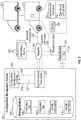
- Fig. 3 is a block diagram of an example arrangement that includes a configuration management system 300 that can be used to manage configuration settings of vehicles 301.
- the configuration management system 300 is able to deliver various parameter sets to vehicles over a network 302, which can be a wireless network or a wired network.
- a wireless network can include a cellular access network or a wireless local area network (WLAN).
- An example cellular network can operate according to the Long-Term Evolution (LTE) standards as provided by the Third Generation Partnership Project (3GPP).
- LTE Long-Term Evolution
- 3GPP Third Generation Partnership Project
- the LTE standards are also referred to as the Evolved Universal Terrestrial Radio Access (E-UTRA) standards.
- other types of cellular networks can be employed, such as second generation (2G) or third generation (3G) cellular networks, e.g., a Global System for Mobile (GSM) cellular network, an Enhanced Data rates for GSM Evolution (EDGE) cellular network, a Universal Terrestrial Radio Access Network (UTRAN), a Code Division Multiple Access (CDMA) 2000 cellular network, and so forth.
- cellular networks can be fifth generation (5G) new radio (NR) or beyond cellular networks.
- a WLAN can operate according to the Institute of Electrical and Electronic Engineers (IEEE) 802.11 or Wi-Fi Alliance Specifications.
- IEEE Institute of Electrical and Electronic Engineers
- other types of wireless networks can be employed, such as a Bluetooth link, a ZigBee network, and so forth.
- some wireless networks can enable cellular Internet of Things (loT), such as wireless access networks according to LTE Advanced for Machine-Type Communication (LTE-MTC), narrowband IoT (NB-IoT), and so forth.
- LTE-MTC LTE Advanced for Machine-Type Communication
- NB-IoT narrowband IoT
- the configuration management system 300 includes a configuration management controller 304 that is able to selectively deliver parameter sets to respective vehicles 301, such as using a process according to Fig. 1 or 2 .
- the configuration management controller 304 can instead be deployed as part of a vehicle 301.
- the configuration management controller 304 can be deployed in an electronic device (e.g., a notebook computer, a tablet computer, a smartphone, etc.) carried by the operator of the vehicle 301 and may also be tethered to the vehicle 301 either by wired or wireless communications.
- an electronic device e.g., a notebook computer, a tablet computer, a smartphone, etc.
- a storage medium 306 stores various parameter sets 308.
- the storage medium 306 can be implemented with a disk drive, a collection of disk drives, a solid state memory, a collection of solid state memories, and/or other types of storage media.
- the parameter sets 308 can provide different parameters for a specific operational component of vehicles.
- the parameter sets 308 can relate to different configuration settings of an engine, a transmission, and so forth.
- the storage medium 306 can store multiple collections of parameter sets for respective different operational components of vehicles, where each collection of parameter sets specify different configuration settings for a respective operational component of a vehicle.
- the storage medium 306 can be part of the configuration management system 300, or can be remote from the configuration management system 300, but is accessible by the configuration management system 300, such as over the network 302.
- the configuration management system 300 also includes a communication transceiver 310 that allows the configuration management system 300 to communicate over the network 302 with the vehicles 301.
- the communication transceiver 310 can include a wireless transceiver to transmit and receive wireless signals, or a wired transceiver to communicate over a wired network.
- Fig. 3 further shows a client device 312 that is coupled to the configuration management system 300.
- the client device 312 can be a user device, such as a notebook computer, desktop computer, tablet computer, smartphone, and so forth, which can be used by a user (e.g., a fleet administrator) to manage configurations of vehicles.
- the client device 312 can execute an application that allows the client device 312 to interface with the configuration management controller 304.
- the application executed on the client device 312 can present a management graphical user interface (GUI) 314, which allows the client device 312 to interact with the configuration management controller 304.
- GUI management graphical user interface
- the management GUI 314 can be used by an administrator to define the parameter sets 308.
- the management GUI 314 allows the administrator to provide information relating to vehicles to the configuration management system 300, which can store the information as vehicle information 316 in the storage medium 306, for example.
- the vehicle information 316 can identify the vehicles 301 with vehicle identifiers or vehicle names, for example.
- the vehicle information 316 can also specify operational components that can be controlled using configuration parameters.
- the client device 312 can be directly connected (tethered over a wireless link or wired link) to the configuration management system 300, or the client device 312 can be coupled over the network 302 to the configuration management system 300.
- Examples of a wired link include a Controller Area Network (CAN) bus, an Ethernet network, and so forth.
- CAN Controller Area Network
- Fig. 3 shows just one client device 312 coupled to the configuration management system 300, it is noted that in other examples, multiple client devices can be coupled to the configuration management system 300 to allow multiple administrators to manage provision of parameter sets to respective vehicles. If multiple administrators provision conflicting parameter sets (e.g., different parameter sets for a given route or route segment), then the configuration management system 300 can resolve this conflict based on any of various factors, such as priorities assigned to the administrators (e.g., a higher priority administrator's parameter set is used), an order agreed upon by the administrators or set by an organization (e.g., the parameter set from a first administrator is considered first over the parameter set from a second administrator).
- priorities assigned to the administrators e.g., a higher priority administrator's parameter set is used
- an order agreed upon by the administrators or set by an organization e.g., the parameter set from a first administrator is considered first over the parameter set from a second administrator.
- the client device 312 (or a different device) can be used to provide, to the configuration management controller 304, route information 318 regarding a planned route to be traveled by a vehicle 301 (or by multiple vehicles 301).
- the route information 318 can be obtained by the configuration management controller 304 from a different source.
- the configuration management controller 304 can access information sources 320 (including those listed above) to determine conditions along the planned route. Based on the determined conditions, the configuration management controller 304 is able to divide the planned route into multiple route segments and/or select one or more selected parameter sets 322 from the plurality of parameter sets 308 from the storage medium 306 to apply to the vehicle(s) 301 for the planned route or respective route segments.
- a selected parameter set 322 can be applied to the vehicle right before the start of the trip, or during the trip such as at stop points or while the vehicle is traveling.
- the configuration management controller 304 may also be possible for the configuration management controller 304 to assign a vehicle that is already configured with the selected parameter set 322. In this sense there may be a plurality of vehicle pools, each pool having vehicles that are pre-configured with different parameter sets. For each journey or route that is being managed by the configuration management controller 304, the configuration management controller 304 can assign or recommend a pool of vehicles, or a specific vehicle from within the pool, having the selected parameter set 322.
- Each selected parameter set 322 is transmitted by the configuration management controller 304 over the network 302 to the vehicle(s) 301, to apply the configuration settings in the selected parameter set 322 to configure adjustable element(s) of the vehicle(s) 301.
- a selected parameter set 322 can be transmitted to a vehicle 301 before a trip, or the selected parameter set 322 can be transmitted to the vehicle 301 during the trip.
- the vehicle 301 includes a parameter set applicator 330 to apply the received selected parameter set 322 to at least one operational component 332 of the vehicle 301.
- the parameter set applicator 330 can be implemented as a controller, which can be a hardware processing circuit or a combination of a hardware processing circuit and machine-readable instructions executable on the hardware processing circuit.
- the parameter set applicator 330 can write the received selected parameter set 322 to the operational element 332, such as to store in a storage medium of the operational element 332.
- the operational component 332 is an ECU
- the ECU can include a storage medium (not shown) to store configuration information, and the selected parameter set 322 can be written to the storage medium as part of the configuration information.
- the configuration management controller 304 is able to use an algorithm to select a parameter set from among the multiple parameter sets 308.
- the algorithm can include a correlation data structure (e.g., a mapping table) that correlates different conditions to different parameter sets to use, for any given type of vehicle (or group of vehicles).
- the algorithm can include a machine learning model that can be trained using training data that specifies which parameter sets to use for which conditions.
- a vehicle 301 is able to provide feedback information 324 back to the configuration management controller 304.
- Fig. 3 shows the feedback information 324 being provided by one vehicle 301, it is noted that in other examples, multiple vehicles 301 can provide feedback information 324 to the configuration management controller 304.
- one or more sensors 326 in the vehicle 301 can measure metrics associated with operations of the adjustable elements. The measured metrics are used to derive the feedback information 324 that is sent back to the configuration management controller 304.
- the feedback information 324 allows the configuration management controller 304 to monitor information relating to an operation of the vehicle configured using the selected parameter set 322.
- the one or more sensors 326 in the vehicle 301 can also measure metrics associated with conditions around the vehicle 301.
- the one or more sensors 326 for measuring the conditions can include one or more of: a temperature sensor to measure a temperature of an environment around the vehicle 301, an altitude sensor to measure an altitude of the vehicle 301, a load sensor to measure a load of the vehicle 301, a terrain-detecting sensor to determine the type of terrain over which the vehicle 301 is travelling, a distance sensor to determine a travel distance of the vehicle 301, or any other type of sensor.
- a load sensor can include a time-of-flight (ToF) sensor, where a light signal can be emitted, and reflection from a surface can be captured by a light sensor to determine a distance to the surface. This distance can provide an indication of a loading of the vehicle.
- the load sensor can include a weight sensor, such as a strain gauge or other type of weight sensor mounted to the suspensions of the vehicle. The measured weight provides an indication of loading of the vehicle.
- a terrain-detecting sensor can include a camera to capture an image of the terrain, and to detect the type of terrain based on image processing of the captured image of the terrain.
- the terrain-detecting sensor can include a shock or vibration sensor to detect a force or vibration exerted on the vehicle as the vehicle moves over the pavement, which can give an indication of the type of terrain.
- a terrain-detecting sensor can also measure the slope of the road on which the vehicle is traveling.
- a distance tracker can include a position sensor (e.g., a global positioning system (GPS) receiver) to detect a location of the vehicle. Multiple measurements by the position sensor can provide an indication of a distance traveled by the vehicle.
- the distance tracker can be part of the odometer of the vehicle, and can output a distance traveled since a last reading of the odometer.
- the feedback information 324 provides a feedback loop that allows the configuration management controller 304 to evaluate whether the selected parameter set 322 is achieving an improvement in operational characteristics at one or more vehicles 301.
- operational characteristics at one or more vehicles 301 include any or some combination of: a fuel efficiency (e.g., miles per gallon), a wear of a vehicle component (e.g., wear of a brake, tire, or engine exceeds a threshold rate), an amount of deposits (e.g., carbon deposits) in an engine of the vehicle, an amount of emissions (e.g., of certain pollutants) from the vehicle, and so forth.
- An operational characteristic after the selected parameter set has been applied can be measured, and can be compared to values of the operational characteristic of the same vehicle or other similar vehicles to determine whether there has been a substantial improvement in the operational characteristic (e.g., an improvement of over X%, where X is a specified threshold value).
- the configuration management controller 304 can either adjust one or more of the parameter sets 308 or adjust the algorithm that maps conditions to parameter sets.
- an enterprise may operate a fleet of vehicles.
- routes or types of routes e.g. long haul, short haul, hot weather climate, cold weather climate, high altitude, low altitude or any combination of the same
- the configuration management controller 304 is able to divide the fleet of vehicles into multiple subsets of vehicles, with different subsets of vehicles assigned to travel along respective different routes. For example, a first subset of vehicles can be assigned to travel a first route, along with selected one or more parameter sets, a second subset of vehicles can be assigned to travel a second route, along with selected one or more parameter sets, and so forth.
- Dividing the fleet of vehicles into multiple subsets of vehicles can allow vehicles that have properties more optimal for certain routes to be used on those routes, rather than other vehicles that may be less efficient for those routes. For example, vehicles with aero-dynamic shrouds may be more efficient to use on long-haul routes, vehicles with adjustable suspensions may be more efficient to use on unpaved roads, and so forth.
- vehicles with aero-dynamic shrouds may be more efficient to use on long-haul routes
- vehicles with adjustable suspensions may be more efficient to use on unpaved roads, and so forth.
- the feedback information 324 allows the configuration management controller 304 to monitor information relating to operations of vehicles or groups of vehicles configured using respective different test parameter sets for a given type of route. Based on the monitoring, the configuration management controller 304 can identify a parameter set of the different test parameter sets as being optimal for the given type of route. As a result, the configuration management controller 304 can use the identified optimal parameter set for vehicles that are to travel along the given route or type of route. Using the identified optimal parameter set may comprise updating the parameter set for vehicles in a subset identified as being configured with a non-optimal parameter set.
- each test group of vehicles can include one or more vehicles
- a respective parameter set e.g., the vehicle(s) of a first test group can be configured using a first parameter set, the vehicle(s) of a second test group can be configured using a different second parameter set, and so forth. It may be possible to divide a pool of vehicles into collections of vehicles that travel respective similar route types (i.e. long haul, short haul, hot weather climate, cold weather climate, high altitude, low altitude or any combination of the same).
- each vehicle in a given collection is the same type or substantially similar type, and if vehicles in the given collection all travel a similar type of route, then it is possible to further divide the given collection of vehicles into different test groups, where each test group has a different parameter set for all or a portion of a route. Feedback information from the different test groups can be used to compare the effectiveness of the different parameter sets such that further refinement of the parameter sets is possible.
- a controller is configured to receive information of a route (e.g., a specific route, a segment of a route, or a route type) and to identify a plurality of vehicles that are to travel the route.
- the plurality of vehicles are split into different test groups each configured with respective different parameter sets.
- a controller is configured to receive feedback information from a plurality of test groups of vehicles configured using different parameter sets for a route (e.g., a specific route, route segment or a route type). The controller is configured to use the feedback information to compare the effectiveness of the different parameter sets for the route or a portion of the route.
- a route e.g., a specific route, route segment or a route type.
- the controller can update one or more of the different parameter sets.
- the controller can also update one of the test groups to adopt the parameter set tested by another of the test groups.
- one (or more than one) of the parameter sets 308 can be identified as a safe-mode parameter set.
- the safe-mode parameter set can be selected by the configuration management controller 304 for a given vehicle in response to the configuration management controller 304 detecting that the given vehicle has experienced a malfunction or is in a degraded state (e.g., engine malfunction, brake failure, tire puncture or loss, etc.).
- the safe-mode parameter set includes configuration parameters that can cause the given vehicle to operate at a reduced setting (e.g., a lower maximum speed, a lower engine speed, etc.), to ensure a safe operating condition of the given vehicle while the given vehicle is in the compromised condition.
- the configuration management controller 304 can also detect a deviation of a given vehicle from its planned route.
- the feedback information 324 from the given vehicle can include location information (e.g., GPS coordinates, etc.) that allows the configuration management controller 304 to determine whether the given is following its planned route.
- the configuration management controller 304 selects a different parameter set (different from the initially selected parameter set 322) to control the setting of the one or more adjustable elements of the given vehicle.
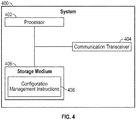
- Fig. 4 is a block diagram of a system 400 according to some examples.
- the system 400 can include the configuration management system 300 of Fig. 3 , or a vehicle 301, or a user device.
- the system 400 includes a processor 402 (or multiple processors).
- a processor can include a microprocessor, a core of a multi-core microprocessor, a microcontroller, a programmable integrated circuit, a programmable gate array, a digital signal processor, or another hardware processing circuit.
- the system 400 further includes a communication transceiver 404 to communicate over a network, such as a cellular system for backhaul communications to the Internet.
- the system 400 includes a non-transitory machine-readable or computer-readable storage medium 406 storing machine-readable instructions executable on the processor 402 to perform respective tasks.
- Machine-readable instructions executable on a processor can refer to the instructions executable on a single processor or the instructions executable on multiple processors.
- the machine-readable instructions include configuration management instructions 408 that are able to perform tasks of the configuration management controller 304 and/or other similar tasks.
- the storage medium 406 can include any or some combination of the following: a semiconductor memory device such as a dynamic or static random access memory (a DRAM or SRAM), an erasable and programmable read-only memory (EPROM), an electrically erasable and programmable read-only memory (EEPROM) and flash memory; a magnetic disk such as a fixed, floppy and removable disk; another magnetic medium including tape; an optical medium such as a compact disk (CD) or a digital video disk (DVD); or another type of storage device.
- a semiconductor memory device such as a dynamic or static random access memory (a DRAM or SRAM), an erasable and programmable read-only memory (EPROM), an electrically erasable and programmable read-only memory (EEPROM) and flash memory
- a magnetic disk such as a fixed, floppy and removable disk
- another magnetic medium including tape an optical medium such as a compact disk (CD) or a digital video disk (DVD); or another type of storage device.
- CD compact disk
- Such computer-readable or machine-readable storage medium or media is (are) considered to be part of an article (or article of manufacture).
- An article or article of manufacture can refer to any manufactured single component or multiple components.
- the storage medium or media can be located either in the machine running the machine-readable instructions, or located at a remote site from which machine-readable instructions can be downloaded over a network for execution.
Landscapes
- Engineering & Computer Science (AREA)
- Transportation (AREA)
- Mechanical Engineering (AREA)
- Automation & Control Theory (AREA)
- Physics & Mathematics (AREA)
- Chemical & Material Sciences (AREA)
- Combustion & Propulsion (AREA)
- General Physics & Mathematics (AREA)
- Human Computer Interaction (AREA)
- Mathematical Physics (AREA)
- Traffic Control Systems (AREA)
Abstract
Description
- A vehicle such as a car or other type of vehicle can be used to carry people or goods from one location to another location. A vehicle can include a large number of separate parts, including mechanical parts, electronic control units (ECUs), and other components. The ECUs are used to control various different functions of a vehicle. Operational components, including ECUs, other electronic components, and so forth, of vehicles can be configured using configuration settings. Similarly, other types of electronic devices, such as Internet of Things (loT) devices, can also be configured using configuration settings.
- Some implementations of the present disclosure are described with respect to the following figures.
-
Figs. 1 and 2 are flow diagrams of processes of providing a configuration setting to a vehicle, according to some implementations. -
Fig. 3 is a block diagram of an example arrangement to provide configuration settings to vehicles according to some implementations. -
Fig. 4 is a block diagram of a system according to some examples. - Throughout the drawings, identical reference numbers designate similar, but not necessarily identical, elements. The figures are not necessarily to scale, and the size of some parts may be exaggerated to more clearly illustrate the example shown. Moreover, the drawings provide examples and/or implementations consistent with the description; however, the description is not limited to the examples and/or implementations provided in the drawings.
- In the present disclosure, use of the term "a," "an", or "the" is intended to include the plural forms as well, unless the context clearly indicates otherwise. Also, the term "includes," "including," "comprises," "comprising," "have," or "having" when used in this disclosure specifies the presence of the stated elements, but do not preclude the presence or addition of other elements.
- A vehicle can refer generally to any machine that is used to carry people, goods, and/or other payload from one physical location to another physical location. A vehicle can be driven by a human driver, or can be an autonomous vehicle that is able to drive itself. Examples of vehicles include any or some combination of the following: a truck, a trailer, a tractor, a car, a railed vehicle (e.g., a train), a watercraft (e.g., a ship, a submarine), an aircraft, a spacecraft, and so forth. A vehicle can also refer to a drone, which is an un-manned vehicle that can be used to perform various different actions. A vehicle can include wheels to move between different physical locations over land. Alternatively, a vehicle can include structures such as wings to allow the vehicle to fly through the air, or floatation structures to sail on or through water.
- In addition to a large number of mechanical parts, a vehicle can also include various operational components, such as electronic control units (ECUs) or other electronic components, as well as other components that can operate to perform tasks relating to the vehicle. In the present disclosure, ECUs can also be referred to as "controller units." An ECU can refer to any embedded computing system that is part of the vehicle to control one or more subsystems in the vehicle. An ECU can be implemented with a processor, or with multiple processors. Examples of subsystems that can be controlled by ECUs include an engine of a vehicle, a transmission of the vehicle, a brake subsystem of the vehicle, a valve of the vehicle, an air-conditioning subsystem of the vehicle, a navigation subsystem of the vehicle, and so forth.
- An operational component can be configured to operate at one of various different settings based on a configuration parameter (or a set of configuration parameters) provided to the operational component. As used here "a configuration parameter set" (or more simply, a "parameter set") can include one or more configuration parameters that control a setting of an operational component. For example, a parameter set can include one or more configuration parameters that control an idle speed of an engine, a setting of a transmission, a timing of a valve, operation of a brake (e.g., how much pressure to apply, etc.), operation of an air-conditioning system, operation of a navigation subsystem, operation of an adjustable suspension, operation of an adjustable aerodynamic shroud, pressure of a tire, and so forth.
- Generally, a manufacturer or an operator of a vehicle can provide parameter sets to the vehicle that are based on a range of operating conditions of usage that the vehicle is expected or anticipated to operate under. The parameter sets are intended to strike a balance between the different types of conditions that the vehicles may encounter. As a result, the parameter sets provided to the vehicle may not be optimal for certain conditions. Over the course of a journey, the efficiency of the vehicle may suffer as conditions change in different segments of a route, where the reduced efficiency can be in the form of one or more of: reduced miles-per-gallon performance, increased wear on components (e.g., wear of a brake or tire, wear of an engine, etc.), and so forth. For an enterprise (such as a shipper, distributor, retailer, and so forth) that operates a large number of vehicles (such as to carry cargo or people), even a relatively small reduction in efficiency can substantially increase costs to the enterprise. By optimizing parameter sets for vehicles, improvements in efficiency can have a large impact on reducing costs for vehicles, particularly for an operator of a large fleet of operators. Also, by optimizing parameter sets for vehicles, increased efficiency can be achieved, such as by increasing the miles-per-gallon performance of the vehicle, or reducing wear on components, and so forth.
- In accordance with some implementations of the present disclosure, techniques or mechanisms are provided to select one or more parameter sets for a vehicle based on a planned or anticipated route for the vehicle. In some examples, as shown in
Fig. 1 , a controller receives (at 102) information of a route of a vehicle. Information of the route of the vehicle can include a sequence of location information (e.g., geographic coordinates, road names, etc.) that specifies route segments that the vehicle is to traverse for a journey (or multiple journeys). - Note that a route can be a predetermined route or a route that can change on the fly as the vehicle proceeds on its trip. Within any route from location A to location X, there may be route segments of the route that cannot be changed, but there may be another route segment (or other route segments) that is (are) associated with a number of different route options depending on various factors, such as time of day, traffic, and so forth.
- In the present discussion, a "planned route" or "route" can refer to a route provided to the vehicle ahead of the trip, or a route that has been changed once the vehicle is underway.
- The controller selects (at 104) a parameter set from among a plurality of parameter sets based on the route of the vehicle. The plurality of parameter sets corresponding to different conditions of usage of the vehicle, where each parameter set of the plurality of parameter sets includes one or more parameters that control adjustment of one or more respective adjustable elements of the vehicle. The controller causes (at 106) application of the selected parameter set to control a setting of the one or more adjustable elements of the vehicle.
- The selection of the parameter set can be based on an analysis or prediction performed by the controller to determine or estimate one or more expected conditions of the route.
- Conditions of the route can include any or some combination of the following: a length of the route (e.g., long-haul versus short-haul), a temperature condition (a temperature of an environment of the vehicle), a weather condition (e.g., rainy, dry, snowy, icy, etc.), a vehicular traffic condition of a road along the route, a load condition (the expected load, in terms of an amount of cargo and/or number of people that the vehicle is expected to carry in a respective route segment), a terrain (e.g., hilly or mountainous terrain, flat terrain, rough terrain, smooth terrain, etc.), a road type (e.g., city road or highway road, etc.), and so forth.
- For example, for a high temperature condition, a parameter set can be selected to set the transmission of the vehicle to operate at a lower gear to reduce the chances of overheating the vehicle. As another example, for a high altitude condition, a parameter set can be selected to change the timing of a valve to optimize engine operation at the high altitude. As a further example, for a high load condition, a parameter set can be selected to increase the stiffness of a suspension. As yet another example, for a rough terrain condition, a parameter set can be selected to reduce the stiffness of a suspension). As yet a further example, for a long-haul route, a parameter set can be selected to adjust the engine and transmission for optimal performance at highway speeds.
- In other examples, other parameter sets can be selected for making other adjustments of adjustable elements of vehicles.
- The determination of the conditions of a route can be based on information from various information sources accessible by the controller. Note that the conditions of the route, or a route segment, can change with time. For example, during rush hour, a road segment through a city may be congested with traffic, while during late night or early morning hours, the road segment may have light traffic.
- Examples of the information sources accessible locally by the controller or over a network include one or more of: a weather site that provides weather information by geographic locations, a traffic site or online map that provides traffic information (including any traffic incidents such as vehicular accidents or stalls) along roads, a data repository containing information describing terrains of roads (e.g., the type of road, such as paved or unpaved road, the slope of the road, the elevation of the road, a city road, a highway road, a road with many traffic lights or stop signs, a toll road, etc.), a data repository containing information regarding where cargo or people are to be dropped off or pickled up by the vehicle, and so forth.
- In further examples, some or all of the information sources can be integrated into fewer or even a single information source.
- The parameter sets from which the controller can make a selection can be stored in a data repository locally or remotely accessible by the controller. The parameter sets may have been developed by an enterprise that operates the controller, or alternatively, the parameter sets may be provided by a third-party enterprise.
- The controller that can perform the process of
Fig. 1 can either be part of the vehicle or external of the vehicle (e.g., at a server or other computer that is coupled to the vehicle over a network). As used here, a "controller" can refer to a hardware processing circuit, which can include any or some combination of a microprocessor, a core of a multi-core microprocessor, a microcontroller, a programmable integrated circuit, a programmable gate array, or another hardware processing circuit. Alternatively, a "controller" can refer to a combination of a hardware processing circuit and machine-readable instructions (software and/or firmware) executable on the hardware processing circuit. -
Fig. 2 is a flow diagram of a process according to further examples. A controller receives (at 202) information of a route of a vehicle. The controller divides (at 204) the route into multiple route segments, where each route segment includes one part of the planned route for the vehicle. The dividing of the route into the multiple route segments can be based on an analysis and/or prediction of conditions along the route. - Note that the route segments can change if the route changes on the fly. For example, a route may pass through locations A, B, C, and D, where A-B is a first route segment, B-C is a second route segment, and C-D is a third route segment. In some examples, an original route may have planned for the B-C segment to pass through city roads. Later, due to a change in plans or conditions, the B-C segment may be changed to include a highway that bypasses the city. These different route options for the B-C segment may be associated with different conditions, which can cause different parameter sets to be selected.
- Based on identifying different conditions along the route, the controller can determine the route segments. For example, the controller can detect that different road segments have different characteristics (e.g., highway road versus city road). Thus, the controller can identify a first route segment as including city roads, and a second route segment as including a highway. As another example, a route (or route portion) is divided into a first route segment and a second route segment in response to the controller determining or predicting that the condition(s) of the first route segment differs from the condition(s) of the second route segment by greater than one or more specified thresholds. In a more specific example, a route (or route portion) is divided into the first route segment and the second route segment in response to the controller determining or predicting that a temperature of an environment of the first route segment differs from a temperature of an environment of the second route segment by greater than a specified temperature threshold. As another specific example, a route (or route portion) is divided into the first route segment and the second route segment in response to the controller determining or predicting that the terrain of the first route segment differs from the terrain of the second route segment by greater than a specified terrain threshold (e.g., a measure of a slope of the terrain, a measure of a roughness of the terrain to indicate whether the terrain is paved or unpaved, etc.). As another specific example, a route (or route portion) is divided into the first route segment and the second route segment in response to the controller determining or predicting that the load condition of the vehicle in the first route segment differs from the load condition of the vehicle in the second route segment by greater than a specified load threshold (e.g., a weight of the load). As another specific example, a route (or route portion) is divided into the first route segment and the second route segment in response to the controller determining or predicting that the altitude of the first route segment differs from the altitude of the second route segment by greater than a specified altitude threshold.
- In further examples, determination of the route segments can be based on identifying time periods along the route when new parameter sets can be applied at the vehicle. For example, the identified time periods can include time periods when the vehicle is expected to be idle, such as an overnight stop, a scheduled rest stop, etc.
- For each respective route segment of the multiple route segments, the controller selects (at 206) a respective parameter set from among a plurality of parameter sets based on the condition(s) of the respective route segment.
- In some examples, a table or other data structure can be used to map route segments to respective parameter sets. The controller can access this data structure to select different parameter sets for different route segments.
- An example table is set forth below:
Route segment Parameter Set Route segment 1 (flat desert road) Parameter set 1 Route segment 2 (flat unpaved road) Parameter set 2 Route segment 3 (steep road) Parameter set 3 - Another example table can map a combination of a route segment and another characteristic, such as cargo load and/or another characteristic, to respective parameter sets.
- As yet another example, different route segments can be annotated with information of respective conditions of the different route segments. Thus, instead of using a data structure that maps route segments to parameter sets as discussed above, the route segments can be annotated with their respective conditions, which can change over time. In addition, correlation information (e.g., a "schema") can be provided that maps different conditions (e.g., high altitude, low altitude, sea level, hot/dry weather, hot/wet weather, cold/dry weather, cold/wet weather, hilly road, flat road, etc.) to different parameter sets. The controller can then select a parameter set based on the annotation data associated with a respective route segment.
- The controller then causes (at 208) application of the selected parameter set to the vehicle in response to the vehicle traveling to the respective route segment. As a result, as the vehicle travels from one route segment to another route segment, a parameter set used by the vehicle can change.
- In some examples, changing the parameter set of the vehicle can be performed while the vehicle is at a stop point, such as a rest stop, a gas station, parked in a parking lot or other location, and so forth. In other examples, the parameter set of the vehicle of the vehicle can be changed while the vehicle is in motion. In yet further examples, the controller can cause application of a new parameter set to the vehicle in response to a request from a user.
-
Fig. 3 is a block diagram of an example arrangement that includes aconfiguration management system 300 that can be used to manage configuration settings ofvehicles 301. Theconfiguration management system 300 is able to deliver various parameter sets to vehicles over anetwork 302, which can be a wireless network or a wired network. - A wireless network can include a cellular access network or a wireless local area network (WLAN). An example cellular network can operate according to the Long-Term Evolution (LTE) standards as provided by the Third Generation Partnership Project (3GPP). The LTE standards are also referred to as the Evolved Universal Terrestrial Radio Access (E-UTRA) standards. In other examples, other types of cellular networks can be employed, such as second generation (2G) or third generation (3G) cellular networks, e.g., a Global System for Mobile (GSM) cellular network, an Enhanced Data rates for GSM Evolution (EDGE) cellular network, a Universal Terrestrial Radio Access Network (UTRAN), a Code Division Multiple Access (CDMA) 2000 cellular network, and so forth. In further examples, cellular networks can be fifth generation (5G) new radio (NR) or beyond cellular networks.
- A WLAN can operate according to the Institute of Electrical and Electronic Engineers (IEEE) 802.11 or Wi-Fi Alliance Specifications. In other examples, other types of wireless networks can be employed, such as a Bluetooth link, a ZigBee network, and so forth. Additionally, some wireless networks can enable cellular Internet of Things (loT), such as wireless access networks according to LTE Advanced for Machine-Type Communication (LTE-MTC), narrowband IoT (NB-IoT), and so forth.
- The
configuration management system 300 includes aconfiguration management controller 304 that is able to selectively deliver parameter sets torespective vehicles 301, such as using a process according toFig. 1 or 2 . - In other examples, instead of deploying the
configuration management controller 304 in a system that is remote from avehicle 301, theconfiguration management controller 304 can instead be deployed as part of avehicle 301. As yet another example, theconfiguration management controller 304 can be deployed in an electronic device (e.g., a notebook computer, a tablet computer, a smartphone, etc.) carried by the operator of thevehicle 301 and may also be tethered to thevehicle 301 either by wired or wireless communications. - A
storage medium 306 stores various parameter sets 308. Thestorage medium 306 can be implemented with a disk drive, a collection of disk drives, a solid state memory, a collection of solid state memories, and/or other types of storage media. - The parameter sets 308 can provide different parameters for a specific operational component of vehicles. For example, the parameter sets 308 can relate to different configuration settings of an engine, a transmission, and so forth.
- The
storage medium 306 can store multiple collections of parameter sets for respective different operational components of vehicles, where each collection of parameter sets specify different configuration settings for a respective operational component of a vehicle. - The
storage medium 306 can be part of theconfiguration management system 300, or can be remote from theconfiguration management system 300, but is accessible by theconfiguration management system 300, such as over thenetwork 302. - The
configuration management system 300 also includes acommunication transceiver 310 that allows theconfiguration management system 300 to communicate over thenetwork 302 with thevehicles 301. Thecommunication transceiver 310 can include a wireless transceiver to transmit and receive wireless signals, or a wired transceiver to communicate over a wired network. -
Fig. 3 further shows aclient device 312 that is coupled to theconfiguration management system 300. Theclient device 312 can be a user device, such as a notebook computer, desktop computer, tablet computer, smartphone, and so forth, which can be used by a user (e.g., a fleet administrator) to manage configurations of vehicles. Theclient device 312 can execute an application that allows theclient device 312 to interface with theconfiguration management controller 304. The application executed on theclient device 312 can present a management graphical user interface (GUI) 314, which allows theclient device 312 to interact with theconfiguration management controller 304. - In some examples, the
management GUI 314 can be used by an administrator to define the parameter sets 308. Themanagement GUI 314 allows the administrator to provide information relating to vehicles to theconfiguration management system 300, which can store the information asvehicle information 316 in thestorage medium 306, for example. Thevehicle information 316 can identify thevehicles 301 with vehicle identifiers or vehicle names, for example. Thevehicle information 316 can also specify operational components that can be controlled using configuration parameters. - The
client device 312 can be directly connected (tethered over a wireless link or wired link) to theconfiguration management system 300, or theclient device 312 can be coupled over thenetwork 302 to theconfiguration management system 300. Examples of a wired link include a Controller Area Network (CAN) bus, an Ethernet network, and so forth. - Although
Fig. 3 shows just oneclient device 312 coupled to theconfiguration management system 300, it is noted that in other examples, multiple client devices can be coupled to theconfiguration management system 300 to allow multiple administrators to manage provision of parameter sets to respective vehicles. If multiple administrators provision conflicting parameter sets (e.g., different parameter sets for a given route or route segment), then theconfiguration management system 300 can resolve this conflict based on any of various factors, such as priorities assigned to the administrators (e.g., a higher priority administrator's parameter set is used), an order agreed upon by the administrators or set by an organization (e.g., the parameter set from a first administrator is considered first over the parameter set from a second administrator). - The client device 312 (or a different device) can be used to provide, to the
configuration management controller 304,route information 318 regarding a planned route to be traveled by a vehicle 301 (or by multiple vehicles 301). In other examples, theroute information 318 can be obtained by theconfiguration management controller 304 from a different source. - Based on the planned route, the
configuration management controller 304 can access information sources 320 (including those listed above) to determine conditions along the planned route. Based on the determined conditions, theconfiguration management controller 304 is able to divide the planned route into multiple route segments and/or select one or more selected parameter sets 322 from the plurality of parameter sets 308 from thestorage medium 306 to apply to the vehicle(s) 301 for the planned route or respective route segments. A selected parameter set 322 can be applied to the vehicle right before the start of the trip, or during the trip such as at stop points or while the vehicle is traveling. - It may also be possible for the
configuration management controller 304 to assign a vehicle that is already configured with the selectedparameter set 322. In this sense there may be a plurality of vehicle pools, each pool having vehicles that are pre-configured with different parameter sets. For each journey or route that is being managed by theconfiguration management controller 304, theconfiguration management controller 304 can assign or recommend a pool of vehicles, or a specific vehicle from within the pool, having the selectedparameter set 322. - Each selected parameter set 322 is transmitted by the
configuration management controller 304 over thenetwork 302 to the vehicle(s) 301, to apply the configuration settings in the selected parameter set 322 to configure adjustable element(s) of the vehicle(s) 301. A selected parameter set 322 can be transmitted to avehicle 301 before a trip, or the selected parameter set 322 can be transmitted to thevehicle 301 during the trip. - The
vehicle 301 includes a parameter setapplicator 330 to apply the received selected parameter set 322 to at least oneoperational component 332 of thevehicle 301. The parameter setapplicator 330 can be implemented as a controller, which can be a hardware processing circuit or a combination of a hardware processing circuit and machine-readable instructions executable on the hardware processing circuit. - The parameter set
applicator 330 can write the received selected parameter set 322 to theoperational element 332, such as to store in a storage medium of theoperational element 332. In examples where theoperational component 332 is an ECU, the ECU can include a storage medium (not shown) to store configuration information, and the selected parameter set 322 can be written to the storage medium as part of the configuration information. - The
configuration management controller 304 is able to use an algorithm to select a parameter set from among the multiple parameter sets 308. The algorithm can include a correlation data structure (e.g., a mapping table) that correlates different conditions to different parameter sets to use, for any given type of vehicle (or group of vehicles). Alternatively, the algorithm can include a machine learning model that can be trained using training data that specifies which parameter sets to use for which conditions. - In some examples, a
vehicle 301 is able to providefeedback information 324 back to theconfiguration management controller 304. AlthoughFig. 3 shows thefeedback information 324 being provided by onevehicle 301, it is noted that in other examples,multiple vehicles 301 can providefeedback information 324 to theconfiguration management controller 304. - After the selected parameter set 322 is provided to the
vehicle 301 to configure adjustable elements of thevehicle 301, one ormore sensors 326 in thevehicle 301 can measure metrics associated with operations of the adjustable elements. The measured metrics are used to derive thefeedback information 324 that is sent back to theconfiguration management controller 304. Thefeedback information 324 allows theconfiguration management controller 304 to monitor information relating to an operation of the vehicle configured using the selectedparameter set 322. - The one or
more sensors 326 in thevehicle 301 can also measure metrics associated with conditions around thevehicle 301. The one ormore sensors 326 for measuring the conditions can include one or more of: a temperature sensor to measure a temperature of an environment around thevehicle 301, an altitude sensor to measure an altitude of thevehicle 301, a load sensor to measure a load of thevehicle 301, a terrain-detecting sensor to determine the type of terrain over which thevehicle 301 is travelling, a distance sensor to determine a travel distance of thevehicle 301, or any other type of sensor. - A load sensor can include a time-of-flight (ToF) sensor, where a light signal can be emitted, and reflection from a surface can be captured by a light sensor to determine a distance to the surface. This distance can provide an indication of a loading of the vehicle. In another example, the load sensor can include a weight sensor, such as a strain gauge or other type of weight sensor mounted to the suspensions of the vehicle. The measured weight provides an indication of loading of the vehicle.
- A terrain-detecting sensor can include a camera to capture an image of the terrain, and to detect the type of terrain based on image processing of the captured image of the terrain. Alternatively or additionally, the terrain-detecting sensor can include a shock or vibration sensor to detect a force or vibration exerted on the vehicle as the vehicle moves over the pavement, which can give an indication of the type of terrain. A terrain-detecting sensor can also measure the slope of the road on which the vehicle is traveling.
- A distance tracker can include a position sensor (e.g., a global positioning system (GPS) receiver) to detect a location of the vehicle. Multiple measurements by the position sensor can provide an indication of a distance traveled by the vehicle. Alternatively, the distance tracker can be part of the odometer of the vehicle, and can output a distance traveled since a last reading of the odometer.
- The
feedback information 324 provides a feedback loop that allows theconfiguration management controller 304 to evaluate whether the selected parameter set 322 is achieving an improvement in operational characteristics at one ormore vehicles 301. Examples of operational characteristics at one ormore vehicles 301 include any or some combination of: a fuel efficiency (e.g., miles per gallon), a wear of a vehicle component (e.g., wear of a brake, tire, or engine exceeds a threshold rate), an amount of deposits (e.g., carbon deposits) in an engine of the vehicle, an amount of emissions (e.g., of certain pollutants) from the vehicle, and so forth. An operational characteristic after the selected parameter set has been applied can be measured, and can be compared to values of the operational characteristic of the same vehicle or other similar vehicles to determine whether there has been a substantial improvement in the operational characteristic (e.g., an improvement of over X%, where X is a specified threshold value). - If the
feedback information 324 indicates that the selected parameter set 322 is not achieving a desired improvement (less than X% improvement) in operational characteristics at one ormore vehicles 301, then theconfiguration management controller 304 can either adjust one or more of the parameter sets 308 or adjust the algorithm that maps conditions to parameter sets. - In some cases, an enterprise may operate a fleet of vehicles. There may be certain routes or types of routes (e.g. long haul, short haul, hot weather climate, cold weather climate, high altitude, low altitude or any combination of the same) that recur for the vehicles of the fleet. In some examples, the
configuration management controller 304 is able to divide the fleet of vehicles into multiple subsets of vehicles, with different subsets of vehicles assigned to travel along respective different routes. For example, a first subset of vehicles can be assigned to travel a first route, along with selected one or more parameter sets, a second subset of vehicles can be assigned to travel a second route, along with selected one or more parameter sets, and so forth. - Dividing the fleet of vehicles into multiple subsets of vehicles can allow vehicles that have properties more optimal for certain routes to be used on those routes, rather than other vehicles that may be less efficient for those routes. For example, vehicles with aero-dynamic shrouds may be more efficient to use on long-haul routes, vehicles with adjustable suspensions may be more efficient to use on unpaved roads, and so forth. Once a vehicle from the appropriate subset of vehicles is selected for a planned route, then techniques or mechanisms according to some implementations can be used to use information of the planned route to select a parameter set for application at the vehicle for the planned route.
- In further examples, the
feedback information 324 allows theconfiguration management controller 304 to monitor information relating to operations of vehicles or groups of vehicles configured using respective different test parameter sets for a given type of route. Based on the monitoring, theconfiguration management controller 304 can identify a parameter set of the different test parameter sets as being optimal for the given type of route. As a result, theconfiguration management controller 304 can use the identified optimal parameter set for vehicles that are to travel along the given route or type of route. Using the identified optimal parameter set may comprise updating the parameter set for vehicles in a subset identified as being configured with a non-optimal parameter set. - In some examples, it may be possible to compare feedback from different test groups of vehicles in order to compare the improvements from each different parameter set. The vehicle(s) in each test group of vehicles (a group can include one or more vehicles) can be configured using a respective parameter set (e.g., the vehicle(s) of a first test group can be configured using a first parameter set, the vehicle(s) of a second test group can be configured using a different second parameter set, and so forth). It may be possible to divide a pool of vehicles into collections of vehicles that travel respective similar route types (i.e. long haul, short haul, hot weather climate, cold weather climate, high altitude, low altitude or any combination of the same). If each vehicle in a given collection is the same type or substantially similar type, and if vehicles in the given collection all travel a similar type of route, then it is possible to further divide the given collection of vehicles into different test groups, where each test group has a different parameter set for all or a portion of a route. Feedback information from the different test groups can be used to compare the effectiveness of the different parameter sets such that further refinement of the parameter sets is possible.
- In some implementations, a controller is configured to receive information of a route (e.g., a specific route, a segment of a route, or a route type) and to identify a plurality of vehicles that are to travel the route. The plurality of vehicles are split into different test groups each configured with respective different parameter sets.
- In further implementations, a controller is configured to receive feedback information from a plurality of test groups of vehicles configured using different parameter sets for a route (e.g., a specific route, route segment or a route type). The controller is configured to use the feedback information to compare the effectiveness of the different parameter sets for the route or a portion of the route.
- Based on the comparison of the effectiveness of the different parameter sets for the route or a portion of the route, the controller can update one or more of the different parameter sets. The controller can also update one of the test groups to adopt the parameter set tested by another of the test groups.
- In some examples, one (or more than one) of the parameter sets 308 can be identified as a safe-mode parameter set. The safe-mode parameter set can be selected by the
configuration management controller 304 for a given vehicle in response to theconfiguration management controller 304 detecting that the given vehicle has experienced a malfunction or is in a degraded state (e.g., engine malfunction, brake failure, tire puncture or loss, etc.). The safe-mode parameter set includes configuration parameters that can cause the given vehicle to operate at a reduced setting (e.g., a lower maximum speed, a lower engine speed, etc.), to ensure a safe operating condition of the given vehicle while the given vehicle is in the compromised condition. - In further examples, the
configuration management controller 304 can also detect a deviation of a given vehicle from its planned route. For example, thefeedback information 324 from the given vehicle can include location information (e.g., GPS coordinates, etc.) that allows theconfiguration management controller 304 to determine whether the given is following its planned route. In response to detecting a deviation of the given vehicle from its planned route, theconfiguration management controller 304 selects a different parameter set (different from the initially selected parameter set 322) to control the setting of the one or more adjustable elements of the given vehicle. -
Fig. 4 is a block diagram of asystem 400 according to some examples. Thesystem 400 can include theconfiguration management system 300 ofFig. 3 , or avehicle 301, or a user device. - The
system 400 includes a processor 402 (or multiple processors). A processor can include a microprocessor, a core of a multi-core microprocessor, a microcontroller, a programmable integrated circuit, a programmable gate array, a digital signal processor, or another hardware processing circuit. - The
system 400 further includes acommunication transceiver 404 to communicate over a network, such as a cellular system for backhaul communications to the Internet. In addition, thesystem 400 includes a non-transitory machine-readable or computer-readable storage medium 406 storing machine-readable instructions executable on theprocessor 402 to perform respective tasks. Machine-readable instructions executable on a processor can refer to the instructions executable on a single processor or the instructions executable on multiple processors. - The machine-readable instructions include
configuration management instructions 408 that are able to perform tasks of theconfiguration management controller 304 and/or other similar tasks. - The
storage medium 406 can include any or some combination of the following: a semiconductor memory device such as a dynamic or static random access memory (a DRAM or SRAM), an erasable and programmable read-only memory (EPROM), an electrically erasable and programmable read-only memory (EEPROM) and flash memory; a magnetic disk such as a fixed, floppy and removable disk; another magnetic medium including tape; an optical medium such as a compact disk (CD) or a digital video disk (DVD); or another type of storage device. Note that the instructions discussed above can be provided on one computer-readable or machine-readable storage medium, or alternatively, can be provided on multiple computer-readable or machine-readable storage media distributed in a large system having possibly plural nodes. Such computer-readable or machine-readable storage medium or media is (are) considered to be part of an article (or article of manufacture). An article or article of manufacture can refer to any manufactured single component or multiple components. The storage medium or media can be located either in the machine running the machine-readable instructions, or located at a remote site from which machine-readable instructions can be downloaded over a network for execution. - In the foregoing description, numerous details are set forth to provide an understanding of the subject disclosed herein. However, implementations may be practiced without some of these details. Other implementations may include modifications and variations from the details discussed above. It is intended that the appended claims cover such modifications and variations.
Claims (20)
- A controller comprising:at least one processor configured to:receive information of a route of a vehicle;select a first parameter set from among a plurality of parameter sets based on the route of the vehicle, the plurality of parameter sets corresponding to different conditions of usage of the vehicle, wherein each parameter set of the plurality of parameter sets includes one or more parameters that control adjustment of one or more respective adjustable elements of the vehicle; andcause application of the first parameter set to control a setting of the one or more adjustable elements of the vehicle.
- The controller of claim 1, wherein the at least one processor is configured to determine an expected condition of usage of the vehicle based on the information of the route of the vehicle, and the first parameter set is for the expected condition of usage.
- The controller of claim 1, wherein the at least one processor configured to:divide the route into a plurality of route segments, wherein the first parameter set is for a first route segment of the plurality of route segments; andselect a second parameter set from among the plurality of parameter sets for a second route segment of the plurality of route segments; andcause application of the second parameter set to control the setting of the one or more adjustable elements of the vehicle when the vehicle is at a location corresponding to the second route segment.
- The controller of claim 3, wherein the at least one processor configured to cause a change in application from the first parameter set to the second parameter set to control the setting of the one or more adjustable elements of the vehicle while the vehicle is stopped at a stop point or while the vehicle is in motion.
- The controller of claim 1, wherein the at least one processor is configured to transmit the first parameter set to the vehicle to cause the application of the first parameter set to control the setting of the one or more adjustable elements of the vehicle.
- The controller of claim 1, wherein the at least one processor is configured to:monitor information relating to an operation of the vehicle configured using the first parameter set; andbased on the monitoring, adjust a value of a parameter in the first parameter set or adjust an algorithm that maps different conditions of usage of vehicles to respective different parameter sets.
- The controller of claim 6, wherein the information relating to the operation of the vehicle comprises one or more of information relating to an energy efficiency of the vehicle, information relating to wear of the vehicle, information relating to deposits in an engine of the vehicle, and information relating to emissions of the vehicle.
- The controller of claim 6, wherein the information relating to the operation of the vehicle configured using the first parameter set is based on measurement data acquired by a sensor of the vehicle.
- The controller of claim 1, wherein the at least one processor is configured to:monitor information relating to operations of vehicles configured using respective different parameter sets of the plurality of parameter sets for a given type of route;based on the monitoring, identify a parameter set of the different parameter sets as being optimal for the given type of route.
- The controller of claim 9, wherein the selecting of the first parameter set for the route is based on the identifying.
- The controller of claim 1, wherein the at least one processor is configured to:detect that the vehicle has experienced a malfunction or is in a degraded state;in response to the detecting, select a safe-mode parameter set to control the setting of the one or more adjustable elements of the vehicle.
- The controller of claim 1, wherein the controller is part of the vehicle or is separate from the vehicle.
- The controller of claim 1, wherein the at least one processor is configured to:detect a deviation of the vehicle from the route; andin response to detecting the deviation, select a different parameter set from among the plurality of parameter sets to control the setting of the one or more adjustable elements of the vehicle.
- A method of a controller, comprising:receiving information of a route of a vehicle;selecting a first parameter set from among a plurality of parameter sets based on the route of the vehicle, the plurality of parameter sets corresponding to different conditions of usage of the vehicle, wherein each parameter set of the plurality of parameter sets includes one or more parameters that control adjustment of one or more respective adjustable elements of the vehicle; andcausing application of the first parameter set to control a setting of the one or more adjustable elements of the vehicle.
- The method of claim 14, wherein the different conditions of usage of the vehicle comprise one or more of different temperatures of environments in which the vehicle is to be operated, different altitudes at which the vehicle is to be operated, different vehicular traffic conditions of roads along the route, different terrains over which the vehicle is to be operated, or different distances to be traveled by the vehicle.
- The method of claim 14, further comprising:dividing the route into a plurality of route segments, wherein the first parameter set is for a first route segment of the plurality of route segments; andselecting a second parameter set from among the plurality of parameter sets for a second route segment of the plurality of route segments; andcausing application of the second parameter set to control the setting of the one or more adjustable elements of the vehicle when the vehicle is at a location corresponding to the second route segment.
- The method of claim 14, further comprising:monitoring information relating to an operation of the vehicle configured using the first parameter set; andbased on the monitoring, performing one or more of:adjusting a value of a parameter in the first parameter set to produce a modified first parameter set, andadjusting an algorithm that maps different conditions of usage of vehicles to respective different parameter sets.
- The method of claim 17, further comprising:using the modified first parameter set or the adjusted algorithm to configure another vehicle.
- A non-transitory machine-readable storage medium comprising instructions that upon execution cause a controller to:receive information of a route of a vehicle;select a first parameter set from among a plurality of parameter sets based on the route of the vehicle, the plurality of parameter sets corresponding to different conditions of usage of the vehicle, wherein each parameter set of the plurality of parameter sets includes one or more parameters that control adjustment of one or more respective adjustable elements of the vehicle; andcause application of the first parameter set to control a setting of the one or more adjustable elements of the vehicle.
- The non-transitory machine-readable storage medium of claim 19, wherein the instructions that upon execution cause the controller to:monitor information relating to an operation of the vehicle configured using the first parameter set; andbased on the monitoring, adjust a value of a parameter in the first parameter set or adjust an algorithm that maps different conditions of usage of vehicles to respective different parameter sets.
Priority Applications (3)
| Application Number | Priority Date | Filing Date | Title |
|---|---|---|---|
| EP18306363.5A EP3640102B1 (en) | 2018-10-17 | 2018-10-17 | Route-based selections of vehicle parameter sets |
| US16/580,952 US11643090B2 (en) | 2018-10-17 | 2019-09-24 | Route-based selections of vehicle parameter sets |
| US18/194,810 US12151688B2 (en) | 2018-10-17 | 2023-04-03 | Route-based selections of vehicle parameter sets |
Applications Claiming Priority (1)
| Application Number | Priority Date | Filing Date | Title |
|---|---|---|---|
| EP18306363.5A EP3640102B1 (en) | 2018-10-17 | 2018-10-17 | Route-based selections of vehicle parameter sets |
Publications (2)
| Publication Number | Publication Date |
|---|---|
| EP3640102A1 true EP3640102A1 (en) | 2020-04-22 |
| EP3640102B1 EP3640102B1 (en) | 2024-06-12 |
Family
ID=64172429
Family Applications (1)
| Application Number | Title | Priority Date | Filing Date |
|---|---|---|---|
| EP18306363.5A Active EP3640102B1 (en) | 2018-10-17 | 2018-10-17 | Route-based selections of vehicle parameter sets |
Country Status (2)
| Country | Link |
|---|---|
| US (2) | US11643090B2 (en) |
| EP (1) | EP3640102B1 (en) |
Families Citing this family (3)
| Publication number | Priority date | Publication date | Assignee | Title |
|---|---|---|---|---|
| CN115416678B (en) * | 2022-07-08 | 2024-11-05 | 重庆长安汽车股份有限公司 | Vehicle control method and device, electronic device, and storage medium |
| EP4427997A1 (en) * | 2023-03-09 | 2024-09-11 | Volvo Truck Corporation | Method for operating a vehicle, vehicle operated by such a method, operating system |
| DE102023004450B3 (en) * | 2023-11-04 | 2024-11-07 | Mercedes-Benz Group AG | Method for pre-controlling a driver assistance system |
Citations (4)
| Publication number | Priority date | Publication date | Assignee | Title |
|---|---|---|---|---|
| US20050274553A1 (en) * | 2004-06-09 | 2005-12-15 | Salman Mutasim A | Predictive energy management system for hybrid electric vehicles |
| US20070208467A1 (en) * | 2006-03-06 | 2007-09-06 | Gm Global Technology Operations, Inc. | Hybrid vehicle powertrain control method and apparatus |
| US20130282202A1 (en) * | 2012-04-19 | 2013-10-24 | Hon Hai Precision Industry Co., Ltd. | Vehicle control system and method |
| US20180059687A1 (en) * | 2016-08-25 | 2018-03-01 | Allstate Insurance Company | Fleet Vehicle Feature Activation |
Family Cites Families (27)
| Publication number | Priority date | Publication date | Assignee | Title |
|---|---|---|---|---|
| US5420794A (en) | 1993-06-30 | 1995-05-30 | James; Robert D. | Automated highway system for controlling the operating parameters of a vehicle |
| DE10350715A1 (en) | 2003-10-30 | 2005-06-02 | Bayerische Motoren Werke Ag | Method and device for setting user-dependent parameter values |
| US7139660B2 (en) | 2004-07-14 | 2006-11-21 | General Motors Corporation | System and method for changing motor vehicle personalization settings |
| US7873452B2 (en) | 2007-08-03 | 2011-01-18 | Detroit Diesel Corporation | Method and system for controlling a vehicle powertrain based upon actual vehicle load |
| WO2012163771A1 (en) | 2011-06-03 | 2012-12-06 | Ct Atlantic Ltd. | Magea3 binding antibodies |
| US8560155B2 (en) | 2011-06-15 | 2013-10-15 | Chrysler Group Llc | Adaptive powertrain control for plugin hybrid electric vehicles |
| US9110774B1 (en) | 2013-03-15 | 2015-08-18 | Sprint Communications Company L.P. | System and method of utilizing driving profiles via a mobile device |
| US9428197B2 (en) | 2014-02-04 | 2016-08-30 | Ford Global Technology, Llc | Method and apparatus for persistent transferrable customizable vehicle settings |
| US9079505B1 (en) | 2014-02-25 | 2015-07-14 | Elwah LLC | System and method for management of a fleet of vehicles having an energy storage system |
| US9605606B2 (en) * | 2014-03-31 | 2017-03-28 | Toyota Motor Engineering & Manufacturing North America, Inc. | System and method for improving energy efficiency of a vehicle based on determined relationships between a plurality of routes |
| WO2015153811A1 (en) * | 2014-04-02 | 2015-10-08 | Levant Power Corporation | Active safety suspension system |
| GB2527089B (en) | 2014-06-11 | 2018-08-01 | Jaguar Land Rover Ltd | Vehicle control system and method |
| US11136932B2 (en) | 2014-12-17 | 2021-10-05 | Cummins Inc. | Charge-flow adjustment in closed-loop exhaust temperature control on dual fuel engines |
| US9849751B2 (en) | 2015-01-14 | 2017-12-26 | Ford Global Technologies, Llc | Adaptive control of automotive HVAC system using crowd-sourcing data |
| US9783024B2 (en) * | 2015-03-09 | 2017-10-10 | Bergstrom Inc. | System and method for remotely managing climate control systems of a fleet of vehicles |
| KR20170015114A (en) * | 2015-07-30 | 2017-02-08 | 삼성전자주식회사 | Autonomous vehicle and method for controlling the autonomous vehicle |
| US10899350B2 (en) | 2016-05-20 | 2021-01-26 | Ge Global Sourcing Llc | Vehicle handling system and method |
| US10606276B2 (en) | 2016-09-30 | 2020-03-31 | Faraday & Future Inc. | User data-based autonomous vehicle system |
| US10427645B2 (en) | 2016-10-06 | 2019-10-01 | Ford Global Technologies, Llc | Multi-sensor precipitation-classification apparatus and method |
| RU2725920C1 (en) * | 2017-02-10 | 2020-07-07 | Ниссан Норт Америка, Инк. | Control of autonomous vehicle operational control |
| KR102305291B1 (en) * | 2017-02-10 | 2021-09-29 | 닛산 노쓰 아메리카, 인크. | Self-driving vehicle operation management |
| US10288439B2 (en) * | 2017-02-22 | 2019-05-14 | Robert D. Pedersen | Systems and methods using artificial intelligence for routing electric vehicles |
| WO2018169544A1 (en) * | 2017-03-17 | 2018-09-20 | Cummins Inc. | Controlling a vehicle equipped with engine start-stop control logic in response to vehicle stop event type |
| US10569786B2 (en) * | 2017-04-13 | 2020-02-25 | Blackberry Limited | Parameters sets for vehicles based on sensor data |
| US11104351B2 (en) | 2017-04-13 | 2021-08-31 | Blackberry Limited | Parameter sets for vehicles |
| WO2019032568A1 (en) * | 2017-08-11 | 2019-02-14 | Cummins Inc. | Route parameter manager system |
| WO2019186504A1 (en) * | 2018-03-29 | 2019-10-03 | Telefonaktiebolaget Lm Ericsson (Publ) | Methods for support of user plane separation and user plane local offloading for 5g non-3gpp access |
-
2018
- 2018-10-17 EP EP18306363.5A patent/EP3640102B1/en active Active
-
2019
- 2019-09-24 US US16/580,952 patent/US11643090B2/en active Active
-
2023
- 2023-04-03 US US18/194,810 patent/US12151688B2/en active Active
Patent Citations (4)
| Publication number | Priority date | Publication date | Assignee | Title |
|---|---|---|---|---|
| US20050274553A1 (en) * | 2004-06-09 | 2005-12-15 | Salman Mutasim A | Predictive energy management system for hybrid electric vehicles |
| US20070208467A1 (en) * | 2006-03-06 | 2007-09-06 | Gm Global Technology Operations, Inc. | Hybrid vehicle powertrain control method and apparatus |
| US20130282202A1 (en) * | 2012-04-19 | 2013-10-24 | Hon Hai Precision Industry Co., Ltd. | Vehicle control system and method |
| US20180059687A1 (en) * | 2016-08-25 | 2018-03-01 | Allstate Insurance Company | Fleet Vehicle Feature Activation |
Also Published As
| Publication number | Publication date |
|---|---|
| US20200122736A1 (en) | 2020-04-23 |
| US11643090B2 (en) | 2023-05-09 |
| US12151688B2 (en) | 2024-11-26 |
| EP3640102B1 (en) | 2024-06-12 |
| US20230234595A1 (en) | 2023-07-27 |
Similar Documents
| Publication | Publication Date | Title |
|---|---|---|
| US12151688B2 (en) | Route-based selections of vehicle parameter sets | |
| US10788845B2 (en) | Optimization of mission efficiency through platoon opportunity assessment | |
| US11794750B1 (en) | Snow friction determination by autonomous vehicle | |
| EP3609758B1 (en) | Parameter sets for vehicles based on sensor data | |
| US10106168B2 (en) | Methods and systems for proactively estimating road surface friction coefficient | |
| US20200258386A1 (en) | Vehicle parking spot availability prediction based on vehicle-to-anything enabled machine learning | |
| US11047695B2 (en) | Vehicle assessment | |
| US11142209B2 (en) | Vehicle road friction control | |
| EP3609757B1 (en) | Parameter sets for vehicles | |
| US11541776B2 (en) | Parameterization of an electric vehicle's energy consumption | |
| US20220114891A1 (en) | Highly localized weather data recorded by vehicles in a fleet | |
| WO2021065626A1 (en) | Traffic control system, traffic control method, and control device | |
| US11292307B2 (en) | Suspension fault diagnostics and prognostics using pitch and roll model | |
| US11868755B2 (en) | Updating software installed on an electronic unit on a vehicle | |
| US20240140486A1 (en) | Methods and apparatuses for closed-loop evaluation for autonomous vehicles | |
| US10821832B2 (en) | Battery control device and battery control system | |
| JP2025091042A (en) | Driving evaluation device and driving evaluation method | |
| AU2022231799A1 (en) | System and method for identifying candidate vehicle systems | |
| JP2023069559A (en) | Operation support device, program and operation support method | |
| EP4494960B1 (en) | Cruise controller | |
| CN121224736A (en) | Methods for evaluating candidate autonomous driving features |
Legal Events
| Date | Code | Title | Description |
|---|---|---|---|
| PUAI | Public reference made under article 153(3) epc to a published international application that has entered the european phase |
Free format text: ORIGINAL CODE: 0009012 |
|
| STAA | Information on the status of an ep patent application or granted ep patent |
Free format text: STATUS: THE APPLICATION HAS BEEN PUBLISHED |
|
| AK | Designated contracting states |
Kind code of ref document: A1 Designated state(s): AL AT BE BG CH CY CZ DE DK EE ES FI FR GB GR HR HU IE IS IT LI LT LU LV MC MK MT NL NO PL PT RO RS SE SI SK SM TR |
|
| AX | Request for extension of the european patent |
Extension state: BA ME |
|
| STAA | Information on the status of an ep patent application or granted ep patent |
Free format text: STATUS: REQUEST FOR EXAMINATION WAS MADE |
|
| 17P | Request for examination filed |
Effective date: 20201022 |
|
| RBV | Designated contracting states (corrected) |
Designated state(s): AL AT BE BG CH CY CZ DE DK EE ES FI FR GB GR HR HU IE IS IT LI LT LU LV MC MK MT NL NO PL PT RO RS SE SI SK SM TR |
|
| STAA | Information on the status of an ep patent application or granted ep patent |
Free format text: STATUS: EXAMINATION IS IN PROGRESS |
|
| 17Q | First examination report despatched |
Effective date: 20220117 |
|
| P01 | Opt-out of the competence of the unified patent court (upc) registered |
Effective date: 20230518 |
|
| GRAP | Despatch of communication of intention to grant a patent |
Free format text: ORIGINAL CODE: EPIDOSNIGR1 |
|
| STAA | Information on the status of an ep patent application or granted ep patent |
Free format text: STATUS: GRANT OF PATENT IS INTENDED |
|
| INTG | Intention to grant announced |
Effective date: 20240213 |
|
| GRAS | Grant fee paid |
Free format text: ORIGINAL CODE: EPIDOSNIGR3 |
|
| GRAA | (expected) grant |
Free format text: ORIGINAL CODE: 0009210 |
|
| STAA | Information on the status of an ep patent application or granted ep patent |
Free format text: STATUS: THE PATENT HAS BEEN GRANTED |
|
| AK | Designated contracting states |
Kind code of ref document: B1 Designated state(s): AL AT BE BG CH CY CZ DE DK EE ES FI FR GB GR HR HU IE IS IT LI LT LU LV MC MK MT NL NO PL PT RO RS SE SI SK SM TR |
|
| REG | Reference to a national code |
Ref country code: GB Ref legal event code: FG4D |
|
| REG | Reference to a national code |
Ref country code: CH Ref legal event code: EP |
|
| REG | Reference to a national code |
Ref country code: IE Ref legal event code: FG4D |
|
| REG | Reference to a national code |
Ref country code: DE Ref legal event code: R096 Ref document number: 602018070476 Country of ref document: DE |
|
| PG25 | Lapsed in a contracting state [announced via postgrant information from national office to epo] |
Ref country code: BG Free format text: LAPSE BECAUSE OF FAILURE TO SUBMIT A TRANSLATION OF THE DESCRIPTION OR TO PAY THE FEE WITHIN THE PRESCRIBED TIME-LIMIT Effective date: 20240612 |
|
| PG25 | Lapsed in a contracting state [announced via postgrant information from national office to epo] |
Ref country code: HR Free format text: LAPSE BECAUSE OF FAILURE TO SUBMIT A TRANSLATION OF THE DESCRIPTION OR TO PAY THE FEE WITHIN THE PRESCRIBED TIME-LIMIT Effective date: 20240612 Ref country code: FI Free format text: LAPSE BECAUSE OF FAILURE TO SUBMIT A TRANSLATION OF THE DESCRIPTION OR TO PAY THE FEE WITHIN THE PRESCRIBED TIME-LIMIT Effective date: 20240612 |
|
| REG | Reference to a national code |
Ref country code: LT Ref legal event code: MG9D |
|
| PG25 | Lapsed in a contracting state [announced via postgrant information from national office to epo] |
Ref country code: GR Free format text: LAPSE BECAUSE OF FAILURE TO SUBMIT A TRANSLATION OF THE DESCRIPTION OR TO PAY THE FEE WITHIN THE PRESCRIBED TIME-LIMIT Effective date: 20240913 |
|
| REG | Reference to a national code |
Ref country code: NL Ref legal event code: MP Effective date: 20240612 |
|
| PG25 | Lapsed in a contracting state [announced via postgrant information from national office to epo] |
Ref country code: ES Free format text: LAPSE BECAUSE OF FAILURE TO SUBMIT A TRANSLATION OF THE DESCRIPTION OR TO PAY THE FEE WITHIN THE PRESCRIBED TIME-LIMIT Effective date: 20240612 |
|
| PG25 | Lapsed in a contracting state [announced via postgrant information from national office to epo] |
Ref country code: LV Free format text: LAPSE BECAUSE OF FAILURE TO SUBMIT A TRANSLATION OF THE DESCRIPTION OR TO PAY THE FEE WITHIN THE PRESCRIBED TIME-LIMIT Effective date: 20240612 |
|
| PG25 | Lapsed in a contracting state [announced via postgrant information from national office to epo] |
Ref country code: NO Free format text: LAPSE BECAUSE OF FAILURE TO SUBMIT A TRANSLATION OF THE DESCRIPTION OR TO PAY THE FEE WITHIN THE PRESCRIBED TIME-LIMIT Effective date: 20240912 Ref country code: LV Free format text: LAPSE BECAUSE OF FAILURE TO SUBMIT A TRANSLATION OF THE DESCRIPTION OR TO PAY THE FEE WITHIN THE PRESCRIBED TIME-LIMIT Effective date: 20240612 Ref country code: HR Free format text: LAPSE BECAUSE OF FAILURE TO SUBMIT A TRANSLATION OF THE DESCRIPTION OR TO PAY THE FEE WITHIN THE PRESCRIBED TIME-LIMIT Effective date: 20240612 Ref country code: GR Free format text: LAPSE BECAUSE OF FAILURE TO SUBMIT A TRANSLATION OF THE DESCRIPTION OR TO PAY THE FEE WITHIN THE PRESCRIBED TIME-LIMIT Effective date: 20240913 Ref country code: FI Free format text: LAPSE BECAUSE OF FAILURE TO SUBMIT A TRANSLATION OF THE DESCRIPTION OR TO PAY THE FEE WITHIN THE PRESCRIBED TIME-LIMIT Effective date: 20240612 Ref country code: ES Free format text: LAPSE BECAUSE OF FAILURE TO SUBMIT A TRANSLATION OF THE DESCRIPTION OR TO PAY THE FEE WITHIN THE PRESCRIBED TIME-LIMIT Effective date: 20240612 Ref country code: BG Free format text: LAPSE BECAUSE OF FAILURE TO SUBMIT A TRANSLATION OF THE DESCRIPTION OR TO PAY THE FEE WITHIN THE PRESCRIBED TIME-LIMIT Effective date: 20240612 Ref country code: RS Free format text: LAPSE BECAUSE OF FAILURE TO SUBMIT A TRANSLATION OF THE DESCRIPTION OR TO PAY THE FEE WITHIN THE PRESCRIBED TIME-LIMIT Effective date: 20240912 |
|
| PG25 | Lapsed in a contracting state [announced via postgrant information from national office to epo] |
Ref country code: NL Free format text: LAPSE BECAUSE OF FAILURE TO SUBMIT A TRANSLATION OF THE DESCRIPTION OR TO PAY THE FEE WITHIN THE PRESCRIBED TIME-LIMIT Effective date: 20240612 |
|
| REG | Reference to a national code |
Ref country code: AT Ref legal event code: MK05 Ref document number: 1693991 Country of ref document: AT Kind code of ref document: T Effective date: 20240612 |
|
| PG25 | Lapsed in a contracting state [announced via postgrant information from national office to epo] |
Ref country code: NL Free format text: LAPSE BECAUSE OF FAILURE TO SUBMIT A TRANSLATION OF THE DESCRIPTION OR TO PAY THE FEE WITHIN THE PRESCRIBED TIME-LIMIT Effective date: 20240612 |
|
| PG25 | Lapsed in a contracting state [announced via postgrant information from national office to epo] |
Ref country code: PT Free format text: LAPSE BECAUSE OF FAILURE TO SUBMIT A TRANSLATION OF THE DESCRIPTION OR TO PAY THE FEE WITHIN THE PRESCRIBED TIME-LIMIT Effective date: 20241014 |
|
| PG25 | Lapsed in a contracting state [announced via postgrant information from national office to epo] |
Ref country code: PT Free format text: LAPSE BECAUSE OF FAILURE TO SUBMIT A TRANSLATION OF THE DESCRIPTION OR TO PAY THE FEE WITHIN THE PRESCRIBED TIME-LIMIT Effective date: 20241014 |
|
| PG25 | Lapsed in a contracting state [announced via postgrant information from national office to epo] |
Ref country code: PL Free format text: LAPSE BECAUSE OF FAILURE TO SUBMIT A TRANSLATION OF THE DESCRIPTION OR TO PAY THE FEE WITHIN THE PRESCRIBED TIME-LIMIT Effective date: 20240612 |
|
| PG25 | Lapsed in a contracting state [announced via postgrant information from national office to epo] |
Ref country code: EE Free format text: LAPSE BECAUSE OF FAILURE TO SUBMIT A TRANSLATION OF THE DESCRIPTION OR TO PAY THE FEE WITHIN THE PRESCRIBED TIME-LIMIT Effective date: 20240612 |
|
| PG25 | Lapsed in a contracting state [announced via postgrant information from national office to epo] |
Ref country code: AT Free format text: LAPSE BECAUSE OF FAILURE TO SUBMIT A TRANSLATION OF THE DESCRIPTION OR TO PAY THE FEE WITHIN THE PRESCRIBED TIME-LIMIT Effective date: 20240612 Ref country code: IS Free format text: LAPSE BECAUSE OF FAILURE TO SUBMIT A TRANSLATION OF THE DESCRIPTION OR TO PAY THE FEE WITHIN THE PRESCRIBED TIME-LIMIT Effective date: 20241012 |
|
| PG25 | Lapsed in a contracting state [announced via postgrant information from national office to epo] |
Ref country code: CZ Free format text: LAPSE BECAUSE OF FAILURE TO SUBMIT A TRANSLATION OF THE DESCRIPTION OR TO PAY THE FEE WITHIN THE PRESCRIBED TIME-LIMIT Effective date: 20240612 |
|
| PG25 | Lapsed in a contracting state [announced via postgrant information from national office to epo] |
Ref country code: RO Free format text: LAPSE BECAUSE OF FAILURE TO SUBMIT A TRANSLATION OF THE DESCRIPTION OR TO PAY THE FEE WITHIN THE PRESCRIBED TIME-LIMIT Effective date: 20240612 Ref country code: SK Free format text: LAPSE BECAUSE OF FAILURE TO SUBMIT A TRANSLATION OF THE DESCRIPTION OR TO PAY THE FEE WITHIN THE PRESCRIBED TIME-LIMIT Effective date: 20240612 |
|
| PG25 | Lapsed in a contracting state [announced via postgrant information from national office to epo] |
Ref country code: SM Free format text: LAPSE BECAUSE OF FAILURE TO SUBMIT A TRANSLATION OF THE DESCRIPTION OR TO PAY THE FEE WITHIN THE PRESCRIBED TIME-LIMIT Effective date: 20240612 |
|
| PG25 | Lapsed in a contracting state [announced via postgrant information from national office to epo] |
Ref country code: SM Free format text: LAPSE BECAUSE OF FAILURE TO SUBMIT A TRANSLATION OF THE DESCRIPTION OR TO PAY THE FEE WITHIN THE PRESCRIBED TIME-LIMIT Effective date: 20240612 Ref country code: SK Free format text: LAPSE BECAUSE OF FAILURE TO SUBMIT A TRANSLATION OF THE DESCRIPTION OR TO PAY THE FEE WITHIN THE PRESCRIBED TIME-LIMIT Effective date: 20240612 Ref country code: RO Free format text: LAPSE BECAUSE OF FAILURE TO SUBMIT A TRANSLATION OF THE DESCRIPTION OR TO PAY THE FEE WITHIN THE PRESCRIBED TIME-LIMIT Effective date: 20240612 Ref country code: PL Free format text: LAPSE BECAUSE OF FAILURE TO SUBMIT A TRANSLATION OF THE DESCRIPTION OR TO PAY THE FEE WITHIN THE PRESCRIBED TIME-LIMIT Effective date: 20240612 Ref country code: IS Free format text: LAPSE BECAUSE OF FAILURE TO SUBMIT A TRANSLATION OF THE DESCRIPTION OR TO PAY THE FEE WITHIN THE PRESCRIBED TIME-LIMIT Effective date: 20241012 Ref country code: EE Free format text: LAPSE BECAUSE OF FAILURE TO SUBMIT A TRANSLATION OF THE DESCRIPTION OR TO PAY THE FEE WITHIN THE PRESCRIBED TIME-LIMIT Effective date: 20240612 Ref country code: CZ Free format text: LAPSE BECAUSE OF FAILURE TO SUBMIT A TRANSLATION OF THE DESCRIPTION OR TO PAY THE FEE WITHIN THE PRESCRIBED TIME-LIMIT Effective date: 20240612 Ref country code: AT Free format text: LAPSE BECAUSE OF FAILURE TO SUBMIT A TRANSLATION OF THE DESCRIPTION OR TO PAY THE FEE WITHIN THE PRESCRIBED TIME-LIMIT Effective date: 20240612 |
|
| PG25 | Lapsed in a contracting state [announced via postgrant information from national office to epo] |
Ref country code: IT Free format text: LAPSE BECAUSE OF FAILURE TO SUBMIT A TRANSLATION OF THE DESCRIPTION OR TO PAY THE FEE WITHIN THE PRESCRIBED TIME-LIMIT Effective date: 20240612 |
|
| REG | Reference to a national code |
Ref country code: DE Ref legal event code: R097 Ref document number: 602018070476 Country of ref document: DE |
|
| PG25 | Lapsed in a contracting state [announced via postgrant information from national office to epo] |
Ref country code: DK Free format text: LAPSE BECAUSE OF FAILURE TO SUBMIT A TRANSLATION OF THE DESCRIPTION OR TO PAY THE FEE WITHIN THE PRESCRIBED TIME-LIMIT Effective date: 20240612 |
|
| PLBE | No opposition filed within time limit |
Free format text: ORIGINAL CODE: 0009261 |
|
| STAA | Information on the status of an ep patent application or granted ep patent |
Free format text: STATUS: NO OPPOSITION FILED WITHIN TIME LIMIT |
|
| 26N | No opposition filed |
Effective date: 20250313 |
|
| REG | Reference to a national code |
Ref country code: CH Ref legal event code: PL |
|
| PG25 | Lapsed in a contracting state [announced via postgrant information from national office to epo] |
Ref country code: MC Free format text: LAPSE BECAUSE OF FAILURE TO SUBMIT A TRANSLATION OF THE DESCRIPTION OR TO PAY THE FEE WITHIN THE PRESCRIBED TIME-LIMIT Effective date: 20240612 |
|
| PG25 | Lapsed in a contracting state [announced via postgrant information from national office to epo] |
Ref country code: LU Free format text: LAPSE BECAUSE OF NON-PAYMENT OF DUE FEES Effective date: 20241017 Ref country code: BE Free format text: LAPSE BECAUSE OF NON-PAYMENT OF DUE FEES Effective date: 20241031 |
|
| PG25 | Lapsed in a contracting state [announced via postgrant information from national office to epo] |
Ref country code: CH Free format text: LAPSE BECAUSE OF NON-PAYMENT OF DUE FEES Effective date: 20241031 |
|
| REG | Reference to a national code |
Ref country code: BE Ref legal event code: MM Effective date: 20241031 |
|
| PG25 | Lapsed in a contracting state [announced via postgrant information from national office to epo] |
Ref country code: SE Free format text: LAPSE BECAUSE OF FAILURE TO SUBMIT A TRANSLATION OF THE DESCRIPTION OR TO PAY THE FEE WITHIN THE PRESCRIBED TIME-LIMIT Effective date: 20240612 |
|
| PG25 | Lapsed in a contracting state [announced via postgrant information from national office to epo] |
Ref country code: IE Free format text: LAPSE BECAUSE OF NON-PAYMENT OF DUE FEES Effective date: 20241017 |
|
| PGFP | Annual fee paid to national office [announced via postgrant information from national office to epo] |
Ref country code: DE Payment date: 20251020 Year of fee payment: 8 |
|
| PGFP | Annual fee paid to national office [announced via postgrant information from national office to epo] |
Ref country code: GB Payment date: 20251024 Year of fee payment: 8 |
|
| PGFP | Annual fee paid to national office [announced via postgrant information from national office to epo] |
Ref country code: FR Payment date: 20251024 Year of fee payment: 8 |
|
| PG25 | Lapsed in a contracting state [announced via postgrant information from national office to epo] |
Ref country code: CY Free format text: LAPSE BECAUSE OF FAILURE TO SUBMIT A TRANSLATION OF THE DESCRIPTION OR TO PAY THE FEE WITHIN THE PRESCRIBED TIME-LIMIT; INVALID AB INITIO Effective date: 20181017 |
|
| PG25 | Lapsed in a contracting state [announced via postgrant information from national office to epo] |
Ref country code: HU Free format text: LAPSE BECAUSE OF FAILURE TO SUBMIT A TRANSLATION OF THE DESCRIPTION OR TO PAY THE FEE WITHIN THE PRESCRIBED TIME-LIMIT; INVALID AB INITIO Effective date: 20181017 |