EP3637837A1 - Method for transmitting neighbor cell information, method for processing neighbor cell information, network side device, and terminal - Google Patents
Method for transmitting neighbor cell information, method for processing neighbor cell information, network side device, and terminal Download PDFInfo
- Publication number
- EP3637837A1 EP3637837A1 EP18812749.2A EP18812749A EP3637837A1 EP 3637837 A1 EP3637837 A1 EP 3637837A1 EP 18812749 A EP18812749 A EP 18812749A EP 3637837 A1 EP3637837 A1 EP 3637837A1
- Authority
- EP
- European Patent Office
- Prior art keywords
- synchronization signal
- synchronization
- neighbor
- cell
- neighbor cell
- Prior art date
- Legal status (The legal status is an assumption and is not a legal conclusion. Google has not performed a legal analysis and makes no representation as to the accuracy of the status listed.)
- Pending
Links
Images

Classifications
-
- H—ELECTRICITY
- H04—ELECTRIC COMMUNICATION TECHNIQUE
- H04W—WIRELESS COMMUNICATION NETWORKS
- H04W24/00—Supervisory, monitoring or testing arrangements
- H04W24/10—Scheduling measurement reports ; Arrangements for measurement reports
-
- H—ELECTRICITY
- H04—ELECTRIC COMMUNICATION TECHNIQUE
- H04W—WIRELESS COMMUNICATION NETWORKS
- H04W36/00—Hand-off or reselection arrangements
-
- H—ELECTRICITY
- H04—ELECTRIC COMMUNICATION TECHNIQUE
- H04W—WIRELESS COMMUNICATION NETWORKS
- H04W36/00—Hand-off or reselection arrangements
- H04W36/0005—Control or signalling for completing the hand-off
- H04W36/0055—Transmission or use of information for re-establishing the radio link
- H04W36/0061—Transmission or use of information for re-establishing the radio link of neighbour cell information
-
- H—ELECTRICITY
- H04—ELECTRIC COMMUNICATION TECHNIQUE
- H04W—WIRELESS COMMUNICATION NETWORKS
- H04W36/00—Hand-off or reselection arrangements
- H04W36/0005—Control or signalling for completing the hand-off
- H04W36/0055—Transmission or use of information for re-establishing the radio link
- H04W36/0072—Transmission or use of information for re-establishing the radio link of resource information of target access point
-
- H—ELECTRICITY
- H04—ELECTRIC COMMUNICATION TECHNIQUE
- H04W—WIRELESS COMMUNICATION NETWORKS
- H04W52/00—Power management, e.g. Transmission Power Control [TPC] or power classes
- H04W52/02—Power saving arrangements
-
- H—ELECTRICITY
- H04—ELECTRIC COMMUNICATION TECHNIQUE
- H04W—WIRELESS COMMUNICATION NETWORKS
- H04W52/00—Power management, e.g. Transmission Power Control [TPC] or power classes
- H04W52/02—Power saving arrangements
- H04W52/0209—Power saving arrangements in terminal devices
- H04W52/0225—Power saving arrangements in terminal devices using monitoring of external events, e.g. the presence of a signal
- H04W52/0248—Power saving arrangements in terminal devices using monitoring of external events, e.g. the presence of a signal dependent on the time of the day, e.g. according to expected transmission activity
-
- H—ELECTRICITY
- H04—ELECTRIC COMMUNICATION TECHNIQUE
- H04W—WIRELESS COMMUNICATION NETWORKS
- H04W56/00—Synchronisation arrangements
-
- H—ELECTRICITY
- H04—ELECTRIC COMMUNICATION TECHNIQUE
- H04W—WIRELESS COMMUNICATION NETWORKS
- H04W56/00—Synchronisation arrangements
- H04W56/001—Synchronization between nodes
-
- H—ELECTRICITY
- H04—ELECTRIC COMMUNICATION TECHNIQUE
- H04W—WIRELESS COMMUNICATION NETWORKS
- H04W52/00—Power management, e.g. Transmission Power Control [TPC] or power classes
- H04W52/02—Power saving arrangements
- H04W52/0209—Power saving arrangements in terminal devices
Definitions
- the present disclosure relates to the field of communication technology, and more particularly, relates to a method of transmitting neighbor cell information, a processing method of neighbor cell information, a network side device, and a terminal.
- a terminal In a Long Term Evolution (LTE) system, a terminal (or a User Equipment (UE)) in an idle state needs to measure a neighbor cell, in order to find a proper resident cell in a case that the terminal moves or a signal quality of a current serving cell is low.
- LTE Long Term Evolution
- UE User Equipment
- a terminal in an idle state also needs to measure a neighbor cell.
- the terminal measures the neighbor cell if information of the neighbor cell is not clearly known at all, the neighbor cell needs to be re-searched. Since there are a plurality of neighbor cells, the search for the plurality of neighbor cells may consume a large amount of time and power of the terminal.
- the present disclosure provides a method of transmitting neighbor cell information, a method of processing neighbor cell information, and a device.
- a first aspect of the present disclosure provides method of transmitting neighbor cell information.
- the method includes determining, by a network side device, synchronization-related information of a neighbor cell; and transmitting, by the network side device, the synchronization-related information of the neighbor cell to a terminal.
- a second aspect of the present disclosure provides a method of processing neighbor cell information.
- the method includes receiving, by a terminal, synchronization-related information of a neighbor cell transmitted by a network side device; and parsing, by the terminal, the synchronization-related information.
- a third aspect of the present disclosure provides a network side device.
- the network side device includes a determination module, configured to determine synchronization-related information of a neighbor cell; and a transmission module, configured to transmit the synchronization-related information of the neighbor cell to a terminal.
- a fourth aspect of the present disclosure provides a terminal.
- the terminal includes a reception module, configured to receive synchronization-related information of a neighbor cell transmitted by a network side device; and a parsing module, configured to parse the synchronization-related information.
- a fifth aspect of the present disclosure provides a network side device.
- the network side device includes a storage, a processor, and a computer program stored on the storage and executable by the processor; wherein the processor implements the method of transmitting the neighbor cell information according to the first aspect when the processor executes the program.
- a sixth aspect of the present disclosure provides a terminal.
- the terminal includes a storage, a processor, and a computer program stored on the storage and executable by the processor; wherein the processor implements the method of processing the neighbor cell information according to the second aspect when the processor executes the program.
- a seventh aspect of the present disclosure provides a non-volatile computer readable storage medium.
- the non-volatile computer readable storage medium includes a computer program stored on the computer readable storage medium, wherein when the program is executed by a processor, the processor implements steps in the method of transmitting neighbor cell information according to the first aspect.
- An eighth aspect of the present disclosure provides a non-volatile computer readable storage medium.
- the non-volatile computer readable storage medium includes a computer program stored on the computer readable storage medium, wherein when the program is executed by a processor, the processor implements steps in the method of processing neighbor cell information according to the second aspect.
- some embodiments of the present disclosure provide a method of transmitting neighbor cell information, a processing method of neighbor cell information, a network side device, and a terminal.
- the terminal receives and parses synchronization-related information of a neighbor cell transmitted by a network side device, so that the terminal may measure the neighbor cell according to the synchronization-related information, the number of synchronization signal measurements to the neighbor cell may be reduced, a process of measuring the neighbor cell by the terminal may be simplified, and the time and power consumed in a case that the terminal measures neighbor cell may be reduced.
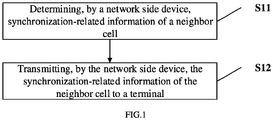
- FIG. 1 is a flow chart of a method of transmitting neighbor cell information provided by the present disclosure.
- An execution entity of the method of transmitting the neighbor cell information is a network side device.
- the method of transmitting the neighbor cell information includes steps S11-S12.
- Step S11 determining, by the network side device, synchronization-related information of the neighbor cell.
- the synchronization-related information refers to information related to a synchronization signal of the neighbor cell.
- Step S12 transmitting, by the network side device, the synchronization-related information of the neighbor cell to the terminal.
- the network side device may transmit the synchronization-related information of the neighbor cell to the terminal, so that the terminal may measure the synchronization signal of the neighbor cell according to the synchronization-related information.
- the number of the synchronization signal measurements to the neighbor cell may be reduced, the process of measuring the neighbor cell by the terminal may be simplified, and the time and the power consumed in a case that the terminal measures the neighbor cell may be reduced.
- the network side device may be a Base Transceiver Station (BTS, for short) in a Global System of Mobile communication (GSM, for short) or a Code Division Multiple Access (CDMA, for short), or a Node B (NB, for short) in a Wideband Code Division Multiple Access (WCDMA, for short), or an Evolutional Node B (eNB or eNodeB, for short) in Long Term Evolution (LTE), or a relay station or an access point, or a base station in a future 5G network or the like.
- BTS Base Transceiver Station
- GSM Global System of Mobile communication
- CDMA Code Division Multiple Access
- NB Wideband Code Division Multiple Access
- WCDMA Wideband Code Division Multiple Access
- eNB or eNodeB Evolutional Node B
- LTE Long Term Evolution
- the terminal may be a wireless terminal or a wired terminal.
- the wireless terminal may be a device that provides voice and/or other service data connectivity to a user, a handheld device having a wireless connection function, or another processing device connected to a wireless modem.
- the wireless terminal may communicate with one or more core networks via a Radio Access Network (RAN), and the wireless terminal may be a mobile terminal, such as a mobile telephone (or a cellular phone) and a computer including a mobile terminal, for example, a portable mobile device, a pocket-sized device, a handheld device, a computer-inbuilt device or an on-board mobile device, which exchanges language and/or data with a wireless access network.
- RAN Radio Access Network
- a Personal Communication Service (PCS) phone For example, a Personal Communication Service (PCS) phone, a cordless phone, a Session Initiation Protocol (SIP) phone, a Wireless Local Loop (WLL, for short) station, a Personal Digital Assistant (PDA).
- the wireless terminal may also be referred to as a system, a Subscriber Unit, a Subscriber Station, a Mobile Station, a Mobile, a Remote Station, a Remote Terminal, an Access Terminal, a User Terminal, a User Agent and a User Device or a User Equipment.
- the present disclosure is not limited thereto.
- the synchronization-related information of the neighbor cell includes one or more of the following: information indicating that a synchronization signal of a neighbor cell is in sync with a synchronization signal of a serving cell of the terminal; information indicating that the synchronization signal of the neighbor cell is out of sync with the synchronization signal of the serving cell; information indicating that synchronization signals of at least a part of neighbor cells are in sync with the synchronization signal of the serving cell; information indicating that the synchronization signals of at least a part of the neighbor cells are out of sync with the synchronization signal of the serving cell; information indicating that not all of the synchronization signals of at least a part of the neighbor cells are in sync with the synchronization signal of the serving cell; offset information of the synchronization signal of the neighbor cell relative to the synchronization signal of the serving cell; information indicating that a period of the synchronization signal of the neighbor cell is the same as that of the synchronization signal of the serving cell; information indicating that a period of the
- the method of transmitting the neighbor cell information provided in some embodiments of the present disclosure may be applied to an LTE system, a 5G system, and forthcoming other communication systems.
- the above synchronization signal may be a Synchronization-Signal-block (SS block) set.
- the Synchronization Signal Block is an SS block (Synchronization Signal block).
- a SS block is introduced for downlink synchronization of the terminal, and the terminal measures the SS block of the neighbor cell in a case that the terminal measures the neighbor cell.
- the SS block includes a Primary Synchronization Signal (PSS), a Secondary Synchronization Signal (SSS), Physical Broadcast Channel (PBCH) information.
- PSS Primary Synchronization Signal
- SSS Secondary Synchronization Signal
- PBCH Physical Broadcast Channel
- the terminal may acquire a Physical Cell Identifier of the cell according to the PSS and the PSS in the SS block, and thus, the terminal may measure a signal quality of the neighbor cell based on the Physical Cell Identifier.
- the SS block set includes a plurality of SS blocks, wherein each of the plurality of SS blocks corresponds to a beam direction of the cell. In a case that the number of beams in a cell changes, the SS blocks in the SS block set of the cell are also changed.
- FIG.2 is a schematic structural diagram of a SS block set of a serving cell in the present disclosure.
- each SS block set of the Serving Cell includes 6 SS blocks, and each SS block corresponds to a direction of one beam.
- Each SS block set is required to be completely transmitted within 5 ms.
- the network side device may compare whether a synchronization signal of a neighbor cell is in sync with a synchronization signal of a serving cell of the terminal.
- the network side device may transmit to the terminal the information indicating that the synchronization signal of the neighbor cell is in sync with the synchronization signal of the serving cell.
- the terminal may directly detect the synchronization signal of the neighbor cell at a position of the synchronization signal of the serving cell, thereby the number of the synchronization signal measurements to the neighbor cell by the terminal may be reduced, the process of measuring the neighbor cell by the terminal may be simplified, and the time and the power consumed by the terminal in case of measuring the neighbor cell may be reduced.
- the network side device may transmit to the terminal the information indicating that the synchronization signal of the neighbor cell is out of sync with the synchronization signal of the serving cell. In this way, the number of the synchronization signal measurements to the neighbor cell by the terminal may also be reduced to some extent.
- the network side device may further determine the offset information of the synchronization signal of the neighbor cell relative to the synchronization signal of the serving cell, and transmit the offset information of the synchronization signal of the neighbor cell relative to the synchronization signal of the serving cell to the terminal.
- the terminal may determine a position of the synchronization signal of the neighbor cell based on the offset information, thereby the number of the synchronization signal measurements to the neighbor cell by the terminal may be reduced, the process of measuring the neighbor cell by the terminal may be simplified, and the time and the power consumed by the terminal in case of measuring the neighbor cell may be reduced.
- the offset information may be, for example, that the synchronization signal of the neighbor cell is one slot ahead of the synchronization signal of the serving cell.
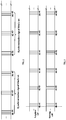
- FIG. 3 is a schematic diagram in a case that the SS block set of the serving cell is in sync with the SS block set of the neighbor cell in the present disclosure.
- a position of each of SS blocks in the SS block set of the neighbor cell is aligned with a position of a SS block in the SS block set of the serving cell, that is, the SS block set of the serving cell is in sync with the SS block set of the neighbor cell.
- the network side device transmits to the terminal the information indicating that the SS block set of the serving cell is in sync with the SS block set of the neighbor cell.
- the terminal may directly detect the SS block of the neighbor cell at a position of the SS block of the serving cell, thereby the number of measurements to the SS block set of the neighbor cell by the terminal may be reduced, the process of measuring the neighbor cell by the terminal may be simplified, and the time and the power consumed by the terminal in case of measuring the neighbor cell may be reduced.
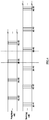
- FIG. 4 is a schematic diagram in a case that the SS block set of the serving cell is out of sync with the SS block set of the neighbor cell in the present disclosure.
- a position of a SS block in the SS block set of the neighbor cell is not aligned with a position of a SS block in the SS block set of the serving cell, that is, the SS block set of the serving cell is out of sync with the SS block set of the neighbor cell.
- the network side device may further determine offset information of the SS block set of the neighbor cell relative to the SS block set of the serving cell (e.g., the offset information is one slot ahead), and transmit the offset information of the SS block set of the neighbor cell relative to the SS block set of the serving cell to the terminal.
- the terminal may, based on the offset information, determine a position of the SS block set of the neighbor cell. Thereby, the number of measurements to the SS block set of the neighbor cell by the terminal may be reduced, the process of measuring the neighbor cell by the terminal may be simplified, and the time and the power consumed by the terminal in case of measuring the neighbor cell may be reduced.
- the network side device may compare whether a period of the synchronization signal of the neighbor cell is the same as a period of the synchronization signal of the serving cell of the terminal or not.
- periods of SS block sets corresponding to different cells may be different, for example, may be 20 ms, 10 ms, 5 ms, etc.
- the network side device determines that the period of the synchronization signal of the neighbor cell is the same as the period of the synchronization signal of the serving cell through the comparison, transmits the information indicating that the period of the synchronization signal of the neighbor cell is the same as the period of the synchronization signal of the serving cell to the terminal.
- the terminal may detect the synchronization signal of the neighbor cell in the same period as the period of the synchronization signal of the serving cell.
- the network side device may also transmit the information indicating that the period of the synchronization signal of the neighbor cell is different from the period of the synchronization signal of the serving cell to the terminal.
- the number of the synchronization signal measurements to the neighbor cell by the terminal may also be reduced to some extent.
- the network side device may compare whether a pattern of a synchronization signal of a neighbor cell is the same as a pattern of a synchronization signal of a serving cell of the terminal or not.
- a same pattern of two synchronization signals means the number of synchronization signal blocks in one of the two synchronization signals is the same as the number of synchronization signal blocks in the other of the two synchronization signals.
- a same pattern of two SS block sets means that the number of SS blocks in one of the two SS block sets is the same as the number of SS blocks in the other of the two SS block sets.
- the network side device may transmit to the terminal the information indicating that the pattern of the synchronization signal of the neighbor cell is the same as the pattern of the synchronization signal of the serving cell.
- the terminal may directly acquire the pattern of the synchronization signal of the neighbor cell.
- the network side device may also transmit to the terminal the information indicating that the pattern of the synchronization signal of the neighbor cell is different from the pattern of the synchronization signal of the serving cell, and the number of the synchronization signal measurements to the neighbor cell by the terminal may be reduced to some extent.
- the network side device may further transmit information about the number of synchronization signal blocks in the synchronization signal of the neighbor cell to the terminal, so that the terminal may directly acquire the number of synchronization signal blocks in the synchronization signal of the neighbor cell.
- the number of the synchronization signal measurements to the neighbor cell by the terminal may be reduced, the process of measuring the neighbor cell by the terminal may be simplified, and the time and the power consumed by the terminal in case of measuring the neighbor cell may be reduced.
- the information about the number of synchronization signal blocks may be the specific number of synchronization signal blocks in the synchronization signal of the neighbor cell, or comparison information between the number of synchronization signal blocks in the synchronization signal of the neighbor cell and the number of synchronization signal blocks in the synchronization signal of the serving cell.
- the number of synchronization signal blocks in the synchronization signal of the neighbor cell is smaller than or larger than the number of synchronization signal blocks in the synchronization signal of the serving cell.
- the network side device may further transmit to the terminal the minimum index information of the synchronization signal blocks in the synchronization signal of the neighbor cell, and/or the maximum index information of the synchronization signal blocks in the synchronization signal of the neighbor cell, so that the terminal may indirectly acquire the number of synchronization signal blocks in the synchronization signal of the neighbor cell.
- the number of the synchronization signal measurements to the neighbor cell by the terminal may be reduced, the process of measuring the neighbor cell by the terminal may be simplified, and the time and the power consumed by the terminal in case of measuring the neighbor cell may be reduced.
- timing index information is carried in a SS block, in order to help the terminal acquire a correct SS block.
- the timing index information indicates a position of the SS block in a corresponding SS block set.
- the timing index information may be transmitted in the PBCH in the SS block or may be transmitted at another location in the SS block.
- the network side device may compare whether the pattern of the SS block set of the neighbor cell is the same as that of the SS block set of the serving cell or not. In a case that the network side device determines that the pattern of the SS block set of the neighbor cell is different from the pattern of the SS block set of the serving cell through the comparison, the network side device transmits to the terminal the minimum index information of the SS block in the SS block set of the neighbor cell and/or the maximum index information of the SS block in the SS block set of the neighbor cell, so that the terminal may indirectly acquire the number of SS blocks in the SS block set of the neighbor cell. Thereby, the number of the measurements to the SS block set of the neighbor cell by the terminal may be reduced, the process of measuring the neighbor cell by the terminal may be simplified, and the time and the power consumed by the terminal in case of measuring the neighbor cell may be reduced.
- the synchronization-related information includes one type of information.
- the synchronization-related information may include multiple types of the above plurality of types of information, for example, include information indicating whether the pattern of the synchronization signal of the neighbor cell is the same as the pattern of the synchronization signal of the serving cell or not, and information indicating whether the period of the synchronization signal of the neighbor cell is the same as the period of the synchronization signal of the serving cell, and so on.
- the synchronization-related information of the neighbor cell may also be other types of information related to the synchronization signal of the neighbor cell, in addition to the information described in the above, and is not listed in detail herein.
- the network side device may transmit the synchronization-related information of the neighbor cell to the terminal through broadcast.
- transmitting, by the network side device, the synchronization-related information of the neighbor cell to the terminal may include: transmitting, by the network side device, a broadcast message to the terminal, wherein the broadcast message carries the synchronization-related information of the neighbor cell.
- possibility of transmitting the synchronization-related information of the neighbor cell by using a dedicated signaling is also not excluded.
- transmitting, by the network side device, the synchronization-related information of the neighbor cell to the terminal may include: transmitting, by the network side device, a dedicated signaling to the terminal, wherein the dedicated signaling carries the synchronization-related information of the neighbor cell.
- the dedicated signaling may be a connection release signaling when a terminal in a connected state releases a connection.
- the synchronization-related information of neighbor cells of the terminal transmitted by the network side device to the terminal may include synchronization-related information of each of the neighbor cells.
- the synchronization-related information includes the synchronization-related information of each of the neighbor cells, the information is indicated more detailedly, so as to facilitate a user to know the synchronization-related information of each neighbor cell more accurately.
- the transmitted synchronization-related information may include information about in-sync of a SS block set of a neighbor cell 1 with a SS block set of the serving cell, or information about out-of-sync of a SS block set of a neighbor cell 1 with a SS block set of the serving cell.
- the synchronization-related information of the neighbor cells transmitted by the network side device to the terminal may further include at least one piece of summary information, wherein the at least one piece of summary information includes a summary of synchronization-related information of the plurality of neighbor cells.
- link resources may be effectively saved.
- synchronization-related information of neighbor cells having the same frequency may be summarized, for example, the summarized synchronization-related information may include: information about in-sync of SS block sets of all neighbor cells with the SS block set of the serving cell at a first frequency, or information about in-sync of SS block sets of not all of the neighbor cells with the SS block set with the serving cell at the first frequency, or information about a maximum index of all indices of the neighbor cells being 6 and a minimum index of all indices of the neighbor cells being 3.
- the piece of summary information includes a summary of synchronization-related information of all neighbor cells.
- link resources may be further saved.
- the summary information in the synchronization-related information may be indicated by 1 bit, or may be indicated by 2 bit, as described below by way of example.
- each piece of summary information is indicated by 1 bit which may be an indication bit of 0 or 1.
- the indication bit of the summary information corresponding to the synchronization-related information of all neighbor cells at the first frequency is 1, it may be indicated that patterns of SS block sets of all neighbor cells at the first frequency are the same as that of the SS block set of the serving cell; in a case that the indication bit of the summary information corresponding to the synchronization-related information of all neighbor cells at the first frequency is 0, it may be indicated that not all patterns of the SS block sets of all neighbor cells at the first frequency is the same as the pattern of the SS block set of the serving cell.
- the indication bit of the summary information corresponding to the synchronization-related information of all neighbor cells at the first frequency is 1, it may be indicated that SS block sets of all neighbor cells at the first frequency are in sync with the SS block set of the serving cell; in a case that the indication bit of the summary information corresponding to the synchronization-related information of all neighbor cells at the first frequency is 0, it may be indicated that not all of the SS block sets of all neighbor cells at the first frequency are in sync with the SS block set of the serving cell.
- each piece of summary information is indicated by 2 bits which may be indication bits of 11, 00, 10, or 01.
- the indication bits of the summary information corresponding to the synchronization-related information of all neighbor cells at the first frequency are 11, it may be indicated that patterns of SS block sets of all neighbor cells at the first frequency are the same as that of the SS block set of the serving cell; in a case that the indication bits of the summary information corresponding to the synchronization-related information of all neighbor cells at the first frequency are 00, it may be indicated that not all of patterns and periods of the SS block sets of all neighbor cells at the first frequency are the same as the pattern and the period of the SS block set of the serving cell; in a case that the indication bits of the summary information corresponding to the synchronization-related information of all neighbor cells at the first frequency are 10, it may be indicated that not all of the patterns of the SS block sets of all neighbor cells at the first frequency are the same as the pattern of the SS block set of the serving cell, but all of the periods of the SS block sets of all neighbor cells at the first frequency are the same as the period of the SS block set of the
- the network side device also needs to acquire the synchronization signal of the neighbor cell before the network side device determines the synchronization-related information of the neighbor cell.
- the network side device may interact with a network side device corresponding to the neighbor cell, so as to acquire the synchronization signal of the neighbor cell; then, the synchronization-related information of the neighbor cell may be determined according to the synchronization signal of the neighbor cell.
- the network side device in the serving cell needs to have an interconnection interface with the network side device in the neighbor cell, and the synchronization signal of the neighbor cell may be obtained through the interconnection interface.
- the neighbor cell may inform the serving cell of a synchronization signal of the neighbor cell, and in a case that there is a subsequent update of the synchronization signal, the neighbor cell may also inform the serving cell of the update of the synchronization signal through an update message.
- the network side device may also acquire a synchronization signal of a neighbor cell through an OAM (Operation, Management and Maintenance) configuration, and then, according to the synchronization signal of the neighbor cell, determines the synchronization-related information of the neighbor cell.
- OAM Operaation, Management and Maintenance
- FIG. 5 is a flow chart of a method of processing neighbor cell information provided by the present disclosure.
- An execution entity of the method of processing the neighbor cell information may be a terminal.
- the method of processing the neighbor cell information includes steps S51-S52.
- Step S51 receiving, by the terminal, synchronization-related information of a neighbor cell transmitted by a network side device.
- Step S52 parsing, by the terminal, the synchronization-related information.
- the terminal receives and parses the synchronization-related information of the neighbor cell transmitted by the network side device, so that the terminal may measure the neighbor cell based on the parsed synchronization-related information.
- the number of the synchronization signal measurements to the neighbor cell by the terminal may be reduced, the process of measuring the neighbor cell by the terminal may be simplified, and the time and the power consumed by the terminal in case of measuring the neighbor cell may be reduced.
- the method further includes measuring the neighbor cell by the terminal based on the parsed synchronization-related information.
- the synchronization-related information of the neighbor cell includes any one or more of the following: information indicating that a synchronization signal of a neighbor cell is in sync with a synchronization signal of a serving cell of the terminal; information indicating that the synchronization signal of the neighbor cell is out of sync with the synchronization signal of the serving cell; information indicating that synchronization signals of at least a part of neighbor cells are in sync with the synchronization signal of the serving cell; information indicating that the synchronization signals of at least a part of the neighbor cells are out of sync with the synchronization signal of the serving cell; information indicating that not all of the synchronization signals of at least a part of the neighbor cells are in sync with the synchronization signal of the serving cell; offset information of the synchronization signal of the neighbor cell relative to the synchronization signal of the serving cell; information indicating that a period of the synchronization signal of the neighbor cell is the same as that of the synchronization signal of the serving cell
- the synchronization signal may be a SS block set, and the synchronization signal block may be a SS block.
- the synchronization-related information may include synchronization-related information of each neighbor cell; or, the synchronization-related information includes at least one piece of summary information, and the summary information includes a summary of synchronization-related information of a plurality of neighbor cells.
- the step of receiving, by the terminal, synchronization-related information of the neighbor cell transmitted by the network side device includes: receiving, by the terminal, a broadcast message or a dedicated signaling transmitted by the network side device, wherein the broadcast message or the dedicated signaling carries synchronization-related information of the neighbor cell.
- the dedicated signaling may be a connection release signaling in a case that the terminal in a connected state releases a connection.
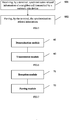
- FIG. 6 is a schematic structural diagram of a network side device provided in the present disclosure.
- the network side device includes a determination module 61 and a transmission module 62.
- the determination module is configured to determine synchronization-related information of a neighbor cell.
- the transmission module 62 is configured to transmit synchronization-related information of the neighbor cell to the terminal.
- the network side device may transmit the synchronization-related information of the neighbor cell to the terminal, so that the terminal may measure the neighbor cell according to the synchronization-related information.
- the number of the synchronization signal measurements to the neighbor cell may be reduced, the process of measuring the neighbor cell by the terminal may be simplified, and the time and the power consumed in a case that the terminal measures the neighbor cell may be reduced.
- the synchronization-related information of the neighbor cell includes any one or more of the following: information indicating that a synchronization signal of a neighbor cell is in sync with a synchronization signal of a serving cell of the terminal; information indicating that the synchronization signal of the neighbor cell is out of sync with the synchronization signal of the serving cell; information indicating that synchronization signals of at least a part of neighbor cells are in sync with the synchronization signal of the serving cell; information indicating that the synchronization signals of at least a part of the neighbor cells are out of sync with the synchronization signal of the serving cell; information indicating that not all of the synchronization signals of at least a part of the neighbor cells are in sync with the synchronization signal of the serving cell; offset information of the synchronization signal of the neighbor cell relative to the synchronization signal of the serving cell; information indicating that a period of the synchronization signal of the neighbor cell is the same as that of the synchronization signal of the serving cell; information indicating that the period of
- the synchronization signal may be an SS block set, and the synchronization signal block may be an SS block.
- the synchronization-related information transmitted by the transmission module includes synchronization-related information of each neighbor cell.
- the synchronization-related information transmitted by the transmission module includes at least one piece of summary information, and the summary information includes a summary of synchronization-related information of a plurality of neighbor cells.
- the network side device may further include an interaction module, configured to interact with a network side device corresponding to the neighbor cell so as to acquire the synchronization signal of the neighbor cell; wherein the determination module is specifically configured to determine the synchronization-related information of the neighbor cell based on the synchronization signal of the neighbor cell.
- the transmission module is specifically configured to transmit a broadcast message or a dedicated signaling to the terminal, wherein the broadcast message or the dedicated signaling carries the synchronization-related information of the neighbor cell.
- the network side device in this embodiment may perform the method of transmitting the neighbor cell information in any of the foregoing embodiments, and an implementation principle and a technical effect in the embodiment are similar to those of the foregoing embodiments, and will not be described again herein.
- FIG. 7 is a schematic structural diagram of a terminal provided in the present disclosure.
- the terminal includes a reception module 71 and a parsing module 72.
- the reception module 71 is configured to receive synchronization-related information of a neighbor cell transmitted by a network side device.
- the parsing module 72 is configured to parse the synchronization-related information.
- the terminal may further include a measurement module configured to measure the neighbor cell based on the parsed synchronization-related information after the parsing module parses the synchronization-related information.
- a measurement module configured to measure the neighbor cell based on the parsed synchronization-related information after the parsing module parses the synchronization-related information.
- the terminal may receive and parse the synchronization-related information of the neighbor cell transmitted by the network side device, so that the terminal may measure the neighbor cell based on the parsed synchronization-related information.
- the number of the synchronization signal measurements to the neighbor cell by the terminal may be reduced, the process of measuring the neighbor cell by the terminal may be simplified, and the time and the power consumed by the terminal in case of measuring the neighbor cell may be reduced.
- the synchronization-related information of the neighbor cell includes any one or more of the following: information indicating that a synchronization signal of a neighbor cell is in sync with a synchronization signal of a serving cell of the terminal; information indicating that the synchronization signal of the neighbor cell is out of sync with the synchronization signal of the serving cell; information indicating that synchronization signals of at least a part of neighbor cells are in sync with the synchronization signal of the serving cell; information indicating that the synchronization signals of at least a part of the neighbor cells are out of sync with the synchronization signal of the serving cell; information indicating that not all of the synchronization signals of at least a part of the neighbor cells are in sync with the synchronization signal of the serving cell; offset information of the synchronization signal of the neighbor cell relative to the synchronization signal of the serving cell; information indicating that a period of the synchronization signal of the neighbor cell is the same as that of the synchronization signal of the serving cell; information indicating that the period of
- the synchronization signal may be a SS block set, and the synchronization signal block may be a SS block.
- the synchronization-related information received by the reception module may include synchronization-related information of each neighbor cell; or, the synchronization-related information received by the reception module includes at least one piece of summary information, and the summary information includes a summary of synchronization-related information of a plurality of neighbor cells.
- the reception module is specifically configured to receive a broadcast message or a dedicated signaling transmitted by the network side device, wherein the broadcast message or the dedicated signaling carries synchronization-related information of the neighbor cell.
- the terminal in this embodiment is used to perform the method of processing the neighbor cell information in any of the foregoing embodiments, and an implementation principle and a technical effect in this embodiment are similar to those in the foregoing embodiments, and will not be described again here.
- modules in the network side device and the terminal above is only a division in respect of a logical function, and may be completely or partially integrated into one physical entity or may be physically separated in an actual implementation.
- These modules may all be implemented by a processing element through invoking software, or may all be implemented in a form of hardware.
- a part of the modules may be implemented by the processing element through invoking software, and a part of the modules may be implemented in the form of hardware.
- the determination module may be a separate processing element or may be integrated in one chip of an apparatus, or may be stored in a storage of the apparatus in a form of a program code for invoking and executing by one of processing elements in the above apparatus to implement functions of the determination module.
- modules An implementation of other modules is similar to that of the determination module.
- all or a part of these modules may be integrated together or may be implemented independently.
- the processing element described herein may be an integrated circuit having a signal processing capability.
- steps of the method described above or the above modules may be accomplished by integrated logic circuitry in hardware of a processing element or by instructions in a form of software.
- the above modules may be one or more integrated circuits configured to implement the above methods, such as one or more Application Specific Integrated Circuit (ASIC), or, one or more Digital Signal Processor (DSP, for short), or, one or more Field Programmable Gate Arrays (FPGA, for short) or the like.
- ASIC Application Specific Integrated Circuit
- DSP Digital Signal Processor
- FPGA Field Programmable Gate Arrays
- the processing element may be a general purpose processor, such as a Central Processing Unit (CPU, for short) or another processor that may call the ram code.
- these modules may be integrated together and implemented in a form of a system-on-a-chip (SOC, for short).
- FIG. 8 is a schematic structural diagram of a network side device provided by the present disclosure.
- the network side device includes a storage 81, a processor 82, and a computer program stored on the storage 81 and executable by the processor 82; in a case that the processor 81 executes the program, the method of transmitting the neighbor cell information in any of the above embodiments is implemented by the processor 82.
- the processor 82 herein may be a single processor, or may represent a plurality of processing elements, for example, the processor may be a CPU, or may be an ASIC, or one or more integrated circuits configured to implement the methods performed by the above network side device, such as one or more Digital Signal Processors (DSPs), or one or more Field Programmable Gate Arrays (FPGAs, for short), or the like.
- DSPs Digital Signal Processors
- FPGAs Field Programmable Gate Arrays
- the storage 81 may be a single storage or may represent as a plurality of storage elements.
- the storage 81 may be a volatile memory or a non-volatile memory, or may include both volatile and non-volatile memories.
- the non-volatile memory may be a Read Only Memory (ROM, for short), a Programmable ROM (PROM, for short), an Erasable PROM (EPROM, for short), an Electrically EPROM (EEPROM, for short), or a flash memory.
- the volatile memory may be a Random Access Memory (RAM, for short) which is used as an external cache.
- RAM any form of RAM
- SRAM Static RAM
- DRAM Dynamic RAM
- SDRAM Synchronous DRAM
- DDRSDRAM Double Data Rate SDRAM
- ESDRAM Enhanced SDRAM
- SLDRAM SynchLink DRAM
- DRRAM DirectRambus RAM
- the storage 81 described by some embodiments of the present disclosure is intended to include, but is not limited to, these and any other suitable types of storages.
- FIG. 9 is a schematic structural diagram of a terminal provided by the present disclosure.
- the terminal includes a storage 91, a processor 92, and a computer program stored on the storage 91 and executable on the processor 92; in a case that the processor 91 executes the program, the method of processing the neighbor cell information in any of the above embodiments is implemented by the processor 92.
- the processor 92 herein may be a single processor, or may represent a plurality of processing elements, for example, the processor may be a CPU, or may be an ASIC, or one or more integrated circuits configured to implement the methods performed by the above network side device, such as one or more Digital Signal Processors (DSPs), or one or more Field Programmable Gate Arrays (FPGAs, for short), or the like.
- DSPs Digital Signal Processors
- FPGAs Field Programmable Gate Arrays
- the storage 91 may be a single storage or may represent as a plurality of storage elements.
- the storage 91 may be a volatile memory or a non-volatile memory, or may include both volatile and non-volatile memories.
- the non-volatile memory may be a Read Only Memory (ROM, for short), a Programmable ROM (PROM, for short), an Erasable PROM (EPROM, for short), an Electrically EPROM (EEPROM, for short), or a flash memory.
- the volatile memory may be a Random Access Memory (RAM, for short) which is used as an external cache.
- RAM any form of RAM
- SRAM Static RAM
- DRAM Dynamic RAM
- SDRAM Synchronous DRAM
- DDRSDRAM Double Data Rate SDRAM
- ESDRAM Enhanced SDRAM
- SLDRAM SynchLink DRAM
- DRRAM DirectRambus RAM
- the storage 91 described by some embodiments of the present disclosure is intended to include, but is not limited to, these and any other suitable types of storages.
- Some embodiments of the present disclosure also provide a computer readable storage medium having stored thereon a computer program, wherein in a case that the computer program is executed by a processor, the processor implements steps in the method of transmitting neighbor cell information in any of the embodiments described above.
- Some embodiments of the present disclosure also provide a computer readable storage medium having stored thereon a computer program, wherein in a case that the computer program is executed by a processor, the processor implements steps in the method of processing neighbor cell information in any of the embodiments described above.
- the computer readable media including a volatile or a non-volatile, removable and non-removable media, may implement information storage by any method or technique.
- the information may be computer readable instructions, data structures, modules of programs, or other data.
- Examples of a computer storage medium include, but are not limited to, a Phase Change Memory (PRAM), a Static Random Access Memory (SRAM), a Dynamic Random Access Memory (DRAM), other types of Random Access Memories (RAMs), a Read Only Memory (ROM), an Electrically Erasable Programmable Read Only Memory (EEPROM), a flash memory, or other memory technology, a Compact-Disc Read-Only Memory (CD-ROM), a Digital Versatile Disc (DVD) or other optical storages, a magnetic-tape cassette, a Magnetic-disk storage or another magnetic storage device or any other non-transmission medium. All of the above may be used to store information that may be accessed by a computing device.
- PRAM Phase Change Memory
- SRAM Static Random Access Memory
Landscapes
- Engineering & Computer Science (AREA)
- Computer Networks & Wireless Communication (AREA)
- Signal Processing (AREA)
- Mobile Radio Communication Systems (AREA)
- Telephonic Communication Services (AREA)
Abstract
Description
- This application claims a priority to a Chinese Patent Application No.
201710433322.9 - The present disclosure relates to the field of communication technology, and more particularly, relates to a method of transmitting neighbor cell information, a processing method of neighbor cell information, a network side device, and a terminal.
- In a Long Term Evolution (LTE) system, a terminal (or a User Equipment (UE)) in an idle state needs to measure a neighbor cell, in order to find a proper resident cell in a case that the terminal moves or a signal quality of a current serving cell is low.
- In a Fifth Generation (5G) mobile communication system, a terminal in an idle state also needs to measure a neighbor cell. In the 5G system, in a case that the terminal measures the neighbor cell, if information of the neighbor cell is not clearly known at all, the neighbor cell needs to be re-searched. Since there are a plurality of neighbor cells, the search for the plurality of neighbor cells may consume a large amount of time and power of the terminal.
- How to simplify a process of measuring a neighbor cell by a terminal is a technical problem to be solved urgently.
- In view of the above, the present disclosure provides a method of transmitting neighbor cell information, a method of processing neighbor cell information, and a device.
- A first aspect of the present disclosure provides method of transmitting neighbor cell information. The method includes determining, by a network side device, synchronization-related information of a neighbor cell; and transmitting, by the network side device, the synchronization-related information of the neighbor cell to a terminal.
- A second aspect of the present disclosure provides a method of processing neighbor cell information. The method includes receiving, by a terminal, synchronization-related information of a neighbor cell transmitted by a network side device; and parsing, by the terminal, the synchronization-related information.
- A third aspect of the present disclosure provides a network side device. The network side device includes a determination module, configured to determine synchronization-related information of a neighbor cell; and a transmission module, configured to transmit the synchronization-related information of the neighbor cell to a terminal.
- A fourth aspect of the present disclosure provides a terminal. The terminal includes a reception module, configured to receive synchronization-related information of a neighbor cell transmitted by a network side device; and a parsing module, configured to parse the synchronization-related information.
- A fifth aspect of the present disclosure provides a network side device. The network side device includes a storage, a processor, and a computer program stored on the storage and executable by the processor; wherein the processor implements the method of transmitting the neighbor cell information according to the first aspect when the processor executes the program.
- A sixth aspect of the present disclosure provides a terminal. The terminal includes a storage, a processor, and a computer program stored on the storage and executable by the processor; wherein the processor implements the method of processing the neighbor cell information according to the second aspect when the processor executes the program.
- A seventh aspect of the present disclosure provides a non-volatile computer readable storage medium. The non-volatile computer readable storage medium includes a computer program stored on the computer readable storage medium, wherein when the program is executed by a processor, the processor implements steps in the method of transmitting neighbor cell information according to the first aspect.
- An eighth aspect of the present disclosure provides a non-volatile computer readable storage medium. The non-volatile computer readable storage medium includes a computer program stored on the computer readable storage medium, wherein when the program is executed by a processor, the processor implements steps in the method of processing neighbor cell information according to the second aspect.
-
-
FIG. 1 is a flowchart of a method of transmitting neighbor cell information provided by the present disclosure; -
FIG. 2 is a schematic structural diagram of a synchronization-signal-block set of a serving cell in the present disclosure; -
FIG. 3 is a schematic diagram in a case that a synchronization-signal-block set of a serving cell and a synchronization-signal-block set of a neighbor cell of the present disclosure are in sync; -
FIG. 4 is a schematic diagram in a case that a synchronization-signal-block set of a serving cell and a synchronization-signal-block set of a neighbor cell of the present disclosure are out of sync; -
FIG. 5 is a flowchart of a processing method of neighbor cell information provided by the present disclosure; -
FIG. 6 is a schematic structural diagram of a network side device provided by the present disclosure; -
FIG. 7 is a schematic structural diagram of a terminal provided by the present disclosure; -
FIG. 8 is a schematic structural diagram of a network side device provided by the present disclosure; and -
FIG. 9 is a schematic structural diagram of a terminal provided by the present disclosure. - In order to solve a problem that in a Fifth Generation (5G) mobile communication system, a terminal in an idle state needs to re-search a plurality of neighbor cell in a case of measuring the neighbor cells, and consumes a large amount of time and power of the terminal, some embodiments of the present disclosure provide a method of transmitting neighbor cell information, a processing method of neighbor cell information, a network side device, and a terminal. In some embodiments of the present disclosure, the terminal receives and parses synchronization-related information of a neighbor cell transmitted by a network side device, so that the terminal may measure the neighbor cell according to the synchronization-related information, the number of synchronization signal measurements to the neighbor cell may be reduced, a process of measuring the neighbor cell by the terminal may be simplified, and the time and power consumed in a case that the terminal measures neighbor cell may be reduced.
- In order to make an objective, a technical solution and an advantage of some embodiments of the present disclosure clearer, technical solutions of some embodiments of the present disclosure will be clearly and completely described below in connection with accompanying drawings of some embodiments of the present disclosure. It will be apparent that the described embodiments are a part, rather than all, of the embodiments of the present disclosure. All other embodiments obtained by those of ordinary skills in the art based on the described embodiments of the present disclosure fall within the scope of the present disclosure.
-
FIG. 1 is a flow chart of a method of transmitting neighbor cell information provided by the present disclosure. An execution entity of the method of transmitting the neighbor cell information is a network side device. The method of transmitting the neighbor cell information includes steps S11-S12. - Step S11: determining, by the network side device, synchronization-related information of the neighbor cell.
- The synchronization-related information refers to information related to a synchronization signal of the neighbor cell.
- Step S12: transmitting, by the network side device, the synchronization-related information of the neighbor cell to the terminal.
- By the method of transmitting the neighbor cell information provided by some embodiments of the present disclosure, the network side device may transmit the synchronization-related information of the neighbor cell to the terminal, so that the terminal may measure the synchronization signal of the neighbor cell according to the synchronization-related information. Thus, the number of the synchronization signal measurements to the neighbor cell may be reduced, the process of measuring the neighbor cell by the terminal may be simplified, and the time and the power consumed in a case that the terminal measures the neighbor cell may be reduced.
- In some embodiments of the present disclosure, the network side device may be a Base Transceiver Station (BTS, for short) in a Global System of Mobile communication (GSM, for short) or a Code Division Multiple Access (CDMA, for short), or a Node B (NB, for short) in a Wideband Code Division Multiple Access (WCDMA, for short), or an Evolutional Node B (eNB or eNodeB, for short) in Long Term Evolution (LTE), or a relay station or an access point, or a base station in a future 5G network or the like. The present disclosure is not limited thereto.
- The terminal may be a wireless terminal or a wired terminal. The wireless terminal may be a device that provides voice and/or other service data connectivity to a user, a handheld device having a wireless connection function, or another processing device connected to a wireless modem. The wireless terminal may communicate with one or more core networks via a Radio Access Network (RAN), and the wireless terminal may be a mobile terminal, such as a mobile telephone (or a cellular phone) and a computer including a mobile terminal, for example, a portable mobile device, a pocket-sized device, a handheld device, a computer-inbuilt device or an on-board mobile device, which exchanges language and/or data with a wireless access network. For example, a Personal Communication Service (PCS) phone, a cordless phone, a Session Initiation Protocol (SIP) phone, a Wireless Local Loop (WLL, for short) station, a Personal Digital Assistant (PDA). The wireless terminal may also be referred to as a system, a Subscriber Unit, a Subscriber Station, a Mobile Station, a Mobile, a Remote Station, a Remote Terminal, an Access Terminal, a User Terminal, a User Agent and a User Device or a User Equipment. The present disclosure is not limited thereto.
- In some embodiments of the present disclosure, the synchronization-related information of the neighbor cell includes one or more of the following: information indicating that a synchronization signal of a neighbor cell is in sync with a synchronization signal of a serving cell of the terminal; information indicating that the synchronization signal of the neighbor cell is out of sync with the synchronization signal of the serving cell; information indicating that synchronization signals of at least a part of neighbor cells are in sync with the synchronization signal of the serving cell; information indicating that the synchronization signals of at least a part of the neighbor cells are out of sync with the synchronization signal of the serving cell; information indicating that not all of the synchronization signals of at least a part of the neighbor cells are in sync with the synchronization signal of the serving cell; offset information of the synchronization signal of the neighbor cell relative to the synchronization signal of the serving cell; information indicating that a period of the synchronization signal of the neighbor cell is the same as that of the synchronization signal of the serving cell; information indicating that the period of the synchronization signal of the neighbor cell is different from that of the synchronization signal of the serving cell; information indicating that periods of synchronization signals of at least a part of neighbor cells are the same as that of the synchronization signal of the serving cell; information indicating that the periods of the synchronization signals of at least a part of the neighbor cells are different from that of the synchronization signal of the serving cell; information indicating that not all of the periods of the synchronization signals of at least a part of the neighbor cells are the same as that of the synchronization signal of the serving cell; information indicating that a pattern of the synchronization signal of the neighbor cell is the same as that of the synchronization signal of the serving cell; information indicating that the pattern of the synchronization signal of the neighbor cell is different from that of the synchronization signal of the serving cell; information indicating that patterns of synchronization signals of at least a part of neighbor cells are the same as that of the synchronization signal of the serving cell; information indicating that the patterns of the synchronization signals of at least a part of the neighbor cells are different from that of the synchronization signal of the serving cell; information indicating that not all of the patterns of the synchronization signals of at least a part of the neighbor cells are the same as that of the synchronization signal of the serving cell; information about the number of synchronization signal blocks in the synchronization signal of the neighbor cell; minimum index information of the synchronization signal blocks in the synchronization signal of the neighbor cell; and maximum index information of the synchronization signal blocks in the synchronization signal of the neighbor cell.
- The method of transmitting the neighbor cell information provided in some embodiments of the present disclosure may be applied to an LTE system, a 5G system, and forthcoming other communication systems.
- In a case that the method of transmitting neighbor cell information in some embodiments of the present disclosure is applied to a 5G system, the above synchronization signal may be a Synchronization-Signal-block (SS block) set. The Synchronization Signal Block is an SS block (Synchronization Signal block).
- In a 5G system, a SS block is introduced for downlink synchronization of the terminal, and the terminal measures the SS block of the neighbor cell in a case that the terminal measures the neighbor cell. The SS block includes a Primary Synchronization Signal (PSS), a Secondary Synchronization Signal (SSS), Physical Broadcast Channel (PBCH) information. The terminal may acquire a Physical Cell Identifier of the cell according to the PSS and the PSS in the SS block, and thus, the terminal may measure a signal quality of the neighbor cell based on the Physical Cell Identifier.
- In the 5G system, since a cell has multiple beam directions, a network side device corresponding to the cell transmits the SS block set. The SS block set includes a plurality of SS blocks, wherein each of the plurality of SS blocks corresponds to a beam direction of the cell. In a case that the number of beams in a cell changes, the SS blocks in the SS block set of the cell are also changed.
- Referring to
FIG. 2, FIG.2 is a schematic structural diagram of a SS block set of a serving cell in the present disclosure. As may be seen fromFIG. 2 , each SS block set of the Serving Cell includes 6 SS blocks, and each SS block corresponds to a direction of one beam. Each SS block set is required to be completely transmitted within 5 ms. - Processing procedures of the network side device and the terminal in a case that synchronization-related information of neighbor cells are different will be described by way of example hereinafter.
- In some embodiments of the present disclosure, the network side device may compare whether a synchronization signal of a neighbor cell is in sync with a synchronization signal of a serving cell of the terminal.
- In a case that the network side device determines that the synchronization signal of the neighbor cell is in sync with the synchronization signal of the serving cell through the comparison, the network side device may transmit to the terminal the information indicating that the synchronization signal of the neighbor cell is in sync with the synchronization signal of the serving cell.
- After the terminal receives the information, the terminal may directly detect the synchronization signal of the neighbor cell at a position of the synchronization signal of the serving cell, thereby the number of the synchronization signal measurements to the neighbor cell by the terminal may be reduced, the process of measuring the neighbor cell by the terminal may be simplified, and the time and the power consumed by the terminal in case of measuring the neighbor cell may be reduced.
- In some embodiments of the present disclosure, in a case that the network side device determines that the synchronization signal of the neighbor cell is out of sync with the synchronization signal of the serving cell through the comparison, the network side device may transmit to the terminal the information indicating that the synchronization signal of the neighbor cell is out of sync with the synchronization signal of the serving cell. In this way, the number of the synchronization signal measurements to the neighbor cell by the terminal may also be reduced to some extent.
- In some embodiments of the present disclosure, in a case that the network side device determines that the synchronization signal of the neighbor cell is out of sync with the synchronization signal of the serving cell through the comparison, the network side device may further determine the offset information of the synchronization signal of the neighbor cell relative to the synchronization signal of the serving cell, and transmit the offset information of the synchronization signal of the neighbor cell relative to the synchronization signal of the serving cell to the terminal. The terminal may determine a position of the synchronization signal of the neighbor cell based on the offset information, thereby the number of the synchronization signal measurements to the neighbor cell by the terminal may be reduced, the process of measuring the neighbor cell by the terminal may be simplified, and the time and the power consumed by the terminal in case of measuring the neighbor cell may be reduced.
- The offset information may be, for example, that the synchronization signal of the neighbor cell is one slot ahead of the synchronization signal of the serving cell.
- Taking
FIG. 3 as an example,FIG. 3 is a schematic diagram in a case that the SS block set of the serving cell is in sync with the SS block set of the neighbor cell in the present disclosure. As may be seen fromFIG. 3 , a position of each of SS blocks in the SS block set of the neighbor cell is aligned with a position of a SS block in the SS block set of the serving cell, that is, the SS block set of the serving cell is in sync with the SS block set of the neighbor cell. The network side device transmits to the terminal the information indicating that the SS block set of the serving cell is in sync with the SS block set of the neighbor cell. After the terminal receives the indication information, the terminal may directly detect the SS block of the neighbor cell at a position of the SS block of the serving cell, thereby the number of measurements to the SS block set of the neighbor cell by the terminal may be reduced, the process of measuring the neighbor cell by the terminal may be simplified, and the time and the power consumed by the terminal in case of measuring the neighbor cell may be reduced. - Taking
FIG. 4 as an example,FIG. 4 is a schematic diagram in a case that the SS block set of the serving cell is out of sync with the SS block set of the neighbor cell in the present disclosure. As may be seen fromFIG. 4 , a position of a SS block in the SS block set of the neighbor cell is not aligned with a position of a SS block in the SS block set of the serving cell, that is, the SS block set of the serving cell is out of sync with the SS block set of the neighbor cell. The network side device may further determine offset information of the SS block set of the neighbor cell relative to the SS block set of the serving cell (e.g., the offset information is one slot ahead), and transmit the offset information of the SS block set of the neighbor cell relative to the SS block set of the serving cell to the terminal. The terminal may, based on the offset information, determine a position of the SS block set of the neighbor cell. Thereby, the number of measurements to the SS block set of the neighbor cell by the terminal may be reduced, the process of measuring the neighbor cell by the terminal may be simplified, and the time and the power consumed by the terminal in case of measuring the neighbor cell may be reduced. - In some embodiments of the present disclosure, the network side device may compare whether a period of the synchronization signal of the neighbor cell is the same as a period of the synchronization signal of the serving cell of the terminal or not.
- In the 5G system, periods of SS block sets corresponding to different cells may be different, for example, may be 20 ms, 10 ms, 5 ms, etc.
- In a case that the network side device determines that the period of the synchronization signal of the neighbor cell is the same as the period of the synchronization signal of the serving cell through the comparison, the network side device transmits the information indicating that the period of the synchronization signal of the neighbor cell is the same as the period of the synchronization signal of the serving cell to the terminal. The terminal may detect the synchronization signal of the neighbor cell in the same period as the period of the synchronization signal of the serving cell. Thereby, the number of the synchronization signal measurements to the neighbor cell by the terminal may be reduced, the process of measuring the neighbor cell by the terminal may be simplified, and the time and the power consumed by the terminal in case of measuring the neighbor cell may be reduced.
- In a case that the network side device determines that the period of the synchronization signal of the neighbor cell is the same as the period of the synchronization signal of the serving cell through comparison, the network side device may also transmit the information indicating that the period of the synchronization signal of the neighbor cell is different from the period of the synchronization signal of the serving cell to the terminal. The number of the synchronization signal measurements to the neighbor cell by the terminal may also be reduced to some extent.
- In some embodiments of the present disclosure, the network side device may compare whether a pattern of a synchronization signal of a neighbor cell is the same as a pattern of a synchronization signal of a serving cell of the terminal or not.
- A same pattern of two synchronization signals means the number of synchronization signal blocks in one of the two synchronization signals is the same as the number of synchronization signal blocks in the other of the two synchronization signals. Taking the 5G system as an example, a same pattern of two SS block sets means that the number of SS blocks in one of the two SS block sets is the same as the number of SS blocks in the other of the two SS block sets.
- In a case that the network side device determines that the pattern of the synchronization signal of the neighbor cell is the same as the pattern of the synchronization signal of the serving cell through comparison, the network side device may transmit to the terminal the information indicating that the pattern of the synchronization signal of the neighbor cell is the same as the pattern of the synchronization signal of the serving cell. The terminal may directly acquire the pattern of the synchronization signal of the neighbor cell. Thereby, the number of the synchronization signal measurements to the neighbor cell by the terminal may be reduced, the process of measuring the neighbor cell by the terminal may be simplified, and the time and the power consumed by the terminal in case of measuring the neighbor cell may be reduced.
- In some embodiments of the present disclosure, in a case that the network side device determines that the pattern of the synchronization signal of the neighbor cell is different from the pattern of the synchronization signal of the serving cell, the network side device may also transmit to the terminal the information indicating that the pattern of the synchronization signal of the neighbor cell is different from the pattern of the synchronization signal of the serving cell, and the number of the synchronization signal measurements to the neighbor cell by the terminal may be reduced to some extent.
- In some embodiments of the present disclosure, in a case that the network side device determines that the pattern of the synchronization signal of the neighbor cell is different from the pattern of the synchronization signal of the serving cell through comparison, the network side device may further transmit information about the number of synchronization signal blocks in the synchronization signal of the neighbor cell to the terminal, so that the terminal may directly acquire the number of synchronization signal blocks in the synchronization signal of the neighbor cell. The number of the synchronization signal measurements to the neighbor cell by the terminal may be reduced, the process of measuring the neighbor cell by the terminal may be simplified, and the time and the power consumed by the terminal in case of measuring the neighbor cell may be reduced.
- The information about the number of synchronization signal blocks may be the specific number of synchronization signal blocks in the synchronization signal of the neighbor cell, or comparison information between the number of synchronization signal blocks in the synchronization signal of the neighbor cell and the number of synchronization signal blocks in the synchronization signal of the serving cell. For example, the number of synchronization signal blocks in the synchronization signal of the neighbor cell is smaller than or larger than the number of synchronization signal blocks in the synchronization signal of the serving cell.
- In some embodiments of the present disclosure, in a case that the network side device determines that the pattern of the synchronization signal of the neighbor cell is different from the pattern of the synchronization signal of the serving cell through the comparison, the network side device may further transmit to the terminal the minimum index information of the synchronization signal blocks in the synchronization signal of the neighbor cell, and/or the maximum index information of the synchronization signal blocks in the synchronization signal of the neighbor cell, so that the terminal may indirectly acquire the number of synchronization signal blocks in the synchronization signal of the neighbor cell. Thereby, the number of the synchronization signal measurements to the neighbor cell by the terminal may be reduced, the process of measuring the neighbor cell by the terminal may be simplified, and the time and the power consumed by the terminal in case of measuring the neighbor cell may be reduced.
- Taking the 5G system as an example, since the number of SS blocks in the SS block set of each cell is undetermined, timing index information is carried in a SS block, in order to help the terminal acquire a correct SS block. The timing index information indicates a position of the SS block in a corresponding SS block set. The timing index information may be transmitted in the PBCH in the SS block or may be transmitted at another location in the SS block.
- In some embodiments of the present disclosure, the network side device may compare whether the pattern of the SS block set of the neighbor cell is the same as that of the SS block set of the serving cell or not. In a case that the network side device determines that the pattern of the SS block set of the neighbor cell is different from the pattern of the SS block set of the serving cell through the comparison, the network side device transmits to the terminal the minimum index information of the SS block in the SS block set of the neighbor cell and/or the maximum index information of the SS block in the SS block set of the neighbor cell, so that the terminal may indirectly acquire the number of SS blocks in the SS block set of the neighbor cell. Thereby, the number of the measurements to the SS block set of the neighbor cell by the terminal may be reduced, the process of measuring the neighbor cell by the terminal may be simplified, and the time and the power consumed by the terminal in case of measuring the neighbor cell may be reduced.
- In the above embodiments, explanation is only provided to a case in which the synchronization-related information includes one type of information. Of course, in some other embodiments of the present disclosure, the synchronization-related information may include multiple types of the above plurality of types of information, for example, include information indicating whether the pattern of the synchronization signal of the neighbor cell is the same as the pattern of the synchronization signal of the serving cell or not, and information indicating whether the period of the synchronization signal of the neighbor cell is the same as the period of the synchronization signal of the serving cell, and so on.
- The synchronization-related information of the neighbor cell may also be other types of information related to the synchronization signal of the neighbor cell, in addition to the information described in the above, and is not listed in detail herein.
- In the above embodiments of the present disclosure, the network side device may transmit the synchronization-related information of the neighbor cell to the terminal through broadcast.
- That is, transmitting, by the network side device, the synchronization-related information of the neighbor cell to the terminal may include: transmitting, by the network side device, a broadcast message to the terminal, wherein the broadcast message carries the synchronization-related information of the neighbor cell.
- Of course, in some other embodiments of the present disclosure, possibility of transmitting the synchronization-related information of the neighbor cell by using a dedicated signaling is also not excluded.
- That is, transmitting, by the network side device, the synchronization-related information of the neighbor cell to the terminal may include: transmitting, by the network side device, a dedicated signaling to the terminal, wherein the dedicated signaling carries the synchronization-related information of the neighbor cell.
- For example, the dedicated signaling may be a connection release signaling when a terminal in a connected state releases a connection.
- In the above embodiments of the present disclosure, the synchronization-related information of neighbor cells of the terminal transmitted by the network side device to the terminal may include synchronization-related information of each of the neighbor cells.
- Since the synchronization-related information includes the synchronization-related information of each of the neighbor cells, the information is indicated more detailedly, so as to facilitate a user to know the synchronization-related information of each neighbor cell more accurately.
- For example, the transmitted synchronization-related information may include information about in-sync of a SS block set of a
neighbor cell 1 with a SS block set of the serving cell, or information about out-of-sync of a SS block set of aneighbor cell 1 with a SS block set of the serving cell. - In the above embodiments of the present disclosure, the synchronization-related information of the neighbor cells transmitted by the network side device to the terminal may further include at least one piece of summary information, wherein the at least one piece of summary information includes a summary of synchronization-related information of the plurality of neighbor cells.
- Since the synchronization-related information of the plurality of neighbor cells may be summarized in the summary information, link resources may be effectively saved.
- For example, synchronization-related information of neighbor cells having the same frequency may be summarized, for example, the summarized synchronization-related information may include: information about in-sync of SS block sets of all neighbor cells with the SS block set of the serving cell at a first frequency, or information about in-sync of SS block sets of not all of the neighbor cells with the SS block set with the serving cell at the first frequency, or information about a maximum index of all indices of the neighbor cells being 6 and a minimum index of all indices of the neighbor cells being 3.
- Of course, only one piece of summary information may be included in the synchronization-related information, and the piece of summary information includes a summary of synchronization-related information of all neighbor cells.
- Since the synchronization-related information of all neighbor cells may be summarized in the above summary information, link resources may be further saved.
- In some embodiments of the present disclosure, optionally, the summary information in the synchronization-related information may be indicated by 1 bit, or may be indicated by 2 bit, as described below by way of example.
- In some embodiments of the present disclosure, each piece of summary information is indicated by 1 bit which may be an indication bit of 0 or 1.
- For example, in a case that the indication bit of the summary information corresponding to the synchronization-related information of all neighbor cells at the first frequency is 1, it may be indicated that patterns of SS block sets of all neighbor cells at the first frequency are the same as that of the SS block set of the serving cell; in a case that the indication bit of the summary information corresponding to the synchronization-related information of all neighbor cells at the first frequency is 0, it may be indicated that not all patterns of the SS block sets of all neighbor cells at the first frequency is the same as the pattern of the SS block set of the serving cell.
- In another embodiment, in a case that the indication bit of the summary information corresponding to the synchronization-related information of all neighbor cells at the first frequency is 1, it may be indicated that SS block sets of all neighbor cells at the first frequency are in sync with the SS block set of the serving cell; in a case that the indication bit of the summary information corresponding to the synchronization-related information of all neighbor cells at the first frequency is 0, it may be indicated that not all of the SS block sets of all neighbor cells at the first frequency are in sync with the SS block set of the serving cell.
- In other embodiments of the present disclosure, each piece of summary information is indicated by 2 bits which may be indication bits of 11, 00, 10, or 01.
- For example, in a case that the indication bits of the summary information corresponding to the synchronization-related information of all neighbor cells at the first frequency are 11, it may be indicated that patterns of SS block sets of all neighbor cells at the first frequency are the same as that of the SS block set of the serving cell; in a case that the indication bits of the summary information corresponding to the synchronization-related information of all neighbor cells at the first frequency are 00, it may be indicated that not all of patterns and periods of the SS block sets of all neighbor cells at the first frequency are the same as the pattern and the period of the SS block set of the serving cell; in a case that the indication bits of the summary information corresponding to the synchronization-related information of all neighbor cells at the first frequency are 10, it may be indicated that not all of the patterns of the SS block sets of all neighbor cells at the first frequency are the same as the pattern of the SS block set of the serving cell, but all of the periods of the SS block sets of all neighbor cells at the first frequency are the same as the period of the SS block set of the serving cell; in a case that the indication bits of the summary information corresponding to the synchronization-related information of all neighbor cells at the first frequency are 01, it may be indicated that not all of the patterns of the SS block sets of all neighbor cells at the first frequency are the same as the pattern of the SS block set of the serving cell, and not all of the periods of the SS block sets of all neighbor cells at the first frequency are the same as the period of the SS block set of the serving cell, but the number of SS blocks in the SS block set in each of the neighbor cells is not smaller than the number of SS blocks in the SS block set in the serving cell.
- In the above embodiments, the network side device also needs to acquire the synchronization signal of the neighbor cell before the network side device determines the synchronization-related information of the neighbor cell.
- In some optional embodiments, the network side device may interact with a network side device corresponding to the neighbor cell, so as to acquire the synchronization signal of the neighbor cell; then, the synchronization-related information of the neighbor cell may be determined according to the synchronization signal of the neighbor cell.
- Of course, in this case, the network side device in the serving cell needs to have an interconnection interface with the network side device in the neighbor cell, and the synchronization signal of the neighbor cell may be obtained through the interconnection interface. Optionally, when the interconnection interface between the network side device in the serving cell and the network side device in the neighbor cell is established, the neighbor cell may inform the serving cell of a synchronization signal of the neighbor cell, and in a case that there is a subsequent update of the synchronization signal, the neighbor cell may also inform the serving cell of the update of the synchronization signal through an update message.
- In other embodiments of the present disclosure, the network side device may also acquire a synchronization signal of a neighbor cell through an OAM (Operation, Management and Maintenance) configuration, and then, according to the synchronization signal of the neighbor cell, determines the synchronization-related information of the neighbor cell.
-
FIG. 5 is a flow chart of a method of processing neighbor cell information provided by the present disclosure. An execution entity of the method of processing the neighbor cell information may be a terminal. The method of processing the neighbor cell information includes steps S51-S52. - Step S51: receiving, by the terminal, synchronization-related information of a neighbor cell transmitted by a network side device.
- Step S52: parsing, by the terminal, the synchronization-related information.
- Through the method of processing the neighbor cell information provided by some embodiments of the present disclosure, the terminal receives and parses the synchronization-related information of the neighbor cell transmitted by the network side device, so that the terminal may measure the neighbor cell based on the parsed synchronization-related information. Thereby, the number of the synchronization signal measurements to the neighbor cell by the terminal may be reduced, the process of measuring the neighbor cell by the terminal may be simplified, and the time and the power consumed by the terminal in case of measuring the neighbor cell may be reduced.
- Optionally, after the step S52 of parsing, by the terminal, the synchronization-related information, the method further includes measuring the neighbor cell by the terminal based on the parsed synchronization-related information.
- In some embodiments of the present disclosure, optionally, the synchronization-related information of the neighbor cell includes any one or more of the following: information indicating that a synchronization signal of a neighbor cell is in sync with a synchronization signal of a serving cell of the terminal; information indicating that the synchronization signal of the neighbor cell is out of sync with the synchronization signal of the serving cell; information indicating that synchronization signals of at least a part of neighbor cells are in sync with the synchronization signal of the serving cell; information indicating that the synchronization signals of at least a part of the neighbor cells are out of sync with the synchronization signal of the serving cell; information indicating that not all of the synchronization signals of at least a part of the neighbor cells are in sync with the synchronization signal of the serving cell; offset information of the synchronization signal of the neighbor cell relative to the synchronization signal of the serving cell; information indicating that a period of the synchronization signal of the neighbor cell is the same as that of the synchronization signal of the serving cell; information indicating that the period of the synchronization signal of the neighbor cell is different from that of the synchronization signal of the serving cell; information indicating that periods of synchronization signals of at least a part of neighbor cells are the same as that of the synchronization signal of the serving cell; information indicating that the periods of the synchronization signals of at least a part of the neighbor cells are different from that of the synchronization signal of the serving cell; information indicating that not all of the periods of the synchronization signals of at least a part of the neighbor cells are the same as that of the synchronization signal of the serving cell; information indicating that a pattern of the synchronization signal of the neighbor cell is the same as that of the synchronization signal of the serving cell; information indicating that the pattern of the synchronization signal of the neighbor cell is different from that of the synchronization signal of the serving cell; information indicating that patterns of synchronization signals of at least a part of neighbor cells are the same as that of the synchronization signal of the serving cell; information indicating that the patterns of the synchronization signals of at least a part of the neighbor cells are different from that of the synchronization signal of the serving cell; information indicating that not all of the patterns of the synchronization signals of at least a part of the neighbor cells are the same as that of the synchronization signal of the serving cell; information about the number of synchronization signal blocks in the synchronization signal of the neighbor cell; minimum index information of the synchronization signal block in the synchronization signal of the neighbor cell; and maximum index information of the synchronization signal block in the synchronization signal of the neighbor cell..
- In a case that the method of transmitting neighbor cell information in some embodiments of the present disclosure is applied to the 5G system, the synchronization signal may be a SS block set, and the synchronization signal block may be a SS block.
- In some embodiments of the present disclosure, the synchronization-related information may include synchronization-related information of each neighbor cell; or, the synchronization-related information includes at least one piece of summary information, and the summary information includes a summary of synchronization-related information of a plurality of neighbor cells.
- In some embodiments of the present disclosure, the step of receiving, by the terminal, synchronization-related information of the neighbor cell transmitted by the network side device includes: receiving, by the terminal, a broadcast message or a dedicated signaling transmitted by the network side device, wherein the broadcast message or the dedicated signaling carries synchronization-related information of the neighbor cell.
- For example, the dedicated signaling may be a connection release signaling in a case that the terminal in a connected state releases a connection.
- Some embodiments of the present disclosure also provide a network side device based on the same inventive concept. Please refer to
FIG. 6, FIG. 6 is a schematic structural diagram of a network side device provided in the present disclosure. The network side device includes adetermination module 61 and atransmission module 62. The determination module is configured to determine synchronization-related information of a neighbor cell. Thetransmission module 62 is configured to transmit synchronization-related information of the neighbor cell to the terminal. - The network side device provided by some embodiments of the present disclosure may transmit the synchronization-related information of the neighbor cell to the terminal, so that the terminal may measure the neighbor cell according to the synchronization-related information. Thus, the number of the synchronization signal measurements to the neighbor cell may be reduced, the process of measuring the neighbor cell by the terminal may be simplified, and the time and the power consumed in a case that the terminal measures the neighbor cell may be reduced.
- Optionally, the synchronization-related information of the neighbor cell includes any one or more of the following: information indicating that a synchronization signal of a neighbor cell is in sync with a synchronization signal of a serving cell of the terminal; information indicating that the synchronization signal of the neighbor cell is out of sync with the synchronization signal of the serving cell; information indicating that synchronization signals of at least a part of neighbor cells are in sync with the synchronization signal of the serving cell; information indicating that the synchronization signals of at least a part of the neighbor cells are out of sync with the synchronization signal of the serving cell; information indicating that not all of the synchronization signals of at least a part of the neighbor cells are in sync with the synchronization signal of the serving cell; offset information of the synchronization signal of the neighbor cell relative to the synchronization signal of the serving cell; information indicating that a period of the synchronization signal of the neighbor cell is the same as that of the synchronization signal of the serving cell; information indicating that the period of the synchronization signal of the neighbor cell is different from that of the synchronization signal of the serving cell; information indicating that periods of synchronization signals of at least a part of neighbor cells are the same as that of the synchronization signal of the serving cell; information indicating that the periods of the synchronization signals of at least a part of the neighbor cells are different from that of the synchronization signal of the serving cell; information indicating that not all of the periods of the synchronization signals of at least a part of the neighbor cells are the same as that of the synchronization signal of the serving cell; information indicating that a pattern of the synchronization signal of the neighbor cell is the same as that of the synchronization signal of the serving cell; information indicating that the pattern of the synchronization signal of the neighbor cell is different from that of the synchronization signal of the serving cell; information indicating that patterns of synchronization signals of at least a part of neighbor cells are the same as that of the synchronization signal of the serving cell; information indicating that the patterns of the synchronization signals of at least a part of the neighbor cells are different from that of the synchronization signal of the serving cell; information indicating that not all of the patterns of the synchronization signals of at least a part of the neighbor cells are the same as that of the synchronization signal of the serving cell; information about the number of synchronization signal blocks in the synchronization signal of the neighbor cell; minimum index information of the synchronization signal blocks in the synchronization signal of the neighbor cell; and maximum index information of the synchronization signal blocks in the synchronization signal of the neighbor cell.
- In a case that the method of transmitting neighbor cell information in some embodiments of the present disclosure is applied to the 5G system, the synchronization signal may be an SS block set, and the synchronization signal block may be an SS block.
- In some embodiments of the present disclosure, the synchronization-related information transmitted by the transmission module includes synchronization-related information of each neighbor cell.
- In still other embodiments of the present disclosure, the synchronization-related information transmitted by the transmission module includes at least one piece of summary information, and the summary information includes a summary of synchronization-related information of a plurality of neighbor cells.
- In order to acquire the synchronization signal of the neighbor cell, the network side device may further include an interaction module, configured to interact with a network side device corresponding to the neighbor cell so as to acquire the synchronization signal of the neighbor cell; wherein the determination module is specifically configured to determine the synchronization-related information of the neighbor cell based on the synchronization signal of the neighbor cell.
- In some embodiment of that disclosure, the transmission module is specifically configured to transmit a broadcast message or a dedicated signaling to the terminal, wherein the broadcast message or the dedicated signaling carries the synchronization-related information of the neighbor cell.
- The network side device in this embodiment may perform the method of transmitting the neighbor cell information in any of the foregoing embodiments, and an implementation principle and a technical effect in the embodiment are similar to those of the foregoing embodiments, and will not be described again herein.
- Based on the same inventive concept, some embodiments of the present disclosure also provide a terminal. Please refer to
FIG. 7, FIG. 7 is a schematic structural diagram of a terminal provided in the present disclosure. The terminal includes areception module 71 and aparsing module 72. Thereception module 71 is configured to receive synchronization-related information of a neighbor cell transmitted by a network side device. Theparsing module 72 is configured to parse the synchronization-related information. - Optionally, the terminal may further include a measurement module configured to measure the neighbor cell based on the parsed synchronization-related information after the parsing module parses the synchronization-related information.
- The terminal provided by some embodiments of the present disclosure may receive and parse the synchronization-related information of the neighbor cell transmitted by the network side device, so that the terminal may measure the neighbor cell based on the parsed synchronization-related information. Thereby, the number of the synchronization signal measurements to the neighbor cell by the terminal may be reduced, the process of measuring the neighbor cell by the terminal may be simplified, and the time and the power consumed by the terminal in case of measuring the neighbor cell may be reduced.
- Optionally, the synchronization-related information of the neighbor cell includes any one or more of the following: information indicating that a synchronization signal of a neighbor cell is in sync with a synchronization signal of a serving cell of the terminal; information indicating that the synchronization signal of the neighbor cell is out of sync with the synchronization signal of the serving cell; information indicating that synchronization signals of at least a part of neighbor cells are in sync with the synchronization signal of the serving cell; information indicating that the synchronization signals of at least a part of the neighbor cells are out of sync with the synchronization signal of the serving cell; information indicating that not all of the synchronization signals of at least a part of the neighbor cells are in sync with the synchronization signal of the serving cell; offset information of the synchronization signal of the neighbor cell relative to the synchronization signal of the serving cell; information indicating that a period of the synchronization signal of the neighbor cell is the same as that of the synchronization signal of the serving cell; information indicating that the period of the synchronization signal of the neighbor cell is different from that of the synchronization signal of the serving cell; information indicating that periods of synchronization signals of at least a part of neighbor cells are the same as that of the synchronization signal of the serving cell; information indicating that the periods of the synchronization signals of at least a part of the neighbor cells are different from that of the synchronization signal of the serving cell; information indicating that not all of the periods of the synchronization signals of at least a part of the neighbor cells are the same as that of the synchronization signal of the serving cell; information indicating that a pattern of the synchronization signal of the neighbor cell is the same as that of the synchronization signal of the serving cell; information indicating that the pattern of the synchronization signal of the neighbor cell is different from that of the synchronization signal of the serving cell; information indicating that patterns of synchronization signals of at least a part of neighbor cells are the same as that of the synchronization signal of the serving cell; information indicating that the patterns of the synchronization signals of at least a part of the neighbor cells are different from that of the synchronization signal of the serving cell; information indicating that not all of the patterns of the synchronization signals of at least a part of the neighbor cells are the same as that of the synchronization signal of the serving cell; information about the number of synchronization signal blocks in the synchronization signal of the neighbor cell; minimum index information of the synchronization signal block in the synchronization signal of the neighbor cell; and maximum index information of the synchronization signal block in the synchronization signal of the neighbor cell.
- In a case that the method of transmitting neighbor cell information in some embodiments of the present disclosure is applied to the 5G system, the synchronization signal may be a SS block set, and the synchronization signal block may be a SS block.
- In some embodiments of the present disclosure, the synchronization-related information received by the reception module may include synchronization-related information of each neighbor cell; or, the synchronization-related information received by the reception module includes at least one piece of summary information, and the summary information includes a summary of synchronization-related information of a plurality of neighbor cells.
- In some embodiments of the present disclosure, the reception module is specifically configured to receive a broadcast message or a dedicated signaling transmitted by the network side device, wherein the broadcast message or the dedicated signaling carries synchronization-related information of the neighbor cell.
- The terminal in this embodiment is used to perform the method of processing the neighbor cell information in any of the foregoing embodiments, and an implementation principle and a technical effect in this embodiment are similar to those in the foregoing embodiments, and will not be described again here.
- It should be noted that a division of modules in the network side device and the terminal above is only a division in respect of a logical function, and may be completely or partially integrated into one physical entity or may be physically separated in an actual implementation. These modules may all be implemented by a processing element through invoking software, or may all be implemented in a form of hardware. Optionally, a part of the modules may be implemented by the processing element through invoking software, and a part of the modules may be implemented in the form of hardware. For example, the determination module may be a separate processing element or may be integrated in one chip of an apparatus, or may be stored in a storage of the apparatus in a form of a program code for invoking and executing by one of processing elements in the above apparatus to implement functions of the determination module. An implementation of other modules is similar to that of the determination module. In addition, all or a part of these modules may be integrated together or may be implemented independently. The processing element described herein may be an integrated circuit having a signal processing capability. During implementation, steps of the method described above or the above modules may be accomplished by integrated logic circuitry in hardware of a processing element or by instructions in a form of software.
- For example, the above modules may be one or more integrated circuits configured to implement the above methods, such as one or more Application Specific Integrated Circuit (ASIC), or, one or more Digital Signal Processor (DSP, for short), or, one or more Field Programmable Gate Arrays (FPGA, for short) or the like. As another example, in a case that one of the above modules is implemented by the processing element through invoking a program code, the processing element may be a general purpose processor, such as a Central Processing Unit (CPU, for short) or another processor that may call the ram code. As another example, these modules may be integrated together and implemented in a form of a system-on-a-chip (SOC, for short).
-
FIG. 8 is a schematic structural diagram of a network side device provided by the present disclosure. As shown inFIG. 8 , the network side device includes astorage 81, aprocessor 82, and a computer program stored on thestorage 81 and executable by theprocessor 82; in a case that theprocessor 81 executes the program, the method of transmitting the neighbor cell information in any of the above embodiments is implemented by theprocessor 82. - The
processor 82 herein may be a single processor, or may represent a plurality of processing elements, for example, the processor may be a CPU, or may be an ASIC, or one or more integrated circuits configured to implement the methods performed by the above network side device, such as one or more Digital Signal Processors (DSPs), or one or more Field Programmable Gate Arrays (FPGAs, for short), or the like. - The
storage 81 may be a single storage or may represent as a plurality of storage elements. Thestorage 81 may be a volatile memory or a non-volatile memory, or may include both volatile and non-volatile memories. The non-volatile memory may be a Read Only Memory (ROM, for short), a Programmable ROM (PROM, for short), an Erasable PROM (EPROM, for short), an Electrically EPROM (EEPROM, for short), or a flash memory. The volatile memory may be a Random Access Memory (RAM, for short) which is used as an external cache. By way of example, but not limitation, many forms of RAM may be used, such as a Static RAM (SRAM, for short), a Dynamic RAM (DRAM, for short), a Synchronous DRAM (SDRAM, for short), a Double Data Rate SDRAM (DDRSDRAM, for short), an Enhanced SDRAM (ESDRAM, for short), a SynchLink DRAM (SLDRAM, for short), and a DirectRambus RAM (DRRAM, for short). Thestorage 81 described by some embodiments of the present disclosure is intended to include, but is not limited to, these and any other suitable types of storages. -
FIG. 9 is a schematic structural diagram of a terminal provided by the present disclosure. As shown inFIG. 9 , the terminal includes astorage 91, aprocessor 92, and a computer program stored on thestorage 91 and executable on theprocessor 92; in a case that theprocessor 91 executes the program, the method of processing the neighbor cell information in any of the above embodiments is implemented by theprocessor 92. - The
processor 92 herein may be a single processor, or may represent a plurality of processing elements, for example, the processor may be a CPU, or may be an ASIC, or one or more integrated circuits configured to implement the methods performed by the above network side device, such as one or more Digital Signal Processors (DSPs), or one or more Field Programmable Gate Arrays (FPGAs, for short), or the like. - The
storage 91 may be a single storage or may represent as a plurality of storage elements. Thestorage 91 may be a volatile memory or a non-volatile memory, or may include both volatile and non-volatile memories. The non-volatile memory may be a Read Only Memory (ROM, for short), a Programmable ROM (PROM, for short), an Erasable PROM (EPROM, for short), an Electrically EPROM (EEPROM, for short), or a flash memory. The volatile memory may be a Random Access Memory (RAM, for short) which is used as an external cache. By way of example, but not limitation, many forms of RAM may be used, such as a Static RAM (SRAM, for short), a Dynamic RAM (DRAM, for short), a Synchronous DRAM (SDRAM, for short), a Double Data Rate SDRAM (DDRSDRAM, for short), an Enhanced SDRAM (ESDRAM, for short), a SynchLink DRAM (SLDRAM, for short), and a DirectRambus RAM (DRRAM, for short). Thestorage 91 described by some embodiments of the present disclosure is intended to include, but is not limited to, these and any other suitable types of storages. - Some embodiments of the present disclosure also provide a computer readable storage medium having stored thereon a computer program, wherein in a case that the computer program is executed by a processor, the processor implements steps in the method of transmitting neighbor cell information in any of the embodiments described above.
- Some embodiments of the present disclosure also provide a computer readable storage medium having stored thereon a computer program, wherein in a case that the computer program is executed by a processor, the processor implements steps in the method of processing neighbor cell information in any of the embodiments described above.
- The computer readable media including a volatile or a non-volatile, removable and non-removable media, may implement information storage by any method or technique. The information may be computer readable instructions, data structures, modules of programs, or other data. Examples of a computer storage medium include, but are not limited to, a Phase Change Memory (PRAM), a Static Random Access Memory (SRAM), a Dynamic Random Access Memory (DRAM), other types of Random Access Memories (RAMs), a Read Only Memory (ROM), an Electrically Erasable Programmable Read Only Memory (EEPROM), a flash memory, or other memory technology, a Compact-Disc Read-Only Memory (CD-ROM), a Digital Versatile Disc (DVD) or other optical storages, a magnetic-tape cassette, a Magnetic-disk storage or another magnetic storage device or any other non-transmission medium. All of the above may be used to store information that may be accessed by a computing device.
- The foregoing are optional embodiments of the present disclosure. It should be noted that several modifications and refinements may be made by those of ordinary skills in the art without departing from the principles of the present disclosure. These modifications and refinements should also be considered to be within the scope of the present disclosure.
Claims (24)
- A method of transmitting neighbor cell information comprising:determining, by a network side device, synchronization-related information of a neighbor cell; andtransmitting, by the network side device, the synchronization-related information of the neighbor cell to a terminal.
- The method according to claim 1, wherein the synchronization-related information of the neighbor cell comprises any one or more of:information indicating that a synchronization signal of a neighbor cell is in sync with a synchronization signal of a serving cell of the terminal;information indicating that a synchronization signal of a neighbor cell is out of sync with a synchronization signal of the serving cell;information indicating that synchronization signals of at least a part of neighbor cells are in sync with a synchronization signal of the serving cell;information indicating that synchronization signals of at least a part of neighbor cells are out of sync with a synchronization signal of the serving cell;information indicating that not all of synchronization signals of at least a part of neighbor cells are in sync with a synchronization signal of the serving cell;offset information of a synchronization signal of a neighbor cell relative to the synchronization signal of the serving cell;information indicating that a period of a synchronization signal of a neighbor cell is a same as a period of a synchronization signal of the serving cell;information indicating that a period of a synchronization signal of a neighbor cell is different from a period of a synchronization signal of the serving cell;information indicating that periods of synchronization signals of at least a part of neighbor cells are the same as a period of a synchronization signal of the serving cell;information indicating that periods of synchronization signals of at least a part of neighbor cells are different from a period of a synchronization signal of the serving cell;information indicating that not all of periods of synchronization signals of at least a part of neighbor cells are a same as a period of a synchronization signal of the serving cell;information indicating that a pattern of a synchronization signal of a neighbor cell is a same as a pattern of a synchronization signal of the serving cell;information indicating that a pattern of a synchronization signal of a neighbor cell is different from a pattern of a synchronization signal of the serving cell;information indicating that patterns of synchronization signals of at least a part of neighbor cells are a same as a pattern of a synchronization signal of the serving cell;information indicating that patterns of synchronization signals of at least a part of neighbor cells are different from a pattern of a synchronization signal of the serving cell;information indicating that not all of patterns of synchronization signals of at least a part of neighbor cells are a same as a pattern of a synchronization signal of the serving cell;information about the number of synchronization signal blocks in the synchronization signal of the neighbor cell;minimum index information of a synchronization signal block in a synchronization signal of the neighbor cell; andmaximum index information of a synchronization signal block in a synchronization signal of the neighbor cell.
- The method according to claim 1, wherein the synchronization-related information comprises synchronization-related information of each of a plurality of neighbor cells; or
the synchronization-related information comprises at least one piece of summary information, the summary information comprising a summary of synchronization-related information of a plurality of neighbor cells. - The method according to claim 1, wherein before determining, by the network side device, the synchronization-related information of the neighbor cell, the method further comprises interacting, by the network side device, with a network side device corresponding to the neighbor cell, and acquiring a synchronization signal of the neighbor cell;
determining, by the network side device, the synchronization-related information of the neighbor cell comprises: determining, by the network side device, the synchronization-related information of the neighbor cell based on the synchronization signal of the neighbor cell. - The method according to claim 1, wherein transmitting, by the network side device, the synchronization-related information of the neighbor cell to the terminal comprises:
transmitting, by the network side device, a broadcast message or a dedicated signaling to the terminal, the broadcast message or the dedicated signaling carrying the synchronization-related information of the neighbor cell. - A method of processing neighbor cell information, comprising:receiving, by a terminal, synchronization-related information of a neighbor cell transmitted by a network side device; andparsing, by the terminal, the synchronization-related information.
- The method according to claim 6, wherein after parsing, by the terminal, the synchronization-related information, the method further comprises:
measuring the neighbor cell by the terminal based on the parsed synchronization-related information. - The method according to claim 6 or 7, wherein the synchronization-related information of the neighbor cell comprises any one or more of:information indicating that a synchronization signal of a neighbor cell is in sync with a synchronization signal of a serving cell of the terminal;information indicating that a synchronization signal of a neighbor cell is out of sync with a synchronization signal of the serving cell;information indicating that synchronization signals of at least a part of neighbor cells are in sync with a synchronization signal of the serving cell;information indicating that synchronization signals of at least a part of neighbor cells are out of sync with a synchronization signal of the serving cell;information indicating that not all of synchronization signals of at least a part of neighbor cells are in sync with a synchronization signal of the serving cell;offset information of a synchronization signal of a neighbor cell relative to the synchronization signal of the serving cell;information indicating that a period of a synchronization signal of a neighbor cell is a same as a period of a synchronization signal of the serving cell;information indicating that a period of a synchronization signal of a neighbor cell is different from a period of a synchronization signal of the serving cell;information indicating that periods of synchronization signals of at least a part of neighbor cells are the same as a period of a synchronization signal of the serving cell;information indicating that periods of synchronization signals of at least a part of neighbor cells are different from a period of a synchronization signal of the serving cell;information indicating that not all of periods of synchronization signals of at least a part of neighbor cells are a same as a period of a synchronization signal of the serving cell;information indicating that a pattern of a synchronization signal of a neighbor cell is a same as a pattern of a synchronization signal of the serving cell;information indicating that a pattern of a synchronization signal of a neighbor cell is different from a pattern of a synchronization signal of the serving cell;information indicating that patterns of synchronization signals of at least a part of neighbor cells are a same as a pattern of a synchronization signal of the serving cell;information indicating that patterns of synchronization signals of at least a part of neighbor cells are different from a pattern of a synchronization signal of the serving cell;information indicating that not all of patterns of synchronization signals of at least a part of neighbor cells are a same as a pattern of a synchronization signal of the serving cell;information about the number of synchronization signal blocks in the synchronization signal of the neighbor cell;minimum index information of a synchronization signal block in a synchronization signal of the neighbor cell; andmaximum index information of a synchronization signal block in a synchronization signal of the neighbor cell.
- The method according to claim 6 or 7, wherein,
the synchronization-related information comprises synchronization-related information of each of a plurality of neighbor cells; or
the synchronization-related information comprises at least one piece of summary information, the summary information comprising a summary of synchronization-related information of a plurality of neighbor cells. - The method according to claim 6 or 7, wherein receiving, by the terminal, the synchronization-related information of the neighbor cell transmitted by the network side device comprises:
receiving, by the terminal, a broadcast message or a dedicated signaling transmitted by the network side device, the broadcast message or the dedicated signaling carrying the synchronization-related information of the neighbor cell. - A network side device, comprising:a determination module, configured to determine synchronization-related information of a neighbor cell; anda transmission module, configured to transmit the synchronization-related information of the neighbor cell to a terminal.
- The network side device according to claim 11, wherein the synchronization-related information of the neighbor cell comprises any one or more of:information indicating that a synchronization signal of a neighbor cell is in sync with a synchronization signal of a serving cell of the terminal;information indicating that a synchronization signal of a neighbor cell is out of sync with a synchronization signal of the serving cell;information indicating that synchronization signals of at least a part of neighbor cells are in sync with a synchronization signal of the serving cell;information indicating that synchronization signals of at least a part of neighbor cells are out of sync with a synchronization signal of the serving cell;information indicating that not all of synchronization signals of at least a part of neighbor cells are in sync with a synchronization signal of the serving cell;offset information of a synchronization signal of a neighbor cell relative to the synchronization signal of the serving cell;information indicating that a period of a synchronization signal of a neighbor cell is a same as a period of a synchronization signal of the serving cell;information indicating that a period of a synchronization signal of a neighbor cell is different from a period of a synchronization signal of the serving cell;information indicating that periods of synchronization signals of at least a part of neighbor cells are the same as a period of a synchronization signal of the serving cell;information indicating that periods of synchronization signals of at least a part of neighbor cells are different from a period of a synchronization signal of the serving cell;information indicating that not all of periods of synchronization signals of at least a part of neighbor cells are a same as a period of a synchronization signal of the serving cell;information indicating that a pattern of a synchronization signal of a neighbor cell is a same as a pattern of a synchronization signal of the serving cell;information indicating that a pattern of a synchronization signal of a neighbor cell is different from a pattern of a synchronization signal of the serving cell;information indicating that patterns of synchronization signals of at least a part of neighbor cells are a same as a pattern of a synchronization signal of the serving cell;information indicating that patterns of synchronization signals of at least a part of neighbor cells are different from a pattern of a synchronization signal of the serving cell;information indicating that not all of patterns of synchronization signals of at least a part of neighbor cells are a same as a pattern of a synchronization signal of the serving cell;information about the number of synchronization signal blocks in the synchronization signal of the neighbor cell;minimum index information of a synchronization signal block in a synchronization signal of the neighbor cell; andmaximum index information of a synchronization signal block in a synchronization signal of the neighbor cell.
- The network side device according to claim 11, wherein,
the synchronization-related information transmitted by the transmission module comprises synchronization-related information of each of a plurality of neighbor cells; or
the synchronization-related information transmitted by the transmission module comprises at least one piece of summary information, the summary information comprising a summary of synchronization-related information of a plurality of neighbor cells. - The network side device according to claim 11, further comprising:an interaction module, configured to interact with a network side device corresponding to the neighbor cell, and acquire a synchronization signal of the neighbor cell;wherein the determination module is specifically configured to determine the synchronization-related information of the neighbor cell based on the synchronization signal of the neighbor cell.
- The network side device according to claim 11, wherein the transmission module is specifically configured to transmit a broadcast message or a dedicated signaling to the terminal, the broadcast message or the dedicated signaling carrying the synchronization-related information of the neighbor cell.
- A terminal, comprising:a reception module, configured to receive synchronization-related information of a neighbor cell transmitted by a network side device; anda parsing module, configured to parse the synchronization-related information.
- The terminal according to claim 16, further comprising:
a measurement module, configured to measure the neighbor cell based on the parsed synchronization-related information. - The terminal according to claim 16 or 17, wherein the synchronization-related information of the neighbor cell comprises any one or more of:information indicating that a synchronization signal of a neighbor cell is in sync with a synchronization signal of a serving cell of the terminal;information indicating that a synchronization signal of a neighbor cell is out of sync with a synchronization signal of the serving cell;information indicating that synchronization signals of at least a part of neighbor cells are in sync with a synchronization signal of the serving cell;information indicating that synchronization signals of at least a part of neighbor cells are out of sync with a synchronization signal of the serving cell;information indicating that not all of synchronization signals of at least a part of neighbor cells are in sync with a synchronization signal of the serving cell;offset information of a synchronization signal of a neighbor cell relative to the synchronization signal of the serving cell;information indicating that a period of a synchronization signal of a neighbor cell is a same as a period of a synchronization signal of the serving cell;information indicating that a period of a synchronization signal of a neighbor cell is different from a period of a synchronization signal of the serving cell;information indicating that periods of synchronization signals of at least a part of neighbor cells are the same as a period of a synchronization signal of the serving cell;information indicating that periods of synchronization signals of at least a part of neighbor cells are different from a period of a synchronization signal of the serving cell;information indicating that not all of periods of synchronization signals of at least a part of neighbor cells are a same as a period of a synchronization signal of the serving cell;information indicating that a pattern of a synchronization signal of a neighbor cell is a same as a pattern of a synchronization signal of the serving cell;information indicating that a pattern of a synchronization signal of a neighbor cell is different from a pattern of a synchronization signal of the serving cell;information indicating that patterns of synchronization signals of at least a part of neighbor cells are a same as a pattern of a synchronization signal of the serving cell;information indicating that patterns of synchronization signals of at least a part of neighbor cells are different from a pattern of a synchronization signal of the serving cell;information indicating that not all of patterns of synchronization signals of at least a part of neighbor cells are a same as a pattern of a synchronization signal of the serving cell;information about the number of synchronization signal blocks in the synchronization signal of the neighbor cell;minimum index information of a synchronization signal block in a synchronization signal of the neighbor cell; andmaximum index information of a synchronization signal block in a synchronization signal of the neighbor cell.
- The terminal according to claim 16 or 17, wherein,
the synchronization-related information received by the reception module comprises synchronization-related information of each of a plurality of neighbor cells; or
the synchronization-related information received by the reception module comprises at least one piece of summary information, the summary information comprising a summary of synchronization-related information of a plurality of neighbor cells. - The terminal according to claim 16 or 17, wherein
the reception module is specifically configured to receive a broadcast message or a dedicated signaling transmitted by the network side device, the broadcast message or the dedicated signaling carrying the synchronization-related information of the neighbor cell. - A network side device, comprising:a storage, a processor, and a computer program stored on the storage and executable by the processor;wherein the processor implements the method of transmitting the neighbor cell information according to any one of claims 1 to 5 when the processor executes the program.
- A terminal, comprising:a storage, a processor, and a computer program stored on the storage and executable by the processor;wherein the processor implements the method of processing the neighbor cell information according to any one of claims 6 to 10 when the processor executes the program.
- A non-volatile computer-readable storage medium, comprising:
a computer program stored on the computer-readable storage medium, wherein when the program is executed by a processor, the processor implements steps in the method of transmitting neighbor cell information according to any one of claims 1 to 5. - A non-volatile computer-readable storage medium, comprising:
a computer program stored on the computer-readable storage medium, wherein when the program is executed by a processor, the processor implements steps in the method of processing neighbor cell information according to any one of claims 6 to 10.
Applications Claiming Priority (2)
| Application Number | Priority Date | Filing Date | Title |
|---|---|---|---|
| CN201710433322.9A CN109041105B (en) | 2017-06-09 | 2017-06-09 | Sending method of adjacent cell information, and processing method and device of adjacent cell information |
| PCT/CN2018/090288 WO2018224012A1 (en) | 2017-06-09 | 2018-06-07 | Method for transmitting neighbor cell information, method for processing neighbor cell information, network side device, and terminal |
Publications (2)
| Publication Number | Publication Date |
|---|---|
| EP3637837A1 true EP3637837A1 (en) | 2020-04-15 |
| EP3637837A4 EP3637837A4 (en) | 2020-05-20 |
Family
ID=64566389
Family Applications (1)
| Application Number | Title | Priority Date | Filing Date |
|---|---|---|---|
| EP18812749.2A Pending EP3637837A4 (en) | 2017-06-09 | 2018-06-07 | NEIGHBOR CELL INFORMATION TRANSMISSION METHOD, NEIGHBOR CELL INFORMATION PROCESSING METHOD, NETWORK SIDE DEVICE AND TERMINAL |
Country Status (4)
| Country | Link |
|---|---|
| US (1) | US11356907B2 (en) |
| EP (1) | EP3637837A4 (en) |
| CN (1) | CN109041105B (en) |
| WO (1) | WO2018224012A1 (en) |
Cited By (1)
| Publication number | Priority date | Publication date | Assignee | Title |
|---|---|---|---|---|
| EP4205471A4 (en) * | 2020-10-09 | 2024-02-21 | Apple Inc. | Rate matching for inter-cell multiple transmit-receive point operation |
Families Citing this family (8)
| Publication number | Priority date | Publication date | Assignee | Title |
|---|---|---|---|---|
| CN109041105B (en) * | 2017-06-09 | 2020-10-16 | 维沃移动通信有限公司 | Sending method of adjacent cell information, and processing method and device of adjacent cell information |
| CN108781390B (en) * | 2017-07-24 | 2021-08-31 | 北京小米移动软件有限公司 | Synchronous block receiving method and device, system information transmission method and device |
| CN109391970B (en) * | 2017-08-11 | 2021-06-15 | 维沃移动通信有限公司 | A method for processing neighbor cell information, and a method and device for sending neighbor cell information |
| WO2019068587A1 (en) * | 2017-10-02 | 2019-04-11 | Sony Mobile Communications Inc | Method and device for synchronization and measurement in a radio communication system |
| WO2020167233A1 (en) * | 2019-02-14 | 2020-08-20 | Telefonaktiebolaget Lm Ericsson (Publ) | Methods to configure neighbor cell resynchronization signal (rss) parameters |
| US20230156536A1 (en) * | 2020-06-04 | 2023-05-18 | Qualcomm Incorporated | Neighbor cell detection using physical cell identifier (pci) and cell timing information |
| WO2021255794A1 (en) * | 2020-06-15 | 2021-12-23 | 日本電信電話株式会社 | Wireless communication system, control method for wireless communication system, control device for wireless communication system, and control program for wireless communication system |
| EP3979728A1 (en) * | 2020-10-01 | 2022-04-06 | Nokia Technologies Oy | Synchronization information determination with respect to neighboring cells |
Family Cites Families (26)
| Publication number | Priority date | Publication date | Assignee | Title |
|---|---|---|---|---|
| CN101043261B (en) | 2007-03-19 | 2012-05-30 | 威盛电子股份有限公司 | Synchronization method and device for adjacent communication cells |
| CN101557604B (en) * | 2008-04-11 | 2012-09-05 | 中兴通讯股份有限公司 | Method for acquiring indication information of adjacent cell and wireless access network system |
| CN101707737B (en) * | 2008-08-11 | 2013-04-17 | 华为技术有限公司 | Identification sending and acquisition methods and evolved base stations, terminals and communication systems |
| CN102026216B (en) * | 2009-09-23 | 2014-08-06 | 电信科学技术研究院 | Different system measuring method and equipment |
| US8892094B2 (en) * | 2010-06-15 | 2014-11-18 | Telefonaktiebolaget L M Ericsson (Publ) | Cell search and measurement in heterogeneous networks |
| US9178640B2 (en) * | 2010-08-20 | 2015-11-03 | Qualcomm Incorporated | Determination of network synchronization |
| US9237459B1 (en) * | 2010-12-10 | 2016-01-12 | Marvell International Ltd | System and method for measuring characteristics of neighbor cells using a synthesized composite antenna pattern |
| GB2496383A (en) * | 2011-11-07 | 2013-05-15 | Nec Corp | Extension carriers having synchronisation signals with configurable locations |
| CN102421114B (en) * | 2011-11-30 | 2014-04-23 | 合肥东芯通信股份有限公司 | Device and method for searching same-frequency neighbor cells of long term evolution (LTE) system |
| US9544794B2 (en) | 2012-03-18 | 2017-01-10 | Lg Electronics Inc. | Method and apparatus for transmitting neighbor-cell measurement command in wireless communication system |
| CN103916903B (en) * | 2013-01-04 | 2018-08-17 | 中国移动通信集团公司 | A kind of measurement method and device of Reference Signal Received Power |
| EP2992715B1 (en) | 2013-05-03 | 2021-07-14 | BlackBerry Limited | Transmitting a synchronization indication |
| CN105934921B (en) | 2013-10-31 | 2019-10-18 | 华为技术有限公司 | System and method for device-to-device synchronization |
| CN104703164B (en) * | 2013-12-10 | 2018-11-27 | 电信科学技术研究院 | It is a kind of obtain synchronous reference method, send synchronizing information method and apparatus |
| EP3142451B1 (en) * | 2014-05-09 | 2020-03-25 | Kyocera Corporation | User terminal and base station |
| CN103997774B (en) * | 2014-05-13 | 2017-12-05 | 华为技术有限公司 | Reduce the method and user equipment of user equipment power consumption |
| WO2016028216A2 (en) * | 2014-08-21 | 2016-02-25 | Telefonaktiebolaget L M Ericsson (Publ) | Enabling interference mitigation for over-the-air synchronization |
| CN105992334B (en) | 2015-02-16 | 2019-07-12 | 苏州简约纳电子有限公司 | A method of it is synchronous that downgoing time being obtained based on LTE system |
| CN106332168B (en) * | 2015-06-30 | 2019-12-27 | 展讯通信(上海)有限公司 | Synchronous data measuring method and mobile terminal |
| CN111541527B (en) * | 2015-11-20 | 2022-04-22 | 华为技术有限公司 | Downlink synchronization method, device and system |
| WO2017209433A1 (en) * | 2016-06-02 | 2017-12-07 | 엘지전자 주식회사 | Method and apparatus for measuring downlink synchronization in wireless communication system |
| US11191043B2 (en) * | 2017-05-02 | 2021-11-30 | Ntt Docomo, Inc. | User terminal and radio communication method |
| CN109041105B (en) * | 2017-06-09 | 2020-10-16 | 维沃移动通信有限公司 | Sending method of adjacent cell information, and processing method and device of adjacent cell information |
| US11071076B2 (en) * | 2018-04-27 | 2021-07-20 | Qualcomm Incorporated | Synchronization signal block indexing |
| CN108789800A (en) | 2018-06-30 | 2018-11-13 | 南宁学院 | A kind of concrete segment curing system and maintenance process |
| KR20220006928A (en) * | 2020-07-09 | 2022-01-18 | 삼성전자주식회사 | Apparatus and method for improving handover stability |
-
2017
- 2017-06-09 CN CN201710433322.9A patent/CN109041105B/en active Active
-
2018
- 2018-06-07 EP EP18812749.2A patent/EP3637837A4/en active Pending
- 2018-06-07 WO PCT/CN2018/090288 patent/WO2018224012A1/en not_active Ceased
- 2018-06-07 US US16/620,765 patent/US11356907B2/en active Active
Cited By (1)
| Publication number | Priority date | Publication date | Assignee | Title |
|---|---|---|---|---|
| EP4205471A4 (en) * | 2020-10-09 | 2024-02-21 | Apple Inc. | Rate matching for inter-cell multiple transmit-receive point operation |
Also Published As
| Publication number | Publication date |
|---|---|
| CN109041105A (en) | 2018-12-18 |
| WO2018224012A1 (en) | 2018-12-13 |
| CN109041105B (en) | 2020-10-16 |
| US11356907B2 (en) | 2022-06-07 |
| US20210144596A1 (en) | 2021-05-13 |
| EP3637837A4 (en) | 2020-05-20 |
Similar Documents
| Publication | Publication Date | Title |
|---|---|---|
| US11356907B2 (en) | Transmission method and processing method of neighbor cell information, network side device, and terminal | |
| US11129191B2 (en) | Signal transmission method and device | |
| EP4187964A1 (en) | Uplink signal location method, communication base station, measurement base station, and ue | |
| EP3993451A1 (en) | Method for positioning and communication apparatus | |
| CN109391983B (en) | A method and device for configuring measurement interval parameters and measuring reference signals | |
| KR102491526B1 (en) | Automatic Neighbor Improvement Technique for Dual Connectivity | |
| US20200229043A1 (en) | Communication method and communications device | |
| EP4301057A1 (en) | Communication method and apparatus | |
| EP4114102A1 (en) | Communication method and apparatus | |
| EP4665016A1 (en) | Clock synchronization method and apparatus | |
| WO2021208082A1 (en) | Propagation delay compensation | |
| CN114125692A (en) | Positioning method, device, terminal, access network equipment and core network equipment | |
| CN104641685B (en) | Network handover method, access point, controller and base station | |
| US11290963B2 (en) | Information sending method, receive power measurement method, device, and system | |
| US11910215B2 (en) | Information reporting method, information reporting configuration method, user equipment and network side device | |
| CN112399497A (en) | Communication method and communication device | |
| WO2020014876A1 (en) | Synchronization signal block and remaining minimum system information location reporting in nr measurement | |
| US12382270B2 (en) | Providing additional time to user equipment for location determination before communicating an SMS message to an emergency number | |
| CA3101821C (en) | Information reporting method, information reporting configuration method, user equipment and network side device | |
| US20240129780A1 (en) | Event-triggered early measurement report reporting | |
| EP3857996A1 (en) | Inter-rat (radio access technology) rstd (reference signal time difference) measurement enhancement | |
| KR20110052438A (en) | Method for measuring heterogeneous network signal in dual modem device and apparatus therefor | |
| WO2022082379A1 (en) | Methods, apparatuses, and media for propagation delay compensation | |
| WO2023073511A1 (en) | Methods and apparatus of priority of processing downlink positioning reference signal | |
| WO2023047314A1 (en) | Methods and apparatus of processing positioning reference signal |
Legal Events
| Date | Code | Title | Description |
|---|---|---|---|
| STAA | Information on the status of an ep patent application or granted ep patent |
Free format text: STATUS: THE INTERNATIONAL PUBLICATION HAS BEEN MADE |
|
| PUAI | Public reference made under article 153(3) epc to a published international application that has entered the european phase |
Free format text: ORIGINAL CODE: 0009012 |
|
| STAA | Information on the status of an ep patent application or granted ep patent |
Free format text: STATUS: REQUEST FOR EXAMINATION WAS MADE |
|
| 17P | Request for examination filed |
Effective date: 20191230 |
|
| AK | Designated contracting states |
Kind code of ref document: A1 Designated state(s): AL AT BE BG CH CY CZ DE DK EE ES FI FR GB GR HR HU IE IS IT LI LT LU LV MC MK MT NL NO PL PT RO RS SE SI SK SM TR |
|
| AX | Request for extension of the european patent |
Extension state: BA ME |
|
| A4 | Supplementary search report drawn up and despatched |
Effective date: 20200420 |
|
| RIC1 | Information provided on ipc code assigned before grant |
Ipc: H04W 36/00 20090101AFI20200414BHEP Ipc: H04W 52/02 20090101ALN20200414BHEP |
|
| DAV | Request for validation of the european patent (deleted) | ||
| DAX | Request for extension of the european patent (deleted) | ||
| STAA | Information on the status of an ep patent application or granted ep patent |
Free format text: STATUS: EXAMINATION IS IN PROGRESS |
|
| 17Q | First examination report despatched |
Effective date: 20211217 |