EP3635562B1 - Speicherinterner schutz für steuerungssicherheit - Google Patents
Speicherinterner schutz für steuerungssicherheit Download PDFInfo
- Publication number
- EP3635562B1 EP3635562B1 EP18734959.2A EP18734959A EP3635562B1 EP 3635562 B1 EP3635562 B1 EP 3635562B1 EP 18734959 A EP18734959 A EP 18734959A EP 3635562 B1 EP3635562 B1 EP 3635562B1
- Authority
- EP
- European Patent Office
- Prior art keywords
- code
- memory
- controller
- computer
- imv
- Prior art date
- Legal status (The legal status is an assumption and is not a legal conclusion. Google has not performed a legal analysis and makes no representation as to the accuracy of the status listed.)
- Not-in-force
Links
Images





Classifications
-
- G—PHYSICS
- G06—COMPUTING OR CALCULATING; COUNTING
- G06F—ELECTRIC DIGITAL DATA PROCESSING
- G06F21/00—Security arrangements for protecting computers, components thereof, programs or data against unauthorised activity
- G06F21/50—Monitoring users, programs or devices to maintain the integrity of platforms, e.g. of processors, firmware or operating systems
- G06F21/57—Certifying or maintaining trusted computer platforms, e.g. secure boots or power-downs, version controls, system software checks, secure updates or assessing vulnerabilities
- G06F21/577—Assessing vulnerabilities and evaluating computer system security
-
- G—PHYSICS
- G06—COMPUTING OR CALCULATING; COUNTING
- G06F—ELECTRIC DIGITAL DATA PROCESSING
- G06F21/00—Security arrangements for protecting computers, components thereof, programs or data against unauthorised activity
- G06F21/50—Monitoring users, programs or devices to maintain the integrity of platforms, e.g. of processors, firmware or operating systems
- G06F21/52—Monitoring users, programs or devices to maintain the integrity of platforms, e.g. of processors, firmware or operating systems during program execution, e.g. stack integrity ; Preventing unwanted data erasure; Buffer overflow
- G06F21/54—Monitoring users, programs or devices to maintain the integrity of platforms, e.g. of processors, firmware or operating systems during program execution, e.g. stack integrity ; Preventing unwanted data erasure; Buffer overflow by adding security routines or objects to programs
-
- G—PHYSICS
- G06—COMPUTING OR CALCULATING; COUNTING
- G06F—ELECTRIC DIGITAL DATA PROCESSING
- G06F11/00—Error detection; Error correction; Monitoring
- G06F11/07—Responding to the occurrence of a fault, e.g. fault tolerance
- G06F11/0703—Error or fault processing not based on redundancy, i.e. by taking additional measures to deal with the error or fault not making use of redundancy in operation, in hardware, or in data representation
- G06F11/0706—Error or fault processing not based on redundancy, i.e. by taking additional measures to deal with the error or fault not making use of redundancy in operation, in hardware, or in data representation the processing taking place on a specific hardware platform or in a specific software environment
- G06F11/073—Error or fault processing not based on redundancy, i.e. by taking additional measures to deal with the error or fault not making use of redundancy in operation, in hardware, or in data representation the processing taking place on a specific hardware platform or in a specific software environment in a memory management context, e.g. virtual memory or cache management
-
- G—PHYSICS
- G06—COMPUTING OR CALCULATING; COUNTING
- G06F—ELECTRIC DIGITAL DATA PROCESSING
- G06F11/00—Error detection; Error correction; Monitoring
- G06F11/07—Responding to the occurrence of a fault, e.g. fault tolerance
- G06F11/0703—Error or fault processing not based on redundancy, i.e. by taking additional measures to deal with the error or fault not making use of redundancy in operation, in hardware, or in data representation
- G06F11/0793—Remedial or corrective actions
-
- G—PHYSICS
- G06—COMPUTING OR CALCULATING; COUNTING
- G06F—ELECTRIC DIGITAL DATA PROCESSING
- G06F11/00—Error detection; Error correction; Monitoring
- G06F11/36—Prevention of errors by analysis, debugging or testing of software
- G06F11/3604—Analysis of software for verifying properties of programs
- G06F11/3608—Analysis of software for verifying properties of programs using formal methods, e.g. model checking, abstract interpretation
-
- G—PHYSICS
- G06—COMPUTING OR CALCULATING; COUNTING
- G06F—ELECTRIC DIGITAL DATA PROCESSING
- G06F12/00—Accessing, addressing or allocating within memory systems or architectures
- G06F12/14—Protection against unauthorised use of memory or access to memory
- G06F12/1416—Protection against unauthorised use of memory or access to memory by checking the object accessibility, e.g. type of access defined by the memory independently of subject rights
- G06F12/145—Protection against unauthorised use of memory or access to memory by checking the object accessibility, e.g. type of access defined by the memory independently of subject rights the protection being virtual, e.g. for virtual blocks or segments before a translation mechanism
-
- G—PHYSICS
- G06—COMPUTING OR CALCULATING; COUNTING
- G06F—ELECTRIC DIGITAL DATA PROCESSING
- G06F21/00—Security arrangements for protecting computers, components thereof, programs or data against unauthorised activity
- G06F21/50—Monitoring users, programs or devices to maintain the integrity of platforms, e.g. of processors, firmware or operating systems
- G06F21/55—Detecting local intrusion or implementing counter-measures
- G06F21/554—Detecting local intrusion or implementing counter-measures involving event detection and direct action
-
- G—PHYSICS
- G06—COMPUTING OR CALCULATING; COUNTING
- G06F—ELECTRIC DIGITAL DATA PROCESSING
- G06F2212/00—Indexing scheme relating to accessing, addressing or allocation within memory systems or architectures
- G06F2212/10—Providing a specific technical effect
- G06F2212/1052—Security improvement
-
- G—PHYSICS
- G06—COMPUTING OR CALCULATING; COUNTING
- G06F—ELECTRIC DIGITAL DATA PROCESSING
- G06F2221/00—Indexing scheme relating to security arrangements for protecting computers, components thereof, programs or data against unauthorised activity
- G06F2221/03—Indexing scheme relating to G06F21/50, monitoring users, programs or devices to maintain the integrity of platforms
- G06F2221/034—Test or assess a computer or a system
Definitions
- US 2017/0017789 A1 relates to methods for detecting software vulnerabilities in a computer program by analyzing the compiled code of that computer program.
- the methods utilizes an instruction model for each instruction of the compiled code, where the instruction model for a given instruction includes the instruction location, debug information, instruction type, operands, existing memory state requirements, bytecode metadata, potential security attributes, basic block membership and function/method membership if applicable of that instruction.
- functions that do not modify memory, allocate memory, and/or call other functions can be considered present a low security risk
- functions that modify memory, allocate memory, call other functions, and/or jump to other memory addresses can be classified with one or more levels of heightened riskiness.
- No validation or lesser levels of validation can be applied to relatively safe (low security risk) portions of code, while greater levels of validation can be applied to relatively riskier portions of code.
- the generation process can produce prolog/epilog instructions that preserve additional registers and, in some cases, eliminate required epilog instructions by merging additional registers into the register list of the original pop instruction.
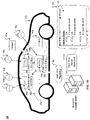
- the kernel 238 includes processes and functions that provide an interface for the operating system 226 to perform operations on the controller 202 using hardware, which includes one or more processors 204 (e.g., CPUs), memory 206 (e.g., volatile memory, non-volatile memory, RAM), and input/output (I/O) network components 222 (e.g., wired and wireless network cards/chip sets, network interface cards (NIC)).
- processors 204 e.g., CPUs
- memory 206 e.g., volatile memory, non-volatile memory, RAM
- I/O input/output
- network components 222 e.g., wired and wireless network cards/chip sets, network interface cards (NIC)
- the reporting agent 234 can automatically analyze attack attempts (blocked malware 240), including identifying the attacker's entry point (exploit in the operating system 226) and reporting that information to the vendor to be addressed and fix the vulnerability.
- the reporting agent 234 can further include an auditing agent 236 that is an internal component that collects activity traces, stores them in a queue 216 (e.g., compressed cyclic buffer) for transmission, and sends them, when needed, to the backend server system (management computer system 122, management computer system 164), which may reside on either a security provider's data center or at a vendor/manufacturer's data center.
- another controller may enter a safe mode in which operations are restricted to a subset of normal operations, until such time that any possible security breach can be resolved.
- the alerts 218 can include actual copies of the blocked malware 212 and/or blocked network packets 214. Such information can be used by the backend system to better understand the security threat that was blocked and the exploit in the operating system 226 that permitted the security threat to reach the controller 202. As another example, alerts 218 that may be provided to the other controllers 264a-n may exclude copies of the blocked malware 212 and/or blocked network packets 214, as such information may not be used by the other controllers 264a-n.
- the reporting agent 234 and the auditing agent 236 can additionally include features to compress the size of alerts and logs that are transmitted to the backend system.
- the reporting agent 234 and the auditing agent 236 can compress the information being transmitted using one or more data compression techniques, such as through using a dictionary to abbreviate particular common bits of information with less information. Other compression techniques can also be used.
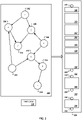
- FIG. 3 is an example diagram of an in-memory graph 300 of software stored in memory 320, which can be used to assess risk levels for implementing conditional IMV on the software.
- the in-memory graph 300 may be created as part of the security policy 106 generation for the controller software 102 by the computer system 104, and/or can be created/monitored during runtime for the controller software 102.
- the in-memory graph 300 may be used, for example, by the controller 202, with the memory 320 being, for example, a part of the memory 206.
- the in-memory graph 300 can be used, for example, to assess risk levels of various parts of the controller software 102, which can be used to determine and implement an appropriate IMV scheme to be applied to the part of the controller software 102 during runtime.
- the in-memory graph 300 can be created to reflect the order of operations that are possible with the software stored in the memory 320.
- the software can be stored in memory 320 and can include distinct portions 302-318 (e.g., functions).
- the in-memory graph 300 can be created to include nodes 302-318 that correspond to the portions 302-318.
- the edges of the flow control graph 300 can represent jumps from one portion to another, such as functions calling each other.
- control can flow from portion 302 to either portion 304 or 306 - meaning that code within portion 302 can call portions 304 and/or 306.
- Risk levels for each of the nodes 302-318 can be determined, in part, based on a variety of intrinsic factors within each of the code portions (e.g., operations that are performed by each of the corresponding code portions) and/or extrinsic factors for each of the code portions (e.g., relationships/connections with code portions).
- Risk levels assessed for the nodes 302-318 can indicate the risk of in-memory attack to the corresponding code portions 302-318 stored in memory 320. In this example, there are three levels of risk, with 0 indicating low risk or no risk, and a 2 indicating the highest level of risk. These risk levels are determined, for example, by the computer system 104 based on an analysis of the instructions within the software portions 302-318. In other examples, more or fewer levels of risk may be used, and they may be recorded using numbers or other indicia such as character strings.
- Various heuristics may be used to identify the risk of in-memory attacks for each of the code portions 302-318.
- One such heuristic can include the presence instructions that modify memory (e.g., writes operation), either directly in each code portion or by calling other code portions that modify memory.
- memory modifications operations in general can pose potential security risks that could potentially be exploited, and can be a potential indicator of risk.
- the type of memory modification that is being performed can be evaluated to determine whether the code portion including the memory modification poses is risky.
- code portion 302 may include code that modifies a portion of memory 320 using a value that is either calculated during runtime or input to the code portion 302 (e.g., user input, parameter passed from another function, input from another device or system).
- the code portion 302 can be determined to pose a high level of risk and the node 302 can be assigned highest risk value of 2.
- Code portion 316 may not modify memory itself, but it may indirectly call another code portion 310 that modifies memory 320 using dynamically-determined values. As such, the code portion 316 can be determined to present a medium level of risk and the corresponding node 310 can be assigned the medium risk value of 1.
- Code portion 318 does not modify memory or performs a memory modification operation using only statically-defined values, and does not call any functions that modify memory using dynamically-determined values. As such, it can be determined to have a low level of risk and can be assigned the lowest risk value of 0.
- a code portion 302-318 can be determined to have a low risk level based on memory allocation risk, and the determined risk level for the corresponding code portion can be unchanged by this determination. If a code portion 302-318 does allocate memory (e.g., perform a malloc() or other memory allocation operation), then the code portion can be determined to pose a high-level of risk based on memory allocation risk and the determined risk level can be enhanced (e.g., increment risk level) and/or automatically set to a high risk level (e.g., assign risk level of 2).
- code portion 302 may include code that allocates unallocated memory 322. As such, it can be determined to pose a high level of risk and the node 302 can be assigned highest risk value of 2.
- Code portion 316 may not allocate memory itself, but it may indirectly call another code portion 310 that allocates unallocated memory 324. As such, it is determined to present a medium level of risk and the corresponding node 310 can be assigned the medium risk value of 1.
- Code portion 318 does not allocate memory and does not call any functions that allocate memory. As such, it can be determined to have a low level of risk and can be assigned the lowest risk value of 0.
- watchpoints can be used to enhance the security of a controller.
- watchpoints can be break points set in the hardware of a computing system that interrupt the control of executing software when the control passes to a memory address where the watchpoint was set.
- watchpoints can be used with debuggers such that when processing flow reaches a watchpointed memory address, processing flow can stop and appropriate action can be taken, including continuing operation of the code.
- Watchpoints can also be set at the beginning and end of buffers to signal buffer overruns, such that if a watchpointed memory address is written to outside of the buffer, a security issue may be identified and a corrective action may be taken.
- watchpoints 326-336 can be set in the memory 320 before and after the contiguous group of code portions 302-318, and can be used to generate alerts in the event that processing flow extends outside of the code portions 302-318.
- the watchpoints that are available on a controller can be limited in number, depending on the hardware or other system/device limitations. For example, some hardware only permits four watchpoints. Watchpoints may be dynamically moved as software executes, though.
- the security agents 232 can be programmed to dynamically move watchpoints within the memory 320 as processing flow across the code portions 302-318 progresses.
- the security agents 232 can dynamically set and unset watchpoints based on, for example, risk levels associated with the code portions 302-318, such that watchpoints are assigned at or around code portions that are currently being executed and that are determined to have high risk levels. Other techniques and factors for allocating a limited number of watchpoints across the memory 320 are also possible.
- memory modification monitors can also be implemented in software, which can include software checks being be executed at defined time moments (e.g., when some syscalls are performed) to ensure memory overrun didn't happen.
- software watchpoint checks may, in some instances, be too late to prevent memory overruns and may be triggered after the memory modification has already caused bad code execution (instead of being triggered by the memory modification request itself, as with hardware watchpoints).
- software wachpoint checks may be performed to check structures that are considered as having less risk of attack while hardware watchpoints can be allocated to protect against the riskiest code portions at a given moment.
- the newly allocated memory region can be considered to currently be the greatest risk attack target and the hardware watchpoints can be allocated to protect this newly allocated memory.
- the software watchpoint checks can be applied for "older" previously allocated regions of memory.
- test code 338 can store computer-readable instructions for performing IMV testing.
- code portions with the same transitions may have their test codes combined in the test code 338.
- test code for node 306 can be used to ensure that the return address of code portion 310 is returned.
- code portion 304 likewise should transition only to the same code portion 304.
- the test code used to test code portion 306 may also be used to test for code portion 304, as both code portions 306 and 304 should only transition to code portion 310.
- test code for code portions may be generated based on a union of permitted transitions for combined code portions. For example, code portion 308 has a valid transition to code portion 312. Code portion 302 has valid transitions to code portions 304 and 306. As such, as single test code could check for transitions to code portions 304, 306, and 312. This single test code could be used to check both code portion 302 and code portions 308.
- short functions can be copied directly to validations stubs of the test code 338.
- the test code 338 can contain one or more validation stubs that intercept function calls, jumps, returns, etc., and these validation stubs may contain the instructions to test the intercepted action for IMV.
- the contents of short code portions 302-318 may instead be copied directly into the test stubs.
- the program flow thus jumps directly to the validation stub, instead of first jumping to the original code portions 302-318 and then to the test code 338. In this way, efficiency of the code may be advantageously advanced in a way that reduces computing resources necessary for solving potential security problems.
- label/tagging may be used in some, but not all, situations in which a function uses at table calls.
- the test code 338 can generally include a label for that table call.
- the register of the table can contain only one pointer in the corresponding code portion's 302-318 offset table, then no corresponding label is used in the test code 338.
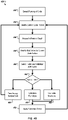
- FIGS. 4A-B are flowcharts of example processes 400 and 450 for implementing conditional in-memory validation on a software controller.
- the processes 400 and 450 can be run on any of a variety of systems, such as the systems 100, 150, 200, and 300, and/or controllers, such as the controller 114, the ECUs 156a-n, the controller 202, the controller using the memory 320, and/or other controllers and/or systems.
- the processes 400 and 450 are described below with reference to some of these systems, controllers, and components, but can be applied to any appropriate system, controller, and/or component.
- the example process 400 is depicted for generating a security policy for a controller that can be used to implement conditional IMV at runtime on a controller.
- the example process 400 can be performed, for example, as part of the security policy generation described above with regard to the policy generation computer system 104.
- the policy generation computer system 104 can determine initial/baseline security risks posed by various code portions, can identify conditions on the controller that may elevate and/or decrease those risk levels, and can store those risk levels and conditions as part of the security policy 108 that can be implemented at runtime by the controller 114.
- Static analysis of the controller code can be initiated (402), and from the static analysis an in-memory graph of the code portions in the controller software can be built (404).
- the computer system 104 can perform static analysis on the controller software 102 and, from the static analysis, can build an in-memory graph of the different functions (example code portions) that call each other, as depicted in FIG. 3 , for example.
- First code portions that modify memory can be identified (406).
- the computer system 104 can identify functions that make system calls to modify memory, such as write(), and/or other memory allocation operations, which may vary across different coding languages and on different operating systems.
- the first code portions may be limited to those portions that perform memory modification operations using values that will be dynamically determined during runtime (as opposed to being statically defined at compile time). Such determinations can be made by evaluating how one or more values (e.g., value to be written, memory address) used to modify memory are determined in the compiled code. If any of these values are determined during runtime as opposed to be being statically defined in the compiled code, they can be identified as a first code portion. Referring to the example above in FIG.
- the example code portions 302, 304, and 310 are identified as including memory modification operations.
- Nodes 302, 304, and 310 corresponding to the code portions 302, 304, and 310 can be tagged by the computer system 104 as being first code portions that include memory modification operations.
- Second code portions that call the first code portions can be identified (408).
- the computer system 104 can use the in-memory graph and the directional edges between the nodes to identify other nodes that call the first code portions. Referring to the example above in FIG. 3 , the computer system 104 can start at each of the nodes tagged as having memory modification operations (nodes 302, 304, and 310), and can walk through the graph backward along each of the directional edges that point to those nodes. Any other node that is included in this reverse walk through the in-memory graph can be identified as a second code portion. For example, starting with the node 302, there are no edges in the graph that point to it, so there is no reverse walking to perform for this node.
- edges that point to this node there are two edges that point to this node - the edge from the node 302 to the node 304 and the edge from the node 308 to the node 304. Since the node 302 is already identified as having a memory modification operation, the edge between the nodes 302 and 304 can be ignored. The node 308, however, can be identified as a second code portion since it does not include a memory modification operation. Edges pointing to the node 308 can then be analyzed to continue the reverse walk, but in this example the node 308 does not have any edges pointing to it, so the reverse walk emanating from the node 304 can stop.
- the reverse walk can then continue with the node 310, which has edges pointing to it from the node 304 (which can be ignored, as described previously) and from the node 306.
- the node 306 can be identified as a second code portion based on its edge pointing to the node 310, and then edges pointing to the node 306 can be analyzed as part of the revers walk. In the depicted example, an edge from node 302 (which can be ignored, as described previously) and an edge from node 316 point to the node 306, which can cause the node 316 to additionally be identified as a second code portion. Since no other nodes point to the node 316, the reverse walk can be concluded.
- risk-based heuristics for the code portions can be identified (410). For example, as described above, there can be other types of heuristics that may additionally and/or alternatively be taken into account when determining risk levels for code portions, such as the parameters that are passed into a function as part of a function call, the function's parameter checking and verification procedures (e.g., checking size constraints on functions), whether the functions call or use any network operations, function pointers, buffer allocations in-memory, any memory address that is being passed as a parameter, and/or other factors.
- the function's parameter checking and verification procedures e.g., checking size constraints on functions
- Risk levels for the code portions can be determined (412). For example, as described above with regard to FIG. 3 , the example first code portions (nodes 302, 304, and 310) can be determined to have a highest risk level. The second code portions (nodes 306, 308, 316) can be determined to have a medium risk level. Third code portions (nodes 312, 314, 318)-those that are not identified as either the first a second code portions-can be determined to have a low risk level. Other risk levels and ways for assessing risk levels can also be used.
- Conditions for risk level modifications for the code portions can be identified (414). For example, if a current security threat to the controller is identified (e.g., an attempt to load malware onto a controller is detected and blocked), then each of the determined risk levels for code portions can be elevated in response to that condition (current security threat). Elevated risk level can include, for example, elevating low-risk processes to medium-risk processes, medium-risk processes to high-risk processes, and high-risk processes to processes that additionally implement watchpoint controls (described above with regard to FIG. 3 ) as part of their implementation. In another example, if the controller is determined to not be able to currently meet performance thresholds and there is not a current security threat, then the determined risk levels for code portions can be reduced. Other conditions and modifications to risk levels for code portions are also possible, such as the ECU context as described above.
- Risk levels and conditions for modifying risk levels can be recorded as part of the security policy for the controller (416).
- the computer system 104 can store the in-memory graph, the determined risk levels, the conditions for risk level modifications, and/or other details (e.g. other heuristic information) as part of the security policy 108 that the controller 114 will use during runtime.
- the security policy 108 in some instances, can be "burned" into patched code that is delivered and installed on controllers, and may not be a separate policy file or data structure apart from the binary itself.
- the distributed code can have the security policy burned in so that binary includes the runtime IMV code.
- Each code portion then includes appropriate code to check and verify the code portion to prevent an in-memory attack.
- the in-memory graph (as a singular data file or structure) may not be provided in such instances, but may instead be used to generate and insert the code to check for in-memory verification at appropriate locations, which can collectively represent the in-memory graph.
- the process 450 is used to implement a custom security policy on a controller using conditional IMV, such as implementing the custom security policy determined using the process 400.
- the process 450 can be performed by the controller 114 during runtime using the security policy 108.
- Computer-readable code running on a controller is detected (452).
- computer-readable code in the application layer 224 may be executed, interpreted, or otherwise run by the controller 202.
- the security agents 232 as instructed by the security policy 230, may detect the running of the computer-readable code.
- messages between the application layer 224 and the kernel 238 may pass through the security agents 232, which may use listeners to detect those calls.
- the computer-readable code is stored in a memory in a plurality of blocks, each block including one or more instructions to be performed by the controller.
- the computer-readable code may be stored in the memory 320 in blocks 302-318.
- the blocks may include instructions that include, but are not limited to, modifying the memory 320, reading from the memory 320, passing control of the computer-readable code to a different memory address, and communicating with other computing devices.
- a current code portion (e.g., function) of the computer readable code that is running is identified (454).
- the security agents may monitor the address in memory 320 of the instruction that is being executed by the controller 202, and identify the code portions 302-318 to which that address belongs.
- An in-memory graph that models an operational flow of the computer-readable code is accessed (456).
- the security agents 232 may access the in-memory graph, as determined in the process 400, from its storage location in the memory 206 by reading one or more memory locations that contain the in-memory graph.
- the risk value for the current code portion is identified (458).
- the security agents 232 may look up the baseline/starting point risk value of the node in the in-memory graph (determined using the process 400) that corresponds to the code portion that is running on the controller 202. For example, if the code portion 310 is currently running on the controller 202, the security agents may look up the baseline risk value stored with node 310, which is a risk value of "2.”
- An IMV scheme is selected (460) from a plurality of IMV schemes based on the identified risk value.
- the security policy 230 may use memory 206 to store a mapping of risk values to IMV schemes to indicate which IMV scheme should be used.
- This mapping may be a simple one-to-one mapping, with a particular risk value being mapped to one and only one IMV scheme.
- the number of risk values may be the same as the number of IMV scheme (e.g., three risk values and three risk schemes).
- the mapping between risk values and IMV schemes may be more complex than a simple one-to-one mapping.
- the mapping may be conditional based on one or more variables.
- a medium risk value may be conditionally mapped to a low-intensity IMV scheme and a high-intensity IMV scheme.
- This mapping may incorporate variable that reflect the state of the environment in which controller (conditions on the controller) is operating, with a high-risk environment meaning the high-intensity IMV scheme should be used and a low-risk environment meaning a low-intensity IMV scheme should be used. For example, if risk levels can be elevated and/or reduced depending on the current condition of the controller, as described above with regard to step 414.
- the selected IMV scheme is applied (462, 464, 466, 468) to the code portion as the code portion is running on the controller.
- a corrective action is taken (470). For example, if it is decided (462) by the security agents 232 to select an IMV scheme that specifies that no IMV checking should be done, the security agents 232 can allow system calls to pass with no IMV checking for the current block.
- This type of IMV scheme may be selected, for example, when there are is little to no risk of an out-of-range attack.
- An example of a function that provides little to no risk of an out-of-range attack is a function that does not modify memory or call, either directly or indirectly, any other functions that modify memory.
- the IMV checking may be avoided to prevent degradation of performance of the controller 202. In this way, code which does not provide a substantial security risk be run without overhead for security functions that are not needed to improve the security of the controller 202.
- the security agents 232 can verify that memory locations referenced by instructions of the current block contain the computer-readable code. For example, the security agents 232 may intercept system calls to the kernel 238 that pass control of the controller 202 (or other calls). These system calls can include function returns, functions to start a new thread, or "GOTO" style function calls that move control to a particular memory address. The security agents 232 may examine the parameters of these functions to identify any memory address in the parameters and determine if those memory addresses are within a code portion 302-318 or not. In some cases, this may be restricted to an entry point of the code portion 302-318 (e.g.
- the security agents 232 can take (470) a corrective action. If the call is to an address within the permitted addresses, the security agents 232 can permit the call to pass.
- the security agents 232 can verify memory address referenced by instructions of the current code portion. For example, the security agents 232 may intercept system calls to the kernel 238 that pass control of the controller 202 (or other calls). These system calls can include function returns, functions to start a new thread, or "GOTO" style function calls that move control to a particular memory address. The security agents 232 may examine the parameters of these functions to identify any memory address in the parameters and determine if those memory addresses are on a predefined list of permitted addresses.
- the security agents 232 may access a stored, predefined list of permitted addresses in the memory 206. Code portions 302-318 (or, e.g., each instruction or other logical unit) may be shown in this list to be permitted to use a closed list of permitted memory addresses. These lists may be different for each code portion, or may be shared by more than one code portion.
- the security agents 232 can access this list to determine if the memory address in the function call is a permitted address for the block. If the address is permitted, the security agents 232 can permit the call to pass. If the address it not a permitted address, the security agents 232 can take (470) a corrective action.
- Corrective actions include actions taken by the security agent 232, or another element, to handle or mitigate the security risk of an unapproved action.
- Example corrective actions include, but are not limited to, halting the running of the computer-readable code, dropping a system call, modifying a system call (e.g., changing a memory address in a parameter), logging the system call (e.g., in the log 220), generating an alert (e.g., in the alerts 218), and engaging a user interface controlled by the controller 202 (e.g., illuminating an amber light).
- Different corrective actions may be used in different situations.
- the security policy 230 may identify some security risks that are so grave, the controller 202 should be shut down when encountered, while other security risks should be logged only.
- the security agents 232 may consider other input in selecting the IMV scheme. For example, the security agents 232 may access contextual information 250 and information received from external sources such as the management computer system 126 to determine the security environment of the controller 202. If the controller 202 is in a high-risk environment, a more-rigorous IMV scheme may be selected than would be selected otherwise. For example, instead of selecting a function validation scheme (see 466), the security agents 232 may select a memory validation scheme (see 468).
- IMV flow control integrity
- a less rigorous IMV scheme may be selected than would be selected otherwise.
- the security agents 232 may select a pass-through scheme (see 464).
- FIG. 5 is a flowchart of an example process 500 for dynamically setting watchpoints during controller operation.
- the process 500 can be performed by any of a variety of systems, such as the systems 100, 150, 200, and 300, and/or controllers, such as the controller 114, the ECUs 156a-n, the controller 202, the controller using the memory 320, and/or other controllers and/or systems.
- the process 500 can be performed, for example, as part of the process 450.
- the process 500 be implemented as part of and/or in addition to the conditional IMV steps described above, such as being performed in addition to the validate memory step (468) for particular code portions and/or under particular conditions on the controller. Additionally and/or alternatively, the process 500 can be performed separately from the process 450 on the controller.
- a current code portion that a controller is performing can be identified (502) and a determination can be made as to whether watchpoints should be dynamically set for the current code portion (504).
- the determination of whether to dynamically set watchpoints, as described above with regard to FIG. 3 can be made based on any of a variety of factors.
- watchpoints can be set for code portions that are determined to be high-risk.
- watchpoints can be set for code portions that are determined to be high-risk when the controller is operating under one or more current elevated conditions (e.g., currently under/recently blocked attack, notification from a central server system that attacks are currently being launched against a population of similar controllers).
- watchpoints can be set for all code portions when the controller is operating under such elevated conditions. Other factors can also be taken into account when determining whether to set watchpoints.
- the locations for the watchpoints with regard to the current code portion can be determined (506). Such locations can be selected from a set of candidate locations that are preidentified as part of the security policy, for example, such as a location in memory at the end of the code portion and/or one or more locations at the end of other code portions (other functions) that are called within the code portion.
- the number of locations for watchpoints that are set can be limited by the number of watchpoints that are available for allocation on the controller. As described above, the number of watchpoints may be limited to a certain number (e.g., 4 watchpoints in total).
- the watchpoints can be dynamically set during runtime at the determined locations in memory by the controller (508). For example, before proceeding with operation of the current code portion, the controller can dynamically set the watchpoints for current code portion. Once the watchpoints are set, the current code portion can be permitted to proceed on the controller (510). If one of the dynamically set watchpoints is triggered (512), then corrective action can be applied (514). The corrective action can be similar to the corrective action discussed above with regard to step 470. The process 500 can then repeat for some or all current code portions, such as part of process 450.
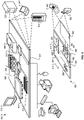
- FIG. 6 is a block diagram of example computing devices 600, 650 that may be used to implement the systems and methods described in this document, as either a client or as a server or plurality of servers.
- Computing device 600 is intended to represent various forms of digital computers, such as laptops, desktops, workstations, personal digital assistants, servers, blade servers, mainframes, and other appropriate computers.
- Computing device 600 is further intended to represent any other typically non-mobile devices, such as televisions or other electronic devices with one or more processers embedded therein or attached thereto.
- Computing device 650 is intended to represent various forms of mobile devices, such as personal digital assistants, cellular telephones, smartphones, and other computing devices.
- the components shown here, their connections and relationships, and their functions, are meant to be examples only, and are not meant to limit implementations of the inventions described and/or claimed in this document.
- Computing device 600 includes a processor 602, memory 604, a storage device 606, a high-speed controller 608 connecting to memory 604 and high-speed expansion ports 610, and a low-speed controller 612 connecting to low-speed bus 614 and storage device 606.
- Each of the components 602, 604, 606, 608, 610, and 612 are interconnected using various busses, and may be mounted on a common motherboard or in other manners as appropriate.
- the processor 602 can process instructions for execution within the computing device 600, including instructions stored in the memory 604 or on the storage device 606 to display graphical information for a GUI on an external input/output device, such as display 616 coupled to high-speed controller 608.
- multiple processors and/or multiple buses may be used, as appropriate, along with multiple memories and types of memory.
- multiple computing devices 600 may be connected, with each device providing portions of the necessary operations (e.g., as a server bank, a group of blade servers, or a multi-processor system).
- the memory 604 stores information within the computing device 600.
- the memory 604 is a computer-readable medium.
- the memory 604 is a volatile memory unit or units.
- the memory 604 is a non-volatile memory unit or units.
- the storage device 606 is capable of providing mass storage for the computing device 600.
- the storage device 606 is a computer-readable medium.
- the storage device 606 may be a floppy disk device, a hard disk device, an optical disk device, or a tape device, a flash memory or other similar solid state memory device, or an array of devices, including devices in a storage area network or other configurations.
- a computer program product is tangibly embodied in an information carrier.
- the computer program product contains instructions that, when executed, perform one or more methods, such as those described above.
- the information carrier is a computer- or machine-readable medium, such as the memory 604, the storage device 606, or memory on processor 602.
- the high-speed controller 608 manages bandwidth-intensive operations for the computing device 600, while the low-speed controller 612 manages lower bandwidth-intensive operations. Such allocation of duties is an example only.
- the high-speed controller 608 is coupled to memory 604, display 616 (e.g., through a graphics processor or accelerator), and to high-speed expansion ports 610, which may accept various expansion cards (not shown).
- low-speed controller 612 is coupled to storage device 606 and low-speed bus 614.
- the low-speed bus 614 (e.g., a low-speed expansion port), which may include various communication ports (e.g., USB, Bluetooth ® , Ethernet, wireless Ethernet), may be coupled to one or more input/output devices, such as a keyboard, a pointing device, a scanner, or a networking device such as a switch or router, e.g., through a network adapter.
- input/output devices such as a keyboard, a pointing device, a scanner, or a networking device such as a switch or router, e.g., through a network adapter.
- the computing device 600 may be implemented in a number of different forms, as shown in the figure. For example, it may be implemented as a standard server 620, or multiple times in a group of such servers. It may also be implemented as part of a rack server system 624. In addition, it may be implemented in a personal computer such as a laptop computer 622. Alternatively, components from computing device 600 may be combined with other components in a mobile device (not shown), such as computing device 650. Each of such devices may contain one or more of computing devices 600, 650, and an entire system may be made up of multiple computing devices 600, 650 communicating with each other.
- Computing device 650 includes a processor 652, memory 664, an input/output device such as a display 654, a communication interface 666, and a transceiver 668, among other components.
- the computing device 650 may also be provided with a storage device, such as a micro-drive or other device, to provide additional storage.
- a storage device such as a micro-drive or other device, to provide additional storage.
- Each of the components 650, 652, 664, 654, 666, and 668 are interconnected using various buses, and several of the components may be mounted on a common motherboard or in other manners as appropriate.
- the processor 652 can process instructions for execution within the computing device 650, including instructions stored in the memory 664.
- the processor may also include separate analog and digital processors.
- the processor may provide, for example, for coordination of the other components of the computing device 650, such as control of user interfaces, applications run by computing device 650, and wireless communication by computing device 650.
- Processor 652 may communicate with a user through control interface 658 and display interface 656 coupled to a display 654.
- the display 654 may be, for example, a TFT LCD display or an OLED display, or other appropriate display technology.
- the display interface 656 may comprise appropriate circuitry for driving the display 654 to present graphical and other information to a user.
- the control interface 658 may receive commands from a user and convert them for submission to the processor 652.
- an external interface 662 may be provided in communication with processor 652, so as to enable near area communication of computing device 650 with other devices.
- External interface 662 may provide, for example, for wired communication (e.g., via a docking procedure) or for wireless communication (e.g., via Bluetooth ® or other such technologies).
- the memory 664 stores information within the computing device 650.
- the memory 664 is a computer-readable medium.
- the memory 664 is a volatile memory unit or units.
- the memory 664 is a non-volatile memory unit or units.
- Expansion memory 674 may also be provided and connected to computing device 650 through expansion interface 672, which may include, for example, a subscriber identification module (SIM) card interface.
- SIM subscriber identification module
- expansion memory 674 may provide extra storage space for computing device 650, or may also store applications or other information for computing device 650.
- expansion memory 674 may include instructions to carry out or supplement the processes described above, and may include secure information also.
- expansion memory 674 may be provide as a security module for computing device 650, and may be programmed with instructions that permit secure use of computing device 650.
- secure applications may be provided via the SIM cards, along with additional information, such as placing identifying information on the SIM card in a non-hackable manner.
- the memory may include for example, flash memory and/or MRAM memory, as discussed below.
- a computer program product is tangibly embodied in an information carrier.
- the computer program product contains instructions that, when executed, perform one or more methods, such as those described above.
- the information carrier is a computer- or machine-readable medium, such as the memory 664, expansion memory 674, or memory on processor 652.
- Computing device 650 may communicate wirelessly through communication interface 666, which may include digital signal processing circuitry where necessary. Communication interface 666 may provide for communications under various modes or protocols, such as GSM voice calls, SMS, EMS, or MMS messaging, CDMA, TDMA, PDC, WCDMA, CDMA2000, or GPRS, among others. Such communication may occur, for example, through transceiver 668 (e.g., a radio-frequency transceiver). In addition, short-range communication may occur, such as using a Bluetooth ® , WiFi, or other such transceiver (not shown). In addition, GPS receiver module 670 may provide additional wireless data to computing device 650, which may be used as appropriate by applications running on computing device 650.
- transceiver 668 e.g., a radio-frequency transceiver
- short-range communication may occur, such as using a Bluetooth ® , WiFi, or other such transceiver (not shown).
- GPS receiver module 670 may provide additional wireless data to computing device 650, which
- Computing device 650 may also communicate audibly using audio codec 660, which may receive spoken information from a user and convert it to usable digital information. Audio codec 660 may likewise generate audible sound for a user, such as through a speaker, e.g., in a handset of computing device 650. Such sound may include sound from voice telephone calls, may include recorded sound (e.g., voice messages, music files, etc.) and may also include sound generated by applications operating on computing device 650.
- Audio codec 660 may receive spoken information from a user and convert it to usable digital information. Audio codec 660 may likewise generate audible sound for a user, such as through a speaker, e.g., in a handset of computing device 650. Such sound may include sound from voice telephone calls, may include recorded sound (e.g., voice messages, music files, etc.) and may also include sound generated by applications operating on computing device 650.
- the computing device 650 may be implemented in a number of different forms, as shown in the figure. For example, it may be implemented as a cellular telephone 680. It may also be implemented as part of a smartphone 682, personal digital assistant, or other mobile device.
- implementations of the systems and techniques described here can be realized in digital electronic circuitry, integrated circuitry, specially designed ASICs (application specific integrated circuits), computer hardware, firmware, software, and/or combinations thereof.
- ASICs application specific integrated circuits
- These various implementations can include implementation in one or more computer programs that are executable and/or interpretable on a programmable system including at least one programmable processor, which may be special or general purpose, coupled to receive data and instructions from, and to transmit data and instructions to, a storage system, at least one input device, and at least one output device.
- the systems and techniques described here can be implemented on a computer having a display device (e.g., a CRT (cathode ray tube) or LCD (liquid crystal display) monitor) for displaying information to the user and a keyboard and a pointing device (e.g., a mouse or a trackball) by which the user can provide input to the computer.
- a display device e.g., a CRT (cathode ray tube) or LCD (liquid crystal display) monitor
- a keyboard and a pointing device e.g., a mouse or a trackball
- Other kinds of devices can be used to provide for interaction with a user as well; for example, feedback provided to the user can be any form of sensory feedback (e.g., visual feedback, auditory feedback, or tactile feedback); and input from the user can be received in any form, including acoustic, speech, or tactile input.
- the systems and techniques described here can be implemented in a computing system that includes a back end component (e.g., as a data server), or that includes a middleware component (e.g., an application server), or that includes a front end component (e.g., a client computer having a graphical user interface or a Web browser through which a user can interact with an implementation of the systems and techniques described here), or any combination of such back end, middleware, or front end components.
- the components of the system can be interconnected by any form or medium of digital data communication (e.g., a communication network). Examples of communication networks include a local area network ("LAN”), a wide area network (“WAN”), and the Internet.
- LAN local area network
- WAN wide area network
- the Internet the global information network
- FIG. 7 is a flowchart of an example process 700 for selecting a form of validation.
- the process 500 can be run on any of a variety of systems, such as the systems 100, 150, 200, and 300, and/or controllers, such as the controller 114, the ECUs 156a-n, the controller 202, the controller using the memory 320, and/or other controllers and/or systems.
- the process 700 is described below with reference to some of these systems, controllers, and components, but can be applied to any appropriate system, controller, and/or component.
- Possible addresses are sorted for linear searching 706. For example, for code portion 302-318 having less than the low-threshold number of possible return values, the possible return values may be collected and sorted into a an ordered list of possible return addresses. This ordered list of possible return addresses may be stored, for example, in the test code 338. When an associated code portion 302-318 generates a return address, this generated return address can be searched for within the ordered list of return values.
Landscapes
- Engineering & Computer Science (AREA)
- Theoretical Computer Science (AREA)
- Computer Security & Cryptography (AREA)
- Software Systems (AREA)
- General Engineering & Computer Science (AREA)
- Physics & Mathematics (AREA)
- General Physics & Mathematics (AREA)
- Computer Hardware Design (AREA)
- Quality & Reliability (AREA)
- Computing Systems (AREA)
- Storage Device Security (AREA)
Claims (15)
- Verfahren zum Bereitstellen von Sicherheit auf Steuerungen, das Verfahren umfassend:Erkennen (452) von computerlesbarem Code, der auf einer Steuerung läuft, wobei der computerlesbare Code in einem Speicher in einer Vielzahl von Codeabschnitten gespeichert ist, wobei jeder Codeabschnitt eine oder mehrere Anweisungen umfasst, die von der Steuerung ausgeführt werden sollen;als Reaktion auf ein Erkennen des computerlesbaren Codes, der auf der Steuerung läuft, Identifizieren (454) eines aktuellen Codeabschnitts des computerlesbaren Codes, der läuft;dadurch gekennzeichnet, dass das Verfahren ferner Folgendes umfasst:Zugreifen (456) auf einen speicherinternen Graphen, der einen Betriebsablauf des computerlesbaren Codes modelliert, wobei der speicherinterne Graph eine Vielzahl von Knoten umfasst, wobei jeder der Knoten einem der Codeabschnitte entspricht und jeder der Knoten einen Risikowert für den assoziierten Codeabschnitt aufweist, der ein Maß eines Sicherheitsrisikos für den assoziierten Codeabschnitt ist;Identifizieren (458) des Risikowerts für den aktuellen Codeabschnitt;Auswählen (460), aus einer Vielzahl verfügbarer Schemata von Ablaufsteuerungsintegrität (IMV) basierend auf dem identifizierten Risikowert;Anwenden (462) des ausgewählten IMV-Schemas auf den Codeabschnitt, während der Codeabschnitt auf der Steuerung läuft; undals Reaktion auf ein Bestimmen, dass der computerlesbare Code, der auf der Steuerung läuft, das ausgewählte IMV-Schema nicht erfüllt, Ergreifen (470) einer Korrekturmaßnahme.
- Verfahren nach Anspruch 1, das Verfahren ferner umfassend:Analysieren des computerlesbaren Codes, um den Betriebsablauf des computerlesbaren Codes zu bestimmen;Erzeugen des speicherinternen Graphen aus der Analyse des computerlesbaren Codes; undBereitstellen des speicherinternen Graphen an die Steuerung für einen späteren Zugriff;wobei ein Erzeugen des speicherinternen Graphen aus der Analyse des computerlesbaren Codes ferner ein Erzeugen der Risikowerte aus der Analyse des computerlesbaren Codes umfasst, um den Betriebsablauf des computerlesbaren Codes zu bestimmen.
- Verfahren nach Anspruch 1, wobei die Vielzahl der verfügbaren IMV-Schemata aus drei Schemata besteht und die Risikowerte aus drei Risikowerten bestehen.
- Verfahren nach Anspruch 1, wobei das ausgewählte IMV-Schema spezifiziert, dass keine IMV-Prüfung erfolgen soll, und wobei ein Anwenden des IMV-Schemas ein Ausführen keiner IMV-Prüfung über die Anweisungen des aktuellen Codeabschnitts umfasst.
- Verfahren nach Anspruch 1, wobei das ausgewählte IMV-Schema spezifiziert, dass eine Funktionsvalidierung erfolgen sollte, und wobei ein Anwenden des IMV-Schemas ein Verifizieren umfasst, dass Speicherplätze, auf die von Anweisungen des aktuellen Codeabschnitts verwiesen wird, den computerlesbaren Code enthalten;
optional wobei ein Verfizieren, dass Speicherplätze, auf die von Anweisungen des aktuellen Codeabschnitts verwiesen wird, den computerlesbaren Code enthalten, Folgendes umfasst:
Bestimmen, dass ein Speicherplatz, auf den von einer Anweisung eines aktuellen Codeabschnitts verwiesen wird, konfiguriert ist, um ein Steuern des computerlesbaren Codes zu bewirken, um sich zu einer Speicheradresse zu bewegen, die keinen Abschnitt des computerlesbaren Codes enthält. - Verfahren nach Anspruch 1, wobei das ausgewählte IMV-Schema spezifiziert, dass Speicheradressen verifiziert werden sollten, und wobei ein Anwenden des IMV-Schemas ein Verifizieren von Speicheradressen umfasst, auf die von Anweisungen des aktuellen Codeabschnitts verwiesen wird;
optional wobei ein Verifizieren der Speicheradresse von Anweisungen des aktuellen Codeabschnitts Folgendes umfasst:Zugreifen auf eine vordefinierte Liste genehmigter Ziele für die Anweisungen des aktuellen Codeabschnitts; undBestimmen, dass eine Speicheradresse, auf die von einer Anweisung eines aktuellen Codeabschnitts verwiesen wird, konfiguriert ist, um ein Steuern des computerlesbaren Codes zu bewirken, um sich zu einer Speicheradresse zu bewegen, die nicht in der vordefinierten Liste beinhaltet ist. - Verfahren nach Anspruch 1, wobei ein Anwenden des ausgewählten IMV-Schemas auf den Codeabschnitt, während er auf der Steuerung läuft, ein Analysieren von Rückrufen in den Anweisungen des aktuellen Codeabschnitts umfasst.
- Verfahren nach Anspruch 1, das Verfahren ferner umfassend:Setzen von Überwachungspunkten in dem Speicher auf nicht zugewiesene Adressen;Erkennen eines Steuerns des laufenden computerlesbaren Codes an einem der Überwachungspunkte; undals Reaktion auf ein Erkennen eines Steuerns des laufenden computerlesbaren Codes an einem der Überwachungspunkte, Anwenden einer Korrekturmaßnahme.
- Verfahren zum Bereitstellen von Sicherheit auf Steuerungen, das Verfahren umfassend:Auslösen (402) einer statischen Analyse von computerlesbarem Code, der programmiert ist, um von einer Steuerung ausgeführt zu werden, um den Betrieb der Steuerung zu steuern;Aufbauen (404) eines speicherinternen Graphen durch ein Computersystem, der Knoten beinhaltet, die verschiedene Codeabschnitte innerhalb des computerlesbaren Codes darstellen, und Ränder, die Aufrufe zwischen den verschiedenen Codeabschnitten darstellen;Identifizieren (406), durch das Computersystem, von ersten Codeabschnitten unter den verschiedenen Codeabschnitten, basierend auf den ersten Codeabschnitten, die jeweils mindestens einen Speichermodifikationsvorgang ausführen;Identifizieren (408), durch das Computersystem unter Verwendung des speicherinternen Graphen, von zweiten Codeabschnitten unter den verschiedenen Codeabschnitten, basierend auf jedem der zweiten Codeabschnitte, die entweder direkt oder indirekt einen oder mehrere der ersten Codeabschnitte aufrufen;Identifizieren (410), durch das Computersystem, unter Verwendung des speicherinternen Graphen, von dritten Codeabschnitten aus den verschiedenen Codeabschnitten, die weder in dem ersten noch in dem zweiten Codeabschnitt enthalten sind;dadurch gekennzeichnet, dass das Verfahren ferner Folgendes umfasst:
Bestimmen (412), durch das Computersystem, von Risikostufen für jeden der verschiedenen Codeabschnitte, basierend auf ihrer entsprechenden Bezeichnung als entweder erster, zweiter oder dritter Codeabschnitt, wobei:die ersten Codeabschnitte als mit einem hohen Risikoniveau eingestuft werden,die zweiten Codeabschnitte als mit einem mittleren Risikoniveau eingestuft werden, unddie dritten Codeabschnitte als mit einem niedrigen Risikoniveau eingestuft werden; undAufzeichnen (416) der Risikoniveaubestimmungen für jeden der Codeabschnitte in einer Sicherheitsrichtlinie für die Steuerung, wobei die Sicherheitsrichtlinie verwendet wird, um bedingte IMV durch die Steuerung für jeden der Codeabschnitte zu implementieren, wobei die Sicherheitsrichtlinie konfiguriert ist, um die Steuerung, wenn sie zur Laufzeit durch die Steuerung implementiert wird, zu Folgendem zu veranlassen: Ausführen eines Voll-IMV-Schemas für die ersten Codeabschnitte, Ausführen eines Teil-IMV-Schema für die zweiten Codeabschnitte, und Ausführen eines Nicht-IMV-Schemas für die dritten Codeabschnitte. - Verfahren nach Anspruch 9, wobei:ein Ausführen des Voll-IMV-Schemas ein Verifizieren von Speicherplätzen für Aufrufe an andere Codeabschnitte und eine oder mehrere Adressen, an die der aktuelle Codeabschnitt einen Verarbeitungsablauf zurückgibt, umfasst;ein Ausführen des Teil-IMV-Schemas ein Verifizieren umfasst, dass Aufrufe zu anderen Codeabschnitten Funktionsaufrufe sind; undein Ausführen des Nicht-IMV-Schemas ein Nichtausführen von IMV-Prüfungen für den aktuellen Codeabschnitt umfasst.
- Verfahren nach Anspruch 9, wobei die unterschiedlichen Codeabschnitte Funktionen in dem computerlesbaren Code umfassen, oder wobei die ersten Codeabschnitte basierend auf jedem der ersten Codeabschnitte identifiziert werden, die jeweils mindestens einen Speichermodifikationsvorgang ausführen, der einen oder mehrere Werte verwendet, die zur Laufzeit dynamisch bestimmt werden.
- Verfahren nach Anspruch 9, das Verfahren ferner Folgendes umfassend:Markieren, durch das Computersystem, von ersten Knoten in dem speicherinternen Graphen, die den ersten Codeabschnitten entsprechen, als die ersten Codeabschnitte; undwobei ein Identifizieren der zweiten Codeabschnitte ein Ausführen eines umgekehrten Gangs durch den speicherinternen Graphen umfasst, der von jedem der ersten Knoten ausgeht und sich rückwärts entlang von Richtungsrändern bewegt, die einen Codeabschnitt angeben, der einen anderen Codeabschnitt aufruft, wobei jeder Knoten, der bei dem umgekehrten Gang durchlaufen wird, als ein zweiter Knoten identifiziert wird, der einem der zweiten Codeabschnitte entspricht.
- Verfahren nach Anspruch 12, das Verfahren ferner Folgendes umfassend:Markieren, durch das Computersystem, der zweiten Knoten als die zweiten Codeabschnitte; undwobei ein Identifizieren der dritten Codeabschnitte ein Identifizieren von dritten Knoten in dem speicherinternen Graphen umfasst, die noch nicht als erste Knoten oder zweite Knoten markiert sind, wobei die dritten Knoten den dritten Codeabschnitten entsprechen.
- Computerlesbares Medium, das Anweisungen enthält, die, wenn sie von einem Prozessor ausgeführt werden, den Prozessor veranlassen, das Verfahren nach einem der Ansprüche 1 bis 13 auszuführen.
- Computersystem, umfassend:einen Prozessor; undSpeicher, der Anweisungen speichert, die, wenn sie von den Prozessoren ausgeführt werden, das Computersystem veranlassen, das Verfahren nach einem der Ansprüche 1 bis 13 auszuführen.
Applications Claiming Priority (2)
| Application Number | Priority Date | Filing Date | Title |
|---|---|---|---|
| US15/614,187 US10878103B2 (en) | 2017-06-05 | 2017-06-05 | In-memory protection for controller security |
| PCT/IB2018/053994 WO2018224948A2 (en) | 2017-06-05 | 2018-06-04 | In-memory protection for controller security |
Publications (2)
| Publication Number | Publication Date |
|---|---|
| EP3635562A2 EP3635562A2 (de) | 2020-04-15 |
| EP3635562B1 true EP3635562B1 (de) | 2022-05-11 |
Family
ID=62778958
Family Applications (1)
| Application Number | Title | Priority Date | Filing Date |
|---|---|---|---|
| EP18734959.2A Not-in-force EP3635562B1 (de) | 2017-06-05 | 2018-06-04 | Speicherinterner schutz für steuerungssicherheit |
Country Status (3)
| Country | Link |
|---|---|
| US (1) | US10878103B2 (de) |
| EP (1) | EP3635562B1 (de) |
| WO (1) | WO2018224948A2 (de) |
Families Citing this family (40)
| Publication number | Priority date | Publication date | Assignee | Title |
|---|---|---|---|---|
| US9774604B2 (en) | 2015-01-16 | 2017-09-26 | Zingbox, Ltd. | Private cloud control |
| US10212178B2 (en) | 2015-04-07 | 2019-02-19 | Zingbox, Ltd. | Packet analysis based IoT management |
| US10380348B2 (en) | 2016-11-21 | 2019-08-13 | ZingBox, Inc. | IoT device risk assessment |
| US10204219B2 (en) * | 2017-06-05 | 2019-02-12 | Karamba Security | In-memory protection for controller security |
| DE112018003038T5 (de) * | 2017-06-14 | 2020-08-06 | Sumitomo Electric Industries, Ltd. | Vorrichtung für fahrzeuginterne Kommunikation, Kommunikationssteuerverfahren und Kommunikationssteuerungsprogramm |
| US10462161B2 (en) * | 2017-06-21 | 2019-10-29 | GM Global Technology Operations LLC | Vehicle network operating protocol and method |
| US10909239B2 (en) * | 2017-06-29 | 2021-02-02 | Webroot, Inc. | Advanced file modification heuristics |
| WO2019030763A1 (en) * | 2017-08-10 | 2019-02-14 | Argus Cyber Security Ltd. | SYSTEM AND METHOD FOR DETECTING THE OPERATION OF A COMPONENT CONNECTED TO AN ONBOARD NETWORK |
| US11070568B2 (en) | 2017-09-27 | 2021-07-20 | Palo Alto Networks, Inc. | IoT device management visualization |
| US11082296B2 (en) | 2017-10-27 | 2021-08-03 | Palo Alto Networks, Inc. | IoT device grouping and labeling |
| US10990682B2 (en) * | 2017-12-18 | 2021-04-27 | Nuvoton Technology Corporation | System and method for coping with fault injection attacks |
| US12182260B2 (en) * | 2017-12-18 | 2024-12-31 | Nuvoton Technology Corporation | System and method for detecting fault injection attacks |
| JP6928265B2 (ja) * | 2018-04-04 | 2021-09-01 | 日本電信電話株式会社 | 情報処理装置及び情報処理方法 |
| WO2019246169A1 (en) | 2018-06-18 | 2019-12-26 | ZingBox, Inc. | Pattern match-based detection in iot security |
| WO2020018151A1 (en) * | 2018-07-19 | 2020-01-23 | Electronic Controls Company | Control of vehicle-carried warning system through controller area network (can) communications of global variables processed as operands of behavioral equations |
| EP3847571A4 (de) | 2018-09-04 | 2022-06-01 | Palo Alto Networks, Inc. | Lernen einer iot-anwendung |
| CN113424157B (zh) | 2018-10-15 | 2025-01-10 | 帕洛阿尔托网络公司 | IoT设备行为的多维周期性检测 |
| EP4333374A3 (de) | 2018-10-17 | 2024-03-27 | Panasonic Intellectual Property Corporation of America | Bedrohungsanalysevorrichtung, bedrohungsanalyseverfahren und programm |
| US11451571B2 (en) * | 2018-12-12 | 2022-09-20 | Palo Alto Networks, Inc. | IoT device risk assessment and scoring |
| US11042634B2 (en) * | 2018-12-21 | 2021-06-22 | Fujitsu Limited | Determining information leakage of computer-readable programs |
| US11689573B2 (en) | 2018-12-31 | 2023-06-27 | Palo Alto Networks, Inc. | Multi-layered policy management |
| US11847207B2 (en) * | 2019-03-04 | 2023-12-19 | Microsoft Technology Licensing, Llc | Security-adaptive code execution |
| US11132447B1 (en) * | 2019-03-28 | 2021-09-28 | NortonLifeLock Inc. | Determining security vulnerabilities of Internet of Things devices |
| US12302451B2 (en) | 2020-06-01 | 2025-05-13 | Palo Alto Networks, Inc. | IoT security policy on a firewall |
| US11115799B1 (en) | 2020-06-01 | 2021-09-07 | Palo Alto Networks, Inc. | IoT device discovery and identification |
| US12153682B2 (en) * | 2021-02-26 | 2024-11-26 | 418 Intelligence Corp. | Cyber threat scoring, cyber security training and proactive defense by machine and human agents incentivized with digital assets |
| TWI812042B (zh) * | 2021-03-30 | 2023-08-11 | 新唐科技股份有限公司 | 安全系統 |
| US20220365838A1 (en) * | 2021-05-12 | 2022-11-17 | Nxp Usa, Inc. | System and method for improved control flow monitoring of processors |
| US12579251B2 (en) | 2021-11-24 | 2026-03-17 | Wiz, Inc. | System and method for detecting excessive permissions in identity and access management |
| US12505200B2 (en) | 2022-05-23 | 2025-12-23 | Wiz, Inc. | Techniques for improved virtual instance inspection utilizing disk cloning |
| US20230161614A1 (en) | 2021-11-24 | 2023-05-25 | Wiz, Inc. | Detecting vulnerabilities in configuration code of a cloud environment utilizing infrastructure as code |
| US11552975B1 (en) | 2021-10-26 | 2023-01-10 | Palo Alto Networks, Inc. | IoT device identification with packet flow behavior machine learning model |
| US12489781B2 (en) | 2021-11-24 | 2025-12-02 | Wiz, Inc. | Techniques for lateral movement detection in a cloud computing environment |
| US12301600B2 (en) | 2022-01-18 | 2025-05-13 | Palo Alto Networks, Inc. | IoT device identification by machine learning with time series behavioral and statistical features |
| US11841945B1 (en) | 2022-01-31 | 2023-12-12 | Wiz, Inc. | System and method for cybersecurity threat detection utilizing static and runtime data |
| US12531881B2 (en) | 2022-01-31 | 2026-01-20 | Wiz, Inc. | Detection of cybersecurity threats utilizing established baselines |
| US12395488B2 (en) | 2022-04-13 | 2025-08-19 | Wiz, Inc. | Techniques for analyzing external exposure in cloud environments |
| US12443720B2 (en) | 2022-08-10 | 2025-10-14 | Wiz, Inc. | Techniques for detecting applications paths utilizing exposure analysis |
| US12506755B2 (en) | 2022-05-23 | 2025-12-23 | Wiz, Inc. | Technology discovery techniques in cloud computing environments utilizing disk cloning |
| US12061719B2 (en) | 2022-09-28 | 2024-08-13 | Wiz, Inc. | System and method for agentless detection of sensitive data in computing environments |
Family Cites Families (30)
| Publication number | Priority date | Publication date | Assignee | Title |
|---|---|---|---|---|
| US8090816B1 (en) | 2002-02-07 | 2012-01-03 | Mcafee, Inc. | System and method for real-time triggered event upload |
| US20050044538A1 (en) | 2003-08-18 | 2005-02-24 | Srinivas Mantripragada | Interprocedural computing code optimization method and system |
| US7617489B2 (en) * | 2006-09-15 | 2009-11-10 | Ounce Labs, Inc. | Method and system for detecting interprocedural vulnerability by analysis of source code |
| US8627287B2 (en) * | 2007-11-29 | 2014-01-07 | Microsoft Corporation | Prioritizing quality improvements to source code |
| US8621553B2 (en) | 2009-03-31 | 2013-12-31 | Microsoft Corporation | Model based security for cloud services |
| US8590045B2 (en) | 2009-10-07 | 2013-11-19 | F-Secure Oyj | Malware detection by application monitoring |
| US8555385B1 (en) | 2011-03-14 | 2013-10-08 | Symantec Corporation | Techniques for behavior based malware analysis |
| US9027075B2 (en) | 2011-09-29 | 2015-05-05 | Oracle International Corporation | Enforcing security rules at runtime |
| US20130097660A1 (en) | 2011-10-17 | 2013-04-18 | Mcafee, Inc. | System and method for whitelisting applications in a mobile network environment |
| US8646089B2 (en) | 2011-10-18 | 2014-02-04 | Mcafee, Inc. | System and method for transitioning to a whitelist mode during a malware attack in a network environment |
| US9223978B2 (en) | 2011-10-28 | 2015-12-29 | Confer Technologies, Inc. | Security policy deployment and enforcement system for the detection and control of polymorphic and targeted malware |
| US9740868B2 (en) | 2012-09-27 | 2017-08-22 | International Business Machines Corporation | Customizing a security report using static analysis |
| US9047131B2 (en) | 2012-11-15 | 2015-06-02 | Red Hat Israel, Ltd. | Hardware resource allocation and provisioning for composite applications |
| US9230112B1 (en) | 2013-02-23 | 2016-01-05 | Xilinx, Inc. | Secured booting of a field programmable system-on-chip including authentication of a first stage boot loader to mitigate against differential power analysis |
| US9282110B2 (en) | 2013-11-27 | 2016-03-08 | Cisco Technology, Inc. | Cloud-assisted threat defense for connected vehicles |
| US10369942B2 (en) | 2014-01-06 | 2019-08-06 | Argus Cyber Security Ltd. | Hosted watchman |
| US20150309913A1 (en) * | 2014-04-24 | 2015-10-29 | International Business Machines Corporation | Identifying potentially uninitialized source code variables |
| US9361102B2 (en) * | 2014-06-09 | 2016-06-07 | Lehigh University | Methods for enforcing control flow of a computer program |
| US9824214B2 (en) * | 2014-08-15 | 2017-11-21 | Securisea, Inc. | High performance software vulnerabilities detection system and methods |
| EP3197730B1 (de) | 2014-09-25 | 2020-02-19 | Tower-Sec Ltd. | Fahrzeugkorrelationssystem zur detektion von cyberangriffen und verfahren dafür |
| US9854442B2 (en) | 2014-11-17 | 2017-12-26 | GM Global Technology Operations LLC | Electronic control unit network security |
| US9754112B1 (en) * | 2014-11-24 | 2017-09-05 | Bluerisc, Inc. | Detection and healing of vulnerabilities in computer code |
| US10135856B2 (en) * | 2014-12-18 | 2018-11-20 | International Business Machines Corporation | Auto-tuning program analysis tools using machine learning |
| US20160253497A1 (en) * | 2015-02-26 | 2016-09-01 | Qualcomm Incorporated | Return Oriented Programming Attack Detection Via Memory Monitoring |
| US9699205B2 (en) | 2015-08-31 | 2017-07-04 | Splunk Inc. | Network security system |
| US11397801B2 (en) | 2015-09-25 | 2022-07-26 | Argus Cyber Security Ltd. | System and method for controlling access to an in-vehicle communication network |
| US9785800B2 (en) * | 2015-12-23 | 2017-10-10 | Intel Corporation | Non-tracked control transfers within control transfer enforcement |
| US9530016B1 (en) * | 2016-01-29 | 2016-12-27 | International Business Machines Corporation | Using source taint analysis to reduce false positives in an advanced persistent threat (APT) protection solution |
| US10664601B2 (en) * | 2016-10-25 | 2020-05-26 | Nanjing University | Method and system automatic buffer overflow warning inspection and bug repair |
| US10382466B2 (en) | 2017-03-03 | 2019-08-13 | Hitachi, Ltd. | Cooperative cloud-edge vehicle anomaly detection |
-
2017
- 2017-06-05 US US15/614,187 patent/US10878103B2/en active Active
-
2018
- 2018-06-04 WO PCT/IB2018/053994 patent/WO2018224948A2/en not_active Ceased
- 2018-06-04 EP EP18734959.2A patent/EP3635562B1/de not_active Not-in-force
Also Published As
| Publication number | Publication date |
|---|---|
| US10878103B2 (en) | 2020-12-29 |
| WO2018224948A2 (en) | 2018-12-13 |
| US20180349612A1 (en) | 2018-12-06 |
| WO2018224948A3 (en) | 2019-02-07 |
| EP3635562A2 (de) | 2020-04-15 |
Similar Documents
| Publication | Publication Date | Title |
|---|---|---|
| US11995177B2 (en) | In-memory protection for controller security | |
| US10878103B2 (en) | In-memory protection for controller security | |
| US11063974B2 (en) | Application phenotyping | |
| US11012451B2 (en) | Centralized controller management and anomaly detection | |
| RU2531861C1 (ru) | Система и способ оценки вредоносности кода, исполняемого в адресном пространстве доверенного процесса | |
| US9021584B2 (en) | System and method for assessing danger of software using prioritized rules | |
| US9081967B2 (en) | System and method for protecting computers from software vulnerabilities | |
| EP2745229B1 (de) | System und verfahren für indirekte schnittstellenüberwachung und bleiauskleidung | |
| US8590041B2 (en) | Application sandboxing using a dynamic optimization framework | |
| KR101946982B1 (ko) | 가상 머신에서 멀웨어 탐지를 위한 프로세스 평가 | |
| US9262246B2 (en) | System and method for securing memory and storage of an electronic device with a below-operating system security agent | |
| US11544383B2 (en) | Method for runtime mitigation of software and firmware code weaknesses | |
| US10565379B2 (en) | System, apparatus and method for instruction level behavioral analysis without binary instrumentation | |
| US10885184B1 (en) | Rearranging executables in memory to prevent rop attacks | |
| US20190317676A1 (en) | Executable memory protection | |
| CN110633568B (zh) | 用于主机的监控系统及其方法 | |
| US8863159B2 (en) | System, method and computer program product for inserting an emulation layer in association with a COM server DLL | |
| EP2835757B1 (de) | System und Verfahren zum Schutz von Rechnern vor Softwareschwachstellen | |
| Griffin | Assessment of run-time malware detection through critical function hooking and process introspection against real-world attacks |
Legal Events
| Date | Code | Title | Description |
|---|---|---|---|
| STAA | Information on the status of an ep patent application or granted ep patent |
Free format text: STATUS: UNKNOWN |
|
| STAA | Information on the status of an ep patent application or granted ep patent |
Free format text: STATUS: THE INTERNATIONAL PUBLICATION HAS BEEN MADE |
|
| PUAI | Public reference made under article 153(3) epc to a published international application that has entered the european phase |
Free format text: ORIGINAL CODE: 0009012 |
|
| STAA | Information on the status of an ep patent application or granted ep patent |
Free format text: STATUS: REQUEST FOR EXAMINATION WAS MADE |
|
| 17P | Request for examination filed |
Effective date: 20200106 |
|
| AK | Designated contracting states |
Kind code of ref document: A2 Designated state(s): AL AT BE BG CH CY CZ DE DK EE ES FI FR GB GR HR HU IE IS IT LI LT LU LV MC MK MT NL NO PL PT RO RS SE SI SK SM TR |
|
| AX | Request for extension of the european patent |
Extension state: BA ME |
|
| DAV | Request for validation of the european patent (deleted) | ||
| DAX | Request for extension of the european patent (deleted) | ||
| GRAP | Despatch of communication of intention to grant a patent |
Free format text: ORIGINAL CODE: EPIDOSNIGR1 |
|
| STAA | Information on the status of an ep patent application or granted ep patent |
Free format text: STATUS: GRANT OF PATENT IS INTENDED |
|
| INTG | Intention to grant announced |
Effective date: 20211202 |
|
| GRAS | Grant fee paid |
Free format text: ORIGINAL CODE: EPIDOSNIGR3 |
|
| GRAA | (expected) grant |
Free format text: ORIGINAL CODE: 0009210 |
|
| STAA | Information on the status of an ep patent application or granted ep patent |
Free format text: STATUS: THE PATENT HAS BEEN GRANTED |
|
| AK | Designated contracting states |
Kind code of ref document: B1 Designated state(s): AL AT BE BG CH CY CZ DE DK EE ES FI FR GB GR HR HU IE IS IT LI LT LU LV MC MK MT NL NO PL PT RO RS SE SI SK SM TR |
|
| REG | Reference to a national code |
Ref country code: GB Ref legal event code: FG4D |
|
| REG | Reference to a national code |
Ref country code: CH Ref legal event code: EP |
|
| REG | Reference to a national code |
Ref country code: AT Ref legal event code: REF Ref document number: 1492038 Country of ref document: AT Kind code of ref document: T Effective date: 20220515 |
|
| REG | Reference to a national code |
Ref country code: DE Ref legal event code: R096 Ref document number: 602018035424 Country of ref document: DE |
|
| REG | Reference to a national code |
Ref country code: IE Ref legal event code: FG4D |
|
| REG | Reference to a national code |
Ref country code: LT Ref legal event code: MG9D |
|
| REG | Reference to a national code |
Ref country code: NL Ref legal event code: MP Effective date: 20220511 |
|
| REG | Reference to a national code |
Ref country code: AT Ref legal event code: MK05 Ref document number: 1492038 Country of ref document: AT Kind code of ref document: T Effective date: 20220511 |
|
| PG25 | Lapsed in a contracting state [announced via postgrant information from national office to epo] |
Ref country code: SE Free format text: LAPSE BECAUSE OF FAILURE TO SUBMIT A TRANSLATION OF THE DESCRIPTION OR TO PAY THE FEE WITHIN THE PRESCRIBED TIME-LIMIT Effective date: 20220511 Ref country code: PT Free format text: LAPSE BECAUSE OF FAILURE TO SUBMIT A TRANSLATION OF THE DESCRIPTION OR TO PAY THE FEE WITHIN THE PRESCRIBED TIME-LIMIT Effective date: 20220912 Ref country code: NO Free format text: LAPSE BECAUSE OF FAILURE TO SUBMIT A TRANSLATION OF THE DESCRIPTION OR TO PAY THE FEE WITHIN THE PRESCRIBED TIME-LIMIT Effective date: 20220811 Ref country code: NL Free format text: LAPSE BECAUSE OF FAILURE TO SUBMIT A TRANSLATION OF THE DESCRIPTION OR TO PAY THE FEE WITHIN THE PRESCRIBED TIME-LIMIT Effective date: 20220511 Ref country code: LT Free format text: LAPSE BECAUSE OF FAILURE TO SUBMIT A TRANSLATION OF THE DESCRIPTION OR TO PAY THE FEE WITHIN THE PRESCRIBED TIME-LIMIT Effective date: 20220511 Ref country code: HR Free format text: LAPSE BECAUSE OF FAILURE TO SUBMIT A TRANSLATION OF THE DESCRIPTION OR TO PAY THE FEE WITHIN THE PRESCRIBED TIME-LIMIT Effective date: 20220511 Ref country code: GR Free format text: LAPSE BECAUSE OF FAILURE TO SUBMIT A TRANSLATION OF THE DESCRIPTION OR TO PAY THE FEE WITHIN THE PRESCRIBED TIME-LIMIT Effective date: 20220812 Ref country code: FI Free format text: LAPSE BECAUSE OF FAILURE TO SUBMIT A TRANSLATION OF THE DESCRIPTION OR TO PAY THE FEE WITHIN THE PRESCRIBED TIME-LIMIT Effective date: 20220511 Ref country code: ES Free format text: LAPSE BECAUSE OF FAILURE TO SUBMIT A TRANSLATION OF THE DESCRIPTION OR TO PAY THE FEE WITHIN THE PRESCRIBED TIME-LIMIT Effective date: 20220511 Ref country code: BG Free format text: LAPSE BECAUSE OF FAILURE TO SUBMIT A TRANSLATION OF THE DESCRIPTION OR TO PAY THE FEE WITHIN THE PRESCRIBED TIME-LIMIT Effective date: 20220811 Ref country code: AT Free format text: LAPSE BECAUSE OF FAILURE TO SUBMIT A TRANSLATION OF THE DESCRIPTION OR TO PAY THE FEE WITHIN THE PRESCRIBED TIME-LIMIT Effective date: 20220511 |
|
| PG25 | Lapsed in a contracting state [announced via postgrant information from national office to epo] |
Ref country code: RS Free format text: LAPSE BECAUSE OF FAILURE TO SUBMIT A TRANSLATION OF THE DESCRIPTION OR TO PAY THE FEE WITHIN THE PRESCRIBED TIME-LIMIT Effective date: 20220511 Ref country code: PL Free format text: LAPSE BECAUSE OF FAILURE TO SUBMIT A TRANSLATION OF THE DESCRIPTION OR TO PAY THE FEE WITHIN THE PRESCRIBED TIME-LIMIT Effective date: 20220511 Ref country code: LV Free format text: LAPSE BECAUSE OF FAILURE TO SUBMIT A TRANSLATION OF THE DESCRIPTION OR TO PAY THE FEE WITHIN THE PRESCRIBED TIME-LIMIT Effective date: 20220511 Ref country code: IS Free format text: LAPSE BECAUSE OF FAILURE TO SUBMIT A TRANSLATION OF THE DESCRIPTION OR TO PAY THE FEE WITHIN THE PRESCRIBED TIME-LIMIT Effective date: 20220911 |
|
| PG25 | Lapsed in a contracting state [announced via postgrant information from national office to epo] |
Ref country code: SM Free format text: LAPSE BECAUSE OF FAILURE TO SUBMIT A TRANSLATION OF THE DESCRIPTION OR TO PAY THE FEE WITHIN THE PRESCRIBED TIME-LIMIT Effective date: 20220511 Ref country code: SK Free format text: LAPSE BECAUSE OF FAILURE TO SUBMIT A TRANSLATION OF THE DESCRIPTION OR TO PAY THE FEE WITHIN THE PRESCRIBED TIME-LIMIT Effective date: 20220511 Ref country code: RO Free format text: LAPSE BECAUSE OF FAILURE TO SUBMIT A TRANSLATION OF THE DESCRIPTION OR TO PAY THE FEE WITHIN THE PRESCRIBED TIME-LIMIT Effective date: 20220511 Ref country code: EE Free format text: LAPSE BECAUSE OF FAILURE TO SUBMIT A TRANSLATION OF THE DESCRIPTION OR TO PAY THE FEE WITHIN THE PRESCRIBED TIME-LIMIT Effective date: 20220511 Ref country code: DK Free format text: LAPSE BECAUSE OF FAILURE TO SUBMIT A TRANSLATION OF THE DESCRIPTION OR TO PAY THE FEE WITHIN THE PRESCRIBED TIME-LIMIT Effective date: 20220511 Ref country code: CZ Free format text: LAPSE BECAUSE OF FAILURE TO SUBMIT A TRANSLATION OF THE DESCRIPTION OR TO PAY THE FEE WITHIN THE PRESCRIBED TIME-LIMIT Effective date: 20220511 |
|
| REG | Reference to a national code |
Ref country code: CH Ref legal event code: PL |
|
| REG | Reference to a national code |
Ref country code: DE Ref legal event code: R097 Ref document number: 602018035424 Country of ref document: DE |
|
| REG | Reference to a national code |
Ref country code: BE Ref legal event code: MM Effective date: 20220630 |
|
| PG25 | Lapsed in a contracting state [announced via postgrant information from national office to epo] |
Ref country code: MC Free format text: LAPSE BECAUSE OF FAILURE TO SUBMIT A TRANSLATION OF THE DESCRIPTION OR TO PAY THE FEE WITHIN THE PRESCRIBED TIME-LIMIT Effective date: 20220511 |
|
| PLBE | No opposition filed within time limit |
Free format text: ORIGINAL CODE: 0009261 |
|
| STAA | Information on the status of an ep patent application or granted ep patent |
Free format text: STATUS: NO OPPOSITION FILED WITHIN TIME LIMIT |
|
| PG25 | Lapsed in a contracting state [announced via postgrant information from national office to epo] |
Ref country code: AL Free format text: LAPSE BECAUSE OF FAILURE TO SUBMIT A TRANSLATION OF THE DESCRIPTION OR TO PAY THE FEE WITHIN THE PRESCRIBED TIME-LIMIT Effective date: 20220511 |
|
| 26N | No opposition filed |
Effective date: 20230214 |
|
| GBPC | Gb: european patent ceased through non-payment of renewal fee |
Effective date: 20220811 |
|
| PG25 | Lapsed in a contracting state [announced via postgrant information from national office to epo] |
Ref country code: LU Free format text: LAPSE BECAUSE OF NON-PAYMENT OF DUE FEES Effective date: 20220604 Ref country code: LI Free format text: LAPSE BECAUSE OF NON-PAYMENT OF DUE FEES Effective date: 20220630 Ref country code: IE Free format text: LAPSE BECAUSE OF NON-PAYMENT OF DUE FEES Effective date: 20220604 Ref country code: FR Free format text: LAPSE BECAUSE OF NON-PAYMENT OF DUE FEES Effective date: 20220711 Ref country code: CH Free format text: LAPSE BECAUSE OF NON-PAYMENT OF DUE FEES Effective date: 20220630 |
|
| PG25 | Lapsed in a contracting state [announced via postgrant information from national office to epo] |
Ref country code: SI Free format text: LAPSE BECAUSE OF FAILURE TO SUBMIT A TRANSLATION OF THE DESCRIPTION OR TO PAY THE FEE WITHIN THE PRESCRIBED TIME-LIMIT Effective date: 20220511 Ref country code: BE Free format text: LAPSE BECAUSE OF NON-PAYMENT OF DUE FEES Effective date: 20220630 |
|
| PG25 | Lapsed in a contracting state [announced via postgrant information from national office to epo] |
Ref country code: GB Free format text: LAPSE BECAUSE OF NON-PAYMENT OF DUE FEES Effective date: 20220811 |
|
| PG25 | Lapsed in a contracting state [announced via postgrant information from national office to epo] |
Ref country code: IT Free format text: LAPSE BECAUSE OF FAILURE TO SUBMIT A TRANSLATION OF THE DESCRIPTION OR TO PAY THE FEE WITHIN THE PRESCRIBED TIME-LIMIT Effective date: 20220511 |
|
| PG25 | Lapsed in a contracting state [announced via postgrant information from national office to epo] |
Ref country code: MK Free format text: LAPSE BECAUSE OF FAILURE TO SUBMIT A TRANSLATION OF THE DESCRIPTION OR TO PAY THE FEE WITHIN THE PRESCRIBED TIME-LIMIT Effective date: 20220511 Ref country code: CY Free format text: LAPSE BECAUSE OF FAILURE TO SUBMIT A TRANSLATION OF THE DESCRIPTION OR TO PAY THE FEE WITHIN THE PRESCRIBED TIME-LIMIT Effective date: 20220511 |
|
| PG25 | Lapsed in a contracting state [announced via postgrant information from national office to epo] |
Ref country code: HU Free format text: LAPSE BECAUSE OF FAILURE TO SUBMIT A TRANSLATION OF THE DESCRIPTION OR TO PAY THE FEE WITHIN THE PRESCRIBED TIME-LIMIT; INVALID AB INITIO Effective date: 20180604 |
|
| PG25 | Lapsed in a contracting state [announced via postgrant information from national office to epo] |
Ref country code: TR Free format text: LAPSE BECAUSE OF FAILURE TO SUBMIT A TRANSLATION OF THE DESCRIPTION OR TO PAY THE FEE WITHIN THE PRESCRIBED TIME-LIMIT Effective date: 20220511 |
|
| PGFP | Annual fee paid to national office [announced via postgrant information from national office to epo] |
Ref country code: DE Payment date: 20240328 Year of fee payment: 7 |
|
| PG25 | Lapsed in a contracting state [announced via postgrant information from national office to epo] |
Ref country code: MT Free format text: LAPSE BECAUSE OF FAILURE TO SUBMIT A TRANSLATION OF THE DESCRIPTION OR TO PAY THE FEE WITHIN THE PRESCRIBED TIME-LIMIT Effective date: 20220511 |
|
| PG25 | Lapsed in a contracting state [announced via postgrant information from national office to epo] |
Ref country code: BG Free format text: LAPSE BECAUSE OF FAILURE TO SUBMIT A TRANSLATION OF THE DESCRIPTION OR TO PAY THE FEE WITHIN THE PRESCRIBED TIME-LIMIT Effective date: 20220511 |
|
| PG25 | Lapsed in a contracting state [announced via postgrant information from national office to epo] |
Ref country code: BG Free format text: LAPSE BECAUSE OF FAILURE TO SUBMIT A TRANSLATION OF THE DESCRIPTION OR TO PAY THE FEE WITHIN THE PRESCRIBED TIME-LIMIT Effective date: 20220511 |
|
| REG | Reference to a national code |
Ref country code: DE Ref legal event code: R119 Ref document number: 602018035424 Country of ref document: DE |
|
| PG25 | Lapsed in a contracting state [announced via postgrant information from national office to epo] |
Ref country code: DE Free format text: LAPSE BECAUSE OF NON-PAYMENT OF DUE FEES Effective date: 20260101 |