EP3634072B1 - Direktzugriffsverfahren, basisstation und endgerät - Google Patents
Direktzugriffsverfahren, basisstation und endgerät Download PDFInfo
- Publication number
- EP3634072B1 EP3634072B1 EP18822600.5A EP18822600A EP3634072B1 EP 3634072 B1 EP3634072 B1 EP 3634072B1 EP 18822600 A EP18822600 A EP 18822600A EP 3634072 B1 EP3634072 B1 EP 3634072B1
- Authority
- EP
- European Patent Office
- Prior art keywords
- base station
- preamble
- random access
- value
- terminal
- Prior art date
- Legal status (The legal status is an assumption and is not a legal conclusion. Google has not performed a legal analysis and makes no representation as to the accuracy of the status listed.)
- Active
Links
Images


Classifications
-
- H—ELECTRICITY
- H04—ELECTRIC COMMUNICATION TECHNIQUE
- H04W—WIRELESS COMMUNICATION NETWORKS
- H04W74/00—Wireless channel access
- H04W74/08—Non-scheduled access, e.g. ALOHA
- H04W74/0833—Random access procedures, e.g. with 4-step access
-
- H—ELECTRICITY
- H04—ELECTRIC COMMUNICATION TECHNIQUE
- H04L—TRANSMISSION OF DIGITAL INFORMATION, e.g. TELEGRAPHIC COMMUNICATION
- H04L5/00—Arrangements affording multiple use of the transmission path
- H04L5/003—Arrangements for allocating sub-channels of the transmission path
- H04L5/0048—Allocation of pilot signals, i.e. of signals known to the receiver
-
- H—ELECTRICITY
- H04—ELECTRIC COMMUNICATION TECHNIQUE
- H04L—TRANSMISSION OF DIGITAL INFORMATION, e.g. TELEGRAPHIC COMMUNICATION
- H04L5/00—Arrangements affording multiple use of the transmission path
- H04L5/003—Arrangements for allocating sub-channels of the transmission path
- H04L5/0053—Allocation of signalling, i.e. of overhead other than pilot signals
-
- H—ELECTRICITY
- H04—ELECTRIC COMMUNICATION TECHNIQUE
- H04W—WIRELESS COMMUNICATION NETWORKS
- H04W48/00—Access restriction; Network selection; Access point selection
- H04W48/16—Discovering, processing access restriction or access information
-
- H—ELECTRICITY
- H04—ELECTRIC COMMUNICATION TECHNIQUE
- H04W—WIRELESS COMMUNICATION NETWORKS
- H04W72/00—Local resource management
- H04W72/20—Control channels or signalling for resource management
- H04W72/21—Control channels or signalling for resource management in the uplink direction of a wireless link, i.e. towards the network
-
- H—ELECTRICITY
- H04—ELECTRIC COMMUNICATION TECHNIQUE
- H04W—WIRELESS COMMUNICATION NETWORKS
- H04W74/00—Wireless channel access
- H04W74/08—Non-scheduled access, e.g. ALOHA
- H04W74/0833—Random access procedures, e.g. with 4-step access
- H04W74/0838—Random access procedures, e.g. with 4-step access using contention-free random access [CFRA]
Definitions
- This application relates to the communications field, and in particular, to a random access method, a base station, and a terminal.
- RACH Random Access Channel
- the terminal sends a MSG 3 (message 3) by using an uplink resource in the RAR, indicating that access succeeds. If the preamble ID in the RAR received by the terminal is inconsistent with the already sent preamble ID, the terminal does not send a MSG 3, indicating that access fails.
- a radius of each cell cannot be precisely obtained, and a scenario in which a terminal beyond the radius of the cell accesses the cell probably exists.
- a preamble ID detected by a base station may be inconsistent with an preamble ID sent by the terminal. Consequently, RACH access fails, causing unsuccessful access by or an unsuccessful handover of the terminal.
- Embodiments of this application provide a random access method, a base station, and a terminal, to increase a success rate of accessing the base station by the terminal.
- random access methods applied to a contention-based access process a random access method applied to a non-contention-based access process, communications apparatuses, a computer-readable storage medium and a computer program, having the features of respective independent claims.
- the dependent claims relate to preferred embodiments.
- a first aspect of the embodiments of this application provides a random access method, applied to a contention-based access process.
- the method includes: When a terminal performs contention-based access, the terminal selects one preamble value from a plurality of preamble values, and sends the preamble value to a base station.
- the base station detects a first preamble value when performing periodic service detection. Because the first preamble value is a preamble value sent by a terminal beyond a radius of a cell, the first preamble value detected by the base station may be inconsistent with the preamble value sent by the terminal.
- the base station generates at least two random access response messages based on the first preamble value, where in the at least two random access response messages, at least one random access response message includes a second preamble value, and at least one random access response message includes a third preamble value.
- the base station sets the second preamble value to be the same as the detected first preamble value.
- the base station sets the third preamble value to be a preamble value obtained after the base station accumulates the first preamble value based on a preset accumulation number. For example, the third preamble value is equal to the first preamble value plus the preset accumulation number.
- the at least two random access response messages each carry instruction information of an uplink resource allocated by the base station to the terminal, where the instruction information is used to instruct the terminal to send an uplink message by using the uplink resource.
- the base station sends the generated at least two random access response messages to the terminal. In this way, the terminal can successfully access the base station provided that a preamble value that is the same as the preamble value sent by the terminal exists in the plurality of RAR messages, thereby increasing the success rate of accessing the base station by the terminal.
- the method may further include: The base station first determines whether the detected first preamble value is a preamble value retransmitted by the terminal. If the detected first preamble value is the preamble value retransmitted by the terminal, the base station generates the at least two random access response messages and sends the at least two random access response messages to the terminal; or if the detected first preamble value is not the preamble value retransmitted by the terminal, the base station may not deliver the random access response message to the terminal. Because a preamble value initially transmitted by the terminal may be wrongly transmitted or falsely transmitted, to reduce mistaken access or unauthorized access by the terminal, the base station may not respond to the initially transmitted preamble value.
- a second aspect of the embodiments of this application provides a random access method, applied to a contention-based access process.
- the method includes: When a terminal needs to access a base station, the terminal, in a contention-based access mode, first randomly selects a first preamble value from a plurality of preamble values, and sends the randomly selected first preamble value to the base station. After receiving the first preamble value, the base station generates a plurality of random access response messages and sends the plurality of random access response messages to the terminal. After receiving the plurality of random access response messages, the terminal parses each random access response message.
- the terminal determines that the random access response message is a target random access response message, and sends, based on instruction information of an uplink resource in the target random access response message, an uplink message to the base station by using the uplink resource. In this way, the terminal can successfully access the base station provided that a preamble value that is the same as the preamble value sent by the terminal exists in the plurality of RAR messages, thereby increasing the success rate of accessing the base station by the terminal.
- At least two random access response messages further include different timing advance TA values.
- the terminal may adjust, based on a TA value in the target random access response message, a time for sending the uplink message, to implement clock synchronization with the base station, and then send the uplink message to the base station by using the uplink resource. In this way, accuracy for the base station to receive the uplink message sent by the terminal is improved.
- a third aspect of the embodiments of this application provides a random access method, applied to a non-contention-based access process.
- the method includes: When a terminal needs to access a base station, the base station, in a non-contention-based access mode, needs to first allocate a preamble value, for example, a second preamble value, to the terminal, and send the preamble value to the terminal.
- the base station detects a first preamble value when performing periodic service detection. In this way, the base station determines whether the first preamble value is less than the second preamble value.
- the first preamble value is less than the second preamble value, it indicates that because the terminal may send the second preamble value beyond a radius of a cell, a deviation occurs during the detection by the base station, so that the detected first preamble value is less than the second preamble value sent by the terminal.
- the base station delivers a random access response message
- a preamble value carried in the message needs the second preamble value, instead of the first preamble value detected by the base station. In this way, the terminal can successfully access the base station, thereby increasing the success rate of accessing the base station by the terminal.
- the method may further include: The base station first determines whether the first preamble value is a preamble value that has not been allocated by the base station. If the first preamble value is the preamble value that has not been allocated by the base station, the base station sends, to the terminal, the second preamble value allocated to the terminal; or if the first preamble value is not the preamble value that has not been allocated by the base station, it indicates that another terminal may normally access the base station. Therefore, the base station needs to deliver, in a conventional manner, the random access response message to the another terminal. In this way, a conflict occurring when a plurality of terminals access the base station is reduced.
- a fourth example of the embodiments of this application provides a base station, applied to a contention-based access process.
- the base station includes:
- a fifth example of this application provides a terminal, applied to a contention-based access process.
- the terminal includes:
- a sixth example of this application provides a base station, applied to a non-contention-based access process.
- the base station includes:
- a seventh example of the embodiments of this application provides a base station.
- the base station includes: a processor, a memory, and a transceiver, where the processor, the memory, and the transceiver are connected by using a bus, the memory stores a computer instruction, and the processor executes the computer instruction to implement the random access method provided in the first aspect or the third aspect.
- An eighth example of the embodiments of this application provides a terminal.
- the terminal includes: a processor, a memory, and a transceiver, where the processor, the memory, and the transceiver are connected by using a bus, the memory stores a computer instruction, and the processor executes the computer instruction to implement the random access method provided in the second aspect.
- a ninth example of the embodiments of this application provides a storage medium.
- the storage medium stores a computer instruction used to implement the random access method according to any implementation of the first aspect, the second aspect, or the third aspect.
- a tenth example of the embodiments of this application provides a computer program product.
- the computer program product includes a computer software instruction, where the computer software instruction may be loaded by a processor to implement a procedure in the random access method according to any implementation of the first aspect, the second aspect, or the third aspect.
- the chip system includes a processor, configured to support a base station or a terminal in implementing a function provided in the foregoing aspects or examples, for example, generating or processing information in the foregoing methods.
- the chip system further includes a memory.
- the memory is configured to store a program instruction and data that are necessary for supporting the base station or the terminal.
- the chip system may include a chip, or may include a chip and another discrete component.
- the embodiments of this application have the following advantages: After detecting the first preamble value, the base station generates the plurality of random access response RAR messages, where the plurality of RAR messages include the RAR message that includes the second preamble value the same as the first preamble value, and also include the RAR message that includes the third preamble value different from the first preamble value, where the third preamble value is obtained by accumulating the first preamble value.
- the base station sends the plurality of generated RAR messages to the terminal. In this way, the terminal can successfully access the base station provided that the preamble value that is the same as the preamble value sent by the terminal exists in the plurality of RAR messages, thereby increasing the success rate of accessing the base station by the terminal.
- Embodiments of this application provide a random access method, a base station, and a terminal, to increase a success rate of accessing the base station by the terminal.
- FIG. 1 is a schematic diagram of a system architecture to which a random access method is applied according to an embodiment of this application.
- the architecture includes a base station and a terminal, and a non-synchronized access mode is used in an uplink random access process in an LTE system.
- the process that is used by the base station to estimate and adjust an uplink transmit clock of the terminal is also used by the terminal to request the base station to allocate a resource.
- the base station responds to a non-synchronized random access attempt of the terminal, sends time information to the terminal to adjust uplink transmit timing, and allocates an uplink resource for transmitted data or control signaling.
- the time information and the allocated uplink resource may also be combined together and then sent to UE.
- the random access process has two modes: One mode is contention-based random access; and the other mode is non-contention-based random access.
- each cell has 64 available preamble sequences, and the preamble sequences are also referred to as preamble IDs.
- the terminal randomly selects one preamble sequence to initiate a random access process to a network side. Therefore, if a plurality of terminals use a same preamble sequence to initiate the random access process at a same moment, a conflict occurs, and an access failure may be caused.
- a preamble sequence allocated by the base station is used to initiate a random access process, and therefore an access success rate is relatively high.
- the base station can know in advance, only in a handover scenario or in a scenario in which downlink data is sent, that the terminal needs to initiate the random access process, the non-contention-based random access may be used only in the two scenarios, and the contention-based random access is used in another application scenario.
- a preamble value in this application is a preamble ID.
- a preamble ID detected by the base station may be inconsistent with a preamble ID sent by the terminal. Consequently, an RACH access failure occurs.
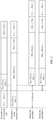
- the base station considers only a detection result within an Ncs (Ncscyclic) interval, that is, if a preamble 0 is detected, a TA value is t2 (actually, the detected preamble 0 is the preamble 1, and the TA is Ncs+t2).
- the base station If the base station directly sends the detected preamble 0 to the terminal for verifying the terminal, definitely, the terminal cannot be verified successfully. Therefore, in this embodiment of this application, the base station not only sends the detected preamble ID to the terminal, but also generates a corrected preamble ID, and sends the corrected preamble ID to the terminal, to increase the success rate of accessing the base station by the terminal.
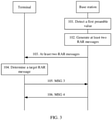
- FIG. 3 is a schematic diagram of an embodiment of a random access method that is based on a contention-based access process according to an embodiment of this application. The method includes the following steps.
- a base station detects a first preamble value.
- the first preamble value is a preamble ID detected when the base station performs periodic service detection.
- a terminal randomly selects one preamble ID from a plurality of preamble sequences, and sends the preamble ID to the base station on an RACH channel.
- the base station detects the preamble ID within a cyclic shift (Ncscyclic, Ncs) interval, and correlates the preamble ID with all preamble IDs. If a maximum peak can be obtained within the Ncs interval, the detected preamble ID is determined as a valid preamble ID, and a corresponding TA value is determined.
- Ncscyclic, Ncs cyclic shift
- the preamble ID detected by the base station may be different from the preamble ID sent by the terminal.
- the preamble ID detected by the base station is less than the preamble ID sent by the terminal.
- the preamble ID sent by the terminal is 2, and the preamble ID detected by the base station is 1.
- the base station generates at least two random access response RAR messages based on the first preamble value.
- At least one random access response preamble includes a second preamble value and at least one random access response preamble includes a third preamble value.
- the second preamble value is the same as the first preamble value
- the third preamble value is a preamble value obtained after the base station accumulates the first preamble value based on a preset accumulation number
- the at least two random access response messages each carry instruction information of an uplink resource allocated by the base station to the terminal.
- the base station cannot know whether the detected preamble ID is consistent with the preamble ID sent by the terminal.
- the base station generates a plurality of RAR messages.
- a preamble ID in some RAR messages is consistent with the preamble ID detected by the base station, and a preamble ID in some RAR messages is a preamble ID obtained after accumulating the preamble ID detected by the base station. For example, if the preamble ID detected by the base station is 1, the base station generates two RAR messages, a preamble ID carried in one RAR message thereof is 1, and a preamble ID carried in the other RAR message thereof is 2.
- the preset accumulation number is a preamble correction amount preset by the base station.
- the preset accumulation number may be 1 or 2.
- the base station may generate a plurality of preamble IDs based on the detected preamble ID and the preset accumulation number. For example, if the preamble ID detected by the base station is 1, and the preset accumulation number is 1, the base station may generate a preamble ID that is 2. Alternatively, the base station then changes the preset accumulation number to 2, and continues to generate a preamble ID that is 3. The rest may be deduced by analogy.
- the at least two random access response messages further include at least a first timing advance TA value and a second TA value.
- the first TA value corresponds to the second preamble value
- the second TA value corresponds to the third preamble value
- the second TA value is related to the preset accumulation number and a first cyclic shift Ncs.
- the first Ncs is an Ncs used by the base station to detect the first preamble value.
- the first TA value is a TA value obtained by the base station by detecting the first preamble value
- the second TA value is a TA value calculated by the base station.
- the second TA value may be calculated by using the first TA value, the first Ncs, and the preset accumulation number. A larger preset accumulation number indicates a larger calculated second TA value.
- the second TA value is a sum of the first TA and a time offset, and the time offset may be obtained by multiplying the first Ncs by the preset accumulation number used by the base station. If the preset accumulation number used by the base station is 1, it indicates that the base station guesses that the offset may be one Ncs area.
- the method further includes: determining, by the base station, the detected first preamble value as a preamble value retransmitted by the terminal.
- a preamble ID that is initially transmitted by the terminal and that is detected by the base station may be a preamble ID wrongly transmitted or falsely transmitted by the terminal, the base station may not respond to the preamble ID initially transmitted by the terminal.
- the base station For the preamble ID retransmitted by the terminal, it indicates that the terminal actually needs to access the base station. Therefore, the base station generates a corresponding RAR message for the terminal.
- the base station determines whether the detected preamble ID is initially transmitted or is retransmitted by the terminal. This is not limited in this application. For example, the base station determines whether the preamble ID is detected previously.
- the base station determines that the preamble ID is not detected previously, it indicates that the preamble ID is the preamble ID initially transmitted by the terminal; or if the base station determines that the preamble ID is detected previously, it indicates that the preamble ID is the preamble ID retransmitted by the terminal.
- the base station sends the at least two random access response messages to the terminal.
- the terminal receives the at least two random access response messages from the base station.
- the base station After generating the plurality of RAR messages, the base station delivers the plurality of RAR messages to the terminal by using the RACH channel.
- the terminal determines a target random access response message, where a preamble value included in the target random access response message is the same as the preamble value sent by the terminal.
- the terminal After receiving the plurality of RAR messages, the terminal parses each RAR message, and if a preamble ID carried in an RAR message is consistent with the preamble ID sent by the terminal, determines the RAR message as the target RAR message.
- the terminal sends an uplink message to the base station by using the uplink resource.
- the terminal adjusts an uplink sending time based on a TA value in the target random access response message, and sends, based on the adjusted sending time, the uplink message to the base station by using the uplink resource.
- the uplink message may be a MSG 3.
- the terminal may obtain uplink synchronization based on the TA value in the target RAR message, and transmit the MSG 3 on the uplink resource allocated by the base station to the terminal, to perform subsequent data transmission.
- the base station sends a downlink message to the terminal.
- the downlink message may be a MSG 4 (message 4), and the base station and the terminal finally complete contention-based access by using the MSG 4.
- MSG 4 messages 4
- the base station after detecting the first preamble value, the base station generates the plurality of random access response RAR messages.
- the plurality of RAR messages include an RAR message that includes the second preamble value the same as the first preamble value, and also include an RAR message that includes the third preamble value different from the first preamble value.
- the third preamble value is obtained by accumulating the first preamble value.
- the base station sends the plurality of generated RAR messages to the terminal. In this way, the terminal can successfully access the base station provided that a preamble value that is the same as the preamble value sent by the terminal exists in the plurality of RAR messages, thereby increasing the success rate of accessing the base station by the terminal.
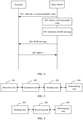
- FIG. 4 is a schematic diagram of an embodiment of a random access method that is based on a non-contention-based access process according to an embodiment of this application. The method includes the following steps.
- Abase station sends an allocated second preamble value to a terminal.
- the second preamble value is a preamble ID allocated by the base station to the terminal.
- the base station needs to first allocate the preamble ID to the terminal. For example, the base station randomly selects one preamble ID from a plurality of preamble IDs, and sends the preamble ID to the terminal. After receiving the preamble ID allocated by the base station, the terminal can access the base station in a non-contention-based access mode without randomly selecting one preamble ID to access the base station in a contention-based access mode. Specifically, the terminal performs non-contention-based access by sending, to the base station, the preamble ID allocated by the base station.
- the base station detects a first preamble value.
- the terminal After the base station sends the allocated preamble ID to the terminal, the terminal sends the received preamble ID to the base station by using an RACH channel.
- the base station detects the preamble ID sent by the terminal. Because the terminal may be a preamble ID sent beyond a radius of a serving cell, the preamble ID detected by the base station may be different from the preamble ID sent by the terminal. For example, the preamble ID detected by the base station is less than the preamble ID sent by the terminal. For example, the preamble ID sent by the terminal is 2, and the preamble ID detected by the base station is 1.
- the base station If the first preamble value is less than the second preamble value, the base station generates a random access response RAR message.
- the random access response message includes a third preamble value.
- the third preamble value is the same as the second preamble value, and the second preamble value is the preamble value allocated by the base station to the terminal; and the random access response message carries instruction information of an uplink resource allocated by the base station to the terminal.
- a preamble ID carried in the RAR message generated by the base station may be the preamble ID allocated by the base station.
- the random access response message further includes a timing advance TA value.
- the TA value is related to a first difference and a first cyclic shift Ncs, the first Ncs is an Ncs used by the base station to receive the first preamble value, and the first difference is a difference between the second preamble value and the first preamble value.
- the random access response message further carries a TA value corresponding to each preamble ID, so that after determining the preamble ID that is consistent with the preamble ID sent by the terminal, the terminal may adjust, based on the TA value corresponding to the preamble ID, a time for sending an uplink message, to implement clock synchronization with the base station. In this way, the base station can relatively accurately receive the uplink message sent by the terminal.
- the base station may alternatively generate a plurality of RAR messages.
- a preamble ID carried in some RAR messages is consistent with the preamble ID detected by the base station, and a preamble ID carried in some RAR messages is consistent with the preamble ID allocated by the base station.
- the method further includes: determining, by the base station, the first preamble value as a preamble value that has not been allocated by the base station.
- the base station may further determine whether the detected preamble ID is the preamble ID allocated by the base station. If the detected preamble ID is not the preamble ID allocated by the base station, a step of generating the RAR message for the terminal is performed; or if the detected preamble ID is the preamble ID allocated by the base station, the RAR message is generated for another terminal.
- the base station sends the random access response message to the terminal.
- the base station if the base station generates the plurality of RAR messages, the base station sends all of the plurality of RAR messages to the terminal, so that the terminal determines a target RAR message.
- the base station sends all of the plurality of RAR messages to the terminal, so that the terminal determines a target RAR message.
- the terminal sends, based on the random access response message, the uplink message to the base station.
- a base station shown in FIG. 5 is applied to a contention-based access process.
- An embodiment of the base station according to an embodiment of this application includes:
- the base station further includes: a determining unit 304, configured to: before the generation unit 302 generates the at least two random access response messages based on the first preamble value, determine that the detected first preamble value is a preamble value retransmitted by the terminal.
- a determining unit 304 configured to: before the generation unit 302 generates the at least two random access response messages based on the first preamble value, determine that the detected first preamble value is a preamble value retransmitted by the terminal.
- the at least two random access response messages further include at least a first timing advance TA value and a second TA value.
- the first TA value corresponds to the second preamble value
- the second TA value corresponds to the third preamble value
- the second TA value is related to the preset accumulation number and a first cyclic shift Ncs.
- the first Ncs is an Ncs used by the detection unit 301 to detect the first preamble value.
- a terminal shown in FIG. 6 is applied to a contention-based access process.
- An embodiment of the terminal according to an embodiment of this application includes:
- the at least two random access response messages further each include a different timing advance TA value; and the sending unit 401 is specifically configured to: send, based on a TA value in the target random access response message, the uplink message to the base station by using the uplink resource.
- a base station shown in FIG. 7 is applied to a non-contcntion-based access process.
- Another embodiment of the base station according to an embodiment of this application includes:
- the base station further includes: a determining unit 504, configured to: before the generation unit 502 generates the random access response message, determine that the first preamble value is a preamble value that has not been allocated by the base station.
- a determining unit 504 configured to: before the generation unit 502 generates the random access response message, determine that the first preamble value is a preamble value that has not been allocated by the base station.
- the random access response message further includes a timing advance TA value.
- the TA value is related to a first difference and a first cyclic shift Ncs, the first Ncs is an Ncs used by a receiving unit to receive the first preamble value, and the first difference is a difference between the second preamble value and the first preamble value.
- the base station described in the embodiments of FIG. 5 and FIG. 7 further has another form of embodiment.
- the base station includes: a processor 601, a memory 602, and a transceiver 603.
- the processor 601, the memory 602, and the transceiver 603 are connected by using a bus 604, the transceiver 603 may include a transmitter and a receiver, the memory 602 stores a computer instruction, and the processor 601 executes the computer instruction to implement the functions of the base station in the random access method according to the embodiment of FIG. 3 or FIG. 4 .
- Various flexible design manners may be used during specific implementation. For corresponding functions of parts, further refer to the method embodiments. This is not limited in the present invention.
- the terminal described in the embodiment of FIG. 6 further has another form of embodiment.
- the terminal includes: a processor 701, a memory 702, and a transceiver 703.
- the processor 701, the memory 702, and the transceiver 703 are connected by using a bus 704, the transceiver 703 may include a transmitter and a receiver, the memory 702 stores a computer instruction, and the processor 701 executes the computer instruction to implement functions of the terminal in the random access method according to the embodiment of FIG. 3 .
- Various flexible design manners may be used during specific implementation. For functions of parts, further refer to the method embodiments. This is not limited in the present invention.
- All or some of the foregoing embodiments may be implemented by using software, hardware, firmware, or any combination thereof.
- the embodiments may be implemented completely or partially in a form of a computer program product.
- the computer program product includes one or more computer instructions.
- the computer may be a general-purpose computer, a dedicated-purpose computer, a computer network, or other programmable apparatuses.
- the computer instructions may be stored in a computer-readable storage medium or may be transmitted from a computer-readable storage medium to another computer-readable storage medium.
- the computer instructions may be transmitted from a website, computer, server, or data center to another website, computer, server, or data center in a wired (for example, a coaxial cable, an optical fiber, or a digital subscriber line (DSL)) or wireless (for example, infrared, radio, or microwave) manner.
- a wired for example, a coaxial cable, an optical fiber, or a digital subscriber line (DSL)
- wireless for example, infrared, radio, or microwave
- the computer-readable storage medium may be any usable medium accessible by a computer, or a data storage dcvicc, such as a server or a data ccntcr, integrating one or more usable media.
- the usable medium may be a magnetic medium (for example, a floppy disk, a hard disk, or a magnetic tape), an optical medium (for example, a DVD), a semiconductor medium (for example, a solid-state drive (Solid-State Drive, SSD)), or the like.
- the disclosed system, apparatus, and method may be implemented in other manners.
- the described apparatus embodiment is merely an example.
- the unit division is merely logical function division and may be other division in an actual implementation.
- a plurality of units or components may be combined or integrated into another system, or some features may be ignored or not performed.
- the displayed or discussed mutual couplings or direct couplings or communication connections may be implemented by using some interfaces.
- the indirect couplings or communication connections between the apparatuses or units may be implemented in electronic, mechanical, or other forms.
- the units described as separate parts may or may not be physically separate, and parts displayed as units may or may not be physical units, may be located in one position, or may be distributed on a plurality of network units. Some or all of the units may be selected based on actual requirements to achieve the objectives of the solutions of the embodiments.
- functional units in the embodiments of this application may be integrated into one processing unit, or each of the units may exist alone physically, or two or more units are integrated into one unit.
- the integrated unit may be implemented in a form of hardware, or may be implemented in a form of a software functional unit.
- the integrated unit When the integrated unit is implemented in the form of a software functional unit and sold or used as an independent product, the integrated unit may be stored in at computer-readable storage medium. Based on such an understanding, the technical solutions of this application essentially, or the part contributing to the prior art, or all or some of the technical solutions may be implemented in the form of a software product.
- the software product is stored in a storage medium and includes several instructions for instructing a computer device (which may be a personal computer, a server, or a network device) to perform all or some of the steps of the methods described in the embodiments of this application.
- the foregoing storage medium includes: any medium that can store program code, such as a USB flash drive, a removable hard disk, a read-only memory (Read-Only Memory, ROM), a random access memory (Random Access Memory, RAM), a magnetic disk, or an optical disc.
- program code such as a USB flash drive, a removable hard disk, a read-only memory (Read-Only Memory, ROM), a random access memory (Random Access Memory, RAM), a magnetic disk, or an optical disc.
Landscapes
- Engineering & Computer Science (AREA)
- Signal Processing (AREA)
- Computer Networks & Wireless Communication (AREA)
- Computer Security & Cryptography (AREA)
- Mobile Radio Communication Systems (AREA)
Claims (13)
- Direktzugriffsverfahren, das auf einen konkurrenzbasierten Zugriffsprozess angewandt wird, wobei das Verfahren Folgendes umfasst:Detektieren (101) durch eine Basisstation eines ersten Präambelwerts;Erzeugen (192) durch die Basisstation basierend auf dem ersten Präambelwert von wenigstens zwei Direktzugriffsantwortnachrichten, wobei in den wenigstens zwei Direktzugriffsantwortnachrichten: wenigstens eine Direktzugriffsantwortnachricht einen zweiten Präambelwert umfasst und wenigstens eine Direktzugriffsantwortnachricht einen dritten Präambelwert umfasst, wobei der zweite Präambelwert gleich dem ersten Präambelwert ist und der dritte Präambelwert ein Präambelwert ist, der erhalten wird, nachdem die Basisstation den ersten Präambelwert basierend auf einer voreingestellten Akkumulationszahl akkumuliert; und die wenigstens zwei Direktzugriffsantwortnachrichten jeweils Anweisungsinformationen über ein Aufwärtsstreckenbetriebsmittel, das durch die Basisstation einem Endgerät zugewiesen ist, führen; undSenden (103) durch die Basisstation der wenigstens zwei Direktzugriffsantwortnachrichten zu dem Endgerät.
- Verfahren nach Anspruch 1, wobei das Verfahren vor dem Erzeugen (102) durch die Basisstation basierend auf dem ersten Präambelwert von wenigstens zwei Direktzugriffsantwortnachrichten ferner Folgendes umfasst:
Bestimmen durch die Basisstation des detektierten ersten Präambelwerts als einen Präambelwert, der durch das Endgerät erneut gesendet wird. - Verfahren nach Anspruch 1 oder 2, wobei die wenigstens zwei Direktzugriffsantwortnachrichten ferner wenigstens einen ersten Zeitvorlaufs-Wert, TA-Wert, und einen zweiten TA-Wert umfassen, wobei der erste TA-Wert dem zweiten Präambelwert entspricht, der zweite TA-Wert dem dritten Präambelwert entspricht und der zweite TA-Wert sich auf die voreingestellte Akkumulationszahl und eine erste zyklische Verschiebung Ncs bezieht, wobei die erste Ncs von der Basisstation verwendet wird, um den ersten Präambelwert zu detektieren.
- Direktzugriffsverfahren, das auf einen konkurrenzbasierten Zugriffsprozess angewandt wird, wobei das Verfahren Folgendes umfasst:Senden durch ein Endgerät eines ersten Präambelwerts zu einer Basisstation;Empfangen durch das Endgerät von wenigstens zwei Direktzugriffsantwortnachrichten von der Basisstation, wobei die wenigstens zwei Direktzugriffsantwortnachrichten jeweils einen unterschiedlichen Präambelwert umfassen und die wenigstens zwei Direktzugriffsantwortnachrichten jeweils Anweisungsinformationen über ein Aufwärtsstreckenbetriebsmittel, das dem Endgerät durch die Basisstation zugewiesen ist, führen; undBestimmen durch das Endgerät einer Ziel-Direktzugriffsantwortnachricht, wobei ein Präambelwert, der in der Ziel-Direktzugriffsantwortnachricht enthalten ist, gleich dem ersten Präambelwert ist.
- Verfahren nach Anspruch 4, wobei die wenigstens zwei Direktzugriffsantwortnachrichten ferner jeweils einen unterschiedlichen Zeitvorlaufs-Wert, TA-Wert, umfassen; und
dass das Endgerät eine Aufwärtsstreckennachricht zu der Basisstation unter Verwendung des Aufwärtsstreckenbetriebsmittels sendet Folgendes umfasst:
Senden durch das Endgerät basierend auf einem TA-Wert in der Ziel-Direktzugriffsantwortnachricht der Aufwärtsstreckennachricht zu der Basisstation unter Verwendung des Aufwärtsstreckenbetriebsmittels. - Direktzugriffsverfahren, das auf einen nicht konkurrenzbasierten Zugriffsprozess angewandt wird, wobei das Verfahren Folgendes umfasst:Detektieren (202) durch eine Basisstation eines ersten Präambelwerts;falls der erste Präambelwert kleiner ist als ein zweiter Präambelwert, Erzeugen (203) durch die Basisstation einer Direktzugriffsantwortnachricht, wobei die Direktzugriffsantwortnachricht einen dritten Präambelwert umfasst, der dritte Präambelwert gleich dem zweiten Präambelwert ist und der zweite Präambelwert ein Präambelwert ist, der durch die Basisstation einem Endgerät zugewiesen ist; und die Direktzugriffsantwortnachricht Anweisungsinformationen über ein Aufwärtsstreckenbetriebsmittel, das dem Endgerät durch die Basisstation zugewiesen ist, führt; undSenden (204) durch die Basisstation der Direktzugriffsantwortnachricht zu dem Endgerät.
- Verfahren nach Anspruch 6, wobei das Verfahren vor dem Erzeugen (203) durch die Basisstation einer Direktzugriffsantwortnachricht ferner Folgendes umfasst:
Bestimmen durch die Basisstation des ersten Präambelwerts als einen Präambelwert, der nicht durch die Basisstation zugewiesen worden ist. - Verfahren nach Anspruch 6 oder 7, wobei die Direktzugriffsantwortnachricht ferner einen Zeitvorlaufs-Wert, TA-Wert, umfasst, sich der TA-Wert auf eine erste Differenz und eine erste zyklische Verschiebung Ncs bezieht, die erste Ncs eine Ncs ist, die durch die Basisstation verwendet wird, um den ersten Präambelwert zu empfangen, und die erste Differenz eine Differenz zwischen dem zweiten Präambelwert und dem ersten Präambelwert ist.
- Kommunikationseinrichtung, die Mittel umfasst, die dazu ausgelegt sind, das Verfahren nach einem der Ansprüche 1 bis 3 auszuführen.
- Kommunikationseinrichtung, die Mittel umfasst, die dazu ausgelegt sind, das Verfahren nach Anspruch 4 oder 5 auszuführen.
- Kommunikationseinrichtung, die Mittel umfasst, die dazu ausgelegt sind, das Verfahren nach einem der Ansprüche 6 bis 8 auszuführen.
- Computerlesbares Speichermedium, das Anweisungen speichert, wobei die Anweisungen, wenn sie durch eine Kommunikationseinrichtung ausgeführt werden, die Kommunikationseinrichtung veranlassen, das Verfahren nach einem der Ansprüche 1 bis 8 auszuführen.
- Computerprogramm, das Anweisungen umfasst, wobei die Anweisungen, wenn sie durch eine Kommunikationseinrichtung ausgeführt werden, die Kommunikationseinrichtung veranlassen, das Verfahren nach einem der Ansprüche 1 bis 8 auszuführen.
Applications Claiming Priority (2)
| Application Number | Priority Date | Filing Date | Title |
|---|---|---|---|
| CN201710530615.9A CN109219153B (zh) | 2017-06-30 | 2017-06-30 | 一种随机接入的方法、基站及终端 |
| PCT/CN2018/092094 WO2019001326A1 (zh) | 2017-06-30 | 2018-06-21 | 一种随机接入的方法、基站及终端 |
Publications (3)
| Publication Number | Publication Date |
|---|---|
| EP3634072A1 EP3634072A1 (de) | 2020-04-08 |
| EP3634072A4 EP3634072A4 (de) | 2020-05-27 |
| EP3634072B1 true EP3634072B1 (de) | 2022-02-16 |
Family
ID=64741101
Family Applications (1)
| Application Number | Title | Priority Date | Filing Date |
|---|---|---|---|
| EP18822600.5A Active EP3634072B1 (de) | 2017-06-30 | 2018-06-21 | Direktzugriffsverfahren, basisstation und endgerät |
Country Status (4)
| Country | Link |
|---|---|
| US (1) | US11089634B2 (de) |
| EP (1) | EP3634072B1 (de) |
| CN (1) | CN109219153B (de) |
| WO (1) | WO2019001326A1 (de) |
Families Citing this family (5)
| Publication number | Priority date | Publication date | Assignee | Title |
|---|---|---|---|---|
| CN112188383B (zh) * | 2019-06-12 | 2022-06-28 | 华为技术有限公司 | 一种随机接入的方法及装置 |
| US11109422B2 (en) * | 2019-06-14 | 2021-08-31 | Kabushiki Kaisha Toshiba | Random access enhancements for uRLLC over 5G wireless networks |
| CN114071691B (zh) * | 2020-08-07 | 2023-07-21 | 北京佰才邦技术股份有限公司 | 随机接入响应检测方法、装置、终端及基站侧设备 |
| US12471147B2 (en) * | 2020-11-06 | 2025-11-11 | Electronics And Telecommunications Research Institute | Method and apparatus for acquiring and maintaining synchronization in communication systems |
| CN116723585B (zh) * | 2023-08-10 | 2023-11-21 | 上海移芯通信科技股份有限公司 | 一种随机接入方法、系统、设备以及存储介质 |
Family Cites Families (18)
| Publication number | Priority date | Publication date | Assignee | Title |
|---|---|---|---|---|
| EP3709749B1 (de) * | 2007-10-29 | 2023-09-20 | InterDigital Patent Holdings, Inc. | Behandlung von random-access-kanal-antworten |
| KR101449757B1 (ko) | 2008-01-23 | 2014-10-13 | 한국전자통신연구원 | 셀룰라 시스템에서의 임의 접속 방법 및 장치 |
| KR101173943B1 (ko) * | 2008-12-16 | 2012-08-14 | 한국전자통신연구원 | 랜덤 엑세스 신호 검출 방법 |
| CN101841913B (zh) * | 2009-03-16 | 2012-09-05 | 电信科学技术研究院 | 确定ue监听的下行成员载波的方法和基站 |
| US8666403B2 (en) * | 2009-10-23 | 2014-03-04 | Nokia Solutions And Networks Oy | Systems, methods, and apparatuses for facilitating device-to-device connection establishment |
| CN102291836B (zh) * | 2010-06-21 | 2016-01-20 | 中兴通讯股份有限公司 | 一种随机接入控制方法及系统 |
| US9467959B2 (en) * | 2011-04-01 | 2016-10-11 | Mediatek, Inc. | Method of maintaining multiple timing advance |
| WO2013025142A1 (en) * | 2011-08-15 | 2013-02-21 | Telefonaktiebolaget L M Ericsson (Publ) | Controlling random access in secondary cells |
| CN102548015A (zh) * | 2012-01-13 | 2012-07-04 | 电信科学技术研究院 | 一种随机接入及其控制方法、装置和系统 |
| US9544932B2 (en) * | 2012-06-26 | 2017-01-10 | Lg Electronics Inc. | Method and device for transmitting and receiving signal for device-to-device communication in wireless communication system |
| EP3026830B1 (de) * | 2013-07-26 | 2019-12-04 | LG Electronics Inc. | Verfahren zur übertragung von signalen für mtc und vorrichtung dafür |
| WO2015035650A1 (zh) * | 2013-09-16 | 2015-03-19 | 华为技术有限公司 | 随机接入中预先确定资源的方法、用户设备和基站 |
| CN106304388A (zh) * | 2015-05-22 | 2017-01-04 | 中兴通讯股份有限公司 | 一种随机接入的方法、基站以及用户设备 |
| CN106304392A (zh) * | 2015-06-26 | 2017-01-04 | 中兴通讯股份有限公司 | 一种随机接入的方法、设备和系统 |
| KR101685301B1 (ko) * | 2015-08-28 | 2016-12-09 | 한국과학기술원 | 임의접속 과정을 통한 통신 장치 및 방법 |
| CN105307284B (zh) * | 2015-11-30 | 2019-01-11 | 东莞酷派软件技术有限公司 | 一种随机接入方法及用户设备 |
| CN105828450B (zh) * | 2016-03-11 | 2019-09-17 | 京信通信系统(中国)有限公司 | 一种竞争接入的方法及装置 |
| EP3379886A1 (de) * | 2017-03-20 | 2018-09-26 | ASUSTek Computer Inc. | Verfahren und vorrichtung für ein wahlfreies zugriffsverfahren zur anforderung von systeminformationen in einem drahtloskommunikationssystem |
-
2017
- 2017-06-30 CN CN201710530615.9A patent/CN109219153B/zh active Active
-
2018
- 2018-06-21 WO PCT/CN2018/092094 patent/WO2019001326A1/zh not_active Ceased
- 2018-06-21 EP EP18822600.5A patent/EP3634072B1/de active Active
-
2019
- 2019-12-27 US US16/728,935 patent/US11089634B2/en active Active
Also Published As
| Publication number | Publication date |
|---|---|
| CN109219153A (zh) | 2019-01-15 |
| US11089634B2 (en) | 2021-08-10 |
| US20200137805A1 (en) | 2020-04-30 |
| WO2019001326A1 (zh) | 2019-01-03 |
| EP3634072A1 (de) | 2020-04-08 |
| CN109219153B (zh) | 2021-01-29 |
| EP3634072A4 (de) | 2020-05-27 |
Similar Documents
| Publication | Publication Date | Title |
|---|---|---|
| EP3634072B1 (de) | Direktzugriffsverfahren, basisstation und endgerät | |
| US11229059B2 (en) | Random access method and base station | |
| EP2756729B1 (de) | Verbessertea konfliktfreies direktzugriffsverfahren in drahtlosen netzwerken | |
| CN113518473A (zh) | 随机接入信道的增强报告 | |
| EP4401500A1 (de) | Kommunikationsvorrichtung, verfahren und schaltkreis für eine kommunikationsvorrichtung | |
| CN105307284B (zh) | 一种随机接入方法及用户设备 | |
| US20110310857A1 (en) | Random access procedure | |
| EP3253117B1 (de) | Handhabung eines handovers | |
| US12048014B2 (en) | Apparatus for a terminal device | |
| WO2023130315A1 (en) | Methods and apparatuses for mro for pscell change or cpac in nr-u | |
| US11659598B2 (en) | Method and devices of performing a random access procedure between a user equipment, UE, and a radio access network of a telecommunication network | |
| CN114071691B (zh) | 随机接入响应检测方法、装置、终端及基站侧设备 | |
| US12184567B2 (en) | Data transmission method, network device, and terminal device | |
| US10278212B2 (en) | Device and method of handling random access procedure | |
| WO2019136631A1 (en) | Random access techniques in wireless networks | |
| CN114245477B (zh) | 一种竞争随机接入失败后的快速处理方法 | |
| CN117280853A (zh) | 用于ue触发的scg激活过程的方法及设备 |
Legal Events
| Date | Code | Title | Description |
|---|---|---|---|
| STAA | Information on the status of an ep patent application or granted ep patent |
Free format text: STATUS: THE INTERNATIONAL PUBLICATION HAS BEEN MADE |
|
| PUAI | Public reference made under article 153(3) epc to a published international application that has entered the european phase |
Free format text: ORIGINAL CODE: 0009012 |
|
| STAA | Information on the status of an ep patent application or granted ep patent |
Free format text: STATUS: REQUEST FOR EXAMINATION WAS MADE |
|
| 17P | Request for examination filed |
Effective date: 20200103 |
|
| AK | Designated contracting states |
Kind code of ref document: A1 Designated state(s): AL AT BE BG CH CY CZ DE DK EE ES FI FR GB GR HR HU IE IS IT LI LT LU LV MC MK MT NL NO PL PT RO RS SE SI SK SM TR |
|
| AX | Request for extension of the european patent |
Extension state: BA ME |
|
| A4 | Supplementary search report drawn up and despatched |
Effective date: 20200424 |
|
| RIC1 | Information provided on ipc code assigned before grant |
Ipc: H04W 74/08 20090101AFI20200420BHEP |
|
| DAV | Request for validation of the european patent (deleted) | ||
| DAX | Request for extension of the european patent (deleted) | ||
| GRAP | Despatch of communication of intention to grant a patent |
Free format text: ORIGINAL CODE: EPIDOSNIGR1 |
|
| STAA | Information on the status of an ep patent application or granted ep patent |
Free format text: STATUS: GRANT OF PATENT IS INTENDED |
|
| RIC1 | Information provided on ipc code assigned before grant |
Ipc: H04L 5/00 20060101ALI20210917BHEP Ipc: H04W 74/08 20090101AFI20210917BHEP |
|
| INTG | Intention to grant announced |
Effective date: 20211019 |
|
| GRAS | Grant fee paid |
Free format text: ORIGINAL CODE: EPIDOSNIGR3 |
|
| GRAA | (expected) grant |
Free format text: ORIGINAL CODE: 0009210 |
|
| STAA | Information on the status of an ep patent application or granted ep patent |
Free format text: STATUS: THE PATENT HAS BEEN GRANTED |
|
| AK | Designated contracting states |
Kind code of ref document: B1 Designated state(s): AL AT BE BG CH CY CZ DE DK EE ES FI FR GB GR HR HU IE IS IT LI LT LU LV MC MK MT NL NO PL PT RO RS SE SI SK SM TR |
|
| REG | Reference to a national code |
Ref country code: GB Ref legal event code: FG4D |
|
| REG | Reference to a national code |
Ref country code: CH Ref legal event code: EP |
|
| REG | Reference to a national code |
Ref country code: DE Ref legal event code: R096 Ref document number: 602018031000 Country of ref document: DE |
|
| REG | Reference to a national code |
Ref country code: AT Ref legal event code: REF Ref document number: 1469705 Country of ref document: AT Kind code of ref document: T Effective date: 20220315 |
|
| REG | Reference to a national code |
Ref country code: IE Ref legal event code: FG4D |
|
| REG | Reference to a national code |
Ref country code: LT Ref legal event code: MG9D |
|
| REG | Reference to a national code |
Ref country code: NL Ref legal event code: MP Effective date: 20220216 |
|
| REG | Reference to a national code |
Ref country code: AT Ref legal event code: MK05 Ref document number: 1469705 Country of ref document: AT Kind code of ref document: T Effective date: 20220216 |
|
| PG25 | Lapsed in a contracting state [announced via postgrant information from national office to epo] |
Ref country code: SE Free format text: LAPSE BECAUSE OF FAILURE TO SUBMIT A TRANSLATION OF THE DESCRIPTION OR TO PAY THE FEE WITHIN THE PRESCRIBED TIME-LIMIT Effective date: 20220216 Ref country code: RS Free format text: LAPSE BECAUSE OF FAILURE TO SUBMIT A TRANSLATION OF THE DESCRIPTION OR TO PAY THE FEE WITHIN THE PRESCRIBED TIME-LIMIT Effective date: 20220216 Ref country code: PT Free format text: LAPSE BECAUSE OF FAILURE TO SUBMIT A TRANSLATION OF THE DESCRIPTION OR TO PAY THE FEE WITHIN THE PRESCRIBED TIME-LIMIT Effective date: 20220616 Ref country code: NO Free format text: LAPSE BECAUSE OF FAILURE TO SUBMIT A TRANSLATION OF THE DESCRIPTION OR TO PAY THE FEE WITHIN THE PRESCRIBED TIME-LIMIT Effective date: 20220516 Ref country code: NL Free format text: LAPSE BECAUSE OF FAILURE TO SUBMIT A TRANSLATION OF THE DESCRIPTION OR TO PAY THE FEE WITHIN THE PRESCRIBED TIME-LIMIT Effective date: 20220216 Ref country code: LT Free format text: LAPSE BECAUSE OF FAILURE TO SUBMIT A TRANSLATION OF THE DESCRIPTION OR TO PAY THE FEE WITHIN THE PRESCRIBED TIME-LIMIT Effective date: 20220216 Ref country code: HR Free format text: LAPSE BECAUSE OF FAILURE TO SUBMIT A TRANSLATION OF THE DESCRIPTION OR TO PAY THE FEE WITHIN THE PRESCRIBED TIME-LIMIT Effective date: 20220216 Ref country code: ES Free format text: LAPSE BECAUSE OF FAILURE TO SUBMIT A TRANSLATION OF THE DESCRIPTION OR TO PAY THE FEE WITHIN THE PRESCRIBED TIME-LIMIT Effective date: 20220216 Ref country code: BG Free format text: LAPSE BECAUSE OF FAILURE TO SUBMIT A TRANSLATION OF THE DESCRIPTION OR TO PAY THE FEE WITHIN THE PRESCRIBED TIME-LIMIT Effective date: 20220516 |
|
| PG25 | Lapsed in a contracting state [announced via postgrant information from national office to epo] |
Ref country code: PL Free format text: LAPSE BECAUSE OF FAILURE TO SUBMIT A TRANSLATION OF THE DESCRIPTION OR TO PAY THE FEE WITHIN THE PRESCRIBED TIME-LIMIT Effective date: 20220216 Ref country code: LV Free format text: LAPSE BECAUSE OF FAILURE TO SUBMIT A TRANSLATION OF THE DESCRIPTION OR TO PAY THE FEE WITHIN THE PRESCRIBED TIME-LIMIT Effective date: 20220216 Ref country code: GR Free format text: LAPSE BECAUSE OF FAILURE TO SUBMIT A TRANSLATION OF THE DESCRIPTION OR TO PAY THE FEE WITHIN THE PRESCRIBED TIME-LIMIT Effective date: 20220517 Ref country code: FI Free format text: LAPSE BECAUSE OF FAILURE TO SUBMIT A TRANSLATION OF THE DESCRIPTION OR TO PAY THE FEE WITHIN THE PRESCRIBED TIME-LIMIT Effective date: 20220216 Ref country code: AT Free format text: LAPSE BECAUSE OF FAILURE TO SUBMIT A TRANSLATION OF THE DESCRIPTION OR TO PAY THE FEE WITHIN THE PRESCRIBED TIME-LIMIT Effective date: 20220216 |
|
| PG25 | Lapsed in a contracting state [announced via postgrant information from national office to epo] |
Ref country code: IS Free format text: LAPSE BECAUSE OF FAILURE TO SUBMIT A TRANSLATION OF THE DESCRIPTION OR TO PAY THE FEE WITHIN THE PRESCRIBED TIME-LIMIT Effective date: 20220617 |
|
| PG25 | Lapsed in a contracting state [announced via postgrant information from national office to epo] |
Ref country code: SM Free format text: LAPSE BECAUSE OF FAILURE TO SUBMIT A TRANSLATION OF THE DESCRIPTION OR TO PAY THE FEE WITHIN THE PRESCRIBED TIME-LIMIT Effective date: 20220216 Ref country code: SK Free format text: LAPSE BECAUSE OF FAILURE TO SUBMIT A TRANSLATION OF THE DESCRIPTION OR TO PAY THE FEE WITHIN THE PRESCRIBED TIME-LIMIT Effective date: 20220216 Ref country code: RO Free format text: LAPSE BECAUSE OF FAILURE TO SUBMIT A TRANSLATION OF THE DESCRIPTION OR TO PAY THE FEE WITHIN THE PRESCRIBED TIME-LIMIT Effective date: 20220216 Ref country code: EE Free format text: LAPSE BECAUSE OF FAILURE TO SUBMIT A TRANSLATION OF THE DESCRIPTION OR TO PAY THE FEE WITHIN THE PRESCRIBED TIME-LIMIT Effective date: 20220216 Ref country code: DK Free format text: LAPSE BECAUSE OF FAILURE TO SUBMIT A TRANSLATION OF THE DESCRIPTION OR TO PAY THE FEE WITHIN THE PRESCRIBED TIME-LIMIT Effective date: 20220216 Ref country code: CZ Free format text: LAPSE BECAUSE OF FAILURE TO SUBMIT A TRANSLATION OF THE DESCRIPTION OR TO PAY THE FEE WITHIN THE PRESCRIBED TIME-LIMIT Effective date: 20220216 |
|
| REG | Reference to a national code |
Ref country code: DE Ref legal event code: R097 Ref document number: 602018031000 Country of ref document: DE |
|
| PG25 | Lapsed in a contracting state [announced via postgrant information from national office to epo] |
Ref country code: AL Free format text: LAPSE BECAUSE OF FAILURE TO SUBMIT A TRANSLATION OF THE DESCRIPTION OR TO PAY THE FEE WITHIN THE PRESCRIBED TIME-LIMIT Effective date: 20220216 |
|
| PLBE | No opposition filed within time limit |
Free format text: ORIGINAL CODE: 0009261 |
|
| STAA | Information on the status of an ep patent application or granted ep patent |
Free format text: STATUS: NO OPPOSITION FILED WITHIN TIME LIMIT |
|
| REG | Reference to a national code |
Ref country code: DE Ref legal event code: R119 Ref document number: 602018031000 Country of ref document: DE |
|
| 26N | No opposition filed |
Effective date: 20221117 |
|
| PG25 | Lapsed in a contracting state [announced via postgrant information from national office to epo] |
Ref country code: MC Free format text: LAPSE BECAUSE OF FAILURE TO SUBMIT A TRANSLATION OF THE DESCRIPTION OR TO PAY THE FEE WITHIN THE PRESCRIBED TIME-LIMIT Effective date: 20220216 |
|
| REG | Reference to a national code |
Ref country code: CH Ref legal event code: PL |
|
| REG | Reference to a national code |
Ref country code: BE Ref legal event code: MM Effective date: 20220630 |
|
| PG25 | Lapsed in a contracting state [announced via postgrant information from national office to epo] |
Ref country code: SI Free format text: LAPSE BECAUSE OF FAILURE TO SUBMIT A TRANSLATION OF THE DESCRIPTION OR TO PAY THE FEE WITHIN THE PRESCRIBED TIME-LIMIT Effective date: 20220216 |
|
| PG25 | Lapsed in a contracting state [announced via postgrant information from national office to epo] |
Ref country code: LU Free format text: LAPSE BECAUSE OF NON-PAYMENT OF DUE FEES Effective date: 20220621 Ref country code: LI Free format text: LAPSE BECAUSE OF NON-PAYMENT OF DUE FEES Effective date: 20220630 Ref country code: IE Free format text: LAPSE BECAUSE OF NON-PAYMENT OF DUE FEES Effective date: 20220621 Ref country code: FR Free format text: LAPSE BECAUSE OF NON-PAYMENT OF DUE FEES Effective date: 20220630 Ref country code: CH Free format text: LAPSE BECAUSE OF NON-PAYMENT OF DUE FEES Effective date: 20220630 |
|
| PG25 | Lapsed in a contracting state [announced via postgrant information from national office to epo] |
Ref country code: DE Free format text: LAPSE BECAUSE OF NON-PAYMENT OF DUE FEES Effective date: 20230103 Ref country code: BE Free format text: LAPSE BECAUSE OF NON-PAYMENT OF DUE FEES Effective date: 20220630 |
|
| PG25 | Lapsed in a contracting state [announced via postgrant information from national office to epo] |
Ref country code: IT Free format text: LAPSE BECAUSE OF FAILURE TO SUBMIT A TRANSLATION OF THE DESCRIPTION OR TO PAY THE FEE WITHIN THE PRESCRIBED TIME-LIMIT Effective date: 20220216 |
|
| PG25 | Lapsed in a contracting state [announced via postgrant information from national office to epo] |
Ref country code: MK Free format text: LAPSE BECAUSE OF FAILURE TO SUBMIT A TRANSLATION OF THE DESCRIPTION OR TO PAY THE FEE WITHIN THE PRESCRIBED TIME-LIMIT Effective date: 20220216 Ref country code: CY Free format text: LAPSE BECAUSE OF FAILURE TO SUBMIT A TRANSLATION OF THE DESCRIPTION OR TO PAY THE FEE WITHIN THE PRESCRIBED TIME-LIMIT Effective date: 20220216 |
|
| PG25 | Lapsed in a contracting state [announced via postgrant information from national office to epo] |
Ref country code: HU Free format text: LAPSE BECAUSE OF FAILURE TO SUBMIT A TRANSLATION OF THE DESCRIPTION OR TO PAY THE FEE WITHIN THE PRESCRIBED TIME-LIMIT; INVALID AB INITIO Effective date: 20180621 |
|
| PG25 | Lapsed in a contracting state [announced via postgrant information from national office to epo] |
Ref country code: MT Free format text: LAPSE BECAUSE OF FAILURE TO SUBMIT A TRANSLATION OF THE DESCRIPTION OR TO PAY THE FEE WITHIN THE PRESCRIBED TIME-LIMIT Effective date: 20220216 |
|
| PGFP | Annual fee paid to national office [announced via postgrant information from national office to epo] |
Ref country code: GB Payment date: 20250501 Year of fee payment: 8 |
|
| PG25 | Lapsed in a contracting state [announced via postgrant information from national office to epo] |
Ref country code: TR Free format text: LAPSE BECAUSE OF FAILURE TO SUBMIT A TRANSLATION OF THE DESCRIPTION OR TO PAY THE FEE WITHIN THE PRESCRIBED TIME-LIMIT Effective date: 20220216 |