EP3632142B1 - Dynamic operating roles for internet of things (iot) devices in a network - Google Patents
Dynamic operating roles for internet of things (iot) devices in a network Download PDFInfo
- Publication number
- EP3632142B1 EP3632142B1 EP18722842.4A EP18722842A EP3632142B1 EP 3632142 B1 EP3632142 B1 EP 3632142B1 EP 18722842 A EP18722842 A EP 18722842A EP 3632142 B1 EP3632142 B1 EP 3632142B1
- Authority
- EP
- European Patent Office
- Prior art keywords
- iot device
- iot
- role
- network
- client device
- Prior art date
- Legal status (The legal status is an assumption and is not a legal conclusion. Google has not performed a legal analysis and makes no representation as to the accuracy of the status listed.)
- Active
Links
Images


Classifications
-
- H—ELECTRICITY
- H04—ELECTRIC COMMUNICATION TECHNIQUE
- H04L—TRANSMISSION OF DIGITAL INFORMATION, e.g. TELEGRAPHIC COMMUNICATION
- H04L41/00—Arrangements for maintenance, administration or management of data switching networks, e.g. of packet switching networks
- H04L41/08—Configuration management of networks or network elements
- H04L41/0803—Configuration setting
- H04L41/0813—Configuration setting characterised by the conditions triggering a change of settings
- H04L41/0816—Configuration setting characterised by the conditions triggering a change of settings the condition being an adaptation, e.g. in response to network events
-
- H—ELECTRICITY
- H04—ELECTRIC COMMUNICATION TECHNIQUE
- H04L—TRANSMISSION OF DIGITAL INFORMATION, e.g. TELEGRAPHIC COMMUNICATION
- H04L12/00—Data switching networks
- H04L12/28—Data switching networks characterised by path configuration, e.g. LAN [Local Area Networks] or WAN [Wide Area Networks]
- H04L12/2803—Home automation networks
- H04L12/2807—Exchanging configuration information on appliance services in a home automation network
-
- H—ELECTRICITY
- H04—ELECTRIC COMMUNICATION TECHNIQUE
- H04L—TRANSMISSION OF DIGITAL INFORMATION, e.g. TELEGRAPHIC COMMUNICATION
- H04L12/00—Data switching networks
- H04L12/28—Data switching networks characterised by path configuration, e.g. LAN [Local Area Networks] or WAN [Wide Area Networks]
- H04L12/2803—Home automation networks
- H04L12/283—Processing of data at an internetworking point of a home automation network
-
- H—ELECTRICITY
- H04—ELECTRIC COMMUNICATION TECHNIQUE
- H04L—TRANSMISSION OF DIGITAL INFORMATION, e.g. TELEGRAPHIC COMMUNICATION
- H04L12/00—Data switching networks
- H04L12/28—Data switching networks characterised by path configuration, e.g. LAN [Local Area Networks] or WAN [Wide Area Networks]
- H04L12/2803—Home automation networks
- H04L12/283—Processing of data at an internetworking point of a home automation network
- H04L12/2832—Interconnection of the control functionalities between home networks
-
- H—ELECTRICITY
- H04—ELECTRIC COMMUNICATION TECHNIQUE
- H04L—TRANSMISSION OF DIGITAL INFORMATION, e.g. TELEGRAPHIC COMMUNICATION
- H04L12/00—Data switching networks
- H04L12/28—Data switching networks characterised by path configuration, e.g. LAN [Local Area Networks] or WAN [Wide Area Networks]
- H04L12/2803—Home automation networks
- H04L12/2838—Distribution of signals within a home automation network, e.g. involving splitting/multiplexing signals to/from different paths
-
- H—ELECTRICITY
- H04—ELECTRIC COMMUNICATION TECHNIQUE
- H04L—TRANSMISSION OF DIGITAL INFORMATION, e.g. TELEGRAPHIC COMMUNICATION
- H04L41/00—Arrangements for maintenance, administration or management of data switching networks, e.g. of packet switching networks
- H04L41/08—Configuration management of networks or network elements
- H04L41/0876—Aspects of the degree of configuration automation
- H04L41/0886—Fully automatic configuration
-
- H—ELECTRICITY
- H04—ELECTRIC COMMUNICATION TECHNIQUE
- H04L—TRANSMISSION OF DIGITAL INFORMATION, e.g. TELEGRAPHIC COMMUNICATION
- H04L41/00—Arrangements for maintenance, administration or management of data switching networks, e.g. of packet switching networks
- H04L41/30—Decision processes by autonomous network management units using voting and bidding
-
- H—ELECTRICITY
- H04—ELECTRIC COMMUNICATION TECHNIQUE
- H04W—WIRELESS COMMUNICATION NETWORKS
- H04W4/00—Services specially adapted for wireless communication networks; Facilities therefor
- H04W4/70—Services for machine-to-machine communication [M2M] or machine type communication [MTC]
-
- H—ELECTRICITY
- H04—ELECTRIC COMMUNICATION TECHNIQUE
- H04W—WIRELESS COMMUNICATION NETWORKS
- H04W4/00—Services specially adapted for wireless communication networks; Facilities therefor
- H04W4/80—Services using short range communication, e.g. near-field communication [NFC], radio-frequency identification [RFID] or low energy communication
-
- H—ELECTRICITY
- H04—ELECTRIC COMMUNICATION TECHNIQUE
- H04W—WIRELESS COMMUNICATION NETWORKS
- H04W40/00—Communication routing or communication path finding
- H04W40/02—Communication route or path selection, e.g. power-based or shortest path routing
- H04W40/22—Communication route or path selection, e.g. power-based or shortest path routing using selective relaying for reaching a BTS [Base Transceiver Station] or an access point
-
- H—ELECTRICITY
- H04—ELECTRIC COMMUNICATION TECHNIQUE
- H04W—WIRELESS COMMUNICATION NETWORKS
- H04W88/00—Devices specially adapted for wireless communication networks, e.g. terminals, base stations or access point devices
- H04W88/02—Terminal devices
- H04W88/04—Terminal devices adapted for relaying to or from another terminal or user
-
- H—ELECTRICITY
- H04—ELECTRIC COMMUNICATION TECHNIQUE
- H04W—WIRELESS COMMUNICATION NETWORKS
- H04W84/00—Network topologies
- H04W84/18—Self-organising networks, e.g. ad-hoc networks or sensor networks
-
- Y—GENERAL TAGGING OF NEW TECHNOLOGICAL DEVELOPMENTS; GENERAL TAGGING OF CROSS-SECTIONAL TECHNOLOGIES SPANNING OVER SEVERAL SECTIONS OF THE IPC; TECHNICAL SUBJECTS COVERED BY FORMER USPC CROSS-REFERENCE ART COLLECTIONS [XRACs] AND DIGESTS
- Y02—TECHNOLOGIES OR APPLICATIONS FOR MITIGATION OR ADAPTATION AGAINST CLIMATE CHANGE
- Y02D—CLIMATE CHANGE MITIGATION TECHNOLOGIES IN INFORMATION AND COMMUNICATION TECHNOLOGIES [ICT], I.E. INFORMATION AND COMMUNICATION TECHNOLOGIES AIMING AT THE REDUCTION OF THEIR OWN ENERGY USE
- Y02D30/00—Reducing energy consumption in communication networks
- Y02D30/70—Reducing energy consumption in communication networks in wireless communication networks
Definitions
- This disclosure generally relates to the field of communication, and more particularly to internet of things (IoT) devices in a communication network.
- IoT internet of things
- IoT Internet of things
- IoT devices include cameras, drones, wearable devices, home appliances, lighting systems, security system components, speakers, smart refrigerators, televisions, and the like.
- IoT devices may include "smart" appliances which allow an operator to control or automate operation of the appliance.
- Some IoT devices are data-consuming or data-producing devices which may be added to a local network.
- a local network may include one or more access points (AP) that provide connectivity to the local network. There may be opportunities to enhance connectivity as a result of adding IoT devices to the local network.
- AP access points
- WO2011/153507 A2 relates to an arrangement in which a wireless device (e.g., cellular telephone) communicates with a base station in a cell of the cellular network over a non-cellular interface via another wireless device in the cell through the use of multi-hopping.
- the wireless device requests permission to communicate with the base station over a non-cellular interface via hopping off another wireless device when its signal strength is below a threshold.
- US2016/227461A1 relates to a method to provide mobility support of UEs that are served by mobile relay base stations, by providing handover of a UE for data traffic only between two mobile relay base stations.
- the handover is triggered by any of the following: based on UE's measurement report, the signal quality of a neighbour cell is better than the current serving cell; based on the measurement of the serving mobile relay base station, the signal quality of the link to the UE is worse than a certain threshold; or based on the measurement of the serving mobile relay base station, the signal quality of a neighbour cell (potential donor base station) is much better than the current donor base station.
- Some examples in this disclosure may be based on wireless local area network (WLAN) communication according to the Institute of Electrical and Electronics Engineers (IEEE) 802.11 IoT device and a client device.
- WLAN wireless local area network
- IEEE Institute of Electrical and Electronics Engineers 802.11 IoT device
- the first IoT device may bridge traffic associated with the client device via the first communication link and the second communication link.
- WLAN wireless local area network
- the described implementations may be implemented in any device, system or network that is capable of transmitting and receiving radio frequency (RF) signals according to any communication standard, such as any of the IEEE 802.11 standards, the Bluetooth ® standard, code division multiple access (CDMA), frequency division multiple access (FDMA), time division multiple access (TDMA), Global System for Mobile communications (GSM), GSM/General Packet Radio Service (GPRS), Enhanced Data GSM Environment (EDGE), Terrestrial Trunked Radio (TETRA), Wideband-CDMA (W-CDMA), Evolution Data Optimized (EV-DO), 1xEV-DO, EV-DO Rev A, EV-DO Rev B, High Speed Packet Access (HSPA), High Speed Downlink Packet Access (HSDPA), High Speed Uplink Packet Access (HSUPA), Evolved High Speed Packet Access (HSPA+), Long Term Evolution (LTE), AMPS, or other known signals that are used to communicate within a wireless, cellular or internet of things (IoT) network, such as a wireless
- a local network in a home, apartment, business, or other area may include a variety of devices that utilize the local network to communicate with each other or with devices in another network.
- the local network may provide access for local devices to communicate to an upstream network (such as access to the Internet, via a broadband network).
- the local network may include one or more access points (APs) to provide wireless coverage for the local network.
- APs access points
- one of the APs will be referred to as a root AP, while other APs make automatic path or routing selection using a logical topology between each of the other APs and the root AP.
- a local network which is capable of coordinating between two or more APs to manage a topology or aggregate wireless coverage area may be referred to as a self-organizing network (SON).
- a SON protocol may be used between the two or more APs to coordinate wireless channel configurations or other implementation settings.
- the local network may include one or more access points, client devices, and IoT devices.
- client devices may include mobile devices, laptops, computers, or wearable computing devices.
- IoT devices may include appliances, sensors, or other machines which are capable of communication via the local network and which perform other traditional machine functions.
- the IoT devices may not have been previously network-enabled.
- IoT devices may be data-consuming or data-producing devices and may operate as an endpoint connected to the local network.
- the IoT device may be configured as a station (STA) connected to an AP. When operated as a STA, the IoT device may be operating in an endpoint role in the network.
- STA station
- an IoT device may be capable of operating in a relay role in the local network.
- an IoT device may provide wireless connectivity (as an AP) for a client device and relay traffic to or from the client device and an upstream connection to the local network.
- an IoT device may change its operating role based on a determination of whether the relay role would enhance connectivity for a client device that is within a wireless range of the IoT device.
- the IoT device may operate as an endpoint in the network.
- the IoT device may operate as a relay node between a client device and the local network.
- the IoT device can operate as an AP or repeater in the SON and provide wireless access for a client device.
- the IoT device can bridge traffic to or from the client device and another access node (such as the central access point or another access point) of the network.
- the IoT device can utilize the SON protocol to communicate and coordinate with other APs (or other IoT devices) in the local network to optimize wireless coverage for the local network or to manage steering of the client device between APs.
- each IoT device may independently and dynamically select an operating role for itself.
- an IoT device may advertise a capability to operate in the relay role.
- a client device may send a request to the IoT device to establish a wireless association between the client device and the IoT device.
- the client device may stimulate the IoT device to select the relay role.
- the IoT device may change from an endpoint role to the relay role.
- the capability of the client device and the proximity of the client device to the IoT device may be factors which influence the operating role selection of the IoT device.
- an IoT device may coordinate with one or more other IoT devices in the local network.
- a selection of which IoT device to use the relay role may be based on a position (or movement) of the client device relative to the IoT devices. For example, when the client device is proximately close to an IoT device, that IoT device may change to the relay role to provide wireless connectivity to the client device. As the client device moves throughout a location, different IoT devices may change to the relay role to provide seamless wireless coverage for the client device. When there are no client devices proximately close to an IoT device (or not using the IoT device), the IoT device may change to an endpoint role to conserve power and reduce wireless interference.
- an IoT device may temporarily provide a diagnostic role in the local network.
- the IoT device may enable a wireless interface to obtain diagnostic measurements associated with at least one other device in the local network.
- the IoT device may conduct measurements regarding the wireless environment or regarding another device coupled to the local network.
- the diagnostic role may be used for troubleshooting or maintenance of other devices.
- diagnostic information (such as automated diagnostic reports) can be sent to a server in an upstream network (such as a service provider host in the cloud).
- the diagnostic information may be used for analytics of the other IoT device or for optimizing the SON network.
- wireless coverage of the local network can be extended in places where IoT devices are deployed.
- a client device may enjoy better wireless coverage or quality of service as a result of the IoT device operating as a relay node for the client device.
- IoT devices may coordinate using a SON protocol to manage or adapt configurations of their coverage areas and thus provide more complete wireless coverage for a client device in the local network.
- an IoT device could be used for diagnostic measurements of another IoT device or AP in the network.
- integration of the IOT devices to a SON may improve the range and coverage of the SON within a connected home.
- traffic separation and quality of service (QoS) policies can be integrated into this service to route packets between a combination of SON network nodes and IOT devices depending on QoS and latency requirements of specific applications.
- QoS quality of service
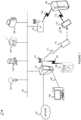
- FIG. 1 shows a system diagram of an example local network including internet of things (IoT) devices and client devices.
- the network 100 includes central access point 110 which provides access for the local network to a broadband network 120.
- a gateway device (not shown) may provide access between the local network and the broadband network 120.
- the gateway device can couple to the broadband network 120 through a cable, a fiber optic, a powerline, Ethernet, or digital subscriber line (DSL) network connection.
- a central access point 110 (sometimes also referred to as a central AP, CAP, or root AP) in the local network may route traffic between the local network and the gateway device.
- the central access point may be integrated or collocated with the gateway device. There may be multiple access points in the local network.
- Each AP in the local network may have different hardware capabilities (such as 2.4 GHz or 5 GHz support, dual-band single radio, dual band dual concurrent radios (DBDC), or the like) that may provide different options for wireless coverage.
- each AP utilizes one or more channels within a frequency band.
- a channel may refer to a frequency (or range) used by the AP to communicate with devices that have a wireless association with the AP.
- client devices and IoT devices utilize the channel to communicate (via a wireless association) with the AP.
- the central access point 110 may be considered a first AP 115 (or may include the first AP 115) which provides a wireless coverage area for client devices and IoT devices.
- a washing machine 190 is an example of an IoT device and has a wireless communication link 192 to the first AP 115.
- a client device 170 (such as a mobile phone) may initially have a wireless communication link 171 to the first AP 115.
- the central access point 110 also may provide wireline access for devices in the network 100.
- the central access point 110 has an Ethernet connection 162 to a desktop computer 160 and also provides connectivity, using powerline communication (PLC) on a powerline 150 to IoT devices 152, 154, 156, 158 (smart lightbulb, coffee machine, radio, toaster, respectively).
- PLC powerline communication
- a second AP 135 is communicatively coupled to the central access point 110 via the powerline 150.
- the second AP 135 may be referred to as a range extender (RE) for adding wireless coverage area using similar AP configurations as the first AP 115.
- a refrigerator 180 is an example of an IoT device and has a wireless communication link 182 to the second AP 135.
- the central access point 110, first AP 115 and second AP 135 may be referred to as network nodes in the local network because they provide connectivity for the other devices to access the local network.
- Figure 1 is provided as an example of some connectivity options between the various IoT devices, client devices and network nodes, which may include wireless or wireline connections in different implementations.
- the washing machine 190 and the IoT devices 152, 154, 156, 158 may be referred to as endpoints in the local network because in the example of Figure 1 , they are not configured to provide network connectivity for any other devices.
- the washing machine 190 and the IoT devices 152, 154, 156, 158 have an endpoint role as their operating role in the local network.
- the operating role of an IoT device may be changed to take a relay role. In the relay role, the IoT device may operate as a relay node and may provide network connectivity for one or more other devices.
- a refrigerator 180 may initially be operating in an endpoint role. However, a client device 170 may move to a position 172 in which it would be beneficial for the refrigerator to take on a relay role for the local network. In the relay role, the refrigerator 180 may provide a wireless coverage area and establish a wireless communication link 175 to the client device 170. The refrigerator 180 may alter its configuration so that it can use its upstream wireless communication link 182 to the second AP 135 to carry traffic to or from the client device 170. For example, the second AP 135 may route downstream traffic destined to the client device 170 via the wireless communication link 182. The refrigerator 180 may bridge the downstream traffic from wireless communication link 182 to the wireless communication link 175. In this way, both the client device 170 and the refrigerator 180 can utilize the wireless communication link 182 to access the local network.
- a SON protocol may improve coordination between the IoT devices and other network nodes.
- a SON protocol may be utilized for self-configuration, self-management, self-healing or self-correcting capabilities of the SON having multiple APs.
- a SON protocol may be extended to provide communication between the IoT devices and other network nodes (such as the APs 115, 135).
- the refrigerator 180 may communicate with the first AP 115 using SON protocol messages.
- the refrigerator 180 may indicate to the first AP 115 (or the client device 170) that the refrigerator 180 is capable of selecting a relay role.
- the first AP 115 may send a request to the refrigerator 180 to cause the refrigerator 180 to change to the relay role.
- a central controller may coordinate operating roles for various network nodes and IoT devices.
- the central controller may utilize the SON protocol to communicate regarding capabilities and role selections.
- the SON protocol may or may not be implemented as a single protocol specification.
- a SON protocol may be implemented by one or more daemons or software running on multiple APs, and may even be a combination of several communication techniques (possibly from different protocols) for performing automated AP procedures for on-boarding, configuration, or self-management.
- the SON protocol may be implemented using IEEE 1905 standards-compliant messages.
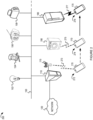
- FIG. 2 shows a system diagram of an example local network in which IoT devices may dynamically select operating roles.
- the network 200 includes similar devices as described in Figure 1 .
- the network 200 includes network nodes (the central access point 110, the first AP 115, the second AP 135), client device 170, and IoT devices 152, 154, 156, 158 coupled via the powerline 150.
- the refrigerator 180 and the washing machine 190 may be coupled via the powerline 150 (or via another network node, such as first AP 115 or second AP 135 (not shown)).
- the central access point 110 provides access to the broadband network 120.
- the client device 170 may be moving through the location at which the network 200 is deployed. At a first position 272, the client device 170 may have a wireless communication link 273 to the first AP 115. As the client device 170 moves to the second position 274, the signal strength of the wireless communication link 273 may decrease.
- the washing machine 190 may detect the client device 170 and determine that the washing machine 190 could provide a better wireless connection to the client device 170.
- the washing machine 190 may change from an endpoint role to a relay role in the network. In the relay role, the washing machine 190 may establish a wireless coverage area (such as an AP) for the client device 170.
- the client device 170 may establish a wireless communication link 275 to the washing machine 190.
- the washing machine 190 may select the relay role as a result of receiving a wireless connection request or other message from the client device 170 (or from the first AP 115).
- FIG. 3 shows a flowchart of an example IoT device that can bridge traffic for a client device in a local network.
- the flowchart 300 begins at block 310.
- a first IoT device may establish a first communication link between the first IoT device and a central access point of a local network.
- the first IoT device is initially configured for an endpoint role and may operate as an endpoint connected to the local network.
- the first communication link may be wireline or wireless.
- the first IoT device may obtain the configurations of another AP in the network so that the first IoT device can duplicate or mimic at least some of the configurations.
- the first IoT device may use a same service set identifier (SSID) and passphrase as another AP already in the local network.
- SSID service set identifier
- Bridging traffic may include classification, or separation, of different traffic types.
- the local network may utilize traffic classification so that specific types of traffic can be routed through a particular IoT devices or via a particular virtual local area network (VLAN).
- VLAN virtual local area network
- low latency background application traffic may be routed through the first IoT device rather than through a range extender or other AP in the network.
- data devices like laptops or tablets that may experience a lower link metric from a traditional range extender may benefit from connecting through the first IoT device.
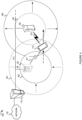
- FIG 4 shows a system diagram of an example local network showing coordination of two IoT devices.
- the network 400 includes similar devices as described for network 100 of Figure 1 . For brevity, some of the elements of network 100 are removed.
- a central access point 110 couples a broadband network 120 to a PLC subnet of the local network.
- the PLC subnet includes the refrigerator 180 and the washing machine 190.
- both the refrigerator 180 and the washing machine 190 are capable of operating as relay nodes and can operate as APs for the client device 170.
- the refrigerator 180 and the washing machine 190 implement a SON protocol for coordinating between APs.
- the SON protocol can include information about wireless configuration, channel selection, signal strength, and steering.
- Steering refers to any activity which causes a client device to change a wireless association away from a first AP to a second AP. Steering also may be referred to as a re-association activity, move, transfer, relocate, transition, switch, re-position, handover, or the like. Steering does not necessarily involve physical or geographic movement of the device. However, in the example of Figure 4 , the client device 170 may be moving away from the washing machine 190 and towards the refrigerator 180. For example, the client device 170 may be held by an operator walking through a house in which the washing machine 190 and the refrigerator 180 are located.
- the washing machine 190 and refrigerator 180 may implement the SON protocol to communicate about the wireless coverage areas that each IoT device will provide.
- the washing machine 190 may decrease signal power for its AP so that the wireless coverage area decreases (from 491 to 492) when the client device 170 moves close enough to join a wireless coverage area of the refrigerator 180.
- the refrigerator 180 may increase signal power for its AP so that the wireless coverage area increases (from 481 to 482).
- the washing machine 190 and the refrigerator 180 coordinate to steer the client device 170 to drop the previous wireless communication link 471 (to the washing machine 190) and establish the new wireless communication link 472 (to the refrigerator 180).
- the washing machine 190 may determine whether any other client devices are using the coverage area (or in the vicinity) of the washing machine 190. If no other client devices are in the vicinity of the washing machine 190 or will not use the coverage area of the washing machine 190, the washing machine 190 may change its AP interface to a low power mode and revert to an endpoint in the network. The washing machine 190 may periodically announce its availability to serve as a relay node and await a wireless association request from a client device before re-enabling the coverage area and again changing to operate as a relay node.
- a decision to steer the client device may be based on quality of service in addition to (or independently from) movement of the client device.
- a first IoT device may determine to steer the client device from the first IoT device to a second access point in the local network based on estimated quality of service metrics.
- the second access point may be a second IoT device (as the example in Figure 4 ) or may be another access point (not shown).
- the first IoT device determines a first link metric for the first communication link between the first IoT device and a central access point of the local network.
- the first IoT device also may determine a second link metric for a third communication link between the second access point and the central access point.
- the first IoT device may steer the client device to the second access point if the first IoT device determines that the second access point would provide a higher quality of service (such as lower latency, greater throughput, or the like). for the client device based, at least in part, on a comparison of the first link metric and the second link metric.
- application specific routing may be used in the network to route some types of traffic (such as defined by QoS requirements) though a particular IoT device.
- a particular IoT device may implement unique features using application programming interfaces (APIs) in the IoT device.
- APIs application programming interfaces
- FIG. 6 shows a message flow diagram of an IoT device in an example local network.
- the network 600 includes a central access point 110, an IoT device 680, and a client device 170.
- the IoT device 680 establishes a first communication link to the central access point 110.
- the IoT device 680 may be operating as an endpoint in the network 600.
- the client device 170 also may initially have a communication link to the central access point 110.
- the electronic device may include one or more network interfaces 704, which may be a wireless network interface (such as a wireless local area network, WLAN, interface, a Bluetooth ® interface, a WiMAX interface, a ZigBee ® interface, a Wireless universal serial bus, USB, interface,or the like) or a wired network interface (such as a powerline communication interface, an Ethernet interface, etc.).
- network interfaces 704 may be a wireless network interface (such as a wireless local area network, WLAN, interface, a Bluetooth ® interface, a WiMAX interface, a ZigBee ® interface, a Wireless universal serial bus, USB, interface,or the like) or a wired network interface (such as a powerline communication interface, an Ethernet interface, etc.).
- electronic device 700 may support multiple network interfaces 704 - each of which may be configured to couple the electronic device 700 to a different communication network.
- the memory 706 includes functionality to support various implementations described above.
- the memory 706 may include one or more functionalities that facilitate implementations of this disclosure.
- memory 706 can implement one or more aspects of refrigerator 180, washing machine 190, or IoT device 680 as described above.
- the memory 706 can enable implementations described in Figures 1-7 above.
- the electronic device 700 also may include other components 708.
- the other components 708 may include data-producing or data-consuming components of the IoT device (such as sensors, user interface components, output components, or the like).
- the electronic device 700 may include a SON configuration unit 710 and a bridging unit 720.
- the SON configuration unit 710 may operate a SON protocol that is used by the electronic device 700 to communicate with other APs in the network.
- the SON configuration unit 710 may determine a configuration for the network interfaces 704 based on the information collected via the SON protocol.
- the bridging unit 720 may provide the bridging of traffic between two or more communication links. For example, the bridging unit 720 may bridge traffic for a client device that has a communication link using the electronic device 700 for access to the local network.
- a phrase referring to "at least one of" a list of items refers to any combination of those items, including single members.
- "at least one of: a, b, or c” is intended to cover: a, b, c, a-b, a-c, b-c, and a-b-c.
- the hardware and data processing apparatus used to implement the various illustrative logics, logical blocks, modules and circuits described in connection with the aspects disclosed herein may be implemented or performed with a general purpose single- or multi-chip processor, a digital signal processor (DSP), an application-specific integrated circuit (ASIC), a field-programmable gate array (FPGA) or other programmable logic device, discrete gate or transistor logic, discrete hardware components, or any combination thereof designed to perform the functions described herein.
- a general-purpose processor may be a microprocessor, or, any conventional processor, controller, microcontroller, or state machine.
- a processor also may be implemented as a combination of computing devices, such as a combination of a DSP and a microprocessor, a plurality of microprocessors, one or more microprocessors in conjunction with a DSP core, or any other such configuration.
- particular processes and methods may be performed by circuitry that is specific to a given function.
- the functions described may be implemented in hardware, digital electronic circuitry, computer software, firmware, including the structures disclosed in this specification and their structural equivalents thereof, or in any combination thereof. Implementations of the subject matter described in this specification also can be implemented as one or more computer programs, i.e., one or more modules of computer program instructions, encoded on a computer storage media for execution by, or to control the operation of, data processing apparatus.
- Computer-readable media includes both computer storage media and communication media including any medium that can be enabled to transfer a computer program from one place to another.
- a storage media may be any available media that may be accessed by a computer.
- such computer-readable media may include RAM, ROM, EEPROM, CD-ROM or other optical disk storage, magnetic disk storage or other magnetic storage devices, or any other medium that may be used to store desired program code in the form of instructions or data structures and that may be accessed by a computer.
- Disk and disc includes compact disc (CD), laser disc, optical disc, digital versatile disc (DVD), floppy disk, and Blu-rayTM disc where disks usually reproduce data magnetically, while discs reproduce data optically with lasers. Combinations of the above should also be included within the scope of computer-readable media. Additionally, the operations of a method or algorithm may reside as one or any combination or set of codes and instructions on a machine-readable medium and computer-readable medium, which may be incorporated into a computer program product.
Landscapes
- Engineering & Computer Science (AREA)
- Computer Networks & Wireless Communication (AREA)
- Signal Processing (AREA)
- Automation & Control Theory (AREA)
- Computing Systems (AREA)
- Multimedia (AREA)
- Mobile Radio Communication Systems (AREA)
- Medicines Containing Material From Animals Or Micro-Organisms (AREA)
- Data Exchanges In Wide-Area Networks (AREA)
Description
- This disclosure generally relates to the field of communication, and more particularly to internet of things (IoT) devices in a communication network.
- Internet of things (IoT) refers to network enablement of devices that were not traditionally intended to operate in a network. Examples of IoT devices include cameras, drones, wearable devices, home appliances, lighting systems, security system components, speakers, smart refrigerators, televisions, and the like. For example, IoT devices may include "smart" appliances which allow an operator to control or automate operation of the appliance. Some IoT devices are data-consuming or data-producing devices which may be added to a local network. A local network may include one or more access points (AP) that provide connectivity to the local network. There may be opportunities to enhance connectivity as a result of adding IoT devices to the local network.
-
WO2011/153507 A2 relates to an arrangement in which a wireless device (e.g., cellular telephone) communicates with a base station in a cell of the cellular network over a non-cellular interface via another wireless device in the cell through the use of multi-hopping. The wireless device requests permission to communicate with the base station over a non-cellular interface via hopping off another wireless device when its signal strength is below a threshold. -
US2016/227461A1 relates to a method to provide mobility support of UEs that are served by mobile relay base stations, by providing handover of a UE for data traffic only between two mobile relay base stations. The handover is triggered by any of the following: based on UE's measurement report, the signal quality of a neighbour cell is better than the current serving cell; based on the measurement of the serving mobile relay base station, the signal quality of the link to the UE is worse than a certain threshold; or based on the measurement of the serving mobile relay base station, the signal quality of a neighbour cell (potential donor base station) is much better than the current donor base station. - The systems, methods, and devices of this disclosure each have several innovative aspects, no single one of which is solely responsible for the desirable attributes disclosed herein.
- In accordance with the present invention, there is provided a method as set out in
claim 1, an IoT device as set out in claim 11, a computer readable medium as set out in claim 12 and a system as set out in claim 13. Other aspects of the invention can be found in the dependent claims. - Details of one or more implementations of the subject matter described in this disclosure are set forth in the accompanying drawings and the description below. Other features, aspects, and advantages will become apparent from the description, the drawings, and the claims. Note that the relative dimensions of the following figures may not be drawn to scale.
-
-
Figure 1 shows a system diagram of an example local network including internet of things (IoT) devices and client devices. -
Figure 2 shows a system diagram of an example local network in which IoT devices may dynamically select operating roles. -
Figure 3 shows a flowchart of an example IoT device that can bridge traffic for a client device in a local network. -
Figure 4 shows a system diagram of an example local network showing coordination of two IoT devices. -
Figure 5 shows a system diagram of an example local network in which a first IoT device can be used for diagnostic measurements. -
Figure 6 shows an unclaimed message flow diagram of an IoT device in an example local network. -
Figure 7 shows a block diagram of an example electronic device for implementing aspects of this disclosure. - Like reference numbers and designations in the various drawings indicate like elements.
- The following description is directed to certain implementations for the purposes of describing the innovative aspects of this disclosure. However, a person having ordinary skill in the art will readily recognize that the teachings herein can be applied in a multitude of different ways. Some examples in this disclosure may be based on wireless local area network (WLAN) communication according to the Institute of Electrical and Electronics Engineers (IEEE) 802.11 IoT device and a client device. The first IoT device may bridge traffic associated with the client device via the first communication link and the second communication link.
- Details of one or more implementations of the subject matter described in this disclosure are set forth in the accompanying drawings and the description below. Other features, aspects, and advantages will become apparent from the description, the drawings, and the claims. Note that the relative dimensions of the following figures may not be drawn to scale.
-
-
Figure 1 shows a system diagram of an example local network including internet of things (IoT) devices and client devices. -
Figure 2 shows a system diagram of an example local network in which IoT devices may dynamically select operating roles. -
Figure 3 shows a flowchart of an example IoT device that can bridge traffic for a client device in a local network. -
Figure 4 shows a system diagram of an example local network showing coordination of two IoT devices. -
Figure 5 shows a system diagram of an example local network in which a first IoT device can be used for diagnostic measurements. -
Figure 6 shows a message flow diagram of an IoT device in an example local network. -
Figure 7 shows a block diagram of an example electronic device for implementing aspects of this disclosure. - Like reference numbers and designations in the various drawings indicate like elements.
- The following description is directed to certain implementations for the purposes of describing the innovative aspects of this disclosure. However, a person having ordinary skill in the art will readily recognize that the teachings herein can be applied in a multitude of different ways. Some examples in this disclosure may be based on wireless local area network (WLAN) communication according to the Institute of Electrical and Electronics Engineers (IEEE) 802.11 wireless standards. However, the described implementations may be implemented in any device, system or network that is capable of transmitting and receiving radio frequency (RF) signals according to any communication standard, such as any of the IEEE 802.11 standards, the Bluetooth® standard, code division multiple access (CDMA), frequency division multiple access (FDMA), time division multiple access (TDMA), Global System for Mobile communications (GSM), GSM/General Packet Radio Service (GPRS), Enhanced Data GSM Environment (EDGE), Terrestrial Trunked Radio (TETRA), Wideband-CDMA (W-CDMA), Evolution Data Optimized (EV-DO), 1xEV-DO, EV-DO Rev A, EV-DO Rev B, High Speed Packet Access (HSPA), High Speed Downlink Packet Access (HSDPA), High Speed Uplink Packet Access (HSUPA), Evolved High Speed Packet Access (HSPA+), Long Term Evolution (LTE), AMPS, or other known signals that are used to communicate within a wireless, cellular or internet of things (IoT) network, such as a system utilizing 3G, 4G or 5G, or further implementations thereof, technology.
- A local network in a home, apartment, business, or other area may include a variety of devices that utilize the local network to communicate with each other or with devices in another network. For example, the local network may provide access for local devices to communicate to an upstream network (such as access to the Internet, via a broadband network). The local network may include one or more access points (APs) to provide wireless coverage for the local network. Typically, one of the APs will be referred to as a root AP, while other APs make automatic path or routing selection using a logical topology between each of the other APs and the root AP. A local network which is capable of coordinating between two or more APs to manage a topology or aggregate wireless coverage area may be referred to as a self-organizing network (SON). A SON protocol may be used between the two or more APs to coordinate wireless channel configurations or other implementation settings.
- There are several types of devices that may operate in the local network. For example, the local network may include one or more access points, client devices, and IoT devices. Examples of client devices may include mobile devices, laptops, computers, or wearable computing devices. Examples of IoT devices may include appliances, sensors, or other machines which are capable of communication via the local network and which perform other traditional machine functions. In some implementations, the IoT devices may not have been previously network-enabled. IoT devices may be data-consuming or data-producing devices and may operate as an endpoint connected to the local network. For example, the IoT device may be configured as a station (STA) connected to an AP. When operated as a STA, the IoT device may be operating in an endpoint role in the network. However, some IoT devices may be capable of operating in a relay role in the local network. In the relay role, an IoT device may provide wireless connectivity (as an AP) for a client device and relay traffic to or from the client device and an upstream connection to the local network.
- In this disclosure, an IoT device may change its operating role based on a determination of whether the relay role would enhance connectivity for a client device that is within a wireless range of the IoT device. In one operating role (such as the "endpoint role"), the IoT device may operate as an endpoint in the network. In another operating role (such as the "relay role"), the IoT device may operate as a relay node between a client device and the local network. For example, the IoT device can operate as an AP or repeater in the SON and provide wireless access for a client device. The IoT device can bridge traffic to or from the client device and another access node (such as the central access point or another access point) of the network. In some implementations, the IoT device can utilize the SON protocol to communicate and coordinate with other APs (or other IoT devices) in the local network to optimize wireless coverage for the local network or to manage steering of the client device between APs. In some implementations, each IoT device may independently and dynamically select an operating role for itself.
- In one aspect, an IoT device may advertise a capability to operate in the relay role. A client device may send a request to the IoT device to establish a wireless association between the client device and the IoT device. Thus, the client device may stimulate the IoT device to select the relay role. In response to receiving the request for the wireless association, the IoT device may change from an endpoint role to the relay role. In this scenario, the capability of the client device and the proximity of the client device to the IoT device may be factors which influence the operating role selection of the IoT device.
- In one aspect, an IoT device may coordinate with one or more other IoT devices in the local network. A selection of which IoT device to use the relay role may be based on a position (or movement) of the client device relative to the IoT devices. For example, when the client device is proximately close to an IoT device, that IoT device may change to the relay role to provide wireless connectivity to the client device. As the client device moves throughout a location, different IoT devices may change to the relay role to provide seamless wireless coverage for the client device. When there are no client devices proximately close to an IoT device (or not using the IoT device), the IoT device may change to an endpoint role to conserve power and reduce wireless interference.
- In one aspect, an IoT device may temporarily provide a diagnostic role in the local network. In the diagnostic role, the IoT device may enable a wireless interface to obtain diagnostic measurements associated with at least one other device in the local network. For example, the IoT device may conduct measurements regarding the wireless environment or regarding another device coupled to the local network. The diagnostic role may be used for troubleshooting or maintenance of other devices. For example, diagnostic information (such as automated diagnostic reports) can be sent to a server in an upstream network (such as a service provider host in the cloud). The diagnostic information may be used for analytics of the other IoT device or for optimizing the SON network.
- Particular implementations of the subject matter described in this disclosure can be implemented to realize one or more of the following potential advantages. For example, wireless coverage of the local network can be extended in places where IoT devices are deployed. A client device may enjoy better wireless coverage or quality of service as a result of the IoT device operating as a relay node for the client device. Furthermore, IoT devices may coordinate using a SON protocol to manage or adapt configurations of their coverage areas and thus provide more complete wireless coverage for a client device in the local network. Additionally, an IoT device could be used for diagnostic measurements of another IoT device or AP in the network. In some implementations, integration of the IOT devices to a SON may improve the range and coverage of the SON within a connected home. In addition, traffic separation and quality of service (QoS) policies can be integrated into this service to route packets between a combination of SON network nodes and IOT devices depending on QoS and latency requirements of specific applications.
-
Figure 1 shows a system diagram of an example local network including internet of things (IoT) devices and client devices. Thenetwork 100 includescentral access point 110 which provides access for the local network to abroadband network 120. A gateway device (not shown) may provide access between the local network and thebroadband network 120. For example, the gateway device can couple to thebroadband network 120 through a cable, a fiber optic, a powerline, Ethernet, or digital subscriber line (DSL) network connection. A central access point 110 (sometimes also referred to as a central AP, CAP, or root AP) in the local network may route traffic between the local network and the gateway device. In some implementations, the central access point may be integrated or collocated with the gateway device. There may be multiple access points in the local network. Each AP in the local network may have different hardware capabilities (such as 2.4 GHz or 5 GHz support, dual-band single radio, dual band dual concurrent radios (DBDC), or the like) that may provide different options for wireless coverage. Typically, each AP utilizes one or more channels within a frequency band. A channel may refer to a frequency (or range) used by the AP to communicate with devices that have a wireless association with the AP. Similarly, client devices and IoT devices utilize the channel to communicate (via a wireless association) with the AP. - The
central access point 110 may be considered a first AP 115 (or may include the first AP 115) which provides a wireless coverage area for client devices and IoT devices. For example, awashing machine 190 is an example of an IoT device and has awireless communication link 192 to thefirst AP 115. A client device 170 (such as a mobile phone) may initially have awireless communication link 171 to thefirst AP 115. Thecentral access point 110 also may provide wireline access for devices in thenetwork 100. In the example ofFigure 1 , thecentral access point 110 has anEthernet connection 162 to adesktop computer 160 and also provides connectivity, using powerline communication (PLC) on apowerline 150 toIoT devices second AP 135 is communicatively coupled to thecentral access point 110 via thepowerline 150. In some implementations, thesecond AP 135 may be referred to as a range extender (RE) for adding wireless coverage area using similar AP configurations as thefirst AP 115. InFigure 1 , arefrigerator 180 is an example of an IoT device and has awireless communication link 182 to thesecond AP 135. - The
central access point 110,first AP 115 andsecond AP 135 may be referred to as network nodes in the local network because they provide connectivity for the other devices to access the local network.Figure 1 is provided as an example of some connectivity options between the various IoT devices, client devices and network nodes, which may include wireless or wireline connections in different implementations. InFigure 1 , thewashing machine 190 and theIoT devices Figure 1 , they are not configured to provide network connectivity for any other devices. InFigure 1 , thewashing machine 190 and theIoT devices - In
Figure 1 , arefrigerator 180 may initially be operating in an endpoint role. However, aclient device 170 may move to aposition 172 in which it would be beneficial for the refrigerator to take on a relay role for the local network. In the relay role, therefrigerator 180 may provide a wireless coverage area and establish awireless communication link 175 to theclient device 170. Therefrigerator 180 may alter its configuration so that it can use its upstreamwireless communication link 182 to thesecond AP 135 to carry traffic to or from theclient device 170. For example, thesecond AP 135 may route downstream traffic destined to theclient device 170 via thewireless communication link 182. Therefrigerator 180 may bridge the downstream traffic fromwireless communication link 182 to thewireless communication link 175. In this way, both theclient device 170 and therefrigerator 180 can utilize thewireless communication link 182 to access the local network. - There are a variety of ways the
refrigerator 180 can provide access for theclient device 170. For example, in some implementations, therefrigerator 180 may be equipped with a second wireless interface that can operate as an AP for the local network. In some other implementations, therefrigerator 180 may utilize a single wireless interface to alternate between thewireless communication link 182 and thewireless communication link 175. In yet other implementations, therefrigerator 180 may use a PLC interface (not shown) to join the local network and use a wireless interface to operate as an AP for thewireless communication link 175. - In some implementations, the use of a SON protocol may improve coordination between the IoT devices and other network nodes. Traditionally, a SON protocol may be utilized for self-configuration, self-management, self-healing or self-correcting capabilities of the SON having multiple APs. In this disclosure, a SON protocol may be extended to provide communication between the IoT devices and other network nodes (such as the
APs 115, 135). Therefrigerator 180 may communicate with thefirst AP 115 using SON protocol messages. Therefrigerator 180 may indicate to the first AP 115 (or the client device 170) that therefrigerator 180 is capable of selecting a relay role. The first AP 115 (or the client device 170) may send a request to therefrigerator 180 to cause therefrigerator 180 to change to the relay role. In some implementations, a central controller may coordinate operating roles for various network nodes and IoT devices. The central controller may utilize the SON protocol to communicate regarding capabilities and role selections. In this disclosure, the SON protocol may or may not be implemented as a single protocol specification. For example, a SON protocol may be implemented by one or more daemons or software running on multiple APs, and may even be a combination of several communication techniques (possibly from different protocols) for performing automated AP procedures for on-boarding, configuration, or self-management. In some implementations, the SON protocol may be implemented using IEEE 1905 standards-compliant messages. -
Figure 2 shows a system diagram of an example local network in which IoT devices may dynamically select operating roles. Thenetwork 200 includes similar devices as described inFigure 1 . For example, thenetwork 200 includes network nodes (thecentral access point 110, thefirst AP 115, the second AP 135),client device 170, andIoT devices powerline 150. InFigure 2 , therefrigerator 180 and thewashing machine 190 may be coupled via the powerline 150 (or via another network node, such asfirst AP 115 or second AP 135 (not shown)). Thecentral access point 110 provides access to thebroadband network 120. - In the example of
Figure 2 , theclient device 170 may be moving through the location at which thenetwork 200 is deployed. At afirst position 272, theclient device 170 may have awireless communication link 273 to thefirst AP 115. As theclient device 170 moves to thesecond position 274, the signal strength of thewireless communication link 273 may decrease. Thewashing machine 190 may detect theclient device 170 and determine that thewashing machine 190 could provide a better wireless connection to theclient device 170. Thewashing machine 190 may change from an endpoint role to a relay role in the network. In the relay role, thewashing machine 190 may establish a wireless coverage area (such as an AP) for theclient device 170. Theclient device 170 may establish awireless communication link 275 to thewashing machine 190. In some implementations, thewashing machine 190 may select the relay role as a result of receiving a wireless connection request or other message from the client device 170 (or from the first AP 115). - Continuing with the example of
Figure 2 , theclient device 170 may continue moving through the location. Moving from thesecond position 274 to athird position 276, theclient device 170 may experience a decrease in signal strength for thewireless communication link 275. Therefrigerator 180 may receive a request or detect the presence of theclient device 170 and change from an endpoint role to a relay role. In the relay role, therefrigerator 180 may establish a wireless coverage area in which theclient device 170 may establish awireless communication link 277 to therefrigerator 180. When theclient device 170 is at thethird position 276, thewashing machine 190 may determine that it no longer is beneficial for thewashing machine 190 to operate in the relay role. Thewashing machine 190 may change back to an endpoint role to conserve power and reduce wireless interference at the location. -
Figure 3 shows a flowchart of an example IoT device that can bridge traffic for a client device in a local network. Theflowchart 300 begins atblock 310. Atblock 310, a first IoT device may establish a first communication link between the first IoT device and a central access point of a local network. The first IoT device is initially configured for an endpoint role and may operate as an endpoint connected to the local network. The first communication link may be wireline or wireless. - At
block 320, the first IoT device may establish a second communication link via a wireless association between the first IoT device and a client device. The first IoT device may select a relay role based on a determination that the relay role would enhance connectivity for a client device that is within a wireless range of the first IoT device. For example, the first IoT device may operate a wireless interface of the first IoT device as an access point. The first IoT device may broadcast its ability to serve as a relay node and receive a wireless association request from the client device. In some implementations, the client device may be a second IoT device attempting to gain access to the local network via the first IoT device. - At block 340, the first IoT device may bridge traffic associated with the client device via the first communication link and the second communication link in response to changing the configuration of the first IoT device to operate as the relay node. For example, the first IoT device may route traffic based on a media access control (MAC) address or internet protocol (IP) address associated with the client device. In some implementations, the first IoT device may change a configuration of the first IoT device to perform a relay role between the network node and the client device (rather than as an endpoint role). For example, the first IoT device may send a SON protocol message to another network node in the network to indicate that the first IoT device is providing access for the client device. In some implementations, the first IoT device may obtain the configurations of another AP in the network so that the first IoT device can duplicate or mimic at least some of the configurations. As an example, the first IoT device may use a same service set identifier (SSID) and passphrase as another AP already in the local network.
- Bridging traffic may include classification, or separation, of different traffic types. For example, in some implementations, the local network may utilize traffic classification so that specific types of traffic can be routed through a particular IoT devices or via a particular virtual local area network (VLAN). For example, low latency background application traffic may be routed through the first IoT device rather than through a range extender or other AP in the network. As an example, data devices like laptops or tablets that may experience a lower link metric from a traditional range extender may benefit from connecting through the first IoT device.
-
Figure 4 shows a system diagram of an example local network showing coordination of two IoT devices. Thenetwork 400 includes similar devices as described fornetwork 100 ofFigure 1 . For brevity, some of the elements ofnetwork 100 are removed. In thenetwork 400, acentral access point 110 couples abroadband network 120 to a PLC subnet of the local network. The PLC subnet includes therefrigerator 180 and thewashing machine 190. In thenetwork 400, both therefrigerator 180 and thewashing machine 190 are capable of operating as relay nodes and can operate as APs for theclient device 170. Therefrigerator 180 and thewashing machine 190 implement a SON protocol for coordinating between APs. The SON protocol can include information about wireless configuration, channel selection, signal strength, and steering. Steering refers to any activity which causes a client device to change a wireless association away from a first AP to a second AP. Steering also may be referred to as a re-association activity, move, transfer, relocate, transition, switch, re-position, handover, or the like. Steering does not necessarily involve physical or geographic movement of the device. However, in the example ofFigure 4 , theclient device 170 may be moving away from thewashing machine 190 and towards therefrigerator 180. For example, theclient device 170 may be held by an operator walking through a house in which thewashing machine 190 and therefrigerator 180 are located. - As the
client device 170 moves away from thewashing machine 190 and towards therefrigerator 180, thewashing machine 190 andrefrigerator 180 may implement the SON protocol to communicate about the wireless coverage areas that each IoT device will provide. For example, thewashing machine 190 may decrease signal power for its AP so that the wireless coverage area decreases (from 491 to 492) when theclient device 170 moves close enough to join a wireless coverage area of therefrigerator 180. Similarly, therefrigerator 180 may increase signal power for its AP so that the wireless coverage area increases (from 481 to 482). Thewashing machine 190 and therefrigerator 180 coordinate to steer theclient device 170 to drop the previous wireless communication link 471 (to the washing machine 190) and establish the new wireless communication link 472 (to the refrigerator 180). In this way, as theclient device 170 moves about the environment, the APs associated with IoT devices can modify wireless coverage areas to best serve theclient device 170. The SON protocol may define messaging that is used by the IoT devices to communicate about network configurations. For example, the SON protocol may be used to communicate about wireless channels or power levels for each AP (or IoT device acting as an AP) to utilize. - In some implementations, when the
client device 170 moves out of the coverage area for thewashing machine 190, thewashing machine 190 may determine whether any other client devices are using the coverage area (or in the vicinity) of thewashing machine 190. If no other client devices are in the vicinity of thewashing machine 190 or will not use the coverage area of thewashing machine 190, thewashing machine 190 may change its AP interface to a low power mode and revert to an endpoint in the network. Thewashing machine 190 may periodically announce its availability to serve as a relay node and await a wireless association request from a client device before re-enabling the coverage area and again changing to operate as a relay node. - In some implementations, a decision to steer the client device may be based on quality of service in addition to (or independently from) movement of the client device. For example, a first IoT device may determine to steer the client device from the first IoT device to a second access point in the local network based on estimated quality of service metrics. The second access point may be a second IoT device (as the example in
Figure 4 ) or may be another access point (not shown). The first IoT device determines a first link metric for the first communication link between the first IoT device and a central access point of the local network. The first IoT device also may determine a second link metric for a third communication link between the second access point and the central access point. The first IoT device may steer the client device to the second access point if the first IoT device determines that the second access point would provide a higher quality of service (such as lower latency, greater throughput, or the like). for the client device based, at least in part, on a comparison of the first link metric and the second link metric. - In some implementations, application specific routing may be used in the network to route some types of traffic (such as defined by QoS requirements) though a particular IoT device. In some implementations, a particular IoT device may implement unique features using application programming interfaces (APIs) in the IoT device.
-
Figure 5 shows a system diagram of an example local network in which a first IoT device can be used for diagnostic measurements. Thenetwork 500 includes similar devices as described fornetwork 100 ofFigure 1 . For brevity, some of the elements ofnetwork 100 are removed. In thenetwork 500, acentral access point 110 couples a PLC subnet of the local network via thepowerline 150. Thenetwork 500 includes afirst AP 115 and asecond AP 135. Thefirst AP 115 provide wireless access to asecurity camera 595. Thesecond AP 135 is providing wireless access to therefrigerator 180. Some IoT devices (such as the security camera 595) may have capabilities that are accessible from broadband network (such as "the cloud") for typical customer usage or for product diagnostics. Therefore, there may be a reason to conduct measurements regarding the wireless environment or regarding a device coupled to the network. In the example ofFigure 5 , thesecurity camera 595 may be within awireless range 580 of therefrigerator 180. Therefrigerator 180 may be capable of conducting remote access ordiagnostic measurements 525 of thesecurity camera 595. For example, therefrigerator 180 may change the operation of therefrigerator 180 to become a relay node and use thewireless range 580 to provide connectivity to thesecurity camera 595. While thesecurity camera 595 is accessing the network via therefrigerator 180, therefrigerator 180 may perform diagnostic functions on thesecurity camera 595. In some implementations, therefrigerator 180 may simply scan and observe the wireless environment to obtain diagnostic information about thesecurity camera 595. In some implementations, a service provider (such as a security system company or a cloud backup service) may utilize the remote access or diagnostic information to maintain or troubleshoot thesecurity camera 595. - As IoT devices are deployed in home and businesses, operators of networks may utilize a first IoT device for these diagnostic functions to better understand or troubleshoot a second IoT device or another device in the network. Thus, the first IoT device can perform a diagnostic role in the network. In the diagnostic role, the first IoT device also may concurrently operate an endpoint role or a relay role for the network. Because the first IoT device can dynamically select its operating role in the network, the first IoT device may provide network edge services that otherwise might not be available on an endpoint.
-
Figure 6 shows a message flow diagram of an IoT device in an example local network. Thenetwork 600 includes acentral access point 110, anIoT device 680, and aclient device 170. At 610, theIoT device 680 establishes a first communication link to thecentral access point 110. Initially, theIoT device 680 may be operating as an endpoint in thenetwork 600. At 612, theclient device 170 also may initially have a communication link to thecentral access point 110. - At 618, the
IoT device 680 may "opt-in" to provide services as a relay node. For example, a push button, touch screen interface, software API, control application, or other configuration utility could be used to enable theIoT device 680 to operate as a relay node. Alternatively, theIoT device 680 may enable the services for relay node as an "on-demand" feature whenever it detects theclient device 170. In some implementations, theIoT device 680 may enable the services (either as "opt-in" or "on-demand") in real-time, dynamically, based on channel loading, interference, or link metrics associated with one or more APs in the local network. For example, a SON protocol may enable the services dynamically in response to changes in the wireless environment, utilization, or locations of client devices. - At 620, the
IoT device 680 may advertise its ability to serve as a relay node (performing a relay role) for the network. For example, theIoT device 680 may broadcast a message (such as a beacon message) offering to enable a wireless access point at theIoT device 680 if theIoT device 680 receives a request from the client device 170 (or any other client device in the network). In some implementations, theIoT device 680 may use an information element (IE) to advertise relay or repeater capabilities. In some implementations, an application programming interface (API) of theIoT device 680 may be used to enable the IE. At 630, theIoT device 680 also may send a message to thecentral access point 110 indicating that theIoT device 680 is capable of j oining the SON protocol associated with the local network. - At 640, the
IoT device 680 may receive a request from theclient device 170 for a wireless association. At 650, theIoT device 680 may change its operating role so that theIoT device 680 will operate as a relay node between thecentral access point 110 and theclient device 170. For example, theIoT device 680 may enable an AP interface at theIoT device 680 and accept the wireless association from theclient device 170. At 660, theIoT device 680 may send an indication to thecentral access point 110 that theclient device 170 is utilizing theIoT device 680 as a relay node. For example, the indication may be a SON protocol message or may be an address resolution protocol (ARP) message. At 671 and 672, theIoT device 680 may bridge traffic from theclient device 170 to thecentral access point 110. -
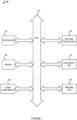
Figure 7 shows a block diagram of an exampleelectronic device 700 for implementing aspects of this disclosure. In some implementations, theelectronic device 700 may be an IoT device (such refrigerator 180,washing machine 190, or IoT device 680). Theelectronic device 700 includes a processor 702 (possibly including multiple processors, multiple cores, multiple nodes, or implementing multi-threading, etc.). Theelectronic device 700 includes amemory 706. Thememory 706 may be system memory or any one or more of the below-described possible realizations of machine-readable media. Theelectronic device 700 also may include a bus 701 (such as PCI, ISA, PCI-Express, HyperTransport®, InfiniBand®, NuBus, AHB, AXI, etc.). The electronic device may include one ormore network interfaces 704, which may be a wireless network interface (such as a wireless local area network, WLAN, interface, a Bluetooth® interface, a WiMAX interface, a ZigBee® interface, a Wireless universal serial bus, USB, interface,or the like) or a wired network interface (such as a powerline communication interface, an Ethernet interface, etc.). In some implementations,electronic device 700 may support multiple network interfaces 704 - each of which may be configured to couple theelectronic device 700 to a different communication network. - The
memory 706 includes functionality to support various implementations described above. Thememory 706 may include one or more functionalities that facilitate implementations of this disclosure. For example,memory 706 can implement one or more aspects ofrefrigerator 180,washing machine 190, orIoT device 680 as described above. Thememory 706 can enable implementations described inFigures 1-7 above. Theelectronic device 700 also may includeother components 708. For example, theother components 708 may include data-producing or data-consuming components of the IoT device (such as sensors, user interface components, output components, or the like). - The
electronic device 700 may include aSON configuration unit 710 and abridging unit 720. TheSON configuration unit 710 may operate a SON protocol that is used by theelectronic device 700 to communicate with other APs in the network. TheSON configuration unit 710 may determine a configuration for the network interfaces 704 based on the information collected via the SON protocol. Thebridging unit 720 may provide the bridging of traffic between two or more communication links. For example, thebridging unit 720 may bridge traffic for a client device that has a communication link using theelectronic device 700 for access to the local network. - Any one of these functionalities may be partially (or entirely) implemented in hardware, such as on the
processor 702. For example, the functionality may be implemented with an application specific integrated circuit, in logic implemented in theprocessor 702, in a coprocessor on a peripheral device or card, etc. Further, realizations may include fewer or additional components not illustrated inFigure 7 (such as video cards, audio cards, additional network interfaces, peripheral devices, etc.). Theprocessor 702, and thememory 706, may be coupled to thebus 701. Although illustrated as being coupled to thebus 701, thememory 706 may be directly coupled to theprocessor 702. - As used herein, a phrase referring to "at least one of" a list of items refers to any combination of those items, including single members. As an example, "at least one of: a, b, or c" is intended to cover: a, b, c, a-b, a-c, b-c, and a-b-c.
- The various illustrative logics, logical blocks, modules, circuits and algorithm processes described in connection with the implementations disclosed herein may be implemented as electronic hardware, computer software, or combinations of both. The interchangeability of hardware and software has been described generally, in terms of functionality, and illustrated in the various illustrative components, blocks, modules, circuits and processes described above. Whether such functionality is implemented in hardware or software depends on the particular application and design constraints imposed on the overall system.
- The hardware and data processing apparatus used to implement the various illustrative logics, logical blocks, modules and circuits described in connection with the aspects disclosed herein may be implemented or performed with a general purpose single- or multi-chip processor, a digital signal processor (DSP), an application-specific integrated circuit (ASIC), a field-programmable gate array (FPGA) or other programmable logic device, discrete gate or transistor logic, discrete hardware components, or any combination thereof designed to perform the functions described herein. A general-purpose processor may be a microprocessor, or, any conventional processor, controller, microcontroller, or state machine. A processor also may be implemented as a combination of computing devices, such as a combination of a DSP and a microprocessor, a plurality of microprocessors, one or more microprocessors in conjunction with a DSP core, or any other such configuration. In some implementations, particular processes and methods may be performed by circuitry that is specific to a given function.
- In one or more aspects, the functions described may be implemented in hardware, digital electronic circuitry, computer software, firmware, including the structures disclosed in this specification and their structural equivalents thereof, or in any combination thereof. Implementations of the subject matter described in this specification also can be implemented as one or more computer programs, i.e., one or more modules of computer program instructions, encoded on a computer storage media for execution by, or to control the operation of, data processing apparatus.
- If implemented in software, the functions may be stored on or transmitted over as one or more instructions or code on a computer-readable medium. The processes of a method or algorithm disclosed herein may be implemented in a processor-executable software module which may reside on a computer-readable medium. Computer-readable media includes both computer storage media and communication media including any medium that can be enabled to transfer a computer program from one place to another. A storage media may be any available media that may be accessed by a computer. By way of example, and not limitation, such computer-readable media may include RAM, ROM, EEPROM, CD-ROM or other optical disk storage, magnetic disk storage or other magnetic storage devices, or any other medium that may be used to store desired program code in the form of instructions or data structures and that may be accessed by a computer. Also, any connection can be properly termed a computer-readable medium. Disk and disc, as used herein, includes compact disc (CD), laser disc, optical disc, digital versatile disc (DVD), floppy disk, and Blu-rayTM disc where disks usually reproduce data magnetically, while discs reproduce data optically with lasers. Combinations of the above should also be included within the scope of computer-readable media. Additionally, the operations of a method or algorithm may reside as one or any combination or set of codes and instructions on a machine-readable medium and computer-readable medium, which may be incorporated into a computer program product.
- Additionally, a person having ordinary skill in the art will readily appreciate, the terms "upper" and "lower" are sometimes used for ease of describing the figures, and indicate relative positions corresponding to the orientation of the figure on a properly oriented page, and may not reflect the proper orientation of any device as implemented.
- Certain features that are described in this specification in the context of separate implementations also can be implemented in combination in a single implementation. Conversely, various features that are described in the context of a single implementation also can be implemented in multiple implementations separately or in any suitable subcombination. Moreover, although features may be described above as acting in certain combinations and even initially claimed as such, one or more features from a claimed combination can in some cases be excised from the combination, and the claimed combination may be directed to a subcombination or variation of a subcombination.
- Similarly, while operations are depicted in the drawings in a particular order, this should not be understood as requiring that such operations be performed in the particular order shown or in sequential order, or that all illustrated operations be performed, to achieve desirable results. Further, the drawings may schematically depict one more example processes in the form of a flow diagram. However, other operations that are not depicted can be incorporated in the example processes that are schematically illustrated. For example, one or more additional operations can be performed before, after, simultaneously, or between any of the illustrated operations. In certain circumstances, multitasking and parallel processing may be advantageous. Moreover, the separation of various system components in the implementations described above should not be understood as requiring such separation in all implementations, and it should be understood that the described program components and systems can generally be integrated together in a single software product or packaged into multiple software products. Additionally, other implementations are within the scope of the following claims. In some cases, the actions recited in the claims can be performed in a different order and still achieve desirable results.
Claims (13)
- A method performed by a first internet of things, IoT, device (152, 154, 156, 158 170, 180, 190, 680, 700), wherein an IoT device is one of a camera, a drone, a wearable device, a home appliance, a lighting system, a security system component, a speaker, a smart refrigerator, and a television, the method comprising:establishing (310) a first communication link (175) between the first IoT device and a first network node (110, 115, 135) of a local network (200);the method performed by a first IoT device further comprises: determining that the first IoT device would enhance connectivity for a client device;selecting, by the first IoT device, an operating role for the first IoT device in the local network, the operating role selected from between an endpoint role and a relay role, wherein the operating role is dynamically selected by the first IoT device based, at least in part, on the determination that the relay role would enhance connectivity for the client device (170) that is within a wireless range of the first IoT device; andupon selecting the relay role:operating a wireless interface of the first IoT device as an access point;establishing (320) a second communication link (182) via a wireless association between the first IoT device and the client device; andbridging (340) traffic associated with the client device via the first communication link and the second communication link; the method being further characterized by determining to steer the client device from the first IoT device to a second network node in the local network, wherein determining to steer the client device includes:determining a first link metric for the first communication link between the first IoT device and a central access point (110) of the local network;determining a second link metric for a third communication link between the second network node and the central access point; anddetermining that the second network node would provide a higher quality of service for the client device based, at least in part, on a comparison of the first link metric and the second link metric; andsteering the client device to the second network node, wherein steering the client device includes dropping the first communication link (175).
- The method of claim 1, further comprising, upon selecting the relay role:changing the operating role of the first IoT device from the endpoint role to the relay role;configuring the first IoT device to operate as a relay node between the first network node and the client device; andbridging the traffic in response to changing the configuration of the first IoT device to operate as the relay node.
- The method of claim 1, wherein the local network is a self-organizing network, SON, and wherein selecting the operating role includes communicating with a second IoT device utilizing a SON protocol.
- The method of claim 1, wherein selecting the operating role for the first IoT device includes:coordinating between the first IoT device and one or more other IoT devices in the local network to select the relay role for the first IoT device based, at least in part, on a position of the client device relative to the first IoT device and the one or more other IoT devices; orsending, from the first IoT device to one or more network nodes of the local network, a message indicating that the first IoT device is capable of operating in the relay role for the local network.
- The method of claim 1, wherein selecting the operating role for the first IoT device includes:broadcasting an advertisement message indicating that the first IoT device is capable of operating in the relay role for the local network;receiving a request from the client device for the wireless association between the first IoT device and the client device; andselecting the relay role in response to receiving the request from the client device.
- The method of claim 1, wherein the second network node is a second IoT device (152, 154, 156, 158 170, 180, 190, 680, 700) connected to the local network.
- The method of claim 1, further comprising, after steering the client device to the second network node:
reducing power for a wireless coverage area associated with the first IoT device. - The method of claim 1, further comprising, after steering the client device to the second network node:determining that no client devices are using the relay role of the first IoT device for bridging traffic to the local network;changing the operating role of the first IoT device from the relay role to the endpoint role; andconfiguring the first IoT device to operate as an endpoint in the local network.
- The method of claim 1, wherein the first communication link between the first IoT device and the first network node includes a wireless connection to the first network node.
- The method of claim 1, further comprising:enabling a wireless interface of the first IoT device in response to a request received via the first communication link between the first IoT device and the local network; andutilizing the wireless interface to obtain diagnostic measurements associated with at least one other device in the local network.
- A first internet of things, IoT, device (152, 154, 156, 158 170, 180, 190, 680, 700), comprising:a processor (702); andmemory (706) coupled with the processor and having instructions stored therein which, when executed by the processor cause the first IoT device to perform the method of any of claims 1 to 10.
- A computer-readable medium having stored therein instructions which, when executed by a processor (702) of a first internet of things, IoT, device (152, 154, 156, 158 170, 180, 190, 680, 700), causes the first IoT device to perform the method of any of claims 1 to 10.
- A system, comprising a client device (170) and a first IoT device (152, 154, 156, 158 170, 180, 190, 680, 700) as set out in claim 11.
Applications Claiming Priority (3)
| Application Number | Priority Date | Filing Date | Title |
|---|---|---|---|
| IN201741018541 | 2017-05-26 | ||
| US15/951,135 US11368363B2 (en) | 2017-05-26 | 2018-04-11 | Dynamic operating roles for internet of things (IOT) devices in a network |
| PCT/US2018/027910 WO2018217326A1 (en) | 2017-05-26 | 2018-04-17 | Dynamic operating roles for internet of things (iot) devices in a network |
Publications (2)
| Publication Number | Publication Date |
|---|---|
| EP3632142A1 EP3632142A1 (en) | 2020-04-08 |
| EP3632142B1 true EP3632142B1 (en) | 2024-10-09 |
Family
ID=64400740
Family Applications (1)
| Application Number | Title | Priority Date | Filing Date |
|---|---|---|---|
| EP18722842.4A Active EP3632142B1 (en) | 2017-05-26 | 2018-04-17 | Dynamic operating roles for internet of things (iot) devices in a network |
Country Status (6)
| Country | Link |
|---|---|
| US (2) | US11368363B2 (en) |
| EP (1) | EP3632142B1 (en) |
| KR (1) | KR102632029B1 (en) |
| CN (2) | CN110651490B (en) |
| AU (2) | AU2018272736B2 (en) |
| BR (1) | BR112019024573A2 (en) |
Families Citing this family (10)
| Publication number | Priority date | Publication date | Assignee | Title |
|---|---|---|---|---|
| US11368363B2 (en) | 2017-05-26 | 2022-06-21 | Qualcomm Incorporated | Dynamic operating roles for internet of things (IOT) devices in a network |
| JP7152934B2 (en) * | 2018-10-22 | 2022-10-13 | キヤノン株式会社 | Communication device, control method, and program |
| US11870692B2 (en) * | 2019-11-20 | 2024-01-09 | Arris Enterprises Llc | Dynamic port forwarding |
| US20220377842A1 (en) * | 2021-05-19 | 2022-11-24 | Focus Universal Inc. | System and method for an internet of things |
| CN111526512A (en) * | 2020-03-31 | 2020-08-11 | 杭州博联智能科技股份有限公司 | Gateway bridging method, device, equipment and medium based on Wi-Fi data packet |
| CN112165715B (en) * | 2020-09-25 | 2021-12-03 | 珠海格力电器股份有限公司 | Equipment detection method and device, storage medium and electronic device |
| US11564274B2 (en) * | 2021-02-04 | 2023-01-24 | Dell Products L.P. | System and method for adaptive data communication radio link aggregation in an information handling system |
| EP4210282A4 (en) * | 2021-02-10 | 2024-04-10 | Samsung Electronics Co., Ltd. | ELECTRONIC DEVICE AND METHOD FOR DETERMINING A PROVISIONING DEVICE IN AN EDGE COMPUTER NETWORK |
| US20220394439A1 (en) * | 2021-06-08 | 2022-12-08 | Arlo Technologies, Inc | Electronic Monitoring System with Secondary Communication Path for Evaluating Device Locations |
| US20250150934A1 (en) * | 2023-11-02 | 2025-05-08 | Samsung Electronics Co., Ltd. | Resource management for relay operation |
Citations (1)
| Publication number | Priority date | Publication date | Assignee | Title |
|---|---|---|---|---|
| US20160227461A1 (en) * | 2012-09-10 | 2016-08-04 | Fujitsu Limited | Handover with mobile relays |
Family Cites Families (33)
| Publication number | Priority date | Publication date | Assignee | Title |
|---|---|---|---|---|
| US7028097B2 (en) * | 2002-03-28 | 2006-04-11 | Intel Corporation | Wireless LAN with dynamic channel access management |
| US8364148B2 (en) | 2005-07-07 | 2013-01-29 | Qualcomm Incorporated | Methods and devices for interworking of wireless wide area networks and wireless local area networks or wireless personal area networks |
| US8855138B2 (en) | 2008-08-25 | 2014-10-07 | Qualcomm Incorporated | Relay architecture framework |
| TWI389522B (en) * | 2008-11-05 | 2013-03-11 | Asustek Comp Inc | Wireless access point, wireless network structure, and method for establishing wireless structure |
| US20120057456A1 (en) * | 2009-04-16 | 2012-03-08 | Nearverse, Inc. | Method and apparatus for distributed communication using short range and wide range communication links |
| CN102577586B (en) * | 2009-07-17 | 2016-06-15 | 法国电信 | Dynamic relay selection for mobile network cooperative communication |
| US8488562B2 (en) | 2009-12-18 | 2013-07-16 | Qualcomm Incorporated | Transmission power control in multi-hop networks |
| US9351143B2 (en) | 2010-06-01 | 2016-05-24 | Qualcomm Incorporated | Multi-homed peer-to-peer network |
| EP3490322A1 (en) * | 2010-06-04 | 2019-05-29 | Board of Regents, The University of Texas System | Wireless communication methods, systems, and computer program products |
| CN104662959B (en) | 2012-09-25 | 2020-09-29 | 并行无线公司 | Heterogeneous ad hoc network for access and backhaul |
| EP2744150A1 (en) * | 2012-12-11 | 2014-06-18 | Thomson Licensing | Automatic reconfiguration of network devices |
| US9210536B2 (en) * | 2013-05-21 | 2015-12-08 | Google Technology Holdings LLC | Method for establishing device-to-device communication |
| US20150023336A1 (en) * | 2013-07-16 | 2015-01-22 | Qualcomm Connected Experiences, Inc. | Communicating a headless onboardee device local wireless network scan to an onboarder device via a peer-to-peer protocol to assist an onboarding process |
| US9596622B2 (en) * | 2014-01-31 | 2017-03-14 | Cable Television Laboratories, Inc. | Mesh networking of access points for load balancing |
| CN106233695B (en) * | 2014-04-25 | 2020-04-03 | 瑞典爱立信有限公司 | Apparatus and method for managing client devices |
| US9264960B1 (en) * | 2014-05-06 | 2016-02-16 | Sprint Spectrum L.P. | Systems and methods for determinng access node candidates for handover of wireless devices |
| US20150339917A1 (en) * | 2014-05-21 | 2015-11-26 | Qualcomm Incorporated | Triggering commands on a target device in response to broadcasted event notifications |
| US20160036908A1 (en) * | 2014-08-01 | 2016-02-04 | Qualcomm Incorporated | Adaptive advertisement by host devices and discovery by embedded devices |
| US9642040B2 (en) * | 2014-09-19 | 2017-05-02 | Qualcomm Incorporated | Load balancing in a wireless network with multiple access points |
| KR102296184B1 (en) * | 2014-10-01 | 2021-08-31 | 삼성전자주식회사 | SCHEME FOR Communication AND transmitting discovery signal in MOBILE COMMUNICATION SYSTEM |
| US20160128043A1 (en) * | 2014-10-30 | 2016-05-05 | Qualcomm Incorporated | Dynamic mobile ad hoc internet of things (iot) gateway |
| US10149335B2 (en) * | 2014-11-10 | 2018-12-04 | Qualcomm Incorporated | Connectivity module for internet of things (IOT) devices |
| GB2532229A (en) | 2014-11-12 | 2016-05-18 | Ibm | Management of a computing system with dynamic change of roles |
| US9942944B2 (en) * | 2014-12-29 | 2018-04-10 | Intel IP Corporation | Network-initiated discovery and path selection procedures for multi-hop underlay networks |
| EP3295757B1 (en) * | 2015-05-14 | 2022-04-27 | Apple Inc. | Ue-to-network relay initiation and configuration |
| US10880942B2 (en) * | 2015-05-19 | 2020-12-29 | Telefonaktiebolaget Lm Ericsson (Publ) | Connectivity management mechanism for multi-hop capillary networks |
| US10038609B2 (en) * | 2015-06-19 | 2018-07-31 | Cisco Technology, Inc. | Network traffic analysis |
| US20170013228A1 (en) * | 2015-07-02 | 2017-01-12 | Signalscape, Inc. | Field Interviewer |
| US9954956B2 (en) * | 2015-08-26 | 2018-04-24 | Intel IP Corporation | Secure discovery and connection to internet of things devices in a wireless local-area network |
| US10412064B2 (en) * | 2016-01-11 | 2019-09-10 | Centurylink Intellectual Property Llc | System and method for implementing secure communications for internet of things (IOT) devices |
| US10477540B2 (en) | 2016-03-11 | 2019-11-12 | Qualcomm Incorporated | Relay for enhanced machine type communication and narrow band-internet of things |
| US20180184422A1 (en) * | 2016-12-28 | 2018-06-28 | Intel Corporation | Multi-channel time synchronized mesh networking |
| US11368363B2 (en) | 2017-05-26 | 2022-06-21 | Qualcomm Incorporated | Dynamic operating roles for internet of things (IOT) devices in a network |
-
2018
- 2018-04-11 US US15/951,135 patent/US11368363B2/en active Active
- 2018-04-17 CN CN201880033896.XA patent/CN110651490B/en active Active
- 2018-04-17 BR BR112019024573A patent/BR112019024573A2/en unknown
- 2018-04-17 AU AU2018272736A patent/AU2018272736B2/en active Active
- 2018-04-17 KR KR1020197034389A patent/KR102632029B1/en active Active
- 2018-04-17 EP EP18722842.4A patent/EP3632142B1/en active Active
- 2018-04-17 CN CN202211706887.7A patent/CN116016173B/en active Active
-
2022
- 2022-06-13 US US17/806,720 patent/US12425297B2/en active Active
-
2023
- 2023-03-27 AU AU2023201868A patent/AU2023201868B2/en active Active
Patent Citations (1)
| Publication number | Priority date | Publication date | Assignee | Title |
|---|---|---|---|---|
| US20160227461A1 (en) * | 2012-09-10 | 2016-08-04 | Fujitsu Limited | Handover with mobile relays |
Also Published As
| Publication number | Publication date |
|---|---|
| US20220376977A1 (en) | 2022-11-24 |
| EP3632142A1 (en) | 2020-04-08 |
| AU2018272736A1 (en) | 2019-10-31 |
| BR112019024573A2 (en) | 2020-06-09 |
| CN110651490A (en) | 2020-01-03 |
| US20180343165A1 (en) | 2018-11-29 |
| KR102632029B1 (en) | 2024-01-31 |
| CN116016173A (en) | 2023-04-25 |
| CN116016173B (en) | 2024-12-13 |
| CN110651490B (en) | 2022-11-22 |
| AU2023201868B2 (en) | 2025-03-13 |
| AU2018272736B2 (en) | 2023-01-12 |
| KR20200008568A (en) | 2020-01-28 |
| US11368363B2 (en) | 2022-06-21 |
| AU2023201868A1 (en) | 2023-04-27 |
| US12425297B2 (en) | 2025-09-23 |
Similar Documents
| Publication | Publication Date | Title |
|---|---|---|
| US12425297B2 (en) | Dynamic operating roles for internet of things (IoT) devices in a network | |
| TWI819020B (en) | Techniques for selecting backhaul nodes for connecting to an integrated access and backhaul network | |
| KR102503731B1 (en) | Network-initiated discovery and path selection procedures for multi-hop underlay networks | |
| EP3278627B1 (en) | Interface selection in a wireless router | |
| US10616817B2 (en) | Terminal, base station, cell access method, and data transmission method for reconfiguring a wireless connection to communicate with a secondary cell | |
| US12028932B2 (en) | Communication service transmission method and apparatus, storage medium and electronic apparatus | |
| US20180279192A1 (en) | Enhanced steering in a network having multiple access points | |
| US9288139B2 (en) | Methods for selection of link aggregation capable access points | |
| US9820324B2 (en) | Network control of terminals with respect to multiple radio access networks | |
| KR20180022699A (en) | Traffic flow migration in backhaul networks | |
| US9544782B2 (en) | Systems, apparatus, and methods for range extension of wireless communication | |
| JP6664483B2 (en) | Network node, wireless communication system, and method thereof | |
| CN103391632A (en) | Network access method and device | |
| RU2684474C1 (en) | Access point supporting at least two virtual networks, and method accomplished by means of access point for data exchanging with wireless device | |
| US20150230165A1 (en) | Communication apparatus, communication method, non-transitory computer readable medium, and distribution server | |
| WO2018217326A1 (en) | Dynamic operating roles for internet of things (iot) devices in a network | |
| EP2741562B1 (en) | Apparatuses, methods, and computer programs for a network node and a mobile transceiver | |
| WO2015027879A1 (en) | Method and device for detecting approach of user equipment | |
| TW202437786A (en) | Dynamic path selection techniques for wireless connectivity | |
| WO2017154486A1 (en) | Communication device | |
| JP7736251B2 (en) | Communication device and communication method | |
| JP7720045B1 (en) | Method and apparatus for adaptive mesh network configuration | |
| HK40018985A (en) | Method, system and computer-readable medium for a first iot device | |
| HK40018985B (en) | Method, system and computer-readable medium for a first iot device |
Legal Events
| Date | Code | Title | Description |
|---|---|---|---|
| STAA | Information on the status of an ep patent application or granted ep patent |
Free format text: STATUS: UNKNOWN |
|
| STAA | Information on the status of an ep patent application or granted ep patent |
Free format text: STATUS: THE INTERNATIONAL PUBLICATION HAS BEEN MADE |
|
| PUAI | Public reference made under article 153(3) epc to a published international application that has entered the european phase |
Free format text: ORIGINAL CODE: 0009012 |
|
| STAA | Information on the status of an ep patent application or granted ep patent |
Free format text: STATUS: REQUEST FOR EXAMINATION WAS MADE |
|
| 17P | Request for examination filed |
Effective date: 20191028 |
|
| AK | Designated contracting states |
Kind code of ref document: A1 Designated state(s): AL AT BE BG CH CY CZ DE DK EE ES FI FR GB GR HR HU IE IS IT LI LT LU LV MC MK MT NL NO PL PT RO RS SE SI SK SM TR |
|
| AX | Request for extension of the european patent |
Extension state: BA ME |
|
| DAV | Request for validation of the european patent (deleted) | ||
| DAX | Request for extension of the european patent (deleted) | ||
| STAA | Information on the status of an ep patent application or granted ep patent |
Free format text: STATUS: EXAMINATION IS IN PROGRESS |
|
| 17Q | First examination report despatched |
Effective date: 20201020 |
|
| REG | Reference to a national code |
Ref country code: DE Ref country code: DE Ref legal event code: R079 Ref document number: 602018075162 Country of ref document: DE Free format text: PREVIOUS MAIN CLASS: H04W0004800000 Ipc: H04L0012280000 |
|
| GRAP | Despatch of communication of intention to grant a patent |
Free format text: ORIGINAL CODE: EPIDOSNIGR1 |
|
| STAA | Information on the status of an ep patent application or granted ep patent |
Free format text: STATUS: GRANT OF PATENT IS INTENDED |
|
| RIC1 | Information provided on ipc code assigned before grant |
Ipc: H04W 84/18 20090101ALI20240423BHEP Ipc: H04W 40/22 20090101ALI20240423BHEP Ipc: H04W 4/80 20180101ALI20240423BHEP Ipc: H04W 88/04 20090101ALI20240423BHEP Ipc: H04L 41/00 20220101ALI20240423BHEP Ipc: H04L 41/0816 20220101ALI20240423BHEP Ipc: H04L 12/28 20060101AFI20240423BHEP |
|
| INTG | Intention to grant announced |
Effective date: 20240510 |
|
| GRAS | Grant fee paid |
Free format text: ORIGINAL CODE: EPIDOSNIGR3 |
|
| GRAA | (expected) grant |
Free format text: ORIGINAL CODE: 0009210 |
|
| STAA | Information on the status of an ep patent application or granted ep patent |
Free format text: STATUS: THE PATENT HAS BEEN GRANTED |
|
| AK | Designated contracting states |
Kind code of ref document: B1 Designated state(s): AL AT BE BG CH CY CZ DE DK EE ES FI FR GB GR HR HU IE IS IT LI LT LU LV MC MK MT NL NO PL PT RO RS SE SI SK SM TR |
|
| REG | Reference to a national code |
Ref country code: CH Ref legal event code: EP |
|
| REG | Reference to a national code |
Ref country code: DE Ref legal event code: R096 Ref document number: 602018075162 Country of ref document: DE |
|
| REG | Reference to a national code |
Ref country code: IE Ref legal event code: FG4D |
|
| REG | Reference to a national code |
Ref country code: LT Ref legal event code: MG9D |
|
| REG | Reference to a national code |
Ref country code: NL Ref legal event code: MP Effective date: 20241009 |
|
| REG | Reference to a national code |
Ref country code: AT Ref legal event code: MK05 Ref document number: 1731806 Country of ref document: AT Kind code of ref document: T Effective date: 20241009 |
|
| PG25 | Lapsed in a contracting state [announced via postgrant information from national office to epo] |
Ref country code: NL Free format text: LAPSE BECAUSE OF FAILURE TO SUBMIT A TRANSLATION OF THE DESCRIPTION OR TO PAY THE FEE WITHIN THE PRESCRIBED TIME-LIMIT Effective date: 20241009 |
|
| PG25 | Lapsed in a contracting state [announced via postgrant information from national office to epo] |
Ref country code: NL Free format text: LAPSE BECAUSE OF FAILURE TO SUBMIT A TRANSLATION OF THE DESCRIPTION OR TO PAY THE FEE WITHIN THE PRESCRIBED TIME-LIMIT Effective date: 20241009 |
|
| PG25 | Lapsed in a contracting state [announced via postgrant information from national office to epo] |
Ref country code: PT Free format text: LAPSE BECAUSE OF FAILURE TO SUBMIT A TRANSLATION OF THE DESCRIPTION OR TO PAY THE FEE WITHIN THE PRESCRIBED TIME-LIMIT Effective date: 20250210 Ref country code: IS Free format text: LAPSE BECAUSE OF FAILURE TO SUBMIT A TRANSLATION OF THE DESCRIPTION OR TO PAY THE FEE WITHIN THE PRESCRIBED TIME-LIMIT Effective date: 20250209 Ref country code: HR Free format text: LAPSE BECAUSE OF FAILURE TO SUBMIT A TRANSLATION OF THE DESCRIPTION OR TO PAY THE FEE WITHIN THE PRESCRIBED TIME-LIMIT Effective date: 20241009 |
|
| PG25 | Lapsed in a contracting state [announced via postgrant information from national office to epo] |
Ref country code: FI Free format text: LAPSE BECAUSE OF FAILURE TO SUBMIT A TRANSLATION OF THE DESCRIPTION OR TO PAY THE FEE WITHIN THE PRESCRIBED TIME-LIMIT Effective date: 20241009 |
|
| PG25 | Lapsed in a contracting state [announced via postgrant information from national office to epo] |
Ref country code: BG Free format text: LAPSE BECAUSE OF FAILURE TO SUBMIT A TRANSLATION OF THE DESCRIPTION OR TO PAY THE FEE WITHIN THE PRESCRIBED TIME-LIMIT Effective date: 20241009 |
|
| PG25 | Lapsed in a contracting state [announced via postgrant information from national office to epo] |
Ref country code: ES Free format text: LAPSE BECAUSE OF FAILURE TO SUBMIT A TRANSLATION OF THE DESCRIPTION OR TO PAY THE FEE WITHIN THE PRESCRIBED TIME-LIMIT Effective date: 20241009 |
|
| PG25 | Lapsed in a contracting state [announced via postgrant information from national office to epo] |
Ref country code: NO Free format text: LAPSE BECAUSE OF FAILURE TO SUBMIT A TRANSLATION OF THE DESCRIPTION OR TO PAY THE FEE WITHIN THE PRESCRIBED TIME-LIMIT Effective date: 20250109 |
|
| PG25 | Lapsed in a contracting state [announced via postgrant information from national office to epo] |
Ref country code: GR Free format text: LAPSE BECAUSE OF FAILURE TO SUBMIT A TRANSLATION OF THE DESCRIPTION OR TO PAY THE FEE WITHIN THE PRESCRIBED TIME-LIMIT Effective date: 20250110 Ref country code: LV Free format text: LAPSE BECAUSE OF FAILURE TO SUBMIT A TRANSLATION OF THE DESCRIPTION OR TO PAY THE FEE WITHIN THE PRESCRIBED TIME-LIMIT Effective date: 20241009 Ref country code: AT Free format text: LAPSE BECAUSE OF FAILURE TO SUBMIT A TRANSLATION OF THE DESCRIPTION OR TO PAY THE FEE WITHIN THE PRESCRIBED TIME-LIMIT Effective date: 20241009 |
|
| PG25 | Lapsed in a contracting state [announced via postgrant information from national office to epo] |
Ref country code: PL Free format text: LAPSE BECAUSE OF FAILURE TO SUBMIT A TRANSLATION OF THE DESCRIPTION OR TO PAY THE FEE WITHIN THE PRESCRIBED TIME-LIMIT Effective date: 20241009 |
|
| PGFP | Annual fee paid to national office [announced via postgrant information from national office to epo] |
Ref country code: FR Payment date: 20250319 Year of fee payment: 8 |
|
| PGFP | Annual fee paid to national office [announced via postgrant information from national office to epo] |
Ref country code: GB Payment date: 20250313 Year of fee payment: 8 |
|
| PG25 | Lapsed in a contracting state [announced via postgrant information from national office to epo] |
Ref country code: RS Free format text: LAPSE BECAUSE OF FAILURE TO SUBMIT A TRANSLATION OF THE DESCRIPTION OR TO PAY THE FEE WITHIN THE PRESCRIBED TIME-LIMIT Effective date: 20250109 |
|
| PG25 | Lapsed in a contracting state [announced via postgrant information from national office to epo] |
Ref country code: SM Free format text: LAPSE BECAUSE OF FAILURE TO SUBMIT A TRANSLATION OF THE DESCRIPTION OR TO PAY THE FEE WITHIN THE PRESCRIBED TIME-LIMIT Effective date: 20241009 |
|
| PGFP | Annual fee paid to national office [announced via postgrant information from national office to epo] |
Ref country code: DE Payment date: 20250317 Year of fee payment: 8 |
|
| PG25 | Lapsed in a contracting state [announced via postgrant information from national office to epo] |
Ref country code: DK Free format text: LAPSE BECAUSE OF FAILURE TO SUBMIT A TRANSLATION OF THE DESCRIPTION OR TO PAY THE FEE WITHIN THE PRESCRIBED TIME-LIMIT Effective date: 20241009 |
|
| REG | Reference to a national code |
Ref country code: DE Ref legal event code: R097 Ref document number: 602018075162 Country of ref document: DE |
|
| PG25 | Lapsed in a contracting state [announced via postgrant information from national office to epo] |
Ref country code: EE Free format text: LAPSE BECAUSE OF FAILURE TO SUBMIT A TRANSLATION OF THE DESCRIPTION OR TO PAY THE FEE WITHIN THE PRESCRIBED TIME-LIMIT Effective date: 20241009 |
|
| PG25 | Lapsed in a contracting state [announced via postgrant information from national office to epo] |
Ref country code: RO Free format text: LAPSE BECAUSE OF FAILURE TO SUBMIT A TRANSLATION OF THE DESCRIPTION OR TO PAY THE FEE WITHIN THE PRESCRIBED TIME-LIMIT Effective date: 20241009 |
|
| PG25 | Lapsed in a contracting state [announced via postgrant information from national office to epo] |
Ref country code: SK Free format text: LAPSE BECAUSE OF FAILURE TO SUBMIT A TRANSLATION OF THE DESCRIPTION OR TO PAY THE FEE WITHIN THE PRESCRIBED TIME-LIMIT Effective date: 20241009 |
|
| PG25 | Lapsed in a contracting state [announced via postgrant information from national office to epo] |
Ref country code: CZ Free format text: LAPSE BECAUSE OF FAILURE TO SUBMIT A TRANSLATION OF THE DESCRIPTION OR TO PAY THE FEE WITHIN THE PRESCRIBED TIME-LIMIT Effective date: 20241009 |
|
| PG25 | Lapsed in a contracting state [announced via postgrant information from national office to epo] |
Ref country code: IT Free format text: LAPSE BECAUSE OF FAILURE TO SUBMIT A TRANSLATION OF THE DESCRIPTION OR TO PAY THE FEE WITHIN THE PRESCRIBED TIME-LIMIT Effective date: 20241009 |
|
| PLBE | No opposition filed within time limit |
Free format text: ORIGINAL CODE: 0009261 |
|
| STAA | Information on the status of an ep patent application or granted ep patent |
Free format text: STATUS: NO OPPOSITION FILED WITHIN TIME LIMIT |
|
| PG25 | Lapsed in a contracting state [announced via postgrant information from national office to epo] |
Ref country code: SE Free format text: LAPSE BECAUSE OF FAILURE TO SUBMIT A TRANSLATION OF THE DESCRIPTION OR TO PAY THE FEE WITHIN THE PRESCRIBED TIME-LIMIT Effective date: 20241009 |
|
| 26N | No opposition filed |
Effective date: 20250710 |
|
| REG | Reference to a national code |
Ref country code: CH Ref legal event code: H13 Free format text: ST27 STATUS EVENT CODE: U-0-0-H10-H13 (AS PROVIDED BY THE NATIONAL OFFICE) Effective date: 20251125 |
|
| PG25 | Lapsed in a contracting state [announced via postgrant information from national office to epo] |
Ref country code: LU Free format text: LAPSE BECAUSE OF NON-PAYMENT OF DUE FEES Effective date: 20250417 |