EP3628663A1 - Antiviral compounds - Google Patents
Antiviral compounds Download PDFInfo
- Publication number
- EP3628663A1 EP3628663A1 EP18306257.9A EP18306257A EP3628663A1 EP 3628663 A1 EP3628663 A1 EP 3628663A1 EP 18306257 A EP18306257 A EP 18306257A EP 3628663 A1 EP3628663 A1 EP 3628663A1
- Authority
- EP
- European Patent Office
- Prior art keywords
- compound
- virus
- formula
- group
- viruses
- Prior art date
- Legal status (The legal status is an assumption and is not a legal conclusion. Google has not performed a legal analysis and makes no representation as to the accuracy of the status listed.)
- Withdrawn
Links
- 150000001875 compounds Chemical class 0.000 title claims abstract description 186
- 230000000840 anti-viral effect Effects 0.000 title description 26
- 241000700605 Viruses Species 0.000 claims abstract description 53
- 230000009385 viral infection Effects 0.000 claims abstract description 22
- 208000036142 Viral infection Diseases 0.000 claims abstract description 20
- 239000000203 mixture Substances 0.000 claims abstract description 18
- 238000011282 treatment Methods 0.000 claims abstract description 18
- 244000309457 enveloped RNA virus Species 0.000 claims abstract description 15
- 230000002265 prevention Effects 0.000 claims abstract description 10
- 241000701161 unidentified adenovirus Species 0.000 claims description 20
- 150000003839 salts Chemical class 0.000 claims description 18
- 241000711950 Filoviridae Species 0.000 claims description 12
- 125000001997 phenyl group Chemical group [H]C1=C([H])C([H])=C(*)C([H])=C1[H] 0.000 claims description 12
- 125000004178 (C1-C4) alkyl group Chemical group 0.000 claims description 11
- 125000005843 halogen group Chemical group 0.000 claims description 11
- 125000001309 chloro group Chemical group Cl* 0.000 claims description 9
- 125000003118 aryl group Chemical group 0.000 claims description 7
- 239000003937 drug carrier Substances 0.000 claims description 7
- 229910052801 chlorine Inorganic materials 0.000 claims description 6
- 125000000229 (C1-C4)alkoxy group Chemical group 0.000 claims description 4
- 125000004435 hydrogen atom Chemical group [H]* 0.000 claims description 4
- 125000002887 hydroxy group Chemical group [H]O* 0.000 claims description 4
- 229910052760 oxygen Inorganic materials 0.000 claims description 3
- 125000001424 substituent group Chemical group 0.000 claims description 3
- 229910052717 sulfur Inorganic materials 0.000 claims description 3
- 239000003443 antiviral agent Substances 0.000 abstract description 9
- 238000001228 spectrum Methods 0.000 abstract description 4
- IAZDPXIOMUYVGZ-UHFFFAOYSA-N Dimethylsulphoxide Chemical compound CS(C)=O IAZDPXIOMUYVGZ-UHFFFAOYSA-N 0.000 description 39
- 210000004027 cell Anatomy 0.000 description 35
- 108090000765 processed proteins & peptides Proteins 0.000 description 29
- 238000010798 ubiquitination Methods 0.000 description 23
- 241000701244 Mastadenovirus Species 0.000 description 22
- 101000636713 Homo sapiens E3 ubiquitin-protein ligase NEDD4 Proteins 0.000 description 20
- 102000004169 proteins and genes Human genes 0.000 description 20
- 108090000623 proteins and genes Proteins 0.000 description 20
- 102100031918 E3 ubiquitin-protein ligase NEDD4 Human genes 0.000 description 19
- RAXXELZNTBOGNW-UHFFFAOYSA-N imidazole Natural products C1=CNC=N1 RAXXELZNTBOGNW-UHFFFAOYSA-N 0.000 description 18
- 238000000034 method Methods 0.000 description 18
- 101000584831 Pseudoalteromonas phage PM2 Protein P6 Proteins 0.000 description 15
- 239000000243 solution Substances 0.000 description 14
- 230000003612 virological effect Effects 0.000 description 14
- 102100035493 E3 ubiquitin-protein ligase NEDD4-like Human genes 0.000 description 13
- 101710155393 E3 ubiquitin-protein ligase NEDD4-like Proteins 0.000 description 13
- 241000282414 Homo sapiens Species 0.000 description 13
- 238000005481 NMR spectroscopy Methods 0.000 description 11
- -1 and the like Chemical class 0.000 description 10
- XEKOWRVHYACXOJ-UHFFFAOYSA-N Ethyl acetate Chemical compound CCOC(C)=O XEKOWRVHYACXOJ-UHFFFAOYSA-N 0.000 description 9
- 239000003446 ligand Substances 0.000 description 9
- 241000829111 Human polyomavirus 1 Species 0.000 description 8
- 241000579048 Merkel cell polyomavirus Species 0.000 description 8
- HEDRZPFGACZZDS-MICDWDOJSA-N Trichloro(2H)methane Chemical compound [2H]C(Cl)(Cl)Cl HEDRZPFGACZZDS-MICDWDOJSA-N 0.000 description 8
- 208000015181 infectious disease Diseases 0.000 description 8
- 230000003993 interaction Effects 0.000 description 8
- 241000450599 DNA viruses Species 0.000 description 7
- 230000001413 cellular effect Effects 0.000 description 7
- 238000002474 experimental method Methods 0.000 description 7
- 238000001768 microscale thermophoresis Methods 0.000 description 7
- 238000003032 molecular docking Methods 0.000 description 7
- 239000002245 particle Substances 0.000 description 7
- 239000002904 solvent Substances 0.000 description 7
- VWFCHDSQECPREK-LURJTMIESA-N Cidofovir Chemical compound NC=1C=CN(C[C@@H](CO)OCP(O)(O)=O)C(=O)N=1 VWFCHDSQECPREK-LURJTMIESA-N 0.000 description 6
- 241000701806 Human papillomavirus Species 0.000 description 6
- CSNNHWWHGAXBCP-UHFFFAOYSA-L Magnesium sulfate Chemical compound [Mg+2].[O-][S+2]([O-])([O-])[O-] CSNNHWWHGAXBCP-UHFFFAOYSA-L 0.000 description 6
- 238000004458 analytical method Methods 0.000 description 6
- 229960000724 cidofovir Drugs 0.000 description 6
- 230000000694 effects Effects 0.000 description 6
- 238000000329 molecular dynamics simulation Methods 0.000 description 6
- ZJAOAACCNHFJAH-UHFFFAOYSA-N phosphonoformic acid Chemical compound OC(=O)P(O)(O)=O ZJAOAACCNHFJAH-UHFFFAOYSA-N 0.000 description 6
- 239000011541 reaction mixture Substances 0.000 description 6
- 231100000331 toxic Toxicity 0.000 description 6
- 230000002588 toxic effect Effects 0.000 description 6
- 241001263478 Norovirus Species 0.000 description 5
- 239000000284 extract Substances 0.000 description 5
- 125000002883 imidazolyl group Chemical group 0.000 description 5
- 238000000338 in vitro Methods 0.000 description 5
- XLYOFNOQVPJJNP-UHFFFAOYSA-N water Substances O XLYOFNOQVPJJNP-UHFFFAOYSA-N 0.000 description 5
- 238000005160 1H NMR spectroscopy Methods 0.000 description 4
- CSCPPACGZOOCGX-UHFFFAOYSA-N Acetone Chemical compound CC(C)=O CSCPPACGZOOCGX-UHFFFAOYSA-N 0.000 description 4
- 241001502567 Chikungunya virus Species 0.000 description 4
- IAZDPXIOMUYVGZ-WFGJKAKNSA-N Dimethyl sulfoxide Chemical compound [2H]C([2H])([2H])S(=O)C([2H])([2H])[2H] IAZDPXIOMUYVGZ-WFGJKAKNSA-N 0.000 description 4
- 206010066919 Epidemic polyarthritis Diseases 0.000 description 4
- 241000714260 Human T-lymphotropic virus 1 Species 0.000 description 4
- 241000714259 Human T-lymphotropic virus 2 Species 0.000 description 4
- 241000598171 Human adenovirus sp. Species 0.000 description 4
- 241001465754 Metazoa Species 0.000 description 4
- 241000711504 Paramyxoviridae Species 0.000 description 4
- 241000710942 Ross River virus Species 0.000 description 4
- NOPFSRXAKWQILS-UHFFFAOYSA-N docosan-1-ol Chemical compound CCCCCCCCCCCCCCCCCCCCCCO NOPFSRXAKWQILS-UHFFFAOYSA-N 0.000 description 4
- 235000019439 ethyl acetate Nutrition 0.000 description 4
- 230000005764 inhibitory process Effects 0.000 description 4
- 238000005016 nuclear Overhauser enhanced spectroscopy Methods 0.000 description 4
- 239000012071 phase Substances 0.000 description 4
- 230000010076 replication Effects 0.000 description 4
- 238000004088 simulation Methods 0.000 description 4
- 239000012453 solvate Substances 0.000 description 4
- 239000000126 substance Substances 0.000 description 4
- 239000000758 substrate Substances 0.000 description 4
- 238000001262 western blot Methods 0.000 description 4
- 238000001644 13C nuclear magnetic resonance spectroscopy Methods 0.000 description 3
- 241000710929 Alphavirus Species 0.000 description 3
- 241001550866 Aravan lyssavirus Species 0.000 description 3
- 241001600483 Batai virus Species 0.000 description 3
- 241000711969 Chandipura virus Species 0.000 description 3
- 241000711573 Coronaviridae Species 0.000 description 3
- 241000700626 Cowpox virus Species 0.000 description 3
- 241001429382 Coxsackievirus A16 Species 0.000 description 3
- 241000146316 Coxsackievirus A20 Species 0.000 description 3
- 241000208654 Dandenong virus Species 0.000 description 3
- 241000725619 Dengue virus Species 0.000 description 3
- 241000710844 Dengue virus 4 Species 0.000 description 3
- 241000150528 Dobrava-Belgrade orthohantavirus Species 0.000 description 3
- 241001115402 Ebolavirus Species 0.000 description 3
- XQSPYNMVSIKCOC-NTSWFWBYSA-N Emtricitabine Chemical compound C1=C(F)C(N)=NC(=O)N1[C@H]1O[C@@H](CO)SC1 XQSPYNMVSIKCOC-NTSWFWBYSA-N 0.000 description 3
- 241001529459 Enterovirus A71 Species 0.000 description 3
- LFQSCWFLJHTTHZ-UHFFFAOYSA-N Ethanol Chemical compound CCO LFQSCWFLJHTTHZ-UHFFFAOYSA-N 0.000 description 3
- 241000710831 Flavivirus Species 0.000 description 3
- 241000711549 Hepacivirus C Species 0.000 description 3
- 241000700721 Hepatitis B virus Species 0.000 description 3
- 241000700588 Human alphaherpesvirus 1 Species 0.000 description 3
- 241000701085 Human alphaherpesvirus 3 Species 0.000 description 3
- 241000701024 Human betaherpesvirus 5 Species 0.000 description 3
- 241001455657 Human betaherpesvirus 6A Species 0.000 description 3
- 241000701041 Human betaherpesvirus 7 Species 0.000 description 3
- 241001428935 Human coronavirus OC43 Species 0.000 description 3
- 241000701044 Human gammaherpesvirus 4 Species 0.000 description 3
- 241000713772 Human immunodeficiency virus 1 Species 0.000 description 3
- 241000713340 Human immunodeficiency virus 2 Species 0.000 description 3
- 241000342334 Human metapneumovirus Species 0.000 description 3
- 241000632290 Human norovirus Saitama Species 0.000 description 3
- 241000711920 Human orthopneumovirus Species 0.000 description 3
- 241000341655 Human papillomavirus type 16 Species 0.000 description 3
- 241000702617 Human parvovirus B19 Species 0.000 description 3
- 241000709704 Human poliovirus 2 Species 0.000 description 3
- 241000430519 Human rhinovirus sp. Species 0.000 description 3
- 241000702690 Human rotavirus A Species 0.000 description 3
- 241000712431 Influenza A virus Species 0.000 description 3
- 241000555269 Ippy mammarenavirus Species 0.000 description 3
- 241001058059 Irkut lyssavirus Species 0.000 description 3
- 241001109688 Isfahan virus Species 0.000 description 3
- 241000712890 Junin mammarenavirus Species 0.000 description 3
- 241000120527 Kemerovo virus Species 0.000 description 3
- 241000712902 Lassa mammarenavirus Species 0.000 description 3
- 241000718069 Luna mammarenavirus Species 0.000 description 3
- 241000712899 Lymphocytic choriomeningitis mammarenavirus Species 0.000 description 3
- 241001115401 Marburgvirus Species 0.000 description 3
- 241000712079 Measles morbillivirus Species 0.000 description 3
- OKKJLVBELUTLKV-UHFFFAOYSA-N Methanol Chemical compound OC OKKJLVBELUTLKV-UHFFFAOYSA-N 0.000 description 3
- 241000555271 Mobala mammarenavirus Species 0.000 description 3
- 241000725171 Mokola lyssavirus Species 0.000 description 3
- 241000700627 Monkeypox virus Species 0.000 description 3
- 241000711386 Mumps virus Species 0.000 description 3
- ZMXDDKWLCZADIW-UHFFFAOYSA-N N,N-Dimethylformamide Chemical compound CN(C)C=O ZMXDDKWLCZADIW-UHFFFAOYSA-N 0.000 description 3
- 241000700635 Orf virus Species 0.000 description 3
- 241000120522 Orungo virus Species 0.000 description 3
- 241001631646 Papillomaviridae Species 0.000 description 3
- 241000701945 Parvoviridae Species 0.000 description 3
- 241000150350 Peribunyaviridae Species 0.000 description 3
- 241000711965 Piry virus Species 0.000 description 3
- 241001631648 Polyomaviridae Species 0.000 description 3
- 241000700625 Poxviridae Species 0.000 description 3
- 241000711798 Rabies lyssavirus Species 0.000 description 3
- 241000702247 Reoviridae Species 0.000 description 3
- 241000712907 Retroviridae Species 0.000 description 3
- 241000711931 Rhabdoviridae Species 0.000 description 3
- 241001139982 Rhinovirus C Species 0.000 description 3
- 241000714474 Rous sarcoma virus Species 0.000 description 3
- 241000713824 Rous-associated virus Species 0.000 description 3
- 241000710799 Rubella virus Species 0.000 description 3
- 241000079552 SARS coronavirus sf098 Species 0.000 description 3
- 241000960387 Torque teno virus Species 0.000 description 3
- 241000711484 Transmissible gastroenteritis virus Species 0.000 description 3
- 241000700618 Vaccinia virus Species 0.000 description 3
- HDOVUKNUBWVHOX-QMMMGPOBSA-N Valacyclovir Chemical compound N1C(N)=NC(=O)C2=C1N(COCCOC(=O)[C@@H](N)C(C)C)C=N2 HDOVUKNUBWVHOX-QMMMGPOBSA-N 0.000 description 3
- 241000700647 Variola virus Species 0.000 description 3
- 241000711975 Vesicular stomatitis virus Species 0.000 description 3
- 229960004748 abacavir Drugs 0.000 description 3
- MCGSCOLBFJQGHM-SCZZXKLOSA-N abacavir Chemical compound C=12N=CN([C@H]3C=C[C@@H](CO)C3)C2=NC(N)=NC=1NC1CC1 MCGSCOLBFJQGHM-SCZZXKLOSA-N 0.000 description 3
- 230000009471 action Effects 0.000 description 3
- 230000003263 anti-adenoviral effect Effects 0.000 description 3
- 239000012298 atmosphere Substances 0.000 description 3
- 125000004429 atom Chemical group 0.000 description 3
- 239000002585 base Substances 0.000 description 3
- 239000012267 brine Substances 0.000 description 3
- 125000004432 carbon atom Chemical group C* 0.000 description 3
- 230000003833 cell viability Effects 0.000 description 3
- 238000006243 chemical reaction Methods 0.000 description 3
- 230000001419 dependent effect Effects 0.000 description 3
- 229960002542 dolutegravir Drugs 0.000 description 3
- RHWKPHLQXYSBKR-BMIGLBTASA-N dolutegravir Chemical compound C([C@@H]1OCC[C@H](N1C(=O)C1=C(O)C2=O)C)N1C=C2C(=O)NCC1=CC=C(F)C=C1F RHWKPHLQXYSBKR-BMIGLBTASA-N 0.000 description 3
- 229940079593 drug Drugs 0.000 description 3
- 239000003814 drug Substances 0.000 description 3
- 239000000706 filtrate Substances 0.000 description 3
- 238000000799 fluorescence microscopy Methods 0.000 description 3
- 229960005102 foscarnet Drugs 0.000 description 3
- 229910052943 magnesium sulfate Inorganic materials 0.000 description 3
- 239000013642 negative control Substances 0.000 description 3
- 230000004942 nuclear accumulation Effects 0.000 description 3
- 239000000843 powder Substances 0.000 description 3
- 238000002360 preparation method Methods 0.000 description 3
- 102000004196 processed proteins & peptides Human genes 0.000 description 3
- 230000009467 reduction Effects 0.000 description 3
- HPALAKNZSZLMCH-UHFFFAOYSA-M sodium;chloride;hydrate Chemical compound O.[Na+].[Cl-] HPALAKNZSZLMCH-UHFFFAOYSA-M 0.000 description 3
- 229940093257 valacyclovir Drugs 0.000 description 3
- HBOMLICNUCNMMY-XLPZGREQSA-N zidovudine Chemical compound O=C1NC(=O)C(C)=CN1[C@@H]1O[C@H](CO)[C@@H](N=[N+]=[N-])C1 HBOMLICNUCNMMY-XLPZGREQSA-N 0.000 description 3
- VWARYIOCJVNSQD-UHFFFAOYSA-N 1,4-bis(2,4-dichlorophenyl)but-2-yne-1,4-diol Chemical compound ClC1=C(C=CC(=C1)Cl)C(C#CC(O)C1=C(C=C(C=C1)Cl)Cl)O VWARYIOCJVNSQD-UHFFFAOYSA-N 0.000 description 2
- XAVIREGVGRBOME-UHFFFAOYSA-N 1,4-bis(2,4-dichlorophenyl)but-2-yne-1,4-dione Chemical compound ClC1=C(C=CC(=C1)Cl)C(C#CC(=O)C1=C(C=C(C=C1)Cl)Cl)=O XAVIREGVGRBOME-UHFFFAOYSA-N 0.000 description 2
- UBCHPRBFMUDMNC-UHFFFAOYSA-N 1-(1-adamantyl)ethanamine Chemical compound C1C(C2)CC3CC2CC1(C(N)C)C3 UBCHPRBFMUDMNC-UHFFFAOYSA-N 0.000 description 2
- YSFBEAASFUWWHU-UHFFFAOYSA-N 2,4-dichlorobenzaldehyde Chemical compound ClC1=CC=C(C=O)C(Cl)=C1 YSFBEAASFUWWHU-UHFFFAOYSA-N 0.000 description 2
- HZAXFHJVJLSVMW-UHFFFAOYSA-N 2-Aminoethan-1-ol Chemical compound NCCO HZAXFHJVJLSVMW-UHFFFAOYSA-N 0.000 description 2
- 241000701242 Adenoviridae Species 0.000 description 2
- 229920000936 Agarose Polymers 0.000 description 2
- 241001664176 Alpharetrovirus Species 0.000 description 2
- 241001339888 Alphatorquevirus Species 0.000 description 2
- 241000702419 Ambidensovirus Species 0.000 description 2
- 241000712891 Arenavirus Species 0.000 description 2
- 241000700664 Capripoxvirus Species 0.000 description 2
- OKTJSMMVPCPJKN-UHFFFAOYSA-N Carbon Chemical group [C] OKTJSMMVPCPJKN-UHFFFAOYSA-N 0.000 description 2
- 241000701022 Cytomegalovirus Species 0.000 description 2
- 241001663879 Deltaretrovirus Species 0.000 description 2
- RTZKZFJDLAIYFH-UHFFFAOYSA-N Diethyl ether Chemical compound CCOCC RTZKZFJDLAIYFH-UHFFFAOYSA-N 0.000 description 2
- XPOQHMRABVBWPR-UHFFFAOYSA-N Efavirenz Natural products O1C(=O)NC2=CC=C(Cl)C=C2C1(C(F)(F)F)C#CC1CC1 XPOQHMRABVBWPR-UHFFFAOYSA-N 0.000 description 2
- 241000709661 Enterovirus Species 0.000 description 2
- 241000710781 Flaviviridae Species 0.000 description 2
- 208000031886 HIV Infections Diseases 0.000 description 2
- 241000711557 Hepacivirus Species 0.000 description 2
- 241000700739 Hepadnaviridae Species 0.000 description 2
- 241001112094 Hepevirus Species 0.000 description 2
- 241000700586 Herpesviridae Species 0.000 description 2
- XQFRJNBWHJMXHO-RRKCRQDMSA-N IDUR Chemical compound C1[C@H](O)[C@@H](CO)O[C@H]1N1C(=O)NC(=O)C(I)=C1 XQFRJNBWHJMXHO-RRKCRQDMSA-N 0.000 description 2
- 241000701460 JC polyomavirus Species 0.000 description 2
- 240000004322 Lens culinaris Species 0.000 description 2
- 241000713666 Lentivirus Species 0.000 description 2
- 241000700563 Leporipoxvirus Species 0.000 description 2
- 241000609846 Lumpy skin disease virus Species 0.000 description 2
- 241000701043 Lymphocryptovirus Species 0.000 description 2
- 241000711828 Lyssavirus Species 0.000 description 2
- 241000351643 Metapneumovirus Species 0.000 description 2
- BAVYZALUXZFZLV-UHFFFAOYSA-N Methylamine Chemical compound NC BAVYZALUXZFZLV-UHFFFAOYSA-N 0.000 description 2
- 241000712045 Morbillivirus Species 0.000 description 2
- 241000700562 Myxoma virus Species 0.000 description 2
- 241000702259 Orbivirus Species 0.000 description 2
- 241000700629 Orthopoxvirus Species 0.000 description 2
- 241000700639 Parapoxvirus Species 0.000 description 2
- JNTOCHDNEULJHD-UHFFFAOYSA-N Penciclovir Chemical compound N1C(N)=NC(=O)C2=C1N(CCC(CO)CO)C=N2 JNTOCHDNEULJHD-UHFFFAOYSA-N 0.000 description 2
- NBIIXXVUZAFLBC-UHFFFAOYSA-N Phosphoric acid Chemical compound OP(O)(O)=O NBIIXXVUZAFLBC-UHFFFAOYSA-N 0.000 description 2
- 241000711902 Pneumovirus Species 0.000 description 2
- IWUCXVSUMQZMFG-AFCXAGJDSA-N Ribavirin Chemical compound N1=C(C(=O)N)N=CN1[C@H]1[C@H](O)[C@H](O)[C@@H](CO)O1 IWUCXVSUMQZMFG-AFCXAGJDSA-N 0.000 description 2
- 241000122129 Roseolovirus Species 0.000 description 2
- 241000702670 Rotavirus Species 0.000 description 2
- 241001533467 Rubulavirus Species 0.000 description 2
- 241000700584 Simplexvirus Species 0.000 description 2
- 241001654786 Trichodysplasia spinulosa-associated polyomavirus Species 0.000 description 2
- WPVFJKSGQUFQAP-GKAPJAKFSA-N Valcyte Chemical compound N1C(N)=NC(=O)C2=C1N(COC(CO)COC(=O)[C@@H](N)C(C)C)C=N2 WPVFJKSGQUFQAP-GKAPJAKFSA-N 0.000 description 2
- 241000701067 Varicellovirus Species 0.000 description 2
- 241000711970 Vesiculovirus Species 0.000 description 2
- ZVQOOHYFBIDMTQ-UHFFFAOYSA-N [methyl(oxido){1-[6-(trifluoromethyl)pyridin-3-yl]ethyl}-lambda(6)-sulfanylidene]cyanamide Chemical compound N#CN=S(C)(=O)C(C)C1=CC=C(C(F)(F)F)N=C1 ZVQOOHYFBIDMTQ-UHFFFAOYSA-N 0.000 description 2
- 229960004150 aciclovir Drugs 0.000 description 2
- MKUXAQIIEYXACX-UHFFFAOYSA-N aciclovir Chemical compound N1C(N)=NC(=O)C2=C1N(COCCO)C=N2 MKUXAQIIEYXACX-UHFFFAOYSA-N 0.000 description 2
- 239000002253 acid Substances 0.000 description 2
- 239000004480 active ingredient Substances 0.000 description 2
- 229960003805 amantadine Drugs 0.000 description 2
- DKNWSYNQZKUICI-UHFFFAOYSA-N amantadine Chemical compound C1C(C2)CC3CC2CC1(N)C3 DKNWSYNQZKUICI-UHFFFAOYSA-N 0.000 description 2
- 150000001413 amino acids Chemical class 0.000 description 2
- 229960001830 amprenavir Drugs 0.000 description 2
- YMARZQAQMVYCKC-OEMFJLHTSA-N amprenavir Chemical compound C([C@@H]([C@H](O)CN(CC(C)C)S(=O)(=O)C=1C=CC(N)=CC=1)NC(=O)O[C@@H]1COCC1)C1=CC=CC=C1 YMARZQAQMVYCKC-OEMFJLHTSA-N 0.000 description 2
- IVZKZONQVYTCKC-UHFFFAOYSA-N bay 57-1293 Chemical compound N=1C(C)=C(S(N)(=O)=O)SC=1N(C)C(=O)CC(C=C1)=CC=C1C1=CC=CC=N1 IVZKZONQVYTCKC-UHFFFAOYSA-N 0.000 description 2
- 230000008901 benefit Effects 0.000 description 2
- WPYMKLBDIGXBTP-UHFFFAOYSA-N benzoic acid Chemical compound OC(=O)C1=CC=CC=C1 WPYMKLBDIGXBTP-UHFFFAOYSA-N 0.000 description 2
- SOLUWJRYJLAZCX-LYOVBCGYSA-N bictegravir Chemical compound C([C@H]1O[C@@H]2CC[C@@H](C2)N1C(=O)C1=C(C2=O)O)N1C=C2C(=O)NCC1=C(F)C=C(F)C=C1F SOLUWJRYJLAZCX-LYOVBCGYSA-N 0.000 description 2
- 229950004159 bictegravir Drugs 0.000 description 2
- 229960001169 brivudine Drugs 0.000 description 2
- 239000002775 capsule Substances 0.000 description 2
- 239000000460 chlorine Substances 0.000 description 2
- ZCIGNRJZKPOIKD-CQXVEOKZSA-N cobicistat Chemical compound S1C(C(C)C)=NC(CN(C)C(=O)N[C@@H](CCN2CCOCC2)C(=O)N[C@H](CC[C@H](CC=2C=CC=CC=2)NC(=O)OCC=2SC=NC=2)CC=2C=CC=CC=2)=C1 ZCIGNRJZKPOIKD-CQXVEOKZSA-N 0.000 description 2
- 229960002402 cobicistat Drugs 0.000 description 2
- 238000011109 contamination Methods 0.000 description 2
- 238000005100 correlation spectroscopy Methods 0.000 description 2
- 238000002425 crystallisation Methods 0.000 description 2
- 230000008025 crystallization Effects 0.000 description 2
- PAFZNILMFXTMIY-UHFFFAOYSA-N cyclohexylamine Chemical compound NC1CCCCC1 PAFZNILMFXTMIY-UHFFFAOYSA-N 0.000 description 2
- 230000003013 cytotoxicity Effects 0.000 description 2
- 231100000135 cytotoxicity Toxicity 0.000 description 2
- 230000007423 decrease Effects 0.000 description 2
- 230000003247 decreasing effect Effects 0.000 description 2
- 230000002950 deficient Effects 0.000 description 2
- WHBIGIKBNXZKFE-UHFFFAOYSA-N delavirdine Chemical compound CC(C)NC1=CC=CN=C1N1CCN(C(=O)C=2NC3=CC=C(NS(C)(=O)=O)C=C3C=2)CC1 WHBIGIKBNXZKFE-UHFFFAOYSA-N 0.000 description 2
- NKLCNNUWBJBICK-UHFFFAOYSA-N dess–martin periodinane Chemical compound C1=CC=C2I(OC(=O)C)(OC(C)=O)(OC(C)=O)OC(=O)C2=C1 NKLCNNUWBJBICK-UHFFFAOYSA-N 0.000 description 2
- 230000001627 detrimental effect Effects 0.000 description 2
- 238000010586 diagram Methods 0.000 description 2
- 201000010099 disease Diseases 0.000 description 2
- 208000037265 diseases, disorders, signs and symptoms Diseases 0.000 description 2
- 229960000735 docosanol Drugs 0.000 description 2
- XPOQHMRABVBWPR-ZDUSSCGKSA-N efavirenz Chemical compound C([C@]1(C2=CC(Cl)=CC=C2NC(=O)O1)C(F)(F)F)#CC1CC1 XPOQHMRABVBWPR-ZDUSSCGKSA-N 0.000 description 2
- 229960003804 efavirenz Drugs 0.000 description 2
- 229960003586 elvitegravir Drugs 0.000 description 2
- JUZYLCPPVHEVSV-LJQANCHMSA-N elvitegravir Chemical compound COC1=CC=2N([C@H](CO)C(C)C)C=C(C(O)=O)C(=O)C=2C=C1CC1=CC=CC(Cl)=C1F JUZYLCPPVHEVSV-LJQANCHMSA-N 0.000 description 2
- 229960000366 emtricitabine Drugs 0.000 description 2
- 229960004396 famciclovir Drugs 0.000 description 2
- GGXKWVWZWMLJEH-UHFFFAOYSA-N famcyclovir Chemical compound N1=C(N)N=C2N(CCC(COC(=O)C)COC(C)=O)C=NC2=C1 GGXKWVWZWMLJEH-UHFFFAOYSA-N 0.000 description 2
- 229960002963 ganciclovir Drugs 0.000 description 2
- IRSCQMHQWWYFCW-UHFFFAOYSA-N ganciclovir Chemical compound O=C1NC(N)=NC2=C1N=CN2COC(CO)CO IRSCQMHQWWYFCW-UHFFFAOYSA-N 0.000 description 2
- ODZBBRURCPAEIQ-PIXDULNESA-N helpin Chemical compound C1[C@H](O)[C@@H](CO)O[C@H]1N1C(=O)NC(=O)C(\C=C\Br)=C1 ODZBBRURCPAEIQ-PIXDULNESA-N 0.000 description 2
- 201000010284 hepatitis E Diseases 0.000 description 2
- 125000000623 heterocyclic group Chemical group 0.000 description 2
- 238000005570 heteronuclear single quantum coherence Methods 0.000 description 2
- 229960004716 idoxuridine Drugs 0.000 description 2
- 239000002054 inoculum Substances 0.000 description 2
- 230000010354 integration Effects 0.000 description 2
- 229960001627 lamivudine Drugs 0.000 description 2
- JTEGQNOMFQHVDC-NKWVEPMBSA-N lamivudine Chemical compound O=C1N=C(N)C=CN1[C@H]1O[C@@H](CO)SC1 JTEGQNOMFQHVDC-NKWVEPMBSA-N 0.000 description 2
- 150000002611 lead compounds Chemical class 0.000 description 2
- 229950010668 letermovir Drugs 0.000 description 2
- FWYSMLBETOMXAG-QHCPKHFHSA-N letermovir Chemical compound COC1=CC=CC(N2CCN(CC2)C=2N([C@@H](CC(O)=O)C3=CC=CC(F)=C3N=2)C=2C(=CC=C(C=2)C(F)(F)F)OC)=C1 FWYSMLBETOMXAG-QHCPKHFHSA-N 0.000 description 2
- IUYHWZFSGMZEOG-UHFFFAOYSA-M magnesium;propane;chloride Chemical compound [Mg+2].[Cl-].C[CH-]C IUYHWZFSGMZEOG-UHFFFAOYSA-M 0.000 description 2
- 150000007522 mineralic acids Chemical class 0.000 description 2
- 238000000324 molecular mechanic Methods 0.000 description 2
- NQDJXKOVJZTUJA-UHFFFAOYSA-N nevirapine Chemical compound C12=NC=CC=C2C(=O)NC=2C(C)=CC=NC=2N1C1CC1 NQDJXKOVJZTUJA-UHFFFAOYSA-N 0.000 description 2
- 150000007524 organic acids Chemical class 0.000 description 2
- 235000005985 organic acids Nutrition 0.000 description 2
- 229960003752 oseltamivir Drugs 0.000 description 2
- VSZGPKBBMSAYNT-RRFJBIMHSA-N oseltamivir Chemical compound CCOC(=O)C1=C[C@@H](OC(CC)CC)[C@H](NC(C)=O)[C@@H](N)C1 VSZGPKBBMSAYNT-RRFJBIMHSA-N 0.000 description 2
- 229960001179 penciclovir Drugs 0.000 description 2
- 229960001084 peramivir Drugs 0.000 description 2
- XRQDFNLINLXZLB-CKIKVBCHSA-N peramivir Chemical compound CCC(CC)[C@H](NC(C)=O)[C@@H]1[C@H](O)[C@@H](C(O)=O)C[C@H]1NC(N)=N XRQDFNLINLXZLB-CKIKVBCHSA-N 0.000 description 2
- BWHMMNNQKKPAPP-UHFFFAOYSA-L potassium carbonate Chemical compound [K+].[K+].[O-]C([O-])=O BWHMMNNQKKPAPP-UHFFFAOYSA-L 0.000 description 2
- 229950008007 pritelivir Drugs 0.000 description 2
- 239000000047 product Substances 0.000 description 2
- 206010036807 progressive multifocal leukoencephalopathy Diseases 0.000 description 2
- 238000010403 protein-protein docking Methods 0.000 description 2
- 230000005588 protonation Effects 0.000 description 2
- 229960004742 raltegravir Drugs 0.000 description 2
- CZFFBEXEKNGXKS-UHFFFAOYSA-N raltegravir Chemical compound O1C(C)=NN=C1C(=O)NC(C)(C)C1=NC(C(=O)NCC=2C=CC(F)=CC=2)=C(O)C(=O)N1C CZFFBEXEKNGXKS-UHFFFAOYSA-N 0.000 description 2
- 229960000329 ribavirin Drugs 0.000 description 2
- HZCAHMRRMINHDJ-DBRKOABJSA-N ribavirin Natural products O[C@@H]1[C@H](O)[C@@H](CO)O[C@H]1N1N=CN=C1 HZCAHMRRMINHDJ-DBRKOABJSA-N 0.000 description 2
- 229960002814 rilpivirine Drugs 0.000 description 2
- YIBOMRUWOWDFLG-ONEGZZNKSA-N rilpivirine Chemical compound CC1=CC(\C=C\C#N)=CC(C)=C1NC1=CC=NC(NC=2C=CC(=CC=2)C#N)=N1 YIBOMRUWOWDFLG-ONEGZZNKSA-N 0.000 description 2
- 229960000888 rimantadine Drugs 0.000 description 2
- NCDNCNXCDXHOMX-XGKFQTDJSA-N ritonavir Chemical compound N([C@@H](C(C)C)C(=O)N[C@H](C[C@H](O)[C@H](CC=1C=CC=CC=1)NC(=O)OCC=1SC=NC=1)CC=1C=CC=CC=1)C(=O)N(C)CC1=CSC(C(C)C)=N1 NCDNCNXCDXHOMX-XGKFQTDJSA-N 0.000 description 2
- 239000011734 sodium Substances 0.000 description 2
- 239000007787 solid Substances 0.000 description 2
- 238000003786 synthesis reaction Methods 0.000 description 2
- 230000008685 targeting Effects 0.000 description 2
- 229960004556 tenofovir Drugs 0.000 description 2
- VCMJCVGFSROFHV-WZGZYPNHSA-N tenofovir disoproxil fumarate Chemical compound OC(=O)\C=C\C(O)=O.N1=CN=C2N(C[C@@H](C)OCP(=O)(OCOC(=O)OC(C)C)OCOC(=O)OC(C)C)C=NC2=C1N VCMJCVGFSROFHV-WZGZYPNHSA-N 0.000 description 2
- 230000001225 therapeutic effect Effects 0.000 description 2
- 238000001551 total correlation spectroscopy Methods 0.000 description 2
- 229960003962 trifluridine Drugs 0.000 description 2
- VSQQQLOSPVPRAZ-RRKCRQDMSA-N trifluridine Chemical compound C1[C@H](O)[C@@H](CO)O[C@H]1N1C(=O)NC(=O)C(C(F)(F)F)=C1 VSQQQLOSPVPRAZ-RRKCRQDMSA-N 0.000 description 2
- RIOQSEWOXXDEQQ-UHFFFAOYSA-N triphenylphosphine Chemical compound C1=CC=CC=C1P(C=1C=CC=CC=1)C1=CC=CC=C1 RIOQSEWOXXDEQQ-UHFFFAOYSA-N 0.000 description 2
- 230000034512 ubiquitination Effects 0.000 description 2
- 229960002149 valganciclovir Drugs 0.000 description 2
- 239000013598 vector Substances 0.000 description 2
- 229960001028 zanamivir Drugs 0.000 description 2
- ARAIBEBZBOPLMB-UFGQHTETSA-N zanamivir Chemical compound CC(=O)N[C@@H]1[C@@H](N=C(N)N)C=C(C(O)=O)O[C@H]1[C@H](O)[C@H](O)CO ARAIBEBZBOPLMB-UFGQHTETSA-N 0.000 description 2
- 229960002555 zidovudine Drugs 0.000 description 2
- HFVMEOPYDLEHBR-UHFFFAOYSA-N (2-fluorophenyl)-phenylmethanol Chemical compound C=1C=CC=C(F)C=1C(O)C1=CC=CC=C1 HFVMEOPYDLEHBR-UHFFFAOYSA-N 0.000 description 1
- CNPVJJQCETWNEU-CYFREDJKSA-N (4,6-dimethyl-5-pyrimidinyl)-[4-[(3S)-4-[(1R)-2-methoxy-1-[4-(trifluoromethyl)phenyl]ethyl]-3-methyl-1-piperazinyl]-4-methyl-1-piperidinyl]methanone Chemical compound N([C@@H](COC)C=1C=CC(=CC=1)C(F)(F)F)([C@H](C1)C)CCN1C(CC1)(C)CCN1C(=O)C1=C(C)N=CN=C1C CNPVJJQCETWNEU-CYFREDJKSA-N 0.000 description 1
- FPWVXGGYCAOKGD-RQZCQDPDSA-N (E)-1,4-bis(2,4-dichlorophenyl)-2-imidazol-1-ylbut-2-ene-1,4-dione Chemical compound ClC1=C(C=CC(=C1)Cl)C(/C(=C\C(=O)C1=C(C=C(C=C1)Cl)Cl)/N1C=NC=C1)=O FPWVXGGYCAOKGD-RQZCQDPDSA-N 0.000 description 1
- ZKTZQWUICGZQHL-UHFFFAOYSA-N 1-(2,4-dichlorophenyl)prop-2-yn-1-ol Chemical compound C#CC(O)C1=CC=C(Cl)C=C1Cl ZKTZQWUICGZQHL-UHFFFAOYSA-N 0.000 description 1
- QXQAPNSHUJORMC-UHFFFAOYSA-N 1-chloro-4-propylbenzene Chemical compound CCCC1=CC=C(Cl)C=C1 QXQAPNSHUJORMC-UHFFFAOYSA-N 0.000 description 1
- OZDAOHVKBFBBMZ-UHFFFAOYSA-N 2-aminopentanedioic acid;hydrate Chemical compound O.OC(=O)C(N)CCC(O)=O OZDAOHVKBFBBMZ-UHFFFAOYSA-N 0.000 description 1
- 238000012588 2D 1H–13C heteronuclear NMR Methods 0.000 description 1
- 238000012584 2D NMR experiment Methods 0.000 description 1
- BMYNFMYTOJXKLE-UHFFFAOYSA-N 3-azaniumyl-2-hydroxypropanoate Chemical compound NCC(O)C(O)=O BMYNFMYTOJXKLE-UHFFFAOYSA-N 0.000 description 1
- YLDCUKJMEKGGFI-QCSRICIXSA-N 4-acetamidobenzoic acid;9-[(2r,3r,4s,5r)-3,4-dihydroxy-5-(hydroxymethyl)oxolan-2-yl]-3h-purin-6-one;1-(dimethylamino)propan-2-ol Chemical compound CC(O)CN(C)C.CC(O)CN(C)C.CC(O)CN(C)C.CC(=O)NC1=CC=C(C(O)=O)C=C1.CC(=O)NC1=CC=C(C(O)=O)C=C1.CC(=O)NC1=CC=C(C(O)=O)C=C1.O[C@@H]1[C@H](O)[C@@H](CO)O[C@H]1N1C(NC=NC2=O)=C2N=C1 YLDCUKJMEKGGFI-QCSRICIXSA-N 0.000 description 1
- FWMNVWWHGCHHJJ-SKKKGAJSSA-N 4-amino-1-[(2r)-6-amino-2-[[(2r)-2-[[(2r)-2-[[(2r)-2-amino-3-phenylpropanoyl]amino]-3-phenylpropanoyl]amino]-4-methylpentanoyl]amino]hexanoyl]piperidine-4-carboxylic acid Chemical compound C([C@H](C(=O)N[C@H](CC(C)C)C(=O)N[C@H](CCCCN)C(=O)N1CCC(N)(CC1)C(O)=O)NC(=O)[C@H](N)CC=1C=CC=CC=1)C1=CC=CC=C1 FWMNVWWHGCHHJJ-SKKKGAJSSA-N 0.000 description 1
- PXRKCOCTEMYUEG-UHFFFAOYSA-N 5-aminoisoindole-1,3-dione Chemical compound NC1=CC=C2C(=O)NC(=O)C2=C1 PXRKCOCTEMYUEG-UHFFFAOYSA-N 0.000 description 1
- ZCYVEMRRCGMTRW-UHFFFAOYSA-N 7553-56-2 Chemical compound [I] ZCYVEMRRCGMTRW-UHFFFAOYSA-N 0.000 description 1
- QTBSBXVTEAMEQO-UHFFFAOYSA-N Acetic acid Chemical compound CC(O)=O QTBSBXVTEAMEQO-UHFFFAOYSA-N 0.000 description 1
- 208000010370 Adenoviridae Infections Diseases 0.000 description 1
- 241000877350 Alphaentomopoxvirus Species 0.000 description 1
- 241000340974 Alphapapillomavirus Species 0.000 description 1
- 241001219222 Amdoparvovirus Species 0.000 description 1
- QGZKDVFQNNGYKY-UHFFFAOYSA-O Ammonium Chemical compound [NH4+] QGZKDVFQNNGYKY-UHFFFAOYSA-O 0.000 description 1
- VHUUQVKOLVNVRT-UHFFFAOYSA-N Ammonium hydroxide Chemical compound [NH4+].[OH-] VHUUQVKOLVNVRT-UHFFFAOYSA-N 0.000 description 1
- 241000351313 Aquaparamyxovirus Species 0.000 description 1
- 241000702652 Aquareovirus Species 0.000 description 1
- AXRYRYVKAWYZBR-UHFFFAOYSA-N Atazanavir Natural products C=1C=C(C=2N=CC=CC=2)C=CC=1CN(NC(=O)C(NC(=O)OC)C(C)(C)C)CC(O)C(NC(=O)C(NC(=O)OC)C(C)(C)C)CC1=CC=CC=C1 AXRYRYVKAWYZBR-UHFFFAOYSA-N 0.000 description 1
- 108010019625 Atazanavir Sulfate Proteins 0.000 description 1
- 241000701397 Avihepadnavirus Species 0.000 description 1
- 241000700663 Avipoxvirus Species 0.000 description 1
- 241000035315 Avulavirus Species 0.000 description 1
- 241000710946 Barmah Forest virus Species 0.000 description 1
- 239000005711 Benzoic acid Substances 0.000 description 1
- 241000700576 Betaentomopoxvirus Species 0.000 description 1
- 241000341809 Betapapillomavirus Species 0.000 description 1
- 241001231757 Betaretrovirus Species 0.000 description 1
- BVKZGUZCCUSVTD-UHFFFAOYSA-M Bicarbonate Chemical class OC([O-])=O BVKZGUZCCUSVTD-UHFFFAOYSA-M 0.000 description 1
- 241000124740 Bocaparvovirus Species 0.000 description 1
- 241000283690 Bos taurus Species 0.000 description 1
- 241000965621 Brevidensovirus Species 0.000 description 1
- WKBOTKDWSSQWDR-UHFFFAOYSA-N Bromine atom Chemical compound [Br] WKBOTKDWSSQWDR-UHFFFAOYSA-N 0.000 description 1
- COVZYZSDYWQREU-UHFFFAOYSA-N Busulfan Chemical compound CS(=O)(=O)OCCCCOS(C)(=O)=O COVZYZSDYWQREU-UHFFFAOYSA-N 0.000 description 1
- QAGYKUNXZHXKMR-UHFFFAOYSA-N CPD000469186 Natural products CC1=C(O)C=CC=C1C(=O)NC(C(O)CN1C(CC2CCCCC2C1)C(=O)NC(C)(C)C)CSC1=CC=CC=C1 QAGYKUNXZHXKMR-UHFFFAOYSA-N 0.000 description 1
- 238000003734 CellTiter-Glo Luminescent Cell Viability Assay Methods 0.000 description 1
- 241001206544 Cervidpoxvirus Species 0.000 description 1
- VEXZGXHMUGYJMC-UHFFFAOYSA-M Chloride anion Chemical compound [Cl-] VEXZGXHMUGYJMC-UHFFFAOYSA-M 0.000 description 1
- ZAMOUSCENKQFHK-UHFFFAOYSA-N Chlorine atom Chemical compound [Cl] ZAMOUSCENKQFHK-UHFFFAOYSA-N 0.000 description 1
- 241000702669 Coltivirus Species 0.000 description 1
- 208000035473 Communicable disease Diseases 0.000 description 1
- 241000004175 Coronavirinae Species 0.000 description 1
- 241000709687 Coxsackievirus Species 0.000 description 1
- 241000543397 Crocodylidpoxvirus Species 0.000 description 1
- 241000702662 Cypovirus Species 0.000 description 1
- 241000712467 Cytorhabdovirus Species 0.000 description 1
- 241001665971 Deltapapillomavirus Species 0.000 description 1
- 241000702421 Dependoparvovirus Species 0.000 description 1
- BXZVVICBKDXVGW-NKWVEPMBSA-N Didanosine Chemical compound O1[C@H](CO)CC[C@@H]1N1C(NC=NC2=O)=C2N=C1 BXZVVICBKDXVGW-NKWVEPMBSA-N 0.000 description 1
- 241000303820 Dyodeltapapillomavirus Species 0.000 description 1
- 241000287110 Dyoepsilonpapillomavirus Species 0.000 description 1
- 241000287130 Dyoetapapillomavirus Species 0.000 description 1
- 241000273442 Dyoiotapapillomavirus Species 0.000 description 1
- 241000439490 Dyokappapapillomavirus Species 0.000 description 1
- 241000439491 Dyolambdapapillomavirus Species 0.000 description 1
- 241000439475 Dyomupapillomavirus Species 0.000 description 1
- 241000439477 Dyonupapillomavirus Species 0.000 description 1
- 241000439479 Dyoomikronpapillomavirus Species 0.000 description 1
- 241000439481 Dyopipapillomavirus Species 0.000 description 1
- 241000439513 Dyorhopapillomavirus Species 0.000 description 1
- 241000439515 Dyosigmapapillomavirus Species 0.000 description 1
- 241000016555 Dyothetapapillomavirus Species 0.000 description 1
- 241000439516 Dyoxipapillomavirus Species 0.000 description 1
- 241000273445 Dyozetapapillomavirus Species 0.000 description 1
- 241000710945 Eastern equine encephalitis virus Species 0.000 description 1
- 201000011001 Ebola Hemorrhagic Fever Diseases 0.000 description 1
- 241001466953 Echovirus Species 0.000 description 1
- 108010032976 Enfuvirtide Proteins 0.000 description 1
- 241000991587 Enterovirus C Species 0.000 description 1
- 241001455610 Ephemerovirus Species 0.000 description 1
- 241001665956 Epsilonpapillomavirus Species 0.000 description 1
- 241001663878 Epsilonretrovirus Species 0.000 description 1
- 241000121268 Erythroparvovirus Species 0.000 description 1
- 241001665959 Etapapillomavirus Species 0.000 description 1
- PIICEJLVQHRZGT-UHFFFAOYSA-N Ethylenediamine Chemical compound NCCN PIICEJLVQHRZGT-UHFFFAOYSA-N 0.000 description 1
- 241000206602 Eukaryota Species 0.000 description 1
- 241000521069 Ferlavirus Species 0.000 description 1
- 241000702658 Fijivirus Species 0.000 description 1
- PXGOKWXKJXAPGV-UHFFFAOYSA-N Fluorine Chemical compound FF PXGOKWXKJXAPGV-UHFFFAOYSA-N 0.000 description 1
- 241001665968 Gammapapillomavirus Species 0.000 description 1
- 241001663880 Gammaretrovirus Species 0.000 description 1
- 108030001237 HECT-type E3 ubiquitin transferases Proteins 0.000 description 1
- 102000055218 HECT-type E3 ubiquitin transferases Human genes 0.000 description 1
- 241000035314 Henipavirus Species 0.000 description 1
- 241000724675 Hepatitis E virus Species 0.000 description 1
- 208000017604 Hodgkin disease Diseases 0.000 description 1
- 208000021519 Hodgkin lymphoma Diseases 0.000 description 1
- 208000010747 Hodgkins lymphoma Diseases 0.000 description 1
- 101100460130 Homo sapiens NEDD4 gene Proteins 0.000 description 1
- 241001545456 Human mastadenovirus B Species 0.000 description 1
- 241000620147 Human mastadenovirus C Species 0.000 description 1
- 241000886679 Human mastadenovirus D Species 0.000 description 1
- 241000886703 Human mastadenovirus E Species 0.000 description 1
- 241000886705 Human mastadenovirus F Species 0.000 description 1
- VEXZGXHMUGYJMC-UHFFFAOYSA-N Hydrochloric acid Chemical compound Cl VEXZGXHMUGYJMC-UHFFFAOYSA-N 0.000 description 1
- 241001238083 Idnoreovirus Species 0.000 description 1
- DGAQECJNVWCQMB-PUAWFVPOSA-M Ilexoside XXIX Chemical compound C[C@@H]1CC[C@@]2(CC[C@@]3(C(=CC[C@H]4[C@]3(CC[C@@H]5[C@@]4(CC[C@@H](C5(C)C)OS(=O)(=O)[O-])C)C)[C@@H]2[C@]1(C)O)C)C(=O)O[C@H]6[C@@H]([C@H]([C@@H]([C@H](O6)CO)O)O)O.[Na+] DGAQECJNVWCQMB-PUAWFVPOSA-M 0.000 description 1
- 241001051759 Iltovirus Species 0.000 description 1
- UGQMRVRMYYASKQ-KQYNXXCUSA-N Inosine Chemical compound O[C@@H]1[C@H](O)[C@@H](CO)O[C@H]1N1C2=NC=NC(O)=C2N=C1 UGQMRVRMYYASKQ-KQYNXXCUSA-N 0.000 description 1
- 229930010555 Inosine Natural products 0.000 description 1
- 102000004310 Ion Channels Human genes 0.000 description 1
- 241001665965 Iotapapillomavirus Species 0.000 description 1
- 241000121270 Iteradensovirus Species 0.000 description 1
- KJHKTHWMRKYKJE-SUGCFTRWSA-N Kaletra Chemical compound N1([C@@H](C(C)C)C(=O)N[C@H](C[C@H](O)[C@H](CC=2C=CC=CC=2)NC(=O)COC=2C(=CC=CC=2C)C)CC=2C=CC=CC=2)CCCNC1=O KJHKTHWMRKYKJE-SUGCFTRWSA-N 0.000 description 1
- 241001665962 Kappapapillomavirus Species 0.000 description 1
- OUYCCCASQSFEME-QMMMGPOBSA-N L-tyrosine Chemical compound OC(=O)[C@@H](N)CC1=CC=C(O)C=C1 OUYCCCASQSFEME-QMMMGPOBSA-N 0.000 description 1
- 241001665739 Lambdapapillomavirus Species 0.000 description 1
- 241000175216 Macavirus Species 0.000 description 1
- 241001051756 Mardivirus Species 0.000 description 1
- 101710186180 Matrix protein VP40 Proteins 0.000 description 1
- 241000608292 Mayaro virus Species 0.000 description 1
- 208000002030 Merkel cell carcinoma Diseases 0.000 description 1
- 241000700559 Molluscipoxvirus Species 0.000 description 1
- 241000358375 Mupapillomavirus Species 0.000 description 1
- 241000701034 Muromegalovirus Species 0.000 description 1
- 241001238111 Mycoreovirus Species 0.000 description 1
- KJHOZAZQWVKILO-UHFFFAOYSA-N N-(diaminomethylidene)-4-morpholinecarboximidamide Chemical compound NC(N)=NC(=N)N1CCOCC1 KJHOZAZQWVKILO-UHFFFAOYSA-N 0.000 description 1
- 101150097297 Nedd4 gene Proteins 0.000 description 1
- 206010029266 Neuroendocrine carcinoma of the skin Diseases 0.000 description 1
- GRYLNZFGIOXLOG-UHFFFAOYSA-N Nitric acid Chemical compound O[N+]([O-])=O GRYLNZFGIOXLOG-UHFFFAOYSA-N 0.000 description 1
- 241001112535 Novirhabdovirus Species 0.000 description 1
- 241000712466 Nucleorhabdovirus Species 0.000 description 1
- 241001548217 Nupapillomavirus Species 0.000 description 1
- 241000303826 Omegapapillomavirus Species 0.000 description 1
- 241001665741 Omikronpapillomavirus Species 0.000 description 1
- 241000713112 Orthobunyavirus Species 0.000 description 1
- 241000150452 Orthohantavirus Species 0.000 description 1
- 241000700732 Orthohepadnavirus Species 0.000 description 1
- 241000150218 Orthonairovirus Species 0.000 description 1
- 241000702244 Orthoreovirus Species 0.000 description 1
- 241000712894 Orthotospovirus Species 0.000 description 1
- 241000702633 Oryzavirus Species 0.000 description 1
- MUBZPKHOEPUJKR-UHFFFAOYSA-N Oxalic acid Chemical compound OC(=O)C(O)=O MUBZPKHOEPUJKR-UHFFFAOYSA-N 0.000 description 1
- 241000682735 Pegivirus Species 0.000 description 1
- 241000175217 Percavirus Species 0.000 description 1
- 241000986818 Perhabdovirus Species 0.000 description 1
- 241000710778 Pestivirus Species 0.000 description 1
- 241000273444 Phipapillomavirus Species 0.000 description 1
- 241000713137 Phlebovirus Species 0.000 description 1
- 241000702656 Phytoreovirus Species 0.000 description 1
- 241000709664 Picornaviridae Species 0.000 description 1
- 241000358083 Pipapillomavirus Species 0.000 description 1
- 241000175215 Proboscivirus Species 0.000 description 1
- ONIBWKKTOPOVIA-UHFFFAOYSA-N Proline Natural products OC(=O)C1CCCN1 ONIBWKKTOPOVIA-UHFFFAOYSA-N 0.000 description 1
- 108010026552 Proteome Proteins 0.000 description 1
- 241000125945 Protoparvovirus Species 0.000 description 1
- 241000287158 Psipapillomavirus Species 0.000 description 1
- 241001113283 Respirovirus Species 0.000 description 1
- 241000701037 Rhadinovirus Species 0.000 description 1
- 241000303819 Rhopapillomavirus Species 0.000 description 1
- NCDNCNXCDXHOMX-UHFFFAOYSA-N Ritonavir Natural products C=1C=CC=CC=1CC(NC(=O)OCC=1SC=NC=1)C(O)CC(CC=1C=CC=CC=1)NC(=O)C(C(C)C)NC(=O)N(C)CC1=CSC(C(C)C)=N1 NCDNCNXCDXHOMX-UHFFFAOYSA-N 0.000 description 1
- 241000351085 Scutavirus Species 0.000 description 1
- 241000710961 Semliki Forest virus Species 0.000 description 1
- 241000287428 Sigmapapillomavirus Species 0.000 description 1
- 240000004672 Sigmavirus Species 0.000 description 1
- VYPSYNLAJGMNEJ-UHFFFAOYSA-N Silicium dioxide Chemical compound O=[Si]=O VYPSYNLAJGMNEJ-UHFFFAOYSA-N 0.000 description 1
- 241000710960 Sindbis virus Species 0.000 description 1
- UIIMBOGNXHQVGW-DEQYMQKBSA-M Sodium bicarbonate-14C Chemical compound [Na+].O[14C]([O-])=O UIIMBOGNXHQVGW-DEQYMQKBSA-M 0.000 description 1
- 241000439329 Sprivivirus Species 0.000 description 1
- 241000713675 Spumavirus Species 0.000 description 1
- XNKLLVCARDGLGL-JGVFFNPUSA-N Stavudine Chemical compound O=C1NC(=O)C(C)=CN1[C@H]1C=C[C@@H](CO)O1 XNKLLVCARDGLGL-JGVFFNPUSA-N 0.000 description 1
- KDYFGRWQOYBRFD-UHFFFAOYSA-N Succinic acid Natural products OC(=O)CCC(O)=O KDYFGRWQOYBRFD-UHFFFAOYSA-N 0.000 description 1
- 241000282887 Suidae Species 0.000 description 1
- 241000700568 Suipoxvirus Species 0.000 description 1
- QAOWNCQODCNURD-UHFFFAOYSA-N Sulfuric acid Chemical compound OS(O)(=O)=O QAOWNCQODCNURD-UHFFFAOYSA-N 0.000 description 1
- FEWJPZIEWOKRBE-UHFFFAOYSA-N Tartaric Acid Chemical compound [H+].[H+].[O-]C(=O)C(O)C(O)C([O-])=O FEWJPZIEWOKRBE-UHFFFAOYSA-N 0.000 description 1
- 241000273042 Taupapillomavirus Species 0.000 description 1
- 241000358069 Thetapapillomavirus Species 0.000 description 1
- 241000982619 Tibrovirus Species 0.000 description 1
- SUJUHGSWHZTSEU-UHFFFAOYSA-N Tipranavir Natural products C1C(O)=C(C(CC)C=2C=C(NS(=O)(=O)C=3N=CC(=CC=3)C(F)(F)F)C=CC=2)C(=O)OC1(CCC)CCC1=CC=CC=C1 SUJUHGSWHZTSEU-UHFFFAOYSA-N 0.000 description 1
- 241000868137 Tonate virus Species 0.000 description 1
- 241000008923 Torovirinae Species 0.000 description 1
- 241000439025 Tupavirus Species 0.000 description 1
- 108090000848 Ubiquitin Proteins 0.000 description 1
- 102000044159 Ubiquitin Human genes 0.000 description 1
- 241000608278 Una virus Species 0.000 description 1
- 241000303817 Upsilonpapillomavirus Species 0.000 description 1
- 241000710959 Venezuelan equine encephalitis virus Species 0.000 description 1
- OIRDTQYFTABQOQ-UHTZMRCNSA-N Vidarabine Chemical compound C1=NC=2C(N)=NC=NC=2N1[C@@H]1O[C@H](CO)[C@@H](O)[C@@H]1O OIRDTQYFTABQOQ-UHTZMRCNSA-N 0.000 description 1
- 241000710951 Western equine encephalitis virus Species 0.000 description 1
- 241000341806 Xipapillomavirus Species 0.000 description 1
- 241000700574 Yatapoxvirus Species 0.000 description 1
- WREGKURFCTUGRC-POYBYMJQSA-N Zalcitabine Chemical compound O=C1N=C(N)C=CN1[C@@H]1O[C@H](CO)CC1 WREGKURFCTUGRC-POYBYMJQSA-N 0.000 description 1
- 241000341925 Zetapapillomavirus Species 0.000 description 1
- DLGSOJOOYHWROO-WQLSENKSSA-N [(z)-(1-methyl-2-oxoindol-3-ylidene)amino]thiourea Chemical compound C1=CC=C2N(C)C(=O)\C(=N/NC(N)=S)C2=C1 DLGSOJOOYHWROO-WQLSENKSSA-N 0.000 description 1
- GLWHPRRGGYLLRV-XLPZGREQSA-N [[(2s,3s,5r)-3-azido-5-(5-methyl-2,4-dioxopyrimidin-1-yl)oxolan-2-yl]methoxy-hydroxyphosphoryl] phosphono hydrogen phosphate Chemical compound O=C1NC(=O)C(C)=CN1[C@@H]1O[C@H](COP(O)(=O)OP(O)(=O)OP(O)(O)=O)[C@@H](N=[N+]=[N-])C1 GLWHPRRGGYLLRV-XLPZGREQSA-N 0.000 description 1
- YQNQNVDNTFHQSW-UHFFFAOYSA-N acetic acid [2-[[(5-nitro-2-thiazolyl)amino]-oxomethyl]phenyl] ester Chemical compound CC(=O)OC1=CC=CC=C1C(=O)NC1=NC=C([N+]([O-])=O)S1 YQNQNVDNTFHQSW-UHFFFAOYSA-N 0.000 description 1
- 239000013543 active substance Substances 0.000 description 1
- 229960001997 adefovir Drugs 0.000 description 1
- WOZSCQDILHKSGG-UHFFFAOYSA-N adefovir depivoxil Chemical compound N1=CN=C2N(CCOCP(=O)(OCOC(=O)C(C)(C)C)OCOC(=O)C(C)(C)C)C=NC2=C1N WOZSCQDILHKSGG-UHFFFAOYSA-N 0.000 description 1
- 108700010877 adenoviridae proteins Proteins 0.000 description 1
- 238000001042 affinity chromatography Methods 0.000 description 1
- 125000001931 aliphatic group Chemical group 0.000 description 1
- 239000003513 alkali Substances 0.000 description 1
- 229910001854 alkali hydroxide Inorganic materials 0.000 description 1
- 229910001860 alkaline earth metal hydroxide Inorganic materials 0.000 description 1
- 230000003281 allosteric effect Effects 0.000 description 1
- 229910000147 aluminium phosphate Inorganic materials 0.000 description 1
- 150000001412 amines Chemical class 0.000 description 1
- 239000000908 ammonium hydroxide Substances 0.000 description 1
- 230000001512 anti-cytomegaloviral effect Effects 0.000 description 1
- 230000003602 anti-herpes Effects 0.000 description 1
- 230000036436 anti-hiv Effects 0.000 description 1
- 229940124977 antiviral medication Drugs 0.000 description 1
- 239000008346 aqueous phase Substances 0.000 description 1
- 150000004982 aromatic amines Chemical class 0.000 description 1
- 238000003556 assay Methods 0.000 description 1
- 229960003277 atazanavir Drugs 0.000 description 1
- AXRYRYVKAWYZBR-GASGPIRDSA-N atazanavir Chemical compound C([C@H](NC(=O)[C@@H](NC(=O)OC)C(C)(C)C)[C@@H](O)CN(CC=1C=CC(=CC=1)C=1N=CC=CC=1)NC(=O)[C@@H](NC(=O)OC)C(C)(C)C)C1=CC=CC=C1 AXRYRYVKAWYZBR-GASGPIRDSA-N 0.000 description 1
- 229940068561 atripla Drugs 0.000 description 1
- 230000009286 beneficial effect Effects 0.000 description 1
- 235000010233 benzoic acid Nutrition 0.000 description 1
- 239000012148 binding buffer Substances 0.000 description 1
- 230000004071 biological effect Effects 0.000 description 1
- 230000015572 biosynthetic process Effects 0.000 description 1
- 201000008873 bone osteosarcoma Diseases 0.000 description 1
- GDTBXPJZTBHREO-UHFFFAOYSA-N bromine Substances BrBr GDTBXPJZTBHREO-UHFFFAOYSA-N 0.000 description 1
- 229910052794 bromium Inorganic materials 0.000 description 1
- 125000000484 butyl group Chemical group [H]C([*])([H])C([H])([H])C([H])([H])C([H])([H])[H] 0.000 description 1
- AXCZMVOFGPJBDE-UHFFFAOYSA-L calcium dihydroxide Chemical compound [OH-].[OH-].[Ca+2] AXCZMVOFGPJBDE-UHFFFAOYSA-L 0.000 description 1
- 239000000920 calcium hydroxide Substances 0.000 description 1
- 229910001861 calcium hydroxide Inorganic materials 0.000 description 1
- 238000004422 calculation algorithm Methods 0.000 description 1
- 238000004364 calculation method Methods 0.000 description 1
- 150000004649 carbonic acid derivatives Chemical class 0.000 description 1
- 230000008859 change Effects 0.000 description 1
- 229940121657 clinical drug Drugs 0.000 description 1
- 229940014461 combivir Drugs 0.000 description 1
- 239000013078 crystal Substances 0.000 description 1
- 208000017763 cutaneous neuroendocrine carcinoma Diseases 0.000 description 1
- 230000001086 cytosolic effect Effects 0.000 description 1
- CJBJHOAVZSMMDJ-HEXNFIEUSA-N darunavir Chemical compound C([C@@H]([C@H](O)CN(CC(C)C)S(=O)(=O)C=1C=CC(N)=CC=1)NC(=O)O[C@@H]1[C@@H]2CCO[C@@H]2OC1)C1=CC=CC=C1 CJBJHOAVZSMMDJ-HEXNFIEUSA-N 0.000 description 1
- 229960005107 darunavir Drugs 0.000 description 1
- 229960005319 delavirdine Drugs 0.000 description 1
- 238000013461 design Methods 0.000 description 1
- 238000011161 development Methods 0.000 description 1
- 229960002656 didanosine Drugs 0.000 description 1
- HPNMFZURTQLUMO-UHFFFAOYSA-N diethylamine Chemical compound CCNCC HPNMFZURTQLUMO-UHFFFAOYSA-N 0.000 description 1
- 239000003085 diluting agent Substances 0.000 description 1
- 231100000676 disease causative agent Toxicity 0.000 description 1
- 239000006185 dispersion Substances 0.000 description 1
- 239000002552 dosage form Substances 0.000 description 1
- 231100000673 dose–response relationship Toxicity 0.000 description 1
- 238000009510 drug design Methods 0.000 description 1
- 239000003596 drug target Substances 0.000 description 1
- 241001493065 dsRNA viruses Species 0.000 description 1
- 229960002030 edoxudine Drugs 0.000 description 1
- XACKNLSZYYIACO-DJLDLDEBSA-N edoxudine Chemical compound O=C1NC(=O)C(CC)=CN1[C@@H]1O[C@H](CO)[C@@H](O)C1 XACKNLSZYYIACO-DJLDLDEBSA-N 0.000 description 1
- 230000009881 electrostatic interaction Effects 0.000 description 1
- 229960002062 enfuvirtide Drugs 0.000 description 1
- PEASPLKKXBYDKL-FXEVSJAOSA-N enfuvirtide Chemical compound C([C@@H](C(=O)N[C@@H](CO)C(=O)N[C@@H](CC(C)C)C(=O)N[C@@H]([C@@H](C)CC)C(=O)N[C@@H](CCC(O)=O)C(=O)N[C@@H](CCC(O)=O)C(=O)N[C@@H](CO)C(=O)N[C@@H](CCC(N)=O)C(=O)N[C@@H](CC(N)=O)C(=O)N[C@@H](CCC(N)=O)C(=O)N[C@@H](CCC(N)=O)C(=O)N[C@@H](CCC(O)=O)C(=O)N[C@@H](CCCCN)C(=O)N[C@@H](CC(N)=O)C(=O)N[C@@H](CCC(O)=O)C(=O)N[C@@H](CCC(N)=O)C(=O)N[C@@H](CCC(O)=O)C(=O)N[C@@H](CC(C)C)C(=O)N[C@@H](CC(C)C)C(=O)N[C@@H](CCC(O)=O)C(=O)N[C@@H](CC(C)C)C(=O)N[C@@H](CC(O)=O)C(=O)N[C@@H](CCCCN)C(=O)N[C@@H](CC=1C2=CC=CC=C2NC=1)C(=O)N[C@@H](C)C(=O)N[C@@H](CO)C(=O)N[C@@H](CC(C)C)C(=O)N[C@@H](CC=1C2=CC=CC=C2NC=1)C(=O)N[C@@H](CC(N)=O)C(=O)N[C@@H](CC=1C2=CC=CC=C2NC=1)C(=O)N[C@@H](CC=1C=CC=CC=1)C(N)=O)NC(=O)[C@@H](NC(=O)[C@H](CC(C)C)NC(=O)[C@H](CO)NC(=O)[C@@H](NC(=O)[C@H](CC=1C=CC(O)=CC=1)NC(C)=O)[C@@H](C)O)[C@@H](C)CC)C1=CN=CN1 PEASPLKKXBYDKL-FXEVSJAOSA-N 0.000 description 1
- 238000005516 engineering process Methods 0.000 description 1
- 229960000980 entecavir Drugs 0.000 description 1
- YXPVEXCTPGULBZ-WQYNNSOESA-N entecavir hydrate Chemical compound O.C1=NC=2C(=O)NC(N)=NC=2N1[C@H]1C[C@H](O)[C@@H](CO)C1=C YXPVEXCTPGULBZ-WQYNNSOESA-N 0.000 description 1
- 238000001317 epifluorescence microscopy Methods 0.000 description 1
- 125000001495 ethyl group Chemical group [H]C([H])([H])C([H])([H])* 0.000 description 1
- 239000013604 expression vector Substances 0.000 description 1
- 238000001914 filtration Methods 0.000 description 1
- 238000003818 flash chromatography Methods 0.000 description 1
- 239000012530 fluid Substances 0.000 description 1
- GNBHRKFJIUUOQI-UHFFFAOYSA-N fluorescein Chemical group O1C(=O)C2=CC=CC=C2C21C1=CC=C(O)C=C1OC1=CC(O)=CC=C21 GNBHRKFJIUUOQI-UHFFFAOYSA-N 0.000 description 1
- 229910052731 fluorine Inorganic materials 0.000 description 1
- 239000011737 fluorine Substances 0.000 description 1
- 239000006260 foam Substances 0.000 description 1
- 229960001447 fomivirsen Drugs 0.000 description 1
- XCWFZHPEARLXJI-UHFFFAOYSA-N fomivirsen Chemical compound C1C(N2C3=C(C(NC(N)=N3)=O)N=C2)OC(CO)C1OP(O)(=S)OCC1OC(N(C)C(=O)\N=C(\N)C=C)CC1OP(O)(=S)OCC1OC(N2C3=C(C(NC(N)=N3)=O)N=C2)CC1OP(O)(=S)OCC1OC(N2C(NC(=O)C(C)=C2)=O)CC1OP(O)(=S)OCC1OC(N2C(NC(=O)C(C)=C2)=O)CC1OP(O)(=S)OCC1OC(N2C(NC(=O)C(C)=C2)=O)CC1OP(O)(=S)OCC1OC(N2C3=C(C(NC(N)=N3)=O)N=C2)CC1OP(O)(=S)OCC1OC(N2C(N=C(N)C=C2)=O)CC1OP(O)(=S)OCC(C(C1)OP(S)(=O)OCC2C(CC(O2)N2C(N=C(N)C=C2)=O)OP(O)(=S)OCC2C(CC(O2)N2C(NC(=O)C(C)=C2)=O)OP(O)(=S)OCC2C(CC(O2)N2C(NC(=O)C(C)=C2)=O)OP(O)(=S)OCC2C(CC(O2)N2C(N=C(N)C=C2)=O)OP(O)(=S)OCC2C(CC(O2)N2C(NC(=O)C(C)=C2)=O)OP(O)(=S)OCC2C(CC(O2)N2C(NC(=O)C(C)=C2)=O)OP(O)(=S)OCC2C(CC(O2)N2C(N=C(N)C=C2)=O)OP(O)(=S)OCC2C(CC(O2)N2C(NC(=O)C(C)=C2)=O)OP(O)(=S)OCC2C(CC(O2)N2C(NC(=O)C(C)=C2)=O)OP(O)(=S)OCC2C(CC(O2)N2C3=C(C(NC(N)=N3)=O)N=C2)OP(O)(=S)OCC2C(CC(O2)N2C(N=C(N)C=C2)=O)OP(O)(=S)OCC2C(CC(O2)N2C3=C(C(NC(N)=N3)=O)N=C2)O)OC1N1C=C(C)C(=O)NC1=O XCWFZHPEARLXJI-UHFFFAOYSA-N 0.000 description 1
- 229960003142 fosamprenavir Drugs 0.000 description 1
- MLBVMOWEQCZNCC-OEMFJLHTSA-N fosamprenavir Chemical compound C([C@@H]([C@H](OP(O)(O)=O)CN(CC(C)C)S(=O)(=O)C=1C=CC(N)=CC=1)NC(=O)O[C@@H]1COCC1)C1=CC=CC=C1 MLBVMOWEQCZNCC-OEMFJLHTSA-N 0.000 description 1
- 229940112424 fosfonet Drugs 0.000 description 1
- 239000008187 granular material Substances 0.000 description 1
- 238000010438 heat treatment Methods 0.000 description 1
- 102000057166 human Nedd4 Human genes 0.000 description 1
- 230000036571 hydration Effects 0.000 description 1
- 238000006703 hydration reaction Methods 0.000 description 1
- 229910052739 hydrogen Inorganic materials 0.000 description 1
- 239000001257 hydrogen Substances 0.000 description 1
- XMBWDFGMSWQBCA-UHFFFAOYSA-N hydrogen iodide Chemical compound I XMBWDFGMSWQBCA-UHFFFAOYSA-N 0.000 description 1
- 229960000374 ibacitabine Drugs 0.000 description 1
- WEVJJMPVVFNAHZ-RRKCRQDMSA-N ibacitabine Chemical compound C1=C(I)C(N)=NC(=O)N1[C@@H]1O[C@H](CO)[C@@H](O)C1 WEVJJMPVVFNAHZ-RRKCRQDMSA-N 0.000 description 1
- 229960002751 imiquimod Drugs 0.000 description 1
- DOUYETYNHWVLEO-UHFFFAOYSA-N imiquimod Chemical compound C1=CC=CC2=C3N(CC(C)C)C=NC3=C(N)N=C21 DOUYETYNHWVLEO-UHFFFAOYSA-N 0.000 description 1
- 230000001771 impaired effect Effects 0.000 description 1
- 238000000126 in silico method Methods 0.000 description 1
- 206010022000 influenza Diseases 0.000 description 1
- 239000004615 ingredient Substances 0.000 description 1
- 229940102223 injectable solution Drugs 0.000 description 1
- 150000007529 inorganic bases Chemical class 0.000 description 1
- 229960003786 inosine Drugs 0.000 description 1
- 229940079865 intestinal antiinfectives imidazole derivative Drugs 0.000 description 1
- 238000001990 intravenous administration Methods 0.000 description 1
- 229910052740 iodine Inorganic materials 0.000 description 1
- 239000011630 iodine Substances 0.000 description 1
- 125000000959 isobutyl group Chemical group [H]C([H])([H])C([H])(C([H])([H])[H])C([H])([H])* 0.000 description 1
- 125000001449 isopropyl group Chemical group [H]C([H])([H])C([H])(*)C([H])([H])[H] 0.000 description 1
- 210000003734 kidney Anatomy 0.000 description 1
- 239000002502 liposome Substances 0.000 description 1
- 238000001294 liquid chromatography-tandem mass spectrometry Methods 0.000 description 1
- 239000006194 liquid suspension Substances 0.000 description 1
- 244000144972 livestock Species 0.000 description 1
- 230000004807 localization Effects 0.000 description 1
- 229960004525 lopinavir Drugs 0.000 description 1
- CJPLEFFCVDQQFZ-UHFFFAOYSA-N loviride Chemical compound CC(=O)C1=CC=C(C)C=C1NC(C(N)=O)C1=C(Cl)C=CC=C1Cl CJPLEFFCVDQQFZ-UHFFFAOYSA-N 0.000 description 1
- 229950006243 loviride Drugs 0.000 description 1
- LROBJRRFCPYLIT-UHFFFAOYSA-M magnesium;ethyne;bromide Chemical compound [Mg+2].[Br-].[C-]#C LROBJRRFCPYLIT-UHFFFAOYSA-M 0.000 description 1
- 229960004710 maraviroc Drugs 0.000 description 1
- GSNHKUDZZFZSJB-QYOOZWMWSA-N maraviroc Chemical compound CC(C)C1=NN=C(C)N1[C@@H]1C[C@H](N2CC[C@H](NC(=O)C3CCC(F)(F)CC3)C=3C=CC=CC=3)CC[C@H]2C1 GSNHKUDZZFZSJB-QYOOZWMWSA-N 0.000 description 1
- 238000004949 mass spectrometry Methods 0.000 description 1
- 239000011159 matrix material Substances 0.000 description 1
- 230000010534 mechanism of action Effects 0.000 description 1
- 230000001404 mediated effect Effects 0.000 description 1
- 239000012528 membrane Substances 0.000 description 1
- 125000002496 methyl group Chemical group [H]C([H])([H])* 0.000 description 1
- 229960003152 metisazone Drugs 0.000 description 1
- 238000002156 mixing Methods 0.000 description 1
- 230000004048 modification Effects 0.000 description 1
- 238000012986 modification Methods 0.000 description 1
- 238000000302 molecular modelling Methods 0.000 description 1
- 229960005389 moroxydine Drugs 0.000 description 1
- 229960000884 nelfinavir Drugs 0.000 description 1
- QAGYKUNXZHXKMR-HKWSIXNMSA-N nelfinavir Chemical compound CC1=C(O)C=CC=C1C(=O)N[C@H]([C@H](O)CN1[C@@H](C[C@@H]2CCCC[C@@H]2C1)C(=O)NC(C)(C)C)CSC1=CC=CC=C1 QAGYKUNXZHXKMR-HKWSIXNMSA-N 0.000 description 1
- 229960000689 nevirapine Drugs 0.000 description 1
- 229940101771 nexavir Drugs 0.000 description 1
- 229960002480 nitazoxanide Drugs 0.000 description 1
- 229910017604 nitric acid Inorganic materials 0.000 description 1
- 244000309711 non-enveloped viruses Species 0.000 description 1
- 231100000065 noncytotoxic Toxicity 0.000 description 1
- 230000002020 noncytotoxic effect Effects 0.000 description 1
- 231100000252 nontoxic Toxicity 0.000 description 1
- 230000003000 nontoxic effect Effects 0.000 description 1
- 229940072250 norvir Drugs 0.000 description 1
- 238000005457 optimization Methods 0.000 description 1
- 230000036961 partial effect Effects 0.000 description 1
- 230000001717 pathogenic effect Effects 0.000 description 1
- 230000007918 pathogenicity Effects 0.000 description 1
- 230000007170 pathology Effects 0.000 description 1
- 230000035515 penetration Effects 0.000 description 1
- 230000000737 periodic effect Effects 0.000 description 1
- 230000035699 permeability Effects 0.000 description 1
- 230000003094 perturbing effect Effects 0.000 description 1
- XUYJLQHKOGNDPB-UHFFFAOYSA-N phosphonoacetic acid Chemical compound OC(=O)CP(O)(O)=O XUYJLQHKOGNDPB-UHFFFAOYSA-N 0.000 description 1
- 239000006187 pill Substances 0.000 description 1
- 229960000471 pleconaril Drugs 0.000 description 1
- KQOXLKOJHVFTRN-UHFFFAOYSA-N pleconaril Chemical compound O1N=C(C)C=C1CCCOC1=C(C)C=C(C=2N=C(ON=2)C(F)(F)F)C=C1C KQOXLKOJHVFTRN-UHFFFAOYSA-N 0.000 description 1
- 229920001992 poloxamer 407 Polymers 0.000 description 1
- 229920000642 polymer Polymers 0.000 description 1
- 229910000027 potassium carbonate Inorganic materials 0.000 description 1
- 244000144977 poultry Species 0.000 description 1
- 238000001556 precipitation Methods 0.000 description 1
- 230000002035 prolonged effect Effects 0.000 description 1
- 238000011321 prophylaxis Methods 0.000 description 1
- 125000001436 propyl group Chemical group [H]C([*])([H])C([H])([H])C([H])([H])[H] 0.000 description 1
- 230000006916 protein interaction Effects 0.000 description 1
- 238000000746 purification Methods 0.000 description 1
- 238000011002 quantification Methods 0.000 description 1
- IUVKMZGDUIUOCP-BTNSXGMBSA-N quinbolone Chemical compound O([C@H]1CC[C@H]2[C@H]3[C@@H]([C@]4(C=CC(=O)C=C4CC3)C)CC[C@@]21C)C1=CCCC1 IUVKMZGDUIUOCP-BTNSXGMBSA-N 0.000 description 1
- 230000007115 recruitment Effects 0.000 description 1
- 108010054624 red fluorescent protein Proteins 0.000 description 1
- 238000010992 reflux Methods 0.000 description 1
- 229960000311 ritonavir Drugs 0.000 description 1
- 239000000523 sample Substances 0.000 description 1
- 229960001852 saquinavir Drugs 0.000 description 1
- QWAXKHKRTORLEM-UGJKXSETSA-N saquinavir Chemical compound C([C@@H]([C@H](O)CN1C[C@H]2CCCC[C@H]2C[C@H]1C(=O)NC(C)(C)C)NC(=O)[C@H](CC(N)=O)NC(=O)C=1N=C2C=CC=CC2=CC=1)C1=CC=CC=C1 QWAXKHKRTORLEM-UGJKXSETSA-N 0.000 description 1
- 229930195734 saturated hydrocarbon Natural products 0.000 description 1
- 239000000741 silica gel Substances 0.000 description 1
- 229910002027 silica gel Inorganic materials 0.000 description 1
- 150000003384 small molecules Chemical class 0.000 description 1
- 229910052708 sodium Inorganic materials 0.000 description 1
- 229910000030 sodium bicarbonate Inorganic materials 0.000 description 1
- UIIMBOGNXHQVGW-UHFFFAOYSA-M sodium bicarbonate Substances [Na+].OC([O-])=O UIIMBOGNXHQVGW-UHFFFAOYSA-M 0.000 description 1
- 229960002063 sofosbuvir Drugs 0.000 description 1
- TTZHDVOVKQGIBA-IQWMDFIBSA-N sofosbuvir Chemical compound N1([C@@H]2O[C@@H]([C@H]([C@]2(F)C)O)CO[P@@](=O)(N[C@@H](C)C(=O)OC(C)C)OC=2C=CC=CC=2)C=CC(=O)NC1=O TTZHDVOVKQGIBA-IQWMDFIBSA-N 0.000 description 1
- 238000009987 spinning Methods 0.000 description 1
- 230000007480 spreading Effects 0.000 description 1
- 238000003892 spreading Methods 0.000 description 1
- 238000010561 standard procedure Methods 0.000 description 1
- 238000007619 statistical method Methods 0.000 description 1
- 229960001203 stavudine Drugs 0.000 description 1
- 238000007920 subcutaneous administration Methods 0.000 description 1
- 239000001384 succinic acid Substances 0.000 description 1
- CCEKAJIANROZEO-UHFFFAOYSA-N sulfluramid Chemical group CCNS(=O)(=O)C(F)(F)C(F)(F)C(F)(F)C(F)(F)C(F)(F)C(F)(F)C(F)(F)C(F)(F)F CCEKAJIANROZEO-UHFFFAOYSA-N 0.000 description 1
- 239000000829 suppository Substances 0.000 description 1
- 239000006188 syrup Substances 0.000 description 1
- 235000020357 syrup Nutrition 0.000 description 1
- 239000003826 tablet Substances 0.000 description 1
- 229950006081 taribavirin Drugs 0.000 description 1
- NHKZSTHOYNWEEZ-AFCXAGJDSA-N taribavirin Chemical compound N1=C(C(=N)N)N=CN1[C@H]1[C@H](O)[C@H](O)[C@@H](CO)O1 NHKZSTHOYNWEEZ-AFCXAGJDSA-N 0.000 description 1
- 229960002935 telaprevir Drugs 0.000 description 1
- BBAWEDCPNXPBQM-GDEBMMAJSA-N telaprevir Chemical compound N([C@H](C(=O)N[C@H](C(=O)N1C[C@@H]2CCC[C@@H]2[C@H]1C(=O)N[C@@H](CCC)C(=O)C(=O)NC1CC1)C(C)(C)C)C1CCCCC1)C(=O)C1=CN=CC=N1 BBAWEDCPNXPBQM-GDEBMMAJSA-N 0.000 description 1
- 108010017101 telaprevir Proteins 0.000 description 1
- SGOIRFVFHAKUTI-ZCFIWIBFSA-N tenofovir (anhydrous) Chemical compound N1=CN=C2N(C[C@@H](C)OCP(O)(O)=O)C=NC2=C1N SGOIRFVFHAKUTI-ZCFIWIBFSA-N 0.000 description 1
- 125000004213 tert-butoxy group Chemical group [H]C([H])([H])C(O*)(C([H])([H])[H])C([H])([H])[H] 0.000 description 1
- 125000000999 tert-butyl group Chemical group [H]C([H])([H])C(*)(C([H])([H])[H])C([H])([H])[H] 0.000 description 1
- 238000012360 testing method Methods 0.000 description 1
- 238000002560 therapeutic procedure Methods 0.000 description 1
- 238000001089 thermophoresis Methods 0.000 description 1
- 229960000838 tipranavir Drugs 0.000 description 1
- SUJUHGSWHZTSEU-FYBSXPHGSA-N tipranavir Chemical compound C([C@@]1(CCC)OC(=O)C([C@H](CC)C=2C=C(NS(=O)(=O)C=3N=CC(=CC=3)C(F)(F)F)C=CC=2)=C(O)C1)CC1=CC=CC=C1 SUJUHGSWHZTSEU-FYBSXPHGSA-N 0.000 description 1
- 238000004448 titration Methods 0.000 description 1
- JOXIMZWYDAKGHI-UHFFFAOYSA-N toluene-4-sulfonic acid Chemical compound CC1=CC=C(S(O)(=O)=O)C=C1 JOXIMZWYDAKGHI-UHFFFAOYSA-N 0.000 description 1
- 238000012582 total correlation spectroscopy experiment Methods 0.000 description 1
- 231100000419 toxicity Toxicity 0.000 description 1
- 230000001988 toxicity Effects 0.000 description 1
- 230000032258 transport Effects 0.000 description 1
- 229940111527 trizivir Drugs 0.000 description 1
- 229960000832 tromantadine Drugs 0.000 description 1
- UXQDWARBDDDTKG-UHFFFAOYSA-N tromantadine Chemical compound C1C(C2)CC3CC2CC1(NC(=O)COCCN(C)C)C3 UXQDWARBDDDTKG-UHFFFAOYSA-N 0.000 description 1
- 229940008349 truvada Drugs 0.000 description 1
- OUYCCCASQSFEME-UHFFFAOYSA-N tyrosine Natural products OC(=O)C(N)CC1=CC=C(O)C=C1 OUYCCCASQSFEME-UHFFFAOYSA-N 0.000 description 1
- 229960004626 umifenovir Drugs 0.000 description 1
- KCFYEAOKVJSACF-UHFFFAOYSA-N umifenovir Chemical compound CN1C2=CC(Br)=C(O)C(CN(C)C)=C2C(C(=O)OCC)=C1CSC1=CC=CC=C1 KCFYEAOKVJSACF-UHFFFAOYSA-N 0.000 description 1
- 238000012762 unpaired Student’s t-test Methods 0.000 description 1
- 210000002700 urine Anatomy 0.000 description 1
- 238000002255 vaccination Methods 0.000 description 1
- 229960005486 vaccine Drugs 0.000 description 1
- 239000003981 vehicle Substances 0.000 description 1
- 229950009860 vicriviroc Drugs 0.000 description 1
- 229960003636 vidarabine Drugs 0.000 description 1
- 229960000523 zalcitabine Drugs 0.000 description 1
Images





Classifications
-
- C—CHEMISTRY; METALLURGY
- C07—ORGANIC CHEMISTRY
- C07D—HETEROCYCLIC COMPOUNDS
- C07D233/00—Heterocyclic compounds containing 1,3-diazole or hydrogenated 1,3-diazole rings, not condensed with other rings
- C07D233/54—Heterocyclic compounds containing 1,3-diazole or hydrogenated 1,3-diazole rings, not condensed with other rings having two double bonds between ring members or between ring members and non-ring members
- C07D233/56—Heterocyclic compounds containing 1,3-diazole or hydrogenated 1,3-diazole rings, not condensed with other rings having two double bonds between ring members or between ring members and non-ring members with only hydrogen atoms or radicals containing only hydrogen and carbon atoms, attached to ring carbon atoms
- C07D233/60—Heterocyclic compounds containing 1,3-diazole or hydrogenated 1,3-diazole rings, not condensed with other rings having two double bonds between ring members or between ring members and non-ring members with only hydrogen atoms or radicals containing only hydrogen and carbon atoms, attached to ring carbon atoms with hydrocarbon radicals, substituted by oxygen or sulfur atoms, attached to ring nitrogen atoms
Definitions
- the present application relates to antiviral compounds and to their use for the treatment and/or prevention of viral infections.
- Viruses are the causative agent in a wide variety of human infectious diseases.
- Efforts to treat or prevent viral infection are generally classified into two broad categories: vaccines and antiviral drugs.
- Antiviral medications are advantageously able to treat individuals who are already infected as well as preventing viral diseases where vaccination methods are seen as unavailable or unlikely.
- WO 03/063869 identifies a set of compounds altering the permeability of ion channels, which are effective in controlling the replication and/or spread of viruses belonging the Picornaviridae family (non-enveloped RNA viruses).
- antiviral compounds able to inhibit the propagation of a virus, to inhibit the egress of a virus from the infected cells, to inhibit the replication of a virus in cells infected by said virus and/or to reduce the nuclear accumulation of viral genomes in cells infected by said virus.
- the present invention aims to meet the here-above indicated needs.
- the presently claimed compounds are surprisingly able to prevent and/or treat viral infections.
- these compounds are able to act against a wide spectrum of viruses, and in particular against viruses as different as non-enveloped DNA viruses, such as adenoviruses, and enveloped RNA viruses, such as filoviruses.
- the compound of formula (I) according to the present invention is a compound of formula (II):
- the compound of the invention is of formula (III):
- a compound according to the invention i.e. a compound of formula (I), (II) or (III), can be comprised in a composition comprising a pharmaceutically acceptable carrier, preferably in an intravenous composition.
- another object of the present invention is a composition
- a composition comprising, in a pharmaceutically acceptable carrier, at least one compound of formula (I), (II) or (III) of the invention.
- the present application further relates to a compound according to the invention for its use in the prevention and/or treatment of viral infections by a non-enveloped DNA virus and/or an enveloped RNA virus, in particular by an adenovirus and/or a filovirus, more particularly by a non-enveloped virus, in particular by an adenovirus.
- the present application also relates to a composition according to the invention for its use in the prevention and/or treatment of viral infections by a non-enveloped DNA virus and/or an enveloped RNA virus, in particular by an adenovirus and/or a filovirus, more particularly by an adenovirus.
- the compounds of the present invention moreover provide the advantage of being more efficient than a standard clinical antiviral drug: CidofovirTM, as demonstrated in the following examples.
- a "viral infection" within the meaning of the present invention includes both the earliest phases of viral contamination, as well as the later phases and intermediate phases of viral contamination.
- Acid addition salts include inorganic acids such as hydrochloric, hydrobromic, hydroiodic, sulfuric, nitric and phosphoric acid, as well as organic acids such as acetic, citric, propionic, tartaric, glutamic, salicylic, oxalic, methanesulfonic, para-toluenesulfonic, succinic, and benzoic acid, and related inorganic and organic acids.
- inorganic acids such as hydrochloric, hydrobromic, hydroiodic, sulfuric, nitric and phosphoric acid
- organic acids such as acetic, citric, propionic, tartaric, glutamic, salicylic, oxalic, methanesulfonic, para-toluenesulfonic, succinic, and benzoic acid, and related inorganic and organic acids.
- Base addition salts include those derived from inorganic bases such as ammonium and alkali and alkaline earth metal hydroxides, carbonates, bicarbonates, and the like, as well as salts derived from basic organic amines such as aliphatic and aromatic amines, aliphatic diamines, hydroxy alkamines, and the like.
- bases useful in preparing the salts of this invention thus include ammonium hydroxide, potassium carbonate, sodium bicarbonate, calcium hydroxide, methylamine, diethylamine, ethylenediamine, cyclohexylamine, ethanolamine and the like.
- the pharmaceutically acceptable salts of compounds of the present invention can also exist as various solvates, such as with water, methanol, ethanol, dimethylformamide, ethyl acetate and the like. Mixtures of such solvates can also be prepared.
- the source of such solvate can be from the solvent of crystallization, inherent in the solvent of preparation or crystallization, or adventitious to such solvent. Such solvates are within the scope of the present invention.
- the present inventors have performed a huge amount of work with the view of identifying novel substances endowed with antiviral properties.
- the inventors managed to unexpectedly identify compounds of formula (I) according to the invention having a wide antiviral scope of action and not toxic for the individual to which they are administered.
- the compounds of the present invention have a better antiviral activity than a standard clinical antiviral drug: CidofovirTM.
- the inventors have unexpectedly found that the compounds of the present invention possess an antiviral activity, and more importantly an antiviral activity against a wide spectrum of viruses, including both non-enveloped DNA viruses, such as adenoviruses, and enveloped RNA viruses, such as filoviruses.
- the inventors are of the opinion that the compounds of the invention behave as antiviral agents by perturbing the interaction between NEDD4 ubiquitin ligases and viral [LP]PxY motifs.
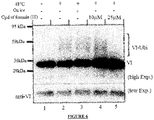
- a compound according to the invention is indeed able to either increase or decrease the ubiquitylation of cellular proteins, depending of their concentration.
- the compounds of formula (III) according to the invention favors deubiquitylation when used in a low concentration, such as 2 ⁇ M, and favors cellular proteins ubiquitylation when used in higher concentrations, such as 10 ⁇ M.
- NEDD4 ubiquitin ligases of the HECT-E3 family are evolutionary conserved in Eukaryotes. Also, several virus families contain [LP]PxY peptide motifs embedded in their genome-encoded proteins. Viral [LP]PxY motifs belong to a group of short viral peptide motifs historically named late domains due to their prominent role at late stages in the lifecycle of several enveloped viruses.
- the inventors are of the opinion that the compounds of the invention represent a novel class of antiviral agents with broad applicability.
- the present invention relates to a compound of formula (I) as defined here-after and to for its use in the prevention and/or treatment of viral infections.
- the compounds of formula (I) according to the invention can be in all the possible racemic, enantiomeric and diastereoisomeric isomer forms.
- a compound of formula (I) of the invention is preferably in the E form (i.e. in the trans form).
- q is 1.
- q is 1 and X represents a -C(O)- group.
- C and D independently, represent a phenyl ring, in particular a phenyl ring substituted with one or two halogen atom(s), preferably one or two chlorine atom(s).
- C and D are different.
- C or D can represent a phenyl ring substituted with two chlorine atoms while the other one from C and D represents a phenyl ring substituted with one chlorine atom.
- D can represent a phenyl ring substituted with two chlorine atoms and C can represent a phenyl ring substituted with one chlorine atom.
- C and D are identical. According to this embodiment, C and D both preferably represent a phenyl ring substituted with two chlorine atoms.
- m and p are independently 0 or 1.
- m is preferably 0 or 1, and is in particular 0.
- p is preferably 0 or 1, and is in particular 0.
- m and p are both 0.
- n 1
- Z represents O.
- n 1 and Z represents O.
- i 0.
- a compound of formula (I) according to the present invention is a compound of formula (II):
- a compound of formula (II) described here-above is preferably such that C and D independently represent substituted phenyl rings.
- C and D of a compound of formula (II), independently, represent substituted phenyl rings with at least one halogen atom, preferably 1 or 2 halogen atom(s), more preferably 1 or 2 chlorine atom(s).
- C and D of a compound of formula (II) are identical. According to this embodiment, C and D of a compound of formula (II) can both preferably represent a phenyl ring substituted with two chlorine atoms.
- n of a compound of formula (II) is preferably 0 or 1, and is in particular 0.
- p of a compound of formula (II) is preferably 0 or 1, and is in particular 0.
- n and p of a compound of formula (II) are both 0.
- n is 1 in a compound of formula (II).
- Z represents O in a compound of formula (II).
- n 1 and Z represents O.
- i 0.
- a compound of formula (I) or (II) of the invention is a compound of formula (III):
- a compound of formula (III) can be in the Z (cis) or E (trans) form.
- the compound of formula (III) is preferably in the E form (i.e. in the trans form), and is thereof the compound of formula (IIIa):
- the compounds of formula (I) of the present invention may be prepared in a number of methods well known to those skilled in the art, including, but not limited to those described below, or through modifications of these methods by applying standard techniques known to those skilled in the art of organic synthesis.
- the compounds of formula (II) of the present invention may be prepared on the basis of these methods as they are included in the general formula (I).
- the compounds of formula (III), and in particular the compound of formula (IIIa), which are included in the general formulae (I) and (II), can be prepared on the basis of the method described here-after according the various methods disclosed in I. Yavari et al. (Tetrahedron Letters 43 (2002), 9449-9452 ) and in C. Kashima et al. (Synthesis (1980), 880-881 ), .
- Compounds of formulae (I), (II) and (III) according to the invention can in particular be used in the prevention and/or treatment of viral infections.
- Viruses more particularly considered in the present invention are non-enveloped DNA viruses and/or enveloped RNA viruses, and in particular are non-enveloped DNA viruses.
- Non-enveloped DNA viruses can in particular be selected from the group consisting of Papillomaviridae viruses, Polyomaviridae viruses, Adenoviridae viruses, Parvoviridae viruses, Reoviridae viruses, Hepevirus, Norovirus, and Enterovirus.
- Papillomaviridae viruses can in particular be selected from the group consisting of Alphapapillomavirus, Betapapillomavirus, Deltapapillomavirus, Dyodeltapapillomavirus, Dyoepsilonpapillomavirus, Dyorissapillomavirus, Dyoiotapapillomavirus, Dyokappapapillomavirus, Dyolambdapapillomavirus, Dyomupapillomavirus, Dyonupapillomavirus, Dyoomikronpapillomavirus, Dyopipapillomavirus, Dyorhopapillomavirus, Dyosigmapapillomavirus, Dyothadorepillomavirus, Dyoxipapillomavirus, Dyozadorepillomavirus, Epsilonpapillomavirus, Etapapillomavirus, Gammapapillomavirus, Iotapapillomavirus, Kappap
- Papillomaviridae viruses can in particular be the Human papillomavirus (HPV), more particularly HPV16, HPV39, HPV67, HPV68a or HPV53.
- HPV Human papillomavirus
- Polyomaviridae viruses can in particular be selected from the group consisting of the JC virus (JCV) found in a patient (initials JC), with Hodgkin's lymphoma who suffered from progressive multifocal leukoencephalopathy (PML); the BK virus (BKV) isolated from urine of a kidney transplant patient (initials BK); Merkel cell polyomavirus (MCPyV) associated with Merkel cell carcinoma; and the Trichodysplasia spinulosa-associated polyomavirus (TSPyV).
- JCV JC virus
- BKV BK virus isolated from urine of a kidney transplant patient
- MCPyV Merkel cell polyomavirus
- TSPyV Trichodysplasia spinulosa-associated polyomavirus
- Polyomaviridae viruses can in particular be selected from the group consisting of the BK virus (BKV) and the Merkel cell polyomavirus (MCPyV).
- BKV BK virus
- MCPyV Merkel cell polyomavirus
- Adenoviridae family include members of the genus Mastadenovirus, as for example Mastadenovirus A, Mastadenovirus B, Mastadenovirus C, Mastadenovirus D, Mastadenovirus E, Mastadenovirus F and Mastadenovirus G, which includes human adenoviruses.
- HAV human adenovirus
- Parvoviridae viruses can be selected from the group consisting of Parvovirus, Erythrovirus, Dependovirus, Amdovirus, Bocavirus, Densovirus, Iteravirus, Brevidensovirus and Pefudensovirus.
- Parvoviridae viruses are preferably an Erythovirus, and can more particularly be the Human parvovirus B19.
- Reoviridae viruses can be selected from the group consisting of Orthoreovirus, Orbivirus, Rotavirus, Coltivirus, Aquareovirus, Cypovirus, Fijivirus, Phytoreovirus, Oryzavirus, Idnoreovirus and Mycoreovirus.
- Reoviridae viruses are selected from Orbivirus, more preferably Kemerovo virus and Orungo virus; and Rotavirus, more preferably from Human rotavirus A.
- An Hepevirus of the invention is in particular the Hepatitis E virus.
- a Norovirus of the invention can in particular be selected from the group consisting of Human Norovirus saitama and human Norovirus.
- An Enterovirus of the invention can in particular be selected from the group consisting of Coxsackievirus, in particular Coxsackievirus A20 and A16; Echovirus ; Enterovirus A71 ; Human rhinovirus; Rhinovirus C and Poliovirus, in particular human poliovirus 2.
- a non-enveloped DNA virus of the invention can more preferably be selected from the group consisting of Mastadenovirus A; Mastadenovirus B; Mastadenovirus C; Mastadenovirus D; Mastadenovirus E; Mastadenovirus F; Mastadenovirus G; adenovirus; Human papillomavirus (HPV), in particular HPV16, HPV39, HPV67, HPV68a and HPV53; the BK virus (BKV); the Merkel cell polyomavirus (MCPyV); the Human parvovirus B19; Human rotavirus A; Kemerovo virus; Orungo virus; Hepatitis E; Human Norovirus saitama; human Norovirus; human poliovirus 2; Coxsackievirus A20; Coxsackievirus A16; Rhinovirus C; Human rhinovirus and Enterovirus A71.
- a non-enveloped DNA virus of the invention is more preferably an adenovirus, in particular a human adenovirus.
- Enveloped RNA viruses can in particular be selected from the group consisting of Filoviridae viruses, Bunyaviridae viruses, Flaviviridae viruses, Paramyxoviridae viruses, Poxviridae viruses, Alphatorquevirus viruses, Anneloviridae viruses, Coronaviridae viruses, Rubella virus, Alphavirus, Paramyxoviridae viruses, Rhabdoviridae viruses, Influenza A virus, Arenavirus, Bunyaviridae viruses, Retroviridae viruses and Hepadnaviridae viruses.
- Filoviridae viruses also called filoviruses, of the invention are in particular selected from the group consisting of Marburg virus, Ebola virus and Ravn virus.
- Flaviviridae viruses of the invention are preferably selected from the group consisting of Hepacivirus, Flavivirus, Pegivirus and Pestivirus. They are more preferably selected from Hepacivirus, in particular Hepatitis C virus; and Flavivirus, in particular Dengue virus 4 and Dengue virus 5.
- Poxviridae viruses of the invention can in particular be selected from the group consisting of Parapoxvirus, Betaentomopoxvirus, Yatapoxvirus, Cervidpoxvirus, Gammaentomopoxvirus, Leporipoxvirus, Suipoxvirus, Molluscipoxvirus, Crocodylidpoxvirus, Alphaentomopoxvirus, Capripoxvirus, Orthopoxvirus and Avipoxvirus.
- Poxviridae viruses of the invention can preferably be selected from the group consisting of an Orthopoxvirus, in particular Cowpox virus, Vaccinia virus, Monkeypoxvirus and Variola virus; and a Parapoxvirus, in particular Orf virus; and a Leporipoxvirus, in particular Myxoma virus; and a Capripoxvirus, in particular Lumpy skin disease virus.
- an Orthopoxvirus in particular Cowpox virus, Vaccinia virus, Monkeypoxvirus and Variola virus
- a Parapoxvirus in particular Orf virus
- a Leporipoxvirus in particular Myxoma virus
- a Capripoxvirus in particular Lumpy skin disease virus.
- Herpesviridae viruses of the invention can in particular be selected from the group consisting of Iltovirus, Proboscivirus, Cytomegalovirus, Mardivirus, Rhadinovirus, Macavirus, Roseolovirus, Simplexvirus, Scutavirus, Varicellovirus, Percavirus, Lymphocryptovirus and Muromegalovirus.
- Herpesviridae viruses of the invention can preferably be selected from Varicellovirus, more preferably Human Herpesvirus 3; Simplexvirus, more preferably Human Herpesvirus 1; Cytomegalovirus, more preferably Human Herpesvirus 5; Roseolovirus, more preferably Human Herpesvirus 6A and Human Herpesvirus 7; and Lymphocryptovirus, more preferably Human Herpesvirus 4.
- Varicellovirus more preferably Human Herpesvirus 3
- Simplexvirus more preferably Human Herpesvirus 1
- Cytomegalovirus more preferably Human Herpesvirus 5
- Roseolovirus more preferably Human Herpesvirus 6A and Human Herpesvirus 7
- Lymphocryptovirus more preferably Human Herpesvirus 4.
- Annelloviridae viruses of the invention are in particular Alphatorquevirus, preferably Torque teno virus.
- Coronaviridae viruses of the invention are in particular Coronavirinae viruses or Torovirinae viruses, preferably Coronavirus, in particular selected from the group consisting of SARS coronavirus sf098, human coronavirus OC43 and transmissible gastroenteritis virus.
- Alphavirus of the invention can in particular be selected from the group consisting of Barmah Forest virus, Chikungunya virus, Mayaro virus, O'nyong'nyong virus, Ross River virus, Semliki Forest virus, Sindbis virus, Una virus, Eastern equine encephalitis virus, Tonate virus, Venezuelan equine encephalitis virus and Western equine encephalitis virus.
- Alphavirus of the invention is preferably selected from Chikungunya virus and Ross River virus.
- Paramyxoviridae viruses of the invention are preferably selected from the group consisting of Avulavirus, Morbillivirus, Aquaparamyxovirus, Henipavirus, Respirovirus, Rubulavirus, Ferlavirus, Pneumovirus and Metapneumovirus.
- Paramyxoviridae viruses are preferably selected from the group consisting of Metapneumovirus, in particular human metapneumovirus; Pneumovirus, in particular Human respiratory syncytial virus; Rubulavirus, in particular Mumps virus; and Morbillivirus, in particular Measles virus.
- Rhabdoviridae viruses are preferably selected from the group consisting of Lyssavirus, Novirhabdovirus, Ephemerovirus, Perhabdovirus, Tibrovirus, Nucleorhabdovirus, Tupavirus, Vesiculovirus, Sprivivirus, Cytorhabdovirus and Sigmavirus.
- Rhabdoviridae viruses are more particularly selected from the group consisting of Lyssavirus, in particular Vesicular stomatitis virus, Piry virus, Isfahan virus and Chandipura virus; and Vesiculovirus, in particular Mokola virus, Rabies virus, Aravan virus and Irkut virus.
- Lyssavirus in particular Vesicular stomatitis virus, Piry virus, Isfahan virus and Chandipura virus
- Vesiculovirus in particular Mokola virus, Rabies virus, Aravan virus and Irkut virus.
- Arenavirus of the invention can in particular be selected from the group consisting of Junin virus, Lymphocytic choriomeningitis virus, Lassa virus, Luna virus, Lunk virus, Dandenong virus, Mobala virus and Ippy virus.
- Bunyaviridae viruses of the invention can in particular be selected from the group consisting of Batai virus; Hantavirus, in particular Dobrava-Belgrade virus; Nairovirus; Orthobunyavirus; Phlebovirus; and Tospovirus.
- Retroviridae viruses of the invention can in particular be selected from the group consisiting of Alpharetrovirus, Betaretrovirus, Deltaretrovirus, Epsilonretrovirus, Gammaretrovirus, Lentivirus and Spumavirus.
- Retroviridae viruses of the invention are more preferably selected from the group consisting of Lentivirus, in particular human immunodeficiency virus 1 and human immunodeficiency virus 2; Deltaretrovirus, in particular Human T-lymphotropic virus 1 (HTLV-1) and Human T-lymphotropic virus 2 (HTLV-2); and Alpharetrovirus, in particular Rous sarcoma virus and Rous associated virus.
- Lentivirus in particular human immunodeficiency virus 1 and human immunodeficiency virus 2
- Deltaretrovirus in particular Human T-lymphotropic virus 1 (HTLV-1) and Human T-lymphotropic virus 2 (HTLV-2)
- Alpharetrovirus in particular Rous sarcoma virus and Rous associated virus.
- Hepadnaviridae viruses of the invention are in particular selected from the group consisting of Avihepadnavirus and Orthohepadnavirus, and is more preferably Hepatitis B virus.
- An enveloped RNA virus considered in the present invention is preferably selected from the group consisting of Orf virus, Cowpox virus, Vaccinia virus, Monkeypoxvirus, myxoma virus, Lumpy skin disease virus, Variola virus, human herpesvirus 3, human herpesvirus 1, human herpesvirus 5, human herpesvirus 6A, human herpesvirus 7, human herpesvirus 4, Torque teno virus, Dengue virus 4, Dengue virus 5, Hepatitis C virus, SARS coronavirus sf098, Human coronavirus OC43, Transmissible gastroenteritis virus, Ross river virus, Chikungunya virus, Rubella virus, Ebola virus, Marburg virus, Ravn virus, Human metapneumovirus, human respiratory syncytial virus, Mumps virus, Measles virus, Vesicular stomatitis virus, Piry virus, Isfahan virus, Chandipura virus, Mokola virus, Rabies virus, Aravan virus, Irkut virus
- An enveloped RNA virus considered in the present invention is more preferably a filovirus.
- a virus considered in the present invention can be selected in the group consisting of:
- a virus considered in the present invention is more preferably an adenovirus and/or a filovirus.
- a virus considered in the present invention is more preferably a Poxvirus and/or Flavivirus and/or Paramyxovirus.
- the compounds of the present invention can be used in a pharmaceutically acceptable carrier of a composition.
- An object of the present invention is thus a composition
- a composition comprising, in a pharmaceutically acceptable carrier, at least one compound of formula (I), (II) or (III) according to the invention.
- the present invention relates to a composition
- a composition comprising, in a pharmaceutically acceptable carrier, at least one compound of formula (IIIa).
- composition according to the invention comprises, in addition to the at least one compound of formula (I), (II) or (III) of the invention, at least one additional antiviral compound.
- Said at least one additional antiviral compound, different from a compound according to the invention can in particular be selected from the group consisting of abacavir, acyclovir, adefovir, amantadine, amprenavir, ampligen, arbidol, atazanavir, atripla, balavir, bictegravir, brivudine, cidofovir, cobicistat, combivir, dolutegravir, darunavir, delavirdine, didanosine, docosanol, dolutegravir, edoxudine, efavirenz, elvitegravir, emtricitabine, enfuvirtide, entecavir, ecoliever, famciclovir, fomivirsen, fosamprenavir, foscarnet, fosfonet, ganciclovir, ibacitabine, imunovir, idoxuridine, imiquimod, in
- said at least one additional antiviral compound can be selected among anti-herpetic compounds, such as acyclovir, brivudine, docosanol, famciclovir, foscarnet, idoxuridine, penciclovir, trifluridine, valacyclovir and pritelivir.
- anti-herpetic compounds such as acyclovir, brivudine, docosanol, famciclovir, foscarnet, idoxuridine, penciclovir, trifluridine, valacyclovir and pritelivir.
- said at least one additional antiviral compound can be selected among anti-influenza compounds, such as amantadine, rimantadine, oseltamivir, peramivir and zanamivir.
- said at least one additional antiviral compound can be selected among anti-HIV compounds, such as abacavir, amprenavir, doluprenavir, lamivudine, elvitegravir, cobicistat, emtricitabine, tenofovir, efavirenz, rilpivirine bictegravir, dolutegravir, raltegravir, abacavir and zidovudine.
- anti-HIV compounds such as abacavir, amprenavir, doluprenavir, lamivudine, elvitegravir, cobicistat, emtricitabine, tenofovir, efavirenz, rilpivirine bictegravir, dolutegravir, raltegravir, abacavir and zidovudine.
- said at least one additional antiviral compound can be selected among anti-cytomegalovirus compounds, such as ganciclovir, letermovir, foscarnet, cidofovir, valaciclovir and valganciclovir.
- anti-cytomegalovirus compounds such as ganciclovir, letermovir, foscarnet, cidofovir, valaciclovir and valganciclovir.
- said at least one additional antiviral compound can be selected among anti-adenovirus compounds, such as cidofovir and ribavirin.
- the routes of administration and dosage vary depending on a variety of parameters, for example depending on the individual's condition, the type of infection and the severity of infection to be treated or of compound(s) of the invention and of the other antiviral agents used.
- the compound according to the invention and the composition according to the invention are especially capable of being administered to an individual in dry, solid (in particular cachet, powder, capsule, pill, granule, suppository, or tablet polymer capsule, specifically accelerated release tablet, enteric tablet or prolonged-release tablets), under gelatinous form, or as a solution, or a liquid suspension (in particular syrup, injectable solution, or oral infusible, microvesicles, liposomes).
- These compounds can also be in the form of doses in dry form (powder, lyophilizate, etc.) for reconstitution at the time of use using appropriate diluents known to the man skilled in the art.
- a composition of the invention may be administered enterally, parenterally (intravenously, intramuscularly or subcutaneous), transdermally (or percutaneous or transdermal), cutaneously, orally, mucosally, in particular transmucosally, buccally, nasally, ophthalmically, otologically (in the ear), esophageally, vaginally, rectally, or intragastrically, intracardiacally, intraperitoneally, intrapulmonaryly or intratracheally.
- the compound of the invention or the composition of the invention may be packaged for administration as a single dose (single dose) or multiple (multidose).
- an administration in the form of several successive administrations, repeated at one or more occasions after a particular time interval.
- One can, for example, carry out several administrations per day or per week.
- the amount of active ingredient administered to an individual is in a therapeutically effective amount.
- a “therapeutically effective amount” is an amount sufficient to produce a significant effect, especially bring a significant benefit to said individual as part of an administration for the prophylaxis or treatment as defined previously.
- a therapeutically effective amount is an amount for which the beneficial effects outweigh any toxic or detrimental effect of or ingredient(s) active(s).
- the therapeutically effective amount will vary depending on factors such as the state of infection, age, sex or weight of the individual.
- Dosage regimens may be adjusted to obtain an optimum therapeutic effect.
- a therapeutically effective amount of compound of structure I of the invention may be between 40 mg/day and 1600 mg/day, in particular between 80 mg/day and 1200 mg/day, more particularly between 100 mg/day and 800 mg/day, preferably between 200 mg/day and 500 mg/day, administered for example in 1 to 3 doses.
- Example 2 Inhibition of adenoviral propagation by the compound of formula (IIIa) and comparison of its activity compared to a lead compound: CidofovirTM
- the compound of formula (IIIa) according to the invention has been tested for its anti-adenoviral activity.
- Adenoviral propagation was quantified by fluorescent plaque forming assay with GFP expressing HAd-C5 vector in the presence of the compound as a measure of virus spread through multiple rounds of infection.
- HEK293 cells were infected with 0.1 physical particles per cell (pp/cell) of E1-deficient GFP expressing HAd-C5-GFP vector for 24 hours followed by removal of the inoculums and overlay with 1% agarose supplemented with vehicle only (DMSO) or 5 ⁇ M of the compound of formula (IIIa).
- plaque sizes were measured by epifluorescence microscopy using Image J.
- CidofovirTM the standard clinical drug used against adenovirus infections in the clinic, is also included in this test.
- Cidofovir was in particular used at even higher concentration, i.e. 10 and 20 ⁇ M.
- DMSO DMSO was used as negative control.
- the compound of formula (IIIa) Compared to the DMSO negative control, the compound of formula (IIIa) demonstrates an effective anti-adenoviral activity.
- this compound demonstrates an increased activity compared to the lead compound Cidofovir.
- Cidofovir did not show significant inhibition even at highest non-cytotoxic concentrations (10 ⁇ M and 20 ⁇ M).
- the inventors identified a novel class of compounds having a strong anti-viral activity.
- the compound of formula (IIIa) showed an absence of cytotoxicity at a concentration of 5 ⁇ M on U2OS cells (see Figure 2 ).
- U2OS cells were treated for 36 h with 250 nM to 50 ⁇ M of the compound of formula (IIIa).
- Cell viability in the presence of the candidate drug was monitored using the CellTiter-Glo® Luminescent Cell Viability Assay (Promega) according to the manufacturer's instructions.
- Cell viability was normalized to the mean of the signal obtained in presence of DMSO alone. The mean values were determined from a triplicate experiment and error bars are SD.
- Example 3 The compound of formula (IIIa) of the invention interacts with the NEDD4 peptide
- NEDD4/[LP]PxY interaction contributes to efficient entry of non-enveloped adenoviruses ( Wodrich et al. ; 2010; A Capsid-Encoded PPxY-Motif Facilitates Adenovirus Entry. PLoS Pathog. 6, e1000808 ). Also, NEDD4/[LP]PxY interaction has been exploited as drug targets for enveloped RNA viruses ( Han et al.; Small-Molecule Probes Targeting the Viral PPxY-Host Nedd4 Interface Block Egress of a Broad Range of RNA Viruses. J. Virol. 88, 7294-7306 ; 2014 ).
- the inventors sought for the mechanism of action responsible for the antiviral activity of the compounds of the invention by investigating their ability to modulate the interaction between NEDD4 and peptides bearing a [LP]PxY motif.
- NMR nuclear magnetic resonance spectroscopy
- the 1D and 2D 1H NMR experiments (Total Correlation Spectroscopy (TOCSY), Nuclear Overhauser Effect Spectroscopy (NOESY) Correlation Spectroscopy (COSY) and the and 2D 1H-13C heteronuclear NMR experiments Heteronuclear Single Quantum Coherence (HSQC) and Heteronuclear Single Quantum Coherence-Nuclear Overhauser Effect Spectroscopy (HSQC-NOESY) were performed at 850.13 MHz on a Bruker 850 MHz instrument equipped with an UltraShield Plus magnet and a triple resonance cryoprobe with gradient unit. The 2D NMR experiments were performed at 300 K without spinning with mixing times of 110 ms for the TOCSY experiments and 250 ms for the NOESY and HSQC-NOESY experiments, respectively.
- TOCSY Total Correlation Spectroscopy
- NOESY Nuclear Overhauser Effect Spectroscopy
- COSY Correlation Spectros
- the Lennard-Jones 12-6 potential was used for simulating van der Waals interactions, whereas electrostatic interactions were simulated according to the GB/VI model ( Gilson, M.K. (1993). Multiple-site titration and molecular modeling: two rapid methods for computing energies and forces for ionizable groups in proteins. Proteins 15, 266-282 .; Labute, P. (2008). The generalized Born/volume integral implicit solvent model: estimation of the free energy of hydration using London dispersion instead of atomic surface area. J. Comput. Chem. 29, 1693-1698 ).
- Cutoff distances were set to 15 ⁇ and 10 ⁇ for the electrostatic and van der Waals interactions, respectively.
- the structure was energy minimized using the AMBER12 force field (Case et al. 2012) to within an rms gradient of 0.01 kcal.mol -1 . ⁇ -1 .
- All systems were surrounded by a distance dependent dielectric model of bulk water. The resulting protein model was used in the docking studies.
- peptide ligands were obtained from the corresponding crystal structures, 2KQ0, 2LAJ, and 2MPT, whereas the two other peptides (DEPPSYEE and DEPGAAEE) were built in MOE and prepared following the described methodology.
- the compound of formula (IIIa) was built in MOE and energy minimized using the AMBER12 forcefield to within an rms gradient of 0.001 kcal.mol -1 . ⁇ -1 .
- the peptide ligand was docked into the human NEDD4 protein, employing the protein-protein docking module in MOE, selecting a pocket in NEDD4 as receptor (the cavity formed by two antiparallel ⁇ -sheets) and the compound of formula (IIIa) as ligand.
- the protein-protein docking facility generates different poses using FFTs (Fast Fourier Transforms) followed by all atom minimization. Finally, the small ligand was computationally docked in the same pocket of NEDD4 using the alpha triangle placement methodology with affinity ⁇ G as scoring function as implemented in MOE. In the docking studies, flexible ligand structures were generated using a Monte Carlo algorithm, whereas the receptor was held fixed according to the minimized geometry.
- FFTs Fast Fourier Transforms
- the NMR analyses showed that the compound of formula (IIIa) interacts with the NEDD4 peptide.
- the chemical shift values of the imidazole ring of the compound of formula (IIIa) changed significantly when compared with that of the pure compound of formula (IIIa) dissolved in the same solvent at the same concentrations, whereas the chemical shift values of the remaining aromatic hydrogens and carbon atoms mainly remained unchanged.
- the NMR data suggested binding between the compound of formula (IIIa) and the NEDD4 peptide involved the imidazole ring and amino acids W39 and F28.
- NMR spectroscopy analysis using a synthetic peptide encoding the WW3 domain of NEDD4 showed direct interaction between the imidazole ring of the compound of formula (IIIa) and a binding pocket on the exposed substrate binding surface of WW3.
- the compounds of formula (I) occupied an essential binding sites for the [LP]PxY motif, thus acting as allosteric competitor for the binding of [LP]PxY motif containing substrates.
- the NMR based structure model also provides evidence that imidazole-derivatives with higher affinity and specificity can be generated via targeted rational drug design; which thus validates the broad antiviral effect of the compounds of formula (I).
- Example 4 Determination of the binding constant (K D ) for the compound of formula (IIIa) to the WW3 domain of NEDD4 peptide and comparison with imidazole using MicroScale thermophoresis (MST)
- the compound of formula (IIIa) has a 100-1000 fold higher affinity to the WW3 peptide domain target compared to the Imidazole control.
- the compound of formula (IIIa) identified in this invention binds with low nanomolar range confirming specific peptide binding.
- Example 5 the compound of formula (IIIa) modulates ubiquitylation of PPxY bearing substrates in vitro and in cells
- Stably expressing NEDD4.2-GFP cells were transfected with an expression vector encoding RFP-tagged protein VI WT (including the PPxY targeted by NEDD4 ubiquitin ligases through WW-domains, which are the target of the compounds) or protein VI M1 (with the PPxY targeted by NEDD4 ubiquitin ligases through WW-domains mutated to PGAA) and treated with increasing amounts of the compound of formula (IIIa) for 2h.
- RFP stands for Red Fluorescent Protein.
- Protein VI was immunoprecipitated from drug treated cells using RFP-trap and analyzed by western blotting with anti-ubiquitin antibodies.
- Example 6 the compound of formula (IIIa) relocalizes NEDD4 ligases in cells and prevent their association with incoming adenoviruses
- U2OS cells (ATCC® HTB-96TM) ( Homo sapiens bone osteosarcoma) stably expressing low levels of GFP-NEDD4.1 or GFP-NEDD4.2 were generated through single copy flp-FRT integration ( Bosse et al., Methods Mol Biol. 2013;1064:153-69 .) and treated with the compound of formula (IIIa) or the control DMSO.
- GFP-NEDD4.2 expressing cells were infected in absence or presence of 10 ⁇ M of the compound of formula (IIIa) with fluorescently labelled viruses and association between viruses and NEDD4.2-GFP was quantified using fluorescence microscopy.
- NEDD4.1 became largely immobile and relocated to a perinuclear region upon the compound of formula (IIIa) treatment.
- NEDD4.2 was mainly cytosolic in untreated cells and accumulated strongly at cell-cell-contact sites as well as in a distinct perinuclear region upon treatment with the compound of formula (IIIa).
- the compound of formula (IIIa) impairs normal NEDD4.2 localization in uninfected cells and prevents efficient NEDD4.2 association with incoming viruses.
- Example 7 the compound of formula (IIIa) decreases or increases
- U2OS Cells were treated for 24h with two different concentrations of the compound of formula (IIIa) (2 ⁇ M and 10 ⁇ M) and were subjected to Mass Spec. analysis following diGly peptide enrichment to obtain changes in the Ubiquitin proteome.
- the Figure 9 illustrates the proteins with significant changes in ubiquitylation upon treatment with the compound of formula (IIIa).
Landscapes
- Chemical & Material Sciences (AREA)
- Organic Chemistry (AREA)
- Pharmaceuticals Containing Other Organic And Inorganic Compounds (AREA)
Abstract
The present invention relates to a compound of formula (I):

to compositions comprising it and to their use in the prevention and/or treatment of viral infections, and in particular by a non-enveloped DNA virus and/or an enveloped RNA virus.
The inventors found that the composed of formulae (I), (II) and (III), as defined herein, represent a novel class of antiviral agents with broad applicability against a wide spectrum of viruses.
Description
- The present application relates to antiviral compounds and to their use for the treatment and/or prevention of viral infections.
- Viruses are the causative agent in a wide variety of human infectious diseases.
- Efforts to treat or prevent viral infection are generally classified into two broad categories: vaccines and antiviral drugs.
- Antiviral medications are advantageously able to treat individuals who are already infected as well as preventing viral diseases where vaccination methods are seen as unavailable or unlikely.
- Illustratively
WO 03/063869 - Accordingly, there remains a constant need to widen the therapeutic arsenal to treat and/or prevent viral diseases. This is more particularly important in view of the increasing resistance of many viruses to already known antiviral drugs.
- Moreover, despite noted success in the design and development of novel antiviral molecules in recent years, existing therapies are limited in terms of the number and breadth of viruses that they may be used to treat.
- Indeed, one of the main problems associated with an antiviral agent having a wide spectrum of action is that it is often toxic for the individual to which these molecules are administered.
- There is thus a need for novel antiviral compounds able to prevent and/or treat viral infections. Thus, there is also a need for antiviral compounds able to prevent and/or treat a broad set of viral infections, and in particular viral infections by non-enveloped DNA viruses and enveloped RNA viruses.
- There is also a need for antiviral compounds able to inhibit the propagation of a virus, to inhibit the egress of a virus from the infected cells, to inhibit the replication of a virus in cells infected by said virus and/or to reduce the nuclear accumulation of viral genomes in cells infected by said virus.
- There is furthermore a need for antiviral compounds capable of targeting a variety of virus types without being toxic for the individual to which these molecules are administered.
- There is also a need for antiviral compounds having a better antiviral activity than antiviral treatments already available in clinics.
- The present invention aims to meet the here-above indicated needs.
- According to the inventors' experimental results, the presently claimed compounds, defined as indicated here-after, are surprisingly able to prevent and/or treat viral infections. In particular, these compounds are able to act against a wide spectrum of viruses, and in particular against viruses as different as non-enveloped DNA viruses, such as adenoviruses, and enveloped RNA viruses, such as filoviruses.
- Accordingly, one of the objects of the present invention relates to a compound of formula (I):

- q is 0 or 1;
- represents a single bond;

- X, when q is 1, is selected from the group consisting of -S-, -O-, -C(O)- and -CH2-;
- C and D, independently, represent a non-substituted aromatic ring or an aromatic ring substituted by one or more substituents independently selected from the group consisting of a halogen atom, a C1-C4 alkyl group, a C1-C4 alkoxy group, a hydroxyl group, a -NO2 group, a -NR2R3 group and a -CN group, with R2 and R3 being independently selected from a hydrogen atom and a C1-C4 alkyl group;
- Z represents O or S;
- m and p, independently, are 0, 1 or 2;
- n is 0 or 1;
- i is 0, 1, 2 or 3; and
- R1 independently represents a halogen atom or a C1-C4 alkyl group;
- or one of its pharmaceutically acceptable salts;
- said compound of formula (I) being in all the possible racemic, enantiomeric and diastereoisomeric isomer forms.
- In a preferred embodiment, the compound of formula (I) according to the present invention is a compound of formula (II):

- wherein C, D, Z, , m, n, p, i and R1 are as defined here-above;

- or one of its pharmaceutically acceptable salts;
- said compound of formula (II) being in all the possible racemic, enantiomeric and diastereoisomeric isomer forms.
- In a particular embodiment, the compound of the invention is of formula (III):

- wherein represents a single bond;

- or one of its pharmaceutically acceptable salts;
- said compound of formula (III) being in all the possible stereoisomeric forms. In a particular embodiment, the compound of formula (III) is of formula (IIIa):

- In a particular embodiment, a compound according to the invention, i.e. a compound of formula (I), (II) or (III), can be comprised in a composition comprising a pharmaceutically acceptable carrier, preferably in an intravenous composition.
- Accordingly, another object of the present invention is a composition comprising, in a pharmaceutically acceptable carrier, at least one compound of formula (I), (II) or (III) of the invention.
- The present application further relates to a compound according to the invention for its use in the prevention and/or treatment of viral infections by a non-enveloped DNA virus and/or an enveloped RNA virus, in particular by an adenovirus and/or a filovirus, more particularly by a non-enveloped virus, in particular by an adenovirus.
- The present application also relates to a composition according to the invention for its use in the prevention and/or treatment of viral infections by a non-enveloped DNA virus and/or an enveloped RNA virus, in particular by an adenovirus and/or a filovirus, more particularly by an adenovirus.
- Compounds according to the invention notably possess the following advantageous properties:
- (i) they possess an antiviral activity, in particular against very different viruses such as non-enveloped DNA viruses, for example adenoviruses, and enveloped RNA viruses, for example filoviruses;
- (ii) they are able to inhibit the propagation of a virus;
- (iii) they are able to inhibit the replication of a virus in infected cells;
- (iv) they are able to reduce the nuclear accumulation of viral genomes in cells infected by said virus; and
- (v) they are not toxic.
- The compounds of the present invention moreover provide the advantage of being more efficient than a standard clinical antiviral drug: Cidofovir™, as demonstrated in the following examples.
-
-
Figure 1 : Effect of the compound of formula (IIIa) on adenovirus spread. The figure represents the effect of DMSO or of the compound of formula (IIIa) (5µM) on adenovirus spreading in HEK293 cells infected with recombinant E1-deficient GFP expressing HAd-C5-GFP at 0.1 physical particle per cell for 24 hours followed by inoculums removal and overlay with agarose supplemented with 5µM of DMSO (negative control) or compound of formula (IIIa). Plaque sizes were measured after 6 days post infection. The mean size was determined from about 30 plaques derived from three independent experiments. Abscissa: compound administered. Ordinate: Plaque size (pixel). (****P<0.0001)
Cidofovir™ was also tested at 10 µM or 20 µM. Plaque sizes were determined and are shown as box-plots (n>74).
Abscissa: compound administered. Ordinate: Plaque size (pixel). (**P<0.01) (****P<0.0001) -
Figure 2 : Toxicity measure of the compound of formula (IIIa) on U2OS cells. - Abscissa: Compound of formula (IIIa) concentration (µM). Ordinate: Normalized cell viability (%).
-
Figure 3 : represents the binding ability of the compound of formula (IIIa) to the WW3 peptide target domain WW3-NEDD4.1, compared to the one of imidazole (control).
Abscissa: concentration titrant (nM). Ordinate: fraction bound. -
Figure 4 : represents the binding ability of the compound of formula (IIIa) to the WW3 peptide target domain WW3-NEDD4.2.
Abscissa: concentration titrant (nM). Ordinate: fraction bound. -
Figure 5 : represents a photograph of a western blot analysis of affinity matrix (RFP-trap) isolated RFP-tagged protein VI WT (including the PPxY targeted by the NEDD4.2 WW domain which itself is targeted by the compound) or protein VI M1 (with the PPxY compound targeted by the NEDD4.2 WW domain mutated to PGAA), from cells treated with increasing amounts (0, 2, 5, 10, 25 µM) of the compound of formula (IIIa) for 2h, using anti-ubiquitin antibodies and anti-protein VI antibodies, and shows compound concentration and PPxY motif dependent ubiquitylation of protein VI. -
Figure 6 : represents photographs of western blots analysis using anti protein VI antibodies of purified virus particles from which protein VI has been released by mild heat treatment (+48°C) followed by in vitro ubiquitylation reactions supplemented with recombinant NEDD4.2 and DMSO (-) or two concentrations of the compound of formula (IIIa) and carried out for 1h at 30°C or left on ice. -
Figure 7 : represents photographs of fluorescence microscopy showing the expressing levels and positions of GFP-NEDD4.1 or GFP-NEDD4.2 generated through single copy flp-FRT integration and treated with the compound of formula (IIIa) or the control DMSO. -
Figure 8 : represents the quantification of AdV positive for GFP-NEDD4.2 expressing cells infected in absence or presence of 10µM of the compound of formula (IIIa) with fluorescently labelled viruses and association between viruses and NEDD4.2-GFP, using fluorescence microscopy.
Abscissa: AdV positive for NEDD4.2 (%). Ordinate: time post infection (minutes). -
Figure 9 : represents lists of proteins with significant changes in ubiquitylation upon treatment of U2OS cells with the compound of formula (IIIa).
The two left side columns entitled with "UP" are lists of proteins with increased ubiquitylation at the indicated concentrations and the two right side columns entitled with "DOWN" are lists of proteins with decreased ubiquitylation at he indicated concentrations.
The diagram shows the overlap in increased and decreased ubiquitylation between the two tested concentrations. -
Figure 10 : represents a volcano diagram showing the significant changes of individual ubiquitylation identified from total cellular protein extracts at two different concentrations of the compound of formula (IIIa). The down parts of the graphs depict reduced ubiquitylation and the up parts depict an increase in ubiquitylation.
Abscissa: fold change (compared to non-treated control). Ordinate: negative log of the p-value (indicating statistical significance). - As used herein:
- "prevention" or "prevent" means at least partly reducing the risk of manifestation of a given phenomenon, i.e., in the present invention, a viral infection of an individual. A partial reduction implies that the risk remains, but to a lesser extent than before implementing the invention. Thus, "prevention" may also encompass the reduction of likelihood of manifestation of a given phenomenon, i.e., in the present invention, a viral infection of an individual.
- "inhibition" or "inhibit" means totally or partially reducing the manifestation of a given phenomenon, i.e., in the present invention, a viral infection, the propagation of a viral infection, the replication of a virus in infected cells and/or the nuclear accumulation of viral genomes in cells infected with a virus. Accordingly, inhibition may also refer to a reduction in viral load and/or pathogenicity.
- "pharmaceutically acceptable carrier" refers to a carrier medium which does not interfere with the effectiveness of the biological activity of the active ingredient(s) and which is not excessively toxic to the host at the concentration at which it is administered. The use of such media for pharmaceutically active substances is well known in the art (see for example "Remington's Pharmaceutical Sciences", E. W. Martin, 18th Ed., 1990, Mack Publishing Co.: Easton, Pa.).
- "individual" is intended for an animal, including human beings, affected or likely to be affected with a virus infection according to the invention. Said animal can in particular be intended for livestock, such as cattle, pigs and poultry; other non-human mammals such as pet, zoo or sports animals ; or human beings, affected or likely to be affected with a virus infection according to the invention. Said individual is preferably a human being.
- "viral infection" and "infected with a virus" as used herein mean that said human or non-human has been exposed to a pathogenic virus RNA or DNA and that said virus is attached to one or more cells of the host then penetrated (or may enter) into said one or more cells and have (or may have) detrimental effects for at least one cell of said animal or human.
- In particular such viral infection is able to evolve towards clinical signs or accompanying said infection induced pathologies. Thus, a "viral infection" within the meaning of the present invention includes both the earliest phases of viral contamination, as well as the later phases and intermediate phases of viral contamination.
- "pharmaceutically acceptable salts" includes salts of compounds of the present invention derived from the combination of such compounds with non-toxic acid or base addition salts.
- Acid addition salts include inorganic acids such as hydrochloric, hydrobromic, hydroiodic, sulfuric, nitric and phosphoric acid, as well as organic acids such as acetic, citric, propionic, tartaric, glutamic, salicylic, oxalic, methanesulfonic, para-toluenesulfonic, succinic, and benzoic acid, and related inorganic and organic acids.
- Base addition salts include those derived from inorganic bases such as ammonium and alkali and alkaline earth metal hydroxides, carbonates, bicarbonates, and the like, as well as salts derived from basic organic amines such as aliphatic and aromatic amines, aliphatic diamines, hydroxy alkamines, and the like. Such bases useful in preparing the salts of this invention thus include ammonium hydroxide, potassium carbonate, sodium bicarbonate, calcium hydroxide, methylamine, diethylamine, ethylenediamine, cyclohexylamine, ethanolamine and the like.
- The pharmaceutically acceptable salts of compounds of the present invention can also exist as various solvates, such as with water, methanol, ethanol, dimethylformamide, ethyl acetate and the like. Mixtures of such solvates can also be prepared. The source of such solvate can be from the solvent of crystallization, inherent in the solvent of preparation or crystallization, or adventitious to such solvent. Such solvates are within the scope of the present invention.
- In the context of the present, invention the terms below have the following meanings:
- a halogen atom: a fluorine, a chlorine, a bromine or an iodine;
- Ct-Cz: a carbon chain that can have from t to z carbon atoms, where t and z may have the values from 1 to 7; for example, C1-C4 is a carbon chain that may have from 1 to 4 carbon atoms;
- C1-C4 alkyl as used herein respectively refers to C1-C4 normal, secondary or tertiary saturated hydrocarbon. Non limiting examples are methyl, ethyl, propyl, isopropyl, butyl, isobutyl or tertbutyl;
- C1-C4 alkoxy is intended to mean an -O-(C1-C4)alkyl radical where the C1-C4 alkyl group is as defined above. Non limiting examples are methoxy, ethoxy, propoxy, isopropoxy, butoxy, sec-butoxy or tert-butoxy.
- The present inventors have performed a huge amount of work with the view of identifying novel substances endowed with antiviral properties. In particular, the inventors managed to unexpectedly identify compounds of formula (I) according to the invention having a wide antiviral scope of action and not toxic for the individual to which they are administered. Even more surprisingly, the compounds of the present invention have a better antiviral activity than a standard clinical antiviral drug: Cidofovir™.
- The inventors have unexpectedly found that the compounds of the present invention possess an antiviral activity, and more importantly an antiviral activity against a wide spectrum of viruses, including both non-enveloped DNA viruses, such as adenoviruses, and enveloped RNA viruses, such as filoviruses.
- Without wishing to be bound by the theory, the inventors are of the opinion that the compounds of the invention behave as antiviral agents by perturbing the interaction between NEDD4 ubiquitin ligases and viral [LP]PxY motifs. As illustrated in the examples, a compound according to the invention is indeed able to either increase or decrease the ubiquitylation of cellular proteins, depending of their concentration. For example, the compounds of formula (III) according to the invention favors deubiquitylation when used in a low concentration, such as 2µM, and favors cellular proteins ubiquitylation when used in higher concentrations, such as 10µM.
- NEDD4 ubiquitin ligases of the HECT-E3 family are evolutionary conserved in Eukaryotes. Also, several virus families contain [LP]PxY peptide motifs embedded in their genome-encoded proteins. Viral [LP]PxY motifs belong to a group of short viral peptide motifs historically named late domains due to their prominent role at late stages in the lifecycle of several enveloped viruses.
- Accordingly, the inventors are of the opinion that the compounds of the invention represent a novel class of antiviral agents with broad applicability.
- Accordingly, the present invention relates to a compound of formula (I) as defined here-after and to for its use in the prevention and/or treatment of viral infections.
- The compounds of formula (I) according to the invention are as follows:

- q is 0 or 1;
- represents a single bond; X, when q is 1, is selected from the group consisting of -S-, -O-, -C(O)- and -CH2-;

- C and D, independently, represent a non-substituted aromatic ring or an aromatic ring substituted by one or more substituents independently selected from the group consisting of a halogen atom, a C1-C4 alkyl group, a C1-C4 alkoxy group, a hydroxyl group, a -NO2 group, a -NR2R3 group and a -CN group, with R2 and R3 being independently selected from a hydrogen atom and a C1-C4 alkyl group;
- Z represents O or S;
- m and p, independently, are 0, 1 or 2;
- n is 0 or 1;
- i is 0, 1, 2 or 3; and
- R1 independently represents a halogen atom or a C1-C4 alkyl group;
- or one of its pharmaceutically acceptable salts.
- The compounds of formula (I) according to the invention can be in all the possible racemic, enantiomeric and diastereoisomeric isomer forms.
- As indicated previously,represents a single bond and materializes the possibility for the double bond of the compounds of the invention to be in the Z (cis) or E (trans) form. In a particular embodiment, a compound of formula (I) of the invention is preferably in the E form (i.e. in the trans form).

- In a particular embodiment, q is 1.
- In a particular embodiment, q is 1 and X represents a -C(O)- group.
- In a particular embodiment, C and D, independently, represent a phenyl ring, in particular a phenyl ring substituted with one or two halogen atom(s), preferably one or two chlorine atom(s).
- In a particular embodiment, C and D are different. According to this embodiment, C or D can represent a phenyl ring substituted with two chlorine atoms while the other one from C and D represents a phenyl ring substituted with one chlorine atom. According to this embodiment, D can represent a phenyl ring substituted with two chlorine atoms and C can represent a phenyl ring substituted with one chlorine atom.
- In a preferred embodiment, C and D are identical. According to this embodiment, C and D both preferably represent a phenyl ring substituted with two chlorine atoms.
- In a particular embodiment, m and p are independently 0 or 1.
- m is preferably 0 or 1, and is in particular 0.
- p is preferably 0 or 1, and is in particular 0.
- In a particular embodiment, m and p are both 0.
- In a particular embodiment, n is 1.
- In a particular embodiment, Z represents O.
- In an embodiment of the invention, n is 1 and Z represents O.
- In a preferred embodiment, i is 0.
- In a preferred embodiment, a compound of formula (I) according to the present invention is a compound of formula (II):

- wherein C, D, Z, , m, n, p, i and R1 are as defined previously;

- or one of its pharmaceutically acceptable salts,
- said compound of formula (II) being in all the possible racemic, enantiomeric and diastereoisomeric isomer forms.
- In particular, a compound of formula (II) described here-above is preferably such that C and D independently represent substituted phenyl rings.
- According to a particular embodiment, C and D of a compound of formula (II), independently, represent substituted phenyl rings with at least one halogen atom, preferably 1 or 2 halogen atom(s), more preferably 1 or 2 chlorine atom(s).
- In a preferred embodiment, C and D of a compound of formula (II) are identical. According to this embodiment, C and D of a compound of formula (II) can both preferably represent a phenyl ring substituted with two chlorine atoms.
- m of a compound of formula (II) is preferably 0 or 1, and is in particular 0.
- p of a compound of formula (II) is preferably 0 or 1, and is in particular 0.
- In a particular embodiment, m and p of a compound of formula (II) are both 0. In a particular embodiment, n is 1 in a compound of formula (II).
- In a particular embodiment, Z represents O in a compound of formula (II).
- In an embodiment of the invention, n is 1 and Z represents O.
- In a preferred embodiment, i is 0.
- According to a particularly preferred embodiment, a compound of formula (I) or (II) of the invention is a compound of formula (III):

- wherein represents a single bond;

- said compound being in all the possible stereoisomeric forms.
- As mentioned above, a compound of formula (III) can be in the Z (cis) or E (trans) form.
- In a preferred embodiment, the compound of formula (III) is preferably in the E form (i.e. in the trans form), and is thereof the compound of formula (IIIa):

- The compounds of formula (I) of the present invention may be prepared in a number of methods well known to those skilled in the art, including, but not limited to those described below, or through modifications of these methods by applying standard techniques known to those skilled in the art of organic synthesis.
- They notably can be prepared according to the various methods disclosed in Yuki Matsuoka et al. (Tetrahedron 62(34) (2006) 8199-8206), in Ravi Shankar et al. (Tetrahedron Letters 47(18) (2006) 3077-3079), in Kashima C. et al. (Heterocycles, Vol. 15, No. 2, (1981) 961-964) and in Kashima C. et al. (J. Heterocyclic Chem., 24, 1595-6 (1987)).
- The compounds of formula (II) of the present invention may be prepared on the basis of these methods as they are included in the general formula (I).
- The compounds of formula (III), and in particular the compound of formula (IIIa), which are included in the general formulae (I) and (II), can be prepared on the basis of the method described here-after according the various methods disclosed in I. Yavari et al. (Tetrahedron Letters 43 (2002), 9449-9452) and in C. Kashima et al. (Synthesis (1980), 880-881), .
- Compounds of formulae (I), (II) and (III) according to the invention can in particular be used in the prevention and/or treatment of viral infections.
- Viruses more particularly considered in the present invention are non-enveloped DNA viruses and/or enveloped RNA viruses, and in particular are non-enveloped DNA viruses.
- Non-enveloped DNA viruses can in particular be selected from the group consisting of Papillomaviridae viruses, Polyomaviridae viruses, Adenoviridae viruses, Parvoviridae viruses, Reoviridae viruses, Hepevirus, Norovirus, and Enterovirus.
- Papillomaviridae viruses can in particular be selected from the group consisting of Alphapapillomavirus, Betapapillomavirus, Deltapapillomavirus, Dyodeltapapillomavirus, Dyoepsilonpapillomavirus, Dyoetapapillomavirus, Dyoiotapapillomavirus, Dyokappapapillomavirus, Dyolambdapapillomavirus, Dyomupapillomavirus, Dyonupapillomavirus, Dyoomikronpapillomavirus, Dyopipapillomavirus, Dyorhopapillomavirus, Dyosigmapapillomavirus, Dyothetapapillomavirus, Dyoxipapillomavirus, Dyozetapapillomavirus, Epsilonpapillomavirus, Etapapillomavirus, Gammapapillomavirus, Iotapapillomavirus, Kappapapillomavirus, Lambdapapillomavirus, Mupapillomavirus, Nupapillomavirus, Omegapapillomavirus, Omikronpapillomavirus, Phipapillomavirus, Pipapillomavirus, Psipapillomavirus, Rhopapillomavirus, Sigmapapillomavirus, Taupapillomavirus, Thetapapillomavirus, Upsilonpapillomavirus, Xipapillomavirus and Zetapapillomavirus.
- Papillomaviridae viruses can in particular be the Human papillomavirus (HPV), more particularly HPV16, HPV39, HPV67, HPV68a or HPV53.
- Polyomaviridae viruses can in particular be selected from the group consisting of the JC virus (JCV) found in a patient (initials JC), with Hodgkin's lymphoma who suffered from progressive multifocal leukoencephalopathy (PML); the BK virus (BKV) isolated from urine of a kidney transplant patient (initials BK); Merkel cell polyomavirus (MCPyV) associated with Merkel cell carcinoma; and the Trichodysplasia spinulosa-associated polyomavirus (TSPyV).
- Polyomaviridae viruses can in particular be selected from the group consisting of the BK virus (BKV) and the Merkel cell polyomavirus (MCPyV).
- Members of the Adenoviridae family include members of the genus Mastadenovirus, as for example Mastadenovirus A, Mastadenovirus B, Mastadenovirus C, Mastadenovirus D, Mastadenovirus E, Mastadenovirus F and Mastadenovirus G, which includes human adenoviruses.
- They in particular include human adenovirus (HAdV)-A, HAdV-B, HAdV-C, HAdV-D, HAdV-E, and HAdV-F.
- Parvoviridae viruses can be selected from the group consisting of Parvovirus, Erythrovirus, Dependovirus, Amdovirus, Bocavirus, Densovirus, Iteravirus, Brevidensovirus and Pefudensovirus.
- Parvoviridae viruses are preferably an Erythovirus, and can more particularly be the Human parvovirus B19.
- Reoviridae viruses can be selected from the group consisting of Orthoreovirus, Orbivirus, Rotavirus, Coltivirus, Aquareovirus, Cypovirus, Fijivirus, Phytoreovirus, Oryzavirus, Idnoreovirus and Mycoreovirus. Preferably, Reoviridae viruses are selected from Orbivirus, more preferably Kemerovo virus and Orungo virus; and Rotavirus, more preferably from Human rotavirus A.
- An Hepevirus of the invention is in particular the Hepatitis E virus.
- A Norovirus of the invention can in particular be selected from the group consisting of Human Norovirus saitama and human Norovirus.
- An Enterovirus of the invention can in particular be selected from the group consisting of Coxsackievirus, in particular Coxsackievirus A20 and A16; Echovirus ; Enterovirus A71 ; Human rhinovirus; Rhinovirus C and Poliovirus, in particular
human poliovirus 2. - A non-enveloped DNA virus of the invention can more preferably be selected from the group consisting of Mastadenovirus A; Mastadenovirus B; Mastadenovirus C; Mastadenovirus D; Mastadenovirus E; Mastadenovirus F; Mastadenovirus G; adenovirus; Human papillomavirus (HPV), in particular HPV16, HPV39, HPV67, HPV68a and HPV53; the BK virus (BKV); the Merkel cell polyomavirus (MCPyV); the Human parvovirus B19; Human rotavirus A; Kemerovo virus; Orungo virus; Hepatitis E; Human Norovirus saitama; human Norovirus;
human poliovirus 2; Coxsackievirus A20; Coxsackievirus A16; Rhinovirus C; Human rhinovirus and Enterovirus A71. - A non-enveloped DNA virus of the invention is more preferably an adenovirus, in particular a human adenovirus.
- Enveloped RNA viruses can in particular be selected from the group consisting of Filoviridae viruses, Bunyaviridae viruses, Flaviviridae viruses, Paramyxoviridae viruses, Poxviridae viruses, Alphatorquevirus viruses, Anneloviridae viruses, Coronaviridae viruses, Rubella virus, Alphavirus, Paramyxoviridae viruses, Rhabdoviridae viruses, Influenza A virus, Arenavirus, Bunyaviridae viruses, Retroviridae viruses and Hepadnaviridae viruses.
- Filoviridae viruses, also called filoviruses, of the invention are in particular selected from the group consisting of Marburg virus, Ebola virus and Ravn virus.
- Flaviviridae viruses of the invention are preferably selected from the group consisting of Hepacivirus, Flavivirus, Pegivirus and Pestivirus. They are more preferably selected from Hepacivirus, in particular Hepatitis C virus; and Flavivirus, in
particular Dengue virus 4 andDengue virus 5. - Poxviridae viruses of the invention can in particular be selected from the group consisting of Parapoxvirus, Betaentomopoxvirus, Yatapoxvirus, Cervidpoxvirus, Gammaentomopoxvirus, Leporipoxvirus, Suipoxvirus, Molluscipoxvirus, Crocodylidpoxvirus, Alphaentomopoxvirus, Capripoxvirus, Orthopoxvirus and Avipoxvirus.
- Poxviridae viruses of the invention can preferably be selected from the group consisting of an Orthopoxvirus, in particular Cowpox virus, Vaccinia virus, Monkeypoxvirus and Variola virus; and a Parapoxvirus, in particular Orf virus; and a Leporipoxvirus, in particular Myxoma virus; and a Capripoxvirus, in particular Lumpy skin disease virus.
- Herpesviridae viruses of the invention can in particular be selected from the group consisting of Iltovirus, Proboscivirus, Cytomegalovirus, Mardivirus, Rhadinovirus, Macavirus, Roseolovirus, Simplexvirus, Scutavirus, Varicellovirus, Percavirus, Lymphocryptovirus and Muromegalovirus.
- Herpesviridae viruses of the invention can preferably be selected from Varicellovirus, more preferably
Human Herpesvirus 3; Simplexvirus, more preferablyHuman Herpesvirus 1; Cytomegalovirus, more preferablyHuman Herpesvirus 5; Roseolovirus, more preferably Human Herpesvirus 6A and Human Herpesvirus 7; and Lymphocryptovirus, more preferablyHuman Herpesvirus 4. - Annelloviridae viruses of the invention are in particular Alphatorquevirus, preferably Torque teno virus.
- Coronaviridae viruses of the invention are in particular Coronavirinae viruses or Torovirinae viruses, preferably Coronavirus, in particular selected from the group consisting of SARS coronavirus sf098, human coronavirus OC43 and transmissible gastroenteritis virus.
- Alphavirus of the invention can in particular be selected from the group consisting of Barmah Forest virus, Chikungunya virus, Mayaro virus, O'nyong'nyong virus, Ross River virus, Semliki Forest virus, Sindbis virus, Una virus, Eastern equine encephalitis virus, Tonate virus, Venezuelan equine encephalitis virus and Western equine encephalitis virus.
- Alphavirus of the invention is preferably selected from Chikungunya virus and Ross River virus.
- Paramyxoviridae viruses of the invention are preferably selected from the group consisting of Avulavirus, Morbillivirus, Aquaparamyxovirus, Henipavirus, Respirovirus, Rubulavirus, Ferlavirus, Pneumovirus and Metapneumovirus.
- Paramyxoviridae viruses are preferably selected from the group consisting of Metapneumovirus, in particular human metapneumovirus; Pneumovirus, in particular Human respiratory syncytial virus; Rubulavirus, in particular Mumps virus; and Morbillivirus, in particular Measles virus.
- Rhabdoviridae viruses are preferably selected from the group consisting of Lyssavirus, Novirhabdovirus, Ephemerovirus, Perhabdovirus, Tibrovirus, Nucleorhabdovirus, Tupavirus, Vesiculovirus, Sprivivirus, Cytorhabdovirus and Sigmavirus.
- Rhabdoviridae viruses are more particularly selected from the group consisting of Lyssavirus, in particular Vesicular stomatitis virus, Piry virus, Isfahan virus and Chandipura virus; and Vesiculovirus, in particular Mokola virus, Rabies virus, Aravan virus and Irkut virus.
- Arenavirus of the invention can in particular be selected from the group consisting of Junin virus, Lymphocytic choriomeningitis virus, Lassa virus, Luna virus, Lunk virus, Dandenong virus, Mobala virus and Ippy virus.
- Bunyaviridae viruses of the invention can in particular be selected from the group consisting of Batai virus; Hantavirus, in particular Dobrava-Belgrade virus; Nairovirus; Orthobunyavirus; Phlebovirus; and Tospovirus.
- Retroviridae viruses of the invention can in particular be selected from the group consisiting of Alpharetrovirus, Betaretrovirus, Deltaretrovirus, Epsilonretrovirus, Gammaretrovirus, Lentivirus and Spumavirus.
- Retroviridae viruses of the invention are more preferably selected from the group consisting of Lentivirus, in particular
human immunodeficiency virus 1 andhuman immunodeficiency virus 2; Deltaretrovirus, in particular Human T-lymphotropic virus 1 (HTLV-1) and Human T-lymphotropic virus 2 (HTLV-2); and Alpharetrovirus, in particular Rous sarcoma virus and Rous associated virus. - Hepadnaviridae viruses of the invention are in particular selected from the group consisting of Avihepadnavirus and Orthohepadnavirus, and is more preferably Hepatitis B virus.
- An enveloped RNA virus considered in the present invention is preferably selected from the group consisting of Orf virus, Cowpox virus, Vaccinia virus, Monkeypoxvirus, myxoma virus, Lumpy skin disease virus, Variola virus,
human herpesvirus 3,human herpesvirus 1,human herpesvirus 5, human herpesvirus 6A, human herpesvirus 7,human herpesvirus 4, Torque teno virus,Dengue virus 4,Dengue virus 5, Hepatitis C virus, SARS coronavirus sf098, Human coronavirus OC43, Transmissible gastroenteritis virus, Ross river virus, Chikungunya virus, Rubella virus, Ebola virus, Marburg virus, Ravn virus, Human metapneumovirus, human respiratory syncytial virus, Mumps virus, Measles virus, Vesicular stomatitis virus, Piry virus, Isfahan virus, Chandipura virus, Mokola virus, Rabies virus, Aravan virus, Irkut virus, Influenza A virus, Junin virus, Lymphocytic choriomeningitis virus, Lassa virus, Luna virus, Lunk virus, Dandenong virus, Mobala virus, Ippy virus, Batai virus, Dobrava-belgrade virus, HIV-1, HIV-2, HTLV-1, HTLV-2, Rous sarcoma virus, Rous associated virus and Hepatitis B virus. - An enveloped RNA virus considered in the present invention is more preferably a filovirus.
- More particularly, a virus considered in the present invention can be selected in the group consisting of:
- a non-enveloped DNA virus of the invention can more preferably be selected from the group consisting of Mastadenovirus A; Mastadenovirus B; Mastadenovirus C; Mastadenovirus D; Mastadenovirus E; Mastadenovirus F; Mastadenovirus G; adenovirus; Human papillomavirus (HPV), in particular HPV16, HPV39, HPV67, HPV68a and HPV53; the BK virus (BKV); the Merkel cell polyomavirus (MCPyV); the Human parvovirus B19; Human rotavirus A; Kemerovo virus; Orungo virus; Hepatitis E; Human Norovirus saitama; human Norovirus;
human poliovirus 2; Coxsackievirus A20; Coxsackievirus A16; Rhinovirus C; Human rhinovirus and Enterovirus A71; and - an enveloped RNA virus considered in the present invention is preferably selected from the group consisting of Orf virus, Cowpox virus, Vaccinia virus, Monkeypoxvirus, Variola virus,
human herpesvirus 3,human herpesvirus 1,human herpesvirus 5, human herpesvirus 6A, human herpesvirus 7,human herpesvirus 4, Torque teno virus,Dengue virus 4,Dengue virus 5, Hepatitis C virus, SARS coronavirus sf098, Human coronavirus OC43, Transmissible gastroenteritis virus, Ross river virus, Chikungunya virus, Rubella virus, Ebola virus, Marburg virus, Ravn virus, Human metapneumovirus, human respiratory syncytial virus, Mumps virus, Measles virus, Vesicular stomatitis virus, Piry virus, Isfahan virus, Chandipura virus, Mokola virus, Rabies virus, Aravan virus, Irkut virus, Influenza A virus, Junin virus, Lymphocytic choriomeningitis virus, Lassa virus, Luna virus, Lunk virus, Dandenong virus, Mobala virus, Ippy virus, Batai virus, Dobrava-belgrade virus, HIV-1, HIV-2, HTLV-1, HTLV-2, Rous sarcoma virus, Rous associated virus and Hepatitis B virus. - A virus considered in the present invention is more preferably an adenovirus and/or a filovirus.
- In another embodiment, a virus considered in the present invention is more preferably a Poxvirus and/or Flavivirus and/or Paramyxovirus.
- In a preferred embodiment, the compounds of the present invention can be used in a pharmaceutically acceptable carrier of a composition.
- An object of the present invention is thus a composition comprising, in a pharmaceutically acceptable carrier, at least one compound of formula (I), (II) or (III) according to the invention.
- In a preferred embodiment, the present invention relates to a composition comprising, in a pharmaceutically acceptable carrier, at least one compound of formula (IIIa).
- In a particular embodiment, a composition according to the invention comprises, in addition to the at least one compound of formula (I), (II) or (III) of the invention, at least one additional antiviral compound.
- Said at least one additional antiviral compound, different from a compound according to the invention, can in particular be selected from the group consisting of abacavir, acyclovir, adefovir, amantadine, amprenavir, ampligen, arbidol, atazanavir, atripla, balavir, bictegravir, brivudine, cidofovir, cobicistat, combivir, dolutegravir, darunavir, delavirdine, didanosine, docosanol, dolutegravir, edoxudine, efavirenz, elvitegravir, emtricitabine, enfuvirtide, entecavir, ecoliever, famciclovir, fomivirsen, fosamprenavir, foscarnet, fosfonet, ganciclovir, ibacitabine, imunovir, idoxuridine, imiquimod, inidinavir, inosine, lamivudine, letermovir, lopinavir, loviride, maraviroc, moroxydine, methisazone, nelfinavir, nevirapine, nexavir, nitazoxanide, norvir, oseltamivir, penciclovir, peramivir, pleconaril, pritelivir, raltegravir, ribavirin, rilpivirine, rimantadine, ritonavir, saquinavir, sofosbuvir, stavudine, telaprevir, tenofovir, tipranavir, trifluridine, trizivir, tromantadine, truvada, valaciclovir, valganciclovir, vicriviroc, vidarabine, viramidine, zalcitabine, zanamivir, zidovudine, and their combinations thereof.
- For example, said at least one additional antiviral compound can be selected among anti-herpetic compounds, such as acyclovir, brivudine, docosanol, famciclovir, foscarnet, idoxuridine, penciclovir, trifluridine, valacyclovir and pritelivir.
- For example, said at least one additional antiviral compound can be selected among anti-influenza compounds, such as amantadine, rimantadine, oseltamivir, peramivir and zanamivir.
- For example, said at least one additional antiviral compound can be selected among anti-HIV compounds, such as abacavir, amprenavir, doluprenavir, lamivudine, elvitegravir, cobicistat, emtricitabine, tenofovir, efavirenz, rilpivirine bictegravir, dolutegravir, raltegravir, abacavir and zidovudine.
- For example, said at least one additional antiviral compound can be selected among anti-cytomegalovirus compounds, such as ganciclovir, letermovir, foscarnet, cidofovir, valaciclovir and valganciclovir.
- For example, said at least one additional antiviral compound can be selected among anti-adenovirus compounds, such as cidofovir and ribavirin.
- The routes of administration and dosage vary depending on a variety of parameters, for example depending on the individual's condition, the type of infection and the severity of infection to be treated or of compound(s) of the invention and of the other antiviral agents used. The compound according to the invention and the composition according to the invention are especially capable of being administered to an individual in dry, solid (in particular cachet, powder, capsule, pill, granule, suppository, or tablet polymer capsule, specifically accelerated release tablet, enteric tablet or prolonged-release tablets), under gelatinous form, or as a solution, or a liquid suspension (in particular syrup, injectable solution, or oral infusible, microvesicles, liposomes).
- These compounds can also be in the form of doses in dry form (powder, lyophilizate, etc.) for reconstitution at the time of use using appropriate diluents known to the man skilled in the art.
- Depending on their dosage form, a composition of the invention may be administered enterally, parenterally (intravenously, intramuscularly or subcutaneous), transdermally (or percutaneous or transdermal), cutaneously, orally, mucosally, in particular transmucosally, buccally, nasally, ophthalmically, otologically (in the ear), esophageally, vaginally, rectally, or intragastrically, intracardiacally, intraperitoneally, intrapulmonaryly or intratracheally.
- Furthermore, the compound of the invention or the composition of the invention may be packaged for administration as a single dose (single dose) or multiple (multidose).
- To enhance the effects of treatment, it is possible to proceed with an administration in the form of several successive administrations, repeated at one or more occasions after a particular time interval. One can, for example, carry out several administrations per day or per week.
- The amount of active ingredient administered to an individual is in a therapeutically effective amount.
- A "therapeutically effective amount" is an amount sufficient to produce a significant effect, especially bring a significant benefit to said individual as part of an administration for the prophylaxis or treatment as defined previously.
- A therapeutically effective amount is an amount for which the beneficial effects outweigh any toxic or detrimental effect of or ingredient(s) active(s). The therapeutically effective amount will vary depending on factors such as the state of infection, age, sex or weight of the individual.
- Dosage regimens may be adjusted to obtain an optimum therapeutic effect.
- More specifically, a therapeutically effective amount of compound of structure I of the invention may be between 40 mg/day and 1600 mg/day, in particular between 80 mg/day and 1200 mg/day, more particularly between 100 mg/day and 800 mg/day, preferably between 200 mg/day and 500 mg/day, administered for example in 1 to 3 doses.
- The present invention is illustrated by the following examples, given purely for illustrative purposes, with reference to the following figures.
-

- To a stirred solution of 2,4-dichlorobenzaldehyde (7.3 g, 41.7 mmol) in dry THF (85 mL) under inert atmosphere was added a 0.5 M solution of ethynylmagnesium bromide in THF (100 mL, 50 mmol, 1.2 eq.) at 0 °C. The resulting mixture was stirred at this temperature for 15 minutes then at room temperature for 4 h before addition of an aqueous NH4Clsat. solution. The reaction mixture was extracted with EtOAc (three times) and the combined organic extracts were washed with brine, dried over MgSO4, filtered and the filtrate concentrated under reduced pressure. The crude 1-(2,4-dichlorophenyl)prop-2-yn-1-ol was dissolved in dry THF (100 mL) and a 2 M solution of isopropylmagnesium chloride in THF (42 mL, 84 mmol, 2 eq.) was slowly added under inert atmosphere. The reaction mixture was then heated at reflux for 1 h then cooled to room temperature and a solution of 2,4-dichlorobenzaldehyde (7.3 g, 41.7 mmol, 1 eq.) in dry THF (50 mL) was added. After 2 h at room temperature aqueous NH4Clsat. solution was added and the reaction mixture extracted with Et2O (3 times). The combined organic extracts were washed with brine, dried over MgSO4, filtered and the filtrate concentrated under reduced pressure. The expected product was precipitated by addition of cold DCM and isolated by filtration affording of the expected compound as a white powder (11.4 g, 73% yield).
1H NMR (DMSO-d6 , 300 MHz): δ 7.68 (dd, J = 8.4, 2.0 Hz, 2H), 7.60 (m, 2H), 7.48 (dd, J = 8.4, 2.0 Hz, 2H), 6.34 (m, 2H), 5.58 (m, 2H).
13C NMR (DMSO-d6, 75 MHz): δ 138.2, 133.1, 132.2, 129.4, 128.7, 127.5, 84.4, 59.4. - To a stirred solution of 1,4-bis(2,4-dichlorophenyl)but-2-yne-1,4-diol (5 g, 13.3 mmol) in DCM (50 mL) was added Dess-Martin periodinane (12.4 g, 29.2 mmol, 2.2 eq.) at 0 °C. The reaction mixture was stirred at this temperature for 15 minutes then at room temperature for 1 h. The reaction mixture was washed with a 1:1 mixture of aqueous NaHCO3sat./Na2S2O3sat. solution. The aqueous phase was then extracted with DCM (3 times) and the combined organic extracts washed with brine, dried over MgSO4, filtered and the filtrate concentrated under reduced pressure. Purification by recristallisation in EtOAc afforded of the expected compound as a white solid (3.25 g, 66% yield).
1H NMR (CDCl3, 300 MHz): δ 8.04 (d, J = 8.5 Hz, 2H), 7.55 (d, J = 2.0 Hz, 2H), 7.43 (dd, J = 8.5, 2.0 Hz, 2H).
13C NMR (CDCl3, 75 MHz): δ 173.6, 140.8, 135.3, 134.1, 132.2, 131.8, 127.6, 87.0. - To a stirred solution of PPh3 (705 mg, 2.7 mmol, 1 eq.) and imidazole (183 mg, 2.7 mmol, 1 eq.) in DCM (5.5 mL), under inert atmosphere, was slowly added a solution of 1,4-bis(2,4-dichlorophenyl)but-2-yne-1,4-dione (1 g, 2.7 mmol) in DCM (2.7 mL). The reaction mixture was stirred at room temperature for 3 h then concentrated under reduced pressure. The expected product was isolated after several flash column chromatography on silica gel (acetone/PE (20% → 80%); Et2O/DCM (5 → 20%); EtOAc/DCM (5% → 25%) as a clear foam (113 mg, 10% yield).
1H NMR (CDCl3, 300 MHz): δ 7.94 (d, J = 8.5 Hz, 1H), 7.79 (s, 1H), 7.49 - 7.43 (m, 3H), 7.38 (dd, J = 8.5, 2.0 Hz, 1H), 7.32 (dd, J = 8.3, 2.0 Hz, 1H), 7.23 (t, J = 1.4 Hz, 1H), 7.21 (s, 1H), 7.06 (s, 1H).
13C NMR (CDCl3, 300 MHz): δ 188.8, 188.0, 145.9, 140.5, 139.1, 136.1, 134.8, 133.4, 132.9, 132.1, 131.7, 131.5, 130.5, 128.0, 127.9, 117.1, 114.4.
HRMS ESI [M+H]+ Calc. for C19H11N2O2Cl4 438.9575; Found 438.9570. - The compound of formula (IIIa) according to the invention has been tested for its anti-adenoviral activity.
- Adenoviral propagation was quantified by fluorescent plaque forming assay with GFP expressing HAd-C5 vector in the presence of the compound as a measure of virus spread through multiple rounds of infection.
- HEK293 cells were infected with 0.1 physical particles per cell (pp/cell) of E1-deficient GFP expressing HAd-C5-GFP vector for 24 hours followed by removal of the inoculums and overlay with 1% agarose supplemented with vehicle only (DMSO) or 5 µM of the compound of formula (IIIa).
- Six days after infection, plaque sizes were measured by epifluorescence microscopy using Image J.
- Cidofovir™, the standard clinical drug used against adenovirus infections in the clinic, is also included in this test.
- The compounds were used at a concentration of 5 µM. Cidofovir was in particular used at even higher concentration, i.e. 10 and 20 µM.
- DMSO was used as negative control.
- Statistical analysis was carried out using unpaired Student t-test.
- Compared to the DMSO negative control, the compound of formula (IIIa) demonstrates an effective anti-adenoviral activity.
- Moreover, this compound demonstrates an increased activity compared to the lead compound Cidofovir.
- In contrast, Cidofovir did not show significant inhibition even at highest non-cytotoxic concentrations (10 µM and 20 µM).
- Accordingly, the inventors identified a novel class of compounds having a strong anti-viral activity.
- Moreover, the compound of formula (IIIa) showed an absence of cytotoxicity at a concentration of 5 µM on U2OS cells (see
Figure 2 ). - To determine said cytotoxicity, U2OS cells were treated for 36 h with 250 nM to 50 µM of the compound of formula (IIIa). Cell viability in the presence of the candidate drug was monitored using the CellTiter-Glo® Luminescent Cell Viability Assay (Promega) according to the manufacturer's instructions. Cell viability was normalized to the mean of the signal obtained in presence of DMSO alone. The mean values were determined from a triplicate experiment and error bars are SD.
- The compound of formula (IIIa) of the invention is now shown herein to be active against adenovirus and filovirus.
- It was previously reported that the NEDD4/[LP]PxY interaction contributes to efficient entry of non-enveloped adenoviruses (Wodrich et al. ; 2010; A Capsid-Encoded PPxY-Motif Facilitates Adenovirus Entry. PLoS Pathog. 6, e1000808). Also, NEDD4/[LP]PxY interaction has been exploited as drug targets for enveloped RNA viruses (Han et al.; Small-Molecule Probes Targeting the Viral PPxY-Host Nedd4 Interface Block Egress of a Broad Range of RNA Viruses. J. Virol. 88, 7294-7306 ; 2014).
- Accordingly, the inventors sought for the mechanism of action responsible for the antiviral activity of the compounds of the invention by investigating their ability to modulate the interaction between NEDD4 and peptides bearing a [LP]PxY motif.
- To this end they have used solution nuclear magnetic resonance spectroscopy (NMR) to obtain structural information. They have synthesized a peptide corresponding to the 45 amino acids of WW3-domain of NEDD4 and for which an NMR solution structure bound to a PPxY containing peptide from EBOV was previously obtained (PDB ID: 2KQ0). Subsequently NMR analysis was performed in absence and presence of the compound of formula (IIIa).
- NMR. The 1D and 2D 1H NMR experiments (Total Correlation Spectroscopy (TOCSY), Nuclear Overhauser Effect Spectroscopy (NOESY) Correlation Spectroscopy (COSY) and the and 2D 1H-13C heteronuclear NMR experiments Heteronuclear Single Quantum Coherence (HSQC) and Heteronuclear Single Quantum Coherence-Nuclear Overhauser Effect Spectroscopy (HSQC-NOESY) were performed at 850.13 MHz on a Bruker 850 MHz instrument equipped with an UltraShield Plus magnet and a triple resonance cryoprobe with gradient unit. The 2D NMR experiments were performed at 300 K without spinning with mixing times of 110 ms for the TOCSY experiments and 250 ms for the NOESY and HSQC-NOESY experiments, respectively.
- Docking studies. The crystallographic coordinates of human NEDD4 third WW domain complexed with Ebola Zaire Virus Matrix protein VP40 derived peptide (PDB id 2KQ0). The peptide ligand was removed and the protein was prepared using MOE 2015.10 [Molecular Operating Environment (MOE). 2015, Chemical Computing Group: Montreal, Canada.]. To this end, hydrogen atoms were added using MOE's protonate 3D facility with the dielectric constants set to 3 inside the protein and 80 for the solvent (water). The temperature was set to 310 K, the salt concentration to 0.2 M and the pH to 7.0. The Lennard-Jones 12-6 potential was used for simulating van der Waals interactions, whereas electrostatic interactions were simulated according to the GB/VI model (Gilson, M.K. (1993). Multiple-site titration and molecular modeling: two rapid methods for computing energies and forces for ionizable groups in proteins. .; Labute, P. (2008). The generalized Born/volume integral implicit solvent model: estimation of the free energy of hydration using London dispersion instead of atomic surface area. J. Comput. Chem. 29, 1693-1698).
- Cutoff distances were set to 15 Å and 10 Å for the electrostatic and van der Waals interactions, respectively. The structure was energy minimized using the AMBER12 force field (Case et al. 2012) to within an rms gradient of 0.01 kcal.mol-1.Å-1. Throughout, all systems were surrounded by a distance dependent dielectric model of bulk water. The resulting protein model was used in the docking studies.
- Three peptide ligands were obtained from the corresponding crystal structures, 2KQ0, 2LAJ, and 2MPT, whereas the two other peptides (DEPPSYEE and DEPGAAEE) were built in MOE and prepared following the described methodology. The compound of formula (IIIa) was built in MOE and energy minimized using the AMBER12 forcefield to within an rms gradient of 0.001 kcal.mol-1.Å-1. The peptide ligand was docked into the human NEDD4 protein, employing the protein-protein docking module in MOE, selecting a pocket in NEDD4 as receptor (the cavity formed by two antiparallel β-sheets) and the compound of formula (IIIa) as ligand. The protein-protein docking facility generates different poses using FFTs (Fast Fourier Transforms) followed by all atom minimization. Finally, the small ligand was computationally docked in the same pocket of NEDD4 using the alpha triangle placement methodology with affinity ΔG as scoring function as implemented in MOE. In the docking studies, flexible ligand structures were generated using a Monte Carlo algorithm, whereas the receptor was held fixed according to the minimized geometry.
- Molecular Dynamics simulations. All molecular dynamics simulations of the peptide - NEDD4 complexes were performed using the YASARA Structure program (Krieger, 2004-2016, YASARA). The ligand-model complexes as obtained from the docking studies were energy minimized to within an rms gradient of 0.1 kcal mol-1 Å-1 using the Amber ff03 molecular mechanics force field (Duan et al. (2003). A point-charge force field for molecular mechanics simulations of proteins based on condensed-phase quantum mechanical calculations. J. Comput. Chem. 24, 1999-2012).
- The models were then solvated and minimized in a box of water extending 10 Å from the nearest atoms of the complex, giving approximately 30 000 atoms in each simulation box. Taking pKa values into account, protonation states were assigned at physiologic pH 7.4 (Krieger et al. (2012). Assignment of protonation states in proteins and ligands: combining pKa prediction with hydrogen bonding network optimization. Methods Mol. Biol. Clifton NJ 819, 405-421).
- In order to achieve physiological salt concentration, water molecules were randomly replaced by sodium or chloride ions and the solvent density adjusted to 0.997 g L-1, followed by Molecular Dynamics (MD) simulation and final energy minimization step. The MD simulation was performed for 50 ns using periodic boundary conditions and the NVT canonical ensemble at 298 K. The simulation was carried out using the multiple time steps 2.5 fs for intermolecular forces and 1.25 fs for intramolecular ones. The particle mesh Ewald (PME) method was used for long-range electrostatics with a cutoff of 7.86 Å (Linse and Linse (2014) Tuning the smooth particle mesh Ewald sum: application on ionic solutions and dipolar fluids. J. Chem. Phys. 141, 184114). Trajectory snapshots were sampled every 100 ps during the MD simulation.
- The NMR analyses showed that the compound of formula (IIIa) interacts with the NEDD4 peptide. When equimolar amounts of the compound of formula (IIIa) was added to the NEDD4 peptide the chemical shift values of the imidazole ring of the compound of formula (IIIa) changed significantly when compared with that of the pure compound of formula (IIIa) dissolved in the same solvent at the same concentrations, whereas the chemical shift values of the remaining aromatic hydrogens and carbon atoms mainly remained unchanged. The NMR data suggested binding between the compound of formula (IIIa) and the NEDD4 peptide involved the imidazole ring and amino acids W39 and F28.
- Exploiting this information, a docking study was performed with an active site bias derived from the NMR data on the same structure model (2KQ0) we used for the peptide/protein interaction studies. The compound of formula (IIIa) efficiently docked on the exposed [LP]PxY peptide binding surface of the WW-domain with the imidazole ring inserting into a cavity formed by W39 and F28 thus confirming the NMR data and providing a structural rational for the interaction.
- Importantly, when the docking predictions for the viral DEPPSYEE peptide and the compound of formula (IIIa) were superimposed on the NEDD4 structure the imidazole ring occupied the same cavity that was occupied by the essential second Proline of the [LP]PxY motif while one of the compound of formula (IIIa) aromatic rings occupied the same binding interface as the essential Tyrosine of the motif.
- In conclusion, NMR spectroscopy analysis using a synthetic peptide encoding the WW3 domain of NEDD4 showed direct interaction between the imidazole ring of the compound of formula (IIIa) and a binding pocket on the exposed substrate binding surface of WW3. Most importantly in silico docking analysis suggested that the compounds of formula (I) occupied an essential binding sites for the [LP]PxY motif, thus acting as allosteric competitor for the binding of [LP]PxY motif containing substrates.
- The NMR based structure model also provides evidence that imidazole-derivatives with higher affinity and specificity can be generated via targeted rational drug design; which thus validates the broad antiviral effect of the compounds of formula (I).
- For the MicroScale Thermophoresis (MST)
experiments 1 mg of each FAM-labeled WW3_Nedd.4.1 (PSEIEQGFLPKGWEVRHAPNGRPFFIDHNTKTTTWEDPRL KIPAH = SEQ ID NO: 1) and WW3_Nedd.4.2 peptide (GAMEQSFLPPGWEMRIAPNG RPFFIDHNTKTTTWEDPRLKFPVH = SEQ ID NO: 2) (FAM = Fluorescein amidite) was used at >80% purity. - MicroScale thermophoresis binding experiments were carried out with final 100 nM FAM-labelled WW3_Nedd.4.1 and WW3_Nedd.4.2 in binding buffer (1x PBS pH 7.4, 5 % DMSO, 0.1 % Pluronic F-127). The concentration range of the compound of formula (IIIa) is indicated here-after:
Table 1 Ligand Maximal concentration in nM Minimal concentration in nM Compound of formula (IIIa) 15 625 0.476 Imidazole (control) 10 000 000 305.18 - The MST analyses were performed at 40 % MST power, 100 % LED power in standard capillaries on a Monolith NT.115 blue/green device at 25°C (NanoTemper Technologies, Munich, Germany) in duplicate technical runs in the same capillary. Thermophoresis + Tjump was analysed. The recorded fluorescence was normalised to fraction bound (0 = unbound, 1 = bound), and processed using the GraphPad Prism® 6 software and fitted using the KD fit formula derived from the law of mass action.
- The results obtained are illustrated in
Figures 3 and 4 . - The affinities measured are represented in the following Table 2:
Table 2 Ligand WW3-NEDD 4.1 peptide KD (nM) WW3-NEDD 4.2 peptide KD (nM) Compound of formula (IIIa) 58 +/- 22 120 +/- 39 Imidazole (control) 88922 +/- 28409 90429 +/- 38643 - The compound of formula (IIIa) has a 100-1000 fold higher affinity to the WW3 peptide domain target compared to the Imidazole control.
- The compound of formula (IIIa) identified in this invention binds with low nanomolar range confirming specific peptide binding.
- Stably expressing NEDD4.2-GFP cells were transfected with an expression vector encoding RFP-tagged protein VI WT (including the PPxY targeted by NEDD4 ubiquitin ligases through WW-domains, which are the target of the compounds) or protein VI M1 (with the PPxY targeted by NEDD4 ubiquitin ligases through WW-domains mutated to PGAA) and treated with increasing amounts of the compound of formula (IIIa) for 2h. RFP stands for Red Fluorescent Protein.
- Protein VI was immunoprecipitated from drug treated cells using RFP-trap and analyzed by western blotting with anti-ubiquitin antibodies.
- For in vitro ubiquitylation reactions, purified Adenovirus particles were treated with mild heat to release protein VI as previously described in Wodrich et al. (2010 - PLoS Pathog. 6, e1000808), and in vitro ubiquitylation reactions were supplemented with recombinant NEDD4.2 and DMSO or the compound of formula (IIIa) and carried out for 1h at 30°C or left on ice.
- Samples were analyzed by western blot using anti-protein VI antibodies described in Martinez et al., J Virol. 2015 Feb;89(4):2121-35.
- The results are shown in
Figures 5 and6 . - They show that ubiquitylation of protein VI was PPxY-dependent and that increasing drug concentrations of the compound of formula (IIIa) led to a shift in the protein VI ubiquitylation patterns, demonstrating that higher concentrations of the compound of formula (IIIa) gradually impaired ubiquitylation of protein VI.
- Ubiquitylation of protein VI using recombinant NEDD4.2 revealed that the compound of formula (IIIa) also prevented protein VI ubiquitylation in vitro at high concentrations (25 µM). Accordingly, the compound of formula (IIIa) impairs NEDD4.2 mediated ubiquitylation of the viral PPxY bearing substrate in a dose dependent manner.
- U2OS cells (ATCC® HTB-96™) (Homo sapiens bone osteosarcoma) stably expressing low levels of GFP-NEDD4.1 or GFP-NEDD4.2 were generated through single copy flp-FRT integration (Bosse et al., Methods Mol Biol. 2013;1064:153-69.) and treated with the compound of formula (IIIa) or the control DMSO.
- GFP-NEDD4.2 expressing cells were infected in absence or presence of 10µM of the compound of formula (IIIa) with fluorescently labelled viruses and association between viruses and NEDD4.2-GFP was quantified using fluorescence microscopy.
- NEDD4.1 became largely immobile and relocated to a perinuclear region upon the compound of formula (IIIa) treatment. NEDD4.2 was mainly cytosolic in untreated cells and accumulated strongly at cell-cell-contact sites as well as in a distinct perinuclear region upon treatment with the compound of formula (IIIa).
- Incoming AdV particles associated and co-trafficked with NEDD4.2 within 15-30 min p.i. Kinetics of NEDD4.2 trafficking coincided with protein VI release and membrane penetration (Montespan et al., PLoS Pathog. 2017 Feb 13;13(2):e1006217). In contrast, the compound of formula (IIIa) treatment prevented the recruitment of NEDD4.2 at similar time points.
- Accordingly, the compound of formula (IIIa) impairs normal NEDD4.2 localization in uninfected cells and prevents efficient NEDD4.2 association with incoming viruses.
- U2OS Cells were treated for 24h with two different concentrations of the compound of formula (IIIa) (2µM and 10µM) and were subjected to Mass Spec. analysis following diGly peptide enrichment to obtain changes in the Ubiquitin proteome.
- Briefly, cells were collected following treatment (as above) and protein extracts generated using acetone precipitation. Total proteins were trypsin-digested and the resulting peptides purified through anti di-Gly affinity chromatography prior being sequenced by LC-MS/MS.
- The
Figure 9 illustrates the proteins with significant changes in ubiquitylation upon treatment with the compound of formula (IIIa). - It is observed that treatment of cells with the compound of formula (IIIa) changes the global cellular protein ubiquitylation patterns.
- At low concentration of the compound of formula (IIIa) such as 2µM protein ubiquitylation is reduced or increased for several cellular proteins when compared to DMSO treated control cells, while higher concentrations of this compound, such as 10µM, preferentially increases ubiquitylation of several cellular proteins when compared to DMSO treated control cells.

Claims (15)
- A compound of formula (I):
 q is 0 or 1;represents a single bond;
 X, when q is 1, is selected from the group consisting of -S-, -O-, -C(O)- and -CH2-;C and D, independently, represent a non-substituted aromatic ring or an aromatic ring substituted by one or more substituents independently selected from the group consisting of a halogen atom, a C1-C4 alkyl group, a C1-C4 alkoxy group, a hydroxyl group, a -NO2 group, a -NR2R3 group and a -CN group, with R2 and R3 being independently selected from a hydrogen atom and a C1-C4 alkyl group;Z represents O or S;m and p, independently, are 0, 1 or 2;n is 0 or 1;i is 0, 1, 2 or 3; andR1 independently represents a halogen atom or a C1-C4 alkyl group;or one of its pharmaceutically acceptable salts;said compound of formula (I) being in all the possible racemic, enantiomeric and diastereoisomeric isomer forms.
 - The compound according to claim 1, wherein q is 1.
- The compound according to claim 1 or 2, wherein q is 1 and X represents a -C(O)- group.
- The compound according to anyone of the preceding claims, wherein C and D, independently, represent a phenyl ring, in particular a phenyl ring substituted with one or two halogen atom(s), preferably one or two chlorine atom(s).
- The compound according to anyone of the preceding claims, wherein m and p are independently 0 or 1.
- The compound according to anyone of the preceding claims, wherein m and p are both 0.
- The compound according to anyone of the preceding claims, wherein n is 1 and Z preferably represents O.
- The compound according to anyone of the preceding claims, wherein i is 0.
- The compound according to claim 1, wherein the compound is a compound of formula (II):
 wherein C, D, Z,, m, n, p, i and R1 are as defined in the compound of Formula (I) in claim 1;
 or one of its pharmaceutically acceptable salts;said compound of formula (II) being in all the possible racemic, enantiomeric and diastereoisomeric isomer forms.
 - The compound according to claim 9, wherein n is 1 and Z represents O.
- The compound according to anyone of the preceding claims, wherein the compound is the compound of formula (III):
 whereinrepresents a single bond;
 or one of its pharmaceutically acceptable salts;said compound being in all the stereoisomeric forms.
 - The compound according to claim 11, wherein the compound is of formula (IIIa):
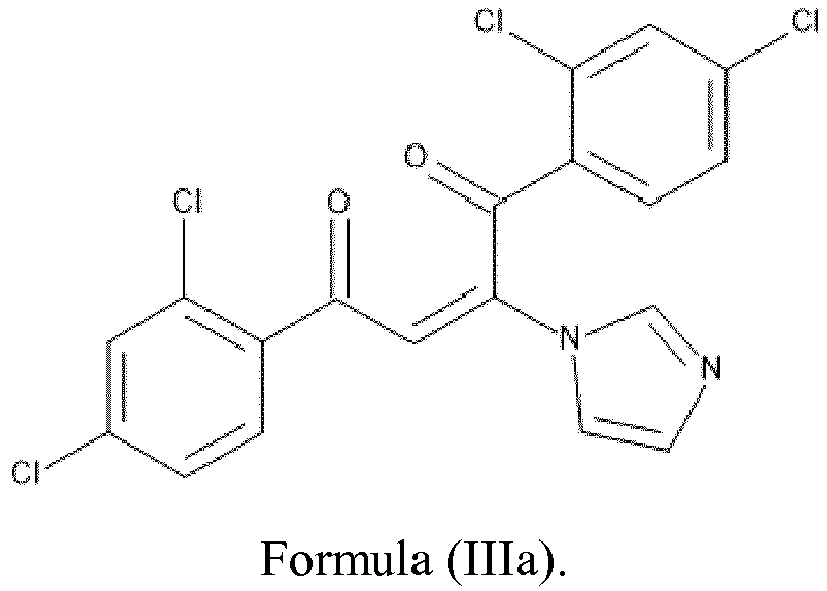
- A composition comprising, in a pharmaceutically acceptable carrier, at least one compound of formula (I), (II) or (III) as defined in anyone of claims 1 to 12.
- A compound according to anyone of claims 1 to 12, or a composition according to claim 13, for its use in the prevention and/or treatment of viral infections by a non-enveloped DNA virus and/or an enveloped RNA virus.
- The compound or composition for use according to claim 14, wherein it is for use in the prevention and/or treatment of viral infections by an adenovirus and/or a filovirus, preferably by an adenovirus.
Priority Applications (1)
| Application Number | Priority Date | Filing Date | Title |
|---|---|---|---|
| EP18306257.9A EP3628663A1 (en) | 2018-09-26 | 2018-09-26 | Antiviral compounds |
Applications Claiming Priority (1)
| Application Number | Priority Date | Filing Date | Title |
|---|---|---|---|
| EP18306257.9A EP3628663A1 (en) | 2018-09-26 | 2018-09-26 | Antiviral compounds |
Publications (1)
| Publication Number | Publication Date |
|---|---|
| EP3628663A1 true EP3628663A1 (en) | 2020-04-01 |
Family
ID=63798909
Family Applications (1)
| Application Number | Title | Priority Date | Filing Date |
|---|---|---|---|
| EP18306257.9A Withdrawn EP3628663A1 (en) | 2018-09-26 | 2018-09-26 | Antiviral compounds |
Country Status (1)
| Country | Link |
|---|---|
| EP (1) | EP3628663A1 (en) |
Citations (5)
| Publication number | Priority date | Publication date | Assignee | Title |
|---|---|---|---|---|
| GB1504352A (en) * | 1975-10-09 | 1978-03-22 | Ici Ltd | Alpha-(1,2,4-triazolyl or imidazolyl)-acetophenones and their use as pesticides |
| EP0032239A1 (en) * | 1980-01-10 | 1981-07-22 | Bayer Ag | Method for preparing azolyl-vinyl-ketones |
| EP0218398A2 (en) * | 1985-09-26 | 1987-04-15 | Shikoku Chemicals Corporation | Imidazole compound valuable as fungicidal agent and process for preparation thereof |
| EP0314478A1 (en) * | 1987-10-27 | 1989-05-03 | Shikoku Chemicals Corporation | Novel imidazole compounds, process for preparation thereof antifungal agent and mildewproof agent |
| WO2003063869A1 (en) | 2002-01-31 | 2003-08-07 | Picoral Pty Ltd | Anti-viral compounds |
-
2018
- 2018-09-26 EP EP18306257.9A patent/EP3628663A1/en not_active Withdrawn
Patent Citations (5)
| Publication number | Priority date | Publication date | Assignee | Title |
|---|---|---|---|---|
| GB1504352A (en) * | 1975-10-09 | 1978-03-22 | Ici Ltd | Alpha-(1,2,4-triazolyl or imidazolyl)-acetophenones and their use as pesticides |
| EP0032239A1 (en) * | 1980-01-10 | 1981-07-22 | Bayer Ag | Method for preparing azolyl-vinyl-ketones |
| EP0218398A2 (en) * | 1985-09-26 | 1987-04-15 | Shikoku Chemicals Corporation | Imidazole compound valuable as fungicidal agent and process for preparation thereof |
| EP0314478A1 (en) * | 1987-10-27 | 1989-05-03 | Shikoku Chemicals Corporation | Novel imidazole compounds, process for preparation thereof antifungal agent and mildewproof agent |
| WO2003063869A1 (en) | 2002-01-31 | 2003-08-07 | Picoral Pty Ltd | Anti-viral compounds |
Non-Patent Citations (22)
| Title |
|---|
| BOSSE ET AL., METHODS MOL BIOL, vol. 1064, 2013, pages 153 - 69 |
| C. KASHIMA ET AL., SYNTHESIS, 1980, pages 880 - 881 |
| DUAN ET AL.: "A point-charge force field for molecular mechanics simulations of proteins based on condensed-phase quantum mechanical calculations", J. COMPUT. CHEM., vol. 24, 2003, pages 1999 - 2012 |
| E. W. MARTIN: "Remington's Pharmaceutical Sciences", 1990, MACK PUBLISHING CO. |
| GILSON, M.K.: "Multiple-site titration and molecular modeling: two rapid methods for computing energies and forces for ionizable groups in proteins", PROTEINS, vol. 15, 1993, pages 266 - 282 |
| HAN ET AL.: "Small-Molecule Probes Targeting the Viral PPxY-Host Nedd4 Interface Block Egress of a Broad Range of RNA Viruses", J. VIROL., vol. 88, 2014, pages 7294 - 7306 |
| I. YAVARI ET AL., TETRAHEDRON LETTERS, vol. 43, 2002, pages 9449 - 9452 |
| KASHIMA C. ET AL., HETEROCYCLES, vol. 15, no. 2, 1981, pages 961 - 964 |
| KASHIMA C. ET AL., J. HETEROCYCLIC CHEM., vol. 24, 1987, pages 1595 - 6 |
| KRIEGER ET AL.: "Assignment of protonation states in proteins and ligands: combining pKa prediction with hydrogen bonding network optimization", METHODS MOL. BIOL. CLIFTON NJ, vol. 819, 2012, pages 405 - 421 |
| LABUTE, P.: "The generalized Born/volume integral implicit solvent model: estimation of the free energy of hydration using London dispersion instead of atomic surface area", J. COMPUT. CHEM., vol. 29, 2008, pages 1693 - 1698 |
| LINSE; LINSE: "Tuning the smooth particle mesh Ewald sum: application on ionic solutions and dipolar fluids", J. CHEM. PHYS., vol. 141, 2014, pages 184114 |
| MARTINEZ ET AL., J VIROL., vol. 89, no. 4, February 2015 (2015-02-01), pages 2121 - 35 |
| MIURA S ET AL: "anti-MRSA activity of 1-(4-chlorophenyl)-3-dichlorophenyl- and 3-trichlorophenyl-2-(1H-imidazol-1-yl)-2-propen-1-one derivatives", THE JOURNAL OF ANTIBIO, NATURE PUBLISHING GROUP, GB, vol. 47, no. 10, 1 October 1994 (1994-10-01), pages 1171 - 1172, XP008088839, ISSN: 0021-8820 * |
| MONTESPAN ET AL., PLOS PATHOG, vol. 13, no. 2, 13 February 2017 (2017-02-13), pages e1006217 |
| MUNISH KUMAR ET AL: "Studies on Imidazole and Its Derivatives with Particular Emphasis on Their Chemical/biological Applications as Bioactive Molecules/Intermediated to Bioactive Molecule", CURRENT SYNTHETIC AND SYSTEMS BIOLOGY, vol. 05, no. 01, 1 January 2017 (2017-01-01), XP055520427, DOI: 10.4172/2332-0737.1000135 * |
| RAVI SHANKAR ET AL., TETRAHEDRON LETTERS, vol. 47, no. 18, 2006, pages 3077 - 3079 |
| WODRICH ET AL., PLOS PATHOG, vol. 6, 2010, pages e1000808 |
| WODRICH ET AL.: "A Capsid-Encoded PPxY-Motif Facilitates Adenovirus Entry", PLOS PATHOG, vol. 6, 2010, pages el000808 |
| YOSHIYA IWASAKI ET AL: "Synthesis and Antifungal Activity of a Series of Novel 2-Propen-1-one1)", YAKUGAKU ZASSHI = JOURNAL OF THE PHARMACEUTICAL SOCIETY OF JAPAN, vol. 108, no. 10, 1 October 1988 (1988-10-01), JP, pages 942 - 950, XP055520404, ISSN: 0031-6903, DOI: 10.1248/yakushi1947.108.10_942 * |
| YUKI MATSUOKA ET AL., TETRAHEDRON, vol. 62, no. 34, 2006, pages 8199 - 8206 |
| ZAMPIERI D ET AL: "Antifungal and antimycobacterial activity of 1-(3,5-diaryl-4,5-dihydro-1H-pyrazol-4-yl)-1H-imidazole derivatives", BIOORGANIC & MEDICINAL CHEMISTRY, PERGAMON, GB, vol. 16, no. 8, 15 April 2008 (2008-04-15), pages 4516 - 4522, XP022617900, ISSN: 0968-0896, [retrieved on 20080221], DOI: 10.1016/J.BMC.2008.02.055 * |
Similar Documents
| Publication | Publication Date | Title |
|---|---|---|
| US11629125B2 (en) | Elimination of hepatitis b virus with antiviral agents | |
| EP3980400B1 (en) | Peptidomimetics for the treatment of coronavirus and picornavirus infections | |
| US12167994B2 (en) | Vidofludimus for use in the treatment or prevention of viral diseases | |
| US10189822B2 (en) | Heterocyclic modulators of lipid synthesis | |
| WO2021231872A1 (en) | Compositions and methods for increasing efficacy of a drug | |
| CN107106525A (en) | Treatments for Inhibiting Replication of Single-Stranded RNA Viruses | |
| CN112062800B (en) | Phosphoramidate derivatives of nucleoside compounds and uses thereof | |
| JP2021531344A (en) | Hepatitis B virus inhibitor | |
| CN112010916B (en) | Phosphoramidate derivatives of nucleoside compounds and uses thereof | |
| Ni et al. | Synthesis and evaluation of enantiomers of hydroxychloroquine against SARS-CoV-2 in vitro | |
| US9624173B2 (en) | Heterocyclic modulators of lipid synthesis | |
| JP2009524585A (en) | Diarylureas for treating viral infections | |
| Quan et al. | Identification of an N-phenylsulfonyl-2-(piperazin-1-yl) methyl-benzonitrile derivative as Zika virus entry inhibitor | |
| WO2018178167A1 (en) | Novel antiviral compounds | |
| TW202203914A (en) | Antiviral compounds and method for treating hepatotropic viral infection, particularly hepatitis b and hepatitis d | |
| CN112638477A (en) | Pyrrolo [2,3-B ] pyridine derivatives as inhibitors of influenza virus replication | |
| CN110559297B (en) | Application of imidazopyridines in preparation of anti-flavivirus infection agent or medicine | |
| HK40062780A (en) | Vidofludimus for use in the treatment or prevention of viral diseases | |
| WO2021231788A1 (en) | Perk inhibiting pyrrolopyrimidine compounds to treat viral infections | |
| CN119431332A (en) | A compound medicine composition and its use | |
| CN111329858A (en) | Application of small molecule inhibitor in inhibiting virus silencing inhibitory protein | |
| CN106632278A (en) | Heterocyclic nitrogen compound and application thereof |
Legal Events
| Date | Code | Title | Description |
|---|---|---|---|
| PUAI | Public reference made under article 153(3) epc to a published international application that has entered the european phase |
Free format text: ORIGINAL CODE: 0009012 |
|
| STAA | Information on the status of an ep patent application or granted ep patent |
Free format text: STATUS: THE APPLICATION HAS BEEN PUBLISHED |
|
| AK | Designated contracting states |
Kind code of ref document: A1 Designated state(s): AL AT BE BG CH CY CZ DE DK EE ES FI FR GB GR HR HU IE IS IT LI LT LU LV MC MK MT NL NO PL PT RO RS SE SI SK SM TR |
|
| AX | Request for extension of the european patent |
Extension state: BA ME |
|
| STAA | Information on the status of an ep patent application or granted ep patent |
Free format text: STATUS: THE APPLICATION IS DEEMED TO BE WITHDRAWN |
|
| 18D | Application deemed to be withdrawn |
Effective date: 20201002 |