EP3624426A1 - Bindung von crud-protokollen in verteilten aushandlungsprotokollen - Google Patents
Bindung von crud-protokollen in verteilten aushandlungsprotokollen Download PDFInfo
- Publication number
- EP3624426A1 EP3624426A1 EP19182394.7A EP19182394A EP3624426A1 EP 3624426 A1 EP3624426 A1 EP 3624426A1 EP 19182394 A EP19182394 A EP 19182394A EP 3624426 A1 EP3624426 A1 EP 3624426A1
- Authority
- EP
- European Patent Office
- Prior art keywords
- protocol
- proposal
- distributed
- value
- distributed agreement
- Prior art date
- Legal status (The legal status is an assumption and is not a legal conclusion. Google has not performed a legal analysis and makes no representation as to the accuracy of the status listed.)
- Granted
Links
Images


Classifications
-
- H—ELECTRICITY
- H04—ELECTRIC COMMUNICATION TECHNIQUE
- H04L—TRANSMISSION OF DIGITAL INFORMATION, e.g. TELEGRAPHIC COMMUNICATION
- H04L65/00—Network arrangements, protocols or services for supporting real-time applications in data packet communication
- H04L65/40—Support for services or applications
-
- H—ELECTRICITY
- H04—ELECTRIC COMMUNICATION TECHNIQUE
- H04L—TRANSMISSION OF DIGITAL INFORMATION, e.g. TELEGRAPHIC COMMUNICATION
- H04L67/00—Network arrangements or protocols for supporting network services or applications
- H04L67/01—Protocols
- H04L67/02—Protocols based on web technology, e.g. hypertext transfer protocol [HTTP]
-
- H—ELECTRICITY
- H04—ELECTRIC COMMUNICATION TECHNIQUE
- H04L—TRANSMISSION OF DIGITAL INFORMATION, e.g. TELEGRAPHIC COMMUNICATION
- H04L67/00—Network arrangements or protocols for supporting network services or applications
- H04L67/01—Protocols
- H04L67/10—Protocols in which an application is distributed across nodes in the network
- H04L67/1095—Replication or mirroring of data, e.g. scheduling or transport for data synchronisation between network nodes
-
- H—ELECTRICITY
- H04—ELECTRIC COMMUNICATION TECHNIQUE
- H04L—TRANSMISSION OF DIGITAL INFORMATION, e.g. TELEGRAPHIC COMMUNICATION
- H04L67/00—Network arrangements or protocols for supporting network services or applications
- H04L67/50—Network services
- H04L67/56—Provisioning of proxy services
-
- H—ELECTRICITY
- H04—ELECTRIC COMMUNICATION TECHNIQUE
- H04L—TRANSMISSION OF DIGITAL INFORMATION, e.g. TELEGRAPHIC COMMUNICATION
- H04L69/00—Network arrangements, protocols or services independent of the application payload and not provided for in the other groups of this subclass
- H04L69/30—Definitions, standards or architectural aspects of layered protocol stacks
- H04L69/32—Architecture of open systems interconnection [OSI] 7-layer type protocol stacks, e.g. the interfaces between the data link level and the physical level
-
- H—ELECTRICITY
- H04—ELECTRIC COMMUNICATION TECHNIQUE
- H04L—TRANSMISSION OF DIGITAL INFORMATION, e.g. TELEGRAPHIC COMMUNICATION
- H04L69/00—Network arrangements, protocols or services independent of the application payload and not provided for in the other groups of this subclass
- H04L69/30—Definitions, standards or architectural aspects of layered protocol stacks
- H04L69/32—Architecture of open systems interconnection [OSI] 7-layer type protocol stacks, e.g. the interfaces between the data link level and the physical level
- H04L69/322—Intralayer communication protocols among peer entities or protocol data unit [PDU] definitions
- H04L69/323—Intralayer communication protocols among peer entities or protocol data unit [PDU] definitions in the physical layer [OSI layer 1]
-
- G—PHYSICS
- G06—COMPUTING OR CALCULATING; COUNTING
- G06F—ELECTRIC DIGITAL DATA PROCESSING
- G06F11/00—Error detection; Error correction; Monitoring
- G06F11/07—Responding to the occurrence of a fault, e.g. fault tolerance
- G06F11/16—Error detection or correction of the data by redundancy in hardware
- G06F11/18—Error detection or correction of the data by redundancy in hardware using passive fault-masking of the redundant circuits
- G06F11/182—Error detection or correction of the data by redundancy in hardware using passive fault-masking of the redundant circuits based on mutual exchange of the output between redundant processing components
Definitions
- Various embodiments enable redundant or replica services, such as "cloud” services, to be run at geographically distributed locations.
- Each replica is capable of performing operations that are generally, identically performed across all replicas. In the event of an interruption at one location, services in other locations can quickly and automatically take over operations.
- a Distributed Agreement Protocol is utilized to bind a CRUD-type protocol as a state machine. Binding takes place through the use of a reverse proxy that is located at each of the locations at which the service is distributed.
- the Distributed Agreement Protocol is implemented as the Paxos protocol or a variant thereof, and/or the CRUD-type protocol comprises Hypertext Transport Protocol (HTTP).
- Various embodiments enable redundant or replica services, such as "cloud” services, to be run at geographically distributed locations.
- Each replica is capable of performing operations that are generally, identically performed across all replicas. In the event of an interruption at one location, services in other locations can quickly and automatically take over operations.
- a Distributed Agreement Protocol is utilized to bind a CRUD-type protocol as a state machine. Binding takes place through the use of a reverse proxy that is located at each of the locations at which the service is distributed.
- the Distributed Agreement Protocol is implemented as the Paxos protocol or a variant thereof, and/or the CRUD-type protocol comprises Hypertext Transport Protocol (HTTP).
- HTTP Hypertext Transport Protocol
- REST defines a set of architectural principles by which web services can be designed to focus on a system's resources, including how resource states are addressed and transferred over HTTP by a wide range of clients written in different languages.
- REST-type architectures are utilized in connection with clients and servers. Clients typically initiate requests to servers which then process the request and return appropriate responses. Requests and responses are built around the transfer of representations of resources.
- a resource can include any coherent and meaningful concept that may be addressed.
- a representation of a resource is typically a document that captures the current or intended state of a resource. The client initiates a communication by sending a request when it is ready to make a transition to a new state. While one or more requests are outstanding, the client is considered to be in transition.
- the representation of each state can contain links that may be used next time the client chooses to initiate a new state transition.
- Example procedures are then described which may be performed in the example environment as well as other environments. Consequently, performance of the example procedures is not limited to the example environment and the example environment is not limited to performance of the example procedures.
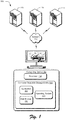
- FIG. 1 illustrates an operating environment in accordance with one or more embodiments, generally at 100.
- Environment 100 includes a computing device 102 in the form of a local client machine having one or more processors 104, one or more computer-readable storage media 106, one or more applications 108 that resides on the computer-readable storage media and which are executable by the processor 104.
- Computing device 102 also includes a web browser 110 and an operating system 111 that operates as described below.
- Computing device 102 can be embodied as any suitable computing device such as, by way of example and not limitation, a desktop computer, a portable computer, a handheld computer such as a personal digital assistant (PDA), mobile phone, television, tablet computer, and the like.
- PDA personal digital assistant
- FIGS. 4 and 5 One of a variety of different examples of a computing device 102 is shown and described below in FIGS. 4 and 5 .
- Applications 108 can include any suitable type of applications.
- the web browser 110 is configured to navigate via the network 112.
- the network 112 is illustrated as the Internet, the network may assume a wide variety of configurations.
- the network 112 may include a wide area network (WAN), a local area network (LAN), a wireless network, a public telephone network, an intranet, and so on.
- WAN wide area network
- LAN local area network
- wireless network a public telephone network
- intranet an intranet
- the network 112 may be configured to include multiple networks.
- the browser may be configured to navigate via the network 112 to interact with content available from one or more servers 114, such as web servers, as well as communicate data to the one or more servers 114, e.g., perform downloads and uploads.
- the servers 114 may be configured to provide one or more services, such as web services (also referred to as "cloud services") that are accessible via the network 112 and can be consumed by computing device 102. Examples of such services include map services, email, web pages, photo sharing sites, social networks, content sharing services, media streaming services, data retrieval and/or displaying services and so on.
- One or more of the applications 108 may also be configured to access the network 112, e.g., directly themselves and/or through the browser.
- one or more of the applications 108 may be configured to communicate messages, such as email, instant messages, and so on.
- an application 108 for instance, may be configured to access a social network, obtain weather updates, interact with a bookstore service implemented by one or more of the web servers 114, support word processing, provide spreadsheet functionality, support creation and output of presentations, and so on.
- applications 108 may also be configured for a variety of functionality that may involve direct or indirect network 112 access.
- the applications 108 may include configuration settings and other data that may be leveraged locally by the application 108 as well as synchronized with applications that are executed on another computing device. In this way, these settings may be shared by the devices.
- the computing device 102 may interact with content in a variety of ways from a variety of different sources.
- servers 114 can each support a web service which is a redundant web service. That is, each redundant web service is a copy or replica of the other. These web services can be, and typically are run or executed at geographically distributed locations. Each replica service is capable of performing operations that are generally, identically performed across all replicas. In the event of an interruption at one location, services in other locations can quickly and automatically take over operations.
- a Distributed Agreement Protocol is utilized to bind a CRUD-type protocol as a state machine. Binding takes place through the use of a reverse proxy that is located at each of the locations at which the service is distributed.
- the Distributed Agreement Protocol is implemented as the Paxos protocol or a variant thereof, and/or the CRUD-type protocol comprises the HTTP protocol, as will become apparent below.
- any of the functions described herein can be implemented using software, firmware, hardware (e.g., fixed logic circuitry), or a combination of these implementations.
- the terms “module,” “functionality,” and “logic” as used herein generally represent software, firmware, hardware, or a combination thereof.
- the module, functionality, or logic represents program code that performs specified tasks when executed on a processor (e.g., CPU or CPUs).
- the program code can be stored in one or more computer readable memory devices.
- the computing device 102 may also include an entity (e.g., software) that causes hardware or virtual machines of the computing device 102 to perform operations, e.g., processors, functional blocks, and so on.
- the computing device 102 may include a computer-readable medium that may be configured to maintain instructions that cause the computing device, and more particularly the operating system and associated hardware of the computing device 102 to perform operations.
- the instructions function to configure the operating system and associated hardware to perform the operations and in this way result in transformation of the operating system and associated hardware to perform functions.
- the instructions may be provided by the computer-readable medium to the computing device 102 through a variety of different configurations.
- One such configuration of a computer-readable medium is signal bearing medium and thus is configured to transmit the instructions (e.g., as a carrier wave) to the computing device, such as via a network.
- the computer-readable medium may also be configured as a computer-readable storage medium and thus is not a signal bearing medium. Examples of a computer-readable storage medium include a random-access memory (RAM), read-only memory (ROM), an optical disc, flash memory, hard disk memory, and other memory devices that may use magnetic, optical, and other techniques to store instructions and other data.
- DAPs Distributed Agreement Protocols
- One goal of the distributed system is to have each processor or node that serves as a peer to efficiently and flexibly make an agreement on one common value which satisfies a particular agreement condition.
- Distributed Agreement Protocols can be utilized in order to enable nodes within the distributed system to agree upon such common values in an efficient manner.
- One such Distributed Agreement Protocol is the Paxos protocol which is described just below.
- the Paxos protocol can be utilized in the various embodiments described in this document. It is to be appreciated and understood, however, that other Distributed Agreement Protocols can be utilized without departing from the spirit and scope of the claimed subject matter.
- one such Distributed Agreement Protocol is the Query/Update (Q/U) protocol, as will be appreciated by the skilled artisan.
- Paxos protocol in general, as but one example of a Distributed Agreement Protocol that can be utilized to bind a CRUD-type protocol, e.g., HTTP, as a state machine within the Paxos protocol.
- a CRUD-type protocol e.g., HTTP
- the Paxos protocol is used to implement a fault-tolerant distributed system.
- the discussion that follows explains the Paxos algorithm or protocol, which is obtained by the application of consensus to the state machine approach for building a distributed system.
- a consensus algorithm ensures that a single one among the proposed values is chosen. If no value is proposed, then no value should be chosen. If a value has been chosen, then processes should be able to learn the chosen value.
- the safety considerations for consensus are that (1) only a value that has been proposed may be chosen, (2) only a single value is chosen, and (3) a process never learns that a value has been chosen unless it actually has been. The goal is to ensure that some proposed value is eventually chosen and, if a value has been chosen, then a process can eventually learn the value.
- agents can communicate with one another by sending messages.
- the customary asynchronous, non-Byzantine model is utilized, in which (1) agents operate at arbitrary speed, may fail by stopping, and may restart; since all agents may fail after a value is chosen and then restart, a solution is impossible unless some information can be remembered by an agent that has failed and restarted; and (2) messages can take arbitrarily long to be delivered, can be duplicated, and can be lost, but they are not corrupted.
- a proposer sends a proposal to the acceptor, who chooses the first proposed value that it receives. Although simple, this solution is unsatisfactory because the failure of the acceptor makes any further progress impossible. Instead of a single acceptor, one can use multiple acceptor agents.
- a proposer sends a proposed value to a set of acceptors. An acceptor may accept the proposed value. The value is chosen when a large enough set of acceptors have accepted it. How large is large enough? To ensure that only a single value is chosen, one can let a large enough set consist of any majority of the agents.
- condition P2 guarantees the safety property that only a single value is chosen.
- a proposal must be accepted by at least one acceptor. So, we can satisfy P2 by satisfying: P2 a . If a proposal with value v is chosen, then every higher-numbered proposal accepted by any acceptor has value v.
- P2b Since a proposal must be issued by a proposer before it can be accepted by an acceptor, P2b implies P2a, which in turn implies P2.
- any set S consisting of a majority of acceptors contains at least one member of C .
- a proposal numbered n has value v by ensuring that the following invariant is maintained: P2 c .
- P2 c the following invariant is maintained.
- v and n if a proposal with value v and number n is issued, then there is a set S consisting of a majority of acceptors such that either (a) no acceptor in S has accepted any proposal numbered less than n, or (b) v is the value of the highest-numbered proposal among all proposals numbered less than n accepted by the acceptors in S.
- a proposer that wants to issue a proposal numbered n must learn the highest-numbered proposal with number less than n, if any, that has been or will be accepted by each acceptor in some majority of acceptors. Learning about proposals already accepted is easy enough; predicting future acceptances is hard. Instead of trying to predict the future, the proposer controls it by extracting a promise that there will not be any such acceptances. In other words, the proposer requests that the acceptors not accept any more proposals numbered less than n. This leads to the following algorithm for issuing proposals.
- a proposer issues a proposal by sending, to some set of acceptors, a request that the proposal be accepted. (This need not be the same set of acceptors that responded to the initial requests.) This will be referred to as an accept request.
- An acceptor can receive two kinds of requests from proposers: prepare requests and accept requests.
- An acceptor can ignore any request without compromising safety. So, we need to say only when it is allowed to respond to a request. It can always respond to a prepare request. It can respond to an accept request, accepting the proposal, if and only if it has not promised not to. In other words: P1 a .
- An acceptor can accept a proposal numbered n iff it has not responded to a prepare request having a number greater than n.
- a proposer can make multiple proposals, so long as it follows the algorithm for each one. It can abandon a proposal in the middle of the protocol at any time. Correctness is maintained, even though requests and/or responses for the proposal may arrive at their destinations long after the proposal was abandoned. It is probably a good idea to abandon a proposal if some proposer has begun trying to issue a higher-numbered one. Therefore, if an acceptor ignores a prepare or accept request because it has already received a prepare request with a higher number, then it should probably inform the proposer, who should then abandon its proposal. This is a performance optimization that does not affect correctness.
- the acceptors could respond with their acceptances to some set of distinguished learners, each of which can then inform all the learners when a value has been chosen.
- Using a larger set of distinguished learners provides greater reliability at the cost of greater communication complexity.
- a value could be chosen with no learner ever finding out.
- the learner could ask the acceptors what proposals they have accepted, but failure of an acceptor could make it impossible to know whether or not a majority had accepted a particular proposal. In that case, learners will find out what value is chosen only when a new proposal is chosen. If a learner needs to know whether a value has been chosen, it can have a proposer issue a proposal, using the algorithm described above.
- Proposer p completes phase 1 for a proposal number n 1 .
- Another proposer q then completes phase 1 for a proposal number n 2 > n 1 .
- Proposer p 's phase 2 accept requests for a proposal numbered n 1 are ignored because the acceptors have all promised not to accept any new proposal numbered less than n 2 . So, proposer p then begins and completes phase 1 for a new proposal number n 3 > n 2 , causing the second phase 2 accept requests of proposer q to be ignored, and so on.
- a distinguished proposer is selected as the only one to try issuing proposals. If the distinguished proposer can communicate successfully with a majority of acceptors, and if it uses a proposal with number greater than any already used, then it will succeed in issuing a proposal that is accepted. By abandoning a proposal and trying again if it learns about some request with a higher proposal number, the distinguished proposer will eventually choose a high enough proposal number.
- a reliable algorithm for electing a proposer can use either randomness or real time-for example, by using timeouts. However, safety is ensured regardless of the success or failure of the election.
- the Paxos algorithm assumes a network of processes. In its consensus algorithm, each process plays the role of proposer, acceptor, and learner. The algorithm chooses a leader, which plays the roles of the distinguished proposer and the distinguished learner.
- the Paxos consensus algorithm is the one described above, where requests and responses are sent as ordinary messages. Response messages are tagged with the corresponding proposal number to prevent confusion. Stable storage, preserved during failures, is used to maintain the information that the acceptor is to remember. An acceptor records its intended response in stable storage before actually sending the response.
- the server can be described as a deterministic state machine that performs client commands in some sequence.
- the state machine has a current state; it performs a step by taking as input a command and producing an output and a new state.
- the clients of a distributed banking system might be tellers, and the state-machine state might consist of the account balances of all users.
- a withdrawal would be performed by executing a state machine command that decreases an account's balance if and only if the balance is greater than the amount withdrawn, producing as output the old and new balances.
- An implementation that uses a single central server fails if that server fails.
- a single server is elected to be the leader, which acts as the distinguished proposer (i.e., the only one that tries to issue proposals) in all instances of the consensus algorithm.
- Clients send commands to the leader, who decides where in the sequence each command should appear. If the leader decides that a certain client command should be the 135 th command, it tries to have that command chosen as the value of the 135 th instance of the consensus algorithm. It will usually succeed. It might fail because of failures, or because another server also believes itself to be the leader and has a different idea of what the 135 th command should be. But the consensus algorithm ensures that at most one command can be chosen as the 135 th one.
- the leader as well as any other server that learns all the commands the leader knows, can now execute commands 1-135. However, it cannot execute commands 138-140, which it also knows, because commands 136 and 137 have yet to be chosen. The leader could take the next two commands requested by clients to be commands 136 and 137. Instead, we let it fill the gap immediately by proposing, as commands 136 and 137, a special "noop" command that leaves the state unchanged. It does this by executing phase 2 of instances 136 and 137 of the consensus algorithm. Once these "noop" commands have been chosen, commands 138-140 can be executed.
- Commands 1-140 have now been chosen.
- the leader has also completed phase 1 for all instances greater than 140 of the consensus algorithm, and it is free to propose any value in phase 2 of those instances. It assigns command number 141 to the next command requested by a client, proposing it as the value in phase 2 of instance 141 of the consensus algorithm. It proposes the next client command it receives as command 142, and so on.
- the leader can propose command 142 before it learns that its proposed command 141 has been chosen. It is possible for all the messages it sent in proposing command 141 to be lost, and for command 142 to be chosen before any other server has learned what the leader proposed as command 141. When the leader fails to receive the expected response to its phase 2 messages in instance 141, it will retransmit those messages. If all goes well, its proposed command will be chosen. However, it could fail first, leaving a gap in the sequence of chosen commands. In general, suppose a leader can get ⁇ commands ahead-that is, it can propose commands i + 1 through i+ ⁇ after commands 1 through i are chosen. A gap of up to ⁇ -1 commands could then arise.
- phase 1 For infinitely many instances of the consensus algorithm-in the scenario above, for instances 135-137 and all instances greater than 139. Using the same proposal number for all instances, it can do this by sending a single reasonably short message to the other servers.
- an acceptor responds with more than a simple OK only if it has already received a phase 2 message from some proposer. In the scenario, this was the case only for instances 135 and 140.
- a server acting as acceptor, can respond for all instances with a single reasonably short message. Executing these infinitely many instances of phase 1 therefore poses no problem.
- phase 2 of the Paxos consensus algorithm has the minimum possible cost of any algorithm for reaching agreement in the presence of faults. Hence, the Paxos algorithm is essentially optimal.
- the set of servers can change, then there must be some way of determining what servers implement what instances of the consensus algorithm. The easiest way to do this is through the state machine itself.
- the current set of servers can be made part of the state and can be changed with ordinary state-machine commands. We can allow a leader to get ⁇ commands ahead by letting the set of servers that execute instance i + ⁇ of the consensus algorithm be specified by the state after execution of the i th state machine command. This permits a simple implementation of an arbitrarily sophisticated reconfiguration algorithm.
- the Paxos protocol includes other family members or variants that can be utilized in connection with the embodiments described herein. These other family members include, by way of example and not limitation, so-called Multi-Paxos, Cheap Paxos, Fast Paxos, and Byzantine Paxos. These other family members can be utilized in the various embodiments described below.
- CRUD Create, Read, Update, Delete
- HTTP Hypertext Transfer Protocol
- HTTP Hypertext Transfer Protocol
- HTTP functions as a request-response protocol in the client-server computing model.
- a web browser acts as a client, while an application running on a computer hosting a web site functions as a server.
- the client submits an HTTP request message to the server.
- the server which stores content or provides resources, such as HTML files, or performs on behalf of the client, returns a response message to the client.
- a response contains completion status information about the request and may contain any content requested by the client in its message body.
- a web browser (or client) is often referred to as a user agent (UA).
- Other user agents can include the indexing software used by search providers, known as web crawlers, or variations of the web browser such as voice browsers, which present an interactive voice user interface.
- HTTP is an Application Layer protocol designed within the framework of the Internet Protocol Suite.
- the protocol definitions presume a reliable Transport Layer protocol for host-to-host data transfer.
- TCP Transmission Control Protocol
- UDP User Datagram Protocol
- SSDP Simple Service Discovery Protocol
- HTTP Resources are identified and located on the network by Uniform Resource Identifiers (URIs) -- or, more specifically, Uniform Resource Locators (URLs) -- using the http or https URI schemes.
- URIs and the Hypertext Markup Language (HTML) form a system of inter-linked resources, called hypertext documents, on the Internet.
- An HTTP session is a sequence of network request-response transactions.
- An HTTP client initiates a request by establishing a Transmission Control Protocol (TCP) connection to a particular port on a server.
- An HTTP server listening on that port waits for a client's request message.
- the server Upon receiving the request, the server sends back a status line, such as an HTTP/200 "OK", and a message of its own.
- the body of this message is typically the requested resource, although an error message or other information may also be returned.
- HTTP defines nine methods (sometimes referred to as "verbs") indicating the desired action to be performed on the identified resource. What this resource represents, whether pre-existing data or data that is generated dynamically, depends on the implementation of the server. Often, the resource corresponds to a file or the output of an executable residing on the server. HTTP Verb Definition HEAD Asks for the response identical to the one that would correspond to a GET request, but without the response body. This is useful for retrieving meta-information written in response headers, without having to transport the entire content.
- GET Request s a representation of the specified resource.
- OPTIONS Returns the HTTP methods that the server supports for specified URL. This can be used to check the functionality of a web server by requesting '*' instead of a specific resource.
- CONNECT Converts the request connection to a transparent TCP/IP tunnel, usually to facilitate SSL encrypted communication (HTTPS) through an unencrypted HTTP proxy.
- PATCH Is used to apply partial modifications to a resource.
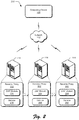
- FIG. 2 illustrates a system, generally at 200, in which a CRUD-type protocol can be bound as a state machine utilizing a Distributed Agreement Protocol in accordance with one or more embodiments.
- a CRUD-type protocol can be bound as a state machine utilizing a Distributed Agreement Protocol in accordance with one or more embodiments.
- FIG. 1 illustrates a system, generally at 200, in which a CRUD-type protocol can be bound as a state machine utilizing a Distributed Agreement Protocol in accordance with one or more embodiments.
- like numerals from the FIG. 1 embodiment are utilized to depict like components. It is to be appreciated and understood, however, that the techniques described in this document can be employed in connection with any suitable stateless REST (Representational State Transfer) protocols.
- stateless REST Real State Transfer
- computing device 102 communicates, via network 112 with one or more servers 114. Any suitable protocol can be utilized to enable computing device 102 to communicate with servers 114. In the illustrated and described embodiment, communication can take place utilizing a CRUD-type protocol. In a specific implementation, the CRUD-type protocol comprises HTTP.
- Each server in this particular example, includes a reverse proxy 202.
- the reverse proxy implements an instance of a Distributed Agreement Protocol (DAP) which resides in the form of DAP module 204.
- DAP Distributed Agreement Protocol
- each server 114 implements one or more web services, here represented by service 206, such as a web or "cloud" service.
- service 206 implemented by the individual servers constitutes a replica or redundant service.
- each server 114 constitutes a node in a distributed system in which service 206 is offered.
- the servers are geographically distributed at different physical locations.
- the individual servers might comprise servers that are located in data centers across a particular country or distributed throughout the world. Alternately, the servers might constitute individual blade servers in a single rack.
- Each server through its DAP module 204, runs in instance of a Distributed Agreement Protocol.
- the Distributed Agreement Protocol comprises the Paxos protocol.
- the computing device 102 uses a CRUD-type protocol, such as HTTP, the computing device 102 issues operations using, for example, verbs associated with a particular protocol.
- verbs can include GET, PUT, POST, PATCH, DELETE, and the like.
- the client computing device 102 can communicate with any node, i.e. server 114, in the distributed system.
- server 114 receives the operations from the computing device 102, it captures the operations and, utilizing the DAP module 204, chooses an ordering for them.
- the Distributed Agreement Protocol communication takes place between the reverse proxies 202 on each server. Through the communication between the servers, the Distributed Agreement Protocol is utilized to come to a consensus as to the ordering of operations that are to be performed.
- each node i.e. server, can execute the operations in the agreed-upon order in the context of service 206.
- the CRUD-type protocol which in this instance is HTTP, is bound as a state machine using the Distributed Agreement Protocol.
- the Distributed Agreement Protocol enables receipt of operations from various clients that can be widely distributed.
- the operations can arrive in any arbitrary order and can be associated with any service, i.e. "cloud service”.
- a server can construct a sequential ordering of operations as between multiple different servers that ensures that the same sequential ordering across all of the servers or nodes is the same. As a result, each node will be in the same state with respect operations that are to be, or have been, performed.
- Utilizing the Distributed Agreement Protocol in connection with web services that are implemented using a CRUD-type protocol can facilitate operation when, for example, individual nodes or servers within a distributed system may become inoperative.
- a web service that can be implemented using the techniques described above, consider a web service that maintains a contact list for individual users.
- a user can insert a new contact, view contacts, update contacts, and delete contacts.
- the contact list service is implemented in a distributed fashion using servers, such as those servers described above.
- the user can interact with the contact list service using multiple different types of client devices. For example, for example, a user may want interact with the contact list service to the personal computer, their phone, a web browser, or any type of client.
- the client device issues operations in the form of HTTP verbs. For example, if a user wishes to view all of their contacts, through a suitably-configured user interface, the user would cause an HTTP GET operation to be issued. Similarly, to update a contact an HTTP MERGE operation would be issued. Deleting a contact would occur through an HTTP DELETE operation, and inserting a new contact would occur through issuance of a POST operation.
- the contact list service is implemented in a distributed fashion on multiple different servers, when operations are issued by a client device, the Distributed Agreement Protocol executed by each server or, more accurately, by the reverse proxy on each server, ensures that an agreed-upon order of operations occurs on each server. In this manner, a user's contact list can remain synchronized across nodes, i.e. servers, in the distributed system.
- FIG. 3 is a flow diagram that describes steps a method in accordance with one or more embodiments.
- the method can be implemented in connection with any suitable hardware, software, firmware, or combination thereof.
- the method can be implemented, at least in part, by a suitably-configured client device and one or more suitably-configured servers.
- a portion of the illustrated flow diagram is designated as "Client Device” to depict acts that are performed by a client device.
- Reverse Proxy to designate those acts, or at least some of those acts that can be performed by, or on behalf of a reverse proxy, such as those described above.
- Step 300 issues an operation associated with a web service. Any suitable operation can be issued in connection with any suitable web service.
- the operation is associated with a CRUD-type operation.
- the operation is associated with an HTTP operation such as those described above.
- Step 302 communicates the operation to a RESTful Web server - i.e., one that conforms to or utilizes a RESTful protocol, such as a CRUD-type protocol.
- the web server implements the web service and comprises part of a distributed system in which one or more other Web servers implement a redundant or replica of the web service.
- Step 304 intercepts or receives the communication to the RESTful Web server.
- this step can be performed by a suitably-configured reverse proxy.
- the reverse proxy supports or is otherwise configured to utilize a Distributed Agreement Protocol, such as those mentioned above.
- the Distributed Agreement Protocol comprises the Paxos protocol.
- Step 306 initiates the Distributed Agreement Protocol with one or more nodes. This step can be performed in any suitable way.
- each node corresponds to another RESTful Web server that implements the redundant web service mentioned above.
- Step 308 utilizes the Distributed Agreement Protocol to arrive at a consensus relative to the operation. Utilization of the Distributed Agreement Protocol can take place through intra-communication between the various servers that support or expose redundant web service.
- step 310 Having arrived at a consensus using the Distributed Agreement Protocol, step 310 performs or enables performance of an associated operation. Performance of the operation occurs in the order as ascertained through the consensus between the RESTful Web servers or, more accurately, the reverse proxies utilized by each Web server. Having performed the operation, step 312 returns a suitable response to the client device. Any suitable response can be returned. In at least some embodiments, the response that is returned resides in the form of an HTTP response.
- Step 314 receives, at the client device, the response and processes the response in the usual manner.
- state can be maintained between multiple different servers that implement a redundant web service.
- RESTful Web servers can be operated in lock step so as to preserve state and remain synchronized with respect to operations that are performed across the Web servers.
- FIG. 4 illustrates an example system 400 that includes the computing device 102 as described with reference to FIG. 1 .
- the example system 400 enables ubiquitous environments for a seamless user experience when running applications on a personal computer (PC), a television device, and/or a mobile device. Services and applications run substantially similar in all three environments for a common user experience when transitioning from one device to the next while utilizing an application, playing a video game, watching a video, and so on.
- PC personal computer
- FIG. 4 illustrates an example system 400 that includes the computing device 102 as described with reference to FIG. 1 .
- the example system 400 enables ubiquitous environments for a seamless user experience when running applications on a personal computer (PC), a television device, and/or a mobile device. Services and applications run substantially similar in all three environments for a common user experience when transitioning from one device to the next while utilizing an application, playing a video game, watching a video, and so on.
- multiple devices are interconnected through a central computing device.
- the central computing device may be local to the multiple devices or may be located remotely from the multiple devices.
- the central computing device may be a cloud of one or more server computers that are connected to the multiple devices through a network, the Internet, or other data communication link.
- this interconnection architecture enables functionality to be delivered across multiple devices to provide a common and seamless experience to a user of the multiple devices.
- Each of the multiple devices may have different physical requirements and capabilities, and the central computing device uses a platform to enable the delivery of an experience to the device that is both tailored to the device and yet common to all devices.
- a class of target devices is created and experiences are tailored to the generic class of devices.
- a class of devices may be defined by physical features, types of usage, or other common characteristics of the devices.
- the computing device 102 may assume a variety of different configurations, such as for computer 402, mobile 404, and television 406 uses. Each of these configurations includes devices that may have generally different constructs and capabilities, and thus the computing device 102 may be configured according to one or more of the different device classes. For instance, the computing device 102 may be implemented as the computer 402 class of a device that includes a personal computer, desktop computer, a multi-screen computer, laptop computer, netbook, and so on. Each of these different configurations may employ the techniques described herein, as illustrated through inclusion of the application(s) 108, Web browser 110, and operating system 111.
- the computing device 102 may also be implemented as the mobile 404 class of device that includes mobile devices, such as a mobile phone, portable music player, portable gaming device, a tablet computer, a multi-screen computer, and so on.
- the computing device 102 may also be implemented as the television 406 class of device that includes devices having or connected to generally larger screens in casual viewing environments. These devices include televisions, set-top boxes, gaming consoles, and so on.
- the techniques described herein may be supported by these various configurations of the computing device 102 and are not limited to the specific examples the techniques described herein.
- the cloud 408 includes and/or is representative of a platform 410 for content services 412.
- the platform 410 abstracts underlying functionality of hardware (e.g., servers) and software resources of the cloud 408.
- the content services 412 may include applications and/or data that can be utilized while computer processing is executed on servers that are remote from the computing device 102.
- Content services 412(e.g., cloud services or web services) can be provided as a service over the Internet and/or through a subscriber network, such as a cellular or Wi-Fi network.
- the platform 410 may abstract resources and functions to connect the computing device 102 with other computing devices.
- the platform 410 may also serve to abstract scaling of resources to provide a corresponding level of scale to encountered demand for the content services 412 that are implemented via the platform 410.
- implementation of functionality described herein may be distributed throughout the system 400.
- the functionality may be implemented in part on the computing device 102 as well as via the platform 410 that abstracts the functionality of the cloud 408.
- FIG. 5 illustrates various components of an example device 500 that can be implemented as any type of computing device as described above to implement embodiments of the techniques described herein.
- Device 500 includes communication devices 502 that enable wired and/or wireless communication of device data 504 (e.g., received data, data that is being received, data scheduled for broadcast, data packets of the data, etc.).
- the device data 504 or other device content can include configuration settings of the device, media content stored on the device, and/or information associated with a user of the device.
- Media content stored on device 500 can include any type of audio, video, and/or image data.
- Device 500 includes one or more data inputs 506 via which any type of data, media content, and/or inputs can be received, such as user-selectable inputs, messages, music, television media content, recorded video content, and any other type of audio, video, and/or image data received from any content and/or data source.
- any type of data, media content, and/or inputs can be received, such as user-selectable inputs, messages, music, television media content, recorded video content, and any other type of audio, video, and/or image data received from any content and/or data source.
- Device 500 also includes communication interfaces 508 that can be implemented as any one or more of a serial and/or parallel interface, a wireless interface, any type of network interface, a modem, and as any other type of communication interface.
- the communication interfaces 508 provide a connection and/or communication links between device 500 and a communication network by which other electronic, computing, and communication devices communicate data with device 500.
- Device 500 includes one or more processors 510 (e.g., any of microprocessors, controllers, and the like) which process various computer-executable instructions to control the operation of device 500 and to implement embodiments of the techniques described herein.
- processors 510 e.g., any of microprocessors, controllers, and the like
- device 500 can be implemented with any one or combination of hardware, firmware, or fixed logic circuitry that is implemented in connection with processing and control circuits which are generally identified at 512.
- device 500 can include a system bus or data transfer system that couples the various components within the device.
- a system bus can include any one or combination of different bus structures, such as a memory bus or memory controller, a peripheral bus, a universal serial bus, and/or a processor or local bus that utilizes any of a variety of bus architectures.
- Device 500 also includes computer-readable media 514, such as one or more memory components, examples of which include random access memory (RAM), non-volatile memory (e.g., any one or more of a read-only memory (ROM), flash memory, EPROM, EEPROM, etc.), and a disk storage device.
- RAM random access memory
- non-volatile memory e.g., any one or more of a read-only memory (ROM), flash memory, EPROM, EEPROM, etc.
- a disk storage device may be implemented as any type of magnetic or optical storage device, such as a hard disk drive, a recordable and/or rewriteable compact disc (CD), any type of a digital versatile disc (DVD), and the like.
- Device 500 can also include a mass storage media device 516.
- Computer-readable media 514 provides data storage mechanisms to store the device data 504, as well as various device applications 518 and any other types of information and/or data related to operational aspects of device 500.
- an operating system 520 can be maintained as a computer application with the computer-readable media 514 and executed on processors 510.
- the device applications 518 can include a device manager (e.g., a control application, software application, signal processing and control module, code that is native to a particular device, a hardware abstraction layer for a particular device, etc.).
- the device applications 518 also include any system components or modules to implement embodiments of the techniques described herein.
- the device applications 518 include an interface application 522 and an input/output module 524 that are shown as software modules and/or computer applications.
- the input/output module 524 is representative of software that is used to provide an interface with a device configured to capture inputs, such as a touchscreen, track pad, camera, microphone, and so on.
- the interface application 522 and the input/output module 524 can be implemented as hardware, software, firmware, or any combination thereof.
- the input/output module 524 may be configured to support multiple input devices, such as separate devices to capture visual and audio inputs, respectively.
- Device 500 also includes an audio and/or video input-output system 526 that provides audio data to an audio system 528 and/or provides video data to a display system 530.
- the audio system 528 and/or the display system 530 can include any devices that process, display, and/or otherwise render audio, video, and image data.
- Video signals and audio signals can be communicated from device 500 to an audio device and/or to a display device via an RF (radio frequency) link, S-video link, composite video link, component video link, DVI (digital video interface), analog audio connection, or other similar communication link.
- the audio system 528 and/or the display system 530 are implemented as external components to device 500.
- the audio system 528 and/or the display system 530 are implemented as integrated components of example device 500.
- Various embodiments enable redundant or replica services, such as "cloud” services, to be run at geographically distributed locations.
- Each replica is capable of performing operations that are generally, identically performed across all replicas. In the event of an interruption at one location, services in other locations can quickly and automatically take over operations.
- a Distributed Agreement Protocol is utilized to bind a CRUD-type protocol as a state machine. Binding takes place through the use of a reverse proxy that is located at each of the locations at which the service is distributed.
- the Distributed Agreement Protocol is implemented as the Paxos protocol or a variant thereof, and/or the CRUD-type protocol comprises the HTTP protocol.
Landscapes
- Engineering & Computer Science (AREA)
- Computer Networks & Wireless Communication (AREA)
- Signal Processing (AREA)
- Computer Security & Cryptography (AREA)
- Multimedia (AREA)
- Computer And Data Communications (AREA)
- Hardware Redundancy (AREA)
Applications Claiming Priority (3)
| Application Number | Priority Date | Filing Date | Title |
|---|---|---|---|
| US13/452,433 US9313252B2 (en) | 2012-04-20 | 2012-04-20 | Binding crud-type protocols in distributed agreement protocols |
| EP13718743.1A EP2839629B1 (de) | 2012-04-20 | 2013-04-15 | Bindung von crud-protokollen in verteilten aushandlungsprotokollen |
| PCT/US2013/036519 WO2013158514A1 (en) | 2012-04-20 | 2013-04-15 | Binding crud-type protocols in distributed agreement protocols |
Related Parent Applications (1)
| Application Number | Title | Priority Date | Filing Date |
|---|---|---|---|
| EP13718743.1A Division EP2839629B1 (de) | 2012-04-20 | 2013-04-15 | Bindung von crud-protokollen in verteilten aushandlungsprotokollen |
Publications (2)
| Publication Number | Publication Date |
|---|---|
| EP3624426A1 true EP3624426A1 (de) | 2020-03-18 |
| EP3624426B1 EP3624426B1 (de) | 2021-05-26 |
Family
ID=48184522
Family Applications (2)
| Application Number | Title | Priority Date | Filing Date |
|---|---|---|---|
| EP19182394.7A Active EP3624426B1 (de) | 2012-04-20 | 2013-04-15 | Bindung von crud-protokollen in verteilten aushandlungsprotokollen |
| EP13718743.1A Active EP2839629B1 (de) | 2012-04-20 | 2013-04-15 | Bindung von crud-protokollen in verteilten aushandlungsprotokollen |
Family Applications After (1)
| Application Number | Title | Priority Date | Filing Date |
|---|---|---|---|
| EP13718743.1A Active EP2839629B1 (de) | 2012-04-20 | 2013-04-15 | Bindung von crud-protokollen in verteilten aushandlungsprotokollen |
Country Status (6)
| Country | Link |
|---|---|
| US (2) | US9313252B2 (de) |
| EP (2) | EP3624426B1 (de) |
| JP (1) | JP6275693B2 (de) |
| KR (1) | KR101996624B1 (de) |
| CN (1) | CN104247380B (de) |
| WO (1) | WO2013158514A1 (de) |
Families Citing this family (13)
| Publication number | Priority date | Publication date | Assignee | Title |
|---|---|---|---|---|
| US9313252B2 (en) * | 2012-04-20 | 2016-04-12 | Microsoft Technology Licensing, Llc | Binding crud-type protocols in distributed agreement protocols |
| US9215131B2 (en) * | 2012-06-29 | 2015-12-15 | Cisco Technology, Inc. | Methods for exchanging network management messages using UDP over HTTP protocol |
| US9329950B2 (en) * | 2014-01-01 | 2016-05-03 | International Business Machines Corporation | Efficient fail-over in replicated systems |
| US10369461B2 (en) * | 2014-01-24 | 2019-08-06 | Nvidia Corporation | Cloud gaming system and method of initiating a gaming session |
| US10362059B2 (en) | 2014-09-24 | 2019-07-23 | Oracle International Corporation | Proxy servers within computer subnetworks |
| CN105577711B (zh) * | 2014-10-08 | 2019-05-03 | 华为技术有限公司 | 消息处理方法、装置及消息处理系统 |
| EP3062260B1 (de) | 2015-02-27 | 2017-05-31 | Sap Se | Verfahren zur steuerung des zugriffs auf elektronische dokumente mittels sperren |
| US9934092B2 (en) * | 2016-07-12 | 2018-04-03 | International Business Machines Corporation | Manipulating a distributed agreement protocol to identify a desired set of storage units |
| US11100086B2 (en) * | 2018-09-25 | 2021-08-24 | Wandisco, Inc. | Methods, devices and systems for real-time checking of data consistency in a distributed heterogenous storage system |
| FR3088159A1 (fr) * | 2018-11-05 | 2020-05-08 | Orange | Gestion d'une communication entre un terminal de communication appelant, disposant d'un identifiant d'appel principal et d'un identifiant d'appel secondaire, et un terminal de communication appele. |
| US11909528B2 (en) | 2021-03-04 | 2024-02-20 | Cisco Technology, Inc. | Safely overwriting decided slots |
| US11451465B1 (en) | 2021-03-04 | 2022-09-20 | Cisco Technology, Inc. | In-order fault tolerant consensus logs for replicated services |
| JP7225298B2 (ja) * | 2021-04-07 | 2023-02-20 | 株式会社日立製作所 | 分散合意方法、分散システム及び分散合意プログラム |
Family Cites Families (14)
| Publication number | Priority date | Publication date | Assignee | Title |
|---|---|---|---|---|
| US7409431B2 (en) * | 2002-09-13 | 2008-08-05 | Canon Kabushiki Kaisha | Server apparatus, communications method, program for making computer execute the communications method, and computer-readable storage medium containing the program |
| US20150088982A1 (en) * | 2006-09-25 | 2015-03-26 | Weaved, Inc. | Load balanced inter-device messaging |
| US7987471B2 (en) | 2007-01-26 | 2011-07-26 | Microsoft Corporation | Mobile device management proxy system |
| JP2010122773A (ja) * | 2008-11-18 | 2010-06-03 | Hitachi Ltd | 分散処理システム、処理割当方法、および情報処理装置 |
| JP4933573B2 (ja) * | 2009-02-18 | 2012-05-16 | 日本電信電話株式会社 | Webシステムにおける分散処理方法およびwebシステムにおける分散処理システム |
| US8352482B2 (en) | 2009-07-21 | 2013-01-08 | Vmware, Inc. | System and method for replicating disk images in a cloud computing based virtual machine file system |
| US8234518B2 (en) | 2009-07-21 | 2012-07-31 | Vmware, Inc. | Method for voting with secret shares in a distributed system |
| US8335765B2 (en) | 2009-10-26 | 2012-12-18 | Amazon Technologies, Inc. | Provisioning and managing replicated data instances |
| JP5123961B2 (ja) * | 2010-02-04 | 2013-01-23 | 株式会社トライテック | 分散コンピューティングシステム、分散コンピューティング方法及び分散コンピューティング用プログラム |
| US20110225495A1 (en) | 2010-03-12 | 2011-09-15 | Salesforce.Com, Inc. | Service Cloud Console |
| JP5488349B2 (ja) * | 2010-08-30 | 2014-05-14 | 富士通株式会社 | 中継装置、中継方法及び中継プログラム |
| US9483570B2 (en) * | 2010-12-30 | 2016-11-01 | International Business Machines Corporation | Driving a user experience of a web application using rules that establish or change requests based on user behavior |
| US20120331038A1 (en) * | 2011-06-23 | 2012-12-27 | Lin Yang | Systems and methods for processing web service piped network requests |
| US9313252B2 (en) * | 2012-04-20 | 2016-04-12 | Microsoft Technology Licensing, Llc | Binding crud-type protocols in distributed agreement protocols |
-
2012
- 2012-04-20 US US13/452,433 patent/US9313252B2/en active Active
-
2013
- 2013-04-15 KR KR1020147029229A patent/KR101996624B1/ko not_active Expired - Fee Related
- 2013-04-15 EP EP19182394.7A patent/EP3624426B1/de active Active
- 2013-04-15 JP JP2015507075A patent/JP6275693B2/ja not_active Expired - Fee Related
- 2013-04-15 WO PCT/US2013/036519 patent/WO2013158514A1/en not_active Ceased
- 2013-04-15 EP EP13718743.1A patent/EP2839629B1/de active Active
- 2013-04-15 CN CN201380020950.4A patent/CN104247380B/zh active Active
-
2016
- 2016-03-01 US US15/057,284 patent/US10193951B2/en active Active
Non-Patent Citations (4)
| Title |
|---|
| GUSTAVO M. D. VIEIRA; LUIZ E. BUZATO: "Treplica: Ubiquitous Replication", PROCEEDINGS OF THE 26TH BRAZILIAN SYMPOSIUM ON COMPUTER NETWORKS AND DISTRIBUTED SYSTEMS, 2008, RIO DE JANEIRO, 26 May 2008 (2008-05-26) - 30 May 2008 (2008-05-30), pages 427 - 440, XP002699749, Retrieved from the Internet <URL:http://www.lbd.dcc.ufmg.br/colecoes/sbrc/2008/030.pdf> [retrieved on 20130628] * |
| LAMPORT L: "THE PART-TIME PARLIAMENT", ACM TRANSACTIONS ON COMPUTER SYSTEMS (TOCS), ASSOCIATION FOR COMPUTING MACHINERY, INC, US, vol. 16, no. 2, 1 May 1998 (1998-05-01), pages 133 - 169, XP000791701, ISSN: 0734-2071, DOI: 10.1145/279227.279229 * |
| LESLIE LAMPORT: "Fast Paxos", DISTRIBUTED COMPUTING, SPRINGER, BERLIN, DE, vol. 19, no. 2, 8 July 2006 (2006-07-08), pages 79 - 103, XP019461005, ISSN: 1432-0452, DOI: 10.1007/S00446-006-0005-X * |
| LUIZ E BUZATO ET AL: "Dynamic content web applications: Crash, failover, and recovery analysis", DEPENDABLE SYSTEMS&NETWORKS, 2009. DSN '09. IEEE/IFIP INTERNATIONAL CONFERENCE ON, IEEE, PISCATAWAY, NJ, USA, 29 June 2009 (2009-06-29), pages 229 - 238, XP031533164, ISBN: 978-1-4244-4422-9 * |
Also Published As
| Publication number | Publication date |
|---|---|
| KR101996624B1 (ko) | 2019-07-04 |
| JP2015520440A (ja) | 2015-07-16 |
| CN104247380A (zh) | 2014-12-24 |
| US20130282789A1 (en) | 2013-10-24 |
| EP2839629A1 (de) | 2015-02-25 |
| KR20150005547A (ko) | 2015-01-14 |
| US20160197976A1 (en) | 2016-07-07 |
| JP6275693B2 (ja) | 2018-02-07 |
| US10193951B2 (en) | 2019-01-29 |
| CN104247380B (zh) | 2018-02-06 |
| WO2013158514A1 (en) | 2013-10-24 |
| EP3624426B1 (de) | 2021-05-26 |
| US9313252B2 (en) | 2016-04-12 |
| EP2839629B1 (de) | 2019-06-26 |
Similar Documents
| Publication | Publication Date | Title |
|---|---|---|
| US10193951B2 (en) | Binding CRUD-type protocols in distributed agreement protocols | |
| JP6220338B2 (ja) | フォールトトレラント外部アプリケーションサーバ | |
| US12028442B2 (en) | Accessing security hardware keys | |
| US9705800B2 (en) | Load distribution in data networks | |
| CN102934101B (zh) | 针对本地和远程数据的透明访问机制 | |
| US11539803B2 (en) | Highly available private cloud service | |
| BRPI0015347A2 (pt) | recurso de armazenamento de internet compartilhada, sistema de interface com o usuário, e método | |
| US8302165B2 (en) | Establishing trust relationships between computer systems | |
| EP2715543A2 (de) | Umleitung von anfragen an sekundäre orte während vorübergehender ausfallzeiten | |
| RU2643642C2 (ru) | Использование кэш-памяти и памяти другого типа в распределённой запоминающей системе | |
| CN110633046A (zh) | 一种分布式系统的存储方法、装置、存储设备及存储介质 | |
| CN101009567A (zh) | 一种利用对等网络实体提供网络服务的方法及系统 | |
| US8627412B2 (en) | Transparent database connection reconnect | |
| US20120310912A1 (en) | Crawl freshness in disaster data center | |
| CN111596953B (zh) | 版本管理系统、开发数据传输控制方法及相关装置 | |
| US9608914B2 (en) | Information processing apparatus and information processing method | |
| Sedivy et al. | Mcsync-distributed, decentralized database for mobile devices | |
| CN113157393A (zh) | 管理节点高可用方法及设备 | |
| US8271623B2 (en) | Performing configuration in a multimachine environment | |
| CN119025129A (zh) | 一种共享原子化服务方法、系统、终端及介质 | |
| CN119337016A (zh) | 组件间通信方法、相关装置及计算机程序产品 | |
| CN114615011A (zh) | 网络家谱私有化服务方法和装置 | |
| Jimenez-peris | Fault-Tolerant Business Processes | |
| Szychowiak et al. | Applying Message Logging to Support Fault-Tolerance of SOA Systems | |
| JP2010009481A (ja) | 計算機システム及び通信方法 |
Legal Events
| Date | Code | Title | Description |
|---|---|---|---|
| PUAI | Public reference made under article 153(3) epc to a published international application that has entered the european phase |
Free format text: ORIGINAL CODE: 0009012 |
|
| STAA | Information on the status of an ep patent application or granted ep patent |
Free format text: STATUS: THE APPLICATION HAS BEEN PUBLISHED |
|
| AC | Divisional application: reference to earlier application |
Ref document number: 2839629 Country of ref document: EP Kind code of ref document: P |
|
| AK | Designated contracting states |
Kind code of ref document: A1 Designated state(s): AL AT BE BG CH CY CZ DE DK EE ES FI FR GB GR HR HU IE IS IT LI LT LU LV MC MK MT NL NO PL PT RO RS SE SI SK SM TR |
|
| STAA | Information on the status of an ep patent application or granted ep patent |
Free format text: STATUS: REQUEST FOR EXAMINATION WAS MADE |
|
| 17P | Request for examination filed |
Effective date: 20200918 |
|
| RBV | Designated contracting states (corrected) |
Designated state(s): AL AT BE BG CH CY CZ DE DK EE ES FI FR GB GR HR HU IE IS IT LI LT LU LV MC MK MT NL NO PL PT RO RS SE SI SK SM TR |
|
| GRAP | Despatch of communication of intention to grant a patent |
Free format text: ORIGINAL CODE: EPIDOSNIGR1 |
|
| STAA | Information on the status of an ep patent application or granted ep patent |
Free format text: STATUS: GRANT OF PATENT IS INTENDED |
|
| INTG | Intention to grant announced |
Effective date: 20210201 |
|
| GRAS | Grant fee paid |
Free format text: ORIGINAL CODE: EPIDOSNIGR3 |
|
| GRAA | (expected) grant |
Free format text: ORIGINAL CODE: 0009210 |
|
| STAA | Information on the status of an ep patent application or granted ep patent |
Free format text: STATUS: THE PATENT HAS BEEN GRANTED |
|
| AC | Divisional application: reference to earlier application |
Ref document number: 2839629 Country of ref document: EP Kind code of ref document: P |
|
| AK | Designated contracting states |
Kind code of ref document: B1 Designated state(s): AL AT BE BG CH CY CZ DE DK EE ES FI FR GB GR HR HU IE IS IT LI LT LU LV MC MK MT NL NO PL PT RO RS SE SI SK SM TR |
|
| REG | Reference to a national code |
Ref country code: GB Ref legal event code: FG4D |
|
| REG | Reference to a national code |
Ref country code: CH Ref legal event code: EP |
|
| REG | Reference to a national code |
Ref country code: AT Ref legal event code: REF Ref document number: 1397372 Country of ref document: AT Kind code of ref document: T Effective date: 20210615 |
|
| REG | Reference to a national code |
Ref country code: DE Ref legal event code: R096 Ref document number: 602013077728 Country of ref document: DE |
|
| REG | Reference to a national code |
Ref country code: IE Ref legal event code: FG4D |
|
| REG | Reference to a national code |
Ref country code: NL Ref legal event code: FP |
|
| REG | Reference to a national code |
Ref country code: LT Ref legal event code: MG9D |
|
| REG | Reference to a national code |
Ref country code: AT Ref legal event code: MK05 Ref document number: 1397372 Country of ref document: AT Kind code of ref document: T Effective date: 20210526 |
|
| PG25 | Lapsed in a contracting state [announced via postgrant information from national office to epo] |
Ref country code: HR Free format text: LAPSE BECAUSE OF FAILURE TO SUBMIT A TRANSLATION OF THE DESCRIPTION OR TO PAY THE FEE WITHIN THE PRESCRIBED TIME-LIMIT Effective date: 20210526 Ref country code: LT Free format text: LAPSE BECAUSE OF FAILURE TO SUBMIT A TRANSLATION OF THE DESCRIPTION OR TO PAY THE FEE WITHIN THE PRESCRIBED TIME-LIMIT Effective date: 20210526 Ref country code: FI Free format text: LAPSE BECAUSE OF FAILURE TO SUBMIT A TRANSLATION OF THE DESCRIPTION OR TO PAY THE FEE WITHIN THE PRESCRIBED TIME-LIMIT Effective date: 20210526 Ref country code: BG Free format text: LAPSE BECAUSE OF FAILURE TO SUBMIT A TRANSLATION OF THE DESCRIPTION OR TO PAY THE FEE WITHIN THE PRESCRIBED TIME-LIMIT Effective date: 20210826 Ref country code: AT Free format text: LAPSE BECAUSE OF FAILURE TO SUBMIT A TRANSLATION OF THE DESCRIPTION OR TO PAY THE FEE WITHIN THE PRESCRIBED TIME-LIMIT Effective date: 20210526 |
|
| RAP4 | Party data changed (patent owner data changed or rights of a patent transferred) |
Owner name: MICROSOFT TECHNOLOGY LICENSING, LLC |
|
| REG | Reference to a national code |
Ref country code: DE Ref legal event code: R079 Ref document number: 602013077728 Country of ref document: DE Free format text: PREVIOUS MAIN CLASS: H04L0029080000 Ipc: H04L0065000000 |
|
| PG25 | Lapsed in a contracting state [announced via postgrant information from national office to epo] |
Ref country code: GR Free format text: LAPSE BECAUSE OF FAILURE TO SUBMIT A TRANSLATION OF THE DESCRIPTION OR TO PAY THE FEE WITHIN THE PRESCRIBED TIME-LIMIT Effective date: 20210827 Ref country code: IS Free format text: LAPSE BECAUSE OF FAILURE TO SUBMIT A TRANSLATION OF THE DESCRIPTION OR TO PAY THE FEE WITHIN THE PRESCRIBED TIME-LIMIT Effective date: 20210926 Ref country code: LV Free format text: LAPSE BECAUSE OF FAILURE TO SUBMIT A TRANSLATION OF THE DESCRIPTION OR TO PAY THE FEE WITHIN THE PRESCRIBED TIME-LIMIT Effective date: 20210526 Ref country code: NO Free format text: LAPSE BECAUSE OF FAILURE TO SUBMIT A TRANSLATION OF THE DESCRIPTION OR TO PAY THE FEE WITHIN THE PRESCRIBED TIME-LIMIT Effective date: 20210826 Ref country code: PL Free format text: LAPSE BECAUSE OF FAILURE TO SUBMIT A TRANSLATION OF THE DESCRIPTION OR TO PAY THE FEE WITHIN THE PRESCRIBED TIME-LIMIT Effective date: 20210526 Ref country code: SE Free format text: LAPSE BECAUSE OF FAILURE TO SUBMIT A TRANSLATION OF THE DESCRIPTION OR TO PAY THE FEE WITHIN THE PRESCRIBED TIME-LIMIT Effective date: 20210526 Ref country code: RS Free format text: LAPSE BECAUSE OF FAILURE TO SUBMIT A TRANSLATION OF THE DESCRIPTION OR TO PAY THE FEE WITHIN THE PRESCRIBED TIME-LIMIT Effective date: 20210526 Ref country code: PT Free format text: LAPSE BECAUSE OF FAILURE TO SUBMIT A TRANSLATION OF THE DESCRIPTION OR TO PAY THE FEE WITHIN THE PRESCRIBED TIME-LIMIT Effective date: 20210927 |
|
| PG25 | Lapsed in a contracting state [announced via postgrant information from national office to epo] |
Ref country code: SK Free format text: LAPSE BECAUSE OF FAILURE TO SUBMIT A TRANSLATION OF THE DESCRIPTION OR TO PAY THE FEE WITHIN THE PRESCRIBED TIME-LIMIT Effective date: 20210526 Ref country code: ES Free format text: LAPSE BECAUSE OF FAILURE TO SUBMIT A TRANSLATION OF THE DESCRIPTION OR TO PAY THE FEE WITHIN THE PRESCRIBED TIME-LIMIT Effective date: 20210526 Ref country code: EE Free format text: LAPSE BECAUSE OF FAILURE TO SUBMIT A TRANSLATION OF THE DESCRIPTION OR TO PAY THE FEE WITHIN THE PRESCRIBED TIME-LIMIT Effective date: 20210526 Ref country code: DK Free format text: LAPSE BECAUSE OF FAILURE TO SUBMIT A TRANSLATION OF THE DESCRIPTION OR TO PAY THE FEE WITHIN THE PRESCRIBED TIME-LIMIT Effective date: 20210526 Ref country code: CZ Free format text: LAPSE BECAUSE OF FAILURE TO SUBMIT A TRANSLATION OF THE DESCRIPTION OR TO PAY THE FEE WITHIN THE PRESCRIBED TIME-LIMIT Effective date: 20210526 Ref country code: SM Free format text: LAPSE BECAUSE OF FAILURE TO SUBMIT A TRANSLATION OF THE DESCRIPTION OR TO PAY THE FEE WITHIN THE PRESCRIBED TIME-LIMIT Effective date: 20210526 Ref country code: RO Free format text: LAPSE BECAUSE OF FAILURE TO SUBMIT A TRANSLATION OF THE DESCRIPTION OR TO PAY THE FEE WITHIN THE PRESCRIBED TIME-LIMIT Effective date: 20210526 |
|
| REG | Reference to a national code |
Ref country code: DE Ref legal event code: R097 Ref document number: 602013077728 Country of ref document: DE |
|
| PLBE | No opposition filed within time limit |
Free format text: ORIGINAL CODE: 0009261 |
|
| STAA | Information on the status of an ep patent application or granted ep patent |
Free format text: STATUS: NO OPPOSITION FILED WITHIN TIME LIMIT |
|
| 26N | No opposition filed |
Effective date: 20220301 |
|
| PG25 | Lapsed in a contracting state [announced via postgrant information from national office to epo] |
Ref country code: IS Free format text: LAPSE BECAUSE OF FAILURE TO SUBMIT A TRANSLATION OF THE DESCRIPTION OR TO PAY THE FEE WITHIN THE PRESCRIBED TIME-LIMIT Effective date: 20210926 Ref country code: AL Free format text: LAPSE BECAUSE OF FAILURE TO SUBMIT A TRANSLATION OF THE DESCRIPTION OR TO PAY THE FEE WITHIN THE PRESCRIBED TIME-LIMIT Effective date: 20210526 |
|
| PG25 | Lapsed in a contracting state [announced via postgrant information from national office to epo] |
Ref country code: IT Free format text: LAPSE BECAUSE OF FAILURE TO SUBMIT A TRANSLATION OF THE DESCRIPTION OR TO PAY THE FEE WITHIN THE PRESCRIBED TIME-LIMIT Effective date: 20210526 |
|
| REG | Reference to a national code |
Ref country code: CH Ref legal event code: PL |
|
| REG | Reference to a national code |
Ref country code: BE Ref legal event code: MM Effective date: 20220430 |
|
| PG25 | Lapsed in a contracting state [announced via postgrant information from national office to epo] |
Ref country code: MC Free format text: LAPSE BECAUSE OF FAILURE TO SUBMIT A TRANSLATION OF THE DESCRIPTION OR TO PAY THE FEE WITHIN THE PRESCRIBED TIME-LIMIT Effective date: 20210526 Ref country code: LU Free format text: LAPSE BECAUSE OF NON-PAYMENT OF DUE FEES Effective date: 20220415 Ref country code: LI Free format text: LAPSE BECAUSE OF NON-PAYMENT OF DUE FEES Effective date: 20220430 Ref country code: CH Free format text: LAPSE BECAUSE OF NON-PAYMENT OF DUE FEES Effective date: 20220430 |
|
| PG25 | Lapsed in a contracting state [announced via postgrant information from national office to epo] |
Ref country code: BE Free format text: LAPSE BECAUSE OF NON-PAYMENT OF DUE FEES Effective date: 20220430 |
|
| PG25 | Lapsed in a contracting state [announced via postgrant information from national office to epo] |
Ref country code: IE Free format text: LAPSE BECAUSE OF NON-PAYMENT OF DUE FEES Effective date: 20220415 |
|
| P01 | Opt-out of the competence of the unified patent court (upc) registered |
Effective date: 20230505 |
|
| PGFP | Annual fee paid to national office [announced via postgrant information from national office to epo] |
Ref country code: NL Payment date: 20240320 Year of fee payment: 12 |
|
| PG25 | Lapsed in a contracting state [announced via postgrant information from national office to epo] |
Ref country code: MK Free format text: LAPSE BECAUSE OF FAILURE TO SUBMIT A TRANSLATION OF THE DESCRIPTION OR TO PAY THE FEE WITHIN THE PRESCRIBED TIME-LIMIT Effective date: 20210526 Ref country code: CY Free format text: LAPSE BECAUSE OF FAILURE TO SUBMIT A TRANSLATION OF THE DESCRIPTION OR TO PAY THE FEE WITHIN THE PRESCRIBED TIME-LIMIT Effective date: 20210526 |
|
| PG25 | Lapsed in a contracting state [announced via postgrant information from national office to epo] |
Ref country code: HU Free format text: LAPSE BECAUSE OF FAILURE TO SUBMIT A TRANSLATION OF THE DESCRIPTION OR TO PAY THE FEE WITHIN THE PRESCRIBED TIME-LIMIT; INVALID AB INITIO Effective date: 20130415 |
|
| PGFP | Annual fee paid to national office [announced via postgrant information from national office to epo] |
Ref country code: FR Payment date: 20240320 Year of fee payment: 12 |
|
| PG25 | Lapsed in a contracting state [announced via postgrant information from national office to epo] |
Ref country code: TR Free format text: LAPSE BECAUSE OF FAILURE TO SUBMIT A TRANSLATION OF THE DESCRIPTION OR TO PAY THE FEE WITHIN THE PRESCRIBED TIME-LIMIT Effective date: 20210526 |
|
| PG25 | Lapsed in a contracting state [announced via postgrant information from national office to epo] |
Ref country code: MT Free format text: LAPSE BECAUSE OF FAILURE TO SUBMIT A TRANSLATION OF THE DESCRIPTION OR TO PAY THE FEE WITHIN THE PRESCRIBED TIME-LIMIT Effective date: 20210526 |
|
| PGFP | Annual fee paid to national office [announced via postgrant information from national office to epo] |
Ref country code: DE Payment date: 20250319 Year of fee payment: 13 |
|
| REG | Reference to a national code |
Ref country code: NL Ref legal event code: MM Effective date: 20250501 |
|
| PG25 | Lapsed in a contracting state [announced via postgrant information from national office to epo] |
Ref country code: NL Free format text: LAPSE BECAUSE OF NON-PAYMENT OF DUE FEES Effective date: 20250501 Ref country code: FR Free format text: LAPSE BECAUSE OF NON-PAYMENT OF DUE FEES Effective date: 20250430 |
|
| PGFP | Annual fee paid to national office [announced via postgrant information from national office to epo] |
Ref country code: GB Payment date: 20260319 Year of fee payment: 14 |