EP3623975B1 - Elektronisches abstimmungsverfahren und -system mit biometrischer identifizierung - Google Patents
Elektronisches abstimmungsverfahren und -system mit biometrischer identifizierung Download PDFInfo
- Publication number
- EP3623975B1 EP3623975B1 EP19197106.8A EP19197106A EP3623975B1 EP 3623975 B1 EP3623975 B1 EP 3623975B1 EP 19197106 A EP19197106 A EP 19197106A EP 3623975 B1 EP3623975 B1 EP 3623975B1
- Authority
- EP
- European Patent Office
- Prior art keywords
- voting
- data
- voter
- electronic device
- cryptographic
- Prior art date
- Legal status (The legal status is an assumption and is not a legal conclusion. Google has not performed a legal analysis and makes no representation as to the accuracy of the status listed.)
- Active
Links
Images


Classifications
-
- G—PHYSICS
- G06—COMPUTING OR CALCULATING; COUNTING
- G06F—ELECTRIC DIGITAL DATA PROCESSING
- G06F21/00—Security arrangements for protecting computers, components thereof, programs or data against unauthorised activity
- G06F21/30—Authentication, i.e. establishing the identity or authorisation of security principals
- G06F21/31—User authentication
- G06F21/34—User authentication involving the use of external additional devices, e.g. dongles or smart cards
-
- H—ELECTRICITY
- H04—ELECTRIC COMMUNICATION TECHNIQUE
- H04L—TRANSMISSION OF DIGITAL INFORMATION, e.g. TELEGRAPHIC COMMUNICATION
- H04L9/00—Cryptographic mechanisms or cryptographic arrangements for secret or secure communications; Network security protocols
- H04L9/32—Cryptographic mechanisms or cryptographic arrangements for secret or secure communications; Network security protocols including means for verifying the identity or authority of a user of the system or for message authentication, e.g. authorization, entity authentication, data integrity or data verification, non-repudiation, key authentication or verification of credentials
- H04L9/3226—Cryptographic mechanisms or cryptographic arrangements for secret or secure communications; Network security protocols including means for verifying the identity or authority of a user of the system or for message authentication, e.g. authorization, entity authentication, data integrity or data verification, non-repudiation, key authentication or verification of credentials using a predetermined code, e.g. password, passphrase or PIN
- H04L9/3231—Biological data, e.g. fingerprint, voice or retina
-
- G—PHYSICS
- G06—COMPUTING OR CALCULATING; COUNTING
- G06F—ELECTRIC DIGITAL DATA PROCESSING
- G06F12/00—Accessing, addressing or allocating within memory systems or architectures
- G06F12/02—Addressing or allocation; Relocation
- G06F12/08—Addressing or allocation; Relocation in hierarchically structured memory systems, e.g. virtual memory systems
- G06F12/0802—Addressing of a memory level in which the access to the desired data or data block requires associative addressing means, e.g. caches
- G06F12/0806—Multiuser, multiprocessor or multiprocessing cache systems
- G06F12/0815—Cache consistency protocols
- G06F12/0817—Cache consistency protocols using directory methods
- G06F12/0826—Limited pointers directories; State-only directories without pointers
-
- G—PHYSICS
- G06—COMPUTING OR CALCULATING; COUNTING
- G06F—ELECTRIC DIGITAL DATA PROCESSING
- G06F21/00—Security arrangements for protecting computers, components thereof, programs or data against unauthorised activity
- G06F21/10—Protecting distributed programs or content, e.g. vending or licensing of copyrighted material ; Digital rights management [DRM]
- G06F21/12—Protecting executable software
- G06F21/121—Restricting unauthorised execution of programs
- G06F21/123—Restricting unauthorised execution of programs by using dedicated hardware, e.g. dongles, smart cards, cryptographic processors, global positioning systems [GPS] devices
-
- G—PHYSICS
- G06—COMPUTING OR CALCULATING; COUNTING
- G06F—ELECTRIC DIGITAL DATA PROCESSING
- G06F21/00—Security arrangements for protecting computers, components thereof, programs or data against unauthorised activity
- G06F21/30—Authentication, i.e. establishing the identity or authorisation of security principals
- G06F21/31—User authentication
- G06F21/32—User authentication using biometric data, e.g. fingerprints, iris scans or voiceprints
-
- G—PHYSICS
- G07—CHECKING-DEVICES
- G07C—TIME OR ATTENDANCE REGISTERS; REGISTERING OR INDICATING THE WORKING OF MACHINES; GENERATING RANDOM NUMBERS; VOTING OR LOTTERY APPARATUS; ARRANGEMENTS, SYSTEMS OR APPARATUS FOR CHECKING NOT PROVIDED FOR ELSEWHERE
- G07C13/00—Voting apparatus
-
- G—PHYSICS
- G06—COMPUTING OR CALCULATING; COUNTING
- G06Q—INFORMATION AND COMMUNICATION TECHNOLOGY [ICT] SPECIALLY ADAPTED FOR ADMINISTRATIVE, COMMERCIAL, FINANCIAL, MANAGERIAL OR SUPERVISORY PURPOSES; SYSTEMS OR METHODS SPECIALLY ADAPTED FOR ADMINISTRATIVE, COMMERCIAL, FINANCIAL, MANAGERIAL OR SUPERVISORY PURPOSES, NOT OTHERWISE PROVIDED FOR
- G06Q50/00—Information and communication technology [ICT] specially adapted for implementation of business processes of specific business sectors, e.g. utilities or tourism
- G06Q50/10—Services
- G06Q50/26—Government or public services
-
- H—ELECTRICITY
- H04—ELECTRIC COMMUNICATION TECHNIQUE
- H04L—TRANSMISSION OF DIGITAL INFORMATION, e.g. TELEGRAPHIC COMMUNICATION
- H04L2209/00—Additional information or applications relating to cryptographic mechanisms or cryptographic arrangements for secret or secure communication H04L9/00
- H04L2209/46—Secure multiparty computation, e.g. millionaire problem
- H04L2209/463—Electronic voting
-
- H—ELECTRICITY
- H04—ELECTRIC COMMUNICATION TECHNIQUE
- H04L—TRANSMISSION OF DIGITAL INFORMATION, e.g. TELEGRAPHIC COMMUNICATION
- H04L9/00—Cryptographic mechanisms or cryptographic arrangements for secret or secure communications; Network security protocols
- H04L9/008—Cryptographic mechanisms or cryptographic arrangements for secret or secure communications; Network security protocols involving homomorphic encryption
-
- H—ELECTRICITY
- H04—ELECTRIC COMMUNICATION TECHNIQUE
- H04L—TRANSMISSION OF DIGITAL INFORMATION, e.g. TELEGRAPHIC COMMUNICATION
- H04L9/00—Cryptographic mechanisms or cryptographic arrangements for secret or secure communications; Network security protocols
- H04L9/08—Key distribution or management, e.g. generation, sharing or updating, of cryptographic keys or passwords
- H04L9/0861—Generation of secret information including derivation or calculation of cryptographic keys or passwords
Definitions
- the invention relates to the field of secure electronic voting.
- the invention relates to a method of enrollment prior to a vote, comprising the loading of smart cards enabling biometric identification of voters, as well as a method of voting using the smart cards.
- a known system is based on providing a smart card to each voter, during registration before the poll. The voter must therefore have his card to participate in the vote.
- a private key is recorded on the smart card, which allows the voter to identify himself uniquely.
- the use of a smart card is advantageous because such a card constitutes a material that can easily be audited, in order to prove the integrity and security of the algorithms encoded on it.
- a major obstacle is the cost of such a deployment, since it is necessary to provide a number of smart cards equal to the number of authorized voters.
- the cards are not easily recoverable for subsequent elections because each authorized voter keeps a card in his possession.
- Another disadvantage is the possibility for an authorized voter to give his or her smart card to individuals who are not authorized voters and give them a password that unlocks access to the card's data, allowing them to participate in the election.
- the invention relates to this title, according to a first aspect, an enrollment method in accordance with claim 1.
- This enrollment method therefore has the advantage of being less expensive than known enrollment techniques, because it is not necessary to provide a large number of devices - for example smart cards - at the rate of one device for each voter to be enrolled.
- the security of private key storage is also increased since the electronic device is configured to allow the use of cryptographic voting data only on condition that biometric identification is successful.
- the invention further relates to a voting method according to claim 6.
- the voting process may in particular be implemented following an enrollment process as defined above.
- the invention relates according to another aspect to an electronic device according to claim 11.
- the electronic device may further, but not limited to, be configured to encrypt a voting option submitted by an individual using a voting key pre-recorded in the electronic card and/or to generate a signed vote using the cryptographic voting data.
- the electronic device may be, but is not limited to, a smart card or a USB key or a secure mobile device.
- the invention relates, according to another aspect, to a voting device intended to be installed in a polling station, the voting device comprising such an electronic device, a biometric sensor and a voting terminal comprising a user interface.
- secure element is meant a platform with a secure processor configured to perform tamper-proof storage of data using secure keys.
- the processor is further configured here to perform calculations, in particular comparisons between an acquired biometric data and a biometric data stored in memory.
- Such a secure element is easily auditable by a trusted authority.
- a SIM card, an eSE card, a micro-SD card are examples of such secure elements.
- the following description concerns a vote in an official polling station of a territory (State or local authority).
- the invention applies with the same advantages in any other type of vote, or in a context other than a vote requiring several individuals to communicate data of their choice in an authenticated manner, for example in the context of a knowledge test. It is then not necessary for the communicated data to be encrypted.
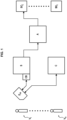
- the voting system comprises an enrollment server C and at least one, preferably several, voting devices each comprising a voting terminal S, a biometric sensor CB and a smart card E m .
- the voting system also comprises a server A for administering the vote as well as a plurality of certification servers SC 1 , ..., SC j , ..., SC l .
- the enrollment server C includes a memory for recording certified biometric data acquired, or alternatively, has access to a certified biometric database.
- the server C is configured to generate cryptographic voting data and to transmit said data to a smart card E m .
- the server can be provided with a card reading interface.
- Server A is connected to servers SC j and to voting terminal S by a high-security communications network. Data exchanges between said entities are preferably encrypted.
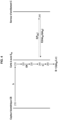
- FIG. 2 illustrates a voting device according to an example, comprising the voting terminal S, the electronic card E m and the biometric sensor CB.
- the voting terminal S the electronic card E m and the biometric sensor CB.
- the voting device of the Figure 2 is for example made available to authorized voters during a ballot, in a voting booth of a polling station.
- the confidentiality of the vote is guaranteed by the fact that the voting booth can only admit one person at a time.
- the CB sensor comprises a slot 21 for inserting the smart card E m .
- the slot comprises an electronic link to allow an exchange of data between the card and the sensor.
- the data thus exchanged is not communicated to the terminal S.
- the CB sensor further comprises a biometric acquisition area 22; in the present example, fingerprints are used as biometrics and the area 22 is a finger positioning area.
- the CB sensor is preferably configured to perform liveness detection during the acquisition of biometric data, in order to detect possible identity theft during the acquisition.
- the smart card E m comprises calculation means configured to implement the enrollment and electronic voting methods described below.
- the smart card further comprises a memory 23 on which are recorded a plurality of associations between a pointer on a cryptographic voting data item and a biometric data item t acquired in a certified manner.
- the cryptographic voting data are for example pairs comprising a private key and a public key. The generation of the public key and the private key do not necessarily imply an authority of a PKI type infrastructure.
- the computing means and memory are included in a secure element.
- the calculation means are notably configured to acquire biometric data b from an acquisition interface of the sensor CB and to verify a correspondence between the data b acquired and one of the data t present in the memory 23.
- the smart card may also have an encryption key e that allows it to encrypt data exchanged with external entities. This may be symmetric or asymmetric encryption.
- the voting terminal S has a user interface comprising a screen, with the aid of which a voter can view proposed voting options and select one or more voting options.
- the interface may be touch-sensitive or button-based.
- the terminal S is configured to automatically detect a sabotage attempt by an external attacker.
- the voting device may further be provided with a printer connected to the terminal S, configured to print a ballot identifier in the form of a character string, a barcode or a QR Code.
- a printer connected to the terminal S, configured to print a ballot identifier in the form of a character string, a barcode or a QR Code. The printed identifier is retrieved by an individual after submission of his ballot.
- each voting device preferably contains a single E m smart card to reduce the deployment costs of the voting system.
- the memory of each E m card can be emptied and reused after each election.
- FIG 3a It was represented in Figure 3a a method for enrolling authorized voters before a vote, according to a first embodiment.
- This method is for example implemented by an enrollment server C and an electronic card E m illustrated in Figure 1 .
- a ballot key pk is obtained.
- the ballot public key pk is generated by the administration server A in relation to the certification servers SC j , each certification server generating a part of the ballot key and the administration server calculating the public key pk.
- the public ballot key pk then corresponds to a plurality of secret ballot keys sk j , each certification server SC j holding one of said secret keys.
- the enrollment continues with a step 110 of acquisition, by the enrollment server C, of biometric data in a certified manner.
- certified acquisition it is meant that the acquired data can be reliably associated with the individual (preferably, the individual is asked to provide an official identity document during this acquisition).
- the biometric data may in particular be a fingerprint and/or an iris image and/or a facial image. Alternatively, any biometric that can be acquired on the fly at the time of voting with sufficient speed and reliability may be used.
- a pre-stored biometric data t is retrieved from a database by the enrollment server.
- the enrollment then comprises a step 120a of generation by the card of at least one cryptographic data DC associated with the voter.
- step 120a is implemented in parallel with steps 100 and 110 or before steps 100 and 110.
- the DC cryptographic data is data that allows a cryptographic operation to be carried out on voting data: encryption, signature, etc.
- the DC data corresponds uniquely to the voter.
- the cryptographic data DC of a voter's vote associated with an identifier id uniquely corresponding to the voter, are a private key usk id and a public key upk id which allow signing a vote.
- p and g are domain parameters.
- any known algorithm for generating signature keys can be used.
- the secret key usk id can be obtained by applying a hash function to a passphrase.
- the cryptographic data (e.g. a private key) may be a function of the acquired biometric data and a master secret, or it may be a function of a voter identifier and a master secret.
- the server C transmits to the electronic card E m the voting key pk and the biometric data t, preferably in encrypted form.
- the enrollment method then comprises a step 140 of storing, in the memory 23 of the card, in place of the cryptographic data DC, a data pointer P DC corresponding to the data DC (here the private key and the public key) in association with the biometric data t of the individual.
- the pointer is much smaller than the full DC data.
- One advantage of this variant is that it saves space. storage on the card.
- the DC data is then stored in a remote database, preferably encrypted with a card encryption key K.
- the pointer associated with the DC data is only saved in the smart card(s) that are intended to be in the polling station where the voter is expected, according to the information from a remote database.
- An advantage is to limit the storage resources required on each of the smart cards.
- the public key upk id can advantageously be published after enrollment in a list L of public keys accessible on the network.
- the voting cryptographic data DC is not generated inside the card E m , but is generated by the enrollment server C at a step 120b.
- Steps 100 and 110 are identical to those in the Figure 3a .
- step 120b the server C generates the cryptographic data DC (for example a private key and a public key conforming to the example described above in relation to the Figure 3a ).
- the cryptographic data DC for example a private key and a public key conforming to the example described above in relation to the Figure 3a .
- step 130 the server C transmits the biometric data t to the smart card. It also transmits a pointer P DC corresponding to the cryptographic data DC in a relational database.
- an association between the pointer P DC and the biometric data t is recorded in the memory of the smart card E m .
- a public part of the data DC can be published.
- An advantage of this second embodiment is that the computing power and storage space of the smart card E m can be reduced, since it is not necessary to dimension the card to generate and store complete cryptographic data.
- FIG. 4 illustrates an electronic voting method according to one embodiment. This method is for example implemented by the voting device described above in relation to the Figure 2 , including the CB sensor and the E m card, in relation to the enrollment server C.
- an individual goes to the polling station that corresponds to him, the smart card E m having been previously placed in a booth of the polling station.
- the individual first carries out a biometric identification using the CB sensor and the E m card. If the identification is successful, he can use the cryptographic data DC of vote associated with him to submit a ballot paper.
- the individual carries out his identification by presenting on the CB sensor a type of biometric data which corresponds to a biometric used for enrollment, here a fingerprint deposited in the zone 22 of the sensor.
- the sensor CB then transmits the acquired biometric data b to the card E m for verification, at a step 220, of a match with one of the biometric data t stored in the card.
- the verification corresponds to a “Match on Card”.
- the individual attempting to identify himself is searched for among the N individuals whose biometric data are stored on the card (“1:N Match”).
- authentication corresponding to a “1:1 Match” could be provided: the individual seeking to participate in the vote then announces an identity, and said identity is searched for in the card.
- fingerprints are used as biometric data stored as 512-bit vectors.
- MINEX II An assessment of Match-on-Card technology available at https://www.nist.gov/itl/iad/image-group/minex-ii-assessment-match-card-technology .
- biometric data are facial images stored as 128-bit vectors in Euclidean space.
- the document Facenet A unified embedding for face recognition and clustering, Schroff, Kalenichenko, Philbin, In: IEEE Conference on Computer Vision and Pattern Recognition, CVPR. Pp 815-823 (2015 ) describes a possible implementation of a biometric identification algorithm for faces.
- Biometric identification may include, in particular in the two examples above, a calculation of distance between the acquired biometric data and a stored biometric data to verify a correspondence between the two said data.
- the distance used is a Euclidean distance or a Hamming distance.
- the match verification includes a nearest neighbor search of the acquired biometric data, or “Nearest Neighbor Search”, the match being verified between the acquired data and said nearest neighbor.
- LSH Locality Sensitive Hashing
- the document A fast search algorithm for a large fuzzy database, Hao, Daugman, Zielinski, IEEE Trans. Information Forensics and Security 3(2), pp. 203-212 (2008 ) describes an LSH implementation for an identification context using iris images of individuals, the iris data being vectors of size 256 bits.
- Such computations generally require less time and computational resources compared to distance computations for all voters recorded on the smart card. These computations are thus easily integrated into the smart card.
- the acquired data b is only exchanged between the E m card and the CB sensor.
- the individual If the individual is not authenticated or identified as an authorized voter, the individual cannot use the voting terminal to submit a valid voting option.
- the E m card or the CB sensor transmits, at a step 230, to the voting terminal an OK command authorizing the individual to submit a voting option.
- Figure 4 corresponds to a positive verification.
- the voter can then use a digital interface of the voting terminal S to select a voting option v from several possible options, for example from several candidates.
- the biometric data required for authentication and the selected voting option are submitted to the Em card at the same time.
- the voting option is taken into account if the biometric identification in the card is successful.
- electronic voting verifies confidentiality and verifiability properties.
- an encryption of the voting option selected by the voter and a signature of the encrypted vote are performed, resulting in a complete and secure ballot B.
- the cryptographic data DC required for encryption and signature is not stored on the card but in a remote database, for example in the enrollment server C.
- the card E m then communicates to the server C the pointer P DC associated in the card memory with the biometric data that was recognized during identification.
- the card then retrieves from server C the data DC encrypted with the card encryption key K.
- the card retrieves the private key usk id .
- the key upk id is public.
- a voting option v selected by the voter is encrypted using the voting key pk, resulting in an encrypted vote c.
- the voting option is here additionally encrypted using homomorphic encryption T.
- the encryption of the vote is performed using an EI Gamal encryption algorithm.
- a new random integer r is generated each time a new voting option is encrypted, preferably by a random number generator of the map E m , and the encrypted vote is generated based on the voting option v and the public voting key pk.
- the number ⁇ may have been pre-calculated prior to encryption, since it does not depend on the selected voting option. This number may be retrieved in step 240 in encrypted form from a database.
- the encryption 240 further comprises generating a proof of vote validity associated with the encrypted vote. This is a proof that the voting option and the encrypted vote are well formed.
- the voter can only generate a proof of vote validity if he has cryptographic voting data recorded on the card. This guarantees that the encryption proof actually comes from an electronic card, after a successful biometric identification. In addition, this encryption mode guarantees the confidentiality of the vote since the decryption key associated with homomorphic encryption is not public.
- the voting method includes the voter signing his encrypted vote c, to obtain a signed vote ⁇ .
- the signature depends on the voter's private key usk id as well as the encrypted vote c.
- the signature is obtained by a Schnorr digital signature algorithm.
- the signature then depends on the private key usk id , but also on the public key upk id .
- the signature uses a random number obtained by a random number generator from the map E m at each new signature.
- the signature may include a number of the form g w with w a random integer. This number may have been pre-calculated before the signature.
- the validity of the signature can subsequently be verified by the voting terminal and/or during counting, using the voter's public key upk id , without requiring knowledge of the private key usk id .
- Such a signature has several advantages. It guarantees that the vote has not been altered after the voter selected the voting option. It also guarantees the identity of the voter and makes it possible to verify that only one vote was submitted per authorized voter, to avoid ballot stuffing.
- the voting option v is transmitted to the card E m at the end of step 230 and the encryption steps 240 and signature 250 are carried out inside the card E m .
- One advantage of performing the encryption and signing of votes inside the smart card is to increase the security of the voting process against possible external attacks.
- the smart card is more resistant to hacking than a server connected to the network.
- the voting method has a receipt-freeness property.
- a complete ballot B has been constructed from the voting option submitted by the voter.
- the ballot B is centralized by the voting terminal S for sending to the administration server A.
- the voting terminal S implements a ballot verification before transmitting the ballot.
- the voting terminal S verifies the validity of the signed vote ⁇ using the voter's public key upk id , preferably according to a zero-knowledge proof algorithm.
- the terminal S further verifies the validity of the encrypted vote c. It is verified without decryption that the encrypted vote corresponds to the encryption of a valid vote.
- bulletin B is transmitted to a server for counting.
- the counting of votes can be carried out by the certification servers SC j .
- Each server has a secret key sk j to obtain the voting options selected by the participants in the poll from the encrypted votes c present in the ballots B considered valid.
- the administration server A performs a sum of the encrypted votes.
- the certification servers SC j each calculate a partial decryption of said sum.
- server A combines the partial decryptions to obtain the decryption of the sum of the encrypted votes.
- the administration server thus generates a total voting result ⁇ .tot, for example a distribution of votes between the various candidates, after a possible check of decryption proofs generated by the SC j servers.
- the servers that perform the counting can obtain the decrypted voting result, without having the individual decrypted votes.
- the counting can be performed by a single server, for example the administration server A.
- a list comprising hashes of the ballot papers is also made public.
- Each voter can provide himself with the printed identifier that he retrieved from the voting terminal during the vote.
- This printed identifier displays a hash uniquely associated with the ballot paper B when the ballot paper B is generated. The voter can verify that said hash is in the list, to ensure that his vote has been taken into account in the total result.
Landscapes
- Engineering & Computer Science (AREA)
- Theoretical Computer Science (AREA)
- Computer Security & Cryptography (AREA)
- Physics & Mathematics (AREA)
- General Physics & Mathematics (AREA)
- Software Systems (AREA)
- General Engineering & Computer Science (AREA)
- Computer Hardware Design (AREA)
- Multimedia (AREA)
- Technology Law (AREA)
- Remote Sensing (AREA)
- Radar, Positioning & Navigation (AREA)
- Health & Medical Sciences (AREA)
- Life Sciences & Earth Sciences (AREA)
- Biodiversity & Conservation Biology (AREA)
- Biomedical Technology (AREA)
- General Health & Medical Sciences (AREA)
- Computer Networks & Wireless Communication (AREA)
- Signal Processing (AREA)
- Management, Administration, Business Operations System, And Electronic Commerce (AREA)
- Time Recorders, Dirve Recorders, Access Control (AREA)
Claims (13)
- Verfahren zur Registrierung von Abstimmenden im Hinblick auf eine Abstimmung, wobei das Verfahren von einer elektronischen Vorrichtung (Em) implementiert wird, die ein gesichertes Element umfasst, wobei das gesicherte Element einen Speicher und Rechenmittel umfasst,
wobei das Verfahren für jeden Abstimmenden die folgenden Schritte umfasst, die von den Rechenmitteln des gesicherten Elements der elektronischen Vorrichtung (Em) durchgeführt werden:Empfangen (130) biometrischer Daten (t), die über den Abstimmenden erfasst wurden, und eines Zeigers (PDC), der kryptografischen Abstimmungsdaten (DC) entspricht,wobei die kryptografischen Abstimmungsdaten (DC) in einer Datenbank eines Servers (C) gespeichert sind, wobei der Zeiger (PDC) eine geringere Größe als die entsprechenden kryptografischen Abstimmungsdaten (DC) hat,Zuordnen (140), in dem Speicher des gesicherten Elements der elektronischen Vorrichtung (Em), der biometrischen Daten (t) zu dem Zeiger (PDC), der den kryptografischen Abstimmungsdaten (DC) des Abstimmenden entspricht, von dem die biometrischen Daten (t) erfasst wurden,damit sich der Abstimmende später bei der Abstimmung mithilfe der elektronischen Vorrichtung (Em) biometrisch identifizieren und mit den kryptografischen Abstimmungsdaten (DC) abstimmen kann. - Registrierungsverfahren nach Anspruch 1, wobei alle kryptographischen Abstimmungsdaten jeweils eindeutig einem bestimmten Abstimmenden entsprechen.
- Registrierungsverfahren nach einem der Ansprüche 1 bis 2, wobei die kryptographischen Abstimmungsdaten (DC) einen geheimen Schlüssel des Abstimmenden uskid und einen öffentlichen Schlüssel des Abstimmenden upkid umfassen, vorzugsweise in der Form upkid = guskid mod p, wobei p und g Domänenparameter sind.
- Registrierungsverfahren nach einem der Ansprüche 1 bis 3, das einen vorherigen Schritt der Zuordnung einer Kennung eines Abstimmenden aus der Vielzahl von Abstimmenden und einer Kennung eines Wahllokals in einer Datenbank eines Remote-Servers umfasst, wobei die elektronische Vorrichtung in einem Wahllokal lokalisiert wird, das der Wahllokalkennung bei der Abstimmung entspricht.
- Verfahren zur Registrierung von Abstimmenden im Hinblick auf eine Abstimmung, wobei das Verfahren Folgendes umfasst:Implementieren des Verfahrens nach einem der vorstehenden Ansprüche durch eine elektronische Vorrichtung (Em),einen vorherigen Schritt des Erzeugens (120) mindestens kryptografischer Abstimmungsdaten (DC) durch den Server, der die Datenbank enthält.
- Elektronisches Abstimmungsverfahren, das die Implementierung eines Registrierungsverfahrens nach einem der Ansprüche 1 bis 5 umfasst,
wobei das Abstimmungsverfahren weiter die folgenden Schritte umfasst, die von den Rechenmitteln des gesicherten Elements der elektronischen Vorrichtung (Em) bei der Abstimmung implementiert werden:Empfangen (210) von biometrischen Daten (b), die von einem biometrischen Sensor (CB) an einer Person erfasst wurden, wobei diese biometrischen Daten (b) einer Art von biometrischen Daten entsprechen, die für die Registrierung verwendet wurden,Überprüfen (220) einer Übereinstimmung zwischen den an der Person (b) erfassten biometrischen Daten und biometrischen Daten (t), die in dem Speicher der elektronischen Vorrichtung gespeichert sind,wenn die Überprüfung positiv ist, Übermittlung des zugehörigen Zeigers (PDC) in dem Speicher des gesicherten Elements der elektronischen Vorrichtung (Em) an den Server (C) mit den entsprechenden biometrischen Daten aus der Überprüfung (t),Empfangen an dem Server (C) der kryptografischen Abstimmungsdaten (DC), die dem zugehörigen Zeiger (PDC) entsprechen, undÜbermitteln eines Abstimmungsergebnisses, das unter Verwendung der kryptografischen Abstimmungsdaten (DC) generiert wurde, die dem zugehörigen Zeiger (PDC) entsprechen. - Abstimmungsverfahren nach Anspruch 6, wobei die dem zugehörigen Zeiger entsprechenden kryptographischen Abstimmungsdaten (DC) mit einem Verschlüsselungsschlüssel (K) der elektronischen Vorrichtung verschlüsselt werden.
- Abstimmungsverfahren nach Anspruch 6 oder 7, das eine Verschlüsselung (240) einer von der Person eingegebenen Abstimmungsoption mithilfe eines Abstimmungsschlüssels (pk) umfasst, um eine verschlüsselte Abstimmung (c) zu erhalten, die in dem Abstimmungsergebnis enthalten ist.
- Abstimmungsverfahren nach Anspruch 8, wobei der Verschlüsselungsschritt (240) ferner das Erzeugen eines Nachweises der Gültigkeit der Abstimmung mithilfe der dem zugehörigen Zeiger entsprechenden kryptografischen Abstimmungsdaten (DC), vorzugsweise mithilfe eines in den kryptografischen Daten enthaltenen geheimen Schlüssels des Abstimmenden (uskid), umfasst.
- Abstimmungsverfahren nach einem der Ansprüche 6 bis 9, wobei der Überprüfungsschritt die Suche nach einer Übereinstimmung zwischen den von dem Sensor erfassten biometrischen Daten und der Vielzahl der bei der Registrierung gespeicherten biometrischen Daten umfasst, vorzugsweise durch eine Methode der Suche nach dem nächsten Nachbarn oder "Nearest Neighbour Search".
- Elektronische Vorrichtung (Em) mit einem gesicherten Element zur Implementierung eines Verfahrens zur Registrierung eines Abstimmenden nach einem der Ansprüche 1 bis 5 und zur Implementierung eines Abstimmungsverfahrens nach einem der Ansprüche 6 bis 10,wobei das gesicherte Element einen Speicher aufweist, der so konfiguriert ist, dass er eine Vielzahl von Zuordnungen zwischen einem Zeiger (PDC), der kryptografischen Abstimmungsdaten (DC) entspricht, und biometrischen Daten (t) speichert,wobei das gesicherte Element Rechenmittel umfasst, die so konfiguriert sind, dass sie eine Übereinstimmung zwischen jeweils gespeicherten biometrischen Daten (t) und erfassten biometrischen Daten des gleichen Typs wie die gespeicherten biometrischen Daten (t) überprüfen.
- Elektronische Vorrichtung nach Anspruch 11, wobei die elektronische Vorrichtung eine Chipkarte oder ein USB-Stick oder eine sichere mobile Vorrichtung ist.
- Abstimmungsvorrichtung, die dafür bestimmt ist, in einem Wahllokal installiert zu werden, und Folgendes umfasst:- eine elektronische Vorrichtung (Em) nach einem der Ansprüche 11 oder 12,- einen biometrischen Sensor (CB),- ein Abstimmungsendgerät (S) mit einer Benutzeroberfläche.
Applications Claiming Priority (1)
| Application Number | Priority Date | Filing Date | Title |
|---|---|---|---|
| FR1858179A FR3085777B1 (fr) | 2018-09-12 | 2018-09-12 | Procede et systeme de vote electronique a identification biometrique |
Publications (3)
| Publication Number | Publication Date |
|---|---|
| EP3623975A1 EP3623975A1 (de) | 2020-03-18 |
| EP3623975C0 EP3623975C0 (de) | 2025-02-26 |
| EP3623975B1 true EP3623975B1 (de) | 2025-02-26 |
Family
ID=65763517
Family Applications (1)
| Application Number | Title | Priority Date | Filing Date |
|---|---|---|---|
| EP19197106.8A Active EP3623975B1 (de) | 2018-09-12 | 2019-09-12 | Elektronisches abstimmungsverfahren und -system mit biometrischer identifizierung |
Country Status (3)
| Country | Link |
|---|---|
| US (1) | US20200084039A1 (de) |
| EP (1) | EP3623975B1 (de) |
| FR (1) | FR3085777B1 (de) |
Families Citing this family (10)
| Publication number | Priority date | Publication date | Assignee | Title |
|---|---|---|---|---|
| US10979225B1 (en) * | 2018-11-15 | 2021-04-13 | Amazon Technologies, Inc. | Secure and anonymous electronic polling |
| US12099997B1 (en) | 2020-01-31 | 2024-09-24 | Steven Mark Hoffberg | Tokenized fungible liabilities |
| US11161626B2 (en) | 2020-02-25 | 2021-11-02 | The Government of the United States of America, as represented by the Secretary of Homeland Security | Electronic baggage locks |
| US11206544B2 (en) | 2020-04-13 | 2021-12-21 | Apple Inc. | Checkpoint identity verification on validation using mobile identification credential |
| US12444261B2 (en) * | 2020-04-14 | 2025-10-14 | The Government of the United States of America, represented by the Secretary of Homeland Security | Voter identification using mobile identification credential |
| US11405779B2 (en) | 2020-07-10 | 2022-08-02 | The Government of the United States of America, as represented by the Secretary of Homeland Security | Vehicular communication of emergency information to first responders |
| US11277265B2 (en) | 2020-07-17 | 2022-03-15 | The Government of the United States of America, as represented by the Secretary of Homeland Security | Verified base image in photo gallery |
| US12277205B2 (en) | 2021-09-20 | 2025-04-15 | Apple Inc. | User interfaces for digital identification |
| US20230290208A1 (en) * | 2022-01-27 | 2023-09-14 | James McNulty | Secure electronic voting method and apparatus |
| US12330587B2 (en) | 2023-05-17 | 2025-06-17 | The Government of the United States of America, represented by the Secretary of Homeland Security | Vehicle identification and secure operating program |
Family Cites Families (2)
| Publication number | Priority date | Publication date | Assignee | Title |
|---|---|---|---|---|
| US7729991B2 (en) * | 2001-03-20 | 2010-06-01 | Booz-Allen & Hamilton Inc. | Method and system for electronic voter registration and electronic voting over a network |
| ES2953529T3 (es) * | 2014-10-31 | 2023-11-14 | Onespan Int Gmbh | Testigo de autenticación fuerte multiusuario |
-
2018
- 2018-09-12 FR FR1858179A patent/FR3085777B1/fr active Active
-
2019
- 2019-09-12 EP EP19197106.8A patent/EP3623975B1/de active Active
- 2019-09-12 US US16/568,832 patent/US20200084039A1/en not_active Abandoned
Also Published As
| Publication number | Publication date |
|---|---|
| US20200084039A1 (en) | 2020-03-12 |
| FR3085777B1 (fr) | 2020-10-09 |
| EP3623975A1 (de) | 2020-03-18 |
| FR3085777A1 (fr) | 2020-03-13 |
| EP3623975C0 (de) | 2025-02-26 |
Similar Documents
| Publication | Publication Date | Title |
|---|---|---|
| EP3623975B1 (de) | Elektronisches abstimmungsverfahren und -system mit biometrischer identifizierung | |
| US20240022420A1 (en) | Public/Private Key Biometric Authentication System | |
| CN103679436B (zh) | 一种基于生物信息识别的电子合同保全系统和方法 | |
| EP1815637B1 (de) | Sichere berechnung einer ähnlichkeitsmessung | |
| US10728027B2 (en) | One-time passcodes with asymmetric keys | |
| Xi et al. | A fingerprint based bio‐cryptographic security protocol designed for client/server authentication in mobile computing environment | |
| US20100310070A1 (en) | Generation and Use of a Biometric Key | |
| FR2738437A1 (fr) | Systeme d'identification a cle | |
| FR3054905A1 (fr) | Procede de generation de cle et procede de controle d'acces | |
| KR20070024569A (ko) | 생체 측정 템플릿의 프라이버시 보호를 위한 아키텍처 | |
| WO2019030445A1 (fr) | Procédé de signature électronique d'un document par une pluralité de signataires | |
| Ajish et al. | Secure mobile internet voting system using biometric authentication and wavelet based AES | |
| US12136083B2 (en) | Offline interception-free interaction with a cryptocurrency network using a network-disabled device | |
| Oke et al. | Developing multifactor authentication technique for secure electronic voting system | |
| EP3965361A1 (de) | Datenaustausch zwischen einem client und einem entfernten gerät, z. b. einem gesicherten modul | |
| FR2980011A1 (fr) | Procede de mise en oeuvre, a partir d'un terminal, de donnees cryptographiques d'un utilisateur stockee dans une base de donnees distante | |
| FR2892252A1 (fr) | Procede et dispositif de creation d'une signature de groupe et procede et dispositif de verification d'une signature de groupe associes. | |
| Mark et al. | A secured online voting system by using blockchain as the medium | |
| FR2834841A1 (fr) | Procede cryptographique de revocation a l'aide d'une carte a puce | |
| EP3262553A1 (de) | Verfahren zur transaktion ohne körperliche unterstützung eines sicherheitsidentifikators und ohne token, abgesichert durch strukturelle entkopplung der persönlichen und dienstidentifikatoren | |
| WO2013140078A1 (fr) | Procede de generation et de verification d'identite portant l'unicite d'un couple porteur-objet | |
| Vijayalakshmi et al. | Authentication as a service in cloud from a fuzzy perspective | |
| Ranganath | Cloud Data Security through Hybrid Verification Technique Based on Cryptographic Hash Function | |
| Neethu | Revocable Session Key Generation Using Combined Fingerprint Template |
Legal Events
| Date | Code | Title | Description |
|---|---|---|---|
| PUAI | Public reference made under article 153(3) epc to a published international application that has entered the european phase |
Free format text: ORIGINAL CODE: 0009012 |
|
| STAA | Information on the status of an ep patent application or granted ep patent |
Free format text: STATUS: THE APPLICATION HAS BEEN PUBLISHED |
|
| AK | Designated contracting states |
Kind code of ref document: A1 Designated state(s): AL AT BE BG CH CY CZ DE DK EE ES FI FR GB GR HR HU IE IS IT LI LT LU LV MC MK MT NL NO PL PT RO RS SE SI SK SM TR |
|
| AX | Request for extension of the european patent |
Extension state: BA ME |
|
| STAA | Information on the status of an ep patent application or granted ep patent |
Free format text: STATUS: REQUEST FOR EXAMINATION WAS MADE |
|
| 17P | Request for examination filed |
Effective date: 20200708 |
|
| RBV | Designated contracting states (corrected) |
Designated state(s): AL AT BE BG CH CY CZ DE DK EE ES FI FR GB GR HR HU IE IS IT LI LT LU LV MC MK MT NL NO PL PT RO RS SE SI SK SM TR |
|
| STAA | Information on the status of an ep patent application or granted ep patent |
Free format text: STATUS: EXAMINATION IS IN PROGRESS |
|
| 17Q | First examination report despatched |
Effective date: 20211112 |
|
| P01 | Opt-out of the competence of the unified patent court (upc) registered |
Effective date: 20230919 |
|
| RIC1 | Information provided on ipc code assigned before grant |
Ipc: H04L 9/00 20060101ALI20240719BHEP Ipc: H04L 9/08 20060101ALI20240719BHEP Ipc: G06F 21/34 20130101ALI20240719BHEP Ipc: G06F 21/32 20130101AFI20240719BHEP |
|
| GRAP | Despatch of communication of intention to grant a patent |
Free format text: ORIGINAL CODE: EPIDOSNIGR1 |
|
| STAA | Information on the status of an ep patent application or granted ep patent |
Free format text: STATUS: GRANT OF PATENT IS INTENDED |
|
| INTG | Intention to grant announced |
Effective date: 20240912 |
|
| GRAJ | Information related to disapproval of communication of intention to grant by the applicant or resumption of examination proceedings by the epo deleted |
Free format text: ORIGINAL CODE: EPIDOSDIGR1 |
|
| STAA | Information on the status of an ep patent application or granted ep patent |
Free format text: STATUS: EXAMINATION IS IN PROGRESS |
|
| GRAP | Despatch of communication of intention to grant a patent |
Free format text: ORIGINAL CODE: EPIDOSNIGR1 |
|
| STAA | Information on the status of an ep patent application or granted ep patent |
Free format text: STATUS: GRANT OF PATENT IS INTENDED |
|
| INTC | Intention to grant announced (deleted) | ||
| INTG | Intention to grant announced |
Effective date: 20241106 |
|
| GRAS | Grant fee paid |
Free format text: ORIGINAL CODE: EPIDOSNIGR3 |
|
| GRAA | (expected) grant |
Free format text: ORIGINAL CODE: 0009210 |
|
| STAA | Information on the status of an ep patent application or granted ep patent |
Free format text: STATUS: THE PATENT HAS BEEN GRANTED |
|
| AK | Designated contracting states |
Kind code of ref document: B1 Designated state(s): AL AT BE BG CH CY CZ DE DK EE ES FI FR GB GR HR HU IE IS IT LI LT LU LV MC MK MT NL NO PL PT RO RS SE SI SK SM TR |
|
| REG | Reference to a national code |
Ref country code: GB Ref legal event code: FG4D Free format text: NOT ENGLISH |
|
| REG | Reference to a national code |
Ref country code: CH Ref legal event code: EP |
|
| REG | Reference to a national code |
Ref country code: DE Ref legal event code: R096 Ref document number: 602019066418 Country of ref document: DE |
|
| REG | Reference to a national code |
Ref country code: IE Ref legal event code: FG4D Free format text: LANGUAGE OF EP DOCUMENT: FRENCH |
|
| U01 | Request for unitary effect filed |
Effective date: 20250226 |
|
| U07 | Unitary effect registered |
Designated state(s): AT BE BG DE DK EE FI FR IT LT LU LV MT NL PT RO SE SI Effective date: 20250414 |
|
| P04 | Withdrawal of opt-out of the competence of the unified patent court (upc) registered |
Free format text: CASE NUMBER: APP_17454/2025 Effective date: 20250409 |
|
| PG25 | Lapsed in a contracting state [announced via postgrant information from national office to epo] |
Ref country code: RS Free format text: LAPSE BECAUSE OF FAILURE TO SUBMIT A TRANSLATION OF THE DESCRIPTION OR TO PAY THE FEE WITHIN THE PRESCRIBED TIME-LIMIT Effective date: 20250526 |
|
| PG25 | Lapsed in a contracting state [announced via postgrant information from national office to epo] |
Ref country code: PL Free format text: LAPSE BECAUSE OF FAILURE TO SUBMIT A TRANSLATION OF THE DESCRIPTION OR TO PAY THE FEE WITHIN THE PRESCRIBED TIME-LIMIT Effective date: 20250226 |
|
| PG25 | Lapsed in a contracting state [announced via postgrant information from national office to epo] |
Ref country code: ES Free format text: LAPSE BECAUSE OF FAILURE TO SUBMIT A TRANSLATION OF THE DESCRIPTION OR TO PAY THE FEE WITHIN THE PRESCRIBED TIME-LIMIT Effective date: 20250226 |
|
| PG25 | Lapsed in a contracting state [announced via postgrant information from national office to epo] |
Ref country code: IS Free format text: LAPSE BECAUSE OF FAILURE TO SUBMIT A TRANSLATION OF THE DESCRIPTION OR TO PAY THE FEE WITHIN THE PRESCRIBED TIME-LIMIT Effective date: 20250626 Ref country code: NO Free format text: LAPSE BECAUSE OF FAILURE TO SUBMIT A TRANSLATION OF THE DESCRIPTION OR TO PAY THE FEE WITHIN THE PRESCRIBED TIME-LIMIT Effective date: 20250526 |
|
| PG25 | Lapsed in a contracting state [announced via postgrant information from national office to epo] |
Ref country code: HR Free format text: LAPSE BECAUSE OF FAILURE TO SUBMIT A TRANSLATION OF THE DESCRIPTION OR TO PAY THE FEE WITHIN THE PRESCRIBED TIME-LIMIT Effective date: 20250226 |
|
| PG25 | Lapsed in a contracting state [announced via postgrant information from national office to epo] |
Ref country code: GR Free format text: LAPSE BECAUSE OF FAILURE TO SUBMIT A TRANSLATION OF THE DESCRIPTION OR TO PAY THE FEE WITHIN THE PRESCRIBED TIME-LIMIT Effective date: 20250527 |
|
| U20 | Renewal fee for the european patent with unitary effect paid |
Year of fee payment: 7 Effective date: 20250820 |
|
| PG25 | Lapsed in a contracting state [announced via postgrant information from national office to epo] |
Ref country code: SM Free format text: LAPSE BECAUSE OF FAILURE TO SUBMIT A TRANSLATION OF THE DESCRIPTION OR TO PAY THE FEE WITHIN THE PRESCRIBED TIME-LIMIT Effective date: 20250226 |
|
| PG25 | Lapsed in a contracting state [announced via postgrant information from national office to epo] |
Ref country code: CZ Free format text: LAPSE BECAUSE OF FAILURE TO SUBMIT A TRANSLATION OF THE DESCRIPTION OR TO PAY THE FEE WITHIN THE PRESCRIBED TIME-LIMIT Effective date: 20250226 |
|
| PG25 | Lapsed in a contracting state [announced via postgrant information from national office to epo] |
Ref country code: SK Free format text: LAPSE BECAUSE OF FAILURE TO SUBMIT A TRANSLATION OF THE DESCRIPTION OR TO PAY THE FEE WITHIN THE PRESCRIBED TIME-LIMIT Effective date: 20250226 |
|
| PLBE | No opposition filed within time limit |
Free format text: ORIGINAL CODE: 0009261 |
|
| STAA | Information on the status of an ep patent application or granted ep patent |
Free format text: STATUS: NO OPPOSITION FILED WITHIN TIME LIMIT |
|
| 26N | No opposition filed |
Effective date: 20251127 |