EP3622941A1 - Packaged medicine - Google Patents
Packaged medicine Download PDFInfo
- Publication number
- EP3622941A1 EP3622941A1 EP18798510.6A EP18798510A EP3622941A1 EP 3622941 A1 EP3622941 A1 EP 3622941A1 EP 18798510 A EP18798510 A EP 18798510A EP 3622941 A1 EP3622941 A1 EP 3622941A1
- Authority
- EP
- European Patent Office
- Prior art keywords
- micro
- medicine
- packaged
- electrode
- tablet
- Prior art date
- Legal status (The legal status is an assumption and is not a legal conclusion. Google has not performed a legal analysis and makes no representation as to the accuracy of the status listed.)
- Granted
Links
Images



Classifications
-
- A—HUMAN NECESSITIES
- A61—MEDICAL OR VETERINARY SCIENCE; HYGIENE
- A61J—CONTAINERS SPECIALLY ADAPTED FOR MEDICAL OR PHARMACEUTICAL PURPOSES; DEVICES OR METHODS SPECIALLY ADAPTED FOR BRINGING PHARMACEUTICAL PRODUCTS INTO PARTICULAR PHYSICAL OR ADMINISTERING FORMS; DEVICES FOR ADMINISTERING FOOD OR MEDICINES ORALLY; BABY COMFORTERS; DEVICES FOR RECEIVING SPITTLE
- A61J3/00—Devices or methods specially adapted for bringing pharmaceutical products into particular physical or administering forms
- A61J3/007—Marking tablets or the like
-
- A—HUMAN NECESSITIES
- A61—MEDICAL OR VETERINARY SCIENCE; HYGIENE
- A61J—CONTAINERS SPECIALLY ADAPTED FOR MEDICAL OR PHARMACEUTICAL PURPOSES; DEVICES OR METHODS SPECIALLY ADAPTED FOR BRINGING PHARMACEUTICAL PRODUCTS INTO PARTICULAR PHYSICAL OR ADMINISTERING FORMS; DEVICES FOR ADMINISTERING FOOD OR MEDICINES ORALLY; BABY COMFORTERS; DEVICES FOR RECEIVING SPITTLE
- A61J3/00—Devices or methods specially adapted for bringing pharmaceutical products into particular physical or administering forms
- A61J3/07—Devices or methods specially adapted for bringing pharmaceutical products into particular physical or administering forms into the form of capsules or similar small containers for oral use
-
- A—HUMAN NECESSITIES
- A61—MEDICAL OR VETERINARY SCIENCE; HYGIENE
- A61B—DIAGNOSIS; SURGERY; IDENTIFICATION
- A61B5/00—Measuring for diagnostic purposes; Identification of persons
- A61B5/07—Endoradiosondes
- A61B5/073—Intestinal transmitters
-
- A—HUMAN NECESSITIES
- A61—MEDICAL OR VETERINARY SCIENCE; HYGIENE
- A61B—DIAGNOSIS; SURGERY; IDENTIFICATION
- A61B5/00—Measuring for diagnostic purposes; Identification of persons
- A61B5/145—Measuring characteristics of blood in vivo, e.g. gas concentration or pH-value ; Measuring characteristics of body fluids or tissues, e.g. interstitial fluid or cerebral tissue
- A61B5/14539—Measuring characteristics of blood in vivo, e.g. gas concentration or pH-value ; Measuring characteristics of body fluids or tissues, e.g. interstitial fluid or cerebral tissue for measuring pH
-
- A—HUMAN NECESSITIES
- A61—MEDICAL OR VETERINARY SCIENCE; HYGIENE
- A61B—DIAGNOSIS; SURGERY; IDENTIFICATION
- A61B5/00—Measuring for diagnostic purposes; Identification of persons
- A61B5/145—Measuring characteristics of blood in vivo, e.g. gas concentration or pH-value ; Measuring characteristics of body fluids or tissues, e.g. interstitial fluid or cerebral tissue
- A61B5/1468—Measuring characteristics of blood in vivo, e.g. gas concentration or pH-value ; Measuring characteristics of body fluids or tissues, e.g. interstitial fluid or cerebral tissue using chemical or electrochemical methods, e.g. by polarographic means
- A61B5/1473—Measuring characteristics of blood in vivo, e.g. gas concentration or pH-value ; Measuring characteristics of body fluids or tissues, e.g. interstitial fluid or cerebral tissue using chemical or electrochemical methods, e.g. by polarographic means invasive, e.g. introduced into the body by a catheter
-
- A—HUMAN NECESSITIES
- A61—MEDICAL OR VETERINARY SCIENCE; HYGIENE
- A61B—DIAGNOSIS; SURGERY; IDENTIFICATION
- A61B5/00—Measuring for diagnostic purposes; Identification of persons
- A61B5/48—Other medical applications
- A61B5/4836—Diagnosis combined with treatment in closed-loop systems or methods
- A61B5/4839—Diagnosis combined with treatment in closed-loop systems or methods combined with drug delivery
-
- A—HUMAN NECESSITIES
- A61—MEDICAL OR VETERINARY SCIENCE; HYGIENE
- A61B—DIAGNOSIS; SURGERY; IDENTIFICATION
- A61B5/00—Measuring for diagnostic purposes; Identification of persons
- A61B5/68—Arrangements of detecting, measuring or recording means, e.g. sensors, in relation to patient
- A61B5/6801—Arrangements of detecting, measuring or recording means, e.g. sensors, in relation to patient specially adapted to be attached to or worn on the body surface
-
- A—HUMAN NECESSITIES
- A61—MEDICAL OR VETERINARY SCIENCE; HYGIENE
- A61B—DIAGNOSIS; SURGERY; IDENTIFICATION
- A61B5/00—Measuring for diagnostic purposes; Identification of persons
- A61B5/68—Arrangements of detecting, measuring or recording means, e.g. sensors, in relation to patient
- A61B5/6846—Arrangements of detecting, measuring or recording means, e.g. sensors, in relation to patient specially adapted to be brought in contact with an internal body part, i.e. invasive
- A61B5/6847—Arrangements of detecting, measuring or recording means, e.g. sensors, in relation to patient specially adapted to be brought in contact with an internal body part, i.e. invasive mounted on an invasive device
- A61B5/6861—Capsules, e.g. for swallowing or implanting
-
- A—HUMAN NECESSITIES
- A61—MEDICAL OR VETERINARY SCIENCE; HYGIENE
- A61J—CONTAINERS SPECIALLY ADAPTED FOR MEDICAL OR PHARMACEUTICAL PURPOSES; DEVICES OR METHODS SPECIALLY ADAPTED FOR BRINGING PHARMACEUTICAL PRODUCTS INTO PARTICULAR PHYSICAL OR ADMINISTERING FORMS; DEVICES FOR ADMINISTERING FOOD OR MEDICINES ORALLY; BABY COMFORTERS; DEVICES FOR RECEIVING SPITTLE
- A61J1/00—Containers specially adapted for medical or pharmaceutical purposes
-
- A—HUMAN NECESSITIES
- A61—MEDICAL OR VETERINARY SCIENCE; HYGIENE
- A61J—CONTAINERS SPECIALLY ADAPTED FOR MEDICAL OR PHARMACEUTICAL PURPOSES; DEVICES OR METHODS SPECIALLY ADAPTED FOR BRINGING PHARMACEUTICAL PRODUCTS INTO PARTICULAR PHYSICAL OR ADMINISTERING FORMS; DEVICES FOR ADMINISTERING FOOD OR MEDICINES ORALLY; BABY COMFORTERS; DEVICES FOR RECEIVING SPITTLE
- A61J3/00—Devices or methods specially adapted for bringing pharmaceutical products into particular physical or administering forms
- A61J3/10—Devices or methods specially adapted for bringing pharmaceutical products into particular physical or administering forms into the form of compressed tablets
-
- H—ELECTRICITY
- H01—ELECTRIC ELEMENTS
- H01Q—ANTENNAS, i.e. RADIO AERIALS
- H01Q1/00—Details of, or arrangements associated with, antennas
- H01Q1/27—Adaptation for use in or on movable bodies
- H01Q1/273—Adaptation for carrying or wearing by persons or animals
Definitions
- the present invention relates to a packaged medicine in which a medicine (for example, tablet or capsule) including a micro-device is packaged in a container.
- a medicine for example, tablet or capsule
- micro-device is packaged in a container.
- Patent Literatures (PTLs) 1 to 3 each disclose a tablet containing an embedded micro-device (IC-chip).
- the microchip embedded tablets can be manufactured by compressing, from above and below, a dose of powdered medicine containing a micro-device.
- PTL 4 discloses, as one of the micro-device embedded tablets, a tablet with a transmitter which is designed to transmit a signal when the tablet is ingested into the body and then brought into contact with a conductive liquid (for example, gastric acid).
- a conductive liquid for example, gastric acid.
- the micro-device in order to produce a chemical battery, by using the conductive liquid in the body as an electrolyte, which generates electric power by the battery for signal transmitting, the micro-device has a pair of anode and cathode electrodes with mutually different ionization tendencies and a transmitter operable to transmit a signal using electric power generated between the electrodes.
- copper chloride is used for the anode electrode
- magnesium, sodium zinc, or lithium iron is used for the cathode electrode.
- the anode electrode made of copper chloride tends to deteriorate with time.
- the deterioration of the anode has been thought to be caused by the contacts with other substances, in particular moisture. Then, to ensure the micro-device to fully exercise its ability, it was considered necessary to place the micro-device in a dry condition with the aid of desiccant agent.
- isolating the tablet in a low-oxygen condition can protect the tablets from being making contact with oxygen and thereby prevent the tablet from being deteriorated even after a long period of time has elapsed from production, thereby leading to the present invention.
- a packaged medicine according to a present embodiment comprises:
- the solid medicine is a tablet, and the micro-device is supported by the tablet.
- the solid medicine has a capsule, and the drug powder and a micro-device are accommodated in the capsule.
- the solid medicine has a capsule, the drug powder is accommodated in the capsule, and the micro-device is held in the capsule.
- the inert gas is nitrogen gas.
- the container is a blister package, a pouch package, a jar package, or a bottle package.
- the first material is copper chloride.
- the second material is magnesium
- the drug powder is drug powder of which quality does not deteriorate even when coming into contact with oxygen.
- the tablet since a tablet placed in an environment with a low concentration of oxygen is isolated from oxygen and inhibited from deteriorating, even when the tablet is ingested after a long period of time has elapsed since production, the tablet can transmit a signal in a stable manner by entering a body and coming into contact with a body fluid (gastric acid).
- a body fluid gastric acid
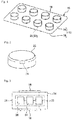
- Fig. 1 shows a packaged medicine 10 according to an embodiment of the present invention.
- the illustrated packaged medicine 10 has a blister package (container) 12 or a blister package sheet.
- the blister package 12 is made by bonding a transparent plastic sheet 14 and an aluminum sheet 16 forming respective upper and lower layers of the packaged medicine.
- the upper layer transparent plastic sheet 14 includes a plurality of chambers for accommodating medicines (medicine accommodating chambers) 18 formed by, for example, vacuum molding, each of which has a configuration matching with the medicine to the accommodated. Bottom openings of the medicine accommodating chambers 18 are sealed by the lower aluminum sheet 16.
- Each of the medicine accommodating chambers 18 of the blister package 12 accommodates a solid medicine 20.
- the solid medicine 20 is a tablet 22.
- the size of the tablet 22 is not limited, in consideration of ease of ingestion, the maximum size of the medicine is preferably 5 to 12 mm and, more favorably 7 to 8 mm.
- Air in medicine accommodating chambers 18 is replaced during the production of the packaged medicine so that the tablet 22 is placed in an environment with a low concentration of oxygen.
- a replacement rate of inert gas does not need to be 100%, a proportion of oxygen remaining in the medicine accommodating chamber 18 is favorably as low as possible.
- nitrogen is used for the inert gas, other inert gases may be employed instead.
- a method for replacing the air in the medicine accommodating chamber 18 of the blister package 12 with inert gas is well known in JP 2011-213351 A , for example.
- the tablet 22 holds a micro-device (a micro-chip) 24.
- the maximum size of the micro-device 24 is 1 mm or less, more preferably several ten to several hundred micrometers.
- the micro-device 24 is held inside the tablet 22.
- the tablet which internally holds a micro-device in this manner is formed by compressing drug powder and a micro-device arranged thereinside from above and below.
- the tablet 22 may be a tablet made of drug powder of which quality does not deteriorate due to the contact with oxygen.
- the "drug powder of which quality does not deteriorate" refers to drug powders of which a reduction in content is 5% or less, an increase in analogous substances is 1.0% or less, or a reduction in elution is 10% or less, during a storage period of 36 months at a temperature of 25°C or 6 months at a temperature of 40°C.
- the micro-device 24 may be attached to a surface of the tablet 22.
- the micro-device 24 is attached to the surface of the tablet using an appropriate edible adhesive (for example, a starch glue).
- the micro-device 24 is made of a semiconductor integrated circuit substrate (silicon substrate) 26 with anode and cathode electrodes 28 and 30 mounted on the surface of the substrate.
- the substrate 26 is manufactured using known semiconductor manufacturing techniques, and the anode and cathode electrodes 28 and 30 are produced using known film forming techniques.
- copper chloride is used for the anode electrode 28 and magnesium is used for the cathode electrode 30.
- the micro-device 24 a power supply unit (a power supply circuit) 32, a control unit (a control circuit) 34, and a transmitter (a transmitting circuit) 36.
- the power supply unit 32 is configured to be directly or indirectly connected to the anode and cathode electrodes 28 and 30, such that, when the micro-device 24 comes into contact with a conductive body fluid (for example, gastric acid), the power unit 32 cooperates with the anode and cathode electrodes 28 and 30 to form a chemical cell, which supplies electric power to other circuits.
- the control unit 34 is configured to receive the electric power supplied from the power supply unit 32 and transmit a signal to the transmitter 36.
- the transmitter 36 is configured to receive the electric power from the power supply unit 32 and transmit a signal in response to a signal from the control unit 34.
- the tablets 22 are accommodated in the medicine accommodating chambers 18 substantially filled with inert gas and are isolated from moisture and oxygen. Therefore, even when a long period of time elapses since production, no copper chloride hydroxide portion will be generated on the surface of electrodes of the micro-device 24, in particular, the anode electrode made of copper chloride. Also, when the tablet 22 is ingested into the body of a patient and then comes into contact with gastric acid, the anode electrode 28 and the cathode electrode 30 forms a chemical cell together with the gastric acid to generate electromotive force. The generated electric power is supplied from the power supply unit 32 to the control unit 34 and the transmitter 36.
- the transmitter 36 transmits a signal in response to a signal from the control unit 34.
- the transmitted signal is received by a patient's dedicated receiver or computer capable of receiving the signal (for example, a smartphone) installed with a dedicated software or application, recording the administration of the tablets.
- micro-devices were placed in different environments, and lifetimes (signal generation times) of the micro-devices were measured.
- a vertical axis represents transmission time and a horizontal axis represents elapsed time.
- a vertical axis represents water content and a horizontal axis represents measurement time points.
- Figs. 4B , 5B , 6B , and 7B show that the oxygen concentration in the package does not affect the amount of moisture included in a tablet. Also, Figs. 4A , 5A , 6A , and 7A show that the performance of micro-device does not significantly decrease in the environments with low oxygen concentration (5% and 1%), but it decreases to a large extent during early stages (up until 1 W or 2 W) in the environment with high oxygen concentration (20.9%).
- the experiments prove that the oxygen concentration in the environment significantly affects the deterioration of performance of the micro-device. Therefore, according to the embodiment of the present invention described above, tablets placed in the environment with a lower concentration of oxygen for a long time from production to ingestion can transmit a signal in a stable manner by the contact with the fluid in the body.
- the solid medicines 40 in the packaged medicine are tablets, they may be capsules 42 shown in Fig. 8 .
- the micro-device may be loosely packed together with powdered medicine in a container 44 of the capsule.
- the micro-device may be fixed on an inner or outer surface of the container 44.
- each electrode in particular the anode electrode made of copper chloride susceptible to deterioration, is bonded and protected so that it does not make direct contacts with air.
- the container of the packaged medicine is made of blister package having top and bottom aluminum sheets, it may be a laminated container made by bonding top plastic sheet and bottom aluminum sheet together.
- the container for accommodating the solid medicines is not limited to the blister package and may be a pouch package, jar package, or bottle package.
Landscapes
- Health & Medical Sciences (AREA)
- Life Sciences & Earth Sciences (AREA)
- Animal Behavior & Ethology (AREA)
- General Health & Medical Sciences (AREA)
- Public Health (AREA)
- Veterinary Medicine (AREA)
- Physics & Mathematics (AREA)
- Pharmacology & Pharmacy (AREA)
- Chemical & Material Sciences (AREA)
- Engineering & Computer Science (AREA)
- Medicinal Chemistry (AREA)
- Pathology (AREA)
- Biomedical Technology (AREA)
- Heart & Thoracic Surgery (AREA)
- Medical Informatics (AREA)
- Molecular Biology (AREA)
- Surgery (AREA)
- Biophysics (AREA)
- Optics & Photonics (AREA)
- Bioinformatics & Cheminformatics (AREA)
- General Chemical & Material Sciences (AREA)
- Chemical Kinetics & Catalysis (AREA)
- Medical Preparation Storing Or Oral Administration Devices (AREA)
- Packages (AREA)
- Medicinal Preparation (AREA)
- General Physics & Mathematics (AREA)
Abstract
Description
- The present invention relates to a packaged medicine in which a medicine (for example, tablet or capsule) including a micro-device is packaged in a container.
- Patent Literatures (PTLs) 1 to 3 each disclose a tablet containing an embedded micro-device (IC-chip). The microchip embedded tablets can be manufactured by compressing, from above and below, a dose of powdered medicine containing a micro-device.
- PTL 4 discloses, as one of the micro-device embedded tablets, a tablet with a transmitter which is designed to transmit a signal when the tablet is ingested into the body and then brought into contact with a conductive liquid (for example, gastric acid). In one embodiment disclosed in PTL 4, in order to produce a chemical battery, by using the conductive liquid in the body as an electrolyte, which generates electric power by the battery for signal transmitting, the micro-device has a pair of anode and cathode electrodes with mutually different ionization tendencies and a transmitter operable to transmit a signal using electric power generated between the electrodes. In this embodiment, for example, copper chloride is used for the anode electrode, and magnesium, sodium zinc, or lithium iron is used for the cathode electrode.
-
- [PTL 1]
JP 2014-138954 A - [PTL 2]
JP 2014-138795 A - [PTL 3]
JP 2014-200046 A - [PTL 4]
JP 2014-525780 A - Disadvantageously, the anode electrode made of copper chloride tends to deteriorate with time. Conventionally, the deterioration of the anode has been thought to be caused by the contacts with other substances, in particular moisture. Then, to ensure the micro-device to fully exercise its ability, it was considered necessary to place the micro-device in a dry condition with the aid of desiccant agent.
- Then, inventors of this application conducted an exhaustive study for providing an packaged medicine capable of protecting its electrode from being deteriorated over a long period of time and reliably transmitting signal when ingested irrespective of the time from production to ingestion, which shows that, once placed in the atmosphere, the anode electrode is susceptible to deterioration, in particular, by the contact with oxygen and moisture contained in the atmosphere, namely, that copper chloride (CuCl) forming the anode electrode of the micro-device contacts oxygen (O2) and water (H2O) in the ambient atmosphere to generate copper chloride hydroxide (Cu2(OH)3Cl) leading the deterioration of the anode electrode, which results in that the micro-device can fail to transmit an expected signal when ingested. Based upon the knowledge obtained by the study, the inventors found that isolating the tablet in a low-oxygen condition can protect the tablets from being making contact with oxygen and thereby prevent the tablet from being deteriorated even after a long period of time has elapsed from production, thereby leading to the present invention.
- In order to achieve the object described above, a packaged medicine according to a present embodiment comprises:
- a solid medicine including drug powder and a micro-device;
- a container provided with a solid medicine accommodating space accommodating the solid medicine therein; and
- inert gas encapsulated in the solid medicine accommodating space,
- the micro-device including:
- a first electrode comprising a first material;
- a second electrode comprising a second material with a ionization tendency different from that of the first material; and
- a transmitter that transmits a signal using electromotive force generated between the first electrode and the second electrode when the first electrode and the second electrode are in contact with an electrolyte.
- In another aspect of the present invention, the solid medicine is a tablet, and the micro-device is supported by the tablet.
- In another aspect of the present invention, the solid medicine has a capsule, and the drug powder and a micro-device are accommodated in the capsule.
- In another aspect of the present invention, the solid medicine has a capsule, the drug powder is accommodated in the capsule, and the micro-device is held in the capsule.
- In another aspect of the present invention, the inert gas is nitrogen gas.
- In another aspect of the present invention, the container is a blister package, a pouch package, a jar package, or a bottle package.
- In another aspect of the present invention, the first material is copper chloride.
- In another aspect of the present invention, the second material is magnesium.
- In another aspect of the present invention, the drug powder is drug powder of which quality does not deteriorate even when coming into contact with oxygen.
- According to an embodiment of the present invention configured in this manner, since a tablet placed in an environment with a low concentration of oxygen is isolated from oxygen and inhibited from deteriorating, even when the tablet is ingested after a long period of time has elapsed since production, the tablet can transmit a signal in a stable manner by entering a body and coming into contact with a body fluid (gastric acid).
-
-
Fig. 1 is a perspective view of packaged medicine according to an embodiment of the present invention. -
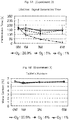
Fig. 2 is a perspective view of a tablet included in the packaged medicine shown inFig. 1 . -
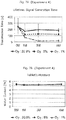
Fig. 3 is a circuit block diagram of a micro-device mounted in the tablet shown inFig. 2 . -
Fig. 4 is a graph showing a result ofExperiment 1. -
Fig. 5 is a graph showing a result ofExperiment 2. -
Fig. 6 is a graph showing a result of Experiment 3. -
Fig. 7 is a graph showing a result of Experiment 4. -
Fig. 8 is a perspective view of a packaged medicine according to another embodiment. - Hereinafter, embodiments of packaged medicine according to the present invention will be described with reference to the accompanying drawings.
-
Fig. 1 shows a packagedmedicine 10 according to an embodiment of the present invention. The illustrated packagedmedicine 10 has a blister package (container) 12 or a blister package sheet. For example, theblister package 12 is made by bonding a transparentplastic sheet 14 and analuminum sheet 16 forming respective upper and lower layers of the packaged medicine. The upper layer transparentplastic sheet 14 includes a plurality of chambers for accommodating medicines (medicine accommodating chambers) 18 formed by, for example, vacuum molding, each of which has a configuration matching with the medicine to the accommodated. Bottom openings of themedicine accommodating chambers 18 are sealed by thelower aluminum sheet 16. - Each of the
medicine accommodating chambers 18 of theblister package 12 accommodates asolid medicine 20. In this embodiment, thesolid medicine 20 is atablet 22. Although the size of thetablet 22 is not limited, in consideration of ease of ingestion, the maximum size of the medicine is preferably 5 to 12 mm and, more favorably 7 to 8 mm. - Air in
medicine accommodating chambers 18 is replaced during the production of the packaged medicine so that thetablet 22 is placed in an environment with a low concentration of oxygen. Although a replacement rate of inert gas does not need to be 100%, a proportion of oxygen remaining in themedicine accommodating chamber 18 is favorably as low as possible. Preferably, nitrogen is used for the inert gas, other inert gases may be employed instead. - A method for replacing the air in the
medicine accommodating chamber 18 of theblister package 12 with inert gas is well known inJP 2011-213351 A - As shown in
Fig. 2 , thetablet 22 holds a micro-device (a micro-chip) 24. The maximum size of the micro-device 24 is 1 mm or less, more preferably several ten to several hundred micrometers. - In this embodiment, the micro-device 24 is held inside the
tablet 22. As described in PTL's 1 to 3, the tablet which internally holds a micro-device in this manner is formed by compressing drug powder and a micro-device arranged thereinside from above and below. Thetablet 22 may be a tablet made of drug powder of which quality does not deteriorate due to the contact with oxygen. The "drug powder of which quality does not deteriorate" refers to drug powders of which a reduction in content is 5% or less, an increase in analogous substances is 1.0% or less, or a reduction in elution is 10% or less, during a storage period of 36 months at a temperature of 25°C or 6 months at a temperature of 40°C. - The micro-device 24 may be attached to a surface of the
tablet 22. In this embodiment, preferably themicro-device 24 is attached to the surface of the tablet using an appropriate edible adhesive (for example, a starch glue). - As shown in
Fig. 3 , themicro-device 24 is made of a semiconductor integrated circuit substrate (silicon substrate) 26 with anode andcathode electrodes substrate 26 is manufactured using known semiconductor manufacturing techniques, and the anode andcathode electrodes anode electrode 28 and magnesium is used for thecathode electrode 30. - Various circuits are formed on the substrate of the
micro-device 24. For example, the micro-device 24 according to this embodiment a power supply unit (a power supply circuit) 32, a control unit (a control circuit) 34, and a transmitter (a transmitting circuit) 36. Thepower supply unit 32 is configured to be directly or indirectly connected to the anode andcathode electrodes power unit 32 cooperates with the anode andcathode electrodes control unit 34 is configured to receive the electric power supplied from thepower supply unit 32 and transmit a signal to thetransmitter 36. Thetransmitter 36 is configured to receive the electric power from thepower supply unit 32 and transmit a signal in response to a signal from thecontrol unit 34. - According to the packaged
medicine 10 so constructed, thetablets 22 are accommodated in themedicine accommodating chambers 18 substantially filled with inert gas and are isolated from moisture and oxygen. Therefore, even when a long period of time elapses since production, no copper chloride hydroxide portion will be generated on the surface of electrodes of the micro-device 24, in particular, the anode electrode made of copper chloride. Also, when thetablet 22 is ingested into the body of a patient and then comes into contact with gastric acid, theanode electrode 28 and thecathode electrode 30 forms a chemical cell together with the gastric acid to generate electromotive force. The generated electric power is supplied from thepower supply unit 32 to thecontrol unit 34 and thetransmitter 36. Thetransmitter 36 transmits a signal in response to a signal from thecontrol unit 34. The transmitted signal is received by a patient's dedicated receiver or computer capable of receiving the signal (for example, a smartphone) installed with a dedicated software or application, recording the administration of the tablets. - The micro-devices were placed in different environments, and lifetimes (signal generation times) of the micro-devices were measured.
- Prepared were blister packages having a pair of opposite aluminum cover sheets and micro-device embedded tablets (A) disposed between the cover sheets. The blister packages were placed in experimental environments at a temperature of 60°C with oxygen concentration of 20.9%, 5%, and 1%. After the elapse of zero week (0W) (i.e., immediately after the placement in the experimental environment), 1 week (1W), 2 weeks (2W), 3 weeks (3W), 4 weeks (4W), 6 weeks (6W), and 12 weeks (12W), the tablets were taken out of respective experimental environments. The tablets were then brought into contact with an experimental solution to measure signal transmission times. Also, a water content (%) of the tablet [=(mass of moisture included in tablet/mass of medicine) × 100] was measured at respective elapsed times. The experimental results are indicated in
Figs. 4A and 4B . InFig. 4A , a vertical axis represents transmission time and a horizontal axis represents elapsed time. InFig. 4B , a vertical axis represents water content and a horizontal axis represents measurement time points. - Blister packages accommodating tablets B were prepared. Other experimental conditions were the same as those of
Experiment 1. The experimental results are indicated inFigs. 5A and 5B . - Two types of double-sided aluminum blister packages with micro-device embedded tablets (A) and (B), respectively, were prepared. The blister packages were placed in experimental environments at a temperature of 40°C with oxygen concentration of 20.9%, 5%, and 1%. After the elapse of zero week (0W) (i.e., immediately after the placement in the experimental environment), 1 month (1M), 3 months (3M), and 6 months (6M), the tablets were taken out of respective experimental environments. The tablets were then brought into contact with the experimental solution to measure signal transmission times. The results of experiments 3 and 4 for tablets (A) and (B), respectively, are indicated in
Figs. 6A and 6B andFigs. 7A and 7B . -
Figs. 4B ,5B ,6B , and7B show that the oxygen concentration in the package does not affect the amount of moisture included in a tablet. Also,Figs. 4A ,5A ,6A , and7A show that the performance of micro-device does not significantly decrease in the environments with low oxygen concentration (5% and 1%), but it decreases to a large extent during early stages (up until 1 W or 2 W) in the environment with high oxygen concentration (20.9%). - As described above, the experiments prove that the oxygen concentration in the environment significantly affects the deterioration of performance of the micro-device. Therefore, according to the embodiment of the present invention described above, tablets placed in the environment with a lower concentration of oxygen for a long time from production to ingestion can transmit a signal in a stable manner by the contact with the fluid in the body.
- Although discussions have been made to the specific embodiment in which the
solid medicines 40 in the packaged medicine are tablets, they may becapsules 42 shown inFig. 8 . In this embodiment, the micro-device may be loosely packed together with powdered medicine in acontainer 44 of the capsule. - Alternatively, the micro-device may be fixed on an inner or outer surface of the
container 44. In this embodiment, preferably each electrode, in particular the anode electrode made of copper chloride susceptible to deterioration, is bonded and protected so that it does not make direct contacts with air. - Although in the previous embodiment the container of the packaged medicine is made of blister package having top and bottom aluminum sheets, it may be a laminated container made by bonding top plastic sheet and bottom aluminum sheet together.
- Further, the container for accommodating the solid medicines is not limited to the blister package and may be a pouch package, jar package, or bottle package.
-
- 10 packaged medicine
- 12 blister package
- 14 plastic sheet
- 16 aluminum sheet
- 18 medicine accommodating chamber (medicine accommodating space)
- 20 solid medicine
- 22 tablet
- 24 micro-device
- 26 substrate
- 28 anode electrode
- 30 cathode electrode
- 32 power supply unit
- 34 control unit
- 36 transmitter
- 40 solid medicine
- 42 capsule
- 44 container
Claims (9)
- A packaged medicine, comprising:a solid medicine including drug powder and a micro-device;a container provided with a solid medicine accommodating space accommodating the solid medicine therein; andinert gas encapsulated in the solid medicine accommodating space,the micro-device including:a first electrode comprising a first material;a second electrode comprising a second material with a ionization tendency different from that of the first material; anda transmitter that transmits a signal using electromotive force generated between the first electrode and the second electrode when the first electrode and the second electrode are in contact with an electrolyte.
- The packaged medicine according to claim 1, wherein
the solid medicine is a tablet, and
the micro-device is supported by the tablet. - The packaged medicine according to claim 1, wherein
the solid medicine has a capsule, and
the drug powder and the micro-device are accommodated in the capsule. - The packaged medicine according to claim 1, wherein
the solid medicine has a capsule,
the drug powder is accommodated in the capsule, and the micro-device is held in the capsule. - The packaged medicine according to any one of claims 1 to 4, wherein the inert gas is nitrogen gas.
- The packaged medicine according to any one of claims 1 to 5, wherein the container is a blister package, a pouch package, a jar package, or a bottle package.
- The packaged medicine according to any one of claims 1 to 6, wherein the first material is copper chloride.
- The packaged medicine according to any one of claims 1 to 7, wherein the second material is magnesium.
- The packaged medicine according to any one of claims 1 to 8, wherein the drug powder is a drug powder of which quality does not deteriorate by a contact with oxygen.
Applications Claiming Priority (2)
| Application Number | Priority Date | Filing Date | Title |
|---|---|---|---|
| PCT/JP2017/017537 WO2018207257A1 (en) | 2017-05-09 | 2017-05-09 | Packaged medicine |
| PCT/JP2018/017426 WO2018207681A1 (en) | 2017-05-09 | 2018-05-01 | Packaged medicine |
Publications (4)
| Publication Number | Publication Date |
|---|---|
| EP3622941A1 true EP3622941A1 (en) | 2020-03-18 |
| EP3622941A4 EP3622941A4 (en) | 2020-12-09 |
| EP3622941B1 EP3622941B1 (en) | 2023-11-15 |
| EP3622941C0 EP3622941C0 (en) | 2023-11-15 |
Family
ID=64104528
Family Applications (1)
| Application Number | Title | Priority Date | Filing Date |
|---|---|---|---|
| EP18798510.6A Active EP3622941B1 (en) | 2017-05-09 | 2018-05-01 | Packaged medicine |
Country Status (10)
| Country | Link |
|---|---|
| US (1) | US12048672B2 (en) |
| EP (1) | EP3622941B1 (en) |
| JP (1) | JP7244415B2 (en) |
| KR (1) | KR102550400B1 (en) |
| CN (1) | CN110891544A (en) |
| AU (1) | AU2018264400B2 (en) |
| ES (1) | ES2965714T3 (en) |
| SG (1) | SG11201909481SA (en) |
| TW (1) | TWI765034B (en) |
| WO (2) | WO2018207257A1 (en) |
Families Citing this family (1)
| Publication number | Priority date | Publication date | Assignee | Title |
|---|---|---|---|---|
| JP7021722B2 (en) * | 2019-10-01 | 2022-02-17 | 株式会社村田製作所 | Drug withdrawal detection system |
Family Cites Families (21)
| Publication number | Priority date | Publication date | Assignee | Title |
|---|---|---|---|---|
| JPH10189238A (en) * | 1996-12-27 | 1998-07-21 | Sony Corp | Optical element and method of manufacturing the same |
| JP3257669B2 (en) | 1997-12-22 | 2002-02-18 | 三菱樹脂株式会社 | Press-through package |
| US6303143B1 (en) * | 1998-06-10 | 2001-10-16 | Sarnoff Corporation | Pharmaceutical product |
| DE59904850D1 (en) * | 1999-06-02 | 2003-05-08 | Alcan Tech & Man Ag | Blister pack |
| GB0130857D0 (en) * | 2001-12-22 | 2002-02-06 | Glaxo Group Ltd | Medicament dispenser |
| JP4018930B2 (en) * | 2002-05-17 | 2007-12-05 | 株式会社大塚製薬工場 | Package with oxygen indicator function |
| WO2006060458A1 (en) | 2004-12-01 | 2006-06-08 | Vision-Sciences, Inc. | Emergency electrode on medical tube |
| AU2005315291A1 (en) * | 2004-12-13 | 2006-06-22 | Mcneil-Ppc, Inc. | Compositions and methods for stabilizing active pharmaceutical ingredients |
| US8836513B2 (en) | 2006-04-28 | 2014-09-16 | Proteus Digital Health, Inc. | Communication system incorporated in an ingestible product |
| JP4853142B2 (en) | 2006-06-30 | 2012-01-11 | ソニー株式会社 | Micro device module and manufacturing method thereof |
| WO2008059415A1 (en) | 2006-11-16 | 2008-05-22 | Koninklijke Philips Electronics N. V. | The present invention is directed to a feeding tube in particular for total parental nutrition and/or medicine dosing |
| PT3785599T (en) * | 2007-02-01 | 2022-10-21 | Otsuka Pharma Co Ltd | Ingestible event marker systems |
| JP2009014469A (en) | 2007-07-04 | 2009-01-22 | Hitachi Ulsi Systems Co Ltd | Semiconductor device and manufacturing method thereof |
| JP2011213351A (en) | 2008-07-10 | 2011-10-27 | Daiichi Sankyo Co Ltd | Gas replacement device in container, and method of the same |
| US9756874B2 (en) * | 2011-07-11 | 2017-09-12 | Proteus Digital Health, Inc. | Masticable ingestible product and communication system therefor |
| WO2015112603A1 (en) * | 2014-01-21 | 2015-07-30 | Proteus Digital Health, Inc. | Masticable ingestible product and communication system therefor |
| US20130129869A1 (en) | 2011-11-23 | 2013-05-23 | Hooman Hafezi | Compositions comprising a shelf-life stability component |
| JP6276018B2 (en) | 2012-12-19 | 2018-02-07 | 大塚製薬株式会社 | Pharmaceutical tablet, method for producing the same, and apparatus for producing the same |
| JP6152322B2 (en) | 2012-12-19 | 2017-06-21 | 大森機械工業株式会社 | IC chip supply device and tablet manufacturing device |
| JP6015530B2 (en) | 2013-03-29 | 2016-10-26 | 富士通株式会社 | Network system, network control method, and network control program related to ad hoc network |
| US9707729B2 (en) | 2013-06-12 | 2017-07-18 | Otsuka Pharmaceutical Co., Ltd. | Method and apparatus for manufacturing nucleated tablets |
-
2017
- 2017-05-09 WO PCT/JP2017/017537 patent/WO2018207257A1/en not_active Ceased
-
2018
- 2018-05-01 WO PCT/JP2018/017426 patent/WO2018207681A1/en not_active Ceased
- 2018-05-01 EP EP18798510.6A patent/EP3622941B1/en active Active
- 2018-05-01 ES ES18798510T patent/ES2965714T3/en active Active
- 2018-05-01 JP JP2019517582A patent/JP7244415B2/en active Active
- 2018-05-01 US US16/611,650 patent/US12048672B2/en active Active
- 2018-05-01 KR KR1020197035735A patent/KR102550400B1/en active Active
- 2018-05-01 CN CN201880030057.2A patent/CN110891544A/en active Pending
- 2018-05-01 AU AU2018264400A patent/AU2018264400B2/en active Active
- 2018-05-01 SG SG11201909481S patent/SG11201909481SA/en unknown
- 2018-05-04 TW TW107115235A patent/TWI765034B/en active
Also Published As
| Publication number | Publication date |
|---|---|
| AU2018264400B2 (en) | 2023-12-07 |
| SG11201909481SA (en) | 2019-11-28 |
| JP7244415B2 (en) | 2023-03-22 |
| JPWO2018207681A1 (en) | 2020-03-12 |
| TWI765034B (en) | 2022-05-21 |
| WO2018207257A1 (en) | 2018-11-15 |
| ES2965714T3 (en) | 2024-04-16 |
| US20200093700A1 (en) | 2020-03-26 |
| CN110891544A (en) | 2020-03-17 |
| US12048672B2 (en) | 2024-07-30 |
| EP3622941B1 (en) | 2023-11-15 |
| KR20200004853A (en) | 2020-01-14 |
| WO2018207681A1 (en) | 2018-11-15 |
| TW201900141A (en) | 2019-01-01 |
| AU2018264400A1 (en) | 2019-11-07 |
| EP3622941A4 (en) | 2020-12-09 |
| KR102550400B1 (en) | 2023-07-04 |
| EP3622941C0 (en) | 2023-11-15 |
Similar Documents
| Publication | Publication Date | Title |
|---|---|---|
| CN102245482B (en) | Package for storing minute solder ball and method for storing minute solder ball | |
| CN101965655B (en) | Battery layout incorporating full metal edge seal | |
| EP2287597B1 (en) | Electrochemical sensor | |
| JP7712742B2 (en) | Opening detection sheet, packaging material, and method for manufacturing the opening detection sheet | |
| JP2017501531A5 (en) | ||
| EP3622941B1 (en) | Packaged medicine | |
| CN106477512A (en) | Pressure sensor and its method for packing | |
| HK40020655A (en) | Packaged medicine | |
| CN107108104B (en) | Container, packaging body and the method for closing container | |
| CN109415151A (en) | Container and encapsulation | |
| KR20170006770A (en) | Display Unit | |
| JP2007189032A (en) | Method for manufacturing hollow sealed semiconductor device | |
| CN103972194B (en) | A kind of encapsulating structure | |
| US20200194841A1 (en) | Miniaturized electronics package with patterned thin film solid state battery | |
| CN210785439U (en) | Propolis tablet package shrouding | |
| JP2008139124A (en) | Radiation two-dimensional detector | |
| JPS62217643A (en) | Package for containing hybrid integrated circuit element | |
| CN103730602A (en) | OLED (organic light emitting diode) package | |
| JPH04199851A (en) | Package for storing semiconductor element | |
| JPS62217642A (en) | Package for containing hybrid integrated circuit element | |
| JPH03167845A (en) | Package for semiconductor-element | |
| JPH03167846A (en) | Package for semiconductor-element |
Legal Events
| Date | Code | Title | Description |
|---|---|---|---|
| STAA | Information on the status of an ep patent application or granted ep patent |
Free format text: STATUS: THE INTERNATIONAL PUBLICATION HAS BEEN MADE |
|
| PUAI | Public reference made under article 153(3) epc to a published international application that has entered the european phase |
Free format text: ORIGINAL CODE: 0009012 |
|
| STAA | Information on the status of an ep patent application or granted ep patent |
Free format text: STATUS: REQUEST FOR EXAMINATION WAS MADE |
|
| 17P | Request for examination filed |
Effective date: 20191030 |
|
| AK | Designated contracting states |
Kind code of ref document: A1 Designated state(s): AL AT BE BG CH CY CZ DE DK EE ES FI FR GB GR HR HU IE IS IT LI LT LU LV MC MK MT NL NO PL PT RO RS SE SI SK SM TR |
|
| AX | Request for extension of the european patent |
Extension state: BA ME |
|
| DAV | Request for validation of the european patent (deleted) | ||
| DAX | Request for extension of the european patent (deleted) | ||
| A4 | Supplementary search report drawn up and despatched |
Effective date: 20201105 |
|
| RIC1 | Information provided on ipc code assigned before grant |
Ipc: A61J 3/00 20060101ALI20201030BHEP Ipc: H01Q 1/27 20060101ALI20201030BHEP Ipc: A61J 3/07 20060101AFI20201030BHEP Ipc: A61B 5/07 20060101ALI20201030BHEP |
|
| GRAP | Despatch of communication of intention to grant a patent |
Free format text: ORIGINAL CODE: EPIDOSNIGR1 |
|
| STAA | Information on the status of an ep patent application or granted ep patent |
Free format text: STATUS: GRANT OF PATENT IS INTENDED |
|
| INTG | Intention to grant announced |
Effective date: 20230612 |
|
| GRAS | Grant fee paid |
Free format text: ORIGINAL CODE: EPIDOSNIGR3 |
|
| GRAA | (expected) grant |
Free format text: ORIGINAL CODE: 0009210 |
|
| STAA | Information on the status of an ep patent application or granted ep patent |
Free format text: STATUS: THE PATENT HAS BEEN GRANTED |
|
| AK | Designated contracting states |
Kind code of ref document: B1 Designated state(s): AL AT BE BG CH CY CZ DE DK EE ES FI FR GB GR HR HU IE IS IT LI LT LU LV MC MK MT NL NO PL PT RO RS SE SI SK SM TR |
|
| REG | Reference to a national code |
Ref country code: CH Ref legal event code: EP Ref country code: GB Ref legal event code: FG4D |
|
| REG | Reference to a national code |
Ref country code: DE Ref legal event code: R096 Ref document number: 602018061177 Country of ref document: DE |
|
| REG | Reference to a national code |
Ref country code: IE Ref legal event code: FG4D |
|
| U01 | Request for unitary effect filed |
Effective date: 20231115 |
|
| U07 | Unitary effect registered |
Designated state(s): AT BE BG DE DK EE FI FR IT LT LU LV MT NL PT SE SI Effective date: 20231120 |
|
| REG | Reference to a national code |
Ref country code: NO Ref legal event code: T2 Effective date: 20231115 |
|
| PG25 | Lapsed in a contracting state [announced via postgrant information from national office to epo] |
Ref country code: GR Free format text: LAPSE BECAUSE OF FAILURE TO SUBMIT A TRANSLATION OF THE DESCRIPTION OR TO PAY THE FEE WITHIN THE PRESCRIBED TIME-LIMIT Effective date: 20240216 |
|
| PG25 | Lapsed in a contracting state [announced via postgrant information from national office to epo] |
Ref country code: IS Free format text: LAPSE BECAUSE OF FAILURE TO SUBMIT A TRANSLATION OF THE DESCRIPTION OR TO PAY THE FEE WITHIN THE PRESCRIBED TIME-LIMIT Effective date: 20240315 |
|
| REG | Reference to a national code |
Ref country code: ES Ref legal event code: FG2A Ref document number: 2965714 Country of ref document: ES Kind code of ref document: T3 Effective date: 20240416 |
|
| PG25 | Lapsed in a contracting state [announced via postgrant information from national office to epo] |
Ref country code: IS Free format text: LAPSE BECAUSE OF FAILURE TO SUBMIT A TRANSLATION OF THE DESCRIPTION OR TO PAY THE FEE WITHIN THE PRESCRIBED TIME-LIMIT Effective date: 20240315 Ref country code: GR Free format text: LAPSE BECAUSE OF FAILURE TO SUBMIT A TRANSLATION OF THE DESCRIPTION OR TO PAY THE FEE WITHIN THE PRESCRIBED TIME-LIMIT Effective date: 20240216 |
|
| PG25 | Lapsed in a contracting state [announced via postgrant information from national office to epo] |
Ref country code: RS Free format text: LAPSE BECAUSE OF FAILURE TO SUBMIT A TRANSLATION OF THE DESCRIPTION OR TO PAY THE FEE WITHIN THE PRESCRIBED TIME-LIMIT Effective date: 20231115 Ref country code: PL Free format text: LAPSE BECAUSE OF FAILURE TO SUBMIT A TRANSLATION OF THE DESCRIPTION OR TO PAY THE FEE WITHIN THE PRESCRIBED TIME-LIMIT Effective date: 20231115 Ref country code: HR Free format text: LAPSE BECAUSE OF FAILURE TO SUBMIT A TRANSLATION OF THE DESCRIPTION OR TO PAY THE FEE WITHIN THE PRESCRIBED TIME-LIMIT Effective date: 20231115 |
|
| U20 | Renewal fee for the european patent with unitary effect paid |
Year of fee payment: 7 Effective date: 20240527 |
|
| PG25 | Lapsed in a contracting state [announced via postgrant information from national office to epo] |
Ref country code: CZ Free format text: LAPSE BECAUSE OF FAILURE TO SUBMIT A TRANSLATION OF THE DESCRIPTION OR TO PAY THE FEE WITHIN THE PRESCRIBED TIME-LIMIT Effective date: 20231115 |
|
| PG25 | Lapsed in a contracting state [announced via postgrant information from national office to epo] |
Ref country code: SK Free format text: LAPSE BECAUSE OF FAILURE TO SUBMIT A TRANSLATION OF THE DESCRIPTION OR TO PAY THE FEE WITHIN THE PRESCRIBED TIME-LIMIT Effective date: 20231115 |
|
| PG25 | Lapsed in a contracting state [announced via postgrant information from national office to epo] |
Ref country code: SM Free format text: LAPSE BECAUSE OF FAILURE TO SUBMIT A TRANSLATION OF THE DESCRIPTION OR TO PAY THE FEE WITHIN THE PRESCRIBED TIME-LIMIT Effective date: 20231115 Ref country code: SK Free format text: LAPSE BECAUSE OF FAILURE TO SUBMIT A TRANSLATION OF THE DESCRIPTION OR TO PAY THE FEE WITHIN THE PRESCRIBED TIME-LIMIT Effective date: 20231115 Ref country code: RO Free format text: LAPSE BECAUSE OF FAILURE TO SUBMIT A TRANSLATION OF THE DESCRIPTION OR TO PAY THE FEE WITHIN THE PRESCRIBED TIME-LIMIT Effective date: 20231115 Ref country code: CZ Free format text: LAPSE BECAUSE OF FAILURE TO SUBMIT A TRANSLATION OF THE DESCRIPTION OR TO PAY THE FEE WITHIN THE PRESCRIBED TIME-LIMIT Effective date: 20231115 |
|
| REG | Reference to a national code |
Ref country code: DE Ref legal event code: R097 Ref document number: 602018061177 Country of ref document: DE |
|
| PLBE | No opposition filed within time limit |
Free format text: ORIGINAL CODE: 0009261 |
|
| STAA | Information on the status of an ep patent application or granted ep patent |
Free format text: STATUS: NO OPPOSITION FILED WITHIN TIME LIMIT |
|
| 26N | No opposition filed |
Effective date: 20240819 |
|
| PG25 | Lapsed in a contracting state [announced via postgrant information from national office to epo] |
Ref country code: MC Free format text: LAPSE BECAUSE OF FAILURE TO SUBMIT A TRANSLATION OF THE DESCRIPTION OR TO PAY THE FEE WITHIN THE PRESCRIBED TIME-LIMIT Effective date: 20231115 |
|
| PG25 | Lapsed in a contracting state [announced via postgrant information from national office to epo] |
Ref country code: MC Free format text: LAPSE BECAUSE OF FAILURE TO SUBMIT A TRANSLATION OF THE DESCRIPTION OR TO PAY THE FEE WITHIN THE PRESCRIBED TIME-LIMIT Effective date: 20231115 |
|
| U20 | Renewal fee for the european patent with unitary effect paid |
Year of fee payment: 8 Effective date: 20250407 |
|
| PGFP | Annual fee paid to national office [announced via postgrant information from national office to epo] |
Ref country code: ES Payment date: 20250602 Year of fee payment: 8 |
|
| PGFP | Annual fee paid to national office [announced via postgrant information from national office to epo] |
Ref country code: NO Payment date: 20250509 Year of fee payment: 8 |
|
| PGFP | Annual fee paid to national office [announced via postgrant information from national office to epo] |
Ref country code: CH Payment date: 20250601 Year of fee payment: 8 |
|
| PGFP | Annual fee paid to national office [announced via postgrant information from national office to epo] |
Ref country code: TR Payment date: 20250424 Year of fee payment: 8 |
|
| PGFP | Annual fee paid to national office [announced via postgrant information from national office to epo] |
Ref country code: IE Payment date: 20250402 Year of fee payment: 8 |
|
| PG25 | Lapsed in a contracting state [announced via postgrant information from national office to epo] |
Ref country code: CY Free format text: LAPSE BECAUSE OF FAILURE TO SUBMIT A TRANSLATION OF THE DESCRIPTION OR TO PAY THE FEE WITHIN THE PRESCRIBED TIME-LIMIT; INVALID AB INITIO Effective date: 20180501 |
|
| PG25 | Lapsed in a contracting state [announced via postgrant information from national office to epo] |
Ref country code: HU Free format text: LAPSE BECAUSE OF FAILURE TO SUBMIT A TRANSLATION OF THE DESCRIPTION OR TO PAY THE FEE WITHIN THE PRESCRIBED TIME-LIMIT; INVALID AB INITIO Effective date: 20180501 |
|
| PGFP | Annual fee paid to national office [announced via postgrant information from national office to epo] |
Ref country code: GB Payment date: 20260323 Year of fee payment: 9 |