EP3621338A1 - High frequency 5g base station and high frequency 5g base station signal processing method - Google Patents
High frequency 5g base station and high frequency 5g base station signal processing method Download PDFInfo
- Publication number
- EP3621338A1 EP3621338A1 EP18834987.2A EP18834987A EP3621338A1 EP 3621338 A1 EP3621338 A1 EP 3621338A1 EP 18834987 A EP18834987 A EP 18834987A EP 3621338 A1 EP3621338 A1 EP 3621338A1
- Authority
- EP
- European Patent Office
- Prior art keywords
- signal
- high frequency
- coverage
- digital
- low frequency
- Prior art date
- Legal status (The legal status is an assumption and is not a legal conclusion. Google has not performed a legal analysis and makes no representation as to the accuracy of the status listed.)
- Granted
Links
Images



Classifications
-
- H—ELECTRICITY
- H04—ELECTRIC COMMUNICATION TECHNIQUE
- H04W—WIRELESS COMMUNICATION NETWORKS
- H04W24/00—Supervisory, monitoring or testing arrangements
- H04W24/02—Arrangements for optimising operational condition
-
- H—ELECTRICITY
- H04—ELECTRIC COMMUNICATION TECHNIQUE
- H04W—WIRELESS COMMUNICATION NETWORKS
- H04W88/00—Devices specially adapted for wireless communication networks, e.g. terminals, base stations or access point devices
- H04W88/08—Access point devices
Definitions
- the present disclosure relates to the technical field of mobile communication, and for example, to a high frequency 5G base station and a high frequency 5G base station signal processing method.
- a high frequency 5G mobile base station adopts a 3G/4G scheme. That is, a wireless access network is constructed by a Radio Remote Unit plus a Building Baseband Unit (RRU+BUU), and is connected to a core network via a transmission network constructed with optical fibers or microwaves. Optical fiber connection is required between the Radio Remote Unit (RRU) and the Building Baseband Unit (BBU).
- RRU Radio Remote Unit
- BBU Building Baseband Unit
- One BBU may support multiple RRUs.
- a related networking approach has many drawbacks, including that: there are many physical interfaces, and it is required to use different ports to implement a transmission connection with a core network side and to implement a coverage connection with a user side; many processing modules are involved in a data conversion process between the core network side and the user side, and connection stability among modules is poor; and stability and reliability of the whole network are relatively poor, and meanwhile user's experience on the provided mobile service is unsatisfactory.
- the present disclosure provides a high frequency 5G base station and a high frequency 5G base station signal processing method, so as to avoid the phenomenon of poor stability caused by the complex structure of the high frequency 5G base station in related art.
- a high frequency 5G base station includes: a high frequency signal transceiver module, signal processing module, and a baseband data processing module.
- the high frequency signal transceiver module is configured to transmit at least one of a high frequency analog transmission signal and a high frequency analog coverage signal that are received to the signal processing module, and emit at least one of a high frequency analog transmission signal and a high frequency analog coverage signal that are fed back by the signal processing module.
- the signal processing module is configured to process the received high frequency analog transmission signal to obtain a low frequency digital transmission signal and transmit the obtained low frequency digital transmission signal to the baseband data processing module, and to process the received high frequency analog coverage signal to obtain a low frequency digital coverage signal and transmit the obtained low frequency digital coverage signal to the baseband data processing module; and the signal processing module is configured to process a low frequency digital transmission signal that is transmitted from the baseband data processing module to obtain a high frequency analog transmission signal and transmit the obtained high frequency analog transmission signal to the high frequency signal transceiver module, and to process a low frequency digital coverage signal that is transmitted from the baseband data processing module to obtain a high frequency analog coverage signal and transmit the obtained high frequency analog coverage signal to the high frequency signal transceiver module.
- the baseband data processing module is configured to convert the low frequency digital coverage signal that is transmitted from the signal processing module into the low frequency digital transmission signal and transmit the low frequency digital transmission signal that is obtained by conversion to the signal processing module, and to convert the low frequency digital transmission signal that is transmitted from the signal processing module into the low frequency digital coverage signal and transmit the low frequency digital coverage signal that is obtained by conversion to the signal processing module.
- the present disclosure further provides a high frequency 5G base station signal processing method, which includes: receiving at least one of a high frequency analog transmission signal and a high frequency analog coverage signal; performing signal processing to the high frequency analog transmission signal to obtain a low frequency digital transmission signal, and performing signal processing to the high frequency analog coverage signal to obtain a low frequency digital coverage signal; performing baseband data processing to the low frequency digital coverage signal so as to convert the low frequency digital coverage signal into a low frequency digital transmission signal, and performing baseband data processing to the low frequency digital transmission signal so as to convert the low frequency digital transmission signal into a low frequency digital coverage signal; performing signal processing to the low frequency digital transmission signal so as to obtain a high frequency analog transmission signal, and performing signal processing to the low frequency digital coverage signal so as to obtain a high frequency analog coverage signal; and emit the high frequency analog transmission signal and the high frequency analog coverage signal.
- the present disclosure further provides a computer-readable storage medium, in which a high frequency 5G base station signal processing program is stored, and the high frequency 5G base station signal processing program, when being executed by a processor, implements the above high frequency 5G base station signal processing method.
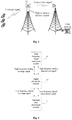
- Fig. 1 schematically shows an application scenario of a high frequency 5G base station signal processing method provided in an embodiment of the present disclosure.
- the high frequency 5G base station as shown in Fig. 1 is used to perform interconnection and conversion between a coverage signal at a user side and a transmission signal at a core network side.
- a signal transmitted from the user side to the core network side is an uplink signal, which includes an uplink coverage signal from a user to a base station and an uplink transmission signal from the base station to the core network side;
- a signal transmitted from the core network side to the user side is a downlink signal, which includes a downlink transmission signal from the core network to the base station and a downlink coverage signal from the base station to the user.
- Fig. 2 schematically shows a structure of a high frequency 5G base station of Embodiment 1 of the present disclosure.
- the high frequency 5G base station as shown in Fig. 2 includes a high frequency signal transceiver module 100, a signal processing module 200 and a baseband data processing module 300.
- the high frequency signal transceiver module 100 is configured to transmit at least one of a received high frequency analog transmission signal and a received high frequency analog coverage signal to the signal processing module 200, and emit at least one of a high frequency analog transmission signal and a high frequency analog coverage signal that are fed back by the signal processing module 200.
- the high frequency analog transmission signal is an interaction signal between the high frequency 5G base station and a core network side
- the high frequency analog transmission signal includes a microwave signal, an optical fiber signal and the like.
- the high frequency analog coverage signal is an interaction signal between the high frequency 5G base station and the user side.
- the high frequency signal transceiver module includes two ports, i.e., a coverage antenna port for receiving and transmitting the high frequency analog coverage signal, which is configured to connect to a coverage antenna, and a microwave antenna port for receiving and transmitting the high frequency analog transmission signal, which is configured to connect to a microwave antenna.
- the signal processing module 200 is configured to process the received high frequency analog transmission signal to obtain a low frequency digital transmission signal and transmit this low frequency digital transmission signal obtained by the processing to the baseband data processing module 300, and to process the received high frequency analog coverage signal to obtain a low frequency digital coverage signal and transmit this low frequency digital coverage signal obtained by the processing to the baseband data processing module 300; and the signal processing module 200 is configured to process a low frequency digital transmission signal transmitted from the baseband data processing module 300 to obtain a high frequency analog transmission signal and transmit this high frequency analog transmission signal obtained by the processing to the high frequency signal transceiver module 100, and to process a low frequency digital coverage signal transmitted from the baseband data processing module 300 to obtain a high frequency analog coverage signal and transmit this high frequency analog coverage signal obtained by the processing to the high frequency signal transceiver module 100.
- the high frequency 5G base station before the high frequency 5G base station performs baseband data processing to the received high frequency analog signal, it is required to convert the high frequency analog signal into a low frequency digital signal. Since a coverage signal and a transmission microwave signal that are received by the high frequency 5G base station operate in proximate frequency bands, the coverage signal and the transmission signal may share common reception filtering, power control and down-conversion, so that processing to the high frequency coverage analog signal and processing to the high frequency analog transmission signal can be enbaled concurrently using one signal processing module.
- the baseband data processing module 300 is configured to convert the low frequency digital coverage signal transmitted from the signal processing module 200 into a low frequency digital transmission signal and transmit the low frequency digital transmission signal obtained by the conversion to the signal processing module 200; and the baseband data processing module 300 is configured to convert the low frequency digital transmission signal transmitted from the signal processing module 200 into a low frequency digital coverage signal and transmit the low frequency digital coverage signal obtained by the conversion to the signal processing module 200.
- the baseband data processing module by using a signal processing process of demodulating, de-verifying, exchanging, verifying and modulating, converts the received low frequency digital transmission signal into the low frequency digital coverage signal and converts the received low frequency digital coverage signal into the low frequency digital transmission signal.
- a high frequency signal including at least one of the high frequency transmission signal and the high frequency coverage signal is converted using the signal processing module 200, wherein the high frequency transmission signal and the high frequency coverage signal are respectively converted into low frequency signals that are to be processed by the baseband data processing module.
- the baseband data processing module 300 performs baseband processing and signal format exchanging.
- the signal processing module converts a low frequency coverage signal and a low frequency transmission signal both converted by the baseband data processing module into a high frequency coverage signal and a high frequency transmission signal and then transmit them.
- the high frequency 5G base station provided by the present embodiment can improve network performance, reduce network cost, enhance network expansion flexibility, reduce network management complexity, and realize a coverage function and a transmission function at the same time.
- the baseband data processing module and the signal processing module may be configured as two separate hardware modules so that modular assembling can be achieved. In this way, flexible networking, rapid network building and simple network management and maintenance can be realized as long as a working voltage is provided.
- Fig. 3 schematically shows a structure of a high frequency 5G base station of Embodiment 2 of the present disclosure.
- the high frequency 5G base station as shown in Fig. 3 includes a high frequency signal transceiver module 100, a filtering unit 210, a power control unit 220, a digital processing unit 230 and a baseband data processing module 300.
- the high frequency signal transceiver module 100 may be the same as the high frequency signal transceiver module 100 in Embodiment 1.
- the filtering unit 210 is configured to filter at least one of the received high frequency analog transmission signal and the received high frequency analog coverage signal, and transmit at least one of the filtered high frequency analog transmission signal and the filtered high frequency analog coverage signal to the power control unit, and to filter at least one of a high frequency analog transmission signal and a high frequency analog coverage signal that are fed back by the power control unit, and transmit at least one of the filtered high frequency analog transmission signal and the filtered high frequency analog coverage signal to the high frequency signal transceiver module 100.
- one filtering unit such as a tunable filter, may be employed to filter both of the above two signals while being received and transmitted, thereby performing suppression of out-of-band useless signals and elimination of stray signals.
- the power control unit 220 is configured to convert the received high frequency analog coverage signal into an intermediate frequency analog coverage signal and transmit this intermediate frequency analog coverage signal obtained by the conversion to the digital processing unit 230, and to convert the received high frequency analog transmission signal into an intermediate frequency analog transmission signal and transmit this intermediate frequency analog transmission signal obtained by the conversion to the digital processing unit 230; and the power control unit 220 is configured to convert an intermediate frequency analog coverage signal transmitted from the digital processing unit 230 into a high frequency analog coverage signal and transmit this high frequency analog coverage signal obtained by the conversion to the filtering unit 210, and to convert an intermediate frequency analog transmission signal transmitted from the digital processing unit 230 into a high frequency analog transmission signal and transmit this high frequency analog transmission signal to the filtering unit 210.
- the power control unit 220 is mainly configured to down-convert a high frequency signal into an intermediate frequency signal and up-convert an intermediate frequency signal to a high frequency signal.
- the power control unit generally includes a transmitting frequency conversion portion which is configured for up-conversion and a receiving frequency conversion portion which is configured for down-conversion.
- the power control unit 220 includes a receiving subunit and a transmitting subunit.
- the receiving subunit is configured to perform signal amplification and down-conversion to the high frequency analog coverage signal transmitted from the filtering unit 210 to obtain the intermediate frequency analog coverage signal and transmit this intermediate frequency analog coverage signal to the digital processing unit 230; and the receiving subunit is further configured to perform signal amplification and down-conversion to the high frequency analog transmission signal transmitted from the filtering unit 210 to obtain the intermediate frequency analog transmission signal and transmit this intermediate frequency analog transmission signal to the digital processing unit 230.
- the transmitting subunit is configured to perform power amplification and up-conversion to the intermediate frequency analog coverage signal transmitted from the digital processing unit 230 to obtain the high frequency analog coverage signal and transmit this high frequency analog coverage signal to the filtering unit 210; and the transmitting subunit is further configured to perform power amplification and up-conversion to the intermediate frequency analog transmission signal transmitted from the digital processing unit 230 to obtain the high frequency analog transmission signal and transmit this high frequency analog transmission signal to the filtering unit 210.
- the digital processing unit 230 is configured to convert the received intermediate frequency analog coverage signal into a low frequency digital coverage signal and transmit this low frequency digital coverage signal obtained by the conversion to the baseband data processing module 300, and to convert the received intermediate frequency analog transmission signal into a low frequency digital transmission signal and transmit this low frequency digital transmission signal obtained by the conversion to the baseband data processing module 300; and the digital processing unit 230 is configured to convert a low frequency digital coverage signal transmitted from the baseband data processing module 300 into an intermediate frequency analog coverage signal and transmit this intermediate frequency analog coverage signal obtained by the conversion to the power control unit 220, and to convert a low frequency digital transmission signal transmitted from the baseband data processing module 300 into an intermediate frequency analog transmission signal and transmit this intermediate frequency analog transmission signal obtained by the conversion to the power control unit 220.
- the digital processing unit 230 is configured to perform conversion between an analog signal and a digital signal, and to perform conversion between an intermediate frequency signal and a low frequency signal.
- the digital processing unit 230 includes a coverage digital processing subunit and a transmission digital processing subunit.
- the coverage digital processing subunit is configured to perform analog-to-digital conversion and down-conversion to the received intermediate frequency analog coverage signal to obtain a low frequency digital coverage signal and transmit this low frequency digital coverage signal to the baseband data processing module 300; and the coverage digital processing subunit is configured to perform up-conversion, filtering and peak clipping processing to the low frequency digital coverage signal transmitted from the baseband data processing module 300 to obtain an intermediate frequency analog coverage signal and transmit this intermediate frequency analog coverage signal to the transmitting subunit.
- the transmission digital processing subunit is configured to perform analog-to-digital conversion and down-conversion to the received intermediate frequency analog transmission signal to obtain a low frequency digital transmission signal and transmit this low frequency digital transmission signal to the baseband data processing module 300; and the transmission digital processing subunit is configured to perform up-conversion, filtering and peak clipping processing to the low frequency digital transmission signal transmitted from the baseband data processing module 300 to obtain an intermediate frequency analog transmission signal and transmit this intermediate frequency analog transmission signal to the transmitting subunit.
- the baseband data processing module 300 may be the same as the baseband data processing module 300 in Embodiment 1.
- the signal processing module is divided into a filtering unit, a power control unit and a digital processing unit. Based on a characteristic that the high frequency transmission signal and the high frequency coverage signal have proximate frequency bands, signal processing to the high frequency coverage signal and to the high frequency transmission signal can be performed concurrently by means of one hardware module, including that using a same tunable filter to perform filtering to both the high frequency transmission signal and the high frequency coverage signal, and that using a same power control unit to perform power control to both the high frequency transmission signal and the high frequency coverage signal. In this way, modular assembling of the high frequency 5G base station can be realized, thereby realizing flexible networking, rapid network establishment and simple network management and maintenance.
- Fig. 4 schematically shows a structure of a high frequency 5G base station of Embodiment 3 of the present disclosure.
- the high frequency 5G base station as shown in Fig. 4 includes a high frequency signal transceiver module 100, a signal processing module 200, a demodulation unit 310, a verification unit 320, an exchanging unit 330, and a modulation unit 340.
- the high frequency signal transceiver module 100 may be the same as the high frequency signal transceiver module 100 in Embodiment 1.
- the signal processing module 200 may be the same as the signal processing module 200 in Embodiment 1.
- the demodulation unit 310 is configured to demodulate the received low frequency digital coverage signal to obtain user data to be exchanged and transmit the user data to be exchanged to the verification unit 320; and demodulation unit 310 is configured to demodulate the received low frequency digital transmission signal to obtain core network data to be exchanged and transmit the core network data to be exchanged to the verification unit 320.
- the demodulation unit 310 performs resource de-mapping, de-precoding, layer de-mapping, de-modulation, rate de-matching to the received low frequency digital coverage signal and the received low frequency digital transmission signal to obtain user traffic data and core network traffic data respectively.
- the verification unit 320 is configured to de-verify the received user data to be exchanged and the received core network data to be exchanged, and transmit the de-verified user data to be exchanged and the de-verified core network data to be exchanged to the exchanging unit 330; and the verification unit 320 is configured to verify user exchange data and core network exchange data that are transmitted from the exchanging unit 330, and transmit the verified user exchange data and the verified core network exchange data to the modulation unit 340.
- the verification unit 320 is configured to de-verify a signal entering the exchanging unit 330 and verify a signal output from the exchanging unit 330. De-verifying and verifying may be performed concurrently by means of a same verification module, or may be performed respectively by a de-verification subunit and a verification subunit.
- the exchanging unit 330 is configured to convert the received user data to be exchanged into core network exchange data and transmit this core network exchange data to the verification unit 320; and the exchanging unit 330 is configured to convert the received core network data to be exchanged into user exchange data and transmit this user exchange data to the verification unit 320.
- the exchanging unit 330 after converting the received user data to be exchanged into the core network exchange data, completes conversion of the high frequency coverage signal that is received by the high frequency 5G base station into the core network exchange data that may be transmitted to the core network side; and the exchanging unit 330, after converting the received core network data to be exchanged into the user exchange data, completes conversion of the high frequency transmission signal that is received by the high frequency 5G base station into the user exchange data that may be transmitted to the user side.
- the modulation unit 340 is configured to modulate the received core network exchange data into a low frequency digital transmission signal and transmit this low frequency digital transmission signal to the signal processing module 200; and the modulation unit 340 is configured to modulate the received user exchange data into a low frequency digital coverage signal and transmit this low frequency digital coverage signal to the signal processing module 200.
- the modulation unit 340 after performing channel coding, rate matching, modulation, general purpose multiplexing to the core network exchange data verified and the user exchange data verified that are received and have already been verified, modulates the verified core network exchange data and verified the user exchange data respectively into the low frequency digital transmission signal and the low frequency digital coverage signal.
- the baseband data processing module includes a demodulation unit, a verification unit, an exchanging unit and a modulation unit, and baseband data processing to a transmission signal and to a coverage signal may be performed concurrently by using a same hardware module.
- SDR modularization and software defined radio
- the demodulation unit 310 includes a coverage demodulation subunit and a transmission demodulation subunit.
- the coverage demodulation subunit is configured to perform resource de-mapping, de-precoding, layer de-mapping, demodulation, rate de-matching to the received low frequency digital coverage signal so as to modulate it into user data to be exchanged, and transmit the user data to be exchanged to the verification unit 320.
- the transmission demodulation subunit is configured to perform resource de-mapping, general purpose de-multiplexing, layer de-mapping, demodulation, rate de-matching to the received low frequency digital transmission signal so as to modulate it into core network data to be exchanged, and transmit the core network data to be exchanged to the verification unit 320.
- the demodulation unit demodulates the coverage signal using the coverage demodulation subunit, and demodulates the transmission signal using the transmission demodulation subunit.
- Different modules are used to respectively demodulate the coverage signal and transmission signal, and these two modules share the verification unit and the signal processing module that are connected thereto. In this way, modular configuration of the high frequency 5G base station is achieved, thereby enhancing network expansion flexibility.
- the modulation unit 340 includes a transmission modulation subunit and a coverage modulation subunit.
- the transmission modulation subunit is configured to perform channel coding, rate matching, modulation, general purpose multiplexing, resource mapping, fast Fourier transform and high-order modulation to the received core network exchange data so as to modulate it into a low frequency digital transmission signal, and transmit the low frequency digital transmission signal to the signal processing module 200.
- the coverage modulation subunit is configured to perform channel coding, rate matching, modulation, layer mapping, resource mapping, fast Fourier transform and orthogonal frequency division multiplexing to the received user exchange data so as to modulate it into a low frequency digital coverage signal, and transmit the low frequency digital coverage signal to the signal processing module 200.
- the modulation unit modulates the coverage signal using the coverage modulation subunit and modulates the transmission signal using the transmission modulation subunit.
- Different modules are used to respectively modulate the coverage signal and the transmission signal output by an exchanging module, and these two modules share the verification unit and the signal processing module that are connected thereto. In this way, modular configuration of the high frequency 5G base station is achieved, thereby enhancing network expansion flexibility.
- the baseband data processing module 300 further includes a separation unit, which is configured to separate the low frequency digital coverage signal or the low frequency digital transmission signal from a serial signal that is received and transmit the low frequency digital coverage signal or the low frequency digital transmission signal to the demodulation unit 310.
- the separation unit includes: a coverage separation subunit, which is configured to separate the low frequency digital coverage signal from the received serial signal by means of filtering resampling and fast Fourier transform and then transmit the low frequency digital coverage signal to the demodulation unit 310; and a transmission separation subunit, which is configured to separate the low frequency digital transmission signal from the received serial signal by means of microwave data sampling and fast Fourier transform and then transmit the low frequency digital transmission signal to the demodulation unit 310.
- the high frequency coverage signal and the high frequency transmission signal prior to entering the baseband data processing module 300, are respectively processed and converted into a low frequency digital coverage signal or a low frequency digital transmission signal.
- the baseband data processing module 300 also supports a serial-parallel function for signal input and output. That is, when the coverage signal and the transmission signal are transmitted in a serial manner from a front end module connected to the baseband data processing module 300, then the separation unit is provided to perform separation of the coverage signal and the transmission signal, after which a subsequent baseband data processing step is performed.
- the high frequency 5G base station provided by the present embodiment may receive a serial signal composed of the coverage signal and the transmission signal input by the front end module by using the separation unit, and an application range of the high frequency 5G base station is thus improved.
- a received high frequency signal including a high frequency transmission signal and/or a high frequency coverage signal is converted using the signal processing module, wherein the high frequency transmission signal and the high frequency coverage signal are respectively converted into low frequency signals that are to be processed by the baseband data processing module.
- the baseband data processing module performs baseband processing and signal format exchanging.
- the signal processing module converts a low frequency coverage signal and a low frequency transmission signal both converted by the baseband data processing module into a high frequency coverage signal and a high frequency transmission signal and then transmit them.
- the high frequency 5G base station provided by the present disclosure is based on a modularization and Software Defined Radio (SDR) design philosophy
- the high frequency 5G base station provided by the present disclosure can improve network performance, reduce network cost, enhance network expansion flexibility, reduce network management complexity, and realize a coverage function and a transmission function at the same time; and the baseband data processing module and the signal processing module may be configured as two separate hardware modules so that modular assembling can be achieved. In this way, flexible networking, rapid network building and simple network management and maintenance can be achieved as long as a working voltage is provided.
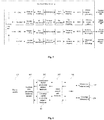
- Fig. 5 schematically shows a baseband data processing process in a high frequency 5G base station signal processing method in Embodiment 4 of the present disclosure.
- the baseband data processing process as shown in Fig. 5 includes a baseband data processing process in which a signal is transmitted from a user to a core network and a baseband data processing process in which a signal is transmitted from the core network to the user.
- an uplink baseband signal passes a filtering resampling module and a fast Fourier transform (FFT) module, user side data is separated.
- the signal which is an orthogonal frequency division multiplexing (OFDM) modulation signal, is then subjected to resource de-mapping, de-precoding, layer de-mapping, demodulation, and rate de-matching, and is recovered as uplink traffic data.
- OFDM orthogonal frequency division multiplexing
- resource de-mapping de-precoding
- layer de-mapping demodulation
- rate de-matching de-matching
- the verified uplink traffic data is transmitted to the exchanging unit for scheduling.
- CRC de-cyclic redundancy check
- the exchanging unit schedules the traffic data from the user side to a downlink microwave link.
- the data is subjected to CRC check and then transmitted to a channel coding module, and it then goes through high-order modulation as a baseband signal via a rate matching module, a modulation module, a general purpose multiplexer (GPM) and a resource mapping module.
- the modulated signal passes an inverse fast Fourier transform (IFFT) module and is converted into IQ data which enters the downlink microwave link.
- IFFT inverse fast Fourier transform
- a downlink baseband signal After a downlink baseband signal passes a microwave data sampling module and a FFT module, core network side data is retained.
- the signal which is a 4K high-order modulation signal, is then subjected to resource de-mapping, GPM, layer de-mapping, demodulation, and rate de-matching, and is recovered as downlink traffic data.
- the verified downlink traffic data is transmitted to the exchanging unit for scheduling.
- the exchanging unit schedules the traffic data from the core network side to a downlink coverage link.
- the data is subjected to CRC check, and then transmitted to the channel coding module, and it then goes through OFDM modulation as a baseband signal via the rate matching module, the modulation module, a layer mapping module and the resource mapping module.
- the modulated signal passes the inverse fast Fourier transform (IFFT) module and is converted into IQ data which enters the downlink coverage link.
- IFFT inverse fast Fourier transform
- Fig. 6 schematically shows a structure of a high frequency 5G base station in Embodiment 5 of the present disclosure.
- the high frequency 5G base station as shown in Fig. 6 includes a baseband data processing hardware module 102, a coverage digital processing subunit hardware 104, a transmission digital processing subunit hardware 103, a power control unit hardware 105, a power supply module 101, a filter 106 module, a microwave antenna port 107, and a coverage antenna port 108.
- the system operation is divided into two processes which complete reception of data and transmission of data respectively.
- a user signal of user equipment is received via an antenna at the coverage antenna port 108 as shown in Fig. 6 .
- the received signal is filtered off an out-of-band useless signal and a stray signal by the filter 106 in Fig. 6 .
- the filtered signal is then subjected to processes, including signal amplification and down-conversion and so on, at the power control unit hardware 105, and is processed and converted into an intermediate frequency signal.
- the intermediate frequency signal is subjected to an analog-to-digital conversion at the coverage digital processing subunit hardware 104 in Fig. 6 , and is converted into an intermediate frequency digital signal.
- the intermediate frequency digital signal is then subjected to a digital down-conversion and is converted to a low frequency signal.
- the low frequency digital signal is subjected to signal demodulation processing at the baseband data processing hardware module 102 and is demodulated into a baseband signal.
- the baseband signal is subjected to re-modulation at the baseband data processing hardware module 102 and then transmitted to the transmission digital processing subunit hardware 103 so as to go through the digital processing including digital up-conversion, filtering and peak clipping and to be converted into an intermediate frequency signal.
- the intermediate frequency signal is subjected to a second frequency conversion and power amplification performed by a common radio frequency link and a power amplifier in the power control unit hardware 105 in Fig. 6 and is converted into a microwave signal. Then, the microwave signal is filtered off the stray signal by the filter 106. Finally, the signal is transmitted to the core network via an antenna connected to the microwave antenna port 107 in Fig. 6 .
- traffic data of the core network is received via the microwave antenna port 107 in Fig. 6 .
- the received signal is filtered off an out-of-band useless signal and a stray signal by the filter 106 in Fig. 6 .
- the filtered signal is then subjected to processes, including signal amplification and down-conversion and so on, at the power control unit hardware 105, and is processed and converted into an intermediate frequency signal.
- the intermediate frequency signal is subjected to an analog-to-digital conversion at a transmission link digital processing module 103 in Fig. 6 , and is converted into an intermediate frequency digital signal.
- the intermediate frequency digital signal is subjected to a digital down-conversion and is converted to a low frequency signal.
- the low frequency digital signal is subjected to signal demodulation processing at the baseband data processing hardware module 102 and is demodulated into a baseband signal.
- the baseband signal is subjected to re-modulation at the baseband data processing hardware module 102 and is transmitted to the coverage digital processing subunit hardware 104 so as to go through the digital processing including digital up-conversion, filtering and peak clipping and to be converted into an intermediate frequency signal.
- the intermediate frequency signal is subjected to a second frequency conversion and power amplification performed by the common radio frequency link and the power amplifier in the power control unit hardware 105 in Fig. 6 and is converted into a microwave signal.
- the microwave signal is filtered off the stray signal by the filter 106.
- the signal is transmitted to the user via the antenna connected to the coverage antenna port 108 in Fig. 6 .
- the high frequency 5G base station is simple in structure, flexible in networking and stable and reliable.
- Fig. 7 schematically shows a baseband data processing process in a high frequency 5G base station signal processing method in Embodiment 6 of the present disclosure, and the baseband data processing process includes the following step (1) to step (6).
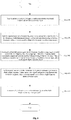
- Fig. 8 schematically shows a flowchart of a high frequency 5G base station signal processing method in Embodiment 7 of the present disclosure.
- the high frequency 5G base station signal processing method in Embodiment 7 of the present disclosure includes step 100, step 200, step 300, step 400 and step 500.
- At step 100 at least one of a high frequency analog transmission signal and a high frequency analog coverage signal is received.
- the high frequency analog transmission signal is an interaction signal between the high frequency 5G base station and the core network side, and the high frequency analog transmission signal includes a microwave signal, an optical fiber signal and the like.
- the high frequency analog coverage signal is an interaction signal between the high frequency 5G base station and the user side.
- the high frequency signal transceiver module includes two ports, i.e., a coverage antenna port used for receiving and transmitting the high frequency analog coverage signal, which is configured to connect to a coverage antenna, and a microwave antenna port used for receiving and transmitting the high frequency analog transmission signal, which is configured to connect to a microwave antenna.
- step 200 signal processing is performed to the high frequency analog transmission signal to obtain a low frequency digital transmission signal; and signal processing is performed to the high frequency analog coverage signal to obtain a low frequency digital coverage signal.
- a high frequency analog signal has to be converted into a low frequency digital signal.
- signal processing including digital-to-analog conversion and down-conversion to the transmission signal and to the coverage signal can be enabled concurrently using one hardware module.
- baseband data processing is performed to the low frequency digital coverage signal so as to convert it into a low frequency digital transmission signal; and baseband data processing is performed to the low frequency digital transmission signal so as to convert it into a low frequency digital coverage signal.
- a coverage signal that is transmitted from the user side is converted into a transmission signal that may be transmitted to the core network side, and a transmission signal that is transmitted from the core network side is converted into a coverage signal that may be transmitted to the user side, thereby completing the baseband data processing.
- step 400 signal processing is performed to the low frequency digital transmission signal so as to obtain a high frequency analog transmission signal; and signal processing is performed to the low frequency digital coverage signal so as to obtain a high frequency analog coverage signal.
- the transmission signal and the coverage signal which are subjected to the baseband data processing are further subjected to analog-to-digital conversion and up-conversion processing so that a low frequency digital signal is converted into a high frequency analog signal.
- the high frequency analog transmission signal and the high frequency analog coverage signal are transmitted.
- the resulted high frequency analog transmission signal is transmitted to the core network via a transmission port, and the resulted high frequency analog coverage signal is transmitted to the user via a coverage port.
- a common signal processing module and a common baseband data processing module are used to process the high frequency transmission signal and the high frequency coverage signal in an concurrent manner, so that the high frequency 5G base station is simple in structure, flexible in networking, and stable and reliable.
- the computer program may be stored in a computer-readable storage medium, and the storage medium may include read only memory (ROM), random access memory (RAM), magnetic disk or optical disk, and the like.
- ROM read only memory
- RAM random access memory
- magnetic disk or optical disk and the like.
Landscapes
- Engineering & Computer Science (AREA)
- Computer Networks & Wireless Communication (AREA)
- Signal Processing (AREA)
- Mobile Radio Communication Systems (AREA)
- Transceivers (AREA)
Abstract
Description
- This application claims the priority of Chinese patent application
CN 201710601792.1 filed on July 21, 2017 - The present disclosure relates to the technical field of mobile communication, and for example, to a
high frequency 5G base station and ahigh frequency 5G base station signal processing method. - At present, a
high frequency 5G mobile base station adopts a 3G/4G scheme. That is, a wireless access network is constructed by a Radio Remote Unit plus a Building Baseband Unit (RRU+BUU), and is connected to a core network via a transmission network constructed with optical fibers or microwaves. Optical fiber connection is required between the Radio Remote Unit (RRU) and the Building Baseband Unit (BBU). One BBU may support multiple RRUs. Therefore, for thehigh frequency 5G base station, a related networking approach has many drawbacks, including that: there are many physical interfaces, and it is required to use different ports to implement a transmission connection with a core network side and to implement a coverage connection with a user side; many processing modules are involved in a data conversion process between the core network side and the user side, and connection stability among modules is poor; and stability and reliability of the whole network are relatively poor, and meanwhile user's experience on the provided mobile service is unsatisfactory. - A summary of the subject matter defined in the present disclosure is provided below. The summary is not for the purpose of limiting the protection scope of the claims.
- The present disclosure provides a
high frequency 5G base station and ahigh frequency 5G base station signal processing method, so as to avoid the phenomenon of poor stability caused by the complex structure of thehigh frequency 5G base station in related art. - According to one aspect of the present disclosure, a
high frequency 5G base station is provided. Thehigh frequency 5G base station includes: a high frequency signal transceiver module, signal processing module, and a baseband data processing module. The high frequency signal transceiver module is configured to transmit at least one of a high frequency analog transmission signal and a high frequency analog coverage signal that are received to the signal processing module, and emit at least one of a high frequency analog transmission signal and a high frequency analog coverage signal that are fed back by the signal processing module. The signal processing module is configured to process the received high frequency analog transmission signal to obtain a low frequency digital transmission signal and transmit the obtained low frequency digital transmission signal to the baseband data processing module, and to process the received high frequency analog coverage signal to obtain a low frequency digital coverage signal and transmit the obtained low frequency digital coverage signal to the baseband data processing module; and the signal processing module is configured to process a low frequency digital transmission signal that is transmitted from the baseband data processing module to obtain a high frequency analog transmission signal and transmit the obtained high frequency analog transmission signal to the high frequency signal transceiver module, and to process a low frequency digital coverage signal that is transmitted from the baseband data processing module to obtain a high frequency analog coverage signal and transmit the obtained high frequency analog coverage signal to the high frequency signal transceiver module. The baseband data processing module is configured to convert the low frequency digital coverage signal that is transmitted from the signal processing module into the low frequency digital transmission signal and transmit the low frequency digital transmission signal that is obtained by conversion to the signal processing module, and to convert the low frequency digital transmission signal that is transmitted from the signal processing module into the low frequency digital coverage signal and transmit the low frequency digital coverage signal that is obtained by conversion to the signal processing module. - The present disclosure further provides a
high frequency 5G base station signal processing method, which includes: receiving at least one of a high frequency analog transmission signal and a high frequency analog coverage signal; performing signal processing to the high frequency analog transmission signal to obtain a low frequency digital transmission signal, and performing signal processing to the high frequency analog coverage signal to obtain a low frequency digital coverage signal; performing baseband data processing to the low frequency digital coverage signal so as to convert the low frequency digital coverage signal into a low frequency digital transmission signal, and performing baseband data processing to the low frequency digital transmission signal so as to convert the low frequency digital transmission signal into a low frequency digital coverage signal; performing signal processing to the low frequency digital transmission signal so as to obtain a high frequency analog transmission signal, and performing signal processing to the low frequency digital coverage signal so as to obtain a high frequency analog coverage signal; and emit the high frequency analog transmission signal and the high frequency analog coverage signal. - The present disclosure further provides a computer-readable storage medium, in which a
high frequency 5G base station signal processing program is stored, and thehigh frequency 5G base station signal processing program, when being executed by a processor, implements the abovehigh frequency 5G base station signal processing method. - Various other advantages and benefits will become clear to one ordinary skilled in the art upon reading the following detailed description of preferred embodiments. The accompanying drawings servers for the purpose of illustrating the preferred embodiments and should not be considered as limitation to the present disclosure. Moreover, the same reference numerals refer to the same components throughout the drawings. In the drawings:
-
Fig. 1 schematically shows an application scenario of ahigh frequency 5G base station signal processing method according to an embodiment of the present disclosure; -
Fig. 2 schematically shows a structure of ahigh frequency 5G base station of Embodiment 1 of the present disclosure; -
Fig. 3 schematically shows a structure of ahigh frequency 5G base station of Embodiment 2 of the present disclosure; -
Fig. 4 schematically shows a structure of ahigh frequency 5G base station of Embodiment 3 of the present disclosure; -
Fig. 5 schematically shows a baseband data processing process in ahigh frequency 5G base station signal processing method of Embodiment 4 of the present disclosure; -
Fig. 6 schematically shows a hardware structure of ahigh frequency 5G base station of Embodiment 5 of the present disclosure; -
Fig. 7 schematically shows a baseband data processing process in ahigh frequency 5G base station signal processing method of Embodiment 6 of the present disclosure; and -
Fig. 8 schematically shows a flowchart of ahigh frequency 5G base station signal processing method of Embodiment 7 of the present disclosure; - Exemplary embodiments of the present disclosure will be described in a more detailed way below with reference to the accompanying drawings. Although the exemplary embodiments disclosed are shown in the accompanying drawings, it should be understood that the present disclosure may be implemented in various forms and should not be limited by the embodiments set forth herein. Instead, these embodiments are provided so that the present disclosure can be understood more thoroughly and that the scope of the present disclosure can be fully conveyed to those skilled in the art.
-
Fig. 1 schematically shows an application scenario of ahigh frequency 5G base station signal processing method provided in an embodiment of the present disclosure. Thehigh frequency 5G base station as shown inFig. 1 is used to perform interconnection and conversion between a coverage signal at a user side and a transmission signal at a core network side. A signal transmitted from the user side to the core network side is an uplink signal, which includes an uplink coverage signal from a user to a base station and an uplink transmission signal from the base station to the core network side; a signal transmitted from the core network side to the user side is a downlink signal, which includes a downlink transmission signal from the core network to the base station and a downlink coverage signal from the base station to the user. -
Fig. 2 schematically shows a structure of ahigh frequency 5G base station of Embodiment 1 of the present disclosure. Thehigh frequency 5G base station as shown inFig. 2 includes a high frequencysignal transceiver module 100, asignal processing module 200 and a basebanddata processing module 300. - The high frequency
signal transceiver module 100 is configured to transmit at least one of a received high frequency analog transmission signal and a received high frequency analog coverage signal to thesignal processing module 200, and emit at least one of a high frequency analog transmission signal and a high frequency analog coverage signal that are fed back by thesignal processing module 200. - In an embodiment, the high frequency analog transmission signal is an interaction signal between the
high frequency 5G base station and a core network side, and the high frequency analog transmission signal includes a microwave signal, an optical fiber signal and the like. The high frequency analog coverage signal is an interaction signal between thehigh frequency 5G base station and the user side. In practice, the high frequency signal transceiver module includes two ports, i.e., a coverage antenna port for receiving and transmitting the high frequency analog coverage signal, which is configured to connect to a coverage antenna, and a microwave antenna port for receiving and transmitting the high frequency analog transmission signal, which is configured to connect to a microwave antenna. - The
signal processing module 200 is configured to process the received high frequency analog transmission signal to obtain a low frequency digital transmission signal and transmit this low frequency digital transmission signal obtained by the processing to the basebanddata processing module 300, and to process the received high frequency analog coverage signal to obtain a low frequency digital coverage signal and transmit this low frequency digital coverage signal obtained by the processing to the basebanddata processing module 300; and thesignal processing module 200 is configured to process a low frequency digital transmission signal transmitted from the basebanddata processing module 300 to obtain a high frequency analog transmission signal and transmit this high frequency analog transmission signal obtained by the processing to the high frequencysignal transceiver module 100, and to process a low frequency digital coverage signal transmitted from the basebanddata processing module 300 to obtain a high frequency analog coverage signal and transmit this high frequency analog coverage signal obtained by the processing to the high frequencysignal transceiver module 100. - In an embodiment, before the
high frequency 5G base station performs baseband data processing to the received high frequency analog signal, it is required to convert the high frequency analog signal into a low frequency digital signal. Since a coverage signal and a transmission microwave signal that are received by thehigh frequency 5G base station operate in proximate frequency bands, the coverage signal and the transmission signal may share common reception filtering, power control and down-conversion, so that processing to the high frequency coverage analog signal and processing to the high frequency analog transmission signal can be enbaled concurrently using one signal processing module. - The baseband
data processing module 300 is configured to convert the low frequency digital coverage signal transmitted from thesignal processing module 200 into a low frequency digital transmission signal and transmit the low frequency digital transmission signal obtained by the conversion to thesignal processing module 200; and the basebanddata processing module 300 is configured to convert the low frequency digital transmission signal transmitted from thesignal processing module 200 into a low frequency digital coverage signal and transmit the low frequency digital coverage signal obtained by the conversion to thesignal processing module 200. - In an embodiment, the baseband data processing module, by using a signal processing process of demodulating, de-verifying, exchanging, verifying and modulating, converts the received low frequency digital transmission signal into the low frequency digital coverage signal and converts the received low frequency digital coverage signal into the low frequency digital transmission signal.
- For the
high frequency 5G base station provided by the present embodiment, a high frequency signal including at least one of the high frequency transmission signal and the high frequency coverage signal is converted using thesignal processing module 200, wherein the high frequency transmission signal and the high frequency coverage signal are respectively converted into low frequency signals that are to be processed by the baseband data processing module. After that, the basebanddata processing module 300 performs baseband processing and signal format exchanging. Then, the signal processing module converts a low frequency coverage signal and a low frequency transmission signal both converted by the baseband data processing module into a high frequency coverage signal and a high frequency transmission signal and then transmit them. Based on a modularization and SDR (Software Defined Radio) design philosophy, thehigh frequency 5G base station provided by the present embodiment can improve network performance, reduce network cost, enhance network expansion flexibility, reduce network management complexity, and realize a coverage function and a transmission function at the same time. The baseband data processing module and the signal processing module may be configured as two separate hardware modules so that modular assembling can be achieved. In this way, flexible networking, rapid network building and simple network management and maintenance can be realized as long as a working voltage is provided. -
Fig. 3 schematically shows a structure of ahigh frequency 5G base station of Embodiment 2 of the present disclosure. Thehigh frequency 5G base station as shown inFig. 3 includes a high frequencysignal transceiver module 100, afiltering unit 210, apower control unit 220, adigital processing unit 230 and a basebanddata processing module 300. - In an embodiment, the high frequency
signal transceiver module 100 may be the same as the high frequencysignal transceiver module 100 in Embodiment 1. - The
filtering unit 210 is configured to filter at least one of the received high frequency analog transmission signal and the received high frequency analog coverage signal, and transmit at least one of the filtered high frequency analog transmission signal and the filtered high frequency analog coverage signal to the power control unit, and to filter at least one of a high frequency analog transmission signal and a high frequency analog coverage signal that are fed back by the power control unit, and transmit at least one of the filtered high frequency analog transmission signal and the filtered high frequency analog coverage signal to the high frequencysignal transceiver module 100. - In an embodiment, since the high frequency analog transmission signal and the high frequency analog coverage signal that are received and transmitted by the
high frequency 5G base station have proximate frequency bands, one filtering unit, such as a tunable filter, may be employed to filter both of the above two signals while being received and transmitted, thereby performing suppression of out-of-band useless signals and elimination of stray signals. - The
power control unit 220 is configured to convert the received high frequency analog coverage signal into an intermediate frequency analog coverage signal and transmit this intermediate frequency analog coverage signal obtained by the conversion to thedigital processing unit 230, and to convert the received high frequency analog transmission signal into an intermediate frequency analog transmission signal and transmit this intermediate frequency analog transmission signal obtained by the conversion to thedigital processing unit 230; and thepower control unit 220 is configured to convert an intermediate frequency analog coverage signal transmitted from thedigital processing unit 230 into a high frequency analog coverage signal and transmit this high frequency analog coverage signal obtained by the conversion to thefiltering unit 210, and to convert an intermediate frequency analog transmission signal transmitted from thedigital processing unit 230 into a high frequency analog transmission signal and transmit this high frequency analog transmission signal to thefiltering unit 210. - In an embodiment, the
power control unit 220 is mainly configured to down-convert a high frequency signal into an intermediate frequency signal and up-convert an intermediate frequency signal to a high frequency signal. For better frequency conversion, the power control unit generally includes a transmitting frequency conversion portion which is configured for up-conversion and a receiving frequency conversion portion which is configured for down-conversion. - In an embodiment, the
power control unit 220 includes a receiving subunit and a transmitting subunit. - The receiving subunit is configured to perform signal amplification and down-conversion to the high frequency analog coverage signal transmitted from the
filtering unit 210 to obtain the intermediate frequency analog coverage signal and transmit this intermediate frequency analog coverage signal to thedigital processing unit 230; and the receiving subunit is further configured to perform signal amplification and down-conversion to the high frequency analog transmission signal transmitted from thefiltering unit 210 to obtain the intermediate frequency analog transmission signal and transmit this intermediate frequency analog transmission signal to thedigital processing unit 230. - The transmitting subunit is configured to perform power amplification and up-conversion to the intermediate frequency analog coverage signal transmitted from the
digital processing unit 230 to obtain the high frequency analog coverage signal and transmit this high frequency analog coverage signal to thefiltering unit 210; and the transmitting subunit is further configured to perform power amplification and up-conversion to the intermediate frequency analog transmission signal transmitted from thedigital processing unit 230 to obtain the high frequency analog transmission signal and transmit this high frequency analog transmission signal to thefiltering unit 210. - The
digital processing unit 230 is configured to convert the received intermediate frequency analog coverage signal into a low frequency digital coverage signal and transmit this low frequency digital coverage signal obtained by the conversion to the basebanddata processing module 300, and to convert the received intermediate frequency analog transmission signal into a low frequency digital transmission signal and transmit this low frequency digital transmission signal obtained by the conversion to the basebanddata processing module 300; and thedigital processing unit 230 is configured to convert a low frequency digital coverage signal transmitted from the basebanddata processing module 300 into an intermediate frequency analog coverage signal and transmit this intermediate frequency analog coverage signal obtained by the conversion to thepower control unit 220, and to convert a low frequency digital transmission signal transmitted from the basebanddata processing module 300 into an intermediate frequency analog transmission signal and transmit this intermediate frequency analog transmission signal obtained by the conversion to thepower control unit 220. - In an embodiment, the
digital processing unit 230 is configured to perform conversion between an analog signal and a digital signal, and to perform conversion between an intermediate frequency signal and a low frequency signal. - In an embodiment, the
digital processing unit 230 includes a coverage digital processing subunit and a transmission digital processing subunit. - The coverage digital processing subunit is configured to perform analog-to-digital conversion and down-conversion to the received intermediate frequency analog coverage signal to obtain a low frequency digital coverage signal and transmit this low frequency digital coverage signal to the baseband
data processing module 300; and the coverage digital processing subunit is configured to perform up-conversion, filtering and peak clipping processing to the low frequency digital coverage signal transmitted from the basebanddata processing module 300 to obtain an intermediate frequency analog coverage signal and transmit this intermediate frequency analog coverage signal to the transmitting subunit. - The transmission digital processing subunit is configured to perform analog-to-digital conversion and down-conversion to the received intermediate frequency analog transmission signal to obtain a low frequency digital transmission signal and transmit this low frequency digital transmission signal to the baseband
data processing module 300; and the transmission digital processing subunit is configured to perform up-conversion, filtering and peak clipping processing to the low frequency digital transmission signal transmitted from the basebanddata processing module 300 to obtain an intermediate frequency analog transmission signal and transmit this intermediate frequency analog transmission signal to the transmitting subunit. - In an embodiment, the baseband
data processing module 300 may be the same as the basebanddata processing module 300 in Embodiment 1. - For the
high frequency 5G base station provided by the present embodiment, the signal processing module is divided into a filtering unit, a power control unit and a digital processing unit. Based on a characteristic that the high frequency transmission signal and the high frequency coverage signal have proximate frequency bands, signal processing to the high frequency coverage signal and to the high frequency transmission signal can be performed concurrently by means of one hardware module, including that using a same tunable filter to perform filtering to both the high frequency transmission signal and the high frequency coverage signal, and that using a same power control unit to perform power control to both the high frequency transmission signal and the high frequency coverage signal. In this way, modular assembling of thehigh frequency 5G base station can be realized, thereby realizing flexible networking, rapid network establishment and simple network management and maintenance. -
Fig. 4 schematically shows a structure of ahigh frequency 5G base station of Embodiment 3 of the present disclosure. Thehigh frequency 5G base station as shown inFig. 4 includes a high frequencysignal transceiver module 100, asignal processing module 200, ademodulation unit 310, averification unit 320, an exchangingunit 330, and amodulation unit 340. - In an embodiment, the high frequency
signal transceiver module 100 may be the same as the high frequencysignal transceiver module 100 in Embodiment 1. - In an embodiment, the
signal processing module 200 may be the same as thesignal processing module 200 in Embodiment 1. - The
demodulation unit 310 is configured to demodulate the received low frequency digital coverage signal to obtain user data to be exchanged and transmit the user data to be exchanged to theverification unit 320; anddemodulation unit 310 is configured to demodulate the received low frequency digital transmission signal to obtain core network data to be exchanged and transmit the core network data to be exchanged to theverification unit 320. - In an embodiment, the
demodulation unit 310 performs resource de-mapping, de-precoding, layer de-mapping, de-modulation, rate de-matching to the received low frequency digital coverage signal and the received low frequency digital transmission signal to obtain user traffic data and core network traffic data respectively. - The
verification unit 320 is configured to de-verify the received user data to be exchanged and the received core network data to be exchanged, and transmit the de-verified user data to be exchanged and the de-verified core network data to be exchanged to the exchangingunit 330; and theverification unit 320 is configured to verify user exchange data and core network exchange data that are transmitted from the exchangingunit 330, and transmit the verified user exchange data and the verified core network exchange data to themodulation unit 340. - In an embodiment, the
verification unit 320 is configured to de-verify a signal entering the exchangingunit 330 and verify a signal output from the exchangingunit 330. De-verifying and verifying may be performed concurrently by means of a same verification module, or may be performed respectively by a de-verification subunit and a verification subunit. - The exchanging
unit 330 is configured to convert the received user data to be exchanged into core network exchange data and transmit this core network exchange data to theverification unit 320; and the exchangingunit 330 is configured to convert the received core network data to be exchanged into user exchange data and transmit this user exchange data to theverification unit 320. - In an embodiment, the exchanging
unit 330, after converting the received user data to be exchanged into the core network exchange data, completes conversion of the high frequency coverage signal that is received by thehigh frequency 5G base station into the core network exchange data that may be transmitted to the core network side; and the exchangingunit 330, after converting the received core network data to be exchanged into the user exchange data, completes conversion of the high frequency transmission signal that is received by thehigh frequency 5G base station into the user exchange data that may be transmitted to the user side. - The
modulation unit 340 is configured to modulate the received core network exchange data into a low frequency digital transmission signal and transmit this low frequency digital transmission signal to thesignal processing module 200; and themodulation unit 340 is configured to modulate the received user exchange data into a low frequency digital coverage signal and transmit this low frequency digital coverage signal to thesignal processing module 200. - In an embodiment, the
modulation unit 340, after performing channel coding, rate matching, modulation, general purpose multiplexing to the core network exchange data verified and the user exchange data verified that are received and have already been verified, modulates the verified core network exchange data and verified the user exchange data respectively into the low frequency digital transmission signal and the low frequency digital coverage signal. - In the present embodiment, the baseband data processing module includes a demodulation unit, a verification unit, an exchanging unit and a modulation unit, and baseband data processing to a transmission signal and to a coverage signal may be performed concurrently by using a same hardware module. Based on a modularization and software defined radio (SDR) design philosophy, the
high frequency 5G base station provided by the present embodiment improves network performance, reduces network cost, enhances network expansion flexibility, reduces network management complexity, and realizes a coverage function and a transmission function at the same time. - In an embodiment, the
demodulation unit 310 includes a coverage demodulation subunit and a transmission demodulation subunit. - The coverage demodulation subunit is configured to perform resource de-mapping, de-precoding, layer de-mapping, demodulation, rate de-matching to the received low frequency digital coverage signal so as to modulate it into user data to be exchanged, and transmit the user data to be exchanged to the
verification unit 320. - The transmission demodulation subunit is configured to perform resource de-mapping, general purpose de-multiplexing, layer de-mapping, demodulation, rate de-matching to the received low frequency digital transmission signal so as to modulate it into core network data to be exchanged, and transmit the core network data to be exchanged to the
verification unit 320. - In the present embodiment, the demodulation unit demodulates the coverage signal using the coverage demodulation subunit, and demodulates the transmission signal using the transmission demodulation subunit. Different modules are used to respectively demodulate the coverage signal and transmission signal, and these two modules share the verification unit and the signal processing module that are connected thereto. In this way, modular configuration of the
high frequency 5G base station is achieved, thereby enhancing network expansion flexibility. - In an embodiment, the
modulation unit 340 includes a transmission modulation subunit and a coverage modulation subunit. - The transmission modulation subunit is configured to perform channel coding, rate matching, modulation, general purpose multiplexing, resource mapping, fast Fourier transform and high-order modulation to the received core network exchange data so as to modulate it into a low frequency digital transmission signal, and transmit the low frequency digital transmission signal to the
signal processing module 200. - The coverage modulation subunit is configured to perform channel coding, rate matching, modulation, layer mapping, resource mapping, fast Fourier transform and orthogonal frequency division multiplexing to the received user exchange data so as to modulate it into a low frequency digital coverage signal, and transmit the low frequency digital coverage signal to the
signal processing module 200. - In the present embodiment, the modulation unit modulates the coverage signal using the coverage modulation subunit and modulates the transmission signal using the transmission modulation subunit. Different modules are used to respectively modulate the coverage signal and the transmission signal output by an exchanging module, and these two modules share the verification unit and the signal processing module that are connected thereto. In this way, modular configuration of the
high frequency 5G base station is achieved, thereby enhancing network expansion flexibility. - In an embodiment, the baseband
data processing module 300 further includes a separation unit, which is configured to separate the low frequency digital coverage signal or the low frequency digital transmission signal from a serial signal that is received and transmit the low frequency digital coverage signal or the low frequency digital transmission signal to thedemodulation unit 310. The separation unit includes: a coverage separation subunit, which is configured to separate the low frequency digital coverage signal from the received serial signal by means of filtering resampling and fast Fourier transform and then transmit the low frequency digital coverage signal to thedemodulation unit 310; and a transmission separation subunit, which is configured to separate the low frequency digital transmission signal from the received serial signal by means of microwave data sampling and fast Fourier transform and then transmit the low frequency digital transmission signal to thedemodulation unit 310. - In an embodiment, the high frequency coverage signal and the high frequency transmission signal, prior to entering the baseband
data processing module 300, are respectively processed and converted into a low frequency digital coverage signal or a low frequency digital transmission signal. The basebanddata processing module 300 also supports a serial-parallel function for signal input and output. That is, when the coverage signal and the transmission signal are transmitted in a serial manner from a front end module connected to the basebanddata processing module 300, then the separation unit is provided to perform separation of the coverage signal and the transmission signal, after which a subsequent baseband data processing step is performed. - The
high frequency 5G base station provided by the present embodiment may receive a serial signal composed of the coverage signal and the transmission signal input by the front end module by using the separation unit, and an application range of thehigh frequency 5G base station is thus improved. - For the
high frequency 5G base station provided by the present disclosure, a received high frequency signal including a high frequency transmission signal and/or a high frequency coverage signal is converted using the signal processing module, wherein the high frequency transmission signal and the high frequency coverage signal are respectively converted into low frequency signals that are to be processed by the baseband data processing module. After that, the baseband data processing module performs baseband processing and signal format exchanging. Then, the signal processing module converts a low frequency coverage signal and a low frequency transmission signal both converted by the baseband data processing module into a high frequency coverage signal and a high frequency transmission signal and then transmit them. Since thehigh frequency 5G base station provided by the present disclosure is based on a modularization and Software Defined Radio (SDR) design philosophy, thehigh frequency 5G base station provided by the present disclosure can improve network performance, reduce network cost, enhance network expansion flexibility, reduce network management complexity, and realize a coverage function and a transmission function at the same time; and the baseband data processing module and the signal processing module may be configured as two separate hardware modules so that modular assembling can be achieved. In this way, flexible networking, rapid network building and simple network management and maintenance can be achieved as long as a working voltage is provided. - To better illustrate a baseband processing process provided in the above embodiment of the present disclosure,
Fig. 5 schematically shows a baseband data processing process in ahigh frequency 5G base station signal processing method in Embodiment 4 of the present disclosure. The baseband data processing process as shown inFig. 5 includes a baseband data processing process in which a signal is transmitted from a user to a core network and a baseband data processing process in which a signal is transmitted from the core network to the user. - After an uplink baseband signal passes a filtering resampling module and a fast Fourier transform (FFT) module, user side data is separated. The signal, which is an orthogonal frequency division multiplexing (OFDM) modulation signal, is then subjected to resource de-mapping, de-precoding, layer de-mapping, demodulation, and rate de-matching, and is recovered as uplink traffic data. After the uplink traffic data is subjected to de-cyclic redundancy check (CRC) data verification, the verified uplink traffic data is transmitted to the exchanging unit for scheduling.
- The exchanging unit schedules the traffic data from the user side to a downlink microwave link. The data is subjected to CRC check and then transmitted to a channel coding module, and it then goes through high-order modulation as a baseband signal via a rate matching module, a modulation module, a general purpose multiplexer (GPM) and a resource mapping module. The modulated signal passes an inverse fast Fourier transform (IFFT) module and is converted into IQ data which enters the downlink microwave link.
- After a downlink baseband signal passes a microwave data sampling module and a FFT module, core network side data is retained. The signal, which is a 4K high-order modulation signal, is then subjected to resource de-mapping, GPM, layer de-mapping, demodulation, and rate de-matching, and is recovered as downlink traffic data. After the downlink traffic data is subjected to de-CRC data verification, the verified downlink traffic data is transmitted to the exchanging unit for scheduling.
- The exchanging unit schedules the traffic data from the core network side to a downlink coverage link. The data is subjected to CRC check, and then transmitted to the channel coding module, and it then goes through OFDM modulation as a baseband signal via the rate matching module, the modulation module, a layer mapping module and the resource mapping module. The modulated signal passes the inverse fast Fourier transform (IFFT) module and is converted into IQ data which enters the downlink coverage link.
-
Fig. 6 schematically shows a structure of ahigh frequency 5G base station in Embodiment 5 of the present disclosure. Thehigh frequency 5G base station as shown inFig. 6 includes a baseband dataprocessing hardware module 102, a coverage digitalprocessing subunit hardware 104, a transmission digitalprocessing subunit hardware 103, a powercontrol unit hardware 105, apower supply module 101, afilter 106 module, amicrowave antenna port 107, and acoverage antenna port 108. - The system operation is divided into two processes which complete reception of data and transmission of data respectively.
- In the reception process, a user signal of user equipment is received via an antenna at the
coverage antenna port 108 as shown inFig. 6 . The received signal is filtered off an out-of-band useless signal and a stray signal by thefilter 106 inFig. 6 . The filtered signal is then subjected to processes, including signal amplification and down-conversion and so on, at the powercontrol unit hardware 105, and is processed and converted into an intermediate frequency signal. The intermediate frequency signal is subjected to an analog-to-digital conversion at the coverage digitalprocessing subunit hardware 104 inFig. 6 , and is converted into an intermediate frequency digital signal. The intermediate frequency digital signal is then subjected to a digital down-conversion and is converted to a low frequency signal. The low frequency digital signal is subjected to signal demodulation processing at the baseband dataprocessing hardware module 102 and is demodulated into a baseband signal. At the meanwhile, the baseband signal is subjected to re-modulation at the baseband dataprocessing hardware module 102 and then transmitted to the transmission digitalprocessing subunit hardware 103 so as to go through the digital processing including digital up-conversion, filtering and peak clipping and to be converted into an intermediate frequency signal. The intermediate frequency signal is subjected to a second frequency conversion and power amplification performed by a common radio frequency link and a power amplifier in the powercontrol unit hardware 105 inFig. 6 and is converted into a microwave signal. Then, the microwave signal is filtered off the stray signal by thefilter 106. Finally, the signal is transmitted to the core network via an antenna connected to themicrowave antenna port 107 inFig. 6 . - In the transmission process, traffic data of the core network is received via the
microwave antenna port 107 inFig. 6 . The received signal is filtered off an out-of-band useless signal and a stray signal by thefilter 106 inFig. 6 . The filtered signal is then subjected to processes, including signal amplification and down-conversion and so on, at the powercontrol unit hardware 105, and is processed and converted into an intermediate frequency signal. The intermediate frequency signal is subjected to an analog-to-digital conversion at a transmission linkdigital processing module 103 inFig. 6 , and is converted into an intermediate frequency digital signal. Then, the intermediate frequency digital signal is subjected to a digital down-conversion and is converted to a low frequency signal. The low frequency digital signal is subjected to signal demodulation processing at the baseband dataprocessing hardware module 102 and is demodulated into a baseband signal. At the meanwhile, the baseband signal is subjected to re-modulation at the baseband dataprocessing hardware module 102 and is transmitted to the coverage digitalprocessing subunit hardware 104 so as to go through the digital processing including digital up-conversion, filtering and peak clipping and to be converted into an intermediate frequency signal. The intermediate frequency signal is subjected to a second frequency conversion and power amplification performed by the common radio frequency link and the power amplifier in the powercontrol unit hardware 105 inFig. 6 and is converted into a microwave signal. The microwave signal is filtered off the stray signal by thefilter 106. Finally, the signal is transmitted to the user via the antenna connected to thecoverage antenna port 108 inFig. 6 . - In the embodiment, through those common hardware, after a modularization design is performed by means of software, baseband processing to the coverage signal and to the transmission signal are performed concurrently, so that the
high frequency 5G base station is simple in structure, flexible in networking and stable and reliable. - In an embodiment, when baseband data processing is performed to a signal, it is first determined whether the signal is a downlink signal, and then a subsequent baseband data processing process is performed.
Fig. 7 schematically shows a baseband data processing process in ahigh frequency 5G base station signal processing method in Embodiment 6 of the present disclosure, and the baseband data processing process includes the following step (1) to step (6). - (1) It is determined whether data received from a port is an uplink signal or a downlink signal (an uplink process is defined as a process in which a user signal is received through a coverage link and subjected to signal conversion over a baseband, and it is then transmitted to the core network via a transmission link; and a downlink process is defined as a process in which a core network signal is received via the transmission link and subjected to signal conversion over the baseband, and it is then transmitted to the user via the coverage link), and the determination is made according to different placement positions or flag bits of the data, so that different signals respectively enter respective processes.
- (2) A type of the received signal is identified so as to distinguish whether it is a coverage signal or a transmission signal (including a microwave signal), and signals enter respective process according to different signal types.
- (3) Demodulation is performed to baseband signals that are transmitted, i.e., microwave demodulation being performed to the microwave signal, and coverage signal demodulation being performed to the coverage signal.
- (4) Channel coding is performed to the demodulated signal, and resource is allocated as required.
- (5) Conversion and encoding is performed to the signal, i.e., OFDM modulation being performed to a signal transmitted from the transmission link so as to convert the signal into a signal format of the coverage link, and high-order microwave modulation being performed to a signal transmitted from the coverage link so as to convert the signal into a signal format of the transmission link.
- (6) After conversion of the signal, the signal is conveyed to an intermediate radio frequency module via the port, and finally are radiated out as an analog signal via an antenna.
-
Fig. 8 schematically shows a flowchart of ahigh frequency 5G base station signal processing method in Embodiment 7 of the present disclosure. Thehigh frequency 5G base station signal processing method in Embodiment 7 of the present disclosure includesstep 100,step 200,step 300,step 400 andstep 500. - At
step 100, at least one of a high frequency analog transmission signal and a high frequency analog coverage signal is received. - In an embodiment, the high frequency analog transmission signal is an interaction signal between the
high frequency 5G base station and the core network side, and the high frequency analog transmission signal includes a microwave signal, an optical fiber signal and the like. The high frequency analog coverage signal is an interaction signal between thehigh frequency 5G base station and the user side. In practice, the high frequency signal transceiver module includes two ports, i.e., a coverage antenna port used for receiving and transmitting the high frequency analog coverage signal, which is configured to connect to a coverage antenna, and a microwave antenna port used for receiving and transmitting the high frequency analog transmission signal, which is configured to connect to a microwave antenna. - At
step 200, signal processing is performed to the high frequency analog transmission signal to obtain a low frequency digital transmission signal; and signal processing is performed to the high frequency analog coverage signal to obtain a low frequency digital coverage signal. - In an embodiment, before baseband data processing is performed to the coverage signal and the transmission signal, a high frequency analog signal has to be converted into a low frequency digital signal. Based on that the coverage signal and the transmission signal have proximate frequency bands, signal processing including digital-to-analog conversion and down-conversion to the transmission signal and to the coverage signal can be enabled concurrently using one hardware module.
- At
step 300, baseband data processing is performed to the low frequency digital coverage signal so as to convert it into a low frequency digital transmission signal; and baseband data processing is performed to the low frequency digital transmission signal so as to convert it into a low frequency digital coverage signal. - In an embodiment, through the baseband data processing, a coverage signal that is transmitted from the user side is converted into a transmission signal that may be transmitted to the core network side, and a transmission signal that is transmitted from the core network side is converted into a coverage signal that may be transmitted to the user side, thereby completing the baseband data processing.
- At
step 400, signal processing is performed to the low frequency digital transmission signal so as to obtain a high frequency analog transmission signal; and signal processing is performed to the low frequency digital coverage signal so as to obtain a high frequency analog coverage signal. - In an embodiment, the transmission signal and the coverage signal which are subjected to the baseband data processing are further subjected to analog-to-digital conversion and up-conversion processing so that a low frequency digital signal is converted into a high frequency analog signal.
- At
step 500, the high frequency analog transmission signal and the high frequency analog coverage signal are transmitted. - In an embodiment, the resulted high frequency analog transmission signal is transmitted to the core network via a transmission port, and the resulted high frequency analog coverage signal is transmitted to the user via a coverage port.
- In the method provided in the present embodiment, based on that a transmission signal and a coverage signal of the
high frequency 5G base station have proximate frequency bands, a common signal processing module and a common baseband data processing module are used to process the high frequency transmission signal and the high frequency coverage signal in an concurrent manner, so that thehigh frequency 5G base station is simple in structure, flexible in networking, and stable and reliable. - All or some steps of various methods in the above embodiments may be implemented by related hardware instructed by a computer program. The computer program may be stored in a computer-readable storage medium, and the storage medium may include read only memory (ROM), random access memory (RAM), magnetic disk or optical disk, and the like.
Claims (11)
- A high frequency 5G base station applicable to a high frequency 5G mobile network, comprising: a high frequency signal transceiver module (100), a signal processing module (200) and a baseband data processing module (300), characterized in that:the high frequency signal transceiver module (100) is configured to transmit at least one of a high frequency analog transmission signal and a high frequency analog coverage signal that are received to the signal processing module (200), and emit at least one of a high frequency analog transmission signal and a high frequency analog coverage signal that are fed back by the signal processing module (200);the signal processing module (200) is configured to process the received high frequency analog transmission signal to obtain a low frequency digital transmission signal and transmit the low frequency digital transmission signal that is obtained by processing to the baseband data processing module (300), and to process the received high frequency analog coverage signal to obtain a low frequency digital coverage signal and transmit the low frequency digital coverage signal that is obtained by processing to the baseband data processing module (300); and to process a low frequency digital transmission signal that is transmitted from the baseband data processing module (300) to obtain a high frequency analog transmission signal and transmit the high frequency analog transmission signal that is obtained by processing to the high frequency signal transceiver module (100), and to process a low frequency digital coverage signal that is transmitted from the baseband data processing module (300) to obtain a high frequency analog coverage signal and transmit the high frequency analog coverage signal that is obtained by processing to the high frequency signal transceiver module (100); andthe baseband data processing module (300) is configured to convert the low frequency digital coverage signal that is transmitted from the signal processing module (200) into the low frequency digital transmission signal and transmit the low frequency digital transmission signal that is obtained by conversion to the signal processing module (200); and to convert the low frequency digital transmission signal that is transmitted from the signal processing module (200) into the low frequency digital coverage signal and transmit the low frequency digital coverage signal that is obtained by conversion to the signal processing module (200).
- The high frequency 5G base station according to claim 1, characterized in that the signal processing module (200) comprises a filtering unit (210), a power control unit (220), and a digital processing unit (230), wherein:the filtering unit (210) is configured to filter at least one of the high frequency analog transmission signal and the high frequency analog coverage signal that are received and transmit at least one of the filtered high frequency analog transmission signal and the filtered high frequency analog coverage signal to the power control unit (220), and to filter at least one of a high frequency analog transmission signal and a high frequency analog coverage signal that are fed back by the power control unit (220) and transmit at least one of the filtered high frequency analog transmission signal and the filtered high frequency analog coverage signal to the high frequency signal transceiver module (100);the power control unit (220) is configured to convert the received high frequency analog coverage signal into an intermediate frequency analog coverage signal and transmit the intermediate frequency analog coverage signal that is obtained by conversion to the digital processing unit (230), and to convert the received high frequency analog transmission signal into an intermediate frequency analog transmission signal and transmit the intermediate frequency analog transmission signal that is obtained by conversion to the digital processing unit (230), and wherein the power control unit (220) is configured to convert an intermediate frequency analog coverage signal that is transmitted from the digital processing unit (230) into a high frequency analog coverage signal and transmit the high frequency analog coverage signal that is obtained by conversion to the filtering unit (210), and to convert an intermediate frequency analog transmission signal that is transmitted from the digital processing unit (230) into a high frequency analog transmission signal and transmit the high frequency analog transmission signal to the filtering unit (210); andthe digital processing unit (230) is configured to convert the received intermediate frequency analog coverage signal into a low frequency digital coverage signal and transmit the low frequency digital coverage signal that is obtained by conversion to the baseband data processing module (300), and to convert the received intermediate frequency analog transmission signal into a low frequency digital transmission signal and transmit the low frequency digital transmission signal that is obtained by conversion to the baseband data processing module (300), and wherein the digital processing unit (230) is configured to convert the low frequency digital coverage signal that is transmitted from the baseband data processing module (300) into an intermediate frequency analog coverage signal and transmit the intermediate frequency analog coverage signal that is obtained by conversion to the power control unit (220), and to convert the low frequency digital transmission signal that is transmitted from the baseband data processing module (300) into an intermediate frequency analog transmission signal and transmit the intermediate frequency analog transmission signal that is obtained by conversion to the power control unit (220).
- The high frequency 5G base station according to claim 2, characterized in that the power control unit (220) comprises a receiving subunit and a transmitting subunit, wherein:the receiving subunit is configured to perform signal amplification and down-conversion to the high frequency analog coverage signal that is transmitted from the filtering unit (210) to obtain the intermediate frequency analog coverage signal and transmit the intermediate frequency analog coverage signal to the digital processing unit (230), and wherein the receiving subunit is further configured to perform signal amplification and down-conversion to the high frequency analog transmission signal that is transmitted from the filtering unit (210) to obtain the intermediate frequency analog transmission signal and transmit the intermediate frequency analog transmission signal to the digital processing unit (230), andthe transmitting subunit is configured to perform power amplification and up-conversion to the intermediate frequency analog coverage signal that is transmitted from the digital processing unit (230) to obtain the high frequency analog coverage signal and transmit the high frequency analog coverage signal to the filtering unit (210), and wherein the transmitting subunit is further configured to perform power amplification and up-conversion to the intermediate frequency analog transmission signal that is transmitted from the digital processing unit (230) to obtain the high frequency analog transmission signal and transmit the high frequency analog transmission signal to the filtering unit (210).
- The high frequency 5G base station according to claim 2, characterized in that the digital processing unit (230) comprises a coverage digital processing subunit and a transmission digital processing subunit, wherein:the coverage digital processing subunit is configured to perform analog-to-digital conversion and down-conversion to the received intermediate frequency analog coverage signal to obtain the low frequency digital coverage signal and transmit the low frequency digital coverage signal to the baseband data processing module (300), and wherein the coverage digital processing subunit is configured to perform up-conversion, filtering and peak clipping processing to the low frequency digital coverage signal that is transmitted from the baseband data processing module (300) to obtain the intermediate frequency analog coverage signal and transmit the intermediate frequency analog coverage signal to a transmitting subunit; andthe transmission digital processing subunit is configured to perform analog-to-digital conversion and down-conversion to the received intermediate frequency analog transmission signal to obtain the low frequency digital transmission signal and transmit the low frequency digital transmission signal to the baseband data processing module (300), and wherein the transmission digital processing subunit is configured to perform up-conversion, filtering and peak clipping processing to the low frequency digital transmission signal that is transmitted from the baseband data processing module (300) to obtain the intermediate frequency analog transmission signal and transmit the intermediate frequency analog transmission signal to the transmitting subunit.
- The high frequency 5G base station according to claim 1, characterized in that the baseband data processing module (300) comprises a demodulation unit (310), a verification unit (320), an exchanging unit (330) and a modulation unit (340), wherein:the demodulation unit (310) is configured to demodulate the received low frequency digital coverage signal to obtain user data to be exchanged and transmit the user data to be exchanged to the verification unit (320), and to demodulate the received low frequency digital transmission signal to obtain core network data to be exchanged and transmit the core network data to be exchanged to the verification unit (320);the verification unit (320) is configured to de-verify the user data to be exchanged and the core network data to be exchanged that are received and transmit the de-verified user data to be exchanged and the de-verified core network data to be exchanged to the exchanging unit (330), and wherein the verification unit (320) is configured to verify user exchange data and core network exchange data that are transmitted from the exchanging unit (330) and transmit the verified user exchange data and the verified core network exchange data to the modulation unit (340);the exchanging unit (330) is configured to convert the received user data to be exchanged into core network exchange data and transmit the core network exchange data to the verification unit (320), and to convert the received core network data to be exchanged into user exchange data and transmit the user exchange data to the verification unit (320); andthe modulation unit (340) is configured to modulate the received core network exchange data into the low frequency digital transmission signal and transmit the low frequency digital transmission signal to the signal processing module (200), and wherein the modulation unit (340) is configured to modulate the received user exchange data into the low frequency digital coverage signal and transmit the low frequency digital coverage signal to the signal processing module (200).
- The high frequency 5G base station according to claim 5, characterized in that the demodulation unit (310) comprises a coverage demodulation subunit and a transmission demodulation subunit, wherein:the coverage demodulation subunit is configured to perform resource de-mapping, de-precoding, layer de-mapping, demodulation, rate de-matching to the low frequency digital coverage signal that is received so as to obtain the user data to be exchanged, and transmit the user data to be exchanged to the verification unit (320); andthe transmission demodulation subunit is configured to perform resource de-mapping, general purpose multiplexing, layer de-mapping, demodulation, rate de-matching to the low frequency digital transmission signal that is received so as to obtain the core network data to be exchanged, and transmit the core network data to be exchanged to the verification unit (320).
- The high frequency 5G base station according to claim 5, characterized in that the modulation unit (340) comprises a transmission modulation subunit and a coverage modulation subunit, wherein:the transmission modulation subunit is configured to perform channel coding, rate matching, modulation, general purpose multiplexing, resource mapping, fast Fourier transform and high-order modulation to the core network exchange data that is received so as to modulate the core network exchange data that is received into the low frequency digital transmission signal, and transmit the low frequency digital transmission signal to the signal processing module (200); andthe coverage modulation subunit is configured to perform channel coding, rate matching, modulation, layer mapping, resource mapping, fast Fourier transform and orthogonal frequency division multiplexing to the user exchange data that is received so as to modulate the user exchange data that is received into the low frequency digital coverage signal, and transmit the low frequency digital coverage signal to the signal processing module (200).
- The high frequency 5G base station according to claim 5, characterized in that the baseband data processing module (300) further comprises:
a separation unit, configured to separate a low frequency digital coverage signal or a low frequency digital transmission signal from a serial signal that is received and transmit the low frequency digital coverage signal or the low frequency digital transmission signal to the demodulation unit (310). - The high frequency 5G base station according to claim 8, characterized in that the separation unit comprises a coverage separation subunit and a transmission separation subunit, wherein:the coverage separation subunit is configured to separate the low frequency digital coverage signal from the serial signal that is received by means of filtering resampling and fast Fourier transform and transmit the low frequency digital coverage signal to the demodulation unit (310); andthe transmission separation subunit is configured to separate the low frequency digital transmission signal from the serial signal that is received by means of microwave data sampling and fast Fourier transform and transmit the low frequency digital transmission signal to the demodulation unit (310).
- A high frequency 5G base station signal processing method, comprising:receiving at least one of a high frequency analog transmission signal and a high frequency analog coverage signal;performing signal processing to the high frequency analog transmission signal to obtain a low frequency digital transmission signal, and performing signal processing to the high frequency analog coverage signal to obtain a low frequency digital coverage signal;performing baseband data processing to the low frequency digital coverage signal so as to convert the low frequency digital coverage signal into a low frequency digital transmission signal, and performing baseband data processing to the low frequency digital transmission signal so as to convert the low frequency digital transmission signal into a low frequency digital coverage signal;performing signal processing to the low frequency digital transmission signal so as to obtain a high frequency analog transmission signal, and performing signal processing to the low frequency digital coverage signal so as to obtain a high frequency analog coverage signal; andemitting the high frequency analog transmission signal and the high frequency analog coverage signal.
- A computer-readable storage medium in which a high frequency 5G base station signal processing program is stored, characterized in that, the high frequency 5G base station signal processing program, when being executed by a processor, implements the high frequency 5G base station signal processing method according to any one of claims 1 to 9.
Applications Claiming Priority (2)
| Application Number | Priority Date | Filing Date | Title |
|---|---|---|---|
| CN201710601792.1A CN109286944B (en) | 2017-07-21 | 2017-07-21 | High-frequency 5G base station and signal processing method of high-frequency 5G base station |
| PCT/CN2018/096518 WO2019015680A1 (en) | 2017-07-21 | 2018-07-20 | High frequency 5g base station and high frequency 5g base station signal processing method |
Publications (3)
| Publication Number | Publication Date |
|---|---|
| EP3621338A1 true EP3621338A1 (en) | 2020-03-11 |
| EP3621338A4 EP3621338A4 (en) | 2021-01-20 |
| EP3621338B1 EP3621338B1 (en) | 2024-07-10 |
Family
ID=65015793
Family Applications (1)
| Application Number | Title | Priority Date | Filing Date |
|---|---|---|---|
| EP18834987.2A Active EP3621338B1 (en) | 2017-07-21 | 2018-07-20 | High frequency 5g base station and high frequency 5g base station signal processing method |
Country Status (4)
| Country | Link |
|---|---|
| EP (1) | EP3621338B1 (en) |
| JP (1) | JP6896884B2 (en) |
| CN (1) | CN109286944B (en) |
| WO (1) | WO2019015680A1 (en) |
Families Citing this family (7)
| Publication number | Priority date | Publication date | Assignee | Title |
|---|---|---|---|---|
| CN110263624A (en) * | 2019-05-07 | 2019-09-20 | 黄山市柒日原叶生物科技咨询有限公司 | A kind of agricultural insect pest's monitoring and managing method based on 5G technology |
| CN110545545B (en) * | 2019-09-18 | 2022-07-26 | 四川豪威尔信息科技有限公司 | A 5G network indoor deep coverage system and method |
| CN110808784A (en) * | 2019-09-27 | 2020-02-18 | 广州珠江数码集团股份有限公司 | Outdoor 5G micro-station system based on broadcasting and TV HFC network |
| CN112188447B (en) * | 2020-08-26 | 2021-09-14 | 江苏龙睿物联网科技有限公司 | Internet of things mobile base station communication protection system and protection method |
| CN112243165B (en) * | 2020-10-31 | 2021-10-22 | 深圳护龙科技有限公司 | Stable 5G communication base station and control method thereof |
| CN115514381A (en) * | 2021-06-21 | 2022-12-23 | 中兴通讯股份有限公司 | A signal transmission method, transmission system and electronic equipment |
| US12324669B2 (en) | 2022-12-21 | 2025-06-10 | Biosense Webster (Israel) Ltd. | Detecting local activation source in atrial fibrillation |
Family Cites Families (14)
| Publication number | Priority date | Publication date | Assignee | Title |
|---|---|---|---|---|
| KR20030016747A (en) * | 2001-08-21 | 2003-03-03 | 엘지전자 주식회사 | Wide band receiving apparatus for communication mobile device |
| CN1548983A (en) * | 2003-05-13 | 2004-11-24 | 烟台高新区神定通信有限公司 | Continential rise single-point positioning system |
| GB2465402B8 (en) * | 2008-11-18 | 2014-07-23 | Ip Access Ltd | Method and apparatus for providing access to a packet data network |
| CN101442840B (en) * | 2008-12-25 | 2010-08-25 | 华为技术有限公司 | Method and device for realizing 4T4R base station and dual base station system |
| CN102265528A (en) * | 2008-12-25 | 2011-11-30 | 佳能株式会社 | Communication apparatus, relay method thereof, and computer-readable storage medium |
| WO2013140817A1 (en) * | 2012-03-22 | 2013-09-26 | 京セラ株式会社 | Communication system, communication device, and communication control method |
| CN103634811B (en) * | 2013-09-13 | 2017-10-27 | 京信通信系统(中国)有限公司 | A kind of method for transmitting signals, system and equipment |
| US9716573B2 (en) * | 2014-06-13 | 2017-07-25 | Futurewei Technologies, Inc. | Aggregated touchless wireless fronthaul |
| US9762324B2 (en) * | 2014-10-31 | 2017-09-12 | Futurewei Technologies, Inc. | Channel mapping for an aggregated touchless wireless fronthaul |
| WO2016133183A1 (en) * | 2015-02-19 | 2016-08-25 | 株式会社Nttドコモ | User terminal, wireless base station and wireless communication method |
| US9730227B2 (en) * | 2015-03-20 | 2017-08-08 | Qualcomm Incorporated | Dynamic frequency allocation of satellite beams |
| CN106162945A (en) * | 2015-04-10 | 2016-11-23 | 中国电信股份有限公司 | Honeycomb base station device and data transmission method, communication equipment and communication system |
| CN106888033A (en) * | 2015-12-11 | 2017-06-23 | 中兴通讯股份有限公司 | 5th sending and receiving of generation microwave base station letter machine and its implementation |
| KR20170081921A (en) * | 2016-01-05 | 2017-07-13 | 삼성전자주식회사 | Method and apparatus for decoding signals in wireless communication system |
-
2017
- 2017-07-21 CN CN201710601792.1A patent/CN109286944B/en active Active
-
2018
- 2018-07-20 JP JP2019555471A patent/JP6896884B2/en not_active Expired - Fee Related
- 2018-07-20 WO PCT/CN2018/096518 patent/WO2019015680A1/en not_active Ceased
- 2018-07-20 EP EP18834987.2A patent/EP3621338B1/en active Active
Also Published As
| Publication number | Publication date |
|---|---|
| CN109286944B (en) | 2020-10-02 |
| EP3621338A4 (en) | 2021-01-20 |
| JP6896884B2 (en) | 2021-06-30 |
| JP2020518152A (en) | 2020-06-18 |
| WO2019015680A1 (en) | 2019-01-24 |
| EP3621338B1 (en) | 2024-07-10 |
| CN109286944A (en) | 2019-01-29 |
Similar Documents
| Publication | Publication Date | Title |
|---|---|---|
| EP3621338B1 (en) | High frequency 5g base station and high frequency 5g base station signal processing method | |
| US8594724B2 (en) | Multi-mode convergence method, multi-mode combination method, and devices thereof | |
| EP2590375B1 (en) | Uplink baseband signal compression method, decompression method, device, and system | |
| CA2989688C (en) | Cascaded waveform modulation with an embedded control signal for high-performance mobile fronthaul | |
| US9602182B2 (en) | Baseband processing apparatus in radio communication system and radio communication | |
| EP3136669A1 (en) | Method and device for transmitting data between base band unit (bbu) and remote radio unit (rru) | |
| US10164731B2 (en) | Method for base station backhaul, related device and system for base station backhaul | |
| US20130170353A1 (en) | Method and Apparatus for Transmitting Baseband Signals | |
| CN103401613B (en) | A kind of Techniques Used in Digital Microwave Transmission device and method | |
| KR20160133503A (en) | C-RAN front-end preprocessing and signaling unit | |
| EP4572467A1 (en) | Operating method of device in wireless communication system, and device using method | |
| US9425897B2 (en) | Transmission apparatus, transmission system, and transmission method | |
| KR20160106996A (en) | Remote Radio Unit for Communicating with Digital Unit through Radio Over Fiber in Mobile Communication Base Station | |
| EP2600686A2 (en) | Communication link for a split microwave backhaul architecture | |
| EP4539563A1 (en) | Method for node used in wireless communication, and apparatus | |
| WO2016123751A1 (en) | Distributed base station and signal transmission method | |
| US20150341134A1 (en) | Signal processing apparatus and method | |
| EP4668664A1 (en) | Operation method of device in wireless communication system and device using same | |
| EP4462710A1 (en) | Method for operation of apparatus in wireless communication system, and apparatus using said method | |
| CN212278216U (en) | Intermediate frequency backup communication system | |
| JP2014090240A (en) | Distributed type radio communication base station system, signal processing apparatus, radio apparatus, and operation method for distributed type radio communication base station | |
| WO2017034105A1 (en) | Method for transmitting dmrs and device therefor | |
| KR101486148B1 (en) | Method for cancelling inter-subcarrier interference in wireless communication systems and apparatus for performing the same | |
| WO2017101467A1 (en) | Method and apparatus for achieving long distance communication of mobile base station, and computer storage medium | |
| EP4668933A1 (en) | Operation method of apparatus in wireless communication system, and apparatus using same method |
Legal Events
| Date | Code | Title | Description |
|---|---|---|---|
| STAA | Information on the status of an ep patent application or granted ep patent |
Free format text: STATUS: THE INTERNATIONAL PUBLICATION HAS BEEN MADE |
|
| PUAI | Public reference made under article 153(3) epc to a published international application that has entered the european phase |
Free format text: ORIGINAL CODE: 0009012 |
|
| STAA | Information on the status of an ep patent application or granted ep patent |
Free format text: STATUS: REQUEST FOR EXAMINATION WAS MADE |
|
| 17P | Request for examination filed |
Effective date: 20191107 |
|
| AK | Designated contracting states |
Kind code of ref document: A1 Designated state(s): AL AT BE BG CH CY CZ DE DK EE ES FI FR GB GR HR HU IE IS IT LI LT LU LV MC MK MT NL NO PL PT RO RS SE SI SK SM TR |
|
| AX | Request for extension of the european patent |
Extension state: BA ME |
|
| DAV | Request for validation of the european patent (deleted) | ||
| DAX | Request for extension of the european patent (deleted) | ||
| A4 | Supplementary search report drawn up and despatched |
Effective date: 20201218 |
|
| RIC1 | Information provided on ipc code assigned before grant |
Ipc: H04W 24/02 20090101AFI20201214BHEP Ipc: H04W 88/08 20090101ALI20201214BHEP |
|
| STAA | Information on the status of an ep patent application or granted ep patent |
Free format text: STATUS: EXAMINATION IS IN PROGRESS |
|
| 17Q | First examination report despatched |
Effective date: 20220609 |
|
| GRAP | Despatch of communication of intention to grant a patent |
Free format text: ORIGINAL CODE: EPIDOSNIGR1 |
|
| STAA | Information on the status of an ep patent application or granted ep patent |
Free format text: STATUS: GRANT OF PATENT IS INTENDED |
|
| INTG | Intention to grant announced |
Effective date: 20240129 |
|
| GRAS | Grant fee paid |
Free format text: ORIGINAL CODE: EPIDOSNIGR3 |
|
| GRAA | (expected) grant |
Free format text: ORIGINAL CODE: 0009210 |
|
| STAA | Information on the status of an ep patent application or granted ep patent |
Free format text: STATUS: THE PATENT HAS BEEN GRANTED |
|
| AK | Designated contracting states |
Kind code of ref document: B1 Designated state(s): AL AT BE BG CH CY CZ DE DK EE ES FI FR GB GR HR HU IE IS IT LI LT LU LV MC MK MT NL NO PL PT RO RS SE SI SK SM TR |
|
| REG | Reference to a national code |
Ref country code: CH Ref legal event code: EP |
|
| REG | Reference to a national code |
Ref country code: DE Ref legal event code: R096 Ref document number: 602018071664 Country of ref document: DE |
|
| PGFP | Annual fee paid to national office [announced via postgrant information from national office to epo] |
Ref country code: DE Payment date: 20240806 Year of fee payment: 7 |
|
| PGFP | Annual fee paid to national office [announced via postgrant information from national office to epo] |
Ref country code: GB Payment date: 20240823 Year of fee payment: 7 |
|
| PGFP | Annual fee paid to national office [announced via postgrant information from national office to epo] |
Ref country code: FR Payment date: 20240731 Year of fee payment: 7 |
|
| REG | Reference to a national code |
Ref country code: LT Ref legal event code: MG9D |
|
| REG | Reference to a national code |
Ref country code: NL Ref legal event code: MP Effective date: 20240710 |
|
| PG25 | Lapsed in a contracting state [announced via postgrant information from national office to epo] |
Ref country code: PT Free format text: LAPSE BECAUSE OF FAILURE TO SUBMIT A TRANSLATION OF THE DESCRIPTION OR TO PAY THE FEE WITHIN THE PRESCRIBED TIME-LIMIT Effective date: 20241111 |
|
| REG | Reference to a national code |
Ref country code: AT Ref legal event code: MK05 Ref document number: 1703109 Country of ref document: AT Kind code of ref document: T Effective date: 20240710 |
|
| PG25 | Lapsed in a contracting state [announced via postgrant information from national office to epo] |
Ref country code: NL Free format text: LAPSE BECAUSE OF FAILURE TO SUBMIT A TRANSLATION OF THE DESCRIPTION OR TO PAY THE FEE WITHIN THE PRESCRIBED TIME-LIMIT Effective date: 20240710 |
|
| PG25 | Lapsed in a contracting state [announced via postgrant information from national office to epo] |
Ref country code: PT Free format text: LAPSE BECAUSE OF FAILURE TO SUBMIT A TRANSLATION OF THE DESCRIPTION OR TO PAY THE FEE WITHIN THE PRESCRIBED TIME-LIMIT Effective date: 20241111 Ref country code: NL Free format text: LAPSE BECAUSE OF FAILURE TO SUBMIT A TRANSLATION OF THE DESCRIPTION OR TO PAY THE FEE WITHIN THE PRESCRIBED TIME-LIMIT Effective date: 20240710 |
|
| PG25 | Lapsed in a contracting state [announced via postgrant information from national office to epo] |
Ref country code: NO Free format text: LAPSE BECAUSE OF FAILURE TO SUBMIT A TRANSLATION OF THE DESCRIPTION OR TO PAY THE FEE WITHIN THE PRESCRIBED TIME-LIMIT Effective date: 20241010 |
|
| PG25 | Lapsed in a contracting state [announced via postgrant information from national office to epo] |
Ref country code: GR Free format text: LAPSE BECAUSE OF FAILURE TO SUBMIT A TRANSLATION OF THE DESCRIPTION OR TO PAY THE FEE WITHIN THE PRESCRIBED TIME-LIMIT Effective date: 20241011 Ref country code: FI Free format text: LAPSE BECAUSE OF FAILURE TO SUBMIT A TRANSLATION OF THE DESCRIPTION OR TO PAY THE FEE WITHIN THE PRESCRIBED TIME-LIMIT Effective date: 20240710 Ref country code: PL Free format text: LAPSE BECAUSE OF FAILURE TO SUBMIT A TRANSLATION OF THE DESCRIPTION OR TO PAY THE FEE WITHIN THE PRESCRIBED TIME-LIMIT Effective date: 20240710 |
|
| PG25 | Lapsed in a contracting state [announced via postgrant information from national office to epo] |
Ref country code: BG Free format text: LAPSE BECAUSE OF FAILURE TO SUBMIT A TRANSLATION OF THE DESCRIPTION OR TO PAY THE FEE WITHIN THE PRESCRIBED TIME-LIMIT Effective date: 20240710 |
|
| PG25 | Lapsed in a contracting state [announced via postgrant information from national office to epo] |
Ref country code: LV Free format text: LAPSE BECAUSE OF FAILURE TO SUBMIT A TRANSLATION OF THE DESCRIPTION OR TO PAY THE FEE WITHIN THE PRESCRIBED TIME-LIMIT Effective date: 20240710 |
|
| PG25 | Lapsed in a contracting state [announced via postgrant information from national office to epo] |
Ref country code: IS Free format text: LAPSE BECAUSE OF FAILURE TO SUBMIT A TRANSLATION OF THE DESCRIPTION OR TO PAY THE FEE WITHIN THE PRESCRIBED TIME-LIMIT Effective date: 20241110 Ref country code: AT Free format text: LAPSE BECAUSE OF FAILURE TO SUBMIT A TRANSLATION OF THE DESCRIPTION OR TO PAY THE FEE WITHIN THE PRESCRIBED TIME-LIMIT Effective date: 20240710 |
|
| PG25 | Lapsed in a contracting state [announced via postgrant information from national office to epo] |
Ref country code: HR Free format text: LAPSE BECAUSE OF FAILURE TO SUBMIT A TRANSLATION OF THE DESCRIPTION OR TO PAY THE FEE WITHIN THE PRESCRIBED TIME-LIMIT Effective date: 20240710 |
|
| PG25 | Lapsed in a contracting state [announced via postgrant information from national office to epo] |
Ref country code: ES Free format text: LAPSE BECAUSE OF FAILURE TO SUBMIT A TRANSLATION OF THE DESCRIPTION OR TO PAY THE FEE WITHIN THE PRESCRIBED TIME-LIMIT Effective date: 20240710 Ref country code: RS Free format text: LAPSE BECAUSE OF FAILURE TO SUBMIT A TRANSLATION OF THE DESCRIPTION OR TO PAY THE FEE WITHIN THE PRESCRIBED TIME-LIMIT Effective date: 20241010 |
|
| PG25 | Lapsed in a contracting state [announced via postgrant information from national office to epo] |
Ref country code: RS Free format text: LAPSE BECAUSE OF FAILURE TO SUBMIT A TRANSLATION OF THE DESCRIPTION OR TO PAY THE FEE WITHIN THE PRESCRIBED TIME-LIMIT Effective date: 20241010 Ref country code: PL Free format text: LAPSE BECAUSE OF FAILURE TO SUBMIT A TRANSLATION OF THE DESCRIPTION OR TO PAY THE FEE WITHIN THE PRESCRIBED TIME-LIMIT Effective date: 20240710 Ref country code: NO Free format text: LAPSE BECAUSE OF FAILURE TO SUBMIT A TRANSLATION OF THE DESCRIPTION OR TO PAY THE FEE WITHIN THE PRESCRIBED TIME-LIMIT Effective date: 20241010 Ref country code: LV Free format text: LAPSE BECAUSE OF FAILURE TO SUBMIT A TRANSLATION OF THE DESCRIPTION OR TO PAY THE FEE WITHIN THE PRESCRIBED TIME-LIMIT Effective date: 20240710 Ref country code: IS Free format text: LAPSE BECAUSE OF FAILURE TO SUBMIT A TRANSLATION OF THE DESCRIPTION OR TO PAY THE FEE WITHIN THE PRESCRIBED TIME-LIMIT Effective date: 20241110 Ref country code: HR Free format text: LAPSE BECAUSE OF FAILURE TO SUBMIT A TRANSLATION OF THE DESCRIPTION OR TO PAY THE FEE WITHIN THE PRESCRIBED TIME-LIMIT Effective date: 20240710 Ref country code: GR Free format text: LAPSE BECAUSE OF FAILURE TO SUBMIT A TRANSLATION OF THE DESCRIPTION OR TO PAY THE FEE WITHIN THE PRESCRIBED TIME-LIMIT Effective date: 20241011 Ref country code: FI Free format text: LAPSE BECAUSE OF FAILURE TO SUBMIT A TRANSLATION OF THE DESCRIPTION OR TO PAY THE FEE WITHIN THE PRESCRIBED TIME-LIMIT Effective date: 20240710 Ref country code: ES Free format text: LAPSE BECAUSE OF FAILURE TO SUBMIT A TRANSLATION OF THE DESCRIPTION OR TO PAY THE FEE WITHIN THE PRESCRIBED TIME-LIMIT Effective date: 20240710 Ref country code: BG Free format text: LAPSE BECAUSE OF FAILURE TO SUBMIT A TRANSLATION OF THE DESCRIPTION OR TO PAY THE FEE WITHIN THE PRESCRIBED TIME-LIMIT Effective date: 20240710 Ref country code: AT Free format text: LAPSE BECAUSE OF FAILURE TO SUBMIT A TRANSLATION OF THE DESCRIPTION OR TO PAY THE FEE WITHIN THE PRESCRIBED TIME-LIMIT Effective date: 20240710 |
|
| REG | Reference to a national code |
Ref country code: CH Ref legal event code: PL |
|
| PG25 | Lapsed in a contracting state [announced via postgrant information from national office to epo] |
Ref country code: LU Free format text: LAPSE BECAUSE OF NON-PAYMENT OF DUE FEES Effective date: 20240720 |
|
| PG25 | Lapsed in a contracting state [announced via postgrant information from national office to epo] |
Ref country code: LU Free format text: LAPSE BECAUSE OF NON-PAYMENT OF DUE FEES Effective date: 20240720 |
|
| REG | Reference to a national code |
Ref country code: DE Ref legal event code: R097 Ref document number: 602018071664 Country of ref document: DE |
|
| PG25 | Lapsed in a contracting state [announced via postgrant information from national office to epo] |
Ref country code: DK Free format text: LAPSE BECAUSE OF FAILURE TO SUBMIT A TRANSLATION OF THE DESCRIPTION OR TO PAY THE FEE WITHIN THE PRESCRIBED TIME-LIMIT Effective date: 20240710 Ref country code: RO Free format text: LAPSE BECAUSE OF FAILURE TO SUBMIT A TRANSLATION OF THE DESCRIPTION OR TO PAY THE FEE WITHIN THE PRESCRIBED TIME-LIMIT Effective date: 20240710 Ref country code: SM Free format text: LAPSE BECAUSE OF FAILURE TO SUBMIT A TRANSLATION OF THE DESCRIPTION OR TO PAY THE FEE WITHIN THE PRESCRIBED TIME-LIMIT Effective date: 20240710 |
|
| PG25 | Lapsed in a contracting state [announced via postgrant information from national office to epo] |
Ref country code: MC Free format text: LAPSE BECAUSE OF FAILURE TO SUBMIT A TRANSLATION OF THE DESCRIPTION OR TO PAY THE FEE WITHIN THE PRESCRIBED TIME-LIMIT Effective date: 20240710 Ref country code: CH Free format text: LAPSE BECAUSE OF NON-PAYMENT OF DUE FEES Effective date: 20240731 Ref country code: BE Free format text: LAPSE BECAUSE OF NON-PAYMENT OF DUE FEES Effective date: 20240731 Ref country code: EE Free format text: LAPSE BECAUSE OF FAILURE TO SUBMIT A TRANSLATION OF THE DESCRIPTION OR TO PAY THE FEE WITHIN THE PRESCRIBED TIME-LIMIT Effective date: 20240710 |
|
| PG25 | Lapsed in a contracting state [announced via postgrant information from national office to epo] |
Ref country code: CZ Free format text: LAPSE BECAUSE OF FAILURE TO SUBMIT A TRANSLATION OF THE DESCRIPTION OR TO PAY THE FEE WITHIN THE PRESCRIBED TIME-LIMIT Effective date: 20240710 |
|
| PG25 | Lapsed in a contracting state [announced via postgrant information from national office to epo] |
Ref country code: IT Free format text: LAPSE BECAUSE OF FAILURE TO SUBMIT A TRANSLATION OF THE DESCRIPTION OR TO PAY THE FEE WITHIN THE PRESCRIBED TIME-LIMIT Effective date: 20240710 Ref country code: SK Free format text: LAPSE BECAUSE OF FAILURE TO SUBMIT A TRANSLATION OF THE DESCRIPTION OR TO PAY THE FEE WITHIN THE PRESCRIBED TIME-LIMIT Effective date: 20240710 |
|
| PLBE | No opposition filed within time limit |
Free format text: ORIGINAL CODE: 0009261 |
|
| STAA | Information on the status of an ep patent application or granted ep patent |
Free format text: STATUS: NO OPPOSITION FILED WITHIN TIME LIMIT |
|
| REG | Reference to a national code |
Ref country code: BE Ref legal event code: MM Effective date: 20240731 |
|
| 26N | No opposition filed |
Effective date: 20250411 |
|
| PG25 | Lapsed in a contracting state [announced via postgrant information from national office to epo] |
Ref country code: IE Free format text: LAPSE BECAUSE OF NON-PAYMENT OF DUE FEES Effective date: 20240720 |
|
| PG25 | Lapsed in a contracting state [announced via postgrant information from national office to epo] |
Ref country code: SE Free format text: LAPSE BECAUSE OF FAILURE TO SUBMIT A TRANSLATION OF THE DESCRIPTION OR TO PAY THE FEE WITHIN THE PRESCRIBED TIME-LIMIT Effective date: 20240710 |
|
| PG25 | Lapsed in a contracting state [announced via postgrant information from national office to epo] |
Ref country code: CY Free format text: LAPSE BECAUSE OF FAILURE TO SUBMIT A TRANSLATION OF THE DESCRIPTION OR TO PAY THE FEE WITHIN THE PRESCRIBED TIME-LIMIT; INVALID AB INITIO Effective date: 20180720 |
|
| REG | Reference to a national code |
Ref country code: DE Ref legal event code: R119 Ref document number: 602018071664 Country of ref document: DE |
|
| PG25 | Lapsed in a contracting state [announced via postgrant information from national office to epo] |
Ref country code: HU Free format text: LAPSE BECAUSE OF FAILURE TO SUBMIT A TRANSLATION OF THE DESCRIPTION OR TO PAY THE FEE WITHIN THE PRESCRIBED TIME-LIMIT; INVALID AB INITIO Effective date: 20180720 |
|
| GBPC | Gb: european patent ceased through non-payment of renewal fee |
Effective date: 20250720 |
|
| PG25 | Lapsed in a contracting state [announced via postgrant information from national office to epo] |
Ref country code: GB Free format text: LAPSE BECAUSE OF NON-PAYMENT OF DUE FEES Effective date: 20250720 |
|
| PG25 | Lapsed in a contracting state [announced via postgrant information from national office to epo] |
Ref country code: DE Free format text: LAPSE BECAUSE OF NON-PAYMENT OF DUE FEES Effective date: 20260203 |
|
| PG25 | Lapsed in a contracting state [announced via postgrant information from national office to epo] |
Ref country code: FR Free format text: LAPSE BECAUSE OF NON-PAYMENT OF DUE FEES Effective date: 20250731 |