EP3620998B1 - Verfahren zum sicheren trainieren eines dynamischen modells - Google Patents
Verfahren zum sicheren trainieren eines dynamischen modells Download PDFInfo
- Publication number
- EP3620998B1 EP3620998B1 EP19191279.9A EP19191279A EP3620998B1 EP 3620998 B1 EP3620998 B1 EP 3620998B1 EP 19191279 A EP19191279 A EP 19191279A EP 3620998 B1 EP3620998 B1 EP 3620998B1
- Authority
- EP
- European Patent Office
- Prior art keywords
- safety
- values
- model
- curve section
- safe
- Prior art date
- Legal status (The legal status is an assumption and is not a legal conclusion. Google has not performed a legal analysis and makes no representation as to the accuracy of the status listed.)
- Active
Links
Images
Classifications
-
- G—PHYSICS
- G05—CONTROLLING; REGULATING
- G05B—CONTROL OR REGULATING SYSTEMS IN GENERAL; FUNCTIONAL ELEMENTS OF SUCH SYSTEMS; MONITORING OR TESTING ARRANGEMENTS FOR SUCH SYSTEMS OR ELEMENTS
- G05B13/00—Adaptive control systems, i.e. systems automatically adjusting themselves to have a performance which is optimum according to some preassigned criterion
- G05B13/02—Adaptive control systems, i.e. systems automatically adjusting themselves to have a performance which is optimum according to some preassigned criterion electric
- G05B13/04—Adaptive control systems, i.e. systems automatically adjusting themselves to have a performance which is optimum according to some preassigned criterion electric involving the use of models or simulators
- G05B13/048—Adaptive control systems, i.e. systems automatically adjusting themselves to have a performance which is optimum according to some preassigned criterion electric involving the use of models or simulators using a predictor
-
- G—PHYSICS
- G06—COMPUTING OR CALCULATING; COUNTING
- G06N—COMPUTING ARRANGEMENTS BASED ON SPECIFIC COMPUTATIONAL MODELS
- G06N20/00—Machine learning
- G06N20/10—Machine learning using kernel methods, e.g. support vector machines [SVM]
-
- G—PHYSICS
- G06—COMPUTING OR CALCULATING; COUNTING
- G06F—ELECTRIC DIGITAL DATA PROCESSING
- G06F17/00—Digital computing or data processing equipment or methods, specially adapted for specific functions
- G06F17/10—Complex mathematical operations
- G06F17/16—Matrix or vector computation, e.g. matrix-matrix or matrix-vector multiplication, matrix factorization
-
- G—PHYSICS
- G06—COMPUTING OR CALCULATING; COUNTING
- G06F—ELECTRIC DIGITAL DATA PROCESSING
- G06F18/00—Pattern recognition
- G06F18/20—Analysing
- G06F18/21—Design or setup of recognition systems or techniques; Extraction of features in feature space; Blind source separation
- G06F18/217—Validation; Performance evaluation; Active pattern learning techniques
-
- G—PHYSICS
- G06—COMPUTING OR CALCULATING; COUNTING
- G06F—ELECTRIC DIGITAL DATA PROCESSING
- G06F18/00—Pattern recognition
- G06F18/20—Analysing
- G06F18/25—Fusion techniques
- G06F18/254—Fusion techniques of classification results, e.g. of results related to same input data
- G06F18/256—Fusion techniques of classification results, e.g. of results related to same input data of results relating to different input data, e.g. multimodal recognition
-
- G—PHYSICS
- G06—COMPUTING OR CALCULATING; COUNTING
- G06N—COMPUTING ARRANGEMENTS BASED ON SPECIFIC COMPUTATIONAL MODELS
- G06N5/00—Computing arrangements using knowledge-based models
- G06N5/01—Dynamic search techniques; Heuristics; Dynamic trees; Branch-and-bound
-
- G—PHYSICS
- G06—COMPUTING OR CALCULATING; COUNTING
- G06N—COMPUTING ARRANGEMENTS BASED ON SPECIFIC COMPUTATIONAL MODELS
- G06N7/00—Computing arrangements based on specific mathematical models
- G06N7/01—Probabilistic graphical models, e.g. probabilistic networks
Definitions
- the invention relates to a method with safety condition for active learning for modeling dynamic systems with the aid of time series based on Gaussian processes, a system trained with this method, a computer program comprising instructions configured to carry out the method when executed on a computer, a machine-readable storage medium on which the computer program is stored and a computer configured to carry out the method.
- Active learning deals with sequential data labeling to learn an unknown function.
- the data points are sequentially selected for labeling in such a way that the availability of the data required for the approximation to The information required for the unknown function is maximized.
- the general goal is to create an accurate model without providing more information than necessary. This makes the model more efficient, as potentially costly measurements can be avoided.
- Active learning is widely used for data classification, e.g., for labeling images.
- the data For active learning in time series models that describe physical systems represent, the data must be generated in such a way that relevant dynamic processes can be captured.
- the method having the features of independent claim 1 has the advantage over the prior art that it combines dynamic exploration, active exploration and safe exploration.
- Dynamic exploration refers to the acquisition of information under changing conditions of the system being measured. Active exploration aims to acquire information as quickly as possible, collecting information sequentially in such a way that a large amount of information can be gathered in a short period of time. In other words, the information gain from each measurement is maximized. Finally, safe exploration ensures that the system being measured is not damaged as much as possible.
- the present invention discloses an active learning environment with dynamic exploration (active learning) for time series models based on Gaussian processes, which takes into account the aspect of security by deriving an appropriate criterion for the dynamic exploration of the input domain.
- Active learning is useful in a number of applications, such as simulations and forecasting.
- the general goal of learning processes is to create a model that describes reality.
- a real process, a real system, or a real object is measured, also referred to below as the target, in the sense that information about the target is recorded.
- the created model of reality can then be used instead of the target in a simulation or forecasting.
- the advantage of this approach is that it saves time by avoiding having to repeat the process, which usually consumes resources, and by preventing the object or system from being exposed to the process being simulated, which could potentially cause it to be consumed, damaged, or altered.
- the present invention is particularly advantageous in that active learning can be used while taking safety conditions into account. These safety conditions are intended to ensure that the target to be detected is negatively/critically influenced as little as possible, for example, in the sense that the object or system is damaged.
- the invention uses a Gaussian process with a time series structure, e.g., with a nonlinear exogenous structure or a nonlinear autoregressive exogenous structure.
- a time series structure e.g., with a nonlinear exogenous structure or a nonlinear autoregressive exogenous structure.
- the output measurements ie, the data labels, serve as information for the time series model.
- the input curve is parameterized into successive curve ranges, e.g., successive sections of ramp or step functions, which, given safety requirements and previous observations are determined step by step through an exploratory approach.
- the respective subsequent section is determined taking into account the previous observations in such a way that the information gain with regard to a criterion regarding the model is maximized.
- a Gaussian process with nonlinear exogenous structures and a suitable exploration criterion is used as a time series model.
- another Gaussian process model is used to predict safe input ranges with respect to the given safety requirements.
- the segments of the input curve are determined by solving an optimization problem with constraints to consider the safety prediction.
- Examples of applications of the invention include test benches for internal combustion engines, where processes within the machines are to be simulated. Parameters to be recorded include pressure values, exhaust gas values, consumption values, performance values, etc.
- Another application is, for example, the learning of dynamic models for robot controllers, where a dynamic model must be learned that maps joint positions to the robot's joint moments, which can then be used to control the robot. This model can be actively learned by exploring the joint region, but this should be done safely so that the movement limits of the joints are not exceeded, which could potentially damage the robot.
- Another application is, for example, the learning of a dynamic model that serves as a replacement for a physical sensor. The data for learning this model can be actively generated and measured through exploration on the physical system. Safe exploration is essential here, since a measurement in an unsafe region can damage the physical system.
- Another application is, for example, learning the behavior of a chemical reaction, where the safety requirements can concern parameters such as temperature, pressure, acidity, or similar.
- x k ( u k , u k- 1 , ... , u k- d ⁇ + 1 ) , where u k k , u k ⁇ ⁇ ⁇ R d ⁇ represents the discretized control curve.
- d the dimension of the input domain ⁇ of the system
- d the dimension of the NX structure
- d d d ⁇ is the dimension of X.
- the elements u k are measured by the physical system and do not need to be equidistant. For simplicity, equidistance is assumed for the purposes of this notation. In general, the control curves are continuous signals and can be explicitly controlled.
- a Gaussian process (abbreviated to GP in the following) is used, which is defined by its mean function ⁇ ( x ) and its covariance function k ( x i ,x j ) , i.e. f ( x i ) ⁇ ( ⁇ ( x i ), k ( x i , x j )) .
- the joint distribution according to the Gaussian process is given as p ( P n
- T n ) ( P n
- the covariance matrix is given by K n ⁇ R n ⁇ m ⁇ n ⁇ m
- a Gaussian kernel is used as the covariance function, i.e.
- the input points x correlate perfectly both within a curve segment and across different curves, exploiting the correlations to plan the next curve. Since the matrix K n + ⁇ 2 I may have a high dimensionality n m , its inversion can be time-consuming, so GP approximation techniques can be used.
- the security state of the system is described by an unknown function g , with g : X ⁇ R d ⁇ Z ⁇ R , which assigns a security value z to each input point x , which serves as a security indicator.
- the values z are determined using information from the system and are set up such that for all values of z that are greater than or equal to zero, the corresponding input point x is considered secure.
- safety values z depend on the respective system and, as explained above, can represent system-dependent values for safe or unsafe pressure values, exhaust gas values, consumption values, power values, joint position values, movement limits, sensor values, temperature values, acidity values or similar.
- the values of z are generally continuous and indicate the distance of a given point x from the unknown safety limit in the input domain. Therefore, given the function g or an estimate thereof, the safety level for a curve ⁇ can be determined.
- a curve is considered safe if the probability that its safety value z is greater than zero is sufficiently large, i.e., ⁇ z 1,...,z, ⁇ 0 p (z 1 , ... , z m
- a GP can be used to approximate the function g .
- ⁇ g and ⁇ g are calculated as shown in equations 2 and 3, respectively, but with Z n ⁇ R n ⁇ m as the target vector connecting all ⁇ i .
- the calculation of ⁇ ( ⁇ ) is difficult to solve analytically and therefore some approximation can be used, such as a Monte Carlo simulation or expectation propagation.
- the curve must be parameterized appropriately.
- One possibility is to perform the parameterization in the input domain.
- the curve can be parameterized, for example, as ramp or step functions.
- the predictive variance ⁇ from equation A is used for exploration.
- This is a covariance matrix determined by the optimality criterion is mapped to a real number, as shown in equation F.
- optimality criteria can be used depending on the system. For example, the determinant, i.e., equivalent to maximizing the volume of the prediction confidence ellipsoid of the multinormal distribution, the trace, i.e., equivalent to maximizing the average prediction variance, or the maximum eigenvalue, i.e., equivalent to maximizing the largest axis of the prediction confidence ellipsoid.
- Other optimality criteria are also conceivable.
- step 160 a new curve section ⁇ n +1 is determined according to equations F and G by optimizing ⁇ .
- step 170 the determined curve section ⁇ n +1 is used as input, and in this area ⁇ n +1 and ⁇ n +1 are measured on the physical system.
- step 150 the regression and security processes are updated.
- Steps 150 to 170 are executed N times.
- automatic termination is also conceivable after a termination condition is reached. This could, for example, be based on training error (error measure on model prediction and system response) or on additional potential information gain (if the optimality criterion becomes too small).
- the regression and security model are output in step 190.
- a safety threshold is set.
- a value between 0 and 1 is chosen for ⁇ .
- Regression and safety processes, Gaussian processes, are also created.
- the initial curves are located in a small safe region, where the exploration begins. This small safe region is selected in advance based on prior knowledge of the system.
- the part of the method comprising steps 240 to 280 is executed N times, where k is the run variable, ie, indicates the current run.
- k is the run variable, ie, indicates the current run.
- automatic termination upon reaching a termination condition is also conceivable. This could be based, for example, on training error (error measure on model prediction and system response) or on additional potential information gain (if the optimality criterion becomes too small).
- step 260 a new curve section ⁇ n +1 is determined according to equations F and G by optimizing ⁇ .
- step 270 the determined curve section ⁇ n +1 is used as input, and in this area ⁇ n +1 and ⁇ n +1 are measured on the physical system.
- step 280 the input and output curves processed in the previous steps are D k ⁇ 1 f or D k ⁇ 1 g added.
- step 290 follows, in which the regression and security models are updated and output.
- the incremental updating of the GP models for new data i.e. steps 150, 240 and 250, respectively, can be carried out efficiently, e.g., by updating the rank of the matrix (rank-one update).
- the forecast mean of p ⁇ ⁇ , D n f can be used as a replacement for y k .
- the input excitation of the system is still carried out via the manipulated variable u k .
Landscapes
- Engineering & Computer Science (AREA)
- Theoretical Computer Science (AREA)
- Physics & Mathematics (AREA)
- General Physics & Mathematics (AREA)
- Data Mining & Analysis (AREA)
- Software Systems (AREA)
- Mathematical Physics (AREA)
- General Engineering & Computer Science (AREA)
- Artificial Intelligence (AREA)
- Evolutionary Computation (AREA)
- Computing Systems (AREA)
- Computer Vision & Pattern Recognition (AREA)
- Pure & Applied Mathematics (AREA)
- Computational Mathematics (AREA)
- Mathematical Analysis (AREA)
- Mathematical Optimization (AREA)
- Medical Informatics (AREA)
- Algebra (AREA)
- Life Sciences & Earth Sciences (AREA)
- Bioinformatics & Cheminformatics (AREA)
- Evolutionary Biology (AREA)
- Bioinformatics & Computational Biology (AREA)
- Databases & Information Systems (AREA)
- Health & Medical Sciences (AREA)
- Probability & Statistics with Applications (AREA)
- Computational Linguistics (AREA)
- Automation & Control Theory (AREA)
- Management, Administration, Business Operations System, And Electronic Commerce (AREA)
- Testing And Monitoring For Control Systems (AREA)
- General Health & Medical Sciences (AREA)
- Multimedia (AREA)
Description
- Die Erfindung betrifft ein Verfahren mit Sicherheitsbedingung zum aktiven Lernen zur Modellierung dynamischer Systeme mit Hilfe von Zeitreihen basierend auf Gauß'schen Prozessen, ein System, das mit diesem Verfahren trainiert wurde, ein Computerprogramm das Anweisungen umfasst, welche eingerichtet sind, das Verfahren auszuführen, wenn es auf einem Computer ausgeführt wird, ein maschinenlesbares Speichermedium, auf dem das Computerprogramm gespeichert ist und einen Computer, der eingerichtet ist, das Verfahren auszuführen.
- Die Veröffentlichung der Autoren Mark Schillinger et al: "Safe Active Learning and Safe Bayesian Optimization for Tuning a PI-Controller", IFAC-PAPERSONLINE, Bd. 50, Nr. 1, 1. Juli 2017 (2017-07-01), Seiten 5967-5972, DE ISSN: 2405-8963, DOI: 10.1016/j.ifacol.2017.08.1258 offenbart ein Verfahren zum sicheren Lernen mittels eines Bayes'schen Optimierung.
- Aus "Safe Exploration for Active Learning with Gaussian Processes" von J. Schreiter, D. Nguyen-Tuong, M. Eberts, B. Bischoff, H. Markert und M. Toussaint (ECML/PKDD, Band 9286, 2015) ist sichere Exploration bei aktivem Lernen bekannt. Konkret werden punktuelle Daten in statischem Zustand erfasst.
- Aktives Lernen befasst sich mit sequentieller Datenkennzeichnung zum Lernen einer unbekannten Funktion. Hierbei werden die Datenpunkte sequentiell so zur Kennzeichnung ausgewählt, so dass die Verfügbarkeit der für die Approximation an die unbekannte Funktion erforderlichen Informationen maximiert wird. Das generelle Ziel ist es ein genaues Modell zu erstellen ohne mehr Informationen bereitzustellen als notwendig. Dadurch wird das Modell effizienter, da möglicher Weise kostenintensive Messungen vermieden werden können.
- Zur Klassifizierung von Daten, z.B. zur Kennzeichnung von Bilder, ist aktives Lernen weitverbreitet. Für aktives Lernen bei Zeitreihenmodellen, die physikalische Systeme repräsentieren, müssen die Daten derart erzeugt werden, dass relevante dynamische Vorgänge erfasst werden können.
- Das bedeutet, das physikalische System muss durch dynamisches Bewegen im Eingabebereich durch Eingabekurven derart angeregt werden, dass die gesammelten Daten, d.h. Eingabe- und Ausgabekurven, so viele Informationen über die Dynamiken enthalten wie möglich. Beispiele für Eingabekurven, die verwendet werden können sind unter anderem Sinus-, Rampen- und Treppenfunktionen, und weißes Rauschen. Beim Anregen der physikalischen Systeme müssen jedoch zusätzlich auch Sicherheitsanforderungen beachtet werden. Die Anregung darf das physikalische System nicht beschädigen, während der Eingabebereich dynamisch exploriert wird.
- Daher ist es wichtig, Bereiche zu identifizieren, in denen die dynamische Anregung sicher ausgeführt werden kann.
- Das Verfahren mit den Merkmalen des unabhängigen Anspruch 1 hat dem Stand der Technik gegenüber den Vorteil, dass es dynamische Exploration, aktive Exploration und sichere Exploration kombiniert.
- Hierbei wird unter dynamischer Exploration das Erfassen von Informationen unter wechselnden Bedingungen des zu vermessenden Systems verstanden. Aktive Exploration zielt auf ein möglichst schnelles Erfassen von Informationen ab, wobei der Reihe nach Informationen möglichst derart erfasst werden, dass in kurzer Zeit viele Informationen erfasst werden können. In anderen Worten, der Informationsgewinn der einzelnen Messung wird maximiert. Sichere Exploration schließlich stellt sicher, dass das zu vermessende System möglichst nicht beschädigt wird.
- Mit dem erfindungsgemäßen Verfahren können diese drei Arten der Exploration kombiniert werden.
- Durch die in den abhängigen Ansprüchen aufgeführten Maßnahmen sind vorteilhafte Weiterbildungen und Verbesserungen des im unabhängigen Anspruch angegebenen Verfahrens möglich.
- Die vorliegende Erfindung offenbart eine aktive Lernumgebung mit dynamischer Exploration (aktives Lernen) für Zeitreihenmodelle, basierend auf Gaußprozessen, die den Gesichtspunkt der Sicherheit berücksichtigt, indem ein geeignetes Kriterium für die dynamische Exploration des Eingabebereichs abgeleitet wird.
- Aktives Lernen ist nützlich bei einer Reihe von Anwendungen, wie etwa in Simulationen und Prognoserechnungen. Das Ziel von Lernverfahren ist es generell, ein Modell zu erstellen, das die Realität beschreibt. Dazu wird ein realer Vorgang, ein reales System oder ein realer Gegenstand vermessen, nachstehend auch als Ziel benannt, in dem Sinne, dass Informationen über das Ziel erfasst werden. Das erstellte Realitätsmodell kann dann anstelle des Zieles bei einer Simulation oder einer Prognoserechnung verwendet werden. Der Vorteil dieses Vorgehens, liegt in der Ersparnis, den Vorgang nicht wiederholen zu müssen, da dabei meist Ressourcen verbraucht werden, bzw. dass der Gegenstand oder das System nicht dem zu simulierenden Prozess ausgesetzt wird, und dabei evtl. verbraucht, beschädigt oder verändert wird.
- Vorteilhaft ist es, wenn das Modell die Realität möglichst genau beschreibt. Bei der vorliegenden Erfindung ist insbesondere vorteilhaft, dass aktives Lernen unter Berücksichtigung von Sicherheitsbedingungen eingesetzt werden kann. Diese Sicherheitsbedingungen sollen sicherstellen, dass das zu erfassende Ziel möglichst wenig negativ/kritisch beeinflusst wird z.B. in dem Sinne, dass der Gegenstand oder das System beschädigt werden.
- Bei der Erfindung wird ein Gaußprozess mit einer Zeitreihenstruktur verwendet, z.B. mit der nichtlinearen exogenen Struktur oder der nichtlinearen autoregressiven exogenen Struktur. Durch dynamische Exploration des Eingabebereichs werden für das Zeitreihenmodell angemessene Eingabe- und Ausgabekurven, bzw. Ausgabemessungen, generiert. Die Ausgabemessungen, d.h. die Datenkennzeichnung, dienen als Informationen für das Zeitreihenmodell. Dabei wird die Eingabekurve in aufeinanderfolgende Kurvenbereiche, z.B. aufeinanderfolgende Abschnitte von Rampen- oder Stufenfunktionen, parametrisiert, die bei gegebenen Sicherheitsanforderungen und vorgehender Beobachtungen schrittweise durch einen explorativen Ansatz bestimmt werden.
- Der jeweilig nachfolgende Abschnitt wird unter Berücksichtigung der vorherigen Beobachtungen so bestimmt, dass der Informationsgewinn hinsichtlich eines Kriteriums bezüglich des Modells maximiert wird.
- Hierbei wird ein Gaußprozess mit nichtlinearen exogenen Strukturen mit einem geeigneten Explorationskriterium als Zeitreihenmodell verwendet. Gleichzeitig wird ein weiteres Gaußprozess-Modell verwendet, um hinsichtlich der gegebenen Sicherheitserfordernisse sichere Eingabebereiche zu prognostizieren. Die Abschnitte der Eingabekurve werden durch Lösen eines Optimierungsproblems mit Nebenbedingungen zur Berücksichtigung der Sicherheitsprognose bestimmt.
- Beispielhafte Anwendungen der Erfindung sind z.B. Prüfstände für Brennkraftmaschinen, bei denen Abläufe in den Maschinen simuliert werden können sollen. Zu erfassende Parameter hierbei sind z.B. Druckwerte, Abgaswerte, Verbrauchswerte, Leistungswerte, etc. Eine weitere Anwendung ist z.B. das Lernen dynamischer Modelle von Robotersteuerungen, bei denen ein Dynamikmodell zu erlernen ist, das Gelenkpositionen auf Gelenkmomente des Roboters abbildet, die für die Steuerung der Roboter verwendet werden können. Dieses Modell kann aktiv durch Exploration des Gelenkbereichs erlernt werden, dies sollte jedoch auf eine sichere Weise durchgeführt werden, so dass die Bewegungsgrenzen der Gelenke nicht überschritten werden, wodurch die Roboter beschädigen werden können. Eine weitere Anwendung ist z.B. das Erlernen eines dynamischen Modells, das als Ersatz für einen physikalischen Sensor dient. Die Daten zum Lernen dieses Modells können aktiv durch Exploration auf dem physikalischen System erzeugt und gemessen werden. Dabei ist eine sichere Exploration unerlässlich, da eine Messung in einer unsicheren Region das physische System beschädigen kann. Eine weitere Anwendung ist z.B. das Erlernen des Verhaltens einer chemischen Reaktion, bei dem die Sicherheitsanforderungen Parameter wie Temperatur, Druck, Säuregehalt oder Ähnliches betreffen können.
- Ausführungsbeispiele der Erfindung sind in der Zeichnung dargestellt und in der nachfolgenden Beschreibung näher erläutert. Es zeigt:
-
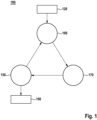
Figur 1 den Ablauf 100 des Verfahrens zum sicheren Trainieren eines computergestützten Modells; -
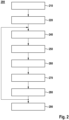
Figur 2 den Ablauf 200 des Verfahrens zum sicheren Trainieren eines computergestützten Modells. - Die Approximation an eine unbekannte Funktion

- Mit xk für den Zeitpunkt k gilt: xk = (uk, u k-1, ... , uk- d̃ +1), wobei

d die Dimension des Eingabebereichs Π des Systems, d̃ die Dimension der NX-Struktur und d =d · d̃ die Dimension von X. - Die Elemente uk werden von dem physikalischen System gemessen und müssen nicht äquidistant sein. Aus Gründen der einfacheren Notation wird exemplarisch von einer Äquidistanz ausgegangen. Im Allgemeinen sind die Steuerkurven kontinuierliche Signale und können explizit gesteuert werden.
- In der Lernumgebung des Modells werden Daten in Form von n aufeinanderfolgenden Kurvenabschnitten


- Der nächste, als Anregung in das physikalische System einzugebende, Kurvenabschnitt τ n+1 soll nun derart bestimmt werden, dass der Informationsgewinn

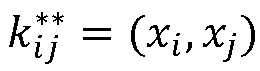
- Zur Approximation an die Funktion f wird ein Gaußprozess (im Folgenden abgekürzt durch GP) verwendet, der festgelegt ist durch seine Mittelwertfunktion µ(x) und seine Kovarianzfunktion k(xi,xj ), d.h. f(xi ) ~(µ(xi ), k(xi , xj )).

- Unter der Annahme von rauschbehafteten Beobachtungen der Eingabe- und Ausgabekurven, ist die gemeinsame Verteilung gemäß des Gaußprozesses gegeben als p(Pn |Tn ) =(Pn |0, Kn + σ 2 I), wobei


- Unter der gegebenen gemeinsamen Verteilung kann die prognostizierte Verteilung





- Der Sicherheitszustand des Systems wird durch eine unbekannte Funktion g beschrieben, mit

- Solche Sicherheitswerte z hängen vom jeweiligen System ab, und können wie oben erläutert systemabhängig Werte verkörpern für sichere oder unsichere Druckwerte, Abgaswerte, Verbrauchswerte, Leistungswerte, Gelenkpositionswerte, Bewegungsgrenzen, Sensorwerte, Temperaturwerte, Säuregehaltwerte oder Ähnliches.
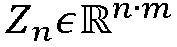
- Die Werte von z sind im Allgemeinen kontinuierlich und zeigen den Abstand eines gegebenen Punktes x von der unbekannten Sicherheitsgrenze im Eingabebereich an. Daher kann mit der gegebenen Funktion g oder einer Schätzung davon das Sicherheitsniveau für eine Kurve τ ermittelt werden. Eine Kurve wird als sicher eingestuft, falls die Wahrscheinlichkeit dafür, dass deren Sicherheitswert z größer als Null ist ausreichend groß ist, d.h. ∫z
1,...,z,≥0 p(z1, ... , zm |τ)dz 1, ... , zm > 1 - α, wobei α ∈ [0,1] den Schwellwert dafür darstellt, dass τ unsicher ist. Mit den gegebenen Daten



- Für die effiziente Auswahl eines optimalen τ muss die Kurve in geeigneter Weise parametrisiert werden. Eine Möglichkeit ist es, die Parametrisierung bereits im Eingabebereich vorzunehmen. Die Parametrisierung der Kurve kann beispielsweise als Rampen- oder Stufenfunktionen umgesetzt werden.
- Für eine Kurvenparametrisierung mit einer Prognoseverteilung gemäß Gleichung A und Sicherheitsbedingungen gemäß Gleichung E kann der nächste Kurvenabschnitt τ n+1(η*) durch Lösen des folgenden Optimierungsproblems mit Nebenbedingung erhalten werden:

 ein Optimalitätskriterium darstellt.
- Gemäß Gleichung F wird die prädiktive Varianz Σ aus Gleichung A für die Exploration verwendet. Diese ist eine Kovarianzmatrix, die durch das Optimalitätskriteriumauf eine reelle Zahl abgebildet wird, wie in Gleichung F gezeigt. Fürkönnen unterschiedliche Optimalitätskriterien in Abhängigkeit vom System verwendet werden. So kannbeispielsweise die Determinante, d.h. äquivalent zur Maximierung des Volumens des Vorhersagevertrauensellipsoids der Multinormalverteilung, die Spur, d.h. äquivalent zur Maximierung der durchschnittlichen Vorhersagevarianz, oder der maximale Eigenwert, d.h. äquivalent zur Maximierung der größten Achse des Vorhersagevertrauensellipsoids sein. Andere Optimalitätskriterien sind aber ebenfalls denkbar.
- Bezugnehmend auf
Figur 1 werden in Schritt 120 eine Initialisierung durchgeführt, indem n 0 sichere Initialkurven ausgeführt werden. Es werden hierbei auch Regressions- und Sicherheitsprozess, Gaußprozesse, erstellt. Die initialen Kurven befinden sich in einem kleinen sicheren Bereich, in welchem die Exploration beginnt. Dieser kleine sichere Bereich wird vorab durch Vorkenntnisse über das System ausgewählt. Die initialen Kurven werden bestimmt zu
- Nachfolgend wird in Schritt 160 gemäß Gleichungen F und G ein neuer Kurvenabschnitt τ n+1 bestimmt, indem η optimiert wird.
- Anschließend wird in Schritt 170 der bestimmte Kurvenabschnitt τ n+1 als Eingabe verwendet, und in diesem Bereich ρ n+1 und ζ n+1 auf dem physikalischen System gemessen.
- Danach werden in Schritt 150 die Regressions- und Sicherheitsprozesse aktualisiert. Das Regressionsmodell f wird gemäß Gleichung A unter Verwendung von


- Die Schritte 150 bis 170 werden hierbei N-mal durchlaufen. Neben einer vorher festgelegten Anzahl von Durchläufen ist auch ein automatisches Beenden nach Erreichen einer Abbruchbedingung denkbar. Diese könnte z.B. basieren auf Trainingsfehler (Fehlermaß auf Modellprädiktion und Systemantwort) oder auf zusätzlichen möglichen Informationsgewinn (wenn das Optimalitätskriterium zu klein wird).
- Im Anschluss daran, wird in Schritt 190 das Regressions- und das Sicherheitsmodell ausgegeben.
- Bezugnehmend auf
Figur 2 , wird eine Implementierung 200 des Verfahrens erläutert. In Schritt 210 wird ein Sicherheitsschwellwert festgelegt. Dabei wird für α ein Wert zwischen 0 und 1 gewählt. Daraufhin wird in Schritt 220 eine Initialisierung durchgeführt, indem n 0 sichere Initialkurven,
- Nachfolgend wird der die Schritte 240 bis 280 umfassende Teil des Verfahrens N-mal ausgeführt, wobei k die Laufvariable ist, d.h. den aktuellen Durchlauf anzeigt. Wie in
Figur 1 ist neben einer vorher festgelegten Anzahl von Durchläufen auch ein automatisches Beenden nach Erreichen einer Abbruchbedingung denkbar. Diese könnte z.B. basieren auf Trainingsfehler (Fehlermaß auf Modellprädiktion und Systemantwort) oder auf zusätzlichen möglichen Informationsgewinn (wenn das Optimalitätskriterium zu klein wird). - Zuerst wird in Schritt 240 das Regressionsmodell f gemäß Gleichung A unter Verwendung von

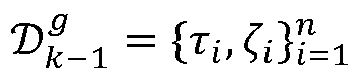
- Anschließend wird in Schritt 260 gemäß Gleichungen F und G ein neuer Kurvenabschnitt τ n+1 bestimmt, indem η optimiert wird.
- Danach wird in Schritt 270 der bestimmte Kurvenabschnitt τ n+1 als Eingabe verwendet, und in diesem Bereich ρ n+1 und ζ n+1 auf dem physikalischen System gemessen.
- Nachfolgend werden in Schritt 280 die in den vorherigen Schritten verarbeiteten Eingabe- und Ausgabekurven zu


- Nach Abschluss der Wiederholungen der Schritte 240 bis 280 folgt der Schritt 290, in dem das Regressions- und das Sicherheitsmodell aktualisiert und ausgegeben werden.
- Das inkrementelle Aktualisieren der GP-Modelle für neue Daten, d.h. Schritte 150, bzw. 240 und 250 können effizient durchgeführt werden, z.B. durch Aktualisierung des Ranges der Matrix (rank-one update). Obwohl hier exemplarisch eine NX-Struktur in Kombination mit dem GP-Modell zur Zeitreihenmodellierung gezeigt wird, kann jedoch auch der generelle nichtlineare auto-regressive exogenen Fall verwendet werden, d.h. GP mit NARX-Eingabe-Struktur, wobei xk = ( yk, y k-1 , ... , yk-q, uk, uk -1 , ... ., uk-d ). Hierbei kann zur Optimierung und zur Planung für den nächsten Kurvenabschnitt beispielsweise der Prognose-Mittelwert von

Claims (8)
- Computer-implementiertes Verfahren (200) zum sicheren, dynamischen Explorieren eines Eingabewertebereichs eines physikalischen Systems zum Trainieren eines zeitreihenbasierten Modelles des physikalischen Systems, mit den Schritten:Festlegen (210) eines Sicherheits-Schwellwertes, α;Initialisieren (220) durch Ausführen von sicheren Initialkurven als Eingabewerte auf dem physikalischen System, Erstellen eines initialen Regressionsmodells und eines initialen Sicherheitsmodells,wobei das Regressionsmodell und das Sicherheitsmodell jeweils Gauß'sche Prozesse sind,wobei das Sicherheitsmodell ausgebildet ist, einen Sicherheitswert, z, auszugeben,welcher einen Abstand eines gegeben Kurvenpunktes, x, von einer unbekannten Sicherheitsgrenze charakterisiert und angibt, ob der gegebene Kurvenpunkt, x, sicher oder unsicher bezüglich einer Beschädigung des physikalischen Systems ist;wiederholtes Durchführen der Schritte Aktualisieren (240) des Regressionsmodells;Aktualisieren (250) des Sicherheitsmodells;Bestimmen (260) eines neuen Kurvenabschnitts, T, welcher mehrere Kurvenpunkte, x1, ..., xm,umfasst, als Eingabewerte des physikalischen Systems,wobei der neue Kurvenabschnitt, T,durch Optimierung unter Berücksichtigung einer Sicherheitsbedingung bestimmt wird,wobei die Sicherheitsbedingung darin besteht, dass basierend auf den Sicherheitswerten, z1, ..., zm, welche mittels dem Sicherheitsmodell, für die mehreren Kurvenpunkte des Kurvenabschnittes ermittelt wurden, der Kurvenabschnitt, T, als sicher eingestuft wird, falls die Wahrscheinlichkeit ∫ z
1,...,zm≥0 p(z 1 , ... , zm |τ)dz 1 , ... , zm größer ist als 1 - α,wobei der Sicherheits-Schwellwertes, α, einen Schwellenwert dafür angibt, dass der neuen Kurvenabschnitt unsicher ist;Ausführen (270) des bestimmten neuen Kurvenabschnitts auf dem physikalischen System und Messen von Ausgabewerten;Einbeziehen (280) der Ausgabewerte in das Regressions- und in das Sicherheitsmodellbis eine vorgebbare Anzahl N von Durchläufe durchgeführt wurden; undAktualisieren und Ausgeben (290) des Regressions- und des Sicherheitsmodells. - Verfahren nach Anspruch 1, wobei der neue Kurvenabschnitt so bestimmt wird (260), dass unter Erfüllung der Sicherheitskriterien des Sicherheitsmodells der Informationsgewinn maximiert wird.
- Verfahren nach einem der Ansprüche 1 und 2, wobei der neue Kurvenabschnitt unter Verwendung einer Kovarianzmatrix bestimmt wird (260).
- Verfahren nach einem der Ansprüche 1 bis 3, wobei das System ein Prüfstand für Brennkraftmaschinen, eine Robotersteuerung, ein physikalischer Sensor oder eine chemische Reaktion ist.
- Verfahren nach einem der Ansprüche 1 bis 4, wobei das Sicherheitsmodell Sicherheitswerte des Systems umfasst, und zwar mindestens eines aus Druckwerte, Abgaswerte, Verbrauchswerte, Leistungswerte, Gelenkpositionswerte, Bewegungsgrenzen, Sensorwerte, Temperaturwerte oder Säuregehaltwerte.
- Computerprogramm, umfassend Befehle, die bei der Ausführung des Programms durch einen Computer diesen veranlassen, das Verfahren nach einem der Ansprüche 1 bis 5 auszuführen.
- Maschinenlesbares Speichermedium, auf dem das Computerprogramm gemäß Anspruch 6 gespeichert ist.
- Vorrichtung umfassend Mittel zur Ausführung des Verfahrens gemäß einem der Ansprüche 1 bis 5.
Applications Claiming Priority (1)
| Application Number | Priority Date | Filing Date | Title |
|---|---|---|---|
| DE102018215061.3A DE102018215061A1 (de) | 2018-09-05 | 2018-09-05 | Verfahren zum sicheren Trainieren eines dynamischen Modells |
Publications (2)
| Publication Number | Publication Date |
|---|---|
| EP3620998A1 EP3620998A1 (de) | 2020-03-11 |
| EP3620998B1 true EP3620998B1 (de) | 2025-04-30 |
Family
ID=67658669
Family Applications (1)
| Application Number | Title | Priority Date | Filing Date |
|---|---|---|---|
| EP19191279.9A Active EP3620998B1 (de) | 2018-09-05 | 2019-08-12 | Verfahren zum sicheren trainieren eines dynamischen modells |
Country Status (4)
| Country | Link |
|---|---|
| US (1) | US11514268B2 (de) |
| EP (1) | EP3620998B1 (de) |
| CN (1) | CN110879530B (de) |
| DE (1) | DE102018215061A1 (de) |
Families Citing this family (3)
| Publication number | Priority date | Publication date | Assignee | Title |
|---|---|---|---|---|
| DE102020212280A1 (de) * | 2020-09-29 | 2022-03-31 | Robert Bosch Gesellschaft mit beschränkter Haftung | Verfahren und Vorrichtung zum Trainieren eines auf künstlicher Intelligenz-basierendem Zustandsmodells zum Ermitteln einer Zustandsgröße eines elektrischen Energiespeichers |
| DE102022201453A1 (de) * | 2022-02-11 | 2023-08-17 | Robert Bosch Gesellschaft mit beschränkter Haftung | Vorrichtung und computerimplementiertes Verfahren zum aktiven Lernen des Betriebs eines physischen Systems |
| EP4328695A1 (de) | 2022-08-26 | 2024-02-28 | BSH Hausgeräte GmbH | Sicherer autonomer haushaltsroboter |
Family Cites Families (17)
| Publication number | Priority date | Publication date | Assignee | Title |
|---|---|---|---|---|
| US7490071B2 (en) * | 2003-08-29 | 2009-02-10 | Oracle Corporation | Support vector machines processing system |
| US8140447B2 (en) * | 2008-04-09 | 2012-03-20 | International Business Machines Corporation | Method for regression from interval target values by alternating linear gaussian and expectation-maximization |
| US8781782B2 (en) * | 2010-09-30 | 2014-07-15 | Siemens Aktiengesellschaft | System and method for conditional multi-output regression for machine condition monitoring |
| US9928214B2 (en) * | 2013-12-04 | 2018-03-27 | International Business Machines Corporation | Sketching structured matrices in nonlinear regression problems |
| CN103778280B (zh) * | 2014-01-08 | 2016-07-06 | 上海交通大学 | 具有模型主动更新策略的锂离子电池剩余寿命预测方法 |
| CN105760945A (zh) * | 2014-12-19 | 2016-07-13 | 国家电网公司 | 风力发电功率的确定方法及装置 |
| CN106056127A (zh) * | 2016-04-07 | 2016-10-26 | 江南大学 | 一种带模型更新的gpr在线软测量方法 |
| CN106951695B (zh) * | 2017-03-09 | 2020-05-05 | 杭州安脉盛智能技术有限公司 | 多工况下的机械设备剩余使用寿命计算方法及系统 |
| CN106971045A (zh) * | 2017-04-06 | 2017-07-21 | 安徽大学 | 一种超级电容器动态建模方法 |
| CN107704962B (zh) * | 2017-10-11 | 2021-03-26 | 大连理工大学 | 一种基于不完整训练数据集的蒸汽流量区间预测方法 |
| US11065079B2 (en) * | 2019-02-21 | 2021-07-20 | Theator inc. | Image-based system for estimating surgical contact force |
| US11290494B2 (en) * | 2019-05-31 | 2022-03-29 | Varmour Networks, Inc. | Reliability prediction for cloud security policies |
| DE102019208262A1 (de) * | 2019-06-06 | 2020-12-10 | Robert Bosch Gmbh | Verfahren und Vorrichtung zur Ermittlung von Modellparametern für eine Regelungsstrategie eines technischen Systems mithilfe eines Bayes'schen Optimierungsverfahrens |
| DE102019208263A1 (de) * | 2019-06-06 | 2020-12-10 | Robert Bosch Gmbh | Verfahren und Vorrichtung zum Ermitteln einer Regelungsstrategie für ein technisches System |
| US10895854B1 (en) * | 2019-07-03 | 2021-01-19 | Mitsubishi Electric Research Laboratories, Inc. | System and method for control constrained operation of machine with partially unmodeled dynamics using Lipschitz constant |
| US11389957B2 (en) * | 2019-09-30 | 2022-07-19 | Mitsubishi Electric Research Laboratories, Inc. | System and design of derivative-free model learning for robotic systems |
| US12346115B2 (en) * | 2020-12-04 | 2025-07-01 | Mitsubishi Electric Research Laboratories, Inc. | Method and system for modelling and control partially measurable systems |
-
2018
- 2018-09-05 DE DE102018215061.3A patent/DE102018215061A1/de active Pending
-
2019
- 2019-08-12 EP EP19191279.9A patent/EP3620998B1/de active Active
- 2019-08-23 US US16/549,671 patent/US11514268B2/en active Active
- 2019-09-04 CN CN201910830877.6A patent/CN110879530B/zh active Active
Also Published As
| Publication number | Publication date |
|---|---|
| EP3620998A1 (de) | 2020-03-11 |
| DE102018215061A1 (de) | 2020-03-05 |
| US20200074237A1 (en) | 2020-03-05 |
| CN110879530A (zh) | 2020-03-13 |
| CN110879530B (zh) | 2025-01-10 |
| US11514268B2 (en) | 2022-11-29 |
Similar Documents
| Publication | Publication Date | Title |
|---|---|---|
| EP2106576B1 (de) | Verfahren zur rechnergestützten steuerung und/oder regelung eines technischen systems | |
| DE112015001754B4 (de) | Kollisionsvermeidungseinrichtung | |
| DE112020003136T5 (de) | Verfahren zum Erzeugen eines Spurwechsel-Entscheidungsmodells, Verfahren und Vorrichtung zur Spurwechsel-Entscheidung eines unbemannten Fahrzeugs | |
| CN111240350A (zh) | 一种无人机飞行员动态行为评估系统 | |
| Andreev et al. | Information technologies and synthesis of the management process model in the enterprise | |
| EP3268713B1 (de) | Verfahren zum erstellen eines modell-ensembles zur kalibrierung eines steuergerätes | |
| EP4222470B1 (de) | Computergestütztes verfahren und vorrichtung zur wahrscheinlichkeitsbasierten geschwindigkeitsprognose für fahrzeuge | |
| DE112022005772T5 (de) | Windverhältnis-lernvorrichtung, windverhältnis-vorhersagevorrichtung und drohnensystem | |
| WO2021058223A1 (de) | Verfahren zur effizienten, simulativen applikation automatisierter fahrfunktionen | |
| EP3620998A1 (de) | Verfahren zum sicheren trainieren eines dynamischen modells | |
| DE102021200042A1 (de) | Vorrichtung und Verfahren zum Verfahren zum Trainieren des neuronalen Driftnetzwerks und des neuronalen Diffusionsnetzwerks einer neuronalen stochastischen Differentialgleichung | |
| Kuravsky et al. | New approaches for assessing the activities of operators of complex technical systems | |
| DE102022119715B4 (de) | Verfahren, System und Computerprogrammprodukt zur objektiven Bewertung der Leistungsfähigkeit eines ADAS/ADS-Systems | |
| DE102019220574A1 (de) | Verfahren und Vorrichtung zum Testen einer Maschine | |
| DE102019209463A1 (de) | Verfahren zur Bestimmung eines Vertrauenswertes eines Objektes einer Klasse | |
| EP3527817A1 (de) | Verfahren und vorrichtungen zur automatischen ermittlung und/oder kompensation des einflusses einer wirbelschleppe auf eine windkraftanlage | |
| DE102021207613A1 (de) | Verfahren zur Qualitätssicherung eines Systems | |
| EP4508621B1 (de) | Verfahren zur prädiktion eines einflusses eines verkehrsteilnehmers auf zumindest einen anderen verkehrsteilnehmer und verfahren zum betrieb eines fahrzeugs | |
| DE102020214596A1 (de) | Verfahren zum Erzeugen von Trainingsdaten für ein Erkennungsmodell zum Erkennen von Objekten in Sensordaten einer Umfeldsensorik eines Fahrzeugs, Verfahren zum Erzeugen eines solchen Erkennungsmodells und Verfahren zum Ansteuern einer Aktorik eines Fahrzeugs | |
| DE102023002314B3 (de) | Verfahren zur Klassifizierung von Unterwasserobjekten und zugehöriges Computerprogrammprodukt | |
| DE102019216486A1 (de) | Verfahren zum Bestimmen einer geschätzten Abweichung zumindest einer Zustandsvariablen eines dynamischen Systems | |
| DE102023135881A1 (de) | Systeme und verfahren zum erklären der verhaltensweise einer künstlichen intelligenz mit kausalen schlussfolgerungen | |
| DE102023203275A1 (de) | Verfahren zur Auswertung einer Verkehrsszene mit mehreren Verkehrsteilnehmern | |
| Jirgl et al. | Adaptive human control model and its usability in modeling of human-in-the-loop cyber physical systems | |
| DE102021207997A1 (de) | Verfahren zum Überprüfen einer Vollständigkeit eines Modells einer Verkehrsdynamik an einem Verkehrsknotenpunkt |
Legal Events
| Date | Code | Title | Description |
|---|---|---|---|
| PUAI | Public reference made under article 153(3) epc to a published international application that has entered the european phase |
Free format text: ORIGINAL CODE: 0009012 |
|
| STAA | Information on the status of an ep patent application or granted ep patent |
Free format text: STATUS: THE APPLICATION HAS BEEN PUBLISHED |
|
| AK | Designated contracting states |
Kind code of ref document: A1 Designated state(s): AL AT BE BG CH CY CZ DE DK EE ES FI FR GB GR HR HU IE IS IT LI LT LU LV MC MK MT NL NO PL PT RO RS SE SI SK SM TR |
|
| AX | Request for extension of the european patent |
Extension state: BA ME |
|
| RAP1 | Party data changed (applicant data changed or rights of an application transferred) |
Owner name: ROBERT BOSCH GMBH |
|
| STAA | Information on the status of an ep patent application or granted ep patent |
Free format text: STATUS: REQUEST FOR EXAMINATION WAS MADE |
|
| 17P | Request for examination filed |
Effective date: 20200911 |
|
| RBV | Designated contracting states (corrected) |
Designated state(s): AL AT BE BG CH CY CZ DE DK EE ES FI FR GB GR HR HU IE IS IT LI LT LU LV MC MK MT NL NO PL PT RO RS SE SI SK SM TR |
|
| STAA | Information on the status of an ep patent application or granted ep patent |
Free format text: STATUS: EXAMINATION IS IN PROGRESS |
|
| 17Q | First examination report despatched |
Effective date: 20210706 |
|
| GRAP | Despatch of communication of intention to grant a patent |
Free format text: ORIGINAL CODE: EPIDOSNIGR1 |
|
| STAA | Information on the status of an ep patent application or granted ep patent |
Free format text: STATUS: GRANT OF PATENT IS INTENDED |
|
| RIC1 | Information provided on ipc code assigned before grant |
Ipc: G06N 5/01 20230101ALI20241108BHEP Ipc: G06N 7/01 20230101ALI20241108BHEP Ipc: G06N 20/10 20190101AFI20241108BHEP |
|
| INTG | Intention to grant announced |
Effective date: 20241202 |
|
| GRAS | Grant fee paid |
Free format text: ORIGINAL CODE: EPIDOSNIGR3 |
|
| GRAA | (expected) grant |
Free format text: ORIGINAL CODE: 0009210 |
|
| STAA | Information on the status of an ep patent application or granted ep patent |
Free format text: STATUS: THE PATENT HAS BEEN GRANTED |
|
| AK | Designated contracting states |
Kind code of ref document: B1 Designated state(s): AL AT BE BG CH CY CZ DE DK EE ES FI FR GB GR HR HU IE IS IT LI LT LU LV MC MK MT NL NO PL PT RO RS SE SI SK SM TR |
|
| REG | Reference to a national code |
Ref country code: CH Ref legal event code: EP Ref country code: GB Ref legal event code: FG4D Free format text: NOT ENGLISH |
|
| REG | Reference to a national code |
Ref country code: IE Ref legal event code: FG4D Free format text: LANGUAGE OF EP DOCUMENT: GERMAN |
|
| REG | Reference to a national code |
Ref country code: DE Ref legal event code: R096 Ref document number: 502019013276 Country of ref document: DE |
|
| REG | Reference to a national code |
Ref country code: NL Ref legal event code: MP Effective date: 20250430 |
|
| PG25 | Lapsed in a contracting state [announced via postgrant information from national office to epo] |
Ref country code: PT Free format text: LAPSE BECAUSE OF FAILURE TO SUBMIT A TRANSLATION OF THE DESCRIPTION OR TO PAY THE FEE WITHIN THE PRESCRIBED TIME-LIMIT Effective date: 20250901 Ref country code: ES Free format text: LAPSE BECAUSE OF FAILURE TO SUBMIT A TRANSLATION OF THE DESCRIPTION OR TO PAY THE FEE WITHIN THE PRESCRIBED TIME-LIMIT Effective date: 20250430 Ref country code: FI Free format text: LAPSE BECAUSE OF FAILURE TO SUBMIT A TRANSLATION OF THE DESCRIPTION OR TO PAY THE FEE WITHIN THE PRESCRIBED TIME-LIMIT Effective date: 20250430 |
|
| REG | Reference to a national code |
Ref country code: LT Ref legal event code: MG9D |
|
| PG25 | Lapsed in a contracting state [announced via postgrant information from national office to epo] |
Ref country code: GR Free format text: LAPSE BECAUSE OF FAILURE TO SUBMIT A TRANSLATION OF THE DESCRIPTION OR TO PAY THE FEE WITHIN THE PRESCRIBED TIME-LIMIT Effective date: 20250731 Ref country code: NO Free format text: LAPSE BECAUSE OF FAILURE TO SUBMIT A TRANSLATION OF THE DESCRIPTION OR TO PAY THE FEE WITHIN THE PRESCRIBED TIME-LIMIT Effective date: 20250730 |
|
| PG25 | Lapsed in a contracting state [announced via postgrant information from national office to epo] |
Ref country code: PL Free format text: LAPSE BECAUSE OF FAILURE TO SUBMIT A TRANSLATION OF THE DESCRIPTION OR TO PAY THE FEE WITHIN THE PRESCRIBED TIME-LIMIT Effective date: 20250430 Ref country code: NL Free format text: LAPSE BECAUSE OF FAILURE TO SUBMIT A TRANSLATION OF THE DESCRIPTION OR TO PAY THE FEE WITHIN THE PRESCRIBED TIME-LIMIT Effective date: 20250430 |
|
| PG25 | Lapsed in a contracting state [announced via postgrant information from national office to epo] |
Ref country code: BG Free format text: LAPSE BECAUSE OF FAILURE TO SUBMIT A TRANSLATION OF THE DESCRIPTION OR TO PAY THE FEE WITHIN THE PRESCRIBED TIME-LIMIT Effective date: 20250430 |
|
| PGFP | Annual fee paid to national office [announced via postgrant information from national office to epo] |
Ref country code: GB Payment date: 20250822 Year of fee payment: 7 |
|
| PG25 | Lapsed in a contracting state [announced via postgrant information from national office to epo] |
Ref country code: HR Free format text: LAPSE BECAUSE OF FAILURE TO SUBMIT A TRANSLATION OF THE DESCRIPTION OR TO PAY THE FEE WITHIN THE PRESCRIBED TIME-LIMIT Effective date: 20250430 |
|
| PGFP | Annual fee paid to national office [announced via postgrant information from national office to epo] |
Ref country code: FR Payment date: 20250821 Year of fee payment: 7 |
|
| PG25 | Lapsed in a contracting state [announced via postgrant information from national office to epo] |
Ref country code: RS Free format text: LAPSE BECAUSE OF FAILURE TO SUBMIT A TRANSLATION OF THE DESCRIPTION OR TO PAY THE FEE WITHIN THE PRESCRIBED TIME-LIMIT Effective date: 20250731 |
|
| PG25 | Lapsed in a contracting state [announced via postgrant information from national office to epo] |
Ref country code: IS Free format text: LAPSE BECAUSE OF FAILURE TO SUBMIT A TRANSLATION OF THE DESCRIPTION OR TO PAY THE FEE WITHIN THE PRESCRIBED TIME-LIMIT Effective date: 20250830 |
|
| PG25 | Lapsed in a contracting state [announced via postgrant information from national office to epo] |
Ref country code: LV Free format text: LAPSE BECAUSE OF FAILURE TO SUBMIT A TRANSLATION OF THE DESCRIPTION OR TO PAY THE FEE WITHIN THE PRESCRIBED TIME-LIMIT Effective date: 20250430 |
|
| PGFP | Annual fee paid to national office [announced via postgrant information from national office to epo] |
Ref country code: DE Payment date: 20251021 Year of fee payment: 7 |
|
| PG25 | Lapsed in a contracting state [announced via postgrant information from national office to epo] |
Ref country code: DK Free format text: LAPSE BECAUSE OF FAILURE TO SUBMIT A TRANSLATION OF THE DESCRIPTION OR TO PAY THE FEE WITHIN THE PRESCRIBED TIME-LIMIT Effective date: 20250430 Ref country code: SM Free format text: LAPSE BECAUSE OF FAILURE TO SUBMIT A TRANSLATION OF THE DESCRIPTION OR TO PAY THE FEE WITHIN THE PRESCRIBED TIME-LIMIT Effective date: 20250430 |
|
| PG25 | Lapsed in a contracting state [announced via postgrant information from national office to epo] |
Ref country code: CZ Free format text: LAPSE BECAUSE OF FAILURE TO SUBMIT A TRANSLATION OF THE DESCRIPTION OR TO PAY THE FEE WITHIN THE PRESCRIBED TIME-LIMIT Effective date: 20250430 |
|
| PG25 | Lapsed in a contracting state [announced via postgrant information from national office to epo] |
Ref country code: EE Free format text: LAPSE BECAUSE OF FAILURE TO SUBMIT A TRANSLATION OF THE DESCRIPTION OR TO PAY THE FEE WITHIN THE PRESCRIBED TIME-LIMIT Effective date: 20250430 |
|
| PG25 | Lapsed in a contracting state [announced via postgrant information from national office to epo] |
Ref country code: SK Free format text: LAPSE BECAUSE OF FAILURE TO SUBMIT A TRANSLATION OF THE DESCRIPTION OR TO PAY THE FEE WITHIN THE PRESCRIBED TIME-LIMIT Effective date: 20250430 Ref country code: RO Free format text: LAPSE BECAUSE OF FAILURE TO SUBMIT A TRANSLATION OF THE DESCRIPTION OR TO PAY THE FEE WITHIN THE PRESCRIBED TIME-LIMIT Effective date: 20250430 |
|
| PG25 | Lapsed in a contracting state [announced via postgrant information from national office to epo] |
Ref country code: IT Free format text: LAPSE BECAUSE OF FAILURE TO SUBMIT A TRANSLATION OF THE DESCRIPTION OR TO PAY THE FEE WITHIN THE PRESCRIBED TIME-LIMIT Effective date: 20250430 |
|
| REG | Reference to a national code |
Ref country code: DE Ref legal event code: R097 Ref document number: 502019013276 Country of ref document: DE |
|
| PLBE | No opposition filed within time limit |
Free format text: ORIGINAL CODE: 0009261 |
|
| STAA | Information on the status of an ep patent application or granted ep patent |
Free format text: STATUS: NO OPPOSITION FILED WITHIN TIME LIMIT |
|
| REG | Reference to a national code |
Ref country code: CH Ref legal event code: L10 Free format text: ST27 STATUS EVENT CODE: U-0-0-L10-L00 (AS PROVIDED BY THE NATIONAL OFFICE) Effective date: 20260311 |
|
| REG | Reference to a national code |
Ref country code: CH Ref legal event code: H13 Free format text: ST27 STATUS EVENT CODE: U-0-0-H10-H13 (AS PROVIDED BY THE NATIONAL OFFICE) Effective date: 20260324 |
|
| PG25 | Lapsed in a contracting state [announced via postgrant information from national office to epo] |
Ref country code: MC Free format text: LAPSE BECAUSE OF FAILURE TO SUBMIT A TRANSLATION OF THE DESCRIPTION OR TO PAY THE FEE WITHIN THE PRESCRIBED TIME-LIMIT Effective date: 20250430 |
|
| 26N | No opposition filed |
Effective date: 20260202 |
|
| PG25 | Lapsed in a contracting state [announced via postgrant information from national office to epo] |
Ref country code: LU Free format text: LAPSE BECAUSE OF NON-PAYMENT OF DUE FEES Effective date: 20250812 |
|
| PG25 | Lapsed in a contracting state [announced via postgrant information from national office to epo] |
Ref country code: CH Free format text: LAPSE BECAUSE OF NON-PAYMENT OF DUE FEES Effective date: 20250831 |