EP3620985B1 - Lernverfahren, lernvorrichtung zur optimierung der parameter von cnn unter verwendung mehrerer videobilder und testverfahren, testvorrichtung zur nutzung davon - Google Patents
Lernverfahren, lernvorrichtung zur optimierung der parameter von cnn unter verwendung mehrerer videobilder und testverfahren, testvorrichtung zur nutzung davon Download PDFInfo
- Publication number
- EP3620985B1 EP3620985B1 EP19171167.0A EP19171167A EP3620985B1 EP 3620985 B1 EP3620985 B1 EP 3620985B1 EP 19171167 A EP19171167 A EP 19171167A EP 3620985 B1 EP3620985 B1 EP 3620985B1
- Authority
- EP
- European Patent Office
- Prior art keywords
- loss
- feature map
- cnn
- video frame
- feature
- Prior art date
- Legal status (The legal status is an assumption and is not a legal conclusion. Google has not performed a legal analysis and makes no representation as to the accuracy of the status listed.)
- Active
Links
Images




Classifications
-
- G—PHYSICS
- G06—COMPUTING OR CALCULATING; COUNTING
- G06F—ELECTRIC DIGITAL DATA PROCESSING
- G06F17/00—Digital computing or data processing equipment or methods, specially adapted for specific functions
- G06F17/10—Complex mathematical operations
- G06F17/16—Matrix or vector computation, e.g. matrix-matrix or matrix-vector multiplication, matrix factorization
-
- G—PHYSICS
- G06—COMPUTING OR CALCULATING; COUNTING
- G06F—ELECTRIC DIGITAL DATA PROCESSING
- G06F18/00—Pattern recognition
- G06F18/20—Analysing
- G06F18/21—Design or setup of recognition systems or techniques; Extraction of features in feature space; Blind source separation
- G06F18/217—Validation; Performance evaluation; Active pattern learning techniques
-
- G—PHYSICS
- G06—COMPUTING OR CALCULATING; COUNTING
- G06N—COMPUTING ARRANGEMENTS BASED ON SPECIFIC COMPUTATIONAL MODELS
- G06N3/00—Computing arrangements based on biological models
- G06N3/02—Neural networks
- G06N3/04—Architecture, e.g. interconnection topology
- G06N3/045—Combinations of networks
-
- G—PHYSICS
- G06—COMPUTING OR CALCULATING; COUNTING
- G06N—COMPUTING ARRANGEMENTS BASED ON SPECIFIC COMPUTATIONAL MODELS
- G06N3/00—Computing arrangements based on biological models
- G06N3/02—Neural networks
- G06N3/04—Architecture, e.g. interconnection topology
- G06N3/0464—Convolutional networks [CNN, ConvNet]
-
- G—PHYSICS
- G06—COMPUTING OR CALCULATING; COUNTING
- G06N—COMPUTING ARRANGEMENTS BASED ON SPECIFIC COMPUTATIONAL MODELS
- G06N3/00—Computing arrangements based on biological models
- G06N3/02—Neural networks
- G06N3/08—Learning methods
- G06N3/084—Backpropagation, e.g. using gradient descent
-
- G—PHYSICS
- G06—COMPUTING OR CALCULATING; COUNTING
- G06N—COMPUTING ARRANGEMENTS BASED ON SPECIFIC COMPUTATIONAL MODELS
- G06N3/00—Computing arrangements based on biological models
- G06N3/02—Neural networks
- G06N3/08—Learning methods
- G06N3/09—Supervised learning
-
- G—PHYSICS
- G06—COMPUTING OR CALCULATING; COUNTING
- G06V—IMAGE OR VIDEO RECOGNITION OR UNDERSTANDING
- G06V10/00—Arrangements for image or video recognition or understanding
- G06V10/20—Image preprocessing
- G06V10/255—Detecting or recognising potential candidate objects based on visual cues, e.g. shapes
-
- G—PHYSICS
- G06—COMPUTING OR CALCULATING; COUNTING
- G06V—IMAGE OR VIDEO RECOGNITION OR UNDERSTANDING
- G06V10/00—Arrangements for image or video recognition or understanding
- G06V10/20—Image preprocessing
- G06V10/26—Segmentation of patterns in the image field; Cutting or merging of image elements to establish the pattern region, e.g. clustering-based techniques; Detection of occlusion
-
- G—PHYSICS
- G06—COMPUTING OR CALCULATING; COUNTING
- G06V—IMAGE OR VIDEO RECOGNITION OR UNDERSTANDING
- G06V10/00—Arrangements for image or video recognition or understanding
- G06V10/40—Extraction of image or video features
- G06V10/44—Local feature extraction by analysis of parts of the pattern, e.g. by detecting edges, contours, loops, corners, strokes or intersections; Connectivity analysis, e.g. of connected components
- G06V10/443—Local feature extraction by analysis of parts of the pattern, e.g. by detecting edges, contours, loops, corners, strokes or intersections; Connectivity analysis, e.g. of connected components by matching or filtering
- G06V10/449—Biologically inspired filters, e.g. difference of Gaussians [DoG] or Gabor filters
- G06V10/451—Biologically inspired filters, e.g. difference of Gaussians [DoG] or Gabor filters with interaction between the filter responses, e.g. cortical complex cells
- G06V10/454—Integrating the filters into a hierarchical structure, e.g. convolutional neural networks [CNN]
-
- G—PHYSICS
- G06—COMPUTING OR CALCULATING; COUNTING
- G06V—IMAGE OR VIDEO RECOGNITION OR UNDERSTANDING
- G06V10/00—Arrangements for image or video recognition or understanding
- G06V10/70—Arrangements for image or video recognition or understanding using pattern recognition or machine learning
- G06V10/82—Arrangements for image or video recognition or understanding using pattern recognition or machine learning using neural networks
-
- G—PHYSICS
- G06—COMPUTING OR CALCULATING; COUNTING
- G06V—IMAGE OR VIDEO RECOGNITION OR UNDERSTANDING
- G06V20/00—Scenes; Scene-specific elements
- G06V20/40—Scenes; Scene-specific elements in video content
- G06V20/46—Extracting features or characteristics from the video content, e.g. video fingerprints, representative shots or key frames
-
- G—PHYSICS
- G06—COMPUTING OR CALCULATING; COUNTING
- G06V—IMAGE OR VIDEO RECOGNITION OR UNDERSTANDING
- G06V20/00—Scenes; Scene-specific elements
- G06V20/40—Scenes; Scene-specific elements in video content
- G06V20/48—Matching video sequences
-
- G—PHYSICS
- G06—COMPUTING OR CALCULATING; COUNTING
- G06V—IMAGE OR VIDEO RECOGNITION OR UNDERSTANDING
- G06V40/00—Recognition of biometric, human-related or animal-related patterns in image or video data
- G06V40/10—Human or animal bodies, e.g. vehicle occupants or pedestrians; Body parts, e.g. hands
-
- G—PHYSICS
- G06—COMPUTING OR CALCULATING; COUNTING
- G06T—IMAGE DATA PROCESSING OR GENERATION, IN GENERAL
- G06T2207/00—Indexing scheme for image analysis or image enhancement
- G06T2207/20—Special algorithmic details
- G06T2207/20081—Training; Learning
-
- G—PHYSICS
- G06—COMPUTING OR CALCULATING; COUNTING
- G06T—IMAGE DATA PROCESSING OR GENERATION, IN GENERAL
- G06T2207/00—Indexing scheme for image analysis or image enhancement
- G06T2207/20—Special algorithmic details
- G06T2207/20084—Artificial neural networks [ANN]
Definitions
- the present invention relates to a learning method for learning parameters of convolutional neural network, CNN, by using multiple video frames for detecting or segmenting an object from video frames, wherein the CNN is configured to backpropagate a loss value obtained based on a detecting or segmenting result and ground truth, GT, comprising steps of:(a) a learning device applying at least one convolutional operation to a (t-k)-th input video frame corresponding to a (t-k)-th video frame and applying at least one convolutional operation to a t-th input video frame corresponding to a t-th video frame following the (t-k)-th video frame, to thereby obtain a (t-k)-th feature map corresponding to the (t-k)-th video frame and a t-th feature map corresponding to the t-th video frame; (b) the learning device calculating a first loss by using each of at least one distance value between each of pixels in the (t-k)-th feature map and each of pixels in the t-
- Deep learning is a technology used to cluster or classify objects or data. For example, computers cannot distinguish dogs and cats from photographs alone. But a human can easily distinguish those two. To this end, a method called “machine learning” was devised. It is a technique to allow a computer to classify similar things among lots of data inputted into the computer. When a photo of an animal similar to a dog is inputted, the computer will classify it as a dog photo.
- Deep Convolution Neural Networks are the heart of the remarkable development in deep learning. CNNs have already been used in the 90's to solve the problem of character recognition, but their use has become as widespread as it is now thanks to recent research. These deep CNNs won the 2012 ImageNet image classification tournament, crushing other competitors. Then, the convolution neural network became a very useful tool in the field of the machine learning.
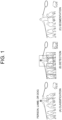
- Fig. 1 shows an example of various outputs to be acquired from a photograph using a deep CNN according to prior art.
- Classification is a method for identifying a type of a class to be acquired from a photograph, for example, as shown in Fig. 1 , determining whether an acquired object is a person, a lamb, or a dog.
- Detection is a method for finding every object and displaying the found object as enclosed in a bounding box.
- Segmentation is a method for distinguishing a region of a specific object from other objects in a photograph. As the deep learning has recently become popular, the classification, the detection, and the segmentation are using the deep learning heavily.
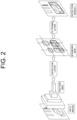
- Fig. 2 is a diagram schematically illustrating a detection method by using the CNN.
- the learning device receives an input image and applies a plurality of operations to the input image in a plurality of filters (or convolutional layers) to thereby obtain a feature map, then allows the feature map to pass through a detection layer to thereby obtain at least one bounding box, and then allows the bounding box to pass through the filtering layer to thereby obtain a detection result. Then, backpropagation is performed by using a loss value obtained by referring to the detection result and a ground truth (GT) which has been annotated by a person in advance to thereby allow a detector (i.e., the learning device) to gradually make the detection result get closer to the GT.
- GT ground truth
- consecutive frames such as a video
- objects at the same or similar locations should be recognized as the same object.
- a difference is large between feature values at the same or similar location in the two frames, which are consecutive or close to each other (e.g., two frames when the number of frames existing between the two frames is equal to or less than a threshold number)
- the object may be successfully detected in one frame but may not be detected in the other frame.
- a learning method for learning parameters of convolutional neural network (CNN) by using multiple video frames including steps of: (a) a learning device applying at least one convolutional operation to a (t-k)-th input image corresponding to a (t-k)-th frame and applying at least one convolutional operation to a t-th input image corresponding to a t-th frame following the (t-k)-th frame, to thereby obtain a (t-k)-th feature map corresponding to the (t-k)-th frame and a t-th feature map corresponding to the t-th frame; (b) the learning device calculating a first loss by referring to each of at least one distance value between each of pixels in the (t-k)-th feature map and each of pixels in the t-th feature map; and (c) the learning device backpropagating the first loss to thereby optimize at least one parameter of the CNN.
- the learning device calculates a (2-1)-th loss based on a difference between a (t-k)-th ground truth (GT) value and a (t-k)-th output value, which is generated by referring to the (t-k)-th feature map, and (ii) calculates a (2-2)-th loss based on a difference between a t-th GT value and a t-th output value, which is generated by referring to the t-th feature map, wherein, at the step of (c), the learning device backpropagates the (2-1)-th loss and the (2-2)-th loss to thereby optimize the parameter of the CNN.
- GT ground truth
- the first loss is calculated by multiplying (i) each of the at least one distance value between each of the features in the (t-k)-th feature map and each of the features in the t-th feature map and (ii) its corresponding first loss weight, wherein the first loss weight indicates a degree of common region between a receptive field of the (t-k) -th feature map and that of the t-th feature map.
- the learning device includes (i) a first CNN for generating the (t-k)-th feature map and the (t-k)-output value by using the (t-k)-th input image and (ii) a second CNN for generating the t-th feature map and the t-th output value by using the t-th input image, wherein the second CNN is configured to have the same parameter as that of the first CNN, wherein, at the step of (b), the learning device calculates a second loss by adding the (2-1)-th loss calculated in the first CNN and the (2-2)-th loss calculated in the second CNN, and wherein, at the step of (c), the learning device optimizes the parameter of the first CNN by backpropagating the first loss and the second loss to the first CNN and then reflects the optimized parameter of the first CNN in the parameter of the second CNN.
- the (t-k)-th output value and the t-th output value are generated by applying at least one deconvolutional operation to the (t-k)-th feature map and the t-th feature map, respectively, wherein the (t-k)-th output and the t-th output are one of object detection and segmentation.
- a testing method for testing convolutional neural network (CNN) for a test image as an input image including steps of: (a) on condition that (i) a learning device has performed a process of applying at least one convolutional operation to a (t-k)-th training image corresponding to a (t-k)-th frame and applying at least one convolutional operation to a t-th training image corresponding to a t-th frame following the (t-k)-th frame, to thereby obtain a (t-k)-th feature map for training corresponding to the (t-k)-th frame and a t-th feature map for training corresponding to the t-th frame; (ii) the learning device has performed a process of calculating a first loss by referring to each of at least one distance value between each of pixels in the (t-k)-th feature map for training and each of pixels in the t-th feature map for training; and (iii) the learning device has performed a
- the learning device has calculated a (2-1)-th loss based on a difference between a (t-k)-th ground truth (GT) value and a (t-k)-th output value for training, which is generated by referring to the (t-k)-th feature map for training, and calculates a (2-2)-th loss based on a difference between a t-th GT value and a t-th output value for training, which is generated by referring to the t-th feature map for training, wherein, at the process of (iii), the learning device has optimized the parameter of the CNN by backpropagating the (2-1)-th loss and the (2-2)-th loss.
- GT ground truth
- the first loss is calculated by multiplying (i) each of the at least one distance value between each of the features in the (t-k)-th feature map and each of the features in the t-th feature map and (ii) its corresponding first loss weight, wherein the first loss weight indicates a degree of common region between a receptive field of the (t-k) -th feature map and that of the t-th feature map.
- a learning device for learning parameters of convolutional neural network (CNN) by using multiple video frames, including: a communication part for receiving a (t-k)-th input image corresponding to a (t-k)-th frame and a t-th input image corresponding to a t-th frame following the (t-k)-th frame as training images; and a processor for (I) applying at least one convolutional operation to the (t-k)-th input image and applying at least one convolutional operation to the t-th input image, to thereby obtain a (t-k)-th feature map corresponding to the (t-k)-th frame and a t-th feature map corresponding to the t-th frame, (II) calculating a first loss by referring to each of at least one distance value between each of pixels in the (t-k)-th feature map and each of pixels in the t-th feature map, and (III) backpropagating the first loss to
- the processor calculates a (2-1)-th loss based on a difference between a (t-k)-th ground truth (GT) value and a (t-k)-th output value, which is generated by referring to the (t-k)-th feature map and (ii) calculates a (2-2)-th loss based on a difference between a t-th GT value and a t-th output value, which is generated by referring to the t-th feature map, wherein, at the process of (III), the processor backpropagates the (2-1)-th loss and the (2-2)-th loss to thereby optimize the parameter of the CNN.
- GT ground truth
- the first loss is calculated by multiplying (i) each of the at least one distance value between each of the features in the (t-k)-th feature map and each of the features in the t-th feature map and (ii) its corresponding first loss weight, wherein the first loss weight indicates a degree of common region between a receptive field of the (t-k) -th feature map and that of the t-th feature map.
- the optical flows have included o_fforward and o_backward
- (1) the o_forward representing an optical flow from the (t-k)-th feature map to the t-th feature map and the o_backward representing an optical flow from the t-th feature map to the (t-k)-th feature map are calculated, then (2) (i) a first number of pixels entering into a receptive field of the t-th input image corresponding to the j-th feature of the t-th feature map among pixels of the receptive field of the (t-k)-th input image corresponding to the i-th feature of the (t-k)-th feature map is calculated by using the o_forward and (ii) a second number of pixels entering into a receptive field of the (t-k)-th input image corresponding to the i-th feature of the (t-k)-th feature map among pixels of the receptive field of the t-th input image corresponding to the j-
- the processor includes (i) a first CNN for generating the (t-k)-th feature map and the (t-k)-output value by using the (t-k)-th input image and (ii) a second CNN for generating the t-th feature map and the t-th output value by using the t-th input image, wherein the second CNN is configured to have the same parameter as that of the first CNN, wherein, at the process of (II), the learning device calculates a second loss by adding the (2-1)-th loss calculated in the first CNN and the (2-2)-th loss calculated in the second CNN, and wherein, at the process of (III), the learning device optimizes the parameter of the first CNN by backpropagating the first loss and the second loss to the first CNN and then reflects the optimized parameter of the first CNN in the parameter of the second CNN.
- the (t-k)-th output value and the t-th output value are generated by applying at least one deconvolutional operation to the (t-k)-th feature map and the t-th feature map, respectively, wherein the (t-k)-th output and the t-th output are one of object detection and segmentation.
- a testing device for testing convolutional neural network (CNN) for a test image as an input image including: a communication part for, on condition that (i) a learning device has performed a process of applying at least one convolutional operation to a (t-k)-th training image corresponding to a (t-k)-th frame and applying at least one convolutional operation to a t-th training image corresponding to a t-th frame following the (t-k)-th frame, to thereby obtain a (t-k)-th feature map for training corresponding to the (t-k)-th frame and a t-th feature map for training corresponding to the t-th frame; (ii) the learning device has performed a process of calculating a first loss by referring to each of at least one distance value between each of pixels in the (t-k)-th feature map for training and each of pixels in the t-th feature map for training; and (iii) the learning device has
- the learning device has calculated a (2-1)-th loss based on a difference between a (t-k)-th ground truth (GT) value and a (t-k)-th output value for training, which is generated by referring to the (t-k)-th feature map for training, and calculates a (2-2)-th loss based on a difference between a t-th GT value and a t-th output value for training, which is generated by referring to the t-th feature map for training, wherein, at the process of (iii), the learning device has optimized the parameter of the learning CNN by backpropagating the (2-1)-th loss and the (2-2)-th loss.
- GT ground truth
- the first loss is calculated by multiplying (i) each of the at least one distance value between each of the features in the (t-k)-th feature map and each of the features in the t-th feature map and (ii) its corresponding first loss weight, wherein the first loss weight indicates a degree of common region between a receptive field of the (t-k) -th feature map and that of the t-th feature map.
- neighboring frames and “consecutive frames” do not necessarily mean physically immediately neighboring frames and may mean two frames which can be regarded as consecutive. For example, if the number of frames existing between the two frames is equal to or less than a threshold number, the two frames may be regarded as the "consecutive frames”.
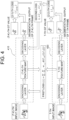
- Fig. 3 is a flowchart illustrating a method for learning parameters of a convolutional neural network (CNN) by using multiple video frames in accordance with the present invention.
- CNN convolutional neural network
- a method for learning convolutional neural network in accordance with the present invention includes a step S01 of inputting a (t-k)-th input image corresponding to a (t-k)-th frame and a t-th input image corresponding to a t-th frame to a learning device, a step S02 of obtaining a (t-k)-th feature map and a t-th feature map from the (t-k) -th input image and the t-th input image, respectively, a step S03 of calculating a first loss by referring to each of at least one distance value between each of pixels in the (t-k)-th feature map and each of pixels in the t-th feature map, a step S04 of calculating a (2-1)-th loss based on a difference between a (t-k)-th ground truth (GT) value and a (t-k)-th output value, which is generated by referring to the (t-k)-
- GT ground truth
- Fig. 4 is a diagram illustrating a process of learning the parameters of the CNN capable of segmenting the multiple video frames provided as the input images in accordance with the present invention
- Fig. 5 is a process of learning the parameters of the CNN capable of detecting objects in the multiple video frames provided as the input images in accordance with the present invention.
- the learning device receives the (t-k)-th input image corresponding to the (t-k)-th frame and the t-th input image corresponding to the t-th frame following the (t-k)-th frame as training images.
- the (t-k)-th frame and the t-th frame may be frames included in one video.
- the learning device applies at least one convolutional operation to the (t-k)-th input image and the t-th input image, to thereby obtain the (t-k)-th feature map corresponding to the (t-k)-th frame and the t-th feature map corresponding to the t-th frame as illustrated in Figs 4 and 5 .
- the learning device includes (i) a first CNN 410, 510 for obtaining the (t-k)-th feature map and the (t-k)-output value by using the (t-k)-th input image and (ii) a second CNN 420, 520 for obtaining the t-th feature map and the t-th output value by using the t-th input image.
- the second CNN may be configured to have the same parameter as that of the first CNN.
- a single CNN applies at least one convolutional operation to the (t-k)-th input image to thereby obtain the (t-k)-th feature map corresponding to the (t-k)-th frame, and then applies at least one convolutional operation to the t-th input image to thereby obtain the t-th feature map corresponding to the t-th frame in consecutive order.
- the first loss (a so-called continuity loss l c ) is calculated by multiplying (i) each of the at least one distance value between each of the features in the (t-k)-th feature map and each of the features in the t-th feature map and (ii) its corresponding first loss weight, wherein the first loss weight indicates a degree of common region between a receptive field of the (t-k)-th feature map and that of the t-th feature map.
- the learning process is merely performed to reduce a segmentation loss l s in case the CNN is learned for the segmentation and to reduce a detection loss l d in case the CNN is learned for the object detection.
- features of the same object included in consecutive frames are set to have similar values by adding the continuity loss l c .
- f t-k ( i ) represents an i-th feature of the (t-k)-th feature map
- f t ( j ) represents a j-th feature of the t-th feature map
- ⁇ ( f t-k ( i ) , f t ( j )) represents a distance between the two features
- w i,j represents its corresponding first loss weight
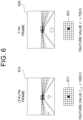
- Fig. 6 is a diagram illustrating a receptive field
- Fig. 7 is a diagram illustrating the optical flows.
- Each feature has its corresponding receptive field as illustrated in Fig. 6 .
- the receptive field means a pixel area used to calculate its corresponding feature in an image.
- a reference number 610 represents the (t-k)-th frame and a small box shown in the (t-k)-th frame represents a pixel area used to calculate a particular feature (a feature of a black portion of the (t-k)-th feature map 611).
- a reference number 620 represents the t-th frame and a small box shown in the t-th frame represents a pixel area used to calculate a particular feature (a feature of a black portion of the t-th feature map 621).
- the first loss weight W i,j is calculated by using a degree of common region between a receptive field of the (t-k)-th feature map and that of the t-th feature map.
- the equation 1 is designed in such a manner that the first loss weight W i,j gets closer to 1 as the common region increases, and the first loss weight W i,j gets closer to 0 as the common region decreases.
- a feature value corresponding to the black portion of the (t-k)-th feature map 611 is 1000.0
- a feature value corresponding to the black portion of the t-th feature map 612 is 700.0
- the first loss weight w i,j indicating the similarity between the two receptive fields becomes 0.3.
- the continuity loss (the first loss) is calculated by adding w i,j ⁇ ( f t-k ( i ) , f t ( j )) for all features between the two feature maps.
- W i,j is defined as (the number of pixels connected by the optical flows)/(the number of pixels in the two receptive fields).
- a forward optical flow (o_forward) from the (t-k)-th frame to the t-th frame shown as a reference number 710 and a backward optical flow (o_backward) from the t-th frame to the (t-k)-th frame shown as a reference number 720 are calculated.
- a first number of pixels entering into a receptive field of the t-th input image corresponding to the j-th feature of the t-th feature map among pixels of the receptive field of the (t-k)-th input image corresponding to the i-th feature of the (t-k)-th feature map is calculated by using the o_forward and
- a second number of pixels entering a receptive field of the (t-k)-th input image corresponding to the i-th feature of the (t-k)-th feature map among pixels of the receptive field of the t-th input image corresponding to the j-th feature of the t-th feature map is calculated by using the o_backward, and then (iii) the first pixel number and the second pixel number are added to thereby obtain the number of pixels connected by the optical flows.
- continuity loss l c continuity loss l c
- the (2-1)-th loss is calculated based on the difference between the (t-k)-th ground truth (GT) value and the (t-k)-th output value, which is generated by referring to the (t-k)-th feature map
- the (2-2)-th loss is calculated based on the difference between the t-th GT value and the t-th output value, which is generated by referring to the t-th feature map, at the step of S04.
- the step of S04 as illustrated in Figs.
- the (t-k)-th output value generated through a predetermined number of deconvolutional operations becomes the segmentation output of the (t-k)-th frame
- the (2-1)-th loss is calculated by referring to the segmentation output of the (t-k)-th frame and the (t-k)-th GT value.
- the segmentation output of (t-k)-th frame has roughly segmented boundaries of the objects while the (t-k)-th GT value has almost exact boundaries.
- the t-th output value becomes the segmentation output of the t-th frame
- the (2-2)-th loss is calculated by referring to the segmentation output of the t-th frame and the t-th GT value.
- the segmentation output of the t-th frame has roughly segmented boundaries of the objects while the t-th GT value has almost exact boundaries.
- the CNN is an object detect network
- the (t-k)-th output value generated through a predetermined number of deconvolutional operations becomes the detection output of the (t-k)-th frame
- the (2-1)-th loss is calculated by referring to the detection output of the (t-k)-th frame and the (t-k)-th GT value.
- the detection output of the (t-k)-th frame has a less tight bounding box than the (t-k)-th GT value has.
- the t-th output value becomes the detection output of the t-th frame, and the (2-2)-th loss is calculated by referring to the detection output of the t-th frame and the t-th GT value.
- the detection output of the t-th frame has a less tight bounding box than the t-th GT value has.
- the (2-1)-th loss may be calculated in the first CNN, and the (2-2)-th loss may be calculated in the second CNN. If there is only one CNN, the learning device may first calculate the (t-k)-th output value and the (2-1)-th loss, and then calculate the t-th output value and the (2-2)-th loss in consecutive order.
- the learning device may calculate a second loss by adding the (2-1)-th loss calculated in the first CNN and the (2-2)-th loss calculated in the second CNN.
- the second loss l s is calculated by adding the (2-1)-th segmentation loss l s(t-k) and the (2-2)-th segmentation loss l s(t) .
- the second loss l d is calculated by adding a (2-1)-th detection loss l d(t-k) and the (2-2)-th detection loss l d(t) .
- the step S05 of backpropagating the first loss, the (2-1)-th loss, and the (2-2)-th loss to thereby optimize the parameters of the CNN may be performed.
- the parameters of the encoding layer of the first CNN are optimized by backpropagating the continuity loss l c through the encoding layer of the first CNN
- the parameters of the encoding layer and the decoding layer of the first CNN are optimized by backpropagating the sum of the (2-1)-th segmentation loss l s(t-k) and the (2-2)-th segmentation loss l s(t) or the sum of the (2-1)-th detection loss l d(t-k) and the (2-2)-th detection loss l d(t) through the decoding layer and the encoding layer of the first CNN.
- the optimized parameters of the first CNN are reflected on the parameters of the second CNN.
- the (2-1)-th loss may be used for the optimization of the first CNN
- the (2-2)-th loss may be used for the optimization of the second CNN, but it is preferred that the first CNN and the second CNN are optimized in the same manner.
- the first loss continuous loss
- only one CNN may be learned, which may then be reflected on the other CNN.
- the parameters of the first CNN may be optimized by backpropagating the (2-1)-th segmentation loss l s(t-k) or the (2-1)-th detection loss l d(t-k) through the decoding layer and the encoding layer of the first CNN, and then the optimized parameters of the first CNN may be reflected on those of the second CNN.
- the parameters of the first CNN may be optimized by backpropagating the (2-1)-th segmentation loss l s(t-k) or the (2-1)-th detection loss l d(t-k) through the decoding layer and the encoding layer of the first CNN and the parameters of the second CNN may be optimized by backpropagating the (2-2)-th segmentation loss l s(t) or the (2-2)-th detection loss l d(t) through the decoding layer and the encoding layer of the second CNN.
- the first loss, the (2-1)-th loss, and the (2-2)-th loss may be used to generate an integrated loss through an equation below.
- the integrated loss l d t ⁇ k + l d t + ⁇ c ⁇ l c
- l d ( t-k ) represents the (2-1)-th loss
- l d ( t ) represents the (2-2)-th loss
- l c represents the first loss
- ⁇ c is a constant.
- the parameters of the first CNN may be optimized by backpropagating the integrated loss through the first CNN.
- a testing device uses the CNNs with the optimized parameters.
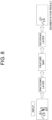
- a configuration of the testing device may be acquired by removing the above-mentioned loss calculation parts as illustrated in Figs. 8 and 9 .
- Figs. 8 and 9 illustrate processes of the testing device to which only one image is inputted, but the testing device may receive consecutive frames such as a video in order to obtain the segmentation result or the detection result from each image.
- the deep neural network in accordance with the present invention may enable the feature values between the neighboring frames to become similar to each other to thereby continually detect the certain object included in the neighboring frames without fail.
- the feature values between the neighboring frames are maintained to be similar to each other by obtaining the optical flows between the two neighboring frames, thereby increasing the performance of the object detection between the frames.
- transmission/reception of the above-described images i.e., image data such as a training image and a test image
- image data such as a training image and a test image
- the processes of the convolutional operation, the deconvolutional operation and the loss value operation can be mainly performed by the processor of the learning device and the testing device, but the present invention is not limited to these examples.
- the present invention has an effect of making the feature values between the neighboring frames be similar to each other to thereby prevent a situation in which a detection of a certain object succeeds in a frame but the detection of the same object at the same location fails in its neighboring frame.
- the present invention has another effect of obtaining the optical flows of the two neighboring frames to thereby reduce the difference between the features of the two neighboring frames, thereby increasing the performance of the object detection between the two neighboring frames.
- the objects of the technical solution of the present invention or parts contributing to the prior art can be implemented in a form of executable program command through a variety of computer means and can be recorded to computer readable recording media.
- the computer readable media may include solely or in combination, program commands, data files, and data structures.
- the program commands recorded to the media may be components specially designed for the present invention or may be usable to a skilled person in a field of computer software.
- Computer readable record media include magnetic media such as hard disk, floppy disk, and magnetic tape, optical media such as CD-ROM and DVD, magneto-optical media such as floptical disk and hardware devices such as ROM, RAM, and flash memory specially designed to store and carry out programs.
- Program commands include not only a machine language code made by a compiler but also a high-level code that can be used by an interpreter etc., which is executed by a computer.
- the aforementioned hardware devices can work as more than a software module to perform the action of the present invention and they can do the same in the opposite case.
- the hardware devices may be combined with memory such as ROM and RAM to store program commands and include a processor such as CPU or GPU composed to execute commands stored in the memory and also include a communication part for sending and receiving signals with external devices.
Landscapes
- Engineering & Computer Science (AREA)
- Theoretical Computer Science (AREA)
- Physics & Mathematics (AREA)
- General Physics & Mathematics (AREA)
- Evolutionary Computation (AREA)
- Artificial Intelligence (AREA)
- Multimedia (AREA)
- Data Mining & Analysis (AREA)
- Health & Medical Sciences (AREA)
- General Health & Medical Sciences (AREA)
- Mathematical Physics (AREA)
- Software Systems (AREA)
- Computing Systems (AREA)
- Life Sciences & Earth Sciences (AREA)
- General Engineering & Computer Science (AREA)
- Molecular Biology (AREA)
- Biomedical Technology (AREA)
- Computational Linguistics (AREA)
- Biophysics (AREA)
- Computer Vision & Pattern Recognition (AREA)
- Databases & Information Systems (AREA)
- Mathematical Analysis (AREA)
- Computational Mathematics (AREA)
- Mathematical Optimization (AREA)
- Pure & Applied Mathematics (AREA)
- Biodiversity & Conservation Biology (AREA)
- Medical Informatics (AREA)
- Algebra (AREA)
- Bioinformatics & Cheminformatics (AREA)
- Bioinformatics & Computational Biology (AREA)
- Evolutionary Biology (AREA)
- Human Computer Interaction (AREA)
- Image Analysis (AREA)
Claims (8)
- Lernverfahren zum Lernen von Parametern eines neuronalen Faltungsnetzes, Convolutional Neuronal Network, CNN, unter Verwendung mehrerer Videoframes zum Erfassen oder Segmentieren eines Objektes aus Videoframes, wobei das CNN so konfiguriert ist, dass ein Verlustwert durch Backpropagation zurückgeführt wird, der auf Grundlage eines Erfassungs- oder Segmentierungsergebnisses und einer Ground Truth, GT, erhalten wird, umfassend die Schritte:(a) Anwenden mindestens einer Faltungsoperation auf einen (t-k)-ten Eingabe-Videoframe, welcher einem (t-k)-ten Videoframe entspricht, und Anwenden mindestens einer Faltungsoperation auf einen t-ten Eingabe-Videoframe, welcher einem t-ten Videoframe entspricht, der dem (t-k)-ten Videoframe folgt, durch eine Lernvorrichtung, um dadurch eine (t-k)-te Merkmalsabbildung, welche dem (t-k)-ten Videoframe entspricht, und eine t-te Merkmalsabbildung zu erhalten, welche dem t-ten Videoframe entspricht;(b) Berechnen eines ersten Verlustes unter Verwendung unter Verwendung jedes von mindestens einem Abstandswert zwischen jedem der Pixel in der (t-k)-ten Merkmalsabbildung und jedem der Pixel in der t-ten Merkmalsabbildung durch die Lernvorrichtung; und(c) Zurückführen des ersten Verlustes durch Backpropagation durch die Lernvorrichtung, um den ersten Verlust zu minimieren,wobei der erste Verlust durch Multiplizieren (i) jedes aus dem mindestens einen Abstandswert zwischen jedem der Merkmale in der (t-k)-ten Merkmalsabbildung und jedem der Merkmale der t-ten Merkmalsabbildung und (ii) seiner entsprechenden ersten Verlustgewichtung berechnet wird, undwobei die erste Verlustgewichtung ein Maß einer gemeinsamen Region zwischen einem rezeptiven Feld der (t-k)-ten Merkmalsabbildung und einem rezeptiven Feld der t-ten Merkmalsabbildung anzeigt, wobei das rezeptive Feld ein Pixelbereich ist, der verwendet wird, um ein bestimmtes Merkmal in der (t-k)-ten Merkmalsabbildung zu berechnen,wobei im Schritt (b) die Lernvorrichtung (i) einen (2-1)-ten Verlust berechnet, der auf einer Differenz zwischen einem (t-k)-ten Ground-Truth-Wert (GT-Wert) und einem (t-k)-ten Ausgabewert beruht, welcher unter Verwendung der (t-k)-ten Merkmalsabbildung erzeugt wird, und (ii) einen (2-2)-ten Verlust berechnet, der auf einer Differenz zwischen einem t-ten GT-Wert und einem t-ten Ausgabewert beruht, welcher unter Verwendung der t-ten Merkmalsabbildung erzeugt wird, undwobei im Schritt (c) die Lernvorrichtung den (2-1)-ten Verlust und den (2-2)-ten Verlust durch Backpropagation zurückführt, um sie zu minimieren und dadurch den mindestens einen Parameter des CNN zu optimieren.
- Lernverfahren nach Anspruch 1, wobei die Lernvorrichtung (i) ein erstes CNN zum Erzeugen der (t-k)-ten Merkmalsabbildung und des (t-k)-ten Ausgabewertes unter Verwendung des (t-k)-ten Eingabe-Videorahmens und (ii) ein zweites CNN zum Erzeugen der t-ten Merkmalsabbildung und des t-ten Ausgabewertes unter Verwendung des t-ten Eingabe-Videorahmens umfasst,wobei das zweite CNN so konfiguriert ist, dass es denselben Parameter wie das erste CNN aufweist,wobei im Schritt (b) die Lernvorrichtung einen zweiten Verlust berechnet, indem sie den (2-1)-ten Verlust, der in dem ersten CNN berechnet wird, und den (2-2)-ten Verlust, der in dem zweiten CNN berechnet wird, addiert, undwobei im Schritt (c) die Lernvorrichtung den Parameter des ersten CNN durch Zurückführen des ersten Verlustes und des zweiten Verlustes zu dem ersten CNN durch Backpropagation optimiert und dann das zweite CNN anweist, dieselben Parameter aufzuweisen wie das erste CNN, umfassend die optimierten Parameter.
- Lernverfahren nach Anspruch 1, wobei im Schritt (c) unter Verwendung einer folgenden Gleichung ein integrierter Verlust berechnet wird:
 wobei Id(t-k) den (2-1)-ten Verlust repräsentiert, ld(t) den (2-2)-ten Verlust repräsentiert, lc den ersten Verlust repräsentiert und λc eine Konstante ist, undwobei der mindestens eine Parameter des CNN durch Zurückführen des integrierten Verlustes durch Backpropagation optimiert wird.
 - Lernverfahren nach Anspruch 1, wobei der (t-k)-te Ausgabewert und der t-te Ausgabewert durch Anwenden mindestens einer Entfaltungsoperation auf die (t-k)-te Merkmalsabbildung bzw. die t-te Merkmalsabbildung erzeugt werden.
- Lernvorrichtung zum Lernen von Parametern eines neuronalen Faltungsnetzes, CNN, unter Verwendung mehrerer Videoframes zum Erfassen oder Segmentieren eines Objektes aus Videoframes, wobei das CNN so konfiguriert ist, dass ein Verlustwert durch Backpropagation zurückgeführt wird, der auf Grundlage eines Erfassungs- oder Segmentierungsergebnisses und einer Ground Truth, GT, erhalten wird, umfassend:einen Kommunikationsteil zum Empfangen eines (t-k)-ten Eingabe-Videoframes, welcher einem (t-k)-ten Videoframe entspricht, und eines t-ten Eingabe-Videoframes, welcher einem t-ten Videoframe entspricht, der dem (t-k)-ten Videoframe folgt; undeinen Prozessor zum:(a) Anwenden mindestens einer Faltungsoperation auf den (t-k)-ten Eingabe-Videoframe und Anwenden mindestens einer Faltungsoperation auf den t-ten Eingabe-Videoframe, um dadurch eine (t-k)-te Merkmalsabbildung, welche dem (t-k)-ten Videoframe entspricht, und eine t-te Merkmalsabbildung zu erhalten, welche dem t-ten Videoframe entspricht,(b) (i) Berechnen eines ersten Verlustes unter Verwendung unter Verwendung jedes von mindestens einem Abstandswert zwischen jedem der Pixel in der (t-k)-ten Merkmalsabbildung und jedem der Pixel in der t-ten Merkmalsabbildung durch die Lernvorrichtung, und(c) Zurückführen des ersten Verlustes durch Backpropagation, um den ersten Verlust zu minimieren,wobei der erste Verlust durch Multiplizieren (i) jedes aus dem mindestens einen Abstandswert zwischen jedem der Merkmale in der (t-k)-ten Merkmalsabbildung und jedem der Merkmale der t-ten Merkmalsabbildung und (ii) seiner entsprechenden ersten Verlustgewichtung berechnet wird, undwobei die erste Verlustgewichtung ein Maß einer gemeinsamen Region zwischen einem rezeptiven Feld der (t-k)-ten Merkmalsabbildung und einem rezeptiven Feld der t-ten Merkmalsabbildung anzeigt, wobei das rezeptive Feld ein Pixelbereich ist, der verwendet wird, um ein bestimmtes Merkmal in der (t-k)-ten Merkmalsabbildung zu berechnen,wobei im Prozess (b) der Prozessor (i) einen (2-1)-ten Verlust berechnet, der auf einer Differenz zwischen einem (t-k)-ten Ground-Truth-Wert (GT-Wert) und einem (t-k)-ten Ausgabewert beruht, welcher unter Verwendung der (t-k)-ten Merkmalsabbildung erzeugt wird, und (ii) einen (2-2)-ten Verlust berechnet, der auf einer Differenz zwischen einem t-ten GT-Wert und einem t-ten Ausgabewert beruht, welcher unter Verwendung der t-ten Merkmalsabbildung erzeugt wird,wobei im Prozess (c) der Prozessor den (2-1)-ten Verlust und den (2-2)-ten Verlust durch Backpropagation zurückführt, um sie zu minimieren und dadurch den mindestens einen Parameter des CNN zu optimieren.
- Lernvorrichtung nach Anspruch 5, wobei der Prozessor (i) ein erstes CNN zum Erzeugen der (t-k)-ten Merkmalsabbildung und des (t-k)-ten Ausgabewertes unter Verwendung des (t-k)-ten Eingabe-Videorahmens und (ii) ein zweites CNN zum Erzeugen der t-ten Merkmalsabbildung und des t-ten Ausgabewertes unter Verwendung des t-ten Eingabe-Videorahmens umfasst,wobei das zweite CNN so konfiguriert ist, dass es denselben Parameter wie das erste CNN aufweist,wobei im Prozess (b) die Lernvorrichtung einen zweiten Verlust berechnet, indem sie den (2-1)-ten Verlust, der in dem ersten CNN berechnet wird, und den (2-2)-ten Verlust, der in dem zweiten CNN berechnet wird, addiert, undwobei im Prozess (c) die Lernvorrichtung den Parameter des ersten CNN durch Zurückführen des ersten Verlustes und des zweiten Verlustes zu dem ersten CNN durch Backpropagation optimiert und dann das zweite CNN anweist, dieselben Parameter aufzuweisen wie das erste CNN, umfassend die optimierten Parameter.
- Lernvorrrichtung nach Anspruch 5, wobei im Prozess (c) unter Verwendung einer folgenden Gleichung ein integrierter Verlust berechnet wird:
 wobei Id(t-k) den (2-1)-ten Verlust repräsentiert, ld(t) den (2-2)-ten Verlust repräsentiert, lc den ersten Verlust repräsentiert und λc eine Konstante ist, undwobei der mindestens eine Parameter des CNN durch Zurückführen des integrierten Verlustes durch Backpropagation optimiert wird.
 - Lernvorrichtung nach Anspruch 5, wobei der (t-k)-te Ausgabewert und der t-te Ausgabewert durch Anwenden mindestens einer Entfaltungsoperation auf die (t-k)-te Merkmalsabbildung bzw. die t-te Merkmalsabbildung erzeugt werden.
Applications Claiming Priority (1)
| Application Number | Priority Date | Filing Date | Title |
|---|---|---|---|
| US16/121,667 US10318842B1 (en) | 2018-09-05 | 2018-09-05 | Learning method, learning device for optimizing parameters of CNN by using multiple video frames and testing method, testing device using the same |
Publications (3)
| Publication Number | Publication Date |
|---|---|
| EP3620985A1 EP3620985A1 (de) | 2020-03-11 |
| EP3620985B1 true EP3620985B1 (de) | 2024-06-26 |
| EP3620985C0 EP3620985C0 (de) | 2024-06-26 |
Family
ID=66286263
Family Applications (1)
| Application Number | Title | Priority Date | Filing Date |
|---|---|---|---|
| EP19171167.0A Active EP3620985B1 (de) | 2018-09-05 | 2019-04-25 | Lernverfahren, lernvorrichtung zur optimierung der parameter von cnn unter verwendung mehrerer videobilder und testverfahren, testvorrichtung zur nutzung davon |
Country Status (5)
| Country | Link |
|---|---|
| US (1) | US10318842B1 (de) |
| EP (1) | EP3620985B1 (de) |
| JP (1) | JP6856952B2 (de) |
| KR (1) | KR102279399B1 (de) |
| CN (1) | CN110879962B (de) |
Families Citing this family (11)
| Publication number | Priority date | Publication date | Assignee | Title |
|---|---|---|---|---|
| CN112446245A (zh) * | 2019-08-30 | 2021-03-05 | 北京大学深圳研究生院 | 一种基于运动边界小位移的高效运动表征方法及装置 |
| CN112862828B (zh) * | 2019-11-26 | 2022-11-18 | 华为技术有限公司 | 一种语义分割方法、模型训练方法及装置 |
| WO2021104381A1 (en) * | 2019-11-27 | 2021-06-03 | Guangdong Oppo Mobile Telecommunications Corp., Ltd. | Method and device for stylizing video and storage medium |
| CN111524166B (zh) * | 2020-04-22 | 2023-06-30 | 北京百度网讯科技有限公司 | 视频帧的处理方法和装置 |
| US11157813B1 (en) * | 2020-04-24 | 2021-10-26 | StradVision, Inc. | Method and device for on-vehicle active learning to be used for training perception network of autonomous vehicle |
| CN111476314B (zh) * | 2020-04-27 | 2023-03-07 | 中国科学院合肥物质科学研究院 | 一种融合光流算法与深度学习的模糊视频检测方法 |
| JP6899986B1 (ja) * | 2020-04-28 | 2021-07-07 | 楽天グループ株式会社 | オブジェクト領域特定装置、オブジェクト領域特定方法、及びオブジェクト領域特定プログラム |
| CN113870269B (zh) * | 2020-06-30 | 2025-04-08 | 北京达佳互联信息技术有限公司 | 一种图像分割方法、装置、电子设备及存储介质 |
| WO2022139438A1 (ko) * | 2020-12-22 | 2022-06-30 | 인텔렉추얼디스커버리 주식회사 | 딥러닝 기반 이미지 코딩 방법 및 장치 |
| KR102831465B1 (ko) * | 2021-02-04 | 2025-07-09 | 오지큐 주식회사 | 딥러닝 기반의 안전 관리 대상 객체 검출 및 세그멘테이션 방법 및 이를 수행하는 시스템 |
| KR102401800B1 (ko) * | 2021-10-28 | 2022-05-26 | 주식회사 오비고 | 오브젝트 실감 기술을 구현하기 위한 학습 방법과 체험 방법 및 이를 이용한 학습 장치와 체험 장치 |
Family Cites Families (12)
| Publication number | Priority date | Publication date | Assignee | Title |
|---|---|---|---|---|
| US10074041B2 (en) * | 2015-04-17 | 2018-09-11 | Nec Corporation | Fine-grained image classification by exploring bipartite-graph labels |
| US10115032B2 (en) * | 2015-11-04 | 2018-10-30 | Nec Corporation | Universal correspondence network |
| WO2017096396A1 (en) * | 2015-12-04 | 2017-06-08 | Magic Leap, Inc. | Relocalization systems and methods |
| US10019629B2 (en) * | 2016-05-31 | 2018-07-10 | Microsoft Technology Licensing, Llc | Skeleton-based action detection using recurrent neural network |
| RU2665273C2 (ru) * | 2016-06-03 | 2018-08-28 | Автономная некоммерческая образовательная организация высшего образования "Сколковский институт науки и технологий" | Обучаемые визуальные маркеры и способ их продуцирования |
| KR101908680B1 (ko) * | 2016-08-30 | 2018-10-17 | 주식회사 루닛 | 약한 지도 학습 기반의 기계 학습 방법 및 그 장치 |
| CN106529570B (zh) * | 2016-10-14 | 2019-06-18 | 西安电子科技大学 | 基于深度脊波神经网络的图像分类方法 |
| CN108304755B (zh) * | 2017-03-08 | 2021-05-18 | 腾讯科技(深圳)有限公司 | 用于图像处理的神经网络模型的训练方法和装置 |
| CN107220616B (zh) * | 2017-05-25 | 2021-01-19 | 北京大学 | 一种基于自适应权重的双路协同学习的视频分类方法 |
| CN107968962B (zh) * | 2017-12-12 | 2019-08-09 | 华中科技大学 | 一种基于深度学习的两帧不相邻图像的视频生成方法 |
| CN108305271B (zh) * | 2018-01-25 | 2021-09-28 | 腾讯科技(深圳)有限公司 | 一种视频帧图像处理方法和装置 |
| CN108268870B (zh) * | 2018-01-29 | 2020-10-09 | 重庆师范大学 | 基于对抗学习的多尺度特征融合超声图像语义分割方法 |
-
2018
- 2018-09-05 US US16/121,667 patent/US10318842B1/en active Active
-
2019
- 2019-04-25 EP EP19171167.0A patent/EP3620985B1/de active Active
- 2019-08-27 KR KR1020190105468A patent/KR102279399B1/ko active Active
- 2019-08-30 CN CN201910813388.XA patent/CN110879962B/zh active Active
- 2019-09-03 JP JP2019160651A patent/JP6856952B2/ja active Active
Also Published As
| Publication number | Publication date |
|---|---|
| CN110879962B (zh) | 2023-09-22 |
| KR102279399B1 (ko) | 2021-07-21 |
| US10318842B1 (en) | 2019-06-11 |
| EP3620985C0 (de) | 2024-06-26 |
| EP3620985A1 (de) | 2020-03-11 |
| CN110879962A (zh) | 2020-03-13 |
| JP6856952B2 (ja) | 2021-04-14 |
| KR20200027887A (ko) | 2020-03-13 |
| JP2020038669A (ja) | 2020-03-12 |
Similar Documents
| Publication | Publication Date | Title |
|---|---|---|
| US10318842B1 (en) | Learning method, learning device for optimizing parameters of CNN by using multiple video frames and testing method, testing device using the same | |
| EP3620979B1 (de) | Lernverfahren, lernvorrichtung zur objekterkennung mit kantenbild und prüfverfahren, prüfvorrichtung damit | |
| US10223614B1 (en) | Learning method, learning device for detecting lane through classification of lane candidate pixels and testing method, testing device using the same | |
| US10504027B1 (en) | CNN-based learning method, learning device for selecting useful training data and test method, test device using the same | |
| US10474713B1 (en) | Learning method and learning device using multiple labeled databases with different label sets and testing method and testing device using the same | |
| US10262214B1 (en) | Learning method, learning device for detecting lane by using CNN and testing method, testing device using the same | |
| EP3620958B1 (de) | Lernverfahren, lernvorrichtung zur erkennung einer spur durch spurmodell und prüfverfahren, prüfvorrichtung mit verwendung davon | |
| US12136262B2 (en) | Segmenting objects by refining shape priors | |
| US12462525B2 (en) | Co-learning object and relationship detection with density aware loss | |
| CN111507167B (zh) | 以avm与强化学习实现注意力驱动资源分配的方法和装置 | |
| EP3644240B1 (de) | Lernverfahren, lernvorrichtung zum nachweis eines bereichs von interesse (roi) basierend auf bodenlinien von hindernissen und prüfverfahren, prüfvorrichtung damit | |
| JP6846062B2 (ja) | 近接障害物の下段ライン及び上段ラインを検出し、物体存在性を検出する学習方法及び学習装置、そしてこれを利用したテスト方法及びテスト装置{learning method, learning device for detecting objectness by detecting bottom line and top line of nearest obstacles and testing method, testing device using the same} | |
| KR102173942B1 (ko) | 다른 시점의 영상을 이용한 객체 검출을 위한 장치 및 이를 위한 방법 | |
| EP3623991B1 (de) | Lernverfahren, lernvorrichtung zur erkennung von spuren basierend auf cnn und prüfverfahren, prüfvorrichtung damit | |
| KR102198224B1 (ko) | 공간 데이터를 기초로 한 인공신경망을 이용한 비정상 데이터 구분 장치 | |
| Donadi et al. | Improving generalization of synthetically trained sonar image descriptors for underwater place recognition | |
| EP4369313B1 (de) | Verfahren und vorrichtung mit objektklassifizierung | |
| US11861840B2 (en) | System and method for extracting planar surface from depth image | |
| Shi et al. | A novel artificial fish swarm algorithm for pattern recognition with convex optimization | |
| US20230196752A1 (en) | Information processing apparatus, information processing method, and non-transitory computer-readable storage medium | |
| CN116244643B (zh) | 多标签分类模型的训练方法、装置、设备和存储介质 | |
| Donadio et al. | Improving Generalization of Synthetically Trained Sonar Image Descriptors | |
| CN120544245A (zh) | 基于自适应伪标记与注意力机制的微表情分析方法及系统 |
Legal Events
| Date | Code | Title | Description |
|---|---|---|---|
| PUAI | Public reference made under article 153(3) epc to a published international application that has entered the european phase |
Free format text: ORIGINAL CODE: 0009012 |
|
| STAA | Information on the status of an ep patent application or granted ep patent |
Free format text: STATUS: REQUEST FOR EXAMINATION WAS MADE |
|
| 17P | Request for examination filed |
Effective date: 20190814 |
|
| AK | Designated contracting states |
Kind code of ref document: A1 Designated state(s): AL AT BE BG CH CY CZ DE DK EE ES FI FR GB GR HR HU IE IS IT LI LT LU LV MC MK MT NL NO PL PT RO RS SE SI SK SM TR |
|
| AX | Request for extension of the european patent |
Extension state: BA ME |
|
| RBV | Designated contracting states (corrected) |
Designated state(s): AL AT BE BG CH CY CZ DE DK EE ES FI FR GB GR HR HU IE IS IT LI LT LU LV MC MK MT NL NO PL PT RO RS SE SI SK SM TR |
|
| STAA | Information on the status of an ep patent application or granted ep patent |
Free format text: STATUS: EXAMINATION IS IN PROGRESS |
|
| 17Q | First examination report despatched |
Effective date: 20211124 |
|
| REG | Reference to a national code |
Ref country code: DE Ref legal event code: R079 Free format text: PREVIOUS MAIN CLASS: G06N0003040000 Ipc: G06N0003045000 Ref document number: 602019054084 Country of ref document: DE |
|
| GRAP | Despatch of communication of intention to grant a patent |
Free format text: ORIGINAL CODE: EPIDOSNIGR1 |
|
| STAA | Information on the status of an ep patent application or granted ep patent |
Free format text: STATUS: GRANT OF PATENT IS INTENDED |
|
| RIC1 | Information provided on ipc code assigned before grant |
Ipc: G06V 20/40 20220101ALI20240215BHEP Ipc: G06V 10/82 20220101ALI20240215BHEP Ipc: G06V 10/44 20220101ALI20240215BHEP Ipc: G06V 10/26 20220101ALI20240215BHEP Ipc: G06V 10/20 20220101ALI20240215BHEP Ipc: G06N 3/084 20230101ALI20240215BHEP Ipc: G06N 3/045 20230101AFI20240215BHEP |
|
| INTG | Intention to grant announced |
Effective date: 20240301 |
|
| GRAS | Grant fee paid |
Free format text: ORIGINAL CODE: EPIDOSNIGR3 |
|
| GRAA | (expected) grant |
Free format text: ORIGINAL CODE: 0009210 |
|
| STAA | Information on the status of an ep patent application or granted ep patent |
Free format text: STATUS: THE PATENT HAS BEEN GRANTED |
|
| AK | Designated contracting states |
Kind code of ref document: B1 Designated state(s): AL AT BE BG CH CY CZ DE DK EE ES FI FR GB GR HR HU IE IS IT LI LT LU LV MC MK MT NL NO PL PT RO RS SE SI SK SM TR |
|
| REG | Reference to a national code |
Ref country code: GB Ref legal event code: FG4D |
|
| REG | Reference to a national code |
Ref country code: CH Ref legal event code: EP |
|
| REG | Reference to a national code |
Ref country code: DE Ref legal event code: R096 Ref document number: 602019054084 Country of ref document: DE |
|
| U01 | Request for unitary effect filed |
Effective date: 20240627 |
|
| U07 | Unitary effect registered |
Designated state(s): AT BE BG DE DK EE FI FR IT LT LU LV MT NL PT SE SI Effective date: 20240708 |
|
| PG25 | Lapsed in a contracting state [announced via postgrant information from national office to epo] |
Ref country code: HR Free format text: LAPSE BECAUSE OF FAILURE TO SUBMIT A TRANSLATION OF THE DESCRIPTION OR TO PAY THE FEE WITHIN THE PRESCRIBED TIME-LIMIT Effective date: 20240626 |
|
| PG25 | Lapsed in a contracting state [announced via postgrant information from national office to epo] |
Ref country code: GR Free format text: LAPSE BECAUSE OF FAILURE TO SUBMIT A TRANSLATION OF THE DESCRIPTION OR TO PAY THE FEE WITHIN THE PRESCRIBED TIME-LIMIT Effective date: 20240927 |
|
| PG25 | Lapsed in a contracting state [announced via postgrant information from national office to epo] |
Ref country code: NO Free format text: LAPSE BECAUSE OF FAILURE TO SUBMIT A TRANSLATION OF THE DESCRIPTION OR TO PAY THE FEE WITHIN THE PRESCRIBED TIME-LIMIT Effective date: 20240926 Ref country code: HR Free format text: LAPSE BECAUSE OF FAILURE TO SUBMIT A TRANSLATION OF THE DESCRIPTION OR TO PAY THE FEE WITHIN THE PRESCRIBED TIME-LIMIT Effective date: 20240626 Ref country code: GR Free format text: LAPSE BECAUSE OF FAILURE TO SUBMIT A TRANSLATION OF THE DESCRIPTION OR TO PAY THE FEE WITHIN THE PRESCRIBED TIME-LIMIT Effective date: 20240927 Ref country code: RS Free format text: LAPSE BECAUSE OF FAILURE TO SUBMIT A TRANSLATION OF THE DESCRIPTION OR TO PAY THE FEE WITHIN THE PRESCRIBED TIME-LIMIT Effective date: 20240926 |
|
| PG25 | Lapsed in a contracting state [announced via postgrant information from national office to epo] |
Ref country code: PL Free format text: LAPSE BECAUSE OF FAILURE TO SUBMIT A TRANSLATION OF THE DESCRIPTION OR TO PAY THE FEE WITHIN THE PRESCRIBED TIME-LIMIT Effective date: 20240626 |
|
| PG25 | Lapsed in a contracting state [announced via postgrant information from national office to epo] |
Ref country code: IS Free format text: LAPSE BECAUSE OF FAILURE TO SUBMIT A TRANSLATION OF THE DESCRIPTION OR TO PAY THE FEE WITHIN THE PRESCRIBED TIME-LIMIT Effective date: 20241026 |
|
| PG25 | Lapsed in a contracting state [announced via postgrant information from national office to epo] |
Ref country code: CZ Free format text: LAPSE BECAUSE OF FAILURE TO SUBMIT A TRANSLATION OF THE DESCRIPTION OR TO PAY THE FEE WITHIN THE PRESCRIBED TIME-LIMIT Effective date: 20240626 |
|
| PG25 | Lapsed in a contracting state [announced via postgrant information from national office to epo] |
Ref country code: RO Free format text: LAPSE BECAUSE OF FAILURE TO SUBMIT A TRANSLATION OF THE DESCRIPTION OR TO PAY THE FEE WITHIN THE PRESCRIBED TIME-LIMIT Effective date: 20240626 Ref country code: SK Free format text: LAPSE BECAUSE OF FAILURE TO SUBMIT A TRANSLATION OF THE DESCRIPTION OR TO PAY THE FEE WITHIN THE PRESCRIBED TIME-LIMIT Effective date: 20240626 |
|
| PG25 | Lapsed in a contracting state [announced via postgrant information from national office to epo] |
Ref country code: SM Free format text: LAPSE BECAUSE OF FAILURE TO SUBMIT A TRANSLATION OF THE DESCRIPTION OR TO PAY THE FEE WITHIN THE PRESCRIBED TIME-LIMIT Effective date: 20240626 Ref country code: ES Free format text: LAPSE BECAUSE OF FAILURE TO SUBMIT A TRANSLATION OF THE DESCRIPTION OR TO PAY THE FEE WITHIN THE PRESCRIBED TIME-LIMIT Effective date: 20240626 |
|
| PG25 | Lapsed in a contracting state [announced via postgrant information from national office to epo] |
Ref country code: SM Free format text: LAPSE BECAUSE OF FAILURE TO SUBMIT A TRANSLATION OF THE DESCRIPTION OR TO PAY THE FEE WITHIN THE PRESCRIBED TIME-LIMIT Effective date: 20240626 Ref country code: SK Free format text: LAPSE BECAUSE OF FAILURE TO SUBMIT A TRANSLATION OF THE DESCRIPTION OR TO PAY THE FEE WITHIN THE PRESCRIBED TIME-LIMIT Effective date: 20240626 Ref country code: RO Free format text: LAPSE BECAUSE OF FAILURE TO SUBMIT A TRANSLATION OF THE DESCRIPTION OR TO PAY THE FEE WITHIN THE PRESCRIBED TIME-LIMIT Effective date: 20240626 Ref country code: PL Free format text: LAPSE BECAUSE OF FAILURE TO SUBMIT A TRANSLATION OF THE DESCRIPTION OR TO PAY THE FEE WITHIN THE PRESCRIBED TIME-LIMIT Effective date: 20240626 Ref country code: IS Free format text: LAPSE BECAUSE OF FAILURE TO SUBMIT A TRANSLATION OF THE DESCRIPTION OR TO PAY THE FEE WITHIN THE PRESCRIBED TIME-LIMIT Effective date: 20241026 Ref country code: ES Free format text: LAPSE BECAUSE OF FAILURE TO SUBMIT A TRANSLATION OF THE DESCRIPTION OR TO PAY THE FEE WITHIN THE PRESCRIBED TIME-LIMIT Effective date: 20240626 Ref country code: CZ Free format text: LAPSE BECAUSE OF FAILURE TO SUBMIT A TRANSLATION OF THE DESCRIPTION OR TO PAY THE FEE WITHIN THE PRESCRIBED TIME-LIMIT Effective date: 20240626 |
|
| U20 | Renewal fee for the european patent with unitary effect paid |
Year of fee payment: 7 Effective date: 20250319 |
|
| PLBE | No opposition filed within time limit |
Free format text: ORIGINAL CODE: 0009261 |
|
| STAA | Information on the status of an ep patent application or granted ep patent |
Free format text: STATUS: NO OPPOSITION FILED WITHIN TIME LIMIT |
|
| 26N | No opposition filed |
Effective date: 20250327 |
|
| REG | Reference to a national code |
Ref country code: CH Ref legal event code: H13 Free format text: ST27 STATUS EVENT CODE: U-0-0-H10-H13 (AS PROVIDED BY THE NATIONAL OFFICE) Effective date: 20251125 |
|
| PG25 | Lapsed in a contracting state [announced via postgrant information from national office to epo] |
Ref country code: MC Free format text: LAPSE BECAUSE OF FAILURE TO SUBMIT A TRANSLATION OF THE DESCRIPTION OR TO PAY THE FEE WITHIN THE PRESCRIBED TIME-LIMIT Effective date: 20240626 |
|
| GBPC | Gb: european patent ceased through non-payment of renewal fee |
Effective date: 20250425 |
|
| PG25 | Lapsed in a contracting state [announced via postgrant information from national office to epo] |
Ref country code: GB Free format text: LAPSE BECAUSE OF NON-PAYMENT OF DUE FEES Effective date: 20250425 |
|
| PG25 | Lapsed in a contracting state [announced via postgrant information from national office to epo] |
Ref country code: CH Free format text: LAPSE BECAUSE OF NON-PAYMENT OF DUE FEES Effective date: 20250430 |
|
| PG25 | Lapsed in a contracting state [announced via postgrant information from national office to epo] |
Ref country code: IE Free format text: LAPSE BECAUSE OF NON-PAYMENT OF DUE FEES Effective date: 20250425 |
|
| U20 | Renewal fee for the european patent with unitary effect paid |
Year of fee payment: 8 Effective date: 20260317 |