EP3620980B1 - Lernverfahren, lernvorrichtung zur erkennung einer spur durch verwendung von cnn und prüfverfahren, prüfvorrichtung mit verwendung davon - Google Patents
Lernverfahren, lernvorrichtung zur erkennung einer spur durch verwendung von cnn und prüfverfahren, prüfvorrichtung mit verwendung davon Download PDFInfo
- Publication number
- EP3620980B1 EP3620980B1 EP19178056.8A EP19178056A EP3620980B1 EP 3620980 B1 EP3620980 B1 EP 3620980B1 EP 19178056 A EP19178056 A EP 19178056A EP 3620980 B1 EP3620980 B1 EP 3620980B1
- Authority
- EP
- European Patent Office
- Prior art keywords
- cluster
- lanes
- estimated
- vector
- training
- Prior art date
- Legal status (The legal status is an assumption and is not a legal conclusion. Google has not performed a legal analysis and makes no representation as to the accuracy of the status listed.)
- Active
Links
Images



Classifications
-
- G—PHYSICS
- G06—COMPUTING OR CALCULATING; COUNTING
- G06T—IMAGE DATA PROCESSING OR GENERATION, IN GENERAL
- G06T7/00—Image analysis
- G06T7/10—Segmentation; Edge detection
- G06T7/12—Edge-based segmentation
-
- G—PHYSICS
- G06—COMPUTING OR CALCULATING; COUNTING
- G06V—IMAGE OR VIDEO RECOGNITION OR UNDERSTANDING
- G06V20/00—Scenes; Scene-specific elements
- G06V20/50—Context or environment of the image
- G06V20/56—Context or environment of the image exterior to a vehicle by using sensors mounted on the vehicle
- G06V20/588—Recognition of the road, e.g. of lane markings; Recognition of the vehicle driving pattern in relation to the road
-
- G—PHYSICS
- G06—COMPUTING OR CALCULATING; COUNTING
- G06N—COMPUTING ARRANGEMENTS BASED ON SPECIFIC COMPUTATIONAL MODELS
- G06N3/00—Computing arrangements based on biological models
- G06N3/02—Neural networks
- G06N3/08—Learning methods
- G06N3/084—Backpropagation, e.g. using gradient descent
-
- G—PHYSICS
- G06—COMPUTING OR CALCULATING; COUNTING
- G06F—ELECTRIC DIGITAL DATA PROCESSING
- G06F18/00—Pattern recognition
- G06F18/20—Analysing
- G06F18/21—Design or setup of recognition systems or techniques; Extraction of features in feature space; Blind source separation
- G06F18/217—Validation; Performance evaluation; Active pattern learning techniques
-
- G—PHYSICS
- G06—COMPUTING OR CALCULATING; COUNTING
- G06F—ELECTRIC DIGITAL DATA PROCESSING
- G06F18/00—Pattern recognition
- G06F18/20—Analysing
- G06F18/24—Classification techniques
- G06F18/241—Classification techniques relating to the classification model, e.g. parametric or non-parametric approaches
- G06F18/2411—Classification techniques relating to the classification model, e.g. parametric or non-parametric approaches based on the proximity to a decision surface, e.g. support vector machines
-
- G—PHYSICS
- G06—COMPUTING OR CALCULATING; COUNTING
- G06N—COMPUTING ARRANGEMENTS BASED ON SPECIFIC COMPUTATIONAL MODELS
- G06N3/00—Computing arrangements based on biological models
- G06N3/02—Neural networks
- G06N3/04—Architecture, e.g. interconnection topology
- G06N3/045—Combinations of networks
-
- G—PHYSICS
- G06—COMPUTING OR CALCULATING; COUNTING
- G06N—COMPUTING ARRANGEMENTS BASED ON SPECIFIC COMPUTATIONAL MODELS
- G06N3/00—Computing arrangements based on biological models
- G06N3/02—Neural networks
- G06N3/04—Architecture, e.g. interconnection topology
- G06N3/0464—Convolutional networks [CNN, ConvNet]
-
- G—PHYSICS
- G06—COMPUTING OR CALCULATING; COUNTING
- G06N—COMPUTING ARRANGEMENTS BASED ON SPECIFIC COMPUTATIONAL MODELS
- G06N3/00—Computing arrangements based on biological models
- G06N3/02—Neural networks
- G06N3/08—Learning methods
- G06N3/09—Supervised learning
-
- G—PHYSICS
- G06—COMPUTING OR CALCULATING; COUNTING
- G06T—IMAGE DATA PROCESSING OR GENERATION, IN GENERAL
- G06T7/00—Image analysis
- G06T7/70—Determining position or orientation of objects or cameras
- G06T7/77—Determining position or orientation of objects or cameras using statistical methods
-
- G—PHYSICS
- G06—COMPUTING OR CALCULATING; COUNTING
- G06V—IMAGE OR VIDEO RECOGNITION OR UNDERSTANDING
- G06V10/00—Arrangements for image or video recognition or understanding
- G06V10/40—Extraction of image or video features
- G06V10/44—Local feature extraction by analysis of parts of the pattern, e.g. by detecting edges, contours, loops, corners, strokes or intersections; Connectivity analysis, e.g. of connected components
- G06V10/443—Local feature extraction by analysis of parts of the pattern, e.g. by detecting edges, contours, loops, corners, strokes or intersections; Connectivity analysis, e.g. of connected components by matching or filtering
- G06V10/449—Biologically inspired filters, e.g. difference of Gaussians [DoG] or Gabor filters
- G06V10/451—Biologically inspired filters, e.g. difference of Gaussians [DoG] or Gabor filters with interaction between the filter responses, e.g. cortical complex cells
- G06V10/454—Integrating the filters into a hierarchical structure, e.g. convolutional neural networks [CNN]
-
- G—PHYSICS
- G06—COMPUTING OR CALCULATING; COUNTING
- G06V—IMAGE OR VIDEO RECOGNITION OR UNDERSTANDING
- G06V10/00—Arrangements for image or video recognition or understanding
- G06V10/70—Arrangements for image or video recognition or understanding using pattern recognition or machine learning
- G06V10/762—Arrangements for image or video recognition or understanding using pattern recognition or machine learning using clustering, e.g. of similar faces in social networks
- G06V10/763—Non-hierarchical techniques, e.g. based on statistics of modelling distributions
-
- G—PHYSICS
- G06—COMPUTING OR CALCULATING; COUNTING
- G06V—IMAGE OR VIDEO RECOGNITION OR UNDERSTANDING
- G06V10/00—Arrangements for image or video recognition or understanding
- G06V10/70—Arrangements for image or video recognition or understanding using pattern recognition or machine learning
- G06V10/764—Arrangements for image or video recognition or understanding using pattern recognition or machine learning using classification, e.g. of video objects
-
- G—PHYSICS
- G06—COMPUTING OR CALCULATING; COUNTING
- G06V—IMAGE OR VIDEO RECOGNITION OR UNDERSTANDING
- G06V10/00—Arrangements for image or video recognition or understanding
- G06V10/70—Arrangements for image or video recognition or understanding using pattern recognition or machine learning
- G06V10/82—Arrangements for image or video recognition or understanding using pattern recognition or machine learning using neural networks
-
- G—PHYSICS
- G06—COMPUTING OR CALCULATING; COUNTING
- G06N—COMPUTING ARRANGEMENTS BASED ON SPECIFIC COMPUTATIONAL MODELS
- G06N20/00—Machine learning
- G06N20/10—Machine learning using kernel methods, e.g. support vector machines [SVM]
-
- G—PHYSICS
- G06—COMPUTING OR CALCULATING; COUNTING
- G06N—COMPUTING ARRANGEMENTS BASED ON SPECIFIC COMPUTATIONAL MODELS
- G06N3/00—Computing arrangements based on biological models
- G06N3/02—Neural networks
- G06N3/04—Architecture, e.g. interconnection topology
- G06N3/048—Activation functions
-
- G—PHYSICS
- G06—COMPUTING OR CALCULATING; COUNTING
- G06N—COMPUTING ARRANGEMENTS BASED ON SPECIFIC COMPUTATIONAL MODELS
- G06N5/00—Computing arrangements using knowledge-based models
- G06N5/01—Dynamic search techniques; Heuristics; Dynamic trees; Branch-and-bound
-
- G—PHYSICS
- G06—COMPUTING OR CALCULATING; COUNTING
- G06N—COMPUTING ARRANGEMENTS BASED ON SPECIFIC COMPUTATIONAL MODELS
- G06N7/00—Computing arrangements based on specific mathematical models
- G06N7/01—Probabilistic graphical models, e.g. probabilistic networks
-
- G—PHYSICS
- G06—COMPUTING OR CALCULATING; COUNTING
- G06T—IMAGE DATA PROCESSING OR GENERATION, IN GENERAL
- G06T2207/00—Indexing scheme for image analysis or image enhancement
- G06T2207/20—Special algorithmic details
- G06T2207/20081—Training; Learning
-
- G—PHYSICS
- G06—COMPUTING OR CALCULATING; COUNTING
- G06T—IMAGE DATA PROCESSING OR GENERATION, IN GENERAL
- G06T2207/00—Indexing scheme for image analysis or image enhancement
- G06T2207/20—Special algorithmic details
- G06T2207/20084—Artificial neural networks [ANN]
-
- G—PHYSICS
- G06—COMPUTING OR CALCULATING; COUNTING
- G06T—IMAGE DATA PROCESSING OR GENERATION, IN GENERAL
- G06T2207/00—Indexing scheme for image analysis or image enhancement
- G06T2207/30—Subject of image; Context of image processing
- G06T2207/30248—Vehicle exterior or interior
- G06T2207/30252—Vehicle exterior; Vicinity of vehicle
- G06T2207/30256—Lane; Road marking
Definitions
- the present invention relates to a learning method for learning a CNN capable of detecting one or more lanes, said method being defined in claim 1, and the learning device, the testing method, and the testing device defined, respectively, in claim 7, claim 6 and claim 12.
- Deep learning is a technology used to cluster or classify objects or data. For example, computers cannot distinguish dogs and cats from photographs alone. But a human can easily distinguish those two. To this end, a method called “machine learning” was devised. It is a technique to allow a computer to classify similar things among lots of data inputted into the computer. When a photo of an animal similar to a dog is inputted, the computer will classify it as a dog photo.
- Deep Convolution Neural Networks are the heart of the remarkable development in deep learning. CNNs have already been used in the 90's to solve the problem of character recognition, but their use has become as widespread as it is now thanks to recent research. These deep CNNs won the 2012 ImageNet image classification tournament, crushing other competitors. Then, the convolution neural network became a very useful tool in the field of the machine learning.
- LaneNet a trainable neural network for end-to-end lane detection based on instance segmentation.
- LaneNet comprises a segmentation branch, trained to output a binary segmentation map, and an embedding branch to generate a N-dimensional embedding per lane pixel, so that embeddings from the same lane are close together and those from different lanes are far apart.
- ENet A Deep Neural Network Architecture for Real-Time Semantic Segmentation
- arXiv:1606.02147 [cs.CV] 7 June 2016, XP080706468 discloses a deep neural network architecture named ENet (efficient neural network), which performs pixel-wise semantic segmentation in real-time.
- the loss function encourages the network to map each pixel to a point in feature space so that pixels belonging to the same instance lie close together while different instances are separated by a wide margin.
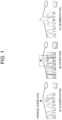
- Fig. 1 shows an example of various outputs to be acquired from a photograph using a deep CNN according to prior art.
- Classification is a method for identifying a type of a class to be acquired from a photograph, for example, as shown in Fig. 1 , determining whether an acquired object is a person, a lamb, or a dog.
- Detection is a method for finding every object and displaying the found object as enclosed in a bounding box.
- Segmentation is a method for distinguishing a region of a specific object from other objects in a photograph. As the deep learning has recently become popular, the classification, the detection, and the segmentation are using the deep learning heavily.
- Fig. 2 is a simplified drawing of a conventional lane detection method using a CNN
- Fig. 3 is a simplified drawing of a general CNN segmentation process.
- a learning device receives an input image, acquires feature maps by multiple convolution operations and non-linear operations like ReLU in multiple convolutional layers, and acquires a segmentation result by performing multiple deconvolution operations in multiple deconvolutional layers and SoftMax operations on a last of the feature maps.
- the segmentation result of the conventional lane detection method is composed of two elements, i.e., lanes and backgrounds, as shown in the middle of Fig. 2 .
- the segmentation result is expressed as probability estimation.
- the lanes are found by sampling pixels with high probabilities of being on any lane from candidate pixels on the lane selected as such, and then the lanes are finally determined by using a lane modeling function acquired from pixels on the found lanes.
- a learning method for learning a CNN capable of detecting one or more lanes said method being defined in claim 1.
- each of the representative cluster group values is acquired by using at least part of the estimated cluster IDs, wherein the at least part of the estimated cluster IDs are determined by referring to information on whether each of vector components of the result vector is larger than a predetermined value.
- the method further includes steps of: (e) the learning device generating or supporting another device to generate at least one existence loss which represents whether one of GT lanes is present near each of the estimated lanes, based on whether coordinates of said one of the GT lanes is present within a certain number of pixels in either direction parallel to an x-axis from respective coordinates of each of the estimated lanes; (f) the learning device, if said one of the GT lanes is determined as present near each of the estimated lanes, generating or supporting another device to generate at least one distance regression loss by referring to each of distances x GT - f ( y
- the method further includes a step of: (e0) the learning device extracting or supporting another device to extract each of one or more areal features which represents each of areas near the pixels ( f ( y
- the existence loss is generated by using a cross entropy
- the distance regression loss is generated by using at least one Euclidean distance regression loss
- testing method of a CNN capable of detecting one or more lanes using a lane model, said testing method being defined in claim 6.
- the method further includes steps of: (e) the testing device extracting or supporting another device to extract each of one or more areal features which represents each of areas near the pixels ( f ( y
- each of the representative cluster group values for testing is acquired by using at least part of the estimated cluster IDs for testing, wherein the at least part of the estimated cluster IDs for testing are determined by referring to information on whether each of vector components of the result vector of the cluster ID classifications for testing is larger than a predetermined value.
- a learning device for detecting one or more lanes by using a CNN, said learning device being defined in claim 7.
- each of the representative cluster group values is acquired by using at least part of the estimated cluster IDs, wherein the at least part of the estimated cluster IDs are determined by referring to information on whether each of vector components of the result vector is larger than a predetermined value.
- the processor further performs processes of: (v) generating or supporting another device to generate at least one existence loss which represents whether one of GT lanes is present near each of the estimated lanes, based on whether coordinates of said one of the GT lanes is present within a certain number of pixels in either direction parallel to an x-axis from respective coordinates of each of the estimated lanes; (vi) if said one of the GT lanes is determined as present near each of the estimated lanes, generating or supporting another device to generate at least one distance regression loss by referring to each of distances x GT - f ( y
- the processor before the process of (v), the processor further performs a process of: (v0) extracting or supporting another device to extract each of one or more areal features which represents each of areas near the pixels ( f ( y
- the existence loss is generated by using a cross entropy
- the distance regression loss is generated by using at least one Euclidean distance regression loss
- a testing device of a CNN capable of detecting one or more lanes using a lane model, said testing device being defined in claim 12.
- the processor further performs processes of: (V) extracting or supporting another device to extract each of one or more areal features which represents each of areas near the pixels ( f ( y
- each of the representative cluster group values for testing is acquired by using at least part of the estimated cluster IDs for testing, wherein the at least part of the estimated cluster IDs for testing are determined by referring to information on whether each of vector components of the result vector of the cluster ID classifications for testing is larger than a predetermined value.
- Fig. 4 is a drawing schematically illustrating a flow chart representing a learning method of a CNN (Convolutional Neural Network) capable of detecting one or more lanes using a lane model in accordance with the present invention.
- CNN Convolutional Neural Network
- the learning method detecting the lanes through the lane model by using the CNN in accordance with the present invention includes a step S01 of acquiring information on lanes from at least one image data set, includes a step S02 of calculating function parameters of a lane modeling function of each of the lanes by using pixel information of coordinates of center points of the lanes, includes a step S03 of classifying the function parameters into K cluster groups by using a clustering algorithm, and generating a cluster ID GT (Ground Truth) vector representing information on one or more cluster IDs corresponding to types of the lanes in each input image of the at least one image data set, includes a step S04 of generating one or more feature maps by applying multiple convolution operations to the input image, includes a step S05 of generating a result vector of cluster ID classifications by feeding a specific feature map into an FC (Fully Connected) layer and generating at least one classification loss by referring to the result vector of the cluster ID classifications and the cluster ID GT vector, includes a step S01 of acquiring information on
- the learning method of the CNN capable of detecting the lanes using the lane model in accordance with the present invention may acquire from the at least one image data set (i) information on coordinates of the center points on the lanes and (ii) the cluster ID GT vector generated by clustering the function parameters of the lane modeling function calculated from the information on the coordinates of the center points. Then, the learning method in accordance with the present invention suggests a learning device that may estimate or support another device to estimate the lane modeling function using the input image, and find or support another device to find the center points on the lanes in the input image using the lane modeling function.
- Fig. 5 is a drawing schematically illustrating a process of acquiring the lane modeling function and the cluster IDs from the at least one image data set.
- the information on the lanes may be acquired from the at least one image data set.
- pixel information on the lanes may be acquired from a specific input image 510 of the at least one image data set, and the information on the coordinates of the center points on the lanes may be acquired.
- the coordinates of the center points may be expressed as (x, y), and the lanes may be defined as a set of the coordinates of the center points.
- the function parameters are calculated by using the pixel information on the lanes, and the lane modeling function is derived from the function parameters.
- the lane modeling function representing the coordinates of the center points (x, y) included in the lanes L i,j is expressed as below.
- x f ( y ; ⁇ i , j ) ⁇ and ⁇ i,j may represent the j-th function parameter in the i-th input image.
- the function parameters of the lane model for each of the lanes may be calculated by using the pixel information given as described above. That is, the lanes may be represented by defining a function that best describes the center points on the lanes L i,j .
- the lane modeling function may be a parameterized function, and the function parameters may be acquired by using a regression algorithm.
- Various algorithms may be used for the regression algorithm, according to the lane modeling function.
- the lane modeling function may be a polynomial function
- the regression algorithm may be a least square error algorithm
- the function parameters are classified into K cluster groups by using the clustering algorithm, and the cluster ID GT vector representing the cluster IDs corresponding to the types of the lanes in each image of the at least one image data set is generated.
- the cluster IDs of the lanes for creating training data are defined.
- the function parameters are classified into the K cluster groups by using the clustering algorithm, each of the cluster IDs are assigned to each of the cluster groups, and the cluster ID GT vector representing GT information on exact probabilities of being the cluster IDs corresponding to the types of the lanes is generated.
- every each of the function parameters of the lane modeling function from every image is classified into the K cluster groups by using the clustering algorithm, and the learning device learns the device parameters of the CNN to estimate which of the cluster IDs the lanes in the input image belong to.
- Clustering is a method to classify N data into K clusters or groups where N ⁇ K. Typical clustering includes k-means clustering, spectral clustering, etc. and any clustering methods may be used in the present invention. Further, clustering is the task of grouping a set of objects in such a way that objects in the same group, i.e., cluster, are more similar to each other than to those in other groups.
- N parameters ⁇ i,j of the lanes in said each image of the at least one image data set included in the training data are classified into K clusters, where each of the lanes L i,j is included in only one cluster C k and where 1 ⁇ k ⁇ K. That is, no two clusters share a lane as their element.
- the cluster ID of the lane L i,j may be k.
- the lanes may be represented approximately as the representative value of the.cluster.
- solid lines may be the lanes drawn by using the function parameters of the GT lanes
- dotted lines may be exemplar lanes drawn by using the representative cluster group values of the clusters to which their corresponding function parameters of the GT lanes belong as shown in Fig. 5 .
- each of the representative cluster group values of the cluster does not represent a perfect GT lane, but does represent a lane very similar to the GT lane.
- Fig. 6 is a drawing schematically illustrating the learning method of the CNN for detecting the lanes through the lane model in accordance with the present invention.
- an encoding layer 610 may be used to instruct one or more convolutional layers to generate the feature maps 620 by applying one or more convolution operations to the input image.
- the result vector of the cluster ID classifications may be acquired from the feature maps, and the classification loss may be calculated by referring to the result vector of the cluster ID classifications and the cluster ID GT vector. That is, the learning device may instruct an FC layer 630 to generate the result vector of the cluster ID classifications of the lanes in the input image by feeding a feature map 620 outputted from the convolutional layers into the FC layer 630 and, may calculate the classification loss by referring to the result vector 640 and the cluster ID GT vector.
- the classification loss may be used to optimize the device parameters of the CNN by backpropagation.
- the cluster ID GT vector is a K+1 dimensional vector including the cluster IDs of the lanes in said each image of the at least one image data set, and (i) on condition that the lanes are determined as present in the input image, if there is a lane having a specific cluster ID Ck among the K cluster IDs in the input image, then a k-th dimension of the cluster ID GT vector is filled with 1, other dimensions of the cluster ID GT vector which correspond to other cluster IDs corresponding to clusters not in the input image are filled with 0, and a (K+1)-th dimension of the cluster ID GT vector is filled with 0, and (ii) if no lanes are determined as present in the input image, a first dimension to a K-th dimension of the cluster ID GT vector is filled with 0, and the (K+1)-th dimension of the cluster ID GT vector is filled with 1.
- the cluster ID GT vector may be in a form of (0, 0, ..., 0, 1).
- Fig. 7 is a drawing schematically illustrating an example of the result vector of the cluster ID classifications of the lanes detected by the learning device in accordance with the present invention.
- the feature map 620 may be inputted into the FC layer 630 and its result vector 640 may be outputted, and the result vector may be a K+1 dimensional vector corresponding to the cluster ID GT vector which may also be a K+1 dimensional vector.
- the calculated result vector 640 may be expressed as (0.60, 0.01, 0.30, ..., 0.03). That is, in the example of Fig. 7 , it may be determined that the lanes whose cluster IDs are C1 and C3 have high probabilities of being in the input image.
- the classification loss may be calculated by referring to the calculated result vector (0.60, 0.01, 0.30, ..., 0.03) and the cluster ID GT vector (1, 0, 1, 0, ..., 0).
- This classification loss lc may also be calculated as a cross entropy loss between the result vector and the cluster ID GT vector.
- a representative cluster group value corresponding to the estimated cluster ID may be acquired, and the representative cluster group value ⁇ k as the estimated lanes may be acquired.
- the learning device may acquire or support another device to acquire the representative cluster group value ⁇ k corresponding to the cluster ID estimated at the step of S05, and may determine or support another device to determine each of the estimated lanes represented by each of the representative cluster group values ⁇ k .
- the learning device for each proposed cluster which is a cluster having a value larger than the predetermined threshold among the result vector of the cluster ID classifications, may generate or support another device to generate the existence loss and the distance regression loss, i.e., two outputs, for each y value.
- the existence loss may be calculated which represents whether one of the GT lanes is present near the estimated lanes, and as illustrated in Fig. 6 , the feature map 620 and the result vector 640 may be inputted into an ROI (Region Of Interest) pooling layer 650, and a result from the ROI pooling layer 650 is inputted into an FC layer 660 for detecting presence of the lanes, then the existence loss le may be calculated.
- ROI Region Of Interest
- Fig. 8 is a drawing schematically illustrating a process of confirming whether the coordinates of the GT lanes exist in either direction parallel to the x-axis from the coordinates of the estimated lanes, and by referring to Fig. 8 , the dotted lines may represent the estimated lanes acquired by using the estimated cluster IDs.
- the learning device may calculate or support another device to calculate values representing whether the coordinates of the GT lanes are present near each pixel on the dotted lines with respect to y value of said each pixel, for example, the learning device may generate or support another device to generate the existence loss which represents whether one of the GT lanes is present near each of the estimated lanes, based on whether coordinates of said one of the GT lanes are present within a certain number of pixels in either direction parallel to the x-axis from the respective coordinates of each of the estimated lanes.
- the existence loss may be a label representing whether said one of the GT lanes is near, and may be a two dimensional vector. For example, [1, 0] if one of the GT lanes is near the estimated lanes, and [0, 1] if no GT lanes are near the estimated lanes.
- a method may be used for determining whether the center points of one of the GT lanes are present within a nearby area within a certain number of pixels in either direction parallel to the x-axis from the respective coordinates acquired by calculating f ( y
- the center points of said one of the GT lanes may be expressed as ( x GT , y ).
- the distance regression loss may be calculated by referring to each of distances between pixels of the estimated lanes and their corresponding pixels of the GT lanes, and as illustrated in Fig. 6 , the feature map 620 and the result vector 640 of the cluster ID classifications may be inputted into the ROI pooling layer 650, and the result from the ROI pooling layer 650 may be inputted into an FC layer 670 for detecting differences between the GT lanes and the estimated lanes, then if the GT lanes are determined as present near the estimated lanes, the distance regression loss lr may be calculated.
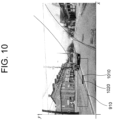
- Fig. 10 illustrates a process of calculating the distance regression loss, and as illustrated in .example thereof, if said one of the GT lanes is determined as present near each of the estimated lanes, the distance regression loss lr may be calculated by referring to each of distances x GT - f ( y
- a certain region like the region 810 represented as the solid lines, is searched in the either direction parallel to the x-axis from the pixels of the estimated lanes, and if one of the GT lanes is determined as present, like the pixels on the solid line in the positive direction of the x-axis from the coordinates of the pixels on the estimated lanes, then a first output, i.e., the existence loss, may be [1, 0], and a second output, i.e., the distance regression loss, may be acquired by referring to a difference between the x-coordinates of the two pixels.
- the first output i.e., the existence loss
- the second output i.e., the distance regression loss
- the ROI pooling layer 650 may extract the areal features of region 910 near the pixels 920 ( f ( y
- the learning device may calculate or support another device to calculate the existence loss and the distance regression loss by using the feature map outputted from the ROI pooling layer 650.
- the learning device may further perform or support another device to perform processes of extracting the areal features of the region 910 near the pixels 920 on the estimated lanes from the feature map, and of calculating the existence loss and the distance regression loss based on the areal features.
- the present invention provides a method of performing calculation, not by checking every pixel in the feature map of the input image, but by extracting only nearby areas of the pixels on the estimated lanes as illustrated in Fig. 9 , and thus remarkably reducing the amount of calculation.
- the step of S09 may be performed by backpropagating the classification loss, the existence loss and the distance regression loss, to thereby optimize the device parameters of the CNN.
- the existence loss is used for determining whether the lanes are present nearby or not, therefore it may be regarded as classification.
- the existence loss may calculated by using the cross entropy, etc.
- the distance regression loss uses a distance between coordinates acquired from learning and the GT coordinates, therefore it may be regarded as a regression loss.
- the distance regression loss may be calculated by using the Euclidean distance loss, etc.
- the device parameters of the learning device are optimized by learning processes described in Figs. 4 to 10 , and the lanes within images inputted from real-world driving situation are detected by using a testing device employing the device parameters.
- Fig. 11 is a drawing schematically illustrating a process of the lane detection through the lane model by using the testing device in accordance with the present invention.
- the testing device using the device parameters may instruct its encoding layer 1110 to apply the convolution operations to the acquired input image for testing, to thereby generate a feature map for testing 1120, and may input the feature map for testing 1120 into an FC layer 1130 for cluster ID classification, to thereby generate a result vector of the cluster ID classifications for testing 1140, which represents estimated cluster IDs for testing of cluster groups of the lanes in the input image for testing.
- the testing device may generate or support another device to generate each of representative cluster group values for testing by using at least part of the estimated cluster IDs for testing, where the at least part of the estimated cluster IDs for testing are determined by referring to information on whether each of vector components of the result vector of the cluster ID classifications for testing 1140 is larger than the predetermined threshold, and may determine each of estimated lanes for testing represented by each of the representative cluster group value ⁇ k for testing.
- the testing device may perform following processes by using the lanes represented by the representative cluster group values. That is, the testing device may perform or support another device to perform processes of (i) acquiring each x value for each y value from the representative cluster group values by using the equation ⁇ (x, y)
- x f ( y ; ⁇ i , j ) ⁇ , (ii) extracting areal features of the pixels on the estimated lanes for testing by using an ROI pooling layer 1150, (iii) determining whether actual lanes are present by using outputs from an FC layer 1160, (iv) if the actual lanes are determined as present, calculating each of distances between the actual lanes and the lanes represented by the representative cluster group values by using the FC layer for distance regression 1170, and (v) determining lanes, acquired via using the representative cluster group values and translating pixels of the estimated lanes by the amount of said each of distances, as the actual lanes.
- the testing device may perform or support another device to perform a step of extracting the areal features of certain regions near the pixels of the estimated lanes for testing from the feature map; a step of determining whether one of the actual lanes is present near each of the estimated lanes for testing, based on whether coordinates of said one of the actual lanes are present within a certain number of pixels in either direction parallel to the x-axis from respective coordinates of said each of the estimated lanes for testing, and if said one of the actual lanes is present nearby, calculating a distance between coordinates of said one of the actual lanes and those of the estimated lanes for testing; and a step of determining the estimated lanes for testing via translating the estimated lanes for testing by the amount of the distance.
- the actual lanes at the step of testing do not necessarily mean the GT lanes, but lanes in the input image for testing.
- the presence of the lanes within the ROI may be determined by the process (iii) of existence classification, and the difference between the actual lanes and the lanes estimated from the representative cluster group values may be estimated by using features in the ROI at the process (iv) of distance regression, thus the estimated lanes for testing may be determined by referring to the difference of the distances.
- the present invention discloses methods of generating data for learning the lane model by clustering and modeling of the lanes from the data for learning, learning the function parameters of the lane modeling function of the lanes in the input image based on the data for learning, and deriving the lane modeling function from the input image and detecting the lanes based on the lane modeling function.
- the lanes may be detected with less computations than conventional technology because only the feature maps near the detected lanes are used.
- communication parts of the learning device and the testing device may perform transmission of image data, for example, images described above like a training image, an input image, and an input image for testing, etc.
- processors and/or memories of the learning device and the testing device may retain data for feature maps and performing operations
- the processors of the learning device and the testing device may perform convolution operations, deconvolution operations, and loss value operations, but the scope of the present invention is not limited thereto.
- the present invention has an effect of generating data for learning the lane model by clustering and modeling of the lanes from the data for learning, and learning the function parameters by referring to the cluster IDs of the lane modeling function of the lanes in the input image based on the data for learning.
- the present invention has another effect of detecting the lanes based on the lane modeling functions derived from the input image by CNN learning.
- the present invention has still another effect of detecting the lanes with less computations than conventional technology because only feature maps near the detected lanes are used.
- the embodiments of the present invention as explained above can be implemented in a form of executable program command through a variety of computer means recordable to computer readable media.
- the computer readable media may include solely or in combination, program commands, data files, and data structures.
- the program commands recorded to the media may be components specially designed for the present invention or may be usable to a skilled human in a field of computer software.
- Computer readable media include magnetic media such as hard disk, floppy disk, and magnetic tape, optical media such as CD-ROM and DVD, magneto-optical media such as floptical disk and hardware devices such as ROM, RAM, and flash memory specially designed to store and carry out program commands.
- Program commands include not only a machine language code made by a compiler but also a high level code that can be used by an interpreter etc., which is executed by a computer.
- the aforementioned hardware device can work as more than a software module to perform the action of the present invention and they can do the same in the opposite case.
Landscapes
- Engineering & Computer Science (AREA)
- Theoretical Computer Science (AREA)
- Physics & Mathematics (AREA)
- General Physics & Mathematics (AREA)
- Evolutionary Computation (AREA)
- Artificial Intelligence (AREA)
- Software Systems (AREA)
- General Health & Medical Sciences (AREA)
- Health & Medical Sciences (AREA)
- Computing Systems (AREA)
- Computer Vision & Pattern Recognition (AREA)
- Life Sciences & Earth Sciences (AREA)
- Data Mining & Analysis (AREA)
- Multimedia (AREA)
- General Engineering & Computer Science (AREA)
- Biomedical Technology (AREA)
- Molecular Biology (AREA)
- Biophysics (AREA)
- Computational Linguistics (AREA)
- Mathematical Physics (AREA)
- Medical Informatics (AREA)
- Databases & Information Systems (AREA)
- Probability & Statistics with Applications (AREA)
- Bioinformatics & Cheminformatics (AREA)
- Bioinformatics & Computational Biology (AREA)
- Evolutionary Biology (AREA)
- Biodiversity & Conservation Biology (AREA)
- Image Analysis (AREA)
Claims (12)
- Lernverfahren zum Lernen eines CNN, das in der Lage ist, eine oder mehrere Fahrspuren zu detektieren, umfassend die folgenden Schritte:(a) eine Lernvorrichtung weist die eine oder mehrere Faltungsschichten (610) an, eine oder mehrere Merkmalskarten (620) zu erzeugen, indem eine oder mehrere Faltungsoperationen auf ein aus mindestens einem Bilddatensatz ausgewähltes Eingangsbild angewendet werden;(b) die Lernvorrichtung weist eine FC-Schicht (630) an, einen geschätzten Ergebnisvektor (640) von Cluster-ID-Klassifikationen der Fahrspuren in dem Eingangsbild zu erzeugen, indem eine Merkmalskarte (620) von der einen oder den mehreren Merkmalskarten, die von den Faltungsschichten (610) ausgegeben werden, in die FC-Schicht (630) eingespeist wird; und(c) die Lernvorrichtung weist eine Verlustschicht an, mindestens einen Klassifikationsverlust durch Bezugnahme auf den geschätzten Ergebnisvektor der Cluster-ID-Klassifikationen und einen Cluster-ID-GT-Vektor zu erzeugen und den Klassifikationsverlust zu backpropagieren, um dadurch Vorrichtungsparameter des CNN zu optimieren;wobei K Clustergruppen Funktionsparametern einer Fahrspurmodellierungsfunktion durch Clustern aller Funktionsparameter der Fahrspurmodellierungsfunktion aus jedem Bild des mindestens einen Bilddatensatzes zugewiesen werden, wobei die Funktionsparameter unter Verwendung von Pixelinformationen von Koordinaten von Mittelpunkten der Fahrspuren in jedem Bild des mindestens einen Bilddatensatzes berechnet werden, wobei jede von K Cluster-IDs jeder der K Clustergruppen zugewiesen wird,wobei der Cluster-ID-GT-Vektor ein K+1-dimensionaler Vektor ist, und (i) unter der Bedingung, dass die Fahrspuren als in dem Eingangsbild vorhanden bestimmt werden, wenn es eine spezifische Fahrspur mit einer spezifischen Cluster-ID Ck unter den K Cluster-IDs unter den Fahrspuren in dem Eingangsbild gibt, dann wird eine k-te Dimension des Cluster-ID-GT-Vektors mit 1 gefüllt, andere Dimensionen des Cluster-ID-GT-Vektors, die jeweils anderen Cluster-IDs entsprechen, unter den Cluster-IDs, die nicht in dem Eingangsbild vorhanden sind, mit 0 aufgefüllt werden, und eine (K+1)-te Dimension des Cluster-ID-GT-Vektors mit 0 aufgefüllt wird, und (ii) wenn keine Fahrspuren als in dem Eingangsbild vorhanden bestimmt werden, eine erste Dimension bis zu einer K-ten Dimension des Cluster-ID-GT-Vektors mit 0 aufgefüllt werden, und die (K+1)-te Dimension des Cluster-ID-GT-Vektors mit 1 aufgefüllt wird,wobei k eine ganze Zahl im Bereich von 1 bis K ist, undwobei bei dem Schritt (c) der geschätzte Ergebnisvektor der Cluster-ID-Klassifikationen ein K + 1 dimensionaler Vektor ist.
- Verfahren nach Anspruch 1, wobei unter der Bedingung, dass jede der Fahrspuren Li,j in ihrer entsprechenden Clustergruppe Ck der Clustergruppen enthalten ist, und dass k jede Cluster-ID unter den Cluster-IDs ist, die jeder der Fahrspuren Li,j entsprechen, jede der Clustergruppen jeden der gemittelten Werte

wobei das Verfahren ferner einen Schritt umfasst:
(d) die Lernvorrichtung erzeugt oder unterstützt eine andere Vorrichtung, um jeden der repräsentativen Clustergruppenwerte entsprechend jeder der geschätzten Cluster-IDs zu erzeugen, und bestimmt oder unterstützt eine andere Vorrichtung, um jede der geschätzten Fahrspuren zu bestimmen, die durch jeden der repräsentativen Clustergruppenwerte θk repräsentiert werden. - Verfahren nach Anspruch 2, wobei jeder der repräsentativen Clustergruppenwerte unter Verwendung mindestens eines Teils der geschätzten Cluster-IDs erworben wird, wobei der mindestens eine Teil der geschätzten Cluster-IDs durch Bezugnahme auf Informationen darüber bestimmt wird, ob jede der Vektorkomponenten des Ergebnisvektors größer als ein vorbestimmter Wert ist.
- Verfahren nach Anspruch 2, ferner umfassend die folgenden Schritte:(e) die Lernvorrichtung erzeugt oder unterstützt eine andere Vorrichtung, um mindestens einen Existenzverlust zu erzeugen, der repräsentiert, ob eine der GT-Fahrspuren in der Nähe jeder der geschätzten Fahrspuren vorhanden ist, basierend darauf, ob Koordinaten der einen der GT-Fahrspuren innerhalb einer bestimmten Anzahl von Pixeln in jeder Richtung parallel zu einer x-Achse von jeweiligen Koordinaten jeder der geschätzten Fahrspuren vorhanden sind;(f) die Lernvorrichtung, wenn die eine der GT-Fahrspuren als in der Nähe jeder der geschätzten Fahrspuren vorhanden bestimmt wird, erzeugt oder unterstützt eine andere Vorrichtung, um mindestens einen Abstandsregressionsverlust zu erzeugen, indem sie sich auf jeden der Abstände zwischen jedem der Pixel () jeder der geschätzten Fahrspuren und jedem der Pixel (x, y) jeder entsprechenden der GT-Fahrspuren bezieht; und(g) die Lernvorrichtung backpropagiert oder unterstützt eine andere Vorrichtung, um den Existenzverlust und den Abstandsregressionsverlust zu backpropagieren, um dadurch die Vorrichtungsparameter des CNN zu optimieren.
- Verfahren nach Anspruch 4, vor dem Schritt (e), ferner umfassend einen Schritt:(e0) die Lernvorrichtung extrahiert oder unterstützt eine andere Vorrichtung, um jedes von einem oder mehreren Flächenmerkmalen zu extrahieren, das jedes von Gebieten in der Nähe der Pixel (f(y|θk ),y) von jeder der geschätzten Fahrspuren aus der Merkmalskarte repräsentiert;wobei der Existenzverlust und der Abstandsregressionsverlust auf der Grundlage der Flächenmerkmale erzeugt werden.
- Testverfahren eines CNN, das in der Lage ist, eine oder mehrere Fahrspuren unter Verwendung eines Fahrspurmodells zu detektieren, umfassend die folgenden Schritte:(a) unter der Bedingung, dass eine Lernvorrichtung (i) eine oder mehrere Faltungsschichten (610) angewiesen hat, eine oder mehrere Merkmalskarten zum Training (620) zu erzeugen, indem eine oder mehrere Faltungsoperationen auf ein Eingangsbild zum Training angewendet werden, das aus mindestens einem Bilddatensatz zum Training ausgewählt wird; (ii) eine FC-Schicht (630; 1130) angewiesen hat, einen geschätzten Ergebnisvektor (640) von Cluster-ID-Klassifikationen zum Training der Fahrspuren in dem Eingangsbild zum Training zu erzeugen, indem eine Merkmalskarte zum Training (620) aus der einen oder den mehreren Merkmalskarten zum Training, die von den Faltungsschichten (610) ausgegeben werden, in die FC-Schicht (630) eingespeist wird, und eine Verlustschicht angewiesen hat, mindestens einen Klassifikationsverlust zu erzeugen, indem auf den geschätzten Ergebnisvektor der Cluster-ID-Klassifikationen zum Training und einen Cluster-ID-GT-Vektor Bezug genommen wird; (iii) jeden der repräsentativen Clustergruppenwerte zum Training erzeugt hat, die jedem der geschätzten Cluster-IDs zum Training entsprechen, und jede der geschätzten Fahrspuren zum Training bestimmt hat, die durch jeden der repräsentativen Clustergruppenwerte θk zum Training repräsentiert werden; (iv) mindestens einen Existenzverlust erzeugt hat, der repräsentiert, ob eine der GT-Fahrspuren in der Nähe jeder der geschätzten Fahrspuren zum Training vorhanden ist, basierend darauf, ob Koordinaten der einen der GT-Fahrspuren innerhalb einer bestimmten Anzahl von Pixeln in jeder Richtung parallel zu einer x-Achse von jeweiligen Koordinaten jeder der geschätzten Fahrspuren zum Training vorhanden sind; (v) mindestens einen Abstandsregressionsverlust durch Bezugnahme auf jeden der Abstände x -f(y|θk )) zwischen jedem der Pixel (f(y|θk ),y) jeder der geschätzten Fahrspuren zum Training und jedem der Pixel (x y) jeder entsprechenden Fahrspur erzeugt hat, die als in der Nähe jeder der geschätzten Fahrspuren zum Training vorhanden bestimmt wird, unter den GT-Fahrspuren; und (vi) den Klassifikationsverlust, den Existenzverlust und den Abstandsregressionsverlust backpropagiert hat, um dadurch die Vorrichtungsparameter des CNN zu optimieren, erwirbt eine Testvorrichtung oder unterstützt sie eine andere Vorrichtung, um ein Testbild zu erwerben;(b) die Testvorrichtung erzeugt oder unterstützt eine andere Vorrichtung, um eine oder mehrere Merkmalskarten zum Testen (1120) zu erzeugen, indem die Faltungsoperationen auf das Testbild angewendet werden;(c) die Testvorrichtung weist die FC-Schicht (630; 1130) an, einen Ergebnisvektor (1140) von Cluster-ID-Klassifikationen zum Testen der Fahrspuren in dem Testbild zu erzeugen, indem eine Merkmalskarte zum Testen (1120) von den Merkmalskarten zum Testen in die FC-Schicht (630; 1130) eingespeist wird, wobei der Ergebnisvektor (1140) von Cluster-ID-Klassifikationen zum Testen jede von einer oder mehreren Cluster-IDs zum Testen enthält, die für jede der Fahrspuren geschätzt werden; und(d) die Testvorrichtung erzeugt jeden der repräsentativen Clustergruppenwerte zum Testen, die jeder der geschätzten Cluster-IDs zum Testen entsprechen, und bestimmt jede der geschätzten Fahrspuren zum Testen, die durch jeden der repräsentativen Clustergruppenwerte θk zum Testen repräsentiert werden;wobei K Clustergruppen Funktionsparametern einer Fahrspurmodellierungsfunktion durch Clustern aller Funktionsparameter der Fahrspurmodellierungsfunktion aus jedem Bild des mindestens einen Bilddatensatzes zugewiesen werden, wobei die Funktionsparameter unter Verwendung von Pixelinformationen von Koordinaten von Mittelpunkten der Fahrspuren in jedem Bild des mindestens einen Bilddatensatzes berechnet werden, wobei jede von K Cluster-IDs jeder der K Clustergruppen zugewiesen wird, undwobei, wenn jede der Fahrspuren Li,j in ihrer entsprechenden Gruppe Ck der Clustergruppen enthalten ist, wobei k von 1 bis K reicht, und wenn k jede Cluster-ID unter den Cluster-IDs zum Training ist, die jeder der Fahrspuren Li,j entsprechen, jede der Clustergruppen jeden der gemittelten Werte
 wobei der Cluster-ID-GT-Vektor ein K+1 dimensionaler Vektor ist, und (i) unter der Bedingung, dass die Fahrspuren als in dem Eingangsbild vorhanden bestimmt werden, wenn es eine spezifische Fahrspur mit einer spezifischen Cluster-ID Ck unter den K Cluster-IDs unter den Fahrspuren in dem Eingangsbild gibt, dann wird eine k-te Dimension des Cluster-ID-GT-Vektors mit 1 gefüllt, andere Dimensionen des Cluster-ID-GT-Vektors, die jeweils anderen Cluster-IDs entsprechen, unter den Cluster-IDs, die nicht in dem Eingangsbild vorhanden sind, mit 0 aufgefüllt werden, und eine (K+1)-te Dimension des Cluster-ID-GT-Vektors mit 0 aufgefüllt wird, und (ii) wenn keine Fahrspuren als in dem Eingangsbild vorhanden bestimmt werden, eine erste Dimension bis zu einer K-ten Dimension des Cluster-ID-GT-Vektors mit 0 aufgefüllt werden, und die (K+1)-te Dimension des Cluster-ID-GT-Vektors mit 1 aufgefüllt wird,wobei k eine ganze Zahl im Bereich von 1 bis K ist, undwobei bei dem Schritt (a)(ii) der geschätzte Ergebnisvektor der Cluster-ID-Klassifikationen ein K+1-dimensionaler Vektor ist.
 - Lernvorrichtung zum Lernen eines CNN, das in der Lage ist, eine oder mehrere Fahrspuren zu detektieren, umfassend:einen Kommunikationsteil zum Erwerben oder Unterstützen einer anderen Vorrichtung zum Erwerben eines Eingangsbildes, das aus mindestens einem Bilddatensatz ausgewählt ist; undeinen Prozessor zum Durchführen der folgenden Prozesse: (i) Anweisen einer oder mehrerer Faltungsschichten (610) zum Erzeugen einer oder mehrerer Merkmalskarten (620) durch Anwenden einer oder mehrerer Faltungsoperationen auf das Eingangsbild; (ii) Anweisen einer FC-Schicht (630) zum Erzeugen eines geschätzten Ergebnisvektors (640) von Cluster-ID-Klassifikationen der Fahrspuren in dem Eingangsbild durch Einspeisen einer Merkmalskarte (620) aus der einen oder den mehreren Merkmalskarten, die von den Faltungsschichten ausgegeben werden, in die FC-Schicht und (iii) Anweisen einer Verlustschicht, um mindestens einen Klassifikationsverlust zu erzeugen, indem auf den geschätzten Ergebnisvektor der Cluster-ID-Klassifikationen und einen Cluster-ID-GT-Vektor Bezug genommen wird, und den Klassifizierungsverlust zu backpropagieren, um dadurch Vorrichtungsparameter des CNN zu optimieren; wobei K Clustergruppen Funktionsparametern einer Fahrspurmodellierungsfunktion durch Clustern aller Funktionsparameter der Fahrspurmodellierungsfunktion aus jedem Bild des mindestens einen Bilddatensatzes zugewiesen werden, wobei die Funktionsparameter unter Verwendung von Pixelinformationen von Koordinaten von Mittelpunkten der Fahrspuren in jedem Bild des mindestens einen Bilddatensatzes berechnet werden, wobei jede von K Cluster-IDs jeder der K Clustergruppen zugewiesen wird,wobei der Cluster-ID-GT-Vektor ein K+1-dimensionaler Vektor ist, und (I) unter der Bedingung, dass die Fahrspuren als in dem Eingangsbild vorhanden bestimmt werden, wenn es eine spezifische Fahrspur mit einer spezifischen Cluster-ID Ck unter den K Cluster-IDs unter den Fahrspuren in dem Eingangsbild gibt, dann wird eine k-te Dimension des Cluster-ID-GT-Vektors mit 1 gefüllt, andere Dimensionen des Cluster-ID-GT-Vektors, die jeweils anderen Cluster-IDs entsprechen, unter den Cluster-IDs, die nicht in dem Eingangsbild vorhanden sind, mit 0 aufgefüllt werden, und eine (K+1)-te Dimension des Cluster-ID-GT-Vektors mit 0 aufgefüllt wird, und (II) wenn keine Fahrspuren als in dem Eingangsbild vorhanden bestimmt werden, eine erste Dimension bis zu einer K-ten Dimension des Cluster-ID-GT-Vektors mit 0 aufgefüllt werden, und die (K+1)-te Dimension des Cluster-ID-GT-Vektors mit 1 aufgefüllt wird,wobei k eine ganze Zahl im Bereich von 1 bis K ist, undwobei bei dem Prozess von (iii) der geschätzte Ergebnisvektor der Cluster-ID-Klassifikationen ein K+1-dimensionaler Vektor ist.
- Lernvorrichtung nach Anspruch 7, wobei unter der Bedingung, dass jede der Fahrspuren Li,j in ihrer entsprechenden Clustergruppe Ck der Clustergruppen enthalten ist, und dass k jede Cluster-ID unter den Cluster-IDs ist, die jeder der Fahrspuren Li,j entsprechen, jede der Clustergruppen jeden der gemittelten Werte

wobei der Prozessor ferner einen Prozess durchführt:
(iv) Erzeugen oder Unterstützen einer anderen Vorrichtung, um jeden der repräsentativen Clustergruppenwerte entsprechend jeder der geschätzten Cluster-IDs zu erzeugen, und Bestimmen oder Unterstützen einer anderen Vorrichtung, um jede der geschätzten Fahrspuren zu bestimmen, die durch jeden der repräsentativen Clustergruppenwerte θk repräsentiert werden. - Lernvorrichtung nach Anspruch 8, wobei jeder der repräsentativen Clustergruppenwerte unter Verwendung zumindest eines Teils der geschätzten Cluster-IDs erworben wird, wobei der zumindest eine Teil der geschätzten Cluster-IDs durch Bezugnahme auf Informationen darüber bestimmt wird, ob jede der Vektorkomponenten des Ergebnisvektors größer als ein vorbestimmter Wert ist.
- Lernvorrichtung nach Anspruch 8, wobei der Prozessor ferner die folgenden Prozesse durchführt:(v) Erzeugen oder Unterstützen einer anderen Vorrichtung, um mindestens einen Existenzverlust zu erzeugen, der repräsentiert, ob eine der GT-Fahrspuren in der Nähe jeder der geschätzten Fahrspuren vorhanden ist, basierend darauf, ob Koordinaten der einen der GT-Fahrspuren innerhalb einer bestimmten Anzahl von Pixeln in jeder Richtung parallel zu einer x-Achse von jeweiligen Koordinaten jeder der geschätzten Fahrspuren vorhanden sind;(vi) wenn festgestellt wird, dass die eine der GT-Fahrspuren in der Nähe jeder der geschätzten Fahrspuren vorhanden ist, Erzeugen oder Unterstützen einer anderen Vorrichtung, um mindestens einen Abstandsregressionsverlust zu erzeugen, indem auf jeden der Abstände x -f(y|θk ) zwischen jedem der Pixel f(y|θk ),y jeder der geschätzten Fahrspuren und jedem der Pixel (x ,y) jeder entsprechenden der GT-Fahrspuren Bezug genommen wird; und(vii) Backpropagieren oder Unterstützen einer anderen Vorrichtung, um den Existenzverlust und den Abstandsregressionsverlust zu backpropagieren, um dadurch die Vorrichtungsparameter des CNN zu optimieren.
- Lernvorrichtung nach Anspruch 10, wobei der Prozessor vor dem Prozess von (v) ferner einen Prozess durchführt:(v0) Extrahieren oder Unterstützen einer anderen Vorrichtung, um jedes von einem oder mehreren Flächenmerkmalen zu extrahieren, das jedes von Gebieten in der Nähe der Pixel (f(y|θk ),y) von jeder der geschätzten Fahrspuren aus der Merkmalskarte repräsentiert;wobei der Existenzverlust und der Abstandsregressionsverlust auf der Grundlage der Flächenmerkmale erzeugt werden.
- Testvorrichtung eines CNN, das in der Lage ist, eine oder mehrere Fahrspuren unter Verwendung eines Fahrspurmodells zu detektieren, umfassend:einen Kommunikationsteil, (I) unter der Bedingung, dass eine Lernvorrichtung (i) eine oder mehrere Faltungsschichten (610) angewiesen hat, eine oder mehrere Merkmalskarten zum Training (620) zu erzeugen, indem eine oder mehrere Faltungsoperationen auf ein Eingabebild zum Training angewendet werden, das aus mindestens einem Bilddatensatz zum Training ausgewählt wird; (ii) eine FC-Schicht (630; 1130) angewiesen hat, um einen geschätzten Ergebnisvektor (640) von Cluster-ID-Klassifikationen zum Training der Fahrspuren in dem Eingangsbild zum Training zu erzeugen, indem eine Merkmalskarte zum Training (620) aus der einen oder den mehreren Merkmalskarten zum Training, die von den Faltungsschichten (610) ausgegeben werden, in die FC-Schicht (630) eingespeist wird, und eine Verlustschicht angewiesen hat, um mindestens einen Klassifikationsverlust zu erzeugen, indem auf den geschätzten Ergebnisvektor der Cluster-ID-Klassifikationen zum Training und einen Cluster-ID-GT-Vektor Bezug genommen wird; (iii) jeden der repräsentativen Clustergruppenwerte zum Training erzeugt hat, die jeder der geschätzten Cluster-IDs zum Training entsprechen, und jede der geschätzten Fahrspuren zum Training bestimmt hat, die durch jeden der repräsentativen Clustergruppenwerte θk zum Training repräsentiert werden; (iv) mindestens einen Existenzverlust erzeugt hat, der repräsentiert, ob eine der GT-Fahrspuren in der Nähe jeder der geschätzten Fahrspuren zum Training vorhanden ist, basierend darauf, ob Koordinaten der einen der GT-Fahrspuren innerhalb einer bestimmten Anzahl von Pixeln in jeder Richtung parallel zu einer x-Achse von jeweiligen Koordinaten jeder der geschätzten Fahrspuren zum Training vorhanden sind; (v) mindestens einen Abstandsregressionsverlust durch Bezugnahme auf jeden der Abstände x - f(y|θk ) zwischen jedem der Pixel (f(y|θk ),y) jeder der geschätzten Fahrspuren zum Training und jedem der Pixel (x ,y) jeder entsprechenden Fahrspur erzeugt hat, die als in der Nähe jeder der geschätzten Fahrspuren zum Training vorhanden bestimmt wird, unter den GT-Fahrspuren; und (vi) den Klassifikationsverlust, den Existenzverlust und den Abstandsregressionsverlust backpropagiert hat, um dadurch die Vorrichtungsparameter des CNN zu optimieren, um ein Testbild zu erwerben oder eine andere Vorrichtung zu unterstützen, das Testbild zu erwerben; undeinen Prozessor zum (II) Erzeugen oder Unterstützen einer anderen Vorrichtung, um eine oder mehrere Merkmalskarten zum Testen (1120) zu erzeugen, indem die Faltungsoperationen auf das Testbild angewendet werden; (III) Anweisen der FC-Schicht (630; 1130), um einen Ergebnisvektor (1140) von Cluster-ID-Klassifikationen zum Testen der Fahrspuren in dem Testbild zu erzeugen, indem eine Merkmalskarte zum Testen (1120) aus den Merkmalskarten zum Testen in die FC-Schicht (630; 1130) eingespeist wird; wobei der Ergebnisvektor (1140) von Cluster-ID-Klassifikationen zum Testen jede von einer oder mehreren Cluster-IDs zum Testen enthält, die für jede der Fahrspuren geschätzt werden; und (IV) Erzeugen jedes von repräsentativen Clustergruppenwerten zum Testen, die jeder der geschätzten Cluster-IDs zum Testen entsprechen, und Bestimmen jeder von geschätzten Fahrspuren zum Testen, die durch jeden der repräsentativen Clustergruppenwerte θk zum Testen repräsentiert werden; wobei K Clustergruppen Funktionsparametern einer Fahrspurmodellierungsfunktion durch Clustern aller Funktionsparameter der Fahrspurmodellierungsfunktion aus jedem Bild des mindestens einen Bilddatensatzes zugewiesen werden, wobei die Funktionsparameter unter Verwendung von Pixelinformationen von Koordinaten von Mittelpunkten der Fahrspuren in jedem Bild des mindestens einen Bilddatensatzes berechnet werden, wobei jede von K Cluster-IDs jeder der K Clustergruppen zugewiesen wird, und wobei, wenn jede der Fahrspuren Li,j in ihrer entsprechenden Gruppe Ck der Clustergruppen enthalten ist, k im Bereich von 1 bis K liegt, und wenn k jede Cluster-ID unter den Cluster-IDs zum Training ist, die jeder der Fahrspuren Li,j entsprechen, jede der Clustergruppen jeden der gemittelten Werte
 wobei der Cluster-ID-GT-Vektor ein K+1-dimensionaler Vektor ist, und (i) unter der Bedingung, dass die Fahrspuren als in dem Eingangsbild vorhanden bestimmt werden, wenn es eine spezifische Fahrspur mit einer spezifischen Cluster-ID Ck unter den K Cluster-IDs unter den Fahrspuren in dem Eingangsbild gibt, dann wird eine k-te Dimension des Cluster-ID-GT-Vektors mit 1 gefüllt, andere Dimensionen des Cluster-ID-GT-Vektors, die jeweils anderen Cluster-IDs entsprechen, unter den Cluster-IDs, die nicht in dem Eingangsbild vorhanden sind, mit 0 aufgefüllt werden, und eine (K+1)-te Dimension des Cluster-ID-GT-Vektors mit 0 aufgefüllt wird, und (ii) wenn keine Fahrspuren als in dem Eingangsbild vorhanden bestimmt werden, eine erste Dimension bis zu einer K-ten Dimension des Cluster-ID-GT-Vektors mit 0 aufgefüllt werden, und die (K+1)-te Dimension des Cluster-ID-GT-Vektors mit 1 aufgefüllt wird,wobei k eine ganze Zahl im Bereich von 1 bis K ist, undwobei bei dem Schritt (I)(ii) der geschätzte Ergebnisvektor der Cluster-ID-Klassifikationen ein K+1-dimensionaler Vektor ist.
Applications Claiming Priority (1)
| Application Number | Priority Date | Filing Date | Title |
|---|---|---|---|
| US16/121,670 US10262214B1 (en) | 2018-09-05 | 2018-09-05 | Learning method, learning device for detecting lane by using CNN and testing method, testing device using the same |
Publications (3)
| Publication Number | Publication Date |
|---|---|
| EP3620980A1 EP3620980A1 (de) | 2020-03-11 |
| EP3620980B1 true EP3620980B1 (de) | 2023-11-01 |
| EP3620980C0 EP3620980C0 (de) | 2023-11-01 |
Family
ID=66098465
Family Applications (1)
| Application Number | Title | Priority Date | Filing Date |
|---|---|---|---|
| EP19178056.8A Active EP3620980B1 (de) | 2018-09-05 | 2019-06-04 | Lernverfahren, lernvorrichtung zur erkennung einer spur durch verwendung von cnn und prüfverfahren, prüfvorrichtung mit verwendung davon |
Country Status (5)
| Country | Link |
|---|---|
| US (1) | US10262214B1 (de) |
| EP (1) | EP3620980B1 (de) |
| JP (1) | JP6847463B2 (de) |
| KR (1) | KR102279376B1 (de) |
| CN (1) | CN110889318B (de) |
Families Citing this family (14)
| Publication number | Priority date | Publication date | Assignee | Title |
|---|---|---|---|---|
| US10783393B2 (en) * | 2017-06-20 | 2020-09-22 | Nvidia Corporation | Semi-supervised learning for landmark localization |
| CN110287817B (zh) * | 2019-06-05 | 2021-09-21 | 北京字节跳动网络技术有限公司 | 目标识别及目标识别模型的训练方法、装置和电子设备 |
| GB201908530D0 (en) * | 2019-06-13 | 2019-07-31 | Microsoft Technology Licensing Llc | Robutness against manipulations n machine learning |
| CN110363160B (zh) * | 2019-07-17 | 2022-09-23 | 河南工业大学 | 一种多车道线识别方法及装置 |
| CN112446266B (zh) * | 2019-09-04 | 2024-03-29 | 北京君正集成电路股份有限公司 | 一种适合前端的人脸识别网络结构 |
| US11836992B2 (en) * | 2021-01-29 | 2023-12-05 | General Motors Llc | Identification and clustering of lane lines on roadways using reinforcement learning |
| CN113704528B (zh) * | 2021-03-19 | 2025-07-08 | 腾讯科技(北京)有限公司 | 聚类中心确定方法、装置和设备及计算机存储介质 |
| CN113221643B (zh) * | 2021-04-06 | 2023-04-11 | 中国科学院合肥物质科学研究院 | 一种采用级联网络的车道线分类方法及系统 |
| KR102531838B1 (ko) * | 2021-05-06 | 2023-05-12 | 대한민국 | 극자외선 태양 영상을 사용하여 지자기 교란 지수를 예측하는 학습 방법 및 학습 장치, 그리고 이를 이용한 테스트 방법 및 테스트 장치 |
| CN113469239B (zh) * | 2021-06-29 | 2023-01-31 | 展讯通信(上海)有限公司 | 线损值评估模型生成方法、系统、设备及介质 |
| KR102632773B1 (ko) | 2021-09-30 | 2024-02-06 | 고려대학교 산학협력단 | 의료데이터 스플릿 학습 시스템과 이의 제어방법 및 그 방법을 수행하기 위한 기록매체 |
| US12462525B2 (en) * | 2021-10-21 | 2025-11-04 | The Toronto-Dominion Bank | Co-learning object and relationship detection with density aware loss |
| CN114399828B (zh) * | 2022-03-25 | 2022-07-08 | 深圳比特微电子科技有限公司 | 用于图像处理的卷积神经网络模型的训练方法 |
| US12613107B2 (en) | 2023-11-08 | 2026-04-28 | Woven By Toyota, Inc. | Systems and methods for estimating lane boundaries using a slicing model |
Family Cites Families (18)
| Publication number | Priority date | Publication date | Assignee | Title |
|---|---|---|---|---|
| JPH09223218A (ja) * | 1996-02-15 | 1997-08-26 | Toyota Motor Corp | 走路検出方法及び装置 |
| KR19990059238A (ko) * | 1997-12-30 | 1999-07-26 | 정몽규 | 무인자율주행차량용 차선검출방법 및 조향제어장치 |
| KR101225626B1 (ko) * | 2010-07-19 | 2013-01-24 | 포항공과대학교 산학협력단 | 차선 인식 시스템 및 방법 |
| WO2016037300A1 (en) * | 2014-09-10 | 2016-03-17 | Xiaoou Tang | Method and system for multi-class object detection |
| CN106157283A (zh) * | 2015-04-01 | 2016-11-23 | 株式会社理光 | 道路分割物的检测方法和装置 |
| CN105354568A (zh) * | 2015-08-24 | 2016-02-24 | 西安电子科技大学 | 基于卷积神经网络的车标识别方法 |
| CN105868691B (zh) * | 2016-03-08 | 2019-05-21 | 青岛邃智信息科技有限公司 | 基于快速区域卷积神经网络的城市车辆追踪方法 |
| WO2018042388A1 (en) * | 2016-09-02 | 2018-03-08 | Artomatix Ltd. | Systems and methods for providing convolutional neural network based image synthesis using stable and controllable parametric models, a multiscale synthesis framework and novel network architectures |
| KR102628654B1 (ko) * | 2016-11-07 | 2024-01-24 | 삼성전자주식회사 | 차선을 표시하는 방법 및 장치 |
| KR101879207B1 (ko) * | 2016-11-22 | 2018-07-17 | 주식회사 루닛 | 약한 지도 학습 방식의 객체 인식 방법 및 장치 |
| JP6798860B2 (ja) * | 2016-11-29 | 2020-12-09 | 株式会社Soken | 境界線推定装置 |
| CN106778668B (zh) * | 2016-12-30 | 2019-08-09 | 明见(厦门)技术有限公司 | 一种联合ransac和cnn的鲁棒的车道线检测方法 |
| KR101869266B1 (ko) * | 2017-05-08 | 2018-06-21 | 경북대학교 산학협력단 | 극한 심층학습 기반 차선 검출 시스템 및 그 방법 |
| KR102400017B1 (ko) * | 2017-05-17 | 2022-05-19 | 삼성전자주식회사 | 객체를 식별하는 방법 및 디바이스 |
| CN107730904A (zh) * | 2017-06-13 | 2018-02-23 | 银江股份有限公司 | 基于深度卷积神经网络的多任务车辆逆向行驶视觉检测系统 |
| CN107688823B (zh) * | 2017-07-20 | 2018-12-04 | 北京三快在线科技有限公司 | 一种图像特征获取方法及装置,电子设备 |
| US10007865B1 (en) * | 2017-10-16 | 2018-06-26 | StradVision, Inc. | Learning method and learning device for adjusting parameters of CNN by using multi-scale feature maps and testing method and testing device using the same |
| CN108009524B (zh) * | 2017-12-25 | 2021-07-09 | 西北工业大学 | 一种基于全卷积网络的车道线检测方法 |
-
2018
- 2018-09-05 US US16/121,670 patent/US10262214B1/en active Active
-
2019
- 2019-06-04 EP EP19178056.8A patent/EP3620980B1/de active Active
- 2019-08-27 KR KR1020190105470A patent/KR102279376B1/ko active Active
- 2019-08-30 CN CN201910813373.3A patent/CN110889318B/zh active Active
- 2019-09-03 JP JP2019160025A patent/JP6847463B2/ja active Active
Also Published As
| Publication number | Publication date |
|---|---|
| KR20200027889A (ko) | 2020-03-13 |
| US10262214B1 (en) | 2019-04-16 |
| EP3620980A1 (de) | 2020-03-11 |
| CN110889318B (zh) | 2024-01-19 |
| KR102279376B1 (ko) | 2021-07-21 |
| CN110889318A (zh) | 2020-03-17 |
| EP3620980C0 (de) | 2023-11-01 |
| JP6847463B2 (ja) | 2021-03-24 |
| JP2020038660A (ja) | 2020-03-12 |
Similar Documents
| Publication | Publication Date | Title |
|---|---|---|
| US10262214B1 (en) | Learning method, learning device for detecting lane by using CNN and testing method, testing device using the same | |
| EP3620958B1 (de) | Lernverfahren, lernvorrichtung zur erkennung einer spur durch spurmodell und prüfverfahren, prüfvorrichtung mit verwendung davon | |
| EP3620956B1 (de) | Lernverfahren, lernvorrichtung zur erkennung einer spur durch klassifizierung von spurkandidatenpixeln und prüfverfahren, prüfvorrichtung damit | |
| EP3644237B1 (de) | Lernverfahren und lernvorrichtung mit verwendung mehrerer markierter datenbanken mit verschiedenen labelsätzen und testverfahren und testvorrichtung mit verwendung davon | |
| EP3620979B1 (de) | Lernverfahren, lernvorrichtung zur objekterkennung mit kantenbild und prüfverfahren, prüfvorrichtung damit | |
| US11640714B2 (en) | Video panoptic segmentation | |
| US10504027B1 (en) | CNN-based learning method, learning device for selecting useful training data and test method, test device using the same | |
| CN110909618B (zh) | 一种宠物身份的识别方法及装置 | |
| CN110879962B (zh) | 利用多个视频帧优化cnn参数的方法和装置 | |
| CN110909820A (zh) | 基于自监督学习的图像分类方法及系统 | |
| US10303981B1 (en) | Learning method and testing method for R-CNN based object detector, and learning device and testing device using the same | |
| CN106815323B (zh) | 一种基于显著性检测的跨域视觉检索方法 | |
| CN111950498A (zh) | 一种基于端到端实例分割的车道线检测方法及装置 | |
| CN110147841A (zh) | 基于弱监督及无监督部件检测和分割的细粒度分类方法 | |
| KR20220060722A (ko) | 이미지 데이터 라벨링 학습 방법 및 그 장치 | |
| EP3623991B1 (de) | Lernverfahren, lernvorrichtung zur erkennung von spuren basierend auf cnn und prüfverfahren, prüfvorrichtung damit | |
| CN111414952A (zh) | 行人重识别的噪声样本识别方法、装置、设备和存储介质 | |
| Cho et al. | N-RPN: Hard example learning for region proposal networks | |
| CN113850166A (zh) | 一种基于卷积神经网络的船舶图像识别方法及系统 | |
| CN116189130A (zh) | 基于图像标注模型的车道线分割方法及装置 | |
| Turtinen et al. | Contextual analysis of textured scene images. | |
| CN115797678B (zh) | 图像处理方法、装置、设备、存储介质及计算机程序产品 | |
| CN116342876B (zh) | 一种图像分割方法、系统、电子设备及存储介质 | |
| Pakkala et al. | Road Surface Analysis Through Prognostic Model Using Image Processing and Deep Learning Techniques | |
| Nikam et al. | OBJECT DETECTION AND IDENTIFICATION (TRAFFIC SIGNS AND SIGNALS) |
Legal Events
| Date | Code | Title | Description |
|---|---|---|---|
| PUAI | Public reference made under article 153(3) epc to a published international application that has entered the european phase |
Free format text: ORIGINAL CODE: 0009012 |
|
| STAA | Information on the status of an ep patent application or granted ep patent |
Free format text: STATUS: REQUEST FOR EXAMINATION WAS MADE |
|
| 17P | Request for examination filed |
Effective date: 20190604 |
|
| AK | Designated contracting states |
Kind code of ref document: A1 Designated state(s): AL AT BE BG CH CY CZ DE DK EE ES FI FR GB GR HR HU IE IS IT LI LT LU LV MC MK MT NL NO PL PT RO RS SE SI SK SM TR |
|
| AX | Request for extension of the european patent |
Extension state: BA ME |
|
| RBV | Designated contracting states (corrected) |
Designated state(s): AL AT BE BG CH CY CZ DE DK EE ES FI FR GB GR HR HU IE IS IT LI LT LU LV MC MK MT NL NO PL PT RO RS SE SI SK SM TR |
|
| STAA | Information on the status of an ep patent application or granted ep patent |
Free format text: STATUS: EXAMINATION IS IN PROGRESS |
|
| 17Q | First examination report despatched |
Effective date: 20210719 |
|
| REG | Reference to a national code |
Ref legal event code: R079 Ipc: G06V0020560000 Ref country code: DE Ref legal event code: R079 Ref document number: 602019040419 Country of ref document: DE Free format text: PREVIOUS MAIN CLASS: G06K0009620000 Ipc: G06V0020560000 |
|
| RIC1 | Information provided on ipc code assigned before grant |
Ipc: G06N 3/084 20230101ALI20230425BHEP Ipc: G06T 7/12 20170101ALI20230425BHEP Ipc: G06F 18/232 20230101ALI20230425BHEP Ipc: G06N 3/045 20230101ALI20230425BHEP Ipc: G06V 10/82 20220101ALI20230425BHEP Ipc: G06V 10/764 20220101ALI20230425BHEP Ipc: G06V 10/762 20220101ALI20230425BHEP Ipc: G06V 20/56 20220101AFI20230425BHEP |
|
| GRAP | Despatch of communication of intention to grant a patent |
Free format text: ORIGINAL CODE: EPIDOSNIGR1 |
|
| STAA | Information on the status of an ep patent application or granted ep patent |
Free format text: STATUS: GRANT OF PATENT IS INTENDED |
|
| RIC1 | Information provided on ipc code assigned before grant |
Ipc: G06V 10/44 20220101ALN20230523BHEP Ipc: G06N 7/01 20230101ALN20230523BHEP Ipc: G06N 5/01 20230101ALN20230523BHEP Ipc: G06N 3/048 20230101ALN20230523BHEP Ipc: G06N 20/10 20190101ALN20230523BHEP Ipc: G06N 3/084 20230101ALI20230523BHEP Ipc: G06T 7/12 20170101ALI20230523BHEP Ipc: G06F 18/232 20230101ALI20230523BHEP Ipc: G06N 3/045 20230101ALI20230523BHEP Ipc: G06V 10/82 20220101ALI20230523BHEP Ipc: G06V 10/764 20220101ALI20230523BHEP Ipc: G06V 10/762 20220101ALI20230523BHEP Ipc: G06V 20/56 20220101AFI20230523BHEP |
|
| INTG | Intention to grant announced |
Effective date: 20230609 |
|
| GRAS | Grant fee paid |
Free format text: ORIGINAL CODE: EPIDOSNIGR3 |
|
| GRAA | (expected) grant |
Free format text: ORIGINAL CODE: 0009210 |
|
| STAA | Information on the status of an ep patent application or granted ep patent |
Free format text: STATUS: THE PATENT HAS BEEN GRANTED |
|
| AK | Designated contracting states |
Kind code of ref document: B1 Designated state(s): AL AT BE BG CH CY CZ DE DK EE ES FI FR GB GR HR HU IE IS IT LI LT LU LV MC MK MT NL NO PL PT RO RS SE SI SK SM TR |
|
| REG | Reference to a national code |
Ref country code: GB Ref legal event code: FG4D |
|
| REG | Reference to a national code |
Ref country code: CH Ref legal event code: EP |
|
| REG | Reference to a national code |
Ref country code: IE Ref legal event code: FG4D |
|
| REG | Reference to a national code |
Ref country code: DE Ref legal event code: R096 Ref document number: 602019040419 Country of ref document: DE |
|
| U01 | Request for unitary effect filed |
Effective date: 20231122 |
|
| U07 | Unitary effect registered |
Designated state(s): AT BE BG DE DK EE FI FR IT LT LU LV MT NL PT SE SI Effective date: 20231129 |
|
| PG25 | Lapsed in a contracting state [announced via postgrant information from national office to epo] |
Ref country code: GR Free format text: LAPSE BECAUSE OF FAILURE TO SUBMIT A TRANSLATION OF THE DESCRIPTION OR TO PAY THE FEE WITHIN THE PRESCRIBED TIME-LIMIT Effective date: 20240202 |
|
| PG25 | Lapsed in a contracting state [announced via postgrant information from national office to epo] |
Ref country code: IS Free format text: LAPSE BECAUSE OF FAILURE TO SUBMIT A TRANSLATION OF THE DESCRIPTION OR TO PAY THE FEE WITHIN THE PRESCRIBED TIME-LIMIT Effective date: 20240301 |
|
| PG25 | Lapsed in a contracting state [announced via postgrant information from national office to epo] |
Ref country code: ES Free format text: LAPSE BECAUSE OF FAILURE TO SUBMIT A TRANSLATION OF THE DESCRIPTION OR TO PAY THE FEE WITHIN THE PRESCRIBED TIME-LIMIT Effective date: 20231101 |
|
| PG25 | Lapsed in a contracting state [announced via postgrant information from national office to epo] |
Ref country code: IS Free format text: LAPSE BECAUSE OF FAILURE TO SUBMIT A TRANSLATION OF THE DESCRIPTION OR TO PAY THE FEE WITHIN THE PRESCRIBED TIME-LIMIT Effective date: 20240301 Ref country code: GR Free format text: LAPSE BECAUSE OF FAILURE TO SUBMIT A TRANSLATION OF THE DESCRIPTION OR TO PAY THE FEE WITHIN THE PRESCRIBED TIME-LIMIT Effective date: 20240202 Ref country code: ES Free format text: LAPSE BECAUSE OF FAILURE TO SUBMIT A TRANSLATION OF THE DESCRIPTION OR TO PAY THE FEE WITHIN THE PRESCRIBED TIME-LIMIT Effective date: 20231101 |
|
| PG25 | Lapsed in a contracting state [announced via postgrant information from national office to epo] |
Ref country code: RS Free format text: LAPSE BECAUSE OF FAILURE TO SUBMIT A TRANSLATION OF THE DESCRIPTION OR TO PAY THE FEE WITHIN THE PRESCRIBED TIME-LIMIT Effective date: 20231101 Ref country code: PL Free format text: LAPSE BECAUSE OF FAILURE TO SUBMIT A TRANSLATION OF THE DESCRIPTION OR TO PAY THE FEE WITHIN THE PRESCRIBED TIME-LIMIT Effective date: 20231101 Ref country code: NO Free format text: LAPSE BECAUSE OF FAILURE TO SUBMIT A TRANSLATION OF THE DESCRIPTION OR TO PAY THE FEE WITHIN THE PRESCRIBED TIME-LIMIT Effective date: 20240201 Ref country code: HR Free format text: LAPSE BECAUSE OF FAILURE TO SUBMIT A TRANSLATION OF THE DESCRIPTION OR TO PAY THE FEE WITHIN THE PRESCRIBED TIME-LIMIT Effective date: 20231101 |
|
| U20 | Renewal fee for the european patent with unitary effect paid |
Year of fee payment: 6 Effective date: 20240503 |
|
| PG25 | Lapsed in a contracting state [announced via postgrant information from national office to epo] |
Ref country code: CZ Free format text: LAPSE BECAUSE OF FAILURE TO SUBMIT A TRANSLATION OF THE DESCRIPTION OR TO PAY THE FEE WITHIN THE PRESCRIBED TIME-LIMIT Effective date: 20231101 |
|
| PG25 | Lapsed in a contracting state [announced via postgrant information from national office to epo] |
Ref country code: SK Free format text: LAPSE BECAUSE OF FAILURE TO SUBMIT A TRANSLATION OF THE DESCRIPTION OR TO PAY THE FEE WITHIN THE PRESCRIBED TIME-LIMIT Effective date: 20231101 |
|
| PG25 | Lapsed in a contracting state [announced via postgrant information from national office to epo] |
Ref country code: SM Free format text: LAPSE BECAUSE OF FAILURE TO SUBMIT A TRANSLATION OF THE DESCRIPTION OR TO PAY THE FEE WITHIN THE PRESCRIBED TIME-LIMIT Effective date: 20231101 Ref country code: SK Free format text: LAPSE BECAUSE OF FAILURE TO SUBMIT A TRANSLATION OF THE DESCRIPTION OR TO PAY THE FEE WITHIN THE PRESCRIBED TIME-LIMIT Effective date: 20231101 Ref country code: CZ Free format text: LAPSE BECAUSE OF FAILURE TO SUBMIT A TRANSLATION OF THE DESCRIPTION OR TO PAY THE FEE WITHIN THE PRESCRIBED TIME-LIMIT Effective date: 20231101 |
|
| REG | Reference to a national code |
Ref country code: DE Ref legal event code: R097 Ref document number: 602019040419 Country of ref document: DE |
|
| PLBE | No opposition filed within time limit |
Free format text: ORIGINAL CODE: 0009261 |
|
| STAA | Information on the status of an ep patent application or granted ep patent |
Free format text: STATUS: NO OPPOSITION FILED WITHIN TIME LIMIT |
|
| 26N | No opposition filed |
Effective date: 20240802 |
|
| PG25 | Lapsed in a contracting state [announced via postgrant information from national office to epo] |
Ref country code: MC Free format text: LAPSE BECAUSE OF FAILURE TO SUBMIT A TRANSLATION OF THE DESCRIPTION OR TO PAY THE FEE WITHIN THE PRESCRIBED TIME-LIMIT Effective date: 20231101 |
|
| REG | Reference to a national code |
Ref country code: CH Ref legal event code: PL |
|
| GBPC | Gb: european patent ceased through non-payment of renewal fee |
Effective date: 20240604 |
|
| PG25 | Lapsed in a contracting state [announced via postgrant information from national office to epo] |
Ref country code: IE Free format text: LAPSE BECAUSE OF NON-PAYMENT OF DUE FEES Effective date: 20240604 |
|
| PG25 | Lapsed in a contracting state [announced via postgrant information from national office to epo] |
Ref country code: CH Free format text: LAPSE BECAUSE OF NON-PAYMENT OF DUE FEES Effective date: 20240630 |
|
| PG25 | Lapsed in a contracting state [announced via postgrant information from national office to epo] |
Ref country code: GB Free format text: LAPSE BECAUSE OF NON-PAYMENT OF DUE FEES Effective date: 20240604 |
|
| U20 | Renewal fee for the european patent with unitary effect paid |
Year of fee payment: 7 Effective date: 20250506 |
|
| PG25 | Lapsed in a contracting state [announced via postgrant information from national office to epo] |
Ref country code: RO Free format text: LAPSE BECAUSE OF FAILURE TO SUBMIT A TRANSLATION OF THE DESCRIPTION OR TO PAY THE FEE WITHIN THE PRESCRIBED TIME-LIMIT Effective date: 20231101 |
|
| PG25 | Lapsed in a contracting state [announced via postgrant information from national office to epo] |
Ref country code: CY Free format text: LAPSE BECAUSE OF FAILURE TO SUBMIT A TRANSLATION OF THE DESCRIPTION OR TO PAY THE FEE WITHIN THE PRESCRIBED TIME-LIMIT; INVALID AB INITIO Effective date: 20190604 |
|
| PG25 | Lapsed in a contracting state [announced via postgrant information from national office to epo] |
Ref country code: HU Free format text: LAPSE BECAUSE OF FAILURE TO SUBMIT A TRANSLATION OF THE DESCRIPTION OR TO PAY THE FEE WITHIN THE PRESCRIBED TIME-LIMIT; INVALID AB INITIO Effective date: 20190604 |
|
| U20 | Renewal fee for the european patent with unitary effect paid |
Year of fee payment: 8 Effective date: 20260331 |