EP3620527A1 - Production method for substance using atp - Google Patents
Production method for substance using atp Download PDFInfo
- Publication number
- EP3620527A1 EP3620527A1 EP18794051.5A EP18794051A EP3620527A1 EP 3620527 A1 EP3620527 A1 EP 3620527A1 EP 18794051 A EP18794051 A EP 18794051A EP 3620527 A1 EP3620527 A1 EP 3620527A1
- Authority
- EP
- European Patent Office
- Prior art keywords
- atp
- derived
- polyphosphate kinase
- ppk2
- polyphosphoric acid
- Prior art date
- Legal status (The legal status is an assumption and is not a legal conclusion. Google has not performed a legal analysis and makes no representation as to the accuracy of the status listed.)
- Withdrawn
Links
- 239000000126 substance Substances 0.000 title claims abstract description 28
- 238000004519 manufacturing process Methods 0.000 title description 42
- 101710129823 Polyphosphate kinase 2 Proteins 0.000 claims abstract description 196
- 229920000137 polyphosphoric acid Polymers 0.000 claims abstract description 98
- 238000000034 method Methods 0.000 claims abstract description 89
- 239000000203 mixture Substances 0.000 claims abstract description 59
- 238000006243 chemical reaction Methods 0.000 claims abstract description 51
- 238000006116 polymerization reaction Methods 0.000 claims abstract description 48
- 239000000758 substrate Substances 0.000 claims abstract description 15
- 230000008929 regeneration Effects 0.000 claims abstract description 12
- 238000011069 regeneration method Methods 0.000 claims abstract description 12
- 108010053070 Glutathione Disulfide Proteins 0.000 claims description 41
- YPZRWBKMTBYPTK-BJDJZHNGSA-N glutathione disulfide Chemical compound OC(=O)[C@@H](N)CCC(=O)N[C@H](C(=O)NCC(O)=O)CSSC[C@@H](C(=O)NCC(O)=O)NC(=O)CC[C@H](N)C(O)=O YPZRWBKMTBYPTK-BJDJZHNGSA-N 0.000 claims description 41
- YPZRWBKMTBYPTK-UHFFFAOYSA-N oxidized gamma-L-glutamyl-L-cysteinylglycine Natural products OC(=O)C(N)CCC(=O)NC(C(=O)NCC(O)=O)CSSCC(C(=O)NCC(O)=O)NC(=O)CCC(N)C(O)=O YPZRWBKMTBYPTK-UHFFFAOYSA-N 0.000 claims description 40
- RWSXRVCMGQZWBV-WDSKDSINSA-N glutathione Chemical compound OC(=O)[C@@H](N)CCC(=O)N[C@@H](CS)C(=O)NCC(O)=O RWSXRVCMGQZWBV-WDSKDSINSA-N 0.000 claims description 36
- 108010024636 Glutathione Proteins 0.000 claims description 24
- DHMQDGOQFOQNFH-UHFFFAOYSA-N Glycine Chemical compound NCC(O)=O DHMQDGOQFOQNFH-UHFFFAOYSA-N 0.000 claims description 24
- WHUUTDBJXJRKMK-VKHMYHEASA-N L-glutamic acid Chemical compound OC(=O)[C@@H](N)CCC(O)=O WHUUTDBJXJRKMK-VKHMYHEASA-N 0.000 claims description 22
- GOZJYXJJQVGDOJ-UHFFFAOYSA-N bis-gamma-glutamylcystine Chemical compound OC(=O)C(N)CCC(=O)NC(C(O)=O)CSSCC(C(O)=O)NC(=O)CCC(N)C(O)=O GOZJYXJJQVGDOJ-UHFFFAOYSA-N 0.000 claims description 16
- 108010036164 Glutathione synthase Proteins 0.000 claims description 14
- 102100034294 Glutathione synthetase Human genes 0.000 claims description 14
- 239000004471 Glycine Substances 0.000 claims description 12
- 230000006870 function Effects 0.000 claims description 12
- 229960002989 glutamic acid Drugs 0.000 claims description 11
- LEVWYRKDKASIDU-IMJSIDKUSA-N L-cystine Chemical compound [O-]C(=O)[C@@H]([NH3+])CSSC[C@H]([NH3+])C([O-])=O LEVWYRKDKASIDU-IMJSIDKUSA-N 0.000 claims description 8
- 239000004158 L-cystine Substances 0.000 claims description 8
- 235000019393 L-cystine Nutrition 0.000 claims description 8
- 241000589517 Pseudomonas aeruginosa Species 0.000 claims description 8
- 229960003067 cystine Drugs 0.000 claims description 8
- 101000926003 Mycobacterium tuberculosis (strain ATCC 25618 / H37Rv) Glutamate-cysteine ligase EgtA Proteins 0.000 claims description 7
- 230000001588 bifunctional effect Effects 0.000 claims description 7
- 241001166319 Pannonibacter indicus Species 0.000 claims description 6
- 241000589540 Pseudomonas fluorescens Species 0.000 claims description 6
- 241000192560 Synechococcus sp. Species 0.000 claims description 6
- 241001644925 Corynebacterium efficiens Species 0.000 claims description 5
- 241000192091 Deinococcus radiodurans Species 0.000 claims description 5
- 241000156963 Gulbenkiania indica Species 0.000 claims description 5
- 241000902907 Kineococcus radiotolerans Species 0.000 claims description 5
- 241001136391 Thiobacillus denitrificans ATCC 25259 Species 0.000 claims description 5
- 108090000623 proteins and genes Proteins 0.000 description 67
- ZKHQWZAMYRWXGA-KQYNXXCUSA-J ATP(4-) Chemical compound C1=NC=2C(N)=NC=NC=2N1[C@@H]1O[C@H](COP([O-])(=O)OP([O-])(=O)OP([O-])([O-])=O)[C@@H](O)[C@H]1O ZKHQWZAMYRWXGA-KQYNXXCUSA-J 0.000 description 63
- ZKHQWZAMYRWXGA-UHFFFAOYSA-N Adenosine triphosphate Natural products C1=NC=2C(N)=NC=NC=2N1C1OC(COP(O)(=O)OP(O)(=O)OP(O)(O)=O)C(O)C1O ZKHQWZAMYRWXGA-UHFFFAOYSA-N 0.000 description 63
- 238000012360 testing method Methods 0.000 description 54
- 241000894006 Bacteria Species 0.000 description 48
- 210000004027 cell Anatomy 0.000 description 42
- 102000004169 proteins and genes Human genes 0.000 description 39
- 235000018102 proteins Nutrition 0.000 description 38
- 239000013598 vector Substances 0.000 description 34
- 230000000694 effects Effects 0.000 description 33
- 229940024606 amino acid Drugs 0.000 description 29
- 235000001014 amino acid Nutrition 0.000 description 29
- 150000001413 amino acids Chemical class 0.000 description 29
- 108020000161 polyphosphate kinase Proteins 0.000 description 26
- UEZVMMHDMIWARA-UHFFFAOYSA-N Metaphosphoric acid Chemical compound OP(=O)=O UEZVMMHDMIWARA-UHFFFAOYSA-N 0.000 description 22
- 244000005700 microbiome Species 0.000 description 21
- 241000588724 Escherichia coli Species 0.000 description 20
- 125000003275 alpha amino acid group Chemical group 0.000 description 19
- XTWYTFMLZFPYCI-KQYNXXCUSA-N 5'-adenylphosphoric acid Chemical compound C1=NC=2C(N)=NC=NC=2N1[C@@H]1O[C@H](COP(O)(=O)OP(O)(O)=O)[C@@H](O)[C@H]1O XTWYTFMLZFPYCI-KQYNXXCUSA-N 0.000 description 18
- XTWYTFMLZFPYCI-UHFFFAOYSA-N Adenosine diphosphate Natural products C1=NC=2C(N)=NC=NC=2N1C1OC(COP(O)(=O)OP(O)(O)=O)C(O)C1O XTWYTFMLZFPYCI-UHFFFAOYSA-N 0.000 description 18
- 125000000539 amino acid group Chemical group 0.000 description 18
- 102000004190 Enzymes Human genes 0.000 description 16
- 108090000790 Enzymes Proteins 0.000 description 16
- 230000002255 enzymatic effect Effects 0.000 description 16
- 239000000243 solution Substances 0.000 description 14
- 238000002360 preparation method Methods 0.000 description 12
- 239000007788 liquid Substances 0.000 description 11
- 108090000765 processed proteins & peptides Proteins 0.000 description 11
- 240000004808 Saccharomyces cerevisiae Species 0.000 description 10
- 235000014680 Saccharomyces cerevisiae Nutrition 0.000 description 10
- 239000012295 chemical reaction liquid Substances 0.000 description 10
- 229960003180 glutathione Drugs 0.000 description 10
- 241000589516 Pseudomonas Species 0.000 description 9
- 230000035772 mutation Effects 0.000 description 9
- 241000196324 Embryophyta Species 0.000 description 8
- 238000004458 analytical method Methods 0.000 description 7
- MOMKYJPSVWEWPM-UHFFFAOYSA-N 4-(chloromethyl)-2-(4-methylphenyl)-1,3-thiazole Chemical compound C1=CC(C)=CC=C1C1=NC(CCl)=CS1 MOMKYJPSVWEWPM-UHFFFAOYSA-N 0.000 description 6
- XUJNEKJLAYXESH-REOHCLBHSA-N L-Cysteine Chemical compound SC[C@H](N)C(O)=O XUJNEKJLAYXESH-REOHCLBHSA-N 0.000 description 6
- RITKHVBHSGLULN-WHFBIAKZSA-N L-gamma-glutamyl-L-cysteine Chemical compound OC(=O)[C@@H](N)CCC(=O)N[C@@H](CS)C(O)=O RITKHVBHSGLULN-WHFBIAKZSA-N 0.000 description 6
- 241001465754 Metazoa Species 0.000 description 6
- HEMHJVSKTPXQMS-UHFFFAOYSA-M Sodium hydroxide Chemical compound [OH-].[Na+] HEMHJVSKTPXQMS-UHFFFAOYSA-M 0.000 description 6
- 230000001580 bacterial effect Effects 0.000 description 6
- 150000001875 compounds Chemical class 0.000 description 6
- 108010068906 gamma-glutamylcysteine Proteins 0.000 description 6
- 108091033319 polynucleotide Proteins 0.000 description 6
- 102000040430 polynucleotide Human genes 0.000 description 6
- 239000002157 polynucleotide Substances 0.000 description 6
- 235000019983 sodium metaphosphate Nutrition 0.000 description 6
- 238000003860 storage Methods 0.000 description 6
- 108020004705 Codon Proteins 0.000 description 5
- 241000186031 Corynebacteriaceae Species 0.000 description 5
- 239000002773 nucleotide Substances 0.000 description 5
- 125000003729 nucleotide group Chemical group 0.000 description 5
- 239000013612 plasmid Substances 0.000 description 5
- 229920001184 polypeptide Polymers 0.000 description 5
- 102000004196 processed proteins & peptides Human genes 0.000 description 5
- 238000002741 site-directed mutagenesis Methods 0.000 description 5
- 229910052717 sulfur Inorganic materials 0.000 description 5
- 108020004414 DNA Proteins 0.000 description 4
- NBIIXXVUZAFLBC-UHFFFAOYSA-N Phosphoric acid Chemical group OP(O)(O)=O NBIIXXVUZAFLBC-UHFFFAOYSA-N 0.000 description 4
- FAPWRFPIFSIZLT-UHFFFAOYSA-M Sodium chloride Chemical compound [Na+].[Cl-] FAPWRFPIFSIZLT-UHFFFAOYSA-M 0.000 description 4
- 239000003480 eluent Substances 0.000 description 4
- 239000013604 expression vector Substances 0.000 description 4
- 108020004707 nucleic acids Proteins 0.000 description 4
- 102000039446 nucleic acids Human genes 0.000 description 4
- 150000007523 nucleic acids Chemical class 0.000 description 4
- 229920000642 polymer Polymers 0.000 description 4
- 108091032973 (ribonucleotides)n+m Proteins 0.000 description 3
- QKNYBSVHEMOAJP-UHFFFAOYSA-N 2-amino-2-(hydroxymethyl)propane-1,3-diol;hydron;chloride Chemical compound Cl.OCC(N)(CO)CO QKNYBSVHEMOAJP-UHFFFAOYSA-N 0.000 description 3
- 239000004201 L-cysteine Substances 0.000 description 3
- 235000013878 L-cysteine Nutrition 0.000 description 3
- 108091081024 Start codon Proteins 0.000 description 3
- NINIDFKCEFEMDL-UHFFFAOYSA-N Sulfur Chemical compound [S] NINIDFKCEFEMDL-UHFFFAOYSA-N 0.000 description 3
- 241000700605 Viruses Species 0.000 description 3
- 235000004279 alanine Nutrition 0.000 description 3
- 125000003295 alanine group Chemical group N[C@@H](C)C(=O)* 0.000 description 3
- 238000005119 centrifugation Methods 0.000 description 3
- 230000000052 comparative effect Effects 0.000 description 3
- 239000000284 extract Substances 0.000 description 3
- 108020001507 fusion proteins Proteins 0.000 description 3
- 102000037865 fusion proteins Human genes 0.000 description 3
- 229910052736 halogen Inorganic materials 0.000 description 3
- 150000002367 halogens Chemical class 0.000 description 3
- 229910052739 hydrogen Inorganic materials 0.000 description 3
- 229930182817 methionine Natural products 0.000 description 3
- 238000003752 polymerase chain reaction Methods 0.000 description 3
- 238000000746 purification Methods 0.000 description 3
- 230000005855 radiation Effects 0.000 description 3
- 239000011593 sulfur Substances 0.000 description 3
- 238000001890 transfection Methods 0.000 description 3
- PWKSKIMOESPYIA-UHFFFAOYSA-N 2-acetamido-3-sulfanylpropanoic acid Chemical compound CC(=O)NC(CS)C(O)=O PWKSKIMOESPYIA-UHFFFAOYSA-N 0.000 description 2
- 108700028369 Alleles Proteins 0.000 description 2
- 241000193830 Bacillus <bacterium> Species 0.000 description 2
- 108091033380 Coding strand Proteins 0.000 description 2
- 241000233866 Fungi Species 0.000 description 2
- DCXYFEDJOCDNAF-REOHCLBHSA-N L-asparagine Chemical compound OC(=O)[C@@H](N)CC(N)=O DCXYFEDJOCDNAF-REOHCLBHSA-N 0.000 description 2
- 125000000415 L-cysteinyl group Chemical group O=C([*])[C@@](N([H])[H])([H])C([H])([H])S[H] 0.000 description 2
- FFEARJCKVFRZRR-BYPYZUCNSA-N L-methionine Chemical compound CSCC[C@H](N)C(O)=O FFEARJCKVFRZRR-BYPYZUCNSA-N 0.000 description 2
- 241000186660 Lactobacillus Species 0.000 description 2
- 240000006024 Lactobacillus plantarum Species 0.000 description 2
- 235000013965 Lactobacillus plantarum Nutrition 0.000 description 2
- CSNNHWWHGAXBCP-UHFFFAOYSA-L Magnesium sulfate Chemical compound [Mg+2].[O-][S+2]([O-])([O-])[O-] CSNNHWWHGAXBCP-UHFFFAOYSA-L 0.000 description 2
- 241001293415 Mannheimia Species 0.000 description 2
- 108700026244 Open Reading Frames Proteins 0.000 description 2
- 102000001253 Protein Kinase Human genes 0.000 description 2
- 108010076504 Protein Sorting Signals Proteins 0.000 description 2
- 241000589538 Pseudomonas fragi Species 0.000 description 2
- 241000589755 Pseudomonas mendocina Species 0.000 description 2
- 241000589774 Pseudomonas sp. Species 0.000 description 2
- 241000589623 Pseudomonas syringae pv. syringae Species 0.000 description 2
- 102000007056 Recombinant Fusion Proteins Human genes 0.000 description 2
- 108010008281 Recombinant Fusion Proteins Proteins 0.000 description 2
- 241000194017 Streptococcus Species 0.000 description 2
- MUMGGOZAMZWBJJ-DYKIIFRCSA-N Testostosterone Chemical compound O=C1CC[C@]2(C)[C@H]3CC[C@](C)([C@H](CC4)O)[C@@H]4[C@@H]3CCC2=C1 MUMGGOZAMZWBJJ-DYKIIFRCSA-N 0.000 description 2
- ZSLZBFCDCINBPY-ZSJPKINUSA-N acetyl-CoA Chemical compound O[C@@H]1[C@H](OP(O)(O)=O)[C@@H](COP(O)(=O)OP(O)(=O)OCC(C)(C)[C@@H](O)C(=O)NCCC(=O)NCCSC(=O)C)O[C@H]1N1C2=NC=NC(N)=C2N=C1 ZSLZBFCDCINBPY-ZSJPKINUSA-N 0.000 description 2
- UDMBCSSLTHHNCD-KQYNXXCUSA-N adenosine 5'-monophosphate Chemical compound C1=NC=2C(N)=NC=NC=2N1[C@@H]1O[C@H](COP(O)(O)=O)[C@@H](O)[C@H]1O UDMBCSSLTHHNCD-KQYNXXCUSA-N 0.000 description 2
- AVKUERGKIZMTKX-NJBDSQKTSA-N ampicillin Chemical compound C1([C@@H](N)C(=O)N[C@H]2[C@H]3SC([C@@H](N3C2=O)C(O)=O)(C)C)=CC=CC=C1 AVKUERGKIZMTKX-NJBDSQKTSA-N 0.000 description 2
- 229960000723 ampicillin Drugs 0.000 description 2
- 210000004102 animal cell Anatomy 0.000 description 2
- 230000004071 biological effect Effects 0.000 description 2
- 230000015572 biosynthetic process Effects 0.000 description 2
- 229940041514 candida albicans extract Drugs 0.000 description 2
- 238000012217 deletion Methods 0.000 description 2
- 230000037430 deletion Effects 0.000 description 2
- 238000004520 electroporation Methods 0.000 description 2
- 238000006911 enzymatic reaction Methods 0.000 description 2
- 230000002068 genetic effect Effects 0.000 description 2
- 230000006872 improvement Effects 0.000 description 2
- 238000002347 injection Methods 0.000 description 2
- 239000007924 injection Substances 0.000 description 2
- 238000003780 insertion Methods 0.000 description 2
- 230000037431 insertion Effects 0.000 description 2
- 150000002500 ions Chemical class 0.000 description 2
- JVTAAEKCZFNVCJ-UHFFFAOYSA-N lactic acid Chemical compound CC(O)C(O)=O JVTAAEKCZFNVCJ-UHFFFAOYSA-N 0.000 description 2
- 229940072205 lactobacillus plantarum Drugs 0.000 description 2
- 230000007774 longterm Effects 0.000 description 2
- WRUGWIBCXHJTDG-UHFFFAOYSA-L magnesium sulfate heptahydrate Chemical compound O.O.O.O.O.O.O.[Mg+2].[O-]S([O-])(=O)=O WRUGWIBCXHJTDG-UHFFFAOYSA-L 0.000 description 2
- 229940061634 magnesium sulfate heptahydrate Drugs 0.000 description 2
- 239000002609 medium Substances 0.000 description 2
- 239000012299 nitrogen atmosphere Substances 0.000 description 2
- 238000005457 optimization Methods 0.000 description 2
- 229910052698 phosphorus Inorganic materials 0.000 description 2
- 229910052700 potassium Inorganic materials 0.000 description 2
- WTGQALLALWYDJH-AKTDCHNFSA-N scopolamine hydrobromide Chemical compound Br.C1([C@@H](CO)C(=O)OC2C[C@@H]3N([C@@H](C2)[C@H]2[C@@H]3O2)C)=CC=CC=C1 WTGQALLALWYDJH-AKTDCHNFSA-N 0.000 description 2
- 239000011780 sodium chloride Substances 0.000 description 2
- 238000003786 synthesis reaction Methods 0.000 description 2
- 125000003396 thiol group Chemical group [H]S* 0.000 description 2
- 230000005026 transcription initiation Effects 0.000 description 2
- 229940055835 triptone Drugs 0.000 description 2
- 241001430294 unidentified retrovirus Species 0.000 description 2
- XLYOFNOQVPJJNP-UHFFFAOYSA-N water Chemical compound O XLYOFNOQVPJJNP-UHFFFAOYSA-N 0.000 description 2
- 239000012138 yeast extract Substances 0.000 description 2
- GACDQMDRPRGCTN-KQYNXXCUSA-N 3'-phospho-5'-adenylyl sulfate Chemical compound C1=NC=2C(N)=NC=NC=2N1[C@@H]1O[C@H](COP(O)(=O)OS(O)(=O)=O)[C@@H](OP(O)(O)=O)[C@H]1O GACDQMDRPRGCTN-KQYNXXCUSA-N 0.000 description 1
- PQGCEDQWHSBAJP-TXICZTDVSA-N 5-O-phosphono-alpha-D-ribofuranosyl diphosphate Chemical compound O[C@H]1[C@@H](O)[C@@H](O[P@](O)(=O)OP(O)(O)=O)O[C@@H]1COP(O)(O)=O PQGCEDQWHSBAJP-TXICZTDVSA-N 0.000 description 1
- WRZZTWFYKWCQOQ-ZGTWAXRYSA-N 5-[(3as,4s,6ar)-2-oxo-1,3,3a,4,6,6a-hexahydrothieno[3,4-d]imidazol-4-yl]pentanoic acid;[[(2r,3s,4r,5r)-5-(6-aminopurin-9-yl)-4-hydroxy-3-phosphonooxyoxolan-2-yl]methoxy-hydroxyphosphoryl] [(3r)-3-hydroxy-2,2-dimethyl-4-oxo-4-[[3-oxo-3-(2-sulfanylethylamin Chemical compound N1C(=O)N[C@@H]2[C@H](CCCCC(=O)O)SC[C@@H]21.O[C@@H]1[C@H](OP(O)(O)=O)[C@@H](COP(O)(=O)OP(O)(=O)OCC(C)(C)[C@@H](O)C(=O)NCCC(=O)NCCS)O[C@H]1N1C2=NC=NC(N)=C2N=C1 WRZZTWFYKWCQOQ-ZGTWAXRYSA-N 0.000 description 1
- 241000606750 Actinobacillus Species 0.000 description 1
- 241000606748 Actinobacillus pleuropneumoniae Species 0.000 description 1
- 241000948980 Actinobacillus succinogenes Species 0.000 description 1
- 241000186361 Actinobacteria <class> Species 0.000 description 1
- 241000228212 Aspergillus Species 0.000 description 1
- 241000700663 Avipoxvirus Species 0.000 description 1
- 241000193755 Bacillus cereus Species 0.000 description 1
- 241000186146 Brevibacterium Species 0.000 description 1
- 241000589539 Brevundimonas diminuta Species 0.000 description 1
- 241000131418 Brevundimonas vesicularis Species 0.000 description 1
- 241001135516 Burkholderia gladioli Species 0.000 description 1
- 241000134107 Burkholderia plantarii Species 0.000 description 1
- 241000222120 Candida <Saccharomycetales> Species 0.000 description 1
- 241001619326 Cephalosporium Species 0.000 description 1
- 108091028075 Circular RNA Proteins 0.000 description 1
- 241000193403 Clostridium Species 0.000 description 1
- 241000193468 Clostridium perfringens Species 0.000 description 1
- 241001135695 Cobetia marina Species 0.000 description 1
- 108700010070 Codon Usage Proteins 0.000 description 1
- UDMBCSSLTHHNCD-UHFFFAOYSA-N Coenzym Q(11) Natural products C1=NC=2C(N)=NC=NC=2N1C1OC(COP(O)(O)=O)C(O)C1O UDMBCSSLTHHNCD-UHFFFAOYSA-N 0.000 description 1
- 241000186216 Corynebacterium Species 0.000 description 1
- 241000382839 Cupriavidus oxalaticus Species 0.000 description 1
- 102000018832 Cytochromes Human genes 0.000 description 1
- 108010052832 Cytochromes Proteins 0.000 description 1
- 102000053602 DNA Human genes 0.000 description 1
- 241001600125 Delftia acidovorans Species 0.000 description 1
- 241001560102 Desulfotalea Species 0.000 description 1
- 241001662504 Desulfotalea psychrophila Species 0.000 description 1
- 241000205644 Devosia riboflavina Species 0.000 description 1
- 229920002307 Dextran Polymers 0.000 description 1
- 101001122984 Dictyostelium discoideum Polyphosphate kinase Proteins 0.000 description 1
- 241000194033 Enterococcus Species 0.000 description 1
- 241000194032 Enterococcus faecalis Species 0.000 description 1
- 241000194031 Enterococcus faecium Species 0.000 description 1
- 241001026002 Enterococcus italicus Species 0.000 description 1
- 241000588722 Escherichia Species 0.000 description 1
- 241001646716 Escherichia coli K-12 Species 0.000 description 1
- 241000606790 Haemophilus Species 0.000 description 1
- 241001600150 Herbaspirillum rubrisubalbicans Species 0.000 description 1
- 241000606831 Histophilus somni Species 0.000 description 1
- 101000617823 Homo sapiens Solute carrier organic anion transporter family member 6A1 Proteins 0.000 description 1
- 241000922030 Hydrogenophaga flava Species 0.000 description 1
- 241000922020 Hydrogenophaga palleronii Species 0.000 description 1
- 241000216646 Hydrogenophaga pseudoflava Species 0.000 description 1
- 241000922032 Hydrogenophaga taeniospiralis Species 0.000 description 1
- 241000235649 Kluyveromyces Species 0.000 description 1
- 244000199866 Lactobacillus casei Species 0.000 description 1
- 235000013958 Lactobacillus casei Nutrition 0.000 description 1
- 241000186840 Lactobacillus fermentum Species 0.000 description 1
- 241000186605 Lactobacillus paracasei Species 0.000 description 1
- 241000218588 Lactobacillus rhamnosus Species 0.000 description 1
- 241000713666 Lentivirus Species 0.000 description 1
- 241000186781 Listeria Species 0.000 description 1
- 241000186805 Listeria innocua Species 0.000 description 1
- 241000186779 Listeria monocytogenes Species 0.000 description 1
- 241000206597 Marinobacter hydrocarbonoclasticus Species 0.000 description 1
- 241000212302 Marinobacterium georgiense Species 0.000 description 1
- 108091027974 Mature messenger RNA Proteins 0.000 description 1
- 241000589496 Meiothermus ruber Species 0.000 description 1
- 241001535042 Methylobacterium mesophilicum Species 0.000 description 1
- 241001430258 Methylobacterium radiotolerans Species 0.000 description 1
- 241001148218 Methylobacterium rhodinum Species 0.000 description 1
- 241000221960 Neurospora Species 0.000 description 1
- 108010079246 OMPA outer membrane proteins Proteins 0.000 description 1
- 241001657389 Oceanimonas doudoroffii Species 0.000 description 1
- 229910019142 PO4 Inorganic materials 0.000 description 1
- 241001135514 Paraburkholderia caryophylli Species 0.000 description 1
- 241000606860 Pasteurella Species 0.000 description 1
- 241000606856 Pasteurella multocida Species 0.000 description 1
- 241000589779 Pelomonas saccharophila Species 0.000 description 1
- 241000235648 Pichia Species 0.000 description 1
- 101710129824 Polyphosphate kinase 1 Proteins 0.000 description 1
- 241000028636 Pseudomonas abietaniphila Species 0.000 description 1
- 241000168225 Pseudomonas alcaligenes Species 0.000 description 1
- 241001459308 Pseudomonas alcaliphila Species 0.000 description 1
- 241000298861 Pseudomonas auricularis Species 0.000 description 1
- 241000218935 Pseudomonas azotoformans Species 0.000 description 1
- 241001279845 Pseudomonas balearica Species 0.000 description 1
- 241001645955 Pseudomonas chlororaphis subsp. aureofaciens Species 0.000 description 1
- 241000589628 Pseudomonas chlororaphis subsp. chlororaphis Species 0.000 description 1
- 241000520873 Pseudomonas citronellolis Species 0.000 description 1
- 241000647961 Pseudomonas coronafaciens pv. striafaciens Species 0.000 description 1
- 241000039931 Pseudomonas cremoricolorata Species 0.000 description 1
- 241001148192 Pseudomonas flavescens Species 0.000 description 1
- 241000218899 Pseudomonas fulva Species 0.000 description 1
- 241001312498 Pseudomonas gessardii Species 0.000 description 1
- 241000978533 Pseudomonas indica Species 0.000 description 1
- 241001515947 Pseudomonas jinjuensis Species 0.000 description 1
- 241000218905 Pseudomonas luteola Species 0.000 description 1
- 241001277679 Pseudomonas mandelii Species 0.000 description 1
- 241001312486 Pseudomonas migulae Species 0.000 description 1
- 241001291501 Pseudomonas monteilii Species 0.000 description 1
- 241000204709 Pseudomonas mucidolens Species 0.000 description 1
- 241000204735 Pseudomonas nitroreducens Species 0.000 description 1
- 241000298225 Pseudomonas nitroreducens subsp. thermotolerans Species 0.000 description 1
- 241000589781 Pseudomonas oleovorans Species 0.000 description 1
- 241000218904 Pseudomonas oryzihabitans Species 0.000 description 1
- 241000039933 Pseudomonas parafulva Species 0.000 description 1
- 241000218900 Pseudomonas pavonaceae Species 0.000 description 1
- 241001670066 Pseudomonas pertucinogena Species 0.000 description 1
- 241001223182 Pseudomonas plecoglossicida Species 0.000 description 1
- 241000589630 Pseudomonas pseudoalcaligenes Species 0.000 description 1
- 241001598040 Pseudomonas reptilivorous Species 0.000 description 1
- 241000520900 Pseudomonas resinovorans Species 0.000 description 1
- 241000218901 Pseudomonas straminea Species 0.000 description 1
- 241000771708 Pseudomonas syncyanea Species 0.000 description 1
- 241000218902 Pseudomonas synxantha Species 0.000 description 1
- 241000218903 Pseudomonas taetrolens Species 0.000 description 1
- 241001148199 Pseudomonas tolaasii Species 0.000 description 1
- 241000496278 Pseudomonas toyotomiensis Species 0.000 description 1
- 241000589625 Ralstonia pickettii Species 0.000 description 1
- 241000316848 Rhodococcus <scale insect> Species 0.000 description 1
- 241000223252 Rhodotorula Species 0.000 description 1
- MEFKEPWMEQBLKI-AIRLBKTGSA-N S-adenosyl-L-methioninate Chemical compound O[C@@H]1[C@H](O)[C@@H](C[S+](CC[C@H](N)C([O-])=O)C)O[C@H]1N1C2=NC=NC(N)=C2N=C1 MEFKEPWMEQBLKI-AIRLBKTGSA-N 0.000 description 1
- 241000235070 Saccharomyces Species 0.000 description 1
- 241000235346 Schizosaccharomyces Species 0.000 description 1
- 108091081021 Sense strand Proteins 0.000 description 1
- 241000607720 Serratia Species 0.000 description 1
- 108020004682 Single-Stranded DNA Proteins 0.000 description 1
- 241000611852 Sphingomonas echinoides Species 0.000 description 1
- 241000736110 Sphingomonas paucimobilis Species 0.000 description 1
- 241000122973 Stenotrophomonas maltophilia Species 0.000 description 1
- 108010090804 Streptavidin Proteins 0.000 description 1
- 241000193985 Streptococcus agalactiae Species 0.000 description 1
- 241000194026 Streptococcus gordonii Species 0.000 description 1
- 241000194019 Streptococcus mutans Species 0.000 description 1
- 241000194023 Streptococcus sanguinis Species 0.000 description 1
- 241000194021 Streptococcus suis Species 0.000 description 1
- 241000194020 Streptococcus thermophilus Species 0.000 description 1
- 241000194054 Streptococcus uberis Species 0.000 description 1
- 241000187747 Streptomyces Species 0.000 description 1
- 241000701093 Suid alphaherpesvirus 1 Species 0.000 description 1
- 101150056072 TUFB gene Proteins 0.000 description 1
- 241001670068 Thauera butanivorans Species 0.000 description 1
- 102000004357 Transferases Human genes 0.000 description 1
- 108090000992 Transferases Proteins 0.000 description 1
- 241000223259 Trichoderma Species 0.000 description 1
- 241000223230 Trichosporon Species 0.000 description 1
- 241000235013 Yarrowia Species 0.000 description 1
- 241000235017 Zygosaccharomyces Species 0.000 description 1
- HHGZUQPEIHGQST-UHFFFAOYSA-N [2-[(2-azaniumyl-2-carboxyethyl)disulfanyl]-1-carboxyethyl]azanium;dichloride Chemical compound Cl.Cl.OC(=O)C(N)CSSCC(N)C(O)=O HHGZUQPEIHGQST-UHFFFAOYSA-N 0.000 description 1
- 241000298922 [Pseudomonas] jianii Species 0.000 description 1
- 239000002253 acid Substances 0.000 description 1
- 101150063416 add gene Proteins 0.000 description 1
- 229960001570 ademetionine Drugs 0.000 description 1
- LNQVTSROQXJCDD-UHFFFAOYSA-N adenosine monophosphate Natural products C1=NC=2C(N)=NC=NC=2N1C1OC(CO)C(OP(O)(O)=O)C1O LNQVTSROQXJCDD-UHFFFAOYSA-N 0.000 description 1
- 125000001931 aliphatic group Chemical group 0.000 description 1
- 229910000147 aluminium phosphate Inorganic materials 0.000 description 1
- 230000037354 amino acid metabolism Effects 0.000 description 1
- 230000000692 anti-sense effect Effects 0.000 description 1
- 125000003118 aryl group Chemical group 0.000 description 1
- 229960001230 asparagine Drugs 0.000 description 1
- QVGXLLKOCUKJST-UHFFFAOYSA-N atomic oxygen Chemical compound [O] QVGXLLKOCUKJST-UHFFFAOYSA-N 0.000 description 1
- 230000008827 biological function Effects 0.000 description 1
- 239000001506 calcium phosphate Substances 0.000 description 1
- 229910000389 calcium phosphate Inorganic materials 0.000 description 1
- 235000011010 calcium phosphates Nutrition 0.000 description 1
- 229910052799 carbon Inorganic materials 0.000 description 1
- -1 cationic lipid Chemical class 0.000 description 1
- 239000007795 chemical reaction product Substances 0.000 description 1
- 230000002759 chromosomal effect Effects 0.000 description 1
- 210000000349 chromosome Anatomy 0.000 description 1
- 239000002299 complementary DNA Substances 0.000 description 1
- 238000010276 construction Methods 0.000 description 1
- 238000005520 cutting process Methods 0.000 description 1
- 230000001419 dependent effect Effects 0.000 description 1
- 238000001784 detoxification Methods 0.000 description 1
- ORKSTPSQHZNDSC-IDIVVRGQSA-L disodium;[[(2r,3s,4r,5r)-5-(6-aminopurin-9-yl)-3,4-dihydroxyoxolan-2-yl]methoxy-hydroxyphosphoryl] phosphate Chemical class [Na+].[Na+].C1=NC=2C(N)=NC=NC=2N1[C@@H]1O[C@H](COP([O-])(=O)OP(O)([O-])=O)[C@@H](O)[C@H]1O ORKSTPSQHZNDSC-IDIVVRGQSA-L 0.000 description 1
- 239000012153 distilled water Substances 0.000 description 1
- 238000009826 distribution Methods 0.000 description 1
- 210000002472 endoplasmic reticulum Anatomy 0.000 description 1
- 229940032049 enterococcus faecalis Drugs 0.000 description 1
- 230000007613 environmental effect Effects 0.000 description 1
- 239000012467 final product Substances 0.000 description 1
- LIYGYAHYXQDGEP-UHFFFAOYSA-N firefly oxyluciferin Natural products Oc1csc(n1)-c1nc2ccc(O)cc2s1 LIYGYAHYXQDGEP-UHFFFAOYSA-N 0.000 description 1
- 238000010353 genetic engineering Methods 0.000 description 1
- 239000001963 growth medium Substances 0.000 description 1
- KCPMACXZAITQAX-UUOKFMHZSA-N guanosine 3'-diphosphate 5'-triphosphate Chemical compound C1=NC=2C(=O)NC(N)=NC=2N1[C@@H]1O[C@H](COP(O)(=O)OP(O)(=O)OP(O)(O)=O)[C@@H](OP(O)(=O)OP(O)(O)=O)[C@H]1O KCPMACXZAITQAX-UUOKFMHZSA-N 0.000 description 1
- 238000004128 high performance liquid chromatography Methods 0.000 description 1
- HNDVDQJCIGZPNO-UHFFFAOYSA-N histidine Natural products OC(=O)C(N)CC1=CN=CN1 HNDVDQJCIGZPNO-UHFFFAOYSA-N 0.000 description 1
- 230000002209 hydrophobic effect Effects 0.000 description 1
- 125000002887 hydroxy group Chemical group [H]O* 0.000 description 1
- 230000001771 impaired effect Effects 0.000 description 1
- 238000001727 in vivo Methods 0.000 description 1
- 208000015181 infectious disease Diseases 0.000 description 1
- 238000012966 insertion method Methods 0.000 description 1
- 101150109249 lacI gene Proteins 0.000 description 1
- 101150066555 lacZ gene Proteins 0.000 description 1
- 239000004310 lactic acid Substances 0.000 description 1
- 235000014655 lactic acid Nutrition 0.000 description 1
- 229940039696 lactobacillus Drugs 0.000 description 1
- 229940017800 lactobacillus casei Drugs 0.000 description 1
- 229940012969 lactobacillus fermentum Drugs 0.000 description 1
- 238000001638 lipofection Methods 0.000 description 1
- 229910052943 magnesium sulfate Inorganic materials 0.000 description 1
- 235000019341 magnesium sulphate Nutrition 0.000 description 1
- 239000000463 material Substances 0.000 description 1
- 230000001404 mediated effect Effects 0.000 description 1
- 108020004999 messenger RNA Proteins 0.000 description 1
- 125000001360 methionine group Chemical group N[C@@H](CCSC)C(=O)* 0.000 description 1
- 238000000520 microinjection Methods 0.000 description 1
- 238000012986 modification Methods 0.000 description 1
- 230000004048 modification Effects 0.000 description 1
- 238000002715 modification method Methods 0.000 description 1
- 229910052757 nitrogen Inorganic materials 0.000 description 1
- 210000000056 organ Anatomy 0.000 description 1
- 239000003960 organic solvent Substances 0.000 description 1
- 230000003647 oxidation Effects 0.000 description 1
- 238000007254 oxidation reaction Methods 0.000 description 1
- JJVOROULKOMTKG-UHFFFAOYSA-N oxidized Photinus luciferin Chemical compound S1C2=CC(O)=CC=C2N=C1C1=NC(=O)CS1 JJVOROULKOMTKG-UHFFFAOYSA-N 0.000 description 1
- 229910052760 oxygen Inorganic materials 0.000 description 1
- 239000001301 oxygen Substances 0.000 description 1
- 229940051027 pasteurella multocida Drugs 0.000 description 1
- NBIIXXVUZAFLBC-UHFFFAOYSA-K phosphate Chemical compound [O-]P([O-])([O-])=O NBIIXXVUZAFLBC-UHFFFAOYSA-K 0.000 description 1
- 239000010452 phosphate Substances 0.000 description 1
- 239000013600 plasmid vector Substances 0.000 description 1
- 239000000047 product Substances 0.000 description 1
- QAQREVBBADEHPA-IEXPHMLFSA-N propionyl-CoA Chemical compound O[C@@H]1[C@H](OP(O)(O)=O)[C@@H](COP(O)(=O)OP(O)(=O)OCC(C)(C)[C@@H](O)C(=O)NCCC(=O)NCCSC(=O)CC)O[C@H]1N1C2=NC=NC(N)=C2N=C1 QAQREVBBADEHPA-IEXPHMLFSA-N 0.000 description 1
- 101150079601 recA gene Proteins 0.000 description 1
- 230000009467 reduction Effects 0.000 description 1
- 230000001177 retroviral effect Effects 0.000 description 1
- 230000002441 reversible effect Effects 0.000 description 1
- 230000028327 secretion Effects 0.000 description 1
- GJBHGUUFMNITCI-QTNFYWBSSA-M sodium;(2s)-2-aminopentanedioate;hydron;hydrate Chemical compound O.[Na+].OC(=O)[C@@H](N)CCC([O-])=O GJBHGUUFMNITCI-QTNFYWBSSA-M 0.000 description 1
- 241000894007 species Species 0.000 description 1
- 229940115922 streptococcus uberis Drugs 0.000 description 1
- 238000006467 substitution reaction Methods 0.000 description 1
- 125000004434 sulfur atom Chemical group 0.000 description 1
- 239000004094 surface-active agent Substances 0.000 description 1
- 230000002194 synthesizing effect Effects 0.000 description 1
- 229960003604 testosterone Drugs 0.000 description 1
- 210000001519 tissue Anatomy 0.000 description 1
- 230000005030 transcription termination Effects 0.000 description 1
- 238000010361 transduction Methods 0.000 description 1
- 230000026683 transduction Effects 0.000 description 1
- 230000009466 transformation Effects 0.000 description 1
- 230000001131 transforming effect Effects 0.000 description 1
- 238000013519 translation Methods 0.000 description 1
- 230000005945 translocation Effects 0.000 description 1
- QORWJWZARLRLPR-UHFFFAOYSA-H tricalcium bis(phosphate) Chemical compound [Ca+2].[Ca+2].[Ca+2].[O-]P([O-])([O-])=O.[O-]P([O-])([O-])=O QORWJWZARLRLPR-UHFFFAOYSA-H 0.000 description 1
- 101150099542 tuf gene Proteins 0.000 description 1
- 101150071165 tuf1 gene Proteins 0.000 description 1
- 101150010742 tuf2 gene Proteins 0.000 description 1
- 241000701161 unidentified adenovirus Species 0.000 description 1
- 241000701447 unidentified baculovirus Species 0.000 description 1
- 241001529453 unidentified herpesvirus Species 0.000 description 1
- 241001515965 unidentified phage Species 0.000 description 1
- 239000013603 viral vector Substances 0.000 description 1
Images


Classifications
-
- C—CHEMISTRY; METALLURGY
- C12—BIOCHEMISTRY; BEER; SPIRITS; WINE; VINEGAR; MICROBIOLOGY; ENZYMOLOGY; MUTATION OR GENETIC ENGINEERING
- C12P—FERMENTATION OR ENZYME-USING PROCESSES TO SYNTHESISE A DESIRED CHEMICAL COMPOUND OR COMPOSITION OR TO SEPARATE OPTICAL ISOMERS FROM A RACEMIC MIXTURE
- C12P21/00—Preparation of peptides or proteins
- C12P21/02—Preparation of peptides or proteins having a known sequence of two or more amino acids, e.g. glutathione
-
- C—CHEMISTRY; METALLURGY
- C12—BIOCHEMISTRY; BEER; SPIRITS; WINE; VINEGAR; MICROBIOLOGY; ENZYMOLOGY; MUTATION OR GENETIC ENGINEERING
- C12P—FERMENTATION OR ENZYME-USING PROCESSES TO SYNTHESISE A DESIRED CHEMICAL COMPOUND OR COMPOSITION OR TO SEPARATE OPTICAL ISOMERS FROM A RACEMIC MIXTURE
- C12P19/00—Preparation of compounds containing saccharide radicals
- C12P19/26—Preparation of nitrogen-containing carbohydrates
- C12P19/28—N-glycosides
- C12P19/30—Nucleotides
- C12P19/32—Nucleotides having a condensed ring system containing a six-membered ring having two N-atoms in the same ring, e.g. purine nucleotides, nicotineamide-adenine dinucleotide
-
- C—CHEMISTRY; METALLURGY
- C12—BIOCHEMISTRY; BEER; SPIRITS; WINE; VINEGAR; MICROBIOLOGY; ENZYMOLOGY; MUTATION OR GENETIC ENGINEERING
- C12N—MICROORGANISMS OR ENZYMES; COMPOSITIONS THEREOF; PROPAGATING, PRESERVING, OR MAINTAINING MICROORGANISMS; MUTATION OR GENETIC ENGINEERING; CULTURE MEDIA
- C12N9/00—Enzymes; Proenzymes; Compositions thereof; Processes for preparing, activating, inhibiting, separating or purifying enzymes
- C12N9/10—Transferases (2.)
- C12N9/12—Transferases (2.) transferring phosphorus containing groups, e.g. kinases (2.7)
-
- C—CHEMISTRY; METALLURGY
- C12—BIOCHEMISTRY; BEER; SPIRITS; WINE; VINEGAR; MICROBIOLOGY; ENZYMOLOGY; MUTATION OR GENETIC ENGINEERING
- C12N—MICROORGANISMS OR ENZYMES; COMPOSITIONS THEREOF; PROPAGATING, PRESERVING, OR MAINTAINING MICROORGANISMS; MUTATION OR GENETIC ENGINEERING; CULTURE MEDIA
- C12N9/00—Enzymes; Proenzymes; Compositions thereof; Processes for preparing, activating, inhibiting, separating or purifying enzymes
- C12N9/10—Transferases (2.)
- C12N9/12—Transferases (2.) transferring phosphorus containing groups, e.g. kinases (2.7)
- C12N9/1229—Phosphotransferases with a phosphate group as acceptor (2.7.4)
-
- C—CHEMISTRY; METALLURGY
- C12—BIOCHEMISTRY; BEER; SPIRITS; WINE; VINEGAR; MICROBIOLOGY; ENZYMOLOGY; MUTATION OR GENETIC ENGINEERING
- C12N—MICROORGANISMS OR ENZYMES; COMPOSITIONS THEREOF; PROPAGATING, PRESERVING, OR MAINTAINING MICROORGANISMS; MUTATION OR GENETIC ENGINEERING; CULTURE MEDIA
- C12N9/00—Enzymes; Proenzymes; Compositions thereof; Processes for preparing, activating, inhibiting, separating or purifying enzymes
- C12N9/93—Ligases (6)
-
- C—CHEMISTRY; METALLURGY
- C12—BIOCHEMISTRY; BEER; SPIRITS; WINE; VINEGAR; MICROBIOLOGY; ENZYMOLOGY; MUTATION OR GENETIC ENGINEERING
- C12Y—ENZYMES
- C12Y207/00—Transferases transferring phosphorus-containing groups (2.7)
- C12Y207/04—Phosphotransferases with a phosphate group as acceptor (2.7.4)
- C12Y207/04001—Polyphosphate kinase (2.7.4.1)
-
- C—CHEMISTRY; METALLURGY
- C12—BIOCHEMISTRY; BEER; SPIRITS; WINE; VINEGAR; MICROBIOLOGY; ENZYMOLOGY; MUTATION OR GENETIC ENGINEERING
- C12Y—ENZYMES
- C12Y603/00—Ligases forming carbon-nitrogen bonds (6.3)
- C12Y603/02—Acid—amino-acid ligases (peptide synthases)(6.3.2)
- C12Y603/02002—Glutamate-cysteine ligase (6.3.2.2)
-
- C—CHEMISTRY; METALLURGY
- C12—BIOCHEMISTRY; BEER; SPIRITS; WINE; VINEGAR; MICROBIOLOGY; ENZYMOLOGY; MUTATION OR GENETIC ENGINEERING
- C12Y—ENZYMES
- C12Y603/00—Ligases forming carbon-nitrogen bonds (6.3)
- C12Y603/02—Acid—amino-acid ligases (peptide synthases)(6.3.2)
- C12Y603/02003—Glutathione synthase (6.3.2.3)
Definitions
- the present invention relates to a novel method of producing a substance using adenosine triphosphate (ATP).
- ATP adenosine triphosphate
- Glutathione is a peptide composed of the following three amino acids: L-cysteine, L-glutamic acid, and glycine. Glutathione can be found not only in human bodies but also in many other living bodies such as other animals, plants, and microorganisms. Furthermore, glutathione has the functions of eliminating reactive oxygen, detoxification, amino acid metabolism, and the like, and is a compound important to living bodies.
- Glutathione in vivo is in the form of (i) reduced glutathione (hereinafter may be referred to as "GSH”), in which the thiol group of L-cysteine residue is in a reduced form “-SH” or (ii) oxidized glutathione (hereinafter may be referred to as "GSSG”), in which the thiol groups of L-cysteine residues of two glutathione molecules are oxidized to form a disulfide bond between the two glutathione molecules.
- GSH reduced glutathione
- GSSG oxidized glutathione
- Examples of a known method of producing glutathione include an enzymatic production in which bodies of Escherichia coli and/or Saccharomyces cerevisiae, which have been recombined to produce ⁇ -glutamylcysteine synthase and/or glutathione synthase, are used as enzyme sources in the presence of L-glutamic acid, L-cysteine, glycine, a surfactant, an organic solvent and/or the like (Patent Literatures 1 and 2).
- the applicant has recently disclosed a method of producing oxidized glutathione, the method including the steps of: producing oxidized ⁇ -glutamylcysteine from L-glutamic acid and L-cystine; and then producing oxidized glutathione from the oxidized ⁇ -glutamylcysteine and glycine (Patent Literature 3).
- Examples of a known enzyme involved in glutathione synthesis include: ⁇ -glutamylcysteine synthase (hereinafter may be referred to as "GSHI”) which combines L-glutamic acid and L-cysteine to form ⁇ -glutamylcysteine; and glutathione synthase (hereinafter may be referred to as "GSHII”) which combines ⁇ -glutamylcysteine and glycine to form reduced glutathione.
- GSHI and GSHII are known to be capable of also using L-cystine and oxidized ⁇ -glutamylcysteine as substrates, respectively.
- GSHI and GSHII use L-cystine and oxidized ⁇ -glutamylcysteine as substrates, respectively, their enzymatic reactions result in synthesis of oxidized ⁇ -glutamylcysteine and oxidized glutathione, respectively, as reaction products (Patent Literature 3).
- GSHF bifunctional glutathione synthase
- ATP adenosine triphosphate
- ADP adenosine diphosphate
- a known enzyme that converts ADP to ATP in the ATP-regenerating system is a polyphosphate kinase 2. This enzyme has the function of converting ADP into ATP using metaphosphoric acid or the like as a substrate.
- a production method in which the ATP-regenerating system is included as part of the production of a substance for example, a method of producing oxidized glutathione, has been required to have an improved ATP-regenerating system in order to achieve a higher rate of conversion from a source material into a final product (e.g., oxidized glutathione).
- an aspect of the present invention relates to a method of producing a substance using ATP, wherein: ADP is generated from ATP during the method; the method is coupled with an ATP regeneration reaction in which a polyphosphate kinase 2 and polyphosphoric acid are allowed to react with the ADP to regenerate ATP; and the ATP used in the method includes the ATP regenerated by the ATP regeneration reaction, the method including using, as a substrate for the polyphosphate kinase 2, a polyphosphoric acid mixture that contains polyphosphoric acid molecules with a degree of polymerization of not less than 15 in an amount of not less than 48%.
- a gene is used interchangeably with the term “polynucleotide”, “nucleic acid” or “nucleic acid molecule”, and is intended to mean a polymer of nucleotides.
- a gene can exist in the form of DNA (e.g., cDNA or genomic DNA) or RNA (e.g., mRNA). DNA or RNA may be double-stranded or single stranded. Single-stranded DNA or RNA may be a coding strand (sense strand) or may be a noncoding strand (antisense strand).
- a gene may be chemically synthesized, and may have codon usage modified so that the expression of a protein that the gene codes for improves. Codons which code for the same amino acid may be replaced with each other.
- protein is used interchangeably with the term "peptide” or "polypeptide”.
- bases and amino acids are indicated by single letter codes or three letter codes of IUPAC standards and IUB standards.
- An embodiment of the present invention provides a method of producing a substance using ATP, wherein: ADP is generated from ATP during the method; the method is coupled with an ATP regeneration reaction in which a polyphosphate kinase 2 and polyphosphoric acid are allowed to react with the ADP to regenerate ATP; and the ATP used in the method includes the ATP regenerated by the ATP regeneration reaction, the method including using, as a substrate for the polyphosphate kinase 2, a polyphosphoric acid mixture that contains polyphosphoric acid molecules with a degree of polymerization of not less than 15 in an amount of not less than 48%.
- An embodiment of the present invention was accomplished based on the following finding.
- the inventors for the first time found that, by arranging a method of producing a substance using ATP such that ATP is regenerated using, as a substrate for a polyphosphate kinase 2, a polyphosphoric acid mixture containing a certain amount or more of polyphosphoric acid molecules with a specific degree of polymerization (particularly, polyphosphoric acid molecules with a high degree of polymerization), it is possible to produce a substance using the ATP with a high conversion rate.
- an embodiment of the present invention uses a polyphosphoric acid mixture that contains a certain amount or more of polyphosphoric acid molecules with a high degree of polymerization in the ATP regeneration reaction, and thereby makes it possible to produce a substance with a high conversion rate at low cost.
- a polyphosphate kinase 2 it is preferable that the following are used: a polyphosphate kinase 2; and a polyphosphoric acid mixture that serves as a substrate for the polyphosphate kinase 2 and that contains polyphosphoric acid molecules with a degree of polymerization of not less than 15 in an amount of not less than 48%.
- a polyphosphoric acid mixture that contains a certain amount or more of polyphosphoric acid molecules with a high degree of polymerization makes it possible to produce a substance with a high conversion rate at low cost.
- polyphosphoric acid is intended to mean a polymer obtained by polymerization of phosphoric acid units.
- a polyphosphoric acid is a compound represented by Formula 1 below.
- metalphosphoric acid is intended to mean a compound that contains (i) a chain polymer structure composed of phosphoric acid units and (ii) a ring structure.
- a “metaphosphoric acid” is, for example, a compound that contains a compound represented by Formula (1) (corresponding to "chain polymer structure composed of phosphoric acid units") and a compound represented by Formula 2 below (corresponding to "ring structure”).
- polyphosphoric acid mixture is intended to mean a mixture that contains one of the “polyphosphoric acid” and “metaphosphoric acid” or that contains both of the “polyphosphoric acid” and “metaphosphoric acid”.
- the proportion of the "polyphosphoric acid” and/or “metaphosphoric acid” in the “polyphosphoric acid mixture” is not particularly limited, provided that the effects of the present invention are achieved.
- polyphosphoric acid means “polyphosphoric acid” that contains “metaphosphoric acid”
- metalaphosphoric acid means “metaphosphoric acid” that contains “polyphosphoric acid”.
- the polyphosphoric acid mixture contains polyphosphoric acid molecules with a degree of polymerization of not less than 15 in an amount of not less than 48%, preferably contains polyphosphoric acid molecules with a degree of polymerization of not less than 15 in an amount of not less than 50%.
- the polyphosphoric acid mixture contains polyphosphoric acid molecules with a degree of polymerization of not less than 20 in an amount of not less than 31%, preferably contains polyphosphoric acid molecules with a degree of polymerization of not less than 20 in an amount of not less than 32%.
- the polyphosphoric acid mixture contains polyphosphoric acid molecules with a degree of polymerization of not less than 36 in an amount of not less than 4%, preferably contains polyphosphoric acid molecules with a degree of polymerization of not less than 36 in an amount of not less than 5%.
- the polyphosphoric acid mixture contains polyphosphoric acid molecules with a degree of polymerization of not less than 43 in an amount of not less than 2%. In a still yet further embodiment of the present invention, the polyphosphoric acid mixture contains polyphosphoric acid molecules with a degree of polymerization of not less than 50 in an amount of not less than 2%.
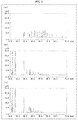
- the degree of polymerization of polyphosphoric acid molecules in an embodiment of the present invention is determined by a method that will be described later in Examples. Furthermore, examples of such a polyphosphoric acid mixture that contains a certain amount or more of polyphosphoric acid molecules with a high degree of polymerization will be provided later in Examples (see Examples 1, 4, and the like).
- An embodiment of the present invention provides a method of producing a substance, in which the polyphosphate kinase 2 is at least one selected from the group consisting of: polyphosphate kinase 2 derived from Pseudomonas aeruginosa (hereinafter may be referred to as "PNDK”); polyphosphate kinase 2 derived from Synechococcus sp.
- PNDK Pseudomonas aeruginosa
- PCC6312 (hereinafter may be referred to as "Sy PPK2”; polyphosphate kinase 2 derived from Corynebacterium efficiens (hereinafter may be referred to as “CE PPK2”); polyphosphate kinase 2 derived from Kineococcus radiotolerans (hereinafter may be referred to as “KR PPK2”); polyphosphate kinase 2 derived from Pannonibacter indicus (hereinafter may be referred to as “PI PPK2”); polyphosphate kinase 2 derived from Deinococcus radiodurans K1 (hereinafter may be referred to as "DR PPK2”); polyphosphate kinase 2 derived from Gulbenkiania indica (hereinafter may be referred to as "GI PPK2”); polyphosphate kinase 2 derived from Arthrobactor aurescens TC1 (hereinafter may be referred to as "AA PPK2"
- Polyphosphate kinases are classified into two types of enzyme for a reversible reaction: polyphosphate kinase 1 (hereinafter may be referred to as “PPK1”): and polyphosphate kinase 2 (hereinafter may be referred to as "PPK2").
- PPK1 polyphosphate kinase 1
- PPK2 polyphosphate kinase 2
- PolyP polyphosphoric acid
- the PPK2s are further classified into three classes in terms of the reactions they catalyze.
- Class I PPK2 catalyzes a reaction that combines ADP and PolyP to form ATP, and examples thereof include PNDK.
- Class II PPK2 catalyzes a reaction that combines adenosine monophosphate (hereinafter may be referred to as "AMP") and PolyP to form ATP, and examples thereof include polyphosphoric-acid-dependent AMP transferase (PAP).
- Class III PPK2 is a bifunctional enzyme that catalyzes the two reactions of the above Class I and Class II, and examples thereof include PPK2 derived from Meiothermus ruber.
- the inventors have studied hard in order to search for a novel PPK2, and succeeded in identifying eight types of novel PPK2 which are classified into Class I or Class III and which have the activity of combining ADP and PolyP to thereby convert ADP into ATP. This makes it possible to catalyze the ATP regeneration reaction by use of a PPK2 selected appropriately from not only conventionally-known PPK2s and DR PPK2 but also these eight types of PPK2.
- a conventionally-known PPK2 can be employed as the polyphosphate kinase 2.
- PPK2s i.e., PNDK, DR PPK2, and eight types of novel PPK2 in detail.
- PNDK SEQ ID NO:11
- Sy PPK2 SEQ ID NO:12
- CE PPK2 SEQ ID NO:13
- KR PPK2 SEQ ID NO:14
- PI PPK2 SEQ ID NO:15
- DR PPK2 SEQ ID NO:16
- GI PPK2 SEQ ID NO:17
- AA PPK2 SEQ ID NO:18
- TD PPK2 SEQ ID NO:19
- PF PPK2 SEQ ID NO:20
- the PNDK has an optimum temperature of 37°C ( Motomura et al., Applied and Environmental Microbiology, volume 80, number 8, 2602-2608, 2014 ). Therefore, use of the PNDK makes it possible to carry out a reaction at relatively low temperature (that is, under moderate conditions). In view of this, the PNDK is therefore preferred as the PPK2 in an embodiment of the present invention.
- the PNDK is PPK2 derived from Pseudomonas aeruginosa. Therefore, provided that a PPK2 is derived from a microbial species classified in the Pseudomonas genus, this PPK2 can have similar advantages to the foregoing advantages of the PNDK. Thus, a PPK2 derived from a microbial species classified in the Pseudomonas genus is preferred as the PPK2 in an embodiment of the present invention.
- Pseudomonas oxalaticus Pseudomonas stuzeri, Pseudomonas chloraphis, Pseudomonas riboflavina, Pseudomonas fragi, Pseudomonas mendocina, Pseudomonas sp.
- aureofaciens Pseudomonas chlororaphis subsp. chlororaphis, Pseudomonas citronellolis, Pseudomonas cremoricolorata, Pseudomonas flavescens, Pseudomonas fragi, Pseudomonas fulva, Pseudomonas gessardii, Pseudomonas indica, Pseudomonas japonica, Pseudomonas jianii, Pseudomonas jinjuensis, Pseudomonas luteola, Pseudomonas mandelii, Pseudomonas mendocina, Pseudomonas migulae, Pseudomonas monteilii, Pseudomonas mucidolens, Pseudomonas nitrore
- thermotolerans Pseudomonas oleovorans, Pseudomonas oryzihabitans, Pseudomonas parafulva, Pseudomonas pavonaceae, Pseudomonas pertucinogena, Pseudomonas plecoglossicida, Pseudomonas pseudo alcaligenes, Pseudomonas reptilivora, Pseudomonas resinovorans, Pseudomonas sp., Pseudomonas straminea, Pseudomonas striafaciens, Pseudomonas syncyanea, Pseudomonas synxantha, Pseudomonas syringae, Pseudomonas taetrolens, Pseudomonas tolaasii, Pseudomona
- the PPK2 may be in the form of (i) a live cell of an organism having the PPK2 activity, (ii) a dead but undamaged cell of an organism having the PPK2 activity, or (iii) a protein that has been isolated from the cell and purified.
- the degree of purification of the protein that has the PPK2 activity here is not limited to a particular degree, and the purification may be partial purification.
- the PPK2 may be a freeze-dried or acetone-dried body that has the PPK2 activity, may be the body which has been triturated, or may be a polypeptide itself fixed or a body fixed as-is. It is preferable not to use live cells having the PPK2 activity. It is more preferable to use neither live cells having the PPK2 activity nor undamaged dead cells.
- each of the foregoing ten types of PPK2 may be a protein which (i) has the same amino acid sequence as shown in a corresponding one of SEQ ID NOs: 1 to 10 except that one to several amino acid residues are substituted, deleted inserted and/or added and (ii) has the PPK2 activity (such proteins are hereinafter referred to as proteins of case (a)).
- each protein of case (a) is not limited, provided that the sequence constitutes a protein which (i) is a mutant, a derivative, a variant, an allele, a homologue, an orthologue, a partial peptide, a fusion protein with some other protein/peptide, or the like, each of which is functionally equivalent to a corresponding one of the proteins having the amino acid sequences shown in SEQ ID NOs: 1 to 10 and (ii) has the PPK2 activity.
- the number of amino acids that may be deleted, substituted or added is not limited, provided that the foregoing function is not impaired, and is intended to mean the number of amino acids that can be deleted, substituted or added by a known insertion method such as site-directed mutagenesis.
- the number of such amino acids is preferably five or less, more preferably three or less (e.g., three amino acids, two amino acids, or one amino acid).
- mutation mainly refers to a mutation artificially introduced by, for example, site-directed mutagenesis; however, the term “mutation” may refer to an equivalent naturally-occurring mutation.
- amino acid residue is substituted with another amino acid whose side chain has the same property.
- properties of amino acid side chains include: hydrophobic amino acids (A, I, L, M, F, P, W, Y, V); hydrophilic amino acids (R, D, N, C, E, Q, G, H, K, S, T); amino acids with aliphatic side chain (G, A, V, L, I, P); amino acids with hydroxyl-containing side chain (S, T, Y); amino acids with sulfur-atom-containing side chain (C, M); amino acids with carboxylic-acid-and-amide-containing side chain (D, N, E, Q); amino acids with base-containing side chain (R, K, H); and amino acids with aromatic-containing side chain (H, F, Y, W) (the letters provided in parentheses are each a single letter code of an amino acid).
- a polypeptide having a certain amino acid sequence maintains its biological activity even if one to several amino acid residues in the amino acid sequence are deleted, added and/or substituted by some other amino acid and thereby the amino acid sequence is modified. It is preferable that a mutated amino acid residue and the original amino acid residue have as many common properties as possible.
- the phrase "functionally equivalent” is intended to mean that a certain protein has a biological function and/or a biochemical function equivalent to (identical to and/or similar to) a target protein.
- Biological properties can include specificity with regard to expression site, expression level, and the like. Whether or not the protein having a mutation(s) introduced therein has a desired function can be determined by (i) obtaining a transformant in which a gene coding for that protein is introduced and expressed and (ii) checking whether this transformant can generate ATP from ADP and PolyP.
- each of the foregoing ten types of PPK2 may be a protein which (i) has a sequence homology of not less than 80% with the amino acid sequence shown in a corresponding one of SEQ ID NOs:1 to 10 and (ii) has the PPK2 activity (such proteins are hereinafter referred to as proteins of case (b)).
- each protein of case (b) is not limited, provided that the sequence constitutes a protein which (i) is a mutant, a derivative, a variant, an allele, a homologue, an orthologue, a partial peptide, a fusion protein with some other protein/peptide, or the like, each of which is functionally equivalent to a corresponding one of the proteins having the amino acid sequences shown in SEQ ID NOs: 1 to 10 and (ii) has the PPK2 activity.
- an amino acid sequence has a homology with another amino acid sequence means that at least 80%, more preferably not less than 90%, even more preferably not less than 95% (for example, not less than 95%, not less than 96%, not less than 97%, not less than 98%, not less than 99%) of the entire amino acid sequence (or an entire region that is necessary for functional expression) is identical to that of the another amino acid sequence.
- the homology of an amino acid sequence can be determined with use of a BLASTN program (nucleic acid level) or a BLASTX program (amino acid level) ( Altschul et al. J. Mol. Biol., 215: 403-410, 1990 ).
- the term "homology” is intended to mean the proportion of amino acid residues that have a similar property to those of a comparative sequence (e.g., homology, positive); however, the "homology” is preferably the proportion of amino acid residues that are identical to those of the comparative sequence. That is, the "homology” is preferably "identity”. Note that the properties of amino acid sequences have already been discussed earlier.
- each of the foregoing ten types of PPK2 may be a protein that is encoded by a gene having a base sequence shown in a corresponding one of SEQ ID NOs:11 to 20 (such proteins are hereinafter referred to proteins of case (c)).
- SEQ ID NOs: 11 to 20 show base sequences (open reading frames: ORFs) of genes coding for proteins having amino acid sequences shown in SEQ ID NOs: 1 to 10, respectively.
- the proteins in a case where the foregoing ten types of PPK2 are the proteins of case (c), the proteins may be those encoded by genes having modified versions of the respective base sequences of SEQ ID NOs: 11 to 20 which have been modified for, for example, an improvement in expression in a host cell.
- Each of the proteins of case (c) may have its N-terminus cut off or may have been cleaved at some other position, for the purpose of improvement in expression of the PPK2 in a host cell. Codons may be optimized for the same purpose.
- Example 3 One example of modification of a base sequence is, as shown in Example 3 (described later), to cut off 81 amino acids at the N terminus of wild-type PNDK and substitute alanine at position 82 with methionine which is an initiation codon.
- Other examples include, as shown in Example 2 (described later): (i) removing amino acids at positions 1 to 85 at the N terminus of an amino acid sequence from native PF PPK2 and introducing a P86M mutation; and (ii) removing amino acids at positions 1 to 86 at the N terminus and introducing a G87M mutation.
- genes/proteins may be obtained by a usually-used polynucleotide modification method. Specifically, substitution, deletion, insertion and/or addition of a specific base(s) in a polynucleotide that carries genetic information of a protein make it possible to prepare a polynucleotide that carries genetic information of a desired recombinant protein.
- a specific method of converting a base of a polynucleotide is, for example, use of a commercially-available kit (KOD-Plus Site-Directed Mutagenesis Kit [TOYOBO], Transformer Site-Directed Mutagenesis Kit [Clontech], QuickChange Site Directed Mutagenesis Kit [Stratagene] or the like) or use of a polymerase chain reaction (PCR).
- KOD-Plus Site-Directed Mutagenesis Kit [TOYOBO], Transformer Site-Directed Mutagenesis Kit [Clontech], QuickChange Site Directed Mutagenesis Kit [Stratagene] or the like or use of a polymerase chain reaction (PCR).
- Each of the foregoing genes may consist only of a polynucleotide that codes for a corresponding protein, but may have some other base sequence added thereto.
- the base sequence added is not particularly limited, and examples thereof include: base sequences coding for a label (e.g., histidine tag, Myc tag, FLAG tag, or the like); base sequences coding for a fusion protein (e.g., streptavidin, cytochrome, GST, GFP, MBP or the like): base sequences coding for a promoter sequence; and base sequences coding for a signal sequence (e.g., endoplasmic reticulum translocation signal sequence, secretion sequence, or the like).
- the site at which any of such base sequences is added is not particularly limited.
- the base sequence may be added to, for example, a site corresponding to the N terminus or C terminus of a translated protein.
- An embodiment of the present invention provides a PPK2 gene coding for any of the foregoing proteins.
- the PPK2 gene may either be a nucleotide composed of a native sequence or a nucleotide composed of an artificially modified sequence.
- the PPK2 gene is preferably a nucleotide composed of a sequence which has been subjected to codon optimization for expression in a host cell (for example, E. coli ).
- An embodiment of the present invention provides a vector that contains a gene discussed in the ⁇ 3. PPK2 gene> section.
- Examples of the vector not only include expression vectors for expressing the gene in a host cell in order to prepare a transformant but also include those which are for use in production of a recombinant protein.
- a base vector serving as a base for the above vector can be any of various kinds of commonly-used vectors. Examples include plasmids, phages and cosmids, from which a base vector can be selected appropriately according to a cell to which it is introduced and how it is introduced. That is, the vector is not limited to a specific kind, and any vector that can be expressed in a host cell can be selected as appropriate.
- An appropriate promoter sequence for unfailingly expressing the gene may be selected according to the type of host cell, and this promoter sequence and the foregoing gene may be incorporated into a plasmid or the like to obtain a vector.
- Such a vector may be used as the expression vector.
- Examples of the expression vector that can be employed include: phage vectors, plasmid vectors, viral vectors, retroviral vectors, chromosome vectors, episome vectors, and virus-derived vectors (for example, bacterial plasmids, bacteriophages, yeast episomes, yeast chromosomal elements and viruses [for example, baculovirus, papovavirus, saccinia virus, adenovirus, avipoxvirus, pseudorabies virus, herpesvirus, lentivirus and retrovirus]); and vectors derived from combinations thereof (for example, cosmids and phagemids).
- phage vectors for example, bacterial plasmids, bacteriophages, yeast episomes, yeast chromosomal elements and viruses [for example, baculovirus, papovavirus, saccinia virus, adenovirus, avipoxvirus, pseudorabies virus, herpesvirus, lentivirus and retrovirus]
- Examples of a vector suitable for use in bacteria include: pQE30, pQE60, pQE70, pQE80 and pQE9 (available from Qiagen); pTipQC1 (available from Qiagen or Hokkaido System Science Co., Ltd.), pTipRT2 (available from Hokkaido System Science Co., Ltd.); pBS vector, Phagescript vector, Bluescript vector, pNH8A, pNH16A, pNH18A and pNH46A (available from Stratagene); ptrc99a, pKK223-3, pKK233-3, pDR540 and pRIT5 (available from Addgene); pRSF (available from MERCK); and pAC (available from NIPPON GENE CO., LTD.).
- examples of a vector suitable for use in a case of E. coli include pUCN18 (which can be prepared by modifying pUC18 available from Takara Bio Inc.), pSTV28 (available from Takara Bio Inc.), and pUCNT ( PCT International Publication No. WO 94/03613 ).
- the insertion of the foregoing gene is preferably such that the gene is operatively linked to an appropriate promoter.
- the other appropriate promoters can be those known to those skilled in the art, and are not particularly limited. Examples of the promoter include: lacUV5 promoter, trp promoter, trc promoter, tac promoter, lpp promoter, tufB promoter, recA promoter, pL promoter, lacI promoter, lacZ promoter, T3 promoter, T5 promoter, T7 promoter, gap promoter, OmpA promoter, and SV40 early promoter and late promoter; and retrovirus LTR promoter.
- the vector preferably further contains sites for transcription initiation and transcription termination and contains, within a transcribed region, a site for ribosome binding for translation.
- a region coding for a mature transcript expressed by a vector construct contains a transcription initiation AUG at the start of a to-be-translated polypeptide and contains a stop codon positioned appropriately at the end.
- a host into which a vector is introduced is not particularly limited. Any of various kinds of cells can be used suitably. Typical examples of an appropriate host include bacteria, yeast, filamentous fungi, plant cells, and animal cells. E. coli is particularly preferred. An appropriate culture medium and conditions for the above host cell can be any of those known in this technical field.
- a method of introducing the foregoing vector into a host cell is not particularly limited. Suitable examples include conventionally known methods such as electroporation, calcium phosphate transfection, liposome transfection, DEAE-dextran transfection, microinjection, cationic lipid-mediated transfection, electroporation, transduction, and infection. Such methods are stated in many standard laboratory manuals such as Basic Methods In Molecular Biology (1986) by Davis et al.
- An embodiment of the present invention provides a transformant that contains a gene discussed in the ⁇ 3.
- Vector> section As used herein, the phrase "contains a gene or a vector” is intended to mean that the gene or vector has been introduced in a target cell (host cell) by a known genetic engineering procedure (gene manipulation technique) such that the gene can be expressed.
- the meaning of the term "transformant” includes not only cells, tissues, and organs but also living individuals.
- the transformant can be prepared (produced) by, for example, transforming an organism with the foregoing vector.
- the organism to be transformed is not particularly limited, and can be, for example, any of various kinds of organism exemplary listed earlier for the host cell.
- a host cell for use in an embodiment of the present invention is not particularly limited, provided that the cell allows the expression of an introduced gene or of a protein encoded by a gene contained in a vector.
- a microorganism available for use as a host cell include: bacteria such as those belonging to the genus Escherichia, those belonging to the genus Bacillus, those belonging to the genus Pseudomonas, those belonging to the genus Serratia, those belonging to the genus Brevibacterium, those belonging to the genus Corynebacterium, those belonging to the genus Streptococcus, and those belonging to the genus Lactobacillus; actinomycetes such as those belonging to the genus Rhodococcus and those belonging to the genus Streptomyces; yeast such as those belonging to the genus Saccharomyces, those belonging to the genus Kluyveromyces, those belonging to the genus Schizosaccharomyces, those belonging to
- production of a substance using ATP is not particularly limited, provided that the method is to produce a substance at the expense of energy derived from ATP.
- Examples of production of a substance using ATP include: production of oxidized glutathione, production of reduced glutathione, production of S-adenosylmethionine, production of sugar phosphate, production of acetyl-CoA, production of propanoyl-CoA, production of oxyluciferin, production of guanosine-3'-diphosphate-5'-triphosphate, production of 5-phosphoribosyl-1-pyrophosphate, production of acyl-CoA, production of biotin-CoA, production of aminoacyl-tRNA, production of circular RNA, production of L-asparagine, production of L-asparatic acid, production of sugar nucleotide, and production of 3'-phosphoadenosine-5'-phosphosulfate. It should be easy for those skilled in the art to
- An embodiment of the present invention provides a method of producing a substance, the method including the steps of:
- a method of producing oxidized glutathione is preferably a method disclosed in PCT International Publication No. WO 2016/002884 .
- the step (1) is represented by, for example, the following formula.
- the step (1) includes generating oxidized ⁇ -glutamylcysteine by allowing L-cystine and L-glutamic acid to react with each other in the presence of GSHI and ATP.
- the GSHI for use in the step (1) is not particularly limited, provided that the GSHI has the above-described activity.
- the origin of the GSHI is not particularly limited, and GSHI derived from a microorganism, an animal, a plant, or the like can be used. GSHI derived from a microorganism is preferred.
- those derived from enteric bacteria such as Escherichia coli
- those derived from bacteria such as coryneform bacteria, thermophilic bacteria/thermotolerant bacteria, psychrophilic bacteria/psychrotolerant bacteria, acidophilic bacteria/aciduric bacteria, basophilic bacteria/base-resistant bacteria, methylotroph, halogen-resistant bacteria, sulfur bacteria, and radiation-resistant bacteria
- those derived from eukaryotic microorganisms such as yeast are preferred.
- the step (2) is represented by, for example, the following formula.
- the step (2) includes generating oxidized glutathione by allowing the oxidized ⁇ -glutamylcysteine and glycine to react with each other in the presence of GSHII and ATP.
- the GSHII for use in the step (2) is not particularly limited, provided that the GSHII has the foregoing activity.
- the origin of the GSHII is not particularly limited, and GSHII derived from a microorganism, an animal, a plant, or the like can be used. GSHII derived from a microorganism is preferred.
- those derived from enteric bacteria such as Escherichia coli
- those derived from bacteria such as coryneform bacteria, thermophilic bacteria/thermotolerant bacteria, psychrophilic bacteria/psychrotolerant bacteria, acidophilic bacteria/aciduric bacteria, basophilic bacteria/base-resistant bacteria, methylotroph, halogen-resistant bacteria, sulfur bacteria, and radiation-resistant bacteria
- those derived from eukaryotic microorganisms such as yeast are preferred.
- GSHF may be used instead of one of the GSHI and GSHII or instead of both of the GSHI and GSHII.
- GSHF is a bifunctional glutathione synthase that has both the functions of the two enzymes GSHI and GSHII, and is not particularly limited, provided that the GSHF can substitute the GSHI and GSHII.
- the origin of the GSHF is not particularly limited, and GSHF derived from a microorganism, an animal, a plant, or the like can be used. GSHF derived from a microorganism is preferred.
- those derived from enteric bacteria such as Escherichia coli
- those derived from bacteria such as coryneform bacteria, thermophilic bacteria/thermotolerant bacteria, psychrophilic bacteria/psychrotolerant bacteria, acidophilic bacteria/aciduric bacteria, basophilic bacteria/base-resistant bacteria, methylotroph, halogen-resistant bacteria, sulfur bacteria, radiation-resistant bacteria, and lactic acid bacteria
- those derived from eukaryotic microorganisms such as yeast are preferred.
- the GSHF is, for example, preferably GSHF derived from at least one selected from the group consisting of: Streptococcus bacteria such as Streptococcus agalactiae, Streptococcus mutans, Streptococcus suis, Streptococcus thermophilus, Streptococcus sanguinis, Streptococcus gordonii, and Streptococcus uberis; Lactobacillus bacteria such as Lactobacillus plantarum, Lactobacillus casei, Lactobacillus rhamnosus, Lactobacillus paracasei, Lactobacillus plantarum, and Lactobacillus fermentum; Desulfotalea bacteria such as Desulfotalea psychrophila; Clostridium bacteria such as Clostridium perfringens; Listeria bacteria such as Listeria innocua and Listeria monocytogenes; Enterococcus bacteria such as Enterococcus faecalis, Entero
- each of the foregoing ten types of PPK2 functions in a manner coupled with at least one selected from the group consisting of ⁇ -glutamylcysteine synthase (GSHI), glutathione synthase (GSHII), and bifunctional glutathione synthase (GSHF).
- GSHI ⁇ -glutamylcysteine synthase
- GSHII glutathione synthase
- GSHF bifunctional glutathione synthase
- a combination of any of the ten types of PPK2 and at least one selected from the group consisting of the GSHI, GSHII, and GSHF is not particularly limited and may be any combination, provided that oxidized glutathione can be produced with a high conversion rate.
- the GSHI, GSHII, and GSHF may be used in combination with different types of PPK2 or may each be used in combination with the same type of PPK2.
- each of the enzymes PPK2, GSHI, GSHII, and GSHF may be (i) in the form of a live cell of an organism having a corresponding enzyme activity, (ii) in the form of a dead but undamaged cell of an organism having a corresopnding enzyme activity, (iii) in the form in which the enzyme is present extracellularly, specifically, in the form of the foregoing cell of an organism which has been triturated, or (iv) in the form of a protein that has been isolated from the cell and purified. It is preferable not to use live cells having the PPK2 activity. It is more preferable to use neither live cells having the PPK2 activity nor undamaged dead cells.
- the polyphosphoric acid mixture is preferably used (i.e., added) both in the steps (1) and (2) in view of the rate of conversion to oxidized glutathione; however, the polyphosphoric acid mixture may be used in only one of the steps (1) and (2).
- An embodiment of the present invention provides a method of producing a substance, the method including the steps of:
- a method of producing reduced glutathione is preferably a method disclosed in PCT International Publication No. WO2016/017631 .
- WO2016/017631 discloses carrying out a reaction in a nitrogen atmosphere in order to prevent the oxidation of reduced glutathione; however, the production of reduced glutathione is not limited to a reaction in a nitrogen atmosphere.
- the step (1) is represented by, for example, the following formula.
- the step (1) includes generating ⁇ -glutamylcysteine by allowing L-cysteine and L-glutamic acid to react with each other in the presence of GSHI and ATP.
- the GSHI for use in the step (1) is not particularly limited, provided that the GSHI has the above-described activity.
- the origin of the GSHI is not particularly limited, and GSHI derived from a microorganism, an animal, a plant, or the like can be used.
- GSHI derived from a microorganism is preferred. Particularly, for example, those derived from enteric bacteria such as Escherichia coli, those derived from bacteria such as coryneform bacteria, and those derived from eukaryotic microorganisms such as yeast are preferred.
- the step (2) is represented by, for example, the following formula.
- the step (2) includes generating reduced glutathione by allowing the ⁇ -glutamylcysteine and glycine to react with each other in the presence of GSHII and ATP.
- the GSHII for use in the step (2) is not particularly limited, provided that the GSHII has the foregoing activity.
- the origin of the GSHII is not particularly limited, and GSHII derived from a microorganism, an animal, a plant, or the like can be used.
- GSHII derived from a microorganism is preferred. Particularly, for example, those derived from enteric bacteria such as Escherichia coli, those derived from bacteria such as coryneform bacteria, and those derived from eukaryotic microorganisms such as yeast are preferred.
- GSHF may be used instead of one of the GSHI and GSHII or instead of both of the GSHI and GSHII.
- the function, origin, and the like of the GSHF are the same as those described in the ⁇ 1.
- each of the foregoing ten types of PPK2 functions in a manner coupled with at least one selected from the group consisting of ⁇ -glutamylcysteine synthase (GSHI), glutathione synthase (GSHII), and bifunctional glutathione synthase (GSHF).
- GSHI ⁇ -glutamylcysteine synthase
- GSHII glutathione synthase
- GSHF bifunctional glutathione synthase
- a combination of any of the ten types of PPK2 and at least one selected from the group consisting of the GSHI, GSHII, and GSHF is not particularly limited and may be any combination, provided that reduced glutathione can be produced with a high conversion rate.
- the GSHI, GSHII, and GSHF may be used in combination with different types of PPK2 or may each be used in combination with the same type of PPK2.
- each of the enzymes PPK2, GSHI, GSHII, and GSHF may be (i) in the form of a live cell of an organism having a corresponding enzyme activity, (ii) in the form of a dead but undamaged cell of an organism having a corresponding enzyme activity, (iii) in the form in which the enzyme is present extracellularly, specifically, in the form of the foregoing cell of an organism which has been triturated, or (iv) in the form of a protein that has been isolated from the cell and purified. It is preferable not to use live cells having the PPK2 activity. It is more preferable to use neither live cells having the PPK2 activity nor undamaged dead cells.
- the polyphosphoric acid mixture is preferably used (i.e., added) both in the steps (1) and (2) in view of the rate of conversion into reduced glutathione; however, the polyphosphoric acid mixture may be used in only one of the steps (1) and (2).
- aspects of the present invention encompass the following subject matters.
- coli host and (iii) has an Ndel site added at the 5' terminus of the gene sequence and an EcoRI site added at the 3' terminus of the gene sequence.
- This gene was digested with NdeI and EcoRI, and inserted between NdeI and EcoRI restriction sites downstream of the lac promoter of a plasmid pUCN18 (a plasmid obtained by modifying T at position 185 of pUC18 [produced by Takara Bio Inc.] to A by PCR and thereby destroying the NdeI site and, in addition, modifying GC at positions 471 and 472 to TG and thereby introducing a new NdeI site). In this way, a recombinant vector pPPK was constructed.
- E.coli HB101 competent cells (produced by Takara Bio Inc.) were transformed with the recombinant vector pPPK constructed in Reference Example 1, thereby obtaining a recombinant organism E.coli HB101 (pPPK). Furthermore, E.coli HB101 competent cells (produced by Takara Bio Inc.) were transformed with pUCN18, thereby obtaining a recombinant organism E.coli HB101 (pUCN18).
- the two types of recombinant organism E.coli HB101 [pUCN18] and E.coli HB101 [pPPK] obtained in Reference Example 2 were each inoculated into 5 ml of 2 ⁇ YT medium (1.6% triptone, 1.0% yeast extract, 0.5% sodium chloride, pH7.0) containing 200 ⁇ g/ml of ampicillin, and cultured with shaking at 37°C for 24 hours.
- Each of the culture solutions obtained through the culture was subjected to centrifugation and thereby bacterial bodies were collected, and the bacterial bodies were suspended in 1 ml of 50 mM Tris-HCl buffer (pH8.0). This was homogenized with use of a UH-50 ultrasonic homogenizer (produced by SMT), and then bacterial residues were removed by centrifugation. In this way, cell-free extracts were obtained.
- Polyphosphate kinase activity was measured with use of these cell-free extracts.
- the polyphosphate kinase activity was measured in the following manner. 5 mM sodium metaphosphate (produced by Wako Pure Chemical Corporation), 10 mM ADP disodium salt (produced by Oriental Yeast Co., Ltd.), 70 mM magnesium sulfate (produced by Wako Pure Chemical Corporation), and the cell-free extract were added to 50 mM Tris-HCl buffer (pH8.0), allowed to react at 30°C for 5 minutes, and generated ATP was quantified by HPLC. The enzymatic activity by which 1 ⁇ mol of ATP is generated per minute under these reaction conditions was defined as 1 U. The result was that the ATP-generating activity of E.coli HB101 (pUCN18) was not more than 5 U/mL.
- the E.coli HB101 (pPPK) obtained in Reference Example 2 was inoculated into 5 ml of 2 ⁇ YT medium (1.6% triptone, 1.0% yeast extract, 0.5% NaCl, pH7.0) containing 200 ⁇ g/ml of ampicillin, and cultured with shaking at 37°C for 24 hours.
- the enzymatic activity was measured by the method discussed in Reference Example 3, and found to be 120 U/mL.
- bacterial bodies were collected by centrifugation, suspended in 2.5 ml of 50 mM Tris-HCl buffer (pH8.0), and homogenized ultrasonically to obtain an enzyme liquid (polyphosphate kinase liquid).
- Oxidized glutathione was produced through the following two steps: step (A) of producing oxidized ⁇ -glutamylcysteine from L-glutamic acid and L-cystine; and step (B) of producing oxidized glutathione from the oxidized ⁇ -glutamylcysteine and glycine (the oxidized ⁇ -glutamylcysteine was produced by a partially modified version of the method disclosed in ⁇ Example 1> of PCT International Publication No. WO 2016/002884 ).
- coli K12-derived ⁇ -glutamylcysteine synthase (GSHI) liquid was added, and a polyphosphate kinase liquid was added so that the total PPK2 activity in the reaction liquid would be 20 U/mL, and a reaction was started.
- the reaction was carried out at a temperature of 30°C for 6 to 8 hours.
- GSHI liquid was prepared in accordance with Test 1 and Test 4 of PCT International Publication No. WO 2016/002884 .
- the polyphosphate kinase liquid was prepared in the same manner as described in Reference Examples 1 to 4.
- the GSHII used here is the modified glutathione synthase (V260A) disclosed in Laid-open publication of Japanese Patent Application, Tokugan, No. 2016-214073 .
- the polyphosphate kinase liquid was prepared in the same manner as described in Reference Examples 1 to 4.
- a plurality of polyphosphoric acid mixtures each of which would serve as a substrate for a polyphosphate kinase 2 in an ATP-regenerating system, were prepared, and production of oxidized glutathione was carried out.
- Each polyphosphoric acid mixture was prepared by: synthesizing polyphosphoric acid in accordance with a method usually used in this technical field; and obtaining a mixture containing the polyphosphoric acid.
- the production of oxidized glutathione was carried out in accordance with the method discussed in Production Example 1.
- the polyphosphoric acid mixture which achieved a high rate of conversion to oxidized glutathione, was analyzed for the degree of polymerization of polyphosphoric acid. The analysis was carried out under the following conditions.
- the amount for each degree of polymerization was determined by calculating the proportion of the area of a peak relative to the sum (100%) of the areas of all peaks.
- polyphosphate kinase which are inferred from a database search to have polyphosphate kinase activity
- known DR PPK2 polyphosphate kinase liquids were prepared in the same manner as described in Reference Examples 1 to 4, and enzymatic activities were measured in the same manner as described in Reference Example 3.
- the enzymatic activity of the PI PPK2 was 138 U/mL. This showed that the enzymatic activity of the PI PPK2 is higher than that of the PNDK (120 U/mL (see Reference Example 4)).
- the enzymatic activity of the PI PPK2 was 73% of that in a case where a polyphosphoric acid mixture solution immediately after the preparation was used (assuming that the enzymatic activity of this case is 100%).
- each polyphosphate kinase liquid added in the step (B) was an amount that achieves a corresponding PPK2 activity in the reaction liquid as shown in Table 2.
- Table 2 Name of test Enzymatic activity in reaction liquid (U/mL) Test A 61 Test B 86 Test C 60 Test D 120 Test E 47 Test F 38 Test G 45 Test H 22 Test I 31 Test J 63
- the results were as follows: the rate of conversion to oxidized glutathione was lower in cases where an aqueous metaphosphoric acid solution after long-term storage was used than in cases where an aqueous metaphosphoric acid solution after short-term storage was used, although the PPK2 enzymatic activity in the reaction liquid was high in the former case (this was apparent from a comparison between test A and test B on PNDK, a comparison between test F and test G on PI PPK2, and a comparison between test I and test J on Sy PPK2).
- Example 3 In view of the results of Example 3, the following test was carried out to confirm that the composition of a polyphosphoric acid mixture changes over time during storage.
- sample 1 water was added to sodium metaphosphate to prepare 50 w/v% sodium metaphosphate. This was used as sample 1. After 13 days from the preparation of the sample 1, another 50 w/v% sodium metaphosphate was prepared (sample 2). On the day on which the sample 2 was prepared, the samples 1 and 2 were analyzed for the degree of polymerization of metaphosphoric acid contained therein. The analysis was carried out under the following conditions.
- Fig. 2 The results are shown in Fig. 2 .
- the sample 1 which had been left to stand for 13 days after the preparation, had a degreased amount of metaphosphoric acid molecules with a high degree of polymerization, as compared to the sample 2 which was analyzed immediately after the preparation.
- This result shows that, if an aqueous metaphosphoric acid solution is left to stand at room temperature, metaphosphoric acid molecules with a higher degree of polymerization are degraded first.
- Example 4 Specifically, the same test as test G of Example 3 was carried out, a reaction liquid immediately after the completion of the step (a) and a reaction liquid immediately after the completion of the step (b) were recovered, and the composition (degree of polymerization) of polyphosphoric acid contained in each reaction liquid was checked. The composition (degree of polymerization) was analyzed in accordance with the method discussed in Example 4.
- Example 4 Polyphosphoric acid mixture immediately after preparation
- PPK2 polyphosphoric acid mixture before consumed (i.e., before used) by PPK2.
- Fig. 3 shows the composition (degree of polymerization) of a polyphosphoric acid mixture immediately after preparation
- (b) of Fig. 3 shows the composition (degree of polymerization) of a polyphosphoric acid mixture after completion of the step (A)
- (c) of Fig. 3 shows the composition (degree of polymerization) of a polyphosphoric acid mixture after completion of the step (B).
- the present invention makes it possible to produce a substance using ATP with a high conversion rate at low cost, and is therefore usable in the fields of, for example, production of oxidized glutathione and production of reduced glutathione.
Landscapes
- Chemical & Material Sciences (AREA)
- Life Sciences & Earth Sciences (AREA)
- Organic Chemistry (AREA)
- Health & Medical Sciences (AREA)
- Engineering & Computer Science (AREA)
- Zoology (AREA)
- Wood Science & Technology (AREA)
- Bioinformatics & Cheminformatics (AREA)
- Genetics & Genomics (AREA)
- General Health & Medical Sciences (AREA)
- General Engineering & Computer Science (AREA)
- Biochemistry (AREA)
- Microbiology (AREA)
- Molecular Biology (AREA)
- Biotechnology (AREA)
- Medicinal Chemistry (AREA)
- Biomedical Technology (AREA)
- General Chemical & Material Sciences (AREA)
- Chemical Kinetics & Catalysis (AREA)
- Proteomics, Peptides & Aminoacids (AREA)
- Preparation Of Compounds By Using Micro-Organisms (AREA)
- Enzymes And Modification Thereof (AREA)
Abstract
Description
- The present invention relates to a novel method of producing a substance using adenosine triphosphate (ATP).
- Glutathione is a peptide composed of the following three amino acids: L-cysteine, L-glutamic acid, and glycine. Glutathione can be found not only in human bodies but also in many other living bodies such as other animals, plants, and microorganisms. Furthermore, glutathione has the functions of eliminating reactive oxygen, detoxification, amino acid metabolism, and the like, and is a compound important to living bodies.
- Glutathione in vivo is in the form of (i) reduced glutathione (hereinafter may be referred to as "GSH"), in which the thiol group of L-cysteine residue is in a reduced form "-SH" or (ii) oxidized glutathione (hereinafter may be referred to as "GSSG"), in which the thiol groups of L-cysteine residues of two glutathione molecules are oxidized to form a disulfide bond between the two glutathione molecules.
- Examples of a known method of producing glutathione include an enzymatic production in which bodies of Escherichia coli and/or Saccharomyces cerevisiae, which have been recombined to produce γ-glutamylcysteine synthase and/or glutathione synthase, are used as enzyme sources in the presence of L-glutamic acid, L-cysteine, glycine, a surfactant, an organic solvent and/or the like (Patent Literatures 1 and 2). Furthermore, the applicant has recently disclosed a method of producing oxidized glutathione, the method including the steps of: producing oxidized γ-glutamylcysteine from L-glutamic acid and L-cystine; and then producing oxidized glutathione from the oxidized γ-glutamylcysteine and glycine (Patent Literature 3).
- Examples of a known enzyme involved in glutathione synthesis include: γ-glutamylcysteine synthase (hereinafter may be referred to as "GSHI") which combines L-glutamic acid and L-cysteine to form γ-glutamylcysteine; and glutathione synthase (hereinafter may be referred to as "GSHII") which combines γ-glutamylcysteine and glycine to form reduced glutathione. The GSHI and GSHII are known to be capable of also using L-cystine and oxidized γ-glutamylcysteine as substrates, respectively. In a case where the GSHI and GSHII use L-cystine and oxidized γ-glutamylcysteine as substrates, respectively, their enzymatic reactions result in synthesis of oxidized γ-glutamylcysteine and oxidized glutathione, respectively, as reaction products (Patent Literature 3). Furthermore, bifunctional glutathione synthase (hereinafter may be referred to as "GSHF") which has both functions of the GSHI and GSHII is also known (Patent Literature 3).
-
- [Patent Literature 1]
Japanese Patent Application Publication, Tokukaisho, No.60-27396 - [Patent Literature 2]
Japanese Patent Application Publication, Tokukaisho, No.60-27397 - [Patent Literature 3]
PCT International Publication No.WO 2016/002884 - Incidentally, the GSHI, GSHII, GSHF, and the like consume adenosine triphosphate (hereinafter may be referred to as "ATP") as an energy source for their activity. Therefore, in order to maintain the reaction of glutathione production, it is necessary to externally supply ATP or it is necessary to reconvert adenosine diphosphate (hereinafter may be referred to as "ADP"), which is a product of the consumption of ATP, into ATP.
- External supply of ATP is very costly; therefore, an ATP-regenerating system, in which ADP is reconverted into ATP, has been considered for application.
- A known enzyme that converts ADP to ATP in the ATP-regenerating system is a polyphosphate kinase 2. This enzyme has the function of converting ADP into ATP using metaphosphoric acid or the like as a substrate.
- However, a production method in which the ATP-regenerating system is included as part of the production of a substance, for example, a method of producing oxidized glutathione, has been required to have an improved ATP-regenerating system in order to achieve a higher rate of conversion from a source material into a final product (e.g., oxidized glutathione).
- In view of such circumstances, it is an object of the present invention to provide a novel method of producing a substance using ATP.
- The inventors studied hard in order to attain the above object, and for the first time found that, by using, as a substrate for a polyphosphate kinase 2, a mixture that contains polyphosphoric acid molecules with a high degree of polymerization, it is possible to achieve a high rate of conversion to oxidized glutathione. On the basis of this finding, the inventors accomplished the present invention.
- Specifically, an aspect of the present invention relates to a method of producing a substance using ATP, wherein: ADP is generated from ATP during the method; the method is coupled with an ATP regeneration reaction in which a polyphosphate kinase 2 and polyphosphoric acid are allowed to react with the ADP to regenerate ATP; and the ATP used in the method includes the ATP regenerated by the ATP regeneration reaction, the method including using, as a substrate for the polyphosphate kinase 2, a polyphosphoric acid mixture that contains polyphosphoric acid molecules with a degree of polymerization of not less than 15 in an amount of not less than 48%.
- According to an aspect of the present invention, it is possible to produce a substance using ATP with a high conversion rate at low cost.
-
-
Fig. 1 is a chart showing the results of analysis of a polyphosphoric acid mixture in terms of the degree of polymerization. -
Fig. 2 is a chart that shows a comparison, in terms of changes in degree of polymerization, between polyphosphoric acid mixtures which had been left to stand for different periods of time after their preparations. -
Fig. 3 show charts showing how consumption of a polyphosphoric acid mixture changes during production of oxidized glutathione. - The following description will discuss, in detail, an embodiment of the present invention. Note that all academic and patent literatures listed herein are incorporated herein by reference.
- In this specification, the term "gene" is used interchangeably with the term "polynucleotide", "nucleic acid" or "nucleic acid molecule", and is intended to mean a polymer of nucleotides. A gene can exist in the form of DNA (e.g., cDNA or genomic DNA) or RNA (e.g., mRNA). DNA or RNA may be double-stranded or single stranded. Single-stranded DNA or RNA may be a coding strand (sense strand) or may be a noncoding strand (antisense strand). A gene may be chemically synthesized, and may have codon usage modified so that the expression of a protein that the gene codes for improves. Codons which code for the same amino acid may be replaced with each other.
- The term "protein" is used interchangeably with the term "peptide" or "polypeptide". In this specification, bases and amino acids are indicated by single letter codes or three letter codes of IUPAC standards and IUB standards.
- An embodiment of the present invention provides a method of producing a substance using ATP, wherein: ADP is generated from ATP during the method; the method is coupled with an ATP regeneration reaction in which a polyphosphate kinase 2 and polyphosphoric acid are allowed to react with the ADP to regenerate ATP; and the ATP used in the method includes the ATP regenerated by the ATP regeneration reaction, the method including using, as a substrate for the polyphosphate kinase 2, a polyphosphoric acid mixture that contains polyphosphoric acid molecules with a degree of polymerization of not less than 15 in an amount of not less than 48%.
- An embodiment of the present invention was accomplished based on the following finding. The inventors for the first time found that, by arranging a method of producing a substance using ATP such that ATP is regenerated using, as a substrate for a polyphosphate kinase 2, a polyphosphoric acid mixture containing a certain amount or more of polyphosphoric acid molecules with a specific degree of polymerization (particularly, polyphosphoric acid molecules with a high degree of polymerization), it is possible to produce a substance using the ATP with a high conversion rate. As such, an embodiment of the present invention uses a polyphosphoric acid mixture that contains a certain amount or more of polyphosphoric acid molecules with a high degree of polymerization in the ATP regeneration reaction, and thereby makes it possible to produce a substance with a high conversion rate at low cost.
- The following description will discuss features of the present invention in detail.
- In an embodiment of the present invention, it is preferable that the following are used: a polyphosphate kinase 2; and a polyphosphoric acid mixture that serves as a substrate for the polyphosphate kinase 2 and that contains polyphosphoric acid molecules with a degree of polymerization of not less than 15 in an amount of not less than 48%. In an embodiment of the present invention, use of such a polyphosphoric acid mixture that contains a certain amount or more of polyphosphoric acid molecules with a high degree of polymerization makes it possible to produce a substance with a high conversion rate at low cost.
- In this specification, the term "polyphosphoric acid" is intended to mean a polymer obtained by polymerization of phosphoric acid units. For example, a polyphosphoric acid is a compound represented by Formula 1 below.


- Note that, because the "polyphosphoric acid" and "metaphosphoric acid" can be present in a mixed manner, it is difficult to strictly separate them from each other. Therefore, in this specification, the terms "polyphosphoric acid" and "metaphosphoric acid" are not distinguished precisely. The term "polyphosphoric acid" herein means "polyphosphoric acid" that contains "metaphosphoric acid", and the term "metaphosphoric acid" herein means "metaphosphoric acid" that contains "polyphosphoric acid".
- In an embodiment of the present invention, the polyphosphoric acid mixture contains polyphosphoric acid molecules with a degree of polymerization of not less than 15 in an amount of not less than 48%, preferably contains polyphosphoric acid molecules with a degree of polymerization of not less than 15 in an amount of not less than 50%.
- In another embodiment of the present invention, the polyphosphoric acid mixture contains polyphosphoric acid molecules with a degree of polymerization of not less than 20 in an amount of not less than 31%, preferably contains polyphosphoric acid molecules with a degree of polymerization of not less than 20 in an amount of not less than 32%.
- In a further embodiment of the present invention, the polyphosphoric acid mixture contains polyphosphoric acid molecules with a degree of polymerization of not less than 36 in an amount of not less than 4%, preferably contains polyphosphoric acid molecules with a degree of polymerization of not less than 36 in an amount of not less than 5%.
- In still a further embodiment of the present invention, the polyphosphoric acid mixture contains polyphosphoric acid molecules with a degree of polymerization of not less than 43 in an amount of not less than 2%. In a still yet further embodiment of the present invention, the polyphosphoric acid mixture contains polyphosphoric acid molecules with a degree of polymerization of not less than 50 in an amount of not less than 2%.
- The degree of polymerization of polyphosphoric acid molecules in an embodiment of the present invention is determined by a method that will be described later in Examples. Furthermore, examples of such a polyphosphoric acid mixture that contains a certain amount or more of polyphosphoric acid molecules with a high degree of polymerization will be provided later in Examples (see Examples 1, 4, and the like).
- An embodiment of the present invention provides a method of producing a substance, in which the polyphosphate kinase 2 is at least one selected from the group consisting of: polyphosphate kinase 2 derived from Pseudomonas aeruginosa (hereinafter may be referred to as "PNDK"); polyphosphate kinase 2 derived from Synechococcus sp. PCC6312 (hereinafter may be referred to as "Sy PPK2"; polyphosphate kinase 2 derived from Corynebacterium efficiens (hereinafter may be referred to as "CE PPK2"); polyphosphate kinase 2 derived from Kineococcus radiotolerans (hereinafter may be referred to as "KR PPK2"); polyphosphate kinase 2 derived from Pannonibacter indicus (hereinafter may be referred to as "PI PPK2"); polyphosphate kinase 2 derived from Deinococcus radiodurans K1 (hereinafter may be referred to as "DR PPK2"); polyphosphate kinase 2 derived from Gulbenkiania indica (hereinafter may be referred to as "GI PPK2"); polyphosphate kinase 2 derived from Arthrobactor aurescens TC1 (hereinafter may be referred to as "AA PPK2"); polyphosphate kinase 2 derived from Thiobacillus denitrificans ATCC25259 (hereinafter may be referred to as TD PPK2"); and polyphosphate kinase 2 derived from Pseudomonas fluorescens (hereinafter may be referred to as "PF PPK2").
- Polyphosphate kinases (hereinafter may be referred to as "PPK") are classified into two types of enzyme for a reversible reaction: polyphosphate kinase 1 (hereinafter may be referred to as "PPK1"): and polyphosphate kinase 2 (hereinafter may be referred to as "PPK2"). It is known that the PPK1s are predominantly involved in a reaction that degrades ATP into ADP and polyphosphoric acid (hereinafter may be referred to as "PolyP") and that the PPK2s are predominantly involved in a reaction that combines ADP and PolyP to form ATP.
- The PPK2s are further classified into three classes in terms of the reactions they catalyze. Class I PPK2 catalyzes a reaction that combines ADP and PolyP to form ATP, and examples thereof include PNDK. Class II PPK2 catalyzes a reaction that combines adenosine monophosphate (hereinafter may be referred to as "AMP") and PolyP to form ATP, and examples thereof include polyphosphoric-acid-dependent AMP transferase (PAP). Class III PPK2 is a bifunctional enzyme that catalyzes the two reactions of the above Class I and Class II, and examples thereof include PPK2 derived from Meiothermus ruber.
- The inventors have studied hard in order to search for a novel PPK2, and succeeded in identifying eight types of novel PPK2 which are classified into Class I or Class III and which have the activity of combining ADP and PolyP to thereby convert ADP into ATP. This makes it possible to catalyze the ATP regeneration reaction by use of a PPK2 selected appropriately from not only conventionally-known PPK2s and DR PPK2 but also these eight types of PPK2.
- Needless to say, in an embodiment of the present invention, a conventionally-known PPK2 can be employed as the polyphosphate kinase 2.
- The following description discusses the above PPK2s (i.e., PNDK, DR PPK2, and eight types of novel PPK2) in detail.
- The PNDK is polyphosphate kinase 2 derived from Pseudomonas aeruginosa, and is composed of a total of 357 amino acid residues (SEQ ID NO:1).
- The Sy PPK2 is polyphosphate kinase 2 derived from Synechococcus sp. PCC6312, and is composed of a total of 296 amino acid residues (SEQ ID NO:2).
- The CE PPK2 is polyphosphate kinase 2 derived from Corynebacterium efficiens, and is composed of a total of 351 amino acid residues (SEQ ID NO:3).
- The KR PPK2 is polyphosphate kinase 2 derived from Kineococcus radiotolerans, and is composed of a total of 296 amino acid residues (SEQ ID NO:4).
- The PI PPK2 is polyphosphate kinase 2 derived from Pannonibacter indicus, and is composed of a total of 367 amino acid residues (SEQ ID NO:5).
- The DR PPK2 is polyphosphate kinase 2 derived from Deinococcus radiodurans K1, and is composed of a total of 266 amino acid residues (SEQ ID NO:6).
- The GI PPK2 is polyphosphate kinase 2 derived from Gulbenkiania indica, and is composed of a total of 350 amino acid residues (SEQ ID NO:7).
- The AA PPK2 is polyphosphate kinase 2 derived from Arthrobactor aurescens TC1, and is composed of a total of 314 amino acid residues (SEQ ID NO:8).
- The TD PPK2 is polyphosphate kinase 2 derived from Thiobacillus denitrificans ATCC25259, and is composed of a total of 269 amino acid residues (SEQ ID NO:9).
- The PF PPK2 is polyphosphate kinase 2 derived from Pseudomonas fluorescens, and is composed of a total of 362 amino acid residues (SEQ ID NO:10).
- The following are base sequences which code for the above ten types of PPK2 and which are codon-optimized for expression in E. coli: PNDK (SEQ ID NO:11); Sy PPK2 (SEQ ID NO:12); CE PPK2 (SEQ ID NO:13); KR PPK2 (SEQ ID NO:14); PI PPK2 (SEQ ID NO:15); DR PPK2 (SEQ ID NO:16); GI PPK2 (SEQ ID NO:17); AA PPK2 (SEQ ID NO:18); TD PPK2 (SEQ ID NO:19); and PF PPK2 (SEQ ID NO:20).
- The PNDK has an optimum temperature of 37°C (Motomura et al., Applied and Environmental Microbiology, volume 80, number 8, 2602-2608, 2014). Therefore, use of the PNDK makes it possible to carry out a reaction at relatively low temperature (that is, under moderate conditions). In view of this, the PNDK is therefore preferred as the PPK2 in an embodiment of the present invention.
- Furthermore, as described earlier, the PNDK is PPK2 derived from Pseudomonas aeruginosa. Therefore, provided that a PPK2 is derived from a microbial species classified in the Pseudomonas genus, this PPK2 can have similar advantages to the foregoing advantages of the PNDK. Thus, a PPK2 derived from a microbial species classified in the Pseudomonas genus is preferred as the PPK2 in an embodiment of the present invention.
- Other examples of a microbial species classified in the Pseudomonas genus, other than the foregoing Pseudomonas aeruginosa and Pseudomonas fluorescens, include the following species: Pseudomonas oxalaticus, Pseudomonas stuzeri, Pseudomonas chloraphis, Pseudomonas riboflavina, Pseudomonas fragi, Pseudomonas mendocina, Pseudomonas sp. K-9, Pseudomonas diminuta, Pseudomonas vesicularis, Pseudomonas caryophylli, Pseudomonas cepacian, Pseudomonas antimicrobica, Pseudomonas plantarii, Pseudomonas marina, Pseudomonas testosterone, Pseudomonas lanceolate, Pseudomonas acidovorans, Pseudomonas rubrisubalbicans, Pseudomonas flava, Pseudomonas palleronii, Pseudomonas pseudoflava, Pseudomonas taeniospiralis, Pseudomonas nautica, Pseudomonas iners, Pseudomonas mesophilica, Pseudomonas radiora, Pseudomonas rhodos, Pseudomonas doudoroffii, Pelomonas saccharophila, Pseudomonas abietaniphila, Pseudomonas alcaligenes, Pseudomonas alcaliphila, Pseudomonas auricularis, Pseudomonas azotoformans, Pseudomonas balearica, Pseudomonas chlororaphis subsp. aureofaciens, Pseudomonas chlororaphis subsp. chlororaphis, Pseudomonas citronellolis, Pseudomonas cremoricolorata, Pseudomonas flavescens, Pseudomonas fragi, Pseudomonas fulva, Pseudomonas gessardii, Pseudomonas indica, Pseudomonas japonica, Pseudomonas jianii, Pseudomonas jinjuensis, Pseudomonas luteola, Pseudomonas mandelii, Pseudomonas mendocina, Pseudomonas migulae, Pseudomonas monteilii, Pseudomonas mucidolens, Pseudomonas nitroreducens, Pseudomonas nitroreducens subsp. thermotolerans, Pseudomonas oleovorans, Pseudomonas oryzihabitans, Pseudomonas parafulva, Pseudomonas pavonaceae, Pseudomonas pertucinogena, Pseudomonas plecoglossicida, Pseudomonas pseudo alcaligenes, Pseudomonas reptilivora, Pseudomonas resinovorans, Pseudomonas sp., Pseudomonas straminea, Pseudomonas striafaciens, Pseudomonas syncyanea, Pseudomonas synxantha, Pseudomonas syringae, Pseudomonas taetrolens, Pseudomonas tolaasii, Pseudomonas toyotomiensis, Pseudomonas pickettii, Pseudomonas echinoides, Pseudomonas paucimobilis, Pseudomonas maltophilia, and Pseudomonas butanovora.
- In an embodiment of the present invention, the PPK2 may be in the form of (i) a live cell of an organism having the PPK2 activity, (ii) a dead but undamaged cell of an organism having the PPK2 activity, or (iii) a protein that has been isolated from the cell and purified. The degree of purification of the protein that has the PPK2 activity here is not limited to a particular degree, and the purification may be partial purification. The PPK2 may be a freeze-dried or acetone-dried body that has the PPK2 activity, may be the body which has been triturated, or may be a polypeptide itself fixed or a body fixed as-is.
It is preferable not to use live cells having the PPK2 activity. It is more preferable to use neither live cells having the PPK2 activity nor undamaged dead cells. - In an embodiment of the present invention, each of the foregoing ten types of PPK2 may be a protein which (i) has the same amino acid sequence as shown in a corresponding one of SEQ ID NOs: 1 to 10 except that one to several amino acid residues are substituted, deleted inserted and/or added and (ii) has the PPK2 activity (such proteins are hereinafter referred to as proteins of case (a)).
- The specific sequence of each protein of case (a) is not limited, provided that the sequence constitutes a protein which (i) is a mutant, a derivative, a variant, an allele, a homologue, an orthologue, a partial peptide, a fusion protein with some other protein/peptide, or the like, each of which is functionally equivalent to a corresponding one of the proteins having the amino acid sequences shown in SEQ ID NOs: 1 to 10 and (ii) has the PPK2 activity. The number of amino acids that may be deleted, substituted or added is not limited, provided that the foregoing function is not impaired, and is intended to mean the number of amino acids that can be deleted, substituted or added by a known insertion method such as site-directed mutagenesis. The number of such amino acids is preferably five or less, more preferably three or less (e.g., three amino acids, two amino acids, or one amino acid). In this specification, the term "mutation" mainly refers to a mutation artificially introduced by, for example, site-directed mutagenesis; however, the term "mutation" may refer to an equivalent naturally-occurring mutation.
- In a case where an amino acid residue is substituted, it is preferable that the amino acid residue is substituted with another amino acid whose side chain has the same property. Examples of properties of amino acid side chains include: hydrophobic amino acids (A, I, L, M, F, P, W, Y, V); hydrophilic amino acids (R, D, N, C, E, Q, G, H, K, S, T); amino acids with aliphatic side chain (G, A, V, L, I, P); amino acids with hydroxyl-containing side chain (S, T, Y); amino acids with sulfur-atom-containing side chain (C, M); amino acids with carboxylic-acid-and-amide-containing side chain (D, N, E, Q); amino acids with base-containing side chain (R, K, H); and amino acids with aromatic-containing side chain (H, F, Y, W) (the letters provided in parentheses are each a single letter code of an amino acid). It is known that a polypeptide having a certain amino acid sequence maintains its biological activity even if one to several amino acid residues in the amino acid sequence are deleted, added and/or substituted by some other amino acid and thereby the amino acid sequence is modified. It is preferable that a mutated amino acid residue and the original amino acid residue have as many common properties as possible.
- In this specification, the phrase "functionally equivalent" is intended to mean that a certain protein has a biological function and/or a biochemical function equivalent to (identical to and/or similar to) a target protein. Biological properties can include specificity with regard to expression site, expression level, and the like. Whether or not the protein having a mutation(s) introduced therein has a desired function can be determined by (i) obtaining a transformant in which a gene coding for that protein is introduced and expressed and (ii) checking whether this transformant can generate ATP from ADP and PolyP.
- In an embodiment of the present invention, each of the foregoing ten types of PPK2 may be a protein which (i) has a sequence homology of not less than 80% with the amino acid sequence shown in a corresponding one of SEQ ID NOs:1 to 10 and (ii) has the PPK2 activity (such proteins are hereinafter referred to as proteins of case (b)).
- The specific sequence of each protein of case (b) is not limited, provided that the sequence constitutes a protein which (i) is a mutant, a derivative, a variant, an allele, a homologue, an orthologue, a partial peptide, a fusion protein with some other protein/peptide, or the like, each of which is functionally equivalent to a corresponding one of the proteins having the amino acid sequences shown in SEQ ID NOs: 1 to 10 and (ii) has the PPK2 activity.
- The phrase "an amino acid sequence has a homology with another amino acid sequence" means that at least 80%, more preferably not less than 90%, even more preferably not less than 95% (for example, not less than 95%, not less than 96%, not less than 97%, not less than 98%, not less than 99%) of the entire amino acid sequence (or an entire region that is necessary for functional expression) is identical to that of the another amino acid sequence. The homology of an amino acid sequence can be determined with use of a BLASTN program (nucleic acid level) or a BLASTX program (amino acid level) (Altschul et al. J. Mol. Biol., 215: 403-410, 1990). These programs are based on the algorithm BLAST by Karlin and Altschul (Proc. Natl. Acad. Sci. USA, 87:2264-2268, 1990, Proc. Natl. Acad. Sci. USA, 90: 5873-5877, 1993). In a case where a base sequence is analyzed by BLASTN, the parameters employed here are, for example, score = 100 and wordlength = 12. In a case where an amino acid sequence is analyzed by BLASTX, parameters employed here are, for example, score = 50 and wordlength = 3. In a case where an amino acid sequence is analyzed with use of Gapped BLAST program, such an analysis can be carried out as disclosed in Altschul et al. (Nucleic Acids Res. 25: 3389-3402, 1997). In a case of using the BLAST program and the Gapped BLAST program, default parameters of these programs are used. Specific methods of these analyses are known to those skilled in the art. For a comparative base sequence or amino acid sequence to be aligned optimally, addition or deletion (for example, introduction of a gap) may be permitted.
- In this specification, the term "homology" is intended to mean the proportion of amino acid residues that have a similar property to those of a comparative sequence (e.g., homology, positive); however, the "homology" is preferably the proportion of amino acid residues that are identical to those of the comparative sequence. That is, the "homology" is preferably "identity". Note that the properties of amino acid sequences have already been discussed earlier.
- In an embodiment of the present invention, each of the foregoing ten types of PPK2 may be a protein that is encoded by a gene having a base sequence shown in a corresponding one of SEQ ID NOs:11 to 20 (such proteins are hereinafter referred to proteins of case (c)).
- With regard to the proteins of case (c), SEQ ID NOs: 11 to 20 show base sequences (open reading frames: ORFs) of genes coding for proteins having amino acid sequences shown in SEQ ID NOs: 1 to 10, respectively.
- In an embodiment of the present invention, in a case where the foregoing ten types of PPK2 are the proteins of case (c), the proteins may be those encoded by genes having modified versions of the respective base sequences of SEQ ID NOs: 11 to 20 which have been modified for, for example, an improvement in expression in a host cell. Each of the proteins of case (c) may have its N-terminus cut off or may have been cleaved at some other position, for the purpose of improvement in expression of the PPK2 in a host cell. Codons may be optimized for the same purpose.
- One example of modification of a base sequence is, as shown in Example 3 (described later), to cut off 81 amino acids at the N terminus of wild-type PNDK and substitute alanine at position 82 with methionine which is an initiation codon. Other examples include, as shown in Example 2 (described later): (i) removing amino acids at positions 1 to 85 at the N terminus of an amino acid sequence from native PF PPK2 and introducing a P86M mutation; and (ii) removing amino acids at positions 1 to 86 at the N terminus and introducing a G87M mutation.
- The foregoing genes/proteins may be obtained by a usually-used polynucleotide modification method. Specifically, substitution, deletion, insertion and/or addition of a specific base(s) in a polynucleotide that carries genetic information of a protein make it possible to prepare a polynucleotide that carries genetic information of a desired recombinant protein. A specific method of converting a base of a polynucleotide is, for example, use of a commercially-available kit (KOD-Plus Site-Directed Mutagenesis Kit [TOYOBO], Transformer Site-Directed Mutagenesis Kit [Clontech], QuickChange Site Directed Mutagenesis Kit [Stratagene] or the like) or use of a polymerase chain reaction (PCR). These methods are known to those skilled in the art.
- Each of the foregoing genes may consist only of a polynucleotide that codes for a corresponding protein, but may have some other base sequence added thereto. The base sequence added is not particularly limited, and examples thereof include: base sequences coding for a label (e.g., histidine tag, Myc tag, FLAG tag, or the like); base sequences coding for a fusion protein (e.g., streptavidin, cytochrome, GST, GFP, MBP or the like): base sequences coding for a promoter sequence; and base sequences coding for a signal sequence (e.g., endoplasmic reticulum translocation signal sequence, secretion sequence, or the like). The site at which any of such base sequences is added is not particularly limited. The base sequence may be added to, for example, a site corresponding to the N terminus or C terminus of a translated protein.
- An embodiment of the present invention provides a PPK2 gene coding for any of the foregoing proteins.
- The PPK2 gene may either be a nucleotide composed of a native sequence or a nucleotide composed of an artificially modified sequence. The PPK2 gene is preferably a nucleotide composed of a sequence which has been subjected to codon optimization for expression in a host cell (for example, E. coli).
- An embodiment of the present invention provides a vector that contains a gene discussed in the <3. PPK2 gene> section. Examples of the vector not only include expression vectors for expressing the gene in a host cell in order to prepare a transformant but also include those which are for use in production of a recombinant protein.
- A base vector serving as a base for the above vector can be any of various kinds of commonly-used vectors. Examples include plasmids, phages and cosmids, from which a base vector can be selected appropriately according to a cell to which it is introduced and how it is introduced. That is, the vector is not limited to a specific kind, and any vector that can be expressed in a host cell can be selected as appropriate. An appropriate promoter sequence for unfailingly expressing the gene may be selected according to the type of host cell, and this promoter sequence and the foregoing gene may be incorporated into a plasmid or the like to obtain a vector. Such a vector may be used as the expression vector. Examples of the expression vector that can be employed include: phage vectors, plasmid vectors, viral vectors, retroviral vectors, chromosome vectors, episome vectors, and virus-derived vectors (for example, bacterial plasmids, bacteriophages, yeast episomes, yeast chromosomal elements and viruses [for example, baculovirus, papovavirus, saccinia virus, adenovirus, avipoxvirus, pseudorabies virus, herpesvirus, lentivirus and retrovirus]); and vectors derived from combinations thereof (for example, cosmids and phagemids).
- Examples of a vector suitable for use in bacteria include: pQE30, pQE60, pQE70, pQE80 and pQE9 (available from Qiagen); pTipQC1 (available from Qiagen or Hokkaido System Science Co., Ltd.), pTipRT2 (available from Hokkaido System Science Co., Ltd.); pBS vector, Phagescript vector, Bluescript vector, pNH8A, pNH16A, pNH18A and pNH46A (available from Stratagene); ptrc99a, pKK223-3, pKK233-3, pDR540 and pRIT5 (available from Addgene); pRSF (available from MERCK); and pAC (available from NIPPON GENE CO., LTD.). In particular, examples of a vector suitable for use in a case of E. coli include pUCN18 (which can be prepared by modifying pUC18 available from Takara Bio Inc.), pSTV28 (available from Takara Bio Inc.), and pUCNT (
PCT International Publication No. WO 94/03613 - The insertion of the foregoing gene is preferably such that the gene is operatively linked to an appropriate promoter. The other appropriate promoters can be those known to those skilled in the art, and are not particularly limited. Examples of the promoter include: lacUV5 promoter, trp promoter, trc promoter, tac promoter, lpp promoter, tufB promoter, recA promoter, pL promoter, lacI promoter, lacZ promoter, T3 promoter, T5 promoter, T7 promoter, gap promoter, OmpA promoter, and SV40 early promoter and late promoter; and retrovirus LTR promoter.
- The vector preferably further contains sites for transcription initiation and transcription termination and contains, within a transcribed region, a site for ribosome binding for translation. A region coding for a mature transcript expressed by a vector construct contains a transcription initiation AUG at the start of a to-be-translated polypeptide and contains a stop codon positioned appropriately at the end.
- A host into which a vector is introduced is not particularly limited. Any of various kinds of cells can be used suitably. Typical examples of an appropriate host include bacteria, yeast, filamentous fungi, plant cells, and animal cells. E. coli is particularly preferred. An appropriate culture medium and conditions for the above host cell can be any of those known in this technical field.
- A method of introducing the foregoing vector into a host cell, that is, a method of transformation, is not particularly limited. Suitable examples include conventionally known methods such as electroporation, calcium phosphate transfection, liposome transfection, DEAE-dextran transfection, microinjection, cationic lipid-mediated transfection, electroporation, transduction, and infection. Such methods are stated in many standard laboratory manuals such as Basic Methods In Molecular Biology (1986) by Davis et al.
- An embodiment of the present invention provides a transformant that contains a gene discussed in the <3. Gene> section or a recombinant vector discussed in the <4. Vector> section. As used herein, the phrase "contains a gene or a vector" is intended to mean that the gene or vector has been introduced in a target cell (host cell) by a known genetic engineering procedure (gene manipulation technique) such that the gene can be expressed. The meaning of the term "transformant" includes not only cells, tissues, and organs but also living individuals.
- The transformant can be prepared (produced) by, for example, transforming an organism with the foregoing vector. The organism to be transformed is not particularly limited, and can be, for example, any of various kinds of organism exemplary listed earlier for the host cell.
- A host cell for use in an embodiment of the present invention is not particularly limited, provided that the cell allows the expression of an introduced gene or of a protein encoded by a gene contained in a vector. Examples of a microorganism available for use as a host cell include: bacteria such as those belonging to the genus Escherichia, those belonging to the genus Bacillus, those belonging to the genus Pseudomonas, those belonging to the genus Serratia, those belonging to the genus Brevibacterium, those belonging to the genus Corynebacterium, those belonging to the genus Streptococcus, and those belonging to the genus Lactobacillus; actinomycetes such as those belonging to the genus Rhodococcus and those belonging to the genus Streptomyces; yeast such as those belonging to the genus Saccharomyces, those belonging to the genus Kluyveromyces, those belonging to the genus Schizosaccharomyces, those belonging to the genus Zygosaccharomyces, those belonging to the genus Yarrowia, those belonging to the genus Trichosporon, those belonging to the genus Rhodosporidium, those belonging to the genus Pichia, and those belonging to the genus Candida; and fungi such as those belonging to the genus Neurospora, those belonging to the genus Aspergillus, those belonging to the genus Cephalosporium, and those belonging to the genus Trichoderma. Not only microorganisms but also plant cells, animal cells and the like can be used as a host cell. Among those listed above, a bacterium is preferred in view of introduction and expression efficiency, and E. coli is particularly preferred.
- In an embodiment of the present invention, production of a substance using ATP is not particularly limited, provided that the method is to produce a substance at the expense of energy derived from ATP. Examples of production of a substance using ATP include: production of oxidized glutathione, production of reduced glutathione, production of S-adenosylmethionine, production of sugar phosphate, production of acetyl-CoA, production of propanoyl-CoA, production of oxyluciferin, production of guanosine-3'-diphosphate-5'-triphosphate, production of 5-phosphoribosyl-1-pyrophosphate, production of acyl-CoA, production of biotin-CoA, production of aminoacyl-tRNA, production of circular RNA, production of L-asparagine, production of L-asparatic acid, production of sugar nucleotide, and production of 3'-phosphoadenosine-5'-phosphosulfate. It should be easy for those skilled in the art to understand enzymatic reactions that generate a substance using ATP other than the foregoing reactions, by searching, for example, KEGG (http://www.genome.jp/kegg/).
- The following description will discuss <1. Method of producing oxidized glutathione> and <2. Method of producing reduced glutathione> which are typical examples of production of a substance using ATP.
- An embodiment of the present invention provides a method of producing a substance, the method including the steps of:
- (1) allowing L-glutamic acid and L-cystine to react with each other to produce oxidized γ-glutamylcysteine; and
- (2) allowing the oxidized γ-glutamylcysteine obtained from step (1) and glycine to react with each other to produce oxidized glutathione.
- In an embodiment of the present invention, a method of producing oxidized glutathione is preferably a method disclosed in
PCT International Publication No. WO 2016/002884 . - In an embodiment of the present invention, the step (1) is represented by, for example, the following formula.

- The step (1) includes generating oxidized γ-glutamylcysteine by allowing L-cystine and L-glutamic acid to react with each other in the presence of GSHI and ATP.
- The GSHI for use in the step (1) is not particularly limited, provided that the GSHI has the above-described activity. The origin of the GSHI is not particularly limited, and GSHI derived from a microorganism, an animal, a plant, or the like can be used. GSHI derived from a microorganism is preferred. Particularly, for example, those derived from enteric bacteria such as Escherichia coli, those derived from bacteria such as coryneform bacteria, thermophilic bacteria/thermotolerant bacteria, psychrophilic bacteria/psychrotolerant bacteria, acidophilic bacteria/aciduric bacteria, basophilic bacteria/base-resistant bacteria, methylotroph, halogen-resistant bacteria, sulfur bacteria, and radiation-resistant bacteria, and those derived from eukaryotic microorganisms such as yeast are preferred.
- In an embodiment of the present invention, the step (2) is represented by, for example, the following formula.

- On the contrary, the step (2) includes generating oxidized glutathione by allowing the oxidized γ-glutamylcysteine and glycine to react with each other in the presence of GSHII and ATP.
- The GSHII for use in the step (2) is not particularly limited, provided that the GSHII has the foregoing activity. The origin of the GSHII is not particularly limited, and GSHII derived from a microorganism, an animal, a plant, or the like can be used. GSHII derived from a microorganism is preferred. Particularly, for example, those derived from enteric bacteria such as Escherichia coli, those derived from bacteria such as coryneform bacteria, thermophilic bacteria/thermotolerant bacteria, psychrophilic bacteria/psychrotolerant bacteria, acidophilic bacteria/aciduric bacteria, basophilic bacteria/base-resistant bacteria, methylotroph, halogen-resistant bacteria, sulfur bacteria, and radiation-resistant bacteria, and those derived from eukaryotic microorganisms such as yeast are preferred.
- In an embodiment of the present invention, GSHF may be used instead of one of the GSHI and GSHII or instead of both of the GSHI and GSHII. GSHF is a bifunctional glutathione synthase that has both the functions of the two enzymes GSHI and GSHII, and is not particularly limited, provided that the GSHF can substitute the GSHI and GSHII. The origin of the GSHF is not particularly limited, and GSHF derived from a microorganism, an animal, a plant, or the like can be used. GSHF derived from a microorganism is preferred. Particularly, for example, those derived from enteric bacteria such as Escherichia coli, those derived from bacteria such as coryneform bacteria, thermophilic bacteria/thermotolerant bacteria, psychrophilic bacteria/psychrotolerant bacteria, acidophilic bacteria/aciduric bacteria, basophilic bacteria/base-resistant bacteria, methylotroph, halogen-resistant bacteria, sulfur bacteria, radiation-resistant bacteria, and lactic acid bacteria, and those derived from eukaryotic microorganisms such as yeast are preferred. The GSHF is, for example, preferably GSHF derived from at least one selected from the group consisting of: Streptococcus bacteria such as Streptococcus agalactiae, Streptococcus mutans, Streptococcus suis, Streptococcus thermophilus, Streptococcus sanguinis, Streptococcus gordonii, and Streptococcus uberis; Lactobacillus bacteria such as Lactobacillus plantarum, Lactobacillus casei, Lactobacillus rhamnosus, Lactobacillus paracasei, Lactobacillus plantarum, and Lactobacillus fermentum; Desulfotalea bacteria such as Desulfotalea psychrophila; Clostridium bacteria such as Clostridium perfringens; Listeria bacteria such as Listeria innocua and Listeria monocytogenes; Enterococcus bacteria such as Enterococcus faecalis, Enterococcus faecium, and Enterococcus italicus; Pasteurella bacteria such as Pasteurella multocida; Mannheimia bacteria such as Mannheimia succiniciprodecens; Haemophilus bacteria such as Haemophilus somnus; Actinobacillus bacteria such as Actinobacillus succinogenes and Actinobacillus pleuropneumoniae; and Bacillus bacteria such as Bacillus cereus.
- In an embodiment of the present invention, each of the foregoing ten types of PPK2 functions in a manner coupled with at least one selected from the group consisting of γ-glutamylcysteine synthase (GSHI), glutathione synthase (GSHII), and bifunctional glutathione synthase (GSHF).
- A combination of any of the ten types of PPK2 and at least one selected from the group consisting of the GSHI, GSHII, and GSHF is not particularly limited and may be any combination, provided that oxidized glutathione can be produced with a high conversion rate. The GSHI, GSHII, and GSHF may be used in combination with different types of PPK2 or may each be used in combination with the same type of PPK2.
- In an embodiment of the present invention, each of the enzymes PPK2, GSHI, GSHII, and GSHF may be (i) in the form of a live cell of an organism having a corresponding enzyme activity, (ii) in the form of a dead but undamaged cell of an organism having a corresopnding enzyme activity, (iii) in the form in which the enzyme is present extracellularly, specifically, in the form of the foregoing cell of an organism which has been triturated, or (iv) in the form of a protein that has been isolated from the cell and purified. It is preferable not to use live cells having the PPK2 activity. It is more preferable to use neither live cells having the PPK2 activity nor undamaged dead cells.
- In an embodiment of the present invention, the polyphosphoric acid mixture is preferably used (i.e., added) both in the steps (1) and (2) in view of the rate of conversion to oxidized glutathione; however, the polyphosphoric acid mixture may be used in only one of the steps (1) and (2).
- An embodiment of the present invention provides a method of producing a substance, the method including the steps of:
- (1) allowing L-glutamic acid and L-cysteine to react with each other to produce γ-glutamylcysteine; and
- (2) allowing the γ-glutamylcysteine obtained from step (1) and glycine to react with each other to produce reduced glutathione.
- In an embodiment of the present invention, a method of producing reduced glutathione is preferably a method disclosed in
PCT International Publication No. WO2016/017631 .WO2016/017631 discloses carrying out a reaction in a nitrogen atmosphere in order to prevent the oxidation of reduced glutathione; however, the production of reduced glutathione is not limited to a reaction in a nitrogen atmosphere. - In an embodiment of the present invention, the step (1) is represented by, for example, the following formula.

- The step (1) includes generating γ-glutamylcysteine by allowing L-cysteine and L-glutamic acid to react with each other in the presence of GSHI and ATP.
- The GSHI for use in the step (1) is not particularly limited, provided that the GSHI has the above-described activity. The origin of the GSHI is not particularly limited, and GSHI derived from a microorganism, an animal, a plant, or the like can be used. GSHI derived from a microorganism is preferred. Particularly, for example, those derived from enteric bacteria such as Escherichia coli, those derived from bacteria such as coryneform bacteria, and those derived from eukaryotic microorganisms such as yeast are preferred.
- In an embodiment of the present invention, the step (2) is represented by, for example, the following formula.

- On the contrary, the step (2) includes generating reduced glutathione by allowing the γ-glutamylcysteine and glycine to react with each other in the presence of GSHII and ATP.
- The GSHII for use in the step (2) is not particularly limited, provided that the GSHII has the foregoing activity. The origin of the GSHII is not particularly limited, and GSHII derived from a microorganism, an animal, a plant, or the like can be used. GSHII derived from a microorganism is preferred. Particularly, for example, those derived from enteric bacteria such as Escherichia coli, those derived from bacteria such as coryneform bacteria, and those derived from eukaryotic microorganisms such as yeast are preferred.
- In an embodiment of the present invention, GSHF may be used instead of one of the GSHI and GSHII or instead of both of the GSHI and GSHII. The function, origin, and the like of the GSHF are the same as those described in the <1. Method of producing oxidized glutathione> section.
- In an embodiment of the present invention, each of the foregoing ten types of PPK2 functions in a manner coupled with at least one selected from the group consisting of γ-glutamylcysteine synthase (GSHI), glutathione synthase (GSHII), and bifunctional glutathione synthase (GSHF).
- A combination of any of the ten types of PPK2 and at least one selected from the group consisting of the GSHI, GSHII, and GSHF is not particularly limited and may be any combination, provided that reduced glutathione can be produced with a high conversion rate. The GSHI, GSHII, and GSHF may be used in combination with different types of PPK2 or may each be used in combination with the same type of PPK2.
- In an embodiment of the present invention, each of the enzymes PPK2, GSHI, GSHII, and GSHF may be (i) in the form of a live cell of an organism having a corresponding enzyme activity, (ii) in the form of a dead but undamaged cell of an organism having a corresponding enzyme activity, (iii) in the form in which the enzyme is present extracellularly, specifically, in the form of the foregoing cell of an organism which has been triturated, or (iv) in the form of a protein that has been isolated from the cell and purified. It is preferable not to use live cells having the PPK2 activity. It is more preferable to use neither live cells having the PPK2 activity nor undamaged dead cells.
- In an embodiment of the present invention, the polyphosphoric acid mixture is preferably used (i.e., added) both in the steps (1) and (2) in view of the rate of conversion into reduced glutathione; however, the polyphosphoric acid mixture may be used in only one of the steps (1) and (2).
- Specifically, aspects of the present invention encompass the following subject matters.
- [1] A method of producing a substance using ATP, wherein: ADP is generated from ATP during the method; the method is coupled with an ATP regeneration reaction in which a polyphosphate kinase 2 and polyphosphoric acid are allowed to react with the ADP to regenerate ATP; and the ATP used in the method includes the ATP regenerated by the ATP regeneration reaction, the method including using, as a substrate for the polyphosphate kinase 2, a polyphosphoric acid mixture that contains polyphosphoric acid molecules with a degree of polymerization of not less than 15 in an amount of not less than 48%.
- [2] The method as set forth in [1], wherein the amount of the polyphosphoric acid molecules with a degree of polymerization of not less than 15, contained in the polyphosphoric acid mixture, is not less than 50%.
- [3] The method as set forth in [1] or [2], wherein the polyphosphate kinase 2 is at least one selected from the group consisting of: polyphosphate kinase 2 derived from Pseudomonas aeruginosa; polyphosphate kinase 2 derived from Synechococcus sp. PCC6312; polyphosphate kinase 2 derived from Corynebacterium efficiens; polyphosphate kinase 2 derived from Kineococcus radiotolerans; polyphosphate kinase 2 derived from Pannonibacter indicus; polyphosphate kinase 2 derived from Deinococcus radiodurans K1; polyphosphate kinase 2 derived from Gulbenkiania indica; polyphosphate kinase 2 derived from Arthrobactor aurescens TC1; polyphosphate kinase 2 derived from Thiobacillus denitrificans ATCC25259; and polyphosphate kinase 2 derived from Pseudomonas fluorescens.
- [4] The method as set forth in any of [1] to [3], wherein the polyphosphate kinase 2 functions in a manner coupled with at least one selected from the group consisting of γ-glutamylcysteine synthase, glutathione synthase, and bifunctional glutathione synthase.
- [5] The method as set forth in any of [1] to [4], wherein the method is a method of producing oxidized glutathione or a method of producing reduced glutathione.
- [6] The method as set forth in [5], wherein: the method is a method of producing oxidized glutathione; and the method includes the steps of: (1) allowing L-glutamic acid and L-cystine to react with each other to produce oxidized γ-glutamylcysteine; and (2) allowing the oxidized γ-glutamylcysteine obtained from step (1) and glycine to react with each other to produce oxidized glutathione.
- In addition, it should be noted that configurations described in the above sections can also be applied in other sections as appropriate. The present invention is not limited to the foregoing embodiments, but can be altered by a skilled person in the art within the scope of the claims. The present invention also encompasses, in its technical scope, any embodiment derived by combining technical means disclosed in differing embodiments. The following description will more specifically discuss the present invention with reference to Examples. However, the present invention is not limited to such Examples.
- In accordance with information disclosed in
PCT International Publication No. WO 2006/080313 , the following sequence was chemically synthesized at Eurofins Genomics K.K.: a gene sequence which (i) codes for a polypeptide that is the same as polyphosphate kinase (NCBI Reference Sequence: WP_023109529) (amino acid sequence: SEQ ID NO:1, base sequence: SEQ ID NO:11) derived from Pseudomonas aeruginosa except that 81 amino acids at the N terminus of the polyphosphate kinase are cut off and alanine at position 82 is substituted with methionine (initiation codon), (ii) which has been subjected to codon optimization so as to fit with an E. coli host and (iii) has an Ndel site added at the 5' terminus of the gene sequence and an EcoRI site added at the 3' terminus of the gene sequence. This gene was digested with NdeI and EcoRI, and inserted between NdeI and EcoRI restriction sites downstream of the lac promoter of a plasmid pUCN18 (a plasmid obtained by modifying T at position 185 of pUC18 [produced by Takara Bio Inc.] to A by PCR and thereby destroying the NdeI site and, in addition, modifying GC at positions 471 and 472 to TG and thereby introducing a new NdeI site). In this way, a recombinant vector pPPK was constructed. - E.coli HB101 competent cells (produced by Takara Bio Inc.) were transformed with the recombinant vector pPPK constructed in Reference Example 1, thereby obtaining a recombinant organism E.coli HB101 (pPPK). Furthermore, E.coli HB101 competent cells (produced by Takara Bio Inc.) were transformed with pUCN18, thereby obtaining a recombinant organism E.coli HB101 (pUCN18).
- The two types of recombinant organism (E.coli HB101 [pUCN18] and E.coli HB101 [pPPK]) obtained in Reference Example 2 were each inoculated into 5 ml of 2×YT medium (1.6% triptone, 1.0% yeast extract, 0.5% sodium chloride, pH7.0) containing 200 µg/ml of ampicillin, and cultured with shaking at 37°C for 24 hours. Each of the culture solutions obtained through the culture was subjected to centrifugation and thereby bacterial bodies were collected, and the bacterial bodies were suspended in 1 ml of 50 mM Tris-HCl buffer (pH8.0). This was homogenized with use of a UH-50 ultrasonic homogenizer (produced by SMT), and then bacterial residues were removed by centrifugation. In this way, cell-free extracts were obtained.
- Polyphosphate kinase activity was measured with use of these cell-free extracts. The polyphosphate kinase activity was measured in the following manner. 5 mM sodium metaphosphate (produced by Wako Pure Chemical Corporation), 10 mM ADP disodium salt (produced by Oriental Yeast Co., Ltd.), 70 mM magnesium sulfate (produced by Wako Pure Chemical Corporation), and the cell-free extract were added to 50 mM Tris-HCl buffer (pH8.0), allowed to react at 30°C for 5 minutes, and generated ATP was quantified by HPLC. The enzymatic activity by which 1 µmol of ATP is generated per minute under these reaction conditions was defined as 1 U. The result was that the ATP-generating activity of E.coli HB101 (pUCN18) was not more than 5 U/mL.
- The E.coli HB101 (pPPK) obtained in Reference Example 2 was inoculated into 5 ml of 2×YT medium (1.6% triptone, 1.0% yeast extract, 0.5% NaCl, pH7.0) containing 200 µg/ml of ampicillin, and cultured with shaking at 37°C for 24 hours. The enzymatic activity was measured by the method discussed in Reference Example 3, and found to be 120 U/mL. Next, bacterial bodies were collected by centrifugation, suspended in 2.5 ml of 50 mM Tris-HCl buffer (pH8.0), and homogenized ultrasonically to obtain an enzyme liquid (polyphosphate kinase liquid).
- Oxidized glutathione was produced through the following two steps: step (A) of producing oxidized γ-glutamylcysteine from L-glutamic acid and L-cystine; and step (B) of producing oxidized glutathione from the oxidized γ-glutamylcysteine and glycine (the oxidized γ-glutamylcysteine was produced by a partially modified version of the method disclosed in <Example 1> of
PCT International Publication No. WO 2016/002884 ). - 0.3629 g of sodium L-glutamate monohydrate (2.15 mmol), 0.3113 g of L-cystine dihydrochloride (0.99 mmol), 0.7079 g of magnesium sulfate heptahydrate, 0.0583 g of ATP (0.11 mmol), 0.8 g of sodium metaphosphate, and 12 g of distilled water were mixed together, and 0.8 g of 15 wt% aqueous sodium hydroxide solution was used to adjust the pH of the mixture to 7.5. To the resultant solution, 2 g of an E. coli K12-derived γ-glutamylcysteine synthase (GSHI) liquid was added, and a polyphosphate kinase liquid was added so that the total PPK2 activity in the reaction liquid would be 20 U/mL, and a reaction was started. The reaction was carried out at a temperature of 30°C for 6 to 8 hours.
- Note that the GSHI liquid was prepared in accordance with Test 1 and Test 4 of
PCT International Publication No. WO 2016/002884 . - The polyphosphate kinase liquid was prepared in the same manner as described in Reference Examples 1 to 4.
- Next, 0.19 g of glycine (2.53 mmol), 2 g of glutathione synthase liquid, a predetermined amount of a polyphosphate kinase liquid, 0.21 g of magnesium sulfate heptahydrate, 0.04 g of ATP, and 0.92 g of aqueous sodium metaphosphate solution (36.2 wt%) were added to the above reaction liquid, and a reaction was started. Before the reaction, 1.1 g of 15 wt% aqueous sodium hydroxide solution was used to adjust the pH to 7.5. The reaction was carried out at a temperature of 30°C for 8 hours. Then, the reaction was stopped and the reaction liquid was analyzed.
- The GSHII used here is the modified glutathione synthase (V260A) disclosed in Laid-open publication of Japanese Patent Application, Tokugan, No.
2016-214073 - The polyphosphate kinase liquid was prepared in the same manner as described in Reference Examples 1 to 4.
- A plurality of polyphosphoric acid mixtures, each of which would serve as a substrate for a polyphosphate kinase 2 in an ATP-regenerating system, were prepared, and production of oxidized glutathione was carried out. Each polyphosphoric acid mixture was prepared by: synthesizing polyphosphoric acid in accordance with a method usually used in this technical field; and obtaining a mixture containing the polyphosphoric acid. The production of oxidized glutathione was carried out in accordance with the method discussed in Production Example 1.
- As a result, it was found that the rate of conversion to oxidized glutathione is high in a case where a specific polyphosphoric acid mixture is used.
- In view of this, the polyphosphoric acid mixture, which achieved a high rate of conversion to oxidized glutathione, was analyzed for the degree of polymerization of polyphosphoric acid. The analysis was carried out under the following conditions.
-
- Ion chromatograph
- Model: ICS-2100 produced by Thermo Fisher Scientific
- Columns: IonPac AG11, AS11 (4 mm × 250 mm)
- Eluent: KOH gradient
- Eluent flow rate: 1.0 mL/min.
- Sample injection volume: 25 pL
- Column temperature: 35°C
- Detector: Conductometric detector
- The amount for each degree of polymerization was determined by calculating the proportion of the area of a peak relative to the sum (100%) of the areas of all peaks.
- As a result, the distribution of polyphosphoric acid molecules with a high degree of polymerization in the polyphosphoric acid mixture was as follows (see
Fig. 1 ). - Polyphosphoric acid molecules with a degree of polymerization of not less than 15: not less than 48%
- Polyphosphoric acid molecules with a degree of polymerization of not less than 20: not less than 31%
- Polyphosphoric acid molecules with a degree of polymerization of not less than 36: not less than 4%
- Polyphosphoric acid molecules with a degree of polymerization of not less than 43: not less than 2%
- Polyphosphoric acid molecules with a degree of polymerization of not less than 50: not less than 2%
- The results showed that, in a case where such a polyphosphoric acid mixture containing a certain amount or more of polyphosphoric acid molecules with a high degree of polymerization is used as a substrate in a system in which ATP is regenerated by PPK2, it is possible to produce oxidized glutathione with a high conversion rate.
- With regard to the following eight types of polyphosphate kinase (which are inferred from a database search to have polyphosphate kinase activity) and known DR PPK2, polyphosphate kinase liquids were prepared in the same manner as described in Reference Examples 1 to 4, and enzymatic activities were measured in the same manner as described in Reference Example 3.
- PPK2 derived from Synechococcus sp. PCC6312 (Sy PPK2): SEQ ID NO:2
- PPK2 derived from Corynebacterium efficiens (CE PPK2): SEQ ID NO:3
- PPK2 derived from Kineococcus radiotolerans (KR PPK2): SEQ ID NO:4
- PPK2 derived from Pannonibacter indicus (PI PPK2): SEQ ID NO:5
- PPK2 derived from Deinococcus radiodurans K1 (DR PPK2): SEQ ID NO:6
- PPK2 derived from Gulbenkiania indica (GI PPK2): SEQ ID NO:7
- PPK2 derived from Arthrobactor aurescens TC1 (AA PPK2): SEQ ID NO:8
- PPK2 derived from Thiobacillus denitrificans ATCC25259 (TD PPK2): SEQ ID NO:9
- PPK2 derived from Pseudomonas fluorescens (PF PPK2) (PPK2 obtained by removing amino acids at positions 1 to 85 at the N terminus of native PF PPK2 (SEQ ID NO:10) and introducing a P86M mutation, and PPK2 obtained by removing amino acids at positions 1 to 86 at the N terminus of native PF PPK2 (SEQ ID NO:10) and introducing a G87M mutation)
- As a result, all the eight types of novel polyphosphate kinase were found to have enzymatic activity. It was also confirmed that the known DR PPK2 has enzymatic activity.
- The enzymatic activity of the PI PPK2 was 138 U/mL. This showed that the enzymatic activity of the PI PPK2 is higher than that of the PNDK (120 U/mL (see Reference Example 4)).
- Note that, in a case where the same test as described above was carried out with use of a polyphosphoric acid mixture solution that had been left to stand at room temperature for 13 days from its preparation, the enzymatic activity of the PI PPK2 was 73% of that in a case where a polyphosphoric acid mixture solution immediately after the preparation was used (assuming that the enzymatic activity of this case is 100%).
- Production of oxidized glutathione was carried out in accordance with the method discussed in Production Example 1.
- The following three types of polyphosphate kinase were used (used enzyme was the same between the step (A) and the step (B)).
- PPK2 derived from Pseudomonas aeruginosa (PNDK) (a protein obtained by cutting off 81 amino acids at the N terminus of wild-type PNDK (SEQ ID NO:1) and substituting alanine at position 82 with methionine (initiation codon))
- PPK2 derived from Pannonibacter indicus (PI PPK2)
- PPK2 derived from Synechococcus sp. PCC6312 (Sy PPK2)
- With regard to the PNDK, PI PPK2, and Sy PPK2, tests were carried out under the conditions shown in Table 1 below. The enzymatic activity in a reaction liquid was adjusted by adding a certain amount of culture solution (bacterial bodies) based on the enzymatic activity per culture solution.
[Table 1] Name of test Name of enzyme Duration of storage of metaphosphoric acid Test A PNDK 0 days (used immediately after preparation) Test B 5 days Test C PI PPK2 1 day Test D 1 day Test E 1 day Test F 1 day Test G 5 days Test H 5 days Test I Sy PPK2 0 days (used immediately after preparation) Test J 8 days - The amount of each polyphosphate kinase liquid added in the step (B) was an amount that achieves a corresponding PPK2 activity in the reaction liquid as shown in Table 2.
[Table 2] Name of test Enzymatic activity in reaction liquid (U/mL) Test A 61 Test B 86 Test C 60 Test D 120 Test E 47 Test F 38 Test G 45 Test H 22 Test I 31 Test J 63 - On the basis of above, production of oxidized glutathione was carried out. The results are shown in Table 3.
[Table 3] Name of test Rate of conversion to oxidized glutathione (%) Test A 99 Test B 63 Test C 99.5 Test D 99.6 Test E 99.8 Test F 99.9 Test G 57 Test H 44 Test I 71 Test J 22 - The above results showed that, in cases of all types of polyphosphate kinase, use of an aqueous metaphosphoric acid solution after long-term storage results in a reduction in rate of conversion to oxidized glutathione (this is apparent from a comparison between test A and test B on PNDK, a comparison between tests C-F and tests G-H on PI PPK2, and a comparison between test I and test J on Sy PPK2).
- Specifically, the results were as follows: the rate of conversion to oxidized glutathione was lower in cases where an aqueous metaphosphoric acid solution after long-term storage was used than in cases where an aqueous metaphosphoric acid solution after short-term storage was used, although the PPK2 enzymatic activity in the reaction liquid was high in the former case (this was apparent from a comparison between test A and test B on PNDK, a comparison between test F and test G on PI PPK2, and a comparison between test I and test J on Sy PPK2). A reason therefor is inferred to be that, although the PPK2 activity in the reaction system was high enough in tests B, G, and J, the metaphosphoric acid serving as a substrate for polyphosphate kinase was degraded during the storage and became insufficient.
- In view of the results of Example 3, the following test was carried out to confirm that the composition of a polyphosphoric acid mixture changes over time during storage.
- Specifically, water was added to sodium metaphosphate to prepare 50 w/v% sodium metaphosphate. This was used as sample 1. After 13 days from the preparation of the sample 1, another 50 w/v% sodium metaphosphate was prepared (sample 2). On the day on which the sample 2 was prepared, the samples 1 and 2 were analyzed for the degree of polymerization of metaphosphoric acid contained therein. The analysis was carried out under the following conditions.
-
- Ion chromatograph
- Model: ICS-2100 produced by Thermo Fisher Scientific
- Columns: IonPac AG11, AS11 (4 mm × 250 mm)
- Eluent: KOH gradient
- Eluent flow rate: 1.0 mL/min.
- Sample injection volume: 25 µL
- Column temperature: 35°C
- Detector: Conductometric detector
- The results are shown in
Fig. 2 . As is clear fromFig. 2 , the sample 1, which had been left to stand for 13 days after the preparation, had a degreased amount of metaphosphoric acid molecules with a high degree of polymerization, as compared to the sample 2 which was analyzed immediately after the preparation. This result shows that, if an aqueous metaphosphoric acid solution is left to stand at room temperature, metaphosphoric acid molecules with a higher degree of polymerization are degraded first. - The combination of the results of this example and the results of Example 3 suggests that, in order to carry out a conversion from ADP to ATP efficiently by polyphosphate kinase, it is not only necessary that the polyphosphate kinase have sufficient level of enzymatic activity but also necessary that metaphosphoric acid serving as a substrate for the polyphosphate kinase be in an appropriate condition (specifically, metaphosphoric acid molecules with a high degree of polymerization be present).
- The following test was carried out to confirm that the composition (degree of polymerization) of polyphosphoric acid mixture changes during production of oxidized glutathione.
- Specifically, the same test as test G of Example 3 was carried out, a reaction liquid immediately after the completion of the step (a) and a reaction liquid immediately after the completion of the step (b) were recovered, and the composition (degree of polymerization) of polyphosphoric acid contained in each reaction liquid was checked. The composition (degree of polymerization) was analyzed in accordance with the method discussed in Example 4.
- The sample 2 of Example 4 (polyphosphoric acid mixture immediately after preparation) was used as a polyphosphoric acid mixture before consumed (i.e., before used) by PPK2.
- The results are shown in
Fig. 3 . (a) ofFig. 3 shows the composition (degree of polymerization) of a polyphosphoric acid mixture immediately after preparation, (b) ofFig. 3 shows the composition (degree of polymerization) of a polyphosphoric acid mixture after completion of the step (A), and (c) ofFig. 3 shows the composition (degree of polymerization) of a polyphosphoric acid mixture after completion of the step (B). - The results show that, in the reaction in which ATP is regenerated by PPK2, polyphosphoric acid molecules with a high degree of polymerization are used first.
- The present invention makes it possible to produce a substance using ATP with a high conversion rate at low cost, and is therefore usable in the fields of, for example, production of oxidized glutathione and production of reduced glutathione.


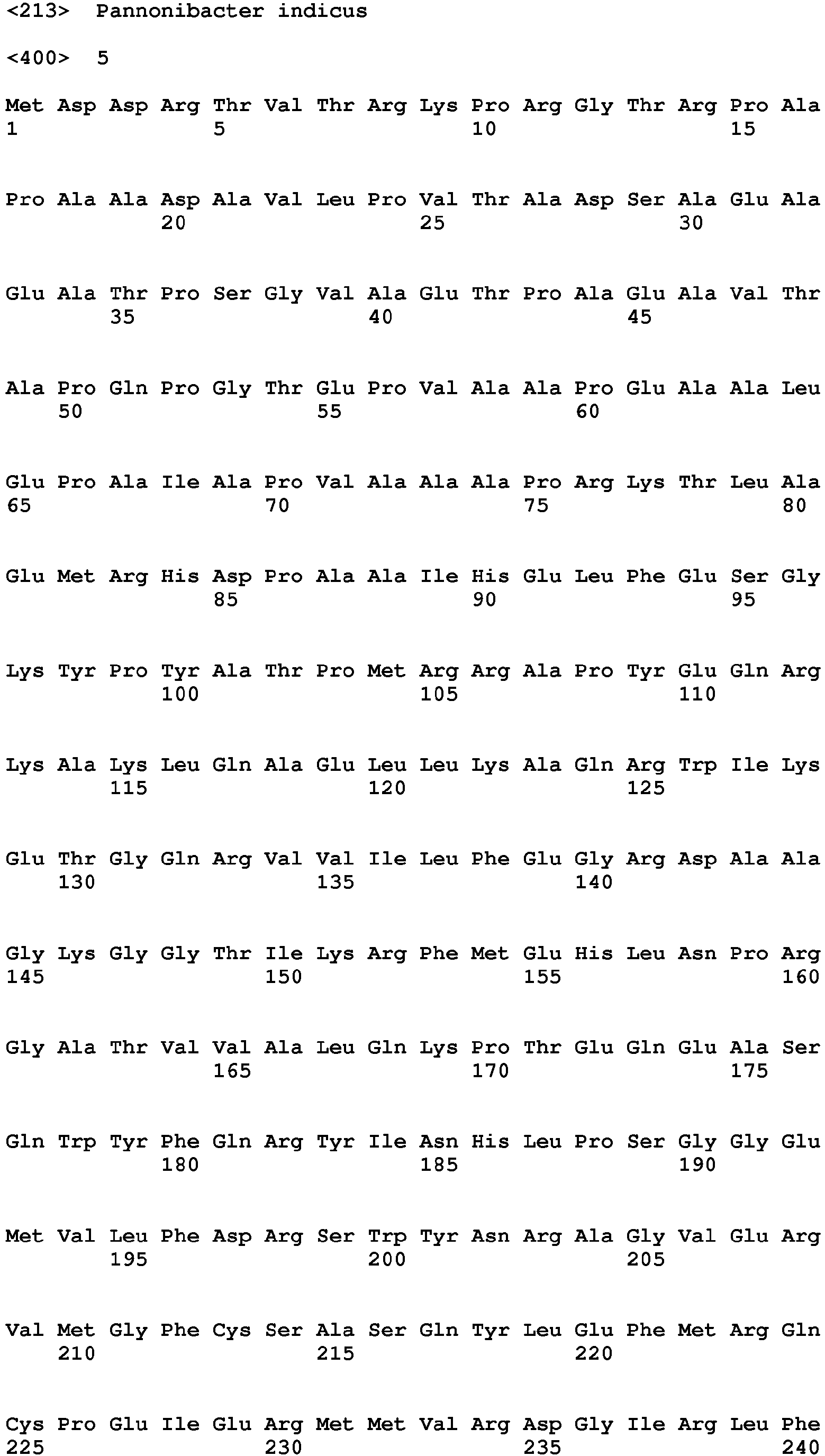


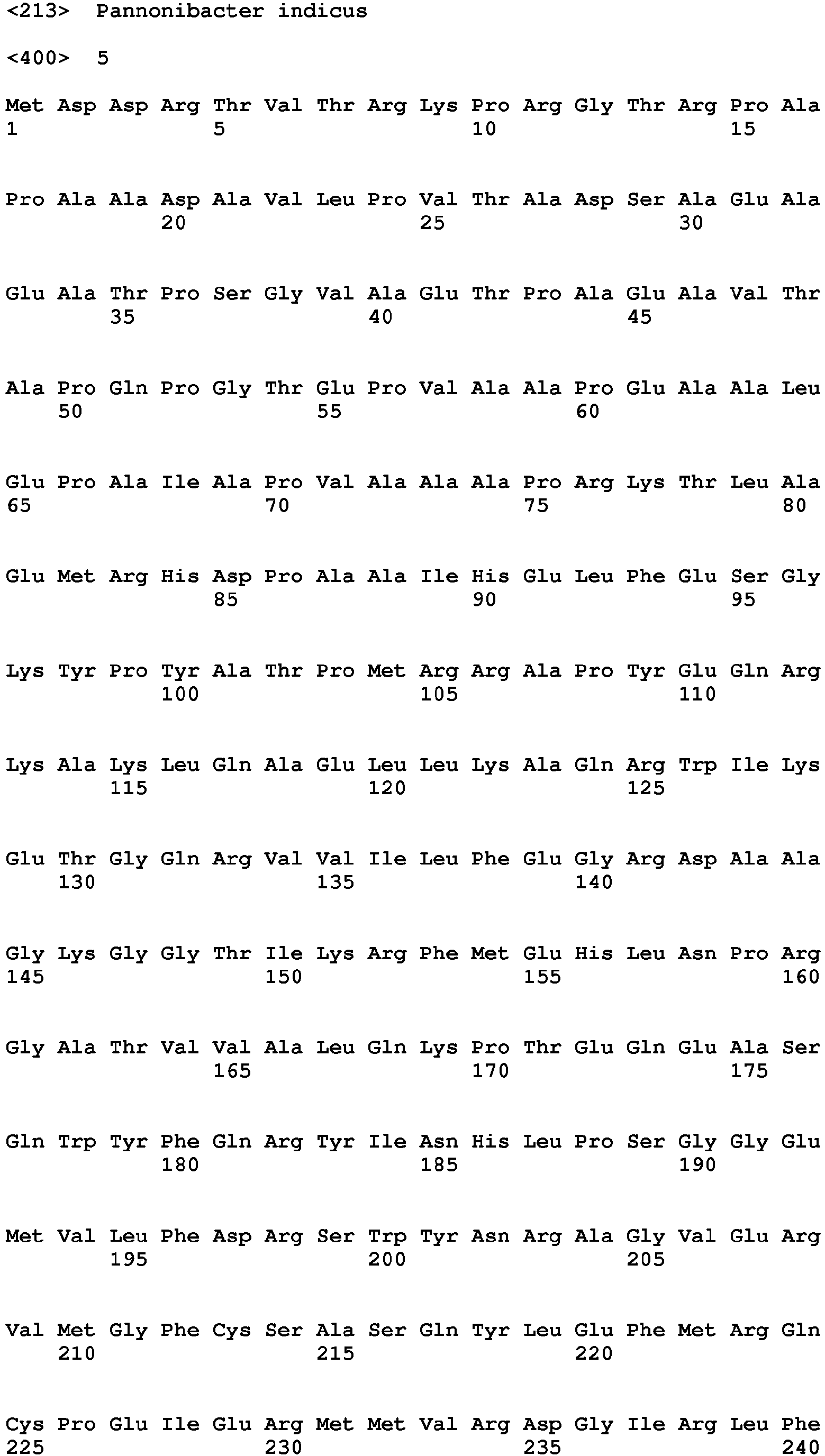


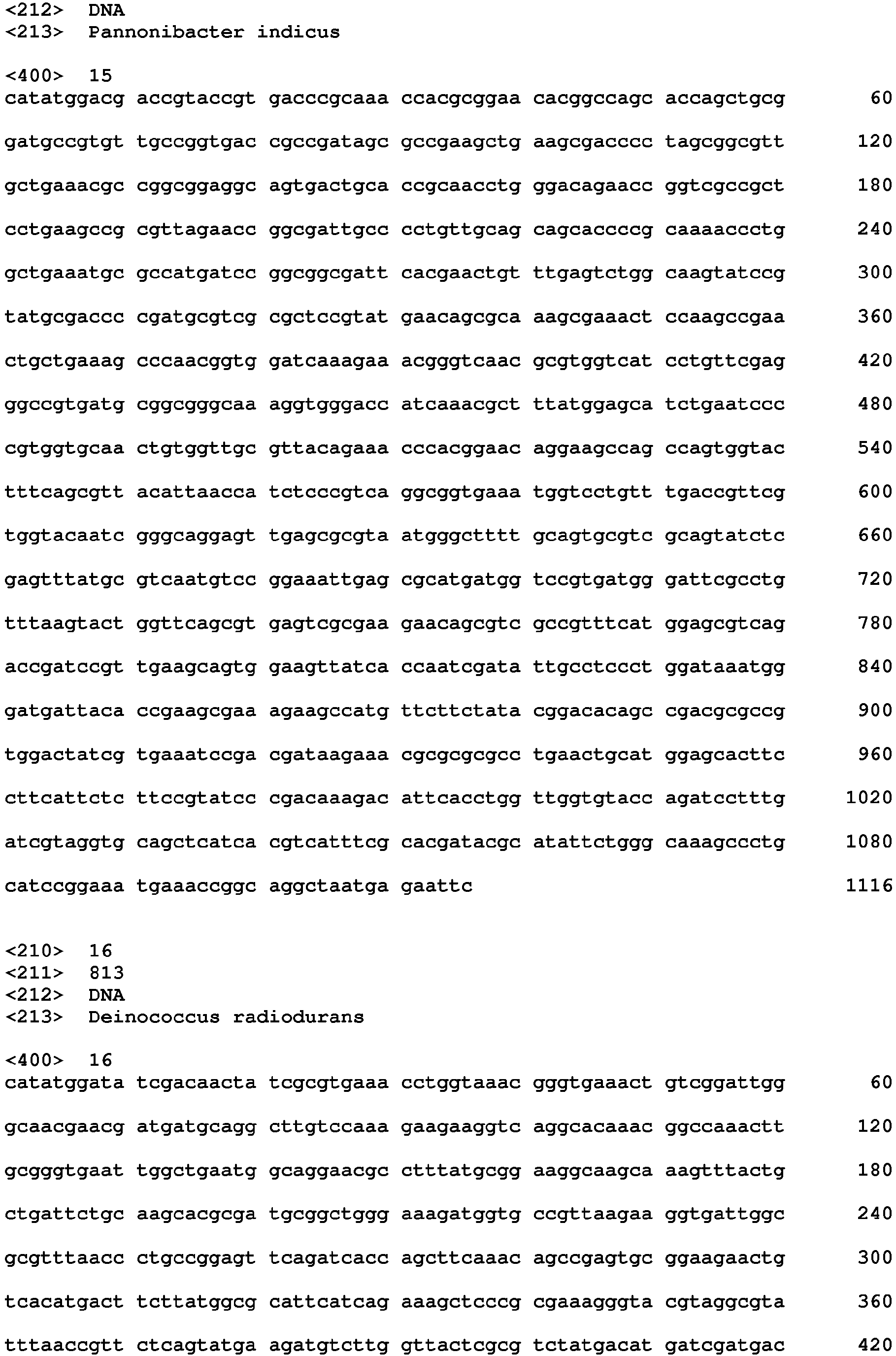
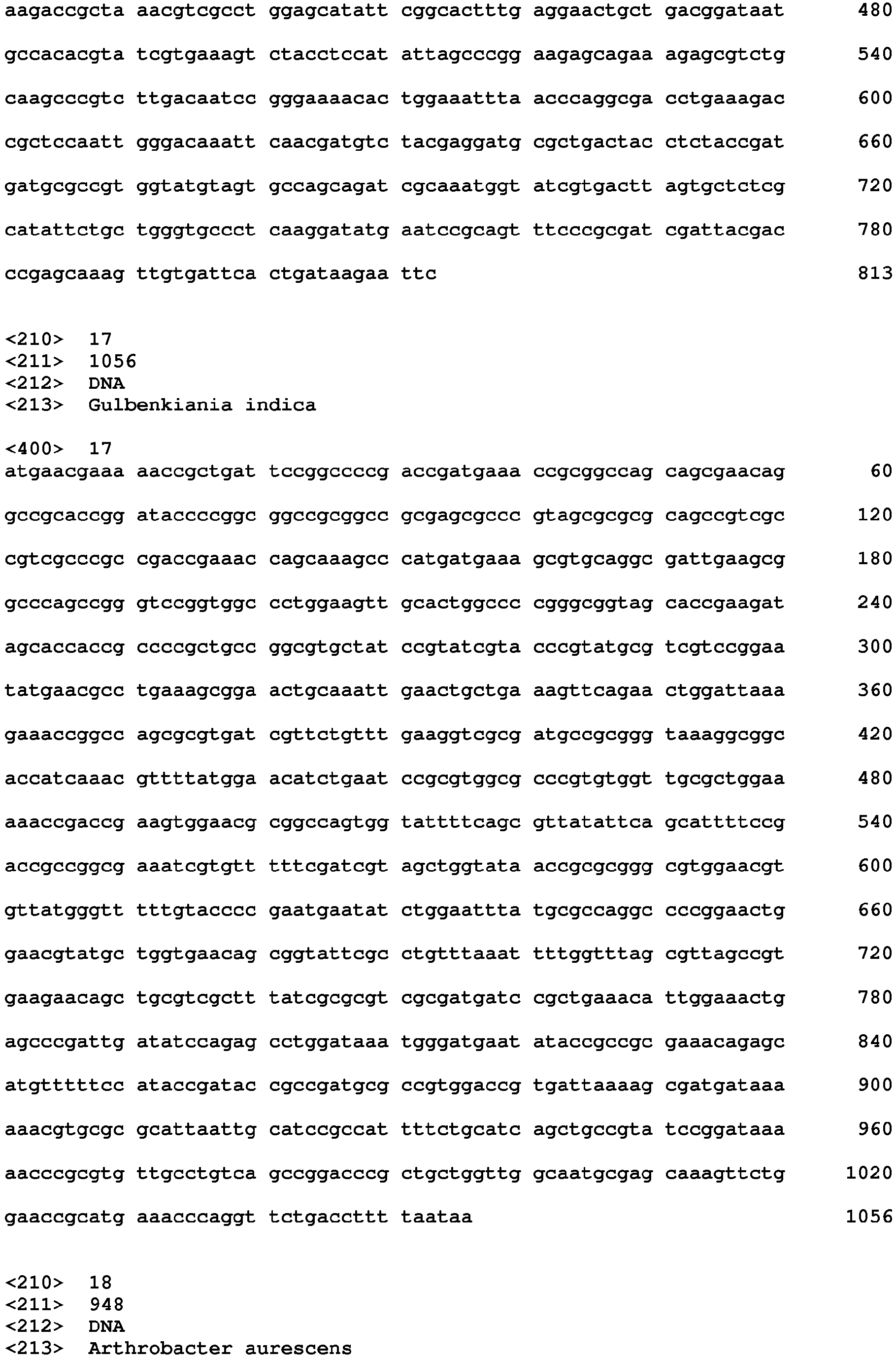
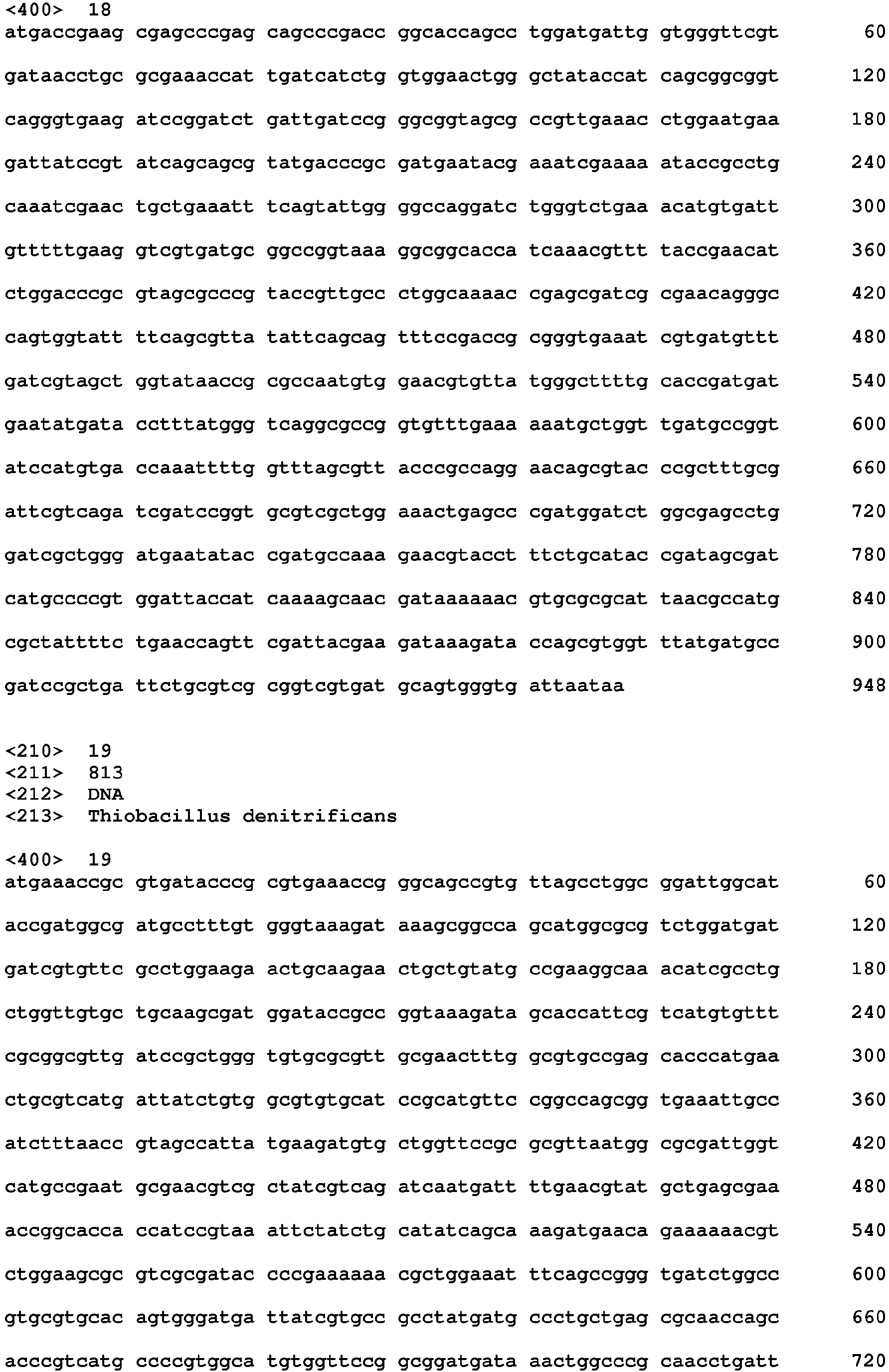

Claims (6)
- A method of producing a substance using ATP, wherein:ADP is generated from ATP during said method;said method is coupled with an ATP regeneration reaction in which a polyphosphate kinase 2 and polyphosphoric acid are allowed to react with the ADP to regenerate ATP; andthe ATP used in said method includes the ATP regenerated by the ATP regeneration reaction,said method comprising using, as a substrate for the polyphosphate kinase 2, a polyphosphoric acid mixture that contains polyphosphoric acid molecules with a degree of polymerization of not less than 15 in an amount of not less than 48%.
- The method as set forth in claim 1, wherein the amount of the polyphosphoric acid molecules with a degree of polymerization of not less than 15, contained in the polyphosphoric acid mixture, is not less than 50%.
- The method as set forth in claim 1 or 2, wherein the polyphosphate kinase 2 is at least one selected from the group consisting of: polyphosphate kinase 2 derived from Pseudomonas aeruginosa; polyphosphate kinase 2 derived from Synechococcus sp. PCC6312; polyphosphate kinase 2 derived from Corynebacterium efficiens; polyphosphate kinase 2 derived from Kineococcus radiotolerans; polyphosphate kinase 2 derived from Pannonibacter indicus; polyphosphate kinase 2 derived from Deinococcus radiodurans K1; polyphosphate kinase 2 derived from Gulbenkiania indica; polyphosphate kinase 2 derived from Arthrobactor aurescens TC1; polyphosphate kinase 2 derived from Thiobacillus denitrificans ATCC25259; and polyphosphate kinase 2 derived from Pseudomonas fluorescens.
- The method as set forth in any one of claims 1 to 3, wherein the polyphosphate kinase 2 functions in a manner coupled with at least one selected from the group consisting of γ-glutamylcysteine synthase, glutathione synthase, and bifunctional glutathione synthase.
- The method as set forth in any one of claims 1 to 4, wherein said method is a method of producing oxidized glutathione or a method of producing reduced glutathione.
- The method as set forth in claim 5, wherein:said method is a method of producing oxidized glutathione; andsaid method comprises the steps of:(1) allowing L-glutamic acid and L-cystine to react with each other to produce oxidized γ-glutamylcysteine; and(2) allowing the oxidized γ-glutamylcysteine obtained from step (1) and glycine to react with each other to produce oxidized glutathione.
Applications Claiming Priority (2)
| Application Number | Priority Date | Filing Date | Title |
|---|---|---|---|
| JP2017091451 | 2017-05-01 | ||
| PCT/JP2018/016175 WO2018203482A1 (en) | 2017-05-01 | 2018-04-19 | Production method for substance using atp |
Publications (2)
| Publication Number | Publication Date |
|---|---|
| EP3620527A1 true EP3620527A1 (en) | 2020-03-11 |
| EP3620527A4 EP3620527A4 (en) | 2020-05-20 |
Family
ID=64016621
Family Applications (1)
| Application Number | Title | Priority Date | Filing Date |
|---|---|---|---|
| EP18794051.5A Withdrawn EP3620527A4 (en) | 2017-05-01 | 2018-04-19 | Production method for substance using atp |
Country Status (5)
| Country | Link |
|---|---|
| US (1) | US20200048675A1 (en) |
| EP (1) | EP3620527A4 (en) |
| JP (1) | JP7098608B2 (en) |
| CN (1) | CN110603331A (en) |
| WO (1) | WO2018203482A1 (en) |
Families Citing this family (11)
| Publication number | Priority date | Publication date | Assignee | Title |
|---|---|---|---|---|
| EP3650543B1 (en) * | 2017-07-05 | 2023-06-07 | Oriciro Genomics, Inc. | Dna production method and dna fragment joining kit |
| CN111876447B (en) * | 2019-06-25 | 2022-04-01 | 陕西鸿道生物分析科学技术研究院有限公司 | Strain and method for producing rosmarinic acid |
| CN110904069A (en) * | 2019-12-04 | 2020-03-24 | 天津市职业大学 | PPK2 protein and application thereof in polyacrylamide gel electrophoresis 35kd standard substance |
| CN113046403B (en) * | 2020-09-30 | 2023-04-28 | 江南大学 | Method for efficiently catalyzing and synthesizing PAPS (PAPS) based on construction of ATP (adenosine triphosphate) regeneration system |
| CN113046402B (en) * | 2020-09-30 | 2023-04-28 | 江南大学 | Method for synthesizing PAPS (pap) based on construction of bifunctional enzyme |
| CN112779173B (en) * | 2021-01-06 | 2023-03-14 | 江南大学 | High-yield glutathione pichia pastoris strain G3-SF and application thereof |
| CN115216457A (en) * | 2021-04-15 | 2022-10-21 | 华东理工大学 | Extreme polyphosphokinase and its application |
| CN113444766B (en) * | 2021-06-04 | 2024-05-24 | 海天醋业集团有限公司 | Enrichment medium for spoilage bacteria during fermentation wine aging and detection method |
| CN113430145B (en) * | 2021-07-27 | 2023-10-20 | 陈玉松 | Preparation method and application of Lactobacillus plantarum with gastric acid resistance |
| EP4692364A1 (en) | 2023-03-29 | 2026-02-11 | Mitsubishi Chemical Corporation | Method for producing substance |
| CN119842509B (en) * | 2025-02-26 | 2025-08-05 | 内蒙古蒙牛乳业(集团)股份有限公司 | A method for regulating Pichia pastoris to reduce acetic acid accumulation during ethanol-induced expression of α-lactalbumin |
Family Cites Families (16)
| Publication number | Priority date | Publication date | Assignee | Title |
|---|---|---|---|---|
| JPS6027396A (en) | 1983-07-22 | 1985-02-12 | Kyowa Hakko Kogyo Co Ltd | Preparation of gluthathione |
| JPS6027397A (en) | 1983-07-22 | 1985-02-12 | Kyowa Hakko Kogyo Co Ltd | Preparation of gluthathione |
| JP3438890B2 (en) | 1992-08-10 | 2003-08-18 | 鐘淵化学工業株式会社 | DNA encoding decarbamylase with improved thermostability and use thereof |
| JP4431334B2 (en) * | 2003-07-29 | 2010-03-10 | 独立行政法人科学技術振興機構 | Improved ATP amplification method and use thereof |
| WO2006001382A1 (en) * | 2004-06-25 | 2006-01-05 | Kyowa Hakko Kogyo Co., Ltd. | Method of producing dipeptide or dipeptide derivative |
| WO2006080313A1 (en) * | 2005-01-25 | 2006-08-03 | Yamasa Corporation | Method of enzymatically synthesizing 3’-phosphoadenosine-5’-phosphosulfate |
| JP2006280365A (en) * | 2005-03-10 | 2006-10-19 | Bussan Nanotech Research Institute Inc | Adenosine triphosphate detection method and detection reagent |
| JP2006246792A (en) * | 2005-03-10 | 2006-09-21 | Bussan Nanotech Research Institute Inc | Microbial detection method and lysis reagent |
| CN102220400B (en) * | 2011-05-12 | 2014-02-05 | 北京化工大学 | Method for synthesis of glutathione in vitro |
| JP5800218B2 (en) * | 2011-07-20 | 2015-10-28 | 国立大学法人広島大学 | ATP production method and use thereof |
| EP3165610A4 (en) * | 2014-07-02 | 2018-01-24 | Kaneka Corporation | Method for producing oxidized -glutamylcysteine and oxidized glutathione |
| US20170211117A1 (en) * | 2014-07-29 | 2017-07-27 | Kaneka Corporation | Method for producing gamma-glutamylcysteine and glutathione |
| US20160336878A1 (en) | 2015-05-11 | 2016-11-17 | Massachusetts Institute Of Technology | Poly-actuator |
| CN105463043A (en) * | 2016-01-06 | 2016-04-06 | 北京化工大学 | Method for regenerating ATP(adenosine triphosphate) through enzyme method |
| CN105861598A (en) * | 2016-04-27 | 2016-08-17 | 深圳市古特新生生物科技有限公司 | Method for regenerating ATP (adenosine triphosphate) by enzyme process and application thereof |
| CN109923209A (en) * | 2016-11-01 | 2019-06-21 | 株式会社钟化 | Modification type enzyme and its utilization |
-
2018
- 2018-04-19 WO PCT/JP2018/016175 patent/WO2018203482A1/en not_active Ceased
- 2018-04-19 EP EP18794051.5A patent/EP3620527A4/en not_active Withdrawn
- 2018-04-19 CN CN201880028979.XA patent/CN110603331A/en active Pending
- 2018-04-19 JP JP2019515697A patent/JP7098608B2/en active Active
-
2019
- 2019-10-30 US US16/668,197 patent/US20200048675A1/en not_active Abandoned
Also Published As
| Publication number | Publication date |
|---|---|
| JPWO2018203482A1 (en) | 2020-03-12 |
| CN110603331A (en) | 2019-12-20 |
| WO2018203482A1 (en) | 2018-11-08 |
| EP3620527A4 (en) | 2020-05-20 |
| US20200048675A1 (en) | 2020-02-13 |
| JP7098608B2 (en) | 2022-07-11 |
Similar Documents
| Publication | Publication Date | Title |
|---|---|---|
| US20200048675A1 (en) | Production method for substance using atp | |
| ES2244430T3 (en) | HIDANTOINASE VARIANTS WITH IMPROVED PROPERTIES AND ITS USE FOR THE PRODUCTION OF AMINO ACIDS. | |
| Yuan et al. | Distinct genetic code expansion strategies for selenocysteine and pyrrolysine are reflected in different aminoacyl-tRNA formation systems | |
| CN107406864B (en) | Methods for the production of L-serine using genetically engineered microorganisms lacking serine degradation pathways | |
| PT1383899E (en) | Enzymatic method for the enantioselective reduction of keto compounds | |
| Boyer et al. | Purification, cloning and sequencing of an enzyme mediating the reductive dechlorination of 2, 4, 6-trichlorophenol from Desulfitobacterium frappieri PCP-1 | |
| US11673921B2 (en) | Cell-free protein synthesis platform derived from cellular extracts of Vibrio natriegens | |
| KR20230160222A (en) | Modified nicotinamide phosphoribosyltransferase | |
| ES3028091T3 (en) | Biological processes for the production of aryl sulfates | |
| CN120380005A (en) | Enzymatic synthesis of NTP and NQP | |
| WO2009139365A1 (en) | Process for production of cis-4-hydroxy-l-proline | |
| CN101107356B (en) | Enzymatic Synthesis of 3'-Phosphoadenosine-5'-Phosphosulfate | |
| US20220348974A1 (en) | Biotin synthases for efficient production of biotin | |
| US8105814B2 (en) | DNA replication factors | |
| JP4936290B2 (en) | Method for producing a protein incorporating an unnatural amino acid | |
| Guzzo et al. | Lysyl-tRNA synthetase interacts with EF1α, aspartyl-tRNA synthetase and p38 in vitro | |
| CN110607335A (en) | A kind of nicotinamide adenine dinucleotide compound biosynthesis method | |
| JP2021003034A (en) | Coliform bacillus that expresses efp protein, and method for producing flavonoid compound by using the same | |
| JP5697327B2 (en) | Method for producing cis-hydroxy-L-proline | |
| KR102022611B1 (en) | A novel recombinant tyrosinase | |
| Badri | Engineering in vivo sulfation in Escherichia coli for the complete biosynthesis of sulfated glycosaminoglycans | |
| Souterre | Optimization of enzymes via directed evolution in vivo | |
| Jüngert et al. | Stringent response and phosphorylations of PHB synthase and PHB depolymerase influence the PHB content of Ralstonia eutropha H16 | |
| JPWO2018181774A1 (en) | Novel monooxygenase and its use | |
| JP2023553990A (en) | S-methylthiolibose kinase polypeptide and methods for producing and using S-methylthiolibose kinase polypeptide |
Legal Events
| Date | Code | Title | Description |
|---|---|---|---|
| PUAI | Public reference made under article 153(3) epc to a published international application that has entered the european phase |
Free format text: ORIGINAL CODE: 0009012 |
|
| STAA | Information on the status of an ep patent application or granted ep patent |
Free format text: STATUS: REQUEST FOR EXAMINATION WAS MADE |
|
| 17P | Request for examination filed |
Effective date: 20191107 |
|
| AK | Designated contracting states |
Kind code of ref document: A1 Designated state(s): AL AT BE BG CH CY CZ DE DK EE ES FI FR GB GR HR HU IE IS IT LI LT LU LV MC MK MT NL NO PL PT RO RS SE SI SK SM TR |
|
| AX | Request for extension of the european patent |
Extension state: BA ME |
|
| A4 | Supplementary search report drawn up and despatched |
Effective date: 20200421 |
|
| RIC1 | Information provided on ipc code assigned before grant |
Ipc: C12P 19/32 20060101ALI20200415BHEP Ipc: C12P 21/02 20060101AFI20200415BHEP Ipc: C12N 9/12 20060101ALI20200415BHEP |
|
| DAV | Request for validation of the european patent (deleted) | ||
| DAX | Request for extension of the european patent (deleted) | ||
| 18D | Application deemed to be withdrawn |
Effective date: 20201124 |