EP3619964B1 - System und verfahren zur minimierung von management-frame-overhead in drahtlosen netzwerken - Google Patents
System und verfahren zur minimierung von management-frame-overhead in drahtlosen netzwerken Download PDFInfo
- Publication number
- EP3619964B1 EP3619964B1 EP18732149.2A EP18732149A EP3619964B1 EP 3619964 B1 EP3619964 B1 EP 3619964B1 EP 18732149 A EP18732149 A EP 18732149A EP 3619964 B1 EP3619964 B1 EP 3619964B1
- Authority
- EP
- European Patent Office
- Prior art keywords
- sta
- information table
- signal
- stas
- wireless network
- Prior art date
- Legal status (The legal status is an assumption and is not a legal conclusion. Google has not performed a legal analysis and makes no representation as to the accuracy of the status listed.)
- Active
Links
Images




Classifications
-
- H—ELECTRICITY
- H04—ELECTRIC COMMUNICATION TECHNIQUE
- H04W—WIRELESS COMMUNICATION NETWORKS
- H04W48/00—Access restriction; Network selection; Access point selection
- H04W48/08—Access restriction or access information delivery, e.g. discovery data delivery
- H04W48/10—Access restriction or access information delivery, e.g. discovery data delivery using broadcasted information
-
- H—ELECTRICITY
- H04—ELECTRIC COMMUNICATION TECHNIQUE
- H04W—WIRELESS COMMUNICATION NETWORKS
- H04W48/00—Access restriction; Network selection; Access point selection
- H04W48/08—Access restriction or access information delivery, e.g. discovery data delivery
- H04W48/14—Access restriction or access information delivery, e.g. discovery data delivery using user query or user detection
-
- H—ELECTRICITY
- H04—ELECTRIC COMMUNICATION TECHNIQUE
- H04B—TRANSMISSION
- H04B17/00—Monitoring; Testing
- H04B17/30—Monitoring; Testing of propagation channels
- H04B17/309—Measuring or estimating channel quality parameters
- H04B17/318—Received signal strength
-
- H—ELECTRICITY
- H04—ELECTRIC COMMUNICATION TECHNIQUE
- H04W—WIRELESS COMMUNICATION NETWORKS
- H04W48/00—Access restriction; Network selection; Access point selection
- H04W48/16—Discovering, processing access restriction or access information
-
- H—ELECTRICITY
- H04—ELECTRIC COMMUNICATION TECHNIQUE
- H04W—WIRELESS COMMUNICATION NETWORKS
- H04W8/00—Network data management
- H04W8/005—Discovery of network devices, e.g. terminals
-
- H—ELECTRICITY
- H04—ELECTRIC COMMUNICATION TECHNIQUE
- H04W—WIRELESS COMMUNICATION NETWORKS
- H04W84/00—Network topologies
- H04W84/02—Hierarchically pre-organised networks, e.g. paging networks, cellular networks, WLAN [Wireless Local Area Network] or WLL [Wireless Local Loop]
- H04W84/10—Small scale networks; Flat hierarchical networks
- H04W84/12—WLAN [Wireless Local Area Networks]
-
- Y—GENERAL TAGGING OF NEW TECHNOLOGICAL DEVELOPMENTS; GENERAL TAGGING OF CROSS-SECTIONAL TECHNOLOGIES SPANNING OVER SEVERAL SECTIONS OF THE IPC; TECHNICAL SUBJECTS COVERED BY FORMER USPC CROSS-REFERENCE ART COLLECTIONS [XRACs] AND DIGESTS
- Y02—TECHNOLOGIES OR APPLICATIONS FOR MITIGATION OR ADAPTATION AGAINST CLIMATE CHANGE
- Y02D—CLIMATE CHANGE MITIGATION TECHNOLOGIES IN INFORMATION AND COMMUNICATION TECHNOLOGIES [ICT], I.E. INFORMATION AND COMMUNICATION TECHNOLOGIES AIMING AT THE REDUCTION OF THEIR OWN ENERGY USE
- Y02D30/00—Reducing energy consumption in communication networks
- Y02D30/70—Reducing energy consumption in communication networks in wireless communication networks
Definitions
- IEEE 802.11 wireless local area networks are typically multiple access networks.
- User devices may access the network via a randomized Medium Access Control (MAC) protocol, namely the Carrier Sense Multiple Access with Collision Avoidance (CSMA/CA) protocol, and the enhanced distributed channel access (EDCA) scheme according to a distributed coordination function (DCF).
- MAC Medium Access Control
- CSMA/CA Carrier Sense Multiple Access with Collision Avoidance
- EDCA enhanced distributed channel access
- DCF distributed coordination function
- the specific MAC protocol employed by Wi-Fi networks is standardized in the IEEE 802.11 protocol.
- Known art includes US 2016/309537 A1 (which describes probe response suppression) and Jing-Rong Hsieh (HTC): "Response considerations in Active Scanning", IEEE SA MENTOR, PISCATAWAY, NJ USA, vol. 802. 11ai, no. 2, 20 September 2012, pages 1-15 .
- An access point (AP) and a corresponding method are described herein for reducing overhead in a probe request and probe response message exchange used in wireless networks.
- the invention is set out in the independent claims. Further embodiments are set out in the dependent claims.
- Wi-Fi Wireless Local Area Network
- Wi-Fi Wireless Local Area Network
- the physical layer and the data link control layer of the protocol has evolved significantly since the protocol's introduction (e.g., the protocols IEEE 802.11 a/b/g/n/ac/ax), the basic operation of the MAC layer has not changed much.
- the basic operation of the MAC layer has not changed much.
- airtime overhead created by the management frames may become so significant that the overall system performance (e.g., in terms of throughput, delay) may be degraded dramatically.
- the following description includes methods, systems, and apparatuses to minimize management frame overhead in Wi-Fi networks.
- the examples described herein may be applied in any wireless network by a person skilled in the art.
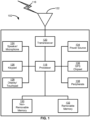
- the communication device 100 may be a station (STA) or may be an access point (AP) as described in further detail below.
- the communication device 100 may include a processor 118, a transceiver 120, a transmit/receive element 122, a speaker/microphone 124, a keypad 126, a display/touchpad 128, non-removable memory 130, removable memory 132, a power source 134, a global positioning system (GPS) chipset 136, and/or other peripherals 138, among others.
- GPS global positioning system
- the processor 118 may be a general purpose processor, a special purpose processor, a conventional processor, a digital signal processor (DSP), a plurality of microprocessors, one or more microprocessors in association with a DSP core, a controller, a microcontroller, Application Specific Integrated Circuits (ASICs), Field Programmable Gate Arrays (FPGAs) circuits, any other type of integrated circuit (IC), a state machine, and the like.
- the processor 118 may perform signal coding, data processing, power control, input/output processing, and/or any other functionality that enables the communication device 100 to operate in a wireless environment.
- the processor 118 may be coupled to the transceiver 120, which may be coupled to the transmit/receive element 122. While FIG. 1 depicts the processor 118 and the transceiver 120 as separate components, it will be appreciated that the processor 118 and the transceiver 120 may be integrated together in an electronic package or chip.
- the transmit/receive element 122 may be configured to transmit signals to, or receive signals from other communication devices over an air interface 116.
- the transmit/receive element 122 may be an antenna configured to transmit and/or receive RF signals.
- the transmit/receive element 122 may be an emitter/detector configured to transmit and/or receive IR, UV, or visible light signals, for example.
- the transmit/receive element 122 may be configured to transmit and/or receive both RF and light signals. It will be appreciated that the transmit/receive element 122 may be configured to transmit and/or receive any combination of wireless signals.
- the communication device 100 may include any number of transmit/receive elements 122. More specifically, communication device 100 may employ MIMO technology. In an example, the communication device 100 may include two or more transmit/receive elements 122 (e.g., multiple antennas) for transmitting and receiving wireless signals over the air interface 116.
- the transceiver 120 may be configured to modulate the signals that are to be transmitted by the transmit/receive element 122 and to demodulate the signals that are received by the transmit/receive element 122.
- the communication device 100 may have multimode capabilities.
- the transceiver 120 may include multiple transceivers for enabling the communication device 100 to communicate via multiple air interfaces 116.
- the processor 118 of the communication device 100 may be coupled to, and may receive user input data from, the speaker/microphone 124, the keypad 126, and/or the display/touchpad 128 (e.g., a liquid crystal display (LCD) display unit or organic light-emitting diode (OLED) display unit).
- the processor 118 may also output user data to the speaker/microphone 124, the keypad 126, and/or the display/touchpad 128.
- the processor 118 may access information from, and store data in, any type of suitable memory, such as the non-removable memory 130 and/or the removable memory 132.
- the non-removable memory 130 may include random-access memory (RAM), read-only memory (ROM), a hard disk, or any other type of memory storage device.
- the removable memory 132 may include a subscriber identity module (SIM) card, a memory stick, a secure digital (SD) memory card, and the like.
- SIM subscriber identity module
- SD secure digital
- the processor 118 may access information from, and store data in, memory that is not physically located on the communication device 100, such as on a server or a home computer (not shown).
- the processor 118 may receive power from the power source 134, and may be configured to distribute and/or control the power to the other components in the communication device 100.
- the power source 134 may be any suitable device for powering the communication device 100.
- the power source 134 may include one or more dry cell batteries (e.g., nickel-cadmium (NiCd), nickel-zinc (NiZn), nickel metal hydride (NiMH), lithium-ion (Li-ion), etc.), solar cells, fuel cells, and the like.
- the processor 118 may also be coupled to the GPS chipset 136, which may be configured to provide location information (e.g., longitude and latitude) regarding the current location of communication device 100.
- location information e.g., longitude and latitude
- the communication device 100 may receive location information over the air interface 116 from a base station (e.g., base stations 114a, 114b) and/or determine its location based on the timing of the signals being received from two or more nearby base stations. It will be appreciated that the communication device 100 may acquire location information by way of any suitable location-determination method.
- the processor 118 may further be coupled to other peripherals 138, which may include one or more software and/or hardware modules that provide additional features, functionality and/or wired or wireless connectivity.
- the peripherals 138 may include an accelerometer, an e-compass, a satellite transceiver, a digital camera (for photographs and/or video), a universal serial bus (USB) port, a vibration device, a television transceiver, a hands free headset, a Bluetooth ® module, a frequency modulated (FM) radio unit, a digital music player, a media player, a video game player module, an Internet browser, a Virtual Reality and/or Augmented Reality (VR/AR) device, an activity tracker, and the like.
- FM frequency modulated
- the peripherals 138 may include one or more sensors, the sensors may be one or more of a gyroscope, an accelerometer, a hall effect sensor, a magnetometer, an orientation sensor, a proximity sensor, a temperature sensor, a time sensor; a geolocation sensor; an altimeter, a light sensor, a touch sensor, a magnetometer, a barometer, a gesture sensor, a biometric sensor, and/or a humidity sensor.
- a gyroscope an accelerometer, a hall effect sensor, a magnetometer, an orientation sensor, a proximity sensor, a temperature sensor, a time sensor; a geolocation sensor; an altimeter, a light sensor, a touch sensor, a magnetometer, a barometer, a gesture sensor, a biometric sensor, and/or a humidity sensor.
- the communication device 100 may include a full duplex radio for which transmission and reception of some or all of the signals (e.g., associated with particular subframes for both the uplink (e.g., for transmission) and downlink (e.g., for reception) may be concurrent and/or simultaneous.
- the full duplex radio may include an interference management unit to reduce and or substantially eliminate self-interference via either hardware (e.g., a choke) or signal processing via a processor (e.g., a separate processor (not shown) or via processor 118).
- the communication device 100 may include a half-duplex radio for which transmission and reception of some or all of the signals (e.g., associated with particular subframes for either the uplink (e.g., for transmission) or the downlink (e.g., for reception)).
- a half-duplex radio for which transmission and reception of some or all of the signals (e.g., associated with particular subframes for either the uplink (e.g., for transmission) or the downlink (e.g., for reception)).
- a source of management overhead may be a probe request and probe response message exchange that occurs between a STA and one or more APs.
- the probe request may be a management frame that a STA may make use of to gather information about the APs in its vicinity when it is in Active Scanning mode.
- the STA may send a probe request message to a broadcast address, meaning that the message is intended for multiple recipients.
- the probe request may include identifying information about the STA, such as, for example, a Medium Access Control (MAC) address.
- MAC Medium Access Control
- the one or more APs that receive the probe request message may respond to the message by sending a probe response message.
- the probe response message may include information about the AP's capabilities, such as channel capabilities, supported IEEE 802.11 protocols, supported bandwidths, supported number of spatial streams, and various other physical layer capabilities.
- Probe response frames may include the same content as a beacon frame. Accordingly, the STA may be provided with the technical capabilities supported by the AP before it initiates association with the AP.
- the probe response message may be sent in unicast mode. In other words, the probe response frames may be intended only for one receiver STA (i.e., the transmitter of the probe request frame).
- a STA that sends a probe request message may trigger a probe response transmission by all the APs within the transmission range of the STA. For example, if there are four APs within the range of the STA, the probe request may trigger four probe response messages.
- broadcast messages may be transmitted using a basic rate, which is one of the possible slowest transmission rates available in the standards. It should be noted that slow transmissions occupy the wireless medium longer than fast transmissions. Accordingly, as the number of probe requests in the wireless medium increases, a considerable amount of airtime may be consumed by these frames.
- the wireless network 200A may include a first STA 204A, a second STA 206A, a third STA 208A, and a fourth STA 210A.
- the wireless network 200A may be in a proximity to one or more neighbor wireless networks.
- the wireless network 200A may be in proximity with a second wireless network 200B and a third wireless network 200C.
- the second wireless network 200B may have its own AP 202B and one or more STAs such as a first STA 204B, a second STA 206B, a third STA 208B, and a fourth STA 21 0B.
- the third wireless network 200C may have its own AP 202C and one or more STAs such as a first STA 204C, a second STA 206C, and a third STA 208C.
- the probe request and probe response message exchange occurs in broadcast and unicast mode, respectively.
- a STA that sends a probe request message triggers probe response transmission by all the APs within the transmission range of the STA.
- STAs from the second wireless network 200B and the third wireless network 200C may send broadcast probe request messages that are received by the AP 202A.
- the AP 202A may then send individual unicast probe response messages to the STAs in the second wireless network 200B and the third wireless network 200C.
- the probe response messages may be sent by the AP 202 using the basic rate. Since they are unicast, they may be repeatedly transmitted until the recipient STA acknowledges successful reception of the frame or the packet is dropped due to reaching retry count.
- probe response frames originating from different APs may collide with each other. This may cause retransmissions and may contribute considerably to airtime overhead.
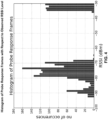
- FIG. 3 a histogram illustrating a number of probe requests (y-axis) with respect to observed received signal strength indicator (RSSI) levels (x-axis) is shown.
- the information presented may be collected by a sniffer collocated with an AP in residential or public environment, such as the AP 202A of FIG. 2 .
- RSSI levels e.g., approximately -80 dBm to -90 dBm.
- These probe requests may be sent by STAs that belong to other networks, such as the second wireless network 200B and the third wireless network 200C. These STAs may not have any intention to associate with the AP 202A. This may be an expected result, as probe requests transmitted by STAs that belong to neighboring wireless networks may reach the AP 202A at very low signal levels.
- the examples described herein may mitigate or prevent responses from the AP 202A to these probe request messages.
- FIG. 4 a histogram illustrating a number of probe response frames (y-axis) with respect to observed RSSI levels (x-axis) is shown.
- the information presented may be collected by a sniffer collocated with an AP in residential or public environment, such as the AP 202A of FIG. 2 . It should be noted that there may be a significant difference in the number of probe requests ( FIG. 3 ) and probe response frames ( FIG. 4 ). The number of probe response frames ( FIG. 4 ) may be almost an order of magnitude more than the number of probe request frames ( FIG. 3 ).
- the description herein includes methods by which the AP 102A may reduce the overhead caused by the probe request and probe response messaging. In one example, the methods may not require any modifications to STA devices.
- the overhead minimization i.e., the improvement in performance
- the AP 202A may keep track of the clients (e.g., STAs) that have associated with it, in the STA information table 500.
- the STA information table 500 may be stored in one or more of the non-removable memory 130 and the removable memory 132 described above with reference to FIG. 1 .
- the STA information table 500 may include first column 502 identifying STA MAC addresses and a second column 504 identifying a timestamp of last association. It should be noted that currently unassociated STAs, which have associated with the AP 202A at some time in the past, may also be stored in the STA information table 500.
- this predetermined amount of time may be 7 days, but it may be set to be a longer or shorter time period in other implementations.
- the AP 202A may determine the address of a STA from the probe request message and may not respond to probe requests sent by the STAs that are not listed in the STA information table if the measured signal strength (e.g., in terms of RSSI) falls below a predetermined but configurable RSSI threshold.
- the RSSI threshold may be approximately -70 dBm.
- the RSSI threshold may vary depending on a transmitting STA's physical layer capabilities, which may be specified in the probe request message. For example, if a STA is using the IEEE 802.11g protocol, the RSSI threshold may be -70dBm. If a STA is using the IEEE 802.11ac protocol, the RSSI threshold may be -75dBm.
- the RSSI threshold may be set lower or higher than this value in other implementations.
- the AP 202A may be allowed to respond to probe request messages sent by STAs that are listed in the STA information table, regardless of the RSSI of the received probe request. This way, a STA belonging to the first wireless network 200 may initiate association from far corners of the first wireless network 200. In this example, a STA that is new to the first wireless network 200 that is to be associated with the AP 202A may be brought relatively close, depending on the RSSI threshold used for preventing probe response transmission to the AP 202. This may ensure that the STA may receive a response to its probe request message.
- STAs may depend on probe request and probe response message exchange to initiate association.
- STAs may make use of passive scanning of beacon frames transmitted by the AP 202A to learn of its supported capabilities and to initiate association.
- the AP 202A may only respond to probe request messages sent by the STAs in the first wireless network 200A
- the AP 202B may only respond to probe request messages sent by the STAs in the second wireless network 200B
- the AP 202C would only respond to the probe request messages sent by STAs in the third wireless network 200C.
- the airtime overhead due to the probe request and probe response exchange may be significantly reduced.
- the AP 202A may stop sending probe responses to the STAs that belong to the other wireless networks 200B and 200C.
- the AP 202B and the AP 202C may still continue responding to probe requests sent by the STAs that belong to the first wireless network 200A.
- the AP 202A may adjust its operating channel such that it does not overlap with the operating channels of neighboring APs. For example, if the AP 202B is operating in channel 1, and the AP 202C is operating in channel 11, then the AP 202A may operate in channel 6.
- the AP 202A may avoid probe responses sent by the AP 202B and the AP 202C.
- the AP 202A may choose its operation channel by making use of a channel selection scheme that takes into account the interference caused by the other networks in the vicinity. Examples of this scheme may be found in in US Patent Application Serial No. 14/186,690 and PCT Application Serial No. PCT/EP2015/079673 .
- the AP 202A may keep track of its neighbor wireless networks by carrying out periodic off-channel scans, and it may identify the channels in which its close neighbors are operating.
- the AP 202A may receive a probe request message from a STA.
- the AP 202A may determine the identity of the STA using the probe request message.
- the AP 202A may determine if the identity of the STA is stored in the STA information table 500. If yes, the method proceeds to step 608. If no, the method proceeds to step 610.
- the AP 202A may determine if the STA is currently associated with the AP 202A or has been recently associated with the AP 202A within a predetermined time. If yes, the method proceeds to step 612. If no, the method proceeds to step 610.
- the AP 202A may determine if the RSSI of the probe request message is above the predetermined threshold. If no, the method proceeds to step 614 and the AP 202A does not send a probe response message. If yes, the method proceeds to step 612 and the AP 202A sends a probe response message to the STA.
- the AP 202A may receive a probe request message from a STA.
- the AP 202A may determine the identity of the STA using the probe request message.
- the AP 202A may determine if the identity of the STA is stored in the STA information table 500. If yes, the method proceeds to step 708. If no, the method proceeds to step 710.
- the AP 202A may determine if the RSSI of the probe request message is above the predetermined threshold. If no, the method proceeds to step 714 and the AP 202A does not send a probe response message. If yes, the method proceeds to step 712 and the AP 202A sends a probe response message to the STA.
- the mesh network 800 may include one or more mesh APs and one or more STAs.
- the mesh network 800 may include a first AP 802, a second AP 804, and a third AP 806.
- the first AP 802 may be connected to the Internet 826.
- the mesh network 800 may also include a first STA 808, a second STA 810, and a third STA 812.
- the first AP 802, the second AP 804, and the third AP 806 may be subject to probe request messages sent from STAs that belong to other networks in the vicinity of the mesh network 800.
- broadcast probe request messages sent by a fourth STA 814 associated with a fourth AP 816, a fifth STA 818 associated with a fifth AP 820, and/or a sixth STA 822 associated with a sixth AP 824 may be received by the APs in the mesh network 800.
- the APs in the mesh network 800 may not respond to these probe request messages unless the probe request message is received with an RSSI level above a determined threshold.
- the APs in the mesh network 800 may each have a Station Information Table 400 as described above. These APs may exchange their Station Information Tables 400 so that each AP in the mesh network 800 has the same set of information about which STAs belong to the network and their last association time.
- the APs in the mesh network 800 may be equipped with client steering functionality as disclosed in PCT Patent Application Serial No. PCT/EP2015/064163 , US Patent Application Serial No. 14/747,438 , and PCT Patent Application Serial No. PCT/EP2015/079673 .
- client steering functionality only one AP in the mesh network 800 may respond to probe request messages sent by a STA.
- the other APs in the mesh network 800 may not respond to probe request messages irrespective of the RSSI level of the probe request frame.
- the responding AP may be determined by client steering logic implemented in the client steering functionality.
- the first STA 808 is being steered to the second AP 804 while it is connected to the first AP 802, only the second AP 804 may respond to probe request messages from the first STA 808.
- the first AP 802 and the third AP 806 may not respond. If a STA is not being steered to any other AP, then the associated AP may respond to probe requests sent by the STA.
- beacon frames Another type of management frames that may cause significant airtime overhead are periodic beacon frames sent by APs. These beacon frames may be used for the announcement of an AP's capabilities to other nodes, sleep-awake scheduling in power save mode, channel switch synchronization (e.g., in Channel Switch Announcement (CSA) and Extended-CSA standards), and other functions that require time synchronization among the nodes in the network.
- CSA Channel Switch Announcement
- Extended-CSA Extended-CSA
- the APs in the mesh network 800 may employ a beacon period adjustment. If there are no STAs associated with an AP in the mesh network 800, for example the first AP 802, the first AP 802 may increase the beacon transmission period. In other words, the first AP 802 may send beacon frames less frequently. This may be achieved by adjusting the target beacon transmission time (TBTT) parameter.
- TBTT target beacon transmission time
- the first AP 802 may adjust its beacon frame period by considering the minimum timing synchronization required by the associated STAs and the connected APs.
- the first AP 802 may go back to a default beacon frame period if it has an associated STA.
- the default beacon period may be approximately 100ms. If the first AP 802 does not have any connected STAs, it may increase its beacon frame period to 500ms.
- the other APs in the mesh network 800 may use a beacon period of approximately 100ms if they have associated STAs.
- ROM read only memory
- RAM random access memory
- register cache memory
- semiconductor memory devices magnetic media such as internal hard disks and removable disks, magneto-optical media, and optical media such as CD-ROM disks, and digital versatile disks (DVDs).
- a processor in association with software may be used to implement a radio frequency transceiver for use in a STA, AP, or any host computer.
Landscapes
- Engineering & Computer Science (AREA)
- Computer Networks & Wireless Communication (AREA)
- Signal Processing (AREA)
- Computer Security & Cryptography (AREA)
- Databases & Information Systems (AREA)
- Quality & Reliability (AREA)
- Physics & Mathematics (AREA)
- Electromagnetism (AREA)
- Mobile Radio Communication Systems (AREA)
Claims (14)
- Zugangspunkt, AP, (202A), umfassend:einen Speicher (130, 132);einen Transceiver (120); undeinen Prozessor (118), der mit dem Transceiver (120) und dem Speicher (130, 132) wirkverbunden ist;wobei der Transceiver (120) und der Prozessor (118) konfiguriert sind für den Empfang eines ersten Signals, wobei das erste Signal eine Probe-Request-Message von einer Station, STA, enthält, wobei die Probe-Request-Message eine Medium-Access-Control-Adresse, MAC-Adresse, der STA enthält;wobei der Transceiver (120) und der Prozessor (118) eingerichtet sind zum Speichern einer STA-Informationstabelle (500) in einem Speicher (130, 132) des AP (202A), wobei die STA-Informationstabelle (500) eine Gruppe von STAs enthält, wobei jede STA aus der Gruppe von STAs entweder aktuell dem AP (202A) zugeordnet ist oder vorher dem AP (202A) zugeordnet war, wobei die STA-Informationstabelle (500) für jede STA der Gruppe von STAs einen letzten Zuordnungszeitstempel und die MAC-Adresse enthält;wobei der Transceiver (120) und der Prozessor (118) eingerichtet sind zum Entfernen jeder STA, deren letzter Zuordnungszeitstempel größer ist als ein vorgegebener Zeitschwellenwert, aus der Gruppe von STAs, um eine aktualisierte STA-Informationstabelle (500) zu erstellen;wobei der Transceiver (120) und der Prozessor (118) eingerichtet sind zum Generieren einer Probe-Response unter der Bedingung, dass derEmpfangsfeldstärkenindikator, RSSI, des ersten Signals über einem vorgegebenen Schwellenwert liegt und sich die STA in der aktualisierten STA-Informationstabelle (500) befindet, basierend auf dem Suchen der MAC-Adresse der STA in der aktualisierten STA-Informationstabelle (500), wobei der vorgegebene RSSI-Schwellenwert auf den Fähigkeiten des Physical Layer der STA basiert; undwobei der AP (202A) konfiguriert ist für die Übertragung eines zweiten Signals zur STA, wobei das zweite Signal die Probe-Response-Message enthält.
- AP (202A) nach Anspruch 1, wobei sich die STA in einem dem AP zugeordneten drahtlosen Netzwerk befindet.
- AP (202A) nach Anspruch 1, wobei sich die STA in einem von dem dem AP (202A) zugeordneten drahtlosen Netzwerk getrennten drahtlosen Netzwerk befindet.
- AP (202A) nach Anspruch 1, wobei das erste Signal eine Broadcast-Nachricht mit einer Anfrage nach Informationen über den AP (202A) ist.
- AP (202A) nach Anspruch 1, ferner umfassend das Wechseln eines Betriebskanals des AP (202A) von einem ersten Kanal zu einem zweiten Kanal, basierend auf der Bedingung, dass ein benachbarter AP (202A) den ersten Kanal nutzt und nicht für eine Pflege der STA-Informationstabelle (500) konfiguriert ist.
- AP (202A) nach Anspruch 1, wobei der AP (202A) Teil eines Maschennetzes von APs ist und wobei die aktualisierte STA-Informationstabelle (500) mit sämtlichen APs des Mesh-Netzwerks synchronisiert ist.
- AP (202A) nach Anspruch 1, wobei das zweite Signal eine Unicast-Nachricht ist.
- Verfahren, das von einem Zugangspunkt, AP, (202A) implementiert wird, wobei das Verfahren umfasst:Empfangen eines ersten Signals von einer Station, STA, wobei das erste Signal eine Probe-Request-Message enthält, die eine Medium-Access-Control-Adresse, MAC-Adresse, der STA enthält;Speichern einer STA-Informationstabelle (500) in einem Speicher (130, 132) des AP (202A), wobei die STA-Informationstabelle (500) eine Gruppe von STAs enthält, wobei jede STA aus der Gruppe von STAs entweder aktuell dem AP (202A) zugeordnet ist oder vorher dem AP (202A) zugeordnet war, wobei die STA-Informationstabelle (500) für jede STA der Gruppe von STAs einen letzten Zuordnungszeitstempel und die MAC-Adresse enthält;Entfernen jeder STA, deren letzter Zuordnungszeitstempel größer ist als ein vorgegebener Zeitschwellenwert, aus der Gruppe von STAs, um eine aktualisierte STA-Informationstabelle (500) zu erstellen;Generieren einer Probe-Response-Message unter der Bedingung, dass ein Empfangsfeldstärkenindikator, RSSI, des ersten Signals über einem vorgegebenen RSSI-Schwellenwert liegt und sich die STA in der aktualisierten STA-Informationstabelle (500) befindet, basierend auf dem Suchen der MAC-Adresse der STA in der aktualisierten STA-Informationstabelle (500), wobei der vorgegebene RSSI-Schwellenwert auf den Fähigkeiten des Physical Layer der STA basiert; undSenden eines zweiten Signals an die STA, wobei das zweite Signal die Probe-Response-Message enthält.
- Verfahren nach Anspruch 8, wobei sich die STA in einem dem AP zugeordneten drahtlosen Netzwerk befindet.
- Verfahren nach Anspruch 8, wobei sich die STA in einem von dem dem AP (202A) zugeordneten drahtlosen Netzwerk getrennten drahtlosen Netzwerk befindet.
- Verfahren nach Anspruch 8, wobei das erste Signal eine Broadcast-Nachricht ist, die eine Anforderung nach Informationen über den AP (202A) enthält.
- Verfahren nach Anspruch 8, ferner umfassend das Wechseln eines Betriebskanals des AP (202A) von einem ersten Kanal zu einem zweiten Kanal, basierend auf der Bedingung, dass ein benachbarter AP (202A) den ersten Kanal nutzt und nicht für eine Pflege der STA-Informationstabelle (500) konfiguriert ist.
- Verfahren nach Anspruch 8, wobei der AP (202A) Teil eines Mesh-Netzwerks von APs ist und wobei die aktualisierte STA-Informationstabelle (500) mit sämtlichen APs des Mesh-Netzwerks synchronisiert wird.
- Verfahren nach Anspruch 8, wobei das zweite Signal eine Unicast-Nachricht ist.
Priority Applications (1)
| Application Number | Priority Date | Filing Date | Title |
|---|---|---|---|
| EP23178967.8A EP4236403B1 (de) | 2017-05-03 | 2018-05-02 | System und verfahren zur minimierung von management-frame-overhead in drahtlosen netzwerken |
Applications Claiming Priority (2)
| Application Number | Priority Date | Filing Date | Title |
|---|---|---|---|
| US201762500745P | 2017-05-03 | 2017-05-03 | |
| PCT/IB2018/000560 WO2018203133A1 (en) | 2017-05-03 | 2018-05-02 | System and method for minimizing management frame overhead in wireless networks |
Related Child Applications (1)
| Application Number | Title | Priority Date | Filing Date |
|---|---|---|---|
| EP23178967.8A Division EP4236403B1 (de) | 2017-05-03 | 2018-05-02 | System und verfahren zur minimierung von management-frame-overhead in drahtlosen netzwerken |
Publications (3)
| Publication Number | Publication Date |
|---|---|
| EP3619964A1 EP3619964A1 (de) | 2020-03-11 |
| EP3619964B1 true EP3619964B1 (de) | 2023-06-21 |
| EP3619964C0 EP3619964C0 (de) | 2023-06-21 |
Family
ID=62636238
Family Applications (2)
| Application Number | Title | Priority Date | Filing Date |
|---|---|---|---|
| EP23178967.8A Active EP4236403B1 (de) | 2017-05-03 | 2018-05-02 | System und verfahren zur minimierung von management-frame-overhead in drahtlosen netzwerken |
| EP18732149.2A Active EP3619964B1 (de) | 2017-05-03 | 2018-05-02 | System und verfahren zur minimierung von management-frame-overhead in drahtlosen netzwerken |
Family Applications Before (1)
| Application Number | Title | Priority Date | Filing Date |
|---|---|---|---|
| EP23178967.8A Active EP4236403B1 (de) | 2017-05-03 | 2018-05-02 | System und verfahren zur minimierung von management-frame-overhead in drahtlosen netzwerken |
Country Status (3)
| Country | Link |
|---|---|
| US (2) | US11051237B2 (de) |
| EP (2) | EP4236403B1 (de) |
| WO (1) | WO2018203133A1 (de) |
Families Citing this family (3)
| Publication number | Priority date | Publication date | Assignee | Title |
|---|---|---|---|---|
| CN110620625A (zh) * | 2019-09-20 | 2019-12-27 | 深圳小鱼儿科技有限公司 | 一种高密度wifi系统的布置方法 |
| CN113473439B (zh) * | 2020-03-30 | 2022-05-20 | 乐鑫信息科技(上海)股份有限公司 | 用于操作可工作于STA和AP模式的Wi-Fi设备的方法 |
| US11611933B2 (en) * | 2021-03-30 | 2023-03-21 | Fortinet, Inc. | Managing station connectivity in microcell Wi-Fi environment on a data communication network |
Family Cites Families (14)
| Publication number | Priority date | Publication date | Assignee | Title |
|---|---|---|---|---|
| US7333460B2 (en) * | 2003-03-25 | 2008-02-19 | Nokia Corporation | Adaptive beacon interval in WLAN |
| US9432848B2 (en) * | 2004-03-23 | 2016-08-30 | Aruba Networks, Inc. | Band steering for multi-band wireless clients |
| US7733842B2 (en) * | 2005-12-15 | 2010-06-08 | Intel Corporation | Dynamic beaconing in wireless mesh networks |
| US20080205340A1 (en) * | 2007-02-28 | 2008-08-28 | Qualcomm, Incorporated | Neighbor discovery in a wireless system |
| US20090003253A1 (en) * | 2007-06-29 | 2009-01-01 | Tropos Networks, Inc. | Controlling wireless network beacon transmission |
| KR20150052838A (ko) * | 2011-09-26 | 2015-05-14 | 인터디지탈 패튼 홀딩스, 인크 | 대역간 반송파 집성 |
| US9479938B2 (en) | 2013-07-01 | 2016-10-25 | Airties Kablosuz Iletisim San. Ve Dis Tic. A.S. | Interface aware channel selection schemes |
| US20150304942A1 (en) | 2014-04-16 | 2015-10-22 | Qualcomm Incorporated | Active scan overhead reduction |
| GB2555061B (en) | 2014-06-23 | 2019-03-06 | Airties Kablosuz Iletism Sanayi Ve Disticaret As | Systems and methods for selecting an optimum communication route in a wireless network |
| US9807813B2 (en) * | 2015-04-15 | 2017-10-31 | Cisco Technology, Inc. | Probe response suppression |
| JP6519338B2 (ja) * | 2015-06-18 | 2019-05-29 | 富士通株式会社 | 移動通信装置、無線通信方法および通信制御プログラム |
| US9686124B2 (en) * | 2015-09-22 | 2017-06-20 | Veniam, Inc. | Systems and methods for managing a network of moving things |
| CN107205259B (zh) * | 2016-03-17 | 2020-11-17 | 华为技术有限公司 | 一种无线局域网的扫描方法及无线接入点 |
| US10149227B2 (en) * | 2016-08-15 | 2018-12-04 | Futurewei Technologies, Inc. | System and method for beacon interval adaptation |
-
2018
- 2018-05-02 WO PCT/IB2018/000560 patent/WO2018203133A1/en not_active Ceased
- 2018-05-02 US US16/610,349 patent/US11051237B2/en active Active
- 2018-05-02 EP EP23178967.8A patent/EP4236403B1/de active Active
- 2018-05-02 EP EP18732149.2A patent/EP3619964B1/de active Active
-
2021
- 2021-06-28 US US17/360,741 patent/US11902884B2/en active Active
Also Published As
| Publication number | Publication date |
|---|---|
| US20210400566A1 (en) | 2021-12-23 |
| US11051237B2 (en) | 2021-06-29 |
| WO2018203133A1 (en) | 2018-11-08 |
| EP4236403A3 (de) | 2023-10-18 |
| EP3619964A1 (de) | 2020-03-11 |
| EP4236403A2 (de) | 2023-08-30 |
| US20200145908A1 (en) | 2020-05-07 |
| US11902884B2 (en) | 2024-02-13 |
| EP4236403B1 (de) | 2025-06-25 |
| EP4236403C0 (de) | 2025-06-25 |
| EP3619964C0 (de) | 2023-06-21 |
Similar Documents
| Publication | Publication Date | Title |
|---|---|---|
| US12193058B2 (en) | User equipment, network side device, wireless communication method and storage medium for channel occupancy time sharing | |
| US12267766B2 (en) | MLD privacy and operation enhancements | |
| US20220385430A1 (en) | Apparatus and method in wireless communication system, and computer-readable storage medium | |
| US10880835B2 (en) | Methods for efficient medium access for wake up radios | |
| EP3537784B1 (de) | Verfahren zur erkennung eines synchronisationssignalblocks sowie verfahren, vorrichtung und system zur übertragung eines synchronisationssignalblocks | |
| US10772093B2 (en) | Communication control device, communication control method, and communication device | |
| US20200383136A1 (en) | Electronic apparatus, wireless communication device, and wireless communication method | |
| US20240365303A1 (en) | Electronic device, wireless communication method, and computer readable storage medium | |
| US11902884B2 (en) | System and method for minimizing management frame overhead in wireless networks | |
| CN113853825A (zh) | 用于支持bss边缘用户传输的方法 | |
| EP4117379A1 (de) | Verfahren und vorrichtung zur kommunikation | |
| US20250193870A1 (en) | Communication method and apparatus | |
| US10674515B2 (en) | User equipment and base station in wireless communications system, and wireless communications method | |
| US20220338023A1 (en) | Electronic device, wireless communication method, and computer readable storage medium | |
| US11147126B2 (en) | Neighbor awareness networking discovery window congestion mitigation | |
| US20240179754A1 (en) | Method and apparatus for configuring physical random access channel (prach) | |
| WO2019061335A1 (zh) | 信道侦听的方法、接入网设备、终端设备和通信系统 | |
| CN116420378A (zh) | 用于无线通信的电子设备和方法、计算机可读存储介质 | |
| US20210153288A1 (en) | User equipment, electronic device, wireless communication method, and storage medium | |
| WO2017043136A1 (ja) | 無線通信装置および無線通信方法 | |
| US20240155315A1 (en) | Methods for providing iot services to ambient iot devices in wireless systems | |
| EP4662947A1 (de) | Verfahren zur umgebungsleistungsaktivierten iot-vorrichtungspositionierung in drahtlosen systemen | |
| WO2023000910A1 (zh) | 一种通信方法及装置 | |
| CN117322111A (zh) | 通信方法及通信装置 |
Legal Events
| Date | Code | Title | Description |
|---|---|---|---|
| STAA | Information on the status of an ep patent application or granted ep patent |
Free format text: STATUS: UNKNOWN |
|
| STAA | Information on the status of an ep patent application or granted ep patent |
Free format text: STATUS: THE INTERNATIONAL PUBLICATION HAS BEEN MADE |
|
| PUAI | Public reference made under article 153(3) epc to a published international application that has entered the european phase |
Free format text: ORIGINAL CODE: 0009012 |
|
| STAA | Information on the status of an ep patent application or granted ep patent |
Free format text: STATUS: REQUEST FOR EXAMINATION WAS MADE |
|
| 17P | Request for examination filed |
Effective date: 20191111 |
|
| AK | Designated contracting states |
Kind code of ref document: A1 Designated state(s): AL AT BE BG CH CY CZ DE DK EE ES FI FR GB GR HR HU IE IS IT LI LT LU LV MC MK MT NL NO PL PT RO RS SE SI SK SM TR |
|
| AX | Request for extension of the european patent |
Extension state: BA ME |
|
| STAA | Information on the status of an ep patent application or granted ep patent |
Free format text: STATUS: EXAMINATION IS IN PROGRESS |
|
| DAV | Request for validation of the european patent (deleted) | ||
| DAX | Request for extension of the european patent (deleted) | ||
| 17Q | First examination report despatched |
Effective date: 20200805 |
|
| RAP1 | Party data changed (applicant data changed or rights of an application transferred) |
Owner name: AIRTIES KABLOSUZ ILETISIM SAN. VE DIS TIC. A.S. |
|
| GRAP | Despatch of communication of intention to grant a patent |
Free format text: ORIGINAL CODE: EPIDOSNIGR1 |
|
| STAA | Information on the status of an ep patent application or granted ep patent |
Free format text: STATUS: GRANT OF PATENT IS INTENDED |
|
| INTG | Intention to grant announced |
Effective date: 20221216 |
|
| GRAS | Grant fee paid |
Free format text: ORIGINAL CODE: EPIDOSNIGR3 |
|
| GRAA | (expected) grant |
Free format text: ORIGINAL CODE: 0009210 |
|
| STAA | Information on the status of an ep patent application or granted ep patent |
Free format text: STATUS: THE PATENT HAS BEEN GRANTED |
|
| RAP1 | Party data changed (applicant data changed or rights of an application transferred) |
Owner name: AIRTIES S.A.S. |
|
| AK | Designated contracting states |
Kind code of ref document: B1 Designated state(s): AL AT BE BG CH CY CZ DE DK EE ES FI FR GB GR HR HU IE IS IT LI LT LU LV MC MK MT NL NO PL PT RO RS SE SI SK SM TR |
|
| REG | Reference to a national code |
Ref country code: CH Ref legal event code: EP |
|
| REG | Reference to a national code |
Ref country code: DE Ref legal event code: R096 Ref document number: 602018052096 Country of ref document: DE |
|
| REG | Reference to a national code |
Ref country code: AT Ref legal event code: REF Ref document number: 1581796 Country of ref document: AT Kind code of ref document: T Effective date: 20230715 |
|
| REG | Reference to a national code |
Ref country code: IE Ref legal event code: FG4D |
|
| U01 | Request for unitary effect filed |
Effective date: 20230712 |
|
| U07 | Unitary effect registered |
Designated state(s): AT BE BG DE DK EE FI FR IT LT LU LV MT NL PT SE SI Effective date: 20230721 |
|
| REG | Reference to a national code |
Ref country code: LT Ref legal event code: MG9D |
|
| PG25 | Lapsed in a contracting state [announced via postgrant information from national office to epo] |
Ref country code: NO Free format text: LAPSE BECAUSE OF FAILURE TO SUBMIT A TRANSLATION OF THE DESCRIPTION OR TO PAY THE FEE WITHIN THE PRESCRIBED TIME-LIMIT Effective date: 20230921 |
|
| PG25 | Lapsed in a contracting state [announced via postgrant information from national office to epo] |
Ref country code: RS Free format text: LAPSE BECAUSE OF FAILURE TO SUBMIT A TRANSLATION OF THE DESCRIPTION OR TO PAY THE FEE WITHIN THE PRESCRIBED TIME-LIMIT Effective date: 20230621 Ref country code: HR Free format text: LAPSE BECAUSE OF FAILURE TO SUBMIT A TRANSLATION OF THE DESCRIPTION OR TO PAY THE FEE WITHIN THE PRESCRIBED TIME-LIMIT Effective date: 20230621 Ref country code: GR Free format text: LAPSE BECAUSE OF FAILURE TO SUBMIT A TRANSLATION OF THE DESCRIPTION OR TO PAY THE FEE WITHIN THE PRESCRIBED TIME-LIMIT Effective date: 20230922 |
|
| PG25 | Lapsed in a contracting state [announced via postgrant information from national office to epo] |
Ref country code: SK Free format text: LAPSE BECAUSE OF FAILURE TO SUBMIT A TRANSLATION OF THE DESCRIPTION OR TO PAY THE FEE WITHIN THE PRESCRIBED TIME-LIMIT Effective date: 20230621 |
|
| PG25 | Lapsed in a contracting state [announced via postgrant information from national office to epo] |
Ref country code: ES Free format text: LAPSE BECAUSE OF FAILURE TO SUBMIT A TRANSLATION OF THE DESCRIPTION OR TO PAY THE FEE WITHIN THE PRESCRIBED TIME-LIMIT Effective date: 20230621 |
|
| PG25 | Lapsed in a contracting state [announced via postgrant information from national office to epo] |
Ref country code: IS Free format text: LAPSE BECAUSE OF FAILURE TO SUBMIT A TRANSLATION OF THE DESCRIPTION OR TO PAY THE FEE WITHIN THE PRESCRIBED TIME-LIMIT Effective date: 20231021 |
|
| PG25 | Lapsed in a contracting state [announced via postgrant information from national office to epo] |
Ref country code: SM Free format text: LAPSE BECAUSE OF FAILURE TO SUBMIT A TRANSLATION OF THE DESCRIPTION OR TO PAY THE FEE WITHIN THE PRESCRIBED TIME-LIMIT Effective date: 20230621 Ref country code: SK Free format text: LAPSE BECAUSE OF FAILURE TO SUBMIT A TRANSLATION OF THE DESCRIPTION OR TO PAY THE FEE WITHIN THE PRESCRIBED TIME-LIMIT Effective date: 20230621 Ref country code: RO Free format text: LAPSE BECAUSE OF FAILURE TO SUBMIT A TRANSLATION OF THE DESCRIPTION OR TO PAY THE FEE WITHIN THE PRESCRIBED TIME-LIMIT Effective date: 20230621 Ref country code: IS Free format text: LAPSE BECAUSE OF FAILURE TO SUBMIT A TRANSLATION OF THE DESCRIPTION OR TO PAY THE FEE WITHIN THE PRESCRIBED TIME-LIMIT Effective date: 20231021 Ref country code: ES Free format text: LAPSE BECAUSE OF FAILURE TO SUBMIT A TRANSLATION OF THE DESCRIPTION OR TO PAY THE FEE WITHIN THE PRESCRIBED TIME-LIMIT Effective date: 20230621 Ref country code: CZ Free format text: LAPSE BECAUSE OF FAILURE TO SUBMIT A TRANSLATION OF THE DESCRIPTION OR TO PAY THE FEE WITHIN THE PRESCRIBED TIME-LIMIT Effective date: 20230621 |
|
| PG25 | Lapsed in a contracting state [announced via postgrant information from national office to epo] |
Ref country code: PL Free format text: LAPSE BECAUSE OF FAILURE TO SUBMIT A TRANSLATION OF THE DESCRIPTION OR TO PAY THE FEE WITHIN THE PRESCRIBED TIME-LIMIT Effective date: 20230621 |
|
| U1N | Appointed representative for the unitary patent procedure changed after the registration of the unitary effect |
Representative=s name: WITHERS & ROGERS; GB |
|
| REG | Reference to a national code |
Ref country code: DE Ref legal event code: R097 Ref document number: 602018052096 Country of ref document: DE |
|
| PLBE | No opposition filed within time limit |
Free format text: ORIGINAL CODE: 0009261 |
|
| STAA | Information on the status of an ep patent application or granted ep patent |
Free format text: STATUS: NO OPPOSITION FILED WITHIN TIME LIMIT |
|
| 26N | No opposition filed |
Effective date: 20240322 |
|
| U20 | Renewal fee for the european patent with unitary effect paid |
Year of fee payment: 7 Effective date: 20240509 |
|
| U1N | Appointed representative for the unitary patent procedure changed after the registration of the unitary effect |
Representative=s name: PELLEGRINI, MARIE CLAUDE; FR |
|
| REG | Reference to a national code |
Ref country code: CH Ref legal event code: PL |
|
| PG25 | Lapsed in a contracting state [announced via postgrant information from national office to epo] |
Ref country code: MC Free format text: LAPSE BECAUSE OF FAILURE TO SUBMIT A TRANSLATION OF THE DESCRIPTION OR TO PAY THE FEE WITHIN THE PRESCRIBED TIME-LIMIT Effective date: 20230621 |
|
| PG25 | Lapsed in a contracting state [announced via postgrant information from national office to epo] |
Ref country code: MC Free format text: LAPSE BECAUSE OF FAILURE TO SUBMIT A TRANSLATION OF THE DESCRIPTION OR TO PAY THE FEE WITHIN THE PRESCRIBED TIME-LIMIT Effective date: 20230621 Ref country code: CH Free format text: LAPSE BECAUSE OF NON-PAYMENT OF DUE FEES Effective date: 20240531 |
|
| PG25 | Lapsed in a contracting state [announced via postgrant information from national office to epo] |
Ref country code: IE Free format text: LAPSE BECAUSE OF NON-PAYMENT OF DUE FEES Effective date: 20240502 |
|
| U20 | Renewal fee for the european patent with unitary effect paid |
Year of fee payment: 8 Effective date: 20250509 |
|
| PGFP | Annual fee paid to national office [announced via postgrant information from national office to epo] |
Ref country code: GB Payment date: 20250501 Year of fee payment: 8 |
|
| PGFP | Annual fee paid to national office [announced via postgrant information from national office to epo] |
Ref country code: TR Payment date: 20250414 Year of fee payment: 8 |
|
| PG25 | Lapsed in a contracting state [announced via postgrant information from national office to epo] |
Ref country code: CY Free format text: LAPSE BECAUSE OF FAILURE TO SUBMIT A TRANSLATION OF THE DESCRIPTION OR TO PAY THE FEE WITHIN THE PRESCRIBED TIME-LIMIT; INVALID AB INITIO Effective date: 20180502 |
|
| PG25 | Lapsed in a contracting state [announced via postgrant information from national office to epo] |
Ref country code: HU Free format text: LAPSE BECAUSE OF FAILURE TO SUBMIT A TRANSLATION OF THE DESCRIPTION OR TO PAY THE FEE WITHIN THE PRESCRIBED TIME-LIMIT; INVALID AB INITIO Effective date: 20180502 |