EP3619939B1 - Lückenlose messung für bandbreitenbeschränkte/reichweitenverstärkte benutzergeräte - Google Patents
Lückenlose messung für bandbreitenbeschränkte/reichweitenverstärkte benutzergeräte Download PDFInfo
- Publication number
- EP3619939B1 EP3619939B1 EP18794188.5A EP18794188A EP3619939B1 EP 3619939 B1 EP3619939 B1 EP 3619939B1 EP 18794188 A EP18794188 A EP 18794188A EP 3619939 B1 EP3619939 B1 EP 3619939B1
- Authority
- EP
- European Patent Office
- Prior art keywords
- user equipment
- measurement
- gapless
- capability
- measurements
- Prior art date
- Legal status (The legal status is an assumption and is not a legal conclusion. Google has not performed a legal analysis and makes no representation as to the accuracy of the status listed.)
- Active
Links
Images

Classifications
-
- H—ELECTRICITY
- H04—ELECTRIC COMMUNICATION TECHNIQUE
- H04W—WIRELESS COMMUNICATION NETWORKS
- H04W8/00—Network data management
- H04W8/22—Processing or transfer of terminal data, e.g. status or physical capabilities
-
- H—ELECTRICITY
- H04—ELECTRIC COMMUNICATION TECHNIQUE
- H04W—WIRELESS COMMUNICATION NETWORKS
- H04W24/00—Supervisory, monitoring or testing arrangements
- H04W24/10—Scheduling measurement reports ; Arrangements for measurement reports
-
- H—ELECTRICITY
- H04—ELECTRIC COMMUNICATION TECHNIQUE
- H04W—WIRELESS COMMUNICATION NETWORKS
- H04W36/00—Hand-off or reselection arrangements
- H04W36/0005—Control or signalling for completing the hand-off
- H04W36/0083—Determination of parameters used for hand-off, e.g. generation or modification of neighbour cell lists
- H04W36/0085—Hand-off measurements
- H04W36/0088—Scheduling hand-off measurements
-
- H—ELECTRICITY
- H04—ELECTRIC COMMUNICATION TECHNIQUE
- H04W—WIRELESS COMMUNICATION NETWORKS
- H04W72/00—Local resource management
- H04W72/04—Wireless resource allocation
- H04W72/044—Wireless resource allocation based on the type of the allocated resource
- H04W72/0446—Resources in time domain, e.g. slots or frames
-
- H—ELECTRICITY
- H04—ELECTRIC COMMUNICATION TECHNIQUE
- H04W—WIRELESS COMMUNICATION NETWORKS
- H04W76/00—Connection management
- H04W76/20—Manipulation of established connections
- H04W76/28—Discontinuous transmission [DTX]; Discontinuous reception [DRX]
Definitions
- Various communication systems may benefit from measurement of communication parameters.
- certain wireless communication systems may benefit from gapless measurement for a bandwidth limited (BL) / coverage enhancement (CE) user equipment (UE).
- BL bandwidth limited
- CE coverage enhancement
- UE user equipment
- eMTC enhanced machine-type communication
- requirements for intra-frequency measurement including both serving cell and neighbor cell measurement, are applicable only when a UE is configured with measurement gaps. This is because when working in coverage enhancement mode, a UE is very likely to be tuned to a different narrow band of 6 physical resource blocks (PRB) than the central 6-PRB, which the UE needs to monitor for neighbor cell detection, for example for acquisition of primary synchronization signal (PSS) / secondary synchronization signal (SSS). Measurement gaps are then provided for UE for enabling measurements, and this was made as the side condition for measurement requirements. In other words, the requirements only apply if the UE is configured with a measurement gap pattern.
- PRB physical resource blocks
- SSS secondary synchronization signal
- Active measurement gap patterns such as 6 ms gap lengths repeated every 40 or 80 ms, can take resources from data transmission and can have limitations on certain services like voice over internet protocol (VoIP) in eMTC.
- VoIP voice over internet protocol
- NOKIA ET AL "Need for gap in Cat-M1 intra-frequency measurement" (R4-168264 ) provides a view on the need for gap in Cat-M1 intra-frequency measurement.
- US2013/308481A1 provides techniques for performing at least one measurement on at least a first cell and a second cell.
- a method can include determining whether a user equipment needs gaps for measurement. The method can further include conditionally instructing the user equipment regarding gapless measurement based on the determination.
- the method can include determining whether a serving cell is able to schedule uplink and downlink transmissions for the user equipment without gaps.
- the method can also include requesting a user equipment to provide the user equipment's radio access capability.
- the method can also include receiving an indication of the user equipment's radio access capability in response to the request.
- the radio access capability can include support for gapless measurement for a serving cell.
- the method can include instructing the user equipment regarding gapless measurement for an identified reporting configuration from which a user equipment can determine that the user equipment is not required to provide any measurement reporting for any neighbor cell.
- the method can include receiving a confirmation from the user equipment that measurement has been reconfigured based on the instruction.
- the determining can be based on whether the user equipment is configured to measure only a serving cell.
- a method can include receiving instructions from a serving cell regarding performing gapless measurement. The method can further include reconfiguring measurement based on the instructions.
- the method can also include providing an indication of a radio access capability of the user equipment to the serving cell.
- the method can also include receiving a request for the radio access capability of the user equipment.
- the indication of the radio access capability of the user equipment can be provided as a response to the request.
- the radio access capability can include support for gapless measurement for the serving cell.
- the instructions can be for an identified reporting configuration from which a user equipment can determine that the user equipment is not required to provide any measurement reporting for any neighbor cell.
- the method can further include sending a confirmation from the user equipment that measurement has been reconfigured based on the instruction.
- the reconfiguring can include configuring the user equipment to measure a single narrow band which is for a first physical channel.
- the first physical channel can be a machine type communication physical downlink control channel.
- the reconfiguring can include configuring the user equipment to measure multiple narrow bands for monitoring a first physical channel and receiving a second physical channel when the user equipment is scheduled with the second physical channel.
- the first physical channel can be a machine type communication physical downlink control channel and the second channel can be a physical downlink shared channel.
- the reconfiguring can include configuring the user equipment to measure a single narrow band or multiple narrow bands for reception of a physical channel.
- the physical channel can be a physical downlink shared channel.
- the reconfiguring can include configuring the user equipment to measure a single narrow band for one of monitoring a first physical channel or receiving a second physical channel.
- the first physical channel can be a machine type communication physical downlink control channel and the second physical channel can be a physical downlink shared channel.
- an apparatus can include means for performing the method according to the first and second aspects respectively, in any of their variants.
- an apparatus can include at least one processor and at least one memory including computer program code.
- the at least one memory and the computer program code can be configured to, with the at least one processor, cause the apparatus at least to perform the method according to the first and second aspects respectively, in any of their variants.
- a computer program product may encode instructions for performing a process including the method according to the first and second aspects respectively, in any of their variants.
- a non-transitory computer readable medium may encode instructions that, when executed in hardware, perform a process including the method according to the first and second aspects respectively, in any of their variants.
- a system may include at least one apparatus according to the third or fifth aspects in communication with at least one apparatus according to the fourth or sixth aspects, respectively in any of their variants.
- the invention relates to a user equipment a method and a computer program product as set forth in the claims. It will be understood that aspects of this disclosure falling outside the scope of the claims are not part of the invention but may be helpful to understand the invention.
- Certain aspects provide an approach to enable gapless measurement of serving cell for a bandwidth limited (BL) / coverage enhancement (CE) user equipment (UE). Certain aspects also provide a way to enable power saving when a capable UE performs gapless measurement of neighbor cells.
- BL bandwidth limited
- CE coverage enhancement
- certain aspects may enable gapless measurement as much as possible, in order to improve the spectral efficiency, as the subframes taken by unnecessary gaps are purely wasted.
- particular user equipment may consume more power in order to do gapless measurement for neighbor cells, and certain aspects may provide further steps or mechanisms to enable power saving even in such cases.
- the gaps are needed only for neighbor cell detection.
- one approach may be to require a user equipment to do serving cell measurement without gaps.
- the conditions can be defined under which the UE is to fulfil a gapless measurement requirement. So far, the UE measurement behavior and requirements were the same for all intra-frequency cells, including serving cell and neighbor cells, and have no dependence on the measurement configuration. Thus, such new conditions may be different from the previous approach.
- the measurement behavior can be defined in terms of which subframe and narrow band(s) the UE is to measure, and the related measurement requirements for such given subframe and narrow band(s).
- the UE may be tuned to different narrow bands during the measurement period. For example, the UE may be tuned to different narrow bands for machine type communication (MTC) physical downlink control channel (MPDCCH) monitoring and physical downlink shared channel (PDSCH) reception.
- MTC machine type communication
- MPDCCH physical downlink control channel
- PDSCH physical downlink shared channel
- frequency hopping can be enabled for MPDCCH or PDSCH.
- the UE may not be tuned to a single narrow band for the measurement period, and thus may have insufficient measurement opportunities.
- the capability of different UEs to fulfil a gapless measurement requirement may be taken into account. Not all UEs may have the same capability in this regard.
- a BL/CE can do gapless measurement for a neighbor cell.
- UE has a spare radio frequency (RF) chain. This may be applicable to both BL and CE UEs.
- RF radio frequency
- the UE activates a wider RF than 6-PRB narrow band when performing measurement. This may be applicable to CE UE as those UEs have as wide RF bandwidth (BW) as the system BW.
- BW wide RF bandwidth
- the UE may have to keep the spare RF ON for the first case mentioned above, or keep the RF chain in wide band (WB) mode for the second case mentioned above.
- WB wide band
- the power consumption would be increased, despite the fact that battery life may be important, for example, in machine type communication (MTC) design.
- MTC machine type communication
- one approach would be to enable and permit the UE to turn on/off its second receiver.
- Such an adaptive approach may introduce interrupts into the communication.
- the UE measurement behavior and requirement(s) can be dependent on the measurement configuration from the network.
- the UE can perform gapless measurement and fulfil the measurement requirement when it is configured to measure only a serving cell. This may be the case, for example, when the UE is not configured with any report configuration, when the UE is only configured with report configuration for A1 or A2 event, or the UE is not configured to perform intra-frequency neighbor cell measurements.
- LTE long term evolution
- a serving cell becomes better than a threshold
- A2 in which a serving cell becomes worse than a threshold
- B1 in which an inter-radio access technology (RAT) neighbor cell becomes better than a threshold
- B2 in which a PCell becomes worse than a first threshold and an inter-RAT neighbor cell becomes better than a second threshold
- C1 in which a channel state information reference signal (CSI-RS) resource becomes better than a threshold
- C2 in which a CSI-RS resource becomes offset better than a reference CSI-RS resource.
- CSI-RS channel state information reference signal
- the UE may not be configured with any reporting events related to intra-frequency neighbor cells.
- the UE can be forbidden to request gap-assisted measurements and may be able to fulfil measurement performance and reporting requirements.
- the UE can measure a single narrow band which is for MPDCCH monitoring. If frequency hopping is configured, the UE can measure the narrow band in the first subframe of an MPDCCH repetition.
- the measurement period can be defined as Y*X.
- the requirement can apply provided that during the measurement period UE has Y measurement/sampling opportunities, each separated by a some minimum time, for example at least K ms.
- X can be the sampling interval.
- X can be a fixed number 40 (assuming gap pattern 0), 80 (assuming gap pattern 1) or 800ms, or it can be an MPDCCH monitoring period, or it can be discontinuous reception (DRX) cycle if DRX is used.
- Y can be the number of samples needed to achieve the measurement accuracy.
- K can be the interval between sampling opportunities.
- K can be a fixed number 40, or it can be the same as X.
- a UE can measure multiple narrow bands for MPDCCH monitoring and for PDSCH reception if the UE is scheduled with PDSCH.
- the UE can average over all resource elements (REs) from every sampling opportunity, no matter whether the sample comes from MPDCCH or PDSCH.
- a UE can measure a single or multiple narrow bands for PDSCH reception. This can be done when the UE is configured with semi-persistent reception, which can be one possible configuration for VoIP.
- the measurement period can be defined as Y* max( X' ,40ms), where X' can be the period of semi-persistent reception.
- a capability can be defined to indicate whether the UE can do gapless measurement for serving cell. Also, the parameter AlllowedMeasBw may not apply to the gapless serving cell measurement.
- certain aspects can enable a BL/CE UE to measure the serving cell without measurement gaps.
- the impact due to gaps can be avoided if the network configures the UE to only measure the serving cell.
- Certain aspects of the measurement behavior and related requirement may allow the UE to have a sufficient number of sampling opportunities even the UE has re-tuning during the measurement period.
- the capability can allow different UE implementation possibilities, while network can use the information to decide whether gaps should be configured to a specific UE.
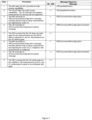
- Figure 1 illustrates a signaling example, according to certain aspects.
- the following signaling example describes one possible way that certain aspects can be implemented in the UE and network (NW).
- the NW can ask the UE to provide the UE's radio access capabilities.
- This message may be referred to as UECapabilityEnquiry.
- the UE can provide the requested radio access capabilities.
- this provision can be in response to the received request to provide the UE's radio access capabilities.
- the UE can provide such capabilities automatically or autonomously.
- the UE can indicate that gapless measurement for the serving cell is supported. This message may be referred to as UECapabilitylnformation.
- the NW can transmit a radio resource control (RRC) connection reconfiguration message, RRCConnectionReconfiguration , including MeasConfig to set up measurement and reporting for event A1.
- RRC radio resource control
- the UE can transmit an RRC connection reconfiguration complete message, RRCConnectionReconfigurationComplete.
- the NW can be aware that the UE does not need gaps for the measurements and that the NW is able to schedule UL and DL transmissions for the UE without gaps.
- the NW can transmit an RRCConnectionReconfiguration message including MeasConfig to set up measurement and reporting for event A3.
- the UE can, at step 7, send an RCConnectionReconfigrationComplete message. Consequently, at step 8, the NW can be aware that the UE needs gaps for the neighbor cell measurements and that the UL and DL transmissions need to be scheduled with gaps.
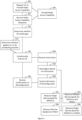
- Figure 2 illustrates a method according to certain aspects. As shown in Figure 2 , a method can include, at 205, requesting a user equipment to provide the user equipment's radio access capability, and receiving a response at 207.
- the method can also include, at 206, providing an indication of a radio access capability of the user equipment to the serving cell. This can be the information requested at 205 and received at 207.
- the radio access capability can include support for gapless measurement for the serving cell.
- the method can also include, at 210, determining whether a user equipment needs gaps for measurement.
- the determination at 210 can be based on whether the user equipment is configured to measure only a serving cell.
- the requested capability can serve as the basis for the determination of whether the user equipment needs gaps for measurement at 210.
- the method can also include, at 215, determining whether a serving cell is able to schedule uplink and downlink transmissions for the user equipment without gaps.
- the method can further include, at 240, receiving instructions from a serving cell regarding performing gapless measurement. These can be the instructions sent at 220.
- the instructions can be for an identified reporting configuration from which UE can determine it is not required to provide any measurement reporting for any neighbor cell.
- the method can further include, at 250, reconfiguring measurement based on the instructions.
- the reconfiguring can include, at 252, configuring the user equipment to measure a single narrow band which is for machine type communication physical downlink control channel.
- the reconfiguring can include, at 254, configuring the user equipment to measure multiple narrow bands for machine type communication physical downlink control channel monitoring and physical downlink shared channel reception when the user equipment is scheduled with physical downlink shared channel.
- the reconfiguring can include, at 256, configuring the user equipment to measure a single narrow band or multiple narrow bands for physical downlink shared channel reception.
- the reconfiguring can include, at 258, configuring the user equipment to measure a single narrow band for one of machine type communication physical downlink control channel monitoring or physical downlink shared channel reception.
- the method can further include, at 260, sending a confirmation from the user equipment that measurement has been reconfigured based on the instruction.
- the method can also include receiving, at 230, a confirmation from the user equipment that measurement has been reconfigured based on the instruction. This can be the same confirmation sent at 260.
- the UE when the UE indicates intraFreq-CE-NeedForGaps-r13, the UE may be allowed to turn on/off the UE's spare RF chain, or switch the RF BW between narrow band and wide band modes, to save power for intra-frequency measurement.
- the indication may take the form of permission of a relaxed radio requirement or configuration of NCSG or burst gap, allowing the user equipment to turn on/off the UE's spare RF chain, or to switch the RF BW between narrow band and wide band modes, to save power for intra-frequency measurement, as mentioned above.
- Other options can relate to permitting a probability of missed ACK/NACK or the like, as discussed below by way of further examples.
- the UE should not cause any interruption.
- NCSG network controlled small gap
- burst gap if UE is configured to fulfil the current measurement requirement for intra-frequency neighbor cell, the UE should not cause any interruption.
- the UE may be allowed up to Y % probability of missed ACK/NACK if UE is configured to be in CEModeB, or the UE is configured with a DRX cycle larger than X ms.
- a capability can be defined to indicate which case, the first case or the second case, as described above, the UE is supporting. This capability can be provided from a user equipment to the network, as mentioned above, at 410.
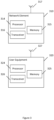
- Each of these devices may include at least one processor or control unit or module, respectively indicated as 314 and 324.
- At least one memory may be provided in each device, and indicated as 315 and 325, respectively.
- the memory may include computer program instructions or computer code contained therein, for example for carrying out the aspects described above.
- One or more transceiver 316 and 326 may be provided, and each device may also include an antenna, respectively illustrated as 317 and 327. Although only one antenna each is shown, many antennas and multiple antenna elements may be provided to each of the devices. Other configurations of these devices, for example, may be provided.
- network element 310 and UE 320 may be additionally configured for wired communication, in addition to wireless communication, and in such a case antennas 317 and 327 may illustrate any form of communication hardware, without being limited to merely an antenna.
- Transceivers 316 and 326 may each, independently, be a transmitter, a receiver, or both a transmitter and a receiver, or a unit or device that may be configured both for transmission and reception.
- the transmitter and/or receiver (as far as radio parts are concerned) may also be implemented as a remote radio head which is not located in the device itself, but in a mast, for example.
- the operations and functionalities may be performed in different entities, such as nodes, hosts or servers, in a flexible manner. In other words, division of labor may vary case by case.
- One possible use is to make a network element to deliver local content.
- One or more functionalities may also be implemented as a virtual application that is provided as software that can run on a server.
- a user device or user equipment 320 may be a mobile station (MS) such as a mobile phone or smart phone or multimedia device, a computer, such as a tablet, provided with wireless communication capabilities, personal data or digital assistant (PDA) provided with wireless communication capabilities, vehicle, portable media player, digital camera, pocket video camera, navigation unit provided with wireless communication capabilities or any combinations thereof.
- MS mobile station
- PDA personal data or digital assistant
- the user device or user equipment 320 may be a sensor or smart meter, or other device that may usually be configured for a single location.
- an apparatus such as a node or user device, may include means for carrying out aspects described above in relation to Figure 1 , Figure 2 , and Figure 4 .
- Processors 314 and 324 may be embodied by any computational or data processing device, such as a central processing unit (CPU), digital signal processor (DSP), application specific integrated circuit (ASIC), programmable logic devices (PLDs), field programmable gate arrays (FPGAs), digitally enhanced circuits, or comparable device or a combination thereof.
- the processors may be implemented as a single controller, or a plurality of controllers or processors. Additionally, the processors may be implemented as a pool of processors in a local configuration, in a cloud configuration, or in a combination thereof.
- circuitry may refer to one or more electric or electronic circuits.
- the term processor may refer to circuitry, such as logic circuitry, that responds to and processes instructions that drive a computer.
- the implementation may include modules or units of at least one chip set (e.g., procedures, functions, and so on).
- Memories 315 and 325 may independently be any suitable storage device, such as a non-transitory computer-readable medium.
- a hard disk drive (HDD), random access memory (RAM), flash memory, or other suitable memory may be used.
- the memories may be combined on a single integrated circuit as the processor, or may be separate therefrom.
- the computer program instructions may be stored in the memory and which may be processed by the processors can be any suitable form of computer program code, for example, a compiled or interpreted computer program written in any suitable programming language.
- the memory or data storage entity is typically internal but may also be external or a combination thereof, such as in the case when additional memory capacity is obtained from a service provider.
- the memory may be fixed or removable.
- a non-transitory computer-readable medium may be encoded with computer instructions or one or more computer program (such as added or updated software routine, applet or macro) that, when executed in hardware, may perform a process such as one of the processes described herein.
Landscapes
- Engineering & Computer Science (AREA)
- Computer Networks & Wireless Communication (AREA)
- Signal Processing (AREA)
- Databases & Information Systems (AREA)
- Mobile Radio Communication Systems (AREA)
Claims (9)
- Teilnehmereinrichtung (320), die Folgendes umfasst:Mittel zum Bestimmen, dass die Teilnehmereinrichtung (320) keine Lücken benötigt, um Messungen durchzuführen, durch die Teilnehmereinrichtung (320); undMittel zum Durchführen von lückenlosen Messungen durch die Teilnehmereinrichtung (320) auf Basis der Bestimmung,wobei die Bestimmung das Identifizieren auf Basis einer identifizierten Berichtsauslegung umfasst, dass die Teilnehmereinrichtung (320) nicht dazu ausgelegt ist, Messungen an Intrafrequenznachbarzellen durchzuführen.
- Teilnehmereinrichtung (320) nach Anspruch 1, wobei eine Fähigkeit der Teilnehmereinrichtung (320), eine Anforderung für lückenlose Messungen zu erfüllen, bei der Bestimmung berücksichtigt wird.
- Teilnehmereinrichtung (320) nach Anspruch 2, wobei die Fähigkeit der Teilnehmereinrichtung (320), lückenlose Messungen zu erfüllen, eine Fähigkeit zum Aktivieren einer Reservefunkfrequenzkette oder eine Fähigkeit zum Erweitern eines Funkfrequenzbandes einer Funkfrequenzkette umfasst.
- Teilnehmereinrichtung (320) nach einem der Ansprüche 1 bis 3, die ferner Folgendes umfasst:Mittel zum Empfangen von Anweisungen von einer bedienenden Zelle, die das Durchführen von lückenlosen Messungen betreffen; undMittel zum Neuauslegen einer Messung auf Basis der Anweisungen.
- Verfahren, das Folgendes umfasst:Bestimmen, dass eine Teilnehmereinrichtung (320) keine Lücken benötigt, um Messungen durchzuführen, durch die Teilnehmereinrichtung (320); undDurchführen von lückenlosen Messungen durch die Teilnehmereinrichtung (320) auf Basis der Bestimmung,wobei die Bestimmung das Identifizieren auf Basis einer Berichtsauslegung umfasst, dass die Teilnehmereinrichtung (320) nicht dazu ausgelegt ist, Messungen an Intrafrequenznachbarzellen durchzuführen.
- Verfahren nach Anspruch 5, wobei eine Fähigkeit der Teilnehmereinrichtung (320), eine Anforderung für lückenlose Messungen zu erfüllen, bei der Bestimmung berücksichtigt wird.
- Verfahren nach Anspruch 6, wobei die Fähigkeit der Teilnehmereinrichtung (320), lückenlose Messungen zu erfüllen, eine Fähigkeit zum Aktivieren einer Reservefunkfrequenzkette oder eine Fähigkeit zum Erweitern eines Funkfrequenzbandes einer Funkfrequenzkette umfasst.
- Verfahren nach einem der Ansprüche 5 bis 7, das ferner Folgendes umfasst:Empfangen von Anweisungen von einer bedienenden Zelle, die das Durchführen von lückenlosen Messungen betreffen; undNeuauslegen einer Messung auf Basis der Anweisungen.
- Computerprogrammprodukt das Anweisungen codiert, die, wenn sie von einer Teilnehmereinrichtung ausgeführt werden, die Teilnehmereinrichtung veranlassen, einen Prozess durchzuführen, wobei der Prozess das Verfahren gemäß einem der Ansprüche 5 bis 8 umfasst.
Applications Claiming Priority (2)
| Application Number | Priority Date | Filing Date | Title |
|---|---|---|---|
| US201762501402P | 2017-05-04 | 2017-05-04 | |
| PCT/FI2018/050320 WO2018202950A1 (en) | 2017-05-04 | 2018-05-03 | Gapless measurement for bandwidth limited/coverage enhancement user equipment |
Publications (4)
| Publication Number | Publication Date |
|---|---|
| EP3619939A1 EP3619939A1 (de) | 2020-03-11 |
| EP3619939A4 EP3619939A4 (de) | 2021-03-10 |
| EP3619939C0 EP3619939C0 (de) | 2025-01-01 |
| EP3619939B1 true EP3619939B1 (de) | 2025-01-01 |
Family
ID=64017040
Family Applications (1)
| Application Number | Title | Priority Date | Filing Date |
|---|---|---|---|
| EP18794188.5A Active EP3619939B1 (de) | 2017-05-04 | 2018-05-03 | Lückenlose messung für bandbreitenbeschränkte/reichweitenverstärkte benutzergeräte |
Country Status (3)
| Country | Link |
|---|---|
| EP (1) | EP3619939B1 (de) |
| CN (1) | CN110603838A (de) |
| WO (1) | WO2018202950A1 (de) |
Families Citing this family (4)
| Publication number | Priority date | Publication date | Assignee | Title |
|---|---|---|---|---|
| KR20220100792A (ko) * | 2019-11-19 | 2022-07-18 | 광동 오포 모바일 텔레커뮤니케이션즈 코포레이션 리미티드 | 측정 완화 방법, 사용자 기기 및 컴퓨터 판독 가능 매체 |
| WO2022151144A1 (en) * | 2021-01-14 | 2022-07-21 | Apple Inc. | 5g new radio (nr) network controlled small gap (ncsg) |
| CN113507720B (zh) * | 2021-07-21 | 2023-11-14 | 惠州Tcl云创科技有限公司 | 终端测量模式管理方法、装置、存储介质及电子终端 |
| WO2023044698A1 (en) * | 2021-09-24 | 2023-03-30 | Apple Inc. | Ncsg for deactivated serving cell measurement |
Family Cites Families (7)
| Publication number | Priority date | Publication date | Assignee | Title |
|---|---|---|---|---|
| US9467885B2 (en) * | 2010-11-08 | 2016-10-11 | Qualcomm Incorporated | Inter-frequency measurement control in a multi-carrier system |
| US9848340B2 (en) * | 2012-05-18 | 2017-12-19 | Telefonaktiebolaget Lm Ericsson (Publ) | Technique for performing cell measurement on at least two cells |
| WO2014184668A2 (en) * | 2013-04-05 | 2014-11-20 | Nokia Corporation | Relaxed performance requirements for offloading measurements |
| WO2014188330A1 (en) * | 2013-05-20 | 2014-11-27 | Nokia Corporation | Preventing interrupts on active cell operation |
| WO2015117082A1 (en) * | 2014-01-31 | 2015-08-06 | Nokia Technologies Oy | Configured condition for radio resource control connection re-establishment procedure |
| US9894547B2 (en) * | 2014-04-29 | 2018-02-13 | Qualcomm Incorporated | Dynamic update of UE capability for inter-frequency and inter-RAT measurements |
| US10390248B2 (en) * | 2014-05-09 | 2019-08-20 | Ntt Docomo, Inc. | User equipment, base station, and method for indicating inter-frequency measurement to a user equipment from a base station |
-
2018
- 2018-05-03 WO PCT/FI2018/050320 patent/WO2018202950A1/en not_active Ceased
- 2018-05-03 CN CN201880029065.5A patent/CN110603838A/zh active Pending
- 2018-05-03 EP EP18794188.5A patent/EP3619939B1/de active Active
Also Published As
| Publication number | Publication date |
|---|---|
| WO2018202950A1 (en) | 2018-11-08 |
| EP3619939C0 (de) | 2025-01-01 |
| EP3619939A4 (de) | 2021-03-10 |
| CN110603838A (zh) | 2019-12-20 |
| EP3619939A1 (de) | 2020-03-11 |
Similar Documents
| Publication | Publication Date | Title |
|---|---|---|
| US10327275B2 (en) | Network controlled and deployment based increased primary cell measurements | |
| US20190150014A1 (en) | Early measurement reporting for cell access | |
| EP3821678B1 (de) | Behebung von verbindungsfehler in c-drx modus | |
| KR102228337B1 (ko) | 무선 리소스 제어 접속 동안 제어 채널들 사이의 고속 스위칭 | |
| US20160174280A1 (en) | Application-Aware Multiple Wireless Radio-Access Technology Coexistence Solution and Time Sharing Between Multiple Radio-Access Technologies for In-Device Coexistence | |
| JP7478161B2 (ja) | Pdcchのモニタリング方法及び装置 | |
| CN110839303A (zh) | 自适应c-drx管理 | |
| EP3619939B1 (de) | Lückenlose messung für bandbreitenbeschränkte/reichweitenverstärkte benutzergeräte | |
| US20160044541A1 (en) | Relaxed performance requirements for offloading measurements | |
| JP7737361B2 (ja) | 信号モニタリング方法、送信方法、端末機器、ネットワーク機器 | |
| KR20190095357A (ko) | 불연속 수신 방법 및 장치 | |
| JP2022514841A (ja) | 時間周波数リソース決定方法、装置、チップ及びコンピュータプログラム | |
| US20140355471A1 (en) | Method for Transmitting IDC Interference Information in Wireless Communication Systems and Apparatus for Same | |
| US20230034121A1 (en) | Communication method and apparatus to optimze a measurment policy | |
| EP3682656A1 (de) | Konfiguration einer verbindung | |
| JP7106712B2 (ja) | 基地局装置、無線端末装置及び通信システム | |
| EP2887734A1 (de) | Signalisierung von Details der Mobilitätsinformationen eines Benutzergeräts hinsichtlich Leerlauf- und Verbindungsmodus | |
| CN112770366B (zh) | 一种通信方法与通信装置 | |
| US11310738B2 (en) | Enhanced machine type communication radio resource management requirements based on machine type communication physical downlink control channel monitoring | |
| TWI511497B (zh) | 處理傳輸組態之方法及其通訊裝置 | |
| EP4369840A1 (de) | Konsistentes listen-before-talk-fehlerwiederherstellungsverfahren für sidelink-betrieb in unlizenzierten bändern | |
| WO2024096766A1 (en) | Wireless device, network node, and methods performed thereby for handling a future outage of coverage |
Legal Events
| Date | Code | Title | Description |
|---|---|---|---|
| STAA | Information on the status of an ep patent application or granted ep patent |
Free format text: STATUS: THE INTERNATIONAL PUBLICATION HAS BEEN MADE |
|
| PUAI | Public reference made under article 153(3) epc to a published international application that has entered the european phase |
Free format text: ORIGINAL CODE: 0009012 |
|
| STAA | Information on the status of an ep patent application or granted ep patent |
Free format text: STATUS: REQUEST FOR EXAMINATION WAS MADE |
|
| 17P | Request for examination filed |
Effective date: 20191204 |
|
| AK | Designated contracting states |
Kind code of ref document: A1 Designated state(s): AL AT BE BG CH CY CZ DE DK EE ES FI FR GB GR HR HU IE IS IT LI LT LU LV MC MK MT NL NO PL PT RO RS SE SI SK SM TR |
|
| AX | Request for extension of the european patent |
Extension state: BA ME |
|
| DAV | Request for validation of the european patent (deleted) | ||
| DAX | Request for extension of the european patent (deleted) | ||
| A4 | Supplementary search report drawn up and despatched |
Effective date: 20210205 |
|
| RIC1 | Information provided on ipc code assigned before grant |
Ipc: H04W 8/22 20090101ALI20210201BHEP Ipc: H04W 24/08 20090101AFI20210201BHEP Ipc: H04W 72/04 20090101ALI20210201BHEP Ipc: H04W 24/10 20090101ALI20210201BHEP |
|
| STAA | Information on the status of an ep patent application or granted ep patent |
Free format text: STATUS: EXAMINATION IS IN PROGRESS |
|
| 17Q | First examination report despatched |
Effective date: 20221215 |
|
| GRAP | Despatch of communication of intention to grant a patent |
Free format text: ORIGINAL CODE: EPIDOSNIGR1 |
|
| STAA | Information on the status of an ep patent application or granted ep patent |
Free format text: STATUS: GRANT OF PATENT IS INTENDED |
|
| INTG | Intention to grant announced |
Effective date: 20240807 |
|
| GRAJ | Information related to disapproval of communication of intention to grant by the applicant or resumption of examination proceedings by the epo deleted |
Free format text: ORIGINAL CODE: EPIDOSDIGR1 |
|
| STAA | Information on the status of an ep patent application or granted ep patent |
Free format text: STATUS: EXAMINATION IS IN PROGRESS |
|
| INTC | Intention to grant announced (deleted) | ||
| GRAP | Despatch of communication of intention to grant a patent |
Free format text: ORIGINAL CODE: EPIDOSNIGR1 |
|
| STAA | Information on the status of an ep patent application or granted ep patent |
Free format text: STATUS: GRANT OF PATENT IS INTENDED |
|
| INTG | Intention to grant announced |
Effective date: 20241018 |
|
| GRAS | Grant fee paid |
Free format text: ORIGINAL CODE: EPIDOSNIGR3 |
|
| GRAA | (expected) grant |
Free format text: ORIGINAL CODE: 0009210 |
|
| STAA | Information on the status of an ep patent application or granted ep patent |
Free format text: STATUS: THE PATENT HAS BEEN GRANTED |
|
| AK | Designated contracting states |
Kind code of ref document: B1 Designated state(s): AL AT BE BG CH CY CZ DE DK EE ES FI FR GB GR HR HU IE IS IT LI LT LU LV MC MK MT NL NO PL PT RO RS SE SI SK SM TR |
|
| REG | Reference to a national code |
Ref country code: GB Ref legal event code: FG4D |
|
| REG | Reference to a national code |
Ref country code: CH Ref legal event code: EP |
|
| REG | Reference to a national code |
Ref country code: DE Ref legal event code: R096 Ref document number: 602018078146 Country of ref document: DE |
|
| REG | Reference to a national code |
Ref country code: IE Ref legal event code: FG4D |
|
| U01 | Request for unitary effect filed |
Effective date: 20250101 |
|
| U07 | Unitary effect registered |
Designated state(s): AT BE BG DE DK EE FI FR IT LT LU LV MT NL PT RO SE SI Effective date: 20250114 |
|
| U20 | Renewal fee for the european patent with unitary effect paid |
Year of fee payment: 8 Effective date: 20250407 |
|
| PG25 | Lapsed in a contracting state [announced via postgrant information from national office to epo] |
Ref country code: PL Free format text: LAPSE BECAUSE OF FAILURE TO SUBMIT A TRANSLATION OF THE DESCRIPTION OR TO PAY THE FEE WITHIN THE PRESCRIBED TIME-LIMIT Effective date: 20250101 |
|
| PG25 | Lapsed in a contracting state [announced via postgrant information from national office to epo] |
Ref country code: ES Free format text: LAPSE BECAUSE OF FAILURE TO SUBMIT A TRANSLATION OF THE DESCRIPTION OR TO PAY THE FEE WITHIN THE PRESCRIBED TIME-LIMIT Effective date: 20250101 |
|
| PGFP | Annual fee paid to national office [announced via postgrant information from national office to epo] |
Ref country code: GB Payment date: 20250401 Year of fee payment: 8 |
|
| PG25 | Lapsed in a contracting state [announced via postgrant information from national office to epo] |
Ref country code: NO Free format text: LAPSE BECAUSE OF FAILURE TO SUBMIT A TRANSLATION OF THE DESCRIPTION OR TO PAY THE FEE WITHIN THE PRESCRIBED TIME-LIMIT Effective date: 20250401 Ref country code: IS Free format text: LAPSE BECAUSE OF FAILURE TO SUBMIT A TRANSLATION OF THE DESCRIPTION OR TO PAY THE FEE WITHIN THE PRESCRIBED TIME-LIMIT Effective date: 20250501 |
|
| PG25 | Lapsed in a contracting state [announced via postgrant information from national office to epo] |
Ref country code: HR Free format text: LAPSE BECAUSE OF FAILURE TO SUBMIT A TRANSLATION OF THE DESCRIPTION OR TO PAY THE FEE WITHIN THE PRESCRIBED TIME-LIMIT Effective date: 20250101 |
|
| PG25 | Lapsed in a contracting state [announced via postgrant information from national office to epo] |
Ref country code: GR Free format text: LAPSE BECAUSE OF FAILURE TO SUBMIT A TRANSLATION OF THE DESCRIPTION OR TO PAY THE FEE WITHIN THE PRESCRIBED TIME-LIMIT Effective date: 20250402 |
|
| PG25 | Lapsed in a contracting state [announced via postgrant information from national office to epo] |
Ref country code: CZ Free format text: LAPSE BECAUSE OF FAILURE TO SUBMIT A TRANSLATION OF THE DESCRIPTION OR TO PAY THE FEE WITHIN THE PRESCRIBED TIME-LIMIT Effective date: 20250101 |
|
| PG25 | Lapsed in a contracting state [announced via postgrant information from national office to epo] |
Ref country code: SM Free format text: LAPSE BECAUSE OF FAILURE TO SUBMIT A TRANSLATION OF THE DESCRIPTION OR TO PAY THE FEE WITHIN THE PRESCRIBED TIME-LIMIT Effective date: 20250101 |
|
| PG25 | Lapsed in a contracting state [announced via postgrant information from national office to epo] |
Ref country code: SK Free format text: LAPSE BECAUSE OF FAILURE TO SUBMIT A TRANSLATION OF THE DESCRIPTION OR TO PAY THE FEE WITHIN THE PRESCRIBED TIME-LIMIT Effective date: 20250101 |
|
| PLBE | No opposition filed within time limit |
Free format text: ORIGINAL CODE: 0009261 |
|
| STAA | Information on the status of an ep patent application or granted ep patent |
Free format text: STATUS: NO OPPOSITION FILED WITHIN TIME LIMIT |
|
| 26N | No opposition filed |
Effective date: 20251002 |