EP3617222A1 - Peptide for inducing regeneration of tissue, and use thereof - Google Patents
Peptide for inducing regeneration of tissue, and use thereof Download PDFInfo
- Publication number
- EP3617222A1 EP3617222A1 EP18791294.4A EP18791294A EP3617222A1 EP 3617222 A1 EP3617222 A1 EP 3617222A1 EP 18791294 A EP18791294 A EP 18791294A EP 3617222 A1 EP3617222 A1 EP 3617222A1
- Authority
- EP
- European Patent Office
- Prior art keywords
- seq
- peptide
- gkmssyaffv qtcreehkkk
- qtcreehkkk hpdasvnfse
- mgkgdpkkpr gkmssyaffv
- Prior art date
- Legal status (The legal status is an assumption and is not a legal conclusion. Google has not performed a legal analysis and makes no representation as to the accuracy of the status listed.)
- Withdrawn
Links
- 108090000765 processed proteins & peptides Proteins 0.000 title claims abstract description 229
- 230000008929 regeneration Effects 0.000 title claims abstract description 61
- 238000011069 regeneration method Methods 0.000 title claims abstract description 61
- 230000001939 inductive effect Effects 0.000 title description 25
- 210000004027 cell Anatomy 0.000 claims abstract description 149
- 210000001185 bone marrow Anatomy 0.000 claims abstract description 125
- 210000001519 tissue Anatomy 0.000 claims abstract description 113
- 239000000203 mixture Substances 0.000 claims abstract description 59
- 230000005012 migration Effects 0.000 claims abstract description 49
- 238000013508 migration Methods 0.000 claims abstract description 49
- 210000002901 mesenchymal stem cell Anatomy 0.000 claims abstract description 36
- 210000002536 stromal cell Anatomy 0.000 claims abstract description 31
- 102000001393 Platelet-Derived Growth Factor alpha Receptor Human genes 0.000 claims abstract description 22
- 108010068588 Platelet-Derived Growth Factor alpha Receptor Proteins 0.000 claims abstract description 22
- 210000005259 peripheral blood Anatomy 0.000 claims abstract description 21
- 239000011886 peripheral blood Substances 0.000 claims abstract description 21
- 230000000638 stimulation Effects 0.000 claims abstract description 15
- 230000007115 recruitment Effects 0.000 claims abstract description 10
- 150000001413 amino acids Chemical class 0.000 claims description 190
- 125000003275 alpha amino acid group Chemical group 0.000 claims description 104
- 230000000694 effects Effects 0.000 claims description 49
- 230000004936 stimulating effect Effects 0.000 claims description 34
- 238000006467 substitution reaction Methods 0.000 claims description 29
- 150000003839 salts Chemical class 0.000 claims description 25
- 239000012453 solvate Substances 0.000 claims description 18
- 238000012217 deletion Methods 0.000 claims description 15
- 230000037430 deletion Effects 0.000 claims description 15
- 238000003780 insertion Methods 0.000 claims description 15
- 230000037431 insertion Effects 0.000 claims description 15
- 239000004480 active ingredient Substances 0.000 abstract description 2
- 235000001014 amino acid Nutrition 0.000 description 177
- 229940024606 amino acid Drugs 0.000 description 177
- 239000003814 drug Substances 0.000 description 28
- -1 2 to 40 amino acids Chemical class 0.000 description 25
- 102000004196 processed proteins & peptides Human genes 0.000 description 24
- 210000000130 stem cell Anatomy 0.000 description 23
- GOJUJUVQIVIZAV-UHFFFAOYSA-N 2-amino-4,6-dichloropyrimidine-5-carbaldehyde Chemical group NC1=NC(Cl)=C(C=O)C(Cl)=N1 GOJUJUVQIVIZAV-UHFFFAOYSA-N 0.000 description 22
- 210000002798 bone marrow cell Anatomy 0.000 description 21
- 210000004369 blood Anatomy 0.000 description 19
- 239000008280 blood Substances 0.000 description 19
- 101001025337 Homo sapiens High mobility group protein B1 Proteins 0.000 description 17
- 238000000034 method Methods 0.000 description 16
- 102000053637 human HMGB1 Human genes 0.000 description 15
- 239000008194 pharmaceutical composition Substances 0.000 description 15
- 230000012292 cell migration Effects 0.000 description 13
- 239000003153 chemical reaction reagent Substances 0.000 description 13
- 230000006870 function Effects 0.000 description 13
- 239000000243 solution Substances 0.000 description 13
- 210000003958 hematopoietic stem cell Anatomy 0.000 description 12
- 230000001172 regenerating effect Effects 0.000 description 12
- 239000000523 sample Substances 0.000 description 11
- 108091005601 modified peptides Proteins 0.000 description 10
- 238000013112 stability test Methods 0.000 description 10
- 241000282414 Homo sapiens Species 0.000 description 9
- KRKNYBCHXYNGOX-UHFFFAOYSA-N citric acid Chemical compound OC(=O)CC(O)(C(O)=O)CC(O)=O KRKNYBCHXYNGOX-UHFFFAOYSA-N 0.000 description 9
- 238000005259 measurement Methods 0.000 description 9
- 210000000056 organ Anatomy 0.000 description 9
- 230000003836 peripheral circulation Effects 0.000 description 9
- OBMZMSLWNNWEJA-XNCRXQDQSA-N C1=CC=2C(C[C@@H]3NC(=O)[C@@H](NC(=O)[C@H](NC(=O)N(CC#CCN(CCCC[C@H](NC(=O)[C@@H](CC4=CC=CC=C4)NC3=O)C(=O)N)CC=C)NC(=O)[C@@H](N)C)CC3=CNC4=C3C=CC=C4)C)=CNC=2C=C1 Chemical compound C1=CC=2C(C[C@@H]3NC(=O)[C@@H](NC(=O)[C@H](NC(=O)N(CC#CCN(CCCC[C@H](NC(=O)[C@@H](CC4=CC=CC=C4)NC3=O)C(=O)N)CC=C)NC(=O)[C@@H](N)C)CC3=CNC4=C3C=CC=C4)C)=CNC=2C=C1 OBMZMSLWNNWEJA-XNCRXQDQSA-N 0.000 description 8
- 102000055207 HMGB1 Human genes 0.000 description 8
- 108700010013 HMGB1 Proteins 0.000 description 8
- 102100037907 High mobility group protein B1 Human genes 0.000 description 8
- 101710176384 Peptide 1 Proteins 0.000 description 8
- 239000003795 chemical substances by application Substances 0.000 description 8
- 239000013642 negative control Substances 0.000 description 8
- 210000003491 skin Anatomy 0.000 description 8
- XLYOFNOQVPJJNP-UHFFFAOYSA-N water Chemical compound O XLYOFNOQVPJJNP-UHFFFAOYSA-N 0.000 description 8
- 241001529936 Murinae Species 0.000 description 7
- 230000001464 adherent effect Effects 0.000 description 7
- 210000000988 bone and bone Anatomy 0.000 description 7
- 238000011160 research Methods 0.000 description 7
- 238000010532 solid phase synthesis reaction Methods 0.000 description 7
- 239000000126 substance Substances 0.000 description 7
- WEVYAHXRMPXWCK-UHFFFAOYSA-N Acetonitrile Chemical compound CC#N WEVYAHXRMPXWCK-UHFFFAOYSA-N 0.000 description 6
- OKKJLVBELUTLKV-UHFFFAOYSA-N Methanol Chemical compound OC OKKJLVBELUTLKV-UHFFFAOYSA-N 0.000 description 6
- 239000012980 RPMI-1640 medium Substances 0.000 description 6
- 206010040943 Skin Ulcer Diseases 0.000 description 6
- 239000012911 assay medium Substances 0.000 description 6
- 230000015572 biosynthetic process Effects 0.000 description 6
- 210000004556 brain Anatomy 0.000 description 6
- 206010008118 cerebral infarction Diseases 0.000 description 6
- 208000026106 cerebrovascular disease Diseases 0.000 description 6
- 231100000019 skin ulcer Toxicity 0.000 description 6
- 238000010186 staining Methods 0.000 description 6
- 241000700159 Rattus Species 0.000 description 5
- 210000000601 blood cell Anatomy 0.000 description 5
- 210000000845 cartilage Anatomy 0.000 description 5
- 125000000524 functional group Chemical group 0.000 description 5
- 230000013632 homeostatic process Effects 0.000 description 5
- 230000006698 induction Effects 0.000 description 5
- 238000012423 maintenance Methods 0.000 description 5
- 210000001616 monocyte Anatomy 0.000 description 5
- 230000001537 neural effect Effects 0.000 description 5
- 210000001778 pluripotent stem cell Anatomy 0.000 description 5
- 230000017423 tissue regeneration Effects 0.000 description 5
- 101000800116 Homo sapiens Thy-1 membrane glycoprotein Proteins 0.000 description 4
- 108010076876 Keratins Proteins 0.000 description 4
- 102000011782 Keratins Human genes 0.000 description 4
- 102100033523 Thy-1 membrane glycoprotein Human genes 0.000 description 4
- 230000009471 action Effects 0.000 description 4
- 238000004113 cell culture Methods 0.000 description 4
- 238000005119 centrifugation Methods 0.000 description 4
- 238000012258 culturing Methods 0.000 description 4
- QLBHNVFOQLIYTH-UHFFFAOYSA-L dipotassium;2-[2-[bis(carboxymethyl)amino]ethyl-(carboxylatomethyl)amino]acetate Chemical compound [K+].[K+].OC(=O)CN(CC([O-])=O)CCN(CC(O)=O)CC([O-])=O QLBHNVFOQLIYTH-UHFFFAOYSA-L 0.000 description 4
- 210000000981 epithelium Anatomy 0.000 description 4
- 210000002216 heart Anatomy 0.000 description 4
- 210000000963 osteoblast Anatomy 0.000 description 4
- 230000001737 promoting effect Effects 0.000 description 4
- 238000003786 synthesis reaction Methods 0.000 description 4
- 238000002054 transplantation Methods 0.000 description 4
- QTBSBXVTEAMEQO-UHFFFAOYSA-N Acetic acid Chemical compound CC(O)=O QTBSBXVTEAMEQO-UHFFFAOYSA-N 0.000 description 3
- 102100032912 CD44 antigen Human genes 0.000 description 3
- OYPRJOBELJOOCE-UHFFFAOYSA-N Calcium Chemical compound [Ca] OYPRJOBELJOOCE-UHFFFAOYSA-N 0.000 description 3
- 230000004568 DNA-binding Effects 0.000 description 3
- 101000868273 Homo sapiens CD44 antigen Proteins 0.000 description 3
- 101000935043 Homo sapiens Integrin beta-1 Proteins 0.000 description 3
- 206010061218 Inflammation Diseases 0.000 description 3
- 102100025304 Integrin beta-1 Human genes 0.000 description 3
- 241000699670 Mus sp. Species 0.000 description 3
- MUBZPKHOEPUJKR-UHFFFAOYSA-N Oxalic acid Chemical compound OC(=O)C(O)=O MUBZPKHOEPUJKR-UHFFFAOYSA-N 0.000 description 3
- 210000001789 adipocyte Anatomy 0.000 description 3
- 125000000539 amino acid group Chemical group 0.000 description 3
- UCMIRNVEIXFBKS-UHFFFAOYSA-N beta-alanine Chemical compound NCCC(O)=O UCMIRNVEIXFBKS-UHFFFAOYSA-N 0.000 description 3
- 210000001772 blood platelet Anatomy 0.000 description 3
- 210000004899 c-terminal region Anatomy 0.000 description 3
- 239000011575 calcium Substances 0.000 description 3
- 229910052791 calcium Inorganic materials 0.000 description 3
- 235000015165 citric acid Nutrition 0.000 description 3
- 238000011161 development Methods 0.000 description 3
- 230000018109 developmental process Effects 0.000 description 3
- 230000004069 differentiation Effects 0.000 description 3
- 210000003743 erythrocyte Anatomy 0.000 description 3
- 210000002950 fibroblast Anatomy 0.000 description 3
- 230000004054 inflammatory process Effects 0.000 description 3
- 210000003734 kidney Anatomy 0.000 description 3
- 210000000265 leukocyte Anatomy 0.000 description 3
- 210000004185 liver Anatomy 0.000 description 3
- 210000004877 mucosa Anatomy 0.000 description 3
- 210000005036 nerve Anatomy 0.000 description 3
- 210000003061 neural cell Anatomy 0.000 description 3
- 210000000496 pancreas Anatomy 0.000 description 3
- 239000006228 supernatant Substances 0.000 description 3
- 238000002560 therapeutic procedure Methods 0.000 description 3
- 208000010392 Bone Fractures Diseases 0.000 description 2
- CURLTUGMZLYLDI-UHFFFAOYSA-N Carbon dioxide Chemical compound O=C=O CURLTUGMZLYLDI-UHFFFAOYSA-N 0.000 description 2
- 229920002134 Carboxymethyl cellulose Polymers 0.000 description 2
- VZCYOOQTPOCHFL-OWOJBTEDSA-N Fumaric acid Chemical compound OC(=O)\C=C\C(O)=O VZCYOOQTPOCHFL-OWOJBTEDSA-N 0.000 description 2
- WHUUTDBJXJRKMK-UHFFFAOYSA-N Glutamic acid Natural products OC(=O)C(N)CCC(O)=O WHUUTDBJXJRKMK-UHFFFAOYSA-N 0.000 description 2
- 208000009329 Graft vs Host Disease Diseases 0.000 description 2
- 102000000849 HMGB Proteins Human genes 0.000 description 2
- 108010001860 HMGB Proteins Proteins 0.000 description 2
- VEXZGXHMUGYJMC-UHFFFAOYSA-N Hydrochloric acid Chemical compound Cl VEXZGXHMUGYJMC-UHFFFAOYSA-N 0.000 description 2
- CKLJMWTZIZZHCS-REOHCLBHSA-N L-aspartic acid Chemical compound OC(=O)[C@@H](N)CC(O)=O CKLJMWTZIZZHCS-REOHCLBHSA-N 0.000 description 2
- 241000124008 Mammalia Species 0.000 description 2
- AFVFQIVMOAPDHO-UHFFFAOYSA-N Methanesulfonic acid Chemical compound CS(O)(=O)=O AFVFQIVMOAPDHO-UHFFFAOYSA-N 0.000 description 2
- NBIIXXVUZAFLBC-UHFFFAOYSA-N Phosphoric acid Chemical compound OP(O)(O)=O NBIIXXVUZAFLBC-UHFFFAOYSA-N 0.000 description 2
- 239000002202 Polyethylene glycol Substances 0.000 description 2
- FHNINJWBTRXEBC-UHFFFAOYSA-N Sudan III Chemical compound OC1=CC=C2C=CC=CC2=C1N=NC(C=C1)=CC=C1N=NC1=CC=CC=C1 FHNINJWBTRXEBC-UHFFFAOYSA-N 0.000 description 2
- QAOWNCQODCNURD-UHFFFAOYSA-N Sulfuric acid Chemical compound OS(O)(=O)=O QAOWNCQODCNURD-UHFFFAOYSA-N 0.000 description 2
- DRADWUUFBCYMDM-UHFFFAOYSA-L [hydroxy(oxido)phosphinothioyl] 3,7,11-trimethyldodeca-2,6,10-trienyl phosphate Chemical compound CC(C)=CCCC(C)=CCCC(C)=CCOP([O-])(=O)OP(O)([O-])=S DRADWUUFBCYMDM-UHFFFAOYSA-L 0.000 description 2
- 239000000654 additive Substances 0.000 description 2
- 239000007864 aqueous solution Substances 0.000 description 2
- 235000003704 aspartic acid Nutrition 0.000 description 2
- 238000003556 assay Methods 0.000 description 2
- WPYMKLBDIGXBTP-UHFFFAOYSA-N benzoic acid Chemical compound OC(=O)C1=CC=CC=C1 WPYMKLBDIGXBTP-UHFFFAOYSA-N 0.000 description 2
- OQFSQFPPLPISGP-UHFFFAOYSA-N beta-carboxyaspartic acid Natural products OC(=O)C(N)C(C(O)=O)C(O)=O OQFSQFPPLPISGP-UHFFFAOYSA-N 0.000 description 2
- 210000004271 bone marrow stromal cell Anatomy 0.000 description 2
- 238000011088 calibration curve Methods 0.000 description 2
- 229910052799 carbon Inorganic materials 0.000 description 2
- 235000011089 carbon dioxide Nutrition 0.000 description 2
- 235000010948 carboxy methyl cellulose Nutrition 0.000 description 2
- 239000000969 carrier Substances 0.000 description 2
- 210000001612 chondrocyte Anatomy 0.000 description 2
- 150000001875 compounds Chemical class 0.000 description 2
- 238000007796 conventional method Methods 0.000 description 2
- 230000008021 deposition Effects 0.000 description 2
- XBDQKXXYIPTUBI-UHFFFAOYSA-N dimethylselenoniopropionate Natural products CCC(O)=O XBDQKXXYIPTUBI-UHFFFAOYSA-N 0.000 description 2
- 239000012153 distilled water Substances 0.000 description 2
- 230000002708 enhancing effect Effects 0.000 description 2
- 210000001339 epidermal cell Anatomy 0.000 description 2
- 210000005175 epidermal keratinocyte Anatomy 0.000 description 2
- 210000002919 epithelial cell Anatomy 0.000 description 2
- MHMNJMPURVTYEJ-UHFFFAOYSA-N fluorescein-5-isothiocyanate Chemical compound O1C(=O)C2=CC(N=C=S)=CC=C2C21C1=CC=C(O)C=C1OC1=CC(O)=CC=C21 MHMNJMPURVTYEJ-UHFFFAOYSA-N 0.000 description 2
- 230000002068 genetic effect Effects 0.000 description 2
- 239000004220 glutamic acid Substances 0.000 description 2
- 235000013922 glutamic acid Nutrition 0.000 description 2
- 208000024908 graft versus host disease Diseases 0.000 description 2
- 230000028993 immune response Effects 0.000 description 2
- 238000002347 injection Methods 0.000 description 2
- 239000007924 injection Substances 0.000 description 2
- 210000002490 intestinal epithelial cell Anatomy 0.000 description 2
- 238000007912 intraperitoneal administration Methods 0.000 description 2
- 150000002500 ions Chemical class 0.000 description 2
- 239000007788 liquid Substances 0.000 description 2
- BDAGIHXWWSANSR-UHFFFAOYSA-N methanoic acid Natural products OC=O BDAGIHXWWSANSR-UHFFFAOYSA-N 0.000 description 2
- 210000003205 muscle Anatomy 0.000 description 2
- 230000002107 myocardial effect Effects 0.000 description 2
- 208000010125 myocardial infarction Diseases 0.000 description 2
- 210000000653 nervous system Anatomy 0.000 description 2
- 238000007911 parenteral administration Methods 0.000 description 2
- 239000008188 pellet Substances 0.000 description 2
- 239000008177 pharmaceutical agent Substances 0.000 description 2
- 229920001223 polyethylene glycol Polymers 0.000 description 2
- 230000035755 proliferation Effects 0.000 description 2
- 235000018102 proteins Nutrition 0.000 description 2
- 108090000623 proteins and genes Proteins 0.000 description 2
- 102000004169 proteins and genes Human genes 0.000 description 2
- OARRHUQTFTUEOS-UHFFFAOYSA-N safranin Chemical compound [Cl-].C=12C=C(N)C(C)=CC2=NC2=CC(C)=C(N)C=C2[N+]=1C1=CC=CC=C1 OARRHUQTFTUEOS-UHFFFAOYSA-N 0.000 description 2
- 210000000329 smooth muscle myocyte Anatomy 0.000 description 2
- 239000007790 solid phase Substances 0.000 description 2
- 239000011550 stock solution Substances 0.000 description 2
- 238000007920 subcutaneous administration Methods 0.000 description 2
- 229940099373 sudan iii Drugs 0.000 description 2
- 238000001356 surgical procedure Methods 0.000 description 2
- 210000002435 tendon Anatomy 0.000 description 2
- 238000012360 testing method Methods 0.000 description 2
- VZCYOOQTPOCHFL-UHFFFAOYSA-N trans-butenedioic acid Natural products OC(=O)C=CC(O)=O VZCYOOQTPOCHFL-UHFFFAOYSA-N 0.000 description 2
- MTCFGRXMJLQNBG-REOHCLBHSA-N (2S)-2-Amino-3-hydroxypropansäure Chemical compound OC[C@H](N)C(O)=O MTCFGRXMJLQNBG-REOHCLBHSA-N 0.000 description 1
- VZQHRKZCAZCACO-PYJNHQTQSA-N (2s)-2-[[(2s)-2-[2-[[(2s)-2-[[(2s)-2-amino-5-(diaminomethylideneamino)pentanoyl]amino]propanoyl]amino]prop-2-enoylamino]-3-methylbutanoyl]amino]propanoic acid Chemical compound OC(=O)[C@H](C)NC(=O)[C@H](C(C)C)NC(=O)C(=C)NC(=O)[C@H](C)NC(=O)[C@@H](N)CCCNC(N)=N VZQHRKZCAZCACO-PYJNHQTQSA-N 0.000 description 1
- BJEPYKJPYRNKOW-REOHCLBHSA-N (S)-malic acid Chemical compound OC(=O)[C@@H](O)CC(O)=O BJEPYKJPYRNKOW-REOHCLBHSA-N 0.000 description 1
- BMYNFMYTOJXKLE-UHFFFAOYSA-N 3-azaniumyl-2-hydroxypropanoate Chemical compound NCC(O)C(O)=O BMYNFMYTOJXKLE-UHFFFAOYSA-N 0.000 description 1
- OSWFIVFLDKOXQC-UHFFFAOYSA-N 4-(3-methoxyphenyl)aniline Chemical compound COC1=CC=CC(C=2C=CC(N)=CC=2)=C1 OSWFIVFLDKOXQC-UHFFFAOYSA-N 0.000 description 1
- FWMNVWWHGCHHJJ-SKKKGAJSSA-N 4-amino-1-[(2r)-6-amino-2-[[(2r)-2-[[(2r)-2-[[(2r)-2-amino-3-phenylpropanoyl]amino]-3-phenylpropanoyl]amino]-4-methylpentanoyl]amino]hexanoyl]piperidine-4-carboxylic acid Chemical compound C([C@H](C(=O)N[C@H](CC(C)C)C(=O)N[C@H](CCCCN)C(=O)N1CCC(N)(CC1)C(O)=O)NC(=O)[C@H](N)CC=1C=CC=CC=1)C1=CC=CC=C1 FWMNVWWHGCHHJJ-SKKKGAJSSA-N 0.000 description 1
- 102100022464 5'-nucleotidase Human genes 0.000 description 1
- 241000251468 Actinopterygii Species 0.000 description 1
- 101000816884 Agalychnis spurrelli Dermaseptin-SP1 Proteins 0.000 description 1
- 201000004384 Alopecia Diseases 0.000 description 1
- GUBGYTABKSRVRQ-XLOQQCSPSA-N Alpha-Lactose Chemical compound O[C@@H]1[C@@H](O)[C@@H](O)[C@@H](CO)O[C@H]1O[C@@H]1[C@@H](CO)O[C@H](O)[C@H](O)[C@H]1O GUBGYTABKSRVRQ-XLOQQCSPSA-N 0.000 description 1
- 239000004475 Arginine Substances 0.000 description 1
- DCXYFEDJOCDNAF-UHFFFAOYSA-N Asparagine Natural products OC(=O)C(N)CC(N)=O DCXYFEDJOCDNAF-UHFFFAOYSA-N 0.000 description 1
- 208000023275 Autoimmune disease Diseases 0.000 description 1
- 241000271566 Aves Species 0.000 description 1
- 241000894006 Bacteria Species 0.000 description 1
- 239000005711 Benzoic acid Substances 0.000 description 1
- 206010052346 Brain contusion Diseases 0.000 description 1
- 241000282472 Canis lupus familiaris Species 0.000 description 1
- 241000700198 Cavia Species 0.000 description 1
- 241000282693 Cercopithecidae Species 0.000 description 1
- 206010008111 Cerebral haemorrhage Diseases 0.000 description 1
- 241000283153 Cetacea Species 0.000 description 1
- 108010077544 Chromatin Proteins 0.000 description 1
- 208000034656 Contusions Diseases 0.000 description 1
- 229920002261 Corn starch Polymers 0.000 description 1
- 241000699800 Cricetinae Species 0.000 description 1
- FBPFZTCFMRRESA-KVTDHHQDSA-N D-Mannitol Chemical compound OC[C@@H](O)[C@@H](O)[C@H](O)[C@H](O)CO FBPFZTCFMRRESA-KVTDHHQDSA-N 0.000 description 1
- 101100281682 Danio rerio fsta gene Proteins 0.000 description 1
- FEWJPZIEWOKRBE-JCYAYHJZSA-N Dextrotartaric acid Chemical compound OC(=O)[C@H](O)[C@@H](O)C(O)=O FEWJPZIEWOKRBE-JCYAYHJZSA-N 0.000 description 1
- 208000004232 Enteritis Diseases 0.000 description 1
- 241000283086 Equidae Species 0.000 description 1
- 101001003062 Escherichia coli (strain K12) Fructose-6-phosphate aldolase 1 Proteins 0.000 description 1
- 208000035874 Excoriation Diseases 0.000 description 1
- 208000037149 Facioscapulohumeral dystrophy Diseases 0.000 description 1
- 102100027627 Follicle-stimulating hormone receptor Human genes 0.000 description 1
- 102100029379 Follistatin-related protein 3 Human genes 0.000 description 1
- 108091033322 FsrA Proteins 0.000 description 1
- 108010010803 Gelatin Proteins 0.000 description 1
- 102100040796 Glycoprotein hormones alpha chain Human genes 0.000 description 1
- 102100031573 Hematopoietic progenitor cell antigen CD34 Human genes 0.000 description 1
- 108010033040 Histones Proteins 0.000 description 1
- 101000678236 Homo sapiens 5'-nucleotidase Proteins 0.000 description 1
- 101000862396 Homo sapiens Follicle-stimulating hormone receptor Proteins 0.000 description 1
- 101001062529 Homo sapiens Follistatin-related protein 3 Proteins 0.000 description 1
- 101001038874 Homo sapiens Glycoprotein hormones alpha chain Proteins 0.000 description 1
- 101000777663 Homo sapiens Hematopoietic progenitor cell antigen CD34 Proteins 0.000 description 1
- 101001035951 Homo sapiens Hyaluronan-binding protein 2 Proteins 0.000 description 1
- 101000806511 Homo sapiens Protein DEPP1 Proteins 0.000 description 1
- 101000835093 Homo sapiens Transferrin receptor protein 1 Proteins 0.000 description 1
- 101000679897 Homo sapiens Troponin I, fast skeletal muscle Proteins 0.000 description 1
- 101000764274 Homo sapiens Troponin T, fast skeletal muscle Proteins 0.000 description 1
- 102100039238 Hyaluronan-binding protein 2 Human genes 0.000 description 1
- 229920002153 Hydroxypropyl cellulose Polymers 0.000 description 1
- 206010021143 Hypoxia Diseases 0.000 description 1
- ODKSFYDXXFIFQN-BYPYZUCNSA-P L-argininium(2+) Chemical compound NC(=[NH2+])NCCC[C@H]([NH3+])C(O)=O ODKSFYDXXFIFQN-BYPYZUCNSA-P 0.000 description 1
- DCXYFEDJOCDNAF-REOHCLBHSA-N L-asparagine Chemical compound OC(=O)[C@@H](N)CC(N)=O DCXYFEDJOCDNAF-REOHCLBHSA-N 0.000 description 1
- WHUUTDBJXJRKMK-VKHMYHEASA-N L-glutamic acid Chemical compound OC(=O)[C@@H](N)CCC(O)=O WHUUTDBJXJRKMK-VKHMYHEASA-N 0.000 description 1
- ZDXPYRJPNDTMRX-VKHMYHEASA-N L-glutamine Chemical compound OC(=O)[C@@H](N)CCC(N)=O ZDXPYRJPNDTMRX-VKHMYHEASA-N 0.000 description 1
- HNDVDQJCIGZPNO-YFKPBYRVSA-N L-histidine Chemical compound OC(=O)[C@@H](N)CC1=CN=CN1 HNDVDQJCIGZPNO-YFKPBYRVSA-N 0.000 description 1
- KDXKERNSBIXSRK-YFKPBYRVSA-N L-lysine Chemical compound NCCCC[C@H](N)C(O)=O KDXKERNSBIXSRK-YFKPBYRVSA-N 0.000 description 1
- AYFVYJQAPQTCCC-GBXIJSLDSA-N L-threonine Chemical compound C[C@@H](O)[C@H](N)C(O)=O AYFVYJQAPQTCCC-GBXIJSLDSA-N 0.000 description 1
- GUBGYTABKSRVRQ-QKKXKWKRSA-N Lactose Natural products OC[C@H]1O[C@@H](O[C@H]2[C@H](O)[C@@H](O)C(O)O[C@@H]2CO)[C@H](O)[C@@H](O)[C@H]1O GUBGYTABKSRVRQ-QKKXKWKRSA-N 0.000 description 1
- KDXKERNSBIXSRK-UHFFFAOYSA-N Lysine Natural products NCCCCC(N)C(O)=O KDXKERNSBIXSRK-UHFFFAOYSA-N 0.000 description 1
- 239000004472 Lysine Substances 0.000 description 1
- 229930195725 Mannitol Natural products 0.000 description 1
- 241001465754 Metazoa Species 0.000 description 1
- 101100281686 Mus musculus Fstl1 gene Proteins 0.000 description 1
- HSHXDCVZWHOWCS-UHFFFAOYSA-N N'-hexadecylthiophene-2-carbohydrazide Chemical compound CCCCCCCCCCCCCCCCNNC(=O)c1cccs1 HSHXDCVZWHOWCS-UHFFFAOYSA-N 0.000 description 1
- 208000003019 Neurofibromatosis 1 Diseases 0.000 description 1
- 241000283973 Oryctolagus cuniculus Species 0.000 description 1
- 241001494479 Pecora Species 0.000 description 1
- 229920003171 Poly (ethylene oxide) Polymers 0.000 description 1
- 239000004793 Polystyrene Substances 0.000 description 1
- OFOBLEOULBTSOW-UHFFFAOYSA-N Propanedioic acid Natural products OC(=O)CC(O)=O OFOBLEOULBTSOW-UHFFFAOYSA-N 0.000 description 1
- 102100037469 Protein DEPP1 Human genes 0.000 description 1
- 102000016971 Proto-Oncogene Proteins c-kit Human genes 0.000 description 1
- 108010014608 Proto-Oncogene Proteins c-kit Proteins 0.000 description 1
- 208000006193 Pulmonary infarction Diseases 0.000 description 1
- 206010039710 Scleroderma Diseases 0.000 description 1
- MTCFGRXMJLQNBG-UHFFFAOYSA-N Serine Natural products OCC(N)C(O)=O MTCFGRXMJLQNBG-UHFFFAOYSA-N 0.000 description 1
- 206010040840 Skin erosion Diseases 0.000 description 1
- 206010072170 Skin wound Diseases 0.000 description 1
- 229920002472 Starch Polymers 0.000 description 1
- 208000007107 Stomach Ulcer Diseases 0.000 description 1
- KDYFGRWQOYBRFD-UHFFFAOYSA-N Succinic acid Natural products OC(=O)CCC(O)=O KDYFGRWQOYBRFD-UHFFFAOYSA-N 0.000 description 1
- 229930006000 Sucrose Natural products 0.000 description 1
- CZMRCDWAGMRECN-UGDNZRGBSA-N Sucrose Chemical compound O[C@H]1[C@H](O)[C@@H](CO)O[C@@]1(CO)O[C@@H]1[C@H](O)[C@@H](O)[C@H](O)[C@@H](CO)O1 CZMRCDWAGMRECN-UGDNZRGBSA-N 0.000 description 1
- 241000282887 Suidae Species 0.000 description 1
- 208000002847 Surgical Wound Diseases 0.000 description 1
- FEWJPZIEWOKRBE-UHFFFAOYSA-N Tartaric acid Natural products [H+].[H+].[O-]C(=O)C(O)C(O)C([O-])=O FEWJPZIEWOKRBE-UHFFFAOYSA-N 0.000 description 1
- AYFVYJQAPQTCCC-UHFFFAOYSA-N Threonine Natural products CC(O)C(N)C(O)=O AYFVYJQAPQTCCC-UHFFFAOYSA-N 0.000 description 1
- 239000004473 Threonine Substances 0.000 description 1
- 102000002689 Toll-like receptor Human genes 0.000 description 1
- 102100026144 Transferrin receptor protein 1 Human genes 0.000 description 1
- 102100022157 Troponin I, fast skeletal muscle Human genes 0.000 description 1
- 108090000631 Trypsin Proteins 0.000 description 1
- 102000004142 Trypsin Human genes 0.000 description 1
- 101100334377 Xenopus laevis fscn gene Proteins 0.000 description 1
- 210000000683 abdominal cavity Anatomy 0.000 description 1
- 230000005856 abnormality Effects 0.000 description 1
- 238000005299 abrasion Methods 0.000 description 1
- 238000009825 accumulation Methods 0.000 description 1
- DHKHKXVYLBGOIT-UHFFFAOYSA-N acetaldehyde Diethyl Acetal Natural products CCOC(C)OCC DHKHKXVYLBGOIT-UHFFFAOYSA-N 0.000 description 1
- 235000011054 acetic acid Nutrition 0.000 description 1
- VJHCJDRQFCCTHL-UHFFFAOYSA-N acetic acid 2,3,4,5,6-pentahydroxyhexanal Chemical compound CC(O)=O.OCC(O)C(O)C(O)C(O)C=O VJHCJDRQFCCTHL-UHFFFAOYSA-N 0.000 description 1
- DPXJVFZANSGRMM-UHFFFAOYSA-N acetic acid;2,3,4,5,6-pentahydroxyhexanal;sodium Chemical compound [Na].CC(O)=O.OCC(O)C(O)C(O)C(O)C=O DPXJVFZANSGRMM-UHFFFAOYSA-N 0.000 description 1
- 239000002253 acid Substances 0.000 description 1
- 230000002378 acidificating effect Effects 0.000 description 1
- 150000007513 acids Chemical class 0.000 description 1
- 210000000577 adipose tissue Anatomy 0.000 description 1
- 230000032683 aging Effects 0.000 description 1
- 231100000360 alopecia Toxicity 0.000 description 1
- BJEPYKJPYRNKOW-UHFFFAOYSA-N alpha-hydroxysuccinic acid Natural products OC(=O)C(O)CC(O)=O BJEPYKJPYRNKOW-UHFFFAOYSA-N 0.000 description 1
- 229910000147 aluminium phosphate Inorganic materials 0.000 description 1
- 150000001408 amides Chemical class 0.000 description 1
- 125000003277 amino group Chemical group 0.000 description 1
- 238000010171 animal model Methods 0.000 description 1
- 230000003712 anti-aging effect Effects 0.000 description 1
- 239000003146 anticoagulant agent Substances 0.000 description 1
- 229940127219 anticoagulant drug Drugs 0.000 description 1
- ODKSFYDXXFIFQN-UHFFFAOYSA-N arginine Natural products OC(=O)C(N)CCCNC(N)=N ODKSFYDXXFIFQN-UHFFFAOYSA-N 0.000 description 1
- 235000009582 asparagine Nutrition 0.000 description 1
- 229960001230 asparagine Drugs 0.000 description 1
- 125000004429 atom Chemical group 0.000 description 1
- QVGXLLKOCUKJST-UHFFFAOYSA-N atomic oxygen Chemical compound [O] QVGXLLKOCUKJST-UHFFFAOYSA-N 0.000 description 1
- 230000005784 autoimmunity Effects 0.000 description 1
- 210000003651 basophil Anatomy 0.000 description 1
- 239000011324 bead Substances 0.000 description 1
- SRSXLGNVWSONIS-UHFFFAOYSA-N benzenesulfonic acid Chemical compound OS(=O)(=O)C1=CC=CC=C1 SRSXLGNVWSONIS-UHFFFAOYSA-N 0.000 description 1
- 229940092714 benzenesulfonic acid Drugs 0.000 description 1
- 235000010233 benzoic acid Nutrition 0.000 description 1
- 229940000635 beta-alanine Drugs 0.000 description 1
- 230000027455 binding Effects 0.000 description 1
- 239000011230 binding agent Substances 0.000 description 1
- 230000004071 biological effect Effects 0.000 description 1
- 230000008827 biological function Effects 0.000 description 1
- 238000001574 biopsy Methods 0.000 description 1
- 230000017531 blood circulation Effects 0.000 description 1
- 230000037396 body weight Effects 0.000 description 1
- 238000010322 bone marrow transplantation Methods 0.000 description 1
- 230000009516 brain contusion Effects 0.000 description 1
- 239000000872 buffer Substances 0.000 description 1
- 210000005252 bulbus oculi Anatomy 0.000 description 1
- KDYFGRWQOYBRFD-NUQCWPJISA-N butanedioic acid Chemical compound O[14C](=O)CC[14C](O)=O KDYFGRWQOYBRFD-NUQCWPJISA-N 0.000 description 1
- 125000004432 carbon atom Chemical group C* 0.000 description 1
- 125000003178 carboxy group Chemical group [H]OC(*)=O 0.000 description 1
- 239000001768 carboxy methyl cellulose Substances 0.000 description 1
- 150000007942 carboxylates Chemical class 0.000 description 1
- 239000008112 carboxymethyl-cellulose Substances 0.000 description 1
- 229950008138 carmellose Drugs 0.000 description 1
- 239000004359 castor oil Substances 0.000 description 1
- 235000019438 castor oil Nutrition 0.000 description 1
- 230000024245 cell differentiation Effects 0.000 description 1
- 235000010980 cellulose Nutrition 0.000 description 1
- 229920002678 cellulose Polymers 0.000 description 1
- 210000003483 chromatin Anatomy 0.000 description 1
- 108091006090 chromatin-associated proteins Proteins 0.000 description 1
- 239000003086 colorant Substances 0.000 description 1
- 210000000795 conjunctiva Anatomy 0.000 description 1
- 239000008120 corn starch Substances 0.000 description 1
- 238000006297 dehydration reaction Methods 0.000 description 1
- 210000004443 dendritic cell Anatomy 0.000 description 1
- 235000014113 dietary fatty acids Nutrition 0.000 description 1
- 201000010099 disease Diseases 0.000 description 1
- 208000037265 diseases, disorders, signs and symptoms Diseases 0.000 description 1
- 239000007884 disintegrant Substances 0.000 description 1
- DKDSFVCSLPKNPV-UHFFFAOYSA-N disulfur difluoride Chemical compound FSSF DKDSFVCSLPKNPV-UHFFFAOYSA-N 0.000 description 1
- 239000003937 drug carrier Substances 0.000 description 1
- 210000002889 endothelial cell Anatomy 0.000 description 1
- YQGOJNYOYNNSMM-UHFFFAOYSA-N eosin Chemical compound [Na+].OC(=O)C1=CC=CC=C1C1=C2C=C(Br)C(=O)C(Br)=C2OC2=C(Br)C(O)=C(Br)C=C21 YQGOJNYOYNNSMM-UHFFFAOYSA-N 0.000 description 1
- 210000003979 eosinophil Anatomy 0.000 description 1
- 210000002514 epidermal stem cell Anatomy 0.000 description 1
- 150000002148 esters Chemical class 0.000 description 1
- 230000003631 expected effect Effects 0.000 description 1
- 208000008570 facioscapulohumeral muscular dystrophy Diseases 0.000 description 1
- 238000003944 fast scan cyclic voltammetry Methods 0.000 description 1
- 229930195729 fatty acid Natural products 0.000 description 1
- 239000000194 fatty acid Substances 0.000 description 1
- 150000004665 fatty acids Chemical class 0.000 description 1
- 238000000891 femosecond stimulated Raman spectroscopy Methods 0.000 description 1
- 210000000630 fibrocyte Anatomy 0.000 description 1
- 230000003176 fibrotic effect Effects 0.000 description 1
- 238000000445 field-emission scanning electron microscopy Methods 0.000 description 1
- 239000000796 flavoring agent Substances 0.000 description 1
- 201000005206 focal segmental glomerulosclerosis Diseases 0.000 description 1
- 230000003325 follicular Effects 0.000 description 1
- 210000000185 follicular epithelial cell Anatomy 0.000 description 1
- 235000013355 food flavoring agent Nutrition 0.000 description 1
- 235000019253 formic acid Nutrition 0.000 description 1
- 239000012634 fragment Substances 0.000 description 1
- 239000012520 frozen sample Substances 0.000 description 1
- 239000001530 fumaric acid Substances 0.000 description 1
- 235000011087 fumaric acid Nutrition 0.000 description 1
- 230000002496 gastric effect Effects 0.000 description 1
- 201000005917 gastric ulcer Diseases 0.000 description 1
- 210000001035 gastrointestinal tract Anatomy 0.000 description 1
- 239000000499 gel Substances 0.000 description 1
- 239000008273 gelatin Substances 0.000 description 1
- 229920000159 gelatin Polymers 0.000 description 1
- 235000019322 gelatine Nutrition 0.000 description 1
- 235000011852 gelatine desserts Nutrition 0.000 description 1
- 230000014509 gene expression Effects 0.000 description 1
- 239000011521 glass Substances 0.000 description 1
- ZDXPYRJPNDTMRX-UHFFFAOYSA-N glutamine Natural products OC(=O)C(N)CCC(N)=O ZDXPYRJPNDTMRX-UHFFFAOYSA-N 0.000 description 1
- ZEMPKEQAKRGZGQ-XOQCFJPHSA-N glycerol triricinoleate Natural products CCCCCC[C@@H](O)CC=CCCCCCCCC(=O)OC[C@@H](COC(=O)CCCCCCCC=CC[C@@H](O)CCCCCC)OC(=O)CCCCCCCC=CC[C@H](O)CCCCCC ZEMPKEQAKRGZGQ-XOQCFJPHSA-N 0.000 description 1
- 210000004209 hair Anatomy 0.000 description 1
- 210000000442 hair follicle cell Anatomy 0.000 description 1
- 230000002440 hepatic effect Effects 0.000 description 1
- 210000003630 histaminocyte Anatomy 0.000 description 1
- HNDVDQJCIGZPNO-UHFFFAOYSA-N histidine Natural products OC(=O)C(N)CC1=CN=CN1 HNDVDQJCIGZPNO-UHFFFAOYSA-N 0.000 description 1
- 239000001863 hydroxypropyl cellulose Substances 0.000 description 1
- 235000010977 hydroxypropyl cellulose Nutrition 0.000 description 1
- 239000001866 hydroxypropyl methyl cellulose Substances 0.000 description 1
- 229920003088 hydroxypropyl methyl cellulose Polymers 0.000 description 1
- 235000010979 hydroxypropyl methyl cellulose Nutrition 0.000 description 1
- 230000001146 hypoxic effect Effects 0.000 description 1
- 210000001621 ilium bone Anatomy 0.000 description 1
- 238000000338 in vitro Methods 0.000 description 1
- 238000001727 in vivo Methods 0.000 description 1
- 208000014674 injury Diseases 0.000 description 1
- 238000001361 intraarterial administration Methods 0.000 description 1
- 238000007918 intramuscular administration Methods 0.000 description 1
- 238000010255 intramuscular injection Methods 0.000 description 1
- 239000007927 intramuscular injection Substances 0.000 description 1
- 239000007928 intraperitoneal injection Substances 0.000 description 1
- 238000001990 intravenous administration Methods 0.000 description 1
- 238000010253 intravenous injection Methods 0.000 description 1
- 230000009545 invasion Effects 0.000 description 1
- 230000000302 ischemic effect Effects 0.000 description 1
- 239000007951 isotonicity adjuster Substances 0.000 description 1
- 210000002510 keratinocyte Anatomy 0.000 description 1
- 239000008101 lactose Substances 0.000 description 1
- 210000002429 large intestine Anatomy 0.000 description 1
- 239000007791 liquid phase Substances 0.000 description 1
- 239000000314 lubricant Substances 0.000 description 1
- 210000004072 lung Anatomy 0.000 description 1
- 210000004698 lymphocyte Anatomy 0.000 description 1
- 210000002540 macrophage Anatomy 0.000 description 1
- VZCYOOQTPOCHFL-UPHRSURJSA-N maleic acid Chemical compound OC(=O)\C=C/C(O)=O VZCYOOQTPOCHFL-UPHRSURJSA-N 0.000 description 1
- 239000011976 maleic acid Substances 0.000 description 1
- 239000001630 malic acid Substances 0.000 description 1
- 235000011090 malic acid Nutrition 0.000 description 1
- 239000000594 mannitol Substances 0.000 description 1
- 235000010355 mannitol Nutrition 0.000 description 1
- 229940098779 methanesulfonic acid Drugs 0.000 description 1
- 150000007522 mineralic acids Chemical class 0.000 description 1
- 238000012986 modification Methods 0.000 description 1
- 230000004048 modification Effects 0.000 description 1
- 210000000214 mouth Anatomy 0.000 description 1
- 230000003387 muscular Effects 0.000 description 1
- 210000004165 myocardium Anatomy 0.000 description 1
- 210000003928 nasal cavity Anatomy 0.000 description 1
- 230000001338 necrotic effect Effects 0.000 description 1
- 210000001178 neural stem cell Anatomy 0.000 description 1
- 210000000440 neutrophil Anatomy 0.000 description 1
- 229910052757 nitrogen Inorganic materials 0.000 description 1
- 125000004433 nitrogen atom Chemical group N* 0.000 description 1
- 150000007524 organic acids Chemical class 0.000 description 1
- 235000006408 oxalic acid Nutrition 0.000 description 1
- 229910052760 oxygen Inorganic materials 0.000 description 1
- 239000001301 oxygen Substances 0.000 description 1
- 210000004923 pancreatic tissue Anatomy 0.000 description 1
- 206010033675 panniculitis Diseases 0.000 description 1
- 230000007170 pathology Effects 0.000 description 1
- 239000002304 perfume Substances 0.000 description 1
- 239000000546 pharmaceutical excipient Substances 0.000 description 1
- COLNVLDHVKWLRT-UHFFFAOYSA-N phenylalanine Natural products OC(=O)C(N)CC1=CC=CC=C1 COLNVLDHVKWLRT-UHFFFAOYSA-N 0.000 description 1
- COLNVLDHVKWLRT-QMMMGPOBSA-N phenylalanine group Chemical group N[C@@H](CC1=CC=CC=C1)C(=O)O COLNVLDHVKWLRT-QMMMGPOBSA-N 0.000 description 1
- 210000004694 pigment cell Anatomy 0.000 description 1
- 239000004033 plastic Substances 0.000 description 1
- 229920003023 plastic Polymers 0.000 description 1
- 229920000642 polymer Polymers 0.000 description 1
- 229920002223 polystyrene Polymers 0.000 description 1
- 239000001267 polyvinylpyrrolidone Substances 0.000 description 1
- 229920000036 polyvinylpyrrolidone Polymers 0.000 description 1
- 235000013855 polyvinylpyrrolidone Nutrition 0.000 description 1
- 239000003755 preservative agent Substances 0.000 description 1
- 239000000047 product Substances 0.000 description 1
- 230000000069 prophylactic effect Effects 0.000 description 1
- 235000019260 propionic acid Nutrition 0.000 description 1
- 230000007575 pulmonary infarction Effects 0.000 description 1
- 210000004879 pulmonary tissue Anatomy 0.000 description 1
- IUVKMZGDUIUOCP-BTNSXGMBSA-N quinbolone Chemical compound O([C@H]1CC[C@H]2[C@H]3[C@@H]([C@]4(C=CC(=O)C=C4CC3)C)CC[C@@]21C)C1=CCCC1 IUVKMZGDUIUOCP-BTNSXGMBSA-N 0.000 description 1
- 238000011084 recovery Methods 0.000 description 1
- 230000008439 repair process Effects 0.000 description 1
- 210000003705 ribosome Anatomy 0.000 description 1
- 230000036573 scar formation Effects 0.000 description 1
- 238000007086 side reaction Methods 0.000 description 1
- RMAQACBXLXPBSY-UHFFFAOYSA-N silicic acid Chemical compound O[Si](O)(O)O RMAQACBXLXPBSY-UHFFFAOYSA-N 0.000 description 1
- 235000012239 silicon dioxide Nutrition 0.000 description 1
- 210000002027 skeletal muscle Anatomy 0.000 description 1
- 210000002363 skeletal muscle cell Anatomy 0.000 description 1
- 208000017520 skin disease Diseases 0.000 description 1
- 210000000813 small intestine Anatomy 0.000 description 1
- 239000002904 solvent Substances 0.000 description 1
- 125000006850 spacer group Chemical group 0.000 description 1
- 210000000952 spleen Anatomy 0.000 description 1
- 239000003381 stabilizer Substances 0.000 description 1
- 235000019698 starch Nutrition 0.000 description 1
- 210000002784 stomach Anatomy 0.000 description 1
- 238000010254 subcutaneous injection Methods 0.000 description 1
- 239000007929 subcutaneous injection Substances 0.000 description 1
- 210000004304 subcutaneous tissue Anatomy 0.000 description 1
- 239000004094 surface-active agent Substances 0.000 description 1
- 239000000375 suspending agent Substances 0.000 description 1
- 208000024891 symptom Diseases 0.000 description 1
- 238000001308 synthesis method Methods 0.000 description 1
- 239000011975 tartaric acid Substances 0.000 description 1
- 235000002906 tartaric acid Nutrition 0.000 description 1
- 210000001550 testis Anatomy 0.000 description 1
- 229940124597 therapeutic agent Drugs 0.000 description 1
- 230000000451 tissue damage Effects 0.000 description 1
- 231100000827 tissue damage Toxicity 0.000 description 1
- 230000008733 trauma Effects 0.000 description 1
- UFTFJSFQGQCHQW-UHFFFAOYSA-N triformin Chemical compound O=COCC(OC=O)COC=O UFTFJSFQGQCHQW-UHFFFAOYSA-N 0.000 description 1
- 239000012588 trypsin Substances 0.000 description 1
- 210000003932 urinary bladder Anatomy 0.000 description 1
- 210000004291 uterus Anatomy 0.000 description 1
- 230000002792 vascular Effects 0.000 description 1
- 210000003556 vascular endothelial cell Anatomy 0.000 description 1
- 210000003462 vein Anatomy 0.000 description 1
- 229920002554 vinyl polymer Polymers 0.000 description 1
Images

Classifications
-
- C—CHEMISTRY; METALLURGY
- C07—ORGANIC CHEMISTRY
- C07K—PEPTIDES
- C07K14/00—Peptides having more than 20 amino acids; Gastrins; Somatostatins; Melanotropins; Derivatives thereof
- C07K14/435—Peptides having more than 20 amino acids; Gastrins; Somatostatins; Melanotropins; Derivatives thereof from animals; from humans
- C07K14/46—Peptides having more than 20 amino acids; Gastrins; Somatostatins; Melanotropins; Derivatives thereof from animals; from humans from vertebrates
- C07K14/47—Peptides having more than 20 amino acids; Gastrins; Somatostatins; Melanotropins; Derivatives thereof from animals; from humans from vertebrates from mammals
- C07K14/4701—Peptides having more than 20 amino acids; Gastrins; Somatostatins; Melanotropins; Derivatives thereof from animals; from humans from vertebrates from mammals not used
- C07K14/4702—Regulators; Modulating activity
-
- C—CHEMISTRY; METALLURGY
- C07—ORGANIC CHEMISTRY
- C07K—PEPTIDES
- C07K14/00—Peptides having more than 20 amino acids; Gastrins; Somatostatins; Melanotropins; Derivatives thereof
-
- A—HUMAN NECESSITIES
- A61—MEDICAL OR VETERINARY SCIENCE; HYGIENE
- A61K—PREPARATIONS FOR MEDICAL, DENTAL OR TOILETRY PURPOSES
- A61K38/00—Medicinal preparations containing peptides
- A61K38/16—Peptides having more than 20 amino acids; Gastrins; Somatostatins; Melanotropins; Derivatives thereof
-
- A—HUMAN NECESSITIES
- A61—MEDICAL OR VETERINARY SCIENCE; HYGIENE
- A61P—SPECIFIC THERAPEUTIC ACTIVITY OF CHEMICAL COMPOUNDS OR MEDICINAL PREPARATIONS
- A61P43/00—Drugs for specific purposes, not provided for in groups A61P1/00-A61P41/00
-
- C—CHEMISTRY; METALLURGY
- C12—BIOCHEMISTRY; BEER; SPIRITS; WINE; VINEGAR; MICROBIOLOGY; ENZYMOLOGY; MUTATION OR GENETIC ENGINEERING
- C12N—MICROORGANISMS OR ENZYMES; COMPOSITIONS THEREOF; PROPAGATING, PRESERVING, OR MAINTAINING MICROORGANISMS; MUTATION OR GENETIC ENGINEERING; CULTURE MEDIA
- C12N5/00—Undifferentiated human, animal or plant cells, e.g. cell lines; Tissues; Cultivation or maintenance thereof; Culture media therefor
- C12N5/06—Animal cells or tissues; Human cells or tissues
- C12N5/0602—Vertebrate cells
- C12N5/0652—Cells of skeletal and connective tissues; Mesenchyme
- C12N5/0669—Bone marrow stromal cells; Whole bone marrow
-
- A—HUMAN NECESSITIES
- A61—MEDICAL OR VETERINARY SCIENCE; HYGIENE
- A61K—PREPARATIONS FOR MEDICAL, DENTAL OR TOILETRY PURPOSES
- A61K38/00—Medicinal preparations containing peptides
Definitions
- the present invention relates to a peptide for inducing regeneration of tissues, and uses thereof.
- tissue stem cells maintaining its structural and functional homeostasis.
- the myocardial stem cells exist in the heart
- the neural stem cells exist in the brain
- the epidermal stem cells and follicular stem cells exist in the skin, which supply myocardial cells, neural cells, epidermal cells, and follicular epithelial cells over the lifetime to maintain the structures and functions of the heart, the brain, and the skin.
- the hematopoietic stem cells that differentiate into blood cells such as red blood cells, white blood cells, and platelets exist in the bone marrow.
- These blood cells derived from the hematopoietic stem cells circulate all sorts of organs and tissues in the bodies through blood streams, and play some indispensable functions for life maintenance such as oxygen supply, immune responses, and hematostatis or recovery of damaged tissues.
- life maintenance such as oxygen supply, immune responses, and hematostatis or recovery of damaged tissues.
- the bone marrow hematopoietic stem cells contribute to the maintenance of homeostasis of all the tissues in the live bodies via peripheral circulation, rather than the maintenance of homeostasis of the bone marrow or the bone tissues in which the bone marrow hematopoietic stem cells are localized.
- the mesenchymal stem cells that are differentiable into not only mesodermal tissues of bones, cartilages, adipose or the like, but also ectodermal tissues such as nerves and epidermides exist in the bone marrow; however, the existing significance in the live bodies has not yet been clarified in many ways.
- the mesenchymal stem cells that exist in the bone marrow would also contribute to the maintenance of homeostasis of the tissues in the live bodies by providing cells that can differentiate into bones, cartilages, adipose, nerves, epithelia, or the like via the peripheral circulation to the tissues or organs in the live bodies in need thereof.
- bone marrow mesenchymal stem cells are prepared by collection of the bone marrow blood, expanded by cell culture, and grafted to a damaged site of the intractable tissues or into the peripheral circulation blood to induce the regeneration of damaged tissues.
- the clinical applications of transplantation of the bone marrow mesenchymal stem cells have been already been underway in the regenerative medicine of cerebral infarction, myocardial infarction, intractable skin ulcer or the like.
- the transplanted bone marrow mesenchymal stem cells exhibit an action of suppressing inflammations and immune responses and an action of suppressing fibrous scar formation locally in the live bodies, so that the clinical tests of the bone marrow mesenchymal stem cells transplantation therapy have been started as a new therapeutic method for graft versus host disease (GVHD), which is a serious side reaction after the bone marrow transplantation or transfusion, or for scleroderma, which is an autoimmune disease.
- GVHD graft versus host disease
- the bone marrow blood containing the bone marrow mesenchymal stem cells is only collected by an invasive method in which thick needles are repeatedly pierced to the iliac bone.
- the bone marrow mesenchymal stem cells would gradually lose proliferation ability and pluripotency if the subculture is continued ex vivo. Further, the culture of the bone marrow mesenchymal stem cells based on the high-quality management that ensures safety of the in vivo transplantation would necessitate a specialized culturing equipment such as CPC (cell processing center), so that the cell culture is enabled at very limited universities or business enterprises at present. In other words, in order to make the regenerative medicine using the bone marrow mesenchymal stem cells available to many patients in the world suffering from intractable tissue damages, it is an urgent task to develop techniques for the regenerative medicine with the mesenchymal stem cells to be enabled in all sorts of medical facilities.
- CPC cell processing center
- HMGB1 High mobility group box 1: high mobility group box 1 protein
- the structure of the HMGB1 protein is constituted mainly by two DNA binding domains, in which a DNA binding domain at an N-terminal side is called an A-box, and a DNA binding domain at a C-terminal side is called a B-box.
- A-box a DNA binding domain at an N-terminal side
- B-box a DNA binding domain at a C-terminal side
- the PDGFR ⁇ -positive cells are recruited in the blood from the bone marrow by administering mice generated with skin ulcer or cerebral infarction with a recombinant HMGB 1 protein from tail vein, and further the cells are accumulated in the skin ulcer portion or the cerebral infarction portion, thereby strongly inducing the regeneration of skin ulcer or cerebral infarction. It has been already reported that the PDGFR ⁇ -positive cells in the bone marrow are mesenchymal stem cells that are differentiable into bones, cartilages, adipose, and further to nerves or epithelia.
- the PDGFR ⁇ -positive mesenchymal stem cells in the bone marrow are recruited to peripheral circulation by the HMGB 1 administration, thereby making it possible to accumulate many of the mesenchymal stem cells in the damaged tissues in the live bodies without extracorporeally taking the cells, and subjecting them to a specialized culturing.
- the regeneration-inducing medicine can be enabled with the bone marrow mesenchymal stem cells in all sorts of medical facilities by developing HMGB 1 as a medicament for inducing regeneration of damaged tissues by the recruitment in blood of the bone marrow mesenchymal stem cells in the live bodies.
- the HMGB1 medicament is an epoch-making therapeutic agent which promotes the recruitment of the bone marrow mesenchymal stem cells in blood or the accumulation to damaged tissues, thereby inducing regeneration of tissues in the body.
- HMGB1 it has been already reported that not only a full length of HMGB 1 protein but also fragments of the HMGB 1 protein has a similar action.
- An object to be solved by the present invention is to provide a peptide having activity of migrating bone marrow-derived stromal cells, in other words, a peptide for inducing regeneration of tissues.
- a peptide having substitution of an amino acid of position 43 and/or position 44 in the peptide consisting of amino acids of position 1 to position 44 of the HMGB1 protein and a peptide having substitution of an amino acid of position 43 and/or position 44 in the peptide consisting of the amino acids of position 2 to position 44 of the HMGB 1 protein have the activity of migrating stromal cells derived from murine bone marrow, and the present invention has been perfected thereby.
- the present invention relates to:
- the peptide of the present invention can be utilized as an active ingredient of, for example, a composition for use in stimulation of migration of PDGFR ⁇ -positive cells, a composition for use in recruitment of bone marrow mesenchymal stem cells from bone marrow to peripheral blood, a composition for use in regeneration of tissues, or a composition for use in stimulation of migration of bone marrow-derived stromal cells.
- the present invention provides a peptide as defined in any one of (a) to (c) given below:
- the present invention provides a composition for use in stimulation of migration of PDGFR ⁇ -positive cells or bone marrow-derived stromal cells, containing a peptide as defined in (a) to (c) given below:
- the composition for use in stimulation of migration of PDGFR ⁇ -positive cells or bone marrow-derived stromal cells of the present invention includes a reagent composition and a pharmaceutical composition.
- the reagent composition as used herein is also expressed as a reagent, and the pharmaceutical composition is also expressed as a medicament, a pharmaceutical agent, or a pharmaceutical composition.
- the reagent composition for use in stimulation of migration of PDGFR ⁇ -positive cells or bone marrow-derived stromal cells of the present invention can be used as, for example, reagents that are necessary for basic researches and clinical researches in the developments of regenerative medicine and regeneration-inducing medicine.
- cells are recruited in tissues in the live bodies in experimental animals by the use of the reagent composition, thereby making it possible to study the levels of tissue repair and tissue function reconstruction.
- the researches on inducing regeneration of tissues can be carried out by the recruitment of the cells in vitro by the use of the reagent composition.
- the pharmaceutical composition for use in stimulation of migration of PDGFR ⁇ -positive cells or bone marrow-derived stromal cells of the present invention can be used as, for example, a medicament in the regenerative medicine and the regeneration-inducing medicine.
- the tissues can be regenerated by the use of the pharmaceutical composition.
- the pharmaceutical composition can prevent the lowering of the functions of tissues and organs by the decrease in the tissue stem cells as a so-called prophylactic medicament, or can delay the progress of aging changes as an anti-aging medicament.
- composition for use in stimulation of migration of PDGFR ⁇ -positive cells or bone marrow-derived stromal cells as used herein is also expressed as an agent for use in stimulation of migration of PDGFR ⁇ -positive cells or bone marrow-derived stromal cells, a stimulation agent for cell migration, a composition for use in induction of cell migration, an agent for use in induction of cell migration, an inducing agent for cell migration, or an inducing agent of cells.
- the cell migration-stimulating activity means an activity of stimulating the cell migration.
- the cell migration-stimulating activity as used herein is also expressed as cell migration-inducing activity or cell-inducing activity.
- the present invention provides a composition for use in recruitment of bone marrow mesenchymal stem cells from bone marrow to peripheral blood, containing a substance as defined in any one of the following (a) to (c):
- the composition for use in recruitment of the bone marrow mesenchymal stem cells from bone marrow to peripheral blood of the present invention includes a reagent composition and a pharmaceutical composition.
- the reagent composition for use in regeneration of tissues of the present invention can be used as, for example, reagents that are necessary for basic researches and clinical researches in the developments of regenerative medicine and regeneration-inducing medicine.
- the pharmaceutical composition for use in regeneration of tissues of the present invention can be used as, for example, a medicament in the regenerative medicine and the regeneration-inducing medicine.
- the bone marrow cells are recruited to the peripheral circulation by the use of the pharmaceutical composition, so that the tissues can be regenerated.
- the cells which are recruited to the peripheral blood by utilizing the pharmaceutical composition are collected extracorporeally, concentrated, and administered to tissues to carry out the treatment.
- the live bodies are subjected to invasiveness.
- the pharmaceutical composition of the present invention when used, the bone marrow cells are collected from the peripheral blood at low invasion, which can be utilized in bone marrow cell transplantation or the like.
- the composition for use in recruitment of the bone marrow mesenchymal stem cells from bone marrow to peripheral blood is also expressed as a composition for use in induction of the bone marrow mesenchymal stem cells from bone marrow to peripheral blood.
- the present invention provides a composition for use in regeneration of tissues, containing a substance as defined in any one of the following (a) to (c):
- composition for use in regeneration of tissues of the present invention includes a reagent composition and a pharmaceutical composition.
- the reagent composition for use in regeneration of tissues of the present invention can be used as, for example, reagents that are necessary for basic researches and clinical researches in the developments of regenerative medicine and regeneration-inducing medicine.
- the pharmaceutical composition for use in regeneration of tissues of the present invention can be used as, for example, a medicament in the regenerative medicine and the regeneration-inducing medicine.
- composition for use in regeneration of tissues as used herein is also expressed as a composition for use in induction or promotion of regeneration of tissues, an agent for use in induction or promotion of regeneration of tissues, a tissue regeneration-inducing agent or a tissue regeneration-promoting agent.
- the regeneration of tissues includes tissue repair.
- the composition for use in regeneration of tissues of the present invention can be administered or added to any sites.
- the composition can exhibit its effects even when administered to any of tissues such as tissues in need of regeneration, tissues different from the tissues in need of regeneration, in blood, or the like.
- the cells are recruited to a site to be administered or to be added or a tissue in a vicinity thereof, thereby inducing or promoting the regeneration of tissues.
- the composition is administered or added to a damaged tissue site or a vicinity thereof, the cells are recruited in the damaged tissues, thereby inducing or promoting the regeneration of tissues.
- the composition when the composition is administered or added to a tissue different from the tissues in need of regeneration, the bone marrow cells are recruited from the bone marrow to the tissues in need of regeneration via the peripheral circulation, thereby inducing or promoting the regeneration of tissues.
- the "peripheral circulation” is also called “blood circulation” or “peripheral circulation bloodstream.”
- the tissues in need of regeneration include damaged tissues, necrotic tissues, tissues after surgery, tissues with reduced function, fibrotic tissues, aged tissues, diseased tissues, and the like.
- Examples include live body skin tissues and tissues from internal biopsy (surgery) (brain, lungs, heart, liver, stomach, small intestine, large intestine, pancreas, kidneys, urinary bladders, spleens, uterus, testis, blood, etc.).
- the administration to the tissues different from the tissues in need of regeneration means administration to a site other than a site in need of regeneration (site different from the site in need of regeneration). Therefore, the "tissues different from the tissues in need of regeneration" can be expressed as a site different from the tissues in need of regeneration, a site different from a site in need of regeneration, a site away from the tissues in need of regeneration, a site away from a site in need of regeneration, a site distal from a site in need of regeneration, a site distal from the tissues in need of regeneration, a distal site, or a distal tissue.
- the composition of the present invention is effectively used in regeneration of tissues (brain, heart, etc.) that are difficult to be directly administered with a pharmaceutical agent from outside of the body.
- the cells recruited to the tissues in need of regeneration differentiate into various cells to contribute to functional regeneration of the tissues in need of regeneration and to maintenance of functions or enhancement of functions of the tissues.
- the tissues in need of regeneration include tissues damaged by various pathologies caused by ischemic, hypoperfusive or hypoxic conditions, trauma, burns, inflammation, autoimmunity, genetic abnormalities, and the like, without being limited to these causes.
- the tissues in the present invention are not particularly limited so long as they are tissues into which the bone marrow-derived cells can differentiate, which include, for example, all the tissues in the live bodies, such as skin tissues, bone tissues, cartilage tissues, muscle tissues, adipose tissues, cardiomuscular tissues, nervous system tissues, pulmonary tissues, digestive tract tissues, hepatic, biliary, and pancreatic tissues, and urogenital organs.
- the treatment of inducing functional tissue regeneration in not only a cutaneous disease such as intractable skin ulcers, skin wounds, hydroa/bullous disease, or alopecia, but also in tissues in need of regeneration of cerebral infarction, myocardial infarction, bone fracture, pulmonary infarction, gastric ulcer, enteritis, or the like by the use of the above composition.
- the animal species to be administered with the above composition is not particularly limited, and includes mammals, birds, fish, and the like.
- the mammals include human or non-human animals, including, for example, human, mice, rats, monkeys, pigs, dogs, rabbits, hamsters, guinea pigs, horses, sheep, whales, and the like, but not particularly limited thereto.
- tissues different from the tissues in need of regeneration include blood tissues, muscular tissues, subcutaneous tissues, intradermal tissues, abdominal cavity, and the like.
- the neural tissues include central nervous tissues, but not limited thereto.
- the composition for use in regeneration of neural tissues can be used, for example, in the treatment of cerebral infarction, cerebral hemorrhage, brain contusion or the like, but not limited thereto.
- the composition for use in regeneration of bone tissues can be used, for example, in the treatment of bone fracture, but not limited thereto.
- the composition for use in regeneration of skin tissues can be used, for example, in the treatment of skin ulcers, insufficient suture closure of surgical wounds, burns, cuts, bruises, skin erosion, abrasions, or the like, but not limited thereto.
- the cells that are stimulated to migrate or the cells that are recruited from bone marrow to peripheral blood include undifferentiated cells and cells in different differentiation stages, but not limited thereto.
- the cells that are stimulated to migrate or the cells that are recruited from bone marrow to peripheral blood include stem cells, non-stem cells, and the like, but not limited thereto.
- the stem cells include circulatory stem cells or non-circulatory stem cells.
- the non-circulatory stem cells include tissue stem cells that reside in the tissues.
- the circulatory stem cells include circulatory stem cells in blood.
- the cells that are stimulated to migrate or the cells that are recruited from bone marrow to peripheral blood include bone marrow-derived cells or hematopoietic stem cells, but not limited thereto.
- the "hematopoietic stem cells” as used herein are stem cells that can differentiate into blood cells such as red blood cells, platelets, mast cells, and dendritic cells, as well as white blood cells such as neutrophils, eosinophils, basophils, lymphocytes, monocytes, and macrophages.
- the markers thereof have been known to be CD34-positive, CD133-positive in human, CD34-negative, c-Kit-positive, Sca-1-positive, lineage marker-negative in mice.
- the hematopoietic stem cells have the feature that when cultured in a culture dish, it is difficult to culture alone, so that it is necessary to be co-cultured with stromal cells.
- bone marrow cells as used herein means cells that are present in the bone marrow, while the term “bone marrow-derived cells” means “bone marrow cells” recruited or taken out from bone marrow to outside the bone marrow.
- the term “bone marrow cells” includes cells containing tissue progenitor cell population that are present in the bone marrow.
- the term “bone marrow-derived cells” may be cells containing mesoangioblasts, or may be cells excluding the mesoangioblasts.
- tissue progenitor cells are defined as undifferentiated cells having a unidirectional differentiability into specified tissue cells other than the blood system, and include undifferentiated cells having differentiability into mesenchymal tissues, epithelial tissues, neural tissues, parenchymatous organs, and vascular endothelia mentioned above.
- bone marrow cells and “bone marrow-derived cells” are hematopoietic stem cells and differentiated cells derived therefrom such as white blood cells, red blood cells, platelets, osteoblasts, and fibrocytes, or are stem cells which are represented by cells which have been hitherto called bone marrow mesenchymal stem cells, bone marrow mesenchymal stromal cells, bone marrow pluripotent stromal cells, or bone marrow pluripotent stem cells.
- bone marrow stem cells as used herein means stem cells existing in the bone marrow, and on the other hand, the term “bone marrow-derived stem cells” means “bone marrow stem cells” that are recruited or taken out from the bone marrow to outside of the bone marrow.
- the cells that are stimulated to migrate or the cells that are recruited from bone marrow to peripheral blood include “bone marrow-derived stem cells,” but not limited thereto.
- the “bone marrow cells” and the “bone marrow-derived cells” can be isolated by collection from bone marrow (collection of bone marrow cells), or peripheral blood collection.
- the hematopoietic stem cells are non-adherent cells, and some of the "bone marrow cells” and the “bone marrow-derived cells” are obtained as adherent cells by means of a cell culture of a monocyte fraction in blood obtained by collection from bone marrow (collection of bone marrow cells), or peripheral blood collection.
- the "bone marrow cells” and the “bone marrow-derived cells” include mesenchymal stem cells, and preferably have a potential to differentiate into osteoblasts (which can be specified by observing calcium deposition when inducing differentiation), chondrocytes (which can be specified by Alcian blue staining-positive, safranin-O staining positive, etc.), adipocytes (which can be specified by Sudan III staining positive), and further mesenchymal cells such as fibroblasts, smooth muscle cells, stromal cells, tendon cells, further neural cells, epithelial cells (e.g., epidermal keratinocytes and intestinal epithelial cells expressing cytokeratin family), and vascular endothelial cells.
- the differentiated cells are not limited to the above cells, and also include the potential to differentiate into cells of parenchymatous organs such as liver, kidneys, and pancreas.
- bone marrow stromal cells refer to cells other than the hematopoietic stem cells and the blood cells derived therefrom among the cells that exist in the bone marrow, which are collected from the bone marrow and capable of being cultured and proliferated as adherent cells on a culture dish.
- the bone marrow stromal cells or the bone marrow-derived stromal cells that are taken outside of the bone marrow include cells having pluripotency (bone marrow pluripotent stromal cells or bone marrow-derived pluripotent stromal cells).
- the bone marrow-derived stromal cells may be established as a cell line.
- Examples of the bone marrow-derived stromal cells in cell line include ST2 cells ( Ogawa et al., EMBO J 1988; 7:1337-43 ), and the like.
- the ST2 cells are bone marrow-derived pluripotent stromal cell lines having a differentiating ability into osteoblasts and adipocytes.
- bone marrow mesenchymal stem cells as used herein is used interchangeably with the terms “bone marrow mesenchymal stromal cells,” “bone marrow pluripotent stromal cells,” and “bone marrow pluripotent stem cells.”
- the “bone marrow mesenchymal stem cells” as used herein refer to cells that exist in the bone marrow, which are collected directly from the bone marrow, or indirectly from other tissues (blood, skin, adipose, and other tissues), and can be cultured and proliferated as adherent cells on a culture dish (made of plastic or glass).
- the cells have the characteristics of having a potential to differentiate into mesenchymal tissues such as bones, cartilages, and adipose (mesenchymal stem cells), or into skeletal muscles, heart muscles, and further neural tissues, and epithelial tissues (pluripotent stem cells), and can be obtained by collection of bone marrow cells.
- the "bone marrow-derived mesenchymal stem cells,” the “bone marrow-derived mesenchymal stromal cells,” the “bone marrow-derived pluripotent stromal cells,” or the “bone marrow-derived pluripotent stem cells” that are recruited from bone marrow to outside the bone marrow are cells which can be obtained by collection of peripheral blood, or further by collection from mesenchymal tissues such as adipose, epithelial tissues such as skins, or neural tissues such as brain.
- these cells also have the characteristics of having a potential to differentiate into, for example, epithelial tissues such as keratinocytes constituting the skins, or tissues of the nervous system constituting the brain, when the cells are administered to a damaged site of live bodies immediately after collection or after once being adhered onto a culture dish.
- epithelial tissues such as keratinocytes constituting the skins, or tissues of the nervous system constituting the brain
- the bone marrow mesenchymal stem cells, the bone marrow mesenchymal stromal cells, the bone marrow pluripotent stromal cells, and the bone marrow pluripotent stem cells, or these cells that are recruited from the bone marrow to outside the bone marrow preferably have a potential to differentiate into osteoblasts (which can be specified by observing calcium deposition when inducing differentiation), chondrocytes (which can be specified by Alcian blue staining-positive, safranin-O staining positive, etc.), adipocytes (which can be specified by Sudan III staining positive), and, for example, mesenchymal cells such as fibroblasts, smooth muscle cells, skeletal muscle cells, stromal cells, and tendon cells; neural cells, pigment cells, epidermal cells, hair follicle cells (expressing cytokeratin family, hair keratin family, etc.), epithelial cells (e.g., epidermal keratinocytes and intestinal epi
- Human bone marrow cells and human bone marrow-derived cells include, but are not limited to, cells that can be obtained by collection from bone marrow (collection of bone marrow cells), peripheral blood collection, or collection of adipose, and can be obtained as adherent cells by direct culture or by culturing an isolated monocyte fraction.
- Markers for the human bone marrow cells or the human bone marrow-derived cells include all or part(s) of PDGFR ⁇ -positive, PDGFR ⁇ -positive, Lin-negative, CD45-negative, CD44-positive, CD90-positive, CD29-positive, Flk-1-negative, CD105-positive, CD73-positive, CD90-positive, CD71-positive, Stro-1-positive, CD106-positive, CD166-positive, CD31-negative, CD271-positive, and CD11b-negative, but not limited thereto.
- murine bone marrow cells and murine bone marrow-derived cells include, but are not limited to, cells that can be obtained by collection from bone marrow (collection of bone marrow cells), peripheral blood collection, or collection of adipose, and can be obtained as adherent cells by direct culture or by culturing an isolated monocyte fraction.
- Markers for the murine bone marrow cells or murine marrow-derived cells include all or part(s) of CD44-positive, PDGFR ⁇ -positive, PDGFR ⁇ -positive, CD45-negative, Lin-negative, Sca-1-positive, c-kit-negative, CD90-positive, CD29-positive, Flk-1-negative, CD271-positive, and CD11b-negative, but not limited thereto.
- the cells that are stimulated to migrate or the cells that are recruited from bone marrow to peripheral blood include PDGFR ⁇ -positive cells, but not limited thereto.
- the markers other than PDGFR ⁇ include all or part(s) of CD29-positive, CD44-positive, CD90-positive, CD271-positive, CD11b-negative, and Flk-1-negative, but not limited thereto.
- the PDGFR ⁇ -positive cells include, but are not limited to, PDGFR ⁇ -positive bone marrow-derived cells, PDGFR ⁇ -positive bone marrow-derived mesenchymal stem cells, tissue cells residing in the PDGFR ⁇ -positive tissues (including, e.g., fibroblasts, etc.), PDGFR ⁇ -positive bone marrow-derived cells obtained as adherent cells by cell culture of a monocyte fraction in blood obtained by collection from bone marrow (collection of bone marrow cells) or by peripheral blood collection, or the like.
- composition of the present invention may contain a substance other than at least one member of the peptides as defined in any one of the above (a) to (c).
- the substance other than at least one member of the peptides as defined in the above (a) to (c) is not particularly limited so long as the substance does not inhibit the activity of stimulating cell migration, the activity of recruiting the cells, or the activity of promoting tissue regeneration.
- composition of the present invention may contain, in addition to at least one member of the peptides as defined in the above (a) to (c), related molecule(s) enhancing the function(s) of the peptides as defined in the above (a) to (c), molecule(s) suppressing the actions other than the expected effects of the peptides as defined in the above (a) to (c), factors controlling proliferation or differentiation of cells, and other factors enhancing and maintaining the functions of these factors or cells.
- the human HMGB1 protein in the present invention means a protein consisting of the amino acid sequence shown in SEQ ID NO: 401 as a human-derived HMGB 1 protein.
- a peptide consisting of an amino acid sequence of position 1 to position 44 of the HMGB1 protein means a peptide consisting of the amino acid sequence shown in SEQ ID NO: 402.
- the activity of stimulating cell migration of the peptide can be confirmed by, for example, a method described in Examples, or a method disclosed in WO 2012/147470 , but not limited thereto.
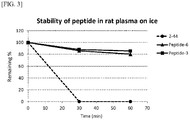
- the stability of the peptide in plasma can be confirmed by, for example, a method described in Examples, but not limited thereto.
- the peptide of the present invention can be exemplified by the peptides consisting of the following amino acid sequences, but not limited to the followings.
- the peptide of the present invention further includes a peptide having substitution of an amino acid at position 43 or/and position 44 of the peptide shown in the above SEQ ID NOs: 1 to 399 with a non-naturally occurring amino acid, and a peptide having substitution of an amino acid at position 42 or/and position 43 of the peptide shown in the above SEQ ID NO: 403 with a non-naturally occurring amino acid.
- the peptide of the present invention may have a conservative substitution of an amino acid or amino acids in the peptide having the amino acid sequence shown in any one of SEQ ID NOs: 1 to 5.
- the conservative substitution refers to substitution with another amino acid having a structure or properties chemically similar to those of the original amino acid, without undergoing substantial changes in the functions of the peptide.
- Examples of the conservative substitution include mutual substitutions between aspartic acid and glutamic acid which are acidic amino acids; mutual substitutions between lysine, arginine, and histidine which are basic amino acids; mutual substitutions between serine, threonine, asparagine, and glutamine which are hydrophilic amino acids; and the like.
- a peptide of SEQ ID NO: 167 is a product in which glutamic acid (E) at position 44 of the peptide of SEQ ID NO: 5 is substituted with aspartic acid (D), which is considered to have a function equivalent to that of the peptide of SEQ ID NO: 5.
- peptides shown in SEQ ID NOs: 126, 128, 129, 138, 248, 254, 280, 282, 283 and 292 also have a conservative substitution of the amino acid in the peptide having the amino acid sequence shown in any one of SEQ ID NOs: 1 to 5, which are considered to have the function equivalent to that of any one of the peptide of SEQ ID NOs: 1 to 5.
- the peptide of the present invention has the amino acid sequence shown in any one of SEQ ID NOs: 1 to 5, 126, 128, 129, 138, 167, 248, 254, 280, 282, 283, 292 and 403. In one more preferred embodiment, the peptide of the present invention has the amino acid sequence shown in any one of SEQ ID NOs: 1 to 5, 167 and 403, and in one even more preferred embodiment, the peptide of the present invention has the amino acid sequence shown in any one of SEQ ID NOs: 1 to 5 and 403, from the viewpoint that the peptide is expected to have the above function more surely.
- one of preferred embodiments of the peptide defined in the above (a) is a peptide having the amino acid sequence shown in any one of SEQ ID NOs: 1 to 5, 126, 128, 129, 138, 167, 248, 254, 280, 282, 283, 292 and 403, one of more preferred embodiment is a peptide having the amino acid sequence shown in any one of SEQ ID NOs: 1 to 5, 167 and 403, and one of even more preferred embodiment is a peptide having the amino acid sequence shown in any one of SEQ ID NOs: 1 to 5 and 403.
- one of preferred embodiments of the peptide defined in the above (b) is a peptide consisting of an amino acid sequence having addition of one or more amino acids, e.g., 2 to 40 amino acids, 2 to 30 amino acids, 2 to 20 amino acids, 2 to 10 amino acids, 2 to 5 amino acids, or 4, 3, or 2 amino acids, to the peptide having the amino acid sequence shown in any one of SEQ ID NOs: 1 to 5, 126, 128, 129, 138, 167, 248, 254, 280, 282, 283, 292 and 403, and having an activity of stimulating migration of cells
- one of more preferred embodiment is a peptide consisting of an amino acid sequence having addition of one or more amino acids, e.g., 2 to 40 amino acids, 2 to 30 amino acids, 2 to 20 amino acids, 2 to 10 amino acids, 2 to 5 amino acids, or 4, 3, or 2 amino acids, to the peptide having the amino acid sequence shown in any one of SEQ ID NOs: 1 to 5, 167 and 403, and having an activity of stimulating
- one of preferred embodiments of the peptide as defined in the above (c) is a peptide comprising or consisting of an amino acid sequence having substitution, deletion, or insertion of one or more amino acids, e.g., 2 to 40 amino acids, 2 to 30 amino acids, 2 to 20 amino acids, 2 to 10 amino acids, 2 to 5 amino acids, or 4, 3, or 2 amino acids, at an amino acid of position 1 to position 42 of the peptide having the amino acid sequence shown in any one of SEQ ID NOs: 1 to 5, 126, 128, 129, 138, 167, 248, 254, 280, 282, 283 and 292 or an amino acid of position 1 to position 41 of the peptide having the amino acid sequence shown in SEQ ID NO: 403, and having an activity of stimulating migration of cells
- one of more preferred embodiments is a peptide comprising or consisting of an amino acid sequence having substitution, deletion, or insertion of one or more amino acids, e.g., 2 to 40 amino acids, 2 to 30 amino acids, 2 to 20 amino
- the term "derivative" of the peptide of the present invention means a peptide having substantially the same biological function or activity as the peptide of the present invention, in other words, the activity of stimulating migration of cells.
- the C-terminal of the derivative of the peptide may be any one of a carboxyl group, a carboxylate, an amide, or an ester.
- the derivative includes a modified peptide obtained by addition of a modifying group, a mutant peptide obtained by altering an amino acid residue, and the like.
- the modifying group includes functional groups showing fluorescent properties, functional groups not involved in the formation of conformation of a peptide, and the like.
- the modifying group may be an amino acid residue (for example, ⁇ -alanine etc.) other than an amino acid residue constituting the naturally occurring peptide of the present invention.
- the functional group showing fluorescent properties includes eosin, fluorescein isothiocyanate (FITC) and the like.
- the functional groups not involved in the formation of conformation of a peptide include spacer groups represented by ⁇ -alanine residues, and the like. It is preferable that the functional group is present at a terminal. Further, a peptide modified with polyethylene glycol (PEG) is also included in the "derivative.”
- pharmaceutically acceptable salt of the peptide of the present invention includes physiologically acceptable salts with acids or bases, and particularly acid-added salts are preferred.
- a salt with an inorganic acid such as hydrochloric acid, phosphoric acid, hydrobromic acid, or sulfuric acid
- a salt with an organic acid such as acetic acid, formic acid, propionic acid, fumaric acid, maleic acid, succinic acid, tartaric acid, citric acid, malic acid, oxalic acid, benzoic acid, methanesulfonic acid, or benzenesulfonic acid, or the like is used.
- solvate of the peptide of the present invention or the above salt includes those in which any number of solvent molecules are coordinated to the peptide of the present invention, and preferably a hydrate.
- the present invention provides the peptide as described above.
- the peptide can be chemically synthesized according to any of the methods of the peptide liquid phase synthesis methods and the peptide solid phase synthesis methods.
- the peptide synthesized according to the peptide solid phase synthesis method is preferred.
- the peptide solid phase synthesis method is one of the generally employed methods when peptides are chemically synthesized, which can be, for example, carried out as follows: Using as a solid phase beads of polystyrene polymer gel having a diameter of 0.1 mm or so of which surfaces are modified with amino groups, an amino acid chain is extended one by one by dehydration reaction therefrom. When an intended sequence of the peptide is prepared, the peptide is cut out from the solid phase surface, to obtain an intended substance.
- the solid phase synthesis method it is made possible to perform the synthesis of ribosomal peptide which is difficult to synthesize in bacteria, introduction of a non-naturally occurring amino acid such as D-form or heavy atom substituted compound, modification of peptide and protein main chain, or the like.
- a long peptide chain of from 70 to exceeding 100 peptides is synthesized in the solid phase method, the peptide chains can be synthesized by binding two peptide chains using a native chemical ligation method.
- the method for administration of a composition of the present invention includes oral administration or parenteral administration, and specific methods of the parenteral administration include injection administration, transnasal administration, transpulmonary administration, transdermal administration, and the like, but not limited thereto.
- a composition of the present invention can be administered systemically or locally (e.g., subcutaneously, intradermally, epidermally, to eyeball or palpebral conjunctiva, to nasal cavity mucosa, to oral cavity and gastrointestinal mucosa, to vaginal or intrauterine mucosa, to a damaged site, etc.) by intravenous injection, intramuscular injection, intraperitoneal injection, subcutaneous injection or the like.
- the method for administration of a composition of the present invention includes, for example, intravascular administration (intraarterial administration, intravenous administration, etc.), blood administration, intramuscular administration, subcutaneous administration, intradermal administration, and intraperitoneal administration, but not limited thereto.
- intravascular administration intraarterial administration, intravenous administration, etc.
- blood administration intramuscular administration, subcutaneous administration, intradermal administration, and intraperitoneal administration, but not limited thereto.
- the site of administration is not limited, which includes a tissue site in need of regeneration or its neighborhood region, a site different from the tissue in need of regeneration, or a site distal and different from the tissue in need of regeneration.
- the site of administration includes blood (intraarterially, intravenously, etc.), muscles, subcutaneous site, intradermal site and intraperitoneal site, but not limited thereto.
- the method for administration can be appropriately selected depending upon age and symptoms of the patients.
- a dose within a range of from 0.0000001 mg to 1,000 mg per 1 kg body weight per single administration can be selected.
- a dose within a range of from 0.00001 to 100,000 mg/body per patient can be selected.
- the peptide can be administered such that the amount of the peptide is within the above range.
- the pharmaceutical composition of the present invention is not limited to these doses.
- the pharmaceutical composition of the present invention can be formulated in accordance with conventional methods (e.g., Remington's Pharmaceutical Science, latest edition, Mark Publishing Company, Easton, U.S.A ), which may together contain a pharmaceutically acceptable carrier or additives.
- a pharmaceutically acceptable carrier or additives include, for example, surfactants, excipients, colorants, perfumes, preservatives, stabilizers, buffers, suspending agents, isotonic agents, binders, disintegrants, lubricants, fluidity promoters, flavoring agents, and the like, but not limited thereto, and other conventionally used carriers can be appropriately used.
- Specific examples include light anhydrous silicic acid, lactose, crystalline celluloses, mannitol, starches, carmellose calcium, carmellose sodium, hydroxypropyl cellulose, hydroxypropylmethyl cellulose, polyvinyl acetal diethylaminoacetate, polyvinyl pyrrolidone, gelatin, medium-chained fatty acid triglyceride, polyoxyethylene hydrogenated castor oil 60, white sugar, carboxymethyl cellulose, corn starch, inorganic salts, and the like.
- a peptide consisting of the amino acids at position 2 to position 44 of human HMGB1 (2-44) and each of the five kinds of peptides having substitution of an amino acid sequence at position 43 and/or position 44 in the peptide at position 1 to position 44 of human HMGB1 (Peptide-1 to -5) were synthesized by a solid phase method.
- Cells of murine bone marrow-derived stromal cell line ST2 (RCB0224, RIKEN BioResource Research Center) were removed from a dish using TrypLE Express (Thermo Fisher Scientific), and collected by centrifugation at 25°C and 1,500 rpm for 5 minutes.
- the cell pellets were prepared into a concentration of 7 x 10 5 cells/mL with RPMI 1640 / 10% FBS / 1% PenStrep (Gibco), and seeded at 70 ⁇ L/insert well on a 24-well plate set with a culture insert (Nippon Genetics Co., Ltd.). After 24 hours, the culture insert was taken out, and the cells were washed once with RPMI 1640.
- each of the peptide samples (a peptide of position 2 to position 44 of human HMGB1 (2-44), and the five kinds of modified peptides Peptide-1 to -5 prepared in Example 1), each prepared at 10 ⁇ M with an assay medium (RPMI 1640 / 0.1% FBS) was added in an amount of 550 ⁇ L, and the cells were further cultured overnight. As a negative control (NC), only the assay medium was added. After the culture, the cells were fixed, stained with DiffQuik, and photographed. The degree of cell migration of each group from the photographed images was evaluated with five levels of scores (-, ⁇ , +, ++, +++). In addition, each of the peptide samples was subjected to three test runs under the same conditions.
- an assay medium RPMI 1640 / 0.1% FBS
- Example 2 Each of the six kinds of peptides used in Example 2 was prepared into a solution at 375 ⁇ g/mL with distilled water from a stock solution in which each peptide was dissolved in a 0.1% aqueous TFA solution at 1 mg/mL. Sixteen microliters of the solution was added to 1,184 ⁇ L of the blank plasma to prepare a sample for the stability test (assay concentration: 5 ⁇ g/mL). The sample for stability test was allowed to stand on ice, and 50 ⁇ L (at each time point, 3 samples) was collected immediately after the addition, and 1, 3, 5, 15, 30, and 60 minutes after the addition.
- the samples for the measurement were introduced into high-performance liquid chromatograph-tandem quadrupolar mass spectrometer to detect the monitor ions peculiar to each of the peptides. From separately prepared samples of which concentrations were known, a calibration curve was drawn in a concentration range of from 0.1 to 10 ⁇ g/mL, and an inverse regression was obtained from peak areas of chromatograms obtained by measurements of each sample to obtain a peptide concentration in the samples. The peptide concentration at each time point was averaged, and a remaining rate (%) which was calculated by defining one immediately after the addition as 100 was plotted against the time after the addition ( FIG. 1 ).
- a peptide consisting of a sequence given below having substitution of two amino acids at a C-terminal in the peptide of position 2 to position 44 of human HMGB1 (2-44) (Peptide-6) was synthesized by a solid phase method.
- Cells of murine bone marrow-derived stromal cell line ST2 (RCB0224, RIKEN BioResource Research Center) were removed from a dish using 2.5g/L - Trypsin/1mmol/L - EDTA Solution (nacalai tesque), and collected by centrifugation at 25°C and 200 g for 3 minutes.
- the cell pellets were prepared into a concentration of 8.6 x 10 5 cells/mL with RPMI 1640 / 10% FBS / 1% PenStrep (nacalai tesque), and seeded at 70 ⁇ L/insert well on a 24-well plate set with a culture insert (Nippon Genetics Co., Ltd.).
- each of the peptide samples (the peptide of position 2 to position 44 of human HMGB1 (2-44), and the modified peptide Peptide-6 prepared in Example 4), each prepared at 20 ⁇ M with an assay medium (RPMI 1640 / 0.1% FBS) was added in an amount of 1,000 ⁇ L, and the cells were cultured for additional 20 hours.
- an assay medium RPMI 1640 / 0.1% FBS
- the degree of cell migration of each group was evaluated as a proportion (%) of the area occupied by the cells migrated to the region at 20 hours relative to the area of blank region prepared by the culture insert (region in which the cells do not exist at the time point of addition of the assay medium).
- a 5 mL tube previously charged with 60 ⁇ L of a 10% EDTA-2K was charged with 3 mL of whole blood collected from Crl: CD (SD) rats, and the contents were allowed to stand at room temperature for 30 minutes, and then centrifuged at 4°C and at 3,000 rpm (1600 ⁇ g) for 10 minutes. The supernatant was collected to be used as a blank plasma. The plasma obtained was stored on ice and only used on the day of the stability test.
- each of the peptide at position 2 to position 44 of human HMGB1 (2-44), the modified peptide prepared in Example 1 (Peptide-3), and the modified peptide prepared in Example 4 (Peptide-6) was prepared into a solution at 375 ⁇ g/mL with distilled water from a stock solution in which each peptide was dissolved in a 0.1% aqueous TFA solution at 1 mg/mL. Eight microliters of the solution was added to 592 ⁇ L of the blank plasma to prepare a sample for the stability test (assay concentration: 5 ⁇ g/mL). The sample for stability test was allowed to stand on ice, and 50 ⁇ L was collected immediately after the addition, and 30 and 60 minutes after the addition.
- the frozen sample was thawed at room temperature, and the supernatant obtained by centrifugation at 4°C and at 14,000 ⁇ g for 3 minutes was collected in an amount of 400 ⁇ L, dried and solidified with a centrifugal concentrator (Spin Dryer Light VC-36R, manufactured by TAITEC CORPORATION), and dissolved in 200 ⁇ L of a 1% TFA / 2% ACN Buffer, and filtrated with a filter (0.22 ⁇ m) to obtain samples for the measurement.
- a centrifugal concentrator Spin Dryer Light VC-36R, manufactured by TAITEC CORPORATION
- the samples for the measurement were introduced into high-performance liquid chromatograph-single quadrupolar mass spectrometer to detect the monitor ions peculiar to each of the peptides.
- a calibration curve was drawn in a concentration range of from 0.1 to 10 ⁇ g/mL, and an inverse regression was obtained from peak areas of chromatograms obtained by measurements of each sample to obtain a peptide concentration in the samples.
- a remaining rate (%) which was calculated by defining one immediately after the addition as 100 was plotted against the time after the addition ( FIG. 3 ).
- the peptide, a derivative thereof, a pharmaceutically acceptable salt thereof, or a solvate thereof of the present invention is used in the field of regenerative medicine.
Landscapes
- Health & Medical Sciences (AREA)
- Chemical & Material Sciences (AREA)
- Life Sciences & Earth Sciences (AREA)
- Organic Chemistry (AREA)
- General Health & Medical Sciences (AREA)
- Engineering & Computer Science (AREA)
- Medicinal Chemistry (AREA)
- Bioinformatics & Cheminformatics (AREA)
- Proteomics, Peptides & Aminoacids (AREA)
- Genetics & Genomics (AREA)
- Gastroenterology & Hepatology (AREA)
- Biochemistry (AREA)
- Zoology (AREA)
- Pharmacology & Pharmacy (AREA)
- Animal Behavior & Ethology (AREA)
- Public Health (AREA)
- Veterinary Medicine (AREA)
- Molecular Biology (AREA)
- Biomedical Technology (AREA)
- Immunology (AREA)
- Biophysics (AREA)
- Epidemiology (AREA)
- Wood Science & Technology (AREA)
- Biotechnology (AREA)
- Toxicology (AREA)
- General Chemical & Material Sciences (AREA)
- Nuclear Medicine, Radiotherapy & Molecular Imaging (AREA)
- Chemical Kinetics & Catalysis (AREA)
- Hematology (AREA)
- Rheumatology (AREA)
- Developmental Biology & Embryology (AREA)
- Cell Biology (AREA)
- Microbiology (AREA)
- General Engineering & Computer Science (AREA)
- Medicines That Contain Protein Lipid Enzymes And Other Medicines (AREA)
- Peptides Or Proteins (AREA)
- Medicines Containing Material From Animals Or Micro-Organisms (AREA)
- Micro-Organisms Or Cultivation Processes Thereof (AREA)
Abstract
Description
- The present invention relates to a peptide for inducing regeneration of tissues, and uses thereof.
- It has become even clearer that each of organs and tissues in the living bodies has tissue stem cells maintaining its structural and functional homeostasis. For example, the myocardial stem cells exist in the heart, the neural stem cells exist in the brain, and the epidermal stem cells and follicular stem cells exist in the skin, which supply myocardial cells, neural cells, epidermal cells, and follicular epithelial cells over the lifetime to maintain the structures and functions of the heart, the brain, and the skin. Meanwhile, the hematopoietic stem cells that differentiate into blood cells such as red blood cells, white blood cells, and platelets exist in the bone marrow.
- These blood cells derived from the hematopoietic stem cells circulate all sorts of organs and tissues in the bodies through blood streams, and play some indispensable functions for life maintenance such as oxygen supply, immune responses, and hematostatis or recovery of damaged tissues. In other words, it is fair to say that the bone marrow hematopoietic stem cells contribute to the maintenance of homeostasis of all the tissues in the live bodies via peripheral circulation, rather than the maintenance of homeostasis of the bone marrow or the bone tissues in which the bone marrow hematopoietic stem cells are localized.
- In the recent years, it has been clarified that in addition to the hematopoietic stem cells, the mesenchymal stem cells that are differentiable into not only mesodermal tissues of bones, cartilages, adipose or the like, but also ectodermal tissues such as nerves and epidermides exist in the bone marrow; however, the existing significance in the live bodies has not yet been clarified in many ways. However, if the hematopoietic stem cells that maintain homeostasis of all the tissues and organs by supplying blood cells via the peripheral circulation exist in the bone marrow, there is similarly an expected possibility that the mesenchymal stem cells that exist in the bone marrow would also contribute to the maintenance of homeostasis of the tissues in the live bodies by providing cells that can differentiate into bones, cartilages, adipose, nerves, epithelia, or the like via the peripheral circulation to the tissues or organs in the live bodies in need thereof.
- Currently, regenerative medicine has been actively developed, in which bone marrow mesenchymal stem cells are prepared by collection of the bone marrow blood, expanded by cell culture, and grafted to a damaged site of the intractable tissues or into the peripheral circulation blood to induce the regeneration of damaged tissues. The clinical applications of transplantation of the bone marrow mesenchymal stem cells have been already been underway in the regenerative medicine of cerebral infarction, myocardial infarction, intractable skin ulcer or the like. Further, it has been clarified that the transplanted bone marrow mesenchymal stem cells exhibit an action of suppressing inflammations and immune responses and an action of suppressing fibrous scar formation locally in the live bodies, so that the clinical tests of the bone marrow mesenchymal stem cells transplantation therapy have been started as a new therapeutic method for graft versus host disease (GVHD), which is a serious side reaction after the bone marrow transplantation or transfusion, or for scleroderma, which is an autoimmune disease. However, the bone marrow blood containing the bone marrow mesenchymal stem cells is only collected by an invasive method in which thick needles are repeatedly pierced to the iliac bone. In addition, the bone marrow mesenchymal stem cells would gradually lose proliferation ability and pluripotency if the subculture is continued ex vivo. Further, the culture of the bone marrow mesenchymal stem cells based on the high-quality management that ensures safety of the in vivo transplantation would necessitate a specialized culturing equipment such as CPC (cell processing center), so that the cell culture is enabled at very limited universities or business enterprises at present. In other words, in order to make the regenerative medicine using the bone marrow mesenchymal stem cells available to many patients in the world suffering from intractable tissue damages, it is an urgent task to develop techniques for the regenerative medicine with the mesenchymal stem cells to be enabled in all sorts of medical facilities.
- HMGB1 (High mobility group box 1: high mobility group box 1 protein) was identified about 30 years ago as a non-histone chromatin protein that controls the gene expression or repair of DNA by controlling an intranuclear chromatin structure. The structure of the HMGB1 protein is constituted mainly by two DNA binding domains, in which a DNA binding domain at an N-terminal side is called an A-box, and a DNA binding domain at a C-terminal side is called a B-box. According to the past studies, it has been clarified that a domain that binds to TLR in the HMGB1 molecule and evokes an inflammatory reaction exists within the B-box.
- It has been reported that the PDGFRα-positive cells are recruited in the blood from the bone marrow by administering mice generated with skin ulcer or cerebral infarction with a recombinant HMGB 1 protein from tail vein, and further the cells are accumulated in the skin ulcer portion or the cerebral infarction portion, thereby strongly inducing the regeneration of skin ulcer or cerebral infarction. It has been already reported that the PDGFRα-positive cells in the bone marrow are mesenchymal stem cells that are differentiable into bones, cartilages, adipose, and further to nerves or epithelia. In other words, the PDGFRα-positive mesenchymal stem cells in the bone marrow are recruited to peripheral circulation by the HMGB 1 administration, thereby making it possible to accumulate many of the mesenchymal stem cells in the damaged tissues in the live bodies without extracorporeally taking the cells, and subjecting them to a specialized culturing.
- The regeneration-inducing medicine can be enabled with the bone marrow mesenchymal stem cells in all sorts of medical facilities by developing HMGB 1 as a medicament for inducing regeneration of damaged tissues by the recruitment in blood of the bone marrow mesenchymal stem cells in the live bodies. As a result, many of the disadvantages faced in the present regenerative medicine using the bone marrow mesenchymal stem cells would be overcome.
- As mentioned above, the HMGB1 medicament is an epoch-making therapeutic agent which promotes the recruitment of the bone marrow mesenchymal stem cells in blood or the accumulation to damaged tissues, thereby inducing regeneration of tissues in the body. Regarding HMGB1, it has been already reported that not only a full length of HMGB 1 protein but also fragments of the HMGB 1 protein has a similar action.
-
- Patent Publication 1:
WO 2008/053892 - Patent Publication 2:
WO 2007/015546 - Patent Publication 3:
WO 2009/133939 - Patent Publication 4:
WO 2009/133943 - Patent Publication 5:
WO 2009/133940 - Patent Publication 6: Japanese Unexamined Patent Publication No.
2005-537253 - Patent Publication 7:
WO 2012/147470 -
- Non-Patent Publication 1: Bustin et al., Mol Cell Biol, 19:5237-5246, 1999
- Non-Patent Publication 2: Hori et al., J. Biol. Chem., 270, 25752-25761, 1995
- Non-Patent Publication 3: Wang et al., Science, 285:248-251, 1999
- Non-Patent Publication 4: Muller et al., EMBO J, 20:4337-4340, 2001
- Non-Patent Publication 5: Wang et al., Science, 285:248-251, 1999
- Non-Patent Publication 6: Germani et al., J Leukoc Biol. Jan; 81(1):41-5, 2007
- Non-Patent Publication 7: Palumbo et al., J. Cell Biol., 164:441-449, 2004
- Non-Patent Publication 8: Merenmies et al., J. Biol. Chem., 266:16722-16729, 1991
- Non-Patent Publication 9: Wu Y et al., Stem cells, 25:2648-2659, 2007
- Non-Patent Publication 10: Tamai et al., Proc Natl Acad Sci USA. 2011 Apr 4. [Epub ahead of print], 108:6609-6614, 2011
- Non-Patent Publication 11: Yang et al., J Leukoc Biol. Jan; 81(1):59-66, 2007
- An object to be solved by the present invention is to provide a peptide having activity of migrating bone marrow-derived stromal cells, in other words, a peptide for inducing regeneration of tissues.
- As a result of intensive studies, the present inventors have found out that a peptide having substitution of an amino acid of position 43 and/or position 44 in the peptide consisting of amino acids of position 1 to position 44 of the HMGB1 protein, and a peptide having substitution of an amino acid of position 43 and/or position 44 in the peptide consisting of the amino acids of position 2 to position 44 of the HMGB 1 protein have the activity of migrating stromal cells derived from murine bone marrow, and the present invention has been perfected thereby.
- Concretely, the present invention relates to:
- (1) a peptide selected from the group consisting of:
- a peptide having the amino acid sequence shown in any one of SEQ ID NOs: 1 to 399 and 403,
- a peptide consisting of an amino acid sequence having addition of one or more amino acids, e.g., 2 to 40 amino acids, 2 to 30 amino acids, 2 to 20 amino acids, 2 to 10 amino acids, 2 to 5 amino acids, or 4, 3, or 2 amino acids, to the peptide having the amino acid sequence shown in any one of SEQ ID NOs: 1 to 399 and 403, and having an activity of stimulating migration of cells,
- a peptide comprising or consisting of an amino acid sequence having substitution, deletion, or insertion of one or more amino acids, e.g., 2 to 40 amino acids, 2 to 30 amino acids, 2 to 20 amino acids, 2 to 10 amino acids, 2 to 5 amino acids, or 4, 3, or 2 amino acids, at an amino acid of position 1 to position 42 of the peptide having the amino acid sequence shown in any one of SEQ ID NOs: 1 to 399 or an amino acid of position 1 to position 41 of the peptide having the amino acid sequence shown in SEQ ID NO: 403, and having an activity of stimulating migration of cells, a derivative thereof, a pharmaceutically acceptable salt thereof, or a solvate thereof;
- (2) a peptide selected from the group consisting of:
- a peptide having the amino acid sequence shown in any one of SEQ ID NOs: 1 to 5, 126, 128, 129, 138, 167, 248, 254, 280, 282, 283, 292 and 403,
- a peptide consisting of an amino acid sequence having addition of one or more amino acids, e.g., 2 to 40 amino acids, 2 to 30 amino acids, 2 to 20 amino acids, 2 to 10 amino acids, 2 to 5 amino acids, or 4, 3, or 2 amino acids, to the peptide having the amino acid sequence shown in any one of SEQ ID NOs: 1 to 5, 126, 128, 129, 138, 167, 248, 254, 280, 282, 283, 292 and 403, and having an activity of stimulating migration of cells, and
- a peptide comprising or consisting of an amino acid sequence having substitution, deletion, or insertion of one or more amino acids, e.g., 2 to 40 amino acids, 2 to 30 amino acids, 2 to 20 amino acids, 2 to 10 amino acids, 2 to 5 amino acids, or 4, 3, or 2 amino acids, at an amino acid of position 1 to position 42 of the peptide having the amino acid sequence shown in any one of SEQ ID NOs: 1 to 5, 126, 128, 129, 138, 167, 248, 254, 280, 282, 283 and 292, or an amino acid of position 1 to position 41 of the peptide having the amino acid sequence shown in SEQ ID NO: 403, and having an activity of stimulating migration of cells,
- (3) a peptide selected from the group consisting of:
- a peptide having the amino acid sequence shown in any one of SEQ ID NOs: 1 to 5, 167 and 403,
- a peptide consisting of an amino acid sequence having addition of one or more amino acids, e.g., 2 to 40 amino acids, 2 to 30 amino acids, 2 to 20 amino acids, 2 to 10 amino acids, 2 to 5 amino acids, or 4, 3, or 2 amino acids, to the peptide having the amino acid sequence shown in any one of SEQ ID NOs: 1 to 5, 167 and 403, and having an activity of stimulating migration of cells, and
- a peptide comprising or consisting of an amino acid sequence having substitution, deletion, or insertion of one or more amino acids, e.g., 2 to 40 amino acids, 2 to 30 amino acids, 2 to 20 amino acids, 2 to 10 amino acids, 2 to 5 amino acids, or 4, 3, or 2 amino acids, at an amino acid of position 1 to position 42 of the peptide having the amino acid sequence shown in any one of SEQ ID NOs: 1 to 5 and 167 or at an amino acid of position 1 to position 41 of the peptide having the amino acid sequence shown in SEQ ID NO: 403, and having an activity of stimulating migration of cells,
- (4) a peptide selected from the group consisting of:
- a peptide having the amino acid sequence shown in any one of SEQ ID NOs: 1 to 5 and 403,
- a peptide consisting of an amino acid sequence having addition of one or more amino acids, e.g., 2 to 40 amino acids, 2 to 30 amino acids, 2 to 20 amino acids, 2 to 10 amino acids, 2 to 5 amino acids, or 4, 3, or 2 amino acids, to the peptide having the amino acid sequence shown in any one of SEQ ID NOs: 1 to 5 and 403, and having an activity of stimulating migration of cells, and
- a peptide comprising or consisting of an amino acid sequence having substitution, deletion, or insertion of one or more amino acids, e.g., 2 to 40 amino acids, 2 to 30 amino acids, 2 to 20 amino acids, 2 to 10 amino acids, 2 to 5 amino acids, or 4, 3, or 2 amino acids, at an amino acid of position 1 to position 42 of the peptide having the amino acid sequence shown in any one of SEQ ID NOs: 1 to 5 or at an amino acid of position 1 to position 41 of the peptide having the amino acid sequence shown in SEQ ID NO: 403, and having an activity of stimulating migration of cells, a derivative thereof, a pharmaceutically acceptable salt thereof, or a solvate thereof;
- (5) a composition for use in stimulation of migration of PDGFRα-positive cells, containing a peptide, a derivative thereof, a pharmaceutically acceptable salt thereof, or a solvate thereof as defined in any one of the above (1) to (4);
- (6) a composition for use in recruitment of bone marrow mesenchymal stem cells from bone marrow to peripheral blood, containing a peptide, a derivative thereof, a pharmaceutically acceptable salt thereof, or a solvate thereof as defined in any one of the above (1) to (4);
- (7) a composition for use in regeneration of tissues, containing a peptide, a derivative thereof, a pharmaceutically acceptable salt thereof, or a solvate thereof as defined in any one of the above (1) to (4); and
- (8) a composition for use in stimulation of migration of bone marrow-derived stromal cells, containing a peptide, a derivative thereof, a pharmaceutically acceptable salt thereof, or a solvate thereof as defined in any one of the above (1) to (4).
- The peptide of the present invention can be utilized as an active ingredient of, for example, a composition for use in stimulation of migration of PDGFRα-positive cells, a composition for use in recruitment of bone marrow mesenchymal stem cells from bone marrow to peripheral blood, a composition for use in regeneration of tissues, or a composition for use in stimulation of migration of bone marrow-derived stromal cells.
-
- [
FIG. 1] FIG. 1 is a graph showing the results of the stability test of the peptides in plasma for six kinds of peptides (a peptide of position 2 to position 44 of human HMGB1 (2-44), and five kinds of peptides in which amino acids at position 43 or/and position 44 are modified (Peptide-1 to -5)). P1 to P5 mean the peptides of Peptide-1 to -5. The axis of ordinates is the remaining rate when the peptide immediately after the addition of the plasma was calculated as 100, and the axis of the abscissas is the time after the addition of the plasma. Here, the sample of 15 minutes or later after the addition of the plasma of the peptide of 2-44 was lower than the quantifiable lower limit (0.5 µg/mL), so that the remaining rate could not be plotted inFIG. 1 . - [
FIG. 2] FIG. 2 is a graph of the results of the measurements of the cell-migration activity of two kinds of peptides (a peptide of position 2 to position 44 of human HMGB1 (2-44), and a peptide in which the amino acids at position 43 and position 44 are modified (Peptide-6)). NC is a negative control. - [
FIG. 3] FIG. 3 is a graph showing the results of the stability test in plasma of three kinds of peptides (a peptide of position 2 to position 44 of human HMGB1 (2-44), and two kinds of peptides in which amino acids at position 43 and position 44 are modified (Peptide-3 and -6)). The axis of ordinates is the remaining rate when the peptide immediately after the addition of the plasma was calculated as 100, and the axis of the abscissas is the time after the addition of the plasma. - The present invention provides a peptide as defined in any one of (a) to (c) given below:
- (a) a peptide having the amino acid sequence shown in any one of SEQ ID NOs: 1 to 399 and 403;
- (b) a peptide consisting of an amino acid sequence having addition of one or more amino acids, e.g., 2 to 40 amino acids, 2 to 30 amino acids, 2 to 20 amino acids, 2 to 10 amino acids, 2 to 5 amino acids, or 4, 3, or 2 amino acids, to the peptide having the amino acid sequence shown in any one of SEQ ID NOs: 1 to 399 and 403, and having an activity of stimulating migration of cells; and
- (c) a peptide comprising or consisting of an amino acid sequence having substitution, deletion, or insertion of one or more amino acids, e.g., 2 to 40 amino acids, 2 to 30 amino acids, 2 to 20 amino acids, 2 to 10 amino acids, 2 to 5 amino acids, or 4, 3, or 2 amino acids, at an amino acid of position 1 to position 42 of the peptide having the amino acid sequence shown in any one of SEQ ID NOs: 1 to 399 or an amino acid of position 1 to position 41 of the peptide having the amino acid sequence shown in SEQ ID NO: 403, and having an activity of stimulating migration of cells.
- The present invention provides a composition for use in stimulation of migration of PDGFRα-positive cells or bone marrow-derived stromal cells, containing a peptide as defined in (a) to (c) given below:
- (a) a peptide having the amino acid sequence shown in any one of SEQ ID NOs: 1 to 399 and 403;
- (b) a peptide consisting of an amino acid sequence having addition of one or more amino acids, e.g., 2 to 40 amino acids, 2 to 30 amino acids, 2 to 20 amino acids, 2 to 10 amino acids, 2 to 5 amino acids, or 4, 3, or 2 amino acids, to the peptide having the amino acid sequence shown in any one of SEQ ID NOs: 1 to 399 and 403, and having an activity of stimulating migration of cells; and
- (c) a peptide comprising or consisting of an amino acid sequence having substitution, deletion, or insertion of one or more amino acids, e.g., 2 to 40 amino acids, 2 to 30 amino acids, 2 to 20 amino acids, 2 to 10 amino acids, 2 to 5 amino acids, or 4, 3, or 2 amino acids, at an amino acid of position 1 to position 42 of the peptide having the amino acid sequence shown in any one of SEQ ID NOs: 1 to 399 or an amino acid of position 1 to position 41 of the peptide having the amino acid sequence shown in SEQ ID NO: 403, and having an activity of stimulating migration of cells.
- The composition for use in stimulation of migration of PDGFRα-positive cells or bone marrow-derived stromal cells of the present invention includes a reagent composition and a pharmaceutical composition. The reagent composition as used herein is also expressed as a reagent, and the pharmaceutical composition is also expressed as a medicament, a pharmaceutical agent, or a pharmaceutical composition.
- The reagent composition for use in stimulation of migration of PDGFRα-positive cells or bone marrow-derived stromal cells of the present invention can be used as, for example, reagents that are necessary for basic researches and clinical researches in the developments of regenerative medicine and regeneration-inducing medicine. For example, cells are recruited in tissues in the live bodies in experimental animals by the use of the reagent composition, thereby making it possible to study the levels of tissue repair and tissue function reconstruction. Also, for example, the researches on inducing regeneration of tissues can be carried out by the recruitment of the cells in vitro by the use of the reagent composition.
- In addition, the pharmaceutical composition for use in stimulation of migration of PDGFRα-positive cells or bone marrow-derived stromal cells of the present invention can be used as, for example, a medicament in the regenerative medicine and the regeneration-inducing medicine. For example, the tissues can be regenerated by the use of the pharmaceutical composition. Also, for example, the pharmaceutical composition can prevent the lowering of the functions of tissues and organs by the decrease in the tissue stem cells as a so-called prophylactic medicament, or can delay the progress of aging changes as an anti-aging medicament.
- Here, the composition for use in stimulation of migration of PDGFRα-positive cells or bone marrow-derived stromal cells as used herein is also expressed as an agent for use in stimulation of migration of PDGFRα-positive cells or bone marrow-derived stromal cells, a stimulation agent for cell migration, a composition for use in induction of cell migration, an agent for use in induction of cell migration, an inducing agent for cell migration, or an inducing agent of cells.
- In the present invention the cell migration-stimulating activity means an activity of stimulating the cell migration. The cell migration-stimulating activity as used herein is also expressed as cell migration-inducing activity or cell-inducing activity.
- The present invention provides a composition for use in recruitment of bone marrow mesenchymal stem cells from bone marrow to peripheral blood, containing a substance as defined in any one of the following (a) to (c):
- (a) a peptide having the amino acid sequence shown in any one of SEQ ID NOs: 1 to 399 and 403;
- (b) a peptide consisting of an amino acid sequence having addition of one or more amino acids, e.g., 2 to 40 amino acids, 2 to 30 amino acids, 2 to 20 amino acids, 2 to 10 amino acids, 2 to 5 amino acids, or 4, 3, or 2 amino acids, to the peptide having the amino acid sequence shown in any one of SEQ ID NOs: 1 to 399 and 403, and having an activity of stimulating migration of cells; and
- (c) a peptide comprising or consisting of an amino acid sequence having substitution, deletion, or insertion of one or more amino acids, e.g., 2 to 40 amino acids, 2 to 30 amino acids, 2 to 20 amino acids, 2 to 10 amino acids, 2 to 5 amino acids, or 4, 3, or 2 amino acids, at an amino acid of position 1 to position 42 of the peptide having the amino acid sequence shown in any one of SEQ ID NOs: 1 to 399 or an amino acid of position 1 to position 41 of the peptide having the amino acid sequence shown in SEQ ID NO: 403, and having an activity of stimulating migration of cells.
- The composition for use in recruitment of the bone marrow mesenchymal stem cells from bone marrow to peripheral blood of the present invention includes a reagent composition and a pharmaceutical composition.
- The reagent composition for use in regeneration of tissues of the present invention can be used as, for example, reagents that are necessary for basic researches and clinical researches in the developments of regenerative medicine and regeneration-inducing medicine. In addition, the pharmaceutical composition for use in regeneration of tissues of the present invention can be used as, for example, a medicament in the regenerative medicine and the regeneration-inducing medicine. For example, the bone marrow cells are recruited to the peripheral circulation by the use of the pharmaceutical composition, so that the tissues can be regenerated. Also, for example, it is possible that the cells which are recruited to the peripheral blood by utilizing the pharmaceutical composition are collected extracorporeally, concentrated, and administered to tissues to carry out the treatment. In the conventional methods, since the cells are collected from the bone marrow at the deep part in the body, the live bodies are subjected to invasiveness. However, when the pharmaceutical composition of the present invention is used, the bone marrow cells are collected from the peripheral blood at low invasion, which can be utilized in bone marrow cell transplantation or the like. Here, the composition for use in recruitment of the bone marrow mesenchymal stem cells from bone marrow to peripheral blood is also expressed as a composition for use in induction of the bone marrow mesenchymal stem cells from bone marrow to peripheral blood.
- The present invention provides a composition for use in regeneration of tissues, containing a substance as defined in any one of the following (a) to (c):
- (a) a peptide having the amino acid sequence shown in any one of SEQ ID NOs: 1 to 399 and 403;
- (b) a peptide consisting of an amino acid sequence having addition of one or more amino acids, e.g., 2 to 40 amino acids, 2 to 30 amino acids, 2 to 20 amino acids, 2 to 10 amino acids, 2 to 5 amino acids, or 4, 3, or 2 amino acids, to the peptide having the amino acid sequence shown in any one of SEQ ID NOs: 1 to 399 and 403, and having an activity of stimulating migration of cells; and
- (c) a peptide comprising or consisting of an amino acid sequence having substitution, deletion, or insertion of one or more amino acids, e.g., 2 to 40 amino acids, 2 to 30 amino acids, 2 to 20 amino acids, 2 to 10 amino acids, 2 to 5 amino acids, or 4, 3, or 2 amino acids, at an amino acid of position 1 to position 42 of the peptide having the amino acid sequence shown in any one of SEQ ID NOs: 1 to 399 or an amino acid of position 1 to position 41 of the peptide having the amino acid sequence shown in SEQ ID NO: 403, and having an activity of stimulating migration of cells.
- The composition for use in regeneration of tissues of the present invention includes a reagent composition and a pharmaceutical composition.
- The reagent composition for use in regeneration of tissues of the present invention can be used as, for example, reagents that are necessary for basic researches and clinical researches in the developments of regenerative medicine and regeneration-inducing medicine. In addition, the pharmaceutical composition for use in regeneration of tissues of the present invention can be used as, for example, a medicament in the regenerative medicine and the regeneration-inducing medicine.
- Here, the composition for use in regeneration of tissues as used herein is also expressed as a composition for use in induction or promotion of regeneration of tissues, an agent for use in induction or promotion of regeneration of tissues, a tissue regeneration-inducing agent or a tissue regeneration-promoting agent. In addition, the regeneration of tissues includes tissue repair.
- The composition for use in regeneration of tissues of the present invention can be administered or added to any sites. In other words, the composition can exhibit its effects even when administered to any of tissues such as tissues in need of regeneration, tissues different from the tissues in need of regeneration, in blood, or the like. For example, when the composition is administered or added, the cells are recruited to a site to be administered or to be added or a tissue in a vicinity thereof, thereby inducing or promoting the regeneration of tissues. Also, for example, when the composition is administered or added to a damaged tissue site or a vicinity thereof, the cells are recruited in the damaged tissues, thereby inducing or promoting the regeneration of tissues. In addition, for example, when the composition is administered or added to a tissue different from the tissues in need of regeneration, the bone marrow cells are recruited from the bone marrow to the tissues in need of regeneration via the peripheral circulation, thereby inducing or promoting the regeneration of tissues. Here, the "peripheral circulation" is also called "blood circulation" or "peripheral circulation bloodstream."
- The tissues in need of regeneration include damaged tissues, necrotic tissues, tissues after surgery, tissues with reduced function, fibrotic tissues, aged tissues, diseased tissues, and the like. Examples include live body skin tissues and tissues from internal biopsy (surgery) (brain, lungs, heart, liver, stomach, small intestine, large intestine, pancreas, kidneys, urinary bladders, spleens, uterus, testis, blood, etc.).
- The administration to the tissues different from the tissues in need of regeneration means administration to a site other than a site in need of regeneration (site different from the site in need of regeneration). Therefore, the "tissues different from the tissues in need of regeneration" can be expressed as a site different from the tissues in need of regeneration, a site different from a site in need of regeneration, a site away from the tissues in need of regeneration, a site away from a site in need of regeneration, a site distal from a site in need of regeneration, a site distal from the tissues in need of regeneration, a distal site, or a distal tissue. In other words, the composition of the present invention is effectively used in regeneration of tissues (brain, heart, etc.) that are difficult to be directly administered with a pharmaceutical agent from outside of the body.
- The cells recruited to the tissues in need of regeneration differentiate into various cells to contribute to functional regeneration of the tissues in need of regeneration and to maintenance of functions or enhancement of functions of the tissues. In the present invention, the tissues in need of regeneration include tissues damaged by various pathologies caused by ischemic, hypoperfusive or hypoxic conditions, trauma, burns, inflammation, autoimmunity, genetic abnormalities, and the like, without being limited to these causes.
- The tissues in the present invention are not particularly limited so long as they are tissues into which the bone marrow-derived cells can differentiate, which include, for example, all the tissues in the live bodies, such as skin tissues, bone tissues, cartilage tissues, muscle tissues, adipose tissues, cardiomuscular tissues, nervous system tissues, pulmonary tissues, digestive tract tissues, hepatic, biliary, and pancreatic tissues, and urogenital organs. In addition, it is made possible to carry out the treatment of inducing functional tissue regeneration in not only a cutaneous disease such as intractable skin ulcers, skin wounds, hydroa/bullous disease, or alopecia, but also in tissues in need of regeneration of cerebral infarction, myocardial infarction, bone fracture, pulmonary infarction, gastric ulcer, enteritis, or the like by the use of the above composition. The animal species to be administered with the above composition is not particularly limited, and includes mammals, birds, fish, and the like. The mammals include human or non-human animals, including, for example, human, mice, rats, monkeys, pigs, dogs, rabbits, hamsters, guinea pigs, horses, sheep, whales, and the like, but not particularly limited thereto.
- In addition, the tissues different from the tissues in need of regeneration include blood tissues, muscular tissues, subcutaneous tissues, intradermal tissues, abdominal cavity, and the like.
- The neural tissues include central nervous tissues, but not limited thereto. Also, the composition for use in regeneration of neural tissues can be used, for example, in the treatment of cerebral infarction, cerebral hemorrhage, brain contusion or the like, but not limited thereto. In addition, the composition for use in regeneration of bone tissues can be used, for example, in the treatment of bone fracture, but not limited thereto. Also, the composition for use in regeneration of skin tissues can be used, for example, in the treatment of skin ulcers, insufficient suture closure of surgical wounds, burns, cuts, bruises, skin erosion, abrasions, or the like, but not limited thereto.
- In addition, in the present invention, the cells that are stimulated to migrate or the cells that are recruited from bone marrow to peripheral blood include undifferentiated cells and cells in different differentiation stages, but not limited thereto. Also, in the present invention, the cells that are stimulated to migrate or the cells that are recruited from bone marrow to peripheral blood include stem cells, non-stem cells, and the like, but not limited thereto. The stem cells include circulatory stem cells or non-circulatory stem cells. The non-circulatory stem cells include tissue stem cells that reside in the tissues. The circulatory stem cells include circulatory stem cells in blood.
- Also, the cells that are stimulated to migrate or the cells that are recruited from bone marrow to peripheral blood include bone marrow-derived cells or hematopoietic stem cells, but not limited thereto. The "hematopoietic stem cells" as used herein are stem cells that can differentiate into blood cells such as red blood cells, platelets, mast cells, and dendritic cells, as well as white blood cells such as neutrophils, eosinophils, basophils, lymphocytes, monocytes, and macrophages. The markers thereof have been known to be CD34-positive, CD133-positive in human, CD34-negative, c-Kit-positive, Sca-1-positive, lineage marker-negative in mice. In addition, the hematopoietic stem cells have the feature that when cultured in a culture dish, it is difficult to culture alone, so that it is necessary to be co-cultured with stromal cells.
- The term "bone marrow cells" as used herein means cells that are present in the bone marrow, while the term "bone marrow-derived cells" means "bone marrow cells" recruited or taken out from bone marrow to outside the bone marrow. The term "bone marrow cells" includes cells containing tissue progenitor cell population that are present in the bone marrow. In addition, the term "bone marrow-derived cells" may be cells containing mesoangioblasts, or may be cells excluding the mesoangioblasts.
- The tissue progenitor cells are defined as undifferentiated cells having a unidirectional differentiability into specified tissue cells other than the blood system, and include undifferentiated cells having differentiability into mesenchymal tissues, epithelial tissues, neural tissues, parenchymatous organs, and vascular endothelia mentioned above.
- The terms "bone marrow cells" and "bone marrow-derived cells" are hematopoietic stem cells and differentiated cells derived therefrom such as white blood cells, red blood cells, platelets, osteoblasts, and fibrocytes, or are stem cells which are represented by cells which have been hitherto called bone marrow mesenchymal stem cells, bone marrow mesenchymal stromal cells, bone marrow pluripotent stromal cells, or bone marrow pluripotent stem cells. The term "bone marrow stem cells" as used herein means stem cells existing in the bone marrow, and on the other hand, the term "bone marrow-derived stem cells" means "bone marrow stem cells" that are recruited or taken out from the bone marrow to outside of the bone marrow. In the present invention, the cells that are stimulated to migrate or the cells that are recruited from bone marrow to peripheral blood include "bone marrow-derived stem cells," but not limited thereto. The "bone marrow cells" and the "bone marrow-derived cells" can be isolated by collection from bone marrow (collection of bone marrow cells), or peripheral blood collection. The hematopoietic stem cells are non-adherent cells, and some of the "bone marrow cells" and the "bone marrow-derived cells" are obtained as adherent cells by means of a cell culture of a monocyte fraction in blood obtained by collection from bone marrow (collection of bone marrow cells), or peripheral blood collection.
- In addition, the "bone marrow cells" and the "bone marrow-derived cells" include mesenchymal stem cells, and preferably have a potential to differentiate into osteoblasts (which can be specified by observing calcium deposition when inducing differentiation), chondrocytes (which can be specified by Alcian blue staining-positive, safranin-O staining positive, etc.), adipocytes (which can be specified by Sudan III staining positive), and further mesenchymal cells such as fibroblasts, smooth muscle cells, stromal cells, tendon cells, further neural cells, epithelial cells (e.g., epidermal keratinocytes and intestinal epithelial cells expressing cytokeratin family), and vascular endothelial cells. The differentiated cells are not limited to the above cells, and also include the potential to differentiate into cells of parenchymatous organs such as liver, kidneys, and pancreas.
- The term "bone marrow stromal cells" as used herein refer to cells other than the hematopoietic stem cells and the blood cells derived therefrom among the cells that exist in the bone marrow, which are collected from the bone marrow and capable of being cultured and proliferated as adherent cells on a culture dish. The bone marrow stromal cells or the bone marrow-derived stromal cells that are taken outside of the bone marrow include cells having pluripotency (bone marrow pluripotent stromal cells or bone marrow-derived pluripotent stromal cells). In addition, the bone marrow-derived stromal cells may be established as a cell line. Examples of the bone marrow-derived stromal cells in cell line include ST2 cells (Ogawa et al., EMBO J 1988; 7:1337-43), and the like. The ST2 cells are bone marrow-derived pluripotent stromal cell lines having a differentiating ability into osteoblasts and adipocytes.
- The term "bone marrow mesenchymal stem cells" as used herein is used interchangeably with the terms "bone marrow mesenchymal stromal cells," "bone marrow pluripotent stromal cells," and "bone marrow pluripotent stem cells." The "bone marrow mesenchymal stem cells" as used herein refer to cells that exist in the bone marrow, which are collected directly from the bone marrow, or indirectly from other tissues (blood, skin, adipose, and other tissues), and can be cultured and proliferated as adherent cells on a culture dish (made of plastic or glass). The cells have the characteristics of having a potential to differentiate into mesenchymal tissues such as bones, cartilages, and adipose (mesenchymal stem cells), or into skeletal muscles, heart muscles, and further neural tissues, and epithelial tissues (pluripotent stem cells), and can be obtained by collection of bone marrow cells.
- On the other hand, the "bone marrow-derived mesenchymal stem cells," the "bone marrow-derived mesenchymal stromal cells," the "bone marrow-derived pluripotent stromal cells," or the "bone marrow-derived pluripotent stem cells" that are recruited from bone marrow to outside the bone marrow are cells which can be obtained by collection of peripheral blood, or further by collection from mesenchymal tissues such as adipose, epithelial tissues such as skins, or neural tissues such as brain.
- In addition, these cells also have the characteristics of having a potential to differentiate into, for example, epithelial tissues such as keratinocytes constituting the skins, or tissues of the nervous system constituting the brain, when the cells are administered to a damaged site of live bodies immediately after collection or after once being adhered onto a culture dish.
- The bone marrow mesenchymal stem cells, the bone marrow mesenchymal stromal cells, the bone marrow pluripotent stromal cells, and the bone marrow pluripotent stem cells, or these cells that are recruited from the bone marrow to outside the bone marrow preferably have a potential to differentiate into osteoblasts (which can be specified by observing calcium deposition when inducing differentiation), chondrocytes (which can be specified by Alcian blue staining-positive, safranin-O staining positive, etc.), adipocytes (which can be specified by Sudan III staining positive), and, for example, mesenchymal cells such as fibroblasts, smooth muscle cells, skeletal muscle cells, stromal cells, and tendon cells; neural cells, pigment cells, epidermal cells, hair follicle cells (expressing cytokeratin family, hair keratin family, etc.), epithelial cells (e.g., epidermal keratinocytes and intestinal epithelial cells expressing cytokeratin family), and endothelial cells, and further have a potential to differentiate into cells of parenchymatous organs such as liver, kidneys, and pancreas, but the differentiated cells are not limited to the above cells.
- Human bone marrow cells and human bone marrow-derived cells include, but are not limited to, cells that can be obtained by collection from bone marrow (collection of bone marrow cells), peripheral blood collection, or collection of adipose, and can be obtained as adherent cells by direct culture or by culturing an isolated monocyte fraction. Markers for the human bone marrow cells or the human bone marrow-derived cells (e.g., bone marrow mesenchymal stem cells) include all or part(s) of PDGFRα-positive, PDGFRβ-positive, Lin-negative, CD45-negative, CD44-positive, CD90-positive, CD29-positive, Flk-1-negative, CD105-positive, CD73-positive, CD90-positive, CD71-positive, Stro-1-positive, CD106-positive, CD166-positive, CD31-negative, CD271-positive, and CD11b-negative, but not limited thereto.
- In addition, murine bone marrow cells and murine bone marrow-derived cells include, but are not limited to, cells that can be obtained by collection from bone marrow (collection of bone marrow cells), peripheral blood collection, or collection of adipose, and can be obtained as adherent cells by direct culture or by culturing an isolated monocyte fraction. Markers for the murine bone marrow cells or murine marrow-derived cells (e.g., bone marrow mesenchymal stem cells) include all or part(s) of CD44-positive, PDGFRα-positive, PDGFRβ-positive, CD45-negative, Lin-negative, Sca-1-positive, c-kit-negative, CD90-positive, CD29-positive, Flk-1-negative, CD271-positive, and CD11b-negative, but not limited thereto.
- In the present invention, the cells that are stimulated to migrate or the cells that are recruited from bone marrow to peripheral blood include PDGFRα-positive cells, but not limited thereto. In addition, the markers other than PDGFRα include all or part(s) of CD29-positive, CD44-positive, CD90-positive, CD271-positive, CD11b-negative, and Flk-1-negative, but not limited thereto. The PDGFRα-positive cells include, but are not limited to, PDGFRα-positive bone marrow-derived cells, PDGFRα-positive bone marrow-derived mesenchymal stem cells, tissue cells residing in the PDGFRα-positive tissues (including, e.g., fibroblasts, etc.), PDGFRα-positive bone marrow-derived cells obtained as adherent cells by cell culture of a monocyte fraction in blood obtained by collection from bone marrow (collection of bone marrow cells) or by peripheral blood collection, or the like.
- The composition of the present invention may contain a substance other than at least one member of the peptides as defined in any one of the above (a) to (c). In the composition of the present invention, the substance other than at least one member of the peptides as defined in the above (a) to (c) is not particularly limited so long as the substance does not inhibit the activity of stimulating cell migration, the activity of recruiting the cells, or the activity of promoting tissue regeneration. For example, the composition of the present invention may contain, in addition to at least one member of the peptides as defined in the above (a) to (c), related molecule(s) enhancing the function(s) of the peptides as defined in the above (a) to (c), molecule(s) suppressing the actions other than the expected effects of the peptides as defined in the above (a) to (c), factors controlling proliferation or differentiation of cells, and other factors enhancing and maintaining the functions of these factors or cells.
- The human HMGB1 protein in the present invention means a protein consisting of the amino acid sequence shown in SEQ ID NO: 401 as a human-derived HMGB 1 protein. In addition, a peptide consisting of an amino acid sequence of position 1 to position 44 of the HMGB1 protein means a peptide consisting of the amino acid sequence shown in SEQ ID NO: 402.
- The activity of stimulating cell migration of the peptide can be confirmed by, for example, a method described in Examples, or a method disclosed in
WO 2012/147470 , but not limited thereto. - The stability of the peptide in plasma can be confirmed by, for example, a method described in Examples, but not limited thereto.
- The peptide of the present invention can be exemplified by the peptides consisting of the following amino acid sequences, but not limited to the followings.
- (1) MGKGDPKKPR GKMSSYAFFV QTCREEHKKK HPDASVNFSE FSKP (SEQ ID NO: 1)
- (2) MGKGDPKKPR GKMSSYAFFV QTCREEHKKK HPDASVNFSE FSPK (SEQ ID NO: 2)
- (3) MGKGDPKKPR GKMSSYAFFV QTCREEHKKK HPDASVNFSE FSPP (SEQ ID NO: 3)
- (4) MGKGDPKKPR GKMSSYAFFV QTCREEHKKK HPDASVNFSE FSKA (SEQ ID NO: 4)
- (5) MGKGDPKKPR GKMSSYAFFV QTCREEHKKK HPDASVNFSE FSKE (SEQ ID NO: 5)
- (6) MGKGDPKKPR GKMSSYAFFV QTCREEHKKK HPDASVNFSE FSAA (SEQ ID NO: 6)
- (7) MGKGDPKKPR GKMSSYAFFV QTCREEHKKK HPDASVNFSE FSAC (SEQ ID NO: 7)
- (8) MGKGDPKKPR GKMSSYAFFV QTCREEHKKK HPDASVNFSE FSAD (SEQ ID NO: 8)
- (9) MGKGDPKKPR GKMSSYAFFV QTCREEHKKK HPDASVNFSE FSAE (SEQ ID NO: 9)
- (10) MGKGDPKKPR GKMSSYAFFV QTCREEHKKK HPDASVNFSE FSAF (SEQ ID NO: 10)
- (11) MGKGDPKKPR GKMSSYAFFV QTCREEHKKK HPDASVNFSE FSAG (SEQ ID NO: 11)
- (12) MGKGDPKKPR GKMSSYAFFV QTCREEHKKK HPDASVNFSE FSAH (SEQ ID NO: 12)
- (13) MGKGDPKKPR GKMSSYAFFV QTCREEHKKK HPDASVNFSE FSAI (SEQ ID NO: 13)
- (14) MGKGDPKKPR GKMSSYAFFV QTCREEHKKK HPDASVNFSE FSAK (SEQ ID NO: 14)
- (15) MGKGDPKKPR GKMSSYAFFV QTCREEHKKK HPDASVNFSE FSAL (SEQ ID NO: 15)
- (16) MGKGDPKKPR GKMSSYAFFV QTCREEHKKK HPDASVNFSE FSAM (SEQ ID NO: 16)
- (17) MGKGDPKKPR GKMSSYAFFV QTCREEHKKK HPDASVNFSE FSAN (SEQ ID NO: 17)
- (18) MGKGDPKKPR GKMSSYAFFV QTCREEHKKK HPDASVNFSE FSAP (SEQ ID NO: 18)
- (19) MGKGDPKKPR GKMSSYAFFV QTCREEHKKK HPDASVNFSE FSAQ (SEQ ID NO: 19)
- (20) MGKGDPKKPR GKMSSYAFFV QTCREEHKKK HPDASVNFSE FSAR (SEQ ID NO: 20)
- (21) MGKGDPKKPR GKMSSYAFFV QTCREEHKKK HPDASVNFSE FSAS (SEQ ID NO: 21)
- (22) MGKGDPKKPR GKMSSYAFFV QTCREEHKKK HPDASVNFSE FSAT (SEQ ID NO: 22)
- (23) MGKGDPKKPR GKMSSYAFFV QTCREEHKKK HPDASVNFSE FSAV (SEQ ID NO: 23)
- (24) MGKGDPKKPR GKMSSYAFFV QTCREEHKKK HPDASVNFSE FSAW (SEQ ID NO: 24)
- (25) MGKGDPKKPR GKMSSYAFFV QTCREEHKKK HPDASVNFSE FSAY (SEQ ID NO: 25)
- (26) MGKGDPKKPR GKMSSYAFFV QTCREEHKKK HPDASVNFSE FSCA (SEQ ID NO: 26)
- (27) MGKGDPKKPR GKMSSYAFFV QTCREEHKKK HPDASVNFSE FSCC (SEQ ID NO: 27)
- (28) MGKGDPKKPR GKMSSYAFFV QTCREEHKKK HPDASVNFSE FSCD (SEQ ID NO: 28)
- (29) MGKGDPKKPR GKMSSYAFFV QTCREEHKKK HPDASVNFSE FSCE (SEQ ID NO: 29)
- (30) MGKGDPKKPR GKMSSYAFFV QTCREEHKKK HPDASVNFSE FSCF (SEQ ID NO: 30)
- (31) MGKGDPKKPR GKMSSYAFFV QTCREEHKKK HPDASVNFSE FSCG (SEQ ID NO: 31)
- (32) MGKGDPKKPR GKMSSYAFFV QTCREEHKKK HPDASVNFSE FSCH (SEQ ID NO: 32)
- (33) MGKGDPKKPR GKMSSYAFFV QTCREEHKKK HPDASVNFSE FSCI (SEQ ID NO: 33)
- (34) MGKGDPKKPR GKMSSYAFFV QTCREEHKKK HPDASVNFSE FSCK (SEQ ID NO: 34)
- (35) MGKGDPKKPR GKMSSYAFFV QTCREEHKKK HPDASVNFSE FSCL (SEQ ID NO: 35)
- (36) MGKGDPKKPR GKMSSYAFFV QTCREEHKKK HPDASVNFSE FSCM (SEQ ID NO: 36)
- (37) MGKGDPKKPR GKMSSYAFFV QTCREEHKKK HPDASVNFSE FSCN (SEQ ID NO: 37)
- (38) MGKGDPKKPR GKMSSYAFFV QTCREEHKKK HPDASVNFSE FSCP (SEQ ID NO: 38)
- (39) MGKGDPKKPR GKMSSYAFFV QTCREEHKKK HPDASVNFSE FSCQ (SEQ ID NO: 39)
- (40) MGKGDPKKPR GKMSSYAFFV QTCREEHKKK HPDASVNFSE FSCR (SEQ ID NO: 40)
- (41) MGKGDPKKPR GKMSSYAFFV QTCREEHKKK HPDASVNFSE FSCS (SEQ ID NO: 41)
- (42) MGKGDPKKPR GKMSSYAFFV QTCREEHKKK HPDASVNFSE FSCT (SEQ ID NO: 42)
- (43) MGKGDPKKPR GKMSSYAFFV QTCREEHKKK HPDASVNFSE FSCV (SEQ ID NO: 43)
- (44) MGKGDPKKPR GKMSSYAFFV QTCREEHKKK HPDASVNFSE FSCW (SEQ ID NO: 44)
- (45) MGKGDPKKPR GKMSSYAFFV QTCREEHKKK HPDASVNFSE FSCY (SEQ ID NO: 45)
- (46) MGKGDPKKPR GKMSSYAFFV QTCREEHKKK HPDASVNFSE FSDA (SEQ ID NO: 46)
- (47) MGKGDPKKPR GKMSSYAFFV QTCREEHKKK HPDASVNFSE FSDC (SEQ ID NO: 47)
- (48) MGKGDPKKPR GKMSSYAFFV QTCREEHKKK HPDASVNFSE FSDD (SEQ ID NO: 48)
- (49) MGKGDPKKPR GKMSSYAFFV QTCREEHKKK HPDASVNFSE FSDE (SEQ ID NO: 49)
- (50) MGKGDPKKPR GKMSSYAFFV QTCREEHKKK HPDASVNFSE FSDF (SEQ ID NO: 50)
- (51) MGKGDPKKPR GKMSSYAFFV QTCREEHKKK HPDASVNFSE FSDG (SEQ ID NO: 51)
- (52) MGKGDPKKPR GKMSSYAFFV QTCREEHKKK HPDASVNFSE FSDH (SEQ ID NO: 52)
- (53) MGKGDPKKPR GKMSSYAFFV QTCREEHKKK HPDASVNFSE FSDI (SEQ ID NO: 53)
- (54) MGKGDPKKPR GKMSSYAFFV QTCREEHKKK HPDASVNFSE FSDK (SEQ ID NO: 54)
- (55) MGKGDPKKPR GKMSSYAFFV QTCREEHKKK HPDASVNFSE FSDL (SEQ ID NO: 55)
- (56) MGKGDPKKPR GKMSSYAFFV QTCREEHKKK HPDASVNFSE FSDM (SEQ ID NO: 56)
- (57) MGKGDPKKPR GKMSSYAFFV QTCREEHKKK HPDASVNFSE FSDN (SEQ ID NO: 57)
- (58) MGKGDPKKPR GKMSSYAFFV QTCREEHKKK HPDASVNFSE FSDP (SEQ ID NO: 58)
- (59) MGKGDPKKPR GKMSSYAFFV QTCREEHKKK HPDASVNFSE FSDQ (SEQ ID NO: 59)
- (60) MGKGDPKKPR GKMSSYAFFV QTCREEHKKK HPDASVNFSE FSDR (SEQ ID NO: 60)
- (61) MGKGDPKKPR GKMSSYAFFV QTCREEHKKK HPDASVNFSE FSDS (SEQ ID NO: 61)
- (62) MGKGDPKKPR GKMSSYAFFV QTCREEHKKK HPDASVNFSE FSDT (SEQ ID NO: 62)
- (63) MGKGDPKKPR GKMSSYAFFV QTCREEHKKK HPDASVNFSE FSDV (SEQ ID NO: 63)
- (64) MGKGDPKKPR GKMSSYAFFV QTCREEHKKK HPDASVNFSE FSDW (SEQ ID NO: 64)
- (65) MGKGDPKKPR GKMSSYAFFV QTCREEHKKK HPDASVNFSE FSDY (SEQ ID NO: 65)
- (66) MGKGDPKKPR GKMSSYAFFV QTCREEHKKK HPDASVNFSE FSEA (SEQ ID NO: 66)
- (67) MGKGDPKKPR GKMSSYAFFV QTCREEHKKK HPDASVNFSE FSEC (SEQ ID NO: 67)
- (68) MGKGDPKKPR GKMSSYAFFV QTCREEHKKK HPDASVNFSE FSED (SEQ ID NO: 68)
- (69) MGKGDPKKPR GKMSSYAFFV QTCREEHKKK HPDASVNFSE FSEE (SEQ ID NO: 69)
- (70) MGKGDPKKPR GKMSSYAFFV QTCREEHKKK HPDASVNFSE FSEF (SEQ ID NO: 70)
- (71) MGKGDPKKPR GKMSSYAFFV QTCREEHKKK HPDASVNFSE FSEG (SEQ ID NO: 71)
- (72) MGKGDPKKPR GKMSSYAFFV QTCREEHKKK HPDASVNFSE FSEH (SEQ ID NO: 72)
- (73) MGKGDPKKPR GKMSSYAFFV QTCREEHKKK HPDASVNFSE FSEI (SEQ ID NO: 73)
- (74) MGKGDPKKPR GKMSSYAFFV QTCREEHKKK HPDASVNFSE FSEK (SEQ ID NO: 74)
- (75) MGKGDPKKPR GKMSSYAFFV QTCREEHKKK HPDASVNFSE FSEL (SEQ ID NO: 75)
- (76) MGKGDPKKPR GKMSSYAFFV QTCREEHKKK HPDASVNFSE FSEM (SEQ ID NO: 76)
- (77) MGKGDPKKPR GKMSSYAFFV QTCREEHKKK HPDASVNFSE FSEN (SEQ ID NO: 77)
- (78) MGKGDPKKPR GKMSSYAFFV QTCREEHKKK HPDASVNFSE FSEP (SEQ ID NO: 78)
- (79) MGKGDPKKPR GKMSSYAFFV QTCREEHKKK HPDASVNFSE FSEQ (SEQ ID NO: 79)
- (80) MGKGDPKKPR GKMSSYAFFV QTCREEHKKK HPDASVNFSE FSER (SEQ ID NO: 80)
- (81) MGKGDPKKPR GKMSSYAFFV QTCREEHKKK HPDASVNFSE FSES (SEQ ID NO: 81)
- (82) MGKGDPKKPR GKMSSYAFFV QTCREEHKKK HPDASVNFSE FSET (SEQ ID NO: 82)
- (83) MGKGDPKKPR GKMSSYAFFV QTCREEHKKK HPDASVNFSE FSEV (SEQ ID NO: 83)
- (84) MGKGDPKKPR GKMSSYAFFV QTCREEHKKK HPDASVNFSE FSEW (SEQ ID NO: 84)
- (85) MGKGDPKKPR GKMSSYAFFV QTCREEHKKK HPDASVNFSE FSEY (SEQ ID NO: 85)
- (86) MGKGDPKKPR GKMSSYAFFV QTCREEHKKK HPDASVNFSE FSFA (SEQ ID NO: 86)
- (87) MGKGDPKKPR GKMSSYAFFV QTCREEHKKK HPDASVNFSE FSFC (SEQ ID NO: 87)
- (88) MGKGDPKKPR GKMSSYAFFV QTCREEHKKK HPDASVNFSE FSFD (SEQ ID NO: 88)
- (89) MGKGDPKKPR GKMSSYAFFV QTCREEHKKK HPDASVNFSE FSFE (SEQ ID NO: 89)
- (90) MGKGDPKKPR GKMSSYAFFV QTCREEHKKK HPDASVNFSE FSFF (SEQ ID NO: 90)
- (91) MGKGDPKKPR GKMSSYAFFV QTCREEHKKK HPDASVNFSE FSFG (SEQ ID NO: 91)
- (92) MGKGDPKKPR GKMSSYAFFV QTCREEHKKK HPDASVNFSE FSFH (SEQ ID NO: 92)
- (93) MGKGDPKKPR GKMSSYAFFV QTCREEHKKK HPDASVNFSE FSFI (SEQ ID NO: 93)
- (94) MGKGDPKKPR GKMSSYAFFV QTCREEHKKK HPDASVNFSE FSFK (SEQ ID NO: 94)
- (95) MGKGDPKKPR GKMSSYAFFV QTCREEHKKK HPDASVNFSE FSFL (SEQ ID NO: 95)
- (96) MGKGDPKKPR GKMSSYAFFV QTCREEHKKK HPDASVNFSE FSFM (SEQ ID NO: 96)
- (97) MGKGDPKKPR GKMSSYAFFV QTCREEHKKK HPDASVNFSE FSFN (SEQ ID NO: 97)
- (98) MGKGDPKKPR GKMSSYAFFV QTCREEHKKK HPDASVNFSE FSFP (SEQ ID NO: 98)
- (99) MGKGDPKKPR GKMSSYAFFV QTCREEHKKK HPDASVNFSE FSFQ (SEQ ID NO: 99)
- (100) MGKGDPKKPR GKMSSYAFFV QTCREEHKKK HPDASVNFSE FSFR (SEQ ID NO: 100)
- (101) MGKGDPKKPR GKMSSYAFFV QTCREEHKKK HPDASVNFSE FSFS (SEQ ID NO: 101)
- (102) MGKGDPKKPR GKMSSYAFFV QTCREEHKKK HPDASVNFSE FSFT (SEQ ID NO: 102)
- (103) MGKGDPKKPR GKMSSYAFFV QTCREEHKKK HPDASVNFSE FSFV (SEQ ID NO: 103)
- (104) MGKGDPKKPR GKMSSYAFFV QTCREEHKKK HPDASVNFSE FSFW (SEQ ID NO: 104)
- (105) MGKGDPKKPR GKMSSYAFFV QTCREEHKKK HPDASVNFSE FSFY (SEQ ID NO: 105)
- (106) MGKGDPKKPR GKMSSYAFFV QTCREEHKKK HPDASVNFSE FSGA (SEQ ID NO: 106)
- (107) MGKGDPKKPR GKMSSYAFFV QTCREEHKKK HPDASVNFSE FSGC (SEQ ID NO: 107)
- (108) MGKGDPKKPR GKMSSYAFFV QTCREEHKKK HPDASVNFSE FSGD (SEQ ID NO: 108)
- (109) MGKGDPKKPR GKMSSYAFFV QTCREEHKKK HPDASVNFSE FSGE (SEQ ID NO: 109)
- (110) MGKGDPKKPR GKMSSYAFFV QTCREEHKKK HPDASVNFSE FSGF (SEQ ID NO: 110)
- (111) MGKGDPKKPR GKMSSYAFFV QTCREEHKKK HPDASVNFSE FSGG (SEQ ID NO: 111)
- (112) MGKGDPKKPR GKMSSYAFFV QTCREEHKKK HPDASVNFSE FSGH (SEQ ID NO: 112)
- (113) MGKGDPKKPR GKMSSYAFFV QTCREEHKKK HPDASVNFSE FSGI (SEQ ID NO: 113)
- (114) MGKGDPKKPR GKMSSYAFFV QTCREEHKKK HPDASVNFSE FSGK (SEQ ID NO: 114)
- (115) MGKGDPKKPR GKMSSYAFFV QTCREEHKKK HPDASVNFSE FSGL (SEQ ID NO: 115)
- (116) MGKGDPKKPR GKMSSYAFFV QTCREEHKKK HPDASVNFSE FSGM (SEQ ID NO: 116)
- (117) MGKGDPKKPR GKMSSYAFFV QTCREEHKKK HPDASVNFSE FSGN (SEQ ID NO: 117)
- (118) MGKGDPKKPR GKMSSYAFFV QTCREEHKKK HPDASVNFSE FSGP (SEQ ID NO: 118)
- (119) MGKGDPKKPR GKMSSYAFFV QTCREEHKKK HPDASVNFSE FSGQ (SEQ ID NO: 119)
- (120) MGKGDPKKPR GKMSSYAFFV QTCREEHKKK HPDASVNFSE FSGR (SEQ ID NO: 120)
- (121) MGKGDPKKPR GKMSSYAFFV QTCREEHKKK HPDASVNFSE FSGS (SEQ ID NO: 121)
- (122) MGKGDPKKPR GKMSSYAFFV QTCREEHKKK HPDASVNFSE FSGT (SEQ ID NO: 122)
- (123) MGKGDPKKPR GKMSSYAFFV QTCREEHKKK HPDASVNFSE FSGV (SEQ ID NO: 123)
- (124) MGKGDPKKPR GKMSSYAFFV QTCREEHKKK HPDASVNFSE FSGW (SEQ ID NO: 124)
- (125) MGKGDPKKPR GKMSSYAFFV QTCREEHKKK HPDASVNFSE FSGY (SEQ ID NO: 125)
- (126) MGKGDPKKPR GKMSSYAFFV QTCREEHKKK HPDASVNFSE FSHA (SEQ ID NO: 126)
- (127) MGKGDPKKPR GKMSSYAFFV QTCREEHKKK HPDASVNFSE FSHC (SEQ ID NO: 127)
- (128) MGKGDPKKPR GKMSSYAFFV QTCREEHKKK HPDASVNFSE FSHD (SEQ ID NO: 128)
- (129) MGKGDPKKPR GKMSSYAFFV QTCREEHKKK HPDASVNFSE FSHE (SEQ ID NO: 129)
- (130) MGKGDPKKPR GKMSSYAFFV QTCREEHKKK HPDASVNFSE FSHF (SEQ ID NO: 130)
- (131) MGKGDPKKPR GKMSSYAFFV QTCREEHKKK HPDASVNFSE FSHG (SEQ ID NO: 131)
- (132) MGKGDPKKPR GKMSSYAFFV QTCREEHKKK HPDASVNFSE FSHH (SEQ ID NO: 132)
- (133) MGKGDPKKPR GKMSSYAFFV QTCREEHKKK HPDASVNFSE FSHI (SEQ ID NO: 133)
- (134) MGKGDPKKPR GKMSSYAFFV QTCREEHKKK HPDASVNFSE FSHK (SEQ ID NO: 134)
- (135) MGKGDPKKPR GKMSSYAFFV QTCREEHKKK HPDASVNFSE FSHL (SEQ ID NO: 135)
- (136) MGKGDPKKPR GKMSSYAFFV QTCREEHKKK HPDASVNFSE FSHM (SEQ ID NO: 136)
- (137) MGKGDPKKPR GKMSSYAFFV QTCREEHKKK HPDASVNFSE FSHN (SEQ ID NO: 137)
- (138) MGKGDPKKPR GKMSSYAFFV QTCREEHKKK HPDASVNFSE FSHP (SEQ ID NO: 138)
- (139) MGKGDPKKPR GKMSSYAFFV QTCREEHKKK HPDASVNFSE FSHQ (SEQ ID NO: 139)
- (140) MGKGDPKKPR GKMSSYAFFV QTCREEHKKK HPDASVNFSE FSHR (SEQ ID NO: 140)
- (141) MGKGDPKKPR GKMSSYAFFV QTCREEHKKK HPDASVNFSE FSHS (SEQ ID NO: 141)
- (142) MGKGDPKKPR GKMSSYAFFV QTCREEHKKK HPDASVNFSE FSHT (SEQ ID NO: 142)
- (143) MGKGDPKKPR GKMSSYAFFV QTCREEHKKK HPDASVNFSE FSHV (SEQ ID NO: 143)
- (144) MGKGDPKKPR GKMSSYAFFV QTCREEHKKK HPDASVNFSE FSHW (SEQ ID NO: 144)
- (145) MGKGDPKKPR GKMSSYAFFV QTCREEHKKK HPDASVNFSE FSHY (SEQ ID NO: 145)
- (146) MGKGDPKKPR GKMSSYAFFV QTCREEHKKK HPDASVNFSE FSIA (SEQ ID NO: 146)
- (147) MGKGDPKKPR GKMSSYAFFV QTCREEHKKK HPDASVNFSE FSIC (SEQ ID NO: 147)
- (148) MGKGDPKKPR GKMSSYAFFV QTCREEHKKK HPDASVNFSE FSID (SEQ ID NO: 148)
- (149) MGKGDPKKPR GKMSSYAFFV QTCREEHKKK HPDASVNFSE FSIE (SEQ ID NO: 149)
- (150) MGKGDPKKPR GKMSSYAFFV QTCREEHKKK HPDASVNFSE FSIF (SEQ ID NO: 150)
- (151) MGKGDPKKPR GKMSSYAFFV QTCREEHKKK HPDASVNFSE FSIG (SEQ ID NO: 151)
- (152) MGKGDPKKPR GKMSSYAFFV QTCREEHKKK HPDASVNFSE FSIH (SEQ ID NO: 152)
- (153) MGKGDPKKPR GKMSSYAFFV QTCREEHKKK HPDASVNFSE FSII (SEQ ID NO: 153)
- (154) MGKGDPKKPR GKMSSYAFFV QTCREEHKKK HPDASVNFSE FSIK (SEQ ID NO: 154)
- (155) MGKGDPKKPR GKMSSYAFFV QTCREEHKKK HPDASVNFSE FSIL (SEQ ID NO: 155)
- (156) MGKGDPKKPR GKMSSYAFFV QTCREEHKKK HPDASVNFSE FSIM (SEQ ID NO: 156)
- (157) MGKGDPKKPR GKMSSYAFFV QTCREEHKKK HPDASVNFSE FSIN (SEQ ID NO: 157)
- (158) MGKGDPKKPR GKMSSYAFFV QTCREEHKKK HPDASVNFSE FSIP (SEQ ID NO: 158)
- (159) MGKGDPKKPR GKMSSYAFFV QTCREEHKKK HPDASVNFSE FSIQ (SEQ ID NO: 159)
- (160) MGKGDPKKPR GKMSSYAFFV QTCREEHKKK HPDASVNFSE FSIR (SEQ ID NO: 160)
- (161) MGKGDPKKPR GKMSSYAFFV QTCREEHKKK HPDASVNFSE FSIS (SEQ ID NO: 161)
- (162) MGKGDPKKPR GKMSSYAFFV QTCREEHKKK HPDASVNFSE FSIT (SEQ ID NO: 162)
- (163) MGKGDPKKPR GKMSSYAFFV QTCREEHKKK HPDASVNFSE FSIV (SEQ ID NO: 163)
- (164) MGKGDPKKPR GKMSSYAFFV QTCREEHKKK HPDASVNFSE FSIW (SEQ ID NO: 164)
- (165) MGKGDPKKPR GKMSSYAFFV QTCREEHKKK HPDASVNFSE FSIY (SEQ ID NO: 165)
- (166) MGKGDPKKPR GKMSSYAFFV QTCREEHKKK HPDASVNFSE FSKC (SEQ ID NO: 166)
- (167) MGKGDPKKPR GKMSSYAFFV QTCREEHKKK HPDASVNFSE FSKD (SEQ ID NO: 167)
- (168) MGKGDPKKPR GKMSSYAFFV QTCREEHKKK HPDASVNFSE FSKF (SEQ ID NO: 168)
- (169) MGKGDPKKPR GKMSSYAFFV QTCREEHKKK HPDASVNFSE FSKG (SEQ ID NO: 169)
- (170) MGKGDPKKPR GKMSSYAFFV QTCREEHKKK HPDASVNFSE FSKH (SEQ ID NO: 170)
- (171) MGKGDPKKPR GKMSSYAFFV QTCREEHKKK HPDASVNFSE FSKI (SEQ ID NO: 171)
- (172) MGKGDPKKPR GKMSSYAFFV QTCREEHKKK HPDASVNFSE FSKL (SEQ ID NO: 172)
- (173) MGKGDPKKPR GKMSSYAFFV QTCREEHKKK HPDASVNFSE FSKM (SEQ ID NO: 173)
- (174) MGKGDPKKPR GKMSSYAFFV QTCREEHKKK HPDASVNFSE FSKN (SEQ ID NO: 174)
- (175) MGKGDPKKPR GKMSSYAFFV QTCREEHKKK HPDASVNFSE FSKQ (SEQ ID NO: 175)
- (176) MGKGDPKKPR GKMSSYAFFV QTCREEHKKK HPDASVNFSE FSKR (SEQ ID NO: 176)
- (177) MGKGDPKKPR GKMSSYAFFV QTCREEHKKK HPDASVNFSE FSKS (SEQ ID NO: 177)
- (178) MGKGDPKKPR GKMSSYAFFV QTCREEHKKK HPDASVNFSE FSKT (SEQ ID NO: 178)
- (179) MGKGDPKKPR GKMSSYAFFV QTCREEHKKK HPDASVNFSE FSKV (SEQ ID NO: 179)
- (180) MGKGDPKKPR GKMSSYAFFV QTCREEHKKK HPDASVNFSE FSKW (SEQ ID NO: 180)
- (181) MGKGDPKKPR GKMSSYAFFV QTCREEHKKK HPDASVNFSE FSKY (SEQ ID NO: 181)
- (182) MGKGDPKKPR GKMSSYAFFV QTCREEHKKK HPDASVNFSE FSLA (SEQ ID NO: 182)
- (183) MGKGDPKKPR GKMSSYAFFV QTCREEHKKK HPDASVNFSE FSLC (SEQ ID NO: 183)
- (184) MGKGDPKKPR GKMSSYAFFV QTCREEHKKK HPDASVNFSE FSLD (SEQ ID NO: 184)
- (185) MGKGDPKKPR GKMSSYAFFV QTCREEHKKK HPDASVNFSE FSLE (SEQ ID NO: 185)
- (186) MGKGDPKKPR GKMSSYAFFV QTCREEHKKK HPDASVNFSE FSLF (SEQ ID NO: 186)
- (187) MGKGDPKKPR GKMSSYAFFV QTCREEHKKK HPDASVNFSE FSLG (SEQ ID NO: 187)
- (188) MGKGDPKKPR GKMSSYAFFV QTCREEHKKK HPDASVNFSE FSLH (SEQ ID NO: 188)
- (189) MGKGDPKKPR GKMSSYAFFV QTCREEHKKK HPDASVNFSE FSLI (SEQ ID NO: 189)
- (190) MGKGDPKKPR GKMSSYAFFV QTCREEHKKK HPDASVNFSE FSLK (SEQ ID NO: 190)
- (191) MGKGDPKKPR GKMSSYAFFV QTCREEHKKK HPDASVNFSE FSLL (SEQ ID NO: 191)
- (192) MGKGDPKKPR GKMSSYAFFV QTCREEHKKK HPDASVNFSE FSLM (SEQ ID NO: 192)
- (193) MGKGDPKKPR GKMSSYAFFV QTCREEHKKK HPDASVNFSE FSLN (SEQ ID NO: 193)
- (194) MGKGDPKKPR GKMSSYAFFV QTCREEHKKK HPDASVNFSE FSLP (SEQ ID NO: 194)
- (195) MGKGDPKKPR GKMSSYAFFV QTCREEHKKK HPDASVNFSE FSLQ (SEQ ID NO: 195)
- (196) MGKGDPKKPR GKMSSYAFFV QTCREEHKKK HPDASVNFSE FSLR (SEQ ID NO: 196)
- (197) MGKGDPKKPR GKMSSYAFFV QTCREEHKKK HPDASVNFSE FSLS (SEQ ID NO: 197)
- (198) MGKGDPKKPR GKMSSYAFFV QTCREEHKKK HPDASVNFSE FSLT (SEQ ID NO: 198)
- (199) MGKGDPKKPR GKMSSYAFFV QTCREEHKKK HPDASVNFSE FSLV (SEQ ID NO: 199)
- (200) MGKGDPKKPR GKMSSYAFFV QTCREEHKKK HPDASVNFSE FSLW (SEQ ID NO: 200)
- (201) MGKGDPKKPR GKMSSYAFFV QTCREEHKKK HPDASVNFSE FSLY (SEQ ID NO: 201)
- (202) MGKGDPKKPR GKMSSYAFFV QTCREEHKKK HPDASVNFSE FSMA (SEQ ID NO: 202)
- (203) MGKGDPKKPR GKMSSYAFFV QTCREEHKKK HPDASVNFSE FSMC (SEQ ID NO: 203)
- (204) MGKGDPKKPR GKMSSYAFFV QTCREEHKKK HPDASVNFSE FSMD (SEQ ID NO: 204)
- (205) MGKGDPKKPR GKMSSYAFFV QTCREEHKKK HPDASVNFSE FSME (SEQ ID NO: 205)
- (206) MGKGDPKKPR GKMSSYAFFV QTCREEHKKK HPDASVNFSE FSMF (SEQ ID NO: 206)
- (207) MGKGDPKKPR GKMSSYAFFV QTCREEHKKK HPDASVNFSE FSMG (SEQ ID NO: 207)
- (208) MGKGDPKKPR GKMSSYAFFV QTCREEHKKK HPDASVNFSE FSMH (SEQ ID NO: 208)
- (209) MGKGDPKKPR GKMSSYAFFV QTCREEHKKK HPDASVNFSE FSMI (SEQ ID NO: 209)
- (210) MGKGDPKKPR GKMSSYAFFV QTCREEHKKK HPDASVNFSE FSMK (SEQ ID NO: 210)
- (211) MGKGDPKKPR GKMSSYAFFV QTCREEHKKK HPDASVNFSE FSML (SEQ ID NO: 211)
- (212) MGKGDPKKPR GKMSSYAFFV QTCREEHKKK HPDASVNFSE FSMM (SEQ ID NO: 212)
- (213) MGKGDPKKPR GKMSSYAFFV QTCREEHKKK HPDASVNFSE FSMN (SEQ ID NO: 213)
- (214) MGKGDPKKPR GKMSSYAFFV QTCREEHKKK HPDASVNFSE FSMP (SEQ ID NO: 214)
- (215) MGKGDPKKPR GKMSSYAFFV QTCREEHKKK HPDASVNFSE FSMQ (SEQ ID NO: 215)
- (216) MGKGDPKKPR GKMSSYAFFV QTCREEHKKK HPDASVNFSE FSMR (SEQ ID NO: 216)
- (217) MGKGDPKKPR GKMSSYAFFV QTCREEHKKK HPDASVNFSE FSMS (SEQ ID NO: 217)
- (218) MGKGDPKKPR GKMSSYAFFV QTCREEHKKK HPDASVNFSE FSMT (SEQ ID NO: 218)
- (219) MGKGDPKKPR GKMSSYAFFV QTCREEHKKK HPDASVNFSE FSMV (SEQ ID NO: 219)
- (220) MGKGDPKKPR GKMSSYAFFV QTCREEHKKK HPDASVNFSE FSMW (SEQ ID NO: 220)
- (221) MGKGDPKKPR GKMSSYAFFV QTCREEHKKK HPDASVNFSE FSMY (SEQ ID NO: 221)
- (222) MGKGDPKKPR GKMSSYAFFV QTCREEHKKK HPDASVNFSE FSNA (SEQ ID NO: 222)
- (223) MGKGDPKKPR GKMSSYAFFV QTCREEHKKK HPDASVNFSE FSNC (SEQ ID NO: 223)
- (224) MGKGDPKKPR GKMSSYAFFV QTCREEHKKK HPDASVNFSE FSND (SEQ ID NO: 224)
- (225) MGKGDPKKPR GKMSSYAFFV QTCREEHKKK HPDASVNFSE FSNE (SEQ ID NO: 225)
- (226) MGKGDPKKPR GKMSSYAFFV QTCREEHKKK HPDASVNFSE FSNF (SEQ ID NO: 226)
- (227) MGKGDPKKPR GKMSSYAFFV QTCREEHKKK HPDASVNFSE FSNG (SEQ ID NO: 227)
- (228) MGKGDPKKPR GKMSSYAFFV QTCREEHKKK HPDASVNFSE FSNH (SEQ ID NO: 228)
- (229) MGKGDPKKPR GKMSSYAFFV QTCREEHKKK HPDASVNFSE FSNI (SEQ ID NO: 229)
- (230) MGKGDPKKPR GKMSSYAFFV QTCREEHKKK HPDASVNFSE FSNK (SEQ ID NO: 230)
- (231) MGKGDPKKPR GKMSSYAFFV QTCREEHKKK HPDASVNFSE FSNL (SEQ ID NO: 231)
- (232) MGKGDPKKPR GKMSSYAFFV QTCREEHKKK HPDASVNFSE FSNM (SEQ ID NO: 232)
- (233) MGKGDPKKPR GKMSSYAFFV QTCREEHKKK HPDASVNFSE FSNN (SEQ ID NO: 233)
- (234) MGKGDPKKPR GKMSSYAFFV QTCREEHKKK HPDASVNFSE FSNP (SEQ ID NO: 234)
- (235) MGKGDPKKPR GKMSSYAFFV QTCREEHKKK HPDASVNFSE FSNQ (SEQ ID NO: 235)
- (236) MGKGDPKKPR GKMSSYAFFV QTCREEHKKK HPDASVNFSE FSNR (SEQ ID NO: 236)
- (237) MGKGDPKKPR GKMSSYAFFV QTCREEHKKK HPDASVNFSE FSNS (SEQ ID NO: 237)
- (238) MGKGDPKKPR GKMSSYAFFV QTCREEHKKK HPDASVNFSE FSNT (SEQ ID NO: 238)
- (239) MGKGDPKKPR GKMSSYAFFV QTCREEHKKK HPDASVNFSE FSNV (SEQ ID NO: 239)
- (240) MGKGDPKKPR GKMSSYAFFV QTCREEHKKK HPDASVNFSE FSNW (SEQ ID NO: 240)
- (241) MGKGDPKKPR GKMSSYAFFV QTCREEHKKK HPDASVNFSE FSNY (SEQ ID NO: 241)
- (242) MGKGDPKKPR GKMSSYAFFV QTCREEHKKK HPDASVNFSE FSPA (SEQ ID NO: 242)
- (243) MGKGDPKKPR GKMSSYAFFV QTCREEHKKK HPDASVNFSE FSPC (SEQ ID NO: 243)
- (244) MGKGDPKKPR GKMSSYAFFV QTCREEHKKK HPDASVNFSE FSPD (SEQ ID NO: 244)
- (245) MGKGDPKKPR GKMSSYAFFV QTCREEHKKK HPDASVNFSE FSPE (SEQ ID NO: 245)
- (246) MGKGDPKKPR GKMSSYAFFV QTCREEHKKK HPDASVNFSE FSPF (SEQ ID NO: 246)
- (247) MGKGDPKKPR GKMSSYAFFV QTCREEHKKK HPDASVNFSE FSPG (SEQ ID NO: 247)
- (248) MGKGDPKKPR GKMSSYAFFV QTCREEHKKK HPDASVNFSE FSPH (SEQ ID NO: 248)
- (249) MGKGDPKKPR GKMSSYAFFV QTCREEHKKK HPDASVNFSE FSPI (SEQ ID NO: 249)
- (250) MGKGDPKKPR GKMSSYAFFV QTCREEHKKK HPDASVNFSE FSPL (SEQ ID NO: 250)
- (251) MGKGDPKKPR GKMSSYAFFV QTCREEHKKK HPDASVNFSE FSPM (SEQ ID NO: 251)
- (252) MGKGDPKKPR GKMSSYAFFV QTCREEHKKK HPDASVNFSE FSPN (SEQ ID NO: 252)
- (253) MGKGDPKKPR GKMSSYAFFV QTCREEHKKK HPDASVNFSE FSPQ (SEQ ID NO: 253)
- (254) MGKGDPKKPR GKMSSYAFFV QTCREEHKKK HPDASVNFSE FSPR (SEQ ID NO: 254)
- (255) MGKGDPKKPR GKMSSYAFFV QTCREEHKKK HPDASVNFSE FSPS (SEQ ID NO: 255)
- (256) MGKGDPKKPR GKMSSYAFFV QTCREEHKKK HPDASVNFSE FSPT (SEQ ID NO: 256)
- (257) MGKGDPKKPR GKMSSYAFFV QTCREEHKKK HPDASVNFSE FSPV (SEQ ID NO: 257)
- (258) MGKGDPKKPR GKMSSYAFFV QTCREEHKKK HPDASVNFSE FSPW (SEQ ID NO: 258)
- (259) MGKGDPKKPR GKMSSYAFFV QTCREEHKKK HPDASVNFSE FSPY (SEQ ID NO: 259)
- (260) MGKGDPKKPR GKMSSYAFFV QTCREEHKKK HPDASVNFSE FSQA (SEQ ID NO: 260)
- (261) MGKGDPKKPR GKMSSYAFFV QTCREEHKKK HPDASVNFSE FSQC (SEQ ID NO: 261)
- (262) MGKGDPKKPR GKMSSYAFFV QTCREEHKKK HPDASVNFSE FSQD (SEQ ID NO: 262)
- (263) MGKGDPKKPR GKMSSYAFFV QTCREEHKKK HPDASVNFSE FSQE (SEQ ID NO: 263)
- (264) MGKGDPKKPR GKMSSYAFFV QTCREEHKKK HPDASVNFSE FSQF (SEQ ID NO: 264)
- (265) MGKGDPKKPR GKMSSYAFFV QTCREEHKKK HPDASVNFSE FSQG (SEQ ID NO: 265)
- (266) MGKGDPKKPR GKMSSYAFFV QTCREEHKKK HPDASVNFSE FSQH (SEQ ID NO: 266)
- (267) MGKGDPKKPR GKMSSYAFFV QTCREEHKKK HPDASVNFSE FSQI (SEQ ID NO: 267)
- (268) MGKGDPKKPR GKMSSYAFFV QTCREEHKKK HPDASVNFSE FSQK (SEQ ID NO: 268)
- (269) MGKGDPKKPR GKMSSYAFFV QTCREEHKKK HPDASVNFSE FSQL (SEQ ID NO: 269)
- (270) MGKGDPKKPR GKMSSYAFFV QTCREEHKKK HPDASVNFSE FSQM (SEQ ID NO: 270)
- (271) MGKGDPKKPR GKMSSYAFFV QTCREEHKKK HPDASVNFSE FSQN (SEQ ID NO: 271)
- (272) MGKGDPKKPR GKMSSYAFFV QTCREEHKKK HPDASVNFSE FSQP (SEQ ID NO: 272)
- (273) MGKGDPKKPR GKMSSYAFFV QTCREEHKKK HPDASVNFSE FSQQ (SEQ ID NO: 273)
- (274) MGKGDPKKPR GKMSSYAFFV QTCREEHKKK HPDASVNFSE FSQR (SEQ ID NO: 274)
- (275) MGKGDPKKPR GKMSSYAFFV QTCREEHKKK HPDASVNFSE FSQS (SEQ ID NO: 275)
- (276) MGKGDPKKPR GKMSSYAFFV QTCREEHKKK HPDASVNFSE FSQT (SEQ ID NO: 276)
- (277) MGKGDPKKPR GKMSSYAFFV QTCREEHKKK HPDASVNFSE FSQV (SEQ ID NO: 277)
- (278) MGKGDPKKPR GKMSSYAFFV QTCREEHKKK HPDASVNFSE FSQW (SEQ ID NO: 278)
- (279) MGKGDPKKPR GKMSSYAFFV QTCREEHKKK HPDASVNFSE FSQY (SEQ ID NO: 279)
- (280) MGKGDPKKPR GKMSSYAFFV QTCREEHKKK HPDASVNFSE FSRA (SEQ ID NO: 280)
- (281) MGKGDPKKPR GKMSSYAFFV QTCREEHKKK HPDASVNFSE FSRC (SEQ ID NO: 281)
- (282) MGKGDPKKPR GKMSSYAFFV QTCREEHKKK HPDASVNFSE FSRD (SEQ ID NO: 282)
- (283) MGKGDPKKPR GKMSSYAFFV QTCREEHKKK HPDASVNFSE FSRE (SEQ ID NO: 283)
- (284) MGKGDPKKPR GKMSSYAFFV QTCREEHKKK HPDASVNFSE FSRF (SEQ ID NO: 284)
- (285) MGKGDPKKPR GKMSSYAFFV QTCREEHKKK HPDASVNFSE FSRG (SEQ ID NO: 285)
- (286) MGKGDPKKPR GKMSSYAFFV QTCREEHKKK HPDASVNFSE FSRH (SEQ ID NO: 286)
- (287) MGKGDPKKPR GKMSSYAFFV QTCREEHKKK HPDASVNFSE FSRI (SEQ ID NO: 287)
- (288) MGKGDPKKPR GKMSSYAFFV QTCREEHKKK HPDASVNFSE FSRK (SEQ ID NO: 288)
- (289) MGKGDPKKPR GKMSSYAFFV QTCREEHKKK HPDASVNFSE FSRL (SEQ ID NO: 289)
- (290) MGKGDPKKPR GKMSSYAFFV QTCREEHKKK HPDASVNFSE FSRM (SEQ ID NO: 290)
- (291) MGKGDPKKPR GKMSSYAFFV QTCREEHKKK HPDASVNFSE FSRN (SEQ ID NO: 291)
- (292) MGKGDPKKPR GKMSSYAFFV QTCREEHKKK HPDASVNFSE FSRP (SEQ ID NO: 292)
- (293) MGKGDPKKPR GKMSSYAFFV QTCREEHKKK HPDASVNFSE FSRQ (SEQ ID NO: 293)
- (294) MGKGDPKKPR GKMSSYAFFV QTCREEHKKK HPDASVNFSE FSRR (SEQ ID NO: 294)
- (295) MGKGDPKKPR GKMSSYAFFV QTCREEHKKK HPDASVNFSE FSRS (SEQ ID NO: 295)
- (296) MGKGDPKKPR GKMSSYAFFV QTCREEHKKK HPDASVNFSE FSRT (SEQ ID NO: 296)
- (297) MGKGDPKKPR GKMSSYAFFV QTCREEHKKK HPDASVNFSE FSRV (SEQ ID NO: 297)
- (298) MGKGDPKKPR GKMSSYAFFV QTCREEHKKK HPDASVNFSE FSRW (SEQ ID NO: 298)
- (299) MGKGDPKKPR GKMSSYAFFV QTCREEHKKK HPDASVNFSE FSRY (SEQ ID NO: 299)
- (300) MGKGDPKKPR GKMSSYAFFV QTCREEHKKK HPDASVNFSE FSSA (SEQ ID NO: 300)
- (301) MGKGDPKKPR GKMSSYAFFV QTCREEHKKK HPDASVNFSE FSSC (SEQ ID NO: 301)
- (302) MGKGDPKKPR GKMSSYAFFV QTCREEHKKK HPDASVNFSE FSSD (SEQ ID NO: 302)
- (303) MGKGDPKKPR GKMSSYAFFV QTCREEHKKK HPDASVNFSE FSSE (SEQ ID NO: 303)
- (304) MGKGDPKKPR GKMSSYAFFV QTCREEHKKK HPDASVNFSE FSSF (SEQ ID NO: 304)
- (305) MGKGDPKKPR GKMSSYAFFV QTCREEHKKK HPDASVNFSE FSSG (SEQ ID NO: 305)
- (306) MGKGDPKKPR GKMSSYAFFV QTCREEHKKK HPDASVNFSE FSSH (SEQ ID NO: 306)
- (307) MGKGDPKKPR GKMSSYAFFV QTCREEHKKK HPDASVNFSE FSSI (SEQ ID NO: 307)
- (308) MGKGDPKKPR GKMSSYAFFV QTCREEHKKK HPDASVNFSE FSSK (SEQ ID NO: 308)
- (309) MGKGDPKKPR GKMSSYAFFV QTCREEHKKK HPDASVNFSE FSSL (SEQ ID NO: 309)
- (310) MGKGDPKKPR GKMSSYAFFV QTCREEHKKK HPDASVNFSE FSSM (SEQ ID NO: 310)
- (311) MGKGDPKKPR GKMSSYAFFV QTCREEHKKK HPDASVNFSE FSSN (SEQ ID NO: 311)
- (312) MGKGDPKKPR GKMSSYAFFV QTCREEHKKK HPDASVNFSE FSSP (SEQ ID NO: 312)
- (313) MGKGDPKKPR GKMSSYAFFV QTCREEHKKK HPDASVNFSE FSSQ (SEQ ID NO: 313)
- (314) MGKGDPKKPR GKMSSYAFFV QTCREEHKKK HPDASVNFSE FSSR (SEQ ID NO: 314)
- (315) MGKGDPKKPR GKMSSYAFFV QTCREEHKKK HPDASVNFSE FSSS (SEQ ID NO: 315)
- (316) MGKGDPKKPR GKMSSYAFFV QTCREEHKKK HPDASVNFSE FSST (SEQ ID NO: 316)
- (317) MGKGDPKKPR GKMSSYAFFV QTCREEHKKK HPDASVNFSE FSSV (SEQ ID NO: 317)
- (318) MGKGDPKKPR GKMSSYAFFV QTCREEHKKK HPDASVNFSE FSSW (SEQ ID NO: 318)
- (319) MGKGDPKKPR GKMSSYAFFV QTCREEHKKK HPDASVNFSE FSSY (SEQ ID NO: 319)
- (320) MGKGDPKKPR GKMSSYAFFV QTCREEHKKK HPDASVNFSE FSTA (SEQ ID NO: 320)
- (321) MGKGDPKKPR GKMSSYAFFV QTCREEHKKK HPDASVNFSE FSTC (SEQ ID NO: 321)
- (322) MGKGDPKKPR GKMSSYAFFV QTCREEHKKK HPDASVNFSE FSTD (SEQ ID NO: 322)
- (323) MGKGDPKKPR GKMSSYAFFV QTCREEHKKK HPDASVNFSE FSTE (SEQ ID NO: 323)
- (324) MGKGDPKKPR GKMSSYAFFV QTCREEHKKK HPDASVNFSE FSTF (SEQ ID NO: 324)
- (325) MGKGDPKKPR GKMSSYAFFV QTCREEHKKK HPDASVNFSE FSTG (SEQ ID NO: 325)
- (326) MGKGDPKKPR GKMSSYAFFV QTCREEHKKK HPDASVNFSE FSTH (SEQ ID NO: 326)
- (327) MGKGDPKKPR GKMSSYAFFV QTCREEHKKK HPDASVNFSE FSTI (SEQ ID NO: 327)
- (328) MGKGDPKKPR GKMSSYAFFV QTCREEHKKK HPDASVNFSE FSTK (SEQ ID NO: 328)
- (329) MGKGDPKKPR GKMSSYAFFV QTCREEHKKK HPDASVNFSE FSTL (SEQ ID NO: 329)
- (330) MGKGDPKKPR GKMSSYAFFV QTCREEHKKK HPDASVNFSE FSTM (SEQ ID NO: 330)
- (331) MGKGDPKKPR GKMSSYAFFV QTCREEHKKK HPDASVNFSE FSTN (SEQ ID NO: 331)
- (332) MGKGDPKKPR GKMSSYAFFV QTCREEHKKK HPDASVNFSE FSTP (SEQ ID NO: 332)
- (333) MGKGDPKKPR GKMSSYAFFV QTCREEHKKK HPDASVNFSE FSTQ (SEQ ID NO: 333)
- (334) MGKGDPKKPR GKMSSYAFFV QTCREEHKKK HPDASVNFSE FSTR (SEQ ID NO: 334)
- (335) MGKGDPKKPR GKMSSYAFFV QTCREEHKKK HPDASVNFSE FSTS (SEQ ID NO: 335)
- (336) MGKGDPKKPR GKMSSYAFFV QTCREEHKKK HPDASVNFSE FSTT (SEQ ID NO: 336)
- (337) MGKGDPKKPR GKMSSYAFFV QTCREEHKKK HPDASVNFSE FSTV (SEQ ID NO: 337)
- (338) MGKGDPKKPR GKMSSYAFFV QTCREEHKKK HPDASVNFSE FSTW (SEQ ID NO: 338)
- (339) MGKGDPKKPR GKMSSYAFFV QTCREEHKKK HPDASVNFSE FSTY (SEQ ID NO: 339)
- (340) MGKGDPKKPR GKMSSYAFFV QTCREEHKKK HPDASVNFSE FSVA (SEQ ID NO: 340)
- (341) MGKGDPKKPR GKMSSYAFFV QTCREEHKKK HPDASVNFSE FSVC (SEQ ID NO: 341)
- (342) MGKGDPKKPR GKMSSYAFFV QTCREEHKKK HPDASVNFSE FSVD (SEQ ID NO: 342)
- (343) MGKGDPKKPR GKMSSYAFFV QTCREEHKKK HPDASVNFSE FSVE (SEQ ID NO: 343)
- (344) MGKGDPKKPR GKMSSYAFFV QTCREEHKKK HPDASVNFSE FSVF (SEQ ID NO: 344)
- (345) MGKGDPKKPR GKMSSYAFFV QTCREEHKKK HPDASVNFSE FSVG (SEQ ID NO: 345)
- (346) MGKGDPKKPR GKMSSYAFFV QTCREEHKKK HPDASVNFSE FSVH (SEQ ID NO: 346)
- (347) MGKGDPKKPR GKMSSYAFFV QTCREEHKKK HPDASVNFSE FSVI (SEQ ID NO: 347)
- (348) MGKGDPKKPR GKMSSYAFFV QTCREEHKKK HPDASVNFSE FSVK (SEQ ID NO: 348)
- (349) MGKGDPKKPR GKMSSYAFFV QTCREEHKKK HPDASVNFSE FSVL (SEQ ID NO: 349)
- (350) MGKGDPKKPR GKMSSYAFFV QTCREEHKKK HPDASVNFSE FSVM (SEQ ID NO: 350)
- (351) MGKGDPKKPR GKMSSYAFFV QTCREEHKKK HPDASVNFSE FSVN (SEQ ID NO: 351)
- (352) MGKGDPKKPR GKMSSYAFFV QTCREEHKKK HPDASVNFSE FSVP (SEQ ID NO: 352)
- (353) MGKGDPKKPR GKMSSYAFFV QTCREEHKKK HPDASVNFSE FSVQ (SEQ ID NO: 353)
- (354) MGKGDPKKPR GKMSSYAFFV QTCREEHKKK HPDASVNFSE FSVR (SEQ ID NO: 354)
- (355) MGKGDPKKPR GKMSSYAFFV QTCREEHKKK HPDASVNFSE FSVS (SEQ ID NO: 355)
- (356) MGKGDPKKPR GKMSSYAFFV QTCREEHKKK HPDASVNFSE FSVT (SEQ ID NO: 356)
- (357) MGKGDPKKPR GKMSSYAFFV QTCREEHKKK HPDASVNFSE FSVV (SEQ ID NO: 357)
- (358) MGKGDPKKPR GKMSSYAFFV QTCREEHKKK HPDASVNFSE FSVW (SEQ ID NO: 358)
- (359) MGKGDPKKPR GKMSSYAFFV QTCREEHKKK HPDASVNFSE FSVY (SEQ ID NO: 359)
- (360) MGKGDPKKPR GKMSSYAFFV QTCREEHKKK HPDASVNFSE FSWA (SEQ ID NO: 360)
- (361) MGKGDPKKPR GKMSSYAFFV QTCREEHKKK HPDASVNFSE FSWC (SEQ ID NO: 361)
- (362) MGKGDPKKPR GKMSSYAFFV QTCREEHKKK HPDASVNFSE FSWD (SEQ ID NO: 362)
- (363) MGKGDPKKPR GKMSSYAFFV QTCREEHKKK HPDASVNFSE FSWE (SEQ ID NO: 363)
- (364) MGKGDPKKPR GKMSSYAFFV QTCREEHKKK HPDASVNFSE FSWF (SEQ ID NO: 364)
- (365) MGKGDPKKPR GKMSSYAFFV QTCREEHKKK HPDASVNFSE FSWG (SEQ ID NO: 365)
- (366) MGKGDPKKPR GKMSSYAFFV QTCREEHKKK HPDASVNFSE FSWH (SEQ ID NO: 366)
- (367) MGKGDPKKPR GKMSSYAFFV QTCREEHKKK HPDASVNFSE FSWI (SEQ ID NO: 367)
- (368) MGKGDPKKPR GKMSSYAFFV QTCREEHKKK HPDASVNFSE FSWK (SEQ ID NO: 368)
- (369) MGKGDPKKPR GKMSSYAFFV QTCREEHKKK HPDASVNFSE FSWL (SEQ ID NO: 369)
- (370) MGKGDPKKPR GKMSSYAFFV QTCREEHKKK HPDASVNFSE FSWM (SEQ ID NO: 370)
- (371) MGKGDPKKPR GKMSSYAFFV QTCREEHKKK HPDASVNFSE FSWN (SEQ ID NO: 371)
- (372) MGKGDPKKPR GKMSSYAFFV QTCREEHKKK HPDASVNFSE FSWP (SEQ ID NO: 372)
- (373) MGKGDPKKPR GKMSSYAFFV QTCREEHKKK HPDASVNFSE FSWQ (SEQ ID NO: 373)
- (374) MGKGDPKKPR GKMSSYAFFV QTCREEHKKK HPDASVNFSE FSWR (SEQ ID NO: 374)
- (375) MGKGDPKKPR GKMSSYAFFV QTCREEHKKK HPDASVNFSE FSWS (SEQ ID NO: 375)
- (376) MGKGDPKKPR GKMSSYAFFV QTCREEHKKK HPDASVNFSE FSWT (SEQ ID NO: 376)
- (377) MGKGDPKKPR GKMSSYAFFV QTCREEHKKK HPDASVNFSE FSWV (SEQ ID NO: 377)
- (378) MGKGDPKKPR GKMSSYAFFV QTCREEHKKK HPDASVNFSE FSWW (SEQ ID NO: 378)
- (379) MGKGDPKKPR GKMSSYAFFV QTCREEHKKK HPDASVNFSE FSWY (SEQ ID NO: 379)
- (380) MGKGDPKKPR GKMSSYAFFV QTCREEHKKK HPDASVNFSE FSYA (SEQ ID NO: 380)
- (381) MGKGDPKKPR GKMSSYAFFV QTCREEHKKK HPDASVNFSE FSYC (SEQ ID NO: 381)
- (382) MGKGDPKKPR GKMSSYAFFV QTCREEHKKK HPDASVNFSE FSYD (SEQ ID NO: 382)
- (383) MGKGDPKKPR GKMSSYAFFV QTCREEHKKK HPDASVNFSE FSYE (SEQ ID NO: 383)
- (384) MGKGDPKKPR GKMSSYAFFV QTCREEHKKK HPDASVNFSE FSYF (SEQ ID NO: 384)
- (385) MGKGDPKKPR GKMSSYAFFV QTCREEHKKK HPDASVNFSE FSYG (SEQ ID NO: 385)
- (386) MGKGDPKKPR GKMSSYAFFV QTCREEHKKK HPDASVNFSE FSYH (SEQ ID NO: 386)
- (387) MGKGDPKKPR GKMSSYAFFV QTCREEHKKK HPDASVNFSE FSYI (SEQ ID NO: 387)
- (388) MGKGDPKKPR GKMSSYAFFV QTCREEHKKK HPDASVNFSE FSYK (SEQ ID NO: 388)
- (389) MGKGDPKKPR GKMSSYAFFV QTCREEHKKK HPDASVNFSE FSYL (SEQ ID NO: 389)
- (390) MGKGDPKKPR GKMSSYAFFV QTCREEHKKK HPDASVNFSE FSYM (SEQ ID NO: 390)
- (391) MGKGDPKKPR GKMSSYAFFV QTCREEHKKK HPDASVNFSE FSYN (SEQ ID NO: 391)
- (392) MGKGDPKKPR GKMSSYAFFV QTCREEHKKK HPDASVNFSE FSYP (SEQ ID NO: 392)
- (393) MGKGDPKKPR GKMSSYAFFV QTCREEHKKK HPDASVNFSE FSYQ (SEQ ID NO: 393)
- (394) MGKGDPKKPR GKMSSYAFFV QTCREEHKKK HPDASVNFSE FSYR (SEQ ID NO: 394)
- (395) MGKGDPKKPR GKMSSYAFFV QTCREEHKKK HPDASVNFSE FSYS (SEQ ID NO: 395)
- (396) MGKGDPKKPR GKMSSYAFFV QTCREEHKKK HPDASVNFSE FSYT (SEQ ID NO: 396)
- (397) MGKGDPKKPR GKMSSYAFFV QTCREEHKKK HPDASVNFSE FSYV (SEQ ID NO: 397)
- (398) MGKGDPKKPR GKMSSYAFFV QTCREEHKKK HPDASVNFSE FSYW (SEQ ID NO: 398)
- (399) MGKGDPKKPR GKMSSYAFFV QTCREEHKKK HPDASVNFSE FSYY (SEQ ID NO: 399)
- (400) GKGDPKKPR GKMSSYAFFV QTCREEHKKK HPDASVNFSE FSPP (SEQ ID NO: 403)
- The peptide of the present invention further includes a peptide having substitution of an amino acid at position 43 or/and position 44 of the peptide shown in the above SEQ ID NOs: 1 to 399 with a non-naturally occurring amino acid, and a peptide having substitution of an amino acid at position 42 or/and position 43 of the peptide shown in the above SEQ ID NO: 403 with a non-naturally occurring amino acid.
- The peptide of the present invention may have a conservative substitution of an amino acid or amino acids in the peptide having the amino acid sequence shown in any one of SEQ ID NOs: 1 to 5. The conservative substitution refers to substitution with another amino acid having a structure or properties chemically similar to those of the original amino acid, without undergoing substantial changes in the functions of the peptide. Examples of the conservative substitution include mutual substitutions between aspartic acid and glutamic acid which are acidic amino acids; mutual substitutions between lysine, arginine, and histidine which are basic amino acids; mutual substitutions between serine, threonine, asparagine, and glutamine which are hydrophilic amino acids; and the like. For example, a peptide of SEQ ID NO: 167 is a product in which glutamic acid (E) at position 44 of the peptide of SEQ ID NO: 5 is substituted with aspartic acid (D), which is considered to have a function equivalent to that of the peptide of SEQ ID NO: 5. Further, peptides shown in SEQ ID NOs: 126, 128, 129, 138, 248, 254, 280, 282, 283 and 292 also have a conservative substitution of the amino acid in the peptide having the amino acid sequence shown in any one of SEQ ID NOs: 1 to 5, which are considered to have the function equivalent to that of any one of the peptide of SEQ ID NOs: 1 to 5. In one embodiment, the peptide of the present invention has the amino acid sequence shown in any one of SEQ ID NOs: 1 to 5, 126, 128, 129, 138, 167, 248, 254, 280, 282, 283, 292 and 403. In one more preferred embodiment, the peptide of the present invention has the amino acid sequence shown in any one of SEQ ID NOs: 1 to 5, 167 and 403, and in one even more preferred embodiment, the peptide of the present invention has the amino acid sequence shown in any one of SEQ ID NOs: 1 to 5 and 403, from the viewpoint that the peptide is expected to have the above function more surely.
- Therefore, one of preferred embodiments of the peptide defined in the above (a) is a peptide having the amino acid sequence shown in any one of SEQ ID NOs: 1 to 5, 126, 128, 129, 138, 167, 248, 254, 280, 282, 283, 292 and 403, one of more preferred embodiment is a peptide having the amino acid sequence shown in any one of SEQ ID NOs: 1 to 5, 167 and 403, and one of even more preferred embodiment is a peptide having the amino acid sequence shown in any one of SEQ ID NOs: 1 to 5 and 403.
- Further, one of preferred embodiments of the peptide defined in the above (b) is a peptide consisting of an amino acid sequence having addition of one or more amino acids, e.g., 2 to 40 amino acids, 2 to 30 amino acids, 2 to 20 amino acids, 2 to 10 amino acids, 2 to 5 amino acids, or 4, 3, or 2 amino acids, to the peptide having the amino acid sequence shown in any one of SEQ ID NOs: 1 to 5, 126, 128, 129, 138, 167, 248, 254, 280, 282, 283, 292 and 403, and having an activity of stimulating migration of cells, one of more preferred embodiment is a peptide consisting of an amino acid sequence having addition of one or more amino acids, e.g., 2 to 40 amino acids, 2 to 30 amino acids, 2 to 20 amino acids, 2 to 10 amino acids, 2 to 5 amino acids, or 4, 3, or 2 amino acids, to the peptide having the amino acid sequence shown in any one of SEQ ID NOs: 1 to 5, 167 and 403, and having an activity of stimulating migration of cells, and one of even more preferred embodiment is a peptide consisting of an amino acid sequence having addition of one or more amino acids, e.g., 2 to 40 amino acids, 2 to 30 amino acids, 2 to 20 amino acids, 2 to 10 amino acids, 2 to 5 amino acids, or 4, 3, or 2 amino acids, to the peptide having the amino acid sequence shown in any one of SEQ ID NOs: 1 to 5 and 403, and having an activity of stimulating migration of cells.
- Further, one of preferred embodiments of the peptide as defined in the above (c) is a peptide comprising or consisting of an amino acid sequence having substitution, deletion, or insertion of one or more amino acids, e.g., 2 to 40 amino acids, 2 to 30 amino acids, 2 to 20 amino acids, 2 to 10 amino acids, 2 to 5 amino acids, or 4, 3, or 2 amino acids, at an amino acid of position 1 to position 42 of the peptide having the amino acid sequence shown in any one of SEQ ID NOs: 1 to 5, 126, 128, 129, 138, 167, 248, 254, 280, 282, 283 and 292 or an amino acid of position 1 to position 41 of the peptide having the amino acid sequence shown in SEQ ID NO: 403, and having an activity of stimulating migration of cells, one of more preferred embodiments is a peptide comprising or consisting of an amino acid sequence having substitution, deletion, or insertion of one or more amino acids, e.g., 2 to 40 amino acids, 2 to 30 amino acids, 2 to 20 amino acids, 2 to 10 amino acids, 2 to 5 amino acids, or 4, 3, or 2 amino acids, at an amino acid of position 1 to position 42 of the peptide having the amino acid sequence shown in any one of SEQ ID NOs: 1 to 5 and 167 or an amino acid of position 1 to position 41 of the peptide having the amino acid sequence shown in SEQ ID NO: 403, and having an activity of stimulating migration of cells, and one of even more preferred embodiments is a peptide comprising or consisting of an amino acid sequence having substitution, deletion, or insertion of one or more amino acids, e.g., 2 to 40 amino acids, 2 to 30 amino acids, 2 to 20 amino acids, 2 to 10 amino acids, 2 to 5 amino acids, or 4, 3, or 2 amino acids, at an amino acid of position 1 to position 42 of the peptide having the amino acid sequence shown in any one of SEQ ID NOs: 1 to 5 or an amino acid of position 1 to position 41 of the peptide having the amino acid sequence shown in SEQ ID NO: 403, and having an activity of stimulating migration of cells.
- The term "derivative" of the peptide of the present invention means a peptide having substantially the same biological function or activity as the peptide of the present invention, in other words, the activity of stimulating migration of cells. The C-terminal of the derivative of the peptide may be any one of a carboxyl group, a carboxylate, an amide, or an ester. For example, the derivative includes a modified peptide obtained by addition of a modifying group, a mutant peptide obtained by altering an amino acid residue, and the like.
- The modifying group includes functional groups showing fluorescent properties, functional groups not involved in the formation of conformation of a peptide, and the like. In addition, the modifying group may be an amino acid residue (for example, β-alanine etc.) other than an amino acid residue constituting the naturally occurring peptide of the present invention. The functional group showing fluorescent properties includes eosin, fluorescein isothiocyanate (FITC) and the like. The functional groups not involved in the formation of conformation of a peptide include spacer groups represented by β-alanine residues, and the like. It is preferable that the functional group is present at a terminal. Further, a peptide modified with polyethylene glycol (PEG) is also included in the "derivative."
- The term "pharmaceutically acceptable salt" of the peptide of the present invention includes physiologically acceptable salts with acids or bases, and particularly acid-added salts are preferred. As the salt as mentioned above, a salt with an inorganic acid such as hydrochloric acid, phosphoric acid, hydrobromic acid, or sulfuric acid, a salt with an organic acid such as acetic acid, formic acid, propionic acid, fumaric acid, maleic acid, succinic acid, tartaric acid, citric acid, malic acid, oxalic acid, benzoic acid, methanesulfonic acid, or benzenesulfonic acid, or the like is used.
- The term "solvate" of the peptide of the present invention or the above salt includes those in which any number of solvent molecules are coordinated to the peptide of the present invention, and preferably a hydrate.
- The present invention provides the peptide as described above. In the synthesis of the peptide in the present invention, the peptide can be chemically synthesized according to any of the methods of the peptide liquid phase synthesis methods and the peptide solid phase synthesis methods. In the present invention, the peptide synthesized according to the peptide solid phase synthesis method is preferred. The peptide solid phase synthesis method is one of the generally employed methods when peptides are chemically synthesized, which can be, for example, carried out as follows: Using as a solid phase beads of polystyrene polymer gel having a diameter of 0.1 mm or so of which surfaces are modified with amino groups, an amino acid chain is extended one by one by dehydration reaction therefrom. When an intended sequence of the peptide is prepared, the peptide is cut out from the solid phase surface, to obtain an intended substance.
- According to the solid phase synthesis method, it is made possible to perform the synthesis of ribosomal peptide which is difficult to synthesize in bacteria, introduction of a non-naturally occurring amino acid such as D-form or heavy atom substituted compound, modification of peptide and protein main chain, or the like. When a long peptide chain of from 70 to exceeding 100 peptides is synthesized in the solid phase method, the peptide chains can be synthesized by binding two peptide chains using a native chemical ligation method.
- The method for administration of a composition of the present invention includes oral administration or parenteral administration, and specific methods of the parenteral administration include injection administration, transnasal administration, transpulmonary administration, transdermal administration, and the like, but not limited thereto. As examples of the injection administration, for example, a composition of the present invention can be administered systemically or locally (e.g., subcutaneously, intradermally, epidermally, to eyeball or palpebral conjunctiva, to nasal cavity mucosa, to oral cavity and gastrointestinal mucosa, to vaginal or intrauterine mucosa, to a damaged site, etc.) by intravenous injection, intramuscular injection, intraperitoneal injection, subcutaneous injection or the like.
- In addition, the method for administration of a composition of the present invention includes, for example, intravascular administration (intraarterial administration, intravenous administration, etc.), blood administration, intramuscular administration, subcutaneous administration, intradermal administration, and intraperitoneal administration, but not limited thereto.
- In addition, the site of administration is not limited, which includes a tissue site in need of regeneration or its neighborhood region, a site different from the tissue in need of regeneration, or a site distal and different from the tissue in need of regeneration. For example, the site of administration includes blood (intraarterially, intravenously, etc.), muscles, subcutaneous site, intradermal site and intraperitoneal site, but not limited thereto.
- In addition, the method for administration can be appropriately selected depending upon age and symptoms of the patients. When the peptide of the present invention is administered, for example, a dose within a range of from 0.0000001 mg to 1,000 mg per 1 kg body weight per single administration can be selected. Alternatively, for example, a dose within a range of from 0.00001 to 100,000 mg/body per patient can be selected. When cells that secrete the peptide of the present invention or a vector for genetic therapy into which a DNA encoding the peptide is inserted is administered, the peptide can be administered such that the amount of the peptide is within the above range. However, the pharmaceutical composition of the present invention is not limited to these doses.
- The pharmaceutical composition of the present invention can be formulated in accordance with conventional methods (e.g., Remington's Pharmaceutical Science, latest edition, Mark Publishing Company, Easton, U.S.A), which may together contain a pharmaceutically acceptable carrier or additives. Examples of the carriers and additives include, for example, surfactants, excipients, colorants, perfumes, preservatives, stabilizers, buffers, suspending agents, isotonic agents, binders, disintegrants, lubricants, fluidity promoters, flavoring agents, and the like, but not limited thereto, and other conventionally used carriers can be appropriately used. Specific examples include light anhydrous silicic acid, lactose, crystalline celluloses, mannitol, starches, carmellose calcium, carmellose sodium, hydroxypropyl cellulose, hydroxypropylmethyl cellulose, polyvinyl acetal diethylaminoacetate, polyvinyl pyrrolidone, gelatin, medium-chained fatty acid triglyceride, polyoxyethylene hydrogenated
castor oil 60, white sugar, carboxymethyl cellulose, corn starch, inorganic salts, and the like. - Here, all the prior art references cited in the present specification will be incorporated herein by reference.
- The present invention will be further illustrated by means of the following Examples, without intending to limit the present invention to the following Examples.
- A peptide consisting of the amino acids at position 2 to position 44 of human HMGB1 (2-44) and each of the five kinds of peptides having substitution of an amino acid sequence at position 43 and/or position 44 in the peptide at position 1 to position 44 of human HMGB1 (Peptide-1 to -5) were synthesized by a solid phase method.


- Cells of murine bone marrow-derived stromal cell line ST2 (RCB0224, RIKEN BioResource Research Center) were removed from a dish using TrypLE Express (Thermo Fisher Scientific), and collected by centrifugation at 25°C and 1,500 rpm for 5 minutes. The cell pellets were prepared into a concentration of 7 x 10⁵ cells/mL with RPMI 1640 / 10% FBS / 1% PenStrep (Gibco), and seeded at 70 µL/insert well on a 24-well plate set with a culture insert (Nippon Genetics Co., Ltd.). After 24 hours, the culture insert was taken out, and the cells were washed once with RPMI 1640. Each of the peptide samples (a peptide of position 2 to position 44 of human HMGB1 (2-44), and the five kinds of modified peptides Peptide-1 to -5 prepared in Example 1), each prepared at 10 µM with an assay medium (RPMI 1640 / 0.1% FBS) was added in an amount of 550 µL, and the cells were further cultured overnight. As a negative control (NC), only the assay medium was added. After the culture, the cells were fixed, stained with DiffQuik, and photographed. The degree of cell migration of each group from the photographed images was evaluated with five levels of scores (-, ±, +, ++, +++). In addition, each of the peptide samples was subjected to three test runs under the same conditions.
- The presence or absence of the migration activity of the peptide of position 2 to position 44 of human HMGB1 (2-44), the five kinds of modified peptides Peptide-1 to -5 prepared in Example 1, and NC was ascertained. As a result, all of the five kinds of modified peptides were found to have migration activity (Table 1).
-
Table 1 1 st Run 2nd Run 3rd Run NC - ± - 2-44 +++ +++ +++ Peptide-1 +++ + +++ Peptide-2 +++ ++ +++ Peptide-3 + + + Peptide-4 ++ + +++ Peptide-5 ++ ++ ++ - Whole blood collected from Crl : CD (SD) rats using an anticoagulant EDTA-2K was centrifuged to obtain a blank plasma. The plasma obtained was stored on ice, and used only on the day of the stability test.
- Each of the six kinds of peptides used in Example 2 was prepared into a solution at 375 µg/mL with distilled water from a stock solution in which each peptide was dissolved in a 0.1% aqueous TFA solution at 1 mg/mL. Sixteen microliters of the solution was added to 1,184 µL of the blank plasma to prepare a sample for the stability test (assay concentration: 5 µg/mL). The sample for stability test was allowed to stand on ice, and 50 µL (at each time point, 3 samples) was collected immediately after the addition, and 1, 3, 5, 15, 30, and 60 minutes after the addition. To 50 µL of the collected sample were added 250 µL of 270 mmol/L citric acid solution / 130 mmol/L EDTA-2K aqueous solution (4:1, v/v), 25 µL of a 0.1% aqueous TFA solution, and 25 µL of IS solution (4 µg/mL aqueous 0.1% TFA solution of a compound in which nine carbon atoms and one nitrogen atom of phenylalanine at position 18, position 38, and position 41 in the peptide of position 1 to position 44 of human HMGB1 are each substituted with a stable isotope), and mixed. To the mixture was added 350 µL of methanol and mixed, and further 100 µL of acetonitrile was added thereto and mixed, and the mixture was once frozen with dry ice. The frozen mixture was thawed at room temperature, and the supernatant obtained by centrifugation was transferred to a separate container and stirred to be used as a sample for the measurement.
- The samples for the measurement were introduced into high-performance liquid chromatograph-tandem quadrupolar mass spectrometer to detect the monitor ions peculiar to each of the peptides. From separately prepared samples of which concentrations were known, a calibration curve was drawn in a concentration range of from 0.1 to 10 µg/mL, and an inverse regression was obtained from peak areas of chromatograms obtained by measurements of each sample to obtain a peptide concentration in the samples. The peptide concentration at each time point was averaged, and a remaining rate (%) which was calculated by defining one immediately after the addition as 100 was plotted against the time after the addition (
FIG. 1 ). - As a result of the stability test in rat plasma (on ice) of the peptide at position 2 to position 44 of human HMGB1 (2-44) and the five kinds of peptides in which the amino acids at position 43 and position 44 were modified (Peptide-1 to -5), 2-44 were equal to or lower than the quantifiable lower limit (0.5 µg/mL) for the sample at 15 minutes or more later of the addition. On the other hand, it was confirmed that the five kinds of the modified peptides Peptide-1 to -5 all were stable as compared to 2-44 (
FIG. 1 ). - A peptide consisting of a sequence given below having substitution of two amino acids at a C-terminal in the peptide of position 2 to position 44 of human HMGB1 (2-44) (Peptide-6) was synthesized by a solid phase method.

- Cells of murine bone marrow-derived stromal cell line ST2 (RCB0224, RIKEN BioResource Research Center) were removed from a dish using 2.5g/L - Trypsin/1mmol/L - EDTA Solution (nacalai tesque), and collected by centrifugation at 25°C and 200 g for 3 minutes. The cell pellets were prepared into a concentration of 8.6 x 10⁵ cells/mL with RPMI 1640 / 10% FBS / 1% PenStrep (nacalai tesque), and seeded at 70 µL/insert well on a 24-well plate set with a culture insert (Nippon Genetics Co., Ltd.). After 18 hours, the culture insert was taken out, and the cells were washed once with RPMI 1640. Each of the peptide samples (the peptide of position 2 to position 44 of human HMGB1 (2-44), and the modified peptide Peptide-6 prepared in Example 4), each prepared at 20 µM with an assay medium (RPMI 1640 / 0.1% FBS) was added in an amount of 1,000 µL, and the cells were cultured for additional 20 hours. As a negative control (NC), only the assay medium was added. Immediately after the addition of the assay medium and after 20 hours of culture, the cells were photographed. From the photographed image, the degree of cell migration of each group was evaluated as a proportion (%) of the area occupied by the cells migrated to the region at 20 hours relative to the area of blank region prepared by the culture insert (region in which the cells do not exist at the time point of addition of the assay medium).
- The presence or absence of the migration activity of the peptide at position 2 to position 44 of human HMGB1 (2-44), the modified peptide prepared in Example 4 (Peptide-6) and NC was ascertained. As a result, the modified peptide (Peptide-6) was found to have the same level of migration activity as the peptide at position 2 to position 44 of human HMGB1 (2-44) (
FIG. 2 ). - A 5 mL tube previously charged with 60 µL of a 10% EDTA-2K was charged with 3 mL of whole blood collected from Crl: CD (SD) rats, and the contents were allowed to stand at room temperature for 30 minutes, and then centrifuged at 4°C and at 3,000 rpm (1600 × g) for 10 minutes. The supernatant was collected to be used as a blank plasma. The plasma obtained was stored on ice and only used on the day of the stability test.
- Each of the peptide at position 2 to position 44 of human HMGB1 (2-44), the modified peptide prepared in Example 1 (Peptide-3), and the modified peptide prepared in Example 4 (Peptide-6) was prepared into a solution at 375 µg/mL with distilled water from a stock solution in which each peptide was dissolved in a 0.1% aqueous TFA solution at 1 mg/mL. Eight microliters of the solution was added to 592 µL of the blank plasma to prepare a sample for the stability test (assay concentration: 5 µg/mL). The sample for stability test was allowed to stand on ice, and 50 µL was collected immediately after the addition, and 30 and 60 minutes after the addition. To 50 µL of the collected sample were added 250 µL of 270 mmol/L citric acid solution / 130 mmol/L EDTA-2K aqueous solution (4:1, v/v), and 50 µL of a 0.1% aqueous TFA solution, and mixed. To the mixture was added 350 µL of methanol and mixed, and further 100 µL of acetonitrile was added thereto and mixed, and the mixture was once frozen with dry ice. After 5 to 60 minutes, the frozen sample was thawed at room temperature, and the supernatant obtained by centrifugation at 4°C and at 14,000 × g for 3 minutes was collected in an amount of 400 µL, dried and solidified with a centrifugal concentrator (Spin Dryer Light VC-36R, manufactured by TAITEC CORPORATION), and dissolved in 200 µL of a 1% TFA / 2% ACN Buffer, and filtrated with a filter (0.22 µm) to obtain samples for the measurement.
- The samples for the measurement were introduced into high-performance liquid chromatograph-single quadrupolar mass spectrometer to detect the monitor ions peculiar to each of the peptides. From separately prepared samples of which concentrations were known, a calibration curve was drawn in a concentration range of from 0.1 to 10 µg/mL, and an inverse regression was obtained from peak areas of chromatograms obtained by measurements of each sample to obtain a peptide concentration in the samples. For the peptide concentration at each time point, a remaining rate (%) which was calculated by defining one immediately after the addition as 100 was plotted against the time after the addition (
FIG. 3 ). - As a result of the stability test in rat plasma (on ice), 2-44 showed to be equal to or lower than the quantifiable lower limit (0.5 µg/mL) at a time point of 30 minutes after the addition. On the other hand, it was confirmed that both of Peptide-3 and Peptide-6 were stable as compared to 2-44. In addition, the stability of Peptide-3 and Peptide-6 was found to be of the same level (
FIG. 3 ). - The peptide, a derivative thereof, a pharmaceutically acceptable salt thereof, or a solvate thereof of the present invention is used in the field of regenerative medicine.


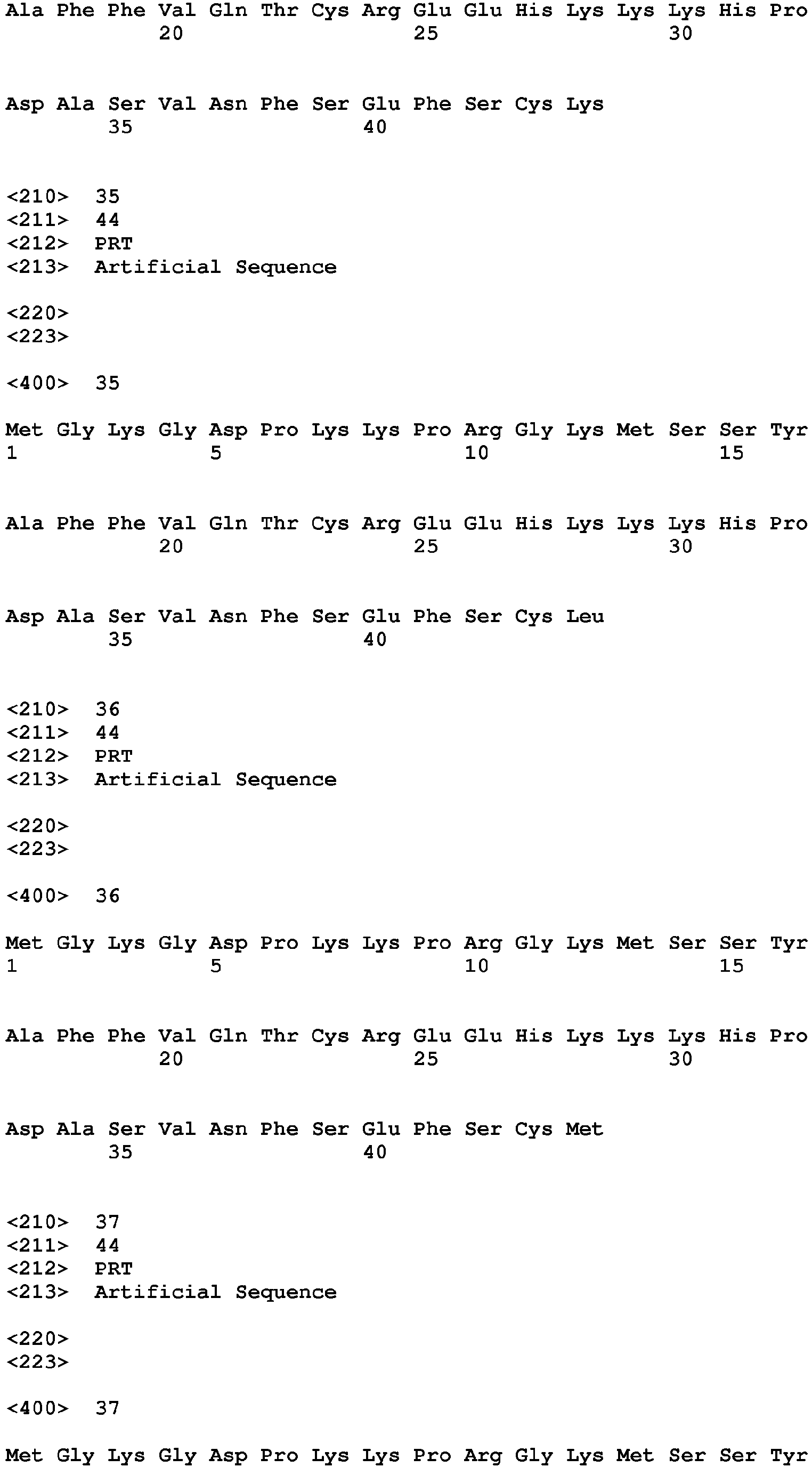


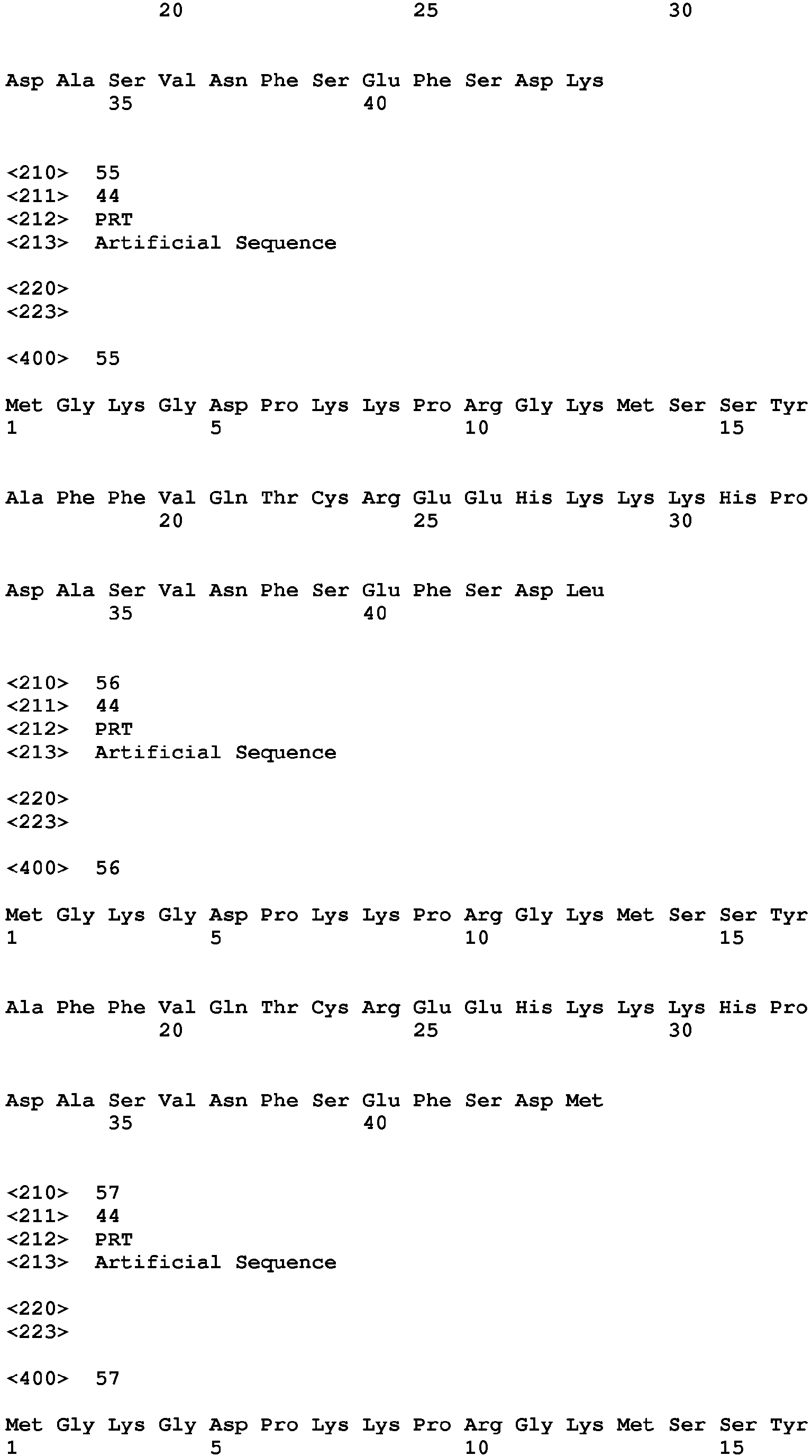

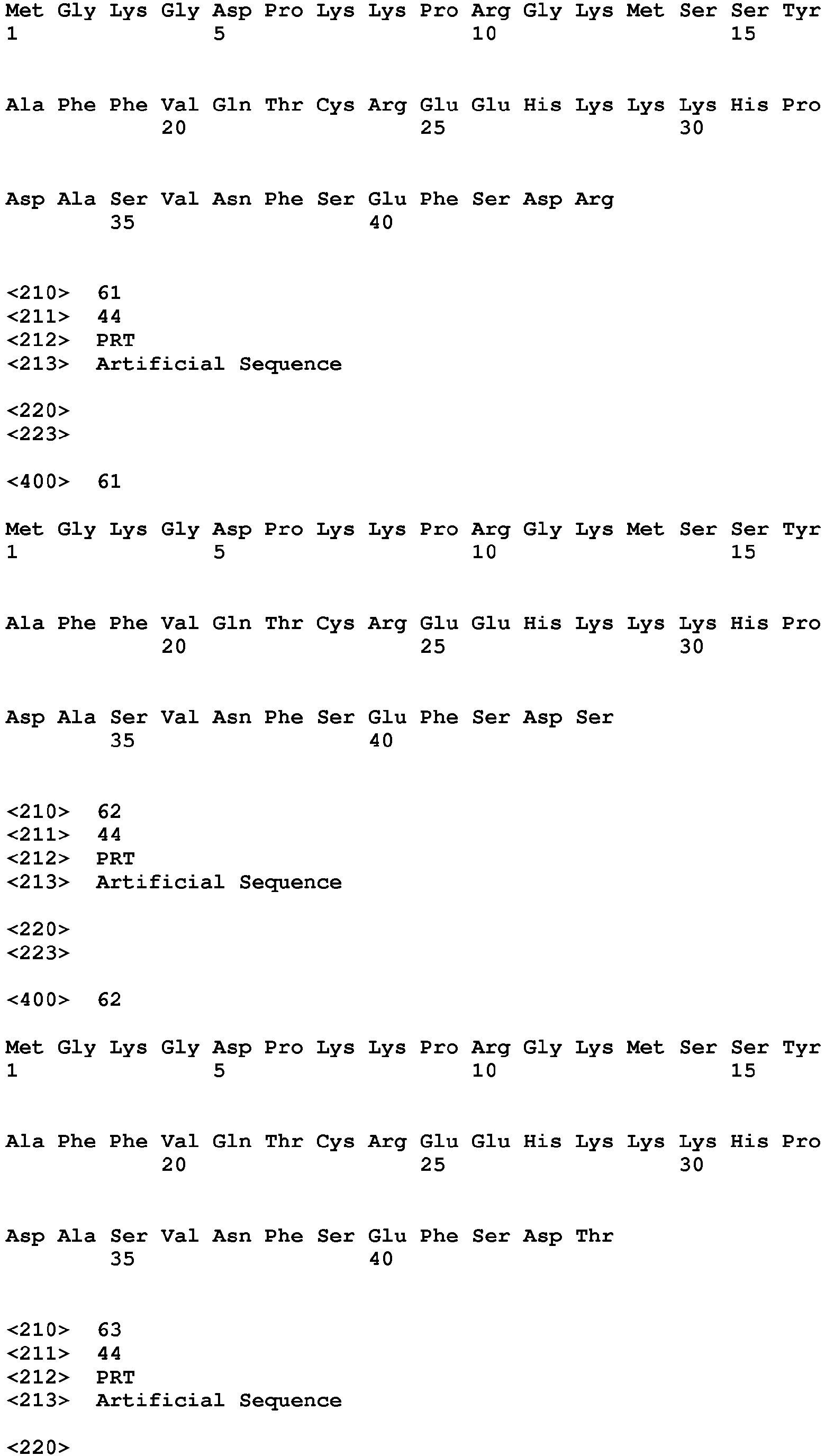


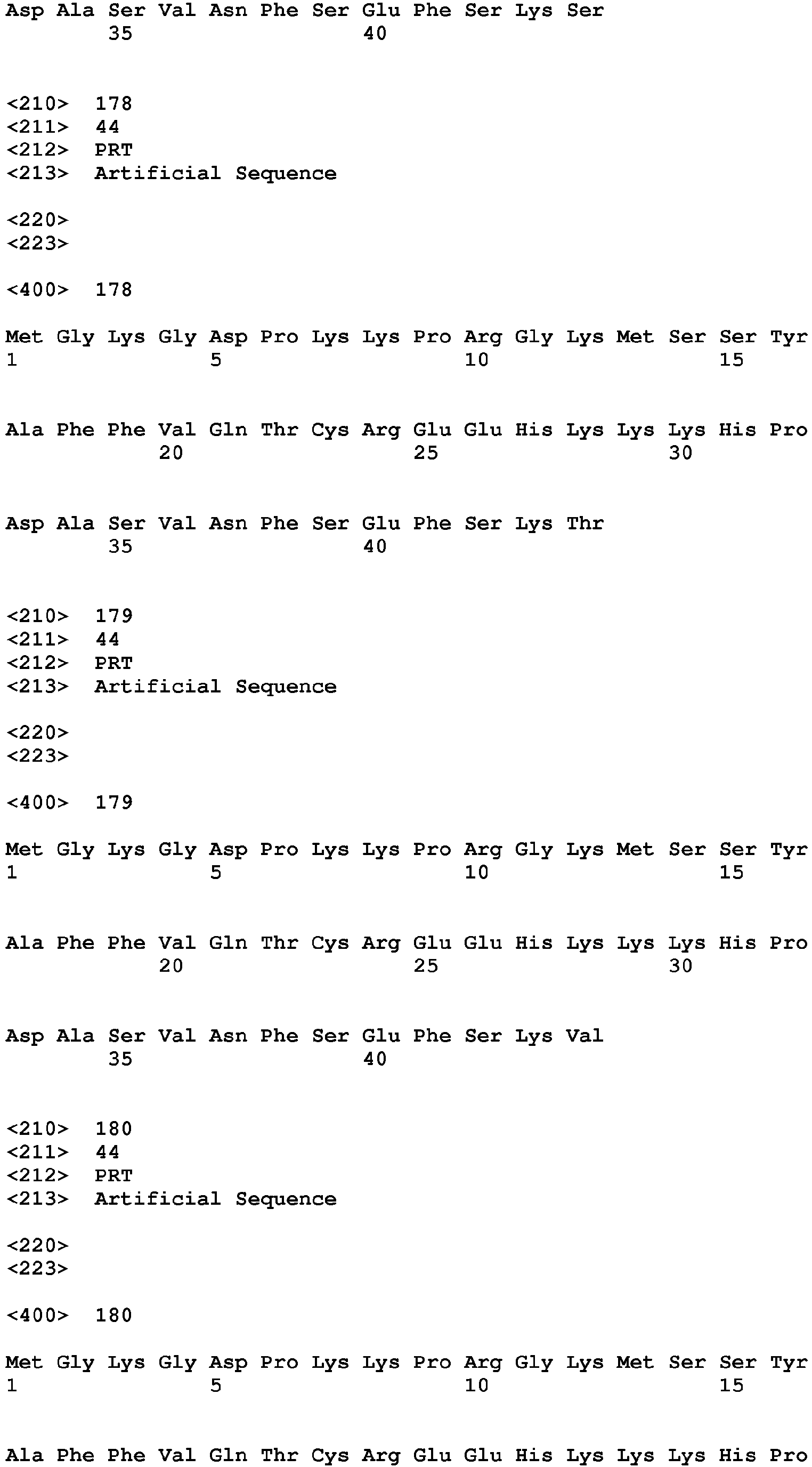


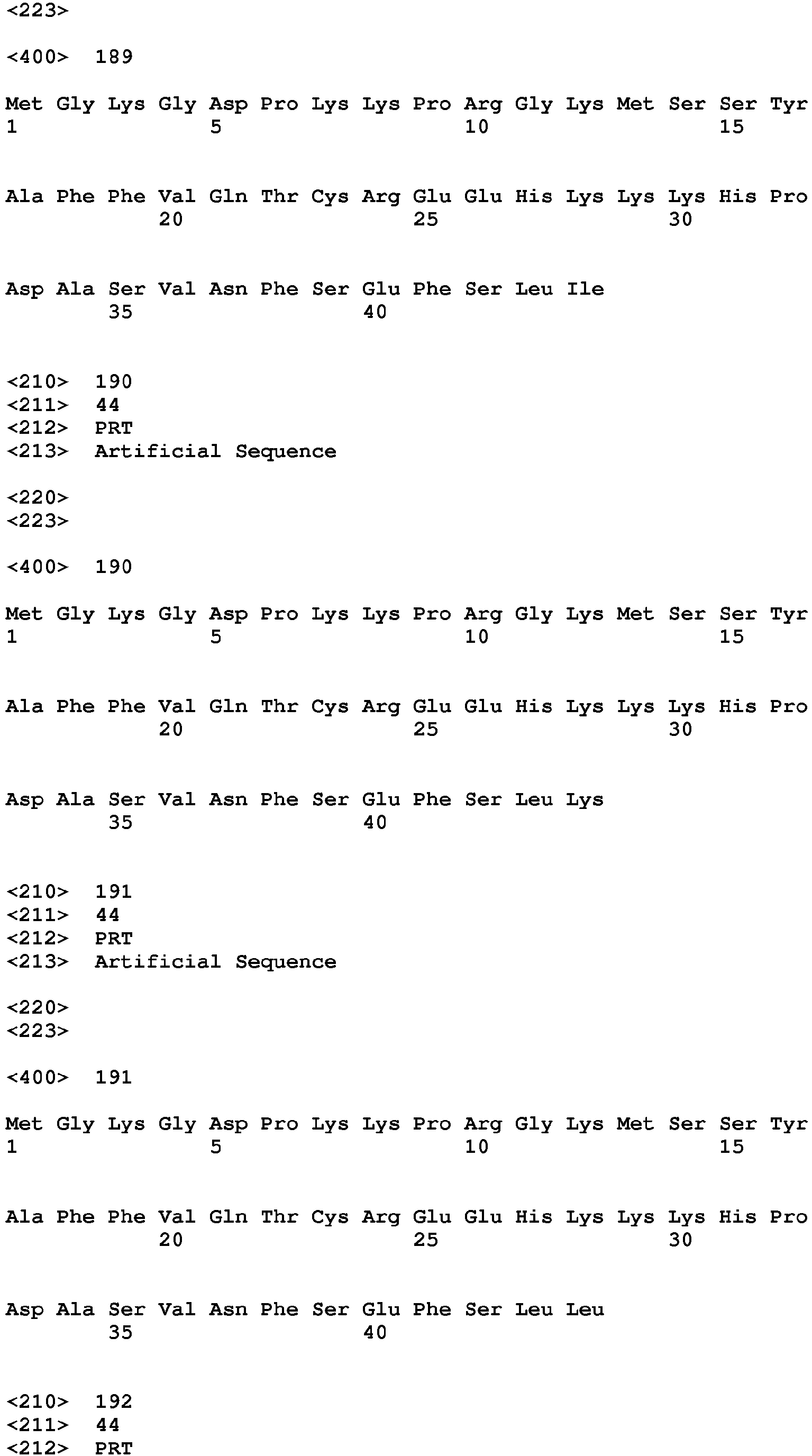


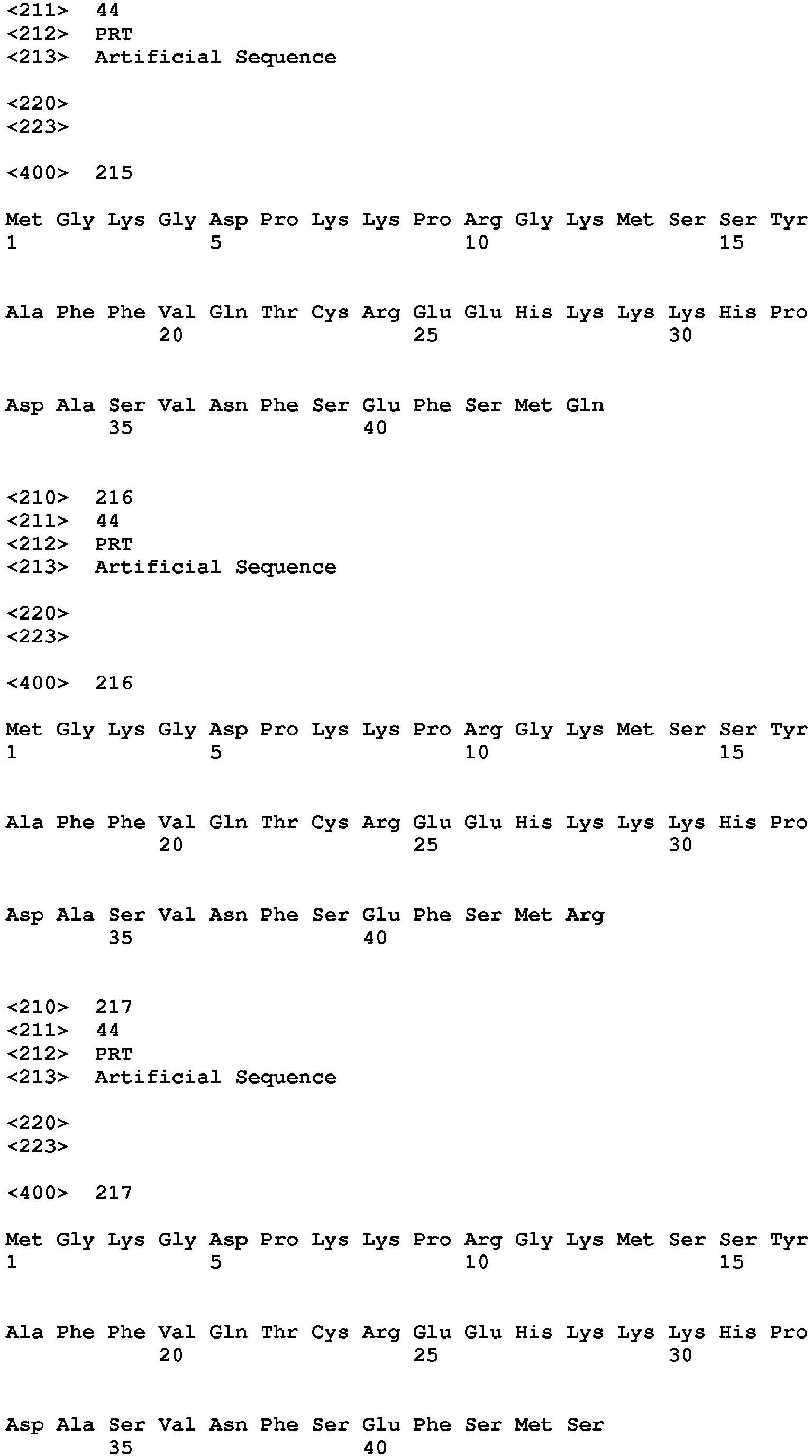


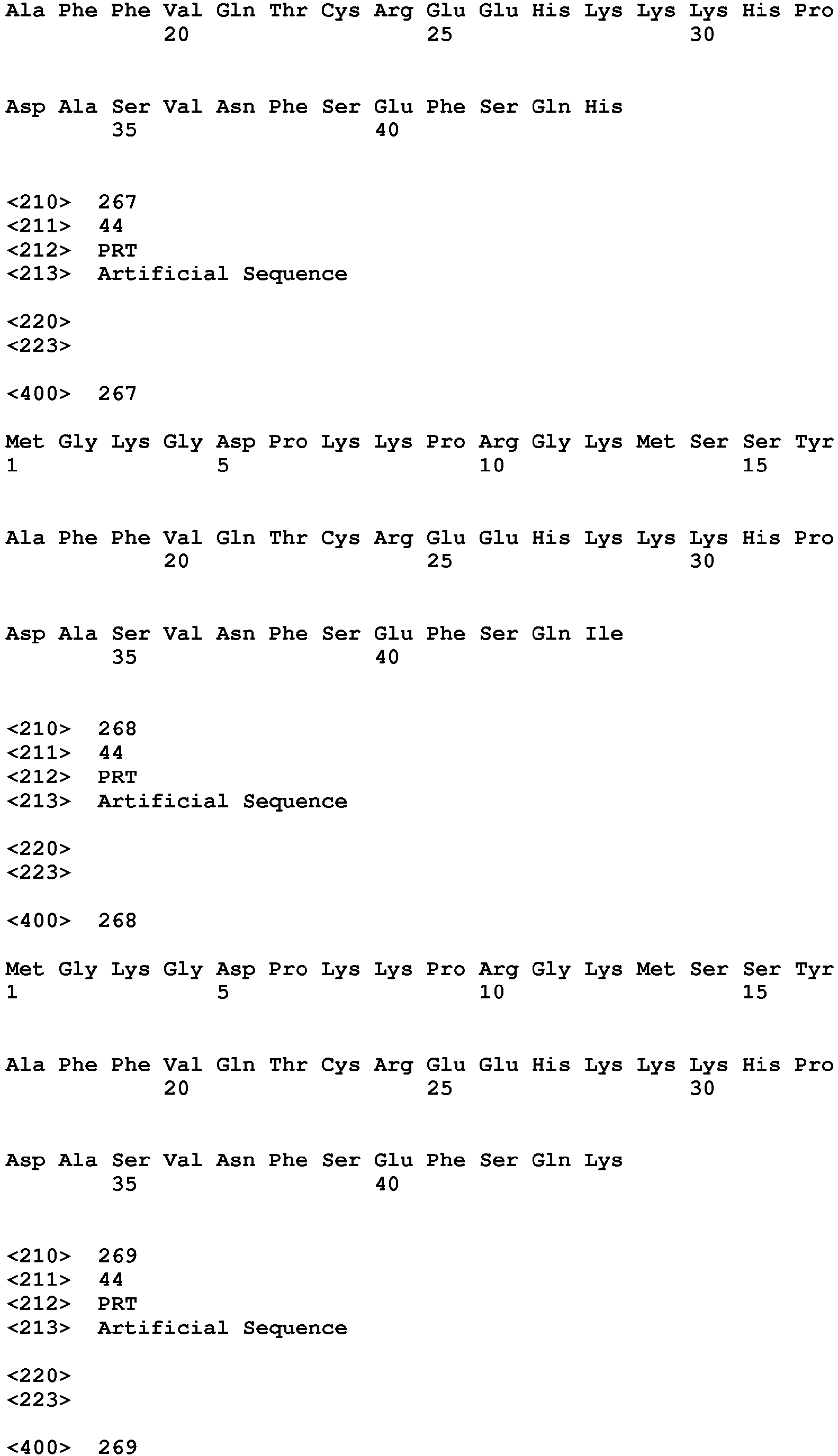
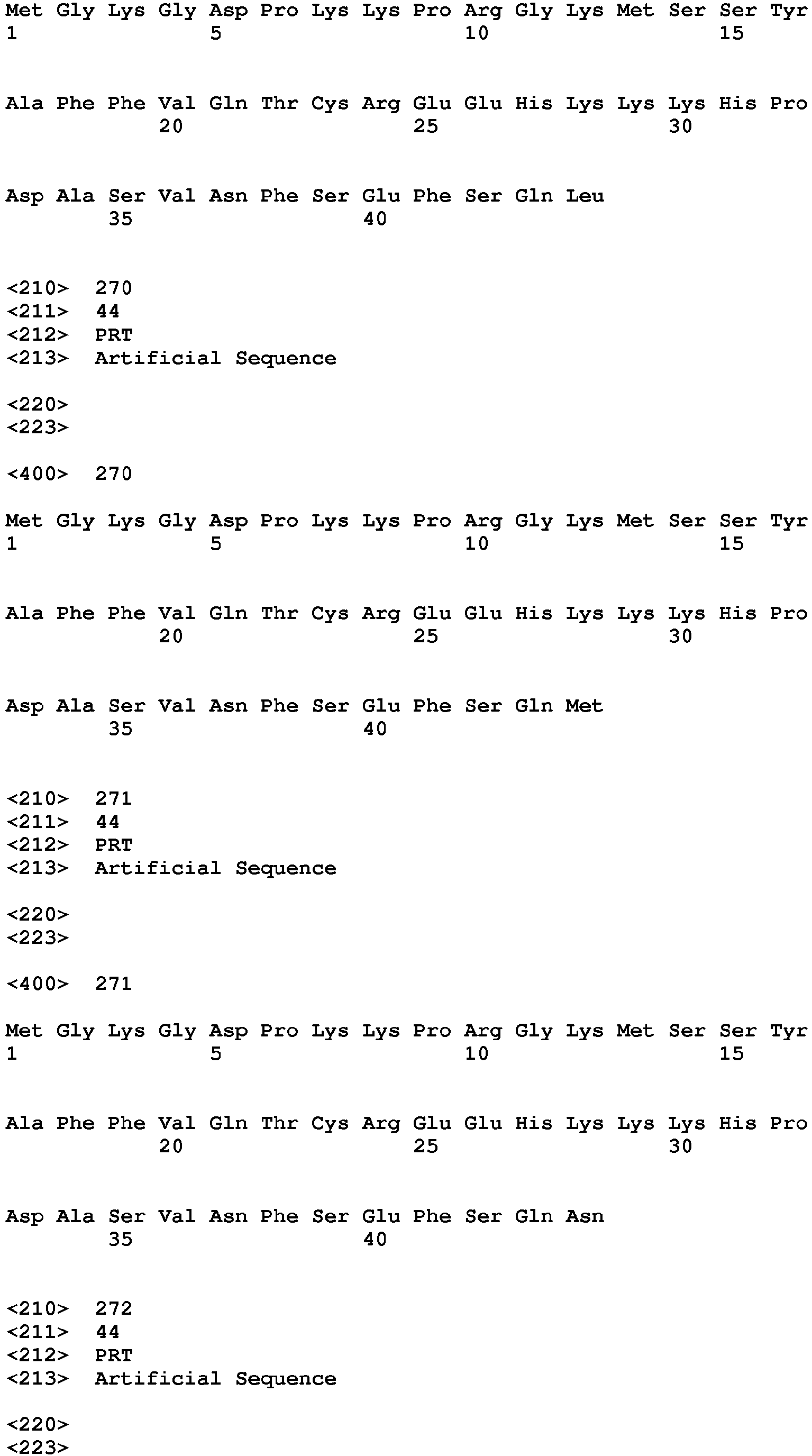


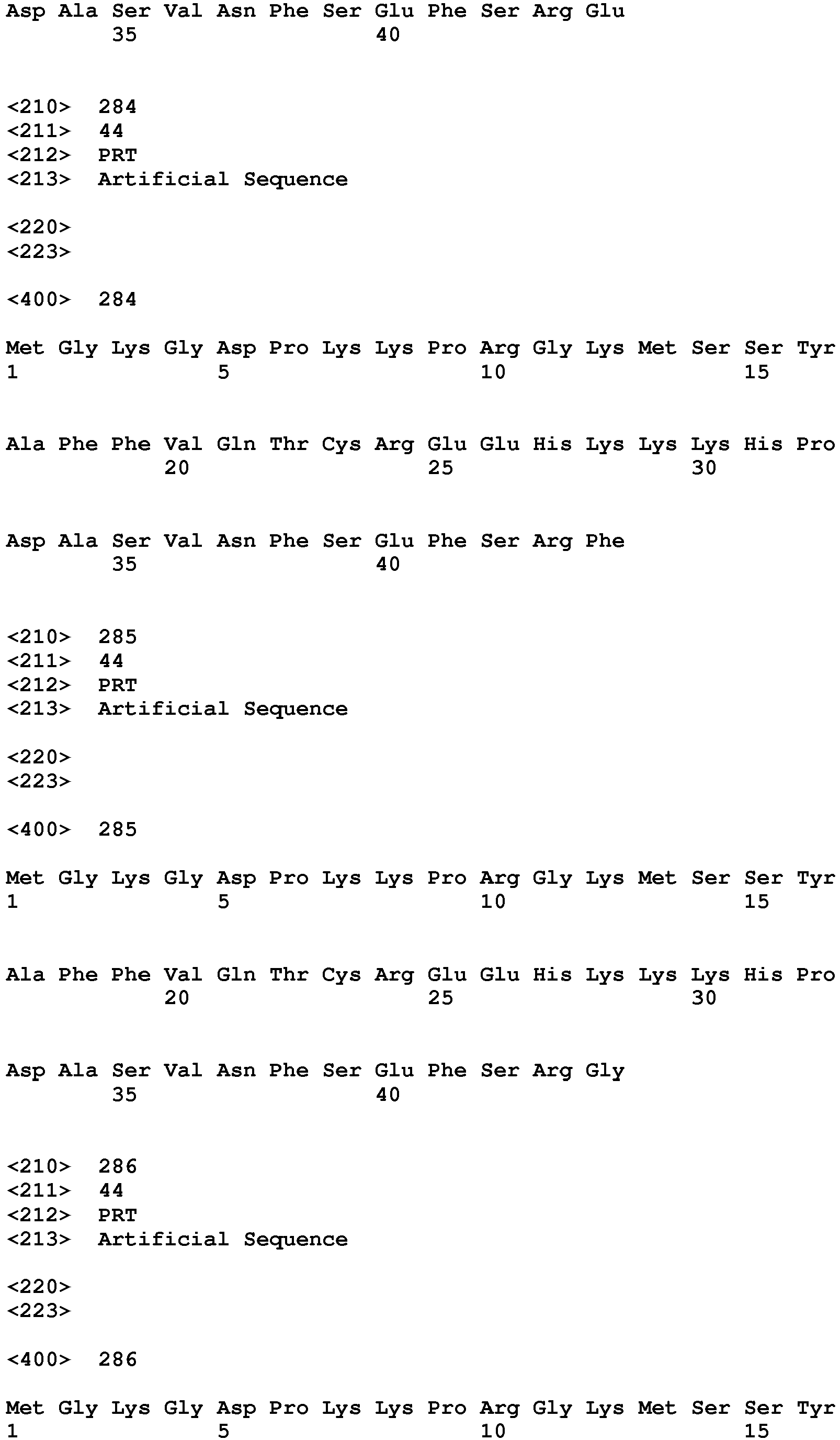

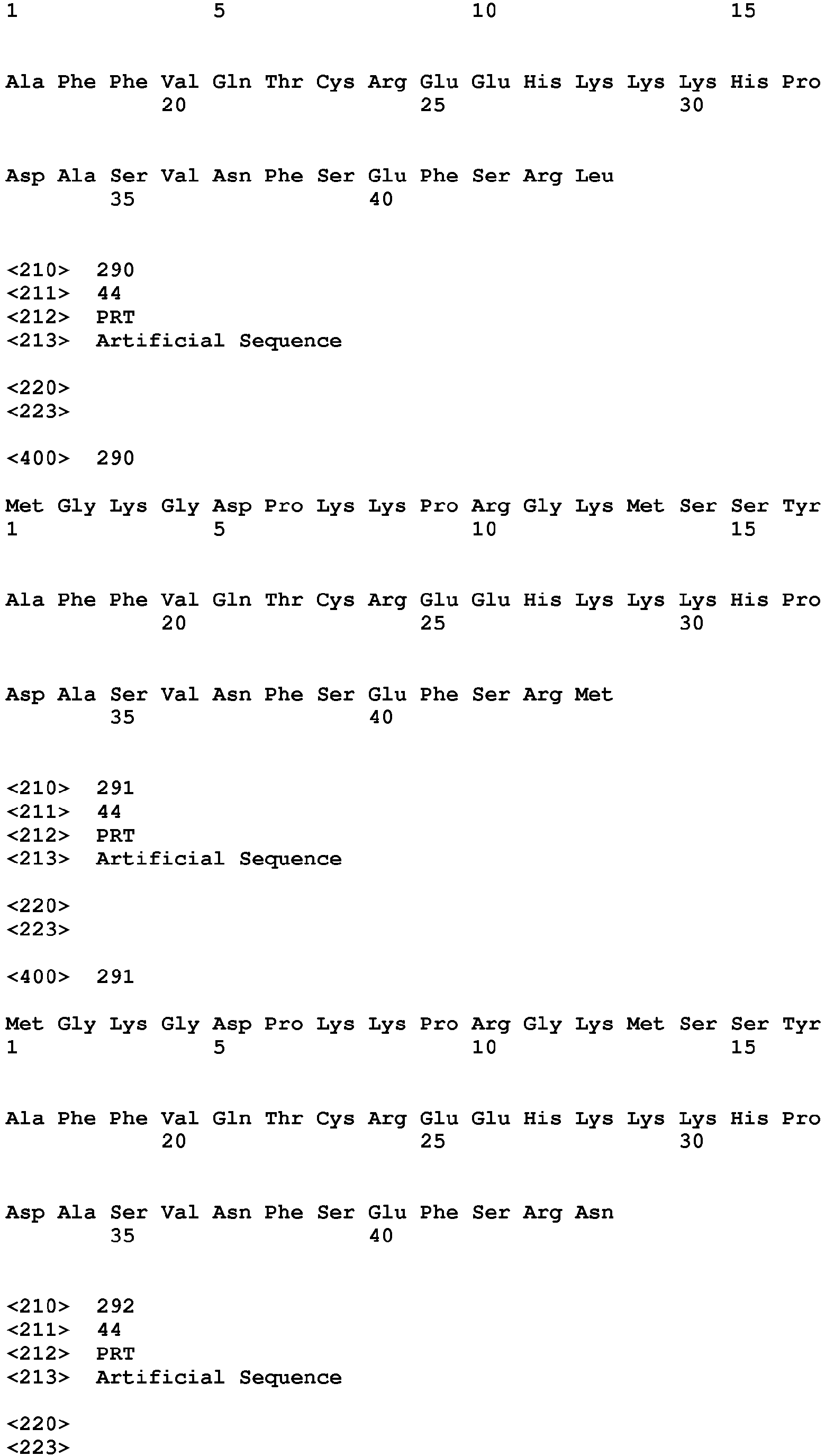


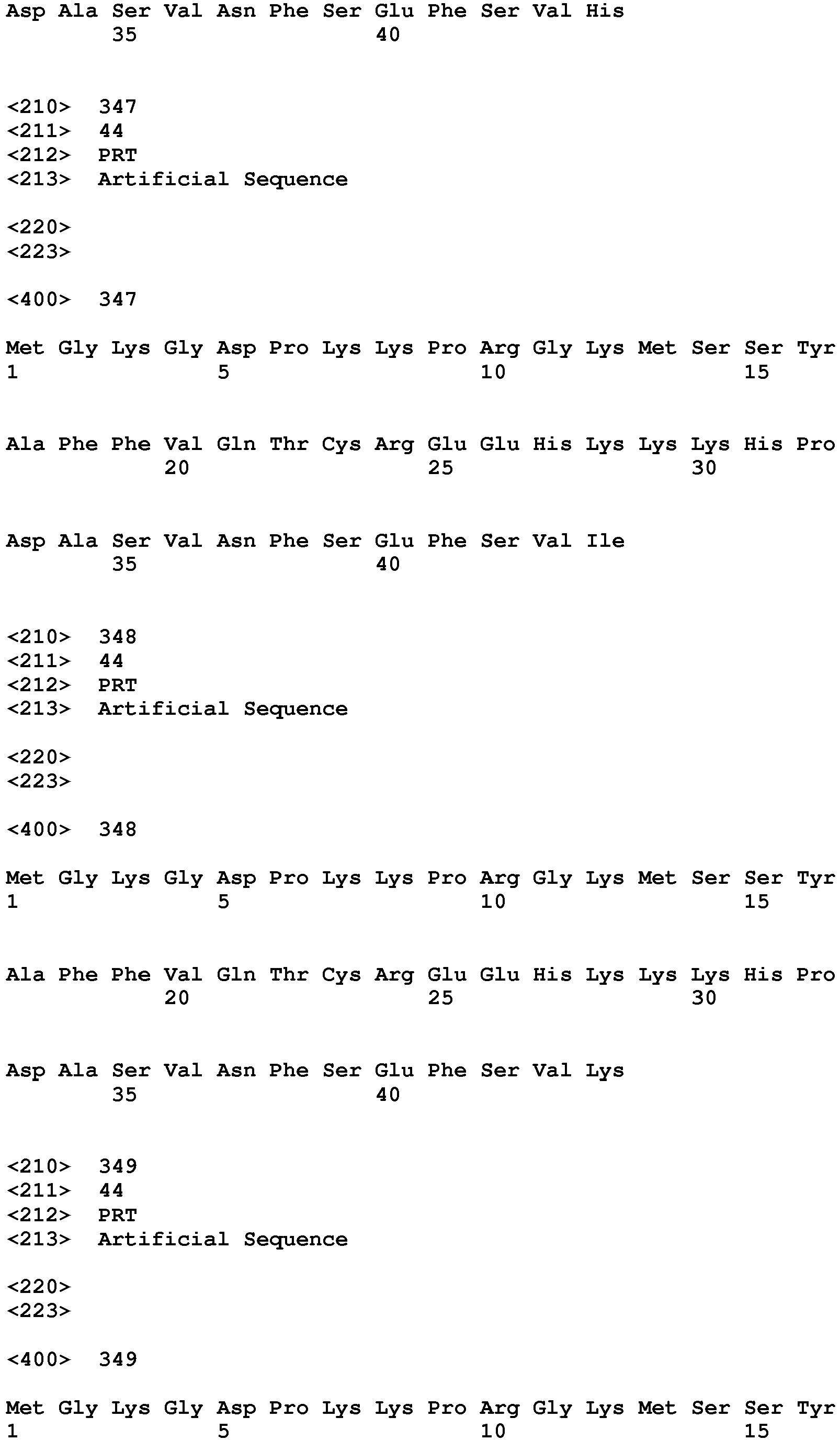


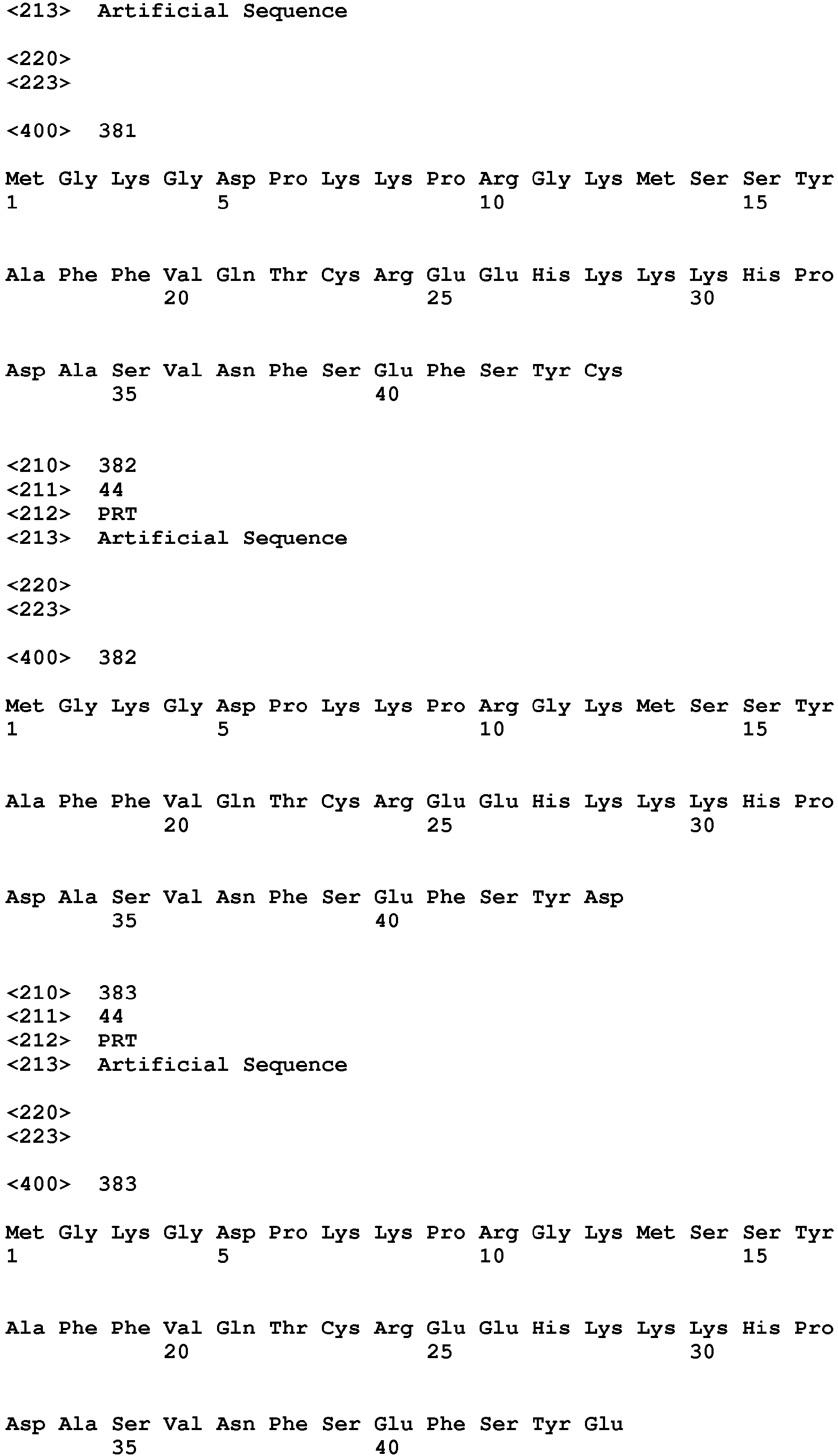


Claims (8)
- A peptide selected from the group consisting of:a peptide having the amino acid sequence shown in any one of SEQ ID NOs: 1 to 399 and 403,a peptide consisting of an amino acid sequence having addition of one or more amino acids to the peptide having the amino acid sequence shown in any one of SEQ ID NOs: 1 to 399 and 403, and having an activity of stimulating migration of cells, anda peptide comprising or consisting of an amino acid sequence having substitution, deletion, or insertion of one or more amino acids at an amino acid of position 1 to position 42 of the peptide having the amino acid sequence shown in any one of SEQ ID NOs: 1 to 399 or at an amino acid of position 1 to position 41 of the peptide having the amino acid sequence shown in SEQ ID NO: 403, and having an activity of stimulating migration of cells,a derivative thereof, a pharmaceutically acceptable salt thereof, or a solvate thereof.
- A peptide selected from the group consisting of:a peptide having the amino acid sequence shown in any one of SEQ ID NOs: 1 to 5, 126, 128, 129, 138, 167, 248, 254, 280, 282, 283, 292 and 403,a peptide consisting of an amino acid sequence having addition of one or more amino acids to the peptide having the amino acid sequence shown in anyone of SEQ ID NOs: 1 to 5, 126, 128, 129, 138, 167, 248, 254, 280, 282, 283, 292 and 403, and having an activity of stimulating migration of cells, anda peptide comprising or consisting of an amino acid sequence having substitution, deletion, or insertion of one or more amino acids at an amino acid of position 1 to position 42 of the peptide having the amino acid sequence shown in any one of SEQ ID NOs: 1 to 5, 126, 128, 129, 138, 167, 248, 254, 280, 282, 283 and 292, or at an amino acid of position 1 to position 41 of the peptide having the amino acid sequence shown in SEQ ID NO: 403, and having an activity of stimulating migration of cells, a derivative thereof, a pharmaceutically acceptable salt thereof, or a solvate thereof.
- A peptide selected from the group consisting of:a peptide having the amino acid sequence shown in any one of SEQ ID NOs: 1 to 5, 167 and 403,a peptide consisting of an amino acid sequence having addition of one or more amino acids to the peptide having the amino acid sequence shown in any one of SEQ ID NOs: 1 to 5, 167 and 403, and having an activity of stimulating migration of cells, anda peptide comprising or consisting of an amino acid sequence having substitution, deletion, or insertion of one or more amino acids at an amino acid of position 1 to position 42 of the peptide having the amino acid sequence shown in any one of SEQ ID NOs: 1 to 5 and 167 or at an amino acid of position 1 to position 41 of the peptide having the amino acid sequence shown in SEQ ID NO: 403, and having an activity of stimulating migration of cells,a derivative thereof, a pharmaceutically acceptable salt thereof, or a solvate thereof.
- A peptide selected from the group consisting of:a peptide having the amino acid sequence shown in any one of SEQ ID NOs: 1 to 5 and 403,a peptide consisting of an amino acid sequence having addition of one or more amino acids to the peptide having the amino acid sequence shown in any one of SEQ ID NOs: 1 to 5 and 403, and having an activity of stimulating migration of cells, anda peptide comprising or consisting of an amino acid sequence having substitution, deletion, or insertion of one or more amino acids at an amino acid of position 1 to position 42 of the peptide having the amino acid sequence shown in any one of SEQ ID NOs: 1 to 5 or at an amino acid of position 1 to position 41 of the peptide having the amino acid sequence shown in SEQ ID NO: 403, and having an activity of stimulating migration of cells,a derivative thereof, a pharmaceutically acceptable salt thereof, or a solvate thereof.
- A composition for use in stimulation of migration of PDGFRα-positive cells, comprising a peptide, a derivative thereof, a pharmaceutically acceptable salt thereof, or a solvate thereof as defined in any one of the claims 1 to 4.
- A composition for use in recruitment of bone marrow mesenchymal stem cells from bone marrow to peripheral blood, comprising a peptide, a derivative thereof, a pharmaceutically acceptable salt thereof, or a solvate thereof as defined in any one of the claims 1 to 4.
- A composition for use in regeneration of tissues, comprising a peptide, a derivative thereof, a pharmaceutically acceptable salt thereof, or a solvate thereof as defined in any one of the claims 1 to 4.
- A composition for use in stimulation of migration of bone marrow-derived stromal cells, comprising a peptide, a derivative thereof, a pharmaceutically acceptable salt thereof, or a solvate thereof as defined in any one of the claims 1 to 4.
Applications Claiming Priority (2)
| Application Number | Priority Date | Filing Date | Title |
|---|---|---|---|
| JP2017085793 | 2017-04-25 | ||
| PCT/JP2018/016654 WO2018199107A1 (en) | 2017-04-25 | 2018-04-24 | Peptide for inducing regeneration of tissue, and use thereof |
Publications (2)
| Publication Number | Publication Date |
|---|---|
| EP3617222A1 true EP3617222A1 (en) | 2020-03-04 |
| EP3617222A4 EP3617222A4 (en) | 2021-01-20 |
Family
ID=63918419
Family Applications (1)
| Application Number | Title | Priority Date | Filing Date |
|---|---|---|---|
| EP18791294.4A Withdrawn EP3617222A4 (en) | 2017-04-25 | 2018-04-24 | PEPTIDES FOR THE INDUCTION OF TISSUE REGENERATION AND USE THEREOF |
Country Status (11)
| Country | Link |
|---|---|
| US (1) | US20210163552A1 (en) |
| EP (1) | EP3617222A4 (en) |
| JP (1) | JP7113007B2 (en) |
| KR (1) | KR102681936B1 (en) |
| CN (1) | CN110612307B (en) |
| AU (1) | AU2018257071B2 (en) |
| BR (1) | BR112019021230A2 (en) |
| CA (1) | CA3059544A1 (en) |
| MX (1) | MX2019012738A (en) |
| SG (1) | SG11201909851SA (en) |
| WO (1) | WO2018199107A1 (en) |
Families Citing this family (5)
| Publication number | Priority date | Publication date | Assignee | Title |
|---|---|---|---|---|
| CN118460462A (en) | 2017-12-01 | 2024-08-09 | 斯特姆里姆有限公司 | Exo-embryonic interlayer mesenchymal stem cells and method for producing same |
| WO2019156137A1 (en) | 2018-02-08 | 2019-08-15 | 株式会社ステムリム | Therapeutic agent for psoriasis |
| US12304933B2 (en) | 2018-10-05 | 2025-05-20 | StemRIM Inc. | Disease treatment drug based on mesenchymal-stem-cell mobilization |
| JP7448126B2 (en) * | 2018-10-25 | 2024-03-12 | 国立大学法人大阪大学 | Treatment for cartilage diseases |
| IL296982B2 (en) * | 2020-04-03 | 2026-04-01 | Stemrim Inc | Peptide having mesenchymal stem cell mobilizing activity |
Family Cites Families (12)
| Publication number | Priority date | Publication date | Assignee | Title |
|---|---|---|---|---|
| KR20050054907A (en) | 2002-07-03 | 2005-06-10 | 폰다지오네 센트로 산 라파엘 델 몬테 테이보 | Use of hmgb1 in the treatment of tissue damage and/or to promote tissue repair |
| AU2005279308B2 (en) | 2004-09-03 | 2012-05-03 | Creabilis Therapeutics S.R.L. | Protease resistant human and non-human HMGB1 Box-A mutants and their therapeutic/diagnostic use |
| WO2007015546A1 (en) | 2005-08-04 | 2007-02-08 | Genomix Co., Ltd | Mesenchymal stem cell inducer, tissue regeneration promoter and method of preparing mesenchymal stem cell |
| WO2007130725A2 (en) * | 2006-02-06 | 2007-11-15 | University Of Pittsburgh Of The Commonwealth System Of Higher Education | Use of hmgb1 for protection against ischemia reperfusion injury |
| EP2055308B1 (en) | 2006-10-30 | 2017-05-10 | Genomix Co., Ltd. | Pharmaceutical for promoting functional regeneration of damaged tissue |
| JP5660889B2 (en) | 2008-04-30 | 2015-01-28 | 株式会社ジェノミックス | Bone marrow-derived pluripotent stem cell mobilization to peripheral circulation |
| KR20110017371A (en) | 2008-04-30 | 2011-02-21 | 가부시키가이샤 제노믹스 | High efficiency sampling of functional cells in vivo |
| JP5814549B2 (en) | 2008-04-30 | 2015-11-17 | 株式会社ジェノミックス | Drugs for promoting functional regeneration of damaged tissues |
| KR20120135190A (en) * | 2009-10-28 | 2012-12-12 | 고꾸리쯔 다이가꾸 호우징 오사까 다이가꾸 | Tussue-regeneration promoter using recruitment of bone marrow mesenchymal stem cells and/or pluripotent stem cells in blood |
| KR102113809B1 (en) | 2011-04-26 | 2020-05-21 | 가부시키가이샤 스템림 | Peptide for inducing regeneration of tissue and use thereof |
| ES2661500T3 (en) | 2012-07-26 | 2018-04-02 | Ospedale San Raffaele S.R.L. | HMGB1 variants and their uses |
| CA2889275C (en) * | 2012-10-25 | 2021-06-15 | Katsuto Tamai | Novel method for treating cardiac infarction using hmgb1 fragment |
-
2018
- 2018-04-24 KR KR1020197033427A patent/KR102681936B1/en active Active
- 2018-04-24 BR BR112019021230-2A patent/BR112019021230A2/en unknown
- 2018-04-24 SG SG11201909851S patent/SG11201909851SA/en unknown
- 2018-04-24 US US16/608,139 patent/US20210163552A1/en not_active Abandoned
- 2018-04-24 MX MX2019012738A patent/MX2019012738A/en unknown
- 2018-04-24 WO PCT/JP2018/016654 patent/WO2018199107A1/en not_active Ceased
- 2018-04-24 CA CA3059544A patent/CA3059544A1/en active Pending
- 2018-04-24 EP EP18791294.4A patent/EP3617222A4/en not_active Withdrawn
- 2018-04-24 JP JP2019514543A patent/JP7113007B2/en active Active
- 2018-04-24 AU AU2018257071A patent/AU2018257071B2/en not_active Ceased
- 2018-04-24 CN CN201880027706.3A patent/CN110612307B/en not_active Expired - Fee Related
Also Published As
| Publication number | Publication date |
|---|---|
| AU2018257071B2 (en) | 2021-11-11 |
| KR102681936B1 (en) | 2024-07-04 |
| WO2018199107A1 (en) | 2018-11-01 |
| KR20190141179A (en) | 2019-12-23 |
| RU2019137603A3 (en) | 2021-07-05 |
| CN110612307B (en) | 2023-02-14 |
| MX2019012738A (en) | 2020-02-07 |
| BR112019021230A2 (en) | 2020-06-02 |
| RU2019137603A (en) | 2021-05-25 |
| AU2018257071A1 (en) | 2019-10-31 |
| US20210163552A1 (en) | 2021-06-03 |
| CN110612307A (en) | 2019-12-24 |
| CA3059544A1 (en) | 2018-11-01 |
| JP7113007B2 (en) | 2022-08-04 |
| EP3617222A4 (en) | 2021-01-20 |
| JPWO2018199107A1 (en) | 2020-02-27 |
| SG11201909851SA (en) | 2019-11-28 |
Similar Documents
| Publication | Publication Date | Title |
|---|---|---|
| US20230212241A1 (en) | Peptide for Inducing Regeneration of Tissue and Use Thereof | |
| AU2018257071B2 (en) | Peptide for inducing regeneration of tissue, and use thereof | |
| EP2913059B1 (en) | Novel method for treating spinal cord injury using hmgb1 fragment | |
| JP7452798B2 (en) | Disease therapeutics based on mesenchymal stem cell mobilization | |
| RU2773055C2 (en) | Peptide for inducing tissue regeneration and its use | |
| HK1212888B (en) | Novel method for treating spinal cord injury using hmgb1 fragment | |
| HK1213201B (en) | Novel method for treating spinal cord injury using hmgb1 fragment | |
| HK1195101B (en) | Peptide for inducing regeneration of tissue and use thereof | |
| HK1195101A (en) | Peptide for inducing regeneration of tissue and use thereof |
Legal Events
| Date | Code | Title | Description |
|---|---|---|---|
| STAA | Information on the status of an ep patent application or granted ep patent |
Free format text: STATUS: THE INTERNATIONAL PUBLICATION HAS BEEN MADE |
|
| PUAI | Public reference made under article 153(3) epc to a published international application that has entered the european phase |
Free format text: ORIGINAL CODE: 0009012 |
|
| STAA | Information on the status of an ep patent application or granted ep patent |
Free format text: STATUS: REQUEST FOR EXAMINATION WAS MADE |
|
| 17P | Request for examination filed |
Effective date: 20191125 |
|
| AK | Designated contracting states |
Kind code of ref document: A1 Designated state(s): AL AT BE BG CH CY CZ DE DK EE ES FI FR GB GR HR HU IE IS IT LI LT LU LV MC MK MT NL NO PL PT RO RS SE SI SK SM TR |
|
| AX | Request for extension of the european patent |
Extension state: BA ME |
|
| DAV | Request for validation of the european patent (deleted) | ||
| DAX | Request for extension of the european patent (deleted) | ||
| A4 | Supplementary search report drawn up and despatched |
Effective date: 20201223 |
|
| RIC1 | Information provided on ipc code assigned before grant |
Ipc: A61K 38/16 20060101ALI20201217BHEP Ipc: C07K 14/00 20060101AFI20201217BHEP Ipc: A61P 43/00 20060101ALI20201217BHEP Ipc: C07K 14/47 20060101ALI20201217BHEP |
|
| STAA | Information on the status of an ep patent application or granted ep patent |
Free format text: STATUS: THE APPLICATION HAS BEEN WITHDRAWN |
|
| 18W | Application withdrawn |
Effective date: 20250113 |