EP3617187A1 - Methionine production method and production equipment - Google Patents
Methionine production method and production equipment Download PDFInfo
- Publication number
- EP3617187A1 EP3617187A1 EP18791984.0A EP18791984A EP3617187A1 EP 3617187 A1 EP3617187 A1 EP 3617187A1 EP 18791984 A EP18791984 A EP 18791984A EP 3617187 A1 EP3617187 A1 EP 3617187A1
- Authority
- EP
- European Patent Office
- Prior art keywords
- methionine
- solid
- liquid separation
- carbon dioxide
- slurry
- Prior art date
- Legal status (The legal status is an assumption and is not a legal conclusion. Google has not performed a legal analysis and makes no representation as to the accuracy of the status listed.)
- Granted
Links
Images
Classifications
-
- C—CHEMISTRY; METALLURGY
- C07—ORGANIC CHEMISTRY
- C07C—ACYCLIC OR CARBOCYCLIC COMPOUNDS
- C07C319/00—Preparation of thiols, sulfides, hydropolysulfides or polysulfides
- C07C319/14—Preparation of thiols, sulfides, hydropolysulfides or polysulfides of sulfides
- C07C319/20—Preparation of thiols, sulfides, hydropolysulfides or polysulfides of sulfides by reactions not involving the formation of sulfide groups
-
- B—PERFORMING OPERATIONS; TRANSPORTING
- B01—PHYSICAL OR CHEMICAL PROCESSES OR APPARATUS IN GENERAL
- B01J—CHEMICAL OR PHYSICAL PROCESSES, e.g. CATALYSIS OR COLLOID CHEMISTRY; THEIR RELEVANT APPARATUS
- B01J19/00—Chemical, physical or physico-chemical processes in general; Their relevant apparatus
- B01J19/0046—Sequential or parallel reactions, e.g. for the synthesis of polypeptides or polynucleotides; Apparatus and devices for combinatorial chemistry or for making molecular arrays
-
- C—CHEMISTRY; METALLURGY
- C07—ORGANIC CHEMISTRY
- C07C—ACYCLIC OR CARBOCYCLIC COMPOUNDS
- C07C319/00—Preparation of thiols, sulfides, hydropolysulfides or polysulfides
- C07C319/26—Separation; Purification; Stabilisation; Use of additives
- C07C319/28—Separation; Purification
-
- B—PERFORMING OPERATIONS; TRANSPORTING
- B01—PHYSICAL OR CHEMICAL PROCESSES OR APPARATUS IN GENERAL
- B01J—CHEMICAL OR PHYSICAL PROCESSES, e.g. CATALYSIS OR COLLOID CHEMISTRY; THEIR RELEVANT APPARATUS
- B01J2219/00—Chemical, physical or physico-chemical processes in general; Their relevant apparatus
- B01J2219/00002—Chemical plants
- B01J2219/00027—Process aspects
- B01J2219/00033—Continuous processes
-
- C—CHEMISTRY; METALLURGY
- C07—ORGANIC CHEMISTRY
- C07C—ACYCLIC OR CARBOCYCLIC COMPOUNDS
- C07C323/00—Thiols, sulfides, hydropolysulfides or polysulfides substituted by halogen, oxygen or nitrogen atoms, or by sulfur atoms not being part of thio groups
- C07C323/50—Thiols, sulfides, hydropolysulfides or polysulfides substituted by halogen, oxygen or nitrogen atoms, or by sulfur atoms not being part of thio groups containing thio groups and carboxyl groups bound to the same carbon skeleton
- C07C323/51—Thiols, sulfides, hydropolysulfides or polysulfides substituted by halogen, oxygen or nitrogen atoms, or by sulfur atoms not being part of thio groups containing thio groups and carboxyl groups bound to the same carbon skeleton having the sulfur atoms of the thio groups bound to acyclic carbon atoms of the carbon skeleton
- C07C323/57—Thiols, sulfides, hydropolysulfides or polysulfides substituted by halogen, oxygen or nitrogen atoms, or by sulfur atoms not being part of thio groups containing thio groups and carboxyl groups bound to the same carbon skeleton having the sulfur atoms of the thio groups bound to acyclic carbon atoms of the carbon skeleton the carbon skeleton being further substituted by nitrogen atoms, not being part of nitro or nitroso groups
- C07C323/58—Thiols, sulfides, hydropolysulfides or polysulfides substituted by halogen, oxygen or nitrogen atoms, or by sulfur atoms not being part of thio groups containing thio groups and carboxyl groups bound to the same carbon skeleton having the sulfur atoms of the thio groups bound to acyclic carbon atoms of the carbon skeleton the carbon skeleton being further substituted by nitrogen atoms, not being part of nitro or nitroso groups with amino groups bound to the carbon skeleton
Definitions
- the present invention is related to a method for producing methionine by hydrolysis of 5-[2-(methylthio)ethyl]imidazoline-2,4-dione.
- Methionine is one kind of an essential amino acid that cannot be synthesized in a body in an animal, and is widely used as a feed additive for animal, and also is industrially produced by a chemical plant.
- Patent Document 1 JP 2010-111641 A
- an object of the present invention is to provide a method for producing methionine that is capable of recovering carbon dioxide from mother liquor separated by a solid-liquid separation after the crystallization step and recycling it.
- the present inventors have intensively studied, and as a result, have found that carbon dioxide can be recovered from the separated mother liquor by conducting a solid-liquid separation after the crystallization step using a pressurized filter.
- the present invention encompasses the following embodiments.
- the carbon dioxide introduced in the crystallization step is suppressed from being released from the mother liquor by conducting solid-liquid separation after the crystallization step with a pressurized filter to recover carbon dioxide. Recycling the recovered carbon dioxide can reduce the cost at producing methionine and also reduce an environmental burden.
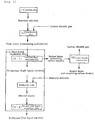
- Figure 1 indicates a flowchart showing an example of the method for producing methionine which concerns on an embodiment of the method of this application.
- 5-[2-(methylthio)ethyl]imidazolidine-2,4-dione is used as a raw material, and is hydrolyzed in the presence of an alkali compound to obtain a reaction solution containing methionine as an alkali salt (hereinafter sometimes referred to as "Present reaction solution") [(1) reaction step].
- Present reaction solution a reaction solution containing methionine as an alkali salt
- Examples of a method for preparing 5-[2-(methylthio)ethyl]imidazolidine-2,4-dione as a raw material include a method in which 2-hydroxy-4-methylthiobutanenitrile is reacted with ammonia and carbon dioxide or with ammonium carbonate.
- alkali compound examples include potassium hydroxide, sodium hydroxide, potassium carbonate, potassium hydrogen carbonate and the like, and two or more of them can be used if necessary.
- the amount of the alkali compound used is usually 2 to 10 moles, preferably 3 to 6 moles as potassium or sodium per mole of 5-[2-(methylthio)ethyl]imidazolidine-2,4-dione.
- the amount of water used is usually 2 to 20 parts by weight per 1 part by weight of 5-[2-(methylthio)ethyl]imidazolidine-2,4-dione.
- the hydrolysis reaction conducted in the reaction step is a stirring type or non-stirring type, and is conducted in a continuous type or batch type reaction tank.
- This hydrolysis reaction is preferably carried out by heating to about 150 to 200 °C under a pressure of about 0.5 to 1 MPa as a gauge pressure.
- the reaction period is usually 10 minutes to 24 hours.
- a crystallization step is conducted.
- the present reaction solution is allowed to flow into the crystallization apparatus, and carbon dioxide is introduced into the present reaction solution to precipitate methionine, thereby to obtain a first slurry containing the methionine [(2) crystallization step].
- Carbon dioxide is absorbed into the reaction solution by introducing carbon dioxide, and thereby an alkali salt of methionine is precipitated as a free methionine.
- the introduction of carbon dioxide in the crystallization step is preferably carried out under a pressure of 0.1 to 1.0 MPa, preferably 0.2 to 0.5 MPa as a gauge pressure.
- the crystallization temperature is usually 0 to 50°C, preferably 10 to 30°C.
- the crystallization time may be indicated by a time until the present reaction solution is saturated with carbon dioxide and methionine is sufficiently precipitated, and is usually 10 minutes to 24 hours.
- the first slurry containing the precipitated methionine is subjected to a solid-liquid separation method.
- the solid-liquid separation step an operation is conducted in which the first slurry obtained in the crystallization step is allowed to flow into a pressurized filter, and solid methionine (for example, cake or powder thereof) and mother liquor are obtained from the first slurry.
- solid methionine for example, cake or powder thereof
- mother liquor carbon dioxide introduced under pressurized pressure in the above crystallization step is dissolved.
- solid-liquid separation step solid-liquid separation is conducted using a pressurized filter so that the carbon dioxide is not released as a gas.
- a pressurized filter a filter capable of filtering the slurry in a sealed state is used.
- pressurized filter examples include a drum pressurized filter, a leaf pressurized filter, a candle pressurized press, a belt press type filter press, a screw press type filter press, and a rotary press type filter press.
- pressurized filter may be either a continuous type or a batch type, but is preferably a continuous type pressurized filter because productivity is improved.
- the pressure in the pressurized filter is 0.1 to 1.0 MPa as a gauge pressure, preferably the same as or higher than the pressure used in the crystallization step.
- the filtration temperature is usually 0 to 50°C., preferably 10 to 30°C.
- the mother liquor obtained in the solid-liquid separation step is transferred to a recovery tank of a carbon dioxide recovery apparatus. Since this recovery tank is kept at a pressure lower than the pressure in the pressurized filter, preferably at atmospheric pressure, the carbon dioxide dissolved in the mother liquor is released as a gas. Since the inside of this recovery tank is sealed, the carbon dioxide that has become a gas is recovered [(4) carbon dioxide recovery step]. The recovered carbon dioxide is recycled to any step in the production of methionine.
- the recovery tank of the carbon dioxide recovery apparatus is a so-called flash tank, and the structure thereof is not particularly limited as long as it can separate gas and liquid.
- the mother liquor is introduced from the side of the tank, and the gas and liquid are separated inside the flash tank.
- the flow rate of the mother liquor to the flash tank is not limited, for example, the size and number of the flash tanks are appropriately determined depending on the solid content concentration in the slurry and the flow rate of the mother liquor.
- Fig. 1 is a flowchart showing an example of a method for producing methionine according to an embodiment of the production method of the present application.
- the solid-liquid separation step in the present invention may include a first solid-liquid separation step and a second solid-liquid separation step.
- the first solid-liquid separation step is a step of allowing the first slurry obtained in the crystallization step to flow into a pressurized filter and obtaining solid methionine and mother liquor from the first slurry
- the second solid-liquid separation step is a step of reducing the liquid content of solid methionine.
- the purpose is to conduct a solid-liquid separation of the first slurry such that carbon dioxide gas is not released from the mother liquor
- the purpose in the second solid-liquid separation step, is to reduce the liquid content of solid methionine, and each step can be conducted efficiently by using a solid-liquid separator according to the purpose.
- the solid-liquid separation in the second solid-liquid separation step is preferably conducted by a centrifugation.
- the solid-liquid separation is conducted such that the liquid content of the solid methionine is 1 to 25% by weight.
- downstream side means the side close to the step of obtaining the final product in the method for producing methionine of the present invention.
- the present invention may encompass a reslurry step in which the methionine obtained in the first solid-liquid separation step and the reslurry solution are mixed to form a second slurry.
- the term of "Reslurry” generally refers to an operation in which a solid obtained by a solid-liquid separation of a slurry is mixed with a liquid to form a slurry again, and a liquid in which the solid is difficult to dissolve is used.
- reslurry liquid as used herein means a liquid used for reslurry.
- a liquid in which methionine is difficult to dissolve is used, and a saturated aqueous solution of methionine is preferably used.
- the liquid content of solid methionine is further reduced by a solid-liquid separation of the second slurry obtained in the reslurry step in the second solid-liquid separation step.
- the second solid-liquid separation step is conducted by the above method.
- the amount of impurities contained in the methionine is reduced by reslurrying the solid methionine obtained in the first solid-liquid separation step. Further, the amount of impurities contained in methionine can be further reduced by reducing the liquid content.
- the second solid-liquid separation step when the reslurry step is not comprised, a method of reducing the water content of the solid methionine obtained in the first solid-liquid separation step as it is considered.
- the liquid in the solid methionine is removed by drying or filter pressing.
- the pressure at this time does not matter, however, it is often more energy efficient to carry out under reduced pressure.
- drying methods include material transport method, material static type, material transfer type, material agitation type, and hot air transfer type
- examples of a heat transfer method for drying include a convection heat transfer method, a conduction heat transfer method, a radiant heat transfer method, and a microwave heating method and the like.
- Examples of a method of reducing the liquid content include a method by a mechanical pressure such as a filter press such as a belt press type filter press, a screw press type filter press or a rotary press type filter press.
- the methionine obtained in the solid-liquid separation method is dried to be a final product. Drying is conducted by heating to about 50 to 120°C under a slight reduced pressure. The drying period is usually 10 minutes to 24 hours.
- parts by weight / hr represents a flow rate per hour.
- Methionine is precipitated by introducing carbon dioxide gas into the present reaction solution under conditions of a gauge pressure of 0.35 MPa and 25°C to obtain a slurry containing the precipitated methionine.
- the slurry is allowed to flow into a pressurized filter under conditions of a gauge pressure of 0.35 MPa and 25°C, and methionine and mother liquor are separated by pressurized filtration using a filter.
- the mother liquor is allowed to flow into the flash tank at a flow rate of 118.3 parts by weight / hr under conditions of a gauge pressure of 0.35 MPa and 25°C.
- 18.3 parts by weight of carbon dioxide is dissolved per 118.3 parts by weight of the mother liquor.
Landscapes
- Chemical & Material Sciences (AREA)
- Organic Chemistry (AREA)
- Chemical Kinetics & Catalysis (AREA)
- Organic Low-Molecular-Weight Compounds And Preparation Thereof (AREA)
Abstract
Description
- This application claims priority to and the benefit of Japanese Patent Application No.
2017-087751 filed April 27, 2017 - The present invention is related to a method for producing methionine by hydrolysis of 5-[2-(methylthio)ethyl]imidazoline-2,4-dione.
- Methionine is one kind of an essential amino acid that cannot be synthesized in a body in an animal, and is widely used as a feed additive for animal, and also is industrially produced by a chemical plant.
- As an example of production method of methionine, a method which comprises a crystallizing step in which 5-[2-(methylthio)ethyl]imidazoline-2,4-dione is hydrolyzed, and carbon dioxide gas is then introduced into the resulting reaction solutions to precipitate out methionine is disclosed (for example, see Patent document 1).
- Patent Document 1:
JP 2010-111641 A - In the above-mentioned method, after a precipitation of methionine, solid-liquid separation such as filtration and decantation is conducted to separate methionine and mother liquor. Carbon dioxide introduced in the crystallization step is dissolved in the mother liquor, and the carbon dioxide is released as a gas during the solid-liquid separation. If the carbon dioxide can be recovered and recycled, it is possible to reduce the cost in the methionine production and also to reduce the environmental burden due to the release of carbon dioxide into the atmosphere.
- In view of the above circumstances, an object of the present invention is to provide a method for producing methionine that is capable of recovering carbon dioxide from mother liquor separated by a solid-liquid separation after the crystallization step and recycling it.
- The present inventors have intensively studied, and as a result, have found that carbon dioxide can be recovered from the separated mother liquor by conducting a solid-liquid separation after the crystallization step using a pressurized filter.
- The present invention encompasses the following embodiments.
- [1] A method for producing methionine comprising the following steps (1) to (4):
- (1) a reaction step: a step of hydrolyzing 5-[2-(methylthio)ethyl]imidazolidine-2,4-dione in the presence of an alkali compound to obtain a reaction solution containing an alkali salt of methionine,
- (2) a crystallization step: a step of precipitating methionine by introducing carbon dioxide into the reaction solution to obtain a first slurry containing the methionine,
- (3) a solid-liquid separation step: a step of allowing the first slurry to flow into a pressurized filter and obtaining the solid methionine and mother liquor from the first slurry, and
- (4) a carbon dioxide recovery step: a step of recovering carbon dioxide from the mother liquor (hereinafter, referred to as "Method for producing methionine of the present invention").
- [2] The method for producing methionine according to the
embodiment 1, wherein the solid-liquid separation step comprises a first solid-liquid separation step and a second solid-liquid separation step, and the first solid-liquid separation step is a step of allowing the first slurry to flow into a pressurized filter and obtaining the solid methionine and the mother liquor from the first slurry, and the second solid-liquid separation step is a step of further reducing the liquid content of solid methionine (for example, cake or powder thereof) obtained in the first solid-liquid separation step by drying or filter pressing. - [3] The method for producing methionine according to the
embodiment 2, which comprises a reslurry step of mixing the solid methionine obtained in the first solid-liquid separation step (for example, a cake or powder thereof) and a reslurry solution (that is, a solution for reslurry) to form a second slurry, and the second solid-liquid separation step comprises a step of conducting a solid-liquid separation of the second slurry to obtain solid methionine having a lower liquid content than the solid methionine obtained in the first solid-liquid separation step. - [4] The method for producing methionine according to any one of the
embodiments 1 to 3, wherein the said pressurized filter is a continuous pressurized filter. - [5] A production apparatus comprising
a reaction apparatus for hydrolyzing 5-[2-(methylthio) ethyl]imidazolidine-2,4-dione in the presence of an alkali compound to obtain a reaction solution containing an alkali salt of methionine,
a crystallization apparatus for precipitating methionine by introducing carbon dioxide into the reaction solution to obtain a first slurry containing the methionine,
a pressurized filtration apparatus for obtaining the solid methionine and the mother liquor from the first slurry, and
a carbon dioxide recovery apparatus for recovering carbon dioxide from the mother liquor,
(hereinafter, referred to as "Production apparatus of methionine of the present invention"). - [6] The production apparatus of methionine according to embodiment 5 wherein a solid-liquid separation apparatus is provided in downstream of the pressurized filtration facility.
- [7] The production apparatus of methionine according to embodiment 5 or 6, wherein the pressurized filtration apparatus is a continuous pressurized filtration apparatus.
- [8] The method for producing methionine according to the
embodiment 1, which comprises further a step of drying the methionine obtained in the (5) solid-liquid separation step. - According to the method and apparatus of the present application, the carbon dioxide introduced in the crystallization step is suppressed from being released from the mother liquor by conducting solid-liquid separation after the crystallization step with a pressurized filter to recover carbon dioxide. Recycling the recovered carbon dioxide can reduce the cost at producing methionine and also reduce an environmental burden.
- [
Figure 1] Figure 1 indicates a flowchart showing an example of the method for producing methionine which concerns on an embodiment of the method of this application. - Hereinafter, the present invention is explained based on embodiments of the method and apparatus of the present application. However, the embodiments described below exemplifies a production method of methionine and a production apparatus of methionine for embodying the technical idea of the present invention, and the present invention is not limited to the followings.
- As used herein, 5-[2-(methylthio)ethyl]imidazolidine-2,4-dione is used as a raw material, and is hydrolyzed in the presence of an alkali compound to obtain a reaction solution containing methionine as an alkali salt (hereinafter sometimes referred to as "Present reaction solution") [(1) reaction step]. Examples of a method for preparing 5-[2-(methylthio)ethyl]imidazolidine-2,4-dione as a raw material include a method in which 2-hydroxy-4-methylthiobutanenitrile is reacted with ammonia and carbon dioxide or with ammonium carbonate.
- Examples of the alkali compound include potassium hydroxide, sodium hydroxide, potassium carbonate, potassium hydrogen carbonate and the like, and two or more of them can be used if necessary.
The amount of the alkali compound used is usually 2 to 10 moles, preferably 3 to 6 moles as potassium or sodium per mole of 5-[2-(methylthio)ethyl]imidazolidine-2,4-dione. The amount of water used is usually 2 to 20 parts by weight per 1 part by weight of 5-[2-(methylthio)ethyl]imidazolidine-2,4-dione. - The hydrolysis reaction conducted in the reaction step is a stirring type or non-stirring type, and is conducted in a continuous type or batch type reaction tank.
- This hydrolysis reaction is preferably carried out by heating to about 150 to 200 °C under a pressure of about 0.5 to 1 MPa as a gauge pressure. The reaction period is usually 10 minutes to 24 hours.
- In order to obtain methionine from the present reaction solution, a crystallization step is conducted. In the crystallization step, the present reaction solution is allowed to flow into the crystallization apparatus, and carbon dioxide is introduced into the present reaction solution to precipitate methionine, thereby to obtain a first slurry containing the methionine [(2) crystallization step].
- Carbon dioxide is absorbed into the reaction solution by introducing carbon dioxide, and thereby an alkali salt of methionine is precipitated as a free methionine. The introduction of carbon dioxide in the crystallization step is preferably carried out under a pressure of 0.1 to 1.0 MPa, preferably 0.2 to 0.5 MPa as a gauge pressure. The crystallization temperature is usually 0 to 50°C, preferably 10 to 30°C. The crystallization time may be indicated by a time until the present reaction solution is saturated with carbon dioxide and methionine is sufficiently precipitated, and is usually 10 minutes to 24 hours.
- The first slurry containing the precipitated methionine is subjected to a solid-liquid separation method. In the solid-liquid separation step, an operation is conducted in which the first slurry obtained in the crystallization step is allowed to flow into a pressurized filter, and solid methionine (for example, cake or powder thereof) and mother liquor are obtained from the first slurry. [(3) Solid-liquid separation step]. In the mother liquor, carbon dioxide introduced under pressurized pressure in the above crystallization step is dissolved. In the solid-liquid separation step, solid-liquid separation is conducted using a pressurized filter so that the carbon dioxide is not released as a gas. As the pressurized filter, a filter capable of filtering the slurry in a sealed state is used. Examples of the pressurized filter include a drum pressurized filter, a leaf pressurized filter, a candle pressurized press, a belt press type filter press, a screw press type filter press, and a rotary press type filter press. Also the pressurized filter may be either a continuous type or a batch type, but is preferably a continuous type pressurized filter because productivity is improved.
- The pressure in the pressurized filter is 0.1 to 1.0 MPa as a gauge pressure, preferably the same as or higher than the pressure used in the crystallization step. The filtration temperature is usually 0 to 50°C., preferably 10 to 30°C.
- The mother liquor obtained in the solid-liquid separation step is transferred to a recovery tank of a carbon dioxide recovery apparatus. Since this recovery tank is kept at a pressure lower than the pressure in the pressurized filter, preferably at atmospheric pressure, the carbon dioxide dissolved in the mother liquor is released as a gas. Since the inside of this recovery tank is sealed, the carbon dioxide that has become a gas is recovered [(4) carbon dioxide recovery step]. The recovered carbon dioxide is recycled to any step in the production of methionine.
- The recovery tank of the carbon dioxide recovery apparatus is a so-called flash tank, and the structure thereof is not particularly limited as long as it can separate gas and liquid. In the flash tank of the present embodiment, the mother liquor is introduced from the side of the tank, and the gas and liquid are separated inside the flash tank. The flow rate of the mother liquor to the flash tank is not limited, for example, the size and number of the flash tanks are appropriately determined depending on the solid content concentration in the slurry and the flow rate of the mother liquor.
-
Fig. 1 is a flowchart showing an example of a method for producing methionine according to an embodiment of the production method of the present application. As shown inFIG. 1 , the solid-liquid separation step in the present invention may include a first solid-liquid separation step and a second solid-liquid separation step. In this case, the first solid-liquid separation step is a step of allowing the first slurry obtained in the crystallization step to flow into a pressurized filter and obtaining solid methionine and mother liquor from the first slurry, and the second solid-liquid separation step is a step of reducing the liquid content of solid methionine. In the first solid separation step, the purpose is to conduct a solid-liquid separation of the first slurry such that carbon dioxide gas is not released from the mother liquor, and in the second solid-liquid separation step, the purpose is to reduce the liquid content of solid methionine, and each step can be conducted efficiently by using a solid-liquid separator according to the purpose. Also, in order to improve productivity, it is preferable to use a continuous pressurized filter in the first solid-liquid separation step. By conducting the first solid-liquid separation step using a continuous pressurized filter, and then conducting the second solid-liquid separation step, carbon dioxide gas can be recovered from the mother liquor and productivity is improved. The solid-liquid separation in the second solid-liquid separation step is conducted by a filtration and a decantation and the like. In the present invention, the solid-liquid separation in the second solid-liquid separation step is preferably conducted by a centrifugation. In the second solid-liquid separation step, the solid-liquid separation is conducted such that the liquid content of the solid methionine is 1 to 25% by weight. - Here as used herein, the "downstream side" means the side close to the step of obtaining the final product in the method for producing methionine of the present invention.
- The present invention may encompass a reslurry step in which the methionine obtained in the first solid-liquid separation step and the reslurry solution are mixed to form a second slurry. The term of "Reslurry" generally refers to an operation in which a solid obtained by a solid-liquid separation of a slurry is mixed with a liquid to form a slurry again, and a liquid in which the solid is difficult to dissolve is used. The term of "reslurry liquid" as used herein means a liquid used for reslurry. As the reslurry liquid, a liquid in which methionine is difficult to dissolve is used, and a saturated aqueous solution of methionine is preferably used.
- When the present invention comprises a reslurry step, the liquid content of solid methionine is further reduced by a solid-liquid separation of the second slurry obtained in the reslurry step in the second solid-liquid separation step. The second solid-liquid separation step is conducted by the above method. The amount of impurities contained in the methionine is reduced by reslurrying the solid methionine obtained in the first solid-liquid separation step. Further, the amount of impurities contained in methionine can be further reduced by reducing the liquid content.
- As the second solid-liquid separation step, when the reslurry step is not comprised, a method of reducing the water content of the solid methionine obtained in the first solid-liquid separation step as it is considered. Specifically, the liquid in the solid methionine is removed by drying or filter pressing. The pressure at this time does not matter, however, it is often more energy efficient to carry out under reduced pressure. Examples of drying methods include material transport method, material static type, material transfer type, material agitation type, and hot air transfer type, and examples of a heat transfer method for drying include a convection heat transfer method, a conduction heat transfer method, a radiant heat transfer method, and a microwave heating method and the like. Examples of a method of reducing the liquid content include a method by a mechanical pressure such as a filter press such as a belt press type filter press, a screw press type filter press or a rotary press type filter press.
- The methionine obtained in the solid-liquid separation method is dried to be a final product. Drying is conducted by heating to about 50 to 120°C under a slight reduced pressure. The drying period is usually 10 minutes to 24 hours.
- Next, examples of the present invention are shown, however the present invention is not limited thereto. In the examples below, parts by weight / hr represents a flow rate per hour.
- Methionine is precipitated by introducing carbon dioxide gas into the present reaction solution under conditions of a gauge pressure of 0.35 MPa and 25°C to obtain a slurry containing the precipitated methionine. The slurry is allowed to flow into a pressurized filter under conditions of a gauge pressure of 0.35 MPa and 25°C, and methionine and mother liquor are separated by pressurized filtration using a filter. The mother liquor is allowed to flow into the flash tank at a flow rate of 118.3 parts by weight / hr under conditions of a gauge pressure of 0.35 MPa and 25°C. In the mother liquor, 18.3 parts by weight of carbon dioxide is dissolved per 118.3 parts by weight of the mother liquor. Under the condition that the pressure in the flash tank is 0 MPa (atmospheric pressure) and 25°C, carbon dioxide that has become gas is recovered from the flash tank. The amount of carbon dioxide recovered is 14.5 parts by weight / hr in terms of gas flow rate. Also 0.2 parts by weight / hr of water is recovered.
Claims (7)
- A method for producing methionine which comprises the following steps (1) to (4):(1) a reaction step: a step of hydrolyzing 5-[2-(methylthio)ethyl]imidazolidine-2,4-dione in the presence of an alkali compound to obtain a reaction solution containing an alkali salt of methionine,(2) a crystallization step: a step of precipitating methionine by introducing carbon dioxide into the reaction solution to obtain a first slurry containing the methionine,(3) a solid-liquid separation step: a step of allowing the first slurry to flow into a pressurized filter and obtaining the solid methionine and mother liquor from the first slurry, and(4) a carbon dioxide recovery step: a step of recovering carbon dioxide from the mother liquor.
- The method for producing methionine according to claim 1, wherein the solid-liquid separation step comprises a first solid-liquid separation step and a second solid-liquid separation step, and the first solid-liquid separation step is a step of allowing the first slurry to flow into a pressurized filter and obtaining the solid methionine and the mother liquor from the first slurry, and the second solid-liquid separation step is a step of further reducing the liquid content of solid methionine obtained in the first solid-liquid separation step by drying or filter pressing.
- The method for producing methionine according to claim 2, which comprises a reslurry step of mixing the solid methionine obtained in the first solid-liquid separation step and a reslurry solution to form a second slurry, and the second solid-liquid separation step comprises a step of conducting a solid-liquid separation of the second slurry to obtain solid methionine having a lower liquid content than the solid methionine obtained in the first solid-liquid separation step.
- The method for producing methionine according to any one of claims 1 to 3, wherein the said pressurized filter is a continuous pressurized filter.
- A production apparatus comprising
a reaction apparatus for hydrolyzing 5-[2-(methylthio) ethyl]imidazolidine-2,4-dione in the presence of an alkali compound to obtain a reaction solution containing an alkali salt of methionine,
a crystallization apparatus for precipitating methionine by introducing carbon dioxide into the reaction solution to obtain a first slurry containing the methionine,
a pressurized filtration apparatus for obtaining the solid methionine and the mother liquor from the first slurry, and
a carbon dioxide recovery apparatus for recovering carbon dioxide from the mother liquor. - The production apparatus of methionine according to claim 5, wherein a solid-liquid separation apparatus is provided in downstream of the pressurized filtration facility.
- The production apparatus of methionine according to claim 5 or 6, wherein the pressurized filtration apparatus is a continuous pressurized filtration apparatus.
Applications Claiming Priority (2)
| Application Number | Priority Date | Filing Date | Title |
|---|---|---|---|
| JP2017087751 | 2017-04-27 | ||
| PCT/JP2018/017210 WO2018199294A1 (en) | 2017-04-27 | 2018-04-27 | Methionine production method and production equipment |
Publications (3)
| Publication Number | Publication Date |
|---|---|
| EP3617187A1 true EP3617187A1 (en) | 2020-03-04 |
| EP3617187A4 EP3617187A4 (en) | 2021-01-27 |
| EP3617187B1 EP3617187B1 (en) | 2024-02-14 |
Family
ID=63919768
Family Applications (1)
| Application Number | Title | Priority Date | Filing Date |
|---|---|---|---|
| EP18791984.0A Active EP3617187B1 (en) | 2017-04-27 | 2018-04-27 | Methionine production method and production equipment |
Country Status (6)
| Country | Link |
|---|---|
| US (1) | US10829447B2 (en) |
| EP (1) | EP3617187B1 (en) |
| JP (1) | JP7150704B2 (en) |
| CN (1) | CN110536882A (en) |
| SG (1) | SG11201911239VA (en) |
| WO (1) | WO2018199294A1 (en) |
Family Cites Families (12)
| Publication number | Priority date | Publication date | Assignee | Title |
|---|---|---|---|---|
| US2867503A (en) * | 1954-06-10 | 1959-01-06 | Chemical Construction Corp | Cobalt and nickel recovery using carbon dioxide leach |
| LU84743A1 (en) * | 1983-04-11 | 1984-11-28 | Sipac | PROCESS FOR PRODUCING ZEOLITE A AND PRODUCTS OBTAINED |
| DE102004035465A1 (en) * | 2004-07-22 | 2006-02-16 | Degussa Ag | Process for the purification of CO2 gas streams |
| JP4997729B2 (en) * | 2005-08-29 | 2012-08-08 | 住友化学株式会社 | Method for producing methionine |
| JP2009292796A (en) * | 2008-06-09 | 2009-12-17 | Sumitomo Chemical Co Ltd | Method for producing methionine |
| JP5307512B2 (en) * | 2008-11-07 | 2013-10-02 | 住友化学株式会社 | Method for producing methionine |
| JP2010111640A (en) * | 2008-11-07 | 2010-05-20 | Sumitomo Chemical Co Ltd | Method for producing methionine |
| JP2013173717A (en) | 2012-02-27 | 2013-09-05 | Sumitomo Chemical Co Ltd | Method of producing purified methionine |
| EP2641898A1 (en) * | 2012-03-20 | 2013-09-25 | Evonik Industries AG | Method for manufacturing methionine |
| JP2015140342A (en) * | 2014-01-30 | 2015-08-03 | 株式会社日立製作所 | Method for manufacturing refined terephthalic acid |
| JP6607367B2 (en) * | 2014-12-02 | 2019-11-20 | Dic株式会社 | Polyarylene sulfide film and method for producing the same |
| JP6569478B2 (en) | 2015-11-02 | 2019-09-04 | トヨタ自動車株式会社 | Sealing structure of vehicle radiator |
-
2018
- 2018-04-27 CN CN201880027733.0A patent/CN110536882A/en active Pending
- 2018-04-27 SG SG11201911239VA patent/SG11201911239VA/en unknown
- 2018-04-27 WO PCT/JP2018/017210 patent/WO2018199294A1/en not_active Ceased
- 2018-04-27 US US16/608,038 patent/US10829447B2/en active Active
- 2018-04-27 JP JP2019514657A patent/JP7150704B2/en active Active
- 2018-04-27 EP EP18791984.0A patent/EP3617187B1/en active Active
Also Published As
| Publication number | Publication date |
|---|---|
| JP7150704B2 (en) | 2022-10-11 |
| EP3617187A4 (en) | 2021-01-27 |
| US10829447B2 (en) | 2020-11-10 |
| CN110536882A (en) | 2019-12-03 |
| US20200079730A1 (en) | 2020-03-12 |
| EP3617187B1 (en) | 2024-02-14 |
| SG11201911239VA (en) | 2020-01-30 |
| WO2018199294A1 (en) | 2018-11-01 |
| JPWO2018199294A1 (en) | 2020-03-12 |
Similar Documents
| Publication | Publication Date | Title |
|---|---|---|
| CN101735125B (en) | Process for producing methionine | |
| US20100004486A1 (en) | Process for producing methionine | |
| US8101797B2 (en) | Process for producing methionine | |
| AU2009350377A1 (en) | Reclaiming of lead in form of high purity lead compound from recovered electrode paste slime of dismissed lead batteries and/or of lead minerals | |
| CA3038604C (en) | Nickel powder manufacturing method | |
| EP3617188B1 (en) | Methionine production method and production equipment | |
| US20090306426A1 (en) | Process for producing methionine | |
| US10829447B2 (en) | Methionine production method and production equipment | |
| US10919848B2 (en) | Process for preparing methionine | |
| US11111213B2 (en) | Method for producing methionine | |
| WO2023195222A1 (en) | Method for producing 3,5-di-tertiary-butylsalicylic acid | |
| US9738542B2 (en) | Method for the further processing of iron sulfate heptahydrate |
Legal Events
| Date | Code | Title | Description |
|---|---|---|---|
| STAA | Information on the status of an ep patent application or granted ep patent |
Free format text: STATUS: THE INTERNATIONAL PUBLICATION HAS BEEN MADE |
|
| PUAI | Public reference made under article 153(3) epc to a published international application that has entered the european phase |
Free format text: ORIGINAL CODE: 0009012 |
|
| STAA | Information on the status of an ep patent application or granted ep patent |
Free format text: STATUS: REQUEST FOR EXAMINATION WAS MADE |
|
| 17P | Request for examination filed |
Effective date: 20191126 |
|
| AK | Designated contracting states |
Kind code of ref document: A1 Designated state(s): AL AT BE BG CH CY CZ DE DK EE ES FI FR GB GR HR HU IE IS IT LI LT LU LV MC MK MT NL NO PL PT RO RS SE SI SK SM TR |
|
| AX | Request for extension of the european patent |
Extension state: BA ME |
|
| DAV | Request for validation of the european patent (deleted) | ||
| DAX | Request for extension of the european patent (deleted) | ||
| A4 | Supplementary search report drawn up and despatched |
Effective date: 20210111 |
|
| RIC1 | Information provided on ipc code assigned before grant |
Ipc: C07C 319/20 20060101AFI20201218BHEP Ipc: C07C 323/58 20060101ALI20201218BHEP Ipc: C07C 319/28 20060101ALI20201218BHEP |
|
| GRAP | Despatch of communication of intention to grant a patent |
Free format text: ORIGINAL CODE: EPIDOSNIGR1 |
|
| STAA | Information on the status of an ep patent application or granted ep patent |
Free format text: STATUS: GRANT OF PATENT IS INTENDED |
|
| INTG | Intention to grant announced |
Effective date: 20230829 |
|
| GRAS | Grant fee paid |
Free format text: ORIGINAL CODE: EPIDOSNIGR3 |
|
| GRAA | (expected) grant |
Free format text: ORIGINAL CODE: 0009210 |
|
| STAA | Information on the status of an ep patent application or granted ep patent |
Free format text: STATUS: THE PATENT HAS BEEN GRANTED |
|
| P01 | Opt-out of the competence of the unified patent court (upc) registered |
Effective date: 20231211 |
|
| RAP3 | Party data changed (applicant data changed or rights of an application transferred) |
Owner name: SUMITOMO CHEMICAL COMPANY, LIMITED |
|
| RIN1 | Information on inventor provided before grant (corrected) |
Inventor name: KATAGAMI, RYOUSUKE Inventor name: YAMASHIRO, NAOYA Inventor name: KOIZUMI, YOSHIYUKI Inventor name: MORIKAWA, MASAYUKI Inventor name: SATOH, YOSHITAKA Inventor name: OMOTO, NORIHITO |
|
| AK | Designated contracting states |
Kind code of ref document: B1 Designated state(s): AL AT BE BG CH CY CZ DE DK EE ES FI FR GB GR HR HU IE IS IT LI LT LU LV MC MK MT NL NO PL PT RO RS SE SI SK SM TR |
|
| REG | Reference to a national code |
Ref country code: GB Ref legal event code: FG4D |
|
| REG | Reference to a national code |
Ref country code: CH Ref legal event code: EP |
|
| REG | Reference to a national code |
Ref country code: DE Ref legal event code: R096 Ref document number: 602018065246 Country of ref document: DE |
|
| REG | Reference to a national code |
Ref country code: IE Ref legal event code: FG4D |
|
| REG | Reference to a national code |
Ref country code: LT Ref legal event code: MG9D |
|
| REG | Reference to a national code |
Ref country code: NL Ref legal event code: MP Effective date: 20240214 |
|
| PG25 | Lapsed in a contracting state [announced via postgrant information from national office to epo] |
Ref country code: IS Free format text: LAPSE BECAUSE OF FAILURE TO SUBMIT A TRANSLATION OF THE DESCRIPTION OR TO PAY THE FEE WITHIN THE PRESCRIBED TIME-LIMIT Effective date: 20240614 |
|
| PG25 | Lapsed in a contracting state [announced via postgrant information from national office to epo] |
Ref country code: LT Free format text: LAPSE BECAUSE OF FAILURE TO SUBMIT A TRANSLATION OF THE DESCRIPTION OR TO PAY THE FEE WITHIN THE PRESCRIBED TIME-LIMIT Effective date: 20240214 |
|
| PG25 | Lapsed in a contracting state [announced via postgrant information from national office to epo] |
Ref country code: GR Free format text: LAPSE BECAUSE OF FAILURE TO SUBMIT A TRANSLATION OF THE DESCRIPTION OR TO PAY THE FEE WITHIN THE PRESCRIBED TIME-LIMIT Effective date: 20240515 |
|
| REG | Reference to a national code |
Ref country code: AT Ref legal event code: MK05 Ref document number: 1656950 Country of ref document: AT Kind code of ref document: T Effective date: 20240214 |
|
| PG25 | Lapsed in a contracting state [announced via postgrant information from national office to epo] |
Ref country code: HR Free format text: LAPSE BECAUSE OF FAILURE TO SUBMIT A TRANSLATION OF THE DESCRIPTION OR TO PAY THE FEE WITHIN THE PRESCRIBED TIME-LIMIT Effective date: 20240214 Ref country code: NL Free format text: LAPSE BECAUSE OF FAILURE TO SUBMIT A TRANSLATION OF THE DESCRIPTION OR TO PAY THE FEE WITHIN THE PRESCRIBED TIME-LIMIT Effective date: 20240214 Ref country code: RS Free format text: LAPSE BECAUSE OF FAILURE TO SUBMIT A TRANSLATION OF THE DESCRIPTION OR TO PAY THE FEE WITHIN THE PRESCRIBED TIME-LIMIT Effective date: 20240514 |
|
| PG25 | Lapsed in a contracting state [announced via postgrant information from national office to epo] |
Ref country code: ES Free format text: LAPSE BECAUSE OF FAILURE TO SUBMIT A TRANSLATION OF THE DESCRIPTION OR TO PAY THE FEE WITHIN THE PRESCRIBED TIME-LIMIT Effective date: 20240214 |
|
| PG25 | Lapsed in a contracting state [announced via postgrant information from national office to epo] |
Ref country code: AT Free format text: LAPSE BECAUSE OF FAILURE TO SUBMIT A TRANSLATION OF THE DESCRIPTION OR TO PAY THE FEE WITHIN THE PRESCRIBED TIME-LIMIT Effective date: 20240214 |
|
| PG25 | Lapsed in a contracting state [announced via postgrant information from national office to epo] |
Ref country code: RS Free format text: LAPSE BECAUSE OF FAILURE TO SUBMIT A TRANSLATION OF THE DESCRIPTION OR TO PAY THE FEE WITHIN THE PRESCRIBED TIME-LIMIT Effective date: 20240514 Ref country code: NO Free format text: LAPSE BECAUSE OF FAILURE TO SUBMIT A TRANSLATION OF THE DESCRIPTION OR TO PAY THE FEE WITHIN THE PRESCRIBED TIME-LIMIT Effective date: 20240514 Ref country code: NL Free format text: LAPSE BECAUSE OF FAILURE TO SUBMIT A TRANSLATION OF THE DESCRIPTION OR TO PAY THE FEE WITHIN THE PRESCRIBED TIME-LIMIT Effective date: 20240214 Ref country code: LT Free format text: LAPSE BECAUSE OF FAILURE TO SUBMIT A TRANSLATION OF THE DESCRIPTION OR TO PAY THE FEE WITHIN THE PRESCRIBED TIME-LIMIT Effective date: 20240214 Ref country code: IS Free format text: LAPSE BECAUSE OF FAILURE TO SUBMIT A TRANSLATION OF THE DESCRIPTION OR TO PAY THE FEE WITHIN THE PRESCRIBED TIME-LIMIT Effective date: 20240614 Ref country code: HR Free format text: LAPSE BECAUSE OF FAILURE TO SUBMIT A TRANSLATION OF THE DESCRIPTION OR TO PAY THE FEE WITHIN THE PRESCRIBED TIME-LIMIT Effective date: 20240214 Ref country code: GR Free format text: LAPSE BECAUSE OF FAILURE TO SUBMIT A TRANSLATION OF THE DESCRIPTION OR TO PAY THE FEE WITHIN THE PRESCRIBED TIME-LIMIT Effective date: 20240515 Ref country code: FI Free format text: LAPSE BECAUSE OF FAILURE TO SUBMIT A TRANSLATION OF THE DESCRIPTION OR TO PAY THE FEE WITHIN THE PRESCRIBED TIME-LIMIT Effective date: 20240214 Ref country code: ES Free format text: LAPSE BECAUSE OF FAILURE TO SUBMIT A TRANSLATION OF THE DESCRIPTION OR TO PAY THE FEE WITHIN THE PRESCRIBED TIME-LIMIT Effective date: 20240214 Ref country code: BG Free format text: LAPSE BECAUSE OF FAILURE TO SUBMIT A TRANSLATION OF THE DESCRIPTION OR TO PAY THE FEE WITHIN THE PRESCRIBED TIME-LIMIT Effective date: 20240214 Ref country code: AT Free format text: LAPSE BECAUSE OF FAILURE TO SUBMIT A TRANSLATION OF THE DESCRIPTION OR TO PAY THE FEE WITHIN THE PRESCRIBED TIME-LIMIT Effective date: 20240214 |
|
| PG25 | Lapsed in a contracting state [announced via postgrant information from national office to epo] |
Ref country code: PL Free format text: LAPSE BECAUSE OF FAILURE TO SUBMIT A TRANSLATION OF THE DESCRIPTION OR TO PAY THE FEE WITHIN THE PRESCRIBED TIME-LIMIT Effective date: 20240214 Ref country code: PT Free format text: LAPSE BECAUSE OF FAILURE TO SUBMIT A TRANSLATION OF THE DESCRIPTION OR TO PAY THE FEE WITHIN THE PRESCRIBED TIME-LIMIT Effective date: 20240614 |
|
| PG25 | Lapsed in a contracting state [announced via postgrant information from national office to epo] |
Ref country code: SE Free format text: LAPSE BECAUSE OF FAILURE TO SUBMIT A TRANSLATION OF THE DESCRIPTION OR TO PAY THE FEE WITHIN THE PRESCRIBED TIME-LIMIT Effective date: 20240214 Ref country code: PT Free format text: LAPSE BECAUSE OF FAILURE TO SUBMIT A TRANSLATION OF THE DESCRIPTION OR TO PAY THE FEE WITHIN THE PRESCRIBED TIME-LIMIT Effective date: 20240614 Ref country code: PL Free format text: LAPSE BECAUSE OF FAILURE TO SUBMIT A TRANSLATION OF THE DESCRIPTION OR TO PAY THE FEE WITHIN THE PRESCRIBED TIME-LIMIT Effective date: 20240214 Ref country code: LV Free format text: LAPSE BECAUSE OF FAILURE TO SUBMIT A TRANSLATION OF THE DESCRIPTION OR TO PAY THE FEE WITHIN THE PRESCRIBED TIME-LIMIT Effective date: 20240214 |
|
| PG25 | Lapsed in a contracting state [announced via postgrant information from national office to epo] |
Ref country code: DK Free format text: LAPSE BECAUSE OF FAILURE TO SUBMIT A TRANSLATION OF THE DESCRIPTION OR TO PAY THE FEE WITHIN THE PRESCRIBED TIME-LIMIT Effective date: 20240214 |
|
| PG25 | Lapsed in a contracting state [announced via postgrant information from national office to epo] |
Ref country code: SM Free format text: LAPSE BECAUSE OF FAILURE TO SUBMIT A TRANSLATION OF THE DESCRIPTION OR TO PAY THE FEE WITHIN THE PRESCRIBED TIME-LIMIT Effective date: 20240214 |
|
| PG25 | Lapsed in a contracting state [announced via postgrant information from national office to epo] |
Ref country code: CZ Free format text: LAPSE BECAUSE OF FAILURE TO SUBMIT A TRANSLATION OF THE DESCRIPTION OR TO PAY THE FEE WITHIN THE PRESCRIBED TIME-LIMIT Effective date: 20240214 Ref country code: EE Free format text: LAPSE BECAUSE OF FAILURE TO SUBMIT A TRANSLATION OF THE DESCRIPTION OR TO PAY THE FEE WITHIN THE PRESCRIBED TIME-LIMIT Effective date: 20240214 |
|
| PG25 | Lapsed in a contracting state [announced via postgrant information from national office to epo] |
Ref country code: SK Free format text: LAPSE BECAUSE OF FAILURE TO SUBMIT A TRANSLATION OF THE DESCRIPTION OR TO PAY THE FEE WITHIN THE PRESCRIBED TIME-LIMIT Effective date: 20240214 |
|
| PG25 | Lapsed in a contracting state [announced via postgrant information from national office to epo] |
Ref country code: SM Free format text: LAPSE BECAUSE OF FAILURE TO SUBMIT A TRANSLATION OF THE DESCRIPTION OR TO PAY THE FEE WITHIN THE PRESCRIBED TIME-LIMIT Effective date: 20240214 Ref country code: SK Free format text: LAPSE BECAUSE OF FAILURE TO SUBMIT A TRANSLATION OF THE DESCRIPTION OR TO PAY THE FEE WITHIN THE PRESCRIBED TIME-LIMIT Effective date: 20240214 Ref country code: RO Free format text: LAPSE BECAUSE OF FAILURE TO SUBMIT A TRANSLATION OF THE DESCRIPTION OR TO PAY THE FEE WITHIN THE PRESCRIBED TIME-LIMIT Effective date: 20240214 Ref country code: EE Free format text: LAPSE BECAUSE OF FAILURE TO SUBMIT A TRANSLATION OF THE DESCRIPTION OR TO PAY THE FEE WITHIN THE PRESCRIBED TIME-LIMIT Effective date: 20240214 Ref country code: DK Free format text: LAPSE BECAUSE OF FAILURE TO SUBMIT A TRANSLATION OF THE DESCRIPTION OR TO PAY THE FEE WITHIN THE PRESCRIBED TIME-LIMIT Effective date: 20240214 Ref country code: CZ Free format text: LAPSE BECAUSE OF FAILURE TO SUBMIT A TRANSLATION OF THE DESCRIPTION OR TO PAY THE FEE WITHIN THE PRESCRIBED TIME-LIMIT Effective date: 20240214 |
|
| REG | Reference to a national code |
Ref country code: DE Ref legal event code: R119 Ref document number: 602018065246 Country of ref document: DE |
|
| PG25 | Lapsed in a contracting state [announced via postgrant information from national office to epo] |
Ref country code: MC Free format text: LAPSE BECAUSE OF FAILURE TO SUBMIT A TRANSLATION OF THE DESCRIPTION OR TO PAY THE FEE WITHIN THE PRESCRIBED TIME-LIMIT Effective date: 20240214 |
|
| PG25 | Lapsed in a contracting state [announced via postgrant information from national office to epo] |
Ref country code: MC Free format text: LAPSE BECAUSE OF FAILURE TO SUBMIT A TRANSLATION OF THE DESCRIPTION OR TO PAY THE FEE WITHIN THE PRESCRIBED TIME-LIMIT Effective date: 20240214 |
|
| REG | Reference to a national code |
Ref country code: CH Ref legal event code: PL |
|
| PG25 | Lapsed in a contracting state [announced via postgrant information from national office to epo] |
Ref country code: IT Free format text: LAPSE BECAUSE OF FAILURE TO SUBMIT A TRANSLATION OF THE DESCRIPTION OR TO PAY THE FEE WITHIN THE PRESCRIBED TIME-LIMIT Effective date: 20240214 |
|
| PG25 | Lapsed in a contracting state [announced via postgrant information from national office to epo] |
Ref country code: LU Free format text: LAPSE BECAUSE OF NON-PAYMENT OF DUE FEES Effective date: 20240427 |
|
| PLBE | No opposition filed within time limit |
Free format text: ORIGINAL CODE: 0009261 |
|
| STAA | Information on the status of an ep patent application or granted ep patent |
Free format text: STATUS: NO OPPOSITION FILED WITHIN TIME LIMIT |
|
| PG25 | Lapsed in a contracting state [announced via postgrant information from national office to epo] |
Ref country code: LU Free format text: LAPSE BECAUSE OF NON-PAYMENT OF DUE FEES Effective date: 20240427 Ref country code: IT Free format text: LAPSE BECAUSE OF FAILURE TO SUBMIT A TRANSLATION OF THE DESCRIPTION OR TO PAY THE FEE WITHIN THE PRESCRIBED TIME-LIMIT Effective date: 20240214 |
|
| PG25 | Lapsed in a contracting state [announced via postgrant information from national office to epo] |
Ref country code: DE Free format text: LAPSE BECAUSE OF NON-PAYMENT OF DUE FEES Effective date: 20241105 |
|
| 26N | No opposition filed |
Effective date: 20241115 |
|
| GBPC | Gb: european patent ceased through non-payment of renewal fee |
Effective date: 20240514 |
|
| PG25 | Lapsed in a contracting state [announced via postgrant information from national office to epo] |
Ref country code: DE Free format text: LAPSE BECAUSE OF NON-PAYMENT OF DUE FEES Effective date: 20241105 Ref country code: CH Free format text: LAPSE BECAUSE OF NON-PAYMENT OF DUE FEES Effective date: 20240430 |
|
| PG25 | Lapsed in a contracting state [announced via postgrant information from national office to epo] |
Ref country code: IE Free format text: LAPSE BECAUSE OF NON-PAYMENT OF DUE FEES Effective date: 20240427 |
|
| PG25 | Lapsed in a contracting state [announced via postgrant information from national office to epo] |
Ref country code: SI Free format text: LAPSE BECAUSE OF FAILURE TO SUBMIT A TRANSLATION OF THE DESCRIPTION OR TO PAY THE FEE WITHIN THE PRESCRIBED TIME-LIMIT Effective date: 20240214 |
|
| PG25 | Lapsed in a contracting state [announced via postgrant information from national office to epo] |
Ref country code: GB Free format text: LAPSE BECAUSE OF NON-PAYMENT OF DUE FEES Effective date: 20240514 |
|
| PG25 | Lapsed in a contracting state [announced via postgrant information from national office to epo] |
Ref country code: CY Free format text: LAPSE BECAUSE OF FAILURE TO SUBMIT A TRANSLATION OF THE DESCRIPTION OR TO PAY THE FEE WITHIN THE PRESCRIBED TIME-LIMIT; INVALID AB INITIO Effective date: 20180427 |
|
| PG25 | Lapsed in a contracting state [announced via postgrant information from national office to epo] |
Ref country code: HU Free format text: LAPSE BECAUSE OF FAILURE TO SUBMIT A TRANSLATION OF THE DESCRIPTION OR TO PAY THE FEE WITHIN THE PRESCRIBED TIME-LIMIT; INVALID AB INITIO Effective date: 20180427 |
|
| PGFP | Annual fee paid to national office [announced via postgrant information from national office to epo] |
Ref country code: BE Payment date: 20260319 Year of fee payment: 9 |
|
| PGFP | Annual fee paid to national office [announced via postgrant information from national office to epo] |
Ref country code: FR Payment date: 20260319 Year of fee payment: 9 |
|
| PG25 | Lapsed in a contracting state [announced via postgrant information from national office to epo] |
Ref country code: TR Free format text: LAPSE BECAUSE OF FAILURE TO SUBMIT A TRANSLATION OF THE DESCRIPTION OR TO PAY THE FEE WITHIN THE PRESCRIBED TIME-LIMIT Effective date: 20240214 |