EP3614388A1 - Method and device for calculating binding free energy, and program - Google Patents
Method and device for calculating binding free energy, and program Download PDFInfo
- Publication number
- EP3614388A1 EP3614388A1 EP19185212.8A EP19185212A EP3614388A1 EP 3614388 A1 EP3614388 A1 EP 3614388A1 EP 19185212 A EP19185212 A EP 19185212A EP 3614388 A1 EP3614388 A1 EP 3614388A1
- Authority
- EP
- European Patent Office
- Prior art keywords
- substance
- potential
- potential energy
- energy
- binding
- Prior art date
- Legal status (The legal status is an assumption and is not a legal conclusion. Google has not performed a legal analysis and makes no representation as to the accuracy of the status listed.)
- Granted
Links
Images




Classifications
-
- G—PHYSICS
- G16—INFORMATION AND COMMUNICATION TECHNOLOGY [ICT] SPECIALLY ADAPTED FOR SPECIFIC APPLICATION FIELDS
- G16B—BIOINFORMATICS, i.e. INFORMATION AND COMMUNICATION TECHNOLOGY [ICT] SPECIALLY ADAPTED FOR GENETIC OR PROTEIN-RELATED DATA PROCESSING IN COMPUTATIONAL MOLECULAR BIOLOGY
- G16B15/00—ICT specially adapted for analysing two-dimensional [2D] or three-dimensional [3D] molecular structures, e.g. structural or functional relations or structure alignment
- G16B15/30—Drug targeting using structural data; Docking or binding prediction
-
- G—PHYSICS
- G16—INFORMATION AND COMMUNICATION TECHNOLOGY [ICT] SPECIALLY ADAPTED FOR SPECIFIC APPLICATION FIELDS
- G16B—BIOINFORMATICS, i.e. INFORMATION AND COMMUNICATION TECHNOLOGY [ICT] SPECIALLY ADAPTED FOR GENETIC OR PROTEIN-RELATED DATA PROCESSING IN COMPUTATIONAL MOLECULAR BIOLOGY
- G16B15/00—ICT specially adapted for analysing two-dimensional [2D] or three-dimensional [3D] molecular structures, e.g. structural or functional relations or structure alignment
-
- G—PHYSICS
- G16—INFORMATION AND COMMUNICATION TECHNOLOGY [ICT] SPECIALLY ADAPTED FOR SPECIFIC APPLICATION FIELDS
- G16B—BIOINFORMATICS, i.e. INFORMATION AND COMMUNICATION TECHNOLOGY [ICT] SPECIALLY ADAPTED FOR GENETIC OR PROTEIN-RELATED DATA PROCESSING IN COMPUTATIONAL MOLECULAR BIOLOGY
- G16B5/00—ICT specially adapted for modelling or simulations in systems biology, e.g. gene-regulatory networks, protein interaction networks or metabolic networks
-
- G—PHYSICS
- G16—INFORMATION AND COMMUNICATION TECHNOLOGY [ICT] SPECIALLY ADAPTED FOR SPECIFIC APPLICATION FIELDS
- G16C—COMPUTATIONAL CHEMISTRY; CHEMOINFORMATICS; COMPUTATIONAL MATERIALS SCIENCE
- G16C10/00—Computational theoretical chemistry, i.e. ICT specially adapted for theoretical aspects of quantum chemistry, molecular mechanics, molecular dynamics or the like
-
- G—PHYSICS
- G16—INFORMATION AND COMMUNICATION TECHNOLOGY [ICT] SPECIALLY ADAPTED FOR SPECIFIC APPLICATION FIELDS
- G16C—COMPUTATIONAL CHEMISTRY; CHEMOINFORMATICS; COMPUTATIONAL MATERIALS SCIENCE
- G16C20/00—Chemoinformatics, i.e. ICT specially adapted for the handling of physicochemical or structural data of chemical particles, elements, compounds or mixtures
- G16C20/50—Molecular design, e.g. of drugs
Definitions
- the embodiments discussed herein relate to a method and device for calculating binding free energy, and a program.
- this method cannot perform quantitative estimation when there are a plurality of stable binding structures (binding poses), hence there are cases that accuracy of calculated binding free energy may be low.
- a method for calculating binding free energy is a method for calculating binding free energy between a first substance and a second substance using a computer.
- the method includes: adding predetermined restraint potential between the first substance and the second substance to determine potential energy of a binding structure between the first substance and the second substance; selecting potential energy used for a calculation of binding free energy from potential energy data present within a restraining space corresponding to a state where the maximum level of the predetermined restraint potential is added among an entire potential energy data determined in the adding; and calculating binding free energy between the first substance and the second substance using the potential energy selected.
- An embodiment may perform a calculation of binding free energy with high accuracy even when there are a plurality of stable binding structures.
- Drug discovery refers to a process for designing pharmaceutical products. For example, the drug discovery is performed in the following order.
- a process for designing pharmaceutical products using a computer may be referred to as IT drug discovery.
- the technology of the IT drug discovery can be used for drug discovery in general. Among them, use of the IT drug discovery in a search of a lead compound etc. is effective for reducing a time period for and increasing a probability of developing a new drug.
- the disclosed technology can be used for a search of a lead compound etc. that is expected to have high pharmacological activity.
- the disclosed method for calculating binding free energy is performed using a computer.
- the method for calculating binding free energy is a method for calculating binding free energy between a first substance and a second substance.
- the method for calculating binding free energy includes at least a potential energy determination step, a potential energy selection step, and a binding free energy calculation step, and may further include other steps according to the necessity.
- the potential energy determination step includes adding predetermined restraint potential between the first substance and the second substance to determine potential energy of a binding structure between the first substance and the second substance.
- the potential energy selection step includes selecting potential energy used for a calculation of binding free energy from potential energy data present within a restraining space corresponding to a state where the maximum level of the predetermined restraint potential is added among the entire potential energy data determined in the potential energy determination step.
- the binding free energy calculation step includes calculating binding free energy between the first substance and the second substance using the selected potential energy.
- the inventors of the disclosed technology have studied a cause for reducing accuracy of calculations when binding free energy between a binding calculation target molecule and a target molecule is calculated utilizing addition of restraint potential.
- the alchemical path calculation method is also called as the alchemical free energy calculation or alchemical transformation, and is a method for calculating binding free energy using a thermodynamic cycle along a virtual (alchemical) path.
- binding free energy is calculated by calculating free energy of a process for restraining a distance or direction of a drug candidate molecule and free energy of a process of deleting interaction between the drug candidate molecule and the ambient environment thereof, and adding the calculated free energy values.
- the alchemical path calculation method is introduced in Adv Protein Chem Struct Biol. 2011; 85: 27-80 .
- Examples of the alchemical path calculation method include a calculation method determined by FIG. 1 and the following equation.
- ⁇ G bind ° ⁇ G B ⁇ B C ⁇ + ⁇ G B C ⁇ ⁇ B C ⁇ L ⁇ ⁇ ⁇ G AB R ⁇ A B R C ⁇ + ⁇ G AB R C ⁇ ⁇ AB R C ⁇ L ⁇ ⁇ ⁇ G B R C ⁇ L ⁇ ⁇ B C ⁇ L ⁇ + ⁇ G AB ⁇ AB R
- the crescent-shaped object is a target molecule (A) and the circular object is a binding calculation target molecule (B).
- A target molecule
- B binding calculation target molecule
- C electrostatic interaction
- L Van der Waals interaction
- R spring restraint potential
- the first, second, third, fourth, and sixth items can be evaluated, for example, by the Bennett Acceptance Ratio (BAR) method and the EFP method.
- BAR Bennett Acceptance Ratio
- the variable is a variable for determining a direction of the drug candidate molecule relative to the target protein.
- harmonic potential is widely used in an external field where the restriction is performed.
- ⁇ is -1/k B T, where k B is the Boltzmann's constant and T is a temperature (K).
- FIGs. 4A , 4B , and 4C are views illustrating binding poses between RNA serving as a target molecule, and theophylline serving as a binding calculation target molecule.
- C22 is cytosine and U24 is uracil.
- sampling is performed in a space where a valley of each potential energy is formed and binding free energy can be estimated, as long as valleys of potential energy representing binding poses are each separated with high energy barriers (typically, 6 k B T or greater, where k B is the Boltzmann's constant and T is a temperature), as illustrated in FIG. 2 .
- high energy barriers typically, 6 k B T or greater, where k B is the Boltzmann's constant and T is a temperature
- the binding structure may fall into the valley of another energy in the middle of the sampling, which changes a space volume of the sampling, and therefore it is impossible to perform quantitative estimation.
- the energy barrier separating the valleys of potential energy is low as illustrated in FIG. 3 , for example, the composite structure is escaped from the state A, and moves from the state B to the state C.
- harmonic potential having a spring constant K ⁇ as restraint potential is added to the valley A of potential energy.
- the energy barrier with the valleys B and C of other potential energy becomes large and therefore transition of the binding structure does not occur.
- a change in free energy due to addition of the restraint potential is obtained by varying the spring constant K ⁇ with dividing into a few sections from 0 to K ⁇ , and adding the change in free energy of each section together. According to the method as mentioned, there is still a possibility that the composite structure is escaped from the valley of the potential energy and moved into valleys of other potential energy in the region where K ⁇ is close to 0.
- a density of the binding calculation target molecule is preferably constant during the simulation. In the case where a volume of a sampling region (searching space) changes along with the composite structure as described above, therefore, local binding energy cannot be determined.
- the inventors of the disclosed technology have found that the data obtained by moving into valleys of other potential energy can be eliminated [in other words, a change in a volume of a sampling region (searching space) can be avoided] by selecting potential energy data present in a space created by the introduced restraint potential and using the selected data for a calculation of binding free energy, and therefore a quantitative calculation of binding free energy can be performed.
- T is a temperature (K)
- K ⁇ is a harmonic potential constant
- k B is the Boltzmann's constant.
- the space restrained to give a constant concentration is distributed as illustrated with the broken line of FIG. 6 .
- the data in the range of ⁇ 3 ⁇ ⁇ from the average value (the data in the shaded area of FIG. 6 ) is used for an analysis among the calculated data, and the other data is not used for the analysis.
- the space to which the maximum level of the introduced restraint potential K ⁇ is added causes the Gaussian distribution, 99.7% of the binding structure is present in the range of ⁇ 3 ⁇ . Therefore, the data in the range of ⁇ 3 ⁇ ⁇ is sufficient in view of calculation accuracy.
- a quantitative calculation of binding free energy can be performed by analyzing without changing a volume of the sampling space as described above.
- the inventors of the disclosed technology have found the following insights and accomplished the disclosed technology based thereon.
- binding free energy between a binding calculation target molecule and a target molecule is calculated using an addition of restraint potential
- the data present in the state A illustrated in FIGs. 2 , 3 , 5, and 6 is extracted from the entire simulation data obtained by searching a stable binding structure with adding restraint potential between the binding calculation target molecule and the target molecule to determine binding free energy, and therefore a calculation of binding free energy can be performed quantitatively even when there are a plurality of stable binding structures.
- the disclosed technology can be applied to, not only a combination of a binding calculation target molecule and a target molecule, but also any combination of a first substance and a second substance as long as the first substance and the second substance can form a composite.
- the potential energy determination step includes adding predetermined restraint potential between the first substance and the second substance to determine potential energy of a binding structure between the first substance and the second substance.
- a combination of the first substance and the second substance is not particularly limited as long as the combination is a combination where the first substance and the second substance can form a composite, and may be appropriately selected depending on the intended purpose.
- the composite is formed with various interactions.
- Examples of the first substance include a target molecule.
- Examples of the second substance include a binding calculation target molecule.
- the target molecule is not particularly limited and may be appropriately selected depending on the intended purpose.
- Examples of the target molecule include protein, ribonucleic acid (RNA), and deoxyribonucleic acid (DNA).
- binding calculation target molecule examples include a drug candidate molecule and a fragment for designing a drug candidate molecule.
- the fragment is used for fragment-based drug design (FBDD).
- FBDD fragment-based drug design
- examples of the first substance include antibodies and DNA
- examples of the second substance include pathogen, cancer cells, and stress-related substances.
- the above-listed first substances are used for detecting the above-listed second substances.
- the method for calculating binding free energy can be used for evaluating the capability of the first substance to detect the second substance.
- the restraint potential is not particularly limited as long as the restraint potential is a potential for restraining a distance between the first substance and the second substance, and may be appropriately selected depending on the intended purpose.
- Examples of the restraint potential include harmonic potential.
- the harmonic potential is a restraint potential for restraining with power proportional to a distance from a fixed point, and is also referred to as a restraint potential with a spring.
- the addition of the harmonic potential is performed by adding harmonic potential with gradually increasing the harmonic potential from 0 to the maximum value.
- a change in the free energy caused by the addition of the harmonic potential can be determined, for example, by free energy perturbation (FEP), the Bennett acceptance ratio method (BAR), or thermo-dynamic integration (TI).
- the restraint potential is added between the first substance and the second substance using an anchor point of the first substance and an anchor point of the second substance.
- restraint potential added between an anchor point of the first substance and an anchor point of the second substance is determined in a manner that a size of fluctuations of the second substance is within a certain range.
- the distance restriction between the first substance and the second substance is performed in order to accurately consider a degree of freedom of translational motions of a molecule contributing the most to binding activity.
- a center of gravity of the second substance is set as an anchor point of the second substance.
- m is a mass
- x is coordinates of an atom constituting the second substance.
- a center of gravity of the second substance is preferably determined by excluding hydrogen atoms constituting the second substance because the calculation time can be shortened.
- Atoms excluding hydrogen atoms may be referred to as heavy atoms hereinafter.
- the potential energy selection step includes selecting potential energy used for a calculation of binding free energy from potential energy data present within a restraining space corresponding to a state where the maximum level of the predetermined restraint potential is added among the entire potential energy data determined in the potential energy determination step.
- T is a temperature (K)
- K ⁇ is a harmonic potential constant
- k B is the Boltzmann's constant.
- the formula (1) expresses the relationship between the harmonic potential constant K ⁇ of harmonic oscillation and the standard deviation of the motions thereof.
- the potential energy of the composite structure with room temperature fluctuations has a distribution close to the Gaussian distribution, when harmonic potential is added.
- the potential energy data within the range determined using the standard deviation ( ⁇ ⁇ ) gives high calculation accuracy of binding free energy because the potential energy data includes a large amount of potential energy data close to the peak of the state A of FIG. 6 .
- the range determined using the standard deviation ( ⁇ ⁇ ) is preferably a range of ⁇ X ⁇ (X is a number satisfying 1 ⁇ X ⁇ 4) from the average value of the potential energy data within the restraining space, and is more preferably a range of ⁇ 3 ⁇ from the average value of the potential energy data within the restraining space.
- the range of ⁇ 3 ⁇ from the average value is appropriate as a range for sampling because the existence probability thereof is 99.7%.
- the binding free energy calculation step includes calculating binding free energy between the first substance and the second substance using the selected potential energy.
- the method for calculating binding free energy is typically performed according to the alchemical path calculation method.
- the method for calculating binding free energy can be performed by means of a general computer system (e.g., various network servers, work stations, and personal computers) equipped with a central processing unit (CPU), random access memory (RAM), a hard disk, various peripherals, etc.
- a general computer system e.g., various network servers, work stations, and personal computers
- CPU central processing unit
- RAM random access memory
- hard disk e.g., hard disk, various peripherals, etc.
- predetermined restraint potential is added between a target molecule and a binding calculation target molecule to determine potential energy of a binding structure between the target molecule and the binding calculation target molecule (Step S1).
- Step S2 potential energy data within the restraining space corresponding to the state where the maximum level of the predetermined restraint potential is added is selected.
- binding free energy between the target molecule and the binding calculation target molecule is calculated from the selected potential energy data (Step S3).
- the disclosed program is a program for causing a computer to execute the disclosed method for calculating binding free energy.
- the program can be created using any of various programing languages known in the art according to a configuration of a computer system for use, a type or version of an operation system for use.
- the program may be recorded on storage media, such as an integral hard disk, and an external hard disk, or recorded on a storage medium, such as a compact disc read only memory (CD-ROM), a digital versatile disk read only memory (DVD-ROM), a magneto-optical (MO) disk, and a universal serial bus (USB) memory stick (USB flash drive).
- a storage medium such as a CD-ROM, a DVD-ROM, an MO disk, and an USB memory stick
- the program can be used, as required, directly or by installing a hard disk via a storage medium reader equipped in a computer system.
- the program may be recorded in an external memory region (e.g. another computer) accessible from the computer system via an information and communication network, and the program may be used, as required, by directly from the external memory region or installing into a hard disk from the external memory region via the information and communication network.
- the program may be divided into predetermined processes and recorded on a plurality of non-transitory recording mediums.
- the disclosed computer-readable non-transitory recording medium has stored therein the disclosed program.
- the computer-readable non-transitory recording medium is not particularly limited and may be appropriately selected depending on the intended purpose.
- Examples of the computer-readable non-transitory recording medium include integral hard disks, external hard disks, CD-ROMs, DVD-ROMs, MO disks, and USB memory sticks.
- the non-transitory recording medium may be a plurality of non-transitory recording mediums to which predetermined processes divided from the program are recorded.
- the disclosed device for calculating binding free energy includes at least a potential energy calculating unit, a potential energy selecting unit, and a binding free energy calculating unit, and may further include other units according to the necessity.
- the device for calculating binding free energy is a device for calculating binding free energy between a first substance and a second substance.
- the method for calculating binding free energy can be performed by the device for calculating binding free energy.
- the potential energy calculating unit is configured to add predetermined restraint potential between the first substance and the second substance to determine potential energy of a binding structure between the first substance and the second substance.
- the potential energy selecting unit is configured to select potential energy used for a calculation of binding free energy from potential energy data present within a restraining space corresponding to a state where the maximum level of the predetermined restraint potential is added among the entire potential energy data determined by the potential energy calculating unit.
- the binding free energy calculating unit is configured to calculate binding free energy between the first substance and the second substance using the potential energy selected by the potential energy selecting unit.
- FIG. 8 A structural example of the disclosed device for calculating binding free energy is illustrated in FIG. 8 .
- the device for calculating binding free energy 10 is composed by connecting CPU 11 (calculation unit), a memory 12, a memory unit 13, a display unit 14, an input unit 15, an output unit 16, and an I/O interface unit 17 via a system bus 18.
- the central processing unit (CPU) 11 is configured to perform calculations (e.g., four arithmetic operations, and relational operations), and control of operations of hardware and software.
- the memory 12 is a memory, such as a random access memory (RAM), and a read only memory (ROM).
- the RAM is configured to store an operating system (OS) and application programs read from the ROM and the memory unit 13, and function as a main memory and work area of the CPU 11.
- OS operating system
- the memory 12 is a memory, such as a random access memory (RAM), and a read only memory (ROM).
- the RAM is configured to store an operating system (OS) and application programs read from the ROM and the memory unit 13, and function as a main memory and work area of the CPU 11.
- OS operating system
- the memory unit 13 is a device for storing various programs and data.
- the memory unit 13 is a hard disk.
- programs to be executed by the CPU 11, data for executing the programs, and an OS are stored.
- the program is stored in the memory unit 13, loaded on the RAM (a main memory) of the memory 12, and executed by the CPU 11.
- the display unit 14 is a display device.
- the display unit is a display device, such as a CRT monitor, and a liquid crystal panel.
- the input unit 15 is an input device for various types of data. Examples of the input unit include a key board, and a pointing device (e.g., a mouse).
- the output unit 16 is an output device for various types of data.
- the output unit is a printer.
- the I/O interface unit 17 is an interface for connecting to various external devices.
- the I/O interface unit enables input and output of data of CD-ROMs, DVD-ROMs, MO disks, and USB memory sticks.
- FIG. 9 Another structural example of the disclosed device for calculating binding free energy is illustrated in FIG. 9 .
- FIG. 9 is a structural example of a cloud-type calculation device, where CPU 11 is independent of a memory unit 13 etc.
- a computer 30 having stored therein the memory unit 13 and a computer 40 having stored therein the CPU 11 are coupled with each other via network interface units 19 and 20.
- the network interface units 19 and 20 are hardware configured to communicate using Internet.
- FIG. 10 Another structural example of the disclosed device for calculating binding free energy is illustrated in FIG. 10 .
- FIG. 10 is a structural example of a cloud-type calculation device, where a memory unit 13 is independent of CPU 11, etc.
- a computer 30 having stored therein the CPU 11 and a computer 40 having stored therein the memory unit 13 are coupled with each other via network interface units 19 and 20.
- Potential energy was calculated by adding harmonic potential in a manner that variables presented in Table 1 were restrained in the positions illustrated in FIG. 11 .
- the crescent-shaped object is the RNA adaptor that is the target molecule T
- the circular object is the theophylline molecule that is the binding calculation target molecule L.
- each of A 1 , A 2 , A 3 , B 1 , B 2 , and B 3 is represented as follows using an atomic name and the number of PDB (1015).
- ⁇ A represents an angle between a plane formed with A1, A2, and A3, and a plane formed with A2, A1, and B1.
- potential energy that was the potential energy data within the restraining space corresponding to the state where the maximum level of the restraint potential was added, and was within the range of ⁇ 3 ⁇ ⁇ (with the proviso that ⁇ ⁇ was the standard deviation determined by the formula below) from the average value of the potential energy data within the restraining space.
- T is a temperature (K)
- K ⁇ is a harmonic potential constant
- k B is the Boltzmann's constant.
- Binding free energy was calculated in the same manner as in Example 1, except that the binding free energy was calculated using all of the obtained potential energy data. As a result, the data presented in the columns of "Original" of Table 2 below was obtained.
- Table 2 Interval time (ps) Original ⁇ 3 ⁇ 0-1000 1.522 (0.047) 1.500 (0.049) 4000-5000 1.887 (0.246) 1.488 (0.030) 9000-10000 2.979 (1.540) 1.605 (0.052) 14000-15000 4.078 (1.696) 19000-20000 4.292 (1.479) Unit: kcal/mol
- Table 2 demonstrates that the results of Example 1 had close values of the binding free energy calculated in the interval ranges, and the small statistical errors of the binding free energy values, compared to the results of Comparative Example 1. Specifically, it was confirmed that the disclosed method for calculating binding free energy could obtain the calculation results of excellent stability and high calculation accuracy compared to the conventional method of Comparative Example 1.
Landscapes
- Engineering & Computer Science (AREA)
- Bioinformatics & Cheminformatics (AREA)
- Physics & Mathematics (AREA)
- Life Sciences & Earth Sciences (AREA)
- Spectroscopy & Molecular Physics (AREA)
- Health & Medical Sciences (AREA)
- Theoretical Computer Science (AREA)
- General Health & Medical Sciences (AREA)
- Bioinformatics & Computational Biology (AREA)
- Chemical & Material Sciences (AREA)
- Computing Systems (AREA)
- Biophysics (AREA)
- Crystallography & Structural Chemistry (AREA)
- Biotechnology (AREA)
- Evolutionary Biology (AREA)
- Medical Informatics (AREA)
- Medicinal Chemistry (AREA)
- Pharmacology & Pharmacy (AREA)
- Molecular Biology (AREA)
- Physiology (AREA)
- Measuring Or Testing Involving Enzymes Or Micro-Organisms (AREA)
- Investigating Or Analysing Biological Materials (AREA)
- Management, Administration, Business Operations System, And Electronic Commerce (AREA)
Abstract
Description
- The embodiments discussed herein relate to a method and device for calculating binding free energy, and a program.
- When a calculation for estimating binding free energy of a binding structure (composite structure) between a target molecule (e.g., a target protein) and a binding calculation target molecule (e.g., a drug candidate molecule) is executed according to a computer experiment, it has been known that a calculation method using an alchemical thermodynamic cycle is the most accurate (see, for example, John D. Chodera et. al., Alchemical free energy methods for drug discovery: Progress and challenges, Curr Opin Struct Biol. 2011 April; 21(2): 150-160).
- However, this method cannot perform quantitative estimation when there are a plurality of stable binding structures (binding poses), hence there are cases that accuracy of calculated binding free energy may be low.
- It is desirable to provide a method and device for calculating binding free energy and a program thereof, all of which can perform a calculation of binding free energy with high accuracy even when there are a plurality of stable binding structures.
- According to an embodiment of one aspect of the present disclosure, a method for calculating binding free energy is a method for calculating binding free energy between a first substance and a second substance using a computer. The method includes: adding predetermined restraint potential between the first substance and the second substance to determine potential energy of a binding structure between the first substance and the second substance; selecting potential energy used for a calculation of binding free energy from potential energy data present within a restraining space corresponding to a state where the maximum level of the predetermined restraint potential is added among an entire potential energy data determined in the adding; and calculating binding free energy between the first substance and the second substance using the potential energy selected.
- An embodiment may perform a calculation of binding free energy with high accuracy even when there are a plurality of stable binding structures.
- The invention is described, by way of example only, with reference to the following drawings, in which:
-
FIG. 1 is a conceptual view illustrating one example of the alchemical path calculation method. -
FIG. 2 is a diagram illustrating one example of a free-energy surface. -
FIG. 3 is a diagram illustrating another example of a free-energy surface. -
FIG. 4A is a diagram illustrating one binding pose among a plurality of binding poses. -
FIG. 4B is a diagram illustrating another binding pose among a plurality of binding poses. -
FIG. 4C is a diagram illustrating yet another binding pose among a plurality of binding poses. -
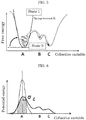
FIG. 5 is a diagram illustrating a relationship between the harmonic potential having the spring constant Kξ and another example of the free-energy surface. -
FIG. 6 is a diagram illustrating a method for selecting the potential energy data. -
FIG. 7 is a flowchart illustrating one example of the disclosed method for calculating binding free energy. -
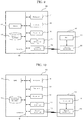
FIG. 8 is a view illustrating a structural example of the disclosed device for calculating binding free energy. -
FIG. 9 is a view illustrating another structural example of the disclosed device for calculating binding free energy. -
FIG. 10 is a view illustrating another structural example of the disclosed device for calculating binding free energy. -
FIG. 11 is a schematic view describing the variable of the harmonic potential of Example 1. - Drug discovery refers to a process for designing pharmaceutical products. For example, the drug discovery is performed in the following order.
- (1) Determination of a target molecule
- (2) Searching a lead compound etc.
- (3) Examination of physiological effects
- (4) Safety/toxicity test
- It is important in the search of a lead compound etc. (a lead compound and a compound derived from the lead compound) that interaction between each of numerous drug candidate molecules and a target molecule is highly accurately evaluated.
- A process for designing pharmaceutical products using a computer may be referred to as IT drug discovery. The technology of the IT drug discovery can be used for drug discovery in general. Among them, use of the IT drug discovery in a search of a lead compound etc. is effective for reducing a time period for and increasing a probability of developing a new drug.
- For example, the disclosed technology can be used for a search of a lead compound etc. that is expected to have high pharmacological activity.
- The disclosed method for calculating binding free energy is performed using a computer.
- The method for calculating binding free energy is a method for calculating binding free energy between a first substance and a second substance.
- The method for calculating binding free energy includes at least a potential energy determination step, a potential energy selection step, and a binding free energy calculation step, and may further include other steps according to the necessity.
- The potential energy determination step includes adding predetermined restraint potential between the first substance and the second substance to determine potential energy of a binding structure between the first substance and the second substance.
- The potential energy selection step includes selecting potential energy used for a calculation of binding free energy from potential energy data present within a restraining space corresponding to a state where the maximum level of the predetermined restraint potential is added among the entire potential energy data determined in the potential energy determination step.
- The binding free energy calculation step includes calculating binding free energy between the first substance and the second substance using the selected potential energy.
- The inventors of the disclosed technology have studied a cause for reducing accuracy of calculations when binding free energy between a binding calculation target molecule and a target molecule is calculated utilizing addition of restraint potential.
- When "de novo" drug design is performed using molecular simulation, it is important to highly accurately estimate binding activities (binding free energy) between a drug candidate molecule and target protein. As a method for such the estimation, it has been widely known that the alchemical path calculation method is the most highly accurate.
- The alchemical path calculation method is also called as the alchemical free energy calculation or alchemical transformation, and is a method for calculating binding free energy using a thermodynamic cycle along a virtual (alchemical) path.
- According to the alchemical path calculation method, binding free energy is calculated by calculating free energy of a process for restraining a distance or direction of a drug candidate molecule and free energy of a process of deleting interaction between the drug candidate molecule and the ambient environment thereof, and adding the calculated free energy values.
- For example, the alchemical path calculation method is introduced in Adv Protein Chem Struct Biol. 2011; 85: 27-80.
- Examples of the alchemical path calculation method include a calculation method determined by
FIG. 1 and the following equation.
- In
FIG. 1 , the crescent-shaped object is a target molecule (A) and the circular object is a binding calculation target molecule (B). In the equation above andFIG. 1 , C represents electrostatic interaction, L represents Van der Waals interaction, and R represent a spring restraint potential. - In the right side of the equation above, the first, second, third, fourth, and sixth items can be evaluated, for example, by the Bennett Acceptance Ratio (BAR) method and the EFP method.
- The second term from the last in the right side of the formula above is often referred to as standard state correction [see, for example, non-patent literature (Michael S. Lee et. al., Calculation of Absolute Protein-Ligand Binding Affinity Using Path and Endpoint Approaches, Biophysical Journal, Volume 90, February 2006, 864-877)].
- In order to perform the standard state correction, it is important to restrain a {ξ} variable to a stable displacement in a calculation of binding free energy using the alchemical path calculation method. The variable is a variable for determining a direction of the drug candidate molecule relative to the target protein. Typically, harmonic potential is widely used in an external field where the restriction is performed.
- In the case where simulation is performed according to the path illustrated in
FIG. 1 in order to calculate binding free energy, a simulation with extremely weak restraint potential is performed in the state (ε, 1, 1) adjacent to (0, 1, 1) between the state (0, 1, 1) and the state (1, 1, 1). - In the case where the binding of the drug candidate molecule to the target protein has the free-energy surface as illustrated in
FIG. 2 and each composite structure is sufficiently larger than room temperature fluctuations kBT (kB: Boltzmann's constant, T: temperature), the binding state remains to have the original composite state A, and the drug candidate molecule does not go outside a space volume VA set by the restraint potential in the thermodynamic cycle path ofFIG. 1 . Therefore, a standard state correction term can be correctly calculated according to the following formula.
- In the formula above, β is -1/kBT, where kB is the Boltzmann's constant and T is a temperature (K).
- In the case where a free-energy surface of the binding of the drug candidate molecule to the target protein is the free-energy surface as illustrated in
FIG. 3 , in reality, the binding structure may go over the energy barrier due to room temperature fluctuations and the binding structure comes out from the state A to be in the state B then turned to be in the state C, even though the composite structure of the state A to which restraint potential is added should be sampled. In such a case, there is a problem that standard state correction cannot be performed because the drug candidate molecule goes outside the space set by the restraint potential. - The above-mentioned problem will be more specifically described.
- In the case where a ligand molecule is designed by building up from a low molecular weight molecule like a fragment, for example, a binding calculation target molecule often has a plurality of binding poses (stable binding structures) relative to a target molecule, as illustrated in
FIGs. 4A ,4B , and4C .FIGs. 4A ,4B, and 4C are views illustrating binding poses between RNA serving as a target molecule, and theophylline serving as a binding calculation target molecule. InFIGs. 4A ,4B, and 4C , C22 is cytosine and U24 is uracil. - In the above-described case, sampling is performed in a space where a valley of each potential energy is formed and binding free energy can be estimated, as long as valleys of potential energy representing binding poses are each separated with high energy barriers (typically, 6 kBT or greater, where kB is the Boltzmann's constant and T is a temperature), as illustrated in
FIG. 2 . In the case where the composite structures A, B, and C are present as inFIG. 2 , specifically, the entire free energy can be calculated by the following formula with free energy at the valley of each potential energy being ΔGi (i = A, B, C).
- In the case where energy barrier separating the valleys of potential energy is low, however, the binding structure may fall into the valley of another energy in the middle of the sampling, which changes a space volume of the sampling, and therefore it is impossible to perform quantitative estimation. In the case where the energy barrier separating the valleys of potential energy is low as illustrated in
FIG. 3 , for example, the composite structure is escaped from the state A, and moves from the state B to the state C. - The disclosed technology will be described by taking the case where harmonic potential having a spring constant Kξ is used as restraint potential as an example.
- As illustrated in
FIG. 5 , harmonic potential having a spring constant Kξ as restraint potential is added to the valley A of potential energy. As a result the energy barrier with the valleys B and C of other potential energy becomes large and therefore transition of the binding structure does not occur. A change in free energy due to addition of the restraint potential is obtained by varying the spring constant Kξ with dividing into a few sections from 0 to Kξ, and adding the change in free energy of each section together. According to the method as mentioned, there is still a possibility that the composite structure is escaped from the valley of the potential energy and moved into valleys of other potential energy in the region where Kξ is close to 0. - Note that, a density of the binding calculation target molecule is preferably constant during the simulation. In the case where a volume of a sampling region (searching space) changes along with the composite structure as described above, therefore, local binding energy cannot be determined.
- Accordingly, the inventors of the disclosed technology have found that the data obtained by moving into valleys of other potential energy can be eliminated [in other words, a change in a volume of a sampling region (searching space) can be avoided] by selecting potential energy data present in a space created by the introduced restraint potential and using the selected data for a calculation of binding free energy, and therefore a quantitative calculation of binding free energy can be performed.
- One example will be described with reference to
FIG. 6 . - Assuming that harmonic oscillation of the binding structure occurs in the variable space forming valleys of potential energy, the standard deviation σξ adjacent to the average value thereof at a temperature T (K) is represented by the following formula.

- In the formula above, T is a temperature (K), Kξ is a harmonic potential constant, and kB is the Boltzmann's constant.
- Specifically, the space restrained to give a constant concentration is distributed as illustrated with the broken line of
FIG. 6 . - In the region where Kξ is close to 0, therefore, the data in the range of ±3σξ from the average value (the data in the shaded area of
FIG. 6 ) is used for an analysis among the calculated data, and the other data is not used for the analysis. In the case where the space to which the maximum level of the introduced restraint potential Kξ is added causes the Gaussian distribution, 99.7% of the binding structure is present in the range of ±3σ. Therefore, the data in the range of ±3σξ is sufficient in view of calculation accuracy. - A quantitative calculation of binding free energy can be performed by analyzing without changing a volume of the sampling space as described above.
- Specifically, the inventors of the disclosed technology have found the following insights and accomplished the disclosed technology based thereon. When binding free energy between a binding calculation target molecule and a target molecule is calculated using an addition of restraint potential, the data present in the state A illustrated in
FIGs. 2 ,3 ,5, and 6 is extracted from the entire simulation data obtained by searching a stable binding structure with adding restraint potential between the binding calculation target molecule and the target molecule to determine binding free energy, and therefore a calculation of binding free energy can be performed quantitatively even when there are a plurality of stable binding structures. - Moreover, the disclosed technology can be applied to, not only a combination of a binding calculation target molecule and a target molecule, but also any combination of a first substance and a second substance as long as the first substance and the second substance can form a composite.
- The potential energy determination step includes adding predetermined restraint potential between the first substance and the second substance to determine potential energy of a binding structure between the first substance and the second substance.
- A combination of the first substance and the second substance is not particularly limited as long as the combination is a combination where the first substance and the second substance can form a composite, and may be appropriately selected depending on the intended purpose.
- For example, the composite is formed with various interactions.
- Examples of the first substance include a target molecule.
- Examples of the second substance include a binding calculation target molecule.
- The target molecule is not particularly limited and may be appropriately selected depending on the intended purpose. Examples of the target molecule include protein, ribonucleic acid (RNA), and deoxyribonucleic acid (DNA).
- Examples of the binding calculation target molecule include a drug candidate molecule and a fragment for designing a drug candidate molecule.
- For example, the fragment is used for fragment-based drug design (FBDD).
- Moreover, examples of the first substance include antibodies and DNA, and examples of the second substance include pathogen, cancer cells, and stress-related substances. For example, the above-listed first substances are used for detecting the above-listed second substances. For example, the method for calculating binding free energy can be used for evaluating the capability of the first substance to detect the second substance.
- The restraint potential is not particularly limited as long as the restraint potential is a potential for restraining a distance between the first substance and the second substance, and may be appropriately selected depending on the intended purpose. Examples of the restraint potential include harmonic potential.
- The harmonic potential is a restraint potential for restraining with power proportional to a distance from a fixed point, and is also referred to as a restraint potential with a spring.
- The addition of the harmonic potential is performed by adding harmonic potential with gradually increasing the harmonic potential from 0 to the maximum value. A change in the free energy caused by the addition of the harmonic potential can be determined, for example, by free energy perturbation (FEP), the Bennett acceptance ratio method (BAR), or thermo-dynamic integration (TI).
- For example, the restraint potential is added between the first substance and the second substance using an anchor point of the first substance and an anchor point of the second substance.
- For example, restraint potential added between an anchor point of the first substance and an anchor point of the second substance is determined in a manner that a size of fluctuations of the second substance is within a certain range.
- For example, the distance restriction between the first substance and the second substance is performed in order to accurately consider a degree of freedom of translational motions of a molecule contributing the most to binding activity.
- Accordingly, it is logical that a center of gravity of the second substance is set as an anchor point of the second substance. For example, a center of gravity of the second substance can be determined by the following equation.

- In the formula above, m is a mass, and x is coordinates of an atom constituting the second substance.
- Since a hydrogen atom is light, the hydrogen atom hardly affect a position of a center of gravity determined. Accordingly, a center of gravity of the second substance is preferably determined by excluding hydrogen atoms constituting the second substance because the calculation time can be shortened. Atoms excluding hydrogen atoms may be referred to as heavy atoms hereinafter.
- The potential energy selection step includes selecting potential energy used for a calculation of binding free energy from potential energy data present within a restraining space corresponding to a state where the maximum level of the predetermined restraint potential is added among the entire potential energy data determined in the potential energy determination step.
- For example, the potential energy selection step includes selecting, as potential energy used for a calculation of binding free energy, potential energy data that is present within the restraining space corresponding to the state where the maximum level of the predetermined harmonic potential is added among the entire potential energy data determined in the potential energy determination step and is within a range determined using a standard deviation (σξ) determined by Formula (1) below:

- The formula (1) expresses the relationship between the harmonic potential constant Kξ of harmonic oscillation and the standard deviation of the motions thereof.
- It is assumed that the potential energy of the composite structure with room temperature fluctuations has a distribution close to the Gaussian distribution, when harmonic potential is added. Considering the viewpoint as mentioned, for example, the potential energy data within the range determined using the standard deviation (σξ) gives high calculation accuracy of binding free energy because the potential energy data includes a large amount of potential energy data close to the peak of the state A of
FIG. 6 . - The range determined using the standard deviation (σξ) is preferably a range of ±Xσ (X is a number satisfying 1 ≤ X ≤ 4) from the average value of the potential energy data within the restraining space, and is more preferably a range of ±3σ from the average value of the potential energy data within the restraining space. The range of ±3σ from the average value is appropriate as a range for sampling because the existence probability thereof is 99.7%.
- The binding free energy calculation step includes calculating binding free energy between the first substance and the second substance using the selected potential energy.
- The method for calculating binding free energy is typically performed according to the alchemical path calculation method.
- For example, the method for calculating binding free energy can be performed by means of a general computer system (e.g., various network servers, work stations, and personal computers) equipped with a central processing unit (CPU), random access memory (RAM), a hard disk, various peripherals, etc.
- One example of the method for calculating binding free energy will be described with reference to a flowchart (
FIG. 7 ). - First, predetermined restraint potential is added between a target molecule and a binding calculation target molecule to determine potential energy of a binding structure between the target molecule and the binding calculation target molecule (Step S1).
- Next, among the entire potential energy data determined, potential energy data within the restraining space corresponding to the state where the maximum level of the predetermined restraint potential is added is selected (Step S2).
- Next, binding free energy between the target molecule and the binding calculation target molecule is calculated from the selected potential energy data (Step S3).
- The disclosed program is a program for causing a computer to execute the disclosed method for calculating binding free energy.
- The program can be created using any of various programing languages known in the art according to a configuration of a computer system for use, a type or version of an operation system for use.
- The program may be recorded on storage media, such as an integral hard disk, and an external hard disk, or recorded on a storage medium, such as a compact disc read only memory (CD-ROM), a digital versatile disk read only memory (DVD-ROM), a magneto-optical (MO) disk, and a universal serial bus (USB) memory stick (USB flash drive). In the case where the program is recorded on a storage medium, such as a CD-ROM, a DVD-ROM, an MO disk, and an USB memory stick, the program can be used, as required, directly or by installing a hard disk via a storage medium reader equipped in a computer system. Moreover, the program may be recorded in an external memory region (e.g. another computer) accessible from the computer system via an information and communication network, and the program may be used, as required, by directly from the external memory region or installing into a hard disk from the external memory region via the information and communication network.
- The program may be divided into predetermined processes and recorded on a plurality of non-transitory recording mediums.
- The disclosed computer-readable non-transitory recording medium has stored therein the disclosed program.
- The computer-readable non-transitory recording medium is not particularly limited and may be appropriately selected depending on the intended purpose. Examples of the computer-readable non-transitory recording medium include integral hard disks, external hard disks, CD-ROMs, DVD-ROMs, MO disks, and USB memory sticks.
- The non-transitory recording medium may be a plurality of non-transitory recording mediums to which predetermined processes divided from the program are recorded.
- The disclosed device for calculating binding free energy includes at least a potential energy calculating unit, a potential energy selecting unit, and a binding free energy calculating unit, and may further include other units according to the necessity.
- The device for calculating binding free energy is a device for calculating binding free energy between a first substance and a second substance.
- For example, the method for calculating binding free energy can be performed by the device for calculating binding free energy.
- The potential energy calculating unit is configured to add predetermined restraint potential between the first substance and the second substance to determine potential energy of a binding structure between the first substance and the second substance.
- The potential energy selecting unit is configured to select potential energy used for a calculation of binding free energy from potential energy data present within a restraining space corresponding to a state where the maximum level of the predetermined restraint potential is added among the entire potential energy data determined by the potential energy calculating unit.
- The binding free energy calculating unit is configured to calculate binding free energy between the first substance and the second substance using the potential energy selected by the potential energy selecting unit.
- A structural example of the disclosed device for calculating binding free energy is illustrated in
FIG. 8 . - For example, the device for calculating binding
free energy 10 is composed by connecting CPU 11 (calculation unit), amemory 12, amemory unit 13, adisplay unit 14, aninput unit 15, anoutput unit 16, and an I/O interface unit 17 via asystem bus 18. - The central processing unit (CPU) 11 is configured to perform calculations (e.g., four arithmetic operations, and relational operations), and control of operations of hardware and software.
- The
memory 12 is a memory, such as a random access memory (RAM), and a read only memory (ROM). The RAM is configured to store an operating system (OS) and application programs read from the ROM and thememory unit 13, and function as a main memory and work area of theCPU 11. - The
memory unit 13 is a device for storing various programs and data. For example, thememory unit 13 is a hard disk. In thememory unit 13, programs to be executed by theCPU 11, data for executing the programs, and an OS are stored. - The program is stored in the
memory unit 13, loaded on the RAM (a main memory) of thememory 12, and executed by theCPU 11. - The
display unit 14 is a display device. For example, the display unit is a display device, such as a CRT monitor, and a liquid crystal panel. - The
input unit 15 is an input device for various types of data. Examples of the input unit include a key board, and a pointing device (e.g., a mouse). - The
output unit 16 is an output device for various types of data. For example, the output unit is a printer. - The I/
O interface unit 17 is an interface for connecting to various external devices. For example, the I/O interface unit enables input and output of data of CD-ROMs, DVD-ROMs, MO disks, and USB memory sticks. - Another structural example of the disclosed device for calculating binding free energy is illustrated in
FIG. 9 . - The structural example of
FIG. 9 is a structural example of a cloud-type calculation device, whereCPU 11 is independent of amemory unit 13 etc. In the structural example, acomputer 30 having stored therein thememory unit 13 and acomputer 40 having stored therein theCPU 11 are coupled with each other vianetwork interface units - The
network interface units - Another structural example of the disclosed device for calculating binding free energy is illustrated in
FIG. 10 . - The structural example of
FIG. 10 is a structural example of a cloud-type calculation device, where amemory unit 13 is independent ofCPU 11, etc. In the structural example, acomputer 30 having stored therein theCPU 11 and acomputer 40 having stored therein thememory unit 13 are coupled with each other vianetwork interface units - The disclosed technology will be described hereinafter, but Examples below shall not be construed as to limit the scope of the disclosed technology.
- A calculation of binding free energy of a system (PDB crystalline structure 1015) between a theophylline molecule and an RNA adaptor was performed.
- Potential energy was calculated by adding harmonic potential in a manner that variables presented in Table 1 were restrained in the positions illustrated in
FIG. 11 . - As presented in Table 1, 6 variables for determining a direction towards an RNA adaptor of a theophylline molecule were used as collective variables.
Table 1 r θ A θ B φ A φ B φ C 10.5 110.0 149.5 - 62.1 118.7 164.2 Kr Kθ A K θ B Kφ A Kφ B Kφ C 2928.8 275.3 610.9 243.9 53.6 49.4 A unit for each coefficient in Table 1 is as follows.
r: Å
θ , Φ: (°)
Kr: kcal/mol/ Å2
Kθ, KΦ: kcal/mol/rad2 - In
FIG. 11 , the crescent-shaped object is the RNA adaptor that is the target molecule T, and the circular object is the theophylline molecule that is the binding calculation target molecule L. - Moreover, each of A1, A2, A3, B1, B2, and B3 is represented as follows using an atomic name and the number of PDB (1015).
- A1: C4'(689)
- A2: C3'(706)
- A3: O3'(712)
- B1: cc(1076)
- B2: cc(1080)
- B3: n(1073)
- Moreover, ϕA represents an angle between a plane formed with A1, A2, and A3, and a plane formed with A2, A1, and B1.
- Among the obtained entire potential energy data, selected was potential energy that was the potential energy data within the restraining space corresponding to the state where the maximum level of the restraint potential was added, and was within the range of ±3σξ (with the proviso that σξ was the standard deviation determined by the formula below) from the average value of the potential energy data within the restraining space.
- Then, binding free energy was calculated using the selected potential energy according to the alchemical path calculation method. As a result, the data presented in the columns of "±3σ" of Table 2 below was obtained.

- In the formula above, T is a temperature (K), Kξ is a harmonic potential constant, and kB is the Boltzmann's constant.
- Binding free energy was calculated in the same manner as in Example 1, except that the binding free energy was calculated using all of the obtained potential energy data. As a result, the data presented in the columns of "Original" of Table 2 below was obtained.
Table 2 Interval time (ps) Original ± 3σ 0-1000 1.522 (0.047) 1.500 (0.049) 4000-5000 1.887 (0.246) 1.488 (0.030) 9000-10000 2.979 (1.540) 1.605 (0.052) 14000-15000 4.078 (1.696) 19000-20000 4.292 (1.479) Unit: kcal/mol - In Table 2, the numerical value within the bracket denotes a statistical error.
- Table 2 demonstrates that the results of Example 1 had close values of the binding free energy calculated in the interval ranges, and the small statistical errors of the binding free energy values, compared to the results of Comparative Example 1. Specifically, it was confirmed that the disclosed method for calculating binding free energy could obtain the calculation results of excellent stability and high calculation accuracy compared to the conventional method of Comparative Example 1.
Claims (15)
- A method for calculating binding free energy, the method comprising:adding predetermined restraint potential between a first substance and a second substance to determine potential energy of a binding structure between the first substance and the second substance;selecting potential energy used for a calculation of binding free energy from potential energy data present within a restraining space corresponding to a state where the maximum level of the predetermined restraint potential is added among an entire potential energy data determined in the adding; andcalculating binding free energy between the first substance and the second substance using the potential energy selected,wherein the method is a method for calculating binding free energy between the first substance and the second substance using a computer.
- The method according to claim 1,
wherein the first substance is a target molecule and the second substance is a binding calculation target molecule. - The method according to claim 1 or 2,
wherein the restraint potential is harmonic potential. - The method according to claim 3,
wherein the selecting is selecting, as potential energy used for a calculation of binding free energy, potential energy data that is present within the restraining space corresponding to the state where the maximum level of the predetermined harmonic potential is added among the entire potential energy data determined in the adding and that is within a range determined using a standard deviation, σξ, determined by Formula (1) below,
- The method according to claim 4,
wherein the range determined using the standard deviation, σξ, is a range that is ±Xσ, where X is a number satisfying 1 ≤ X ≤ 4, from an average value of the potential energy data within the restraining space. - The method according to claim 4 or 5,
wherein the range determined using the standard deviation, σξ, is a range that is ±3σ from an average value of the potential energy data within the restraining space. - The method according to any one of claims 1 to 6,
wherein the method is performed according to an alchemical path calculation method. - A program for causing a computer to execute a method for calculating binding free energy between a first substance and a second substance, the method comprising:adding predetermined restraint potential between the first substance and the second substance to determine potential energy of a binding structure between the first substance and the second substance;selecting potential energy used for a calculation of binding free energy from potential energy data present within a restraining space corresponding to a state where the maximum level of the predetermined restraint potential is added among an entire potential energy data determined in the adding; andcalculating binding free energy between the first substance and the second substance using the potential energy selected.
- The program according to claim 8,
wherein the first substance is a target molecule and the second substance is a binding calculation target molecule. - The program according to claim 8 or 9,
wherein the restraint potential is harmonic potential. - The program according to claim 10,
wherein the selecting is selecting, as potential energy used for a calculation of binding free energy, potential energy data that is present within the restraining space corresponding to the state where the maximum level of the predetermined harmonic potential is added among the entire potential energy data determined in the adding and that is within a range determined using a standard deviation, σξ, determined by Formula (1) below,
- A device for calculating binding free energy, the device comprising:a potential energy calculation unit configured to add predetermined restraint potential between a first substance and a second substance to determine potential energy of a binding structure between the first substance and the second substance;a potential energy selecting unit configured to select potential energy used for a calculation of binding free energy from potential energy data present within a restraining space corresponding to a state where the maximum level of the predetermined restraint potential is added among an entire potential energy data determined by the potential energy calculation unit; anda binding free energy calculation unit configured to calculate binding free energy between the first substance and the second substance using the potential energy selected by the potential energy selecting unit,wherein the device is a device for calculating binding free energy between the first substance and the second substance.
- The device according to claim 12,
wherein the first substance is a target molecule and the second substance is a binding calculation target molecule. - The device according to claim 12 or 13,
wherein the restraint potential is harmonic potential. - The device according to claim 14,
wherein the potential energy selecting unit is configured to select, as potential energy used for a calculation of binding free energy, potential energy data that is present within the restraining space corresponding to the state where the maximum level of the predetermined harmonic potential is added among the entire potential energy data determined in the potential energy calculation unit and that is within a range determined using a standard deviation, σξ, determined by Formula (1) below,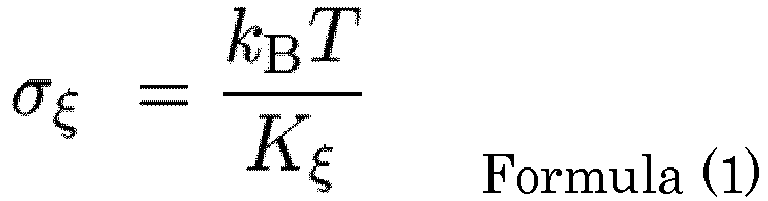
Applications Claiming Priority (1)
| Application Number | Priority Date | Filing Date | Title |
|---|---|---|---|
| JP2018154175A JP7379810B2 (en) | 2018-08-20 | 2018-08-20 | Binding free energy calculation method, calculation device, and program |
Publications (2)
| Publication Number | Publication Date |
|---|---|
| EP3614388A1 true EP3614388A1 (en) | 2020-02-26 |
| EP3614388B1 EP3614388B1 (en) | 2024-10-16 |
Family
ID=67220730
Family Applications (1)
| Application Number | Title | Priority Date | Filing Date |
|---|---|---|---|
| EP19185212.8A Active EP3614388B1 (en) | 2018-08-20 | 2019-07-09 | Method and device for calculating binding free energy, and program |
Country Status (3)
| Country | Link |
|---|---|
| US (1) | US20200058366A1 (en) |
| EP (1) | EP3614388B1 (en) |
| JP (1) | JP7379810B2 (en) |
Cited By (1)
| Publication number | Priority date | Publication date | Assignee | Title |
|---|---|---|---|---|
| WO2022077258A1 (en) * | 2020-10-14 | 2022-04-21 | 深圳晶泰科技有限公司 | Free energy perturbation network design method based on machine learning |
Families Citing this family (2)
| Publication number | Priority date | Publication date | Assignee | Title |
|---|---|---|---|---|
| CN112102889B (en) * | 2020-10-14 | 2024-09-06 | 深圳晶泰科技有限公司 | Free energy perturbation network design method based on machine learning |
| CN112216350B (en) * | 2020-11-05 | 2022-09-13 | 深圳晶泰科技有限公司 | Physical strict relative free energy calculation method with phase space overlapping maximization |
Citations (4)
| Publication number | Priority date | Publication date | Assignee | Title |
|---|---|---|---|---|
| US20090326878A1 (en) * | 2006-03-31 | 2009-12-31 | Michael Jason Potter | Computational Method For Drug Discovery And Receptor Design |
| JP2017091180A (en) * | 2015-11-09 | 2017-05-25 | 富士通株式会社 | Binding free energy calculation pre-processing method, binding free energy calculation method and apparatus, and program |
| WO2017199279A1 (en) * | 2016-05-16 | 2017-11-23 | 富士通株式会社 | Method and device for calculating binding free energy, and program |
| EP3327604A1 (en) * | 2015-07-23 | 2018-05-30 | Fujitsu Limited | Method for calculating binding free energy, calculation device, and program |
Family Cites Families (2)
| Publication number | Priority date | Publication date | Assignee | Title |
|---|---|---|---|---|
| US6230102B1 (en) * | 1997-04-04 | 2001-05-08 | Massachusetts Institute Of Technology | Computer system and process for identifying a charge distribution which minimizes electrostatic contribution to binding at binding between a ligand and a molecule in a solvent and uses thereof |
| US10726946B2 (en) * | 2017-08-22 | 2020-07-28 | Schrödinger, Inc. | Methods and systems for calculating free energy differences using an alchemical restraint potential |
-
2018
- 2018-08-20 JP JP2018154175A patent/JP7379810B2/en active Active
-
2019
- 2019-07-09 US US16/506,212 patent/US20200058366A1/en not_active Abandoned
- 2019-07-09 EP EP19185212.8A patent/EP3614388B1/en active Active
Patent Citations (4)
| Publication number | Priority date | Publication date | Assignee | Title |
|---|---|---|---|---|
| US20090326878A1 (en) * | 2006-03-31 | 2009-12-31 | Michael Jason Potter | Computational Method For Drug Discovery And Receptor Design |
| EP3327604A1 (en) * | 2015-07-23 | 2018-05-30 | Fujitsu Limited | Method for calculating binding free energy, calculation device, and program |
| JP2017091180A (en) * | 2015-11-09 | 2017-05-25 | 富士通株式会社 | Binding free energy calculation pre-processing method, binding free energy calculation method and apparatus, and program |
| WO2017199279A1 (en) * | 2016-05-16 | 2017-11-23 | 富士通株式会社 | Method and device for calculating binding free energy, and program |
Non-Patent Citations (4)
| Title |
|---|
| ADV PROTEIN CHEM STRUCT BIOL, vol. 85, 2011, pages 27 - 80 |
| EMILE APOL ET AL: "Gromacs User Manual version 4.5.4", HTTP://WWW.GROMACS.ORG/, 1 January 2010 (2010-01-01), XP055580924, Retrieved from the Internet <URL:ftp://ftp.gromacs.org/pub/manual/manual-4.5.4.pdf> [retrieved on 20190415] * |
| JOHN D. CHODERA: "Alchemical free energy methods for drug discovery: Progress and challenges", CURR OPIN STRUCT BIOL, vol. 21, no. 2, April 2011 (2011-04-01), pages 150 - 160, XP028160299, DOI: doi:10.1016/j.sbi.2011.01.011 |
| MICHAEL S. LEE: "Calculation of Absolute Protein-Ligand Binding Affinity Using Path and Endpoint Approaches", BIOPHYSICAL JOURNAL, vol. 90, February 2006 (2006-02-01), pages 864 - 877 |
Cited By (1)
| Publication number | Priority date | Publication date | Assignee | Title |
|---|---|---|---|---|
| WO2022077258A1 (en) * | 2020-10-14 | 2022-04-21 | 深圳晶泰科技有限公司 | Free energy perturbation network design method based on machine learning |
Also Published As
| Publication number | Publication date |
|---|---|
| US20200058366A1 (en) | 2020-02-20 |
| JP7379810B2 (en) | 2023-11-15 |
| JP2020030059A (en) | 2020-02-27 |
| EP3614388B1 (en) | 2024-10-16 |
Similar Documents
| Publication | Publication Date | Title |
|---|---|---|
| John et al. | Comparative protein structure modeling by iterative alignment, model building and model assessment | |
| Daye et al. | High-dimensional heteroscedastic regression with an application to eQTL data analysis | |
| Shirts | Simple quantitative tests to validate sampling from thermodynamic ensembles | |
| Peltason et al. | SAR index: Quantifying the nature of structure− activity relationships | |
| EP3614388B1 (en) | Method and device for calculating binding free energy, and program | |
| Frank et al. | Interpreting top-down mass spectra using spectral alignment | |
| Yang et al. | Diffusion of tRNA inside the ribosome is position-dependent | |
| CN104937600B (en) | Methods and systems for designers of digital PCR experiments | |
| US11126761B2 (en) | Free energy calculation device, method, program, and recording medium with the program recorded thereon | |
| Brylinski | e matchsite: Sequence order-independent structure alignments of ligand binding pockets in protein models | |
| US11501849B2 (en) | Method for calculating binding free energy, calculation device, and program | |
| Sun | BAR-based multi-dimensional nonequilibrium pulling for indirect construction of QM/MM free energy landscapes: from semi-empirical to ab initio | |
| US11621054B2 (en) | Method and apparatus for preprocessing of binding free energy calculation, and binding free energy calculation method | |
| JP7011144B2 (en) | Calculation method and calculation device of bond free energy, and program | |
| JP6610182B2 (en) | Binding free energy calculation pre-processing method, binding free energy calculation method and apparatus, and program | |
| CN115436499A (en) | Sample analysis device, sample analysis method, medical analysis device, and medical analysis method | |
| JPWO2017013726A1 (en) | Method, apparatus and program for calculating acid dissociation constant | |
| JP6652733B2 (en) | Method and apparatus for calculating binding free energy and program | |
| Gosink et al. | Bayesian model averaging for ensemble-based estimates of solvation-free energies | |
| JP6623697B2 (en) | Method and apparatus for calculating interaction energy, and program | |
| JP6488728B2 (en) | Anchor point determination method, bond free energy calculation method, calculation device, and program | |
| Van Norden et al. | Strategies for robust, accurate, and generalizable benchmarking of drug discovery platforms | |
| Adamczak et al. | Fast geometric consensus approach for protein model quality assessment | |
| Pons et al. | @ TOME 3.0: interfacing protein structure modeling and ligand docking | |
| US20170199958A1 (en) | Method for calculating interaction energy, calculation device, program, and non-transitory recording medium |
Legal Events
| Date | Code | Title | Description |
|---|---|---|---|
| PUAI | Public reference made under article 153(3) epc to a published international application that has entered the european phase |
Free format text: ORIGINAL CODE: 0009012 |
|
| STAA | Information on the status of an ep patent application or granted ep patent |
Free format text: STATUS: THE APPLICATION HAS BEEN PUBLISHED |
|
| AK | Designated contracting states |
Kind code of ref document: A1 Designated state(s): AL AT BE BG CH CY CZ DE DK EE ES FI FR GB GR HR HU IE IS IT LI LT LU LV MC MK MT NL NO PL PT RO RS SE SI SK SM TR |
|
| AX | Request for extension of the european patent |
Extension state: BA ME |
|
| STAA | Information on the status of an ep patent application or granted ep patent |
Free format text: STATUS: REQUEST FOR EXAMINATION WAS MADE |
|
| 17P | Request for examination filed |
Effective date: 20200615 |
|
| RBV | Designated contracting states (corrected) |
Designated state(s): AL AT BE BG CH CY CZ DE DK EE ES FI FR GB GR HR HU IE IS IT LI LT LU LV MC MK MT NL NO PL PT RO RS SE SI SK SM TR |
|
| STAA | Information on the status of an ep patent application or granted ep patent |
Free format text: STATUS: EXAMINATION IS IN PROGRESS |
|
| 17Q | First examination report despatched |
Effective date: 20220222 |
|
| GRAP | Despatch of communication of intention to grant a patent |
Free format text: ORIGINAL CODE: EPIDOSNIGR1 |
|
| STAA | Information on the status of an ep patent application or granted ep patent |
Free format text: STATUS: GRANT OF PATENT IS INTENDED |
|
| INTG | Intention to grant announced |
Effective date: 20240527 |
|
| RIN1 | Information on inventor provided before grant (corrected) |
Inventor name: TANIDA, YOSHIAKI |
|
| GRAS | Grant fee paid |
Free format text: ORIGINAL CODE: EPIDOSNIGR3 |
|
| GRAA | (expected) grant |
Free format text: ORIGINAL CODE: 0009210 |
|
| STAA | Information on the status of an ep patent application or granted ep patent |
Free format text: STATUS: THE PATENT HAS BEEN GRANTED |
|
| AK | Designated contracting states |
Kind code of ref document: B1 Designated state(s): AL AT BE BG CH CY CZ DE DK EE ES FI FR GB GR HR HU IE IS IT LI LT LU LV MC MK MT NL NO PL PT RO RS SE SI SK SM TR |
|
| REG | Reference to a national code |
Ref country code: GB Ref legal event code: FG4D |
|
| REG | Reference to a national code |
Ref country code: CH Ref legal event code: EP Ref country code: DE Ref legal event code: R096 Ref document number: 602019060401 Country of ref document: DE |
|
| REG | Reference to a national code |
Ref country code: IE Ref legal event code: FG4D |
|
| REG | Reference to a national code |
Ref country code: LT Ref legal event code: MG9D |
|
| REG | Reference to a national code |
Ref country code: NL Ref legal event code: MP Effective date: 20241016 |
|
| REG | Reference to a national code |
Ref country code: AT Ref legal event code: MK05 Ref document number: 1733621 Country of ref document: AT Kind code of ref document: T Effective date: 20241016 |
|
| PG25 | Lapsed in a contracting state [announced via postgrant information from national office to epo] |
Ref country code: NL Free format text: LAPSE BECAUSE OF FAILURE TO SUBMIT A TRANSLATION OF THE DESCRIPTION OR TO PAY THE FEE WITHIN THE PRESCRIBED TIME-LIMIT Effective date: 20241016 |
|
| PG25 | Lapsed in a contracting state [announced via postgrant information from national office to epo] |
Ref country code: NL Free format text: LAPSE BECAUSE OF FAILURE TO SUBMIT A TRANSLATION OF THE DESCRIPTION OR TO PAY THE FEE WITHIN THE PRESCRIBED TIME-LIMIT Effective date: 20241016 |
|
| PG25 | Lapsed in a contracting state [announced via postgrant information from national office to epo] |
Ref country code: PT Free format text: LAPSE BECAUSE OF FAILURE TO SUBMIT A TRANSLATION OF THE DESCRIPTION OR TO PAY THE FEE WITHIN THE PRESCRIBED TIME-LIMIT Effective date: 20250217 Ref country code: IS Free format text: LAPSE BECAUSE OF FAILURE TO SUBMIT A TRANSLATION OF THE DESCRIPTION OR TO PAY THE FEE WITHIN THE PRESCRIBED TIME-LIMIT Effective date: 20250216 Ref country code: HR Free format text: LAPSE BECAUSE OF FAILURE TO SUBMIT A TRANSLATION OF THE DESCRIPTION OR TO PAY THE FEE WITHIN THE PRESCRIBED TIME-LIMIT Effective date: 20241016 |
|
| PG25 | Lapsed in a contracting state [announced via postgrant information from national office to epo] |
Ref country code: FI Free format text: LAPSE BECAUSE OF FAILURE TO SUBMIT A TRANSLATION OF THE DESCRIPTION OR TO PAY THE FEE WITHIN THE PRESCRIBED TIME-LIMIT Effective date: 20241016 |
|
| PG25 | Lapsed in a contracting state [announced via postgrant information from national office to epo] |
Ref country code: BG Free format text: LAPSE BECAUSE OF FAILURE TO SUBMIT A TRANSLATION OF THE DESCRIPTION OR TO PAY THE FEE WITHIN THE PRESCRIBED TIME-LIMIT Effective date: 20241016 |
|
| PG25 | Lapsed in a contracting state [announced via postgrant information from national office to epo] |
Ref country code: ES Free format text: LAPSE BECAUSE OF FAILURE TO SUBMIT A TRANSLATION OF THE DESCRIPTION OR TO PAY THE FEE WITHIN THE PRESCRIBED TIME-LIMIT Effective date: 20241016 |
|
| PG25 | Lapsed in a contracting state [announced via postgrant information from national office to epo] |
Ref country code: NO Free format text: LAPSE BECAUSE OF FAILURE TO SUBMIT A TRANSLATION OF THE DESCRIPTION OR TO PAY THE FEE WITHIN THE PRESCRIBED TIME-LIMIT Effective date: 20250116 |
|
| PG25 | Lapsed in a contracting state [announced via postgrant information from national office to epo] |
Ref country code: LV Free format text: LAPSE BECAUSE OF FAILURE TO SUBMIT A TRANSLATION OF THE DESCRIPTION OR TO PAY THE FEE WITHIN THE PRESCRIBED TIME-LIMIT Effective date: 20241016 Ref country code: AT Free format text: LAPSE BECAUSE OF FAILURE TO SUBMIT A TRANSLATION OF THE DESCRIPTION OR TO PAY THE FEE WITHIN THE PRESCRIBED TIME-LIMIT Effective date: 20241016 Ref country code: GR Free format text: LAPSE BECAUSE OF FAILURE TO SUBMIT A TRANSLATION OF THE DESCRIPTION OR TO PAY THE FEE WITHIN THE PRESCRIBED TIME-LIMIT Effective date: 20250117 |
|
| PG25 | Lapsed in a contracting state [announced via postgrant information from national office to epo] |
Ref country code: PL Free format text: LAPSE BECAUSE OF FAILURE TO SUBMIT A TRANSLATION OF THE DESCRIPTION OR TO PAY THE FEE WITHIN THE PRESCRIBED TIME-LIMIT Effective date: 20241016 |
|
| PG25 | Lapsed in a contracting state [announced via postgrant information from national office to epo] |
Ref country code: RS Free format text: LAPSE BECAUSE OF FAILURE TO SUBMIT A TRANSLATION OF THE DESCRIPTION OR TO PAY THE FEE WITHIN THE PRESCRIBED TIME-LIMIT Effective date: 20250116 |
|
| PG25 | Lapsed in a contracting state [announced via postgrant information from national office to epo] |
Ref country code: SM Free format text: LAPSE BECAUSE OF FAILURE TO SUBMIT A TRANSLATION OF THE DESCRIPTION OR TO PAY THE FEE WITHIN THE PRESCRIBED TIME-LIMIT Effective date: 20241016 |
|
| PG25 | Lapsed in a contracting state [announced via postgrant information from national office to epo] |
Ref country code: DK Free format text: LAPSE BECAUSE OF FAILURE TO SUBMIT A TRANSLATION OF THE DESCRIPTION OR TO PAY THE FEE WITHIN THE PRESCRIBED TIME-LIMIT Effective date: 20241016 |
|
| REG | Reference to a national code |
Ref country code: DE Ref legal event code: R097 Ref document number: 602019060401 Country of ref document: DE |
|
| PG25 | Lapsed in a contracting state [announced via postgrant information from national office to epo] |
Ref country code: EE Free format text: LAPSE BECAUSE OF FAILURE TO SUBMIT A TRANSLATION OF THE DESCRIPTION OR TO PAY THE FEE WITHIN THE PRESCRIBED TIME-LIMIT Effective date: 20241016 |
|
| PG25 | Lapsed in a contracting state [announced via postgrant information from national office to epo] |
Ref country code: RO Free format text: LAPSE BECAUSE OF FAILURE TO SUBMIT A TRANSLATION OF THE DESCRIPTION OR TO PAY THE FEE WITHIN THE PRESCRIBED TIME-LIMIT Effective date: 20241016 |
|
| PG25 | Lapsed in a contracting state [announced via postgrant information from national office to epo] |
Ref country code: SK Free format text: LAPSE BECAUSE OF FAILURE TO SUBMIT A TRANSLATION OF THE DESCRIPTION OR TO PAY THE FEE WITHIN THE PRESCRIBED TIME-LIMIT Effective date: 20241016 |
|
| PG25 | Lapsed in a contracting state [announced via postgrant information from national office to epo] |
Ref country code: CZ Free format text: LAPSE BECAUSE OF FAILURE TO SUBMIT A TRANSLATION OF THE DESCRIPTION OR TO PAY THE FEE WITHIN THE PRESCRIBED TIME-LIMIT Effective date: 20241016 |
|
| PG25 | Lapsed in a contracting state [announced via postgrant information from national office to epo] |
Ref country code: IT Free format text: LAPSE BECAUSE OF FAILURE TO SUBMIT A TRANSLATION OF THE DESCRIPTION OR TO PAY THE FEE WITHIN THE PRESCRIBED TIME-LIMIT Effective date: 20241016 |
|
| PLBE | No opposition filed within time limit |
Free format text: ORIGINAL CODE: 0009261 |
|
| STAA | Information on the status of an ep patent application or granted ep patent |
Free format text: STATUS: NO OPPOSITION FILED WITHIN TIME LIMIT |
|
| PG25 | Lapsed in a contracting state [announced via postgrant information from national office to epo] |
Ref country code: SE Free format text: LAPSE BECAUSE OF FAILURE TO SUBMIT A TRANSLATION OF THE DESCRIPTION OR TO PAY THE FEE WITHIN THE PRESCRIBED TIME-LIMIT Effective date: 20241016 |
|
| 26N | No opposition filed |
Effective date: 20250717 |
|
| PGFP | Annual fee paid to national office [announced via postgrant information from national office to epo] |
Ref country code: DE Payment date: 20250620 Year of fee payment: 7 |
|
| PGFP | Annual fee paid to national office [announced via postgrant information from national office to epo] |
Ref country code: CH Payment date: 20250801 Year of fee payment: 7 |
|
| PG25 | Lapsed in a contracting state [announced via postgrant information from national office to epo] |
Ref country code: LU Free format text: LAPSE BECAUSE OF NON-PAYMENT OF DUE FEES Effective date: 20250709 |
|
| GBPC | Gb: european patent ceased through non-payment of renewal fee |
Effective date: 20250709 |
|
| REG | Reference to a national code |
Ref country code: BE Ref legal event code: MM Effective date: 20250731 |
|
| PG25 | Lapsed in a contracting state [announced via postgrant information from national office to epo] |
Ref country code: GB Free format text: LAPSE BECAUSE OF NON-PAYMENT OF DUE FEES Effective date: 20250709 |
|
| PG25 | Lapsed in a contracting state [announced via postgrant information from national office to epo] |
Ref country code: BE Free format text: LAPSE BECAUSE OF NON-PAYMENT OF DUE FEES Effective date: 20250731 |
|
| PG25 | Lapsed in a contracting state [announced via postgrant information from national office to epo] |
Ref country code: FR Free format text: LAPSE BECAUSE OF NON-PAYMENT OF DUE FEES Effective date: 20250731 |