EP3612970B1 - Verfahren zur verwaltung eines cloud-rechnersystems - Google Patents
Verfahren zur verwaltung eines cloud-rechnersystems Download PDFInfo
- Publication number
- EP3612970B1 EP3612970B1 EP18720334.4A EP18720334A EP3612970B1 EP 3612970 B1 EP3612970 B1 EP 3612970B1 EP 18720334 A EP18720334 A EP 18720334A EP 3612970 B1 EP3612970 B1 EP 3612970B1
- Authority
- EP
- European Patent Office
- Prior art keywords
- client
- access control
- meta
- model
- cloud computing
- Prior art date
- Legal status (The legal status is an assumption and is not a legal conclusion. Google has not performed a legal analysis and makes no representation as to the accuracy of the status listed.)
- Active
Links
Images
Classifications
-
- G—PHYSICS
- G06—COMPUTING OR CALCULATING; COUNTING
- G06F—ELECTRIC DIGITAL DATA PROCESSING
- G06F21/00—Security arrangements for protecting computers, components thereof, programs or data against unauthorised activity
- G06F21/60—Protecting data
- G06F21/604—Tools and structures for managing or administering access control systems
-
- H—ELECTRICITY
- H04—ELECTRIC COMMUNICATION TECHNIQUE
- H04L—TRANSMISSION OF DIGITAL INFORMATION, e.g. TELEGRAPHIC COMMUNICATION
- H04L63/00—Network architectures or network communication protocols for network security
- H04L63/10—Network architectures or network communication protocols for network security for controlling access to devices or network resources
-
- G—PHYSICS
- G06—COMPUTING OR CALCULATING; COUNTING
- G06F—ELECTRIC DIGITAL DATA PROCESSING
- G06F16/00—Information retrieval; Database structures therefor; File system structures therefor
- G06F16/90—Details of database functions independent of the retrieved data types
- G06F16/906—Clustering; Classification
-
- G—PHYSICS
- G06—COMPUTING OR CALCULATING; COUNTING
- G06Q—INFORMATION AND COMMUNICATION TECHNOLOGY [ICT] SPECIALLY ADAPTED FOR ADMINISTRATIVE, COMMERCIAL, FINANCIAL, MANAGERIAL OR SUPERVISORY PURPOSES; SYSTEMS OR METHODS SPECIALLY ADAPTED FOR ADMINISTRATIVE, COMMERCIAL, FINANCIAL, MANAGERIAL OR SUPERVISORY PURPOSES, NOT OTHERWISE PROVIDED FOR
- G06Q10/00—Administration; Management
- G06Q10/06—Resources, workflows, human or project management; Enterprise or organisation planning; Enterprise or organisation modelling
- G06Q10/063—Operations research, analysis or management
- G06Q10/0631—Resource planning, allocation, distributing or scheduling for enterprises or organisations
-
- G—PHYSICS
- G06—COMPUTING OR CALCULATING; COUNTING
- G06Q—INFORMATION AND COMMUNICATION TECHNOLOGY [ICT] SPECIALLY ADAPTED FOR ADMINISTRATIVE, COMMERCIAL, FINANCIAL, MANAGERIAL OR SUPERVISORY PURPOSES; SYSTEMS OR METHODS SPECIALLY ADAPTED FOR ADMINISTRATIVE, COMMERCIAL, FINANCIAL, MANAGERIAL OR SUPERVISORY PURPOSES, NOT OTHERWISE PROVIDED FOR
- G06Q10/00—Administration; Management
- G06Q10/10—Office automation; Time management
-
- H—ELECTRICITY
- H04—ELECTRIC COMMUNICATION TECHNIQUE
- H04L—TRANSMISSION OF DIGITAL INFORMATION, e.g. TELEGRAPHIC COMMUNICATION
- H04L63/00—Network architectures or network communication protocols for network security
- H04L63/20—Network architectures or network communication protocols for network security for managing network security; network security policies in general
Definitions
- the invention relates to the general field of computer systems, and in particular to so-called “cloud” computer systems, also known as “cloud computing” systems.
- client entity of the cloud computing system
- client we mean here an information system (e.g. computer system of an organization or a company, application, etc.), tenant of the resources made available by the cloud computing system (also called “tenant" in English).
- information system e.g. computer system of an organization or a company, application, etc.
- tenant of the resources made available by the cloud computing system also called “tenant” in English.
- cloud computing is a model allowing users, or more generally customers, to access via a network, on demand and in a self-service manner, computing and network resources such as, for example, storage space, computing power, applications, network access, software or services, which are virtualized (i.e. made virtual) and shared between these customers.
- the computing resources are no longer located on a local server or on a user workstation, but are, in accordance with the concept of cloud computing, dematerialized in a cloud composed of several physically distant servers interconnected with each other, and accessible by customers and their users via, for example, a network application.
- Customers and more particularly their users can thus access these resources in a scalable manner, without having to manage the underlying infrastructure for managing these resources, which is often complex.
- a major challenge of the concept of "cloud computing” is to guarantee the protection and security of access to resources, these resources being shared by several distinct and heterogeneous clients of the cloud computing system.
- the cloud computing system is also said to be multi-entity or "multi-tenant" in English.
- An access control policy is a set of rules that regulates user access to the client's resources. For example, such an access control policy specifies through a set of rules the rights of users to access different files of the client stored on a disk; these rules may indicate for illustration purposes that the user Bob has read rights on a file F1.h and that the user Alice has write rights on a file F2.c.
- This access control policy is based on an access control model that defines how the decision to allow or deny access to the resource is made.
- access control models in the state of the art that allow the use of a client's resources to be controlled: these models are generally designed to check whether an active entity (also referred to as a subject) such as a user via a terminal, can access a passive entity (also referred to as an object) such as a computer and network resource, by performing a given operation (also referred to as an action), and if so, authorize access to the passive entity by the active entity via said operation.
- Known access control models of varying complexity are, for example, the RBAC (Role-Based Access Control), OrBAC (Organization-Based Access Control), or MLS (MultiLevel Security) models.
- the document EP2819052 A1 describes a method for processing an access request from a user's terminal to a resource made available to a client entity by a platform of a cloud computing service provider, this method being intended to be implemented by an authentication and authorization module of a server dedicated to the client entity, and comprising, following receipt of the access request: - authentication of the user using first user authentication parameters with the server; - checking that the user is authorized to access the resource by applying to the user and the resource an access control model and an access control policy corresponding to this model obtained for the client entity; - if the user is authorized to access the resource, sending to the platform a request derived from the access request from second authentication parameters of the client entity with the platform; - otherwise rejecting the access request.
- the invention makes it possible to remedy this drawback in particular by proposing a method for managing a cloud computing system according to independent claim 1.
- the invention also relates to a cloud computing system according to independent claim 11.
- the invention therefore proposes that, instead of imposing the same access control model on all its clients, the cloud computing system provides them with a predefined meta-model allowing each of the clients of the cloud computing system to create their own access control model and to base their access control policy on the model thus created.
- This new paradigm in access control in a cloud computing context is particularly flexible and allows each customer to define with greater freedom an access control policy that is specific to them and adapts to their specificities and security needs.
- the meta-model generically defines a certain number of elements allowing the creation of an access control model and the specification of an access control policy based on this model, which the client instantiates with the cloud computing system (in other words, it fills in the elements of the meta-model to create the access control model on which it wishes to base its access control policy).
- the invention allows the scope of protection to be limited and adapted to each client.
- Each client can have personalized control over access to the resources dynamically and virtually allocated to them by the cloud computing system.
- this way of managing access control to resources at the cloud computing system level is particularly well suited to the evolving nature of resources and clients within a cloud computing system. Just as an access control model and policy can be created on the fly for a client of the cloud computing system, these can be deleted on the fly as soon as this client is no longer served by the cloud computing system.
- the new paradigm proposed by the invention is therefore flexible, dynamic, adaptive and scalable.
- the invention makes it possible to define a plurality of distinct access control models and policies for each of the clients of the cloud computing system, it nevertheless relies on a single meta-model common to all clients, and access control to resources carried out centrally by the cloud computing system. This ensures the consistency of access control to the resources provided by the implemented cloud computing system and enhances its effectiveness. Furthermore, if the resources allocated to a client are distributed across a plurality of distinct data centers, the same access control policy is then applied by each of the data centers.
- clients of a cloud computing system can, via the meta-model provided by the cloud computing system, base their access control policy on a known access control model.
- the instance of the meta-model provided by the client defines an access control model of type RBAC, OrBAC, ACL, DTE, ABAC or MLS.
- the invention also makes it possible to create new access control models, or to adapt existing access control models by introducing new characteristics into these models (e.g. adding new entities to the models, defining new categories of attributes associated with these entities, introducing notions into the access control models). known such as the notion of session, delegation, hierarchy, usage control, etc.), allowing the integration of advanced and new functionalities into the access control carried out.
- At least one instruction provided by a rule comprises allowing or denying access to a determined resource allocated to the client by the cloud computing system.
- the invention through the meta-model proposed to the client, allows the latter to define a classic access control policy by means of rules authorizing or refusing access to a resource depending on the values of the attributes associated with one or more entities.
- the instance of the meta-model is provided by the client via a configuration interface of the cloud computing system common to the plurality of clients of the cloud computing system.
- the meta-model proposed by the cloud computing system is common to all clients of the cloud computing system, it can advantageously be instantiated via a unified control interface for all clients.
- the invention relies on a meta-model provided by a computer system to its clients to define their own access control models and on the computer system itself capable of providing such a meta-model. It also relies on the device used by each client to instantiate the meta-model proposed by the cloud computing system and thereby create the access control model that it wishes to apply to its users.
- the invention therefore also relates to a method of instantiation by a client of a cloud computing system according to independent claim 7.
- the instantiation method and the client device of the cloud computing system benefit from the same advantages mentioned above as the management method and the cloud computing system.
- the different steps of the management method and/or the instantiation method are determined by computer program instructions.
- the invention also relates to a computer program on an information medium, this program being capable of being implemented in a cloud computing system or more generally in a computer, this program comprising instructions adapted to the implementation of the steps of a management method as described above.
- the invention also relates to a computer program on an information medium, this program being capable of being implemented in a device of a client of a cloud computing system or more generally in a computer, this program comprising instructions adapted to the implementation of the steps of a management method as described above. instructions adapted to the implementation of the steps of an instantiation process as described above.
- Each of these programs may use any programming language, and may be in the form of source code, object code, or code intermediate between source code and object code, such as in a partially compiled form, or in any other desirable form.
- the invention also relates to an information or recording medium readable by a computer, and comprising instructions of a computer program as mentioned above.
- the information or recording medium may be any entity or device capable of storing the program.
- the medium may include a storage medium, such as a ROM, for example a CD ROM or a microelectronic circuit ROM, or a magnetic recording medium, for example a floppy disk or a hard disk.
- the information or recording medium may be a transmissible medium such as an electrical or optical signal, which may be conveyed via an electrical or optical cable, by radio or by other means.
- the program according to the invention may in particular be downloaded from a network such as the Internet.
- the information or recording medium may be an integrated circuit in which the program is incorporated, the circuit being adapted to carry out or to be used in carrying out the method in question.
- management method, the instantiation method, the cloud computing system, the device of a client of the cloud computing system and the system according to the invention have in combination all or part of the aforementioned characteristics.
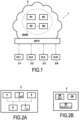
- FIG. 1 represents, in its environment, a system 1 in accordance with the invention, in a particular embodiment.
- a client is also called a "tenant" in English. It may be, for example, an information technology (IT) system of an organization or a company, a software application, etc.
- This client CLn has, in a known per se, to access the computing and network resources allocated to it by the cloud computing system 2, of a customer account registered with the cloud computing system. This customer account is protected by one or more authentication parameters (e.g., username, password, etc.) allowing the cloud computing system 2 to identify the client CLn.
- authentication parameters e.g., username, password, etc.
- Each of these clients comprises one or more users likely to access, via any type of device (e.g. via a server, a terminal such as a computer, a smartphone or a digital tablet, etc.) the computing and network resources allocated to the clients by the cloud computing system 2.
- a server e.g. via a server, a terminal such as a computer, a smartphone or a digital tablet, etc.
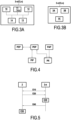
- the cloud computing system 2 has the hardware architecture of a computer, as shown in Figure 2A . It includes in particular a processor 4, a read-only memory 5, a random access memory 6, a non-volatile memory 7, as well as communication means 8 with in particular the devices 3-1, 3-2,...,3-N. These communication means 8 integrate for example here a network card, known per se and not detailed here, or any other means allowing communication on a telecommunications network.
- the hardware elements 4-8 of the cloud computing system 2 can be located on a single server of the cloud computing system 2 or be distributed over several devices (e.g. several computers) of the cloud computing system 2 communicating with each other and each having the hardware architecture illustrated in Figure 2A . In the embodiment described here, it is assumed that these hardware elements are co-located on a single server.
- the read-only memory 5 of the cloud computing system 2 constitutes a recording medium in accordance with the invention, readable by the processor 4 and on which is recorded a computer program PROG1 in accordance with the invention, comprising instructions for executing the steps of a management method in accordance with the invention, described later with reference to the Figure 5 in a particular embodiment.
- the supply 2A and reception 2B modules rely on a so-called unified control interface 9 of the cloud computing system 2, which the latter makes available to its clients to access the META meta-model and instantiate it.
- Such an interface may be, for example, an application programming interface of the API type (Application Programming Interface), known per se and not described in detail here, which allows the CLn clients to manipulate the various elements of the META meta-model provided by the computing system 2 and to instantiate it (i.e. to fill it in or to parameterize or configure it to create an access control model and an access control policy based on this model).
- API type Application Programming Interface
- modules 2A, 2B and 2C are described in more detail later, when describing the steps of the management method according to the invention.
- each 3-n device associated with each CLn client also referred to in the description as a "3-n client device"
- These means of communication 14 integrate for example here a network card, known per se and not detailed here, or any other means allowing communication on a telecommunications network.
- the read-only memory 11 of the device 3-n constitutes a recording medium in accordance with the invention, readable by the processor 10 and on which is recorded a computer program PROG2 in accordance with the invention, comprising instructions for the execution of the steps of an instantiation method in accordance with the invention, described later with reference to the Figure 5 in a particular embodiment.
- modules 3A, 3B and 3C are described in more detail later, when describing the steps of the instantiation method according to the invention.
- the cloud computing system 2 relies, to achieve the control of access to the resources that it makes available to its clients, on the XACML (eXtensible Access Control Markup Language) reference architecture defined by the IETF standard, illustrated schematically in Figure 4 .
- XACML eXtensible Access Control Markup Language
- this architecture provides a standard for deploying the software modules required to implement access control in an infrastructure such as, for example, the cloud computing system 2.
- the software modules defined by the XACML standard include in particular a PDP (for "Policy Decision Point”) decision-making module that applies the envisaged access control policy to user access requests received via one or more PEP (for "Policy Enforcement Point”) execution modules.
- the PDP module here returns a decision to authorize or not the requested access (instruction in accordance with the access control policy defined within the meaning of the invention).
- the PDP decision-making module can for this purpose query a PIP (for "Policy Information Point”) information module to obtain additional information on the users at the origin of these requests or any other information necessary for decision-making not included in the requests.
- the XACML standard also provides a PAP (for "Policy Administration Point”) software module for managing access policies and a PR (for "Policy Repository”) directory in which the access policies to be applied are stored.
- the functional modules 2A and 2B of the cloud computing system 2 allowing the definition for each client CLn of the cloud computing system 2 of an access control model ACMn and an associated policy ACPn are integrated into the PAP module. It is noted that in the embodiment described here, the attribute categories defined for each access control model ACMn and each client CLn are stored in the PIP module, while the rules defining the APCn access control policy of the CLn client are stored in the PR directory.
- the 2C security functional module which is configured to apply to requests from users of a CLn client the ACPn access control policy and the ACMn access control model defined for this client, is integrated into the PDP module.
- the cloud computing system 2 relies in accordance with the invention, to ensure access control to the RESS resources that it makes available to its clients CL1,...,CLN, on a meta-model META that it provides via the API 9 to the clients CL1,...,CLN to configure and create their access policies and the access control models on which they wish to base these policies.
- This meta-model META comprises for this purpose a plurality of elements allowing each client CLn, via the instantiation of the meta-model via the API 9, to define its access control model ACMn and its access control policy ACPn.
- Instantiating metadata and meta-rules creates the ACMn access control model.
- Instantiating data, rules, scope, and value set defines the ACPn access control policy based on the ACMn access control model.
- the meta-model META is described in the form of instructions in a computer file FILE according to the invention stored in the non-volatile memory 7 of the cloud computing system 2.
- No limitation is attached to the computer language used to describe the meta-model META in the file FILE. It can be described for example using the known languages JSON (JavaScript Object Notation), XML (eXtensible Markup Language) or YAML (Yet Another Markup Language).
- the META meta-model by its generic nature, allows the instantiation, in other words the creation, of very diverse access control models. It can be used in particular to instantiate known access control models such as, for example, an access control model of the RBAC, OrBAC, ACL, DTE, ABAC or MLS type, as illustrated later.
- the META meta-model can also be easily used to instantiate other access control models, or variants of known access control models based on advanced characteristics such as, for example, the notions of session, delegation, etc.
- the Figure 5 represents the main steps of the management process implemented by the cloud computing system 2 to manage access to its RESS resources by users associated with its clients CL1,...,CLN, and the main steps of the instantiation process implemented by each 3-n client device of each CLn client to specify to the cloud computing system 2, via the instantiation of the META meta-model described previously, its ACPn access control policy and the ACMn access control model on which this policy is based.
- the latter dynamically and virtually allocates resources Rn to it from among its RESS resources (step E10) and invites it to define the access control policy that it wishes to apply to control access to the resources Rn by its users.
- the cloud computing system 2 provides the device 3-n of the client CLn, via its interface 9 and its provision module 2A (integrated in the XACML PAP module of the cloud computing system 2), with the meta-model META (step E20).
- the client CLn via the instantiation module 3B of the device 3-n and the interface 9 made available by the cloud computing system 2, instantiates the meta-model META obtained so as to create the access control model ACMn and the access control policy ACPn based on this model that it wishes to apply to the resources Rn applied to it (step E30).
- the CLn client informs (i.e. sets or configures), via the 3B instantiation module, the different elements of the META meta-model in the interface 9.
- the access control model ACMn and the access control policy ACPn defined by the instantiation module 3B of the device 3-n constitute an instance of the meta-model META within the meaning of the invention. They are provided by the provision module 3C of the device 3-n via the interface 9 to the cloud computing system 2 (step E40). They are received by its reception module 2B (integrated in the XACML PAP module of the cloud computing system 2) and stored in its non-volatile memory 7 for example (in the PIP and PR modules defined by the XACML architecture described previously).
- the cloud computing system 2 is able to apply, via its security module 2C (integrated in its XACML PDP module), the access control policy ACPn defined by the client CLn to any request coming from a user of the client CLn aiming to access a resource chosen from the resources Rn allocated to the client CLn (step E50).
- the security module 2C relies for this purpose on the software modules PIP and PR described previously of the XACML architecture.
Landscapes
- Engineering & Computer Science (AREA)
- Business, Economics & Management (AREA)
- Human Resources & Organizations (AREA)
- Theoretical Computer Science (AREA)
- Entrepreneurship & Innovation (AREA)
- Strategic Management (AREA)
- Computer Security & Cryptography (AREA)
- General Engineering & Computer Science (AREA)
- General Physics & Mathematics (AREA)
- Physics & Mathematics (AREA)
- Economics (AREA)
- Computer Hardware Design (AREA)
- Operations Research (AREA)
- Databases & Information Systems (AREA)
- Data Mining & Analysis (AREA)
- Quality & Reliability (AREA)
- Tourism & Hospitality (AREA)
- Signal Processing (AREA)
- General Business, Economics & Management (AREA)
- Computer Networks & Wireless Communication (AREA)
- Computing Systems (AREA)
- Marketing (AREA)
- Development Economics (AREA)
- Game Theory and Decision Science (AREA)
- Educational Administration (AREA)
- Automation & Control Theory (AREA)
- Health & Medical Sciences (AREA)
- Bioethics (AREA)
- General Health & Medical Sciences (AREA)
- Software Systems (AREA)
- Storage Device Security (AREA)
Claims (13)
- Verfahren zur Verwaltung eines Cloud-Rechnersystems (2), das dazu fähig ist, einer Vielzahl von Clients (CL1,...,CLN) Rechner- und Netzwerkressourcen (RESS) zuzuweisen, wobei jeder Client (CLn) mit mindestens einem Benutzer assoziiert ist, der dazu in der Lage ist, auf die dem Client durch das Cloud-Rechnersystem zugewiesenen Rechner- und Netzwerkressourcen zuzugreifen, wobei das Verfahren durch das Cloud-Rechnersystem umgesetzt wird und für jeden Client des Cloud-Rechnersystems Folgendes beinhaltet:- einen Schritt des Bereitstellens (E20), für den Client und über eine Steuerungsschnittstelle (9), die der Vielzahl von Clients (9) gemein ist, eines einzigen Metamodells (META), das allen Clients gemein ist und das auf generische Weise eine Vielzahl von Elementen definiert, die es jedem der Clients gestattet, ein Zugriffssteuerungsmodell und eine Zugriffssteuerungspolitik, die für diesen Client spezifisch sind, zu definieren, um die Steuerung des Zugriffs auf die ihm zugewiesen Ressourcen durchzuführen;- einen Schritt des Empfangens (E40), über die Steuerungsschnittstelle (9), einer durch den Client bereitgestellten Instanz des Metamodells, wobei die Instanz für den Client ein durch den Client ausgewähltes Zugriffssteuerungsmodell und eine durch den Client ausgewählte Zugriffssteuerungspolitik, die auf diesem Zugriffssteuerungsmodell basiert, definiert; und- einen Schritt des Anwendens (E50) der Zugriffssteuerungspolitik, um einen Zugriff eines Benutzers des Clients auf mindestens eine dem Client durch das Cloud-Rechnersystem zugewiesene Ressource zu steuern.
- Verwaltungsverfahren nach Anspruch 1, wobei die Vielzahl von Elementen des Metamodells Folgendes beinhaltet:- einen Wirkungskreis des Zugriffssteuerungsmodells, der eine Vielzahl von Entitäten definiert, die von der Zugriffssteuerungspolitik des Clients betroffen sind;- Metadaten, die für jede Entität mindestens eine Attributkategorie definieren, die mit dieser Entität assoziiert ist;- Daten, die mögliche Werte für jede durch die Metadaten definierte Attributkategorie definieren;- mindestens eine Metaregel, die eine oder mehrere durch die Metadaten definierte Attributkategorien identifiziert, die dazu verwendet werden, eine Anweisung in Übereinstimmung mit der Zugriffssteuerungspolitik des Clients bereitzustellen;- mindestens eine Zugriffssteuerungsregel, die auf der mindestens einen Metaregel basiert und eine Anweisung in Übereinstimmung mit der Zugriffssteuerungspolitik des Clients bereitstellt; und- einen Satz Werte, die der Client jeder Entität, die für diesen Client in dem Wirkungskreis des Zugriffssteuerungsmodells definiert ist, für jede Attributkategorie, die mit dieser Entität assoziiert ist und in einer Metaregel enthalten ist, zuordnet, wobei die zugeordneten Werte aus den Daten ausgewählt werden.
- Verfahren nach Anspruch 2, wobei die Vielzahl von Entitäten mindestens ein Subjekt und/oder mindestens ein Objekt und/oder mindestens eine Aktion beinhaltet.
- Verfahren nach Anspruch 2 oder 3, wobei mindestens eine Attributkategorie, die für eine Entität definiert ist, aus Folgendem ausgewählt ist:- einem Sicherheitsniveau;- einer Rolle;- einem Typ; und- einer Domäne.
- Verfahren nach einem der Ansprüche 2 bis 4, wobei mindestens eine durch die mindestens eine Regel bereitgestellte Anweisung eine Gewährung oder eine Verweigerung eines Zugriffs auf eine bestimmte Ressource, die dem Client durch das Cloud-Rechnersystem zugewiesen wird, beinhaltet.
- Verfahren nach einem der Ansprüche 1 bis 5, wobei die durch den Client bereitgestellte Instanz des Metamodells eine Zugriffssteuerungsmodell vom Typ RBAC, OrBAC, ACL, DTE, ABAC oder MLS definiert.
- Verfahren zur Instanziierung durch einen Client (CL1,...,CLN) eines Cloud-Rechnersystems (2), das dazu fähig ist, einer Vielzahl von Clients (CL1,...,CLN) Rechner- und Netzwerkressourcen (RESS) zuzuweisen, wobei jeder Client mit mindestens einem Benutzer assoziiert ist, der dazu in der Lage ist, auf die dem Client durch das Cloud-Rechnersystem zugewiesenen Rechner- und Netzwerkressourcen zuzugreifen, wobei das Verfahren Folgendes beinhaltet:- einen Schritt des Erhaltens (E20), über eine Steuerungsschnittstelle (9), die der Vielzahl von Clients (9) gemein ist, eines Metamodells (META), das durch das Cloud-Rechnersystem bereitgestellt wird und eine Vielzahl von Elementen beinhaltet, die es dem Client gestattet, ein Zugriffssteuerungsmodell und eine Zugriffssteuerungspolitik, die für diesen Client spezifisch sind, zu definieren, um die Steuerung des Zugriffs auf die ihm zugewiesenen Ressourcen durchzuführen, wobei das Metamodell (META) ein einziges Metamodell ist, das allen Clients der Vielzahl von Clients gemein ist und die Vielzahl von Elementen generisch definiert;- einen Schritt des Instanziierens (E30) des Metamodells, wodurch eine Instanz erzeugt wird, die für den Client ein Zugriffssteuerungsmodell vom Typ RBAC, OrBAC, ACL, DTE, ABAC oder MLS, das durch den Client ausgewählt wird, und eine Zugriffssteuerungspolitik, die durch den Client ausgewählt wird und auf diesem Zugriffssteuerungsmodell basiert, definiert; und- einen Schritt des Bereitstellens (E40) der Instanz für das Cloud-Rechnersystem über die Steuerungsschnittstelle (9).
- Instanziierungsverfahren nach Anspruch 7, wobei die Vielzahl von Elementen des Metamodells Folgendes beinhaltet:- einen Wirkungskreis des Zugriffssteuerungsmodells, der eine Vielzahl von Entitäten definiert, die von der Zugriffssteuerungspolitik des Clients betroffen sind;- Metadaten, die für jede Entität mindestens eine Attributkategorie definieren, die mit dieser Entität assoziiert ist;- Daten, die mögliche Werte für jede durch die Metadaten definierte Attributkategorie definieren;- mindestens eine Metaregel, die mindestens eine durch die Metadaten definierte Attributkategorie identifiziert, die dazu verwendet wird, eine Anweisung in Übereinstimmung mit der Zugriffssteuerungspolitik des Clients bereitzustellen;- mindestens eine Zugriffssteuerungsregel, die die mindestens eine Metaregel definiert und eine Anweisung in Übereinstimmung mit der Zugriffssteuerungspolitik des Clients bereitstellt; und- einen Satz Werte, die der Client jeder Entität, die für diesen Client in dem Wirkungskreis des Zugriffssteuerungsmodells definiert ist, für jede Attributkategorie, die mit dieser Entität assoziiert ist und in einer Metaregel enthalten ist, zuordnet, wobei die zugeordneten Werte aus den Daten ausgewählt werden.
- Computerprogramm (PROG1,PROG2), das Anweisungen umfasst, die bei der Ausführung des Programms durch einen Computer die Schritte des Verwaltungsverfahrens nach einem der Ansprüche 1 bis 6 oder des Instanziierungsverfahrens nach Anspruch 7 oder 8 ausführen.
- Computerlesbares Speichermedium, auf dem ein Computerprogramm nach Anspruch 9 gespeichert ist.
- Cloud-Rechnersystem (2), das dazu fähig ist, einer Vielzahl von Clients (CL1,...,CLN) Rechner- und Netzwerkressourcen (RESS) zuzuweisen, wobei jeder Client (CL-n) mit mindestens einem Benutzer assoziiert ist, der dazu in der Lage ist, auf die dem Client durch das Cloud-Rechnersystem zugewiesenen Rechner- und Netzwerkressourcen zuzugreifen, wobei das System Folgendes beinhaltet:- ein Bereitstellungsmodul (2A), das dazu konfiguriert ist, jedem Client des Cloud-Rechnersystems über eine Steuerungsschnittstelle (9), die der Vielzahl von Clients (9) gemein ist, ein einziges Metamodell (META) bereitzustellen, das allen Clients gemein ist und auf generische Weise eine Vielzahl von Elementen definiert, die es jedem der Clients gestattet, ein Zugriffssteuerungsmodell und eine Zugriffssteuerungspolitik, die für diesen Client spezifisch sind, zu definieren, um die Steuerung des Zugriffs auf die ihm zugewiesenen Ressourcen durchzuführen;- ein Empfangsmodul (2B), das dazu fähig ist, über die Steuerungsschnittstelle (9) eine durch jeden der Clients bereitgestellte Instanz des Metamodells zu empfangen, wobei die Instanz für diesen Client ein durch diesen Client ausgewähltes Zugriffssteuerungsmodell und eine durch diesen Client ausgewählte Zugriffssteuerungspolitik, die auf diesem Zugriffssteuerungsmodell basiert, definiert; und- ein Sicherheitsmodul (2C), das dazu konfiguriert ist, die Zugriffssteuerungspolitik jedes der Clients anzuwenden, um einen Zugriff eines Benutzers dieses Clients auf mindestens eine diesem Client durch das Cloud-Rechnersystem zugewiesene Ressource zu steuern.
- Vorrichtung (3-1,...,3-N) eines Clients (CL1,...,CLN) eines Cloud-Rechnersystems (2), das dazu fähig ist, einer Vielzahl von Clients Rechner- und Netzwerkressourcen (RESS) zuzuweisen, wobei jeder Client mit mindestens einem Benutzer assoziiert ist, der dazu in der Lage ist, auf die dem Client durch das Cloud-Rechnersystem zugewiesenen Rechner- und Netzwerkressourcen zuzugreifen, wobei die Vorrichtung Folgendes beinhaltet:- ein Erhaltungsmodul (3A), das dazu konfiguriert ist, über eine Steuerungsschnittstelle (9), die der Vielzahl von Clients (9) gemein ist, ein Metamodell (META) zu erhalten, das durch das Cloud-Rechnersystem bereitgestellt wird und eine Vielzahl von Elementen beinhaltet, die es dem Client gestattet, ein Zugriffssteuerungsmodell und eine Zugriffssteuerungspolitik, die für diesen Client spezifisch sind, zu definieren, um die Steuerung des Zugriffs auf die ihm zugewiesenen Ressourcen durchzuführen, wobei das Metamodell (META) ein einziges Metamodell ist, das allen Clients der Vielzahl von Clients gemein ist und die Vielzahl von Elementen generisch definiert;- ein Modul zur Instanziierung (3B) des Metamodells, das dazu konfiguriert ist, eine Instanz des Metamodells zu erzeugen, die für den Client ein Zugriffssteuerungsmodell vom Typ RBAC, OrBAC, ACL, DTE, ABAC oder MLS, das durch den Client ausgewählt wird, und eine Zugriffssteuerungspolitik, die durch den Client ausgewählt wird und auf diesem Zugriffssteuerungsmodell basiert, definiert; und- ein Bereitstellungsmodul (3C), das dazu konfiguriert ist, dem Cloud-Rechnersystem die Instanz über die Steuerungsschnittstelle (9) bereitzustellen.
- System (1), beinhaltend:- ein Cloud-Rechnersystem (2) nach Anspruch 12, das dazu fähig ist, einer Vielzahl von Clients Rechner- und Netzwerkressourcen zuzuweisen, wobei jeder Client mit mindestens einem Benutzer assoziiert ist, der dazu in der Lage ist, auf die dem Client durch das Cloud-Rechnersystem zugewiesenen Rechner- und Netzwerkressourcen zuzugreifen; und- eine Vielzahl von Vorrichtungen (3-1,...,3-N) der Clients des Cloud-Rechnersystems nach Anspruch 12.
Applications Claiming Priority (2)
| Application Number | Priority Date | Filing Date | Title |
|---|---|---|---|
| FR1753493A FR3065554A1 (fr) | 2017-04-21 | 2017-04-21 | Procede de gestion d'un systeme informatique en nuage |
| PCT/FR2018/050942 WO2018193191A1 (fr) | 2017-04-21 | 2018-04-13 | Procédé de gestion d'un système informatique en nuage |
Publications (2)
| Publication Number | Publication Date |
|---|---|
| EP3612970A1 EP3612970A1 (de) | 2020-02-26 |
| EP3612970B1 true EP3612970B1 (de) | 2025-03-19 |
Family
ID=59649818
Family Applications (1)
| Application Number | Title | Priority Date | Filing Date |
|---|---|---|---|
| EP18720334.4A Active EP3612970B1 (de) | 2017-04-21 | 2018-04-13 | Verfahren zur verwaltung eines cloud-rechnersystems |
Country Status (5)
| Country | Link |
|---|---|
| US (1) | US11621961B2 (de) |
| EP (1) | EP3612970B1 (de) |
| ES (1) | ES3030839T3 (de) |
| FR (1) | FR3065554A1 (de) |
| WO (1) | WO2018193191A1 (de) |
Families Citing this family (6)
| Publication number | Priority date | Publication date | Assignee | Title |
|---|---|---|---|---|
| FR3065554A1 (fr) * | 2017-04-21 | 2018-10-26 | Orange | Procede de gestion d'un systeme informatique en nuage |
| US11750609B2 (en) * | 2017-04-28 | 2023-09-05 | Cyberark Software Ltd. | Dynamic computing resource access authorization |
| US11297108B2 (en) * | 2018-12-28 | 2022-04-05 | Comcast Cable Communications, Llc | Methods and systems for stateful network security |
| US20230179634A1 (en) * | 2021-12-02 | 2023-06-08 | International Business Machines Corporation | Secure policy distribution in a cloud environment |
| US11882057B2 (en) * | 2022-03-28 | 2024-01-23 | Bank Of America Corporation | Pluggable cloud security system |
| CN119337359B (zh) * | 2024-12-18 | 2025-05-30 | 广州赛意信息科技股份有限公司 | 一种基于元模型的权限控制方法、装置及存储介质 |
Family Cites Families (70)
| Publication number | Priority date | Publication date | Assignee | Title |
|---|---|---|---|---|
| NO326260B1 (no) * | 1997-09-29 | 2008-10-27 | Ericsson Telefon Ab L M | Fremgangsmate for a rute anrop fra en terminal i et forste telekommunikasjonsnett til en terminal i et andre telekommunikasjonsnett |
| US6968364B1 (en) * | 2000-03-30 | 2005-11-22 | Microsoft Corporation | System and method to facilitate selection and programming of an associated audio/visual system |
| US20030182413A1 (en) * | 2000-06-02 | 2003-09-25 | Allen Matthew Robert | System and method for selecting a service provider |
| US7484237B2 (en) * | 2004-05-13 | 2009-01-27 | Hewlett-Packard Development Company, L.P. | Method and apparatus for role-based security policy management |
| US7949123B1 (en) * | 2004-09-28 | 2011-05-24 | Avaya Inc. | Wait time predictor for long shelf-life work |
| US7707288B2 (en) * | 2005-01-06 | 2010-04-27 | International Business Machines Corporation | Automatically building a locally managed virtual node grouping to handle a grid job requiring a degree of resource parallelism within a grid environment |
| US20060218156A1 (en) * | 2005-02-22 | 2006-09-28 | Diane Schechinger | Schechinger/Fennell System and method for filtering search results by utilizing user-selected parametric values from a self-defined drop-down list on a website" |
| US9015324B2 (en) * | 2005-03-16 | 2015-04-21 | Adaptive Computing Enterprises, Inc. | System and method of brokering cloud computing resources |
| US20070067296A1 (en) * | 2005-08-19 | 2007-03-22 | Malloy Patrick J | Network capacity planning |
| US7895055B2 (en) * | 2005-12-14 | 2011-02-22 | Siemens Aktiengesellschaft | Method and system to optimize and automate clinical workflow |
| US7793101B2 (en) * | 2006-10-19 | 2010-09-07 | Novell, Inc. | Verifiable virtualized storage port assignments for virtual machines |
| US8171485B2 (en) * | 2007-03-26 | 2012-05-01 | Credit Suisse Securities (Europe) Limited | Method and system for managing virtual and real machines |
| US20080320482A1 (en) * | 2007-06-20 | 2008-12-25 | Dawson Christopher J | Management of grid computing resources based on service level requirements |
| US20090086945A1 (en) * | 2007-09-27 | 2009-04-02 | Buchanan Annette L | Methods and Apparatus for Selecting a Service Provider on a Per-Call Basis |
| US20090178102A1 (en) * | 2008-01-04 | 2009-07-09 | Khaled Alghathbar | Implementing Security Policies in Software Development Tools |
| US8250215B2 (en) * | 2008-08-12 | 2012-08-21 | Sap Ag | Method and system for intelligently leveraging cloud computing resources |
| US7987262B2 (en) * | 2008-11-19 | 2011-07-26 | Accenture Global Services Limited | Cloud computing assessment tool |
| US8621476B2 (en) * | 2008-12-15 | 2013-12-31 | Korea Advanced Institute Of Science And Technology | Method and apparatus for resource management in grid computing systems |
| KR101626117B1 (ko) * | 2009-06-22 | 2016-05-31 | 삼성전자주식회사 | 클라우드 스토리지를 제공하는 클라이언트, 중개 서버 및 방법 |
| US8244559B2 (en) * | 2009-06-26 | 2012-08-14 | Microsoft Corporation | Cloud computing resource broker |
| US8285681B2 (en) * | 2009-06-30 | 2012-10-09 | Commvault Systems, Inc. | Data object store and server for a cloud storage environment, including data deduplication and data management across multiple cloud storage sites |
| US8886788B2 (en) * | 2009-08-31 | 2014-11-11 | Accenture Global Services Limited | Enterprise-level management, control and information aspects of cloud console |
| US20110093847A1 (en) * | 2009-10-15 | 2011-04-21 | Shah Dharmesh R | Application Hosting Service for Cloud Environments Using Dynamic Machine Images |
| US20110145094A1 (en) * | 2009-12-11 | 2011-06-16 | International Business Machines Corporation | Cloud servicing brokering |
| US20110154353A1 (en) * | 2009-12-22 | 2011-06-23 | Bmc Software, Inc. | Demand-Driven Workload Scheduling Optimization on Shared Computing Resources |
| US9116731B2 (en) * | 2010-04-07 | 2015-08-25 | Accenture Global Services Limited | Cloud reference model framework |
| US8886806B2 (en) * | 2010-04-07 | 2014-11-11 | Accenture Global Services Limited | Generic control layer in a cloud environment |
| US20110282793A1 (en) * | 2010-05-13 | 2011-11-17 | Microsoft Corporation | Contextual task assignment broker |
| CN102255933B (zh) * | 2010-05-20 | 2016-03-30 | 中兴通讯股份有限公司 | 云服务中介、云计算方法及云系统 |
| US8504689B2 (en) * | 2010-05-28 | 2013-08-06 | Red Hat, Inc. | Methods and systems for cloud deployment analysis featuring relative cloud resource importance |
| US20120016721A1 (en) * | 2010-07-15 | 2012-01-19 | Joseph Weinman | Price and Utility Optimization for Cloud Computing Resources |
| US9678688B2 (en) * | 2010-07-16 | 2017-06-13 | EMC IP Holding Company LLC | System and method for data deduplication for disk storage subsystems |
| US20120054731A1 (en) * | 2010-08-24 | 2012-03-01 | International Business Machines Corporation | Method, System and Computer Programs to Assist Migration to a Cloud Computing Environment |
| EP2609502A4 (de) * | 2010-08-24 | 2017-03-29 | Jay Moorthi | Verfahren und vorrichtung zum löschen von cloud-computing-befehlen |
| WO2012031165A2 (en) * | 2010-09-02 | 2012-03-08 | Zaretsky, Howard | System and method of cost oriented software profiling |
| WO2012031112A2 (en) * | 2010-09-03 | 2012-03-08 | Time Warner Cable, Inc. | Methods and systems for managing a virtual data center with embedded roles based access control |
| US9043219B2 (en) * | 2010-09-10 | 2015-05-26 | Ricoh Co., Ltd. | Automatic and semi-automatic selection of service or processing providers |
| US8886981B1 (en) * | 2010-09-15 | 2014-11-11 | F5 Networks, Inc. | Systems and methods for idle driven scheduling |
| US9235442B2 (en) * | 2010-10-05 | 2016-01-12 | Accenture Global Services Limited | System and method for cloud enterprise services |
| US8909767B2 (en) * | 2010-10-13 | 2014-12-09 | Rackware, Inc. | Cloud federation in a cloud computing environment |
| US8713147B2 (en) * | 2010-11-24 | 2014-04-29 | Red Hat, Inc. | Matching a usage history to a new cloud |
| US8965957B2 (en) * | 2010-12-15 | 2015-02-24 | Sap Se | Service delivery framework |
| US20120179899A1 (en) * | 2011-01-07 | 2012-07-12 | International Business Machines Corporation | Upgradeable processor enabling hardware licensing |
| US20120215582A1 (en) * | 2011-02-23 | 2012-08-23 | International Business Machines Corporation | Executing workflows based on service level agreements |
| US8959221B2 (en) * | 2011-03-01 | 2015-02-17 | Red Hat, Inc. | Metering cloud resource consumption using multiple hierarchical subscription periods |
| US8909785B2 (en) * | 2011-08-08 | 2014-12-09 | International Business Machines Corporation | Smart cloud workload balancer |
| US8793378B2 (en) * | 2011-09-01 | 2014-07-29 | International Business Machines Corporation | Identifying services and associated capabilities in a networked computing environment |
| US9781205B2 (en) * | 2011-09-12 | 2017-10-03 | Microsoft Technology Licensing, Llc | Coordination engine for cloud selection |
| US8528100B2 (en) * | 2011-09-17 | 2013-09-03 | International Business Machines Corporation | Software license reconciliation within a cloud computing infrastructure |
| US8924555B2 (en) * | 2011-10-05 | 2014-12-30 | Verizon Patent And Licensing Inc. | Network resource consolidation and decommissioning analysis |
| US9053577B2 (en) * | 2011-10-27 | 2015-06-09 | Hewlett-Packard Development Company, L.P. | Reflecting values for a metric in a display |
| US9229749B2 (en) * | 2011-10-31 | 2016-01-05 | Cisco Technology, Inc. | Compute and storage provisioning in a cloud environment |
| US20130117157A1 (en) * | 2011-11-09 | 2013-05-09 | Gravitant, Inc. | Optimally sourcing services in hybrid cloud environments |
| US9336061B2 (en) * | 2012-01-14 | 2016-05-10 | International Business Machines Corporation | Integrated metering of service usage for hybrid clouds |
| US9391855B2 (en) * | 2012-05-09 | 2016-07-12 | Everbridge, Inc. | Systems and methods for simulating a notification system |
| US20130346543A1 (en) * | 2012-06-22 | 2013-12-26 | International Business Machines Corporation | Cloud service selector |
| US9251517B2 (en) * | 2012-08-28 | 2016-02-02 | International Business Machines Corporation | Optimizing service factors for computing resources in a networked computing environment |
| US20140136571A1 (en) * | 2012-11-12 | 2014-05-15 | Ecole Polytechnique Federale De Lausanne (Epfl) | System and Method for Optimizing Data Storage in a Distributed Data Storage Environment |
| US9124498B2 (en) * | 2013-02-14 | 2015-09-01 | Xerox Corporation | System and method for identifying optimal cloud configuration in black-box environments to achieve target throughput with best price based on performance capability benchmarking |
| US20140245141A1 (en) * | 2013-02-26 | 2014-08-28 | Microsoft Corporation | Contextual user assistance for cloud services |
| US20140280964A1 (en) * | 2013-03-15 | 2014-09-18 | Gravitant, Inc. | Systems, methods and computer readable mediums for implementing cloud service brokerage platform functionalities |
| US9818127B2 (en) * | 2013-03-15 | 2017-11-14 | International Business Machines Corporation | Implementing comparison of cloud service provider package offerings |
| US20140278807A1 (en) * | 2013-03-15 | 2014-09-18 | Cloudamize, Inc. | Cloud service optimization for cost, performance and configuration |
| US20140324647A1 (en) * | 2013-03-15 | 2014-10-30 | Gravitant, Inc. | Cloud services expenditure analytics |
| US20150206207A1 (en) * | 2013-03-15 | 2015-07-23 | Gravitant, Inc | Pricing rules management functionality within a cloud service brokerage platform |
| FR3007551A1 (fr) * | 2013-06-25 | 2014-12-26 | France Telecom | Procede et serveur de traitement d'une requete d'acces d'un terminal a une ressource informatique |
| US20150193128A1 (en) * | 2014-01-06 | 2015-07-09 | Siegfried Luft | Virtual data center graphical user interface |
| US9563771B2 (en) * | 2014-01-22 | 2017-02-07 | Object Security LTD | Automated and adaptive model-driven security system and method for operating the same |
| FR3065554A1 (fr) * | 2017-04-21 | 2018-10-26 | Orange | Procede de gestion d'un systeme informatique en nuage |
| US10521223B1 (en) * | 2017-08-22 | 2019-12-31 | Wells Fargo Bank, N.A. | Systems and methods of a metadata orchestrator augmenting application development |
-
2017
- 2017-04-21 FR FR1753493A patent/FR3065554A1/fr not_active Withdrawn
-
2018
- 2018-04-13 ES ES18720334T patent/ES3030839T3/es active Active
- 2018-04-13 US US16/606,952 patent/US11621961B2/en active Active
- 2018-04-13 EP EP18720334.4A patent/EP3612970B1/de active Active
- 2018-04-13 WO PCT/FR2018/050942 patent/WO2018193191A1/fr not_active Ceased
Also Published As
| Publication number | Publication date |
|---|---|
| WO2018193191A1 (fr) | 2018-10-25 |
| US11621961B2 (en) | 2023-04-04 |
| EP3612970A1 (de) | 2020-02-26 |
| ES3030839T3 (en) | 2025-07-02 |
| US20200195649A1 (en) | 2020-06-18 |
| FR3065554A1 (fr) | 2018-10-26 |
Similar Documents
| Publication | Publication Date | Title |
|---|---|---|
| EP3612970B1 (de) | Verfahren zur verwaltung eines cloud-rechnersystems | |
| US12149531B2 (en) | Access control in microservice architectures | |
| US10848520B2 (en) | Managing access to resources | |
| EP2819052B1 (de) | Verfahren und Server zur Bearbeitung einer Zugriffsanfrage von einem Endgerät auf eine IT-Ressource | |
| EP3008872B1 (de) | Verfahren zur authentifizierung eines endgeräts durch ein gateway eines internen netzes mit schutz durch eine einheit zur bereitstellung von sicherem zugang | |
| US11102196B2 (en) | Authenticating API service invocations | |
| US20110173108A1 (en) | Gateway for enabling cloud-based service exposure | |
| FR2996018A1 (fr) | Dispositif et procede de gestion de l'acces a un ensemble de ressources informatiques et reseaux mis a la disposition d'une entite par un systeme informatique en nuage | |
| US20140033278A1 (en) | System and method of securing sharing of resources which require consent of multiple resource owners using group uri's | |
| US20190108359A1 (en) | Use case driven granular application and browser data loss prevention controls | |
| EP3162032A1 (de) | Orchestrierung von physikalischen und virtuellen ressourcen für die lieferung von digitalem inhalt | |
| EP2881886B1 (de) | Verfahren zur herstellung einer vertrauensbeziehung für das teilen von ressourcen zweier teilnehmer in einem cloud-netzwerk | |
| US10135876B2 (en) | Security compliance framework usage | |
| US20230179634A1 (en) | Secure policy distribution in a cloud environment | |
| WO2018193190A1 (fr) | Procédé de gestion d'un système informatique à allocation dynamique de ressources | |
| EP2961130B1 (de) | Steuerungsverfahren der zugriffskontrolle in einem cloud-netz | |
| FR3016227A1 (fr) | Procede de gestion des politiques de securite d'une pluralite de locataires appartenant a un meme nuage | |
| EP2038797B1 (de) | Einheit und verfahren zur verwaltung von mindestens einem kanal in einer zugriffssitzung für den zugriff auf einen dienst in einem netz | |
| FR3044192A1 (fr) | Procede de distribution de droits sur un service et plateforme de service |
Legal Events
| Date | Code | Title | Description |
|---|---|---|---|
| STAA | Information on the status of an ep patent application or granted ep patent |
Free format text: STATUS: UNKNOWN |
|
| STAA | Information on the status of an ep patent application or granted ep patent |
Free format text: STATUS: THE INTERNATIONAL PUBLICATION HAS BEEN MADE |
|
| PUAI | Public reference made under article 153(3) epc to a published international application that has entered the european phase |
Free format text: ORIGINAL CODE: 0009012 |
|
| STAA | Information on the status of an ep patent application or granted ep patent |
Free format text: STATUS: REQUEST FOR EXAMINATION WAS MADE |
|
| 17P | Request for examination filed |
Effective date: 20191017 |
|
| AK | Designated contracting states |
Kind code of ref document: A1 Designated state(s): AL AT BE BG CH CY CZ DE DK EE ES FI FR GB GR HR HU IE IS IT LI LT LU LV MC MK MT NL NO PL PT RO RS SE SI SK SM TR |
|
| AX | Request for extension of the european patent |
Extension state: BA ME |
|
| RAP1 | Party data changed (applicant data changed or rights of an application transferred) |
Owner name: ORANGE |
|
| DAV | Request for validation of the european patent (deleted) | ||
| DAX | Request for extension of the european patent (deleted) | ||
| STAA | Information on the status of an ep patent application or granted ep patent |
Free format text: STATUS: EXAMINATION IS IN PROGRESS |
|
| 17Q | First examination report despatched |
Effective date: 20210628 |
|
| RAP3 | Party data changed (applicant data changed or rights of an application transferred) |
Owner name: ORANGE |
|
| GRAP | Despatch of communication of intention to grant a patent |
Free format text: ORIGINAL CODE: EPIDOSNIGR1 |
|
| STAA | Information on the status of an ep patent application or granted ep patent |
Free format text: STATUS: GRANT OF PATENT IS INTENDED |
|
| INTG | Intention to grant announced |
Effective date: 20241128 |
|
| GRAS | Grant fee paid |
Free format text: ORIGINAL CODE: EPIDOSNIGR3 |
|
| GRAA | (expected) grant |
Free format text: ORIGINAL CODE: 0009210 |
|
| STAA | Information on the status of an ep patent application or granted ep patent |
Free format text: STATUS: THE PATENT HAS BEEN GRANTED |
|
| AK | Designated contracting states |
Kind code of ref document: B1 Designated state(s): AL AT BE BG CH CY CZ DE DK EE ES FI FR GB GR HR HU IE IS IT LI LT LU LV MC MK MT NL NO PL PT RO RS SE SI SK SM TR |
|
| REG | Reference to a national code |
Ref country code: GB Ref legal event code: FG4D Free format text: NOT ENGLISH |
|
| REG | Reference to a national code |
Ref country code: CH Ref legal event code: EP |
|
| REG | Reference to a national code |
Ref country code: IE Ref legal event code: FG4D Free format text: LANGUAGE OF EP DOCUMENT: FRENCH |
|
| REG | Reference to a national code |
Ref country code: DE Ref legal event code: R096 Ref document number: 602018080242 Country of ref document: DE |
|
| REG | Reference to a national code |
Ref country code: ES Ref legal event code: FG2A Ref document number: 3030839 Country of ref document: ES Kind code of ref document: T3 Effective date: 20250702 |
|
| PG25 | Lapsed in a contracting state [announced via postgrant information from national office to epo] |
Ref country code: RS Free format text: LAPSE BECAUSE OF FAILURE TO SUBMIT A TRANSLATION OF THE DESCRIPTION OR TO PAY THE FEE WITHIN THE PRESCRIBED TIME-LIMIT Effective date: 20250619 |
|
| PG25 | Lapsed in a contracting state [announced via postgrant information from national office to epo] |
Ref country code: FI Free format text: LAPSE BECAUSE OF FAILURE TO SUBMIT A TRANSLATION OF THE DESCRIPTION OR TO PAY THE FEE WITHIN THE PRESCRIBED TIME-LIMIT Effective date: 20250319 |
|
| PGFP | Annual fee paid to national office [announced via postgrant information from national office to epo] |
Ref country code: DE Payment date: 20250319 Year of fee payment: 8 |
|
| PGFP | Annual fee paid to national office [announced via postgrant information from national office to epo] |
Ref country code: ES Payment date: 20250506 Year of fee payment: 8 |
|
| REG | Reference to a national code |
Ref country code: LT Ref legal event code: MG9D |
|
| PG25 | Lapsed in a contracting state [announced via postgrant information from national office to epo] |
Ref country code: NO Free format text: LAPSE BECAUSE OF FAILURE TO SUBMIT A TRANSLATION OF THE DESCRIPTION OR TO PAY THE FEE WITHIN THE PRESCRIBED TIME-LIMIT Effective date: 20250619 |
|
| PG25 | Lapsed in a contracting state [announced via postgrant information from national office to epo] |
Ref country code: HR Free format text: LAPSE BECAUSE OF FAILURE TO SUBMIT A TRANSLATION OF THE DESCRIPTION OR TO PAY THE FEE WITHIN THE PRESCRIBED TIME-LIMIT Effective date: 20250319 |
|
| PG25 | Lapsed in a contracting state [announced via postgrant information from national office to epo] |
Ref country code: LV Free format text: LAPSE BECAUSE OF FAILURE TO SUBMIT A TRANSLATION OF THE DESCRIPTION OR TO PAY THE FEE WITHIN THE PRESCRIBED TIME-LIMIT Effective date: 20250319 |
|
| PG25 | Lapsed in a contracting state [announced via postgrant information from national office to epo] |
Ref country code: BG Free format text: LAPSE BECAUSE OF FAILURE TO SUBMIT A TRANSLATION OF THE DESCRIPTION OR TO PAY THE FEE WITHIN THE PRESCRIBED TIME-LIMIT Effective date: 20250319 Ref country code: GR Free format text: LAPSE BECAUSE OF FAILURE TO SUBMIT A TRANSLATION OF THE DESCRIPTION OR TO PAY THE FEE WITHIN THE PRESCRIBED TIME-LIMIT Effective date: 20250620 |
|
| REG | Reference to a national code |
Ref country code: NL Ref legal event code: MP Effective date: 20250319 |
|
| REG | Reference to a national code |
Ref country code: AT Ref legal event code: MK05 Ref document number: 1777545 Country of ref document: AT Kind code of ref document: T Effective date: 20250319 |
|
| PG25 | Lapsed in a contracting state [announced via postgrant information from national office to epo] |
Ref country code: NL Free format text: LAPSE BECAUSE OF FAILURE TO SUBMIT A TRANSLATION OF THE DESCRIPTION OR TO PAY THE FEE WITHIN THE PRESCRIBED TIME-LIMIT Effective date: 20250319 |
|
| PG25 | Lapsed in a contracting state [announced via postgrant information from national office to epo] |
Ref country code: SE Free format text: LAPSE BECAUSE OF FAILURE TO SUBMIT A TRANSLATION OF THE DESCRIPTION OR TO PAY THE FEE WITHIN THE PRESCRIBED TIME-LIMIT Effective date: 20250319 |
|
| PG25 | Lapsed in a contracting state [announced via postgrant information from national office to epo] |
Ref country code: SM Free format text: LAPSE BECAUSE OF FAILURE TO SUBMIT A TRANSLATION OF THE DESCRIPTION OR TO PAY THE FEE WITHIN THE PRESCRIBED TIME-LIMIT Effective date: 20250319 |
|
| PG25 | Lapsed in a contracting state [announced via postgrant information from national office to epo] |
Ref country code: PT Free format text: LAPSE BECAUSE OF FAILURE TO SUBMIT A TRANSLATION OF THE DESCRIPTION OR TO PAY THE FEE WITHIN THE PRESCRIBED TIME-LIMIT Effective date: 20250721 |
|
| PG25 | Lapsed in a contracting state [announced via postgrant information from national office to epo] |
Ref country code: PL Free format text: LAPSE BECAUSE OF FAILURE TO SUBMIT A TRANSLATION OF THE DESCRIPTION OR TO PAY THE FEE WITHIN THE PRESCRIBED TIME-LIMIT Effective date: 20250319 |
|
| PG25 | Lapsed in a contracting state [announced via postgrant information from national office to epo] |
Ref country code: AT Free format text: LAPSE BECAUSE OF FAILURE TO SUBMIT A TRANSLATION OF THE DESCRIPTION OR TO PAY THE FEE WITHIN THE PRESCRIBED TIME-LIMIT Effective date: 20250319 |
|
| PG25 | Lapsed in a contracting state [announced via postgrant information from national office to epo] |
Ref country code: CZ Free format text: LAPSE BECAUSE OF FAILURE TO SUBMIT A TRANSLATION OF THE DESCRIPTION OR TO PAY THE FEE WITHIN THE PRESCRIBED TIME-LIMIT Effective date: 20250319 Ref country code: EE Free format text: LAPSE BECAUSE OF FAILURE TO SUBMIT A TRANSLATION OF THE DESCRIPTION OR TO PAY THE FEE WITHIN THE PRESCRIBED TIME-LIMIT Effective date: 20250319 |
|
| PG25 | Lapsed in a contracting state [announced via postgrant information from national office to epo] |
Ref country code: RO Free format text: LAPSE BECAUSE OF FAILURE TO SUBMIT A TRANSLATION OF THE DESCRIPTION OR TO PAY THE FEE WITHIN THE PRESCRIBED TIME-LIMIT Effective date: 20250319 |
|
| PG25 | Lapsed in a contracting state [announced via postgrant information from national office to epo] |
Ref country code: SK Free format text: LAPSE BECAUSE OF FAILURE TO SUBMIT A TRANSLATION OF THE DESCRIPTION OR TO PAY THE FEE WITHIN THE PRESCRIBED TIME-LIMIT Effective date: 20250319 |
|
| PG25 | Lapsed in a contracting state [announced via postgrant information from national office to epo] |
Ref country code: IS Free format text: LAPSE BECAUSE OF FAILURE TO SUBMIT A TRANSLATION OF THE DESCRIPTION OR TO PAY THE FEE WITHIN THE PRESCRIBED TIME-LIMIT Effective date: 20250719 |
|
| REG | Reference to a national code |
Ref country code: CH Ref legal event code: H13 Free format text: ST27 STATUS EVENT CODE: U-0-0-H10-H13 (AS PROVIDED BY THE NATIONAL OFFICE) Effective date: 20251125 |
|
| PG25 | Lapsed in a contracting state [announced via postgrant information from national office to epo] |
Ref country code: LU Free format text: LAPSE BECAUSE OF NON-PAYMENT OF DUE FEES Effective date: 20250413 |
|
| PG25 | Lapsed in a contracting state [announced via postgrant information from national office to epo] |
Ref country code: MC Free format text: LAPSE BECAUSE OF FAILURE TO SUBMIT A TRANSLATION OF THE DESCRIPTION OR TO PAY THE FEE WITHIN THE PRESCRIBED TIME-LIMIT Effective date: 20250319 |
|
| REG | Reference to a national code |
Ref country code: DE Ref legal event code: R097 Ref document number: 602018080242 Country of ref document: DE |
|
| REG | Reference to a national code |
Ref country code: BE Ref legal event code: MM Effective date: 20250430 |
|
| PG25 | Lapsed in a contracting state [announced via postgrant information from national office to epo] |
Ref country code: DK Free format text: LAPSE BECAUSE OF FAILURE TO SUBMIT A TRANSLATION OF THE DESCRIPTION OR TO PAY THE FEE WITHIN THE PRESCRIBED TIME-LIMIT Effective date: 20250319 |
|
| PG25 | Lapsed in a contracting state [announced via postgrant information from national office to epo] |
Ref country code: BE Free format text: LAPSE BECAUSE OF NON-PAYMENT OF DUE FEES Effective date: 20250430 |
|
| PG25 | Lapsed in a contracting state [announced via postgrant information from national office to epo] |
Ref country code: CH Free format text: LAPSE BECAUSE OF NON-PAYMENT OF DUE FEES Effective date: 20250430 |
|
| PLBE | No opposition filed within time limit |
Free format text: ORIGINAL CODE: 0009261 |
|
| STAA | Information on the status of an ep patent application or granted ep patent |
Free format text: STATUS: NO OPPOSITION FILED WITHIN TIME LIMIT |
|
| REG | Reference to a national code |
Ref country code: CH Ref legal event code: L10 Free format text: ST27 STATUS EVENT CODE: U-0-0-L10-L00 (AS PROVIDED BY THE NATIONAL OFFICE) Effective date: 20260128 |
|
| 26N | No opposition filed |
Effective date: 20251222 |
|
| PGFP | Annual fee paid to national office [announced via postgrant information from national office to epo] |
Ref country code: GB Payment date: 20260319 Year of fee payment: 9 |
|
| PG25 | Lapsed in a contracting state [announced via postgrant information from national office to epo] |
Ref country code: IE Free format text: LAPSE BECAUSE OF NON-PAYMENT OF DUE FEES Effective date: 20250413 |
|
| PGFP | Annual fee paid to national office [announced via postgrant information from national office to epo] |
Ref country code: IT Payment date: 20260319 Year of fee payment: 9 |
|
| PGFP | Annual fee paid to national office [announced via postgrant information from national office to epo] |
Ref country code: FR Payment date: 20260320 Year of fee payment: 9 |