EP3611725A1 - Voice signal processing model training method, electronic device, and storage medium - Google Patents
Voice signal processing model training method, electronic device, and storage medium Download PDFInfo
- Publication number
- EP3611725A1 EP3611725A1 EP18880575.8A EP18880575A EP3611725A1 EP 3611725 A1 EP3611725 A1 EP 3611725A1 EP 18880575 A EP18880575 A EP 18880575A EP 3611725 A1 EP3611725 A1 EP 3611725A1
- Authority
- EP
- European Patent Office
- Prior art keywords
- task
- signal processing
- speech signal
- training
- layer
- Prior art date
- Legal status (The legal status is an assumption and is not a legal conclusion. Google has not performed a legal analysis and makes no representation as to the accuracy of the status listed.)
- Granted
Links
Images






Classifications
-
- G—PHYSICS
- G10—MUSICAL INSTRUMENTS; ACOUSTICS
- G10L—SPEECH ANALYSIS TECHNIQUES OR SPEECH SYNTHESIS; SPEECH RECOGNITION; SPEECH OR VOICE PROCESSING TECHNIQUES; SPEECH OR AUDIO CODING OR DECODING
- G10L25/00—Speech or voice analysis techniques not restricted to a single one of groups G10L15/00 - G10L21/00
- G10L25/27—Speech or voice analysis techniques not restricted to a single one of groups G10L15/00 - G10L21/00 characterised by the analysis technique
- G10L25/30—Speech or voice analysis techniques not restricted to a single one of groups G10L15/00 - G10L21/00 characterised by the analysis technique using neural networks
-
- G—PHYSICS
- G06—COMPUTING OR CALCULATING; COUNTING
- G06N—COMPUTING ARRANGEMENTS BASED ON SPECIFIC COMPUTATIONAL MODELS
- G06N3/00—Computing arrangements based on biological models
- G06N3/02—Neural networks
- G06N3/04—Architecture, e.g. interconnection topology
- G06N3/048—Activation functions
-
- G—PHYSICS
- G10—MUSICAL INSTRUMENTS; ACOUSTICS
- G10L—SPEECH ANALYSIS TECHNIQUES OR SPEECH SYNTHESIS; SPEECH RECOGNITION; SPEECH OR VOICE PROCESSING TECHNIQUES; SPEECH OR AUDIO CODING OR DECODING
- G10L15/00—Speech recognition
- G10L15/06—Creation of reference templates; Training of speech recognition systems, e.g. adaptation to the characteristics of the speaker's voice
- G10L15/063—Training
-
- G—PHYSICS
- G06—COMPUTING OR CALCULATING; COUNTING
- G06N—COMPUTING ARRANGEMENTS BASED ON SPECIFIC COMPUTATIONAL MODELS
- G06N3/00—Computing arrangements based on biological models
- G06N3/02—Neural networks
- G06N3/04—Architecture, e.g. interconnection topology
-
- G—PHYSICS
- G06—COMPUTING OR CALCULATING; COUNTING
- G06N—COMPUTING ARRANGEMENTS BASED ON SPECIFIC COMPUTATIONAL MODELS
- G06N3/00—Computing arrangements based on biological models
- G06N3/02—Neural networks
- G06N3/04—Architecture, e.g. interconnection topology
- G06N3/044—Recurrent networks, e.g. Hopfield networks
- G06N3/0442—Recurrent networks, e.g. Hopfield networks characterised by memory or gating, e.g. long short-term memory [LSTM] or gated recurrent units [GRU]
-
- G—PHYSICS
- G06—COMPUTING OR CALCULATING; COUNTING
- G06N—COMPUTING ARRANGEMENTS BASED ON SPECIFIC COMPUTATIONAL MODELS
- G06N3/00—Computing arrangements based on biological models
- G06N3/02—Neural networks
- G06N3/08—Learning methods
-
- G—PHYSICS
- G06—COMPUTING OR CALCULATING; COUNTING
- G06N—COMPUTING ARRANGEMENTS BASED ON SPECIFIC COMPUTATIONAL MODELS
- G06N3/00—Computing arrangements based on biological models
- G06N3/02—Neural networks
- G06N3/08—Learning methods
- G06N3/09—Supervised learning
-
- G—PHYSICS
- G10—MUSICAL INSTRUMENTS; ACOUSTICS
- G10L—SPEECH ANALYSIS TECHNIQUES OR SPEECH SYNTHESIS; SPEECH RECOGNITION; SPEECH OR VOICE PROCESSING TECHNIQUES; SPEECH OR AUDIO CODING OR DECODING
- G10L15/00—Speech recognition
- G10L15/08—Speech classification or search
- G10L15/16—Speech classification or search using artificial neural networks
-
- G—PHYSICS
- G10—MUSICAL INSTRUMENTS; ACOUSTICS
- G10L—SPEECH ANALYSIS TECHNIQUES OR SPEECH SYNTHESIS; SPEECH RECOGNITION; SPEECH OR VOICE PROCESSING TECHNIQUES; SPEECH OR AUDIO CODING OR DECODING
- G10L15/00—Speech recognition
- G10L15/08—Speech classification or search
- G10L15/18—Speech classification or search using natural language modelling
- G10L15/183—Speech classification or search using natural language modelling using context dependencies, e.g. language models
-
- G—PHYSICS
- G10—MUSICAL INSTRUMENTS; ACOUSTICS
- G10L—SPEECH ANALYSIS TECHNIQUES OR SPEECH SYNTHESIS; SPEECH RECOGNITION; SPEECH OR VOICE PROCESSING TECHNIQUES; SPEECH OR AUDIO CODING OR DECODING
- G10L15/00—Speech recognition
- G10L15/22—Procedures used during a speech recognition process, e.g. man-machine dialogue
-
- G—PHYSICS
- G10—MUSICAL INSTRUMENTS; ACOUSTICS
- G10L—SPEECH ANALYSIS TECHNIQUES OR SPEECH SYNTHESIS; SPEECH RECOGNITION; SPEECH OR VOICE PROCESSING TECHNIQUES; SPEECH OR AUDIO CODING OR DECODING
- G10L17/00—Speaker identification or verification techniques
- G10L17/04—Training, enrolment or model building
-
- G—PHYSICS
- G10—MUSICAL INSTRUMENTS; ACOUSTICS
- G10L—SPEECH ANALYSIS TECHNIQUES OR SPEECH SYNTHESIS; SPEECH RECOGNITION; SPEECH OR VOICE PROCESSING TECHNIQUES; SPEECH OR AUDIO CODING OR DECODING
- G10L17/00—Speaker identification or verification techniques
- G10L17/18—Artificial neural networks; Connectionist approaches
-
- G—PHYSICS
- G10—MUSICAL INSTRUMENTS; ACOUSTICS
- G10L—SPEECH ANALYSIS TECHNIQUES OR SPEECH SYNTHESIS; SPEECH RECOGNITION; SPEECH OR VOICE PROCESSING TECHNIQUES; SPEECH OR AUDIO CODING OR DECODING
- G10L15/00—Speech recognition
- G10L15/06—Creation of reference templates; Training of speech recognition systems, e.g. adaptation to the characteristics of the speaker's voice
- G10L15/063—Training
- G10L2015/0635—Training updating or merging of old and new templates; Mean values; Weighting
-
- G—PHYSICS
- G10—MUSICAL INSTRUMENTS; ACOUSTICS
- G10L—SPEECH ANALYSIS TECHNIQUES OR SPEECH SYNTHESIS; SPEECH RECOGNITION; SPEECH OR VOICE PROCESSING TECHNIQUES; SPEECH OR AUDIO CODING OR DECODING
- G10L21/00—Speech or voice signal processing techniques to produce another audible or non-audible signal, e.g. visual or tactile, in order to modify its quality or its intelligibility
- G10L21/02—Speech enhancement, e.g. noise reduction or echo cancellation
- G10L21/0208—Noise filtering
- G10L2021/02082—Noise filtering the noise being echo, reverberation of the speech
-
- G—PHYSICS
- G10—MUSICAL INSTRUMENTS; ACOUSTICS
- G10L—SPEECH ANALYSIS TECHNIQUES OR SPEECH SYNTHESIS; SPEECH RECOGNITION; SPEECH OR VOICE PROCESSING TECHNIQUES; SPEECH OR AUDIO CODING OR DECODING
- G10L21/00—Speech or voice signal processing techniques to produce another audible or non-audible signal, e.g. visual or tactile, in order to modify its quality or its intelligibility
- G10L21/02—Speech enhancement, e.g. noise reduction or echo cancellation
- G10L21/0208—Noise filtering
-
- Y—GENERAL TAGGING OF NEW TECHNOLOGICAL DEVELOPMENTS; GENERAL TAGGING OF CROSS-SECTIONAL TECHNOLOGIES SPANNING OVER SEVERAL SECTIONS OF THE IPC; TECHNICAL SUBJECTS COVERED BY FORMER USPC CROSS-REFERENCE ART COLLECTIONS [XRACs] AND DIGESTS
- Y02—TECHNOLOGIES OR APPLICATIONS FOR MITIGATION OR ADAPTATION AGAINST CLIMATE CHANGE
- Y02T—CLIMATE CHANGE MITIGATION TECHNOLOGIES RELATED TO TRANSPORTATION
- Y02T10/00—Road transport of goods or passengers
- Y02T10/10—Internal combustion engine [ICE] based vehicles
- Y02T10/40—Engine management systems
Definitions
- Embodiments of the present invention relate to the field of speech processing technologies, and in particular, to a speech signal processing model training method, an electronic device and a storage medium for processing speech signal.
- a common speech recognition process is as follows: a terminal performs speech signal processing on an input multi-channel speech, outputs a single-channel speech, and then sends the single-channel speech to a speech backend server for speech recognition.
- a conventional speech signal processing procedure generally includes a plurality of speech signal processing tasks.
- the plurality of speech signal processing tasks collaboratively processes an input multi-channel speech in a progressive manner, and outputs a single-channel speech.
- FIG. 1 shows a conventional speech signal processing procedure in a terminal.
- the process includes a plurality of speech signal processing tasks.
- the plurality of speech signal processing tasks may specifically include: an echo cancellation task, a speech detection task, a speech direction detection task, a microphone array enhancement task, a single-channel noise reduction task, a de-reverberation task and the like.
- a single-channel speech may be output, thus completing the speech signal processing by the terminal.
- Deep learning technologies such as neural network technologies are being applied to more technical fields.
- a technology of optimizing the speech signal processing procedure of the terminal by using a neural network has been adopted in the art.
- the technology is to train a speech signal processing model by using the neural network and use the speech signal processing model to replace or assist the conventional speech signal processing procedure in the terminal, and to improve the speech signal processing performance of the terminal. Therefore, the training of the speech signal processing model based on the neural network is of important technical significance in improving the speech signal processing performance.
- the training of the speech signal processing model based on the neural network is confronted with the problem that the training efficiency of the speech signal processing model is low due to a large quantity of speech signal processing tasks involved in the speech signal processing procedure and complex computations involved in the training.
- embodiments of the present invention provide a speech signal processing model training method, an electronic device and a storage medium, to reduce the computational complexity of training the speech signal processing model, and improve the efficiency of training the speech signal processing model.
- an embodiment of the present invention provides a speech signal processing model training method, applied to an electronic device, and including:
- an embodiment of the present invention further provides a speech signal processing model training apparatus, applied to an electronic device, and including:
- an embodiment of the present invention further provides an electronic device, including: at least one memory and at least one processor; the memory storing a program, the processor invoking the program stored by the memory, and the program being configured for:
- an embodiment of the present invention further provides a storage medium, storing a program configured to be executed by a processor, the program being used for:
- the embodiments of the present invention determines the target training loss function based on training loss functions of a plurality of speech signal processing tasks, uses the task input features of the plurality of speech signal processing tasks as the training input of the multi-task neural network, and trains the to-be-trained multi-task neural network by minimizing the target training loss function as a training objective, to obtain the speech signal processing model.
- the multi-task neural network includes the shared layer and the task layer corresponding to each speech signal processing task, and the speech signal processing model is obtained through training the multi-task neural network, instead of training the neural network respectively for each speech signal processing task, thereby effectively reducing the computational complexity of training the speech signal processing model, and improving the efficiency of training.
- FIG. 2 is a schematic diagram of training a speech signal processing model by using a neural network in the related technology.
- a neural network is constructed respectively for each speech signal processing task in a speech signal processing procedure.
- Each neural network corresponds to a speech signal processing task, and the neural network of each speech signal processing task is trained respectively.
- the training of the neural network is complete.
- the trained neural networks are combined to form a speech signal processing model. This process has a problem that the training of a neural network is required for each speech signal processing task and the large quantity of speech signal processing tasks leads to high computational complexity of the training.
- the neural networks are independent of each other and no association exists between the speech signal processing tasks, resulting in that the performance of the trained speech signal processing model has limitations.
- the embodiments of the present invention are directed to improving a neural network structure of a speech signal processing model and training the speech signal processing model based on the improved neural network structure, thereby reducing the computational complexity of training the speech signal processing model and improving the training efficiency.
- an association between the speech signal processing tasks is reflected in the training process, to ensure that the trained speech signal processing model has reliable performance.
- An embodiment of the present invention provides a novel multi-task neural network.
- the multi-task neural network can reduce the computational complexity of training the speech signal processing model and further ensure reliable performance of the speech signal processing model.
- the multi-task neural network may include: a shared layer and a task layer corresponding to each speech signal processing task.
- an input of the shared layer may be imported into each task layer, and each task layer outputs a task processing result of the speech signal processing task corresponding to the task layer.
- the shared layer may reflect an association between the speech signal processing tasks having common features, and each task layer may reflect a task feature of the corresponding speech signal processing task, so that an output result of each task layer can better reflect a task requirement of the corresponding speech signal processing task.
- the shared layer may be defined as a long short term memory (LSTM) network.
- the shared layer may be a two-layer LSTM network.
- the task layer may be defined as a fully connected multi layer perceptron (MLP) network, that is, each task layer may be a fully connected MLP network.
- MLP multi layer perceptron
- each task layer may be a single-layer fully connected MLP network.
- the multi-task neural network may include, as shown in FIG. 4 : a shared layer, an echo cancellation task layer, a speech detection task layer, ..., a single-channel noise reduction task layer, and a de-reverberation task layer.
- the plurality of speech signal processing tasks is not limited to those shown in FIG. 1 , and some speech signal processing tasks may be deleted from and/or added to the plurality of speech signal processing tasks shown in FIG. 1 . This is not specifically limited in this embodiment of the present invention.
- this embodiment of the present invention can train the multi-task neural network, to obtain a speech signal processing model.
- this embodiment of the present invention can train the multi-task neural network based on all the speech signal processing tasks simultaneously to update parameters of the shared layer and each task layer of the multi-task neural network.
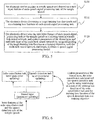
- FIG. 5 shows an optional procedure of a speech signal processing model training method according to an embodiment of the present invention.
- the method may be applied to an electronic device having a data processing capability.
- the electronic device may be a terminal device having a data processing capability, such as a notebook computer, a personal computer (PC) and the like, or may be a server on a network side. This is not specifically limited in this embodiment of the present invention.
- the procedure may include the following steps.
- Step S100 The electronic device acquires a sample speech and determines a task input feature of each speech signal processing task of the sample speech.
- the sample speech may be considered as a sample used to train a speech signal processing model, and the sample speech may be a multi-channel speech.
- This embodiment of the present invention may acquire a plurality of sample speeches, and determine, for each sample speech, a task input feature of each speech signal processing task.
- this embodiment of the present invention may acquire a task input feature of each speech signal processing task respectively for a sample speech.
- the plurality of speech signal processing tasks involved in the speech signal processing procedure of the terminal may be as shown in FIG. 1 .
- some speech signal processing tasks may be deleted from and/or other forms of speech signal processing tasks may be added to the plurality of speech signal processing tasks shown in FIG. 1 .
- the plurality of speech signal processing tasks includes an echo cancellation task and a speech detection task.
- the echo cancellation task may be used to estimate a single-channel speech spectrum
- the speech detection task may be used to estimate a speech presence probability. Therefore, this embodiment of the present invention may acquire a task input feature of the echo cancellation task of the sample speech, where the task input feature is, for example, spectral energy of a noisy single-channel speech of the sample speech and spectral energy of a speech marked as clean.
- this embodiment of the present invention may acquire a task input feature of the speech detection task of the sample speech, where the task input feature is, for example, a tag value indicating whether a speech exists in the sample speech. The tag value may be 0 or 1, where 0 indicates the absence of a speech and 1 indicates the presence of a speech.
- the speech signal processing procedure may include more speech signal processing tasks.
- This embodiment of the present invention may acquire task input features corresponding to different speech signal processing tasks respectively for the sample speech, and different speech signal processing tasks may correspond to different task input features.
- Step S110 The electronic device determines a target training loss function based on a training loss function of each speech signal processing task.
- This embodiment of the present invention updates the parameters of the shared layer and each task layer of the multi-task neural network by training all the speech signal processing tasks. Therefore, a total training loss function (referred to as the target training loss function) used for training needs to be determined based on the training loss function of each speech signal processing task.
- the target training loss function a total training loss function used for training needs to be determined based on the training loss function of each speech signal processing task.
- this embodiment of the present invention may determine the training loss function of each speech signal processing task. Therefore, for any speech signal processing task, this embodiment of the present invention may multiply the training loss function of the speech signal processing task by a weight corresponding to the speech signal processing task to obtain a corresponding multiplication result of the speech signal processing task, so as to determine a corresponding multiplication result of each speech signal processing task; and then obtain the target training loss function by adding the corresponding multiplication results.
- Step S120 The electronic device uses the task input feature of each speech signal processing task of the sample speech as a training input of the multi-task neural network, and updates parameters of the shared layer and each task layer of the multi-task neural network by minimizing the target training loss function as a training objective, until the multi-task neural network converges, to obtain a speech signal processing model.
- this embodiment of the present invention may train the multi-task neural network to update the parameters of the shared layer and each task layer of the multi-task neural network. Specifically, this embodiment of the present invention may use the task input feature of each speech signal processing task of the sample speech as a training input of the multi-task neural network, and train the multi-task neural network by minimizing the target training loss function as a training objective to update the parameters of the shared layer and each task layer of the multi-task neural network, until the multi-task neural network converges, to obtain the speech signal processing model.
- the multi-task neural network satisfies a convergence condition, the multi-task neural network converges.
- the convergence condition may include but is not limited to: the number of iterations of the training reaches a maximum number, or the target training loss function no longer decreases, and the like. This is not specifically limited in this embodiment of the present invention.
- this embodiment of the present invention may update the parameters of the shared layer and each task layer of the multi-task neural network by using a stochastic gradient descent (SGD) method and/or a back propagation (BP) method.
- SGD stochastic gradient descent
- BP back propagation
- the parameters of the shared layer may be updated based on the target training loss function.
- the stochastic gradient descent method may be used to update the parameters of the shared layer based on the target training loss function obtained through the each training.
- the parameters of the task layer corresponding to any speech signal processing task may be updated based on the loss function of the speech signal processing task.
- the stochastic gradient descent method may be used to update the parameters of the task layer corresponding to the speech signal processing task based on the training loss function of the speech signal processing task obtained through the each training.
- each task layer can reflect the task feature of the corresponding speech signal processing task, so that an output result of each task layer can better reflect a task requirement of the corresponding speech signal processing task.
- the shared layer may be an LSTM network
- a task layer may be a fully connected MLP network.
- updating the parameters of the shared layer of the multi-task neural network may be updating parameters of the LSTM network, including but not limited to updating, in the LSTM network, connection parameters from an input layer to a hidden layer, connection parameters from the hidden layer to an output layer or connection parameters between the hidden layers.
- updating the parameters of a task layer of the multi-task neural network may be updating parameters of the fully connected MLP network, including but not limited to updating, in the fully connected MLP network, connection parameters from an input layer to a hidden layer or connection parameters from the hidden layer to an output layer.
- the process of training the speech signal processing model may include, as shown in FIG. 6 .
- the parameters of the shared layer of the multi-task neural network may be updated based on the sum of the training loss function of the echo cancellation task and the training loss function of the speech detection task that are obtained through the each training; the parameters of the echo cancellation task layer may be updated based on the training loss function of the echo cancellation task obtained through the each training; and the parameters of the speech detection task layer may be updated based on the training loss function of the speech detection task obtained through the each training.
- the training loss function of the echo cancellation task may be, for example, a difference between estimated clean-speech spectral energy and an actual value; and the training loss function of the speech detection task may be, for example, a difference between an estimated speech presence probability and an actual value.
- the target training loss function may be determined as the sum of the training loss function of the echo cancellation task and the training loss function of the speech detection task. Therefore, during the training of the multi-task neural network, minimizing of the sum of the training loss function of the echo cancellation task and the training loss function of the speech detection task may be used as the training objective.
- the minimizing of the sum of the training loss function of the echo cancellation task and the training loss function of the speech detection task may specifically be minimizing a sum of the difference between the estimated clean-speech spectral energy and the actual value and the difference between the estimated speech presence probability and the actual value.
- the parameters of the shared layer and each task layer of the multi-task neural network may be updated based on the multi-task neural network including the shared layer and the task layer corresponding to each speech signal processing task by using the task input feature of each speech signal processing task of the sample speech as the training input, to obtain the speech signal processing model by training.
- this embodiment of the present invention simultaneously updates, based on the multi-task neural network including the shared layer and the task layer corresponding to each speech signal processing task, the parameters of the shared layer and each task layer of the multi-task neural network by using the task input feature of each speech signal processing task of the sample speech, instead of training a neural network respectively for each speech signal processing task, the computational complexity of training the speech signal processing model is greatly and effectively reduced, and the efficiency of training the speech signal processing model is improved.
- this embodiment of the present invention further provides a solution of training the multi-task neural network by stages. This solution is obtained based on the task feature of each speech signal processing task in the speech signal processing procedure, and can avoid large differences between speech signal processing tasks in the speech signal processing procedure. In addition, this solution may train the multi-task neural network by using some speech signal processing tasks, thereby ensuring the convergence of the parameters of the multi-task neural network.
- FIG. 7 shows another optional procedure of a speech signal processing model training method according to an embodiment of the present invention.
- the method may be applied to an electronic device having a data processing capability.
- the procedure may include the following steps.
- Step S200 The electronic device acquires a sample speech.
- Step S210 The electronic device determines at least one first-class speech signal processing task from a plurality of speech signal processing tasks of a speech signal processing procedure.
- the first-class speech signal processing task may be a basic task in the plurality of speech signal processing tasks involved in the speech signal processing procedure. It may be understood that the basic task may be considered as a task providing an auxiliary effect for other speech signal processing tasks in the plurality of speech signal processing tasks of the speech signal processing procedure.
- the plurality of speech signal processing tasks includes an echo cancellation task and a speech detection task.
- the echo cancellation task can estimate a single-channel speech spectrum and greatly improve the accuracy of speech probability estimation. Therefore, the echo cancellation task may be considered as a basic speech signal processing task.
- the first-class speech signal processing task may be considered as a task having a higher training complexity in the plurality of speech signal processing tasks involved in the speech signal processing procedure.
- a process of determining the first-class speech signal processing task may be as follows: when the training complexity of the speech signal processing task is higher than a set complexity threshold, determining that the speech signal processing task is the first-class speech signal processing task; otherwise, determining that the speech signal processing task is not the first-class speech signal processing task.
- the plurality of speech signal processing tasks includes an echo cancellation task and a speech detection task. Clean-speech energy values of all M frequency bands are required for the single-channel speech spectrum estimation performed by the echo cancellation task, where M is generally a positive integer greater than 1. For example, the value of M may be 512. A single value estimate indicating whether a current frame includes a speech is required for the speech presence probability estimation performed by the speech detection task, where M is much greater than 1. Because the training complexity of the echo cancellation task is much higher that of the speech detection task, the echo cancellation task may be considered as a first-class speech signal processing task having a higher training complexity.
- the quantity of first-class speech signal processing tasks may be one or more.
- Step S220 The electronic device determines a task input feature of the first-class speech signal processing task of the sample speech and a task input feature of each speech signal processing task of the sample speech.
- this embodiment of the present invention may determine, for the sample speech, the task input feature of the first-class speech signal processing task of the sample speech.
- the determining the task input feature of the first-class speech signal processing task may be determining a task input feature of the echo cancellation task of the sample speech.
- this embodiment of the present invention determines the task input feature of each speech signal processing task of the sample speech.
- the determining the task input feature of each speech signal processing task may be determining the task input feature of the echo cancellation task of the sample speech, a task input feature of the speech detection task, and the like.
- Step S230 The electronic device determines a first target training loss function based on a training loss function of the first-class speech signal processing task; and determines a target training loss function based on a training loss function of each speech signal processing task.
- this embodiment of the present invention may determine the training loss function of the first-class speech signal processing task.
- this embodiment of the present invention may multiply the training loss function of the first-class speech signal processing task by a weight corresponding to the first-class speech signal processing task, to obtain a multiplication result of the first-class speech signal processing task, so as to determine the multiplication result of each first-class speech signal processing task; and then obtain the first target training loss function by adding the multiplication result of each first-class speech signal processing task.
- this embodiment of the present invention may process each speech signal processing task to obtain the target training loss function with reference to the foregoing step S110.
- Step S240 The electronic device uses the task input feature of the first-class speech signal processing task of the sample speech as a training input of a multi-task neural network, and updates parameters of a shared layer and a task layer corresponding to the first-class speech signal processing task of the multi-task neural network by minimizing the first target training loss function as a training objective, until the multi-task neural network converges, to obtain a first multi-task neural network.
- this embodiment of the present invention may first train an initial multi-task neural network based on the task input feature of the first-class speech signal processing task by minimizing the first target training loss function as the training objective.
- the parameters of the shared layer and the task layer corresponding to the first-class speech signal processing task of the multi-task neural network may be updated.
- a specific process of updating the parameters may be as follows: the electronic device uses the task input feature of the first-class speech signal processing task of the sample speech as a training input of the multi-task neural network, and updates the parameters of the shared layer and the task layer corresponding to the first-class speech signal processing task of the multi-task neural network through a plurality of iterations by minimizing the first target training loss function as a training objective, until the number of iterations reaches a maximum number or the first target training loss function no longer decreases, so as to obtain the first multi-task neural network.
- this embodiment of the present invention may update the parameters of the shared layer based on the first target training loss function obtained through each training.
- the parameters of the task layer corresponding to the first-class speech signal processing task may be updated based on the training loss function of the first-class speech signal processing task obtained through each training.
- Step S250 The electronic device uses the task input feature of each speech signal processing task of the sample speech as a training input of the first multi-task neural network, and updates parameters of the shared layer and a task layer corresponding to each speech signal processing task of the multi-task neural network by minimizing the target training loss function as a training objective, until the first multi-task neural network converges, to obtain a speech signal processing model.
- this embodiment of the present invention trains the multi-task neural network based on the task input feature of the first-class speech signal processing task by minimizing the first target training loss function as the training objective, to obtain the first multi-task neural network, and then trains the first multi-task neural network based on the task input feature of each speech signal processing task by minimizing the target training loss function as the training objective, to obtain the speech signal processing model.
- the parameters of the shared layer and the task layer corresponding to each speech signal processing task of the first multi-task neural network may be updated.
- a specific process of updating the parameters may be: using the task input feature of each speech signal processing task of the sample speech as the training input of the first multi-task neural network, and updating the parameters of the shared layer and the task layer corresponding to each speech signal processing task of the first multi-task neural network through iterations by minimizing the target training loss function as the training objective, until the number of iterations reaches a maximum number, or the target training loss function no longer decreases, so as to obtain the speech signal processing model.
- this embodiment of the present invention may update the parameters of the shared layer based on the target training loss function obtained through each training.
- the parameters of the task layer corresponding to the speech signal processing task may be updated based on the training loss function of the speech signal processing task obtained through each training.
- the process of training the speech signal processing model according to this embodiment of the present invention may include, as shown in FIG. 8 :
- this embodiment of the present invention may determine, from the plurality of speech signal processing tasks, the basic task or a task having a higher training complexity based on the speech signal processing model training method shown in FIG. 7 , to obtain at least one first-class speech signal processing task.
- this embodiment of the present invention first uses the task input feature of the first-class speech signal processing task as the training input of the multi-task neural network to perform an updating training on the parameters of the shared layer and the task layer corresponding to the first-class speech signal processing task of the multi-task neural network, to obtain the first multi-task neural network; and then uses the task input feature of each speech signal processing task as the training input of the first multi-task neural network to perform an updating training on the parameters of the shared layer and each task layer of the first multi-task neural network, to obtain the speech signal processing model by training.
- training the multi-task neural network by first using the input feature of the first-class speech signal processing task and then using the task input feature of each speech signal processing task as the training input enables the training process to reflect the association between the speech signal processing tasks, and ensures the effective convergence of the parameters of the multi-task neural network and the reliable performance of the trained speech signal processing model.
- the method shown in FIG. 7 first updates the parameters of the shared layer and the task layer corresponding to the first-class speech signal processing task of the multi-task neural network based on the task input feature of the first-class speech signal processing task, to obtain the first multi-task neural network by training.
- the effective convergence of the parameters of the task layer corresponding to the first-class speech signal processing task is particularly critical for the performance of the speech signal processing model obtained by subsequent training.
- this embodiment may further perform, in a plurality of stages, the convergence training of the parameters of the task layer corresponding to the first-class speech signal processing task based on different input features of the first-class speech signal processing task, to further ensure the effective convergence of the parameters of the task layer corresponding to the first-class speech signal processing task.
- FIG. 9 shows yet another optional procedure of a speech signal processing model training method according to this embodiment of the present invention. The procedure shown in FIG. 9 is only optional.
- the first multi-task neural network may be directly trained based on all task input features of the first-class speech signal processing task without being trained in a plurality of stages as shown in FIG. 9 .
- the method shown in FIG. 9 may be applied to an electronic device having a data processing capability.
- the procedure may include the following steps.
- Step S300 The electronic device acquires a sample speech.
- Step S310 The electronic device determines at least one first-class speech signal processing task from a plurality of speech signal processing tasks of a speech signal processing procedure.
- step S310 is similar to the process of step S210.
- step S310 reference can be made to the description of step S210, and the details are not described herein again.
- Step S320 The electronic device determines a task input feature of the first-class speech signal processing task of the sample speech and a task input feature of each speech signal processing task of the sample speech, where the task input feature of the first-class speech signal processing task includes: a plurality of groups of task input features, and the quantity of features included in one group of task input features is at least one.
- each first-class speech signal processing task may have a plurality of groups of task input features, and the quantity of features included in each group of task input features may be at least one.
- the first-class speech signal processing task includes an echo cancellation task.
- a plurality of groups of task input features may be set for the echo cancellation task.
- a first group of task input features of the echo cancellation task includes spectral energy of a noisy single-channel speech and spectral energy of a speech marked as clean
- a second group of task input features of the echo cancellation task includes spectral energy of a multi-channel speech
- a third group of task input features of the echo cancellation task includes the spectral energy of the multi-channel speech, spectral energy of a reference signal (such as music played by an intelligent speaker), and the like.
- Step S330 The electronic device determines a first target training loss function based on a training loss function of the first-class speech signal processing task; and determines a target training loss function based on a training loss function of each speech signal processing task.
- step S330 is similar to the process of step S230.
- step S330 reference can be made to the description of step S230, and the details are not described herein again.
- Step S340 The electronic device selects a current group of task input features corresponding to a current training stage from the plurality of groups of task input features of the first-class speech signal processing task of the sample speech based on the current training stage; uses the current group of task input features as a training input of a multi-task neural network trained in a previous training stage; and updates parameters of a shared layer and a task layer corresponding to the first-class speech signal processing task of the multi-task neural network trained in the previous training stage by minimizing the first target training loss function as a training objective, until a multi-task neural network trained based on the last group of task input features reaches convergence, to obtain a first multi-task neural network.
- step S340 may be considered as an optional implementation in which the electronic device trains the multi-task neural network progressively in a plurality of training stages based on the plurality of groups of task input features of the first-class speech signal processing task of the sample speech, to obtain the first multi-task neural network.
- One training stage uses one group of task input features as a training input, and uses minimizing of the first target training loss function as the training objective.
- a process of training the multi-task neural network progressively in the plurality of training stages may be updating the parameters of the shared layer and the task layer corresponding to the first-class speech signal processing task of the multi-task neural network progressively in the plurality of training stages.
- this embodiment of the present invention does not exclude other manners of training the multi-task neural network progressively in a plurality of training stages by using the plurality of groups of task input features of the first-class speech signal processing task of the sample speech.
- this embodiment of the present invention may train the first multi-task neural network in the plurality of training stages, so as to train the multi-task neural network by respectively using each group of task input features of the first-class speech signal processing task as a training input according to the training stage, to obtain the first multi-task neural network.
- the current group of task input features selected currently by the first-class speech signal processing task is used as the training input of the multi-task neural network trained in the previous training stage.
- the first-class speech signal processing task has three groups of task input feature, that is, a first group of task input features, a second group of task input features, and a third group of task input features.
- this embodiment of the present invention may first use the first group of task input features as a training input of a to-be-trained multi-task neural network, and updates the parameters of the shared layer and the task layer corresponding to the first-class speech signal processing task of the multi-task neural network by minimizing the first target training loss function as a training objective, until a multi-task neural network trained based on the first group of task input features reaches convergence, to obtain a multi-task neural network trained in a first training stage.
- a process of using the first group of task input features as the training input of the to-be-trained multi-task neural network may be as follows: for the first training stage, the selected task input feature of the current training stage is the first group of task input features.
- this embodiment of the present invention uses the second group of task input features as a training input of the multi-task neural network trained in the first training stage, and updates parameters of the shared layer and the task layer corresponding to the first-class speech signal processing task of the multi-task neural network trained in the first training stage by minimizing the first target training loss function as a training objective, until a multi-task neural network trained based on the second group of task input features reaches convergence, to obtain a multi-task neural network trained in the second training stage.
- a process of using the second group of task input features as the training input of the multi-task neural network trained in the first training stage may be as follows: for the second training stage, the selected task input feature of the current training stage is the second group of task input features.
- this embodiment of the present invention uses the third group of task input features as a training input of the multi-task neural network trained in the second training stage, and updates parameters of the shared layer and the task layer corresponding to the first-class speech signal processing task of the multi-task neural network trained in the second training stage by minimizing the first target training loss function as a training objective, until a multi-task neural network trained based on the third group of task input features reaches convergence, to obtain the first multi-task neural network, thereby completing the process of training the first multi-task neural network in a plurality of training stages based on the plurality of groups of task input features of the first-class speech signal processing task.
- a process of using the third group of task input features as the training input of the multi-task neural network trained in the second training stage may be as follows: for a third training stage, the selected task input feature of the current training stage is the third group of task input features.
- the first-class speech signal processing task is an echo cancellation task
- the first group of task input features of the echo cancellation task includes spectral energy of a noisy single-channel speech and spectral energy of a speech marked as clean
- the second group of task input features of the echo cancellation task includes spectral energy of a multi-channel speech
- the third group of task input features of the echo cancellation task includes the spectral energy of the multi-channel speech, spectral energy of a reference signal and the like.
- the spectral energy of the reference signal may be music played by an intelligent speaker.
- this embodiment of the present invention may first use the spectral energy of the noisy single-channel speech and the spectral energy of the speech marked as clean of the sample speech as a training input of the multi-task neural network, and updates the parameters of the shared layer and the task layer of the echo cancellation task of the multi-task neural network by minimizing a difference between estimated clean-speech spectral energy and an actual value as a training objective, until the number of iterations reaches a maximum number or the training objective no longer decreases.
- this embodiment of the present invention uses the spectral energy of the multi-channel speech of the sample speech as a training input of the multi-task neural network trained in the previous stage, and updates the parameters of the shared layer and the task layer of the echo cancellation task of the multi-task neural network by minimizing the difference between the estimated clean-speech spectral energy and the actual value as a training objective, until the number of iterations reaches a maximum number or the training objective no longer decreases, so that the trained multi-task neural network has a multi-channel spatial filtering capability.
- this embodiment of the present invention may further use the spectral energy of the multi-channel speech and the spectral energy of the reference signal of the sample speech as a training input of the multi-task neural network trained in the previous stage, and updates the parameters of the shared layer and the task layer of the echo cancellation task of the multi-task neural network by minimizing the difference between the estimated clean-speech spectral energy and the actual value as a training objective, until the number of iterations reaches a maximum number or the training objective no longer decreases, to obtain the first multi-task neural network, so that the first multi-task neural network can better fit a multi-channel input signal and the reference signal.
- the foregoing example of the plurality of groups of task input features of the first-class speech signal processing task is only optional.
- the quantity of groups of task input features of the first-class speech signal processing task and specific features included in each group of task input features may be set according to a specific situation.
- the task input features including the spectral energy of the noisy single-channel speech, the spectral energy of the speech marked as clean and the spectral energy of the multi-channel speech may also be combined for training.
- Step S350 The electronic device uses the task input feature of each speech signal processing task of the sample speech as a training input of the first multi-task neural network, and updates parameters of the shared layer and a task layer corresponding to each speech signal processing task of the first multi-task neural network by minimizing the target training loss function as a training objective, until the first multi-task neural network converges, to obtain a speech signal processing model.
- step S350 is similar to the process of step S250.
- step S350 reference can be made to the description of step S250, and the details are not described herein again.
- speech signal processing tasks such as speech detection, direction detection and de-reverberation are simple tasks independent of each other, and may be combined for training. Therefore, after the first multi-task neural network is obtained, the task input features of each speech signal processing task of the sample speech may be combined for training the first multi-task neural network, to obtain the speech signal processing model.
- the parameters of the shared layer are updated based on a sum of training loss functions of all tasks used for the current training; and the parameters of the task layer are updated based on a training loss function of a task corresponding to the task layer. Therefore, the trained speech signal processing model not only can reflect an association between the speech signal processing tasks having common features through the shared layer, but also can reflect the task feature of the corresponding speech signal processing task through each task layer.
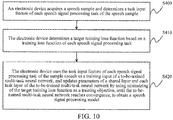
- FIG. 10 shows still another optional procedure of a speech signal processing model training method according to an embodiment of the present invention.
- the procedure may include the following steps.
- Step S400 An electronic device acquires a speech sample and determines a task input feature of each speech signal processing task of the speech sample.
- step S400 for details of step S400, reference can be made to the description of step S100.
- the implementation process of step S400 is similar to the process of step S100, and the details are not described herein again.
- Step S410 The electronic device determines a target training loss function based on a training loss function of each speech signal processing task.
- step S410 for details of step S410, reference can be made to the description of step S110.
- the implementation process of step S410 is similar to the process of step S110, and the details are not described herein again.
- Step S420 The electronic device uses the task input feature of each speech signal processing task of the sample speech as a training input of a to-be-trained multi-task neural network, and updates parameters of a shared layer and each task layer of the to-be-trained multi-task neural network by minimizing the target training loss function as a training objective, until the to-be-trained multi-task neural network reaches convergence, to obtain a speech signal processing model.
- the to-be-trained multi-task neural network may be an initial multi-task neural network (the corresponding process may be implemented by the procedure shown in FIG. 5 ).
- the to-be-trained multi-task neural network may be a first multi-task neural network.
- This embodiment of the present invention may first obtain the first multi-task neural network through training using the method procedure of training the first multi-task neural network as shown in FIG. 7 , and use the first multi-task neural network as the to-be-trained multi-task neural network; then use the task input feature of each speech signal processing task of the sample speech as a training input of the first multi-task neural network by using the method shown in FIG. 10 ; and update parameters of the shared layer and each task layer of the first multi-task neural network by minimizing the target training loss function as a training objective, until the first multi-task neural network converges, to obtain the speech signal processing model.
- the first multi-task neural network may be trained based on the task input feature of the first-class speech signal processing task of the sample speech.
- the first-class speech signal processing task may have a plurality of groups of task input features.
- This embodiment of the present invention may train the first multi-task neural network in a plurality of training stages based on the training procedure of the first multi-task neural network as shown in FIG. 9 .
- the structure of the to-be-trained multi-task neural network includes a shared layer and a task layer corresponding to each speech signal processing task.
- the parameters of the shared layer are updated based on the target training loss function by minimizing the target training loss function as the training objective.
- the parameters of the task layer of the speech signal processing task are updated based on the training loss function of the speech signal processing task by minimizing the target training loss function as the training objective.
- the speech signal processing model training method may obtain the speech signal processing model through training based on the multi-task neural network including the shared layer and the task layer corresponding to each speech signal processing task, instead of training a neural network respectively for each speech signal processing task, thereby effectively reducing the computational complexity of training the speech signal processing model, and improving the efficiency of training.
- the speech signal processing model is first trained based on the task input feature of the first-class speech signal processing task of the sample speech, and then trained based on the task input feature of each speech signal processing task. Therefore, an association between a plurality of tasks in the speech signal processing procedure can be found, thereby improving the performance of speech signal processing, and ensuring the reliable performance of the trained speech signal processing model.
- the embodiments of the present invention may use the speech signal processing model to replace the conventional speech signal processing procedure of the terminal.
- the output result of each task layer of the speech signal processing model may be specifically used to replace the conventional task processing result of the speech signal processing task corresponding to each task layer of the terminal.
- the embodiments of the present invention may use the speech signal processing model to assist the conventional speech signal processing procedure of the terminal.
- the output of each task layer of the speech signal processing model may be specifically used to assist task processing in the conventional corresponding speech signal processing task of the terminal.
- FIG. 11 is a schematic diagram of an application scenario of a speech signal processing model.
- speech signal processing of a front end may be performed on a to-be-recognized speech input to an instant messaging client by using the speech signal processing model, and then the processed speech is transmitted to a speech backend server of an instant messaging application for speech recognition.
- the instant messaging client may respectively use the output of each task layer of the speech signal processing model for the to-be-recognized speech as an assisting processing signal of the corresponding speech signal processing task, to assist processing of each speech signal processing task, thereby improving the output accuracy of the result of each speech signal processing task.
- a specific application process may include the following steps.
- An instant messaging client acquires a to-be-recognized speech input.
- the instant messaging client determines, based on a to-be-trained speech signal processing model, an output result of each task layer of the speech signal processing model for the to-be-recognized speech.
- the speech signal processing model is obtained through training a multi-task neural network by minimizing a target training loss function as a training objective.
- the target training loss function is determined based on a training loss function of each speech signal processing task.
- the multi-task neural network includes a shared layer and a task layer corresponding to each speech signal processing task.
- the instant messaging client uses the output result of each task layer for the to-be-recognized speech as a task processing result of the speech signal processing task corresponding to each task layer, or uses the output result of each task layer for the to-be-recognized speech to assist task processing in the corresponding speech signal processing task, so as to obtain a speech signal processing result of a front end.
- the instant messaging client sends the speech signal processing result of the front end to a speech backend server, so that the speech backend server performs speech recognition on the to-be-recognized speech based on the speech signal processing result.
- FIG. 12 is a schematic diagram of using an output result of a speech signal processing model.
- an echo cancellation task layer of the speech signal processing model may output a speech spectrum estimation result of the to-be-recognized speech, so as to use the speech spectrum estimation result as an assisting processing signal of the conventional echo cancellation task of the terminal, so that the echo cancellation task may better distinguish a ratio of the reference signal and the speech signal during processing, thereby improving an accuracy of an output result of the echo cancellation task.
- the embodiments of the present invention may also directly use the output result of the echo cancellation task layer of the speech signal processing model for the to-be-recognized speech as the output result of the echo cancellation task.
- a speech detection task layer of the speech signal processing model may output an output result of the to-be-recognized speech, and use the output result as an assisting processing signal of the conventional speech detection task of the terminal, so as to improve an accuracy of the output result of the speech detection task.
- a weighted average value of an output result of the speech detection task layer and the output result of the conventional speech detection task of the terminal may be used as a final output result of the speech detection task.
- the embodiments of the present invention may also directly use the output result of the speech detection task layer of the speech signal processing model for the to-be-recognized speech as the output result of the speech detection task.
- a speech direction detection task layer of the speech signal processing model may output an output result of the to-be-recognized speech, so that the output result is used to assist the conventional speech direction detection task of the terminal to estimate the speech and noise of the to-be-recognized speech, so as to obtain a more accurate speech direction estimation result.
- the output result of the to-be-recognized speech outputted by the speech direction detection task layer may be: the speech/noise spectrum estimation result of the to-be-recognized speech.
- the embodiments of the present invention may also directly use the speech/noise spectrum estimation result of the to-be-recognized speech outputted by the speech direction detection task layer as the output result of speech direction detection task.
- a microphone array enhancement task layer of the speech signal processing model may output a speech/noise spectrum of the to-be-recognized speech, to assist the conventional microphone array enhancement task of the terminal to more accurately estimate a target direction of an array algorithm and parameters such as a noise covariance matrix needed in the array algorithm.
- the embodiments of the present invention may also directly use the output result of the microphone array enhancement task layer as the output result of the microphone array enhancement task.
- a single-channel noise reduction task layer of the speech signal processing model may output the speech/noise spectrum of the to-be-recognized speech, to assist the conventional single-channel noise reduction task of the terminal to obtain key parameters needed in the single-channel noise reduction task such as a signal-noise ratio, to improve the processing effect of the single-channel noise reduction task.
- the embodiments of the present invention may also directly use the output result of the single-channel noise reduction task layer as the output result of the single-channel noise reduction task.
- a de-reverberation task layer of the speech signal processing model may output a room reverberation estimation, to assist the conventional de-reverberation task of the terminal to regulate the parameters of the algorithm, so as to control a level of de-reverberation.
- the embodiments of the present invention may also directly use the output result of the de-reverberation task layer as the output result of the de-reverberation task.
- the application of the speech signal processing model to the speech signal processing procedure of the to-be-recognized speech is merely an example, which may be understood as an application of the speech signal processing procedure in an intelligent speaker scenario.
- an application manner of the speech signal processing model may be adjusted according to an actual situation, but do not separate from a thought that uses the speech signal processing model to replace the conventional speech signal processing procedure, or, uses the speech signal processing model to assist the conventional speech signal processing procedure.
- the following describes a speech signal processing model training apparatus provided in the embodiments of the present invention.
- the speech signal processing model training apparatus described below may be considered as, a program module needed to be arranged by an electronic device to implement the speech signal processing model training method provided in the embodiments of the present invention.
- the speech signal processing model training apparatus described below may correspond to the speech signal processing model training method described above.
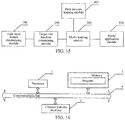
- FIG. 13 is a structural block diagram of a speech signal processing model training apparatus according to an embodiment of the present invention.
- the apparatus may be applied to an electronic device having a data processing capability.
- the apparatus may include:
- the model training module 300 being configured to update parameters of a shared layer and each task layer of the to-be-trained multi-task neural network by minimizing the target training loss function as a training objective specifically includes: for the shared layer, updating the parameters of the shared layer based on the target training loss function by minimizing the target training loss function as the training objective; and for the task layer corresponding to any speech signal processing task, updating the parameters of the task layer of the speech signal processing task based on the training loss function of the speech signal processing task by minimizing the target training loss function as the training objective.
- the to-be-trained multi-task neural network may include a first multi-task neural network.
- FIG. 14 is another structural block diagram of a speech signal processing model training apparatus according to an embodiment of the present invention. With reference to FIG. 13 and FIG.
- the apparatus may further include: a first network training module 400, configured to determine at least one first-class speech signal processing task from a plurality of speech signal processing tasks of a speech signal processing procedure; determine a task input feature of the first-class speech signal processing task of the sample speech; determine a first target training loss function based on a training loss function of the first-class speech signal processing task; and use the task input feature of the first-class speech signal processing task of the sample speech as a training input of an initial multi-task neural network, and update parameters of a shared layer and a task layer corresponding to the first-class speech signal processing task of the initial multi-task neural network by minimizing the first target training loss function as a training objective, until the initial multi-task neural network converges, to obtain the first multi-task neural network.
- a first network training module 400 configured to determine at least one first-class speech signal processing task from a plurality of speech signal processing tasks of a speech signal processing procedure; determine a task input feature of the first-class speech signal processing task of the sample speech; determine
- the first network training module 400 being configured to determine at least one first-class speech signal processing task from a plurality of speech signal processing tasks of a speech signal processing procedure specifically includes: determining a basic task from the plurality of speech signal processing tasks, and determining the basic task as the first-class speech signal processing task, the basic task being a task providing an auxiliary effect for other speech signal processing tasks in the plurality of speech signal processing tasks.
- the first network training module 400 being configured to determine at least one first-class speech signal processing task from a plurality of speech signal processing tasks of a speech signal processing procedure specifically includes: determining, from the plurality of speech signal processing tasks, a speech signal processing task having a training complexity higher than a set complexity threshold as the first-class speech signal processing task.
- the first network training module 400 being configured to determine a first target training loss function based on a training loss function of the first-class speech signal processing task specifically includes:
- the task input feature of the first-class speech signal processing task of the sample speech includes: a plurality of groups task input features.
- the quantity of features included in one group of task input features is at least one.
- the first network training module 400 being configured to use the task input feature of the first-class speech signal processing task of the sample speech as a training input of an initial multi-task neural network, and update parameters of a shared layer and a task layer corresponding to the first-class speech signal processing task of the initial multi-task neural network by minimizing the first target training loss function as a training objective, until the initial multi-task neural network converges, to obtain the first multi-task neural network specifically includes: training the initial multi-task neural network progressively based on the plurality of groups of task input features of the first-class speech signal processing task of the sample speech in a plurality of training stages, to obtain the first multi-task neural network, one training stage using one group of task input features of the first-class speech signal processing task of the sample speech as a training input, and minimizing the first target training loss function as a training objective.
- the first network training module 400 being configured to train the initial multi-task neural network progressively based on the plurality of groups of task input features of the first-class speech signal processing task of the sample speech in a plurality of training stages, to obtain the first multi-task neural network specifically includes: selecting a current group of task input features corresponding to a current training stage from the plurality of groups of task input features of the first-class speech signal processing task of the sample speech based on the current training stage; and using the current group of task input features as a training input of the multi-task neural network trained in a previous training stage, and updating parameters of the shared layer and the task layer corresponding to the first-class speech signal processing task of the multi-task neural network trained in the previous training stage by minimizing the first target training loss function as a training objective, until a multi-task neural network trained based on a last group of task input features reaches convergence, to obtain the first multi-task neural network.
- the to-be-trained multi-task neural network may include an initial multi-task neural network.
- the target loss function determining module 200 being configured to determine a target training loss function based on a training loss function of each speech signal processing task specifically includes:
- the shared layer in the multi-task neural network may include an LSTM network.
- Each task layer of the multi-task neural network may include a fully connected MLP network corresponding to each speech signal processing task.
- FIG. 15 is yet another structural block diagram of a speech signal processing model training apparatus according to an embodiment of the present invention.
- the apparatus may further include: a model application module 500, configured to determine an output result of each task layer of the speech signal processing model for the to-be-recognized speech; and use the output result of each task layer for the to-be-recognized speech as a task processing result of the speech signal processing task corresponding to each task layer.
- the model application module 500 is further configured to determine an output result of each task layer of the speech signal processing model for the to-be-recognized speech; and use the output result of each task layer for the to-be-recognized speech to assist task processing in the speech signal processing task corresponding to each task layer.
- model application module 500 may also be used in the apparatus shown in FIG. 13 .
- the speech signal processing model training apparatus may be applied to an electronic device.
- a hardware structure of the electronic device may be shown in FIG. 16 , and includes at least one processor 1, at least one communications interface 2, at least one memory 3, and at least one communications bus 4.
- the quantity of each of the processor 1, the communications interface 2, the memory 3, and the communications bus 4 is at least one, and communication among the processor 1, the communications interface 2, and the memory 3 is implemented by using the communications bus 4.
- the processor 1 may be a central processing unit (CPU) or an application-specific integrated circuit (ASIC), or may be configured as one or more integrated circuits for implementing the embodiments of the present invention.
- the memory 3 may include a high-speed RAM memory, or may further include a non-volatile memory, for example, at least one magnetic disk memory.
- the memory stores a program
- the processor invokes the program stored by the memory
- the program is configured for:
- the program is further configured for:
- the program is further configured for:
- the program is further configured for:
- the program is further configured for: determining a basic task from the plurality of speech signal processing tasks, and determining the basic task as the first-class speech signal processing task, the basic task being a task providing an auxiliary effect for other speech signal processing tasks in the plurality of speech signal processing tasks.
- the program is further configured for: determining, from the plurality of speech signal processing tasks, a speech signal processing task having a training complexity higher than a set complexity threshold as the first-class speech signal processing task.
- the program is further configured for:
- the program is further configured for:
- the program is further configured for:
- the program is further configured for:
- the program is further configured for:
- the program is further configured for:
- the refinement function and extension function of the program may refer to the corresponding parts described above.
- the embodiments of the present invention further provide a storage medium, storing a program configured to be executed by a processor, the program being configured for: acquiring a sample speech and determining a task input feature of each speech signal processing task of the sample speech; determining a target training loss function based on a training loss function of each speech signal processing task; and using the task input feature of each speech signal processing task of the sample speech as a training input of a to-be-trained multi-task neural network, and updating parameters of a shared layer and each task layer of the to-be-trained multi-task neural network by minimizing the target training loss function as a training objective, until the to-be-trained multi-task neural network converges, to obtain a speech signal processing model, the to-be-trained multi-task neural network including: the shared layer and the task layer corresponding to each speech signal processing task.
- refinement function and extension function of the program may refer to the corresponding parts described above.
- steps of the method or algorithm described may be directly implemented using hardware, a software module executed by a processor, or the combination thereof.
- the software module may be placed in a random access memory (RAM), a memory, a read-only memory (ROM), an electrically programmable ROM (EPROM), an electrically erasable programmable ROM (EEPROM), a register, a hard disk, a removable magnetic disk, a CD-ROM, or any storage medium of other forms well-known in the technical field.
Landscapes
- Engineering & Computer Science (AREA)
- Physics & Mathematics (AREA)
- Health & Medical Sciences (AREA)
- Artificial Intelligence (AREA)
- Theoretical Computer Science (AREA)
- Computational Linguistics (AREA)
- Evolutionary Computation (AREA)
- Multimedia (AREA)
- Acoustics & Sound (AREA)
- Human Computer Interaction (AREA)
- Audiology, Speech & Language Pathology (AREA)
- Biophysics (AREA)
- General Health & Medical Sciences (AREA)
- General Engineering & Computer Science (AREA)
- General Physics & Mathematics (AREA)
- Mathematical Physics (AREA)
- Software Systems (AREA)
- Molecular Biology (AREA)
- Computing Systems (AREA)
- Data Mining & Analysis (AREA)
- Biomedical Technology (AREA)
- Life Sciences & Earth Sciences (AREA)
- Signal Processing (AREA)
- Circuit For Audible Band Transducer (AREA)
- Cable Transmission Systems, Equalization Of Radio And Reduction Of Echo (AREA)
- Electrically Operated Instructional Devices (AREA)
Abstract
Description
- This application claims priority to Chinese Patent Application No.
201711191604.9 - Embodiments of the present invention relate to the field of speech processing technologies, and in particular, to a speech signal processing model training method, an electronic device and a storage medium for processing speech signal.
- With the development of speech recognition technologies, the performance of the speech signal processing technology of terminals is particularly important for maintaining a high speech recognition rate in complex environments. Currently, a common speech recognition process is as follows: a terminal performs speech signal processing on an input multi-channel speech, outputs a single-channel speech, and then sends the single-channel speech to a speech backend server for speech recognition.
- A conventional speech signal processing procedure generally includes a plurality of speech signal processing tasks. The plurality of speech signal processing tasks collaboratively processes an input multi-channel speech in a progressive manner, and outputs a single-channel speech. Using an intelligent speaker scenario as an example,
FIG. 1 shows a conventional speech signal processing procedure in a terminal. The process includes a plurality of speech signal processing tasks. The plurality of speech signal processing tasks may specifically include: an echo cancellation task, a speech detection task, a speech direction detection task, a microphone array enhancement task, a single-channel noise reduction task, a de-reverberation task and the like. After an input multi-channel speech is collaboratively processed by the plurality of speech signal processing tasks, a single-channel speech may be output, thus completing the speech signal processing by the terminal. - Deep learning technologies, such as neural network technologies are being applied to more technical fields. To improve the speech signal processing performance of the terminal, a technology of optimizing the speech signal processing procedure of the terminal by using a neural network has been adopted in the art. The technology is to train a speech signal processing model by using the neural network and use the speech signal processing model to replace or assist the conventional speech signal processing procedure in the terminal, and to improve the speech signal processing performance of the terminal. Therefore, the training of the speech signal processing model based on the neural network is of important technical significance in improving the speech signal processing performance.
- Currently, the training of the speech signal processing model based on the neural network is confronted with the problem that the training efficiency of the speech signal processing model is low due to a large quantity of speech signal processing tasks involved in the speech signal processing procedure and complex computations involved in the training.
- In view of this, embodiments of the present invention provide a speech signal processing model training method, an electronic device and a storage medium, to reduce the computational complexity of training the speech signal processing model, and improve the efficiency of training the speech signal processing model.
- In order to achieve the foregoing objective, the embodiments of the present invention provide the following technical solutions:
- According to an aspect, an embodiment of the present invention provides a speech signal processing model training method, applied to an electronic device, and including:
- acquiring a sample speech and determining a task input feature of each speech signal processing task of the sample speech;
- determining a target training loss function based on a training loss function of each speech signal processing task; and
- using the task input feature of each speech signal processing task of the sample speech as a training input of a to-be-trained multi-task neural network, and updating parameters of a shared layer and each task layer of the to-be-trained multi-task neural network by minimizing the target training loss function as a training objective, until the to-be-trained multi-task neural network converges, to obtain a speech signal processing model,
- the to-be-trained multi-task neural network including: the shared layer and the task layer corresponding to each speech signal processing task.
- According to another aspect, an embodiment of the present invention further provides a speech signal processing model training apparatus, applied to an electronic device, and including:
- a task input feature determining module, configured to acquire a sample speech and determine a task input feature of each speech signal processing task of the sample speech;
- a target loss function determining module, configured to determine a target training loss function based on a training loss function of each speech signal processing task; and
- a model training module, configured to use the task input feature of each speech signal processing task of the sample speech as a training input of a to-be-trained multi-task neural network, and update parameters of a shared layer and each task layer of the to-be-trained multi-task neural network by minimizing the target training loss function as a training objective, until the to-be-trained multi-task neural network converges, to obtain a speech signal processing model,
- the to-be-trained multi-task neural network including: the shared layer and the task layer corresponding to each speech signal processing task.
- According to another aspect, an embodiment of the present invention further provides an electronic device, including: at least one memory and at least one processor; the memory storing a program, the processor invoking the program stored by the memory, and the program being configured for:
- acquiring a sample speech and determining a task input feature of each speech signal processing task of the sample speech;
- determining a target training loss function based on a training loss function of each speech signal processing task; and
- using the task input feature of each speech signal processing task of the sample speech as a training input of a to-be-trained multi-task neural network, and updating parameters of a shared layer and each task layer of the to-be-trained multi-task neural network by minimizing the target training loss function as a training objective, until the to-be-trained multi-task neural network converges, to obtain a speech signal processing model,
- the to-be-trained multi-task neural network including: the shared layer and the task layer corresponding to each speech signal processing task.
- According to another aspect, an embodiment of the present invention further provides a storage medium, storing a program configured to be executed by a processor, the program being used for:
- acquiring a sample speech and determining a task input feature of each speech signal processing task of the sample speech;
- determining a target training loss function based on a training loss function of each speech signal processing task; and
- using the task input feature of each speech signal processing task of the sample speech as a training input of a to-be-trained multi-task neural network, and updating parameters of a shared layer and each task layer of the to-be-trained multi-task neural network by minimizing the target training loss function as a training objective, until the to-be-trained multi-task neural network converges, to obtain a speech signal processing model,
- the to-be-trained multi-task neural network including: the shared layer and the task layer corresponding to each speech signal processing task.
- The embodiments of the present invention determines the target training loss function based on training loss functions of a plurality of speech signal processing tasks, uses the task input features of the plurality of speech signal processing tasks as the training input of the multi-task neural network, and trains the to-be-trained multi-task neural network by minimizing the target training loss function as a training objective, to obtain the speech signal processing model. The multi-task neural network includes the shared layer and the task layer corresponding to each speech signal processing task, and the speech signal processing model is obtained through training the multi-task neural network, instead of training the neural network respectively for each speech signal processing task, thereby effectively reducing the computational complexity of training the speech signal processing model, and improving the efficiency of training.
- To describe the technical solutions in the embodiments of the present invention or in the related technology more clearly, the following briefly describes the accompanying drawings required for describing the embodiments or the related technology. Apparently, the accompanying drawings in the following description show merely embodiments of the present invention, and a person of ordinary skill in the art may still derive other drawings from these accompanying drawings without creative efforts.
-
FIG. 1 is a schematic diagram of a speech signal processing procedure in the related technology. -
FIG. 2 is a schematic diagram of training a speech signal processing model by using a neural network in the related technology. -
FIG. 3 is a schematic structural diagram of a multi-task neural network according to an embodiment of the present invention. -
FIG. 4 is another schematic structural diagram of a multi-task neural network according to an embodiment of the present invention. -
FIG. 5 is a flowchart of a speech signal processing model training method according to an embodiment of the present invention. -
FIG. 6 is a schematic diagram of training a speech signal processing model. -
FIG. 7 is another flowchart of a speech signal processing model training method according to an embodiment of the present invention. -
FIG. 8 is another schematic diagram of training a speech signal processing model. -
FIG. 9 is yet another flowchart of a speech signal processing model training method according to an embodiment of the present invention. -
FIG. 10 is still another flowchart of a speech signal processing model training method according to an embodiment of the present invention. -
FIG. 11 is a schematic diagram of an application scenario of a speech signal processing model. -
FIG. 12 is a schematic diagram of using an output result of a speech signal processing model. -
FIG. 13 is a structural block diagram of a speech signal processing model training apparatus according to an embodiment of the present invention. -
FIG. 14 is another structural block diagram of a speech signal processing model training apparatus according to an embodiment of the present invention. -
FIG. 15 is yet another structural block diagram of a speech signal processing model training apparatus according to an embodiment of the present invention. -
FIG. 16 is a block diagram of a hardware structure of an electronic device. -
FIG. 2 is a schematic diagram of training a speech signal processing model by using a neural network in the related technology. As shown inFIG. 2 , a neural network is constructed respectively for each speech signal processing task in a speech signal processing procedure. Each neural network corresponds to a speech signal processing task, and the neural network of each speech signal processing task is trained respectively. When a neural network satisfies a training convergence condition of the corresponding speech signal processing task, the training of the neural network is complete. After the training of each neural network is complete, the trained neural networks are combined to form a speech signal processing model. This process has a problem that the training of a neural network is required for each speech signal processing task and the large quantity of speech signal processing tasks leads to high computational complexity of the training. In addition, the neural networks are independent of each other and no association exists between the speech signal processing tasks, resulting in that the performance of the trained speech signal processing model has limitations. - Based on this, the embodiments of the present invention are directed to improving a neural network structure of a speech signal processing model and training the speech signal processing model based on the improved neural network structure, thereby reducing the computational complexity of training the speech signal processing model and improving the training efficiency. In addition, an association between the speech signal processing tasks is reflected in the training process, to ensure that the trained speech signal processing model has reliable performance.
- The following clearly and completely describes the technical solutions in the embodiments of the present invention with reference to the accompanying drawings in the embodiments of the present invention. Obviously, the described embodiments are only some embodiments instead of all embodiments of the present invention. All other embodiments obtained by a person of ordinary skill in the art based on the embodiments of the present invention without creative effects shall fall within the protection scope of the present disclosure.
- An embodiment of the present invention provides a novel multi-task neural network. By improving a neural network structure of a speech signal processing model, the multi-task neural network can reduce the computational complexity of training the speech signal processing model and further ensure reliable performance of the speech signal processing model. As shown in
FIG. 3 , the multi-task neural network may include: a shared layer and a task layer corresponding to each speech signal processing task. - Optionally, in this embodiment of the present invention, an input of the shared layer may be imported into each task layer, and each task layer outputs a task processing result of the speech signal processing task corresponding to the task layer. The shared layer may reflect an association between the speech signal processing tasks having common features, and each task layer may reflect a task feature of the corresponding speech signal processing task, so that an output result of each task layer can better reflect a task requirement of the corresponding speech signal processing task.
- Optionally, in this embodiment of the present invention, the shared layer may be defined as a long short term memory (LSTM) network. In an optional example, the shared layer may be a two-layer LSTM network. The task layer may be defined as a fully connected multi layer perceptron (MLP) network, that is, each task layer may be a fully connected MLP network. In an optional example, each task layer may be a single-layer fully connected MLP network.
- Using the plurality of speech signal processing tasks shown in
FIG. 1 as an example, the multi-task neural network according to this embodiment of the present invention may include, as shown inFIG. 4 :
a shared layer, an echo cancellation task layer, a speech detection task layer, ..., a single-channel noise reduction task layer, and a de-reverberation task layer. - Certainly, in a specific speech signal processing procedure, the plurality of speech signal processing tasks is not limited to those shown in
FIG. 1 , and some speech signal processing tasks may be deleted from and/or added to the plurality of speech signal processing tasks shown inFIG. 1 . This is not specifically limited in this embodiment of the present invention. - Based on the multi-task neural network according to this embodiment the present invention, this embodiment of the present invention can train the multi-task neural network, to obtain a speech signal processing model.
- In an optional implementation of training the speech signal processing model, this embodiment of the present invention can train the multi-task neural network based on all the speech signal processing tasks simultaneously to update parameters of the shared layer and each task layer of the multi-task neural network.
- Optionally,
FIG. 5 shows an optional procedure of a speech signal processing model training method according to an embodiment of the present invention. The method may be applied to an electronic device having a data processing capability. The electronic device may be a terminal device having a data processing capability, such as a notebook computer, a personal computer (PC) and the like, or may be a server on a network side. This is not specifically limited in this embodiment of the present invention. Referring toFIG. 5 , the procedure may include the following steps. - Step S100: The electronic device acquires a sample speech and determines a task input feature of each speech signal processing task of the sample speech.
- Optionally, the sample speech may be considered as a sample used to train a speech signal processing model, and the sample speech may be a multi-channel speech. This embodiment of the present invention may acquire a plurality of sample speeches, and determine, for each sample speech, a task input feature of each speech signal processing task.
- For a plurality of speech signal processing tasks involved in a speech signal processing procedure of a terminal, this embodiment of the present invention may acquire a task input feature of each speech signal processing task respectively for a sample speech. Optionally, the plurality of speech signal processing tasks involved in the speech signal processing procedure of the terminal may be as shown in
FIG. 1 . Certainly, some speech signal processing tasks may be deleted from and/or other forms of speech signal processing tasks may be added to the plurality of speech signal processing tasks shown inFIG. 1 . - Optionally, for ease of understanding, in an optional example, the plurality of speech signal processing tasks includes an echo cancellation task and a speech detection task. The echo cancellation task may be used to estimate a single-channel speech spectrum, and the speech detection task may be used to estimate a speech presence probability. Therefore, this embodiment of the present invention may acquire a task input feature of the echo cancellation task of the sample speech, where the task input feature is, for example, spectral energy of a noisy single-channel speech of the sample speech and spectral energy of a speech marked as clean. In addition, this embodiment of the present invention may acquire a task input feature of the speech detection task of the sample speech, where the task input feature is, for example, a tag value indicating whether a speech exists in the sample speech. The tag value may be 0 or 1, where 0 indicates the absence of a speech and 1 indicates the presence of a speech.
- Certainly, the speech signal processing tasks described above are examples only, and in practice, the speech signal processing procedure may include more speech signal processing tasks. This embodiment of the present invention may acquire task input features corresponding to different speech signal processing tasks respectively for the sample speech, and different speech signal processing tasks may correspond to different task input features.
- Step S110: The electronic device determines a target training loss function based on a training loss function of each speech signal processing task.
- This embodiment of the present invention updates the parameters of the shared layer and each task layer of the multi-task neural network by training all the speech signal processing tasks. Therefore, a total training loss function (referred to as the target training loss function) used for training needs to be determined based on the training loss function of each speech signal processing task.
- Optionally, in view of the conventional solution of training a neural network respectively for each speech signal processing task, this embodiment of the present invention may determine the training loss function of each speech signal processing task. Therefore, for any speech signal processing task, this embodiment of the present invention may multiply the training loss function of the speech signal processing task by a weight corresponding to the speech signal processing task to obtain a corresponding multiplication result of the speech signal processing task, so as to determine a corresponding multiplication result of each speech signal processing task; and then obtain the target training loss function by adding the corresponding multiplication results.
- As an example, assuming that a training loss function of an i th speech signal processing task is Li , and ai is a weight corresponding to the i th speech signal processing task, the target training loss function Lall may be determined according to the following formula:

- Step S120: The electronic device uses the task input feature of each speech signal processing task of the sample speech as a training input of the multi-task neural network, and updates parameters of the shared layer and each task layer of the multi-task neural network by minimizing the target training loss function as a training objective, until the multi-task neural network converges, to obtain a speech signal processing model.
- After determining the task input feature of each speech signal processing task of the sample speech and determining the target training loss function for training, this embodiment of the present invention may train the multi-task neural network to update the parameters of the shared layer and each task layer of the multi-task neural network. Specifically, this embodiment of the present invention may use the task input feature of each speech signal processing task of the sample speech as a training input of the multi-task neural network, and train the multi-task neural network by minimizing the target training loss function as a training objective to update the parameters of the shared layer and each task layer of the multi-task neural network, until the multi-task neural network converges, to obtain the speech signal processing model. When the multi-task neural network satisfies a convergence condition, the multi-task neural network converges. The convergence condition may include but is not limited to: the number of iterations of the training reaches a maximum number, or the target training loss function no longer decreases, and the like. This is not specifically limited in this embodiment of the present invention.
- Optionally, after determining the training input and the training objective, this embodiment of the present invention may update the parameters of the shared layer and each task layer of the multi-task neural network by using a stochastic gradient descent (SGD) method and/or a back propagation (BP) method.
- Optionally, in the process of updating the parameters of the shared layer and each task layer of the multi-task neural network by minimizing the target training loss function as the training objective, the parameters of the shared layer may be updated based on the target training loss function. For example, during each training, the stochastic gradient descent method may be used to update the parameters of the shared layer based on the target training loss function obtained through the each training. The parameters of the task layer corresponding to any speech signal processing task may be updated based on the loss function of the speech signal processing task. For example, during each training, the stochastic gradient descent method may be used to update the parameters of the task layer corresponding to the speech signal processing task based on the training loss function of the speech signal processing task obtained through the each training. Therefore, not only the shared layer can reflect the association between the speech signal processing tasks having common features, but also each task layer can reflect the task feature of the corresponding speech signal processing task, so that an output result of each task layer can better reflect a task requirement of the corresponding speech signal processing task.
- Optionally, in an example, the shared layer may be an LSTM network, and a task layer may be a fully connected MLP network. For example, updating the parameters of the shared layer of the multi-task neural network may be updating parameters of the LSTM network, including but not limited to updating, in the LSTM network, connection parameters from an input layer to a hidden layer, connection parameters from the hidden layer to an output layer or connection parameters between the hidden layers. For example, updating the parameters of a task layer of the multi-task neural network may be updating parameters of the fully connected MLP network, including but not limited to updating, in the fully connected MLP network, connection parameters from an input layer to a hidden layer or connection parameters from the hidden layer to an output layer.
- Optionally, for ease of understanding, in an optional example, if the weight corresponding to each speech signal processing task is set to 1, and the plurality of speech signal processing tasks includes the echo cancellation task and the speech detection task, the process of training the speech signal processing model may include, as shown in
FIG. 6 .
using input features of the echo cancellation task and the speech detection task of the sample speech as a training input of the multi-task neural network; and updating parameters of the shared layer, the echo cancellation task layer and the speech detection task layer of the multi-task neural network by minimizing a sum of the training loss function of the echo cancellation task and the training loss function of the speech detection task as a training objective, until the number of iterations of the multi-task neural network reaches a maximum number or the sum of the training loss function of the echo cancellation task and the training loss function of the speech detection task no longer decreases, to obtain the speech signal processing model. - Specifically, during each training, the parameters of the shared layer of the multi-task neural network may be updated based on the sum of the training loss function of the echo cancellation task and the training loss function of the speech detection task that are obtained through the each training; the parameters of the echo cancellation task layer may be updated based on the training loss function of the echo cancellation task obtained through the each training; and the parameters of the speech detection task layer may be updated based on the training loss function of the speech detection task obtained through the each training.
- Optionally, generally the training loss function of the echo cancellation task may be, for example, a difference between estimated clean-speech spectral energy and an actual value; and the training loss function of the speech detection task may be, for example, a difference between an estimated speech presence probability and an actual value. Correspondingly, if the weight corresponding to each speech signal processing task is set to 1, the target training loss function may be determined as the sum of the training loss function of the echo cancellation task and the training loss function of the speech detection task. Therefore, during the training of the multi-task neural network, minimizing of the sum of the training loss function of the echo cancellation task and the training loss function of the speech detection task may be used as the training objective. The minimizing of the sum of the training loss function of the echo cancellation task and the training loss function of the speech detection task may specifically be minimizing a sum of the difference between the estimated clean-speech spectral energy and the actual value and the difference between the estimated speech presence probability and the actual value.
- As can be seen, in the speech signal processing model training method shown in
FIG. 5 , the parameters of the shared layer and each task layer of the multi-task neural network may be updated based on the multi-task neural network including the shared layer and the task layer corresponding to each speech signal processing task by using the task input feature of each speech signal processing task of the sample speech as the training input, to obtain the speech signal processing model by training. Because this embodiment of the present invention simultaneously updates, based on the multi-task neural network including the shared layer and the task layer corresponding to each speech signal processing task, the parameters of the shared layer and each task layer of the multi-task neural network by using the task input feature of each speech signal processing task of the sample speech, instead of training a neural network respectively for each speech signal processing task, the computational complexity of training the speech signal processing model is greatly and effectively reduced, and the efficiency of training the speech signal processing model is improved. - Compared with the conventional manner of training a neural network respectively for each speech signal processing task, the foregoing manner of training the multi-task neural network based on all the speech signal processing tasks simultaneously to update the parameters of the shared layer and each task layer of the multi-task neural network can reduce the computational complexity. Further, this embodiment of the present invention further provides a solution of training the multi-task neural network by stages. This solution is obtained based on the task feature of each speech signal processing task in the speech signal processing procedure, and can avoid large differences between speech signal processing tasks in the speech signal processing procedure. In addition, this solution may train the multi-task neural network by using some speech signal processing tasks, thereby ensuring the convergence of the parameters of the multi-task neural network.
- Optionally,
FIG. 7 shows another optional procedure of a speech signal processing model training method according to an embodiment of the present invention. The method may be applied to an electronic device having a data processing capability. Referring toFIG. 7 , the procedure may include the following steps. - Step S200: The electronic device acquires a sample speech.
- Step S210: The electronic device determines at least one first-class speech signal processing task from a plurality of speech signal processing tasks of a speech signal processing procedure.
- Optionally, in an implementation, the first-class speech signal processing task may be a basic task in the plurality of speech signal processing tasks involved in the speech signal processing procedure. It may be understood that the basic task may be considered as a task providing an auxiliary effect for other speech signal processing tasks in the plurality of speech signal processing tasks of the speech signal processing procedure.
- In an optional example, the plurality of speech signal processing tasks includes an echo cancellation task and a speech detection task. The echo cancellation task can estimate a single-channel speech spectrum and greatly improve the accuracy of speech probability estimation. Therefore, the echo cancellation task may be considered as a basic speech signal processing task.
- Optionally, in another optional implementation, the first-class speech signal processing task may be considered as a task having a higher training complexity in the plurality of speech signal processing tasks involved in the speech signal processing procedure.
- A process of determining the first-class speech signal processing task may be as follows: when the training complexity of the speech signal processing task is higher than a set complexity threshold, determining that the speech signal processing task is the first-class speech signal processing task; otherwise, determining that the speech signal processing task is not the first-class speech signal processing task.
- In an optional example, the plurality of speech signal processing tasks includes an echo cancellation task and a speech detection task. Clean-speech energy values of all M frequency bands are required for the single-channel speech spectrum estimation performed by the echo cancellation task, where M is generally a positive integer greater than 1. For example, the value of M may be 512. A single value estimate indicating whether a current frame includes a speech is required for the speech presence probability estimation performed by the speech detection task, where M is much greater than 1. Because the training complexity of the echo cancellation task is much higher that of the speech detection task, the echo cancellation task may be considered as a first-class speech signal processing task having a higher training complexity.
- In this embodiment of the present invention, the quantity of first-class speech signal processing tasks may be one or more.
- Step S220: The electronic device determines a task input feature of the first-class speech signal processing task of the sample speech and a task input feature of each speech signal processing task of the sample speech.
- After determining the first-class speech signal processing task, this embodiment of the present invention may determine, for the sample speech, the task input feature of the first-class speech signal processing task of the sample speech. The determining the task input feature of the first-class speech signal processing task may be determining a task input feature of the echo cancellation task of the sample speech. In addition, for each speech signal processing task involved in the speech signal processing procedure, this embodiment of the present invention determines the task input feature of each speech signal processing task of the sample speech. The determining the task input feature of each speech signal processing task may be determining the task input feature of the echo cancellation task of the sample speech, a task input feature of the speech detection task, and the like.
- Step S230: The electronic device determines a first target training loss function based on a training loss function of the first-class speech signal processing task; and determines a target training loss function based on a training loss function of each speech signal processing task.
- Optionally, for the first-class speech signal processing task, this embodiment of the present invention may determine the training loss function of the first-class speech signal processing task. In a case that the quantity of first-class speech signal processing tasks is at least one, for any first-class speech signal processing task, this embodiment of the present invention may multiply the training loss function of the first-class speech signal processing task by a weight corresponding to the first-class speech signal processing task, to obtain a multiplication result of the first-class speech signal processing task, so as to determine the multiplication result of each first-class speech signal processing task; and then obtain the first target training loss function by adding the multiplication result of each first-class speech signal processing task.
- Optionally, assuming that a training loss function of an i th first-class speech signal processing task is L1i, and a1 i is a weight corresponding to the i th first-class speech signal processing task, the first target training loss function L1 all may be determined according to the following formula:
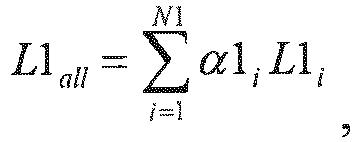
- Optionally, this embodiment of the present invention may process each speech signal processing task to obtain the target training loss function with reference to the foregoing step S110.
- Step S240: The electronic device uses the task input feature of the first-class speech signal processing task of the sample speech as a training input of a multi-task neural network, and updates parameters of a shared layer and a task layer corresponding to the first-class speech signal processing task of the multi-task neural network by minimizing the first target training loss function as a training objective, until the multi-task neural network converges, to obtain a first multi-task neural network.
- Optionally, this embodiment of the present invention may first train an initial multi-task neural network based on the task input feature of the first-class speech signal processing task by minimizing the first target training loss function as the training objective.
- During specific training, the parameters of the shared layer and the task layer corresponding to the first-class speech signal processing task of the multi-task neural network may be updated. A specific process of updating the parameters may be as follows: the electronic device uses the task input feature of the first-class speech signal processing task of the sample speech as a training input of the multi-task neural network, and updates the parameters of the shared layer and the task layer corresponding to the first-class speech signal processing task of the multi-task neural network through a plurality of iterations by minimizing the first target training loss function as a training objective, until the number of iterations reaches a maximum number or the first target training loss function no longer decreases, so as to obtain the first multi-task neural network.
- Optionally, this embodiment of the present invention may update the parameters of the shared layer based on the first target training loss function obtained through each training. For the task layer corresponding to each first-class speech signal processing task, the parameters of the task layer corresponding to the first-class speech signal processing task may be updated based on the training loss function of the first-class speech signal processing task obtained through each training.
- Step S250: The electronic device uses the task input feature of each speech signal processing task of the sample speech as a training input of the first multi-task neural network, and updates parameters of the shared layer and a task layer corresponding to each speech signal processing task of the multi-task neural network by minimizing the target training loss function as a training objective, until the first multi-task neural network converges, to obtain a speech signal processing model.
- Optionally, this embodiment of the present invention trains the multi-task neural network based on the task input feature of the first-class speech signal processing task by minimizing the first target training loss function as the training objective, to obtain the first multi-task neural network, and then trains the first multi-task neural network based on the task input feature of each speech signal processing task by minimizing the target training loss function as the training objective, to obtain the speech signal processing model.
- During specific training, the parameters of the shared layer and the task layer corresponding to each speech signal processing task of the first multi-task neural network may be updated. A specific process of updating the parameters may be: using the task input feature of each speech signal processing task of the sample speech as the training input of the first multi-task neural network, and updating the parameters of the shared layer and the task layer corresponding to each speech signal processing task of the first multi-task neural network through iterations by minimizing the target training loss function as the training objective, until the number of iterations reaches a maximum number, or the target training loss function no longer decreases, so as to obtain the speech signal processing model.
- Optionally, this embodiment of the present invention may update the parameters of the shared layer based on the target training loss function obtained through each training. For the task layer corresponding to each speech signal processing task, the parameters of the task layer corresponding to the speech signal processing task may be updated based on the training loss function of the speech signal processing task obtained through each training.
- For ease of understanding the sequential training processes shown in step S240 and step S250, in an optional example, if the weight corresponding to each speech signal processing task is set to 1, and the plurality of speech signal processing tasks includes the echo cancellation task and the speech detection task, the process of training the speech signal processing model according to this embodiment of the present invention may include, as shown in
FIG. 8 : - first using an input feature of the echo cancellation task of the sample speech as a training input of the multi-task neural network; and updating parameters of the shared layer and the task layer corresponding to the echo cancellation task of the multi-task neural network by minimizing of a training loss function of the echo cancellation task as a training objective, until the number of iterations of the multi-task neural network reaches a maximum number or the training loss function of the echo cancellation task no longer decreases, to obtain the first multi-task neural network, where the input feature of the echo cancellation task may be spectral energy of a noisy single-channel speech of the sample speech and spectral energy of a speech marked as clean, and the training objective may be minimizing a difference between estimated clean-speech spectral energy and an actual value; and
- then, using input features of the echo cancellation task and the speech detection task of the sample speech as a training input of the first multi-task neural network; and updating parameters of the shared layer, the echo cancellation task layer and the speech detection task layer of the first multi-task neural network by minimizing a sum of the training loss function of the echo cancellation task and the training loss function of the speech detection task as a training objective, until the number of iterations of the first multi-task neural network reaches a maximum number or the sum of the training loss function of the echo cancellation task and the training loss function of the speech detection task no longer decreases, to obtain the speech signal processing model.
- As can be seen, this embodiment of the present invention may determine, from the plurality of speech signal processing tasks, the basic task or a task having a higher training complexity based on the speech signal processing model training method shown in
FIG. 7 , to obtain at least one first-class speech signal processing task. Therefore, this embodiment of the present invention first uses the task input feature of the first-class speech signal processing task as the training input of the multi-task neural network to perform an updating training on the parameters of the shared layer and the task layer corresponding to the first-class speech signal processing task of the multi-task neural network, to obtain the first multi-task neural network; and then uses the task input feature of each speech signal processing task as the training input of the first multi-task neural network to perform an updating training on the parameters of the shared layer and each task layer of the first multi-task neural network, to obtain the speech signal processing model by training. - In this process, because the neural network training is not performed on each speech signal processing task respectively, the computational complexity of training the speech signal processing model is reduced. In addition, training the multi-task neural network by first using the input feature of the first-class speech signal processing task and then using the task input feature of each speech signal processing task as the training input enables the training process to reflect the association between the speech signal processing tasks, and ensures the effective convergence of the parameters of the multi-task neural network and the reliable performance of the trained speech signal processing model.
- During the training process of the speech signal processing model, the method shown in
FIG. 7 first updates the parameters of the shared layer and the task layer corresponding to the first-class speech signal processing task of the multi-task neural network based on the task input feature of the first-class speech signal processing task, to obtain the first multi-task neural network by training. In the training process of obtaining the first multi-task neural network, because the first-class speech signal processing task is the basic task or a task having a higher training complexity in the speech signal processing procedure, the effective convergence of the parameters of the task layer corresponding to the first-class speech signal processing task is particularly critical for the performance of the speech signal processing model obtained by subsequent training. - Optionally, this embodiment the present invention may further perform, in a plurality of stages, the convergence training of the parameters of the task layer corresponding to the first-class speech signal processing task based on different input features of the first-class speech signal processing task, to further ensure the effective convergence of the parameters of the task layer corresponding to the first-class speech signal processing task. Optionally,
FIG. 9 shows yet another optional procedure of a speech signal processing model training method according to this embodiment of the present invention. The procedure shown inFIG. 9 is only optional. During the training of the first multi-task neural network, the first multi-task neural network may be directly trained based on all task input features of the first-class speech signal processing task without being trained in a plurality of stages as shown inFIG. 9 . - Optionally, the method shown in
FIG. 9 may be applied to an electronic device having a data processing capability. Referring toFIG. 9 , the procedure may include the following steps. - Step S300: The electronic device acquires a sample speech.
- Step S310: The electronic device determines at least one first-class speech signal processing task from a plurality of speech signal processing tasks of a speech signal processing procedure.
- Optionally, the implementation process of step S310 is similar to the process of step S210. For details of step S310, reference can be made to the description of step S210, and the details are not described herein again.
- Step S320: The electronic device determines a task input feature of the first-class speech signal processing task of the sample speech and a task input feature of each speech signal processing task of the sample speech, where the task input feature of the first-class speech signal processing task includes: a plurality of groups of task input features, and the quantity of features included in one group of task input features is at least one.
- Optionally, in this embodiment of the present invention, each first-class speech signal processing task may have a plurality of groups of task input features, and the quantity of features included in each group of task input features may be at least one.
- In an optional example, the first-class speech signal processing task includes an echo cancellation task. In this embodiment of the present invention, a plurality of groups of task input features may be set for the echo cancellation task. For example, a first group of task input features of the echo cancellation task includes spectral energy of a noisy single-channel speech and spectral energy of a speech marked as clean; a second group of task input features of the echo cancellation task includes spectral energy of a multi-channel speech; and a third group of task input features of the echo cancellation task includes the spectral energy of the multi-channel speech, spectral energy of a reference signal (such as music played by an intelligent speaker), and the like.
- Step S330: The electronic device determines a first target training loss function based on a training loss function of the first-class speech signal processing task; and determines a target training loss function based on a training loss function of each speech signal processing task.
- Optionally, the implementation process of step S330 is similar to the process of step S230. For details of step S330, reference can be made to the description of step S230, and the details are not described herein again.
- Step S340: The electronic device selects a current group of task input features corresponding to a current training stage from the plurality of groups of task input features of the first-class speech signal processing task of the sample speech based on the current training stage; uses the current group of task input features as a training input of a multi-task neural network trained in a previous training stage; and updates parameters of a shared layer and a task layer corresponding to the first-class speech signal processing task of the multi-task neural network trained in the previous training stage by minimizing the first target training loss function as a training objective, until a multi-task neural network trained based on the last group of task input features reaches convergence, to obtain a first multi-task neural network.
- Optionally, step S340 may be considered as an optional implementation in which the electronic device trains the multi-task neural network progressively in a plurality of training stages based on the plurality of groups of task input features of the first-class speech signal processing task of the sample speech, to obtain the first multi-task neural network. One training stage uses one group of task input features as a training input, and uses minimizing of the first target training loss function as the training objective. A process of training the multi-task neural network progressively in the plurality of training stages may be updating the parameters of the shared layer and the task layer corresponding to the first-class speech signal processing task of the multi-task neural network progressively in the plurality of training stages. In addition to being implemented by step S340, this embodiment of the present invention does not exclude other manners of training the multi-task neural network progressively in a plurality of training stages by using the plurality of groups of task input features of the first-class speech signal processing task of the sample speech.
- Optionally, in step S340, this embodiment of the present invention may train the first multi-task neural network in the plurality of training stages, so as to train the multi-task neural network by respectively using each group of task input features of the first-class speech signal processing task as a training input according to the training stage, to obtain the first multi-task neural network. In addition, in the current training stage, the current group of task input features selected currently by the first-class speech signal processing task is used as the training input of the multi-task neural network trained in the previous training stage.
- Optionally, in an example, the first-class speech signal processing task has three groups of task input feature, that is, a first group of task input features, a second group of task input features, and a third group of task input features. In this case, this embodiment of the present invention may first use the first group of task input features as a training input of a to-be-trained multi-task neural network, and updates the parameters of the shared layer and the task layer corresponding to the first-class speech signal processing task of the multi-task neural network by minimizing the first target training loss function as a training objective, until a multi-task neural network trained based on the first group of task input features reaches convergence, to obtain a multi-task neural network trained in a first training stage. A process of using the first group of task input features as the training input of the to-be-trained multi-task neural network may be as follows: for the first training stage, the selected task input feature of the current training stage is the first group of task input features.
- Then, this embodiment of the present invention uses the second group of task input features as a training input of the multi-task neural network trained in the first training stage, and updates parameters of the shared layer and the task layer corresponding to the first-class speech signal processing task of the multi-task neural network trained in the first training stage by minimizing the first target training loss function as a training objective, until a multi-task neural network trained based on the second group of task input features reaches convergence, to obtain a multi-task neural network trained in the second training stage. A process of using the second group of task input features as the training input of the multi-task neural network trained in the first training stage may be as follows: for the second training stage, the selected task input feature of the current training stage is the second group of task input features.
- Then, this embodiment of the present invention uses the third group of task input features as a training input of the multi-task neural network trained in the second training stage, and updates parameters of the shared layer and the task layer corresponding to the first-class speech signal processing task of the multi-task neural network trained in the second training stage by minimizing the first target training loss function as a training objective, until a multi-task neural network trained based on the third group of task input features reaches convergence, to obtain the first multi-task neural network, thereby completing the process of training the first multi-task neural network in a plurality of training stages based on the plurality of groups of task input features of the first-class speech signal processing task. A process of using the third group of task input features as the training input of the multi-task neural network trained in the second training stage may be as follows: for a third training stage, the selected task input feature of the current training stage is the third group of task input features.
- For ease of understanding, assuming that the first-class speech signal processing task is an echo cancellation task, the first group of task input features of the echo cancellation task includes spectral energy of a noisy single-channel speech and spectral energy of a speech marked as clean; the second group of task input features of the echo cancellation task includes spectral energy of a multi-channel speech; and the third group of task input features of the echo cancellation task includes the spectral energy of the multi-channel speech, spectral energy of a reference signal and the like. The spectral energy of the reference signal may be music played by an intelligent speaker.
- Correspondingly, this embodiment of the present invention may first use the spectral energy of the noisy single-channel speech and the spectral energy of the speech marked as clean of the sample speech as a training input of the multi-task neural network, and updates the parameters of the shared layer and the task layer of the echo cancellation task of the multi-task neural network by minimizing a difference between estimated clean-speech spectral energy and an actual value as a training objective, until the number of iterations reaches a maximum number or the training objective no longer decreases.
- Then, this embodiment of the present invention uses the spectral energy of the multi-channel speech of the sample speech as a training input of the multi-task neural network trained in the previous stage, and updates the parameters of the shared layer and the task layer of the echo cancellation task of the multi-task neural network by minimizing the difference between the estimated clean-speech spectral energy and the actual value as a training objective, until the number of iterations reaches a maximum number or the training objective no longer decreases, so that the trained multi-task neural network has a multi-channel spatial filtering capability.
- After completing the multi-channel training, this embodiment of the present invention may further use the spectral energy of the multi-channel speech and the spectral energy of the reference signal of the sample speech as a training input of the multi-task neural network trained in the previous stage, and updates the parameters of the shared layer and the task layer of the echo cancellation task of the multi-task neural network by minimizing the difference between the estimated clean-speech spectral energy and the actual value as a training objective, until the number of iterations reaches a maximum number or the training objective no longer decreases, to obtain the first multi-task neural network, so that the first multi-task neural network can better fit a multi-channel input signal and the reference signal.
- Optionally, the foregoing example of the plurality of groups of task input features of the first-class speech signal processing task is only optional. In this embodiment of the present invention, the quantity of groups of task input features of the first-class speech signal processing task and specific features included in each group of task input features may be set according to a specific situation. For example, in the foregoing example, the task input features including the spectral energy of the noisy single-channel speech, the spectral energy of the speech marked as clean and the spectral energy of the multi-channel speech may also be combined for training.
- Step S350: The electronic device uses the task input feature of each speech signal processing task of the sample speech as a training input of the first multi-task neural network, and updates parameters of the shared layer and a task layer corresponding to each speech signal processing task of the first multi-task neural network by minimizing the target training loss function as a training objective, until the first multi-task neural network converges, to obtain a speech signal processing model.
- Optionally, the implementation process of step S350 is similar to the process of step S250. For details of step S350, reference can be made to the description of step S250, and the details are not described herein again.
- Optionally, after the first multi-task neural network is obtained, speech signal processing tasks such as speech detection, direction detection and de-reverberation are simple tasks independent of each other, and may be combined for training. Therefore, after the first multi-task neural network is obtained, the task input features of each speech signal processing task of the sample speech may be combined for training the first multi-task neural network, to obtain the speech signal processing model.
- For all the foregoing training manners, in the process of updating the parameters of the shared layer and a task layer, the parameters of the shared layer are updated based on a sum of training loss functions of all tasks used for the current training; and the parameters of the task layer are updated based on a training loss function of a task corresponding to the task layer. Therefore, the trained speech signal processing model not only can reflect an association between the speech signal processing tasks having common features through the shared layer, but also can reflect the task feature of the corresponding speech signal processing task through each task layer.
- To summarize the training processes of the speech signal processing model described above, a basic core procedure of the speech signal processing model training method according to the embodiments of the present invention may be as shown in
FIG. 10. FIG. 10 shows still another optional procedure of a speech signal processing model training method according to an embodiment of the present invention. Referring toFIG. 10 , the procedure may include the following steps. - Step S400: An electronic device acquires a speech sample and determines a task input feature of each speech signal processing task of the speech sample.
- Optionally, for details of step S400, reference can be made to the description of step S100. The implementation process of step S400 is similar to the process of step S100, and the details are not described herein again.
- Step S410: The electronic device determines a target training loss function based on a training loss function of each speech signal processing task.
- Optionally, for details of step S410, reference can be made to the description of step S110. The implementation process of step S410 is similar to the process of step S110, and the details are not described herein again.
- Step S420: The electronic device uses the task input feature of each speech signal processing task of the sample speech as a training input of a to-be-trained multi-task neural network, and updates parameters of a shared layer and each task layer of the to-be-trained multi-task neural network by minimizing the target training loss function as a training objective, until the to-be-trained multi-task neural network reaches convergence, to obtain a speech signal processing model.
- Optionally, in an optional implementation, in step S420, the to-be-trained multi-task neural network may be an initial multi-task neural network (the corresponding process may be implemented by the procedure shown in
FIG. 5 ). - Optionally, in another implementation, in step S420, the to-be-trained multi-task neural network may be a first multi-task neural network. This embodiment of the present invention may first obtain the first multi-task neural network through training using the method procedure of training the first multi-task neural network as shown in
FIG. 7 , and use the first multi-task neural network as the to-be-trained multi-task neural network; then use the task input feature of each speech signal processing task of the sample speech as a training input of the first multi-task neural network by using the method shown inFIG. 10 ; and update parameters of the shared layer and each task layer of the first multi-task neural network by minimizing the target training loss function as a training objective, until the first multi-task neural network converges, to obtain the speech signal processing model. - Optionally, the first multi-task neural network may be trained based on the task input feature of the first-class speech signal processing task of the sample speech. Further, in an optional example, the first-class speech signal processing task may have a plurality of groups of task input features. This embodiment of the present invention may train the first multi-task neural network in a plurality of training stages based on the training procedure of the first multi-task neural network as shown in
FIG. 9 . - Regardless of whether the foregoing to-be-trained multi-task neural network is the initial multi-task neural network or the first multi-task neural network, the structure of the to-be-trained multi-task neural network includes a shared layer and a task layer corresponding to each speech signal processing task. For the shared layer, the parameters of the shared layer are updated based on the target training loss function by minimizing the target training loss function as the training objective. For the task layer corresponding to any speech signal processing task, the parameters of the task layer of the speech signal processing task are updated based on the training loss function of the speech signal processing task by minimizing the target training loss function as the training objective.
- The speech signal processing model training method according to this embodiment of the present invention may obtain the speech signal processing model through training based on the multi-task neural network including the shared layer and the task layer corresponding to each speech signal processing task, instead of training a neural network respectively for each speech signal processing task, thereby effectively reducing the computational complexity of training the speech signal processing model, and improving the efficiency of training.
- Further, in the training process, the speech signal processing model is first trained based on the task input feature of the first-class speech signal processing task of the sample speech, and then trained based on the task input feature of each speech signal processing task. Therefore, an association between a plurality of tasks in the speech signal processing procedure can be found, thereby improving the performance of speech signal processing, and ensuring the reliable performance of the trained speech signal processing model.
- After obtaining the speech signal processing model through training by using the foregoing method, optionally, the embodiments of the present invention may use the speech signal processing model to replace the conventional speech signal processing procedure of the terminal. For example, the output result of each task layer of the speech signal processing model may be specifically used to replace the conventional task processing result of the speech signal processing task corresponding to each task layer of the terminal.
- In another implementation, the embodiments of the present invention may use the speech signal processing model to assist the conventional speech signal processing procedure of the terminal. For example, the output of each task layer of the speech signal processing model may be specifically used to assist task processing in the conventional corresponding speech signal processing task of the terminal.
-
FIG. 11 is a schematic diagram of an application scenario of a speech signal processing model. As shown inFIG. 11 , after the speech signal processing model is obtained through training, in the embodiments of the present invention, speech signal processing of a front end may be performed on a to-be-recognized speech input to an instant messaging client by using the speech signal processing model, and then the processed speech is transmitted to a speech backend server of an instant messaging application for speech recognition. Optionally, the instant messaging client may respectively use the output of each task layer of the speech signal processing model for the to-be-recognized speech as an assisting processing signal of the corresponding speech signal processing task, to assist processing of each speech signal processing task, thereby improving the output accuracy of the result of each speech signal processing task. - Referring to
FIG. 11 , as an optional application scenario, on a basis that the instant messaging client loads the trained speech signal processing model of the embodiments of the present invention, a specific application process may include the following steps. - S1. An instant messaging client acquires a to-be-recognized speech input.
- S2. The instant messaging client determines, based on a to-be-trained speech signal processing model, an output result of each task layer of the speech signal processing model for the to-be-recognized speech.
- The speech signal processing model is obtained through training a multi-task neural network by minimizing a target training loss function as a training objective. The target training loss function is determined based on a training loss function of each speech signal processing task. The multi-task neural network includes a shared layer and a task layer corresponding to each speech signal processing task.
- S3. The instant messaging client uses the output result of each task layer for the to-be-recognized speech as a task processing result of the speech signal processing task corresponding to each task layer, or uses the output result of each task layer for the to-be-recognized speech to assist task processing in the corresponding speech signal processing task, so as to obtain a speech signal processing result of a front end.
- S4. The instant messaging client sends the speech signal processing result of the front end to a speech backend server, so that the speech backend server performs speech recognition on the to-be-recognized speech based on the speech signal processing result.
- Optionally,
FIG. 12 is a schematic diagram of using an output result of a speech signal processing model. Referring toFIG. 12 , for a conventional echo cancellation task of the terminal, an echo cancellation task layer of the speech signal processing model may output a speech spectrum estimation result of the to-be-recognized speech, so as to use the speech spectrum estimation result as an assisting processing signal of the conventional echo cancellation task of the terminal, so that the echo cancellation task may better distinguish a ratio of the reference signal and the speech signal during processing, thereby improving an accuracy of an output result of the echo cancellation task. Certainly, in another implementation, the embodiments of the present invention may also directly use the output result of the echo cancellation task layer of the speech signal processing model for the to-be-recognized speech as the output result of the echo cancellation task. - For a speech detection task, a speech detection task layer of the speech signal processing model may output an output result of the to-be-recognized speech, and use the output result as an assisting processing signal of the conventional speech detection task of the terminal, so as to improve an accuracy of the output result of the speech detection task. A weighted average value of an output result of the speech detection task layer and the output result of the conventional speech detection task of the terminal may be used as a final output result of the speech detection task. Certainly, in another implementation, the embodiments of the present invention may also directly use the output result of the speech detection task layer of the speech signal processing model for the to-be-recognized speech as the output result of the speech detection task.
- For a speech direction detection task, a speech direction detection task layer of the speech signal processing model may output an output result of the to-be-recognized speech, so that the output result is used to assist the conventional speech direction detection task of the terminal to estimate the speech and noise of the to-be-recognized speech, so as to obtain a more accurate speech direction estimation result. The output result of the to-be-recognized speech outputted by the speech direction detection task layer may be: the speech/noise spectrum estimation result of the to-be-recognized speech. Certainly, in another implementation, the embodiments of the present invention may also directly use the speech/noise spectrum estimation result of the to-be-recognized speech outputted by the speech direction detection task layer as the output result of speech direction detection task.
- For a microphone array enhancement task, a microphone array enhancement task layer of the speech signal processing model may output a speech/noise spectrum of the to-be-recognized speech, to assist the conventional microphone array enhancement task of the terminal to more accurately estimate a target direction of an array algorithm and parameters such as a noise covariance matrix needed in the array algorithm. Certainly, in another implementation, the embodiments of the present invention may also directly use the output result of the microphone array enhancement task layer as the output result of the microphone array enhancement task.
- For a single-channel noise reduction task, a single-channel noise reduction task layer of the speech signal processing model may output the speech/noise spectrum of the to-be-recognized speech, to assist the conventional single-channel noise reduction task of the terminal to obtain key parameters needed in the single-channel noise reduction task such as a signal-noise ratio, to improve the processing effect of the single-channel noise reduction task. Certainly, in another implementation, the embodiments of the present invention may also directly use the output result of the single-channel noise reduction task layer as the output result of the single-channel noise reduction task.
- For a de-reverberation task, a de-reverberation task layer of the speech signal processing model may output a room reverberation estimation, to assist the conventional de-reverberation task of the terminal to regulate the parameters of the algorithm, so as to control a level of de-reverberation. Certainly, in another implementation, the embodiments of the present invention may also directly use the output result of the de-reverberation task layer as the output result of the de-reverberation task.
- Optionally, the application of the speech signal processing model to the speech signal processing procedure of the to-be-recognized speech is merely an example, which may be understood as an application of the speech signal processing procedure in an intelligent speaker scenario. Certainly, in different application scenarios, an application manner of the speech signal processing model may be adjusted according to an actual situation, but do not separate from a thought that uses the speech signal processing model to replace the conventional speech signal processing procedure, or, uses the speech signal processing model to assist the conventional speech signal processing procedure.
- The following describes a speech signal processing model training apparatus provided in the embodiments of the present invention. The speech signal processing model training apparatus described below may be considered as, a program module needed to be arranged by an electronic device to implement the speech signal processing model training method provided in the embodiments of the present invention. The speech signal processing model training apparatus described below may correspond to the speech signal processing model training method described above.
-
FIG. 13 is a structural block diagram of a speech signal processing model training apparatus according to an embodiment of the present invention. The apparatus may be applied to an electronic device having a data processing capability. Referring toFIG. 13 , the apparatus may include: - a task input
feature determining module 100, configured to acquire a sample speech and determine a task input feature of each speech signal processing task of the sample speech; - a target loss
function determining module 200, configured to determine a target training loss function based on a training loss function of each speech signal processing task; and - a
model training module 300, configured to use the task input feature of each speech signal processing task of the sample speech as a training input of a to-be-trained multi-task neural network, and update parameters of a shared layer and each task layer of the to-be-trained multi-task neural network by minimizing the target training loss function as a training objective, until the to-be-trained multi-task neural network converges, to obtain a speech signal processing model, - the to-be-trained multi-task neural network including: the shared layer and the task layer corresponding to each speech signal processing task.
- Optionally, the
model training module 300 being configured to update parameters of a shared layer and each task layer of the to-be-trained multi-task neural network by minimizing the target training loss function as a training objective specifically includes:
for the shared layer, updating the parameters of the shared layer based on the target training loss function by minimizing the target training loss function as the training objective; and for the task layer corresponding to any speech signal processing task, updating the parameters of the task layer of the speech signal processing task based on the training loss function of the speech signal processing task by minimizing the target training loss function as the training objective. - Optionally, the to-be-trained multi-task neural network may include a first multi-task neural network. Correspondingly,
FIG. 14 is another structural block diagram of a speech signal processing model training apparatus according to an embodiment of the present invention. With reference toFIG. 13 and FIG. 14 , the apparatus may further include:
a firstnetwork training module 400, configured to determine at least one first-class speech signal processing task from a plurality of speech signal processing tasks of a speech signal processing procedure; determine a task input feature of the first-class speech signal processing task of the sample speech; determine a first target training loss function based on a training loss function of the first-class speech signal processing task; and use the task input feature of the first-class speech signal processing task of the sample speech as a training input of an initial multi-task neural network, and update parameters of a shared layer and a task layer corresponding to the first-class speech signal processing task of the initial multi-task neural network by minimizing the first target training loss function as a training objective, until the initial multi-task neural network converges, to obtain the first multi-task neural network. - Optionally, the first
network training module 400 being configured to determine at least one first-class speech signal processing task from a plurality of speech signal processing tasks of a speech signal processing procedure specifically includes:
determining a basic task from the plurality of speech signal processing tasks, and determining the basic task as the first-class speech signal processing task, the basic task being a task providing an auxiliary effect for other speech signal processing tasks in the plurality of speech signal processing tasks. - Optionally, the first
network training module 400 being configured to determine at least one first-class speech signal processing task from a plurality of speech signal processing tasks of a speech signal processing procedure specifically includes:
determining, from the plurality of speech signal processing tasks, a speech signal processing task having a training complexity higher than a set complexity threshold as the first-class speech signal processing task. - Optionally, the first
network training module 400 being configured to determine a first target training loss function based on a training loss function of the first-class speech signal processing task specifically includes: - for any first-class speech signal processing task, multiplying the training loss function of the first-class speech signal processing task by a weight corresponding to the first-class speech signal processing task to obtain a multiplication result of the first-class speech signal processing task, so as to determine a multiplication result of each first-class speech signal processing task; and
- obtaining the first target training loss function by adding the multiplication result of each first-class speech signal processing task.
- Optionally, the task input feature of the first-class speech signal processing task of the sample speech includes: a plurality of groups task input features. The quantity of features included in one group of task input features is at least one.
- Correspondingly, the first
network training module 400 being configured to use the task input feature of the first-class speech signal processing task of the sample speech as a training input of an initial multi-task neural network, and update parameters of a shared layer and a task layer corresponding to the first-class speech signal processing task of the initial multi-task neural network by minimizing the first target training loss function as a training objective, until the initial multi-task neural network converges, to obtain the first multi-task neural network specifically includes:
training the initial multi-task neural network progressively based on the plurality of groups of task input features of the first-class speech signal processing task of the sample speech in a plurality of training stages, to obtain the first multi-task neural network, one training stage using one group of task input features of the first-class speech signal processing task of the sample speech as a training input, and minimizing the first target training loss function as a training objective. - Optionally, the first
network training module 400 being configured to train the initial multi-task neural network progressively based on the plurality of groups of task input features of the first-class speech signal processing task of the sample speech in a plurality of training stages, to obtain the first multi-task neural network specifically includes:
selecting a current group of task input features corresponding to a current training stage from the plurality of groups of task input features of the first-class speech signal processing task of the sample speech based on the current training stage; and using the current group of task input features as a training input of the multi-task neural network trained in a previous training stage, and updating parameters of the shared layer and the task layer corresponding to the first-class speech signal processing task of the multi-task neural network trained in the previous training stage by minimizing the first target training loss function as a training objective, until a multi-task neural network trained based on a last group of task input features reaches convergence, to obtain the first multi-task neural network. - Optionally, in another implementation, the to-be-trained multi-task neural network may include an initial multi-task neural network. The target loss
function determining module 200 being configured to determine a target training loss function based on a training loss function of each speech signal processing task specifically includes: - for any speech signal processing task, multiplying the training loss function of the speech signal processing task by a weight corresponding to the speech signal processing task to obtain a corresponding multiplication result of the speech signal processing task, so as to determine a corresponding multiplication result of each speech signal processing task; and
- obtaining the target training loss function by adding the corresponding multiplication result of each speech signal processing task.
- Optionally, the shared layer in the multi-task neural network may include an LSTM network. Each task layer of the multi-task neural network may include a fully connected MLP network corresponding to each speech signal processing task.
- Optionally, the
model training module 300 being configured to update parameters of a shared layer and each task layer of the to-be-trained multi-task neural network may specifically include:
updating, in the LSTM network of the to-be-trained multi-task neural network, connection parameters from an input layer to a hidden layer, connection parameters from the hidden layer to an output layer or connection parameters between the hidden layers; and updating, in the fully connected MLP network corresponding to each speech signal processing task, connection parameters from an input layer to a hidden layer or connection parameters from the hidden layer to an output layer. - Optionally, after training the speech signal processing model, the
model training module 300 may be applied in the speech signal processing procedure at a speech front end. Optionally,FIG. 15 is yet another structural block diagram of a speech signal processing model training apparatus according to an embodiment of the present invention. With reference toFIG. 14 andFIG. 15 , the apparatus may further include:
amodel application module 500, configured to determine an output result of each task layer of the speech signal processing model for the to-be-recognized speech; and use the output result of each task layer for the to-be-recognized speech as a task processing result of the speech signal processing task corresponding to each task layer. - Optionally, the
model application module 500 is further configured to determine an output result of each task layer of the speech signal processing model for the to-be-recognized speech; and use the output result of each task layer for the to-be-recognized speech to assist task processing in the speech signal processing task corresponding to each task layer. - Optionally, the
model application module 500 may also be used in the apparatus shown inFIG. 13 . - The speech signal processing model training apparatus provided by the embodiments of the present invention may be applied to an electronic device. Optionally, a hardware structure of the electronic device may be shown in
FIG. 16 , and includes at least oneprocessor 1, at least onecommunications interface 2, at least onememory 3, and at least onecommunications bus 4. - In this embodiment of the present invention, the quantity of each of the
processor 1, thecommunications interface 2, thememory 3, and thecommunications bus 4 is at least one, and communication among theprocessor 1, thecommunications interface 2, and thememory 3 is implemented by using thecommunications bus 4. Optionally, theprocessor 1 may be a central processing unit (CPU) or an application-specific integrated circuit (ASIC), or may be configured as one or more integrated circuits for implementing the embodiments of the present invention. Thememory 3 may include a high-speed RAM memory, or may further include a non-volatile memory, for example, at least one magnetic disk memory. - The memory stores a program, the processor invokes the program stored by the memory, and the program is configured for:
- acquiring a sample speech and determining a task input feature of each speech signal processing task of the sample speech; determining a target training loss function based on a training loss function of each speech signal processing task; and using the task input feature of each speech signal processing task of the sample speech as a training input of a to-be-trained multi-task neural network, and updating parameters of a shared layer and each task layer of the to-be-trained multi-task neural network by minimizing the target training loss function as a training objective, until the to-be-trained multi-task neural network converges, to obtain a speech signal processing model,
- the to-be-trained multi-task neural network including: the shared layer and the task layer corresponding to each speech signal processing task.
- Optionally, the program is further configured for:
- for the shared layer, updating the parameters of the shared layer based on the target training loss function by minimizing the target training loss function as the training objective; and
- for the task layer corresponding to any speech signal processing task, updating the parameters of the task layer of the speech signal processing task based on the training loss function of the speech signal processing task by minimizing the target training loss function as the training objective.
- Optionally, the program is further configured for:
- determining at least one first-class speech signal processing task from a plurality of speech signal processing tasks of a speech signal processing procedure;
- determining a task input feature of the first-class speech signal processing task of the sample speech;
- determining a first target training loss function based on a training loss function of the first-class speech signal processing task; and
- using the task input feature of the first-class speech signal processing task of the sample speech as a training input of an initial multi-task neural network, and updating parameters of a shared layer and a task layer corresponding to the first-class speech signal processing task of the initial multi-task neural network by minimizing the first target training loss function as a training objective, until the initial multi-task neural network converges, to obtain the first multi-task neural network.
- Optionally, the program is further configured for:
- for any first-class speech signal processing task, multiplying the training loss function of the first-class speech signal processing task by a weight corresponding to the first-class speech signal processing task to obtain a multiplication result of the first-class speech signal processing task, so as to determine a multiplication result of each first-class speech signal processing task; and
- obtaining the first target training loss function by adding the multiplication result of each first-class speech signal processing task.
- Optionally, the program is further configured for:
determining a basic task from the plurality of speech signal processing tasks, and determining the basic task as the first-class speech signal processing task, the basic task being a task providing an auxiliary effect for other speech signal processing tasks in the plurality of speech signal processing tasks. - Optionally, the program is further configured for:
determining, from the plurality of speech signal processing tasks, a speech signal processing task having a training complexity higher than a set complexity threshold as the first-class speech signal processing task. - Optionally, the program is further configured for:
- training the initial multi-task neural network progressively based on the plurality of groups of task input features of the first-class speech signal processing task of the sample speech in a plurality of training stages, to obtain the first multi-task neural network,
- one training stage using one group of task input features of the first-class speech signal processing task of the sample speech as a training input, and minimizing the first target training loss function as a training objective.
- Optionally, the program is further configured for:
- selecting a current group of task input features corresponding to a current training stage from the plurality of groups of task input features of the first-class speech signal processing task of the sample speech based on the current training stage; and
- using the current group of task input features as a training input of the multi-task neural network trained in a previous training stage, and updating parameters of the shared layer and the task layer corresponding to the first-class speech signal processing task of the multi-task neural network trained in the previous training stage by minimizing the first target training loss function as a training objective, until a multi-task neural network trained based on a last group of task input features reaches convergence, to obtain the first multi-task neural network.
- Optionally, the program is further configured for:
- for any speech signal processing task, multiplying the training loss function of the speech signal processing task by a weight corresponding to the speech signal processing task to obtain a corresponding multiplication result of the speech signal processing task, so as to determine a corresponding multiplication result of each speech signal processing task; and
- obtaining the target training loss function by adding the corresponding multiplication result of each speech signal processing task.
- Optionally, the program is further configured for:
- updating, in the LSTM network of the to-be-trained multi-task neural network, connection parameters from an input layer to a hidden layer, connection parameters from the hidden layer to an output layer or connection parameters between the hidden layers; and
- updating, in the fully connected MLP network corresponding to each speech signal processing task, connection parameters from an input layer to a hidden layer or connection parameters from the hidden layer to an output layer.
- Optionally, the program is further configured for:
- determining an output result of each task layer of the speech signal processing model for a to-be-recognized speech;
- using the output result of each task layer for the to-be-recognized speech as a task processing result of the speech signal processing task corresponding to each task layer.
- Optionally, the program is further configured for:
- determining an output result of each task layer of the speech signal processing model for a to-be-recognized speech;
- using the output result of each task layer for the to-be-recognized speech to assist task processing in the speech signal processing task corresponding to each task layer.
- The refinement function and extension function of the program may refer to the corresponding parts described above.
- Further, the embodiments of the present invention further provide a storage medium, storing a program configured to be executed by a processor, the program being configured for:
acquiring a sample speech and determining a task input feature of each speech signal processing task of the sample speech; determining a target training loss function based on a training loss function of each speech signal processing task; and using the task input feature of each speech signal processing task of the sample speech as a training input of a to-be-trained multi-task neural network, and updating parameters of a shared layer and each task layer of the to-be-trained multi-task neural network by minimizing the target training loss function as a training objective, until the to-be-trained multi-task neural network converges, to obtain a speech signal processing model, the to-be-trained multi-task neural network including: the shared layer and the task layer corresponding to each speech signal processing task. - Optionally, the refinement function and extension function of the program may refer to the corresponding parts described above.
- The embodiments in this specification are all described in a progressive manner. Description of each of the embodiments focuses on differences from other embodiments, and reference may be made to each other for the same or similar parts among respective embodiments. The apparatus embodiments are substantially similar to the method embodiments and therefore are only briefly described, and reference may be made to the method embodiments for the associated part.
- Persons skilled in the art may further realize that, in combination with the embodiments herein, units and algorithm, steps of each example described can be implemented with electronic hardware, computer software, or the combination thereof. In order to clearly describe the interchangeability between the hardware and the software, compositions and steps of each example have been generally described according to functions in the foregoing descriptions. Whether the functions are executed in a mode of hardware or software depends on particular applications and design constraint conditions of the technical solutions. Persons skilled in the art can use different methods to implement the described functions for each particular application, but it should not be considered that the implementation goes beyond the scope of the embodiments of the present disclosure.
- In combination with the embodiments herein, steps of the method or algorithm described may be directly implemented using hardware, a software module executed by a processor, or the combination thereof. The software module may be placed in a random access memory (RAM), a memory, a read-only memory (ROM), an electrically programmable ROM (EPROM), an electrically erasable programmable ROM (EEPROM), a register, a hard disk, a removable magnetic disk, a CD-ROM, or any storage medium of other forms well-known in the technical field.
- The above description of the disclosed embodiments enables persons skilled in the art to implement or use the present disclosure. Various modifications to these embodiments are obvious to persons skilled in the art, the general principles defined in the present disclosure may be implemented in other embodiments without departing from the core idea or scope of the present disclosure. Therefore, the present disclosure is not limited to these embodiments illustrated in the present disclosure, but needs to conform to the broadest scope consistent with the principles and novel features disclosed in the present disclosure.
Claims (20)
- A speech signal processing model training method, applied to an electronic device, the method comprising:acquiring a sample speech and determining a task input feature of each speech signal processing task of the sample speech;determining a target training loss function based on a training loss function of each speech signal processing task; andusing the task input feature of each speech signal processing task of the sample speech as a training input of a to-be-trained multi-task neural network, and updating parameters of a shared layer and each task layer of the to-be-trained multi-task neural network by minimizing the target training loss function as a training objective, until the to-be-trained multi-task neural network converges, to obtain a speech signal processing model,the to-be-trained multi-task neural network comprising: the shared layer and the task layer corresponding to each speech signal processing task.
- The speech signal processing model training method according to claim 1, wherein the updating parameters of a shared layer and each task layer of the to-be-trained multi-task neural network by minimizing the target training loss function as a training objective comprises:for the shared layer, updating the parameters of the shared layer based on the target training loss function by minimizing the target training loss function as the training objective; andfor the task layer corresponding to any speech signal processing task, updating the parameters of the task layer of the speech signal processing task based on the training loss function of the speech signal processing task by minimizing the target training loss function as the training objective.
- The speech signal processing model training method according to claim 1, wherein the to-be-trained multi-task neural network comprises a first multi-task neural network; and the method further comprises:determining at least one first-class speech signal processing task from a plurality of speech signal processing tasks of a speech signal processing procedure;determining a task input feature of the first-class speech signal processing task of the sample speech;determining a first target training loss function based on a training loss function of the first-class speech signal processing task; andusing the task input feature of the first-class speech signal processing task of the sample speech as a training input of an initial multi-task neural network, and updating parameters of a shared layer and a task layer corresponding to the first-class speech signal processing task of the initial multi-task neural network by minimizing the first target training loss function as a training objective, until the initial multi-task neural network converges, to obtain the first multi-task neural network.
- The speech signal processing model training method according to claim 3, wherein the determining at least one first-class speech signal processing task from a plurality of speech signal processing tasks of a speech signal processing procedure comprises:
determining a basic task from the plurality of speech signal processing tasks, and determining the basic task as the first-class speech signal processing task, the basic task being a task providing an auxiliary effect for other speech signal processing tasks in the plurality of speech signal processing tasks. - The speech signal processing model training method according to claim 3, wherein the determining at least one first-class speech signal processing task from a plurality of speech signal processing tasks of a speech signal processing procedure comprises:
determining, from the plurality of speech signal processing tasks, a speech signal processing task having a training complexity higher than a set complexity threshold as the first-class speech signal processing task. - The speech signal processing model training method according to claim 1, wherein the to-be-trained multi-task neural network comprises an initial multi-task neural network; and the determining a target training loss function based on a training loss function of each speech signal processing task comprises:for any speech signal processing task, multiplying the training loss function of the speech signal processing task by a weight corresponding to the speech signal processing task to obtain a corresponding multiplication result of the speech signal processing task, so as to determine a corresponding multiplication result of each speech signal processing task; andobtaining the target training loss function by adding the corresponding multiplication result of each speech signal processing task.
- The speech signal processing model training method according to claim 1, wherein the shared layer comprises a long short term memory (LSTM) network, and the task layer corresponding to each speech signal processing task comprises a fully connected multi layer perceptron (MLP) network corresponding to the speech signal processing task; and
the updating parameters of a shared layer and each task layer of the to-be-trained multi-task neural network comprises:updating, in the LSTM network of the to-be-trained multi-task neural network, connection parameters from an input layer to a hidden layer, connection parameters from the hidden layer to an output layer or connection parameters between the hidden layers; andupdating, in the fully connected MLP network corresponding to each speech signal processing task, connection parameters from an input layer to a hidden layer or connection parameters from the hidden layer to an output layer. - An electronic device, comprising: at least one memory and at least one processor; the memory storing a program, the processor invoking the program stored by the memory, and the program being configured for:acquiring a sample speech and determining a task input feature of each speech signal processing task of the sample speech;determining a target training loss function based on a training loss function of each speech signal processing task; andusing the task input feature of each speech signal processing task of the sample speech as a training input of a to-be-trained multi-task neural network, and updating parameters of a shared layer and each task layer of the to-be-trained multi-task neural network by minimizing the target training loss function as a training objective, until the to-be-trained multi-task neural network converges, to obtain a speech signal processing model, the to-be-trained multi-task neural network comprising: the shared layer and the task layer corresponding to each speech signal processing task.
- The electronic device according to claim 8, wherein the program is further configured for:for the shared layer, updating the parameters of the shared layer based on the target training loss function by minimizing the target training loss function as the training objective; andfor the task layer corresponding to any speech signal processing task, updating the parameters of the task layer of the speech signal processing task based on the training loss function of the speech signal processing task by minimizing the target training loss function as the training objective.
- The electronic device according to claim 8, wherein the program is further configured for:determining at least one first-class speech signal processing task from a plurality of speech signal processing tasks of a speech signal processing procedure;determining a task input feature of the first-class speech signal processing task of the sample speech;determining a first target training loss function based on a training loss function of the first-class speech signal processing task; andusing the task input feature of the first-class speech signal processing task of the sample speech as a training input of an initial multi-task neural network, and updating parameters of a shared layer and a task layer corresponding to the first-class speech signal processing task of the initial multi-task neural network by minimizing the first target training loss function as a training objective, until the initial multi-task neural network converges, to obtain the first multi-task neural network.
- The electronic device according to claim 10, wherein the program is further configured for:for any first-class speech signal processing task, multiplying the training loss function of the first-class speech signal processing task by a weight corresponding to the first-class speech signal processing task to obtain a multiplication result of the first-class speech signal processing task, so as to determine a multiplication result of each first-class speech signal processing task; andobtaining the first target training loss function by adding the multiplication result of each first-class speech signal processing task.
- The electronic device according to claim 10, wherein the program is further configured for:
determining a basic task from the plurality of speech signal processing tasks, and determining the basic task as the first-class speech signal processing task, the basic task being a task providing an auxiliary effect for other speech signal processing tasks in the plurality of speech signal processing tasks. - The electronic device according to claim 10, wherein the program is further configured for:
determining, from the plurality of speech signal processing tasks, a speech signal processing task having a training complexity higher than a set complexity threshold as the first-class speech signal processing task. - The electronic device according to claim 10, wherein the program is further configured for:training the initial multi-task neural network progressively based on a plurality of groups of task input features of the first-class speech signal processing task of the sample speech in a plurality of training stages, to obtain the first multi-task neural network,one training stage using one group of task input features of the first-class speech signal processing task of the sample speech as a training input, and minimizing the first target training loss function as a training objective.
- The electronic device according to claim 12, wherein the program is further configured for:selecting a current group of task input features corresponding to a current training stage from the plurality of groups of task input features of the first-class speech signal processing task of the sample speech based on the current training stage; andusing the current group of task input features as a training input of the multi-task neural network trained in a previous training stage, and updating parameters of the shared layer and the task layer corresponding to the first-class speech signal processing task of the multi-task neural network trained in the previous training stage by minimizing the first target training loss function as a training objective, until a multi-task neural network trained based on a last group of task input features reaches convergence, to obtain the first multi-task neural network.
- The electronic device according to claim 8, wherein the program is further configured for:for any speech signal processing task, multiplying the training loss function of the speech signal processing task by a weight corresponding to the speech signal processing task to obtain a corresponding multiplication result of the speech signal processing task, so as to determine a corresponding multiplication result of each speech signal processing task; andobtaining the target training loss function by adding the corresponding multiplication result of each speech signal processing task.
- The electronic device according to claim 8, wherein the program is further configured for:updating, in the LSTM network of the to-be-trained multi-task neural network, connection parameters from an input layer to a hidden layer, connection parameters from the hidden layer to an output layer or connection parameters between the hidden layers; andupdating, in the fully connected MLP network corresponding to each speech signal processing task, connection parameters from an input layer to a hidden layer or connection parameters from the hidden layer to an output layer.
- The electronic device according to claim 8, wherein the program is further configured for:determining an output result of each task layer of the speech signal processing model for a to-be-recognized speech;using the output result of each task layer for the to-be-recognized speech as a task processing result of the speech signal processing task corresponding to each task layer.
- The electronic device according to claim 8, wherein the program is further configured for:determining an output result of each task layer of the speech signal processing model for a to-be-recognized speech;using the output result of each task layer for the to-be-recognized speech to assist task processing in the speech signal processing task corresponding to each task layer.
- A storage medium, storing a program configured to be executed by a processor, the program being configured for:acquiring a sample speech and determining a task input feature of each speech signal processing task of the sample speech;determining a target training loss function based on a training loss function of each speech signal processing task; andusing the task input feature of each speech signal processing task of the sample speech as a training input of a to-be-trained multi-task neural network, and updating parameters of a shared layer and each task layer of the to-be-trained multi-task neural network by minimizing the target training loss function as a training objective, until the to-be-trained multi-task neural network converges, to obtain a speech signal processing model,the to-be-trained multi-task neural network comprising: the shared layer and the task layer corresponding to each speech signal processing task.
Applications Claiming Priority (2)
| Application Number | Priority Date | Filing Date | Title |
|---|---|---|---|
| CN201711191604.9A CN109841220B (en) | 2017-11-24 | 2017-11-24 | Speech signal processing model training method and device, electronic equipment and storage medium |
| PCT/CN2018/115704 WO2019100998A1 (en) | 2017-11-24 | 2018-11-15 | Voice signal processing model training method, electronic device, and storage medium |
Publications (3)
| Publication Number | Publication Date |
|---|---|
| EP3611725A1 true EP3611725A1 (en) | 2020-02-19 |
| EP3611725A4 EP3611725A4 (en) | 2020-12-23 |
| EP3611725B1 EP3611725B1 (en) | 2024-01-17 |
Family
ID=66630868
Family Applications (1)
| Application Number | Title | Priority Date | Filing Date |
|---|---|---|---|
| EP18880575.8A Active EP3611725B1 (en) | 2017-11-24 | 2018-11-15 | Voice signal processing model training method, electronic device, and storage medium |
Country Status (4)
| Country | Link |
|---|---|
| US (1) | US11158304B2 (en) |
| EP (1) | EP3611725B1 (en) |
| CN (2) | CN110444214B (en) |
| WO (1) | WO2019100998A1 (en) |
Cited By (1)
| Publication number | Priority date | Publication date | Assignee | Title |
|---|---|---|---|---|
| CN114612750A (en) * | 2022-05-09 | 2022-06-10 | 杭州海康威视数字技术股份有限公司 | Target identification method and device for adaptive learning rate collaborative optimization and electronic equipment |
Families Citing this family (61)
| Publication number | Priority date | Publication date | Assignee | Title |
|---|---|---|---|---|
| CN110444214B (en) | 2017-11-24 | 2021-08-17 | 深圳市腾讯计算机系统有限公司 | Speech signal processing model training method, device, electronic device and storage medium |
| EP3598777B1 (en) * | 2018-07-18 | 2023-10-11 | Oticon A/s | A hearing device comprising a speech presence probability estimator |
| JP7051749B2 (en) * | 2019-06-03 | 2022-04-11 | 株式会社東芝 | Signal processing equipment, signal processing systems, signal processing methods, and programs |
| CN112116095B (en) * | 2019-06-19 | 2024-05-24 | 北京搜狗科技发展有限公司 | A method and related device for training a multi-task learning model |
| CN110751941B (en) * | 2019-09-18 | 2023-05-26 | 平安科技(深圳)有限公司 | Speech synthesis model generation method, device, equipment and storage medium |
| WO2021077247A1 (en) * | 2019-10-21 | 2021-04-29 | 深圳大学 | Cochlear implant signal processing method and apparatus, and computer-readable storage medium |
| CN110681051B (en) * | 2019-10-21 | 2023-06-13 | 深圳大学 | Cochlear implant signal processing method, device and computer-readable storage medium |
| CN110767212B (en) * | 2019-10-24 | 2022-04-26 | 百度在线网络技术(北京)有限公司 | Voice processing method and device and electronic equipment |
| CN110782883B (en) * | 2019-11-12 | 2020-10-20 | 百度在线网络技术(北京)有限公司 | Model training method and device, electronic equipment and storage medium |
| CN111191675B (en) * | 2019-12-03 | 2023-10-24 | 深圳市华尊科技股份有限公司 | Implementation method and related devices of pedestrian attribute recognition model |
| CN110930996B (en) * | 2019-12-11 | 2023-10-31 | 广州市百果园信息技术有限公司 | Model training method, speech recognition method, device, storage medium and equipment |
| CN110996208B (en) * | 2019-12-13 | 2021-07-30 | 恒玄科技(上海)股份有限公司 | Wireless earphone and noise reduction method thereof |
| CN113051967A (en) * | 2019-12-26 | 2021-06-29 | 广州慧睿思通科技股份有限公司 | Monitoring method, device, server and computer readable storage medium |
| WO2021137754A1 (en) * | 2019-12-31 | 2021-07-08 | National University Of Singapore | Feedback-controlled voice conversion |
| CN111261145B (en) * | 2020-01-15 | 2022-08-23 | 腾讯科技(深圳)有限公司 | Voice processing device, equipment and training method thereof |
| CN111368748B (en) * | 2020-03-06 | 2023-12-01 | 深圳市商汤科技有限公司 | Network training method and device, image recognition method and device |
| CN111341293B (en) * | 2020-03-09 | 2022-11-18 | 广州市百果园信息技术有限公司 | Text voice front-end conversion method, device, equipment and storage medium |
| CN111402929B (en) * | 2020-03-16 | 2022-09-20 | 南京工程学院 | A Domain-Invariant Small-Sample Speech Emotion Recognition Method |
| CN111524521B (en) * | 2020-04-22 | 2023-08-08 | 北京小米松果电子有限公司 | Voiceprint extraction model training method, voiceprint recognition method, voiceprint extraction model training device and voiceprint recognition device |
| CN111654572A (en) * | 2020-05-27 | 2020-09-11 | 维沃移动通信有限公司 | Audio processing method, device, electronic device and storage medium |
| CN111653287A (en) * | 2020-06-04 | 2020-09-11 | 重庆邮电大学 | Single-channel speech enhancement algorithm based on DNN and intra-band cross-correlation coefficient |
| CN111667728B (en) * | 2020-06-18 | 2021-11-30 | 思必驰科技股份有限公司 | Voice post-processing module training method and device |
| CN113837349A (en) * | 2020-06-24 | 2021-12-24 | 华为技术有限公司 | A multi-task learning method and device |
| CN111814959A (en) * | 2020-06-30 | 2020-10-23 | 北京百度网讯科技有限公司 | Model training data processing method, device, system and storage medium |
| CN111816162B (en) * | 2020-07-09 | 2022-08-23 | 腾讯科技(深圳)有限公司 | Voice change information detection method, model training method and related device |
| CN111883154B (en) * | 2020-07-17 | 2023-11-28 | 海尔优家智能科技(北京)有限公司 | Echo cancellation method and device, computer-readable storage medium, and electronic device |
| CN111599382B (en) * | 2020-07-27 | 2020-10-27 | 深圳市声扬科技有限公司 | Voice analysis method, device, computer equipment and storage medium |
| CN111951780B (en) * | 2020-08-19 | 2023-06-13 | 广州华多网络科技有限公司 | Multitasking model training method for speech synthesis and related equipment |
| CN112163676B (en) * | 2020-10-13 | 2024-04-05 | 北京百度网讯科技有限公司 | Method, device, equipment and storage medium for training multitasking service prediction model |
| CN112380849B (en) * | 2020-11-20 | 2024-05-28 | 北京百度网讯科技有限公司 | Method and device for generating interest point extraction model and extracting interest points |
| CN112434714B (en) * | 2020-12-03 | 2025-04-04 | 北京小米松果电子有限公司 | Multimedia recognition method, device, storage medium and electronic device |
| CN112712816B (en) * | 2020-12-23 | 2023-06-20 | 北京达佳互联信息技术有限公司 | Training method and device for voice processing model and voice processing method and device |
| CN112541124B (en) * | 2020-12-24 | 2024-01-12 | 北京百度网讯科技有限公司 | Methods, devices, equipment, media and program products for generating multi-task models |
| CN112989108B (en) * | 2021-02-24 | 2022-11-04 | 腾讯科技(深圳)有限公司 | Language detection method and device based on artificial intelligence and electronic equipment |
| CN113704388A (en) * | 2021-03-05 | 2021-11-26 | 腾讯科技(深圳)有限公司 | Training method and device for multi-task pre-training model, electronic equipment and medium |
| CN113129870B (en) * | 2021-03-23 | 2022-03-25 | 北京百度网讯科技有限公司 | Training method, device, equipment and storage medium of speech recognition model |
| US12340792B2 (en) * | 2021-05-17 | 2025-06-24 | Salesforce, Inc. | Systems and methods for few-shot intent classifier models |
| US20220383092A1 (en) * | 2021-05-25 | 2022-12-01 | Microsoft Technology Licensing, Llc | Turbo training for deep neural networks |
| CN113241064B (en) * | 2021-06-28 | 2024-02-13 | 科大讯飞股份有限公司 | Speech recognition, model training methods, devices, electronic devices and storage media |
| CN115700874B (en) * | 2021-07-14 | 2025-12-16 | 京东科技控股股份有限公司 | Training method and device for voice recognition model and voice recognition method |
| CN113314119B (en) * | 2021-07-27 | 2021-12-03 | 深圳百昱达科技有限公司 | Voice recognition intelligent household control method and device |
| CN113610150B (en) * | 2021-08-05 | 2023-07-25 | 北京百度网讯科技有限公司 | Model training method, object classification device and electronic equipment |
| CN113707134B (en) * | 2021-08-17 | 2024-05-17 | 北京搜狗科技发展有限公司 | Model training method and device for model training |
| CN113593594B (en) * | 2021-09-01 | 2024-03-08 | 北京达佳互联信息技术有限公司 | Training method and equipment for voice enhancement model and voice enhancement method and equipment |
| CN113724723B (en) * | 2021-09-02 | 2024-06-11 | 西安讯飞超脑信息科技有限公司 | Reverberation and noise suppression method, device, electronic device and storage medium |
| CN113990337B (en) * | 2021-09-16 | 2025-06-17 | 科大讯飞股份有限公司 | Audio optimization method and related device, electronic device, and storage medium |
| CN113782000B (en) * | 2021-09-29 | 2022-04-12 | 北京中科智加科技有限公司 | Language identification method based on multiple tasks |
| US11790880B2 (en) * | 2021-10-27 | 2023-10-17 | Zoom Video Communications, Inc. | Joint audio de-noise and de-reverberation for videoconferencing |
| CN114242043B (en) * | 2022-01-25 | 2026-01-02 | 钉钉(中国)信息技术有限公司 | Voice processing methods, devices, storage media and software products |
| CN114464168B (en) * | 2022-03-07 | 2025-01-28 | 云知声智能科技股份有限公司 | Speech processing model training method, speech data noise reduction method and device |
| CN114781490B (en) * | 2022-03-24 | 2026-03-17 | 北京市商汤科技开发有限公司 | Multi-task model transfer training methods, devices, computer equipment, and storage media |
| CN114842834B (en) * | 2022-03-31 | 2024-11-05 | 中国科学院自动化研究所 | A speech-text joint pre-training method and system |
| CN114820060B (en) * | 2022-04-26 | 2024-12-03 | 北京有竹居网络技术有限公司 | Advertisement recommendation method, device, equipment and medium |
| CN115116446B (en) * | 2022-06-21 | 2024-11-01 | 成都理工大学 | Speaker recognition model construction method in noise environment |
| CN114882884B (en) * | 2022-07-06 | 2022-09-23 | 深圳比特微电子科技有限公司 | Multitask implementation method and device based on deep learning model |
| CN115188371B (en) * | 2022-07-13 | 2025-01-24 | 合肥讯飞数码科技有限公司 | A speech recognition model training method, speech recognition method and related equipment |
| EP4390922A1 (en) * | 2022-12-22 | 2024-06-26 | GN Audio A/S | A method for training a neural network and a data processing device |
| CN117275499B (en) * | 2023-11-17 | 2024-02-02 | 深圳波洛斯科技有限公司 | Noise reduction method of adaptive neural network and related device |
| CN119418719B (en) * | 2024-10-28 | 2025-11-28 | 平安科技(深圳)有限公司 | Voice quality inspection method, device, equipment and storage medium |
| CN119741932B (en) * | 2024-12-25 | 2026-03-27 | 歌尔股份有限公司 | Echo cancellation model training methods, echo cancellation methods, equipment, media and products |
| CN120598061B (en) * | 2025-08-06 | 2026-04-14 | 苏州仰思坪半导体有限公司 | Multitasking language processing model training method, device and related equipment |
Family Cites Families (17)
| Publication number | Priority date | Publication date | Assignee | Title |
|---|---|---|---|---|
| US9460711B1 (en) * | 2013-04-15 | 2016-10-04 | Google Inc. | Multilingual, acoustic deep neural networks |
| US9665823B2 (en) * | 2013-12-06 | 2017-05-30 | International Business Machines Corporation | Method and system for joint training of hybrid neural networks for acoustic modeling in automatic speech recognition |
| CN104881678A (en) * | 2015-05-11 | 2015-09-02 | 中国科学技术大学 | Multitask learning method of model and characteristic united learning |
| US10089576B2 (en) * | 2015-07-28 | 2018-10-02 | Microsoft Technology Licensing, Llc | Representation learning using multi-task deep neural networks |
| US10339921B2 (en) * | 2015-09-24 | 2019-07-02 | Google Llc | Multichannel raw-waveform neural networks |
| WO2017083399A2 (en) * | 2015-11-09 | 2017-05-18 | Google Inc. | Training neural networks represented as computational graphs |
| US12073305B2 (en) * | 2016-03-17 | 2024-08-27 | Sri International | Deep multi-task representation learning |
| WO2017164954A1 (en) * | 2016-03-23 | 2017-09-28 | Google Inc. | Adaptive audio enhancement for multichannel speech recognition |
| CN106228980B (en) * | 2016-07-21 | 2019-07-05 | 百度在线网络技术(北京)有限公司 | Data processing method and device |
| US10657437B2 (en) * | 2016-08-18 | 2020-05-19 | International Business Machines Corporation | Training of front-end and back-end neural networks |
| CN106355248A (en) * | 2016-08-26 | 2017-01-25 | 深圳先进技术研究院 | Deep convolution neural network training method and device |
| CN106529402B (en) * | 2016-09-27 | 2019-05-28 | 中国科学院自动化研究所 | The face character analysis method of convolutional neural networks based on multi-task learning |
| US11222253B2 (en) * | 2016-11-03 | 2022-01-11 | Salesforce.Com, Inc. | Deep neural network model for processing data through multiple linguistic task hierarchies |
| CN106653056B (en) * | 2016-11-16 | 2020-04-24 | 中国科学院自动化研究所 | Fundamental frequency extraction model and training method based on LSTM recurrent neural network |
| EP3545472B1 (en) * | 2017-01-30 | 2025-03-19 | DeepMind Technologies Limited | Multi-task neural networks with task-specific paths |
| CN107357838B (en) * | 2017-06-23 | 2020-09-01 | 上海交大知识产权管理有限公司 | On-line implementation method of conversation strategy based on multi-task learning |
| CN110444214B (en) | 2017-11-24 | 2021-08-17 | 深圳市腾讯计算机系统有限公司 | Speech signal processing model training method, device, electronic device and storage medium |
-
2017
- 2017-11-24 CN CN201910745812.1A patent/CN110444214B/en active Active
- 2017-11-24 CN CN201711191604.9A patent/CN109841220B/en active Active
-
2018
- 2018-11-15 EP EP18880575.8A patent/EP3611725B1/en active Active
- 2018-11-15 WO PCT/CN2018/115704 patent/WO2019100998A1/en not_active Ceased
-
2019
- 2019-10-17 US US16/655,548 patent/US11158304B2/en active Active
Cited By (1)
| Publication number | Priority date | Publication date | Assignee | Title |
|---|---|---|---|---|
| CN114612750A (en) * | 2022-05-09 | 2022-06-10 | 杭州海康威视数字技术股份有限公司 | Target identification method and device for adaptive learning rate collaborative optimization and electronic equipment |
Also Published As
| Publication number | Publication date |
|---|---|
| CN109841220A (en) | 2019-06-04 |
| EP3611725A4 (en) | 2020-12-23 |
| CN110444214B (en) | 2021-08-17 |
| CN110444214A (en) | 2019-11-12 |
| WO2019100998A1 (en) | 2019-05-31 |
| CN109841220B (en) | 2022-09-13 |
| EP3611725B1 (en) | 2024-01-17 |
| US20200051549A1 (en) | 2020-02-13 |
| US11158304B2 (en) | 2021-10-26 |
Similar Documents
| Publication | Publication Date | Title |
|---|---|---|
| EP3611725B1 (en) | Voice signal processing model training method, electronic device, and storage medium | |
| JP6671020B2 (en) | Dialogue act estimation method, dialogue act estimation device and program | |
| CN109473118B (en) | Dual-channel speech enhancement method and device | |
| EP3136700B1 (en) | Nearend speech detector | |
| US20200396329A1 (en) | Acoustic echo cancellation based sub band domain active speaker detection for audio and video conferencing applications | |
| US12283285B2 (en) | Automatic gain control method and device, and readable storage medium | |
| US12609129B2 (en) | Audio signal enhancement with recursive restoration employing deterministic degradation | |
| CN114302286B (en) | A method, device, equipment and storage medium for reducing call noise | |
| CN112562716A (en) | Voice enhancement method, device, terminal and medium based on neural network | |
| CN115132231B (en) | Voice activity detection method, device, equipment and readable storage medium | |
| CN113763968B (en) | Method, device, equipment, medium and product for speech recognition | |
| CN114220430A (en) | Multi-sound-zone voice interaction method, device, equipment and storage medium | |
| US11335332B2 (en) | Trigger to keyword spotting system (KWS) | |
| CN115083412A (en) | Voice interaction method and related device, electronic equipment and storage medium | |
| CN115631762A (en) | Noise estimation method and related device | |
| WO2020098107A1 (en) | Detection model-based emotions analysis method, apparatus and terminal device | |
| CN112997249A (en) | Voice processing method, device, storage medium and electronic equipment | |
| CN114171043B (en) | Echo determination method, device, equipment and storage medium | |
| CN113361575A (en) | Model training method and device and electronic equipment | |
| CN115312042A (en) | Method, apparatus, device and storage medium for processing audio | |
| CN116486797B (en) | A method, apparatus, electronic device, and medium for reducing false wake-ups | |
| CN113038063B (en) | Method, apparatus, device, medium and product for outputting a prompt | |
| CN114333889B (en) | Noise reduction parameter optimization method, device, terminal equipment and medium | |
| US20250208822A1 (en) | Audio device with efficient neural network processing and related methods | |
| JP4344306B2 (en) | Unknown system estimation method and apparatus for carrying out this method |
Legal Events
| Date | Code | Title | Description |
|---|---|---|---|
| STAA | Information on the status of an ep patent application or granted ep patent |
Free format text: STATUS: THE INTERNATIONAL PUBLICATION HAS BEEN MADE |
|
| PUAI | Public reference made under article 153(3) epc to a published international application that has entered the european phase |
Free format text: ORIGINAL CODE: 0009012 |
|
| STAA | Information on the status of an ep patent application or granted ep patent |
Free format text: STATUS: REQUEST FOR EXAMINATION WAS MADE |
|
| 17P | Request for examination filed |
Effective date: 20191111 |
|
| AK | Designated contracting states |
Kind code of ref document: A1 Designated state(s): AL AT BE BG CH CY CZ DE DK EE ES FI FR GB GR HR HU IE IS IT LI LT LU LV MC MK MT NL NO PL PT RO RS SE SI SK SM TR |
|
| AX | Request for extension of the european patent |
Extension state: BA ME |
|
| A4 | Supplementary search report drawn up and despatched |
Effective date: 20201123 |
|
| RIC1 | Information provided on ipc code assigned before grant |
Ipc: G10L 21/0208 20130101ALN20201117BHEP Ipc: G10L 15/16 20060101ALN20201117BHEP Ipc: G10L 25/30 20130101AFI20201117BHEP |
|
| DAV | Request for validation of the european patent (deleted) | ||
| DAX | Request for extension of the european patent (deleted) | ||
| RAP3 | Party data changed (applicant data changed or rights of an application transferred) |
Owner name: TENCENT TECHNOLOGY (SHENZHEN) COMPANY LIMITED |
|
| STAA | Information on the status of an ep patent application or granted ep patent |
Free format text: STATUS: EXAMINATION IS IN PROGRESS |
|
| 17Q | First examination report despatched |
Effective date: 20221103 |
|
| REG | Reference to a national code |
Ref country code: DE Ref legal event code: R079 Free format text: PREVIOUS MAIN CLASS: G10L0017040000 Ipc: G10L0025300000 Ref country code: DE Ref legal event code: R079 Ref document number: 602018064362 Country of ref document: DE Free format text: PREVIOUS MAIN CLASS: G10L0017040000 Ipc: G10L0025300000 |
|
| RIC1 | Information provided on ipc code assigned before grant |
Ipc: G10L 15/16 20060101ALN20230912BHEP Ipc: G10L 21/0208 20130101ALN20230912BHEP Ipc: G10L 25/30 20130101AFI20230912BHEP |
|
| GRAP | Despatch of communication of intention to grant a patent |
Free format text: ORIGINAL CODE: EPIDOSNIGR1 |
|
| STAA | Information on the status of an ep patent application or granted ep patent |
Free format text: STATUS: GRANT OF PATENT IS INTENDED |
|
| INTG | Intention to grant announced |
Effective date: 20231023 |
|
| GRAS | Grant fee paid |
Free format text: ORIGINAL CODE: EPIDOSNIGR3 |
|
| GRAA | (expected) grant |
Free format text: ORIGINAL CODE: 0009210 |
|
| STAA | Information on the status of an ep patent application or granted ep patent |
Free format text: STATUS: THE PATENT HAS BEEN GRANTED |
|
| AK | Designated contracting states |
Kind code of ref document: B1 Designated state(s): AL AT BE BG CH CY CZ DE DK EE ES FI FR GB GR HR HU IE IS IT LI LT LU LV MC MK MT NL NO PL PT RO RS SE SI SK SM TR |
|
| REG | Reference to a national code |
Ref country code: GB Ref legal event code: FG4D |
|
| REG | Reference to a national code |
Ref country code: CH Ref legal event code: EP |
|
| REG | Reference to a national code |
Ref country code: DE Ref legal event code: R096 Ref document number: 602018064362 Country of ref document: DE |
|
| REG | Reference to a national code |
Ref country code: IE Ref legal event code: FG4D |
|
| REG | Reference to a national code |
Ref country code: LT Ref legal event code: MG9D |
|
| REG | Reference to a national code |
Ref country code: NL Ref legal event code: MP Effective date: 20240117 |
|
| REG | Reference to a national code |
Ref country code: AT Ref legal event code: MK05 Ref document number: 1651088 Country of ref document: AT Kind code of ref document: T Effective date: 20240117 |
|
| PG25 | Lapsed in a contracting state [announced via postgrant information from national office to epo] |
Ref country code: NL Free format text: LAPSE BECAUSE OF FAILURE TO SUBMIT A TRANSLATION OF THE DESCRIPTION OR TO PAY THE FEE WITHIN THE PRESCRIBED TIME-LIMIT Effective date: 20240117 |
|
| PG25 | Lapsed in a contracting state [announced via postgrant information from national office to epo] |
Ref country code: NL Free format text: LAPSE BECAUSE OF FAILURE TO SUBMIT A TRANSLATION OF THE DESCRIPTION OR TO PAY THE FEE WITHIN THE PRESCRIBED TIME-LIMIT Effective date: 20240117 |
|
| PG25 | Lapsed in a contracting state [announced via postgrant information from national office to epo] |
Ref country code: IS Free format text: LAPSE BECAUSE OF FAILURE TO SUBMIT A TRANSLATION OF THE DESCRIPTION OR TO PAY THE FEE WITHIN THE PRESCRIBED TIME-LIMIT Effective date: 20240517 |
|
| PG25 | Lapsed in a contracting state [announced via postgrant information from national office to epo] |
Ref country code: LT Free format text: LAPSE BECAUSE OF FAILURE TO SUBMIT A TRANSLATION OF THE DESCRIPTION OR TO PAY THE FEE WITHIN THE PRESCRIBED TIME-LIMIT Effective date: 20240117 |
|
| PG25 | Lapsed in a contracting state [announced via postgrant information from national office to epo] |
Ref country code: GR Free format text: LAPSE BECAUSE OF FAILURE TO SUBMIT A TRANSLATION OF THE DESCRIPTION OR TO PAY THE FEE WITHIN THE PRESCRIBED TIME-LIMIT Effective date: 20240418 |
|
| PG25 | Lapsed in a contracting state [announced via postgrant information from national office to epo] |
Ref country code: HR Free format text: LAPSE BECAUSE OF FAILURE TO SUBMIT A TRANSLATION OF THE DESCRIPTION OR TO PAY THE FEE WITHIN THE PRESCRIBED TIME-LIMIT Effective date: 20240117 Ref country code: RS Free format text: LAPSE BECAUSE OF FAILURE TO SUBMIT A TRANSLATION OF THE DESCRIPTION OR TO PAY THE FEE WITHIN THE PRESCRIBED TIME-LIMIT Effective date: 20240417 |
|
| PG25 | Lapsed in a contracting state [announced via postgrant information from national office to epo] |
Ref country code: ES Free format text: LAPSE BECAUSE OF FAILURE TO SUBMIT A TRANSLATION OF THE DESCRIPTION OR TO PAY THE FEE WITHIN THE PRESCRIBED TIME-LIMIT Effective date: 20240117 |
|
| PG25 | Lapsed in a contracting state [announced via postgrant information from national office to epo] |
Ref country code: AT Free format text: LAPSE BECAUSE OF FAILURE TO SUBMIT A TRANSLATION OF THE DESCRIPTION OR TO PAY THE FEE WITHIN THE PRESCRIBED TIME-LIMIT Effective date: 20240117 |
|
| PG25 | Lapsed in a contracting state [announced via postgrant information from national office to epo] |
Ref country code: RS Free format text: LAPSE BECAUSE OF FAILURE TO SUBMIT A TRANSLATION OF THE DESCRIPTION OR TO PAY THE FEE WITHIN THE PRESCRIBED TIME-LIMIT Effective date: 20240417 Ref country code: NO Free format text: LAPSE BECAUSE OF FAILURE TO SUBMIT A TRANSLATION OF THE DESCRIPTION OR TO PAY THE FEE WITHIN THE PRESCRIBED TIME-LIMIT Effective date: 20240417 Ref country code: LT Free format text: LAPSE BECAUSE OF FAILURE TO SUBMIT A TRANSLATION OF THE DESCRIPTION OR TO PAY THE FEE WITHIN THE PRESCRIBED TIME-LIMIT Effective date: 20240117 Ref country code: IS Free format text: LAPSE BECAUSE OF FAILURE TO SUBMIT A TRANSLATION OF THE DESCRIPTION OR TO PAY THE FEE WITHIN THE PRESCRIBED TIME-LIMIT Effective date: 20240517 Ref country code: HR Free format text: LAPSE BECAUSE OF FAILURE TO SUBMIT A TRANSLATION OF THE DESCRIPTION OR TO PAY THE FEE WITHIN THE PRESCRIBED TIME-LIMIT Effective date: 20240117 Ref country code: GR Free format text: LAPSE BECAUSE OF FAILURE TO SUBMIT A TRANSLATION OF THE DESCRIPTION OR TO PAY THE FEE WITHIN THE PRESCRIBED TIME-LIMIT Effective date: 20240418 Ref country code: FI Free format text: LAPSE BECAUSE OF FAILURE TO SUBMIT A TRANSLATION OF THE DESCRIPTION OR TO PAY THE FEE WITHIN THE PRESCRIBED TIME-LIMIT Effective date: 20240117 Ref country code: ES Free format text: LAPSE BECAUSE OF FAILURE TO SUBMIT A TRANSLATION OF THE DESCRIPTION OR TO PAY THE FEE WITHIN THE PRESCRIBED TIME-LIMIT Effective date: 20240117 Ref country code: BG Free format text: LAPSE BECAUSE OF FAILURE TO SUBMIT A TRANSLATION OF THE DESCRIPTION OR TO PAY THE FEE WITHIN THE PRESCRIBED TIME-LIMIT Effective date: 20240117 Ref country code: AT Free format text: LAPSE BECAUSE OF FAILURE TO SUBMIT A TRANSLATION OF THE DESCRIPTION OR TO PAY THE FEE WITHIN THE PRESCRIBED TIME-LIMIT Effective date: 20240117 |
|
| PG25 | Lapsed in a contracting state [announced via postgrant information from national office to epo] |
Ref country code: PL Free format text: LAPSE BECAUSE OF FAILURE TO SUBMIT A TRANSLATION OF THE DESCRIPTION OR TO PAY THE FEE WITHIN THE PRESCRIBED TIME-LIMIT Effective date: 20240117 Ref country code: PT Free format text: LAPSE BECAUSE OF FAILURE TO SUBMIT A TRANSLATION OF THE DESCRIPTION OR TO PAY THE FEE WITHIN THE PRESCRIBED TIME-LIMIT Effective date: 20240517 |
|
| PG25 | Lapsed in a contracting state [announced via postgrant information from national office to epo] |
Ref country code: SE Free format text: LAPSE BECAUSE OF FAILURE TO SUBMIT A TRANSLATION OF THE DESCRIPTION OR TO PAY THE FEE WITHIN THE PRESCRIBED TIME-LIMIT Effective date: 20240117 Ref country code: PT Free format text: LAPSE BECAUSE OF FAILURE TO SUBMIT A TRANSLATION OF THE DESCRIPTION OR TO PAY THE FEE WITHIN THE PRESCRIBED TIME-LIMIT Effective date: 20240517 Ref country code: PL Free format text: LAPSE BECAUSE OF FAILURE TO SUBMIT A TRANSLATION OF THE DESCRIPTION OR TO PAY THE FEE WITHIN THE PRESCRIBED TIME-LIMIT Effective date: 20240117 Ref country code: LV Free format text: LAPSE BECAUSE OF FAILURE TO SUBMIT A TRANSLATION OF THE DESCRIPTION OR TO PAY THE FEE WITHIN THE PRESCRIBED TIME-LIMIT Effective date: 20240117 |
|
| PG25 | Lapsed in a contracting state [announced via postgrant information from national office to epo] |
Ref country code: DK Free format text: LAPSE BECAUSE OF FAILURE TO SUBMIT A TRANSLATION OF THE DESCRIPTION OR TO PAY THE FEE WITHIN THE PRESCRIBED TIME-LIMIT Effective date: 20240117 |
|
| PG25 | Lapsed in a contracting state [announced via postgrant information from national office to epo] |
Ref country code: SM Free format text: LAPSE BECAUSE OF FAILURE TO SUBMIT A TRANSLATION OF THE DESCRIPTION OR TO PAY THE FEE WITHIN THE PRESCRIBED TIME-LIMIT Effective date: 20240117 |
|
| REG | Reference to a national code |
Ref country code: DE Ref legal event code: R097 Ref document number: 602018064362 Country of ref document: DE |
|
| PG25 | Lapsed in a contracting state [announced via postgrant information from national office to epo] |
Ref country code: EE Free format text: LAPSE BECAUSE OF FAILURE TO SUBMIT A TRANSLATION OF THE DESCRIPTION OR TO PAY THE FEE WITHIN THE PRESCRIBED TIME-LIMIT Effective date: 20240117 Ref country code: CZ Free format text: LAPSE BECAUSE OF FAILURE TO SUBMIT A TRANSLATION OF THE DESCRIPTION OR TO PAY THE FEE WITHIN THE PRESCRIBED TIME-LIMIT Effective date: 20240117 |
|
| PG25 | Lapsed in a contracting state [announced via postgrant information from national office to epo] |
Ref country code: SK Free format text: LAPSE BECAUSE OF FAILURE TO SUBMIT A TRANSLATION OF THE DESCRIPTION OR TO PAY THE FEE WITHIN THE PRESCRIBED TIME-LIMIT Effective date: 20240117 |
|
| PG25 | Lapsed in a contracting state [announced via postgrant information from national office to epo] |
Ref country code: SM Free format text: LAPSE BECAUSE OF FAILURE TO SUBMIT A TRANSLATION OF THE DESCRIPTION OR TO PAY THE FEE WITHIN THE PRESCRIBED TIME-LIMIT Effective date: 20240117 Ref country code: SK Free format text: LAPSE BECAUSE OF FAILURE TO SUBMIT A TRANSLATION OF THE DESCRIPTION OR TO PAY THE FEE WITHIN THE PRESCRIBED TIME-LIMIT Effective date: 20240117 Ref country code: RO Free format text: LAPSE BECAUSE OF FAILURE TO SUBMIT A TRANSLATION OF THE DESCRIPTION OR TO PAY THE FEE WITHIN THE PRESCRIBED TIME-LIMIT Effective date: 20240117 Ref country code: EE Free format text: LAPSE BECAUSE OF FAILURE TO SUBMIT A TRANSLATION OF THE DESCRIPTION OR TO PAY THE FEE WITHIN THE PRESCRIBED TIME-LIMIT Effective date: 20240117 Ref country code: DK Free format text: LAPSE BECAUSE OF FAILURE TO SUBMIT A TRANSLATION OF THE DESCRIPTION OR TO PAY THE FEE WITHIN THE PRESCRIBED TIME-LIMIT Effective date: 20240117 Ref country code: CZ Free format text: LAPSE BECAUSE OF FAILURE TO SUBMIT A TRANSLATION OF THE DESCRIPTION OR TO PAY THE FEE WITHIN THE PRESCRIBED TIME-LIMIT Effective date: 20240117 |
|
| PLBE | No opposition filed within time limit |
Free format text: ORIGINAL CODE: 0009261 |
|
| STAA | Information on the status of an ep patent application or granted ep patent |
Free format text: STATUS: NO OPPOSITION FILED WITHIN TIME LIMIT |
|
| PG25 | Lapsed in a contracting state [announced via postgrant information from national office to epo] |
Ref country code: IT Free format text: LAPSE BECAUSE OF FAILURE TO SUBMIT A TRANSLATION OF THE DESCRIPTION OR TO PAY THE FEE WITHIN THE PRESCRIBED TIME-LIMIT Effective date: 20240117 |
|
| 26N | No opposition filed |
Effective date: 20241018 |
|
| PG25 | Lapsed in a contracting state [announced via postgrant information from national office to epo] |
Ref country code: IT Free format text: LAPSE BECAUSE OF FAILURE TO SUBMIT A TRANSLATION OF THE DESCRIPTION OR TO PAY THE FEE WITHIN THE PRESCRIBED TIME-LIMIT Effective date: 20240117 |
|
| PG25 | Lapsed in a contracting state [announced via postgrant information from national office to epo] |
Ref country code: SI Free format text: LAPSE BECAUSE OF FAILURE TO SUBMIT A TRANSLATION OF THE DESCRIPTION OR TO PAY THE FEE WITHIN THE PRESCRIBED TIME-LIMIT Effective date: 20240117 |
|
| REG | Reference to a national code |
Ref country code: CH Ref legal event code: PL |
|
| PG25 | Lapsed in a contracting state [announced via postgrant information from national office to epo] |
Ref country code: MC Free format text: LAPSE BECAUSE OF FAILURE TO SUBMIT A TRANSLATION OF THE DESCRIPTION OR TO PAY THE FEE WITHIN THE PRESCRIBED TIME-LIMIT Effective date: 20240117 |
|
| PG25 | Lapsed in a contracting state [announced via postgrant information from national office to epo] |
Ref country code: LU Free format text: LAPSE BECAUSE OF NON-PAYMENT OF DUE FEES Effective date: 20241115 |
|
| REG | Reference to a national code |
Ref country code: CH Ref legal event code: PL |
|
| PG25 | Lapsed in a contracting state [announced via postgrant information from national office to epo] |
Ref country code: CH Free format text: LAPSE BECAUSE OF NON-PAYMENT OF DUE FEES Effective date: 20241130 |
|
| REG | Reference to a national code |
Ref country code: BE Ref legal event code: MM Effective date: 20241130 |
|
| PG25 | Lapsed in a contracting state [announced via postgrant information from national office to epo] |
Ref country code: BE Free format text: LAPSE BECAUSE OF NON-PAYMENT OF DUE FEES Effective date: 20241130 |
|
| PG25 | Lapsed in a contracting state [announced via postgrant information from national office to epo] |
Ref country code: IE Free format text: LAPSE BECAUSE OF NON-PAYMENT OF DUE FEES Effective date: 20241115 |
|
| PGFP | Annual fee paid to national office [announced via postgrant information from national office to epo] |
Ref country code: DE Payment date: 20251118 Year of fee payment: 8 |
|
| PGFP | Annual fee paid to national office [announced via postgrant information from national office to epo] |
Ref country code: GB Payment date: 20251120 Year of fee payment: 8 |
|
| PGFP | Annual fee paid to national office [announced via postgrant information from national office to epo] |
Ref country code: FR Payment date: 20251113 Year of fee payment: 8 |
|
| PG25 | Lapsed in a contracting state [announced via postgrant information from national office to epo] |
Ref country code: HU Free format text: LAPSE BECAUSE OF FAILURE TO SUBMIT A TRANSLATION OF THE DESCRIPTION OR TO PAY THE FEE WITHIN THE PRESCRIBED TIME-LIMIT; INVALID AB INITIO Effective date: 20181115 |
|
| PG25 | Lapsed in a contracting state [announced via postgrant information from national office to epo] |
Ref country code: CY Free format text: LAPSE BECAUSE OF FAILURE TO SUBMIT A TRANSLATION OF THE DESCRIPTION OR TO PAY THE FEE WITHIN THE PRESCRIBED TIME-LIMIT; INVALID AB INITIO Effective date: 20181115 |