EP3608844B1 - Verfahren zum trainieren eines crnn und zur semantischen segmentierung eines eingegebenen videos unter verwendung des besagten crnn - Google Patents
Verfahren zum trainieren eines crnn und zur semantischen segmentierung eines eingegebenen videos unter verwendung des besagten crnn Download PDFInfo
- Publication number
- EP3608844B1 EP3608844B1 EP18306104.3A EP18306104A EP3608844B1 EP 3608844 B1 EP3608844 B1 EP 3608844B1 EP 18306104 A EP18306104 A EP 18306104A EP 3608844 B1 EP3608844 B1 EP 3608844B1
- Authority
- EP
- European Patent Office
- Prior art keywords
- training
- cnn
- recurrent
- crnn
- convolutional
- Prior art date
- Legal status (The legal status is an assumption and is not a legal conclusion. Google has not performed a legal analysis and makes no representation as to the accuracy of the status listed.)
- Active
Links
Images



Classifications
-
- G—PHYSICS
- G06—COMPUTING OR CALCULATING; COUNTING
- G06N—COMPUTING ARRANGEMENTS BASED ON SPECIFIC COMPUTATIONAL MODELS
- G06N3/00—Computing arrangements based on biological models
- G06N3/02—Neural networks
- G06N3/04—Architecture, e.g. interconnection topology
-
- G—PHYSICS
- G06—COMPUTING OR CALCULATING; COUNTING
- G06V—IMAGE OR VIDEO RECOGNITION OR UNDERSTANDING
- G06V10/00—Arrangements for image or video recognition or understanding
- G06V10/70—Arrangements for image or video recognition or understanding using pattern recognition or machine learning
- G06V10/82—Arrangements for image or video recognition or understanding using pattern recognition or machine learning using neural networks
-
- G—PHYSICS
- G06—COMPUTING OR CALCULATING; COUNTING
- G06F—ELECTRIC DIGITAL DATA PROCESSING
- G06F17/00—Digital computing or data processing equipment or methods, specially adapted for specific functions
- G06F17/10—Complex mathematical operations
- G06F17/15—Correlation function computation including computation of convolution operations
-
- G—PHYSICS
- G06—COMPUTING OR CALCULATING; COUNTING
- G06N—COMPUTING ARRANGEMENTS BASED ON SPECIFIC COMPUTATIONAL MODELS
- G06N3/00—Computing arrangements based on biological models
- G06N3/02—Neural networks
- G06N3/04—Architecture, e.g. interconnection topology
- G06N3/044—Recurrent networks, e.g. Hopfield networks
-
- G—PHYSICS
- G06—COMPUTING OR CALCULATING; COUNTING
- G06N—COMPUTING ARRANGEMENTS BASED ON SPECIFIC COMPUTATIONAL MODELS
- G06N3/00—Computing arrangements based on biological models
- G06N3/02—Neural networks
- G06N3/04—Architecture, e.g. interconnection topology
- G06N3/044—Recurrent networks, e.g. Hopfield networks
- G06N3/0442—Recurrent networks, e.g. Hopfield networks characterised by memory or gating, e.g. long short-term memory [LSTM] or gated recurrent units [GRU]
-
- G—PHYSICS
- G06—COMPUTING OR CALCULATING; COUNTING
- G06N—COMPUTING ARRANGEMENTS BASED ON SPECIFIC COMPUTATIONAL MODELS
- G06N3/00—Computing arrangements based on biological models
- G06N3/02—Neural networks
- G06N3/04—Architecture, e.g. interconnection topology
- G06N3/045—Combinations of networks
-
- G—PHYSICS
- G06—COMPUTING OR CALCULATING; COUNTING
- G06N—COMPUTING ARRANGEMENTS BASED ON SPECIFIC COMPUTATIONAL MODELS
- G06N3/00—Computing arrangements based on biological models
- G06N3/02—Neural networks
- G06N3/04—Architecture, e.g. interconnection topology
- G06N3/0464—Convolutional networks [CNN, ConvNet]
-
- G—PHYSICS
- G06—COMPUTING OR CALCULATING; COUNTING
- G06N—COMPUTING ARRANGEMENTS BASED ON SPECIFIC COMPUTATIONAL MODELS
- G06N3/00—Computing arrangements based on biological models
- G06N3/02—Neural networks
- G06N3/08—Learning methods
-
- G—PHYSICS
- G06—COMPUTING OR CALCULATING; COUNTING
- G06N—COMPUTING ARRANGEMENTS BASED ON SPECIFIC COMPUTATIONAL MODELS
- G06N3/00—Computing arrangements based on biological models
- G06N3/02—Neural networks
- G06N3/08—Learning methods
- G06N3/09—Supervised learning
-
- G—PHYSICS
- G06—COMPUTING OR CALCULATING; COUNTING
- G06V—IMAGE OR VIDEO RECOGNITION OR UNDERSTANDING
- G06V10/00—Arrangements for image or video recognition or understanding
- G06V10/70—Arrangements for image or video recognition or understanding using pattern recognition or machine learning
- G06V10/764—Arrangements for image or video recognition or understanding using pattern recognition or machine learning using classification, e.g. of video objects
-
- G—PHYSICS
- G06—COMPUTING OR CALCULATING; COUNTING
- G06V—IMAGE OR VIDEO RECOGNITION OR UNDERSTANDING
- G06V20/00—Scenes; Scene-specific elements
- G06V20/10—Terrestrial scenes
-
- G—PHYSICS
- G06—COMPUTING OR CALCULATING; COUNTING
- G06V—IMAGE OR VIDEO RECOGNITION OR UNDERSTANDING
- G06V20/00—Scenes; Scene-specific elements
- G06V20/40—Scenes; Scene-specific elements in video content
-
- G—PHYSICS
- G06—COMPUTING OR CALCULATING; COUNTING
- G06V—IMAGE OR VIDEO RECOGNITION OR UNDERSTANDING
- G06V20/00—Scenes; Scene-specific elements
- G06V20/40—Scenes; Scene-specific elements in video content
- G06V20/49—Segmenting video sequences, i.e. computational techniques such as parsing or cutting the sequence, low-level clustering or determining units such as shots or scenes
-
- G—PHYSICS
- G06—COMPUTING OR CALCULATING; COUNTING
- G06V—IMAGE OR VIDEO RECOGNITION OR UNDERSTANDING
- G06V20/00—Scenes; Scene-specific elements
- G06V20/70—Labelling scene content, e.g. deriving syntactic or semantic representations
-
- G—PHYSICS
- G06—COMPUTING OR CALCULATING; COUNTING
- G06N—COMPUTING ARRANGEMENTS BASED ON SPECIFIC COMPUTATIONAL MODELS
- G06N3/00—Computing arrangements based on biological models
- G06N3/02—Neural networks
- G06N3/04—Architecture, e.g. interconnection topology
- G06N3/048—Activation functions
Definitions
- the field of this invention is that of machine learning.
- the invention relates to methods for training a recurrent convolutional neural network for semantic segmentation of videos, and for using such recurrent convolutional neural network.
- Computer vision is a recent field of endeavor which aims at providing computers with high-level understanding from digital videos. It seeks to automate tasks that the human visual system can do.
- US 2017/206405 A1 discloses the online detection and classification of dynamic gestures with recurrent convolutional neural network.
- semantic segmentation is the process of partitioning an image into sets of pixels. When each of these sets corresponds to an entity whose type can be identified (a car, a person, a building, etc.), the segmentation is considered semantic.
- semantic segmentation consists in assigning a class label to each pixel among a predetermined set of classes.
- Semantic segmentation is a challenging task in computer vision due to the large variety of classes that include stuffs (sky, grass, etc.) and well-defined objects (cars, bottles, etc.) that can be large (e.g. building) or thin (e.g. traffic light). Semantic segmentation outputs are smooth both in space (neighborhood pixels tend to belong to the same class, except at object boundaries) and in time (a real-world point has constant label in time, which means its projections also).
- CNNs Convolutional Neural Networks
- the CNN After a supervised learning stage wherein a CNN is trained by feeding it a training set of videos already segmented, i.e. provided with the labels of to each pixel in the frames of the videos, the CNN becomes able to segment on its own some inputted videos (which are not labelled, in particular "fresh" videos from live CCTV).
- the main idea of the prior art is to transform an image classification CNN architecture into a fully convolutional version (see for instance the document Long, J., Shelhamer, E., Darrell, T.: Fully convolutional networks for semantic segmentation. In: CVPR. (2015 )) in order to output a dense prediction.
- feature maps usually have lower resolution than the input images, due to the stride of standard computer vision CNN architectures.
- the first deep segmentation approaches were thus refining the output using graphical models such as conditional random fields (CRFs) using an upsampling strategy, i.e., an encoder-decoder architecture.
- CRFs conditional random fields
- a recent trend consists in modeling the context information at multiple scales in the last layers. For instance, this is done in the Atrous Spatial Pyramid Pooling (ASPP) of DeepLab (see the document Chen, L.C., Papandreou, G., Kokkinos, I., Murphy, K., Yuille, A.L.: Deeplab: Semantic image segmentation with deep convolutional nets, atrous convolution, and fully connected crfs. IEEE Trans.
- APN Atrous Spatial Pyramid Pooling
- the semantic segmentation should be performed as the video level, i.e. on the frames together.
- the present invention provides according to a first aspect a method for training a convolutional recurrent neural network, CRNN, for semantic segmentation in videos; the method being characterized in that it comprises the implementation, by a data processor of a first server, of steps of:
- providing a standard convolutional recurrent layer in which the internal state is warped between frames according to the optical flow (which can be estimated using another CNN) sensibly improve semantic segmentation in videos, especially in term of consistency across time.
- the invention provides a method for semantic segmentation of an inputted video, characterized in that it comprises the implementation of steps of:
- the invention provides a computer program product, comprising code instructions to execute a method according to the first aspect for training a convolutional recurrent neural network, CRNN, or a method according to the second aspect for semantic segmentation of an inputted video; and a computer-readable medium, on which is stored a computer program product comprising code instructions for executing a method according to the first aspect for training a convolutional recurrent neural network, CRNN, or a method according to the second aspect for semantic segmentation of an inputted video.
- semantic segmentation in a video it is meant as previously explained classification of each pixel of each frame of the video, i.e. for each frame the prediction of a label of each pixel, defining a type of an entity depicted by said pixel, among a predetermined list of labels. It is to be understood that the frame is thus partitioned into a plurality of sets of pixels with the same label, each "connected" set of pixels with the same label defining an entity, i.e. a "real word” object. For instance, all the pixels depicting one car should be labelled as pixels of the "car" type.
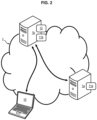
- the above mentioned two types of methods are implemented within an architecture such as illustrated in Figure 2 , by means of a first and/or second server 1a, 1b.
- the first server 1a is the learning server (implementing the first method) and the second server 1b is a segmentation, server (implementing the second method). It is fully possible that these two servers be merged.
- Each of these servers 1a, 1b is typically remote computer equipment connected to an extended network 2 such as the Internet for data exchange.
- Each one comprises data processing means 11a, 11b of processor type (in particular the data processing means 11a of the first server have strong computing power, since learning is long and complex compared with ordinary use of the trained CRNN), and optionally storage means 12 such as a computer memory e.g. a hard disk.
- the first server 1a stores or has access to one of more training database i.e. a set of already classified data (as opposed to so-called inputted data that precisely is sought to be classify).
- the data is here constituted of images and/or videos, and at least comprises training videos already semantically segmented. In other words, pixels of the training videos are already labelled.
- the architecture advantageously comprises one or more items of client equipment 10, which may be any work station (also connected to network 2), preferably separate from the servers 1a, 1b but possibly being merged with one and/or the other thereof.
- client equipment 10 has one or more data items to be classified.
- the operators of the equipment are typically "clients" in the commercial meaning of the term, of the service provider operating the first and/or second servers 1a, 1b.
- RNNs have proven effective for sequence modeling in neural networks: the idea is to learn an internal state that accumulates relevant information across time and to base the prediction on the current input and this internal state. RNNs are often hard to train due to vanishing gradient issues.
- h 0 is initialized ( h 0 ) with a tensor of all zeros.
- the training stage at this zero initialization is preferably performed with sequences longer sequences than pairs.
- x t and o t are presently feature maps for the task of semantic segmentation, so convolutional operators (in which the input, the internal state and the output are 3D tensors) could be used inside the RNN module, for instance a ConvGRU ( Ballas, N., Yao, L., Pal, C., Courville, A.: Delving deeper into convolutional networks for learning video representations. ICLR (2016 )) or a ConvLSTM ( Xingjian, S., Chen, Z.,Wang, H., Yeung, D.Y.,Wong,W.K., Woo, W.c.: Convolutional Istm network: A machine learning approach for precipitation nowcasting. In: NIPS. (2015 )).
- the output o t shall depend on a local spatial neighborhood of x t and h t- 1 , with the size of the neighborhood depending on the kernel size of the convolutional operators in a known fashion.
- Standard CRNNs could be contemplated, but only in cases where a given pixel p t at a frame t and the same pixel p t- 1 at the previous frame t - 1 (by "same pixel", it is meant the pixel at the exact same coordinates) are projections of the same real-world point, i.e., if this point remains static in the real world (or moves along the projection ray). In other words, this would assume that the video is static, i.e., that there is no motion. However, in many applications, like autonomous driving, such an assumption is not valid and pixels may move significantly between frames.
- the prediction at the pixel p t of the frame t normally depends on the features x t in the local neighborhood ( p t ) of this pixel p t as well as the local neighborhood ( p t -1 ) from the hidden state h t- 1 at the previous frame t - 1.
- the prediction at p t should actually be based on the features x t in ( p t ) as well as the local neighborhood N p t ⁇ 1 ′ from the hidden state h t- 1 , where p t ⁇ 1 ′ is the pixel corresponding to the same point as p t in the real world.
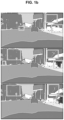
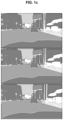
- Figure 3 which represents two examples of successive frames t - 1 (left) and t (right), shows the pixels p t- 1 and q t -1 on the previous frame t - 1 at the exact same coordinates of two pixels p t and q t on the frame t.
- p t- 1 and q t- 1 do not belong to the same region as p t and q t respectively, in contrast to the pixels p t ⁇ 1 ′ and q t ⁇ 1 ′ .
- optical flow is a vector field defining the displacement of all pixels from an image to another one (in particular a pair of successive frames t - 1 , t ⁇ 1 T 2 , i.e. a previous frame t - 1 and a current frame t ) .
- the optical flow F t- 1 ⁇ t defines the displacement of all pixels from the previous frame t - 1 to the current frame t
- the optical flow F t ⁇ t- 1 (“backward flow") defines the displacement of all pixels from the current frame t to the previous frame t - 1.
- the present methods astutely propose combining the use of a recurrent module with the use of a "warping" function.
- a t -1 is a feature map at previous frame t - 1 and a t the corresponding feature map at current frame t (feature map being vector fields, i.e. associating a vector to each pixel)
- feature map being vector fields, i.e. associating a vector to each pixel
- the optical flow contains float values and not only integers.
- a warping function can be based on a bilinear interpolation (e.g. between 4 values), which is differentiable, except in the exceptional case where the flow values are integers, in which case the gradient is set to zero.
- a "FlowingGRU" i.e. a FlowingRNN based on the ConvGRU module.
- ⁇ is the element-wise multiplication
- * the convolution operator
- ⁇ the sigmoid function
- ReLU the rectified linear unit non-linearity (see below)
- W's and b' s are learnable parameters (weights and biases respectively).
- the reset gate r t is learning how to combine the input x t with the previous hidden state h t- 1 while the update gate z t is learning how much of the previous memory should be kept.
- the second CNN aims at estimating the optical flow in pairs of frames, in particular a backward optical flow F t ⁇ t- 1 from a current frame t to the previous frame t - 1.
- the second CNN may be such as FlowNetSimple or FlowNetCorrelation (see the document Dosovitskiy, A., Fischer, P., IIg, E., Hausser, P., Hazirbas, C., Golkov, V., van der Smagt, P., Cremers, D., Brox, T.: Flownet: Learning optical flow with convolutional networks. In: ICCV. (2015 )).
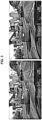
- the architecture FlowNetSimple (generally just called FlowNetS) is preferred and used in the example of figure 4b . In this architecture, both input images are stacked together and fed through a network only made of convolutional layers.
- ReLU non-linearity and 'upconvolution' can also be implemented as convolutions.
- the CRNN is itself trained.
- the idea is to build the CRNN from the first CNN (and the second CNN if there is).
- the CRNN corresponds to the first CNN wherein a convolutional layer has been replaced by a recurrent module having a hidden state as explained (a FlowingRNN module such as FlowingGRU).
- parameters obtained thanks to the training of the first CNN can be fixed, i.e. not further learnt in step (b), preferably the parameters of each layer of the CRNN before the recurrent module (i.e. until ASPP included).
- the parameters further learnt are then preferably those of the recurrent module, the last convolutional layer of the CNN (and generally each convolutional layer not fixed), and possibly the second CNN (if there is).
- step (b) Most popular benchmarks for semantic segmentation are limited to images and cannot be used for step (b). While the present method can be trained even if only a few pixels are annotated in the videos, by ignoring pixels that are not annotated in the loss, training with dense ground-truth would likely lead to better temporal consistency.
- the semantic segmentation task has 23 classes including stuff (e.g. 'sky', 'terrain'), vehicles (e.g. 'car', 'truck') and small objects (e.g. 'traffic sign', 'traffic light').
- stuff e.g. 'sky', 'terrain'
- vehicles e.g. 'car', 'truck'
- small objects e.g. 'traffic sign', 'traffic light'.
- the step (b) advantageously starts with a sub-step (b0) of estimating, for each pair of successive frames t - 1, t ⁇ 1 T 2 of a video of said base of training videos already semantically segmented, the optical flow between the frames of the pair (in particular the backward optical flow F t ⁇ t- 1 from the current frame t to the previous frame t - 1).
- This step is preferably performed using the second CNN (FlowNetS in the figure 4b ) using as input the both frames of the pair, but the present method is not limited to any technique for estimating the optical flow.
- optical flow could be already estimated between frames of the training base so this step (b0) stays optional.
- a sub-step (b1) as already explained, the internal state of the recurrent layer is warped according to the estimated optical flow, so as to adapt the internal state to the motion of pixels between the frames of the pair.
- parameters of at least the recurrent module are learning.
- the parameters further learnt are then preferably those of the recurrent module, the last convolutional layer of the CNN (and generally each convolutional layer not fixed), and possibly the second CNN (if there is).
- SGD SGD using backpropagation though time algorithm with a poly learning rate schedule similar as for the initial training of the first CNN, with a batch size of 4 and training sequences of 12 consecutive frames. Similar data augmentation strategy can be also used.
- the hidden state from the previous frame can be used, without limitation on the sequence length.
- an inputted video semantic segmentation method implemented by the data processing means 11b of the second server 1b.
- the method according to the second aspect performs the semantic segmentation of an inputted video, i.e. labels pixels of the frames of the inputted video.
- a CRNN is performed by the first server 1a (from at least a base of training videos already semantically segmented, and advantageously a base of training images already semantically segmented).
- said training is consistent with the method according to the first aspect, i.e. a first CNN is trained, so that is constructed a CRNN based on the first CNN wherein the penultimate convolutional layer is replaced by a recurrent module of the "FlowingRNN" type.
- the step (a') may further comprise training from a base of training pairs of successive frames between which the optical flow is known, a convolutional neural network, CNN (i.e. the second CNN of the training method).
- CNN convolutional neural network
- step (a') comprise the transmission of the trained CRNN parameters and weights from the first server 1a to the second server 1b, for storage in the memory 12.
- the processing means 11b of the second server 1b uses the CRNN for the segmentation.
- step (b') comprises, for each pair of successive frames ( t - 1 , t ⁇ 1 T 2 ) 2 of the inputted video:
- the efficiency of the present method could be evaluated using the standard per-pixel mean Intersection-over-Union metric (mIoU P ): for each class, the ratio of the number of pixels correctly predicted for this class over the number of pixels whose ground-truth or prediction is this class is computed, and the average over all classes is reported.
- mioU P per-pixel mean Intersection-over-Union metric
- a mean Intersection-over-Union may be further computed at the trajectory level, in which a trajectory has to be consistently labeled across all frames with the ground-truth class in order to be considered as correct.
- dense trajectories over the full videos can be extracted (see for example the document Sundaram, N., Brox, T., Keutzer, K.: Dense point trajectories by gpu-accelerated large displacement optical flow. In: ECCV. (2010 )), with optical flow extracted at half resolution and a density of 8 pixels. Only the trajectories for which the ground-truth labeling is consistent are kept in order to filter out noisy trajectories due to the errors in the flow estimation. In practice, this filtering stage removes about 8% of the extracted trajectories.
- the impact of the length T of the training sequences on the performance of the preferred FlowingGRU module is studied.
- the hidden state of the previous frame is used in all cases, independently of the length of the sequences used at training.
- the model is firstly used with an all-zeroes internal state in all cases and sequences of 1 frame at training, so as to validate that the performance is similar to the per-frame baseline.
- T is then increased from 2 to 12.
- a consistent gain in performance is observed when T increases.
- the mIoU P is higher by 1.2%, the mIoU T by 2.1 % and the mCons. by 3.5% when using training sequences of 12 frames compared to the per-frame baseline.
Landscapes
- Engineering & Computer Science (AREA)
- Theoretical Computer Science (AREA)
- Physics & Mathematics (AREA)
- General Physics & Mathematics (AREA)
- Computing Systems (AREA)
- Evolutionary Computation (AREA)
- Software Systems (AREA)
- Artificial Intelligence (AREA)
- Health & Medical Sciences (AREA)
- General Health & Medical Sciences (AREA)
- Mathematical Physics (AREA)
- Data Mining & Analysis (AREA)
- Computational Linguistics (AREA)
- General Engineering & Computer Science (AREA)
- Multimedia (AREA)
- Life Sciences & Earth Sciences (AREA)
- Biomedical Technology (AREA)
- Biophysics (AREA)
- Molecular Biology (AREA)
- Databases & Information Systems (AREA)
- Medical Informatics (AREA)
- Computer Vision & Pattern Recognition (AREA)
- Computational Mathematics (AREA)
- Mathematical Analysis (AREA)
- Mathematical Optimization (AREA)
- Pure & Applied Mathematics (AREA)
- Algebra (AREA)
- Image Analysis (AREA)
Claims (16)
- Verfahren zum Trainieren eines rekurrenten neuronalen Faltungsnetzwerks (convolutional recurrent neural network), CRNN, für die semantische Segmentierung in Videos;
wobei das Verfahren dadurch gekennzeichnet ist, dass es die Durchführung der folgenden Schritte durch einen Datenprozessor (11a) eines ersten Servers (1a) umfasst:(a) Trainieren eines ersten neuronalen Faltungsnetzes (convolutional neural network), CNN, ausgehend von einer Basis von bereits semantisch segmentierten Trainingsbildern;(b) Trainieren eines rekurrenten neuronalen Faltungsnetzwerks, CRNN, das dem ersten CNN entspricht, ausgehend von einer Basis von bereits semantisch segmentierten Trainingsvideos, wobei eine Faltungsschicht durch ein rekurrentes Modul mit einem verborgenen Zustand ersetzt wurde; wobei das Trainieren für jedes Paar aufeinanderfolgender Einzelbilder (t - 1, (b1) Verzerren des internen Zustands der rekurrenten Schicht entsprechend einem geschätzten optischen Fluss zwischen den Einzelbildern des Paares, um den internen Zustand an die Bewegung von Pixeln zwischen den Einzelbildern des Paares anzupassen;(b2) Lernen von Parameter von mindestens dem rekurrenten Modul.
 - Verfahren nach Anspruch 1, wobei das Paar aufeinanderfolgender Einzelbilder (t - 1,

h t-1 ) zu erhalten, der dem vorhergehenden Einzelbild (t - 1) zugeordnet ist, der dem internen Zustand (h t-1) entspricht, wobei jedes Pixel eine Verschiebung gemäß dem rückwärts gerichteten optischen Fluss (F t→t-1) erfahren hat. - Verfahren nach Anspruch 2, wobei die Verzerrungsfunktion derart ist, dass ∀pt,
h t-1 (pt ) = h t-1 (pt + F t→-1(pt )), wobei pt ein Pixel des aktuellen Einzelbildes t ist, F t→t-1 der rückwärts gerichtete optische Fluss ist, h t-1 der interne Zustand ist, der dem vorhergehenden Einzelbild t - 1 zugeordnet ist, der verzerrte interne Zustand ist,h t-1 der dem vorhergehenden Einzelbild t - 1 zugeordnet ist. - Verfahren nach einem der Ansprüche 1 bis 3, wobei Schritt (b) einen vorhergehenden Teilschritt (b0) des Schätzens des optischen Flusses zwischen den Einzelbildern des Paares umfasst, der unter Verwendung eines zweiten CNN durchgeführt wird, wobei Schritt (a) das Trainieren des zweiten CNN ausgehend von einer Basis von Trainingspaaren aufeinanderfolgender Einzelbilder, zwischen denen der optische Fluss bekannt ist, umfasst.
- Verfahren nach Anspruch 4, wobei das zweite CNN ein FlowNetSimple-Netzwerk oder ein FlowNetCorrelation-Netzwerk ist.
- Verfahren nach einem der Ansprüche 1 bis 5, wobei die Parameter jeder Schicht des CRNN vor dem rekurrenten Modul während des Teilschritts (b2) festgelegt werden.
- Verfahren nach einem der Ansprüche 1 bis 6, wobei die Faltungsschicht des ersten CNN, die durch ein rekurrentes Modul ersetzt wird, die vorletzte Faltungsschicht ist.
- Verfahren nach Anspruch 6 und 7 in Kombination, wobei die in Teilschritt (b2) gelernten Parameter des CRNN diejenigen des rekurrenten Moduls und der letzten Faltungsschicht des ersten CNN sind .
- Verfahren nach Anspruch 4 und 8 in Kombination, wobei Teilschritt (b2) das weitere Lernen der Parameter des zweiten CNN umfasst.
- Verfahren nach einem der Ansprüche 6 bis 9, wobei das erste CNN vor der vorletzten Faltungsschicht ein Atrous Spatial Pyramid Pooling Modul umfasst.
- Verfahren nach einem der Ansprüche 1 bis 10, wobei das rekurrente Modul ausgewählt wird aus einer Convolutional Gated Recurrent Unit und einem Convolutional Long Short-Term Memory.
- Verfahren zur semantischen Segmentierung eines eingegebenen Videos, dadurch gekennzeichnet, dass es die Durchführung der folgenden Schritte umfasst:(a') Trainieren eines rekurrenten neuronalen Faltungsnetzes, CRNN, das einem ersten neuronalen Faltungsnetz, CNN, entspricht, durch Datenverarbeitungsmittel (11a) eines ersten Servers (1a) ausgehend von mindestens einer Basis von bereits semantisch segmentierten Trainingsvideos, wobei eine Faltungsschicht durch ein rekurrentes Modul mit einem verborgenen Zustand ersetzt wurde;(b') Durchführen, durch Verarbeitungsmittel (11b) eines zweiten Servers (1b), für jedes Paar aufeinanderfolgender Einzelbilder (t - 1,
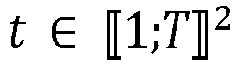 (b'0) Schätzen des optischen Flusses zwischen den Einzelbildern des Paares;(b'1) Verzerren des internen Zustands der rekurrenten Schicht entsprechend dem geschätzten optischen Fluss, um so den internen Zustand an die Bewegung von Pixeln zwischen den Einzelbildern des Paares anzupassen;(b'2) semantisches Segmentieren jedes Einzelbildes mit dem CRNN.
 - Verfahren nach Anspruch 12, wobei der Schritt (a') in Übereinstimmung mit dem Lernverfahren nach einem der Ansprüche 1 bis 11 durchgeführt wird.
- Verfahren nach einem der Ansprüche 12 und 13, wobei der Schritt (a') das Trainieren eines zweites neuronales Faltungsnetzwerk, CNN, ausgehend von einer Basis von Trainingspaaren aufeinanderfolgender Einzelbilder, zwischen denen der optische Fluss bekannt ist, umfasst, wobei Teilschritt (b'0) unter Verwendung des zweiten CNN durchgeführt wird.
- Computerprogrammprodukt, das Codebefehle zum Ausführen eines Verfahrens nach einem der Ansprüche 1 bis 14 zum Trainieren eines rekurrenten neuronalen Faltungsnetzwerks, CRNN, oder zur semantischen Segmentierung eines eingegebenen Videos umfasst, wenn das Programm auf einem Computer ausgeführt wird.
- Computerlesbares Medium, auf dem ein Computerprogrammprodukt gespeichert ist, das Codebefehle zum Ausführen eines Verfahrens nach einem der Ansprüche 1 bis 14 zum Trainieren eines rekurrenten neuronalen Faltungsnetzwerks, CRNN, oder zur semantischen Segmentierung eines eingegebenen Videos umfasst.
Priority Applications (4)
| Application Number | Priority Date | Filing Date | Title |
|---|---|---|---|
| EP18306104.3A EP3608844B1 (de) | 2018-08-10 | 2018-08-10 | Verfahren zum trainieren eines crnn und zur semantischen segmentierung eines eingegebenen videos unter verwendung des besagten crnn |
| US16/517,942 US11182620B2 (en) | 2018-08-10 | 2019-07-22 | Method for training a convolutional recurrent neural network and for semantic segmentation of inputted video using the trained convolutional recurrent neural network |
| KR1020190094417A KR102235745B1 (ko) | 2018-08-10 | 2019-08-02 | 컨볼루션 순환 신경망을 훈련시키는 방법 및 훈련된 컨볼루션 순환 신경망을 사용하는 입력된 비디오의 의미적 세그먼트화 방법 |
| JP2019147185A JP6861249B2 (ja) | 2018-08-10 | 2019-08-09 | 畳み込み回帰型ニューラルネットワークを訓練させる方法、および訓練された畳み込み回帰型ニューラルネットワークを使用する、入力されたビデオのセマンティックセグメンテーション方法 |
Applications Claiming Priority (1)
| Application Number | Priority Date | Filing Date | Title |
|---|---|---|---|
| EP18306104.3A EP3608844B1 (de) | 2018-08-10 | 2018-08-10 | Verfahren zum trainieren eines crnn und zur semantischen segmentierung eines eingegebenen videos unter verwendung des besagten crnn |
Publications (2)
| Publication Number | Publication Date |
|---|---|
| EP3608844A1 EP3608844A1 (de) | 2020-02-12 |
| EP3608844B1 true EP3608844B1 (de) | 2025-07-02 |
Family
ID=63678574
Family Applications (1)
| Application Number | Title | Priority Date | Filing Date |
|---|---|---|---|
| EP18306104.3A Active EP3608844B1 (de) | 2018-08-10 | 2018-08-10 | Verfahren zum trainieren eines crnn und zur semantischen segmentierung eines eingegebenen videos unter verwendung des besagten crnn |
Country Status (2)
| Country | Link |
|---|---|
| US (1) | US11182620B2 (de) |
| EP (1) | EP3608844B1 (de) |
Families Citing this family (52)
| Publication number | Priority date | Publication date | Assignee | Title |
|---|---|---|---|---|
| US10525685B2 (en) | 2016-05-12 | 2020-01-07 | The Boeing Company | Methods and apparatus to couple a decorative composite having a reinforcing layer to a panel |
| US11164067B2 (en) * | 2018-08-29 | 2021-11-02 | Arizona Board Of Regents On Behalf Of Arizona State University | Systems, methods, and apparatuses for implementing a multi-resolution neural network for use with imaging intensive applications including medical imaging |
| US11321853B2 (en) * | 2019-08-08 | 2022-05-03 | Nec Corporation | Self-supervised visual odometry framework using long-term modeling and incremental learning |
| WO2021092687A1 (en) * | 2019-11-15 | 2021-05-20 | Modiface Inc. | End-to-end merge for video object segmentation (vos) |
| KR102801500B1 (ko) | 2020-03-19 | 2025-04-29 | 삼성전자주식회사 | 컴퓨팅 장치 및 그 동작 방법 |
| CN111507215B (zh) * | 2020-04-08 | 2022-01-28 | 常熟理工学院 | 基于时空卷积循环神经网络与空洞卷积的视频目标分割方法 |
| US11416775B2 (en) * | 2020-04-17 | 2022-08-16 | International Business Machines Corporation | Training robust machine learning models |
| CN111680606B (zh) * | 2020-06-03 | 2021-11-23 | 淮河水利委员会水文局(信息中心) | 基于人工智能云识别水尺的低功耗水位遥测系统 |
| TWI776489B (zh) * | 2020-06-16 | 2022-09-01 | 國立臺灣科技大學 | 用於文件分割的電子裝置和方法 |
| US11657279B2 (en) | 2020-06-16 | 2023-05-23 | National Taiwan University Of Science And Technology | Electronic device and method for document segmentation |
| CN111986105B (zh) * | 2020-07-27 | 2024-03-26 | 成都考拉悠然科技有限公司 | 基于时域去噪掩码的视频时序一致性增强方法 |
| CN112016683B (zh) * | 2020-08-04 | 2023-10-31 | 杰创智能科技股份有限公司 | 数据增强学习、训练方法、电子设备、可读存储介质 |
| CN116075762A (zh) | 2020-08-07 | 2023-05-05 | 纳米电子成像有限公司 | 用于自动聚焦显微镜系统的深度学习模型 |
| CN111968150B (zh) * | 2020-08-19 | 2022-09-02 | 中国科学技术大学 | 一种基于全卷积神经网络的弱监督视频目标分割方法 |
| CN112199548B (zh) * | 2020-09-28 | 2024-07-19 | 华南理工大学 | 一种基于卷积循环神经网络的音乐音频分类方法 |
| US20220092738A1 (en) * | 2020-11-19 | 2022-03-24 | Intel Corporation | Methods and apparatus for super-resolution rendering |
| CN112528808B (zh) * | 2020-12-02 | 2025-05-06 | 中国空间技术研究院 | 天体表面障碍物识别方法和装置 |
| CN112465840B (zh) * | 2020-12-10 | 2023-02-17 | 重庆紫光华山智安科技有限公司 | 语义分割模型训练方法、语义分割方法及相关装置 |
| CN112712019B (zh) * | 2020-12-28 | 2023-08-01 | 湖南大学 | 一种基于图卷积网络的三维人体姿态估计方法 |
| CN112669325B (zh) * | 2021-01-06 | 2022-10-14 | 大连理工大学 | 一种基于主动式学习的视频语义分割方法 |
| CN114912569B (zh) * | 2021-02-10 | 2026-01-20 | 华为技术有限公司 | 一种模型训练方法及装置 |
| CN112633260B (zh) * | 2021-03-08 | 2021-06-22 | 北京世纪好未来教育科技有限公司 | 视频动作分类方法、装置、可读存储介质及设备 |
| US12210585B2 (en) | 2021-03-10 | 2025-01-28 | Qualcomm Incorporated | Efficient test-time adaptation for improved temporal consistency in video processing |
| JP7719617B2 (ja) * | 2021-03-19 | 2025-08-06 | キヤノン株式会社 | 画像処理装置、画像処理方法 |
| CN113098862A (zh) * | 2021-03-31 | 2021-07-09 | 昆明理工大学 | 一种基于混合采样与膨胀卷积相结合的入侵检测方法 |
| CN112926692B (zh) * | 2021-04-09 | 2023-05-09 | 四川翼飞视科技有限公司 | 基于非均匀混合卷积的目标检测装置、方法和存储介质 |
| EP4080452A1 (de) * | 2021-04-15 | 2022-10-26 | Waymo LLC | Unüberwachtes training von neuronalen netzwerken mit optischer flussschätzung |
| CN113128490B (zh) * | 2021-04-28 | 2023-12-05 | 湖南荣冠智能科技有限公司 | 一种处方信息扫描和自动识别方法 |
| US12567173B2 (en) * | 2021-05-07 | 2026-03-03 | Northeastern University | Infant 2D pose estimation and posture detection system |
| CN113341419B (zh) * | 2021-05-25 | 2022-11-01 | 成都信息工程大学 | 基于VAN-ConvLSTM的天气外推方法及系统 |
| CN113421269B (zh) * | 2021-06-09 | 2024-06-07 | 南京瑞易智能科技有限公司 | 一种基于双分支深度卷积神经网络的实时语义分割方法 |
| CN113569338B (zh) * | 2021-08-06 | 2022-10-14 | 大连理工大学 | 一种基于时间扩张卷积网络的压气机旋转失速预警方法 |
| CN113936173B (zh) * | 2021-10-08 | 2025-03-28 | 上海交通大学 | 一种最大化互信息的图像分类方法、设备、介质及系统 |
| US12394071B2 (en) * | 2021-12-21 | 2025-08-19 | International Business Machines Corporation | Temporal interpolation of precipitation |
| CN114419487B (zh) * | 2021-12-24 | 2024-07-02 | 北京理工大学 | 一种内容时间关系网络及生成时间动作提案的方法 |
| CN114429603A (zh) * | 2022-01-20 | 2022-05-03 | 中国科学技术大学 | 轻量级视频语义分割方法、系统、设备及存储介质 |
| CN114550032B (zh) * | 2022-01-28 | 2025-07-29 | 中国科学技术大学 | 一种端到端三维卷积目标检测网络的视频烟雾检测方法 |
| US12148175B2 (en) | 2022-02-02 | 2024-11-19 | Samsung Electronics Co., Ltd. | Multi-frame optical flow network with lossless pyramid micro-architecture |
| JP7639753B2 (ja) * | 2022-03-30 | 2025-03-05 | トヨタ自動車株式会社 | 人物再識別方法、人物再識別システム、及び人物再識別プログラム |
| CN114511813B (zh) * | 2022-04-20 | 2022-06-28 | 天津市城市规划设计研究总院有限公司 | 视频语义描述方法及装置 |
| CN114898461B (zh) * | 2022-04-28 | 2025-07-01 | 河海大学 | 一种基于双流非局部时空卷积神经网络的人体行为识别方法 |
| US12541677B2 (en) | 2022-05-16 | 2026-02-03 | Apple Inc. | Memory-efficient streaming convolutions in neural network processor |
| US12437183B2 (en) | 2022-06-06 | 2025-10-07 | Apple Inc. | Subtask storage for streaming convolutions in neural network processor |
| CN115237503B (zh) * | 2022-08-01 | 2024-04-26 | 广州市影擎电子科技有限公司 | 基于vr的生态模型建立方法及系统 |
| KR20240086085A (ko) * | 2022-12-09 | 2024-06-18 | 삼성전자주식회사 | 시맨틱 맵에 기초하여 프레임 이미지를 복원하는 방법 및 장치 |
| CN115965784A (zh) * | 2022-12-23 | 2023-04-14 | 北京交通大学 | 一种基于无人机俯拍视频与神经网络的铁路轨道分割方法 |
| CN116567258A (zh) * | 2023-05-18 | 2023-08-08 | 电子科技大学 | 一种基于多层卷积结构的视频帧预测方法 |
| CN116402833B (zh) * | 2023-06-08 | 2023-08-22 | 武汉纺织大学 | 一种基于知识蒸馏的半监督视频目标分割方法 |
| CN119337996B (zh) * | 2024-09-18 | 2025-10-24 | 北京赖耶信息科技有限公司 | 一种基于多模态大模型为用户提供个性化答复的方法 |
| CN118823056B (zh) * | 2024-09-19 | 2024-12-06 | 中国水利水电科学研究院 | 水流视频测速方法、时空神经网络模型、电子设备及介质 |
| CN120640000B (zh) * | 2025-08-12 | 2025-10-28 | 湘江实验室 | 一种多尺度语义引导图像压缩方法、系统及存储介质 |
| CN121545107B (zh) * | 2026-01-19 | 2026-03-24 | 奥为科技(南京)有限公司 | 一种分布式视觉控制器的实时视频边缘分析方法 |
Family Cites Families (3)
| Publication number | Priority date | Publication date | Assignee | Title |
|---|---|---|---|---|
| US10157309B2 (en) * | 2016-01-14 | 2018-12-18 | Nvidia Corporation | Online detection and classification of dynamic gestures with recurrent convolutional neural networks |
| US10242266B2 (en) * | 2016-03-02 | 2019-03-26 | Mitsubishi Electric Research Laboratories, Inc. | Method and system for detecting actions in videos |
| US10671855B2 (en) * | 2018-04-10 | 2020-06-02 | Adobe Inc. | Video object segmentation by reference-guided mask propagation |
-
2018
- 2018-08-10 EP EP18306104.3A patent/EP3608844B1/de active Active
-
2019
- 2019-07-22 US US16/517,942 patent/US11182620B2/en active Active
Also Published As
| Publication number | Publication date |
|---|---|
| EP3608844A1 (de) | 2020-02-12 |
| US11182620B2 (en) | 2021-11-23 |
| US20200160065A1 (en) | 2020-05-21 |
Similar Documents
| Publication | Publication Date | Title |
|---|---|---|
| EP3608844B1 (de) | Verfahren zum trainieren eines crnn und zur semantischen segmentierung eines eingegebenen videos unter verwendung des besagten crnn | |
| KR102235745B1 (ko) | 컨볼루션 순환 신경망을 훈련시키는 방법 및 훈련된 컨볼루션 순환 신경망을 사용하는 입력된 비디오의 의미적 세그먼트화 방법 | |
| Athar et al. | Stem-seg: Spatio-temporal embeddings for instance segmentation in videos | |
| US11176381B2 (en) | Video object segmentation by reference-guided mask propagation | |
| Zhang et al. | Adversarial spatio-temporal learning for video deblurring | |
| US12260576B2 (en) | Unsupervised depth prediction neural networks | |
| US10839543B2 (en) | Systems and methods for depth estimation using convolutional spatial propagation networks | |
| Chen et al. | Semantic image segmentation with task-specific edge detection using cnns and a discriminatively trained domain transform | |
| US20210326638A1 (en) | Video panoptic segmentation | |
| US10699151B2 (en) | System and method for performing saliency detection using deep active contours | |
| US10339421B2 (en) | RGB-D scene labeling with multimodal recurrent neural networks | |
| CN113657387A (zh) | 基于神经网络的半监督三维点云语义分割方法 | |
| Van Quyen et al. | Feature pyramid network with multi-scale prediction fusion for real-time semantic segmentation | |
| CN111598030A (zh) | 一种航拍图像中车辆检测和分割的方法及系统 | |
| CN115115691A (zh) | 单目三维平面恢复方法、设备及存储介质 | |
| Wang et al. | Variant-depth neural networks for deblurring traffic images in intelligent transportation systems | |
| CN110580712A (zh) | 一种使用运动信息与时序信息的改进CFNet视频目标追踪方法 | |
| CN117710679A (zh) | 无监督交通要素对齐的道路场景语义分割方法及相关装置 | |
| Gao et al. | MLTDNet: an efficient multi-level transformer network for single image deraining | |
| Schmeckpeper et al. | Object-centric video prediction without annotation | |
| US12464203B2 (en) | Implementing video segmentation | |
| CN115841502B (zh) | 结合卷积和轴注意力的光流估计方法、系统及电子设备 | |
| Nakayama et al. | Wide residual networks for semantic segmentation | |
| JP2022152023A (ja) | 特徴量データ生成装置及び方法並びに機械学習装置及び方法 | |
| CN114693991B (zh) | 一种基于像素级强化特征多尺度融合的微小目标检测方法 |
Legal Events
| Date | Code | Title | Description |
|---|---|---|---|
| PUAI | Public reference made under article 153(3) epc to a published international application that has entered the european phase |
Free format text: ORIGINAL CODE: 0009012 |
|
| STAA | Information on the status of an ep patent application or granted ep patent |
Free format text: STATUS: THE APPLICATION HAS BEEN PUBLISHED |
|
| AK | Designated contracting states |
Kind code of ref document: A1 Designated state(s): AL AT BE BG CH CY CZ DE DK EE ES FI FR GB GR HR HU IE IS IT LI LT LU LV MC MK MT NL NO PL PT RO RS SE SI SK SM TR |
|
| AX | Request for extension of the european patent |
Extension state: BA ME |
|
| STAA | Information on the status of an ep patent application or granted ep patent |
Free format text: STATUS: REQUEST FOR EXAMINATION WAS MADE |
|
| 17P | Request for examination filed |
Effective date: 20200727 |
|
| RBV | Designated contracting states (corrected) |
Designated state(s): AL AT BE BG CH CY CZ DE DK EE ES FI FR GB GR HR HU IE IS IT LI LT LU LV MC MK MT NL NO PL PT RO RS SE SI SK SM TR |
|
| STAA | Information on the status of an ep patent application or granted ep patent |
Free format text: STATUS: EXAMINATION IS IN PROGRESS |
|
| 17Q | First examination report despatched |
Effective date: 20211208 |
|
| GRAP | Despatch of communication of intention to grant a patent |
Free format text: ORIGINAL CODE: EPIDOSNIGR1 |
|
| STAA | Information on the status of an ep patent application or granted ep patent |
Free format text: STATUS: GRANT OF PATENT IS INTENDED |
|
| INTG | Intention to grant announced |
Effective date: 20250311 |
|
| GRAS | Grant fee paid |
Free format text: ORIGINAL CODE: EPIDOSNIGR3 |
|
| GRAA | (expected) grant |
Free format text: ORIGINAL CODE: 0009210 |
|
| STAA | Information on the status of an ep patent application or granted ep patent |
Free format text: STATUS: THE PATENT HAS BEEN GRANTED |
|
| AK | Designated contracting states |
Kind code of ref document: B1 Designated state(s): AL AT BE BG CH CY CZ DE DK EE ES FI FR GB GR HR HU IE IS IT LI LT LU LV MC MK MT NL NO PL PT RO RS SE SI SK SM TR |
|
| REG | Reference to a national code |
Ref country code: GB Ref legal event code: FG4D |
|
| GRAT | Correction requested after decision to grant or after decision to maintain patent in amended form |
Free format text: ORIGINAL CODE: EPIDOSNCDEC |
|
| REG | Reference to a national code |
Ref country code: CH Ref legal event code: EP |
|
| REG | Reference to a national code |
Ref country code: DE Ref legal event code: R096 Ref document number: 602018083140 Country of ref document: DE |
|
| RAP4 | Party data changed (patent owner data changed or rights of a patent transferred) |
Owner name: NAVER CORPORATION |
|
| REG | Reference to a national code |
Ref country code: IE Ref legal event code: FG4D |
|
| PGFP | Annual fee paid to national office [announced via postgrant information from national office to epo] |
Ref country code: DE Payment date: 20250916 Year of fee payment: 8 |
|
| PGFP | Annual fee paid to national office [announced via postgrant information from national office to epo] |
Ref country code: GB Payment date: 20250919 Year of fee payment: 8 |
|
| PGFP | Annual fee paid to national office [announced via postgrant information from national office to epo] |
Ref country code: FR Payment date: 20250812 Year of fee payment: 8 |
|
| REG | Reference to a national code |
Ref country code: NL Ref legal event code: MP Effective date: 20250702 |
|
| PG25 | Lapsed in a contracting state [announced via postgrant information from national office to epo] |
Ref country code: PT Free format text: LAPSE BECAUSE OF FAILURE TO SUBMIT A TRANSLATION OF THE DESCRIPTION OR TO PAY THE FEE WITHIN THE PRESCRIBED TIME-LIMIT Effective date: 20251103 |
|
| PG25 | Lapsed in a contracting state [announced via postgrant information from national office to epo] |
Ref country code: NL Free format text: LAPSE BECAUSE OF FAILURE TO SUBMIT A TRANSLATION OF THE DESCRIPTION OR TO PAY THE FEE WITHIN THE PRESCRIBED TIME-LIMIT Effective date: 20250702 |
|
| REG | Reference to a national code |
Ref country code: AT Ref legal event code: MK05 Ref document number: 1810072 Country of ref document: AT Kind code of ref document: T Effective date: 20250702 |
|
| PG25 | Lapsed in a contracting state [announced via postgrant information from national office to epo] |
Ref country code: IS Free format text: LAPSE BECAUSE OF FAILURE TO SUBMIT A TRANSLATION OF THE DESCRIPTION OR TO PAY THE FEE WITHIN THE PRESCRIBED TIME-LIMIT Effective date: 20251102 |
|
| PG25 | Lapsed in a contracting state [announced via postgrant information from national office to epo] |
Ref country code: NO Free format text: LAPSE BECAUSE OF FAILURE TO SUBMIT A TRANSLATION OF THE DESCRIPTION OR TO PAY THE FEE WITHIN THE PRESCRIBED TIME-LIMIT Effective date: 20251002 |
|
| REG | Reference to a national code |
Ref country code: LT Ref legal event code: MG9D |
|
| PG25 | Lapsed in a contracting state [announced via postgrant information from national office to epo] |
Ref country code: AT Free format text: LAPSE BECAUSE OF FAILURE TO SUBMIT A TRANSLATION OF THE DESCRIPTION OR TO PAY THE FEE WITHIN THE PRESCRIBED TIME-LIMIT Effective date: 20250702 |
|
| PG25 | Lapsed in a contracting state [announced via postgrant information from national office to epo] |
Ref country code: FI Free format text: LAPSE BECAUSE OF FAILURE TO SUBMIT A TRANSLATION OF THE DESCRIPTION OR TO PAY THE FEE WITHIN THE PRESCRIBED TIME-LIMIT Effective date: 20250702 |
|
| PG25 | Lapsed in a contracting state [announced via postgrant information from national office to epo] |
Ref country code: HR Free format text: LAPSE BECAUSE OF FAILURE TO SUBMIT A TRANSLATION OF THE DESCRIPTION OR TO PAY THE FEE WITHIN THE PRESCRIBED TIME-LIMIT Effective date: 20250702 |
|
| PG25 | Lapsed in a contracting state [announced via postgrant information from national office to epo] |
Ref country code: GR Free format text: LAPSE BECAUSE OF FAILURE TO SUBMIT A TRANSLATION OF THE DESCRIPTION OR TO PAY THE FEE WITHIN THE PRESCRIBED TIME-LIMIT Effective date: 20251003 |
|
| PG25 | Lapsed in a contracting state [announced via postgrant information from national office to epo] |
Ref country code: SE Free format text: LAPSE BECAUSE OF FAILURE TO SUBMIT A TRANSLATION OF THE DESCRIPTION OR TO PAY THE FEE WITHIN THE PRESCRIBED TIME-LIMIT Effective date: 20250702 Ref country code: CZ Free format text: LAPSE BECAUSE OF FAILURE TO SUBMIT A TRANSLATION OF THE DESCRIPTION OR TO PAY THE FEE WITHIN THE PRESCRIBED TIME-LIMIT Effective date: 20250702 |
|
| PG25 | Lapsed in a contracting state [announced via postgrant information from national office to epo] |
Ref country code: LV Free format text: LAPSE BECAUSE OF FAILURE TO SUBMIT A TRANSLATION OF THE DESCRIPTION OR TO PAY THE FEE WITHIN THE PRESCRIBED TIME-LIMIT Effective date: 20250702 |
|
| PG25 | Lapsed in a contracting state [announced via postgrant information from national office to epo] |
Ref country code: BG Free format text: LAPSE BECAUSE OF FAILURE TO SUBMIT A TRANSLATION OF THE DESCRIPTION OR TO PAY THE FEE WITHIN THE PRESCRIBED TIME-LIMIT Effective date: 20250702 Ref country code: PL Free format text: LAPSE BECAUSE OF FAILURE TO SUBMIT A TRANSLATION OF THE DESCRIPTION OR TO PAY THE FEE WITHIN THE PRESCRIBED TIME-LIMIT Effective date: 20250702 |
|
| PG25 | Lapsed in a contracting state [announced via postgrant information from national office to epo] |
Ref country code: RS Free format text: LAPSE BECAUSE OF FAILURE TO SUBMIT A TRANSLATION OF THE DESCRIPTION OR TO PAY THE FEE WITHIN THE PRESCRIBED TIME-LIMIT Effective date: 20251002 |
|
| PG25 | Lapsed in a contracting state [announced via postgrant information from national office to epo] |
Ref country code: ES Free format text: LAPSE BECAUSE OF FAILURE TO SUBMIT A TRANSLATION OF THE DESCRIPTION OR TO PAY THE FEE WITHIN THE PRESCRIBED TIME-LIMIT Effective date: 20250702 |
|
| PG25 | Lapsed in a contracting state [announced via postgrant information from national office to epo] |
Ref country code: RO Free format text: LAPSE BECAUSE OF FAILURE TO SUBMIT A TRANSLATION OF THE DESCRIPTION OR TO PAY THE FEE WITHIN THE PRESCRIBED TIME-LIMIT Effective date: 20250702 |
|
| REG | Reference to a national code |
Ref country code: CH Ref legal event code: H13 Free format text: ST27 STATUS EVENT CODE: U-0-0-H10-H13 (AS PROVIDED BY THE NATIONAL OFFICE) Effective date: 20260324 |
|
| PG25 | Lapsed in a contracting state [announced via postgrant information from national office to epo] |
Ref country code: SM Free format text: LAPSE BECAUSE OF FAILURE TO SUBMIT A TRANSLATION OF THE DESCRIPTION OR TO PAY THE FEE WITHIN THE PRESCRIBED TIME-LIMIT Effective date: 20250702 |
|
| PG25 | Lapsed in a contracting state [announced via postgrant information from national office to epo] |
Ref country code: DK Free format text: LAPSE BECAUSE OF FAILURE TO SUBMIT A TRANSLATION OF THE DESCRIPTION OR TO PAY THE FEE WITHIN THE PRESCRIBED TIME-LIMIT Effective date: 20250702 |
|
| PG25 | Lapsed in a contracting state [announced via postgrant information from national office to epo] |
Ref country code: LU Free format text: LAPSE BECAUSE OF NON-PAYMENT OF DUE FEES Effective date: 20250810 Ref country code: IT Free format text: LAPSE BECAUSE OF FAILURE TO SUBMIT A TRANSLATION OF THE DESCRIPTION OR TO PAY THE FEE WITHIN THE PRESCRIBED TIME-LIMIT Effective date: 20250702 |
|
| PG25 | Lapsed in a contracting state [announced via postgrant information from national office to epo] |
Ref country code: CH Free format text: LAPSE BECAUSE OF NON-PAYMENT OF DUE FEES Effective date: 20250831 |
|
| PG25 | Lapsed in a contracting state [announced via postgrant information from national office to epo] |
Ref country code: SK Free format text: LAPSE BECAUSE OF FAILURE TO SUBMIT A TRANSLATION OF THE DESCRIPTION OR TO PAY THE FEE WITHIN THE PRESCRIBED TIME-LIMIT Effective date: 20250702 Ref country code: EE Free format text: LAPSE BECAUSE OF FAILURE TO SUBMIT A TRANSLATION OF THE DESCRIPTION OR TO PAY THE FEE WITHIN THE PRESCRIBED TIME-LIMIT Effective date: 20250702 |