EP3608404A1 - An improved method to produce chemical compounds derived from oxaloacetate by microorganisms - Google Patents
An improved method to produce chemical compounds derived from oxaloacetate by microorganisms Download PDFInfo
- Publication number
- EP3608404A1 EP3608404A1 EP18188296.0A EP18188296A EP3608404A1 EP 3608404 A1 EP3608404 A1 EP 3608404A1 EP 18188296 A EP18188296 A EP 18188296A EP 3608404 A1 EP3608404 A1 EP 3608404A1
- Authority
- EP
- European Patent Office
- Prior art keywords
- chemical compound
- microorganism
- oxaloacetate
- ectoine
- deletion
- Prior art date
- Legal status (The legal status is an assumption and is not a legal conclusion. Google has not performed a legal analysis and makes no representation as to the accuracy of the status listed.)
- Withdrawn
Links
- 150000001875 compounds Chemical class 0.000 title claims abstract description 69
- 244000005700 microbiome Species 0.000 title claims abstract description 53
- KHPXUQMNIQBQEV-UHFFFAOYSA-N oxaloacetic acid Chemical compound OC(=O)CC(=O)C(O)=O KHPXUQMNIQBQEV-UHFFFAOYSA-N 0.000 title claims abstract description 29
- 238000000034 method Methods 0.000 title claims abstract description 26
- WQXNXVUDBPYKBA-UHFFFAOYSA-N Ectoine Natural products CC1=NCCC(C(O)=O)N1 WQXNXVUDBPYKBA-UHFFFAOYSA-N 0.000 claims abstract description 61
- WQXNXVUDBPYKBA-YFKPBYRVSA-N ectoine Chemical compound CC1=[NH+][C@H](C([O-])=O)CCN1 WQXNXVUDBPYKBA-YFKPBYRVSA-N 0.000 claims abstract description 60
- 238000004519 manufacturing process Methods 0.000 claims abstract description 31
- 241000894006 Bacteria Species 0.000 claims abstract description 21
- 238000009825 accumulation Methods 0.000 claims abstract description 10
- 230000010039 intracellular degradation Effects 0.000 claims abstract description 10
- 238000012239 gene modification Methods 0.000 claims abstract description 9
- 230000005017 genetic modification Effects 0.000 claims abstract description 9
- 235000013617 genetically modified food Nutrition 0.000 claims abstract description 9
- 241000206595 Halomonas elongata Species 0.000 claims description 34
- 238000012217 deletion Methods 0.000 claims description 32
- 230000037430 deletion Effects 0.000 claims description 32
- 230000007246 mechanism Effects 0.000 claims description 28
- 230000004060 metabolic process Effects 0.000 claims description 19
- 108090000623 proteins and genes Proteins 0.000 claims description 17
- 101150052159 maeA gene Proteins 0.000 claims description 12
- 101150108859 maeB gene Proteins 0.000 claims description 12
- DTBNBXWJWCWCIK-UHFFFAOYSA-N phosphoenolpyruvic acid Chemical compound OC(=O)C(=C)OP(O)(O)=O DTBNBXWJWCWCIK-UHFFFAOYSA-N 0.000 claims description 10
- KIIBBJKLKFTNQO-WHFBIAKZSA-N 5-hydroxyectoine Chemical compound CC1=N[C@H](C(O)=O)[C@@H](O)CN1 KIIBBJKLKFTNQO-WHFBIAKZSA-N 0.000 claims description 9
- DGAQECJNVWCQMB-PUAWFVPOSA-M Ilexoside XXIX Chemical compound C[C@@H]1CC[C@@]2(CC[C@@]3(C(=CC[C@H]4[C@]3(CC[C@@H]5[C@@]4(CC[C@@H](C5(C)C)OS(=O)(=O)[O-])C)C)[C@@H]2[C@]1(C)O)C)C(=O)O[C@H]6[C@@H]([C@H]([C@@H]([C@H](O6)CO)O)O)O.[Na+] DGAQECJNVWCQMB-PUAWFVPOSA-M 0.000 claims description 8
- 230000002068 genetic effect Effects 0.000 claims description 8
- 239000011734 sodium Substances 0.000 claims description 8
- 229910052708 sodium Inorganic materials 0.000 claims description 8
- 101100010134 Halomonas elongata (strain ATCC 33173 / DSM 2581 / NBRC 15536 / NCIMB 2198 / 1H9) doeA gene Proteins 0.000 claims description 7
- 235000012539 Bacterium linens Nutrition 0.000 claims description 6
- 241000186310 Brevibacterium linens Species 0.000 claims description 6
- 108030003403 Ectoine hydrolases Proteins 0.000 claims description 6
- 241000568357 Halomonas titanicae Species 0.000 claims description 6
- 241000334326 Halomonas ventosae Species 0.000 claims description 6
- 241000191007 Halorhodospira halochloris Species 0.000 claims description 6
- 241000191005 Halorhodospira halophila Species 0.000 claims description 6
- 241000193806 Marinococcus halophilus Species 0.000 claims description 6
- 241000589614 Pseudomonas stutzeri Species 0.000 claims description 6
- 101710104378 Putative malate oxidoreductase [NAD] Proteins 0.000 claims description 6
- 230000015556 catabolic process Effects 0.000 claims description 6
- 238000006731 degradation reaction Methods 0.000 claims description 6
- 230000008823 permeabilization Effects 0.000 claims description 6
- 229930029653 phosphoenolpyruvate Natural products 0.000 claims description 6
- 210000000170 cell membrane Anatomy 0.000 claims description 5
- 230000002441 reversible effect Effects 0.000 claims description 5
- 108010012105 ectoine synthase Proteins 0.000 claims description 4
- 101100313262 Halomonas elongata (strain ATCC 33173 / DSM 2581 / NBRC 15536 / NCIMB 2198 / 1H9) teaA gene Proteins 0.000 claims description 3
- 101100313263 Halomonas elongata (strain ATCC 33173 / DSM 2581 / NBRC 15536 / NCIMB 2198 / 1H9) teaB gene Proteins 0.000 claims description 3
- 101100313264 Halomonas elongata (strain ATCC 33173 / DSM 2581 / NBRC 15536 / NCIMB 2198 / 1H9) teaC gene Proteins 0.000 claims description 3
- 239000002243 precursor Substances 0.000 abstract description 7
- 230000004102 tricarboxylic acid cycle Effects 0.000 abstract description 2
- MVVPIAAVGAWJNQ-DOFZRALJSA-N Arachidonoyl dopamine Chemical compound CCCCC\C=C/C\C=C/C\C=C/C\C=C/CCCC(=O)NCCC1=CC=C(O)C(O)=C1 MVVPIAAVGAWJNQ-DOFZRALJSA-N 0.000 abstract 1
- 230000003247 decreasing effect Effects 0.000 abstract 1
- 239000013612 plasmid Substances 0.000 description 32
- FAPWRFPIFSIZLT-UHFFFAOYSA-M Sodium chloride Chemical compound [Na+].[Cl-] FAPWRFPIFSIZLT-UHFFFAOYSA-M 0.000 description 21
- 238000010276 construction Methods 0.000 description 21
- 239000002609 medium Substances 0.000 description 21
- 210000004027 cell Anatomy 0.000 description 18
- UCSJYZPVAKXKNQ-HZYVHMACSA-N streptomycin Chemical compound CN[C@H]1[C@H](O)[C@@H](O)[C@H](CO)O[C@H]1O[C@@H]1[C@](C=O)(O)[C@H](C)O[C@H]1O[C@@H]1[C@@H](NC(N)=N)[C@H](O)[C@@H](NC(N)=N)[C@H](O)[C@H]1O UCSJYZPVAKXKNQ-HZYVHMACSA-N 0.000 description 14
- 101150088738 pckA gene Proteins 0.000 description 13
- 101150067708 pckG gene Proteins 0.000 description 13
- 101150023641 ppc gene Proteins 0.000 description 11
- 239000011780 sodium chloride Substances 0.000 description 11
- 101100351124 Bacillus subtilis (strain 168) pckA gene Proteins 0.000 description 9
- 102000004190 Enzymes Human genes 0.000 description 8
- 108090000790 Enzymes Proteins 0.000 description 8
- 239000007795 chemical reaction product Substances 0.000 description 8
- 238000012163 sequencing technique Methods 0.000 description 8
- 229960005322 streptomycin Drugs 0.000 description 7
- 241000588724 Escherichia coli Species 0.000 description 6
- 229960000723 ampicillin Drugs 0.000 description 6
- AVKUERGKIZMTKX-NJBDSQKTSA-N ampicillin Chemical compound C1([C@@H](N)C(=O)N[C@H]2[C@H]3SC([C@@H](N3C2=O)C(O)=O)(C)C)=CC=CC=C1 AVKUERGKIZMTKX-NJBDSQKTSA-N 0.000 description 6
- 230000000694 effects Effects 0.000 description 6
- 241000620209 Escherichia coli DH5[alpha] Species 0.000 description 5
- 229930182566 Gentamicin Natural products 0.000 description 5
- CEAZRRDELHUEMR-URQXQFDESA-N Gentamicin Chemical compound O1[C@H](C(C)NC)CC[C@@H](N)[C@H]1O[C@H]1[C@H](O)[C@@H](O[C@@H]2[C@@H]([C@@H](NC)[C@@](C)(O)CO2)O)[C@H](N)C[C@@H]1N CEAZRRDELHUEMR-URQXQFDESA-N 0.000 description 5
- 239000006142 Luria-Bertani Agar Substances 0.000 description 5
- 230000006652 catabolic pathway Effects 0.000 description 4
- 238000006243 chemical reaction Methods 0.000 description 4
- 230000004907 flux Effects 0.000 description 4
- 230000006870 function Effects 0.000 description 4
- 230000004110 gluconeogenesis Effects 0.000 description 4
- 230000013011 mating Effects 0.000 description 4
- 230000002503 metabolic effect Effects 0.000 description 4
- 230000035772 mutation Effects 0.000 description 4
- 235000018102 proteins Nutrition 0.000 description 4
- 102000004169 proteins and genes Human genes 0.000 description 4
- CSCPPACGZOOCGX-UHFFFAOYSA-N Acetone Chemical compound CC(C)=O CSCPPACGZOOCGX-UHFFFAOYSA-N 0.000 description 3
- OKTJSMMVPCPJKN-UHFFFAOYSA-N Carbon Chemical compound [C] OKTJSMMVPCPJKN-UHFFFAOYSA-N 0.000 description 3
- WQZGKKKJIJFFOK-GASJEMHNSA-N Glucose Natural products OC[C@H]1OC(O)[C@H](O)[C@@H](O)[C@@H]1O WQZGKKKJIJFFOK-GASJEMHNSA-N 0.000 description 3
- OKKJLVBELUTLKV-UHFFFAOYSA-N Methanol Chemical compound OC OKKJLVBELUTLKV-UHFFFAOYSA-N 0.000 description 3
- 230000015572 biosynthetic process Effects 0.000 description 3
- 229910052799 carbon Inorganic materials 0.000 description 3
- 239000002537 cosmetic Substances 0.000 description 3
- 239000008103 glucose Substances 0.000 description 3
- 229930027917 kanamycin Natural products 0.000 description 3
- 229960000318 kanamycin Drugs 0.000 description 3
- SBUJHOSQTJFQJX-NOAMYHISSA-N kanamycin Chemical compound O[C@@H]1[C@@H](O)[C@H](O)[C@@H](CN)O[C@@H]1O[C@H]1[C@H](O)[C@@H](O[C@@H]2[C@@H]([C@@H](N)[C@H](O)[C@@H](CO)O2)O)[C@H](N)C[C@@H]1N SBUJHOSQTJFQJX-NOAMYHISSA-N 0.000 description 3
- 229930182823 kanamycin A Natural products 0.000 description 3
- 239000000047 product Substances 0.000 description 3
- 238000003786 synthesis reaction Methods 0.000 description 3
- 108091034117 Oligonucleotide Proteins 0.000 description 2
- JLCPHMBAVCMARE-UHFFFAOYSA-N [3-[[3-[[3-[[3-[[3-[[3-[[3-[[3-[[3-[[3-[[3-[[5-(2-amino-6-oxo-1H-purin-9-yl)-3-[[3-[[3-[[3-[[3-[[3-[[5-(2-amino-6-oxo-1H-purin-9-yl)-3-[[5-(2-amino-6-oxo-1H-purin-9-yl)-3-hydroxyoxolan-2-yl]methoxy-hydroxyphosphoryl]oxyoxolan-2-yl]methoxy-hydroxyphosphoryl]oxy-5-(5-methyl-2,4-dioxopyrimidin-1-yl)oxolan-2-yl]methoxy-hydroxyphosphoryl]oxy-5-(6-aminopurin-9-yl)oxolan-2-yl]methoxy-hydroxyphosphoryl]oxy-5-(6-aminopurin-9-yl)oxolan-2-yl]methoxy-hydroxyphosphoryl]oxy-5-(6-aminopurin-9-yl)oxolan-2-yl]methoxy-hydroxyphosphoryl]oxy-5-(6-aminopurin-9-yl)oxolan-2-yl]methoxy-hydroxyphosphoryl]oxyoxolan-2-yl]methoxy-hydroxyphosphoryl]oxy-5-(5-methyl-2,4-dioxopyrimidin-1-yl)oxolan-2-yl]methoxy-hydroxyphosphoryl]oxy-5-(4-amino-2-oxopyrimidin-1-yl)oxolan-2-yl]methoxy-hydroxyphosphoryl]oxy-5-(5-methyl-2,4-dioxopyrimidin-1-yl)oxolan-2-yl]methoxy-hydroxyphosphoryl]oxy-5-(5-methyl-2,4-dioxopyrimidin-1-yl)oxolan-2-yl]methoxy-hydroxyphosphoryl]oxy-5-(6-aminopurin-9-yl)oxolan-2-yl]methoxy-hydroxyphosphoryl]oxy-5-(6-aminopurin-9-yl)oxolan-2-yl]methoxy-hydroxyphosphoryl]oxy-5-(4-amino-2-oxopyrimidin-1-yl)oxolan-2-yl]methoxy-hydroxyphosphoryl]oxy-5-(4-amino-2-oxopyrimidin-1-yl)oxolan-2-yl]methoxy-hydroxyphosphoryl]oxy-5-(4-amino-2-oxopyrimidin-1-yl)oxolan-2-yl]methoxy-hydroxyphosphoryl]oxy-5-(6-aminopurin-9-yl)oxolan-2-yl]methoxy-hydroxyphosphoryl]oxy-5-(4-amino-2-oxopyrimidin-1-yl)oxolan-2-yl]methyl [5-(6-aminopurin-9-yl)-2-(hydroxymethyl)oxolan-3-yl] hydrogen phosphate Polymers Cc1cn(C2CC(OP(O)(=O)OCC3OC(CC3OP(O)(=O)OCC3OC(CC3O)n3cnc4c3nc(N)[nH]c4=O)n3cnc4c3nc(N)[nH]c4=O)C(COP(O)(=O)OC3CC(OC3COP(O)(=O)OC3CC(OC3COP(O)(=O)OC3CC(OC3COP(O)(=O)OC3CC(OC3COP(O)(=O)OC3CC(OC3COP(O)(=O)OC3CC(OC3COP(O)(=O)OC3CC(OC3COP(O)(=O)OC3CC(OC3COP(O)(=O)OC3CC(OC3COP(O)(=O)OC3CC(OC3COP(O)(=O)OC3CC(OC3COP(O)(=O)OC3CC(OC3COP(O)(=O)OC3CC(OC3COP(O)(=O)OC3CC(OC3COP(O)(=O)OC3CC(OC3COP(O)(=O)OC3CC(OC3COP(O)(=O)OC3CC(OC3CO)n3cnc4c(N)ncnc34)n3ccc(N)nc3=O)n3cnc4c(N)ncnc34)n3ccc(N)nc3=O)n3ccc(N)nc3=O)n3ccc(N)nc3=O)n3cnc4c(N)ncnc34)n3cnc4c(N)ncnc34)n3cc(C)c(=O)[nH]c3=O)n3cc(C)c(=O)[nH]c3=O)n3ccc(N)nc3=O)n3cc(C)c(=O)[nH]c3=O)n3cnc4c3nc(N)[nH]c4=O)n3cnc4c(N)ncnc34)n3cnc4c(N)ncnc34)n3cnc4c(N)ncnc34)n3cnc4c(N)ncnc34)O2)c(=O)[nH]c1=O JLCPHMBAVCMARE-UHFFFAOYSA-N 0.000 description 2
- 101150067314 aadA gene Proteins 0.000 description 2
- 230000003115 biocidal effect Effects 0.000 description 2
- 230000007423 decrease Effects 0.000 description 2
- 230000007613 environmental effect Effects 0.000 description 2
- 230000014509 gene expression Effects 0.000 description 2
- 238000011331 genomic analysis Methods 0.000 description 2
- 230000034659 glycolysis Effects 0.000 description 2
- HHLFWLYXYJOTON-UHFFFAOYSA-N glyoxylic acid Chemical compound OC(=O)C=O HHLFWLYXYJOTON-UHFFFAOYSA-N 0.000 description 2
- 230000007794 irritation Effects 0.000 description 2
- 238000005259 measurement Methods 0.000 description 2
- 239000007003 mineral medium Substances 0.000 description 2
- 230000001105 regulatory effect Effects 0.000 description 2
- 150000003839 salts Chemical class 0.000 description 2
- 241000894007 species Species 0.000 description 2
- 239000000758 substrate Substances 0.000 description 2
- 108091032973 (ribonucleotides)n+m Proteins 0.000 description 1
- 108010017192 4-hydroxy-4-methyl-2-oxoglutarate aldolase Proteins 0.000 description 1
- QTBSBXVTEAMEQO-UHFFFAOYSA-M Acetate Chemical compound CC([O-])=O QTBSBXVTEAMEQO-UHFFFAOYSA-M 0.000 description 1
- 102100029589 Acylpyruvase FAHD1, mitochondrial Human genes 0.000 description 1
- 229920001817 Agar Polymers 0.000 description 1
- 208000035285 Allergic Seasonal Rhinitis Diseases 0.000 description 1
- DCXYFEDJOCDNAF-UHFFFAOYSA-N Asparagine Natural products OC(=O)C(N)CC(N)=O DCXYFEDJOCDNAF-UHFFFAOYSA-N 0.000 description 1
- 0 CC*(C)*CCC(C*C)N(CC)CC1C([*+]C2)=CC2(CC)C1 Chemical compound CC*(C)*CCC(C*C)N(CC)CC1C([*+]C2)=CC2(CC)C1 0.000 description 1
- 108091033409 CRISPR Proteins 0.000 description 1
- 238000010354 CRISPR gene editing Methods 0.000 description 1
- 206010010144 Completed suicide Diseases 0.000 description 1
- 108020004414 DNA Proteins 0.000 description 1
- 230000004544 DNA amplification Effects 0.000 description 1
- 201000004624 Dermatitis Diseases 0.000 description 1
- 108010042407 Endonucleases Proteins 0.000 description 1
- 102000004533 Endonucleases Human genes 0.000 description 1
- 241000192125 Firmicutes Species 0.000 description 1
- 230000005526 G1 to G0 transition Effects 0.000 description 1
- 206010020751 Hypersensitivity Diseases 0.000 description 1
- 206010061218 Inflammation Diseases 0.000 description 1
- DCXYFEDJOCDNAF-REOHCLBHSA-N L-asparagine Chemical compound OC(=O)[C@@H](N)CC(N)=O DCXYFEDJOCDNAF-REOHCLBHSA-N 0.000 description 1
- HOSWPDPVFBCLSY-VKHMYHEASA-N L-aspartic 4-semialdehyde Chemical compound [O-]C(=O)[C@@H]([NH3+])CC=O HOSWPDPVFBCLSY-VKHMYHEASA-N 0.000 description 1
- CKLJMWTZIZZHCS-REOHCLBHSA-N L-aspartic acid Chemical compound OC(=O)[C@@H](N)CC(O)=O CKLJMWTZIZZHCS-REOHCLBHSA-N 0.000 description 1
- KDXKERNSBIXSRK-YFKPBYRVSA-N L-lysine Chemical compound NCCCC[C@H](N)C(O)=O KDXKERNSBIXSRK-YFKPBYRVSA-N 0.000 description 1
- FFEARJCKVFRZRR-BYPYZUCNSA-N L-methionine Chemical compound CSCC[C@H](N)C(O)=O FFEARJCKVFRZRR-BYPYZUCNSA-N 0.000 description 1
- AYFVYJQAPQTCCC-GBXIJSLDSA-N L-threonine Chemical compound C[C@@H](O)[C@H](N)C(O)=O AYFVYJQAPQTCCC-GBXIJSLDSA-N 0.000 description 1
- KDXKERNSBIXSRK-UHFFFAOYSA-N Lysine Natural products NCCCCC(N)C(O)=O KDXKERNSBIXSRK-UHFFFAOYSA-N 0.000 description 1
- 239000004472 Lysine Substances 0.000 description 1
- 102000013460 Malate Dehydrogenase Human genes 0.000 description 1
- 108010026217 Malate Dehydrogenase Proteins 0.000 description 1
- 206010028740 Nasal dryness Diseases 0.000 description 1
- 201000009053 Neurodermatitis Diseases 0.000 description 1
- 108010069823 Oxaloacetate decarboxylase Proteins 0.000 description 1
- 102000001708 Protein Isoforms Human genes 0.000 description 1
- 108010029485 Protein Isoforms Proteins 0.000 description 1
- 241000589776 Pseudomonas putida Species 0.000 description 1
- 201000004681 Psoriasis Diseases 0.000 description 1
- LCTONWCANYUPML-UHFFFAOYSA-M Pyruvate Chemical compound CC(=O)C([O-])=O LCTONWCANYUPML-UHFFFAOYSA-M 0.000 description 1
- 206010039085 Rhinitis allergic Diseases 0.000 description 1
- 206010040880 Skin irritation Diseases 0.000 description 1
- AYFVYJQAPQTCCC-UHFFFAOYSA-N Threonine Natural products CC(O)C(N)C(O)=O AYFVYJQAPQTCCC-UHFFFAOYSA-N 0.000 description 1
- 239000004473 Threonine Substances 0.000 description 1
- 230000006978 adaptation Effects 0.000 description 1
- 239000008272 agar Substances 0.000 description 1
- 201000010105 allergic rhinitis Diseases 0.000 description 1
- 230000007815 allergy Effects 0.000 description 1
- 229940024606 amino acid Drugs 0.000 description 1
- 235000001014 amino acid Nutrition 0.000 description 1
- 150000001413 amino acids Chemical class 0.000 description 1
- 230000000692 anti-sense effect Effects 0.000 description 1
- 238000013459 approach Methods 0.000 description 1
- 229960001230 asparagine Drugs 0.000 description 1
- 235000009582 asparagine Nutrition 0.000 description 1
- 229940009098 aspartate Drugs 0.000 description 1
- 230000033228 biological regulation Effects 0.000 description 1
- 230000001851 biosynthetic effect Effects 0.000 description 1
- 239000006285 cell suspension Substances 0.000 description 1
- 238000005119 centrifugation Methods 0.000 description 1
- 239000013043 chemical agent Substances 0.000 description 1
- 229960005091 chloramphenicol Drugs 0.000 description 1
- WIIZWVCIJKGZOK-RKDXNWHRSA-N chloramphenicol Chemical compound ClC(Cl)C(=O)N[C@H](CO)[C@H](O)C1=CC=C([N+]([O-])=O)C=C1 WIIZWVCIJKGZOK-RKDXNWHRSA-N 0.000 description 1
- 230000002759 chromosomal effect Effects 0.000 description 1
- 230000001010 compromised effect Effects 0.000 description 1
- 239000006071 cream Substances 0.000 description 1
- 238000006114 decarboxylation reaction Methods 0.000 description 1
- 239000003599 detergent Substances 0.000 description 1
- 239000012895 dilution Substances 0.000 description 1
- 238000010790 dilution Methods 0.000 description 1
- 239000003814 drug Substances 0.000 description 1
- 239000000428 dust Substances 0.000 description 1
- 239000012636 effector Substances 0.000 description 1
- 230000009088 enzymatic function Effects 0.000 description 1
- 238000006911 enzymatic reaction Methods 0.000 description 1
- 230000029142 excretion Effects 0.000 description 1
- 238000002474 experimental method Methods 0.000 description 1
- 208000030533 eye disease Diseases 0.000 description 1
- 239000003889 eye drop Substances 0.000 description 1
- 229940012356 eye drops Drugs 0.000 description 1
- 230000004151 fermentation Effects 0.000 description 1
- 238000000855 fermentation Methods 0.000 description 1
- 239000012634 fragment Substances 0.000 description 1
- 230000030279 gene silencing Effects 0.000 description 1
- 238000010353 genetic engineering Methods 0.000 description 1
- 230000001890 gluconeogenic effect Effects 0.000 description 1
- 230000006698 induction Effects 0.000 description 1
- 230000002757 inflammatory effect Effects 0.000 description 1
- 230000004054 inflammatory process Effects 0.000 description 1
- 230000002401 inhibitory effect Effects 0.000 description 1
- 230000005764 inhibitory process Effects 0.000 description 1
- 239000000543 intermediate Substances 0.000 description 1
- 238000002955 isolation Methods 0.000 description 1
- 150000002632 lipids Chemical class 0.000 description 1
- 239000006210 lotion Substances 0.000 description 1
- 230000001050 lubricating effect Effects 0.000 description 1
- 238000005461 lubrication Methods 0.000 description 1
- 229960003646 lysine Drugs 0.000 description 1
- GPSDUZXPYCFOSQ-UHFFFAOYSA-M m-toluate Chemical compound CC1=CC=CC(C([O-])=O)=C1 GPSDUZXPYCFOSQ-UHFFFAOYSA-M 0.000 description 1
- 238000012423 maintenance Methods 0.000 description 1
- 229940049920 malate Drugs 0.000 description 1
- BJEPYKJPYRNKOW-UHFFFAOYSA-N malic acid Chemical compound OC(=O)C(O)CC(O)=O BJEPYKJPYRNKOW-UHFFFAOYSA-N 0.000 description 1
- 229940126601 medicinal product Drugs 0.000 description 1
- 210000004379 membrane Anatomy 0.000 description 1
- 239000012528 membrane Substances 0.000 description 1
- 108020004999 messenger RNA Proteins 0.000 description 1
- 230000037353 metabolic pathway Effects 0.000 description 1
- 229960004452 methionine Drugs 0.000 description 1
- 229930182817 methionine Natural products 0.000 description 1
- 239000000203 mixture Substances 0.000 description 1
- 210000004400 mucous membrane Anatomy 0.000 description 1
- 229930014626 natural product Natural products 0.000 description 1
- 230000003287 optical effect Effects 0.000 description 1
- 239000003960 organic solvent Substances 0.000 description 1
- 238000012261 overproduction Methods 0.000 description 1
- 239000008188 pellet Substances 0.000 description 1
- 230000027086 plasmid maintenance Effects 0.000 description 1
- 238000007747 plating Methods 0.000 description 1
- 229920000642 polymer Polymers 0.000 description 1
- 229920000136 polysorbate Polymers 0.000 description 1
- 238000002360 preparation method Methods 0.000 description 1
- 230000008569 process Effects 0.000 description 1
- 239000001397 quillaja saponaria molina bark Substances 0.000 description 1
- 230000005855 radiation Effects 0.000 description 1
- 230000009467 reduction Effects 0.000 description 1
- 230000002829 reductive effect Effects 0.000 description 1
- 230000010076 replication Effects 0.000 description 1
- 229930182490 saponin Natural products 0.000 description 1
- 150000007949 saponins Chemical class 0.000 description 1
- 239000013535 sea water Substances 0.000 description 1
- 208000017520 skin disease Diseases 0.000 description 1
- 239000000243 solution Substances 0.000 description 1
- 230000000087 stabilizing effect Effects 0.000 description 1
- 239000006228 supernatant Substances 0.000 description 1
- 239000000725 suspension Substances 0.000 description 1
- 230000008685 targeting Effects 0.000 description 1
- 229960002898 threonine Drugs 0.000 description 1
- 238000012546 transfer Methods 0.000 description 1
- 238000013519 translation Methods 0.000 description 1
- 150000003628 tricarboxylic acids Chemical class 0.000 description 1
- GPRLSGONYQIRFK-MNYXATJNSA-N triton Chemical compound [3H+] GPRLSGONYQIRFK-MNYXATJNSA-N 0.000 description 1
- 238000011144 upstream manufacturing Methods 0.000 description 1
Images
Classifications
-
- C—CHEMISTRY; METALLURGY
- C12—BIOCHEMISTRY; BEER; SPIRITS; WINE; VINEGAR; MICROBIOLOGY; ENZYMOLOGY; MUTATION OR GENETIC ENGINEERING
- C12N—MICROORGANISMS OR ENZYMES; COMPOSITIONS THEREOF; PROPAGATING, PRESERVING, OR MAINTAINING MICROORGANISMS; MUTATION OR GENETIC ENGINEERING; CULTURE MEDIA
- C12N9/00—Enzymes; Proenzymes; Compositions thereof; Processes for preparing, activating, inhibiting, separating or purifying enzymes
- C12N9/88—Lyases (4.)
-
- C—CHEMISTRY; METALLURGY
- C12—BIOCHEMISTRY; BEER; SPIRITS; WINE; VINEGAR; MICROBIOLOGY; ENZYMOLOGY; MUTATION OR GENETIC ENGINEERING
- C12N—MICROORGANISMS OR ENZYMES; COMPOSITIONS THEREOF; PROPAGATING, PRESERVING, OR MAINTAINING MICROORGANISMS; MUTATION OR GENETIC ENGINEERING; CULTURE MEDIA
- C12N9/00—Enzymes; Proenzymes; Compositions thereof; Processes for preparing, activating, inhibiting, separating or purifying enzymes
- C12N9/0004—Oxidoreductases (1.)
- C12N9/0006—Oxidoreductases (1.) acting on CH-OH groups as donors (1.1)
-
- C—CHEMISTRY; METALLURGY
- C12—BIOCHEMISTRY; BEER; SPIRITS; WINE; VINEGAR; MICROBIOLOGY; ENZYMOLOGY; MUTATION OR GENETIC ENGINEERING
- C12P—FERMENTATION OR ENZYME-USING PROCESSES TO SYNTHESISE A DESIRED CHEMICAL COMPOUND OR COMPOSITION OR TO SEPARATE OPTICAL ISOMERS FROM A RACEMIC MIXTURE
- C12P17/00—Preparation of heterocyclic carbon compounds with only O, N, S, Se or Te as ring hetero atoms
- C12P17/10—Nitrogen as only ring hetero atom
- C12P17/12—Nitrogen as only ring hetero atom containing a six-membered hetero ring
Definitions
- the present invention is concerned with the production of compounds derived from oxaloacetate, such as ectoine or its biosynthetic precursor Ny-acetyl-L-2,4-diaminobutyric acid (NADA) or hydroxyectoine, in genetically modified microorganisms.
- the genetic modifications increase the obtainable yield by different mechanisms, such as by inhibiting the intracellular degradation of the compound, by increasing the extracellular accumulation of the compound, and by disrupting metabolic cycles, which are an obstacle for obtaining an increased yield.
- the invention is also concerned with the genetically modified microorganisms, and their use in the production of the desired compounds.
- oxaloacetate Chemical compounds derived from oxaloacetate, such as ectoine or its precursor N ⁇ -acetyl-L-2,4-diaminobutyric acid (NADA), or hydroxyectoine, play an increasingly important role in several industries, for example as a cosmetics product and/or a medicinal product.
- Ectoine and hydroxyectoine have a lubricating and cell-protecting effect in creams and lotions, but can also protect the skin from harmful environmental influences such as UV radiation, allergies and fine dust.
- the precursor NADA is also a building block for polymers.
- ectoine is also a firm component in preparations which are used in the treatment of eye disorders.
- ectoine in eye drops relieves irritation and inflammation by stabilizing the watery layer and the lipid layer of the tear film and therefore ensuring optimal lubrication.
- ectoine is used for irritation or inflammation of the skin or the mucous membranes, for example with a dry nose, allergic rhinitis (hay fever) or for inflammatory skin disorders such as neurodermatitis or psoriasis.
- ectoine For use in the cosmetics industry, ectoine must have a purity of at least 80%. The degree of purity of ectoine for medicinal use is significantly higher. Currently, ectoine is an expensive and much sought-after product. Therefore there is a need for a method to provide ectoine, or its precursor NADA, in an efficient way and with high yields.
- Ectoine (1,4,5,6-tetrahydro-2-methyl-4-pyrimidinecarboxylic acid) is a natural compound found in several species of bacteria. Ectoine is found in high concentrations in halophilic microorganisms and confers resistance towards salt and temperature stress. Ectoine was first identified in the microorganism Ectothiorhodospira halochloris, but has since been found in a wide range of Gram-negative and Gram-positive bacteria.
- Ectoine is synthesized in three successive enzymatic reactions starting from aspartic ⁇ -semialdehyde.
- the enzyme ectoine synthase, encoded by the gene ectC catalyzes the circularization of NADA to ectoine.
- Ectoine is currently produced on an industrial scale by high-density fermentation of salt-tolerant bacteria such as Halomonas elongata , which in its wild-type status carries the genetic information to produce ectoine. Attempts have been made to increase the natural ectoine production by genetically modifying the microorganism.
- Halomonas elongata cells do not rely only on de novo synthesis of ectoine for adaptation to high saline environments, but can also take up compatible solutes or precursors thereof from the medium.
- H. elongata is equipped with a set of compatible solute transporters of which only one accepts ectoine as a substrate, namely, the ectoine-specific transporter TeaABC.
- H. elongata with an inoperable TeaABC transporter constantly releases ectoine to the surrounding medium.
- cells of this mutant are able to keep the internal ectoine concentration at the same level as the wild-type strain.
- teaABC not only causes excretion of ectoine to the medium but also results in overproduction of ectoine.
- An ectoine production strain of H. elongata with higher productivity in ectoine synthesis than the wild-type strain was designed ( EP 1 409 707 B1 ). This mutant is also called “leaky mutant", as the uptake mechanism is compromised.
- the present invention provides such an improved method for producing ectoine or other chemical compounds derived from oxaloacetate metabolism in microorganisms by providing microorganisms capable of producing the compound at this high level.
- the microorganisms comprise a novel combination of genetic modifications responsible for the high yield.
- the present invention provides a method according to the appended claims.
- the present invention provides a method for producing a chemical compound derived from oxaloacetate metabolism in microorganisms, wherein the microorganism comprises the genetic information for the production of the chemical compound, wherein the microorganism is genetically modified by increasing the extracellular accumulation of the chemical compound by disruption of the uptake mechanism of the chemical compound or by introduction of efflux channels, or by reversible permeabilization of the cytoplasmic membrane, or by replacing passive channels with active transporters; and disrupting the intracellular degradation mechanism of the chemical compound; and disrupting the PEP-pyruvate-oxaloacetate node to increase the production of the chemical compound.
- the microorganism can be a gram negative bacterium, wherein optionally the bacterium can be a halophilic bacterium, wherein optionally the microorganism can be selected from the group comprising Halomonas elongata , Brevibacterium linens, Ectothiorhodospira halochloris , Marinococcus halophilus , Pseudomonas stutzeri , Halomonas titanicae , Halorhodospira halophila , and Halomonas ventosae.
- the medium used to cultivate the mutated microorganisms of the present invention in the method of the present invention preferably comprises a sodium concentration of at least 0.5 M, preferably between to 0.5 M and 1 M.
- the chemical compound derived from oxaloacetate metabolism can be ectoine or hydroxyectoine.
- the chemical compound derived from oxaloacetate metabolism can be N ⁇ -acetyl-L-2,4-diaminobutyric acid (NADA).
- the microorganism can further comprise a deletion of the ectoine synthase gene ectC, when the desired end product is NADA.
- the uptake mechanism of the chemical compound can be disrupted by disruption of a TRAP transporter, wherein preferably the TRAP transporter can be TeaABC.
- TeaABC can be disrupted by deletion of at least one of the genes selected from the group comprising teaA , teaB , and teaC, wherein optionally all of the genes in the group can be deleted.
- the degradation mechanism of the chemical compound can be disrupted by deletion of the ectoine hydrolase gene doeA .
- the PEP-pyruvate-oxaloacetate node can be disrupted by deletion of the phosphoenolpyruvate carboxykinase gene Pck, and/or the deletion of PEP carboxylase gene Ppc, and/or the deletion of the malic enzyme gene maeB, and or maeA.
- the genes Pck , Ppc , maeB, and maeA are deleted.
- the present invention also provides a microorganism comprising the genetic information for the production of a chemical compound derived from oxaloacetate metabolism, comprising the following genetic modifications:
- the uptake mechanism of the chemical compound can be disrupted by disruption of a TRAP transporter, wherein preferably the TRAP transporter can be TeaABC.
- the degradation mechanism of the chemical compound can be disrupted by deletion of the ectoine hydrolase gene doeA.
- the PEP-pyruvate-oxaloacetate node can be disrupted by deletion of the phosphoenolpyruvate carboxykinase gene Pck, and/or the deletion of PEP carboxylase gene Ppc, and/or the deletion of the malic enzyme gene mae B, and or maeA.
- the microorganism of the present invention can be a gram negative bacterium, wherein optionally the bacterium is a halophilic bacterium, or wherein the microorganism is selected from the group comprising Halomonas elongata , Brevibacterium linens, Ectothiorhodospira halochloris , Marinococcus halophilus , Pseudomonas stutzeri , Halomonas titanicae , Halorhodospira halophila , and Halomonas ventosae.
- the present invention also provides the use of the microorganism of the invention for producing a chemical compound derived from oxaloacetate metabolism, such as ectoine, hydroxyectoine, or NADA.
- the obtainable yield of a chemical compound derived from oxaloacetate metabolism such as ectoine in microorganisms can be significantly increased by introducing at least one genetic modification which disrupts the PEP-pyruvate-oxaloacetate node into microorganisms already comprising genetic modifications to increase the extracellular accumulation of the chemical compound, for example by disrupting the uptake mechanism of the chemical compound, and disrupting the intracellular degradation mechanism of the chemical compound.
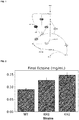
- Figure 1 shows the PEP-Pyr-OAA node and the glyoxylate shunt in H. elongata as it has been determined by genomic analysis. It has been shown that two of the four enzymes shown in Figure 1 contribute to the anaplerotic flux: PEP carboxylase (Ppc) and oxaloacetate decarboxylase (Oad). The other two enzymes: Phosphoenolpyruvate carboxykinase (Pck) and malic enzyme (Mae) carry flux in the opposite direction when needed, be it for gluconeogenesis or, in the case of Mae, as part of a bypass to malic dehydrogenase (also shown in Figure 1 ).
- a futile cycle also known as a substrate cycle, occurs when two metabolic pathways run simultaneously in opposite directions and have no overall effect other than to dissipate energy in the form of heat. For example, if glycolysis and gluconeogenesis were to be active at the same time, glucose would be converted to pyruvate by glycolysis and then converted back to glucose by gluconeogenesis, with an overall consumption of ATP.
- the first strategy is to ensure that an alternative anaplerotic enzyme that is regulated by different effectors is present in the cell.
- Oad which has been shown to be regulated by sodium concentration in the medium.
- a significant salt concentration such as 0.5 M to 1 M a significant anaplerotic flux is thus guaranteed in H. elongata .
- the presence of the alternative anaplerotic enzyme can also be ensured by introduction of the genetic information for the enzyme into the cell by artificial means.
- the second strategy is to increase the demand for the desired end product to at least partially compensate the effects of increased supply on the metabolic state of the cell. This can be done by several mechanisms, which result in a reduction of the concentration of the desired end product in the cell.
- Removing the desired end product from the cell can for example be achieved by introduction of efflux channels into the cell, or by permeabilization of the membrane by chemical agents such as organic solvents, e.g. methanol, acetone, or detergents such as saponin, triton or tween, or by replacement of passive channels with active transporters.
- chemical agents such as organic solvents, e.g. methanol, acetone, or detergents such as saponin, triton or tween, or by replacement of passive channels with active transporters.
- genes encoding proteins acting as active transporters could be overexpressed in a mutant strain to achieve increased removal of the desired end product from the cell.
- the uptake mechanism can be disrupted, e.g. by deleting genes encoding the proteins which facilitate the uptake.
- the disruption of the uptake mechanism can be carried out by deletion of the genes encoding the TeaABC transporter. This has already been done in the art and the resulting mutant H . elongata strain has been termed "leaky mutant" ( ⁇ TeaABC ⁇ DoeA).
- the second effect of the mutations introduced, separately or simultaneously, is to optimize the process by decoupling growth and ectoine production.
- the deletion of the genes Pck , Ppc , maeB and/or maeA eliminates the two reactions that are important for gluconeogenesis. This will hinder growth on several carbon sources such as malate and acetate, since any decarboxylation of TCA intermediates would have to proceed through reactions that are thermodynamically unfavorable.
- mutant strains according to the invention can use glucose for both growth and ectoine production, but gluconeogenic carbon sources will only be usable for ectoine production. It has been shown by the applicants of the present invention that a microorganism which is genetically modified as defined above allows an increase of the ectoine yield of about at least 50 % (see also Figure 2 ).
- the present invention is therefore concerned with a method for producing a chemical compound derived from oxaloacetate metabolism in microorganisms, wherein the microorganism comprises the genetic information for the production of the chemical compound, wherein the microorganism is genetically modified by
- Disruption of the PEP-pyruvate-oxaloacetate node to increase the production of the chemical compound can be achieved by silencing the function of enzymes involved in the PEP-pyruvate-oxaloacetate node.
- Preferred enzymes are Ppc, Pck, MaeA, and MaeB. Their function can for example be silenced by deletion of the sequence comprising the genetic information for the enzyme.
- the PEP-pyruvate-oxaloacetate node can be disrupted by deletion of the phosphoenolpyruvate carboxykinase gene Pck, and/or by deletion of the PEP carboxylase gene Ppc and/or the deletion of the malic enzyme gene maeB , and/or maeA.
- the Pck gene and the maeB gene are both deleted.
- the Pck gene, the Ppc gene and the maeB gene are deleted. In a yet further preferred embodiment the Pck gene, the Ppc gene, the maeB gene, and the maeA gene are deleted.
- the chemical compound derived from oxaloacetate metabolism can be ectoine or hydroxyectoine.
- the chemical compound derived from oxaloacetate metabolism can also be N ⁇ -acetyl-L-2,4-diaminobutyric acid (NADA).
- the microorganism can further comprise a deletion of the ectoine synthase gene ectC to allow accumulation of NADA.
- the chemical compound derived from oxaloacetate metabolism can also be one of a whole family of amino acids such as aspartate, asparagine, methionine, lysine and threonine.
- the microorganism can be a gram negative bacterium, wherein optionally the bacterium is a halophilic bacterium.
- the microorganism can be selected from the group comprising Halomonas elongata , Brevibacterium linens , Ectothiorhodospira halochloris , Marinococcus halophilus , Pseudomonas stutzeri , Halomonas titanicae , Halorhodospira halophila , and Halomonas ventosae.
- the uptake mechanism of the chemical compound can be disrupted by disruption of a TRAP transporter, wherein preferably the TRAP transporter is TeaABC.
- TeaABC can be disrupted by deletion of at least one of the genes selected from the group comprising teaA , teaB , and teaC , wherein optionally all of the genes in the group are deleted. Based on the information provided in this application the person of skill in the art will be able to identify similar targets in other microorganisms, which have the same function as the TRAP transporter TeaABC in H. elongata.
- Disruption of the intracellular degradation of the compound can be achieved by several mechanisms known to the person of skill in the art.
- genes in the degradation pathway can be knocked out or knocked down.
- the translation of these proteins can also be inhibited or silenced by antisense or interference RNA targeting the mRNA of the genes encoding the proteins involved in the degradation pathway.
- the gene expression can also be downregulated for example by promoter replacement or by using the CRISPR/CAS technique.
- H. elongata disruption of the intracellular degradation of ectoine has already been achieved by deletion of the ectoine hydrolase gene doeA, which catalyzes the first step in the ectoine degradation pathway. Based on the information provided in this application the person of skill in the art will be able to identify similar targets in other microorganisms, which have the same function as the doeA in H. elongata.
- the medium used to cultivate the mutated microorganisms of the present invention preferably comprises a significant sodium concentration, such as 0.5 M to 1 M.
- Sea water has a sodium concentration of about 0.5 M and can therefore be used as a base medium to grow the mutants of the present invention.
- E. coli exhibits reduced growth at a sodium concentration of about 0.5 M and cannot grow when the sodium concentration exceeds 0.9 M.
- the significant sodium concentration ensures that the anaplerotic flux is maintained even when OAA supply is increased and therefore further improves the method of the present invention.
- the present invention is also concerned with a microorganism obtained by the genetic modifications as defined above.
- the present invention is also concerned with the use of the genetically modified microorganism for producing a chemical compound derived from oxaloacetate metabolism.
- Halomonas elongata DSM2581T was routinely grown in minimal medium MM63 or LB medium containing 1 M NaCl at 30 °C under shaking. All Escherichia coli strains were grown in LB medium at 37 °C amended with the antibiotic necessary for maintenance of the plasmid. All plasmids and genetic manipulations were performed on E. coli DH5 ⁇ or E . coli DH5 ⁇ ⁇ -pir.
- the plasmid was transformed into E. coli DH5 ⁇ ⁇ -pir and clones carrying it were selected on LB agar plates supplemented with 200 ⁇ g/ml streptomycin (Sm 200).
- Plasmids had to be transferred to H. elongata using E. coli HBH101 (pRK600) as helper in the mating procedure.
- plasmid pSW-2 encoding the 1-Scel endonuclease was transferred to H. elongata . Therefore, the donor strain E. coli DH5 ⁇ ⁇ -pir (pSW-2), the recipient strain H. elongata , and the helper strain E. coli HBH101 (pRK600) were grown in LB medium, amended with the antibiotic necessary to assure plasmid maintenance (pSW-2: 10 ⁇ g/ml gentamycin and pRK600: 35 ⁇ g/ml chloramphenicol) to the stationary phase (overnight).
- the cells were resuspended in 600 ⁇ l of a 0.5 M NaCl solution, an aliquot of 100 ⁇ l was plated on LB agar plates containing 0.5 M NaCl, 500 ⁇ g/ml ampicillin and 50 ⁇ g/ml gentamycin and the plates were incubated for 48 h at 30 °C. Colonies were picked and the presence of pSW-2 was verified by PCR with pSW2-F and pSW2-R (see Table 1).
- H. elongata H. elongata (pSW-2) again by triparental mating. This was performed as described above but using H . elongata (pSW-2) as recipient, E.
- coli DH5 ⁇ ⁇ -pir pSEVA212S-pckA::Sm, pSEVA212S- ⁇ pckA, pSEVA212S-maeB::Sm, pSEVA212S- ⁇ maeB, and pSEVA212S- ⁇ maeA
- the cointegrates were selected by plating different dilutions of the mating mixture on LB agar plates containing 0.5 M NaCl, 500 ⁇ g/ml ampicillin, 60 ⁇ g/ml kanamycin, and 50 ⁇ g/ml gentamycin.
- a single colony was picked from the selective agar plate and grown in 3 ml LB medium with 1 M NaCl, 500 ⁇ g/ml ampicillin, 200 ⁇ g/ml streptomycin and 50 ⁇ g/ml gentamycin overnight at 30 °C. The next day, cells were pelleted by centrifugation, washed once in LB medium containing 1 M NaCl, and subsequently resuspended to an OD600 of 1 with LB medium with 1 M NaCl, 500 ⁇ g/ml ampicillin, and 50 ⁇ g/ml gentamycin. Four ml of that culture were induced with 80 ⁇ l of 3-methylbenzoate to a final concentration of 10 mM and incubated at 30 °C under shaking.
- Figure 2 shows ectoine concentrations in medium in overnight cultures of three strains of Halomonas elongata in mineral medium (MM63) each value is the average of three cultures. Error bars represent two standard deviations.
- the strains are WT, the "leaky mutant" ( ⁇ TeaABC ⁇ DoeA) of the prior art, and KH1( ⁇ TeaABC ⁇ DoeA ⁇ Pck) and KH2( ⁇ TeaABC ⁇ DoeA ⁇ Pck ⁇ MaeB) of the present invention.
- a measurement was removed as an outlier according to the interquartile range criterion (x> Q3+1.5*IQR).
- mutants of the present invention exhibit a significantly increased yield in ectoine production compared to the mutant of the prior art.
Landscapes
- Chemical & Material Sciences (AREA)
- Life Sciences & Earth Sciences (AREA)
- Organic Chemistry (AREA)
- Health & Medical Sciences (AREA)
- Engineering & Computer Science (AREA)
- Zoology (AREA)
- Wood Science & Technology (AREA)
- Genetics & Genomics (AREA)
- Bioinformatics & Cheminformatics (AREA)
- General Health & Medical Sciences (AREA)
- Biochemistry (AREA)
- General Engineering & Computer Science (AREA)
- Microbiology (AREA)
- Biotechnology (AREA)
- Medicinal Chemistry (AREA)
- Molecular Biology (AREA)
- Biomedical Technology (AREA)
- Chemical Kinetics & Catalysis (AREA)
- General Chemical & Material Sciences (AREA)
- Preparation Of Compounds By Using Micro-Organisms (AREA)
- Micro-Organisms Or Cultivation Processes Thereof (AREA)
Abstract
A method for the production of a chemical compound derived from oxaloacetate using genetically modified microorganisms is disclosed. The chemical compound can for example be ectoine or the ectoine precursor NADA. The genetic modifications increase the compound production by increasing the extracellular accumulation, decreasing the intracellular degradation, and by disrupting the PEP-pyruvate-oxaloacetate node of the tricarboxylic acid (TCA) cycle. The microorganisms obtained by the genetic modifications are disclosed as well, as well as their use in the production method. The microorganisms are preferably gram negative bacteria, such as halophilic bacteria, for exampleHalomonas elongata.
Description
- The present invention is concerned with the production of compounds derived from oxaloacetate, such as ectoine or its biosynthetic precursor Ny-acetyl-L-2,4-diaminobutyric acid (NADA) or hydroxyectoine, in genetically modified microorganisms. The genetic modifications increase the obtainable yield by different mechanisms, such as by inhibiting the intracellular degradation of the compound, by increasing the extracellular accumulation of the compound, and by disrupting metabolic cycles, which are an obstacle for obtaining an increased yield. The invention is also concerned with the genetically modified microorganisms, and their use in the production of the desired compounds.
- Chemical compounds derived from oxaloacetate, such as ectoine or its precursor Nγ-acetyl-L-2,4-diaminobutyric acid (NADA), or hydroxyectoine, play an increasingly important role in several industries, for example as a cosmetics product and/or a medicinal product. Ectoine and hydroxyectoine have a lubricating and cell-protecting effect in creams and lotions, but can also protect the skin from harmful environmental influences such as UV radiation, allergies and fine dust. Furthermore, the precursor NADA is also a building block for polymers.
- Alongside products in the cosmetics industry, ectoine is also a firm component in preparations which are used in the treatment of eye disorders. For example, ectoine in eye drops relieves irritation and inflammation by stabilizing the watery layer and the lipid layer of the tear film and therefore ensuring optimal lubrication.
- In medicine, ectoine is used for irritation or inflammation of the skin or the mucous membranes, for example with a dry nose, allergic rhinitis (hay fever) or for inflammatory skin disorders such as neurodermatitis or psoriasis.
- For use in the cosmetics industry, ectoine must have a purity of at least 80%. The degree of purity of ectoine for medicinal use is significantly higher. Currently, ectoine is an expensive and much sought-after product. Therefore there is a need for a method to provide ectoine, or its precursor NADA, in an efficient way and with high yields.
- Ectoine (1,4,5,6-tetrahydro-2-methyl-4-pyrimidinecarboxylic acid) is a natural compound found in several species of bacteria. Ectoine is found in high concentrations in halophilic microorganisms and confers resistance towards salt and temperature stress. Ectoine was first identified in the microorganism Ectothiorhodospira halochloris, but has since been found in a wide range of Gram-negative and Gram-positive bacteria. Other species of bacteria in which ectoine was found include Brevibacterium linens, Halomonas elongata, Marinococcus halophilus, Pseudomonas stutzeri, Halomonas titanicae, Halorhodospira halophila, and Halomonas ventosae.
- Ectoine is synthesized in three successive enzymatic reactions starting from aspartic β-semialdehyde. The enzyme ectoine synthase, encoded by the gene ectC, catalyzes the circularization of NADA to ectoine.
- Ectoine is currently produced on an industrial scale by high-density fermentation of salt-tolerant bacteria such as Halomonas elongata, which in its wild-type status carries the genetic information to produce ectoine. Attempts have been made to increase the natural ectoine production by genetically modifying the microorganism.
- It has been found that Halomonas elongata cells do not rely only on de novo synthesis of ectoine for adaptation to high saline environments, but can also take up compatible solutes or precursors thereof from the medium. To enable solute uptake, H. elongata is equipped with a set of compatible solute transporters of which only one accepts ectoine as a substrate, namely, the ectoine-specific transporter TeaABC. H. elongata with an inoperable TeaABC transporter constantly releases ectoine to the surrounding medium. Despite this, cells of this mutant are able to keep the internal ectoine concentration at the same level as the wild-type strain. Apparently, the mutation of teaABC not only causes excretion of ectoine to the medium but also results in overproduction of ectoine. An ectoine production strain of H. elongata with higher productivity in ectoine synthesis than the wild-type strain was designed (
EP 1 409 707 B1 ). This mutant is also called "leaky mutant", as the uptake mechanism is compromised. - A further attempted approach to increase ectoine production was to prevent ectoine degradation in the cells producing ectoine. It was found that the deletion of gene doeA, encoding the ectoine hydrolase protein, which catalyzes the first step in the ectoine degradation pathway, can lead to increased volumetric productivity of ectoine (Schwibbert et al. 2011).
- While these attempts managed to increase the yield obtainable from microorganisms producing ectoine, there is still a need for a method, which further increases this yield. Furthermore, there is a need for microorganisms, which are capable of producing ectoine at this high level to make the high yield obtainable.
- The present invention provides such an improved method for producing ectoine or other chemical compounds derived from oxaloacetate metabolism in microorganisms by providing microorganisms capable of producing the compound at this high level. The microorganisms comprise a novel combination of genetic modifications responsible for the high yield.
- The present invention provides a method according to the appended claims.
- The present invention provides a method for producing a chemical compound derived from oxaloacetate metabolism in microorganisms, wherein the microorganism comprises the genetic information for the production of the chemical compound, wherein the microorganism is genetically modified by
increasing the extracellular accumulation of the chemical compound by disruption of the uptake mechanism of the chemical compound or by introduction of efflux channels, or by reversible permeabilization of the cytoplasmic membrane, or by replacing passive channels with active transporters; and
disrupting the intracellular degradation mechanism of the chemical compound; and disrupting the PEP-pyruvate-oxaloacetate node to increase the production of the chemical compound. - In the method of the present invention the microorganism can be a gram negative bacterium, wherein optionally the bacterium can be a halophilic bacterium, wherein optionally the microorganism can be selected from the group comprising Halomonas elongata, Brevibacterium linens, Ectothiorhodospira halochloris, Marinococcus halophilus, Pseudomonas stutzeri, Halomonas titanicae, Halorhodospira halophila, and Halomonas ventosae.
- The medium used to cultivate the mutated microorganisms of the present invention in the method of the present invention preferably comprises a sodium concentration of at least 0.5 M, preferably between to 0.5 M and 1 M.
- The chemical compound derived from oxaloacetate metabolism can be ectoine or hydroxyectoine.
- The chemical compound derived from oxaloacetate metabolism can be Nγ-acetyl-L-2,4-diaminobutyric acid (NADA).
- The microorganism can further comprise a deletion of the ectoine synthase gene ectC, when the desired end product is NADA.
- In the method of the present invention, the uptake mechanism of the chemical compound can be disrupted by disruption of a TRAP transporter, wherein preferably the TRAP transporter can be TeaABC. TeaABC can be disrupted by deletion of at least one of the genes selected from the group comprising teaA, teaB, and teaC, wherein optionally all of the genes in the group can be deleted.
- In the method of the present invention, the degradation mechanism of the chemical compound can be disrupted by deletion of the ectoine hydrolase gene doeA.
- In the method of the present invention, the PEP-pyruvate-oxaloacetate node can be disrupted by deletion of the phosphoenolpyruvate carboxykinase gene Pck, and/or the deletion of PEP carboxylase gene Ppc, and/or the deletion of the malic enzyme gene maeB, and or maeA. Optionally, the genes Pck, Ppc, maeB, and maeA are deleted.
- The present invention also provides a microorganism comprising the genetic information for the production of a chemical compound derived from oxaloacetate metabolism, comprising the following genetic modifications:
- increase of the extracellular accumulation of the chemical compound by disruption of the uptake mechanism of the chemical compound or by introduction of efflux channels, or by reversible permeabilization of the cytoplasmic membrane, or by replacing passive channels with active transporters; and
- disruption of the intracellular degradation mechanism of the chemical compound; and
- disruption of the PEP-pyruvate-oxaloacetate node to increase the production of the chemical compound.
- In the microorganism of the present invention, the uptake mechanism of the chemical compound can be disrupted by disruption of a TRAP transporter, wherein preferably the TRAP transporter can be TeaABC. The degradation mechanism of the chemical compound can be disrupted by deletion of the ectoine hydrolase gene doeA. The PEP-pyruvate-oxaloacetate node can be disrupted by deletion of the phosphoenolpyruvate carboxykinase gene Pck, and/or the deletion of PEP carboxylase gene Ppc, and/or the deletion of the malic enzyme gene maeB, and or maeA.
- The microorganism of the present invention can be a gram negative bacterium, wherein optionally the bacterium is a halophilic bacterium, or wherein the microorganism is selected from the group comprising Halomonas elongata, Brevibacterium linens, Ectothiorhodospira halochloris, Marinococcus halophilus, Pseudomonas stutzeri, Halomonas titanicae, Halorhodospira halophila, and Halomonas ventosae.
- The present invention also provides the use of the microorganism of the invention for producing a chemical compound derived from oxaloacetate metabolism, such as ectoine, hydroxyectoine, or NADA.
-
-
Figure 1 shows the PEP-Pyr-OAA node and the glyoxylate shunt in H. elongata as it has been determined by genomic analysis. -
Figure 2 shows ectoine concentrations in medium in overnight cultures of three strains of Halomonas elongata in mineral medium (MM63); each value is the average of three cultures. Error bars represent two standard deviations. The strains are WT, which is the "leaky mutant" (ΔTeaABCΔDoeA), KH1(ΔTeaABCΔDoeAΔPck) and KH2(ΔTeaABCΔDoeAΔPckΔMaeB). A measurement was removed as an outlier according to the interquartile range criterion (x> Q3+1.5*IQR). - It has been surprisingly found that the obtainable yield of a chemical compound derived from oxaloacetate metabolism such as ectoine in microorganisms can be significantly increased by introducing at least one genetic modification which disrupts the PEP-pyruvate-oxaloacetate node into microorganisms already comprising genetic modifications to increase the extracellular accumulation of the chemical compound, for example by disrupting the uptake mechanism of the chemical compound, and disrupting the intracellular degradation mechanism of the chemical compound.
- It has been found that the synthesis of ectoine from its precursor oxaloacetate (OAA) withdraws a high amount of carbon out of the tricarboxylic acid (TCA) cycle, which must then be replenished by anaplerotic reactions. The PEP-pyruvate-oxaloacetate node has been found to play a major role in these anaplerotic reactions.
-
Figure 1 shows the PEP-Pyr-OAA node and the glyoxylate shunt in H. elongata as it has been determined by genomic analysis. It has been shown that two of the four enzymes shown inFigure 1 contribute to the anaplerotic flux: PEP carboxylase (Ppc) and oxaloacetate decarboxylase (Oad). The other two enzymes: Phosphoenolpyruvate carboxykinase (Pck) and malic enzyme (Mae) carry flux in the opposite direction when needed, be it for gluconeogenesis or, in the case of Mae, as part of a bypass to malic dehydrogenase (also shown inFigure 1 ). - It has now been surprisingly found that disrupting the PEP-Pyr-OAA node by deletion of Pck, Ppc and/or Mae, mutant strains can be obtained, which are capable of a further increased yield of chemical compounds derived from OAA. Mae can be present in two isoforms, MaeA and MaeB. Both are targets for deletion according to the present invention.
- It has been found that these mutations lead to an improved ectoine production in two different ways.
- The first effect of the mutations introduced, separately or simultaneously, is to increase the supply of OAA and to suppress futile cycles. A futile cycle, also known as a substrate cycle, occurs when two metabolic pathways run simultaneously in opposite directions and have no overall effect other than to dissipate energy in the form of heat. For example, if glycolysis and gluconeogenesis were to be active at the same time, glucose would be converted to pyruvate by glycolysis and then converted back to glucose by gluconeogenesis, with an overall consumption of ATP.
- The increase in supply of OAA has been shown to disrupt the normal regulation of the PEP-Pyr-OAA node in other gram negative bacteria and would not be expected to lead to an increase of ectoine production by itself. Rather, the increase in supply could lead to a general decrease in metabolic activity due partly to the inhibition of Ppc, as observed in E. coli. It has however been unexpectedly found that this decrease in metabolic activity can be mitigated by combining two strategies.
- The first strategy is to ensure that an alternative anaplerotic enzyme that is regulated by different effectors is present in the cell. In the particular case of H. elongata the wild type already possesses such an enzyme, Oad, which has been shown to be regulated by sodium concentration in the medium. In the presence of a significant salt concentration such as 0.5 M to 1 M a significant anaplerotic flux is thus guaranteed in H. elongata. The presence of the alternative anaplerotic enzyme can also be ensured by introduction of the genetic information for the enzyme into the cell by artificial means.
- The second strategy is to increase the demand for the desired end product to at least partially compensate the effects of increased supply on the metabolic state of the cell. This can be done by several mechanisms, which result in a reduction of the concentration of the desired end product in the cell.
- It can either be ensured that the desired end product is removed from the cell, and/or it can be ensured that desired end product already removed from the cell cannot be taken up again by the cell.
- Removing the desired end product from the cell can for example be achieved by introduction of efflux channels into the cell, or by permeabilization of the membrane by chemical agents such as organic solvents, e.g. methanol, acetone, or detergents such as saponin, triton or tween, or by replacement of passive channels with active transporters. Furthermore, genes encoding proteins acting as active transporters could be overexpressed in a mutant strain to achieve increased removal of the desired end product from the cell.
- To ensure that any desired end product already removed from the cell into the medium is not taken up again by the cell, the uptake mechanism can be disrupted, e.g. by deleting genes encoding the proteins which facilitate the uptake. In the case of H. elongata, the disruption of the uptake mechanism can be carried out by deletion of the genes encoding the TeaABC transporter. This has already been done in the art and the resulting mutant H. elongata strain has been termed "leaky mutant" (ΔTeaABCΔDoeA).
- The second effect of the mutations introduced, separately or simultaneously, is to optimize the process by decoupling growth and ectoine production. Independently of the effect of increased OAA supply, the deletion of the genes Pck, Ppc, maeB and/or maeA eliminates the two reactions that are important for gluconeogenesis. This will hinder growth on several carbon sources such as malate and acetate, since any decarboxylation of TCA intermediates would have to proceed through reactions that are thermodynamically unfavorable. Thus, mutant strains according to the invention can use glucose for both growth and ectoine production, but gluconeogenic carbon sources will only be usable for ectoine production. It has been shown by the applicants of the present invention that a microorganism which is genetically modified as defined above allows an increase of the ectoine yield of about at least 50 % (see also
Figure 2 ). - The present invention is therefore concerned with a method for producing a chemical compound derived from oxaloacetate metabolism in microorganisms, wherein the microorganism comprises the genetic information for the production of the chemical compound, wherein the microorganism is genetically modified by
- increasing the extracellular accumulation of the chemical compound by disruption of the uptake mechanism of the chemical compound or by introduction of efflux channels, or by reversible permeabilization of the cytoplasmic membrane, or by replacing passive channels with active transporters; and
- disruption of the intracellular degradation mechanism of the chemical compound; and
- disruption of the PEP-pyruvate-oxaloacetate node to increase the production of the chemical compound.
- Disruption of the PEP-pyruvate-oxaloacetate node to increase the production of the chemical compound can be achieved by silencing the function of enzymes involved in the PEP-pyruvate-oxaloacetate node. Preferred enzymes are Ppc, Pck, MaeA, and MaeB. Their function can for example be silenced by deletion of the sequence comprising the genetic information for the enzyme.
- The PEP-pyruvate-oxaloacetate node can be disrupted by deletion of the phosphoenolpyruvate carboxykinase gene Pck, and/or by deletion of the PEP carboxylase gene Ppc and/or the deletion of the malic enzyme gene maeB, and/or maeA.
- In a preferred embodiment the Pck gene and the maeB gene are both deleted.
- In a further preferred embodiment the Pck gene, the Ppc gene and the maeB gene are deleted. In a yet further preferred embodiment the Pck gene, the Ppc gene, the maeB gene, and the maeA gene are deleted.
- The chemical compound derived from oxaloacetate metabolism can be ectoine or hydroxyectoine. The chemical compound derived from oxaloacetate metabolism can also be Nγ-acetyl-L-2,4-diaminobutyric acid (NADA). In this embodiment, the microorganism can further comprise a deletion of the ectoine synthase gene ectC to allow accumulation of NADA. The chemical compound derived from oxaloacetate metabolism can also be one of a whole family of amino acids such as aspartate, asparagine, methionine, lysine and threonine. The person of skill in the art will know how to disrupt the degradation mechanism of these compounds, and the person of skill in the art will also know how to increase extracellular accumulation of these compounds, and will therefore be able to adapt the teachings of this application to a method directed at increasing the yield of chemical compounds derived from oxaloacetate metabolism other than NADA, ectoine, or hydroxyectoine.
- The microorganism can be a gram negative bacterium, wherein optionally the bacterium is a halophilic bacterium. The microorganism can be selected from the group comprising Halomonas elongata, Brevibacterium linens, Ectothiorhodospira halochloris, Marinococcus halophilus, Pseudomonas stutzeri, Halomonas titanicae, Halorhodospira halophila, and Halomonas ventosae.
- The uptake mechanism of the chemical compound can be disrupted by disruption of a TRAP transporter, wherein preferably the TRAP transporter is TeaABC. TeaABC can be disrupted by deletion of at least one of the genes selected from the group comprising teaA, teaB, and teaC, wherein optionally all of the genes in the group are deleted. Based on the information provided in this application the person of skill in the art will be able to identify similar targets in other microorganisms, which have the same function as the TRAP transporter TeaABC in H. elongata.
- Disruption of the intracellular degradation of the compound can be achieved by several mechanisms known to the person of skill in the art. For example, genes in the degradation pathway can be knocked out or knocked down. The translation of these proteins can also be inhibited or silenced by antisense or interference RNA targeting the mRNA of the genes encoding the proteins involved in the degradation pathway. The gene expression can also be downregulated for example by promoter replacement or by using the CRISPR/CAS technique. In the case of H. elongata disruption of the intracellular degradation of ectoine has already been achieved by deletion of the ectoine hydrolase gene doeA, which catalyzes the first step in the ectoine degradation pathway. Based on the information provided in this application the person of skill in the art will be able to identify similar targets in other microorganisms, which have the same function as the doeA in H. elongata.
- The medium used to cultivate the mutated microorganisms of the present invention preferably comprises a significant sodium concentration, such as 0.5 M to 1 M. Sea water has a sodium concentration of about 0.5 M and can therefore be used as a base medium to grow the mutants of the present invention. E. coli exhibits reduced growth at a sodium concentration of about 0.5 M and cannot grow when the sodium concentration exceeds 0.9 M. The significant sodium concentration ensures that the anaplerotic flux is maintained even when OAA supply is increased and therefore further improves the method of the present invention.
- The present invention is also concerned with a microorganism obtained by the genetic modifications as defined above.
- The present invention is also concerned with the use of the genetically modified microorganism for producing a chemical compound derived from oxaloacetate metabolism.
- Halomonas elongata DSM2581T was routinely grown in minimal medium MM63 or LB medium containing 1 M NaCl at 30 °C under shaking. All Escherichia coli strains were grown in LB medium at 37 °C amended with the antibiotic necessary for maintenance of the plasmid. All plasmids and genetic manipulations were performed on E. coli DH5α or E. coli DH5α λ-pir.
- Replacement of the genes pckA, maeB, and maeA with aadA, encoding a Streptomycin resistance cassette was performed by adapting the method previously reported for Pseudomonas putida (Martínez-García et al., 2011). The plasmids were constructed by Gibson Assembly (NEB) according to the suppliers manual. Oligonucleotides used for the gene amplification are shown in Table 1. A DNA segment containing about 500 bp of the genomic sequence upstream of the target gene (pckA, maeB, or maeA) followed by the sequence of the aadA gene, encoding the streptomycin resistance cassette, and about 500 bp of the downstream chromosomal region, was inserted into pSEVA212S, carrying the R6K suicide origin of replication (Martínez-García et al., 2015) previously linearized with EcoRI. The plasmid was transformed into E. coli DH5α λ-pir and clones carrying it were selected on LB agar plates supplemented with 200 µg/ml streptomycin (Sm 200). The correct assembly of pSEVA212S-pckA::Sm, pSEVA212S-ΔpckA, pSEVA212S-maeB::Sm, pSEVA212S-ΔmaeB, and pSEVA212S-ΔmaeA was verified by isolation of the plasmids and sequencing.
- Two plasmids had to be transferred to H. elongata using E. coli HBH101 (pRK600) as helper in the mating procedure. First, plasmid pSW-2 encoding the 1-Scel endonuclease was transferred to H. elongata. Therefore, the donor strain E. coli DH5α λ-pir (pSW-2), the recipient strain H. elongata, and the helper strain E. coli HBH101 (pRK600) were grown in LB medium, amended with the antibiotic necessary to assure plasmid maintenance (pSW-2: 10 µg/ml gentamycin and pRK600: 35 µg/ml chloramphenicol) to the stationary phase (overnight). The next day, optical densities at 600 nm were measured and 1 ml of the donor culture was mixed with the amount of recipient and helper culture to obtain OD ratios of 1:1:1 and 1:2:2. These suspensions were centrifuged; the supernatant was discarded by decanting and the cell pellet was resuspended in the remaining medium rest. This condensed cell suspension was pipetted on one spot of a LB agar plate containing 0.5 M NaCl, which was incubated for 5 h at 30 °C. Afterwards, the cells were resuspended in 600 µl of a 0.5 M NaCl solution, an aliquot of 100 µl was plated on LB agar plates containing 0.5 M NaCl, 500 µg/ml ampicillin and 50 µg/ml gentamycin and the plates were incubated for 48 h at 30 °C. Colonies were picked and the presence of pSW-2 was verified by PCR with pSW2-F and pSW2-R (see Table 1).
- Next, pSEVA212S-pckA::Sm, pSEVA212S-ΔpckA, pSEVA212S-maeB::Sm, pSEVA212S-ΔmaeB, and pSEVA212S-ΔmaeA had to be transferred to H. elongata (pSW-2) again by triparental mating. This was performed as described above but using H. elongata (pSW-2) as recipient, E. coli DH5α λ-pir (pSEVA212S-pckA::Sm, pSEVA212S-ΔpckA, pSEVA212S-maeB::Sm, pSEVA212S-ΔmaeB, and pSEVA212S-ΔmaeA) as donor and E. coli HBH101 (pRK600) as helper. The cointegrates were selected by plating different dilutions of the mating mixture on LB agar plates containing 0.5 M NaCl, 500 µg/ml ampicillin, 60 µg/ml kanamycin, and 50 µg/ml gentamycin.
- To resolve the cointegrates a single colony was picked from the selective agar plate and grown in 3 ml LB medium with 1 M NaCl, 500 µg/ml ampicillin, 200 µg/ml streptomycin and 50µg/ml gentamycin overnight at 30 °C. The next day, cells were pelleted by centrifugation, washed once in LB medium containing 1 M NaCl, and subsequently resuspended to an OD600 of 1 with LB medium with 1 M NaCl, 500 µg/ml ampicillin, and 50µg/ml gentamycin. Four ml of that culture were induced with 80 µl of 3-methylbenzoate to a final concentration of 10 mM and incubated at 30 °C under shaking.
- After 3.5 h of induction of 1-Scel expression an aliquot was plated on LB agar with 1 M NaCl, 500 µg/ml ampicillin and 200 µg/ml streptomycin and incubated at 30 °C for 48 hours. Single colonies were picked and gridded on LB plates with 1 M NaCl, 500 µg/ml ampicillin, and either 60 µg/ml kanamycin or 200 µg/ml of streptomycin to identify those clones, that lost the kanamycin resistance cassette but maintained the streptomycin cassette. Clones showing the desired phenotype should represent the desired mutants. This was verified by PCR using the primers as shown in Table 1 that hybridized to sequences outside the 500 bp flanks used in pSEVA ΔpckA::Sm, ΔMaeB::Sm or ΔMaeA::Sm and by sequencing of the whole fragment.
Table 1: Oligonucleotides used in this work. SEQ ID NO: Name Sequence Function SEQ ID NO:1 pckA_up_fwdP atccccgggtaccgagctcgGATGTCTGGAAGATTACTTCAGC construction of plasmid pSEVA212S-pckA::Sm SEQ ID NO:2 pckA_up_revP gtcaaggttcGTCGATTCCTGGGCCTTG construction of plasmid pSEVA212S-pckA::Sm SEQ ID NO:3 pckA_Strep_fwdP aggaatcgacGAACCTTGACCGAACGCAG construction of plasmid pSEVA212S-pckA::Sm SEQ ID NO:4 pckA_Strep_revP ctcggcaggcTTATTTGCCGACTACCTTGGTG construction of plasmid pSEVA212S-pckA::Sm SEQ ID NO:5 pckA_down_fwdP cggcaaataaGCCTGCCGAGGGCGACAAC construction of plasmid pSEVA212S-pckA::Sm SEQ ID NO:6 pckA_down_revP agggataacagggtaatctgCAGGTCCAGATGATCGCGACAAGG construction of plasmid pSEVA212S-pckA::Sm SEQ ID NO:7 pckA_up_revPII ctcggcaggcGTCGATTCCTGGGCCTTG construction of plasmid pSEVA212S-ΔpckA SEQ ID NO:8 pckA_down_fwdPII aggaatcgacGCCTGCCGAGGGCGACAAC construction of plasmid pSEVA212S-ΔpckA SEQ ID NO:9 SeqP_DelpckA_fwdP GAAGGGCAGATCACCATCAC PCR/sequencing primer to verify mutant SEQ ID NO:10 SeqP_DelpckA_revP GTCGAGCAGTTCCACGGTAG PCR/sequencing primer to verify mutant SEQ ID NO:11 M_pSEVA212_F atccccgggtaccgagctcgTCCGAAGGGTACGCGTACCC construction of plasmid pSEVA212S-maeB::Sm SEQ ID NO:12 M_up/sm_R gtcaaggttcGCTGAGGATCCGATCTGCGATTC construction of plasmid pSEVA212S-maeB::Sm SEQ ID NO:13 M_up/sm_F gatcctcagcGAACCTTGACCGAACGCAGC construction of plasmid pSEVA212S-maeB::Sm SEQ ID NO:14 M_sm/down_R ttaagcagtaTTATTTGCCGACTACCTTGGTG construction of plasmid pSEVA212S-maeB::Sm SEQ ID NO:15 M_sm/down_F cggcaaataaTACTGCTTAAATGCCTGCACGTGC construction of plasmid pSEVA212S-maeB::Sm SEQ ID NO:16 M_pSEVA212_R agggataacagggtaatctgCTGCGCGGCGAGATACGTCA construction of plasmid pSEVA212S-maeB::Sm SEQ ID NO:17 M_up/down_F ttaagcagtaGCTGAGGATCCGATCTGCGATTC construction of plasmid pSEVA212S-ΔmaeB SEQ ID NO:18 M_up/down_R gatcctcagcTACTGCTTAAATGCCTGCACGTG construction of plasmid pSEVA212S-ΔmaeB SEQ ID NO:19 gHe_M_F AACACCGACAGCCAGACATT PCR/sequencing primer to verify mutant SEQ ID NO:20 gHe_M_R TTGGACAGCGGGAGTTCG PCR/sequencing primer to verify mutant SEQ ID NO:21 MA_EcoRI_up_F ttttgaattcGCAACCACGAGATCATG construction of plasmid pSEVA212S-ΔmaeA SEQ ID NO:22 MA_up_R agacgaaccgGGAAACACTGCTTGAATGTCTG construction of plasmid pSEVA212S-ΔmaeA SEQ ID NO:23 MA_down_F cagtgtttccCGGTTCGTCTCTACTGTCTC construction of plasmid pSEVA212S-ΔmaeA SEQ ID NO:24 MA_HindIII_down_R aaaaaagcttCTGGATGCTCTCCTGCGT construction of plasmid pSEVA212S-ΔmaeA SEQ ID NO:25 gHe_MA_F CAAGCGGGTCCAGCAGTC PCR/sequencing primer to verify mutant SEQ ID NO:26 gHe_MA_R CTCGGTGACCACCGACCAC PCR/sequencing primer to verify mutant SEQ ID NO:27 pSW2 F GGACGCTTCGCTGAAAACTA PCR primer to verify the presence of plasmid pSW-2 SEQ ID NO:28 pSW2 R AACGTCGTGACTGGGAAAAC PCR primer to verify the presence of plasmid pSW-2 - The result of this experiment is shown in
Figure 2 . -
Figure 2 shows ectoine concentrations in medium in overnight cultures of three strains of Halomonas elongata in mineral medium (MM63) each value is the average of three cultures. Error bars represent two standard deviations. The strains are WT, the "leaky mutant" (ΔTeaABCΔDoeA) of the prior art, and KH1(ΔTeaABCΔDoeAΔPck) and KH2(ΔTeaABCΔDoeAΔPckΔMaeB) of the present invention. A measurement was removed as an outlier according to the interquartile range criterion (x> Q3+1.5*IQR). - It is shown that the mutants of the present invention exhibit a significantly increased yield in ectoine production compared to the mutant of the prior art.
-
-
EP1409707B1 - Schwibbert K. et al. A blueprint of ectoine metabolism from the genome of the industrial producer Halomonas elongata dsm 2581t. Environmental microbiology, 13(8):1973-1994,2011.
- Kindzierksi V. et al. Osmoregulationin the halophilic bacterium Halomonas elongata: A case study for integrative systems biology. PLOS ONE, 12(1):e0168818, 2017
- Esteban Martínez-García and Victor de Lorenzo. Engineering multiple genomic deletions in gram-negative bacteria: analysis of the multiresistant antibiotic profile of Pseudomonas putida kt2440. Environmental microbiology, 13(10):2702-2716, 2011.
- Esteban Martínez-García, Tomás Aparicio, Angel Goñi-Moreno, Sofia Fraile, and Victor de Lorenzo. Seva 2.0: an update of the standard european vector architecture for de-/re-construction of bacterial functionalities. Nucleic acids research, 43(D1):D1183-D1189,2015



Claims (15)
- Method for producing a chemical compound derived from oxaloacetate metabolism in a microorganism, wherein the microorganism comprises the genetic information for the production of the chemical compound, wherein the microorganism is genetically modified bya) increasing the extracellular accumulation of the chemical compound by disruption of the uptake mechanism of the chemical compound or by introduction of efflux channels, or by reversible permeabilization of the cytoplasmic membrane, or by replacing passive channels with active transporters; andb) disrupting the intracellular degradation mechanism of the chemical compound; andc) disrupting the PEP-pyruvate-oxaloacetate node to increase the production of the chemical compound.
- The method of claim 1, wherein the microorganism is a gram negative bacterium, wherein optionally the bacterium is a halophilic bacterium, wherein optionally the microorganism is selected from the group comprising Halomonas elongata, Brevibacterium linens, Ectothiorhodospira halochloris, Marinococcus halophilus, Pseudomonas stutzeri, Halomonas titanicae, Halorhodospira halophila, and Halomonas ventosae.
- The method of claim 1 or 2, wherein a medium used to cultivate the mutated microorganism of the present invention preferably comprises a sodium concentration of at least 0.5 M, preferably between 0.5 M and 1 M.
- The method of any one of the preceding claims, wherein the chemical compound derived from oxaloacetate metabolism is ectoine or hydroxyectoine.
- The method of any one of the preceding claims, wherein the chemical compound derived from oxaloacetate metabolism is Nγ-acetyl-L-2,4-diaminobutyric acid (NADA).
- The method of claim 5, wherein the microorganism further comprises a deletion of the ectoine synthase gene ectC.
- The method of any one of the preceding claims, wherein the uptake mechanism of the chemical compound is disrupted by disruption of a TRAP transporter, wherein preferably the TRAP transporter is TeaABC.
- The method of claim 7, where TeaABC is disrupted by deletion of at least one of the genes selected from the group comprising teaA, teaB, and teaC, wherein optionally all of the genes in the group are deleted.
- The method of any one of the preceding claims, wherein the degradation mechanism of the chemical compound is disrupted by deletion of the ectoine hydrolase gene doeA.
- The method of any one of the preceding claims, wherein the PEP-pyruvate-oxaloacetate node is disrupted by deletion of the phosphoenolpyruvate carboxykinase gene Pck, and/or the deletion of PEP carboxylase gene Ppc, and/or the deletion of the malic enzyme gene maeB, and or maeA.
- Microorganism comprising the genetic information for the production of a chemical compound derived from oxaloacetate metabolism, comprising the following genetic modifications:a) increase of the extracellular accumulation of the chemical compound by disruption of the uptake mechanism of the chemical compound or by introduction of efflux channels, or by reversible permeabilization of the cytoplasmic membrane, or by replacing passive channels with active transporters; andb) disruption of the intracellular degradation mechanism of the chemical compound; andc) disruption of the PEP-pyruvate-oxaloacetate node to increase the production of the chemical compound.
- The microorganism of claim 11, wherein the uptake mechanism of the chemical compound is disrupted by disruption of a TRAP transporter, wherein preferably the TRAP transporter is TeaABC, and wherein the degradation mechanism of the chemical compound is disrupted by deletion of the ectoine hydrolase gene doeA, and wherein PEP-pyruvate-oxaloacetate node is disrupted by deletion of the phosphoenolpyruvate carboxykinase gene Pck, and/or the deletion of PEP carboxylase gene Ppc, and/or the deletion of the malic enzyme gene maeB, and or maeA.
- The microorganism of claim 11 or 12, wherein the microorganism is a gram negative bacterium, wherein optionally the bacterium is a halophilic bacterium, or wherein the microorganism is selected from the group comprising Halomonas elongata, Brevibacterium linens, Ectothiorhodospira halochloris, Marinococcus halophilus, Pseudomonas stutzeri, Halomonas titanicae, Halorhodospira halophila, and Halomonas ventosae.
- Use of the microorganism of any one of claims 11 to 13 for producing a chemical compound derived from oxaloacetate metabolism according to the method of any one of claims 1 to 10.
- Use of claim 14, wherein the chemical compound is ectoine, hydroxyectoine, or NADA.
Priority Applications (3)
| Application Number | Priority Date | Filing Date | Title |
|---|---|---|---|
| EP18188296.0A EP3608404A1 (en) | 2018-08-09 | 2018-08-09 | An improved method to produce chemical compounds derived from oxaloacetate by microorganisms |
| EP19748847.1A EP3833753A1 (en) | 2018-08-09 | 2019-08-08 | An improved method to produce chemical compounds derived from oxaloacetate by microorganisms |
| PCT/EP2019/071358 WO2020030755A1 (en) | 2018-08-09 | 2019-08-08 | An improved method to produce chemical compounds derived from oxaloacetate by microorganisms |
Applications Claiming Priority (1)
| Application Number | Priority Date | Filing Date | Title |
|---|---|---|---|
| EP18188296.0A EP3608404A1 (en) | 2018-08-09 | 2018-08-09 | An improved method to produce chemical compounds derived from oxaloacetate by microorganisms |
Publications (1)
| Publication Number | Publication Date |
|---|---|
| EP3608404A1 true EP3608404A1 (en) | 2020-02-12 |
Family
ID=63207647
Family Applications (2)
| Application Number | Title | Priority Date | Filing Date |
|---|---|---|---|
| EP18188296.0A Withdrawn EP3608404A1 (en) | 2018-08-09 | 2018-08-09 | An improved method to produce chemical compounds derived from oxaloacetate by microorganisms |
| EP19748847.1A Withdrawn EP3833753A1 (en) | 2018-08-09 | 2019-08-08 | An improved method to produce chemical compounds derived from oxaloacetate by microorganisms |
Family Applications After (1)
| Application Number | Title | Priority Date | Filing Date |
|---|---|---|---|
| EP19748847.1A Withdrawn EP3833753A1 (en) | 2018-08-09 | 2019-08-08 | An improved method to produce chemical compounds derived from oxaloacetate by microorganisms |
Country Status (2)
| Country | Link |
|---|---|
| EP (2) | EP3608404A1 (en) |
| WO (1) | WO2020030755A1 (en) |
Families Citing this family (1)
| Publication number | Priority date | Publication date | Assignee | Title |
|---|---|---|---|---|
| US20230399647A1 (en) * | 2021-02-11 | 2023-12-14 | Zymergen Inc. | Engineered biosynthetic pathways for production of ectoine by fermentation |
Citations (1)
| Publication number | Priority date | Publication date | Assignee | Title |
|---|---|---|---|---|
| EP1409707A2 (en) * | 2001-03-23 | 2004-04-21 | Bitop Aktiengesellschaft Für Biotechnische Optimierung | Method for obtaining useful products from organisms |
-
2018
- 2018-08-09 EP EP18188296.0A patent/EP3608404A1/en not_active Withdrawn
-
2019
- 2019-08-08 EP EP19748847.1A patent/EP3833753A1/en not_active Withdrawn
- 2019-08-08 WO PCT/EP2019/071358 patent/WO2020030755A1/en not_active Ceased
Patent Citations (2)
| Publication number | Priority date | Publication date | Assignee | Title |
|---|---|---|---|---|
| EP1409707A2 (en) * | 2001-03-23 | 2004-04-21 | Bitop Aktiengesellschaft Für Biotechnische Optimierung | Method for obtaining useful products from organisms |
| EP1409707B1 (en) | 2001-03-23 | 2008-12-31 | Bitop Aktiengesellschaft Für Biotechnische Optimierung | Method for obtaining useful products from organisms |
Non-Patent Citations (6)
| Title |
|---|
| ESTEBAN MARTINEZ-GARCIA; TOMAS APARICIO; ANGEL GONI-MORENO; SOFIA FRAILE; VICTOR DE LORENZO: "Seva 2.0: an update of the standard european vector architecture for de-/re-construction of bacterial functionalities", NUCLEIC ACIDS RESEARCH, vol. 43, no. D1, 2015, pages D1183 - D1189 |
| ESTEBAN MARTINEZ-GARCIA; VICTOR DE LORENZO: "Engineering multiple genomic deletions in gram-negative bacteria: analysis of the multiresistant antibiotic profile of Pseudomonas putida kt2440", ENVIRONMENTAL MICROBIOLOGY, vol. 13, no. 10, 2011, pages 2702 - 2716 |
| KARIN SCHWIBBERT ET AL: "A blueprint of ectoine metabolism from the genome of the industrial producer Halomonas elongata DSM 2581T", ENVIRONMENTAL MICROBIOLOGY, vol. 13, no. 8, 16 August 2011 (2011-08-16), pages 1973 - 1994, XP055062915, ISSN: 1462-2912, DOI: 10.1111/j.1462-2920.2010.02336.x * |
| KINDZIERKSI V. ET AL.: "Osmoregulationin the halophilic bacterium Halomonas elongata: A case study for integrative systems biology", PLOS ONE, vol. 12, no. 1, 2017, pages e0168818 |
| SCHWIBBERT K. ET AL.: "A blueprint of ectoine metabolism from the genome of the industrial producer Halomonas elongata dsm 2581 t", ENVIRONMENTAL MICROBIOLOGY, vol. 13, no. 8, 2011, pages 1973 - 1994, XP055062915, DOI: doi:10.1111/j.1462-2920.2010.02336.x |
| VIKTORIA KINDZIERSKI ET AL: "Osmoregulation in the Halophilic Bacterium Halomonas elongata: A Case Study for Integrative Systems Biology", PLOS ONE, vol. 12, no. 1, 12 January 2017 (2017-01-12), pages e0168818, XP055515964, DOI: 10.1371/journal.pone.0168818 * |
Also Published As
| Publication number | Publication date |
|---|---|
| EP3833753A1 (en) | 2021-06-16 |
| WO2020030755A1 (en) | 2020-02-13 |
Similar Documents
| Publication | Publication Date | Title |
|---|---|---|
| EP1382684B1 (en) | Process for fermentative production of amino acids and amino acid derivatives of the phosphoglycerate family | |
| Chen et al. | Chromosome engineering of the TCA cycle in Halomonas bluephagenesis for production of copolymers of 3-hydroxybutyrate and 3-hydroxyvalerate (PHBV) | |
| JP5761723B2 (en) | Method for producing plant benzylisoquinoline alkaloids | |
| JP6940690B2 (en) | CAMP receptor protein mutant and method for producing L-amino acid using it | |
| JP5597554B2 (en) | Microorganism for L-amino acid production and method for producing L-amino acid using the same | |
| US11408017B2 (en) | Composition for producing tagatose and method of producing tagatose using the same | |
| CN103757000A (en) | Improved production of riboflavin | |
| EA010179B1 (en) | Biochemical synthesis of 1.4-butanediamine | |
| JP2021509573A (en) | CAMP receptive protein mutant and method for producing L-amino acid using it | |
| US20210147889A1 (en) | Method for enhancing continuous production of a natural compound during exponential growth phase and stationary phase of a microorganism | |
| KR101483012B1 (en) | Method for production of 3-hydroxypropionic acid using recombinant E. coli with high yield | |
| JP2002512802A (en) | Aromatic metabolism / Microbial production of substance III | |
| EP2987854B1 (en) | Microorganism having l-tryptophan productivity and method for production of l-tryptophan using same | |
| EP2808394A1 (en) | Microorganism and method for overproduction of gamma-glutamylcysteine and derivatives of this dipeptide by fermentation | |
| CN112210521B (en) | A recombinant strain for screening the CT subunit of propionyl-CoA carboxylase pcc and its construction method and application | |
| WO2020030755A1 (en) | An improved method to produce chemical compounds derived from oxaloacetate by microorganisms | |
| EP3119875B1 (en) | Microorganisms producing l-amino acids and process for producing l-amino acids using the same | |
| US20170175148A1 (en) | Recombinant Cyanobacterial Cell For Contamination Control In A Cyanobacterial Culture Producing A Chemical Compound Of Interest | |
| WO2019013573A2 (en) | Method for preparing 2-hydroxy-gamma-butyrolactone or 2,4-dihydroxy-butyrate | |
| CN106536543B (en) | Genetic modification of (S)-lactic acid-producing thermophilic bacteria | |
| KR20070107789A (en) | New plasmids that can be spontaneously replicated in the Enterobacteriaceae subfamily | |
| CN119799753B (en) | Resistance-free screening marker N-acyl homoserine lactonase AIO6 recombinant strain and application thereof | |
| US20260110012A1 (en) | Compositions and methods for enzymatic production of polyphenol aglycone compounds | |
| KR20070007288A (en) | Reduction of spontaneous mutation rate of cells | |
| KR20230005137A (en) | Method for producing heparoic acid and bacteria of the genus Escherichia having the ability to produce heparoic acid |
Legal Events
| Date | Code | Title | Description |
|---|---|---|---|
| PUAI | Public reference made under article 153(3) epc to a published international application that has entered the european phase |
Free format text: ORIGINAL CODE: 0009012 |
|
| AK | Designated contracting states |
Kind code of ref document: A1 Designated state(s): AL AT BE BG CH CY CZ DE DK EE ES FI FR GB GR HR HU IE IS IT LI LT LU LV MC MK MT NL NO PL PT RO RS SE SI SK SM TR |
|
| AX | Request for extension of the european patent |
Extension state: BA ME |
|
| STAA | Information on the status of an ep patent application or granted ep patent |
Free format text: STATUS: THE APPLICATION IS DEEMED TO BE WITHDRAWN |
|
| 18D | Application deemed to be withdrawn |
Effective date: 20200813 |